
A drape is fabric that has been folded, gathered or twisted and then stitched down so it stays put. Done well, it shapes the body without a single bead. Done badly, it looks like the gown has slipped. Designers have been leaning hard into sculptural folds, gathered waists and basque points lately, and I see more brides asking for them at appointments. Below are twenty draped styles, each with the accessories I’d pair and the fitting checks I’d make, from crepe columns to chiffon A-lines. What decides the right one is usually the fabric and where the folds land on your body.
Which Fabrics Hold a Fold and Which Ones Collapse
Before I look at necklines, I put the fabric between my fingers. The same draped design behaves completely differently depending on what it’s cut from, and that decides whether it suits your venue and your body.
Satin and mikado
These hold a crisp, sculptural fold and keep their shape for hours. They’re heavier and warmer, which suits evening and indoor weddings. Satin shows creases from sitting, so plan for a quick steam after the ceremony.
Crepe
Crepe gives soft, rounded folds and a matte finish. It skims the body and wrinkles less than satin, but it’s honest about fit: any pulling across the hips shows.
Chiffon and georgette
These make loose, floaty drapes that move with air. They’re cool to wear and good outdoors. They need a lining and can look limp on very structured shapes, so I keep them for A-lines and Grecian styles.
A quick test at the boutique: pinch a handful of the skirt, hold it ten seconds and let go. If it springs back smooth, you’ll still look pressed after dinner.
1. Strapless Satin Draped Wedding Dress
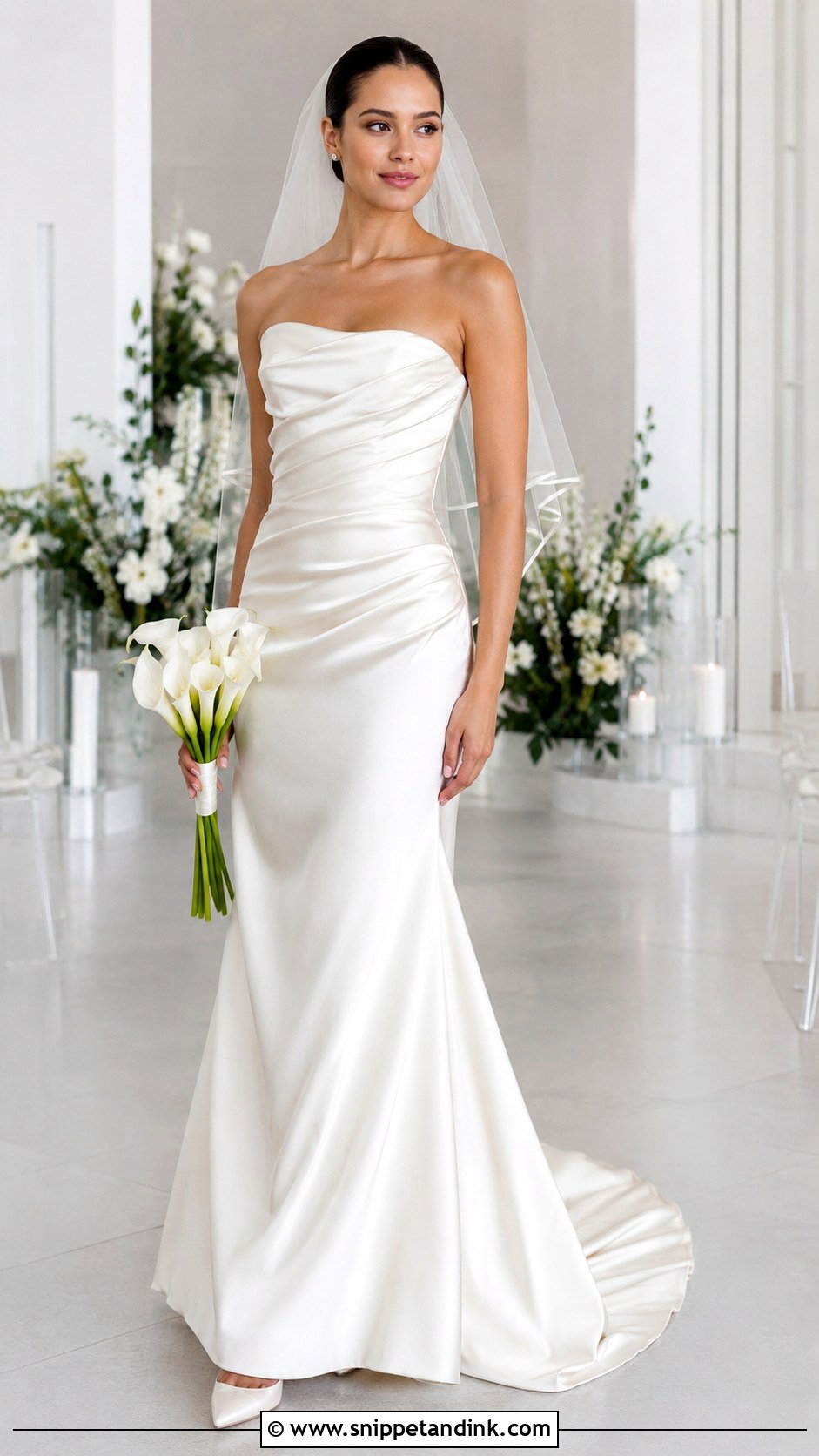
Satin is the most reliable fabric for draping because it holds a crisp fold. The version I like has diagonal pleats crossing the bust and waist on a boned bodice, then a softly flared skirt. A subtle sweetheart or curved neckline keeps a strapless top from looking severe. Pointed ivory pumps, pearl studs and a fingertip veil are enough. Heavier satin pulls the bodice down over the hours, so I check the inner structure first: boning, a waist stay and grip tape along the top edge. If those are right, the folds stay where the designer placed them.
2. Off Shoulder Draped Wedding Dress
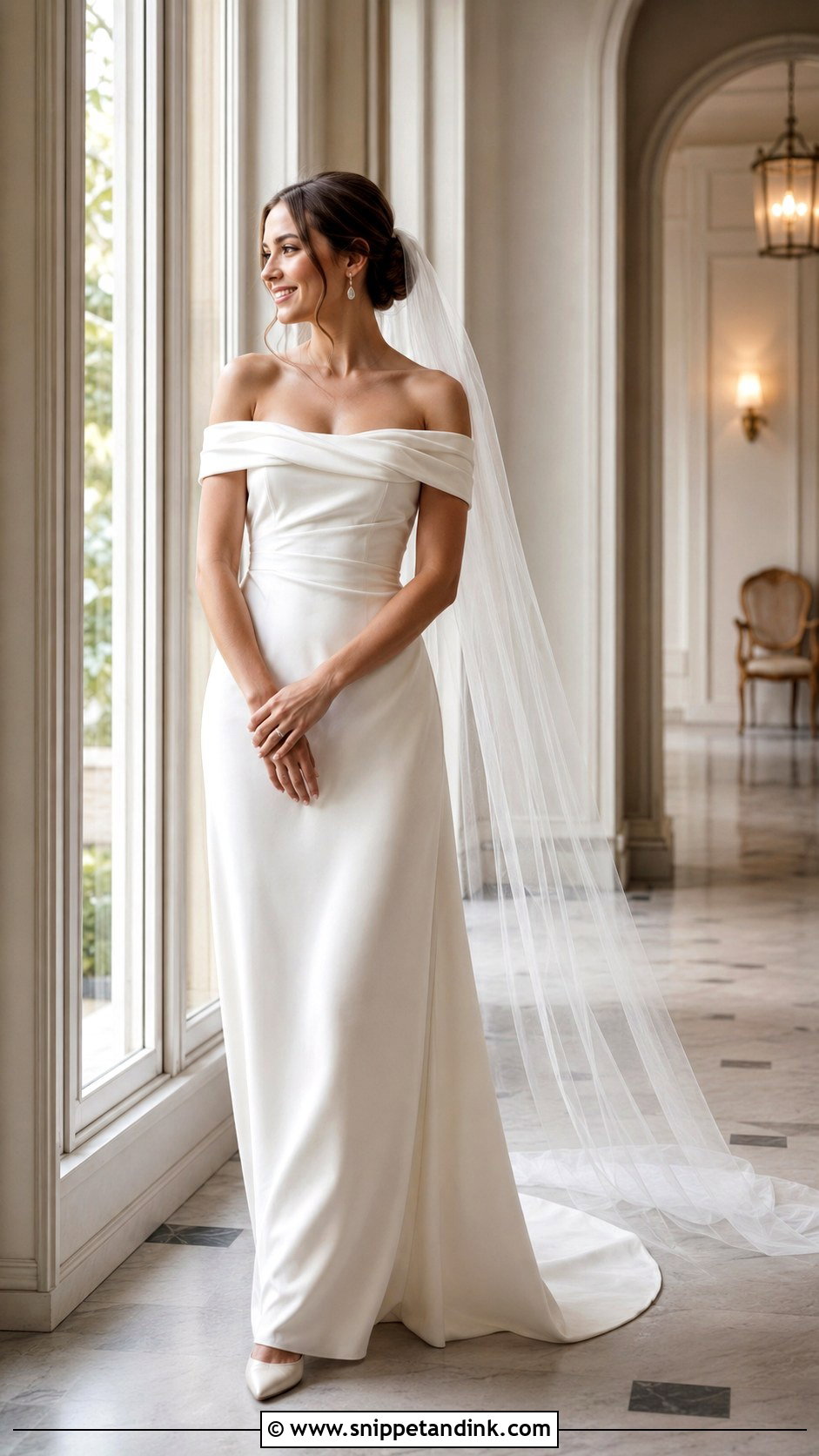
Draped fabric across the collarbones makes a portrait-friendly frame. The overlay should be decoration only; underneath there needs to be a fitted inner bodice carrying the weight, or the sleeves slide down by the speeches. A slim A-line or fit-and-flare skirt keeps the proportions calm. I’d style it with a low chignon, delicate drops and closed satin heels, and leave the neck bare. A sheer cathedral veil adds length without covering the shoulders. Off-shoulder drapes restrict how high you can lift your arms. If you know you’ll want to throw them up on the dance floor, ask about detachable draped straps instead.
3. Cowl Neck Draped Wedding Dress
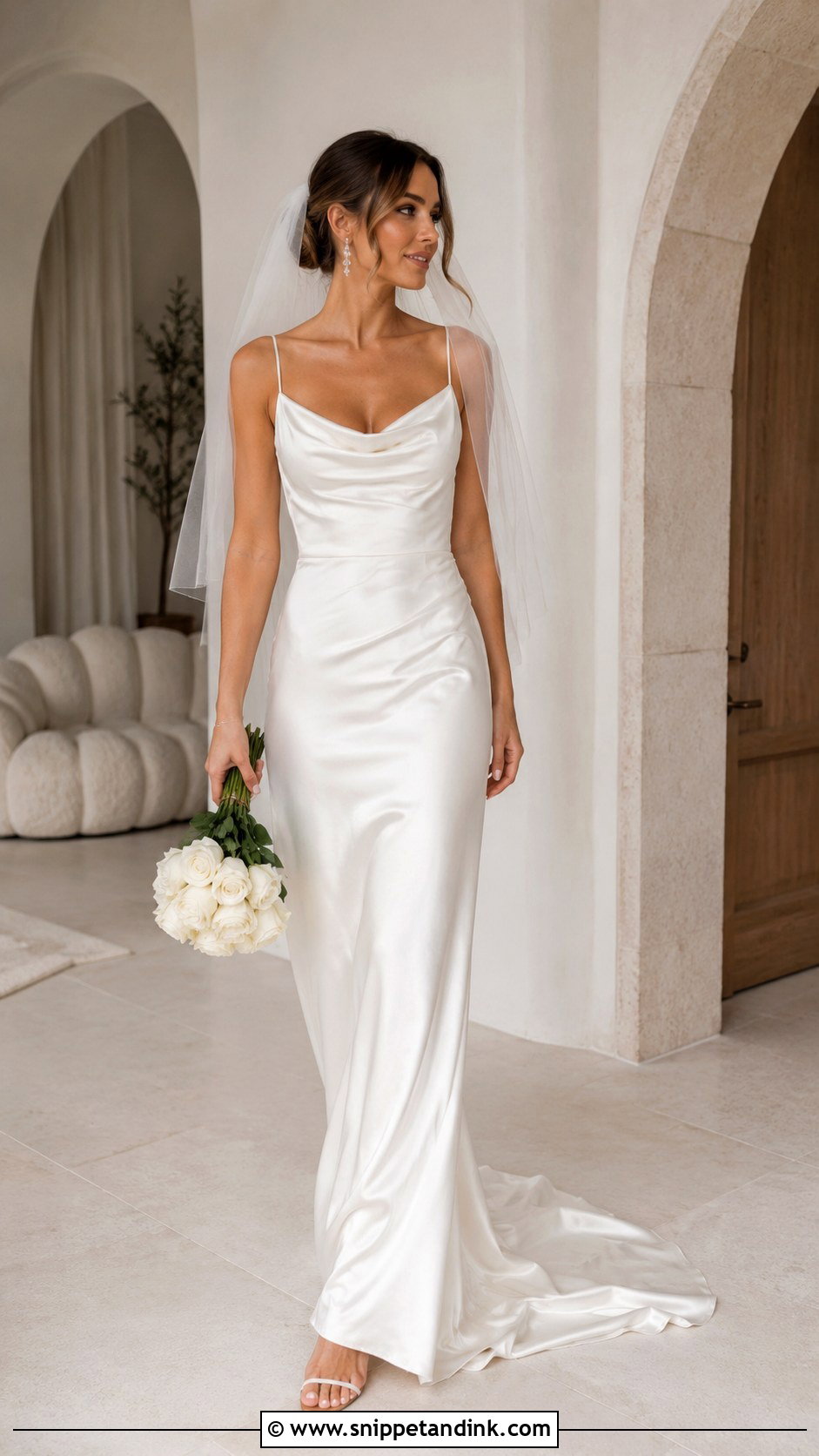
A cowl only falls properly in fluid fabric such as silk satin or crepe-backed satin, cut on the bias so it hangs in soft loops. A bias-cut column silhouette is the sleekest version; a slight flare gives more leg room. Slim metallic sandals, a fine bracelet and small crystal earrings suit it, with a smooth bun or side-parted waves and a shoulder-length veil or hair comb. The cowl’s depth is what I watch most. Lean forward at the fitting as if greeting a seated grandparent. If it gapes, a small weight or a hidden stitch can hold it, but it has to be added before the day.
4. One Shoulder Draped Wedding Dress
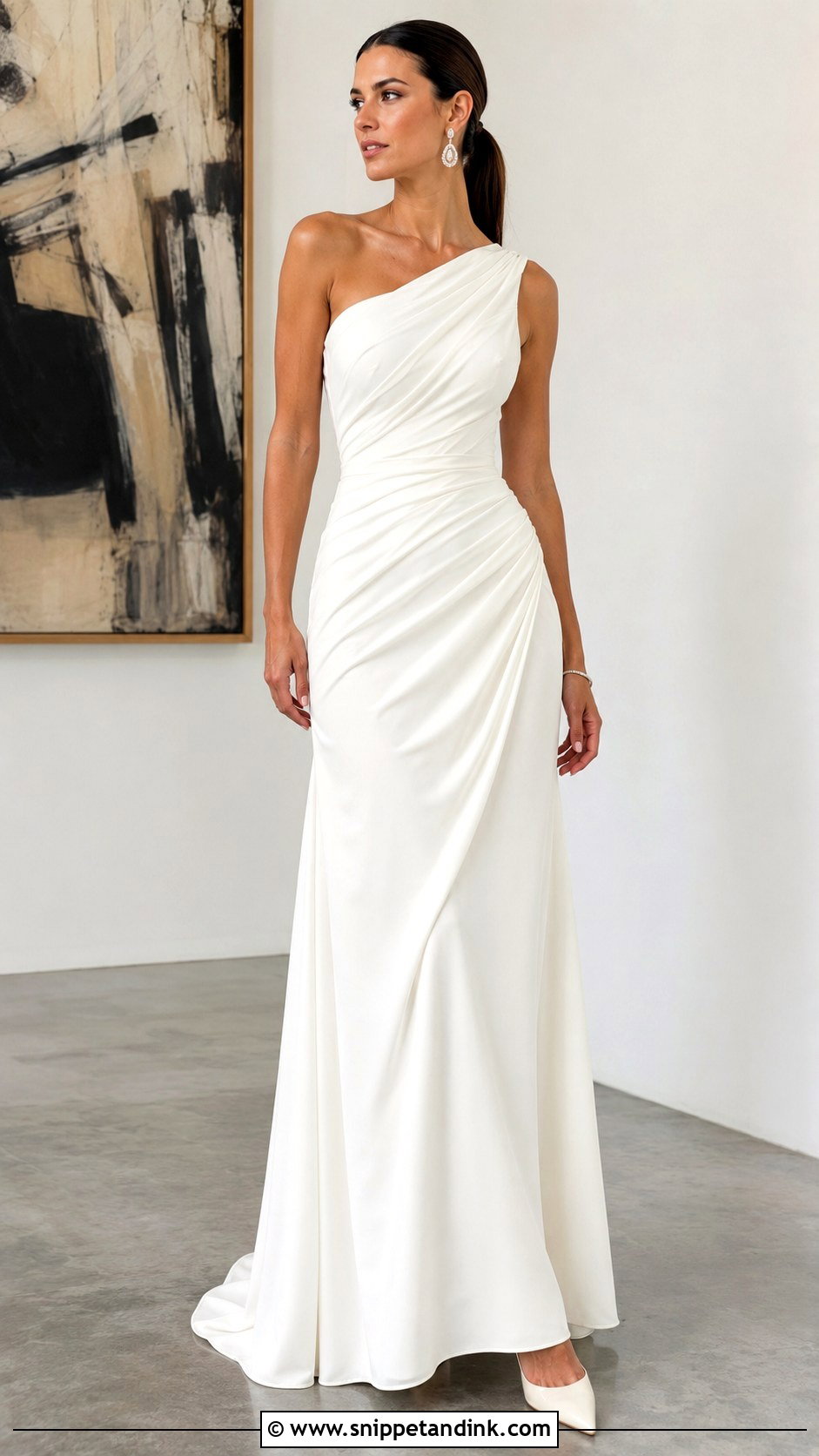
Folds running diagonally from one shoulder down to the opposite hip make the body look longer and show off the gown’s construction. A column skirt, gentle trumpet silhouette or a controlled A-line all complement the angle. I’d wear the hair in a low ponytail or bun, one statement earring on the bare side, plain pumps and a narrow bracelet. Skip the necklace; it breaks the diagonal line. If you’re very full-busted, check the support on the open side carefully, since one-shoulder bodices can’t rely on straps.
5. Basque Waist Draped Wedding Dress
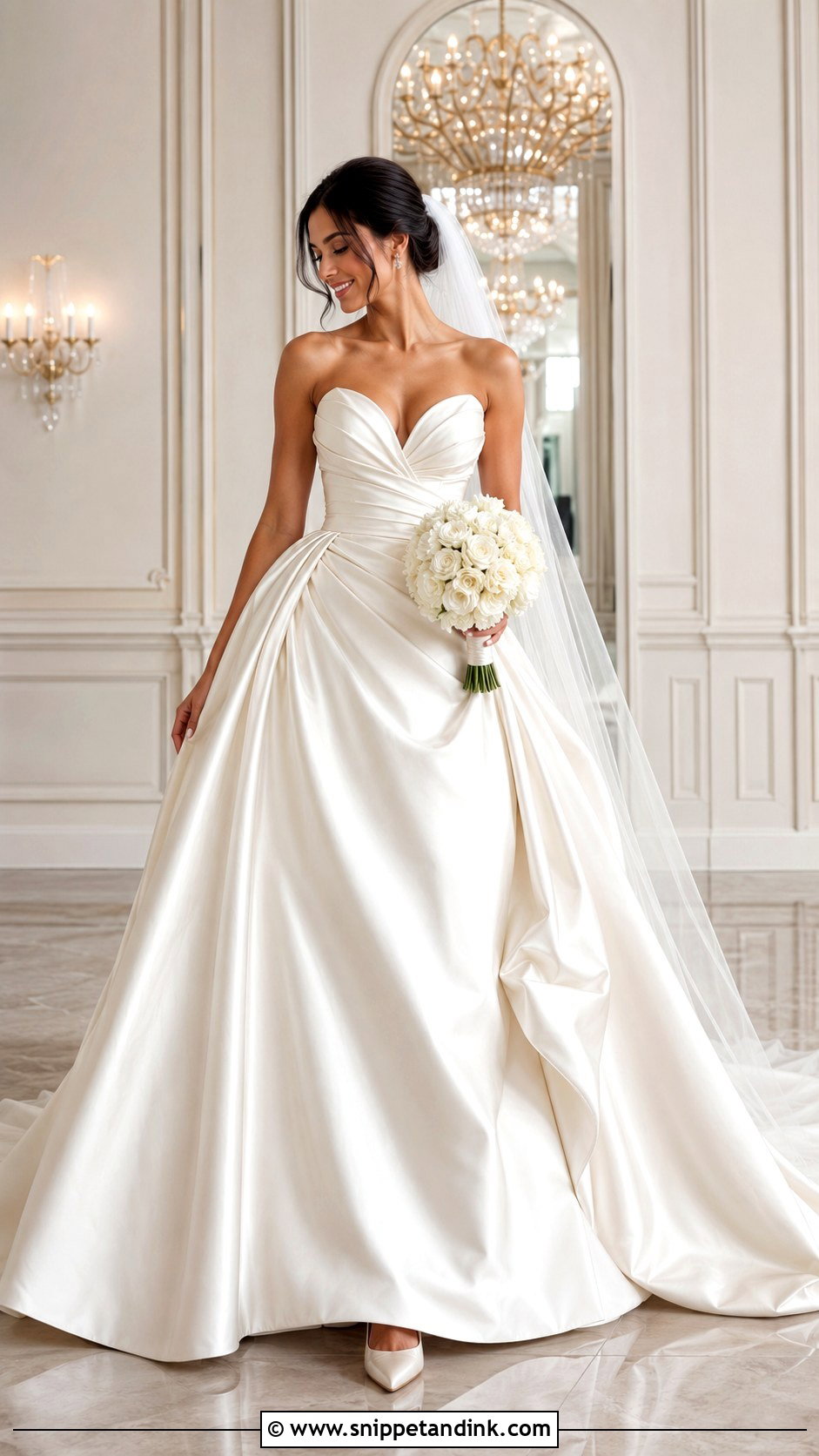
The basque waist adds definition by carrying the V of the bodice below the natural waist, and gathered satin or crepe at that seam makes the switch from fitted to full look soft rather than abrupt. A strapless scoop or sweetheart neckline echoes the curve. Choose a ball gown skirt for drama or an A-line if you’ll be dancing. Classic pumps, a cathedral veil and small earrings finish it; carry a round, compact bouquet low enough not to hide the point. My fitting test is simple. Sit down. If the point of the V jabs your stomach, it needs shortening.
6. Ruched Corset Draped Wedding Dress
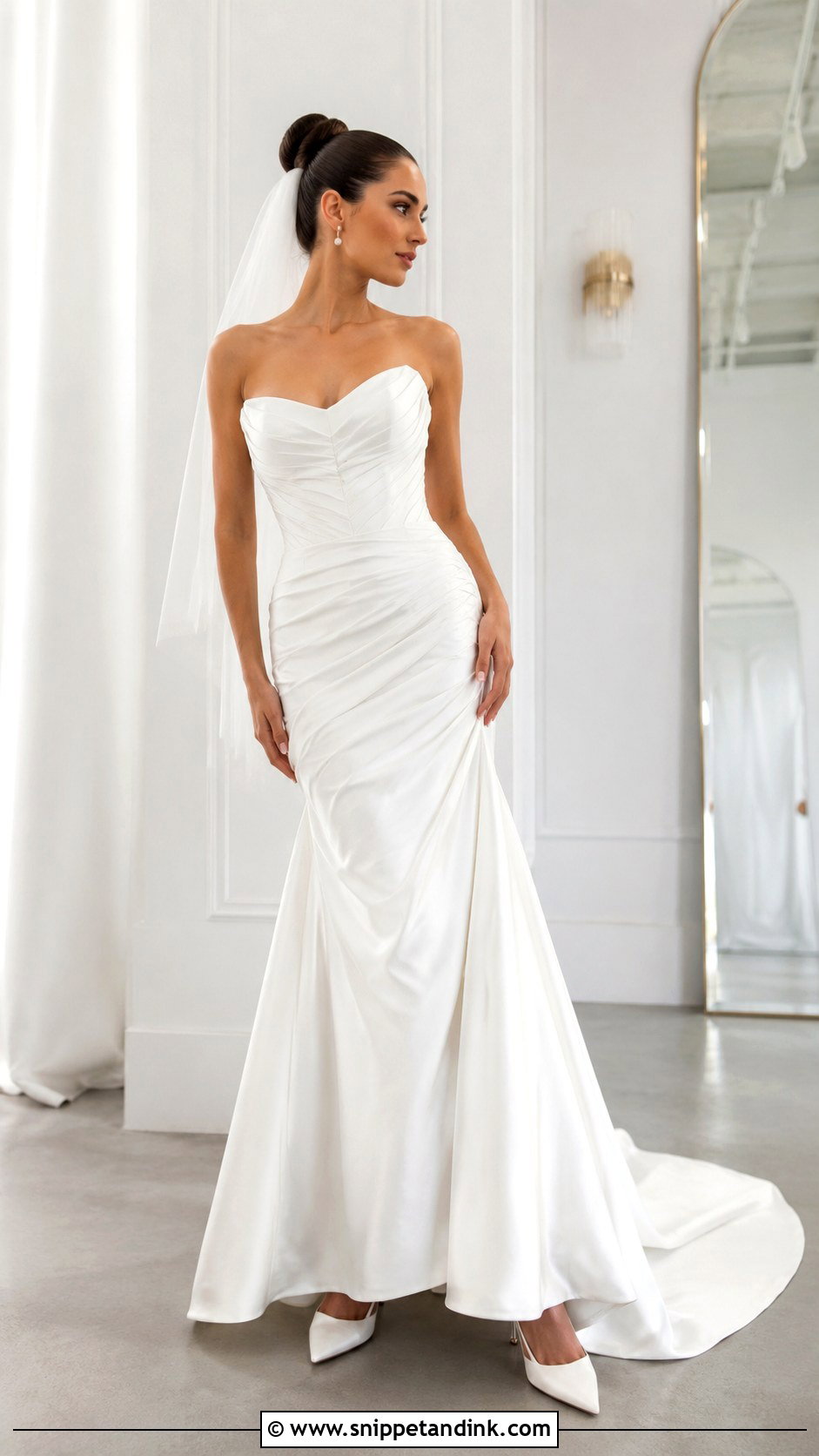
Ruching over boning gives you structure and softness in the same bodice. I check that the gathers are stitched to a smooth base layer rather than floating, because loose ruching shifts as you move and adds bulk at the waist. A straight or gently curved neckline and a fit-and-flare skirt keep it clean. Pair it with slingback heels, pearl drops and a simple veil under a polished bun. When trying on the gown, look at the back closure: ruching tends to pucker where it meets a zip or lacing. A corset should support you, not stop you eating dinner.
7. Chiffon A Line Draped Wedding Dress
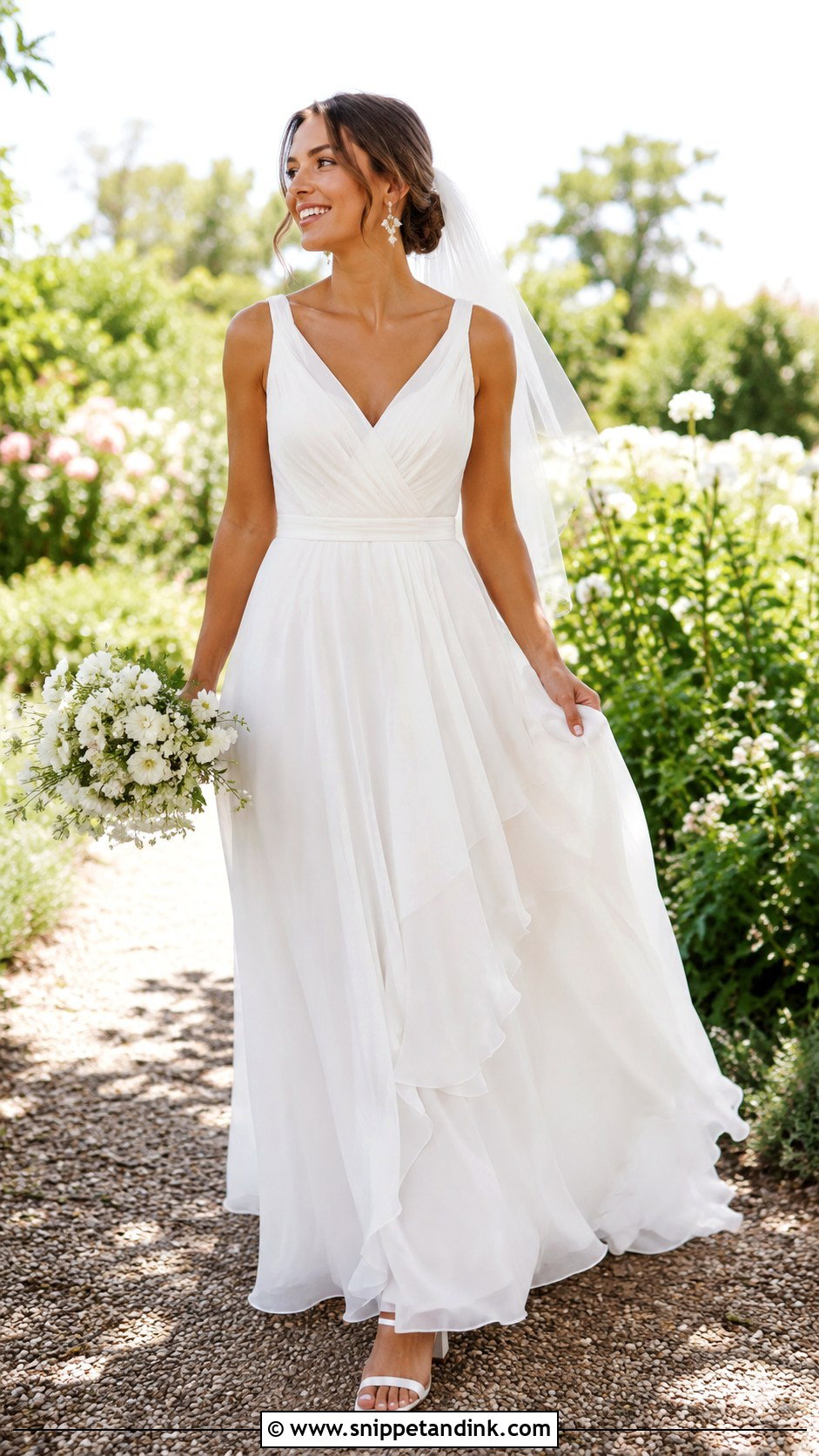
Chiffon is the drape for heat and outdoor ceremonies. It moves with the slightest breeze and doesn’t trap warmth like satin. My pick is an A-line with a gathered surplice bodice, a defined waist, wide straps and a layered skirt that floats away from the body. Low block-heel sandals sink less on grass, and a loose updo with leaf-shaped earrings suits the mood. Chiffon can be see-through, so I always take the gown to a window and check the lining runs all the way to the hem. A wrist loop on the train saves it from being stepped on all evening.
8. Grecian Draped Wedding Dress
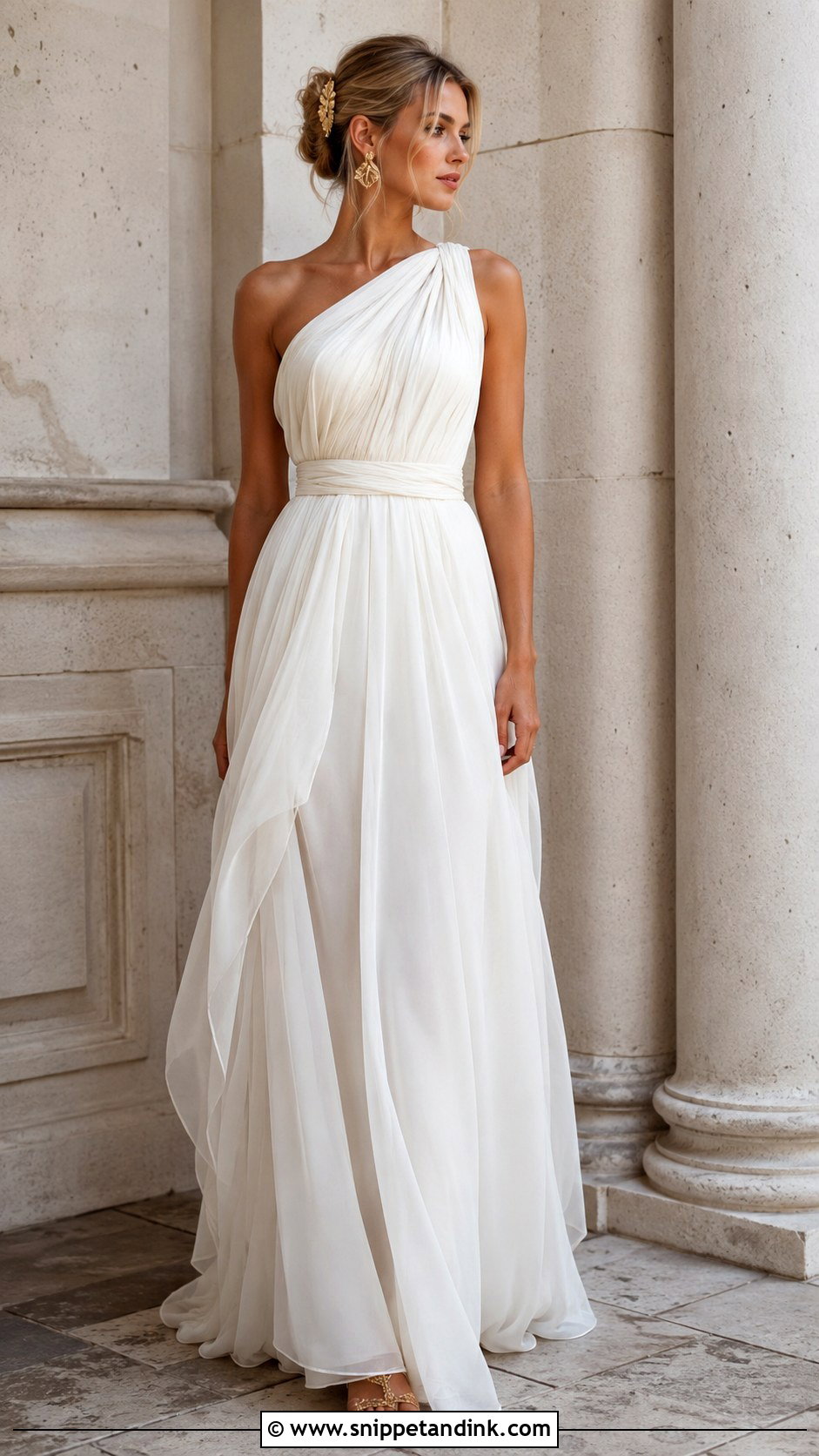
Grecian draping is all about vertical lines: fabric crossing the bodice, gathered at one shoulder or the centre waist, then dropping into a column. Ivory chiffon or light crepe is the right weight. I’d keep the accessories to one metallic accent, maybe a slim gold hair comb, plus flat embellished sandals and a low twisted bun. A narrow cape veil follows the lines better than a gathered traditional one. The risk with this style is overdoing the theme. Add gold cuffs, a laurel crown and a gold belt together and it tips into fancy dress.
9. Mermaid Draped Wedding Dress
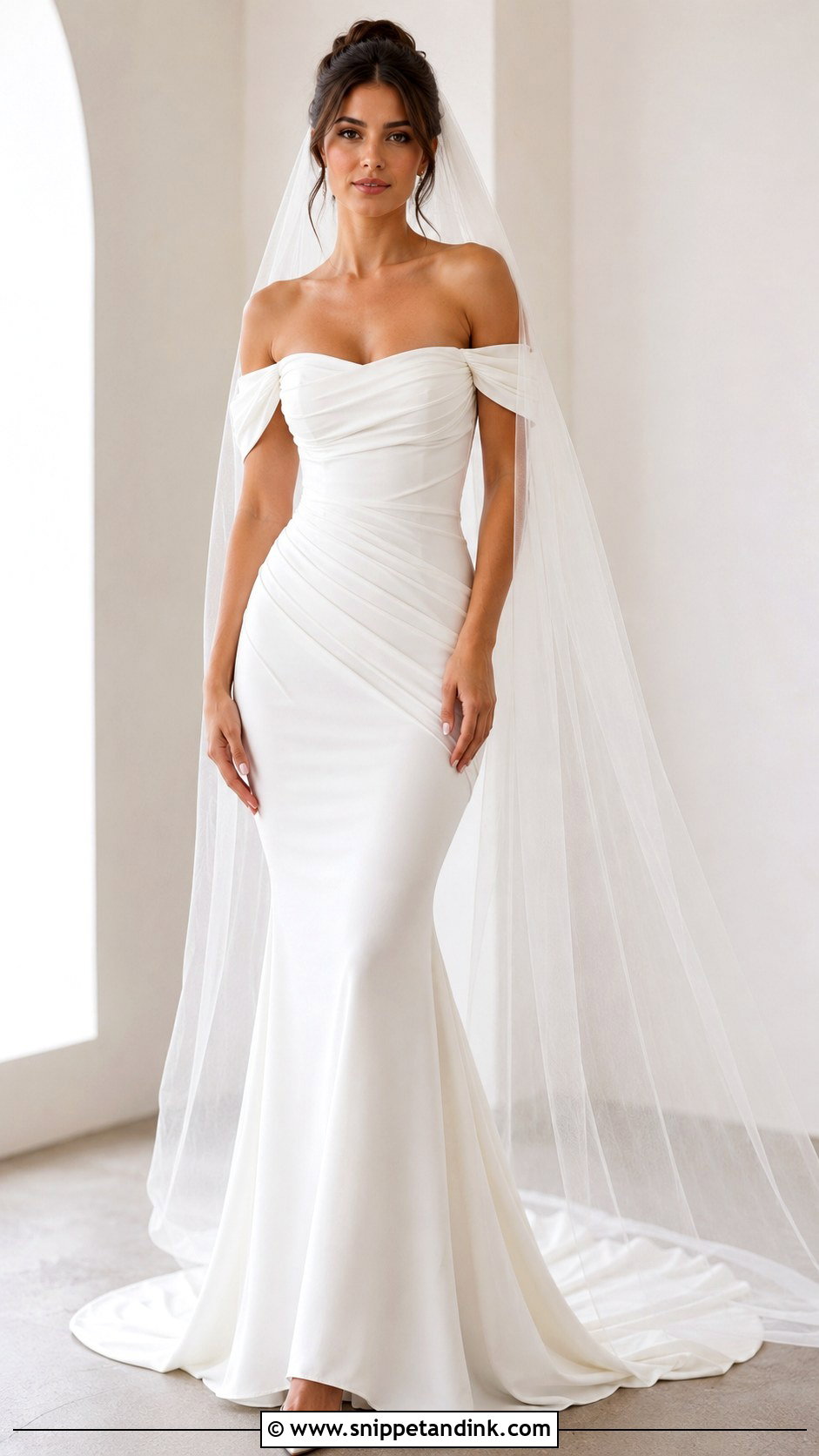
Draping makes a mermaid easier to wear. Diagonal gathers sweeping toward one hip define the shape and hide small bumps far better than a plain stretch fabric, which shows everything. Stretch crepe or satin with some weight makes the cleanest folds. Pointed pumps, a long sheer veil and small drops keep the focus on the flare. Mobility varies hugely between mermaid cuts, so walk, sit and climb a few steps at the fitting. If the flare starts below the knee, your stride will be tiny all day. A secure bustle lifts the train for the reception.
10. Draped Ball Gown Wedding Dress
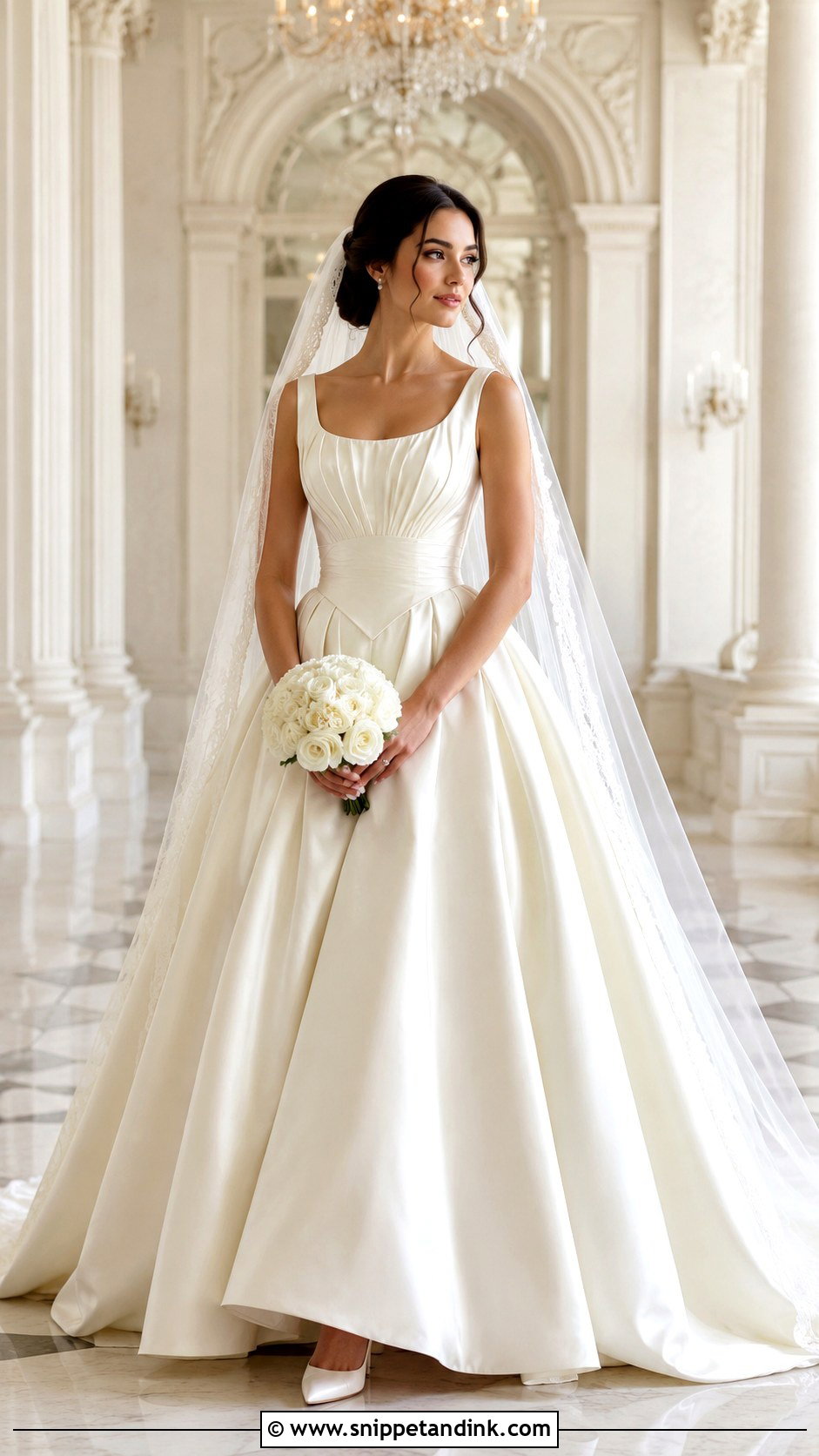
A ball gown doesn’t need embroidery when the satin itself is gathered across the bust and pulled into the waist. The skirt can carry pleats, pickups or one sweeping side drape that shows the depth of the fabric. Classic heels, a long veil, a neat bun and small studs keep it regal. Keep the bouquet medium-sized: big enough for the skirt, small enough not to hide the bodice. Draped ball gowns get heavy, since every fold is extra fabric. Ask whether the skirt has a lightweight lining or horsehair at the hem instead of piles of petticoats, and test the bustle with someone who’ll actually fasten it.
11. Long Sleeve Draped Wedding Dress
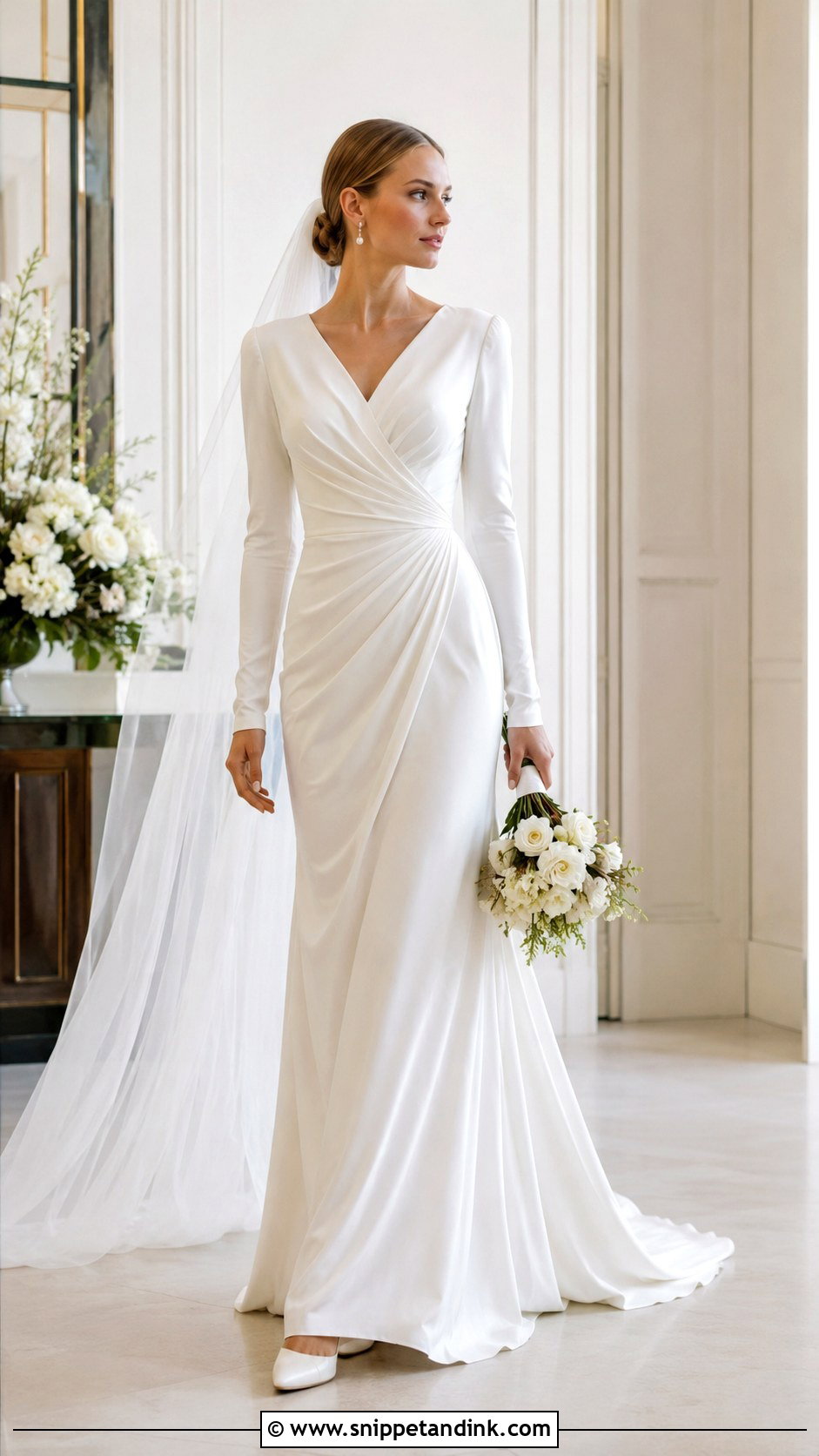
Stretch crepe with long sleeves and a crossover bodice is a quiet, polished look, and it suits cooler months and religious ceremonies. Another route is a fitted gown with detachable draped sleeves that fall from the shoulder. Closed pumps, a low bun, pearl earrings and a narrow-edged veil keep the line clean. Bend your elbows and lift your arms at the fitting: a sleeve cut too tight drags the crossover out of place and twists the bodice. A slim bracelet works if the neckline is high.
12. Square Neck Draped Wedding Dress
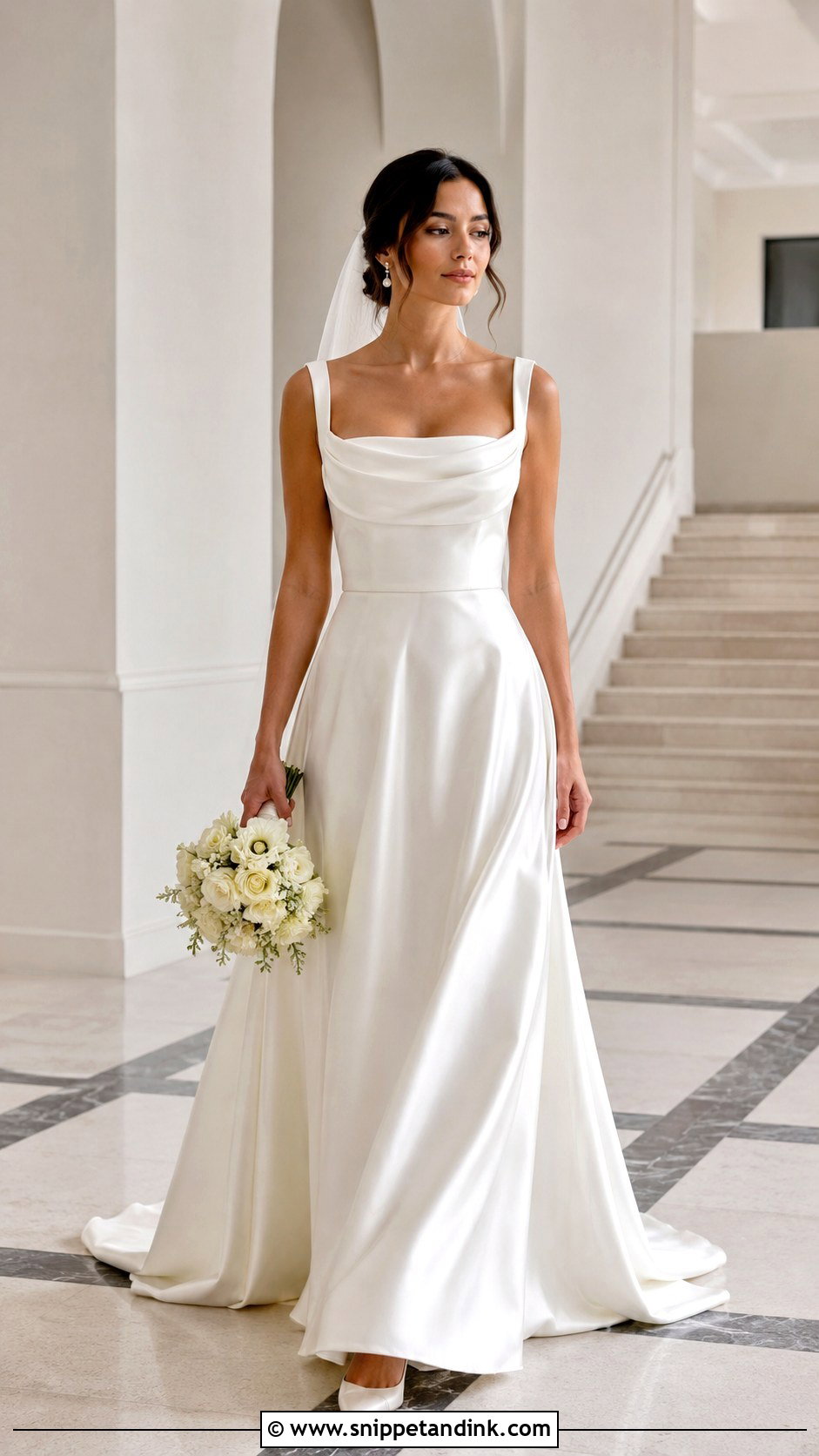
The square neck gives soft draping a crisp frame. I like wide straps, a lightly gathered bust and folds that narrow toward the waist, finished with either a fitted crepe skirt (modern) or a satin A-line (more classic). Pearl buttons, pointed heels and a simple veil set behind the crown work well. Keep the bouquet compact so the square shape stays visible. Strap position decides comfort here. Straps set too far out slip off the shoulder, and straps set too close dig into the underarm. Have the seamstress check while you sit and lean forward.
13. Halter Draped Wedding Dress
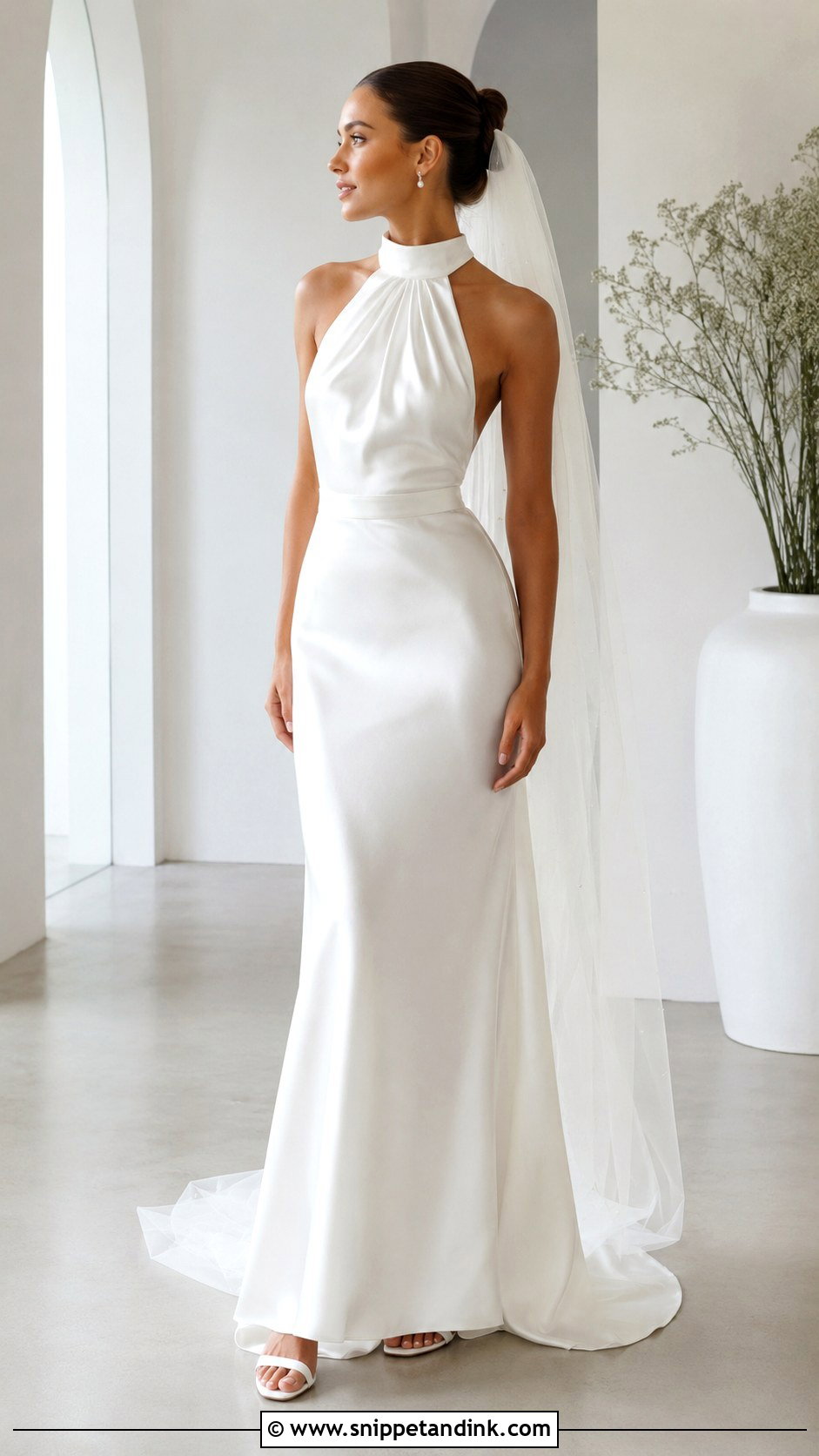
The halter pulls the eye up to the face and lets the fabric fall from the neck. Soft satin with a gathered high neck, a defined waist and an open back suits it, over a slim A-line or column skirt. Earrings close to the ear, a sleek bun, narrow-strap heels and no necklace. Set the veil under the bun so the halter stays visible from the front. I always check the halter strap itself: if it’s pulling on the neck after five minutes, it’ll ache by the reception. A firm bodice lining stops the folds from drifting sideways.
14. Open Back Draped Wedding Dress
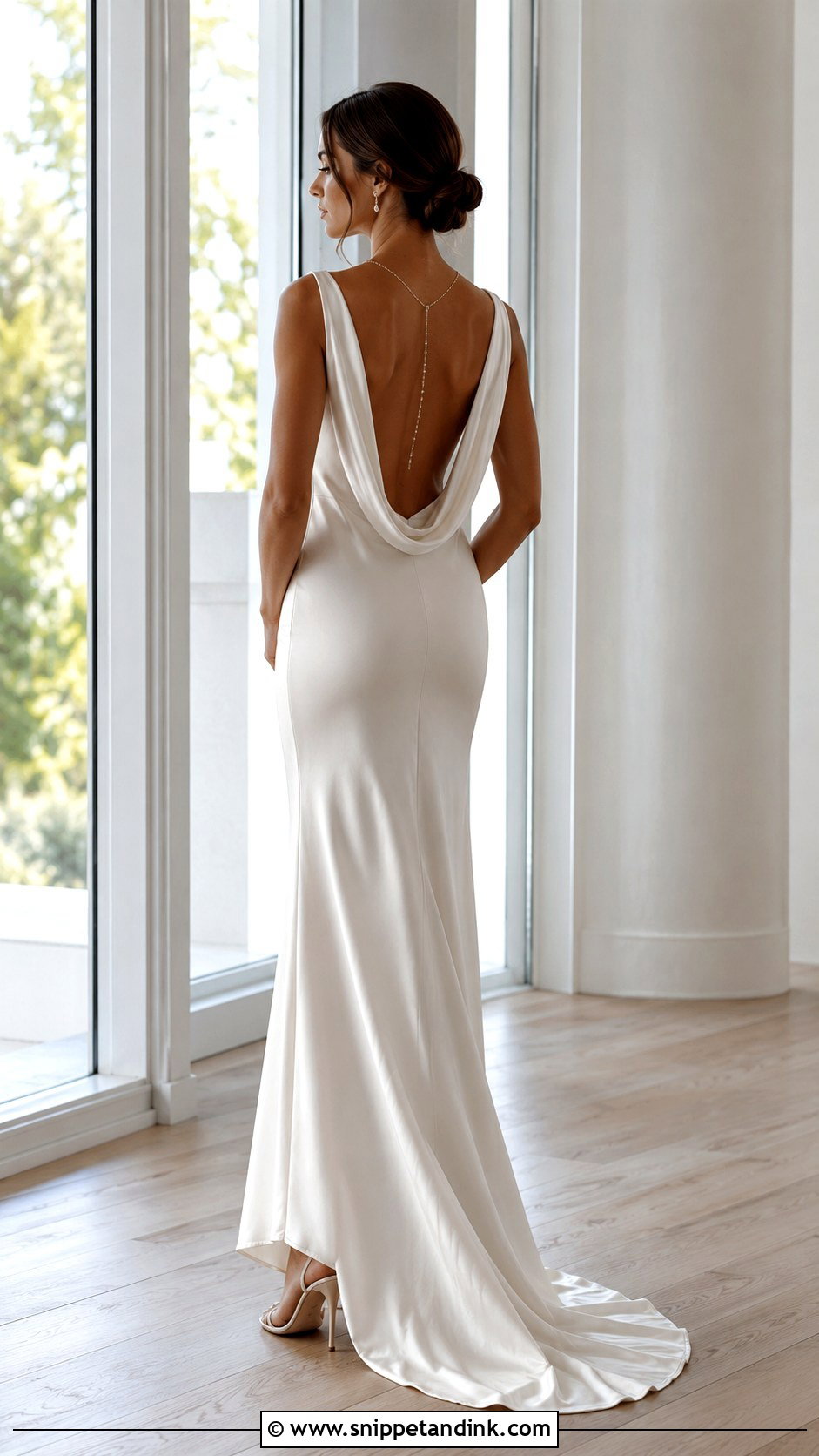
A plain front and a draped back is a quiet surprise for guests as you walk past. A satin or crepe column with a high front and a low cowl back, or fabric gathered at the lower back into a small train, both work. Low bun, a delicate back-drop necklace, simple heels and earrings that match the back piece. If you add a veil, check that its comb can’t snag the drape. Discuss what you’ll wear underneath before alterations start, because a low back usually needs cups sewn into the bodice. Both sides of the drape should be tacked firmly so it doesn’t slide while dancing.
15. High Slit Draped Wedding Dress
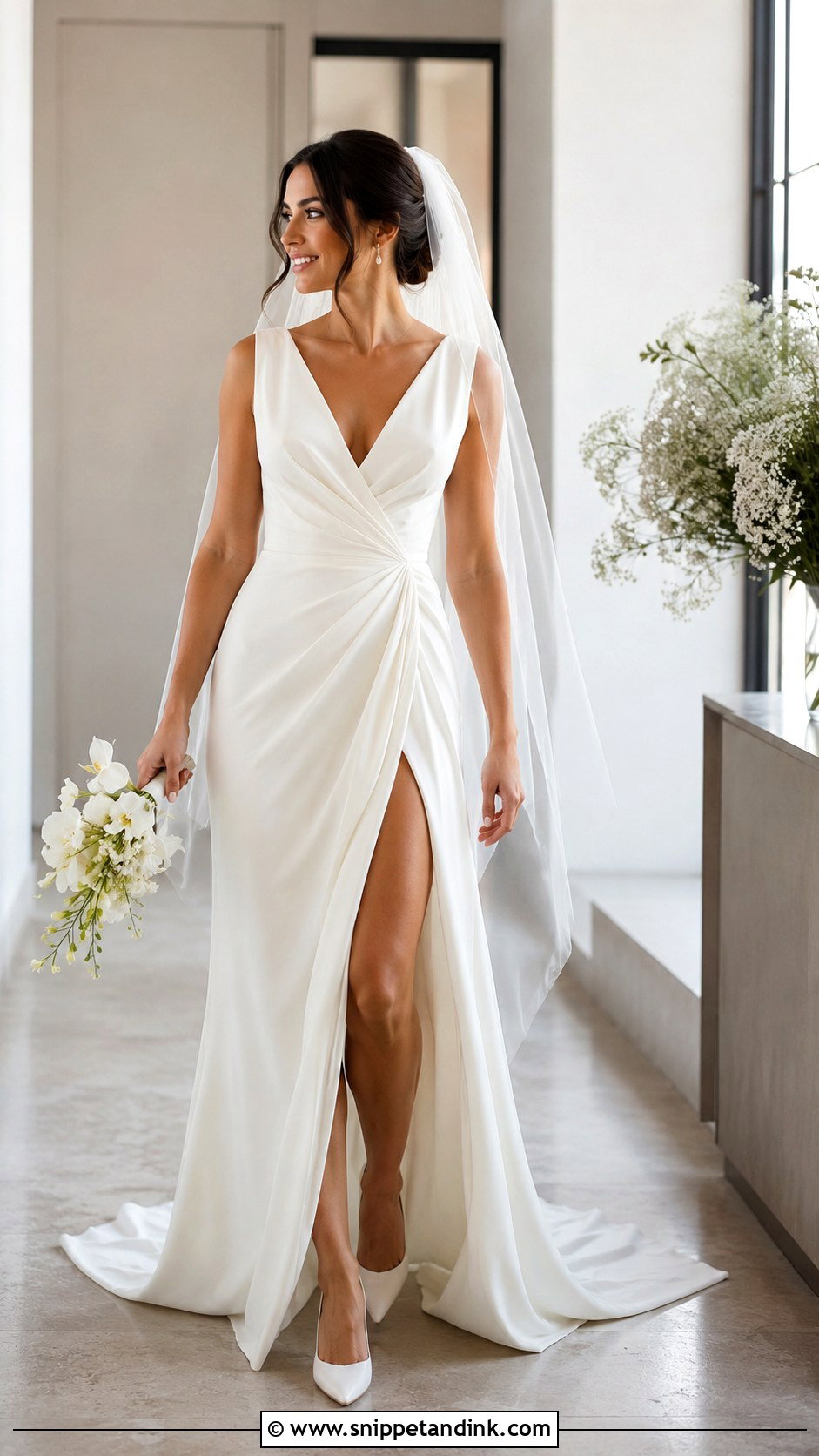
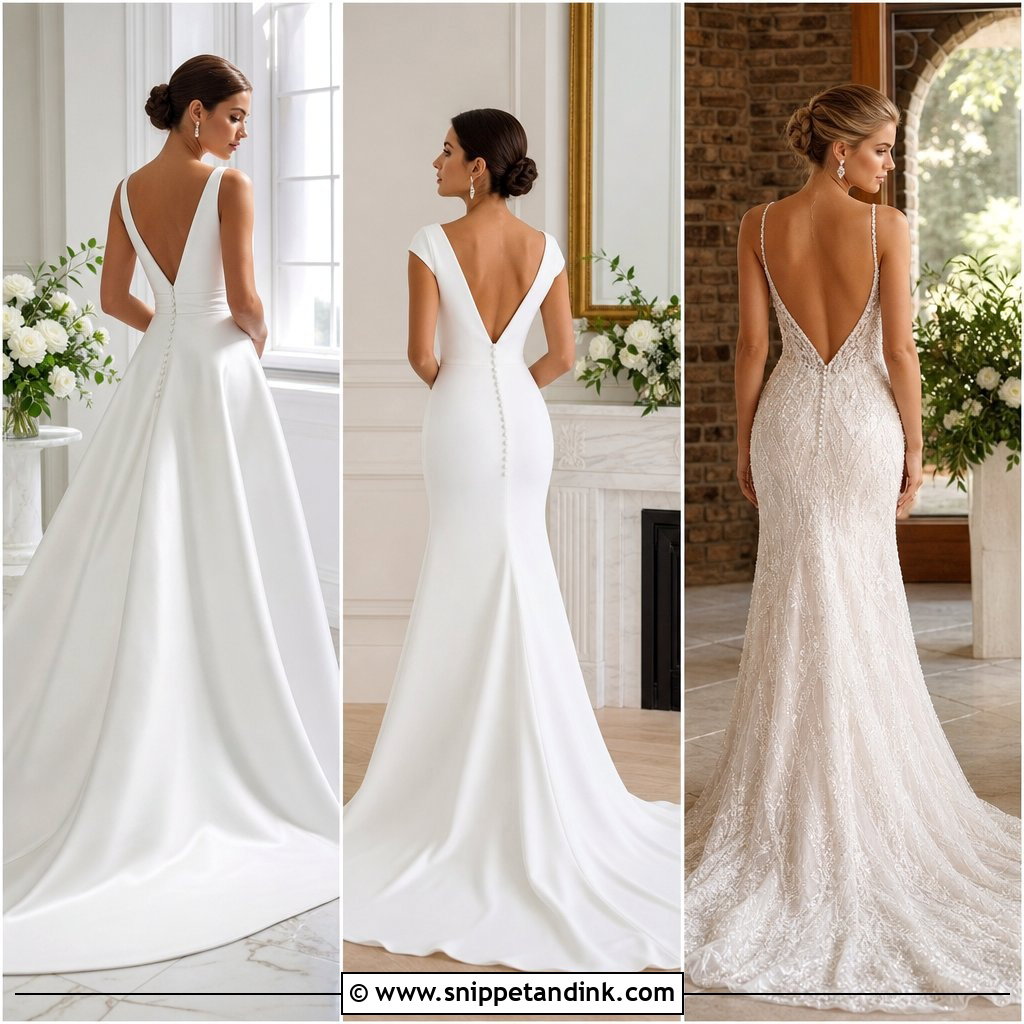
A slit looks refined when the drape covers it most of the time and only opens as you walk. I look for a wrap-style satin or crepe gown gathered at the waist with the fabric crossing the opening. Closed pumps or slim sandals, a clean updo and understated earrings keep it polished, and a fingertip veil balances the modern skirt. Walk, sit and climb stairs at the fitting. If it reveals more than you want when seated, the seamstress can add a hidden snap or increase the overlap. Better to know that now than during the ceremony.
16. Lace Draped Wedding Dress
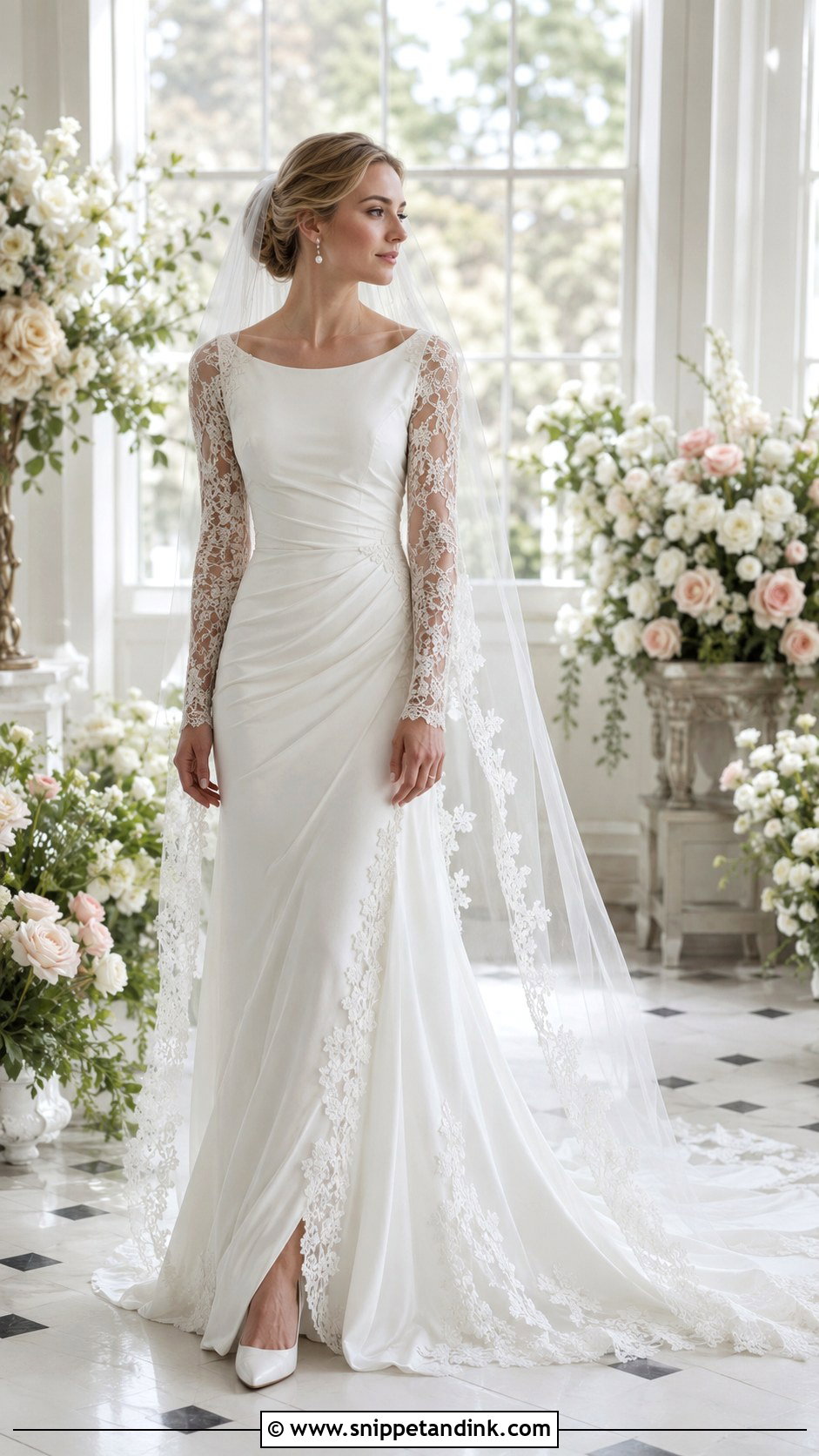
Lace and draping together only work when one leads and the other follows. My usual choice is a smooth crepe or satin draped bodice with lace sleeves, side panels or an appliquéd train, or the reverse: a lace gown with gathered tulle over the waist. Satin pumps, small pearls and a veil with a narrow lace edge complete it, with a low chignon. Check where the drape meets the lace. Raised appliqués can catch the folds when you walk or lift your train, and a few hidden tacks fix it.
17. Cape Draped Wedding Dress
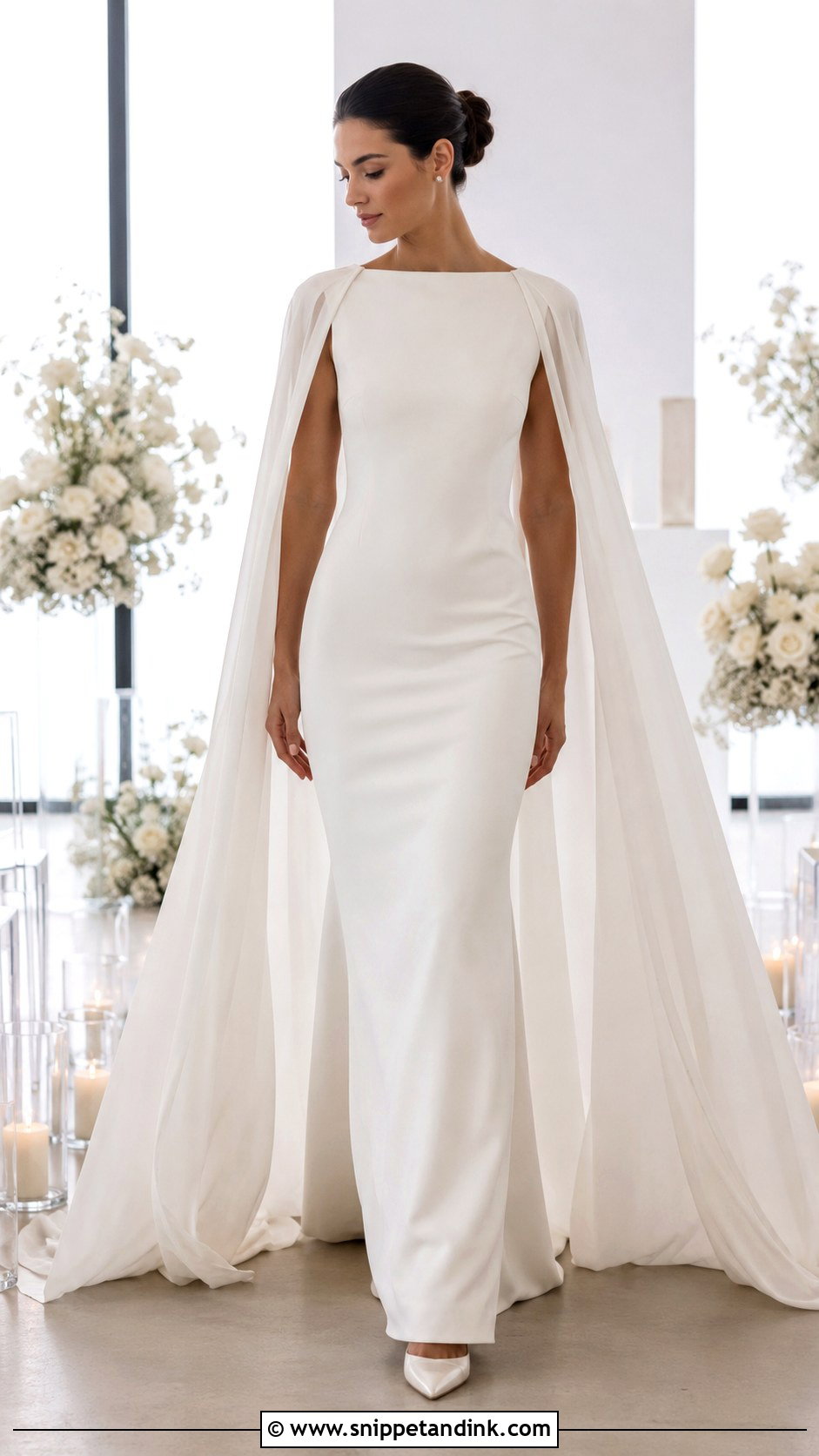
A cape adds draping without changing the gown under it. Start with a simple crepe column, sheath or narrow A-line, then attach a sheer chiffon cape at the shoulders or back straps. Pointed pumps, a neat bun and minimal studs; the cape can replace the veil. Floor length reads formal, while a shorter cape is easier outdoors where it can catch on bushes or blow across your face. Ask for reinforced attachment points. Detachable fastenings let you take it off for dancing without changing dresses.
18. Detachable Sleeve Draped Wedding Dress
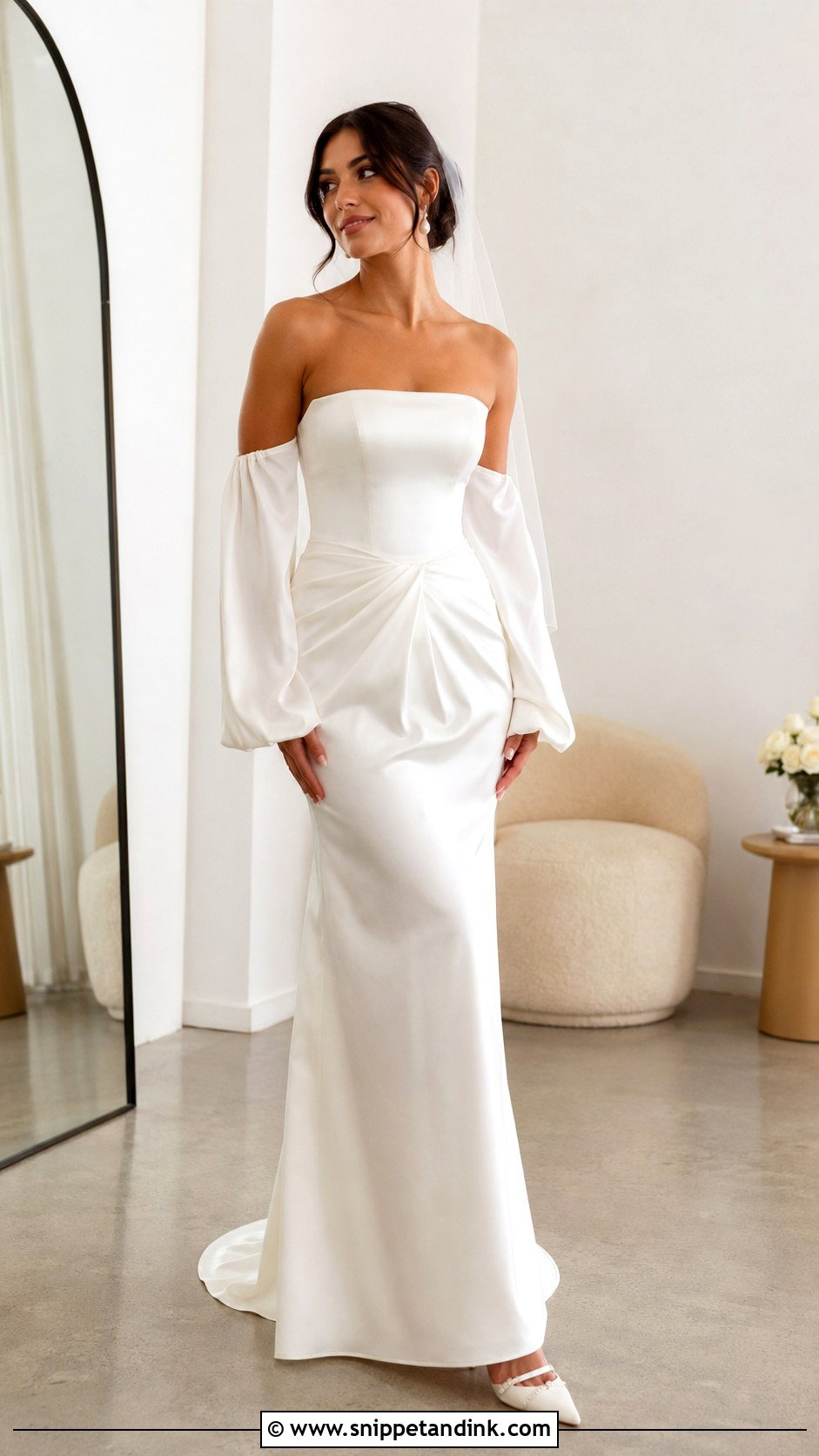
With sleeves that come off, one draped gown gives you two looks. Start with a strapless or sleeveless gown with a gathered bodice and fitted waist, add off-shoulder sleeves in the same fabric for the ceremony, then remove them for the party. Comfortable heels, a fingertip veil and earrings that suit both versions work, with hair kept off the shoulders. I check the fastenings sit hidden under the folds and don’t rub the skin. Put the removed sleeves straight into a labelled bag; loose pieces go missing at receptions.
19. Plus Size Draped Wedding Dress
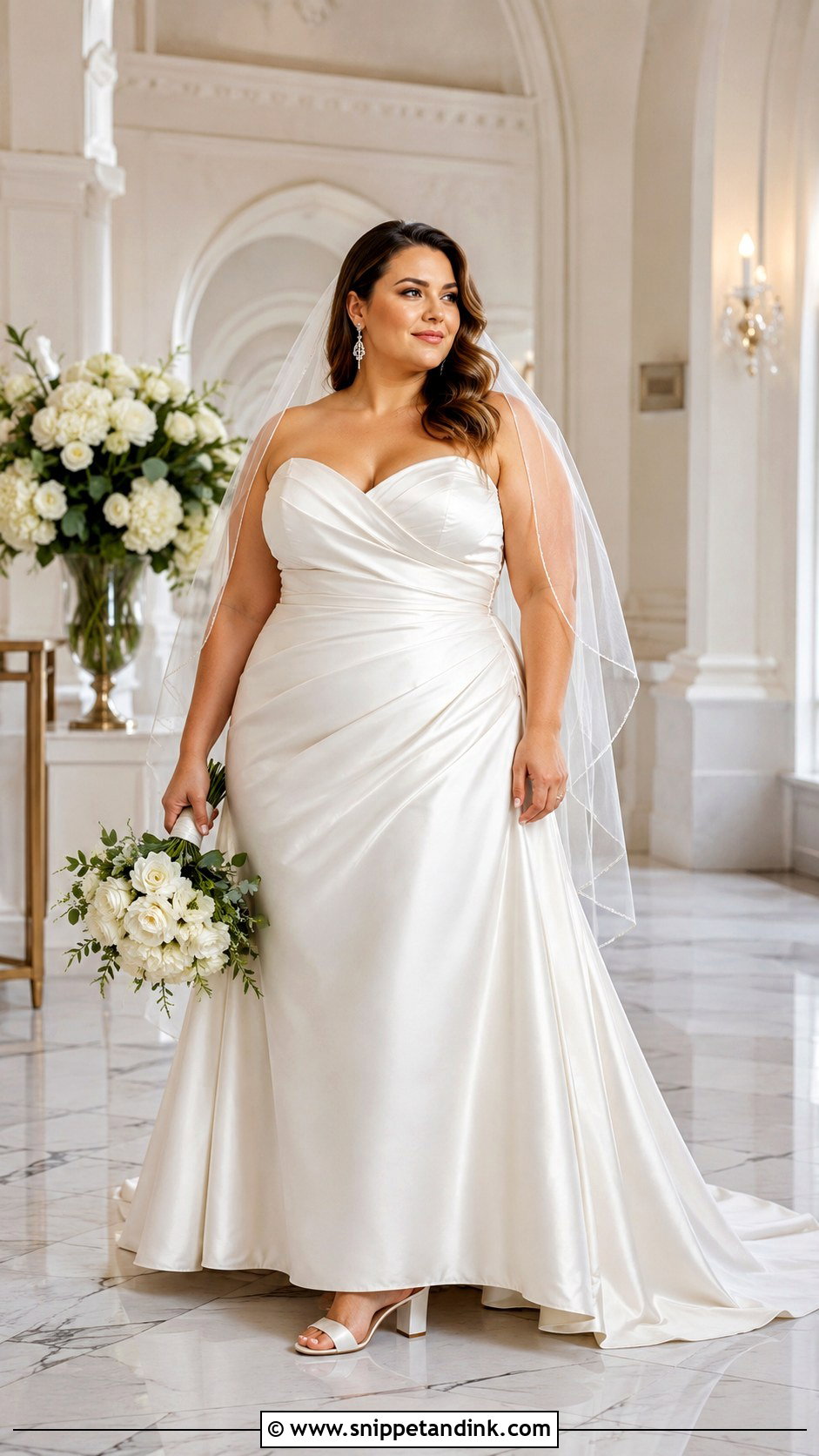
Draping is one of the most flattering details at any size because it adds support and movement without clinging. I look for strong internal structure, a neckline that works with the bra or built-in cups you prefer, and gathers that lie flat rather than strain. Diagonal draping across a corset bodice pairs well with an A-line, fit-and-flare or ball gown skirt. Stable block heels and a veil scaled to the dress complete it. Pick accessories for your taste, not to hide anything. Ask the boutique for a sample close to your size so you’re judging the real fit, and let the seamstress tune strap placement, bodice length and waist position.
20. Minimalist Crepe Draped Wedding Dress
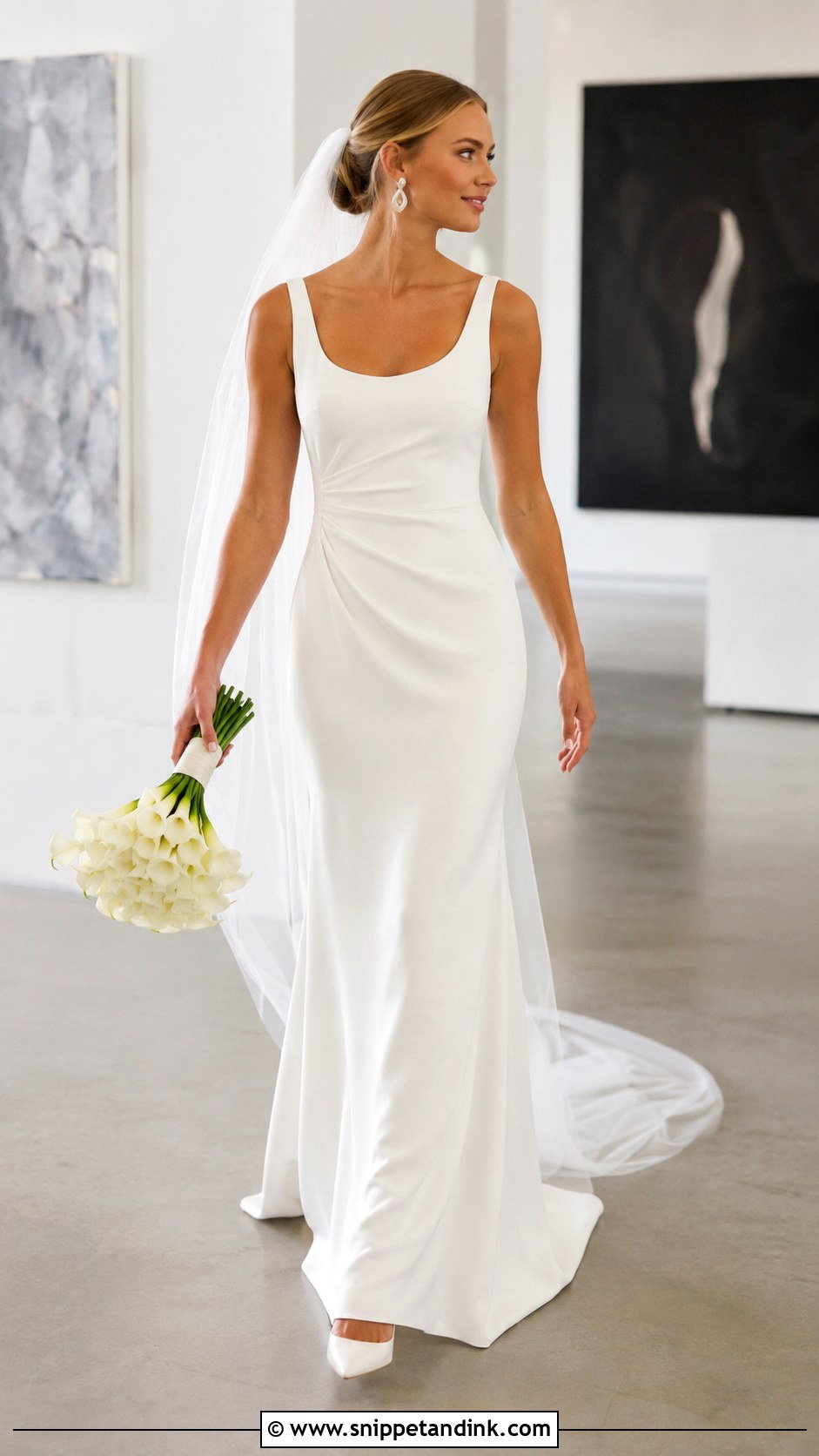
Plain crepe hides nothing, so every fold and seam has to be deliberate. A clean scoop, bateau or strapless neckline with a small gather at one hip, over a column or soft fit-and-flare, is how I’d do it. Architectural earrings, pointed ivory pumps and a sleek bun, plus a plain cathedral veil or a modern comb. One type of flower in the bouquet. Because crepe shows every pull, tailoring matters more here than on any other style. I check the side seams, hem, zip and waist gathers in daylight; a drape that looks like a wrinkle is the one thing this style can’t survive.
Why a Draped Bodice Takes Longer to Alter
Draped gowns are slower to alter than plain ones. To take in a gathered bodice, a seamstress often has to unpick the folds, adjust the base layer underneath and then re-pleat everything by hand so the pattern still lines up. A small change on a plain bodice can mean a full rebuild on a draped one.
Because of that, I try to get the size as close as possible at the ordering stage and allow extra time for fittings, usually starting about two to three months before the wedding. Alteration costs vary a lot by region and by seamstress, but expect draped areas to cost more than straight seams. If your weight tends to shift in the months before the wedding, a lace-up back or a gown with draping only at the hip, rather than all over the bodice, is far easier to adjust late.
Steaming Folds on the Morning Without Flattening Them
An iron presses a drape flat and ruins the shape the designer built. I only use a handheld steamer, kept a few centimetres from the fabric, and I work from the inside of the gown wherever I can reach.
- Hang the gown from a high hook so the skirt falls without touching the floor.
- Steam the skirt first, moving down in long passes; let gravity pull the creases out.
- For bodice folds, steam lightly and shape each fold back by hand while the fabric is warm.
- Leave it hanging for fifteen minutes to cool and set before you step in.
- Test the steamer on a hem allowance first, since some satins water-spot.
Chiffon needs the least heat; satin needs the most patience. I’d steer you away from steaming silk yourself on the morning if you’ve never done it. Ask the boutique to press it before collection instead.
Folds That Stay Put From Aisle to Last Dance
Good draping is fabric movement backed by solid support underneath. It can soften a corset, carve a waist, frame a neckline or add depth to a minimalist skirt. Satin gives crisp sculptural folds, chiffon gives air and crepe gives a clean modern line. Test every design sitting, walking and with your arms raised, and look at the back as well as the front. Bring your shoes and underwear to alterations, and choose the drape that feels secure on you, not just the one that looked right on a model.
You'll Like These Ideas:








Leave a Reply