
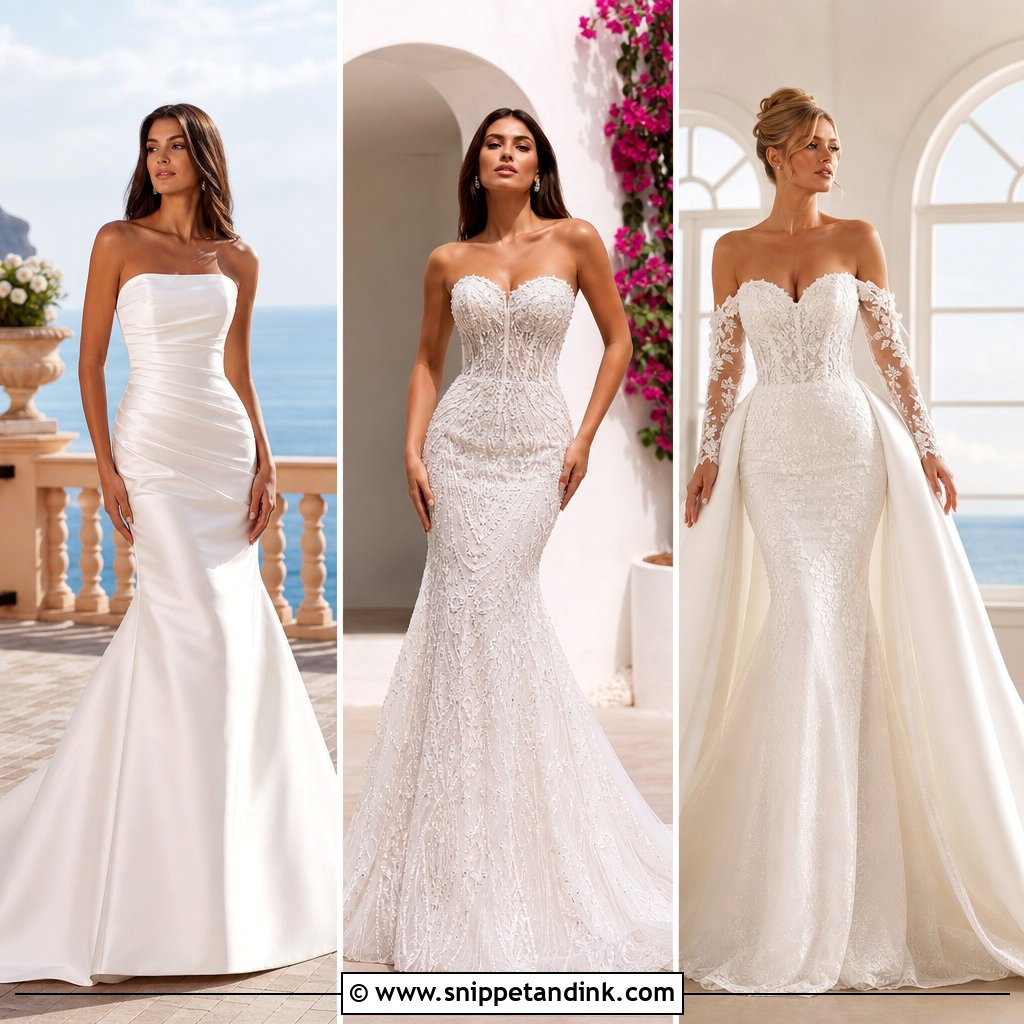
Petite is about height, not size. A bride who is five foot one can be curvy, straight, athletic or slender, and her dress has to answer to all of that, not just to her inches. What petite brides share is a frame that gets swallowed easily: by too much skirt, by detail in the wrong place, by a waist seam sitting two centimetres low. Clean vertical lines, a clear waist and lighter fabrics usually help, but I’ve seen ball gowns and mermaids work on very small brides once they were cut down properly. Below are twenty gowns, from slim columns to scaled ball gowns, with the fitting notes I’d give you for each.
Sample Gowns Are Cut for Someone Taller Than You
Most shop samples are made in a standard length intended to be worn with heels by a bride of average height or taller. On a petite frame they pool on the floor, the waist sits low and the bust darts land in the wrong place. I ask petite brides to look past all of that and judge three things only: the neckline, the fabric and the general shape.
When you order, ask whether the designer offers custom length. Many do, sometimes for an extra charge, using a hollow-to-hem measurement: from the dip at the base of your throat to the floor, taken while wearing your wedding shoes. A dress cut to that length needs far less hemming, and the skirt keeps its intended shape.
- Bring heels the same height as your wedding shoes to the appointment.
- Ask the consultant to clip the waist up as well as the back, so you see the bodice at your real length.
- Photograph yourself from the side; the mirror flatters, the camera won’t.
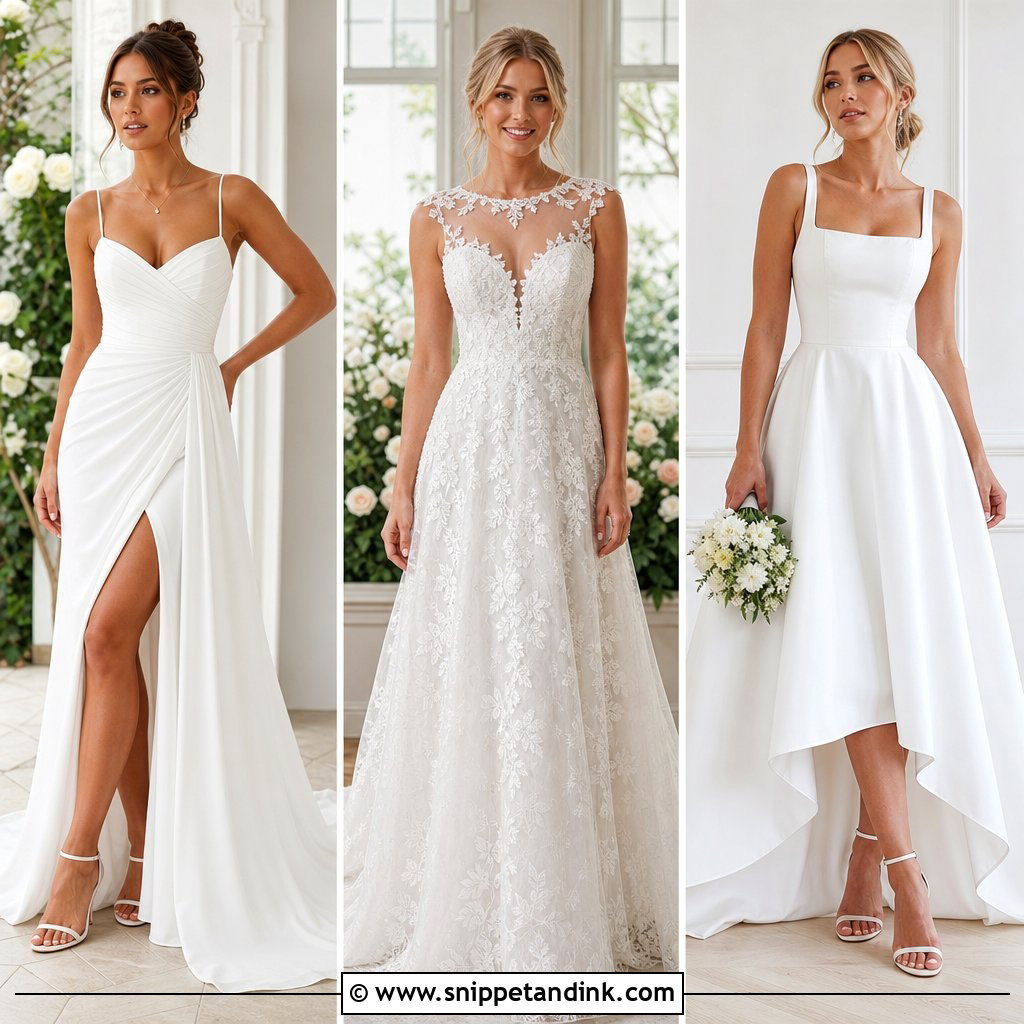
1. Petite A-Line Wedding Dress
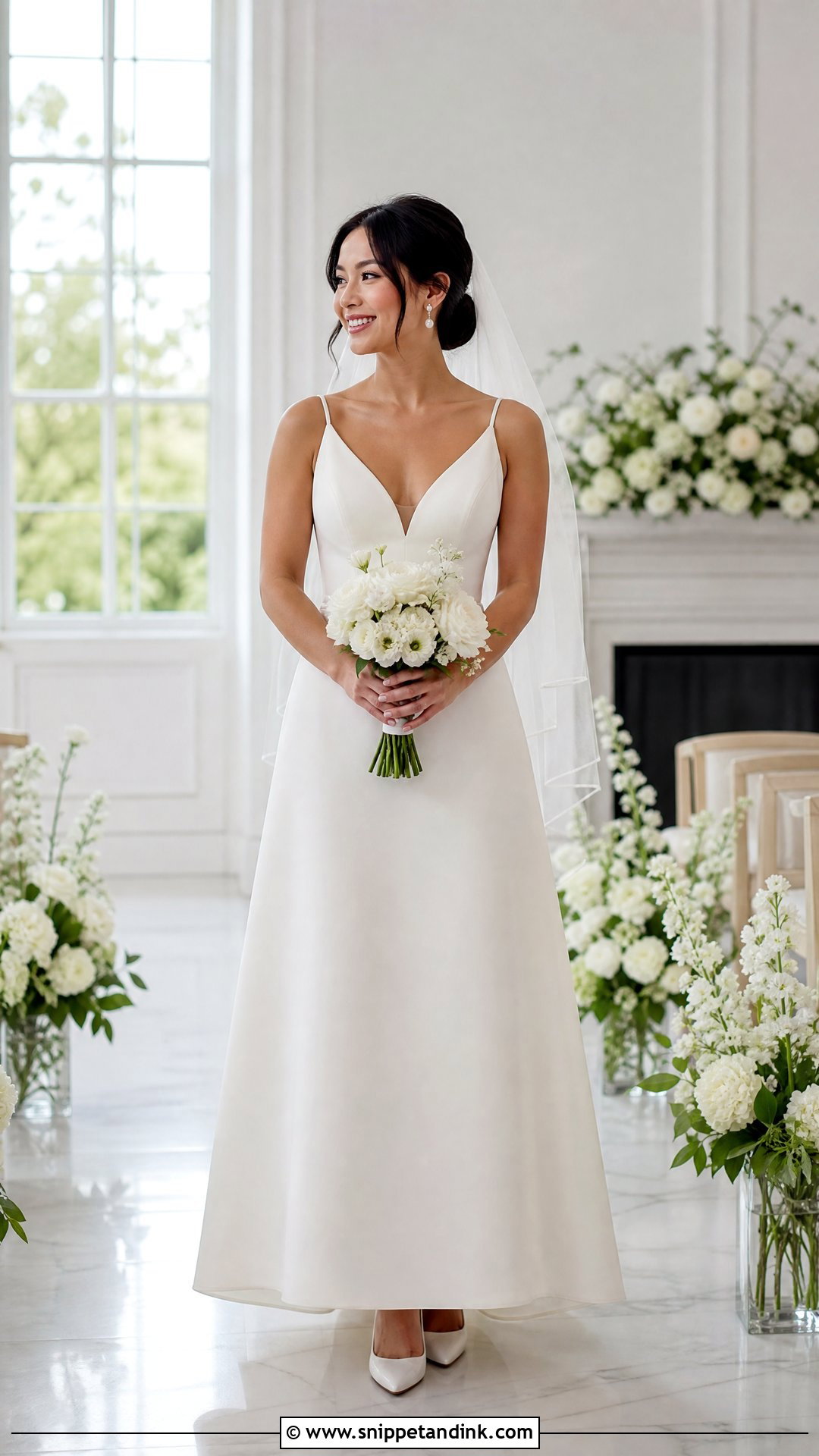
For a petite bride, the A-line is the safe first try, and safe isn’t a bad thing here. It marks the waist, then opens gradually. I look for a skirt with controlled movement rather than stacked stiff layers, which make a small frame look like it’s standing inside the dress. A V or narrow sweetheart with slim straps keeps the top light. Pointed pumps, pearl drops and a fingertip veil under a low bun. When the hem comes up, ask the tailor to take it from the waist seam on fuller skirts, so the flare keeps its original shape.
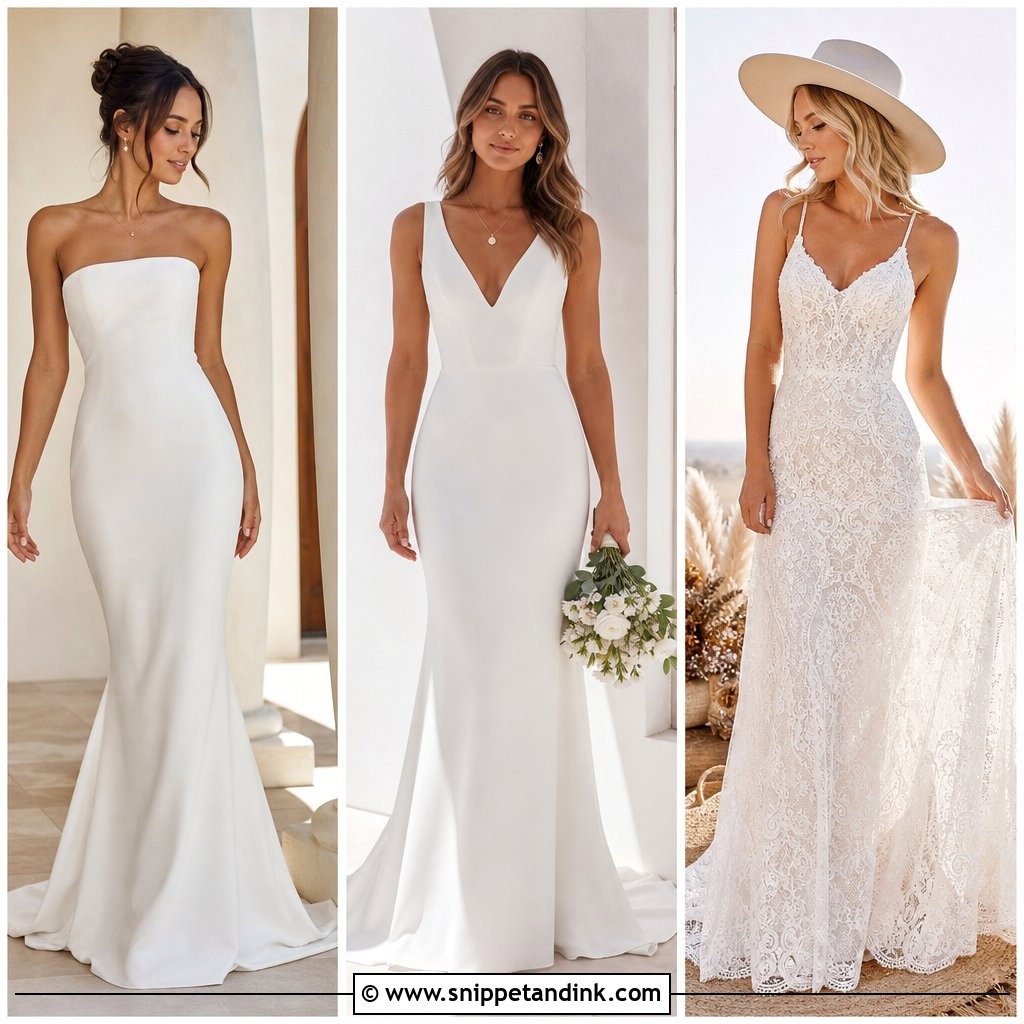
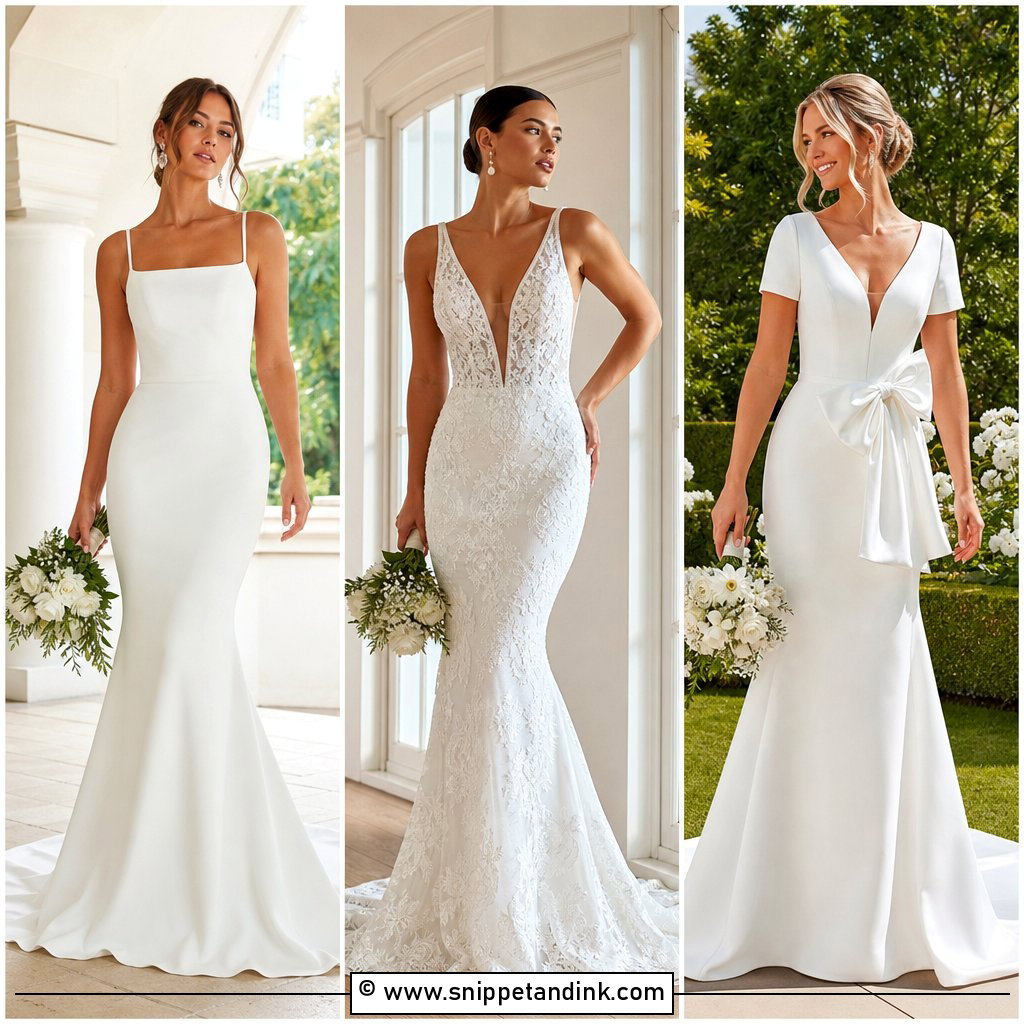
2. Petite Sheath Wedding Dress
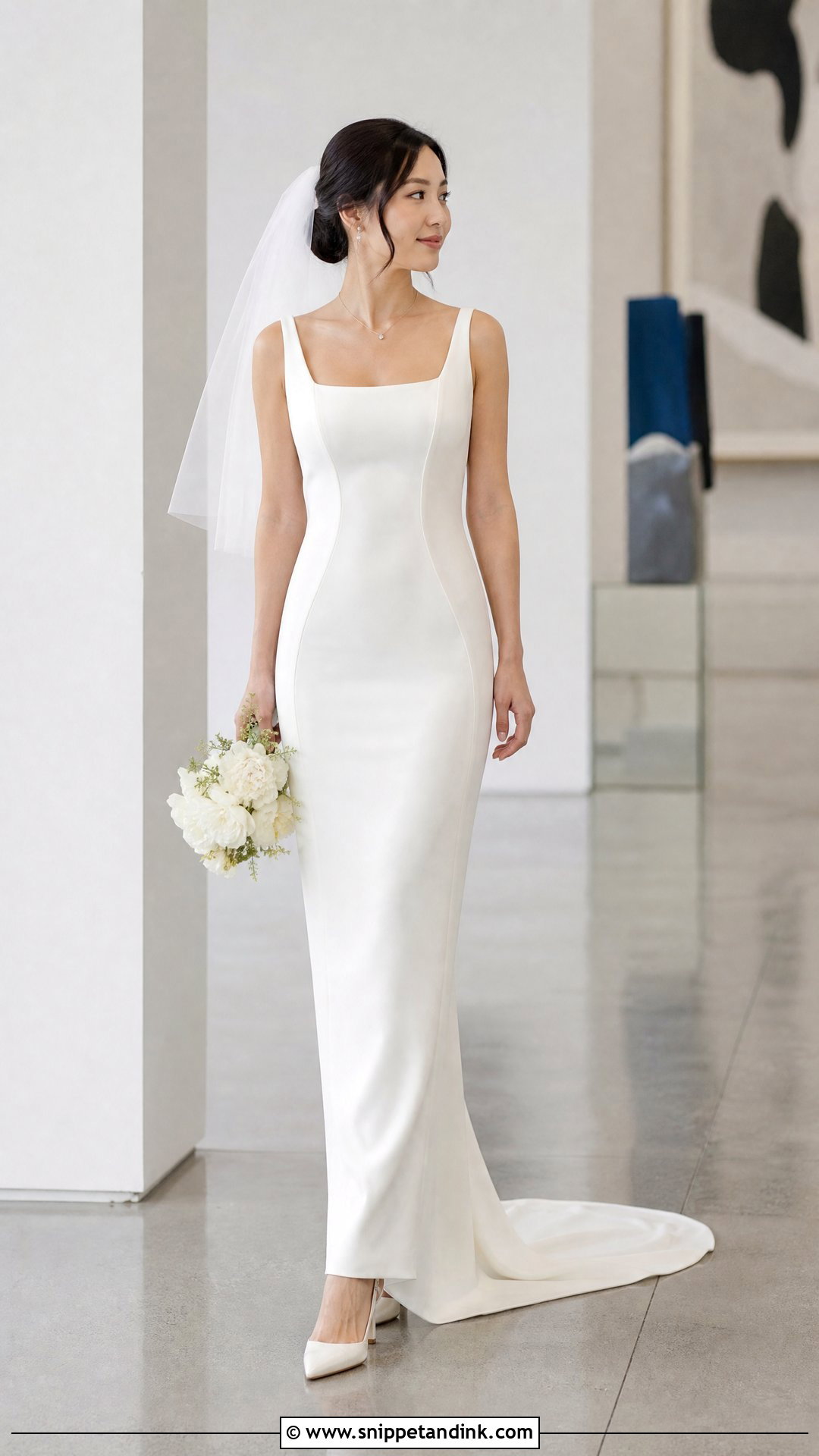
Picture a smooth sheath gown on a short bride at a city ceremony: one unbroken line from shoulder to floor. That’s why it works. Crepe, silk or a lightweight satin falls close without clinging, and princess seams shape it without a waist cut. A narrow train adds length behind you. Pointed slingbacks, a fine pendant, a shoulder-length veil and a low chignon keep it polished. There’s nowhere to hide a fitting problem in a sheath, so even small bunching at the hip or a gaping back needs fixing.
3. Petite Fit-and-Flare Wedding Dress
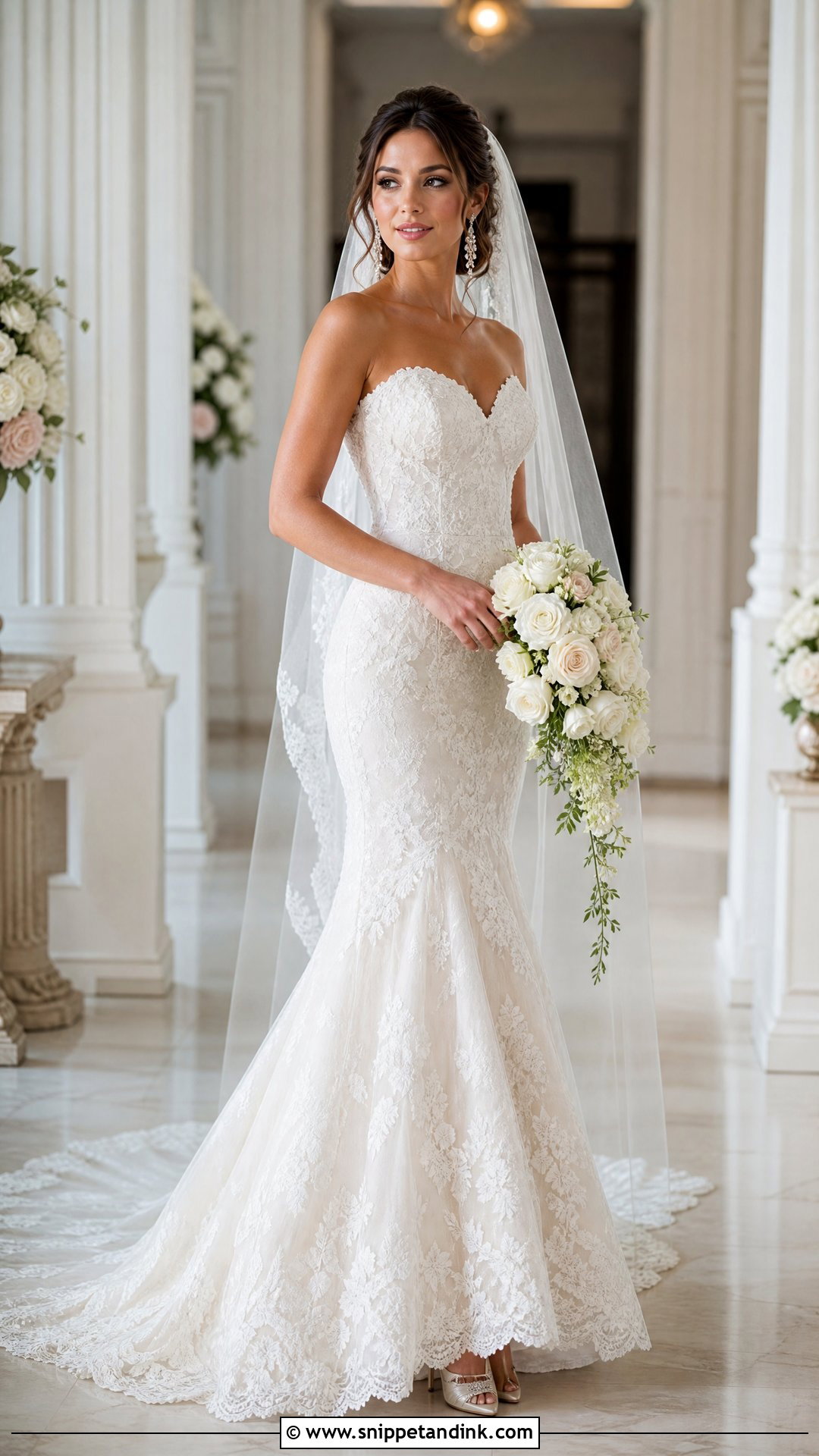
Where the flare starts is the whole story with a fit-and-flare. On a petite bride, a flare from the upper thigh keeps the legs looking their length; a flare at the knee cuts them in half. That’s hard to judge on a sample clipped up at the back, so ask the consultant to pin the skirt where it would actually sit after alterations. A sweetheart neck, covered buttons and a little lace appliqué add romance without crowding. Ivory heels, small crystal earrings, a sheer chapel veil and a narrow, slightly trailing bouquet echo the vertical line.
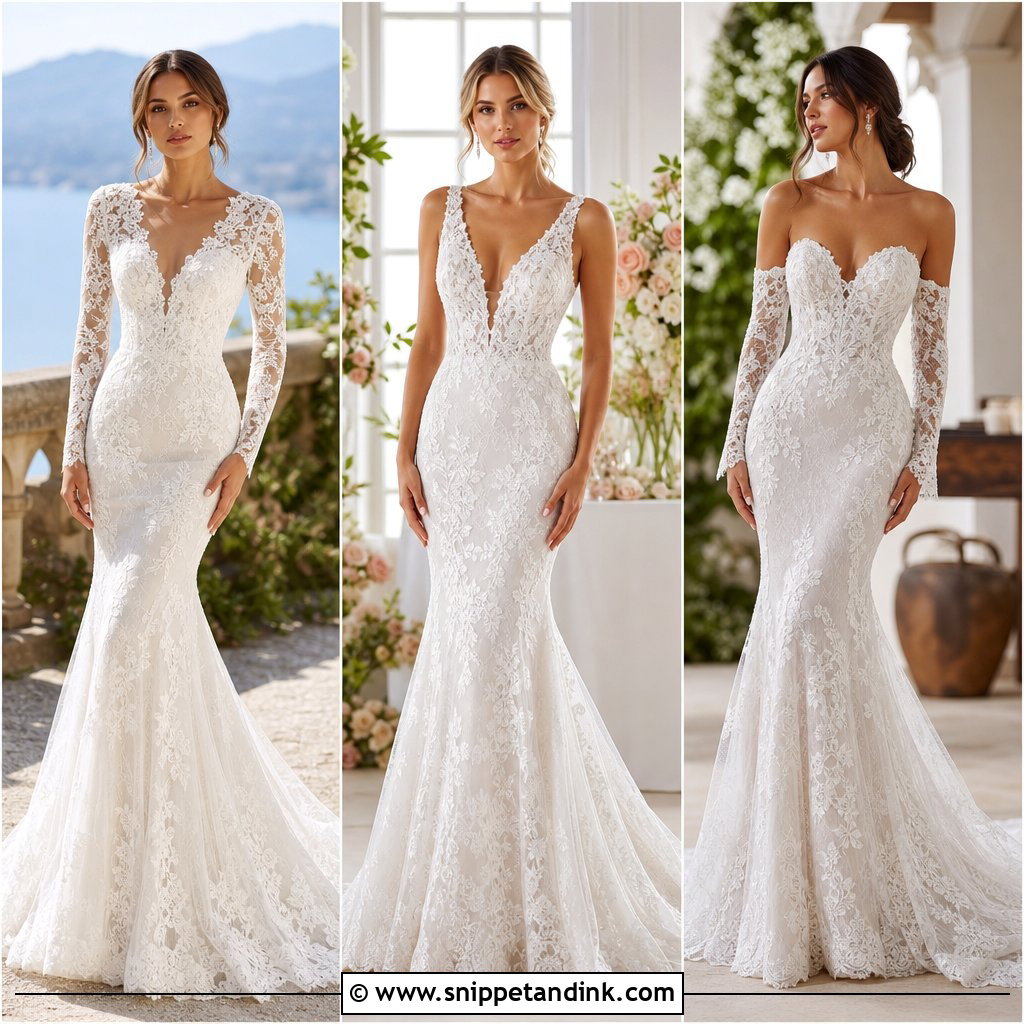
4. Petite Mermaid Wedding Dress
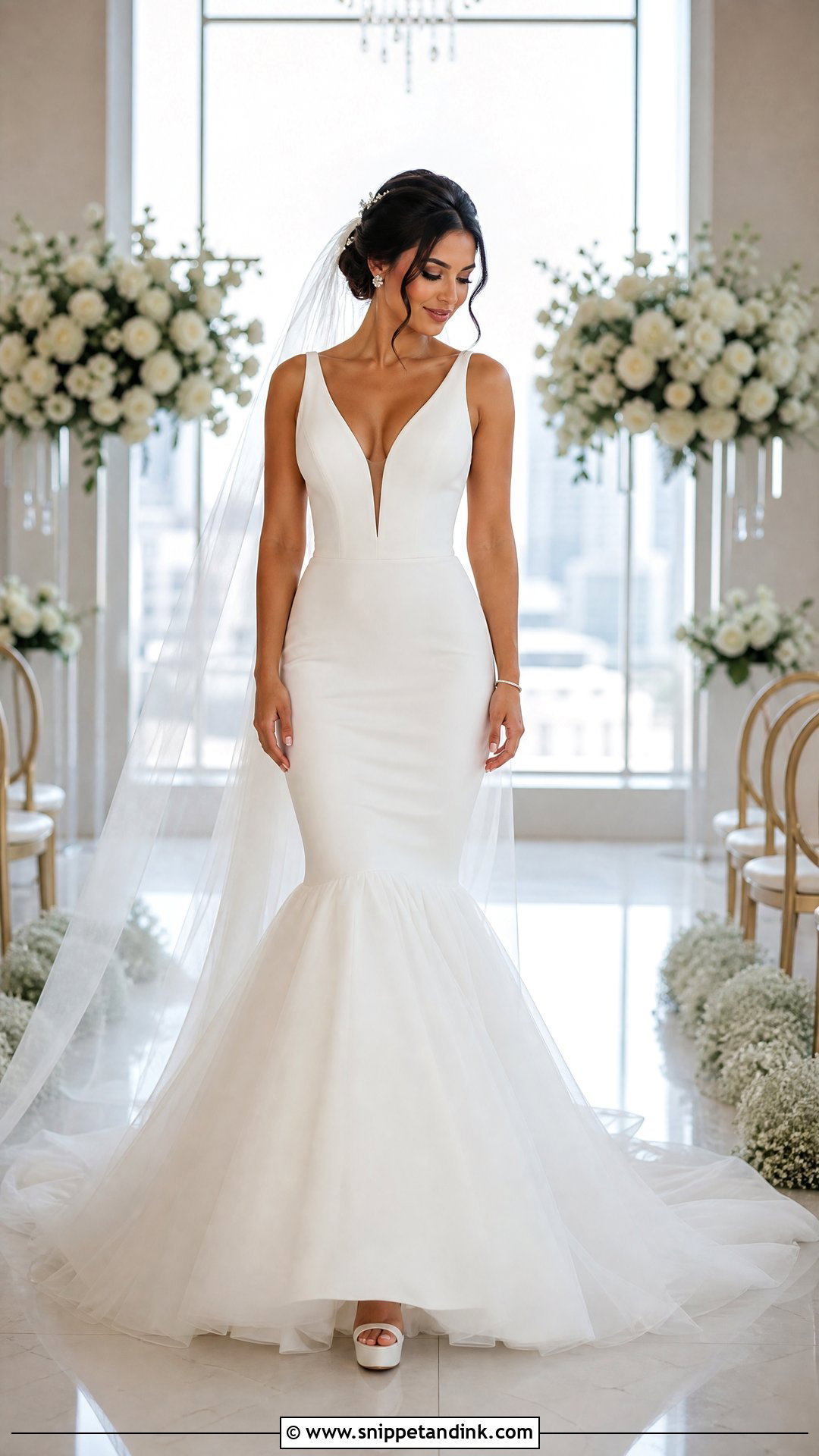
Can a short bride wear a mermaid? Yes, if it’s fitted to her and not to the sample. The bodice has to follow waist and hips smoothly, and the flare has to begin high enough that the legs don’t shrink. Soft organza, light tulle or stretch crepe keep the lower half from feeling weighted. Keep embellishment running in vertical or diagonal lines rather than horizontal bands. Platform sandals, a simple tennis bracelet, a narrow cathedral veil and an updo that shows the shoulders. Practise sitting and climbing steps in it before the day.
5. Petite Empire Waist Wedding Dress
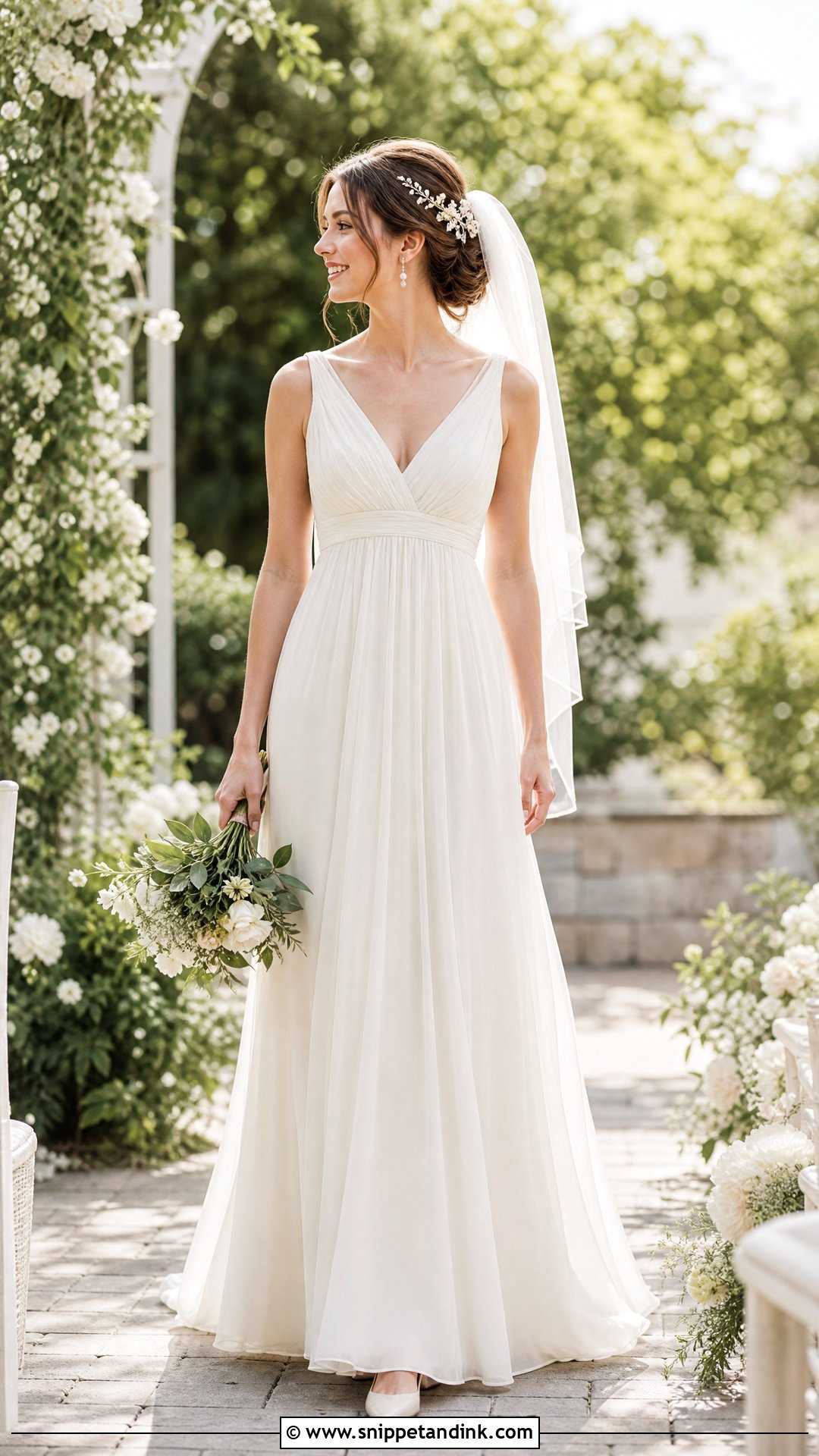
Raising the waistline to just under the bust gives the skirt one long, uninterrupted fall, which reads as extra height. It’s also the most comfortable gown here for brides who don’t want structure around the midsection. Chiffon, soft tulle or silk georgette move lightly; anything heavier turns bulky under that high seam. A modest V or softly gathered bodice keeps some definition. Low pointed heels, fine gold or pearl pieces and a narrow floral comb suit it, with a single-layer veil. The hem should just kiss the floor. Any longer and you’re wearing somebody else’s dress.
6. Petite Column Wedding Dress
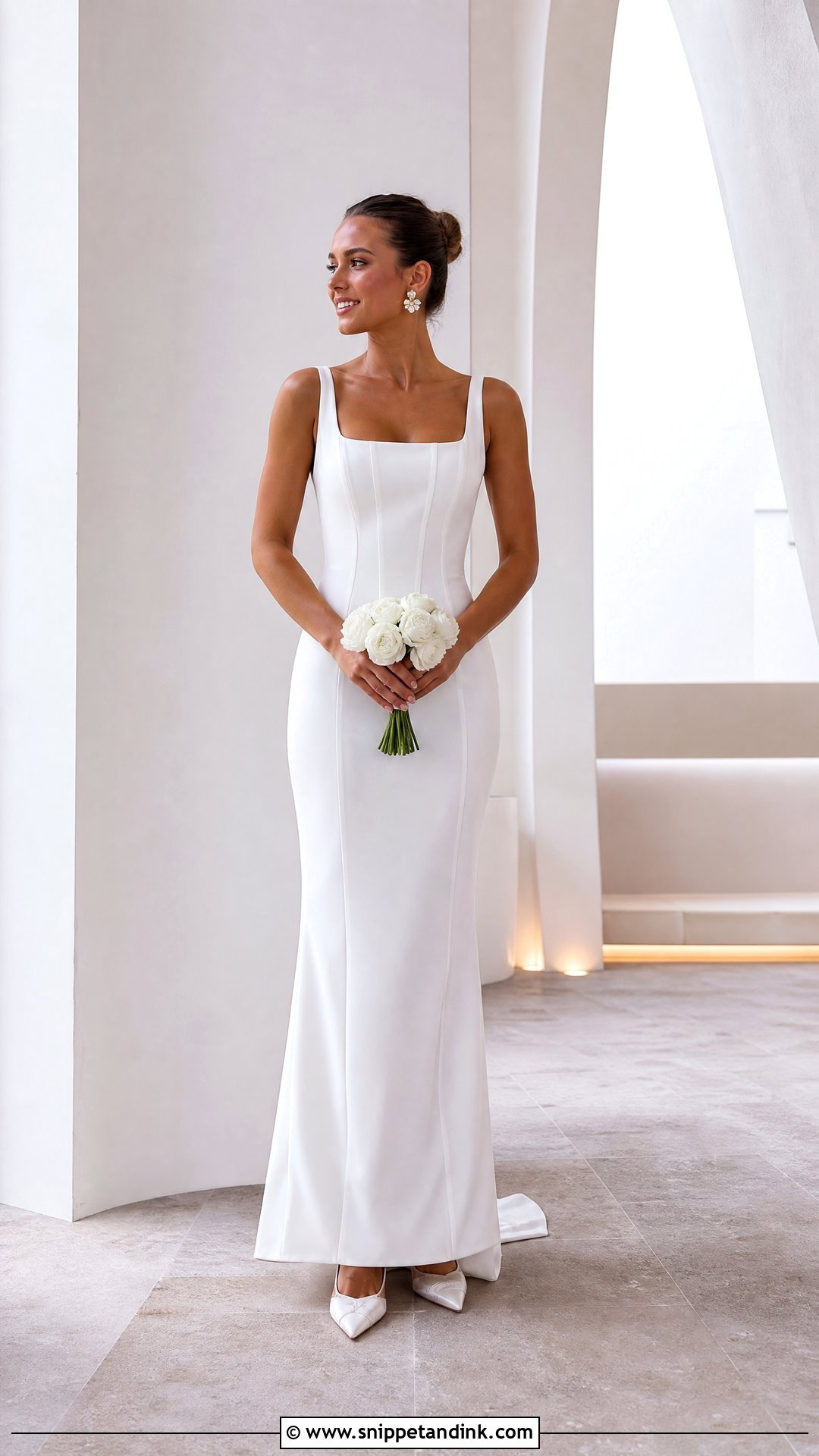
A column is the dress for galleries, city halls and minimalist venues. It drops almost straight from neckline to hem, so the eye travels head to toe without stopping. Vertical seaming, a lightly marked waist and fabric that glides instead of clinging make it work on a small frame. A bateau, square or asymmetric neckline gives it a point of interest. With so little volume, every fit issue shows, so plan careful work at the bust, waist, hips and back slit. Pointed pumps, sculptural earrings, a compact white bouquet and a short veil or polished bun.
7. Petite Satin Slip Wedding Dress
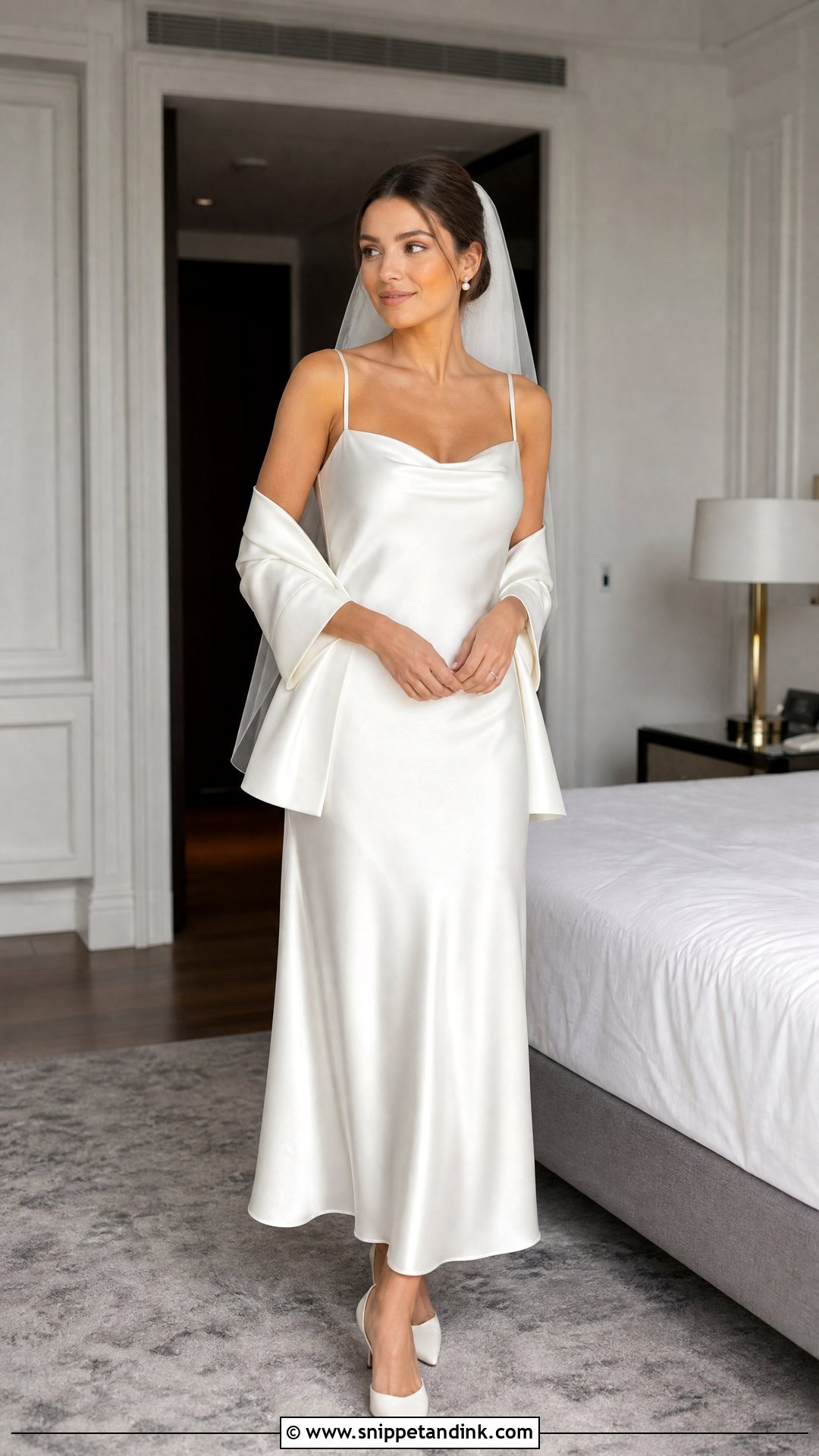
Bias-cut satin skims the body, and on a petite frame a slip dress looks quietly simple. It’s also the least forgiving fabric in this list. Satin shows underwear lines, strap marks and every ripple of a poor hem. Choose adjustable narrow straps, a gently shaped neckline and a defined bust seam for a touch of structure. Wear smooth, bonded-edge underwear. Kitten heels, pearl studs and a light shoulder veil suit it, with a cropped satin wrap or jacket ending at the waist for cool weather. Fit the hem and straps in the exact shoes you’ll wear.
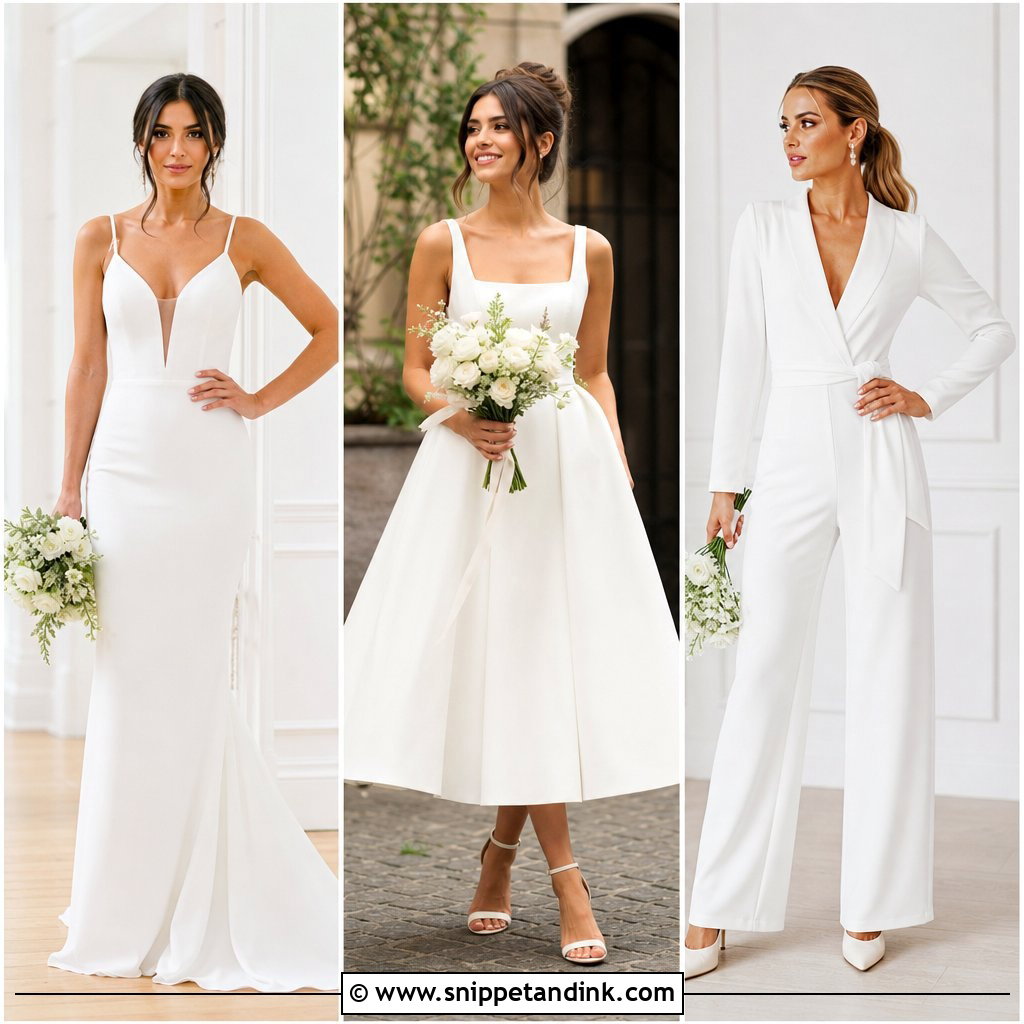
8. Petite Tea-Length Wedding Dress
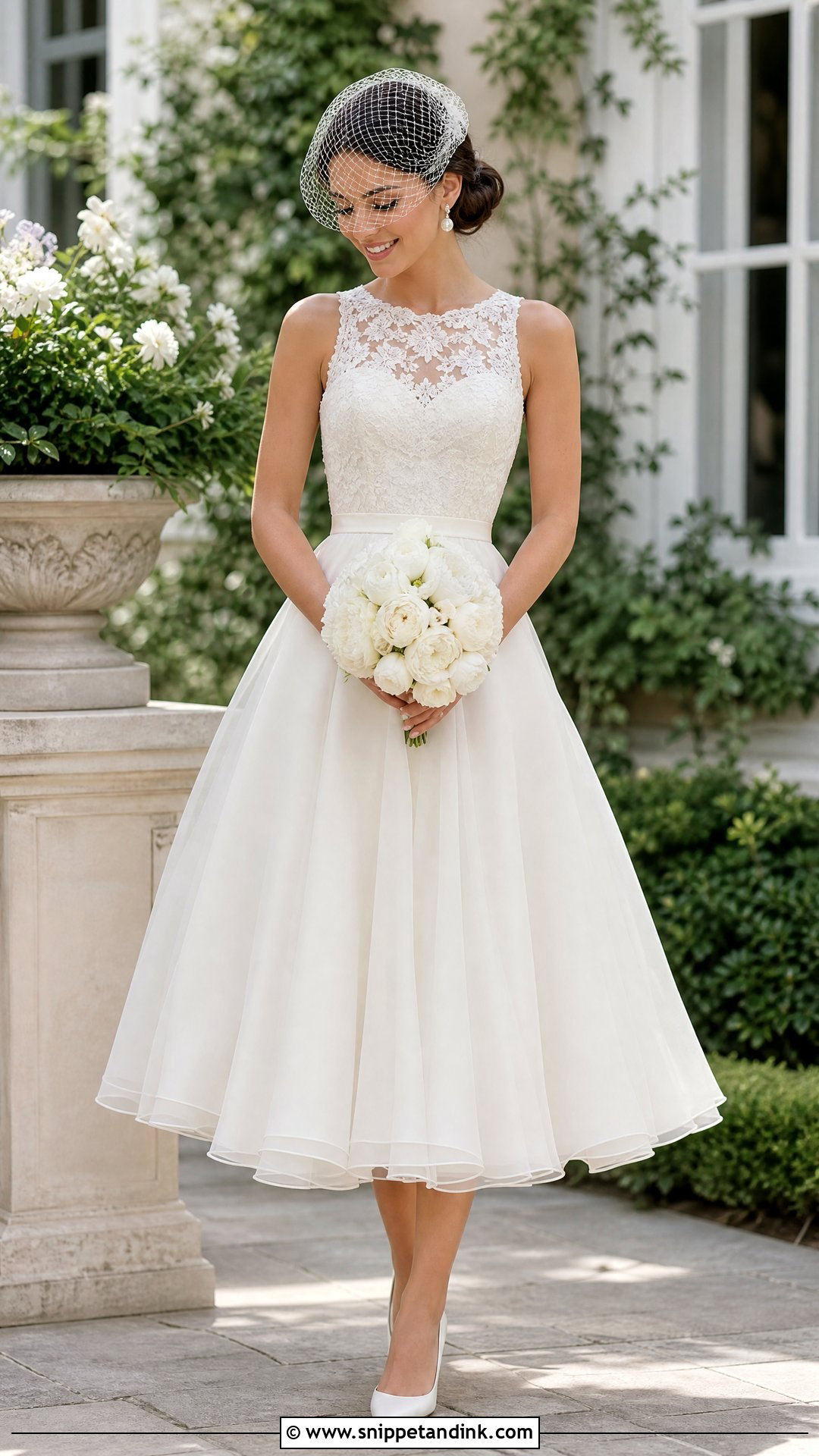
Tea length lets a petite bride show her shoes, and the trick is where the hem lands. It should end between the lower calf and ankle, where the leg narrows, never across the widest part of the calf. A fitted bodice and clear waist make the shorter length look deliberate. Mikado for crisp, lace or layered organza for soft. Pointed pumps or a fine ankle strap work; chunky straps visually cut the leg at the ankle. A birdcage veil, pearl earrings and a round bouquet complete the retro feel. Test several hem heights in a full-length mirror before the final cut.
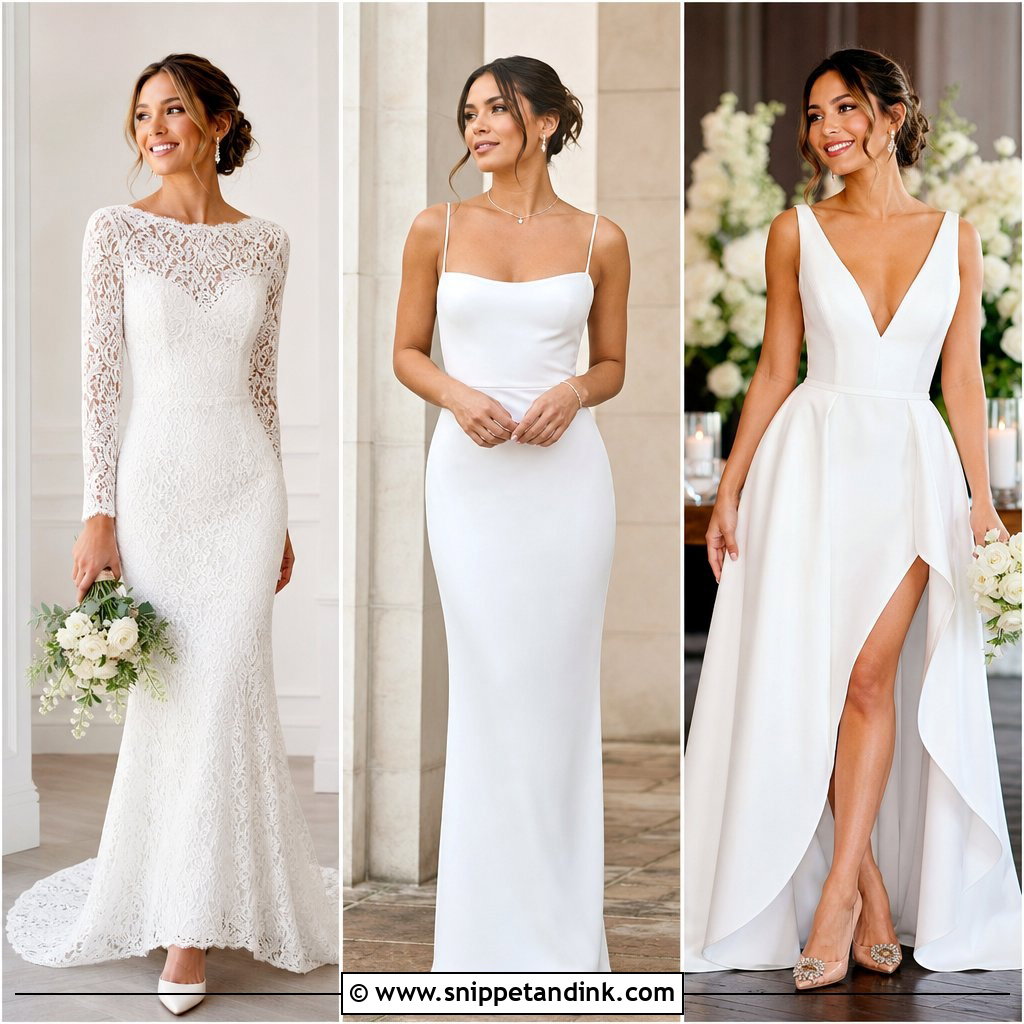
9. Petite High-Low Wedding Dress
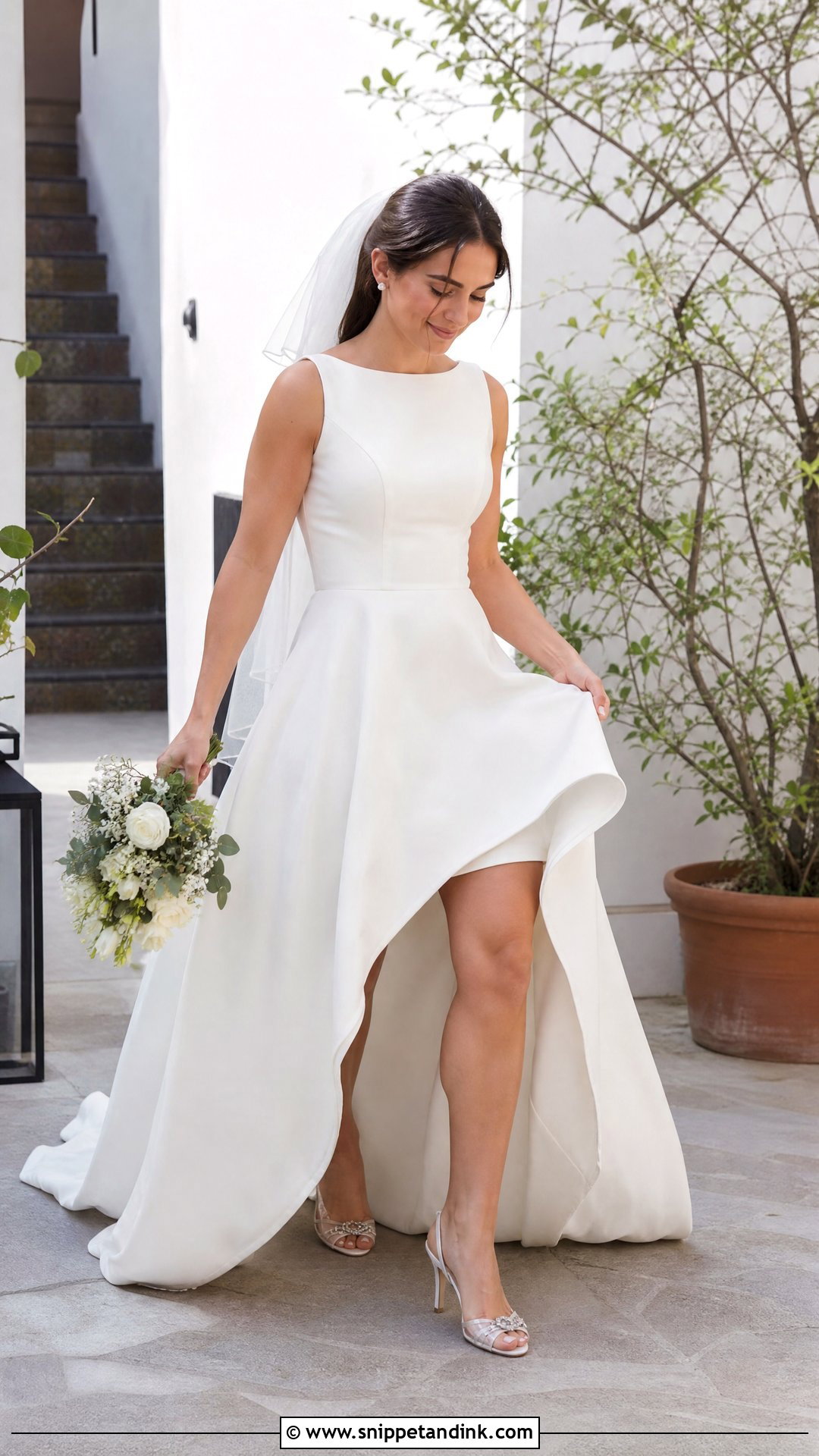
High-low hems give movement and show the legs when floor-length feels too formal. I prefer a softly curved front to a steep, sharply tiered one; the gentle curve keeps the vertical line flowing, while a sudden drop chops the figure. Keep the back train light and narrow so it follows you rather than dominating. A plain fitted bodice balances the hem. Shoes are on show, so choose sleek pumps, embellished slingbacks or refined sandals, with understated earrings and a short veil set behind the hair. The longer back should bustle easily for dancing.
10. Petite Mini Wedding Dress
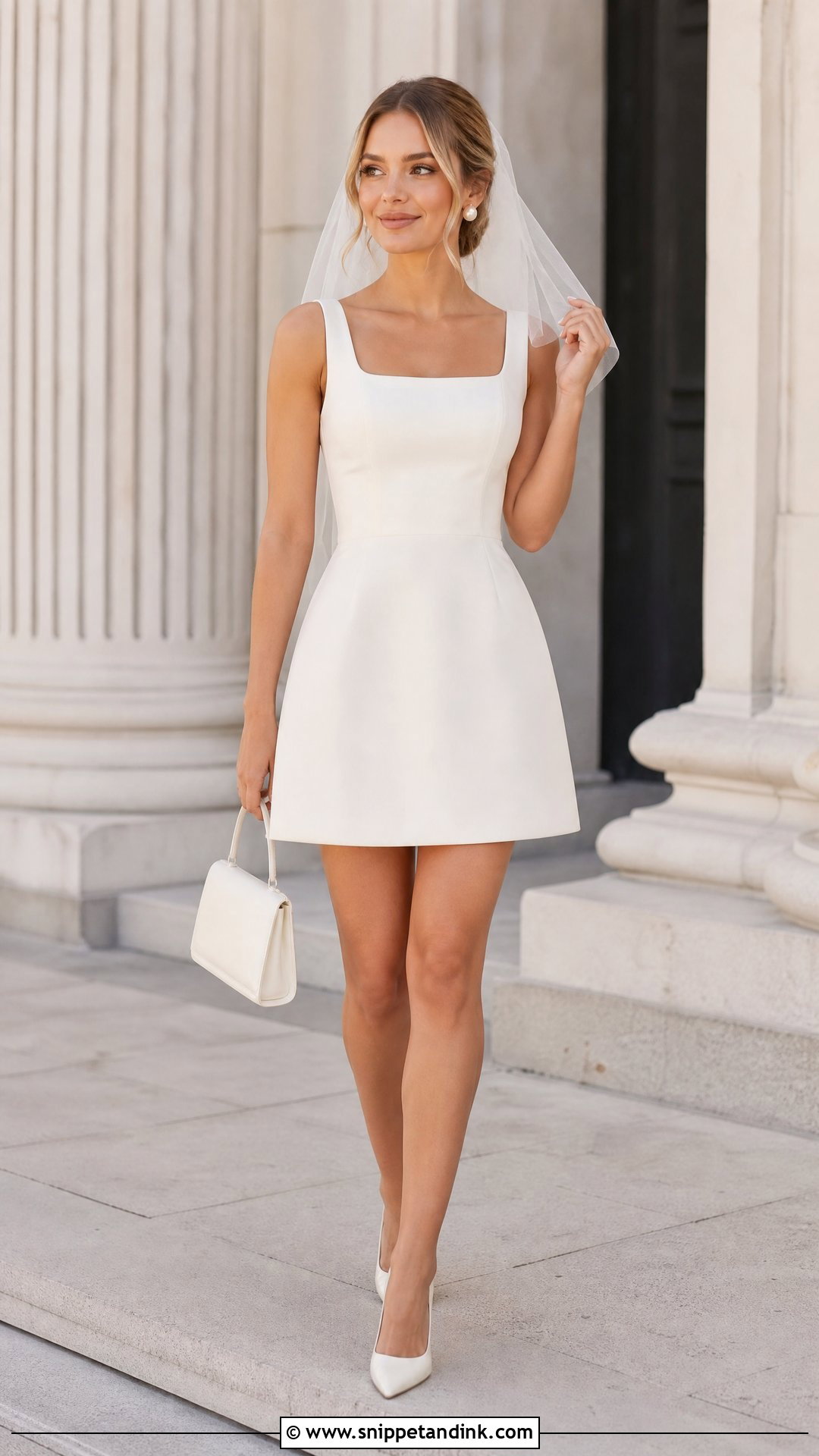
Short dresses are made for petite brides: courthouse vows, a reception change, a casual celebration. A tailored shift, a fitted blazer dress or a short A-line gives definition without volume. The fit at the shoulders and waist decides whether it looks sharp or boxy, so this is not a dress to buy off the rail and wear unaltered. Square, bateau or softly draped necklines keep it elegant. Pointed pumps, sheer tights in cool weather, a small top-handle bag and pearl or crystal earrings, plus a short veil to make it unmistakably bridal. Big sleeves mean simpler hair and jewellery.
11. Petite V-Neck Wedding Dress
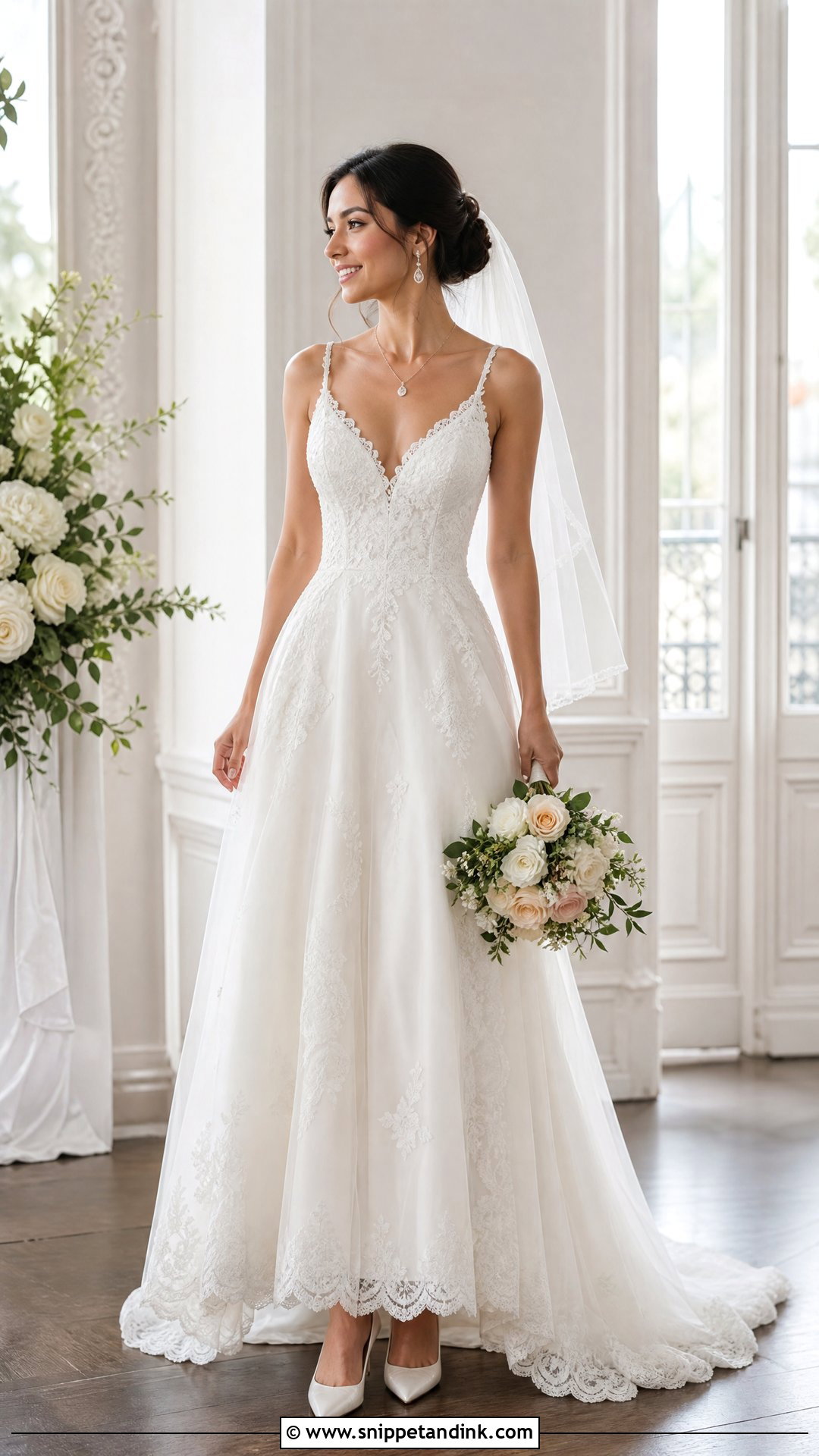
A V-neck wedding dress draws the eye down through the bodice, which adds a little length to a short torso. Choose a moderate V for coverage or a deeper one backed with illusion mesh. It pairs with an A-line, sheath or fit-and-flare. One fitting detail matters more than any other here: shoulder straps on a sample are cut for a taller body, and if they aren’t shortened, the V drops and the waist seam slides down with it. A fine pendant, drop earrings, pointed heels and a veil under an updo. Skip a bold necklace if the bodice is detailed.
12. Petite Square-Neck Satin Wedding Dress
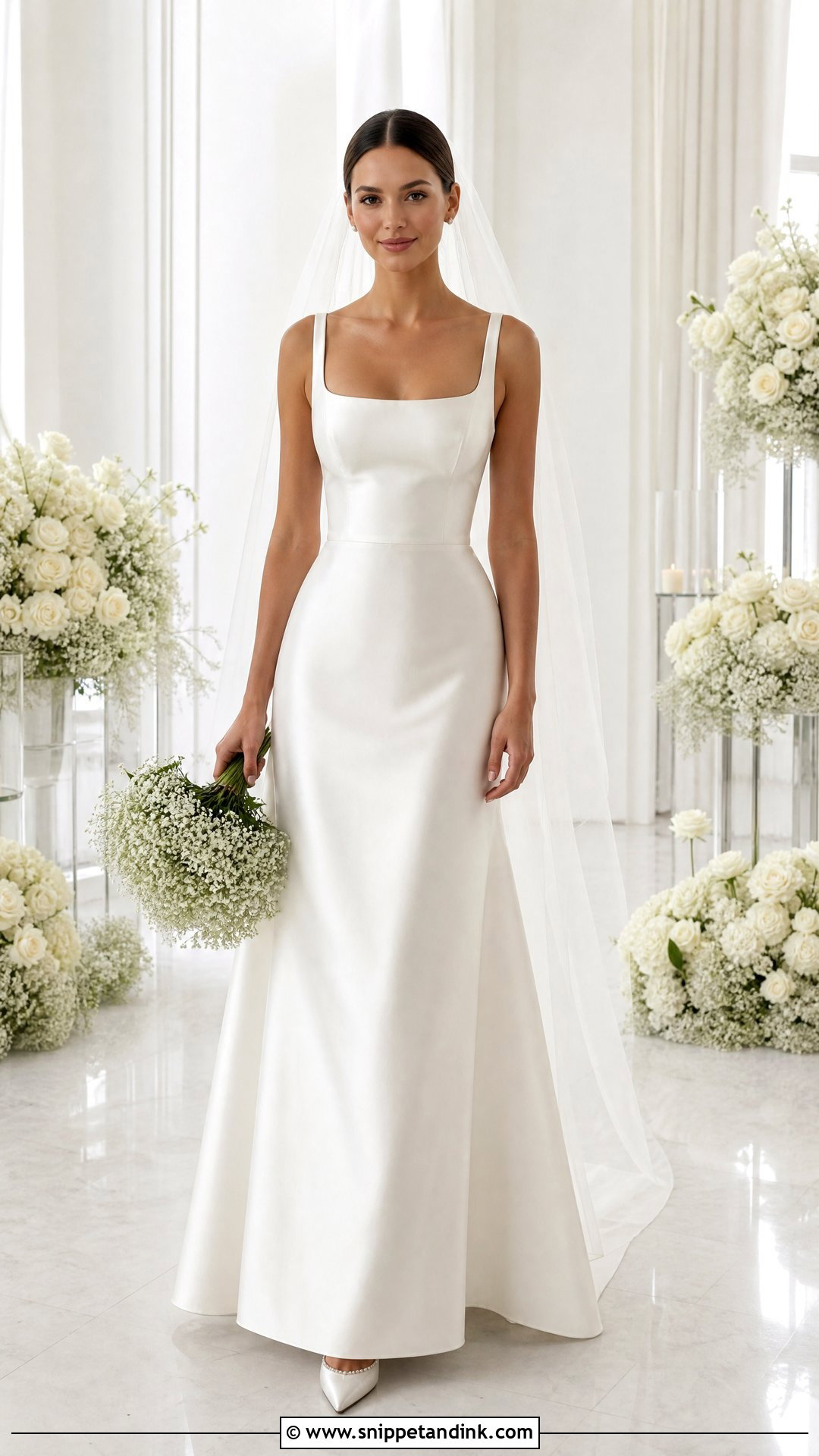
A square neckline frames the collarbone with crisp corners and gives a small upper body some structure. Narrow straps or fitted short sleeves, then a slim A-line or column skirt, keep it lean. Matte satin and mikado hold shape well, but avoid anything so stiff that it stands away from you, because a petite bride in a rigid dress looks like she’s wearing a box. Pearl buttons, pointed satin shoes, small earrings, a smooth fingertip veil and a centre-parted low bun echo the symmetry. After alterations the square should lie flat on the chest, with straps that don’t slip.
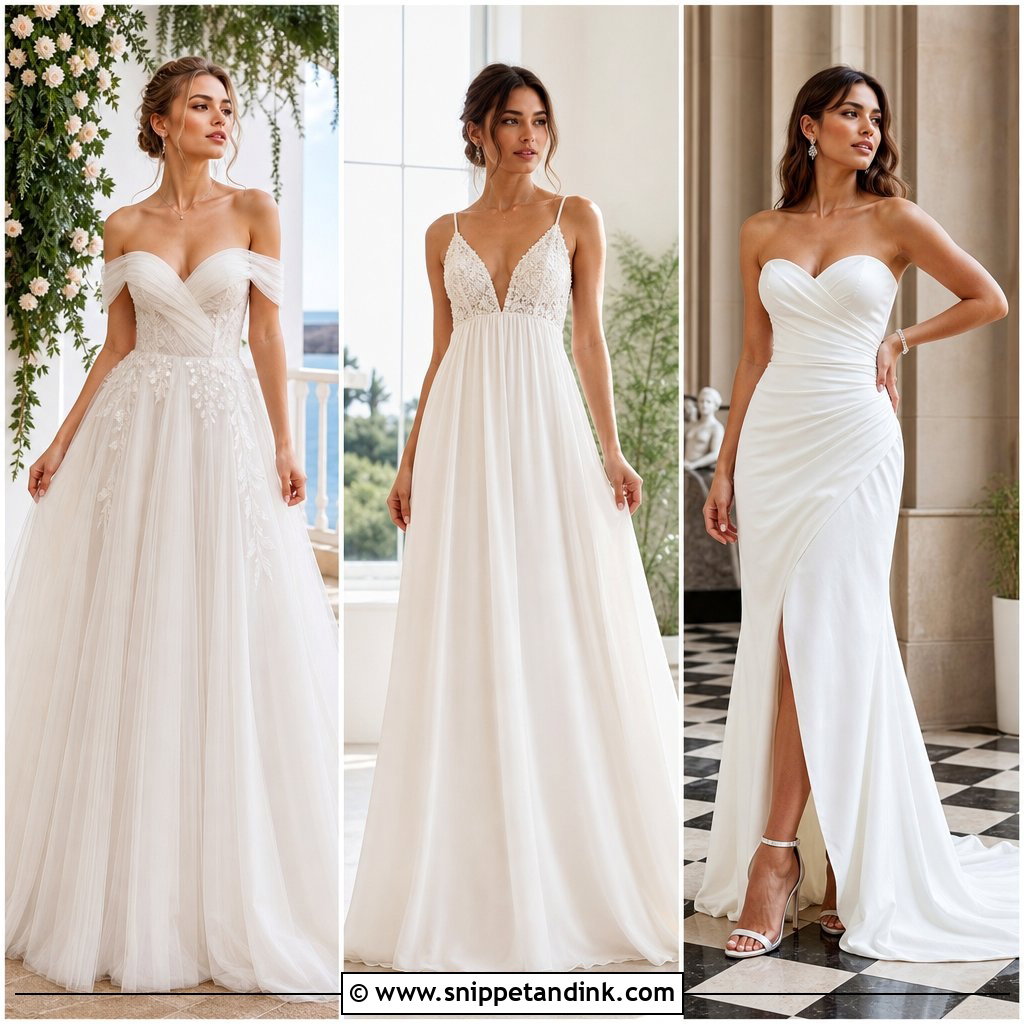
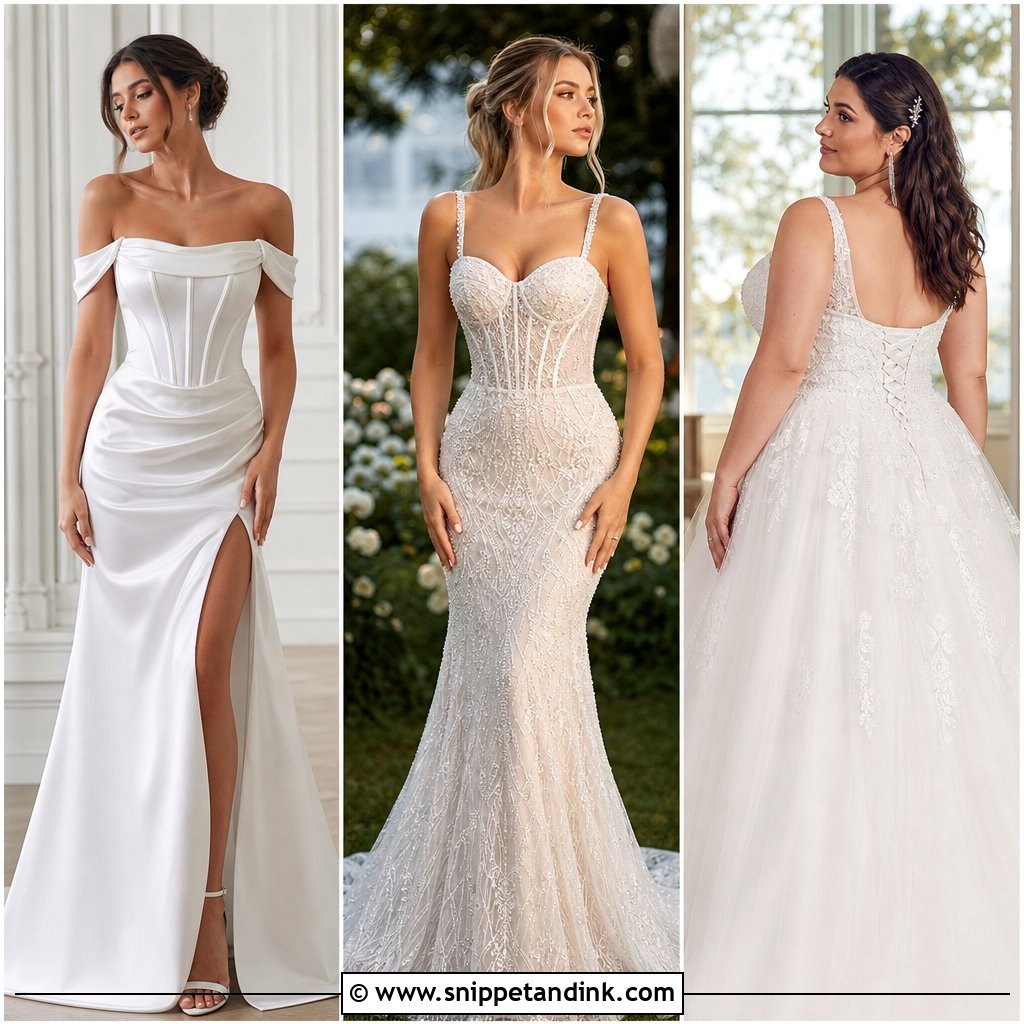
13. Petite Off-the-Shoulder Wedding Dress
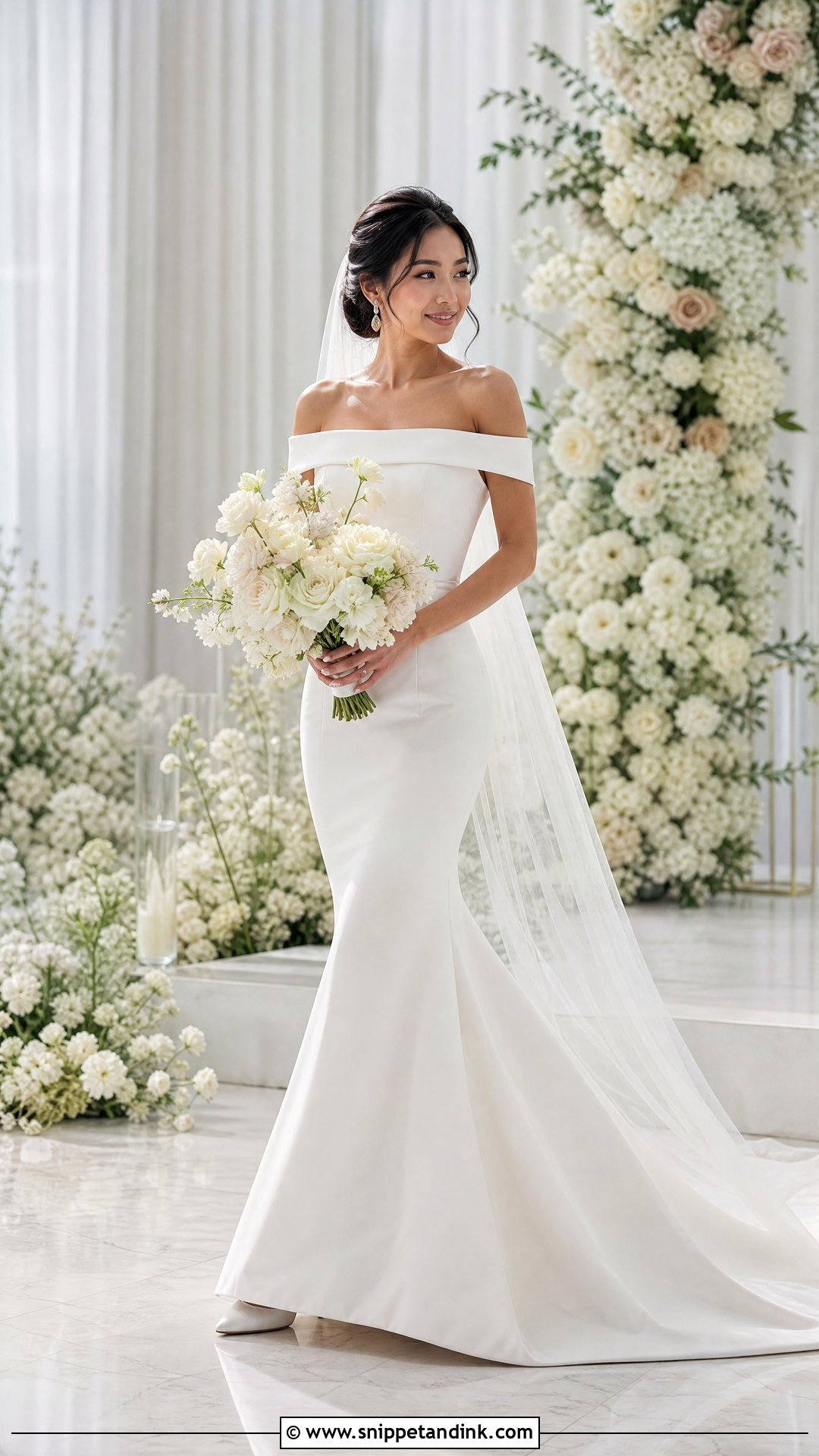
Bare shoulders open up the upper body, which helps a small frame look less covered. The band should be narrow; deep draped folds take up too much space on a short torso. Balance the horizontal line with a fitted crepe gown, a soft A-line or a controlled fit-and-flare, and keep lace on the bodice or train rather than everywhere. Drop earrings, pointed heels, no necklace and a veil under a soft updo. Raise both arms, sit and walk at the fitting. Off-shoulder bands pin the arms if they’re placed even slightly too low.
14. Petite Halter Wedding Dress
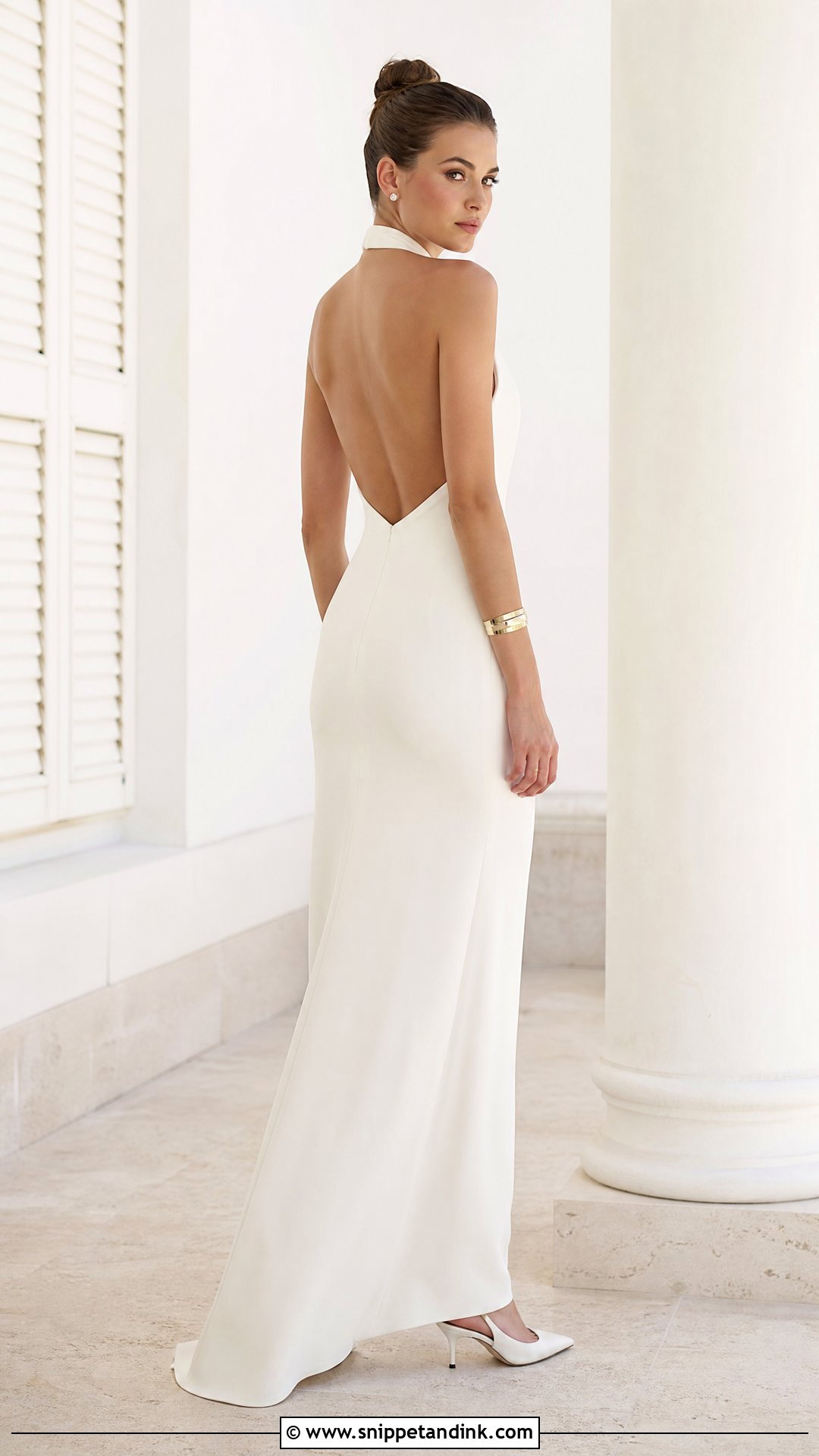
A halter wedding dress sends attention to the face and shoulders and draws a strong line down the centre of the body. It looks sleekest with a column, sheath or narrow A-line. On a petite bride, the halter needs to sit close at the neck and armholes; spare fabric at the bust is the most common problem I see on samples. Smooth crepe or satin lets the neckline lead. An elegant bun, small studs, a cuff bracelet and pointed slingbacks, with no necklace. Check the bodice length so the waist shaping lines up with your own waist.
15. Petite Strapless Corset Wedding Dress
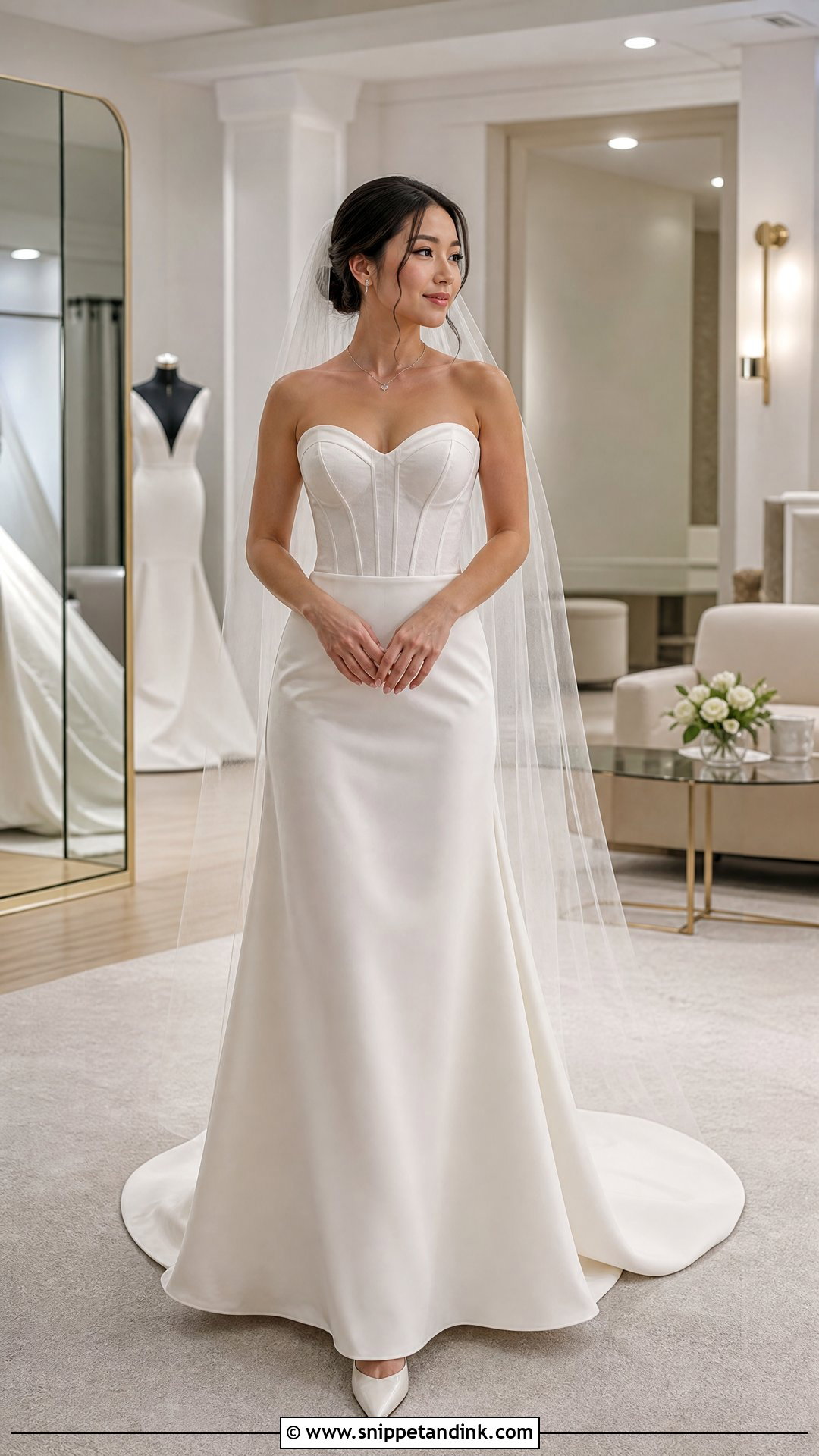
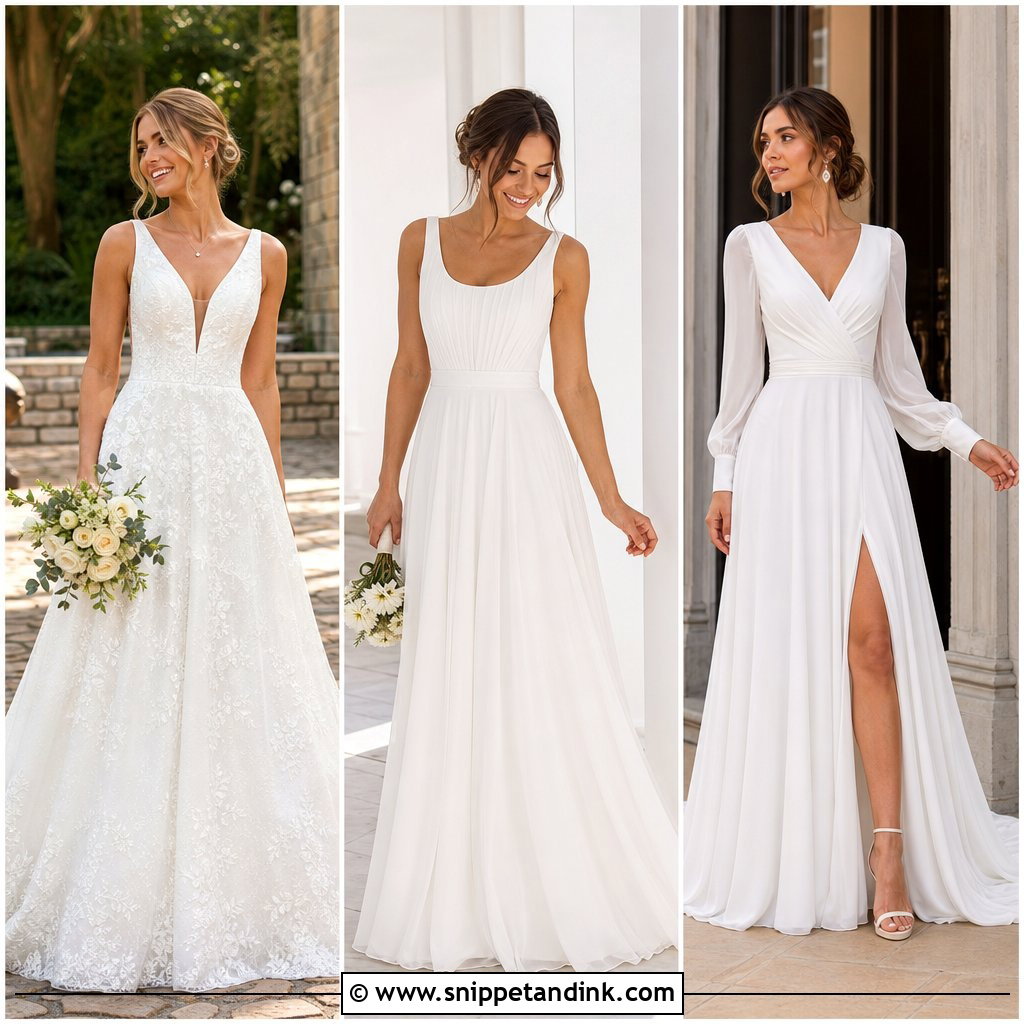
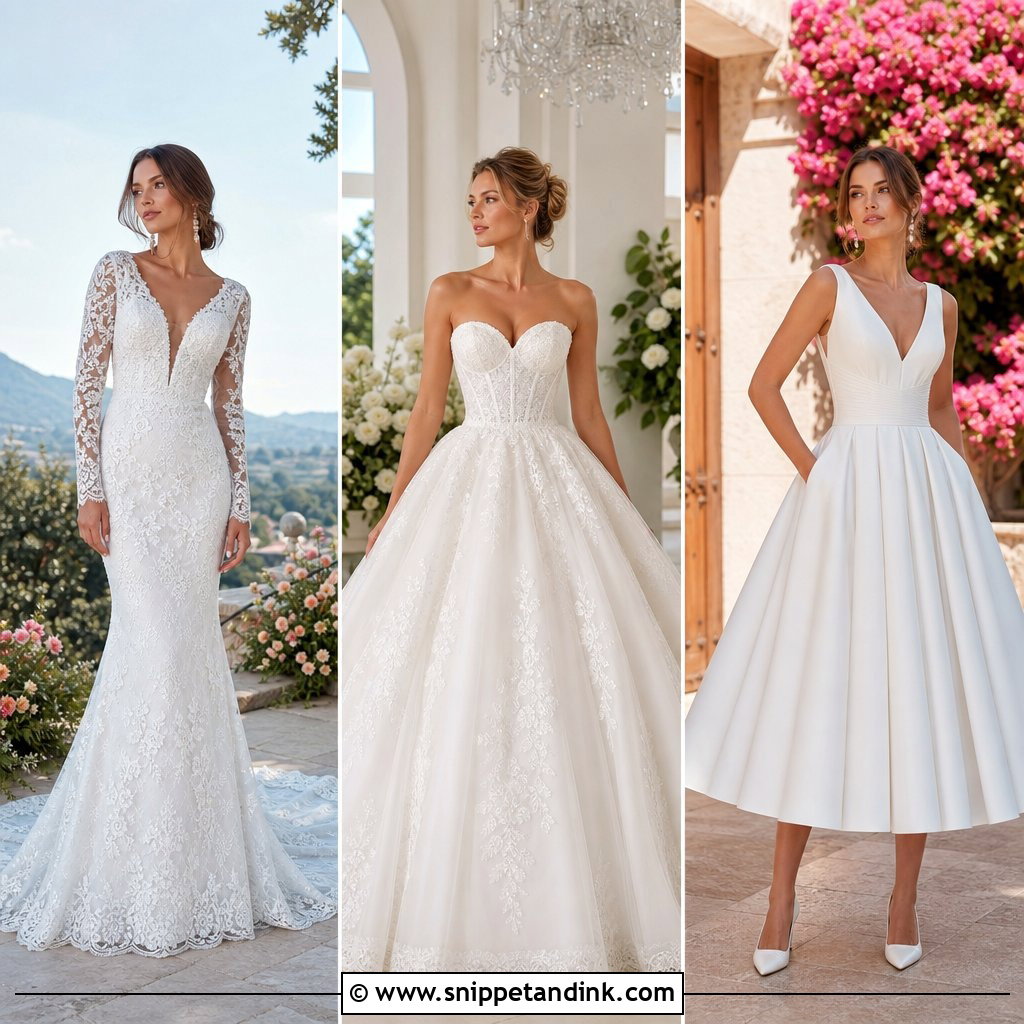
Corset bodices are built for an average torso, and a short-waisted bride can find the boning digging into her hips when she sits. That’s the first thing I check. The structure should be scaled to you, with a gently curved neckline and a waist seam on your natural waist, not below it. A slim A-line or modified ball gown skirt with soft pleats balances it. Pointed pumps, a delicate necklace, studs and a single-layer veil finish the look, and a cropped wrap adds coverage without hiding the waist. Comfort should come from construction, not from lacing it tighter.
16. Petite Long-Sleeve Lace Wedding Dress
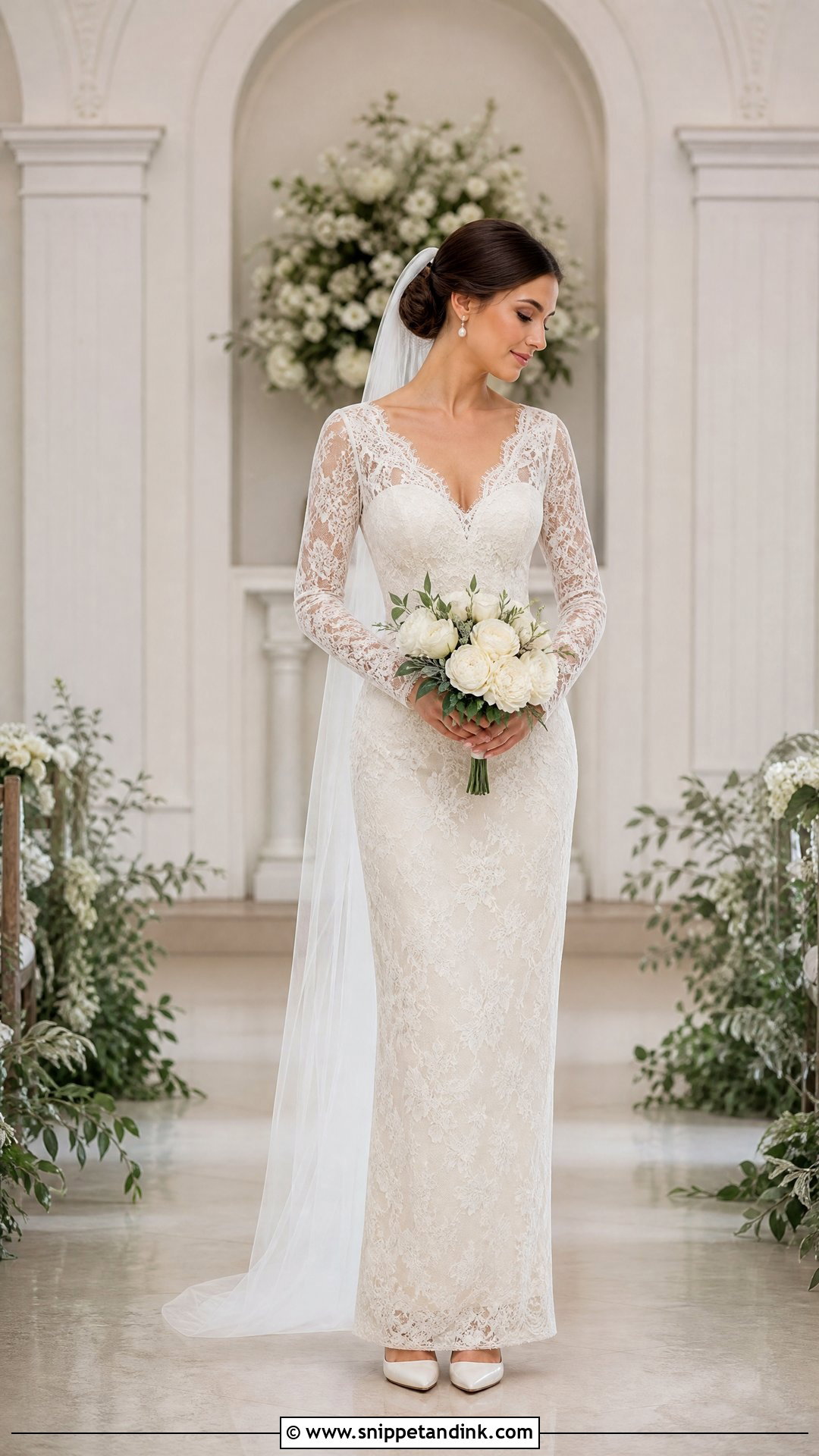
Delicate lace sleeves are lovely on a petite bride if the pattern is in scale. Large motifs designed for a taller body can look like wallpaper on a small one, so I look for fine lace with open areas. A fitted sheath or soft A-line keeps the base streamlined, and an illusion neckline or narrow V stops long sleeves from closing in the upper body. Pointed heels, pearl earrings, a plain veil and a neat low bun. The tailor will usually need to shorten the sleeves, narrow the shoulders and reset the cuff so it finishes cleanly at the wrist.
17. Petite One-Shoulder Wedding Dress
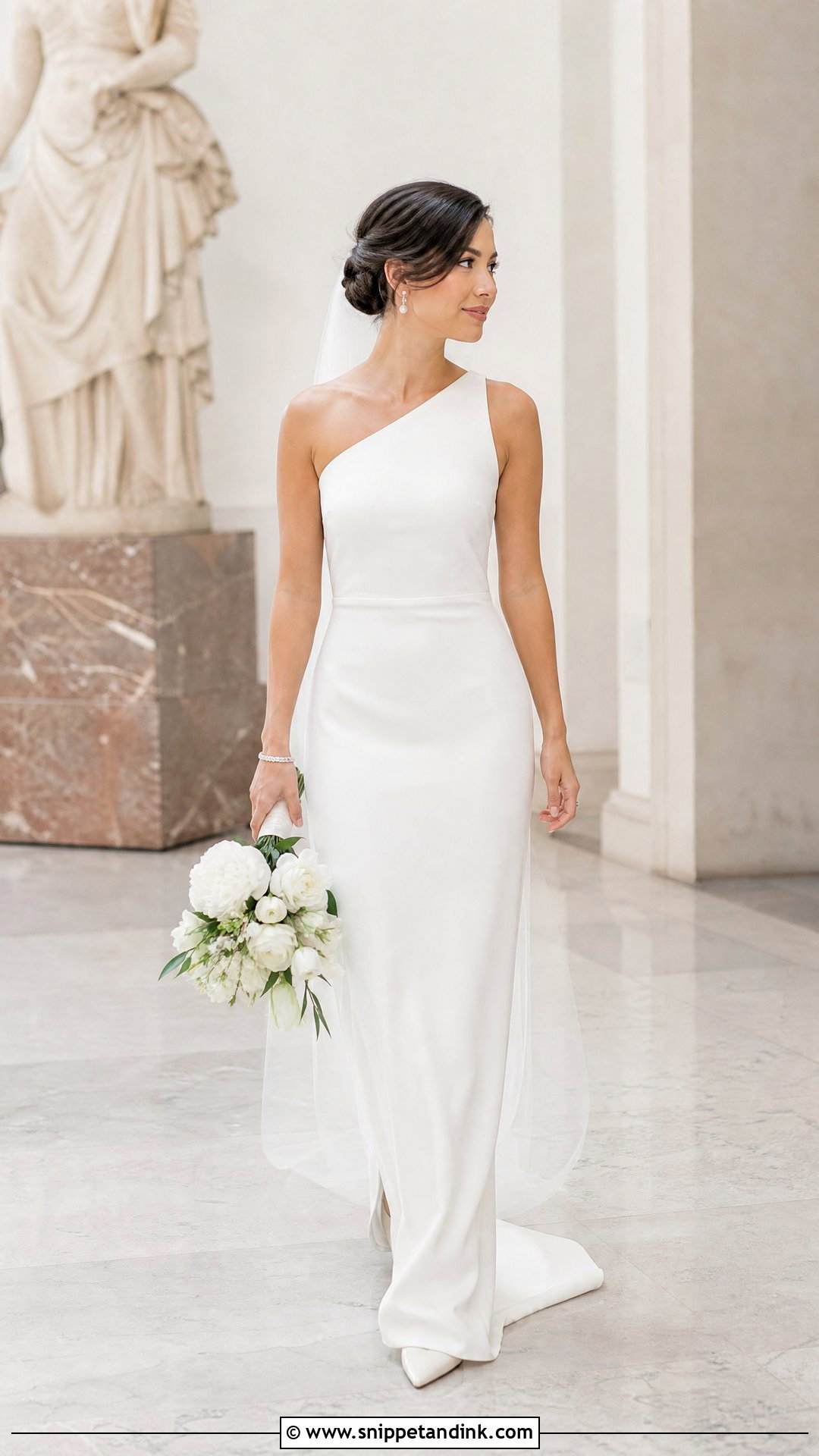
One shoulder adds a diagonal line across the upper body, a modern shape that’s simple to wear. Keep the shoulder detail slim or softly draped; a big bow or ruffle takes over a petite frame. A crepe column, fitted sheath or gentle A-line keeps the rest balanced. A side-parted bun, one statement earring or a delicate pair, pointed shoes and maybe a bracelet. If you wear a veil, choose a sheer one pinned low at the back. The underarm on the open side is where these gowns gape, so that’s where the tailor should spend time.
18. Petite High-Slit Wedding Dress
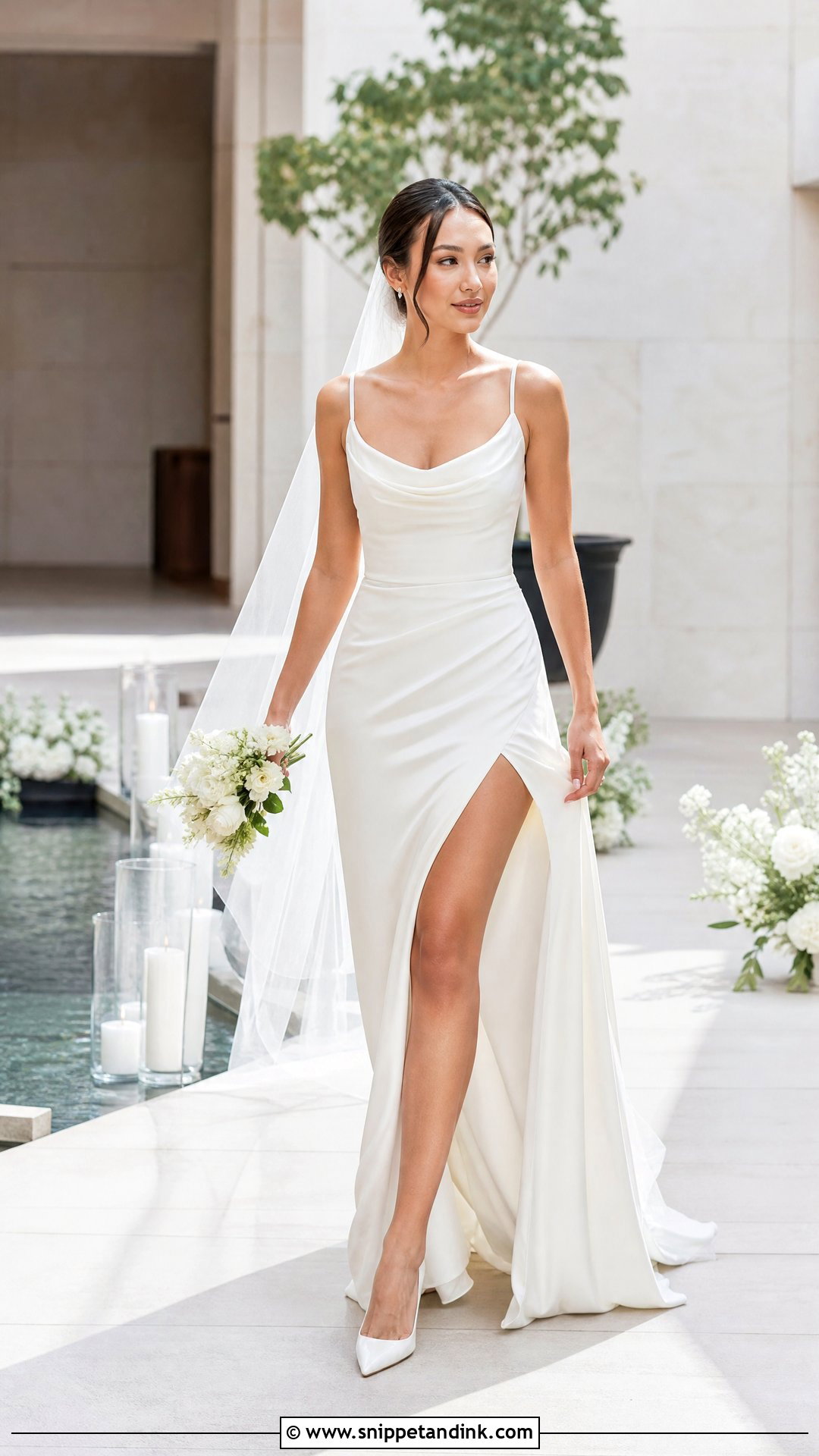
A high-slit wedding dress shows a flash of leg with each step, which breaks up a long stretch of fabric and makes a short bride look taller in motion. Keep the rest sleek: a fitted bodice over a sheath, column or narrow A-line. Where the slit starts matters for comfort and security, so it should be lined or reinforced at the top. Pointed pumps or minimal heeled sandals, small earrings and a light veil; skip a dramatic train when the slit is already the feature. Walk, sit and climb steps in it at the fitting.
19. Petite Drop-Waist Wedding Dress
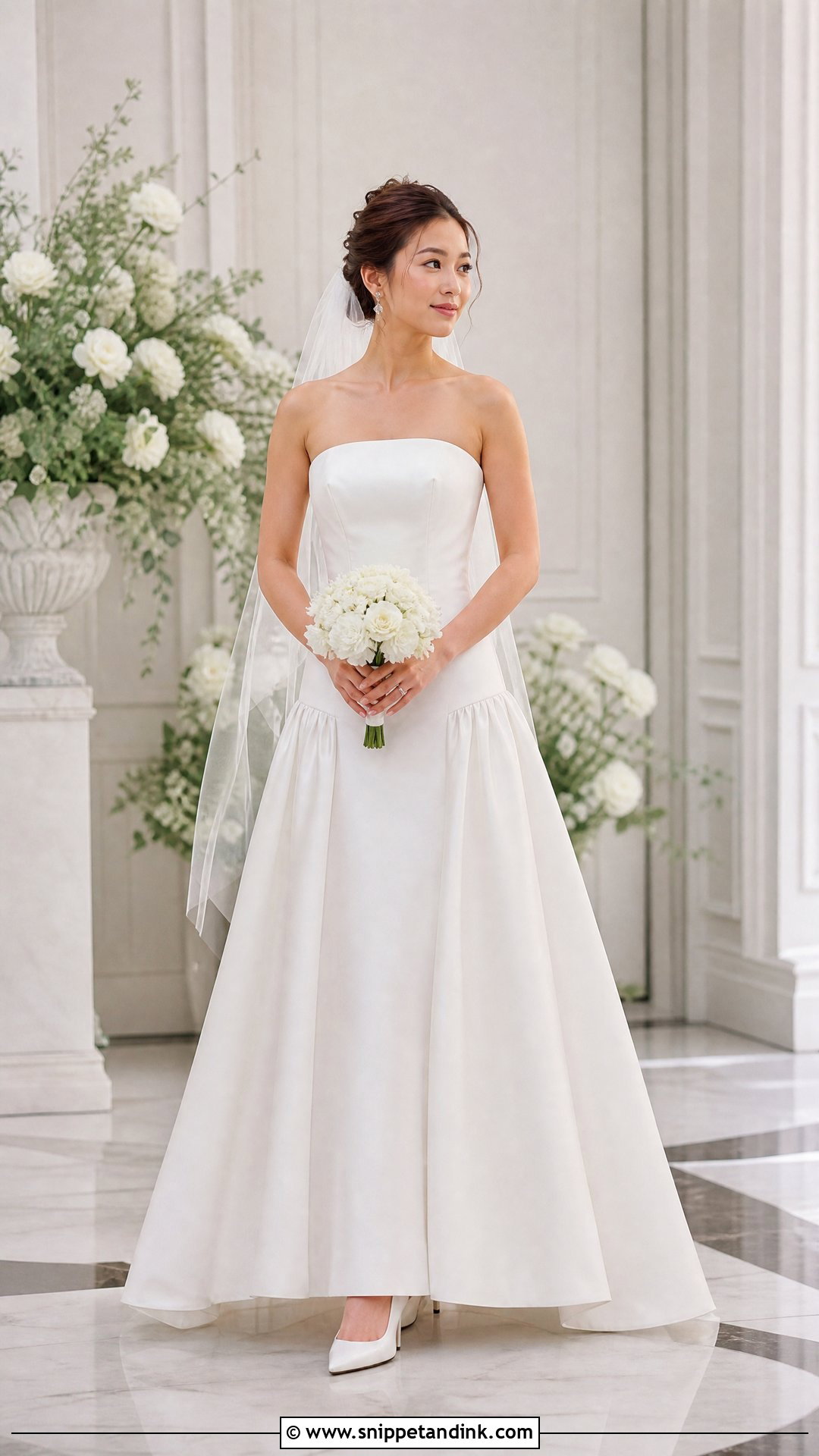
Drop waists are tricky on a short torso. Lower the seam too far and the legs disappear, so I only suggest a subtle drop: a shallow basque or a soft curve leading into a controlled A-line. Let the construction be the interest and keep embellishment minimal. Pointed pumps, a narrow veil, delicate earrings and a compact bouquet suit it, and an upswept hairstyle adds height to balance the longer bodice. The waist point has to match your torso length exactly. View the gown from front, side and back before the alteration is confirmed.
20. Petite Modified Ball Gown Wedding Dress
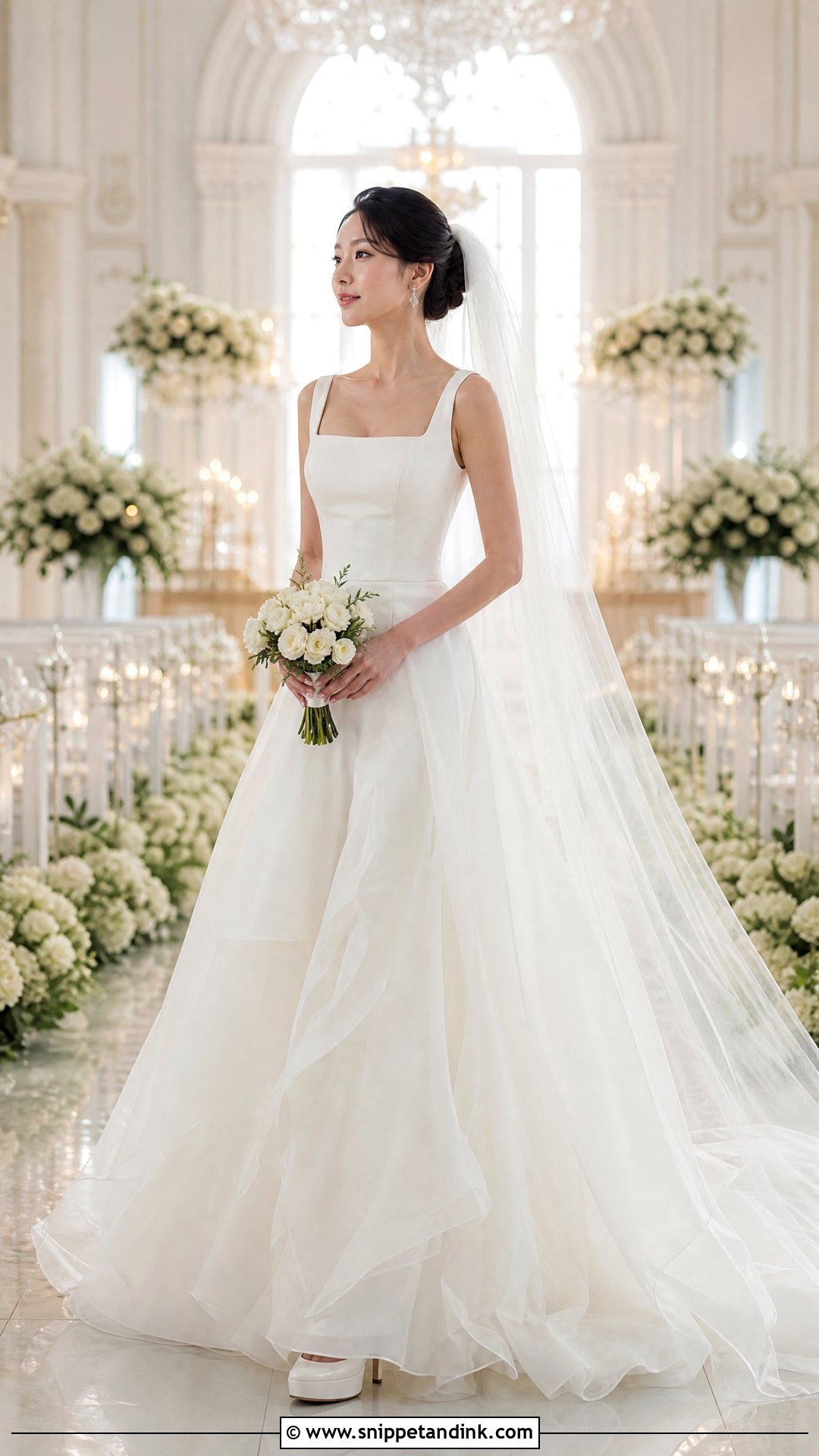
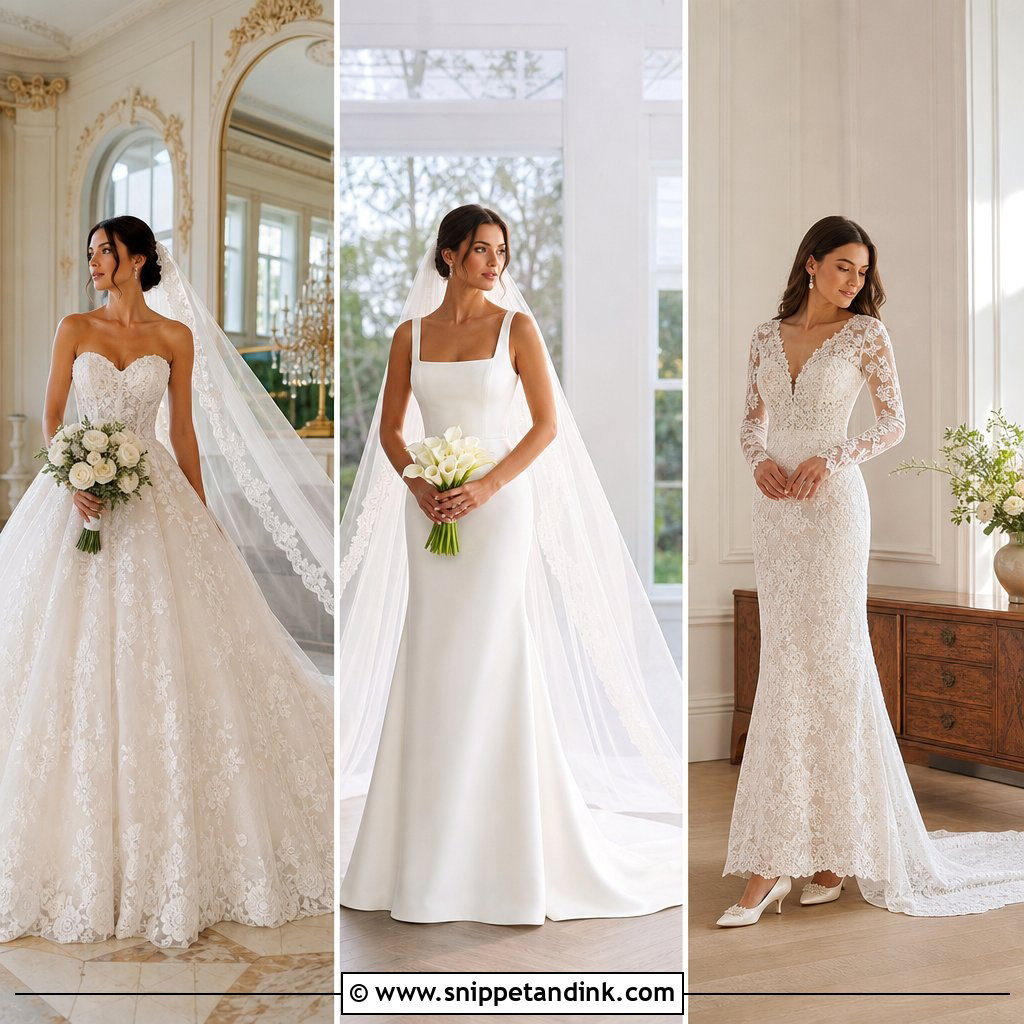
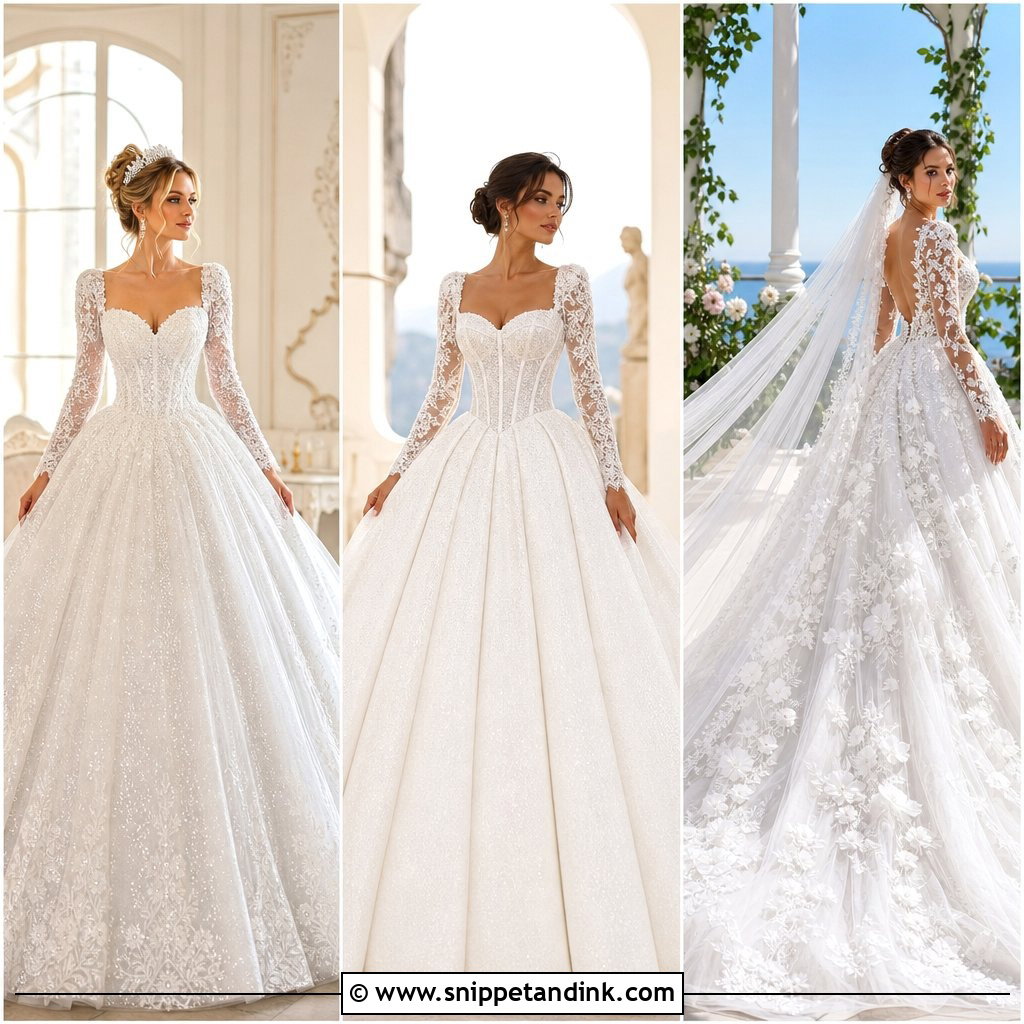
Yes, a petite bride can wear a ball gown. The volume just has to build gradually from the waist rather than jutting out at the hip. A fitted bodice, defined waist and a skirt of light organza or layered tulle gives fullness without a stack of stiff underskirts. A clean V, square or narrow strapless bodice keeps the top visible above all that skirt. Platform pumps, simple jewellery, a refined updo and a sheer cathedral veil complete it. Limit bows and heavy embellishment to one area. After the hem is taken up, check that the train still looks proportional to the shorter skirt.
Shortening Lace, Beading and Layered Tulle
Taking up a plain satin hem is quick work. Taking up a gown with a scalloped lace edge is not: the seamstress has to unpick the lace border, shorten the skirt underneath, then sew the lace back on by hand so the scallops still line up. A beaded hem means removing and replacing beads. A tulle skirt with several layers is shortened one layer at a time. Each of these takes longer and usually costs more, and prices vary widely between seamstresses, so ask for a quote before you commit to a dress with an ornate hem.
Shortening the skirt also changes the train. Once the hem rises, the train may need reshaping so it doesn’t look stubby, and the bustle points move up with it.
Scaling the veil
Veils are sold in standard lengths, and a cathedral veil that’s right for a tall bride can trail far behind a petite one. Most veil makers will cut to a custom length. Stand in your dress with the comb in place and have someone measure to where you want it to end.
Proportion Matters More Than Height
No single rule decides a petite bride’s dress. Sheaths, satin slips, mermaids and modified ball gowns can all work once they’re cut to your height, your shape, your venue and your comfort. Look closely at neckline depth, where the waist sits, how much skirt there is and how large the detail is. Take your shoes and underwear to every fitting, and find a bridal tailor who has shortened gowns like yours before. Try at least one shape you’d normally rule out. Petite brides are the ones most often surprised in the fitting room.
You'll Like These Ideas:


Leave a Reply