
I rarely pick a bridal style from a photo alone. I ask what you’re wearing, how long the ceremony runs, whether a veil or dupatta goes on top, and how your hair behaves the day after you wash it. This year brides keep asking for low buns, glossy waves, half-up hair, braids, pearls and flowers, all with a clean structure underneath. For Asian brides those choices have to work with real conditions: silky straight hair, high density, long layers, heavy fabric on the head and often a humid venue. The twenty ideas below are sorted in my head by how much hold each one gives you, and I’ve said where each one struggles.
What a Fresh Layered Cut or Keratin Treatment Does to Your Wedding Updo
The months before a wedding are when brides change their hair the most, and some of those changes make my job harder on the day. A quick word on the usual ones.
Cutting in new layers
Short face-framing layers look great worn down but poke out of buns, chignons and braids. If you want an updo, hold off on new layers and have only a light trim of the ends four to six weeks before, so the hair has time to settle.
Keratin and straightening treatments
These make hair smoother and glossier, and also slippery and resistant to curl. If you love waves, I’d skip a new treatment in the last couple of months, or tell your stylist so the trial is done on treated hair.
Color and gloss
Have color done about two weeks out. Dark hair with subtle warmth or a gloss shows the shape of waves and braids better than flat, very dark color, but a big change right before the wedding can look different in photos from what you expected.
1. Asian Bridal Low Bun
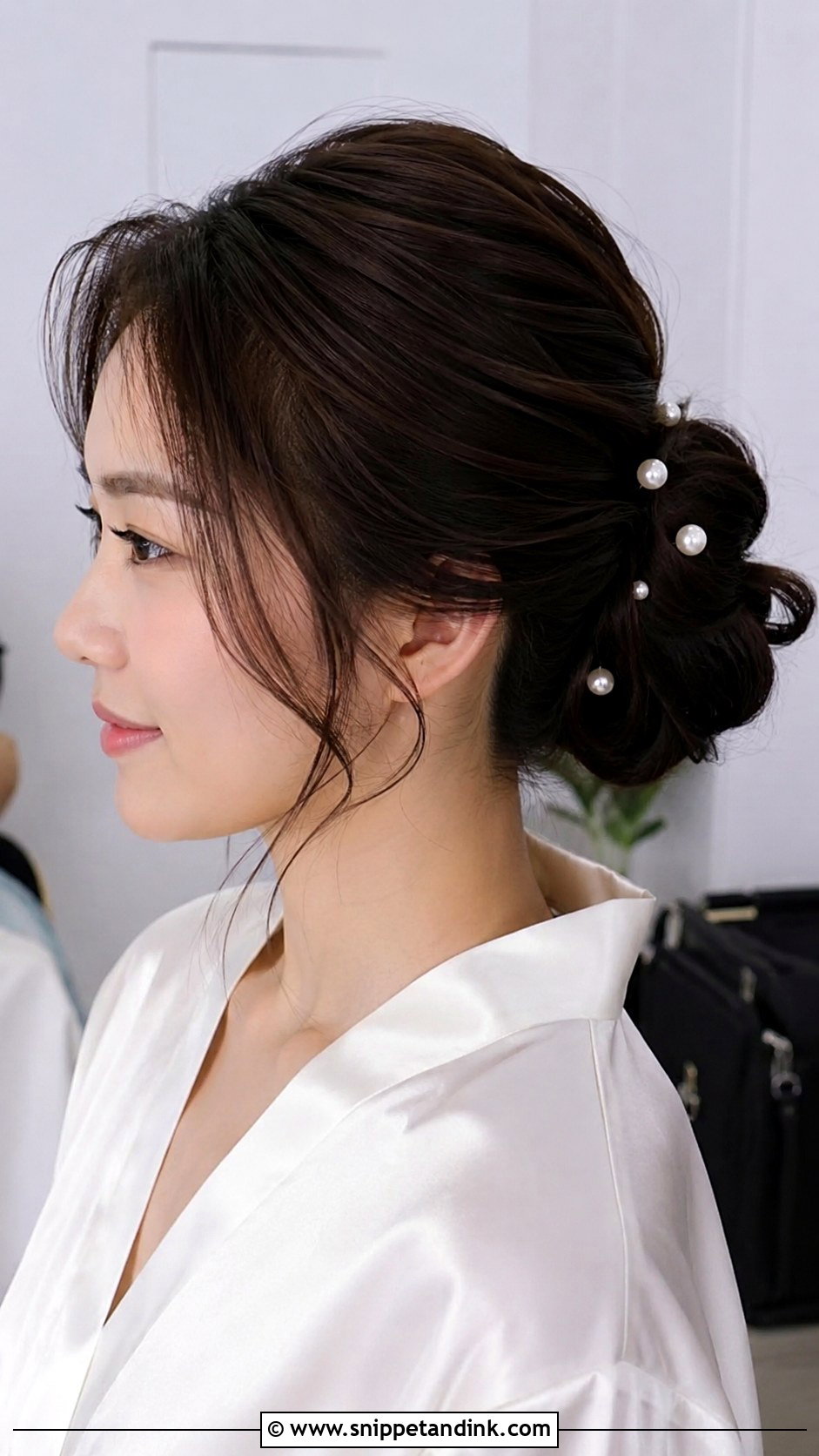
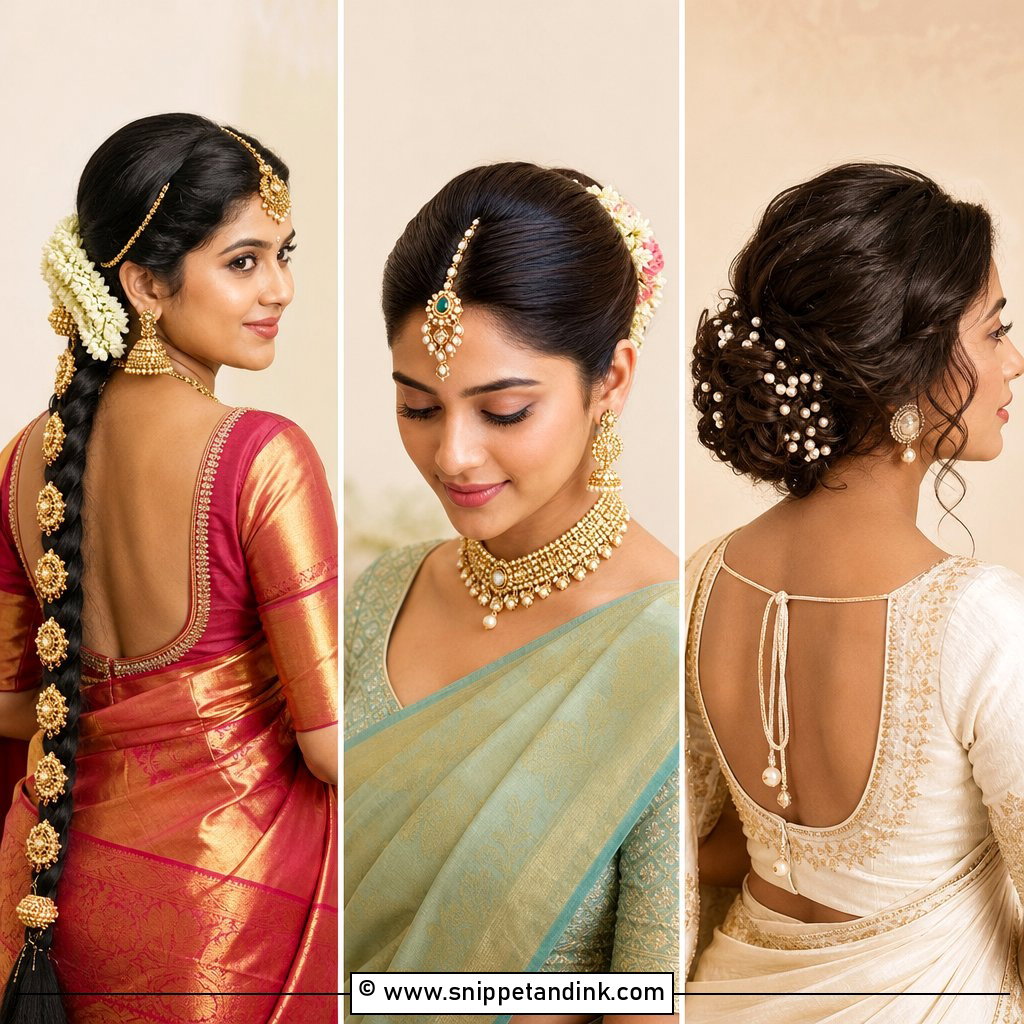
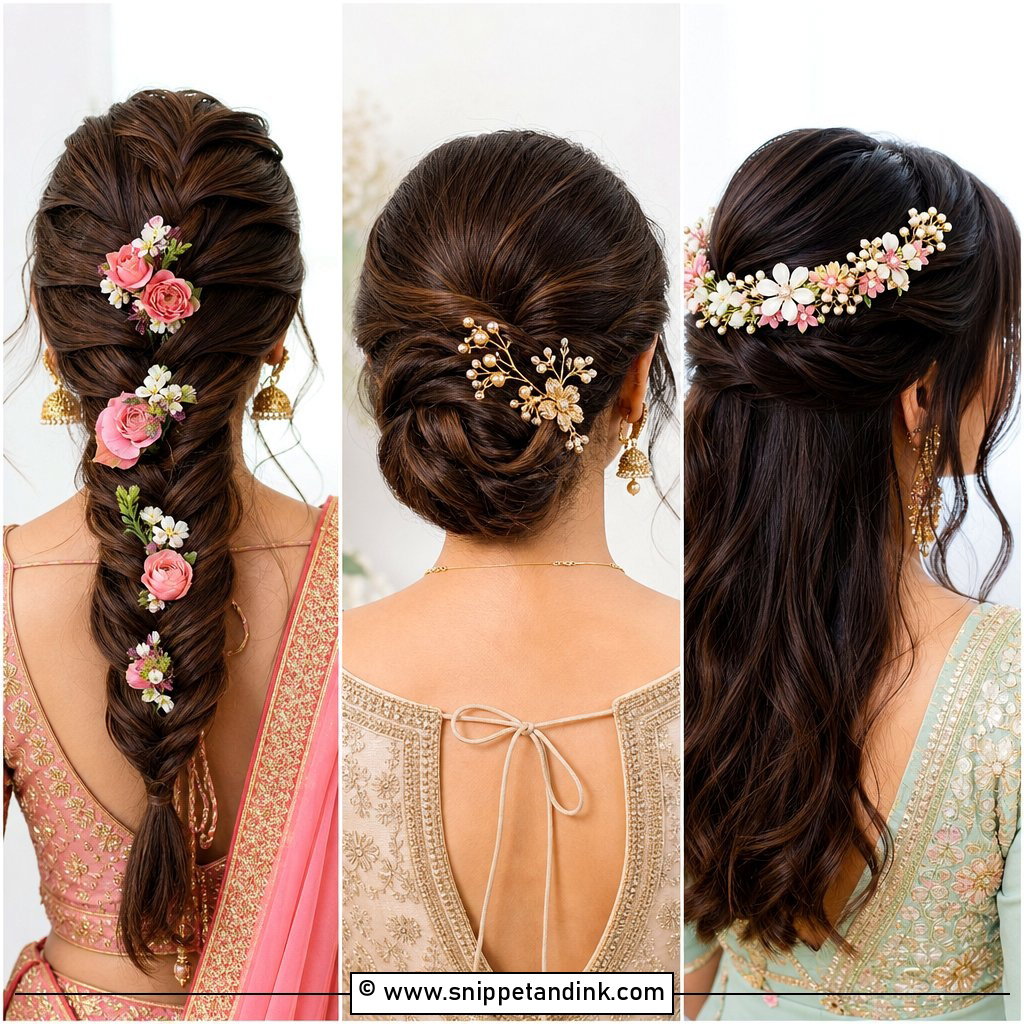
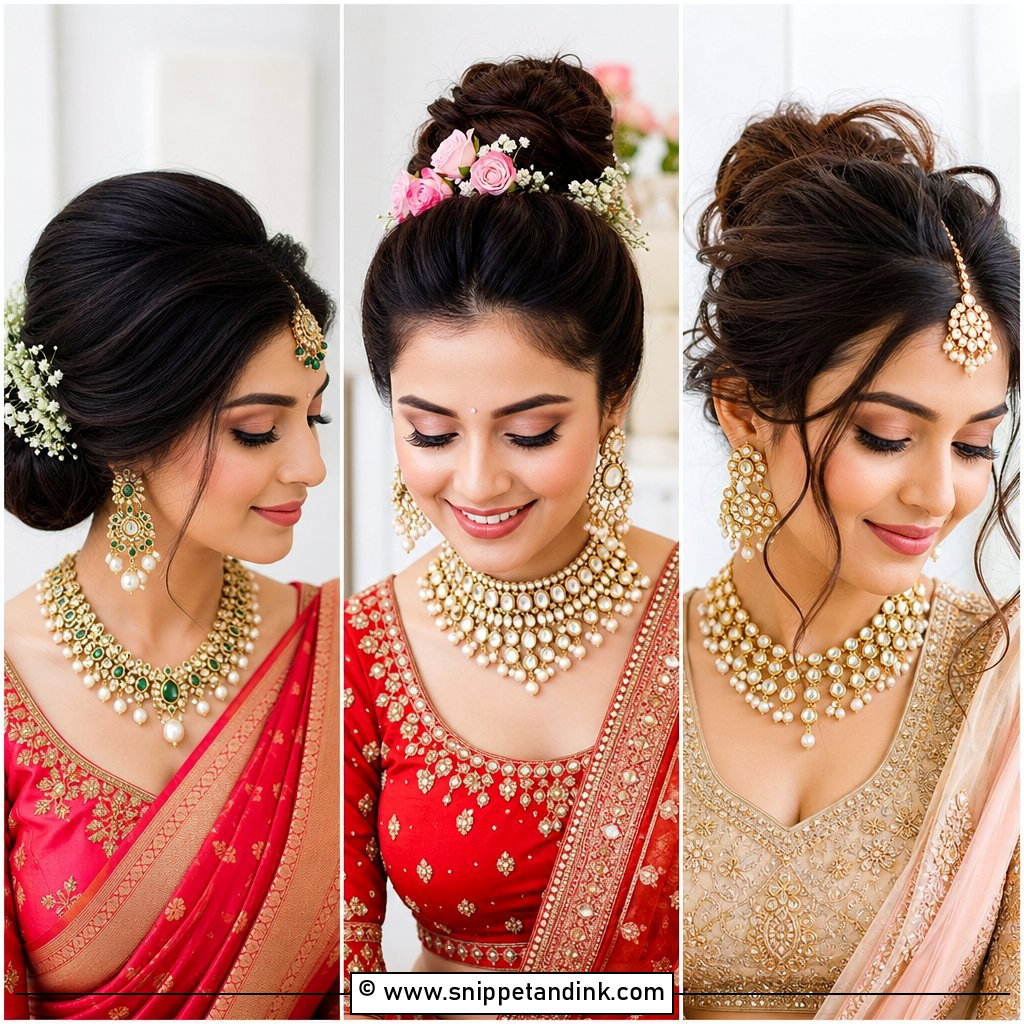
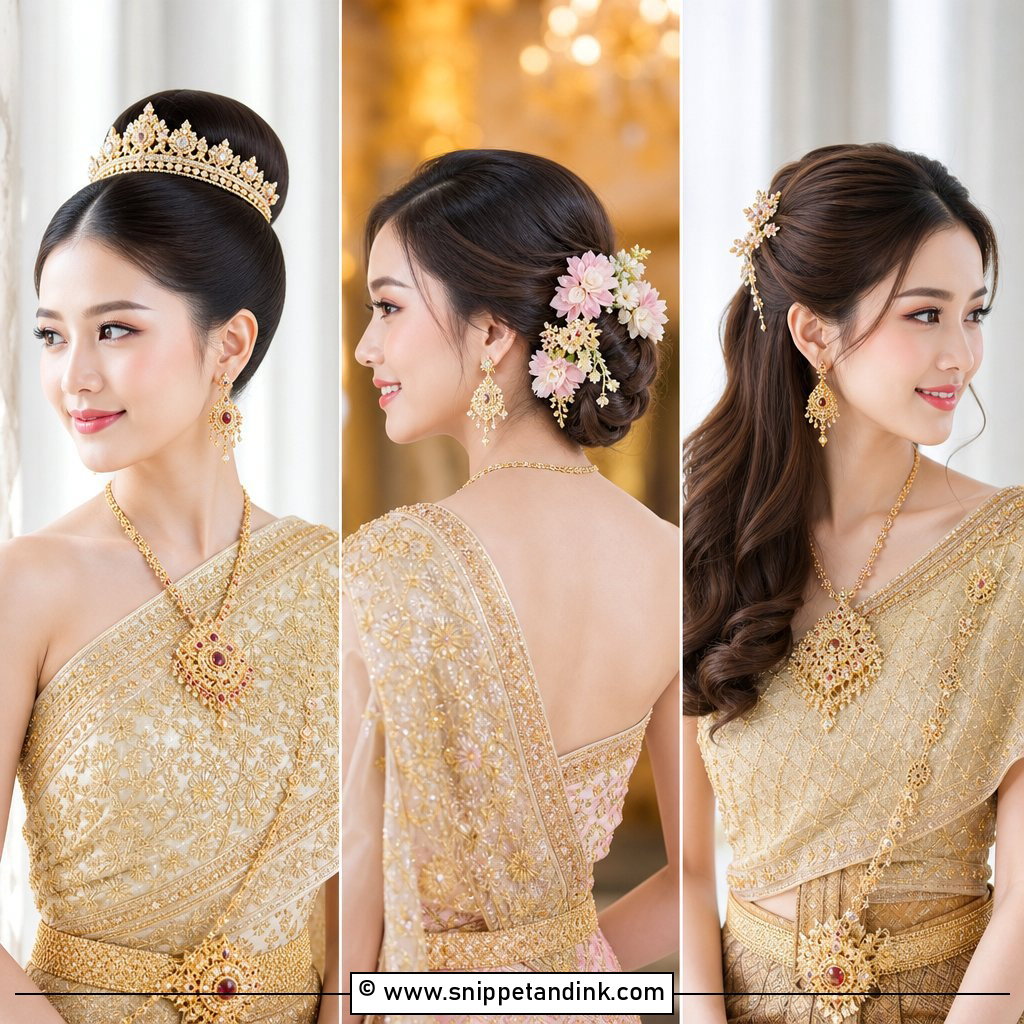
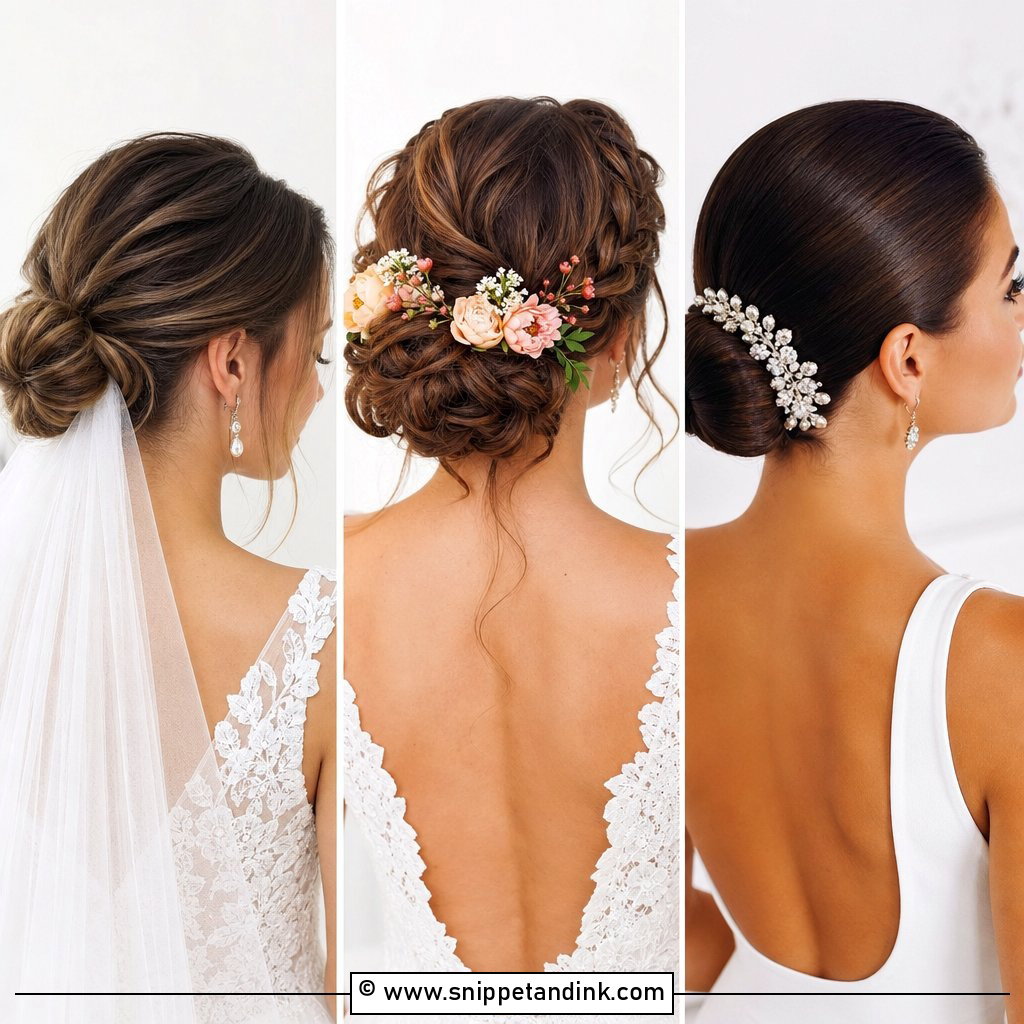
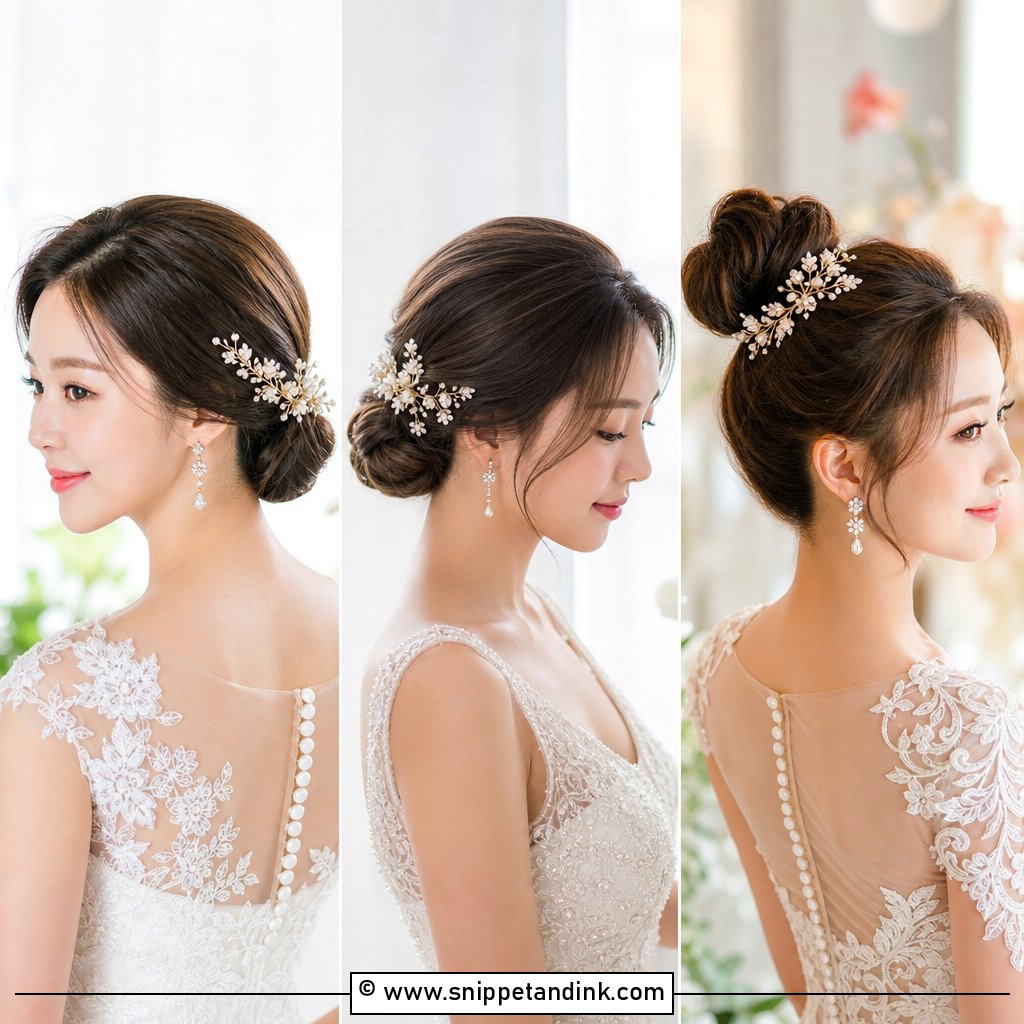
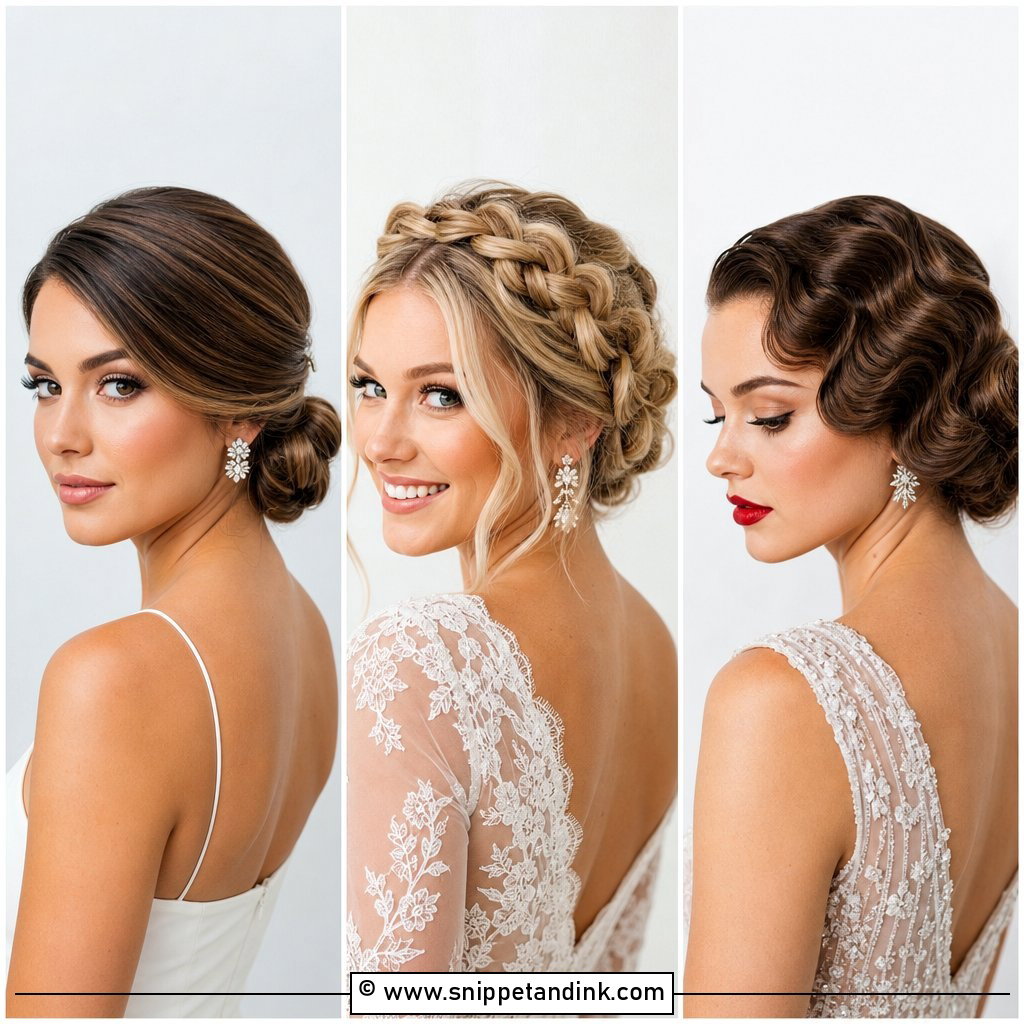
If I had to pick one style that survives almost any ceremony, it’s this. An Asian bridal low bun holds a veil, hairpins, maang tikka, flowers or pearls without strain because the weight sits near the nape, the strongest anchor point on the head. On sleek straight hair I keep it polished with a soft side part. Under a dupatta or floral garland, I build it fuller and rounder so the fabric has something to rest on. Ask for gentle lift at the crown and a clean nape; add face-framing strands only if your hair holds a bend.
2. Asian Bridal Chignon
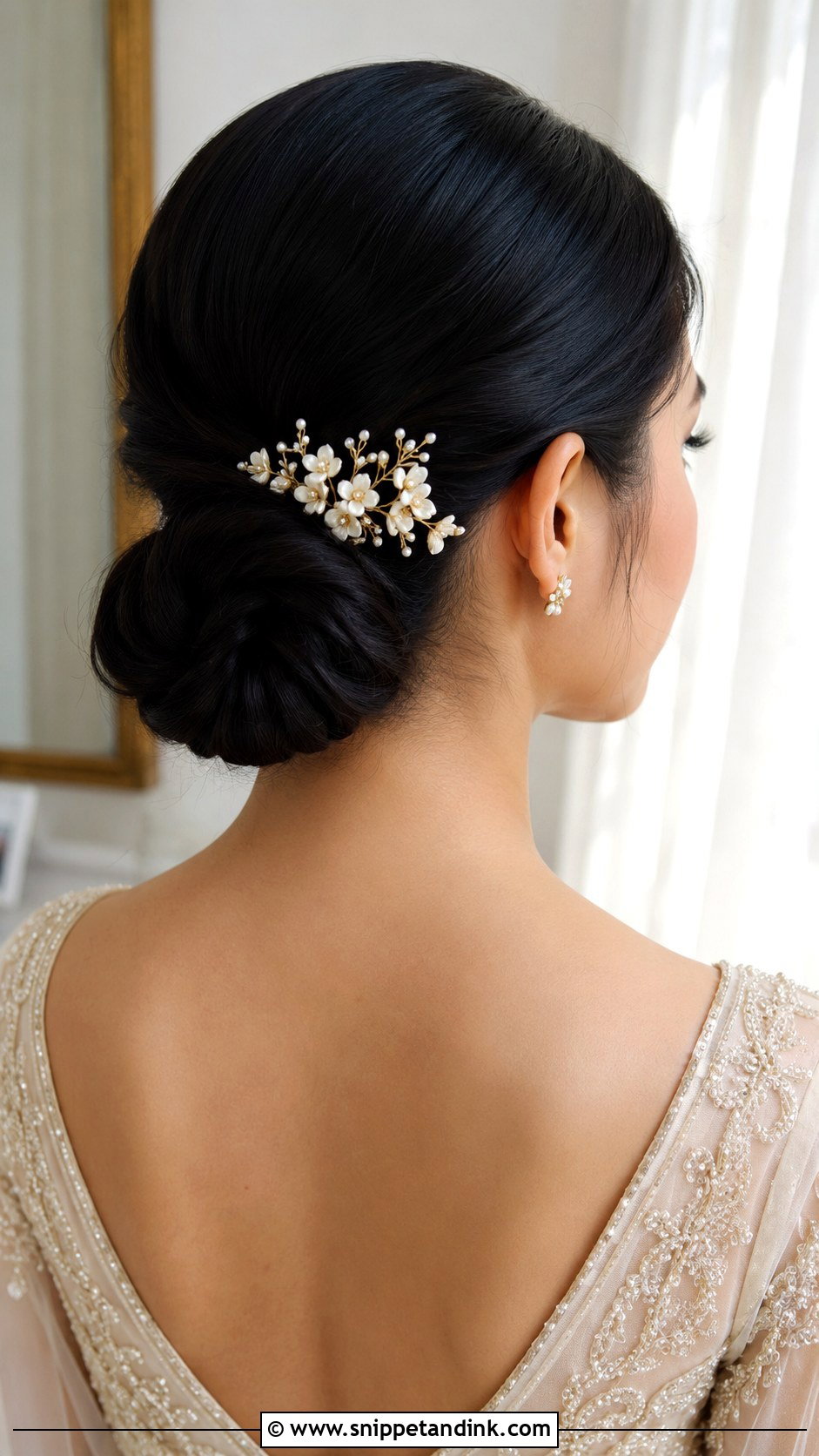
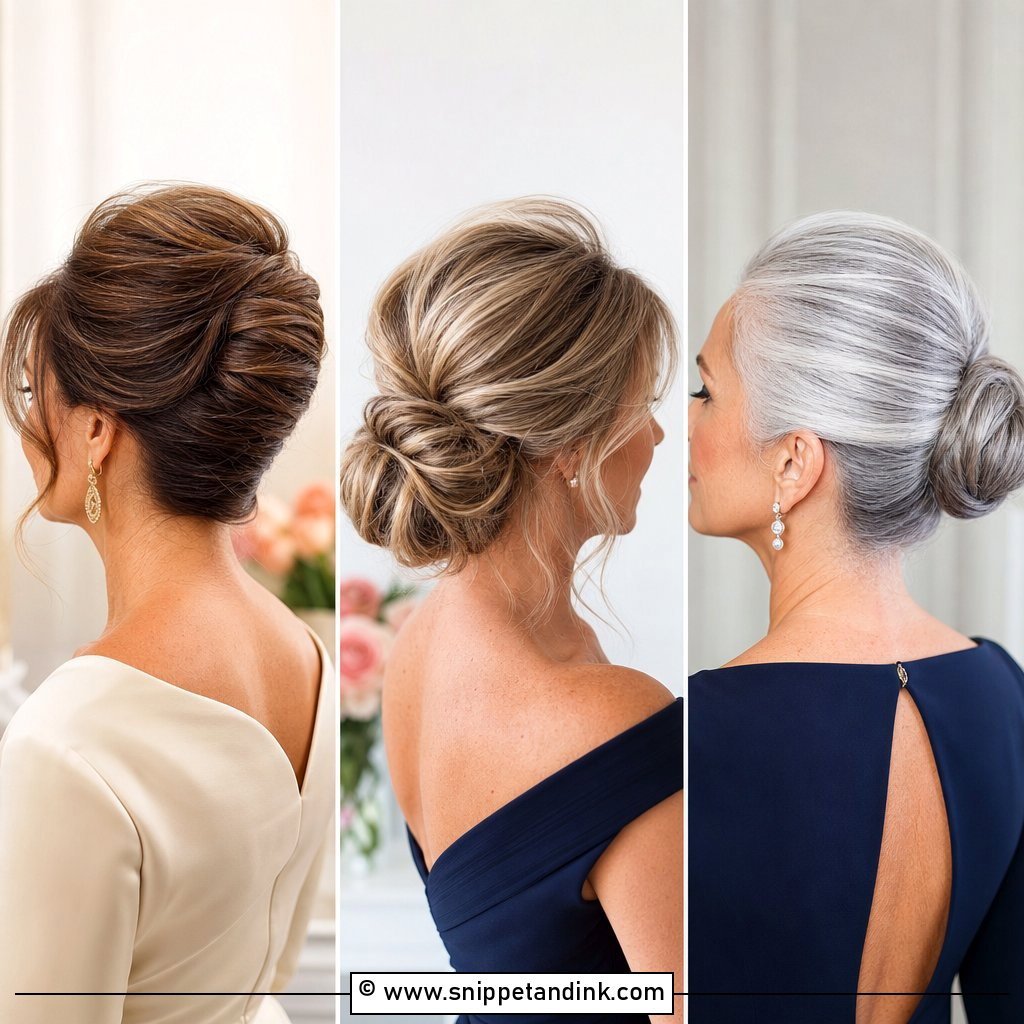
A chignon is a low, rolled shape rather than a wound bun, and that’s why it lies so neatly under high necklines, qipaos, hanboks, sarees and lehengas alike. Your earrings and neckline get the attention. Center part for classic, soft side part for romantic. Thick hair is the challenge here, because a lot of hair rolled into one shape can push pins out from inside. I split very dense hair into two sections, roll the lower one first as a base, then wrap the top over it.
3. Asian Bridal Half Up Half Down Hair
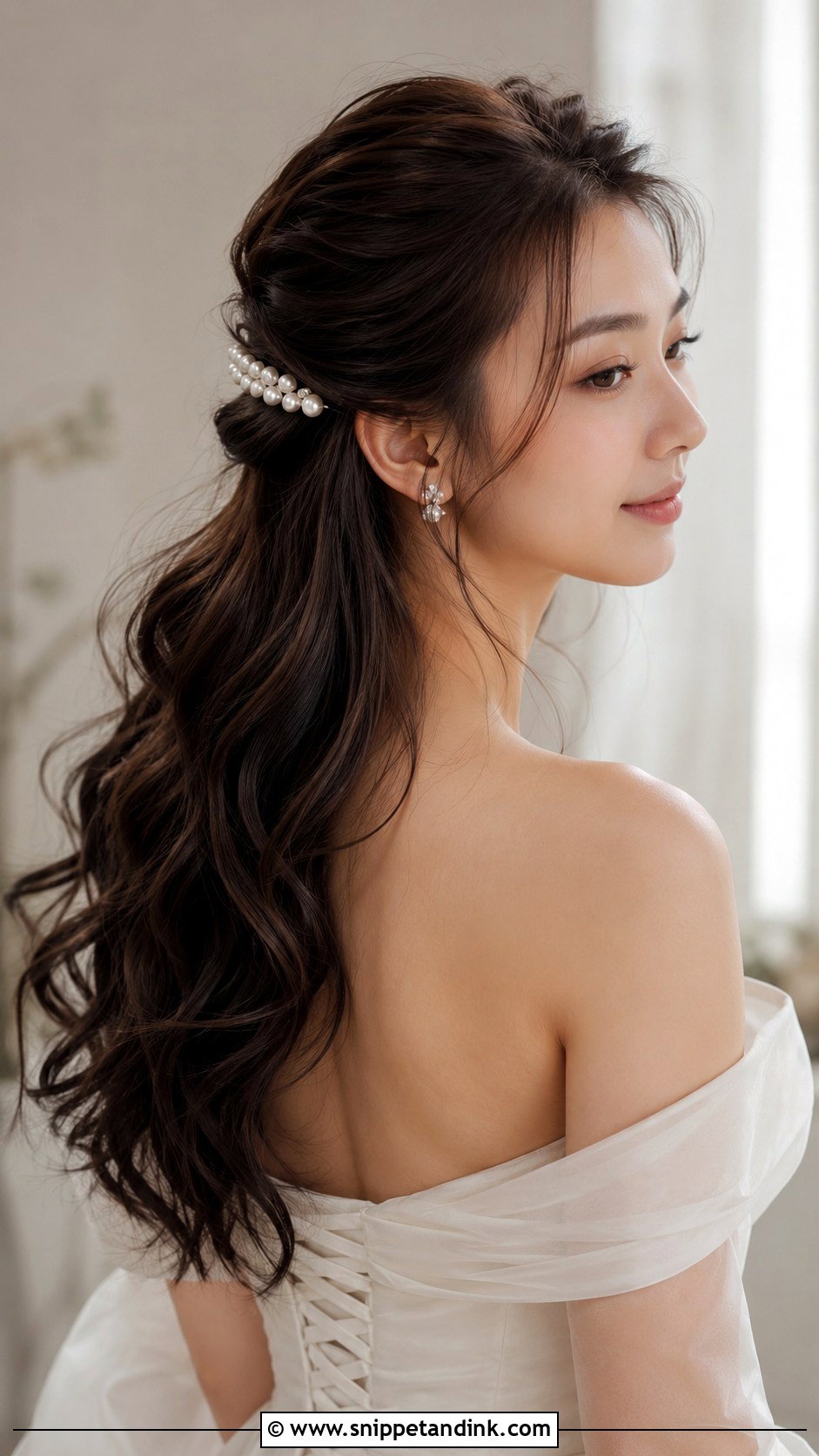
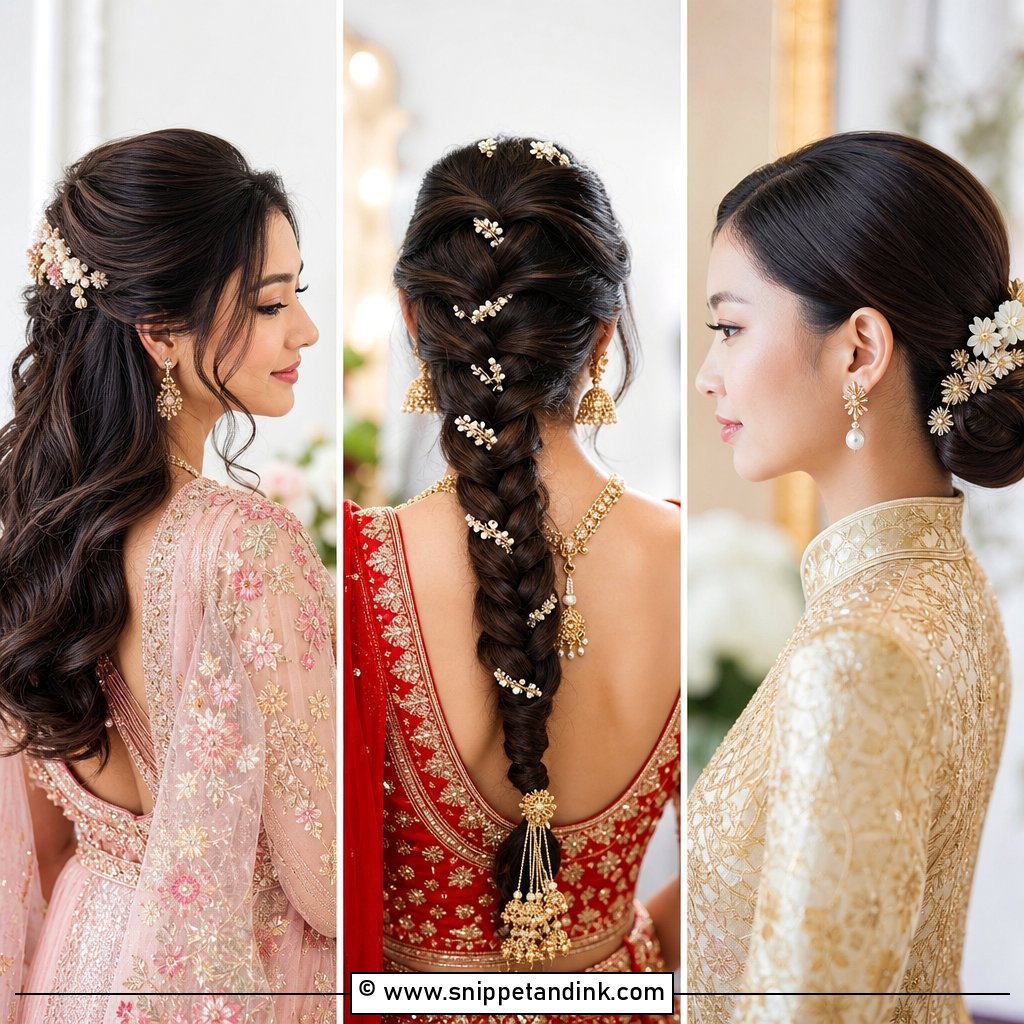
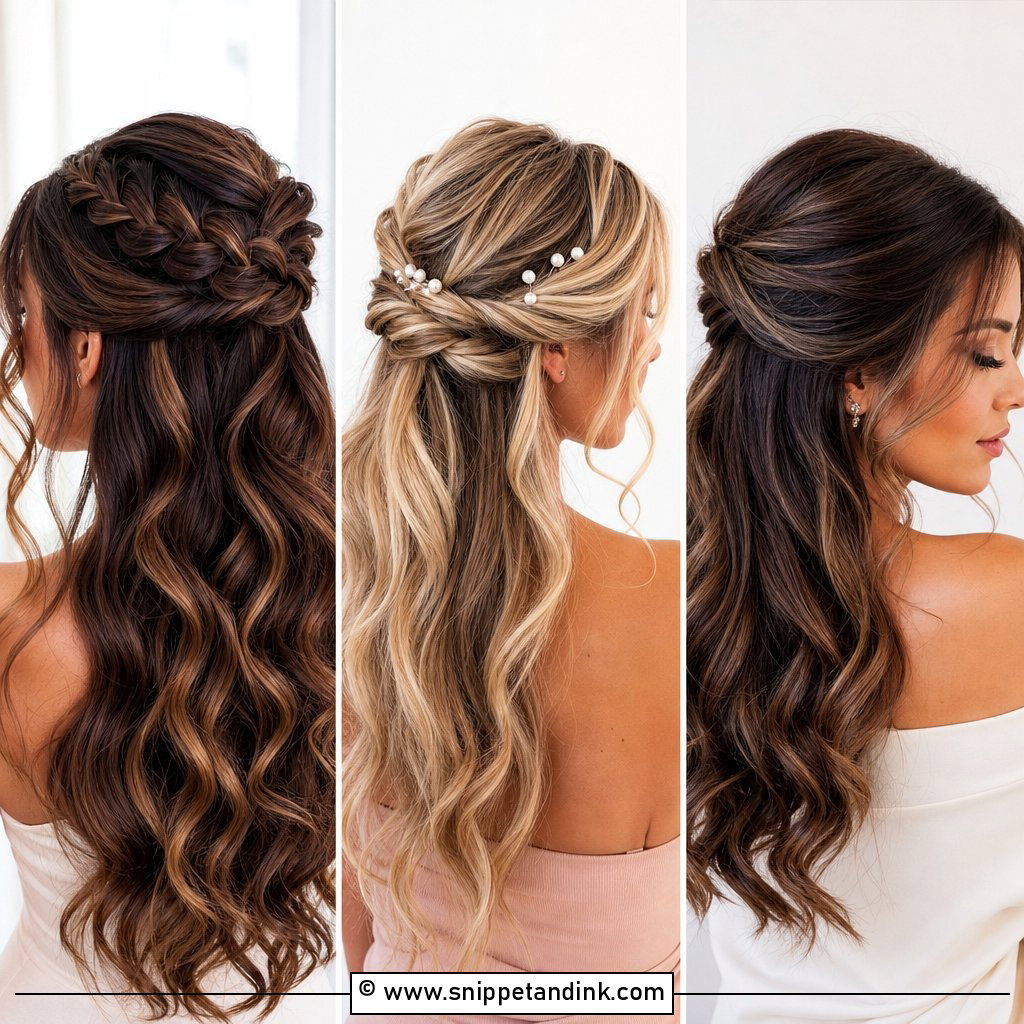
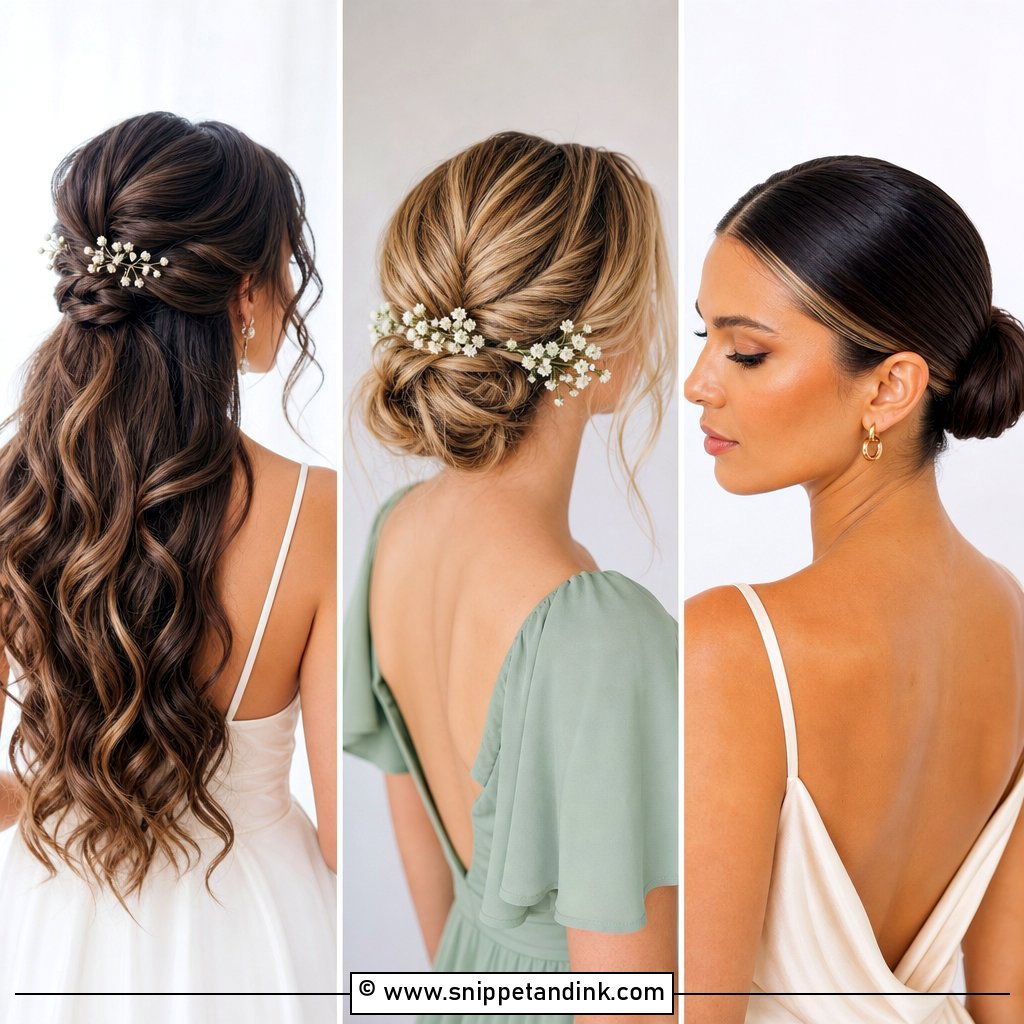
Half-up hair suits the bride who wants her length on show but can’t have it falling in her face during rituals or vows. The top section gives lift and a place for pins; the rest shows length and soft waves. It pairs with strapless gowns, embroidered blouses and fine veils, and it’s a natural fit for pre-wedding shoots where formality isn’t the goal. I lightly tease the crown, then lock the half-up section with two crossed pins rather than a single clip, which can slide on smooth hair. Pearls or floral clips finish it.
4. Asian Bridal Hollywood Waves
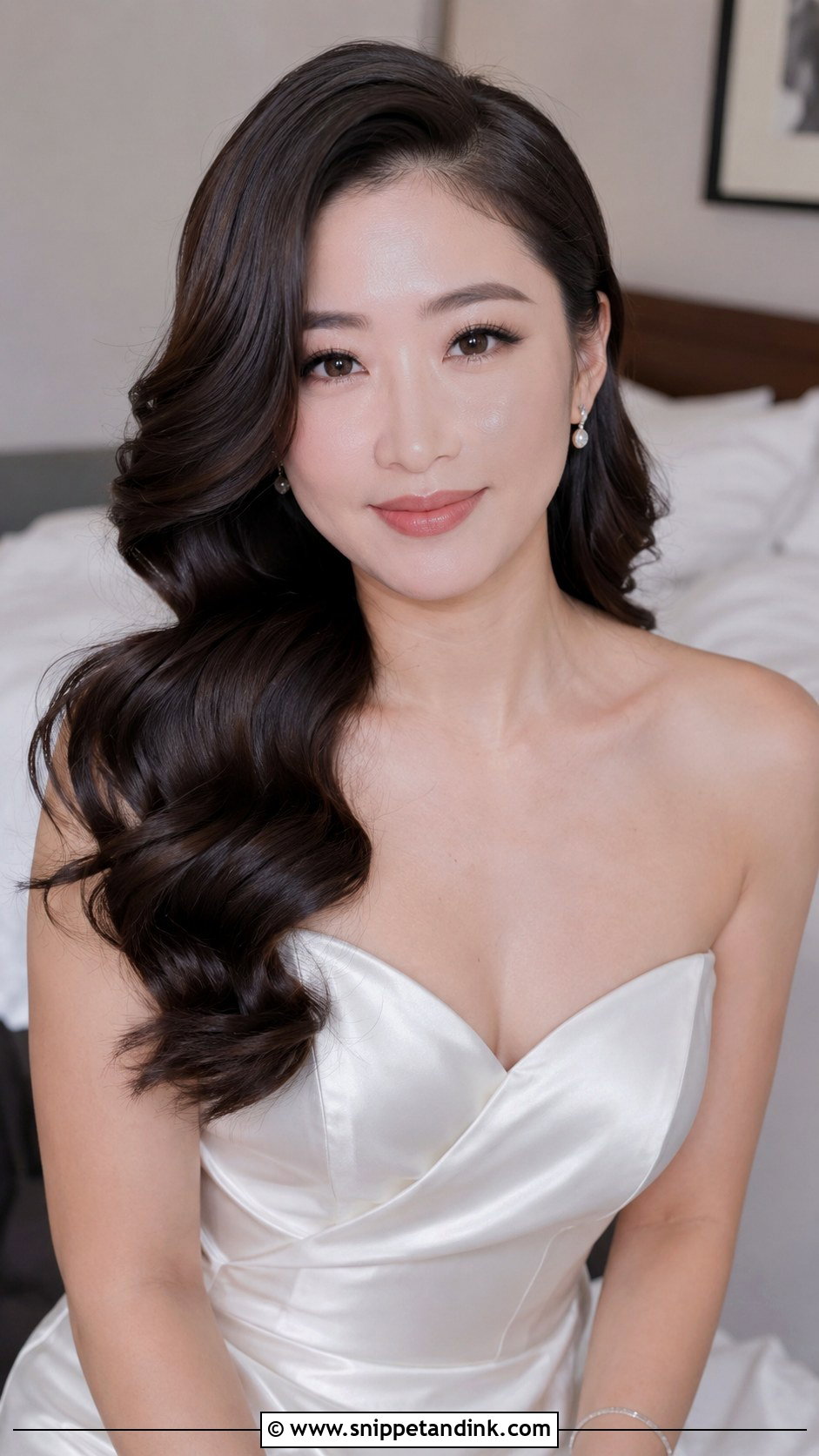
Hollywood waves show every flaw in the set. Each curl goes in the same direction, cools completely, and is brushed into one sculpted ripple, and on dark hair the shine highlights every ridge, good or bad. Long and layered hair both work, though short layers can poke out of the wave line. For naturally straight, silky hair I use mousse at the roots, curl smaller sections than seems necessary and clip each one flat to cool. Then a flexible spray, never a stiff one, or the waves crack when you turn your head. Best for evening ceremonies and receptions.
5. Asian Bridal Soft Waves
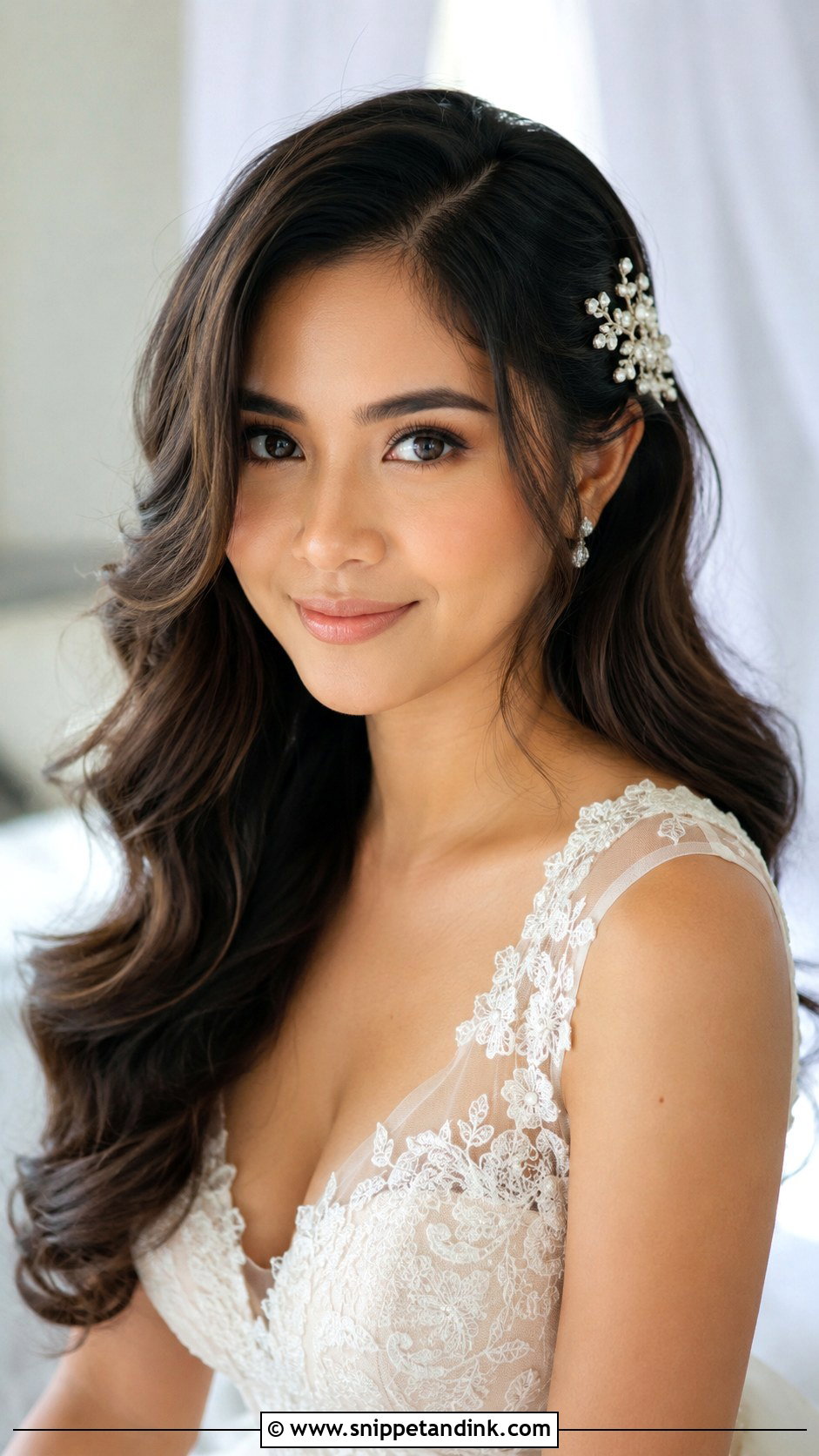
Soft waves are looser and more forgiving than Hollywood waves, and they suit off-shoulder gowns, saree blouses and reception outfits where hair moves across the shoulders. Long layers look airy with them. On very straight hair, I start the wave at cheekbone level instead of the root; waves started higher tend to relax into a flat top and a bend at the ends. Finish with a light shine mist. Heavy oils weigh dark hair down and make waves drop sooner.
6. Asian Bridal Sleek Bun
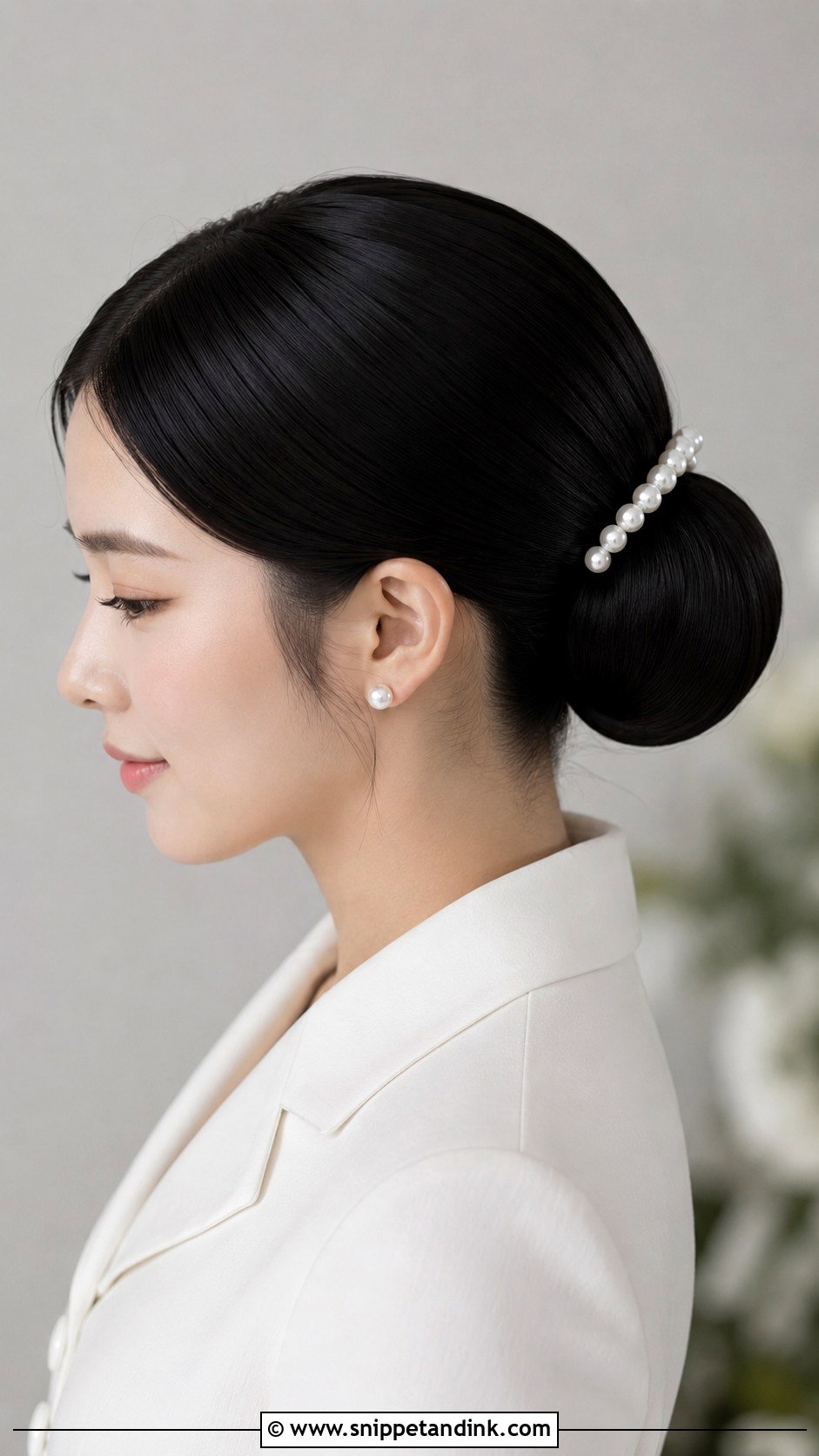
Sleek is the most weatherproof style on this list. Pulling everything back means humidity has nothing loose to frizz, so this is my default for outdoor or long-schedule weddings in heat. Middle part looks sharp, side part softer. Thick straight hair needs a smoothing cream, strong pins and a firm elastic base, or the bun loosens as the day goes on. Add one accessory at most, a pearl comb or gold pin. Note that a sleek style also shows every bump at the hairline, so I brush and set the front last.
7. Asian Bridal Braided Bun
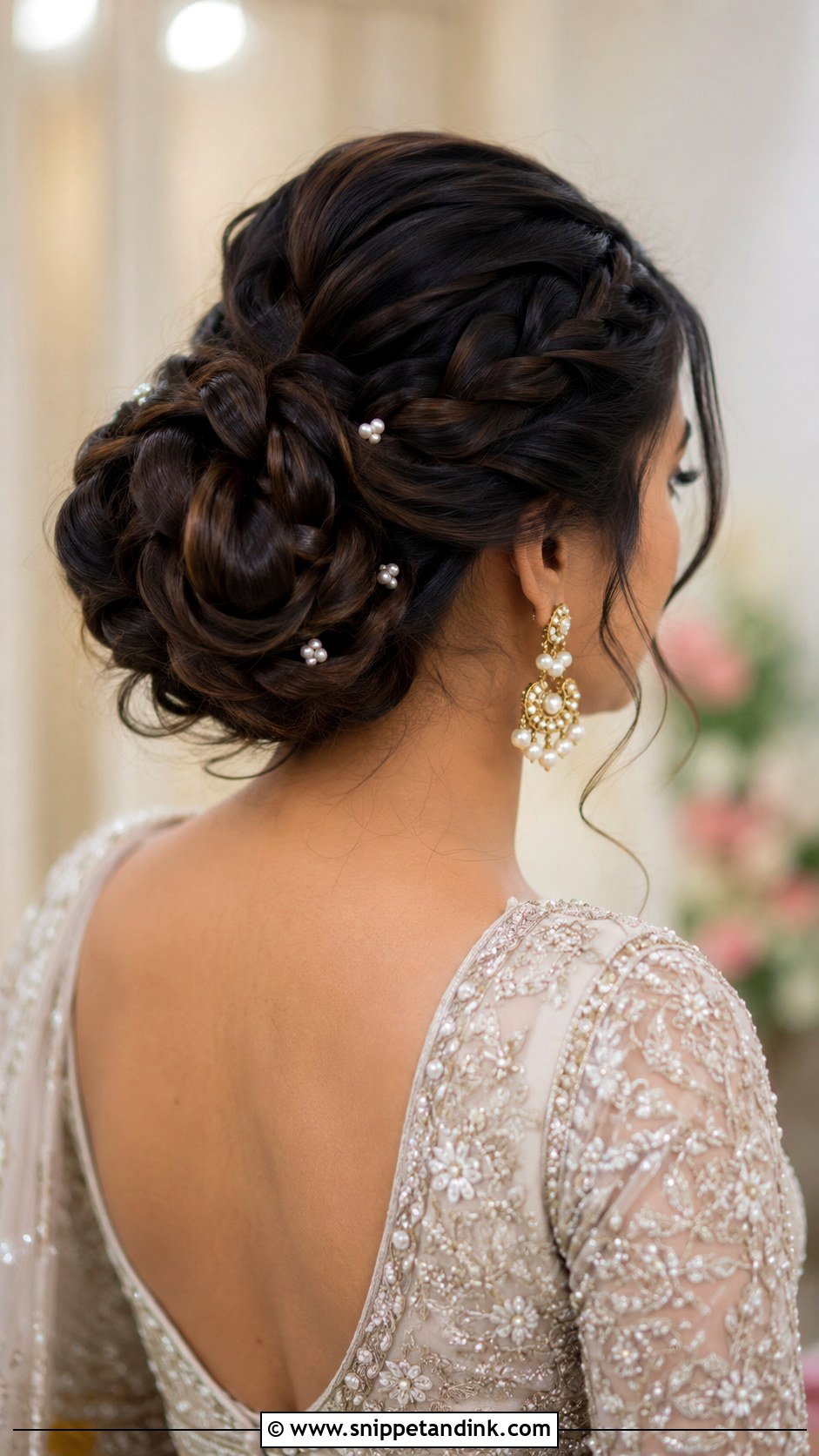
Braiding thick hair before it goes into a bun is one of the best tricks I know for keeping heavy hair in place. The woven sections hold shape and give pins a grip, so the bun stays put without dozens of pins. The braid can wrap the bun, run from the crown or sit as an accent on one side. It suits temple weddings, garden ceremonies and richly embroidered outfits. For softness, I loosen the braid a little and leave small pieces at the temples. Tiny pearls or flowers sit neatly in the braid gaps.
8. Asian Bridal Loose Updo
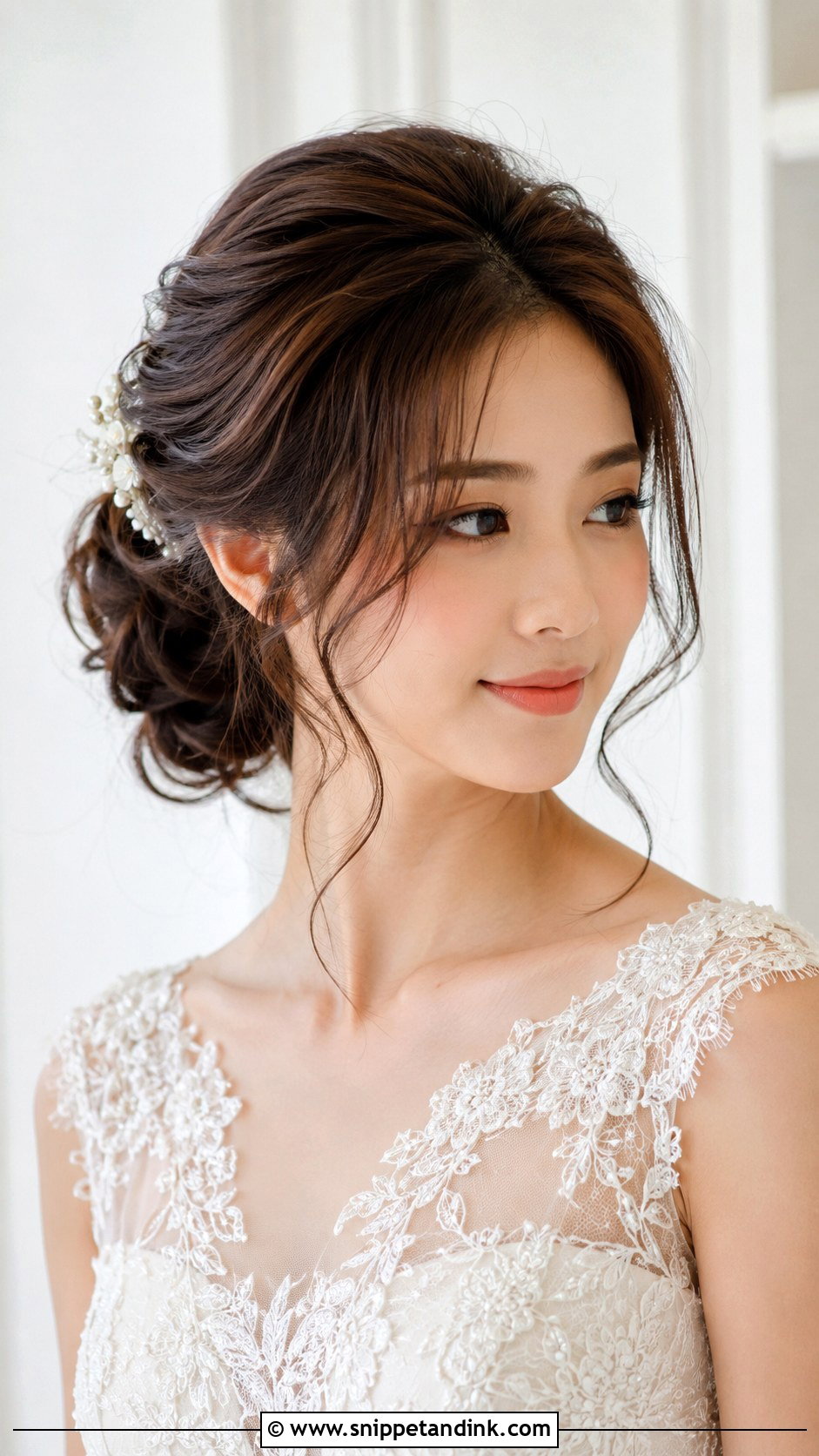
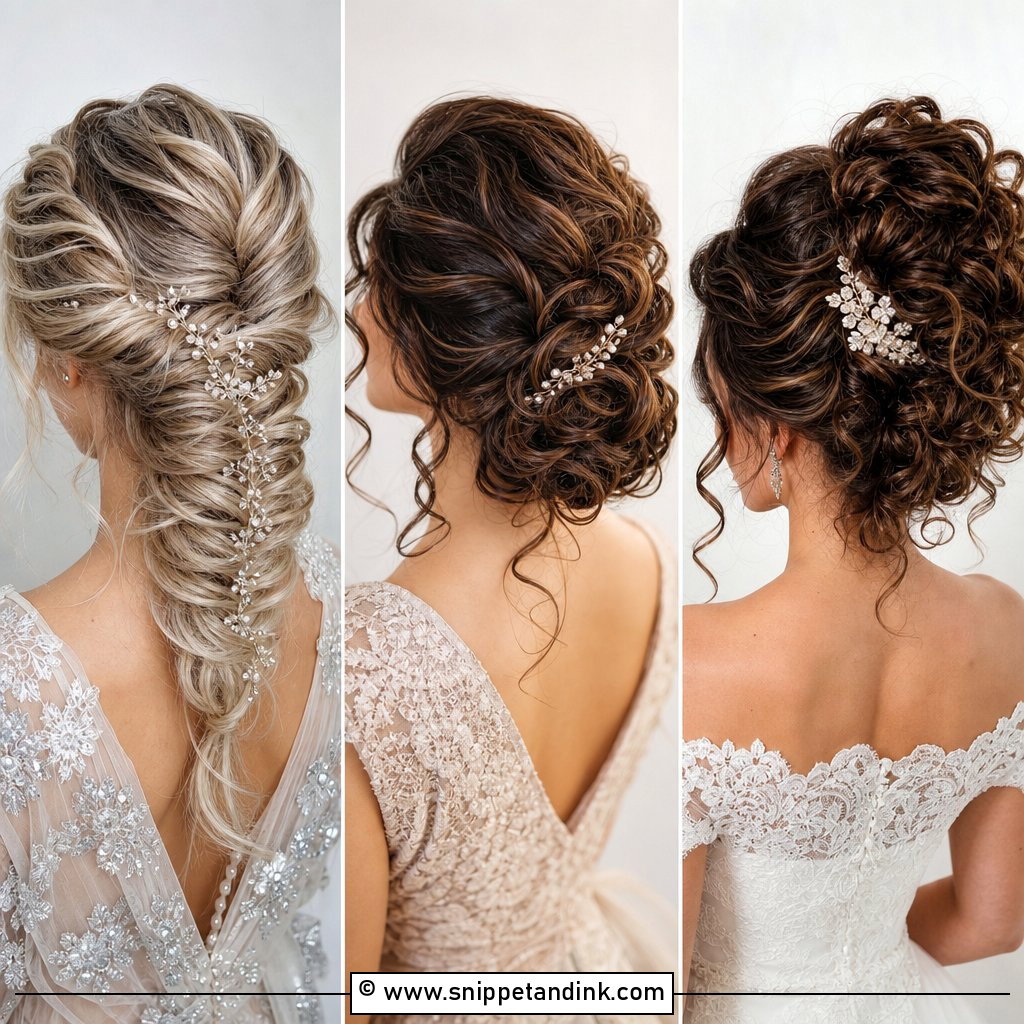
Soft pieces around the face make an updo feel gentle. An Asian bridal loose updo uses relaxed twists, airy crown volume and light tendrils instead of a tight shape. Lace gowns, pastel lehengas, floral pieces and outdoor venues suit it. The catch: what looks loose needs more hidden structure than a sleek bun, not less. I pin a tight foundation underneath and pull the loose texture over it. Without that, the style can look undone by the reception.
9. Asian Bridal High Bun
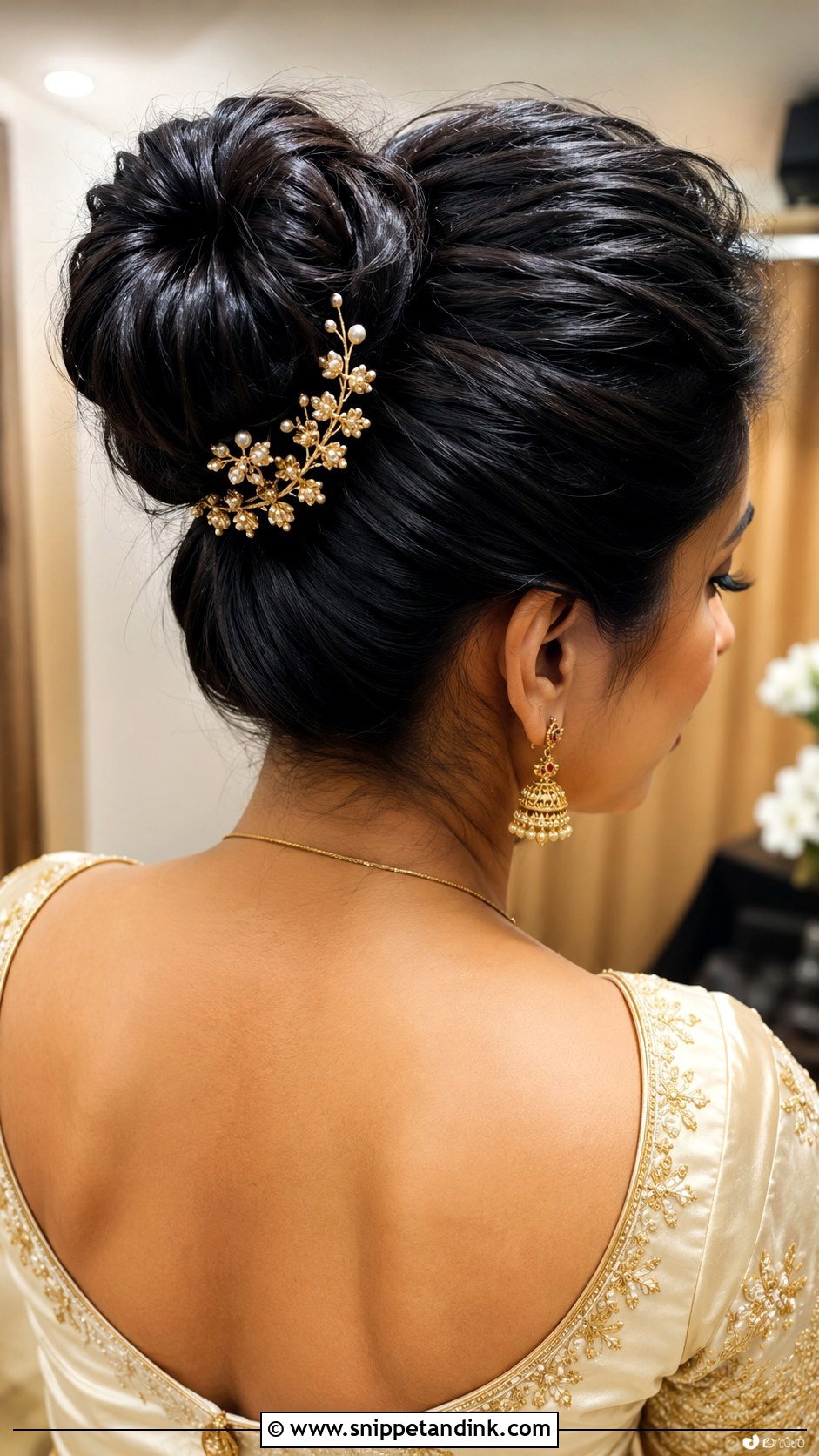
Height changes your profile. A high bun shows off detailed necklines, heavy embroidery and dramatic veils, and it can be sleek or full. South Asian brides often ask for it when it has to hold jewelry or a dupatta; East Asian brides tend to want a smoother version with fine pins. Keep the crown lifted, not bulky, so it doesn’t look top-heavy in photos. If you’re wearing a heavy dupatta on top, I’d lower the bun slightly, since a high anchor plus fabric weight strains the hairline over several hours.
10. Asian Bridal Side Swept Hair
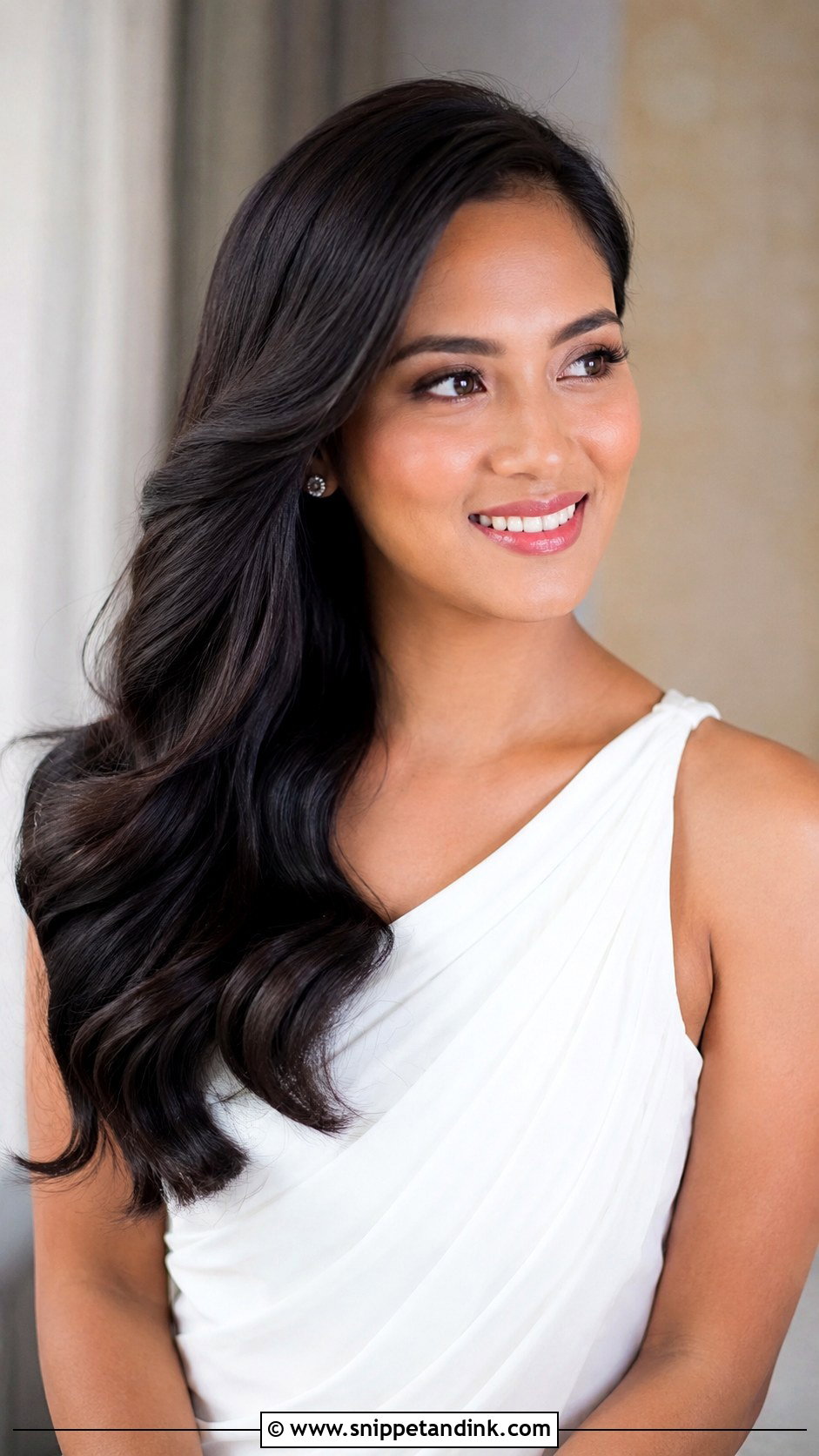
Swept to one side, the hair falls in waves or curls over one shoulder and stays visible in front-facing photos, which updos can’t do. One-shoulder gowns, sarees, reception dresses and statement earrings on the open side all work. Long, thick hair is heavy enough to drag the style back toward center, so I hide a row of crossed pins behind the ear on the swept side and pin the hair across them. A clean side part and a smooth crown keep it intentional.
11. Asian Bridal Ponytail
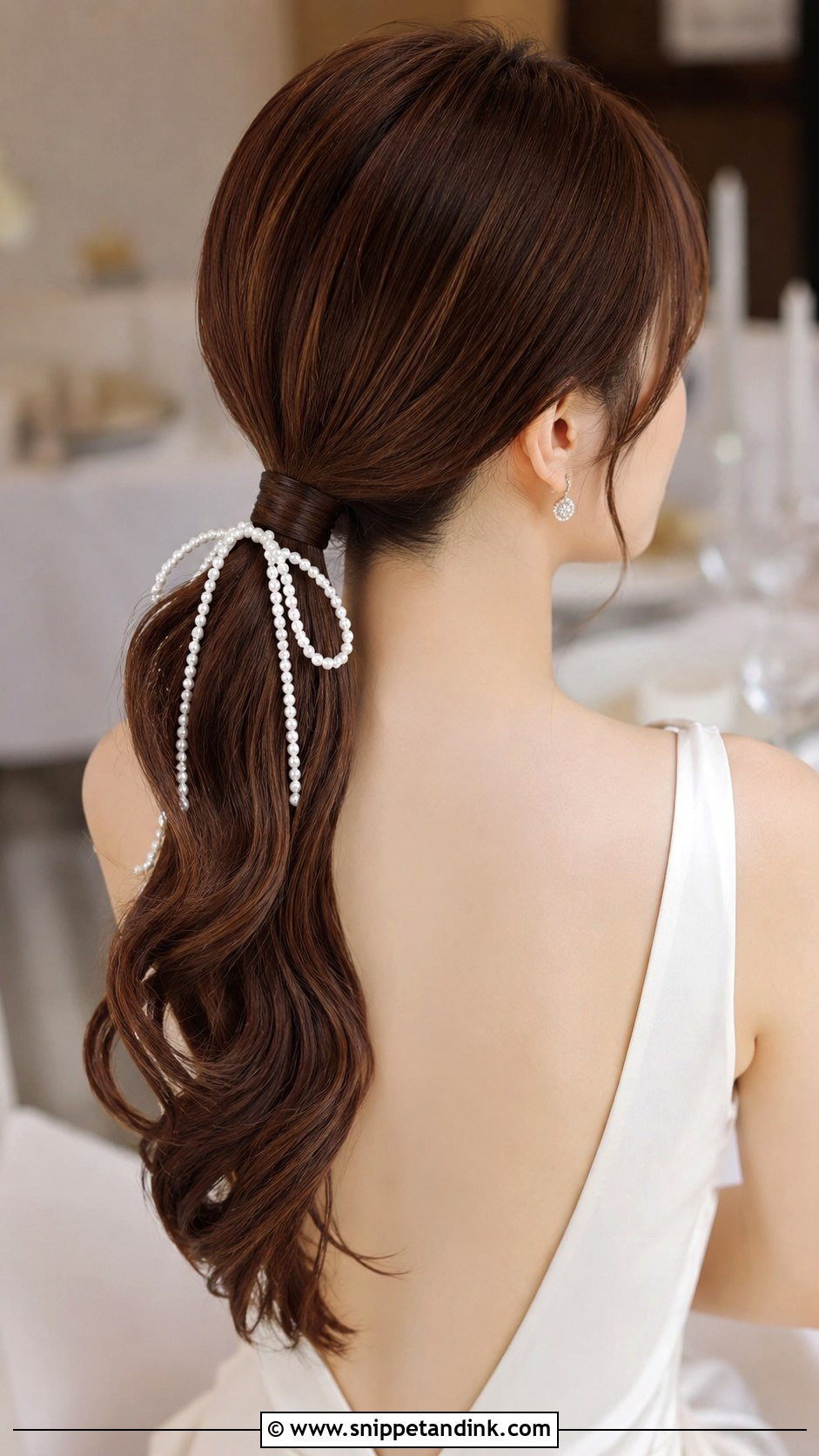
A ponytail is an honest compromise: hair off the face, length still showing. Low reads classic; mid-height reads modern. Add soft waves through the ends or keep it sleek. It’s very practical for receptions, civil ceremonies and outfit changes, and it’s one of the easiest styles to convert from a bun later in the day. I always wrap a strand of hair around the elastic and pin it underneath, then add two pins crossed into the base so the ponytail doesn’t sag under its own weight.
12. Asian Bridal Bubble Ponytail
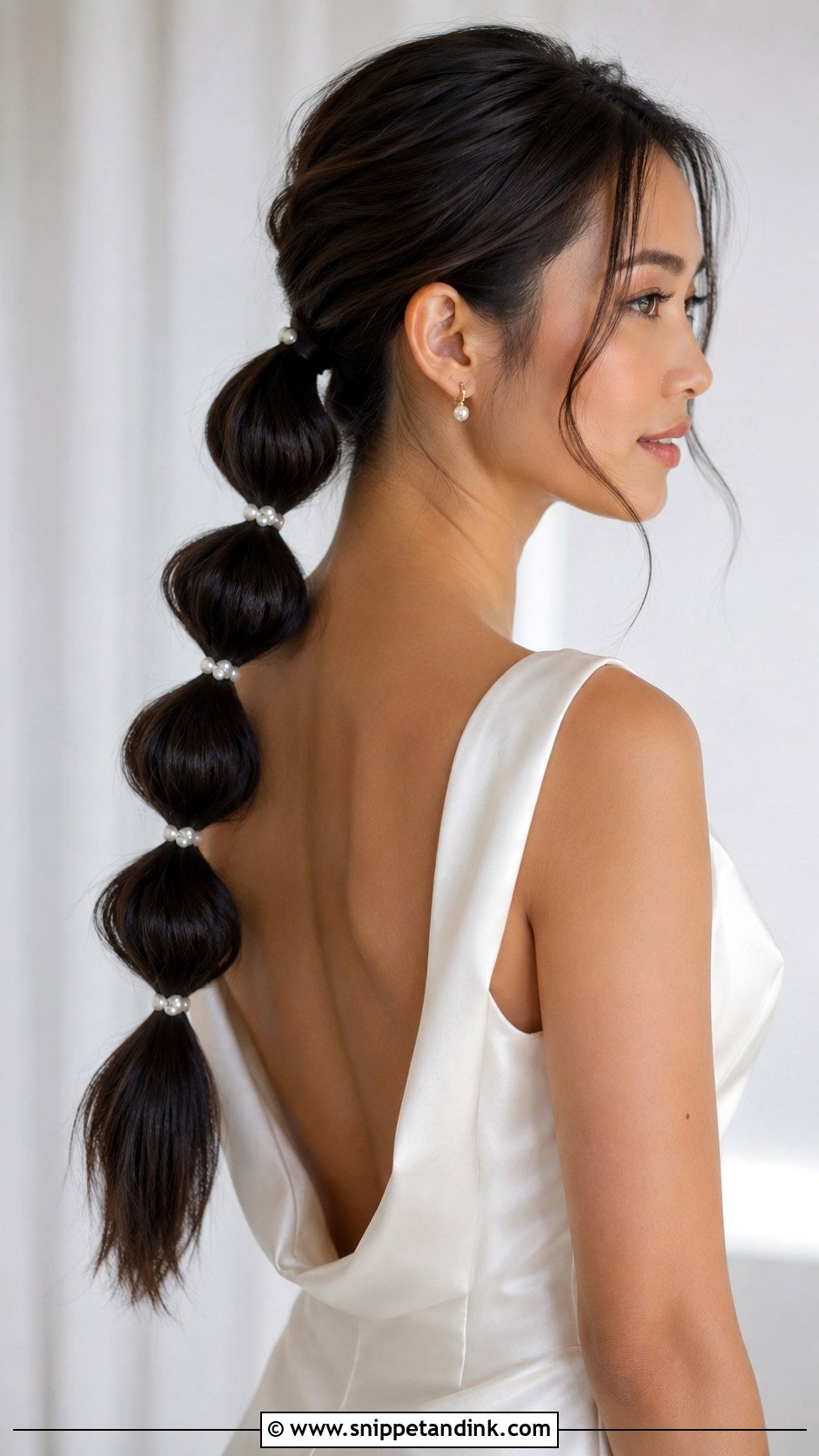
Bubbles need length, so this is mainly a long-hair style. Each section is tied off and gently pulled into a rounded shape down the length. It suits receptions, engagement parties and modern outfits. I keep the bubbles sleek for a polished look and slightly softened for a romantic one, with tiny pearls, metallic cuffs or floral pins between sections. On fine hair, texture spray helps, and clip-in extensions make the bubbles look even. Use clear elastics; colored ones show in close-ups.
13. Asian Bridal Fishtail Braid
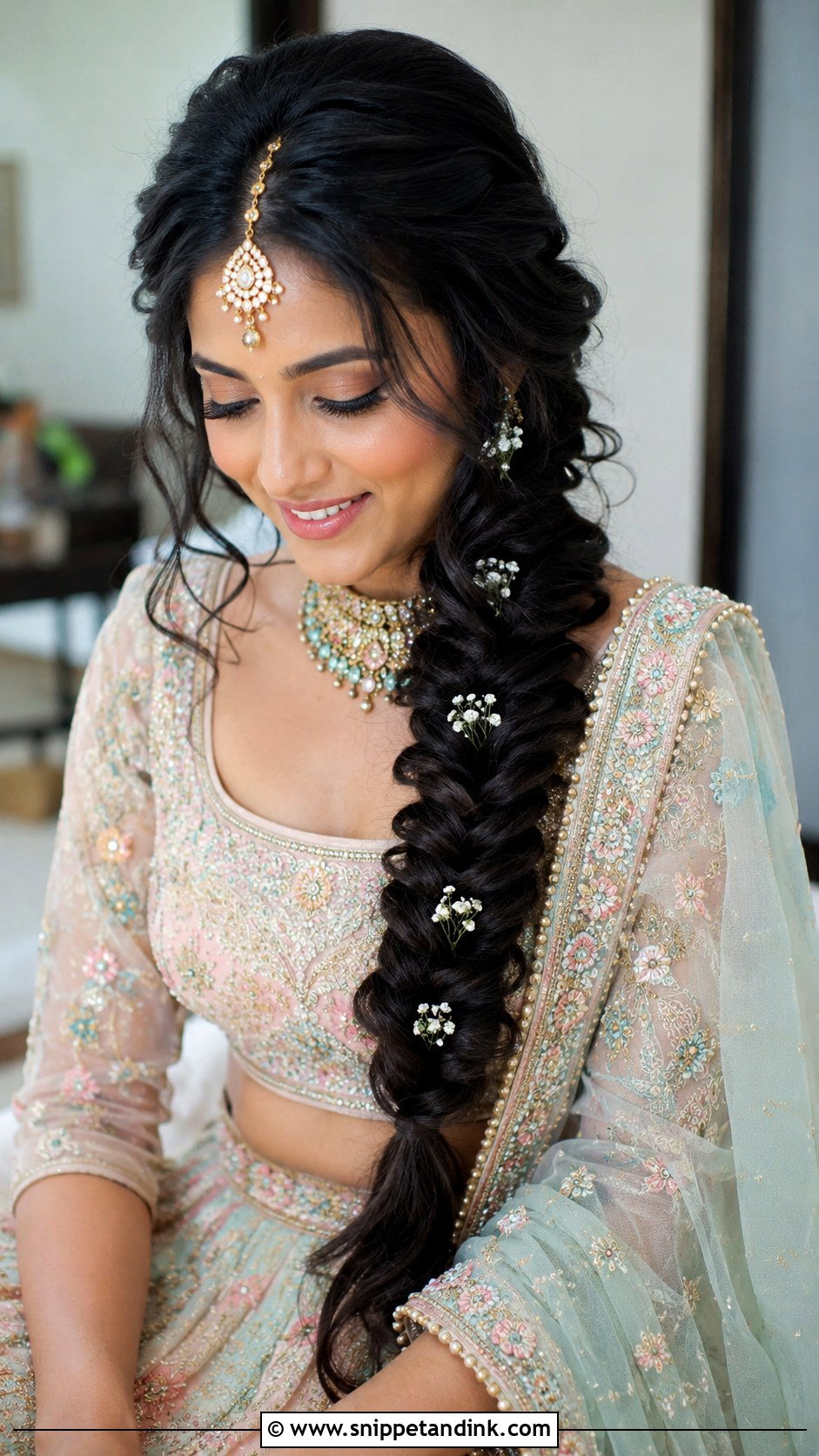
A fishtail shows more texture than a regular plait, which is why it looks so detailed on long, thick hair. Down the back or over one shoulder for portraits, it suits floral accessories, embroidered outfits and boho gowns. I pancake it gently, pulling the outer edges so it looks fuller rather than tight. On very smooth hair, the strands slip loose during the braiding itself, so I work it with a little texture paste on my fingers. A few curled front pieces soften it.
14. Asian Bridal Crown Braid
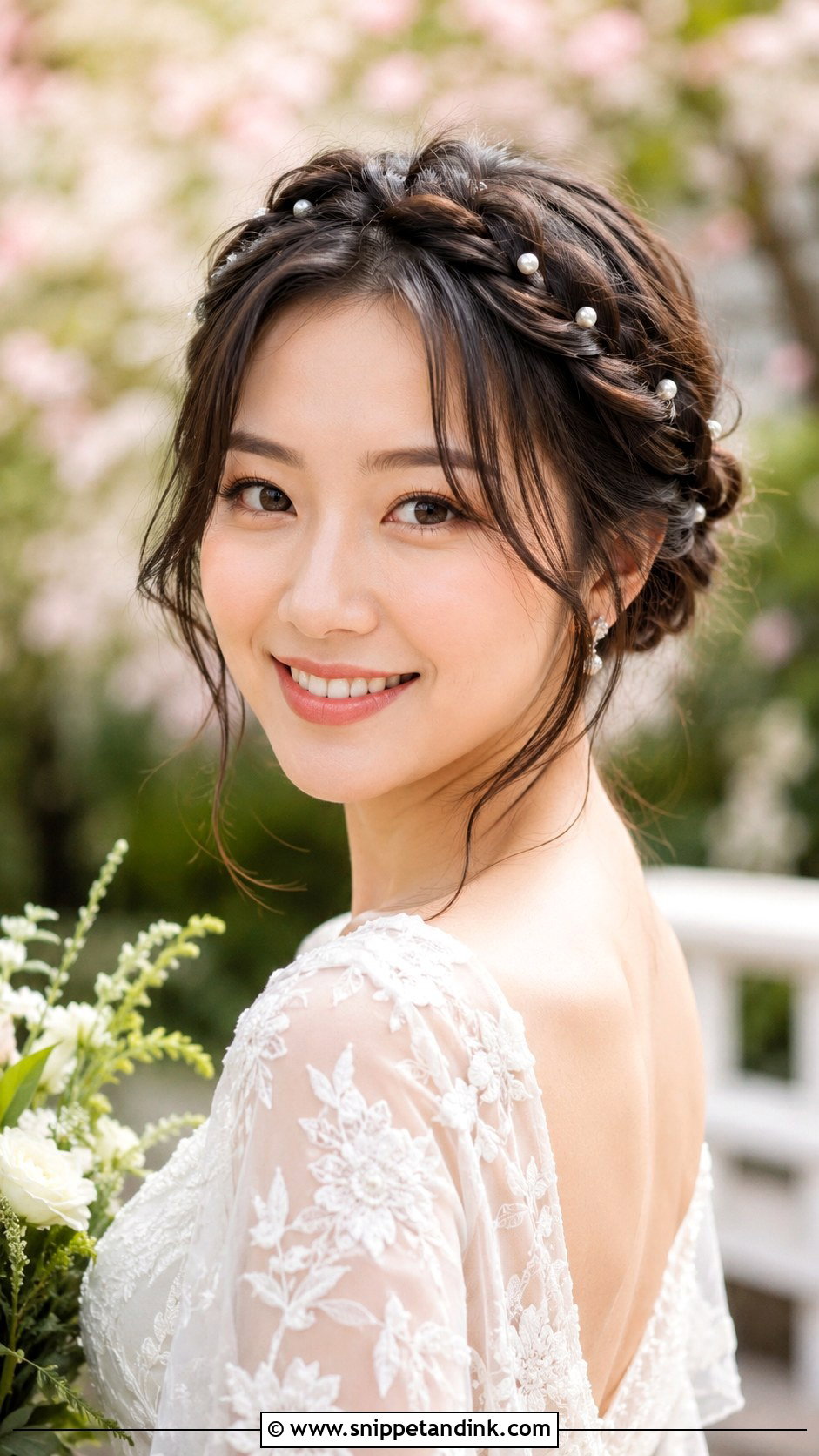
A crown braid wraps the head and can lead into a bun, loose waves or tucked ends. It’s detailed enough that you need very little decoration, which suits garden ceremonies and cultural celebrations. For silky hair it’s quietly practical: the braid creates its own structure all around the head, so the rest of the style has something to hold onto. I loosen it slightly at the hairline so it frames the face, then add a few small flowers, pearl pins or gold accents.
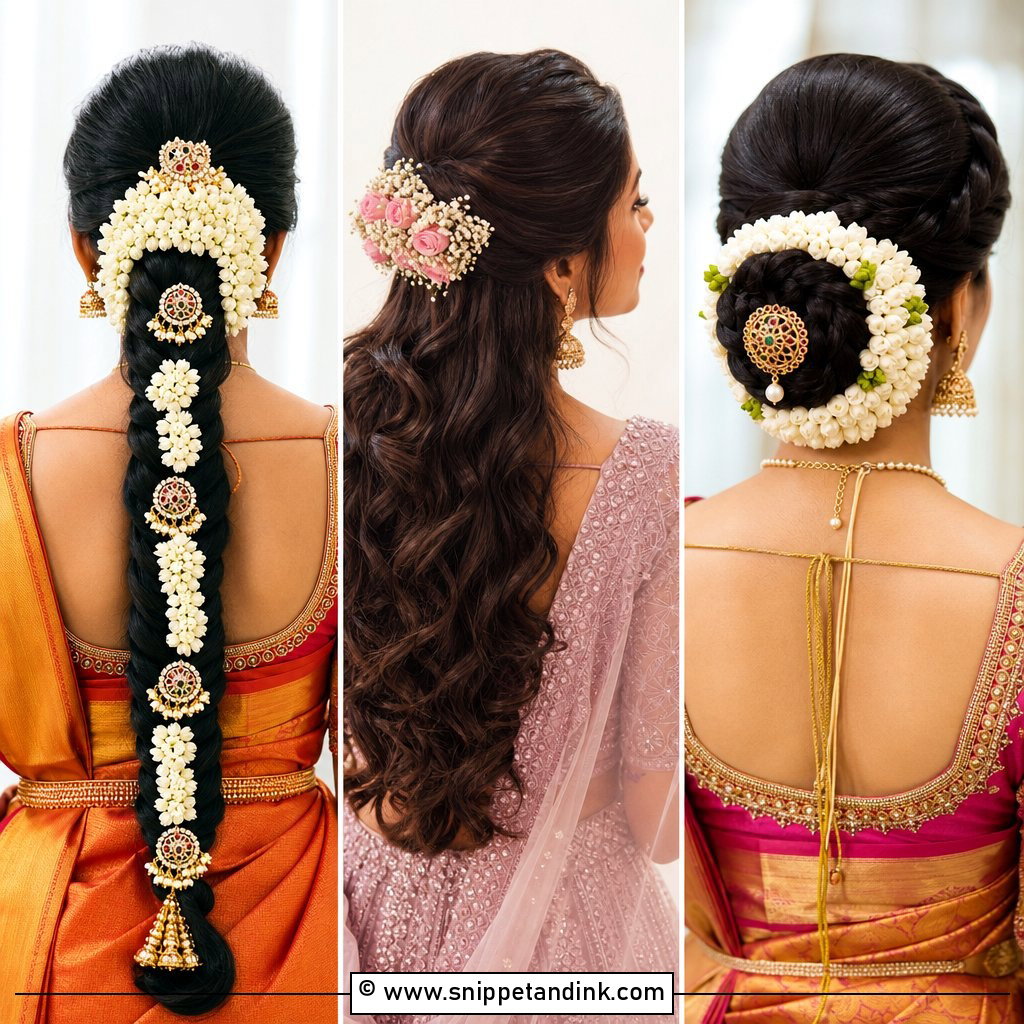
15. Asian Bridal Floral Bun
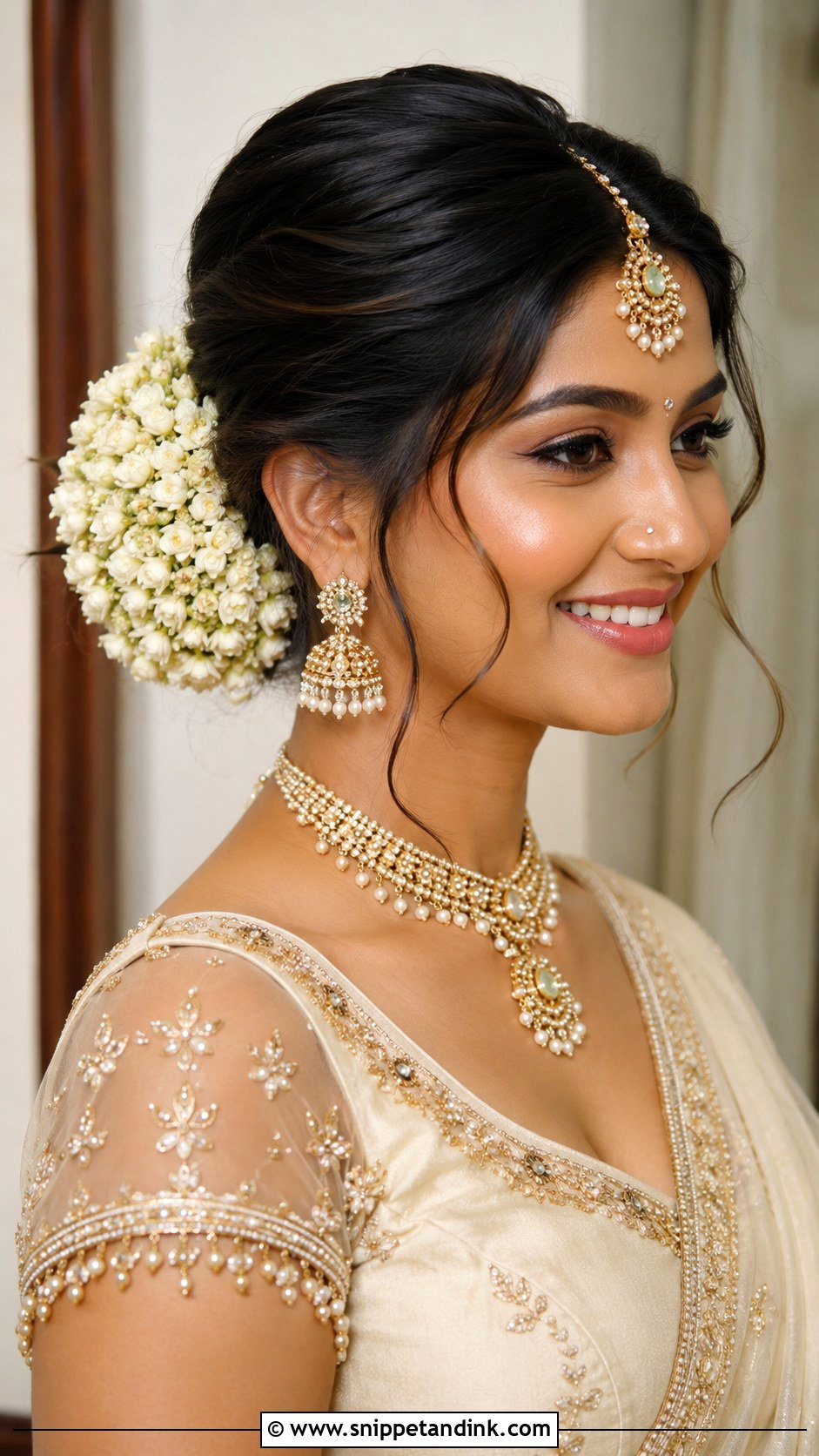
Flowers make a bun festive and, for many families, meaningful. The floral bun is common at South Asian weddings and equally at home at Southeast Asian and East Asian ceremonies. It may be covered with jasmine, orchids, baby’s breath, roses or small white blooms. The bun carries the flowers so they never pull on loose hair. Orchids and baby’s breath hold up in heat far better than roses, and jasmine browns fastest. Order extra and keep them chilled until the last minute.
16. Asian Bridal Pearl Hair
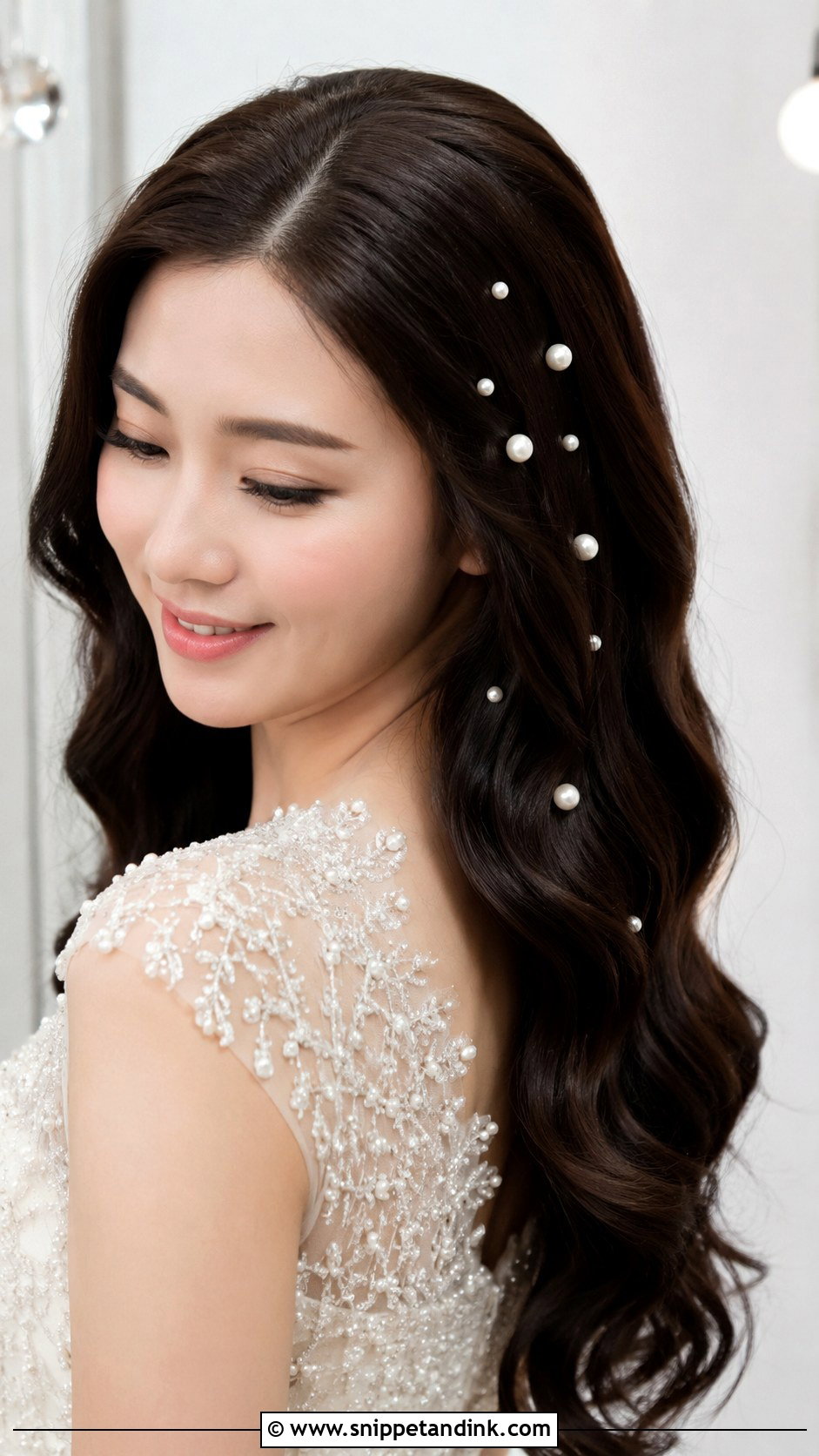
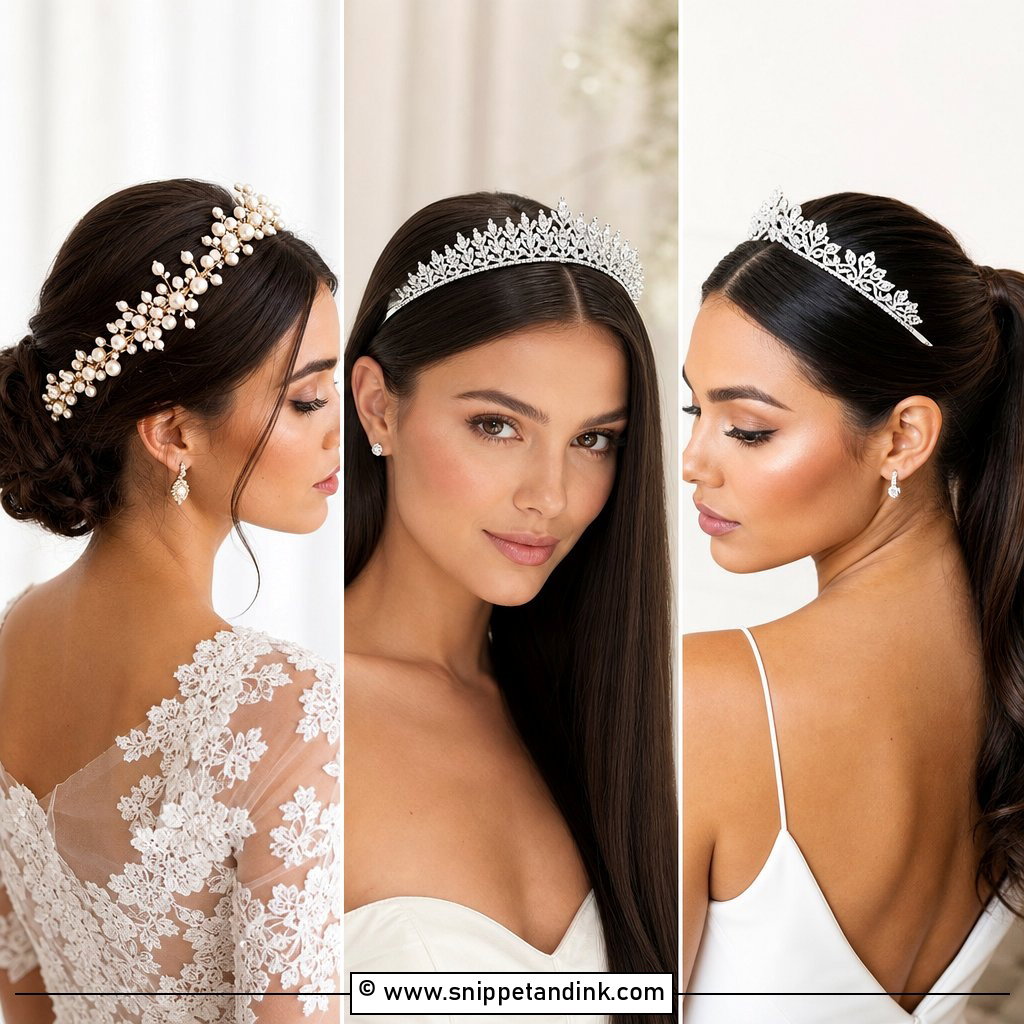
Pearls are a light accessory that works with almost any style, from buns and waves to ponytails and braids. Scattered small pearls look delicate; a comb or headband reads classic. They suit ivory, champagne, blush, silver and soft gold outfits. Against dark brown or black hair, they show clearly in photos, so a few go a long way. I pin them so they angle slightly outward and catch light, rather than flat into the hair where they disappear.
17. Asian Bridal Hair With Veil
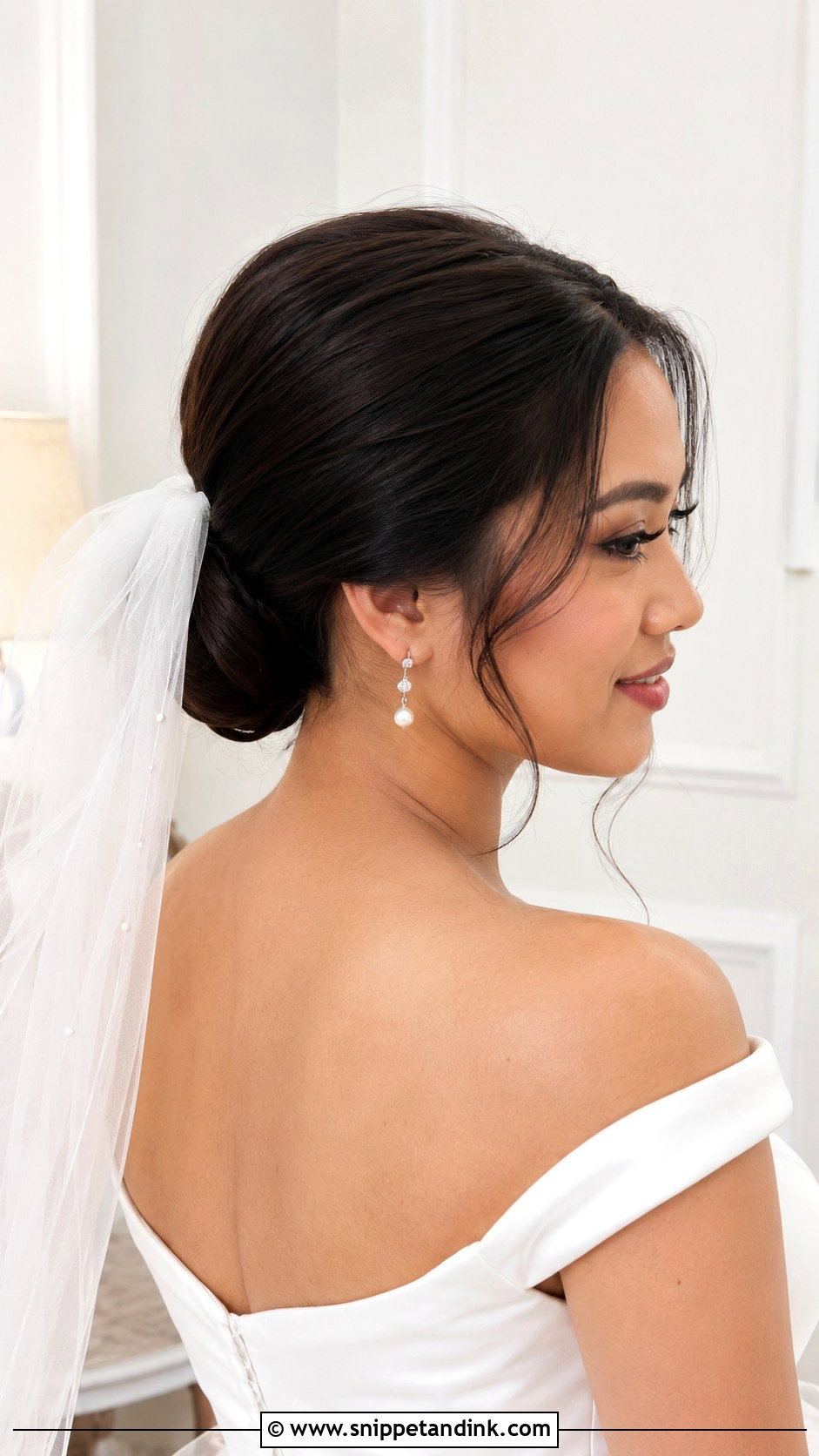
The veil should be planned with the hairstyle, never added at the end. Every style needs an anchor point: above a bun, under a chignon or into a half-up section. Low buns and chignons are easiest because the veil comb has firm hair to bite into. If you want loose waves, I build a hidden pin cluster at the crown and slide the comb into that. Keep face-framing pieces light so the veil moves without dragging them. Practice taking the veil off too, as the comb can snag waves if it’s pulled straight out.
18. Asian Bridal Hair With Maang Tikka
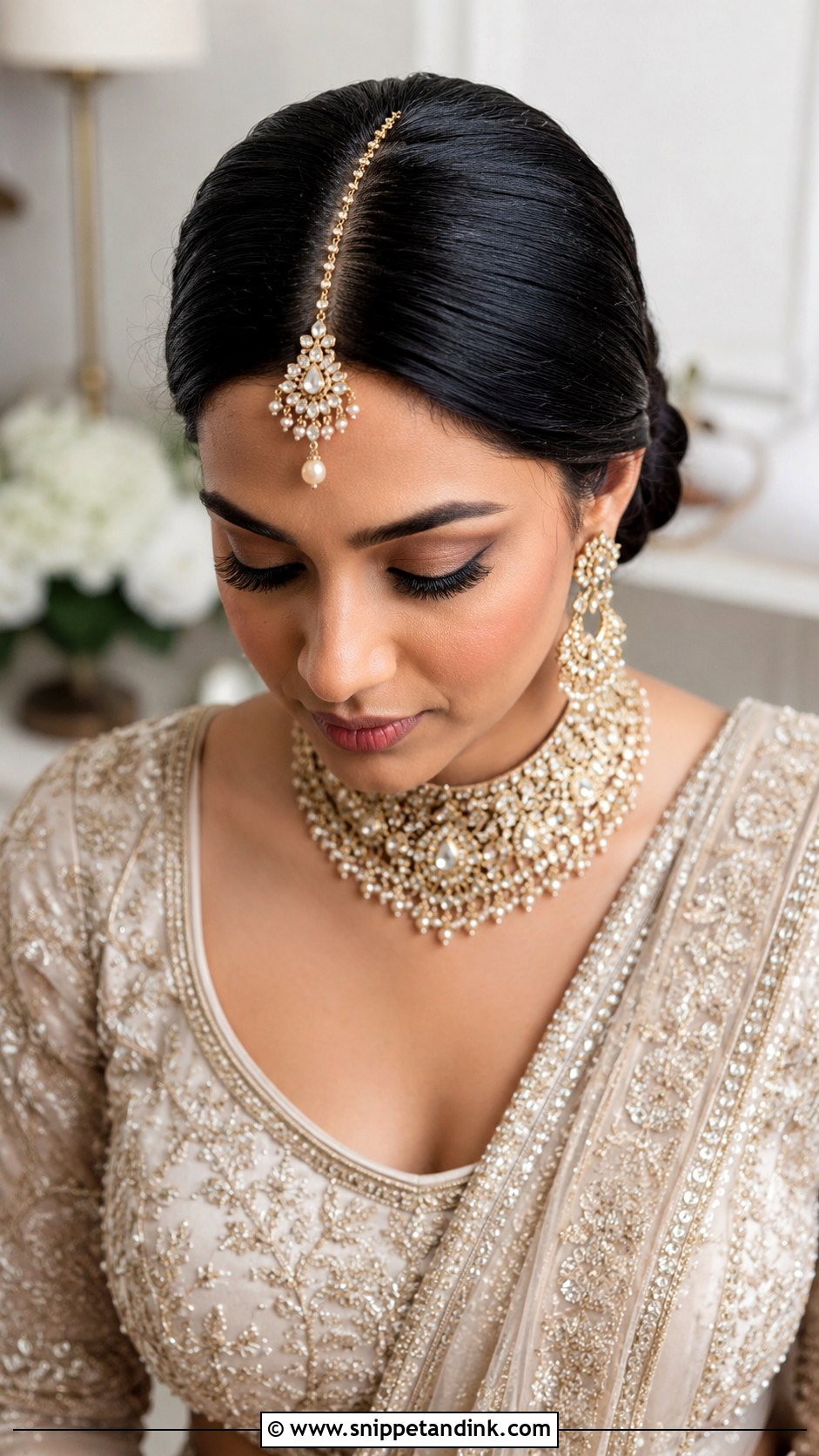
Bridal hair with maang tikka needs a clean center part and secure placement, most often with lehengas, sarees, shararas and embellished dupattas. The tikka can pair with a low bun, high bun, braid or soft waves. I pin the tikka’s chain into the hair on either side of the part, and hook the top into the bun or a small hidden braid. Pinning it only to the part line makes the pendant swing and pull every time you look down.
19. Asian Bridal Short Hair
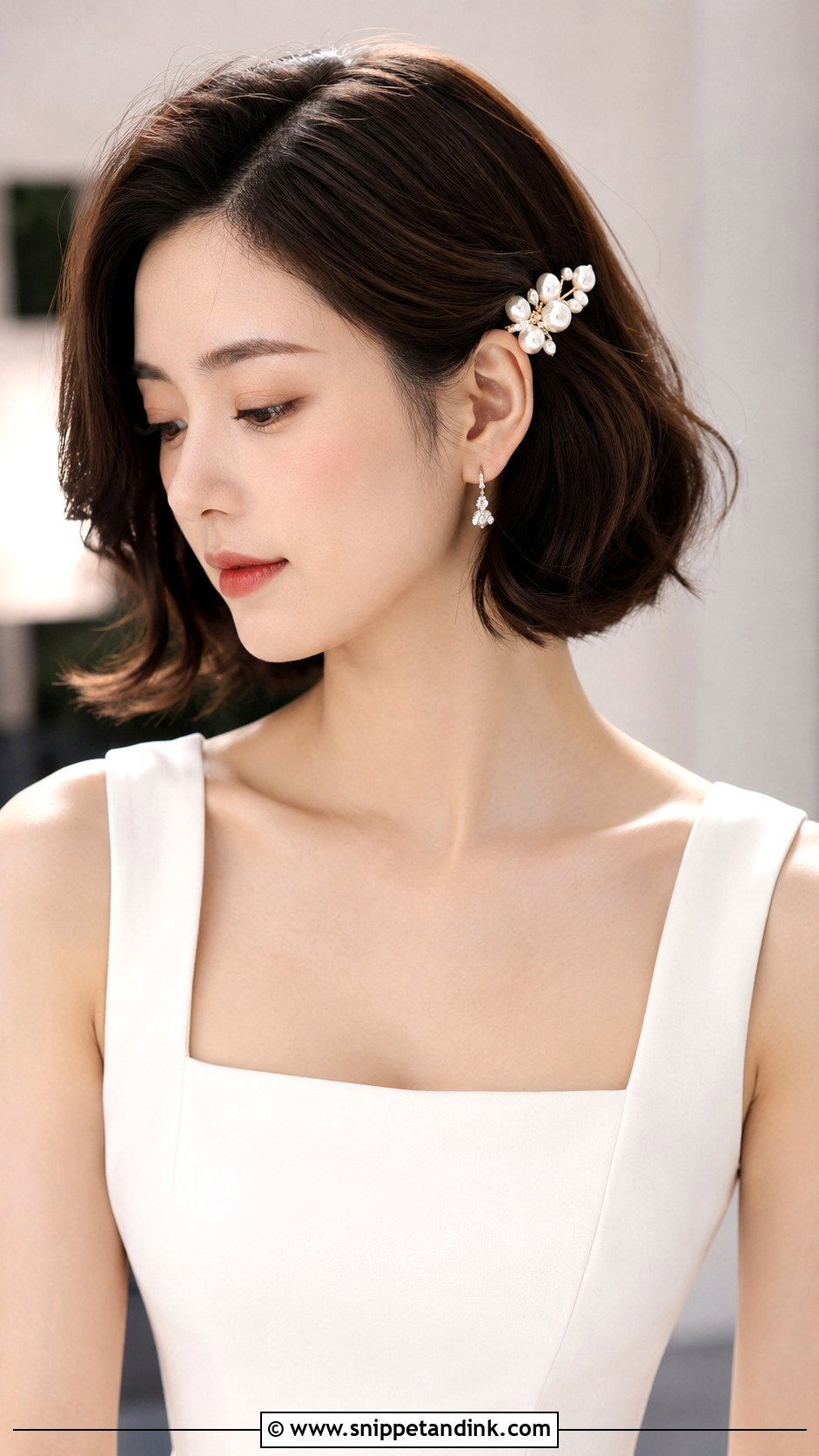
Short hair looks bridal when the shape is clear. Bobs, lobs and shoulder-length cuts can take soft waves, a sleek side part, a small twist or hair tucked behind the ear with an accessory. A pearl clip, floral comb or light veil completes it. Shine and structure are what make the difference, so smooth ends and a clean part matter more on short hair than any accessory. The hardest part is anchoring a veil; I usually tuck a small comb into a twisted section at the back of the head where hair is thickest.
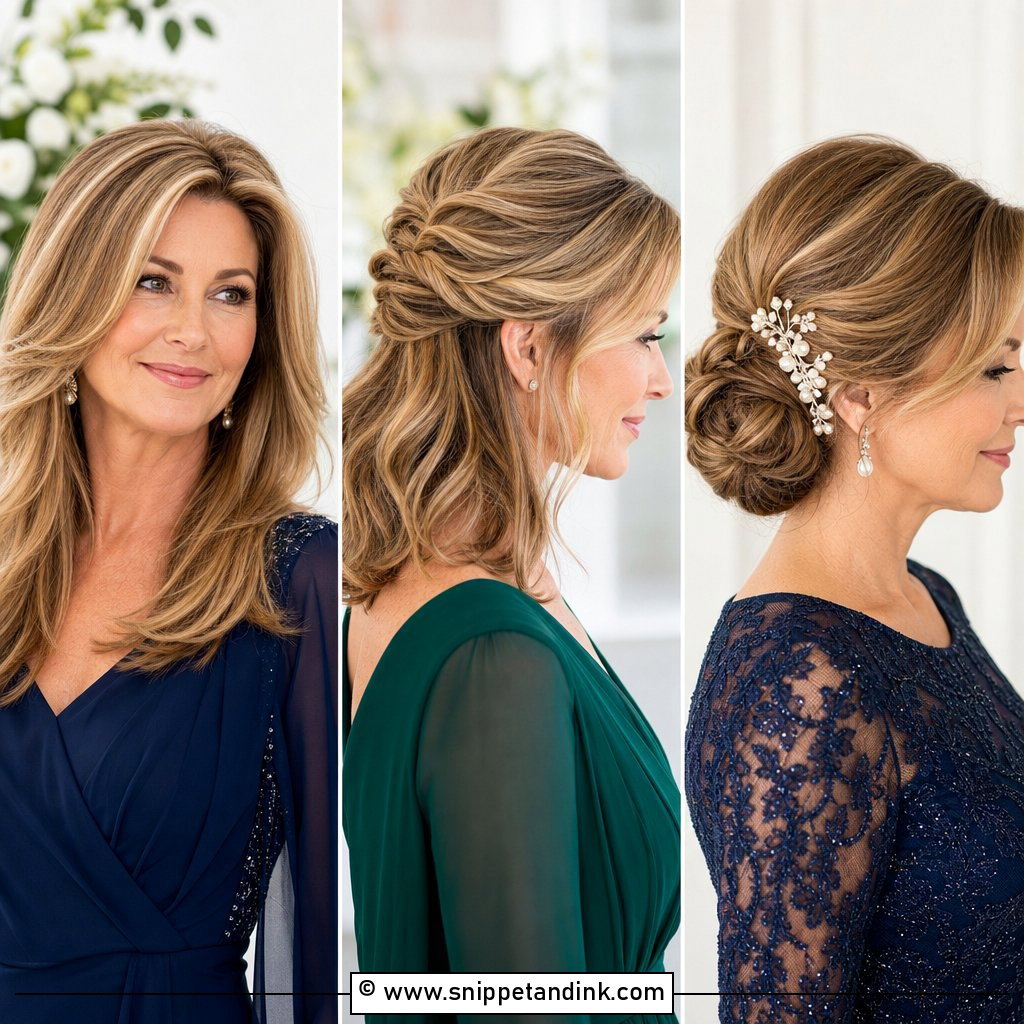
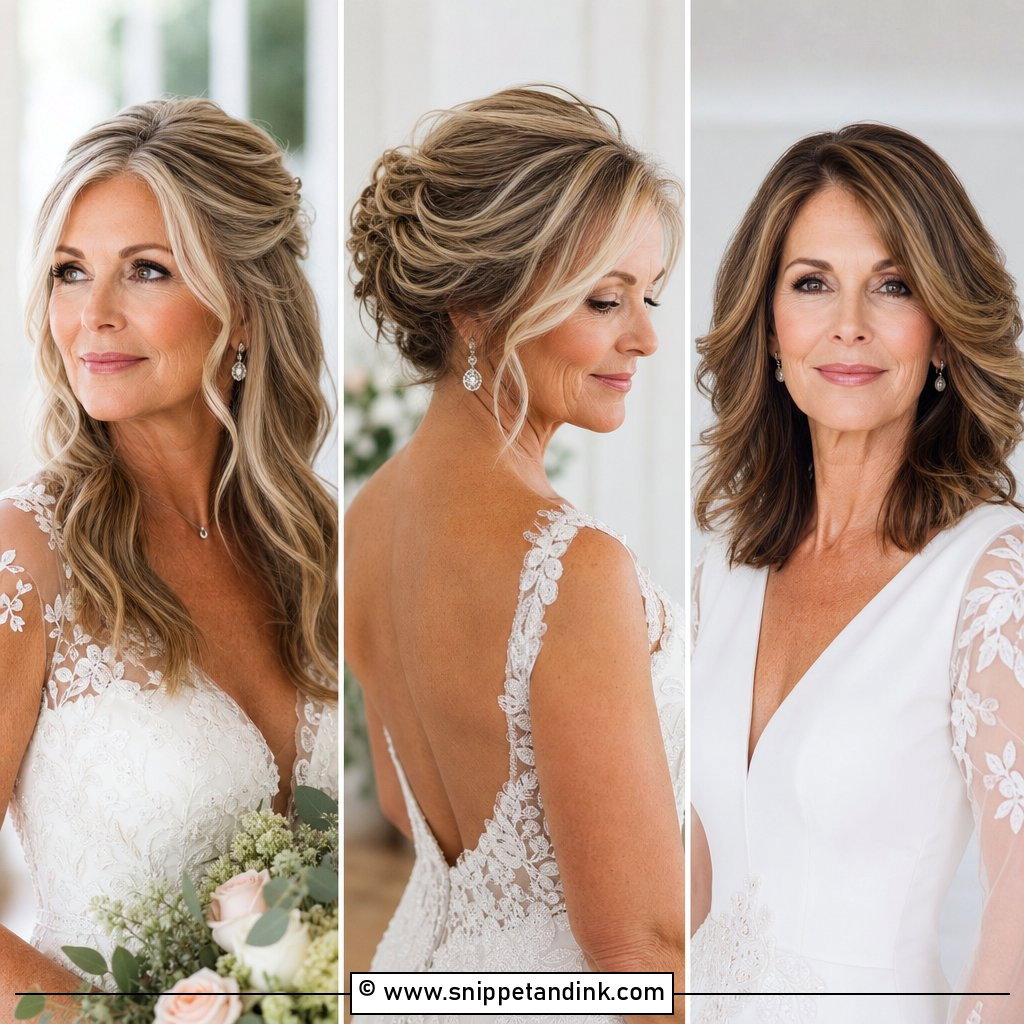
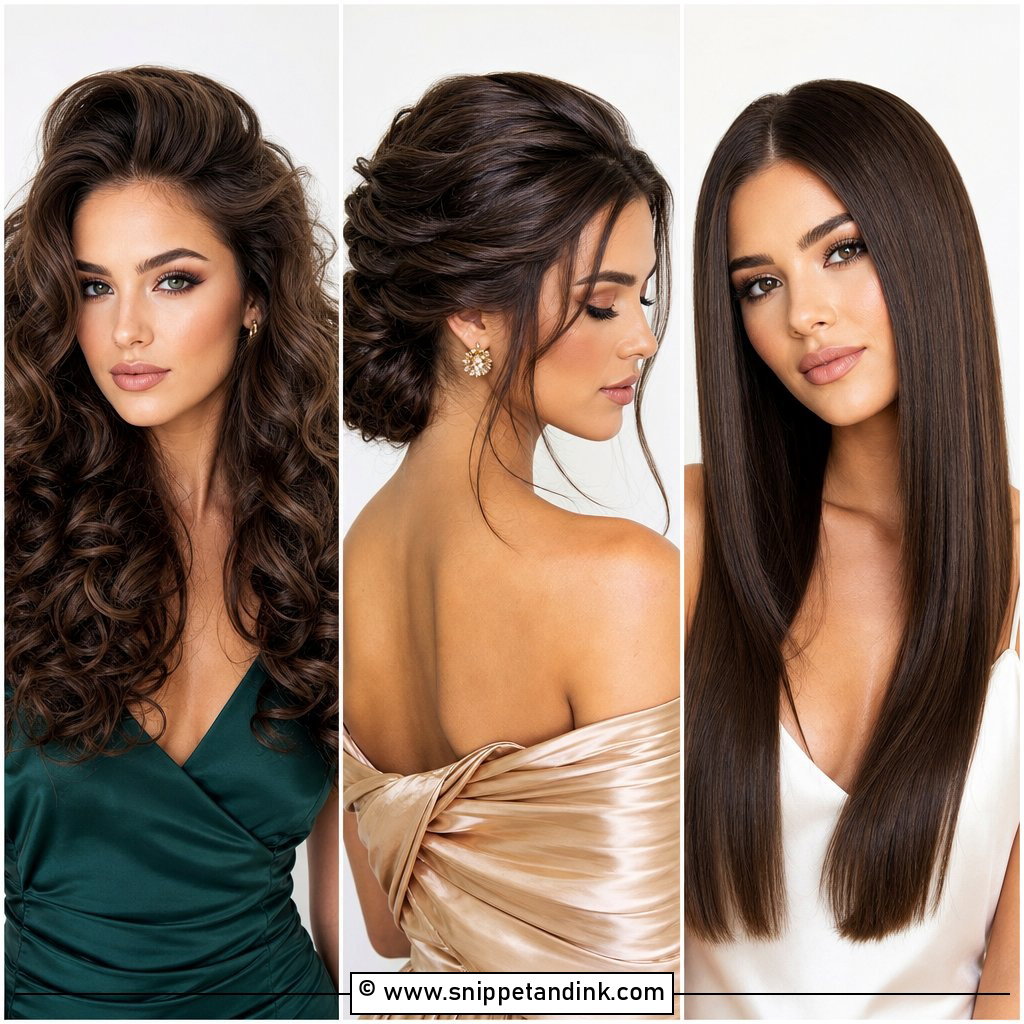
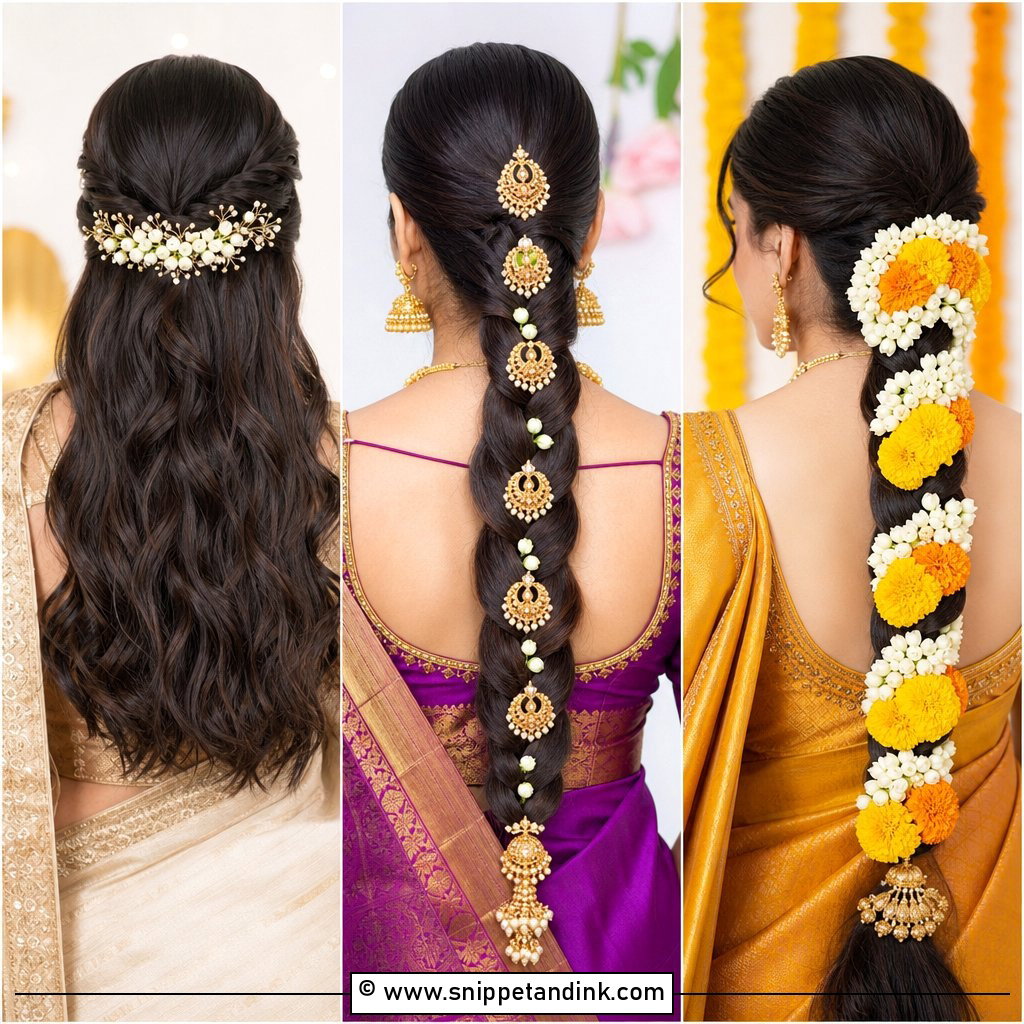
20. Asian Bridal Long Hair
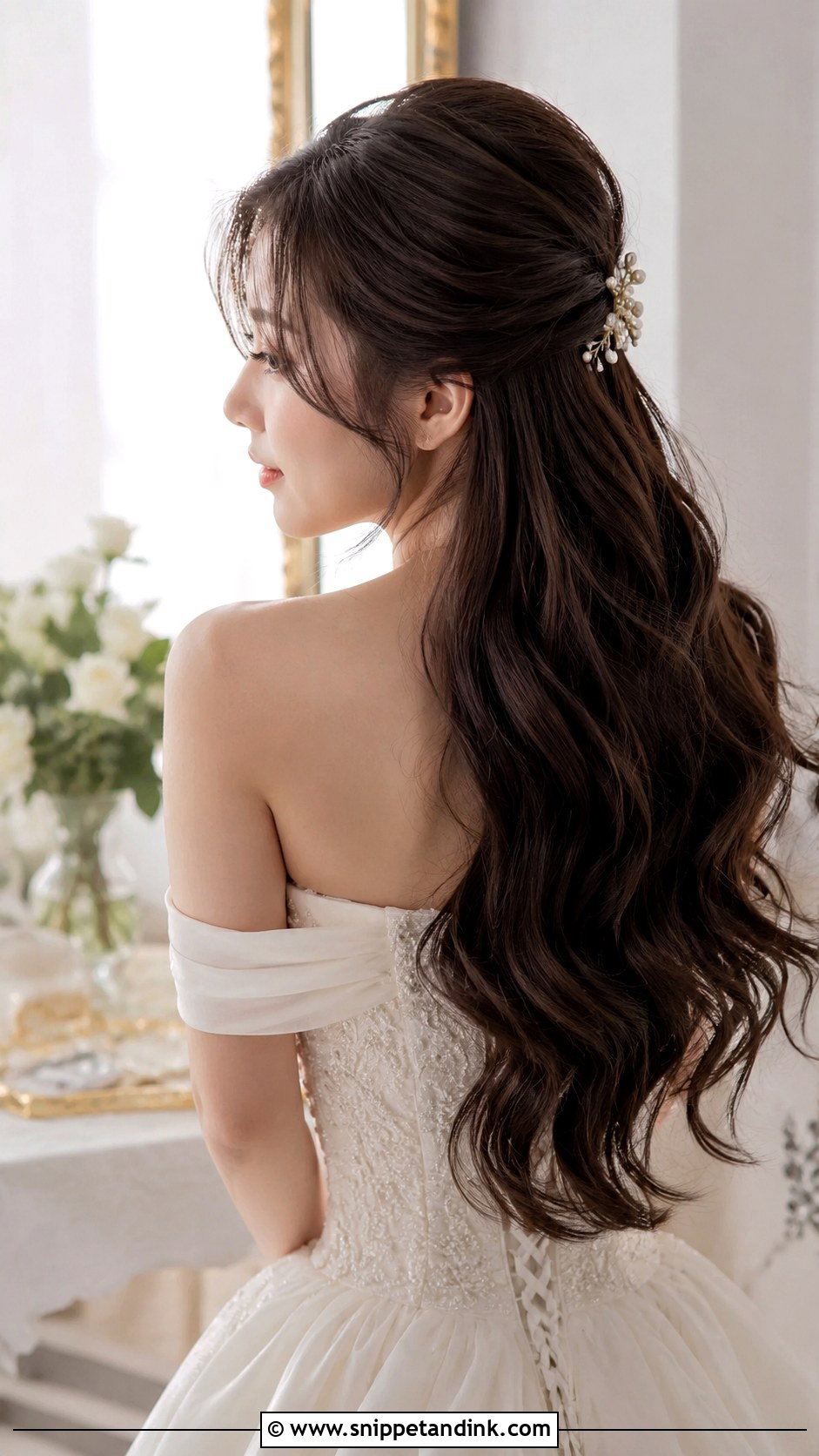
Long hair gives you the most choice, from glossy waves to thick braids, half-up looks and dramatic buns, but it’s also heavy. Waves worn down on very long hair stretch out by evening, simply from their own weight. So I’d only keep it down if you’re comfortable with softer waves later, and prep the roots well. For security, a braided bun, low chignon or half-up style carries the weight better. Smooth ends and a light shine spray make long dark hair look its best. Do a trial with your veil or jewelry.
If a Wave Falls or a Tikka Slips Halfway Through the Day
Even a well-built style shifts after ten hours, a dupatta adjustment and some dancing. Most problems are small and quick to fix if someone has the right things to hand.
- Tikka or headpiece sliding: re-pin the chain into the hair behind the part, not into the part itself, and cross a second pin over the first.
- Waves dropping: twist each fallen section around a finger, pin it flat for five minutes, then release. Heat helps, but most venues don’t have a free socket near a mirror.
- Bun loosening: push the existing pins back in at a new angle rather than adding more on top; extra pins on the surface show.
- Frizz at the hairline: a dab of smoothing cream on a clean toothbrush, brushed in the direction of the style.
Give a small kit to one bridesmaid or cousin, not yourself: matching bobby pins, a few U-pins, a mini spray, the cream and the toothbrush. Show her how your pins are placed at the end of your trial so she knows where to push.
How Much Hold Does Your Day Actually Need?
There is no single right style here. The one that works supports your outfit, hair texture, ceremony length and the accessories you’ll carry on your head. Low buns, chignons, waves, braids, ponytails, flowers, pearls and veil-ready shapes all have a place. If your hair is silky, thick, very long or slow to curl, say so at the trial and bring every accessory. That gives your stylist what they need to build a style that is still comfortable and in place at the end of the night.
You'll Like These Ideas:


Leave a Reply