
The question I hear most at trials for Asian bridal hair updos isn’t about shape at all. It’s “will this still be there at midnight?” An updo has to carry a veil or dupatta, sit comfortably under jewelry, and suit your hair, your face and the room you’re marrying in. Below are the fifteen I build most often, from glossy sculpted buns to braided knots and looser reception twists, for South Asian, East Asian, Southeast Asian and fusion weddings. With each one I’ve noted where it holds up and where it struggles.
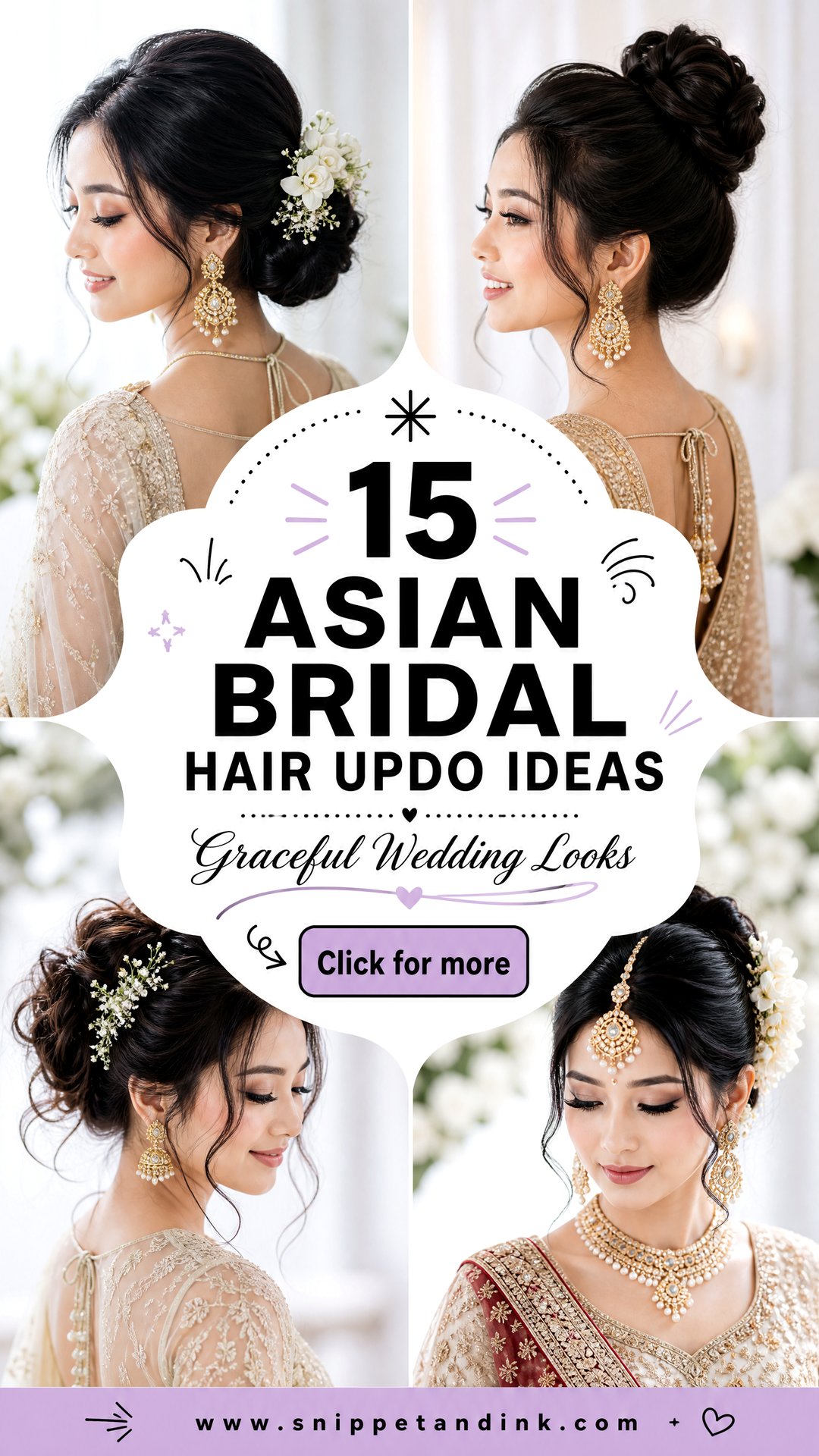
Getting Dense, Straight Hair to Grip a Pin
A lot of Asian hair is thick, heavy and very smooth. That looks wonderful worn down, but it gives a bobby pin almost nothing to hold, and curls set at 9 a.m. can drop flat by the portraits. A bun built on slippery hair also tends to slide down the nape as the day goes on. Most of the fix happens before I pick up a curling iron.
- Wash the day before rather than that morning. Second-day hair has grip; freshly conditioned hair is the hardest thing I pin.
- Skip serums and oils at the roots. I use a texture spray or dry shampoo underneath so the pins have something to bite.
- Very thick hair: ask about thinning the bulk hidden inside the bun instead of piling all of it up. A huge bun is heavy, and the weight pulls at the scalp by evening.
- Fine or shoulder-length hair: a bun filler or a few clip-in pieces matched to your shade gives body without backcombing everything into a knot.
- Let curls cool pinned in place before shaping. On straight hair, that cooling step is the difference between a curl lasting two hours and lasting all night.
Be honest with your stylist about how your hair behaves. If it never holds a curl past lunch, say so at the trial, not on the morning itself.
1. Asian Bridal Low Bun
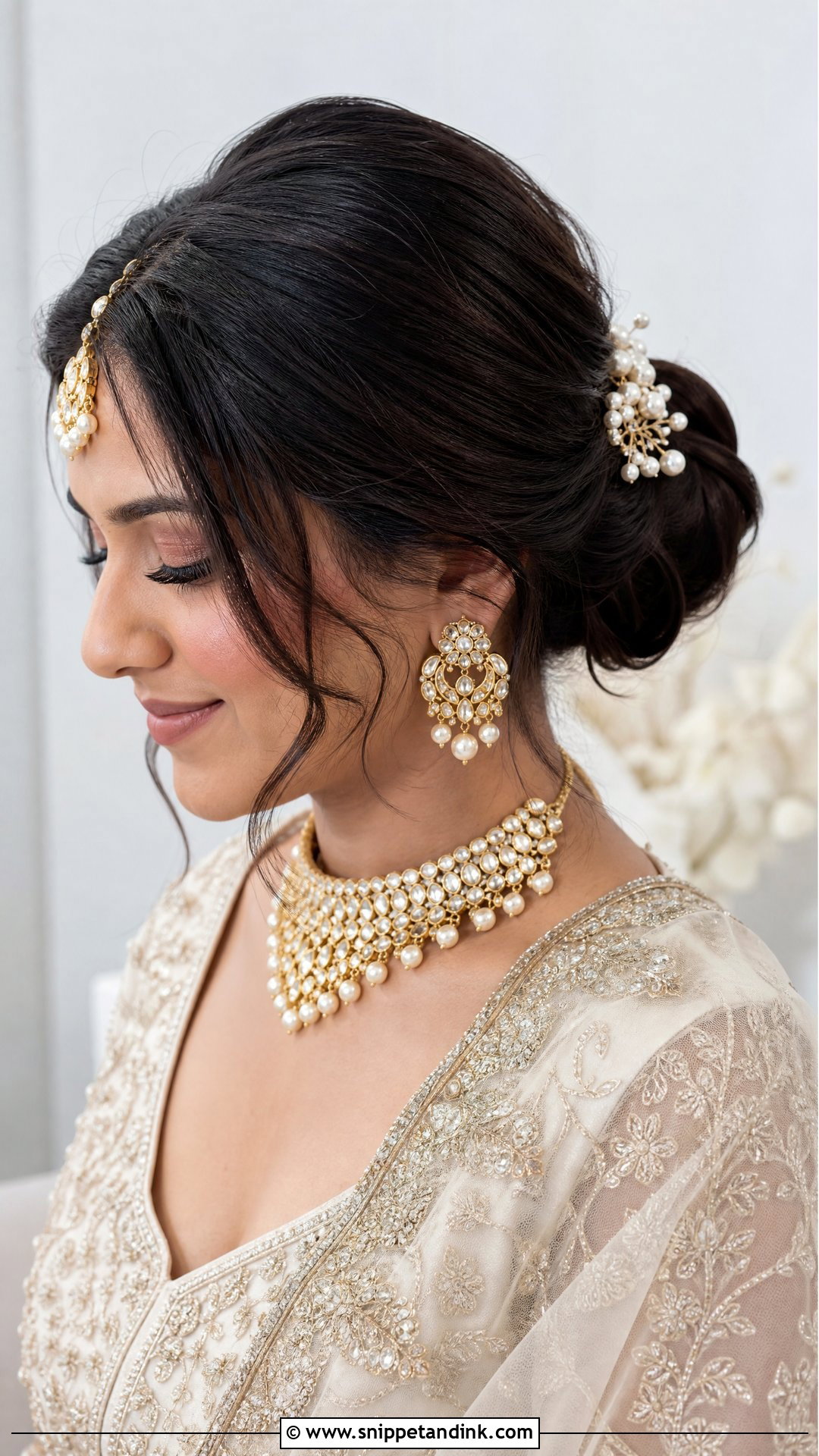
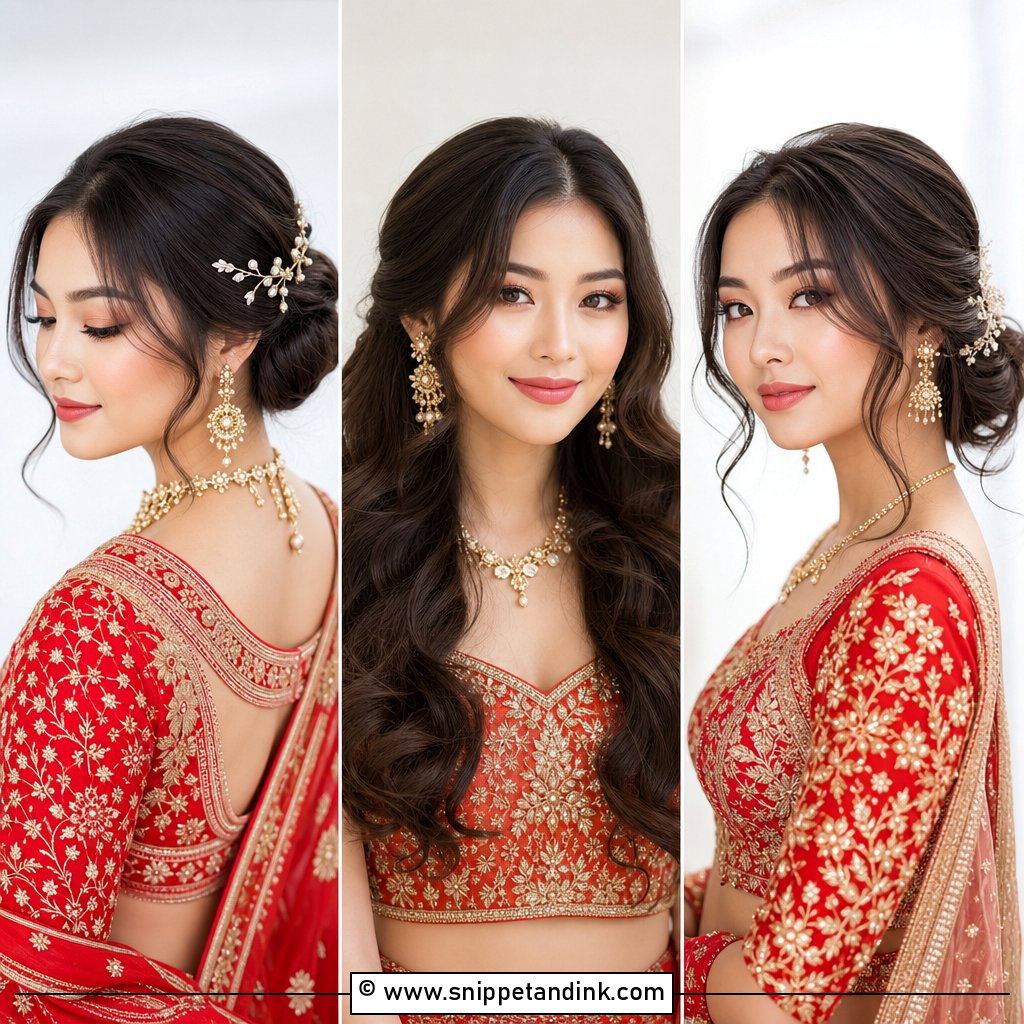
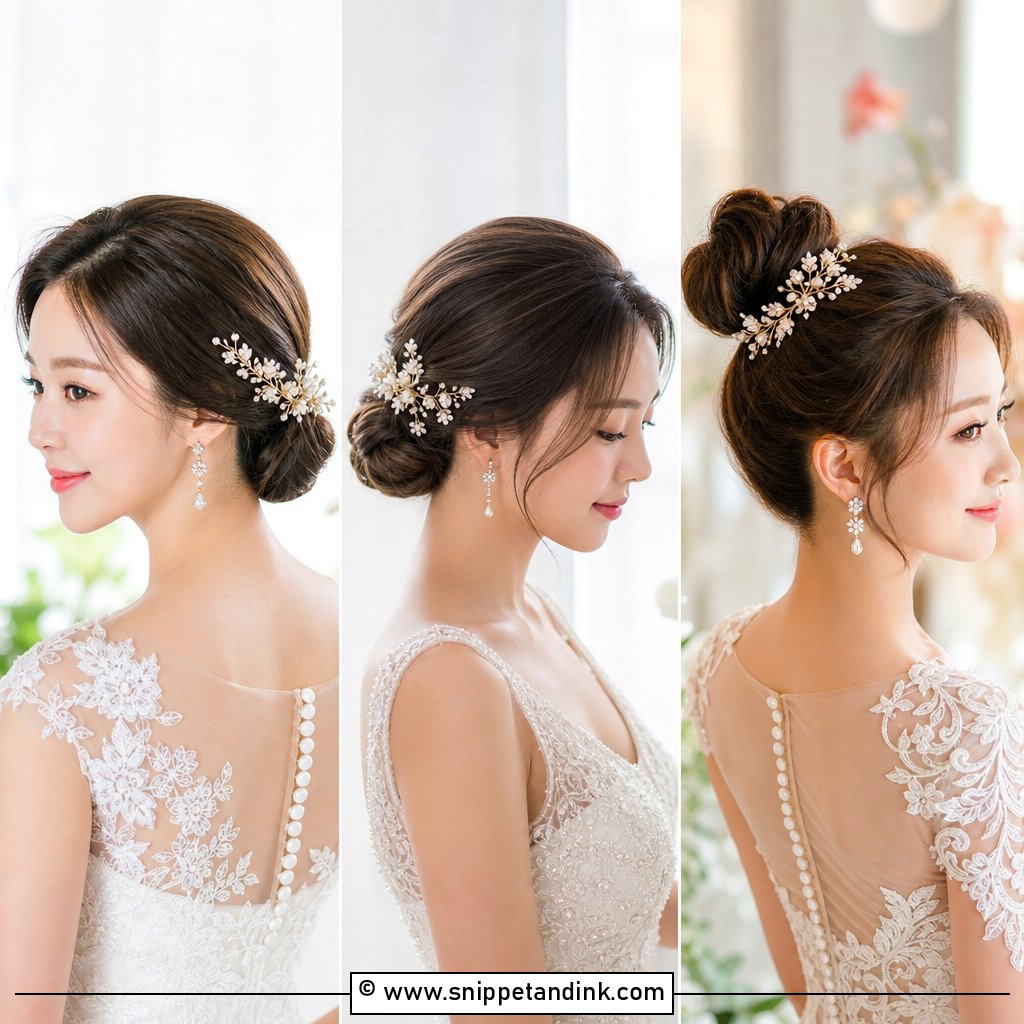
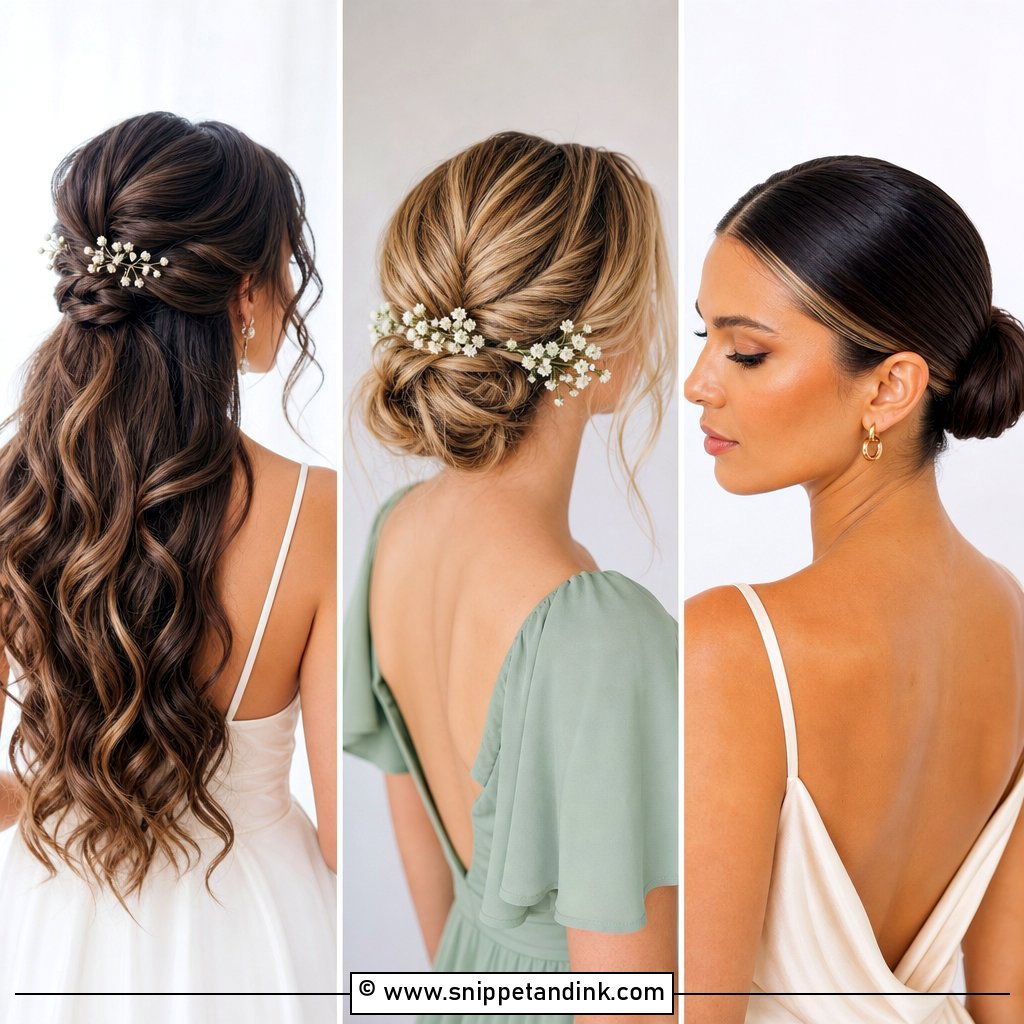
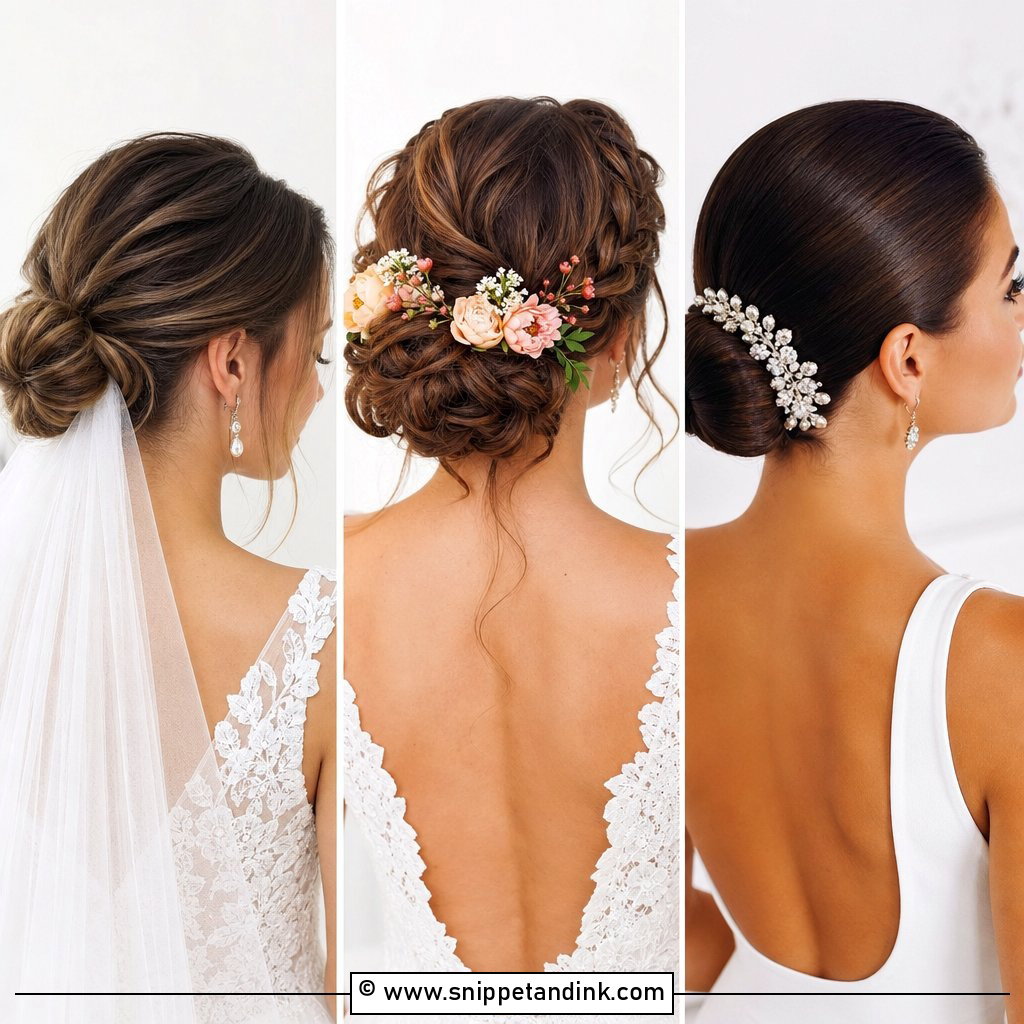
The low bun is my default for a reason: sitting at the nape, it gives a veil comb, a dupatta pin or a floral piece a solid base without any weight pulling on the crown. It suits a lehenga, saree, qipao, hanbok-inspired gown or a modern white dress equally well. A center part reads regal; a side part softens it. What I check first is the profile, because a bun that looks neat from the front can sag into a flat pancake from the side. I anchor it with crisscrossed pins into a small elastic base so it keeps its height through the photos.
2. Asian Bridal Sleek Bun
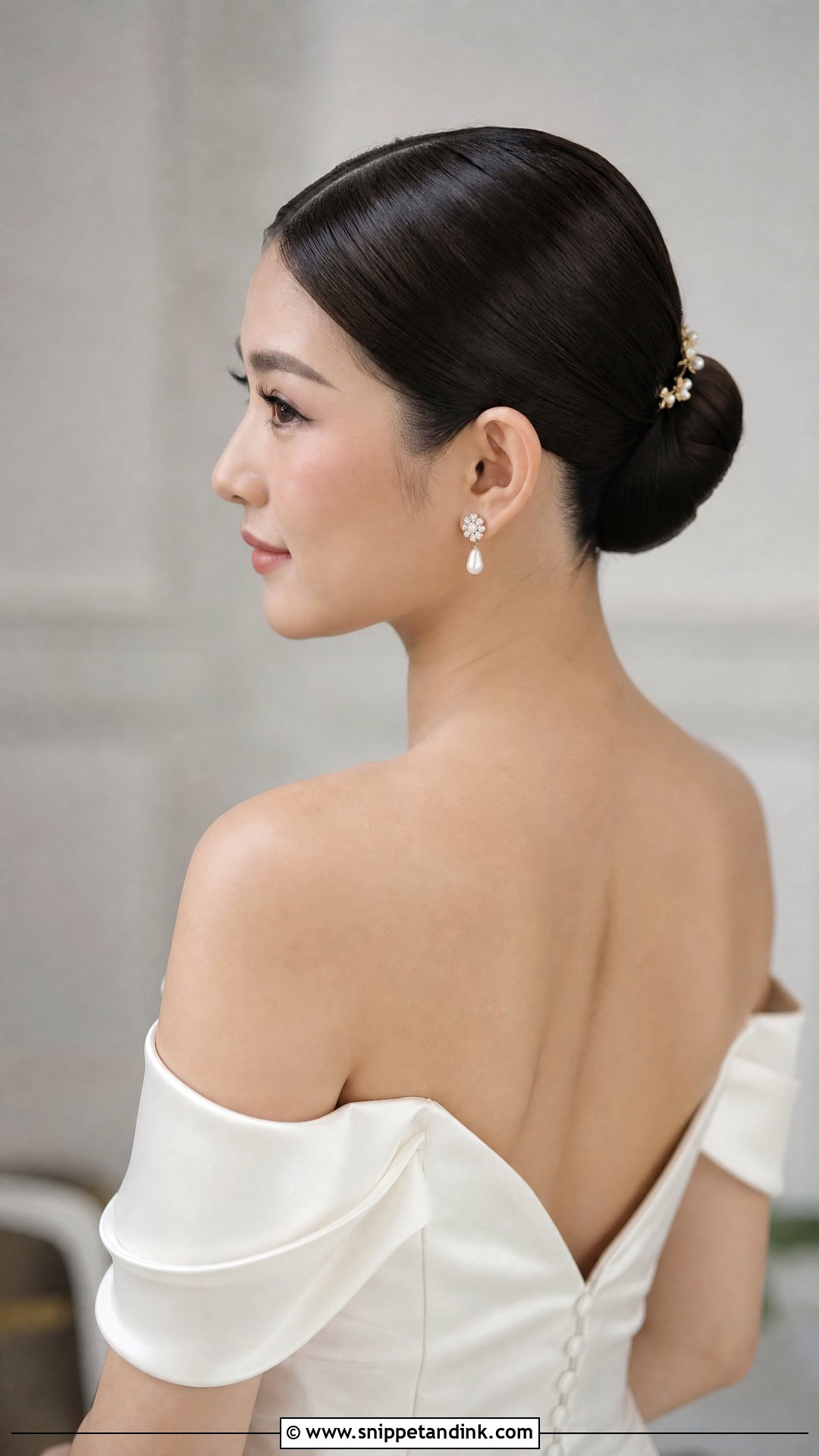
When the outfit already has heavy embroidery, big jewelry or a dramatic neckline, I keep the hair quiet with a sleek bun and let those pieces do the work. Middle part, smooth roots, a compact bun low or mid-height. Straight and slightly wavy hair take to it easily. The catch is that sleek shows everything: one stray layer at the nape and the camera finds it. I smooth with a soft bristle brush and a little cream before the shine spray, never oil at the roots or the pins start sliding by evening. A maang tikka and dupatta sit well on it, and so do pearl pins or a single gold comb.
3. Asian Bridal Textured Bun
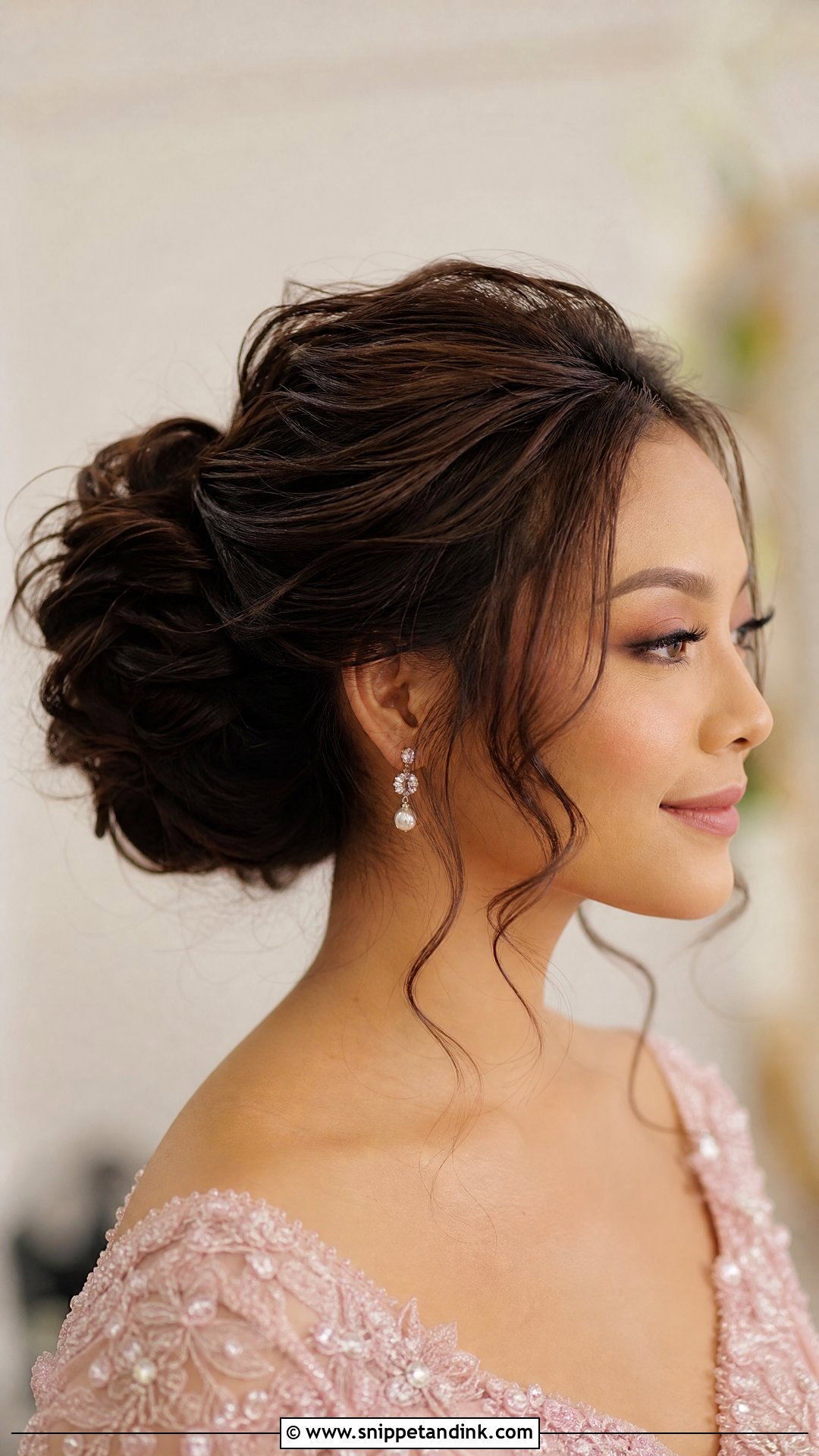
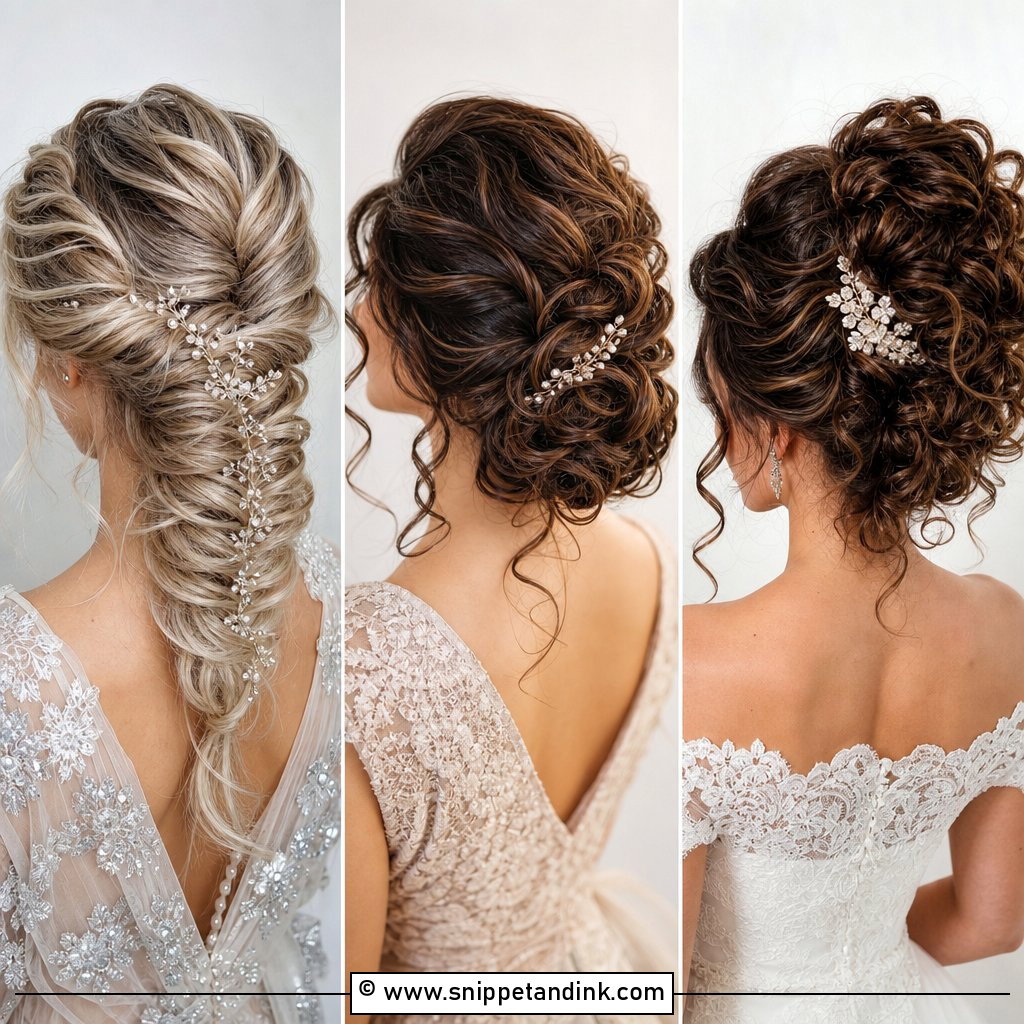
Texture is what keeps a fuller bun from looking messy, as long as it’s controlled. I curl the lengths first with a medium barrel, let the curls cool pinned, then break them up and pin each section into a rounded shape. Medium to long hair works best; very short layers tend to poke out. Balayage, highlights and dark brown hair all show more depth in photos this way. Keep the crown lifted and the bun rounded rather than flat, and leave a couple of face-framing pieces only if they’ve been curled away from the face, otherwise they hang straight by lunch.
4. Asian Bridal Braided Bun
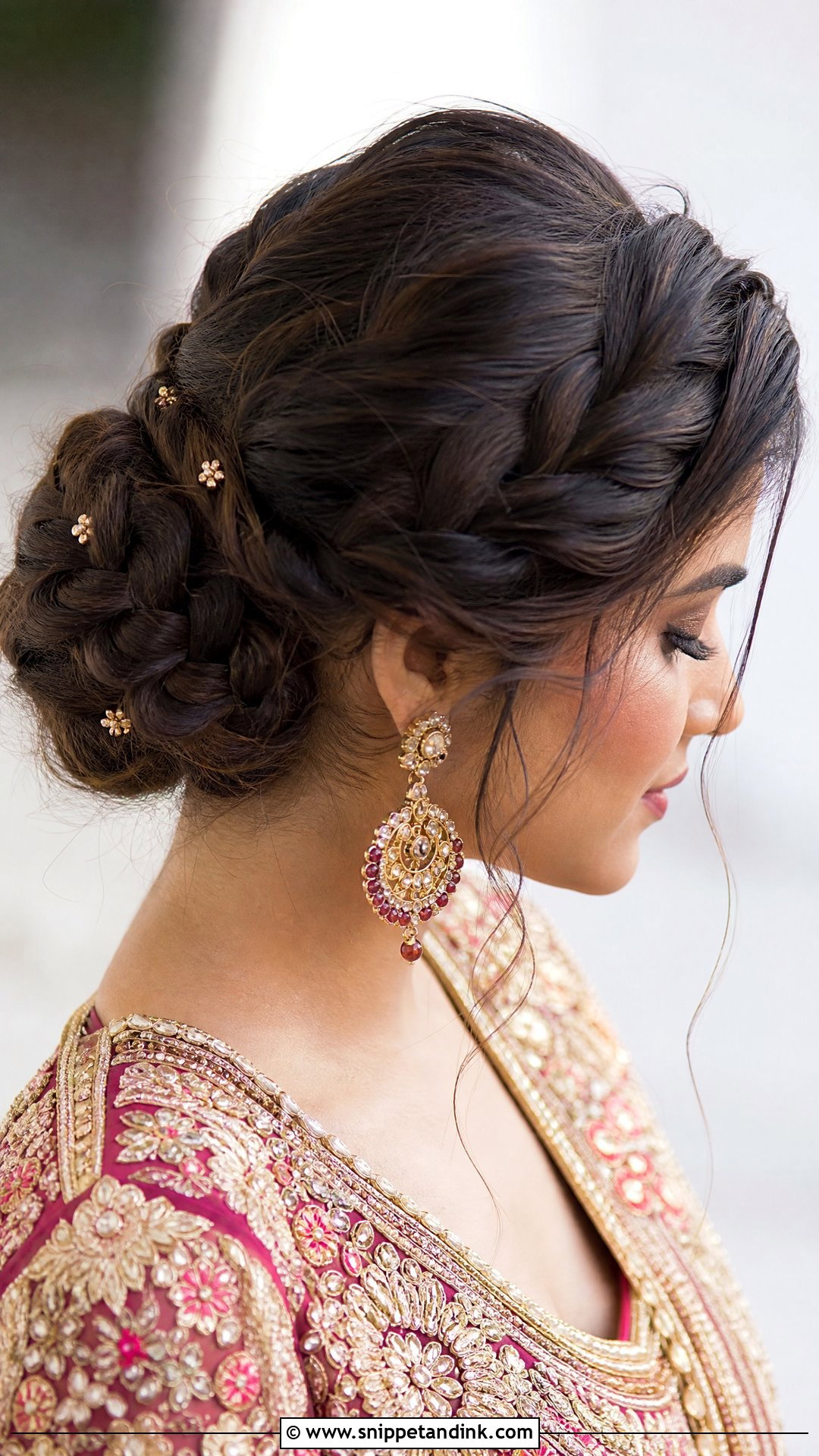
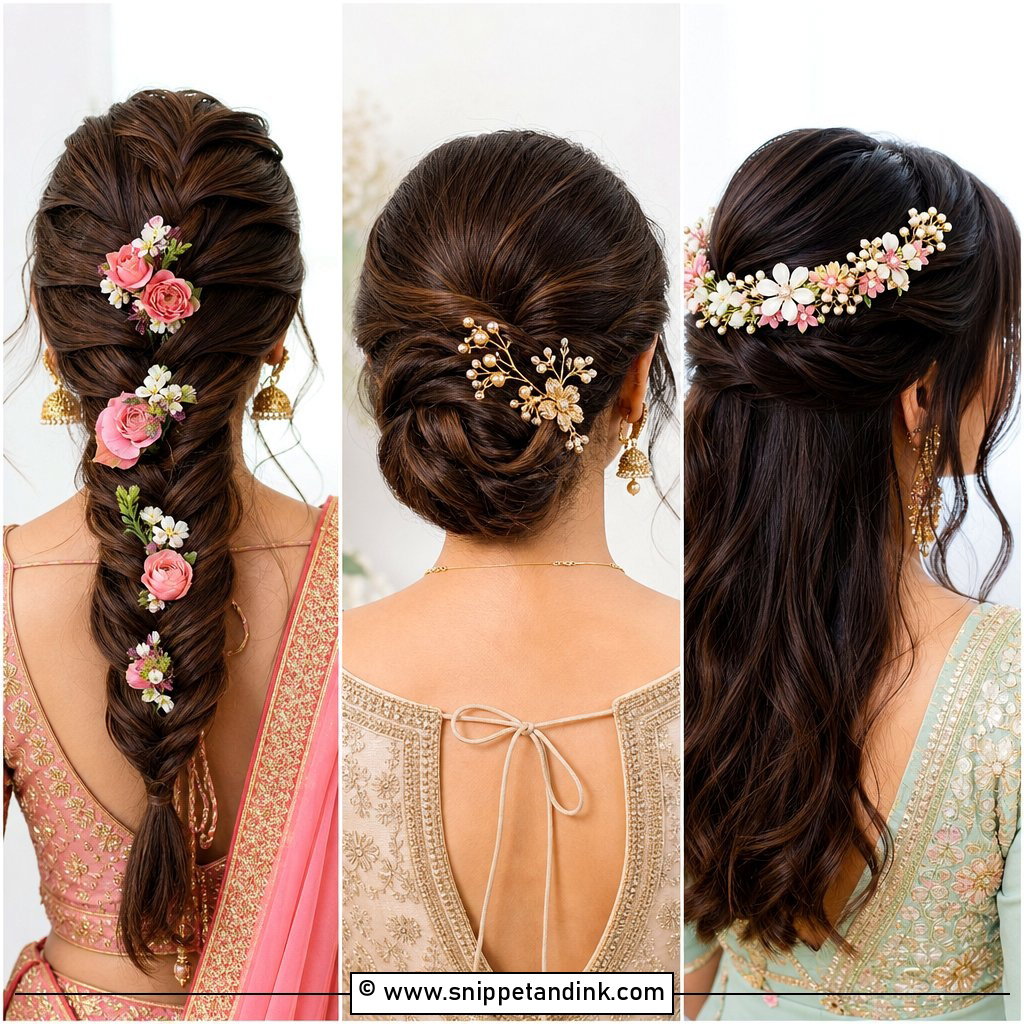
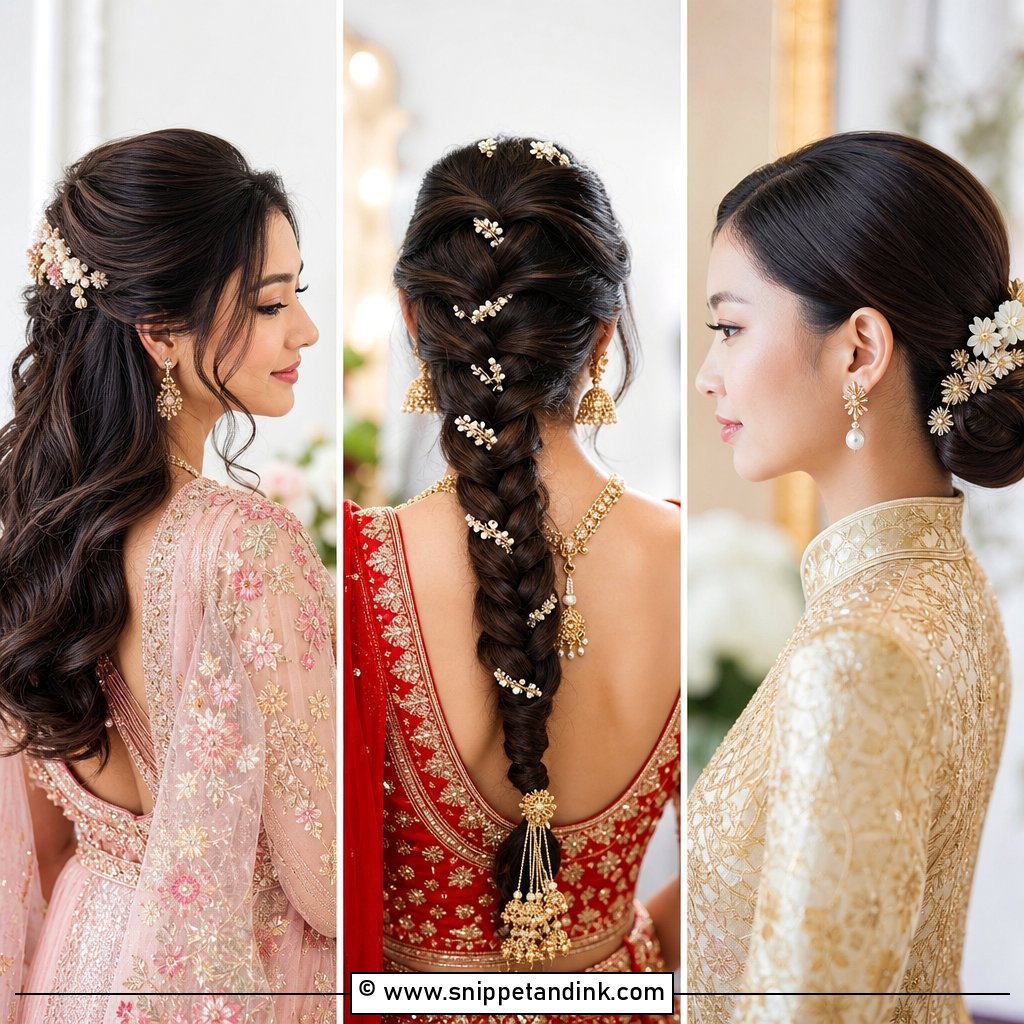
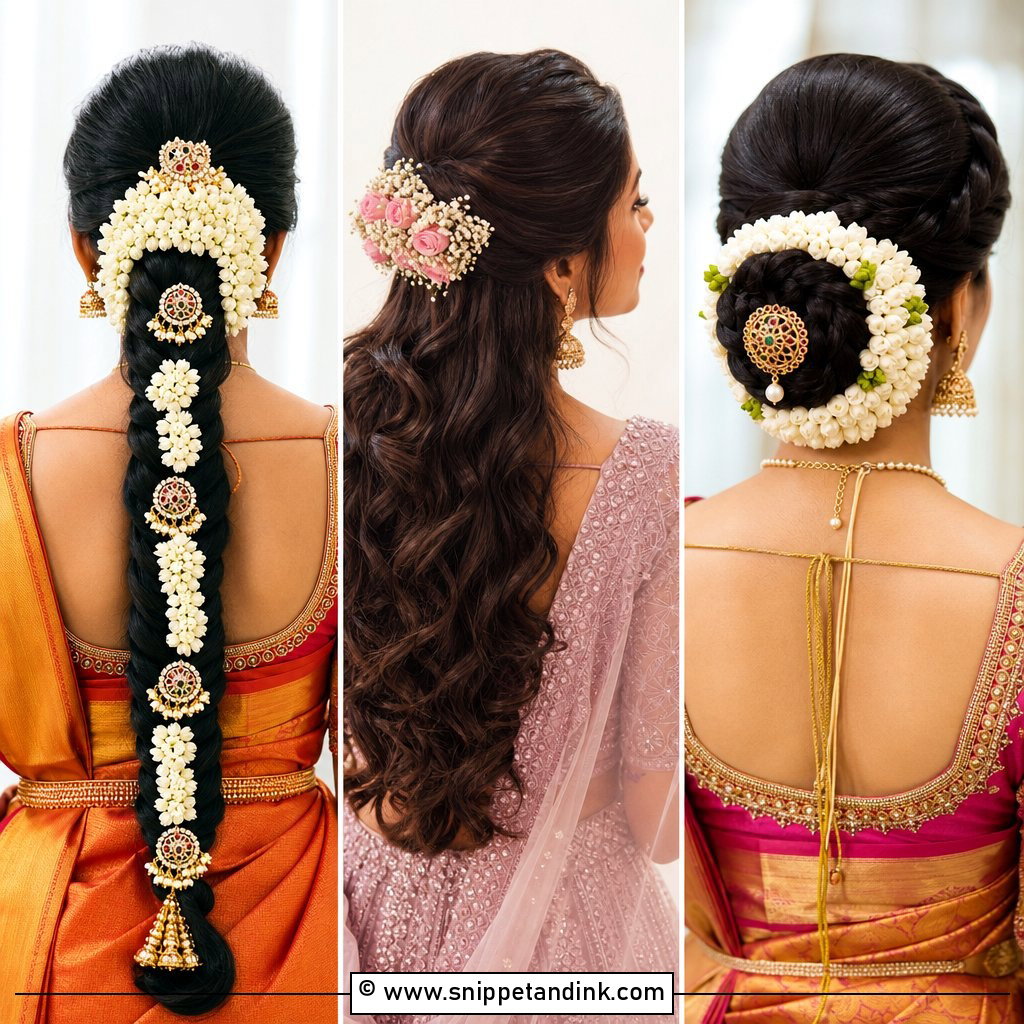
On thick hair, I often reach for a braid before anything else, because it compresses bulk and gives the bun a firm skeleton to pin into. You can wrap a braid around the bun, feed side braids into the back, or run a soft crown braid into a low chignon. Jasmine, roses or gold pins slot neatly between braid sections, which is handy for South Asian looks; delicate floral combs suit Southeast Asian ornaments. I pancake the braid gently after it’s done. Too tight and it reads stiff and tugs at the scalp after a few hours.
5. Asian Bridal Flower Bun
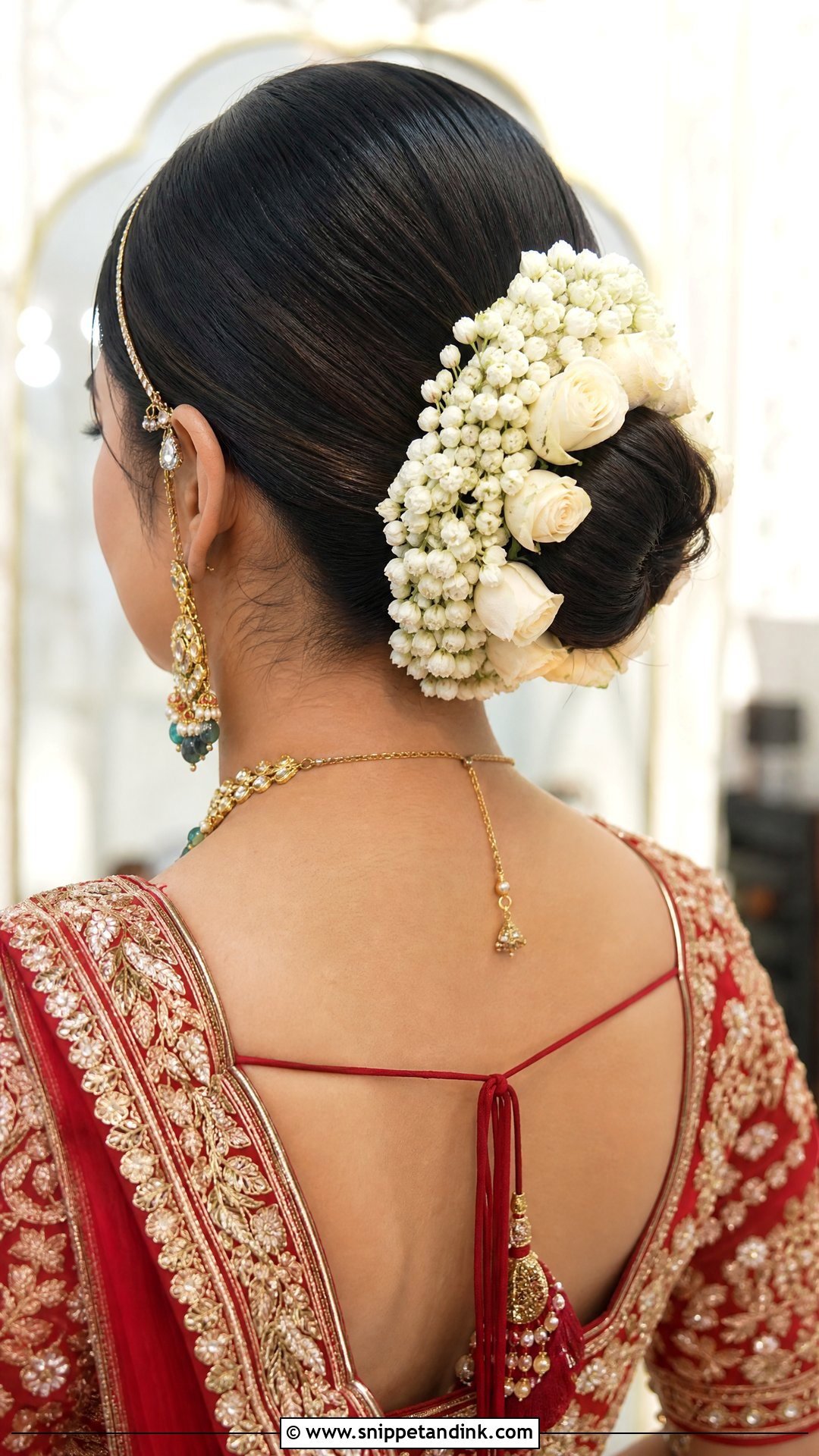
Flowers can carry a bun visually, but they can’t hold it up. I always build the bun to be fully secure on its own first, then wrap jasmine, roses, orchids, baby’s breath or small seasonal blooms around it, to one side, or as a full ring. It’s a classic for South Asian weddings and sits comfortably in Southeast Asian and fusion ceremonies too. Pick sturdy blooms. Orchids and roses tolerate heat far better than baby’s breath, which wilts and browns quickly in a warm room. I pin flowers in last, after the hairspray, so they don’t get coated and dull.
6. Asian Bridal Chignon
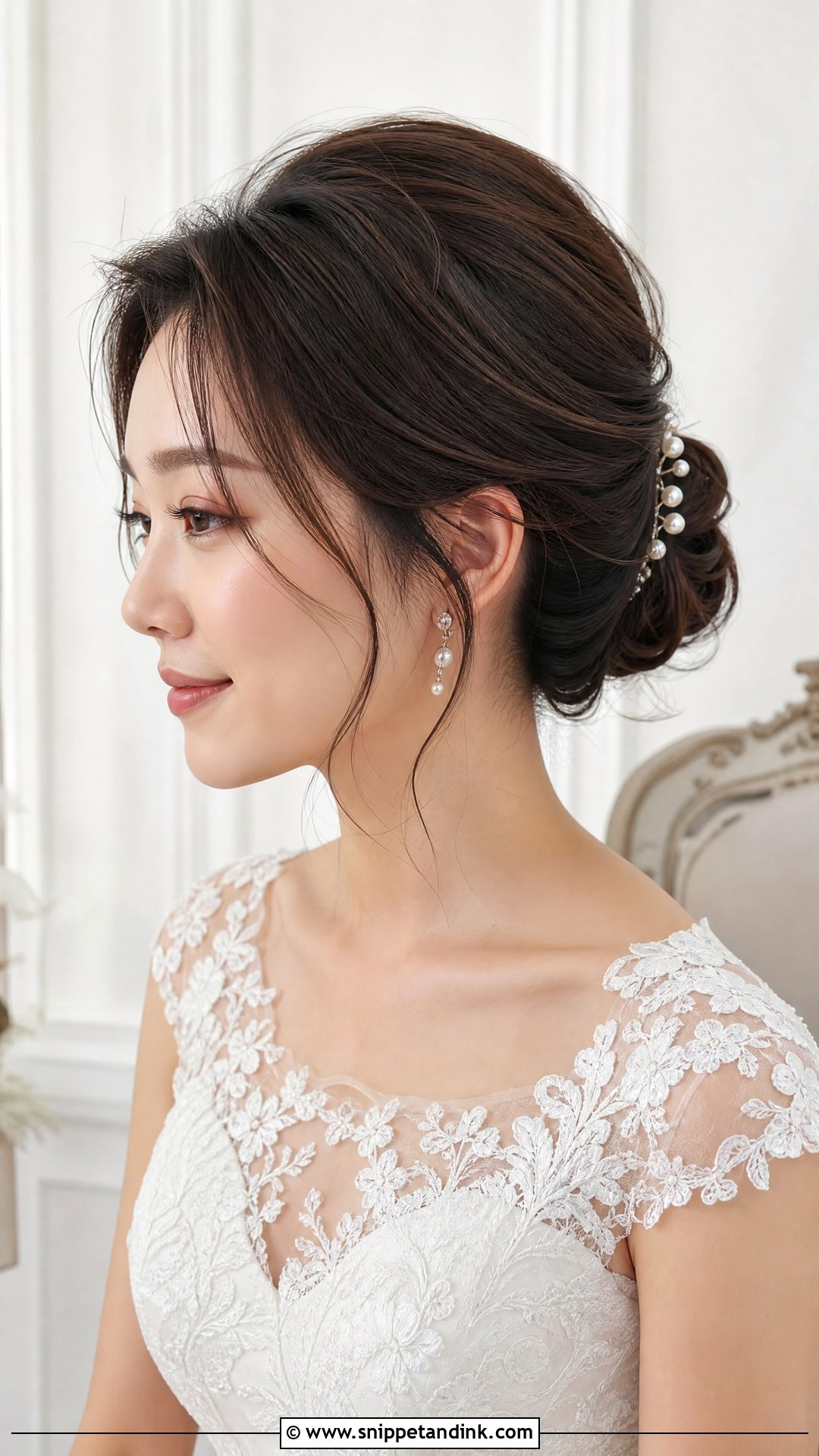
A chignon is softer than a classic bun: tucked pieces and gentle curves rather than one tight coil, still sitting low at the nape. I like it with lace gowns, silk sarees, minimal dresses and reception outfits. Smooth it for a formal ceremony or loosen it for a garden wedding. The thing to know is that a looser chignon needs more hidden pins than a sleek one, not fewer, because every soft tuck is a spot that can drop. A few pearl pins or a slim comb is all the decoration it needs.
7. Asian Bridal French Twist
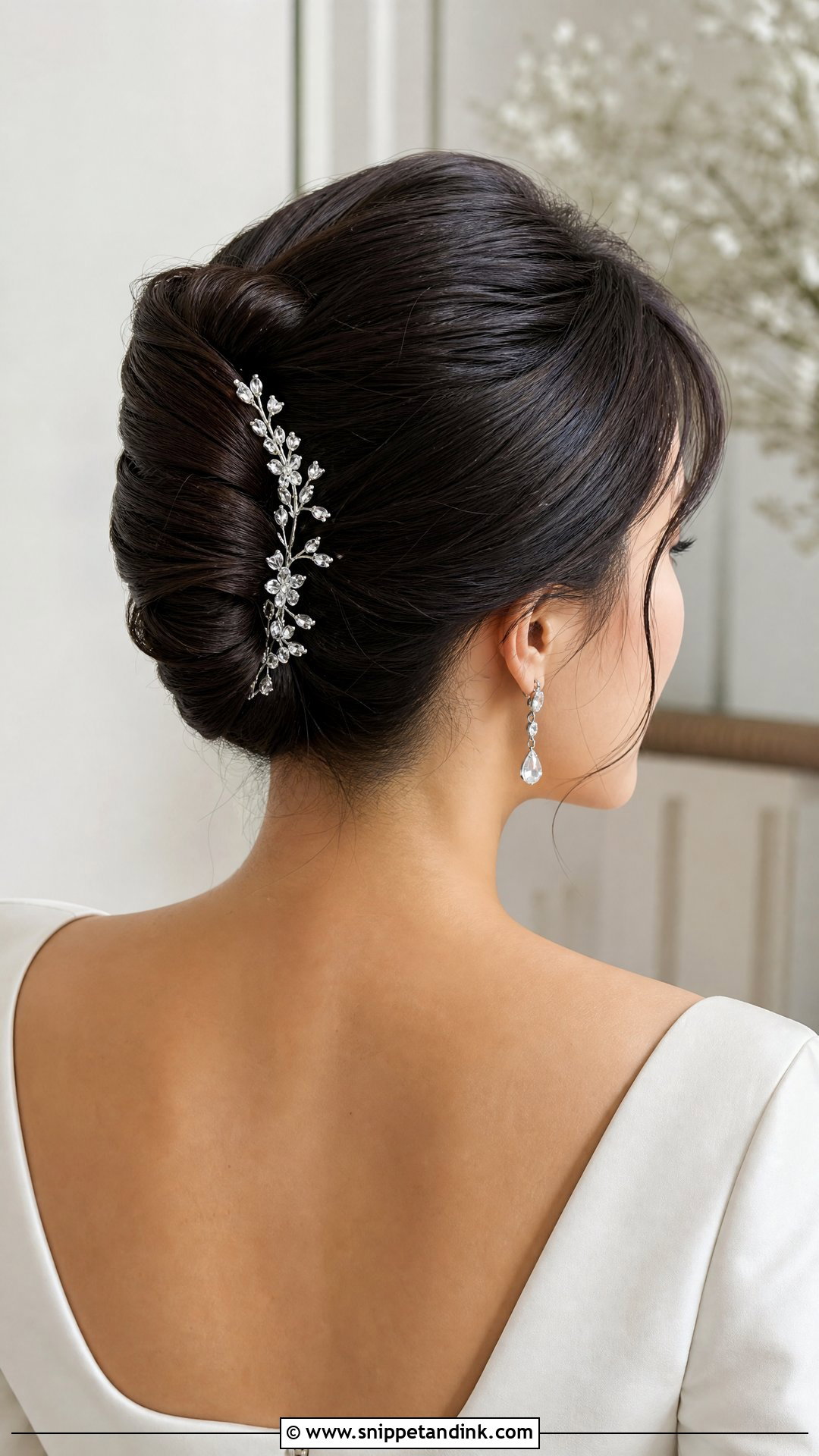
Instead of a round bun, the French twist sweeps the hair up and tucks it into a vertical roll, which opens up the neck, earrings and neckline. A soft version keeps loose pieces at the face and some crown volume; a sleek one suits a fitted gown or a contemporary reception look. On dense hair, I section it into two or three panels and twist each over the last, because trying to roll all that weight at once leaves a gap down the seam. Side and back angles are where it really shows.
8. Asian Bridal High Bun
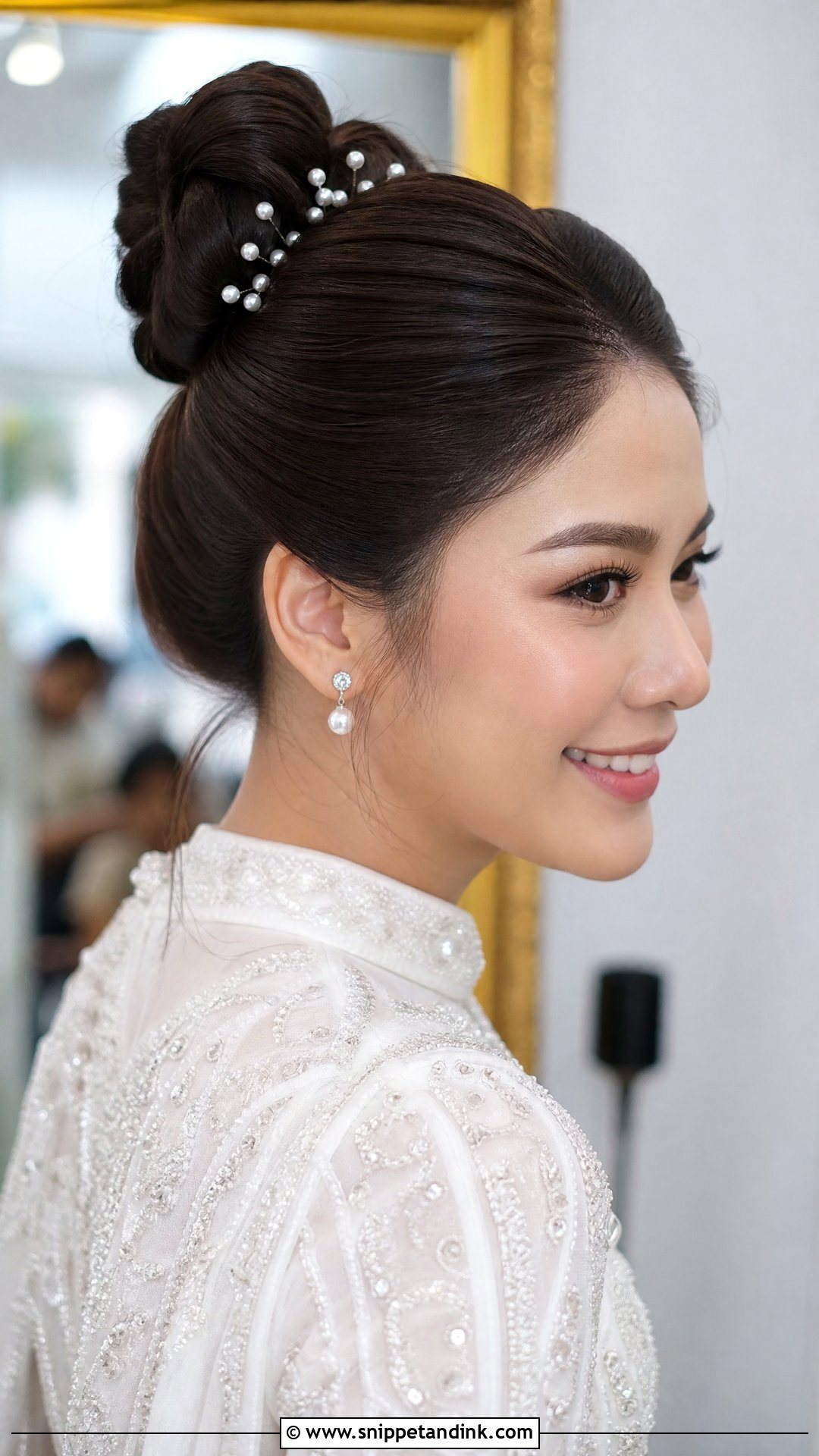
Height changes the whole silhouette, lengthening the neck and pulling the eye up. It suits high necklines, statement earrings and a veil placed behind the crown. It can go ballerina-sleek or soft with pinned curls. I’m cautious with it for South Asian brides wearing a heavy dupatta, though. A high bun puts the fabric weight right on top of the head, so I place it slightly lower and pin the dupatta into the base rather than the bun itself. With a delicate comb or a few pins, it works well for East Asian looks. Symmetry matters more here than anywhere: I check it in a mirror from behind.
9. Asian Bridal Messy Bun
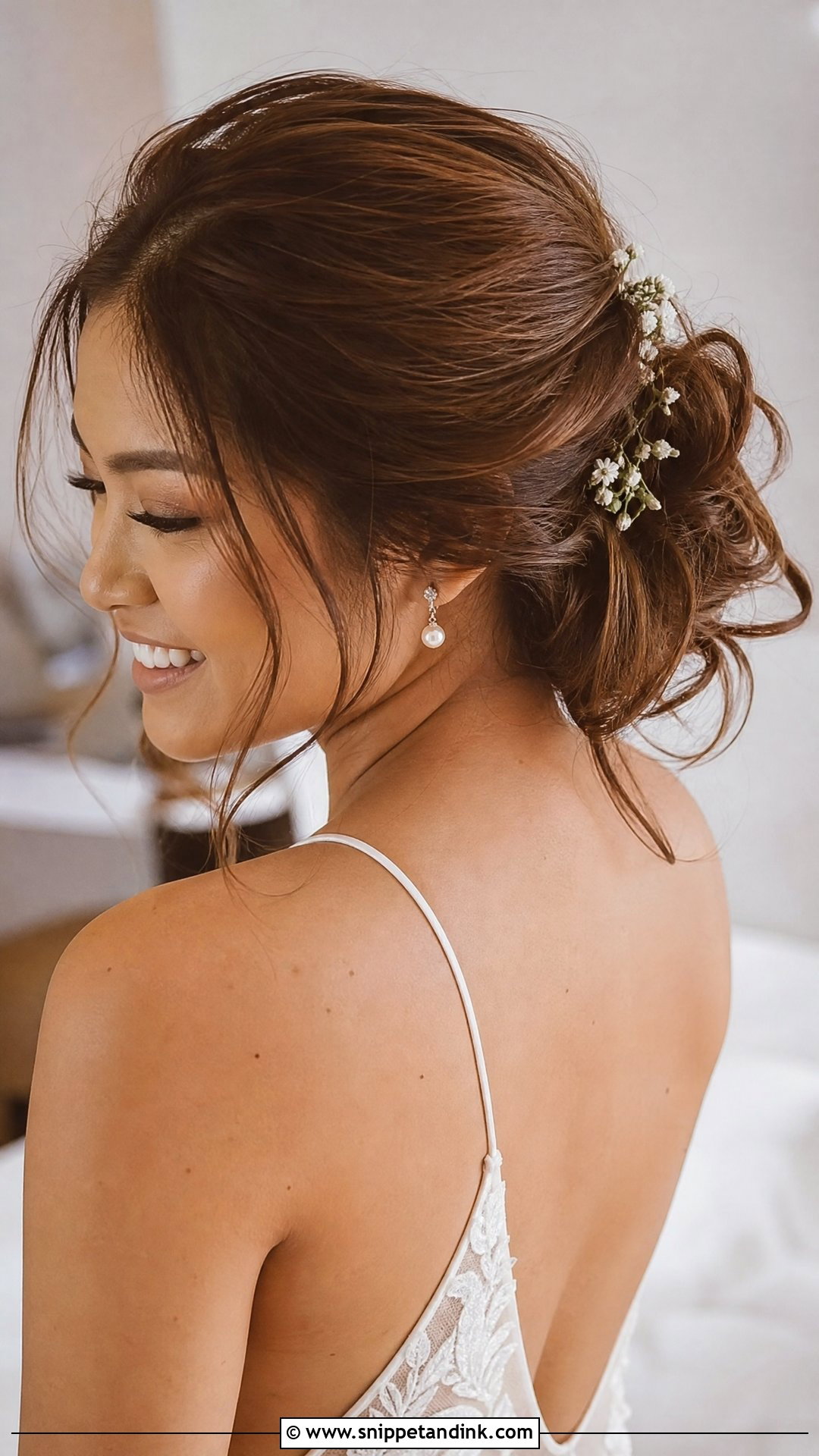
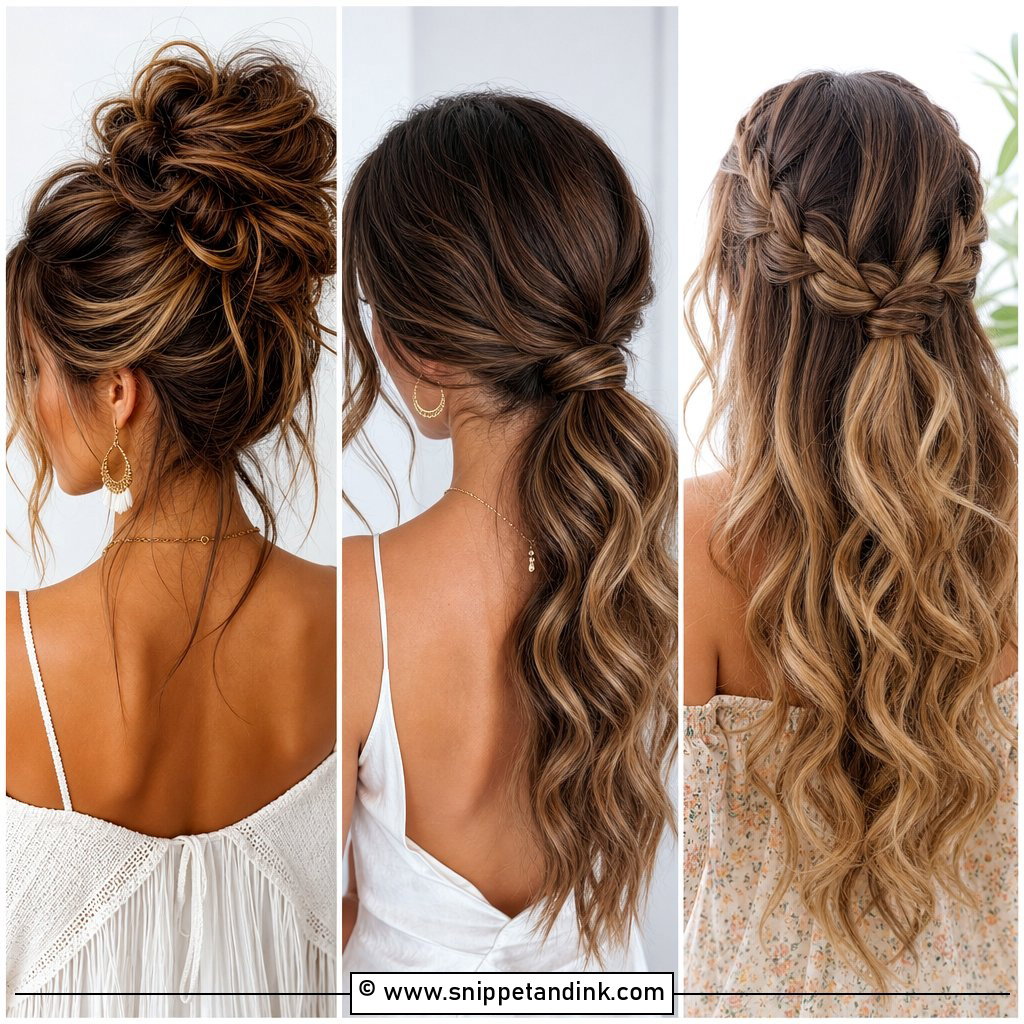
A messy bun has to look intentional, and the secret is that it’s built on a very tidy base. I make a small, tight bun underneath and pin the textured, airy sections over it, so the softness is all on the surface. It suits outdoor and beach weddings and fluid reception fabrics. Face-framing strands need care: in humidity, uncurled pieces frizz, so I curl them and set them with a light spray. Pearl pins, tiny flowers or a crystal comb dress it up. Ask for hold underneath and softness on top, not the other way round.
10. Asian Bridal Side Bun
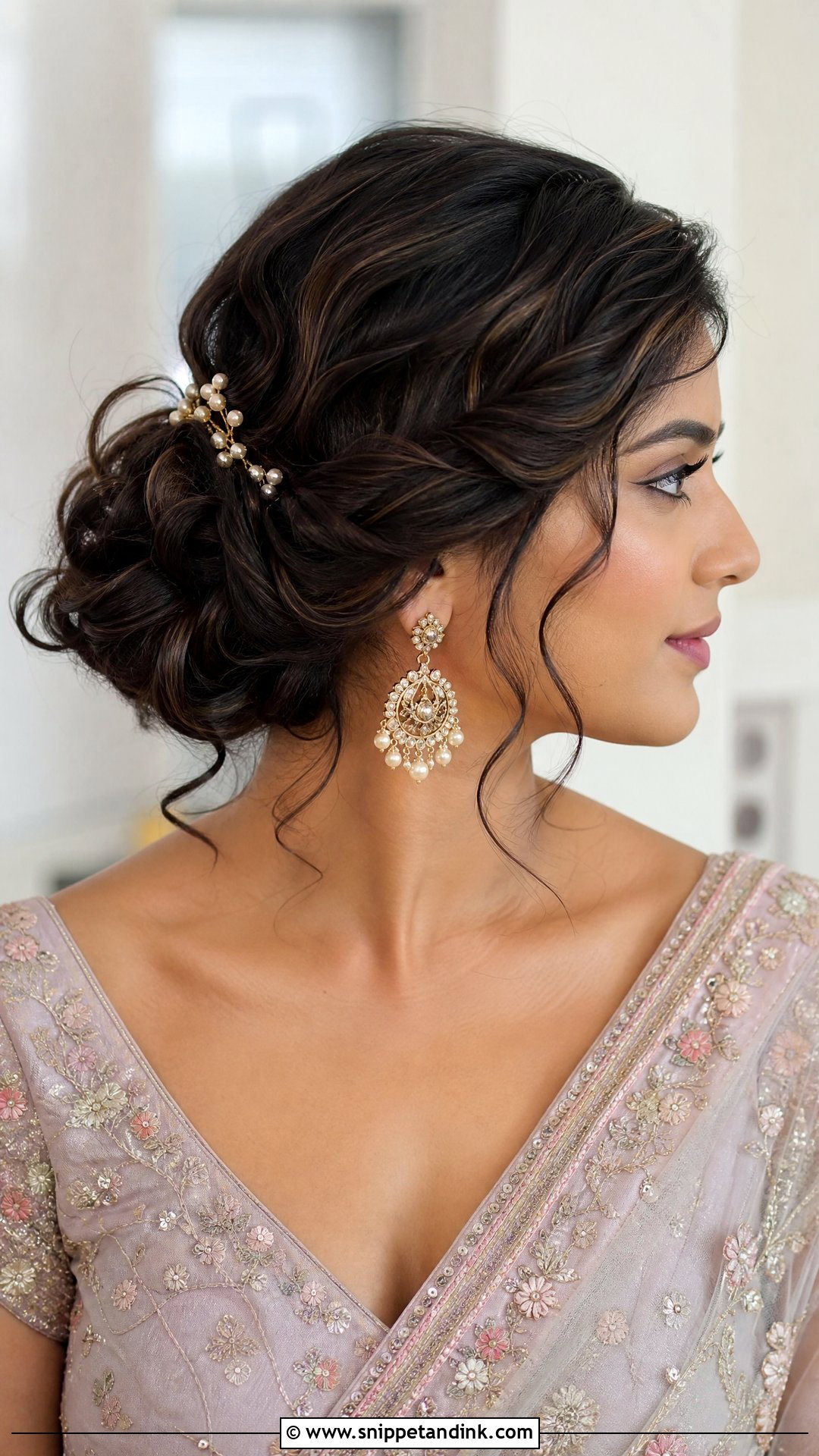
Placed slightly off-center near the nape, a side bun leaves one side of the face open, which is exactly why brides with statement earrings ask for it. It can be smooth, braided or textured, and it sits well with sarees, lehengas, embroidered gowns and one-shoulder reception dresses. The risk is lopsided weight. I build the base slightly toward center and only bring the visible bun across, so the head doesn’t feel pulled to one side by evening. Flowers or pins on the opposite side balance it in photos.
11. Asian Bridal Bun With Maang Tikka
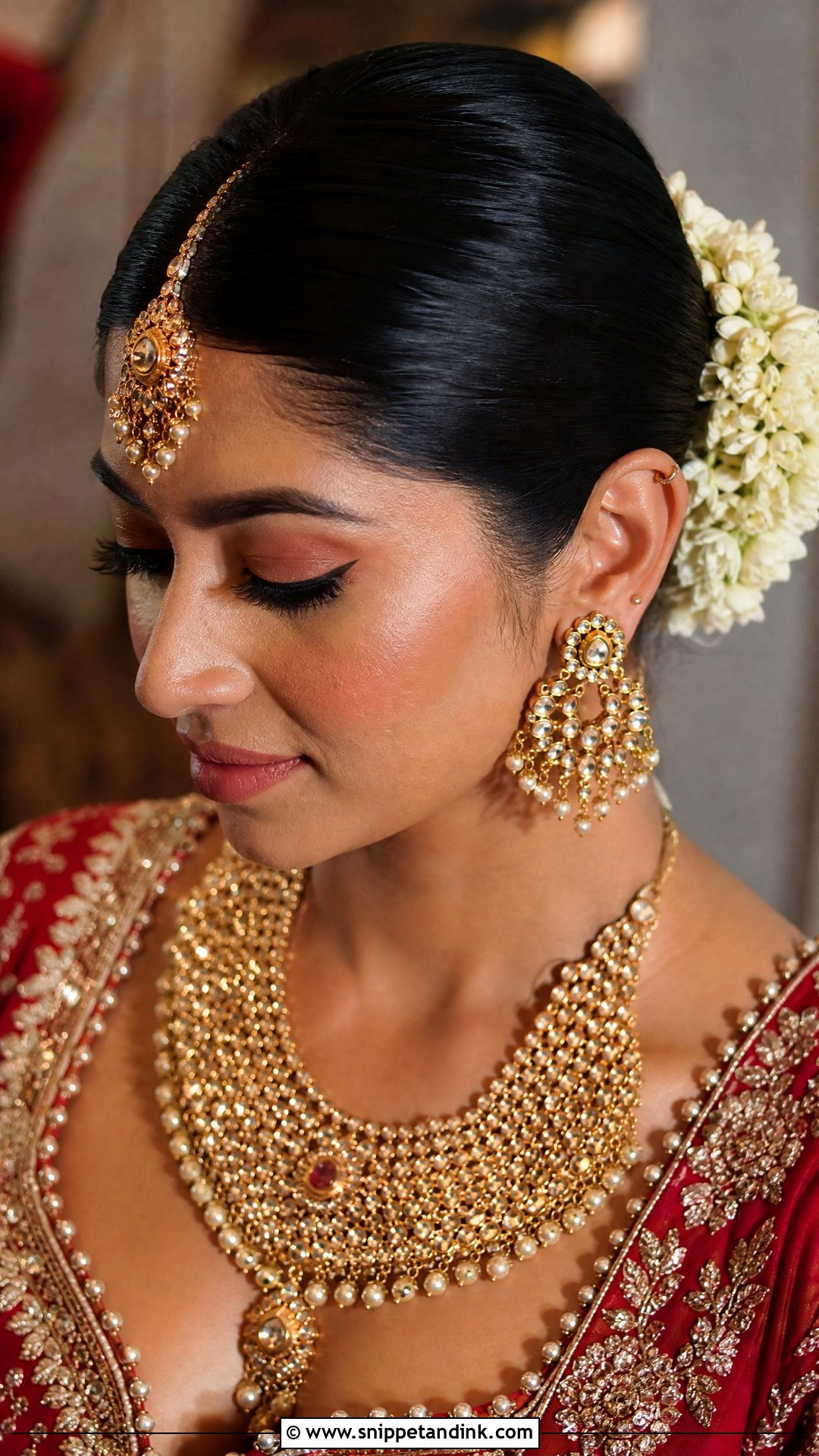
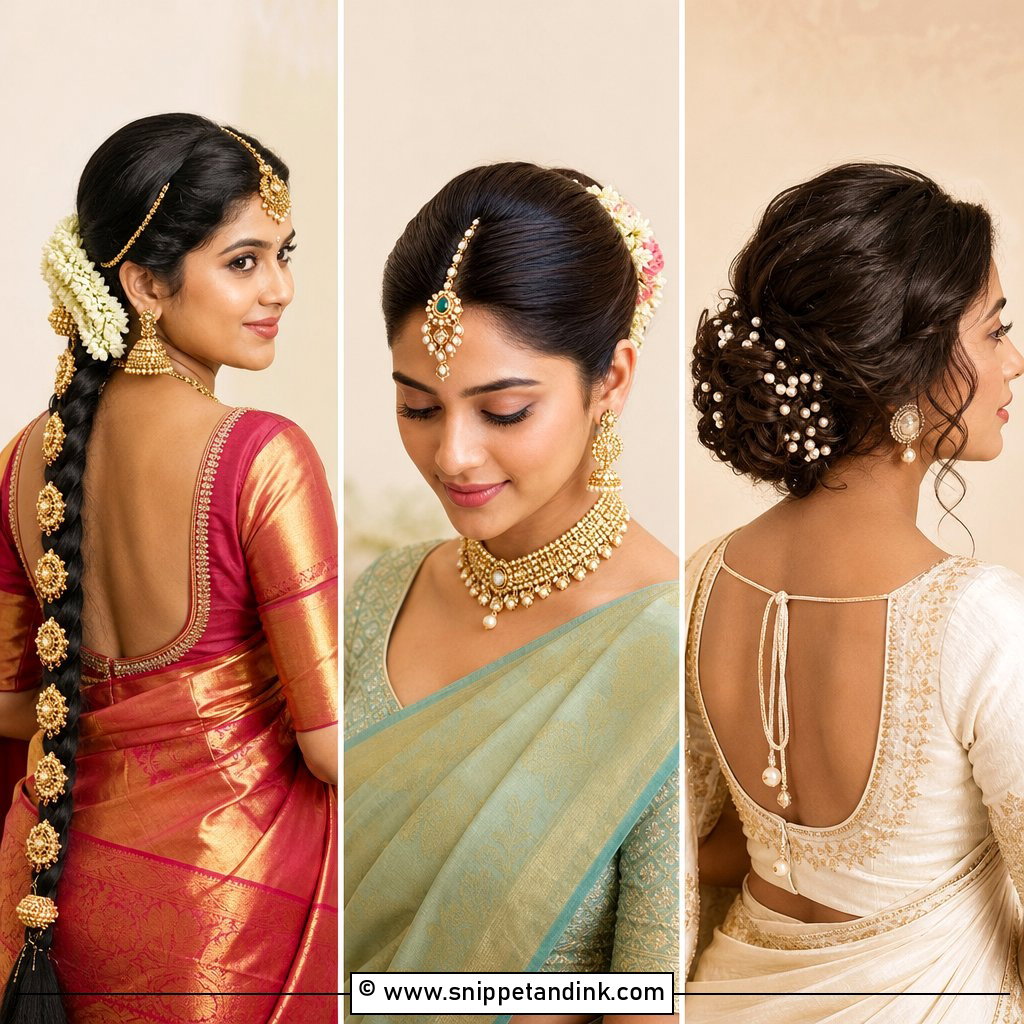
A bun with a maang tikka is a classic South Asian bridal look, and the parting does most of the work. The tikka sits along it, so I measure the part from the center of the forehead, not from the hairline’s cowlick, which often pulls off to one side. The bun goes low or mid, secure, with the tikka’s chain hooked into the hair just behind the part using a small pin. Jasmine, roses or gold accessories can decorate the back. I leave a little softness at the temples; scraped-back roots with heavy gold can look severe.
12. Asian Bridal Bun With Dupatta
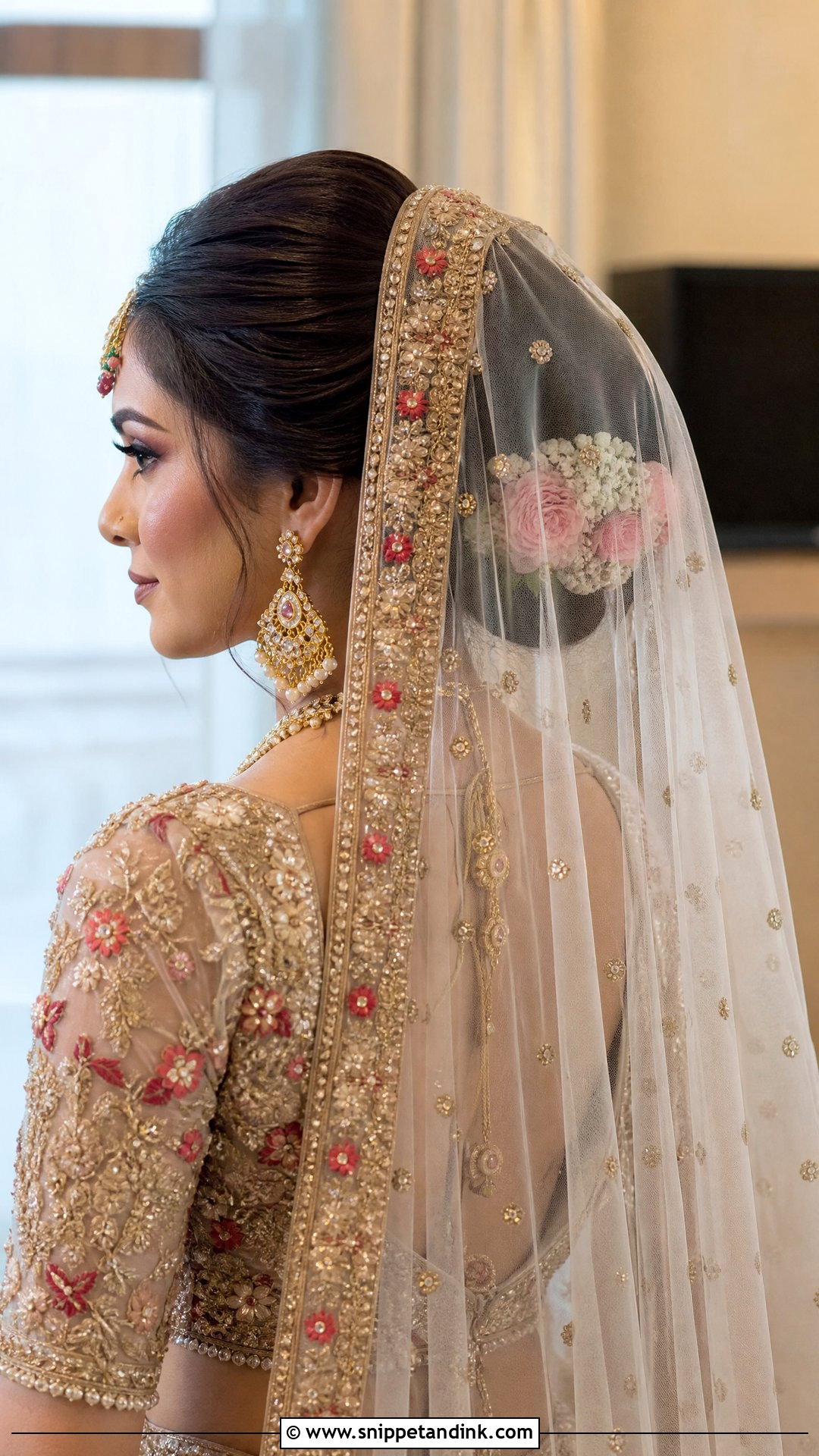
Here the hairstyle has two jobs: look good and take the weight of fabric. A low or mid bun is the safest base, especially for heavy embroidered dupattas. I set a firm anchor of crossed pins before the dupatta goes on, and then pin the dupatta into that anchor, never into loose hair, so it can’t pull at the roots. The bun itself can be sleek, braided, floral or textured. If you want the bun on show, I place the dupatta slightly behind the crown; for a full veil effect, it drapes over the bun.
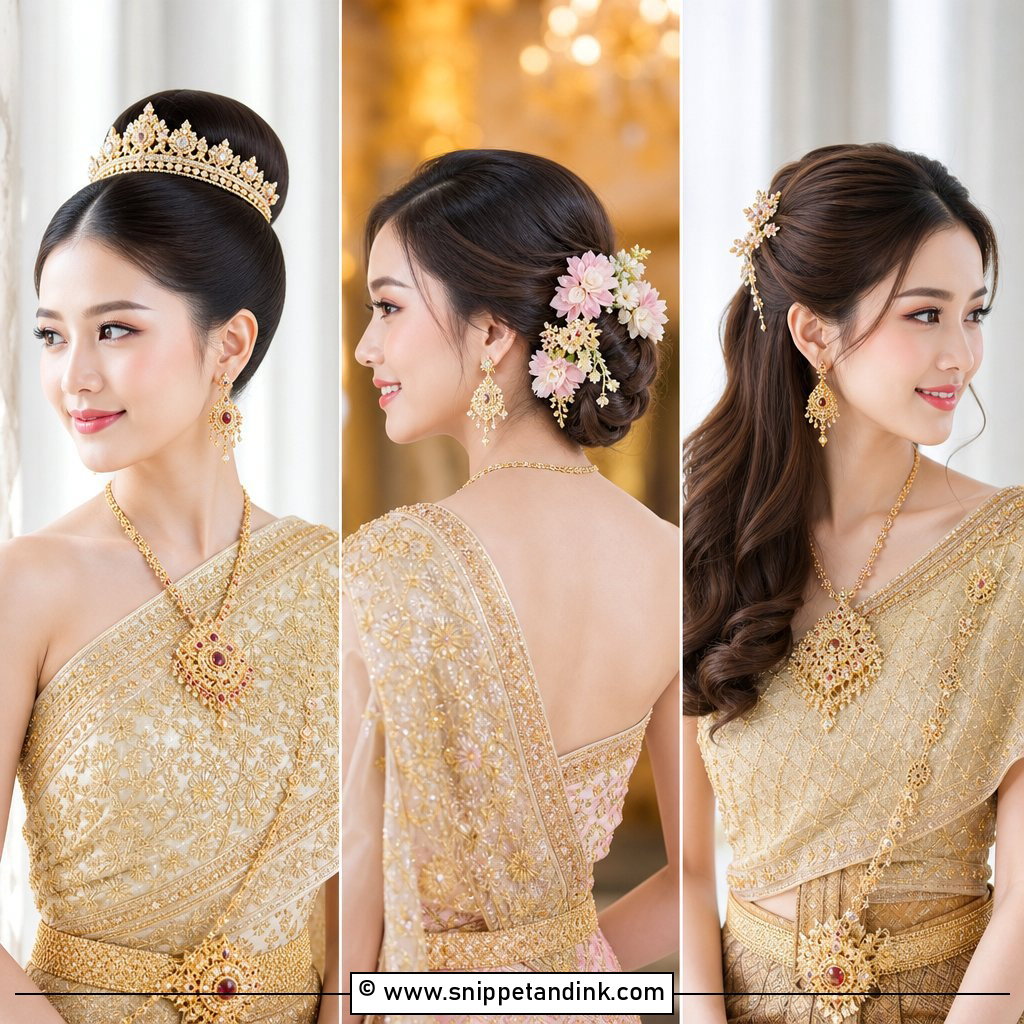
13. Asian Bridal Korean Updo
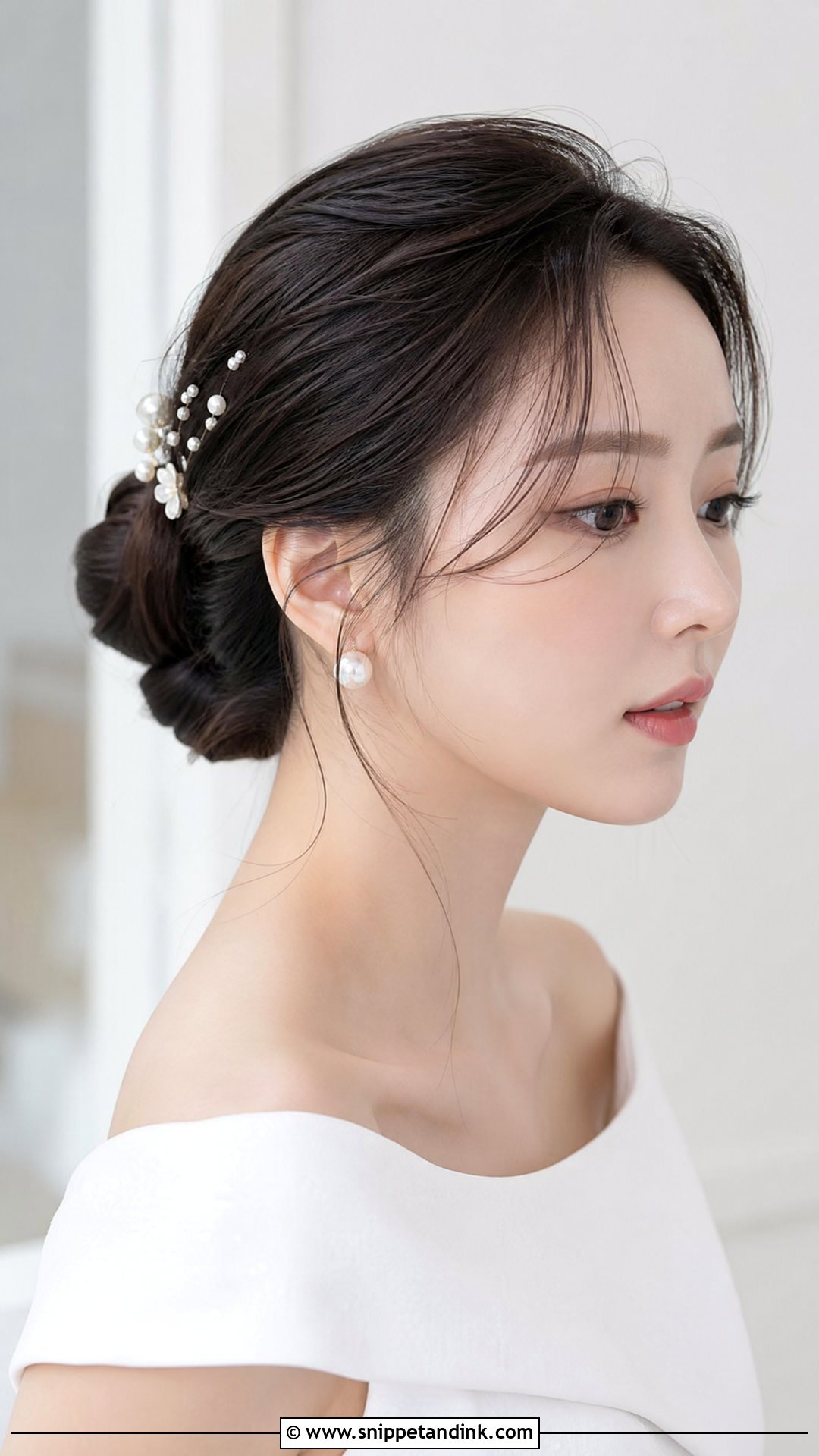
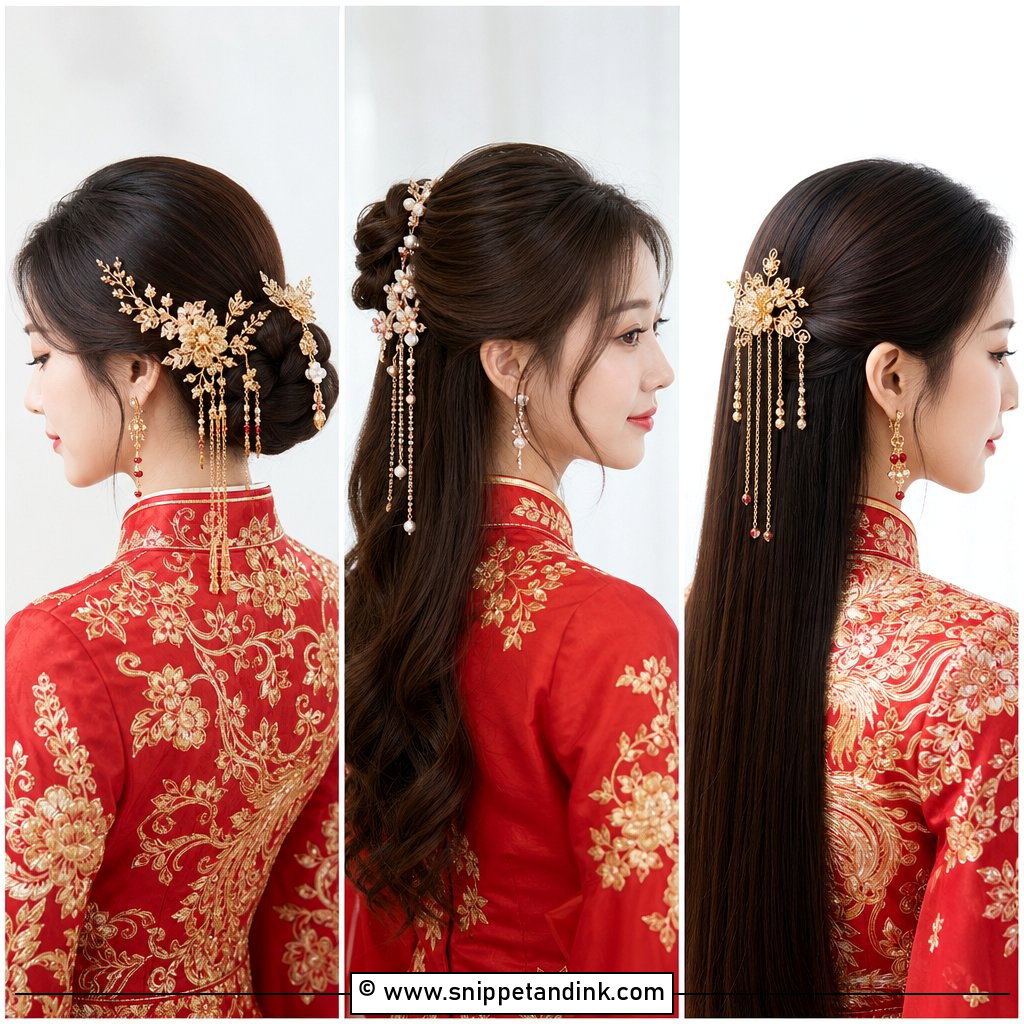
A Korean bridal updo is all soft crown volume and delicate face-framing pieces, usually low or mid-height with a neat but airy shape. It sits naturally with a modern gown, hanbok-inspired outfit or simple reception dress, and straight or softly waved hair gives that smooth finish. I get the crown lift from root-curling with a flat iron rather than backcombing, which keeps the surface glassy. Pearl pins, slim ribbons or small floral clips suit it. Too much height or heavy texture spoils the effect.
14. Asian Bridal Japanese Updo
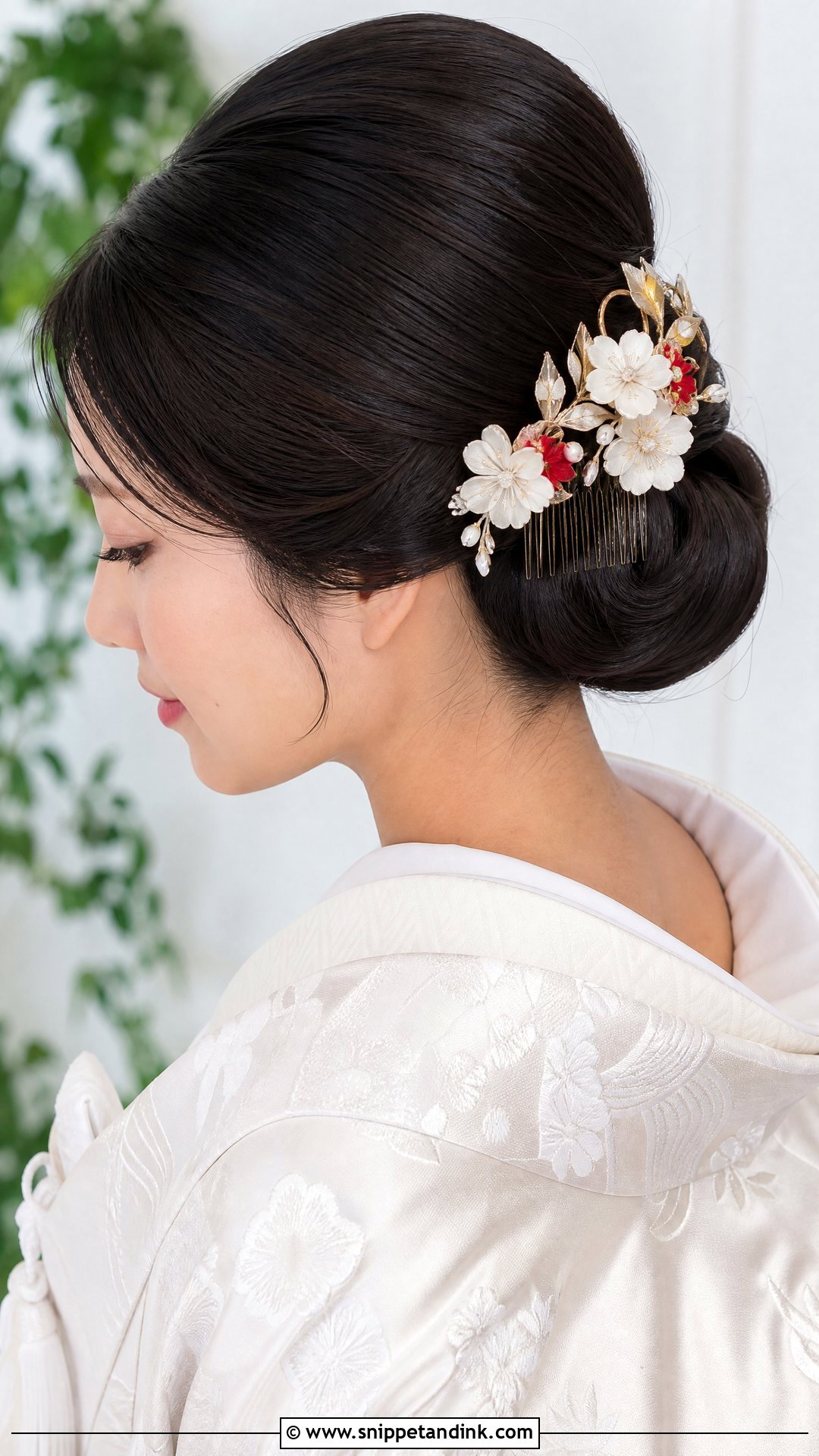
A Japanese bridal updo is about clean lines and a balanced, sculpted shape. For a modern wedding, I sweep the hair into a smooth low bun or tucked updo with only subtle crown volume. It pairs with kimono-inspired looks, minimal gowns and refined ornaments. Straight hair helps the glossy finish, but very slippery hair needs a dry texture spray underneath first or the sculpted edges collapse. A floral comb, a kanzashi-inspired piece or pearls finish it. I check the back as carefully as the front, because that’s what guests see during the ceremony.
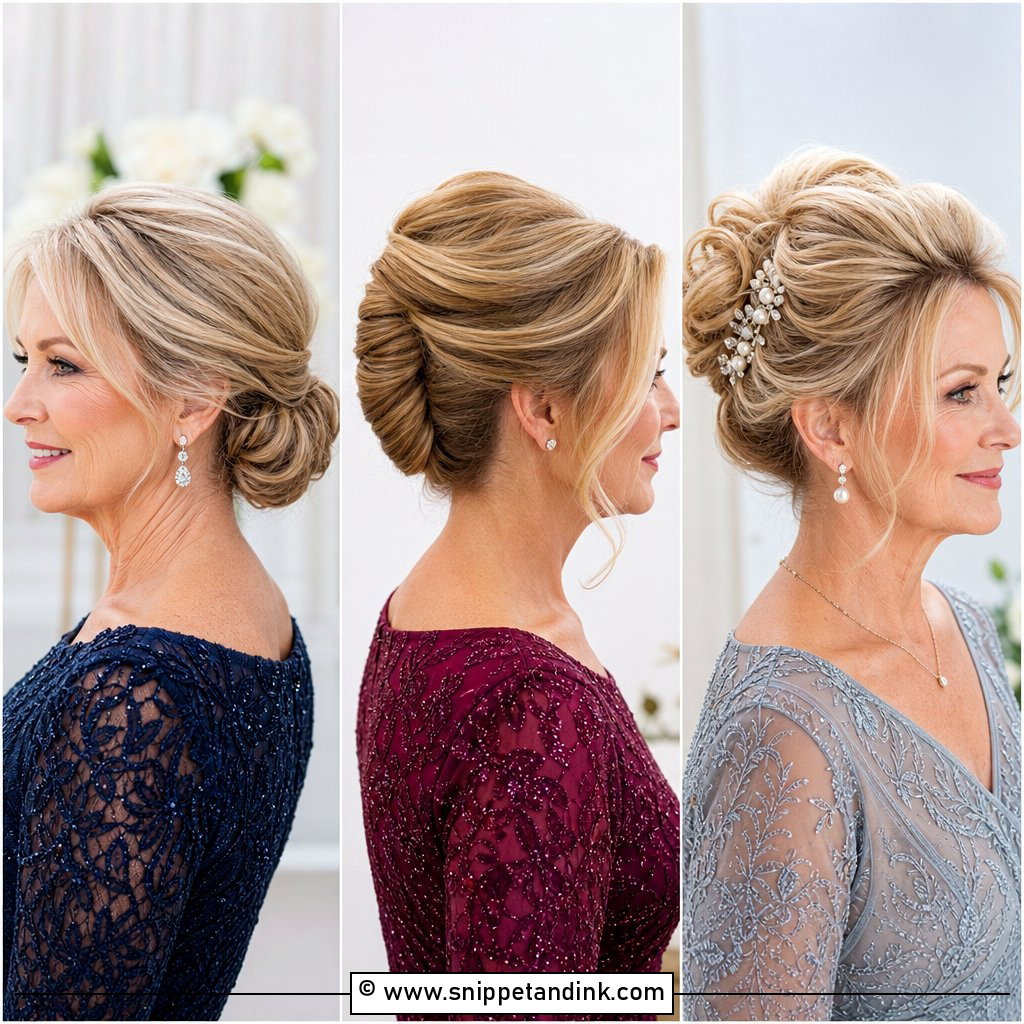
15. Asian Bridal Reception Updo
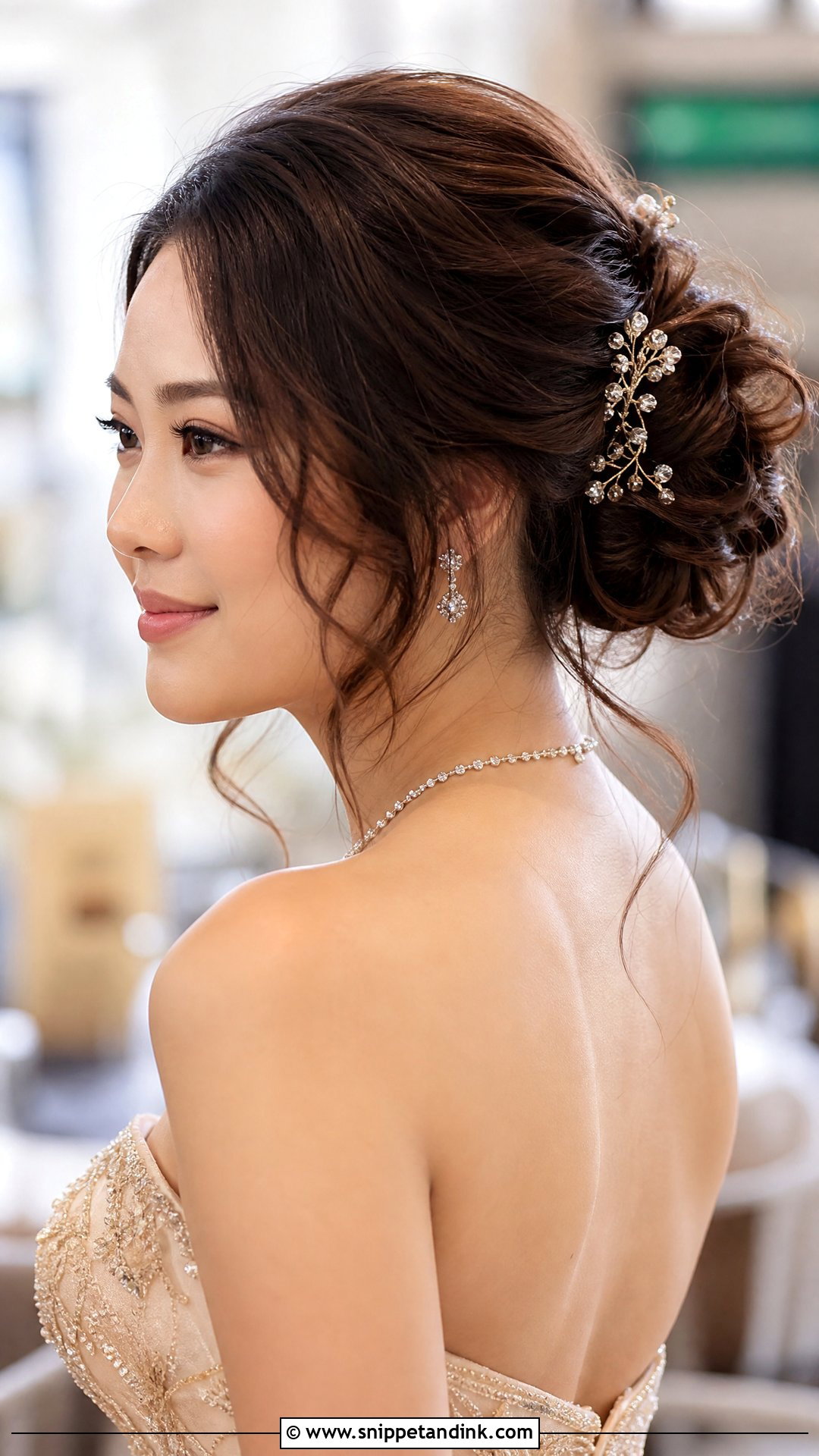
After a veil or dupatta comes off, many brides want something lighter: a soft twisted bun, a sculpted knot or a low textured updo. If the ceremony look was traditional, the reception style can loosen up with a few face-framing pieces and sparkling pins. My honest advice is to evolve the ceremony style rather than rebuild from scratch. Taking down a heavily pinned bun and starting again eats into your evening, and second-round heat on sprayed hair isn’t kind to it. Add volume where needed, smooth flyaways, and match accessories to the reception jewelry.
Several Events, One Scalp: Planning Hair Across the Wedding
South Asian weddings often run over two or three days, and plenty of fusion weddings pair a tea ceremony with a Western ceremony and reception. That’s a lot of hours of pins. I plan hair per event rather than per day.
- Haldi and mehndi: a loose braid or simple low knot keeps hair off your face and away from turmeric paste and wet henna. Nobody needs a sculpted bun here.
- Sangeet or tea ceremony: a lighter updo with fewer pins, so your scalp is rested for the main event.
- Ceremony: this is where the structured bun belongs, built to carry the dupatta or veil and the full weight of the jewelry.
- Reception: if you’re changing outfits, allow roughly thirty to forty-five minutes to take pins out and reshape. Loosening the ceremony bun into a softer knot is quicker than starting over.
Fresh Jasmine in a Warm Room
Fresh jasmine buds keep opening through the day, so a gajra that looks tight and pearly in the morning is fuller and softer by evening. That’s part of its charm, but in real heat the edges brown. Keep strung flowers wrapped in a damp cloth in the fridge until they go in, and have them pinned last. A second small strand saved for the reception freshens the look in seconds.
Have someone carry a small emergency pouch: bobby pins in your hair shade, a mini hairspray, a tail comb and a couple of spare jewelry pins. Most updo trouble is one loose pin, and it’s a one-minute fix if the tools are within reach.
Bring the Real Dupatta to Your Trial, Not a Photo of It
Start from your heaviest accessory and work backward. A sleek bun suits clean lines, a flower bun leans traditional, a braided bun adds texture, and a chignon or French twist sits softer in between. Whatever you lean toward, wear the actual dupatta, veil, earrings and tikka at the trial and keep them on for twenty minutes. Turn your head, sit, hug someone. If it still feels secure and you’ve forgotten it’s there, that’s your updo. Ask me to photograph it from the side and back before you leave, since those are the angles you won’t see in the mirror.
You'll Like These Ideas:


Leave a Reply