
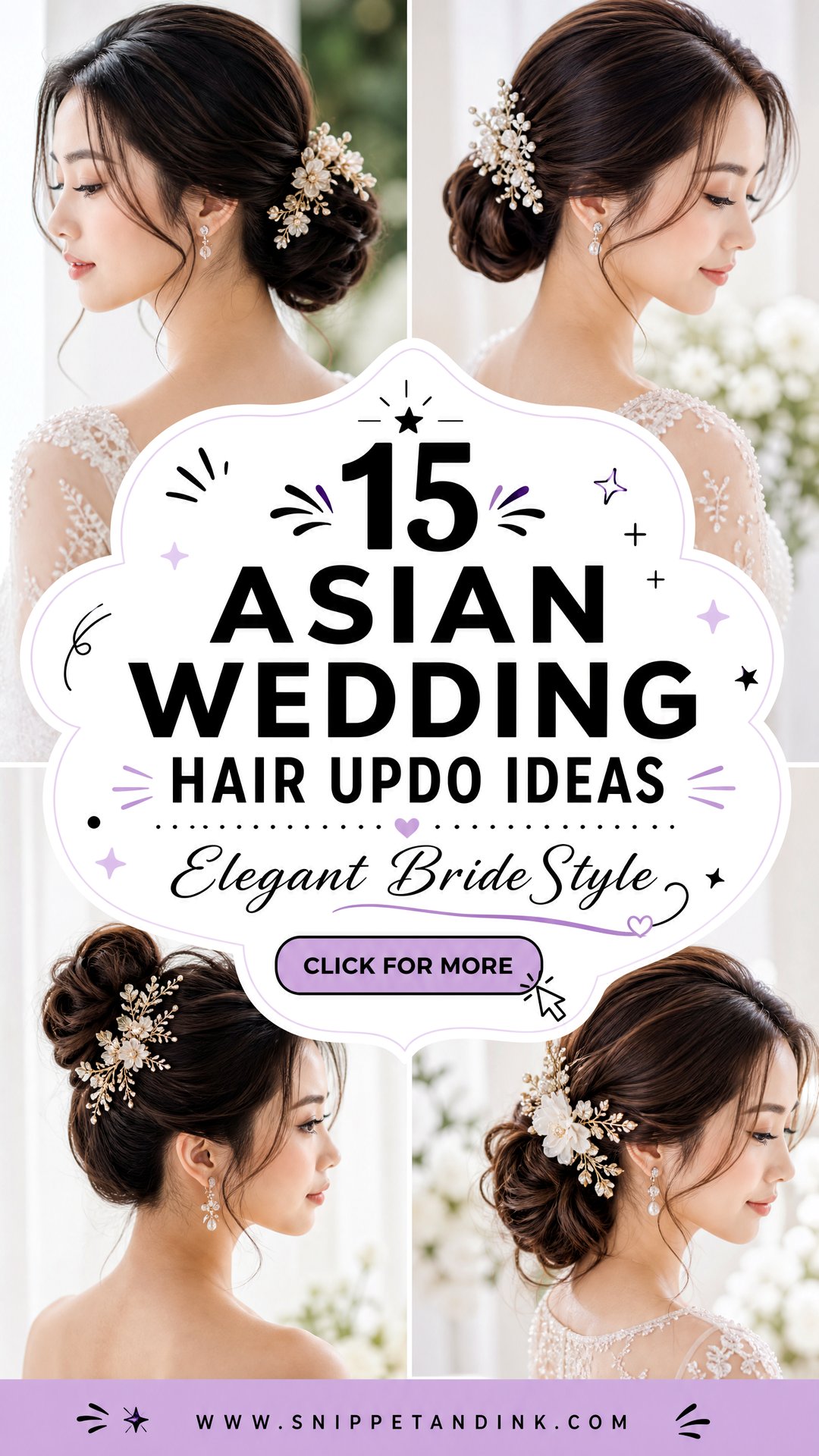
An updo at an Asian wedding rarely gets to just sit there. It might be holding up a dupatta and a passa, anchoring a gold headpiece for a tea ceremony, or surviving a quick change between a qipao and a gown. So when I plan one, structure comes before shape. I ask about the neckline, your length and texture, the heaviest thing that will be pinned to your head, and how many hours it has to last. Some brides want a sleek bun under a maang tikka; others want soft curls, flowers, pearl pins or a modern Korean-inspired twist. Fifteen ideas follow, from classic to relaxed.
Start With the Hair Jewelry, Then Build the Bun
In plenty of Asian bridal looks the ornament is the main event and the hair is its stand. A heavy passa, a jhoomar, a phoenix-style headpiece or a set of family hair sticks each need a particular kind of base, and it’s far easier to design the updo around them than to squeeze them in at the end.
- A passa or jhoomar worn on one side pulls the look sideways, so the bun usually sits low and centered or tilts slightly the other way to balance the weight.
- Hair sticks and kanzashi-style ornaments need a dense, firm bun to slide into. Loose, airy texture won’t grip them.
- Tall or wide headpieces for a tea ceremony need a solid base at the crown, often built with padding, so the piece doesn’t wobble when you bow to serve tea.
- Heirloom pieces can be older and heavier than modern ones. Ask a jeweler whether a small loop or extra hook can be added so it pins in securely without damage.
Bring every piece to the trial, even the ones you’re unsure about. Within a few minutes I can tell if something is too heavy for the style you’ve chosen and suggest a better placement.
1. Asian Bridal Low Bun
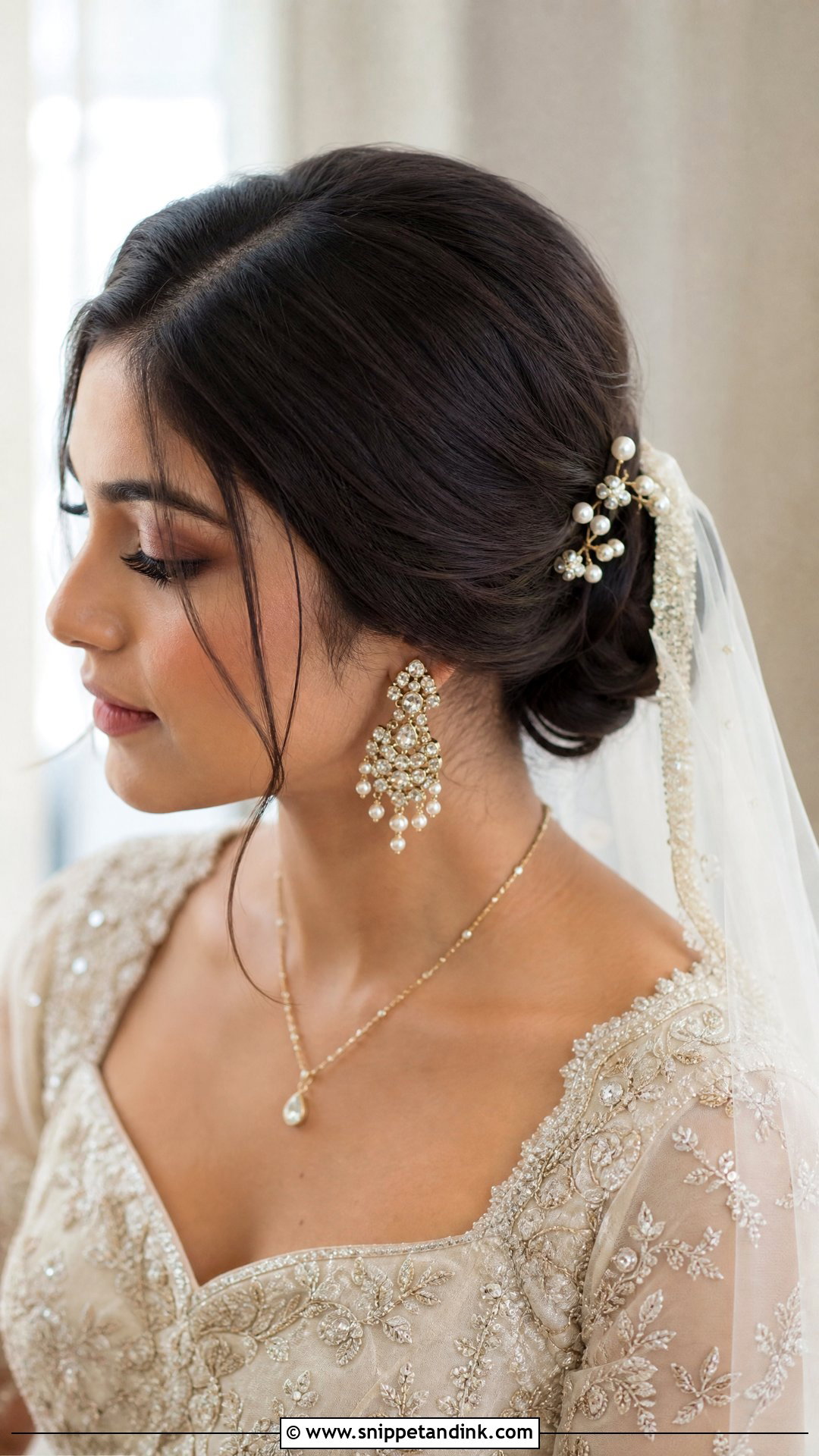
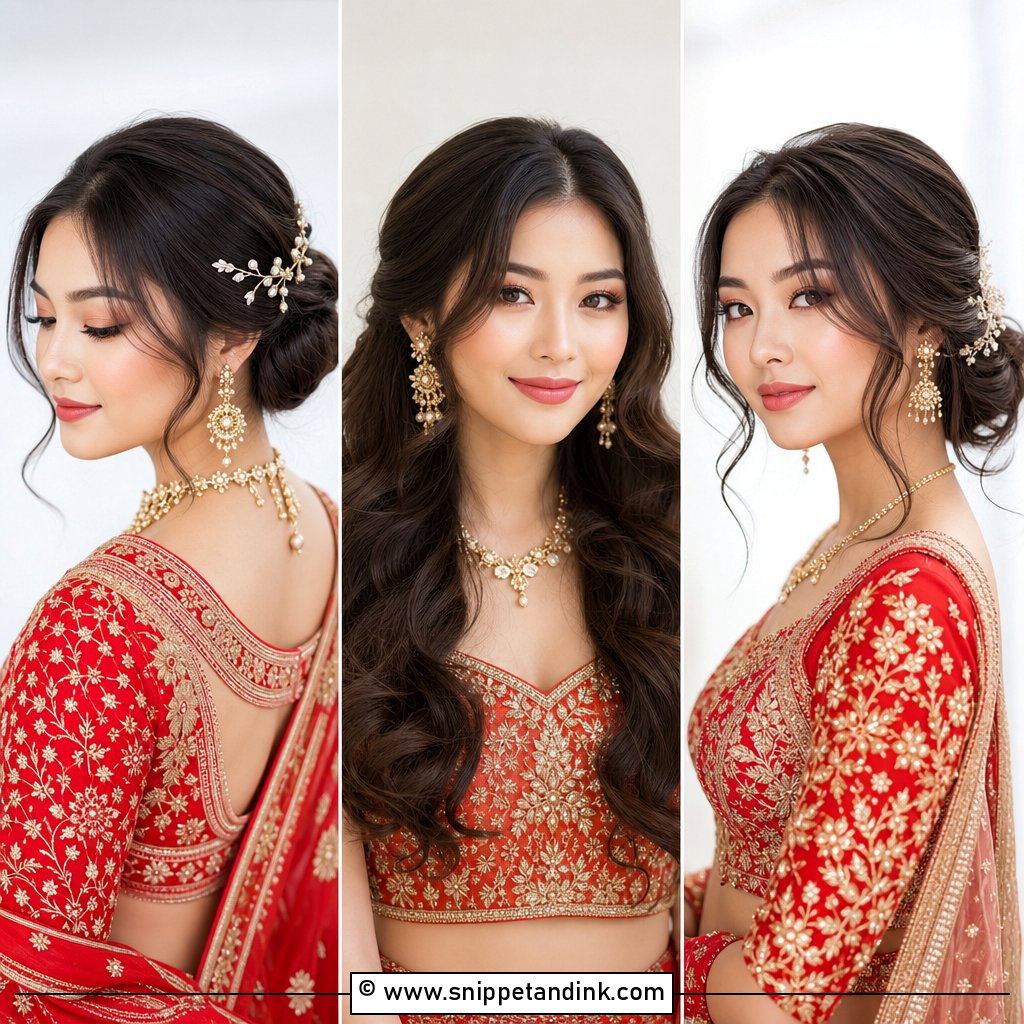
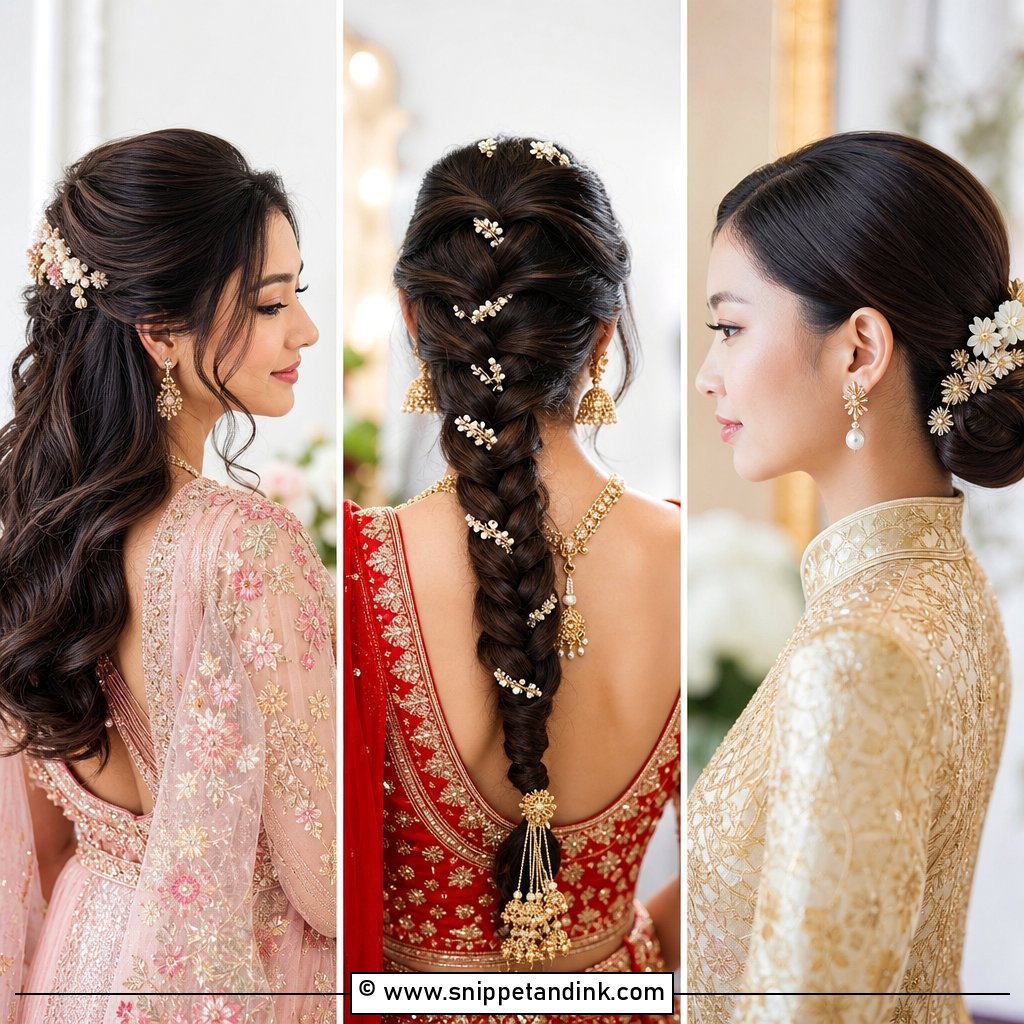
Reliable is the word. A low bun sits close to the nape, so a veil, dupatta or ornate headpiece rests on it without dragging the scalp. South Asian brides often pair it with a middle part, a maang tikka and a couple of face-framing pieces; East Asian brides tend to keep it to pearl pins or one comb. Flat at the crown, though, it can make the profile look heavy at the back. I add a little lift there with a small section of teased root, smoothed over, then keep the bun polished or loosen it slightly depending on the outfit.
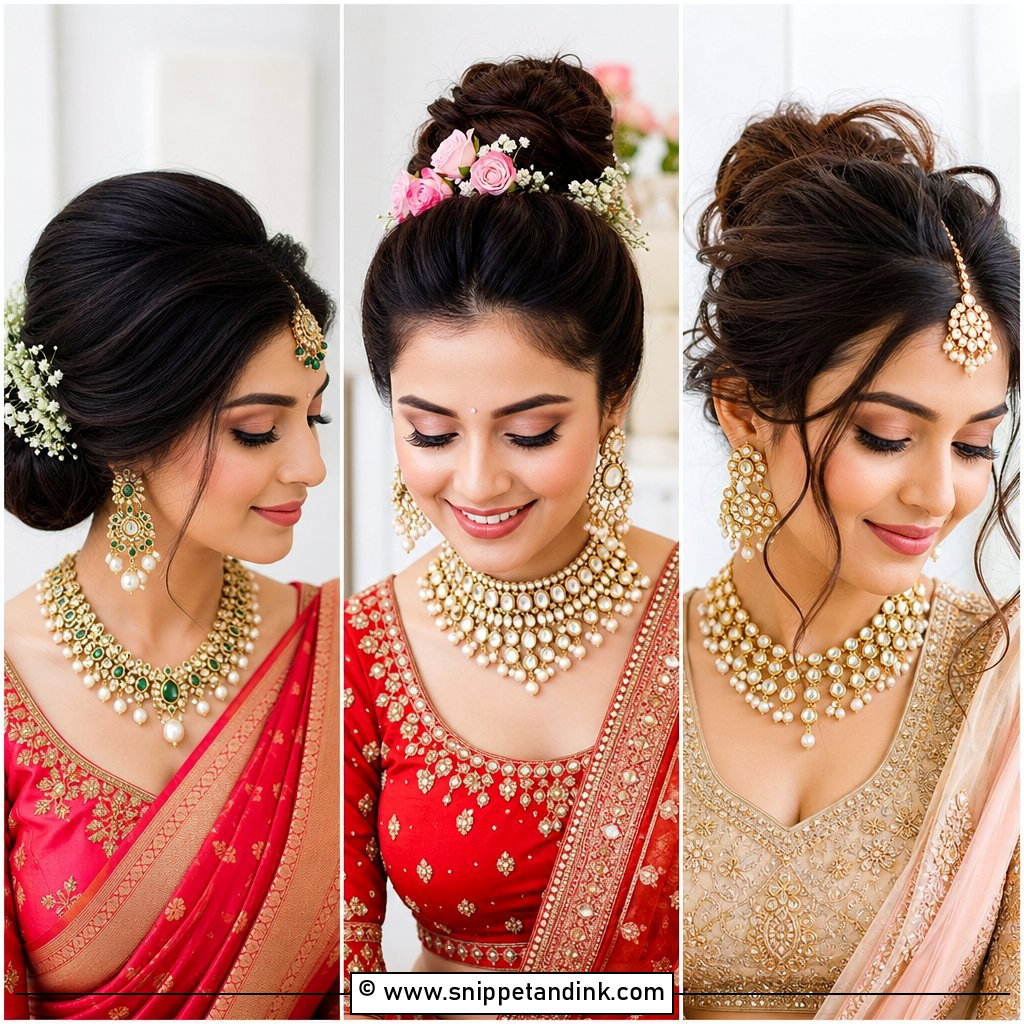
2. Indian Wedding Juda Bun
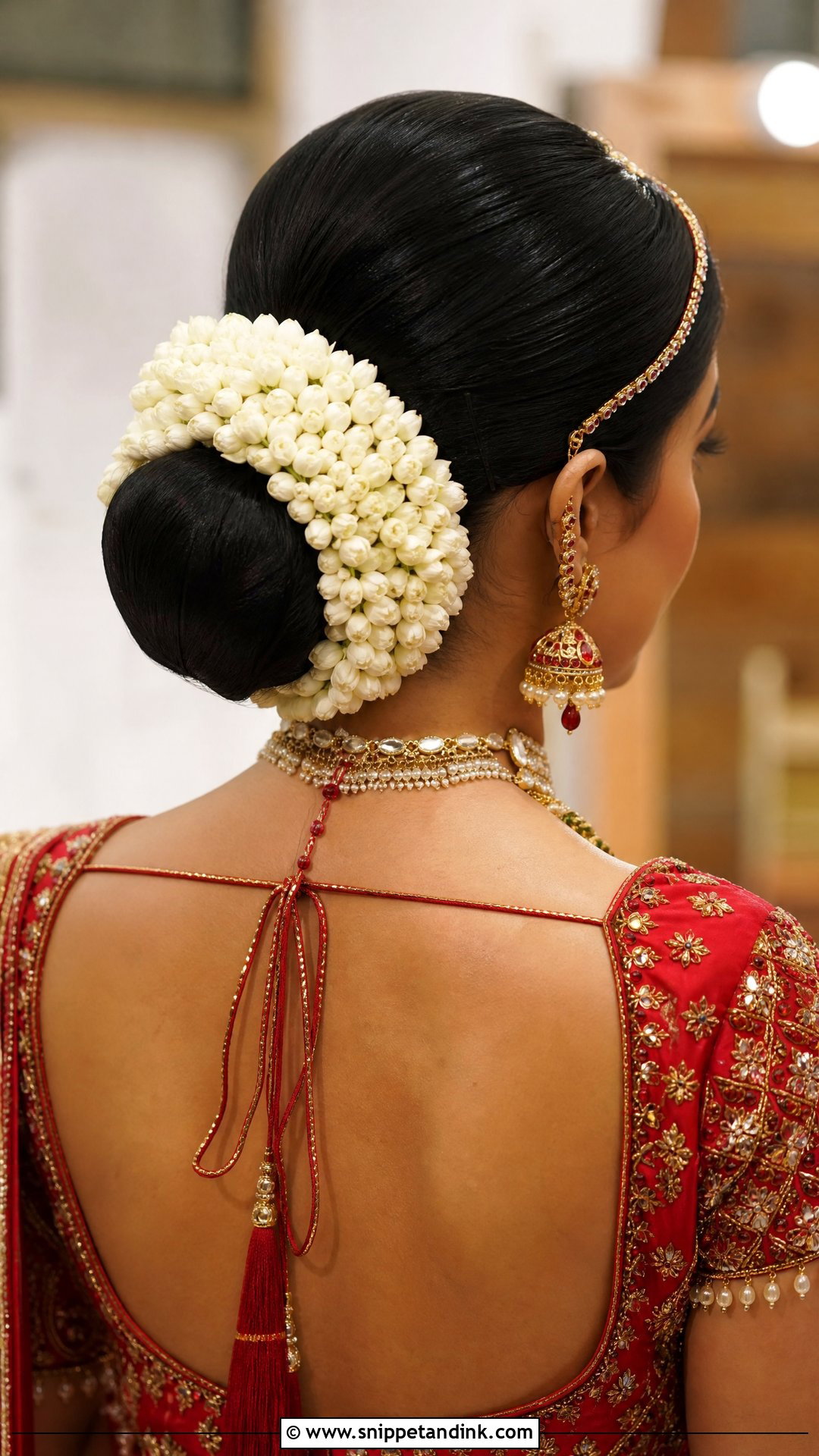
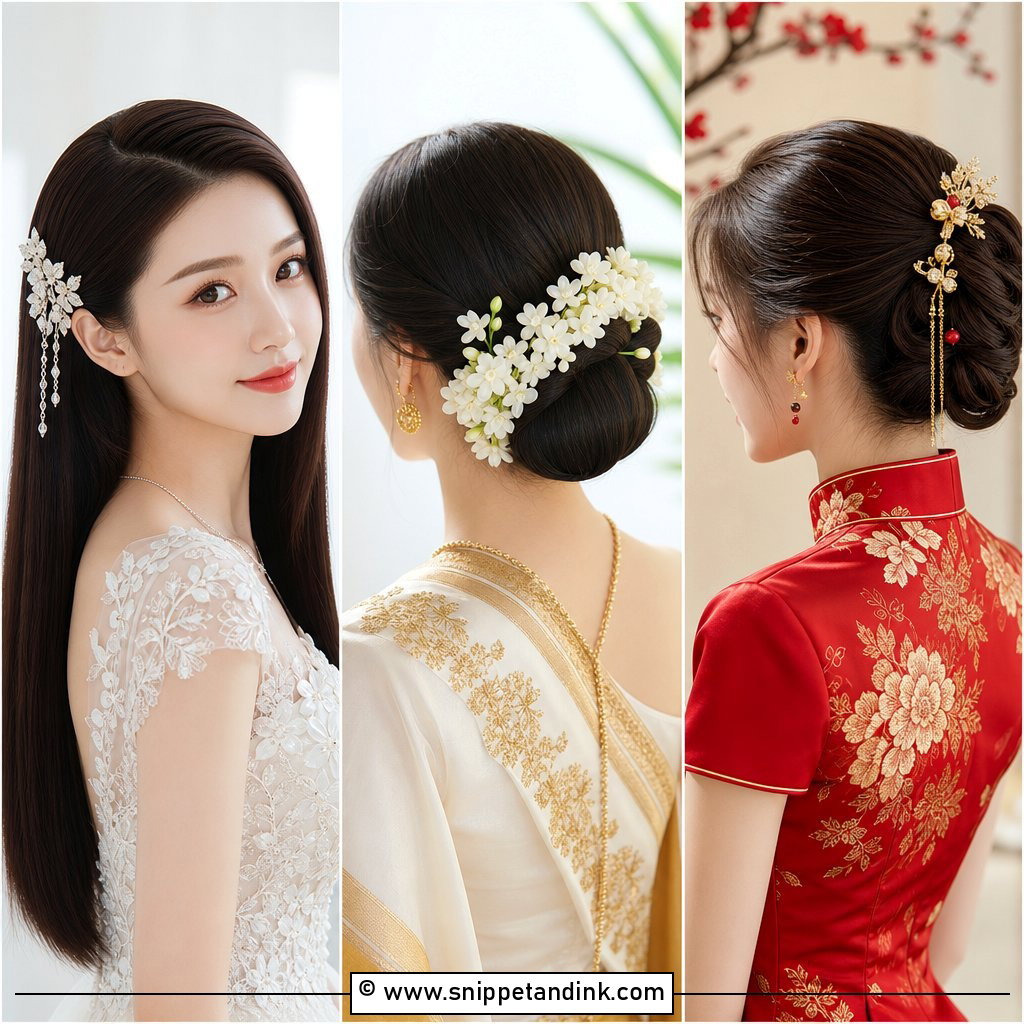
Round, full and placed low or mid-back, an Indian wedding juda bun is built to take a lehenga’s embroidered dupatta and heavy jewelry without slipping. Fresh jasmine, roses, gold pins or a decorative bun cover all suit it, and it keeps long, thick hair under control through hours of rituals. A center part works with traditional jewelry; soft tendrils make it gentler. Fine hair is not a dealbreaker. I use a donut or a padded juda base in a matching shade and wrap the hair around it, which gives a full shape that still weighs very little.
3. Korean Bridal Low Chignon
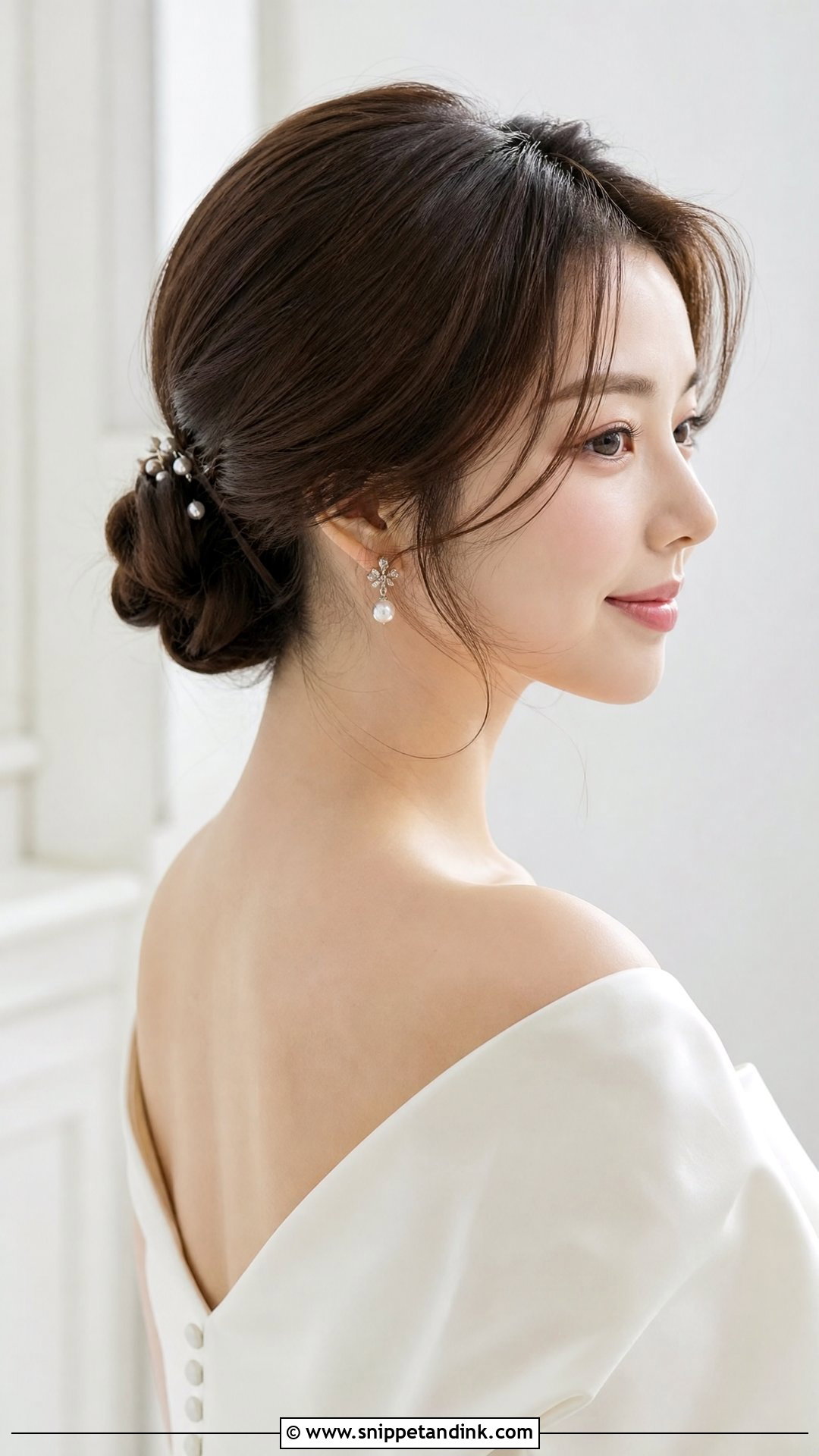
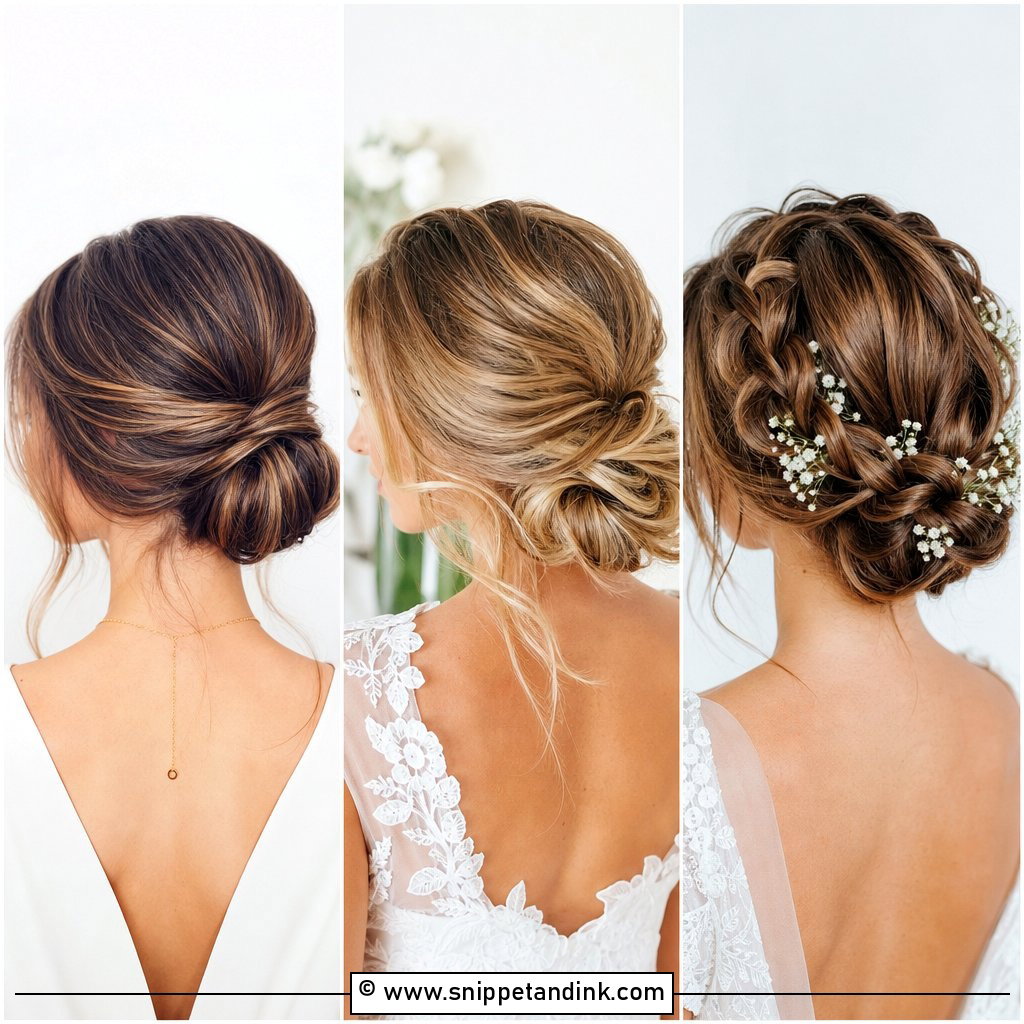
Clean and soft at once, a Korean low chignon has a smooth crown, gentle volume and a tucked bun that looks unforced. Sheer veils, minimal gowns, hanbok-inspired looks and pearls suit it. Most of the charm is in the wisps near the cheeks, which is also where it goes wrong: cut too short or left uncurled, they look like stray hair. I bend them away from the face with a small iron. Use a light shine spray rather than heavy gloss, which reads oily in bright photography. Medium to long hair works.
4. Chinese Wedding Sleek Bun
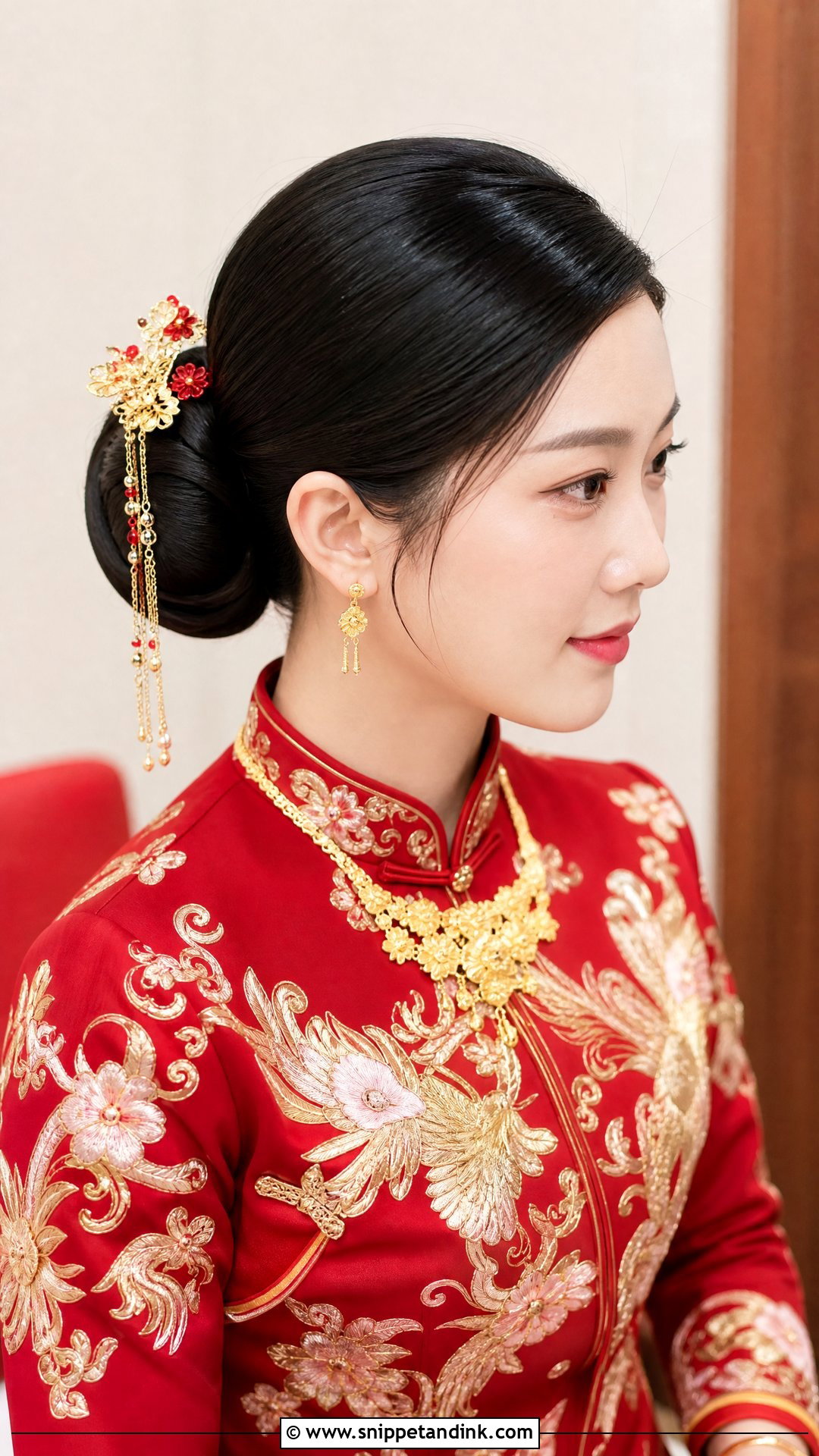
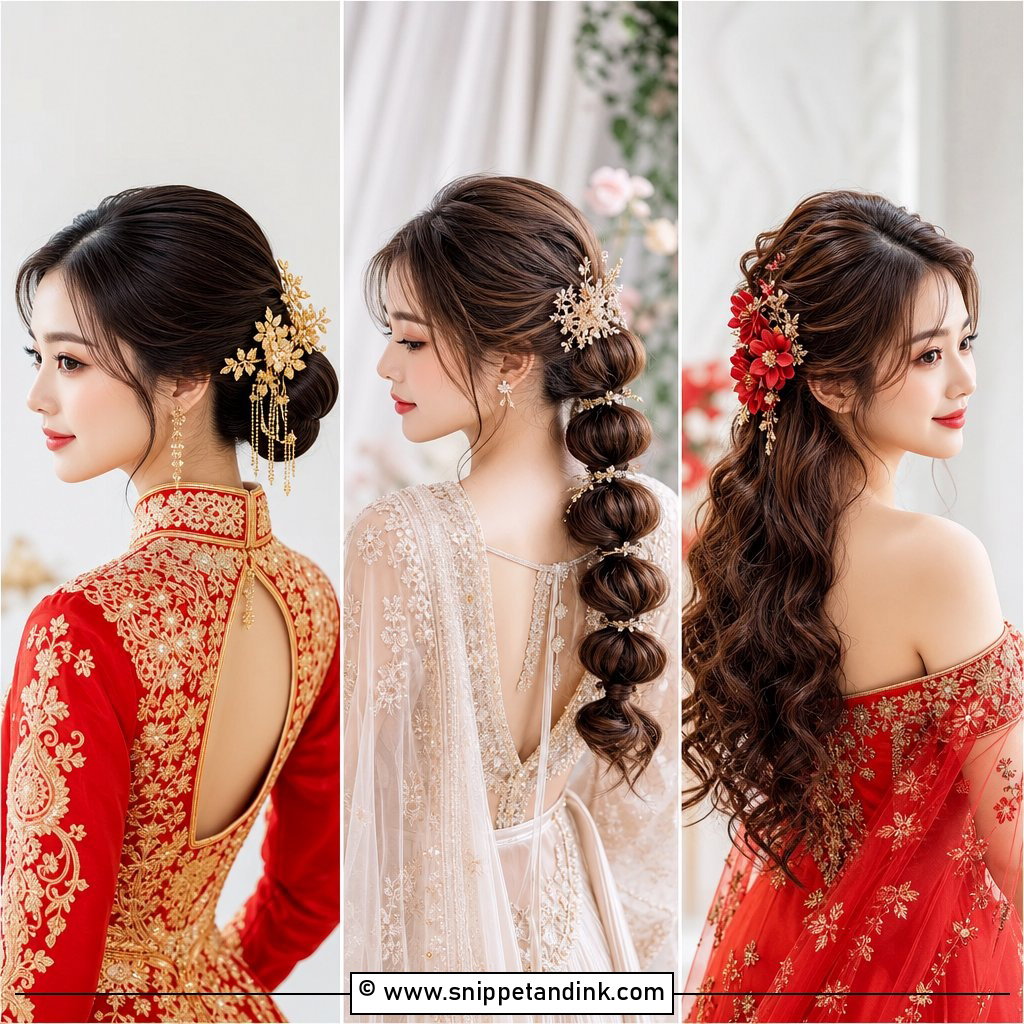
With a qipao or cheongsam, a Chinese wedding sleek bun is hard to beat. The hair is smoothed close to the head and wrapped into a clean bun, which lets red and gold ornaments stand out without competition, and it lasts through a tea ceremony, a banquet and an outfit change. The part changes the mood: middle is traditional and balanced, side is softer and more modern. One practical point. A high mandarin collar rubs against the nape, so I place the bun just high enough to clear it.
5. Japanese Bridal Updo
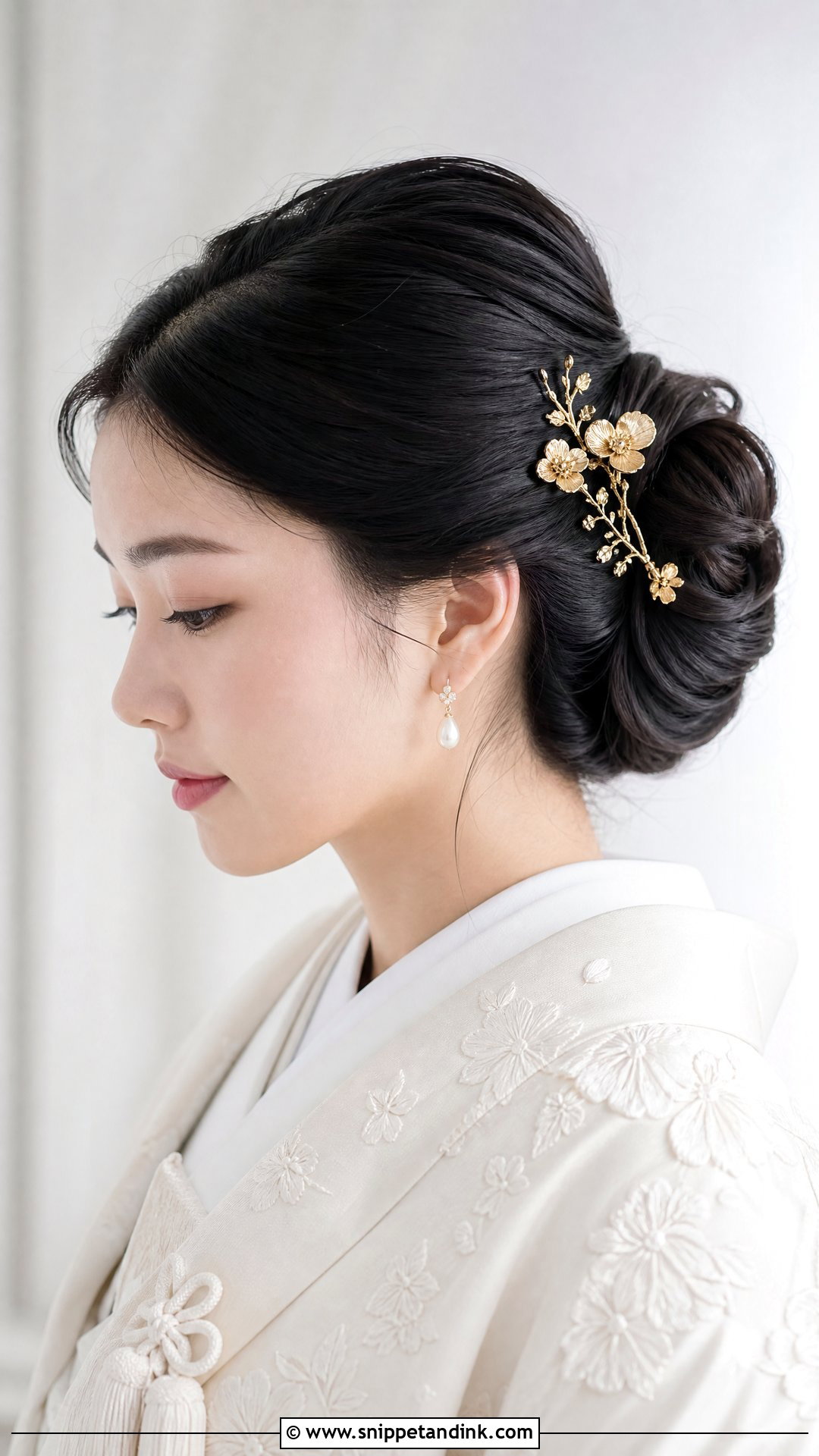
Traditional, modern or somewhere between, a Japanese bridal updo is about the side profile more than anything. For a contemporary wedding, I sculpt a bun with smooth sides and gentle height, then add hair sticks, floral pins, gold accents or pearls. It sits with a kimono, white gown or reception dress. Formal without being stiff is the aim. Smooth sides depend on how the hair is sectioned at the start, so I map the sections before any heat touches it; you can’t fix a lumpy side once the bun is pinned.
6. Asian Wedding Messy Bun
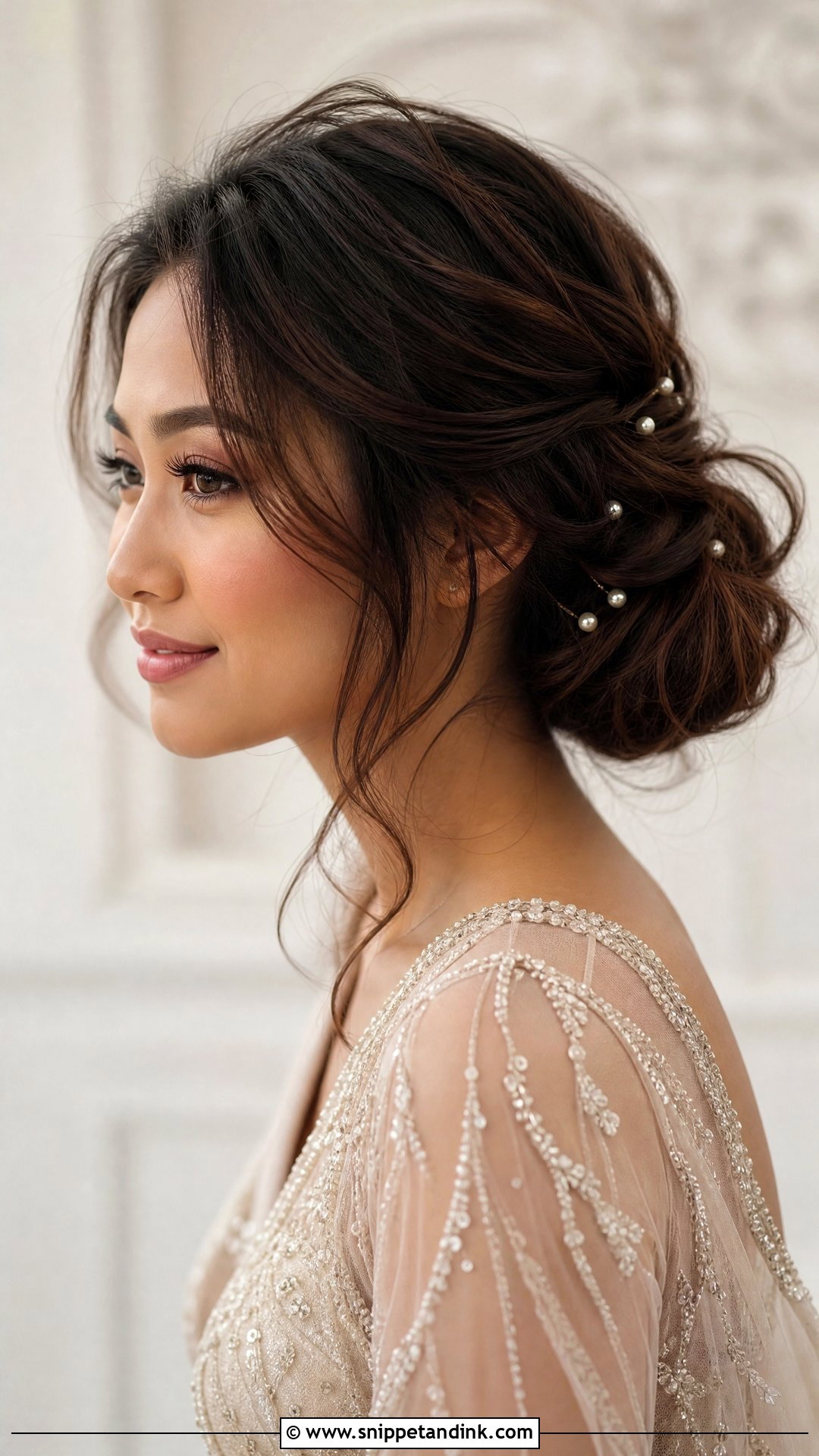
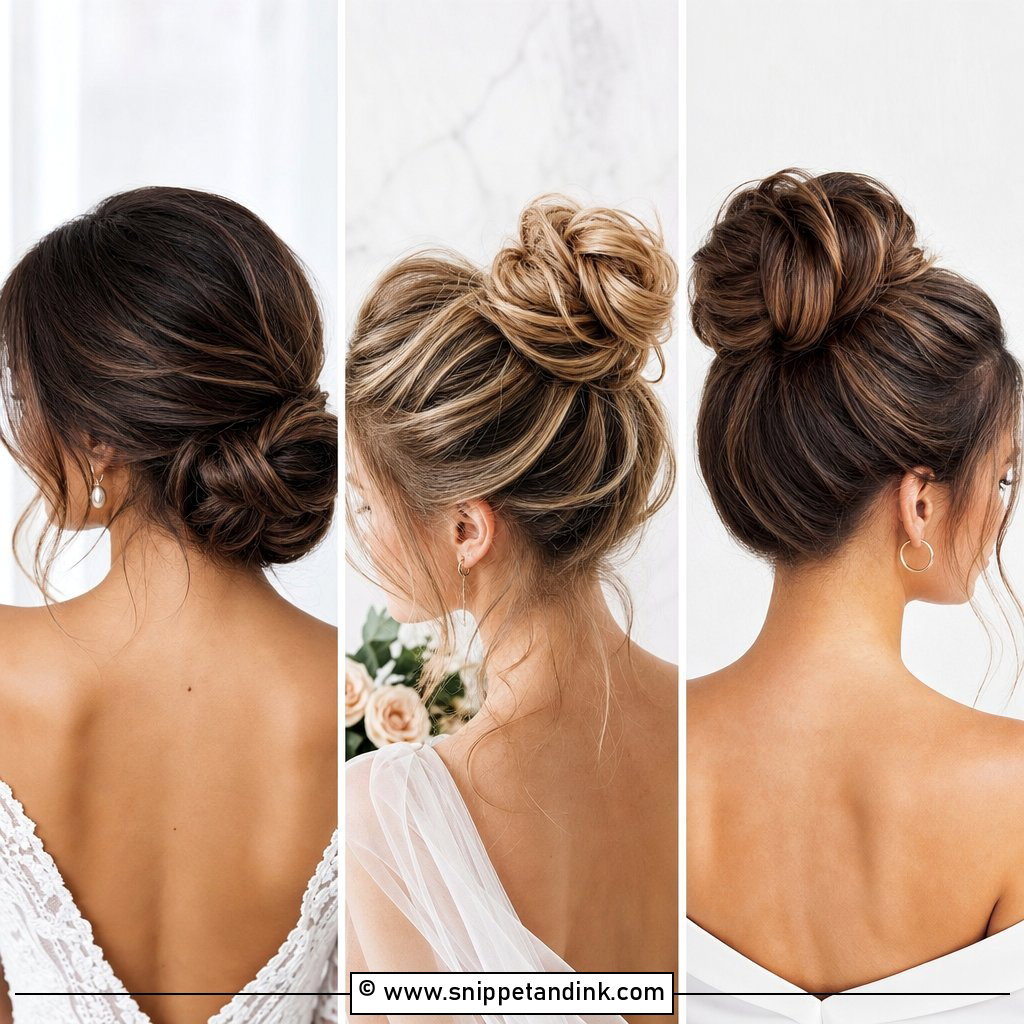
Romantic, not careless: that’s the line a messy bun has to walk. Soft texture and airy pieces sit on top of a secure base that nobody sees. Garden weddings, beach ceremonies and pre-wedding shoots suit it, and wavy, layered or highlighted hair shows the texture better than very dark one-length hair, which can look flat in this style. Ask for looseness around the crown and bun, not flyaways at the hairline. Pearl pins, tiny flowers or a soft veil give it a bridal finish.
7. Asian Bridal Braided Bun
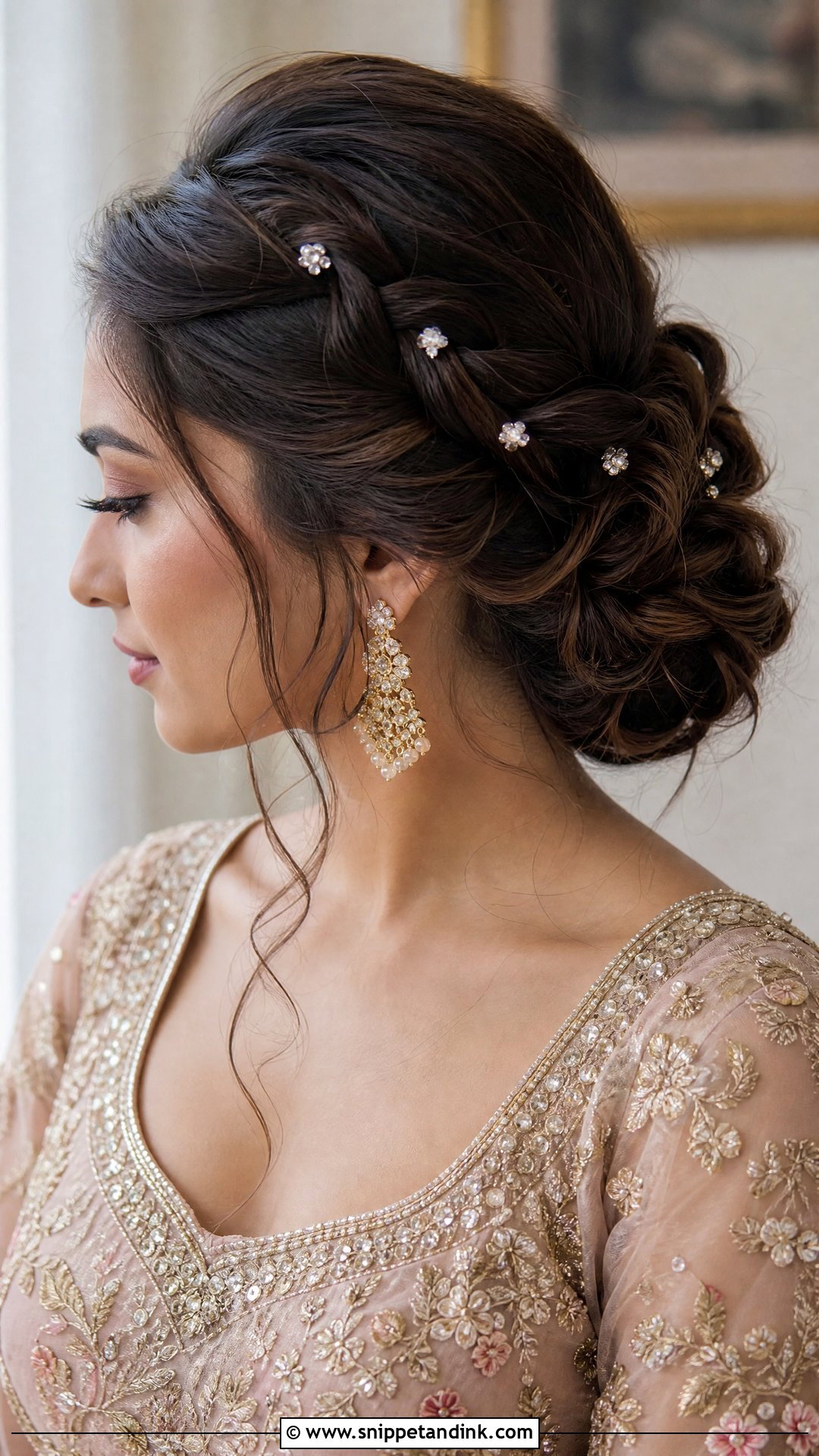
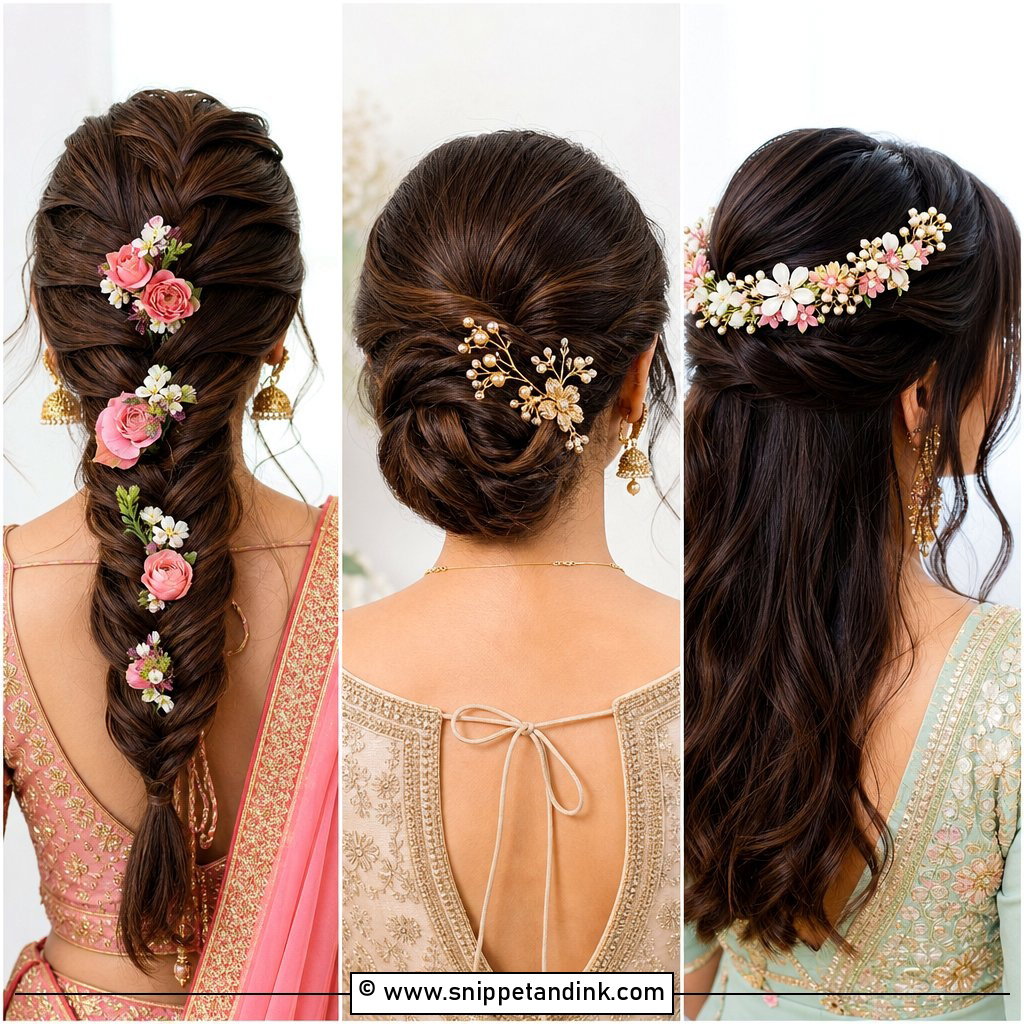
On dark hair, detail can disappear in photos. A braid fixes that. Whether it’s wrapped around the bun, running in from a crown braid or tucked in as small side braids, it creates ridges that catch light, and those ridges give accessories something to grip. It also suits bridesmaids and sisters of the bride, since it’s dressy without competing with the bride. Loosened, it looks soft; kept tight, it looks traditional. On very slippery hair, I braid over a light texture spray so the braid doesn’t loosen into a blur by evening.
8. Asian Wedding High Bun
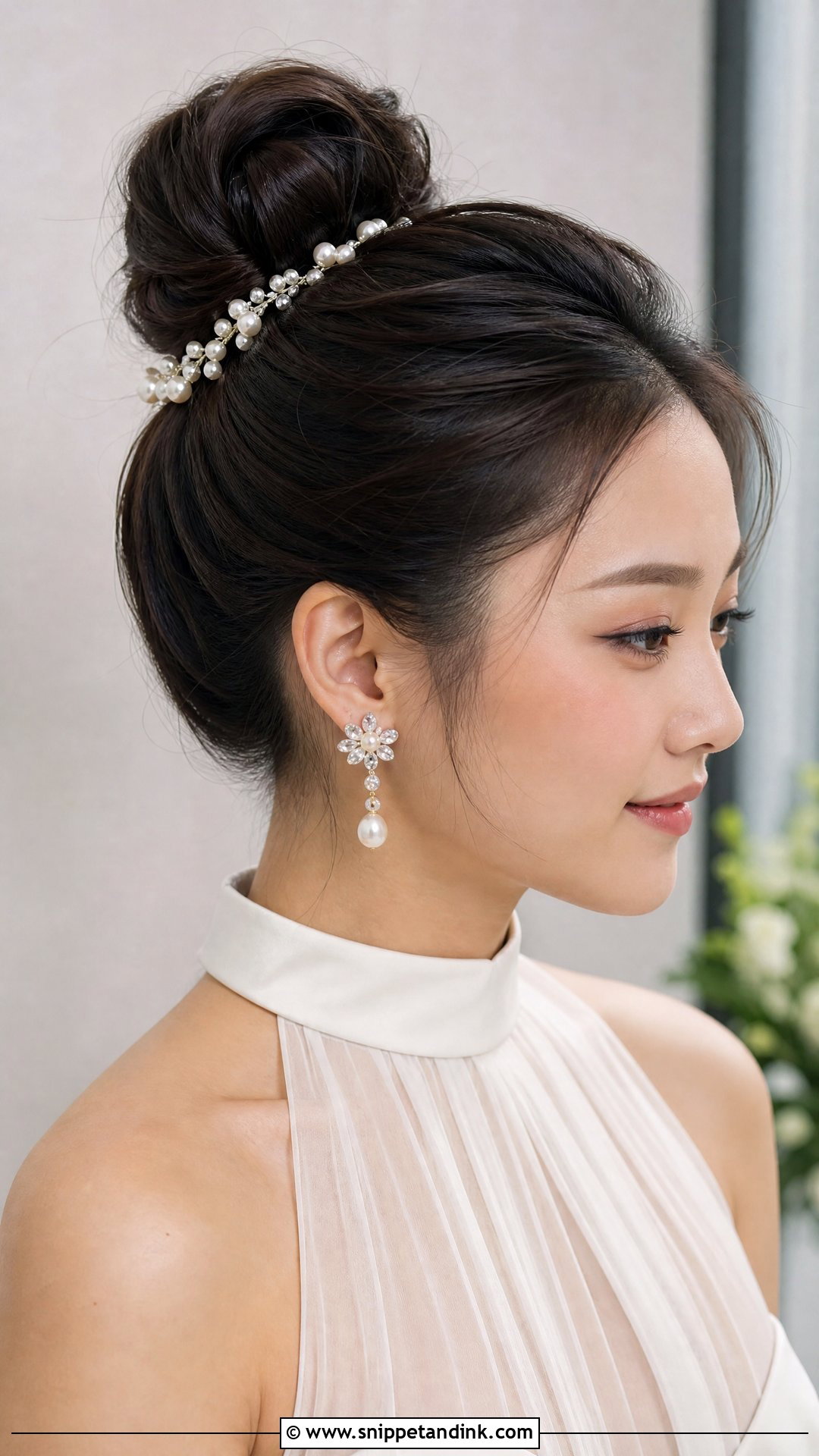
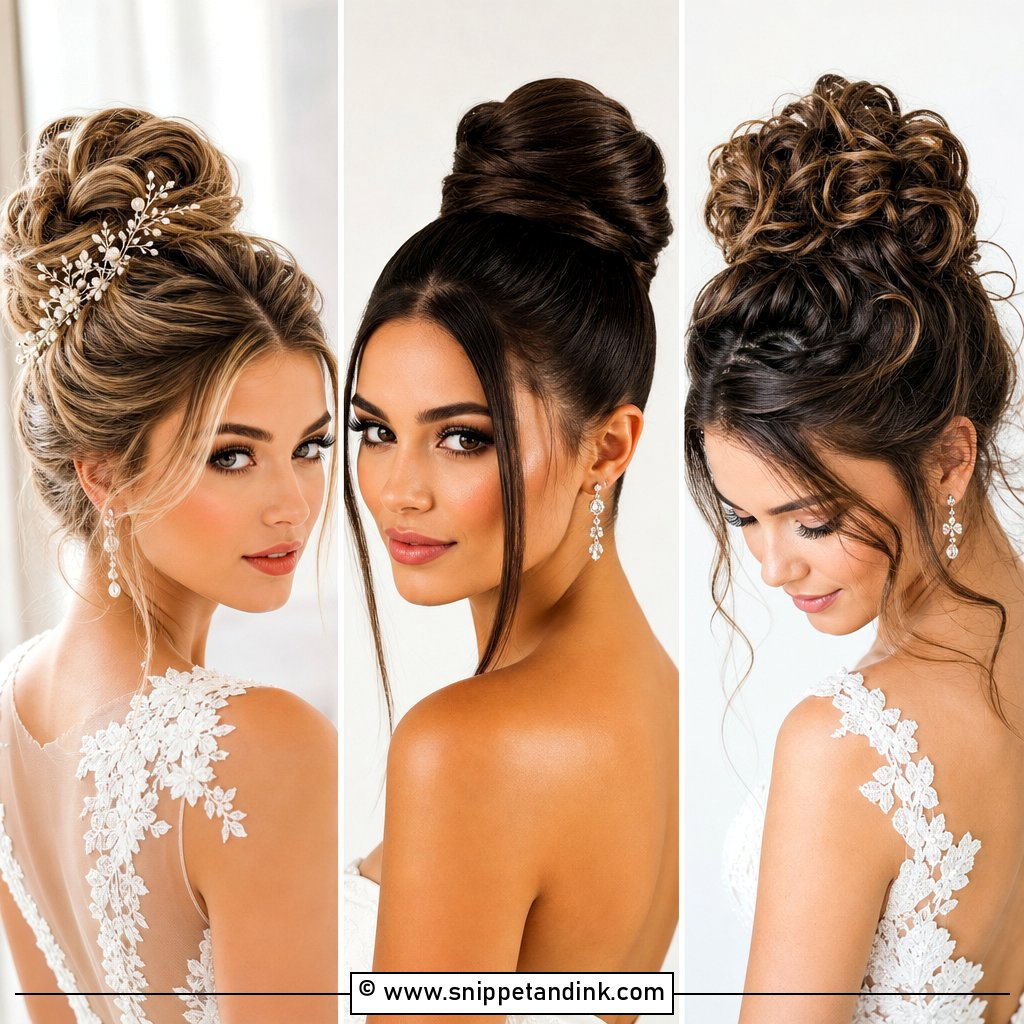
Placement is everything with a high bun. Too high and it feels casual, too low and you lose the lifted effect. I usually set it just above the crown and balance it with soft front sections. It suits high collars, statement earrings and detailed shoulders, and it keeps hair off the neck in a warm venue. Sleek and round, airy and textured, or sculpted with volume all work. If you’ll wear a heavy dupatta for part of the day, though, plan to switch styles or choose a lower bun; a high bun under heavy fabric gets sore fast.
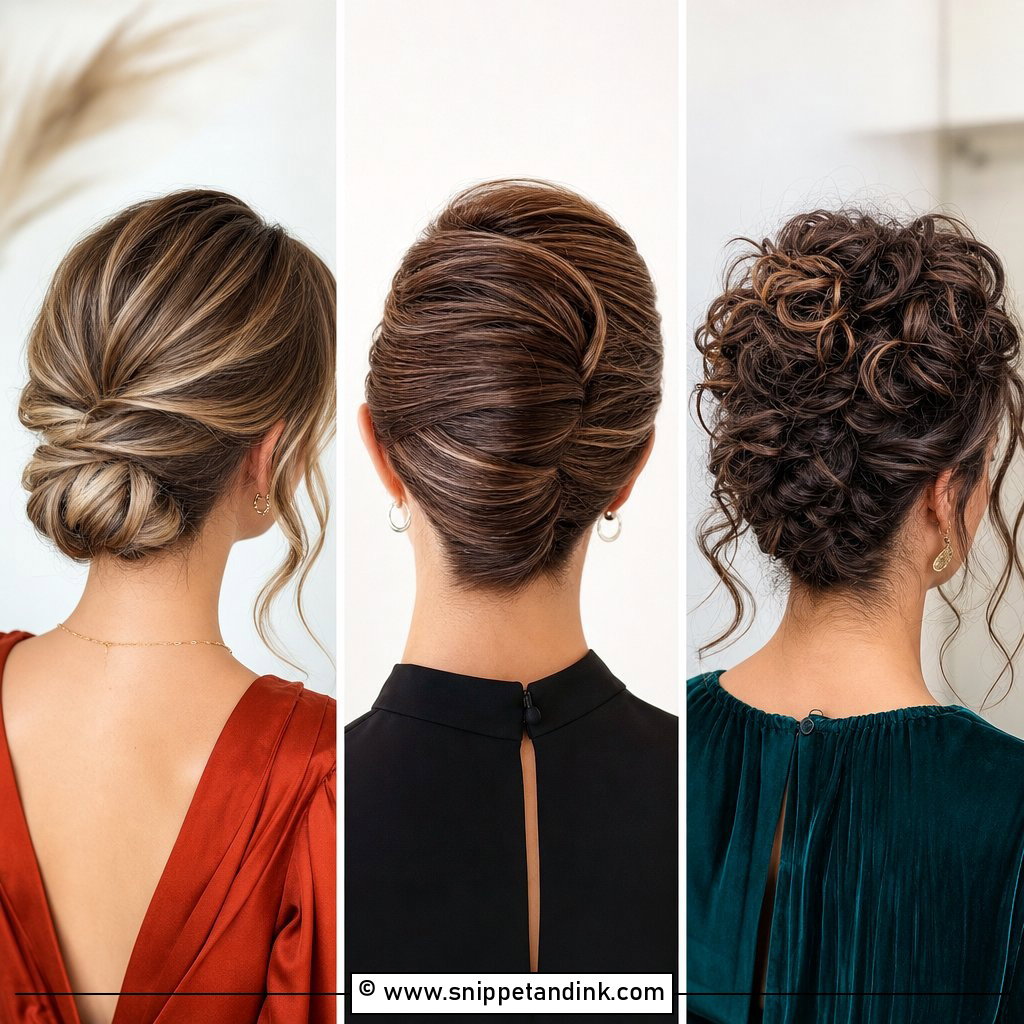
9. Asian Bridal French Twist
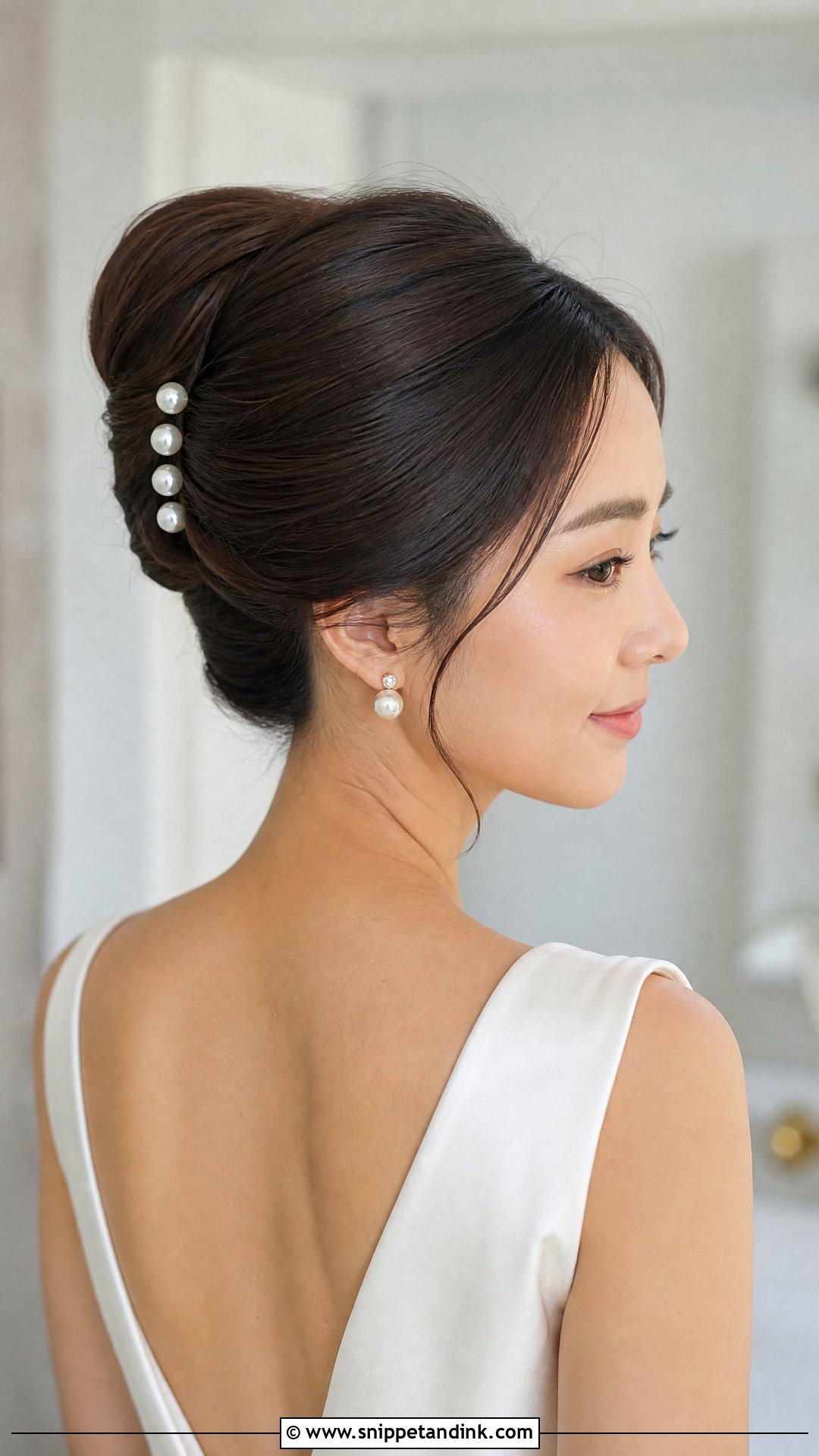
Swept upward and pinned into a vertical roll, a French twist gives length at the back of the head and a little vintage feel. Satin gowns, reception dresses, tea ceremony outfits and minimal styling all suit it. Soft version: a few face-framing strands and pearl pins along the seam. Formal version: sleek sides, a smooth roll. Thick hair needs the twist built in stages with pins locked into each other along the seam, otherwise the roll slowly unwinds under its own weight.
10. Asian Wedding Updo With Flowers
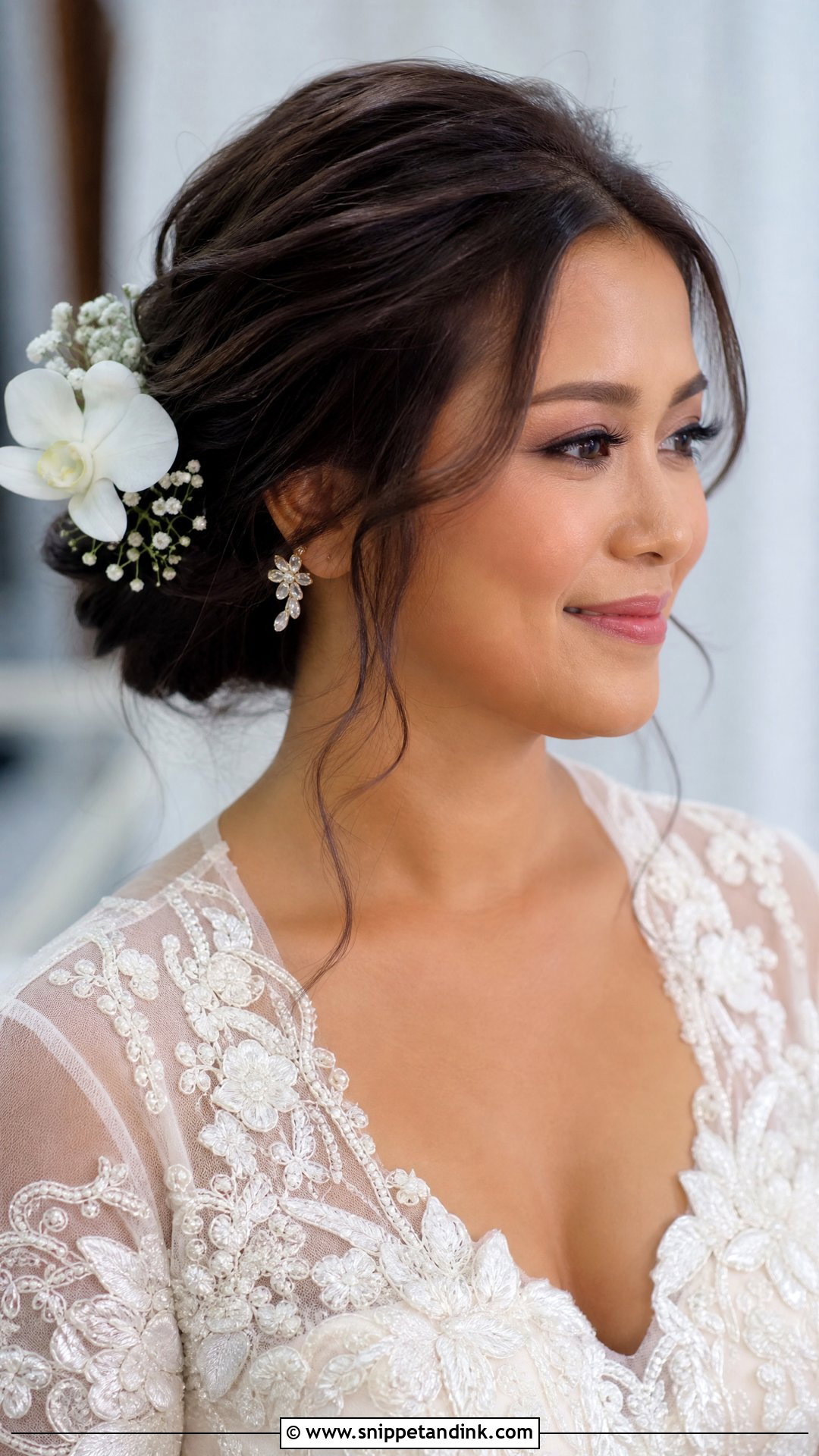
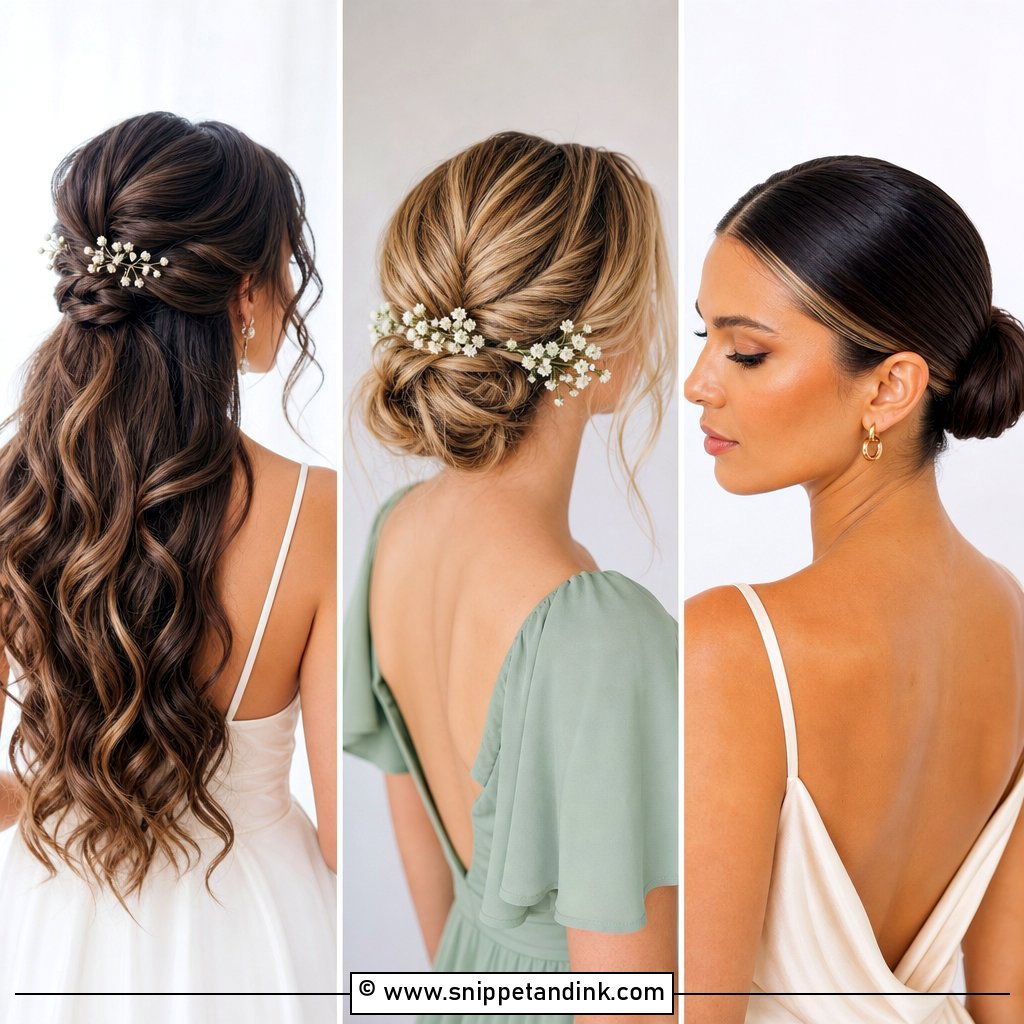
Scale is where floral updos succeed or fail. Large blooms suit a full bun and a heavy outfit; tiny flowers suit a delicate chignon. South Asian brides may want jasmine garlands around a bun, while modern brides might tuck small white blooms, orchids, roses or baby’s breath into a soft chignon. Fresh flowers need choosing carefully, since some wilt within hours in heat. I like to talk to the florist directly about size, color and stem length, so the flowers arrive wired or picked ready to pin rather than as a loose bunch.
11. Asian Bridal Bun With Veil
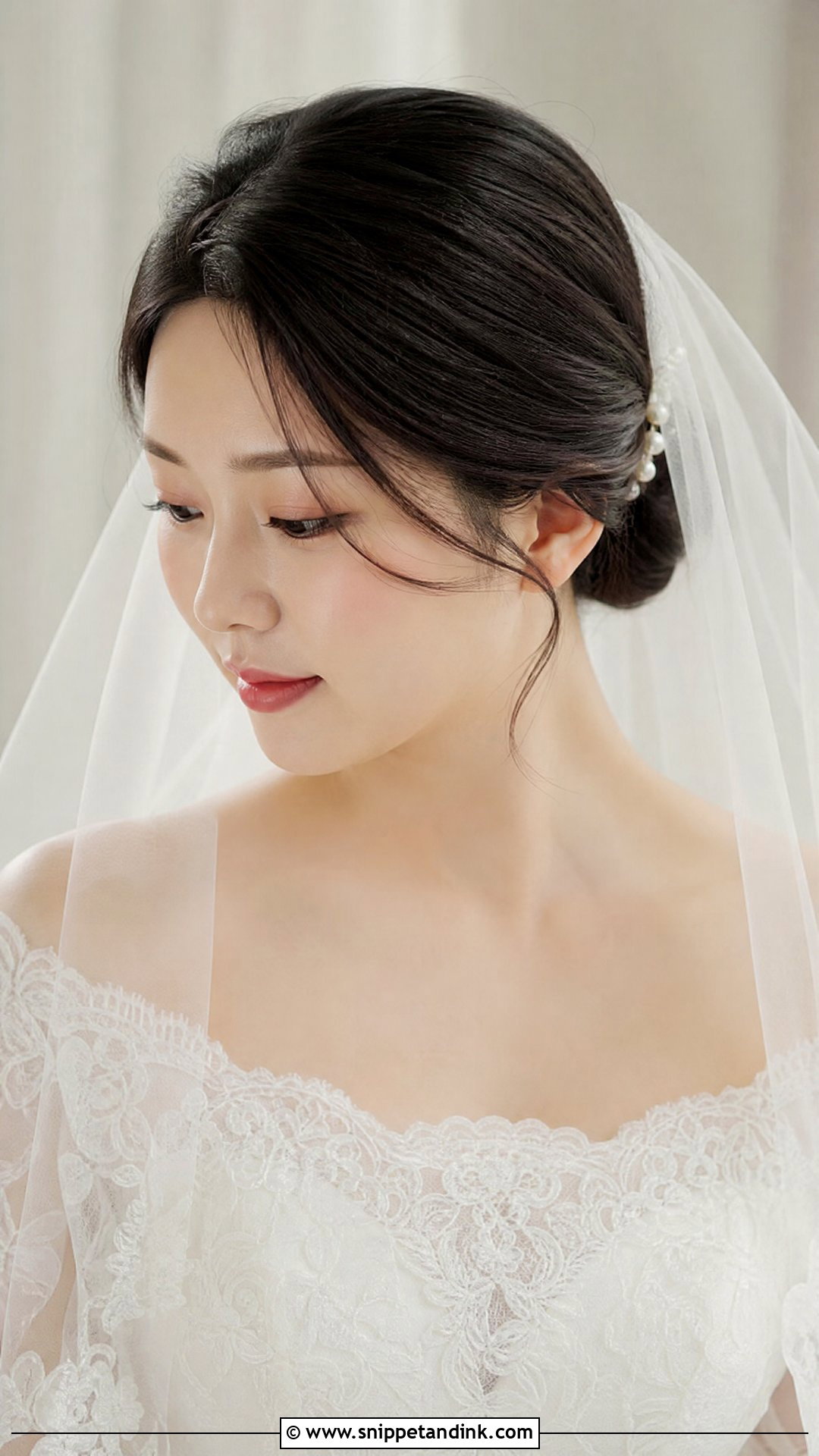
Most veils weigh more than brides expect, especially cathedral lengths, and a low bun gives the comb a strong anchor without pulling the scalp. It suits a white gown, lace veil or fusion outfit, and the bun can be sleek, twisted, braided or textured. Tell me at the trial if the veil is coming off after the ceremony. I’ll place the comb under the bun rather than through it and hide the pins, so the style still looks finished when the veil is gone. Otherwise you’re left with a dent and a row of exposed grips.
12. Asian Wedding Updo With Dupatta
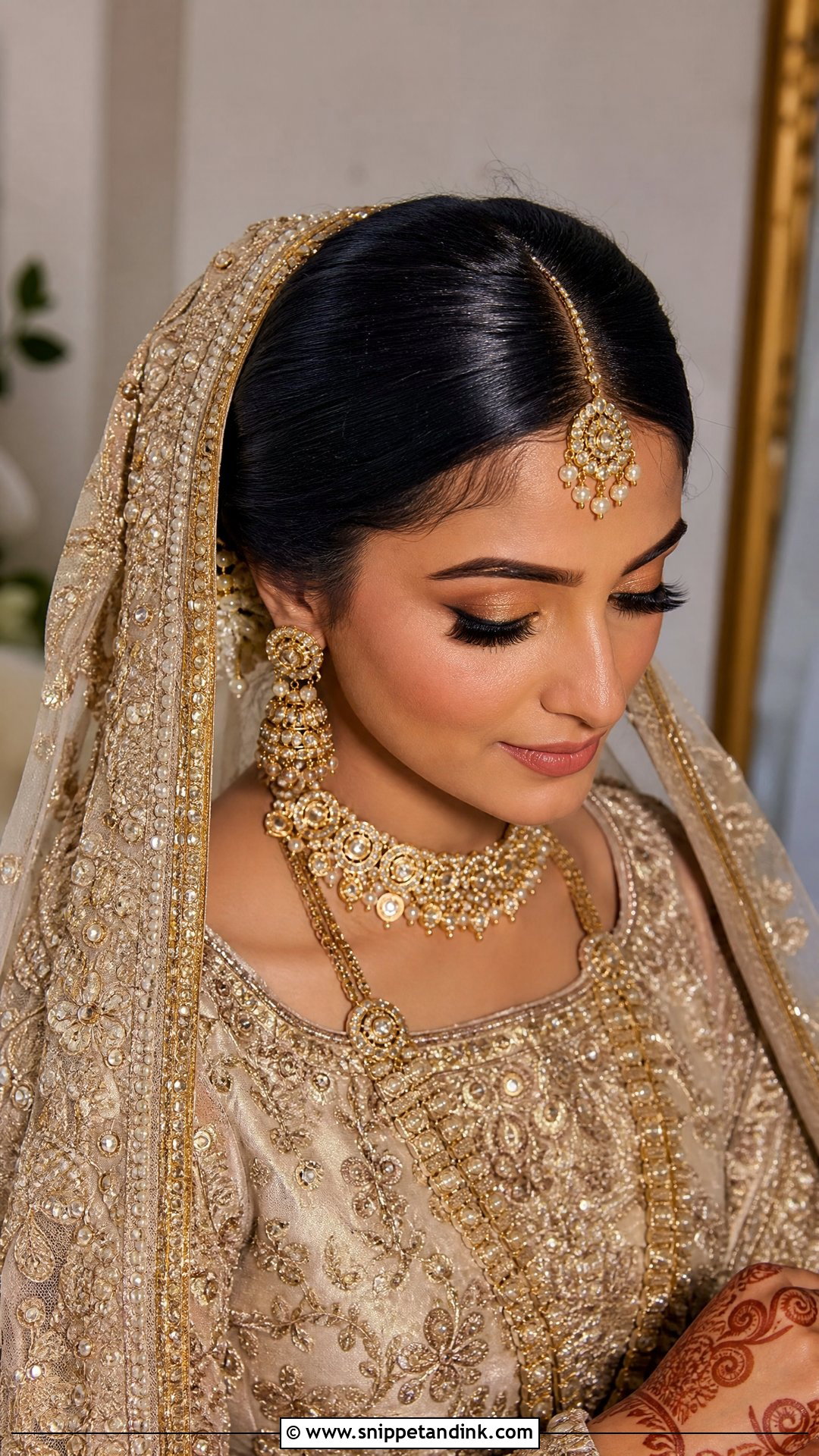
South Asian bridal outfits can be heavy, and an updo with a dupatta has to hold fabric, pins and jewelry without discomfort. A low or mid bun gives the dupatta a stable base. A sleek center part reads traditional; a softly lifted front reads modern. I need to know exactly where the dupatta will sit before I start, since that decides where I build the anchor. Bring the dupatta, tikka, passa and any head jewelry to the trial; a photo won’t tell me how much they weigh.
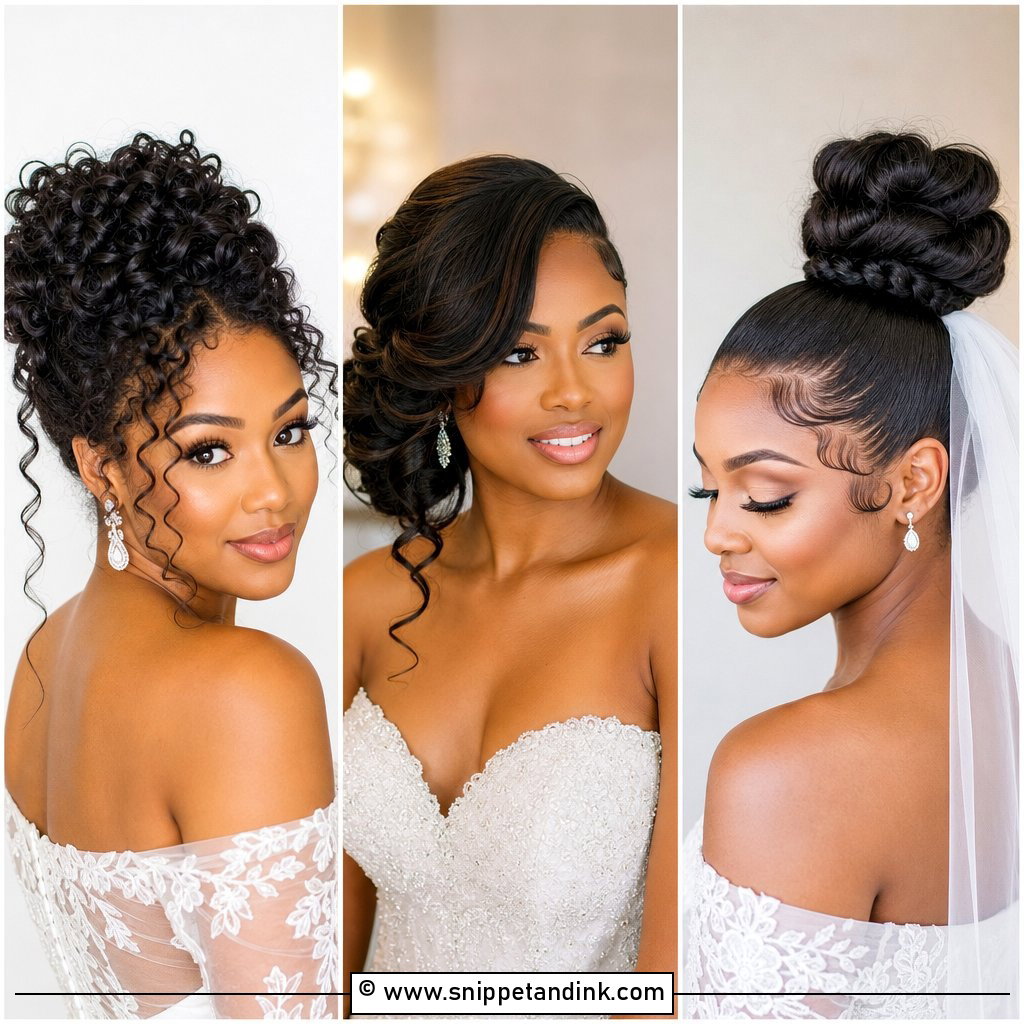
13. Asian Bridal Curly Updo
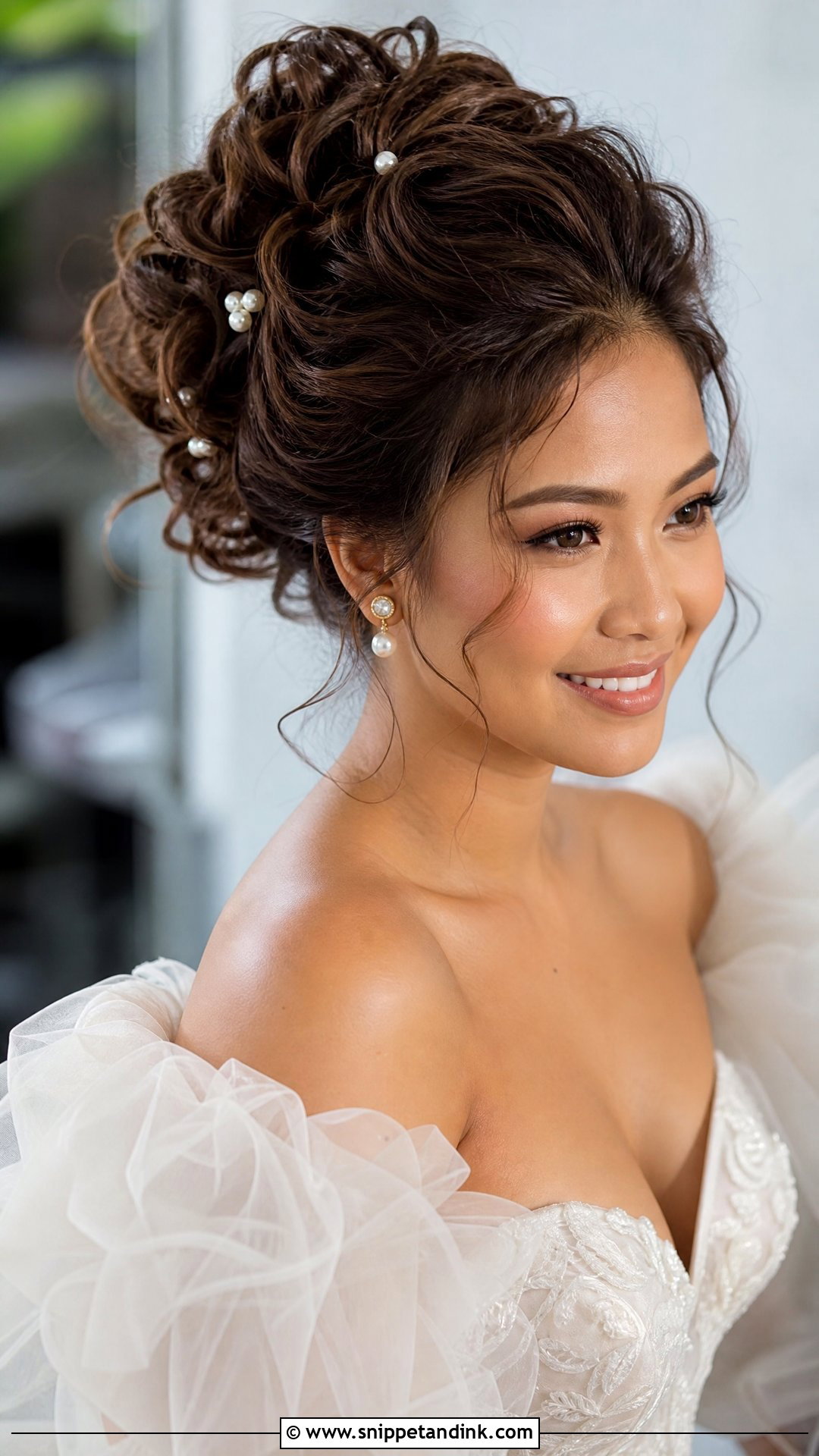
Volume and movement are the whole point, so the curls must never be brushed into a flat bun. Naturally curly hair, wavy hair or curled straight hair all work. I pin each curl in place individually so the pattern stays visible from every angle. Layered hair is an advantage here, since shorter pieces frame the face on their own. For natural curls, I’d rather use a curl cream and a flexible spray than heavy hold, which dulls the definition. Pearl pins, tiny flowers or a delicate comb finish it.
14. Asian Wedding Side Bun
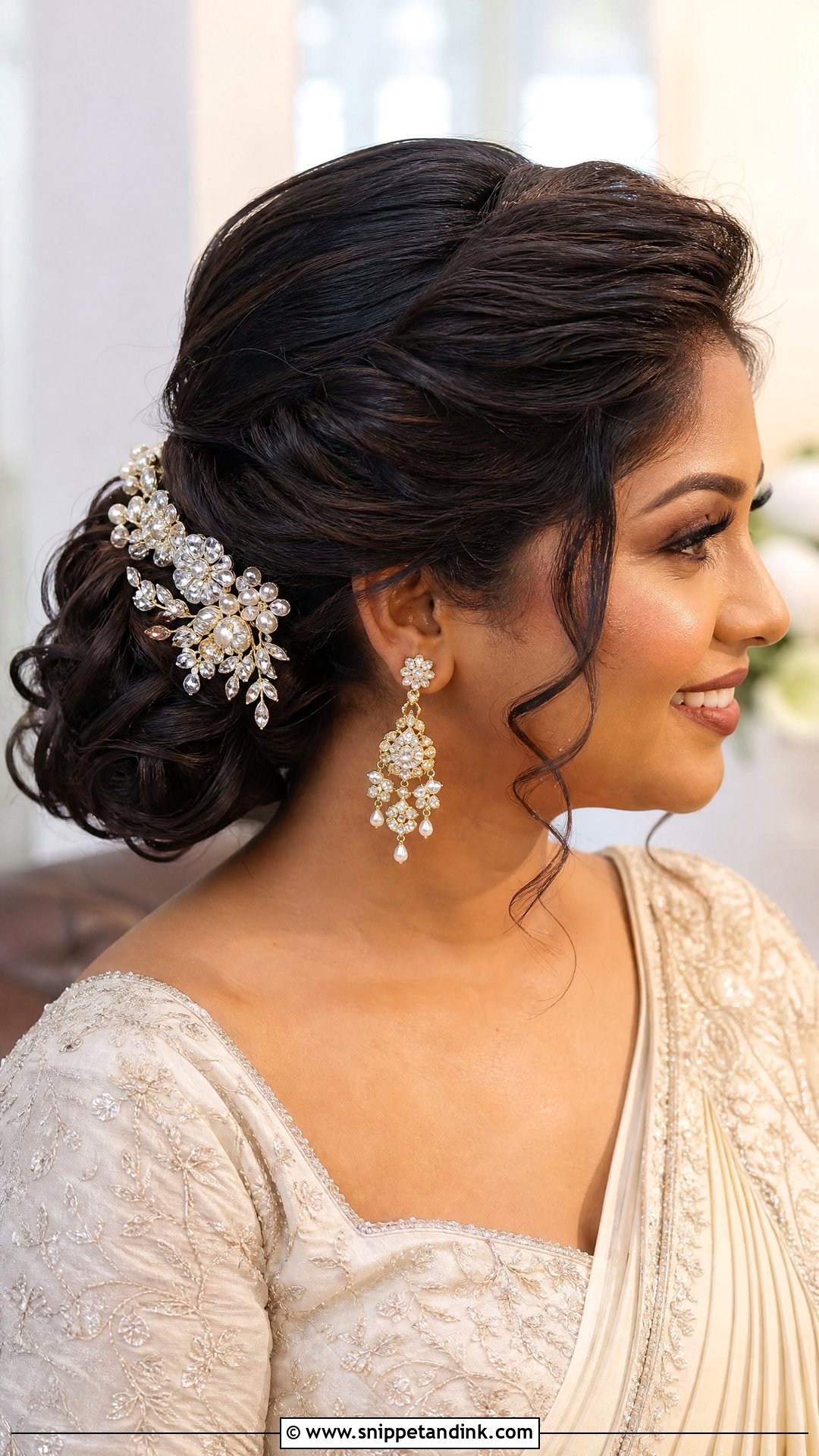
Low behind one ear, a side bun creates an angle that suits one-shoulder outfits, sarees, gowns and statement earrings. Sleek, braided, curled or softly messy all work, and it sits well with side dupatta draping, a floral piece or a decorative comb. Balance is the issue. If the front is also heavy on the bun side, the whole head looks tipped, so I keep the front lighter there and add a little crown volume. Check it in a photo from straight on, not just in the mirror.
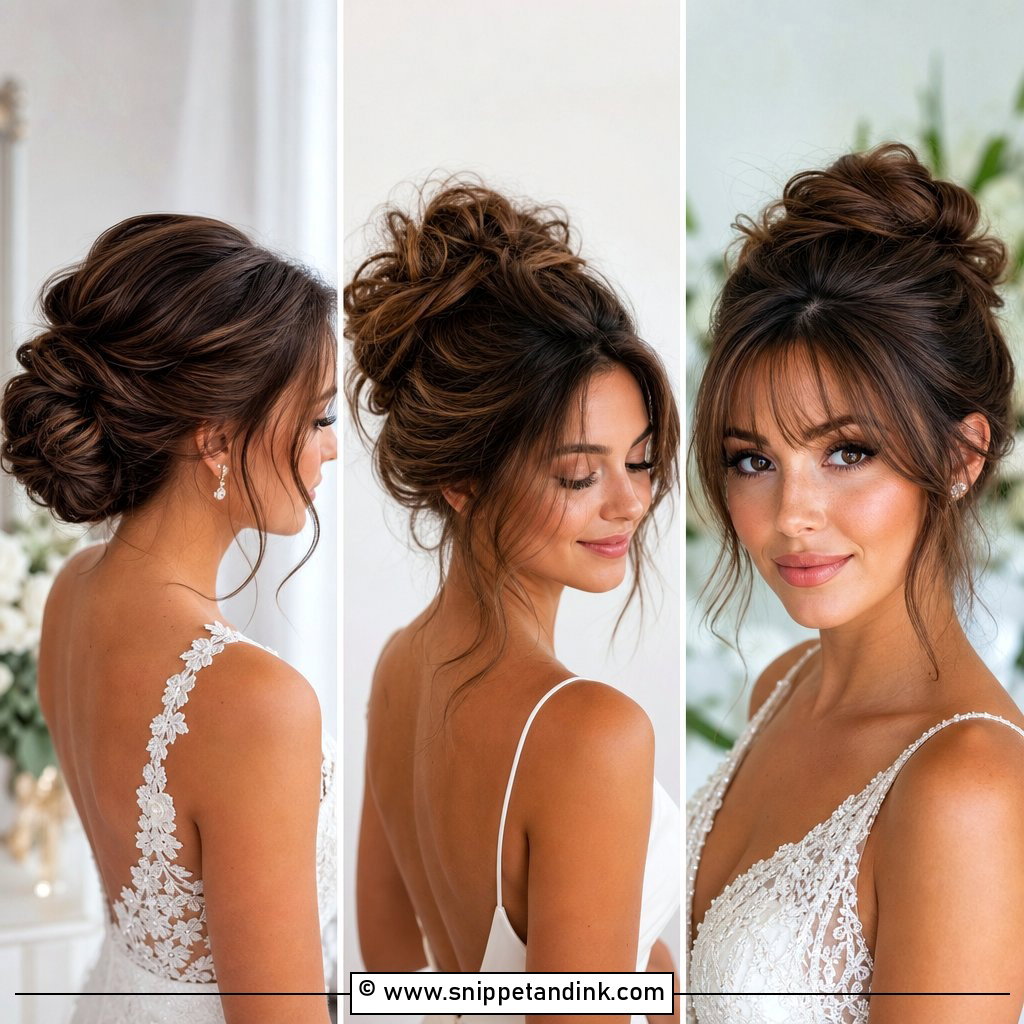
15. Asian Bridal Pearl Updo
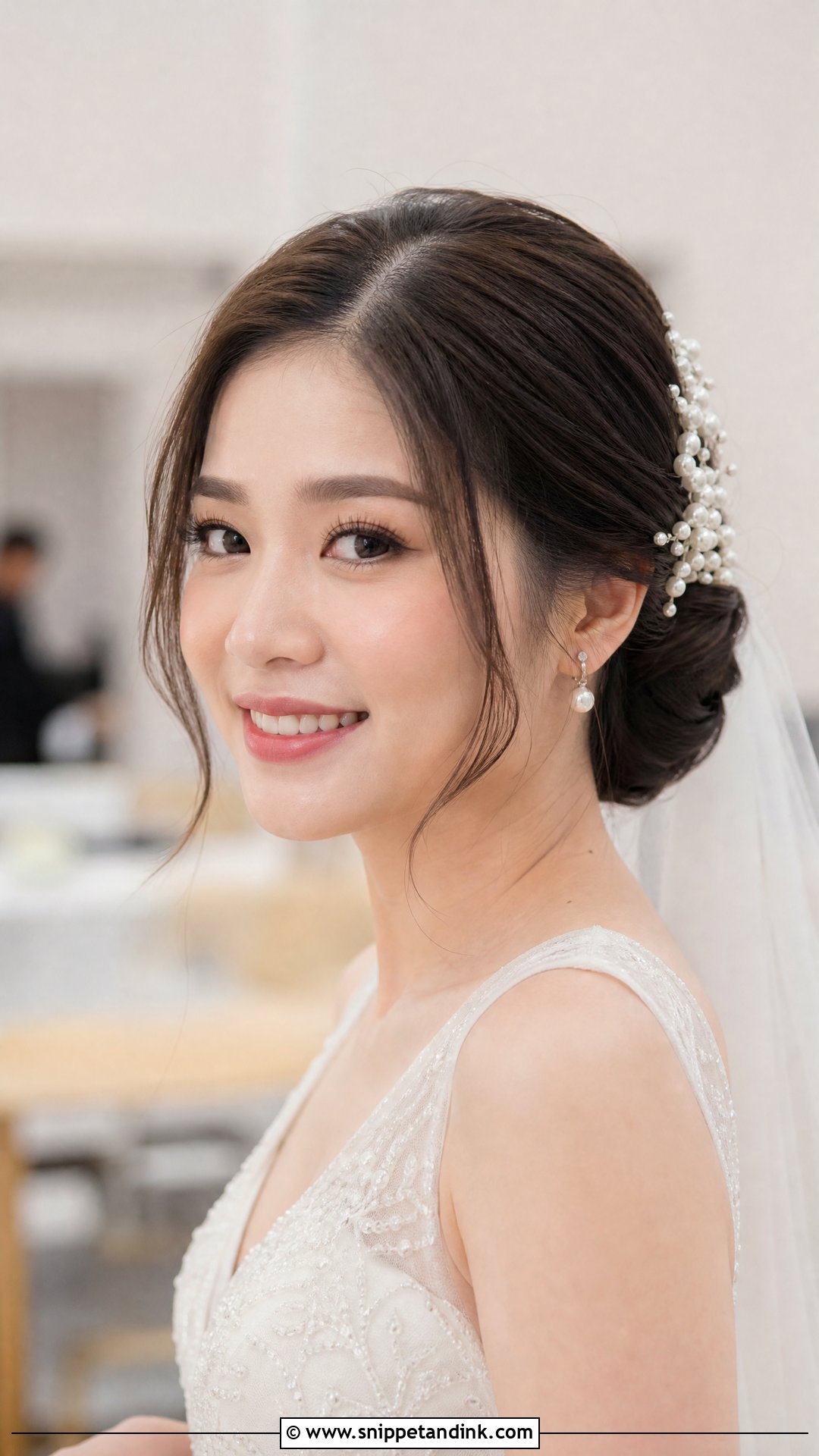
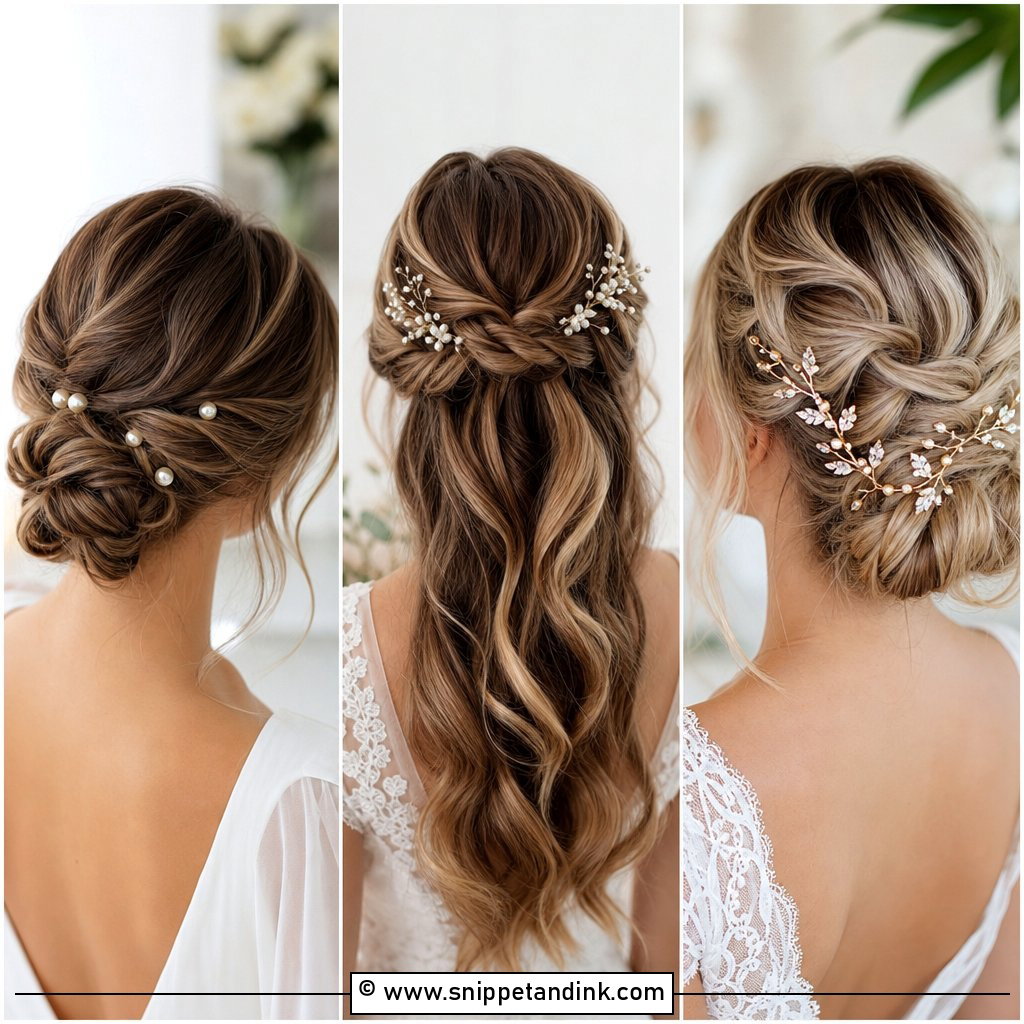
Pearls make an updo bridal without much effort, and they stand out clearly against dark brown or black hair. A low bun, chignon, French twist or textured bun can all carry them. Restraint is the secret. A few pearls around the bun or along one side look more expensive than dozens scattered everywhere. I place them after the final spray, slightly staggered rather than in a perfect line, and push each pin in at an angle so the pearl sits on the surface instead of sinking into the hair.
Taking It Down at 1 a.m. Without Losing Half Your Hair
Nobody talks about the end of the night, when a tired bride sits on the edge of the bed with fifty pins and a full can of hairspray in her hair. Yanking it all out is how you lose strands and wake up with a sore scalp. Go slowly, ideally with a friend or your partner helping.
- Take off the jewelry, flowers and dupatta or veil first, so nothing hangs from the bun while you work.
- Feel for the pins rather than tugging, and slide each one out the way it went in. Ask your stylist roughly how many went in, so you know when you’re close.
- Don’t brush set, sprayed hair while it’s dry. Finger-comb what you can, then work conditioner or a light hair oil through the lengths.
- Detangle from the ends upward with a wide-tooth comb, then shampoo, twice if it still feels stiff.
- A tender scalp is normal after a heavy updo. Leave your hair loose the next morning and skip tight ponytails for a day or two.
It sounds like a small thing, but a quiet ten minutes for this is one of the nicest ways to end the night.
Which Ceremony Is the Hair Really For?
Many Asian weddings have more than one heart: a tea ceremony and a reception, a nikah and a walima, the pheras and an evening party. Decide which of those moments the updo is really built for, and let the others follow. A sleek bun suits a tea ceremony, a floral juda belongs at a traditional South Asian wedding, and a soft chignon, curly updo or pearl bun slides easily into a fusion celebration. Bring your actual accessories to the trial, wear them a while, and pick the version that feels calm on your head as well as right in the mirror.
You'll Like These Ideas:



Leave a Reply