
Bridal hair at a Desi wedding has a harder job than most. It sits under a dupatta, carries a tikka and sometimes a passa, gets a varmala lifted over it, and has to last from the baraat to the vidaai. I’ve picked twenty styles that hold up to that, from traditional gajra buns to pearl-lined braids, and they cover long, medium and even short hair. My notes under each one are about what makes it last and where I’d use it across your functions.
What Heat, Humidity and Air-Conditioning Do to Desi Bridal Hair
The venue and season change which of these looks I’d recommend more than anything else. A summer wedding in a garden and a winter reception in a cold hall need different hair.
- Humid weather undoes curls and smooth, open styles fastest. In monsoon season or at a beach venue, I lean toward braids and buns, which hold their shape however much the air puffs the hair.
- Hot outdoor afternoons wilt fresh flowers. Jasmine copes better than roses; for long outdoor functions, silk flowers mixed with a few real ones last.
- Strong air-conditioning dries the hair and makes it static, especially fine hair. A little smoothing cream on the lengths keeps open styles from flying.
- Moving between a hot courtyard and a cold hall makes hair frizz at the hairline. A small travel spray in your clutch fixes that.
1. Traditional South Indian Braid With Gajra
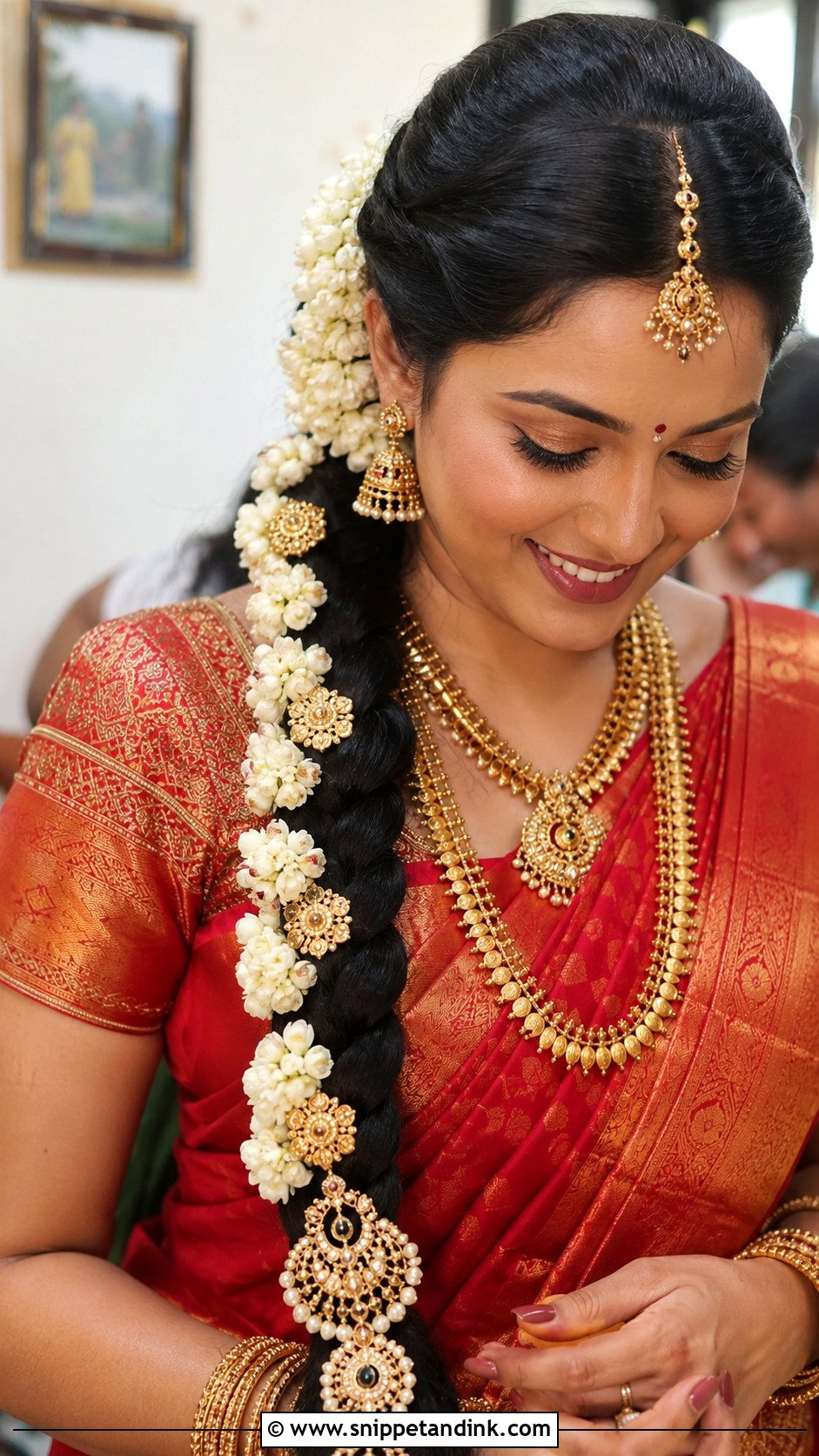
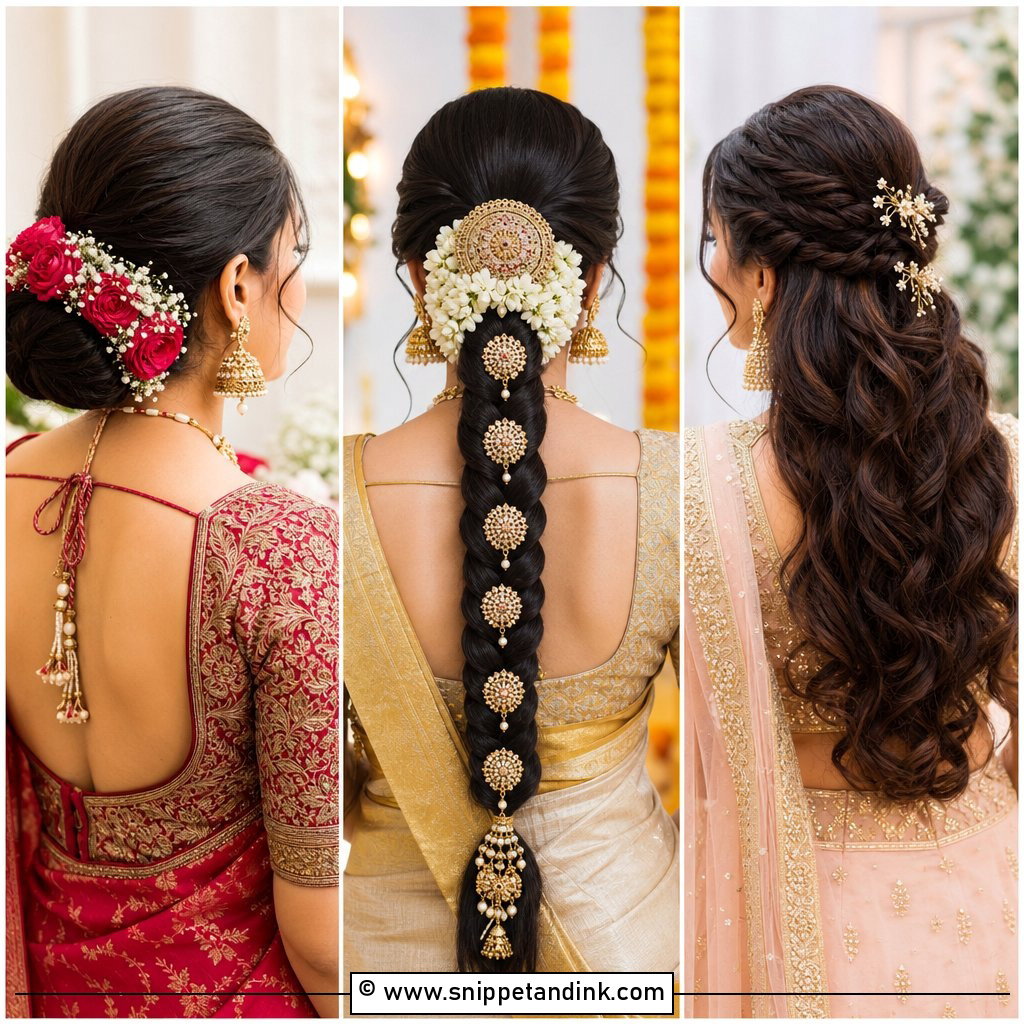
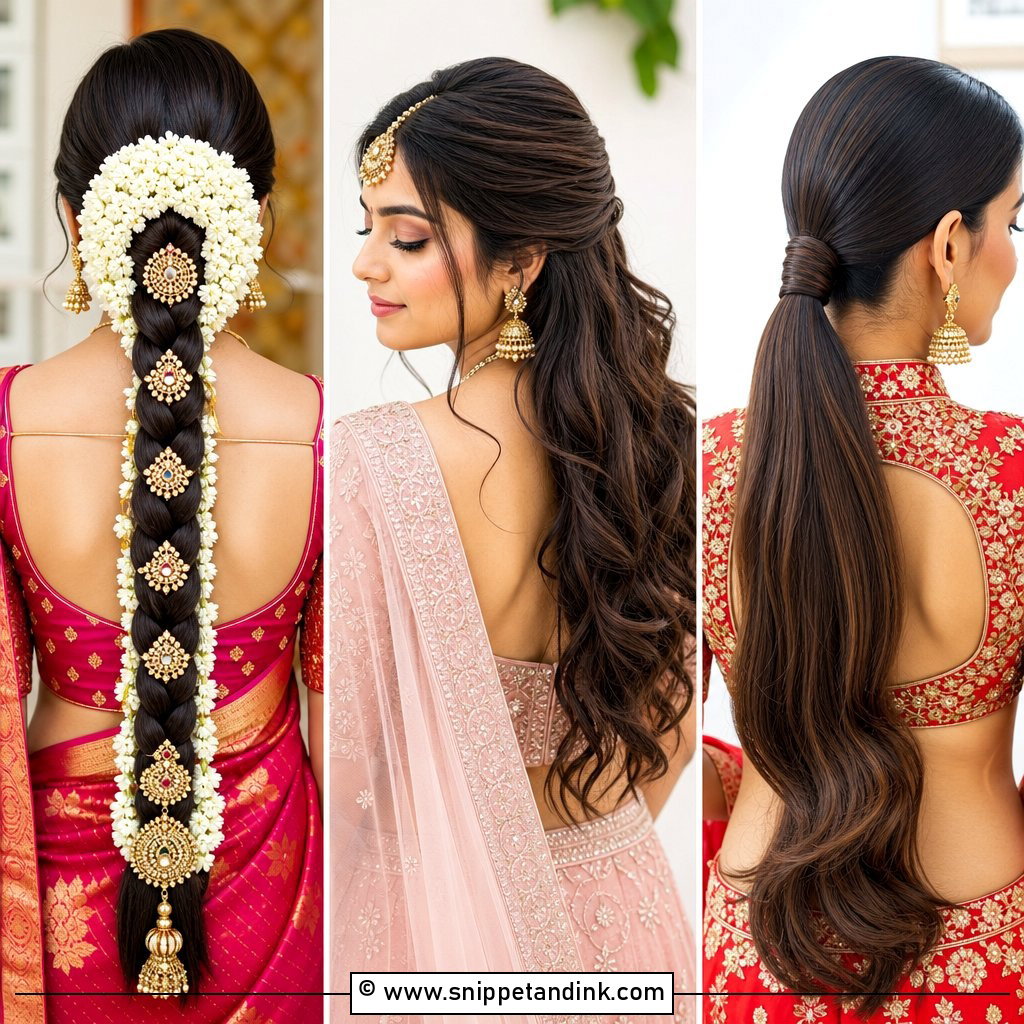
A thick, glossy braid over the shoulder is still one of the most loved bridal looks in the south. This classic South Indian braid is plaited long and neat, then dressed with fresh jasmine gajra and gold temple ornaments or jada billai along its length. The ornaments pull on the braid, so I start it firmly at the crown and keep the plait tight to the end. Silk sarees and traditional lehengas suit it. If your hair stops at the shoulder blades, an extension braided in from the nape gives the length without anyone noticing.
2. Low Bun With Fresh Flowers
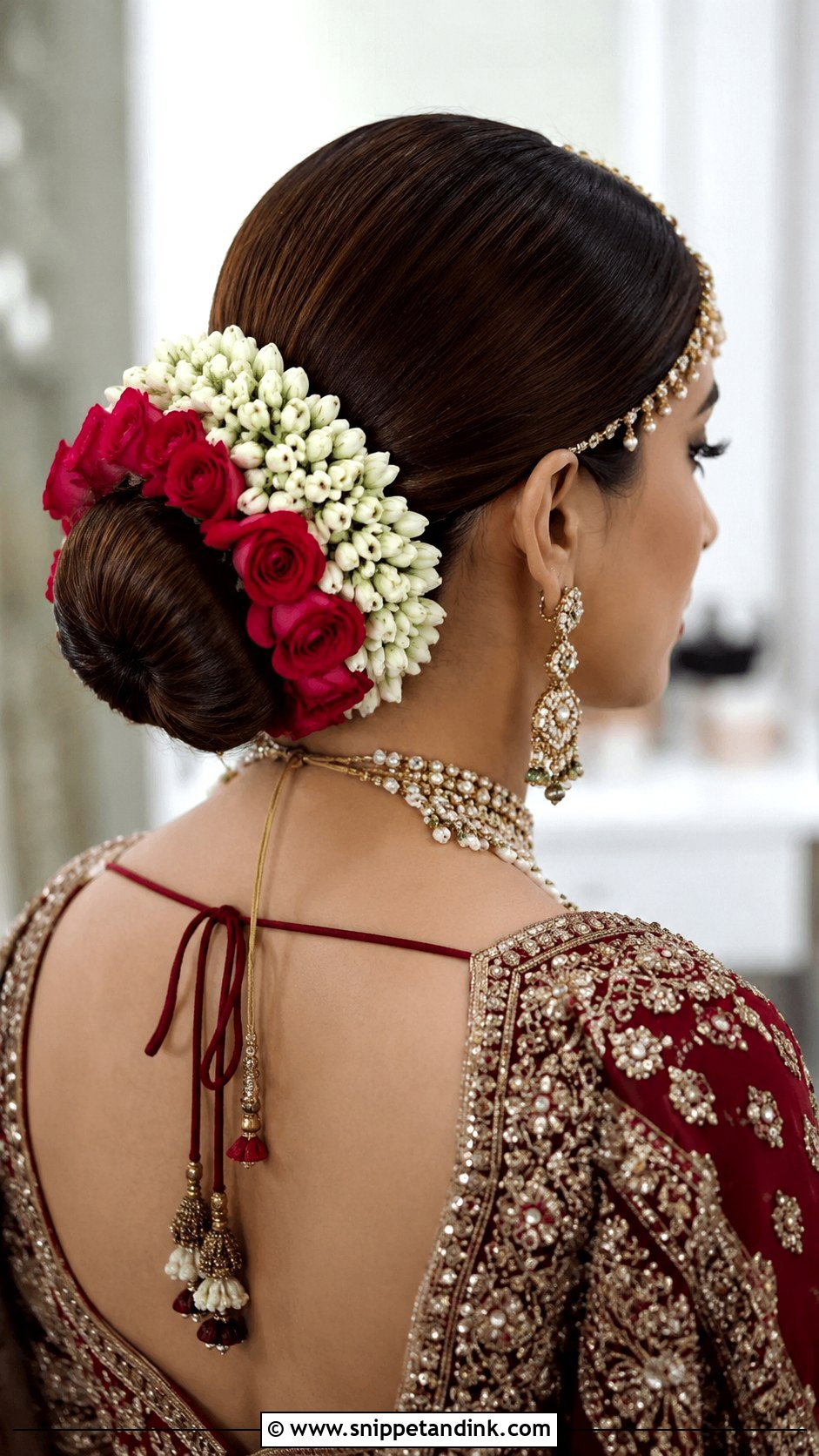
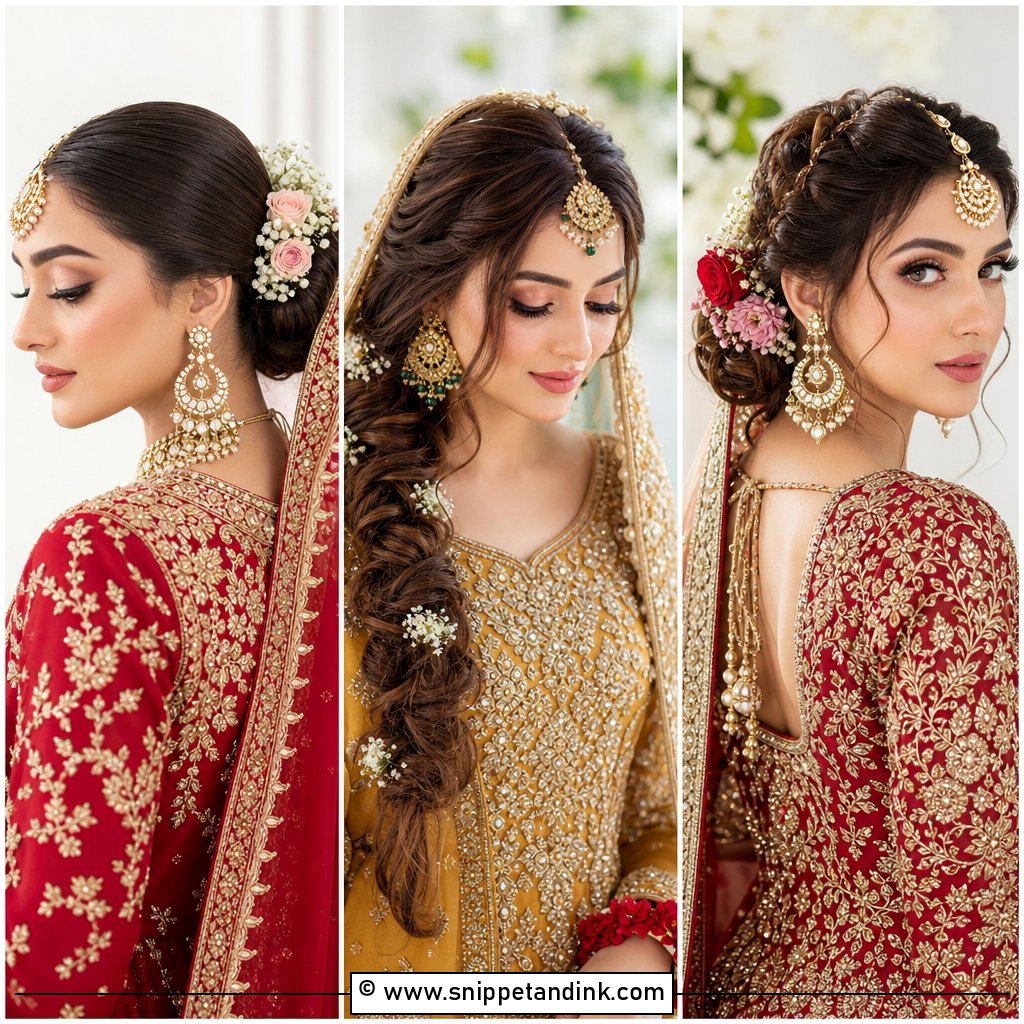
A soft low bun at the nape is the timeless desi bridal hairstyle for a reason: it fits almost every face shape and every outfit, and it leaves the jewelry and makeup in charge. Gather the hair sleek or slightly textured and wrap a gajra of jasmine or roses around it. Heavy bridal jewelry and a maang tikka sit comfortably with it. I set the bun a little lower than you’d expect if the dupatta is going on the head, so the fabric drapes over it instead of bunching.
3. Messy Braided Bun
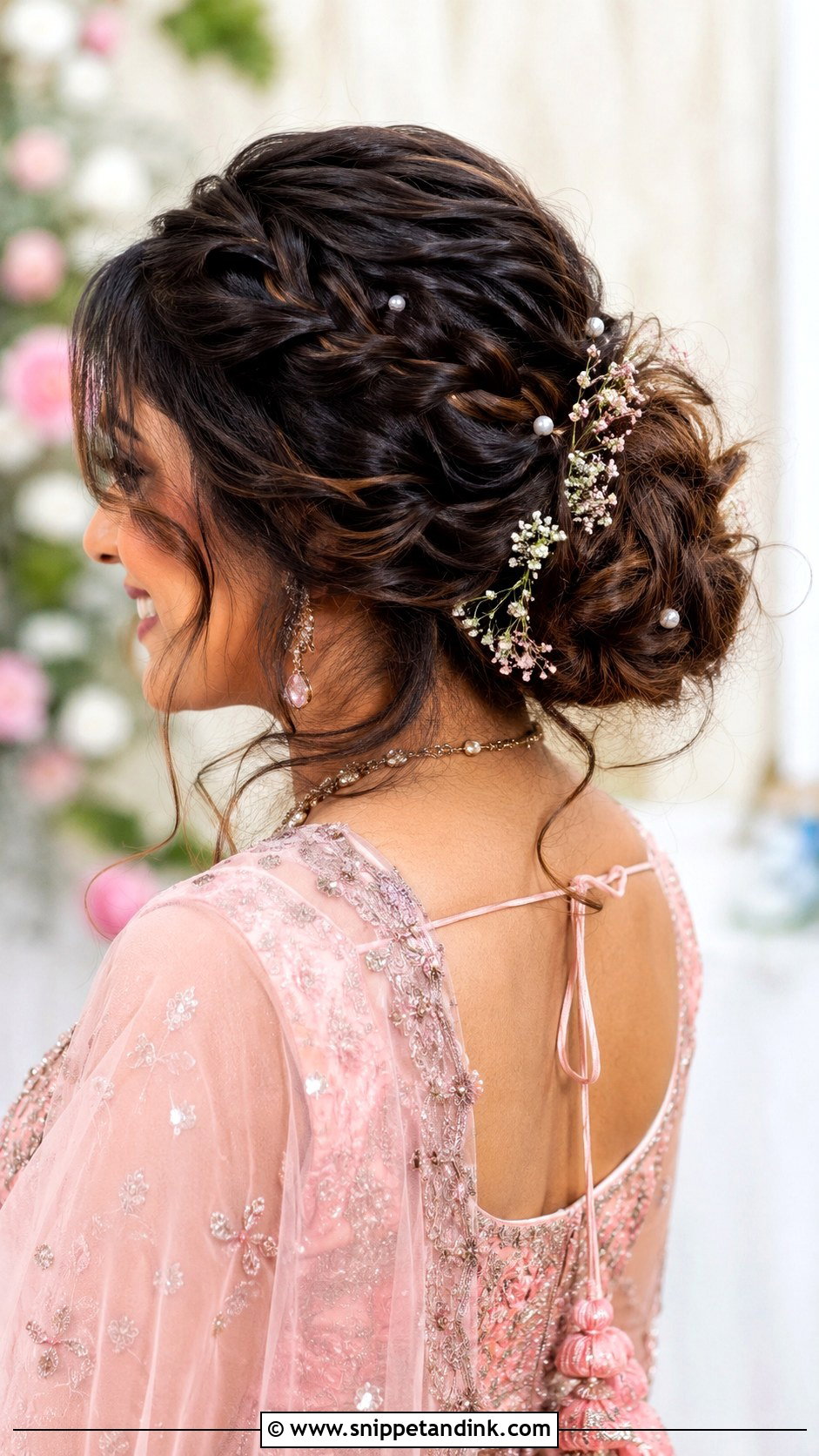
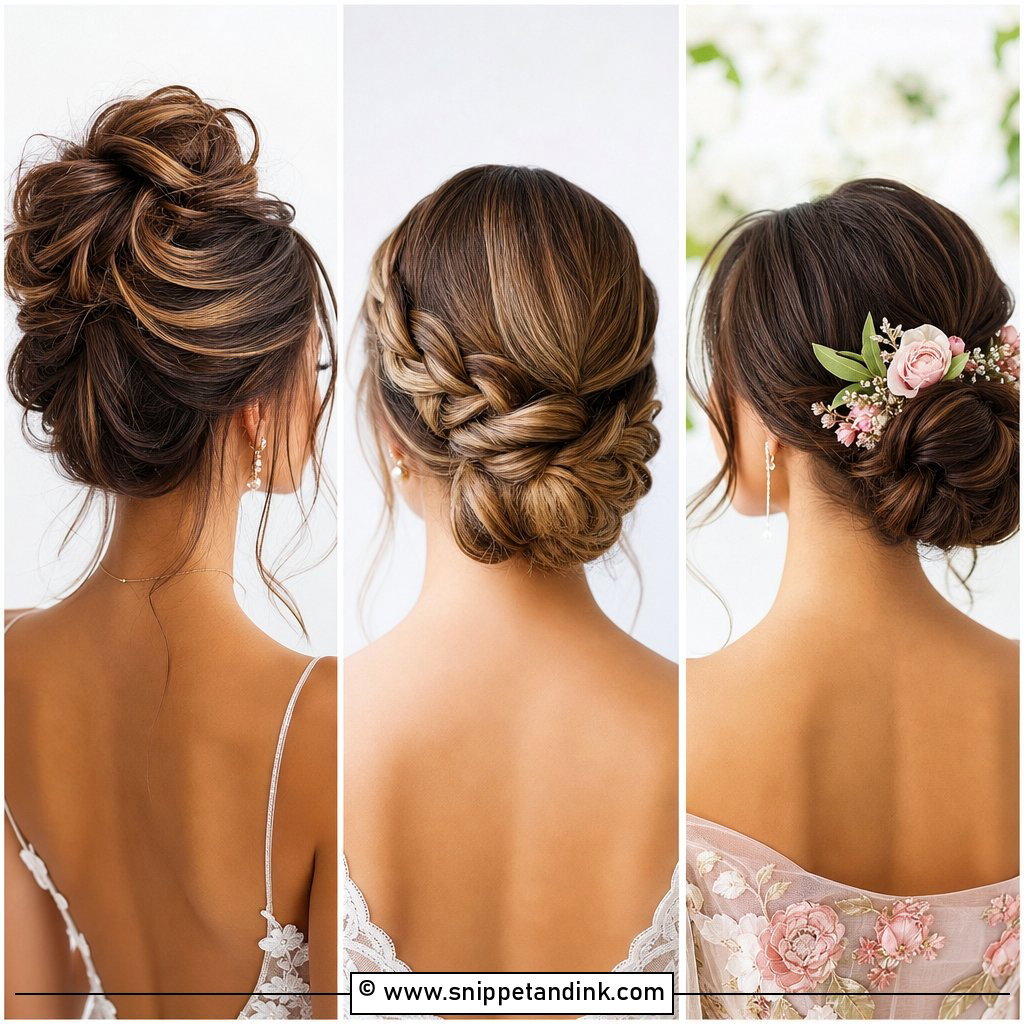
Want something that feels modern but still traditional? Braid several sections, then twist and pin the braids into a relaxed bun. Because the hair is braided first, the bun holds better than a loose messy bun normally would, which is why I like it for a sangeet or reception with dancing. Pearls, small flowers or sparkling pins can go between the braids. It’s not for anyone who wants a crisp, polished finish.
4. Fishtail Braid With Flowers
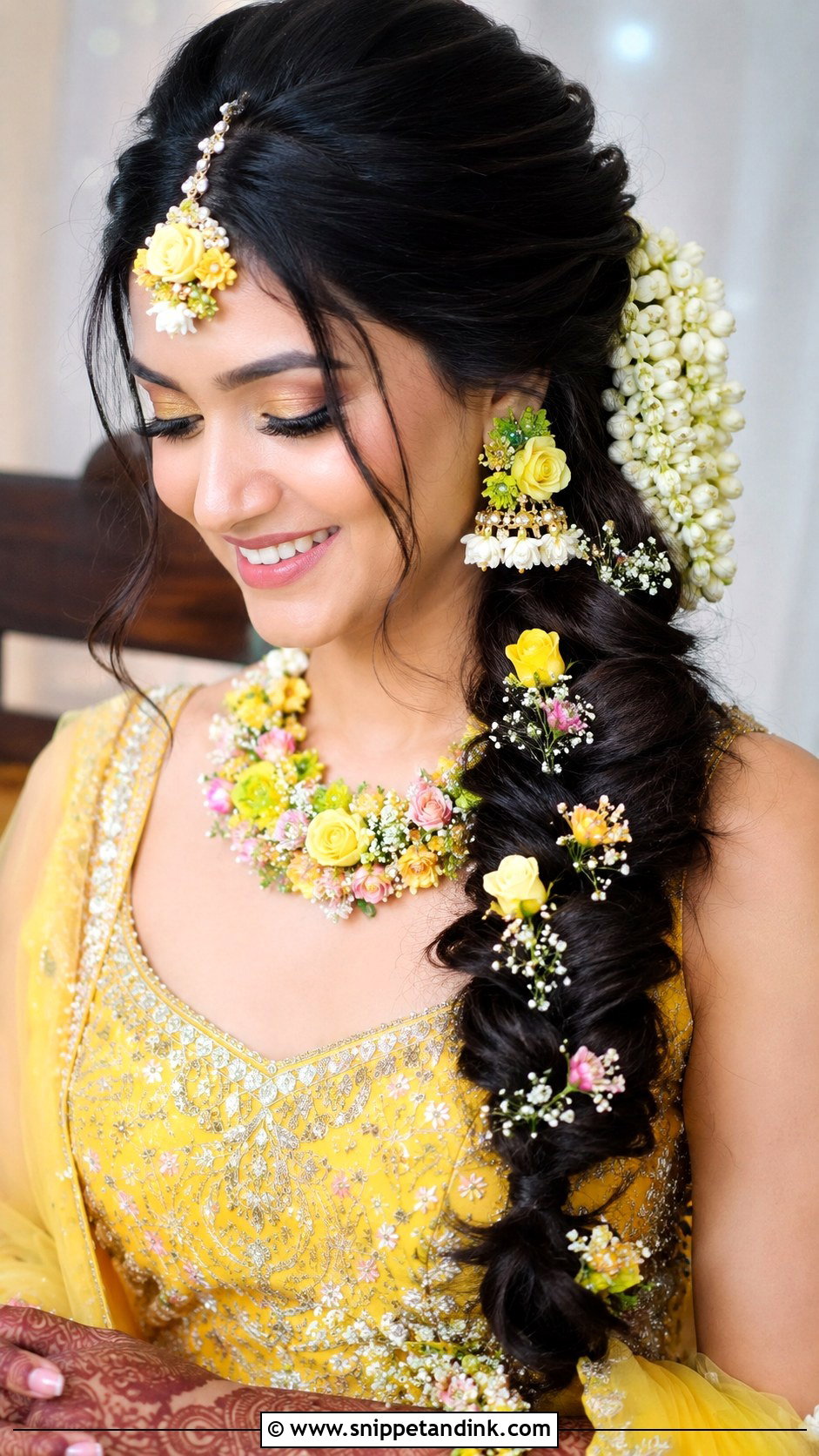
The fishtail adds texture without much effort. Once it’s plaited, I loosen the outer strands gently for a fuller, softer shape, then add tiny flowers, a short gajra or a few jeweled pins. It drapes over the shoulder with a lehenga or saree and suits a mehendi or sangeet. Long, thick hair shows the weave best. On thinner hair the pattern gets lost, so I’d go for a three-strand braid pulled wide instead.
5. Open Hair With Soft Curls
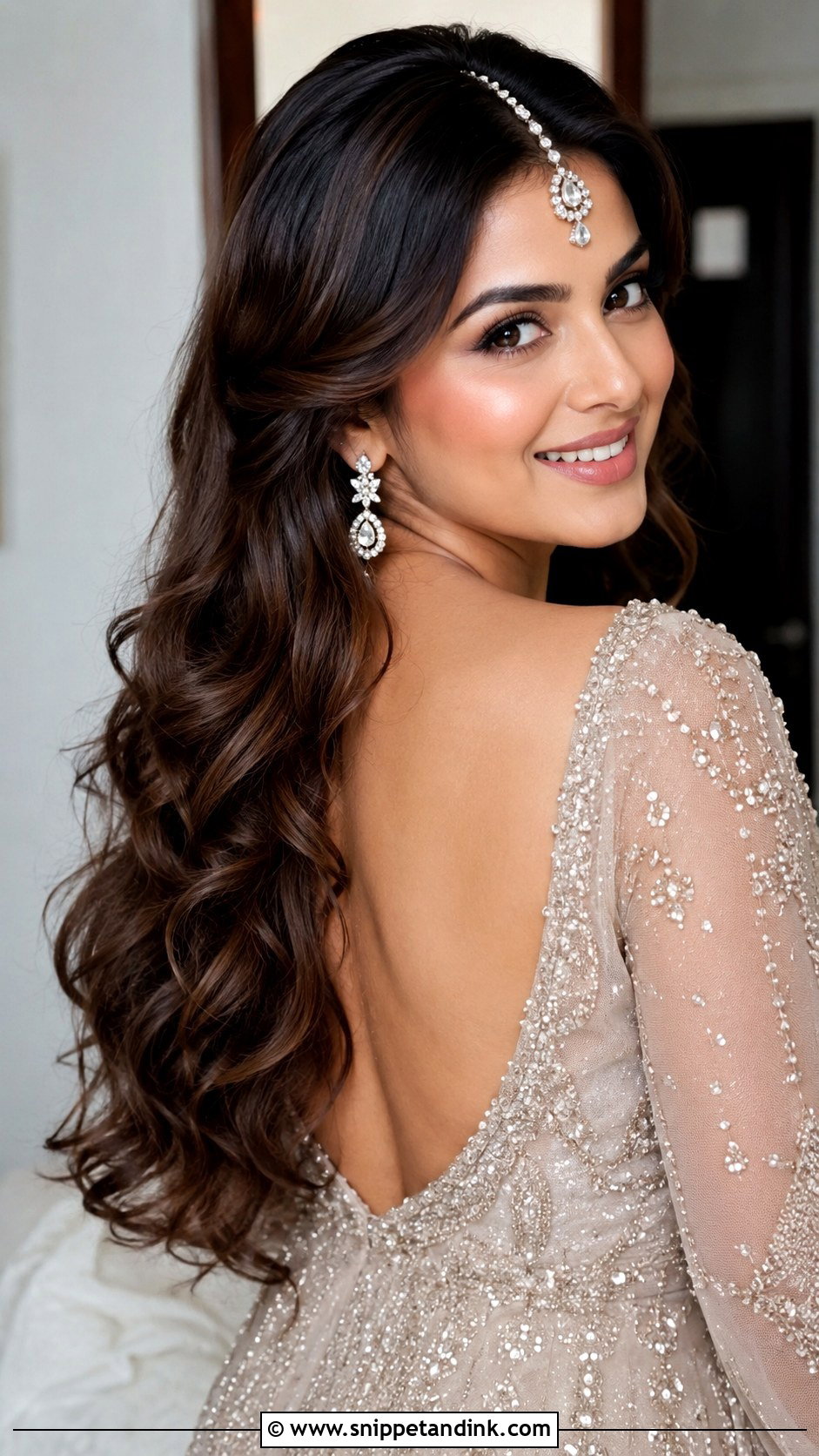
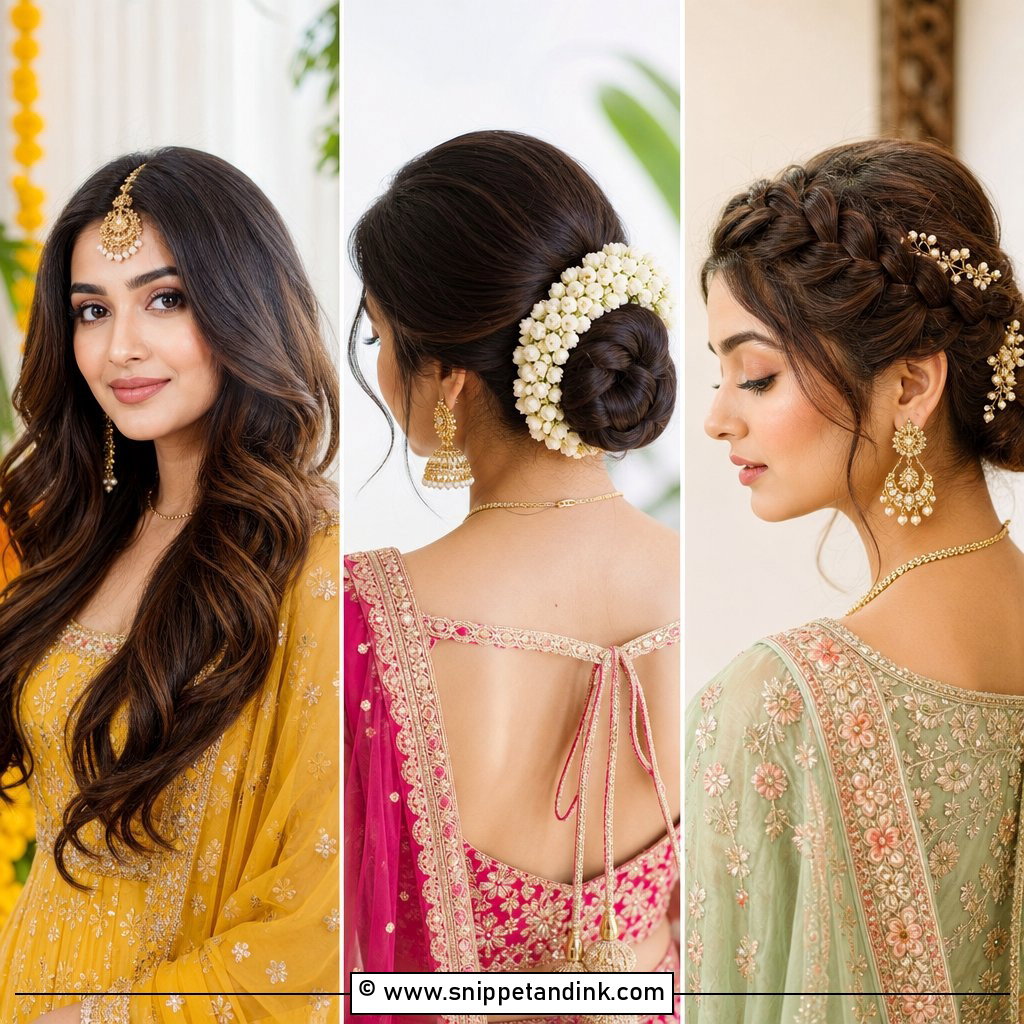
Leaving the hair down in soft curls gives a Hollywood-meets-desi feel for the reception. Curl the full length into loose waves and add a maang tikka or a jeweled headband. A tikka on open hair needs an anchor, so I make a tiny hidden pin-curl at the crown and hook the tikka into it. The curls frame the face and leave room for statement earrings. Heavy, straight hair will drop the curl within hours without a good setting spray.
6. High Bun With Maang Tikka
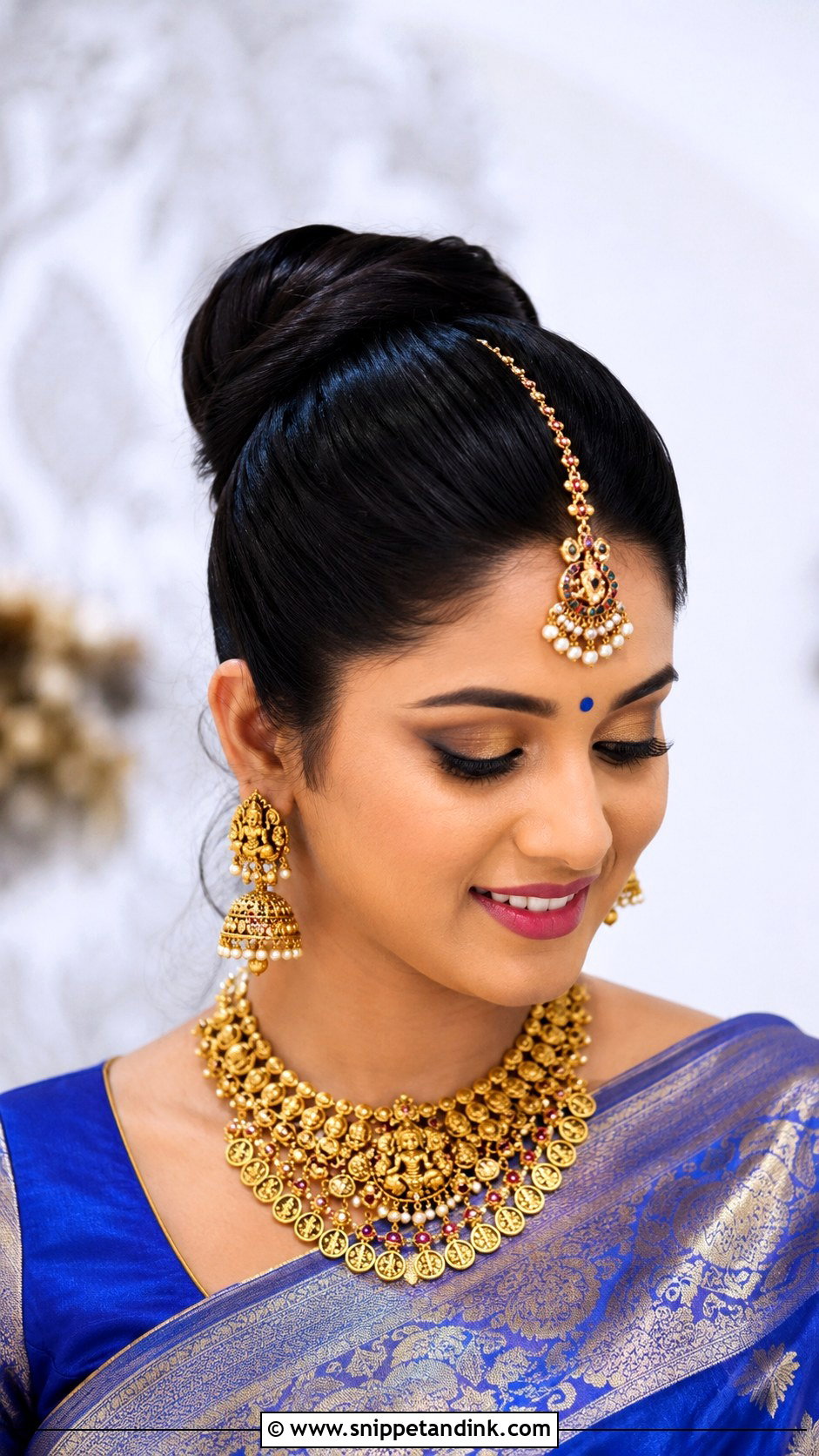
A high bun gives a long line from neck to crown and puts a maang tikka and earrings front and centre. Sweep the hair up into a sleek bun on the crown, keep it polished or add a little volume. It’s a smart choice with a heavy neckpiece, since nothing covers the neck and shoulders. One catch I always mention: a high bun gets in the way of a dupatta worn on the head. If you’re covering your head for the ceremony, I’d save this for the reception.
7. Side Swept Curls With Hair Accessories
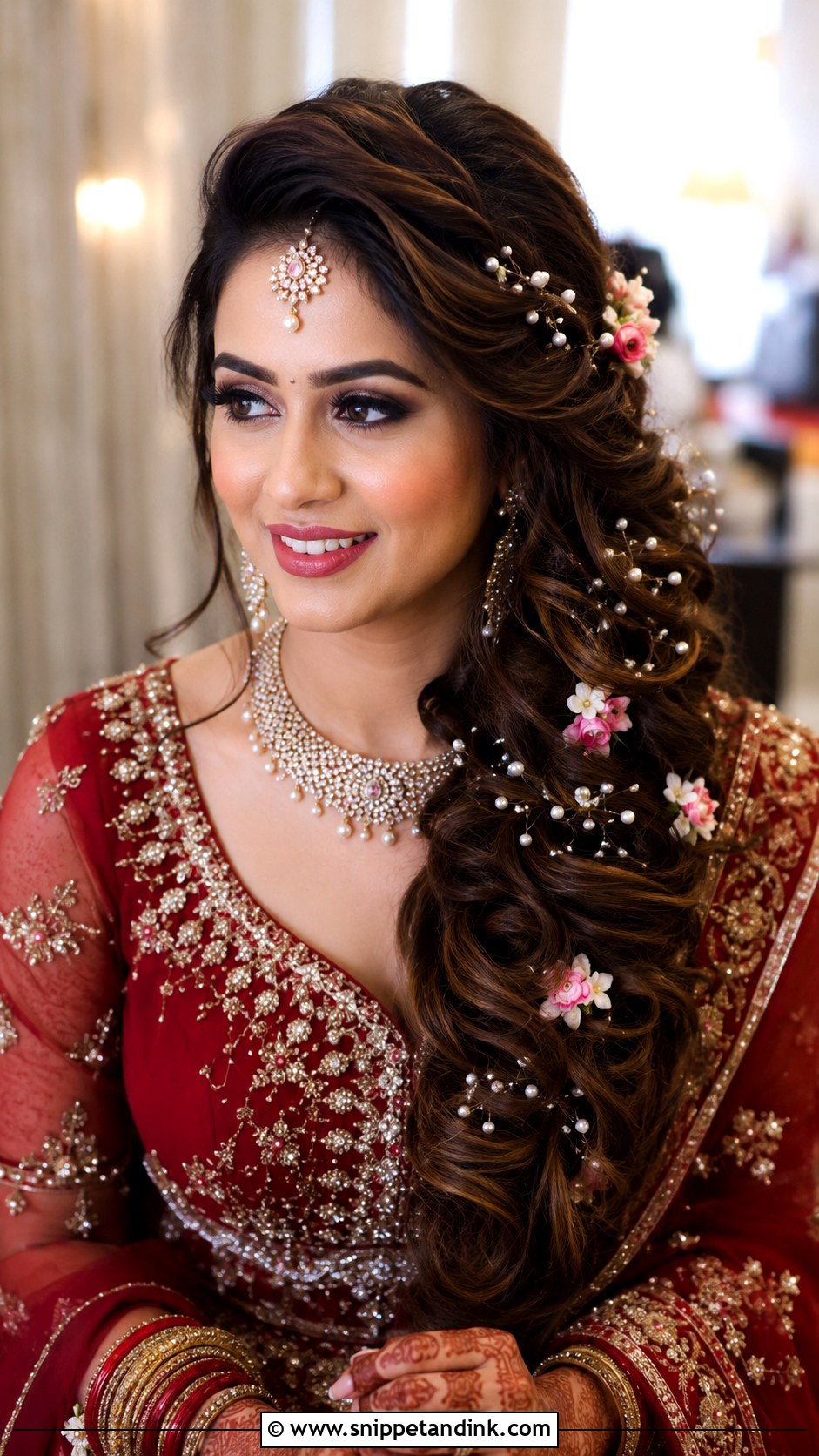
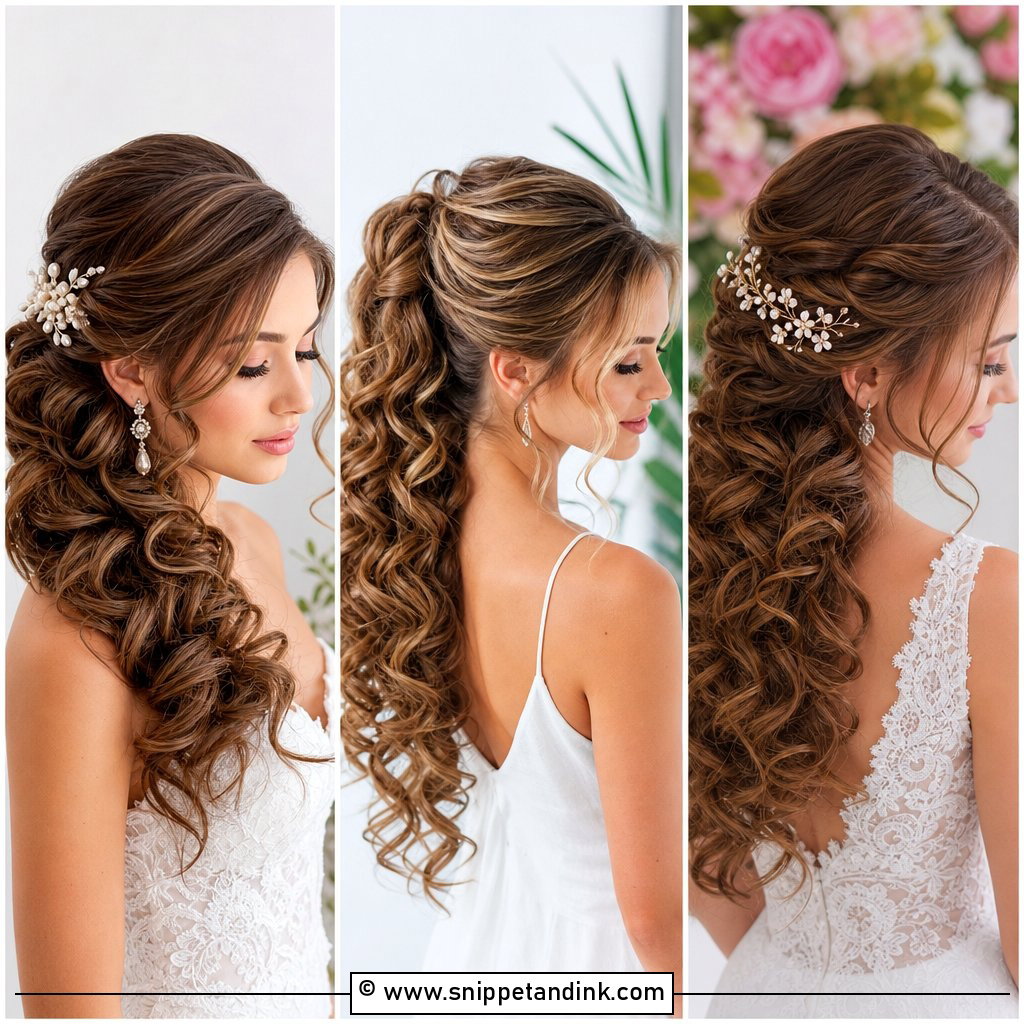
Curls gathered over one shoulder create a flattering asymmetry and leave the jewelry on the other side on view. Pearl pins, small flowers or clips decorate the cascade. The secret is in the back: I pin a line of crossed grips behind the ear on the bare side before draping the curls, otherwise the hair slowly slides back. It’s a good fit for receptions and sangeet nights, with movement and softness but no full updo.
8. Braided Crown With Flowers
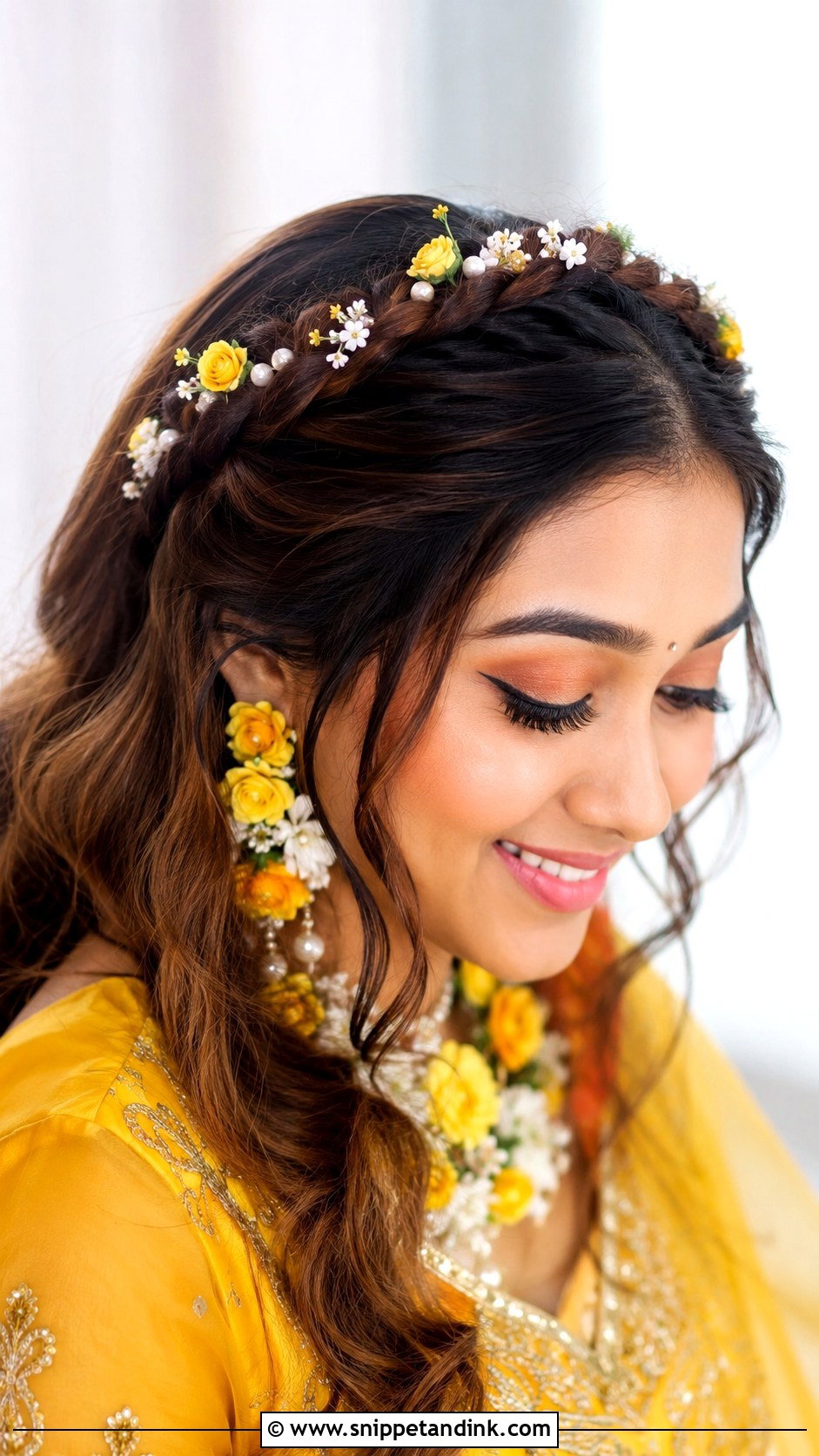
Braids along the hairline wrapped into a crown give a halo shape, with small flowers or pearls tucked in. It’s a light, comfortable option for mehendi and haldi, and keeps hair off the face on a warm day. For haldi I’d skip fresh white flowers, which show turmeric stains immediately. Marigolds or other yellow blooms are better. It’s practical and very pretty for outdoor daytime functions.
9. Sleek Low Ponytail
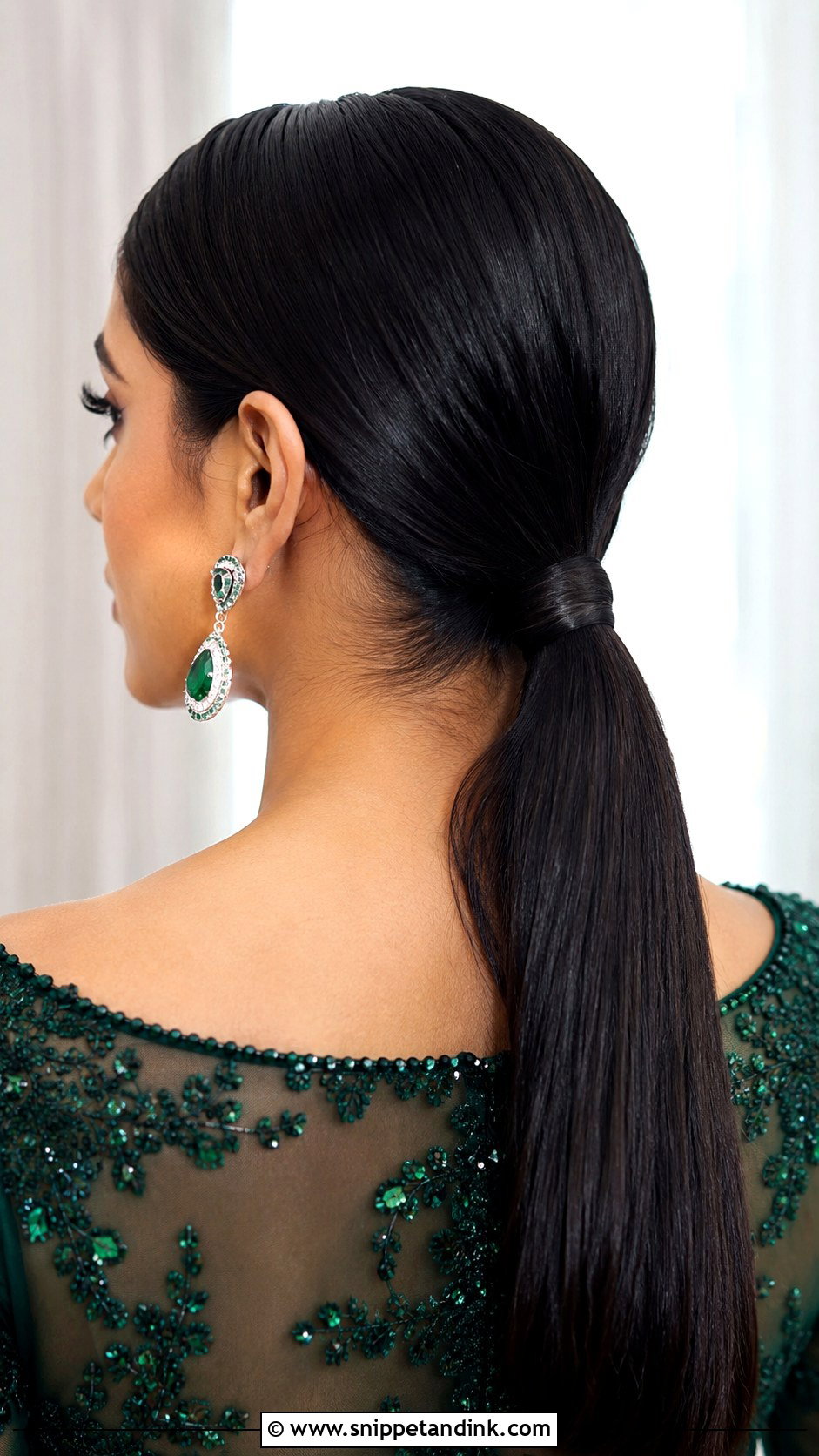
Modern minimalism brides often land here. The hair is smoothed back into a polished ponytail low at the neck, with a strand wrapped around the base to hide the elastic. It only looks expensive if the surface is flawless, so it needs a smoothing blow-dry first and a bit of gel along the hairline. A subtle accessory or nothing at all. Cocktail receptions suit it, with statement jewelry and a bold lip.
10. Half Up Half Down With Curls
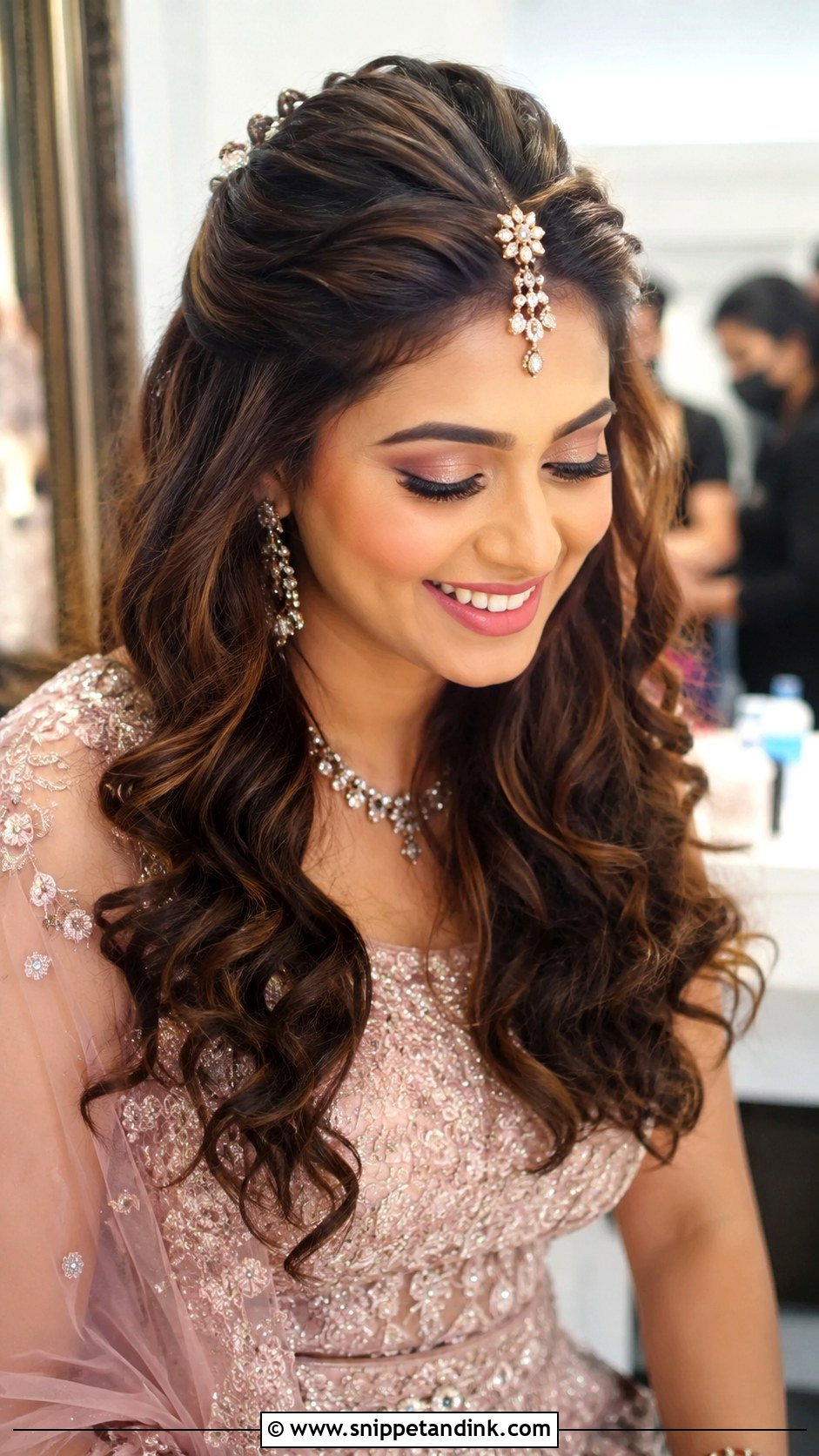
Torn between up and open? Pull the top section back and leave the rest in curls. It keeps hair off the face and still shows your length. A jeweled clip, a few flowers or a maang tikka at the parting decorate it. I usually secure the top section as a small twist rather than a clip on its own, since a twist holds the weight of an accessory better. Sangeet and reception events suit it.
11. Dutch Braid Bun
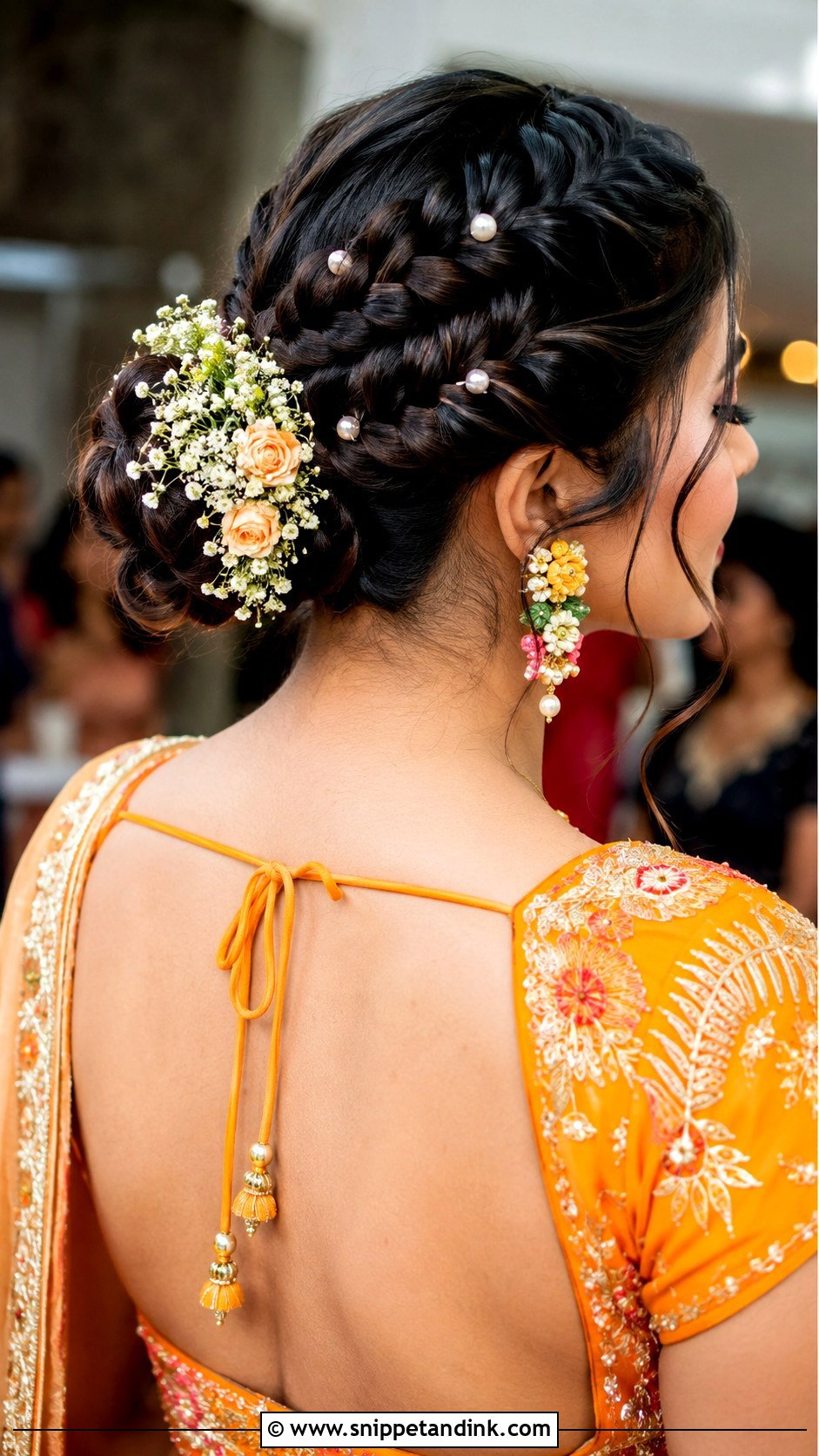
Raised Dutch braids flowing into a neat bun give texture from every angle and keep the hair secure during lively functions. Pearls, tiny flowers or sparkling pins along the braids add detail. I like it for mehendi and haldi, where you’re moving around a lot. If you have short layers, they’ll poke out of the braid; I pin them as I go or smooth them with a little gel.
12. Floral Bun With Pearls
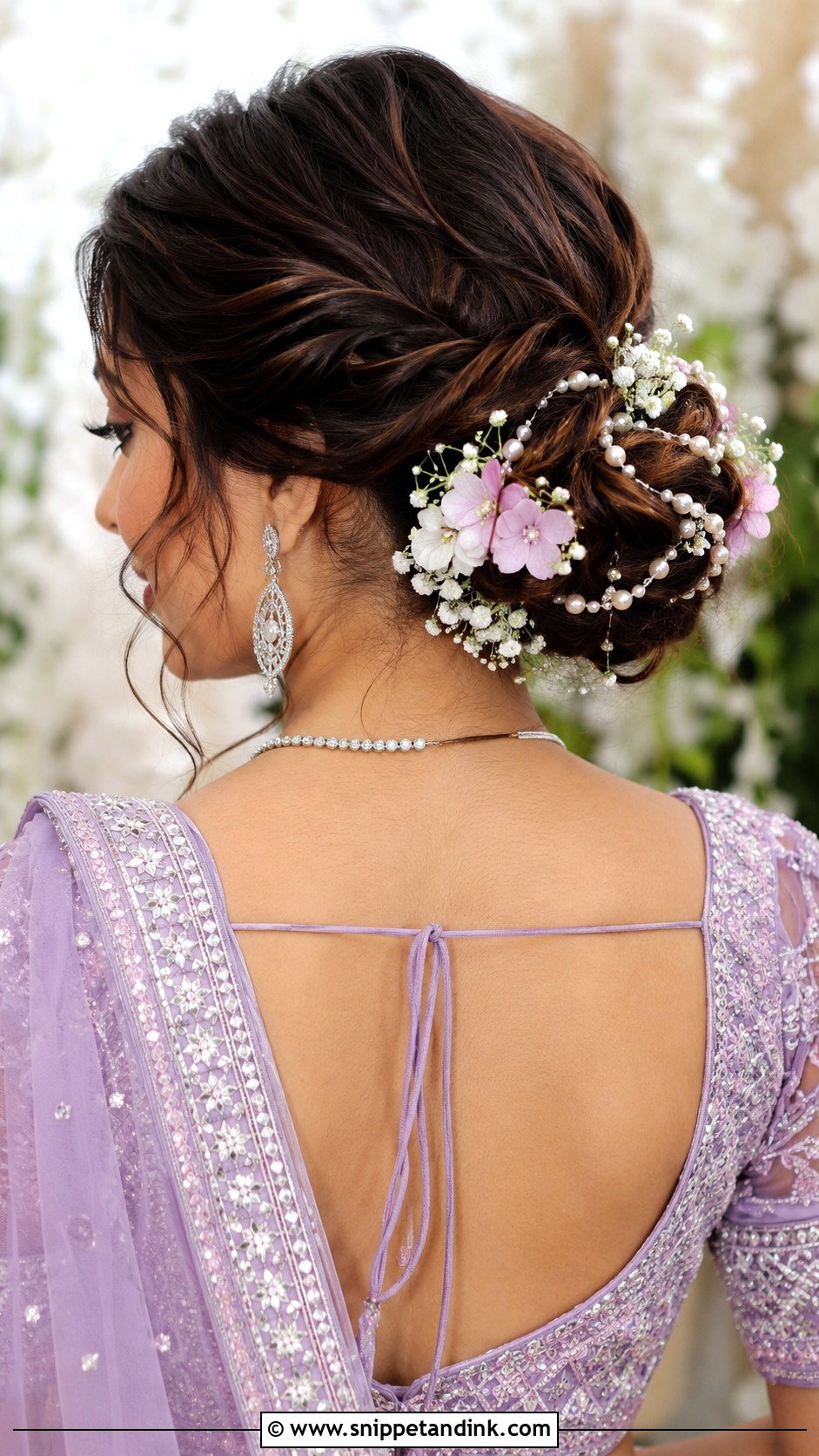
Pearl strands and fresh blooms woven through a textured bun give a modern take on the flower bun. It suits pastel lehengas and diamond jewelry, and the pearls catch light softly. I wire the pearl strands into the bun’s base and drape them before the flowers go in, otherwise the strands sag as the day goes on. It’s a good choice for the reception or a daytime ceremony.
13. Bubble Braid
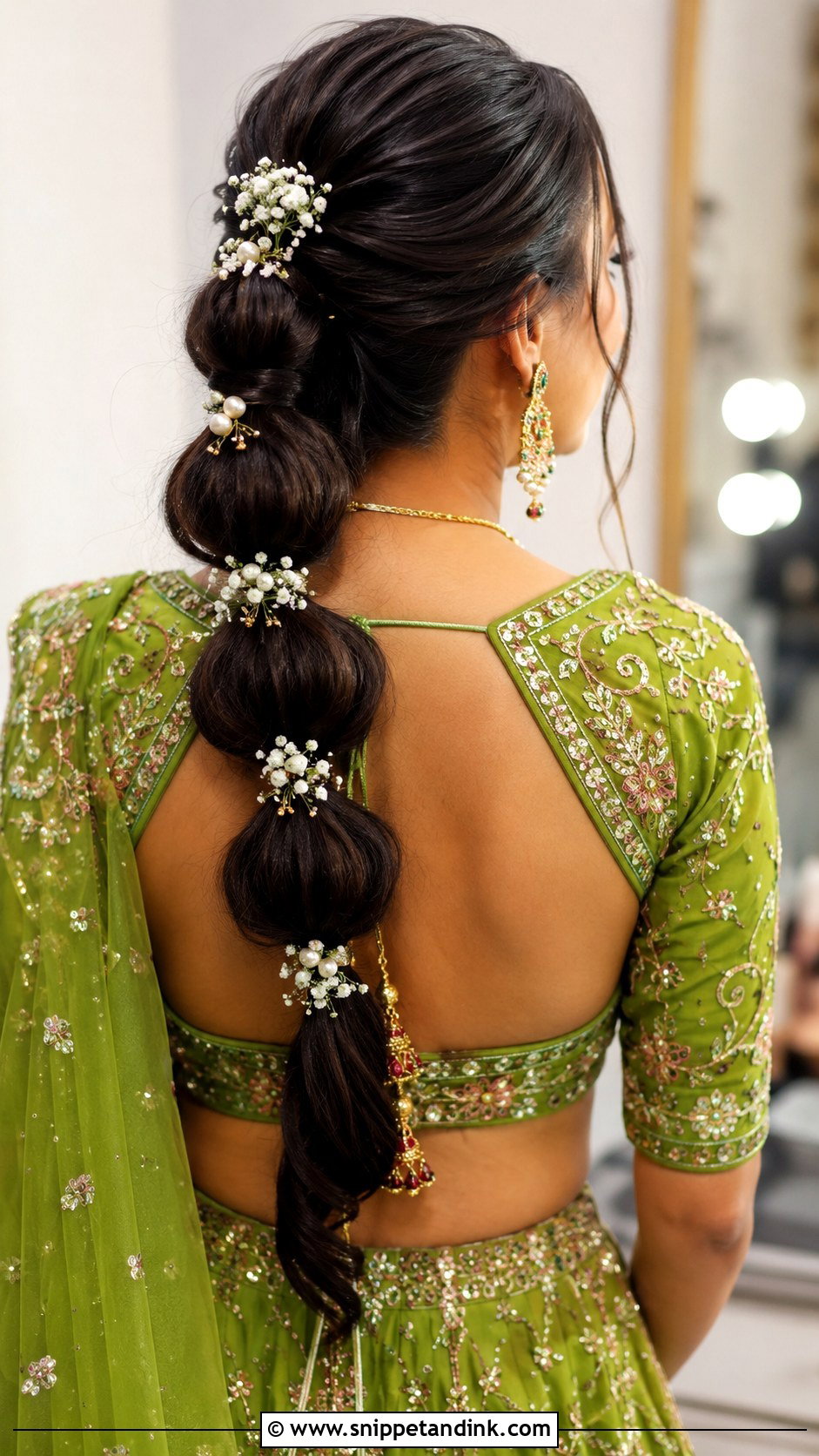
A bubble braid is the playful one. Section the ponytail with clear elastics and gently puff out each segment. Small flowers or pearls between the bubbles make it bridal. I’d keep it for a mehendi or pre-wedding function rather than the main ceremony, since it reads young and casual. Thinner hair will need clip-in extensions to fill the bubbles.
14. Vintage Hollywood Waves
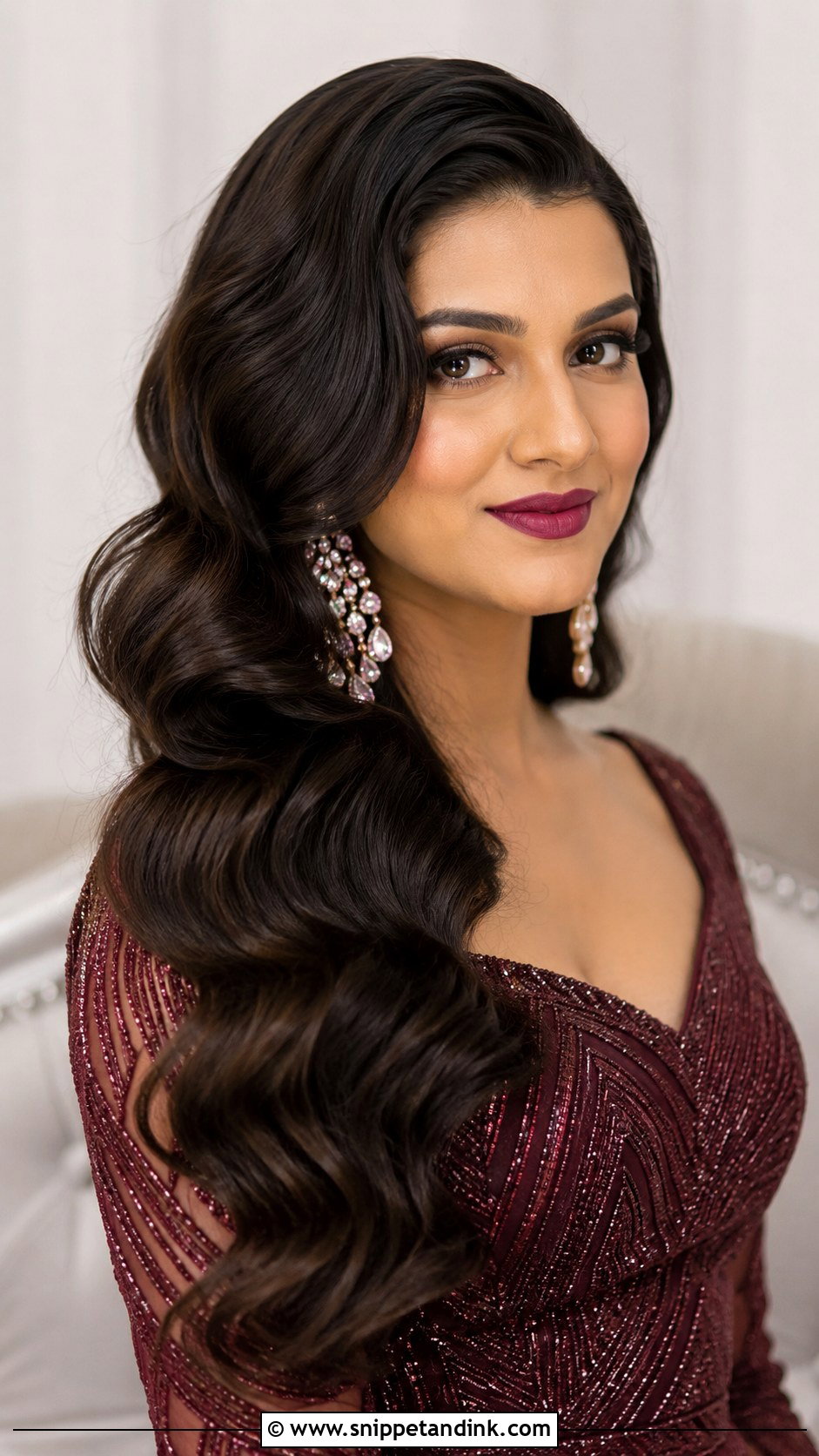
Hollywood waves are deep, structured and smooth along one side. They need a disciplined set: every curl goes in the same direction, cools completely, and is then brushed into one connected wave. Statement earrings and a bold lip suit them for receptions. Event lighting picks up the gloss. Wear them fully open or swept over one shoulder. Hot, humid venues are their weakness, so they belong in an air-conditioned hall.
15. Braided Ponytail
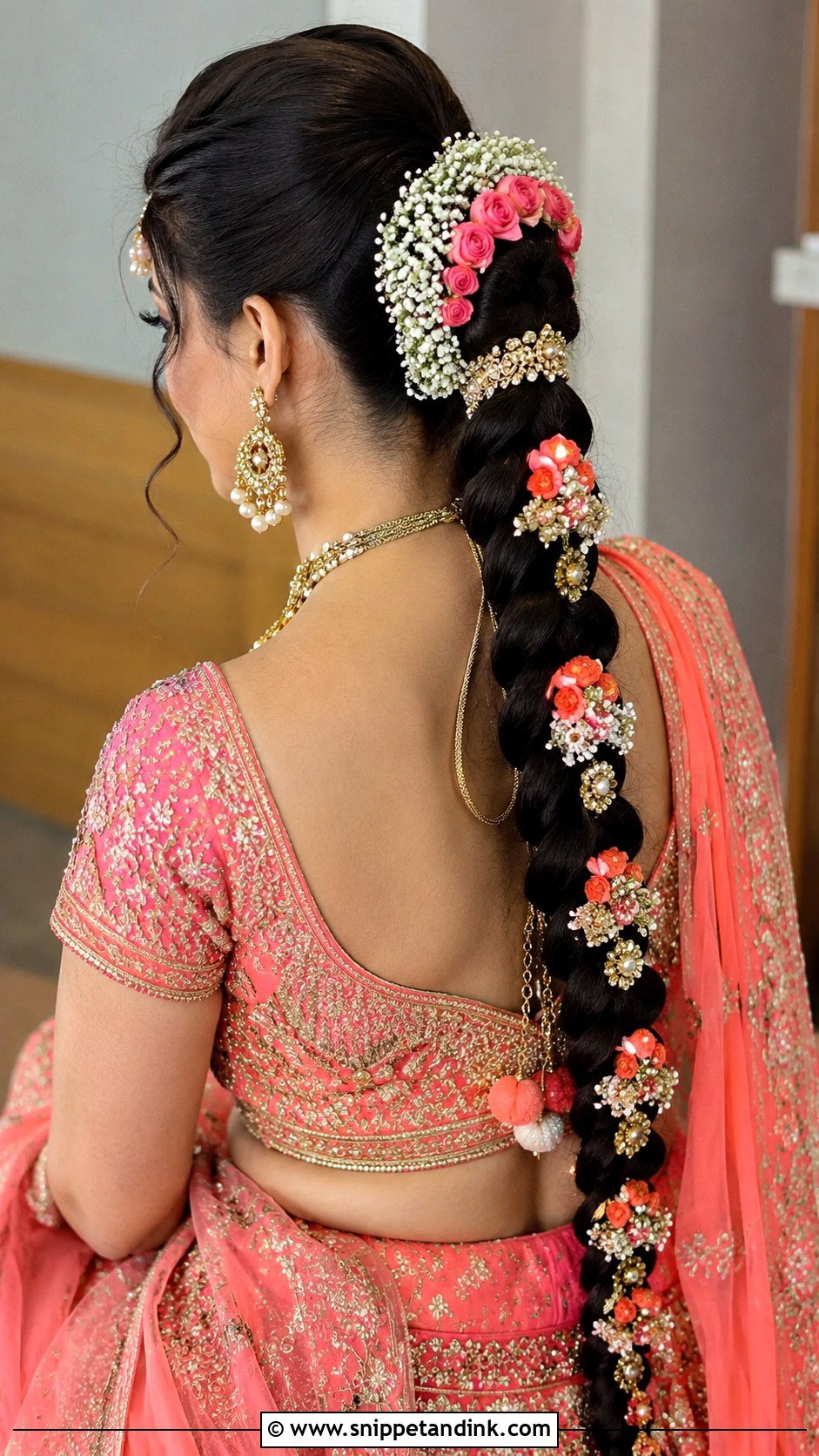
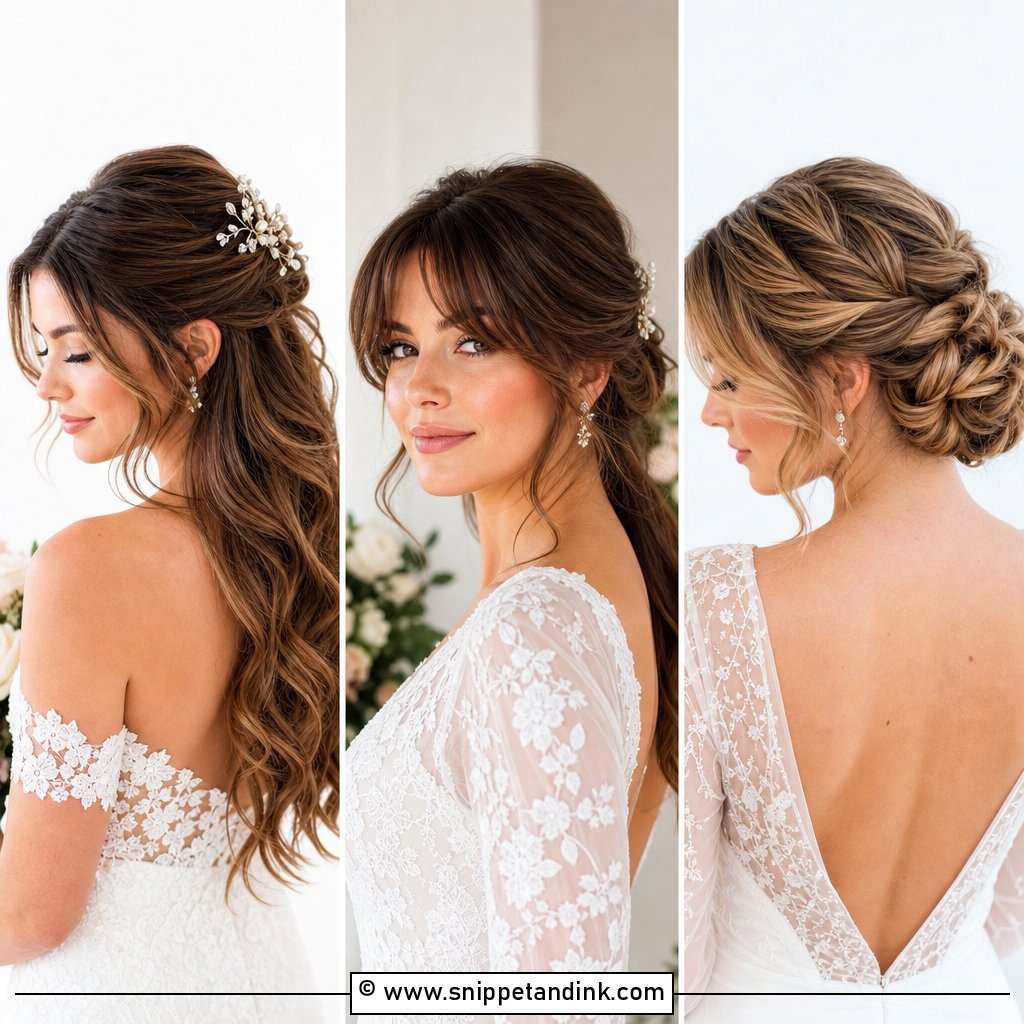
A braided ponytail is one of the most practical looks here for long celebrations. Gather the hair high or low, then braid the length. Flowers, a gajra or jeweled accessories bring the bridal finish. It works for sangeet and mehendi functions where you’re dancing. Long, thick hair suits it best. A high ponytail with a heavy braid can pull on the scalp after a few hours, so I build it on two elastics to spread the weight.
16. Twisted Updo With Jewels
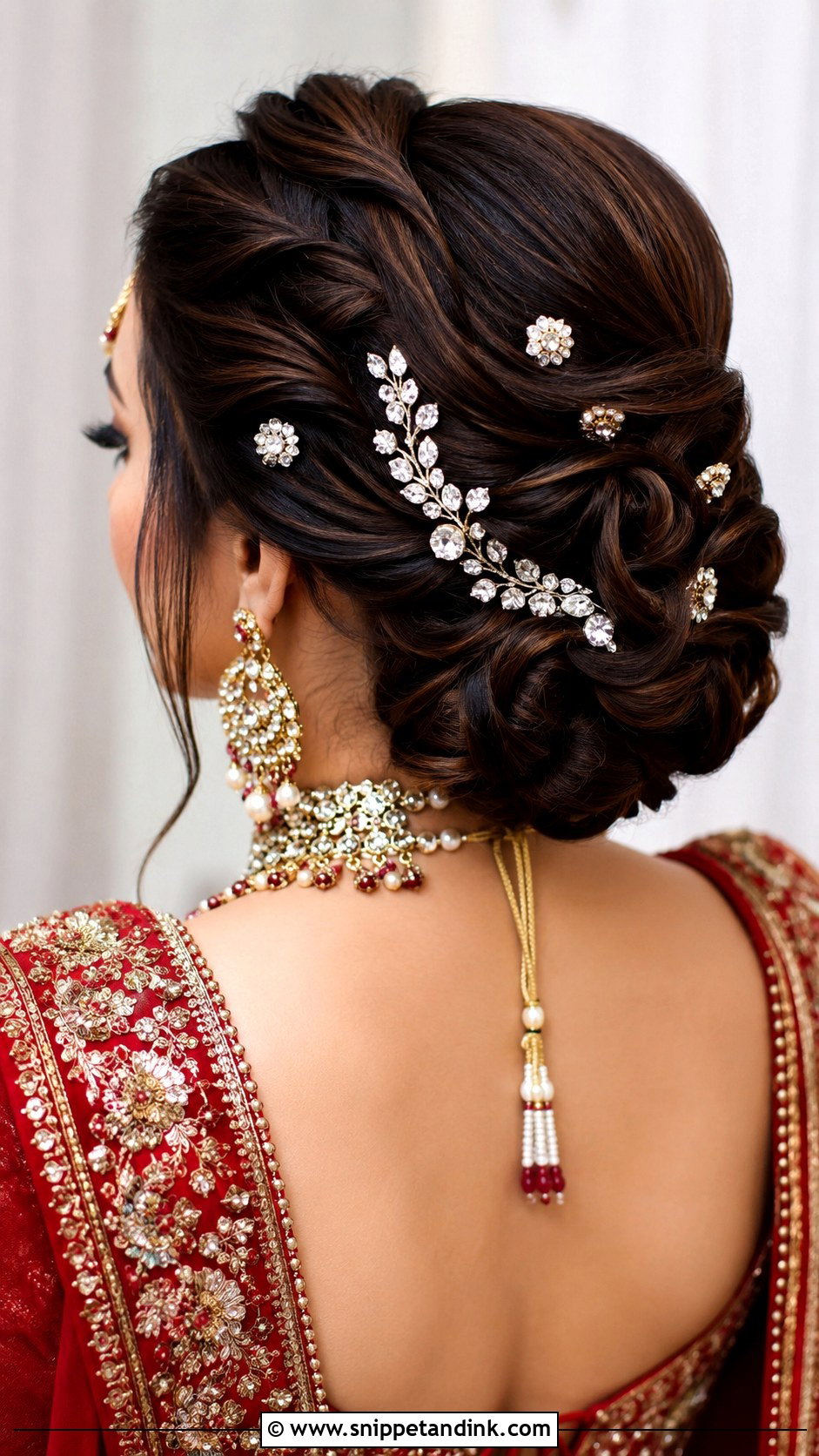
Twisted sections pinned into a sculpted shape at the back give a regal finish and keep the neckline clear for a statement necklace. Sparkling pins, pearls or a hair vine add the jewels. This is the style I’d build for heavy traditional jewelry, since every ornament can be pinned into a twist rather than hanging off loose hair. It works for the ceremony and the reception alike.
17. Loose Waves With Maang Tikka
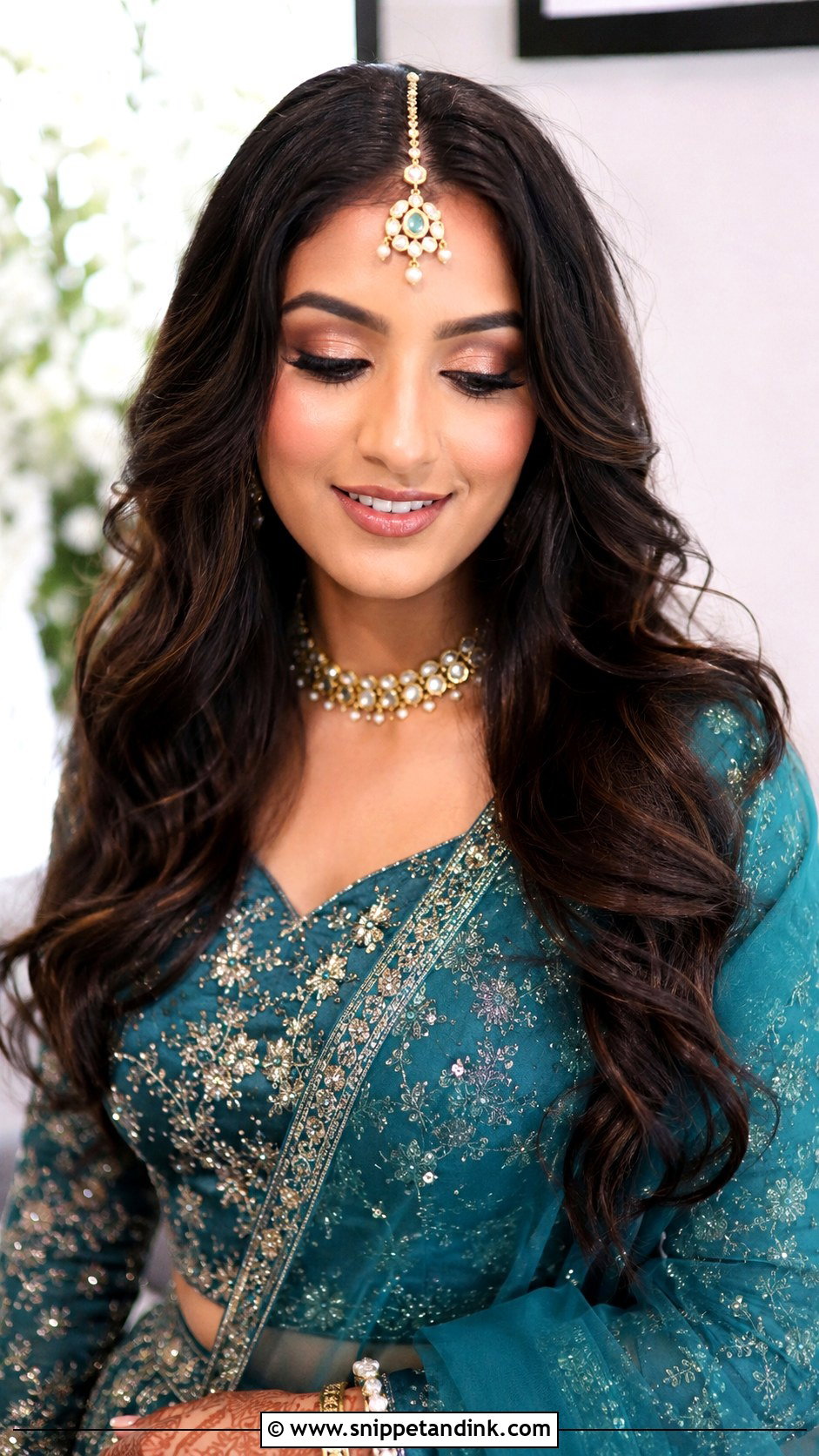
Relaxed waves with a maang tikka centered along your part give a soft open look with a traditional detail. The waves frame your face and add gentle movement. It suits receptions and sangeet events. The part has to be dead straight for the tikka to hang right, so I set it before curling and don’t touch it after.
18. Side Braid With Flowers
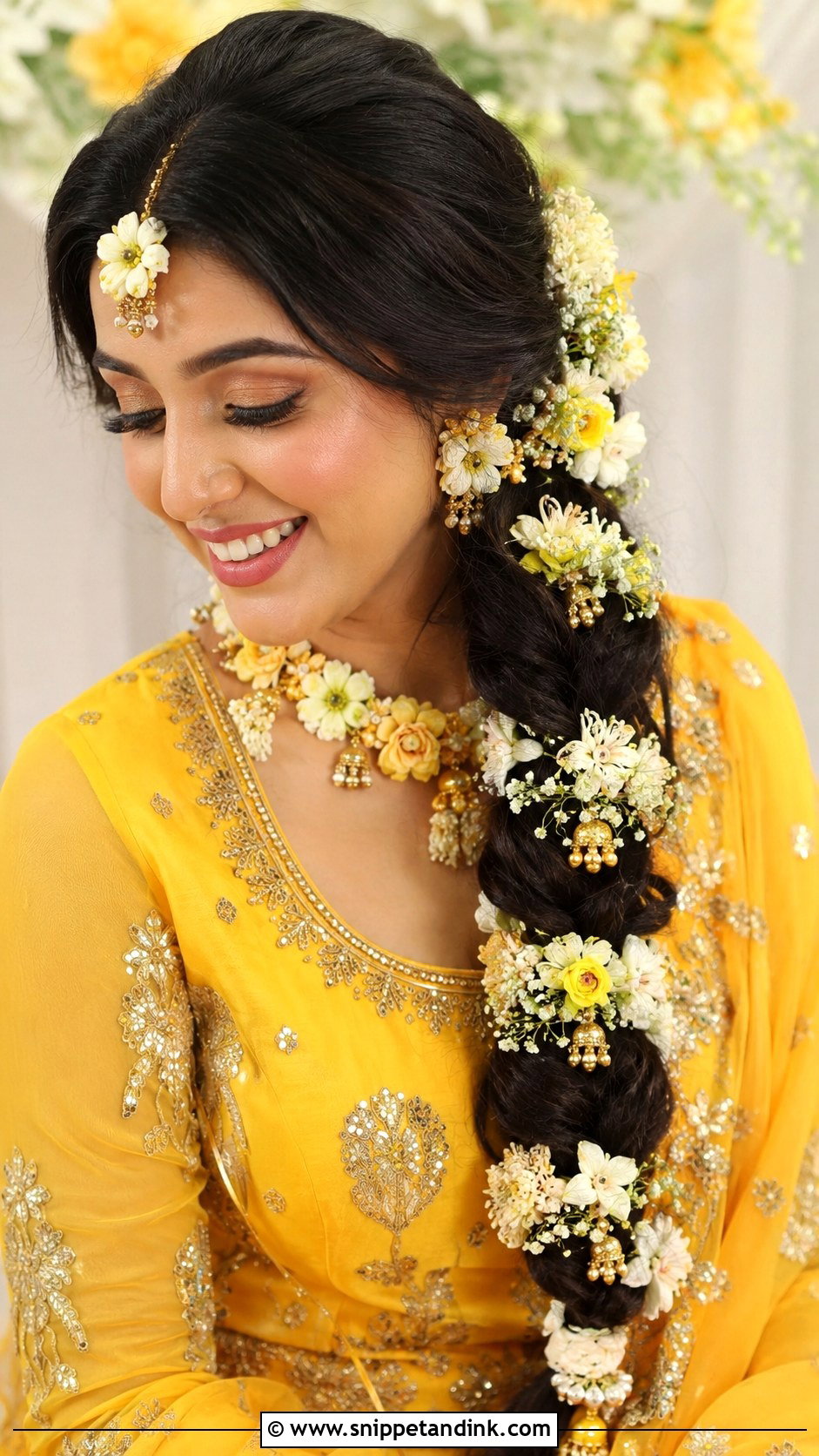
Braided to one side and draped over the shoulder, this braid is generously dressed with fresh flowers, gajra or gold pieces, and the side placement highlights earrings and the neckline. It suits mehendi, haldi and sangeet functions and works best on long, thick hair. Flowers sewn onto a separate base and then fixed to the braid hold far better than individual stems pushed in. For a traditional look that also smells wonderful, the flower-adorned side braid is hard to beat.
19. Sleek Center Part Bun
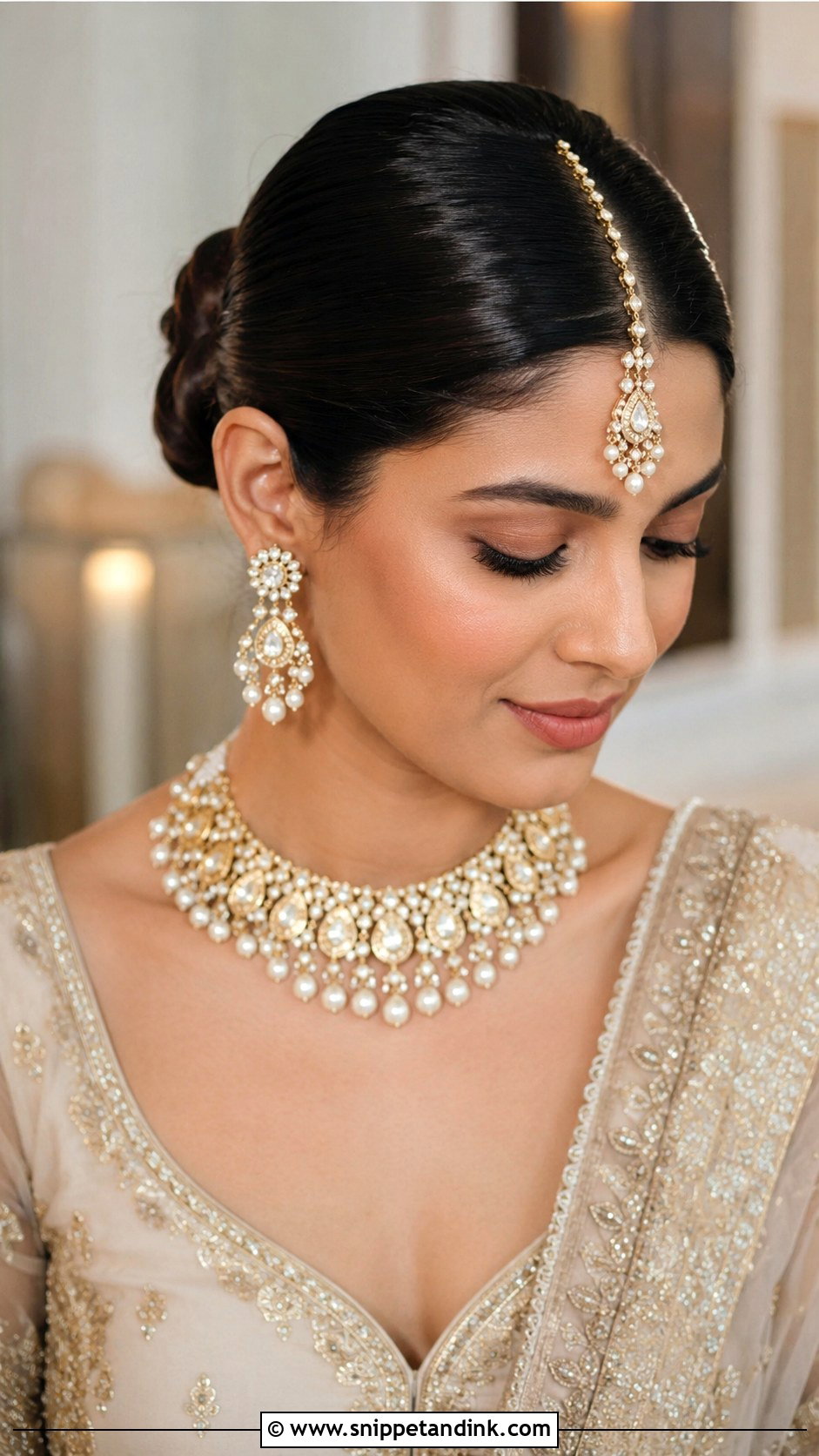
A precise centre part and a smooth low bun make the most minimal look here. It shows off a maang tikka and statement earrings and pairs with modern or traditional outfits. Precision is everything. I part the hair with the tail of a comb from the nose bridge up, then smooth each side back with a fine brush. It holds neatly through long celebrations, though it’s unforgiving of a crooked part or frizz at the temples.
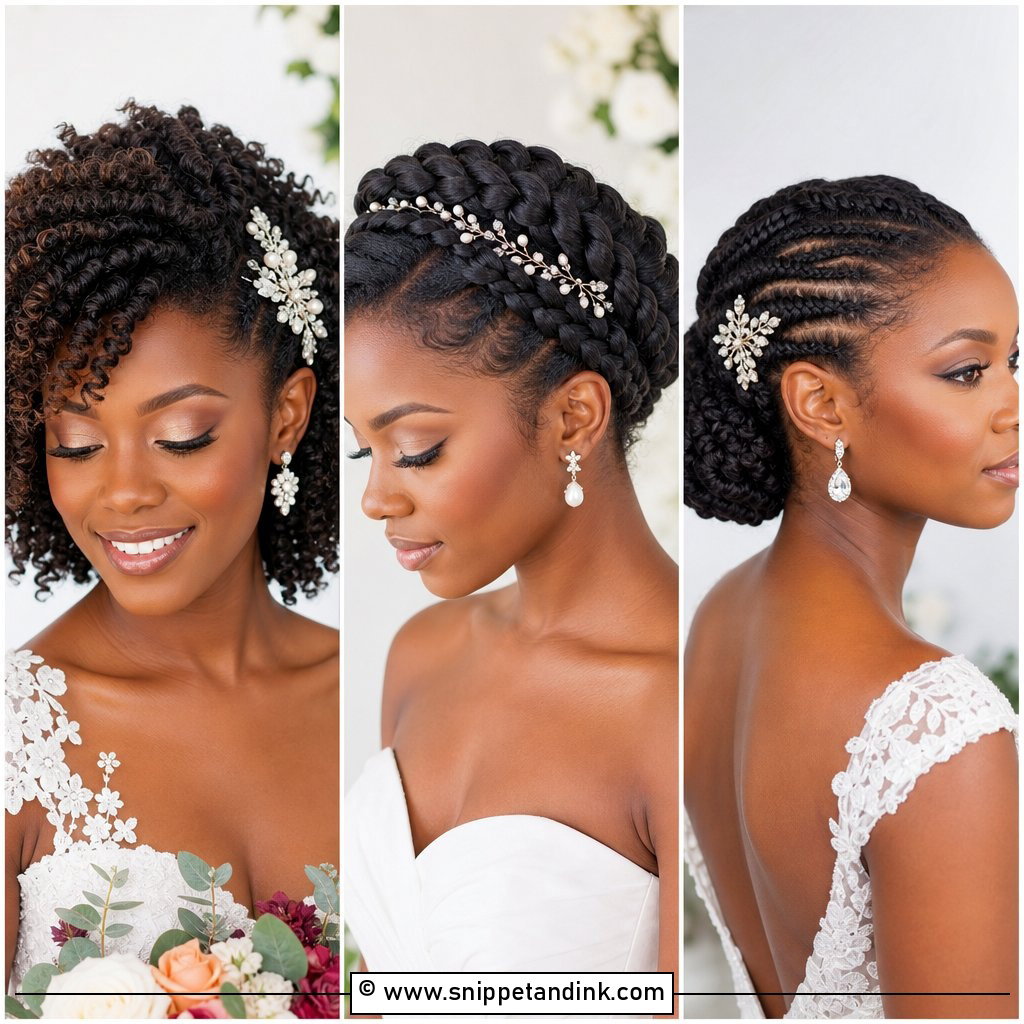
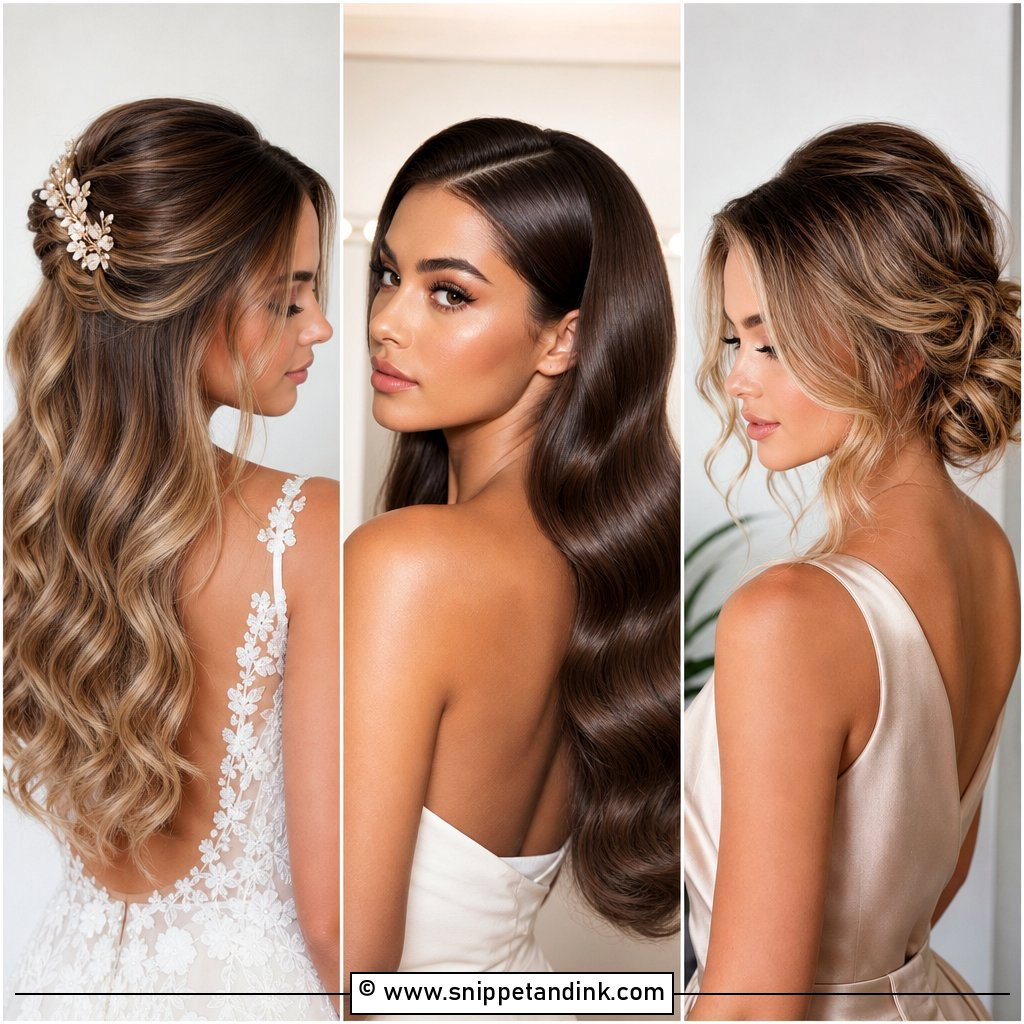
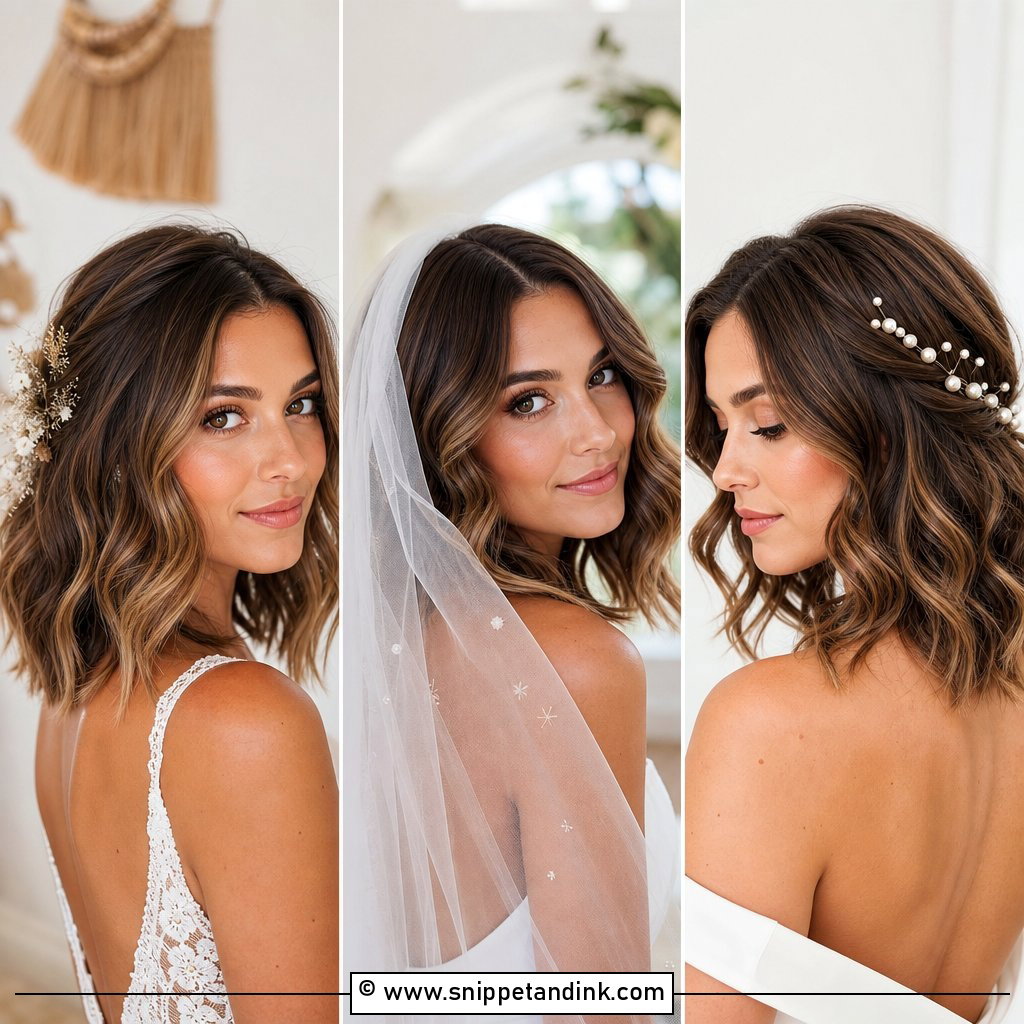
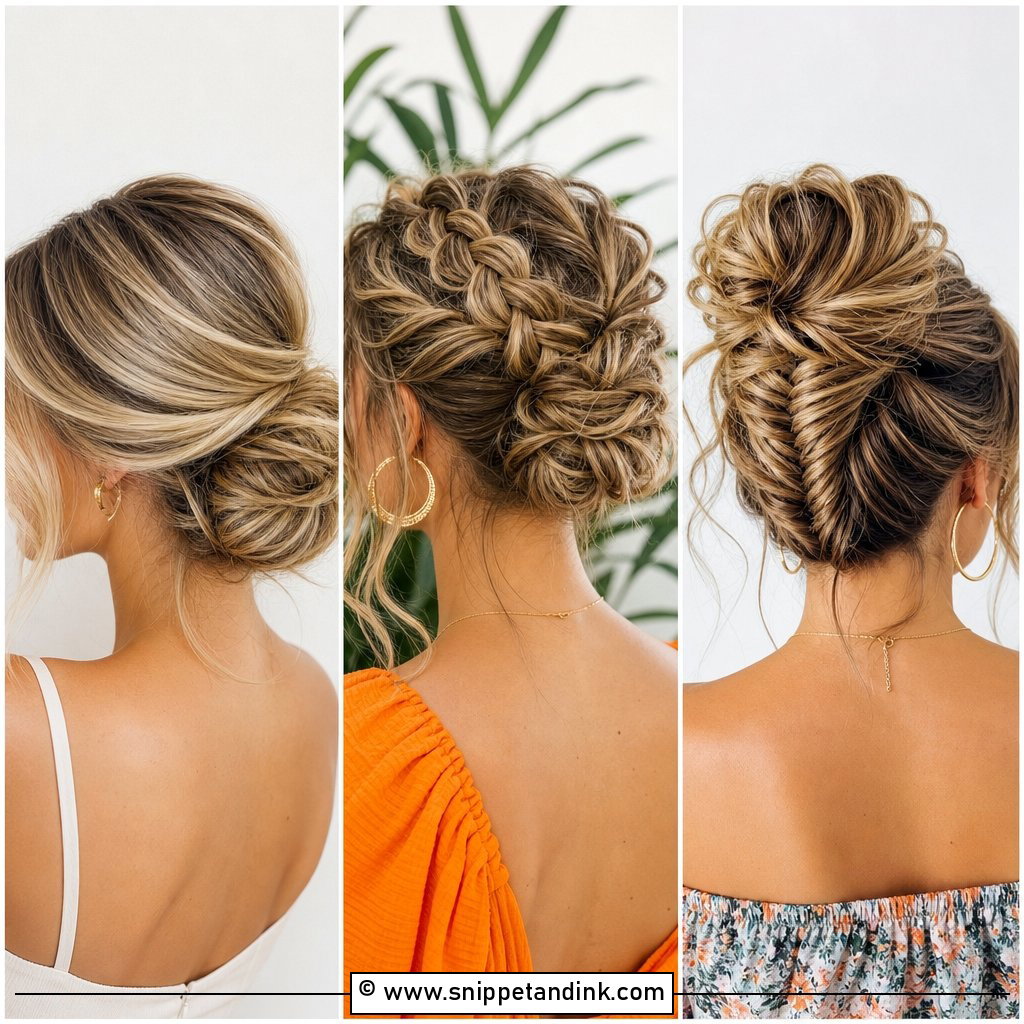
20. Braided Half Updo With Pearls
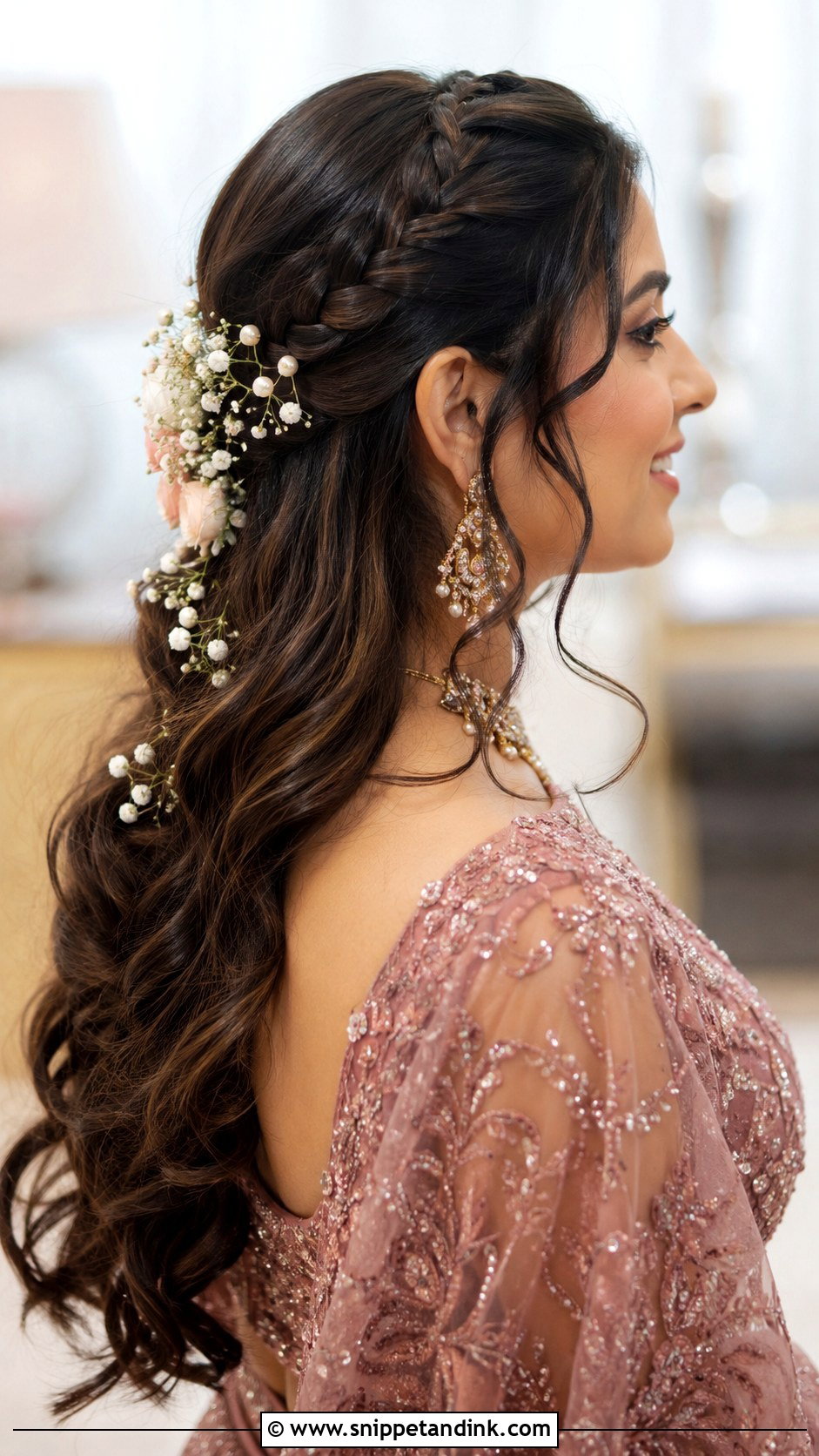
Braids on the top section, secured at the back, with the rest left in soft waves give detail without a full updo. Pearls and small flowers woven through the braids add sparkle. It suits receptions and sangeet events and keeps the hair off the face while showing your length. I’d braid the top before curling the rest so the braids stay neat.
Will It Hold Through the Varmala and the Pheras?
The ceremony is the real test of a bridal style, and I think through each moment when I build the main look.
The varmala
A heavy garland lifted over your head can snag on bun ornaments, chains or a tall tiara. I keep the ornaments flat to the head on the ceremony day, and I tell brides to dip the head slightly so the garland slides past.
The pheras
You’ll circle the fire with the dupatta tied to the groom’s scarf. Hairspray is flammable while it’s wet, so I finish spraying well before the ceremony starts and keep loose strands pinned back. Open hair and long trailing tendrils are not a good idea this close to a flame.
Hours of sitting
Mandap ceremonies can run long. A bun placed too high or pinned too tight starts to ache, so I test the main style at the trial for at least two hours before we agree on it.
Three Looks, Three Days, One Trial
Don’t pick one style for the whole wedding. Match each look to the function, the outfit and the jewelry: a gajra braid for the ceremony, a pearl bun for the reception, something loose for the mehendi. Bring the outfit photos and the jewelry itself to your trial, and do the trial early enough to change your mind. The right style is the one you forget you’re wearing after the first hour.
You'll Like These Ideas:



Leave a Reply