
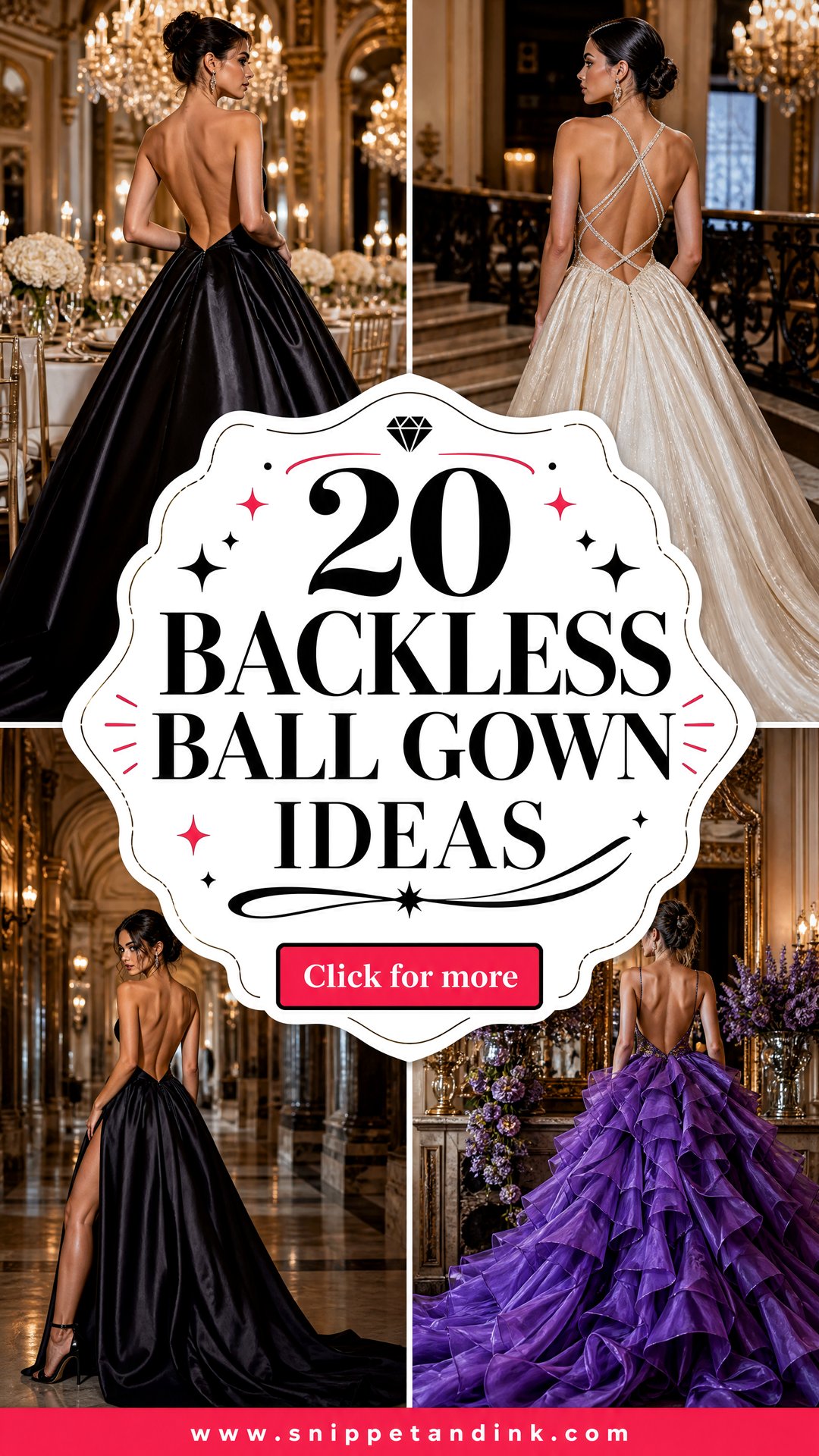
A backless ball gown asks two things of its construction at once: a skirt with real weight and a bodice with nothing behind it to hang from. When the two are balanced, you get that unexpected open-back detail people notice as you walk away. When they aren’t, you spend the evening hitching the front up. The gowns below cover satin, tulle, velvet, lace, sequins and corsetry, and each one is styled head to toe. For every look I’ve added what I’d check in the fitting room, because the security of an open back is decided there, not on the night.
How a Gown With No Back Stays Up
With a closed bodice, the back panel pulls the front against you. Take the back away and that job moves to hidden structure, so the first thing I do with any backless gown is turn it inside out. Three things tell me whether it will behave.
- A waist stay. This is a band of grosgrain ribbon sewn inside at the waist that hooks shut. It anchors the gown to your body, so the skirt’s weight hangs from your waist rather than from the bodice edge. A ball gown skirt can be heavy, and without a stay that weight slowly drags the neckline down.
- Boning that runs to the edges. Spiral steel or firm synthetic bones in the side seams and along the front keep the bodice from collapsing when you sit. Bones that stop short of the top edge are why some fronts fold forward.
- Cups or support sewn into the lining. You can’t wear a regular bra with an open back, so the gown has to provide the lift. A seamstress can add molded cups if they’re missing.
The lower the back is cut, the more these matter. A back that stops above the waist leaves room for a little fabric to hold things in place. One that drops to the top of the hips relies entirely on the stay and the fit at the sides, which is why those gowns need the closest tailoring and at least two fittings.
Double-sided fabric tape is useful along the side edges of a deep back, but treat it as insurance, not structure. Damp skin weakens it, so apply it to clean, dry, lotion-free skin.
1. Black Satin Backless Ball Gown
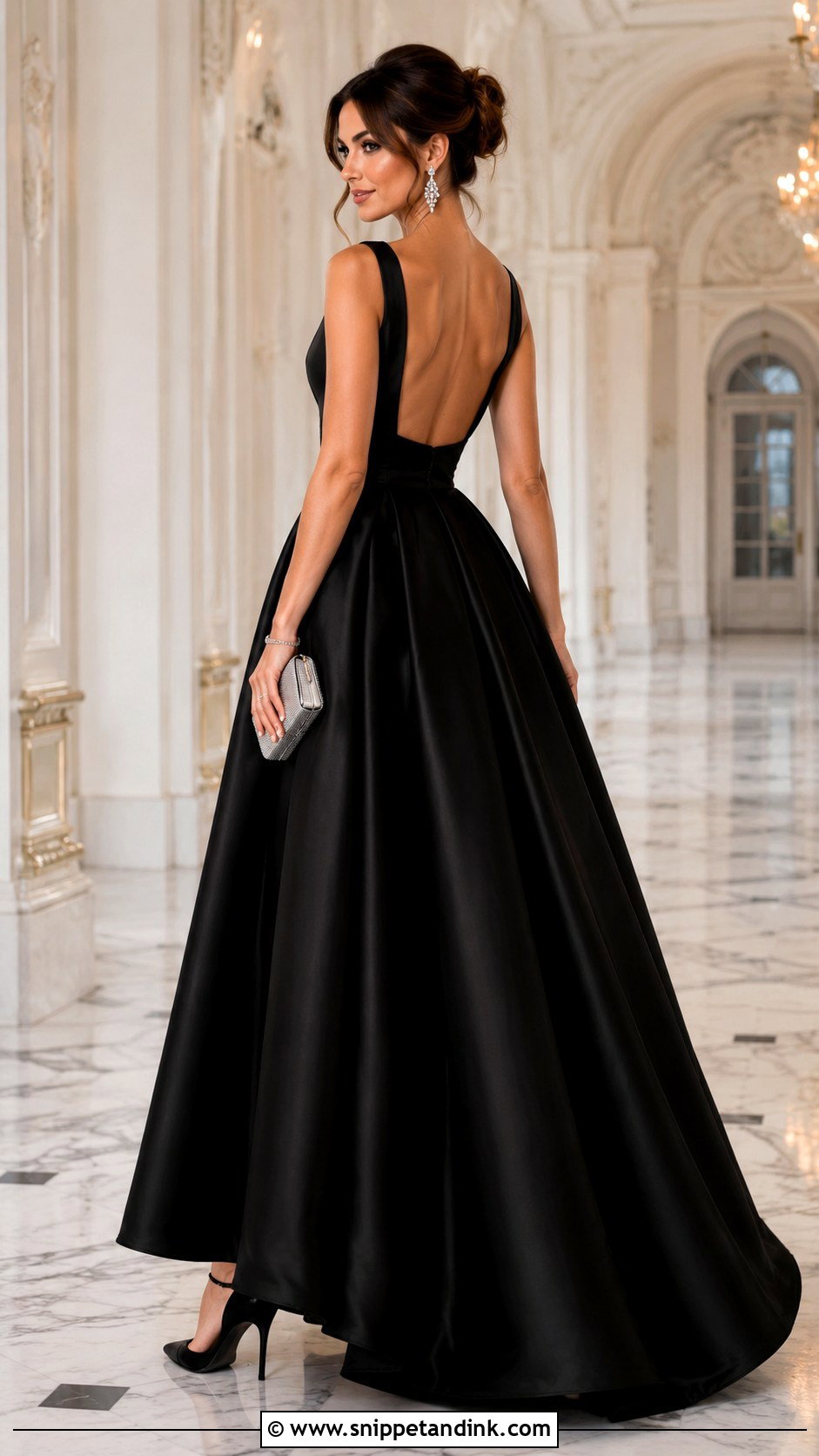
Black satin is the most forgiving starting point, because the fabric does the work and you don’t need beading to make it look finished. I’d pair a square or gently curved neckline with a natural waist and a pleated skirt. The thing to watch is satin’s honesty: it shows every ripple where the bodice edge meets your back, so the side seams have to be taken in until that edge lies flat. Black pointed heels or fine silver sandals, crystal drops and a small metallic clutch are plenty. With a strong neckline I leave the throat bare and put the hair in a sleek bun.
2. Red Corset Backless Ball Gown
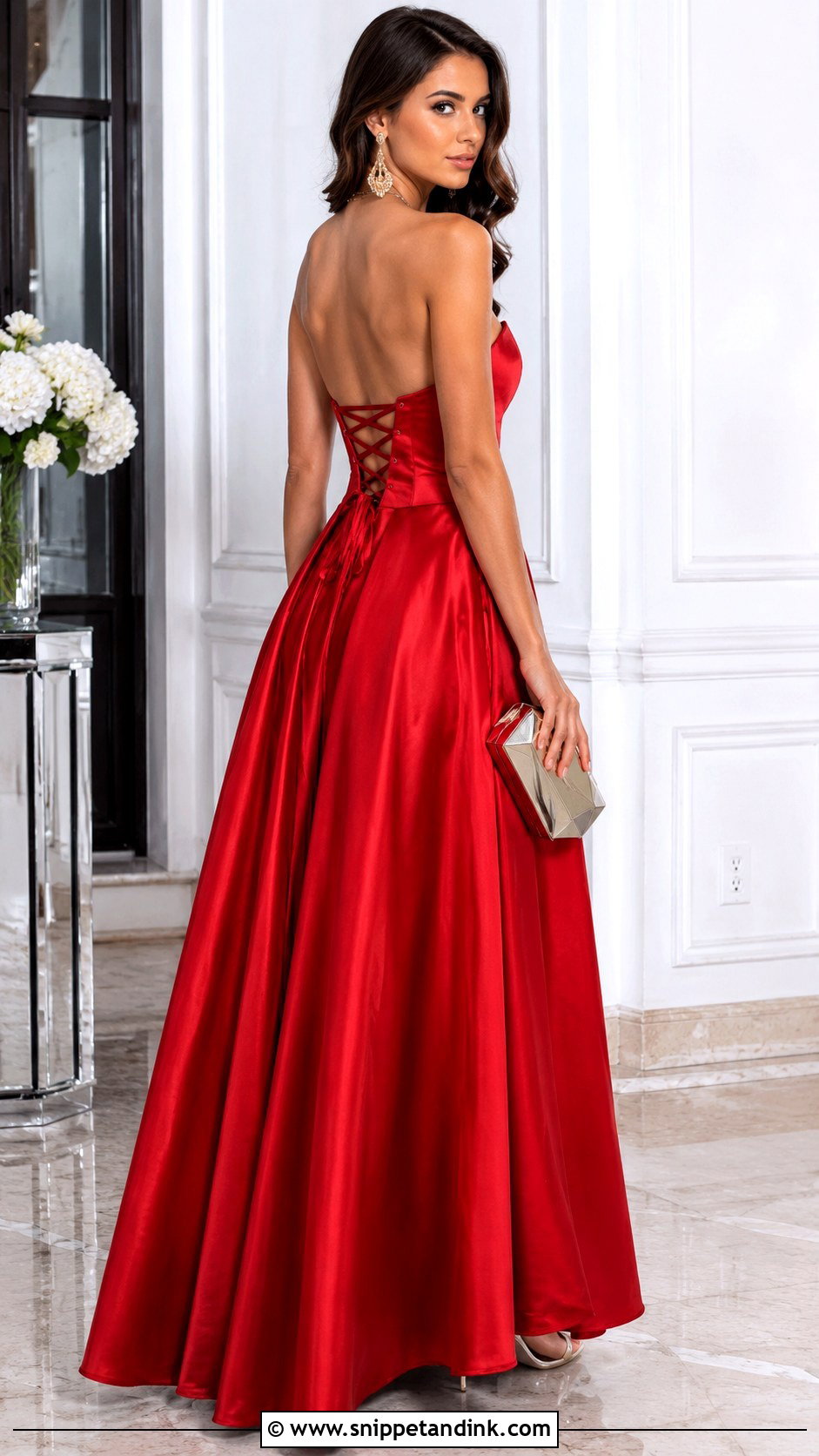
Red with visible corset seaming reads as formal before you’ve added a single accessory. A lace-up back is my favorite closure for anyone between sizes, since it can be tightened a little at the final fitting and again on the night. Ask whoever laces you to start from the middle and work outward, which pulls the bodice up rather than just in. Keep the shoes champagne or soft gold so they don’t fight the red, and wear the hair up or swept to one side so the lacing shows. A red lip works, but then the eyes stay quiet.
3. Emerald Green Backless Ball Gown
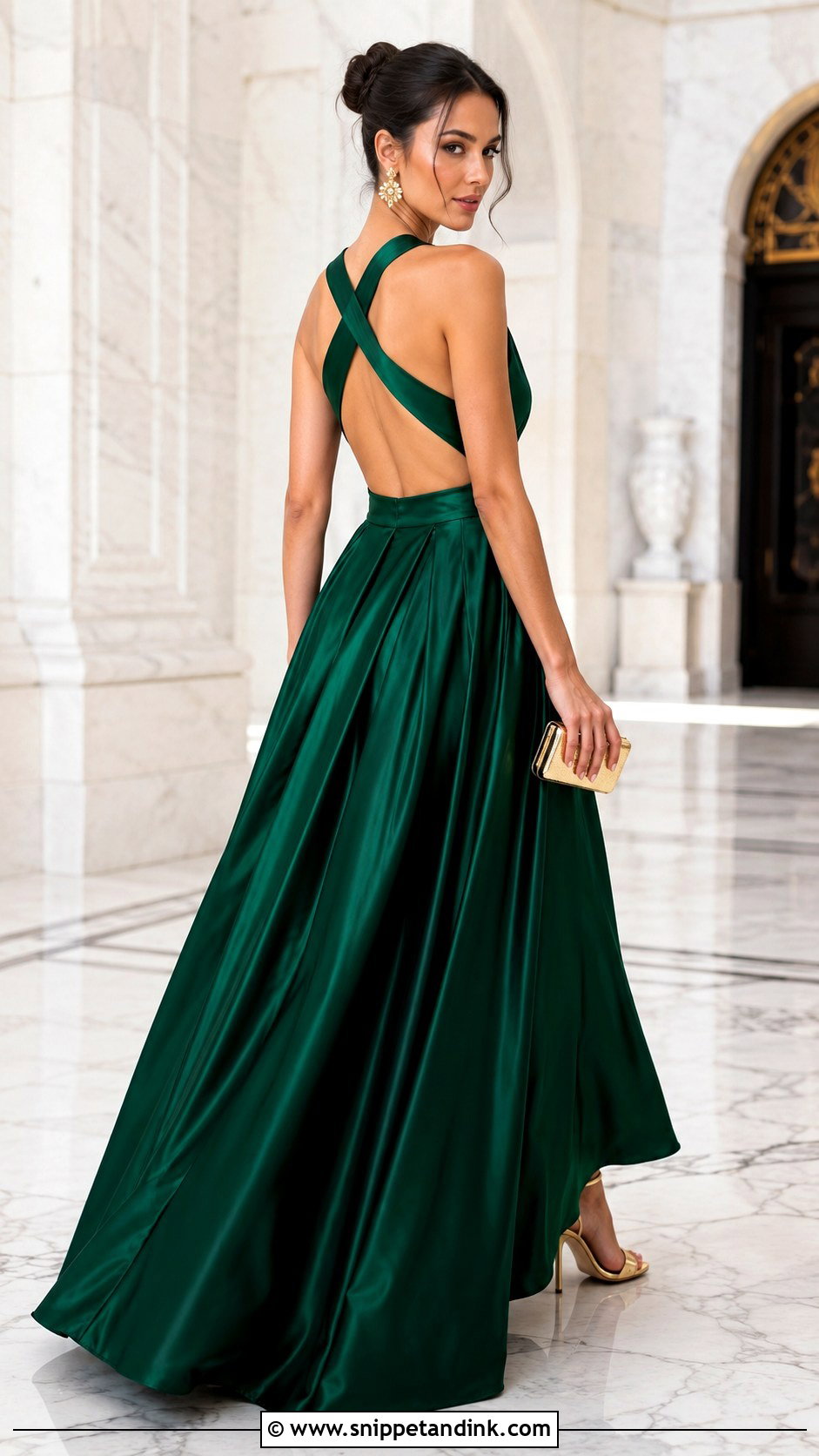
Emerald satin moves like liquid, and that movement is the whole appeal here: a fitted waist, a few soft pleats and a long sweep of skirt. If a fully open back makes you nervous, slim straps crossing at the shoulder blades are the honest compromise. They carry part of the bodice’s load and still read as design. Gold heels, emerald or crystal earrings and a compact gold clutch finish it. With a very full skirt I keep the jewelry light and the manicure plain, since the color already has plenty of presence for a banquet, gala or prom.
4. Navy Beaded Backless Ball Gown
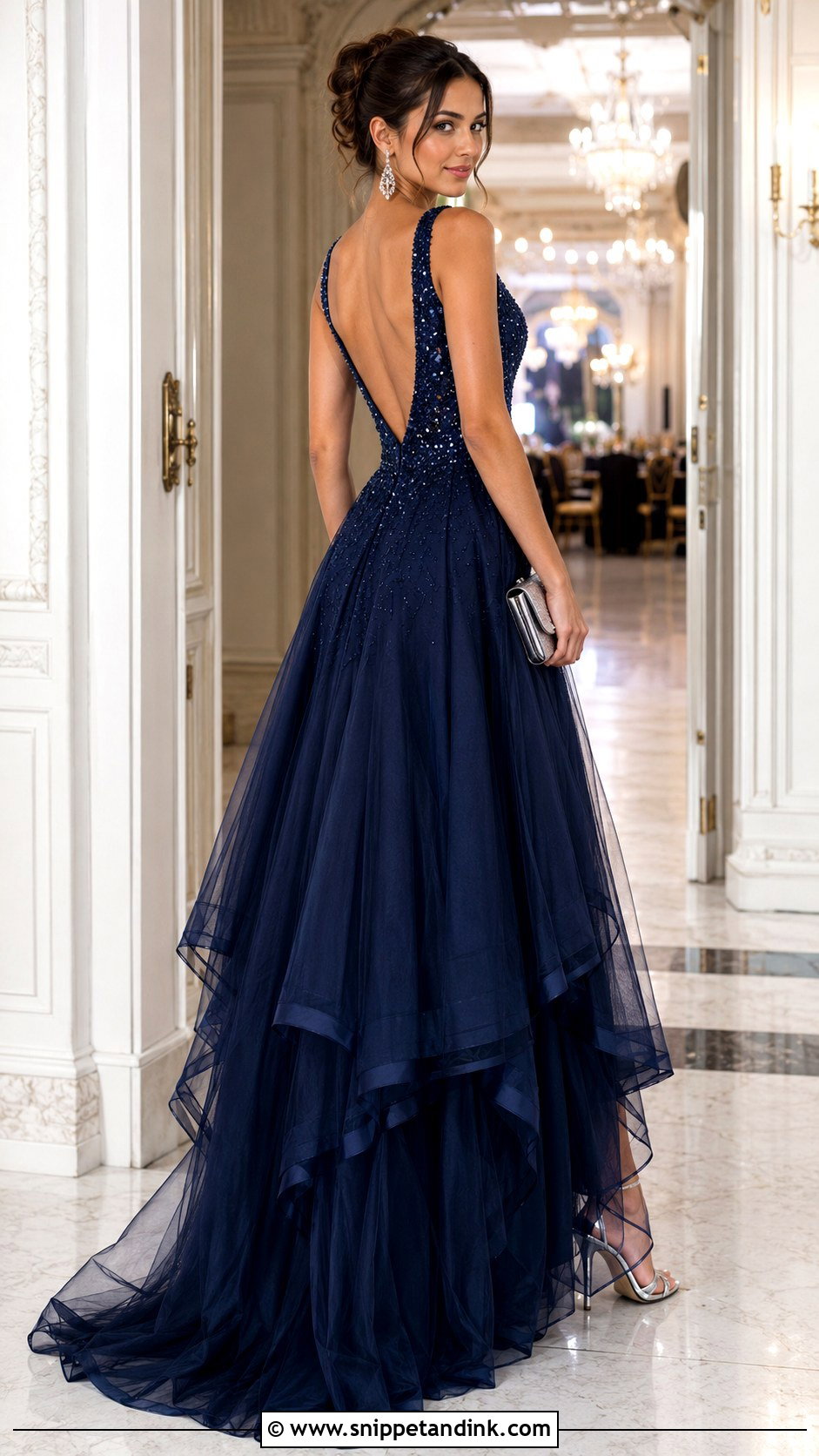
A navy beaded backless ball gown gives sparkle with a softer edge than black. I prefer the beading concentrated on the bodice, waist or straps, with a plain layered skirt underneath; beads all over a full skirt add real weight that drags on the bodice. Before buying, run your fingers along the armholes and the inside of the back edge. Hand-sewn beads near skin can scratch for hours, and a lining can usually be extended over them. Silver or navy heels with a small platform, crystal studs and a raised ponytail or twisted low bun keep the focus on the beadwork.
5. Blush Pink Tulle Backless Ball Gown
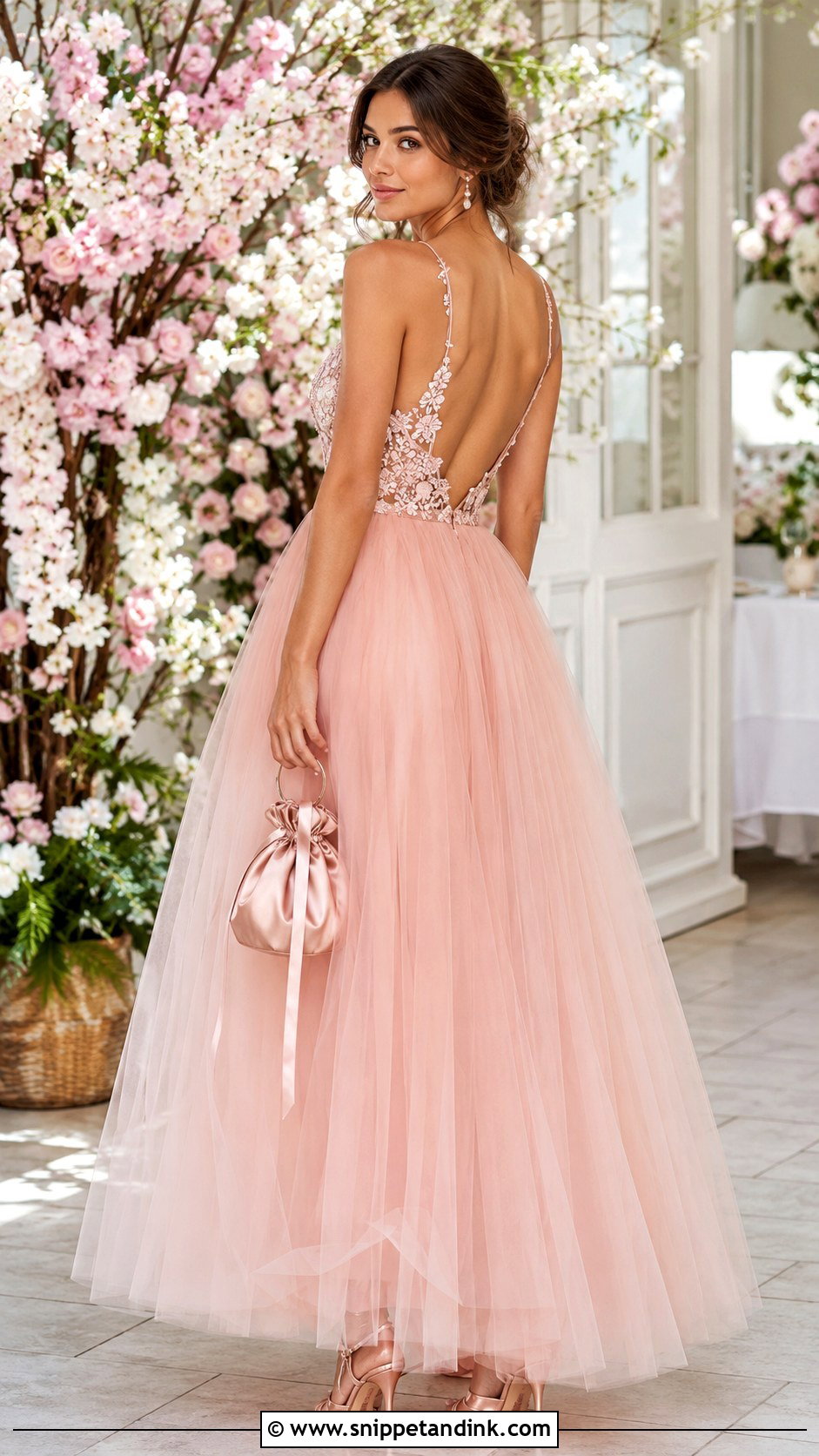
Blush tulle looks light even when there are eight layers of it, which makes it a kind choice for a long evening. A structured bodice with fine straps or scattered embroidery gives the top some shape, and a low scoop back contrasts nicely with the airy skirt. Hemming is where tulle gowns go wrong. The layers are cut individually, and if the top layer is even slightly long it catches under the toe of your shoe on every step, so bring your exact shoes to the hem fitting. Nude or rose-gold heels, pearl drops and a loose bun with a few face-framing pieces suit it.
6. Royal Blue Backless Ball Gown
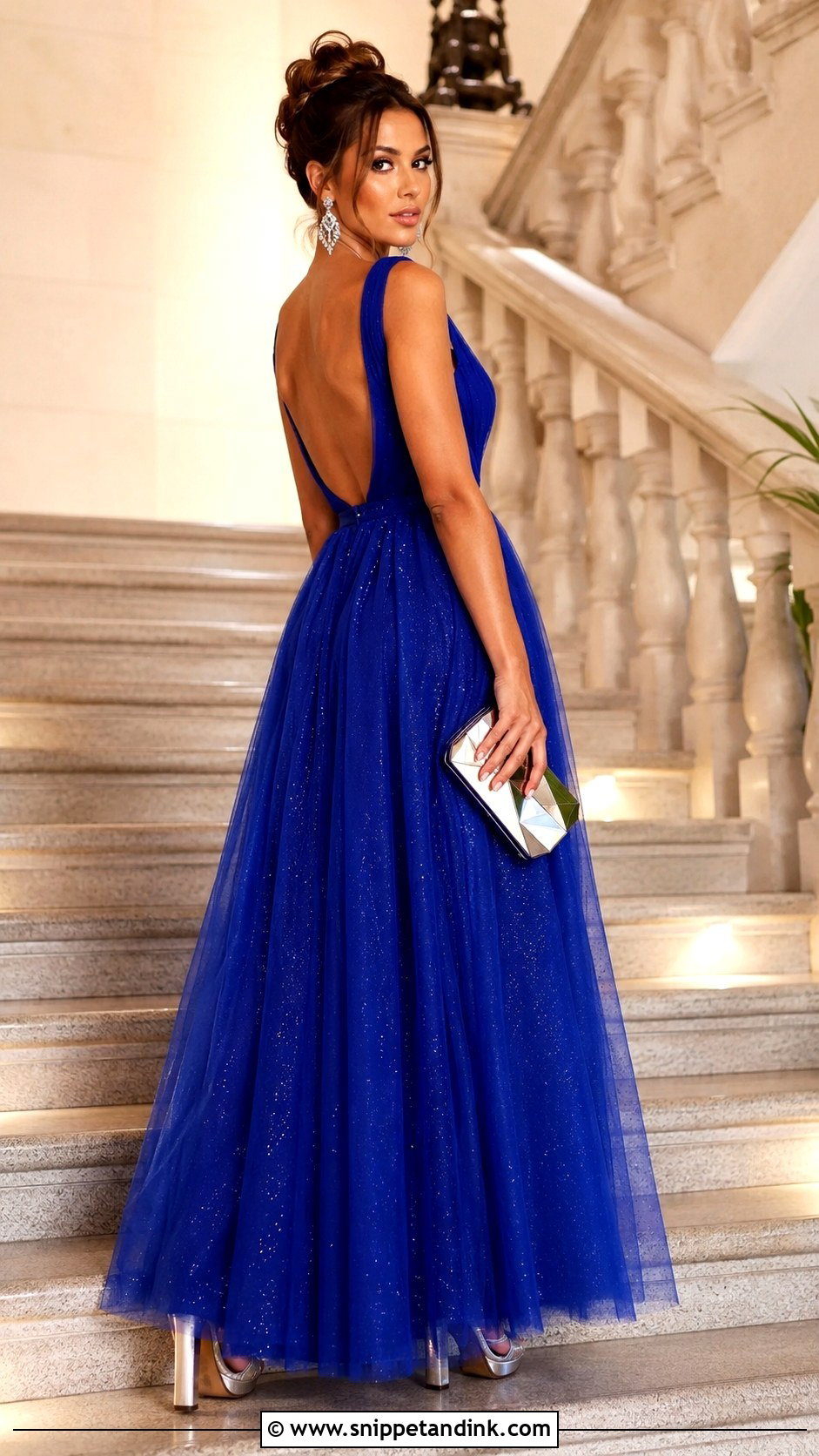
Royal blue holds its own in a crowded ballroom and stays vivid under flash. A V-neck bodice with wide-set straps and a deep back gives a clean frame, in smooth satin or glitter tulle. Wide-set straps have one habit I always check: they slide off the shoulder when you reach forward, so I have clients hug me in the fitting room. If they slip, a small fabric bridge or clear elastic between them fixes it. Silver sandals, crystal earrings and a mirrored clutch suit the cool color. A high braided bun shows the back; loose hair should go fully to one side.
7. Burgundy Velvet Backless Ball Gown
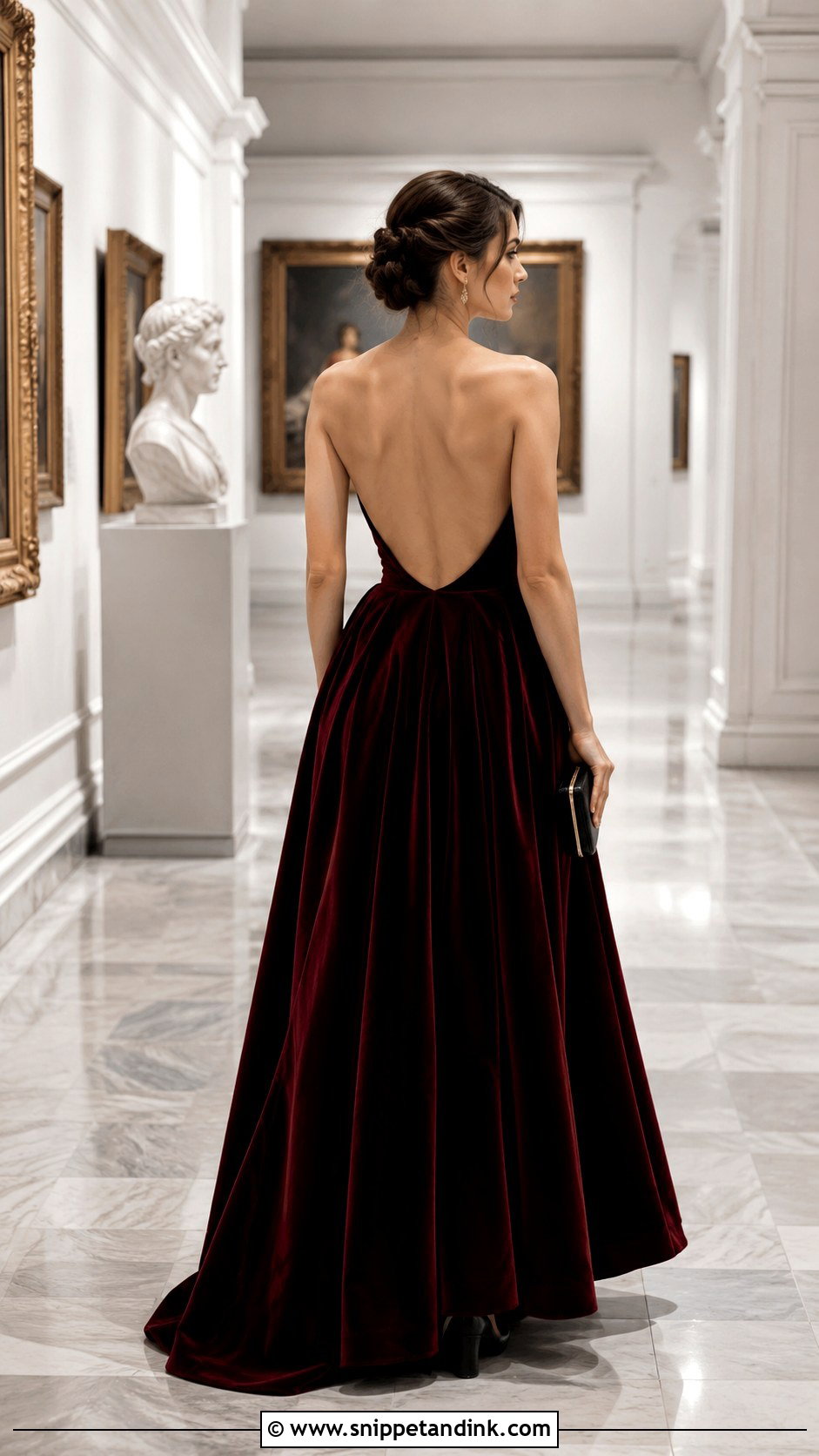
Velvet has a pile that catches light differently depending on direction, which gives burgundy its depth. It also has very little give, so this is the gown I’d make you sit in before a single alteration is pinned. A streamlined bodice with minimal beading suits it, because the fabric is already textured, and a wide gently pleated skirt adds volume without bulk. Black velvet pumps or dark metallic sandals carry the color down. Steam velvet from the inside only; pressing the face flattens the pile and leaves a shiny patch. A sculpted low bun or French twist finishes it.
8. Champagne Sequin Backless Ball Gown
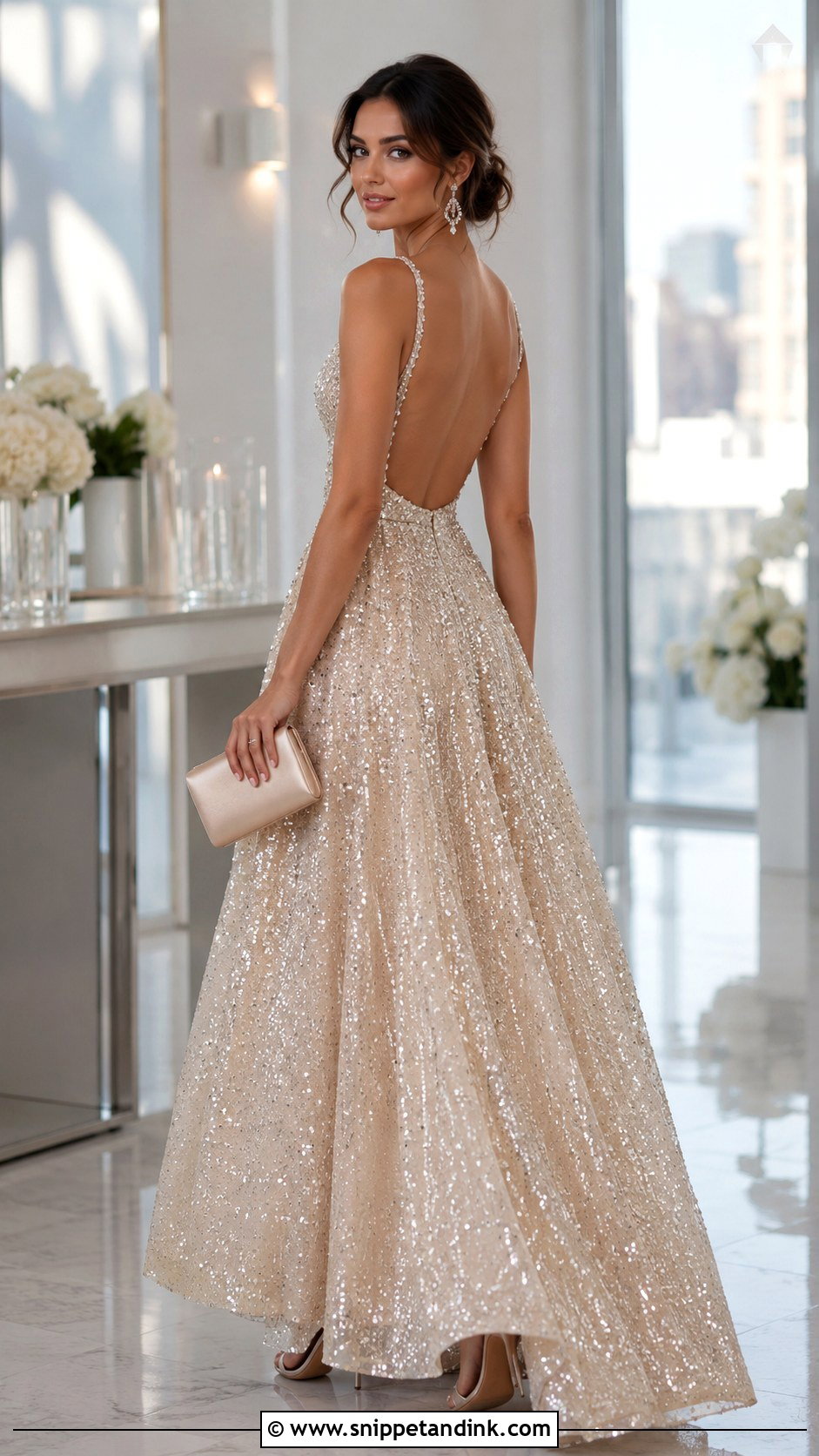
Champagne sequins glow rather than glitter, which keeps them softer than bright gold. Look for a fitted, lined bodice, a low back framed by slim beaded straps and small, evenly spaced sequins on the skirt. Big sequins can look costume-like and tend to snag on lace or jewelry. Before the event, turn the straps over and feel the armholes: cut sequin edges are sharp, and a seamstress can strip a narrow band and face it with satin. Champagne heels, a matte satin clutch and small crystal drops balance the shine.
9. Silver Glitter Backless Ball Gown
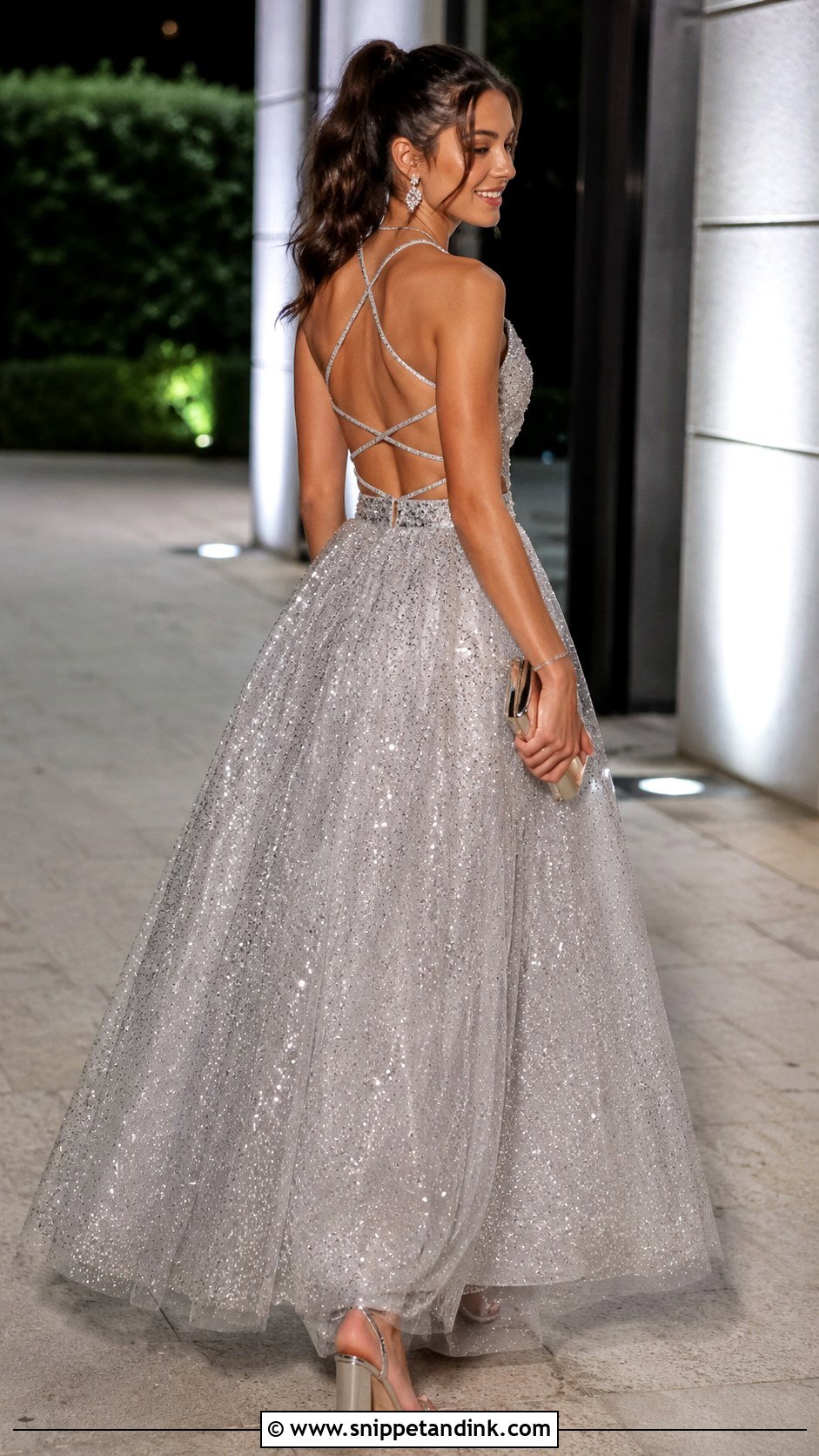
Silver glitter tulle is the brightest look here, and it suits a big entrance. The detail I check first is how the glitter is applied. Fine glitter bonded into mesh stays put, while loose glitter sheds onto your date’s jacket, the car seat and every photo of a hug. A strappy open back adds definition and support. Glitter tulle is also stiffer than plain tulle, so walk forward in it and confirm the hem clears your toes. Silver block heels, crystal earrings, a smooth clutch and cool-toned makeup with a soft smoky eye keep the palette consistent.
10. Floral Appliqué Backless Ball Gown
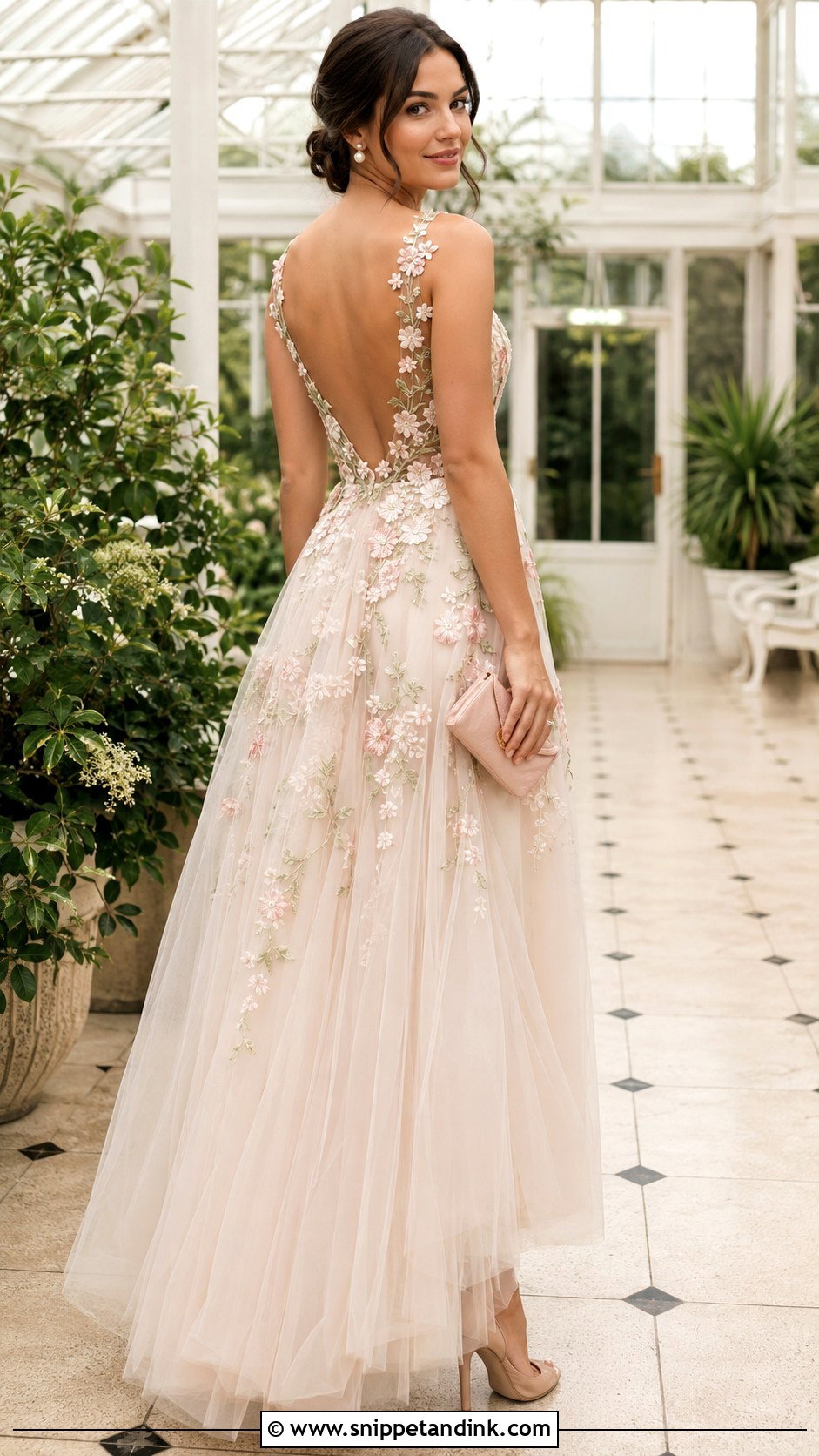
Floral appliqué works best when it thins out as it travels down. Dense flowers on the bodice, a light scatter on the tulle skirt and a quiet hem keep a full silhouette from looking busy. A scoop or V back edged in appliqué ties the front and back together. These motifs are usually hand-tacked, so when a gown needs taking in, a good seamstress lifts the flowers off, alters the seam and stitches them back over it so the line disappears. Nude heels, pearl earrings and a clutch picked from one of the quieter thread colors suit it; skip floral jewelry.
11. Long Sleeve Lace Backless Ball Gown
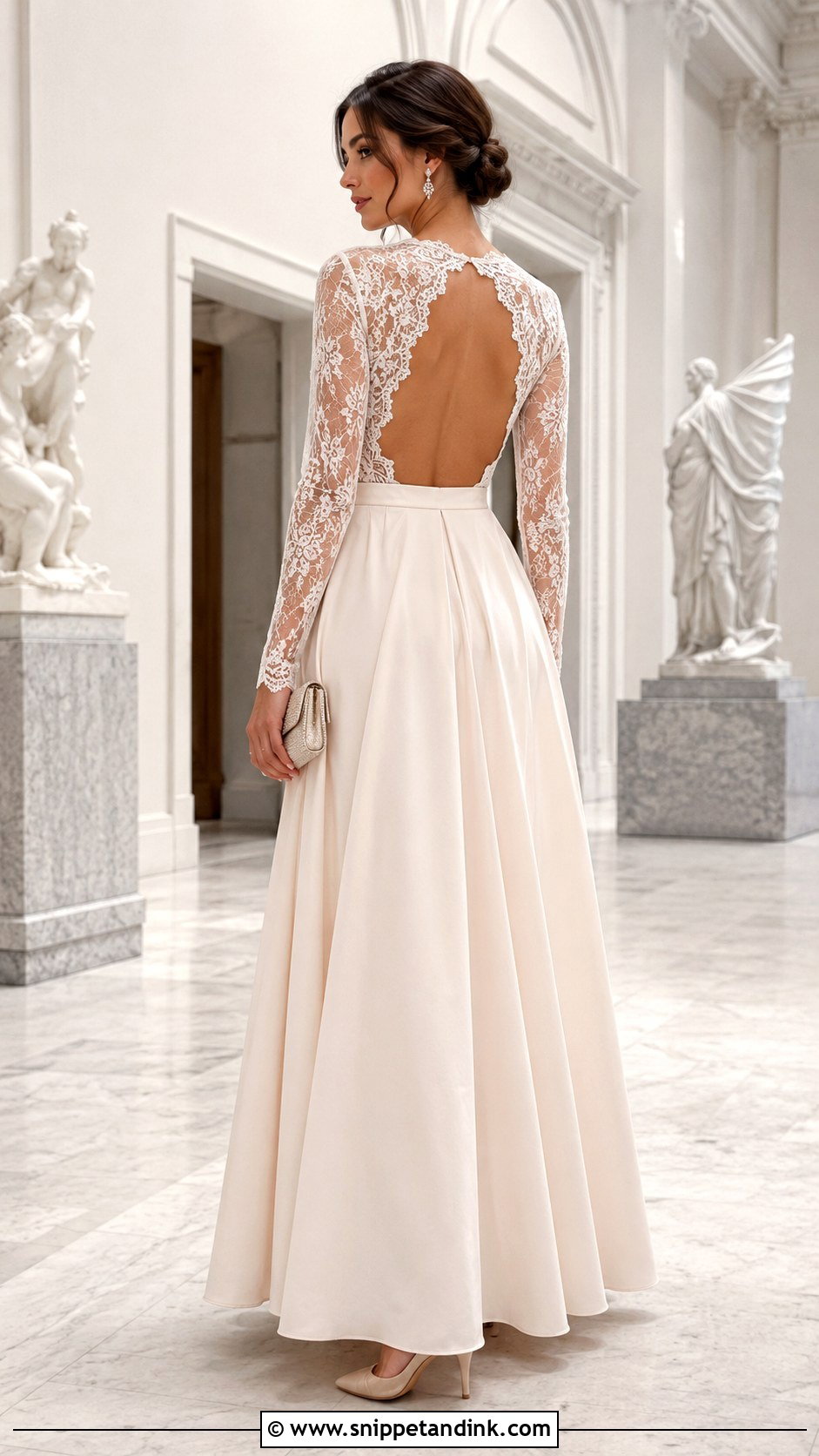
Long lace sleeves with a deep open back are a classic pairing, and they suit anyone who feels exposed in a strapless bodice. The fit point that matters is the armhole. Sleeves set too low pull the whole bodice up when you raise your arms, so in the fitting I have clients reach for an imaginary glass on a high shelf. A plain satin waistband keeps the lace and skirt from blurring together. Matching pointed pumps, small drop earrings and no necklace, since lace catches on clasps. A low side bun keeps the back clear.
12. Halter Backless Ball Gown
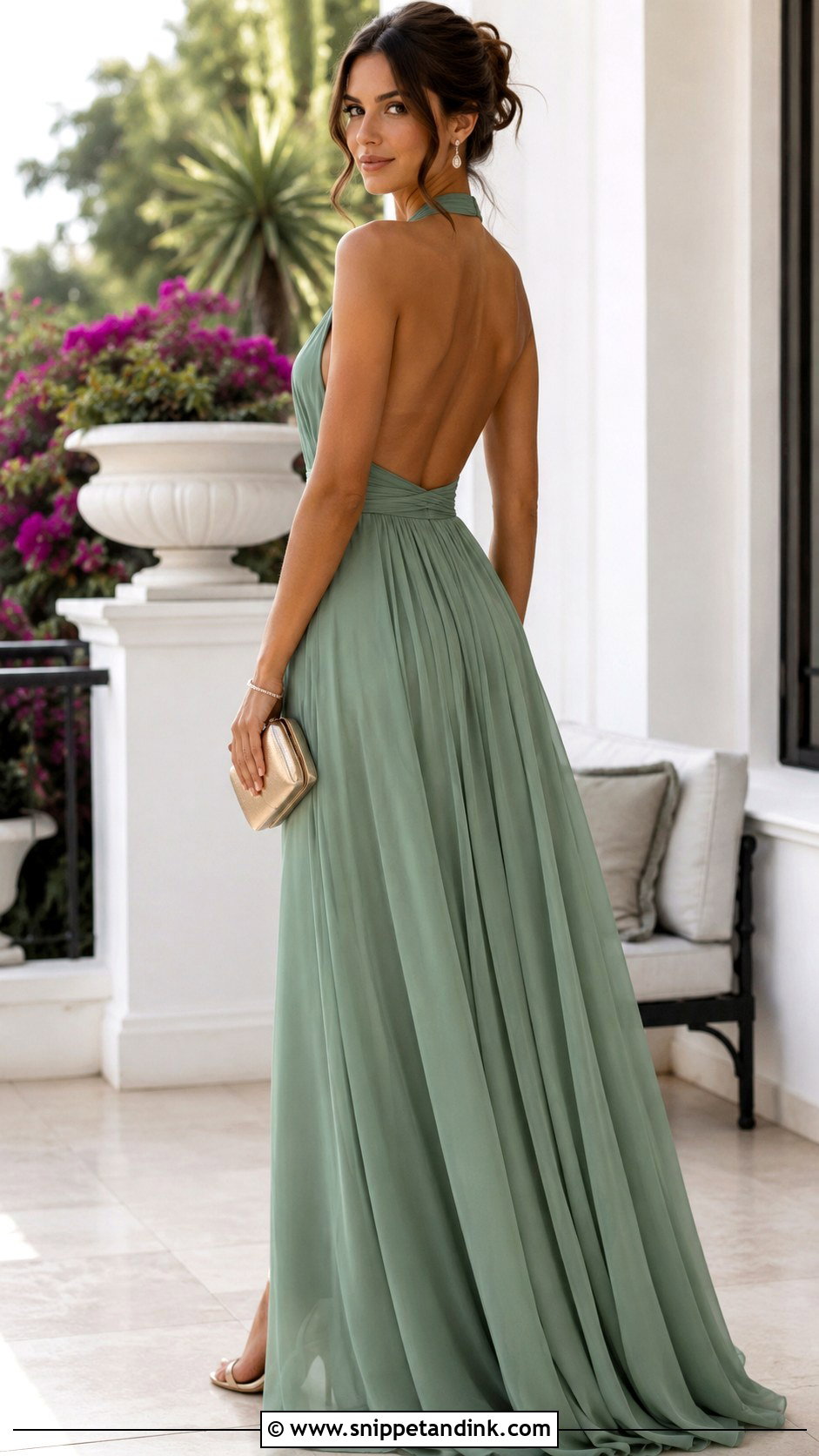
A halter backless ball gown frames the shoulders and leaves the whole back open, because the neck strap carries the front. That strap is also the weak point. A halter that relies only on the neck fastening drags on the back of the neck by mid-evening, so I look for a bodice with its own boning or a waist stay that takes most of the weight. A chiffon overlay or satin skirt adds movement. Drop earrings, a slim bracelet and no necklace; hair in a high bun or smooth ponytail so the neckline is fully visible.
13. Off Shoulder Backless Ball Gown
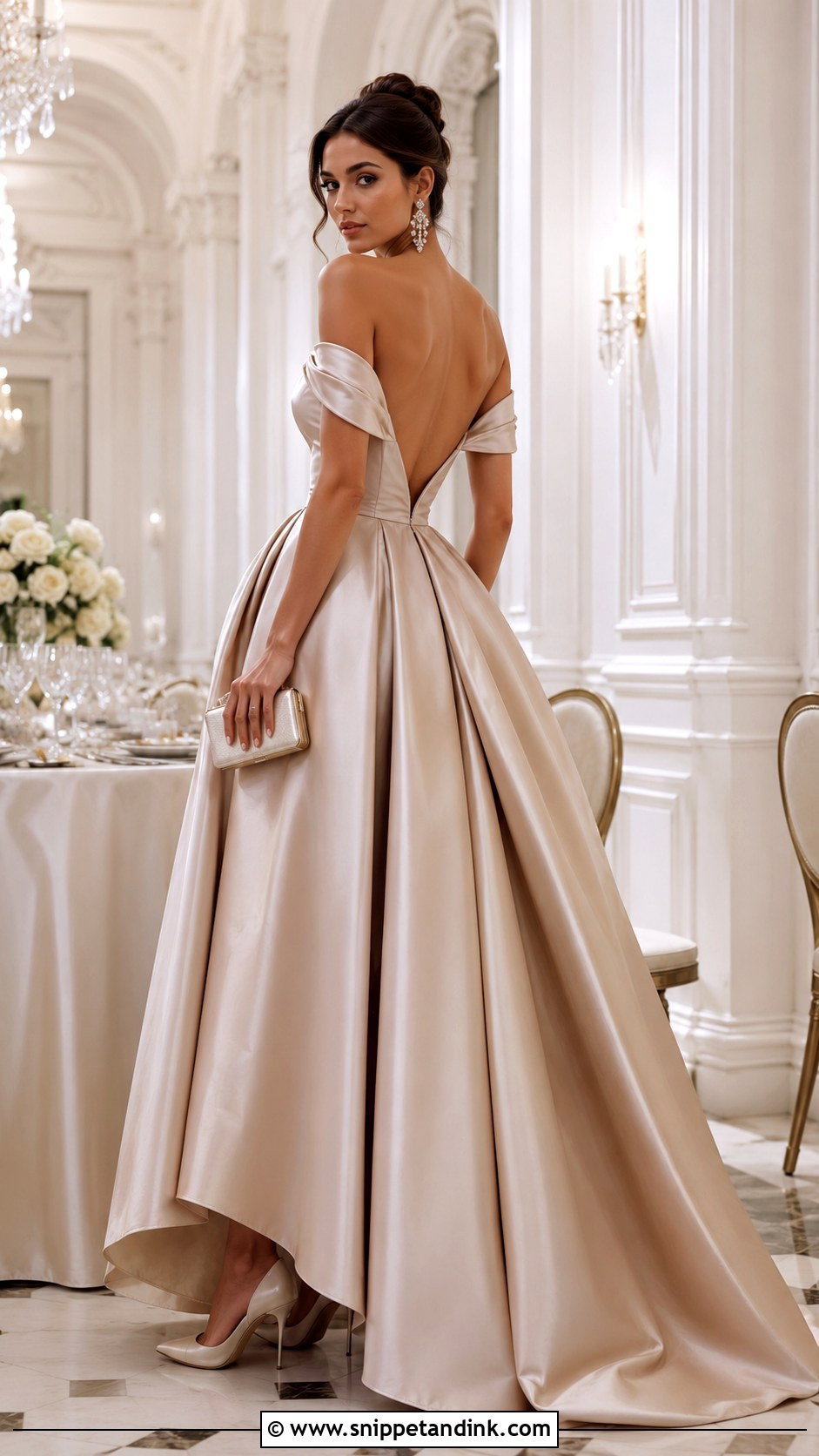
An off-the-shoulder neckline and an open back leave the collarbones, shoulders and waist on show, which is exactly why the bodice needs an inner corset. The sleeves are decoration. If they’re holding the dress up, they’ll ride down your arms the first time you dance. In alterations, raise both arms, sit down, then stand and check that the neckline hasn’t crept. A full satin skirt is the classic finish; tulle is softer. Short statement earrings and a romantic updo suit it. Leave out long necklaces and shawls, which break the shoulder line.
14. Bow Back Ball Gown
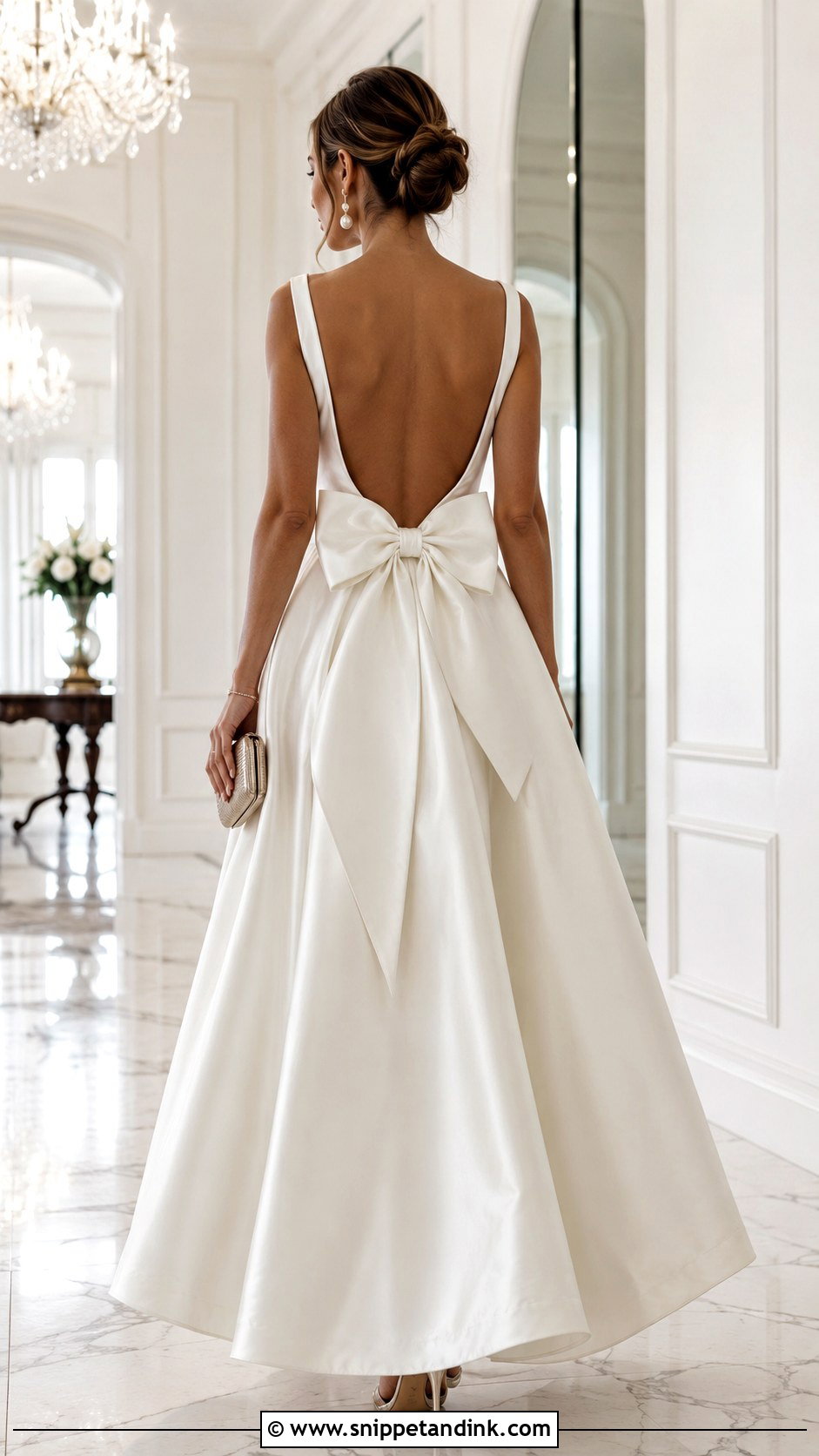
A bow-back gown puts all the drama behind you, so the bow has to be built well. It should be interfaced or lined firmly enough to hold its loops through a full evening; an unstructured bow collapses after an hour of sitting against a chair back. One bow is enough, at the waist, shoulder or upper back, with a plain satin skirt below. Steam it from inside the loops with the iron held clear. Sleek heels, pearl or crystal earrings, a hard-shell clutch and a neat bun that stays off the bow.
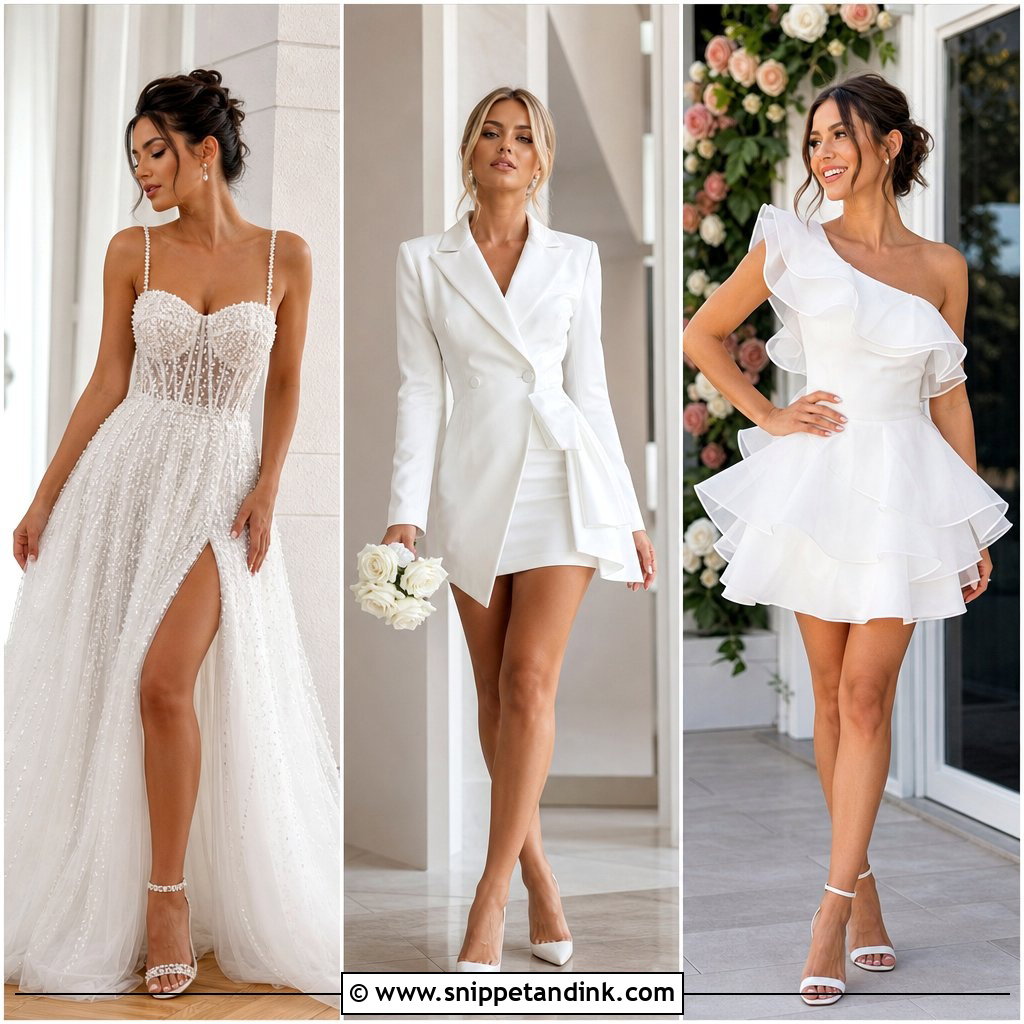
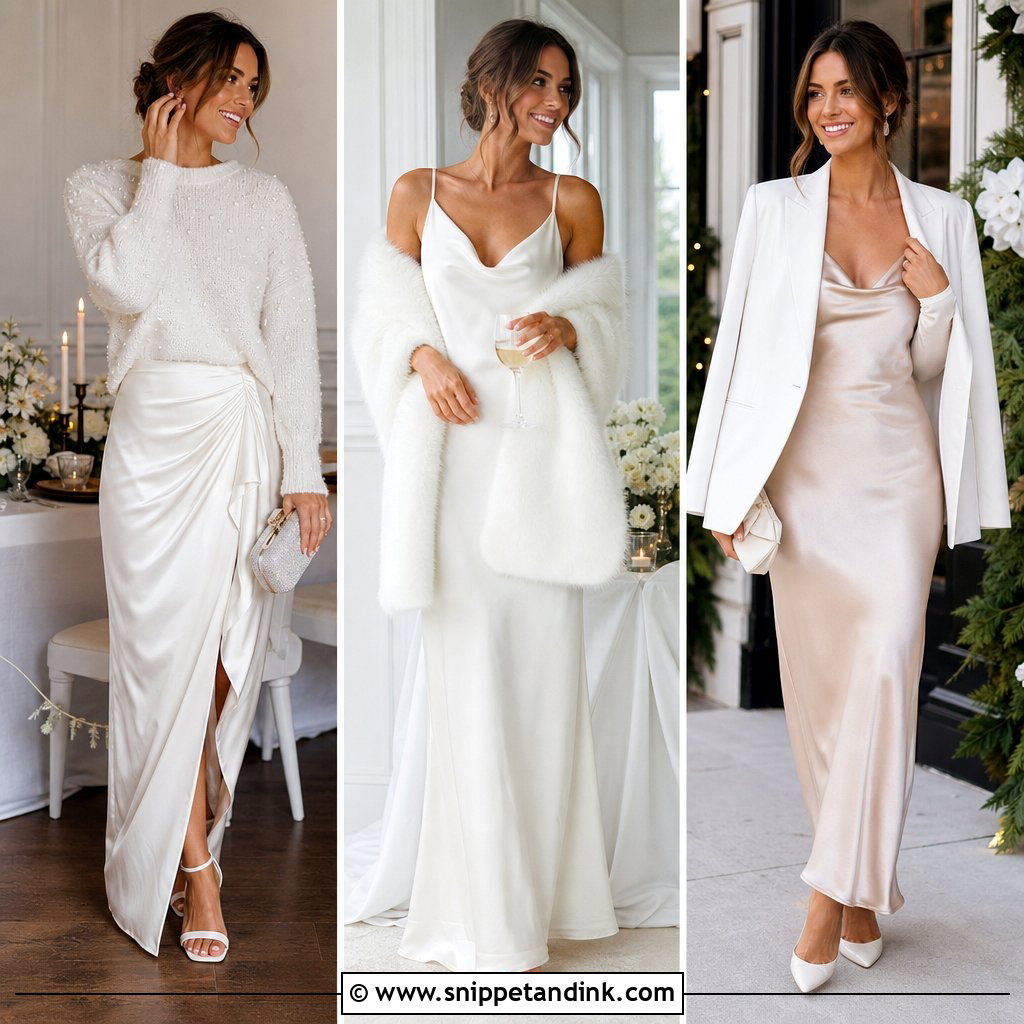
15. Strappy Backless Ball Gown
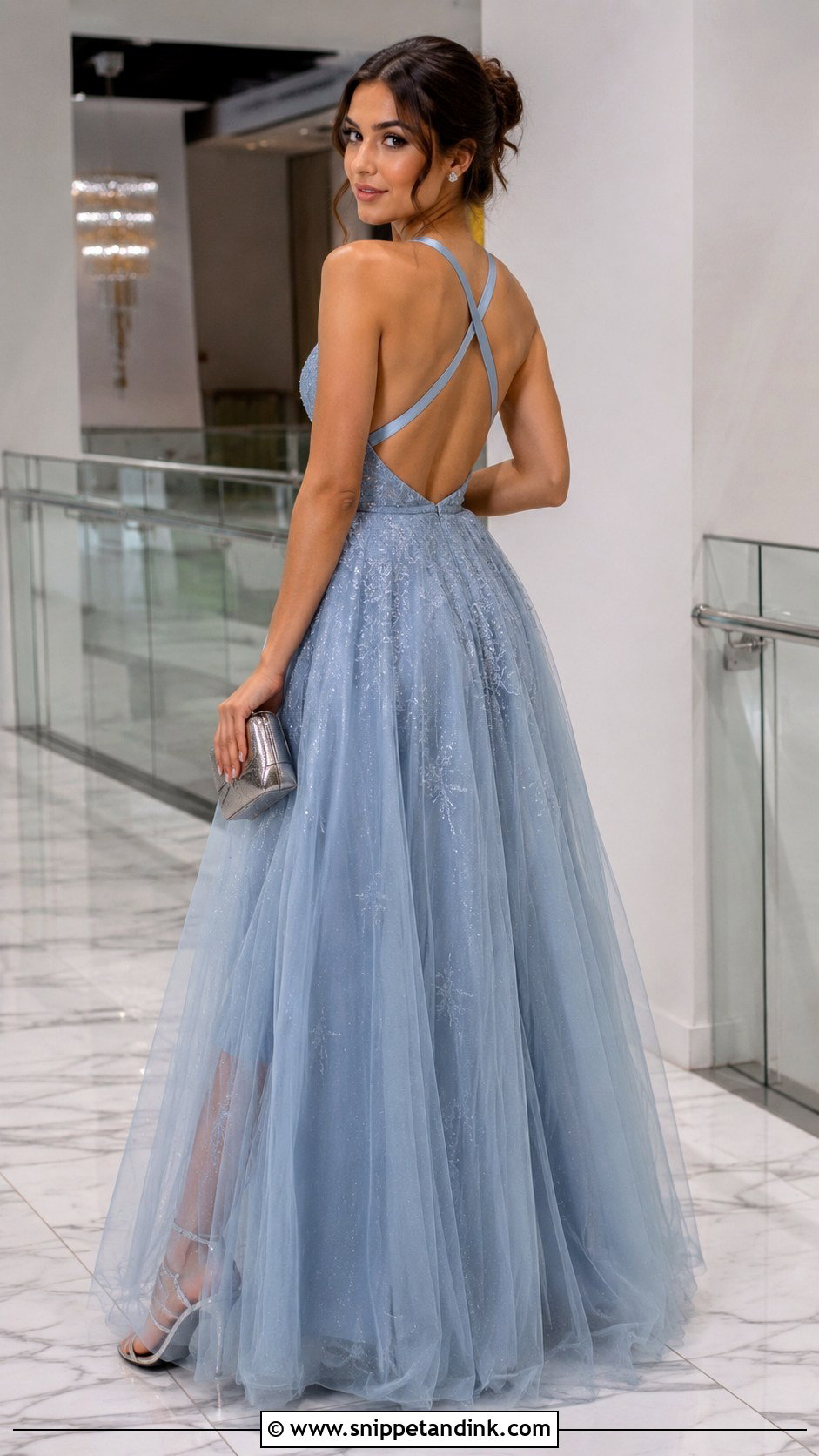
Straps across an open back are support dressed up as design. Look for straps that cross securely and anchor into a structured bodice, thin for a delicate effect or wide satin bands for something more graphic. In the fitting I check every strap while you sit, because a strap that lies flat standing can bite into the back once you bend. Adjustable or snap-on ends are worth asking for. A solid satin or lightly embellished skirt keeps the back from competing, with simple heels, studs and a ponytail or twisted updo.
16. Basque Waist Backless Ball Gown
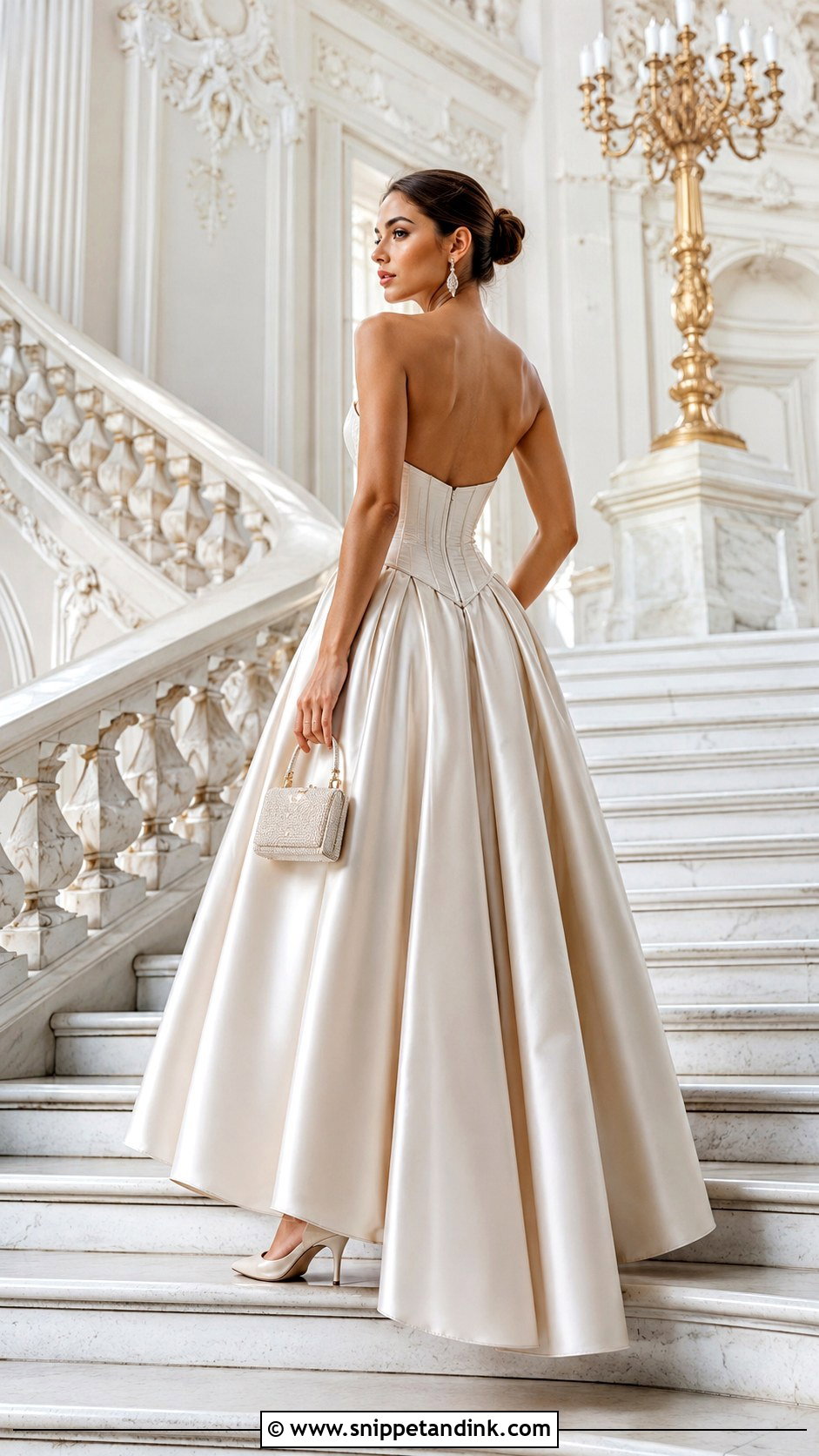
A Basque waist dips into a V at the front, which lengthens the torso and makes the skirt look even fuller. Paired with an open back, it gives a structured shape from every angle. This one is unforgiving in fit. The point of the V must sit flat against the body; if it buckles when you sit, the bodice is either too long or not boned to the tip. Satin, brocade or embellished mesh suit the corset bodice, with a smooth skirt so the point stays visible. Elegant pumps, drop earrings and a top-handle bag.
17. High Slit Backless Ball Gown
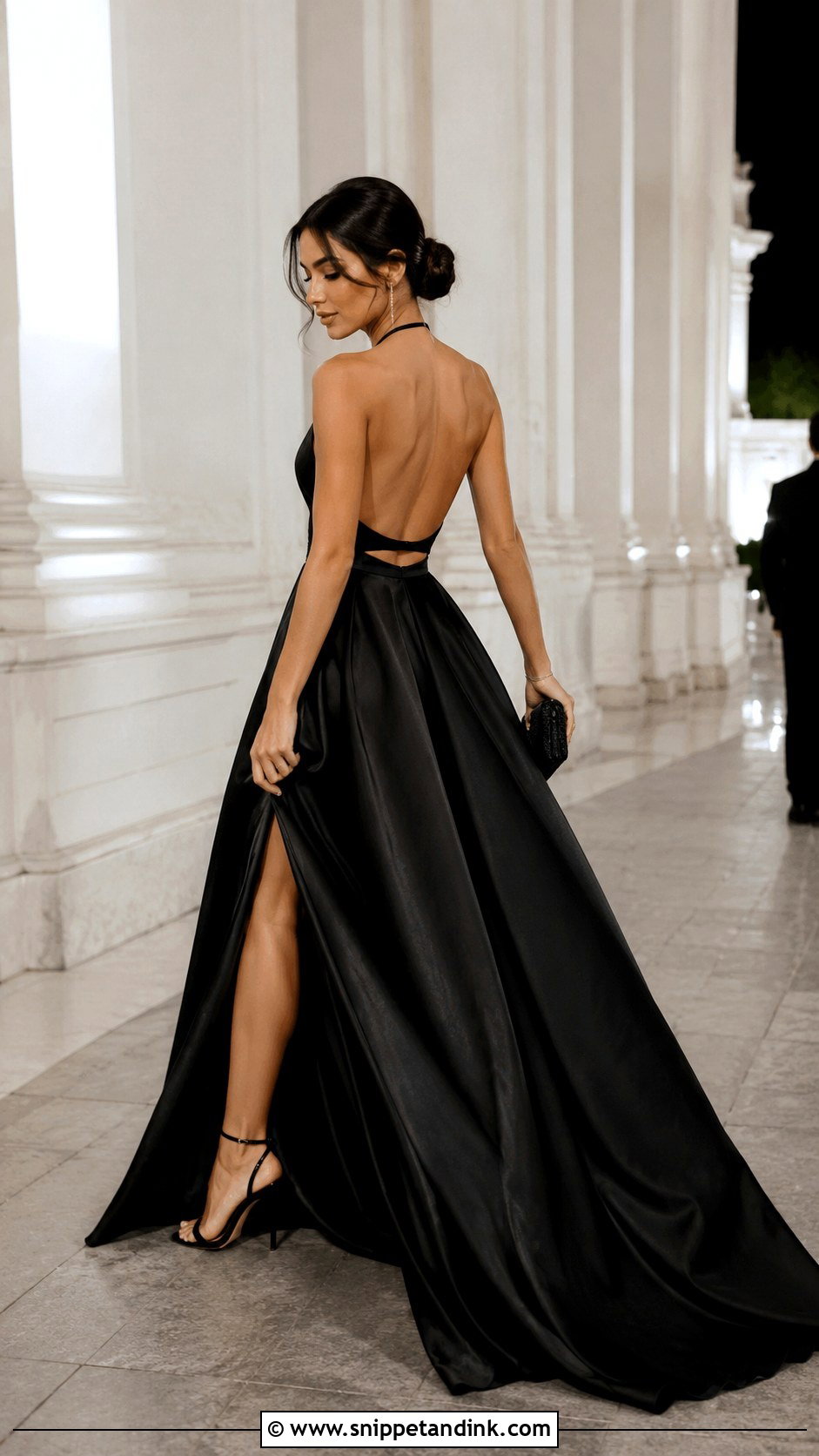
A high slit gives a ball gown movement, but only if the skirt has controlled fullness. Too much volume and the slit stays open; too little and it barely shows. Stairs are the real test. Practice going up and down in your shoes, and sit on a low chair to see how far the slit travels. A tailor can lower it or add a sheer modesty panel if it goes further than you’d like. Since the shoes will be seen, pick ones that look good and that you can actually stand in. A streamlined updo, slim bracelet and compact clutch.
18. White Backless Ball Gown
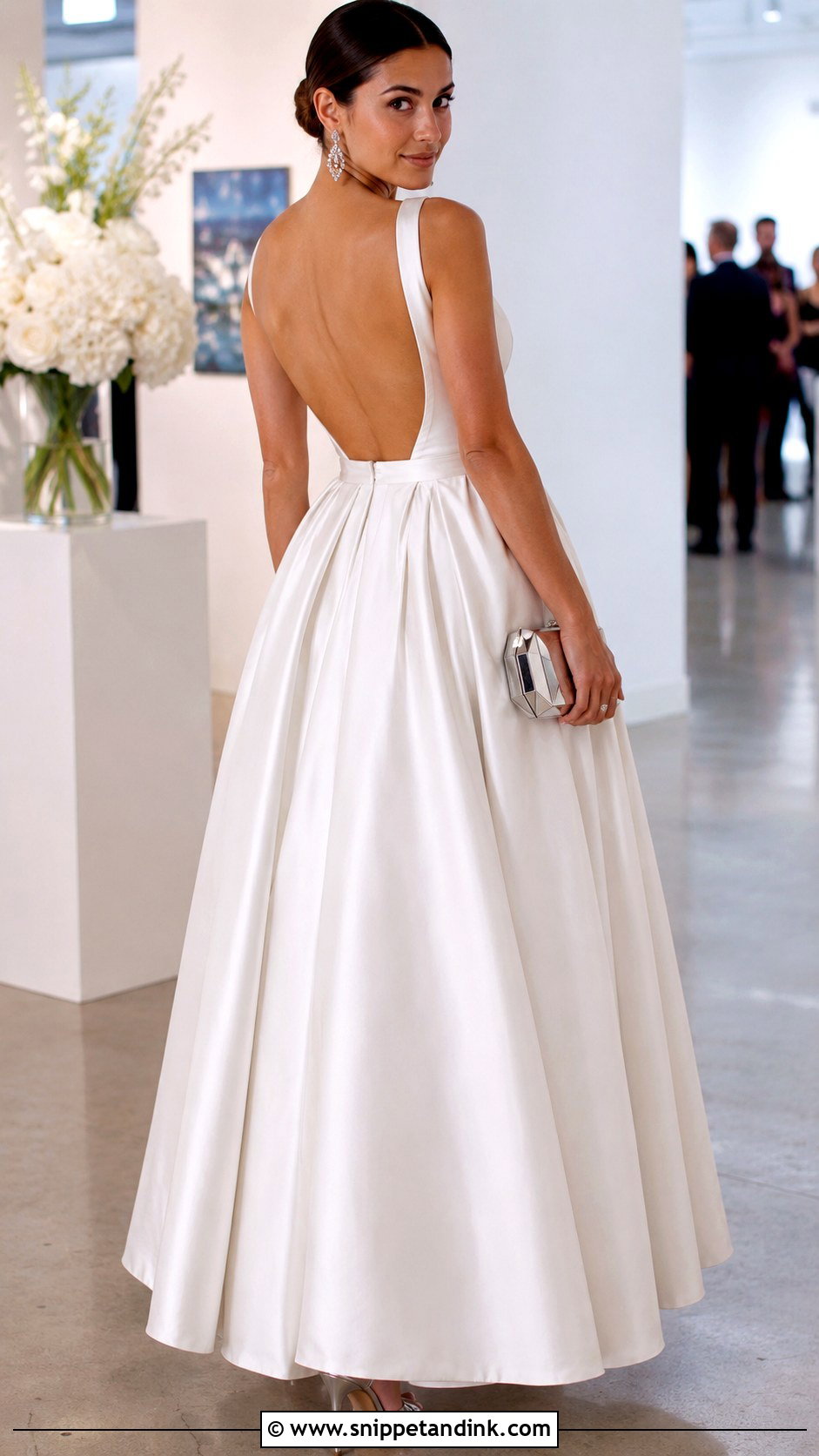
White or ivory at a formal event other than your own wedding needs a quick check of the dress code and the host’s feelings first. Assuming that’s fine, the bigger issue is transparency. Pale satin shows every seam, bra line and inside label under flash, so look at the gown in daylight and with a phone flash before committing. Underlayers should match your skin, not the dress. Choose the shade by complexion: bright white, soft ivory or cool pearl. A minimalist bodice with a wide open back and a pleated skirt, silver or nude heels and a sleek bun keep it crisp.
19. Black And Pink Backless Ball Gown
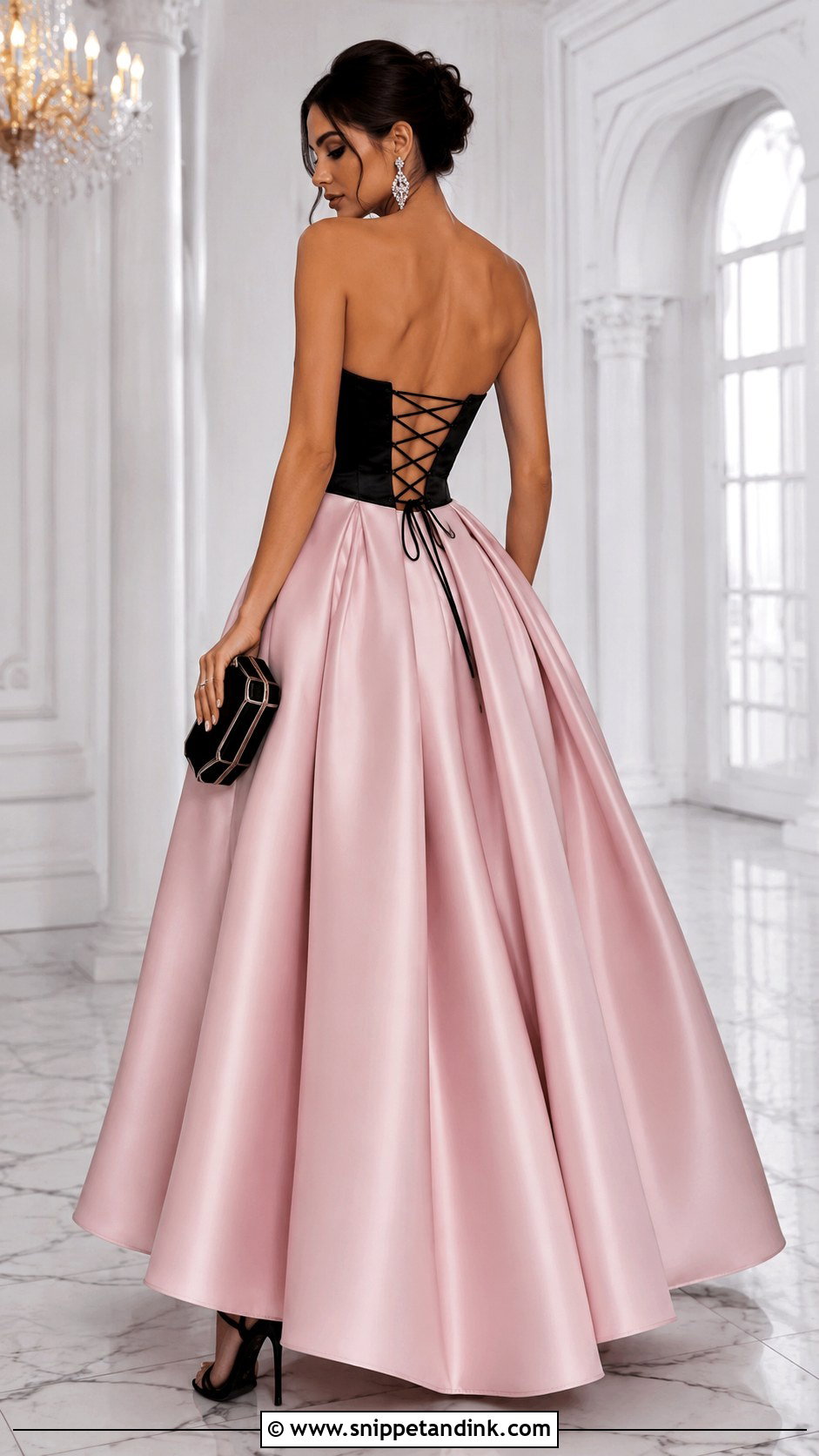
A black corset bodice over a blush or rose skirt is a strong graphic combination, and the waist seam carries all of it. Because the colors contrast, any wobble in that seam is obvious, so I check it from the side and back at every fitting. A low lace-up back on the black bodice lets you adjust the fit on the night. Black heels and a black clutch tie the accessories to the bodice; crystal earrings add light. Avoid adding a third color. A smooth bun or side-swept ponytail keeps the lacing in view.
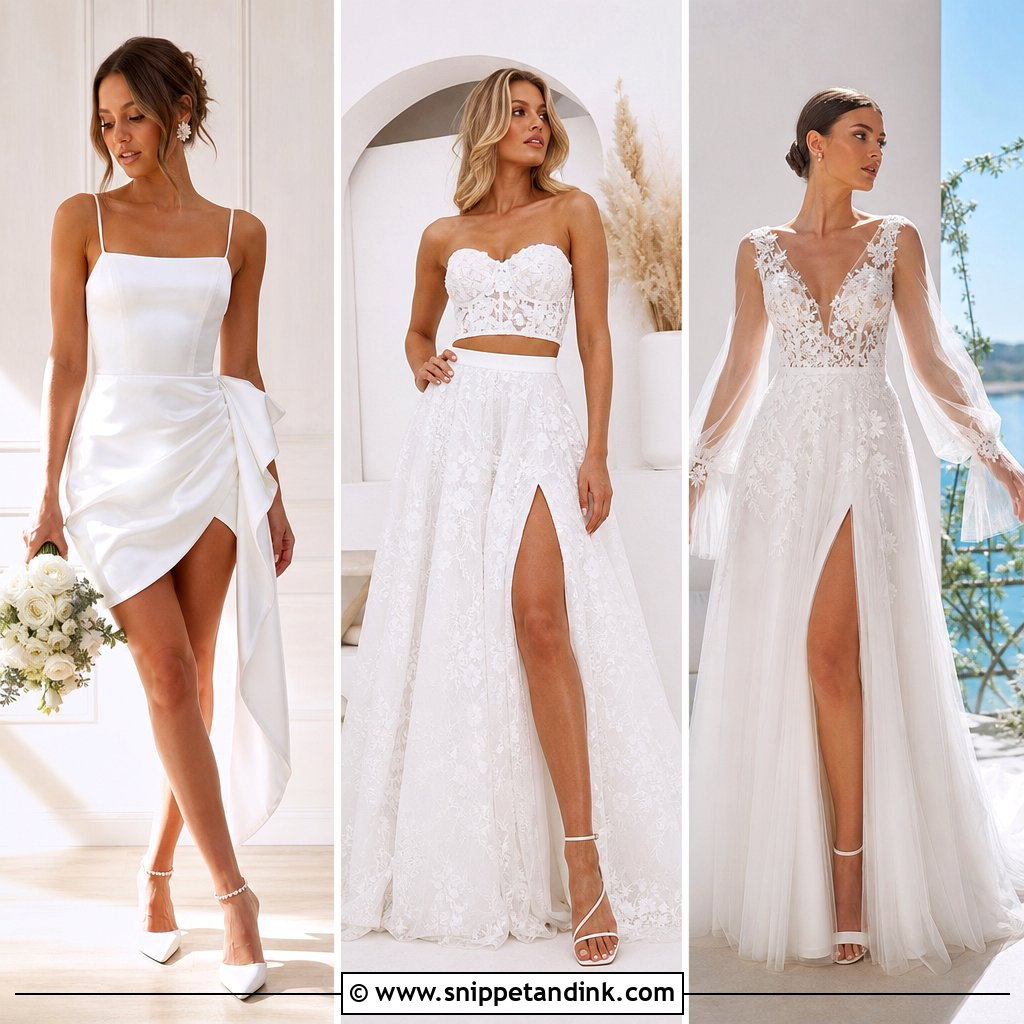
20. Purple Ruffle Backless Ball Gown
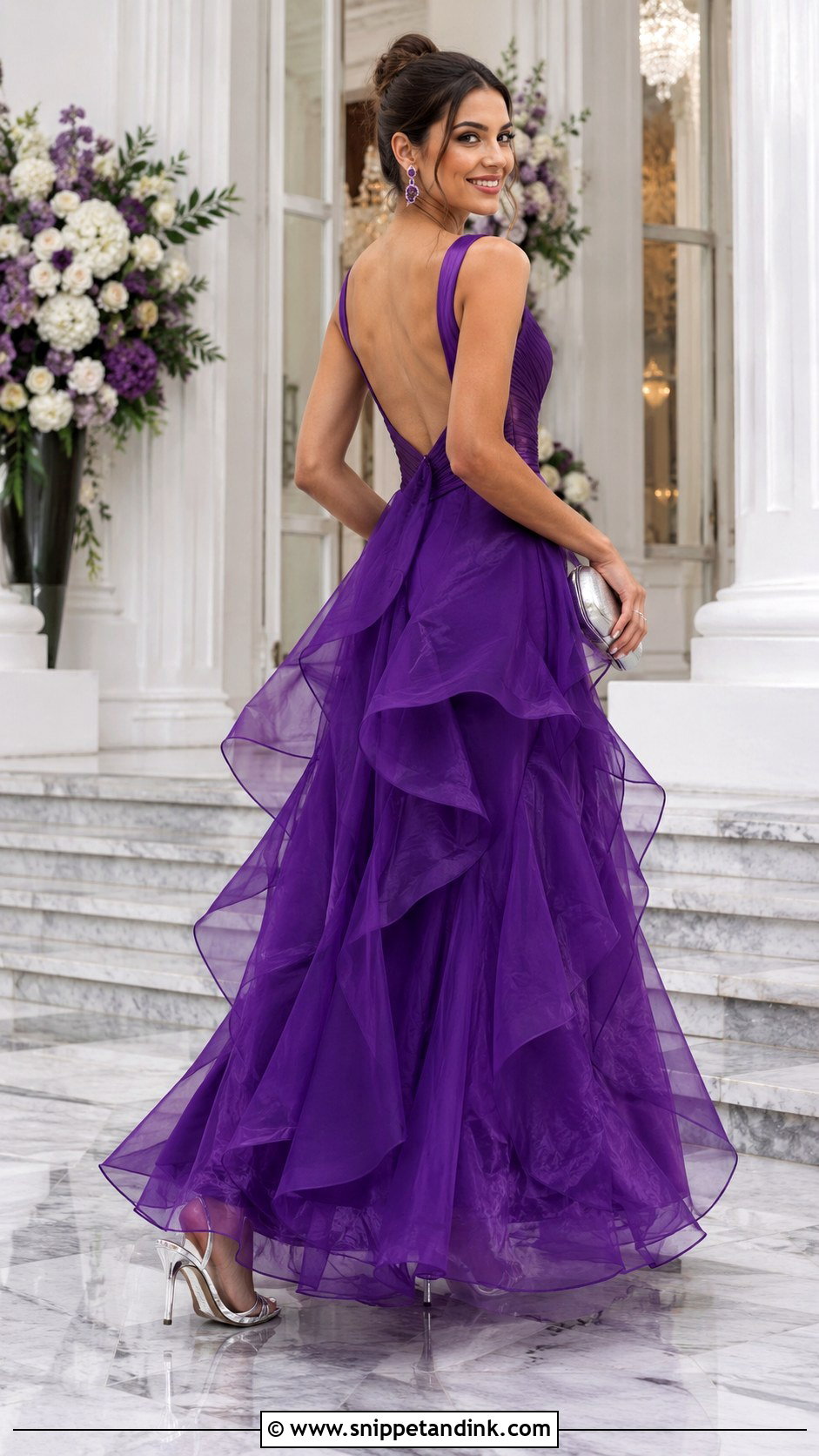
A purple ruffle backless ball gown brings plenty of color and movement, which is why I’d keep the ruffles in organza or soft tulle rather than heavy satin. Each tier adds weight that pulls down on the back of the bodice. Ruffles should start below a fitted waist, and a low V back with sturdy shoulder straps carries the load. Skip a long train here; ruffled tiers and a train together get stepped on constantly. Silver sandals, amethyst-toned earrings and a gray or metallic clutch, with the hair up. Walk the whole outfit before the event to see that the tiers don’t tangle.
Underwear, Skin and Self-Tan Under an Open Back
Nobody wants to discover a strap or a tan line in the photos, so sort out what goes underneath before your first fitting, not after. The seamstress needs to fit the gown over the exact pieces you’ll wear on the night.
What actually works underneath
- Silicone adhesive cups work for many people with a smaller bust and very low backs. They hold best on skin with no body oil or moisturizer, and humidity shortens their grip.
- A low-back longline bra or a plunge bra with convertible straps can work when the back stops above the waist. Hold the gown up in the mirror and check the band is completely hidden.
- For a fuller bust, I usually prefer cups sewn into the gown itself over anything stick-on. It’s the steadiest option for a long evening.
- Smooth, no-seam briefs in your skin tone, or a thong cut low enough at the back, avoid lines through fitted satin.
Getting the skin ready
An open back shows skin you rarely look at. Gentle exfoliation in the week before helps, but don’t try a new product or a strong peel close to the event. If you’re using self-tan, apply it at least a day ahead and shower off the guide color first. Fresh tan transfers onto pale linings and satin, and it does not always come out.
Finally, watch your bag. A shoulder strap or chain rubbing against bare skin and the back edge of a gown leaves marks on both, so a clutch or top-handle bag is the kinder choice with any of these gowns.
Fit Checks to Do Before the Night
A good open-back gown is mostly engineering you never see: boning, a waist stay, cups sewn into the lining and a hem cut to your real shoes. Satin, tulle, lace, velvet, sequins and appliqué each behave differently, so pick the fabric for how you’ll move in it as well as how it looks. Keep the hair off your back, choose one accessory to lead, and test the outfit sitting, dancing and climbing stairs before the night. Get that right and the gown will feel as secure at midnight as it did in the mirror.
You'll Like These Ideas:


Leave a Reply