
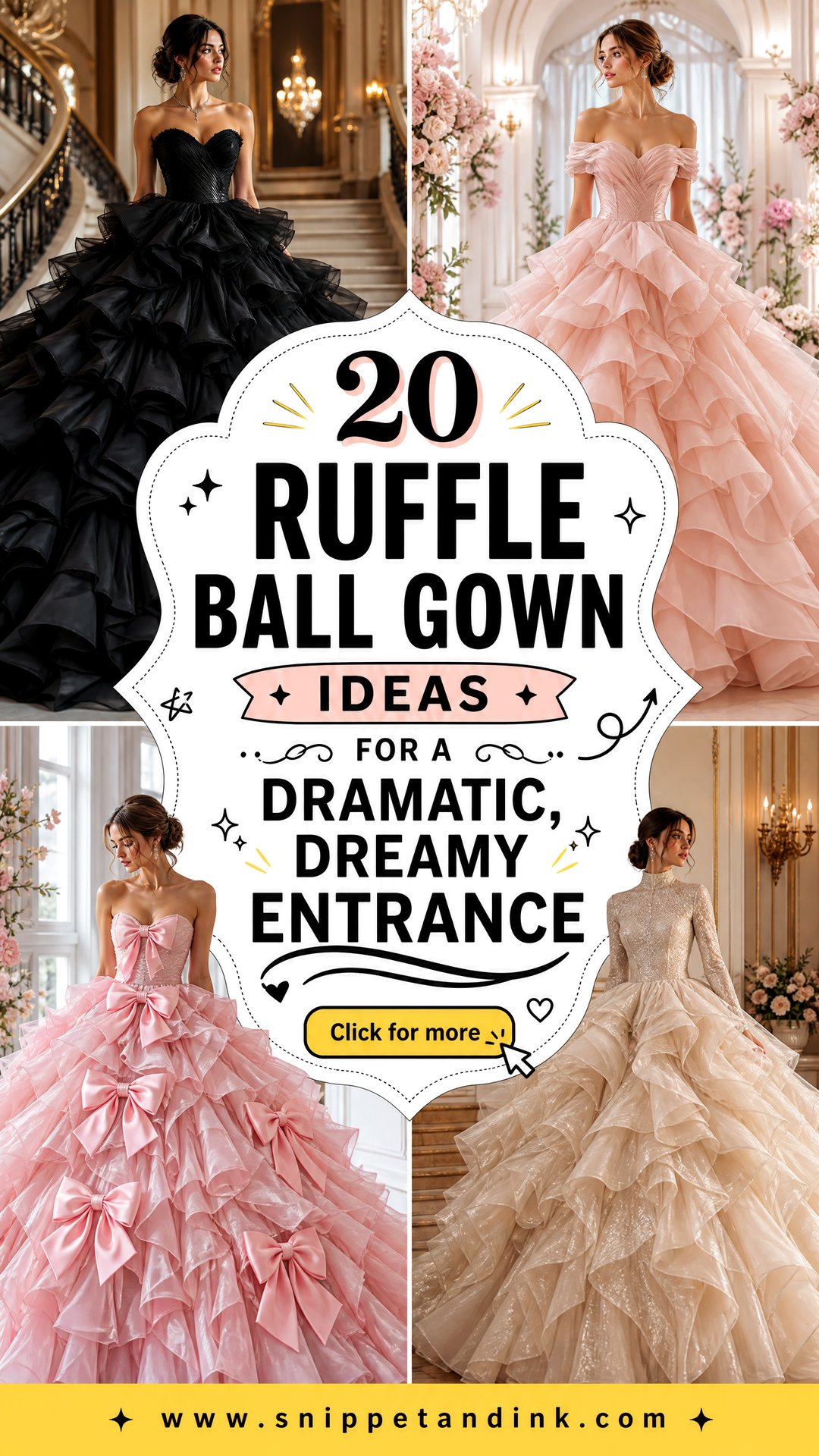
Ruffles are the one detail that changes how a gown moves, not just how it looks standing still. The ones I’d put a client in balance that volume with a bodice that actually holds her up and accessories that leave the skirt alone. You’ll see everything here from tiered tulle and crisp organza to cascading trims, appliqué flowers, one-shoulder necklines and boned corsets. Prom, a gala, a pageant or a formal birthday all call for slightly different hems and heels, so I’ve noted where each gown struggles as well as where it shines. The twenty looks run from pale pastels to jewel tones, neutrals and two-color designs.
Tulle, Organza, Chiffon or Satin: How Each Ruffle Behaves by Midnight
The fabric of the ruffle decides how the gown looks after four hours, not just in the fitting room. I handle each one differently, and I tell clients the same thing every time: pick the fabric for the event you’re going to, then pick the color.
- Tulle is the lightest and most forgiving. It springs back after you sit, but fine tulle snags on bracelets, heel buckles and rough venue chairs.
- Organza holds a crisp, sculpted ruffle and catches light well. It crushes into sharp creases if you sit on it for a long car ride, and those creases don’t fall out on their own.
- Chiffon drapes and moves most when you walk. It can’t hold big architectural tiers, so expect a softer, flatter skirt unless there’s a petticoat underneath.
- Satin gives weight and shine, and every wrinkle shows. It needs steaming close to the time you wear it.
Before buying, I squeeze a handful of the skirt for five seconds and let go. If it stays crumpled, plan on a steamer at the venue.
1. Black Strapless Ruffle Ball Gown
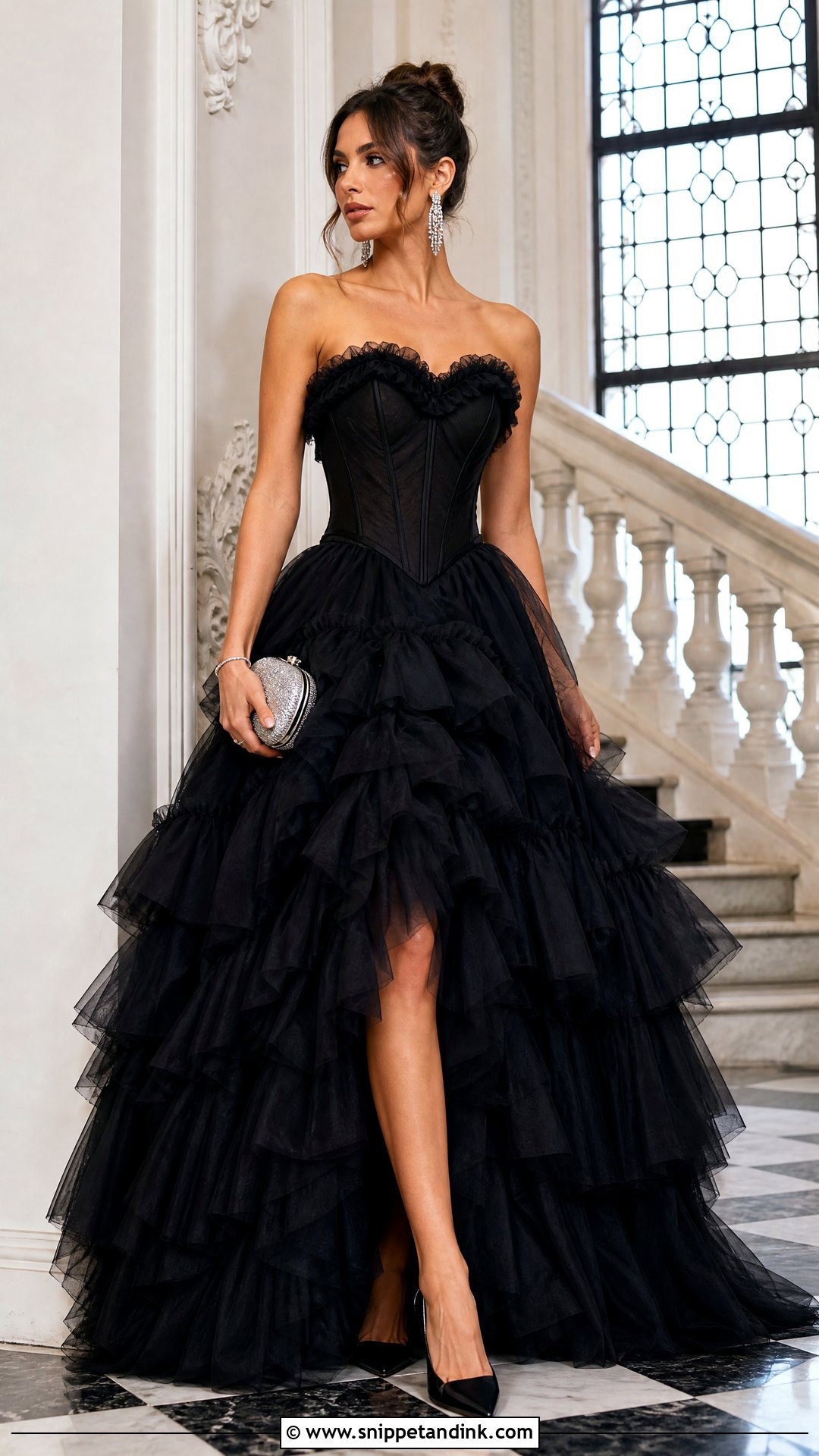
Black is the forgiving color for ruffles, because shadow hides the uneven tier that would show on white. I like a corset bodice with a straight or gently curved neckline here, with the tulle tiers building below the hip. Pointed pumps or platform sandals in black keep the line unbroken. Crystal drops, a slim tennis bracelet and a small silver clutch give enough sparkle. Pull the hair into a sleek bun or polished waves so the strapless edge stays clear, and skip the necklace if the bodice is already beaded. The one thing I check on a strapless black gown is the grip at the top edge: if you’re tugging it up before you’ve left the fitting room, it needs silicone tape or a tighter take-in.
2. Red One-Shoulder Ruffle Ball Gown
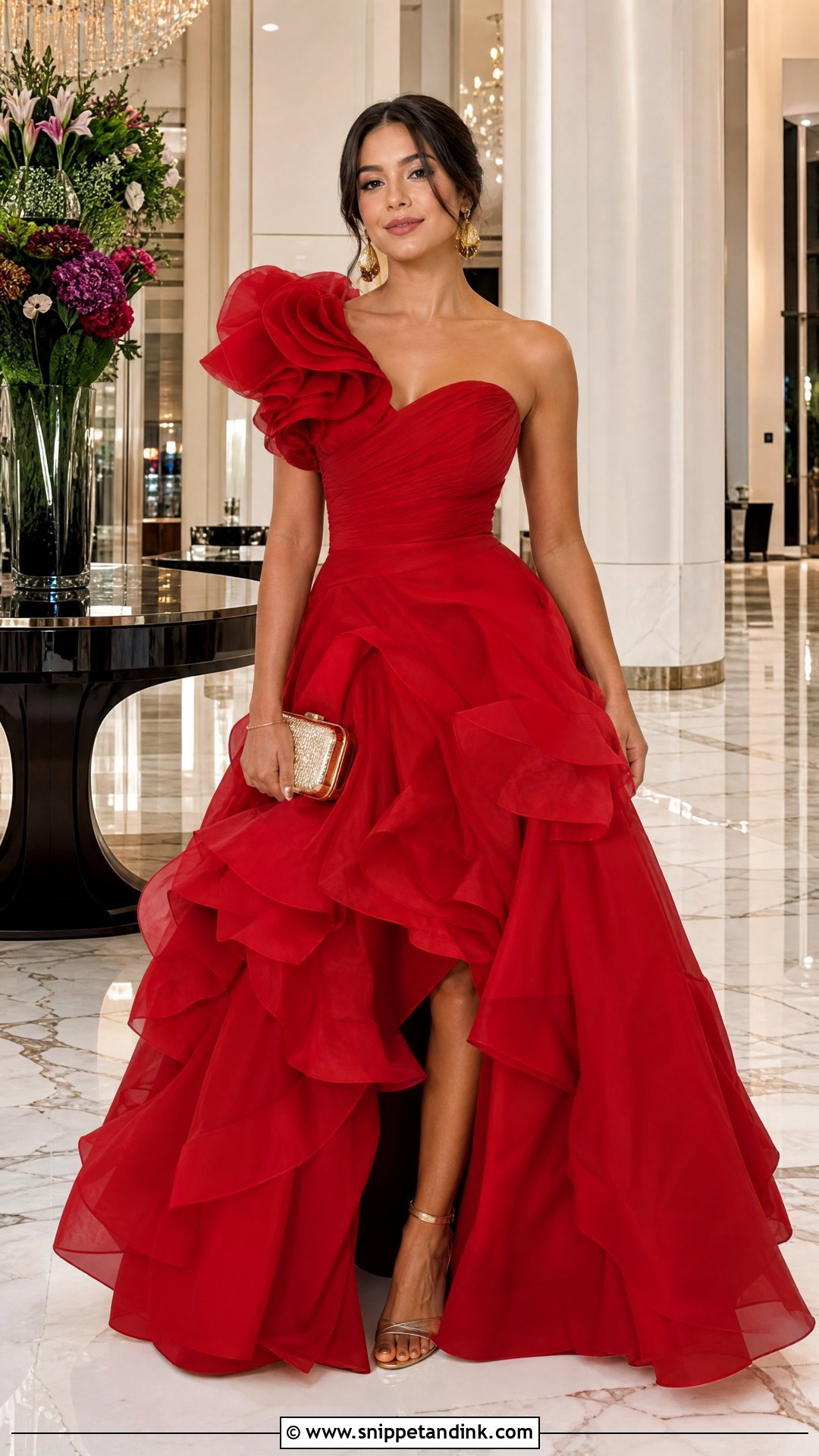
The asymmetric ruffle is doing all the talking on this red gown, so everything else has to stay quiet. Look for a firm one-shoulder bodice where the organza ruffle is stitched to a stable strap, not floating loose; loose ones flop forward the moment you lean toward a table. Keep the skirt layers controlled so the shoulder stays the focus. Red or metallic ankle-strap heels, a compact gold clutch and plain gold earrings are plenty. I’d sweep the hair into a low bun on the opposite side to the ruffle. Neutral eyes, defined lashes and a red lip that matches the fabric under daylight, not just under the shop bulbs, finish it.
3. Blush Off-the-Shoulder Ruffle Ball Gown
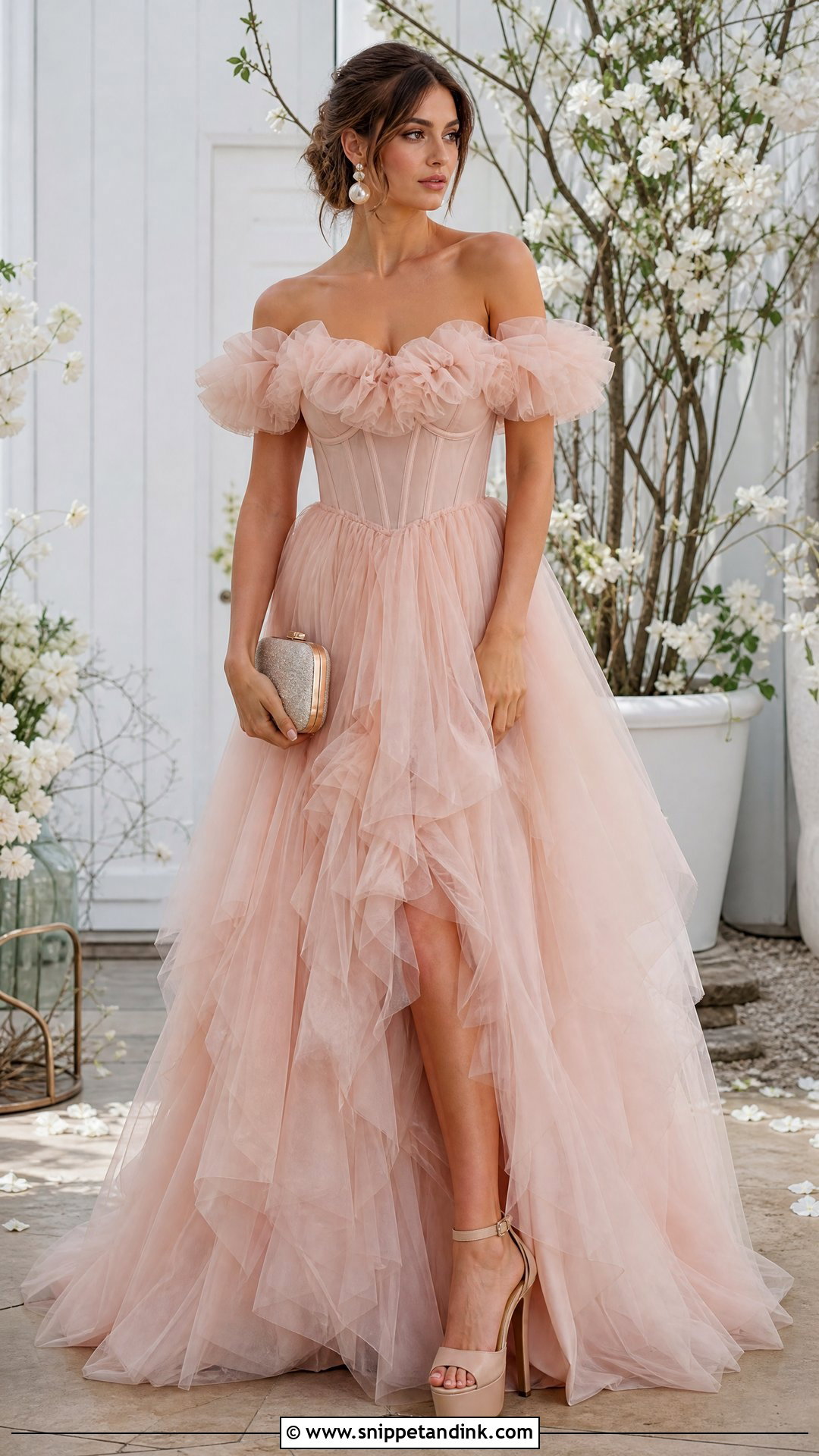
Blush off-the-shoulder ruffles look delicate, but the gown underneath has to be engineered. I won’t fit this style without an inner corset, because the sleeves rest on the arms and the only thing holding the neckline in place is the bodice grip. Fine, light tiers keep the skirt moving rather than sitting heavy. Nude platforms, pearl drops and a champagne satin clutch suit the color, and a loose low bun with a few face-framing pieces sits well above the sleeve line. Leave the necklace off. Hold the blush against your bare skin before you buy: on fair complexions it can wash out to nothing in photos, and a half-shade deeper usually fixes that. Spring proms and daytime formals suit it best.
4. Royal Blue Cascading Ruffle Ball Gown
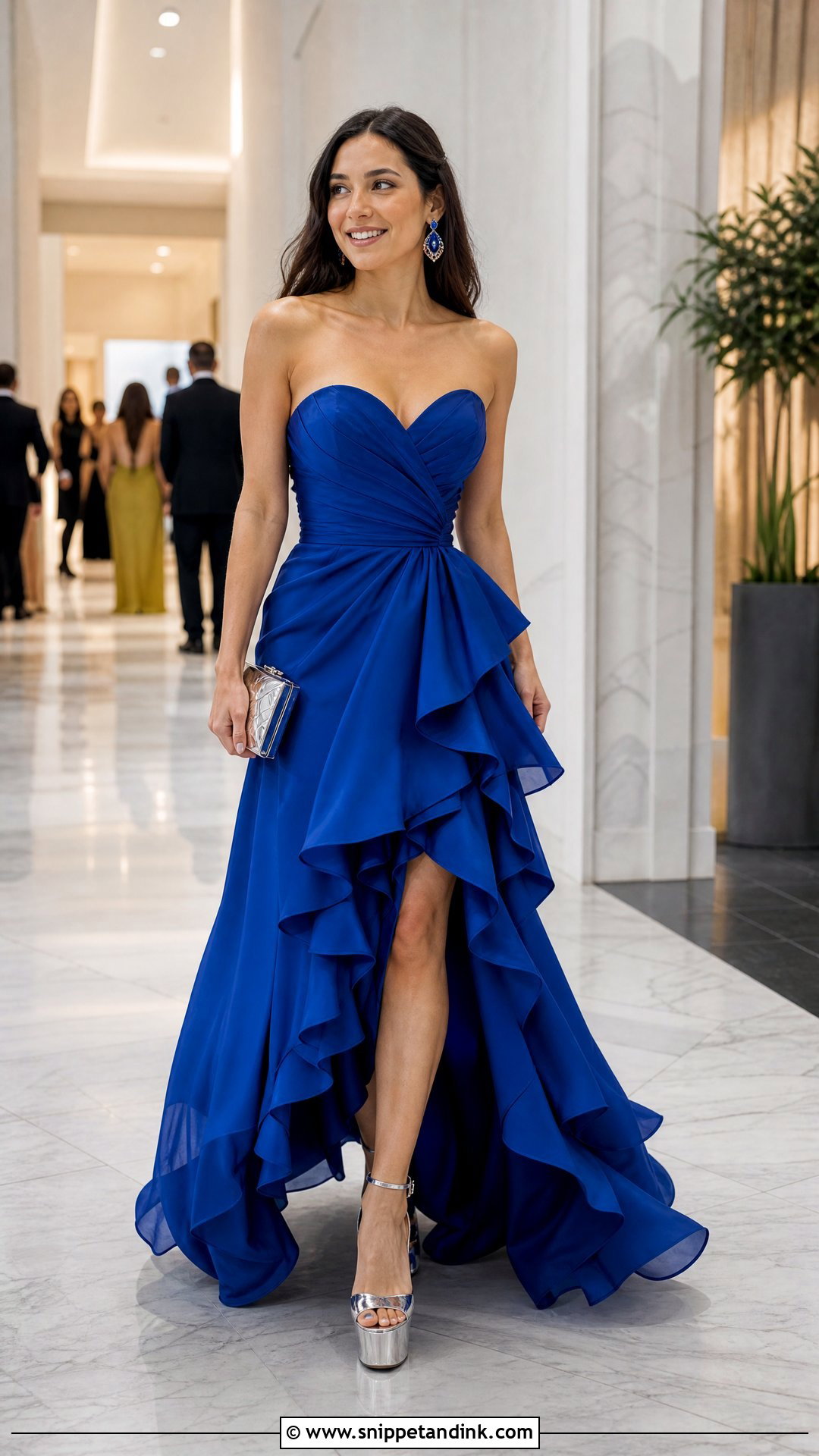
Diagonal tiers are what make a cascading ruffle ball gown read as long and fluid instead of stacked, so check that this royal blue skirt really runs asymmetrically from waist to floor. A fitted V-neck or sweetheart bodice gives the upper body definition. Silver platforms, sapphire-toned earrings and a mirrored clutch tie in with the blue, and a high ponytail or smooth chignon keeps it current. With a slit, I insist on ankle straps; a slingback can slip off on stairs when the ruffles swing. Royal blue already dominates, so stick to silver, blue and crystal and nothing else.
5. Emerald Green Corset Ruffle Ball Gown
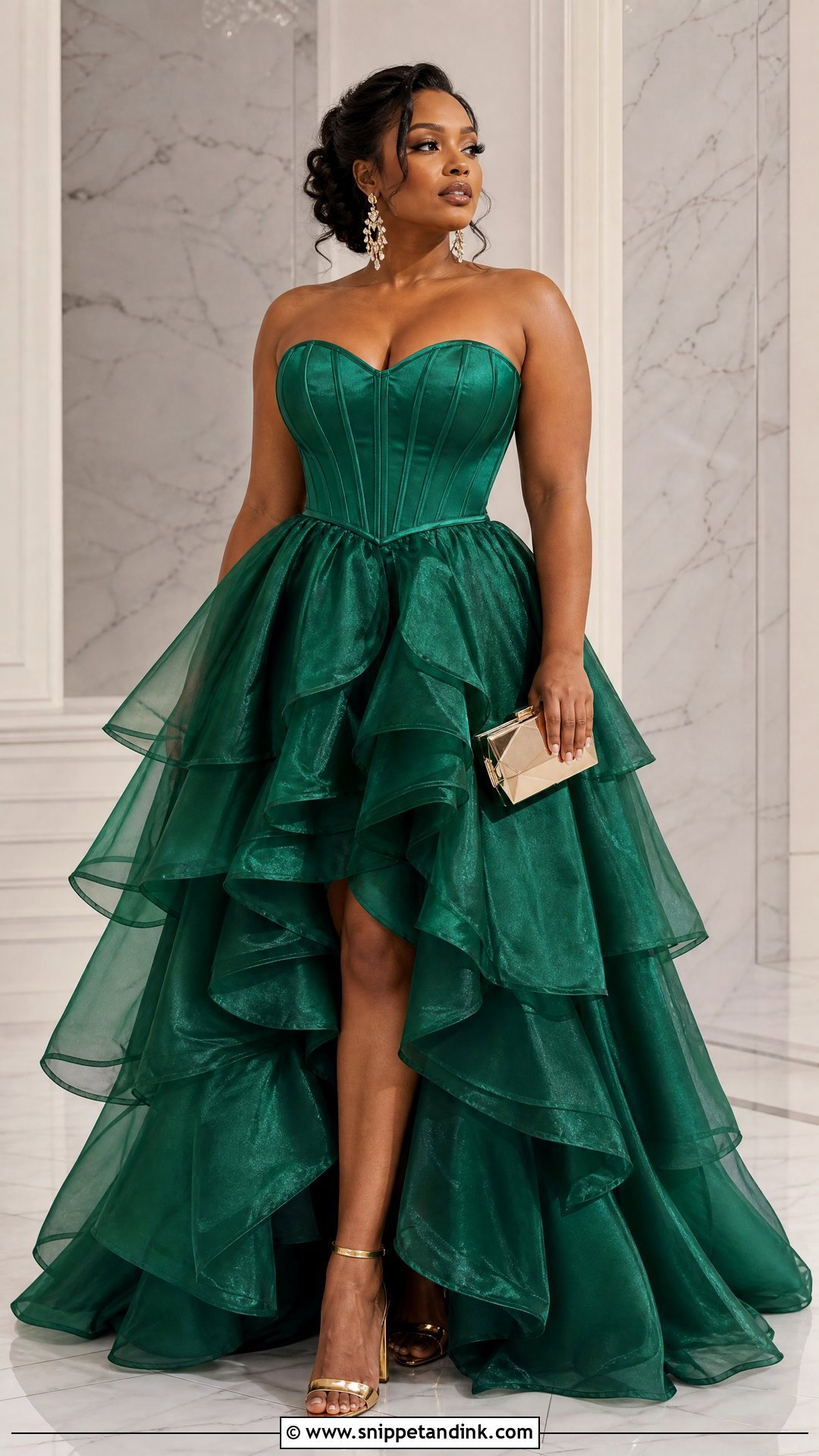
Emerald carries a corset gown without needing beads. What I look for is boning you can see and feel, a defined waist, and broad organza or tulle tiers rather than narrow frills, which can look busy in a dark color. The hard bodice against the soft skirt is the whole point. Gold block heels, a metallic clutch and small emerald or crystal studs are enough. A smooth updo keeps hair off the textured skirt, and detachable off-shoulder straps give extra coverage for anyone who wants it. Emerald suits autumn and winter events most naturally, though it reads well year round.
6. Lavender Floral Ruffle Ball Gown
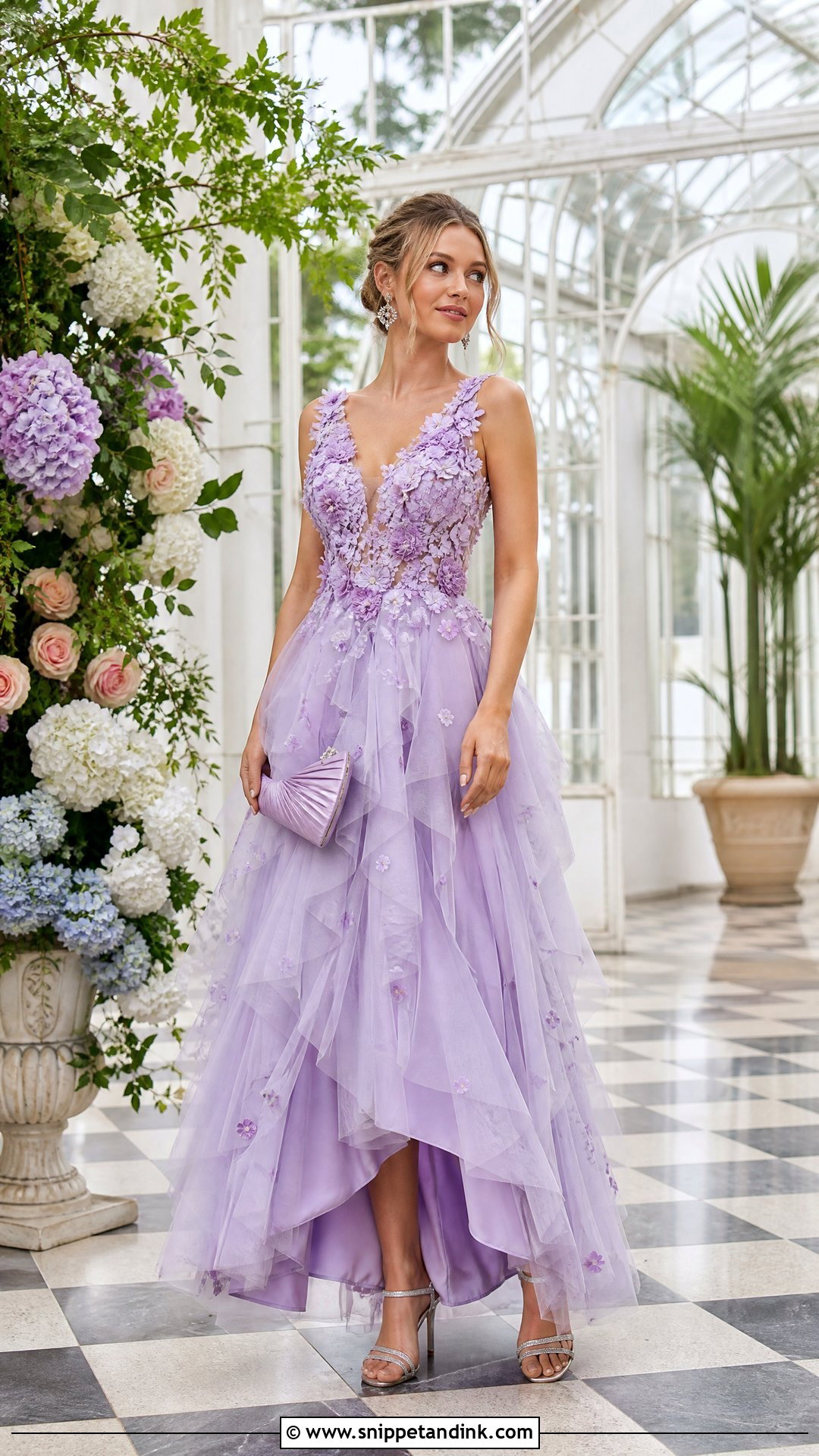
Three-dimensional flowers are where a lavender floral ruffle ball gown either looks considered or turns sugary. I steer clients toward tonal flowers in lavender on lavender, clustered at the waist or running down one side, never sprinkled evenly everywhere. Check how they’re attached as well: hand-tacked appliqués survive a crowded dance floor, while glued ones can peel at the edges by midnight. Silver sandals, a pale lilac clutch and fine crystal earrings carry the color. A braided updo or gentle waves both work, depending on the neckline, but skip a floral headpiece. Garden events, spring proms and pageants suit it.
7. White High-Low Ruffle Ball Gown
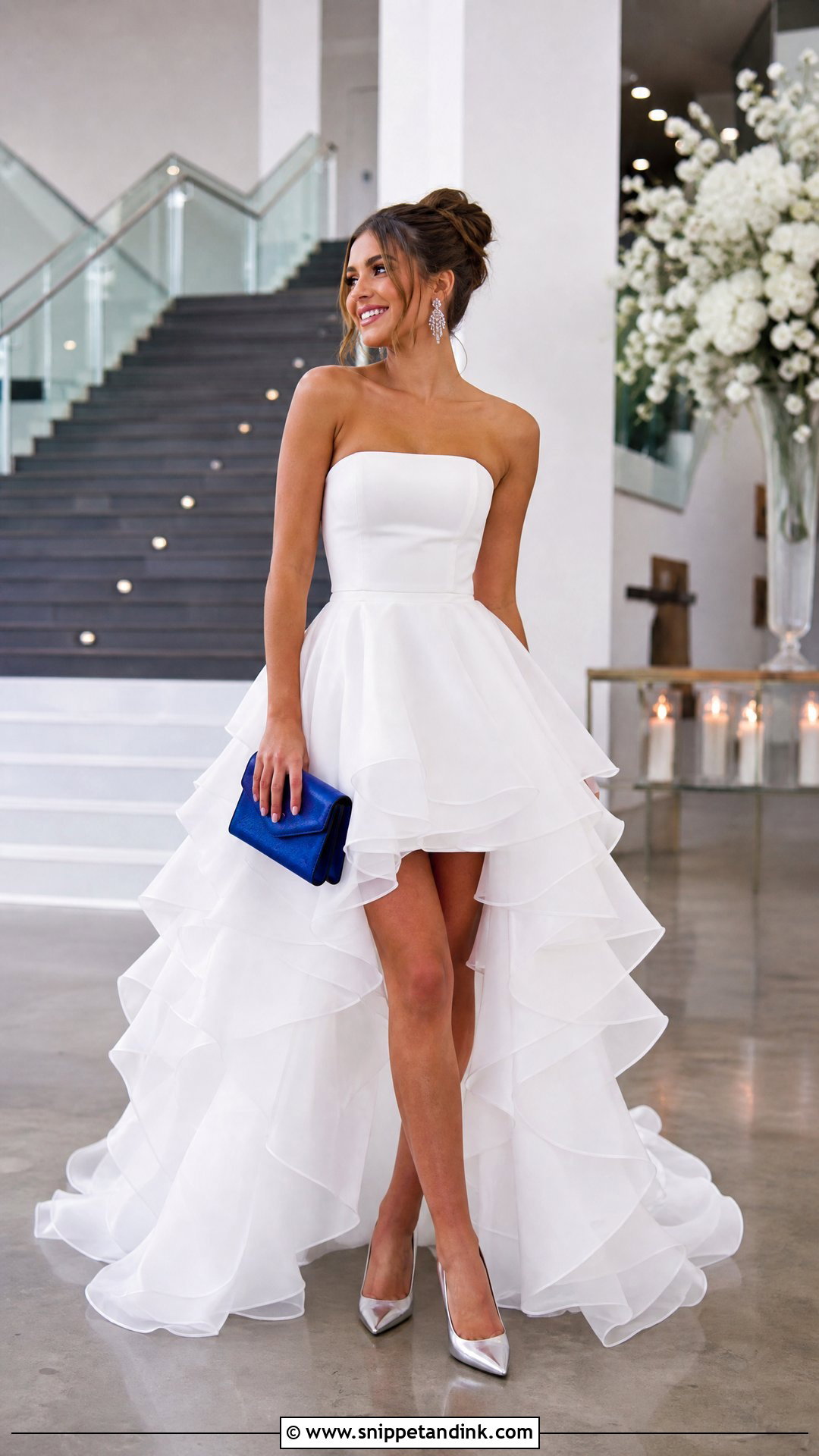
High-low hems show the shoes, so treat the shoes as part of the gown. Here the short front keeps things light while organza layers carry the volume behind. Choose a strapless or square-neck bodice with clean seams and little beading, and add silver pumps, crystal earrings and a structured mini bag. A high ponytail gives it a younger edge. White can read bridal, which matters at someone else’s wedding; a colored shoe or bright clutch shifts it firmly toward prom or graduation. The back tiers drag on steps, so practice lifting them with one hand before the night.
8. Gold Metallic Ruffle Ball Gown
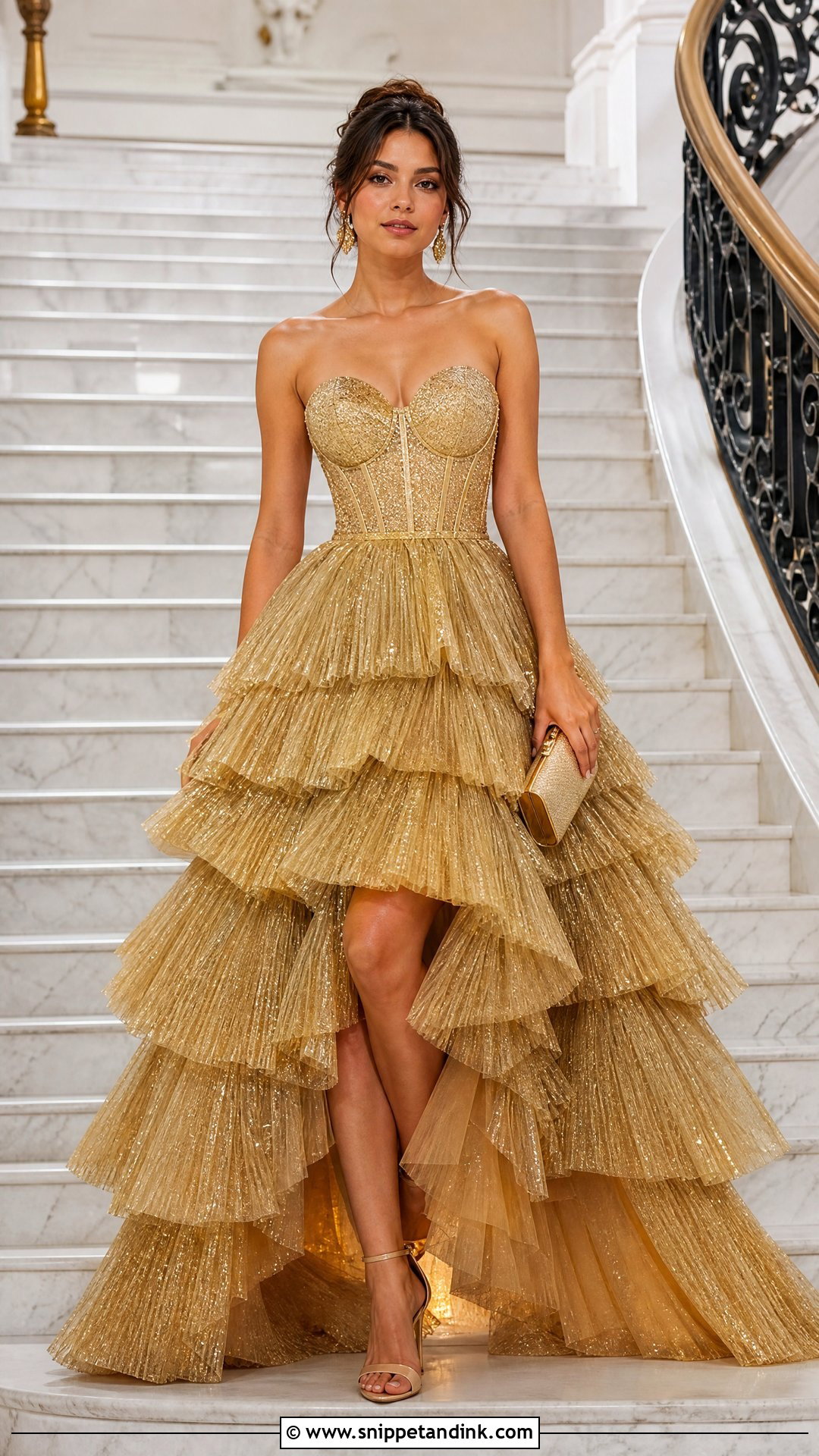
Gold metallic is unforgiving under flash, so I test it before I style it. Soft metallic organza or glitter tulle works; mixing several reflective fabrics makes the whole thing look like foil. A sweetheart corset and wide, structured ruffles give it shape so the shine has edges to catch on. Champagne heels continue the color down to the floor, and a matte gold clutch with small crystal studs keeps the extras from competing. Part the hair in the center and pin it into a neat bun. Warm, bronze eye makeup and a neutral lip balance it. Large venues and pageant stages suit the scale best; in a small room it can overwhelm.
9. Navy Long-Sleeve Ruffle Ball Gown
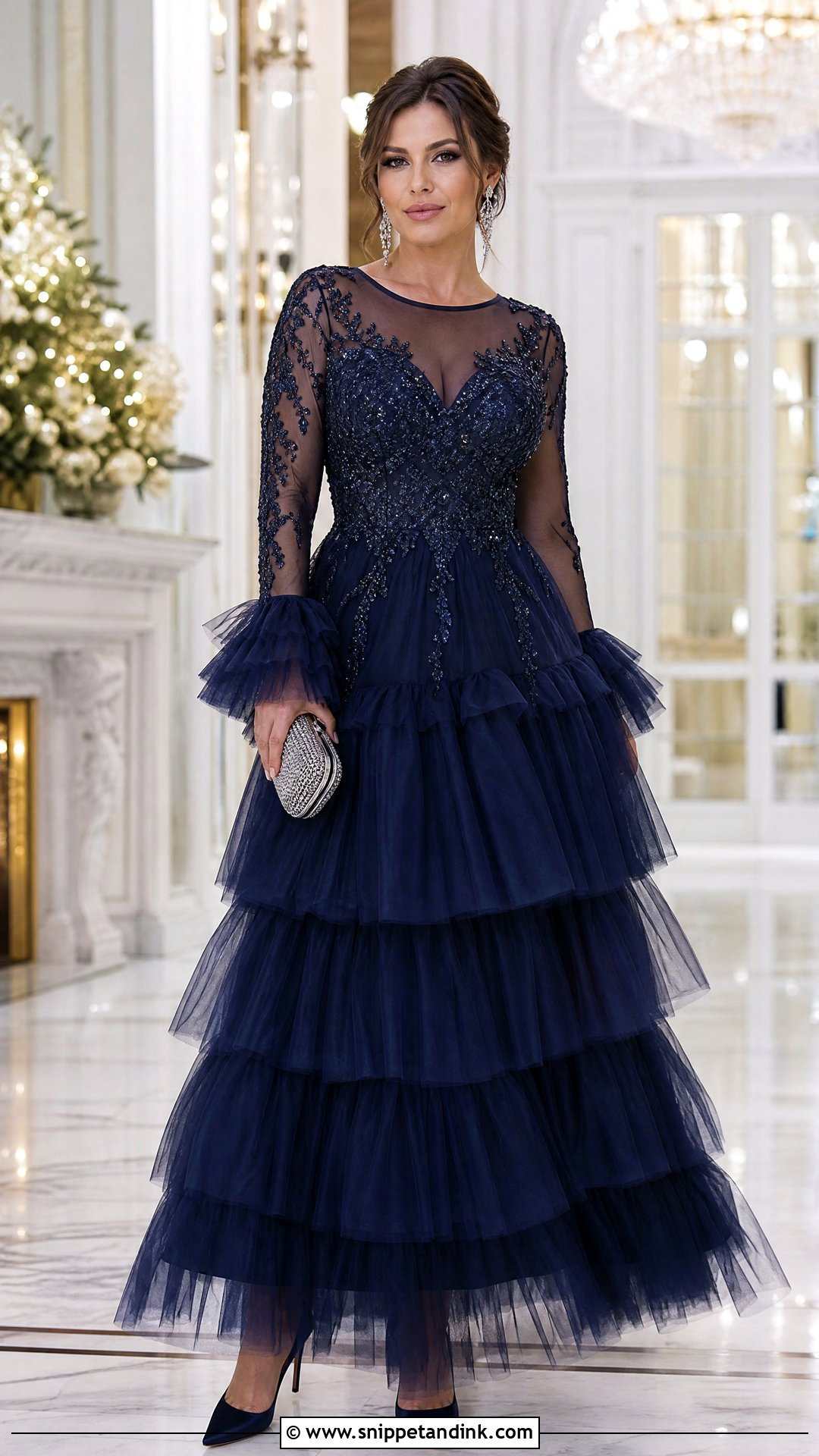
Long sleeves change how a ruffle gown fits more than people expect. In navy, an illusion or stretch-crepe bodice keeps the top close while a layered tulle skirt does the work, and small cuff ruffles link the two halves. Keep the waist defined at its natural point or the skirt swallows the frame. Navy satin pumps, silver drop earrings and a compact beaded bag look polished, with a low bun or side-swept waves depending on the neckline. No stacked bracelets over the cuffs. The fitting I care most about here is the armhole: cut too low, you can’t lift your arm to dance without the whole bodice rising.
10. Pink Ruffle Ball Gown With Bows
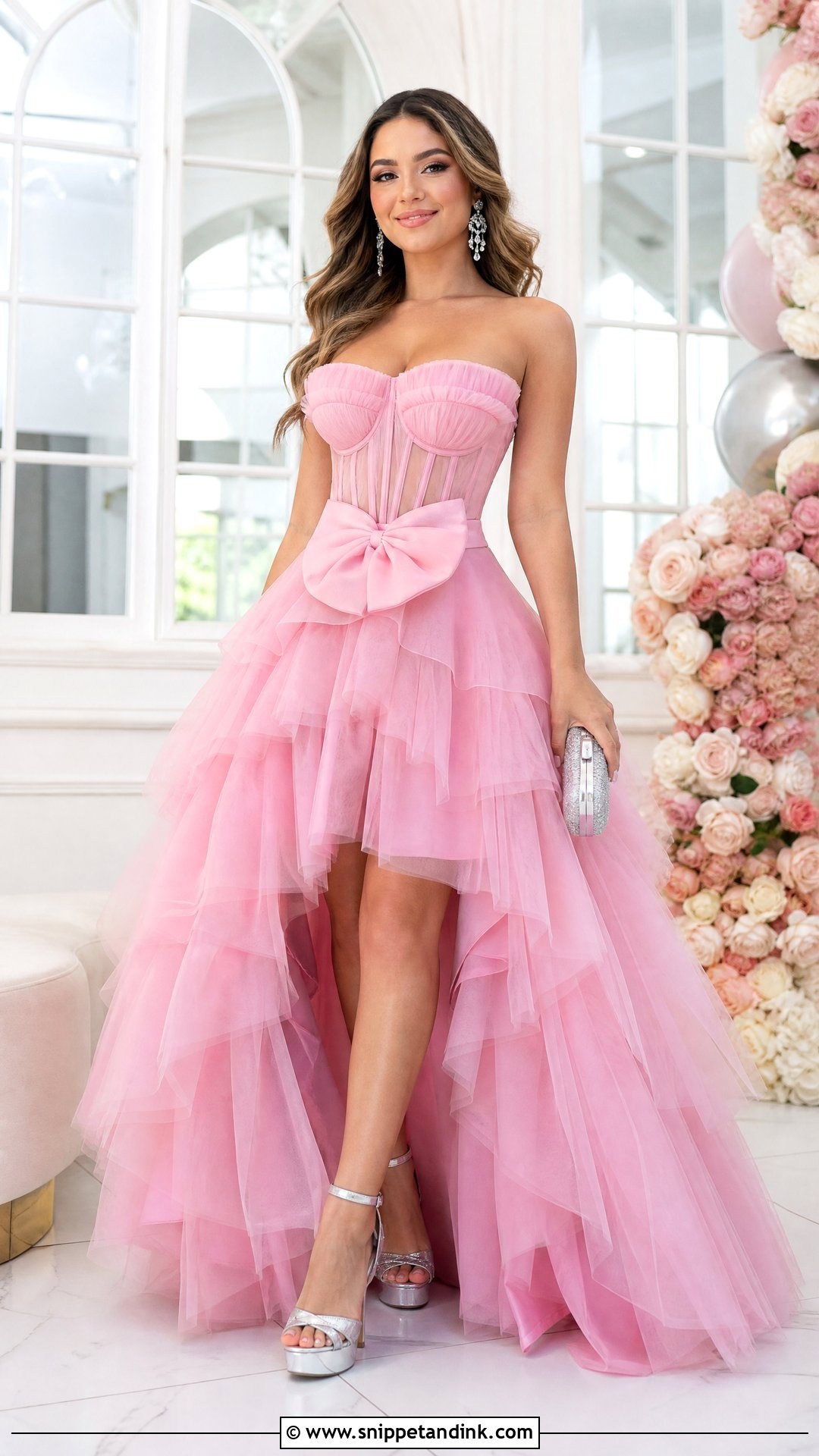
One bow, placed with intent, keeps this pink gown from looking like a costume. I’d pick a single statement bow at the waist, shoulder or back and let organza tiers provide the rest of the shape. Silver platforms, crystal studs and a small pink or metallic clutch follow. A sleek half-up style works, though with a back bow I’d lift the hair fully so it doesn’t flatten the loops. Cool pink looks crisp; dusty rose softer and easier on warm skin. Quinceañeras, proms and formal birthdays are where it belongs. Check that the bow is stiffened inside; an unlined bow droops after an hour.
11. Yellow Chiffon Ruffle Ball Gown
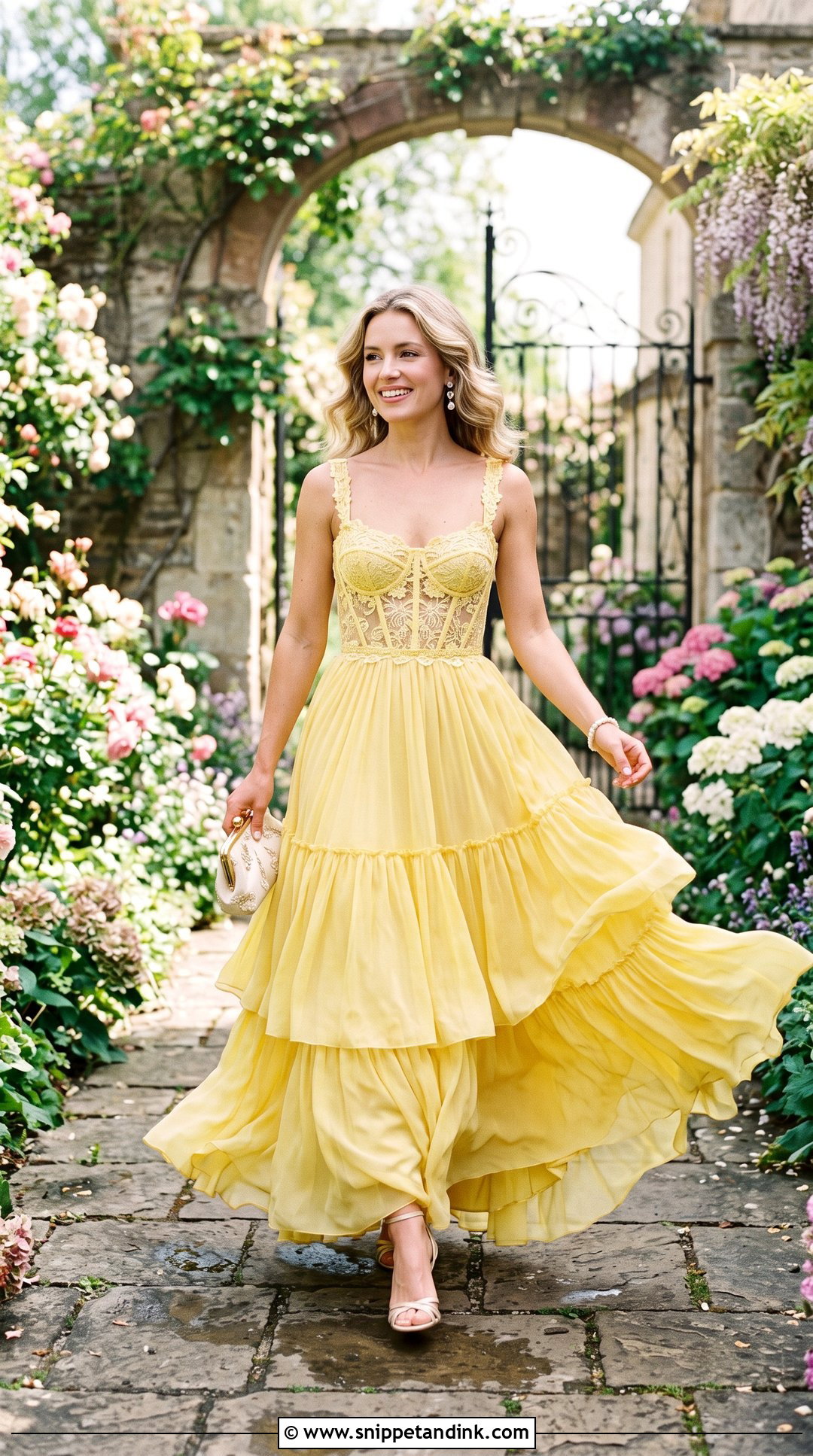
Sunny yellow chiffon feels lighter than most formal gowns, because chiffon tiers move far more than organza ones. Pair them with a supportive lace or corset bodice so the softness stays in the skirt. Nude or pale gold heels lengthen the leg, and small pearl earrings, a cream clutch and a thin gold bracelet stay out of the way. Loose waves or a textured low ponytail suit the airy fabric. Pale yellow shifts badly between daylight and warm indoor bulbs, so I always look at it on the client in both before anyone commits. It comes alive at spring and summer events.
12. Burgundy Satin Ruffle Ball Gown
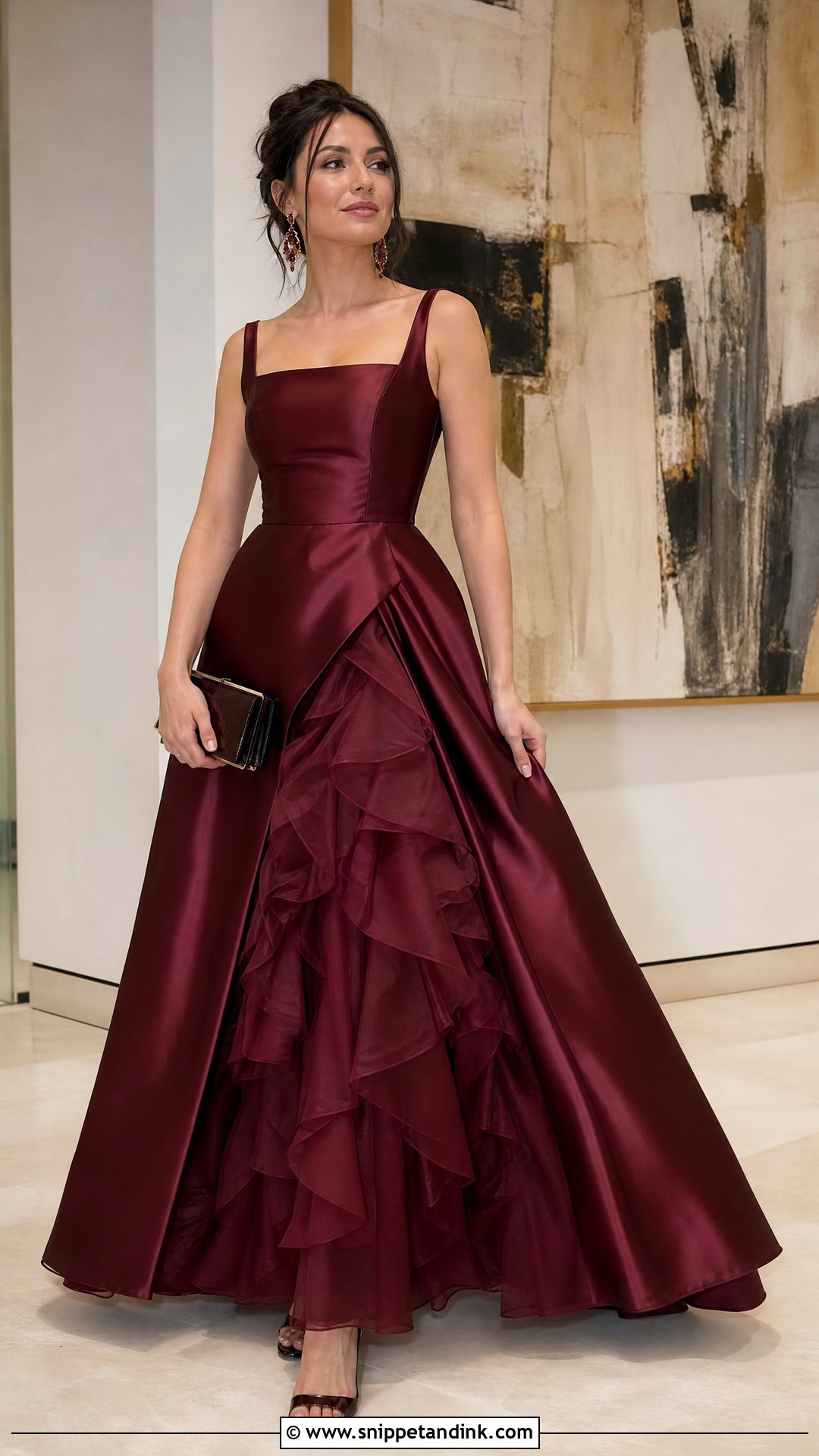
Satin creases. That’s the first thing I tell anyone choosing burgundy satin, because every crease shows on a smooth surface in a way it never would on tulle. Here the burgundy shell carries a fitted square or sweetheart bodice, with an organza ruffle underlay that only appears when the skirt moves. That gives shine, texture and volume without tiers everywhere. Black or dark metallic heels, garnet-toned earrings and a small clutch in a softer finish than the gown suit it, with a side-parted bun. Steam it on the hanger at the venue, not the night before at home, and sit on the back of the skirt with care in the car.
13. Silver Glitter Ruffle Ball Gown
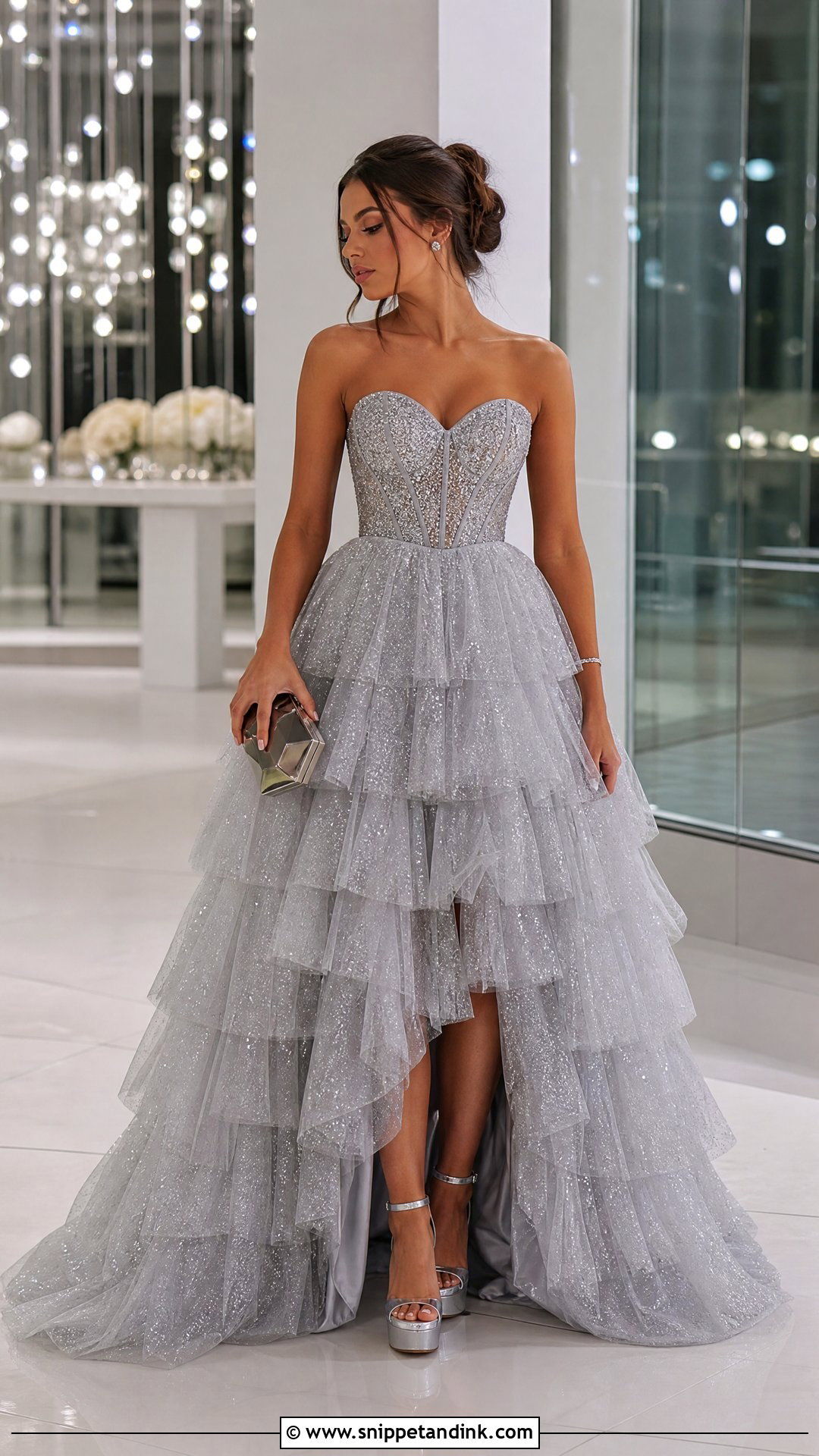
Glitter tulle sheds, and the cheaper the fabric, the more of it ends up on your skin and your date’s suit. I’d look for sparkle concentrated on the bodice or scattered lightly through the tiers, not caked onto every layer. Strapless, a defined waist and graduated ruffles keep the shape balanced. Stable silver platforms under the long hem, a charcoal or mirrored clutch, crystal studs and a slim bracelet are the limit. Smooth waves or a high bun keep it clean. Rub the lining against your inner arm in the fitting; scratchy glitter lining gets unbearable after a few hours of dancing.
14. Sage Green Ruffle Ball Gown
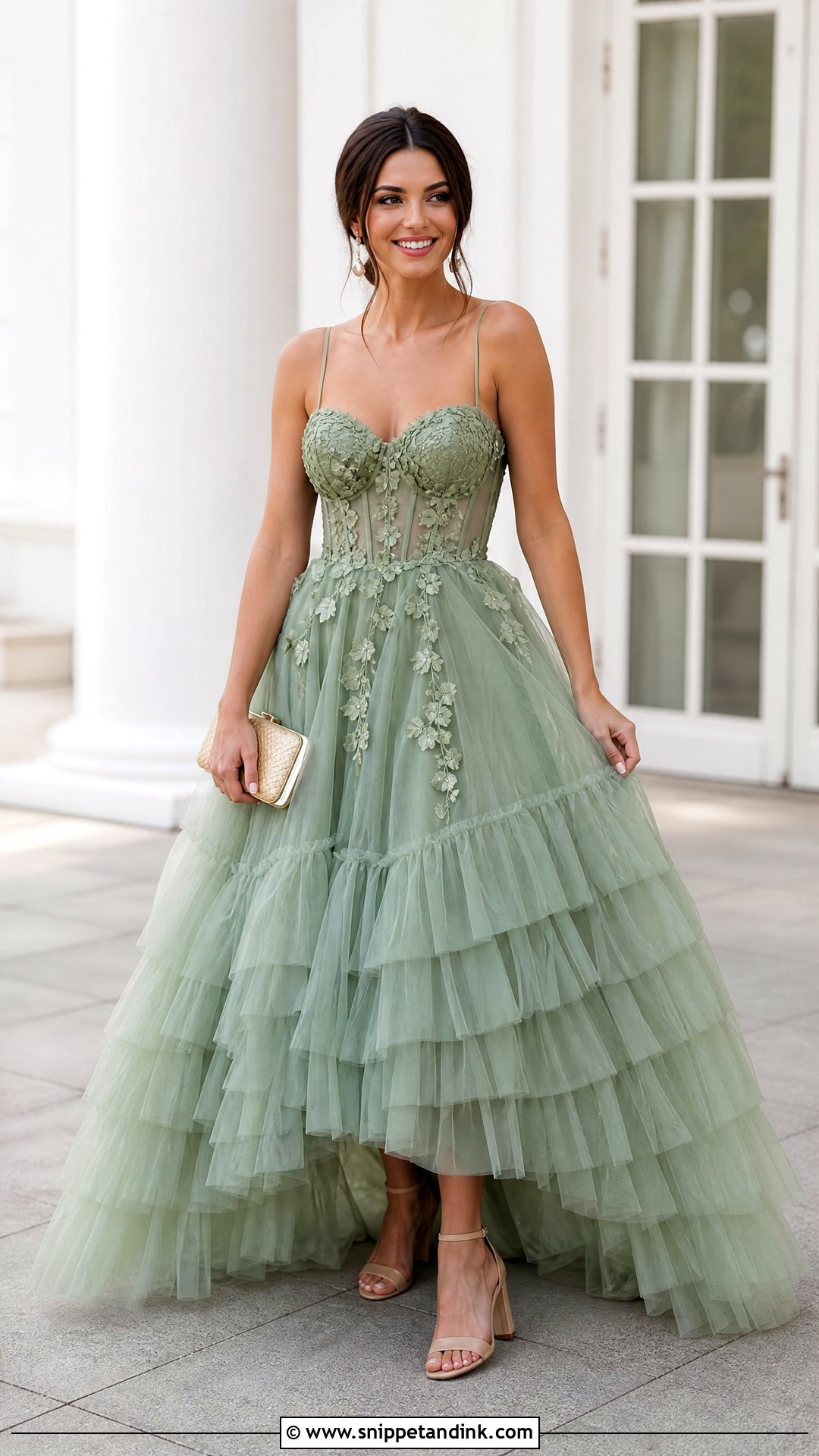
Muted sage hides small fit flaws better than a bright color, which makes it a kind gown to wear. A sweetheart corset with slim straps supports the bust while tiers of soft tulle keep the skirt light. Nude block heels, pearl drops and a pale gold clutch suit the tone, as do soft waves or a loose low bun. If you’d like more definition, tonal floral appliqués at the waist work better than contrasting embroidery. My firm rule on this one: hem it with your actual shoes on. Ruffle edges that brush the floor fray fast outdoors, and a heel caught in the bottom tier tears it.
15. Purple Ombre Ruffle Ball Gown
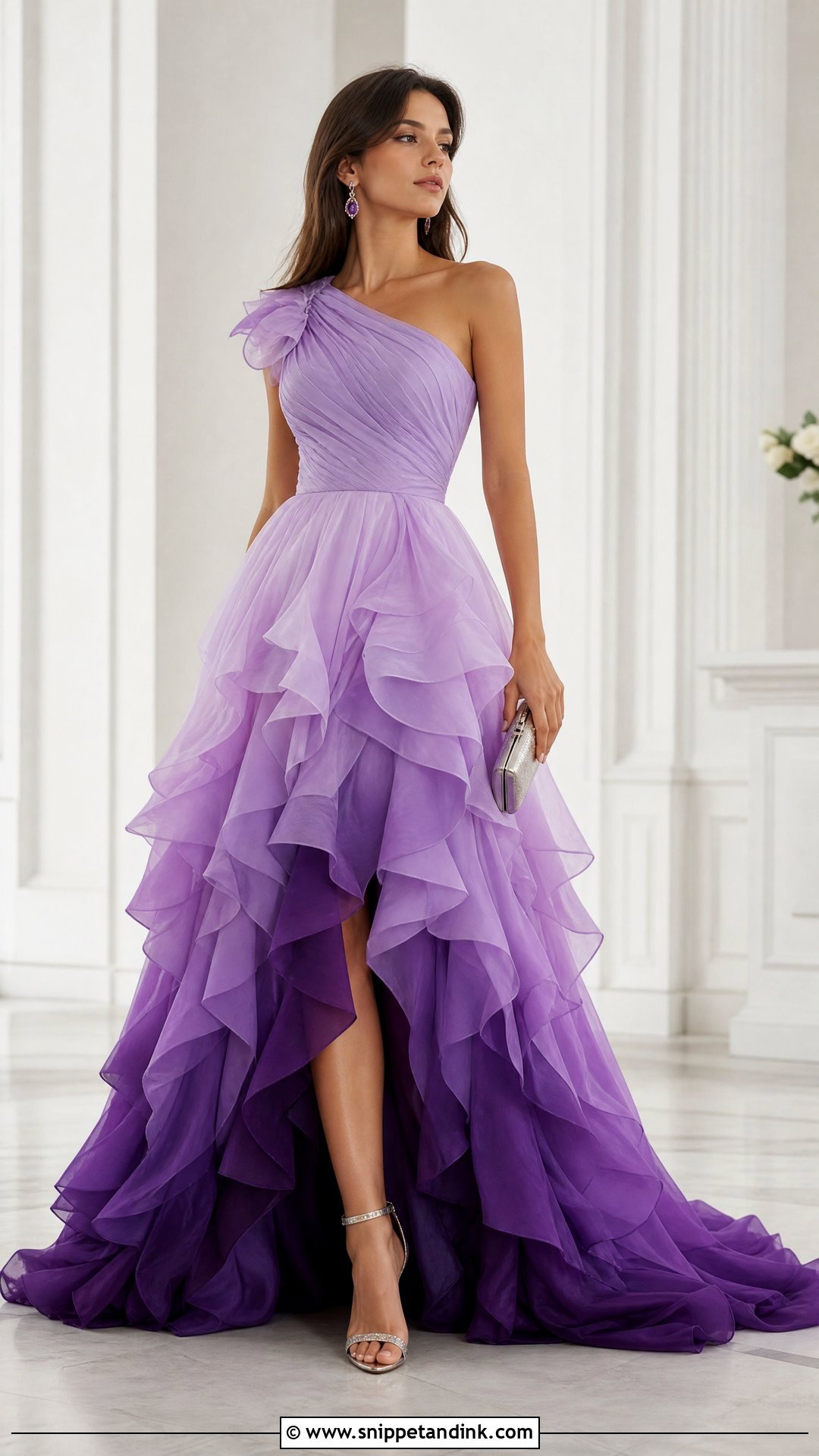
Ombre only works when the fade is gradual. On a purple ombre ruffle ball gown, look for pale lavender at the bodice deepening tier by tier to violet at the hem, with no hard stripes where the dye bands meet. An asymmetric or one-shoulder neckline echoes the direction of the color. Silver heels, amethyst-toned earrings and a plain metallic clutch are all it needs, with a sleek ponytail so the shape stays visible. Don’t add a second bold color. Check the gradient under flash too, since some cheaper dyes photograph as bands even when they look smooth in person.
16. Floral Print Ruffle Ball Gown
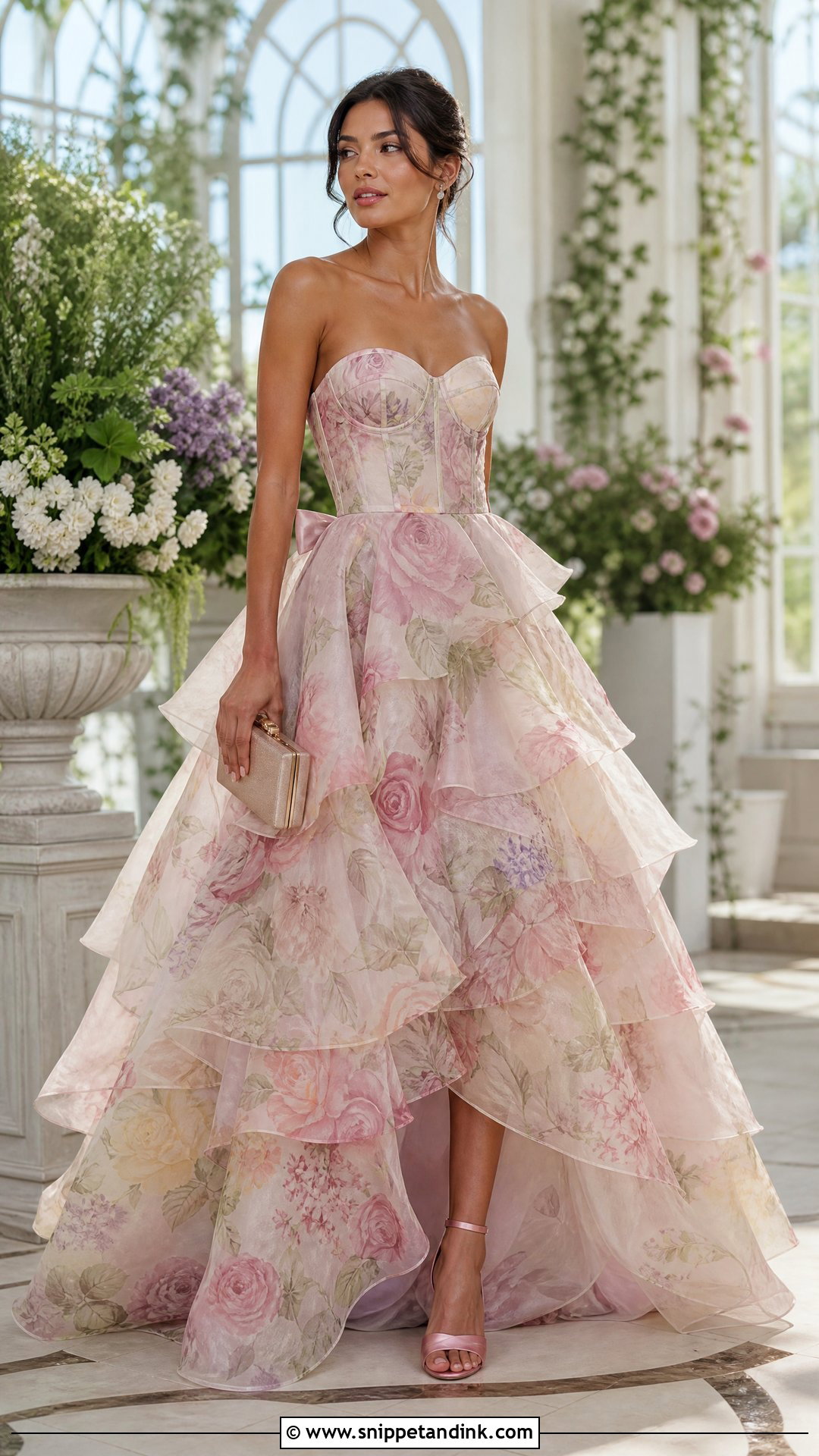
Scale is everything with a printed ruffle gown. Large flowers on wide organza tiers have room to breathe; small prints on narrow ruffles turn into noise. A solid corset bodice gives the eye a rest, though a continuous print is bolder if you can carry it. Pick shoes in one minor shade from the pattern and keep the clutch neutral. Small earrings and a fine bracelet are all the jewelry it needs, with an understated updo or smooth half-up style. When I shop prints with a client, I step back across the room and look at where the biggest blooms land, because a flower centered on the bust or the hip draws the eye in ways nobody planned.
17. Black and White Ruffle Ball Gown
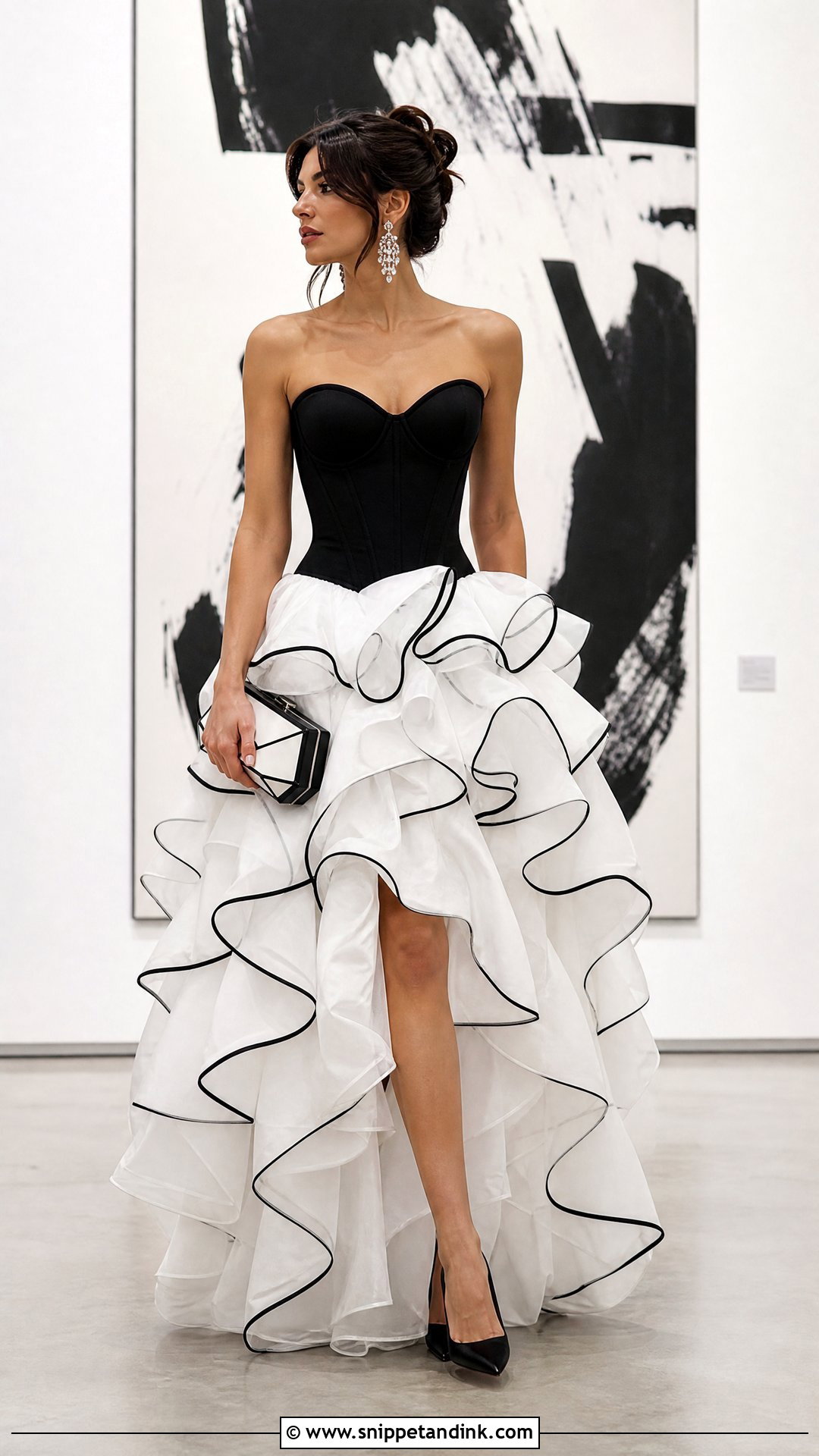
Black and white is graphic, and graphic means every misaligned seam shows. You might wear a black corset over a white tiered skirt, or alternating ruffles for something louder. Black pointed heels, a structured monochrome clutch and clear crystal earrings stay inside the palette, with a smooth low bun to match the clean lines. On a white bodice, I check the cups and lining under bright light, because dark seam allowance or a cup edge can ghost through. Keep accessories to black, white and silver. Formal dances, galas and black-tie events suit it, no bright color required.
18. Plus-Size V-Neck Ruffle Ball Gown
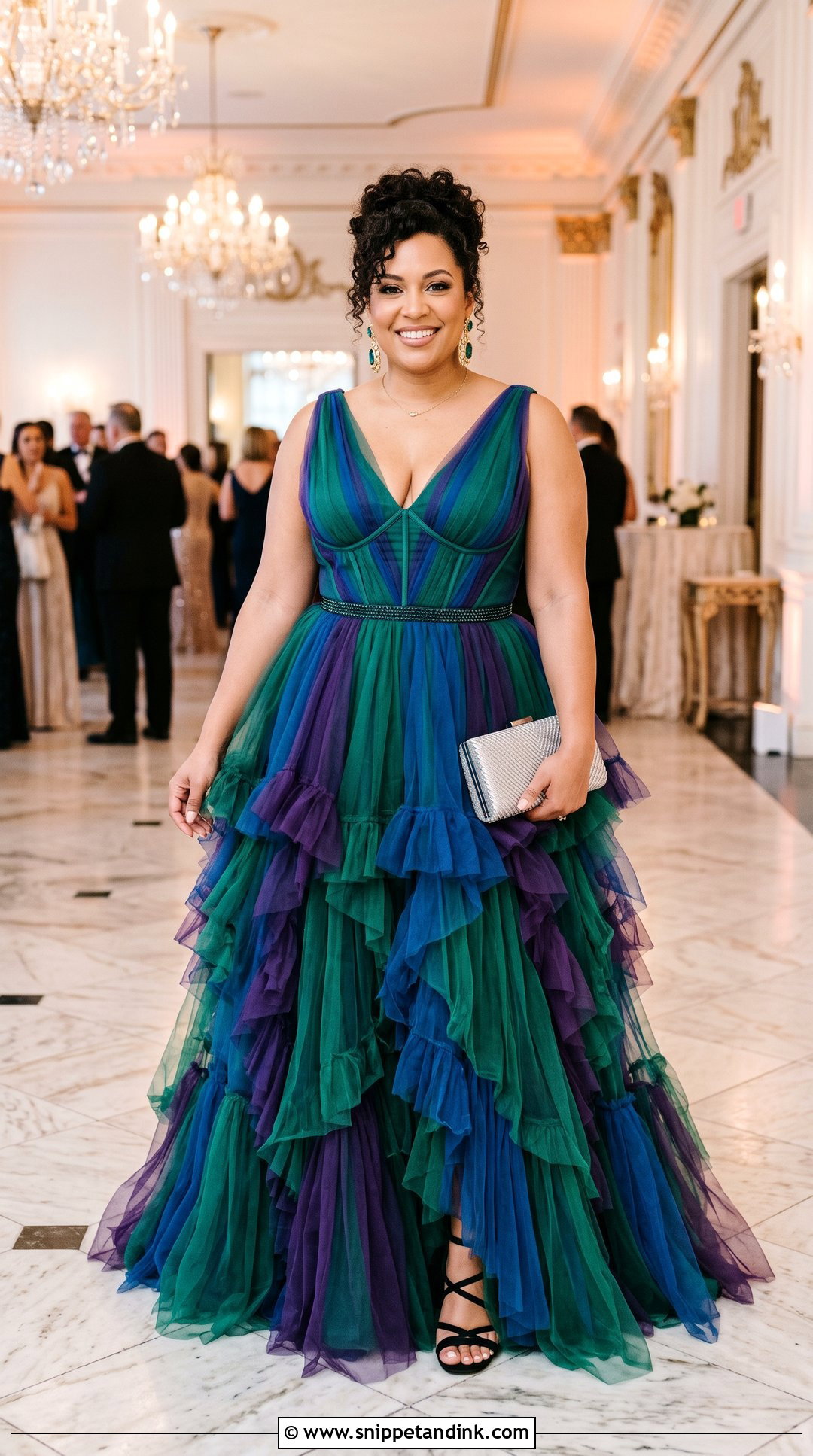
Support comes first on a plus-size V-neck ruffle ball gown, and volume second. I look for wider straps, internal boning, built-in cups and a waist that’s defined but not cinched so hard it rolls. Diagonal or cascading ruffles move with the body, and graduated tiers stop bulk piling at the waistline. Comfortable block-heel sandals, statement earrings and a structured clutch work well, with an updo or side-swept style to open the neckline. Don’t put every statement piece near the face. Order to your largest measurement and budget for alterations; taking in a bodice is routine, letting it out often isn’t possible.
19. Modest High-Neck Ruffle Ball Gown
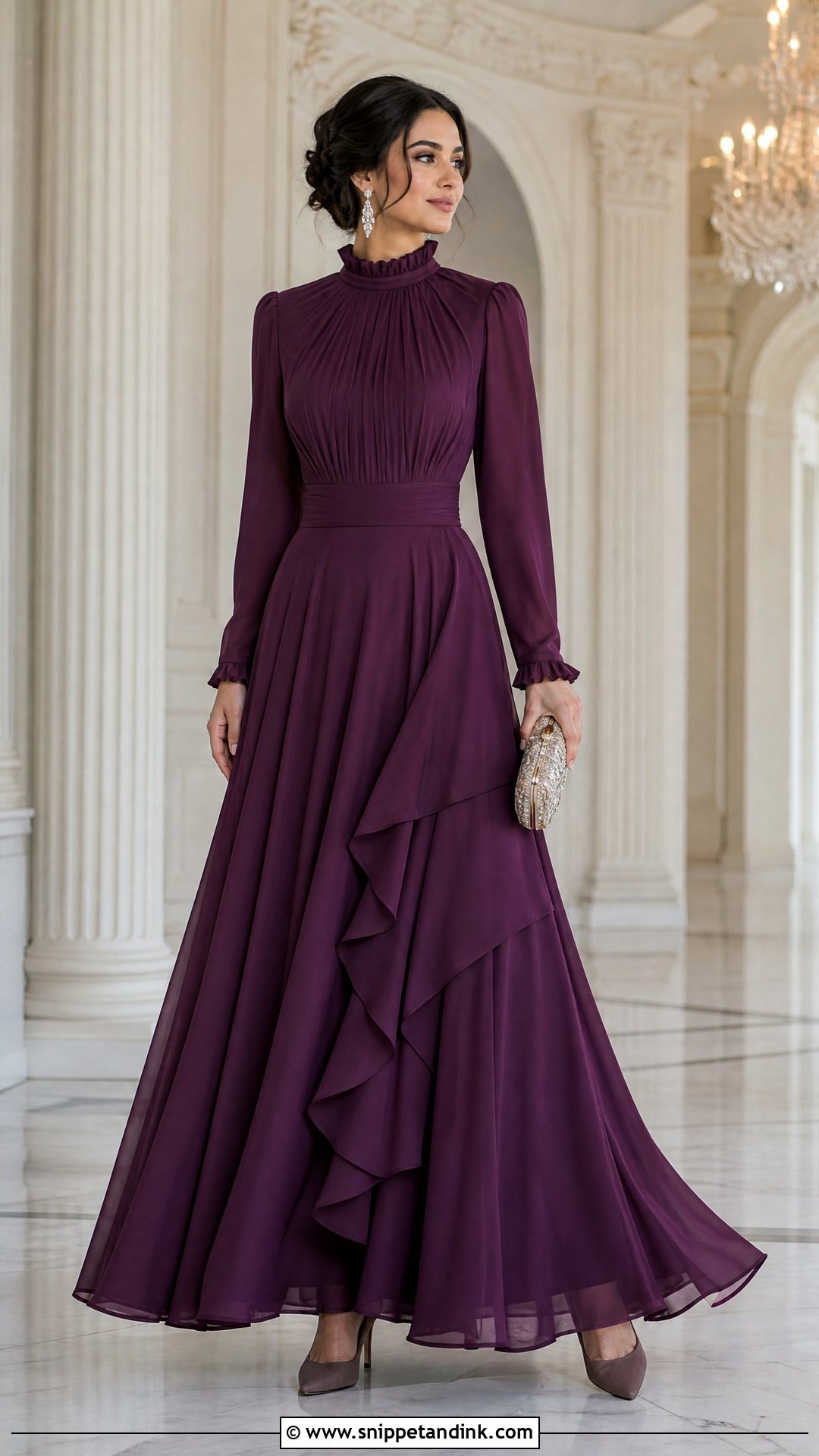
High necks and ruffles fight for the same space around the face, so the ruffles belong lower down. A fitted bodice with long or three-quarter sleeves, a defined waist and a tiered tulle or chiffon skirt gives coverage without losing the ball gown shape. Fine ruffles at the cuffs can connect sleeve and skirt. Closed pumps, small drop earrings and an embellished clutch suit it, and a low chignon sits comfortably below the collar. Navy, plum, forest green and soft mauve all work. In the fitting, I ask clients to sit, turn and raise both arms; a high neckline that pulls or gapes when you move needs fixing before the event, not after.

20. Ruffle Ball Gown With Detachable Cape
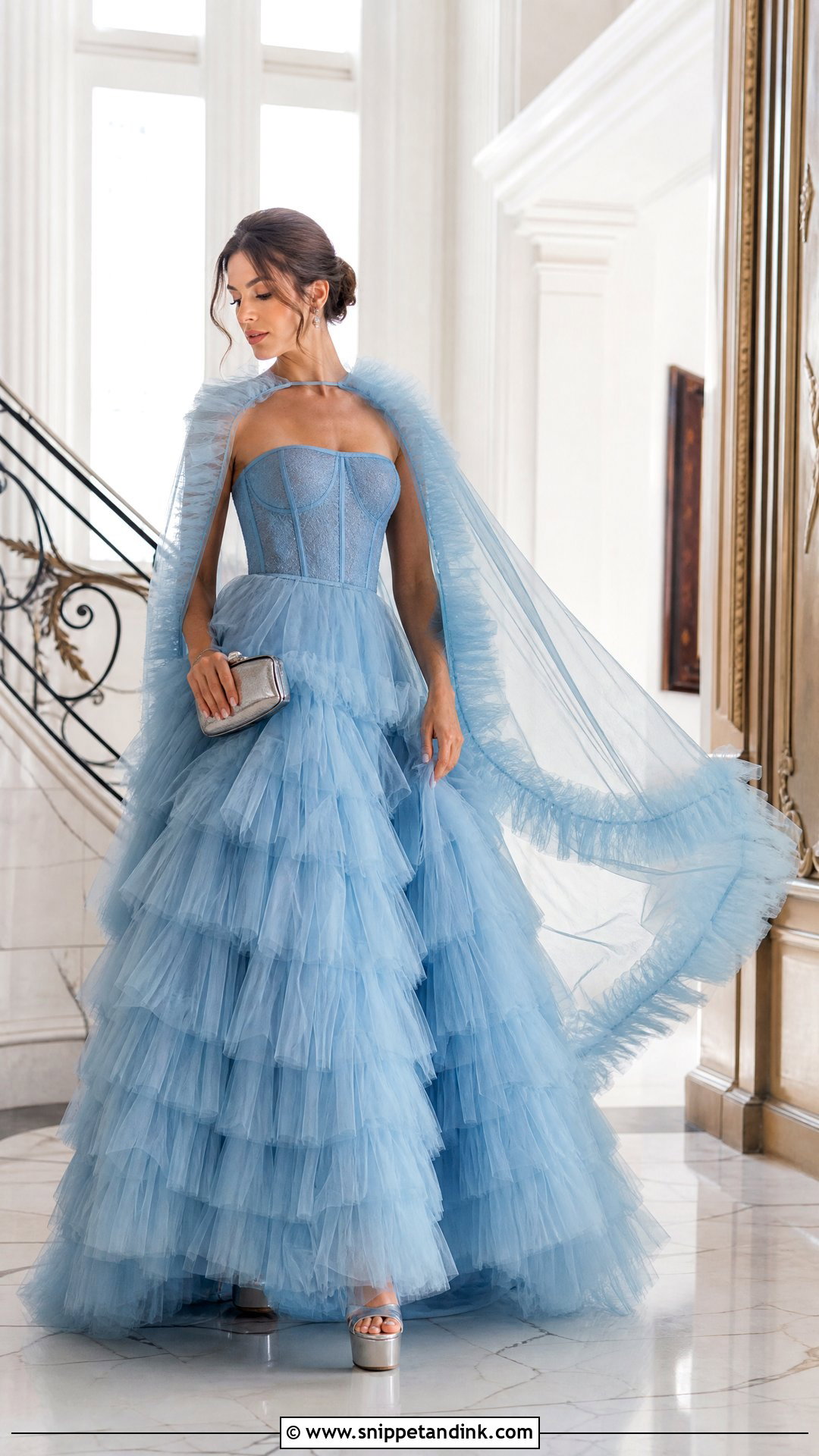
Two looks in one night is the appeal of a detachable cape. Start with a clean strapless or sleeveless corset gown with a full tiered skirt, then add a sheer tulle cape with a ruffled edge for the entrance and photos, and take it off for dancing. Platform heels, understated earrings and a small clutch keep your hands free. An updo keeps hair out of the fastenings. Cape and gown should share fabric weight and shade, or the join looks like an afterthought. Practice the hooks or snaps yourself in a mirror, and decide in advance who holds the cape once it comes off; tulle left on a chair gets crushed or stepped on.
Why a Tiered Hem Costs More to Alter Than a Plain One
On a plain skirt a seamstress shortens the bottom edge and she’s done. On a ruffled skirt, cutting the lowest tier ruins its proportion, so the usual fix is lifting the whole skirt from the waist seam, or taking up each tier separately. Both take longer, and quotes for this work vary a lot, so ask for one before you agree to it.
My advice is to try gowns on in the actual shoes from the first appointment, leave several weeks for alterations, and plan at least two fittings. Ask the seamstress to check the hem with you sitting, too, because tiers ride up when you sit and can expose a petticoat edge.
Getting the Skirt There Uncrushed
Most ruffle damage happens before anyone arrives. A full skirt folded into a back seat comes out flattened on one side, and organza keeps every crease.
- Carry the gown on a padded hanger in a long, breathable bag, never folded into a box on the day.
- In the car, sit on the bodice end of the seat and gather the tiers forward over your lap rather than under you.
- Pack a small travel steamer and a lint roller, and give the lowest tiers a quick pass on arrival, holding the head a few inches from the fabric.
- Keep a couple of safety pins and clear thread in the clutch for a torn ruffle edge.
After the event, hang it up straight away. Folded ruffles left overnight set into creases that a steamer struggles to lift.
Fit, Fabric and Shoes Before the Ruffles
Ruffles get all the attention, but the gowns that work on the night are the ones that fit, move and stay put. Decide first where you want the volume: at the hip, along a diagonal, or across the shoulder. Then match the fabric to the event, since tulle floats, chiffon drapes, organza holds a shape and satin shows every crease. Wear supportive shoes under a heavy skirt and book alterations wearing the exact heel you’ll dance in. Let jewelry and bags support the gown. From soft blush tiers to black, red and ombre, any of these looks can be distinctive and still comfortable at the end of the evening.
You'll Like These Ideas:





Leave a Reply