
Straps change a wedding dress more than most brides expect. The same bodice looks delicate with spaghetti straps, sporty with a halter and almost regal with wide satin bands. At fittings I also see them do practical work: steadying a structured bodice, holding an open back in place or simply letting a bride stop tugging at a strapless top. You’ll find everything from barely-there strings to halters, dropped shoulder straps, asymmetrical cuts and heavily embellished bands. Which one suits you comes down to your venue, how much support you need and how the straps sit with your veil, jewelry and hair. Here are twenty complete looks.
Strap Marks, Tan Lines and Bare Shoulders
A strapped gown puts your shoulders on show, and the skin there tends to carry the marks of everyday life. I bring this up early because most fixes need weeks, not hours.
- Wear strapless or halter tops in the sun for the summer before the wedding, or a tan line from your usual straps can sit right beside the gown’s straps in photos.
- Switch to a bra with wide, soft straps for the last few weeks. Narrow straps press grooves into the shoulder that take time to fade.
- On the day, put the gown on before shoulder makeup is finished, then touch up. Body makeup rubs onto satin and white lining at the strap edge.
- If a strap leaves a red line after a fitting, tell the seamstress. It means the strap is carrying weight the bodice should be holding.
If you’re planning a spray tan, do a test session in advance and book the real one a couple of days before the wedding, not the morning of. A fresh tan can transfer onto ivory straps where they rest.
1. Spaghetti Strap A-Line Wedding Dress
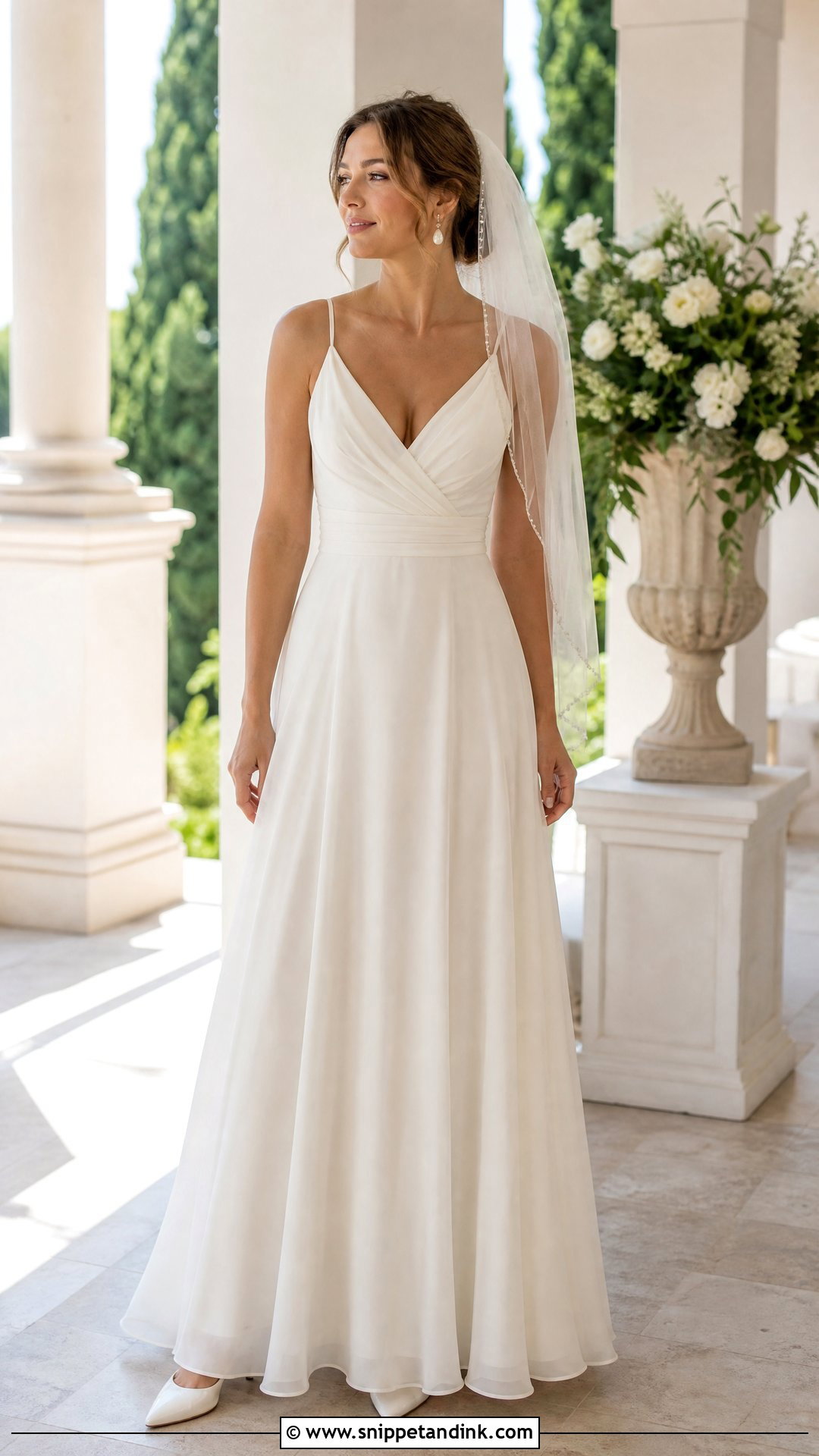
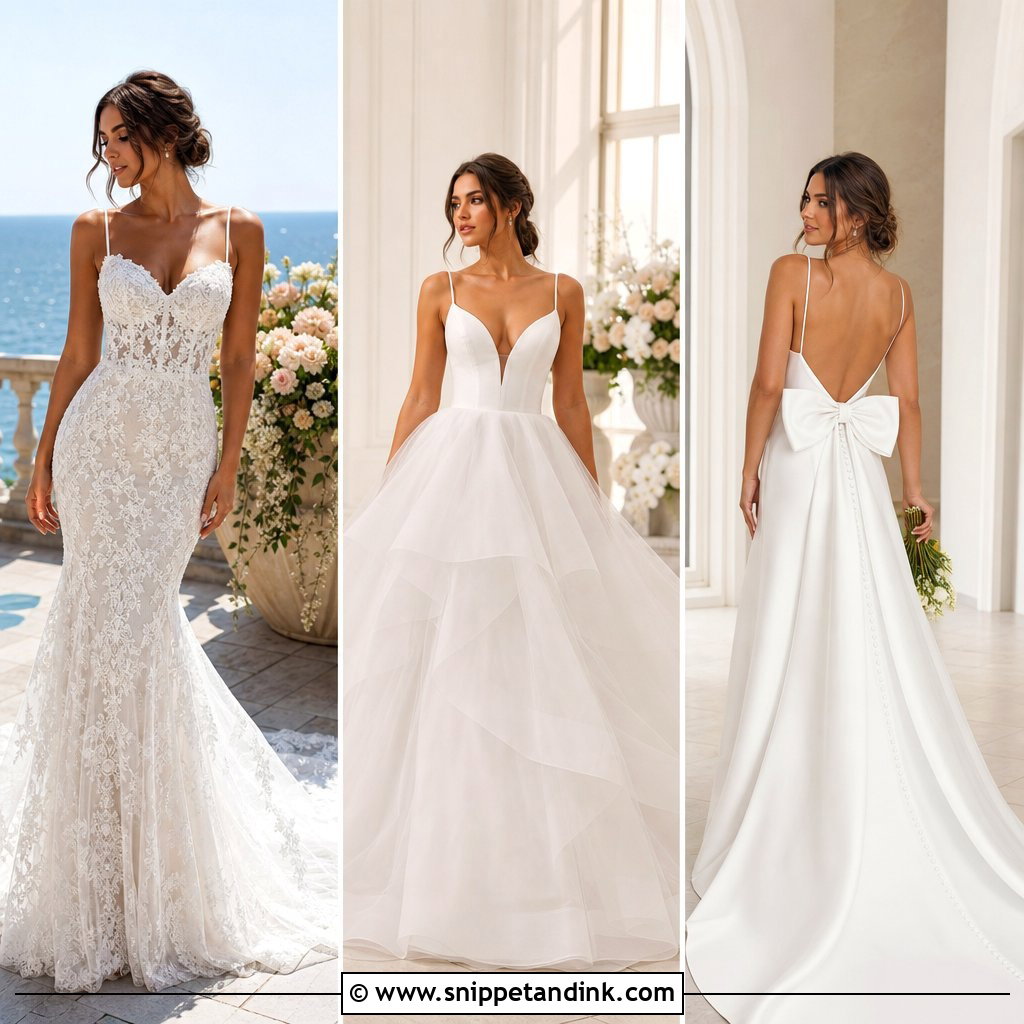
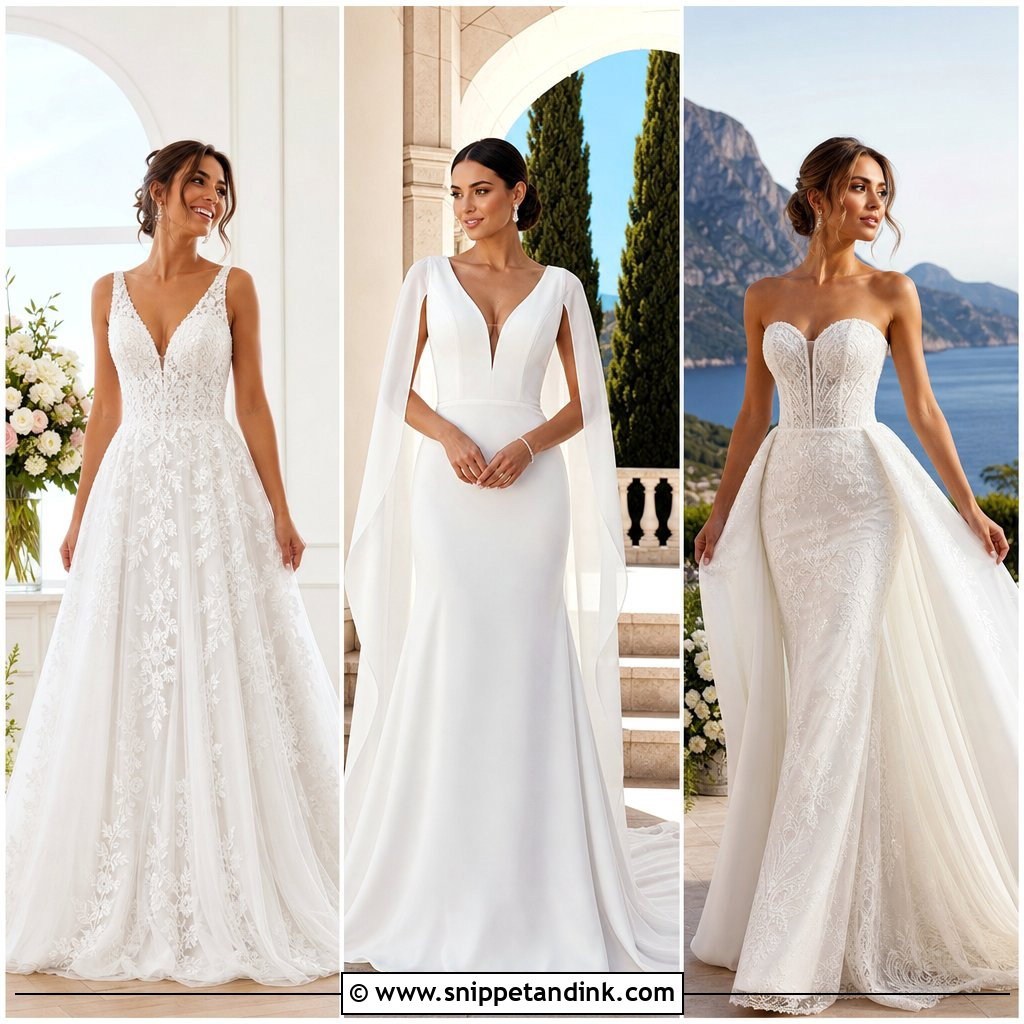
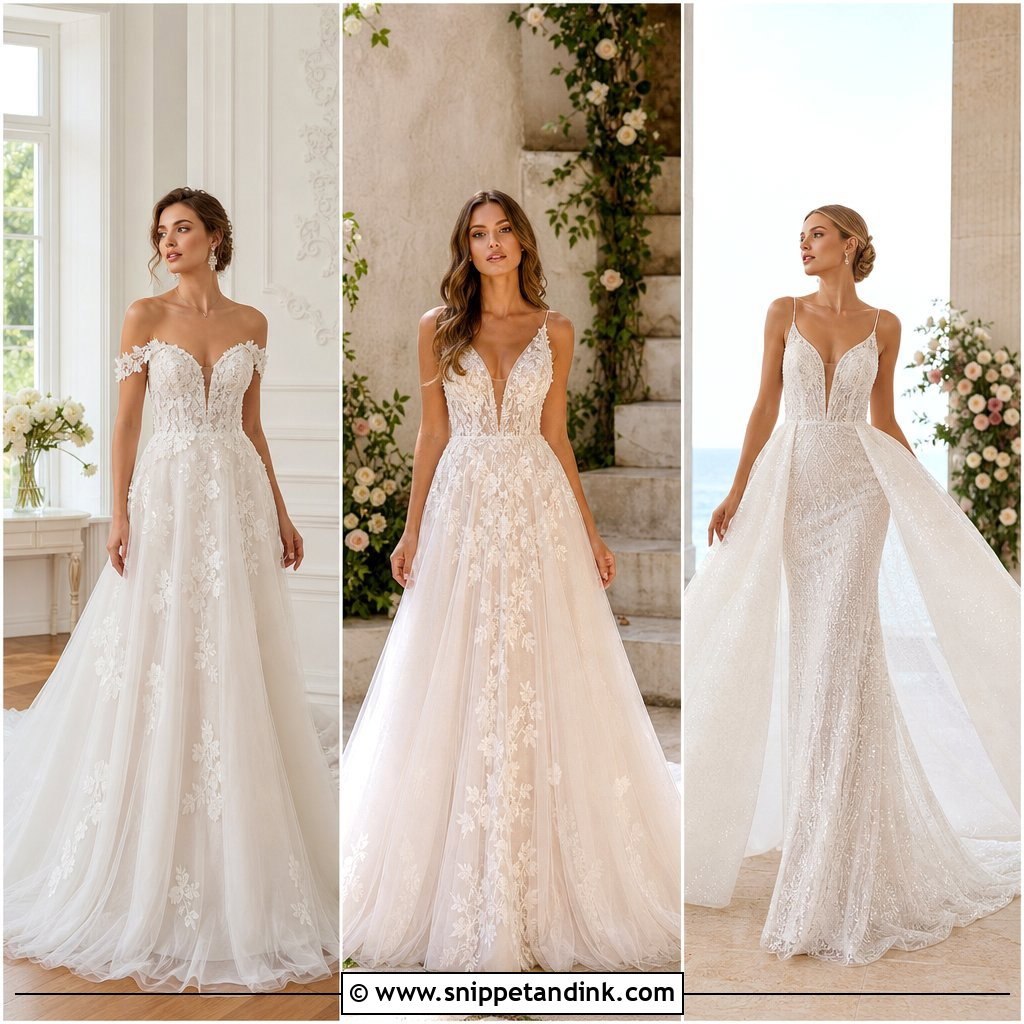
Thin straps look fragile, so I never let them carry the dress. A spaghetti strap A-line wedding dress should hold itself up with inner boning, molded cups or a firm waistband, and the straps should just keep it in place. A fitted bodice with a gentle V or scoop neck, then a skirt flowing from the waist, suits nearly every frame. Chiffon moves easily outdoors; satin makes the same shape more formal. Pearl drops, a fingertip veil, pointed ivory pumps and a low bun keep the straps visible.
2. Satin Spaghetti Strap Slip Wedding Dress
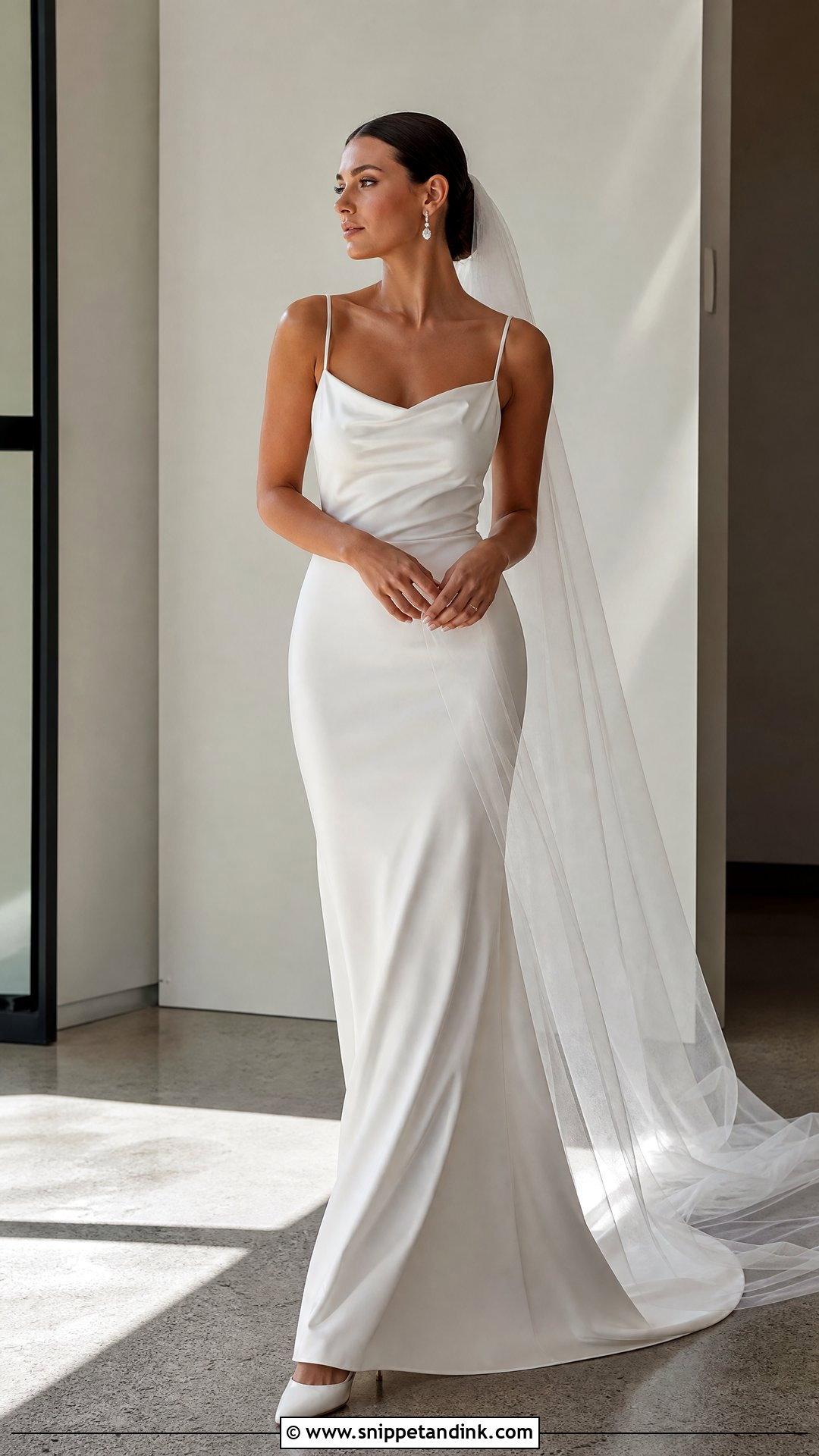
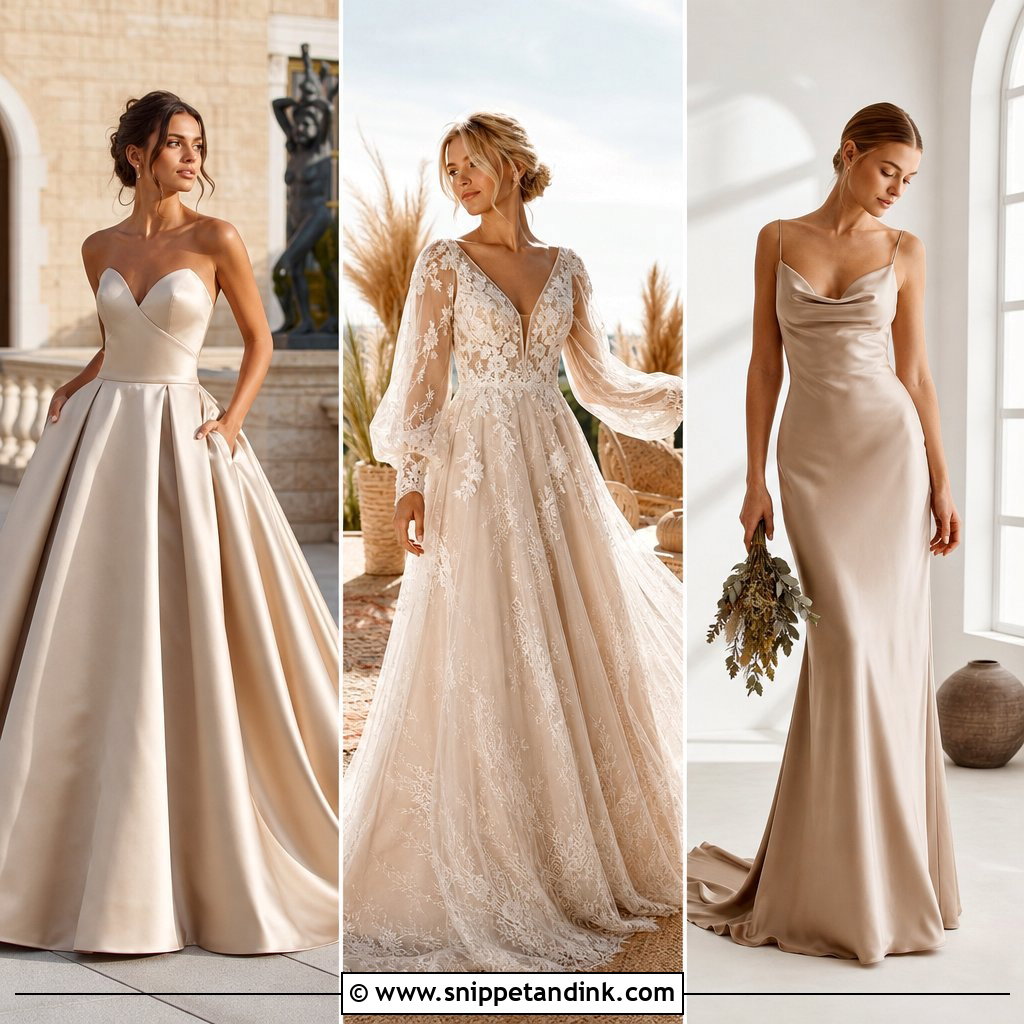
Bias-cut satin slips follow the body instead of shaping it, which makes them the simplest and least forgiving gown here. A cowl neck drapes gently; a straight neck gives a sharper line. On satin, a strap that’s a few millimetres too long twists and catches the light, so ask the tailor to set them so they lie completely flat. The hem should be set with your exact shoes. Crystal earrings, sleek slingbacks, a plain cathedral veil and a low knot let the shoulders do the talking.
3. Lace Spaghetti Strap Mermaid Wedding Dress
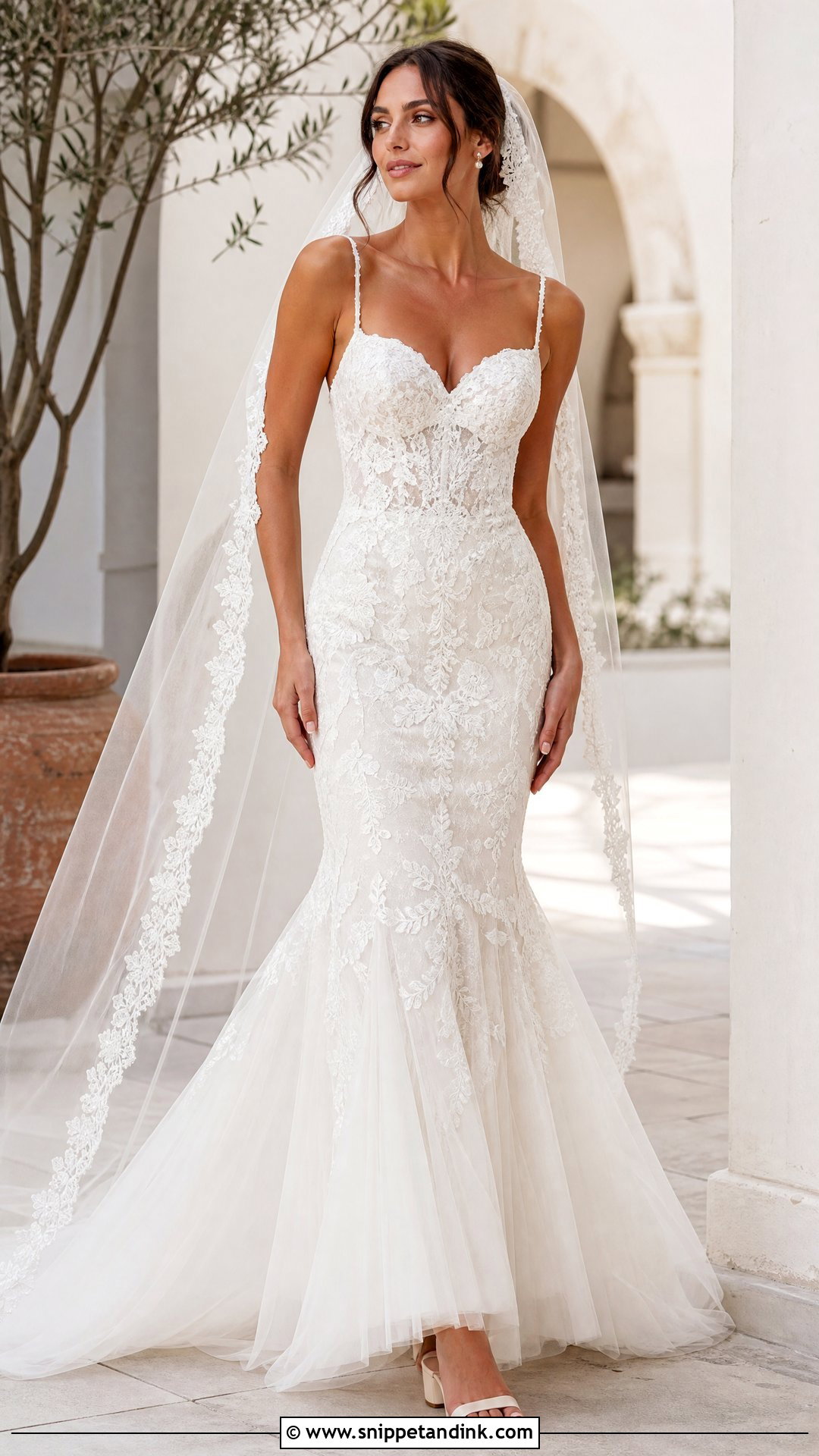
A mermaid gown pulls your weight downward with every step, and thin straps on top feel that. Lace straps joined to a sweetheart or plunging V bodice look light against the dramatic skirt, but I check that they’re anchored into the bodice seams and not just stitched to the lace. Floral appliqués running over the waist and hip into tulle at the knee give texture from every angle. Walk, sit and dance at the try-on; the flare should start where you can still take a normal step. A lace-edged veil, pearl studs and block heels finish it.
4. Beaded Strap Ball Gown Wedding Dress
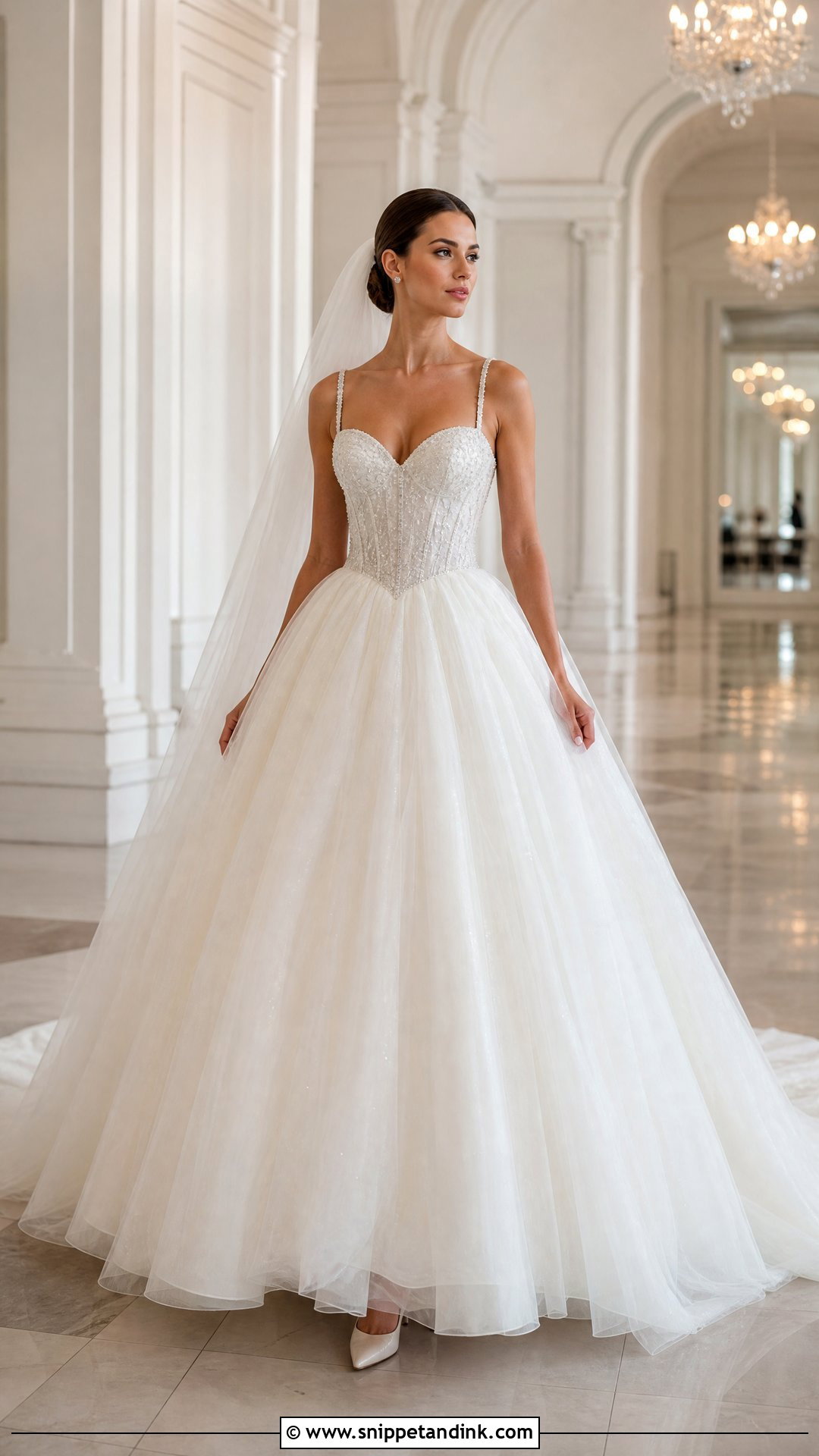
Beaded straps above a ball gown add sparkle right next to your face, which is lovely in photos and scratchy if the underside isn’t lined. Run a finger under each strap at your fitting; any beads or threads touching skin will rub raw by the reception. Crystals, seed beads or tiny pearls that continue along the neckline look planned rather than tacked on. A structured bodice with satin or tulle layers suits it. Small studs, a plain veil, satin pumps and a polished bun leave the beadwork alone.
5. Wide Strap Square Neck Wedding Dress
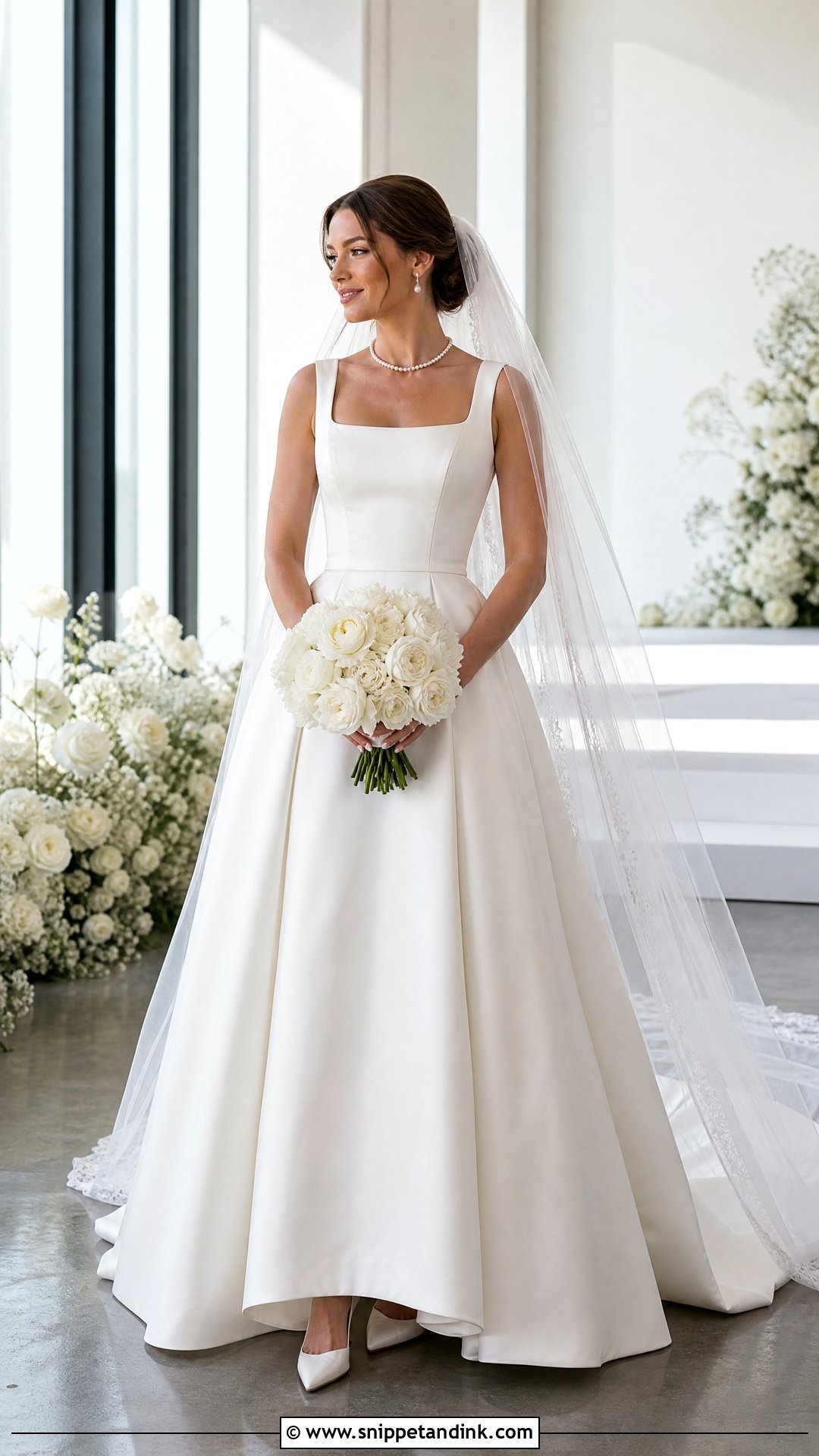
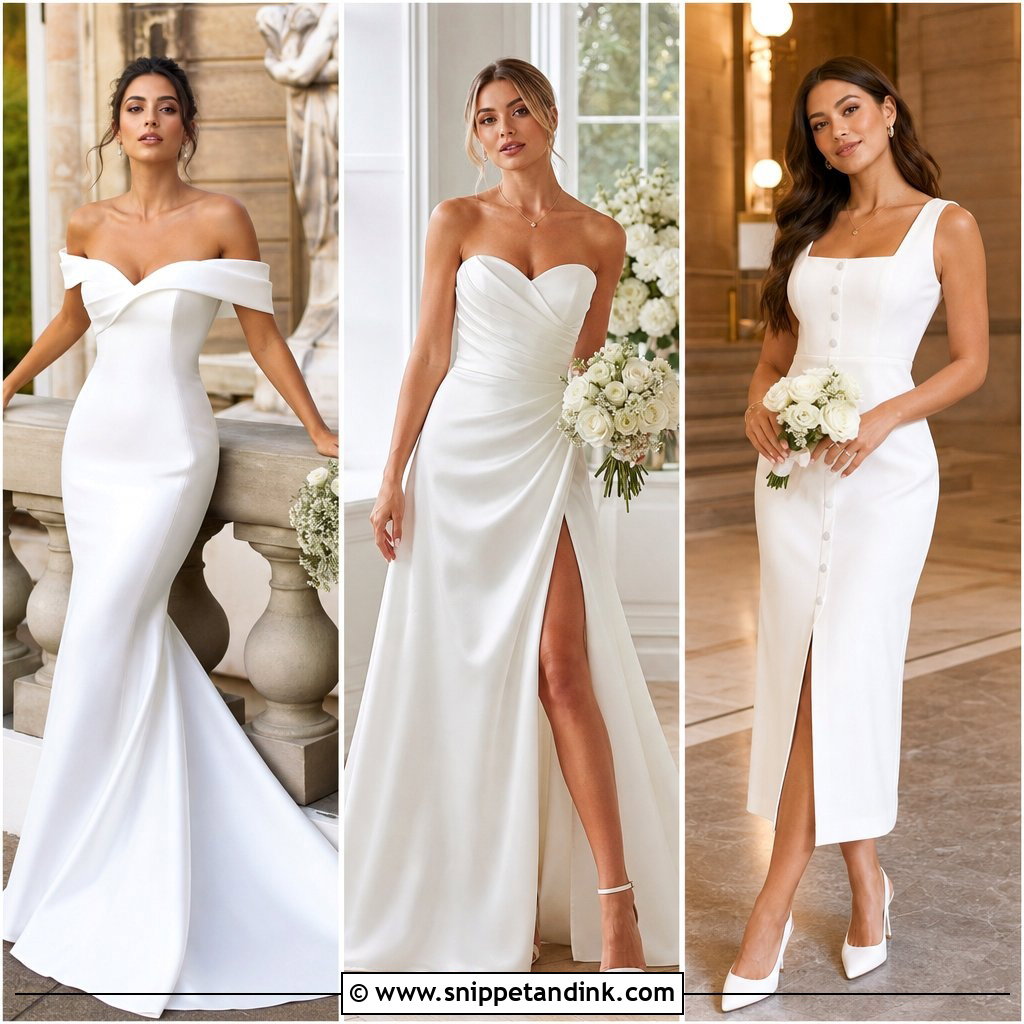
Wide straps spread the pressure across more of the shoulder, so they’re the most comfortable option for a long day, and they cover bra-strap marks nicely. With a square neck on a structured A-line, they frame the upper body and balance a full skirt. Mikado, satin or crepe keep the corners crisp. A short pearl necklace fits here, since there’s open skin to fill. Low pointed heels, a sheer chapel veil and a soft chignon complete it. Raise your arms at alterations; the neckline should stay flat and the straps put.
6. Thick Strap Satin Ball Gown Wedding Dress
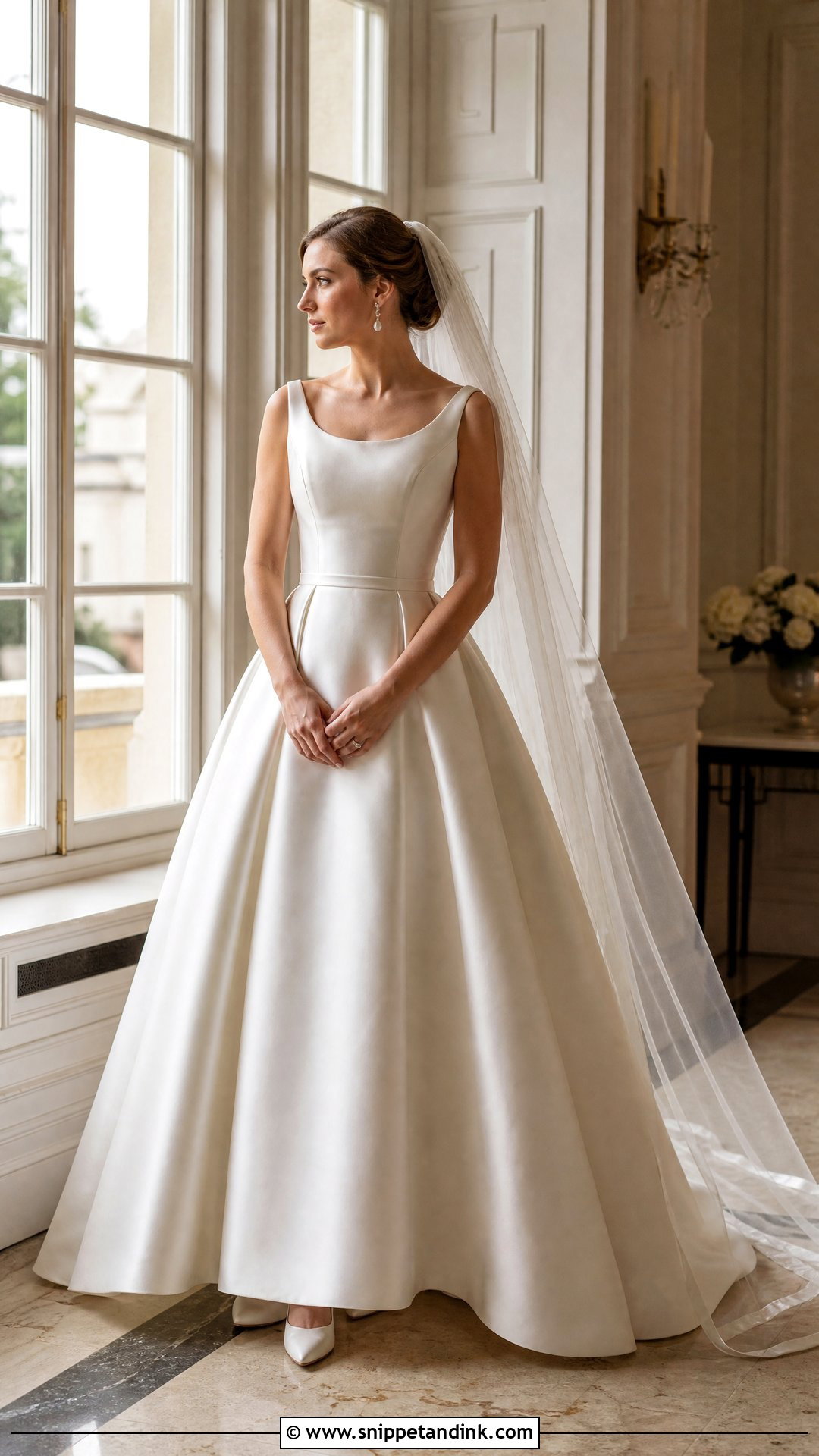
Thick straps on a satin ball gown connect bodice and skirt visually, so the whole dress reads as one piece. A softly curved neck, a fitted waist and a full skirt with hidden pockets keep it practical. The bodice should still do the holding; heavy satin skirts drag, and if the straps take that weight, your shoulders ache by the speeches. A long veil with a narrow satin edge, pearl drops and closed-toe heels suit it, with a fitted cape or wrap for cold weather.
7. Lace Strap Fit-And-Flare Wedding Dress
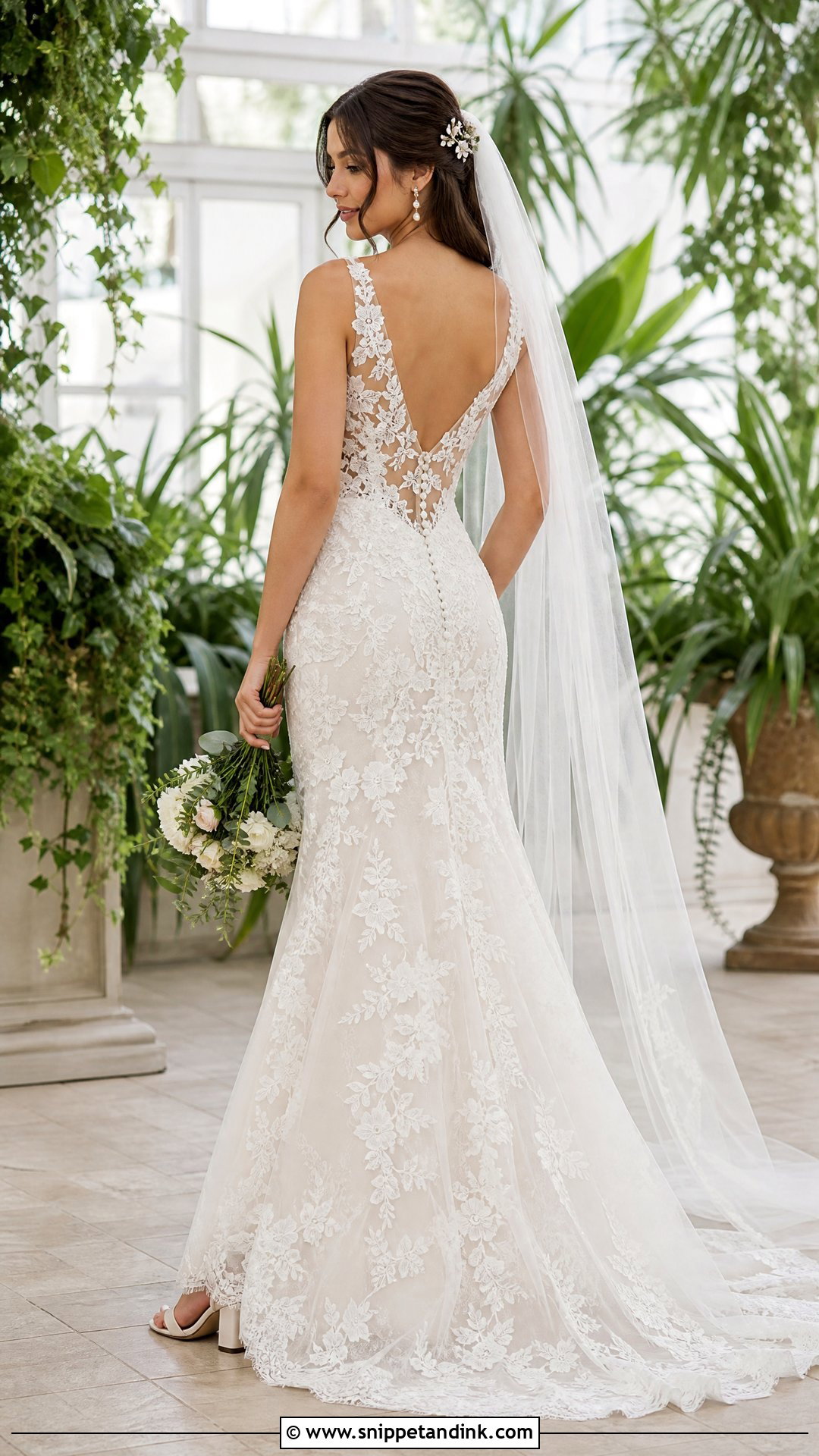
Fit-and-flare is the gentler cousin of the mermaid: shaped through the bodice and hip, but the skirt widens higher up so you can walk normally. Medium lace straps that run into an illusion back or a soft V-back suit it best. The strap appliqués should come from the same lace as the bodice, or the join shows. Ask the tailor to shorten both straps by the same amount; adjusting just one tilts the neckline and waist. Botanical hairpins, pearl earrings, block heels and a plain sheer veil let the lace show.
8. Pearl Strap Sheath Wedding Dress
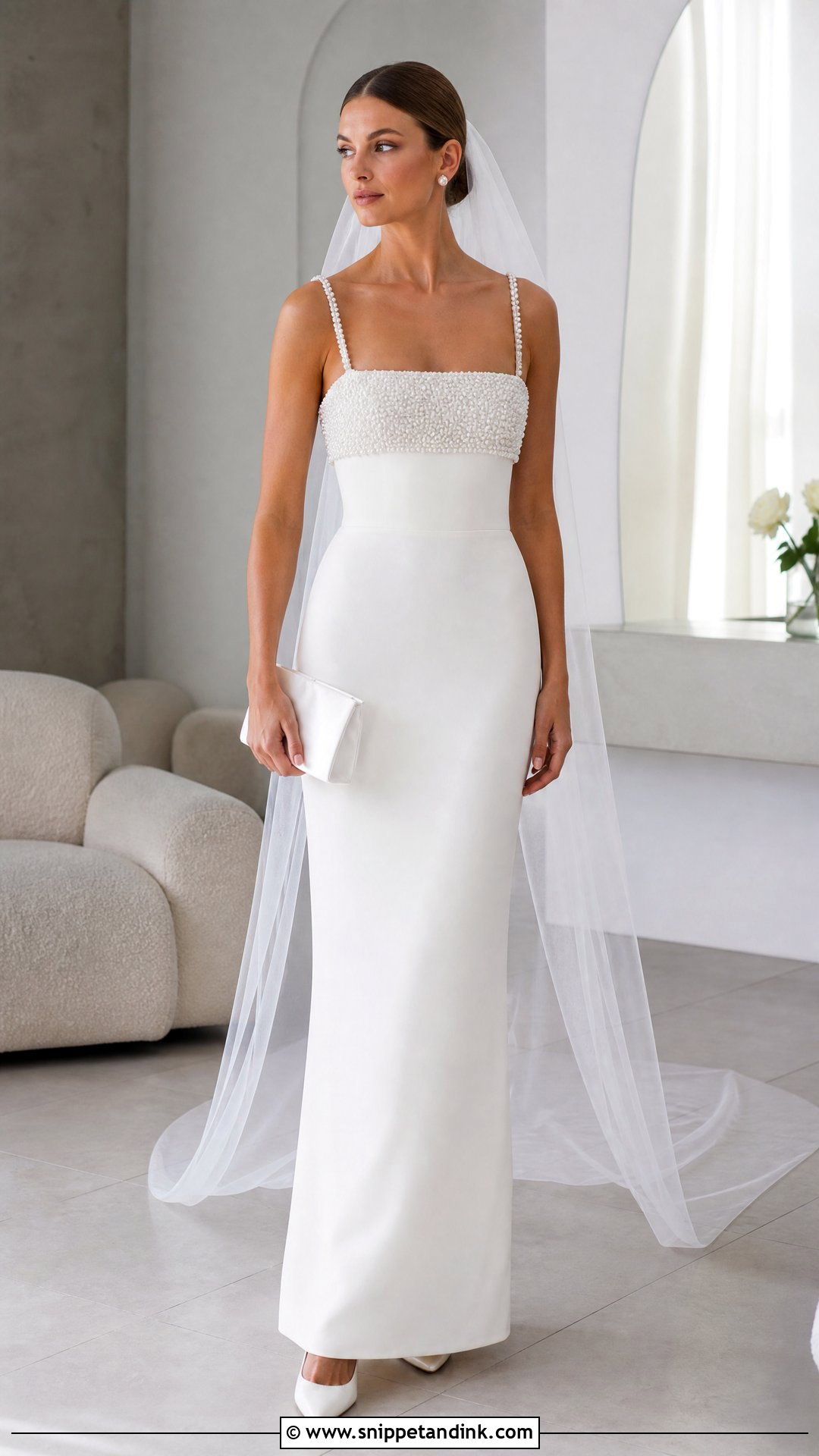
Pearl straps work like jewelry on a streamlined sheath gown, so you need very little else. A plain crepe or matte satin column with a straight neckline gives them space. Strands of pearls alone can snap or stretch under the weight of a gown, so I prefer pearls sewn onto a fabric or ribbon base, or a bodice strong enough that the strands are only decorative. Pearl studs, a satin clutch, pointed pumps, a plain floor-length veil and a sleek ponytail finish it. Skip the necklace.
9. Floral Strap Tulle Wedding Dress
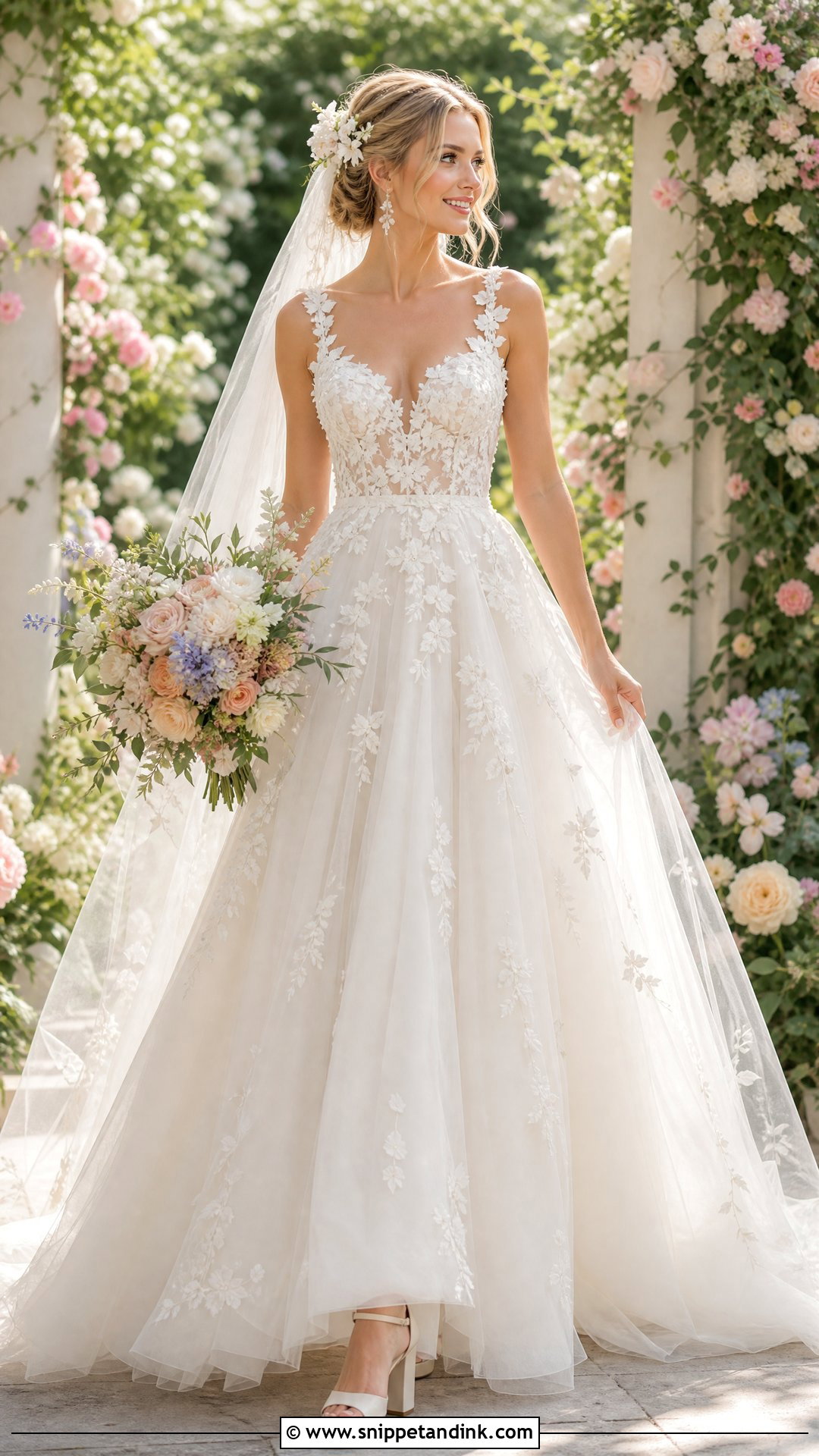
Flowers along the straps turn a tulle A-line into a garden look, especially when the appliqués travel from the straps onto the neckline and upper skirt. Ivory embroidery, small pearls and clear sequins add depth without color. Check the placement from behind as well as the front; a cluster on one side only can look like a mistake in back-view photos. Raised petals at the strap edge can rub the inner arm when you walk. A sheer veil, floral comb, delicate earrings and block heels for lawns suit it, with a soft-colored bouquet.
10. Halter Strap Column Wedding Dress
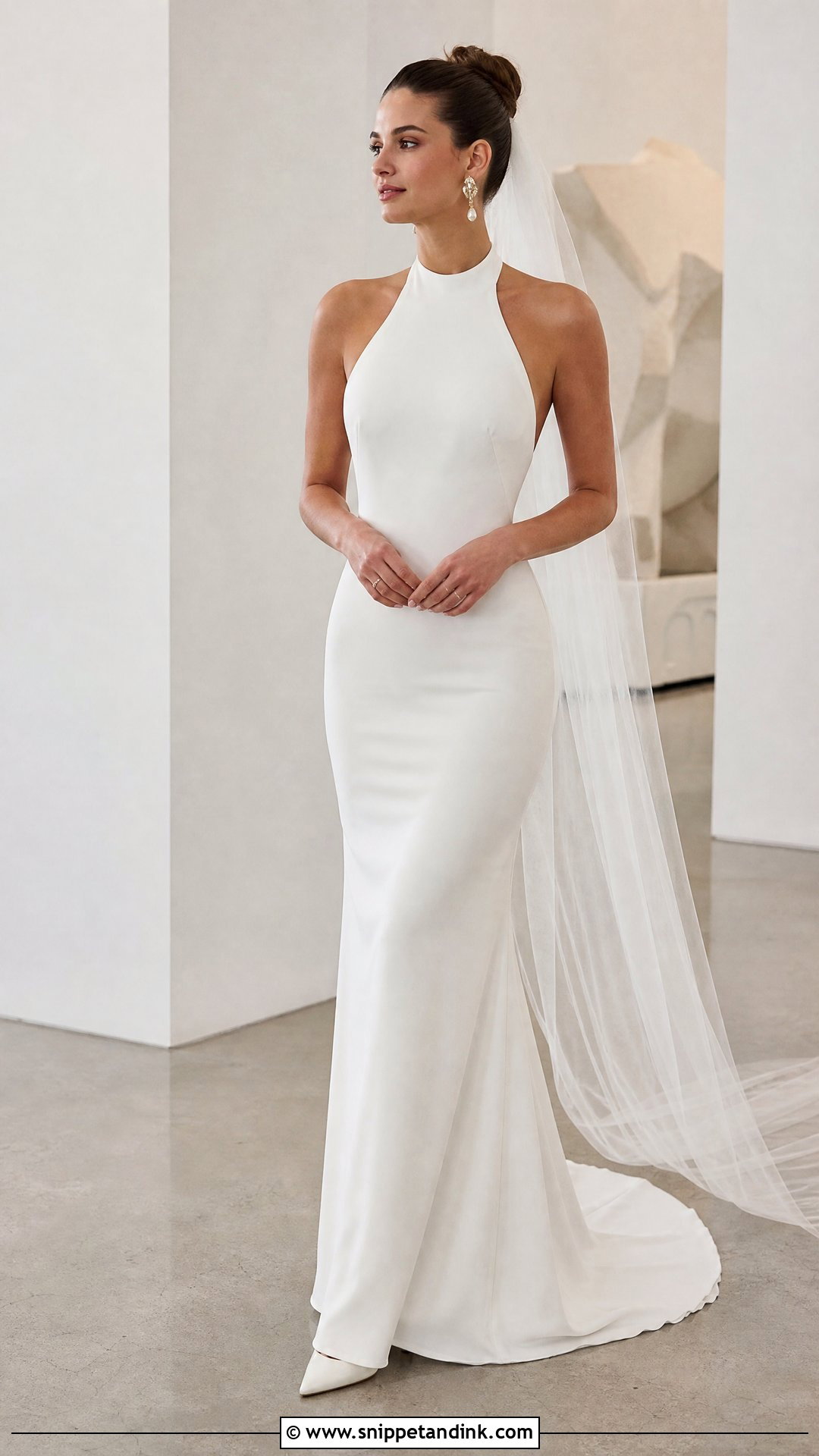
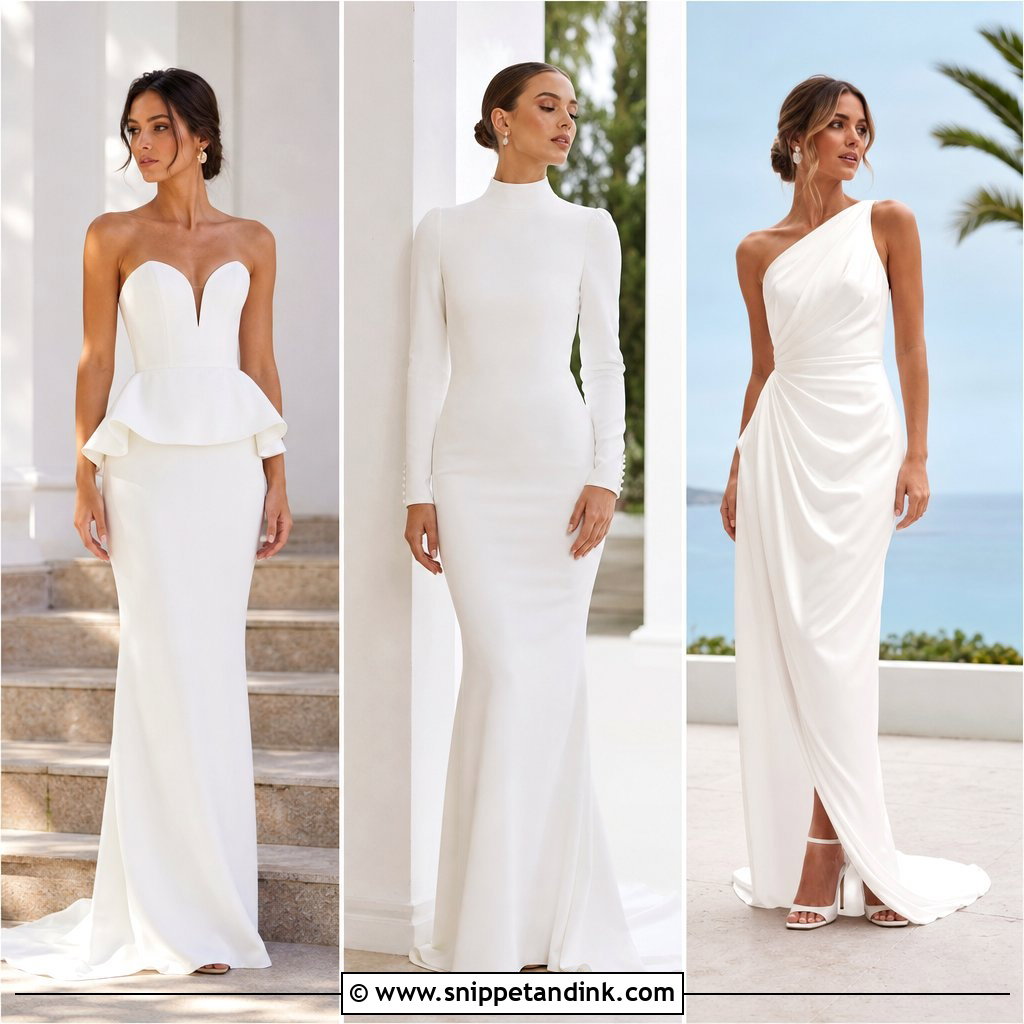
Halter straps wrap from the front and fasten behind the neck, which leaves the back open and draws the eye to the shoulders. Paired with a column skirt in fluid crepe or satin, the shape is clean and modern. The halter and bodice affect each other, so fit is everything: the gown should feel held around the ribcage, not hanging from the back of your neck. The closure at the nape should lie flat under your hair. Statement earrings, pointed heels and a narrow cathedral veil under a polished bun suit it. Leave the necklace off.
11. Crisscross Halter A-Line Wedding Dress
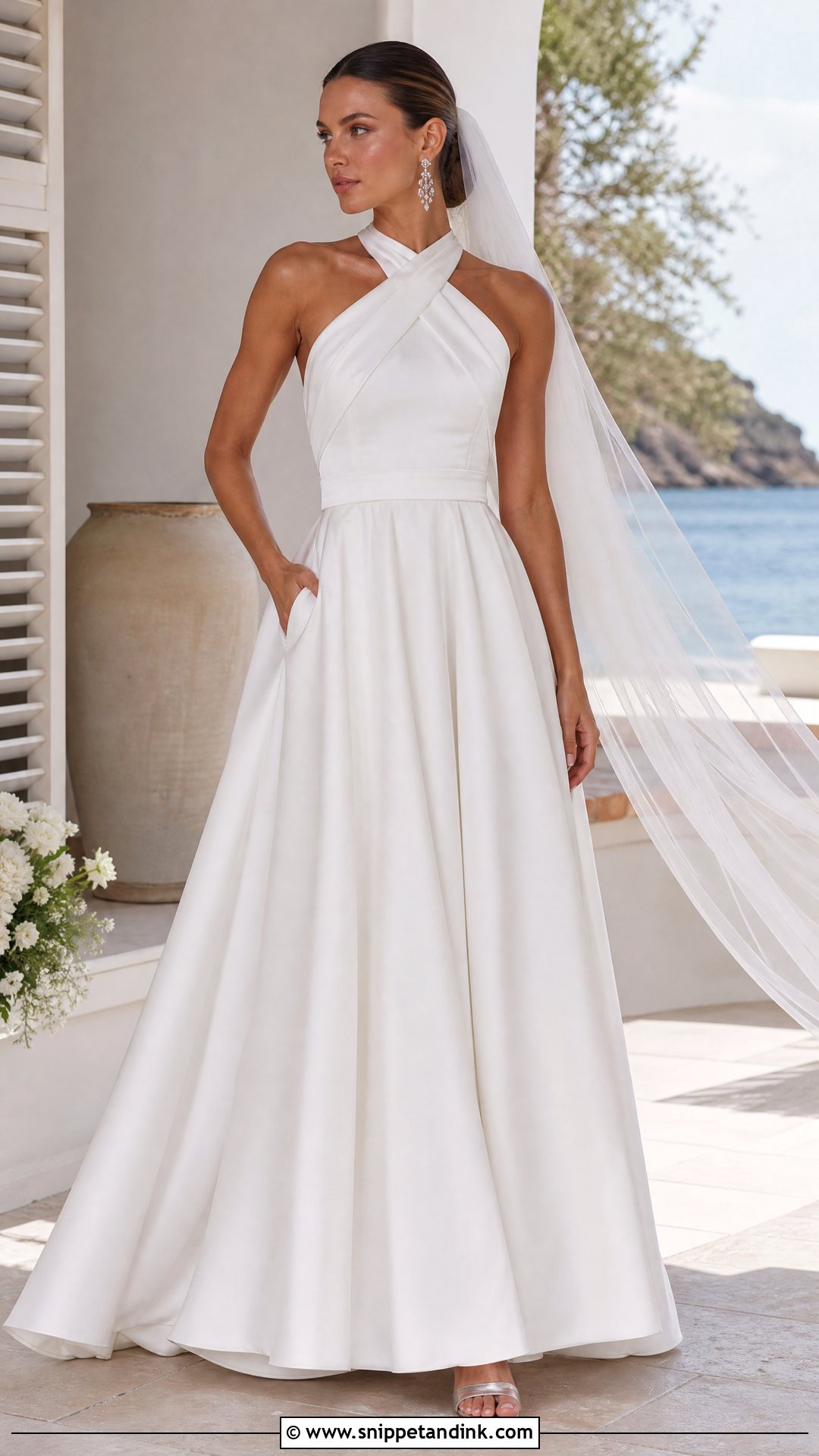
Crisscross halter straps can cross above a V-neck or wrap before fastening behind the neck, and small shifts in where they cross change the neckline a lot. I pin them on the bride and look at the result straight on and in profile before anything is stitched. They should lie flat without twisting. Chiffon feels soft and suits a destination; satin is more sculpted. Drop earrings, metallic sandals, a light veil that won’t hide the back and a high bun keep the detail visible.
12. One Shoulder Strap Wedding Dress
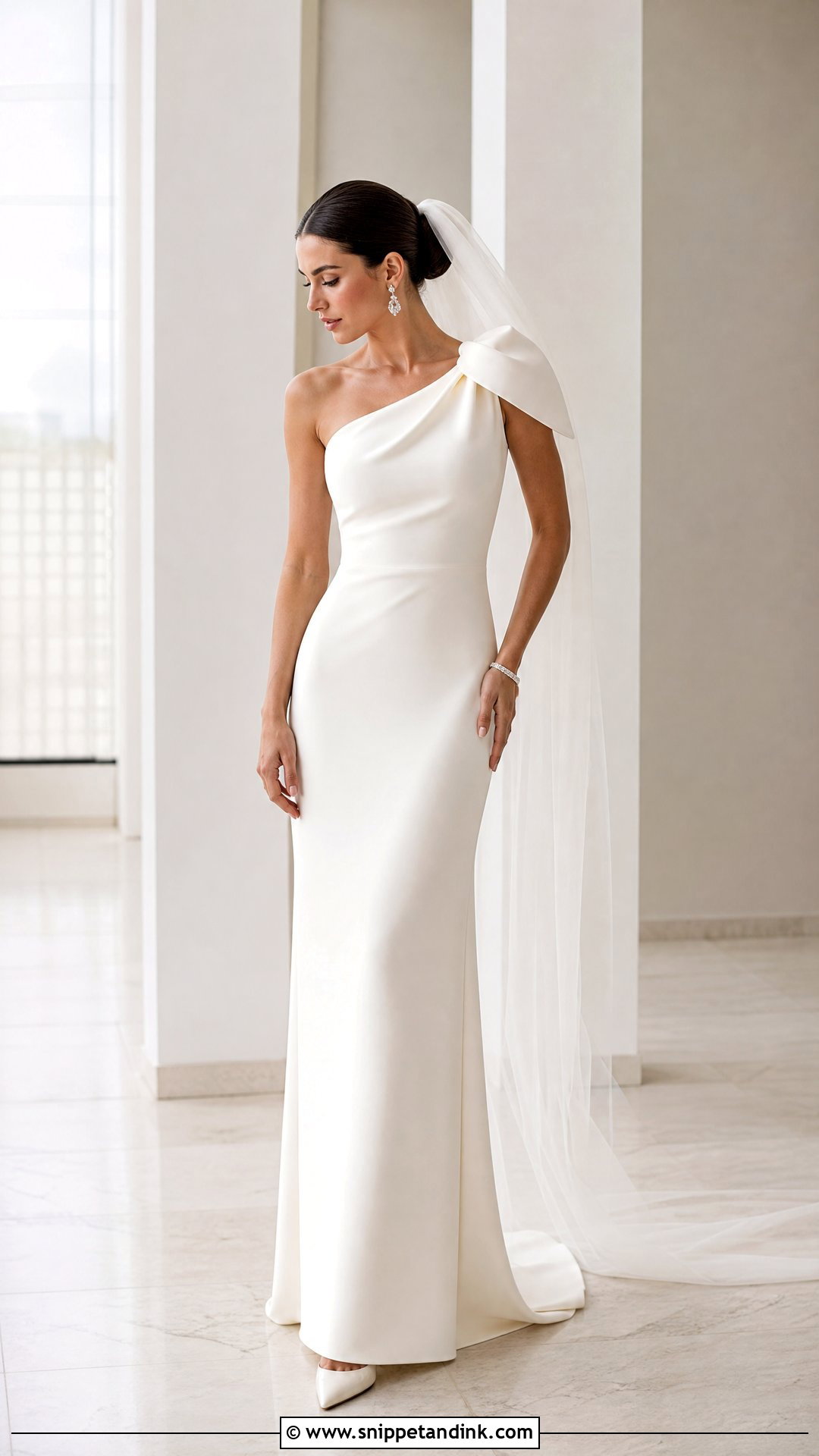
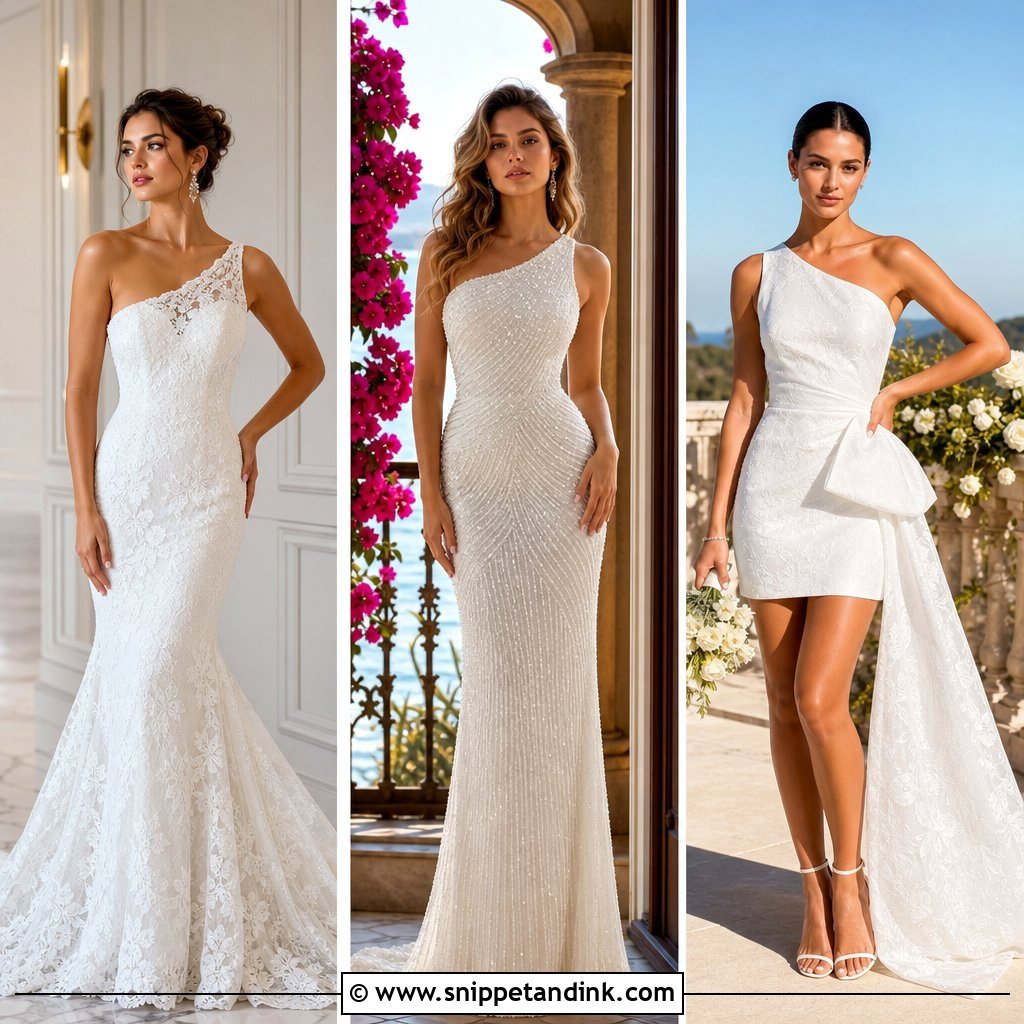
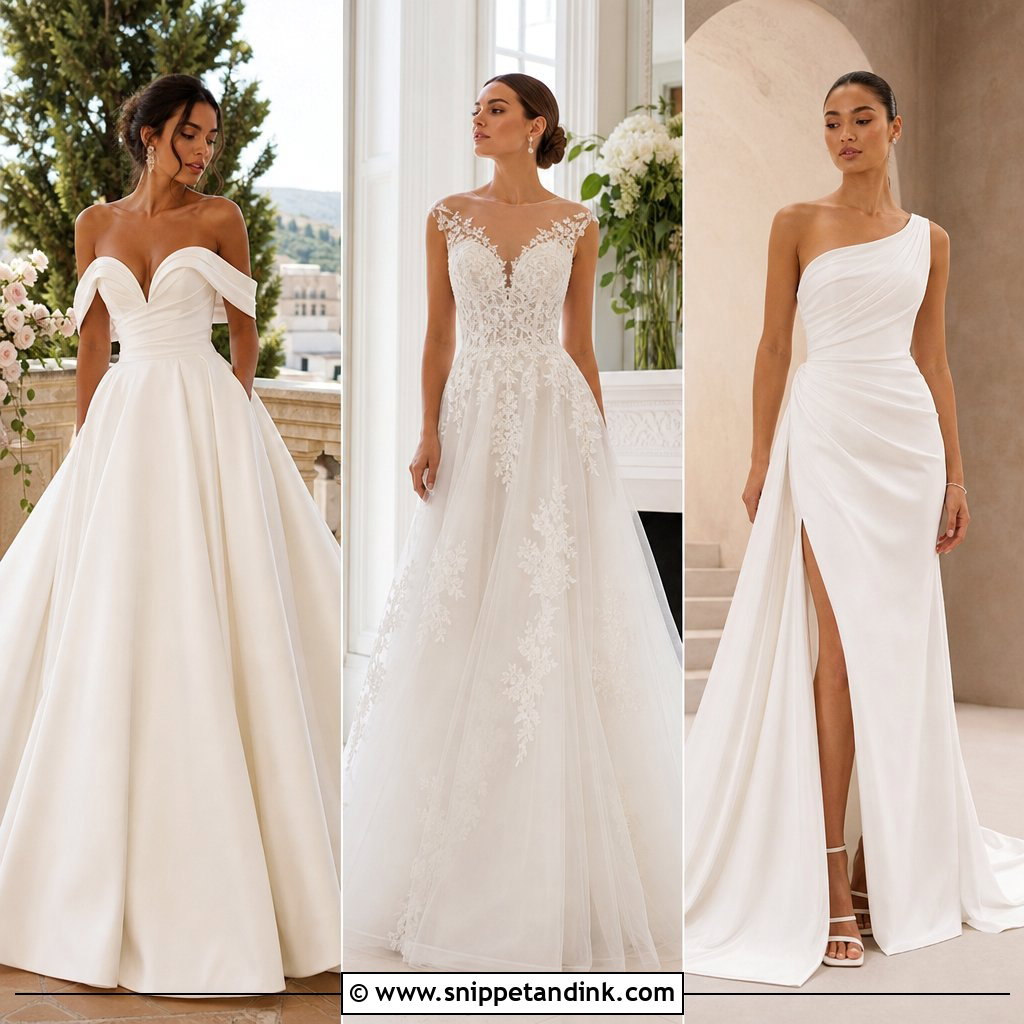
One strap means the gown wants to tilt toward that side and lift on the other. A good one-shoulder bodice has enough structure to stay level on its own, with the strap only steadying it. A fitted crepe column with one sculpted strap is striking; an A-line with a bow or flower at the shoulder is more dramatic. A single bracelet on the bare arm balances it, with small earrings and pointed heels. Skip necklaces, which break the diagonal, and set the veil under a low bun.
13. Bow Strap A-Line Wedding Dress
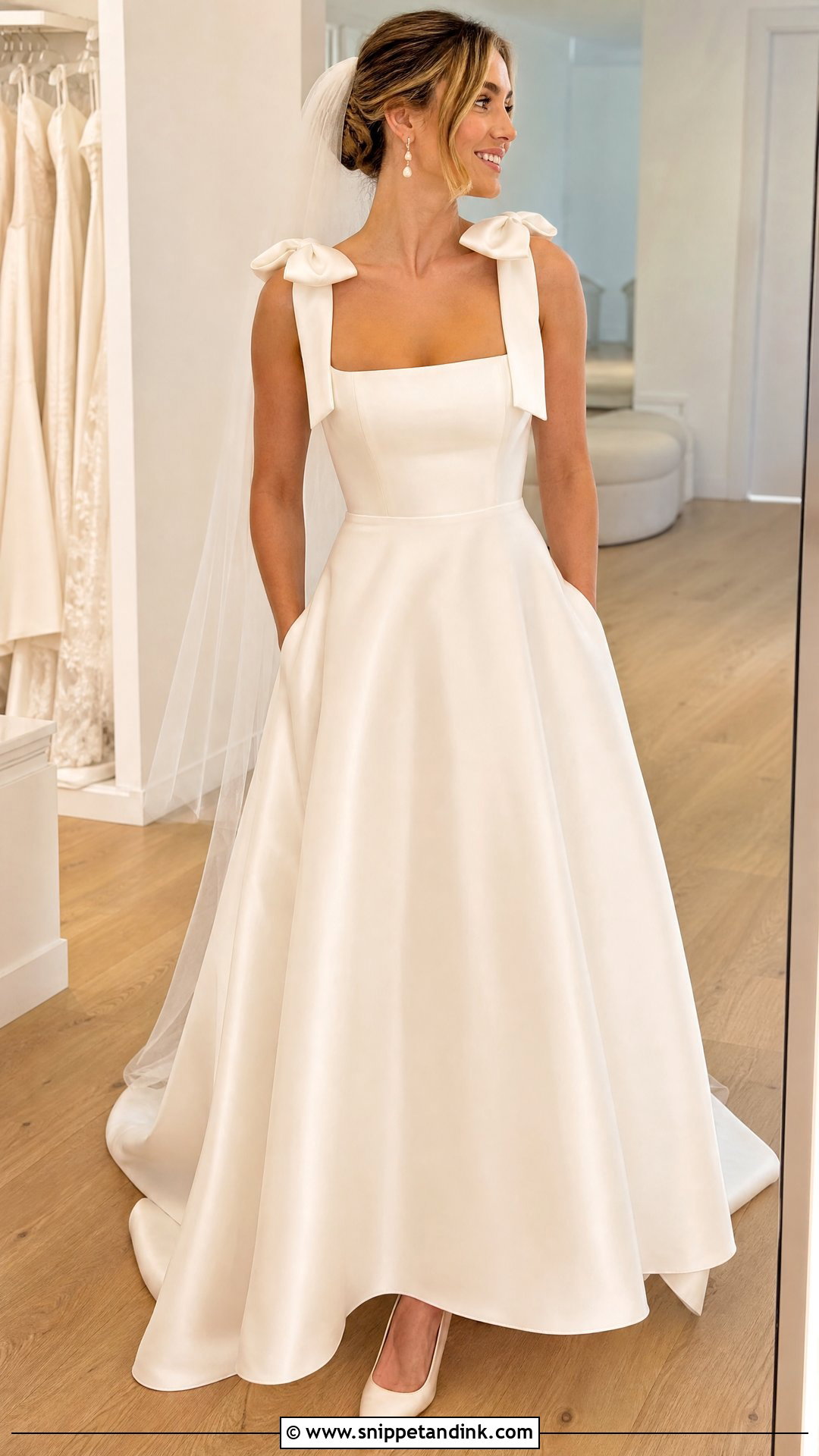
Shoulder bows add a playful note to a plain A-line. Organza bows are airy; satin bows hold a cleaner shape. Tied bows look charming but loosen and go lopsided as you hug people, so I usually suggest bows that are fixed in place, or at least tacked at the knot. Keep them in scale with the neckline, especially if the skirt already has lace or beading. Pearl earrings, a plain veil, pointed ivory heels and a textured low bun or half-up waves suit it.
14. Dropped Strap Corset Ball Gown
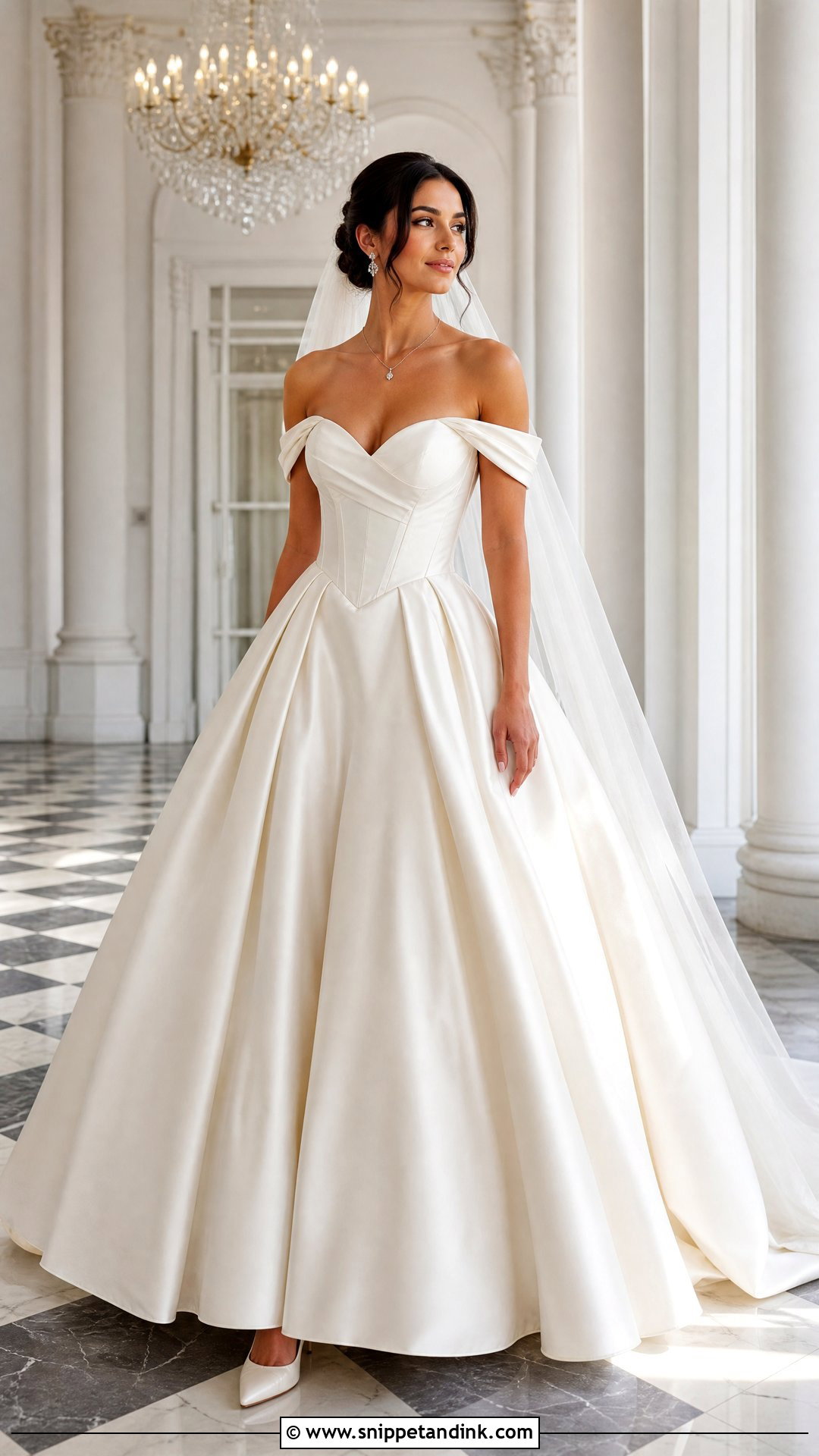
Dropped straps sit just below the shoulder and give the look of an off-the-shoulder gown while a corset does the real work. They’re the strap style that limits arm movement most, because the band sits across the upper arm. Lift your arms and hug at the fitting; if you can’t, ask for stretch in the band or a detachable version for dancing. Draped satin, floral lace or gathered tulle bands all suit a full ball gown skirt. A collarbone pendant, studs, a long veil and low satin pumps finish it, with hair kept back off the straps.
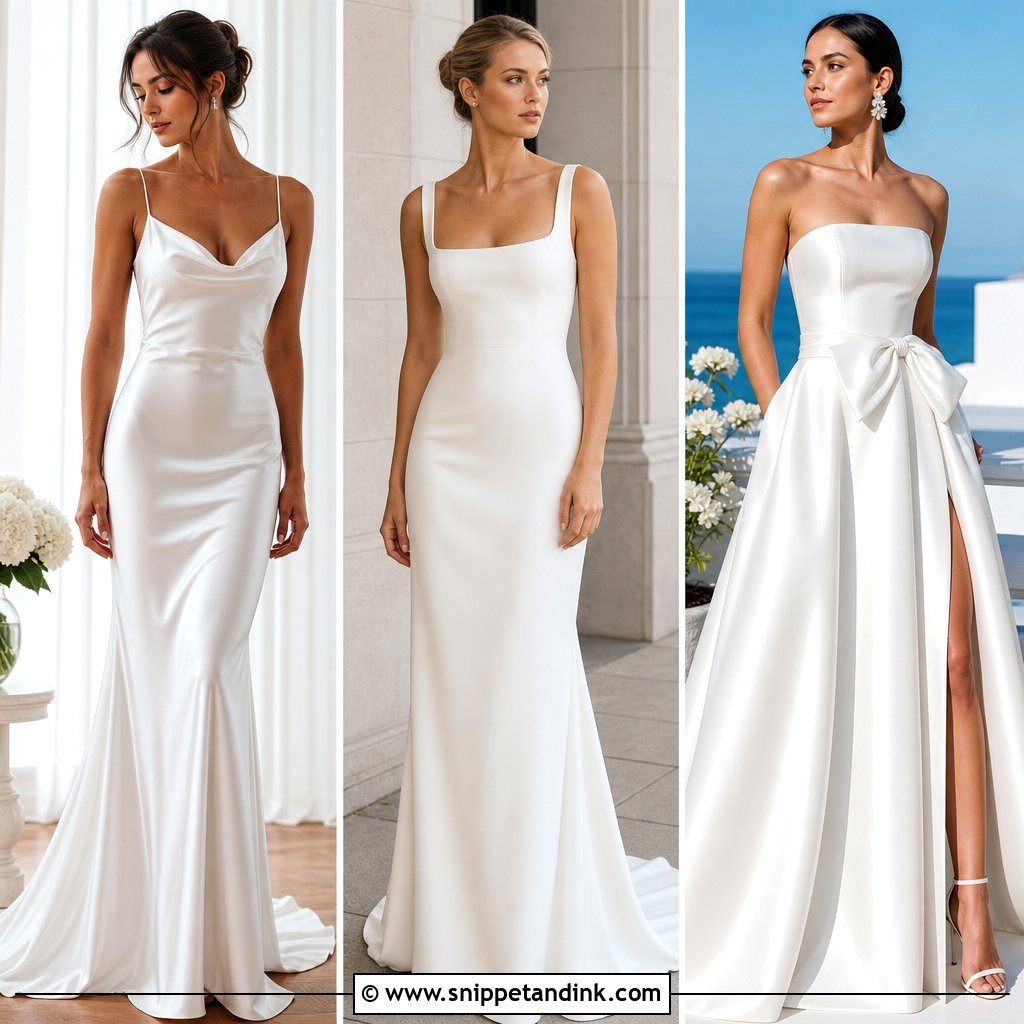

15. Detachable Strap Wedding Dress
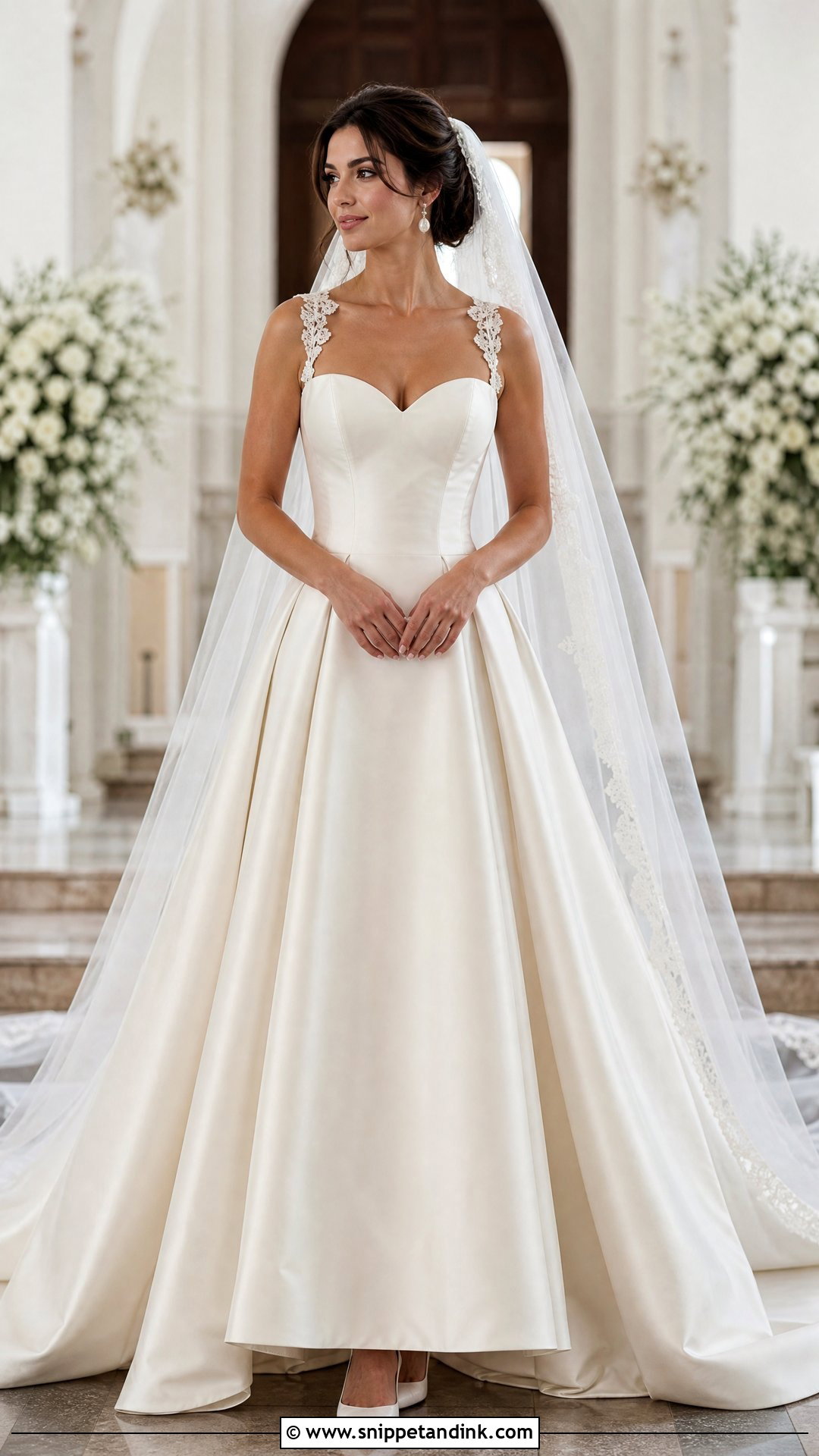
A strapless gown with removable straps gives you two looks without a full change. Matching spaghetti straps, wide satin bands, lace straps or draped off-shoulder pieces can attach for the ceremony and come off for the party. They’re usually fixed with small snaps, buttons or hooks inside the bodice edge. Ask the tailor to hide every attachment point, because a visible snap on bare skin catches the flash. Pair the strapped version with a cathedral veil and pearls, then switch to statement earrings or a short veil later.
16. Illusion Strap Sweetheart Wedding Dress
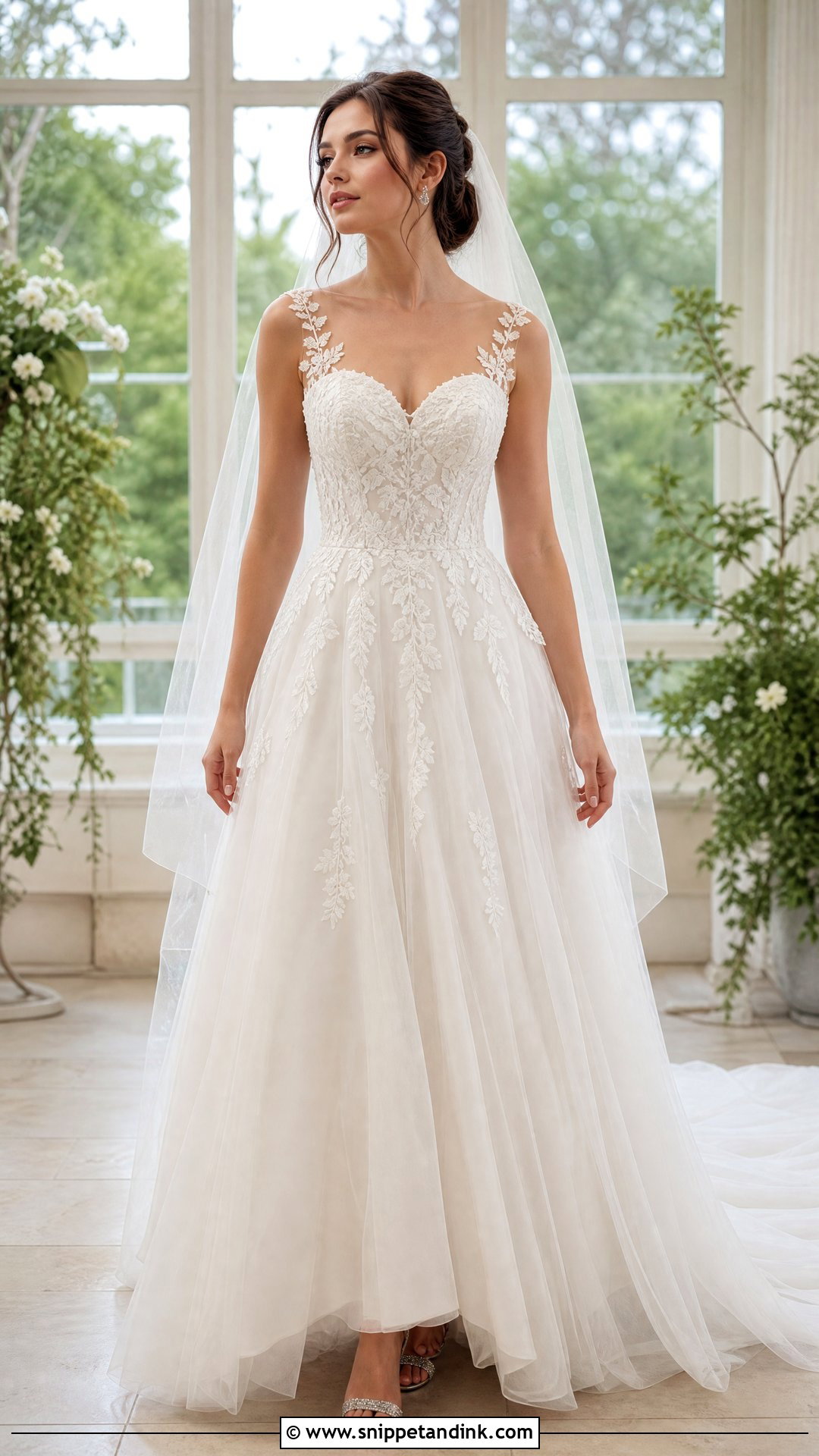
Illusion straps use fine mesh to anchor lace, pearls or crystals so they look as if they’re sitting on the skin. They give a sweetheart neckline real security. The mesh shade matters more than people think: too light and it reads as a white line in photos, too dark and it looks like a strap. Match it to your skin in daylight. Rough appliqué edges where the mesh meets the bodice are the usual comfort complaint, so feel the inside before you commit. A tulle A-line skirt is romantic; fitted crepe is modern.
17. Crystal Strap Mermaid Wedding Dress
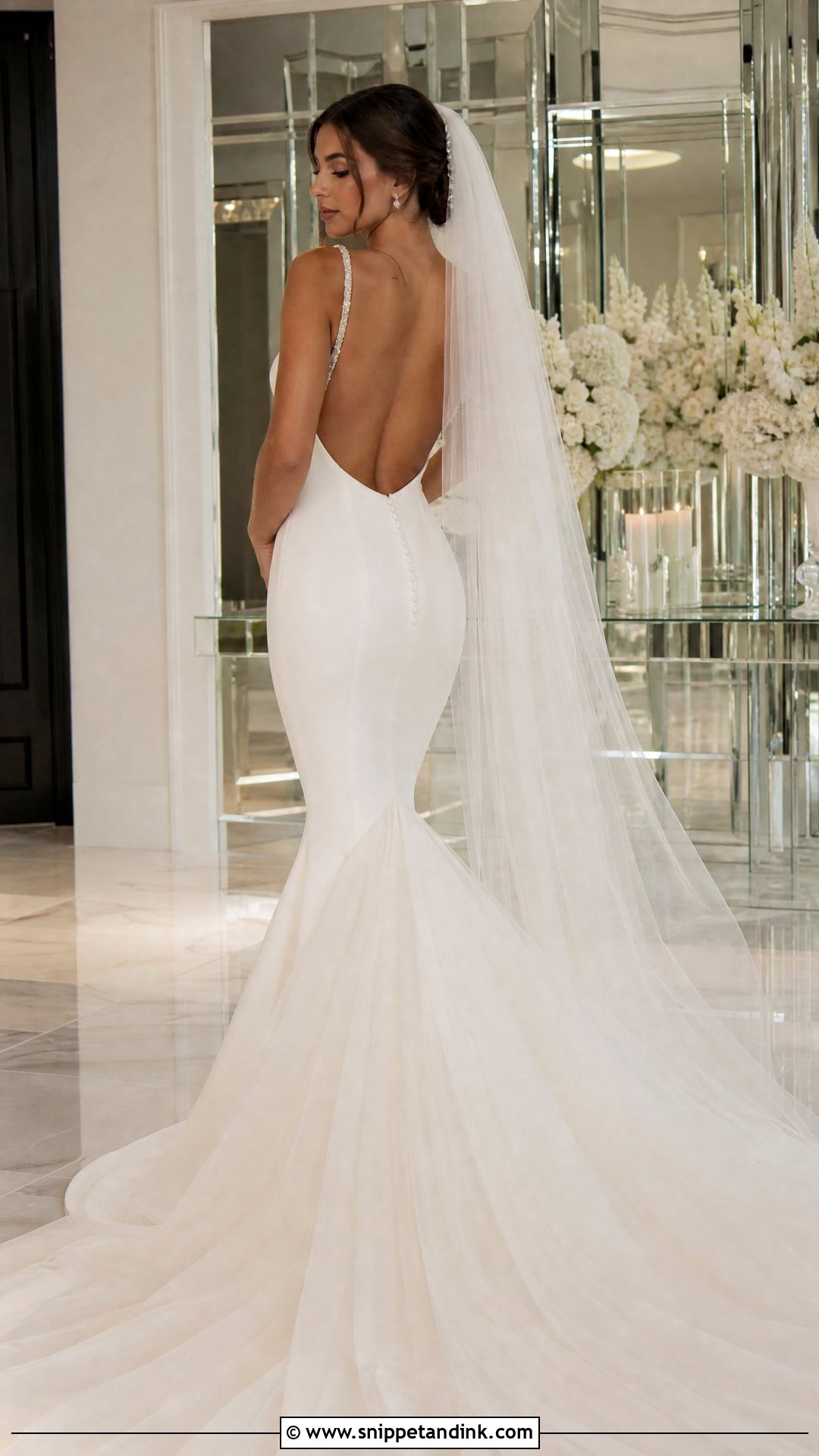
Crystal straps on a mermaid gown are the most glamorous combination here. A clean satin or crepe body lets them stand out, and a tulle flare below the knee adds movement. The crystals should continue along the neckline or frame a low back so they look connected to the dress. Check the settings with your fingers; open prong settings snag veils, hair and fine fabric. Flexible strap construction moves with your shoulders rather than digging in. Studs, a plain veil, silver heels, a sleek bun and a streamlined bouquet finish it.
18. Bow Strap Mini Wedding Dress
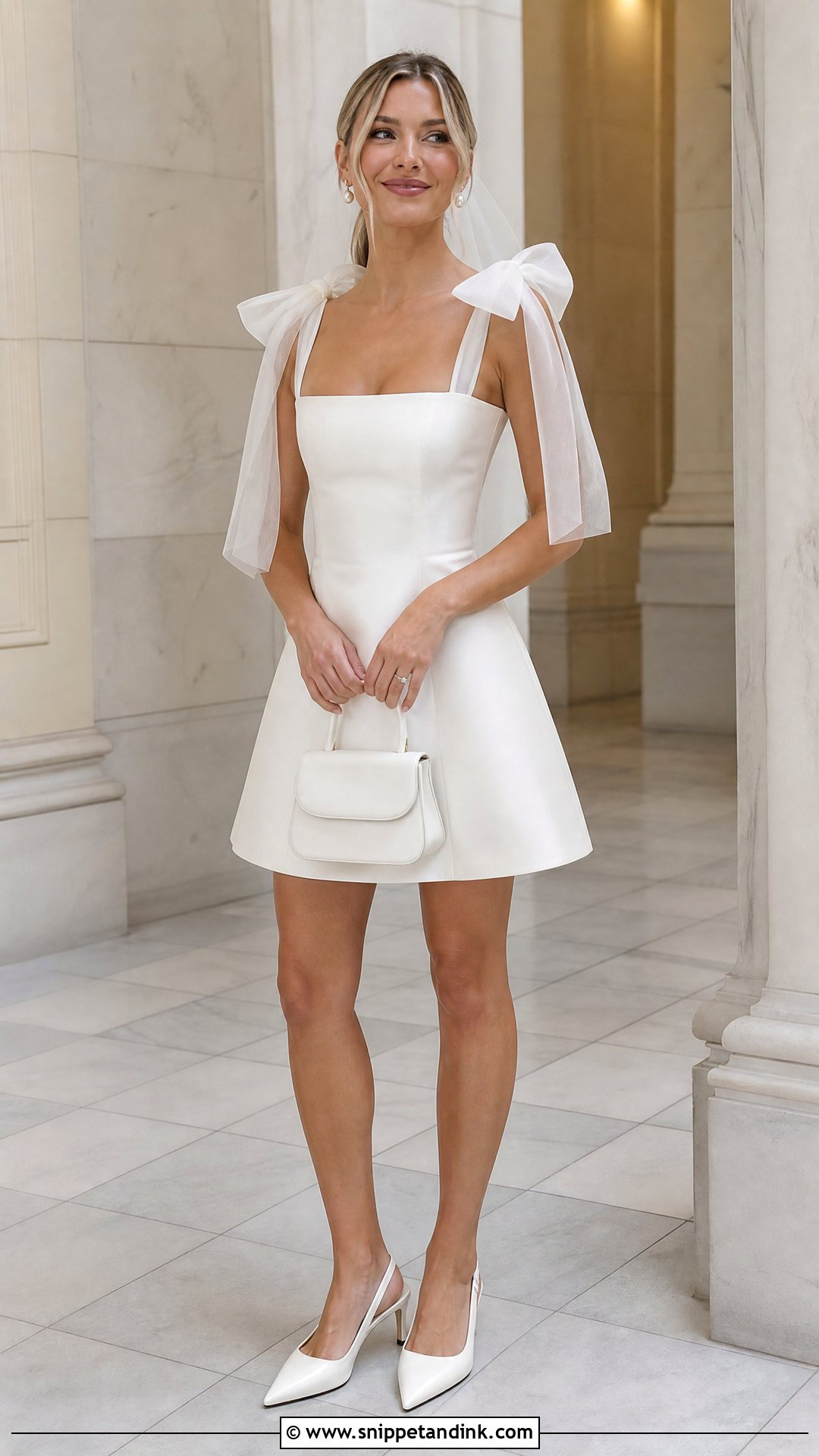
A bow strap mini is cheerful and quick to move in, which is why I suggest it for courthouse ceremonies and as a reception change. A structured A-line mini with a square neck and bows at both shoulders holds its shape best. Satin bows look polished; organza adds a little volume. The bodice has to fit securely so the bows are decoration, not support. Add pearl earrings, a short veil, pointed slingbacks and a top-handle bag. If you plan to dance a lot, ask for a lining or slip shorts underneath.
19. Cross Back Strap Wedding Dress
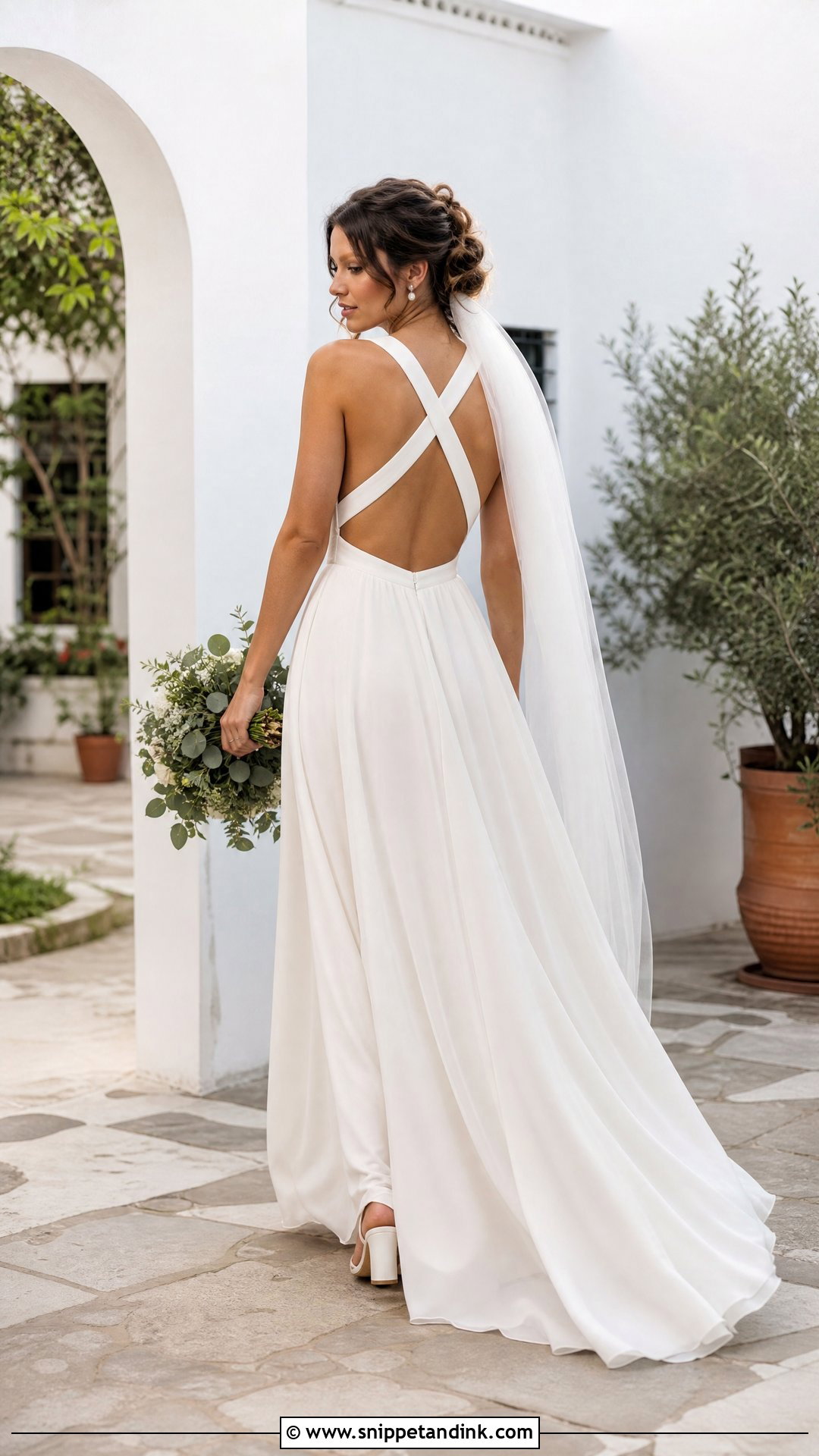
Cross back straps make the view from behind as strong as the front. Start with a clean V or scoop neck, then choose straps that cross once or form a fine lattice. Chiffon A-lines feel relaxed; a crepe sheath is more architectural. Equal tension is the fitting detail: a loose strap shifts and an over-tight one drags the bodice backward. Wear your hair up and pick a veil you can remove after the ceremony so the back shows at the reception. Small earrings and block heels finish it.


20. Supportive Wide Strap A-Line Wedding Dress
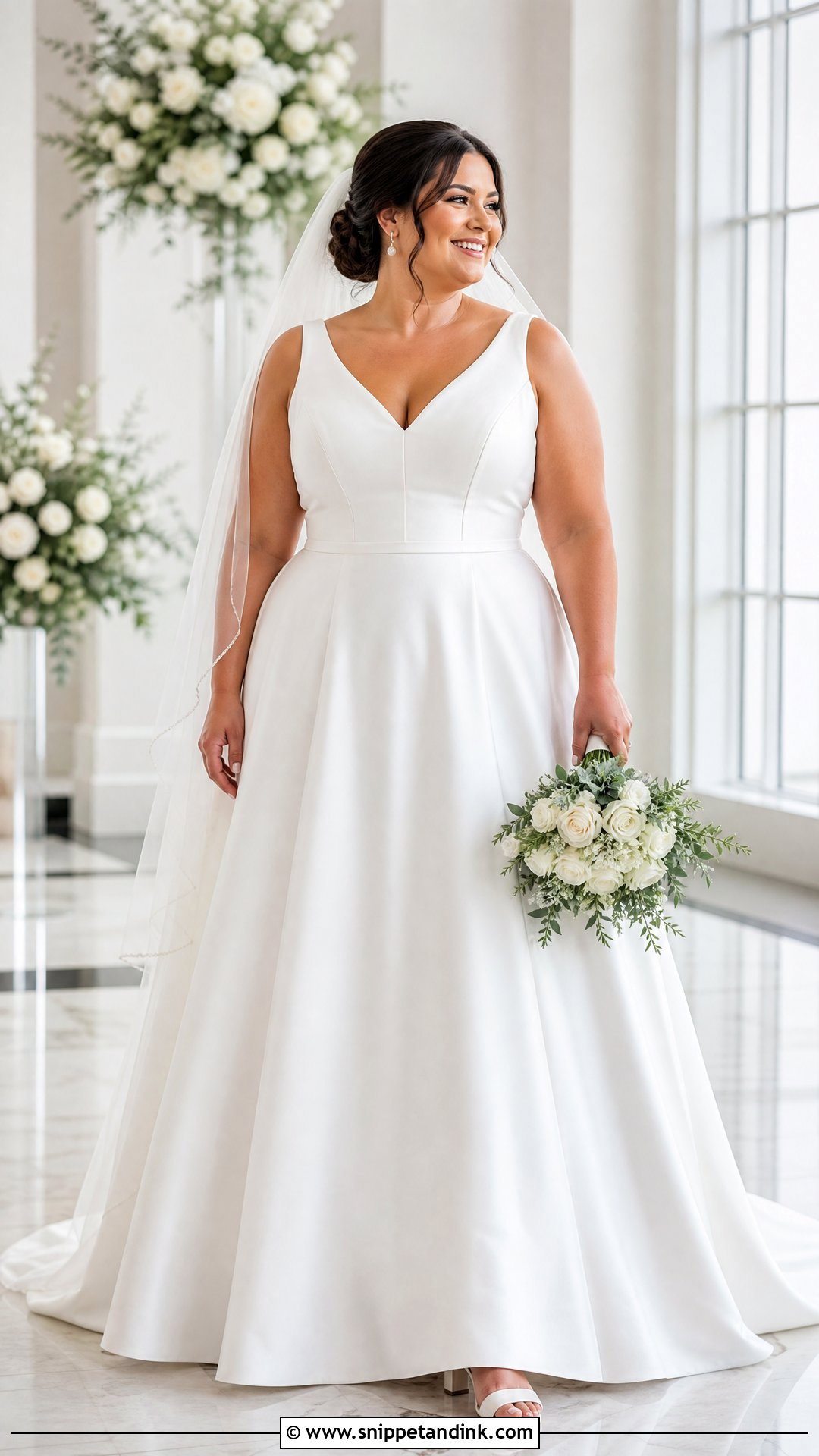
For brides who need real support, the strap is only one part of the answer. I look for princess seams, inner boning, secure cups and straps wide enough to sit smoothly on the shoulder without cutting in. A V-neck lengthens the upper body; a square or soft scoop gives more coverage. A chiffon, lace or satin A-line skirt moves well. Shape the gown to your actual measurements, whatever size you are, and have a bridal tailor adjust strap length, neckline and cups. A fingertip veil, block heels, pearl earrings and a low bun complete it.
Your Strapless Gown Can Still Get Straps
Brides often fall for a strapless dress and then realize at the first fitting that they’ll spend the day hitching it up. That’s fixable. A good bridal seamstress can add straps to most strapless gowns, and many designers sell matching straps to go with their dresses.
- Ask the shop whether the designer offers matching straps. These use the same fabric and color, which saves a lot of guesswork.
- If not, the seamstress can cut straps from the hem allowance or source fabric that matches. Ivory, diamond white and off-white are all different, so compare swatches in daylight.
- Decide on the style in front of a mirror: thin straps, wide bands, a halter or dropped straps all change the neckline differently.
- Have them stitched or attached with hidden snaps at the second fitting, so there’s still time to adjust length at the last one.
Straps steady a strapless bodice, but they don’t replace a well-fitted one. If the dress is slipping because it’s too big through the ribcage, it needs taking in as well. Get both done and you’ll stop thinking about the dress after the first hour.
Straps Steady the Dress, the Bodice Holds You
Straps decide how comfortable a gown feels and how it frames your shoulders. Spaghetti straps suit light slips, and wide straps suit structured A-lines and ball gowns. Halters, one-shoulder cuts, pearls, bows and crystals give more detail. Whatever you pick, look at the bodice construction before the straps, because the bodice should do most of the holding. Bring your wedding shoes and underwear to every fitting, and sit, walk and lift your arms each time. That way the straps stay put from the first look to the last dance.
You'll Like These Ideas:



Leave a Reply