
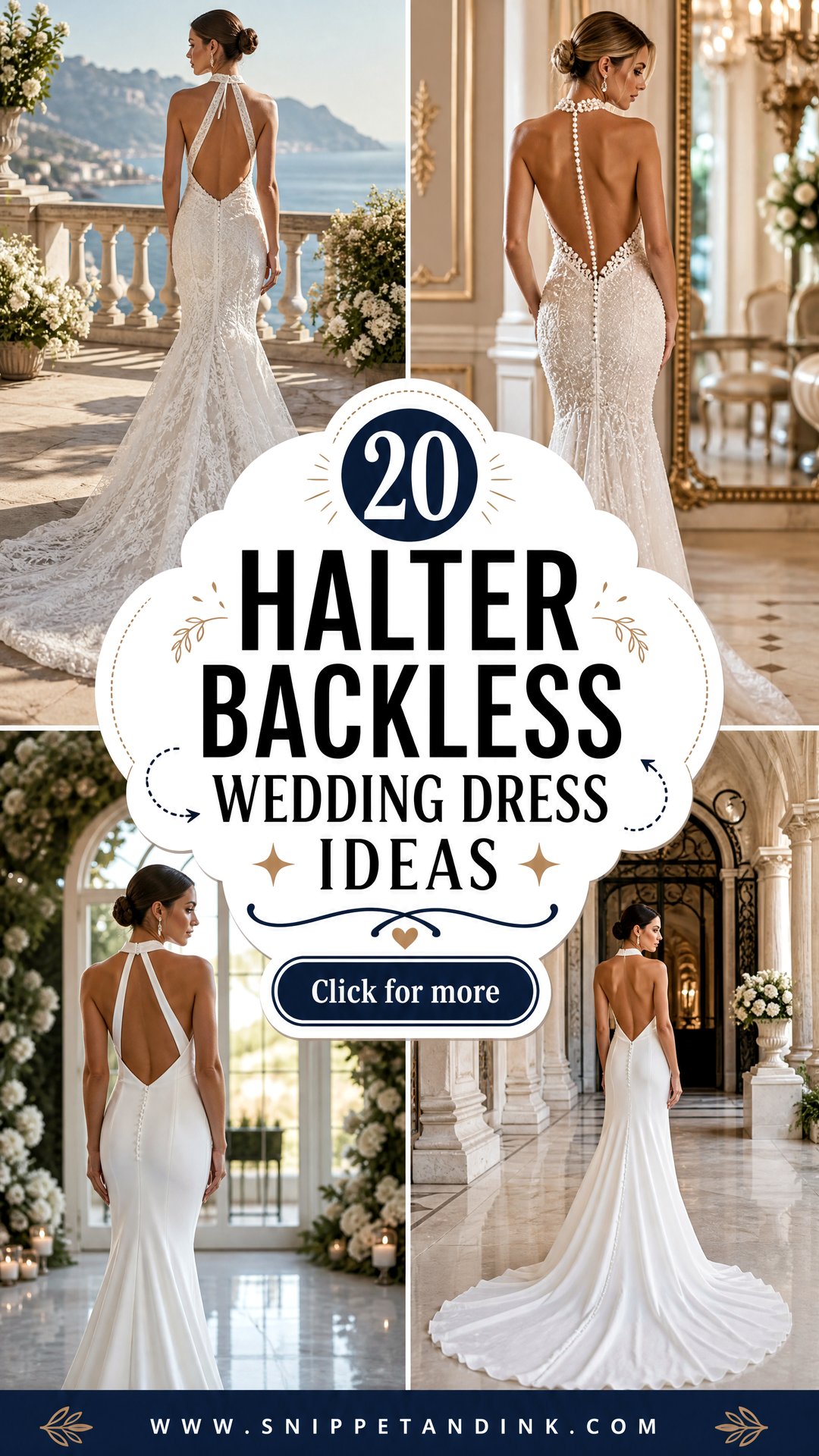
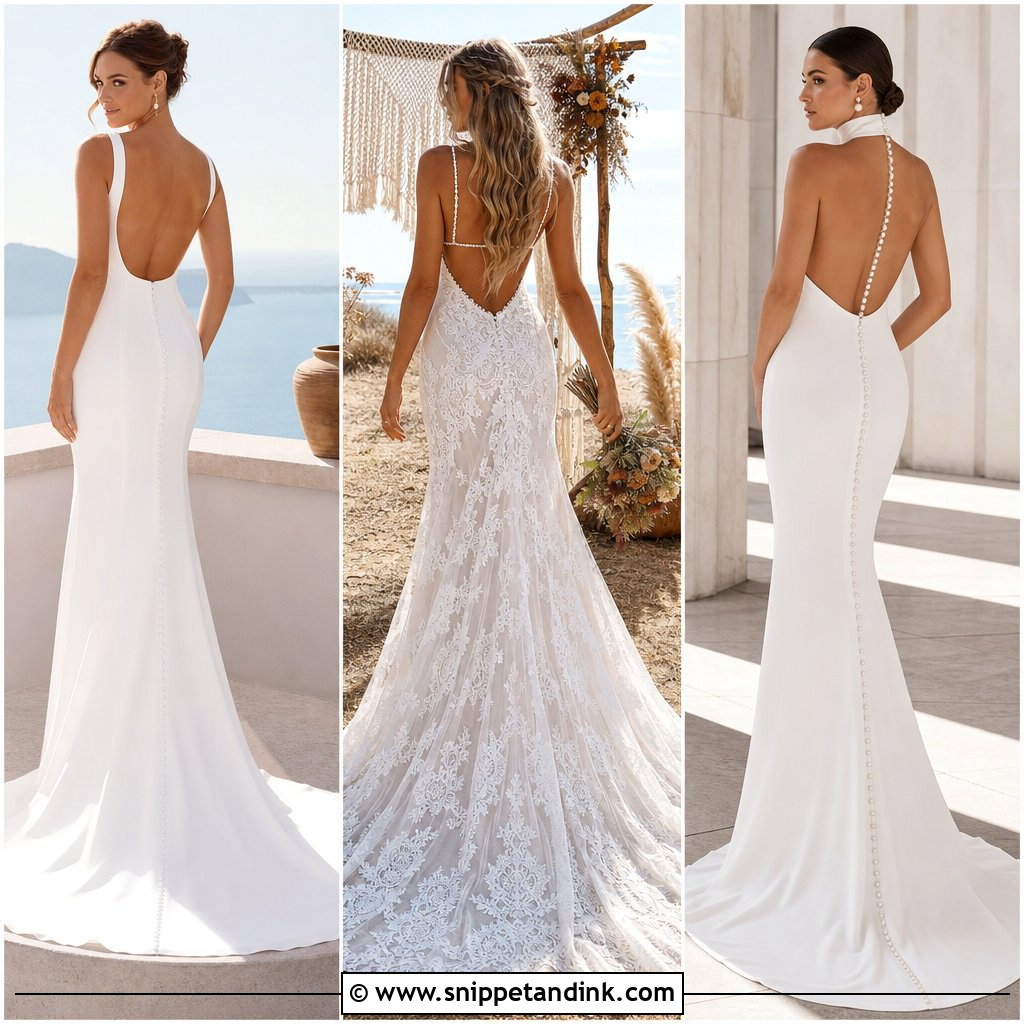
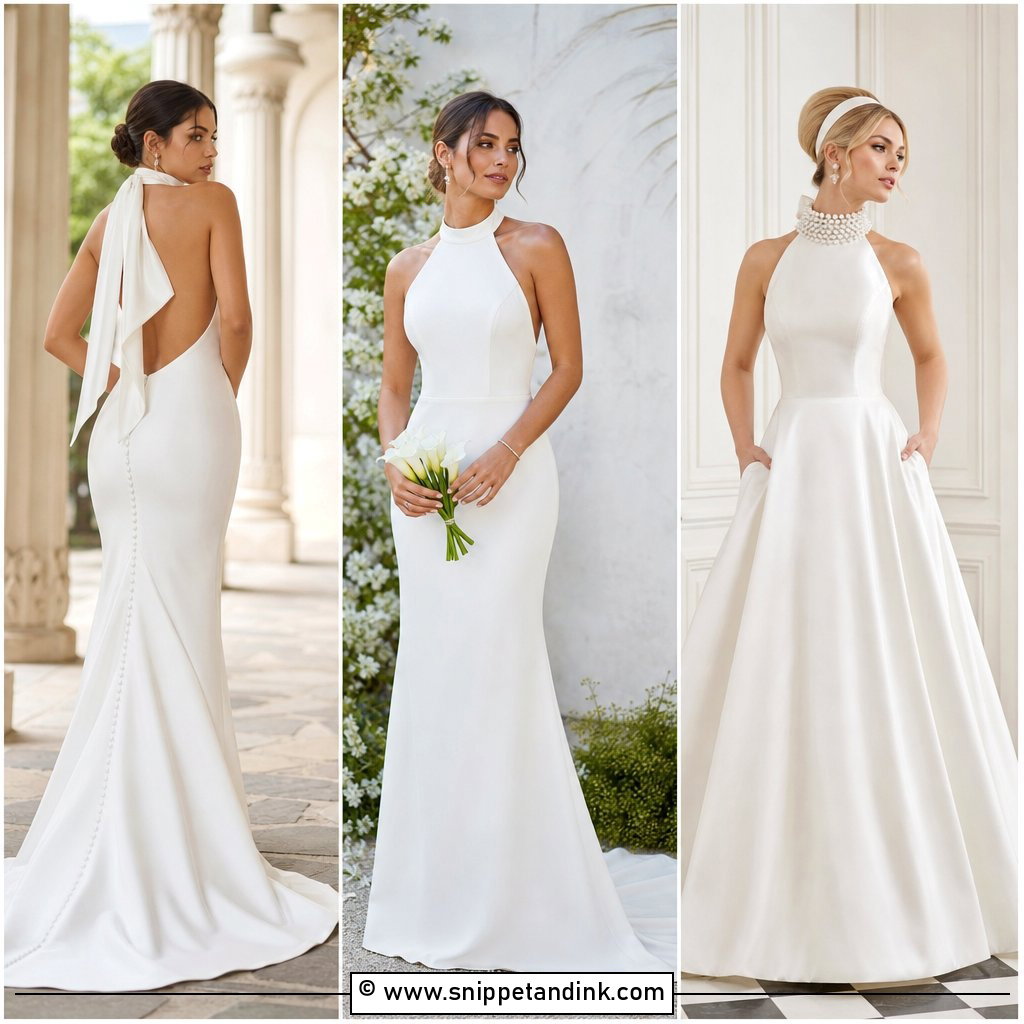
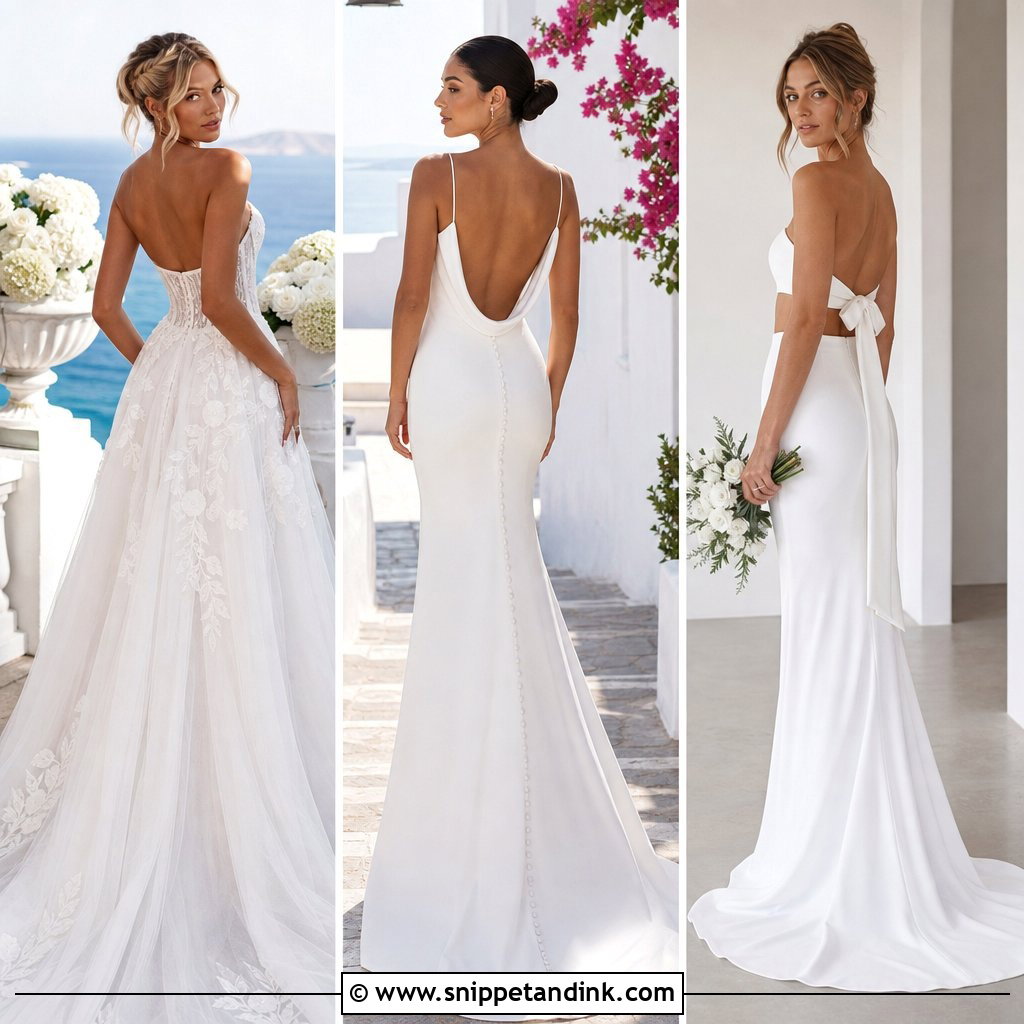
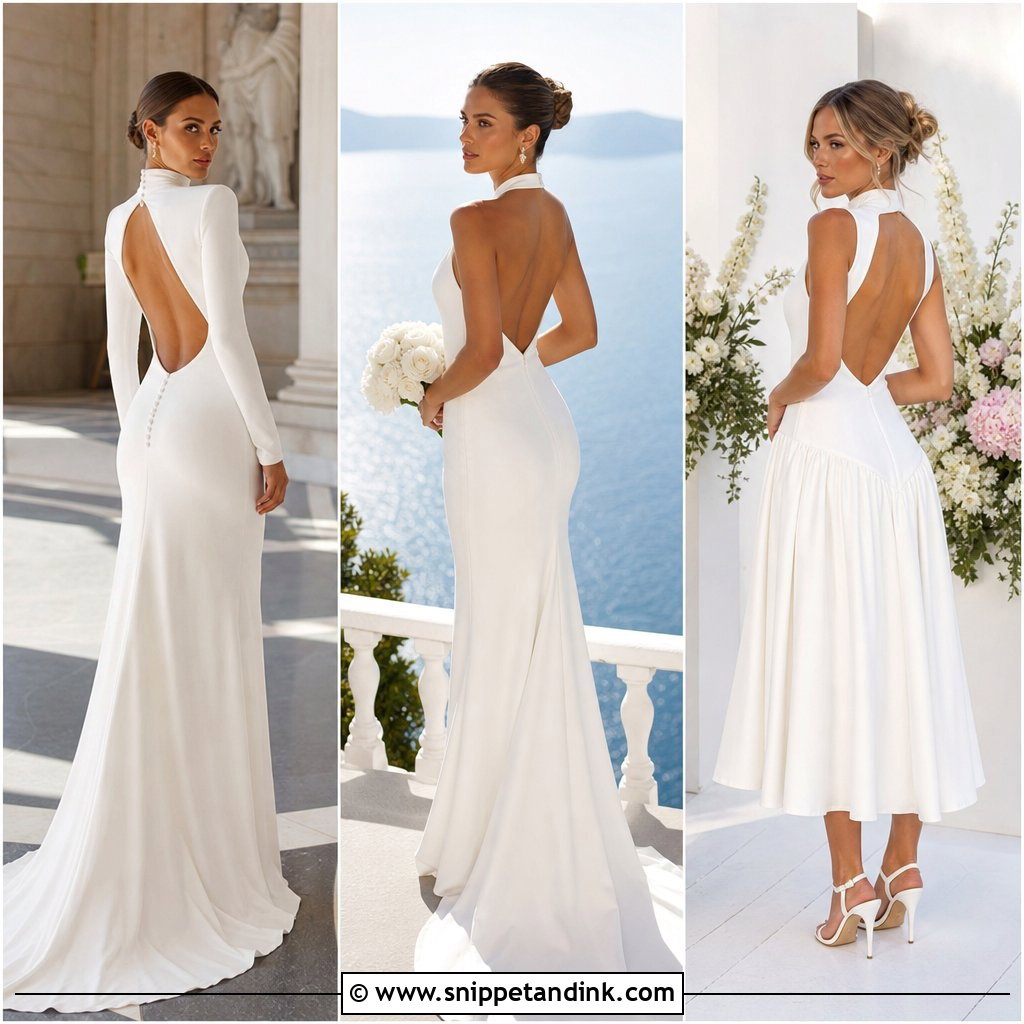
A halter with an open back is one of the few necklines that asks as much of the rear view as the front. Designers have brought it back as a notable bridal runway direction, pairing a covered neck with a bare back in both very plain and very textured gowns. In the fitting room I treat it as an engineering problem first and a style choice second, because all the weight of the bodice hangs from one point at the nape. Get that right and the fabric choice becomes the fun part. Below are twenty ways the shape is cut, with what I check on each one and how I’d finish the outfit.
Where the Support Goes When There Is No Back
The first question every halter bride asks me is what to wear underneath. With the back open to the waist, a normal bra is out, and so is most of what’s sold as backless. The answer almost always lives inside the dress rather than on your body.
- Sewn-in cups. A seamstress can stitch moulded cups into the bodice lining. For most busts this is the most comfortable option and the one I recommend first.
- A built-in corset or boned bodice. If the gown has one, it does the lifting. Ask whether the boning stops at the side seams, because that’s where a backless cut has to end.
- Adhesive cups and tape. Fine for smaller busts on a short day. On a long, warm one, sweat loosens them, so I only use them as a backup.
- Low-back converter straps. These hook a regular bra lower around the waist. They work for some dresses but can show at the base of a deep cut.
Then there’s the neck itself. A halter hangs the front of the gown from your nape, and on a heavily beaded or lined bodice that can become real strain by the evening. A well-made halter transfers much of that weight to the waist seam and the side panels. You can test it in the shop: hold the strap loosely away from your neck for a moment. If the bodice drops noticeably, your neck is doing too much of the work.
1. Satin Halter Backless Wedding Dress
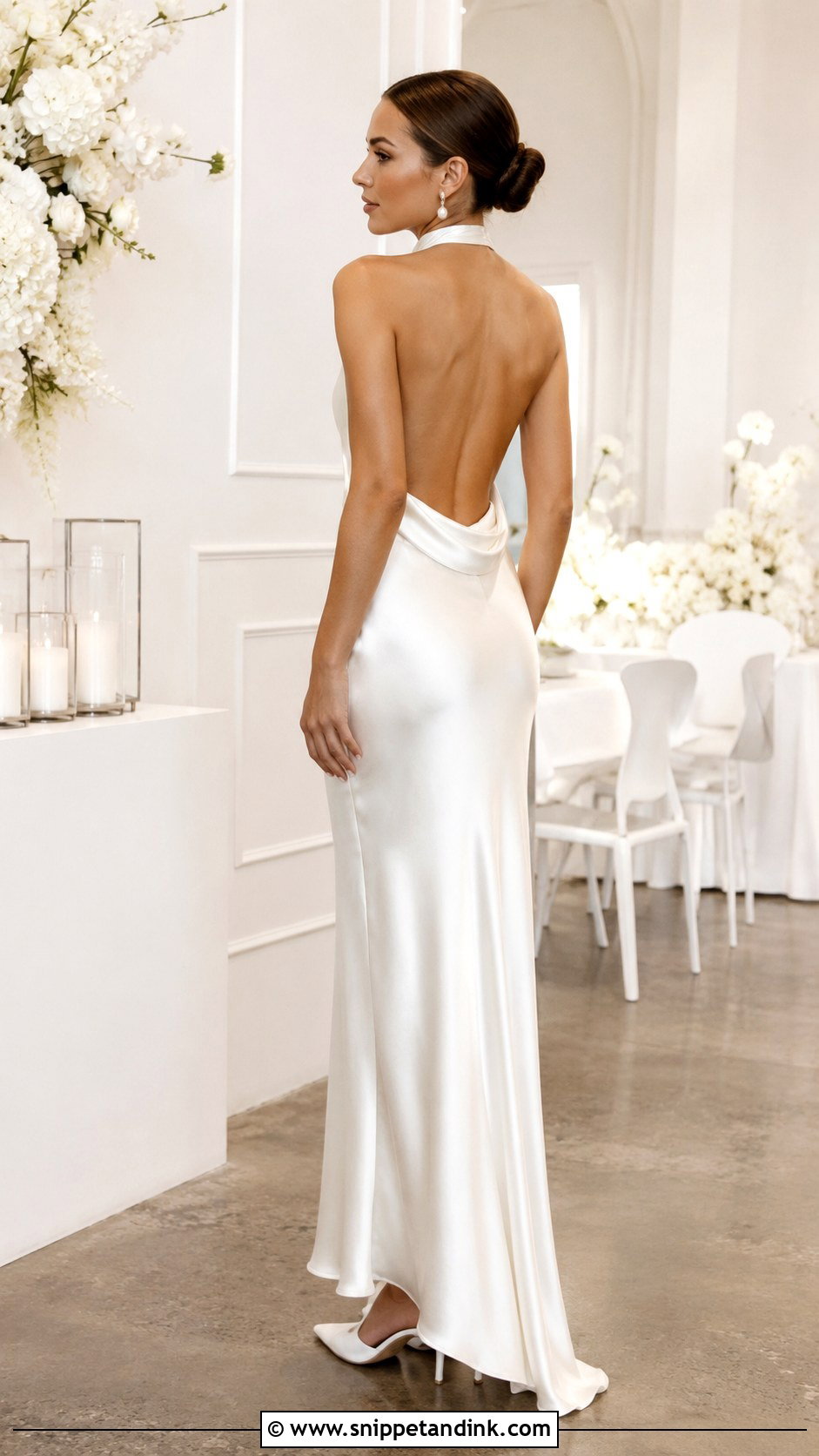
Satin is the most honest fabric you can put on this neckline: it shows every pull. On a softly draped halter with a fitted waist and a column or A-line skirt, it catches light well in a ballroom or a city venue with strong overhead lighting. I keep the hair in a polished low bun so the back reads clearly, add pearl drops, and finish with ivory pointed pumps and a small satin clutch for later. The fitting is where this dress is won. I have the bride sit, walk and dance while the seamstress watches the neckline, waist and lower back, because satin creases at the hip crease the moment you sit and those lines stay in the photos.
2. Lace Halter Backless Wedding Dress
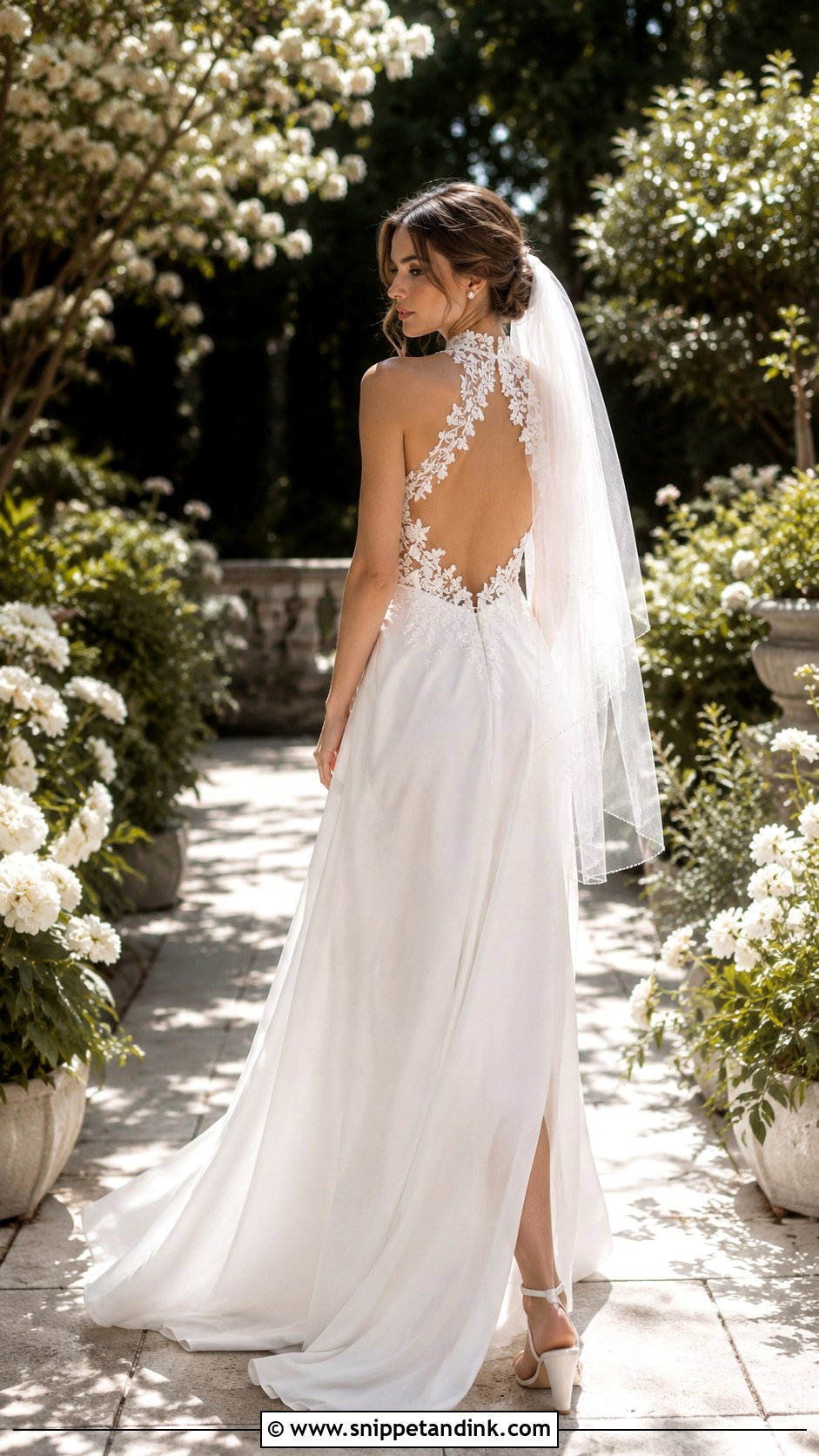
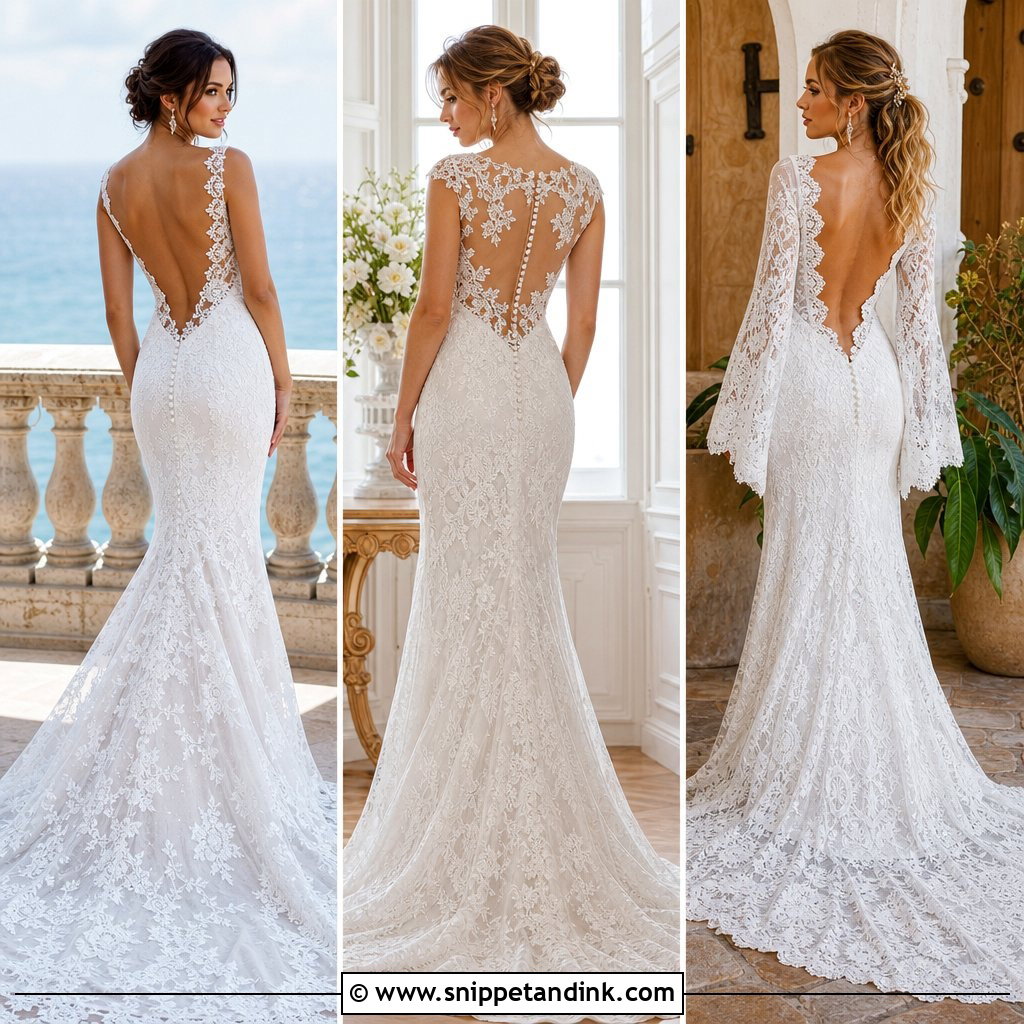
Lace solves the satin problem because texture hides small wrinkles. A fitted lace bodice that wraps around the neck and frames a low open back sits comfortably over a lightly lined A-line skirt. I like ankle-strap heels with a hint of lace or mesh here, small pearl studs, a thin bracelet and a fingertip veil. A loose chignon with a few face-framing waves keeps the back visible without looking stiff. The detail I always check is the edge of the lace where it meets bare skin. Sheer areas need lining or appliqués placed by hand so coverage is reliable, and scalloped edges should be tacked down so they don’t flip up when you lift your arms.
3. High Neck Halter Backless Wedding Dress
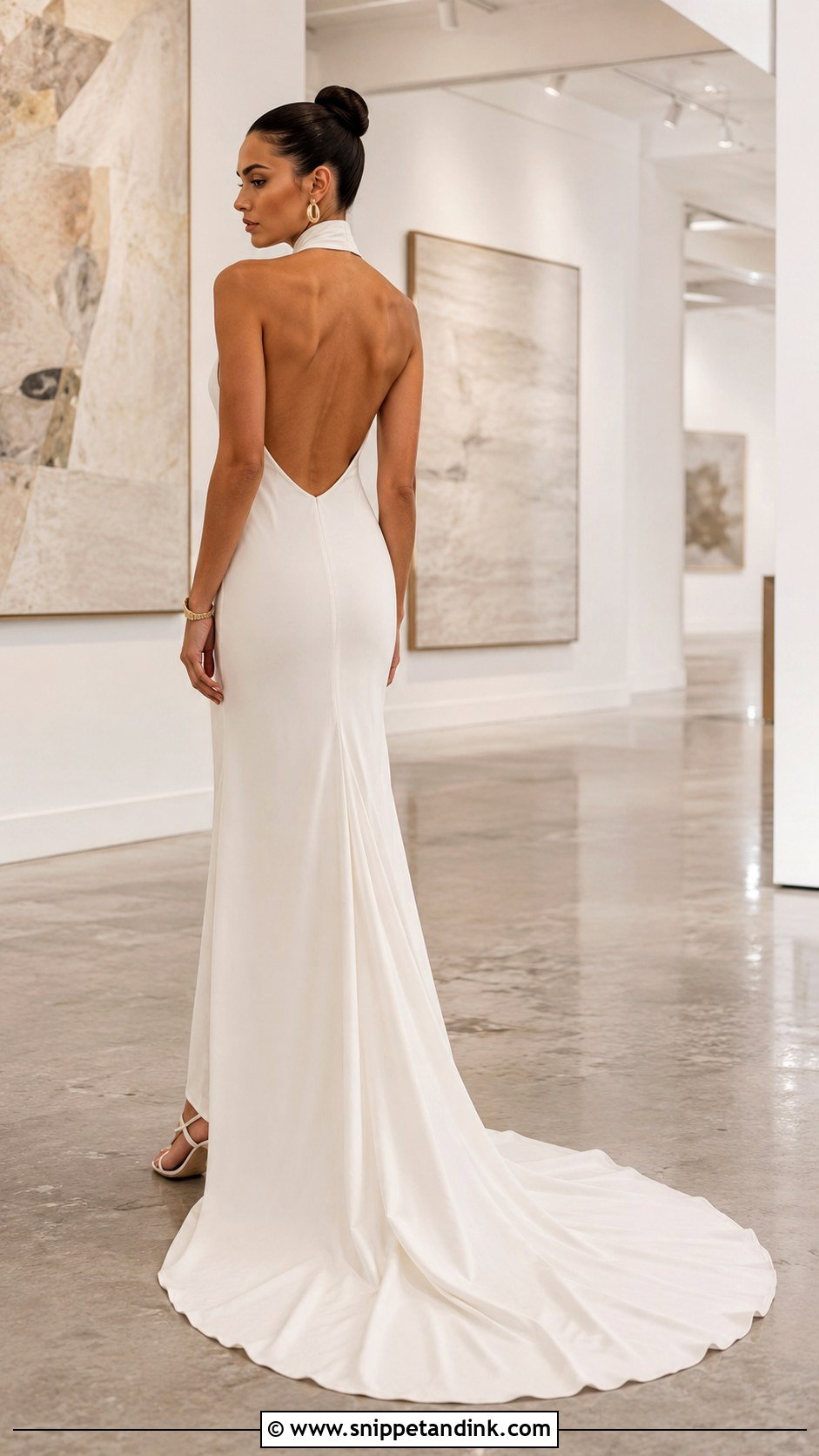
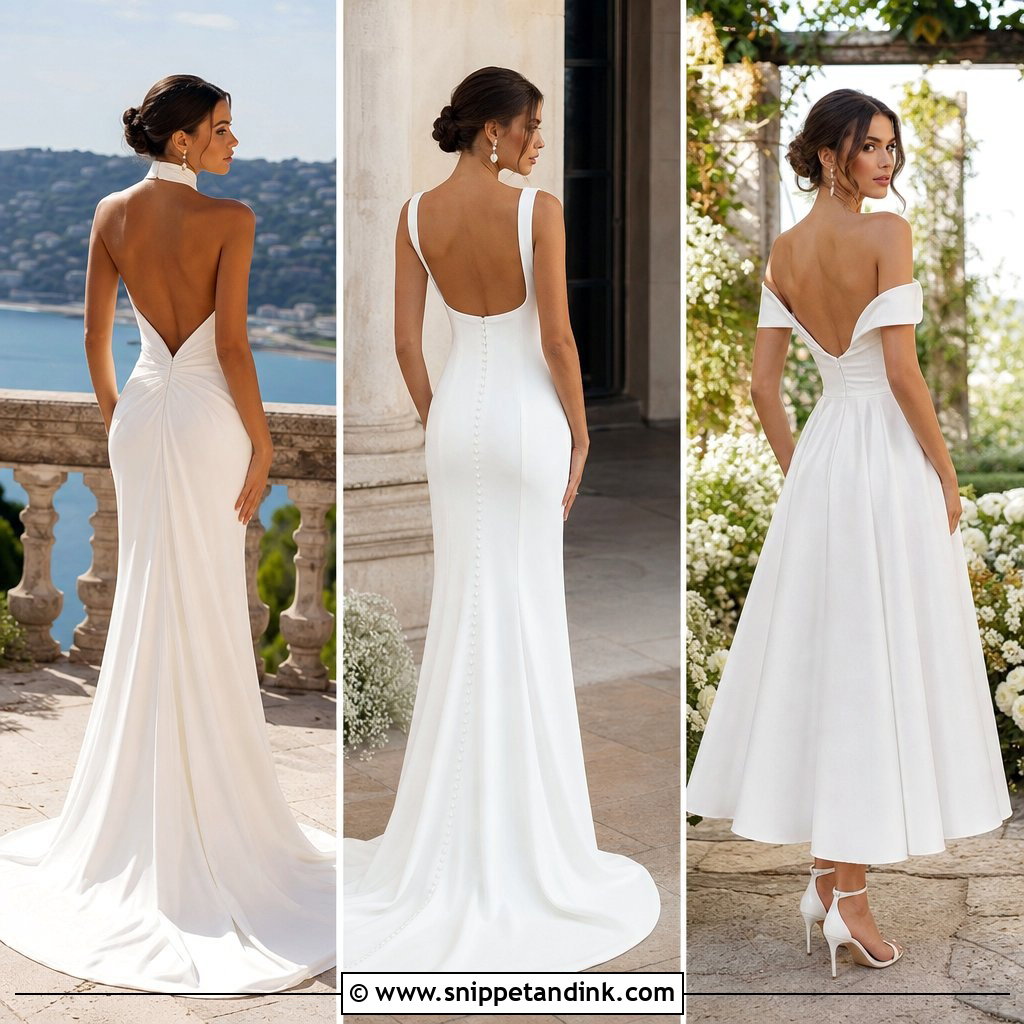
Brides who want coverage at the front but some surprise behind usually land on a high neck halter backless wedding dress. The closed collar looks almost severe from the aisle, then the turn reveals the back. Crepe or mikado holds the waist before falling into a chapel train. Skip the necklace; the collar is already the jewelry. A smooth high bun, sculptural studs and a slim metal cuff are enough, and I’d pick slingbacks over mules because a mule slips on a long walk. In fittings I ask her to turn her head fully and raise both arms. A high collar that is even a few millimetres too snug will dig into the throat by the speeches.
4. Mermaid Halter Backless Wedding Dress
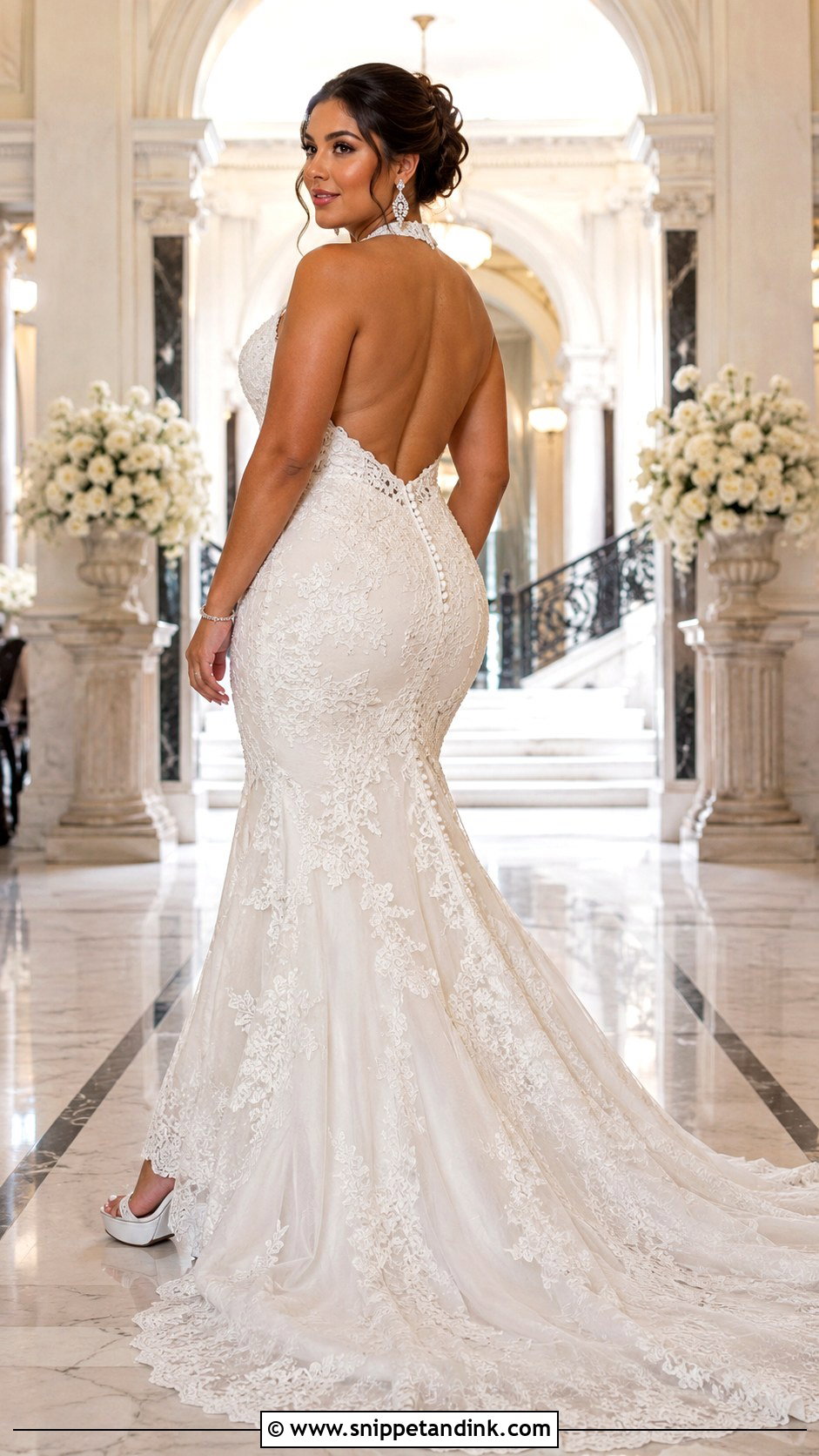
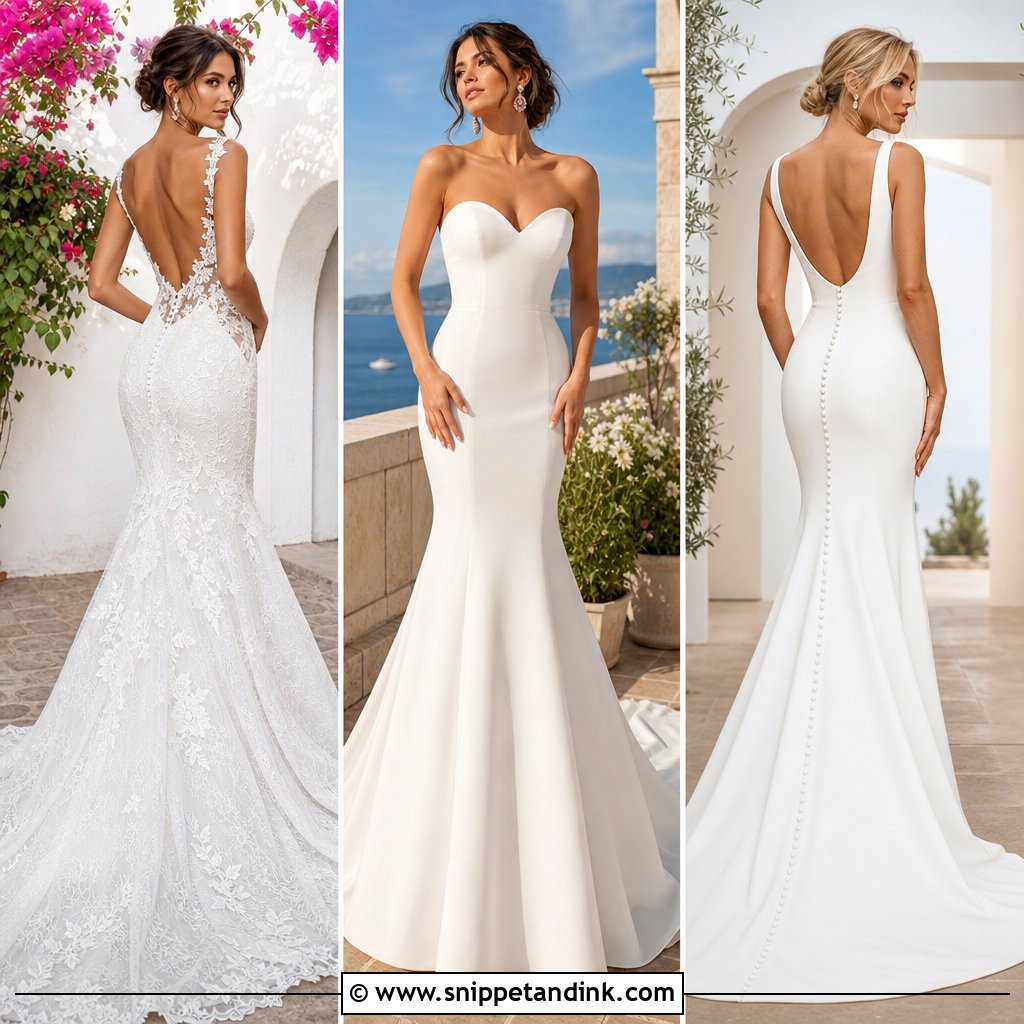
The mermaid cut is the least forgiving shape on this list and the most dramatic. It should follow the bodice, waist and hips closely and only release near the knee. Stretch crepe gives the cleanest line; lace or beaded tulle adds sparkle but also weight, which the halter strap then has to carry. A swept-up style leaves room for chandelier earrings, and a cathedral veil anchored below the bun keeps the back on show. Choose cushioned platform sandals, because the narrow skirt shortens your stride and you don’t want an unstable heel on top of that. Practise sitting and taking full steps at every fitting, and have the bustle planned before the final one.
5. A-Line Halter Backless Wedding Dress
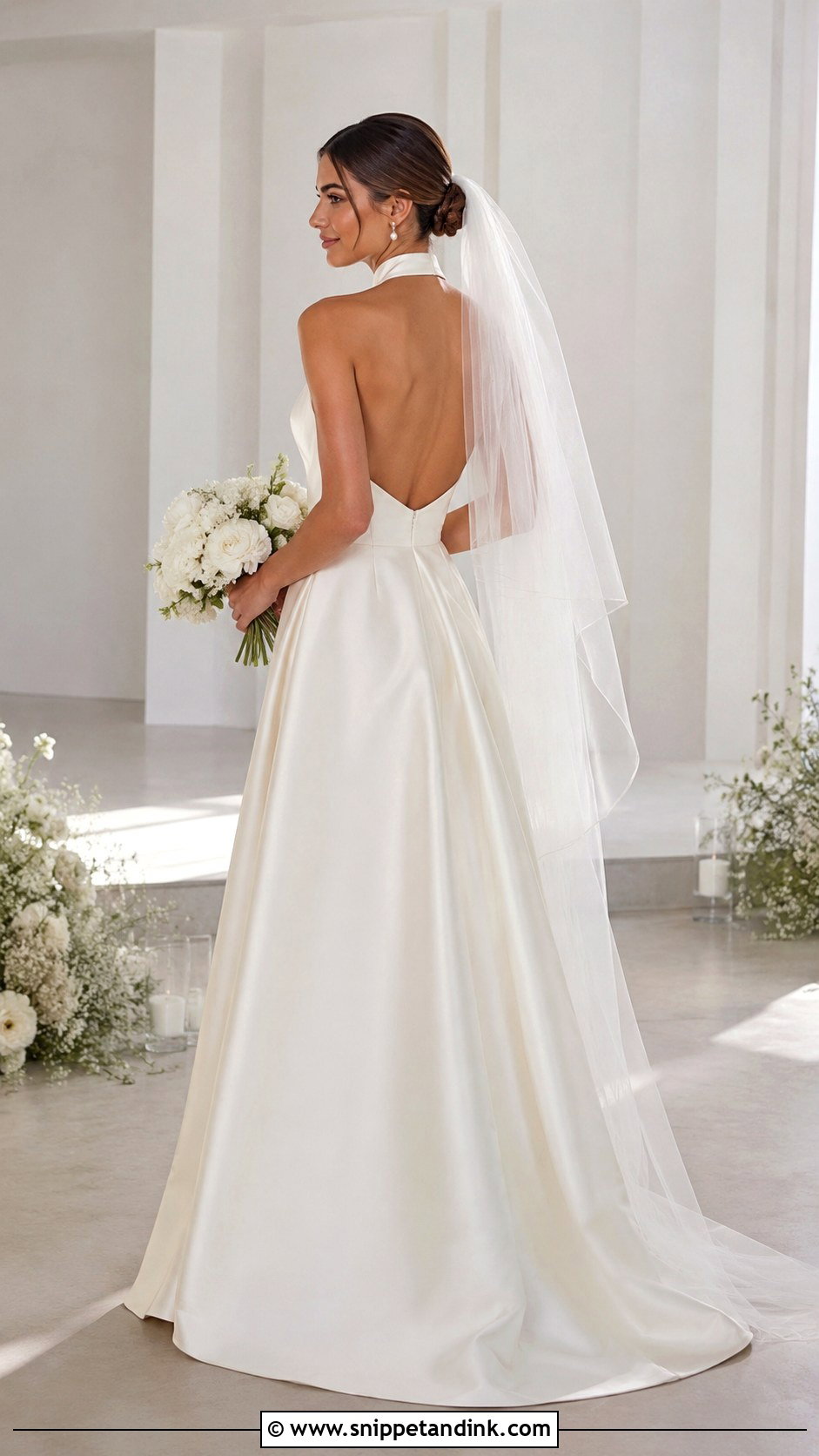
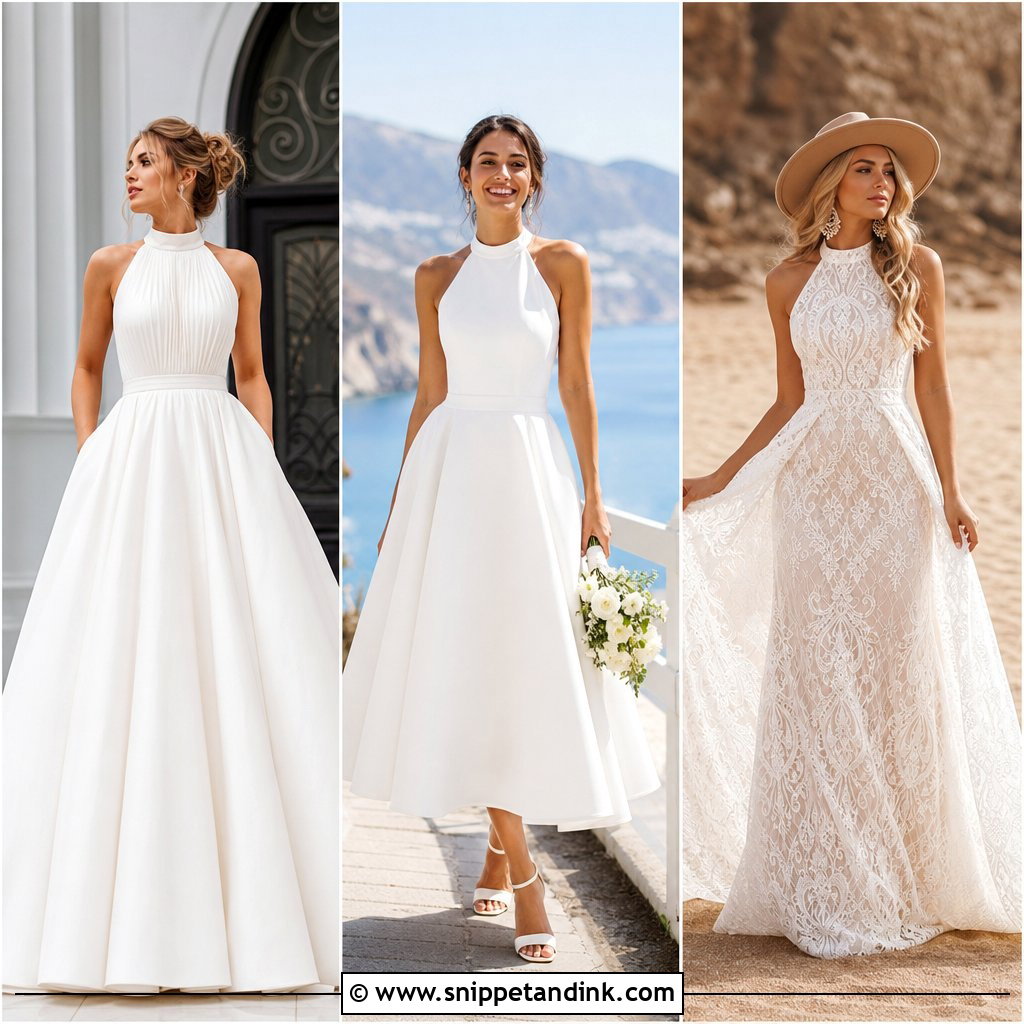
If you can’t decide, the A-line is the shape I’d put you in first. A structured halter top meets a skirt that starts at the natural waist, so you get definition without the knee restriction of a mermaid. Chiffon makes it relaxed, satin or mikado makes it formal. I’d add a mid-height block heel, pearl earrings and a soft tulle veil, with a low twisted bun. A narrow self-fabric sash works if you want more waist, but keep it plain. Hem it only once you own the actual wedding shoes. Half an inch of heel difference is enough to make the skirt either drag or hover.
6. Chiffon Halter Backless Wedding Dress
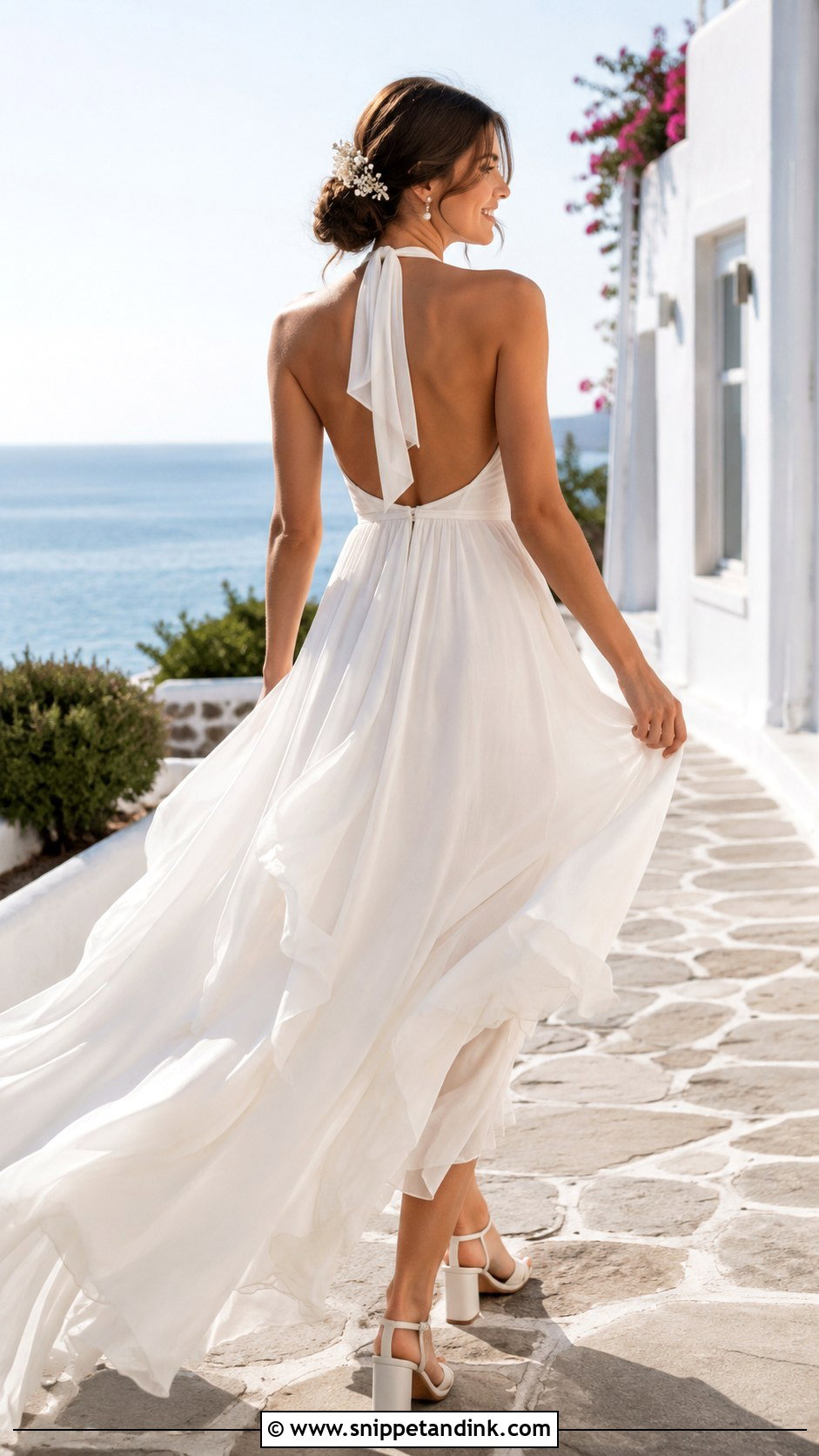
Chiffon is the fabric I steer outdoor brides toward, because it moves in a breeze and doesn’t trap heat the way satin does. Look for a lined bodice, a softly gathered waist and a layered skirt that floats rather than puffs. Block-heel sandals or bridal flats stay steady on lawn and paving. I’d style freshwater pearl earrings, a small comb and a loose low bun, then either a short veil or a few flowers in place of one. The warning with chiffon is light. Take the dress outside before the last fitting and look at it with the sun behind you; that is when you find out whether you need a second lining layer and tonal underwear.
7. Beaded Halter Backless Wedding Dress
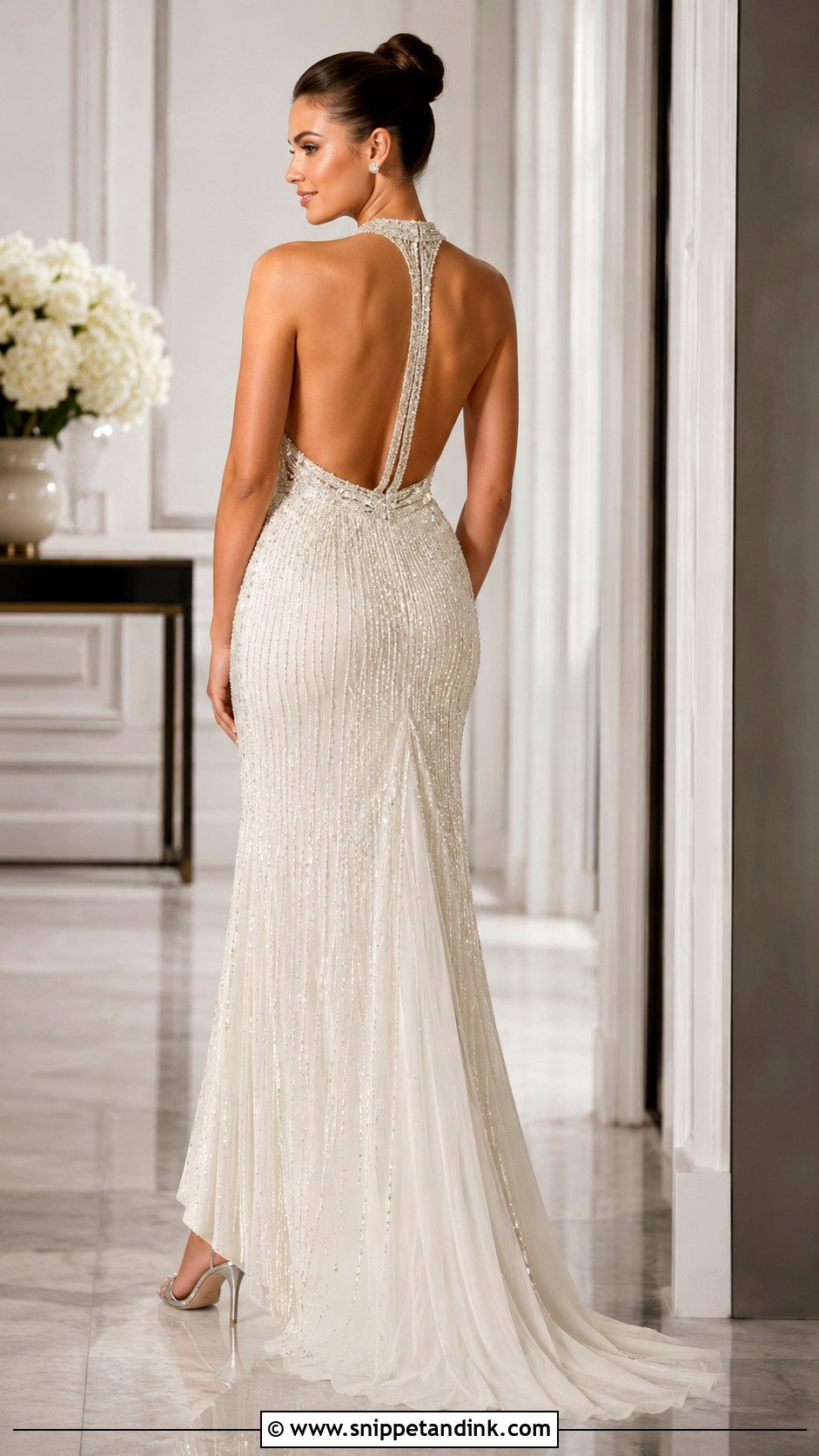
Beading at the neckline does the job of a necklace, so you don’t need one. The placement I like is heavy around the halter and lighter across the bodice and skirt, which pulls the eye up and keeps the gown from looking top-to-toe busy. Crystal studs, a polished bun and silver or ivory heels are plenty. A plain tulle veil for the ceremony can be swapped for a crystal pin that echoes the beadwork at the reception. Run a finger along the inside of the neckline before you buy. Beads stitched through to the lining leave rough knots that rub the back of the neck all evening, and a soft backing strip fixes it.
8. Minimalist Halter Backless Wedding Dress
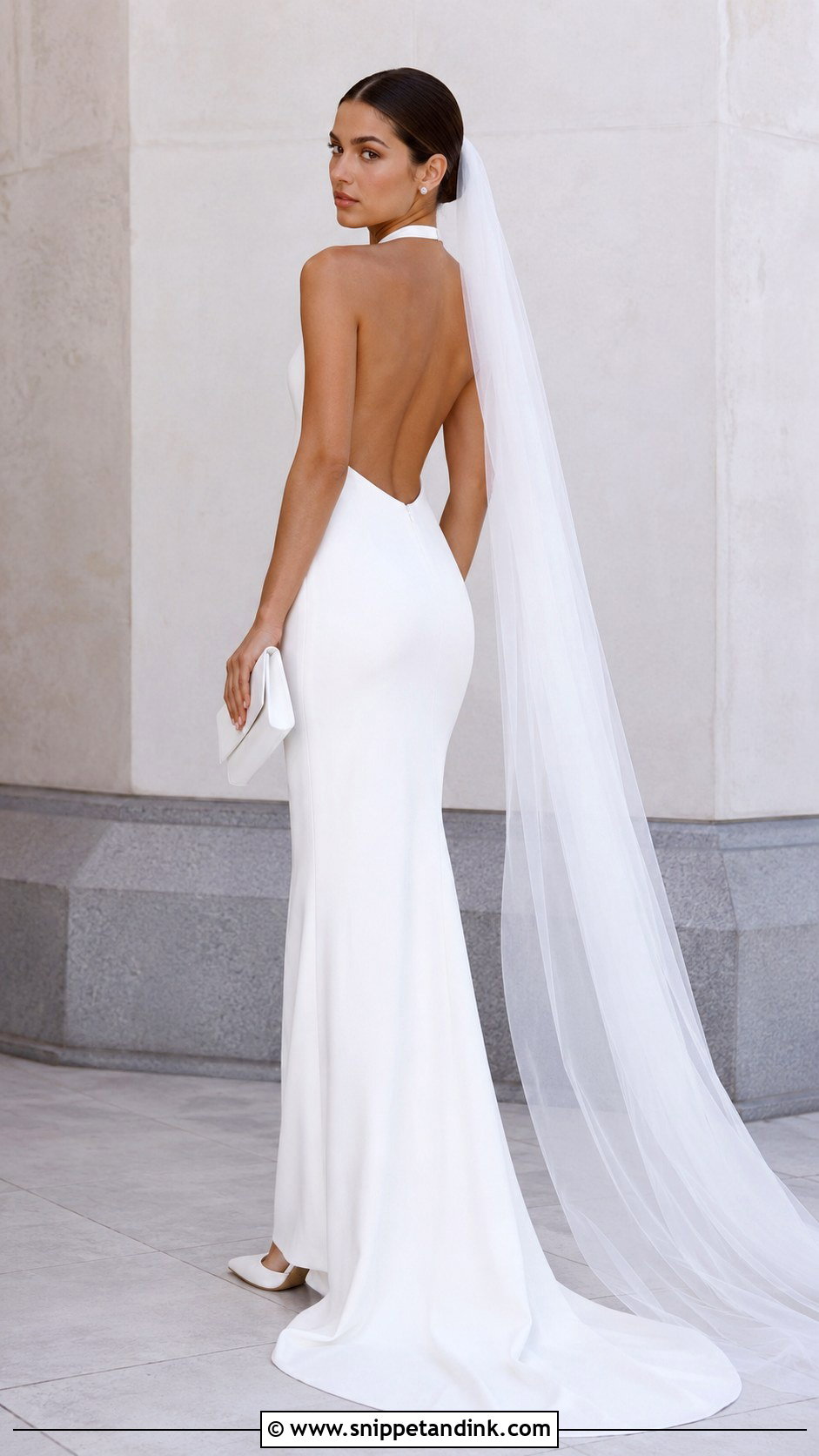
Minimal gowns look simple and are the hardest to fit. In matte crepe, silk faille or smooth satin with almost no decoration, there is nothing to distract from a seam that pulls or a hem that’s half an inch off. I look for precise seaming, a defined waist and a column or gentle A-line skirt. Pointed ivory pumps, small studs and a structured clutch suit it, and a sleek centre-parted bun keeps the mood clean. A long plain veil for the ceremony, removed afterwards, gives you a second reveal of the back. Plan alterations around the bust, neckline, hips and hem, because on this dress any small drag line becomes the first thing people notice.
9. Boho Halter Backless Wedding Dress
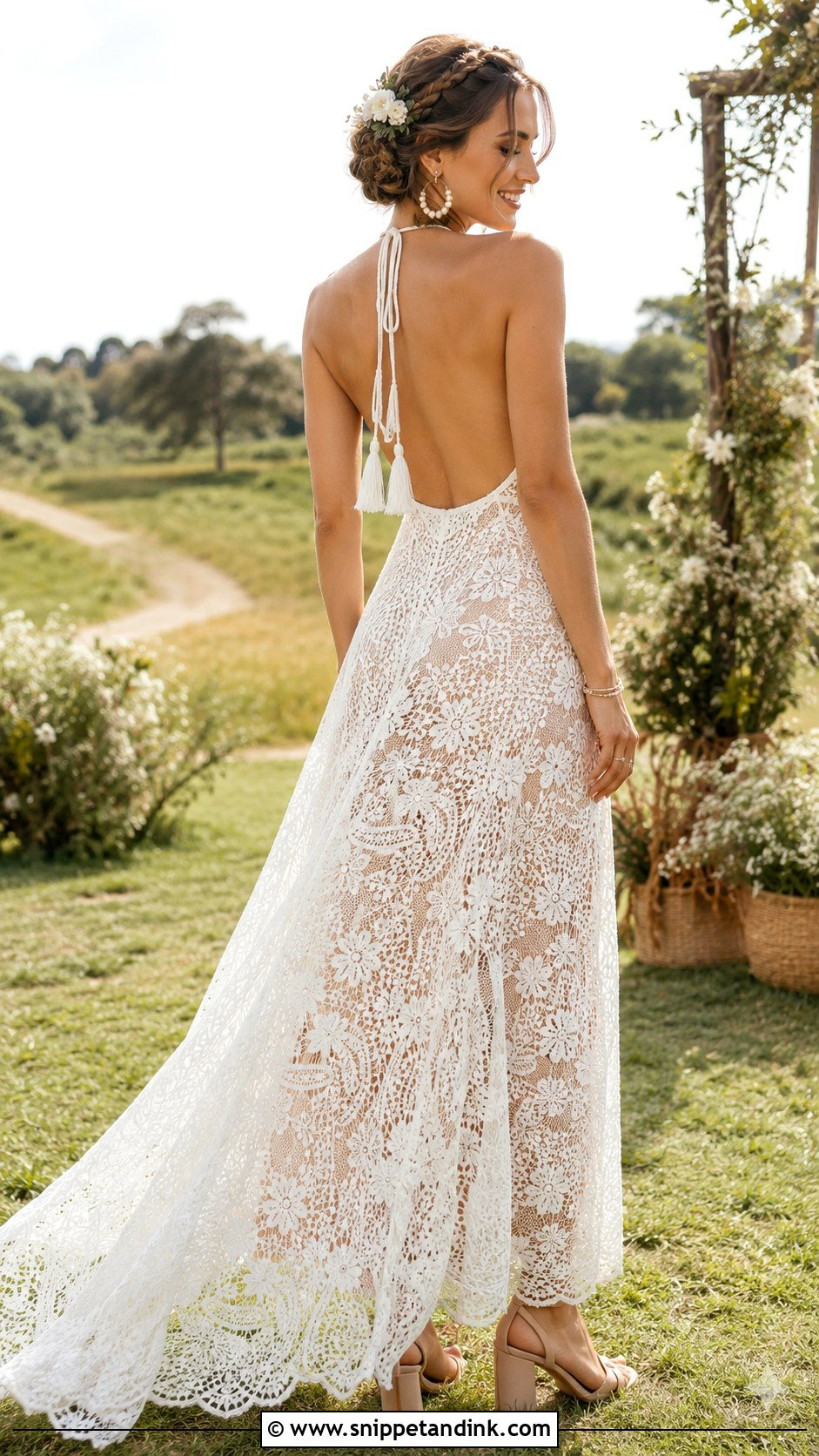
Boho halters tend to be softer in construction, with crochet-style lace, botanical embroidery or light chiffon over an easy A-line skirt. A tasselled halter tie or narrow lace straps give the back some interest without making it formal. Neutral block-heel sandals, small pearl hoops and a loose braided updo fit the mood, and a flower comb can stand in for a veil so the back stays clear. Bring a light ivory wrap for the evening and take it off for portraits. On grass or sand, check how the train behaves. Crochet lace drags in soil and stains at the hem fast, so a wrist loop or simple bustle is worth asking for even on a short train.
10. Pearl Halter Backless Wedding Dress
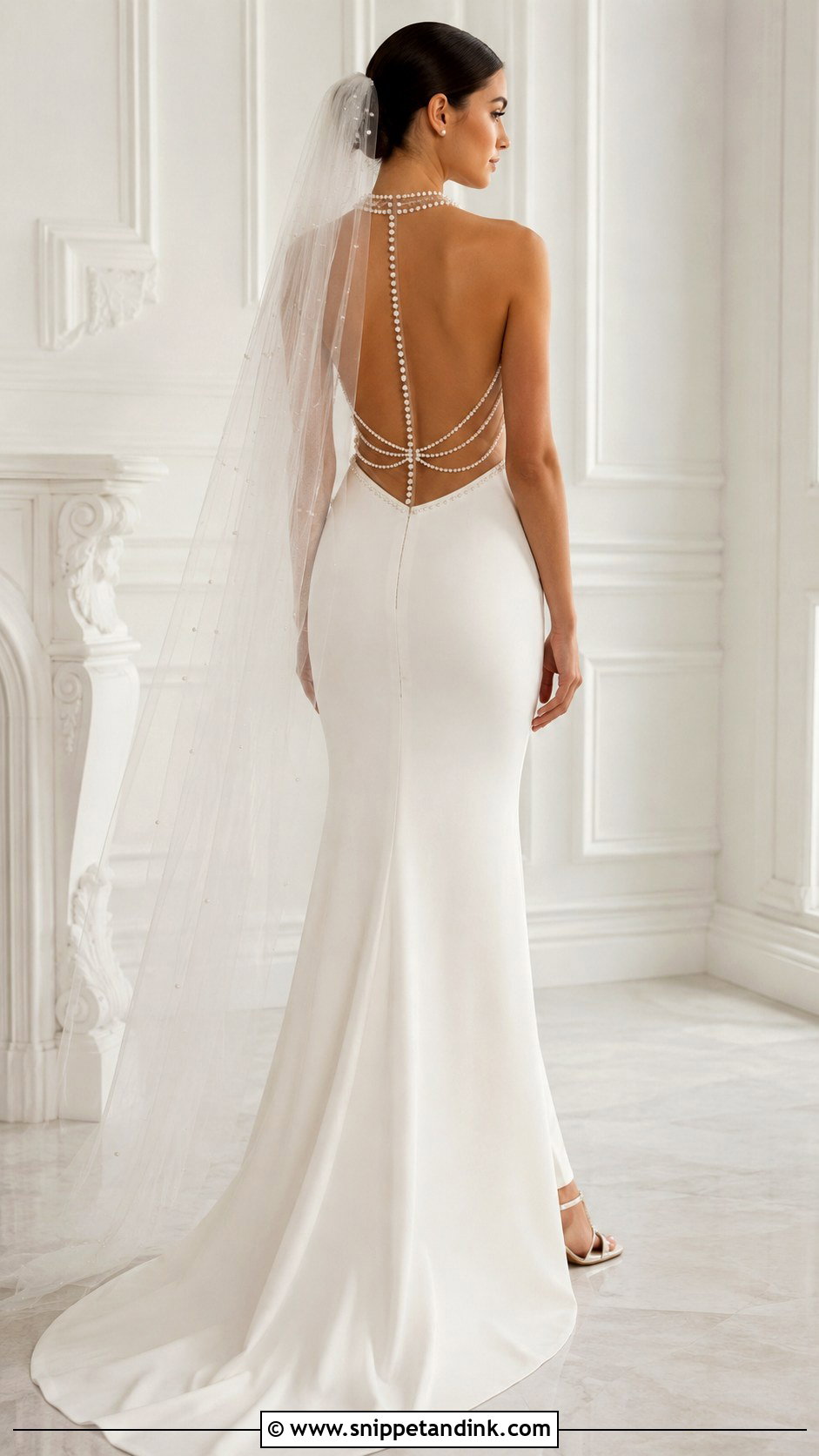
Pearls are gentler than crystals on camera; they glow rather than flash. You’ll see them scattered over illusion mesh, edging the neckline, or hung in strands across the open back. Keep the rest of the silhouette quiet, either fitted crepe or a flowing A-line, so the pearls stay the point. Pearl studs, ivory satin heels and a plain fingertip veil are enough, with a neat low bun to show any back strands. Leave the embellished bag at home; it will catch on the pearls. At the fitting, bend forward and twist. Draped strands should fall back into place, and any pearl that wobbles on its thread needs restitching before the day, not after.
11. Cowl Neck Halter Backless Wedding Dress
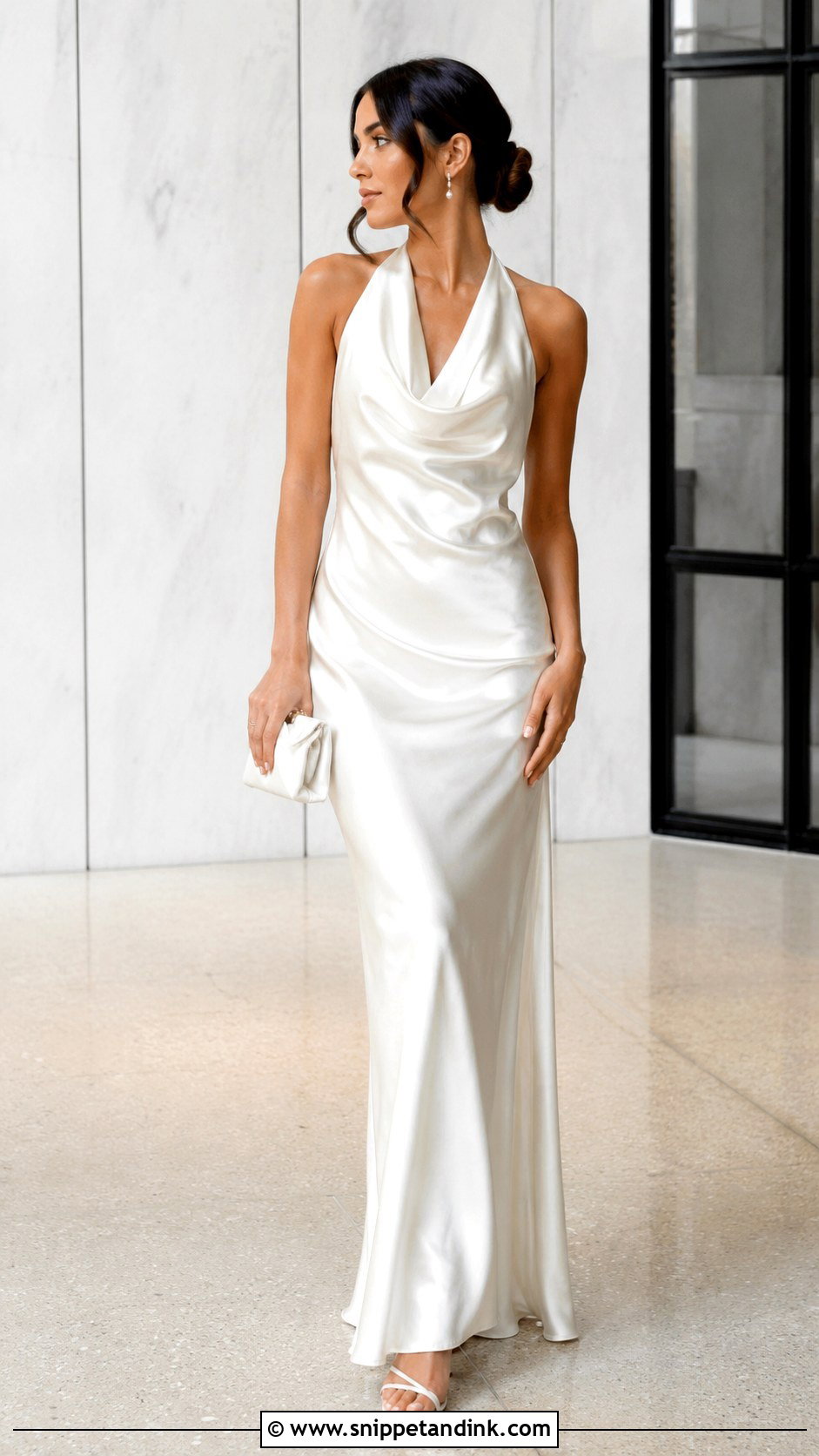
A cowl neck relies on gravity, which is why the fabric matters more than anything else. Silk charmeuse or satin falls into soft folds at the front and runs smoothly down an open back. A bias-cut column skirt suits it, with strappy ivory sandals and refined drop earrings, a low knot to keep the drape visible, and no necklace. The catch is that slippery fabric shifts as you move. Ask about small weights sewn inside the cowl or fashion tape, and have your tailor watch you walk, sit and lean forward. Bias-cut silk also shows every line underneath, so smooth, edge-free underwear is not optional with this one.
12. Keyhole Halter Backless Wedding Dress
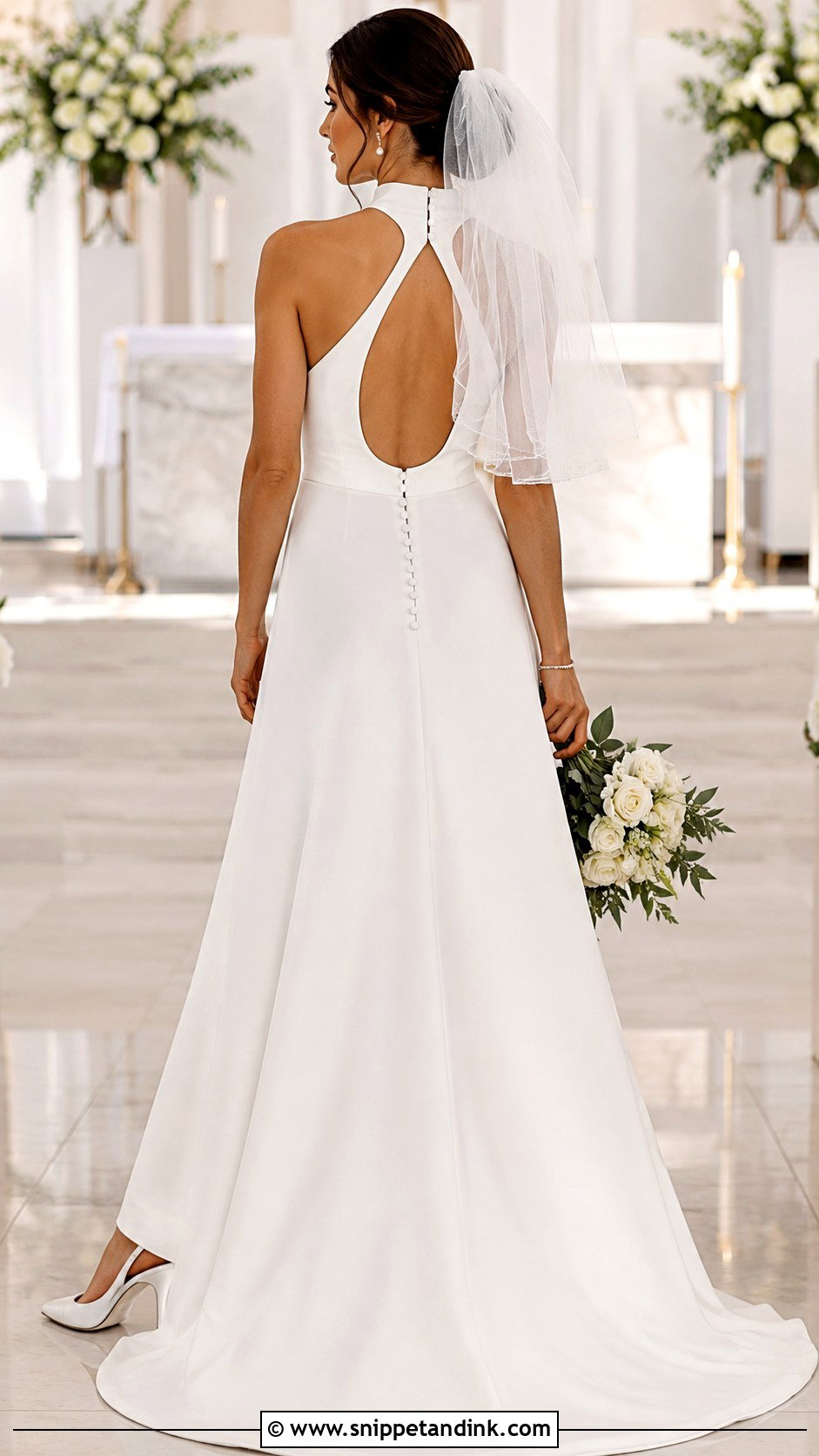
Not every open-back gown needs a deep cut. A keyhole halter backless wedding dress keeps the opening contained, framed by fabric, lace, buttons or narrow straps, and I often suggest it for brides who like the idea of a bare back but feel exposed in a full one. A fitted bodice over a soft A-line skirt keeps it balanced. Pearl drops, a fine bracelet and mid-height slingbacks work, with a low updo and a shoulder-length veil so the keyhole stays in view. The fastening is the weak point. It should close without pulling at the neck, and a hidden hook or reinforced button loop is far more dependable than a single fabric tie.
13. Bow Halter Backless Wedding Dress
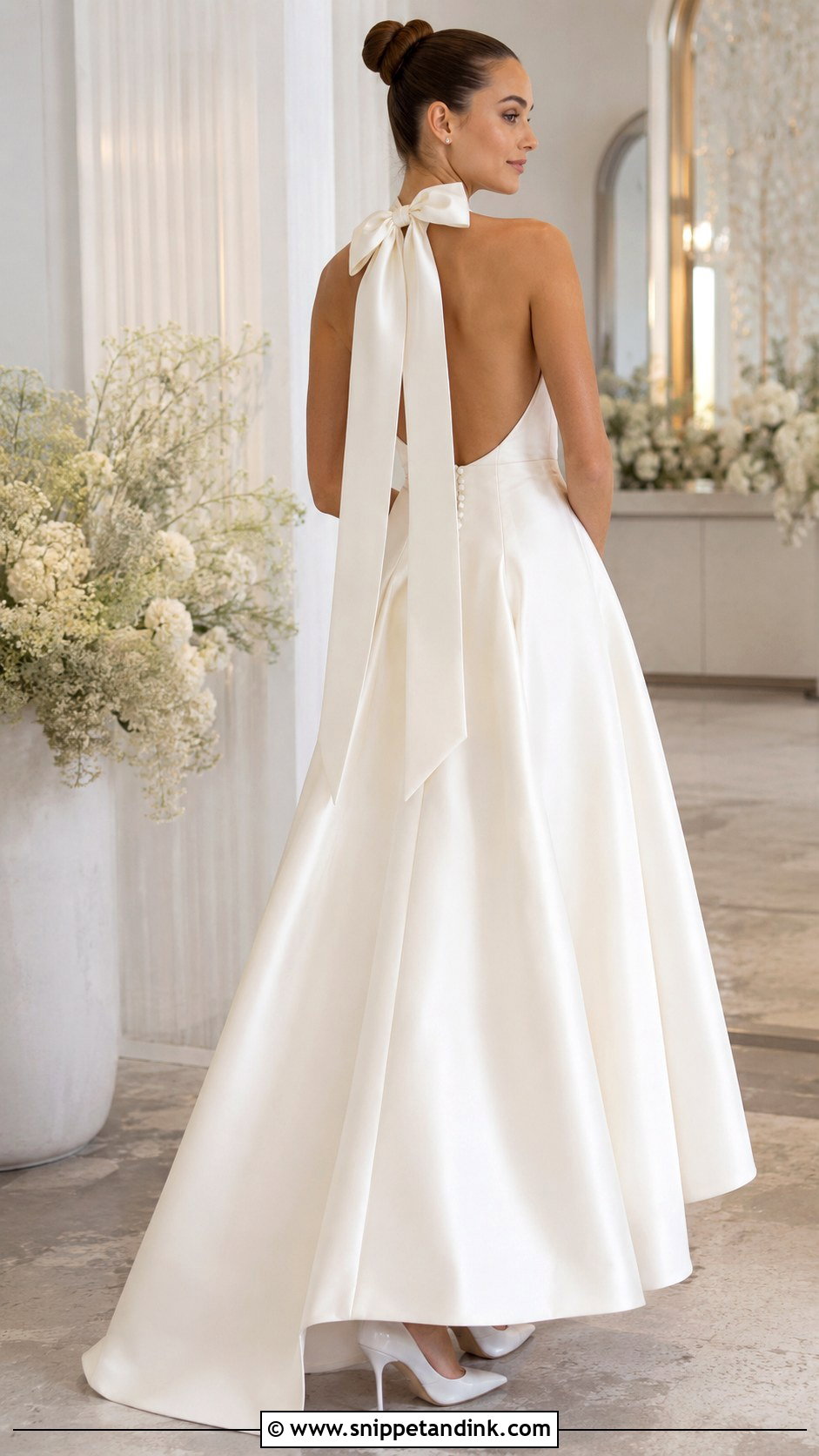
Here the fastening becomes the decoration. The bow can sit at the nape with long tails falling over the bare back, or lower at the waist above the skirt. Crisp mikado holds a sculptural bow that keeps its shape all day; soft chiffon gives a lighter one that will droop a little by evening, which some brides like and some don’t. Keep everything else quiet: small studs, ivory pumps, a narrow bracelet. Position the bun above the bow and choose a plain veil that falls behind the shoulders without crushing the knot. I always have the bow stitched into its final shape rather than tied fresh on the morning, so it sits even in every photo.
14. Floral Halter Backless Wedding Dress
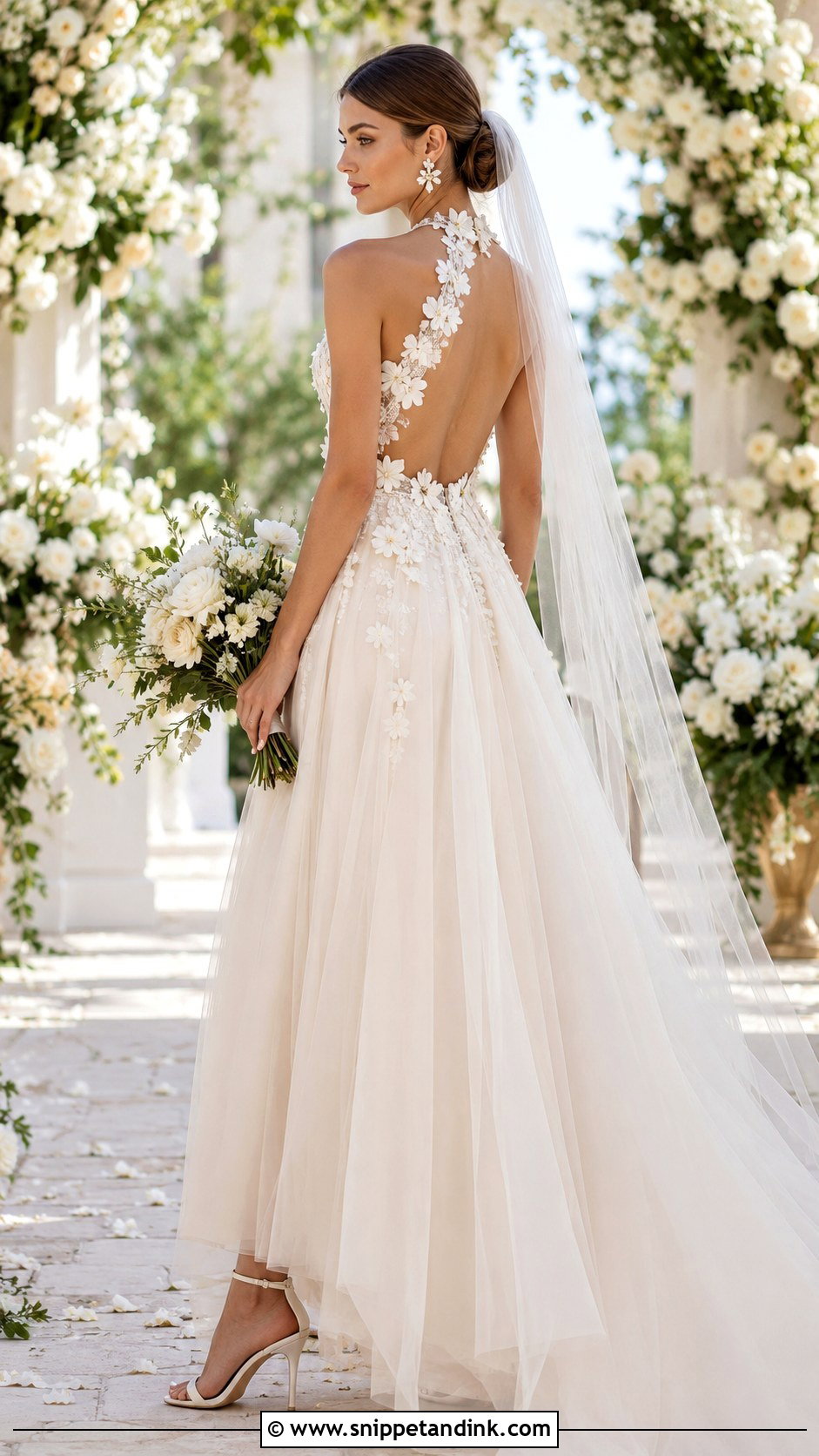
Raised flowers are a strong look, so placement decides whether it feels refined or crowded. I prefer appliqués gathered around the neckline, the waist or the edges of the open back, with a tulle A-line skirt giving them room. Ankle-strap heels, small floral studs and a sheer veil finish it. A clean low bun matters more than usual here, because loose curls catch on raised petals. If the flowers carry colour, match shoes and jewellery to the palest shade in the embroidery. In the final fitting, check each appliqué near the fastening and the bustle points, since those are the spots that get handled and lift first.
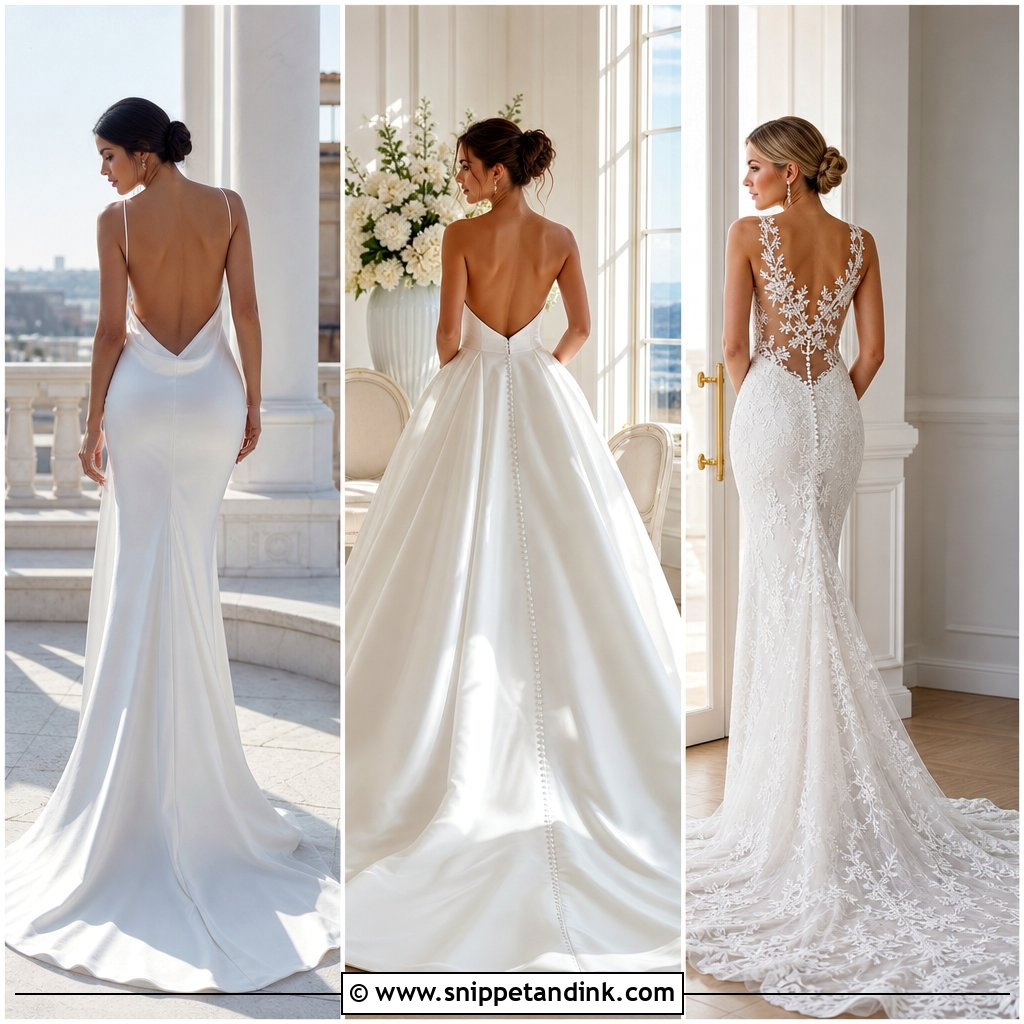
15. Pleated Halter Backless Wedding Dress
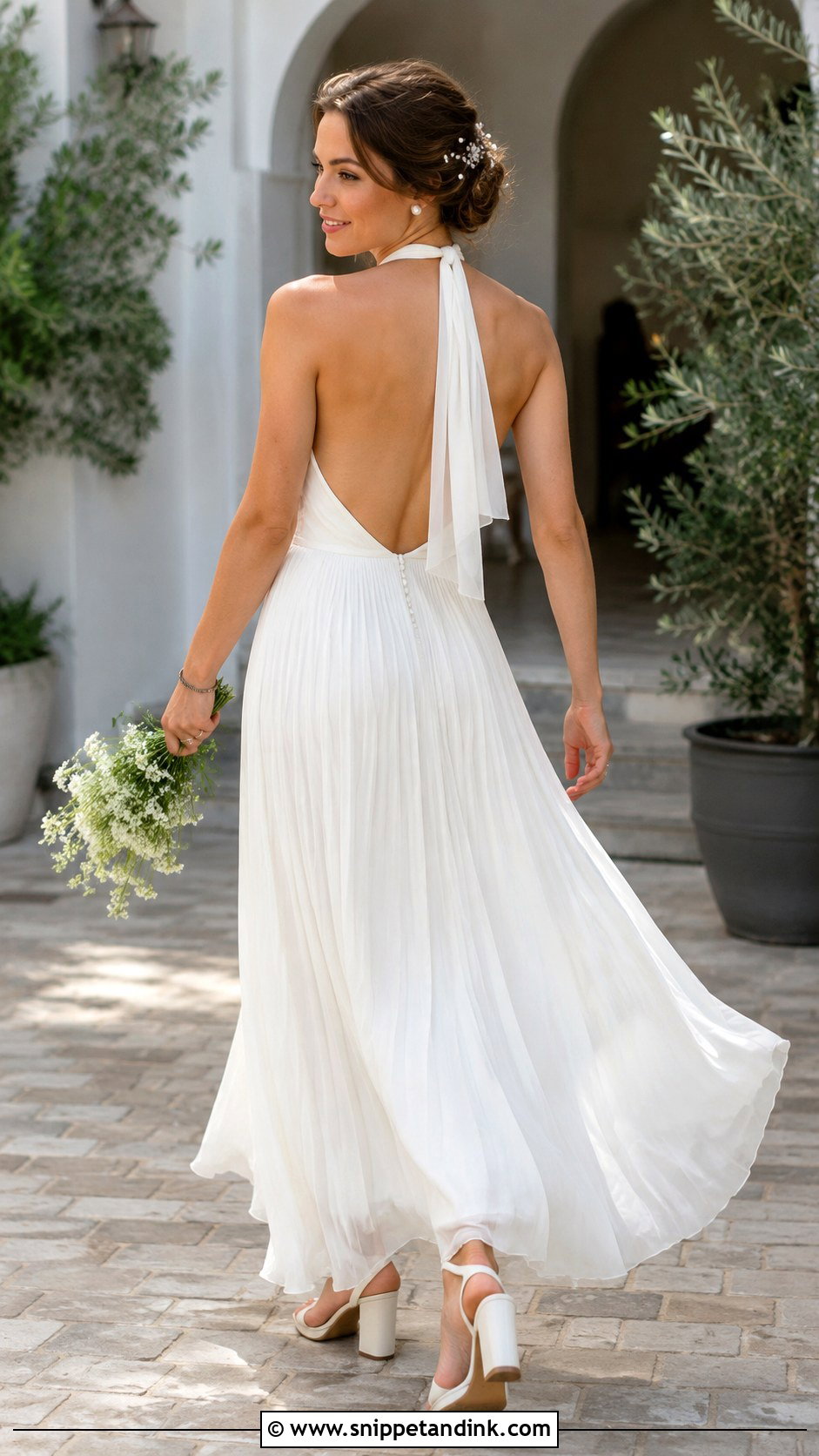
Fine pleating gives movement without any embellishment at all. It might be a pleated chiffon skirt under a fitted halter bodice, or narrow pleats that run from the neckline down through the waist, which lengthens the whole figure. Pearl or crystal studs, ivory block heels and a delicate comb are enough, with a soft updo to keep the back in view. Avoid a very full veil that fights the skirt’s movement. Pleats make hemming tricky, so bring your exact shoes to every fitting. And tell whoever steams the dress on the morning not to press it: an iron flattens heat-set pleats permanently.
16. Halter Backless Wedding Dress With Train
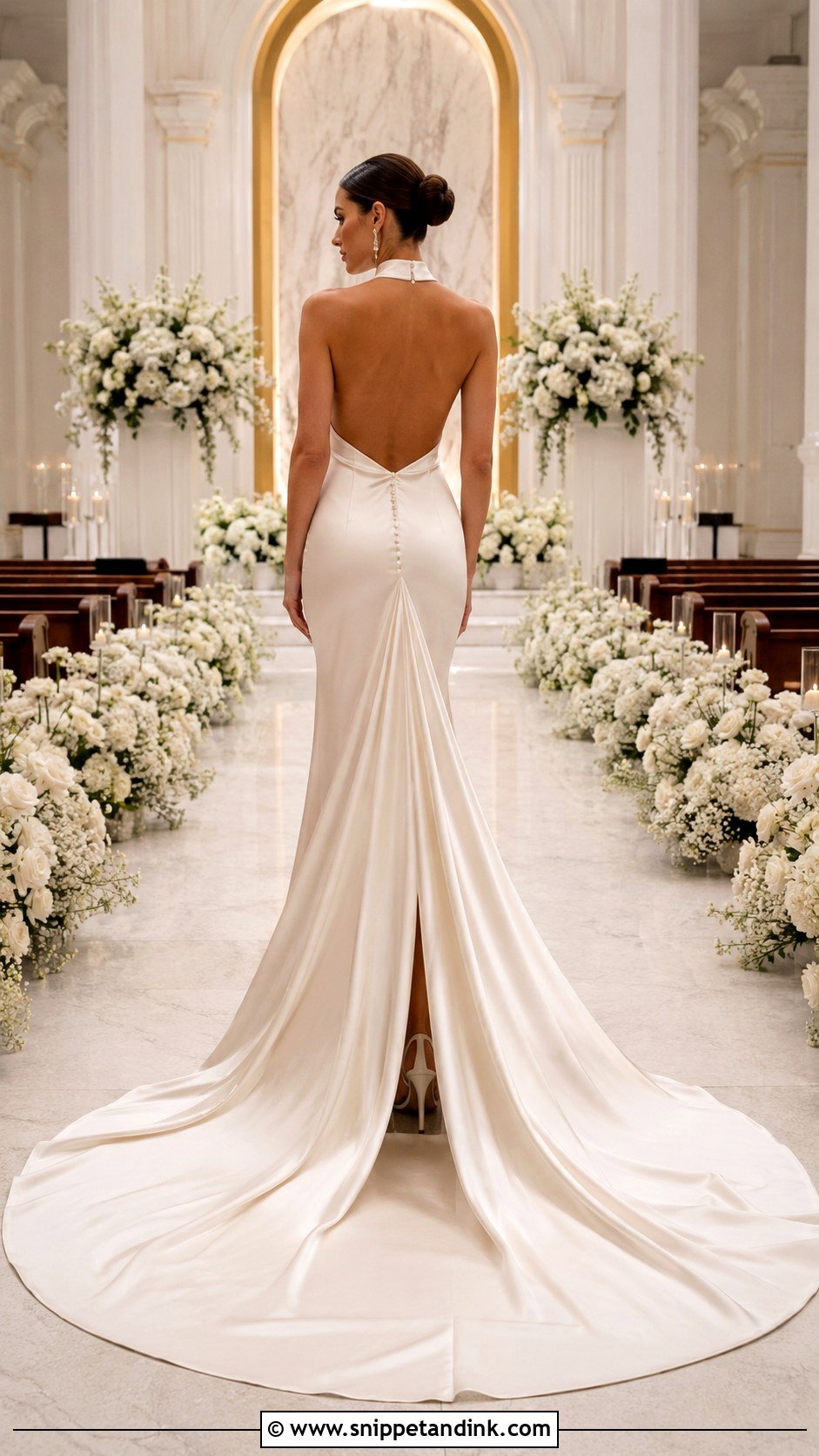
A long train shifts the drama to the back, which is exactly where a halter backless gown wants it. Keep the front streamlined and let the bare back and the chapel or cathedral train carry the entrance. Satin gives a smooth sweep; lace adds texture that reads well from the last row of guests. The bun goes high or low depending on where the halter fastens, with drop earrings. Pointed pumps suit formal rooms, and cushioned insoles help with the extra weight you’re pulling. Pick a veil that either matches the train or stops clearly above it. Learn the bustle yourself before the day, then teach one trusted person, because a train that drags at the reception gets stepped on and tears at the hooks.
17. Halter Backless Wedding Dress With Cape
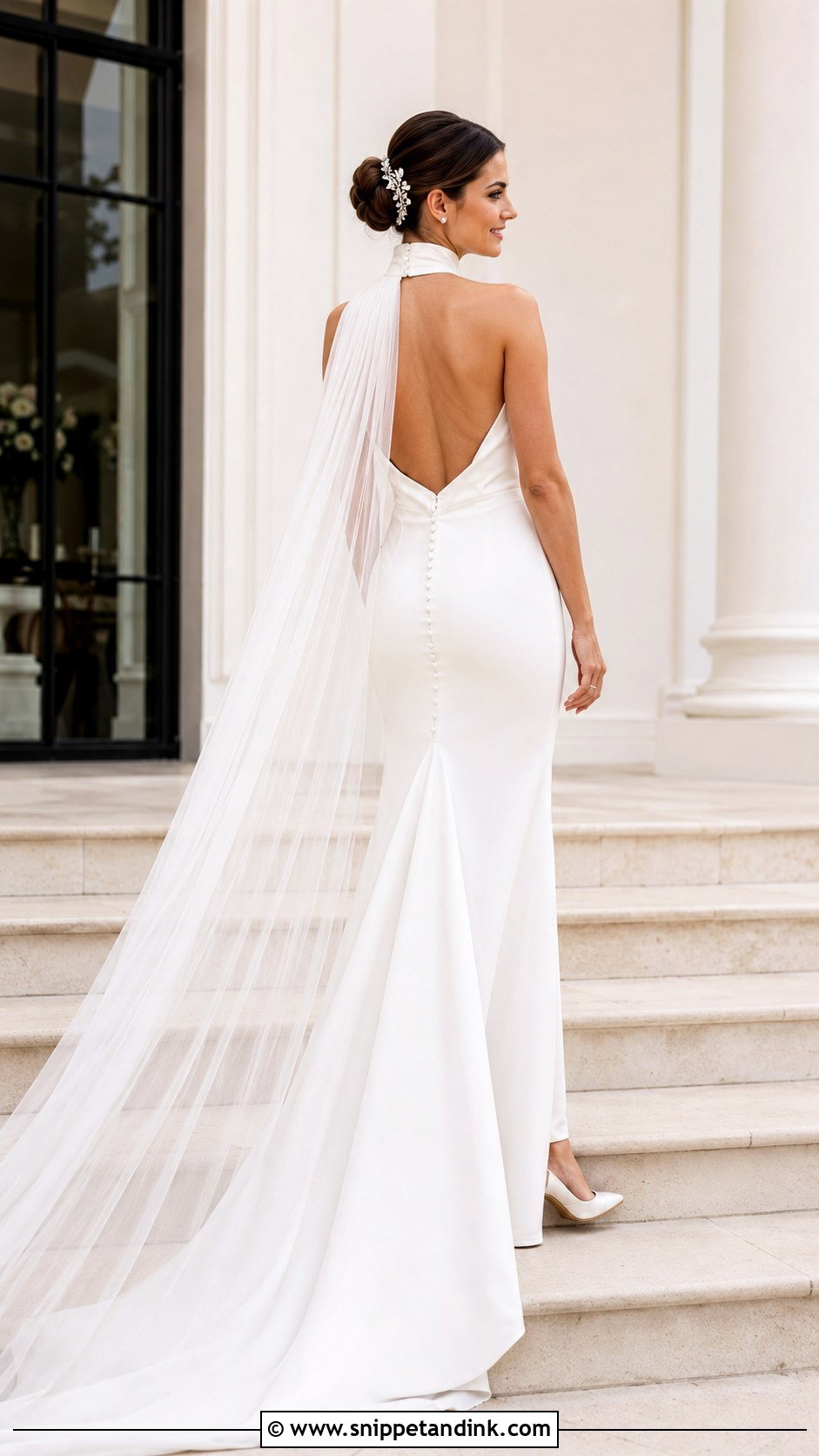
A removable cape gives you a ceremony look with coverage and a reception look with the full open back. A light tulle cape attached at the shoulders or neckline works, provided the attachment doesn’t drag the halter out of shape. Underneath, a sleek crepe or satin gown is the best foundation. Ivory pumps, subtle studs and a polished bun are all you need, and you can skip the veil because the cape already gives length. Once the cape comes off, a sparkly comb freshens the look. Test it outdoors if your venue gets wind; a cape can act like a sail. The fastenings should be easy for someone else to undo without touching your hair.
18. Two-Piece Halter Backless Wedding Dress
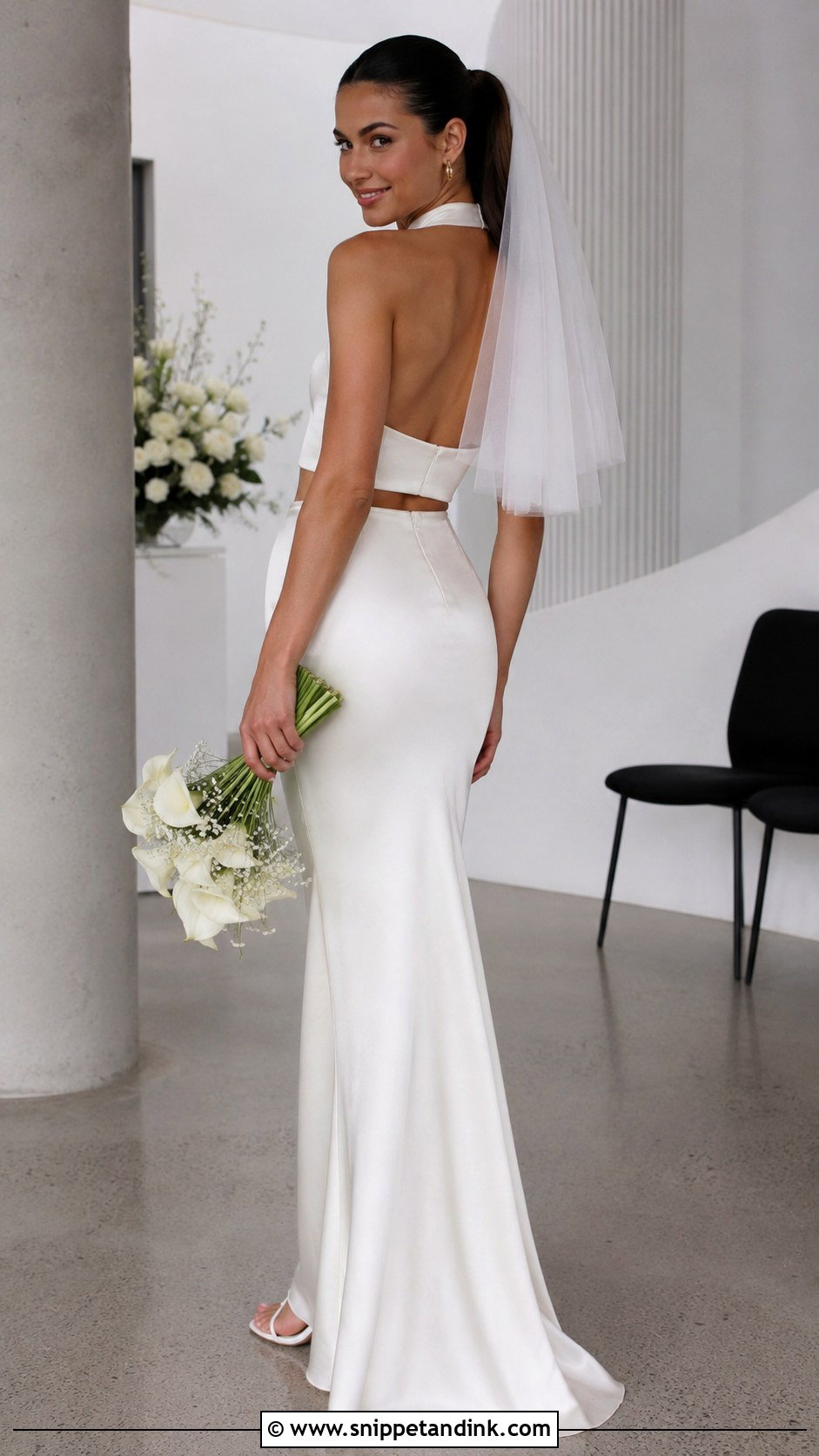
Separates are the modern route, and they’re easier to alter than a one-piece because top and skirt fit independently. A fitted halter crop over a high-waisted satin, crepe or chiffon skirt shows only a narrow line of skin at the waist. Keep both pieces in exactly the same shade; ivory from two different mills can look surprisingly different side by side. Minimal sandals, small hoops and a sleek ponytail or bun suit it, with a short veil if you want tradition. Ask for hidden hooks inside the top and skirt so they stay aligned. If you’d like more coverage, a mesh panel in a close skin tone can join the two.
19. Short Halter Backless Wedding Dress
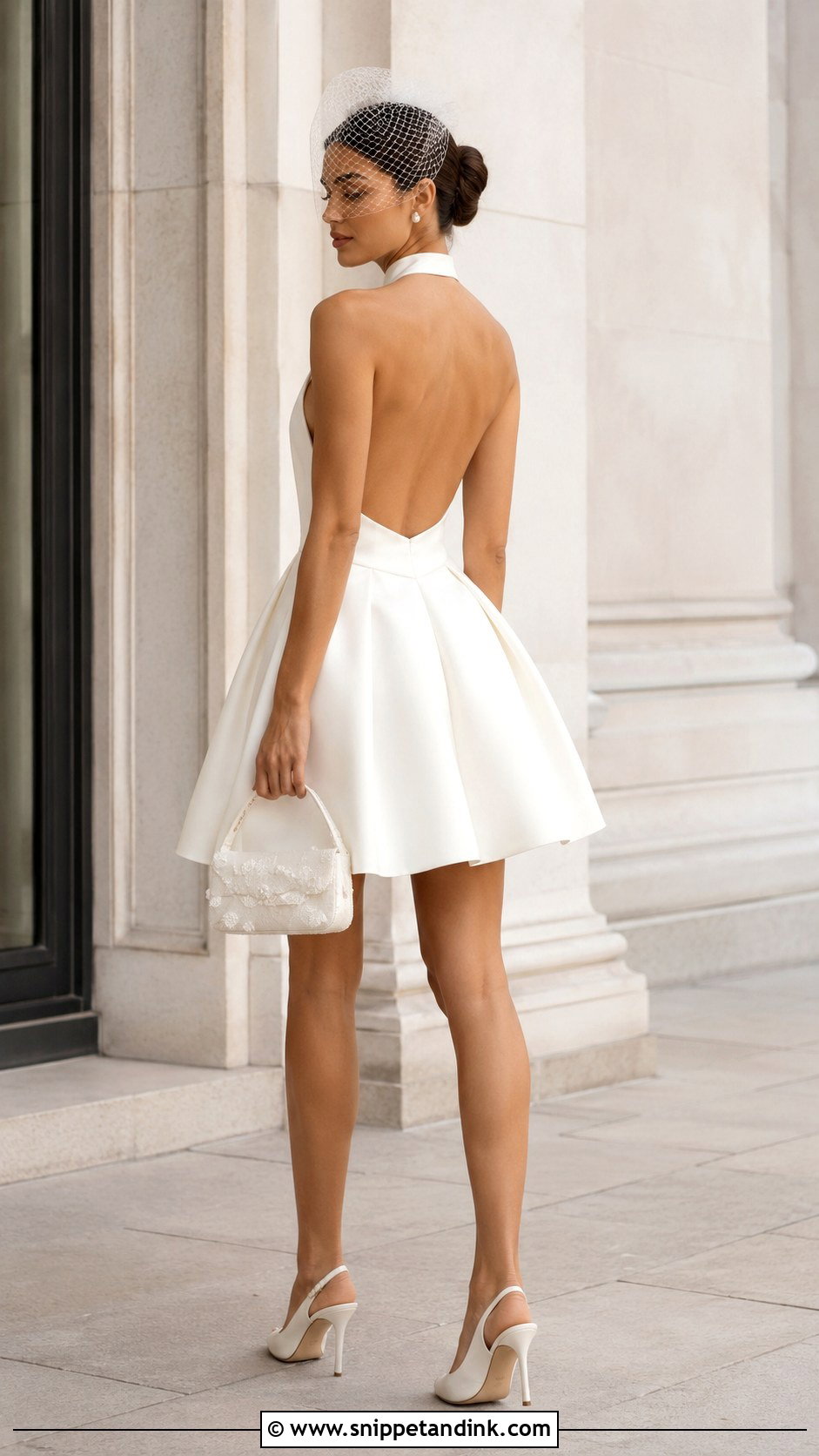
Short halters are made for civil ceremonies, destination trips and reception changes. Mini, knee or tea length sets the formality, and structured satin looks polished while lace softens it. With a mini, I’d choose slingbacks and a small top-handle bag; with tea length, pointed pumps. Pearl earrings and a neat bun keep it bridal and show the back, and a birdcage veil adds character without covering the dress. Sit down and dance in it before the hem is final. Built-in shorts or a smooth underskirt cost little and save you from tugging at the hem all night.
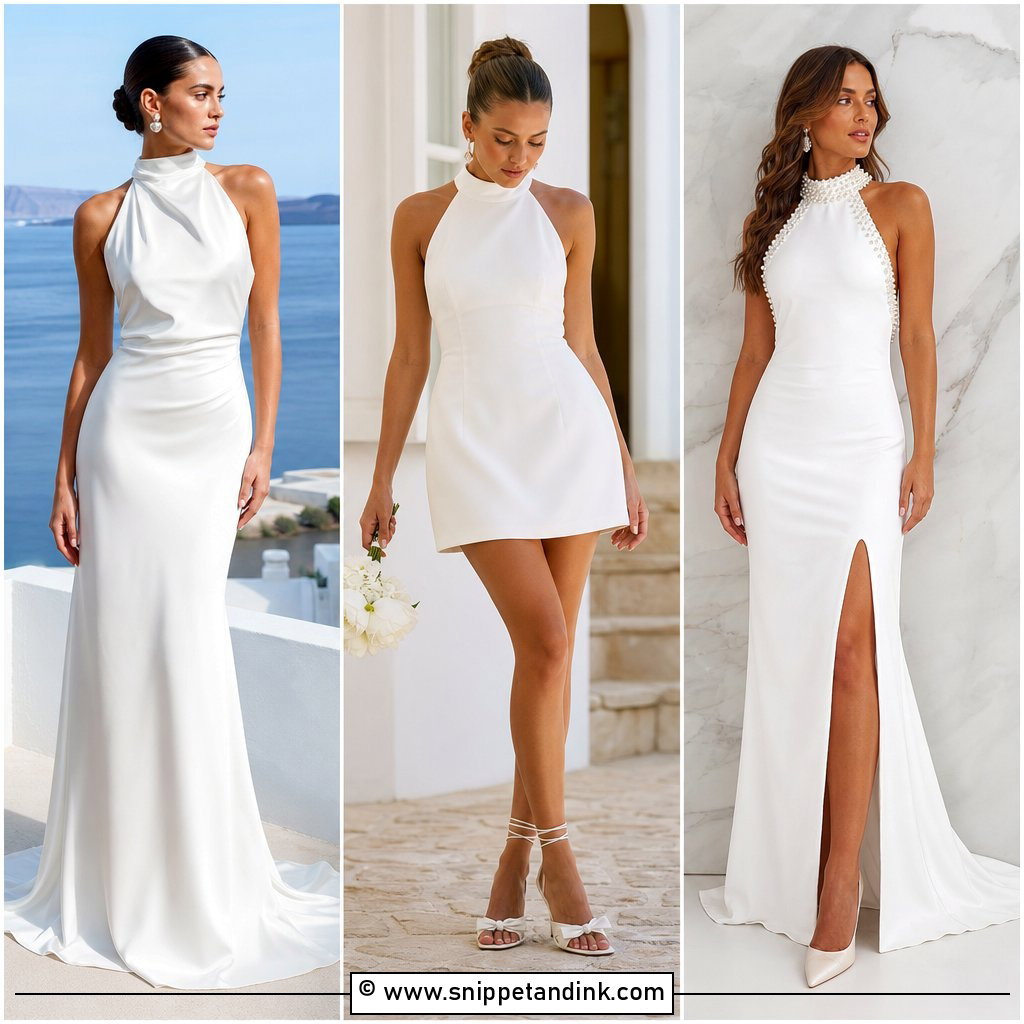
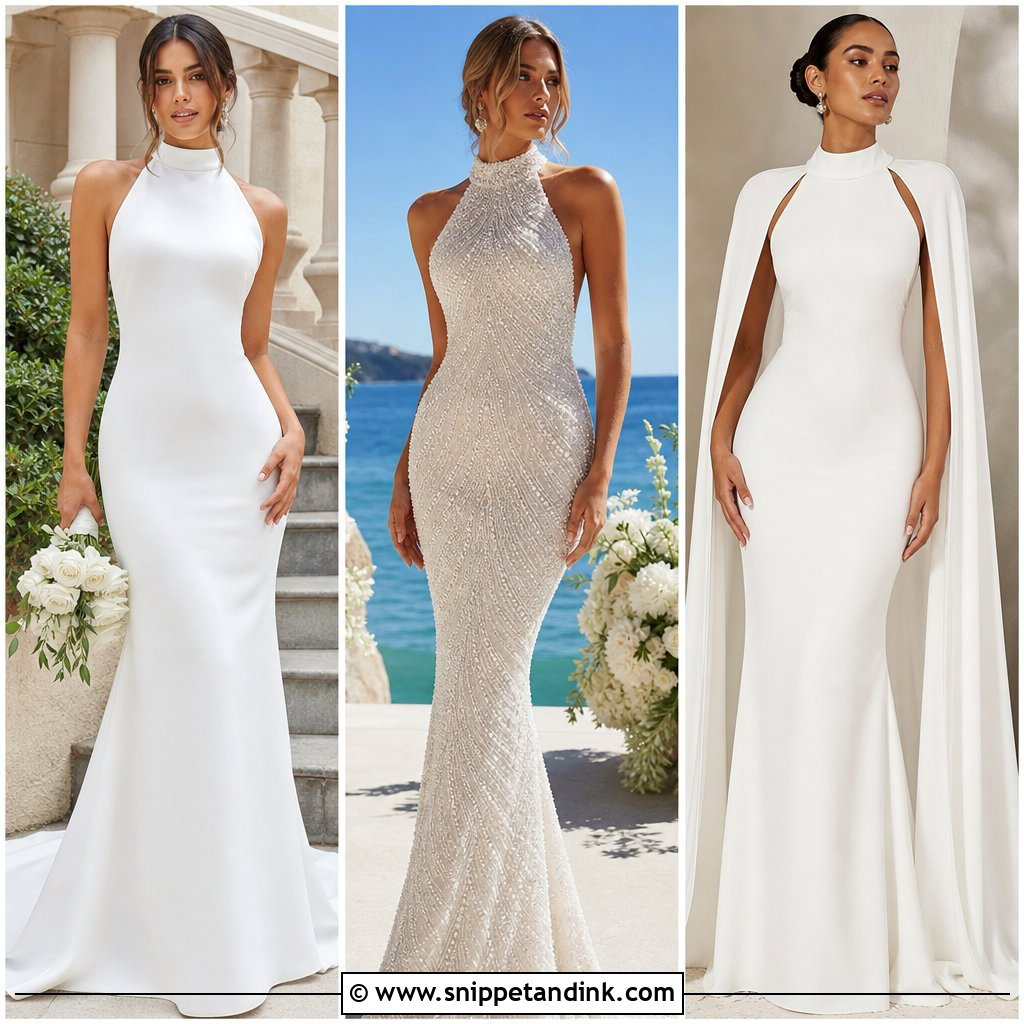
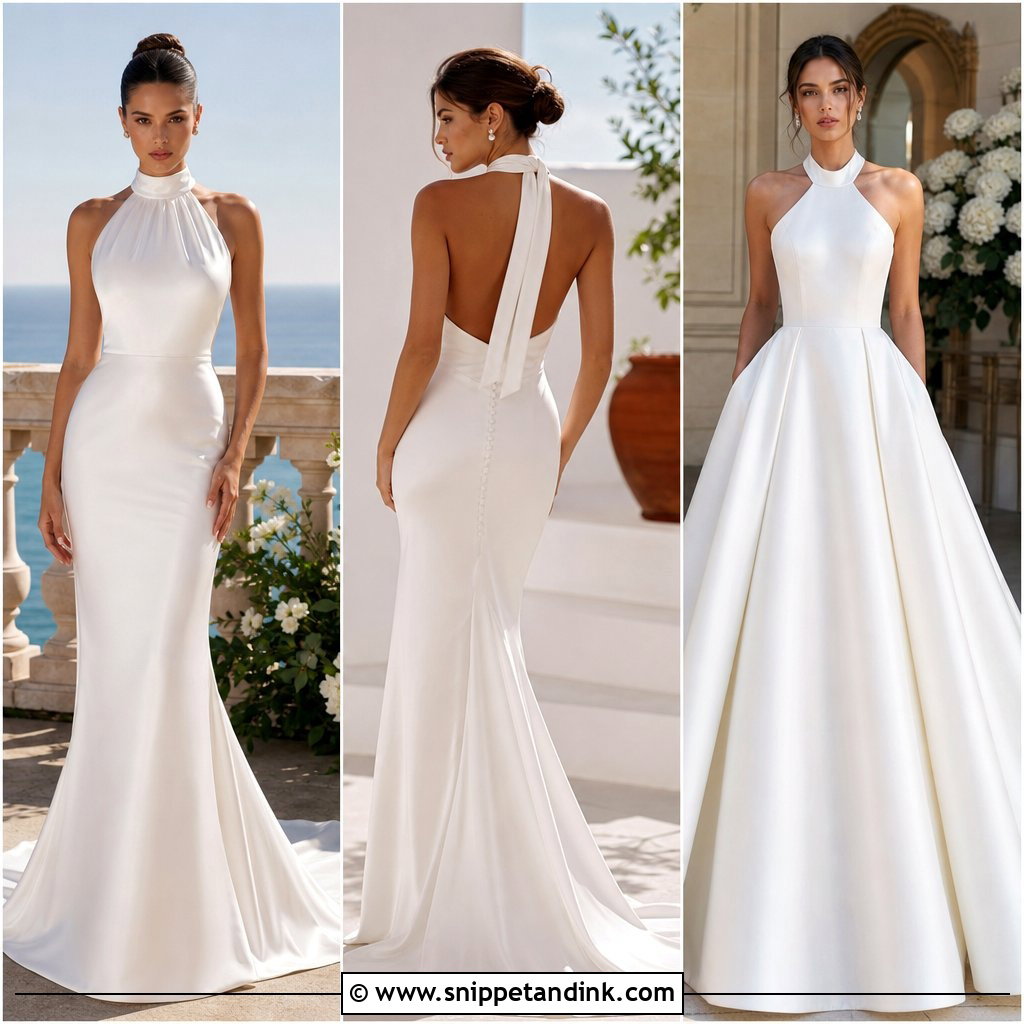
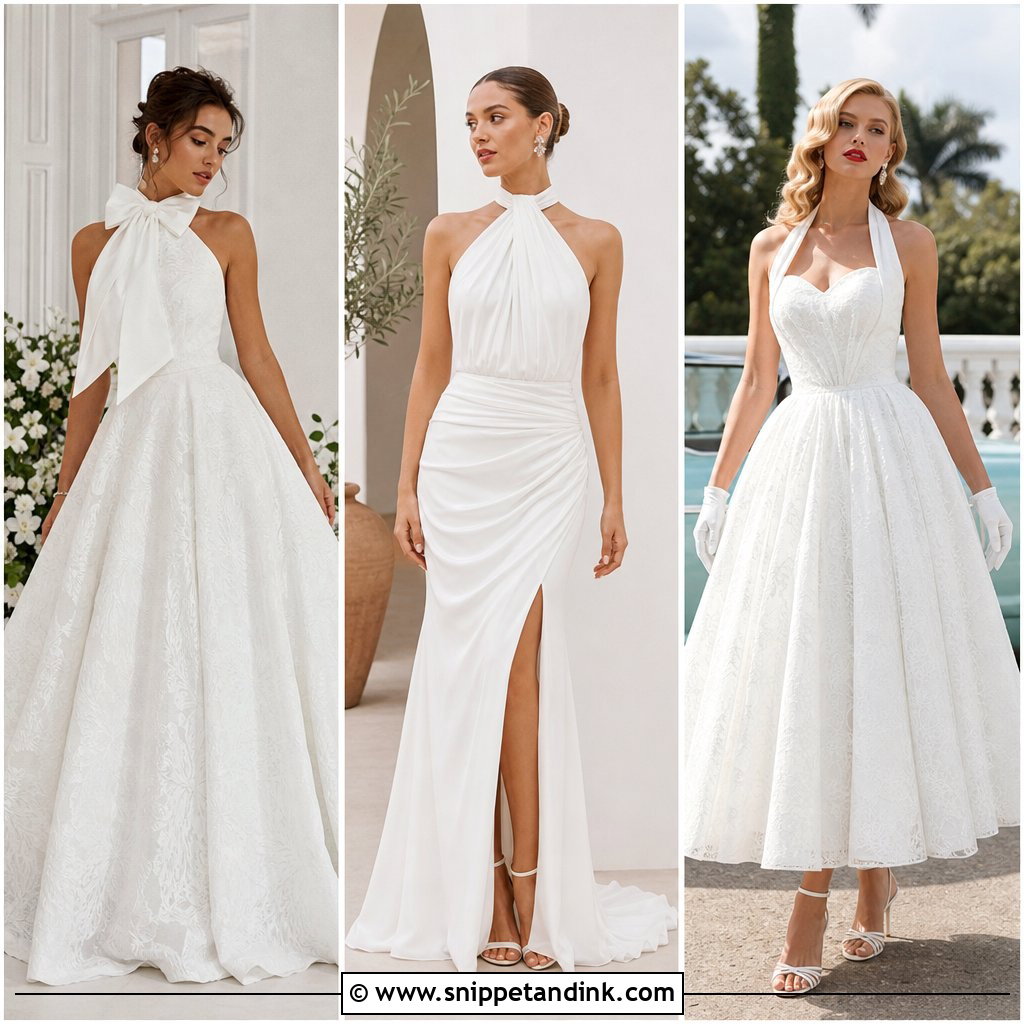
20. Plus Size Halter Backless Wedding Dress
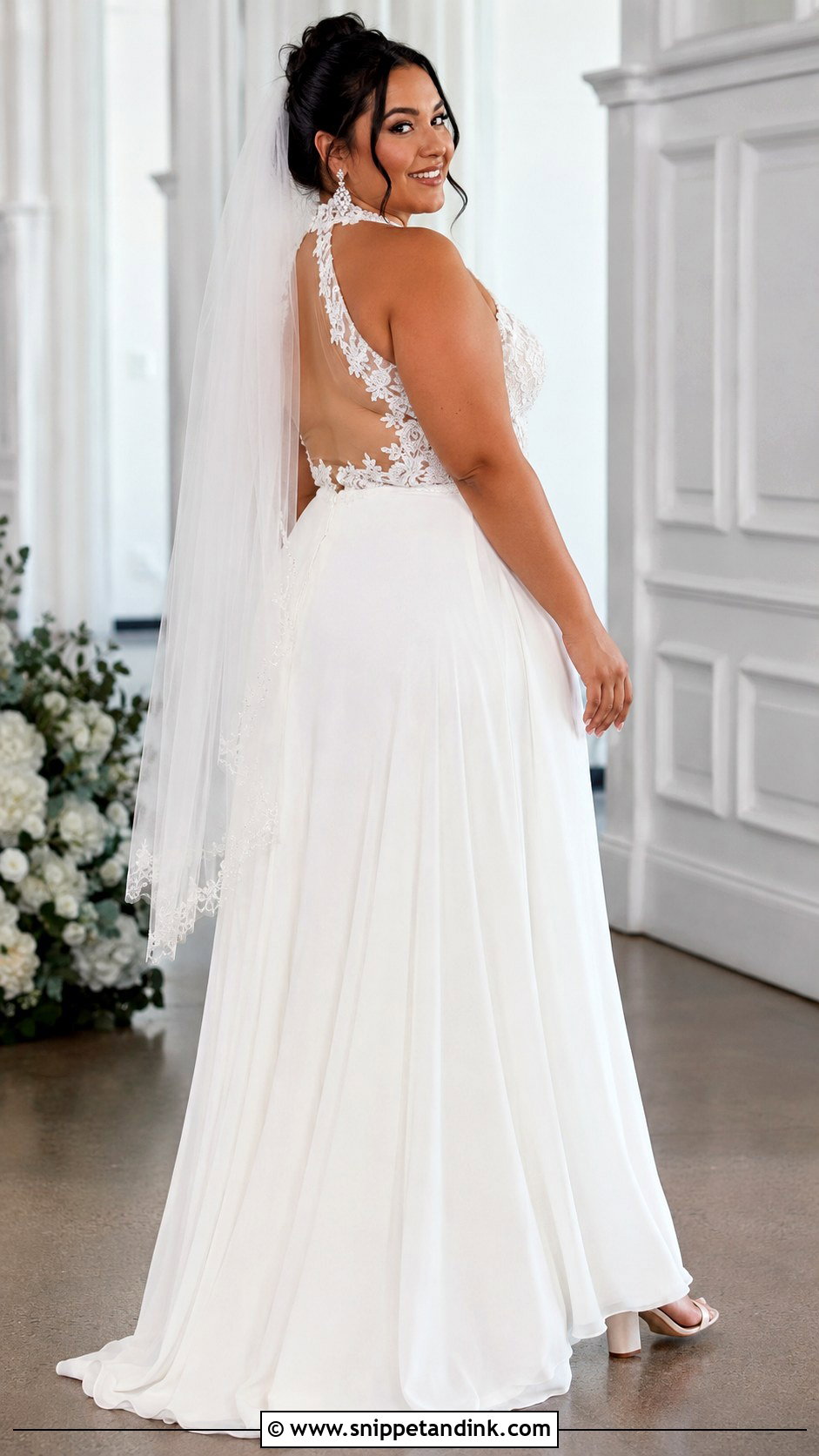
For a plus size bride, a halter with no back has to get its support from somewhere other than straps, so construction is the whole conversation. I look for wider halter straps, a reinforced waistband, built-in cups and carefully positioned illusion mesh that carries some of the load. An A-line or fit-and-flare skirt defines the waist and still lets you move. Crepe shapes smoothly, lace adds texture and chiffon keeps it soft. Supportive block heels, statement earrings and an updo work, and a chapel veil gives ceremony length. Ignore the size label and work with a tailor who knows bridal support. Lift your arms, sit and dance at fittings; if you feel the strap tugging at your neck, the weight isn’t being shared properly by the bodice.
Your Back Is Part of the Outfit Now
Once you choose an open back, the skin, posture and hair behind you get as much attention as the dress. A few things I plan with brides in the weeks before:
Tan lines and skin
Strap marks from a swimsuit or sports bra show up clearly against a bare back, especially under flash. Keep the back covered in the sun for the last month or so. If you use self-tanner, apply it a couple of days before, not the night before, and ask someone else to do the area between your shoulder blades so it doesn’t streak. Book any back exfoliation or facial-style treatment at least a week ahead in case it causes redness.
Posture in photographs
A bare back shows rounded shoulders in a way a covered one never does. Before the portraits, I tell brides to drop the shoulders down and slightly back, then breathe out. It looks relaxed rather than rigid, and the spine line becomes part of the shot.
Hair, veil and the clasp
Long loose hair hides the whole reason you chose this dress, so most of my halter brides go for an updo or at least a half-up style. Make sure the hair sits clear of the halter clasp; pins and curls snag on hooks. Attach the veil below the bun so it falls down the centre of the back and doesn’t sit on top of the strap knot.
Testing the Halter Before You Say Yes to It
Most of these gowns stand or fall on two things: how the neckline is anchored and how the back fits when you move. Satin and crepe give the cleanest lines, while lace, pearls, appliqués and beading add texture and hide small wrinkles. Let the venue steer the fabric. Chiffon is kind outdoors, mikado suits a formal room and a short dress fits a small ceremony or a change for the party. Once you have the gown, keep the styling simple so the back stays the feature, and book enough fittings to test it sitting, walking and dancing. If the neck feels fine after an hour of that, it will feel fine at midnight.
You'll Like These Ideas:



Leave a Reply