
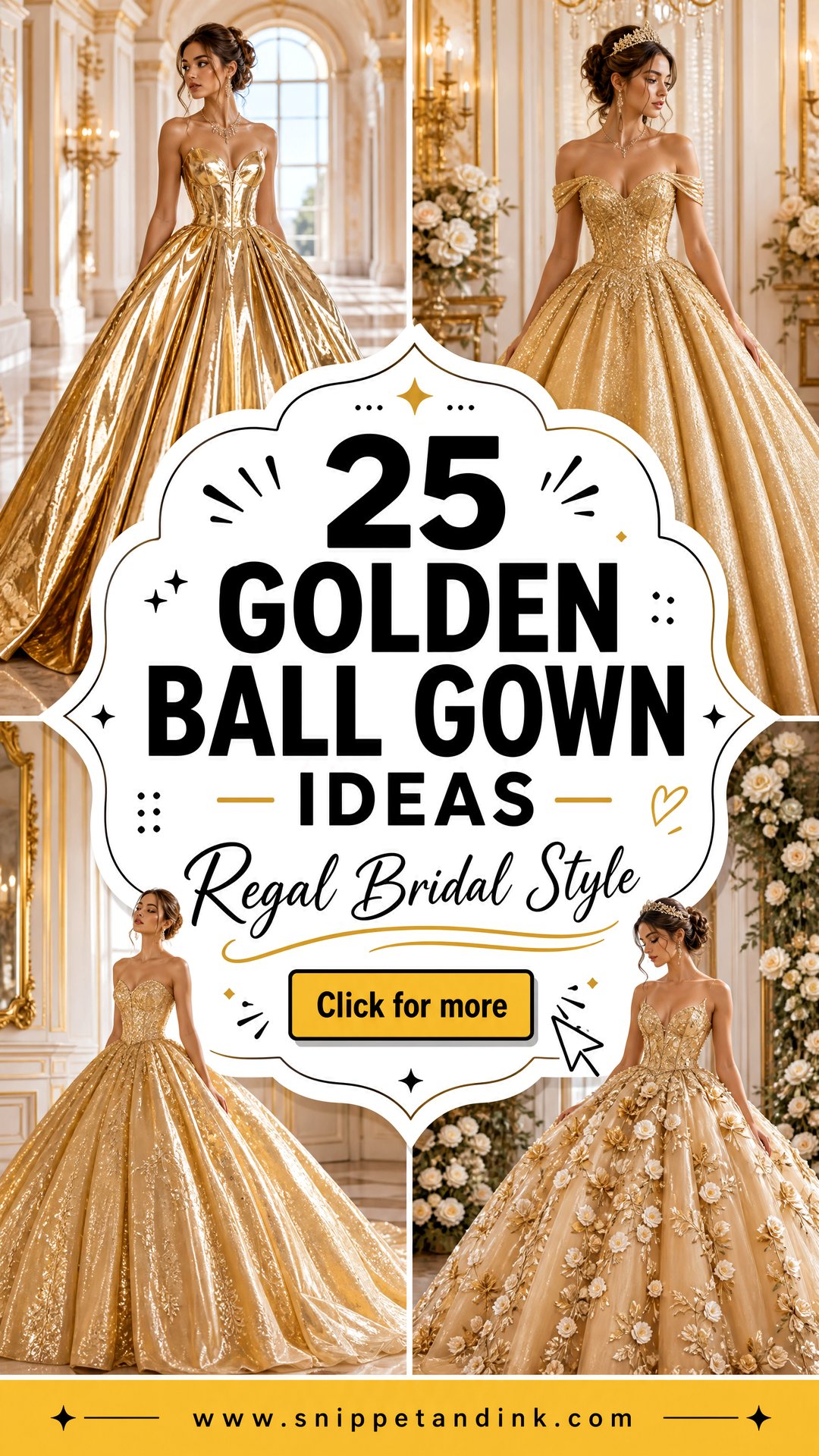
Gold is the hardest color I dress a bride in, and one of the most rewarding. The fabric decides almost everything: champagne satin glows quietly, liquid lamé throws light like a mirror, and antique brocade reads warm and heavy even from across a ballroom. Designers are cutting gold into sculpted corsets and very full skirts right now, which suits an evening reception or a black-tie wedding far better than pale ivory does under candlelight. What I watch for at every fitting is balance, because a metallic gown already carries the shine, so the shoes, jewelry and hair need to step back. Below are the 25 directions I’d show you, with what each one asks of you.
Holding Gold Up to Your Skin Before You Shop
Gold isn’t one color, and the wrong one pulls the warmth out of your face before anyone even notices the dress. The quickest test I use is holding swatches under the chin in daylight, with no makeup on, and watching the skin around the mouth and eyes. If it looks brighter and more even, the shade works. If it turns sallow or grey, move on, however much you love the gown.
- Cool or pink undertones: champagne, pale gold and rose gold usually sit better than bright yellow gold.
- Warm or olive undertones: honey, yellow and metallic gold make the skin glow instead of competing with it.
- Deep skin tones: antique gold, bronze and rich brocade look luxurious, while very pale champagne can look chalky under flash.
- Very fair skin: a satin or matte finish is kinder than high-shine lamé, which bounces yellow light up onto the face.
Then check the swatch again under warm indoor bulbs, since that is how most guests will see you at the reception. Gold shifts between lighting types far more than ivory or white does, and a shade that looked golden at the window can turn brassy at night.
1. Gold Satin Ball Gown
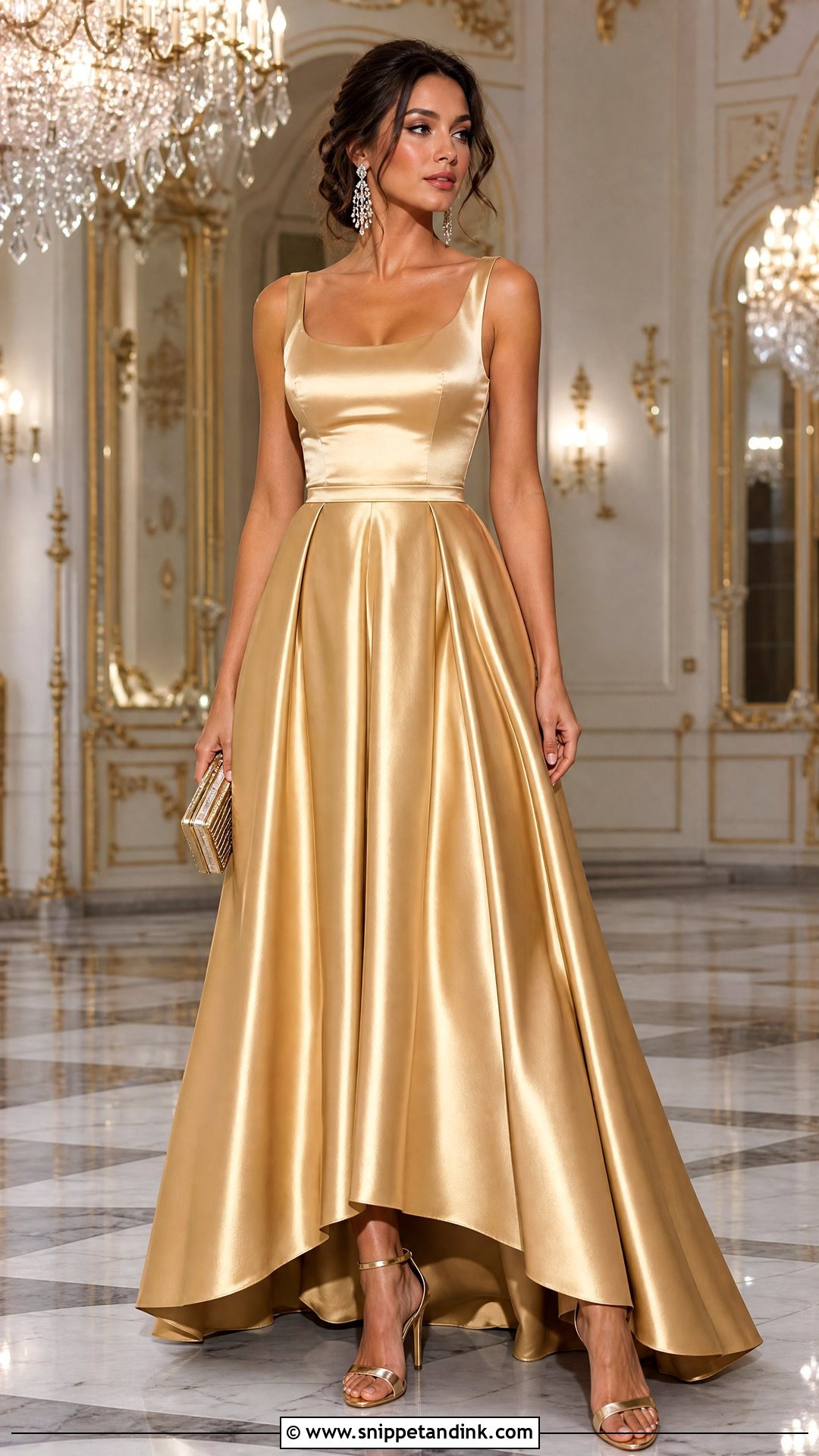
Satin is where I start most gold brides, because it shows the cut honestly and doesn’t need embellishment to look finished. The catch is that satin reveals every seam and every pucker at the waist, so the bodice has to fit closely before anything else gets decided. A pleated skirt hides crushing from sitting through dinner far better than flat panels do. Keep the extras plain: metallic ankle-strap heels, a small box clutch and pearl studs, since the fabric already glows. A soft bun or polished waves finishes it for an evening ceremony or a formal gala.
2. Gold Sequin Ball Gown
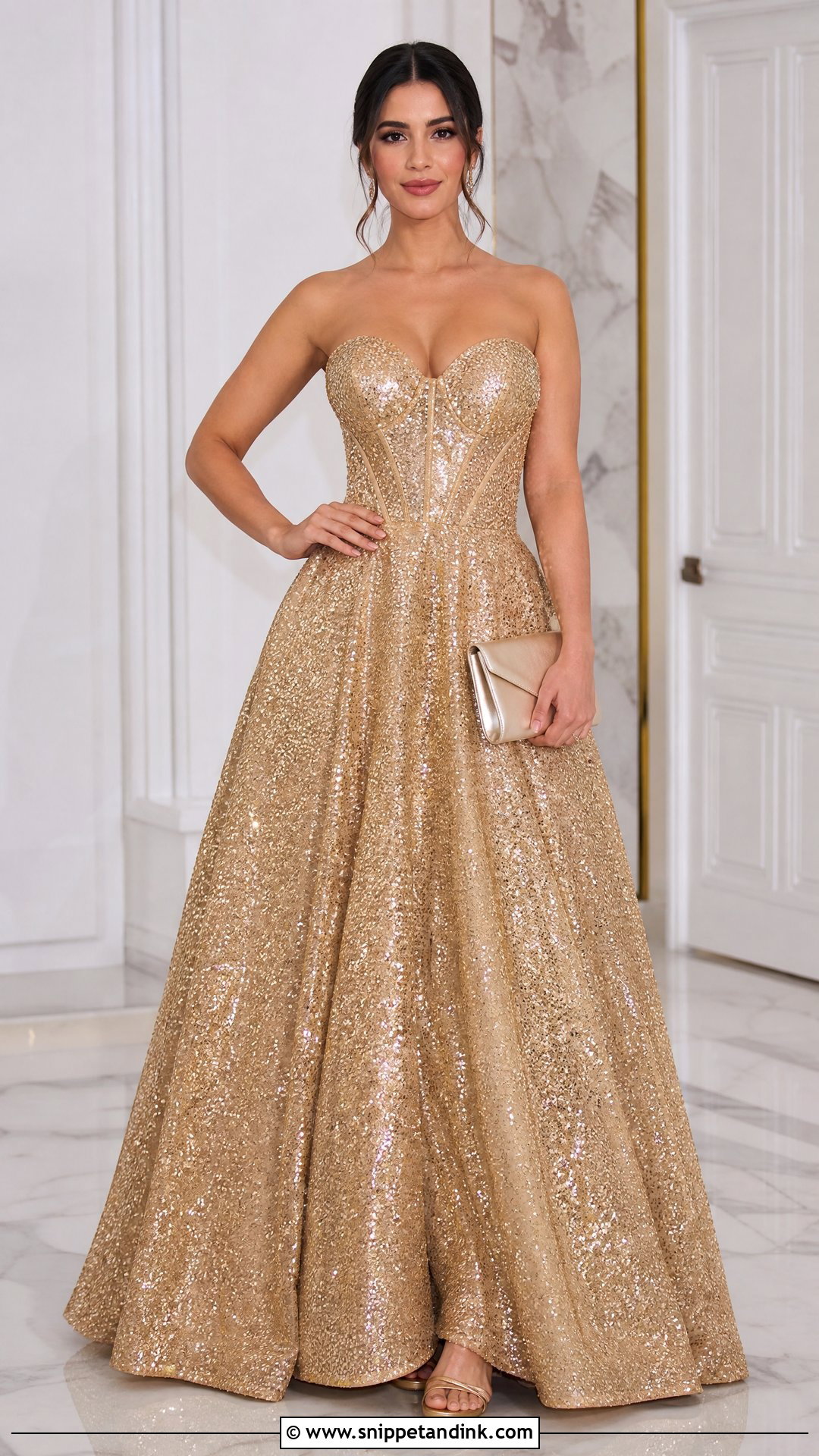
Sequins do the talking, so my job with this gown is mostly saying no. Slim gold or nude heels, a plain clutch and small drop earrings are enough; a heavy necklace rubs against a fully sequined bodice and snags the threads. A sweetheart or scoop neckline softens the texture. One honest warning: sequins scratch the inner arm, so I have brides hug someone at the fitting before they commit, and I ask for smooth lining along the side seams.
3. Champagne Gold Ball Gown
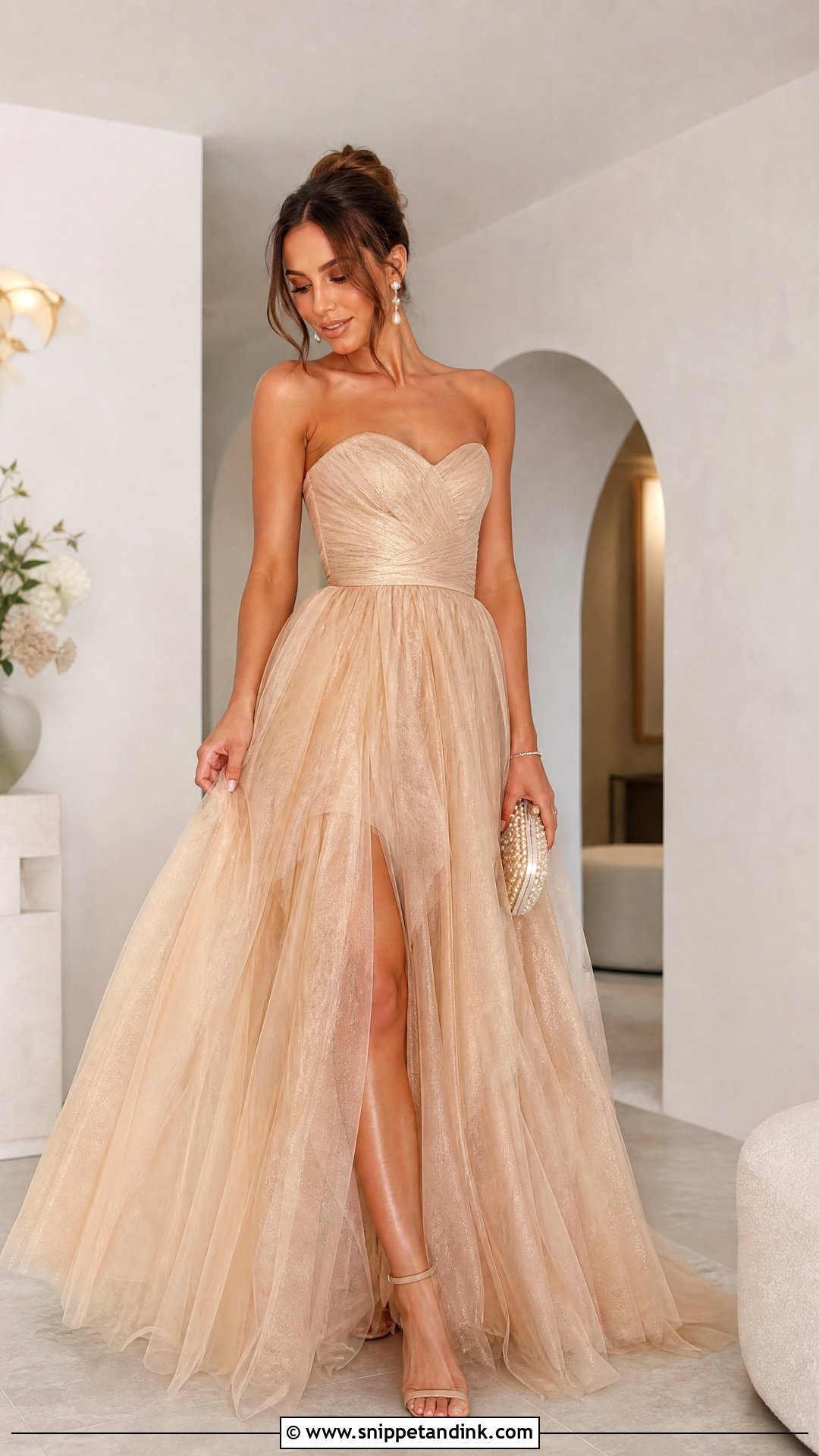
Champagne is the shade I suggest when a bride loves the golden gown trend but worries bright yellow will wash her out. It sits closer to ivory, so it forgives fair and cool skin while still looking warm in evening photos. It behaves best in tulle, organza or layered chiffon, where the layers soften the color further. Give a full skirt a defined waist so it looks shaped instead of swamping you. Nude heels, a pearl clutch and fine crystal jewelry keep it gentle, and a low bun or half-up style suits the mood.
4. Metallic Gold Ball Gown
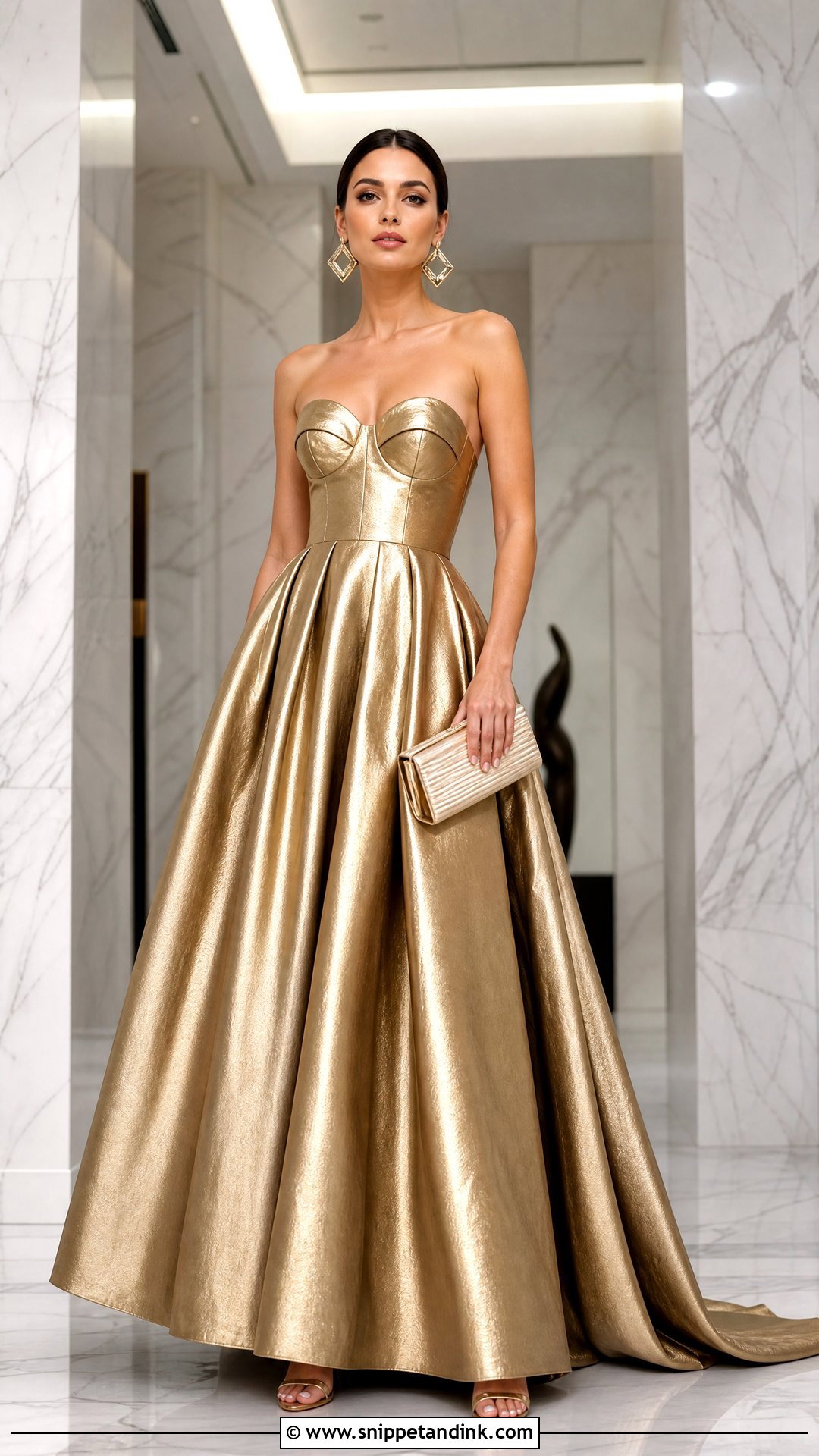
Lamé and foiled fabrics reflect light almost like a mirror, which is thrilling in person and unforgiving on camera if the gown pulls anywhere. I only put a bride in true metallic when the silhouette is clean: a strapless bodice, a square neck or a sculpted corset over a full skirt. Creases show up as dark lines, so steam it at the venue and keep the car ride short. Thin metallic sandals, geometric earrings and a sleek clutch in gold or clear acrylic are plenty, and a slick bun keeps it modern rather than sweet.
5. Gold Tulle Ball Gown
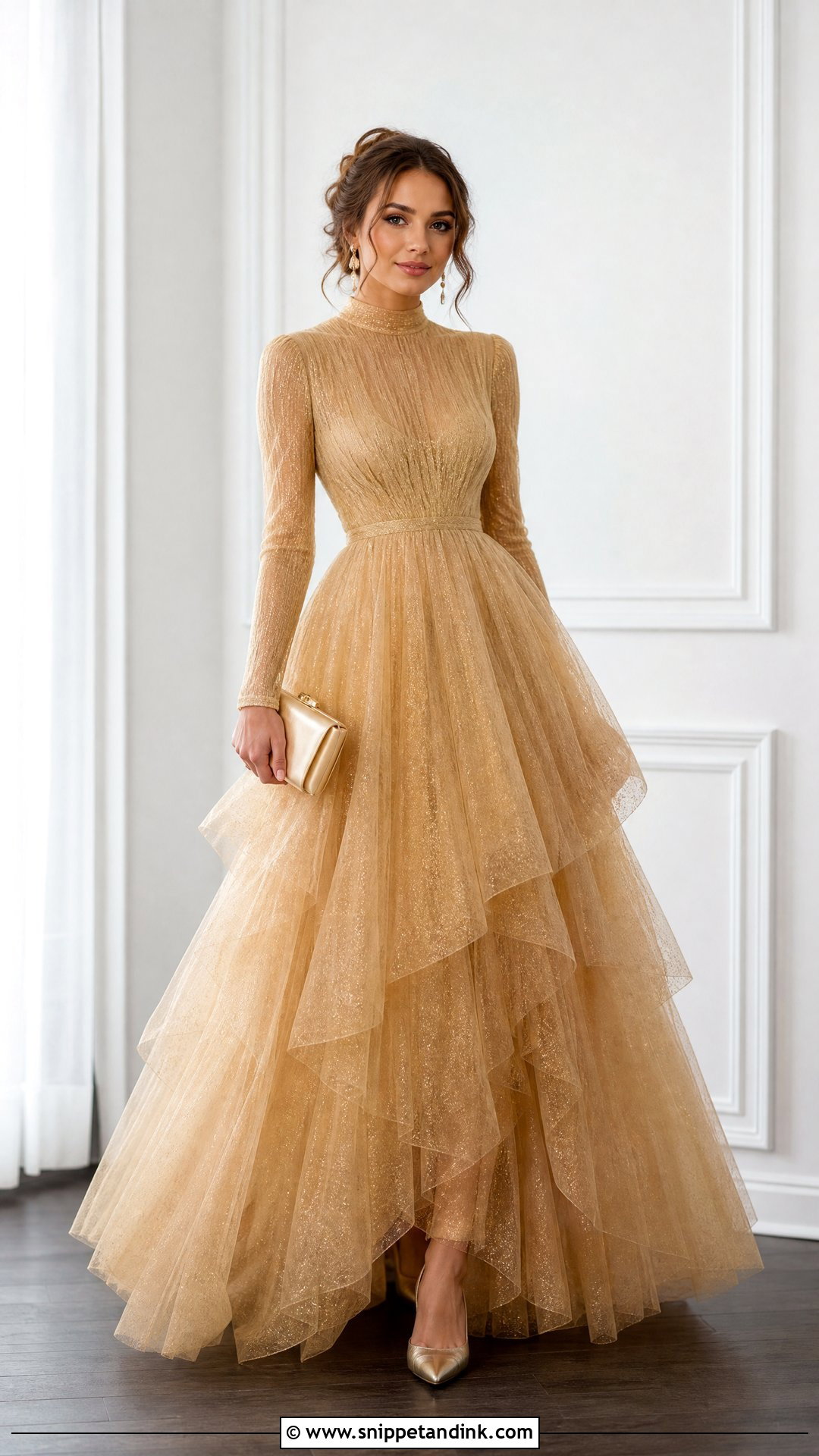
Tulle gives you volume without the weight of satin or brocade, which matters by hour six. Gold tulle is usually layered over a champagne or nude lining, and that lining changes the result more than the tulle itself, so ask to see the skirt in daylight and indoors. Fine tulle catches on heels and rough stone; I’d finish the front hem a touch shorter. A fitted corset bodice stops all that softness from looking shapeless, and pointed heels with barely there jewelry suit the airy feel.
6. Gold Corset Ball Gown
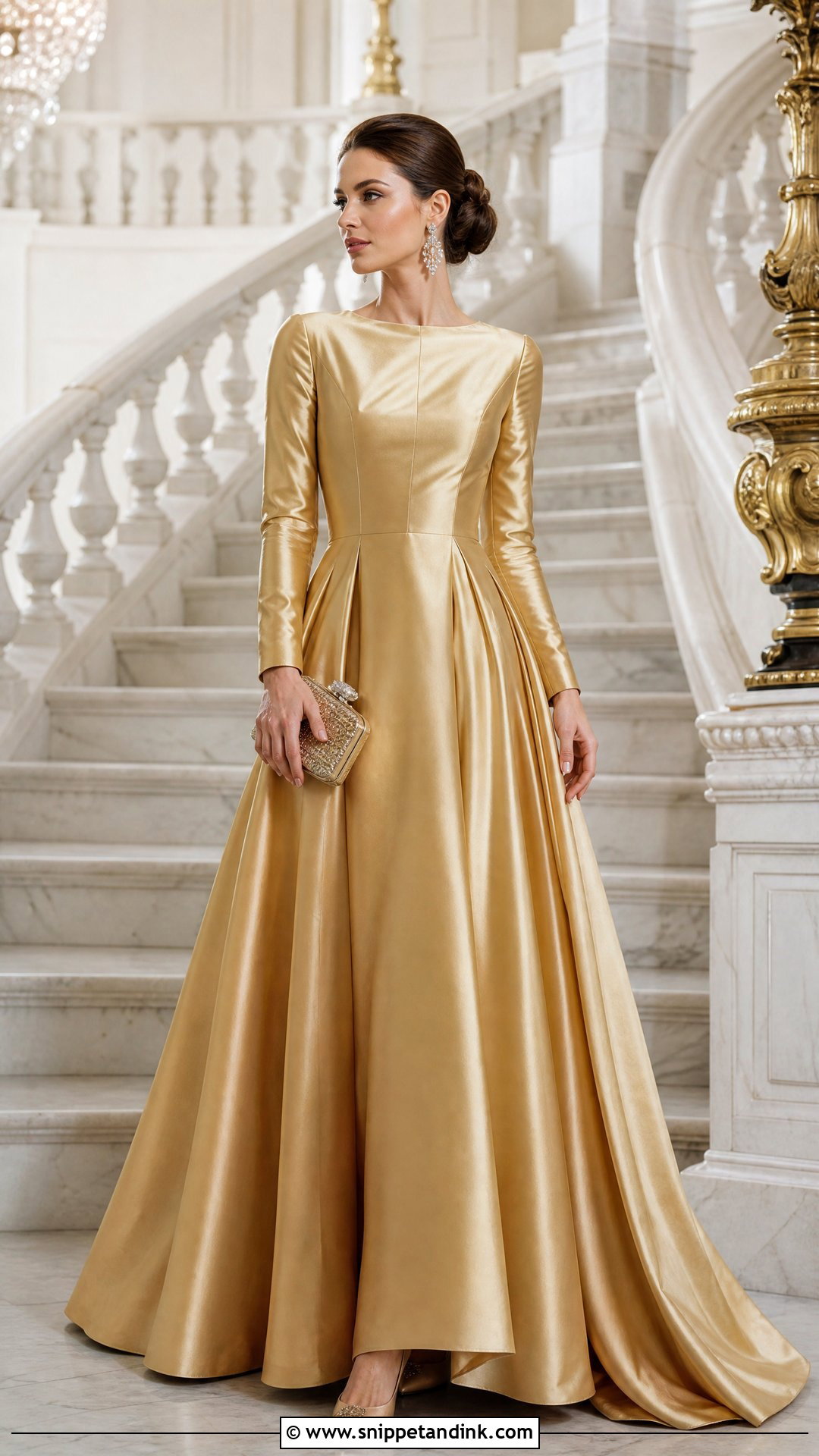
The corset is what makes a heavy skirt wearable, because the boning carries the weight on your waist instead of your shoulders. That only works if it’s fitted on your body in the bra and shoes you’ll actually wear, since a small gap at the top edge shows in every photo. If the bodice is beaded or embroidered, skip the necklace and choose earrings that echo the neckline. Practise sitting and eating in it at your final fitting. A snug corset feels fine standing and very different at dinner.
7. Gold Off Shoulder Ball Gown
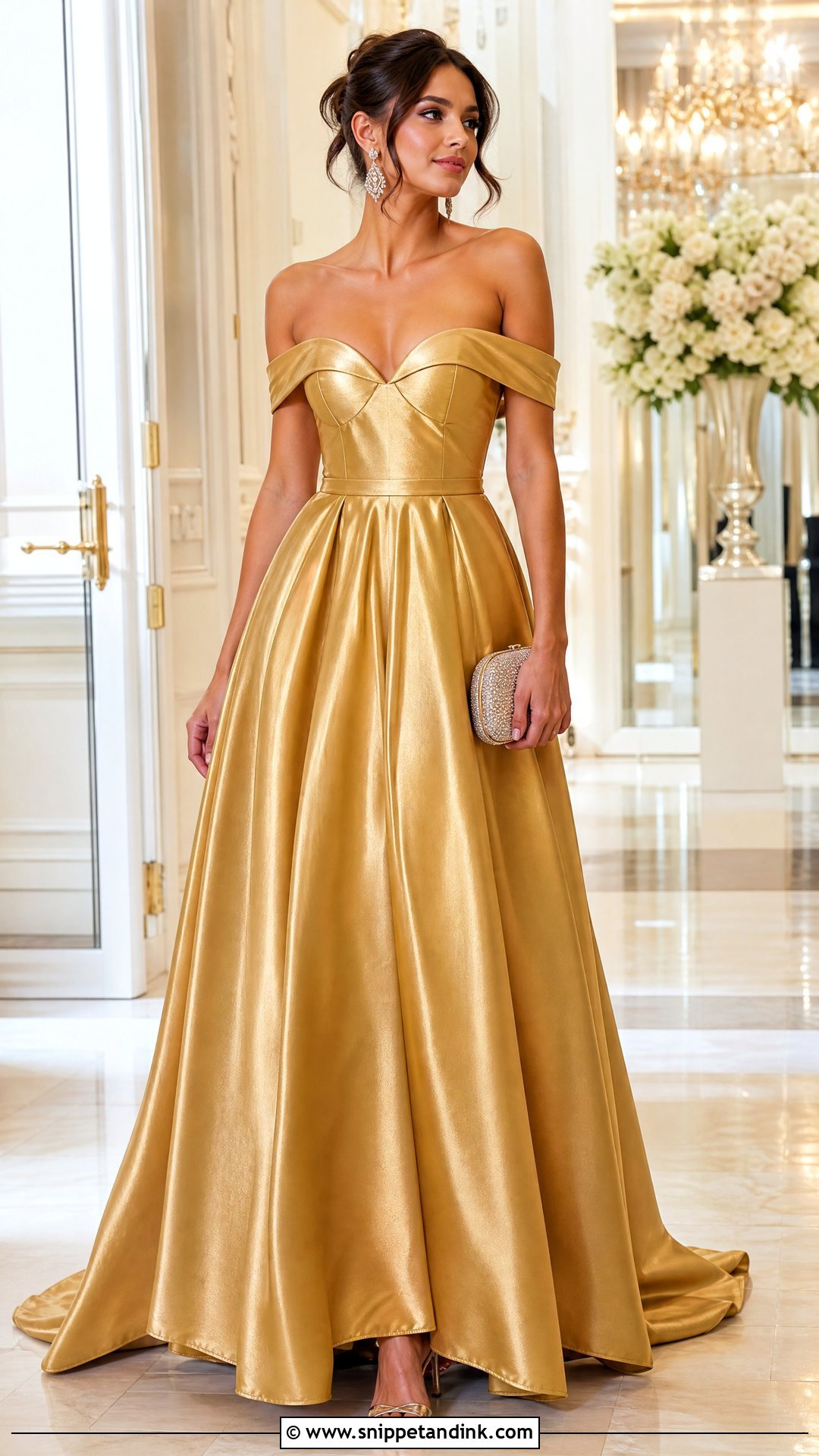
An off-shoulder neckline softens a dramatic gold skirt by opening up the collarbone. The practical issue is movement: cut the band too tight and you can’t lift your arms to hug or dance, too loose and it slides down. I have brides raise both arms at the fitting before anything is pinned. Drop earrings and a slim bracelet work better than a necklace here, and swept-back hair keeps the shoulders clear. Heels that peek out as you walk and a small champagne or ivory clutch finish it.
8. Gold Strapless Ball Gown
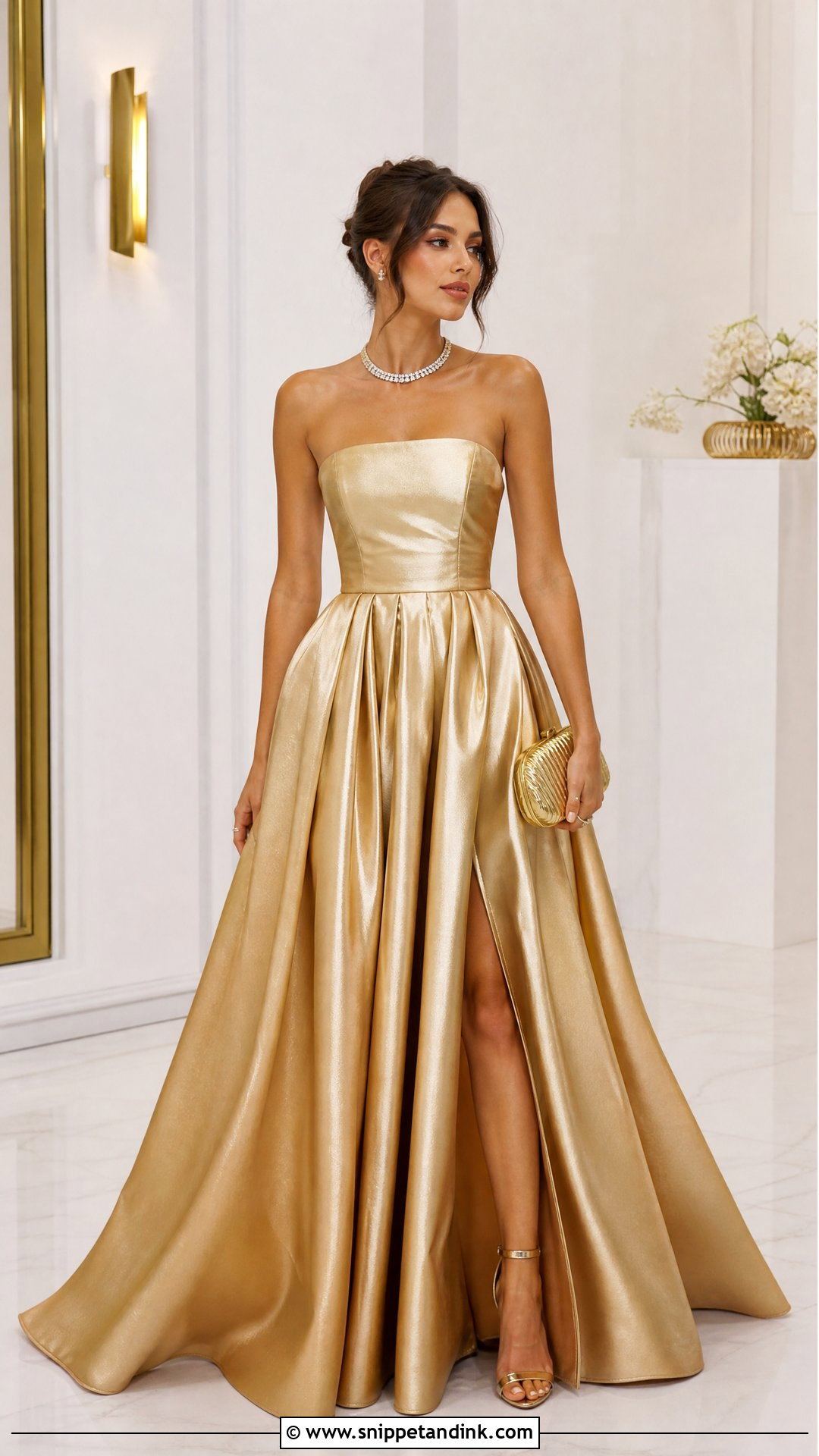
A gold strapless ball gown balances a full skirt and leaves the most room for jewelry. With plain satin or mikado, I’d add a sparkling necklace or statement earrings; with a beaded or metallic bodice, go smaller. The real test is grip. A strapless bodice needs proper boning and an internal waist stay so it doesn’t creep down every time you sit. Long gloves can work, but only at a very formal event where everything else stays clean.
9. Gold Long Sleeve Ball Gown
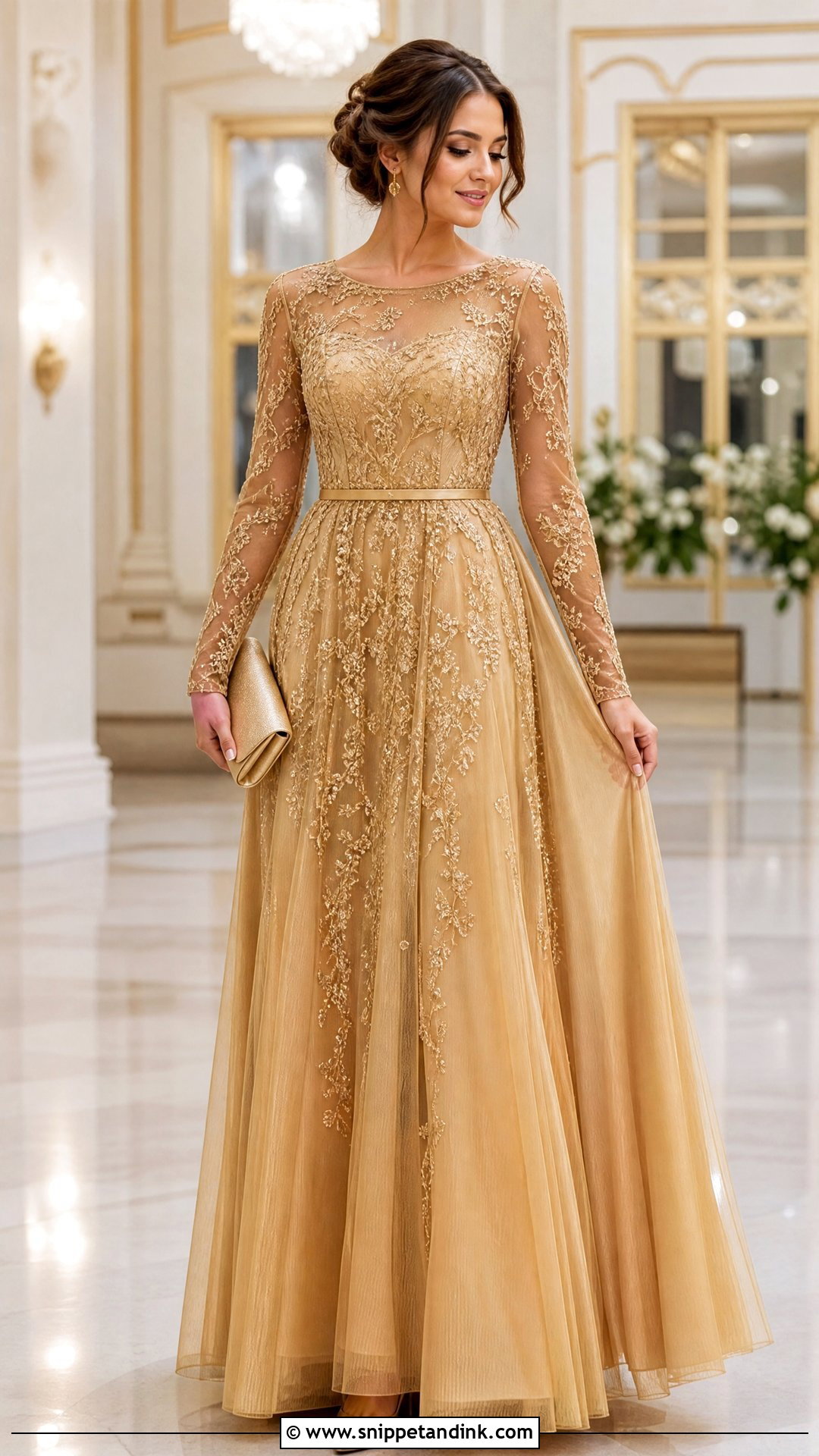
Long sleeves suit winter weddings and formal church ceremonies, and sheer sleeves worked with metallic thread or beadwork add detail without trapping heat. Check the armhole first. A sleeve cut too low stops you lifting your arms, and that is the most common complaint I hear about sleeved gowns. For a modest look, pair a high neckline with a defined waist. Skip bracelets since the cuffs already carry detail, and keep the hair in a low bun or polished ponytail so the sleeves stay the focus.
10. Gold Embroidered Ball Gown
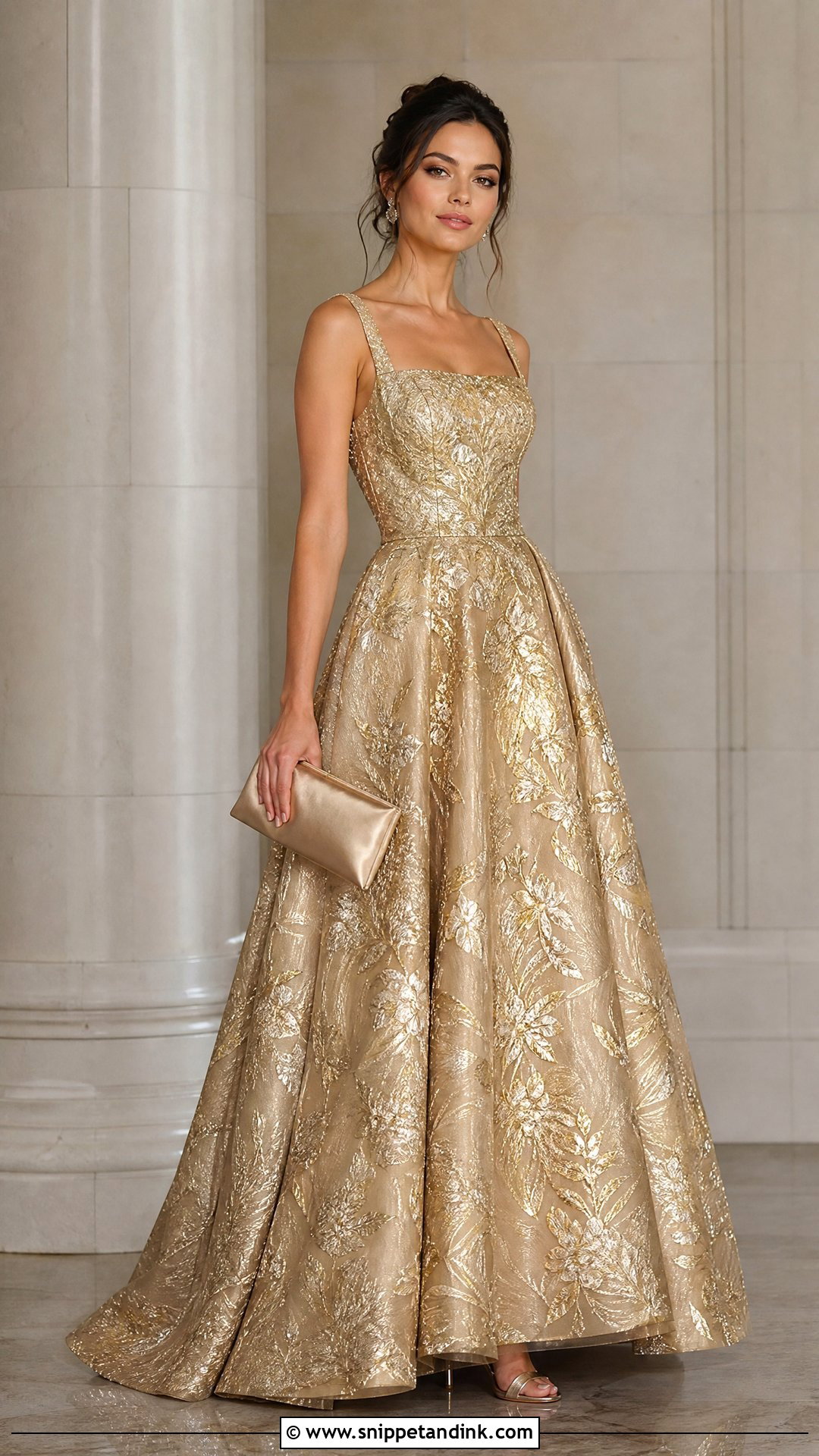
Embroidery gives texture instead of glitter, which makes it my choice for weddings that run from afternoon into evening. Whether the pattern is floral vines or baroque scrolls, let it lead and pull a single tone from it for your jewelry. A busy bodice looks cluttered with loose hair falling over it, so wear your hair up or tucked back. Metallic thread can tarnish if the gown is stored damp, so it should live in a breathable bag, never plastic.
11. Gold Floral Ball Gown
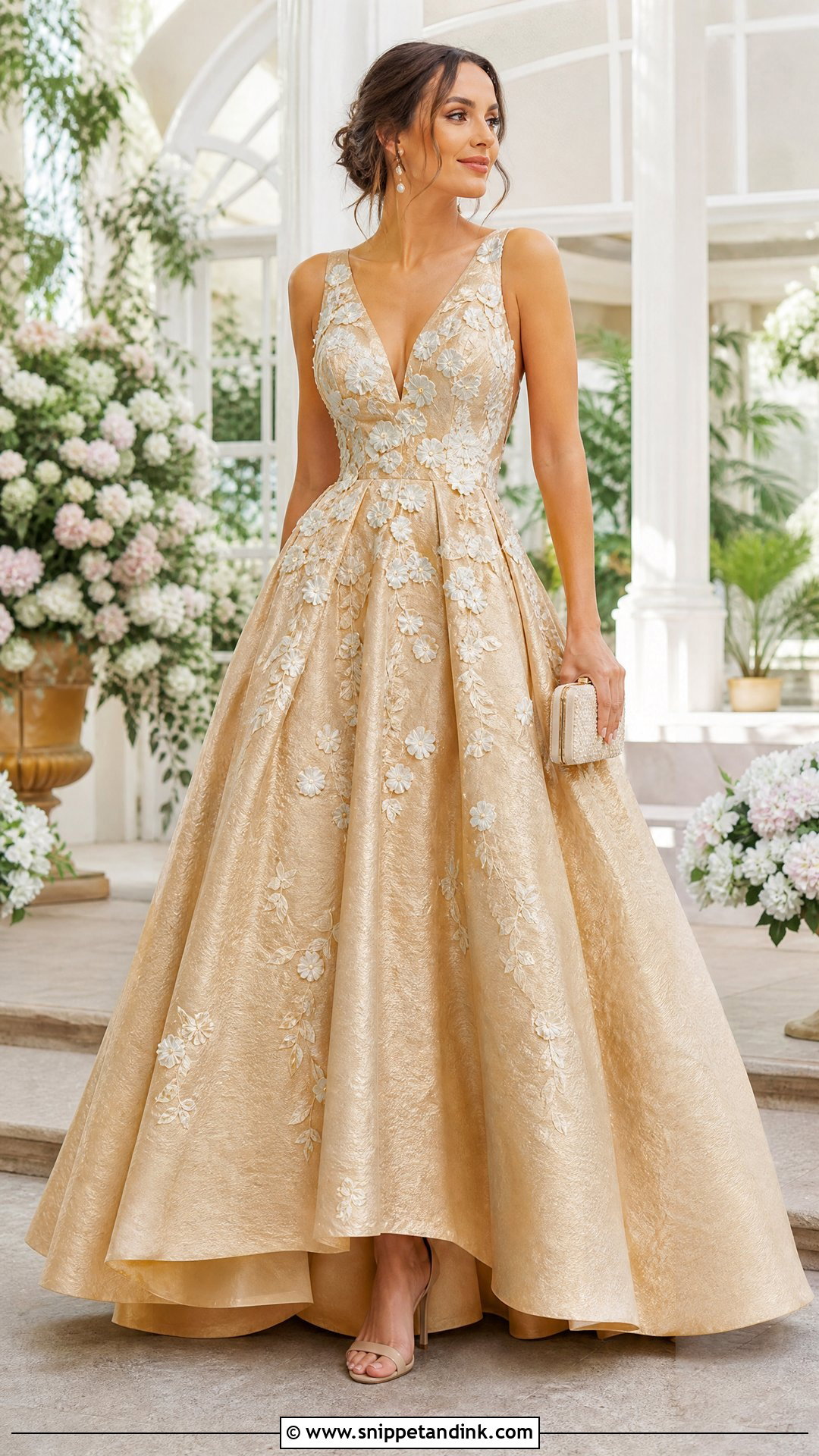
Florals on gold can be printed, appliquéd or woven into jacquard, and the method matters: appliqué adds raised petals that catch light, while a print stays flat. I steer brides toward a gold base with ivory or blush flowers, because the reverse tends to look busy in group photos. Nude heels, pearl earrings and a clutch without its own pattern keep things calm. This one belongs at a spring or summer garden wedding, where the motif has a reason to be there.
12. Gold Jacquard Ball Gown
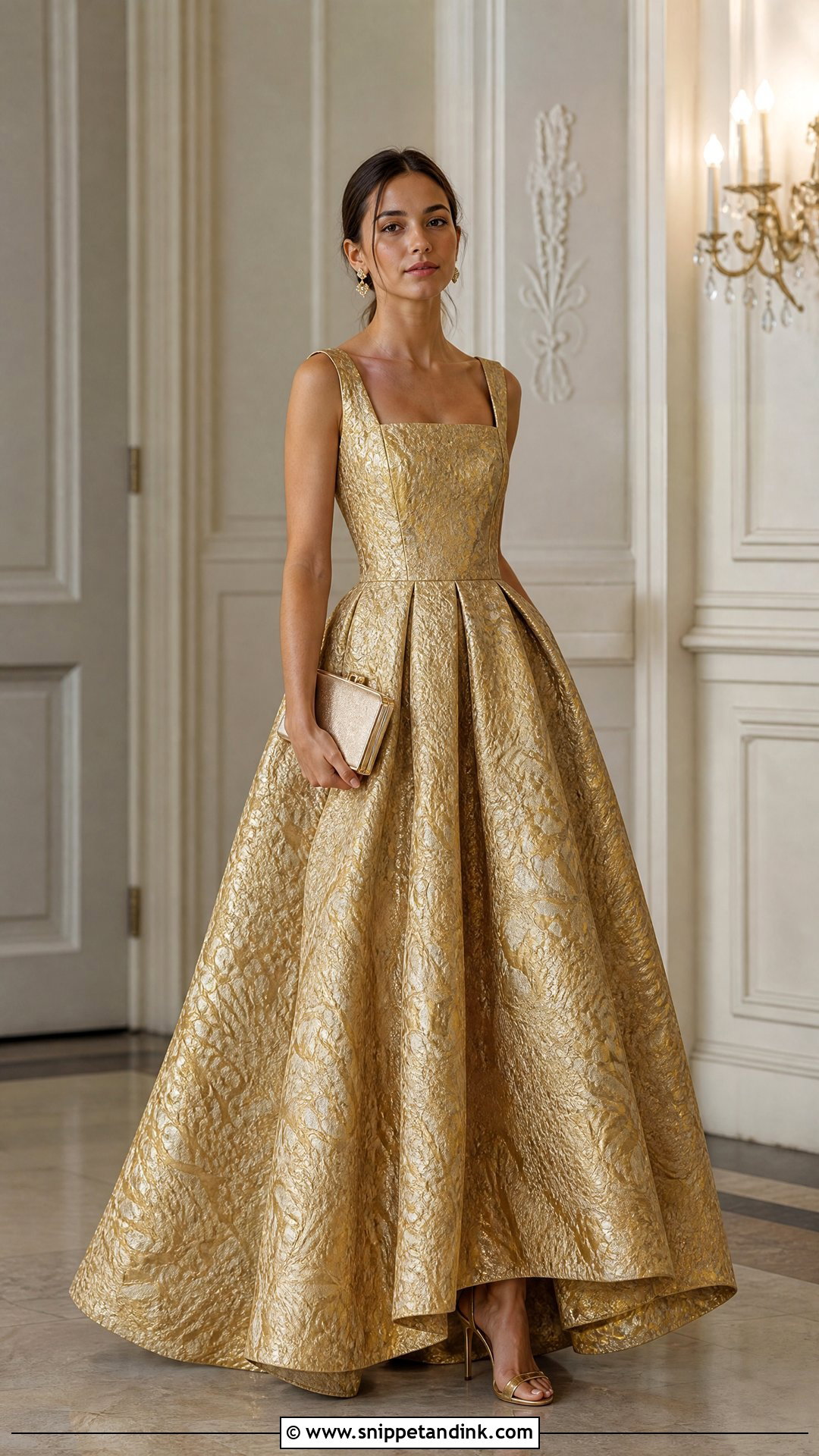
Jacquard has its pattern woven into the cloth, so it holds a ball gown shape without heavy petticoats and shines only where the weave catches light. That makes it my pick for a bride who wants richness without sparkle. It’s stiffer than satin, so a strapless or square-neck bodice with clean lines suits it; soft draping fights the fabric. It also creases less when you sit, which counts on a long day. Satin heels, a structured clutch and classic earrings are all it needs.
13. Gold Ruffle Ball Gown
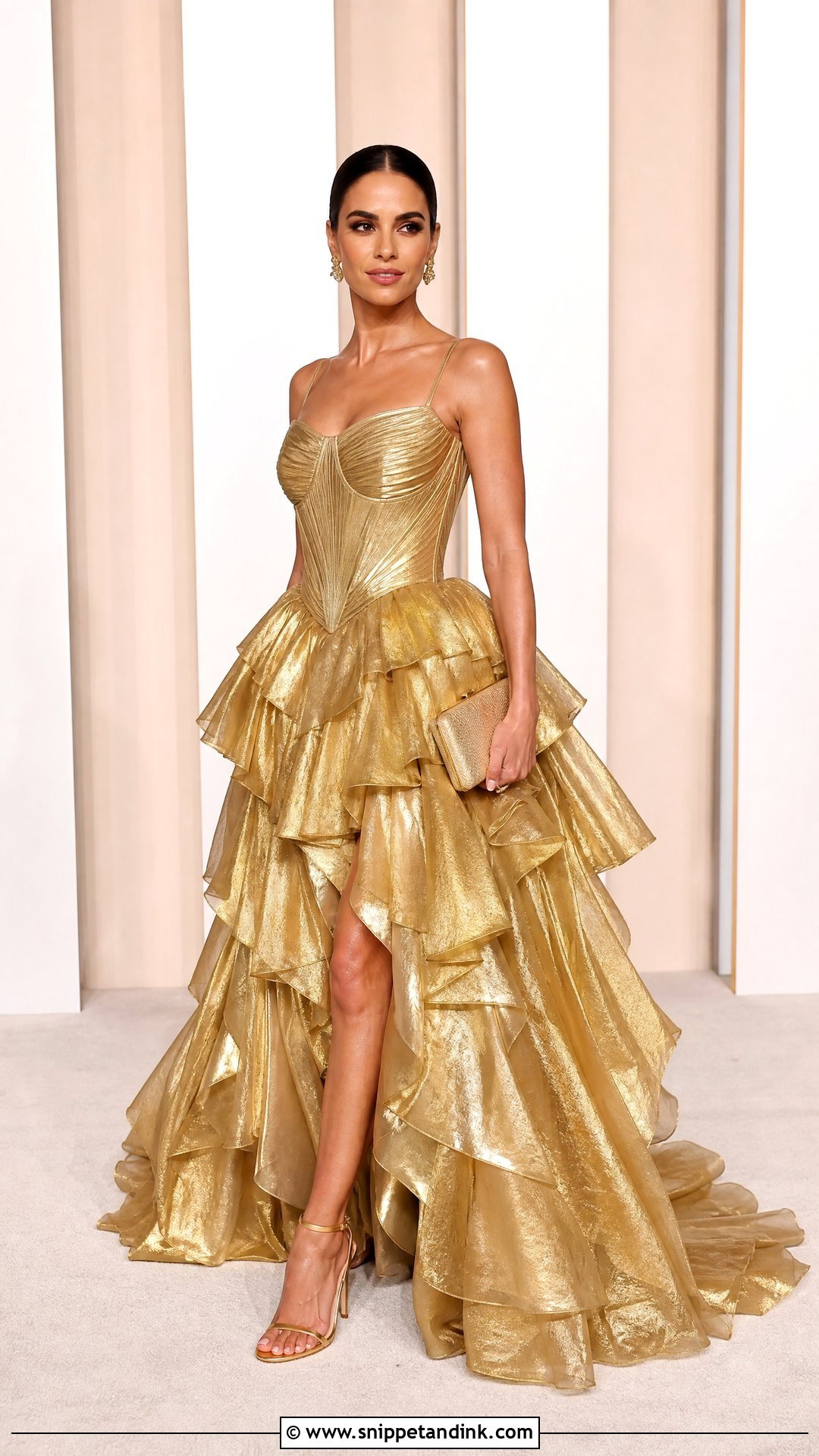
Ruffles move, and where they sit decides the effect: tiers on the skirt build volume low, a ruffled neckline pulls the eye up to your face. Large ruffles add width fast, so on a petite frame I keep them to one area. Organza ruffles hold their shape, while chiffon ones collapse in humidity, which is worth knowing before an outdoor summer reception. Balance oversized ruffles with sleek hair, soft makeup and slim heels.
14. Gold Beaded Ball Gown
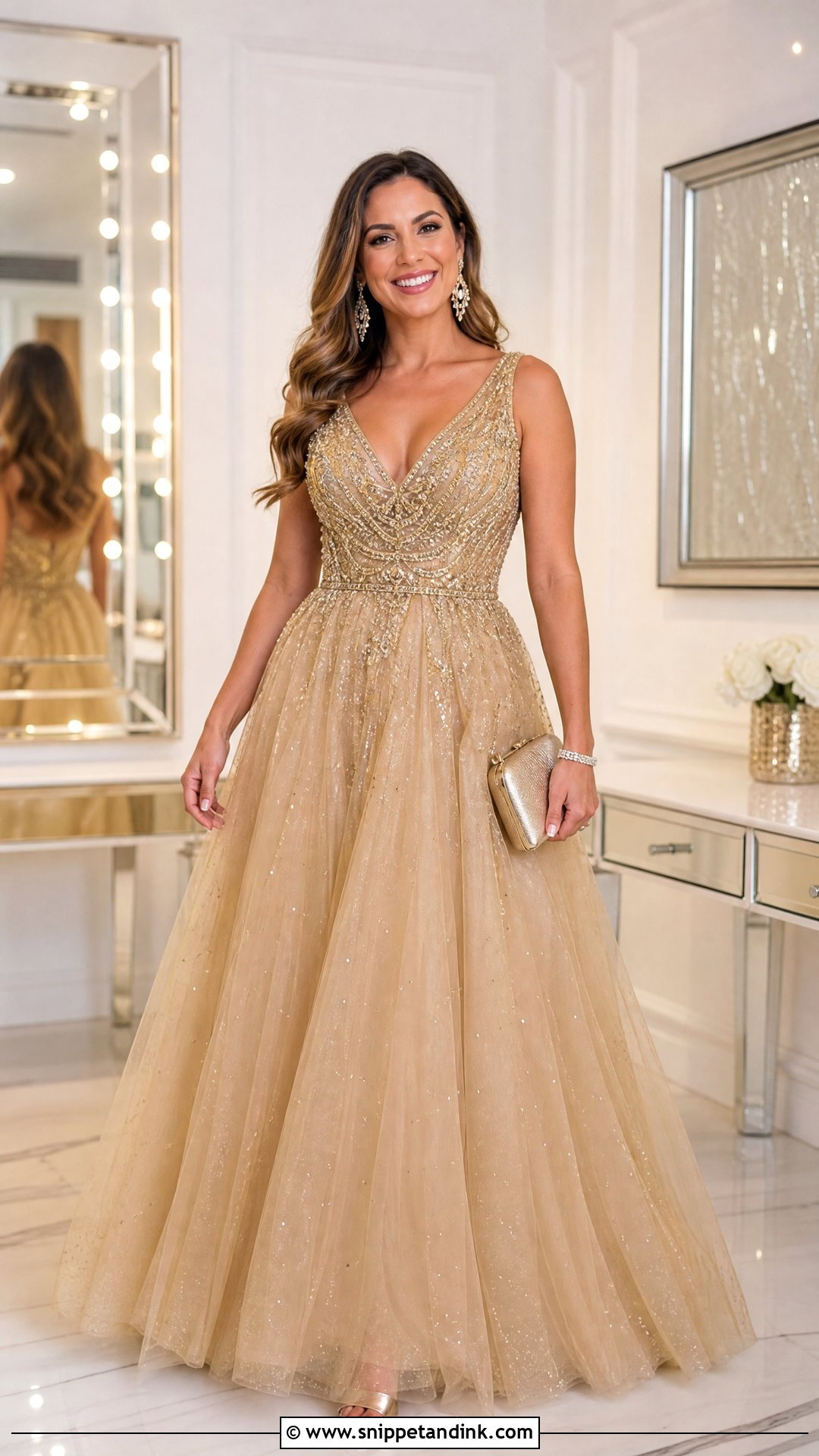
A gold beaded ball gown has more depth than sequins because each bead sits at a slightly different angle to the light. The trade-off is weight. A densely beaded bodice gets heavy, so I check that the boning or straps are built to carry it. Match accessories to the beadwork rather than adding a new color: metallic sandals, crystal earrings and a satin clutch are enough. Keep the hair smooth and off the face, and ask your seamstress to tack down any loose beads before the day.
15. Gold Lace Ball Gown
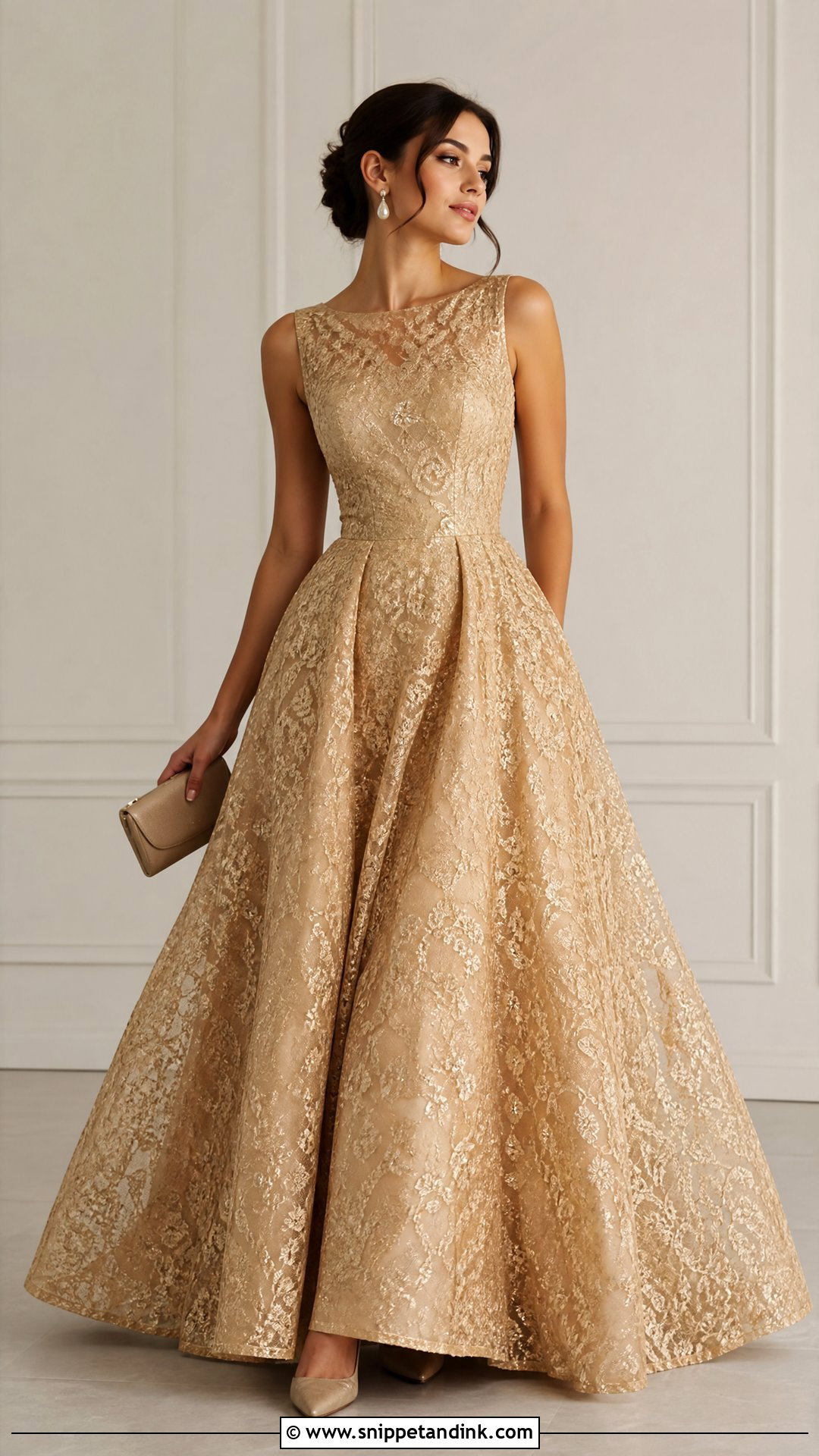
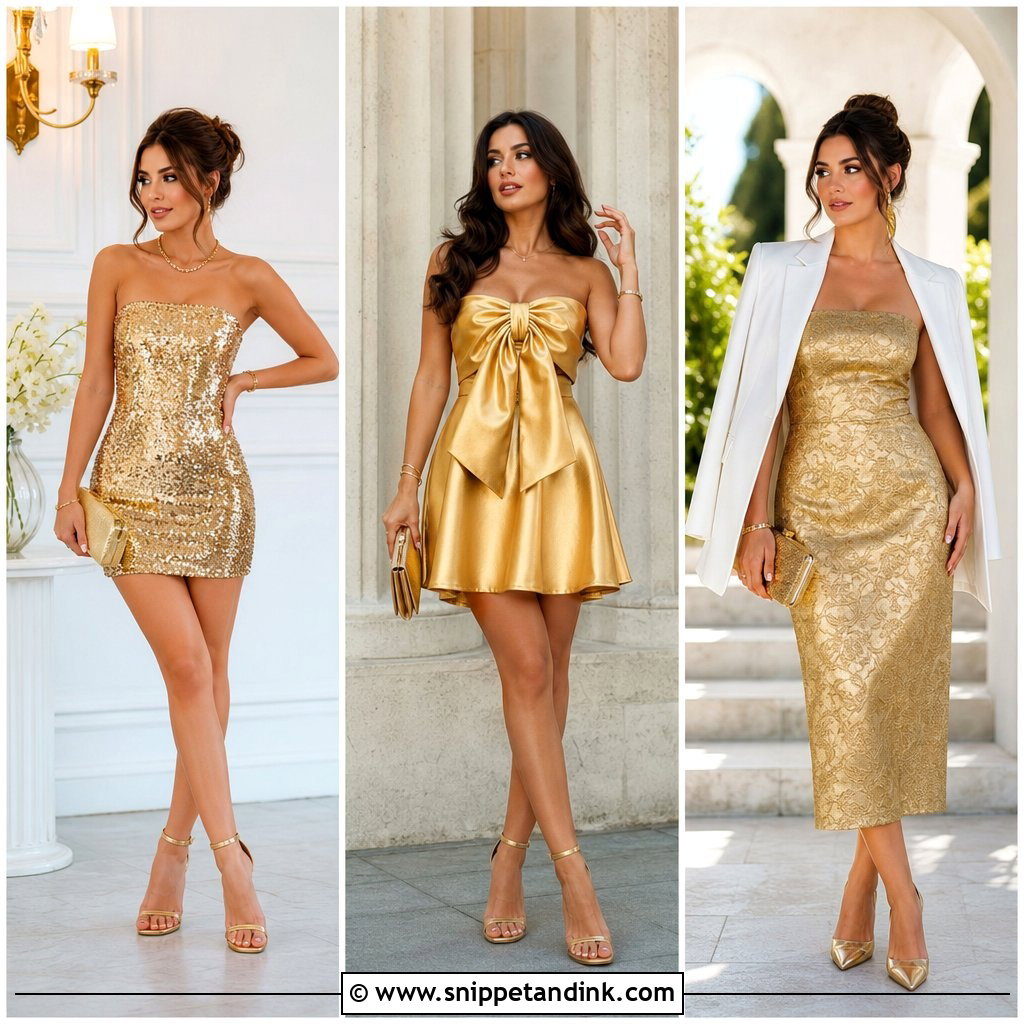
Gold lace shows its color through whatever lining sits underneath. Champagne lining gives a subtle glow; a deeper gold lining makes the lace look richer and more dramatic. Before you buy, look at the scalloped edges up close, because cheaper lace frays and its metallic threads can scratch. If lace covers the bodice and sleeves, keep jewelry minimal so the pattern reads clearly. A low chignon or side-swept waves suits the texture.
16. Gold Halter Ball Gown
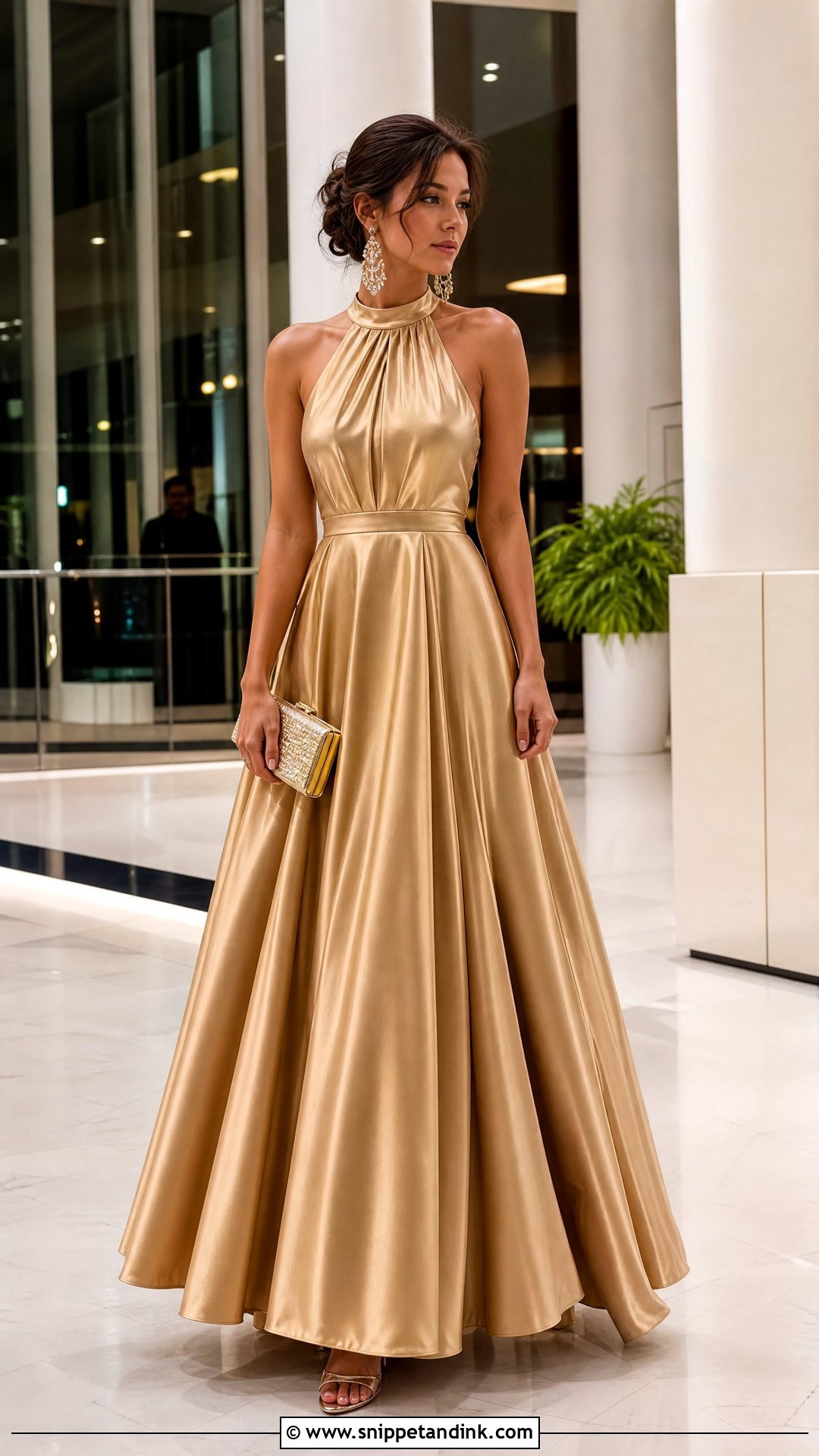
A halter draws the eye to the shoulders and keeps the top half sleek over a full skirt. Part of the gown’s weight hangs from the neck strap, though, so with heavy satin I look for a hidden back closure that shares the load. Without one, you’ll feel it in your neck by the evening. Skip the necklace entirely. Earrings, slim heels, a compact clutch and an updo that shows the neckline are all you need.
17. Gold One Shoulder Ball Gown
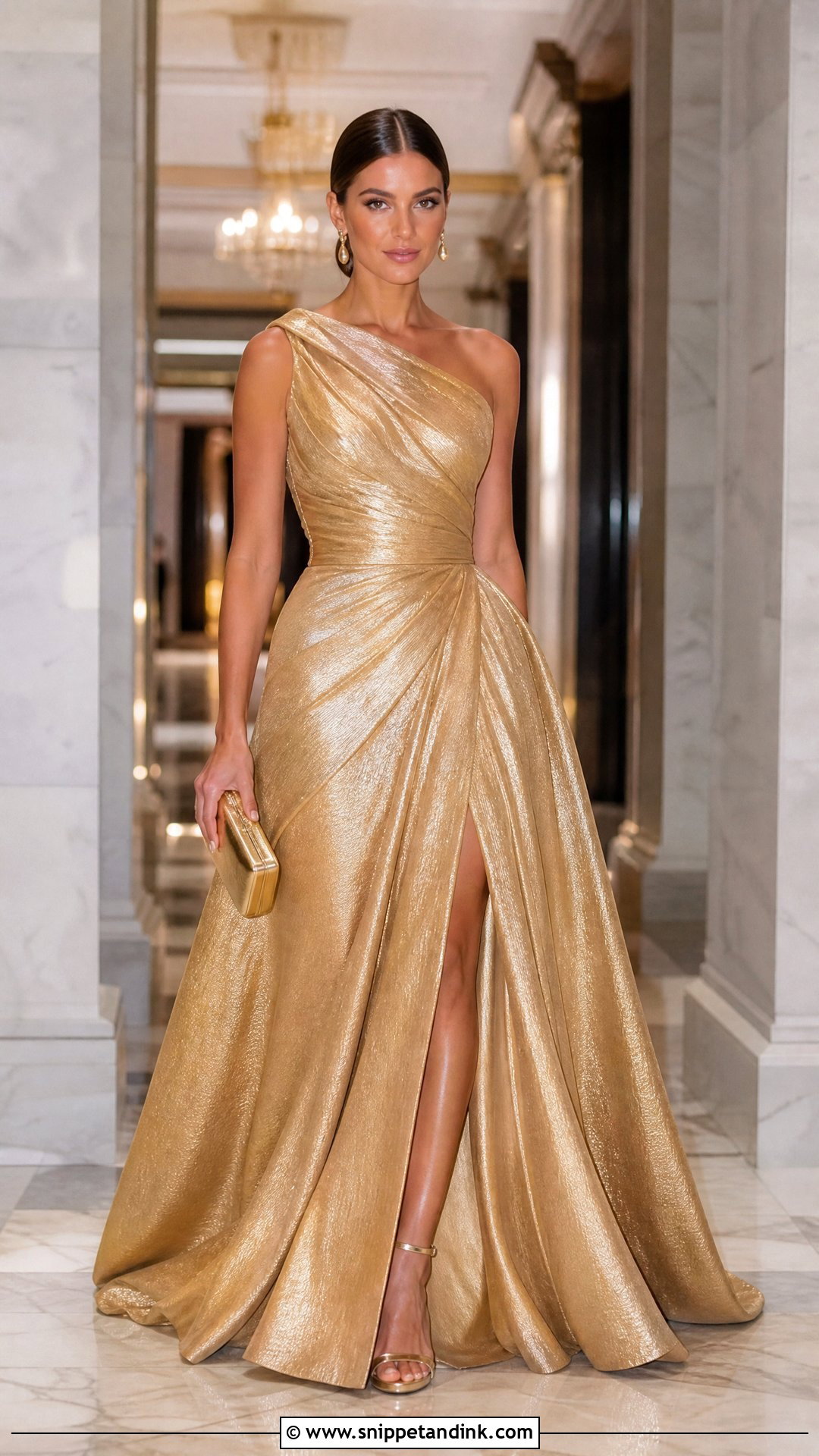
The asymmetrical neckline gives a gold one-shoulder gown interest straight away, and it suits brides who feel unsupported in strapless styles. The single strap must be anchored firmly at the back, or it slips every time you raise that arm. It works in satin, metallic fabric or pleated tulle. Pick one statement earring instead of a heavy necklace, and sweep your hair to the side opposite the strap so the line stays clear.
18. Gold Pleated Ball Gown
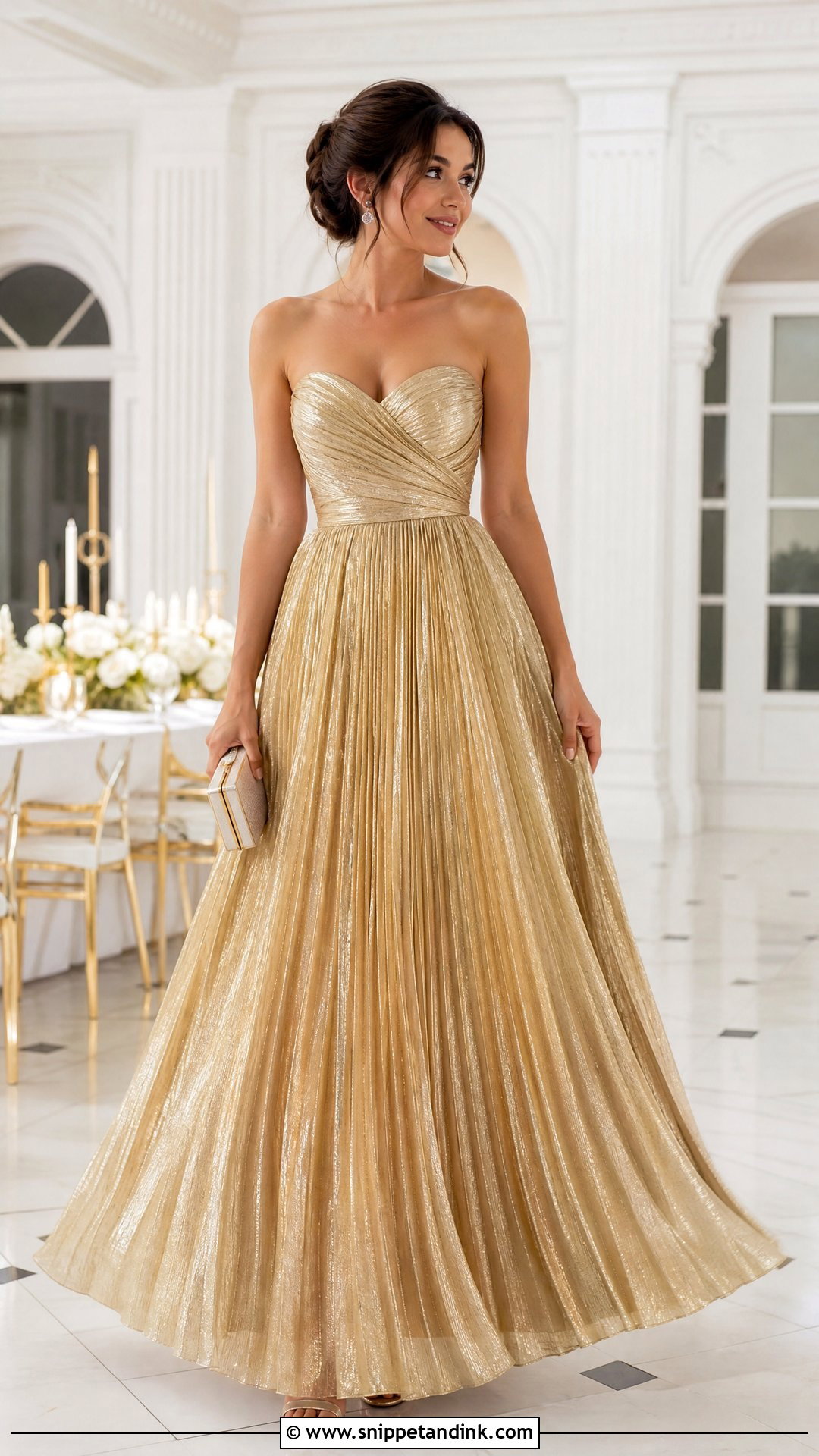
Pleats give a full skirt structure without bulk, so it swings as you walk instead of bouncing. Knife pleats in satin flatten if the gown is packed tightly or sat on for hours, so hang it the moment it arrives and have it pressed before you dress. A fitted bodice and defined waist balance the length. Keep heels delicate and earrings small, and let a metallic pleat do the shining. Soft waves or a low bun both suit the movement.
19. Gold High Low Ball Gown
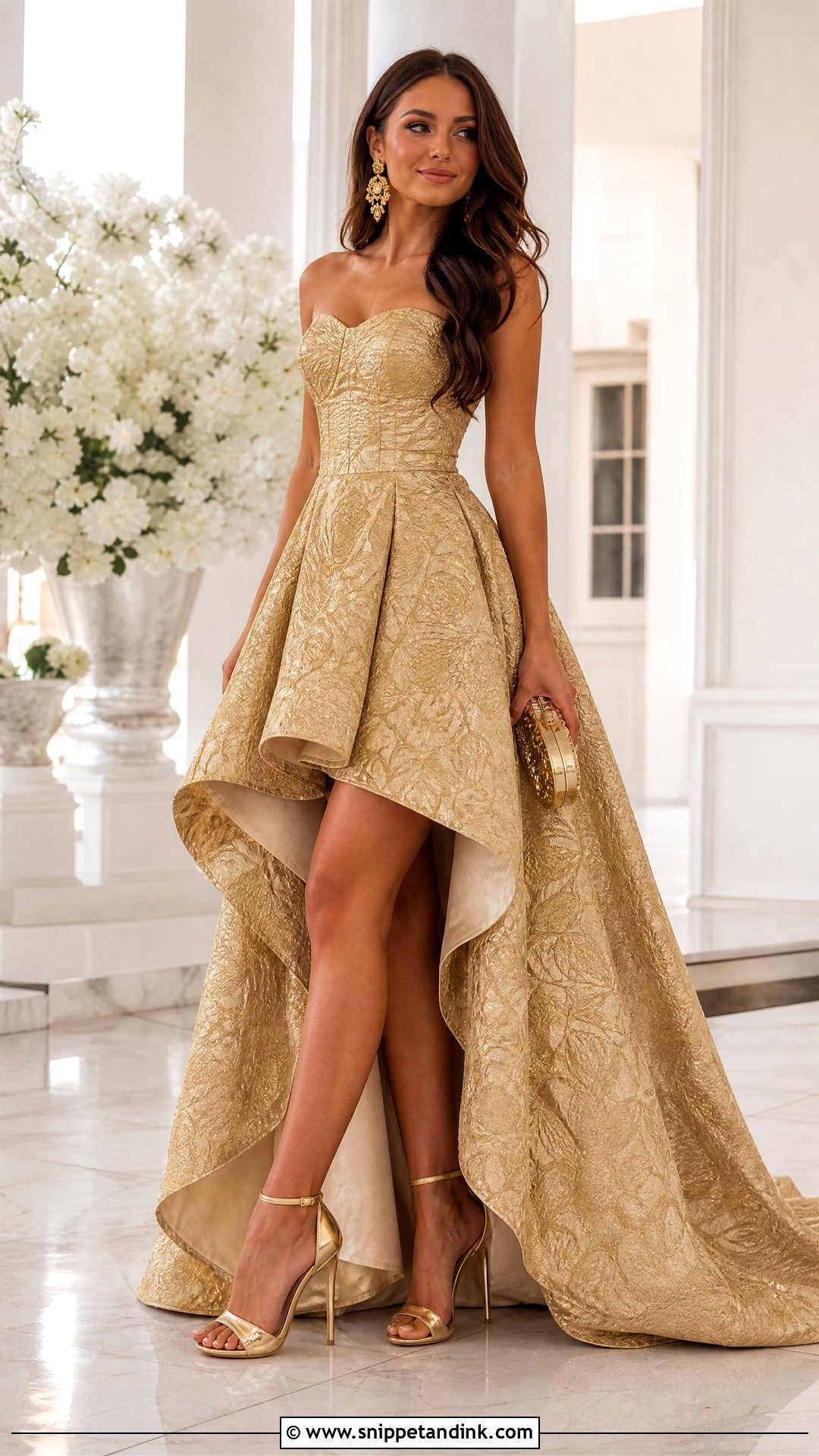
High-low shows your shoes, so choose them as carefully as the gown: gold, nude or clear heels will be in every full-length photo. I like this cut for an outdoor reception, where a shorter front hem stays out of damp grass. It reads younger than a floor-length skirt, which some brides want and some don’t. A fitted bodice, full back skirt and clean front hem keep it polished. Add a small clutch and earrings that match the gown’s finish.
20. Gold Ball Gown With Train
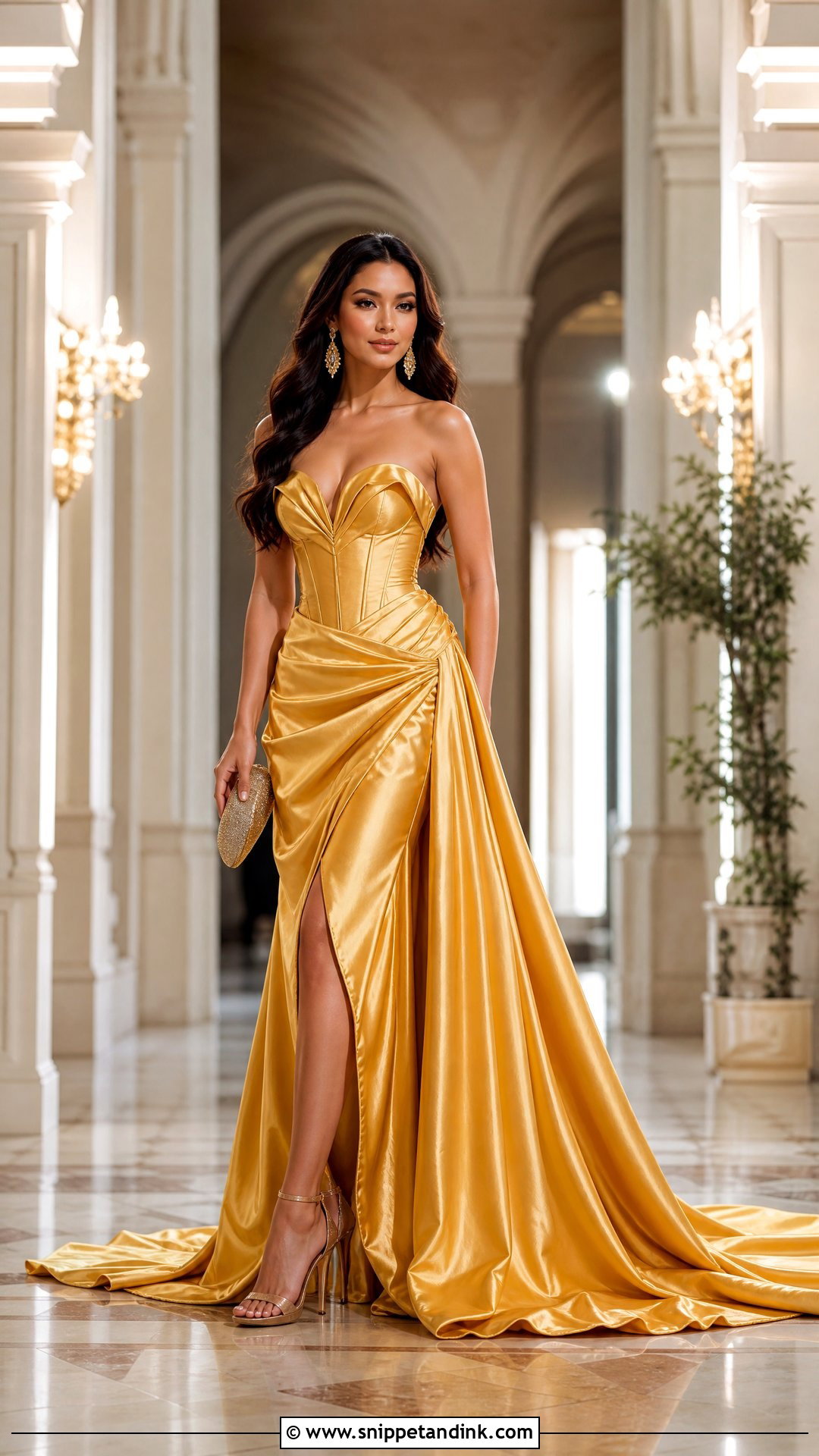
A train makes the entrance, then becomes something to manage for the rest of the night. Check your venue before ordering: a long train on gravel, stairs or a dance floor needs a bustle, and the bustle points should be tested at a fitting by whoever will fasten them on the day. Satin, organza and metallic fabrics all drag differently, and lamé shows scuffs fastest. A structured bodice balances the extra fabric behind you, and secure heels matter more here than anywhere else in this list.
21. Gold Ball Gown With Gloves
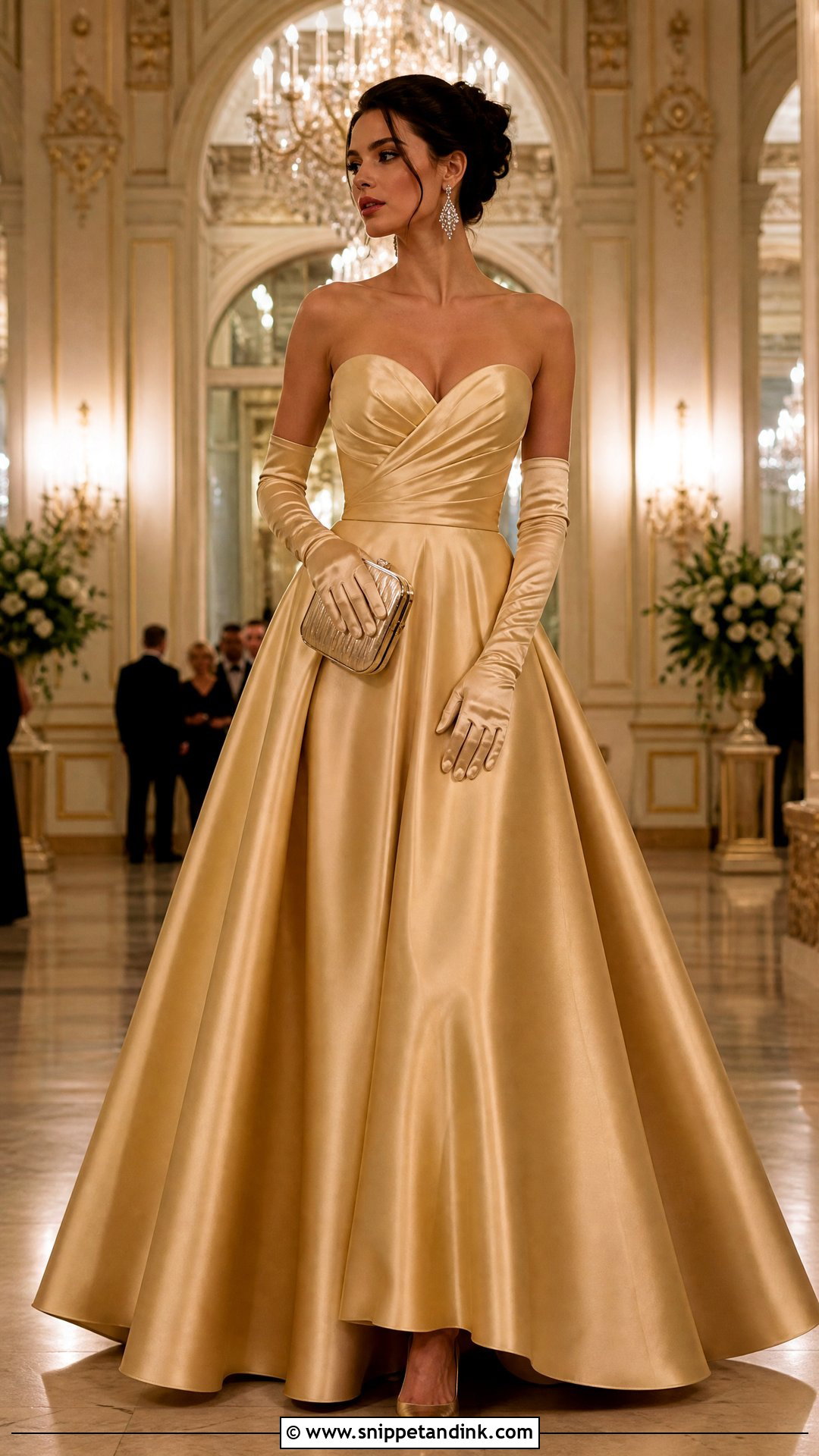
Gloves bring an old-Hollywood feel and suit strapless, off-shoulder or sleeveless gowns, where they frame the arms instead of competing with sleeves. Ivory, champagne or matching gold satin all work. Plan the ring moment in advance: fingerless styles, or gloves you can slip off quickly, save an awkward pause at the altar. A bracelet over the glove is fine, but rings go underneath. Pointed heels and a structured clutch keep the whole thing looking intentional rather than costume.
22. Gold Ball Gown With Cape
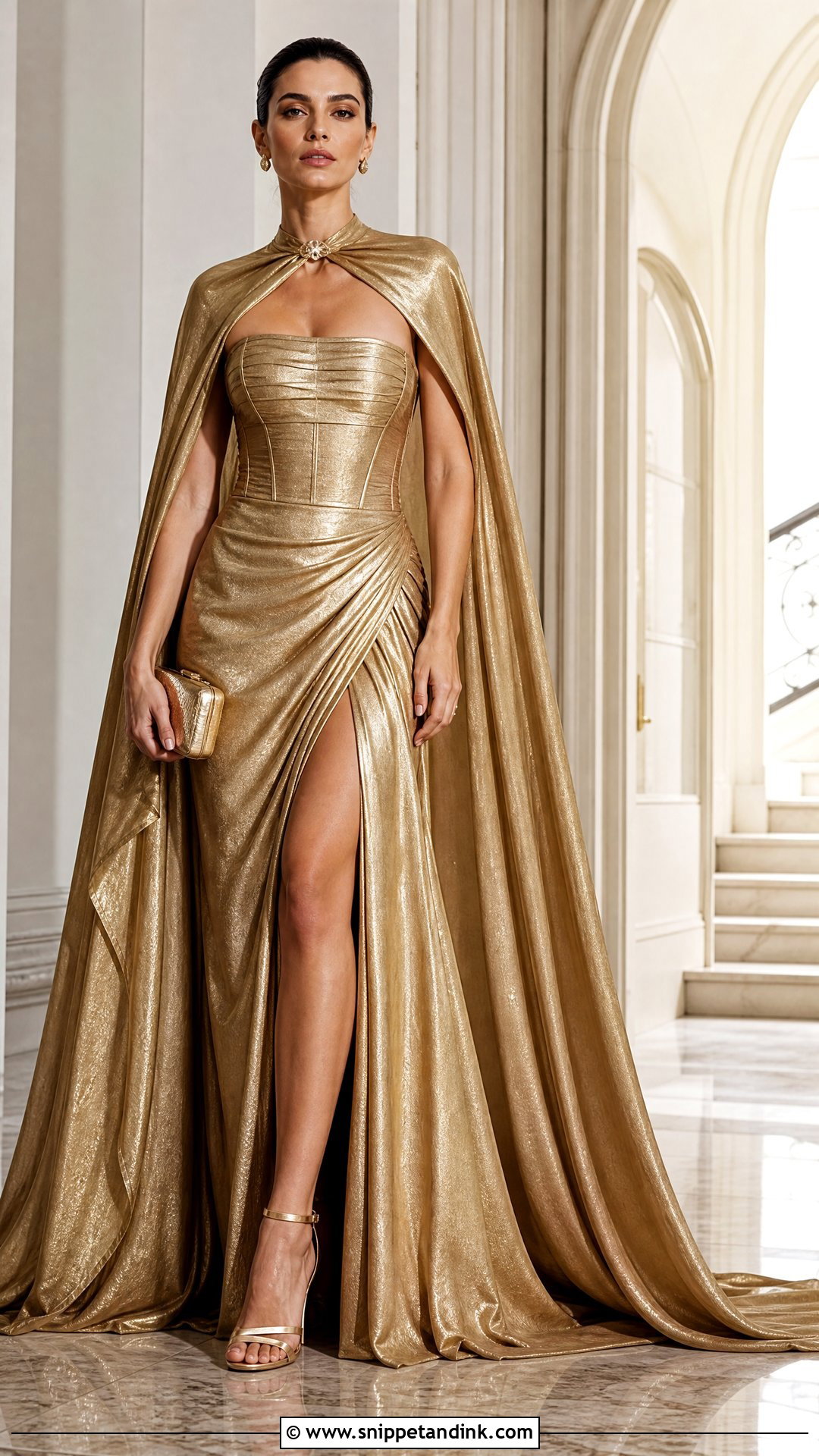
A gold ball gown with a cape adds movement from behind; sheer tulle or chiffon floats, while satin falls more heavily. I nearly always recommend a detachable cape that clips at the shoulders, so it comes off for dancing. Keep the gown underneath structured, with a corset bodice or a clean strapless line, so the cape doesn’t swallow your frame. If it trails, watch the stairs, because a long cape catches under heels.
23. Gold Ball Gown With Pockets
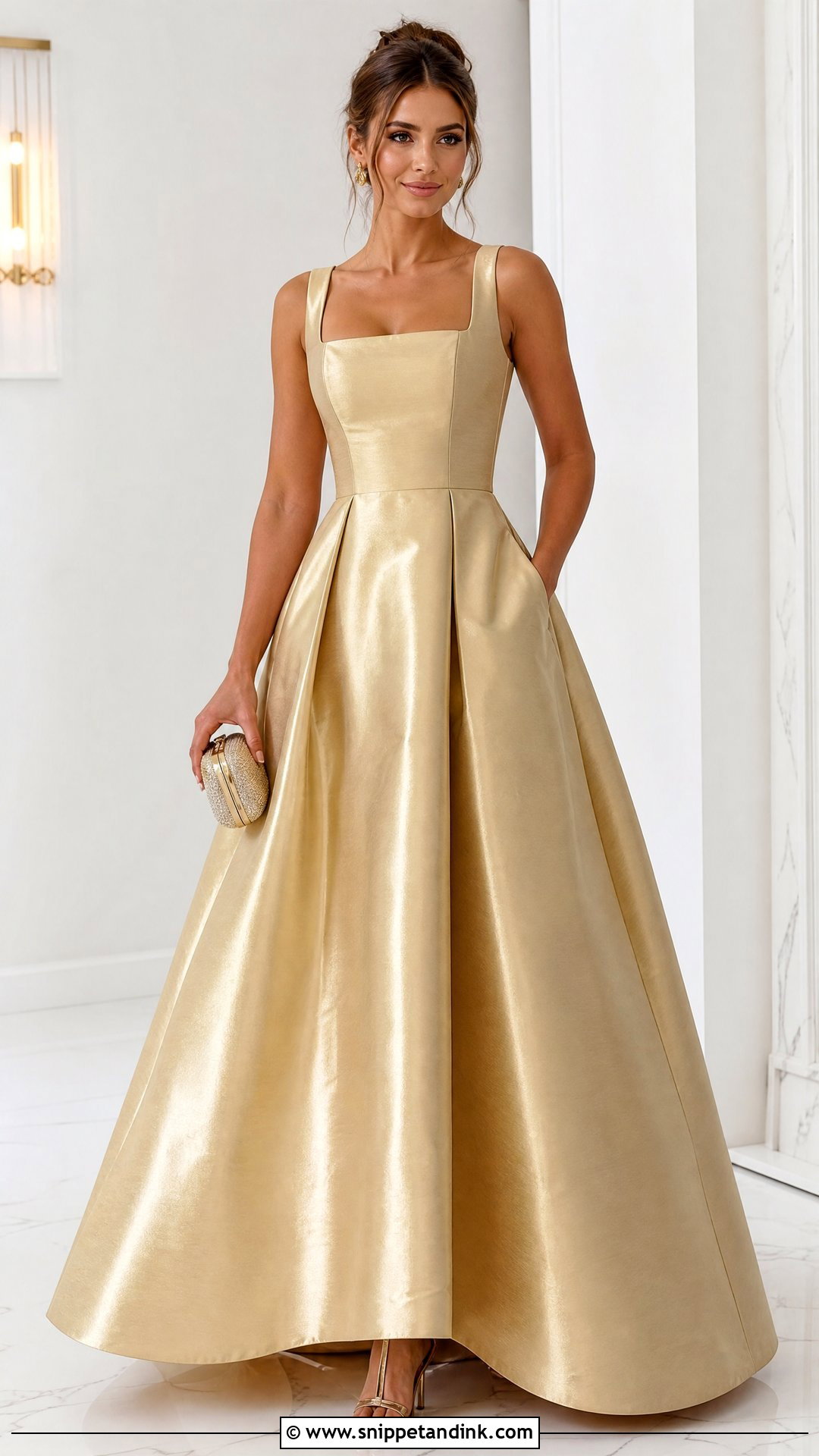
Pockets change how you stand in photos. Your hands have somewhere to go, and your shoulders drop and relax. They sit best in fabrics that hold their shape, like satin, mikado or jacquard, which don’t gape open when you slide your hands in. I always check that the pockets lie flat against the hips, because anything inside them shows, so keep it to a lipstick. Clean skirt lines without extra volume at the hips work best with them.
24. Rose Gold Ball Gown
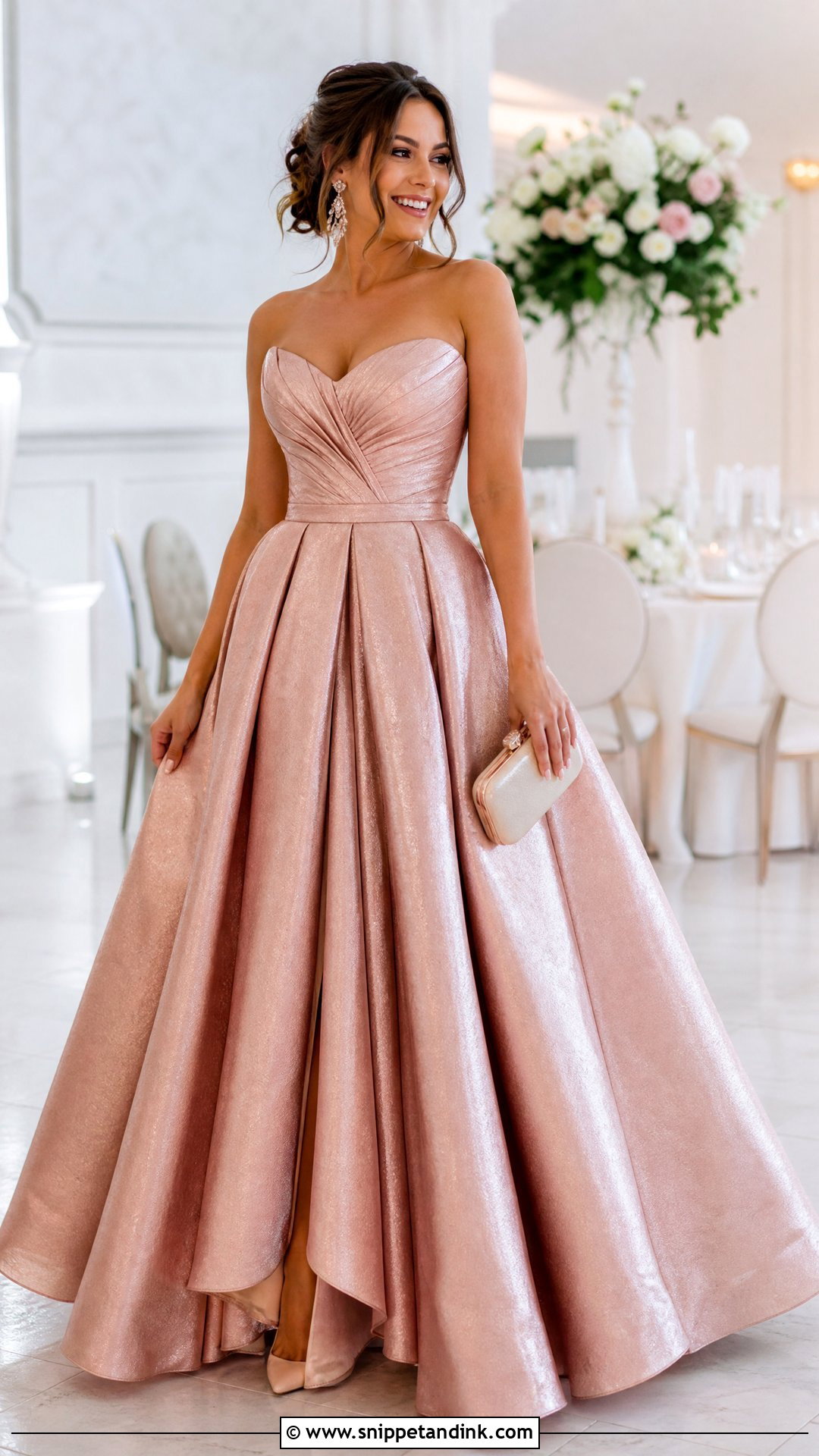
Rose gold gives warmth without the brassiness of yellow gold, and I find it flatters cooler or pinker skin better. It works in sequins, satin, tulle and metallic fabrics. Under warm reception bulbs, though, rose gold can turn more peach than pink, so look at the fabric under indoor lighting before you commit. Nude, blush or champagne heels keep the color flowing head to toe, and crystal earrings with soft makeup finish it.
25. Antique Gold Ball Gown
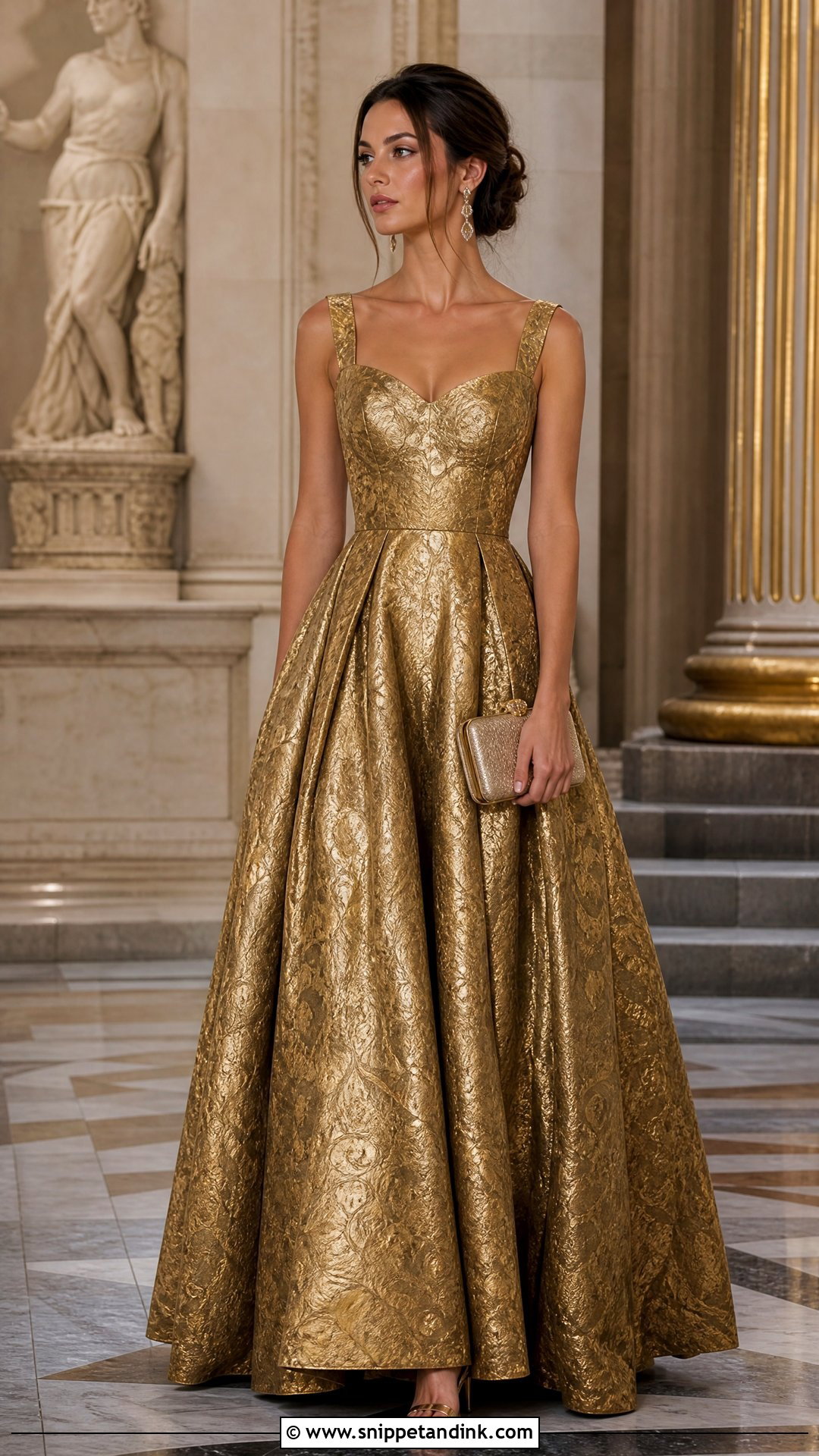
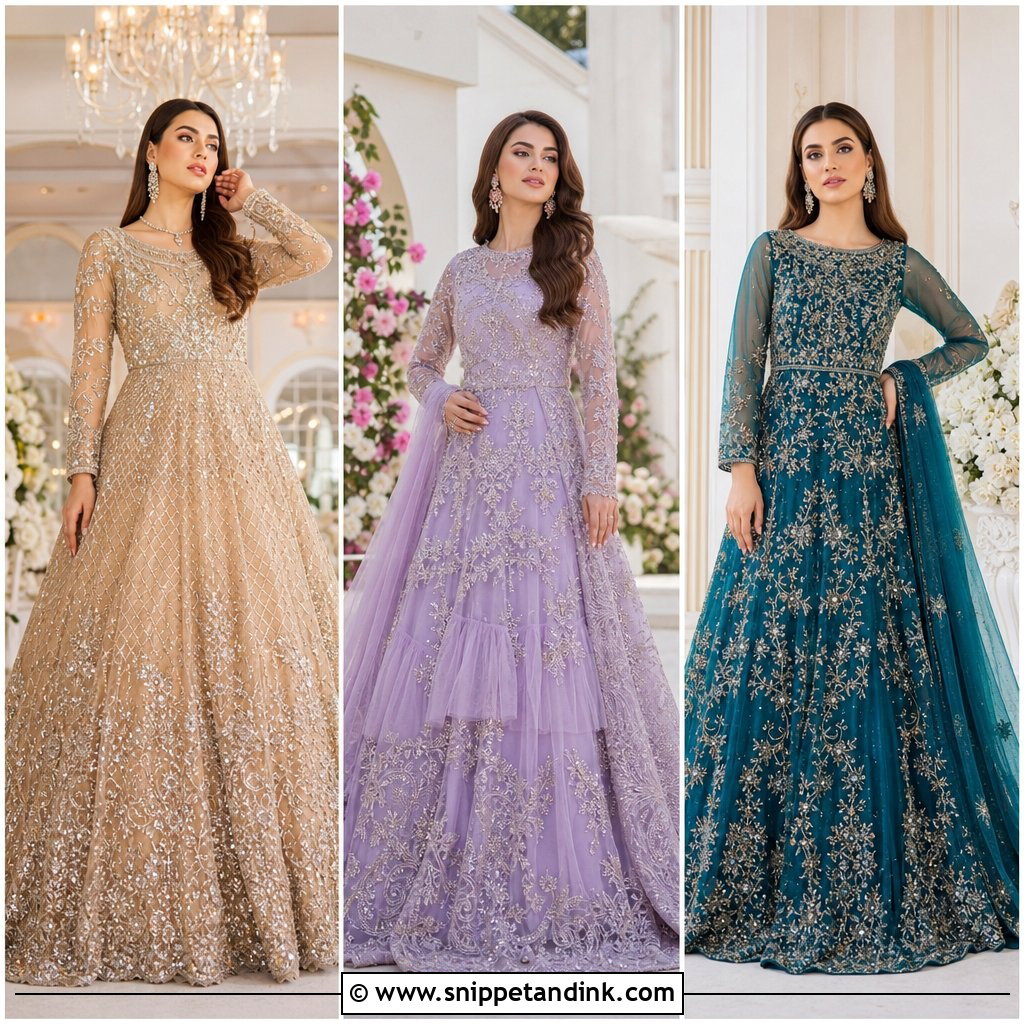
An antique gold ball gown leans toward bronze or honey, and it’s the shade I reach for with deeper skin tones and autumn weddings because it looks rich rather than flashy. Brocade, jacquard and embroidered tulle carry it best, and those heavier cloths hold their shape through a long evening. Bronze heels, crystal earrings and a structured clutch in deep champagne match the depth, while a polished updo keeps it grown-up.
Three Fittings, Real Shoes and a Bustle Rehearsal
Full ball gowns need more alteration time than slim dresses, because the waist, bodice and hem all change how the skirt falls. I’d plan for fittings to begin roughly two to three months out, with the last one a couple of weeks before the wedding. Cost and timing vary a lot with the seamstress and how much beading has to be moved, so ask for both in writing.
What each appointment should settle
- First fitting: bodice and waist. Bring the exact bra or shapewear and the shoes, because changing either later moves the hem.
- Second fitting: hem and train. Walk, sit, climb stairs and raise both arms, and mark the bustle points if there is a train.
- Final fitting: bring the person who will bustle you and let them practise twice. Collect the gown pressed, on a padded hanger, in a breathable bag.
If the skirt has a hoop or a crinoline, practise getting into a car and through a doorway in it. It sounds silly until you’re doing it in front of a photographer.
Cleaning and Storing Metallic Fabric After the Party
Gold fabrics age differently from white ones. Metallic threads and lamé can dull or darken when stored damp or splashed with perfume, and some sequins lose their coating with harsh solvents. At home, do nothing beyond a light blot with plain water. Take the gown to a cleaner who handles embellished formalwear and point out every mark, including wine at the hem and makeup at the neckline. Store it with acid-free tissue in a cotton bag, out of the light and away from plastic, which traps moisture against the metal.
Gold Gowns Ask for Restraint Everywhere Else
The fabric sets how loud a gold gown is. Satin, jacquard and champagne tones read quietly; sequins, lamé, ruffles, trains and capes do not. Once you know which you’re wearing, the rest is restraint: plain shoes, one jewelry focus and a clutch that stays inside the gown’s color family. Fit outranks everything, so leave time for proper fittings in your real shoes, and sit, raise your arms and climb a few stairs before you sign off on it.
You'll Like These Ideas:


Leave a Reply