
Barbara Palvin married Dylan Sprouse in Hungary on July 15, 2023, in a custom Vivienne Westwood ceremony gown with a corseted bodice and a flowing skirt, worn with a cathedral-length veil, Tiffany & Co. jewelry and Jimmy Choo pumps. Later she changed into a short white reception dress and then a traditional red one. What brides usually ask me about her look is how to get that quiet, sculpted shape without paying couture prices. The answer is almost always in the bodice construction and the tailoring, not the label, so each idea below comes with what I’d actually check when you try it on.
How a Corset Bodice Should Feel by Your Second Fitting
Almost every dress below depends on a corseted bodice, and that’s the part I see go wrong most. A good one holds you from the waist, not from the top edge. If you have to keep tugging the neckline up, the waist is too loose, and tightening the straps only moves the problem.
Here’s what I check, in this order, when a bride stands on the box:
- Breathe out fully and sit down. The top edge shouldn’t gap, and the bottom shouldn’t dig into your hips.
- Lift both arms as if hugging someone taller. A bodice that rides up more than a finger needs taking in at the sides.
- Run a hand down the boning channels. You want smooth lines, not ridges showing through the satin.
- Bring the actual bra or shapewear you’ll wear, every time. Swapping it at the last fitting changes the whole fit.
Most brides need three fittings for a structured gown, and the bodice usually shifts again in the final weeks as routines and nerves change your measurements. Leave room in the timeline for that last adjustment rather than squeezing it into the week of the wedding.
1. Vivienne Westwood Corset Wedding Dress
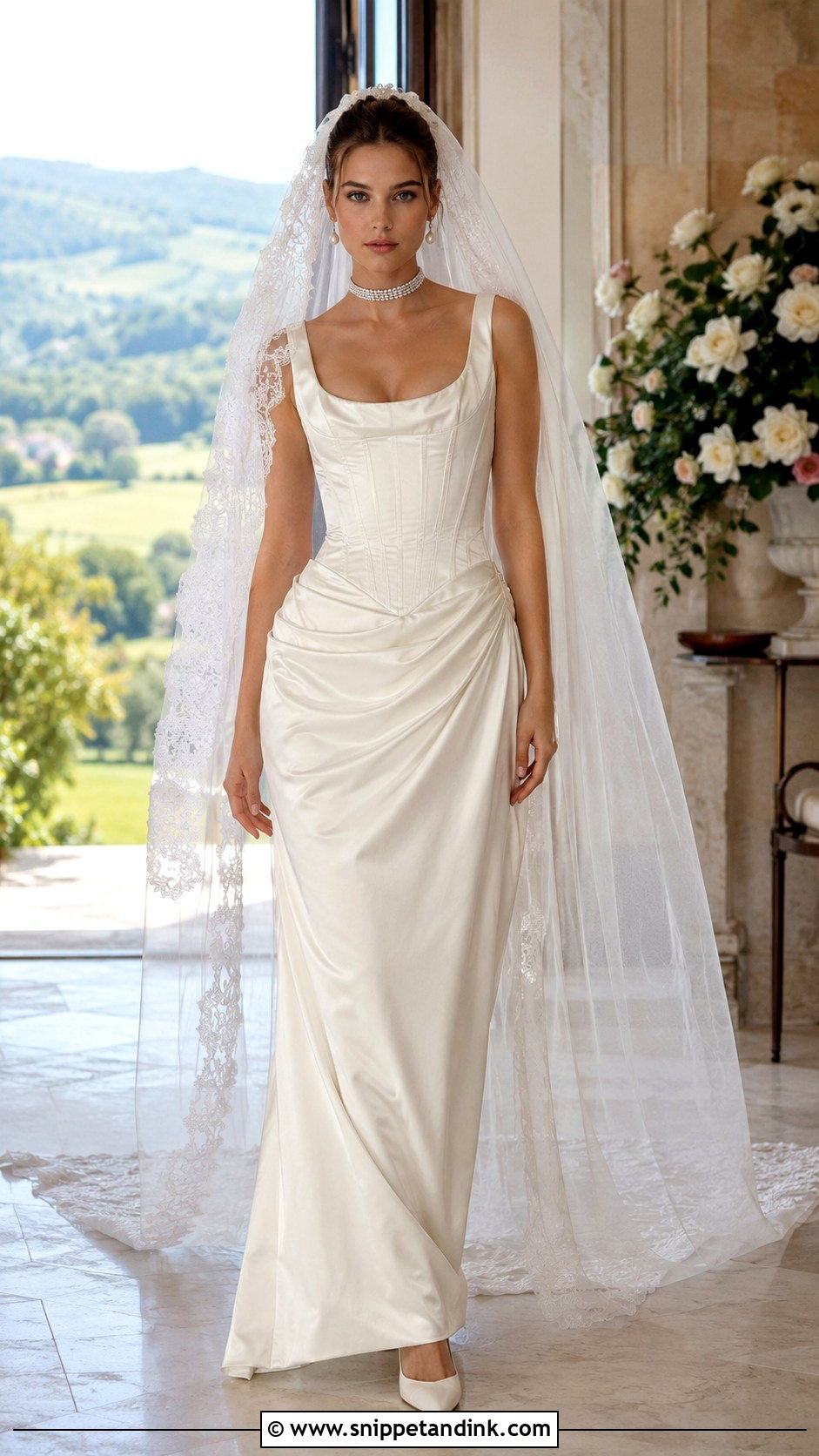
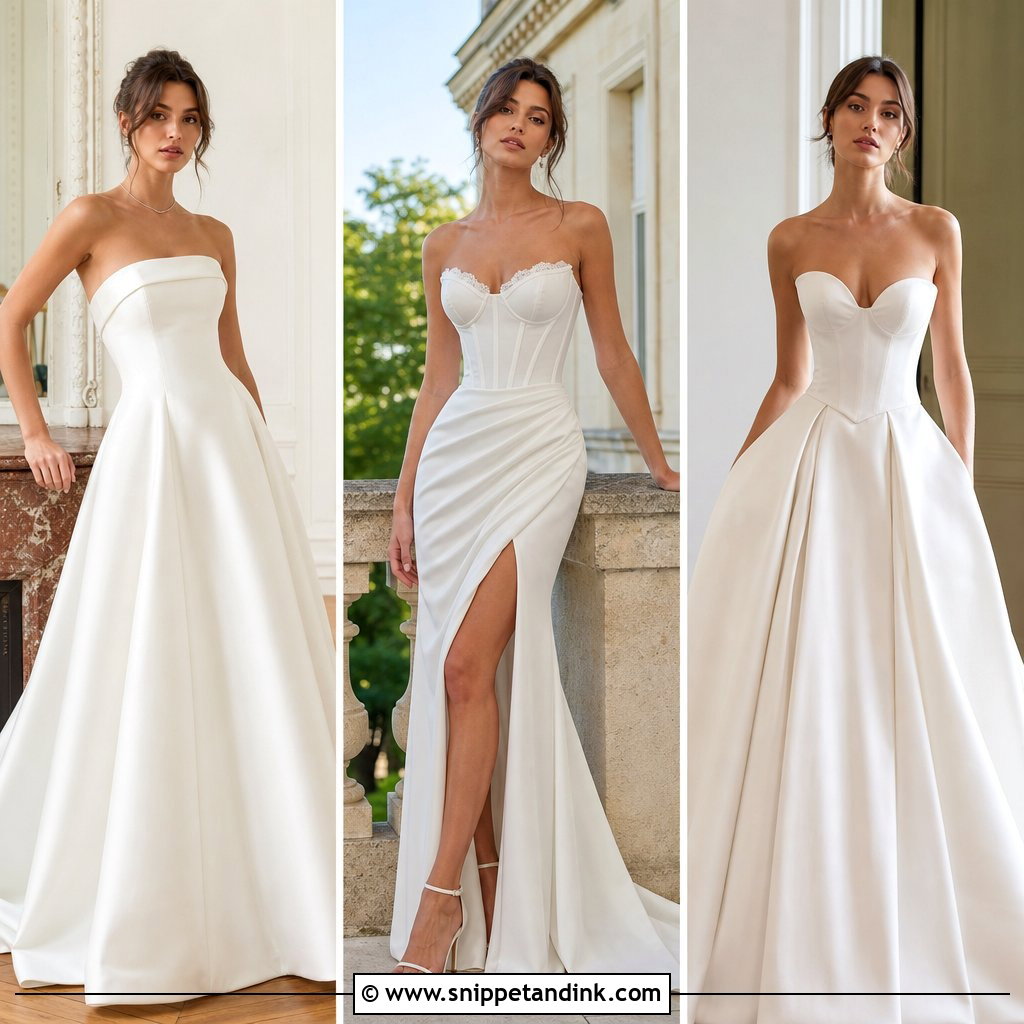
This is the closest you’ll get to her ceremony silhouette. Look for ivory silk or heavy satin with real internal boning, a softly scooped neckline and draping that wraps across the waist. When I pull a gown like this, I press the side seams with my palms: the boning should hold the fabric flat against you without the edge of the bodice biting into your ribs when you breathe out. Pointed ivory pumps, pearl earrings, a slim crystal choker and a long cathedral veil are all it needs. Keep the bouquet small and white so nothing crowds the drape.
2. Scoop Neck Silk Wedding Dress
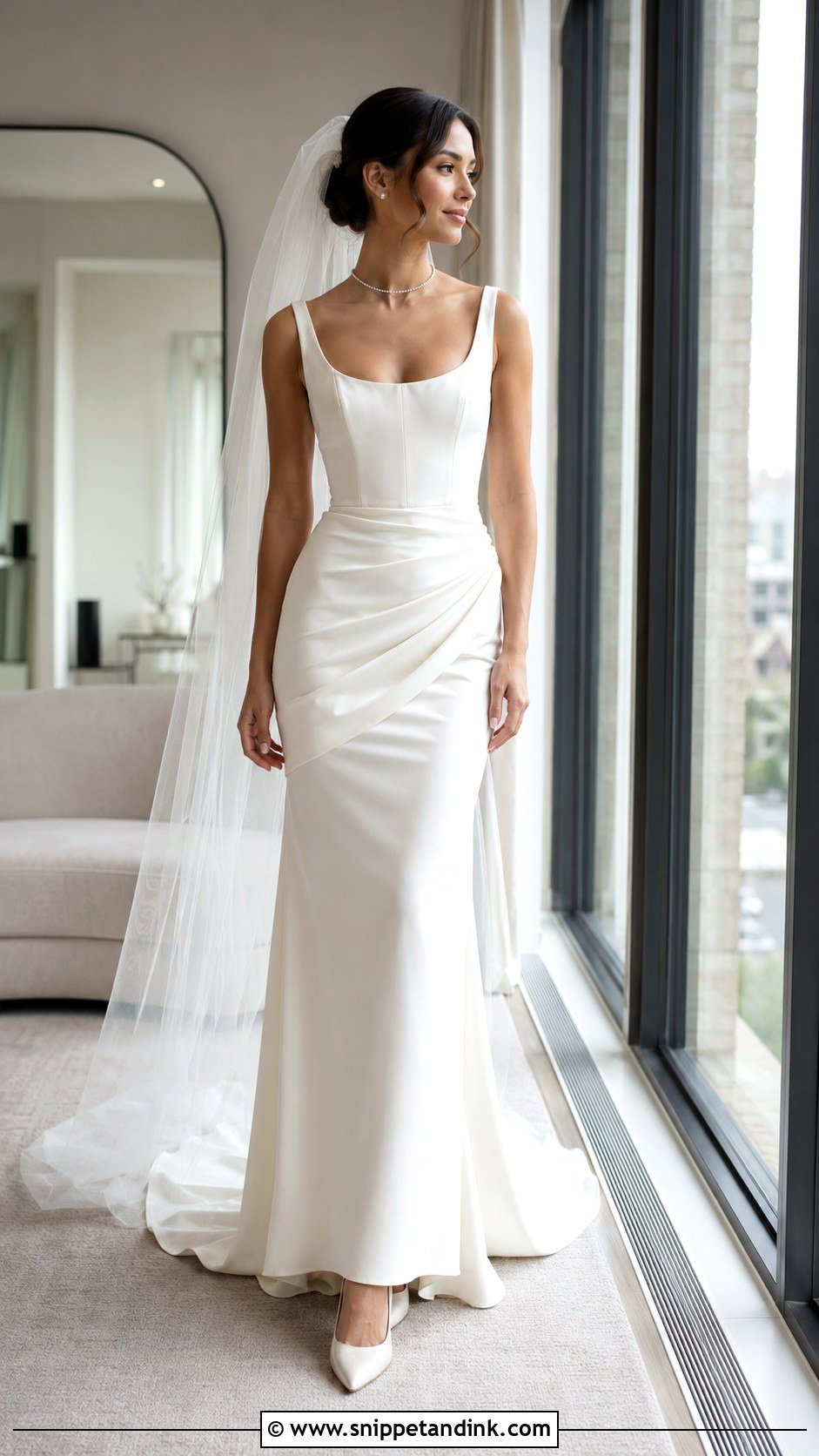
A scoop neck silk wedding dress gives you a gentler neckline while the structure underneath does the work. Wide straps matter here more than people expect. On a fuller bust, a thin strap on a low scoop will start to slide outward by the second hour, while a strap of two fingers’ width sits still. Pair it with pearl studs, a fine choker and satin pumps, and choose fingertip or cathedral length depending on how formal the room is. Center-parted waves and a pale rose manicure keep it simple.
3. Draped Satin Column Wedding Dress
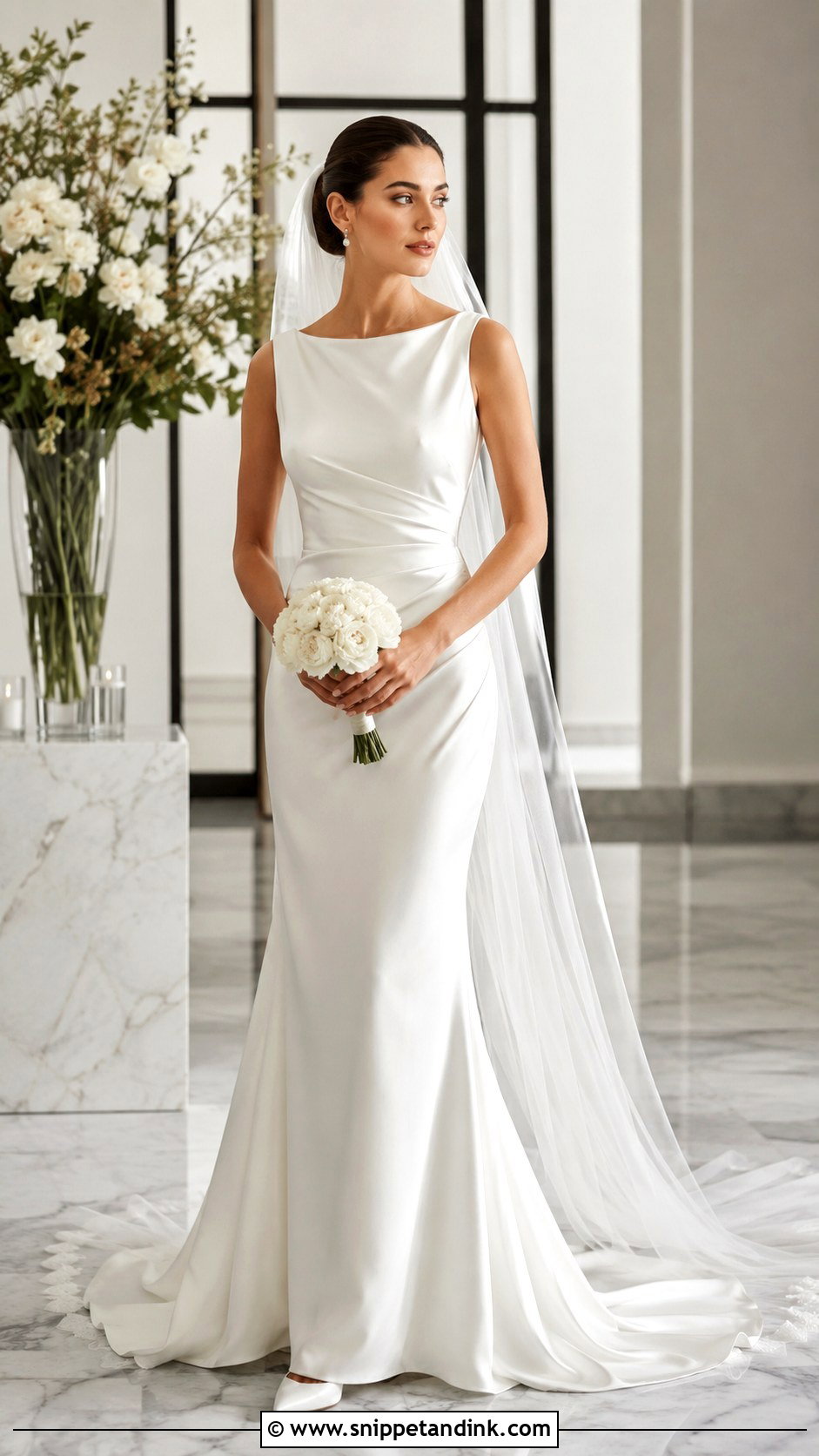
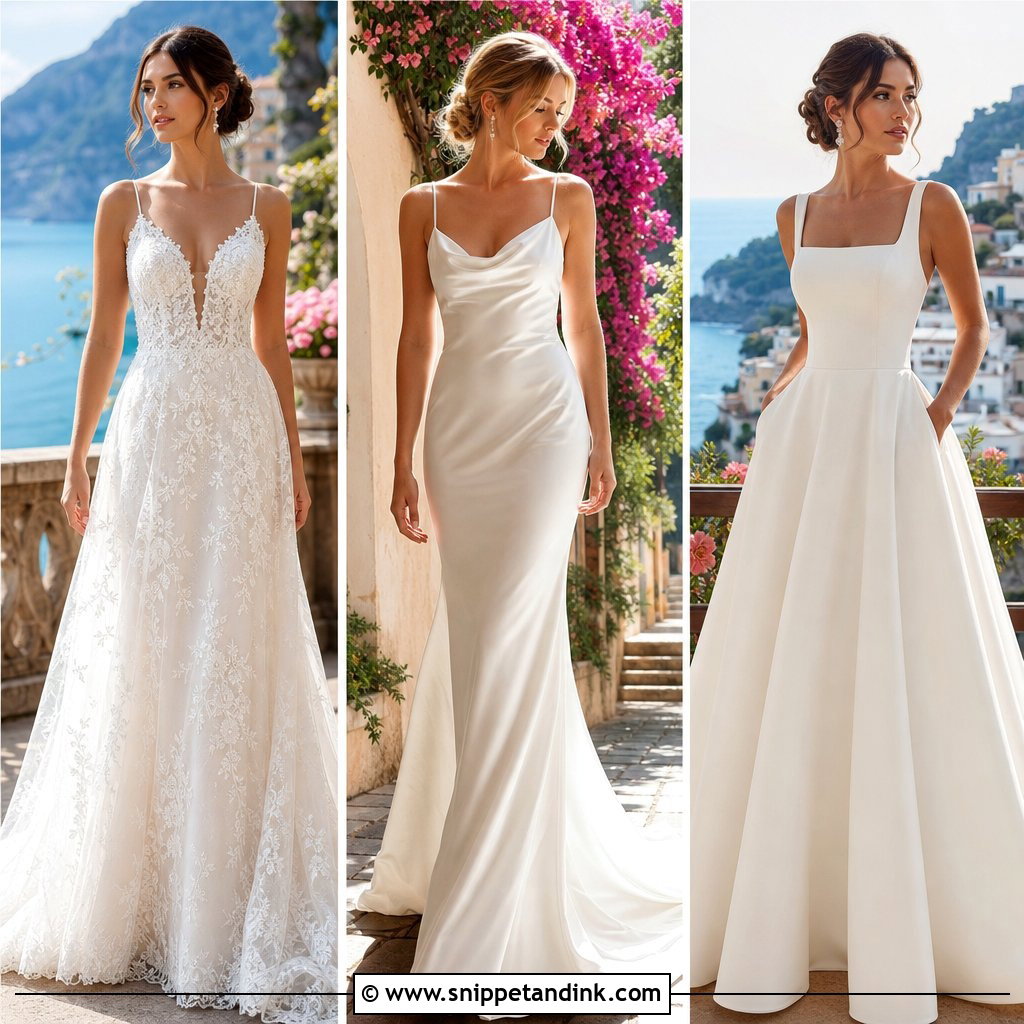
Satin is unforgiving on a column cut, and that’s exactly why this one reads so refined when it fits. Diagonal draping across the waist hides a lot, but the skirt has to fall close to the body before opening near the hem, so any pull across the hips shows as a horizontal ripple. I always have brides sit on a chair in the fitting room before we sign off on the hip seams. Wear closed-toe pumps, pearl drops and a sheer cathedral veil you can take off after the ceremony to show the clean back.
4. Square Neck A-Line Wedding Dress
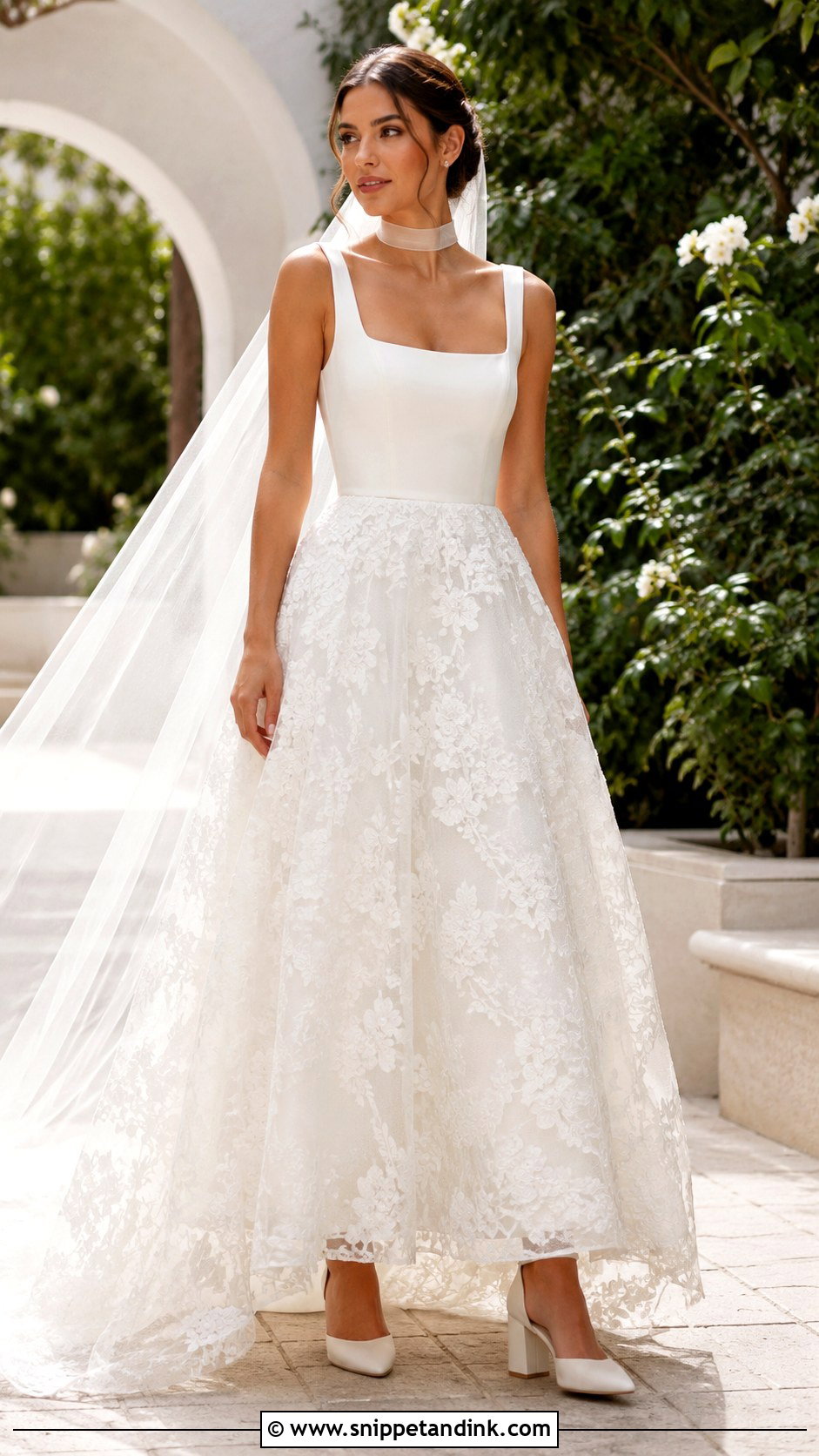
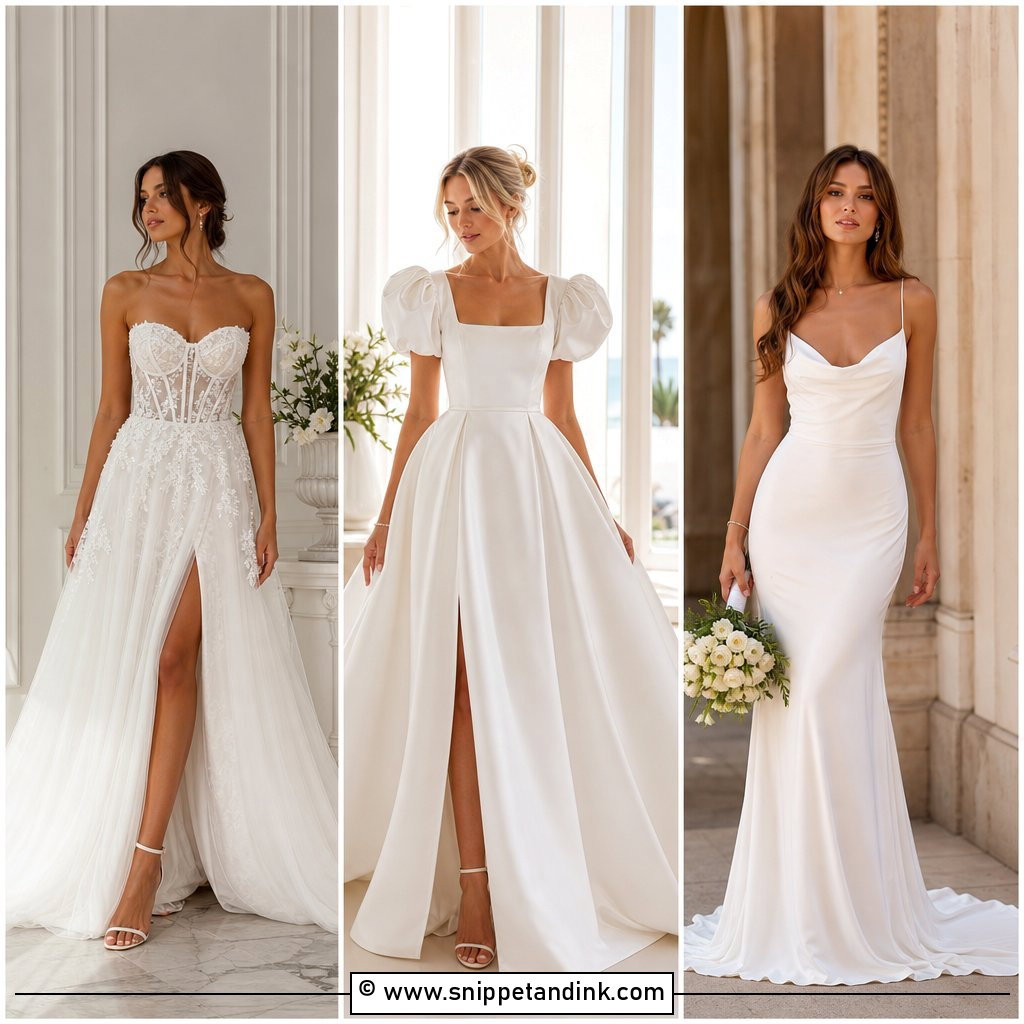
The square neckline keeps Barbara’s clean lines but moves into a classic A-line skirt that’s far easier to dance in. I like it for brides who feel boxed in by a column. The thing to watch is the corners of the neckline: they should sit level and sharp, and if they fold inward when you raise your arms, the bodice needs taking in at the side, not the straps shortened. Lace panels on the skirt add texture. Ivory block heels, a ribbon choker and a chapel veil with almost no edging finish it.
5. Strapless Corset Wedding Dress With Cathedral Veil
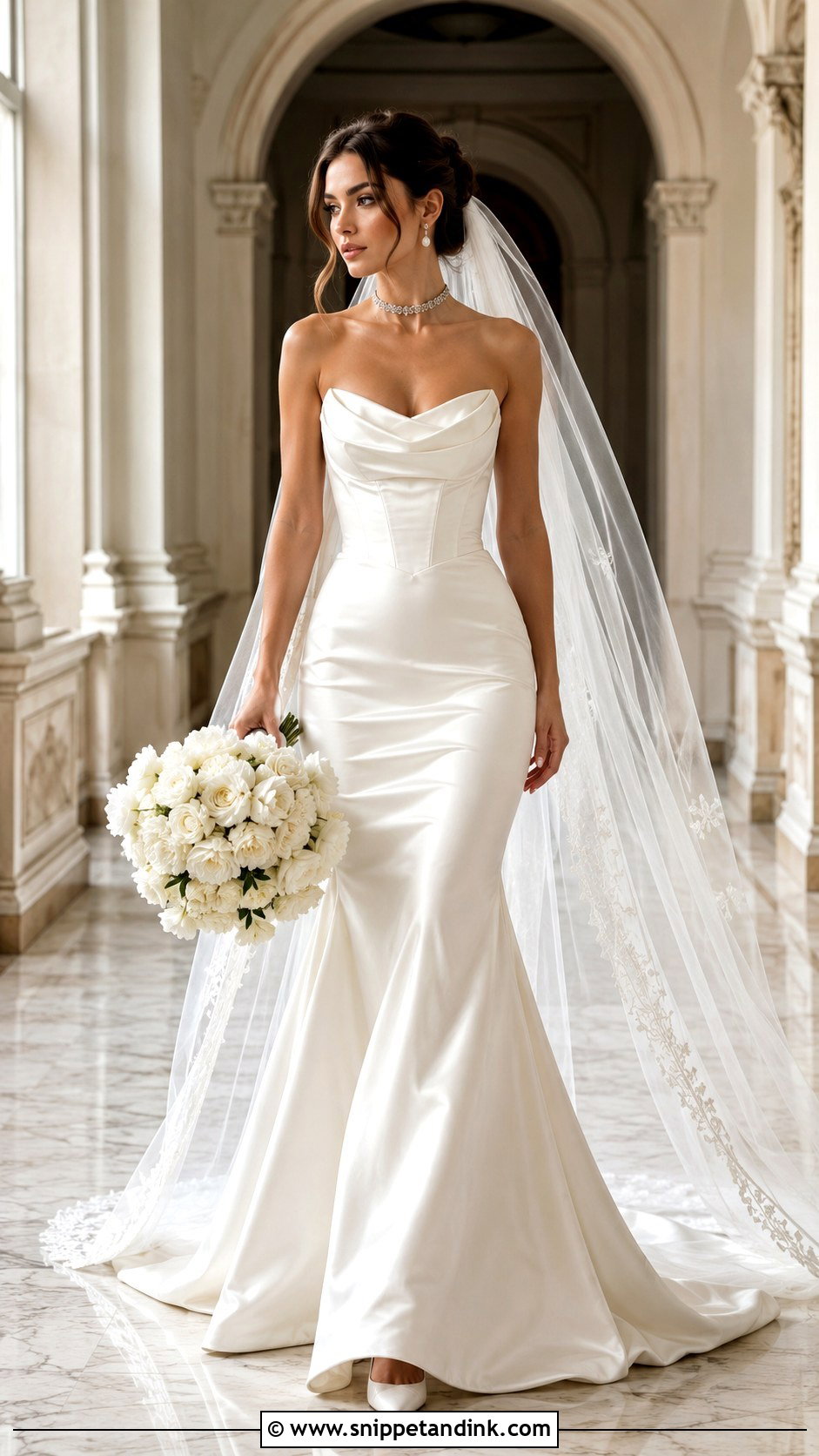
Strapless is the dramatic version, and also the one I’m most cautious about. Everything depends on the bodice gripping at the waist rather than the bust, so it doesn’t slip when you hug people. Ask your seamstress to add a waist stay, a grosgrain band sewn inside that hooks shut before the zip. A short choker fills the open neckline, small earrings keep it calm, and the cathedral veil should be sheer and barely trimmed so the corset stays visible through it.
6. Off-the-Shoulder Draped Wedding Dress
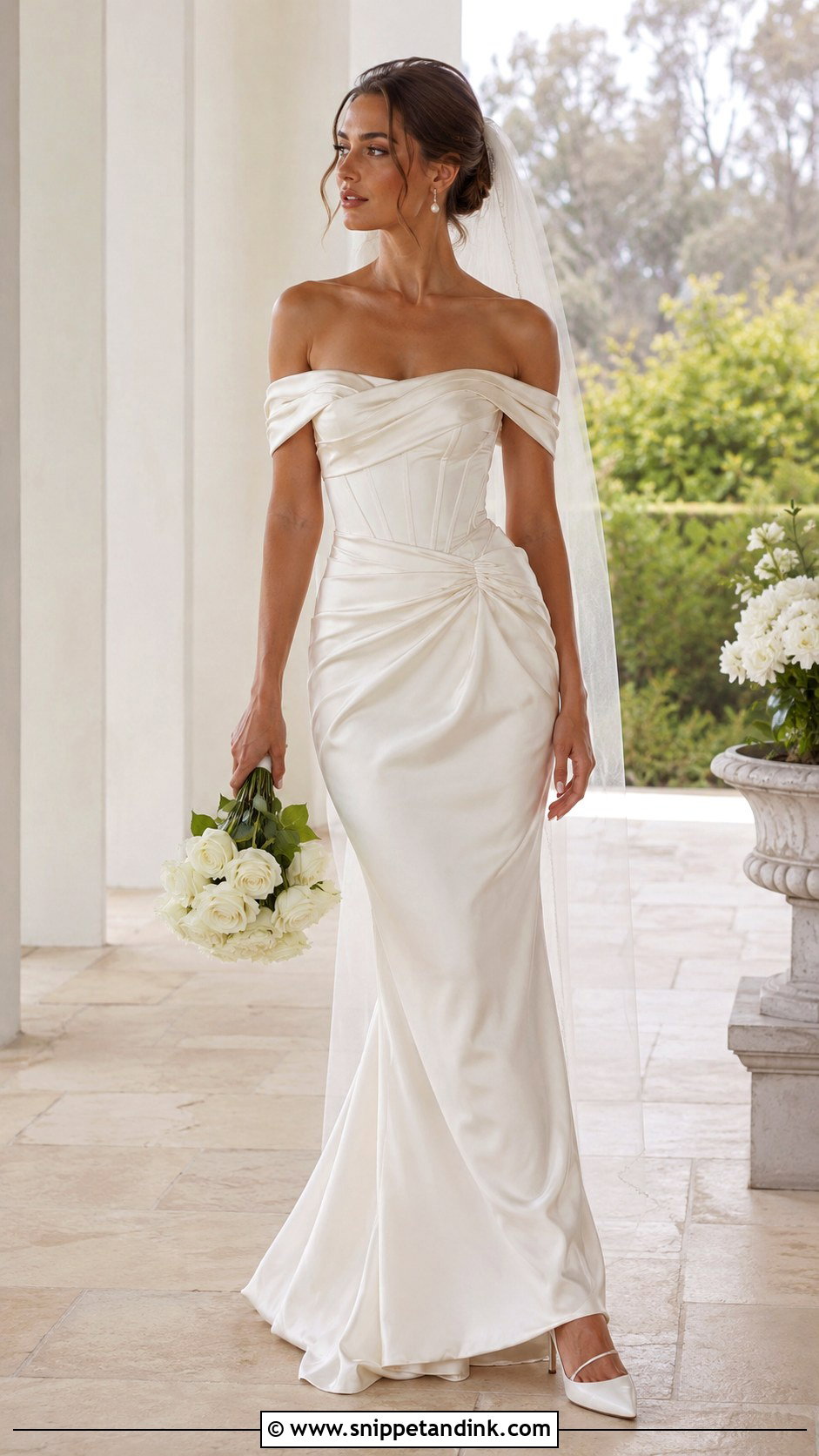
Off-the-shoulder draping softens the face but brings one practical problem: your arms. A fold-over neckline that sits across the upper arm limits how high you can lift them, so try a full hug and a bouquet toss in the fitting before you commit. An internal corset with gathered fabric over the waist and hips keeps the shape. Skip the necklace and let the neckline be the jewelry, with pearl drops, ivory slingbacks and a chapel veil tucked under a low bun.
7. Basque Waist Satin Wedding Dress
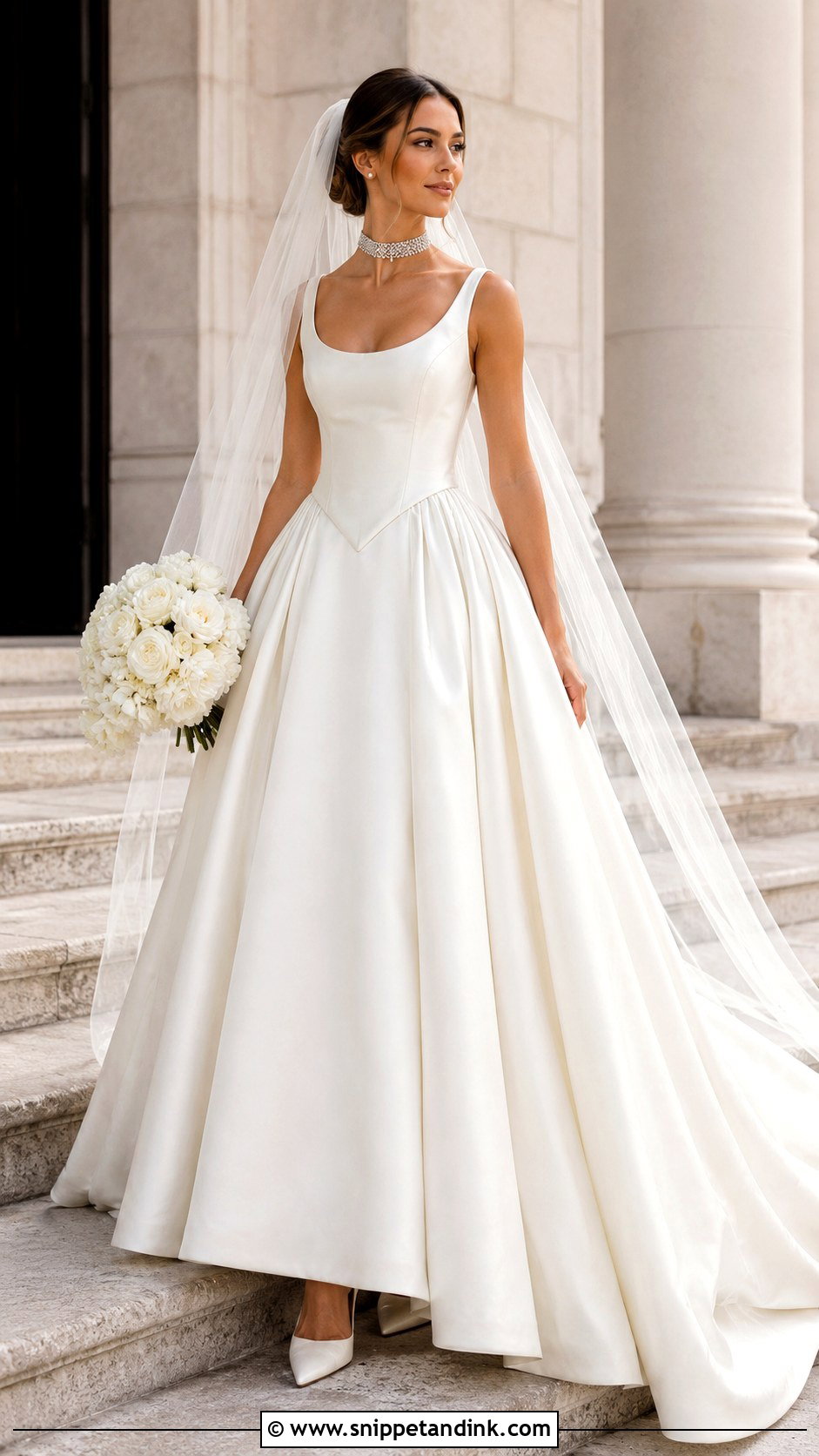
A basque waist satin wedding dress dips into a soft V at the center front, which pulls the eye down and lengthens a shorter torso. The point has to land on your natural waist or slightly below. Set it too high and it cuts you in half; too low and you’ll feel it every time you sit. Keep the neckline scooped or straight, add a slim crystal choker and a raw-edge cathedral veil, and decide between a neat bun or brushed-out waves at your hair trial.
8. Cowl Neck Corset Wedding Dress
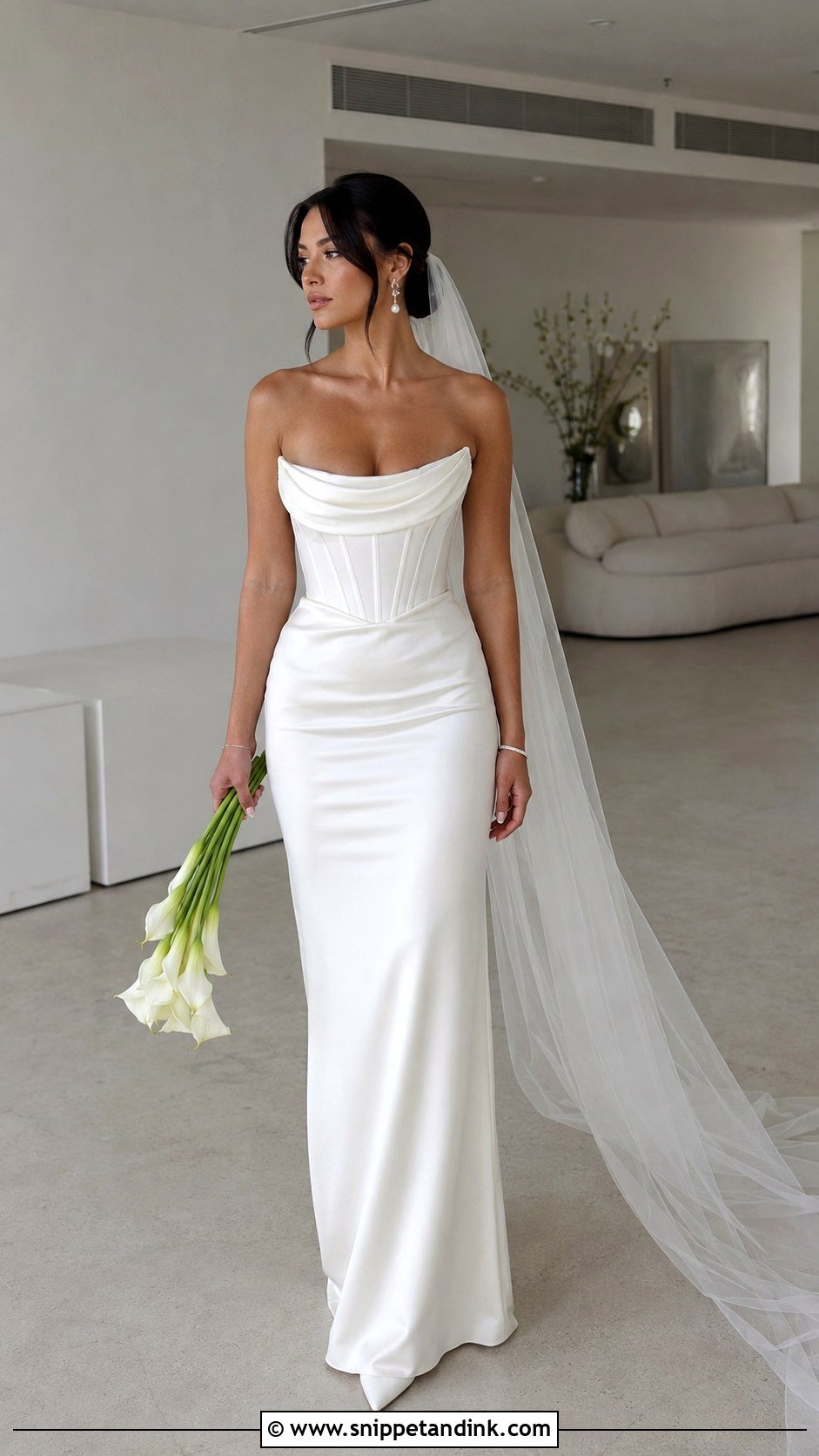
Cowl necks are lovely on camera and tricky in person. The fold needs a tiny weight or a hand-stitched tack inside so it doesn’t gape forward when you lean over to sign the register. Ask for that at your first fitting, not the last. Hidden boning keeps the waist defined under the soft satin. Glossy loose waves echo the drape, and a narrow calla lily bouquet suits the long column line better than a round one.
9. Pearl Choker Wedding Dress Look
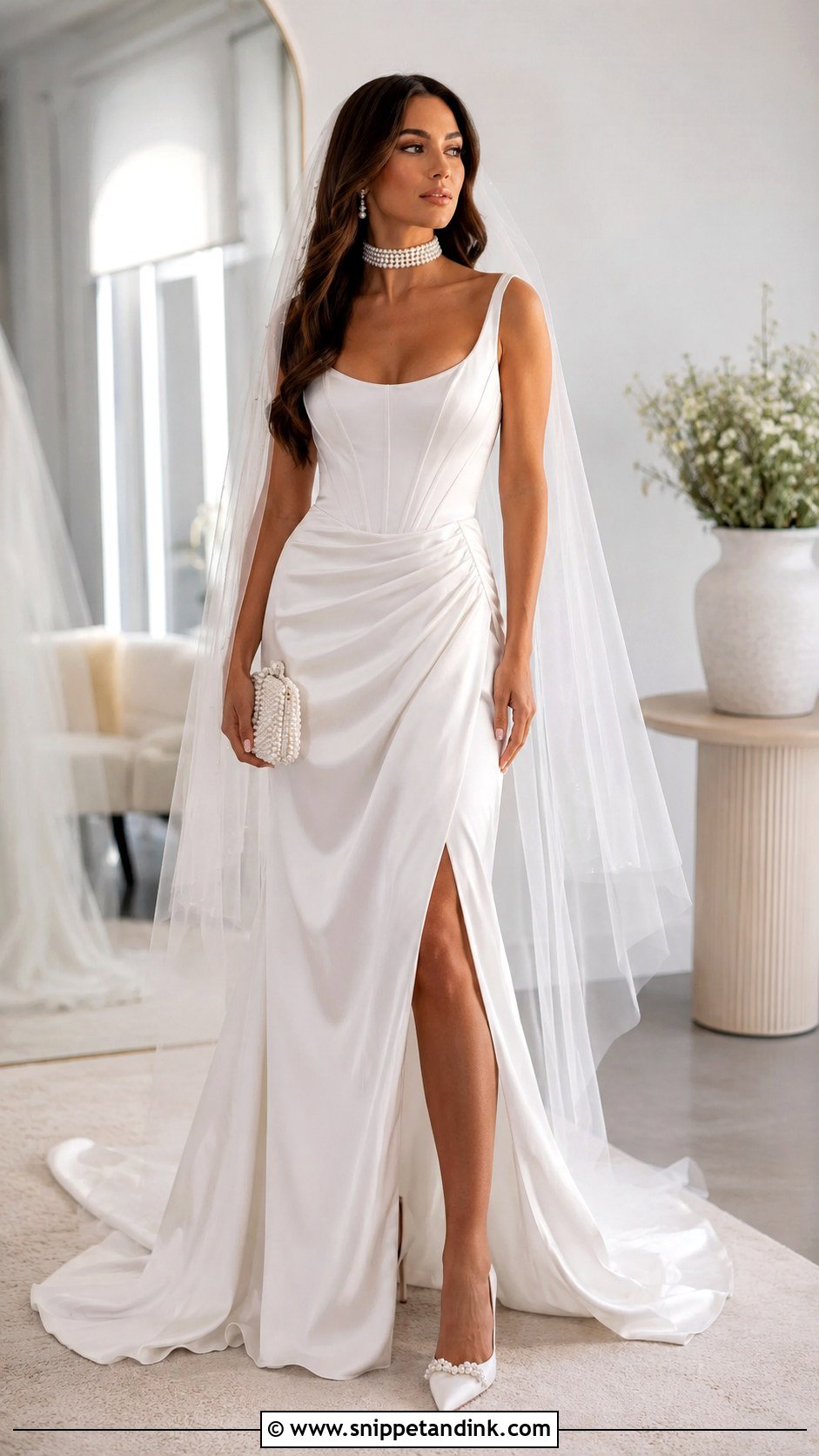
A close pearl choker ties the neckline and the jewelry together without looking matched to death. Start with a plain ivory satin scoop-neck gown and repeat the pearls once, in small studs, and stop there. The choker should sit just above the collarbone with a finger of space; tighter and it leaves a red line by the speeches. Tuck soft waves behind the ears so it stays visible, and choose an unembellished veil so the pearls show through the tulle.
10. Minimal Silk Wedding Dress With Pumps
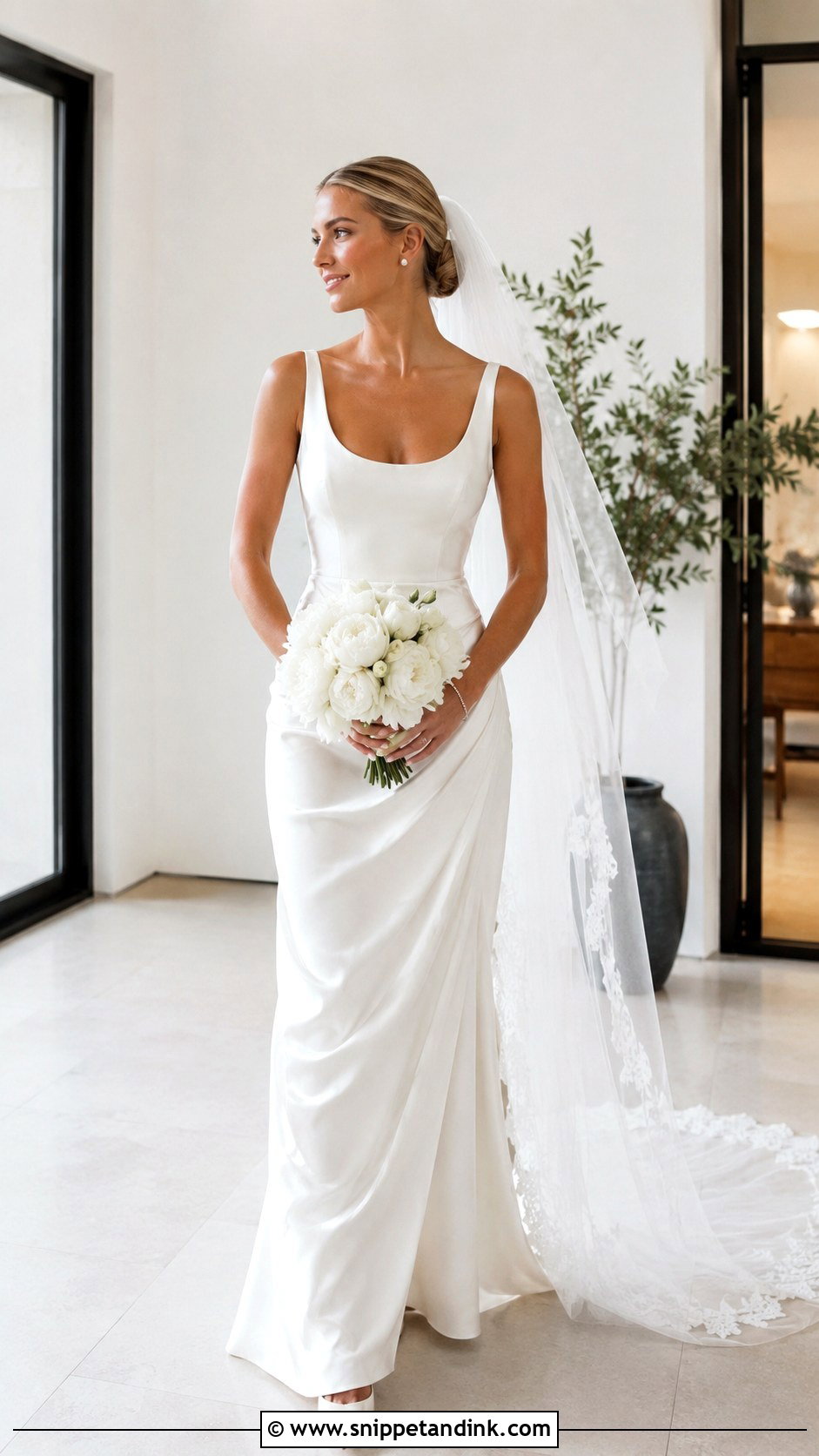
No lace, no sequins, no beading, so the fabric quality is the whole dress. In a minimal silk gown I check the hem first. Silk needs to be hemmed in the shoes you’ll actually wear, cut so the toe just shows when you walk and disappears when you stand still. Add pointed ivory pumps, pearl studs, one bracelet and a sheer cathedral veil. Natural center-parted waves and neutral, luminous makeup are enough.
11. Lace Skirt Corset Wedding Dress
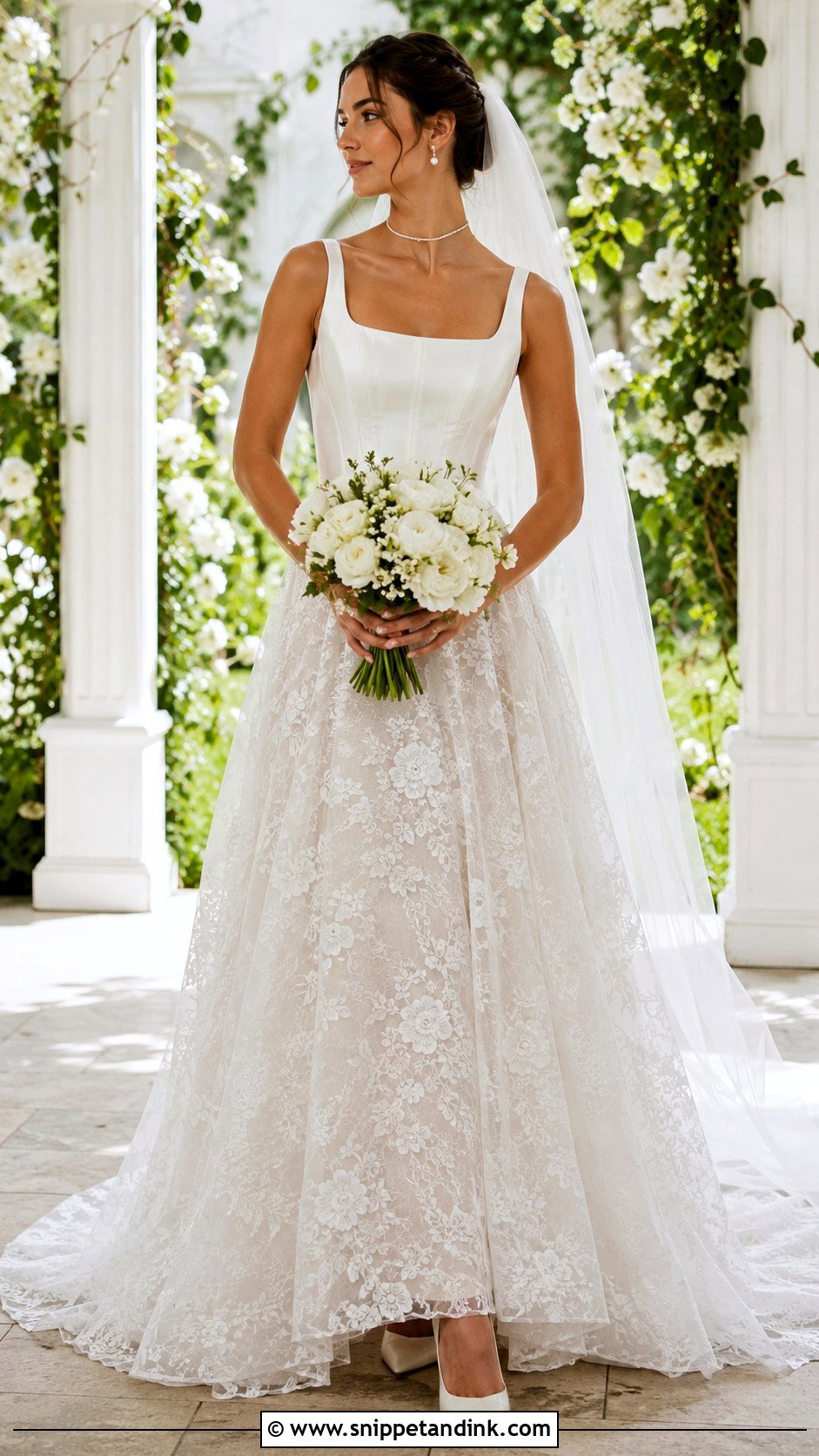
If a plain satin gown feels too bare to you, this is the compromise I suggest most often. A satin corset bodice meets an A-line skirt of large-scale floral lace over an ivory lining. The seam where they meet is everything: a narrow satin band hides any mismatch between the two whites, which is common because lace and satin are dyed separately and rarely match exactly. Hold them together under daylight before ordering. Keep the veil plain tulle so the lace isn’t fighting anything.
12. Long Sleeve Corset Wedding Dress
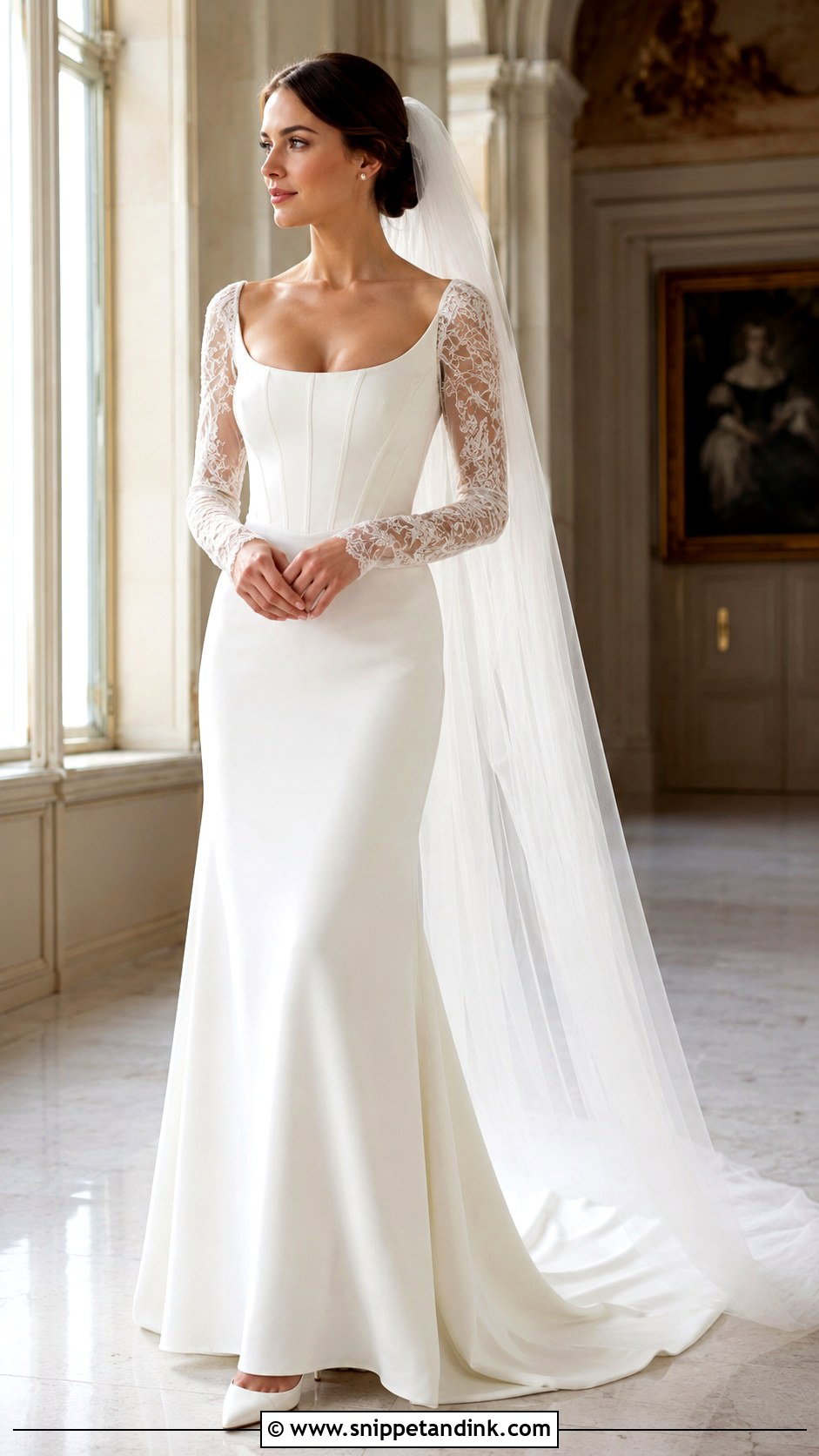
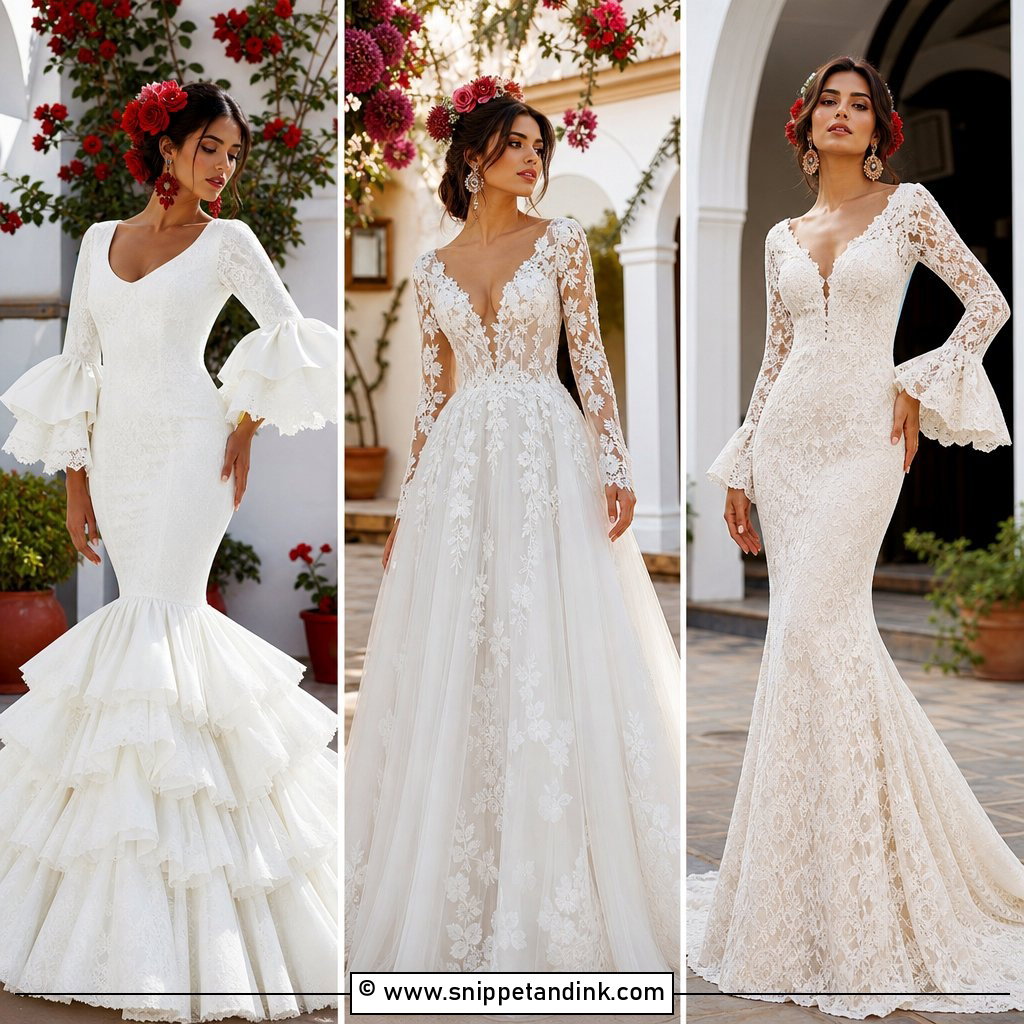
For a fall or winter date, I’d go to sleeves before I’d go to a wrap. Sheer tulle or fine lace sleeves on a fitted satin or crepe corset gown keep the sculpted waist visible while you stay warm in a cold church or a heavily air-conditioned hall. Have the sleeve length checked with your arms bent, because a sleeve that ends at the wrist bone when straight will ride up when you hold the bouquet. Closed-toe pumps, pearl studs and a chapel veil under a low bun finish it.
13. Short White Reception Wedding Dress
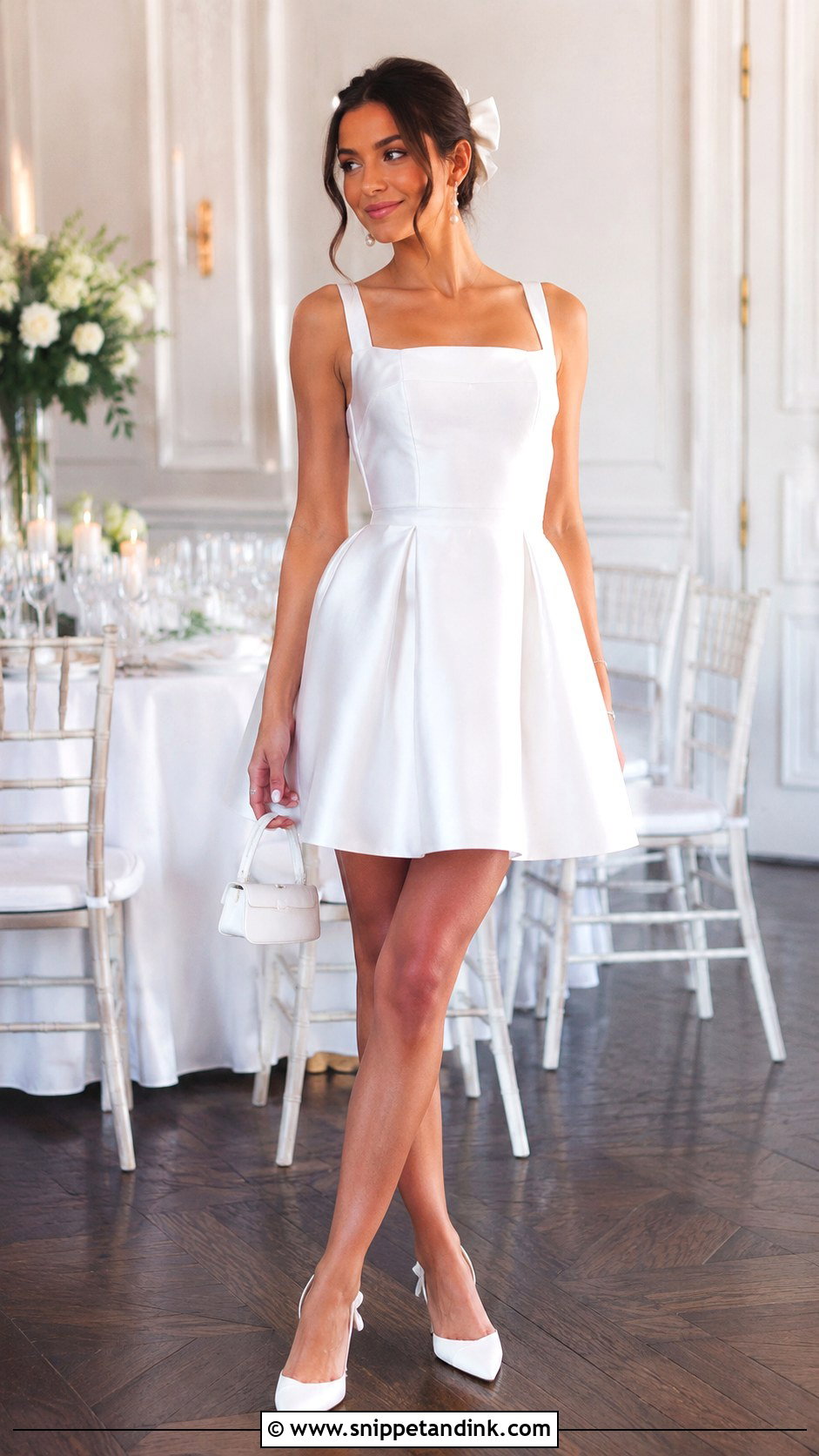
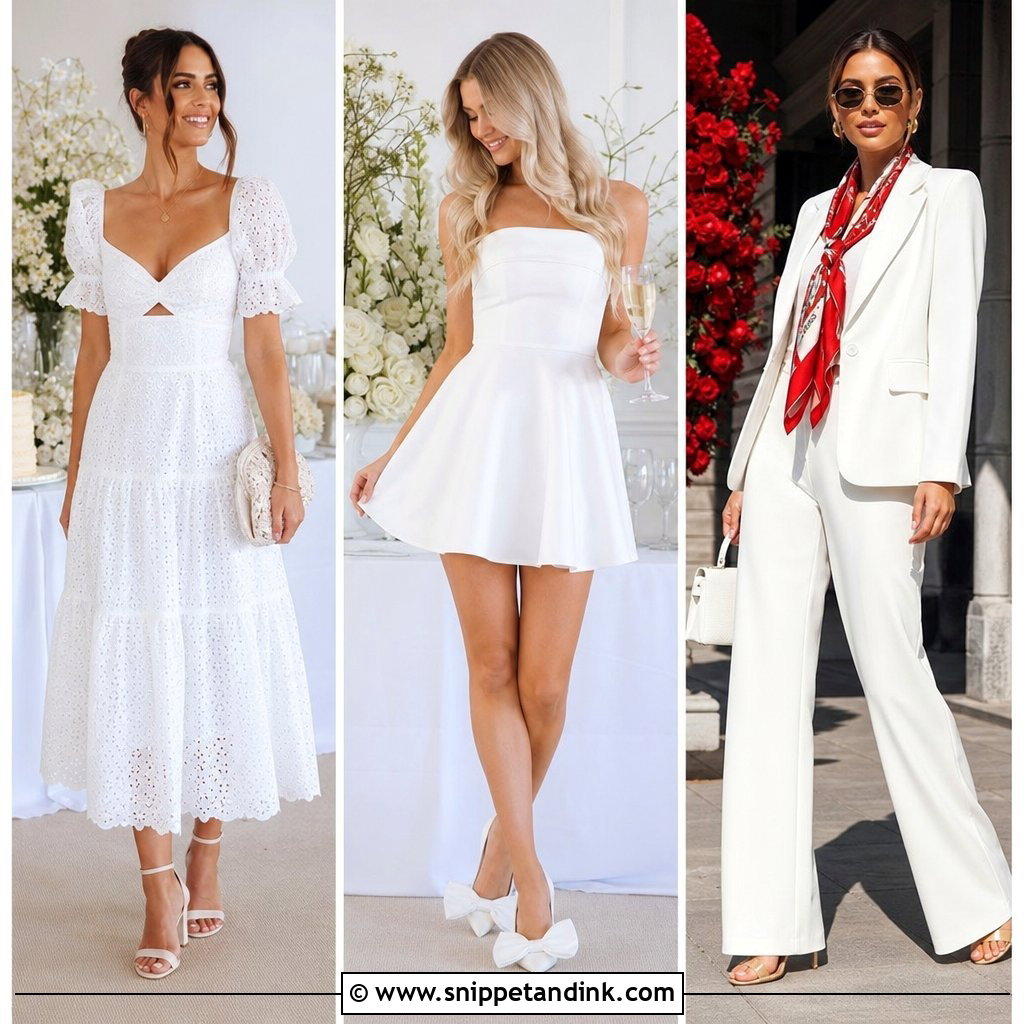
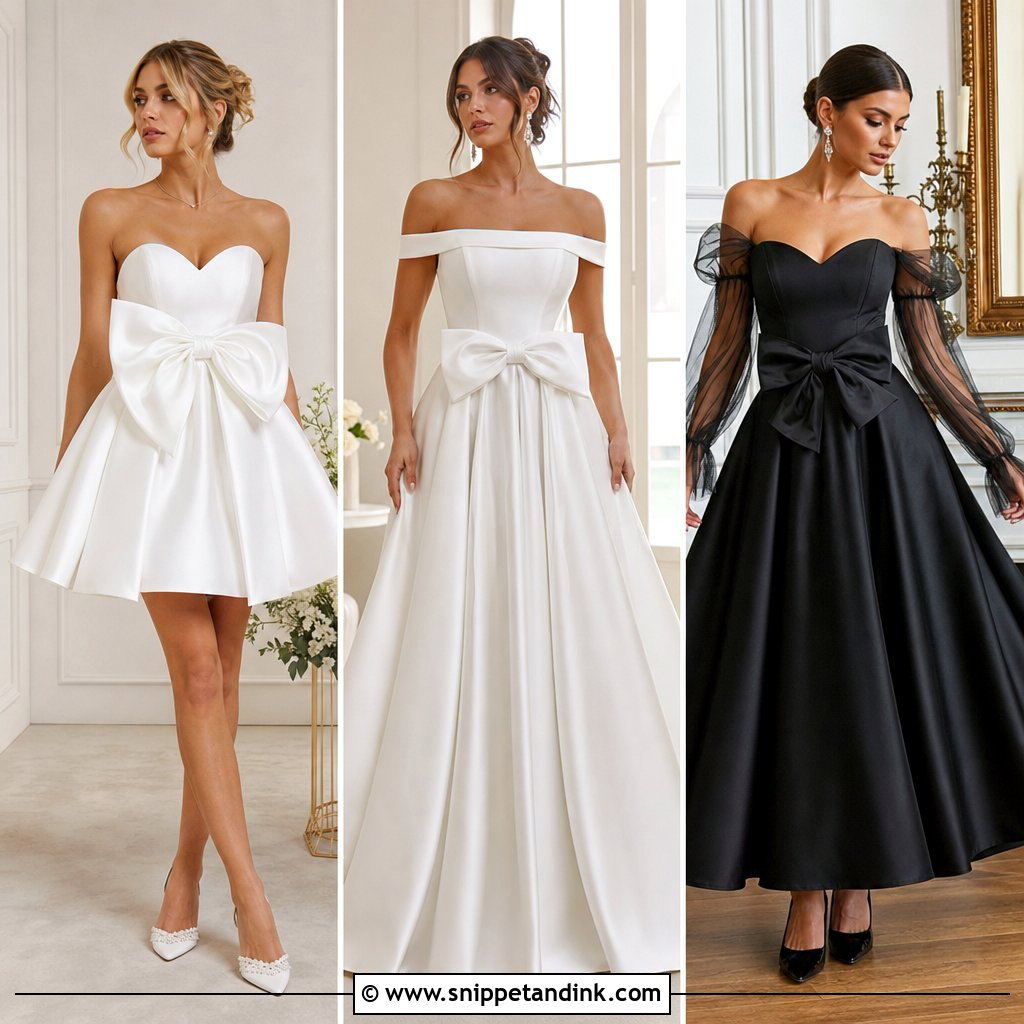
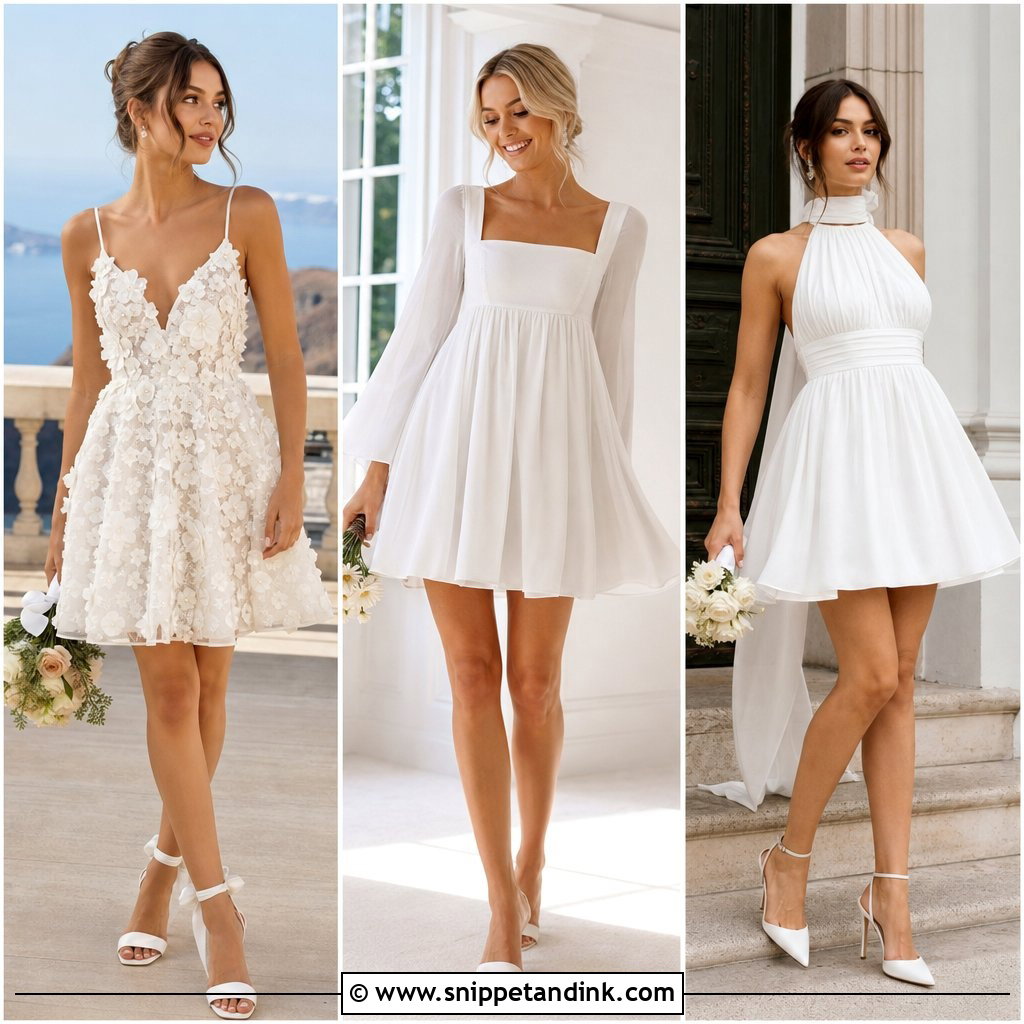
Her second look after the ceremony was a shorter Philosophy di Lorenzo Serafini dress, proof that a compact silhouette can still feel bridal. For your version, a white satin mini or above-the-knee dress with a fitted bodice and flared skirt is easy to move in. Add pointed pumps or slingback heels, pearl earrings and a small structured bag, and swap the long veil for a bow or a simple comb. Built-in cups and a proper lining matter more in a short dress than a long one, because there’s no skirt weight to keep it settled when you dance.
14. Red Hungarian Reception Wedding Dress
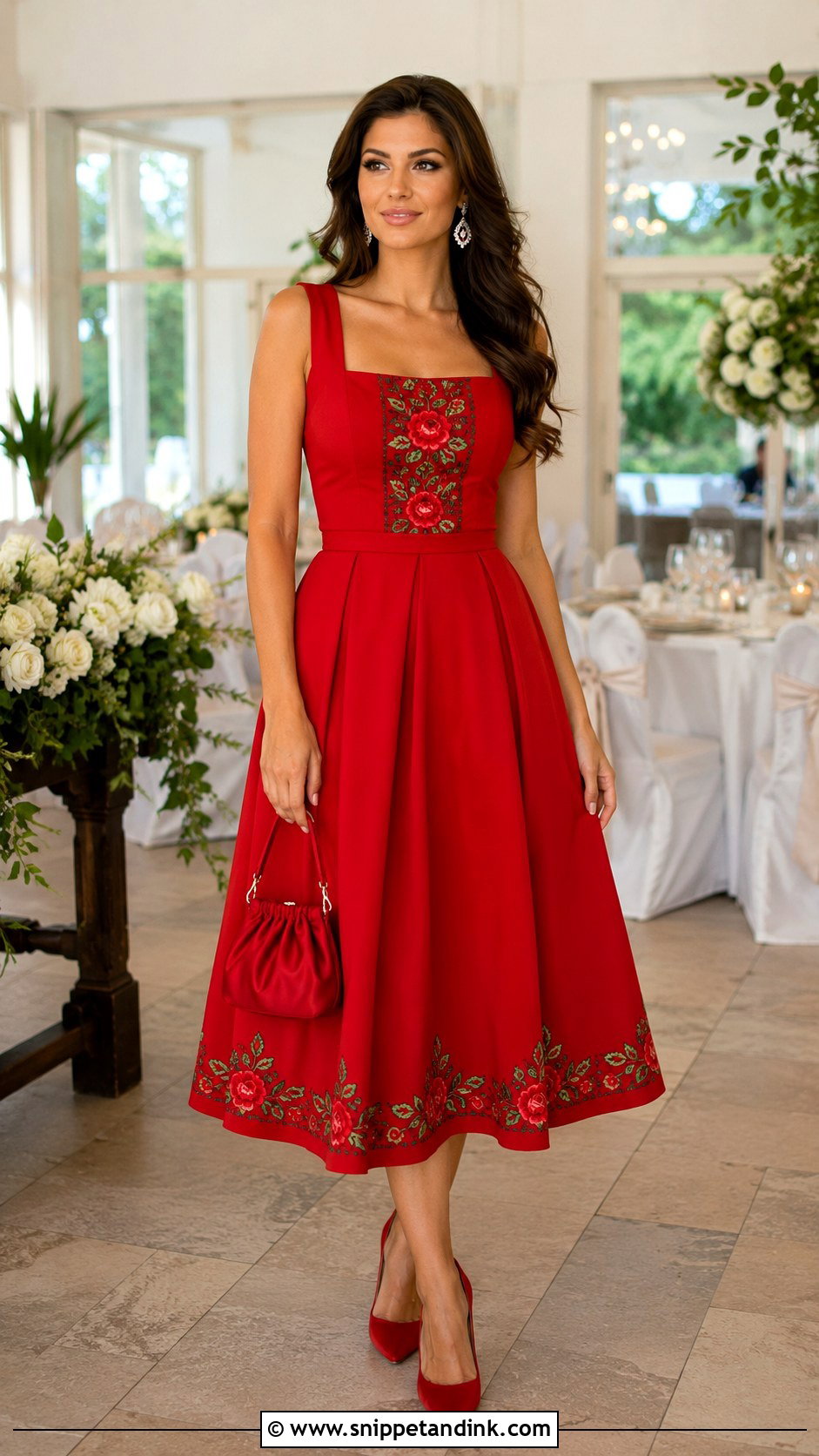
Her third look was a red dress by the Hungarian label Mero, following the custom of a bride changing into red after midnight. If that tradition belongs to your family, a fitted red satin midi or floor-length gown with a square neckline and structured waist is a respectful way to carry it on. Red satin shows every crease, so it needs steaming on site, not the night before. Red or metallic pumps, small crystal earrings and a matching manicure are plenty. If the tradition isn’t yours, I’d borrow the idea of a color change rather than the red dress itself.
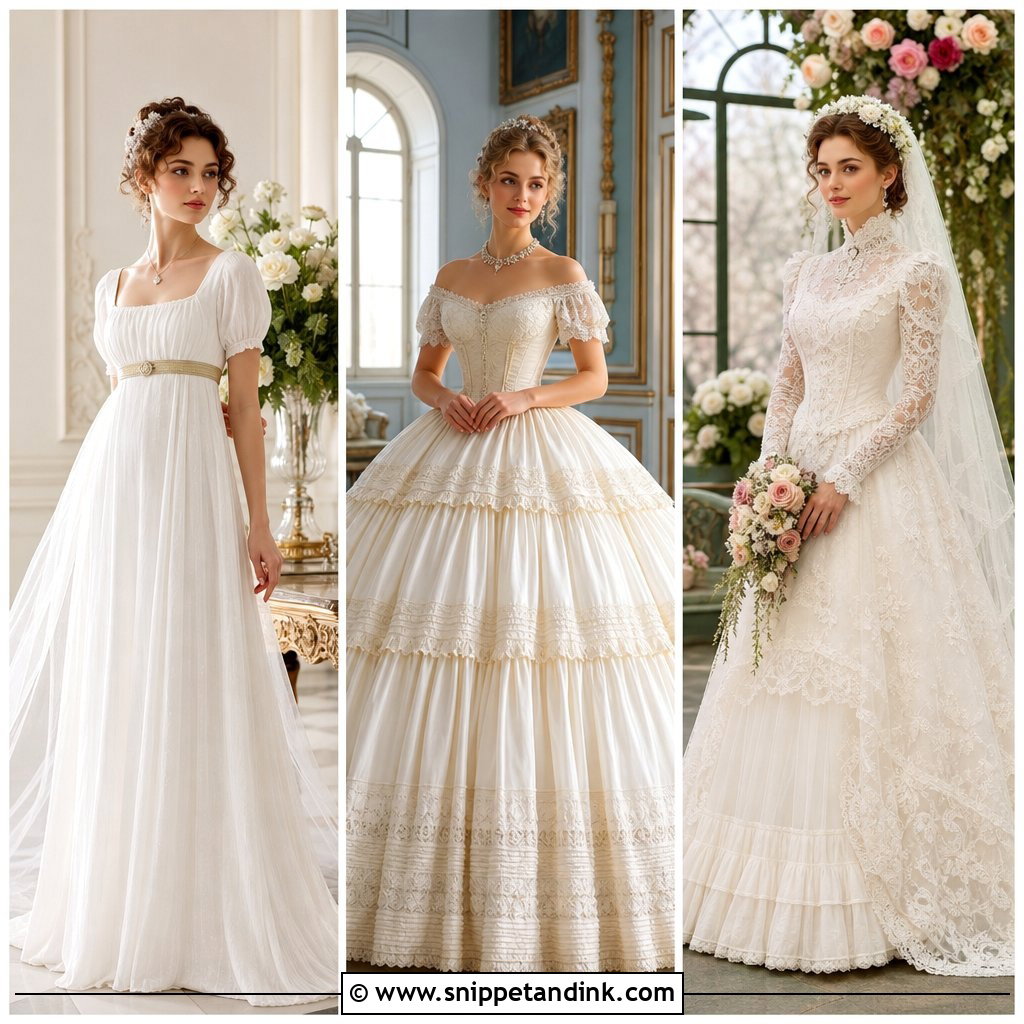
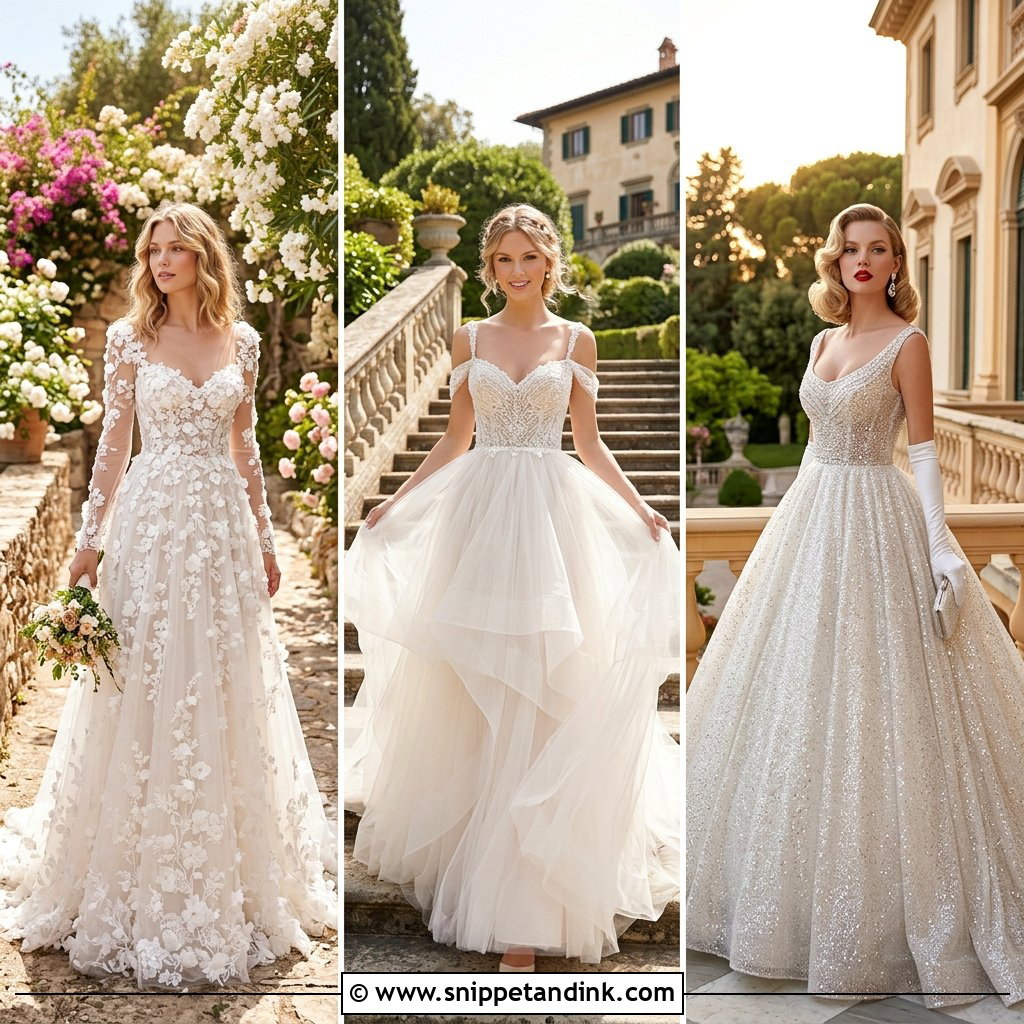
15. Tea-Length Satin Wedding Dress
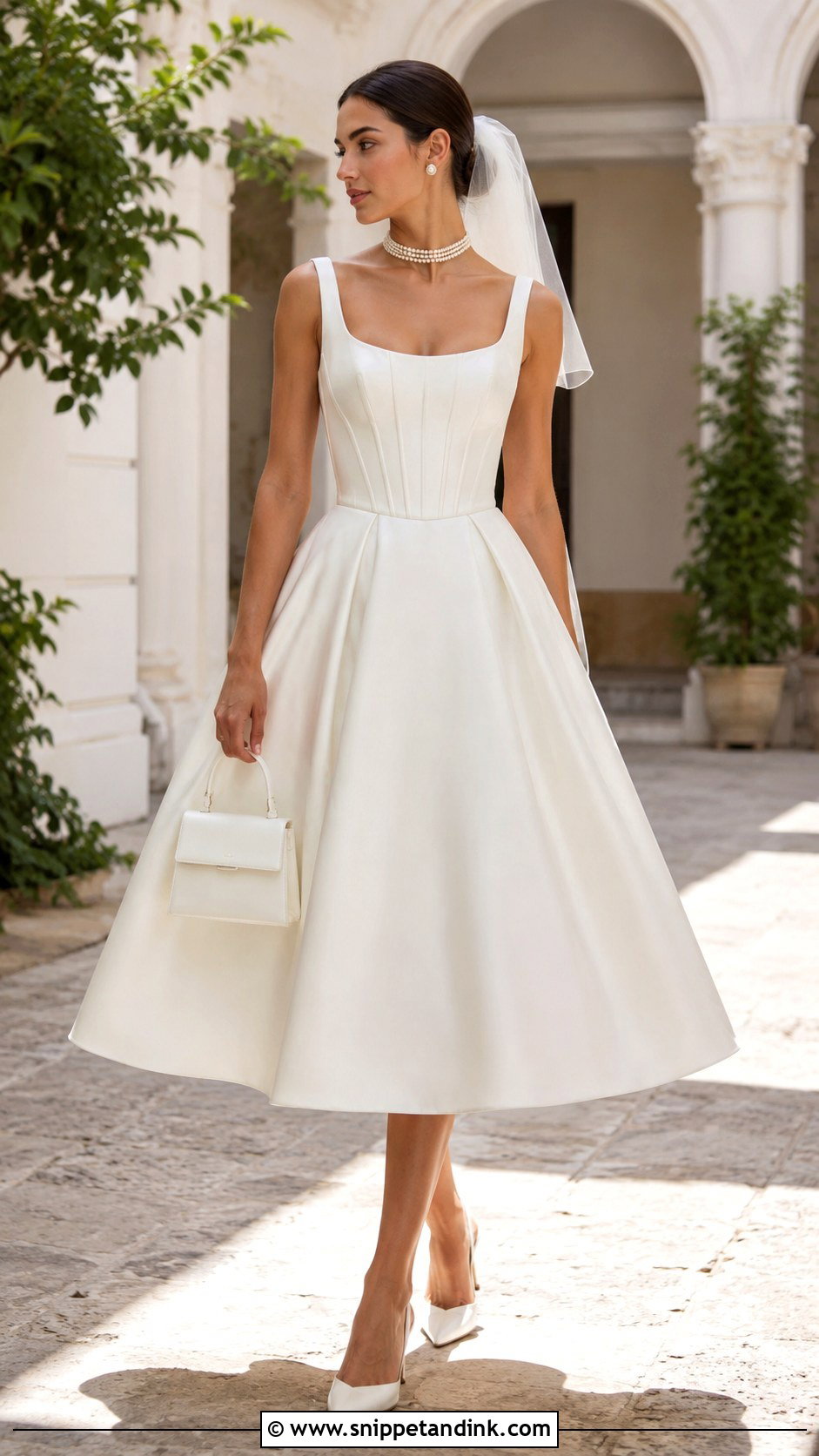
Tea length ends between knee and ankle, so your shoes suddenly become part of the outfit. That’s the first thing I tell brides who choose it. A corseted scoop-neck ivory bodice with a defined waist keeps the Barbara shape, and pointed pumps, slingbacks or ankle-strap heels all work. Try them with the dress on, because a strap crossing the ankle can visually shorten the leg at this length. A shoulder or waist veil, a small structured bag and glossy waves suit courthouse ceremonies and smaller rooms where a train would just get in the way.
16. Slit Satin Wedding Dress
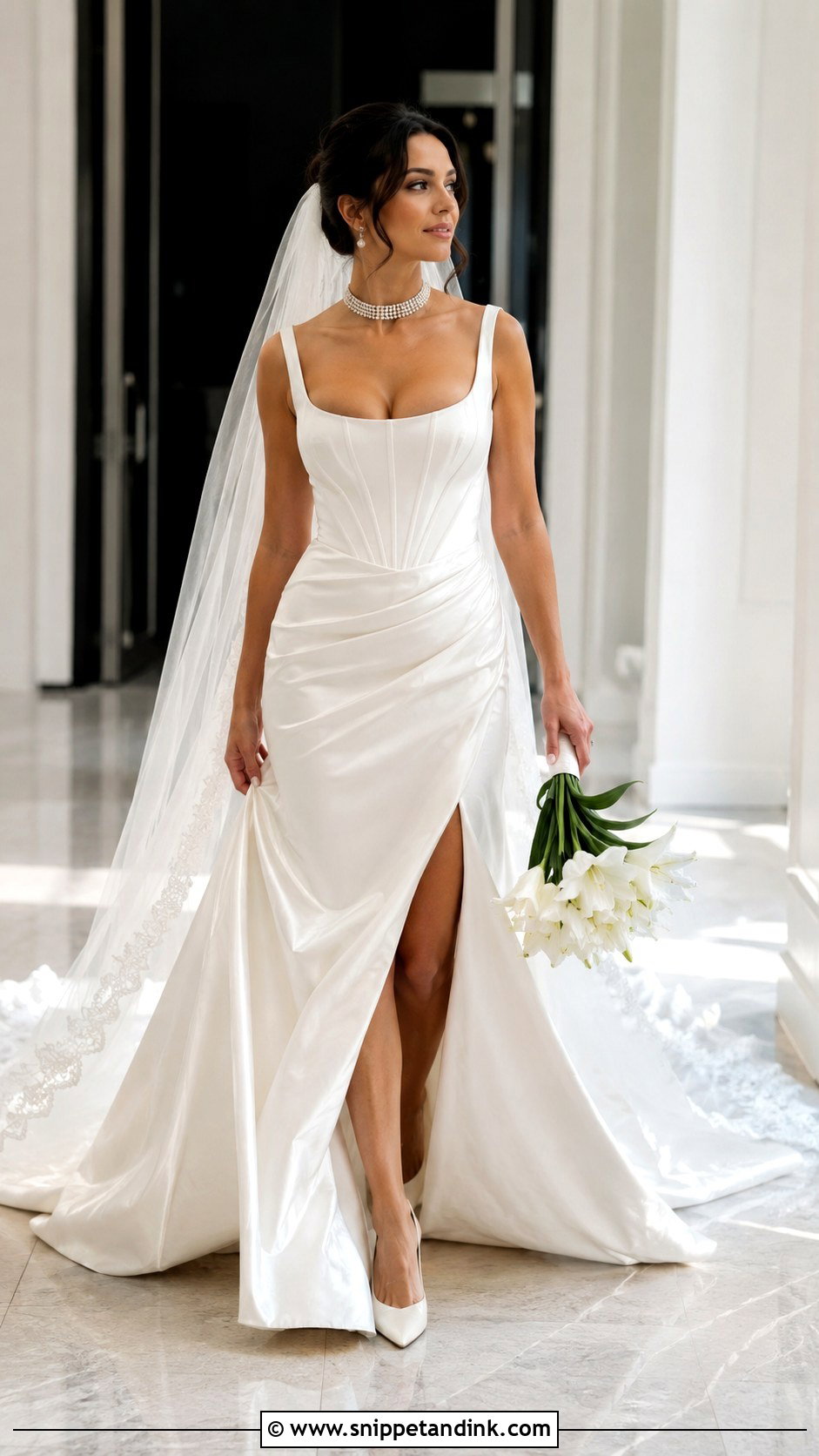
A side slit adds movement to the corseted satin shape, but it should open when you walk and close when you stand. To test it, I have brides sit, walk and climb a few steps in the fitting room, because that’s where a slit cut a little too high shows the lining or more leg than planned. Pair it with pointed pumps, pearl drops and a slim choker. Wear the cathedral veil for the ceremony, then take it off so the slit can do its thing at the reception.
17. Detachable Overskirt Wedding Dress
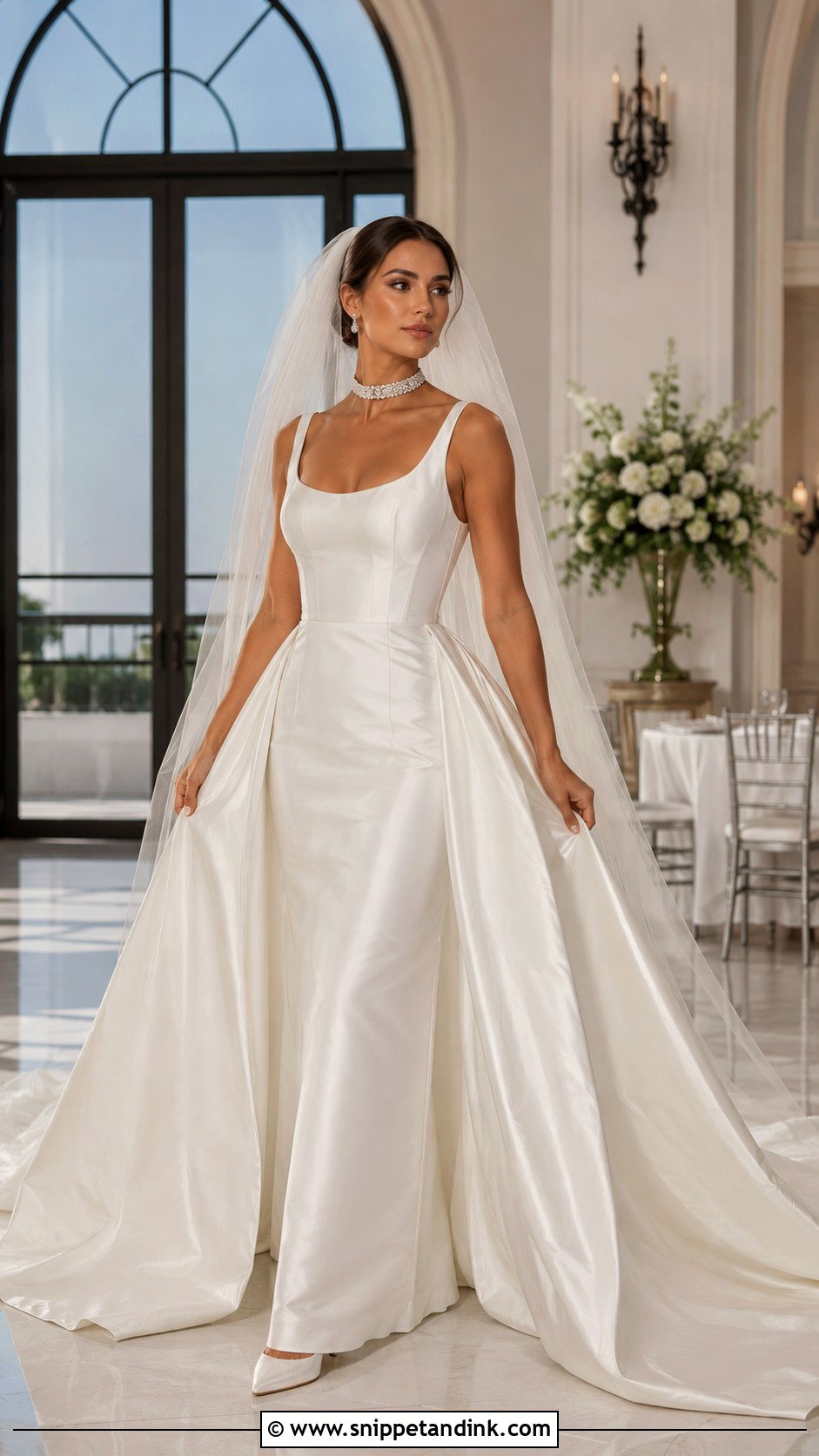
A detachable overskirt wedding dress gives you two silhouettes without a full change. Underneath, a fitted ivory satin column with a corseted scoop-neck bodice; on top, a matching overskirt that adds volume and a train for the ceremony. The fastening is the part I always try first. Hooks hidden under a waistband are quieter than snaps, and someone other than you needs to practice removing it, since you can’t see behind your own waist. Take off the veil and overskirt for the reception and loosen your hair a little.
18. Corset Wedding Dress With Bridal Gloves
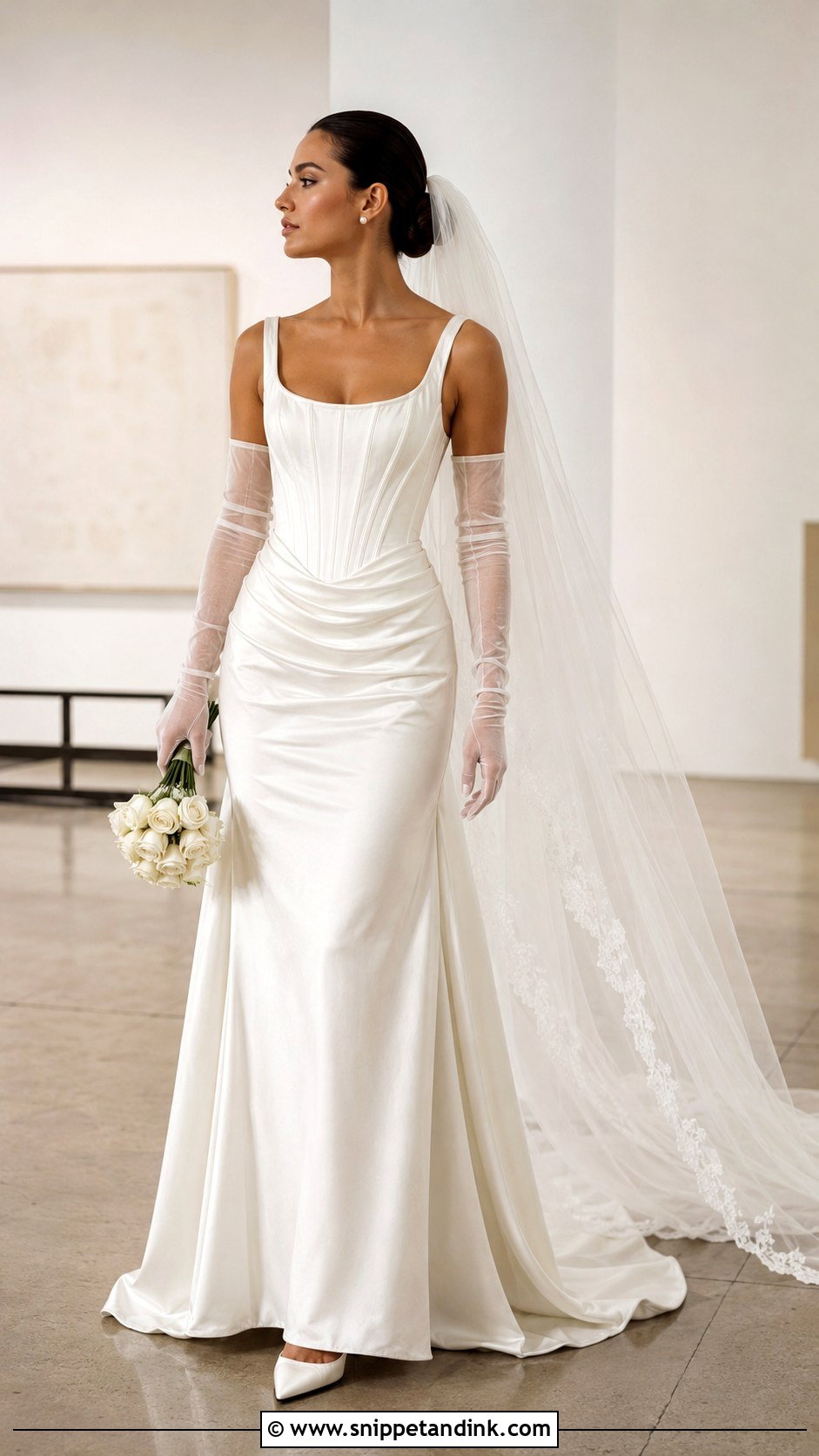
Gloves are the editorial touch here, and also the most impractical one. Sheer wrist-length gloves are easy to live with; smooth opera-length gloves look stronger but have to come off for the ring exchange, and satin opera gloves are slow to peel. Practice that at home, or plan to remove the left glove before you walk down. Keep the rest quiet with pearl studs, ivory pumps and a clean cathedral veil, and wear a sleek low bun so the extra fabric on the arms stays balanced.
19. Simple Wedding Dress With Loose Waves
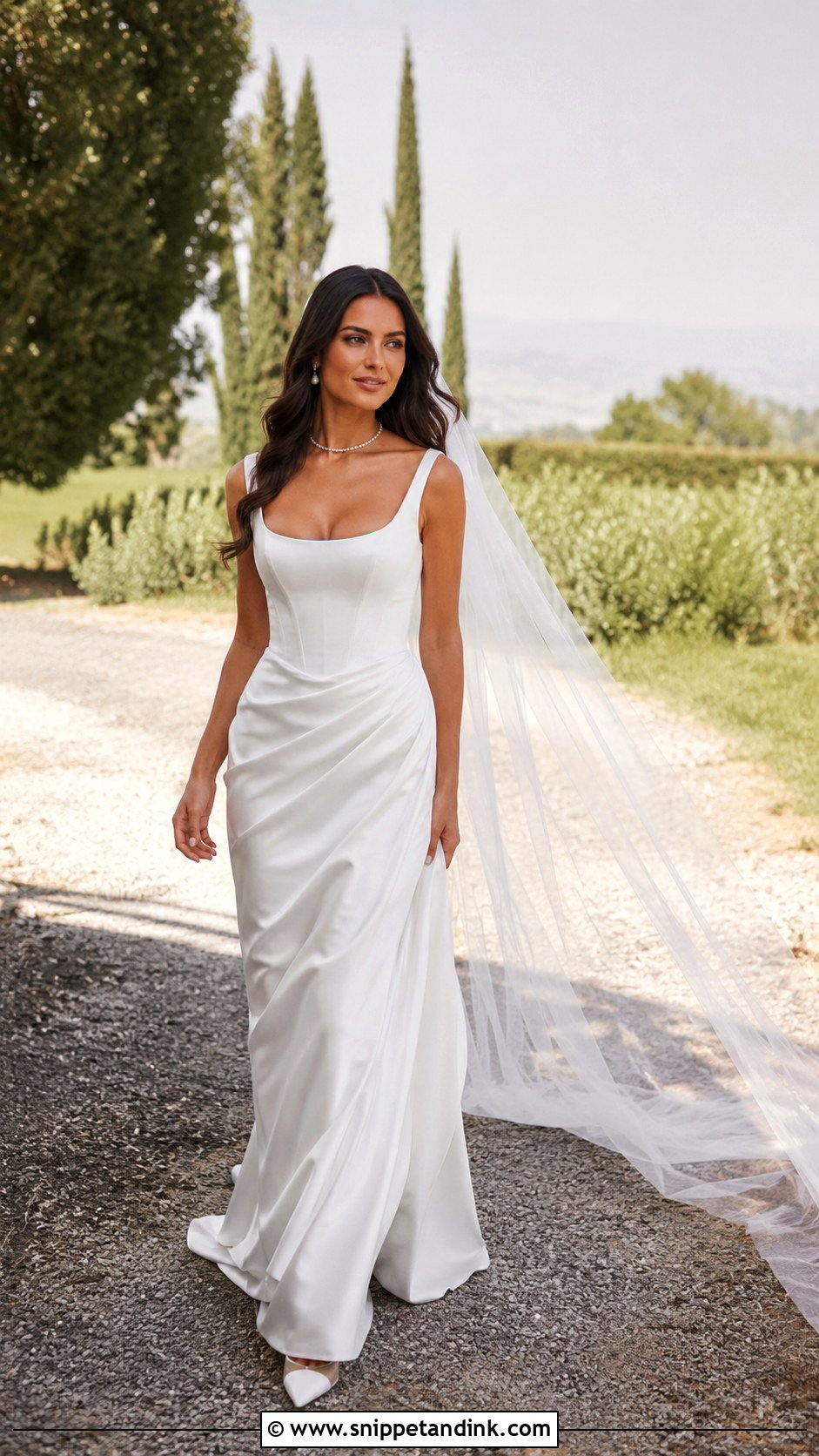
She skipped the elaborate updo and wore natural loose waves, which kept a structured gown from looking stiff. Copy that with a silk or satin corset gown, a scoop neck and wide straps. The detail most people miss is the veil comb: in loose waves it needs to slide under the top layer of hair and grip a small pinned base, or it drags the waves flat by the first dance. Test exactly that at your hair trial.

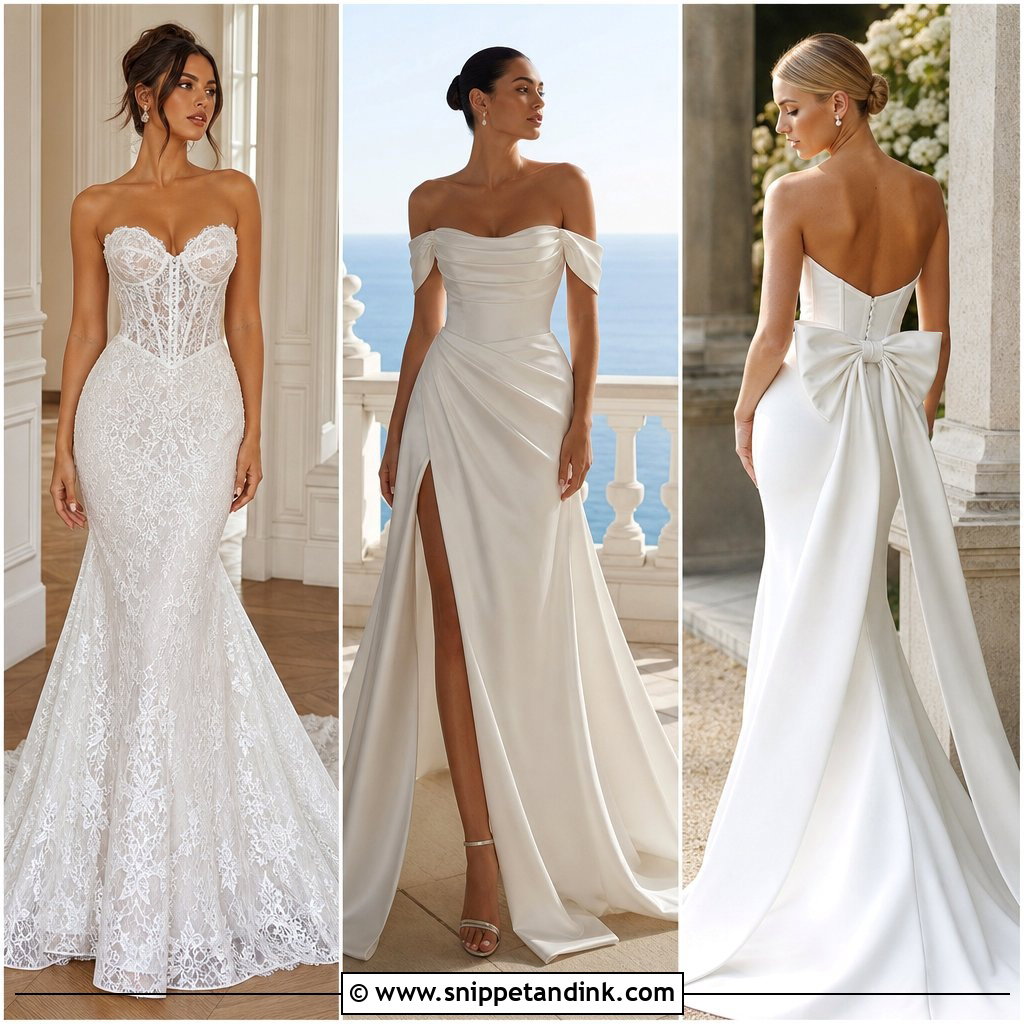
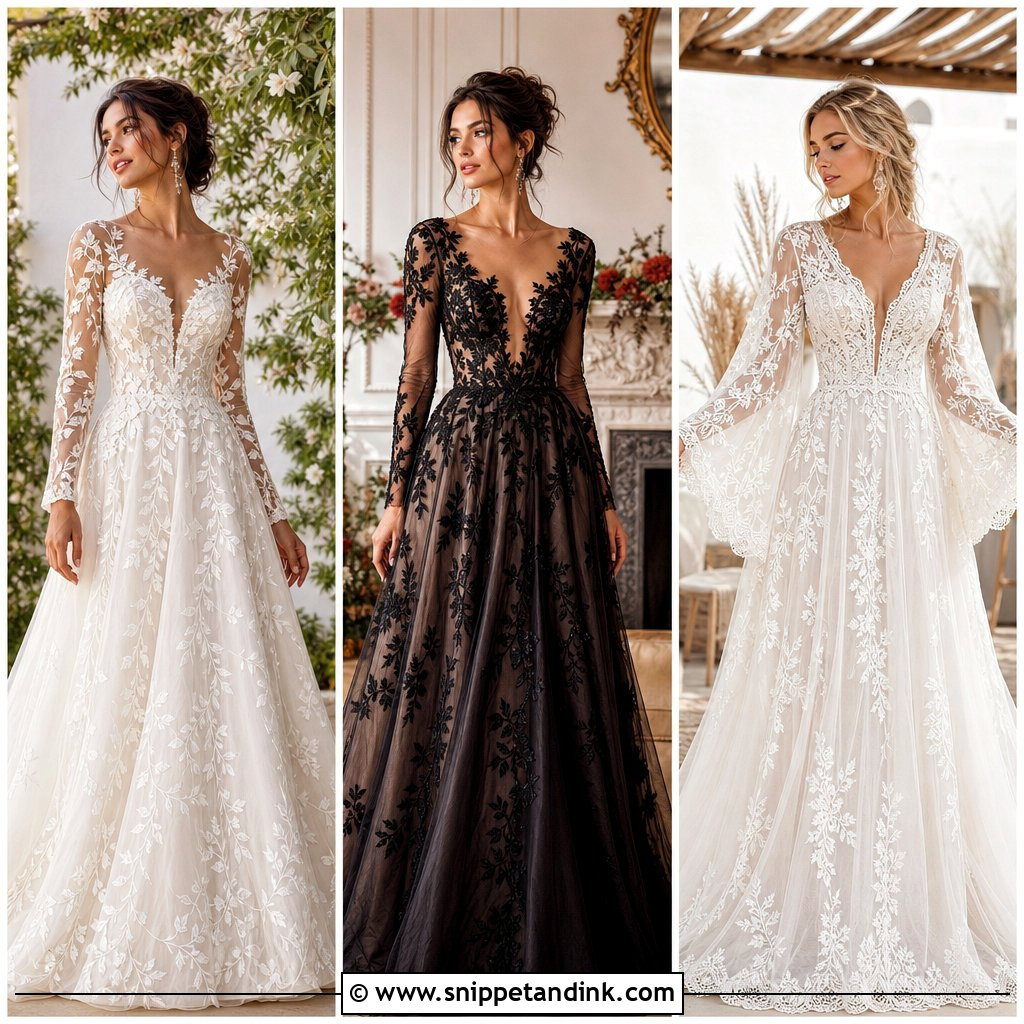
20. Plus-Size Draped Corset Wedding Dress
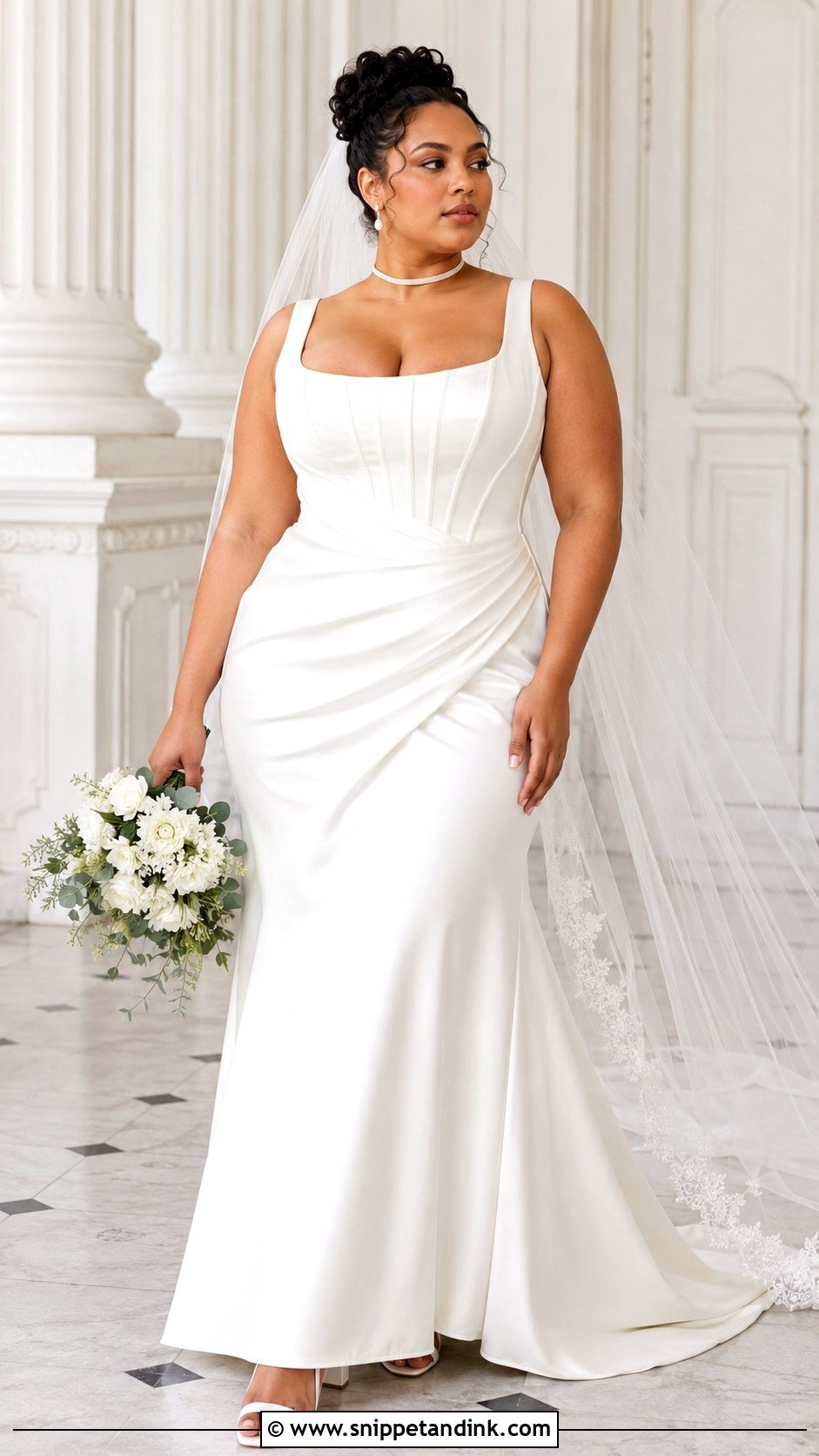
Plus-size corset gowns need more engineering, not less. Ask where the boning sits: spiral steel bones placed at the side seams and front darts give real support, while plastic boning tends to bend and buckle under a fuller bust after a few hours. Diagonal draping across the waist, wide straps and a softly flared satin skirt keep the line long. I’d choose supportive pointed pumps or block heels, and judge the dress by how it sits at every angle, never by the size on the tag.
Planning More Than One Dress Into the Same Night
Barbara wore three dresses. Copying that is fun, but every change costs you time away from your own party, and I’ve watched brides lose most of the cocktail hour to it. A few things make it painless.
Give each change a job and a slot
Decide why you’re changing: comfort for dancing, a tradition, or a new set of photos. Then tie it to a natural pause, such as just before you enter the reception or right after dinner. A corset gown with a waist stay takes longer to get out of than most people think, so allow at least twenty minutes and a room close to the main space.
Pick one person to help
Choose one calm friend, walk them through the hooks, zip and any bustle at your final fitting, and give them a small bag with fashion tape, safety pins and a lint roller. The second dress should be steamed and hanging on a padded hanger before the ceremony starts, not still in its garment bag in the car.
Keep the beauty consistent
Your hair and makeup don’t need to change with the dress. A short white dress or a red one looks most intentional when your face and hair match the earlier photos, with maybe a deeper lip for the red. Keep the earrings simple enough to work with all three looks so there’s one fewer thing to swap in a rush.
What Her Three Looks Actually Teach About Your Own Dress
Look past the specific dresses and her wedding wardrobe comes down to a few habits: corseted satin, simple necklines, pearls and one long veil. Your version should start with your own body. Pick the neckline that supports your bust, the waist point that suits your torso and shoes you’ll still stand in at midnight. A shorter reception dress, a detachable overskirt, sleeves or a culturally meaningful color change can all make it yours. Book your alterations early and do one final fitting wearing everything at once.
You'll Like These Ideas:




Leave a Reply