
Old dresses carry something new ones have to fake: a cut designed around how women moved and dressed in one particular decade. That’s the pull I see in fittings, from Edwardian lace and 1930s satin to 1950s tea-length skirts and pared-back 1990s slips. Many of those details are already back in current collections, including basque waists, corsetry, draped satin, pearls and soft statement sleeves. You can take one era’s dress and keep it modern with clean tailoring, comfortable fabric and natural styling. The 35 gowns below run through eras, fabrics and details, each with my notes on how it actually wears.
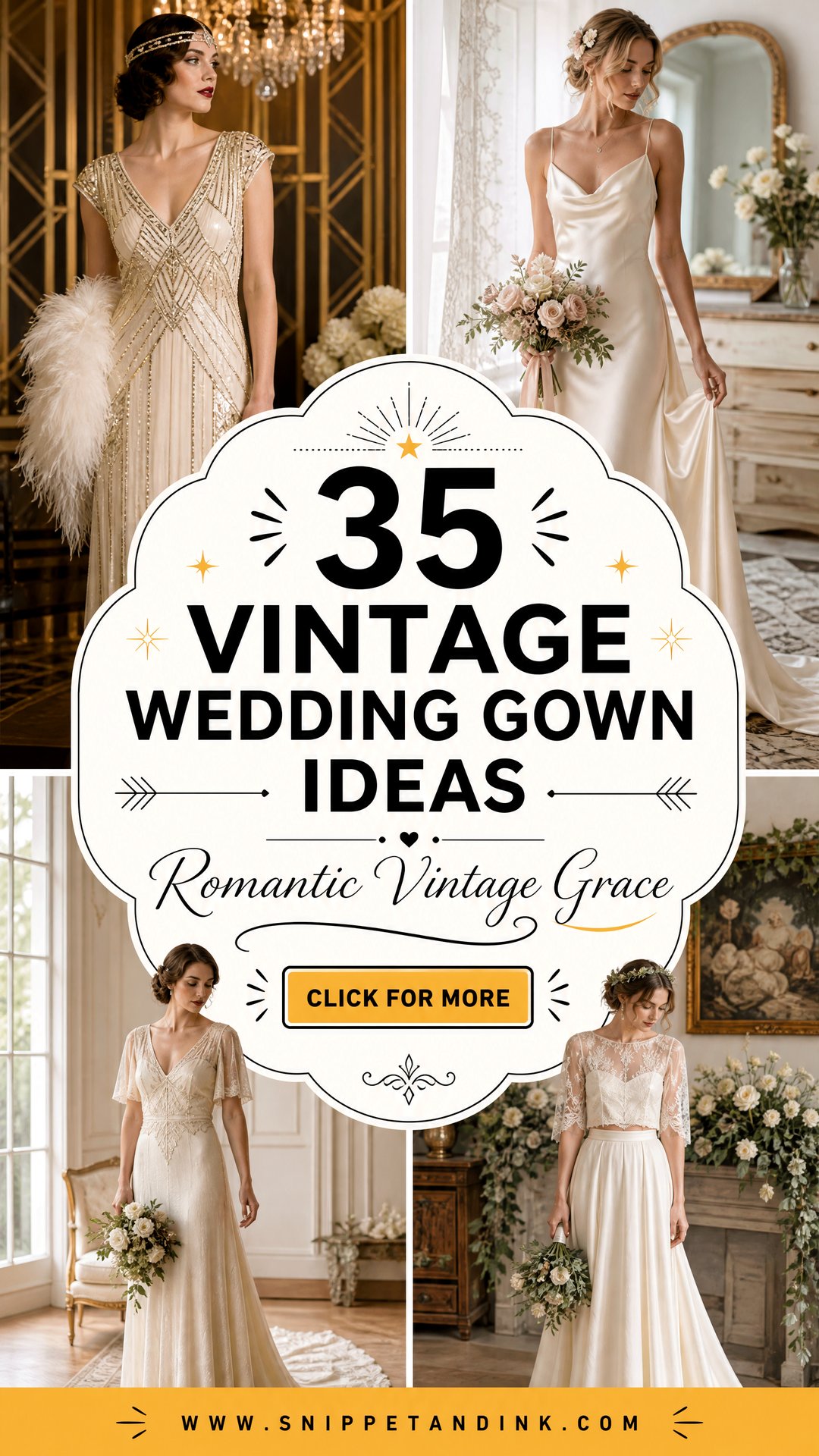
Pairing an Era With Your Venue and Season
Before anyone falls for a decade, I ask about the venue, the month and how long the day runs. The eras behave very differently once real weather and real hours are involved.
Heat and outdoor ceremonies. Light fabrics win: 1930s bias satin, Edwardian cotton lace, empire-waist chiffon and 1970s boho lace all breathe. Boned Victorian bodices and long lace sleeves are the ones I’d avoid in a midsummer garden.
Cold months and formal rooms. Victorian collars, basque-waist ball gowns and heavier 1950s satin come into their own, and a jacket or cape covers the walk between car and door.
Courthouses and small dinners. Tea length, 1960s shapes and short dresses suit rooms where a train would sweep the corridor floor.
A long night of dancing. A-lines, empire waists and straight 1920s cuts let you move freely. Mermaids and tight bias cuts need a second plan for later, or a bustle that really holds.
1. Vintage Lace Wedding Gown
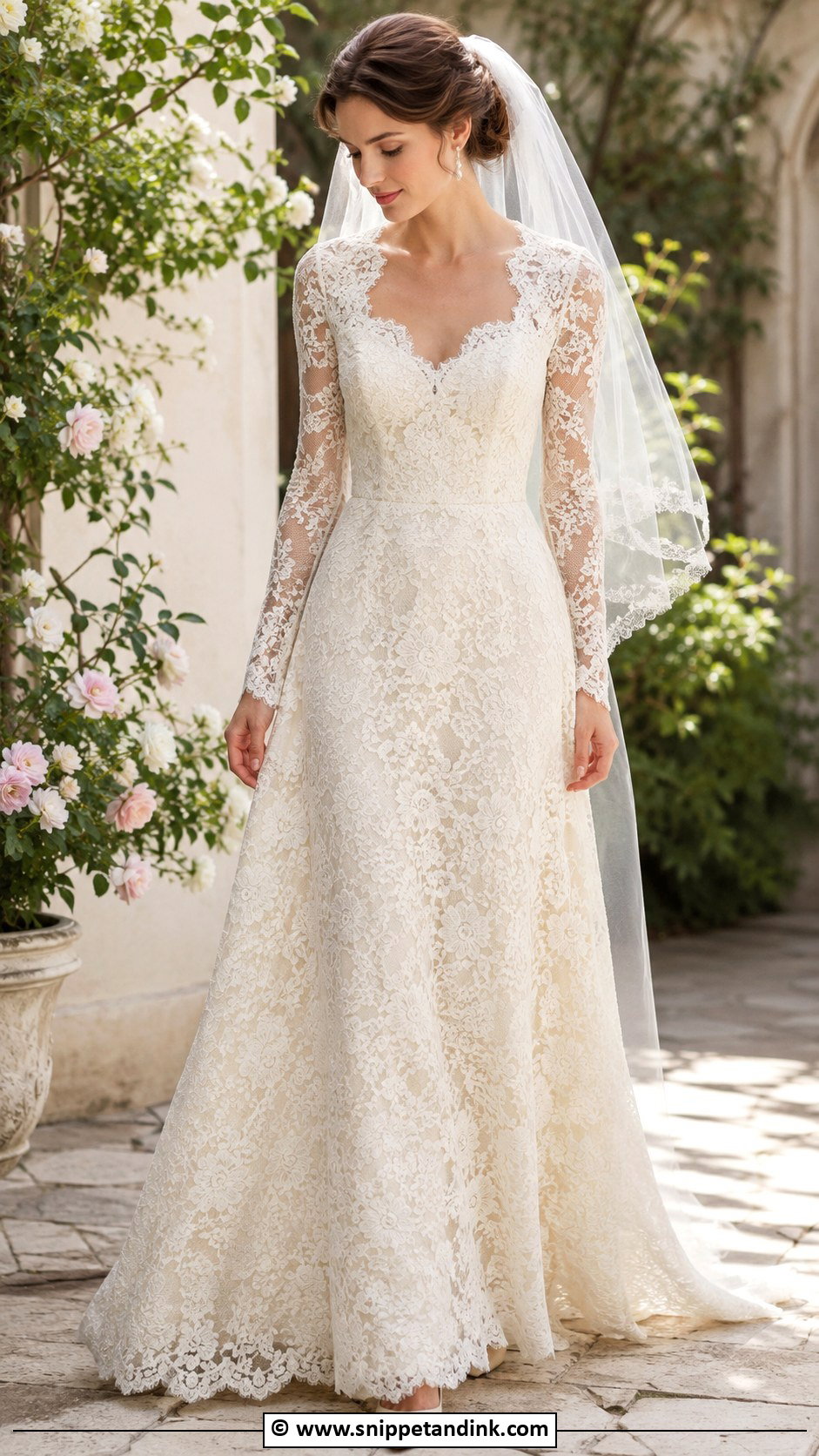
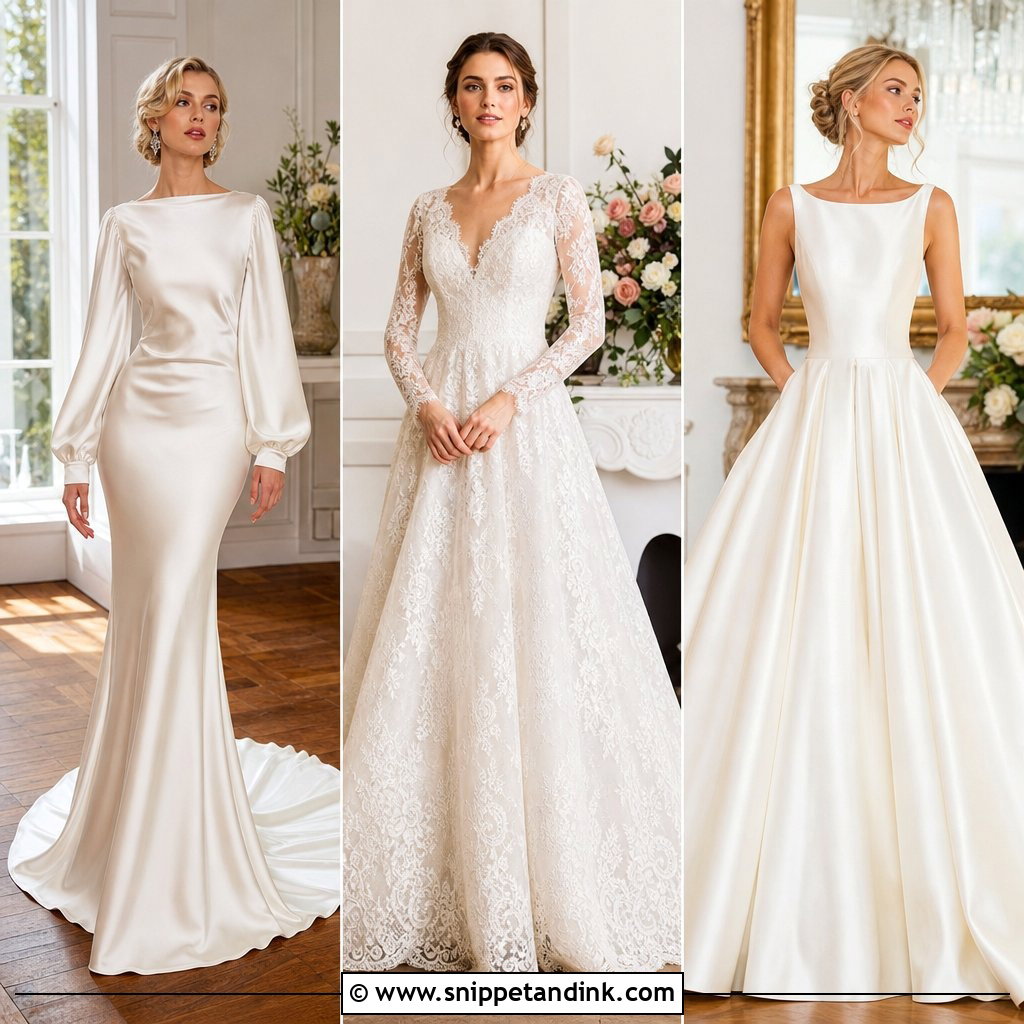
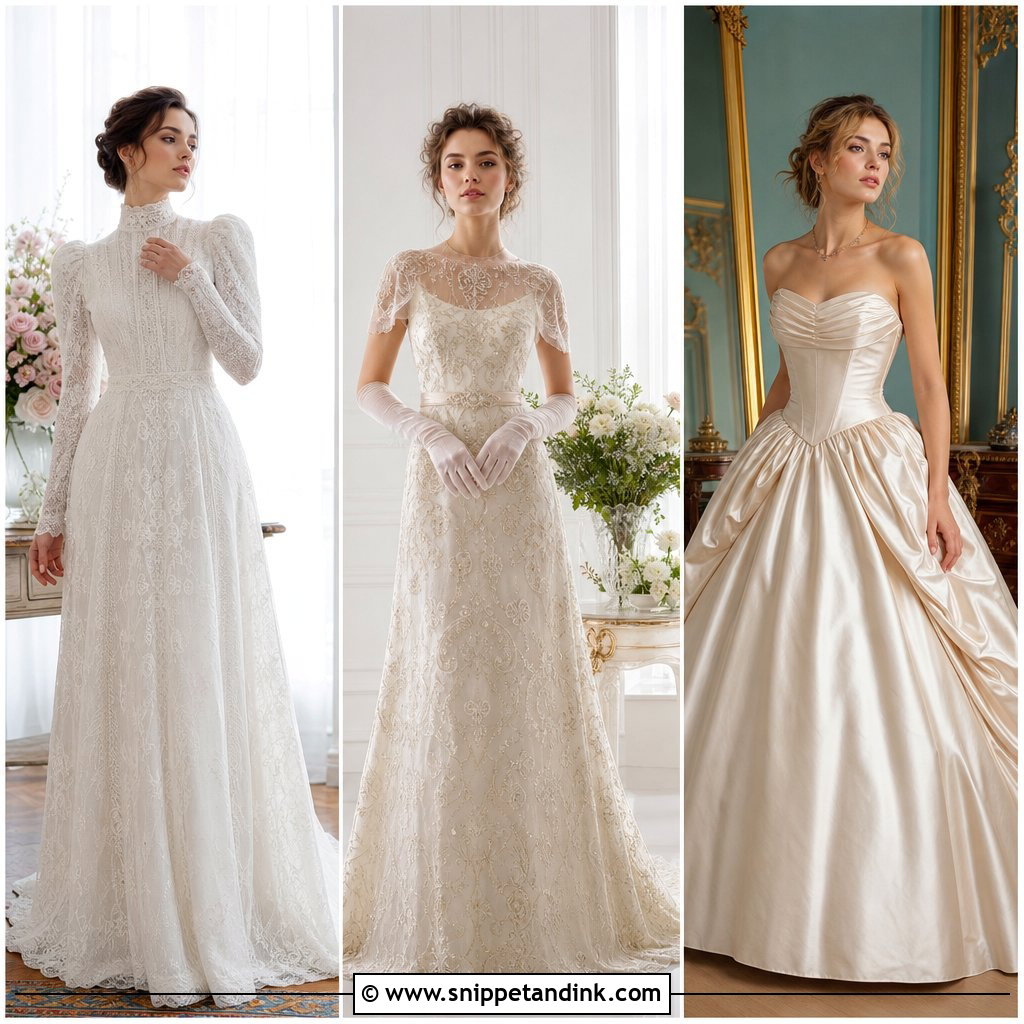
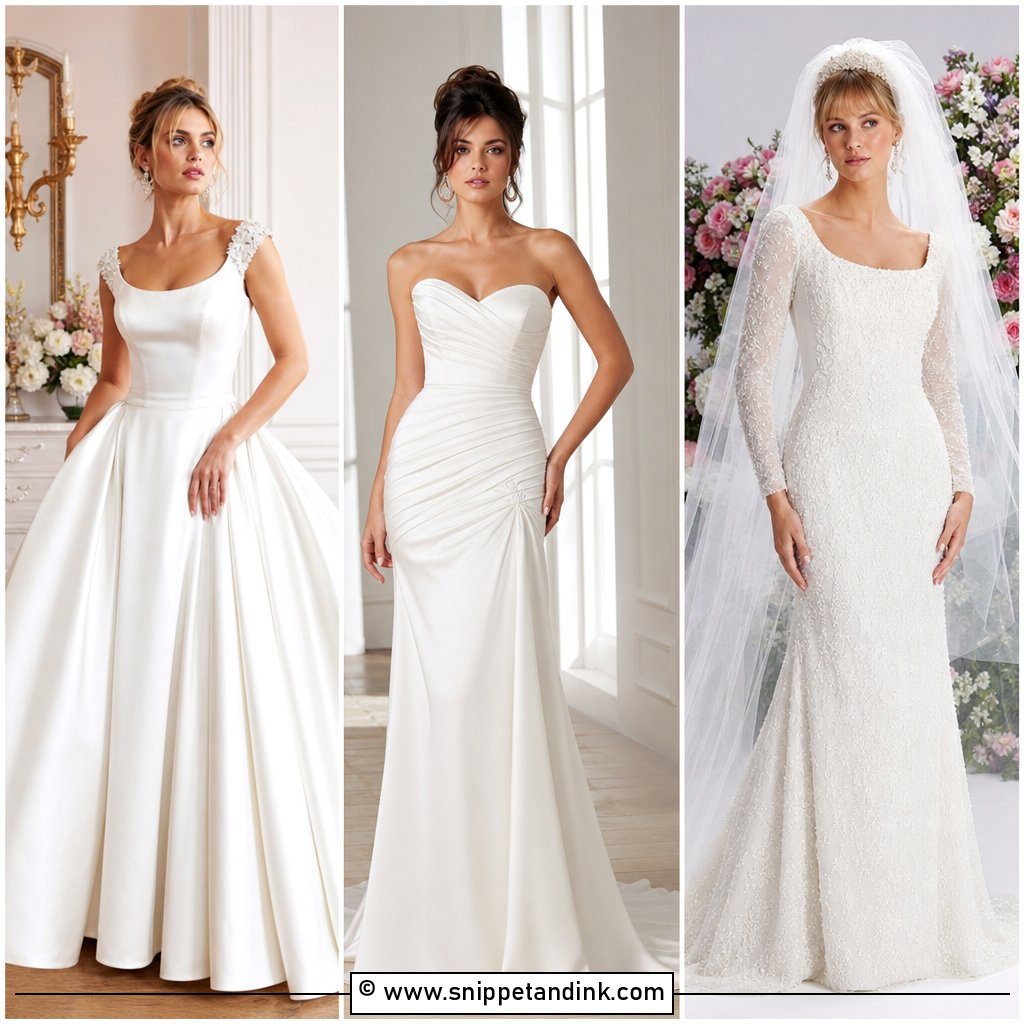
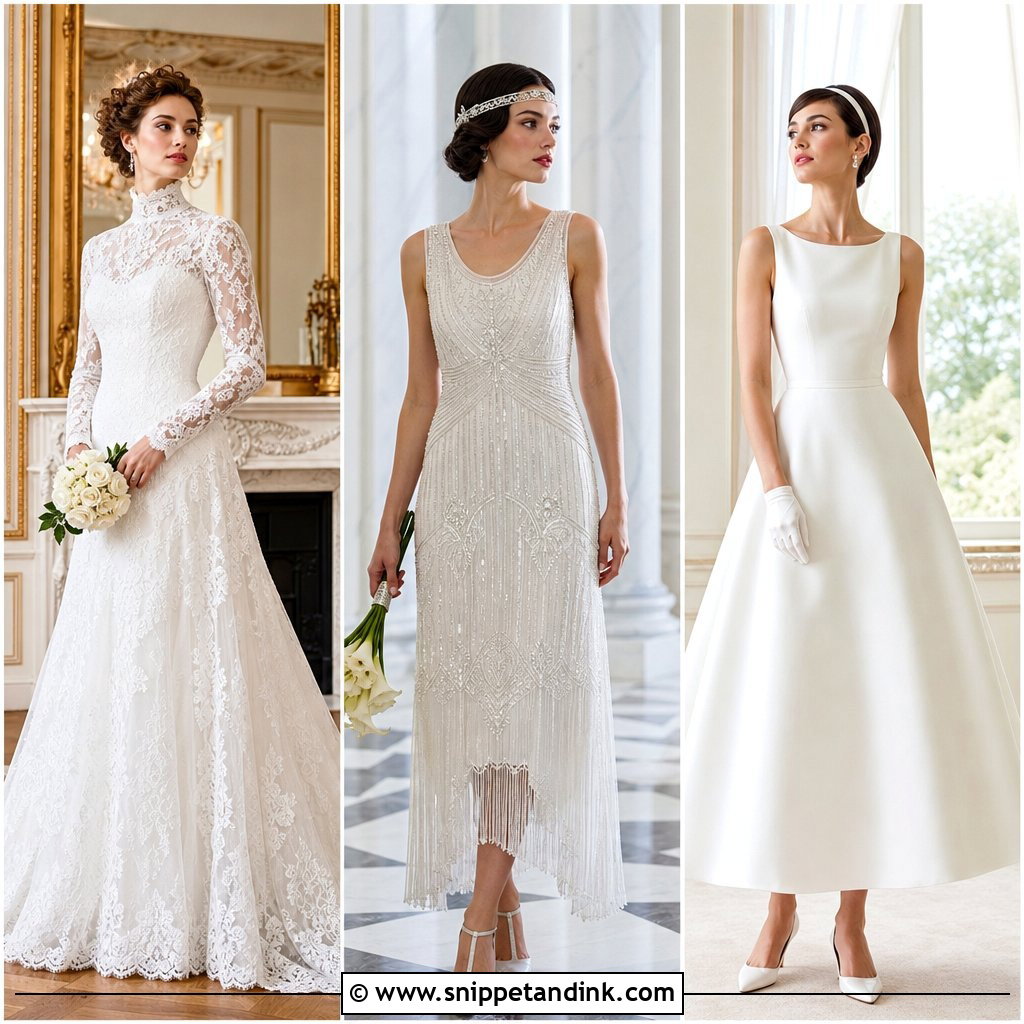
Lace is the fabric I’m asked about most, and with lace the color matters more than the pattern. Bright white looks new; ivory, cream or champagne looks like it has a history. Floral lace with scalloped edges over a fitted bodice is the classic version. Long sleeves push it antique, while a low back or illusion neckline keeps it current. Pearl earrings, a simple veil and soft waves or a low bun are enough for a garden, a historic house or a formal room.
2. 1930s Satin Wedding Gown
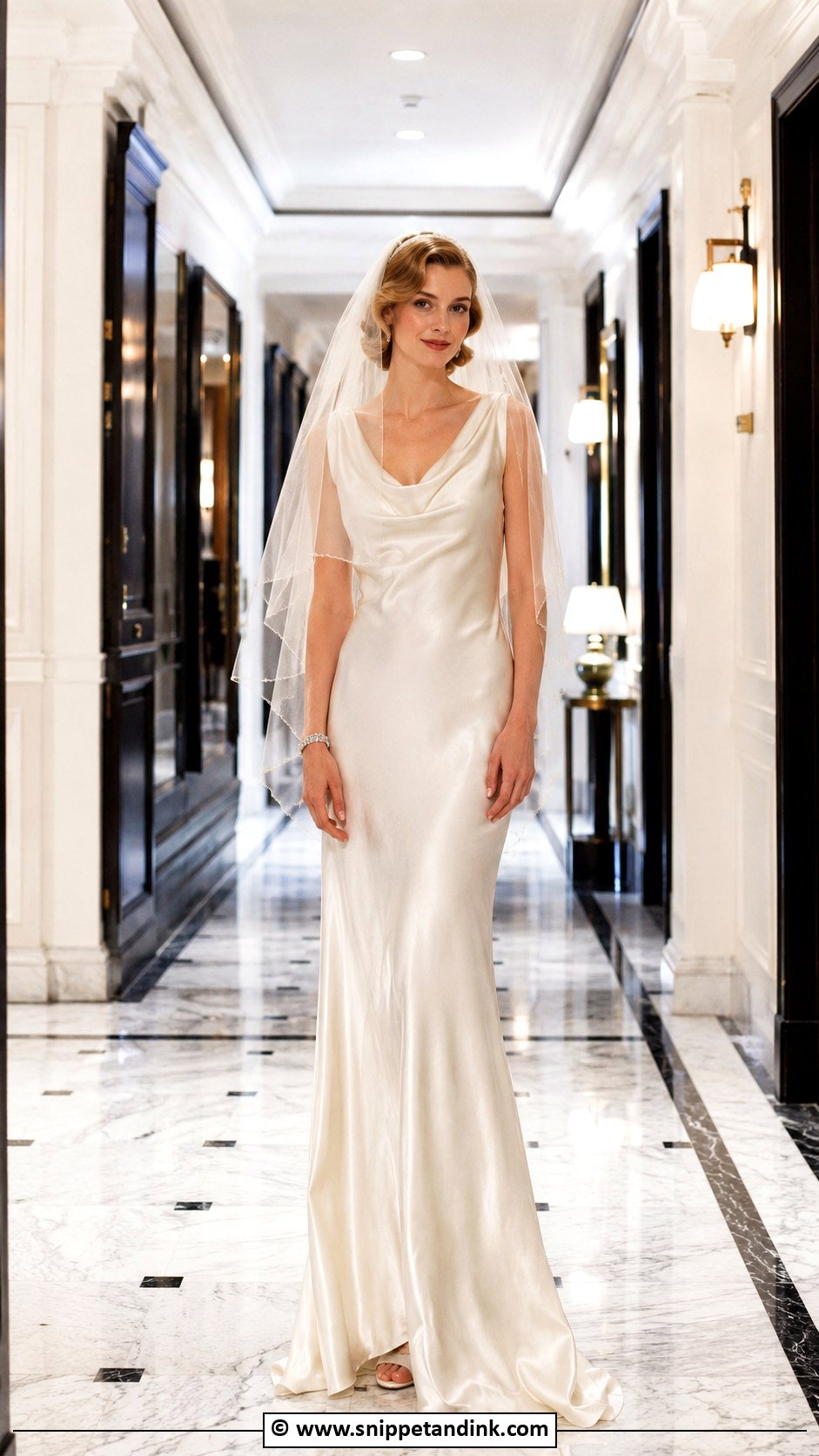
Bias cut is what makes a 1930s satin wedding gown move the way it does. The fabric is cut diagonally across the grain, so it gives slightly and follows the body instead of sitting on it. Silk satin or satin crepe drapes best, usually with a cowl, bateau or soft V neck. The honest trade-off: bias satin shows every line underneath, so sort out your underwear before the first fitting, not after. Satin heels, a fine bracelet and a fingertip veil are all the decoration it wants.
3. 1950s Tea Length Wedding Dress
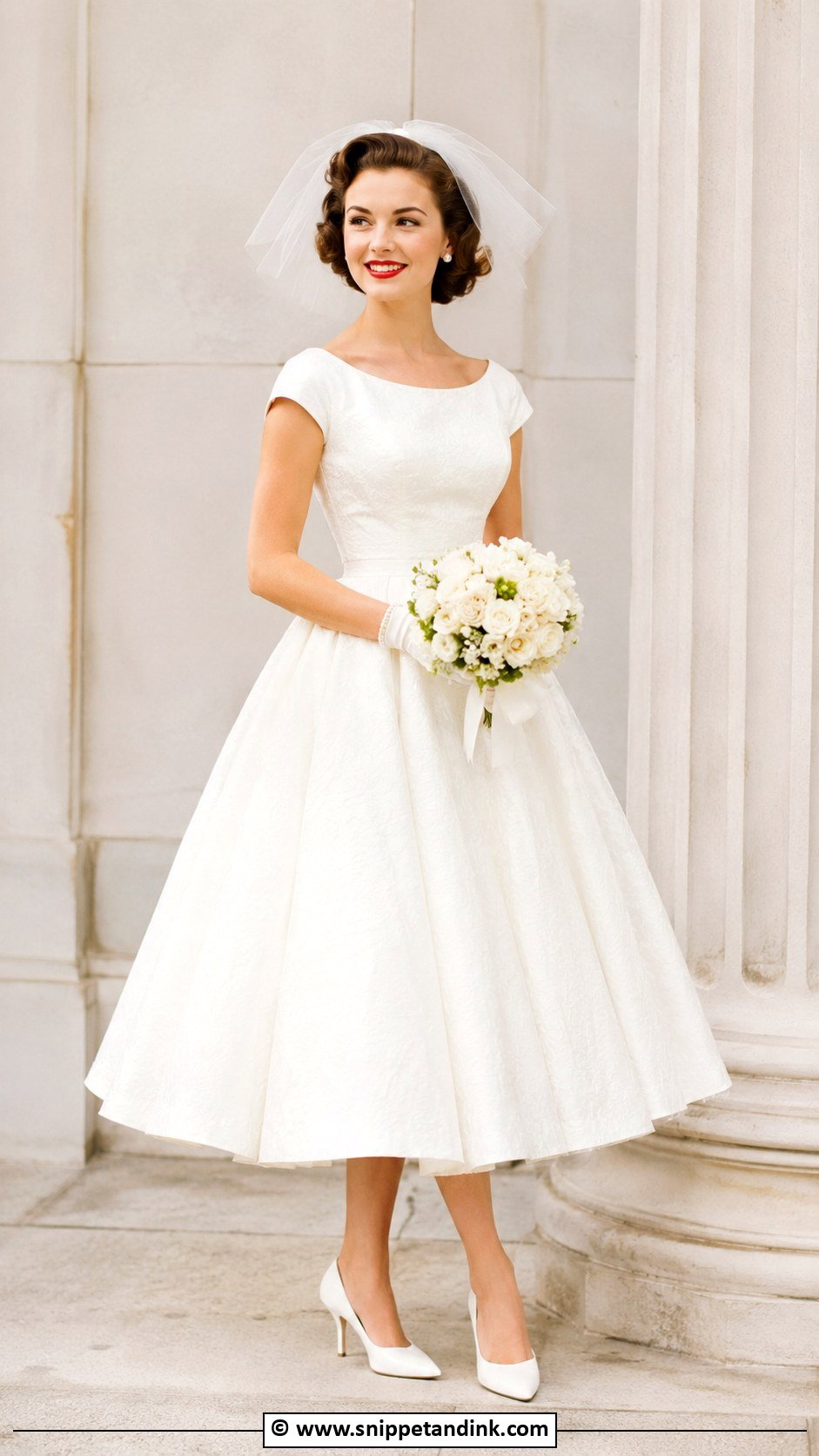
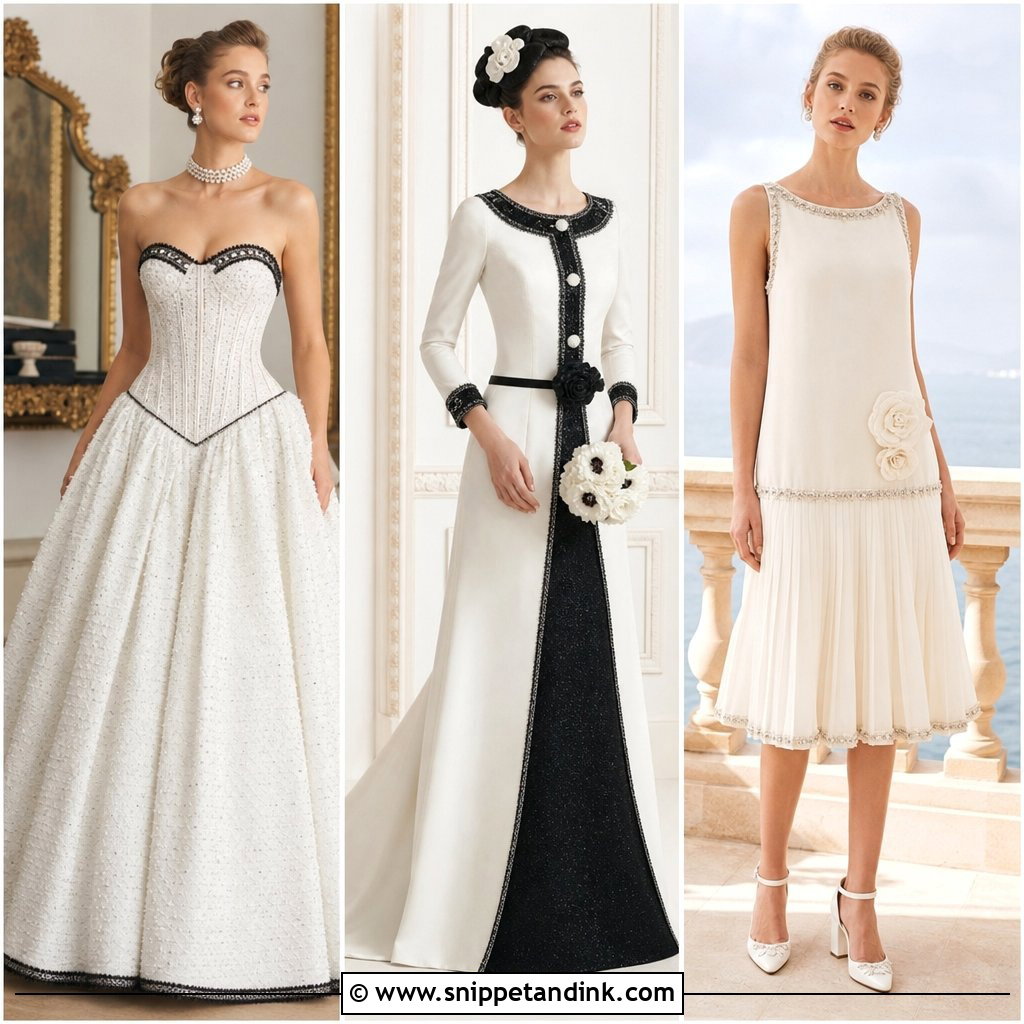
A 1950s tea length wedding dress is cheerful by design: fitted bodice, defined waist and a full skirt ending between knee and ankle. Shoes are part of the outfit at this length, so I treat pointed pumps as seriously as the dress. For more volume, add a tulle underskirt. I prefer soft tulle to stiff net because it doesn’t scratch the legs by the second hour. Pearl studs and a short veil or bow headpiece finish it for a courthouse, a garden or a brunch reception.
4. Victorian Long Sleeve Wedding Gown
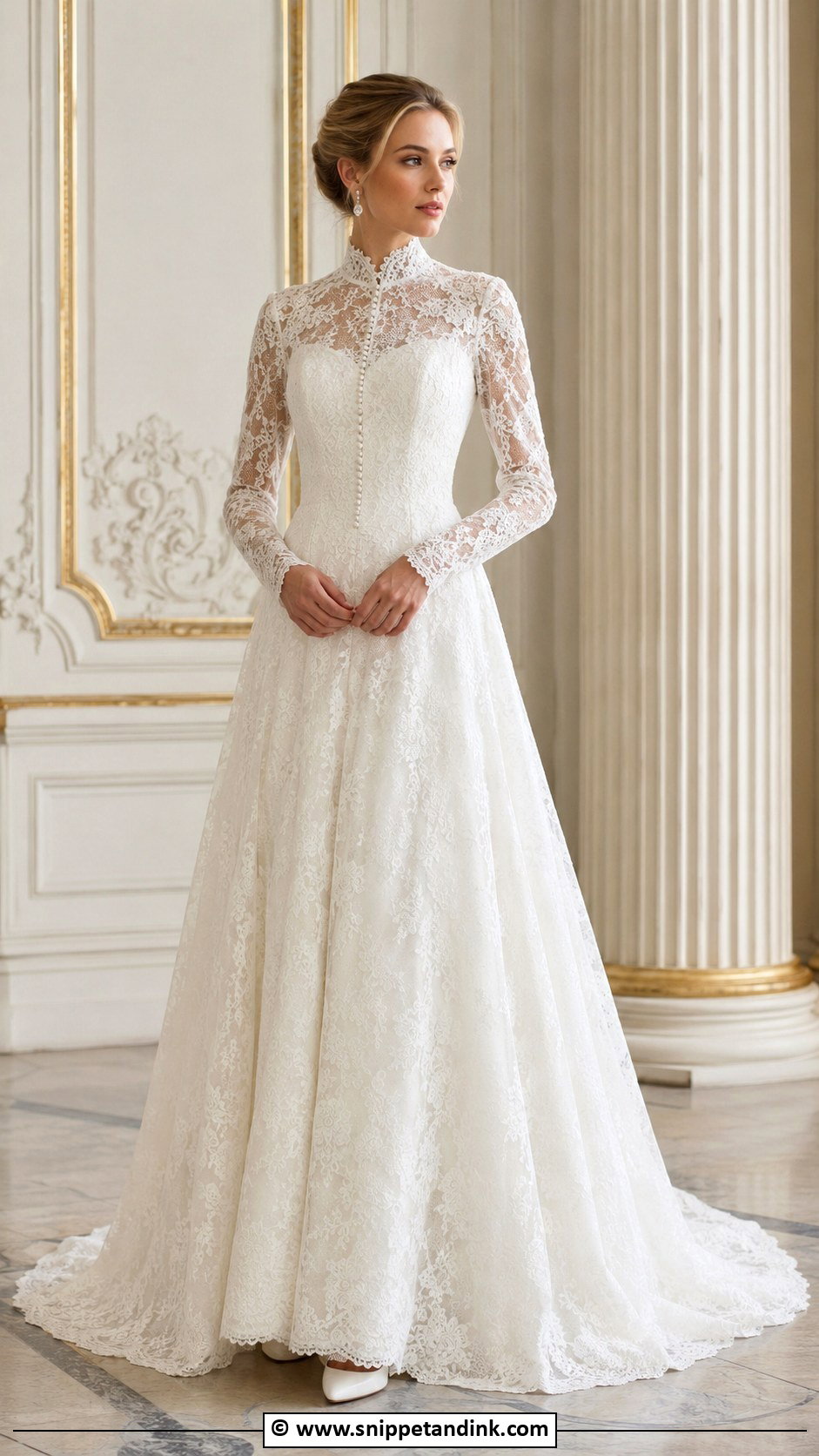
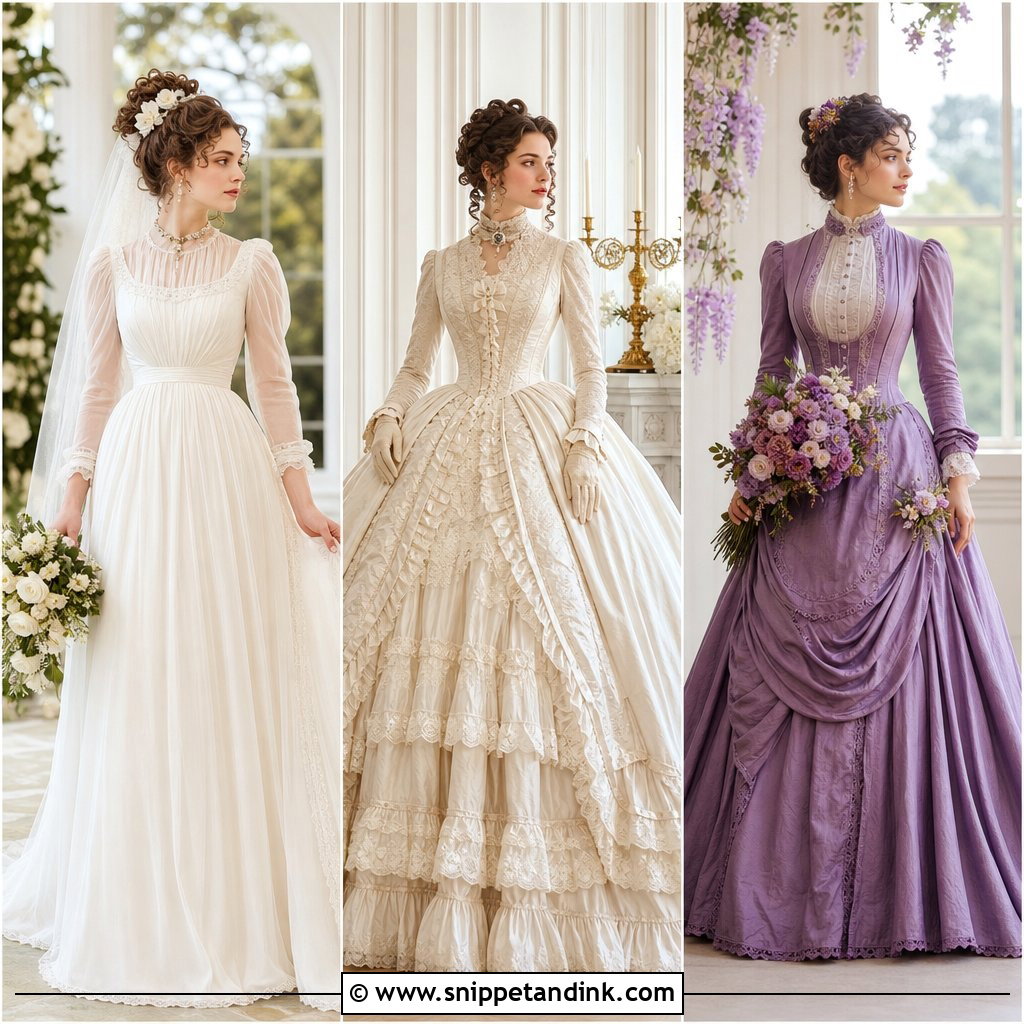
Victorian long sleeve gowns come with modest detail built in: high necklines, lace sleeves, covered buttons and a fitted bodice over a softly structured skirt. That much detail tips into drama easily, so I balance it with clean hair, small earrings and a plain bouquet. Ivory lace over a nude or champagne lining gives depth and an antique tone, and an updo keeps the face open above the collar. Before you commit, raise your arms and sit down in it. Fitted sleeves in non-stretch lace restrict more than most brides expect.
5. Edwardian High Neck Wedding Gown
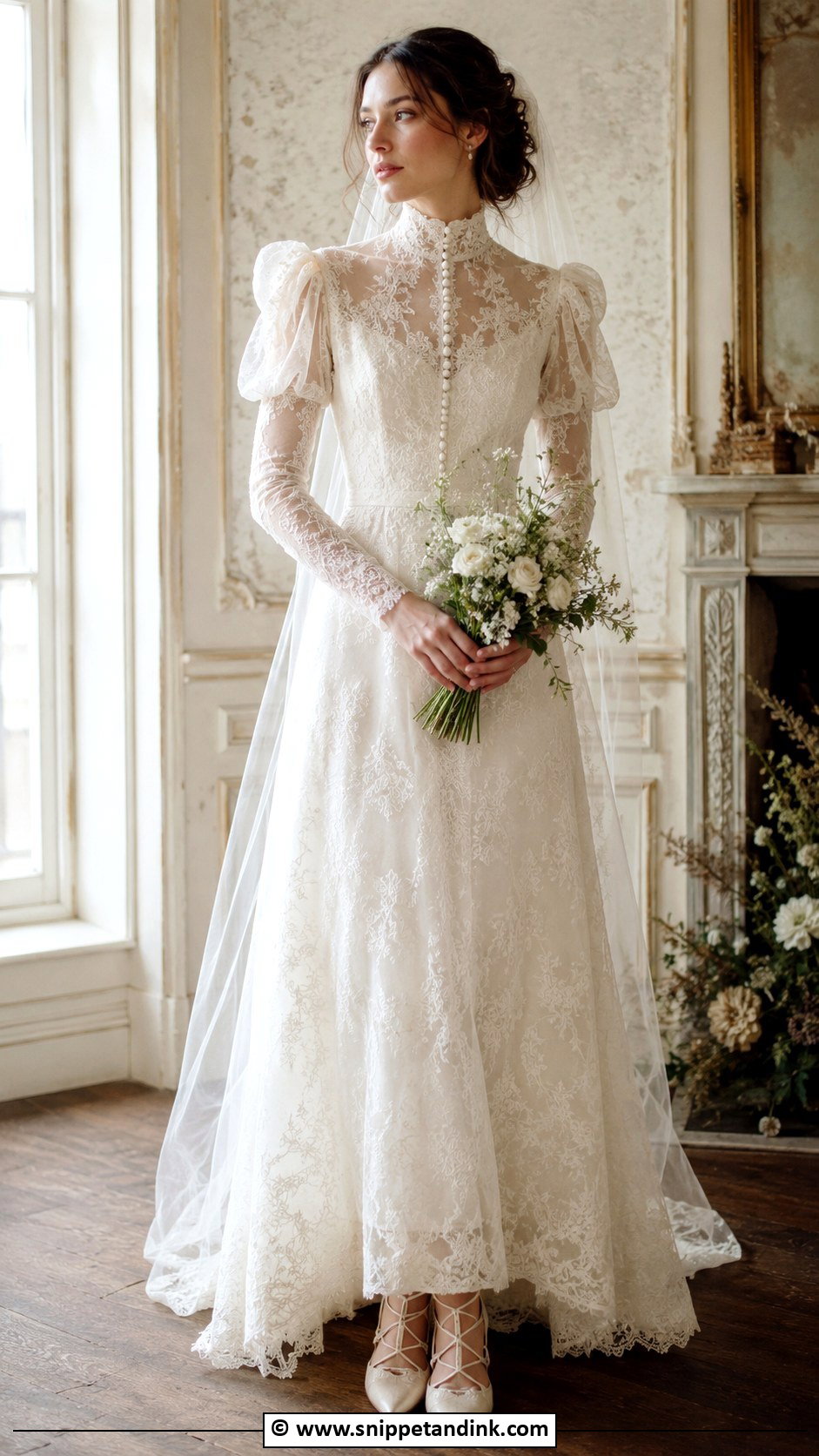
An Edwardian high neck wedding gown covers you without weight, which was the charm of the early 1900s: sheer lace, tiny buttons, slightly puffed shoulders and a relaxed A-line skirt. A sheer yoke or lace overlay at the neck keeps it light instead of severe. Skip heavy jewelry, because the neckline is already the detail. Lace-up heels, pearl drops and a soft veil tucked into a loose updo. Those tiny buttons take time, so whoever dresses you needs a button hook and ten unhurried minutes.
6. Vintage Basque Waist Wedding Gown
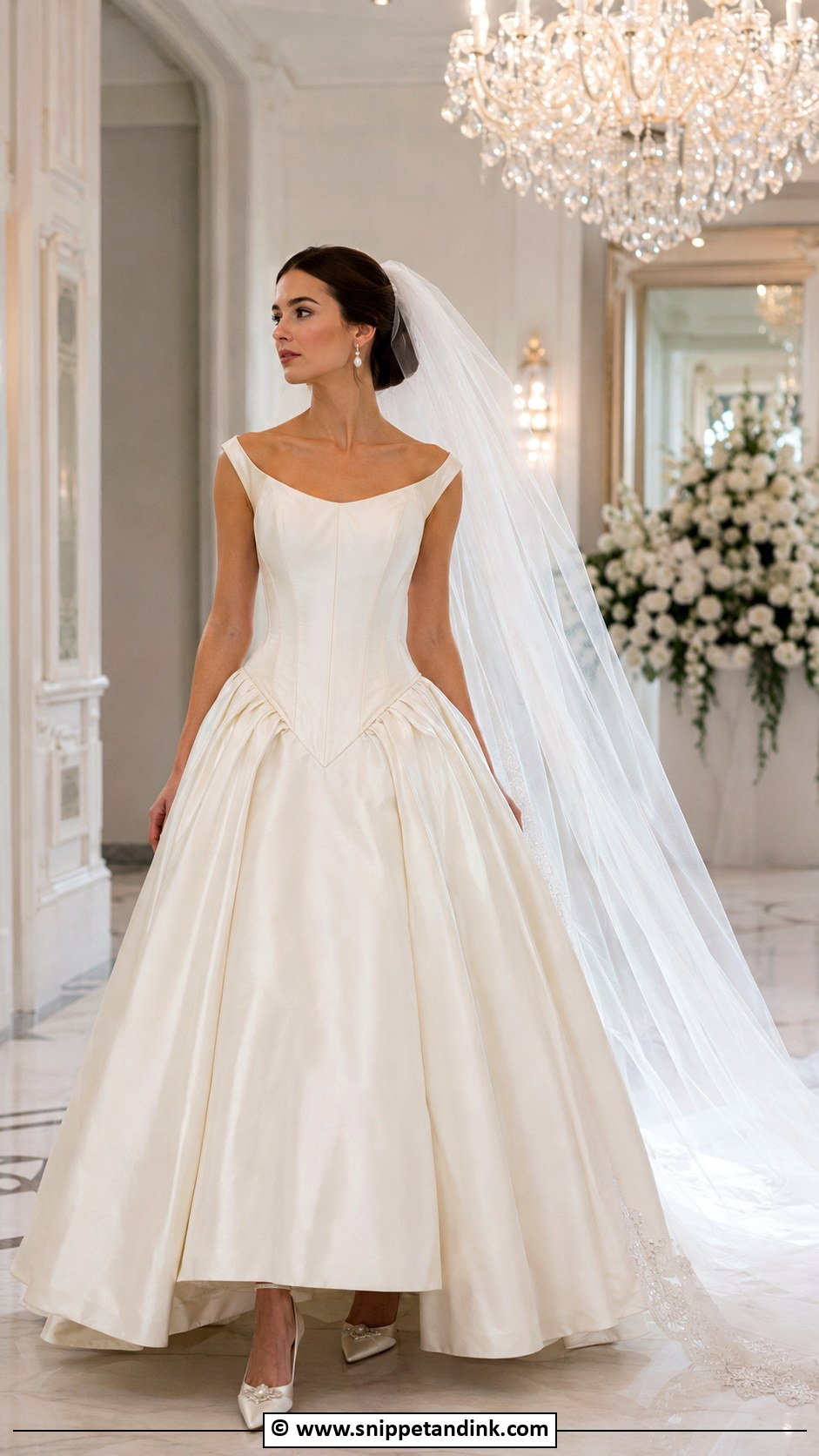
Because the bodice dips below the natural waist, a basque waist lengthens the torso and makes the waist look smaller by contrast. It reads historic but current in clean satin, lace or tulle. A full skirt adds drama, a softer A-line relaxes it. For a regal effect I look for a corset-style bodice with light boning; lace or matte satin gentles the whole thing. A cathedral veil, pointed heels and small pearl earrings. On a short torso I’d choose a shallower V, since a deep point can crowd the space between bust and hip.
7. Vintage Corset Wedding Gown
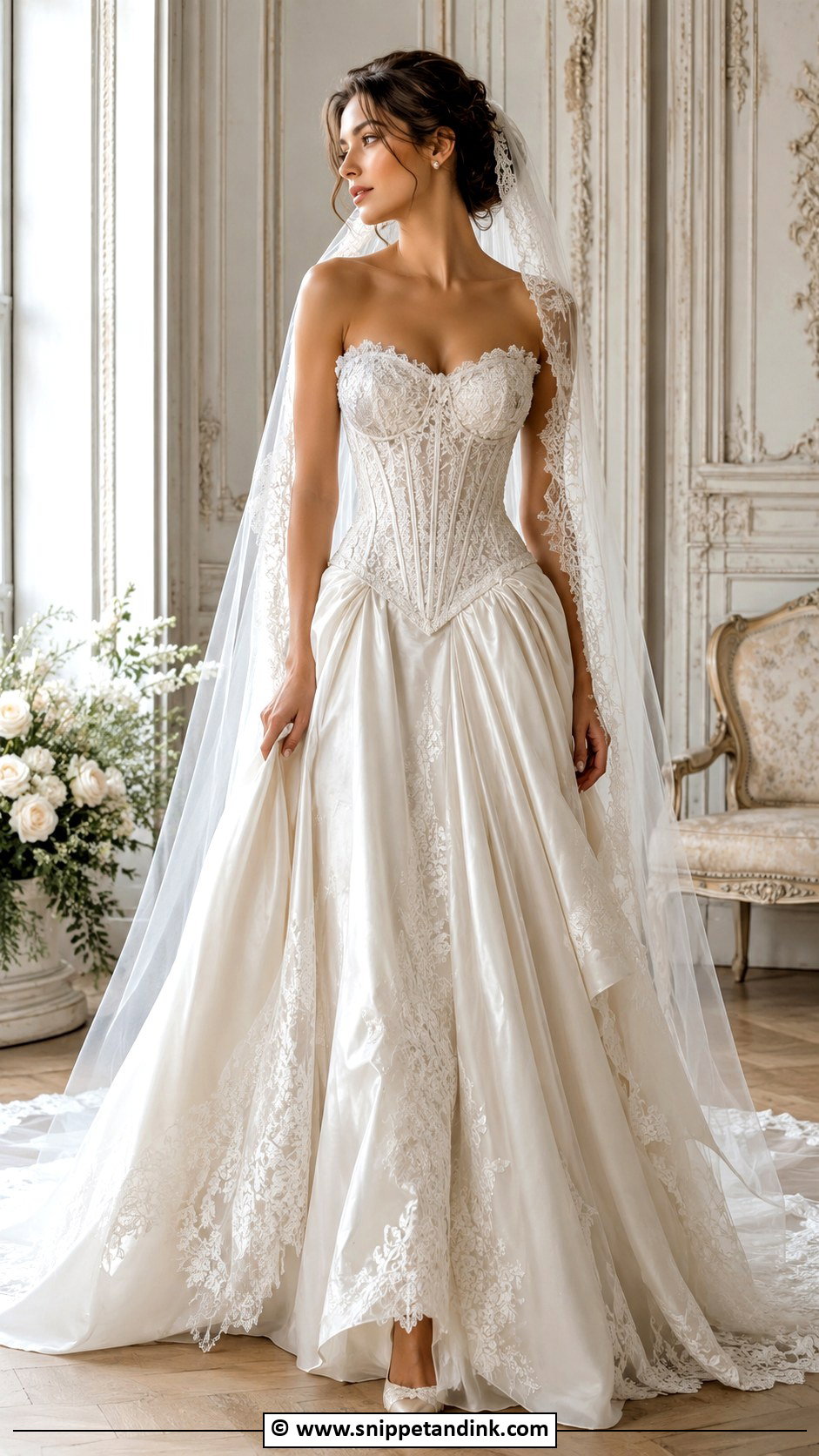
Corsets get a bad name from costume shops. A good bridal one has covered boning, a lining that lies flat, and lacing set so it supports rather than squeezes. Soft lace, satin panels or a basque point keep it refined, over a flowing skirt, a ball gown or a mermaid shape. When I fit one, I ask the bride to take a deep breath and eat something during the fitting. If she can’t, it’s too tight for a full wedding day. Pearl studs, a light veil and classic heels.
8. Vintage Off Shoulder Wedding Gown
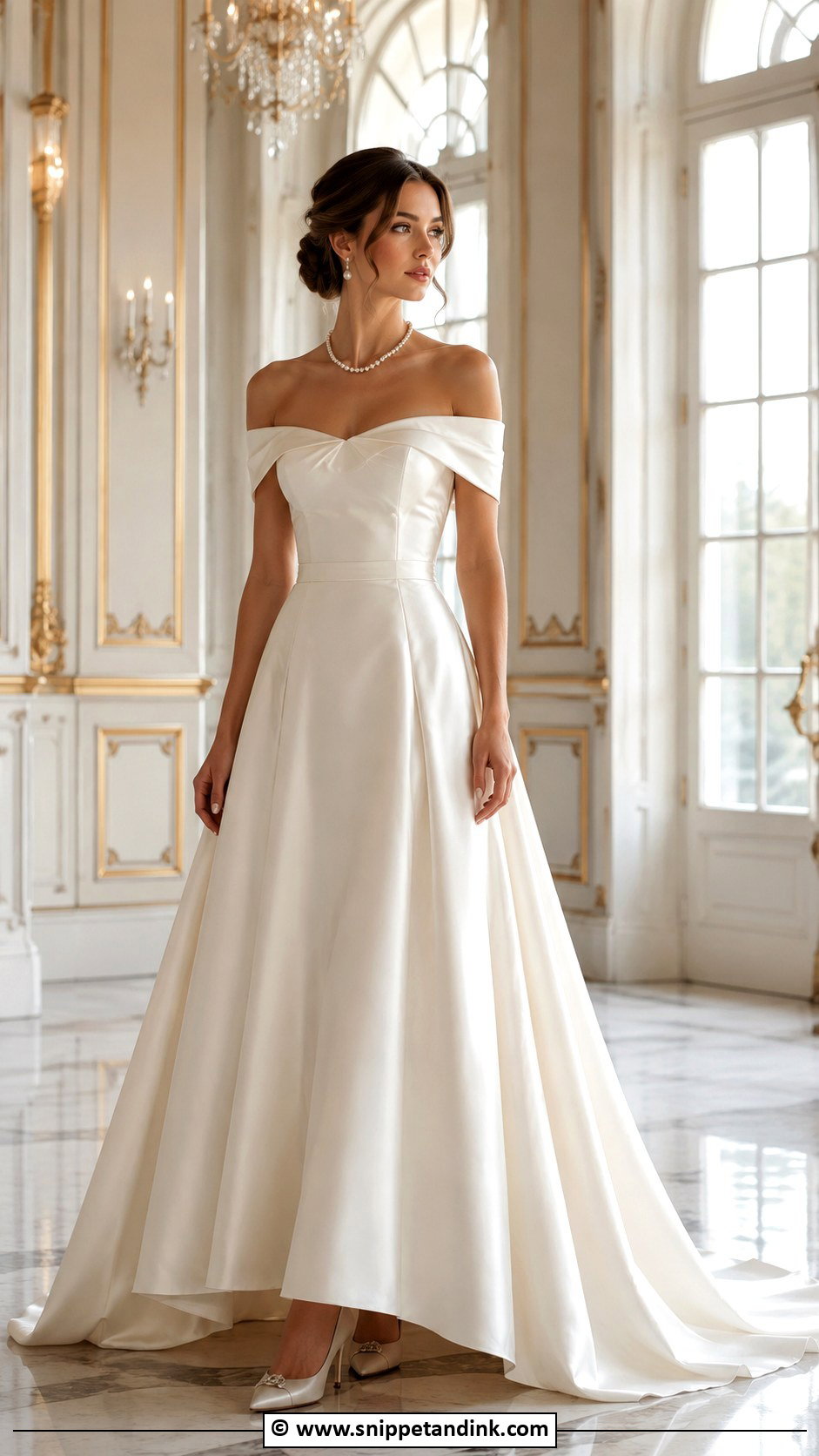
Off-shoulder necklines frame the collarbone and feel old-world in satin, lace or tulle, usually over a fitted bodice with a full or gently A-line skirt. Hair swept back or softly curled keeps the neckline visible. Jewelry can go either way: a pearl necklace if the neckline sits low enough, otherwise just drop earrings. I watch for gaping at the back of the sleeve bands when the bride reaches forward. A strip of silicone gripper inside usually solves it. It sits between formal and relaxed, so most venues work.
9. Vintage Puff Sleeve Wedding Gown
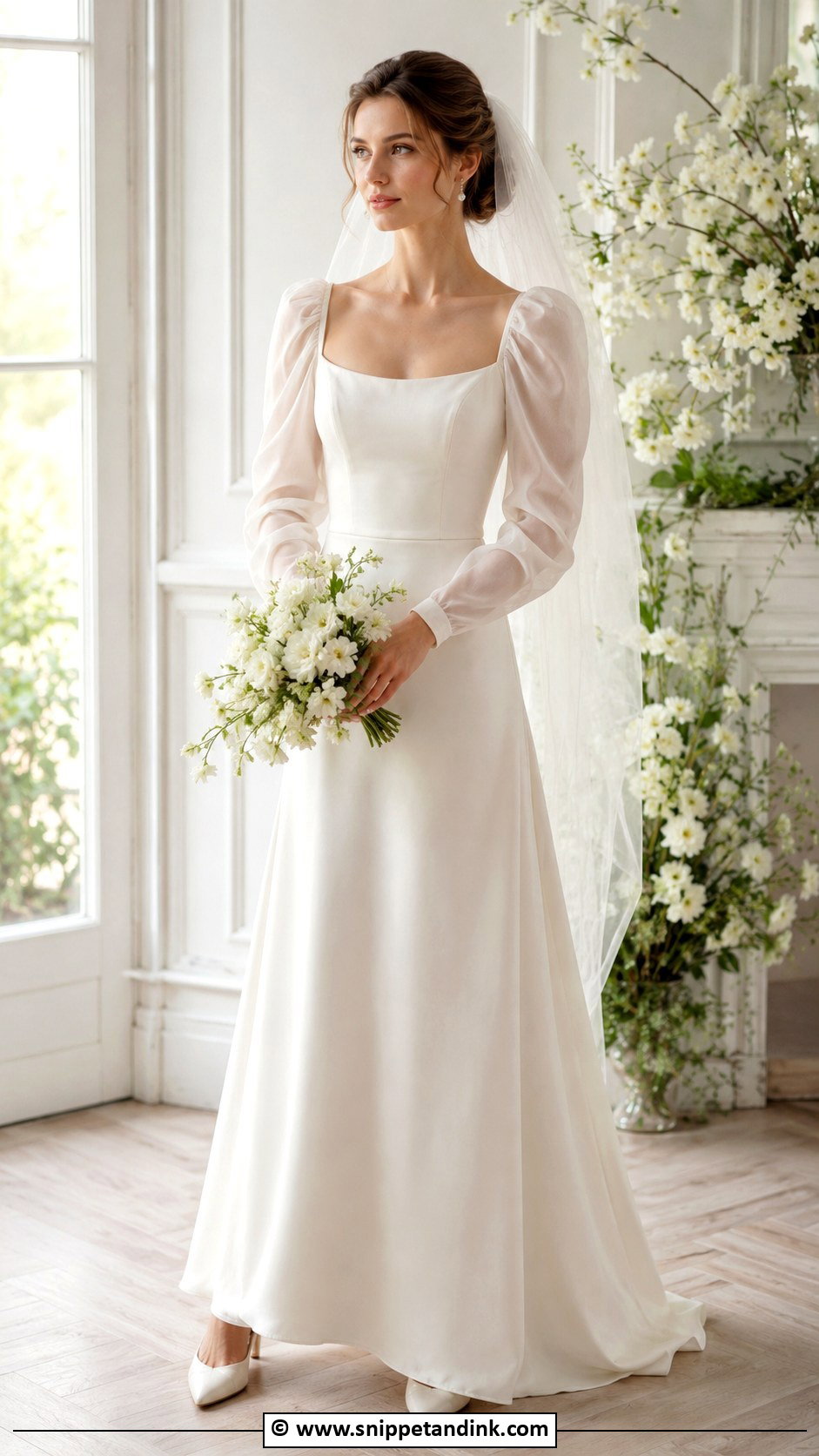
Puff sleeves give a gown personality without a single bead. They can be short and sweet, long and sheer, or detachable so you get two looks in one day, and detachable is what I’d choose for a summer wedding. Satin sleeves look polished; organza or tulle look airy. I balance the volume with a fitted bodice and a smooth skirt. Low heels, pearl earrings and a clean veil, and the shape reads clearly even from the back of the room.
10. Vintage Beaded Wedding Gown
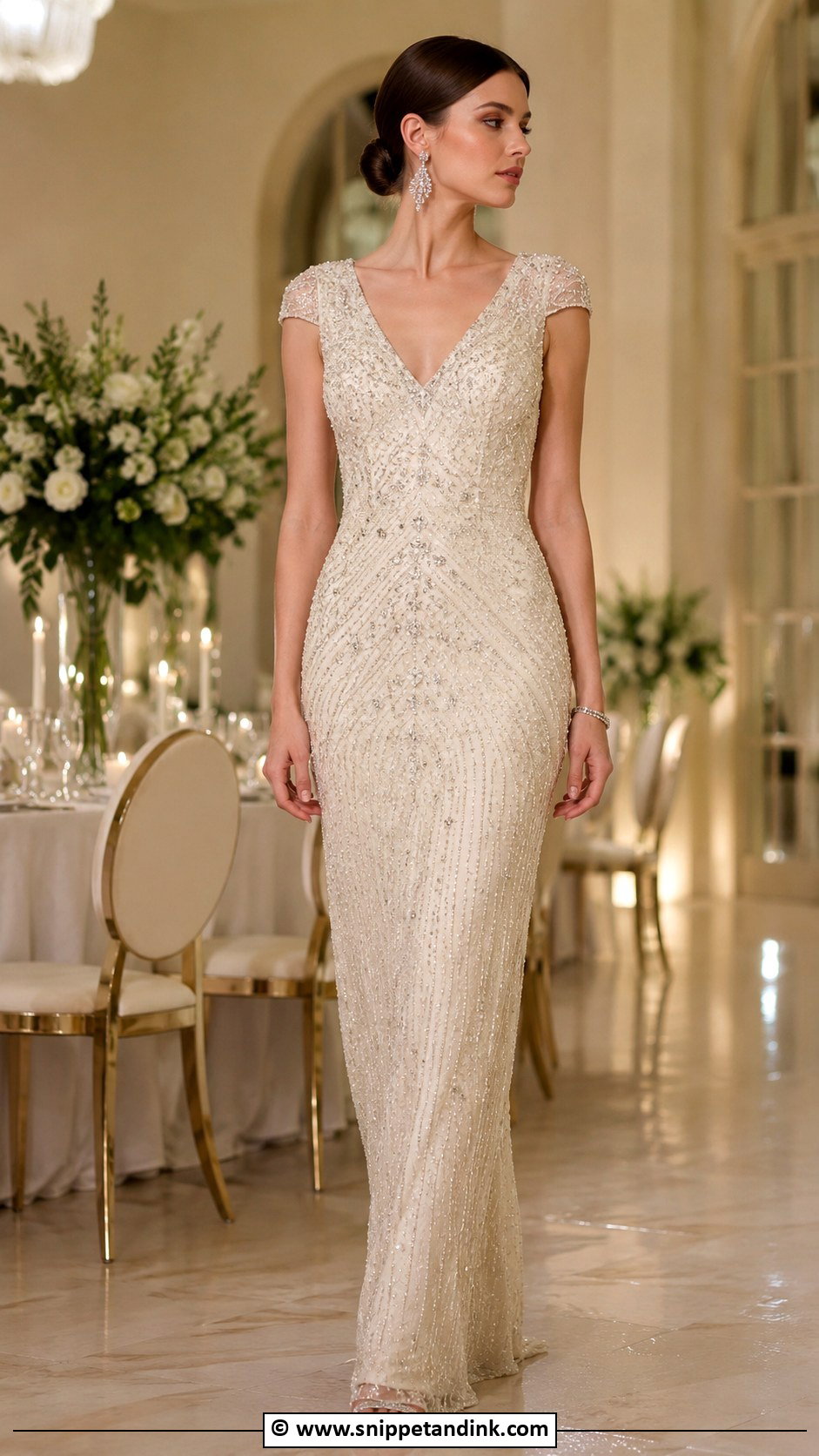
Beading brings instant glamour, especially with 1920s or old Hollywood references. I want delicate beadwork that moves with the fabric, and I lift the hem to feel the weight, because heavy beading on a fine base drags the dress out of shape over a long day. A column silhouette, cap sleeves or a low back keep it refined. Metallic heels, crystal earrings, a sleek hairstyle and a light veil. Champagne, ivory and soft silver suit evening celebrations and ballrooms.
11. 1920s Art Deco Wedding Gown
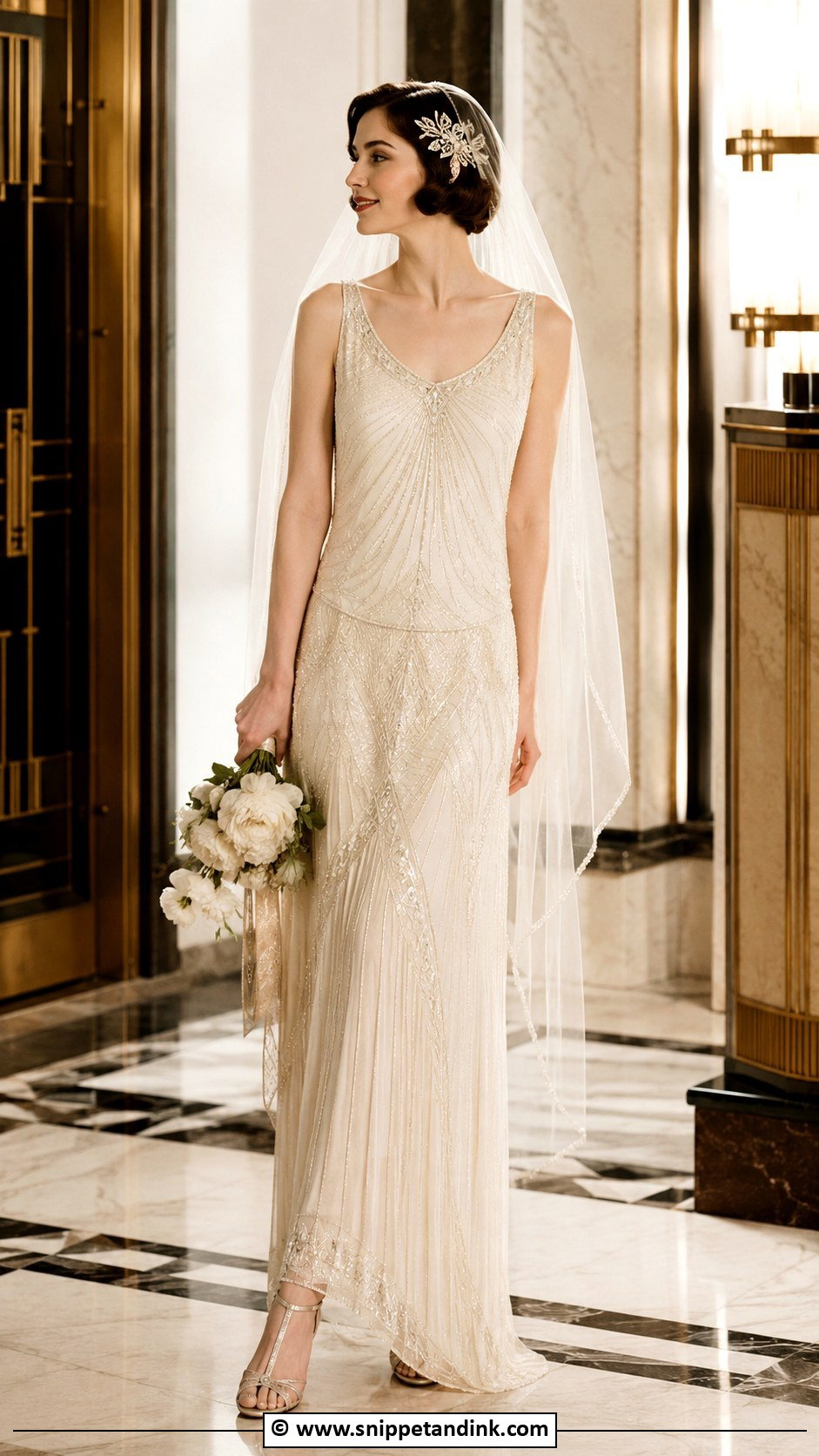
Art Deco gowns are built on geometry: fan patterns, pearl beading or subtle metallic thread on a straight or slightly dropped waist. The slim shape is relaxed rather than structured, so it’s easy to dance in. T-strap heels, a beaded comb and a soft veil, then stop adding. I’d point the bride who finds ball gowns too traditional here. One honest note: straight 1920s cuts were designed for a flatter chest, so curvier brides often do better in a modern reproduction with darts than in an original.
12. Vintage Slip Wedding Gown
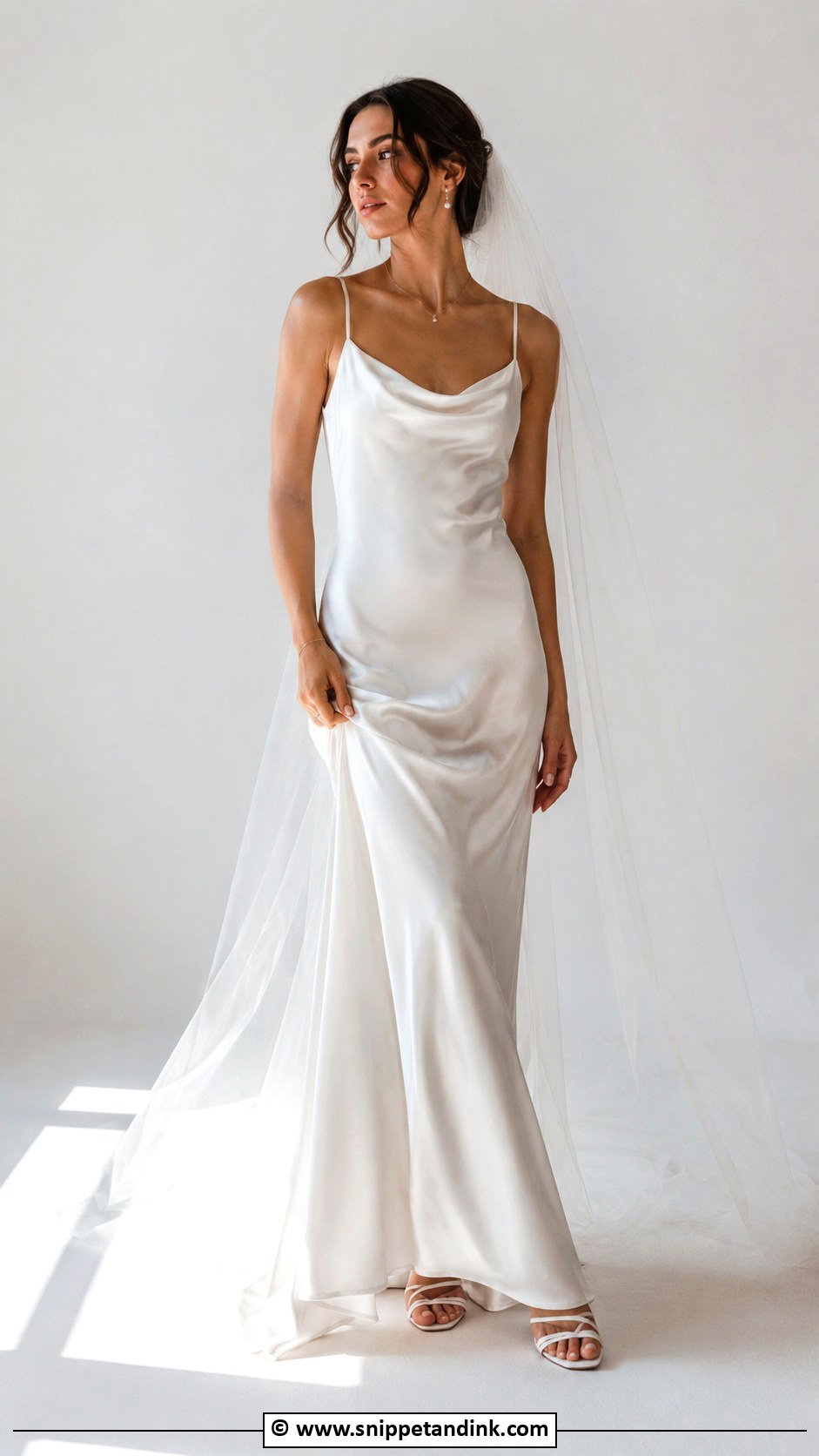
A slip gown has nowhere to hide, so posture and fabric quality are the look. It borrows from 1990s bridal and old Hollywood ease: slim shape, spaghetti straps, a cowl or clean scoop neck in satin, silk or crepe. Strappy heels, a sheer veil and delicate jewelry. For coverage, add a lace bolero, long gloves or a sheer cape. I always check it from the side in daylight, because thin satin turns slightly sheer against a bright window.
13. Vintage Ball Gown Wedding Dress
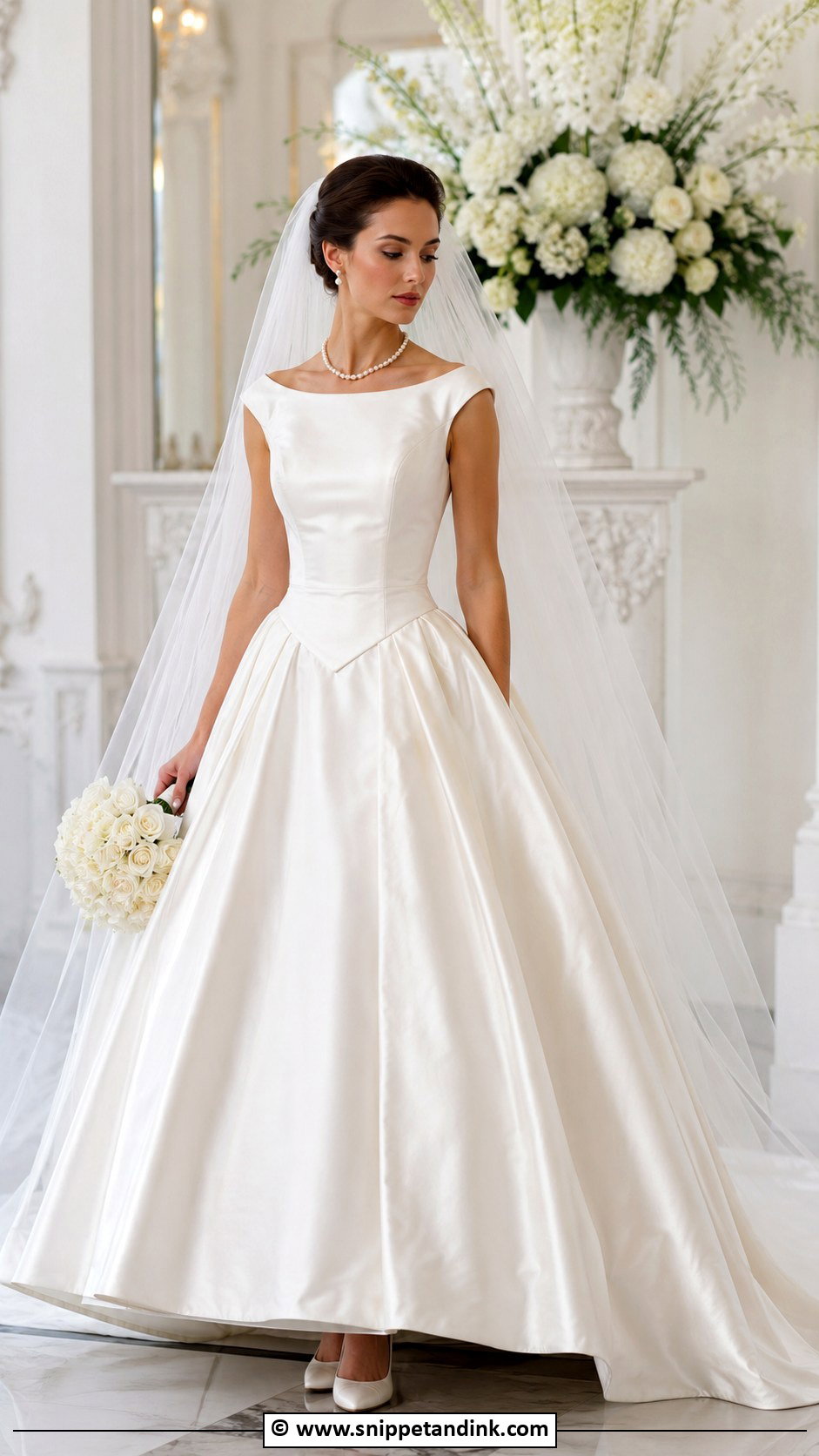
A fitted bodice and full skirt is the silhouette that runs through nearly every vintage era. Lace, satin or tulle sets the formality, a basque waist adds period character and covered buttons tidy the back. With that much skirt, I keep the upper half clean: a long veil, classic pumps, soft pearls. The practical side is the bustle. Someone has to know how to work it after the ceremony, so I teach a bridesmaid at the last fitting.
14. Vintage A Line Wedding Gown
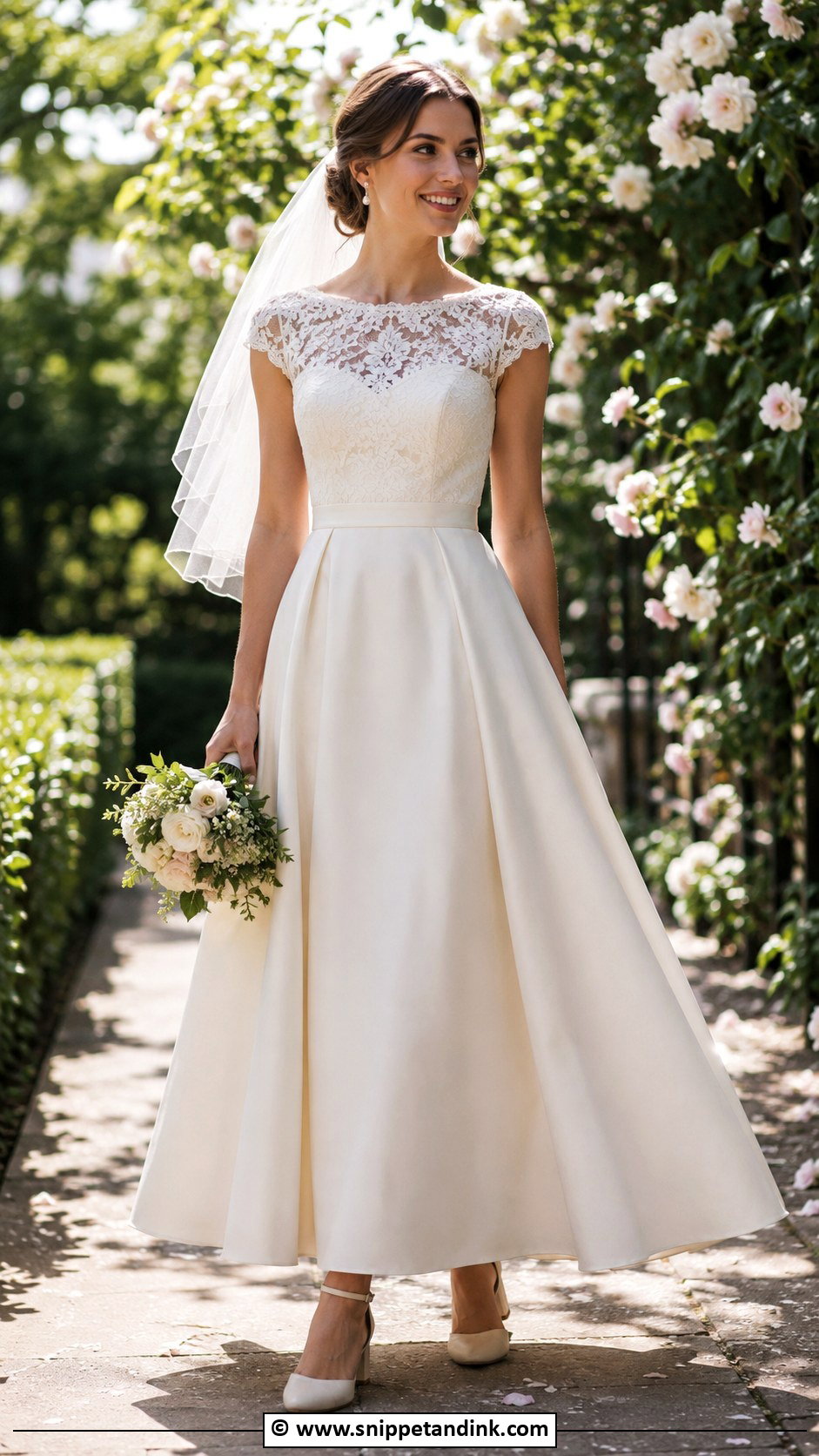
An A-line widens gently from the waist, giving movement without the weight of a ball gown, and it suits a wide range of figures. Lace sleeves, a sweetheart neckline or a satin bodice bring the vintage feel. Block heels, a soft veil and pearl or floral hair pieces. Outdoor ceremonies and formal rooms both suit it. If you plan to dance most of the night, I’d start here.

15. Vintage Mermaid Wedding Gown
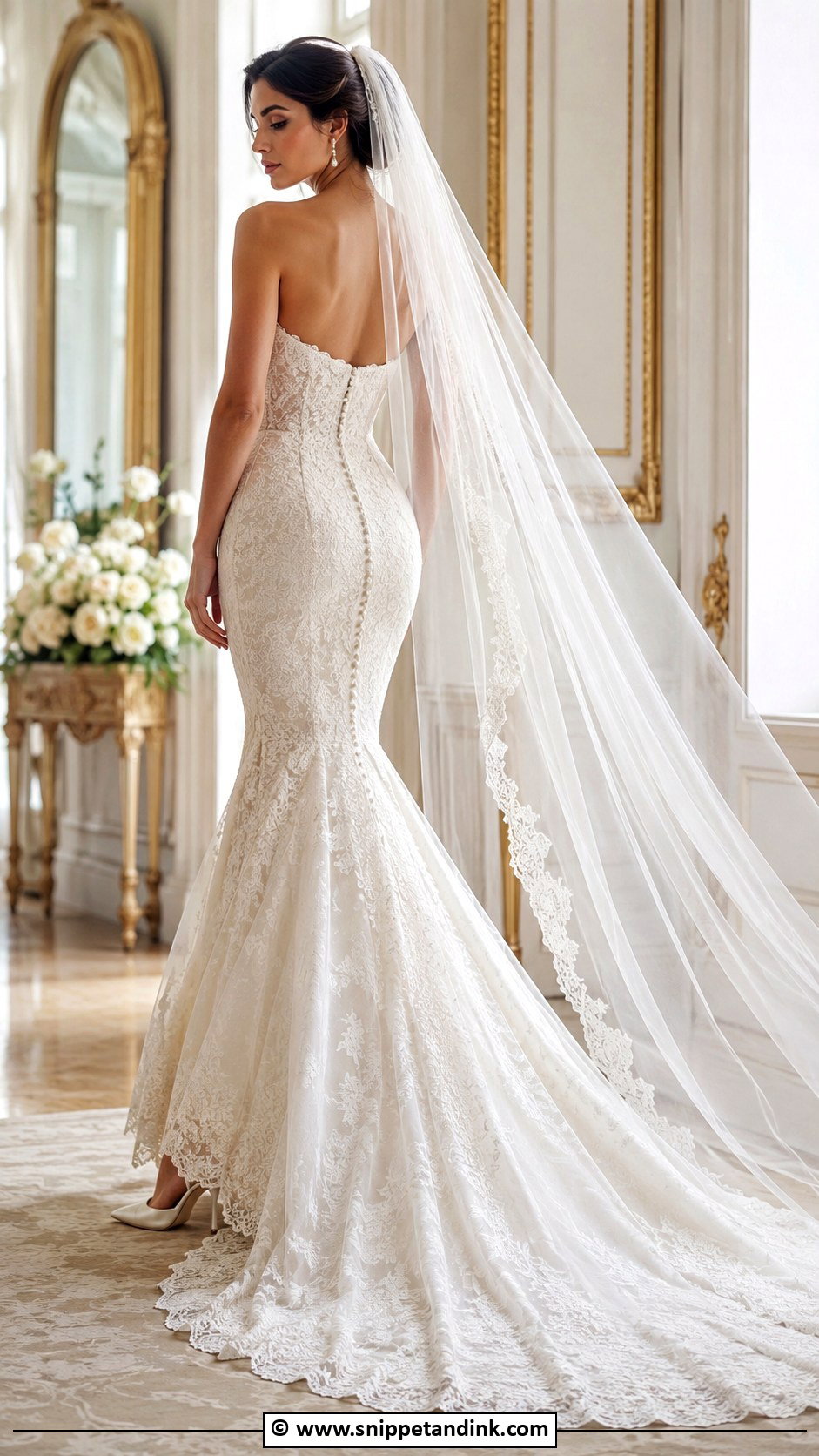
The fit through hips and knees decides whether a mermaid gown works. Too tight and you’ll waddle; the flare should start where you can still take a natural stride. For a vintage feel, lace, satin or crepe beat shiny embellishment, with a sweetheart neckline, off-shoulder sleeve or covered-button back. Pointed heels, a long veil and simple earrings. Practice stairs at the final fitting, holding the skirt the way you will on the day.
16. Vintage Empire Waist Wedding Gown
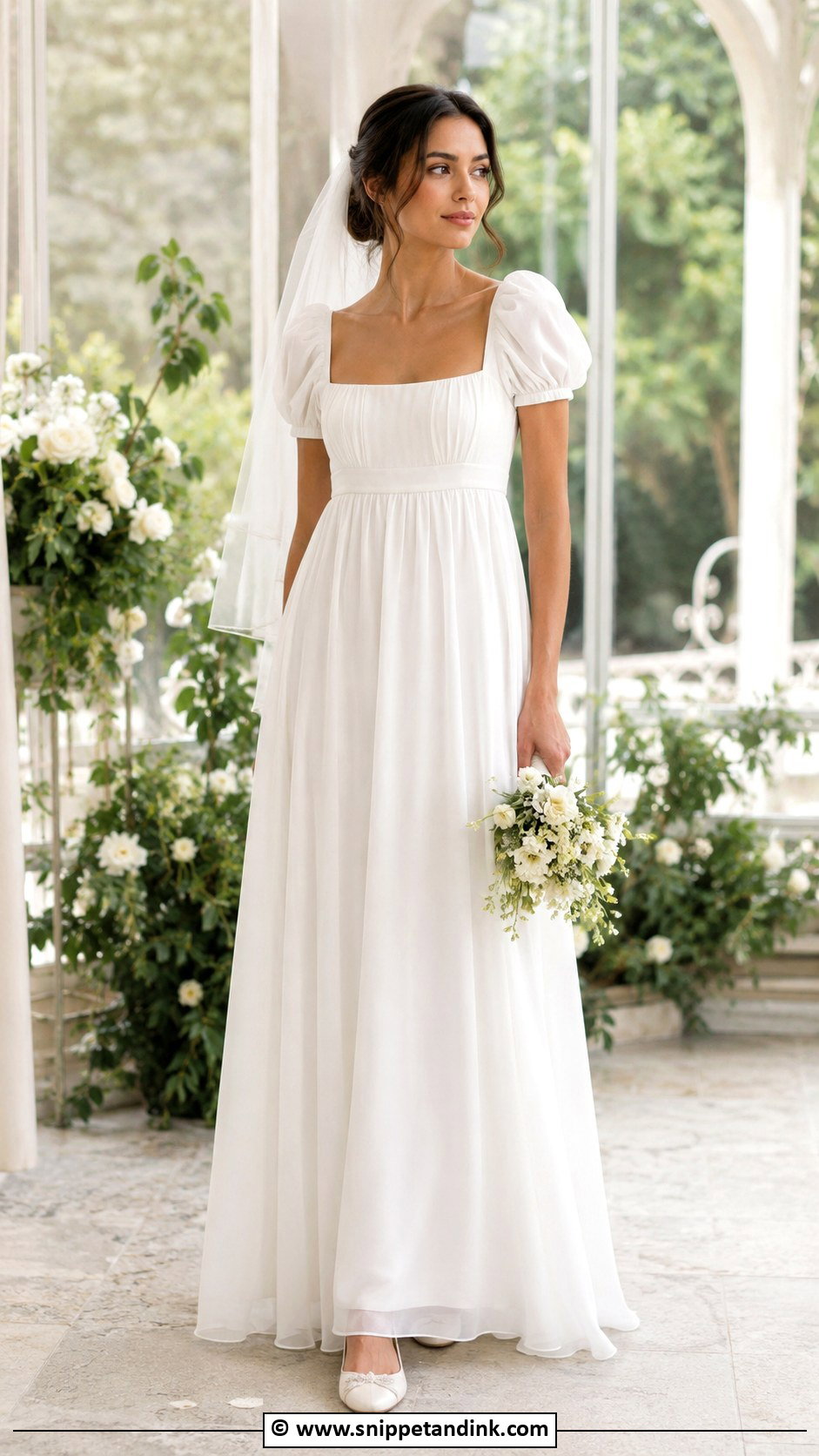
An empire waist sits just under the bust and lets the skirt fall straight from there, which lengthens the whole body. It’s tied to Regency-inspired fashion, but chiffon, silk or light lace keeps it modern, with short puff sleeves, a square neck or ribbon at the waist. Flats or low heels, a simple veil and soft curls. Nothing presses on the waist, which makes it the most comfortable gown here for a long day, and the one I suggest to pregnant brides.
17. Vintage Drop Waist Wedding Gown
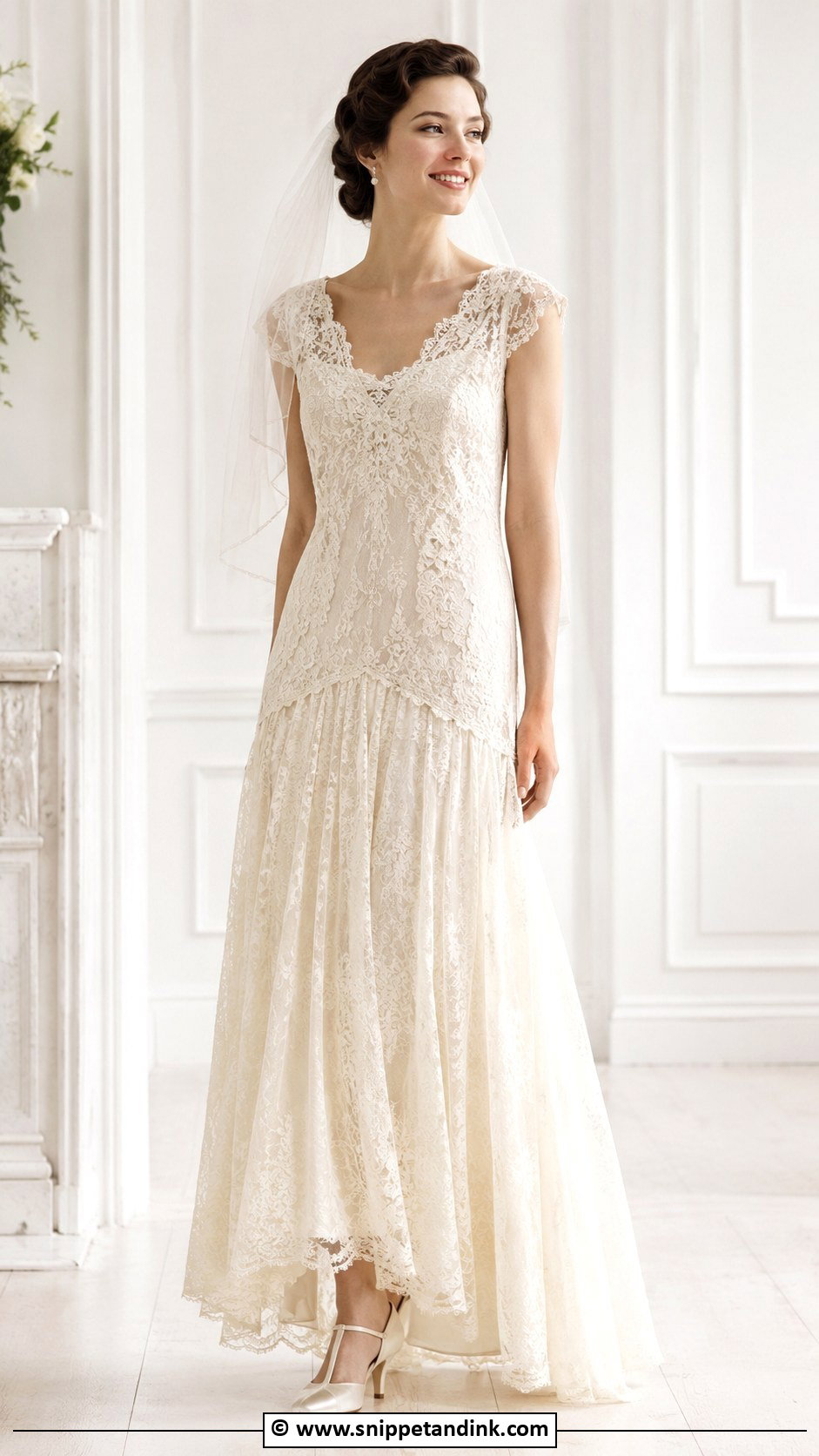
The drop waist runs the bodice below the natural waist before the skirt begins. In lace it feels 1920s; in satin, couture. Seam placement makes or breaks it. On the high hip it lengthens the body, lower down it can shorten the legs, so I mark it with the bride standing in her wedding shoes. Sleek heels, a clean veil and small earrings keep the line long.
18. Vintage Square Neck Wedding Gown
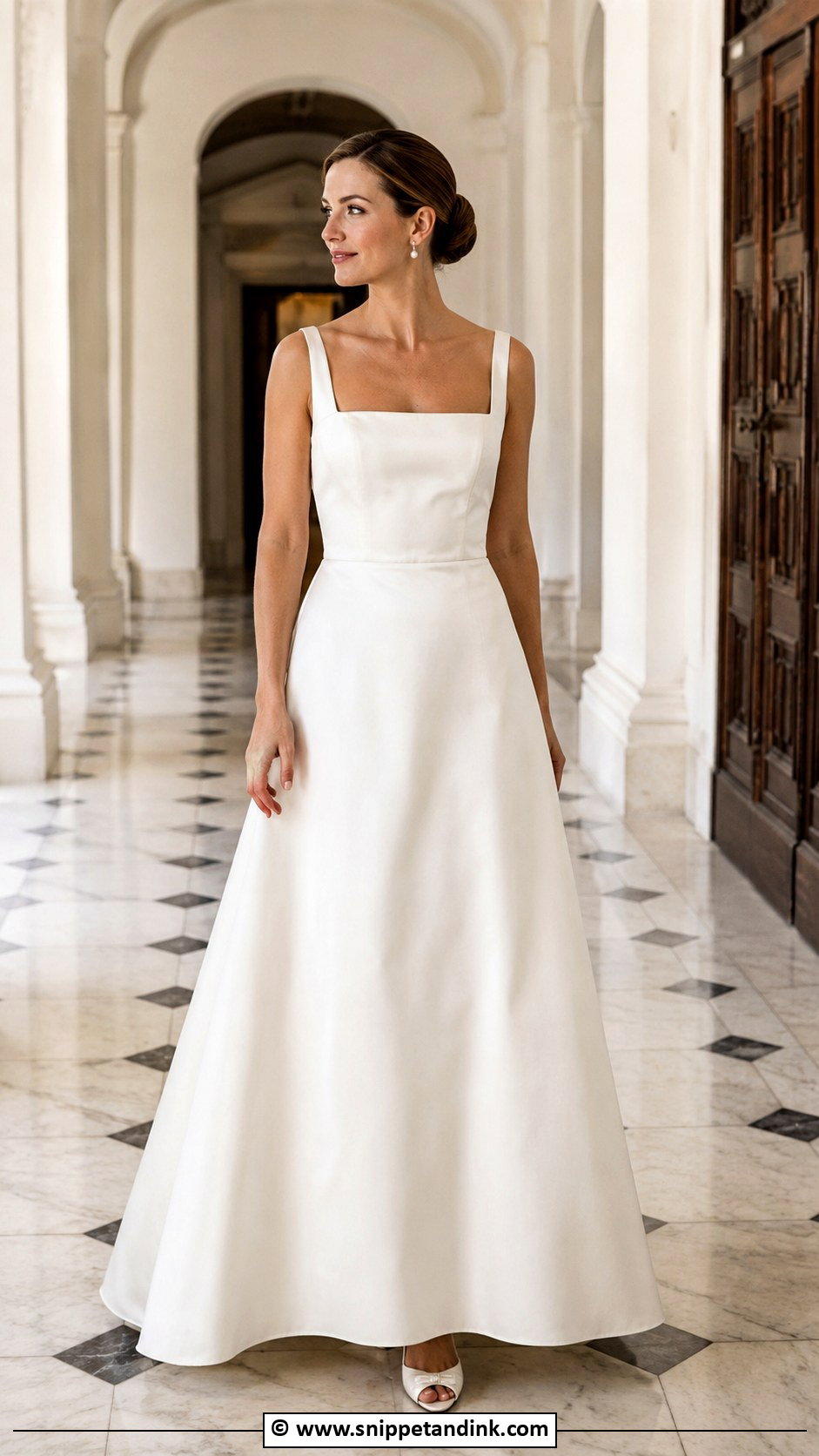
Square necks frame the collarbone and add structure with sleeves, straps or neither. Lace makes it romantic; satin or crepe makes it tailored. A low bun, pearl earrings and classic heels, and a small pendant fits neatly inside the square if you want one. You get shape without the coverage of a high neck. When fitting, I check that the straight edge stays straight as you breathe; a gap at the corners means the bodice needs taking in.
19. Vintage Bateau Neck Wedding Gown
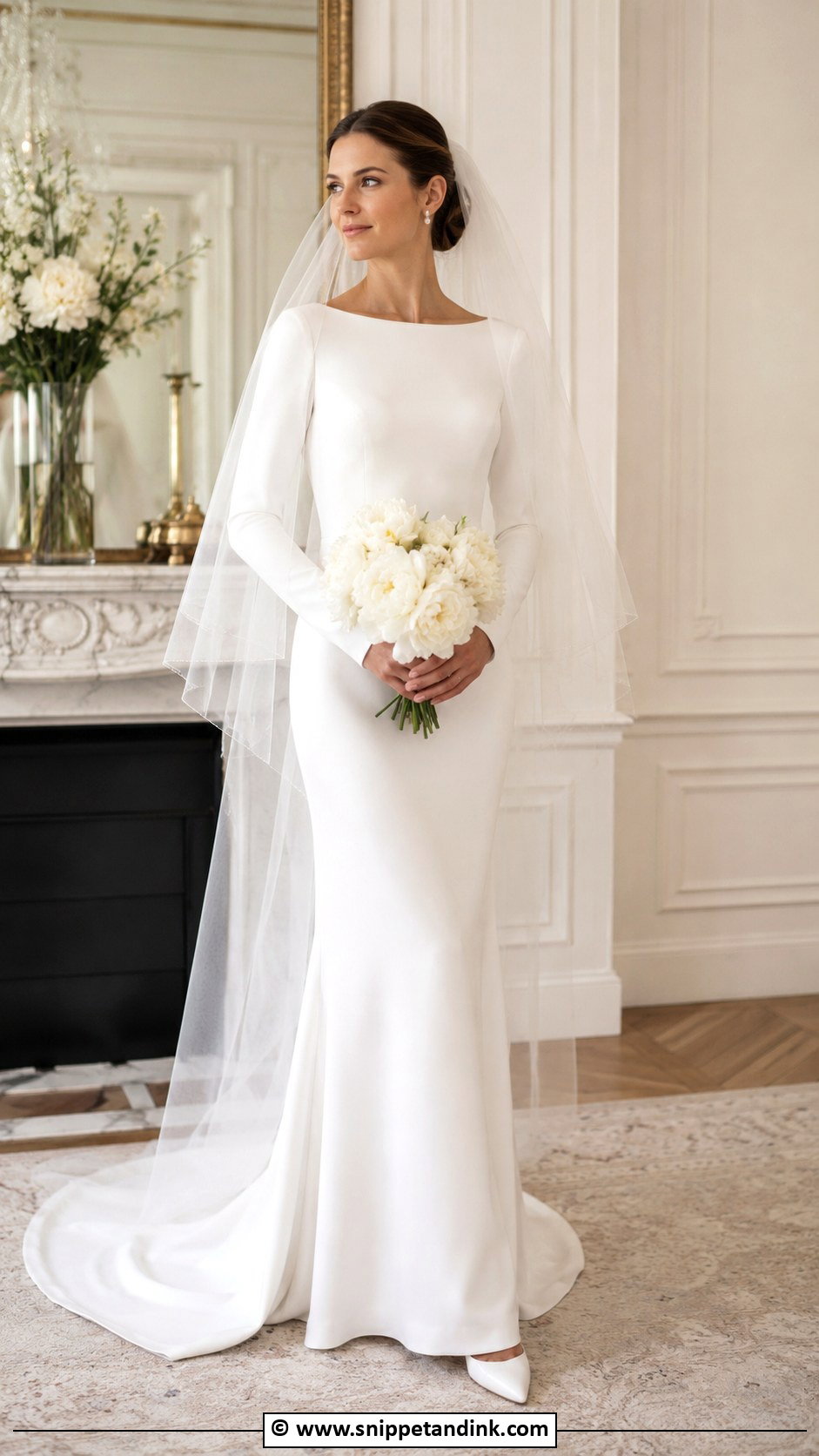
A bateau neck runs from shoulder to shoulder and frames the face cleanly. Satin, crepe and fine lace suit it, with long sleeves, cap sleeves or none. A neat updo, pearl studs and a fingertip veil, and formal settings feel right without it ever looking plain. The wide neckline leaves nowhere for bra straps, so I usually have cups stitched into the dress.

20. Vintage Cap Sleeve Wedding Gown
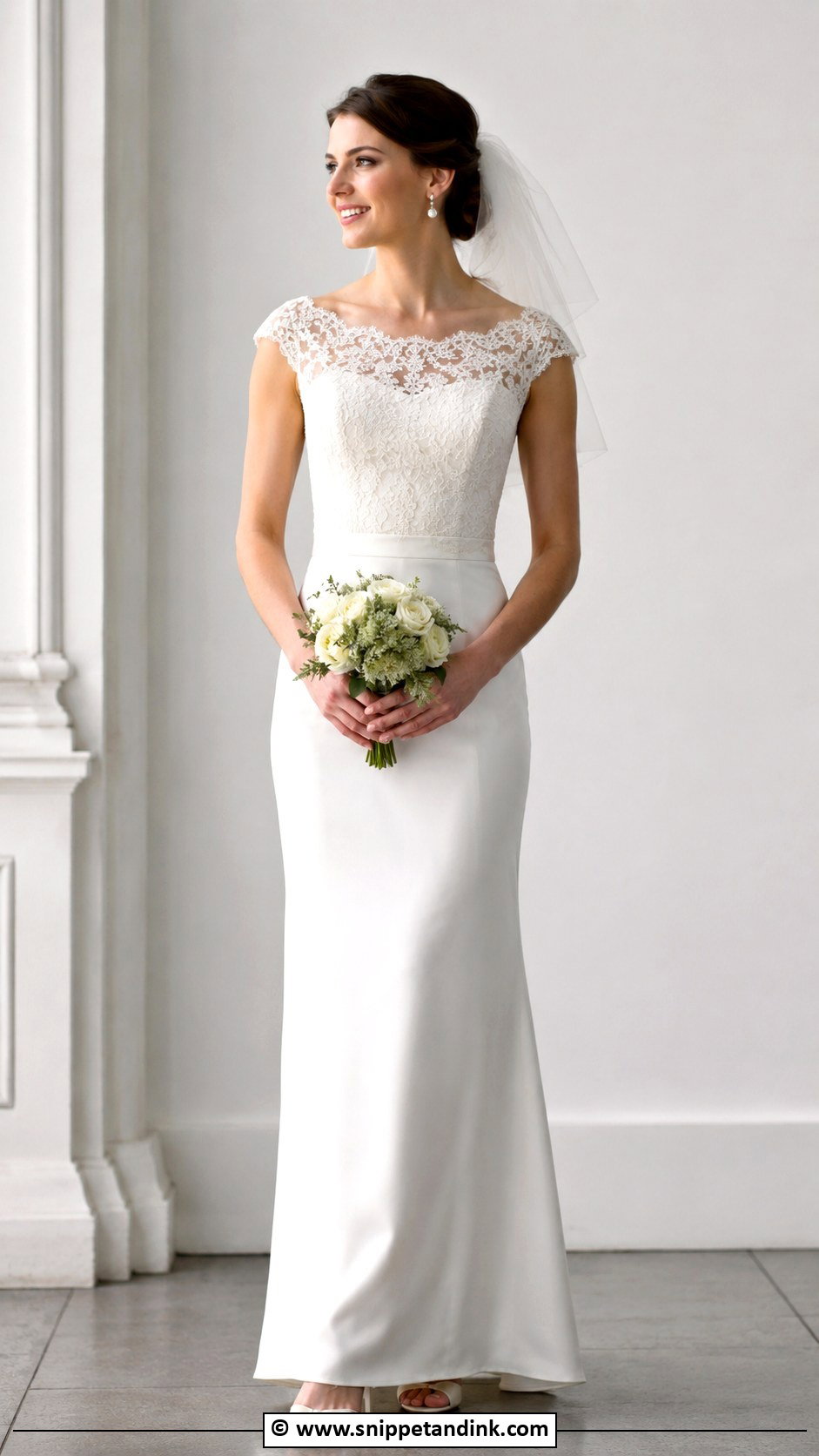
Cap sleeves cover the very top of the shoulder and nothing more, which keeps a dress light in spring and summer heat. Lace, beading or a fitted satin bodice suit them; an A-line skirt keeps it romantic, a sheath makes it neater. Low heels, pearl earrings and a short veil. From fittings: a cap sleeve should end where the shoulder starts to curve down, or it cuts across the upper arm.
21. Vintage Floral Lace Wedding Gown
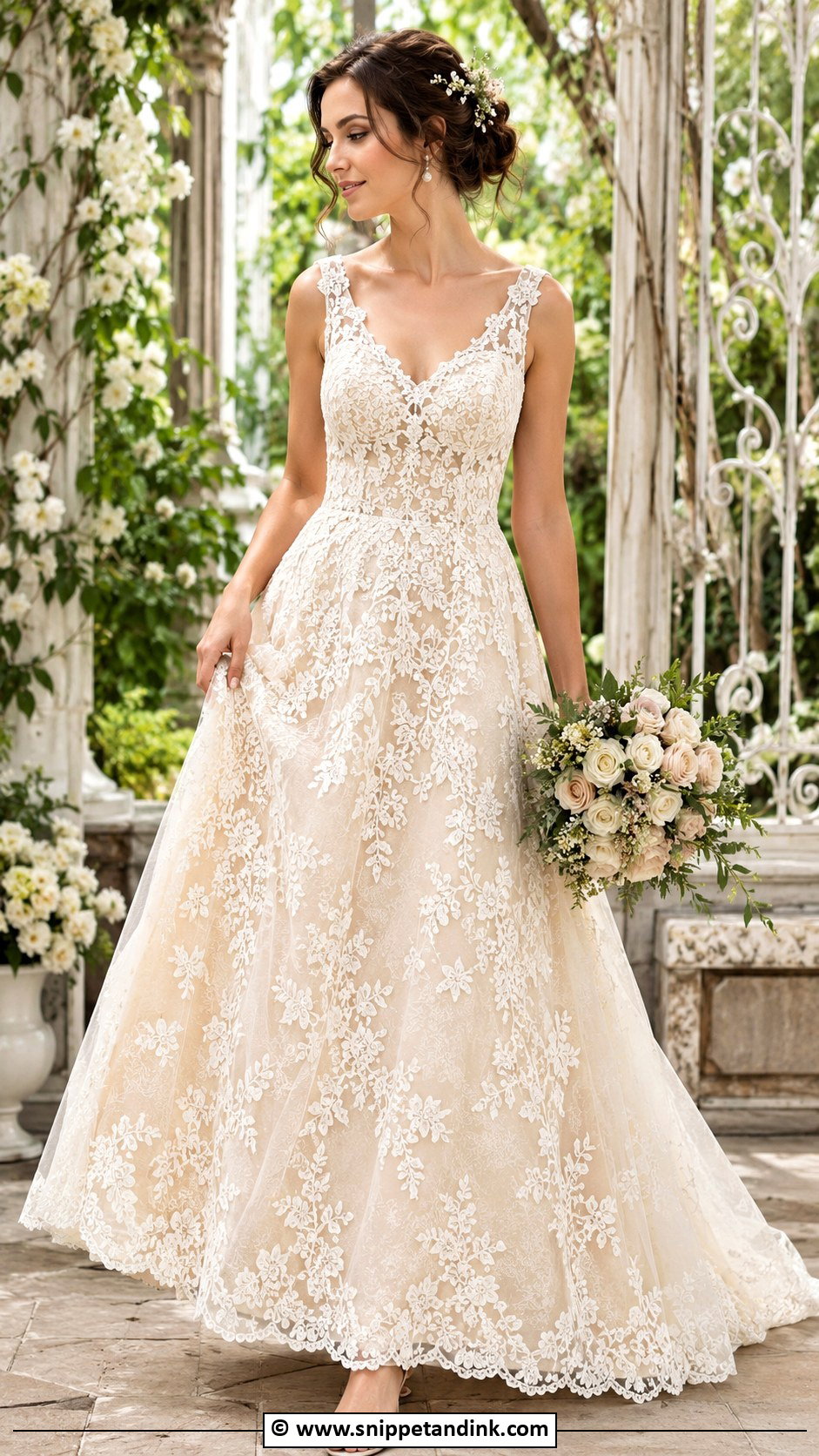
Lace pattern size changes the mood more than people think. Large florals feel bold and garden-like, small patterns delicate and antique. A lining in ivory, nude or champagne makes the motifs stand out. A fitted bodice over an A-line is the balanced choice, though a sheath works too. Floral hair pins, pearl earrings and simple heels, and I’d keep the bouquet loose and natural so it doesn’t fight the lace.
22. Vintage Pearl Wedding Gown
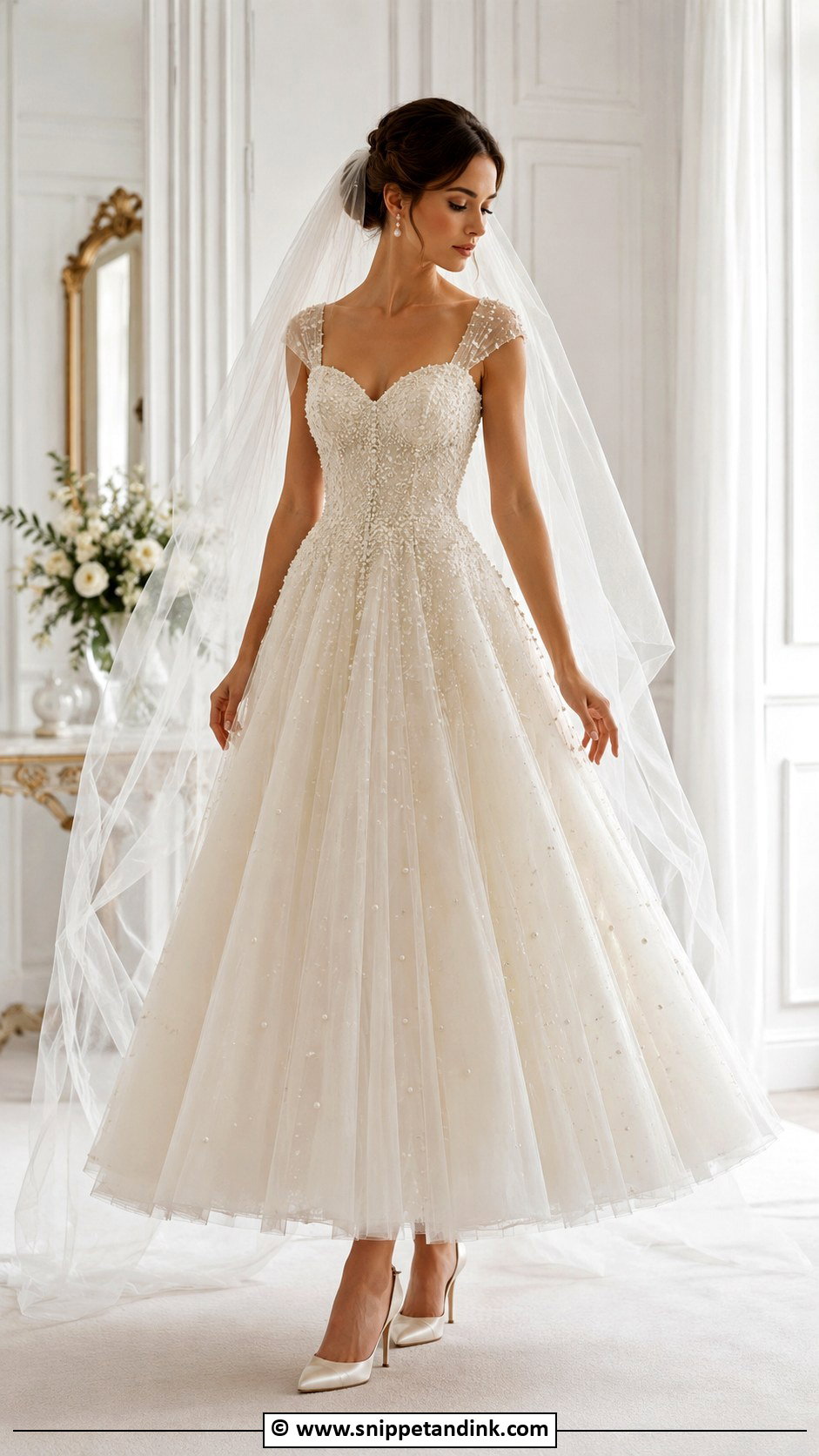
Pearls add texture and a little light without flash. They can trace the neckline, bodice or sleeves, or scatter lightly over tulle. I prefer small pearl details to all-over embellishment, which gets heavy. Pearl drops, satin heels and a clean veil, with a sleek bun or soft waves depending on the shape. Satin, crepe and fine tulle carry pearls best. Ask what they’re made of, too: coated plastic pearls can dull or peel if a steamer gets too close.
23. Vintage Tulle Wedding Gown
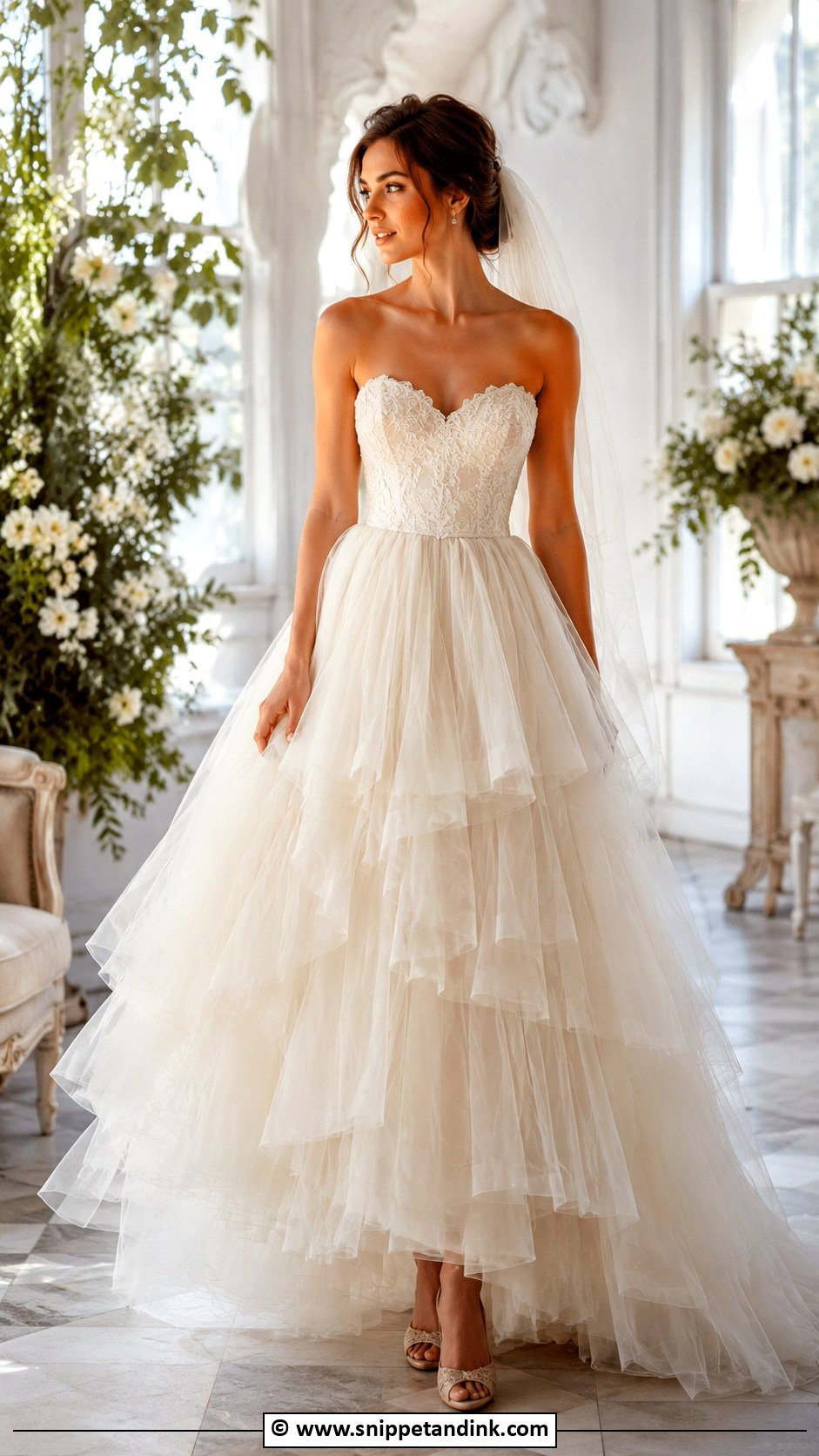
Tulle gives softness and volume with almost no weight, and gentle layers in ivory or cream look romantic. A fitted lace bodice, basque waist or sweetheart neckline pulls it toward vintage. Delicate heels, a simple veil and small earrings, kept minimal if the skirt is very full. Tulle catches the light every time you walk or turn. It also crushes in a car, so I steam it at the venue rather than at home.
24. Vintage Crepe Wedding Gown
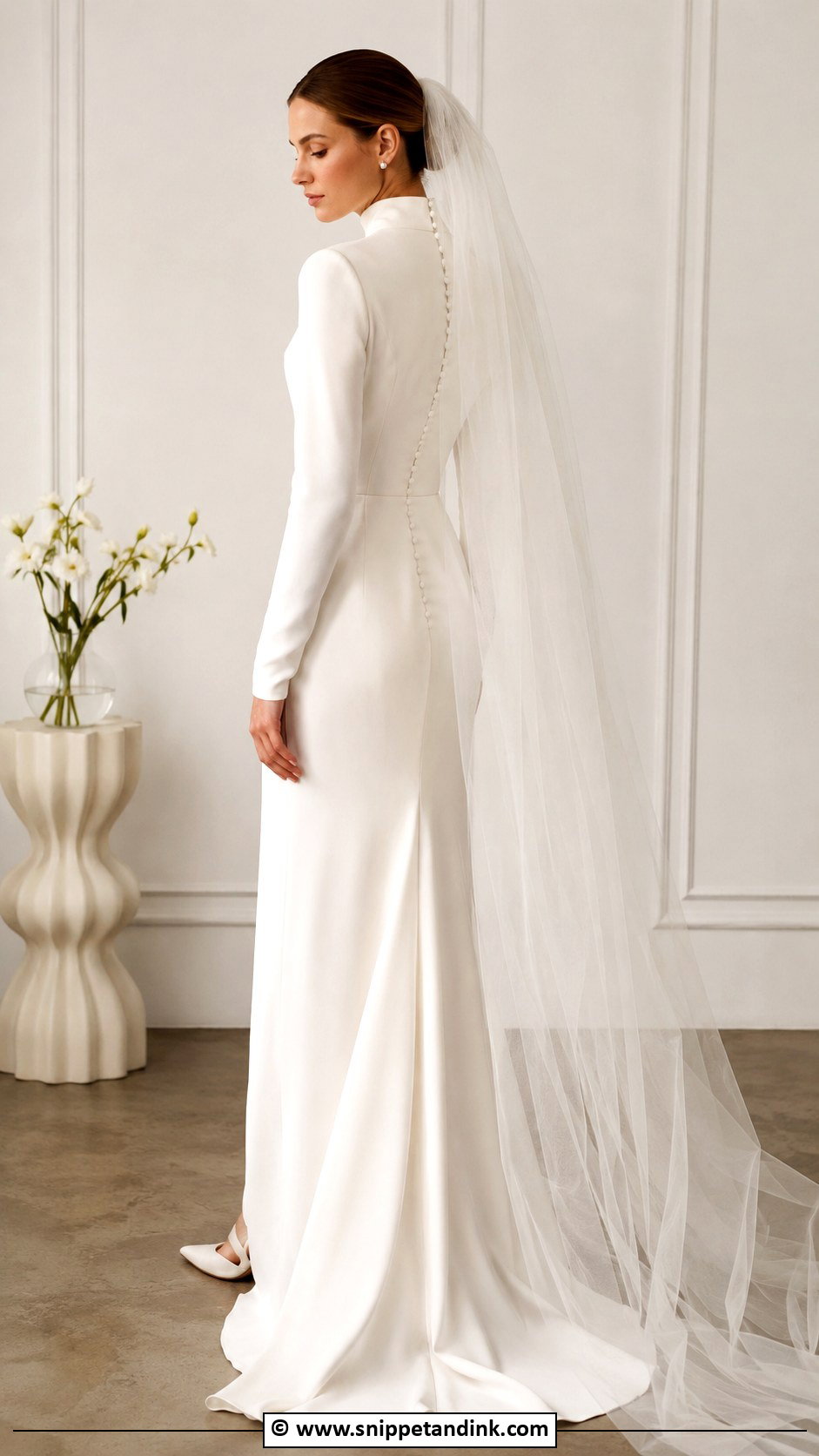
Crepe has a smooth, matte face, so it looks elegant without shine. A long-sleeve crepe gown, bateau neck or covered-button back gives the vintage note, and the fabric suits fitted gowns, A-lines and minimal 1990s shapes. Crepe shows the body clearly. Tailoring matters, and the goal is a skim, not a cling. Pointed heels, pearl studs, a simple veil. I’d hand this to anyone who wants no lace and no sparkle at all.
25. Vintage Silk Wedding Gown
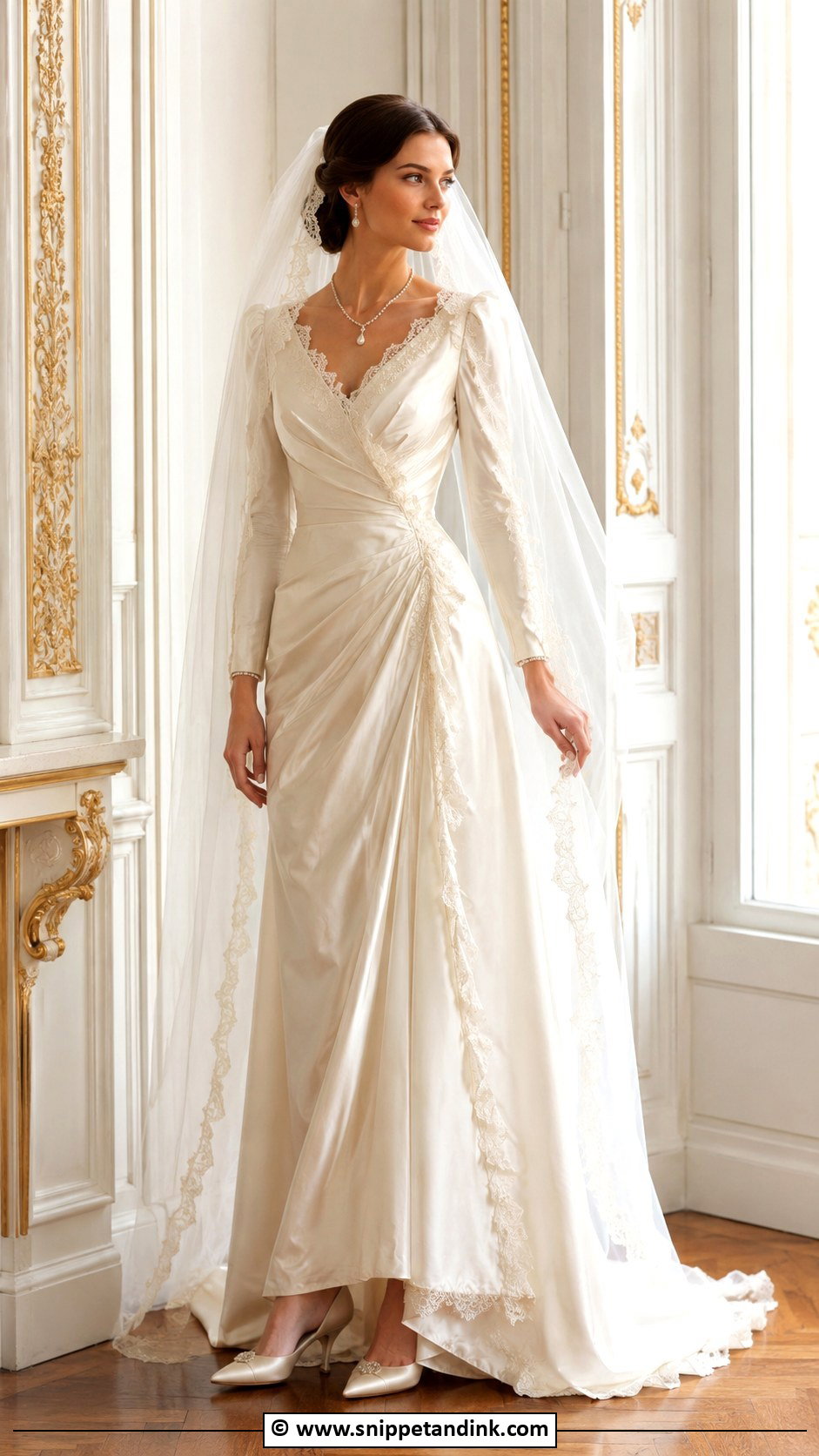
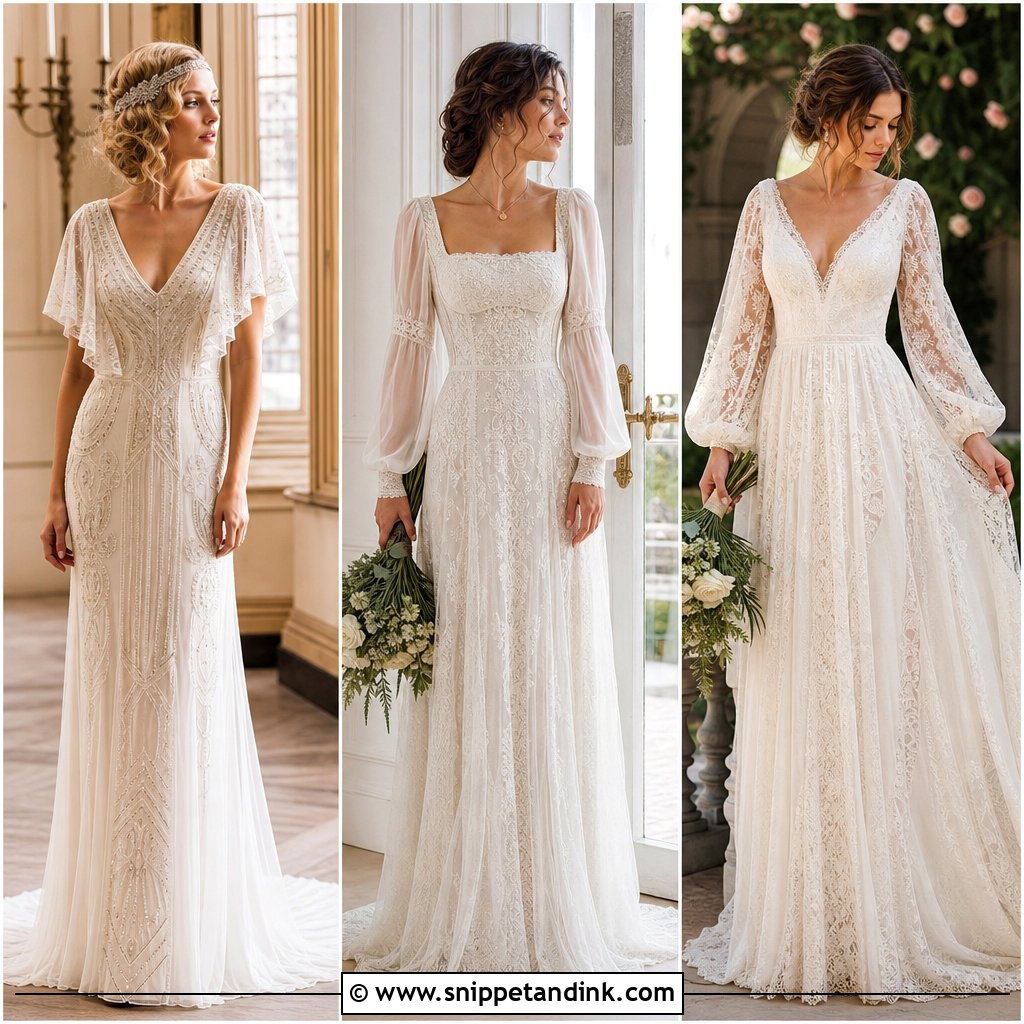
Silk has a natural glow that needs very little decoration, in slip dresses, bias cuts, A-lines or draped shapes. Silk heels, delicate jewelry and a sheer veil, with covered buttons, a cowl neck or lace trim for more vintage detail. Ivory, pearl or antique white soften it. Silk wrinkles when you sit, more than polyester satin does, so I warn brides to expect some creasing in the later photos and not to fret about it.
26. Vintage Satin Wedding Gown With Gloves
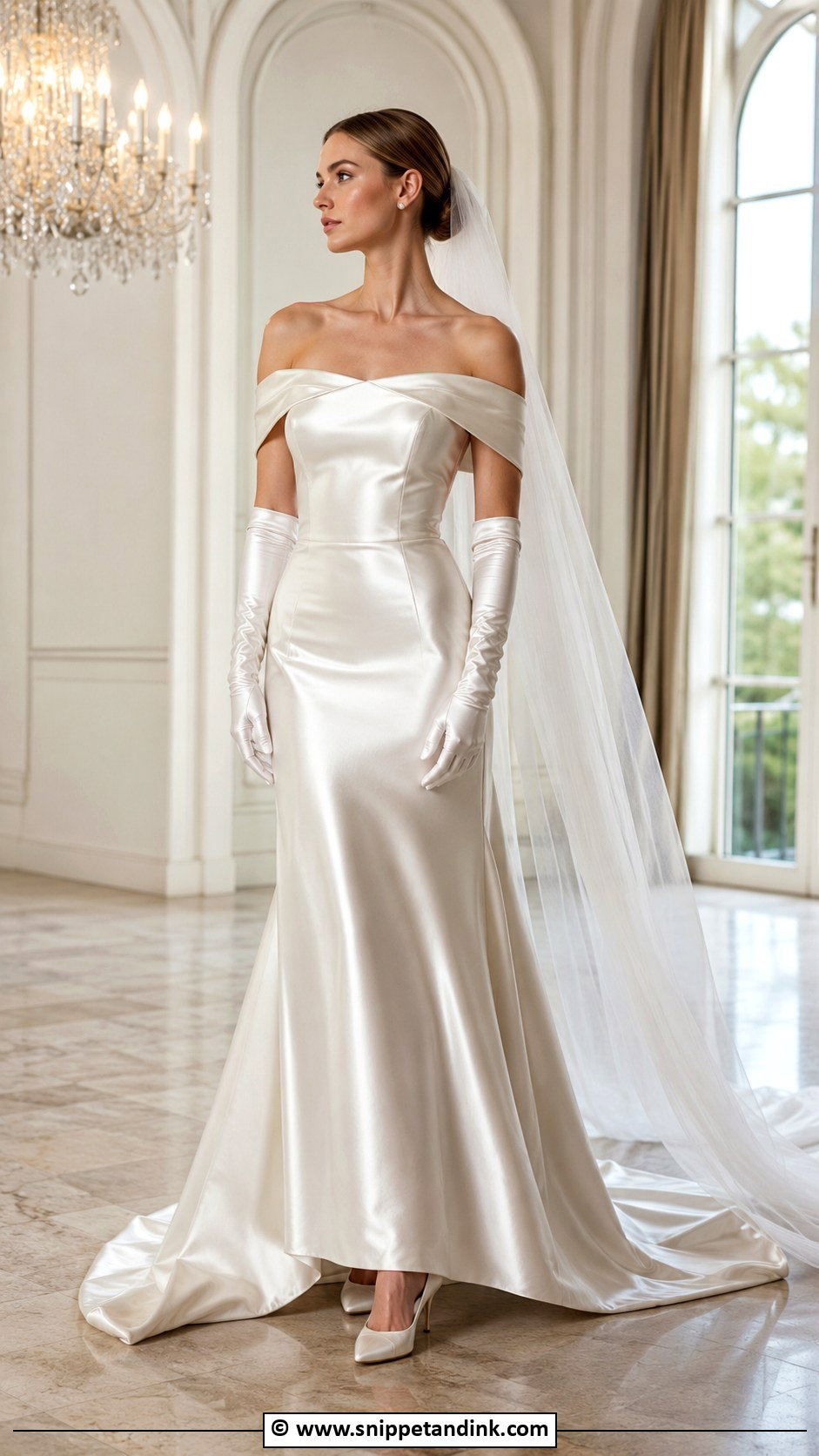
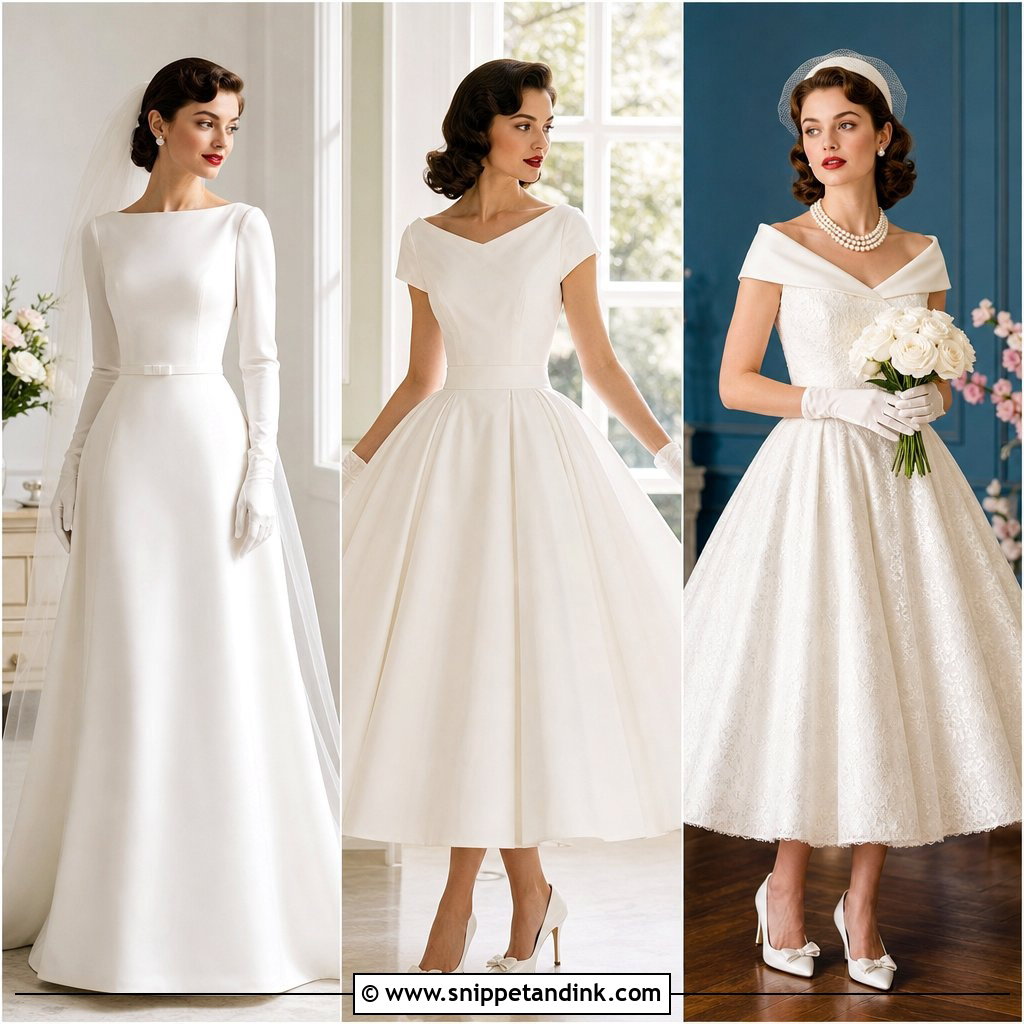
Satin and gloves is the old Hollywood pairing. The gown can be fitted, A-line or a ball gown; satin supplies the smooth finish, and gloves add drama with off-shoulder or strapless necklines. Opera length for formal, wrist length for softer. Pearl studs or small crystal earrings, a sleek bun and a clean veil. I’d buy gloves slightly roomy in the fingers, because tight ones are hard to peel off for the ring.
27. Vintage Wedding Gown With Veil
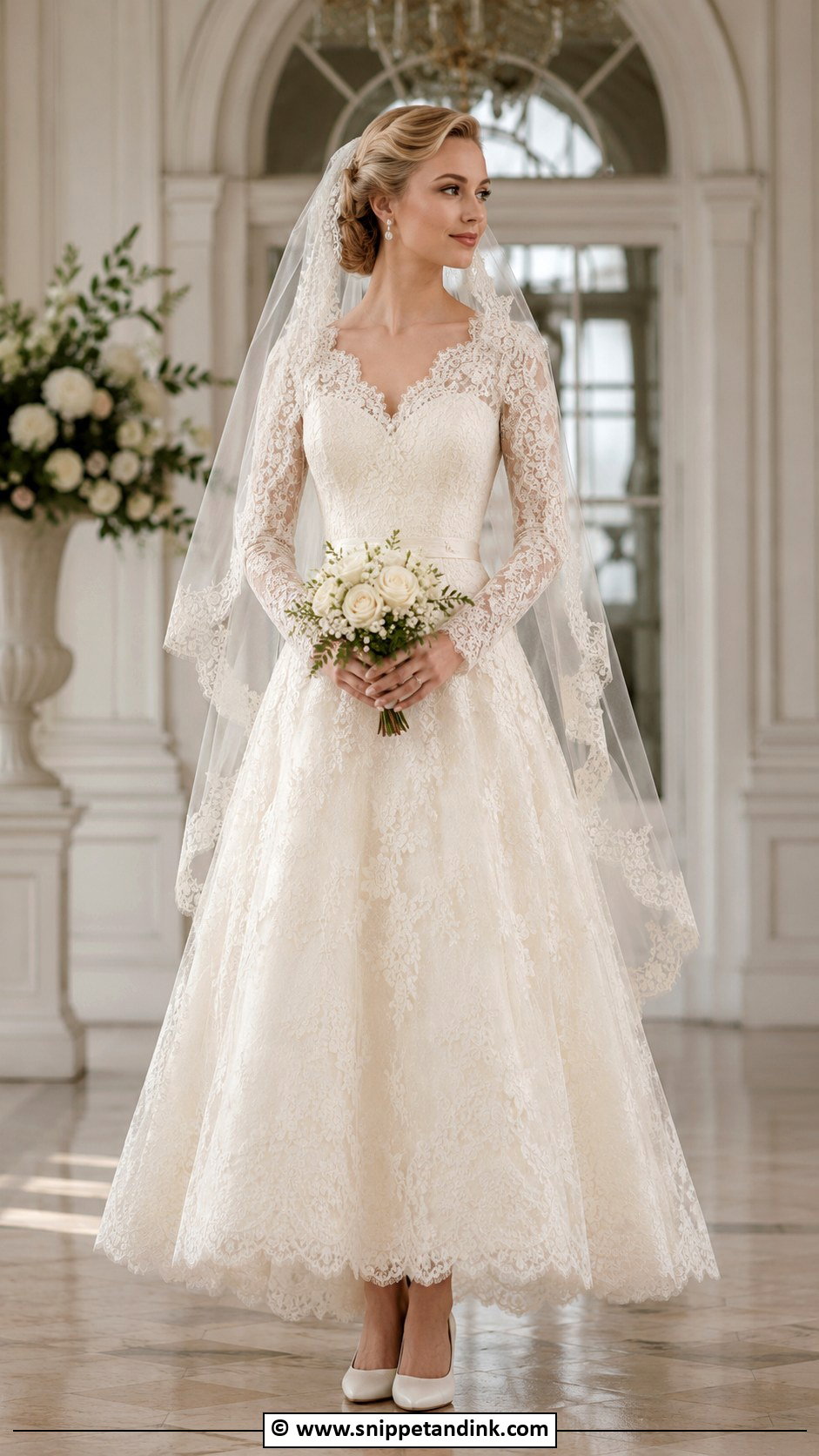
A veil should belong to the same era and detail level as the gown. Lace gowns suit a lace-edged veil, satin gowns a plain sheer one. A birdcage gives a 1950s touch, a cathedral veil formal drama. The rule I use: heavy dress, light veil; simple dress, more texture in the veil. Classic heels, pearls and soft hair. Always try them together at a fitting, since two ivories can look quite different side by side.
28. Vintage Wedding Gown With Bow
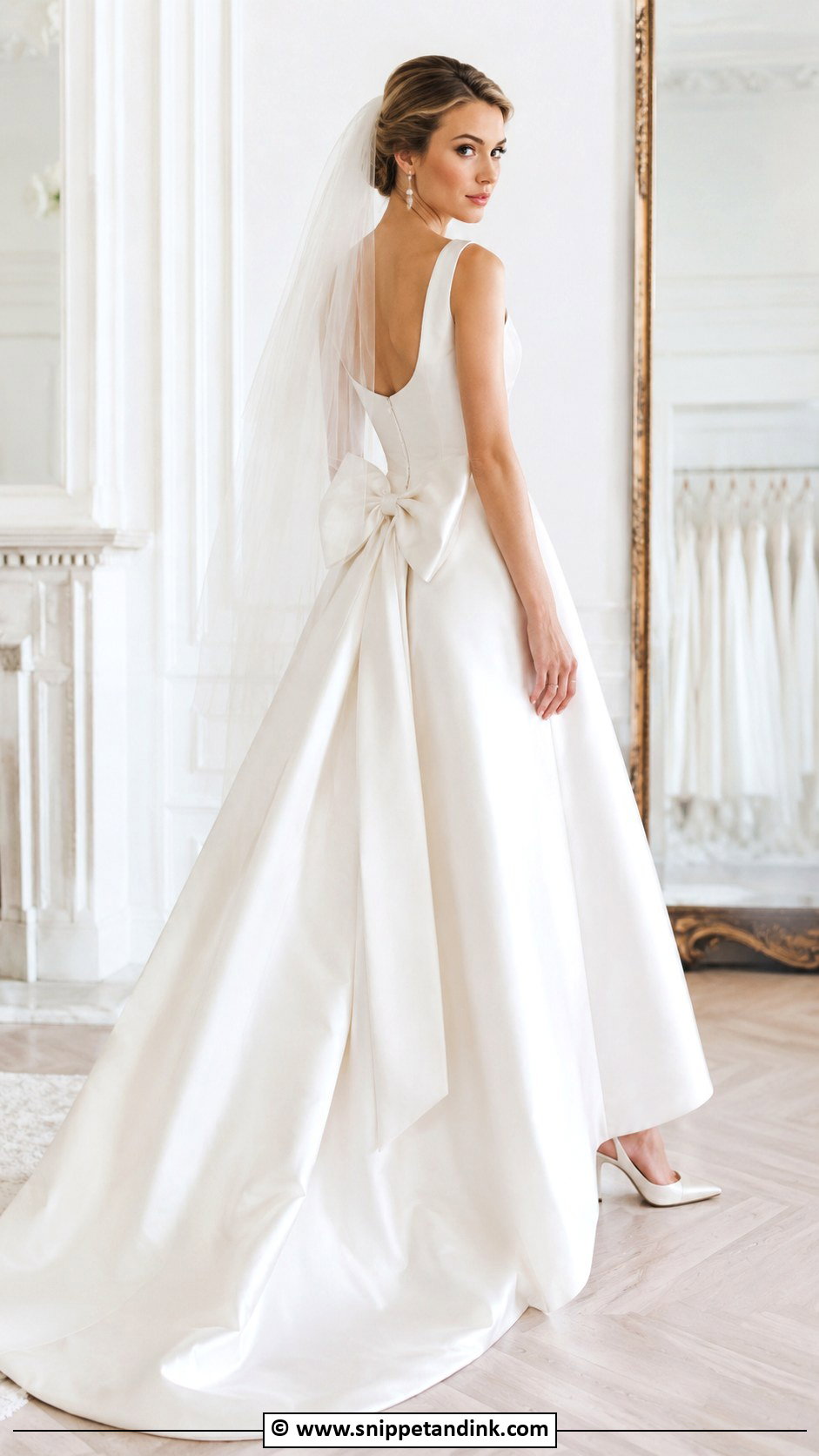
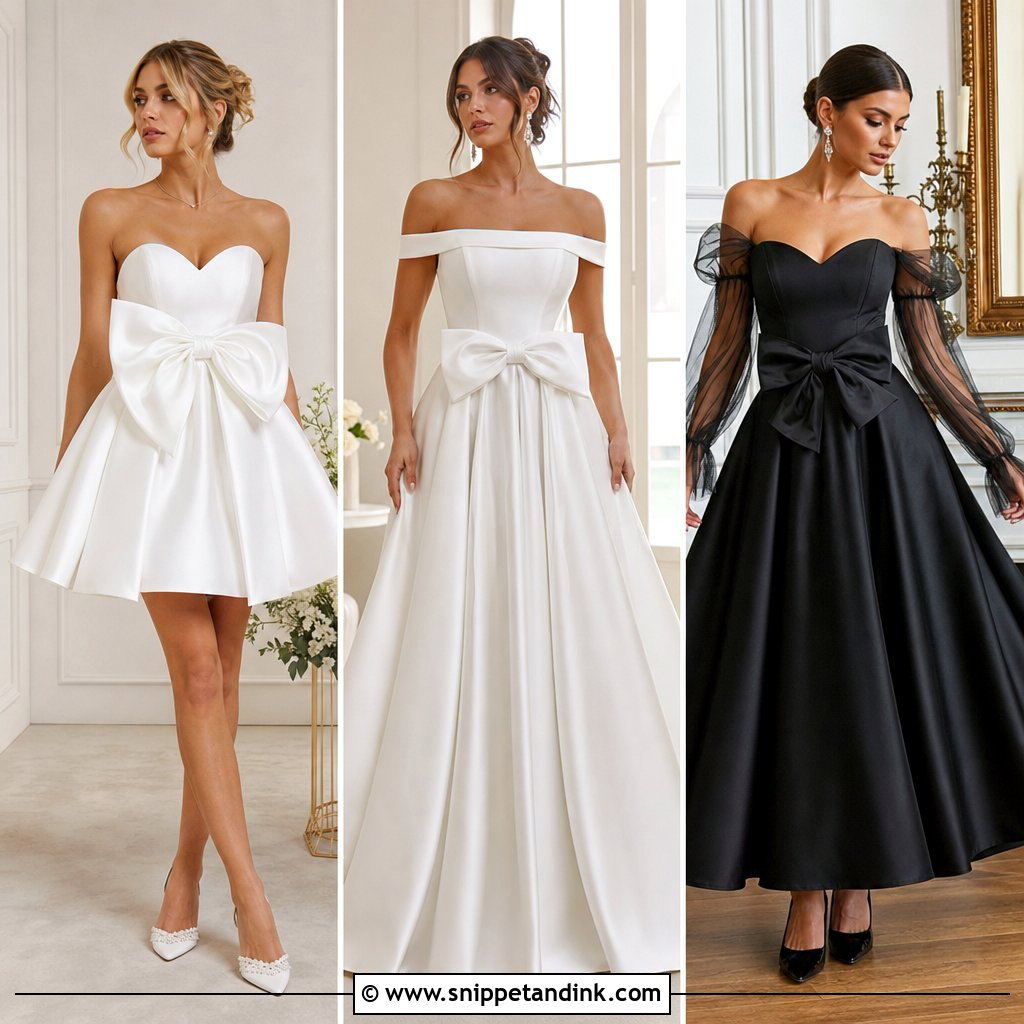
Bows can sit at the waist, back, shoulder or neckline. Satin bows look polished, tulle bows softer and more playful. Simple heels, pearl earrings and a clean veil keep the bow as the one accent. Tea-length dresses, A-lines and satin silhouettes carry it best. Oversized bows date fast; a medium bow placed with intent ages better in photos.
29. Vintage Wedding Gown With Jacket
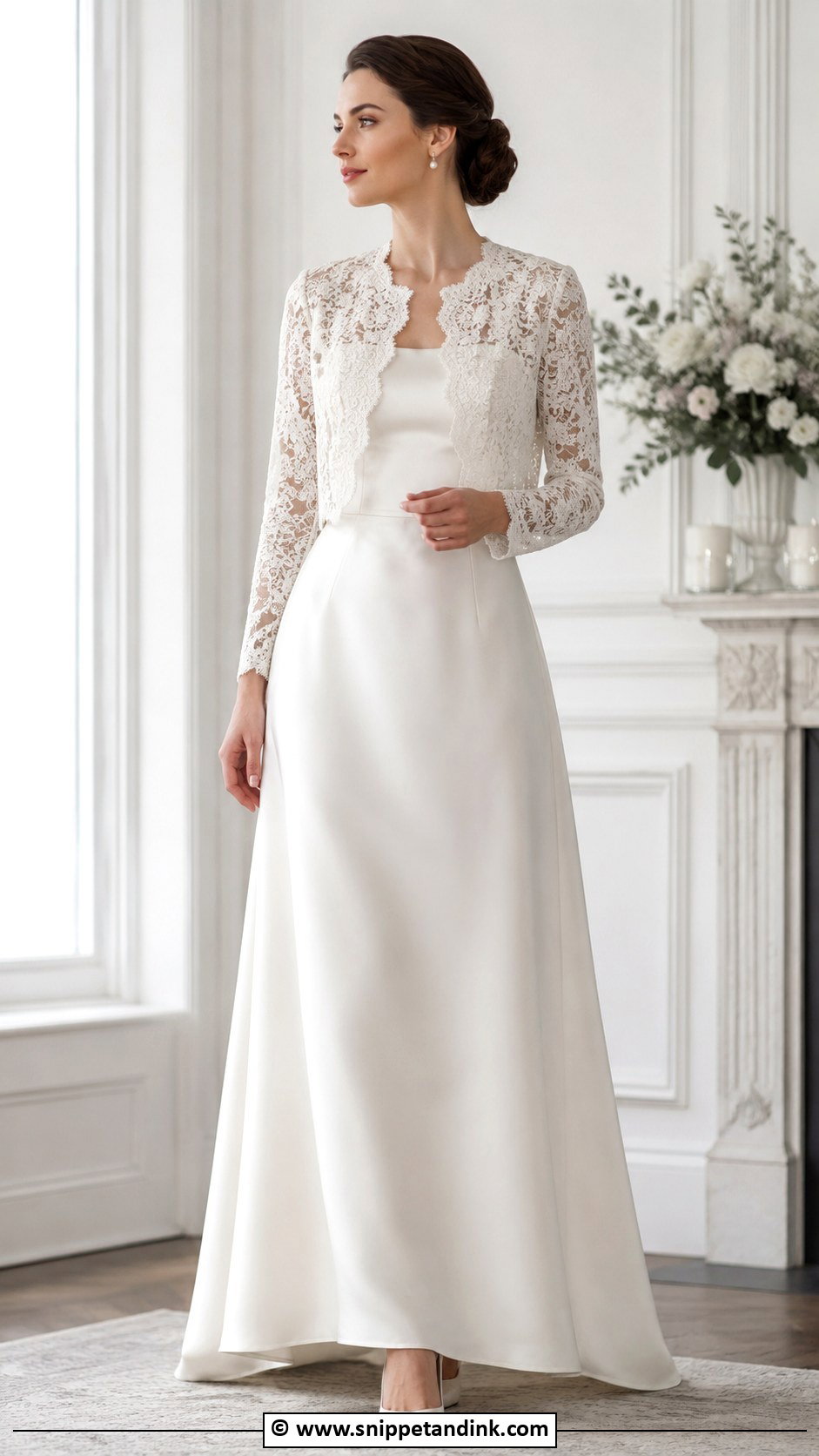
A jacket gives coverage and a two-part look. Lace softens a simple satin gown; a cropped satin jacket makes the outfit tailored. It’s a good answer for cooler months, formal venues or a modest ceremony followed by a lighter reception. Classic heels, pearl earrings and neat hair. I watch fit at the shoulders and waist, because a jacket loose at either point hides the dress underneath.
30. Vintage Two Piece Wedding Gown
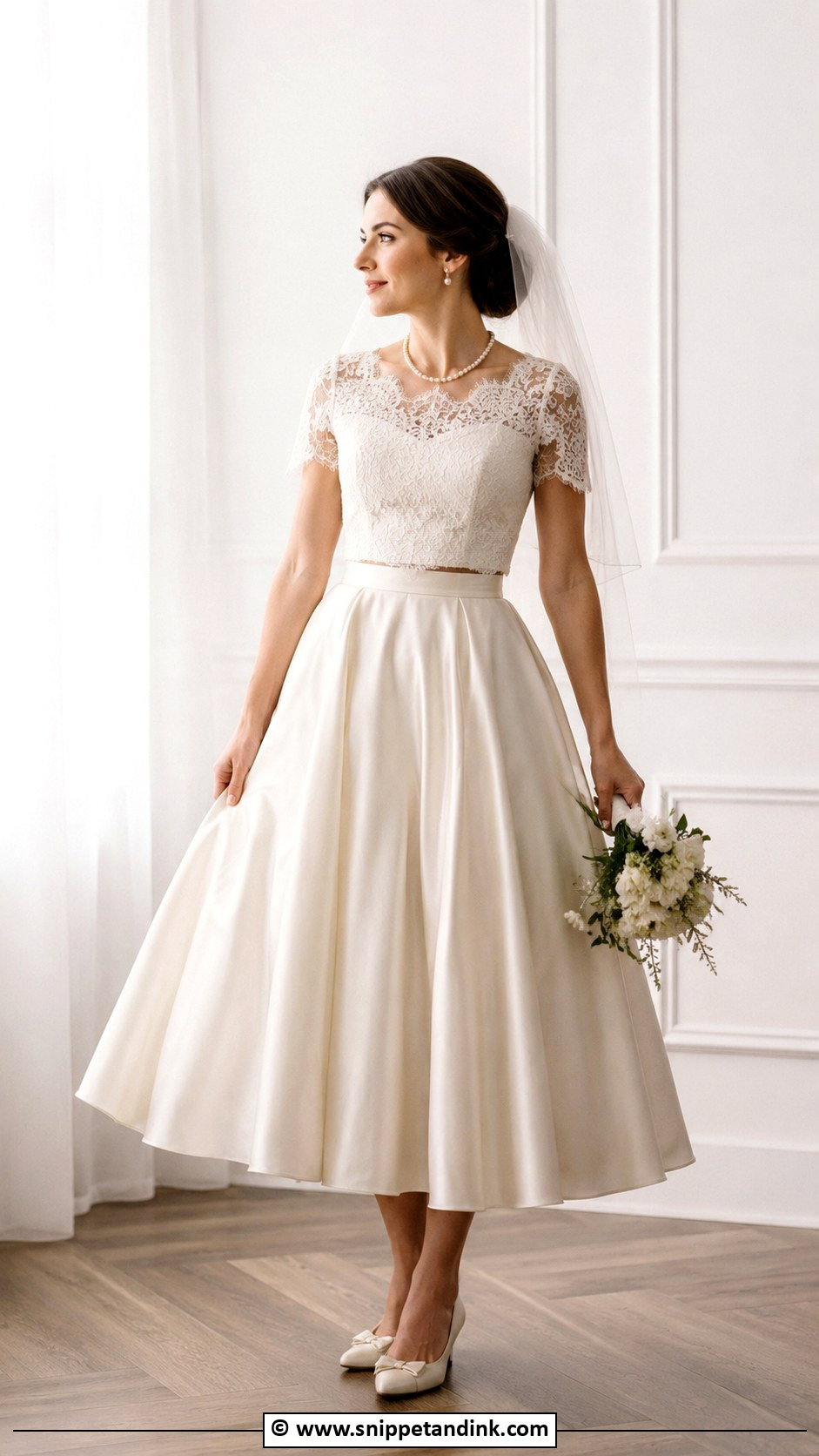
Two pieces let you fit top and skirt separately, a real advantage if you’re a different size above and below the waist. Think lace top with full skirt, satin crop bodice with A-line, or a tailored jacket and matching skirt. Keep the fabrics consistent so it looks intentional. Low heels, pearl accessories and a simple veil or hair bow. I check the waistband sits high enough that no skin shows when you raise your arms, unless that’s the plan.
31. Vintage Short Wedding Dress
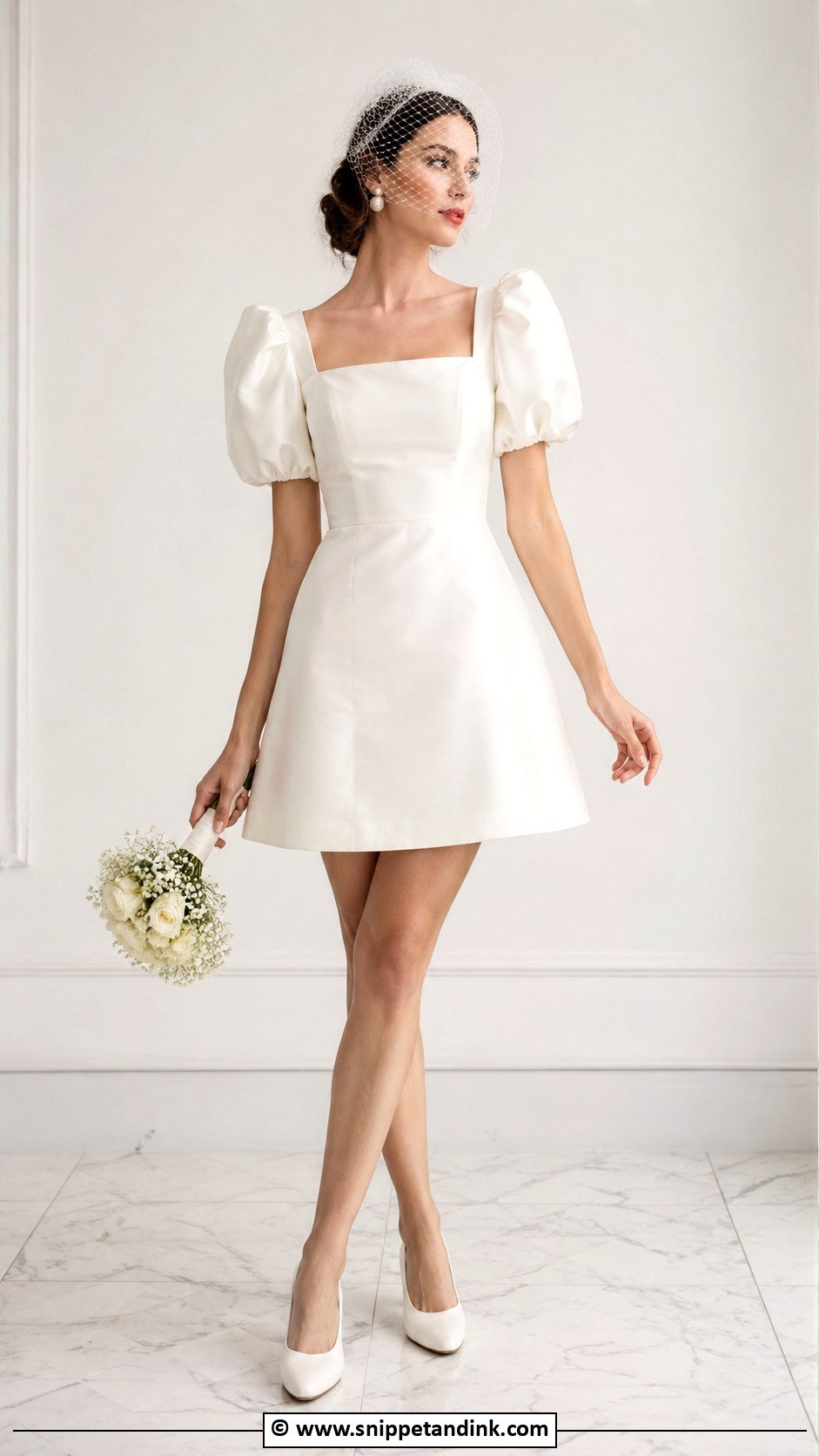
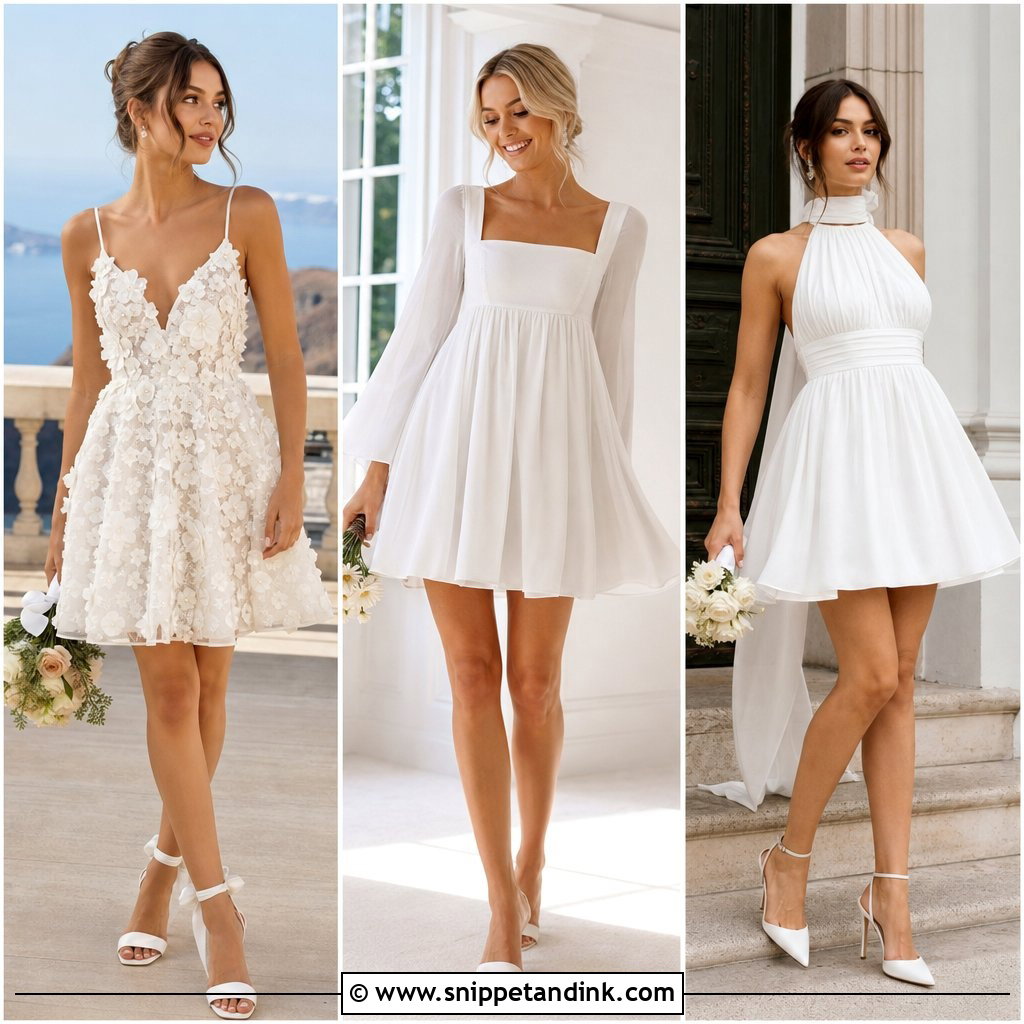
A short dress suits courthouse weddings, receptions and elopements, and lets you move freely. For a vintage edge look for lace, satin, puff sleeves, a bow waist or a structured 1960s shape. Block heels, pearl earrings and a birdcage veil or headband. Shoes are half the outfit at this length, so choose them for comfort as much as looks. I always check how the hem behaves when you sit, since short skirts ride up more than brides expect.
32. Vintage Halter Wedding Gown
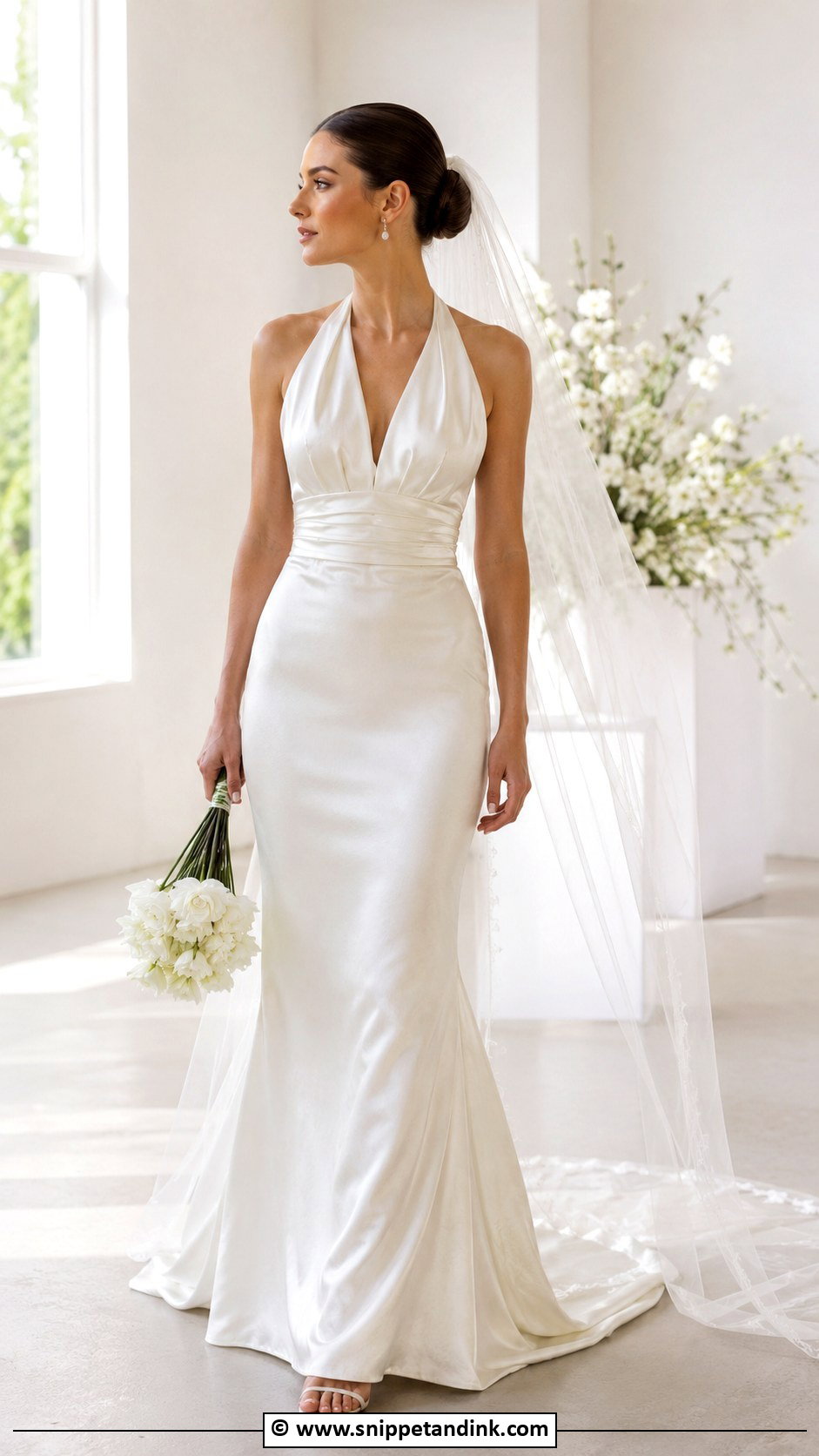
A halter pulls the eye up to the shoulders and face. In satin, crepe or lace it can feel inspired by the 1970s or the 1990s depending on the cut. A high halter is refined, a tie-neck relaxed. Drop earrings, a sleek updo, simple heels and no necklace. Halters put weight on the back of the neck, so heavier fabrics need an inner bodice to share the load or you’ll feel it by evening.
33. Vintage Boho Lace Wedding Gown
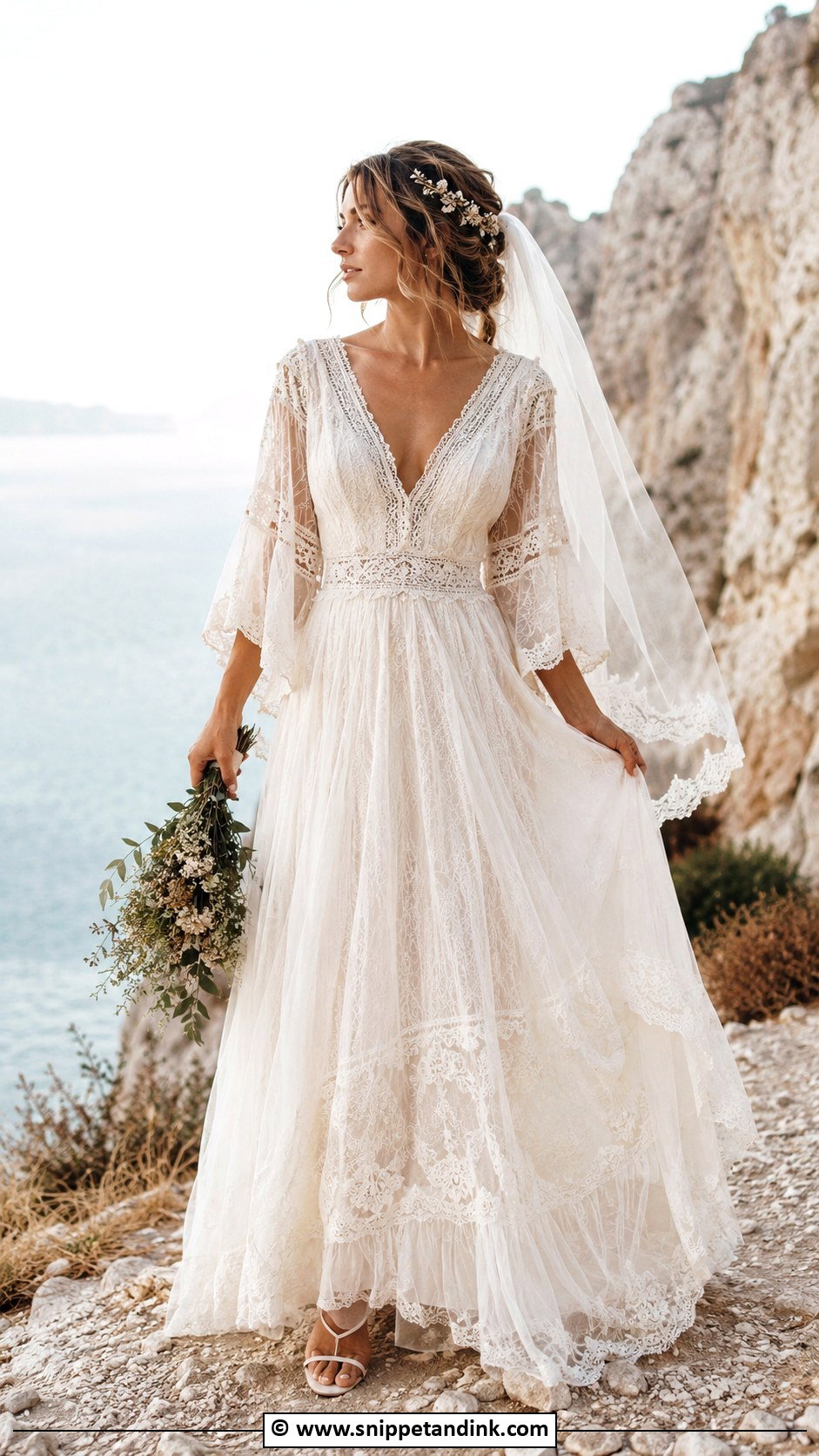
Boho lace should move and feel easy: soft lace, flowing sleeves, an unstructured skirt and a comfortable waist. Simple sandals or low heels, loose waves, delicate pins, and a light veil or cape if you want one. Ivory or warm cream lace looks older and more natural, at home outdoors or at a rustic venue. Long flared sleeves dip into food and snag on chairs, so I sometimes add a discreet loop to hold them back during dinner.
34. Vintage Minimalist Wedding Gown
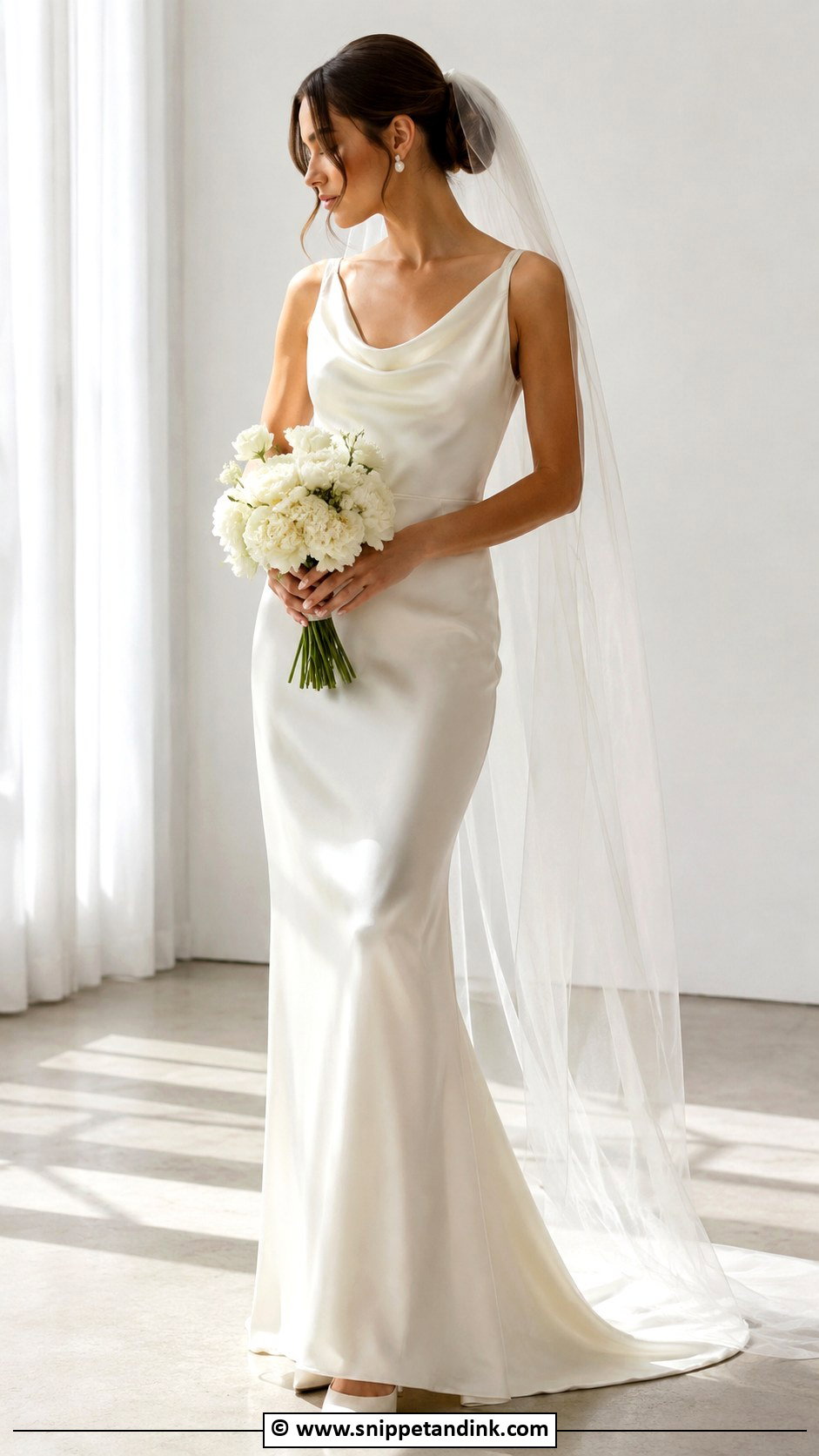
Minimal vintage means quiet detail: 1990s slip dresses, plain crepe gowns, satin columns and smooth A-lines, finished with a cowl neck, covered buttons, a square neck or a careful drape. Sleek heels, small pearl earrings and a plain veil. Fabric and fit carry everything, so I’d spend on tailoring before accessories. No lace, no sparkle, no volume, and nothing to hide behind.
35. Vintage Heirloom Wedding Gown
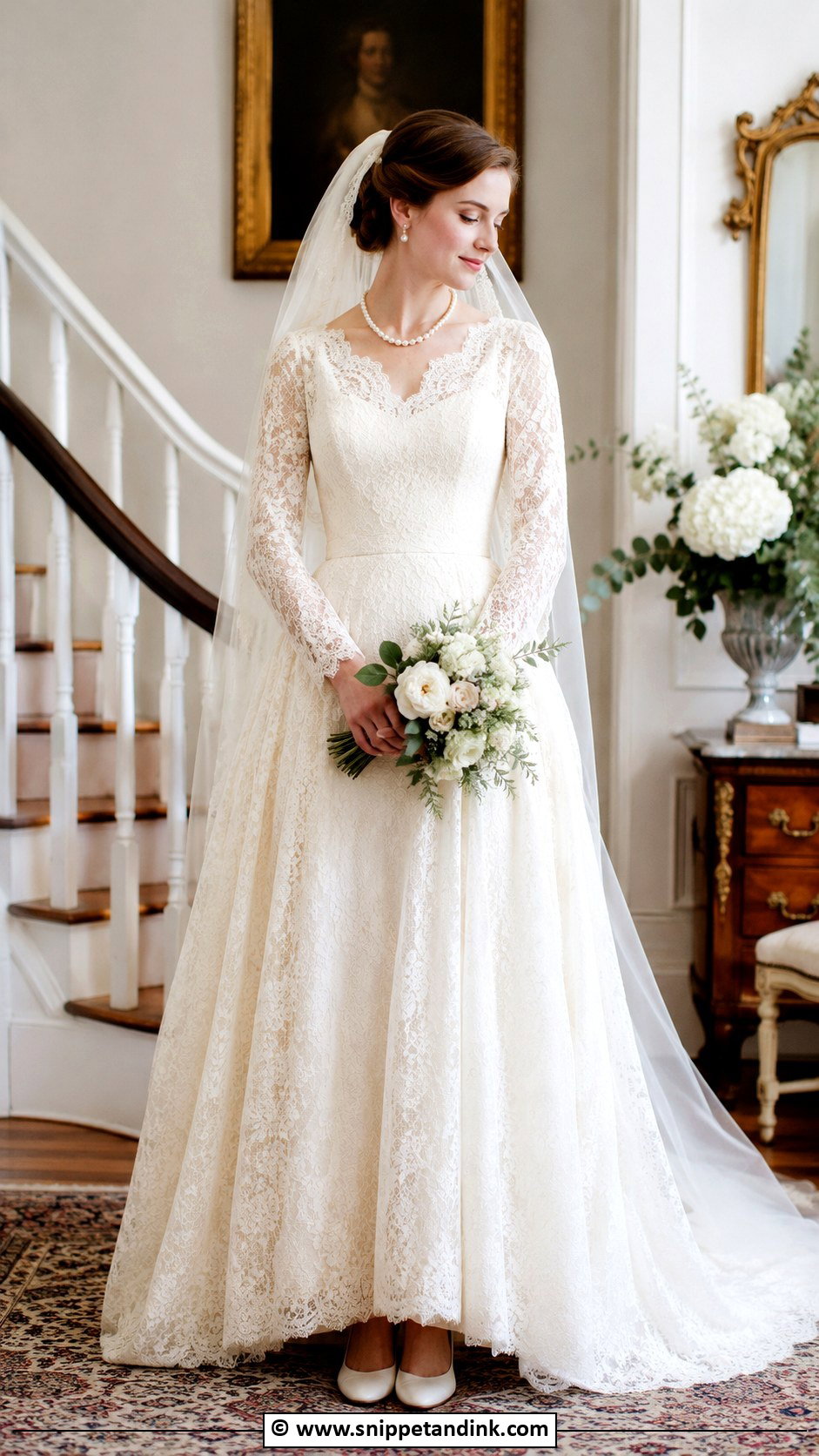
An heirloom gown carries family memory, whether it’s a restored family dress, a true vintage find or a new gown made to look passed down. The real work is making it fit your body and your day. Alterations can change the neckline, sleeves, hem or lining and still keep the original character. Sentimental jewelry, classic shoes and a veil that suits the dress. With aged fabric, choose a tailor who has handled old textiles before. Nothing else on this list is as personal.
The Foundations Under a Vintage Gown
Vintage silhouettes were cut for the underwear of their time, and that’s the part brides most often skip. Bring the exact pieces you’ll wear to every fitting, because a hem set without your petticoat or a bodice fitted over the wrong bra will be wrong on the day.
Bias satin and slip shapes
Smooth, laser-cut briefs and a nude slip or light shaping layer stop lines from showing. I’d test them under the dress in daylight, not just the fitting room lights.
Full 1950s skirts
A petticoat sets the hem length, so buy it before alterations. Soft layered tulle gives volume without scratching; hooped crinolines are fuller but harder in a car and on stairs.
Low backs, halters and wide necklines
Sewn-in cups are usually more secure than adhesive ones over a long, warm day. Ask your seamstress about adding them while the bodice is open anyway.
Remaking Your Mother’s Dress Without Losing It
A family gown rarely fits a new bride as it stands, and the choices run from light to drastic. You can wear it with small fixes to hem and closures, alter it more seriously with new sleeves or a lowered neckline, or rebuild it into a different silhouette altogether. Some brides use part of it instead: the lace edging a new veil, or fabric made into a sash or something sewn into the lining.
Talk to whoever owns the dress before anything is cut. Ask the seamstress to try changes in a cheap test fabric first, and keep every removed piece in a labeled bag. If the original ever needs repair, or another bride in the family wants to wear it, those scraps are the only perfect match left.
Which Decade Feels Like You?
A vintage gown brings mood, history and texture along with its silhouette. Drawn to 1920s beadwork, 1930s satin, Victorian lace, 1950s tea length or 1990s minimalism? There’s an era-inspired option for every kind of wedding. Judge each one by comfort, how it moves when you walk and sit, and whether it still feels like you. I’d put fabric and fit ahead of any trend, then choose the few details that make you feel at ease in your own skin.
You'll Like These Ideas:






Leave a Reply