
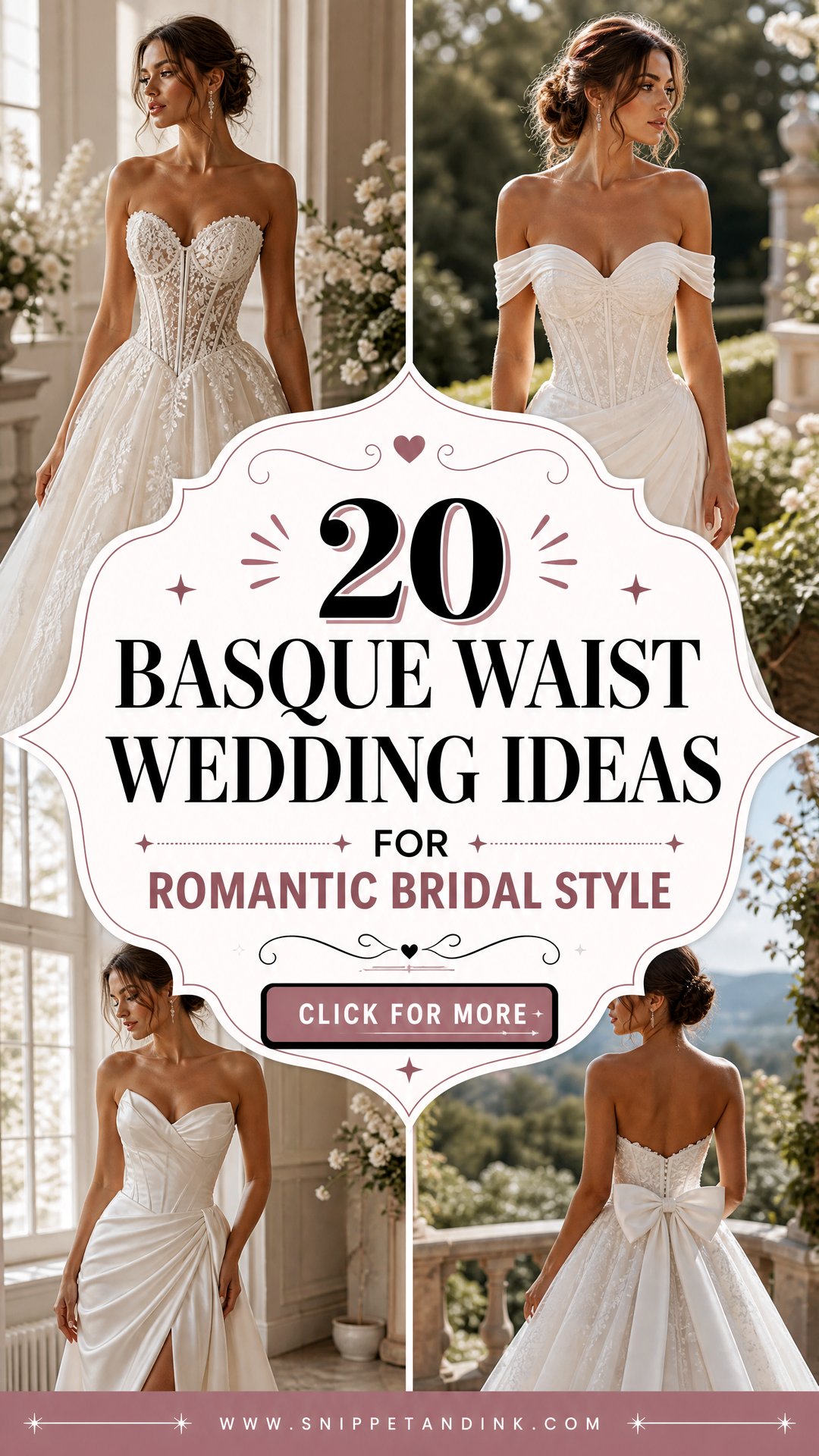
Ask me which bodice shape brides fall for unexpectedly in the fitting room and I’d say the Basque waist. The seam drops below the natural waist into a soft V or a sharper point, so the torso looks longer and the skirt seems to grow out of the hips. You’ll see it on clean satin, on lace corsets, on huge ball gowns and on quiet crepe. Fabric and neckline decide the mood far more than the waist itself does. What follows are twenty ways I’d style it, with the fitting check I’d make on each one.
How Long a Basque Gown Takes From Order to Final Fitting
Structured bodices are slow to make and slow to alter, so I plan backwards from the date. The exact timing varies a lot by designer and season, but this is the order things usually happen in:
- Order roughly eight to ten months out if you can. Many made-to-order gowns need several months to arrive, and a corseted style rarely comes faster.
- Book the seamstress as soon as you’ve ordered, since good bridal tailors fill their diaries early in busy seasons.
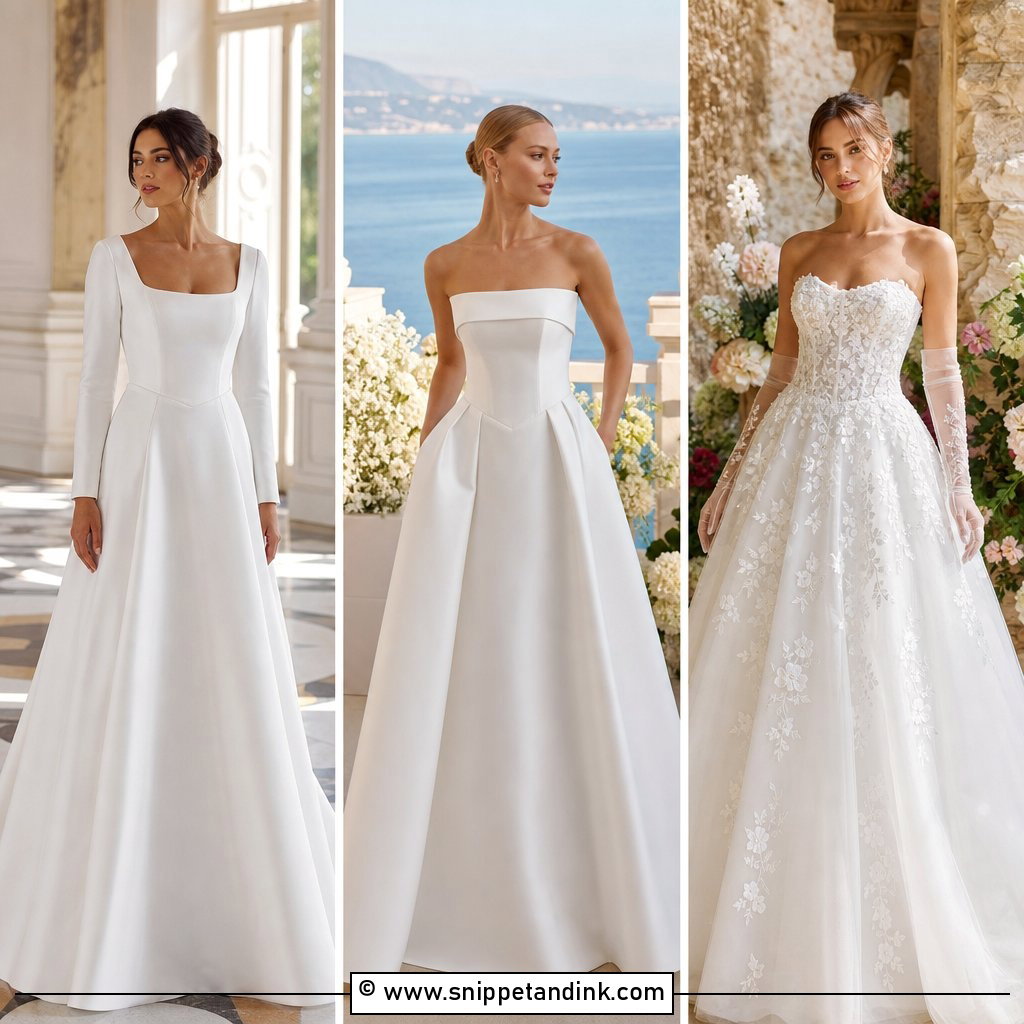
- Start alterations about two to three months before the wedding. A boned bodice often needs two or three fittings, because the point is adjusted after the hem and the side seams settle.
- Have the last fitting around two weeks before, wearing the exact shoes, bra or bodysuit and any shapewear you’ll wear on the day.
If you’re shopping late, ask about off-the-rack samples or rush fees, and be realistic: rushing a corset is where fitting mistakes creep in. I’d rather a bride choose a softer bodice than wear a rushed one that pinches.
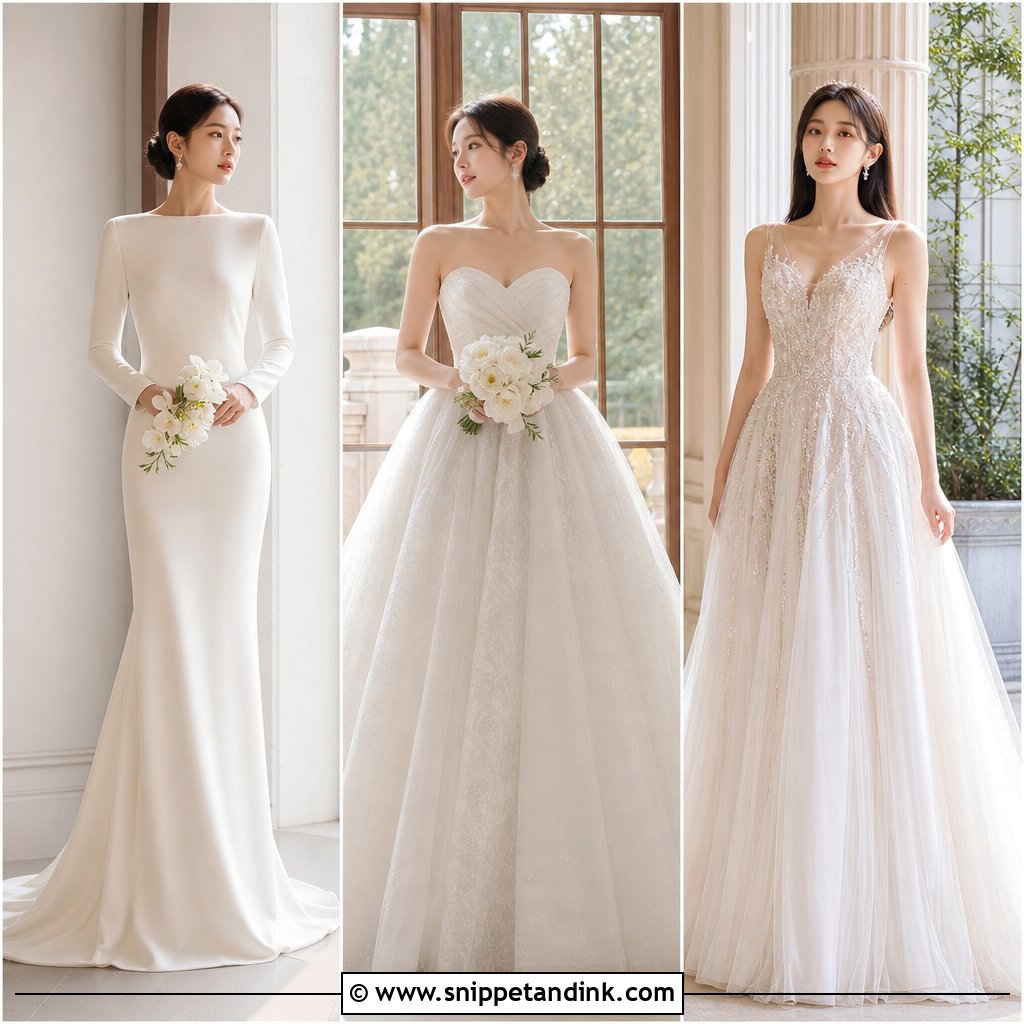
1. Satin Ball Gown Basque Waist Wedding Dress
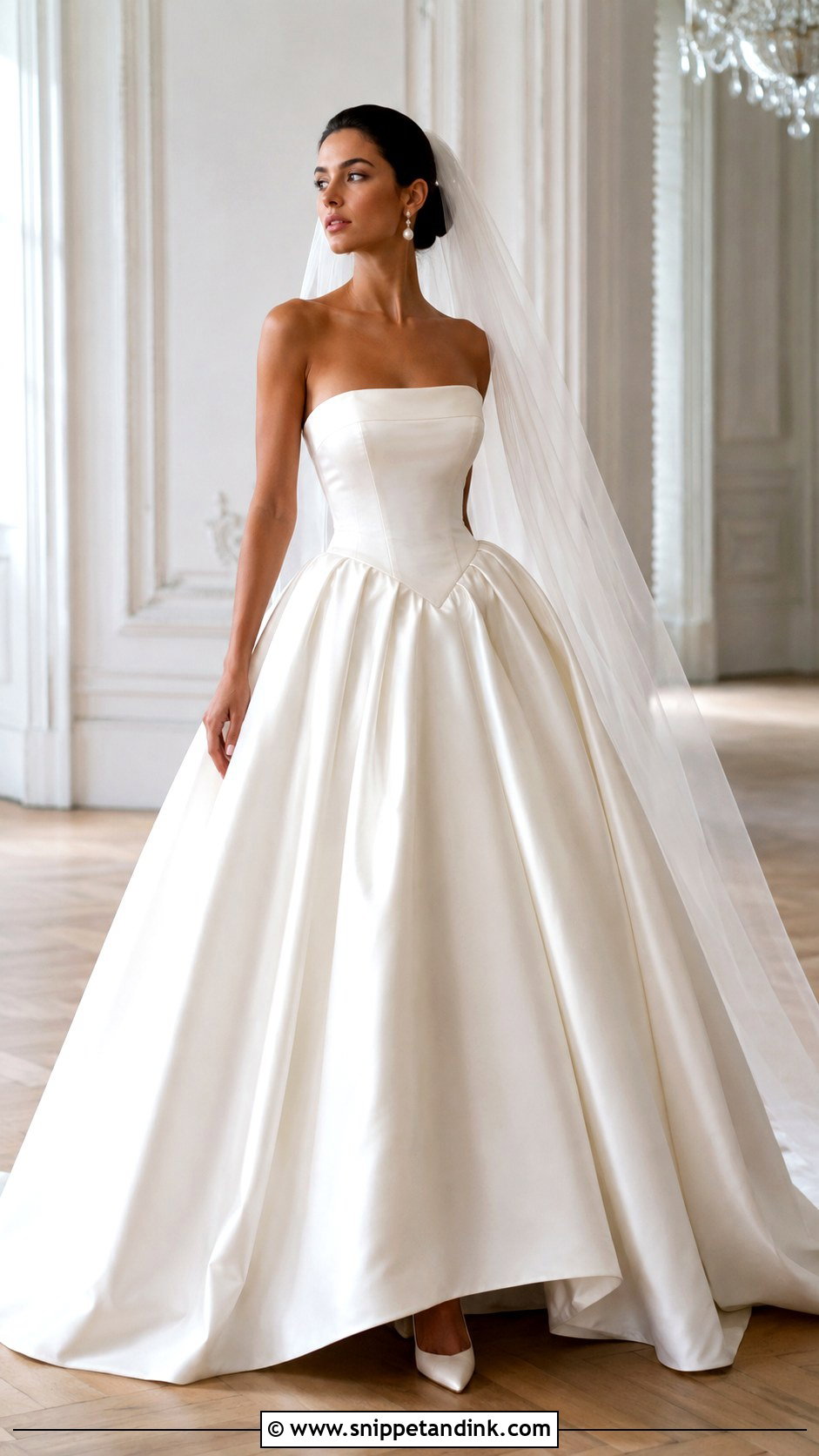
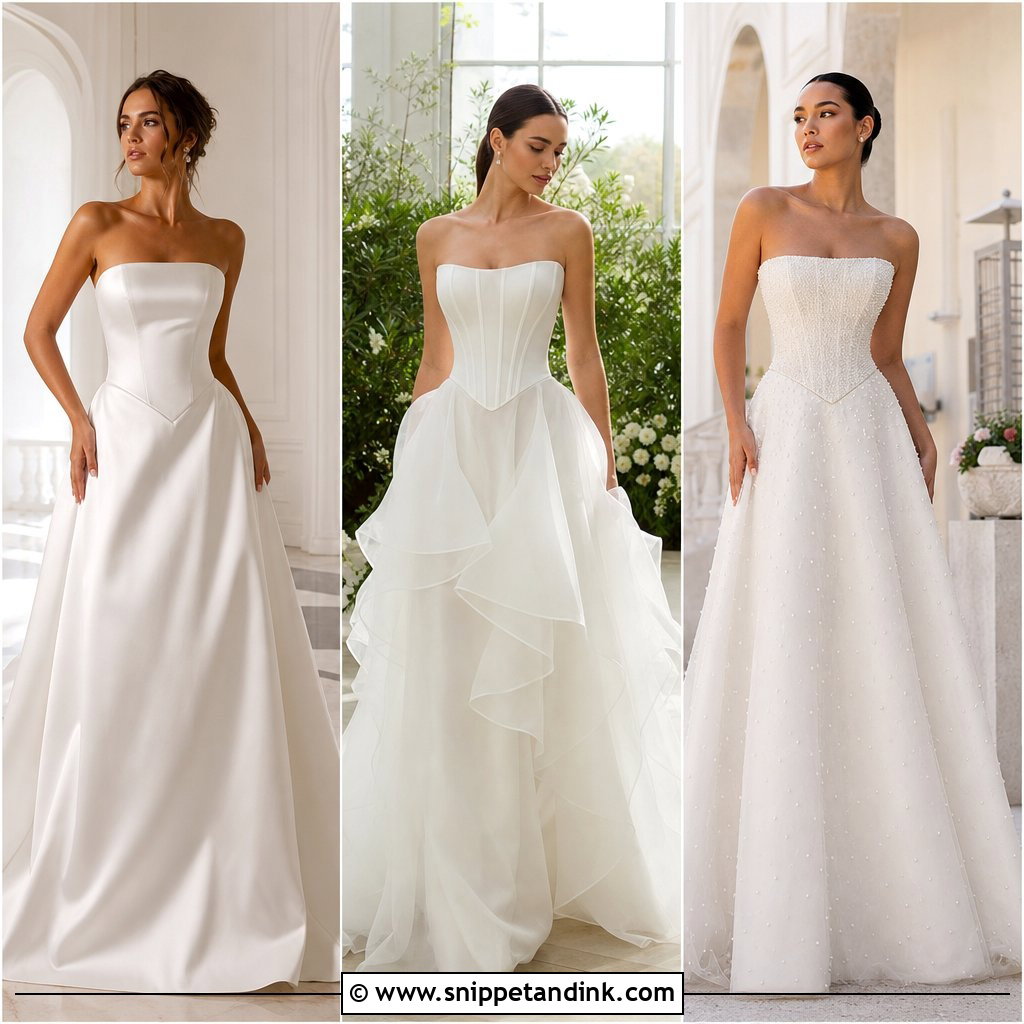
Clean satin is the clearest way to see a pointed waist. I’d pick a strapless bodice with real inner support and a skirt full enough to hold its shape, but not so full that you’re wading through it. Ivory tends to be kinder to most skin than optic white, especially outdoors. Pointed pumps, pearl drops, a cathedral veil with a plain edge and a low bun keep it formal. Satin marks every seam, though, so book a skilled tailor and have the point checked while you’re seated and in your real heels.
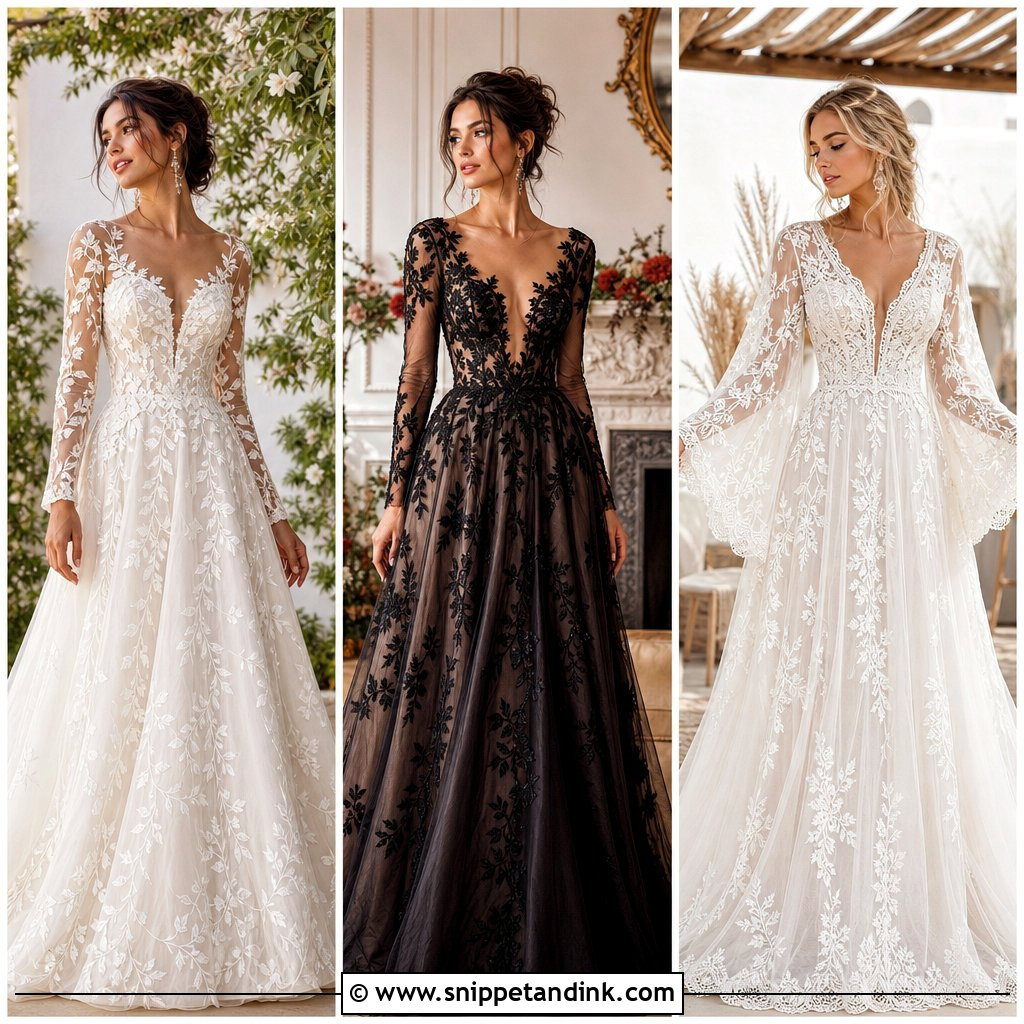
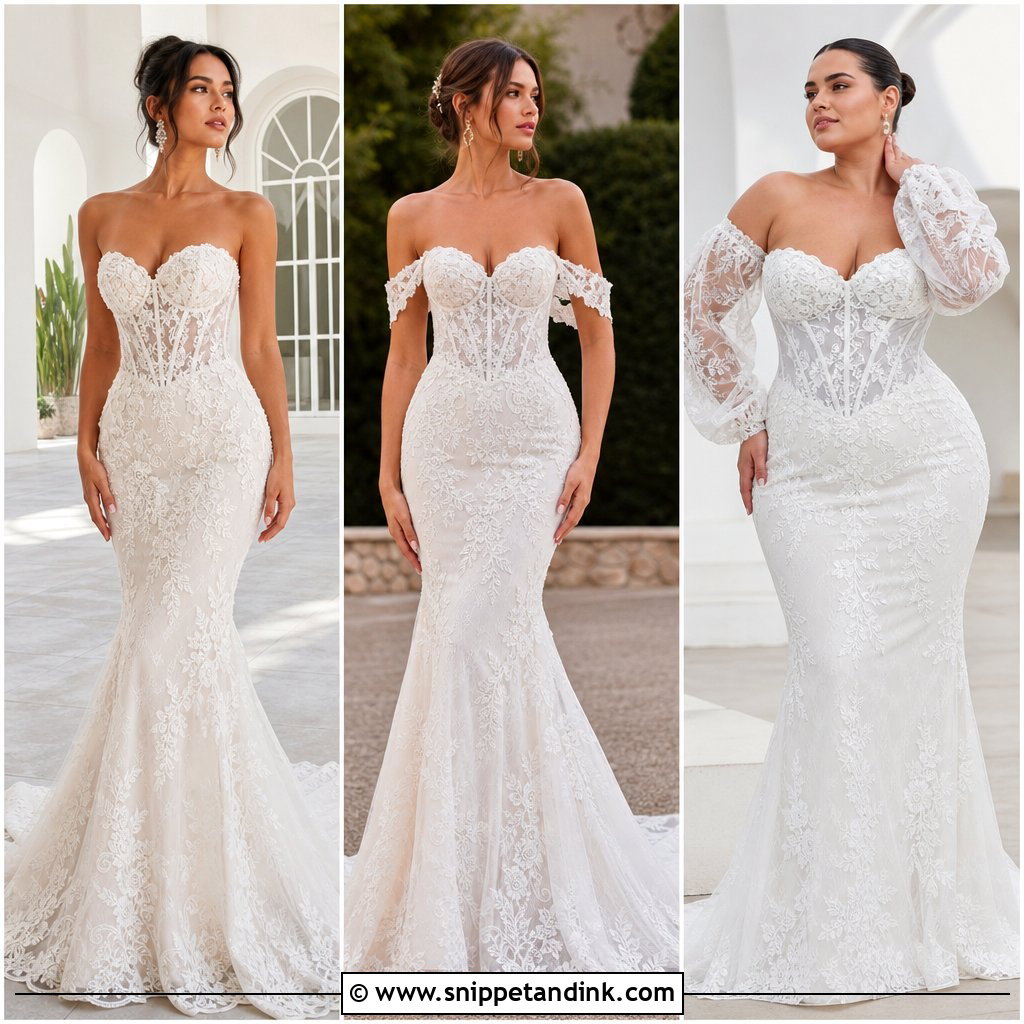
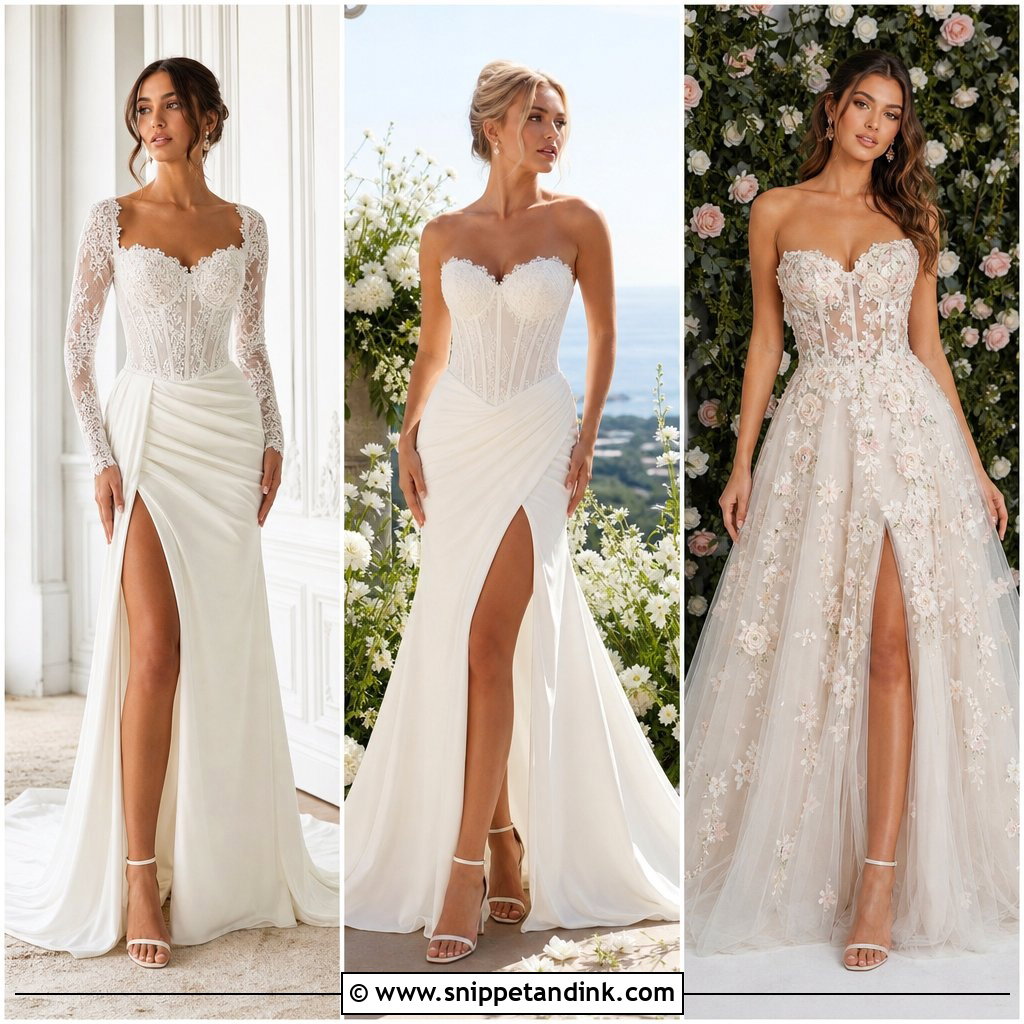
2. Lace Corset Basque Waist Wedding Dress
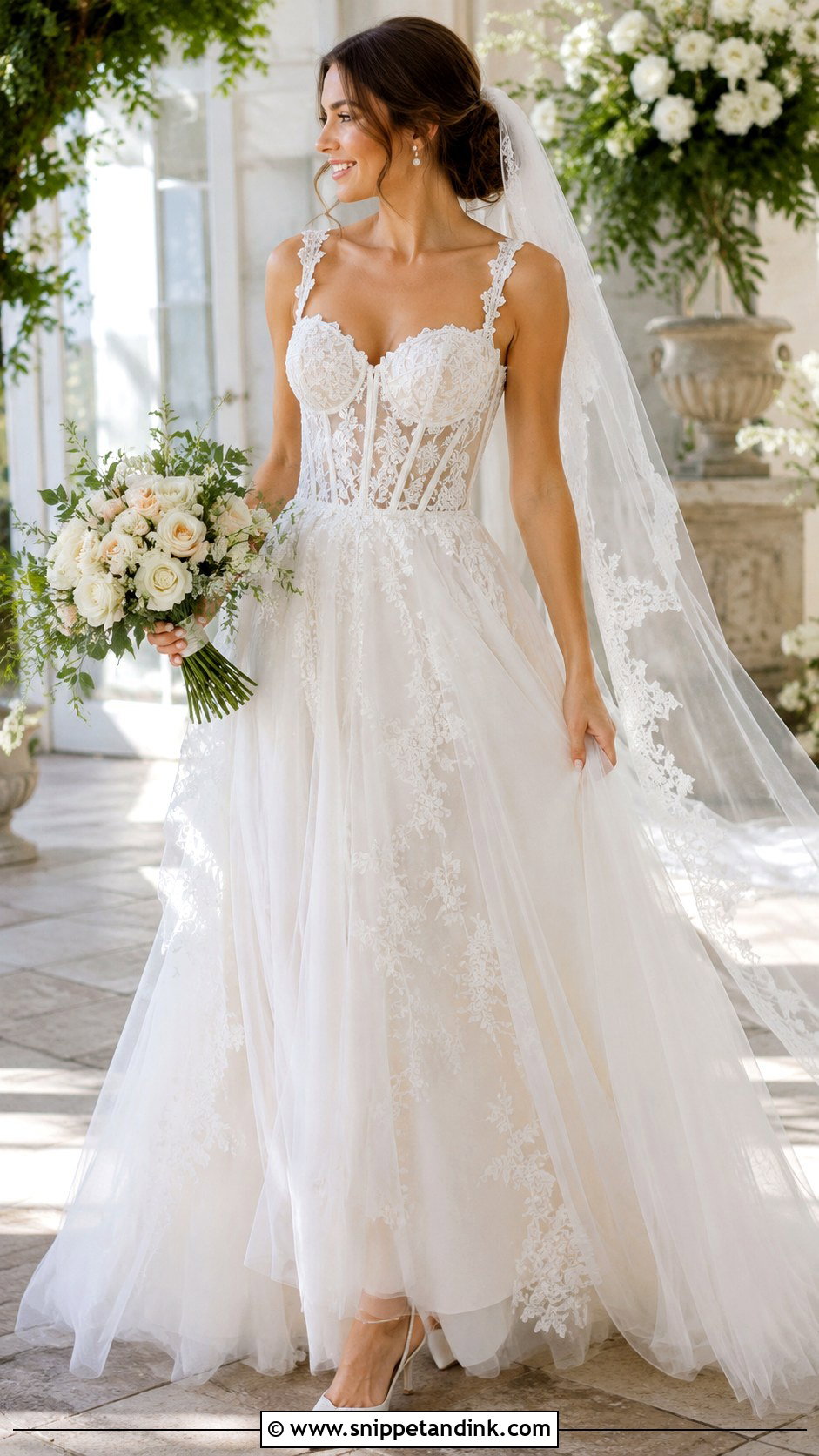
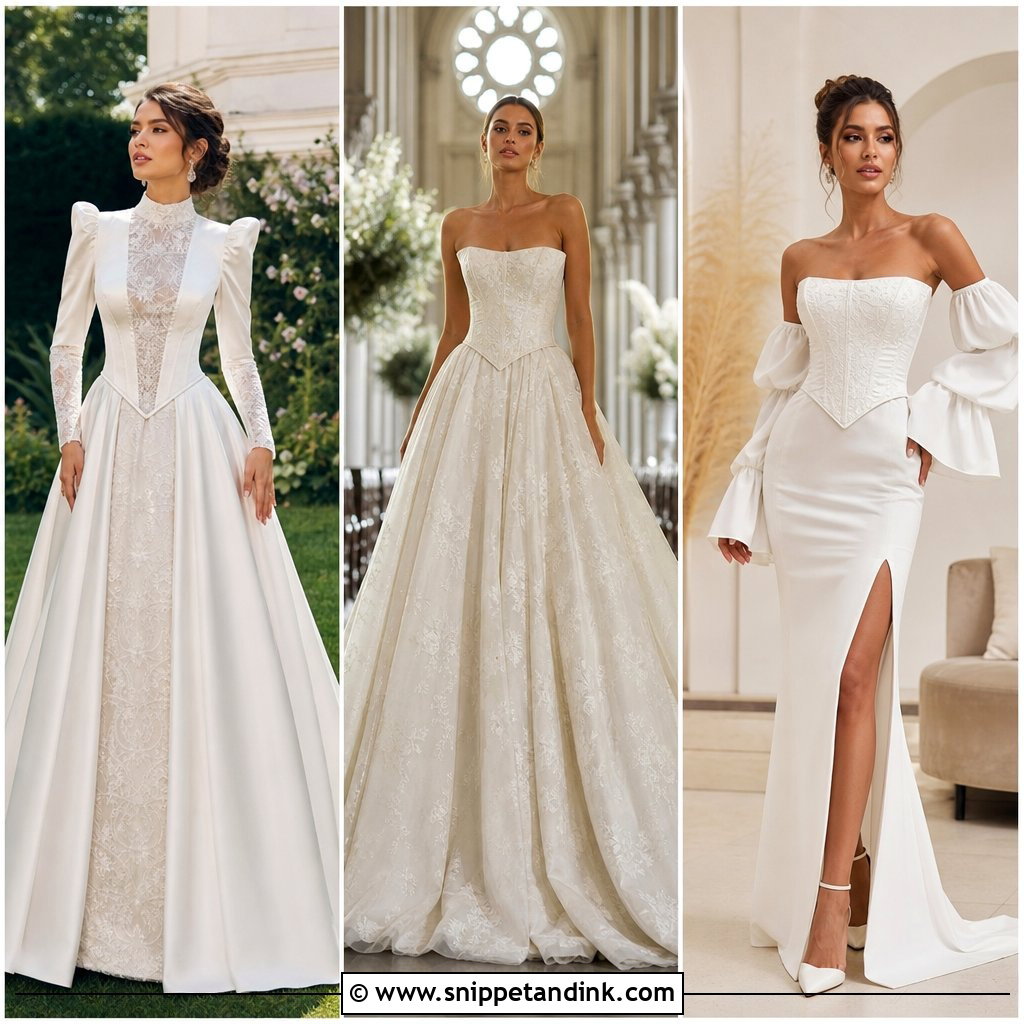
Lace laid over a corseted Basque waist calms down all that structure. The detail I look for is lace that keeps going past the point onto the skirt; when it stops dead at the seam, the dress looks like a top and a skirt bought separately. Pearl studs, a lace-trimmed veil and ivory slingbacks are enough. Soft waves work here. One small thing changes the whole effect: the lining. Nude lining makes lace pop with more contrast while ivory blends it, and I always compare both by a window before ordering.
3. Off-the-Shoulder Basque Waist Wedding Dress
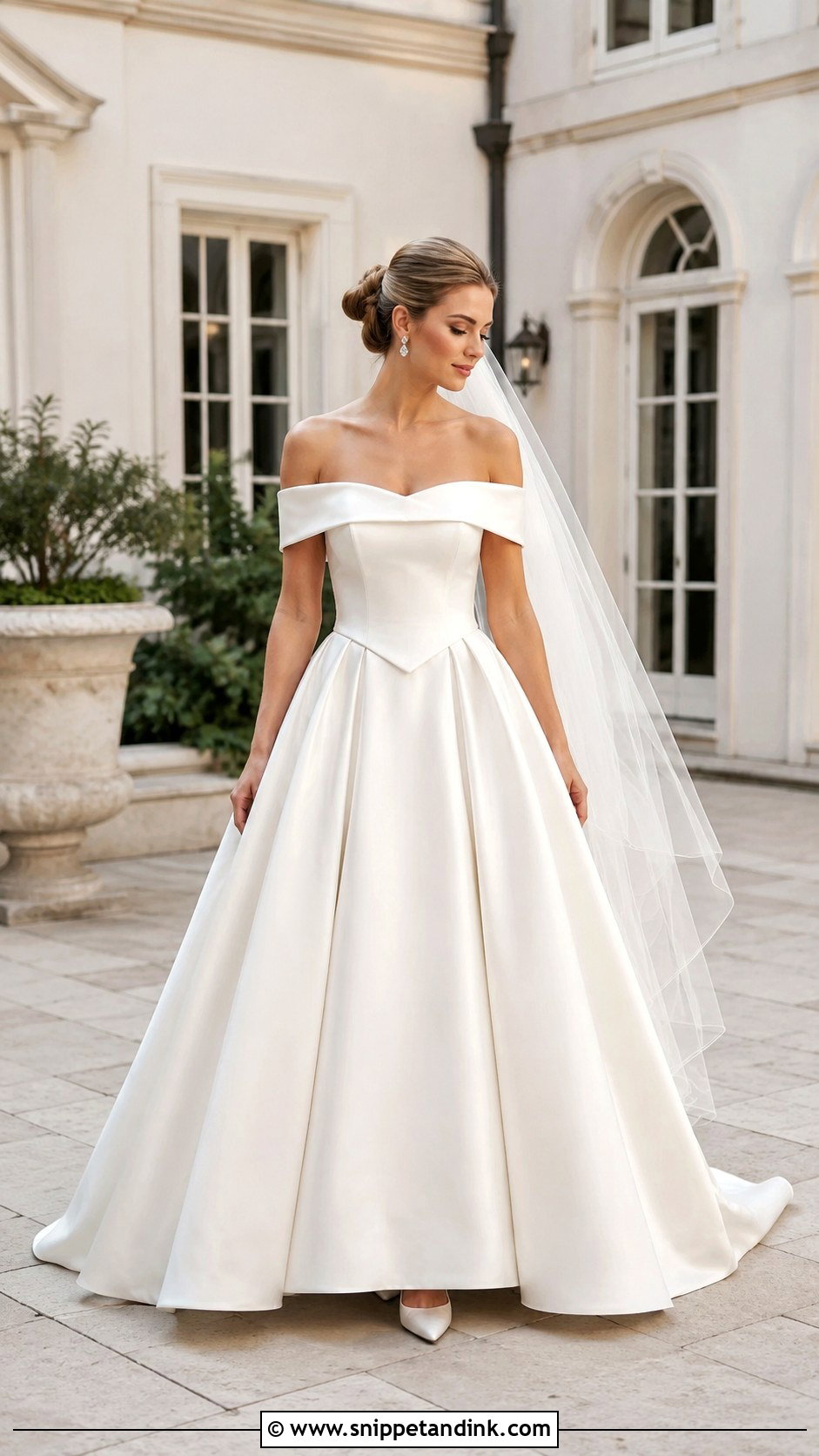
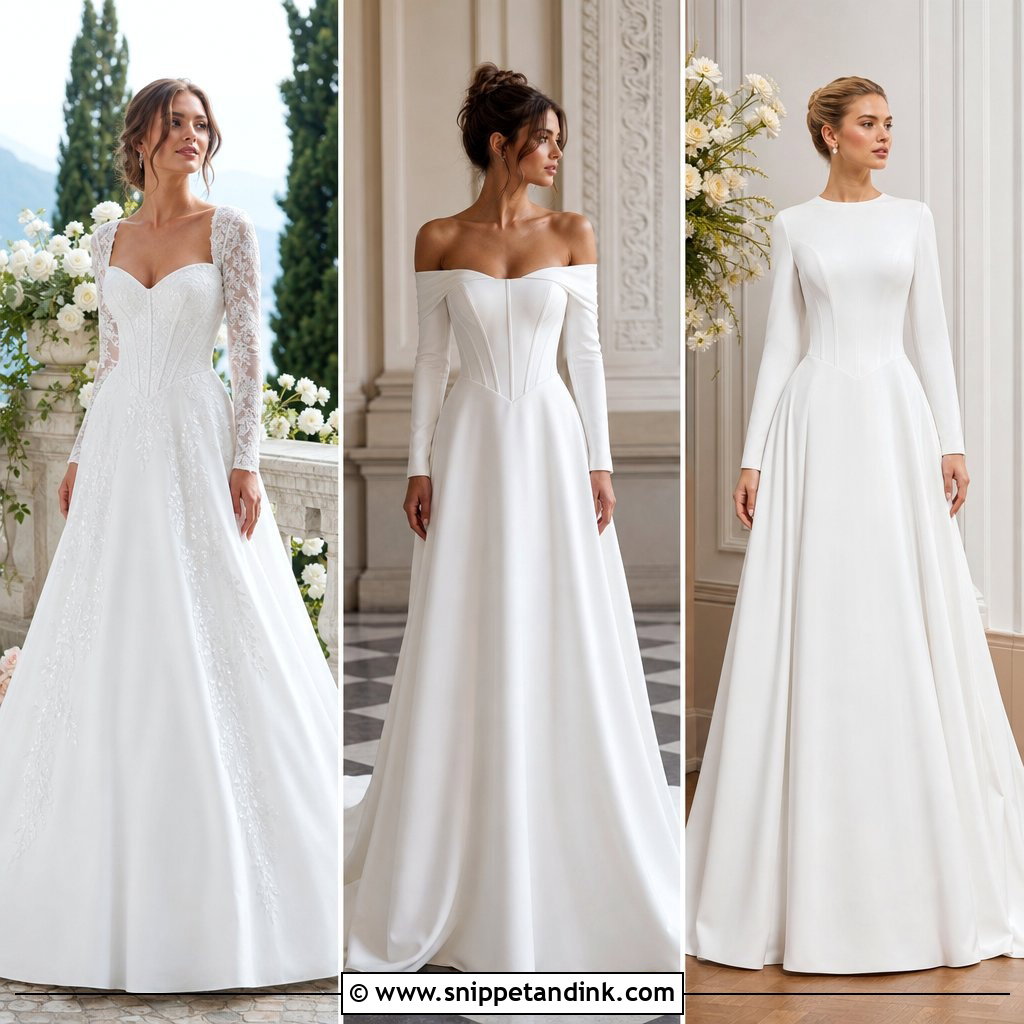
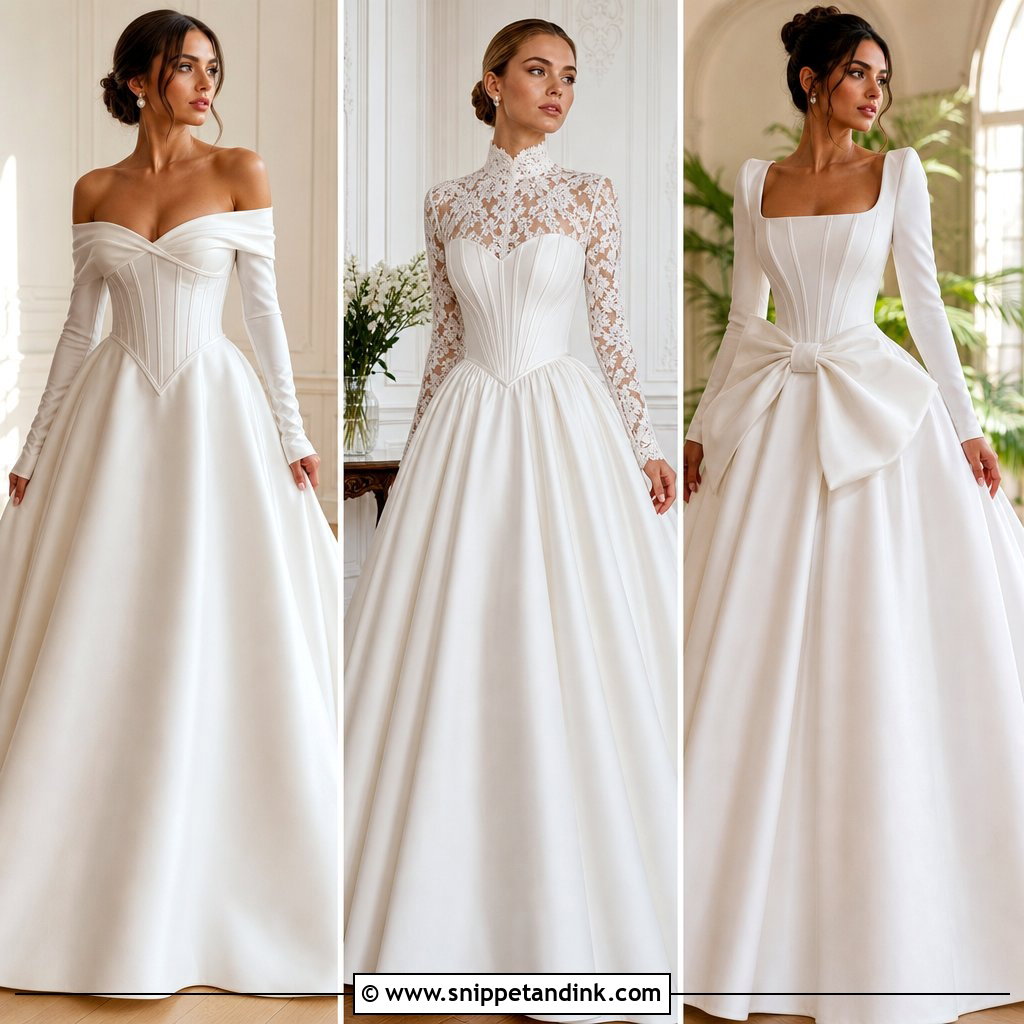
Width at the shoulders and a point at the waist pull the eye in two directions, and that tension is the charm. Mikado or satin is what I’d choose, since the folded band needs stiffness to stay put. A pendant, crystal earrings, closed-toe heels and a fingertip veil short enough not to bury the neckline finish it, with a smooth updo. Try this in a sample and raise both arms; most off-shoulder bands ride up the first time you hug someone. Hidden elastic or a slim inner strap is a small alteration that saves a lot of tugging.
4. Long Sleeve Basque Waist Wedding Dress
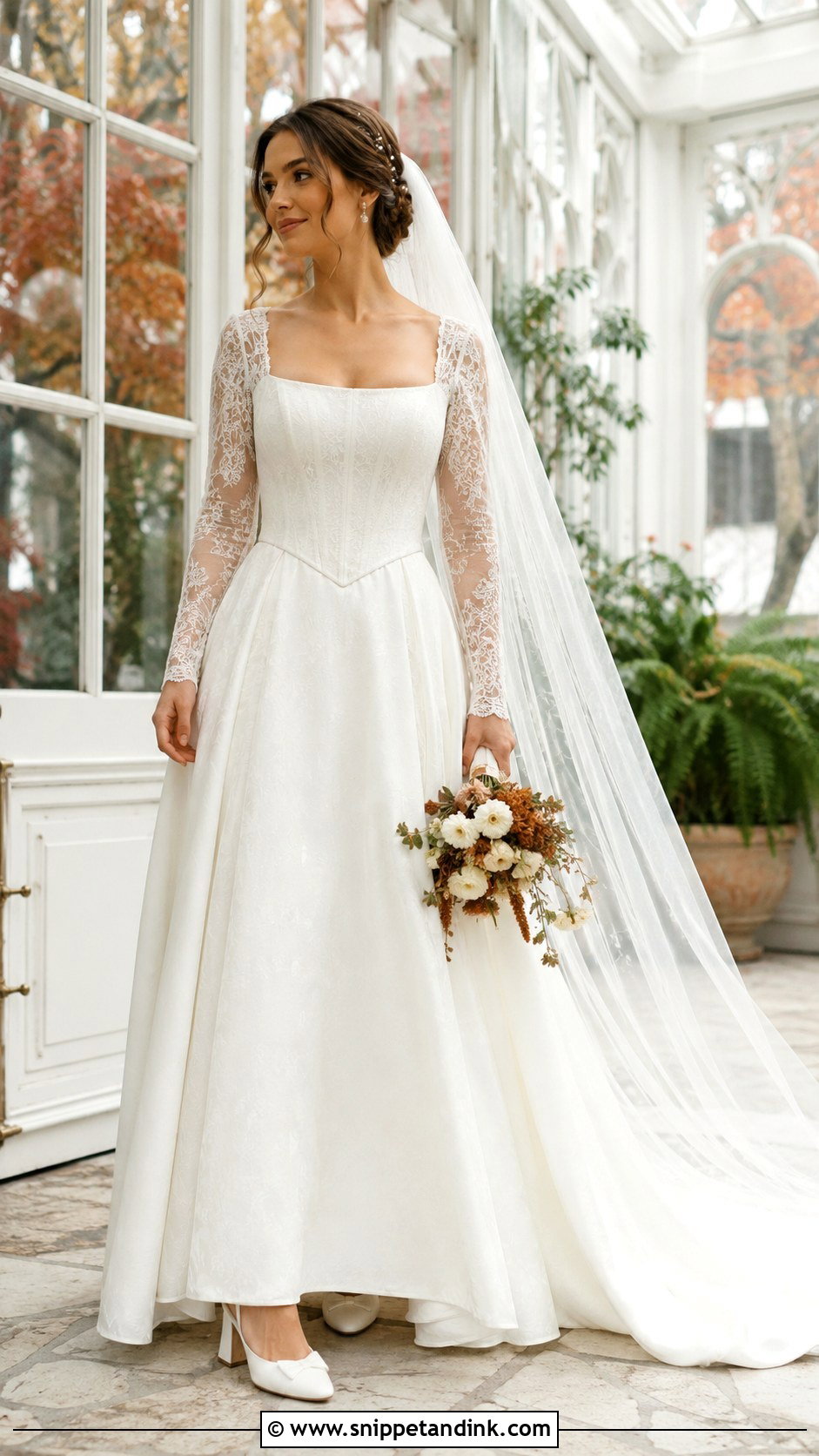
Long sleeves bring coverage to a strong silhouette without softening the point. I prefer sleeves that grow out of the bodice in the same lace, flowing down into an A-line skirt. Sheer lace feels romantic; lined crepe sleeves look sharper and more modern. Pearl hairpins, block-heel pumps and a chapel veil suit both, and a neat chignon keeps the arms and head from looking busy. These are lovely in autumn and winter, and breathable lace can manage a mild spring day. Bend your elbows hard at the fitting, and leave bracelets off: they snag fine embroidery at the cuff.
5. Strapless Basque Waist Wedding Dress
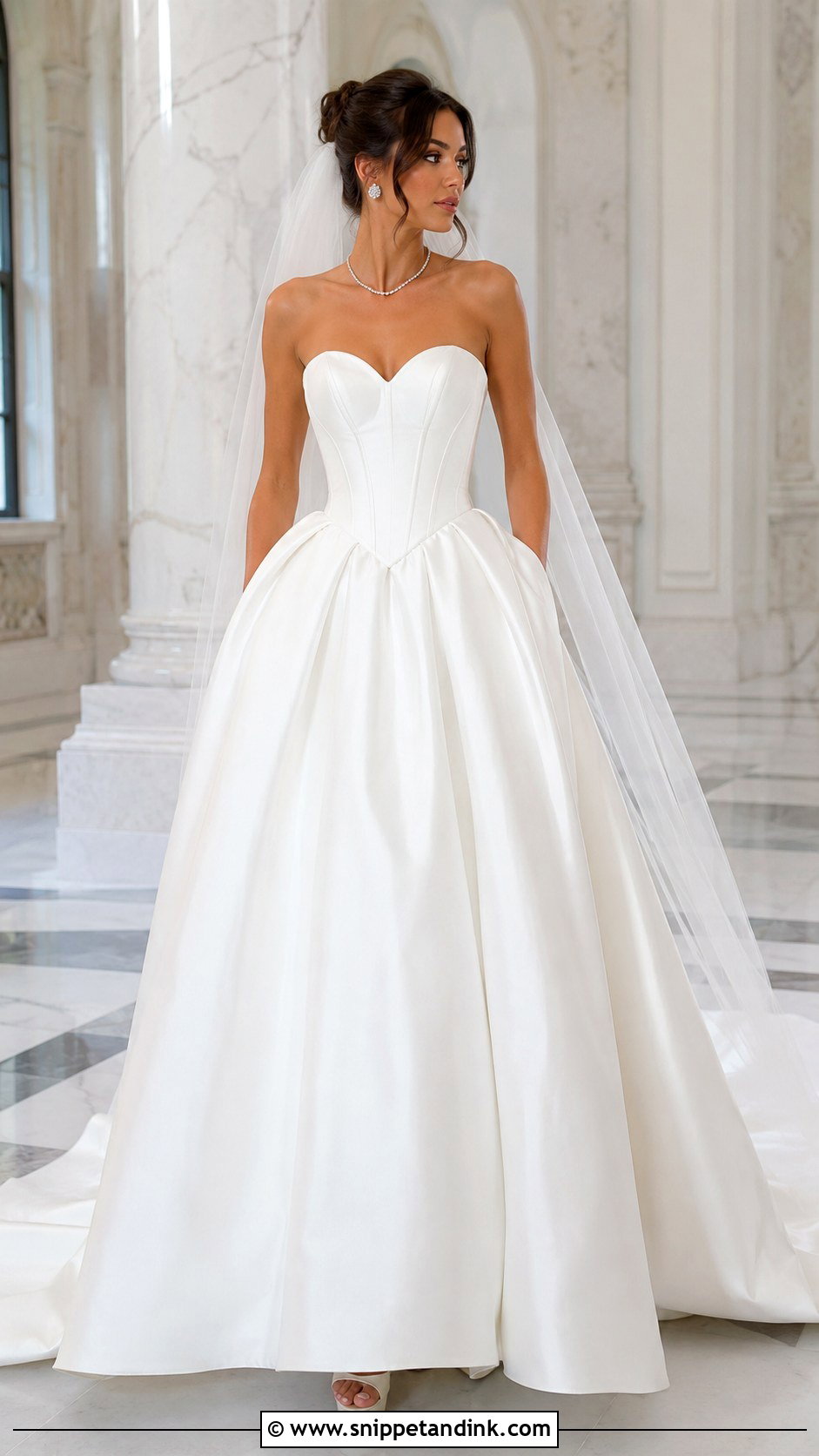
Strapless puts the whole bodice on show, so the construction has to be right. Pick your coverage first, straight across, gently curved or full sweetheart, then pair it with a full skirt in satin, Mikado or tulle. A short necklace or statement studs, a long veil and pointed or cushioned platform heels complete it. I’m firm on one point here: a strapless bodice should be held up by boning gripping the rib cage, not by lacing pulled tight. If you find yourself hitching it up during the fitting, it isn’t finished yet. Hug, sit and lift your arms before you sign off.
6. Sweetheart Basque Waist Wedding Dress
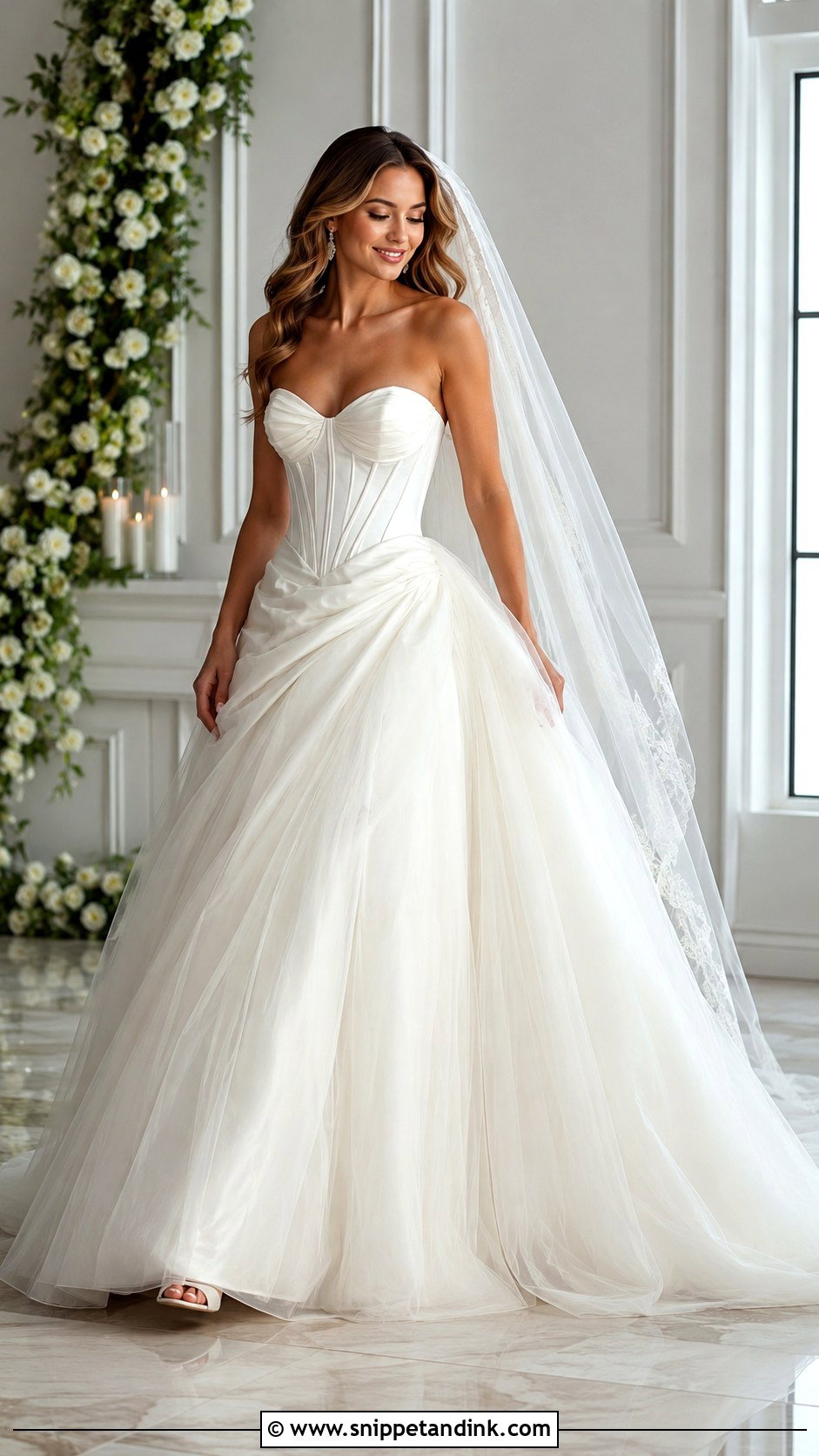
Sweetheart curves above and a point below give a romantic hourglass effect that’s very easy to wear. A satin bodice with light draping adds softness, and a tulle ball gown skirt brings movement. Crystal drops, a narrow bracelet, ivory heels and a sheer cathedral veil complete it. Loose waves behind the shoulders or a low bun both suit it. The neckline depth needs attention at fittings. A small lift at the center dip, a repositioned cup or a panel of illusion mesh can make it feel secure without changing the shape anyone sees.
7. Square Neck Basque Waist Wedding Dress
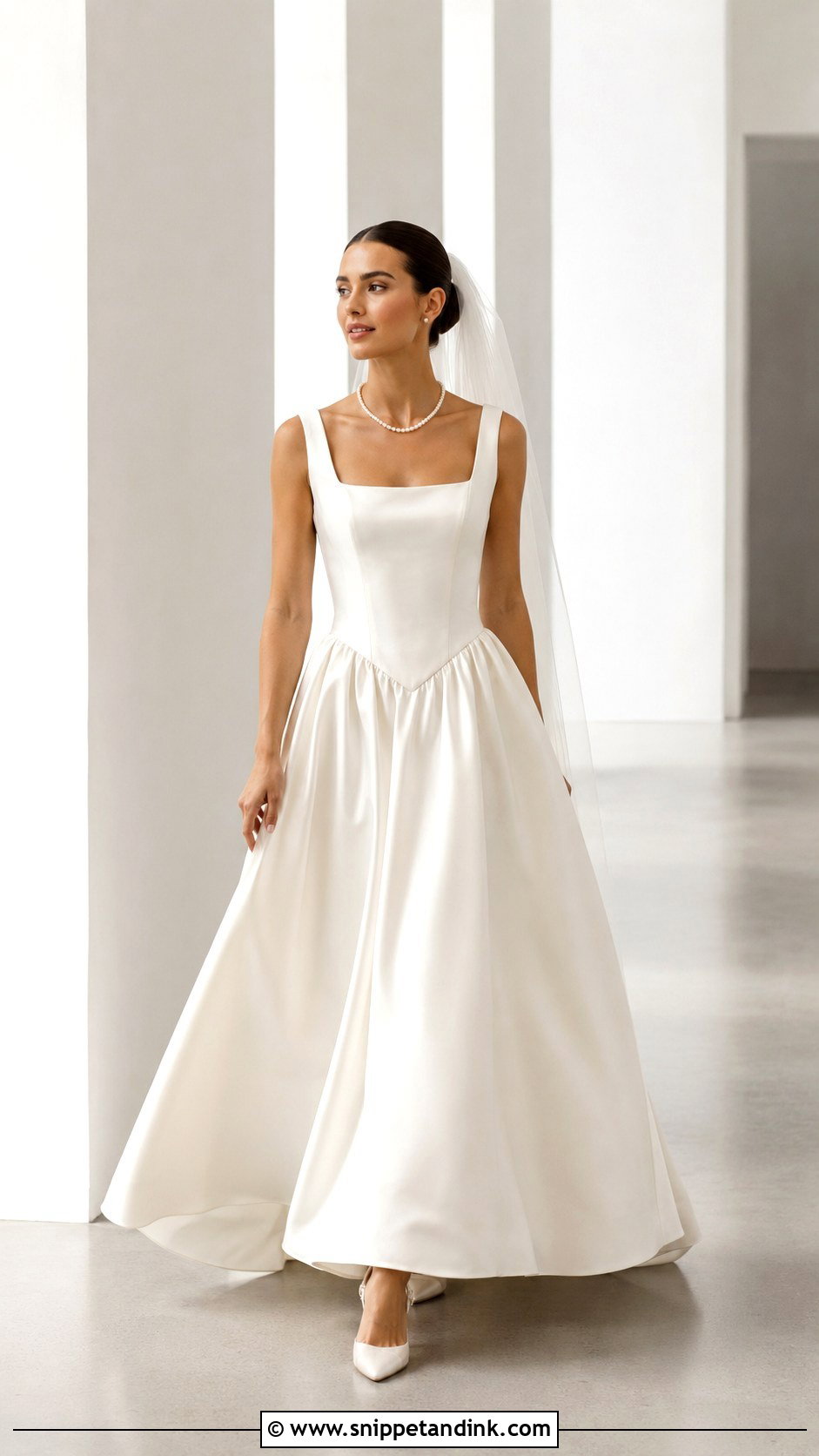
Square necks look tidy and modern next to a Basque point, as long as the corners sit flat. Wide straps, a fitted satin bodice and a softly gathered A-line skirt are all it needs. Because the neckline is straight, a fine pendant or short pearl strand sits nicely in the opening. Pearl earrings, low slingbacks and a plain chapel veil keep things restrained, with a center-parted low bun echoing the geometry. During alterations I watch the corners: if they pull outward or curl, the straps or cups need adjusting, and that same fix keeps the waist point centered as you move.
8. Scoop Neck Basque Waist Wedding Dress
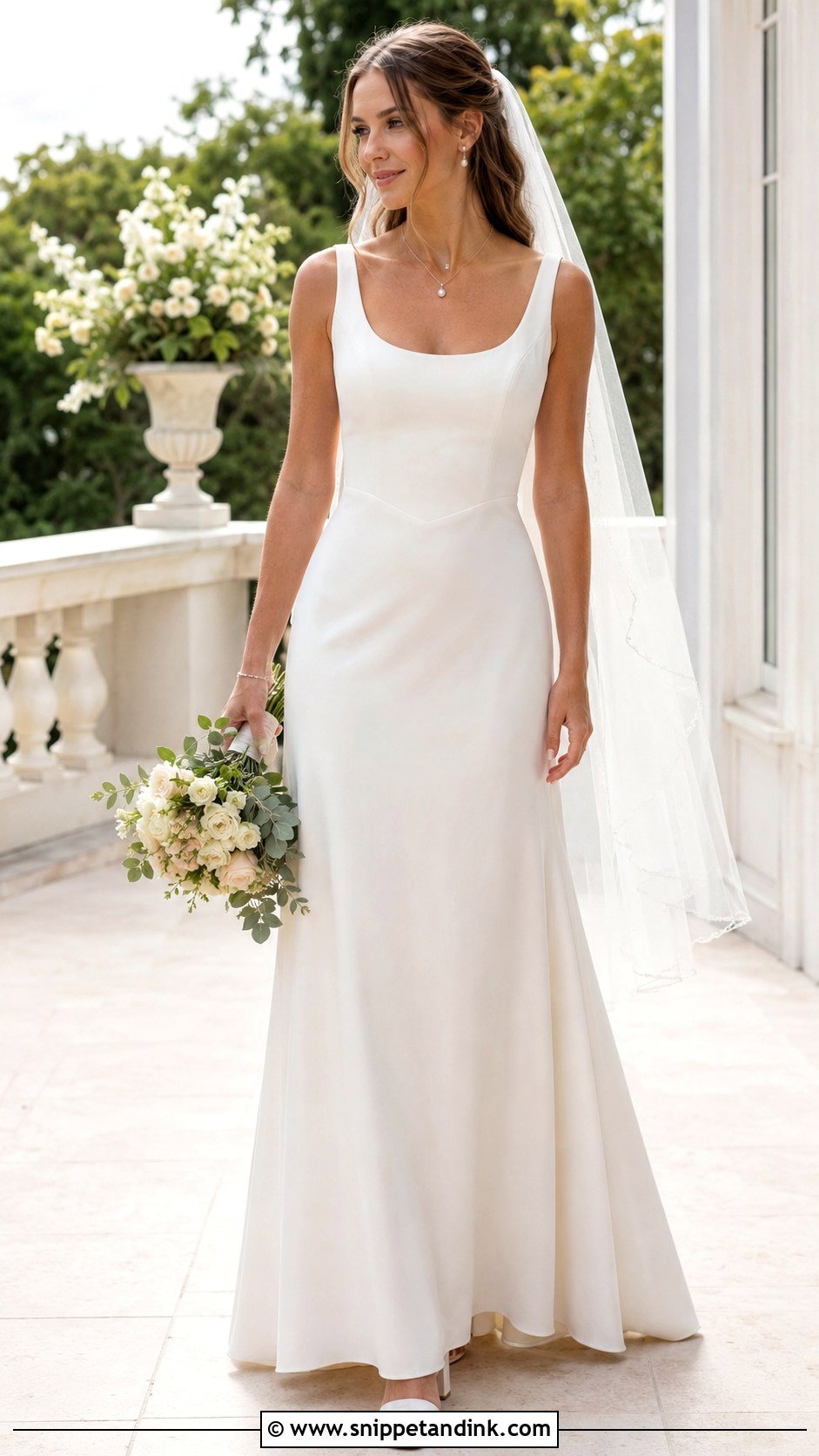
A scoop softens the sharpness of the point more than any other neckline. Picture a sleeveless ivory gown with a wide scoop, sturdy straps and a satin or crepe skirt that falls freely. It suits almost any venue. A fine pendant, small pearl drops, block-heel sandals and a light fingertip veil go with it, and half-up hair adds some movement. If you want more coverage, the scoop can be raised a little without losing its curve. The fit at the armholes is where scoops tend to go wrong; a gaping edge there breaks the clean bodice line.
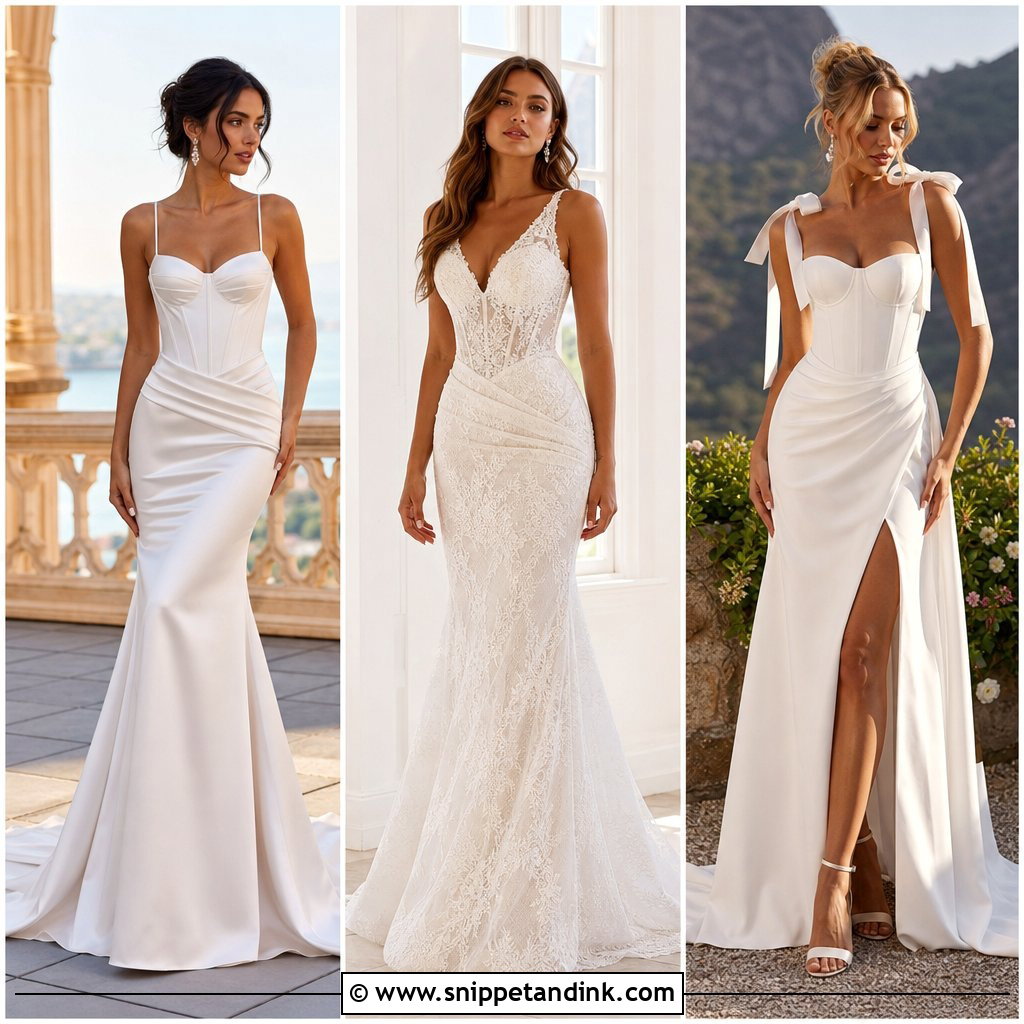
9. Spaghetti Strap Basque Waist Wedding Dress
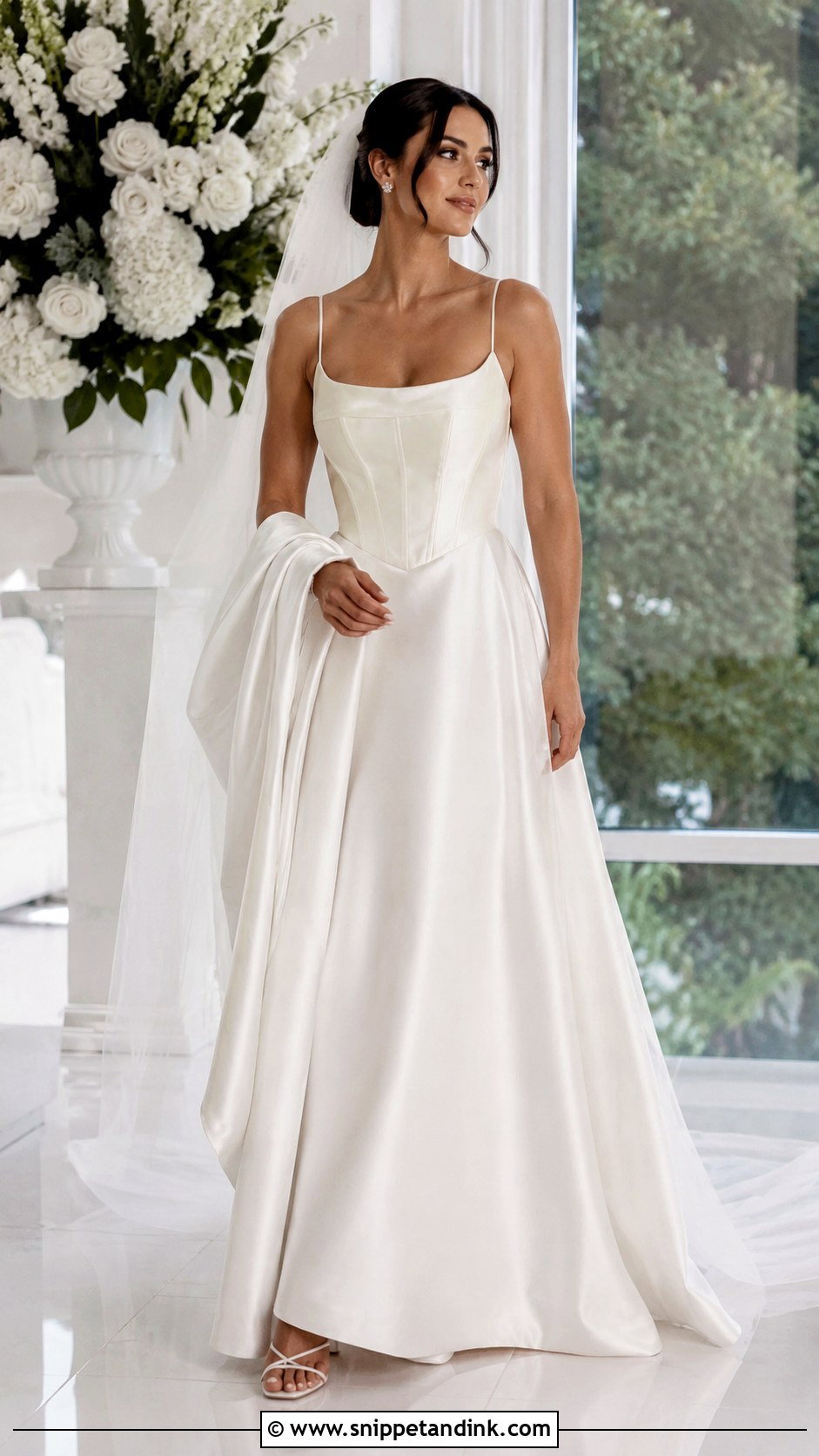
Thin straps lighten a structured bodice, but only if the skirt stays moderate. Pair a smooth satin bodice and a gentle A-line skirt; a giant ball gown makes delicate straps look underpowered. Small studs, strappy ivory heels, a soft tulle veil and a loose bun or brushed waves keep it minimal. Here’s the construction fact I explain at every fitting: spaghetti straps are there for placement, not weight. The boning and a snug waist should hold the dress, and the straps should be adjustable. A satin wrap for evening photos is a sensible extra.
10. Basque Waist Wedding Dress With Detachable Sleeves
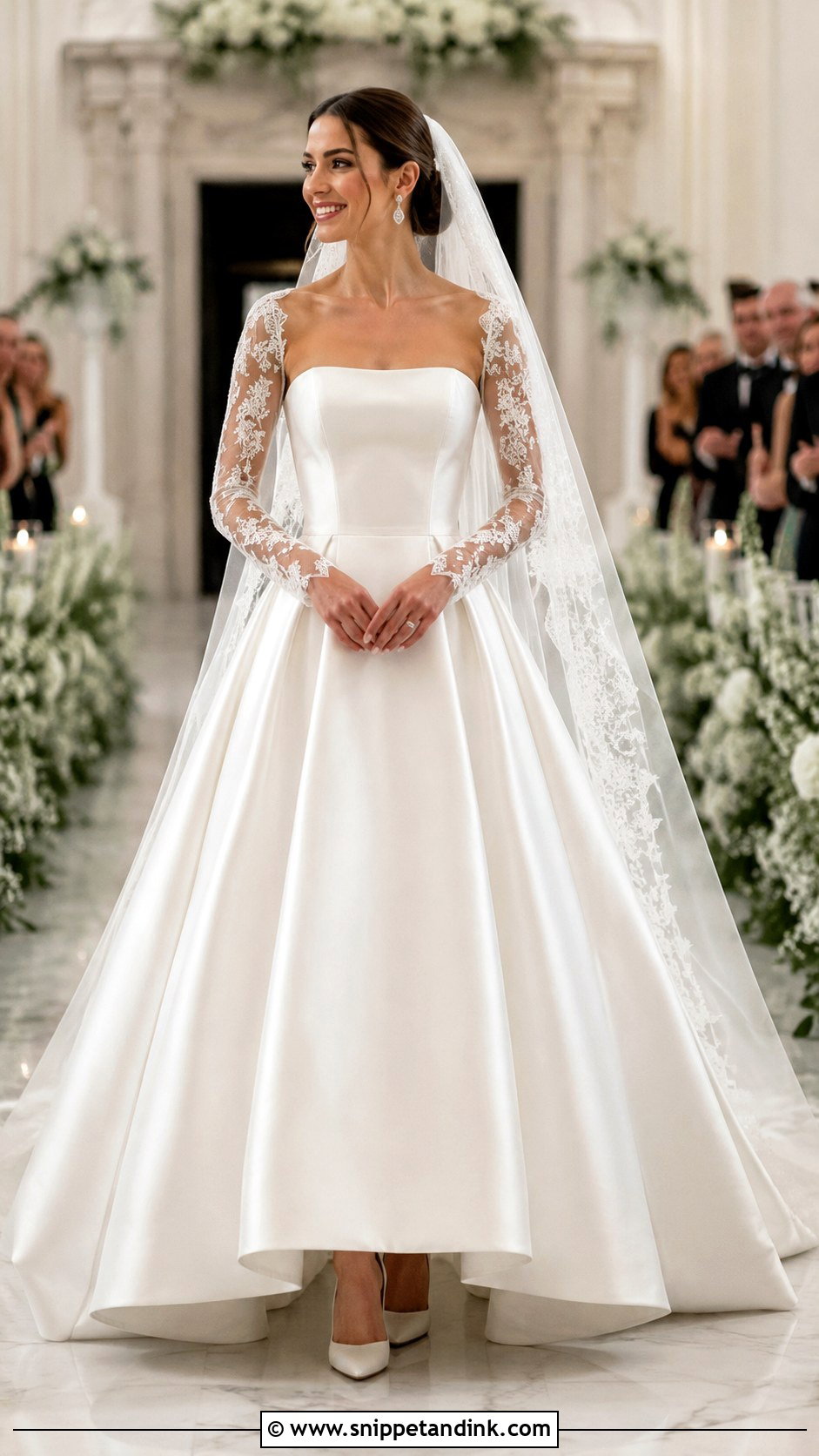
Two looks, one dress, and no full outfit change. Start with a strapless satin Basque gown and add lace sleeves, draped off-shoulder cuffs or sheer puffs for the ceremony, then take them off for dancing in a warm room. Drop earrings, comfortable pumps and a long veil that can also come off after formal photos suit both versions, and a secure low bun keeps the neckline neat either way. Watch the attachments. Snaps, loops or hidden buttons need to hold while you walk but release without dragging on the bodice fabric, and someone besides you should practise undoing them.
11. Simple Crepe Basque Waist Wedding Dress
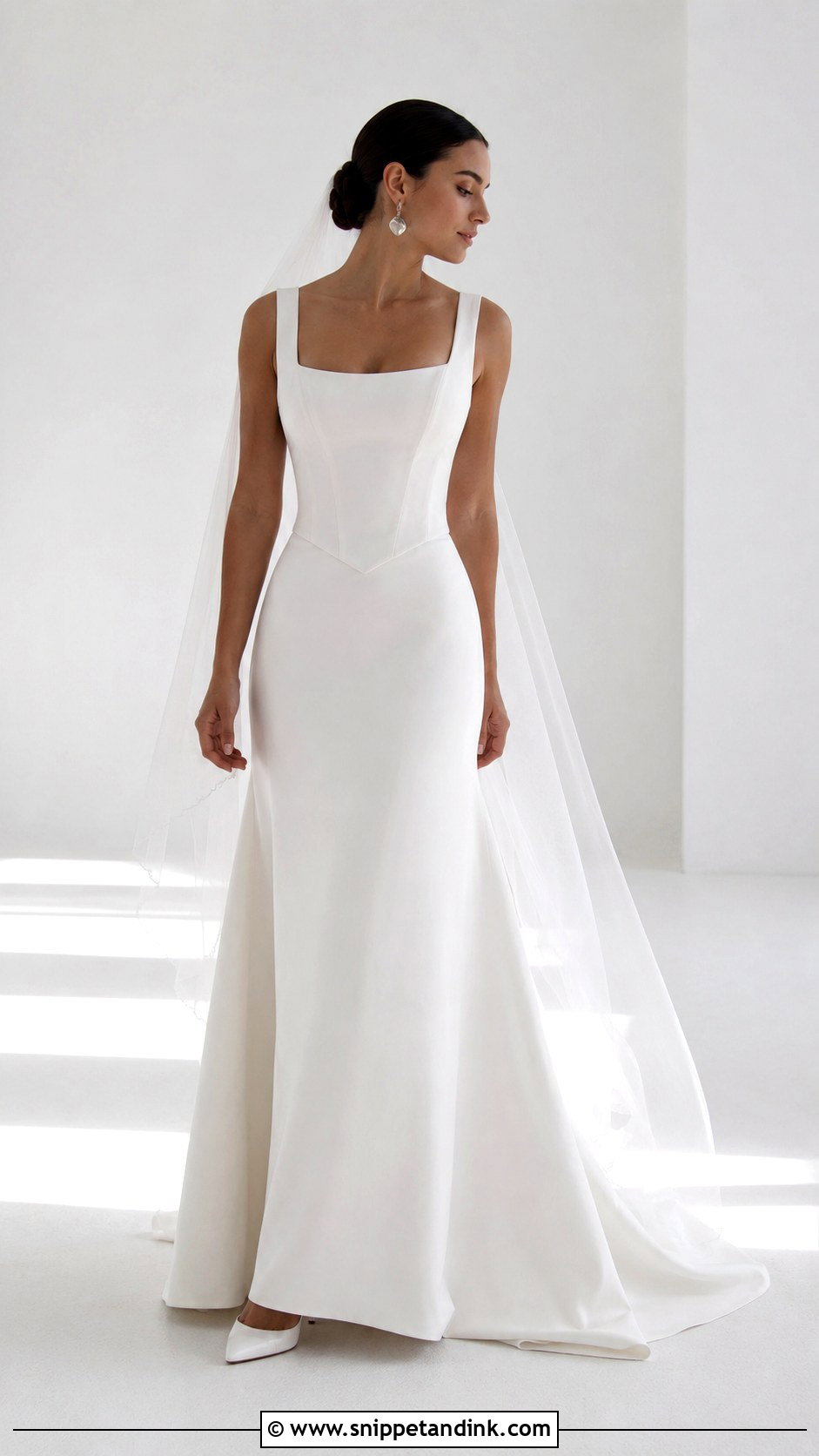
Crepe moves more softly than satin and hangs closer to the body. A clean bodice with wide straps or a modest strapless line, a gently flared skirt and a small train is enough; with very few seams, the point does all the design work. Sculptural earrings, a smooth bun, pointed heels and a raw-edge veil suit it, and a structured clutch is useful for portraits. I’d be honest about crepe: it shows everything beneath it. Cups sewn straight into the gown and smooth, edge-free underwear usually solve that better than adding more shapewear layers.
12. Pearl Basque Waist Wedding Dress
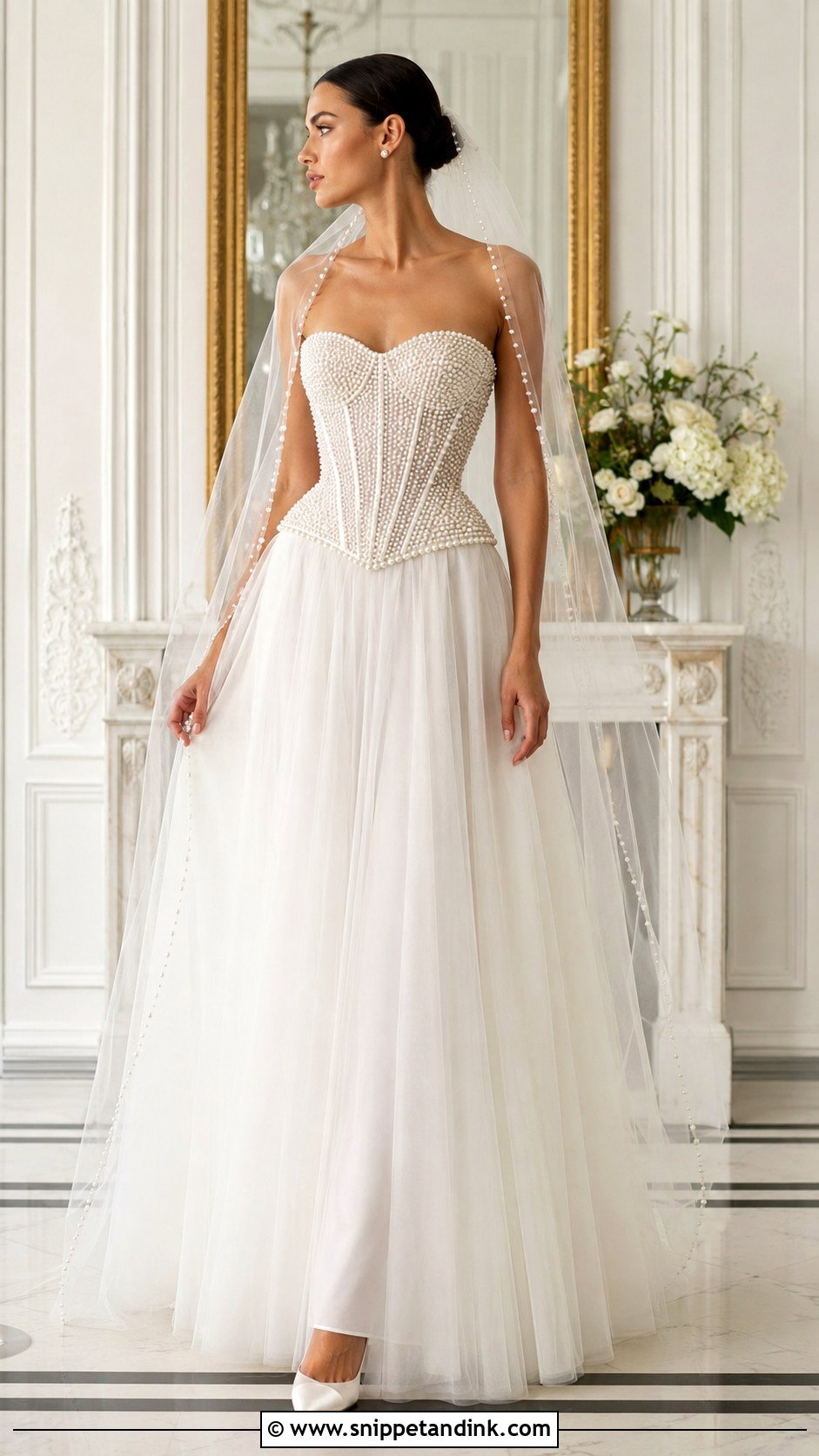
Scattered pearls on a corseted bodice give dimension and still read as classic. Keep the skirt plain satin or tulle so the whole gown doesn’t become busy. Pearl studs, a pearl-edged veil and simple satin pumps carry the theme, and a sleek chignon lets the bodice show. Skip the necklace if the beading is dense. The part people don’t think about is friction. Pearls near the armholes and right at the point rub against skin and the inside of your arms over a long day, so I ask for soft lining behind them and well-finished edges.
13. Floral Appliqué Basque Waist Wedding Dress
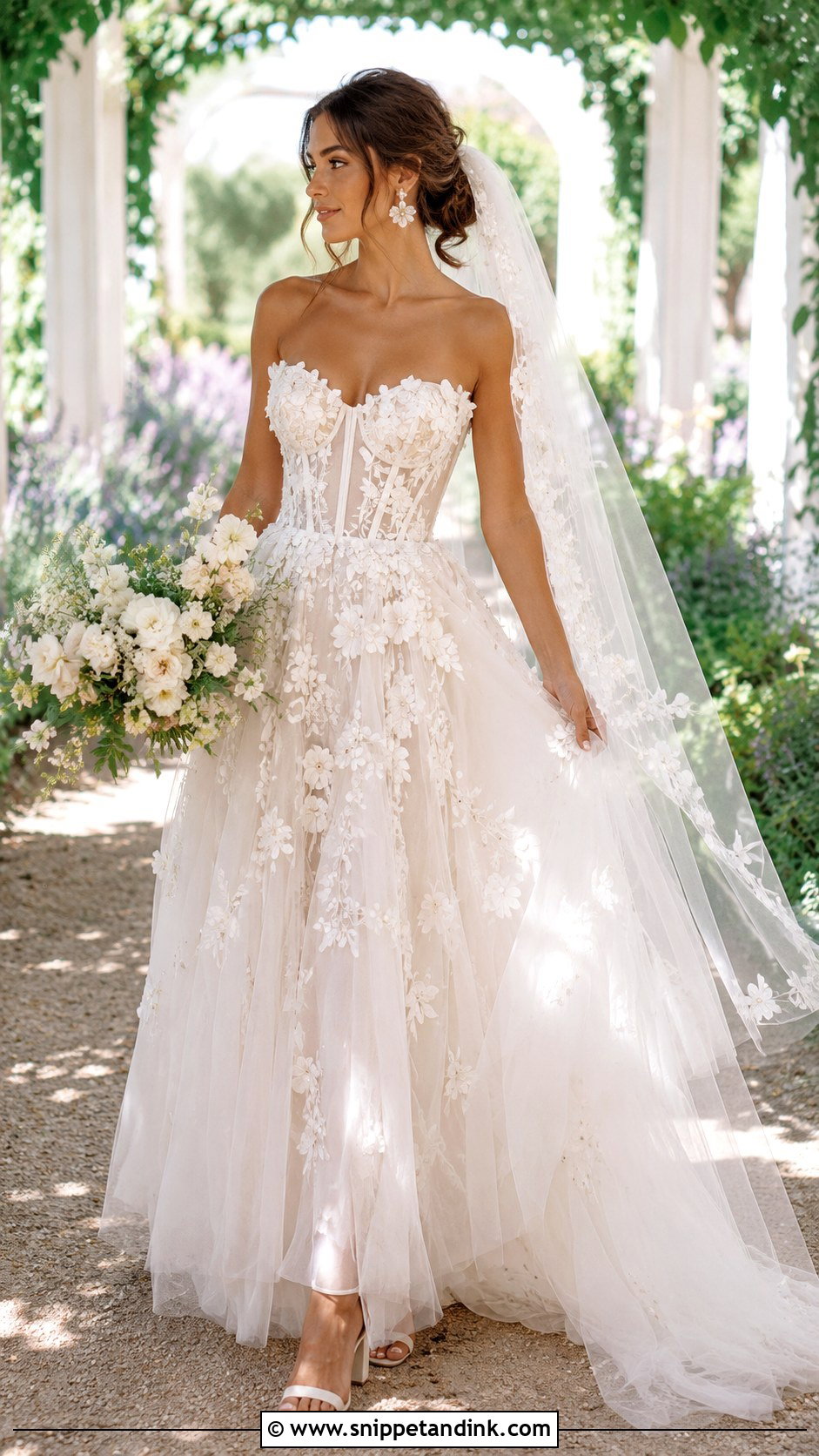
Raised flowers make a structured waist feel like a garden dress. The best placement I see is dense at the neckline and waist with a few blooms drifting onto layered tulle, which keeps the silhouette visible. Floral earrings, ivory block heels and a light veil with a touch of matching embroidery suit it, along with a braided bun or loosely pinned waves. Don’t stack heavily decorated shoes, jewelry, and headpieces on top of a dress this detailed. Outdoors, ask for a bustle that lifts every tulle layer; it protects the appliqués from grass and gravel.
14. Basque Waist A-Line Wedding Dress
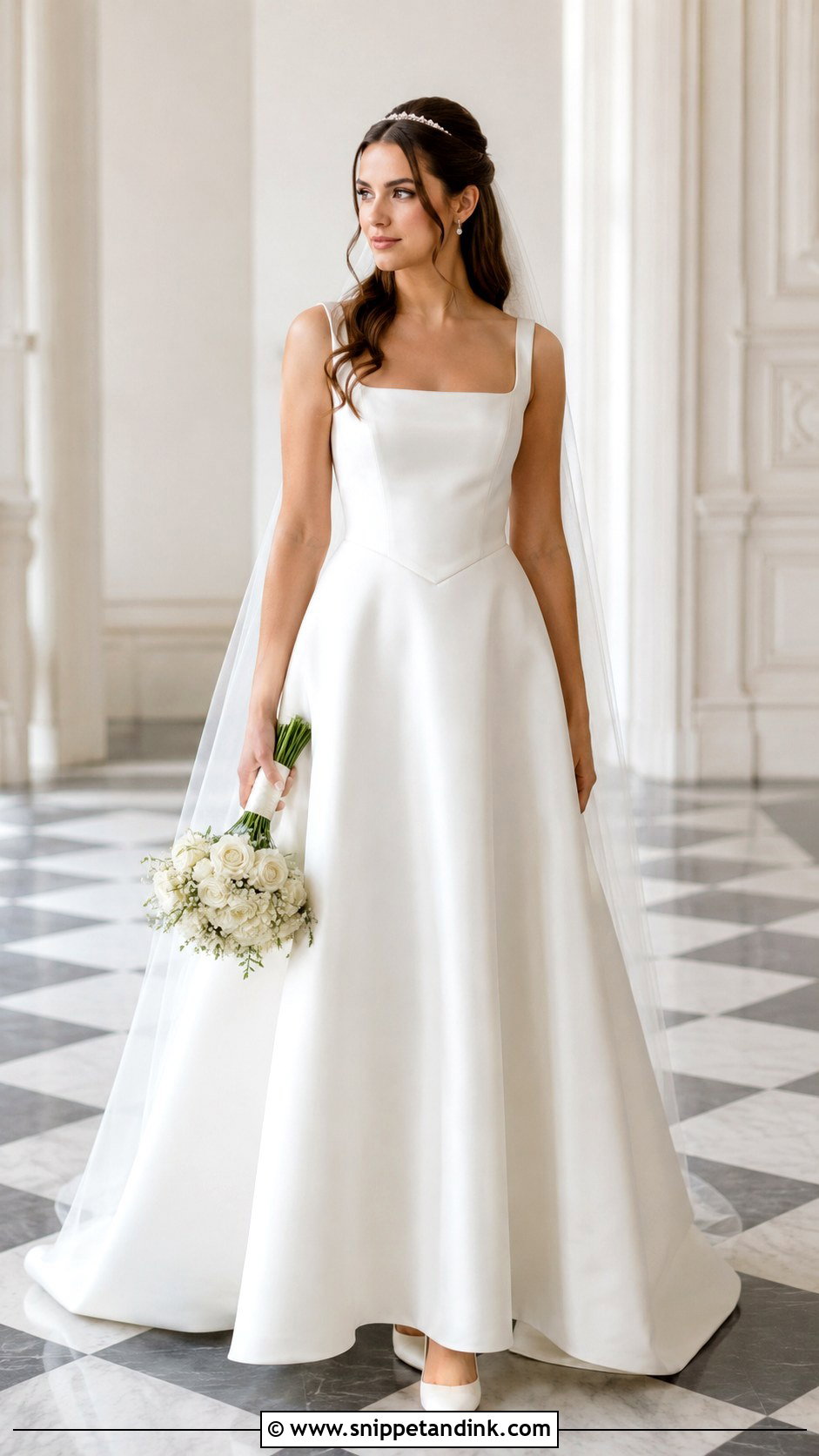
An A-line is the quieter option, and for many brides it’s the comfortable one. The skirt opens gently from the point without several heavy underskirts, so it moves easily. A narrow headband, delicate earrings, low pumps and a chapel veil suit the proportions, as does half-up hair. Depth of the point is worth testing properly here. I’d try a shallow V and a deeper one on the same day: shorter torsos usually look and feel better with the shallow version, while longer torsos can take more drama. Sit and bend in both.
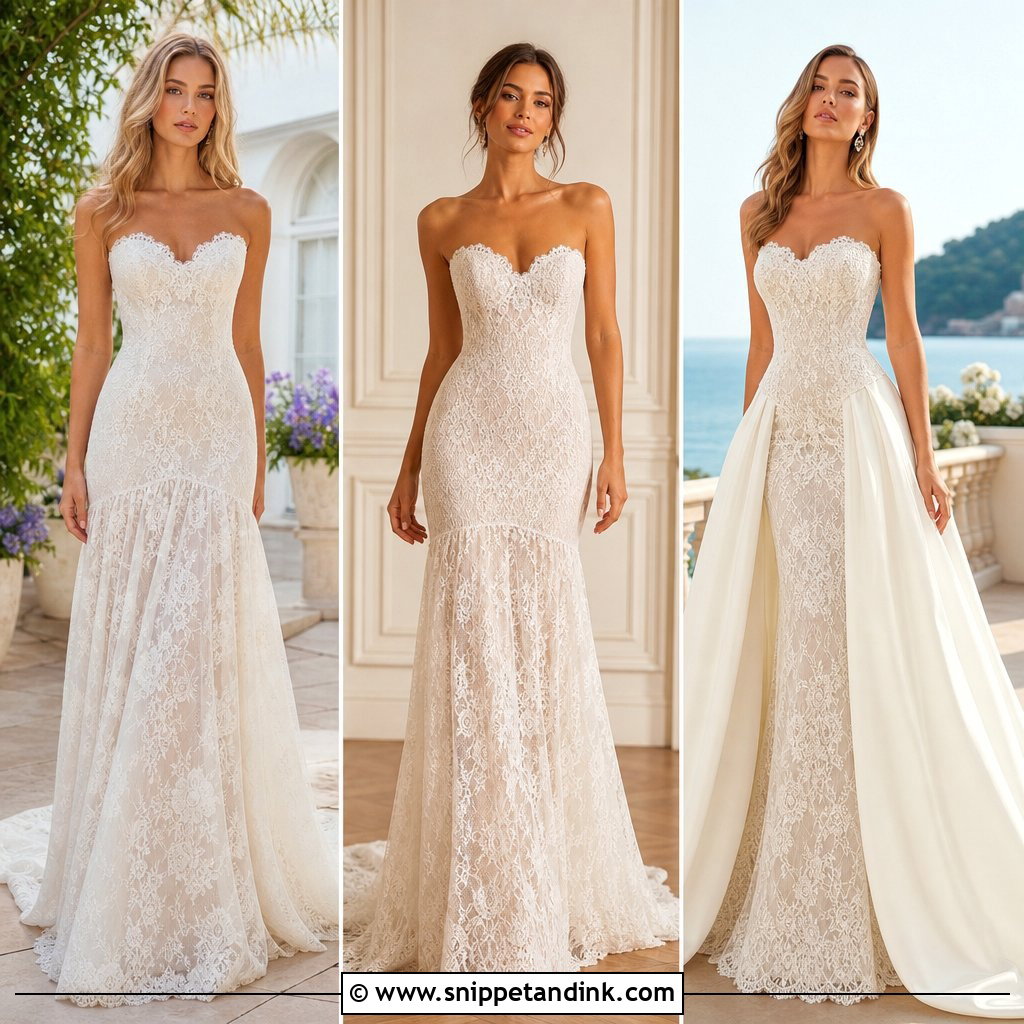


15. Basque Waist Wedding Dress With Tulle Skirt
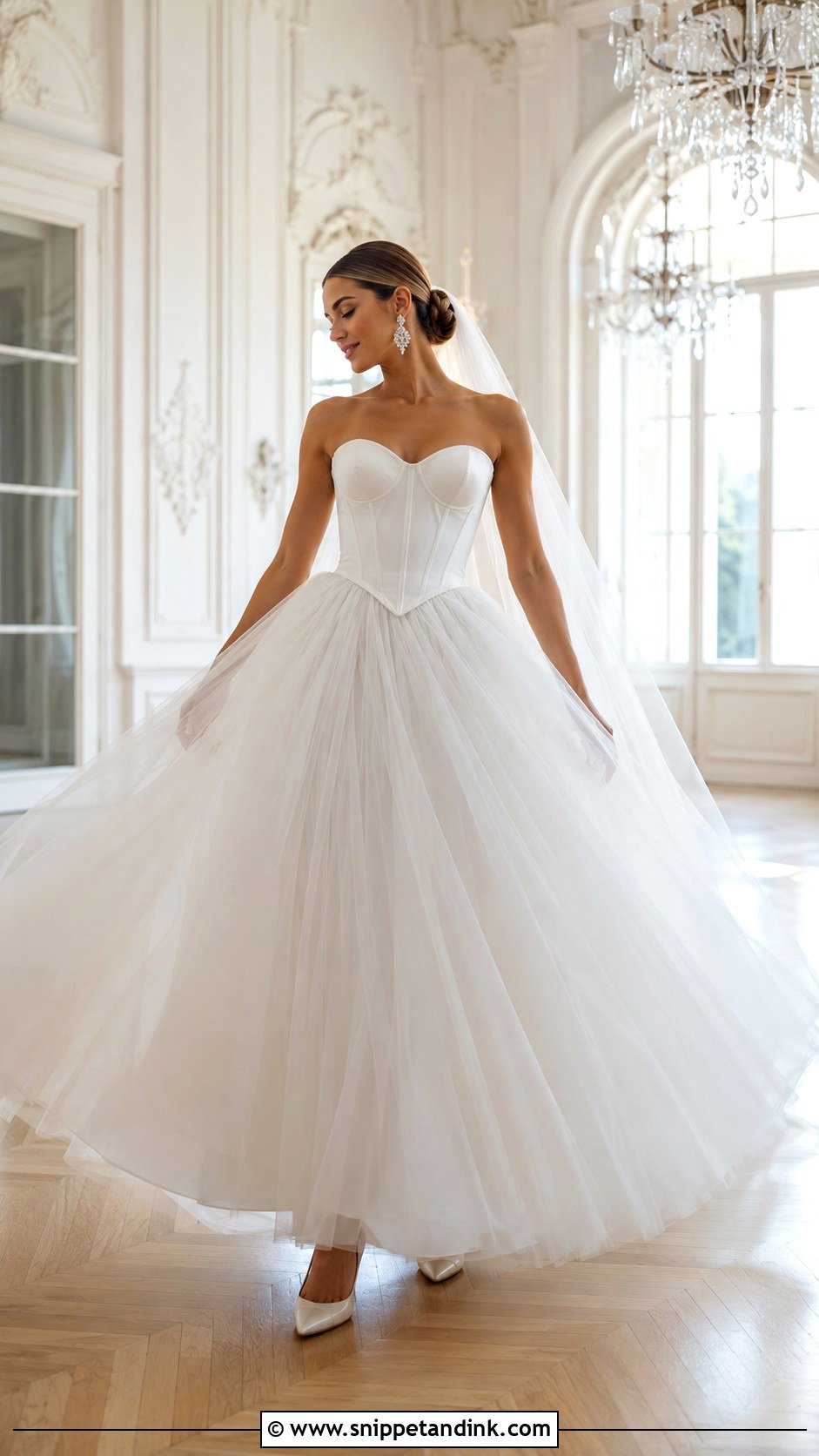
Fine tulle softens a firm satin corset and still lets you move freely. Look for a top with a visible pointed seam and a skirt of lightly gathered layers. Crystal earrings, cushioned ballet-style pumps and a long plain veil that floats past the train suit it, with a sleek ponytail or low bun to keep it modern. I always ask whether layers can be removed, because trimming one or two often fixes both proportion and heat. A multi-point bustle is better than a single hook on tulle; it spreads the weight so the skirt doesn’t drag the waist backward.
16. Vintage Lace Basque Waist Wedding Dress
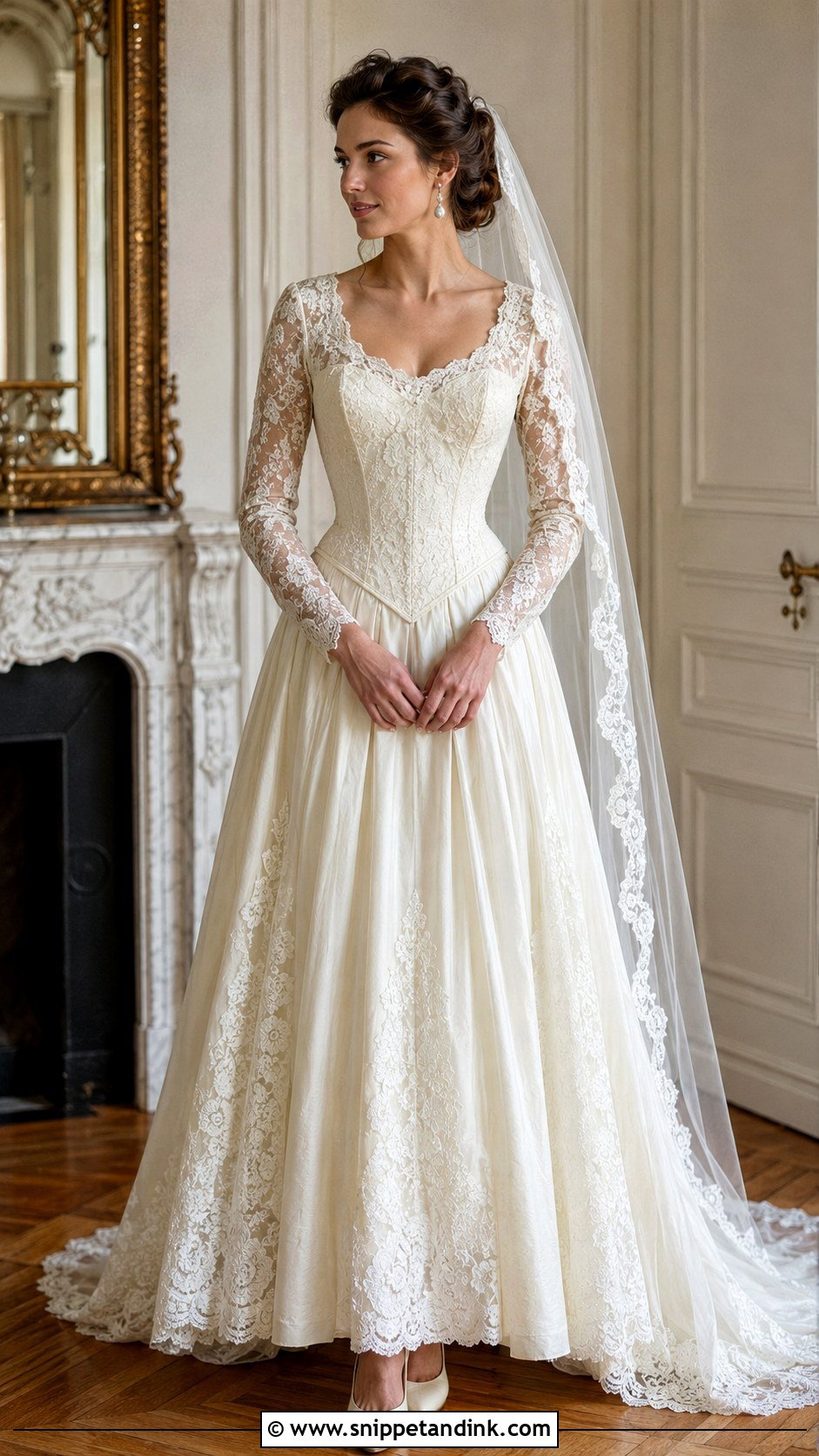
Vintage lace suits the Basque shape because the silhouette itself is historical, but the styling has to stay restrained or it tips into costume. A corseted bodice with a soft scoop, fitted lace sleeves and a moderately full skirt is the version I’d suggest. Ivory or pale champagne lining warms the lace. Pearl earrings, a fine hair comb, rounded-toe pumps and a lace-edged chapel veil are plenty, with a softly waved updo. When you compare gowns, look closely at how the lace meets at the point. Symmetry there makes the whole bodice look deliberate in close-up photos.
17. Modern Basque Waist Wedding Dress With Draping
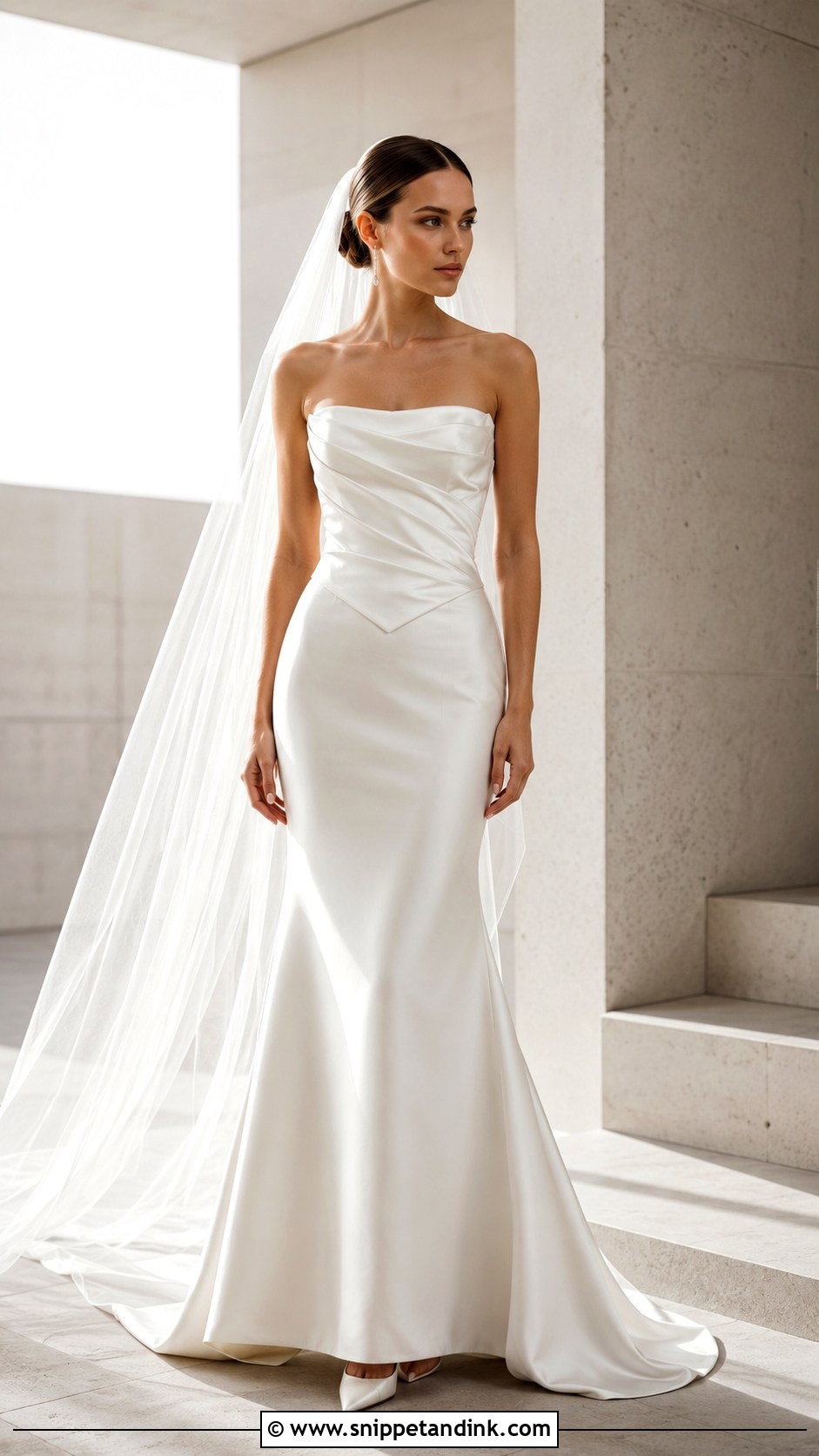
Diagonal draping gives the Basque waist a modern edge. Folds cross a strapless satin bodice and finish neatly at the point, then a column or gently flared skirt keeps the line long. Metal drop earrings, pointed pumps and a long sheer veil with no lace suit it, plus a sleek center-parted bun. Drape is easy to get wrong at the hips, where extra folds add bulk, so I check it standing and seated. For asymmetry, a removable one-shoulder overlay works well. Keep other decoration away; the folds are the detail.
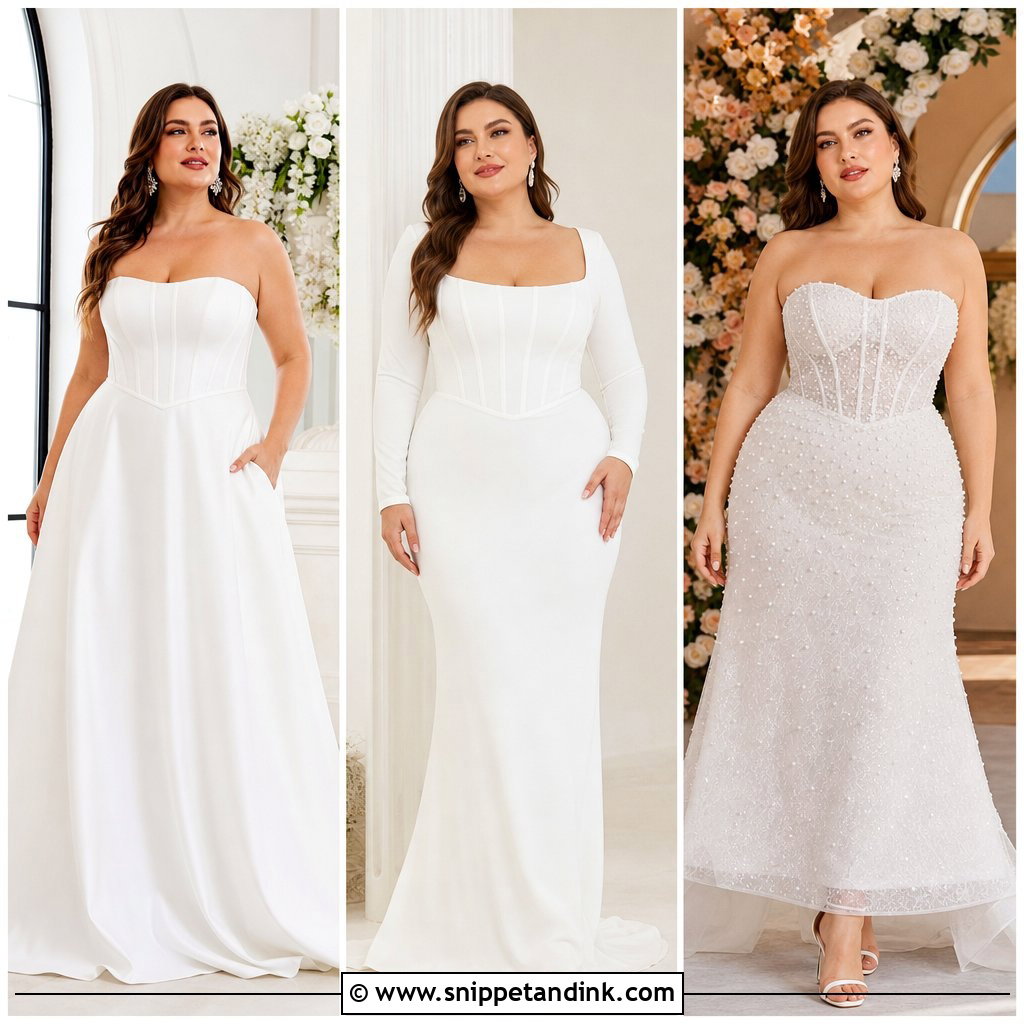
18. Plus Size Basque Waist Wedding Dress
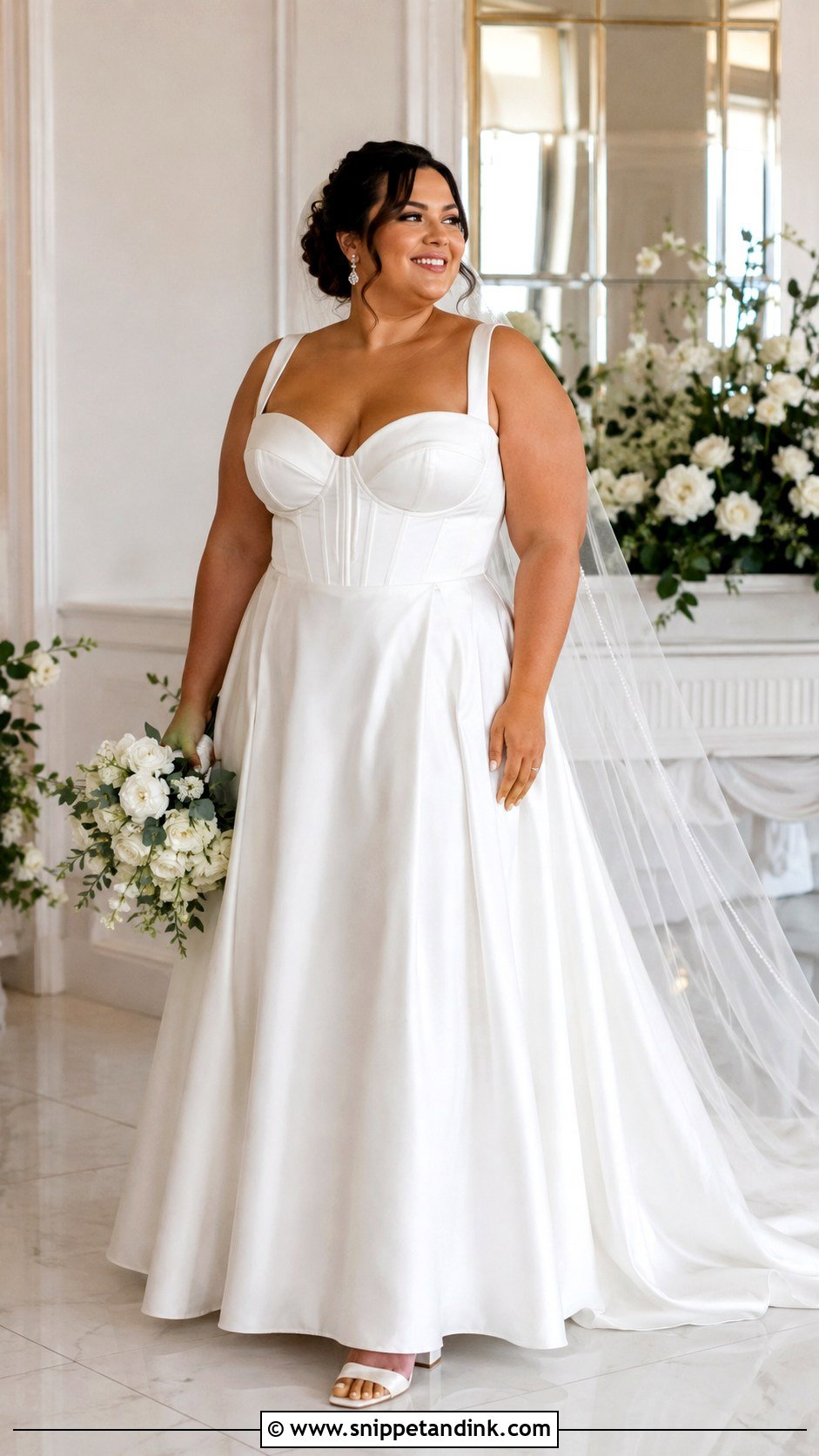
A properly built Basque waist gives real definition and support across bridal sizes; the key word is built. Look for reinforced boning, supportive cups, a sturdy back closure and straps or sleeves you’re comfortable in. A V-neck or sweetheart bodice over an A-line satin skirt gives balance. Drop earrings, supportive block heels and a light chapel veil suit it, with a soft updo. Samples are usually pinned and clipped, so ask how the waist depth, bust support and seams change in your ordered size. Good alterations refine; they shouldn’t squeeze.
19. Basque Waist Wedding Dress With Bow Back
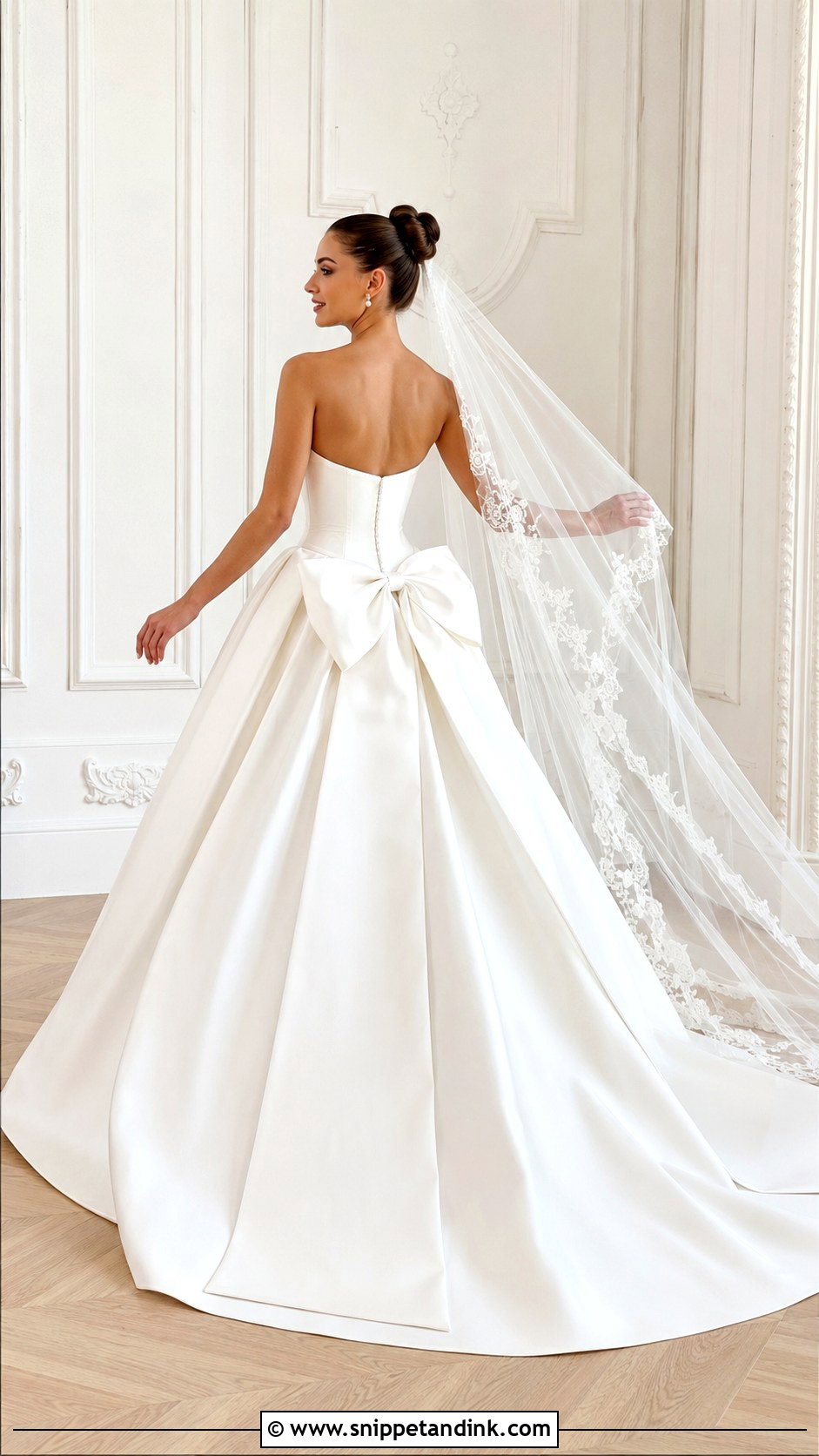
A big bow at the back waist gives the gown a second view while the point handles the front. Stiff Mikado is the fabric I’d choose, because it holds the bow’s loops and the full skirt all day. Pearl studs, pointed satin pumps and a cathedral veil that comes off for the reception to reveal the bow work well, with a high bun to keep the back clear. Ask for the bow to be light and fixed at several points. A removable bow is easier in the car and at the dinner table, where it gets crushed against a chair back.
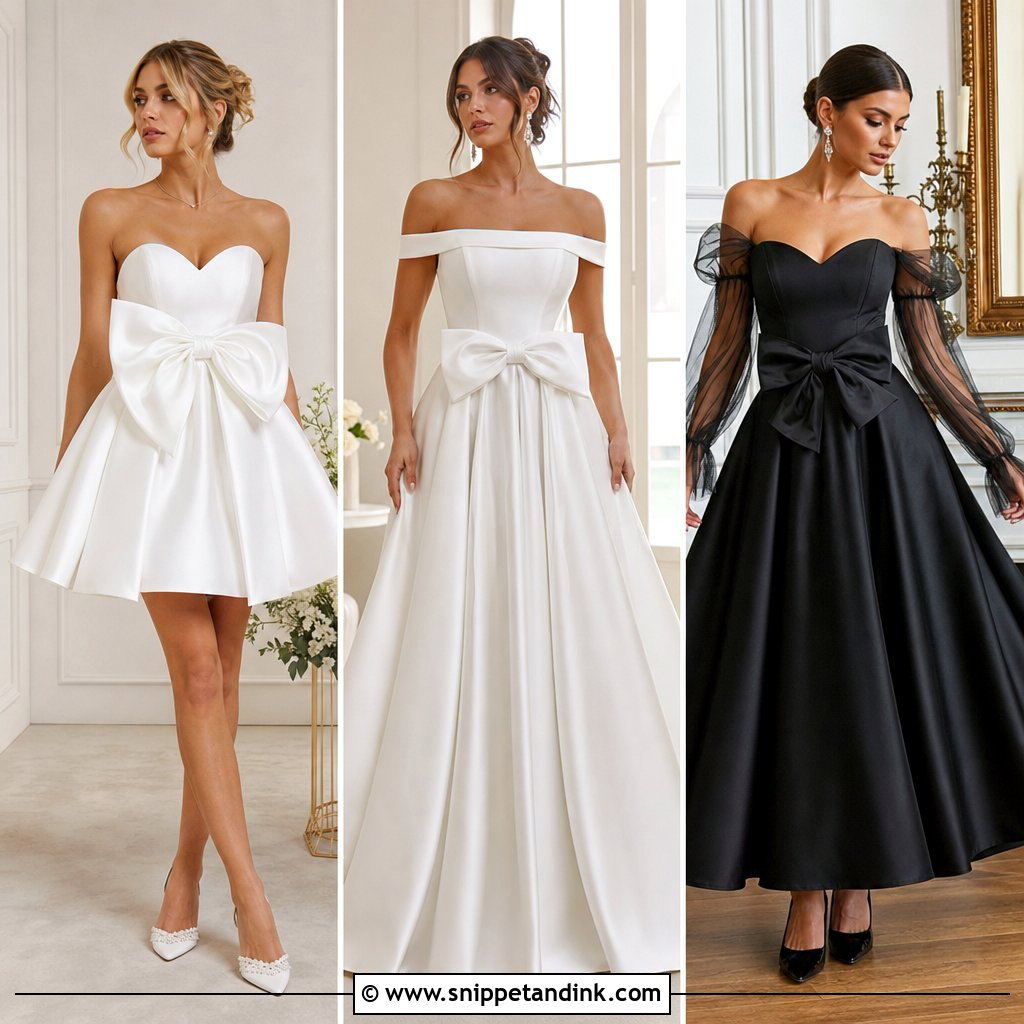
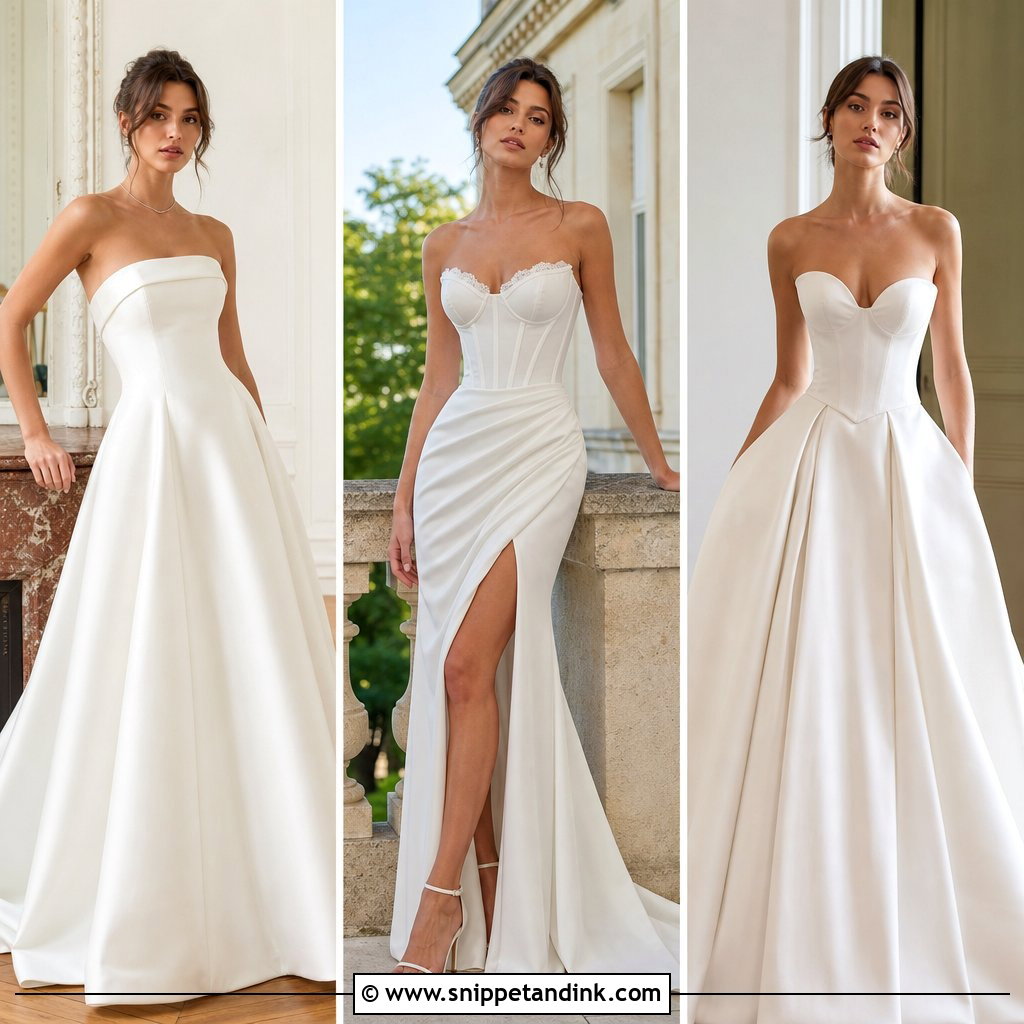
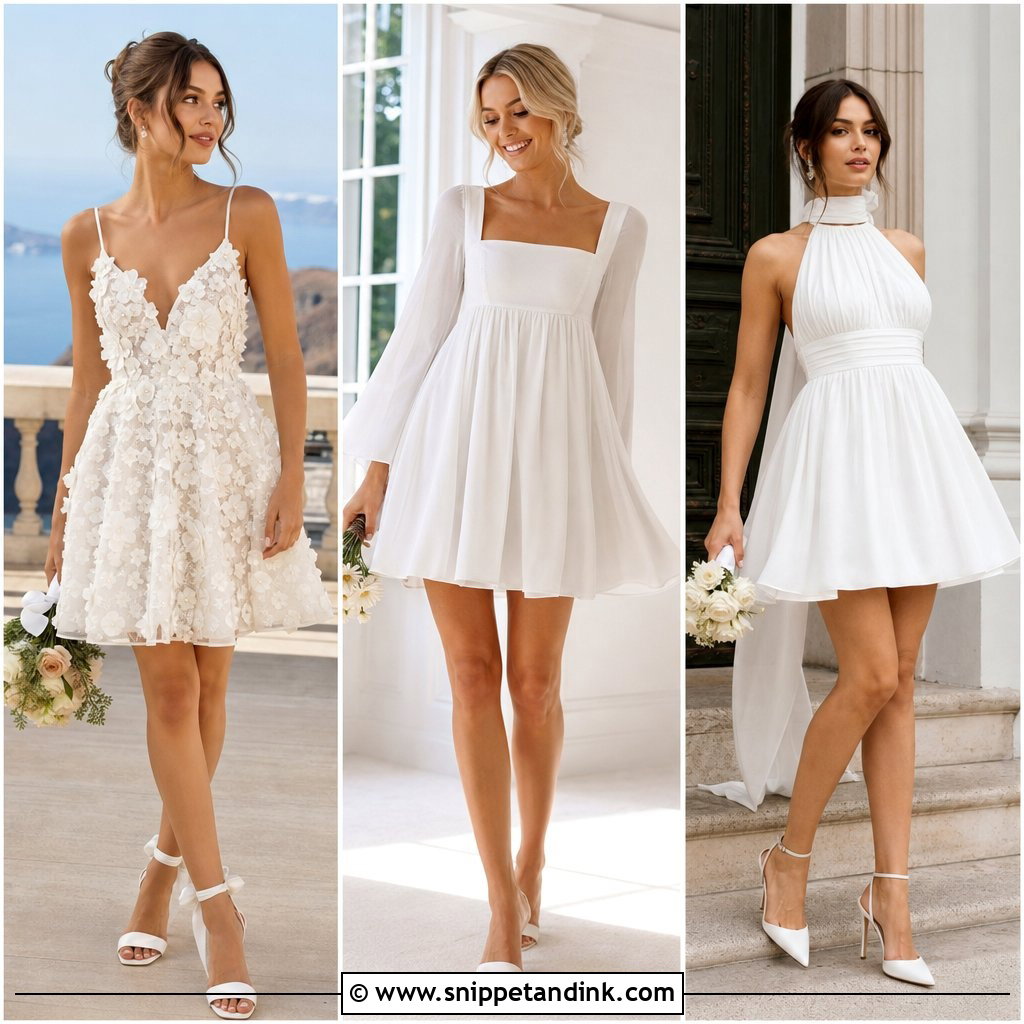
20. Basque Waist Wedding Dress With Overskirt
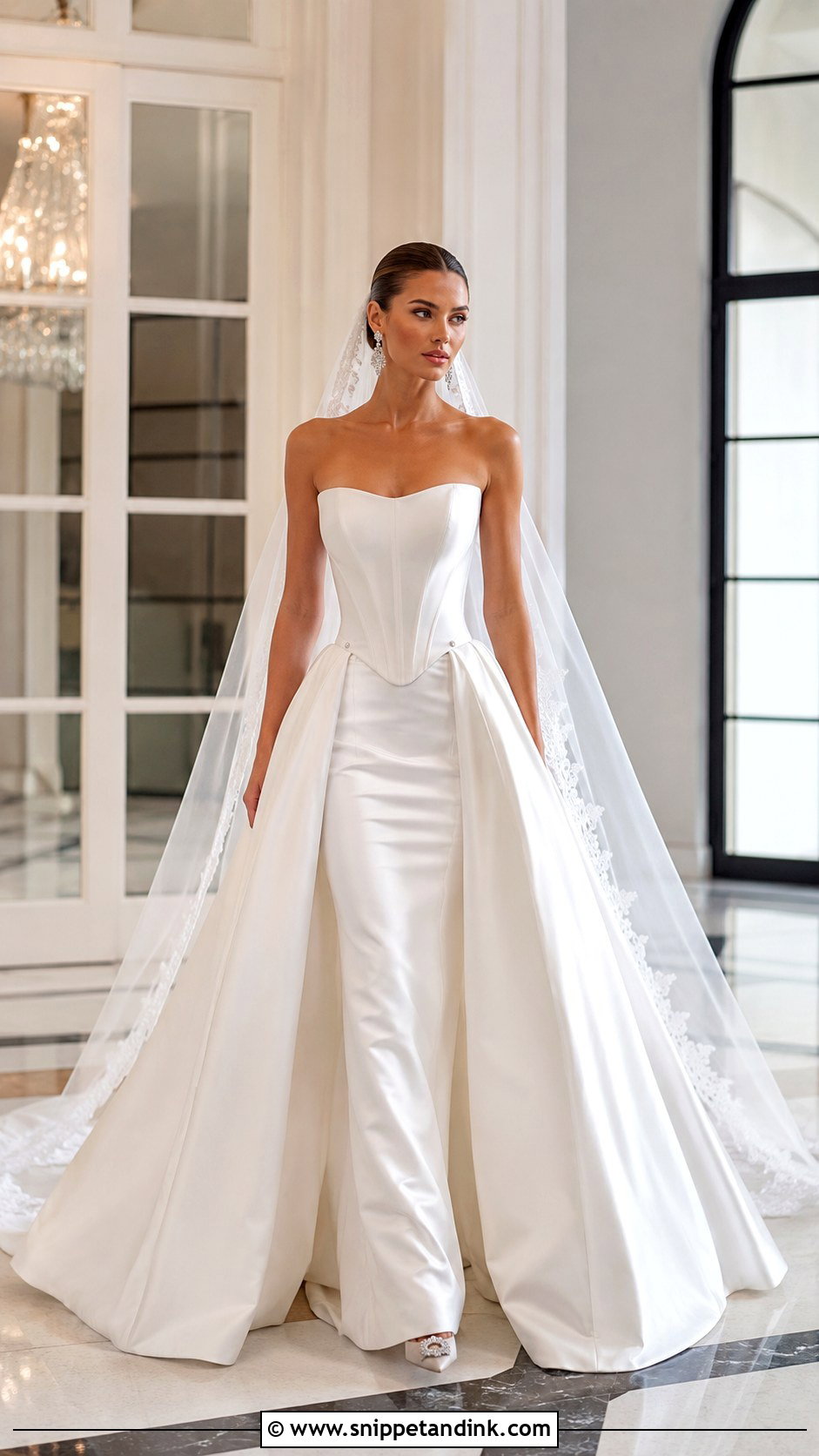
A detachable overskirt turns a slim Basque gown into a ceremony ball gown and back again. Start with a structured corset and a narrow crepe or satin skirt, then add a full overskirt that fastens under or along the point without hiding it. Statement earrings, closed-toe heels and a cathedral veil suit the full version; take off the veil and overskirt for the party. A sleek bun or ponytail works for both. I always ask the designer to demonstrate the fastening before ordering. Hidden hooks should hold evenly with no bumps, and you’ll need a clean place to hang the removed layer.
Veil Lengths That Leave the Point on Show
The veil decides how much of the waist anyone actually sees, and that’s something I like to settle in the salon rather than on the morning.
Long and sheer
A cathedral or chapel veil in very fine, unedged tulle lets the bodice show through from behind. Heavy lace borders or a double layer tend to blur the point, especially in photos taken from the aisle.
Short and clean
Fingertip veils are the trickiest length here. If the edge falls right at the point, it draws a second line across the exact spot you want clean. I’d hold the veil up to the gown and move the comb until the hem lands either above the waist or clearly below it.
Placement on the head
A comb tucked under a low bun drops the veil straight down the spine and keeps the sides of the bodice open. Set high on the crown, the veil fans wider and covers more of the waist. It’s worth trying both at your hair trial with the gown or a photo of it nearby.
Twenty Gowns, One Rule About the Bodice
Every gown above depends on fit before anything else. Satin ball gowns give scale, while crepe, A-line and spaghetti-strap versions feel lighter. Lace, pearls, appliqués, sleeves, bows and removable layers let you make the design your own. At each fitting walk, sit and wear shoes close to your actual heel height, and pick the waist depth that feels secure rather than the deepest one on the rail. Then build the accessories around that point so it stays visible from every angle.
You'll Like These Ideas:





Leave a Reply