
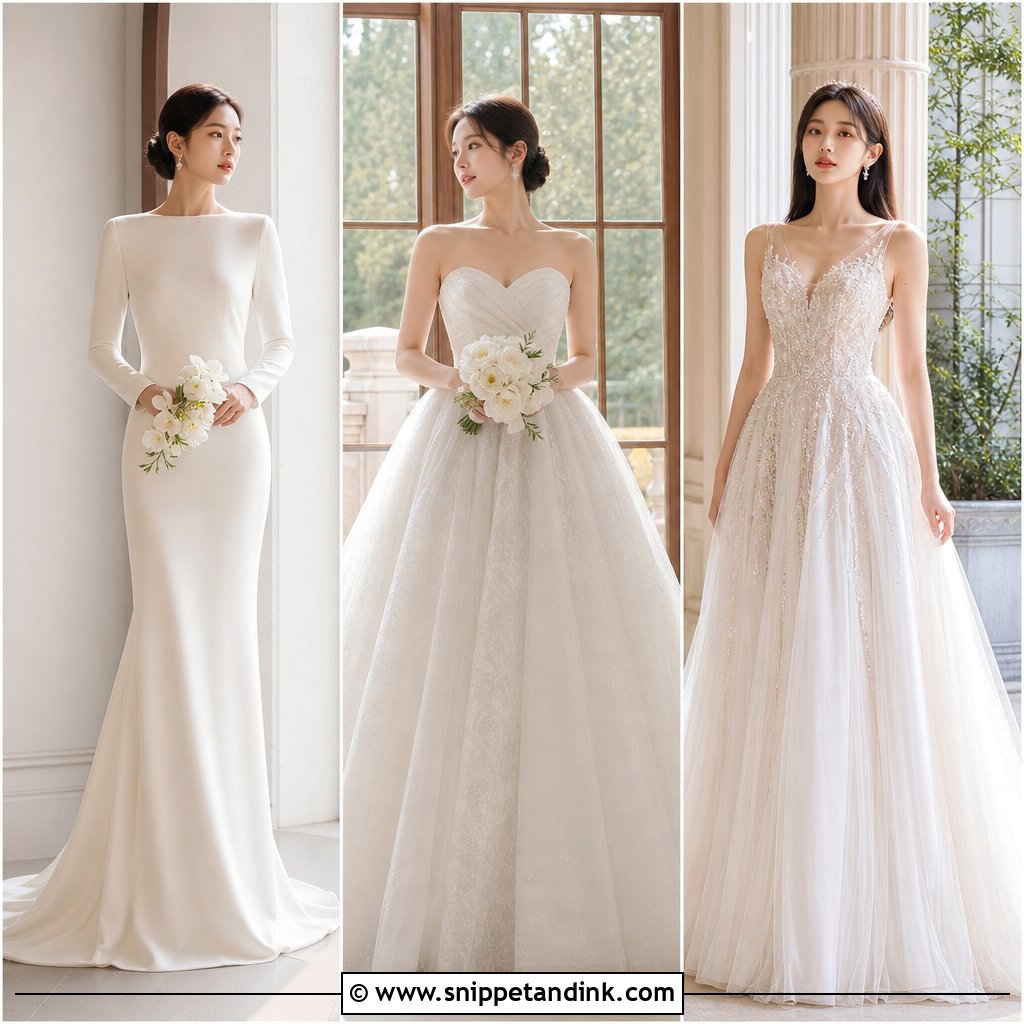
A wedding in Italy asks more of a dress than a hotel ballroom ever will. There are cobblestones and villa staircases, summer afternoons that stay hot well into the evening, a ceremony in one place and dinner on a terrace somewhere else, and often a welcome party the night before. When I fit a bride for an Italian wedding, I think about the walk from the car to the altar as much as the altar itself. Airy fabrics, honest tailoring and shoes that grip stone matter more than extra beading. Below are 25 bridal looks, from lace for a Tuscan villa to bare satin for Lake Como, each with notes on how it behaves in that setting.
Fabric Weight by Month and Region in Italy
Italy’s climate varies a lot between a lake in the north in May and a Puglian masseria in August, and the dress fabric should follow it. When I help a bride plan, I ask for the month, the region and whether the ceremony is outside before we look at a single gown.
- June to August, south and coast: high heat, often well into the evening. Chiffon, organza, light crepe and silk crepe breathe. Avoid heavy duchess satin, dense beading and full lining layers.
- May, September and the lakes: warm days, cooler nights. Most fabrics work, but plan a wrap or jacket for dinner.
- October onward and the hill towns: cool evenings and wind. Long sleeves, mikado and heavier crepe come into their own.
- Outdoor ceremonies at any time: the dress must survive direct sun, so think about sweat marks on satin and silk.
Shoes follow the venue rather than the season. Old town centres have cobblestones and polished stone steps that are slippery when smooth soles meet them. Block heels or soles with a little grip are worth more than a perfect stiletto. I’d also ask the venue whether guests and the bride walk across gravel, which eats thin heels and pulls at hems.
1. Italy Wedding Lace A Line Dress
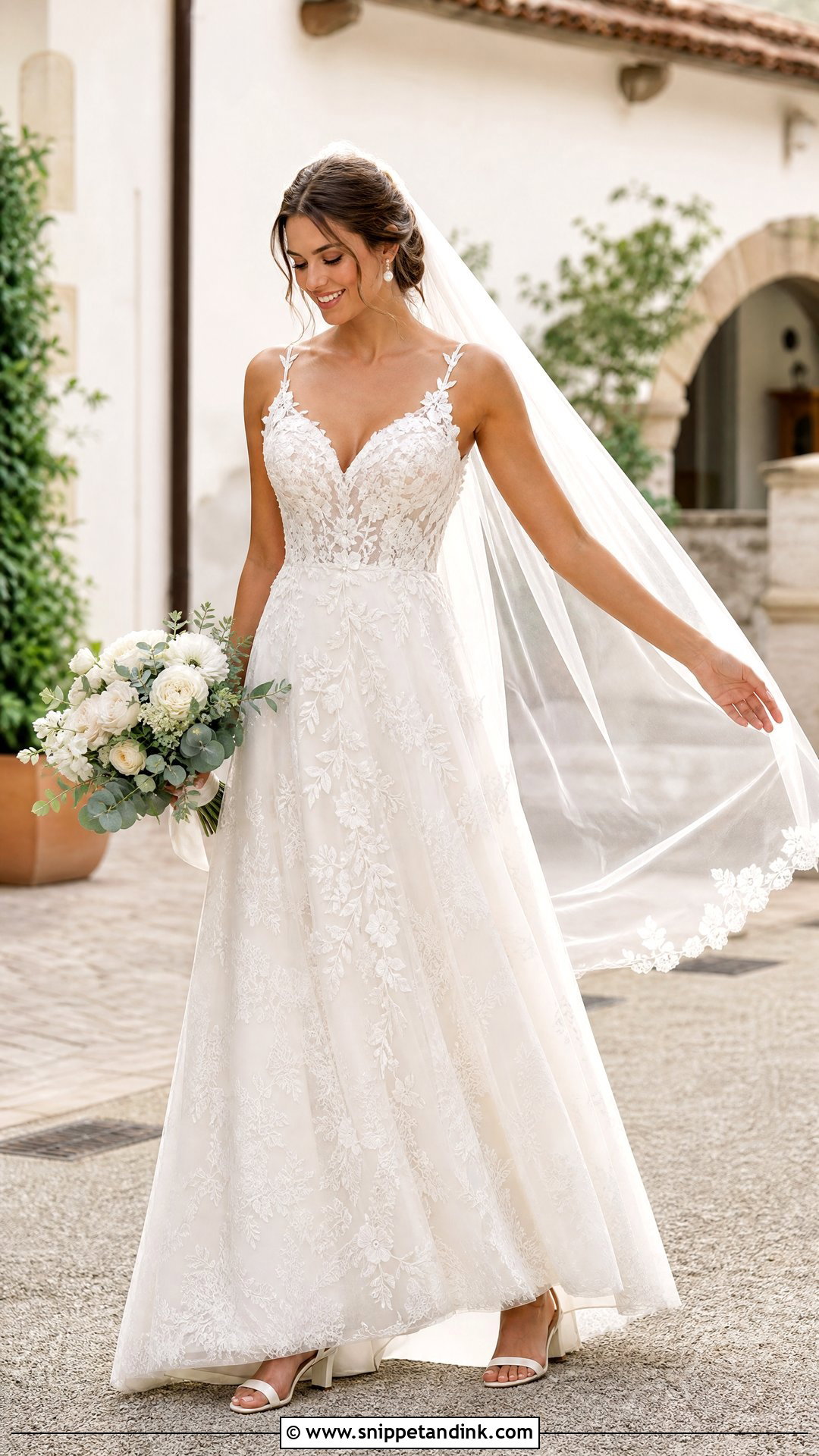
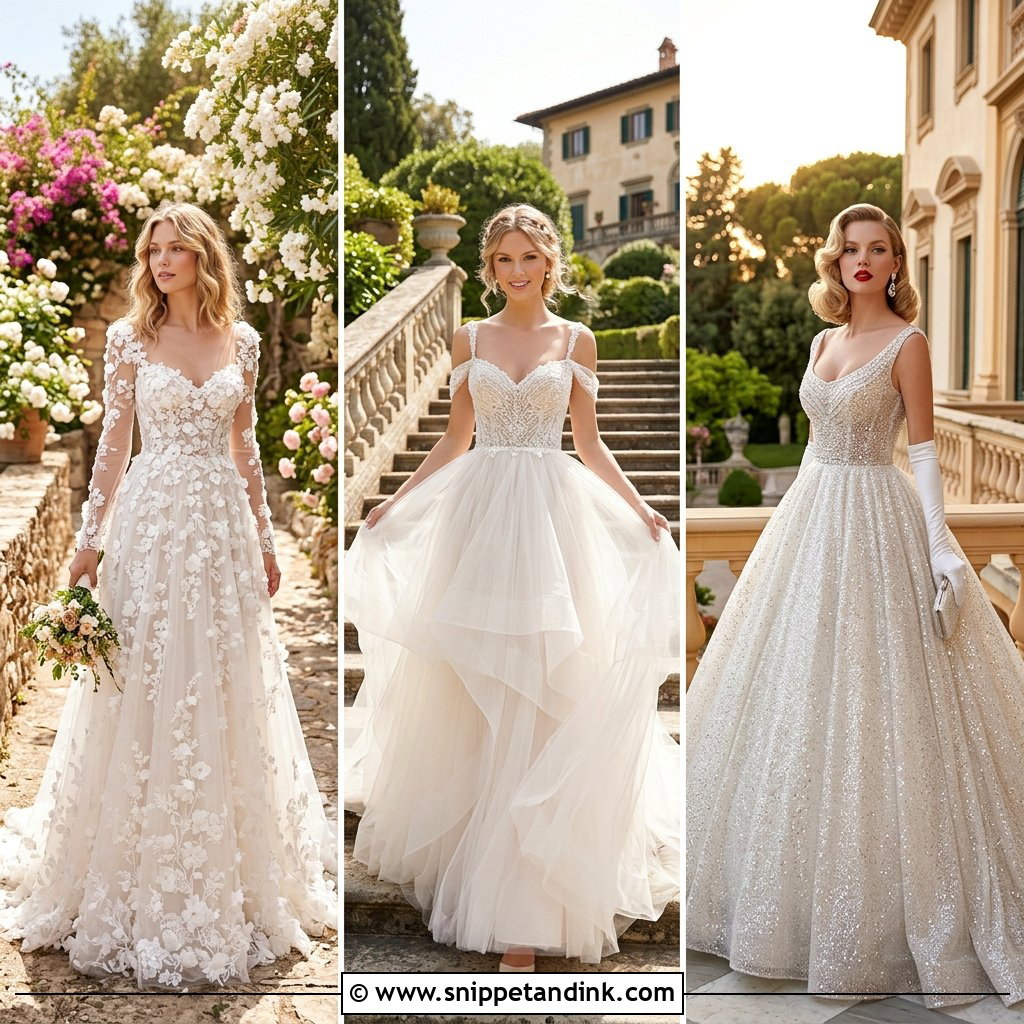
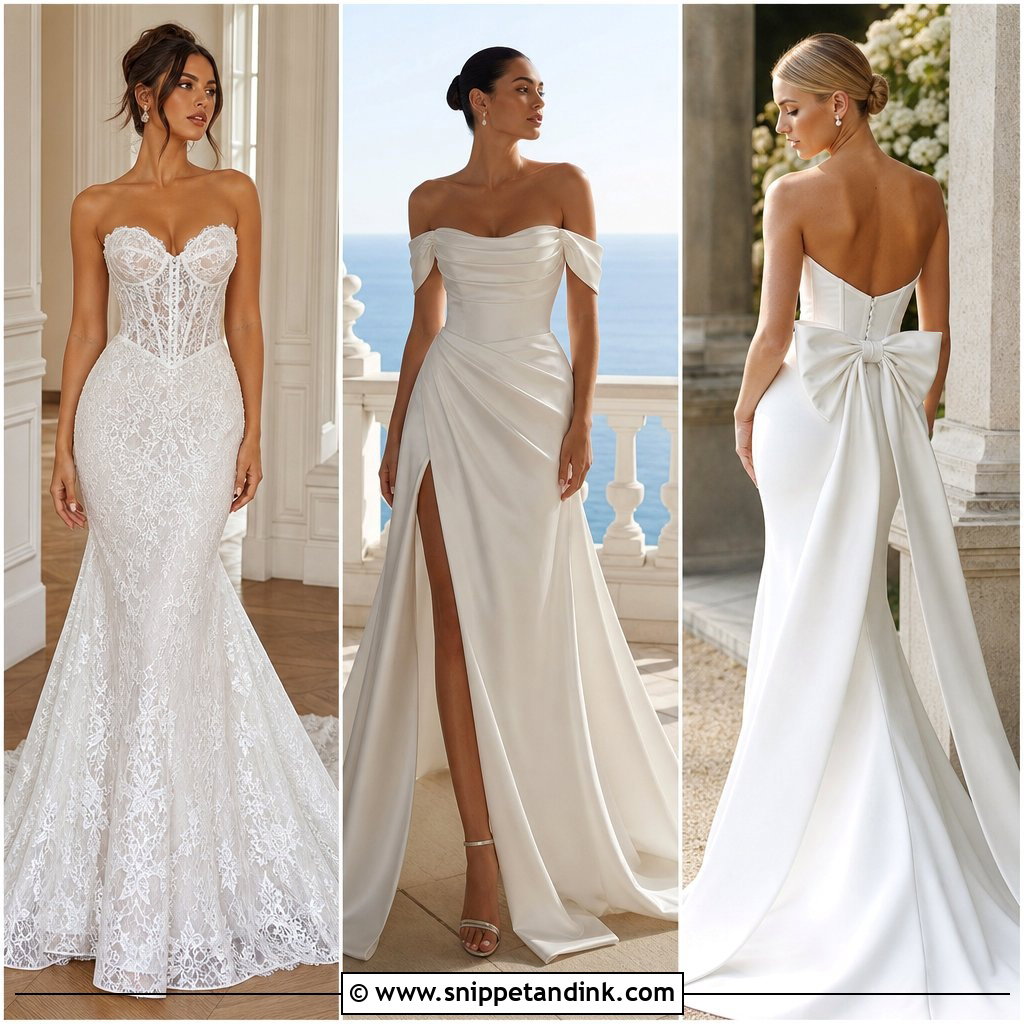
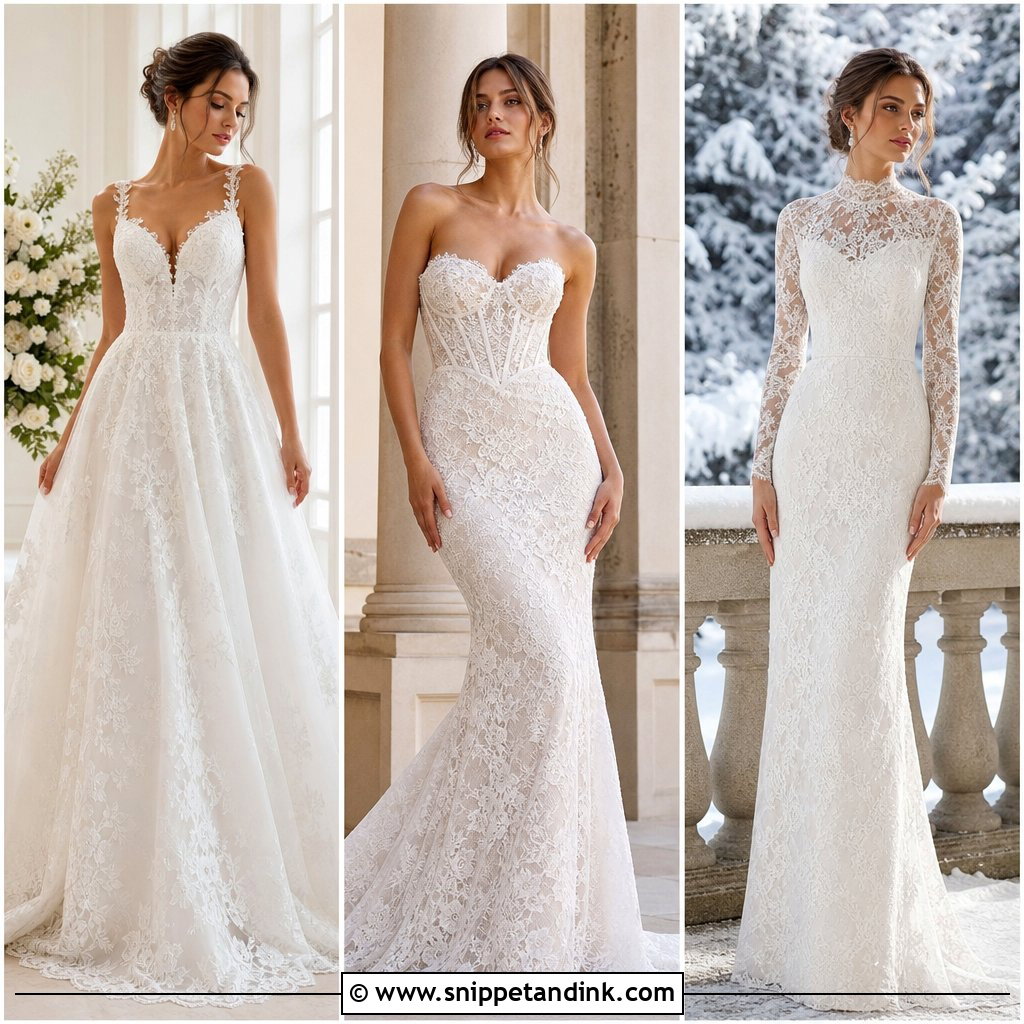
Lace A-lines forgive almost everything a destination wedding throws at them. The skirt floats away from the body, so heat and long walks are bearable, and lace hides the small creases that come from travel far better than satin does. Look for soft floral lace and a bodice that’s fitted but lets you breathe at dinner. On stone paths and lawns, ivory block-heel sandals beat stilettos every time. A low chignon, pearl drops and a sheer fingertip veil keep it classic. Ask your florist for a soft cream and blush bouquet so the lace stays the main texture.
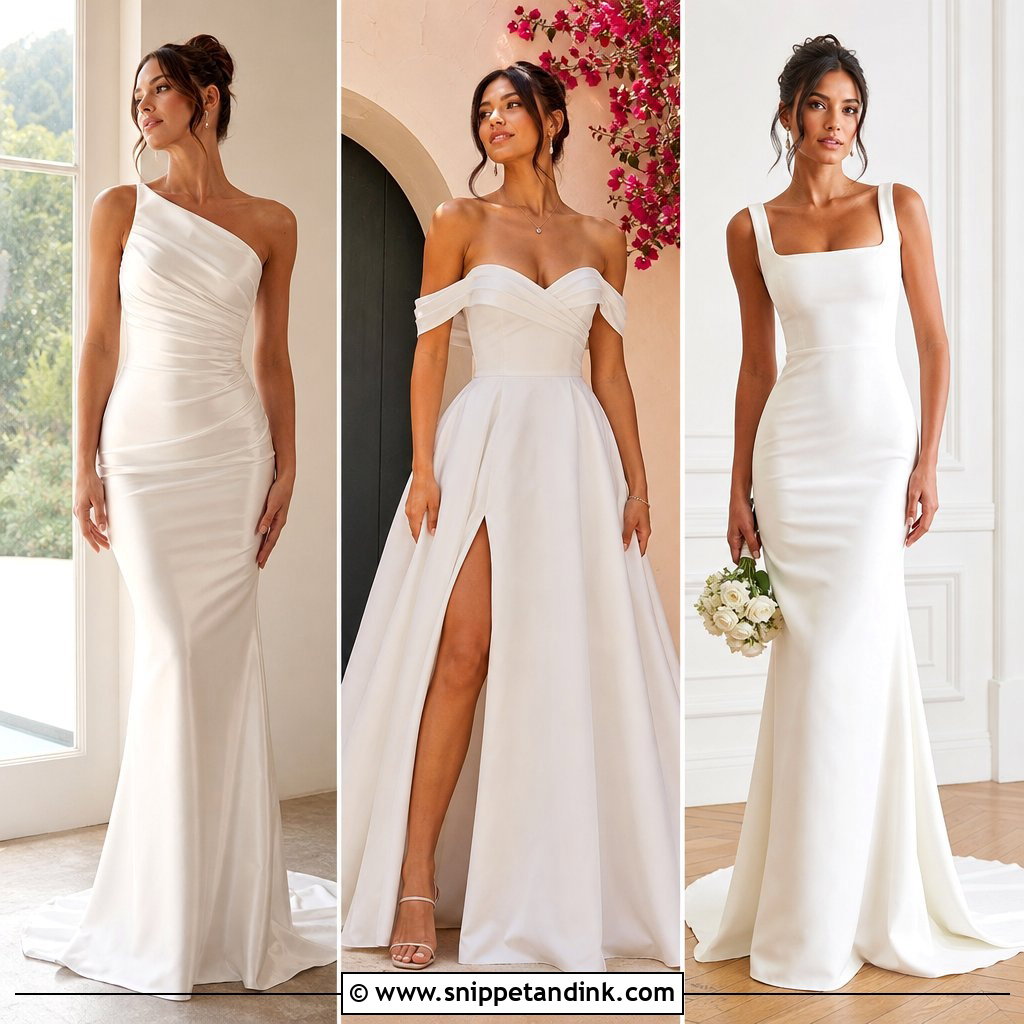
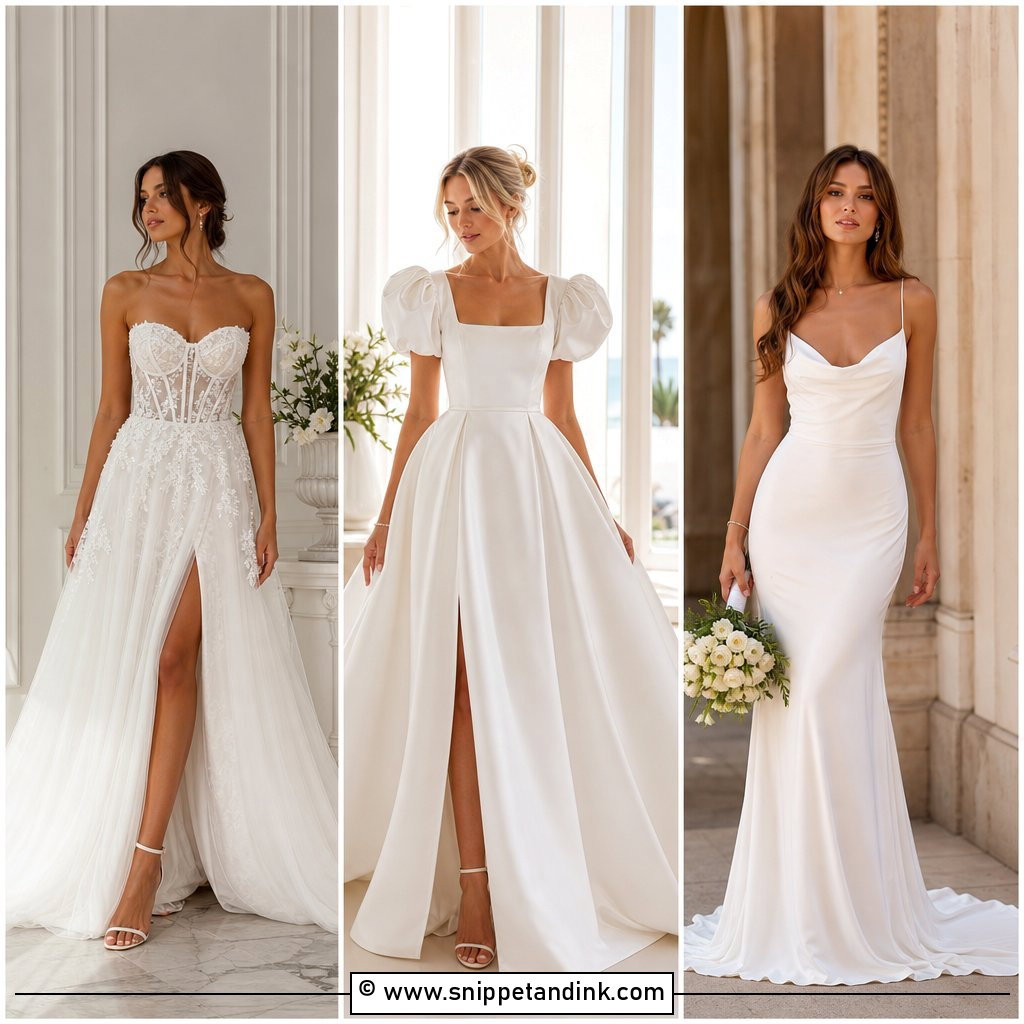
2. Italy Wedding Satin Slip Dress
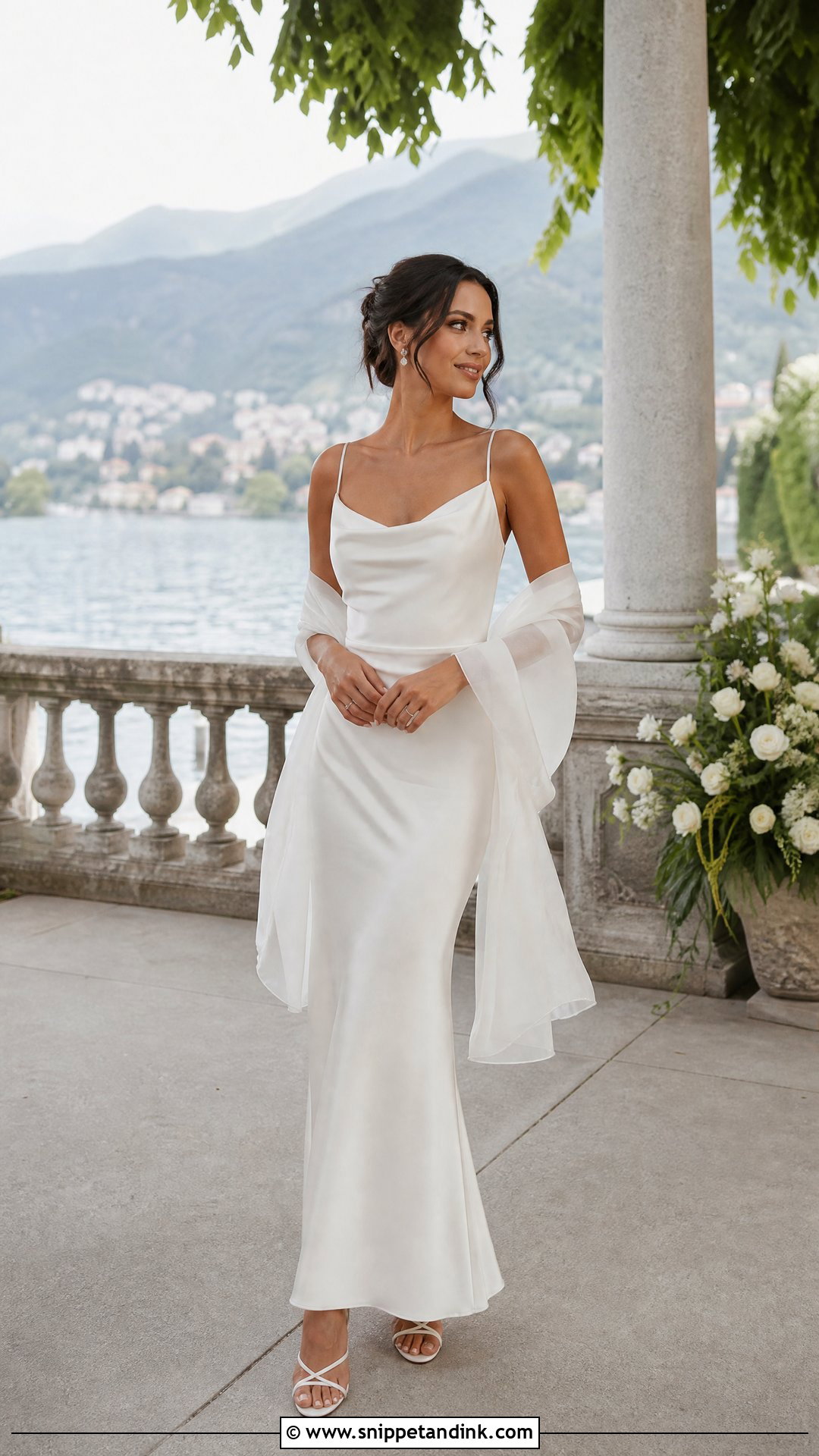
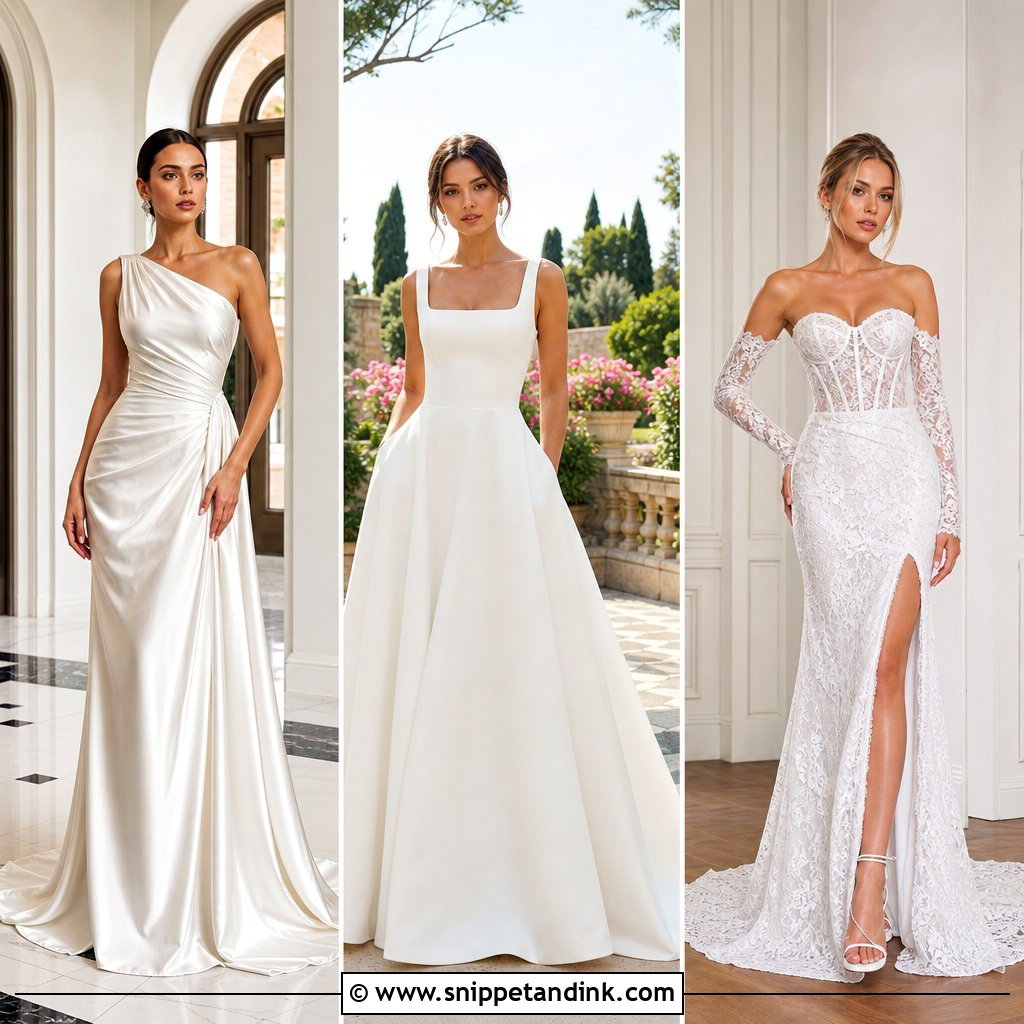
Bias-cut satin is the hardest dress here to fit and the most rewarding when it’s right. Cut on the diagonal, the fabric stretches slightly and skims the body, which means it shows every seam and line underneath, so I always fit it with the exact undergarments you’ll wear. A cowl neck, fine straps and a short train keep it bridal. Strappy ivory heels, small crystal studs and a sleek low bun suit it. Lake Como evenings get cool, so pack an organza wrap. It also suits an Amalfi Coast terrace or a city wedding in Florence.
3. Italy Wedding Off Shoulder Dress
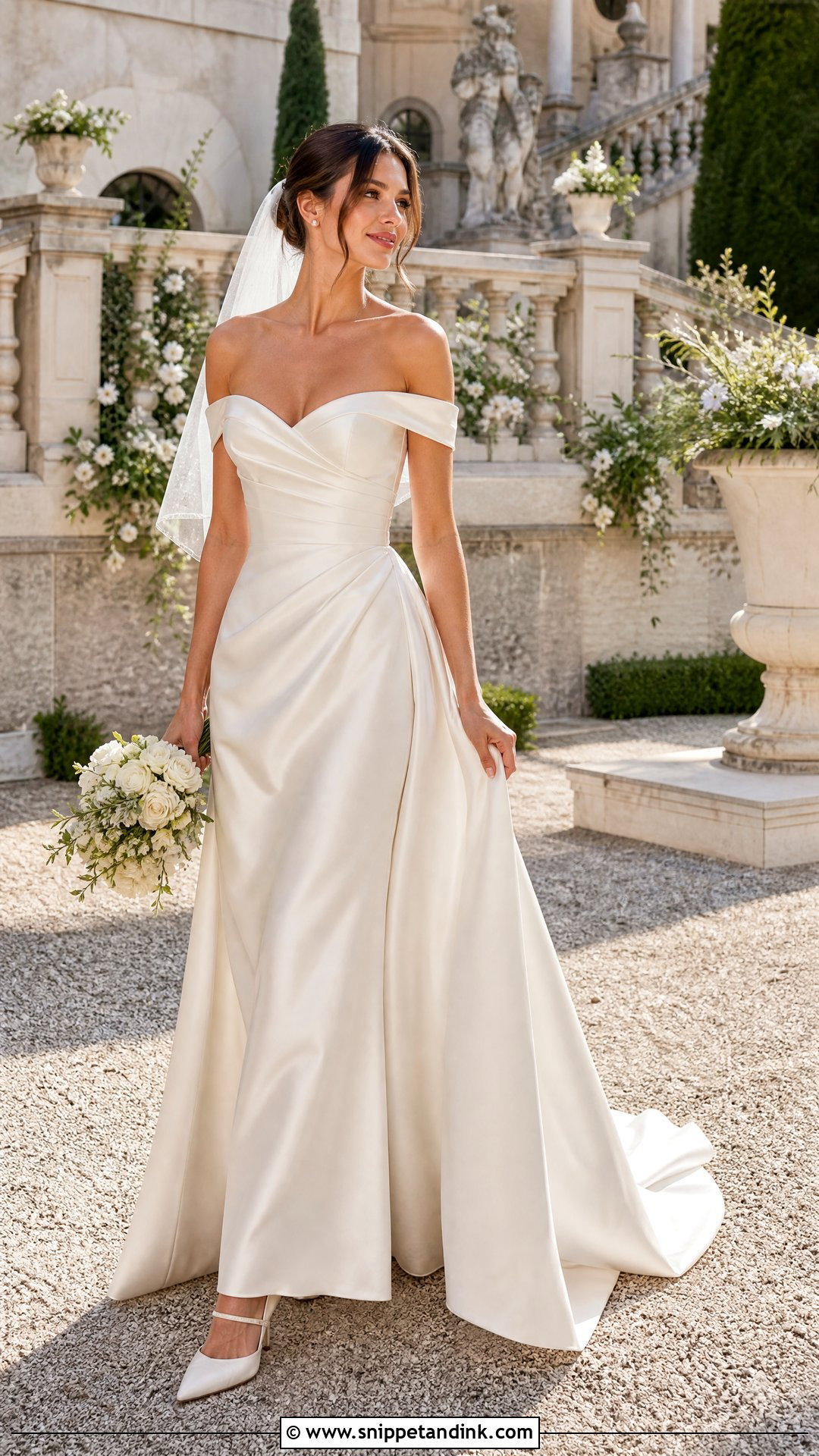
Off-shoulder necklines frame the collarbone well, but they only stay put if the bodice is built to hold them. I check this by having the bride raise both arms and hug someone at the fitting; if the neckline rides up, it needs boning or a grip band sewn inside. A structured bodice with a flowing skirt in ivory satin, mikado or light crepe suits villa and garden settings. Pointed slingbacks or block sandals, a short veil and pearl studs or a fine tennis bracelet are enough.
4. Italy Wedding Square Neck Dress
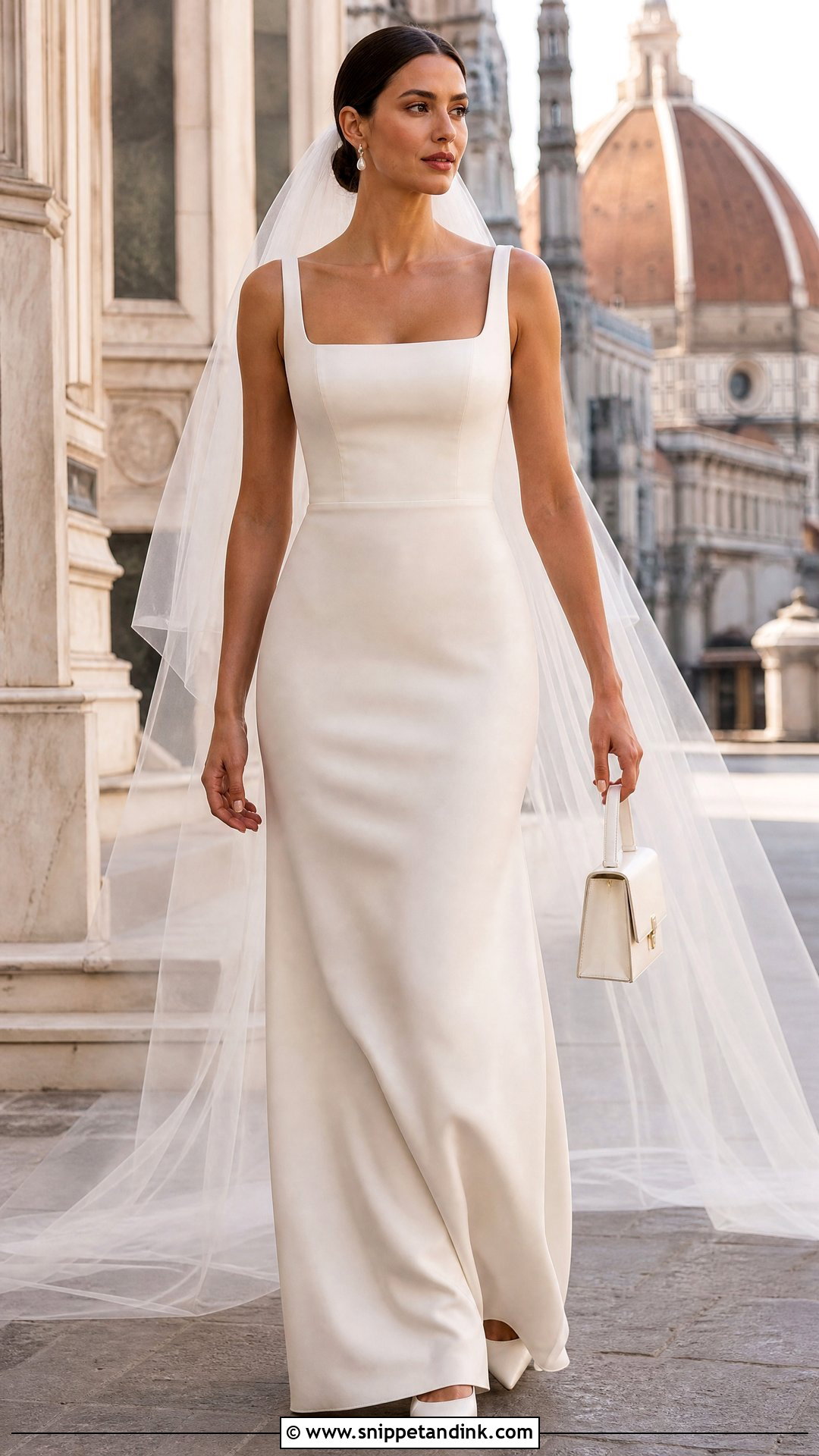
A square neckline supports the bust in a way strapless styles can’t, which is why brides who dislike strapless gowns often settle here. A fitted bodice with a soft A-line or column skirt in lightweight crepe or satin feels refined in Italian heat. Kitten heels are underrated for cobbled town centres. A smooth bun or waves tucked behind the ears shows the neckline. A chapel veil adds length for photos, and small earrings keep the line clean.
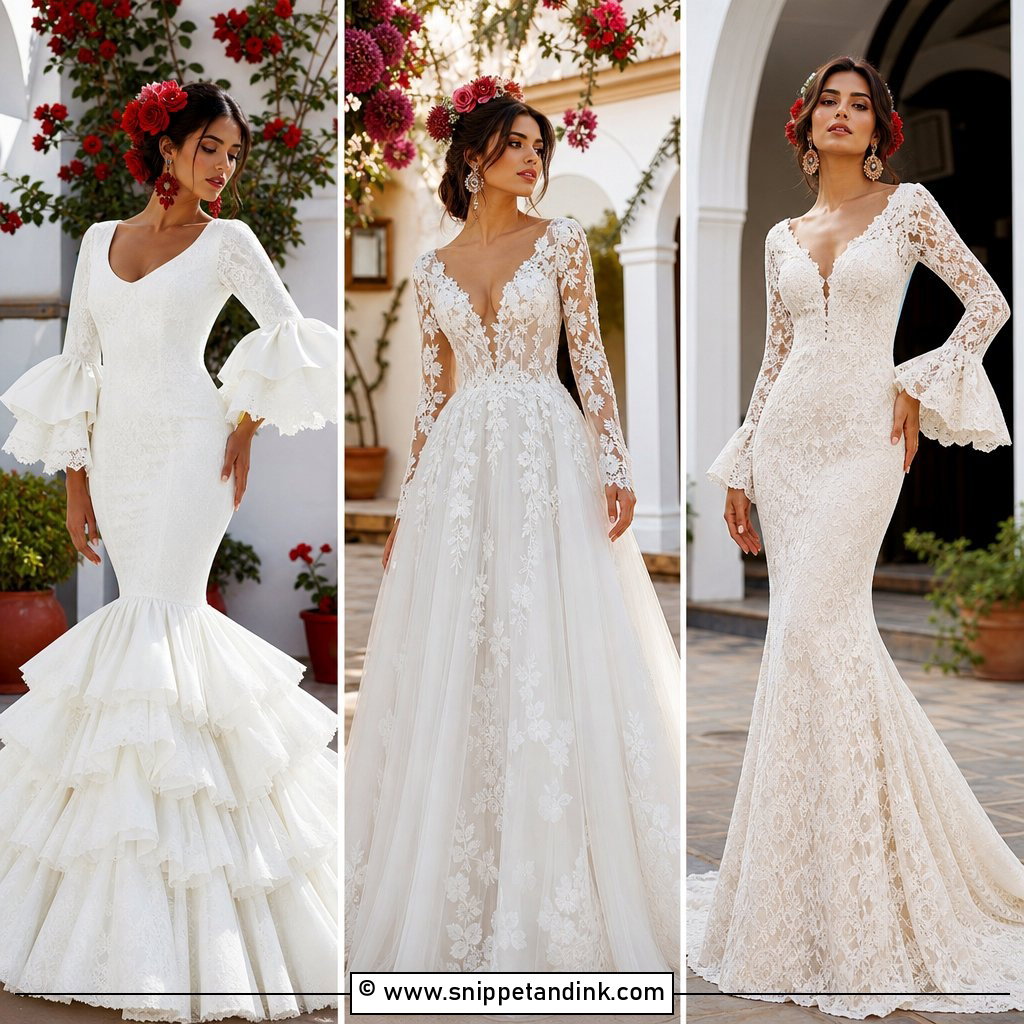
5. Italy Wedding Long Sleeve Lace Dress
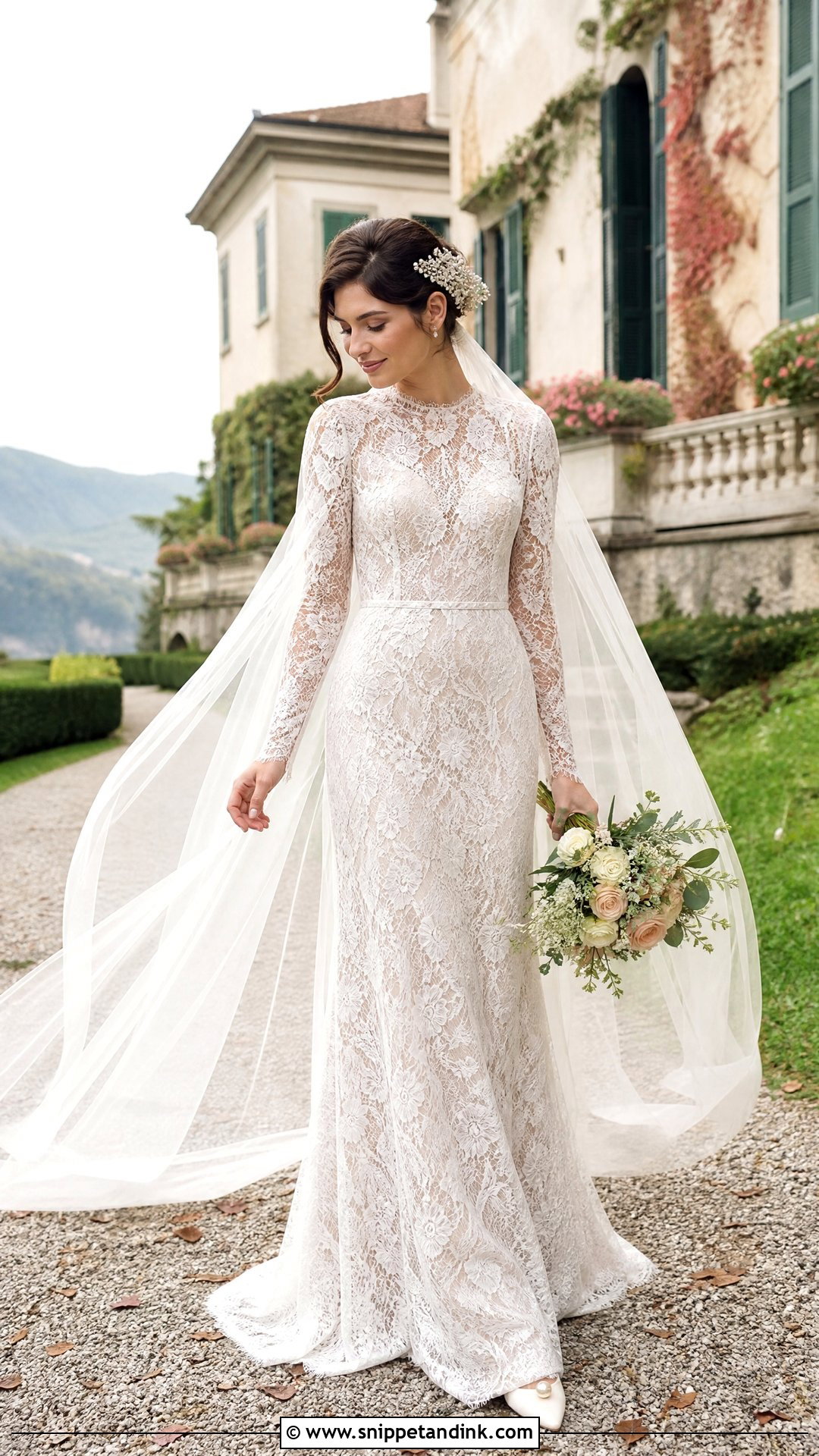
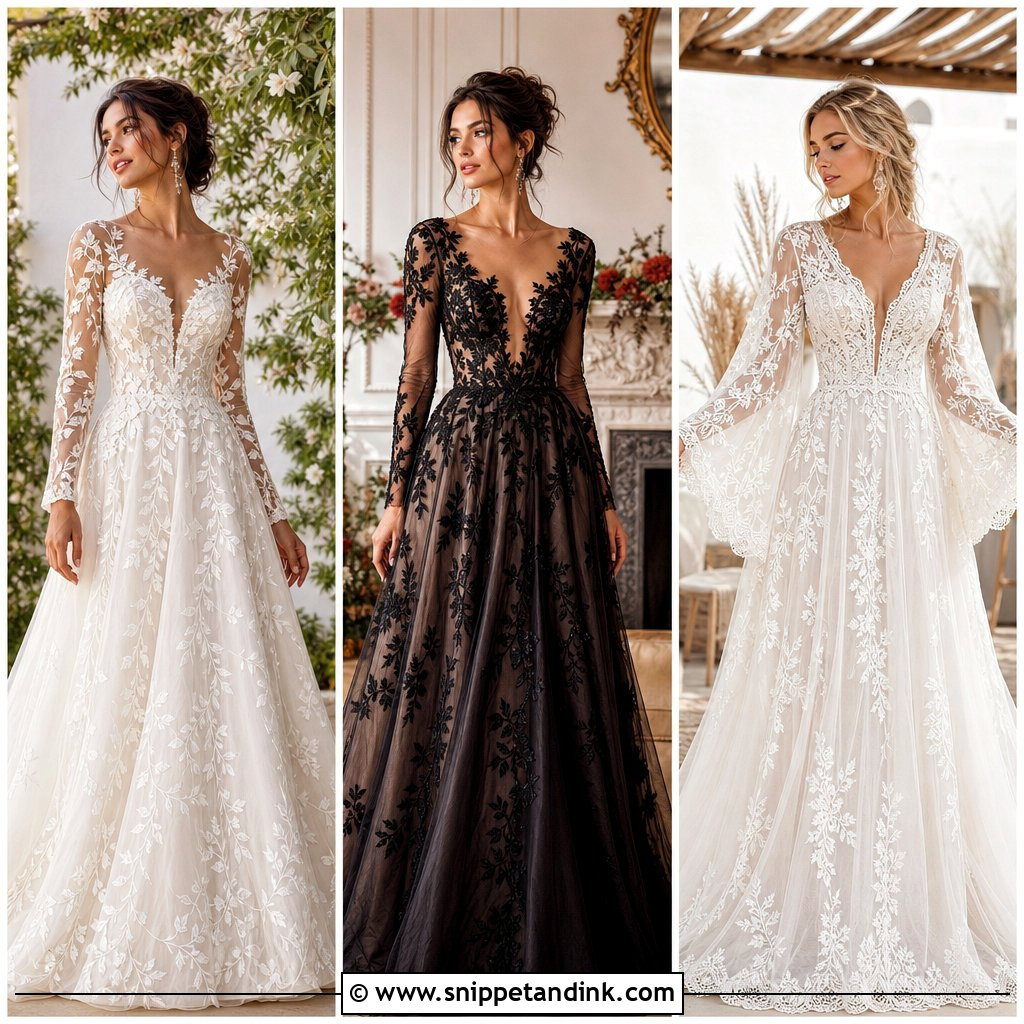
From October onward, northern Italy and the hill towns get properly cool after sunset, and a sleeveless gown leaves you shivering through dinner. Long sheer lace sleeves give warmth and coverage without looking wintry. Fine floral lace with a fitted waist and a soft skirt suits autumn in Tuscany, Umbria or the north. Closed-toe heels or ankle-strap pumps are warmer and steadier. A low bun with a pearl comb and small drops finishes it; on a breezy hilltop, a cape veil doubles as a light layer.
6. Italy Wedding Strapless Ball Gown
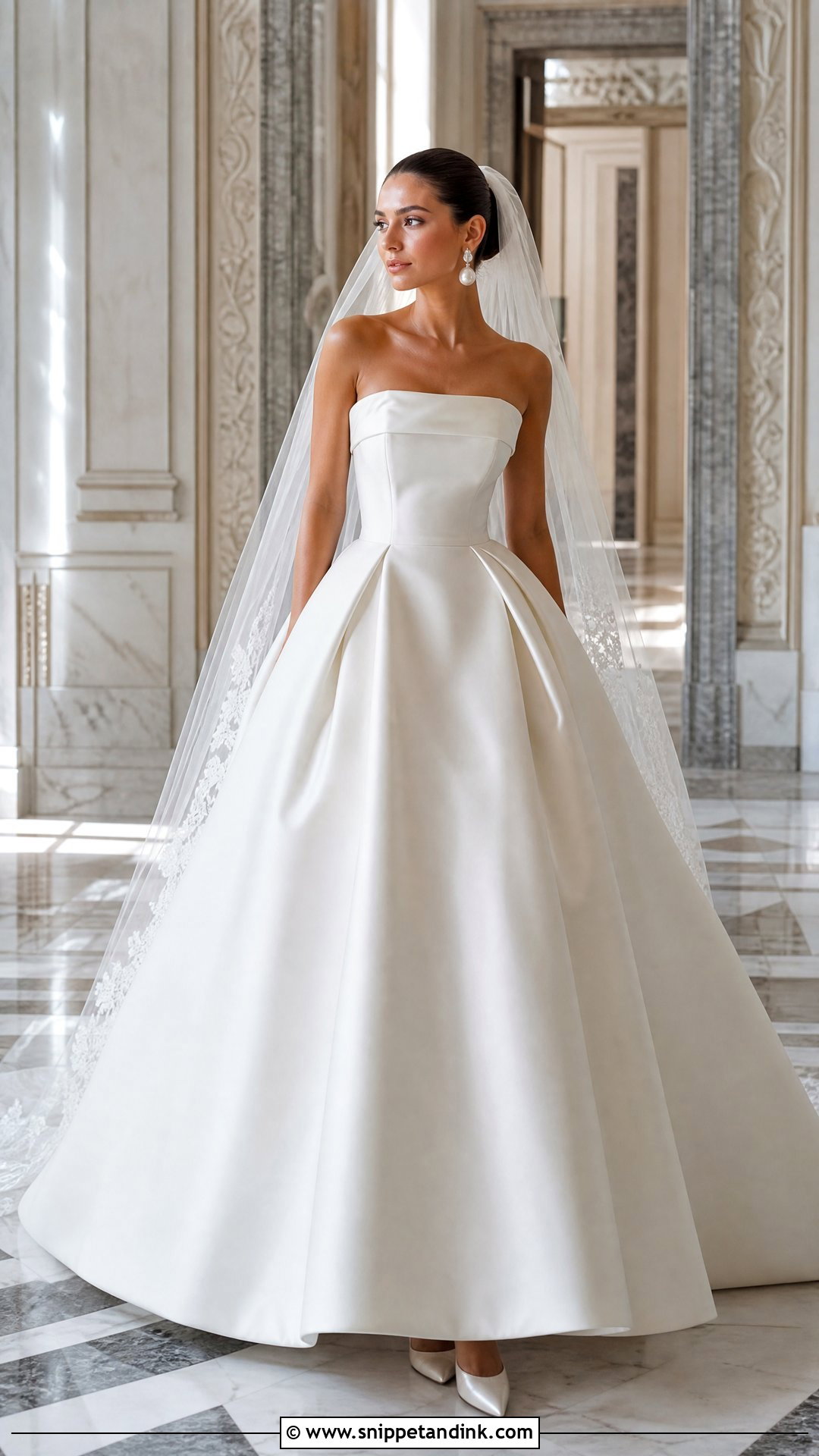
A full ball gown suits a palazzo, but I’d think hard about it for a summer ceremony. Layers of silk, mikado or organza with structure trap heat, and a wide skirt needs space in narrow church aisles and old doorways. In the right venue, with a defined waist and a skirt that’s full without being enormous, a strapless ball gown is unbeatable for a black-tie evening. Pointed satin heels, a cathedral veil and pearl earrings are all it needs. A soft updo keeps the open neckline balanced.
7. Italy Wedding Crepe Column Dress
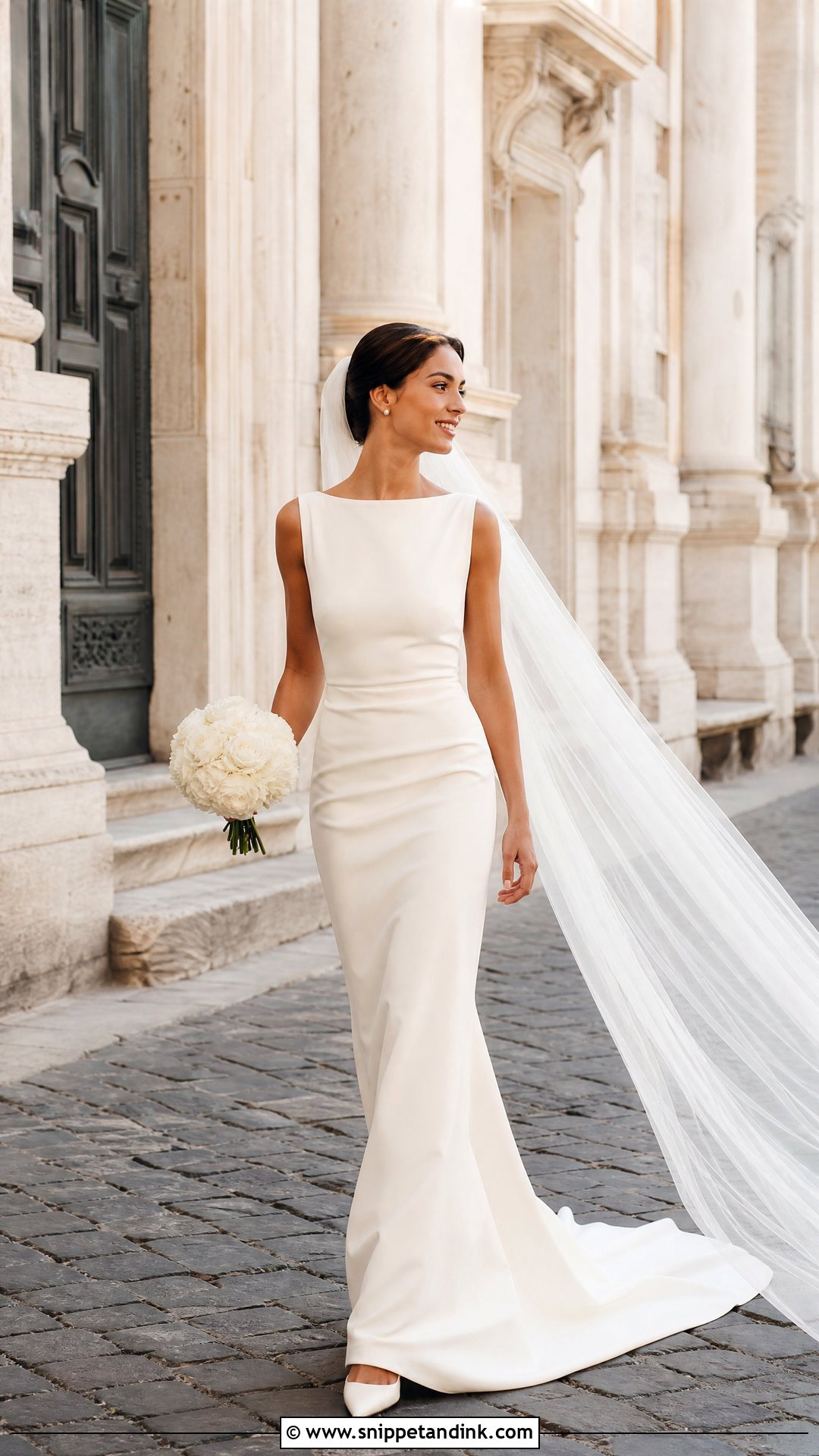
Crepe has weight, so it drapes smoothly and hides travel creases better than most fabrics. A crepe column dress suits brides who want a clean line against old architecture. A high, bateau or gentle scoop neckline changes the mood. A small train keeps it bridal without becoming a burden on stone stairs. Slim heels, pearl studs and a long veil soften the silhouette. It suits Florence, Milan, Rome or any city venue where the building does the decorating.
8. Italy Wedding Tulle Skirt Dress
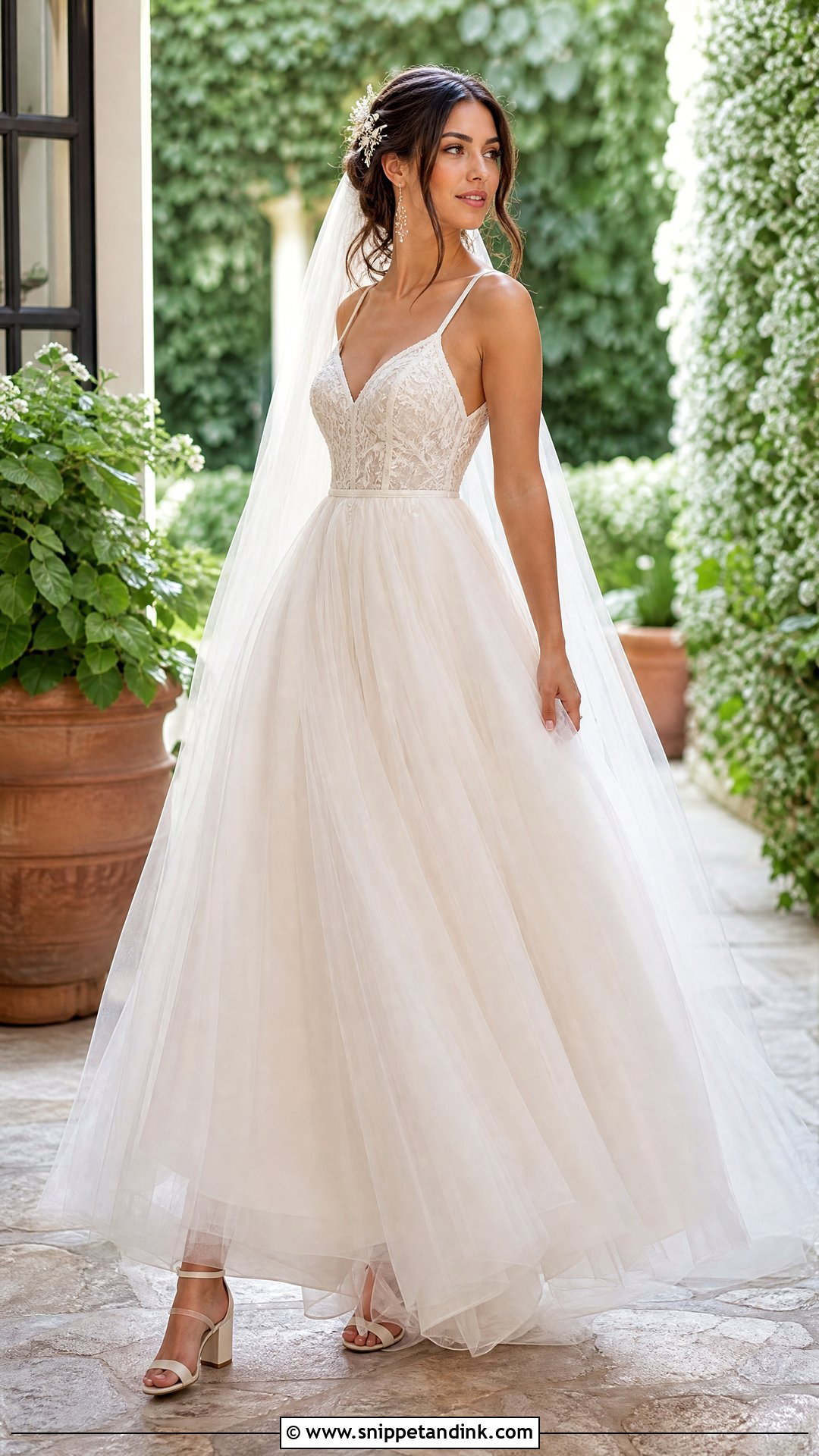
Soft tulle moves in a breeze; stiff tulle bounces and crushes in a car. For outdoor Italian settings, I always choose the softer layered version. A fitted bodice with straps or a gentle sweetheart neckline keeps the shape. Tulle catches on rough stone walls and rose bushes, so walk the ceremony route before the day. It suits garden ceremonies, countryside estates and relaxed villa parties with block heels, a floral comb and fresh makeup. A soft veil blends into the skirt.
9. Italy Wedding Floral Embroidered Dress
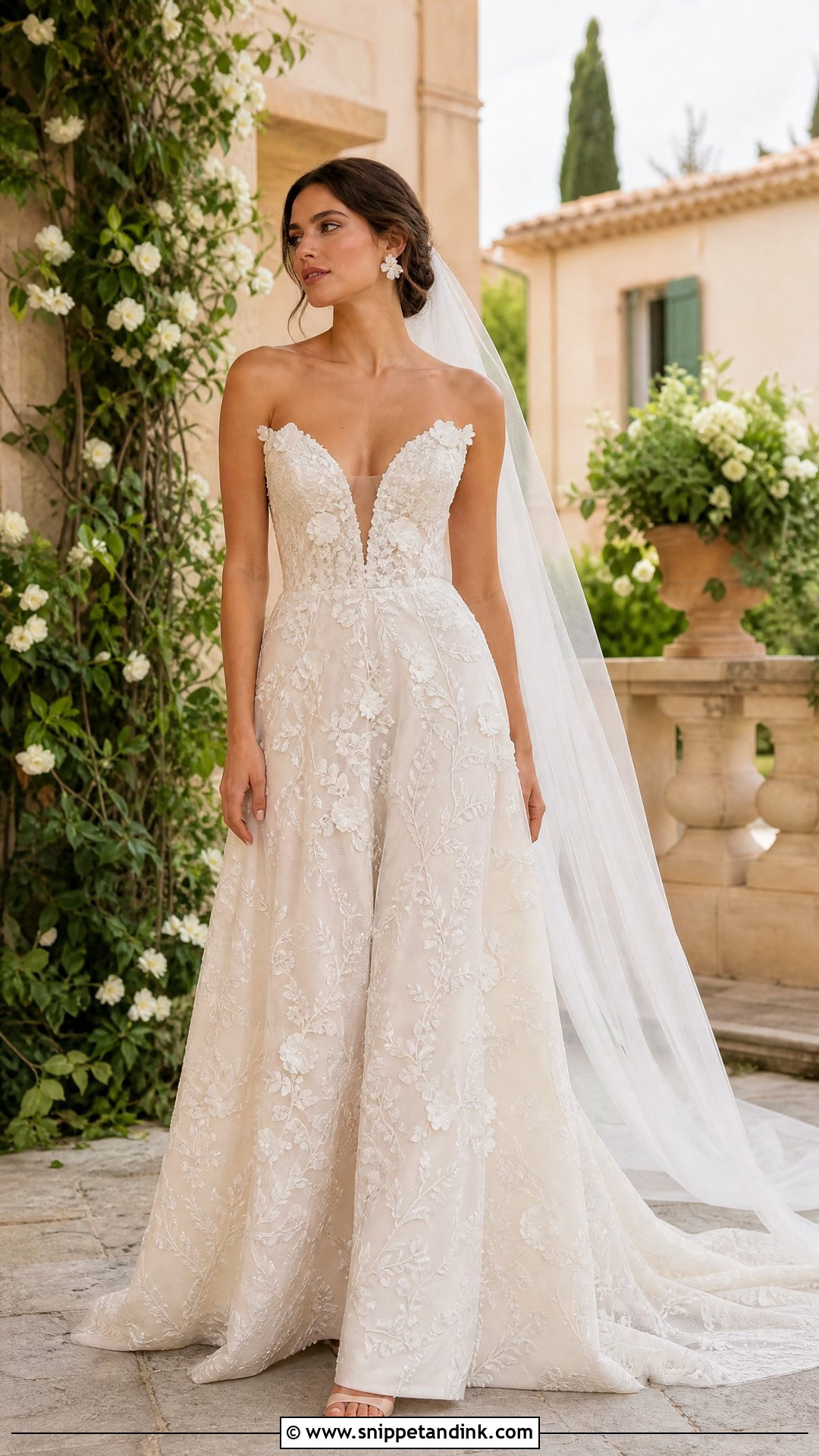
Embroidery picks up the colour of gardens and frescoed ceilings, which is why it looks so at home in an Italian villa. Ivory work, a little blush or subtle 3D floral appliqués give texture without clutter. The silhouette can be A-line, fitted or tea-length. 3D appliqués catch on lace veils, so I pair them with a plain tulle veil. Keep the bouquet smaller and tonal. Spring and summer weddings in botanical courtyards suit this dress best.
10. Italy Wedding Tea Length Dress
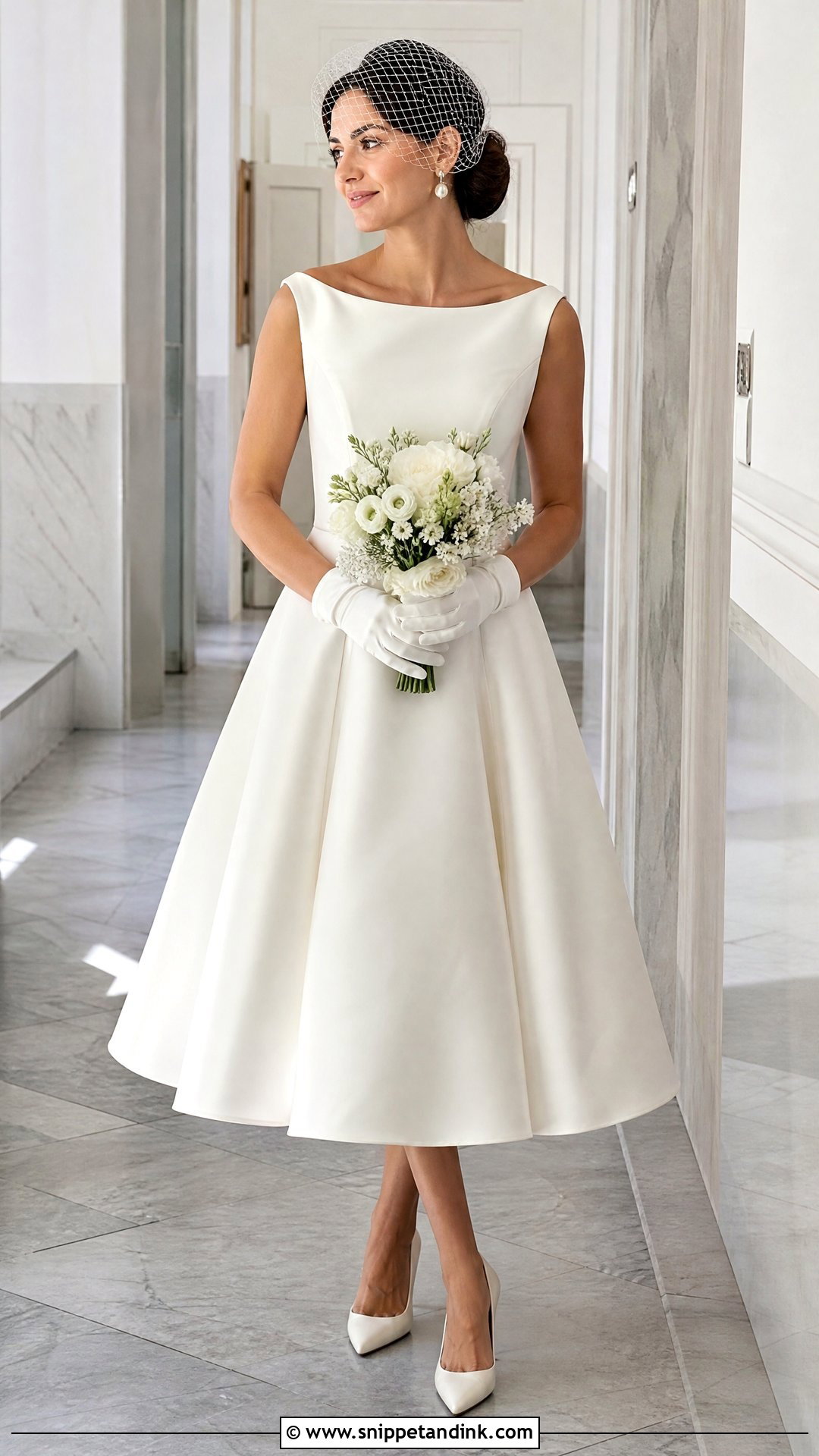
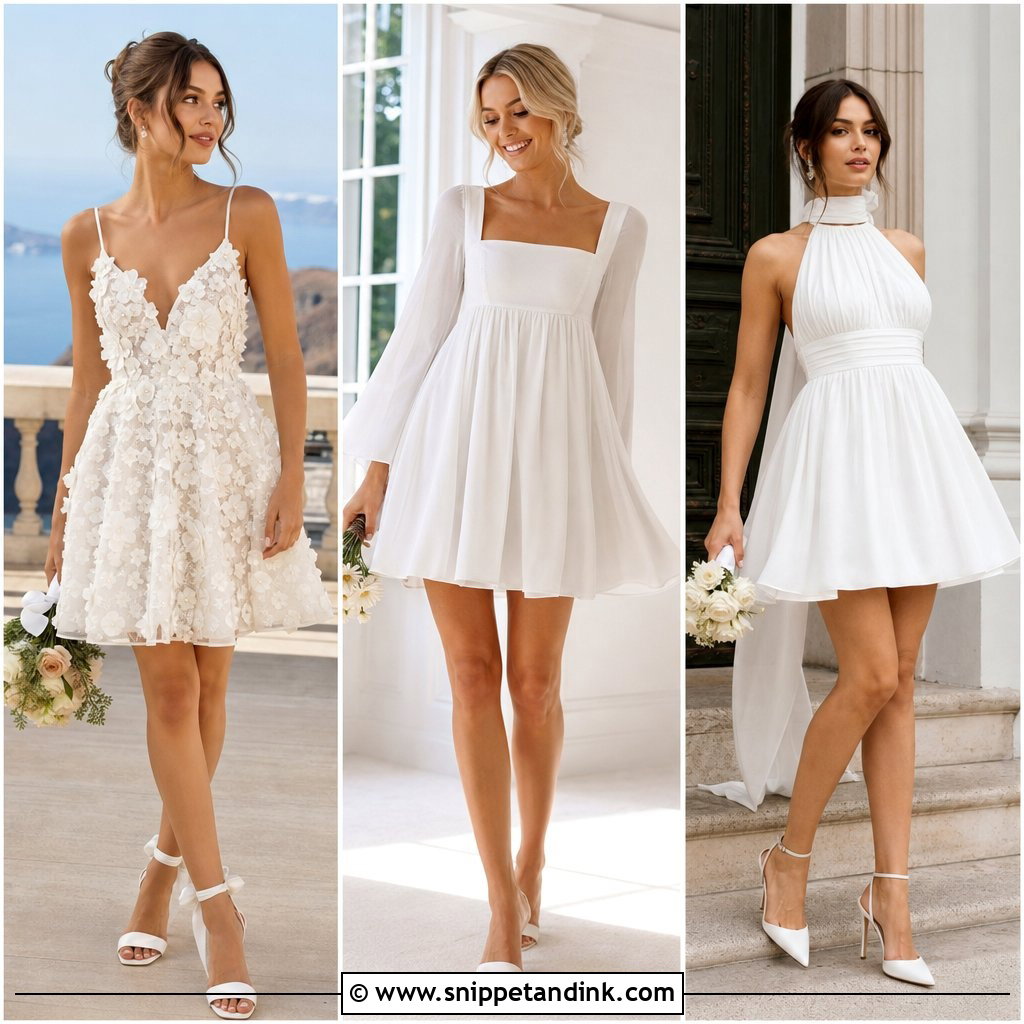
Tea length is the most practical bridal hem for a cobbled town. A tea-length wedding dress clears the ground, so you can walk, climb steps and dance without anyone holding your skirt. A fitted bodice with a full midi skirt in lace, satin or organza gives a classic shape. Because your shoes show, they need to be as considered as the dress: pointed pumps, slingbacks or embellished flats. Short gloves, pearl earrings and a birdcage veil lean vintage. Civil ceremonies at a town hall suit it especially.
11. Italy Wedding Halter Neck Dress
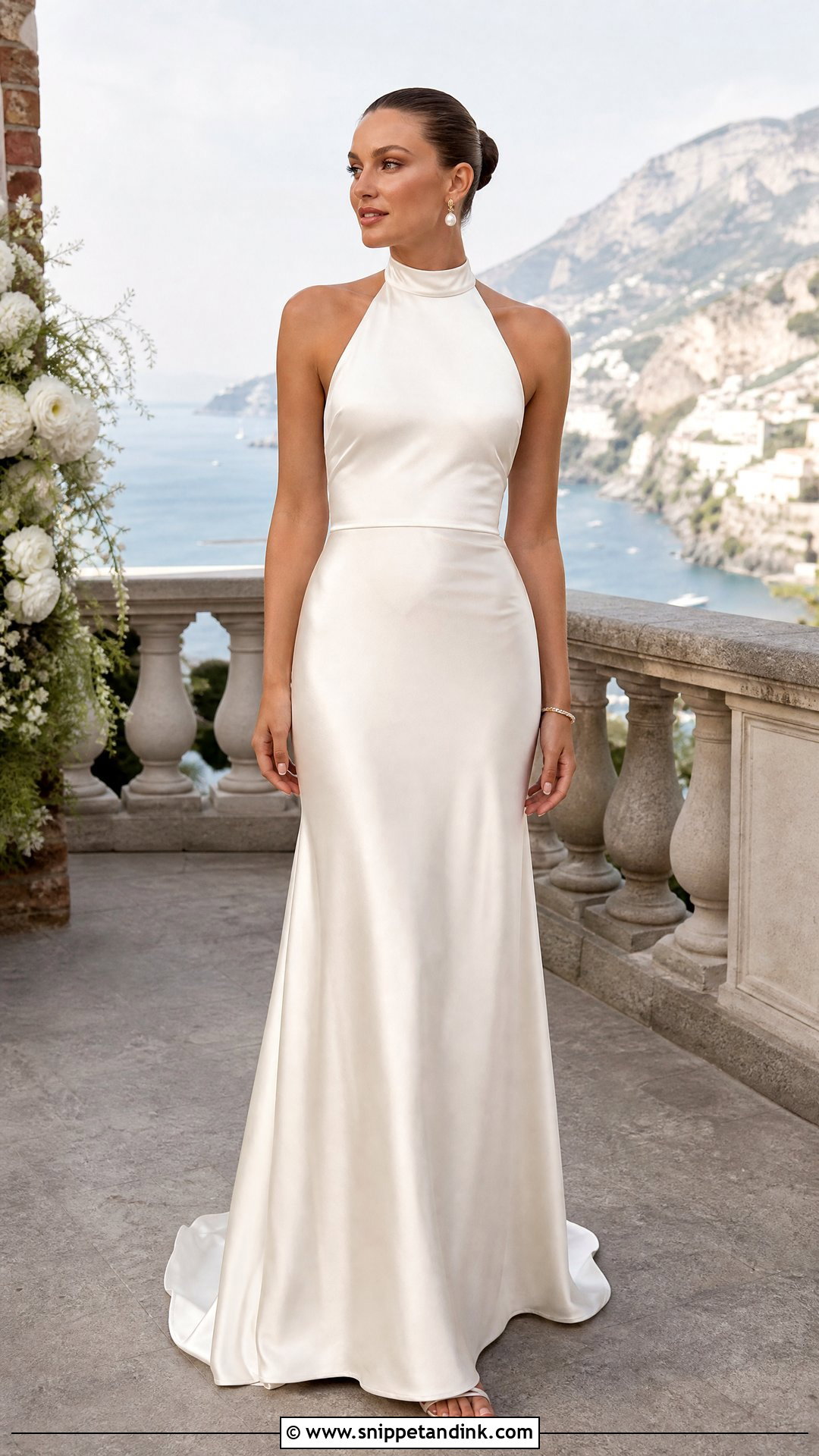
Halter necks hold the bodice securely from the neck, which makes them easy to wear for hours. They show the shoulders and upper back, so think about sun: a strap tan line will show in the photos. A satin or crepe halter gown with a clean skirt suits coastal venues, rooftop terraces and modern villas. Skip heavy beading for an outdoor ceremony; it adds heat and weight. Sleek heels, gold or pearl earrings, a polished bun and a single bracelet are enough.
12. Italy Wedding Backless Dress
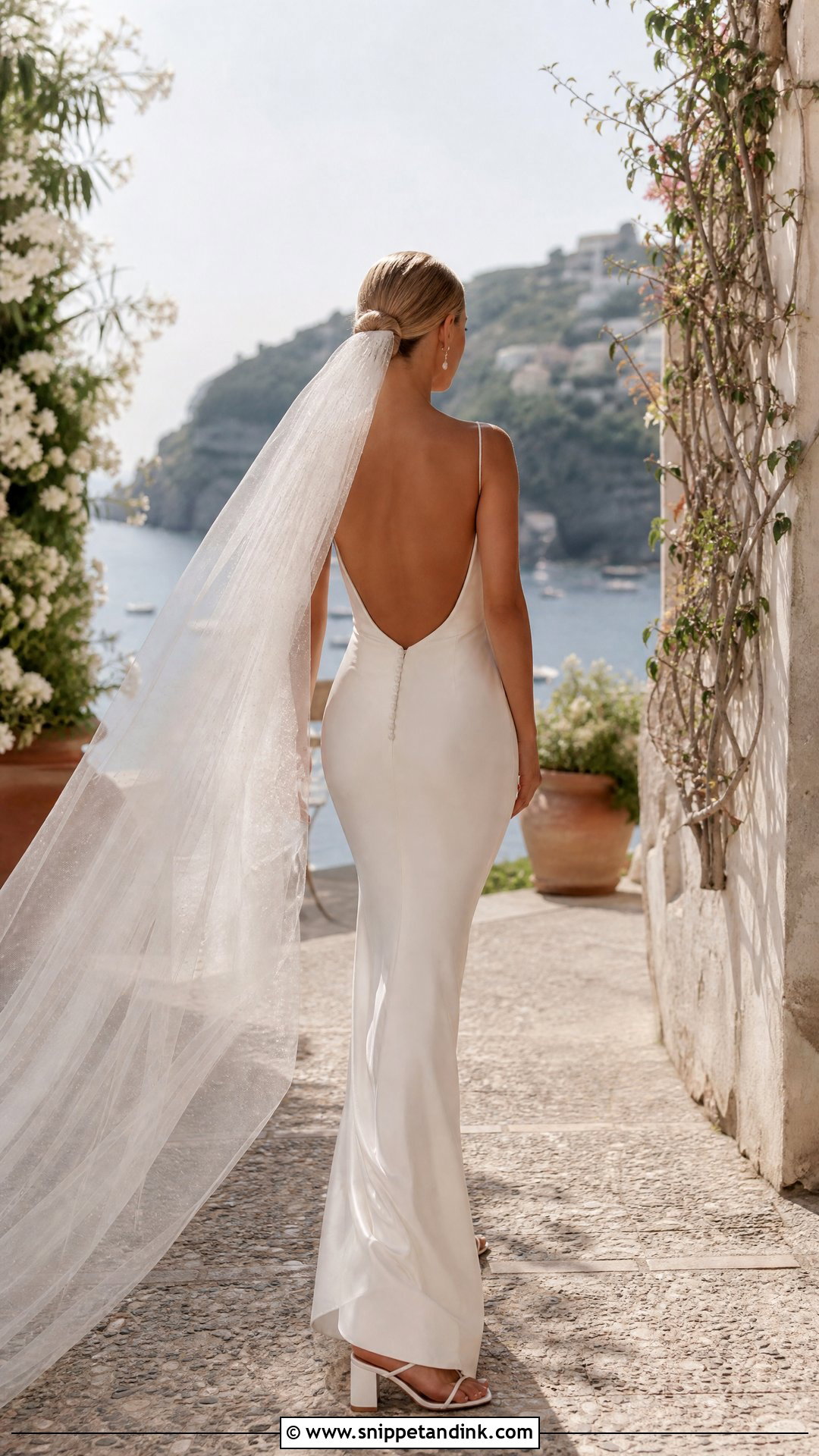
A low back draws the eye in photographs of the ceremony, since that’s the view guests have for most of it. The front should stay simple and the construction supportive, with lace, buttons or fine straps framing the opening. Backless dresses need a plan for support built into the gown; stick-on bras rarely last through a hot Italian afternoon. Soft waves, a low hair accessory and strappy block heels or secure sandals suit it. A long veil adds a reveal as you walk, and it suits summer ceremonies and sunset portraits on the coast.
13. Italy Wedding Corset Bodice Dress
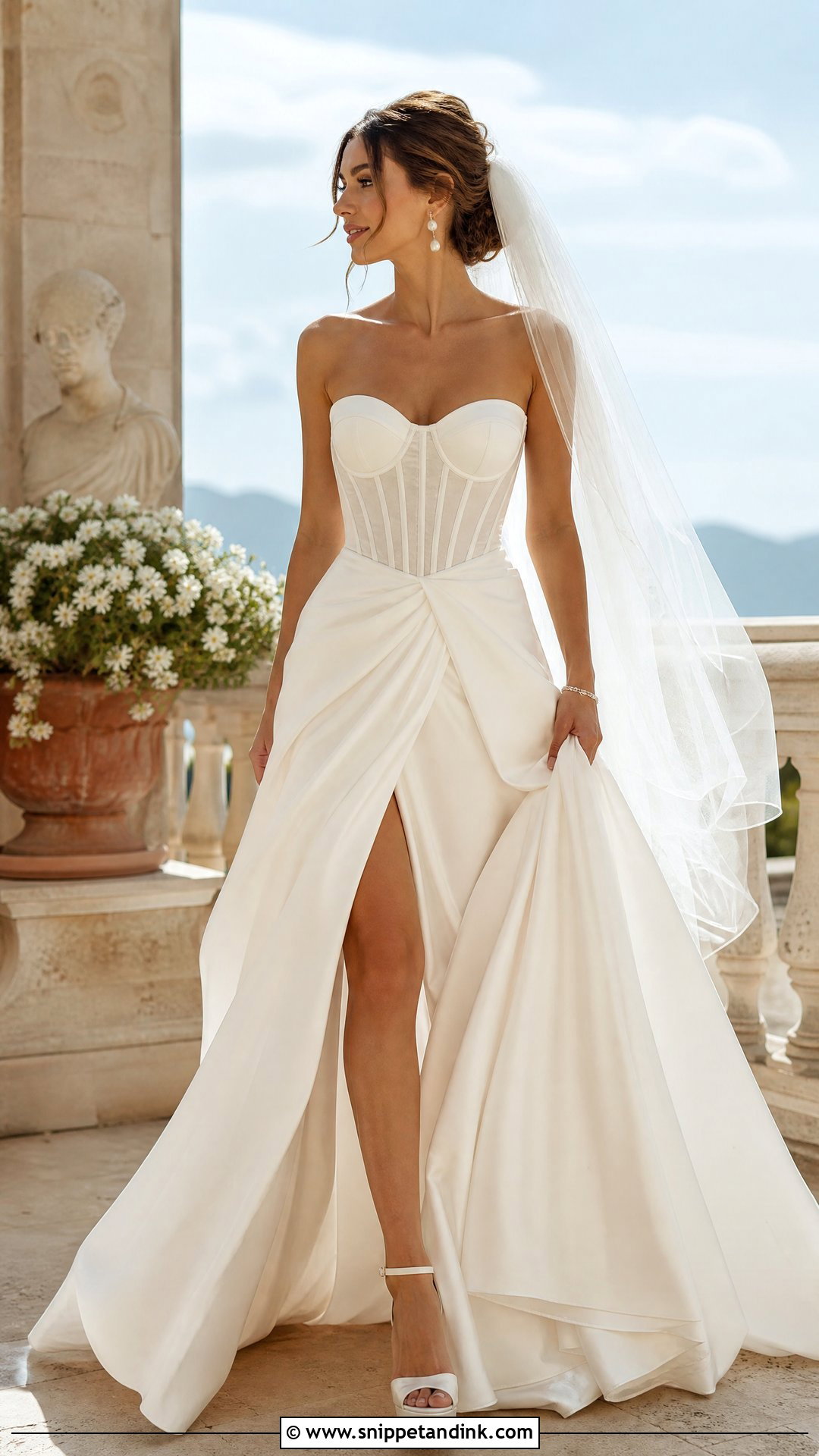
Corset bodices with visible boning give real structure, and that support matters through a long villa wedding. For Italy, I’d choose one with a soft fabric outer and a flowing skirt, not a heavy duchess satin. Sit down in it at the fitting for at least ten minutes: the bottom edge of the boning should not dig into your hips. Ankle-strap heels, drop earrings and an updo with face-framing pieces suit it. A detachable overskirt adds drama for the ceremony and comes off for dinner.
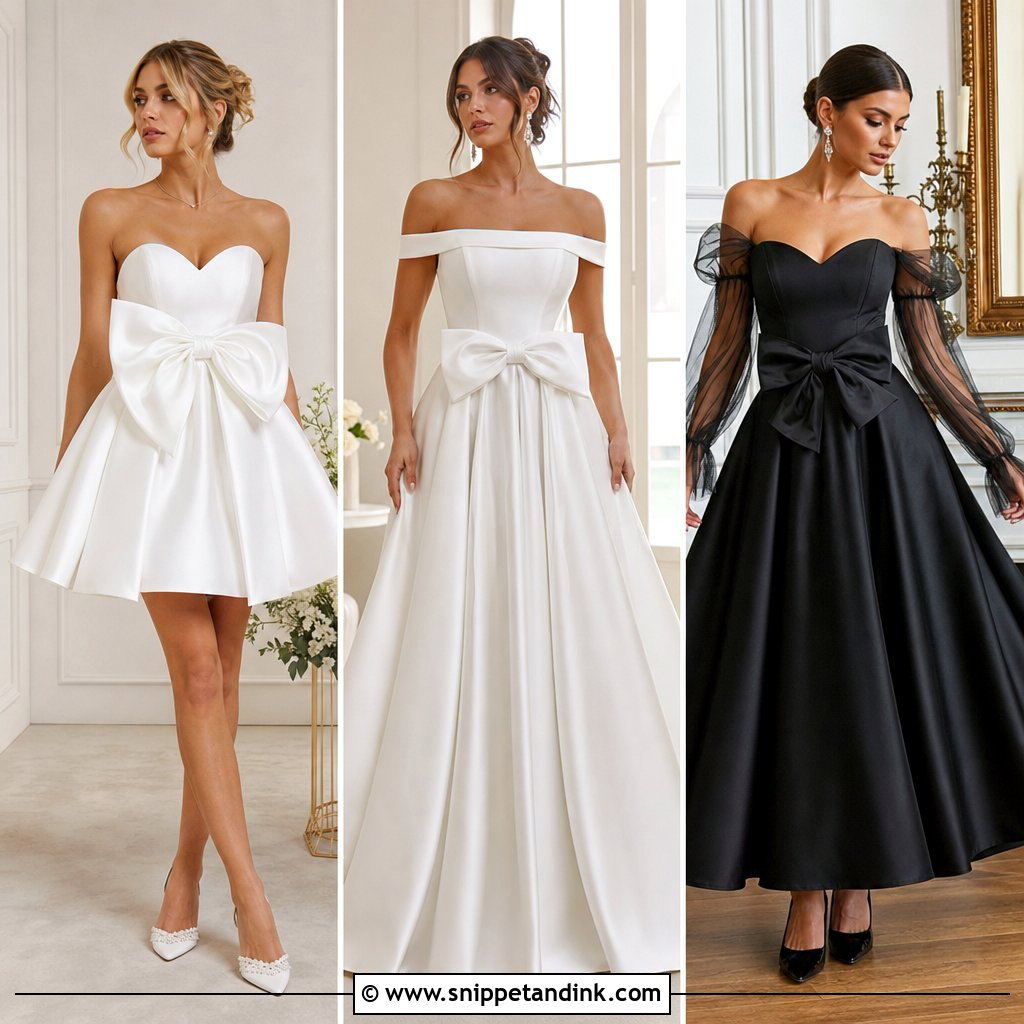
14. Italy Wedding Basque Waist Dress
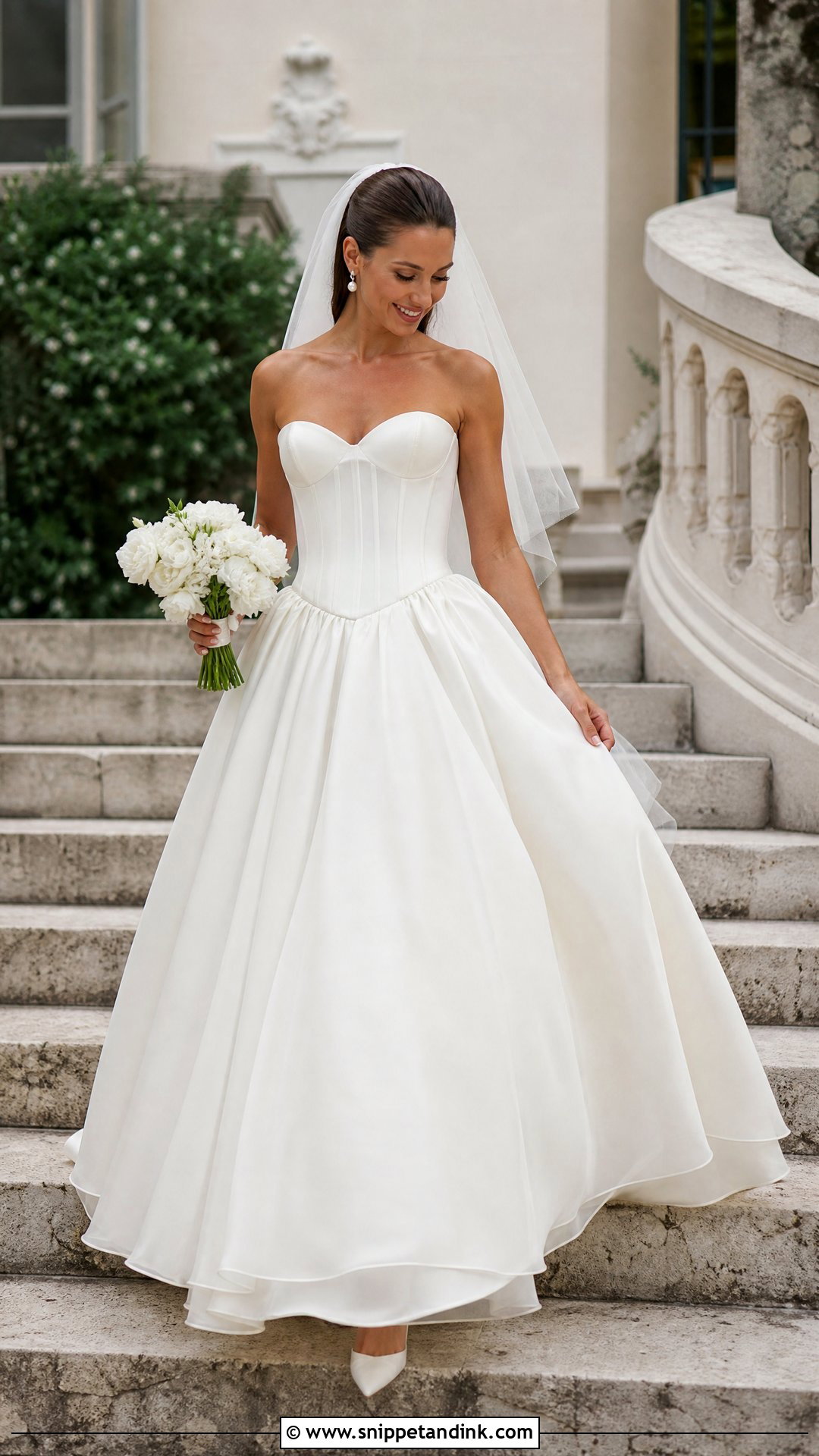
The dipped basque waist lengthens the torso and makes a full skirt look even fuller below it. In Italian heat, the skirt should be lightweight satin, organza or tulle so the shape doesn’t cost you comfort. The point of the basque needs exact alignment at the fitting, centred over the navel, or it pulls the whole skirt off line. Pointed ivory heels, pearl earrings, a classic veil and a smooth updo complete a formal look for a grand villa or historic venue.
15. Italy Wedding Detachable Overskirt Dress
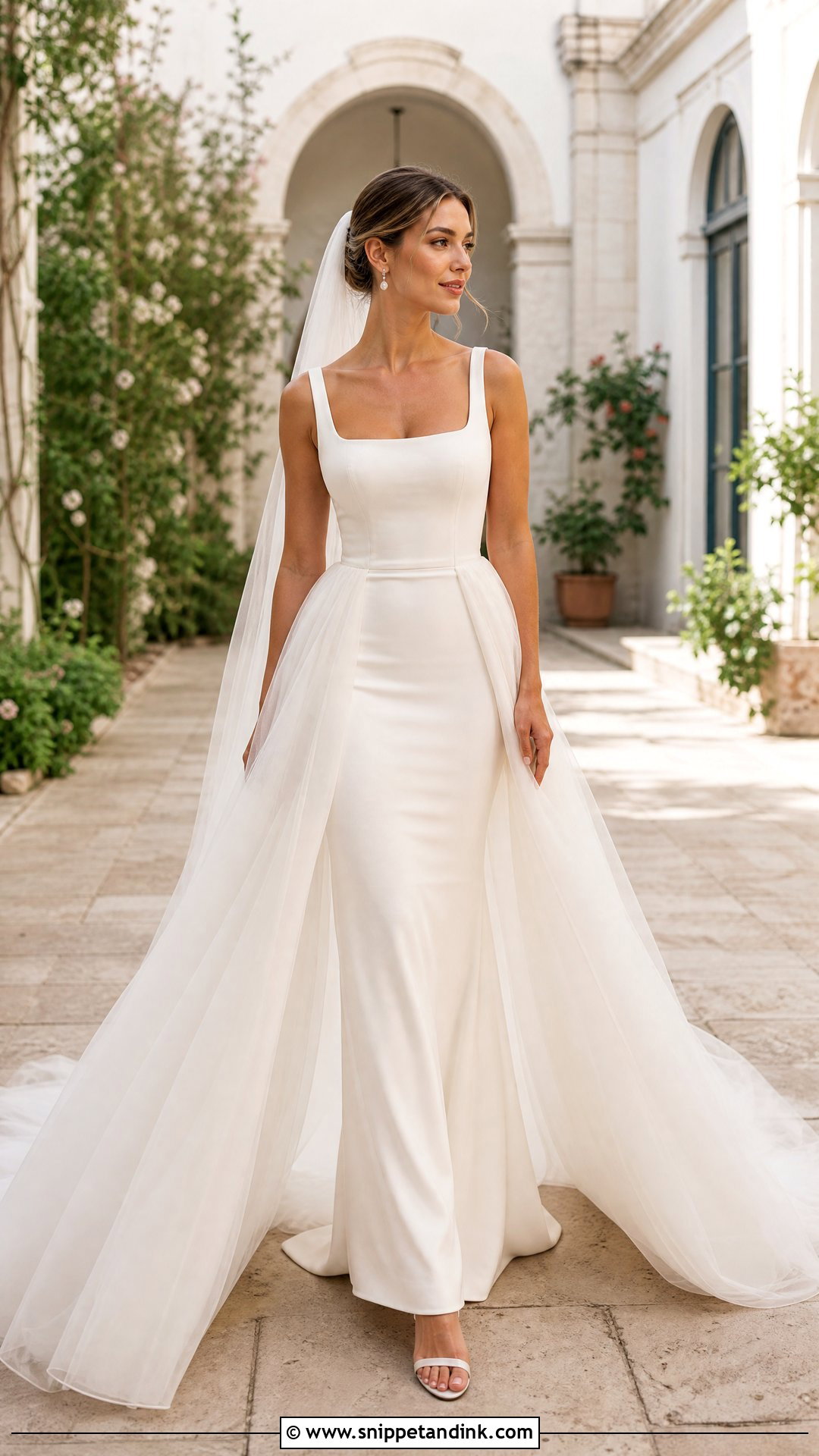
Two looks for one gown is the appeal of a detachable overskirt dress. A fitted column, mini or mermaid dress forms the base, and the full tulle, organza or satin overskirt goes on for the ceremony and portraits. Remove it before dinner. The fastening needs practice: get your maid of honour to take it on and off twice before the trip. Pick earrings that suit both versions, and wear comfortable heels throughout.
16. Italy Wedding Bridal Suit
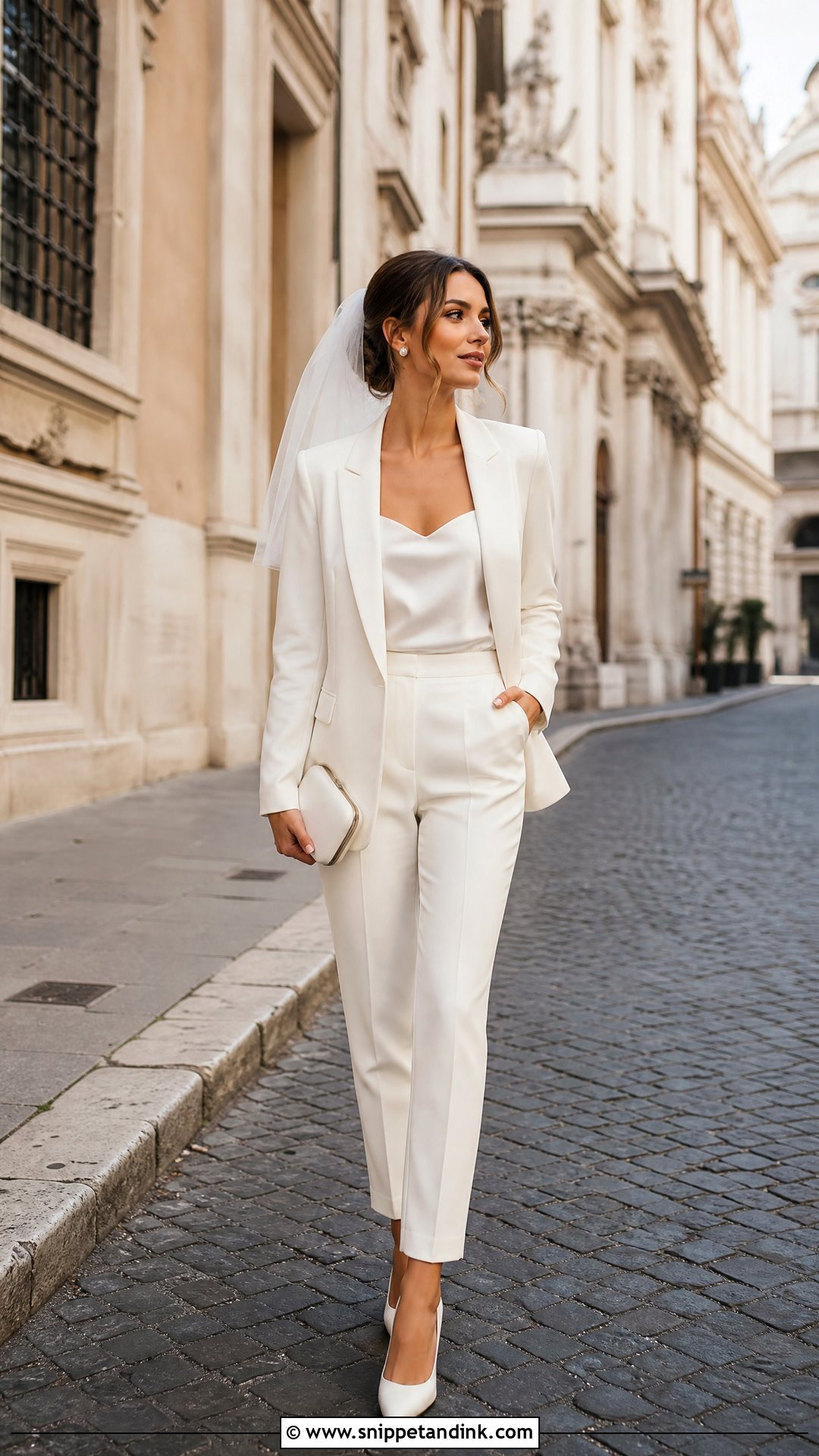
Bridal suits suit an Italian civil ceremony or elopement, where a big gown can feel out of scale in a small town hall. An ivory blazer with high-waisted trousers and a silk camisole or structured vest looks sharp in Rome, Florence or Milan. Have the trousers hemmed to the exact heels you’ll wear; a break at the ankle looks sloppy in full-length photos. Pearl studs, a small satin clutch and a short veil, bow or sleek headband keep it clearly bridal.
17. Italy Wedding Jumpsuit Outfit
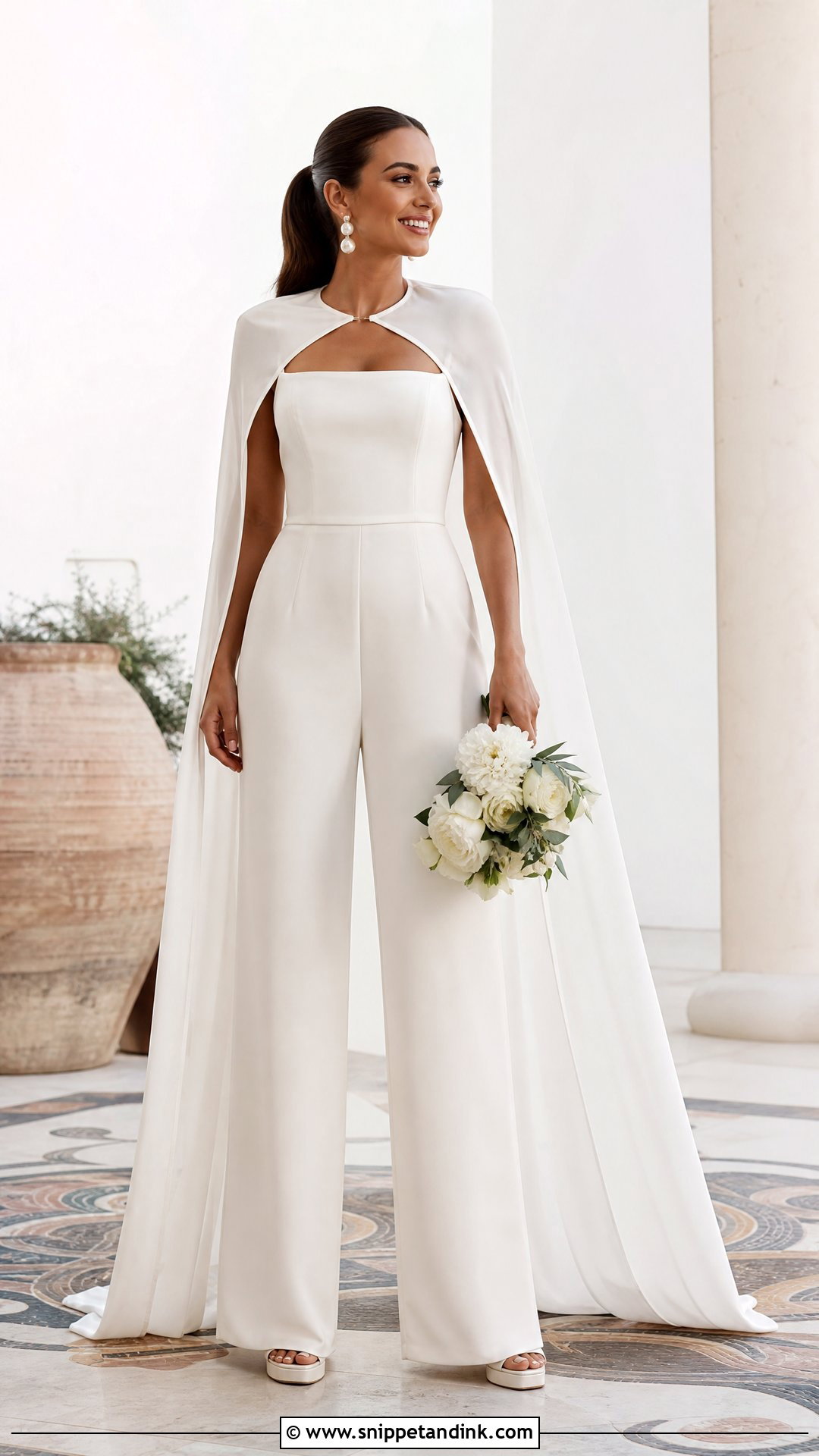
Jumpsuits work for the ceremony, the welcome party or a second look. A bridal jumpsuit in ivory crepe or satin with wide legs, a fitted bodice and a clean neckline looks deliberate rather than casual. Platform sandals or block heels give comfort on cobbles. A detachable cape or long veil adds ceremony drama. The practical issue is the bathroom; ask for a side zip you can reach yourself, or bring someone with you.
18. Italy Wedding Mini Dress
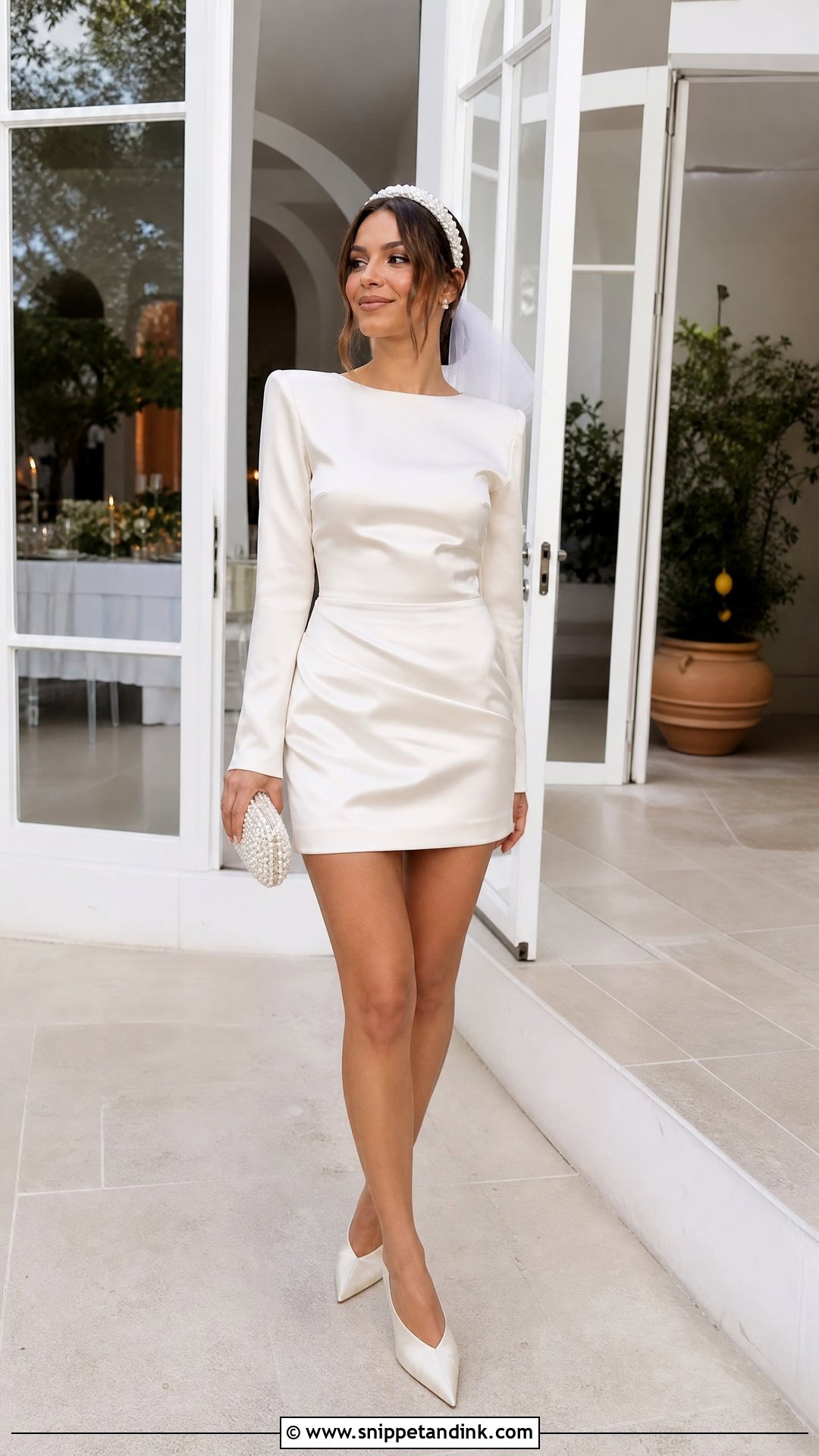
A bridal mini dress is my favourite reception change for a long Italian evening. After hours in a gown, a structured mini with long sleeves, a bow, feather trim or clean satin feels like a second wind. Pointed heels, sheer tights in cooler months and a short veil or pearl headband keep it bridal. It also works alone for a civil ceremony or the after-party. Check whether your venue has a dance floor or uneven terrace before choosing heel height.
19. Italy Wedding High Low Dress
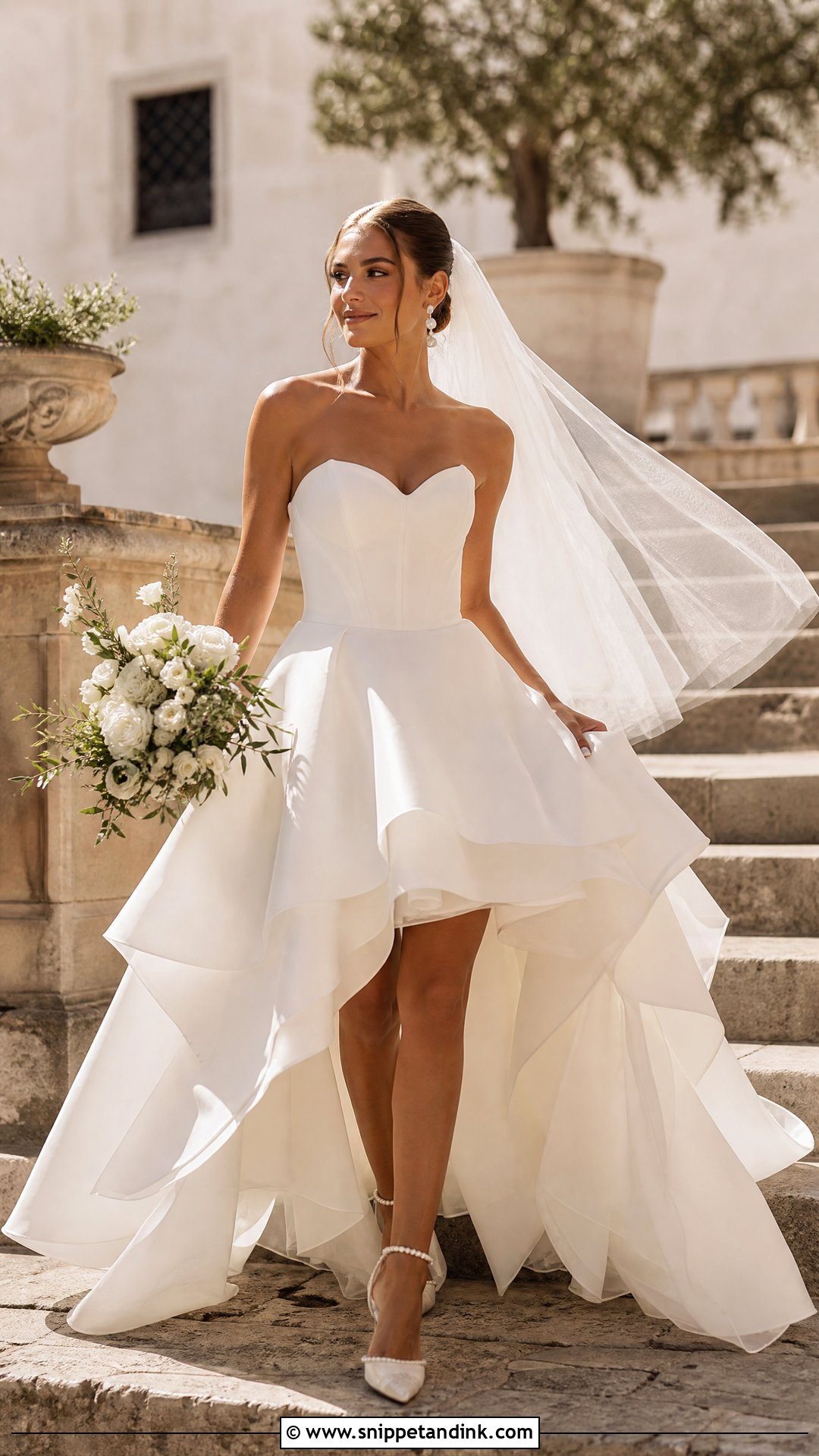
The high-low hem shows your shoes and lifts the front of the skirt off stone steps and garden paths, while the back keeps a bridal sweep. Satin, organza or tulle with a fitted bodice keeps it polished. Since the shoes are part of the look, choose a pair that’s special but stable. I’d avoid this cut for a very formal church ceremony, where a shorter front can feel underdressed. Pearl earrings and a soft veil suit a warm-weather garden wedding.

20. Italy Wedding Cape Dress
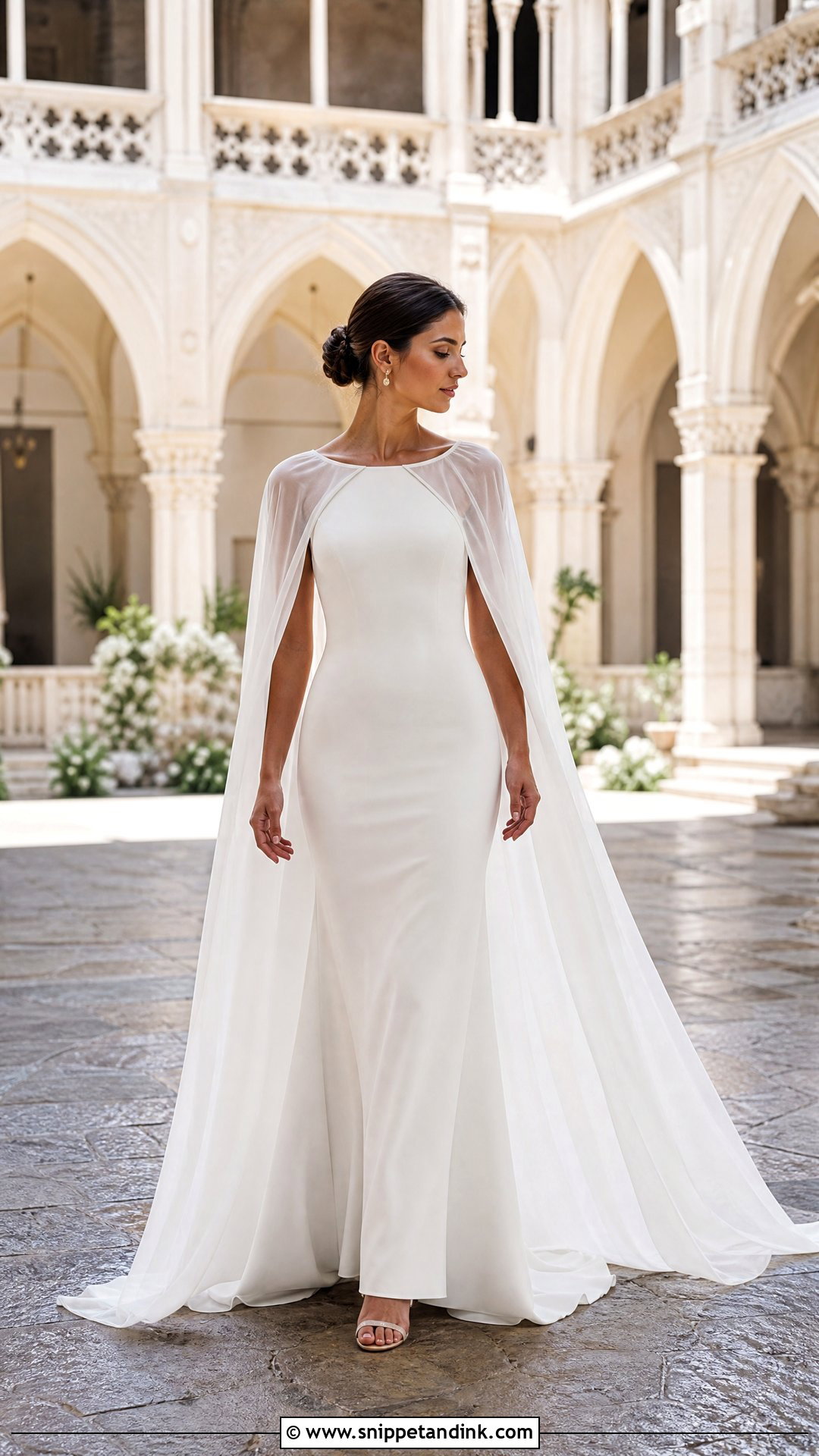
Capes give movement and drama without the weight of a long train or cathedral veil. A simple fitted gown with a sheer, lace or chiffon cape attached at the shoulders photographs well in courtyards and by the lakes. The cape also covers the shoulders for a church ceremony, then you can unhook it for dinner. Keep the dress underneath clean, the earrings small and the hair low so the cape stays visible from behind.
21. Italy Wedding Pearl Detail Dress
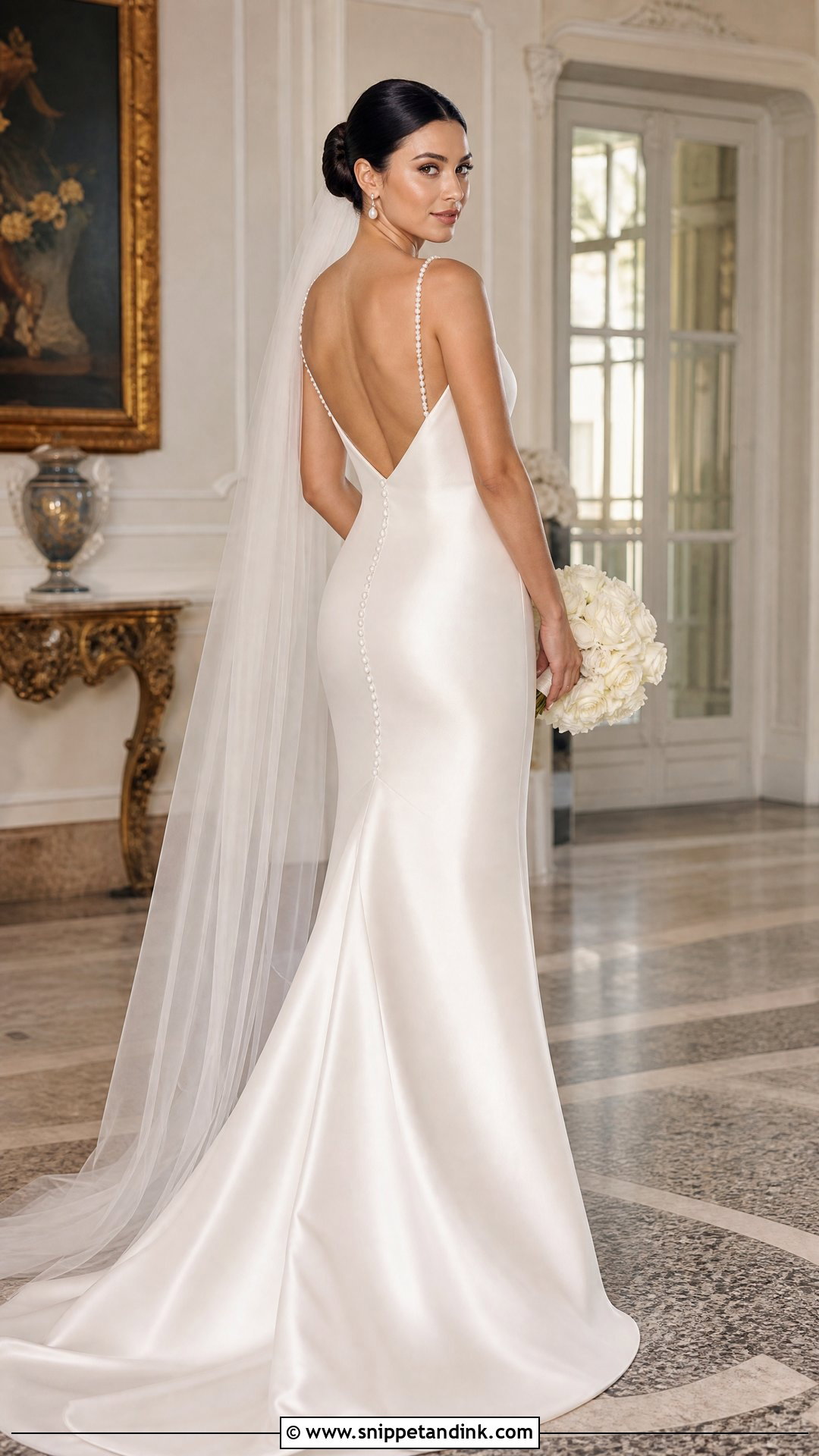
Pearls give detail without glare, which matters in strong Italian sunlight where heavy crystal work can flash white in photos. Pearl straps, pearl buttons or scattered beading across the bodice suit a simple silhouette. Check how the pearls are attached: on cheaper gowns they’re glued, and they can pop off when the dress is packed. Pearl drops, satin heels and a plain veil keep the look calm. Villa weddings and formal dinners suit it.
22. Italy Wedding Chiffon Dress
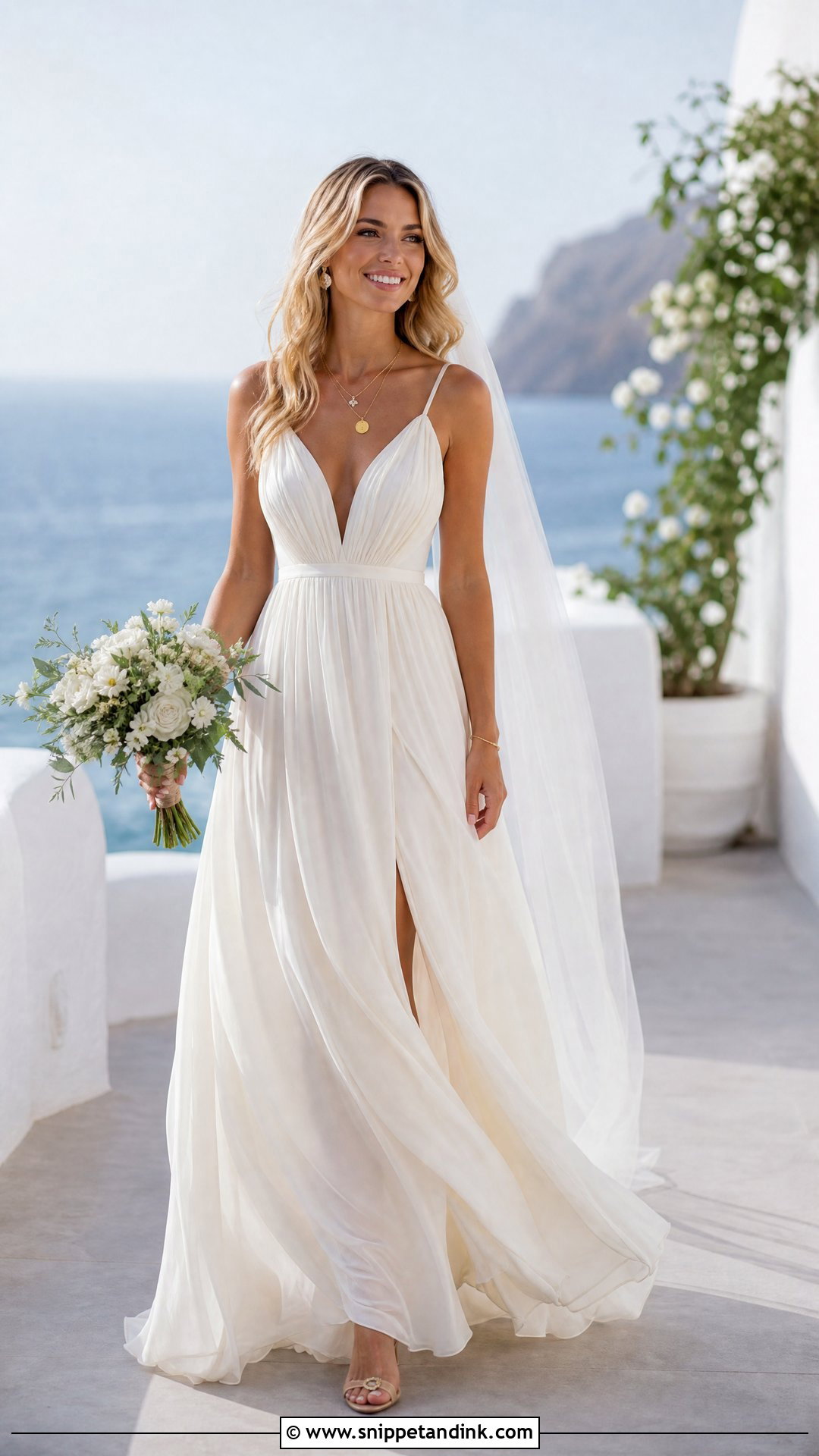
Chiffon is the coolest fabric on this list, which makes it the sensible choice for a coastal summer wedding. It floats, breathes and packs small. A flowing skirt with fine straps, flutter sleeves or a wrap bodice feels relaxed but still bridal. Chiffon frays at raw edges and shows water marks, so keep sparkling wine away from it during toasts. Sandals, fine gold or pearl jewellery and soft waves suit coastal towns, countryside gardens and terraces.
23. Italy Wedding Organza Dress
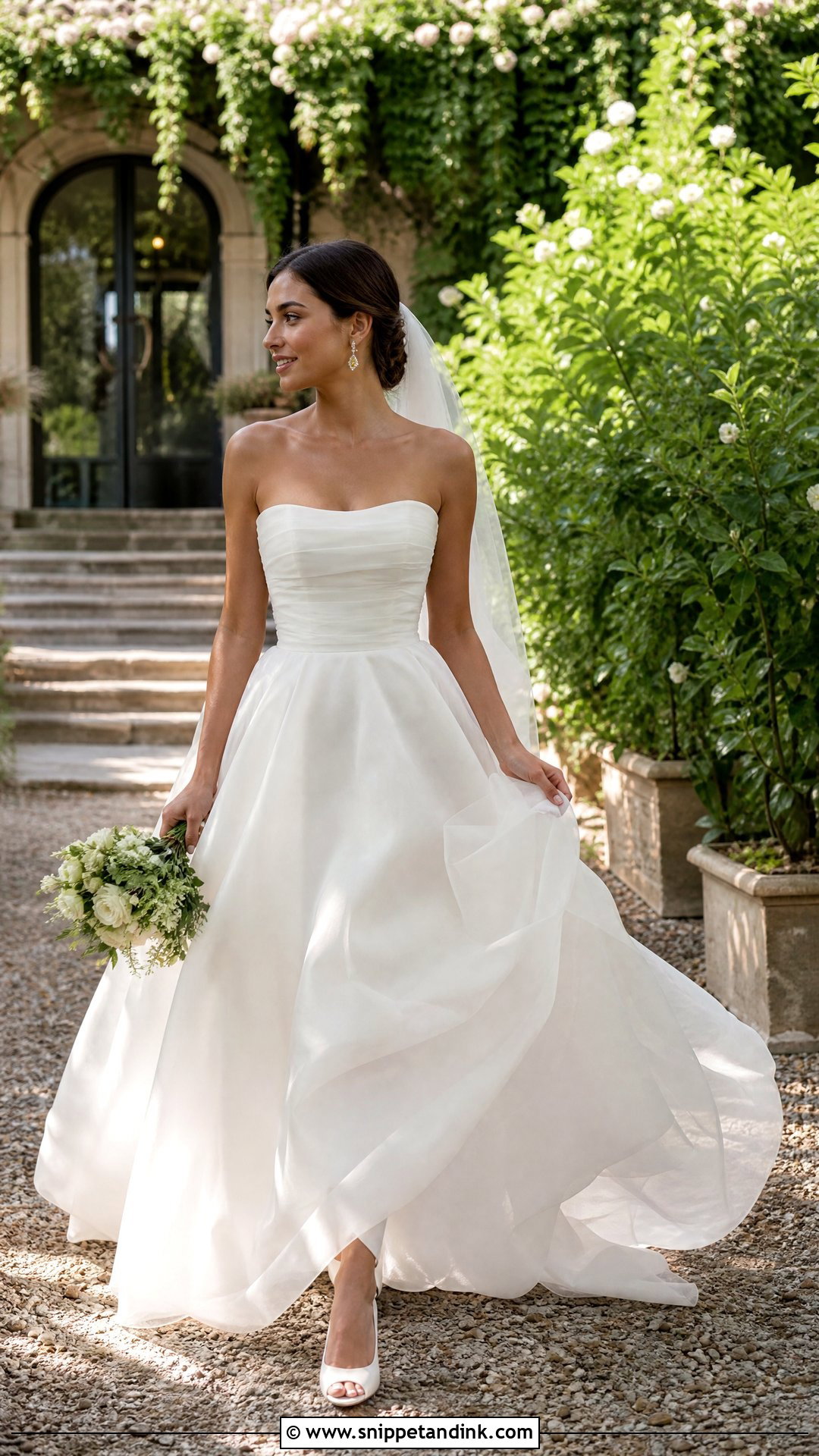
Organza gives volume with almost no weight. It’s crisp, holds a shape and catches light, so it looks especially good in outdoor photos. A strapless, square-neck or off-shoulder bodice with a softly structured skirt suits villas and gardens. Organza creases sharply when sat on, so plan for a steam before the ceremony if you’ve travelled in it. Satin heels, a delicate veil and pearl or crystal earrings are enough, with a clean bouquet.
24. Italy Wedding Silk Dress
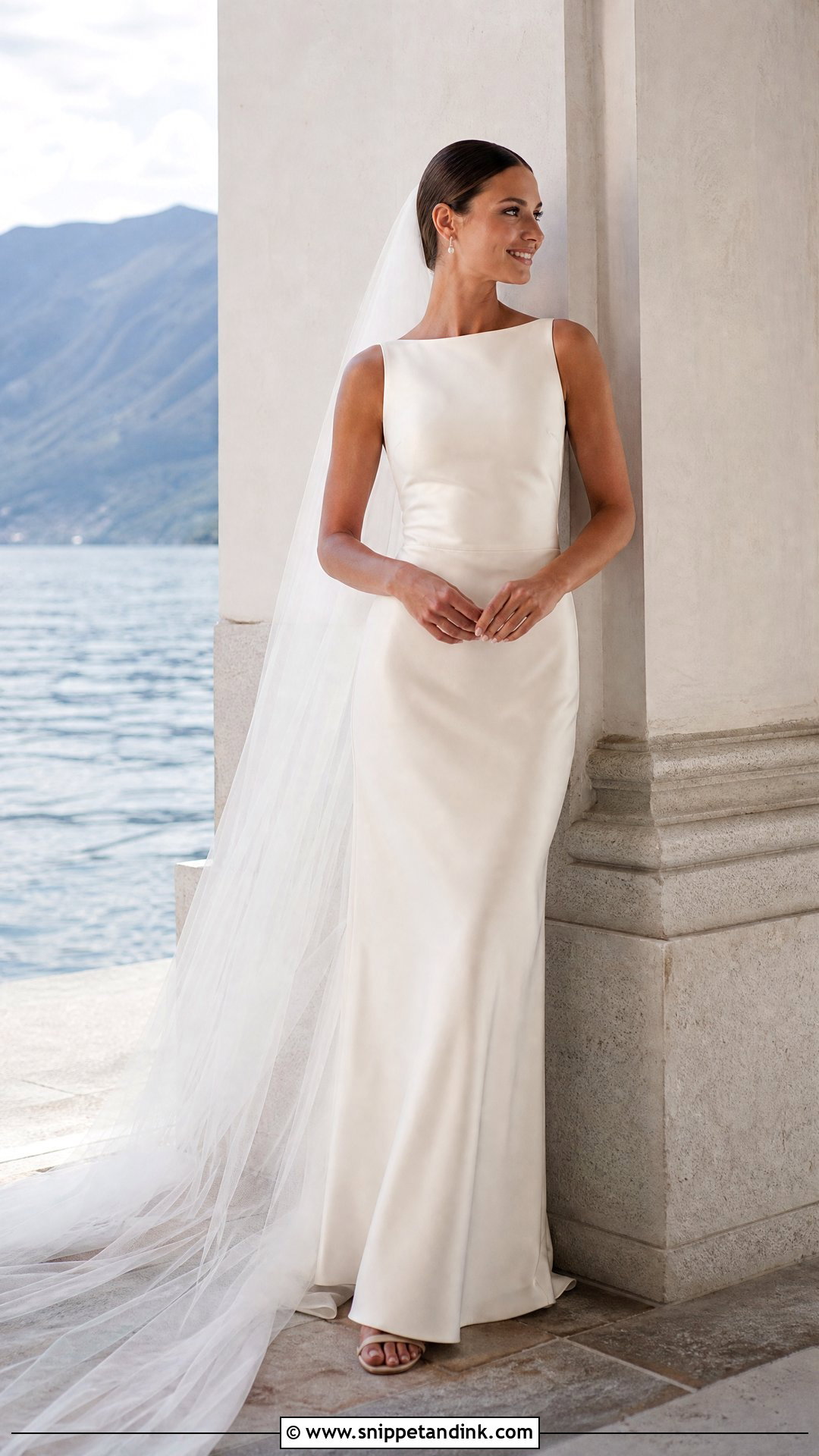
Silk charmeuse shows everything: the outline of underwear, a sweat mark at the back after an hour in July sun, the line where a seam pulls. I tell brides to fit silk with their exact undergarments and to consider a matte silk crepe if the ceremony is outdoors in high summer. Charmeuse slips, silk A-lines and silk columns all suit understated Italian venues. Barely-there heels, delicate earrings, a smooth hairstyle and a plain long veil are all it needs for a lake or city wedding.
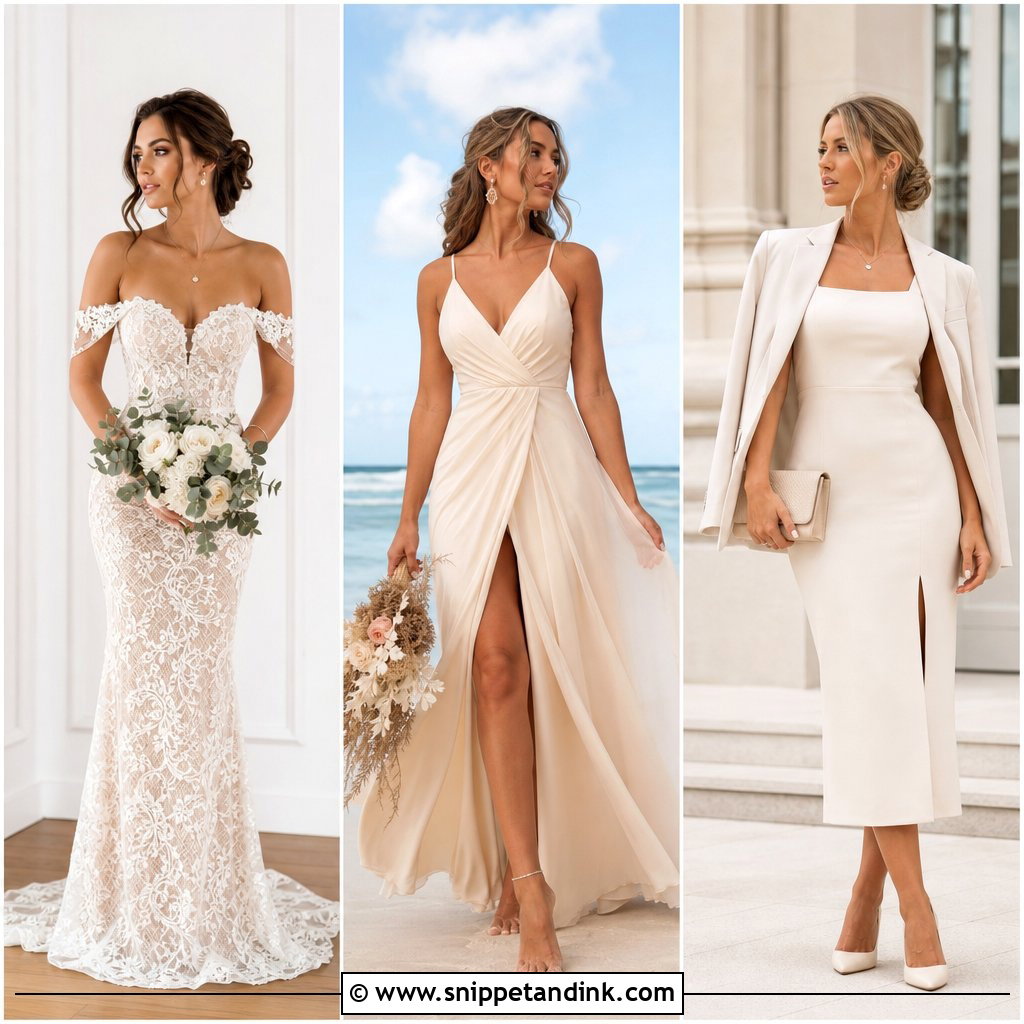
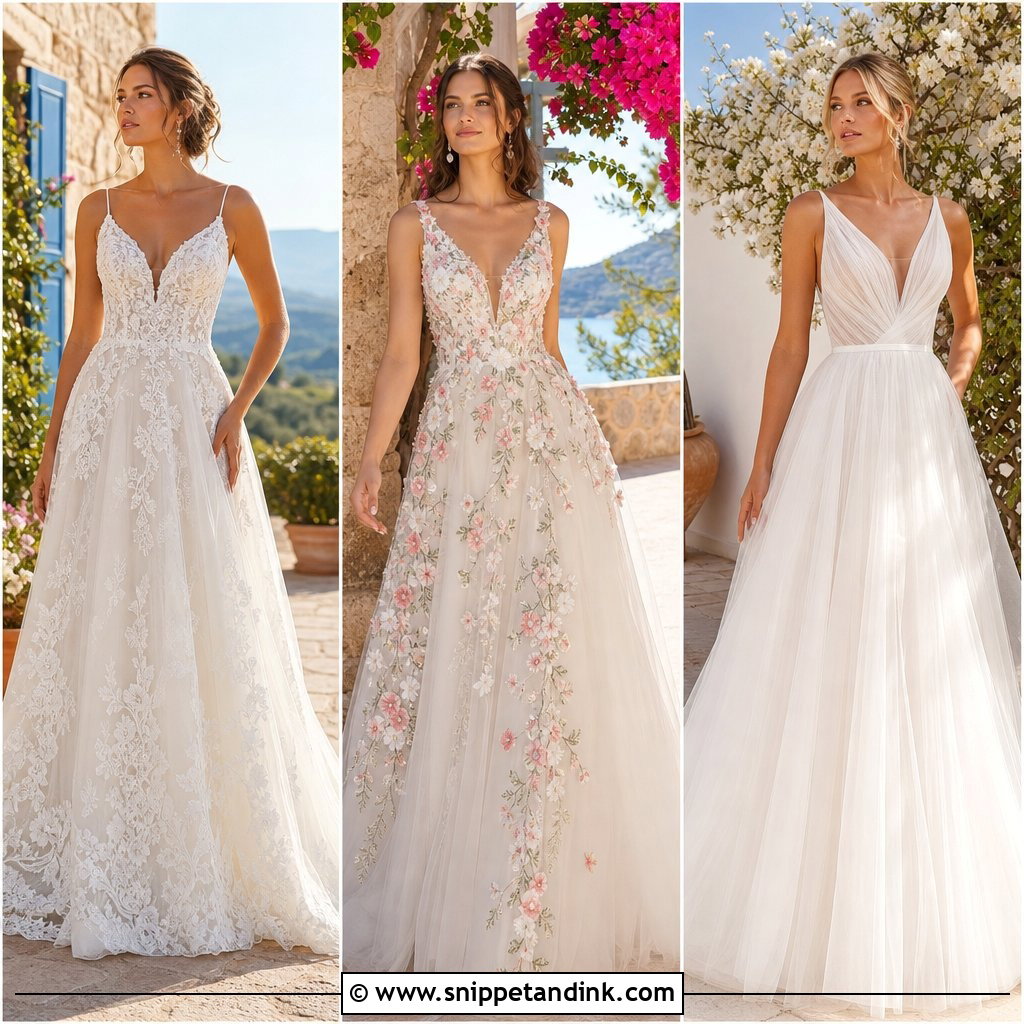
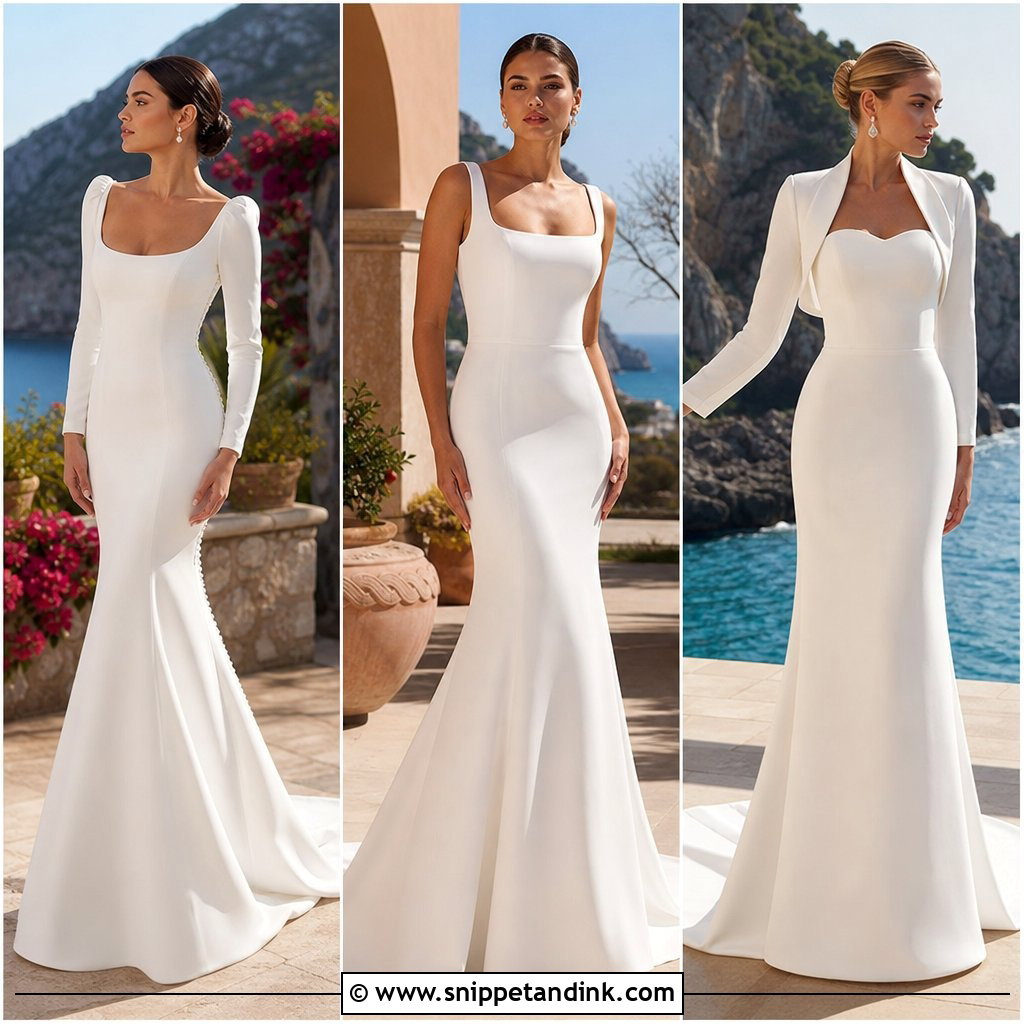
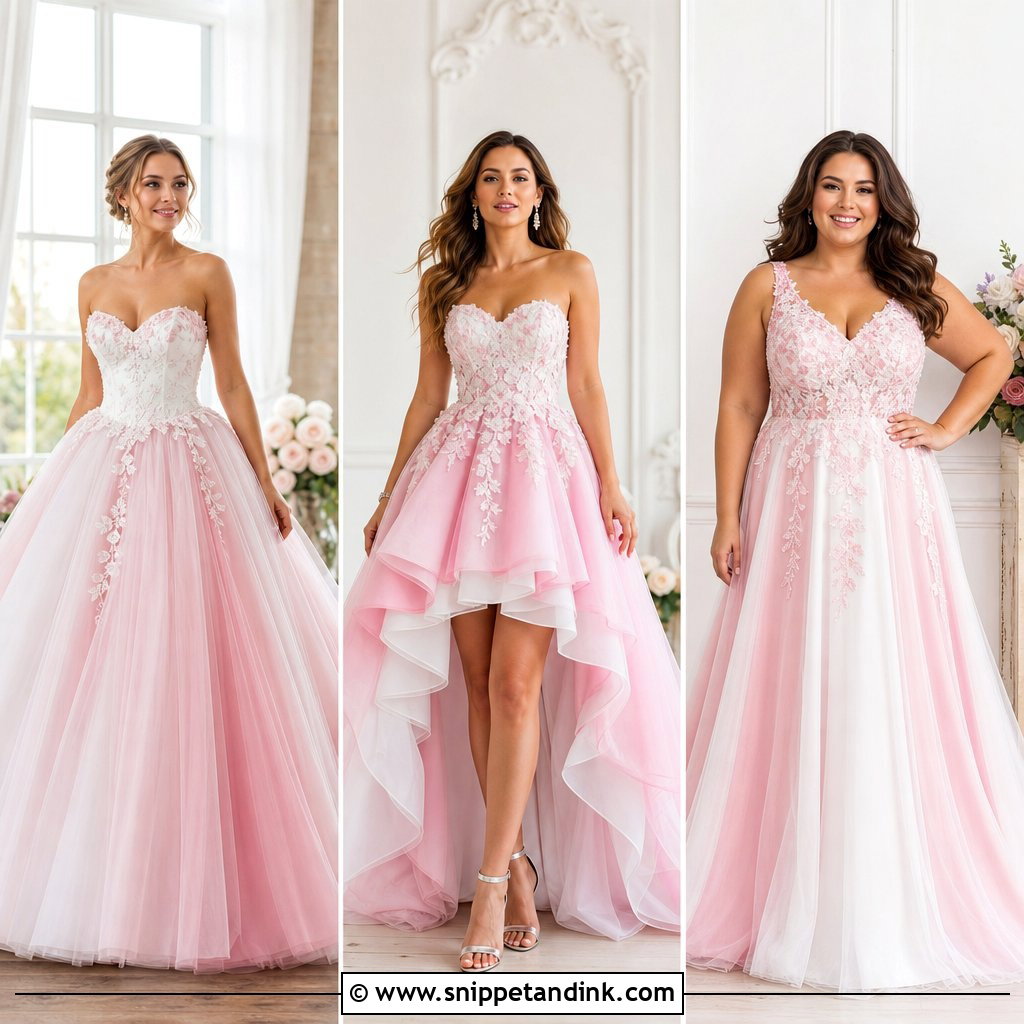
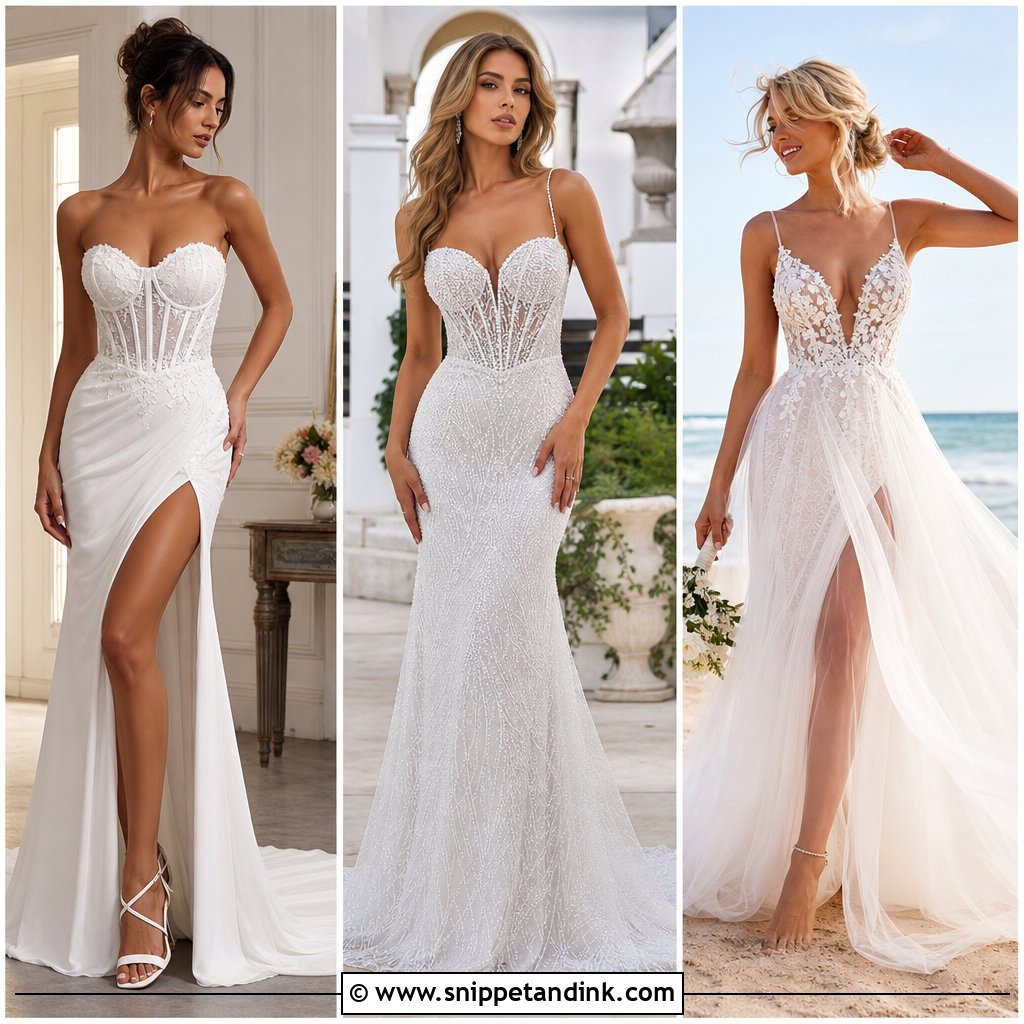
25. Italy Wedding Two Piece Dress
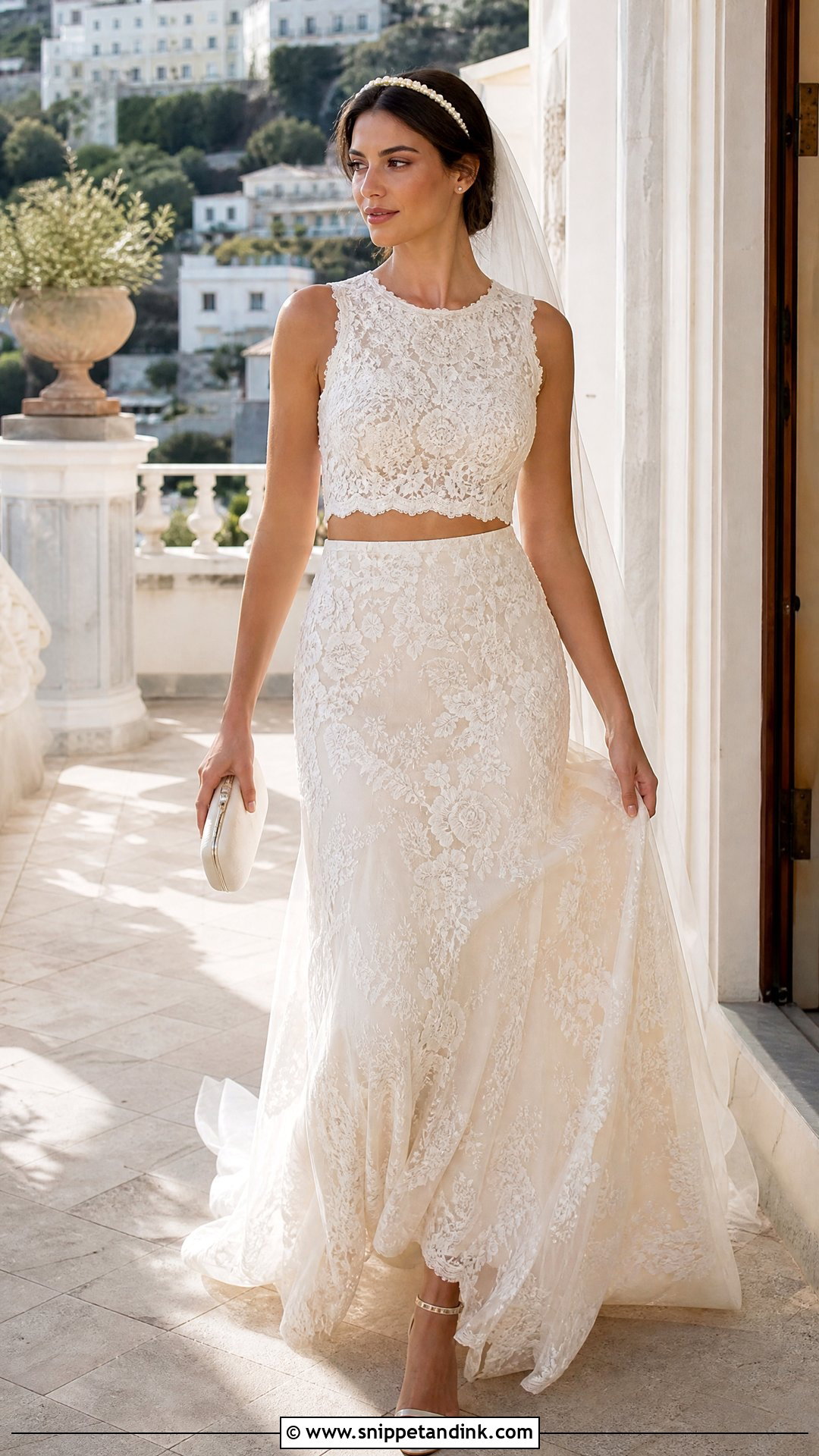
Two-piece bridal sets travel well because the separates pack flat and can be worn again later. A fitted lace or satin top with a full skirt, sleek column skirt or chiffon skirt works if the colour and fabric tones stay close; mismatched ivories look accidental in photos. Elegant heels, a small clutch and simple jewellery suit it. A veil makes it traditional; a bow or pearl headband keeps it modern. Swapping to a lighter skirt for dancing is an easy second look.
Flying the Gown to Italy and Steaming It There
Never check a wedding dress into the hold. Carry it on in a breathable garment bag, folded as little as possible, and ask the cabin crew politely if there’s a closet; many airlines will hang it if space allows, though it’s never guaranteed. Pack the bodice uppermost and stuff sleeves and the bust with tissue so they keep their shape.
- Unpack and hang it the moment you reach the accommodation, away from windows and direct sun.
- Book a local steaming or pressing service ahead of time; your planner or venue usually knows one.
- If you steam it yourself, work from the inside and keep the steamer moving, never resting on beading, lace or appliqués.
- Bring a small kit: safety pins, needle and thread in ivory, fashion tape and a white chalk stick for marks.
Church Ceremonies and Covered Shoulders
Many Catholic churches in Italy expect shoulders to be covered inside, and some parish priests are strict about it. If your gown is strapless, off-shoulder or backless, plan a bolero, a cape or a long veil draped over the shoulders for the ceremony itself. Ask the parish about any rules on flowers, music and photography at the same time, since these differ from church to church.
Cobblestones, Heat and a Dress You Can Live In All Day
Start from the venue, the month and how far you’ll walk, then decide what you love. Italy has coastal terraces, countryside estates and old city halls, and the dress should belong to the setting rather than look like a costume against it. Light fabrics, secure shoes, a silhouette you can move in and accessories that don’t fight the gown make the real difference. Lace, satin, organza, a suit or a two-piece can all work. Wear it for an hour at the final fitting, walk stairs, sit and hug people, and you’ll know if it will last the day.
You'll Like These Ideas:




Leave a Reply