
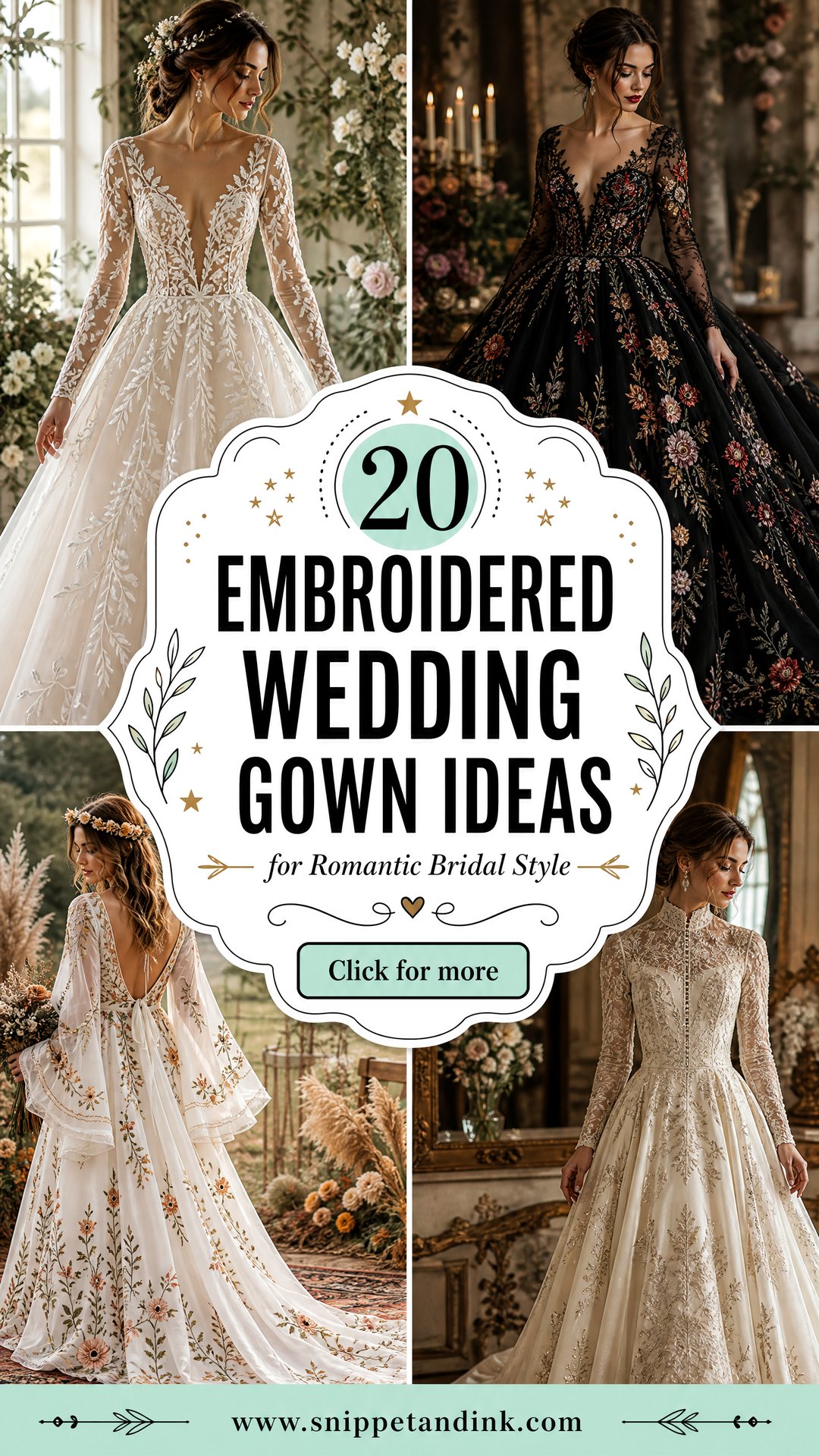
Embroidery is the detail I get asked about most in the fitting room, partly because it covers so much ground. It can be a single vine stitched along a train or a whole skirt of coloured flowers on tulle. Bridal designers are working with dimensional florals, pearls, corsetry, pastel thread and personal motifs right now, so there’s a version for almost every taste. What decides whether it works on you is placement. Stitching near the face shows in every portrait; stitching on the hem mostly shows when you walk away. Below are twenty embroidered gowns, from full ball gowns to plain crepe with a worked train, with the styling and fitting notes I’d give for each.
Turning the Gown Inside Out at the Shop
The inside of an embroidered dress tells me more than the outside. Machine embroidery is even and repetitive, and you’ll often see a stiff backing behind it called a stabiliser. Hand embroidery is slightly irregular, with stitches that vary a little in length and knots tied off at the back. Both can be good. What matters is how the work affects the fabric.
Puckering and stiffness
Dense stitching on fine tulle can pull the fabric into tiny ripples, especially around big motifs. Hold the gown up to the light and look for puckers. Then feel the embroidered areas: a heavy stabiliser makes sleeves and bodices stiff, and stiff sleeves are uncomfortable to bend in all day.
Scratch and snag points
Run your hand inside the bodice and under the arms. Metallic thread, sequins and bead knots can scratch if they aren’t covered by a lining. Outside, I look for loose threads and long floating stitches across sheer areas, since those catch on jewellery and bouquet wire.
Coloured thread
Ask whether coloured or dark thread has been tested for colourfastness. You don’t want a spilled drink or a steamer near the hem to leave a pink or grey halo on ivory fabric.
1. Floral Embroidered A-Line Wedding Gown
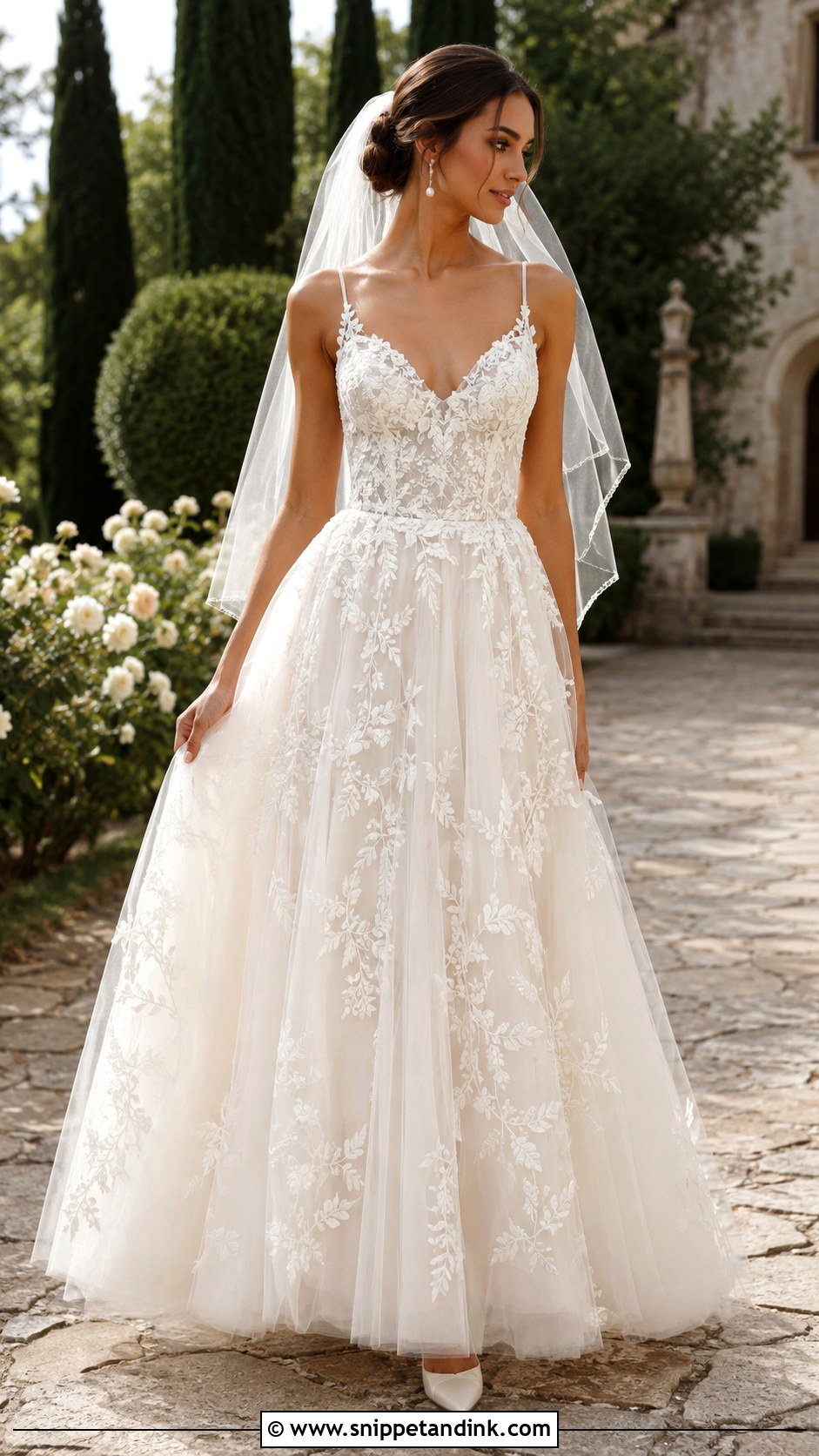
Vines that start dense at the bodice and loosen as they spread over a tulle or organza skirt pull the eye to the waist and keep the lower half light. That gradient is what I look for first on a floral A-line, because embroidery that’s equally heavy from top to bottom flattens the shape. Ivory thread reads traditional; pale blush or green adds a hint of colour. Pearl drops, a fingertip veil and pointed ivory pumps are enough, with a loose low bun to keep the neckline clear. The A-line forgives a lot, so it suits petite, tall, straight and curvy figures alike, especially at garden and spring ceremonies.
2. Colorful Wildflower Embroidered Wedding Gown
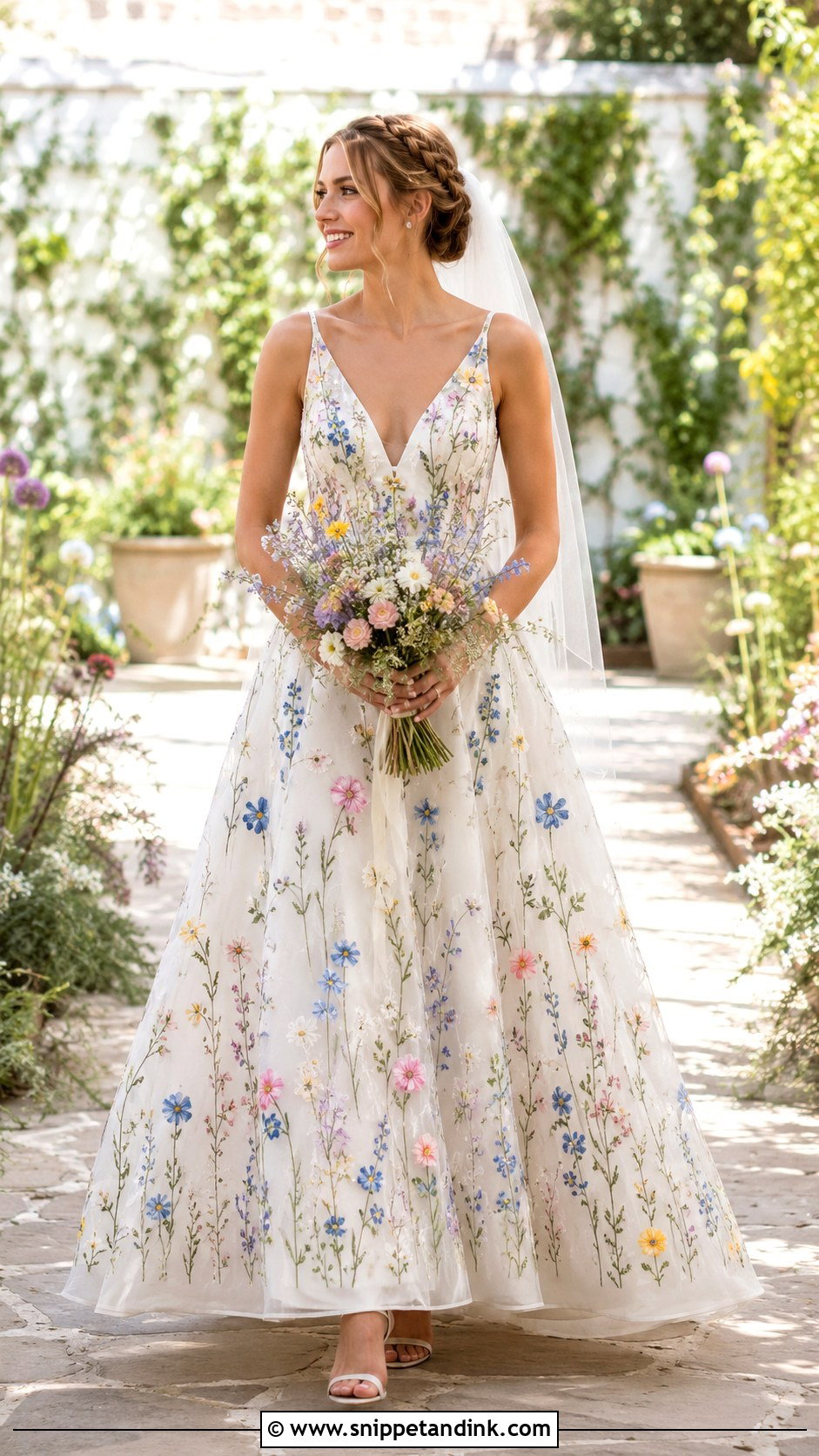
Scattered wildflowers in blue, pink, yellow and lavender on a sheer ivory overlay make a gown feel personal without losing the bridal base. The risk is that colour multiplies. I keep the silhouette calm, an A-line or soft column, and the accessories almost invisible: small diamond studs, neutral satin heels and a plain veil with no trim. In the bouquet, pick two or three shades from the embroidery rather than trying to match every thread, or the flowers and dress start arguing. Natural makeup and a soft braided updo suit it. It’s at its best outdoors in summer or in a botanical venue.
3. 3D Floral Embroidered Ball Gown
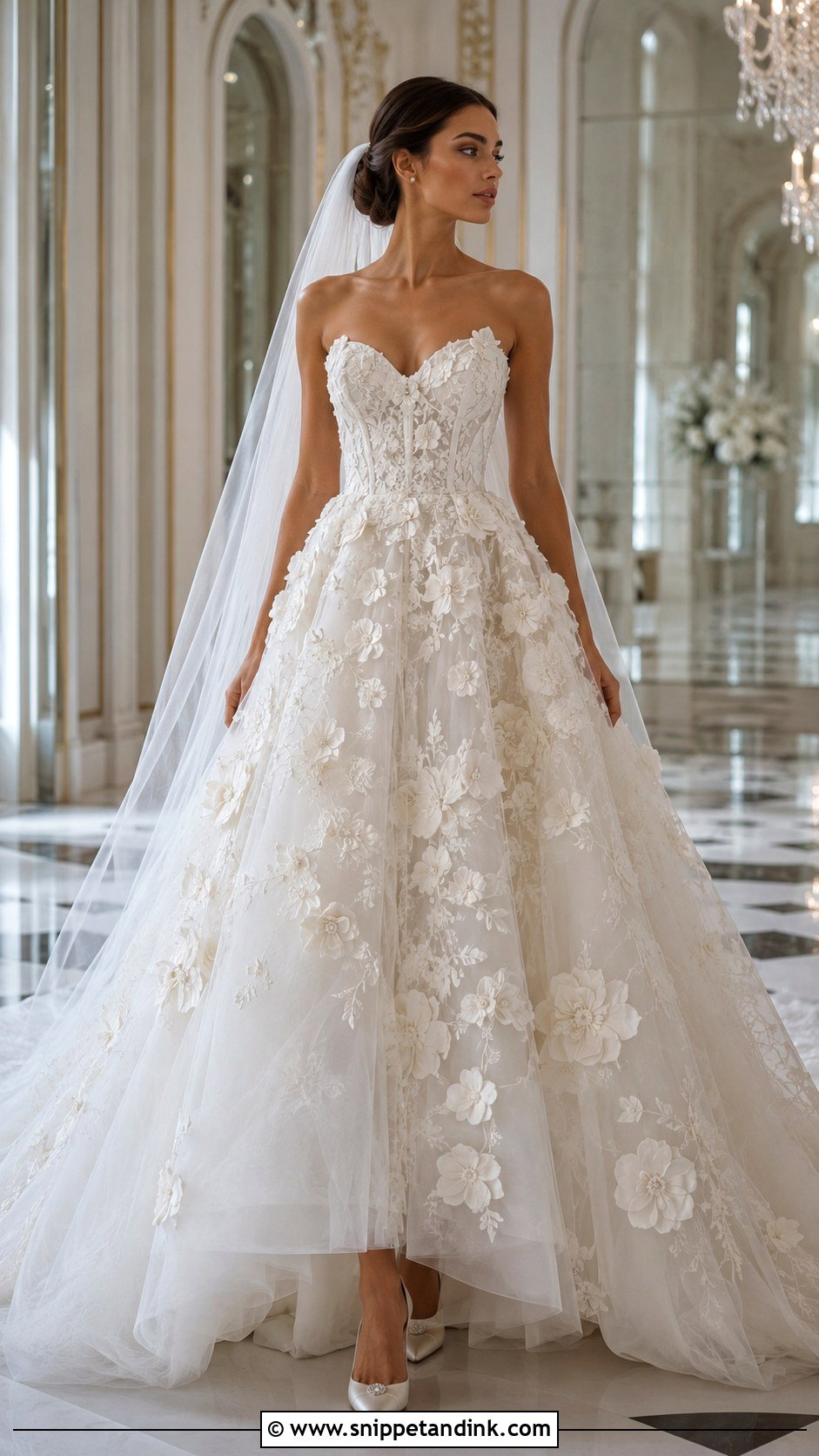
Three-dimensional petals need room to stand up, which is why they sit on full tulle skirts so well. On a strapless ball gown I look for the flowers clustered at the neckline and hem with the middle of the skirt lighter; it gives balance in photos and stops the dress feeling top-heavy. Raised petals do flatten if you sit on them for hours, so I tell brides to perch rather than slump during dinner and to fluff the skirt before speeches. A smooth chignon, crystal studs, closed-toe satin heels and a plain cathedral veil finish it. Carry a compact bouquet; the skirt already has volume. Ballrooms and large estates give it space.
4. Long Sleeve Vine Embroidered Wedding Gown
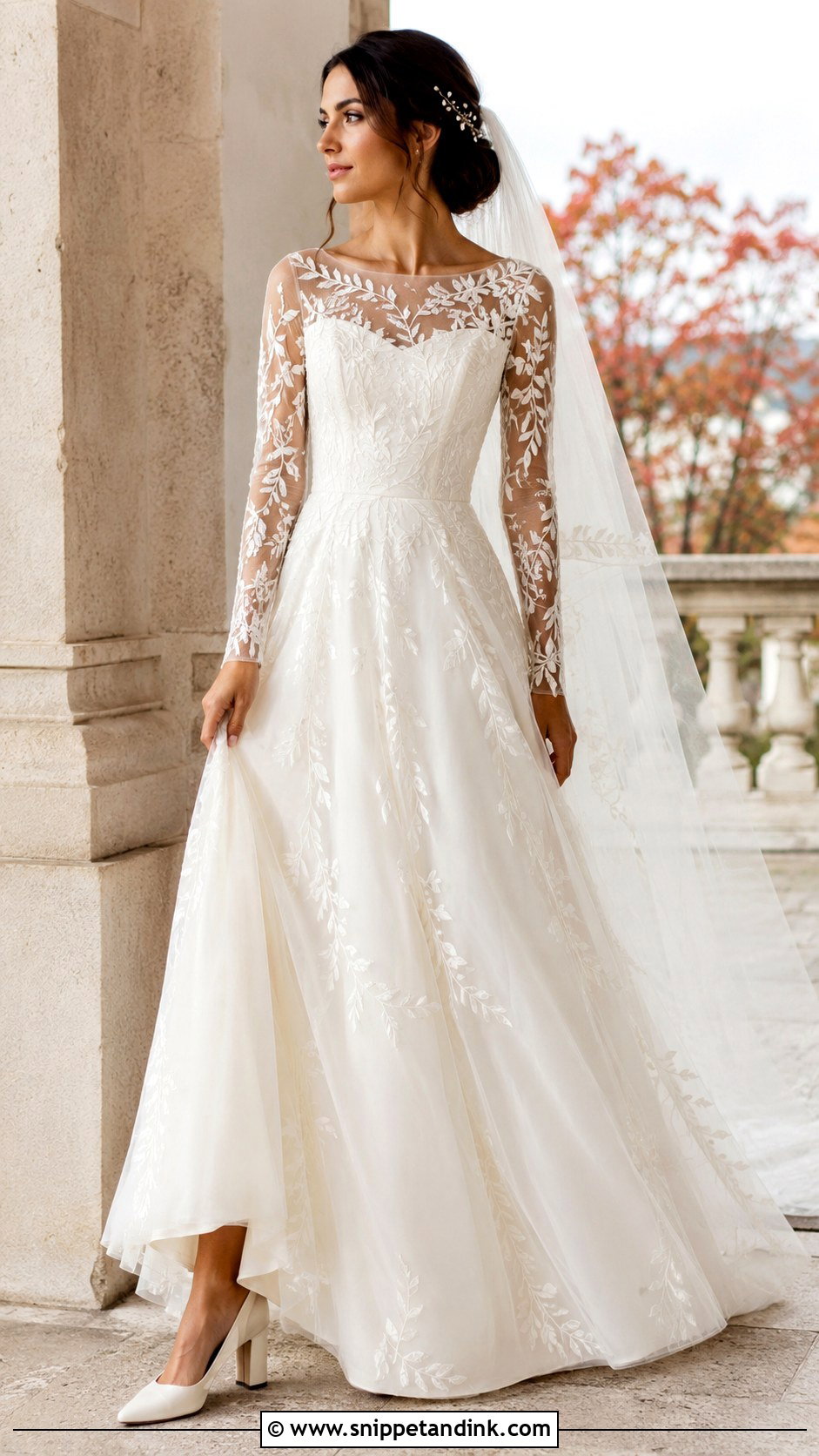
Vines winding along illusion sleeves give coverage that still looks light. A lined bodice, sheer embroidered sleeves and a flowing skirt let the arm detail show, and a V-neck or soft scoop keeps the top from closing in. Ivory on ivory is classic; pale green vines feel botanical. I’d skip bracelets entirely because fine embroidery at the wrist snags on clasps, and I check that the stitching doesn’t stiffen the sleeve at the elbow so you can still bend your arm. Pearl hairpins, a low textured bun, block-heel pumps and a light veil attached below the hair complete it for autumn and winter.
5. Pearl Embroidered Mermaid Wedding Gown
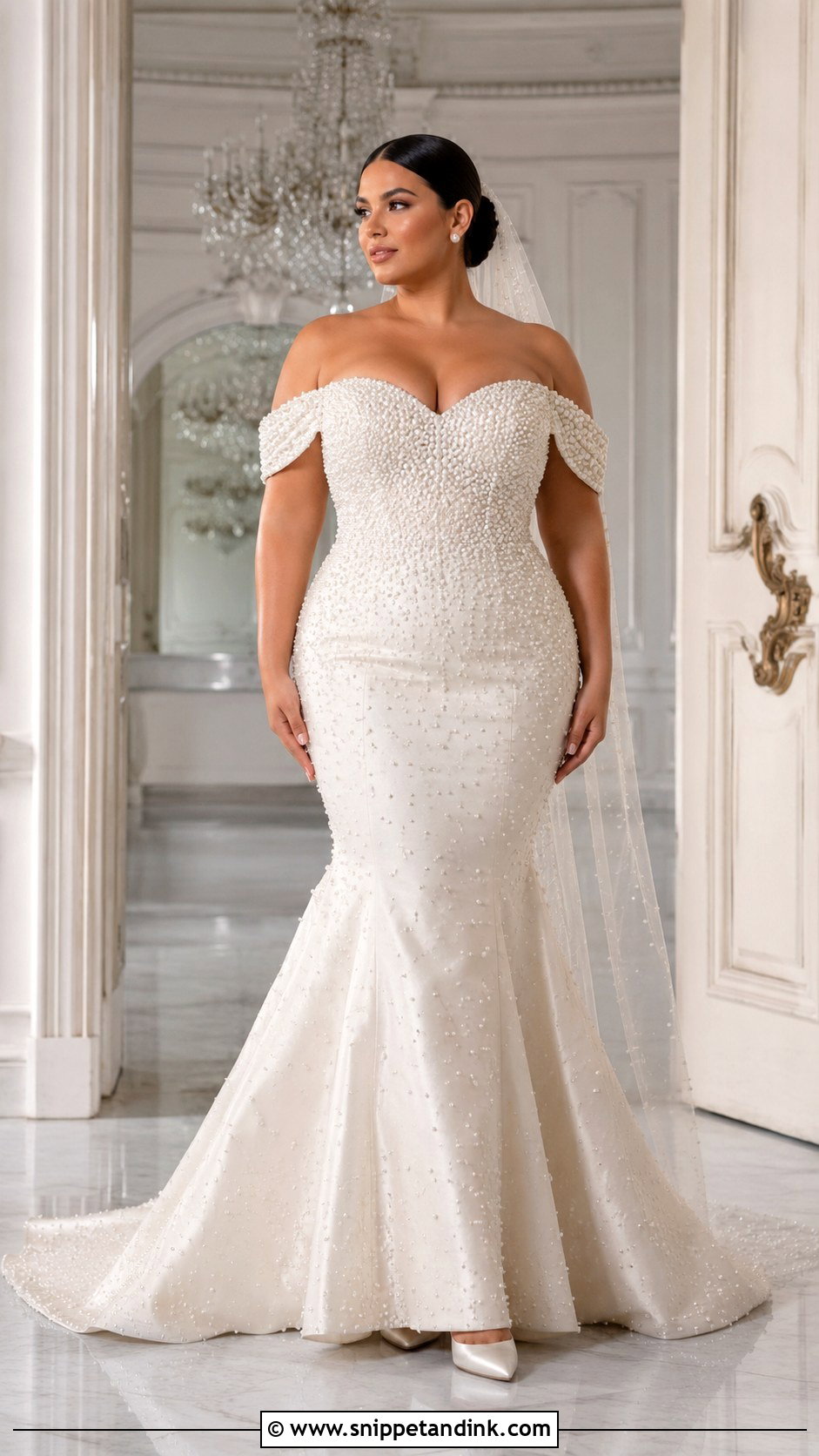
Tiny pearls and tonal thread across the bodice, hips and upper skirt soften a fitted mermaid shape, and leaving the flare plain keeps the silhouette crisp. Pearls add weight to a close-fitting gown though, and they press into the skin when you sit, so I have brides sit through a full fitting before they decide. Pearl studs, a sleek updo and pointed satin heels finish it. A narrow chapel veil keeps the lines clean better than a decorated one. Make sure the skirt gives you room to walk and dance; a mermaid that’s too tight at the knee is a long night. Evening receptions and modern ballrooms suit it.
6. Gold Embroidered Wedding Gown
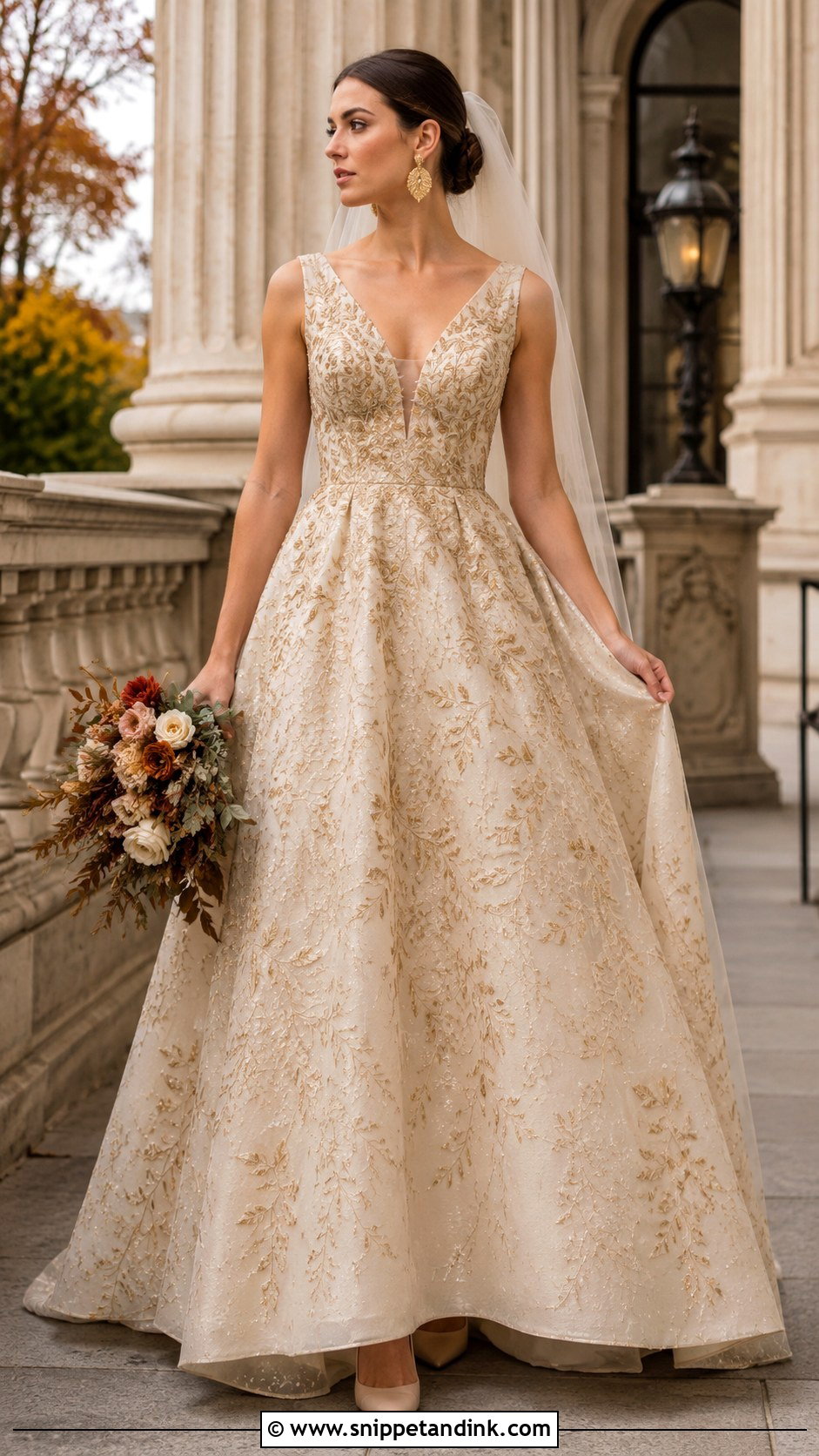
Soft gold embroidery adds richness without turning the whole gown metallic. Antique-gold vines, leaves or geometric motifs on champagne, cream or ivory look refined on a softly structured A-line. One thing brides rarely know: metallic thread is stiffer and scratchier than silk or polyester, so I check the inside of the bodice and the underarms, where it can rub during a long evening. A soft lining over the back of the stitching solves it. Brushed-gold earrings, neutral heels and a cream veil with a plain edge are enough. Keep the bouquet white and green so it doesn’t compete. Autumn evenings and ornate historic venues suit it.
7. Blue Floral Embroidered Wedding Gown
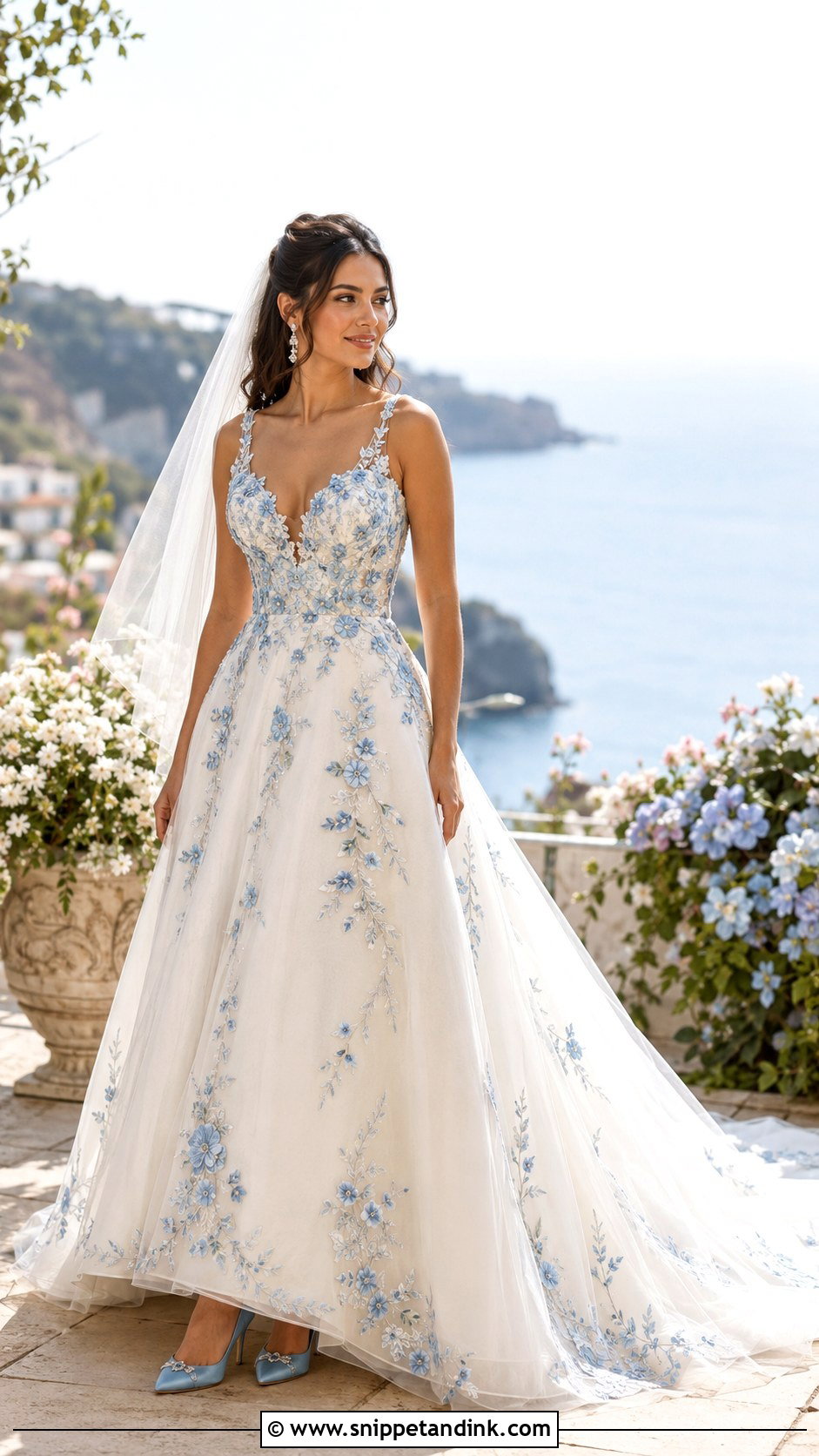
Pale blue flowers on white or ivory make a fresh change from tonal stitching, and it’s an easy way to wear something blue. I’d place the blossoms near the waist, train or hem rather than all over, so the colour reads as a detail instead of a theme. A fitted bodice and flowing A-line skirt suit it. Silver earrings, light blue heels and a plain sheer veil complete the palette, and a few blue accents in a white bouquet tie it together. A half-up style keeps it soft while showing the neckline. Coastal spots, gardens and bright indoor ceremonies show the colour well.
8. Black Embroidered Wedding Gown
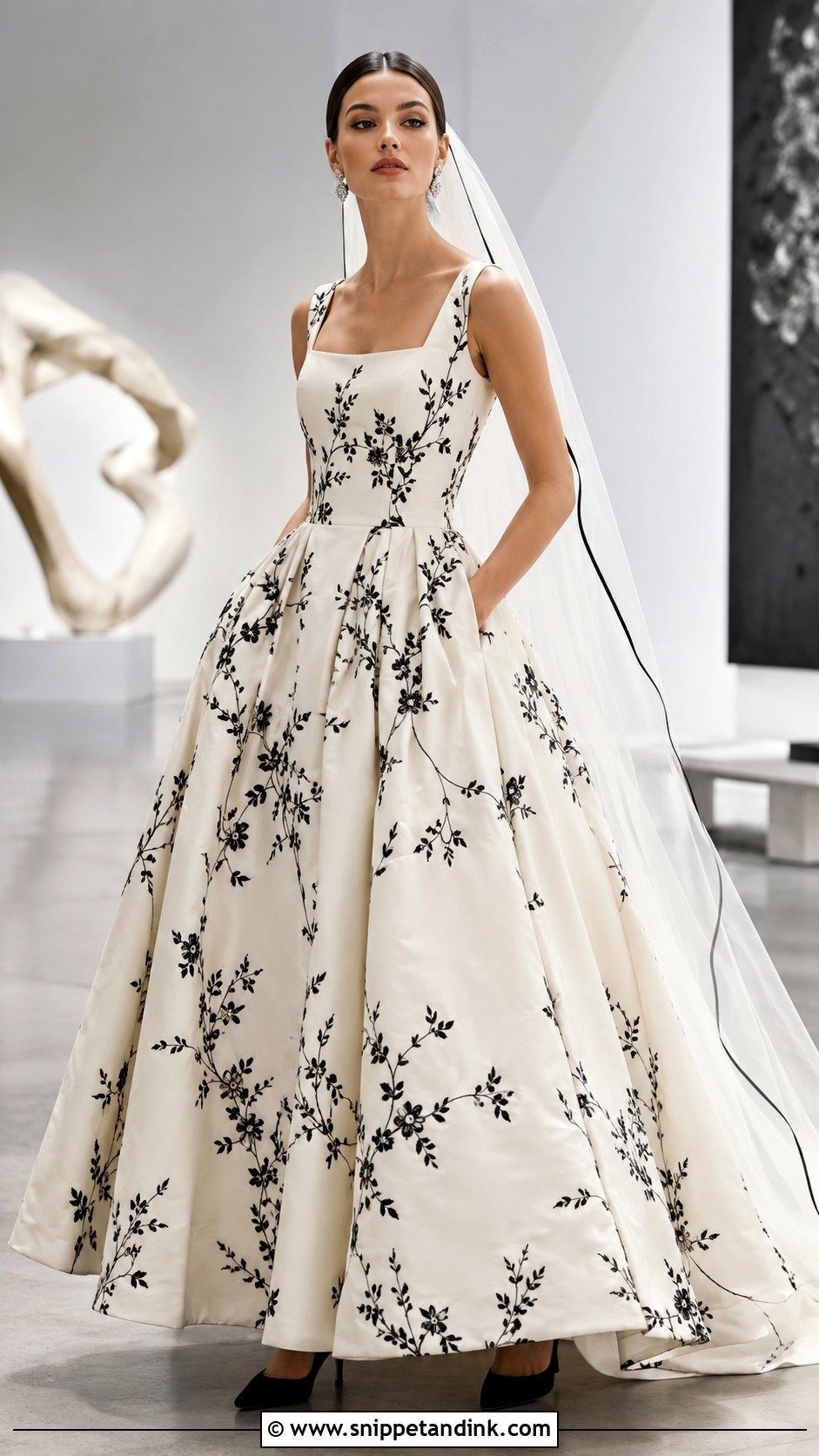
Black thread on ivory, cream or blush gives sharp definition, and fine botanical motifs look far more elegant than big dense patterns. A strapless or square-neck ball gown keeps the shape classic so the colour can be the surprise. I always ask about colourfastness with dark embroidery on a pale gown: if it gets wet or is cleaned carelessly, black dye can bleed into the base fabric. Tell your cleaner exactly what’s there. Black velvet pumps, diamond earrings and an ivory veil with a narrow black edge suit it, with a centre-parted low bun and a structured white bouquet. Evening receptions and gallery venues fit its contrast.
9. Boho Embroidered Wedding Gown With Bell Sleeves
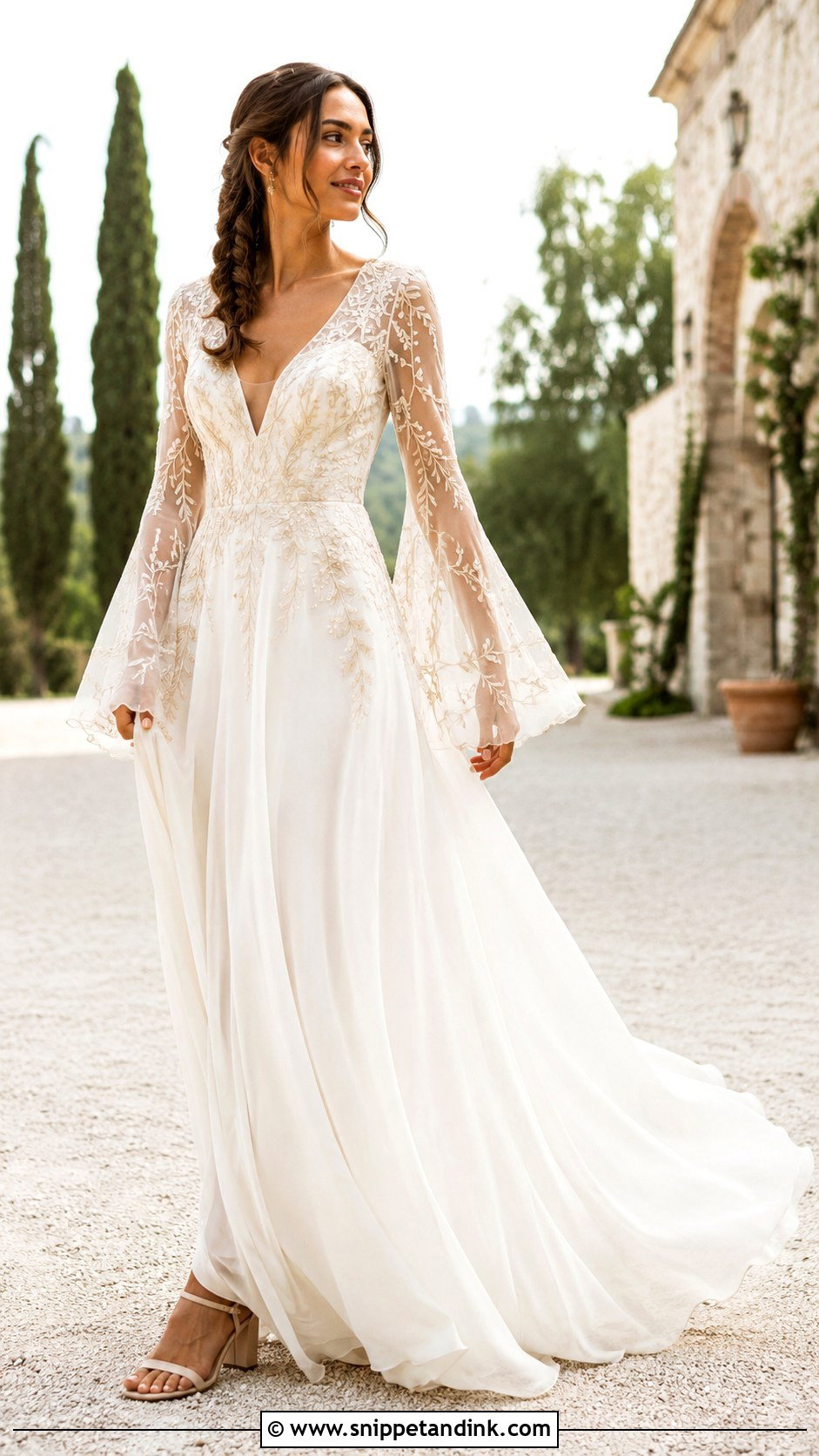
Bell sleeves are lovely until they end up in the bouquet. I look for sheer sleeves that widen below the elbow but stop at the wrist, so the fabric doesn’t tangle with stems or drag through the cake. A lightly fitted bodice, defined waist and chiffon or tulle skirt with leafy threadwork give the relaxed boho movement. Block-heel sandals, small gold earrings and a loose braid keep it easy. A narrow flower comb can replace a veil, though a plain chapel veil works too. Keep the flowers loose and natural. Woodland, desert and coastal celebrations suit it, and it’s comfortable for a long day.
10. Vintage High Neck Embroidered Wedding Gown
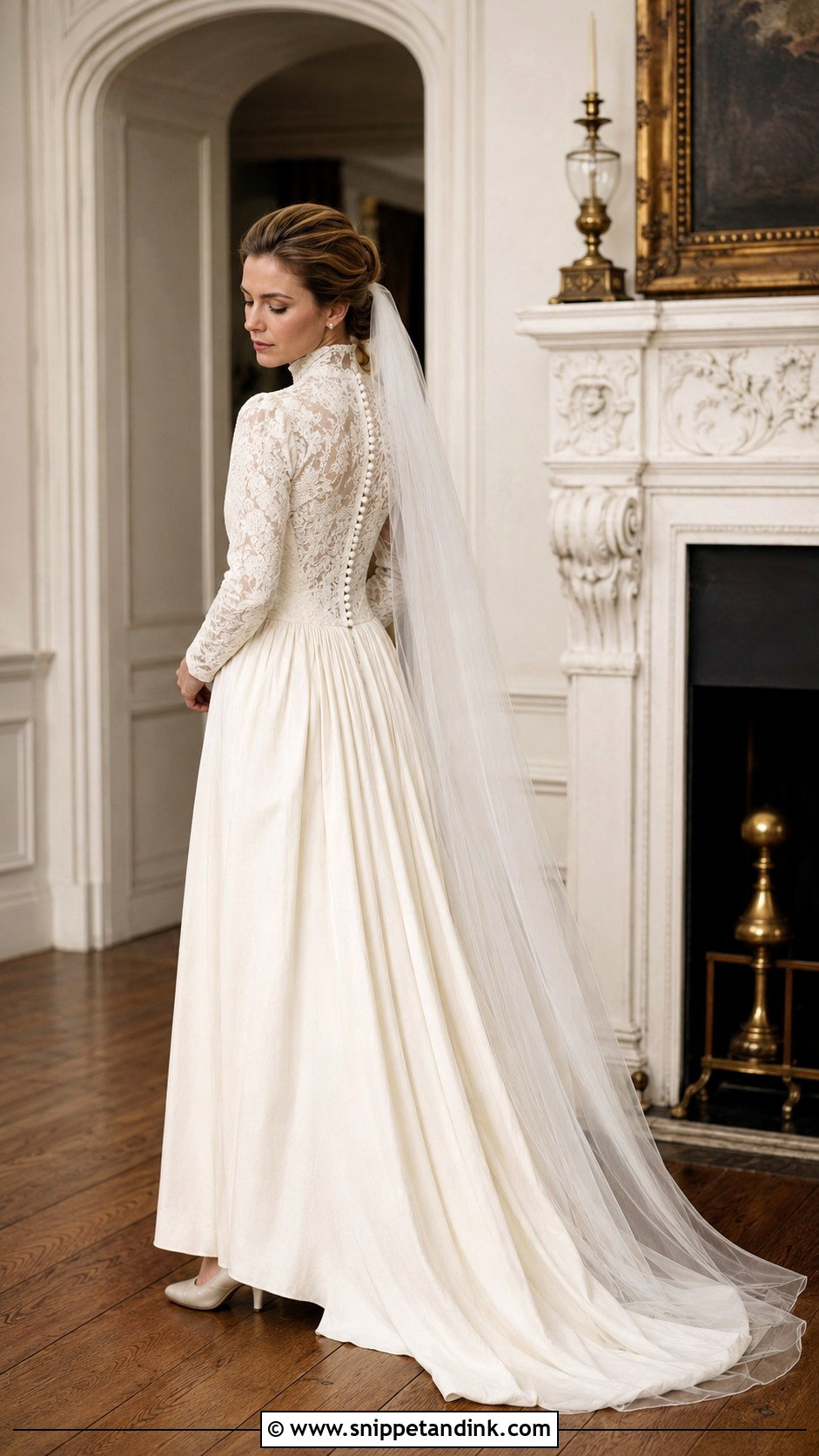
A high neckline gives embroidery an instant vintage feel. Fine threadwork across the collar, shoulders and fitted bodice, with a gathered or bias-cut skirt and covered buttons down the back, reads like an early twentieth-century gown with a modern fit. I’d steer you toward cream or soft ivory here rather than bright white; it looks more like an heirloom. Have a helper for those buttons, and add a hidden zip underneath if you want a quick change later. Pearl studs, low kitten heels and a French twist pair well. A Juliet cap or simple fingertip veil suits the neckline better than a gathered one.
11. Corset Embroidered Wedding Gown With Basque Waist
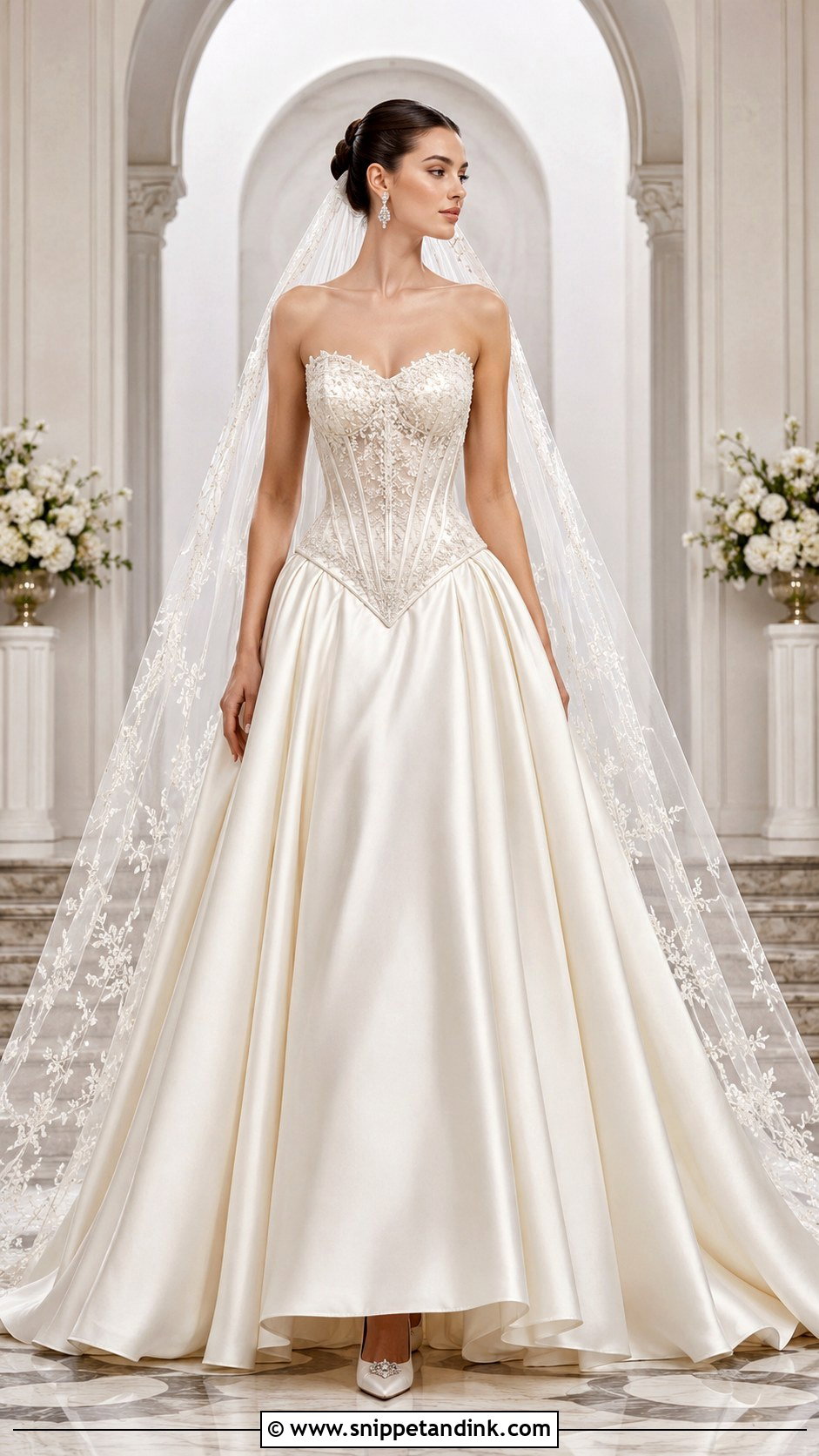
A Basque waist dips into a V below the natural waistline, and on a corset bodice it gives a very sculpted silhouette. Tonal embroidery that follows the seams and drifts lightly onto the upper skirt shows off the construction instead of covering it. The thing I check is sitting. A long Basque point can dig into the stomach when you sit down, so the bride sits at every fitting until it’s comfortable. A full or softly flared skirt balances the long waist. Drop earrings, a clean cathedral veil, pointed pumps and hair worn up keep the bodice visible. Formal venues with space let the shape read properly.
12. Off Shoulder Embroidered Wedding Gown
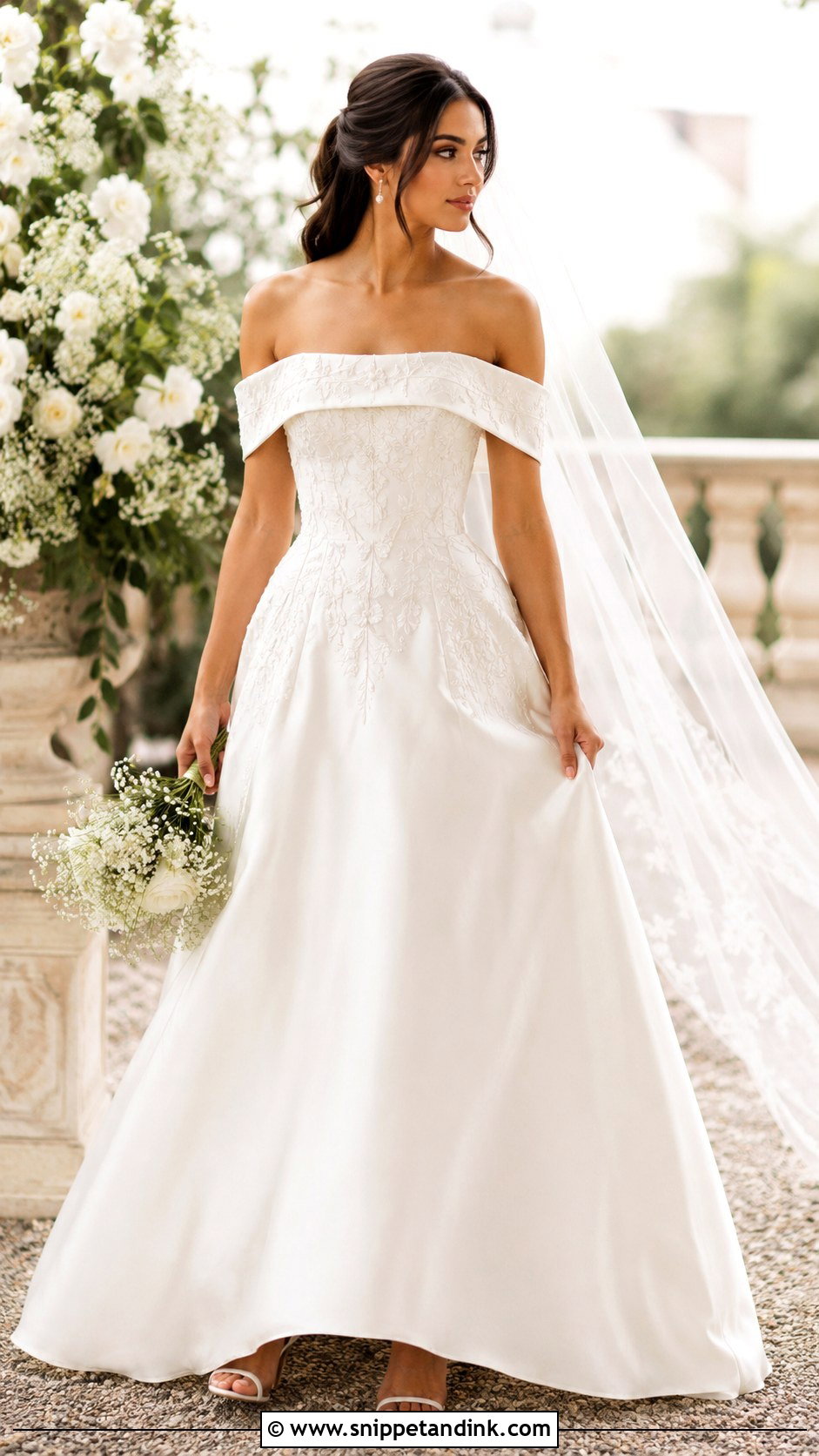
Embroidery along a folded off-shoulder neckline sits right next to the face, so it shows up in nearly every close portrait. Pick a short necklace or delicate drop earrings, never both; with stitching that close to the collarbone, two pieces of jewellery crowd it. The stitching can continue down a fitted bodice into the top of an A-line or ball skirt. A polished half-up style, satin heels and a sheer veil attached at the back complete the look. At fittings, lift your arms and hug someone; the sleeve bands shouldn’t slip. Indoor ceremonies, gardens and formal summer weddings all suit it.
13. Minimalist Crepe Wedding Gown With Embroidered Train
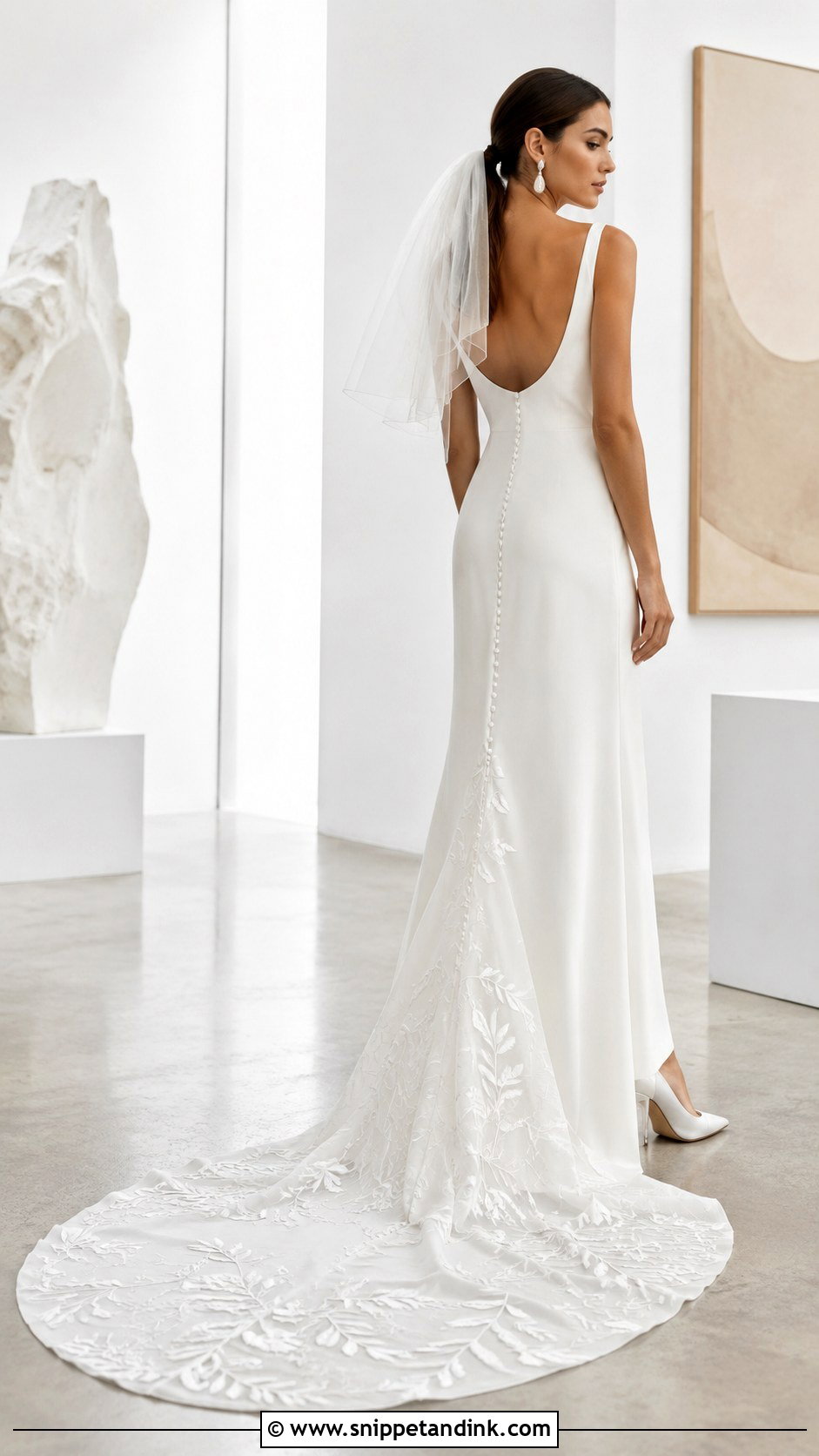
From the front, plain crepe. From the back, embroidered vines, initials, or flowers across the train. That contrast is the whole appeal, so the crepe needs to be smooth and the silhouette clean: column, sheath or fit-and-flare. I’d ask how the train is bustled before you commit, because a bustle can fold the embroidered part out of sight for the reception. A low ponytail or sleek bun, sculptural earrings and pointed pumps keep it modern. A short plain veil or no veil keeps the train visible. A motif tied to your venue or family adds meaning nobody else needs to know about.
14. Tea Length Embroidered Wedding Gown
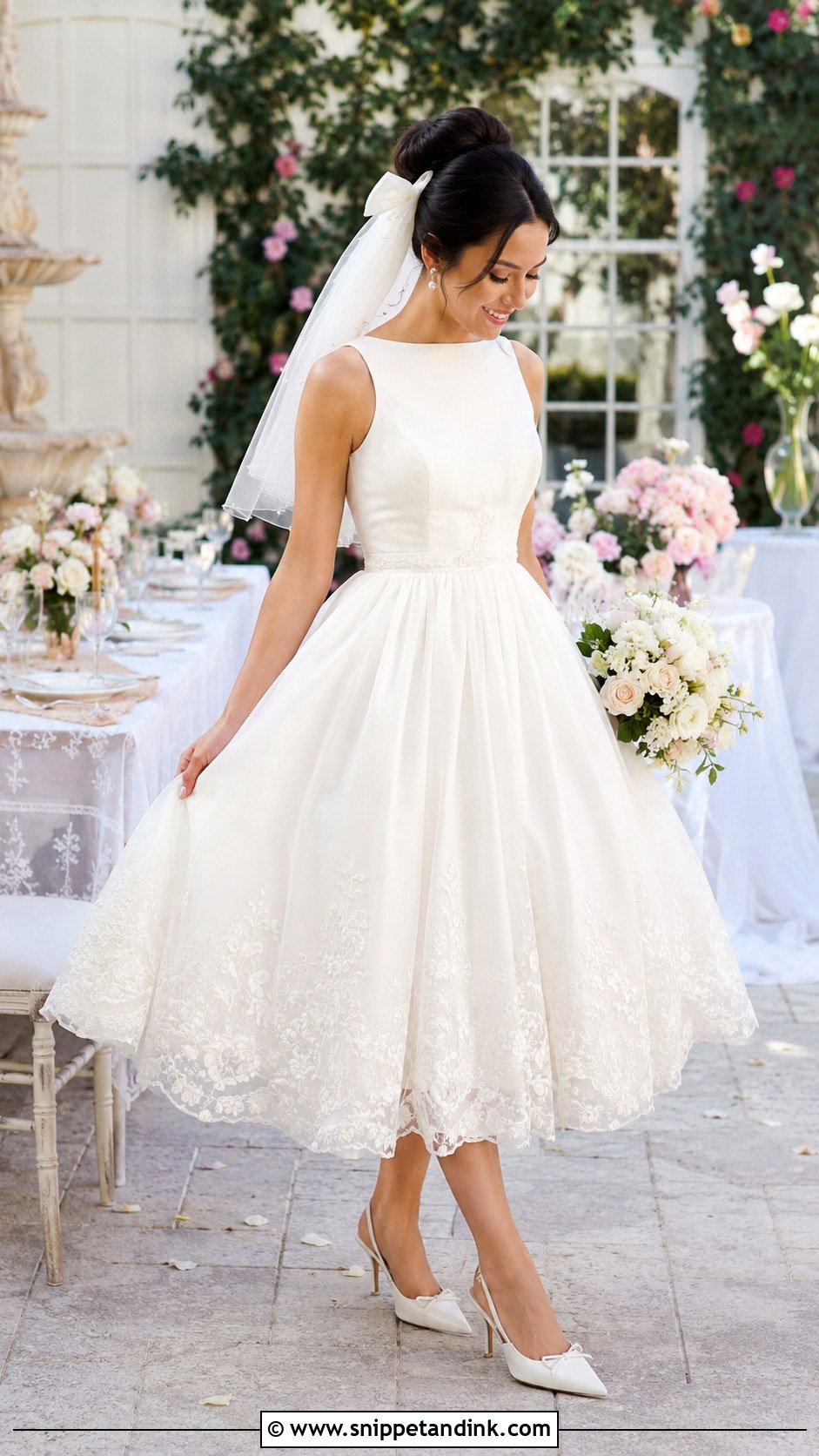
Tea length puts your shoes on show, so the embroidery and footwear share the attention. A fitted bodice and a skirt ending between knee and ankle, with floral threadwork around the hem, frames the dress nicely. I usually suggest hem embroidery a little lighter than the bodice, otherwise the weight at the bottom pulls the skirt flat. Pointed slingbacks, pearl earrings and a short veil or structured bow complete it, with a small bouquet to keep proportions balanced. Wear shoes you can stand in for hours. It works for courthouse ceremonies, garden parties, second looks and petite brides who want volume without a long train.
15. Celestial Embroidered Wedding Gown
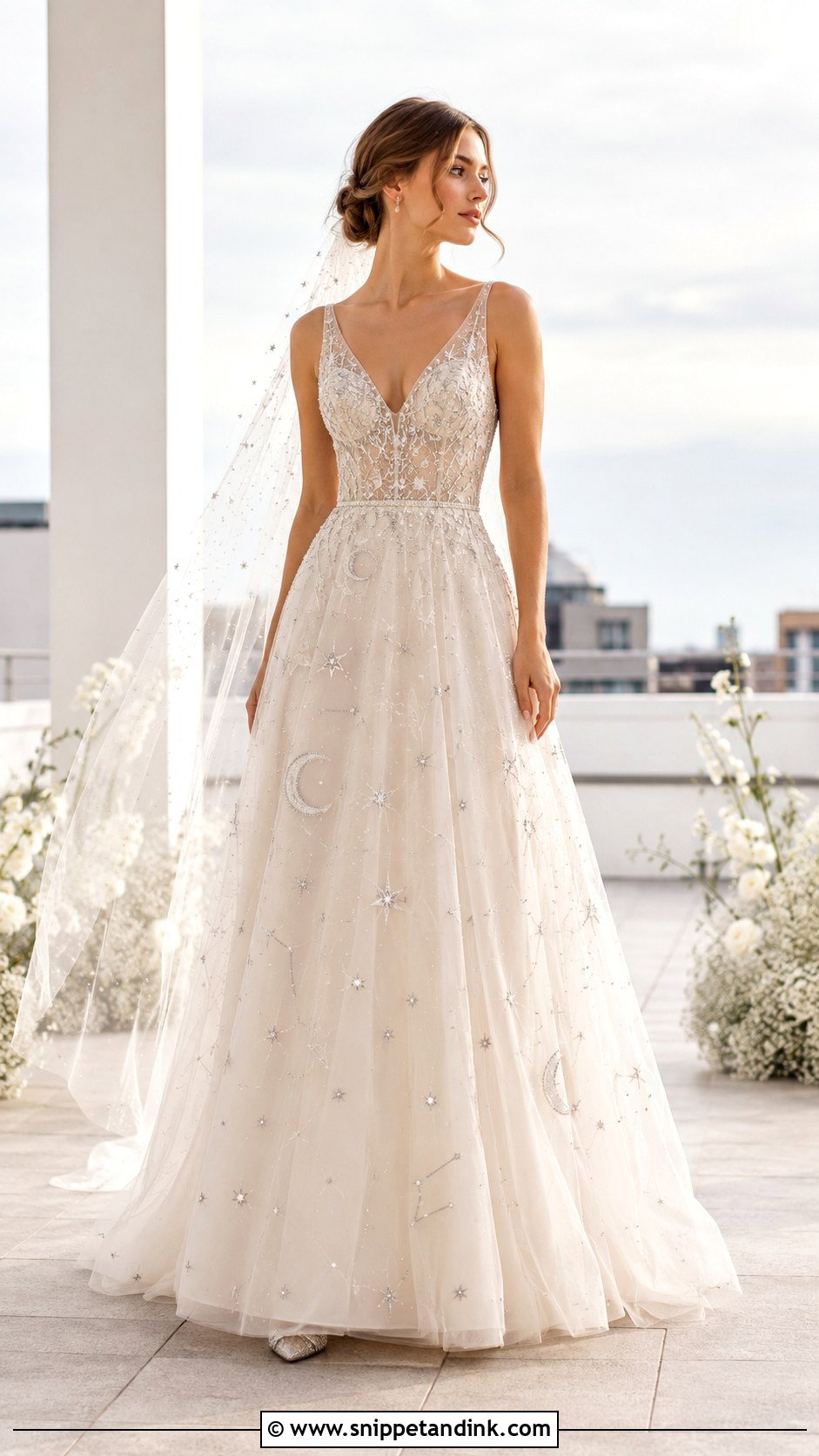
Stars, moons and small constellations stitched in silver, pearl or pale gold over sheer tulle with an ivory lining give a soft shimmer that still looks grown-up. A simple A-line or column gives the celestial motifs space. My one rule here is to stop at the dress. Star earrings, a star veil and star hairpins together tip into costume, so I’d choose crystal studs and a sheer veil with just a few matching stars. Metallic pumps and a low twisted bun finish it. Evening receptions and rooftop venues suit the theme, especially for couples who love the night sky.
16. Botanical Embroidered Wedding Gown With Cape Sleeves
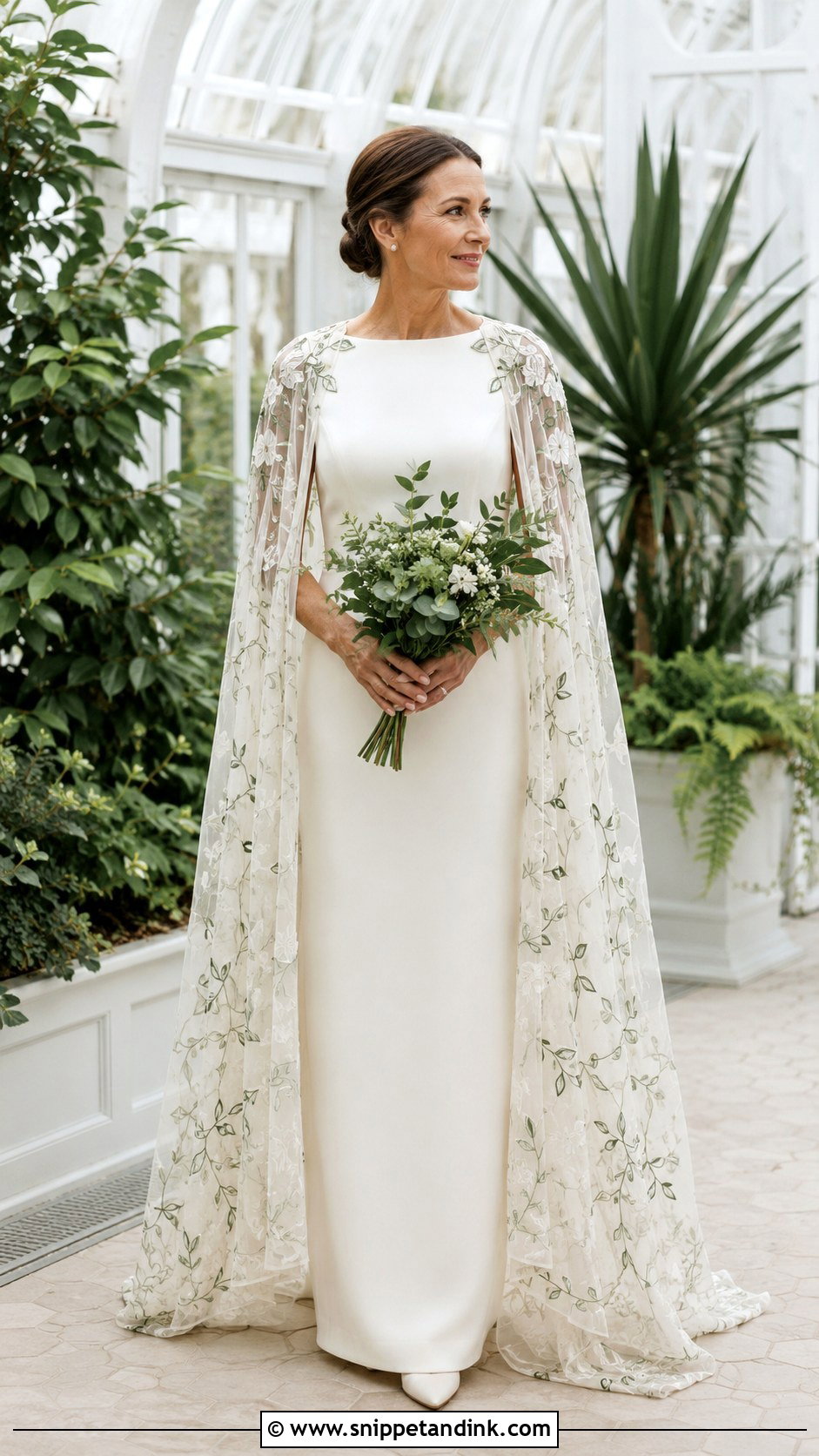
Cape sleeves give botanical embroidery a big canvas, so the gown underneath should stay simple, a column or gentle A-line. Leaves that start dense at the shoulders and thin toward the fingertips or the floor look natural. I check how the cape moves when the bride lifts her arms; capes attached only at the shoulder can swing forward and hide the bodice when you hold a bouquet. Small studs, closed-toe pumps and a low bun that sits below the cape line are enough. Skip the veil unless the cape detaches. A green-and-white bouquet suits estates and conservatories.
17. Ombre Embroidered Wedding Gown
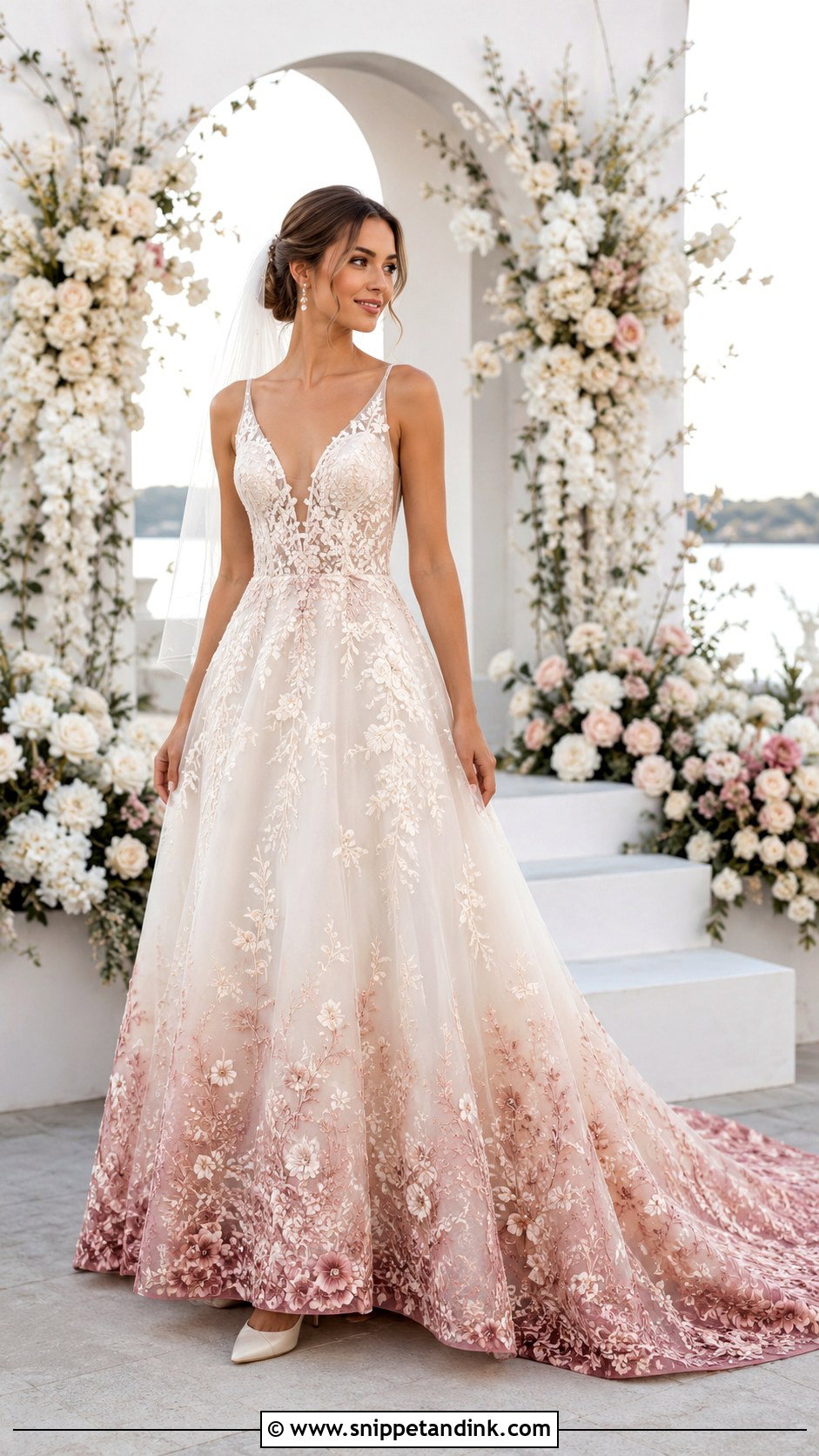
Ombre embroidery lets colour build gradually, from pale blush at the waist deepening toward the train, or blue shifting into lavender near the hem. A clean A-line shows that change best. I like the veil to stop before the darkest stitching so it doesn’t muddy the gradient in photos, and I’d keep everything near the face neutral. Ivory shoes and neutral earrings, a soft updo and natural makeup keep the balance. Pick one shade from the gown for the bouquet, not the whole range. It’s a strong choice for creative or outdoor weddings where colour is welcome.
18. Plus Size Embroidered Fit And Flare Wedding Gown
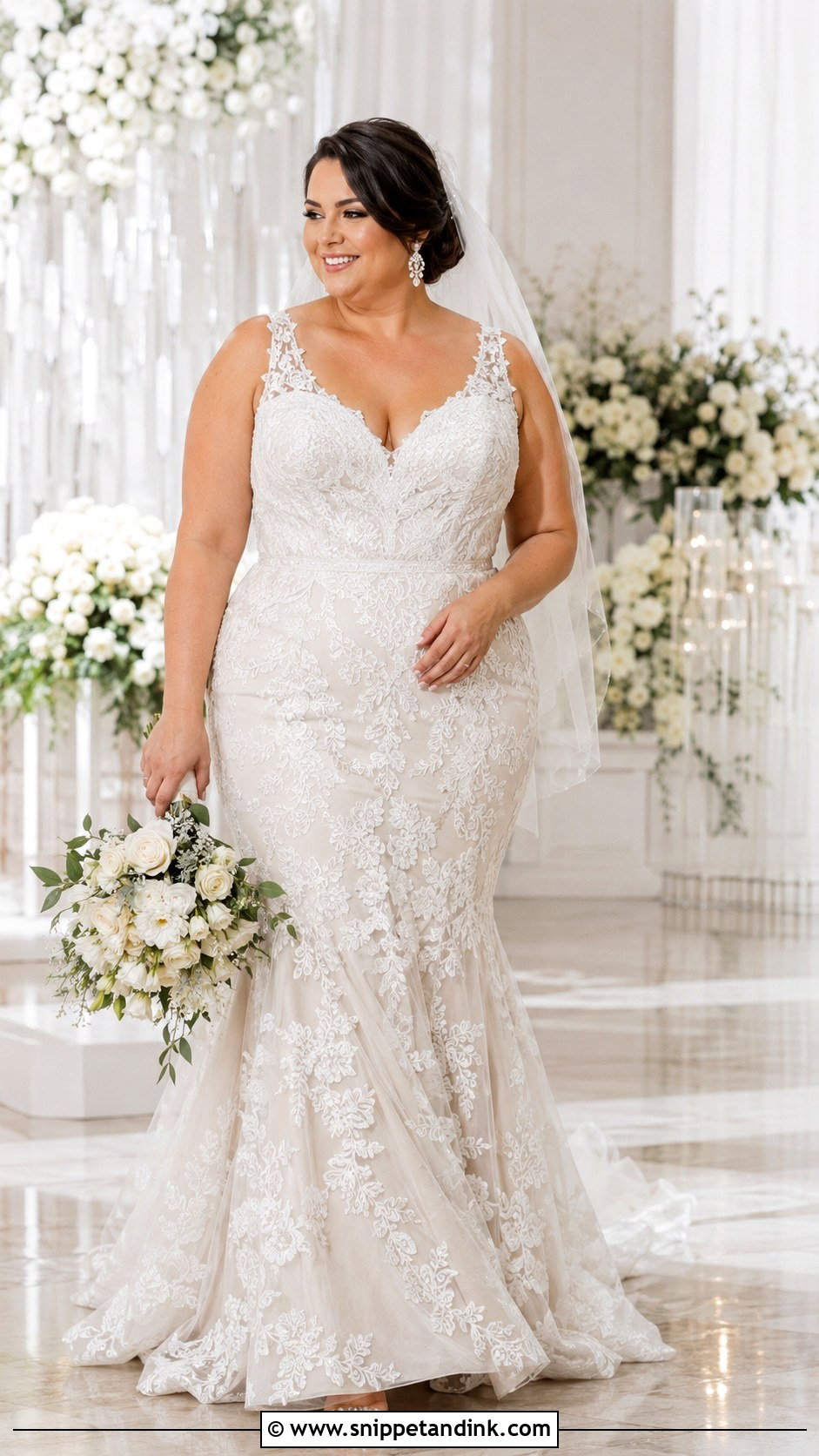
On a plus-size fit-and-flare, the direction of the embroidery matters more than the amount. Stitching that follows the natural waist and then runs down the skirt creates one long line, which flatters without any talk of hiding. Supportive internal structure and a comfortable neckline come first; choose straps or sleeves because they feel good, not because a rule says so. I’d check the flare point by sitting and climbing steps. Stable block heels, statement earrings and a fingertip veil that leaves back details visible suit it, with a side-parted updo. The gown should let you sit, walk and dance without pinching anywhere.
19. Modest Embroidered Ball Gown With Long Sleeves
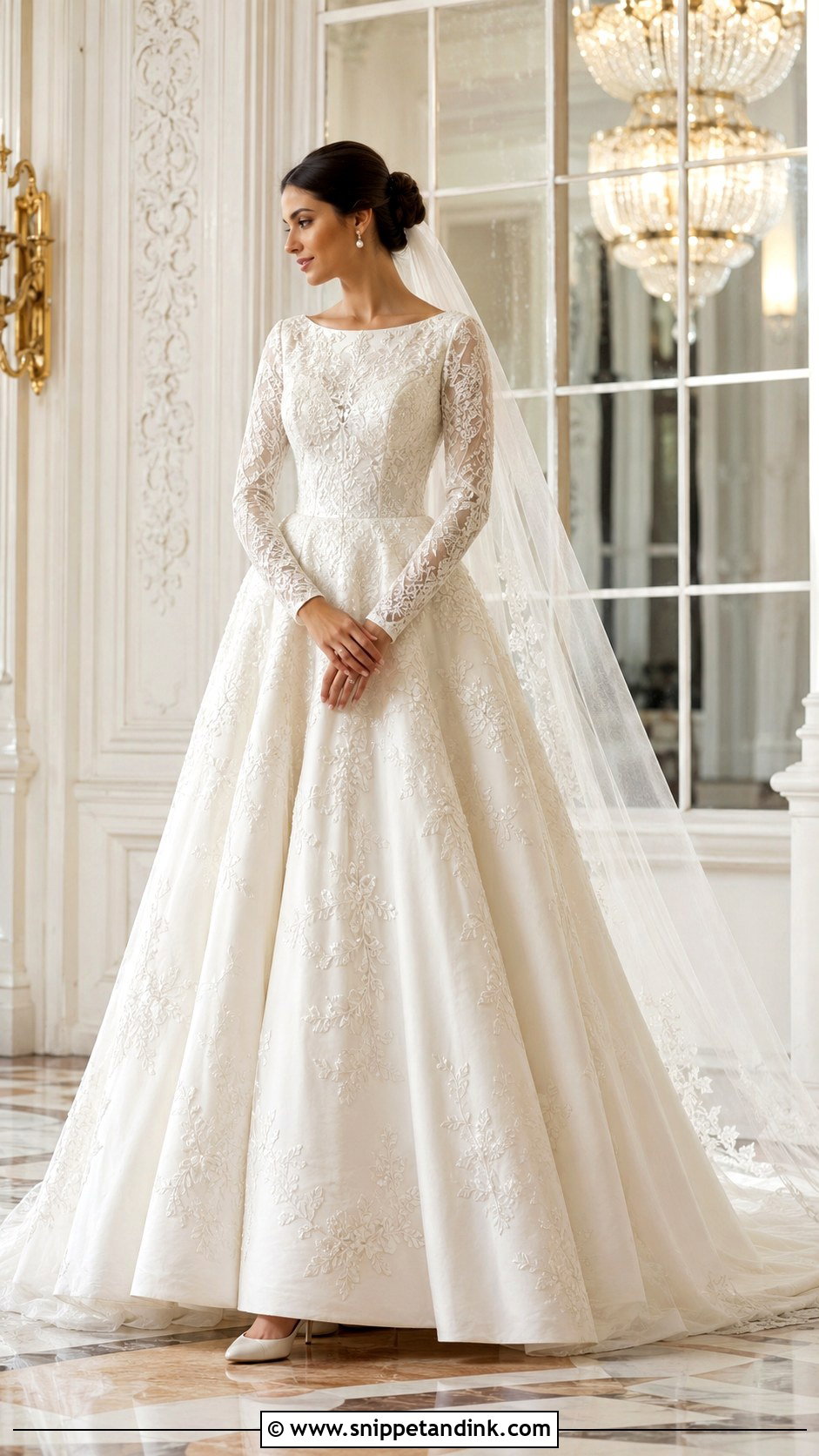
A long-sleeve embroidered ball gown with a high scoop or bateau neckline gives full coverage and still feels formal. Floral stitching over the bodice, sleeves and skirt adds texture; sheer panels can be used only where you’re comfortable with them. A defined waist stops the covered top and full skirt from looking heavy. Lined embroidery is also warmer, which matters for winter weddings. Pearl earrings, low pumps and a neat bun are plenty. A simple cathedral veil adds grandeur without hiding the embroidery. Ballrooms and traditional family ceremonies suit it well.
20. Personalized Embroidered Wedding Gown With Train
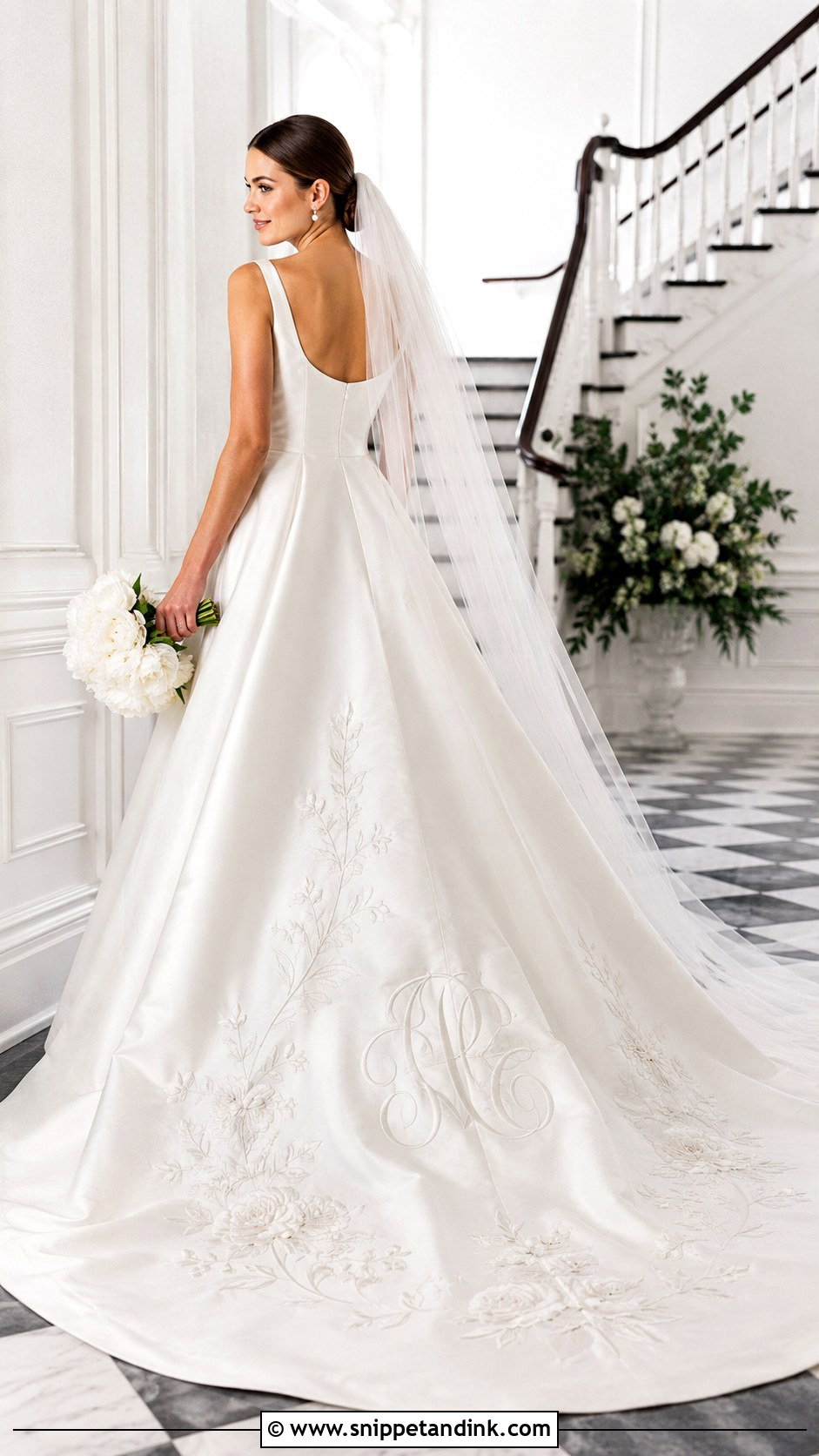
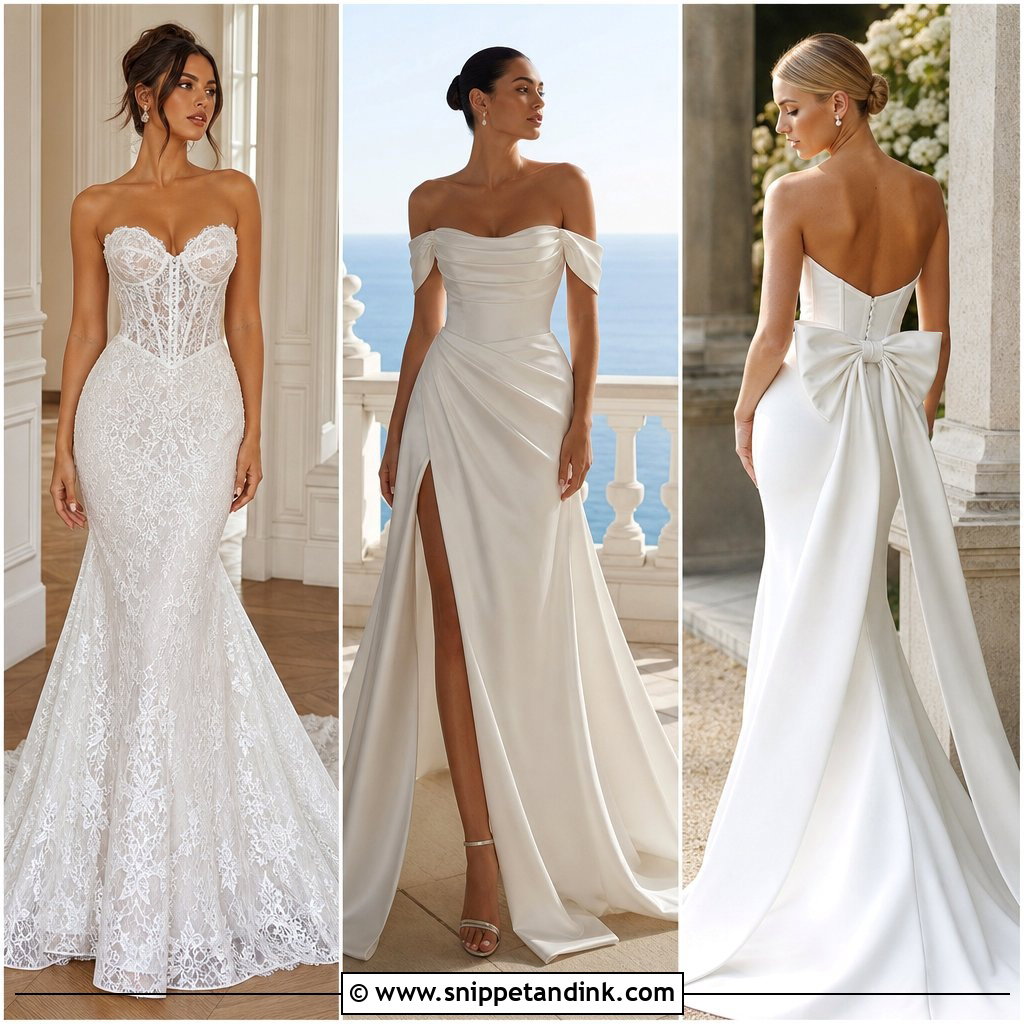
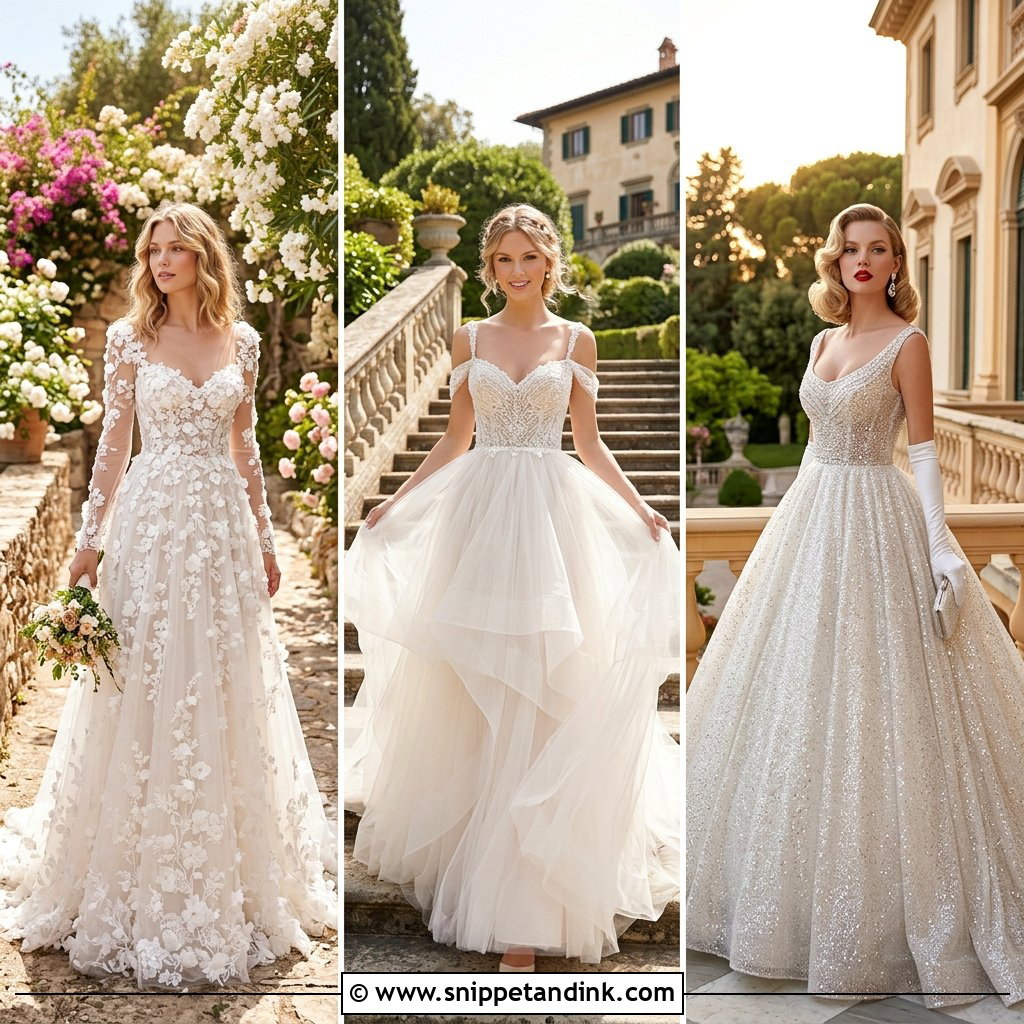
Personal stitching turns a gown into a keepsake. Initials, a wedding date, a short phrase, birth flowers or a symbolic motif can sit along the train, inside the skirt or near the back closure. A plain satin, Mikado or crepe gown gives custom work the clearest background. Keep visible accessories simple: pearl earrings, classic pumps and a plain veil. If the stitching includes colour, repeat one small shade in the bouquet or a hair clip. Start early; custom embroidery has to be sketched, placed and stitched before your final fitting, not after.
Adding Your Own Embroidery to a Gown You Already Own
You don’t need a custom-made gown to have personal stitching. Many bridal seamstresses and independent embroiderers will add initials, a date or a small motif to a finished dress. The work takes longer than people think, and turnaround varies a lot from one embroiderer to another, so I’d raise it at your very first fitting. This is the order that avoids trouble:
- Finish the main alterations first. Taking in a seam after the embroidery is done can cut through it.
- Agree a paper sketch at real size, pinned onto the gown, so you can see the scale before any stitch goes in.
- Choose the thread on the actual fabric. Ivory thread on a white gown can look yellow, and white on ivory can look grey.
- Ask for a test patch on a scrap or an inside seam allowance to check the fabric doesn’t pucker.
- Leave a clear gap before the final fitting so any adjustment has time.
Hidden placements, like the inside of the hem or under the bustle, are kinder to delicate fabric because small puckers there won’t show. Visible ones on a train need the most care, so give those the most time. Afterward, tell your cleaner where the custom work is, especially if it’s coloured.
Where the Stitching Sits Matters More Than How Much There Is
An embroidered gown should feel expressive and comfortable at the same time. Start with a silhouette that suits your body and the way you’ll move, then think about thread colour, motif size and where the work is placed. Raised flowers bring drama, tonal vines soften, and a personal motif adds meaning only you might notice. Photograph the front, back and train at your fittings, and sit and walk in it every time, because no amount of handwork makes up for a gown that pinches. Colourful, vintage, minimal or formal, there’s a starting point above for building your whole bridal look.
You'll Like These Ideas:





Leave a Reply