
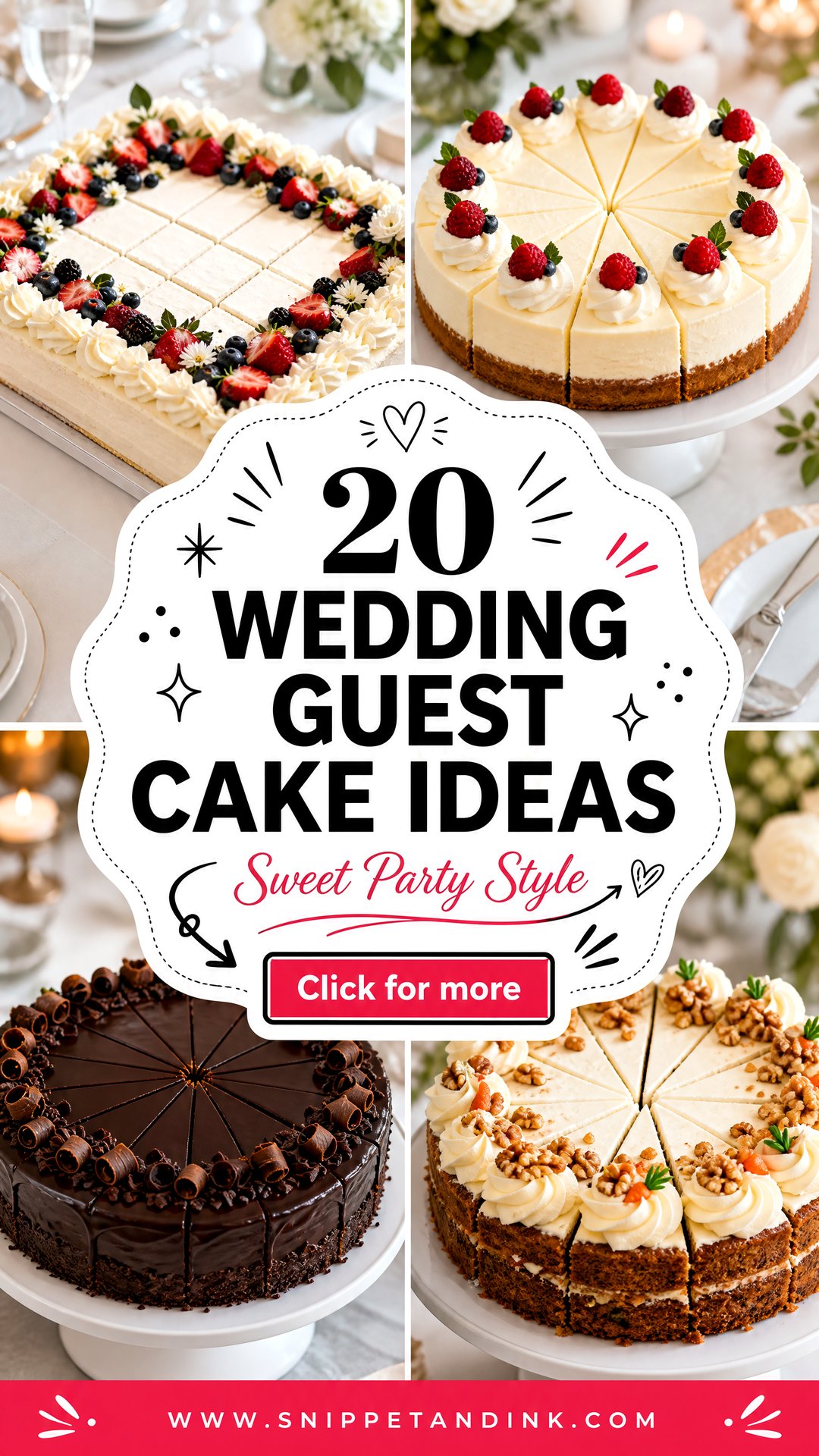
Serving cake to a whole room is a different problem from designing one showpiece, and it’s the part of my job couples think about least. A single tall cake looks wonderful, but cupcakes, sheet cake, cake bars and plated slices often serve guests better: they offer a choice of flavor, keep portions sensible and don’t stall the evening while someone cuts a hundred-plus slices. I’ve judged each of the 20 ideas below on three things: how it looks, how it travels, and how quickly it gets onto plates.
Working Out How Much Cake to Order
Most cake budgets go wrong on quantity, not design. Wedding portions are smaller than party slices: bakers usually cut a tall layer cake into fingers about one inch wide and two inches long, while a party slice is closer to two inches square. Ask which size your baker quotes servings in, because the same cake can honestly be sold as serving 50 or 100 depending on that cut.
Not everyone eats cake, either. With a full dessert table, or late in a long evening, plenty of guests skip it, so many couples order for somewhat fewer than the full head count. If cake is the only dessert and it’s plated at the table, order for everyone.
Who cuts it, and who pays for that
Check your venue contract for a cake-cutting fee, which is often charged per guest when the cake comes from an outside baker. Ask whether staff will slice, plate and serve, or whether dessert goes on a self-serve table, and who supplies plates, forks and boxes for leftovers. Cupcakes and jars can sidestep cutting altogether, though some venues charge the fee regardless, so ask rather than assume.
1. Wedding Guest Mini Cakes
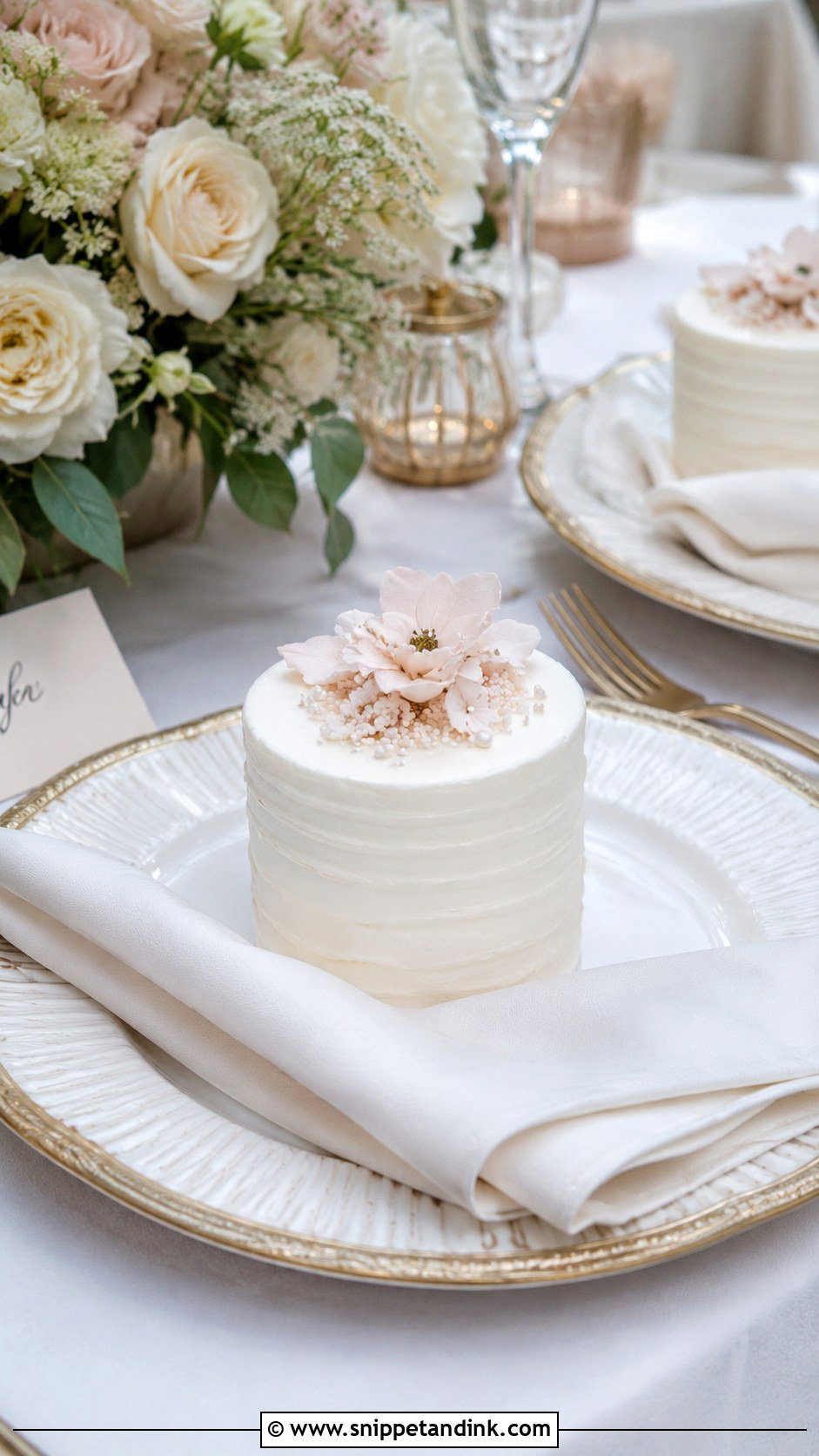
Individual cakes at each place setting feel generous, and they’re also the most labor-intensive thing I make. A 3-inch or 4-inch round in smooth buttercream with a single flower doubles as dessert and favor, and a small name tag beside it turns it into a place card. Vanilla, lemon, almond and chocolate cover most tastes. Because they sit out through dinner, I avoid whipped cream and cut fruit on top and use a crusting buttercream that keeps its shape in a warm room. Expect them to be priced per piece rather than per serving, since each one is finished by hand.
2. Wedding Guest Cupcake Tower
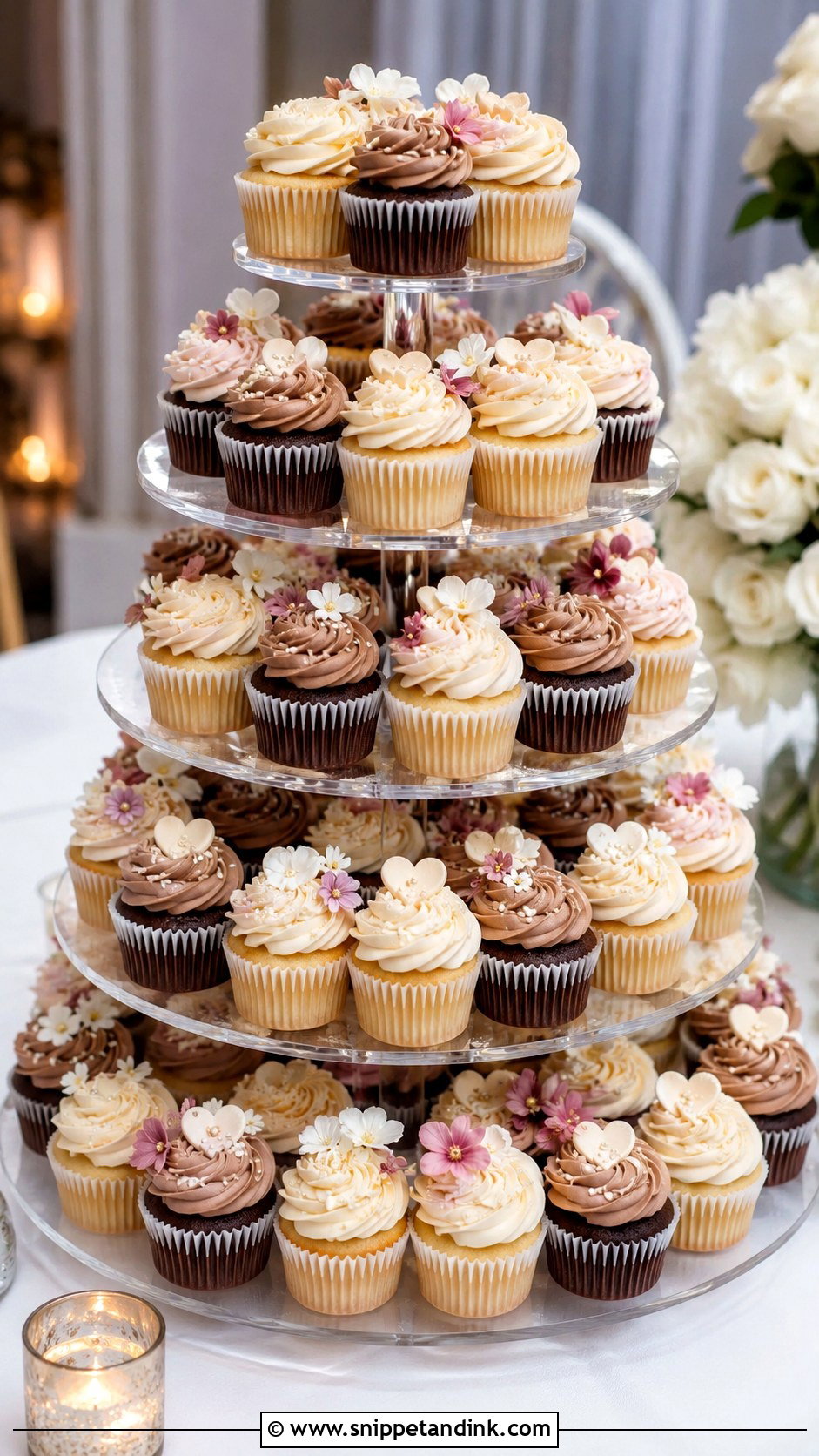
No knife and no queue for plates. A wedding guest cupcake tower lets people walk up, pick a flavor and go, while a tiered acrylic, wood or gold stand still gives the table height. I’d limit it to two or three flavors, say vanilla bean, chocolate fudge and strawberry, because more than that slows the line while people deliberate. Frosting tinted to the palette pulls it together. Tall swirls of buttercream sag in heat sooner than low ones, so in summer I pipe shorter rosettes and keep the tower out of direct sun.
3. Wedding Guest Sheet Cake
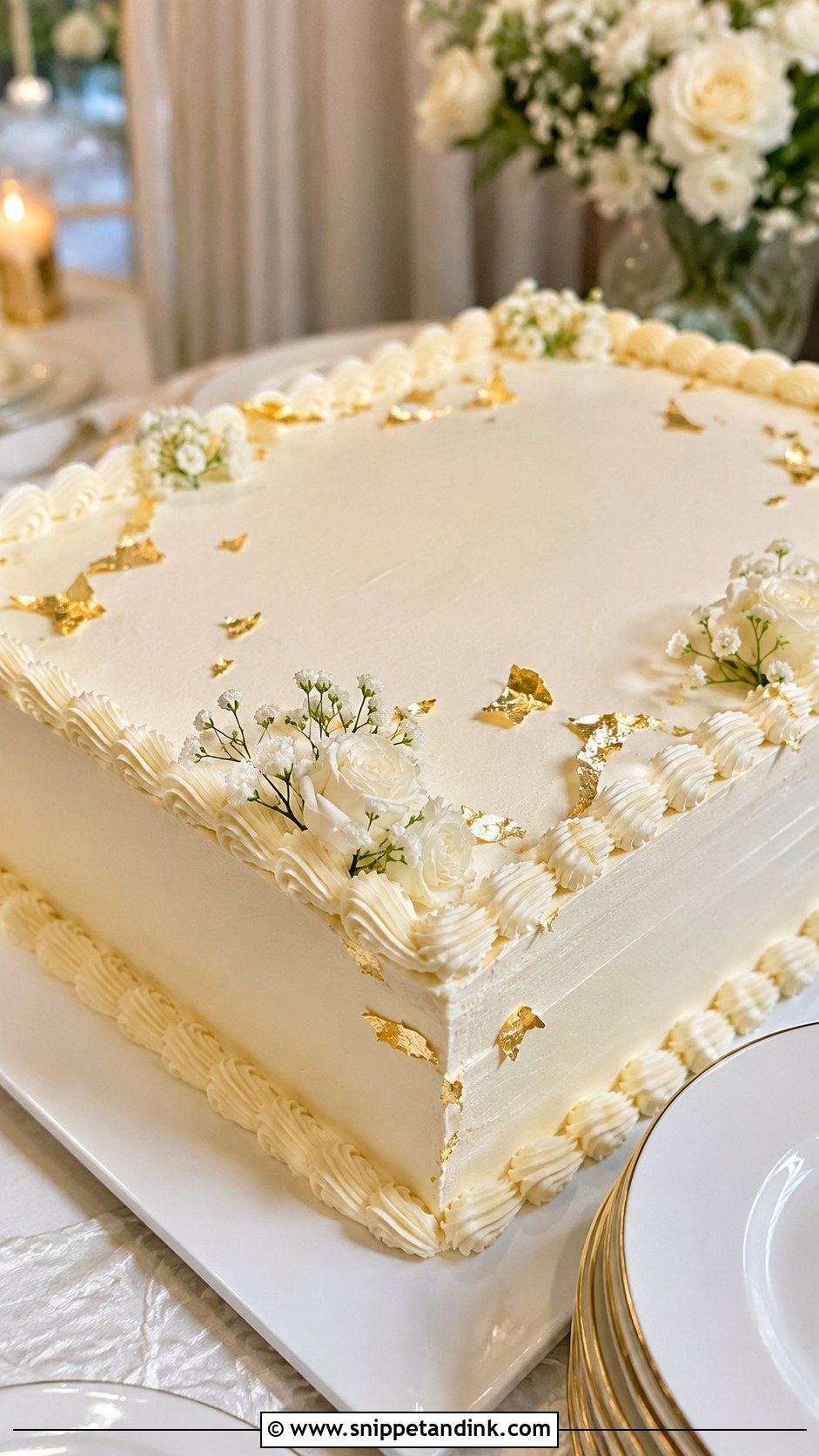
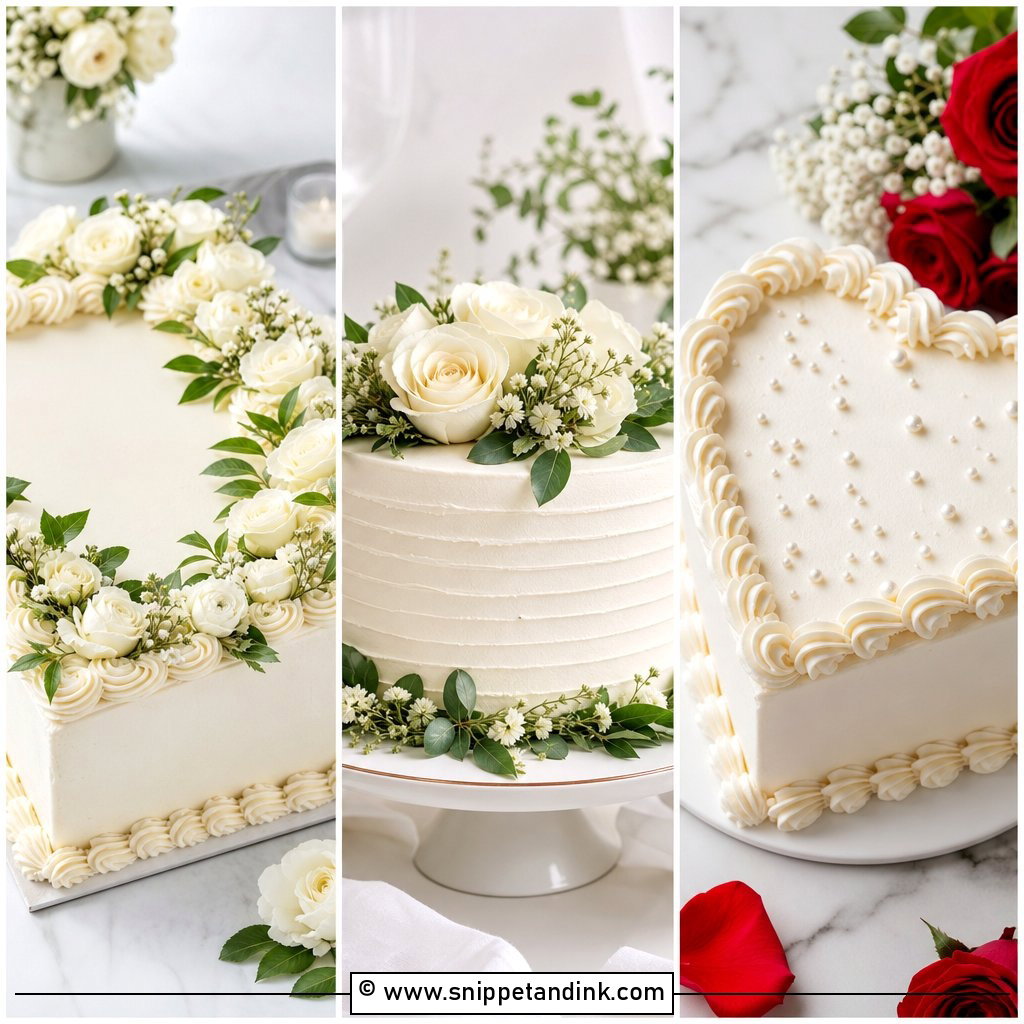
Here’s the workhorse. A wedding guest sheet cake waits in the kitchen while a smaller cake handles the photos, and staff slice and plate it before anyone notices. If you do want it on display, smooth buttercream, piped borders, a few flowers or a monogram make it look finished. Dependable flavors hold up best: vanilla raspberry, chocolate ganache, lemon cream, almond buttercream. For a big guest list it’s usually the least expensive per portion of anything here, and the easiest to portion evenly.
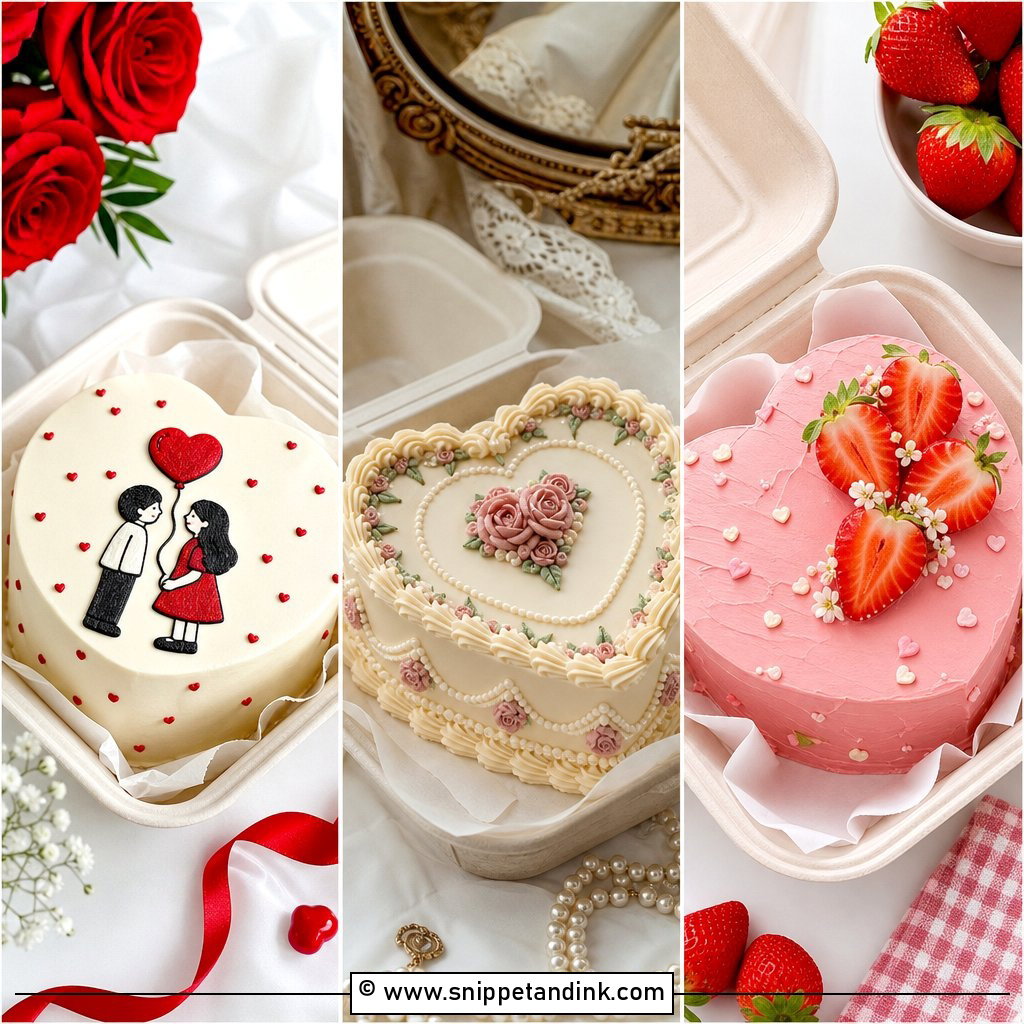
4. Wedding Guest Bento Cakes
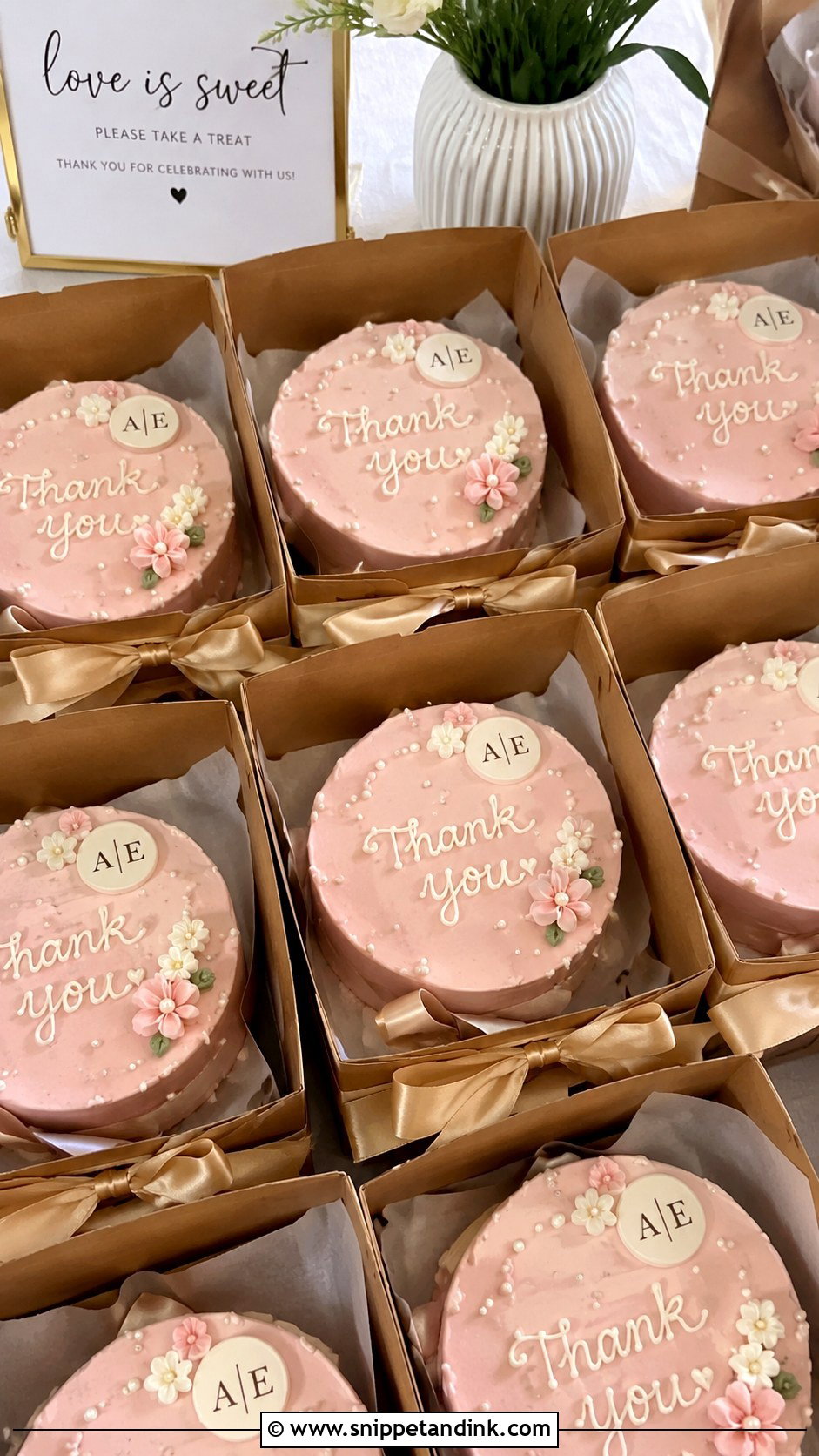
Bento cakes are small, usually around four inches across, and come in their own box, so they read as a gift. They fit modern weddings and brunch receptions where guests may carry dessert home. Keep the decoration in scale: tiny piped hearts, initials, a soft floral accent. The boxes are the display, so choose plain packaging with a ribbon and matching label rather than busy prints. If they’re going home with people, a small note to refrigerate any with cream or curd fillings is worth adding.
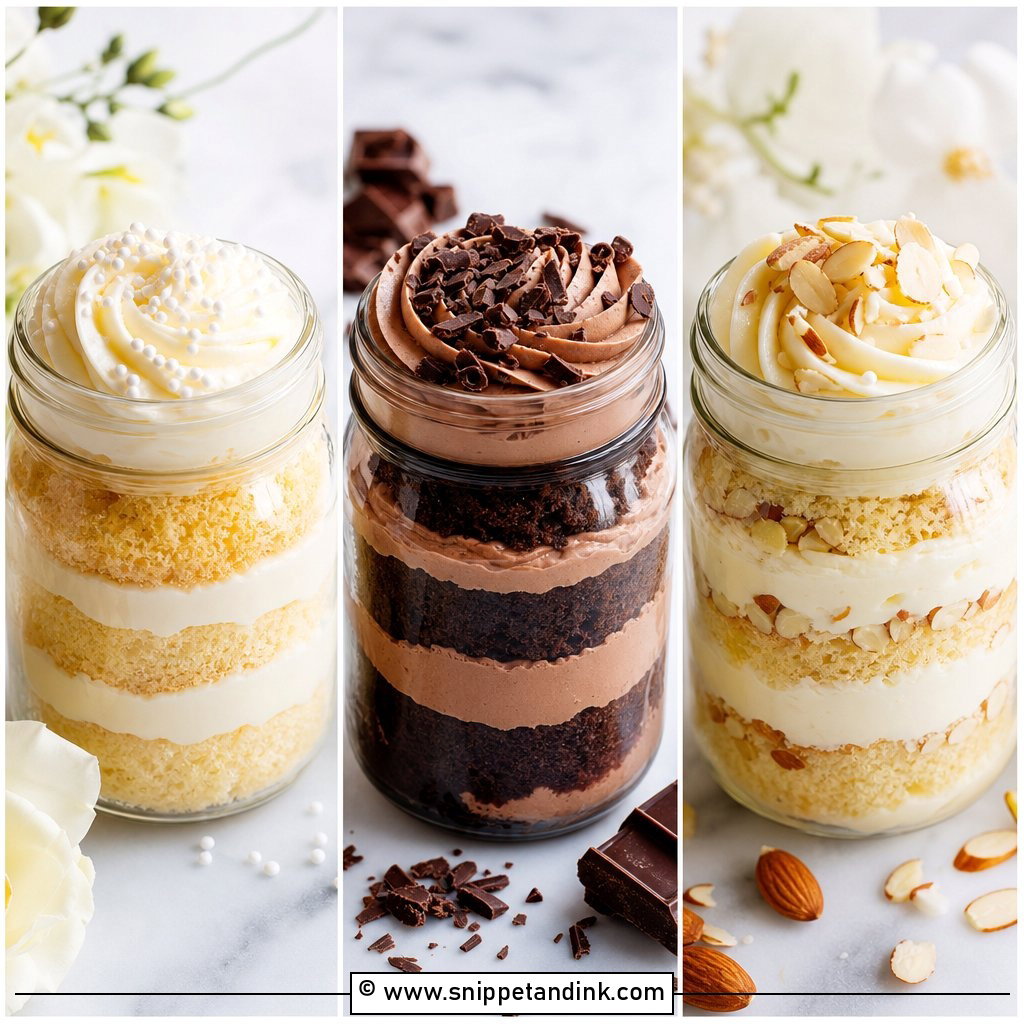
5. Wedding Guest Cake Jars
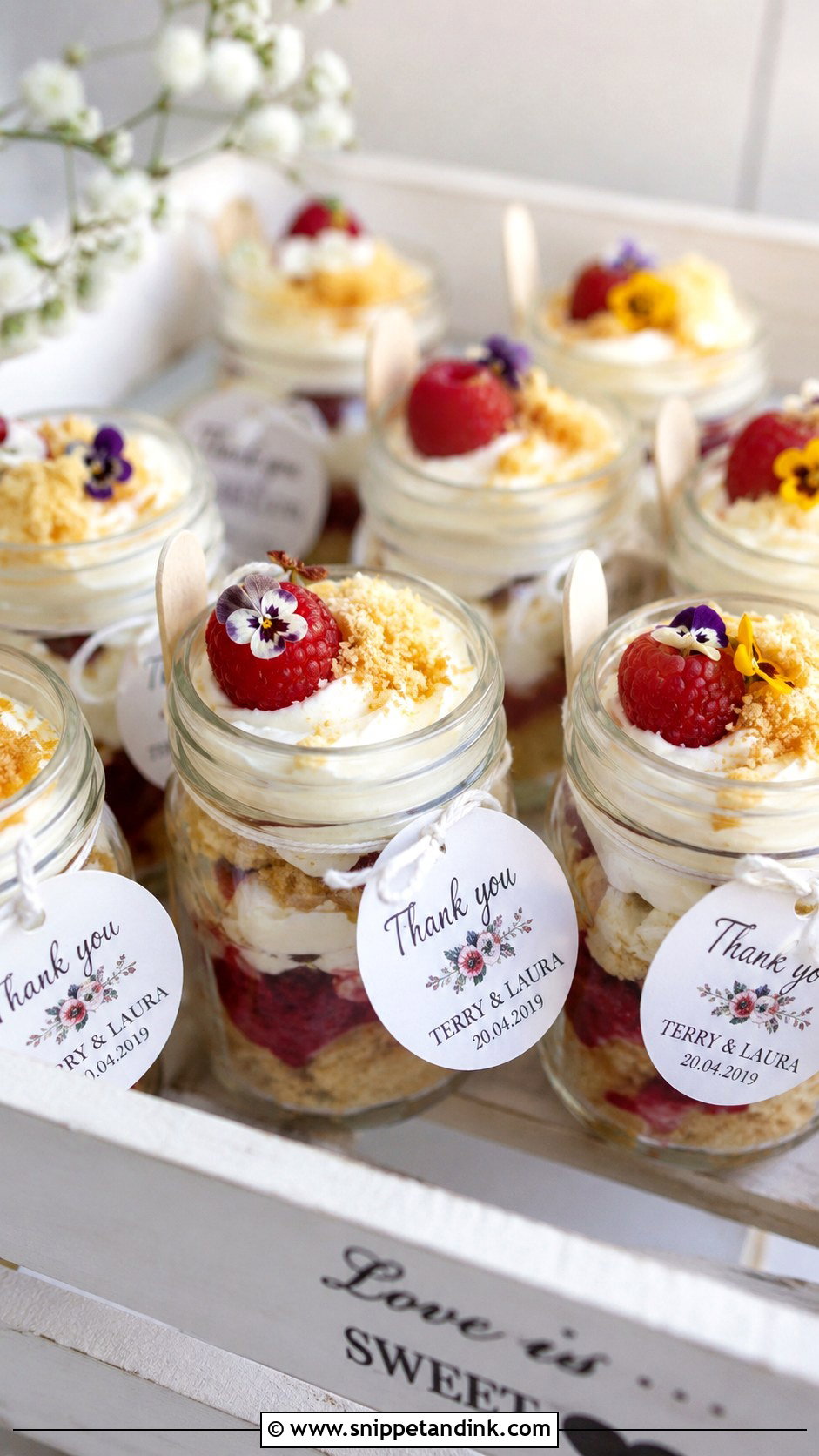
Jars are my answer for an outdoor wedding. Sponge, frosting, filling and crumbs layered in clear jars stay covered, so they don’t dry out or attract insects, and guests can see the flavor before opening the lid. Vanilla berry, chocolate mousse, lemon curd and red velvet with cream cheese all layer well. Mousse and curd versions need to stay cold until they go out, so I plan for a cooler or fridge space at the venue. Small spoons, labels and a crate or tray finish the display, and they’re easy to grab at a late-night station.
6. Wedding Guest Cake Pops
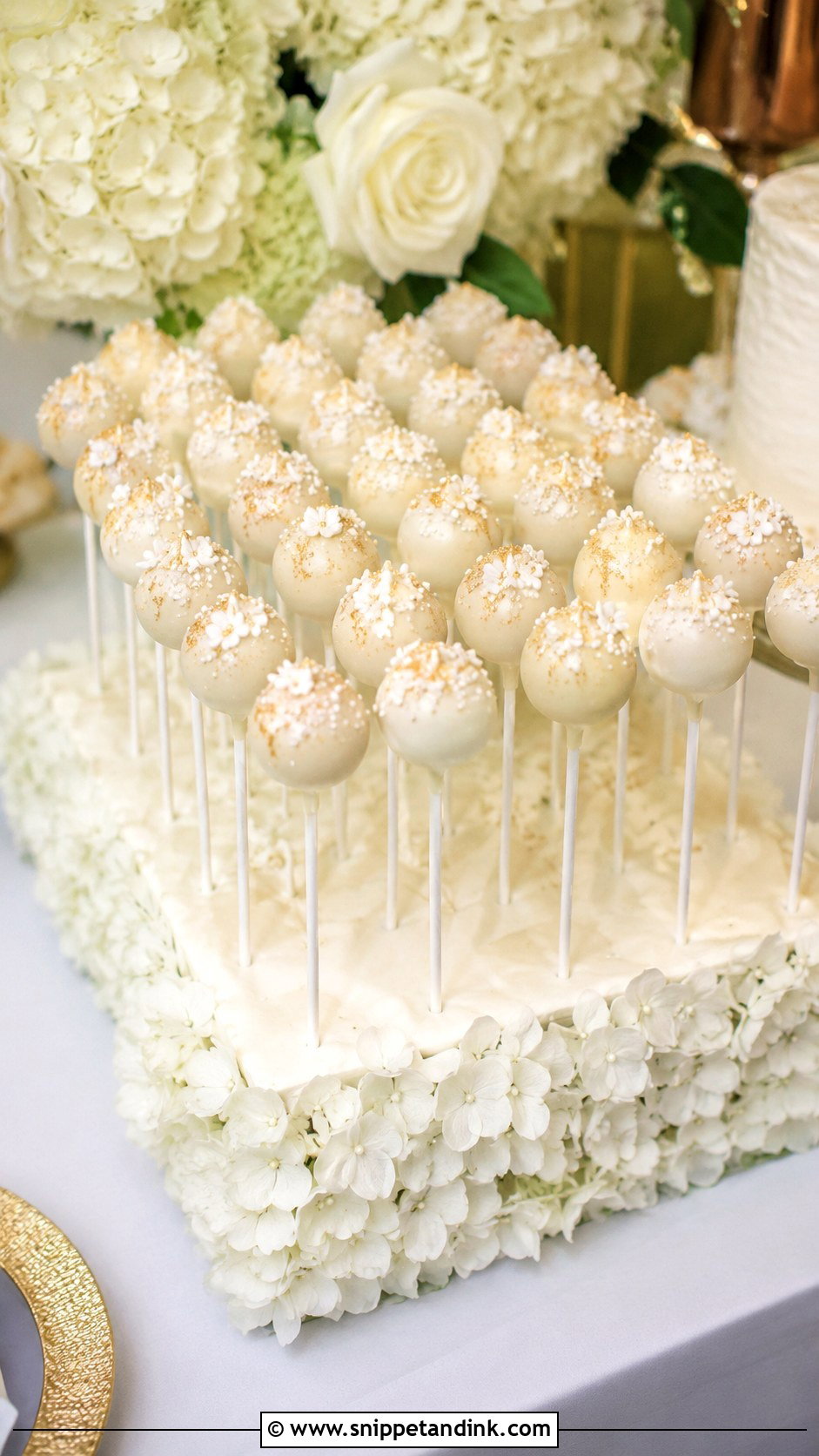
When nobody sits down for dessert, cake pops make sense: two bites, one hand, a drink in the other. Crumbs mixed with frosting are shaped, dipped and decorated in the wedding colors, and a white chocolate coating with pearl sprinkles, gold dust or tiny sugar flowers keeps them grown-up. The coating is the weak point. Chocolate and candy melts sweat when they move from a fridge into a warm, humid room, so I let them come up to temperature in a closed box before unpacking. Display them upright in a block or gathered like small bouquets.
7. Wedding Guest Dessert Table Cake
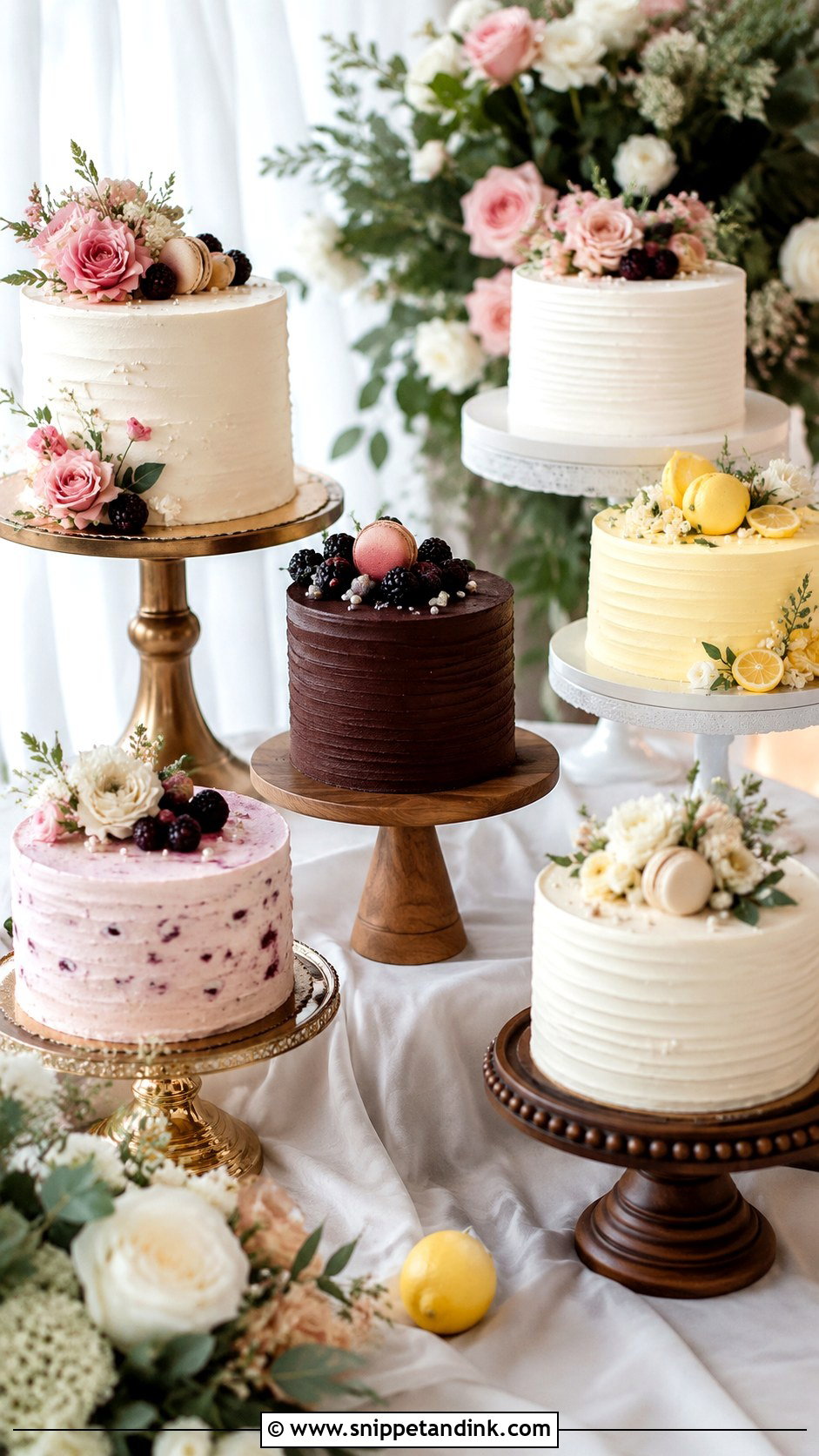
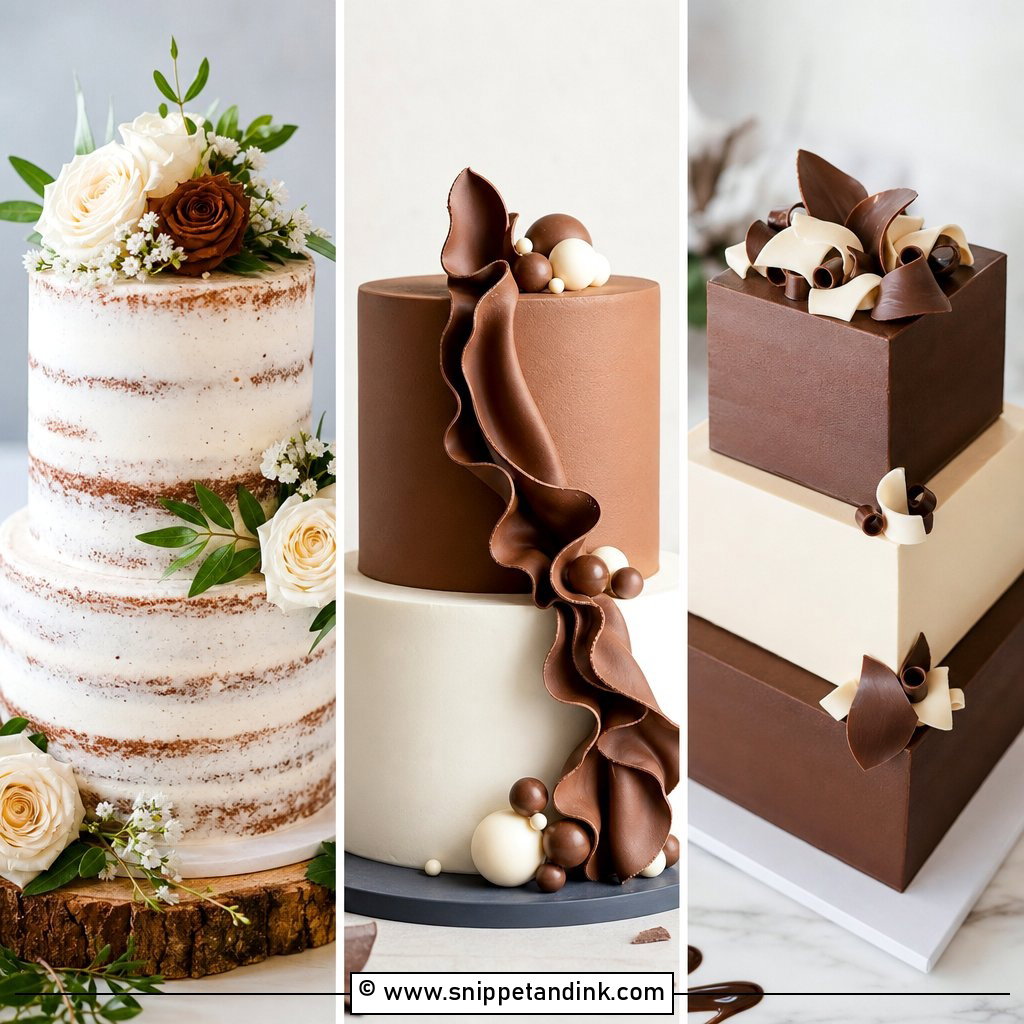
Several smaller cakes at different heights, instead of one large one, give guests a choice and make a table people want to photograph. A lemon, a chocolate, a berry and a vanilla buttercream, finished with matching flowers or a shared frosting texture, read as one set. Label each flavor, because a crowd guessing at cake is a crowd poking at it. The setup suits a relaxed reception where people drift over whenever they like. Do confirm who will cut them; four cakes take staff longer than one.
8. Wedding Guest Naked Cake
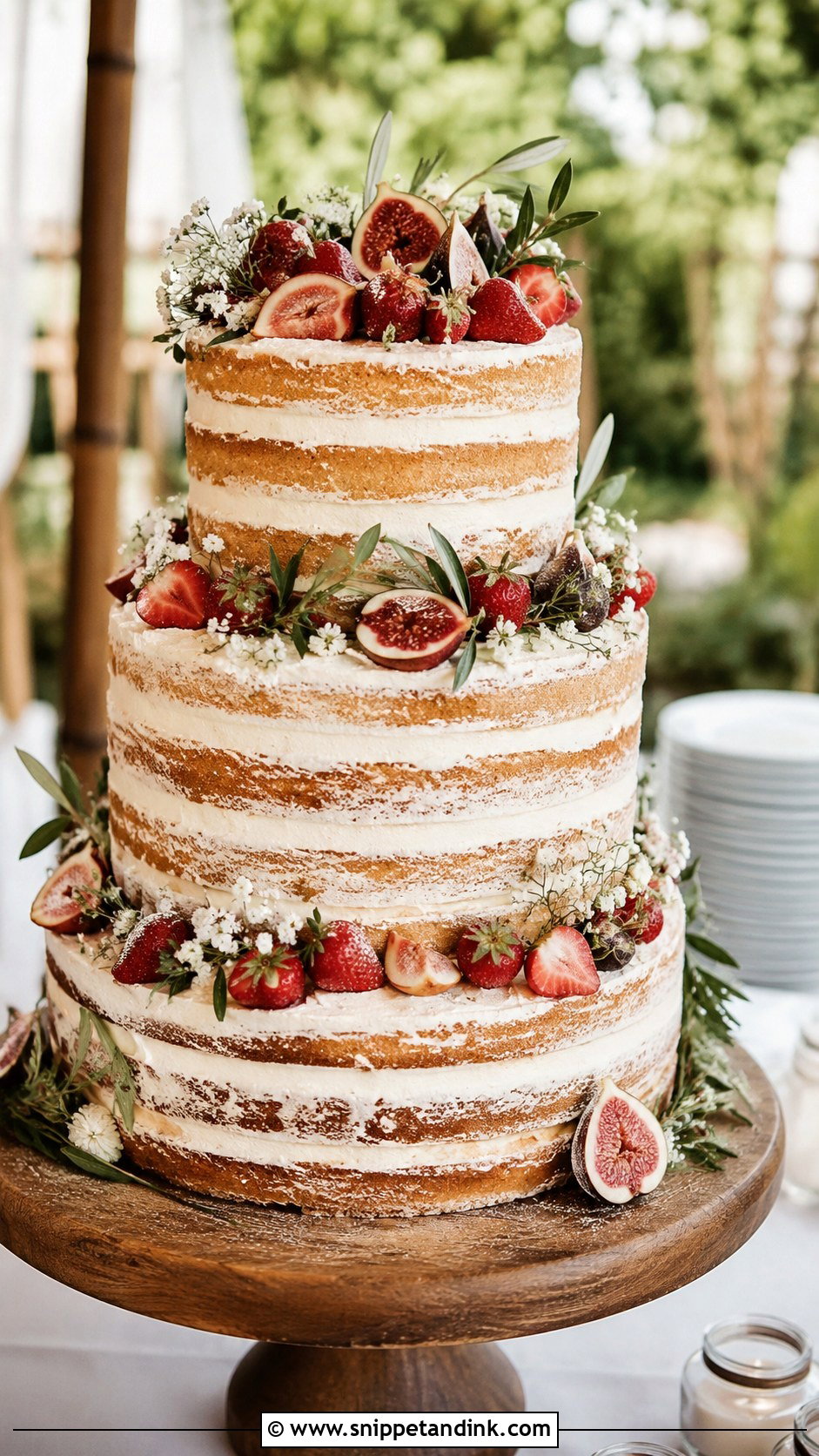
Thin frosting lets the layers show, which suits rustic, garden and barn weddings and guests who find frosting too sweet. Berries, figs, herbs or small flowers add color. The trade-off is drying. Exposed sponge loses moisture faster than frosted cake, so I brush the layers with syrup, assemble close to the event and keep the cake out of direct sun and air-conditioning drafts. Fruit fillings pair naturally with it. At a black-tie dinner, though, it can look underdressed.
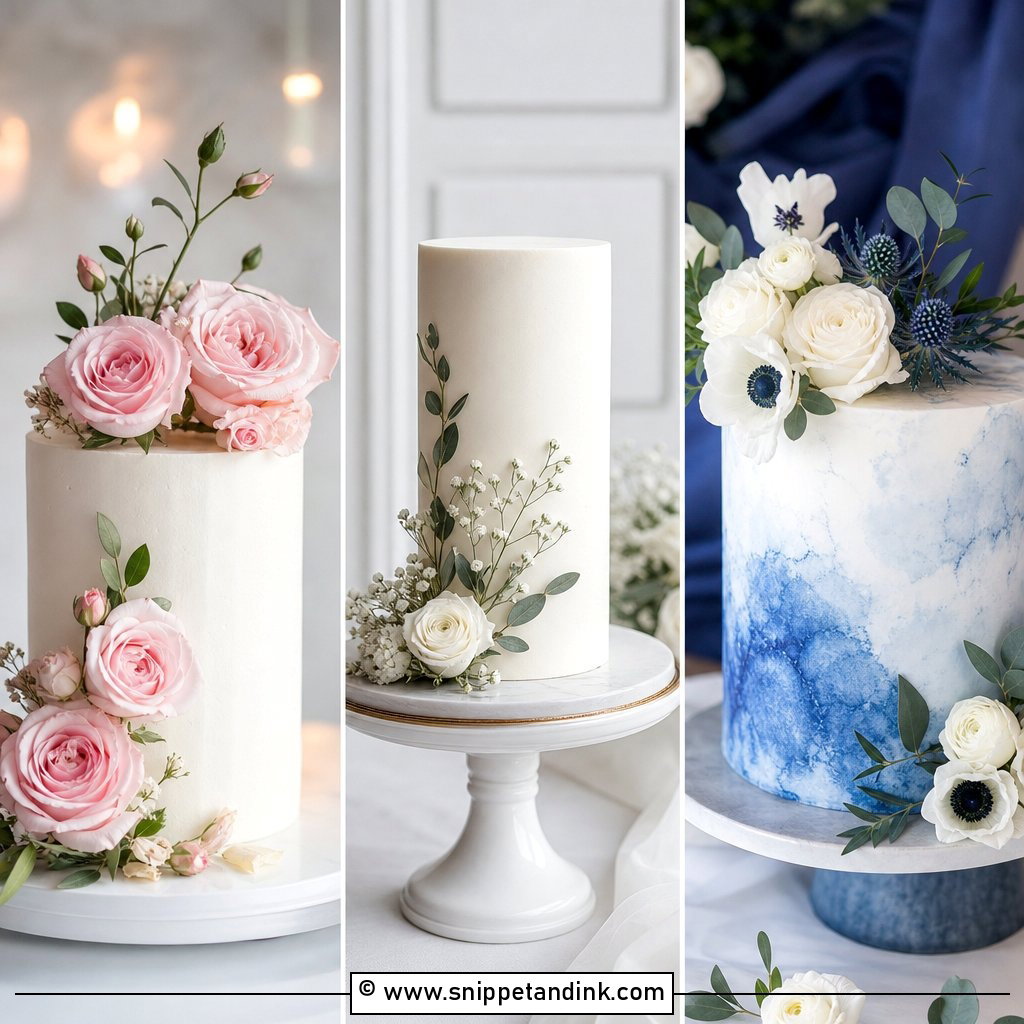
9. Wedding Guest Floral Cake
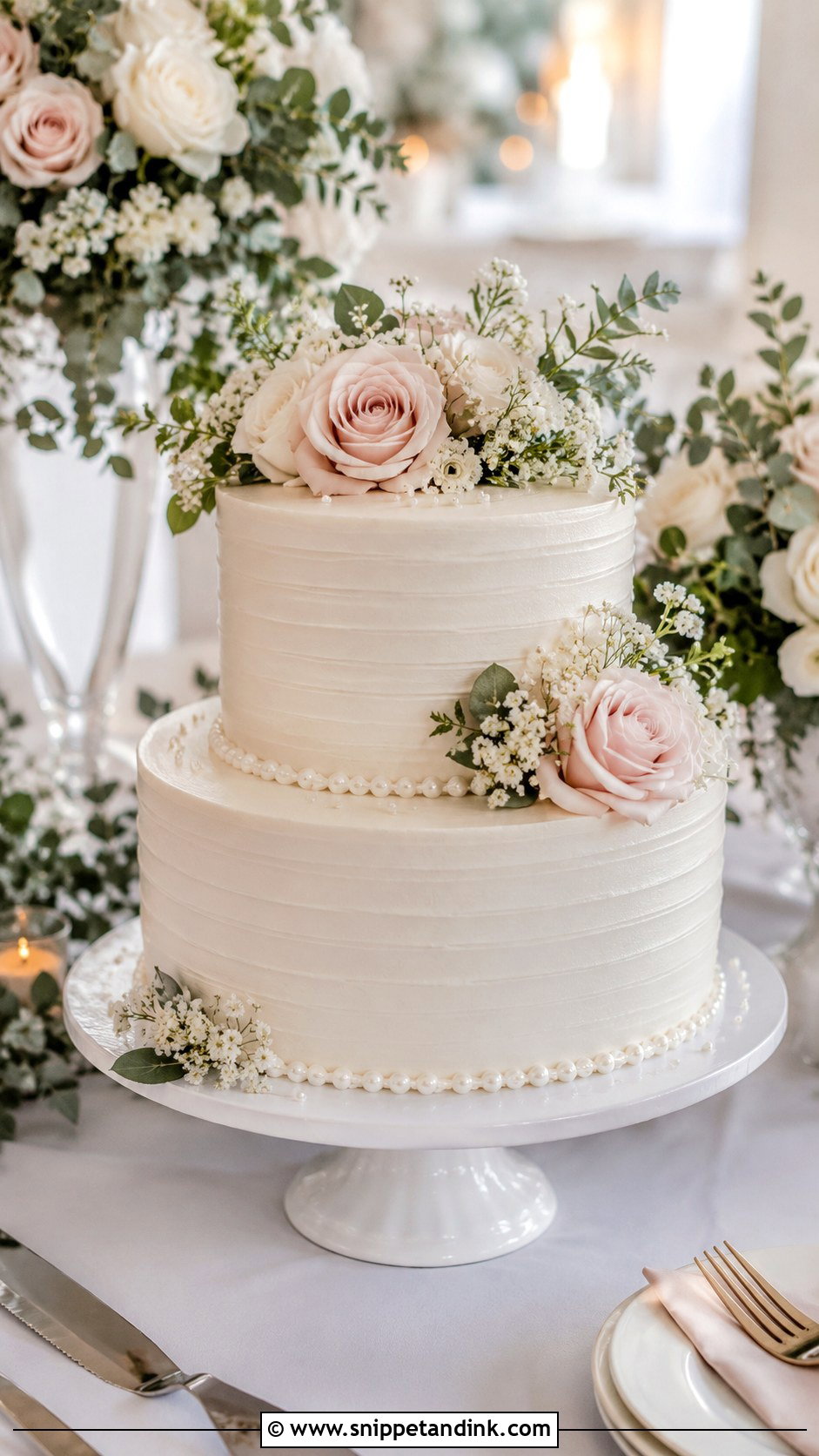
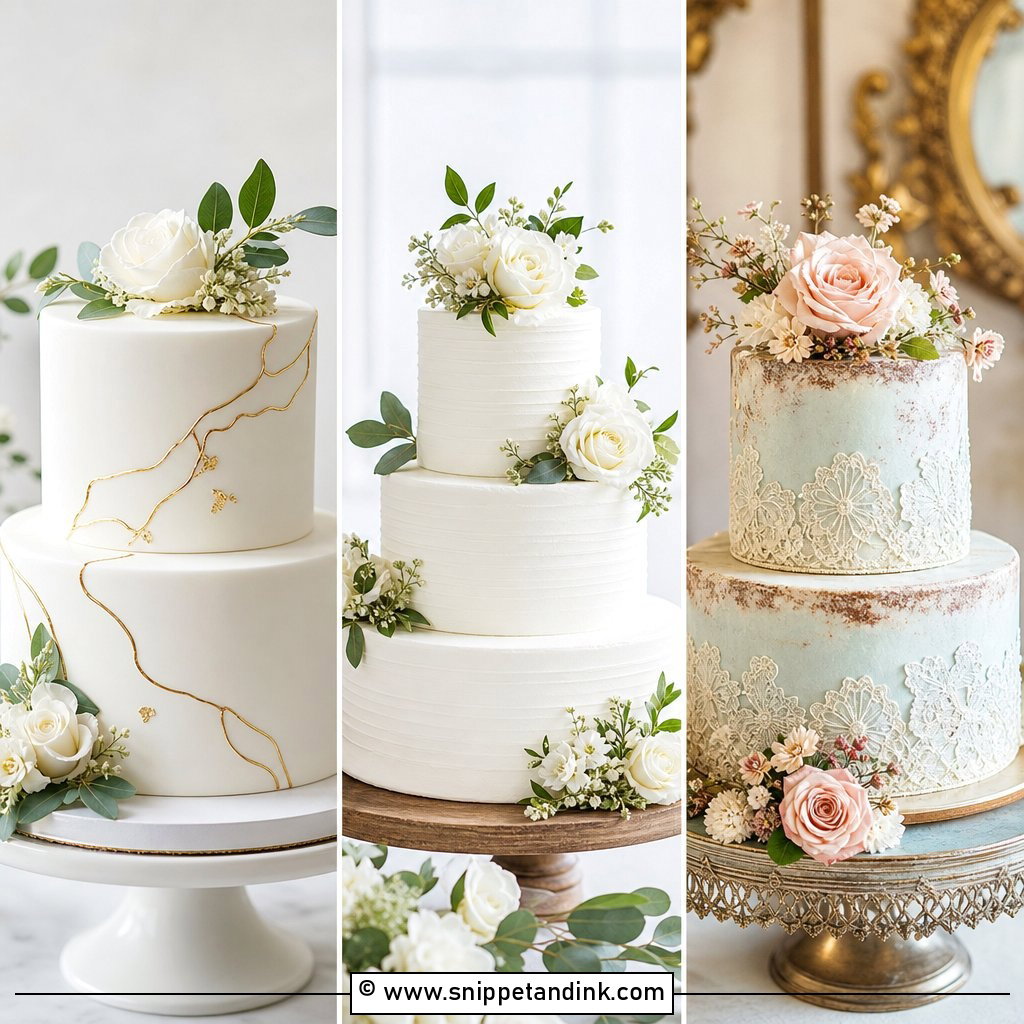
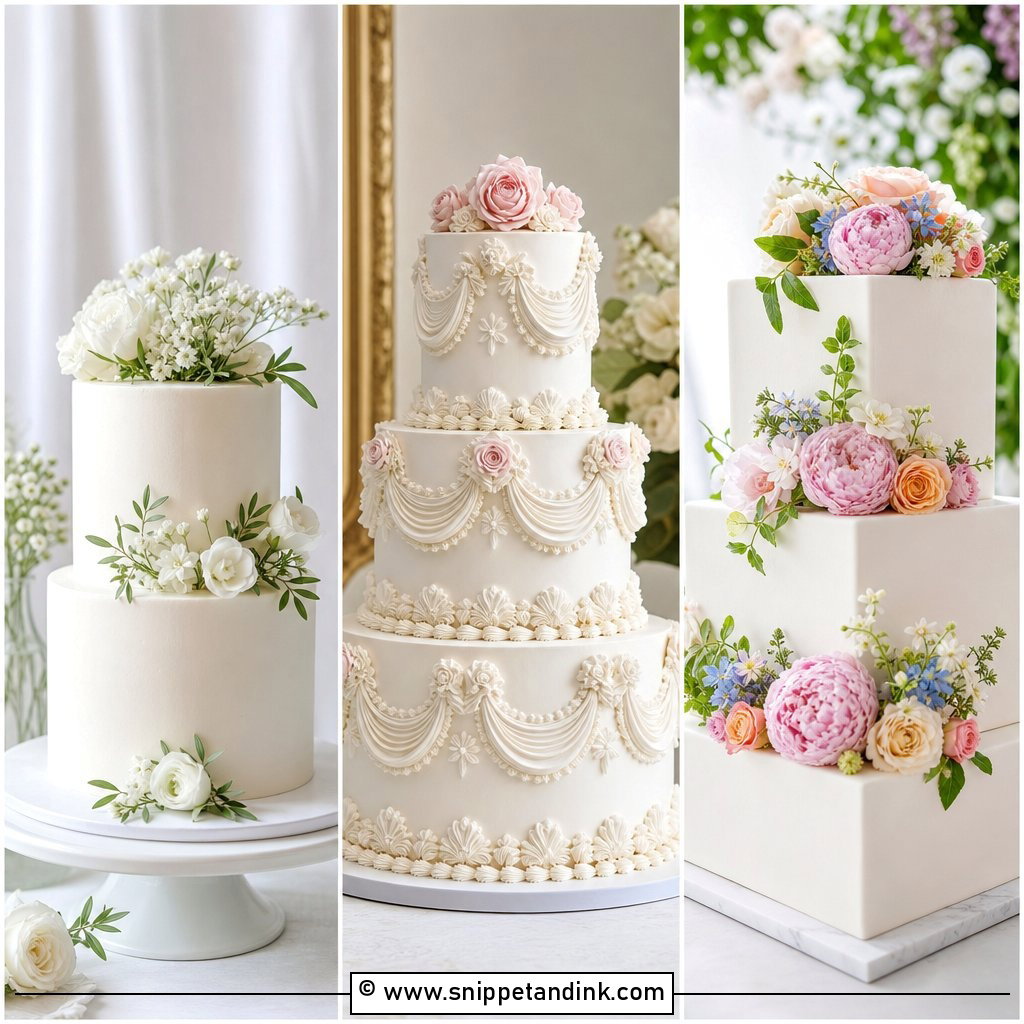
Flowers tie a cake to the reception decor at once, and they’re also what I most often have to correct. Several popular wedding flowers are toxic, and most florist stems have been sprayed, so anything near the cake should be food-safe, with stems wrapped or set into a holder instead of pushed straight into the sponge. A single or two-tier cake in soft ivory buttercream is base enough. Ask your florist to supply blooms from the bouquet or centerpieces. Vanilla bean, almond raspberry and lemon elderflower all sit nicely under flowers, and a simple shape keeps it easy to serve.
10. Wedding Guest Drip Cake
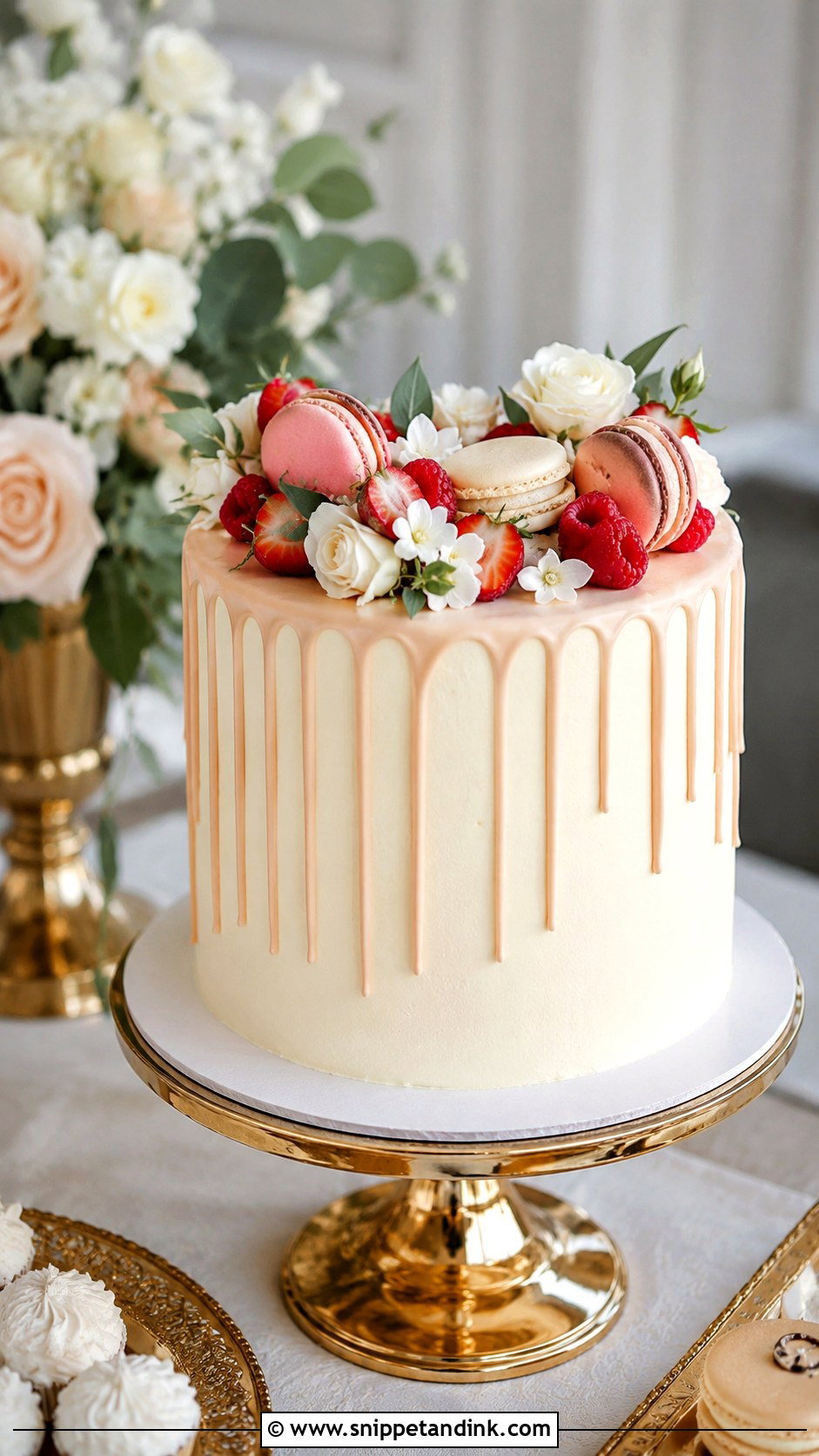
A controlled drip adds movement to a plain buttercream cake. For weddings I keep it to white chocolate, caramel, blush or dark chocolate rather than bright colors. Temperature is everything: ganache that’s too warm runs down to the board, and too cool it sits in blobs, so I test a single drip on the back of the chilled cake first. Macarons, berries, flowers or chocolate shards on top add height. Guests read a drip cake as rich, so the inside should deliver, with chocolate, caramel or berry fillings.
11. Wedding Guest Bundt Cake
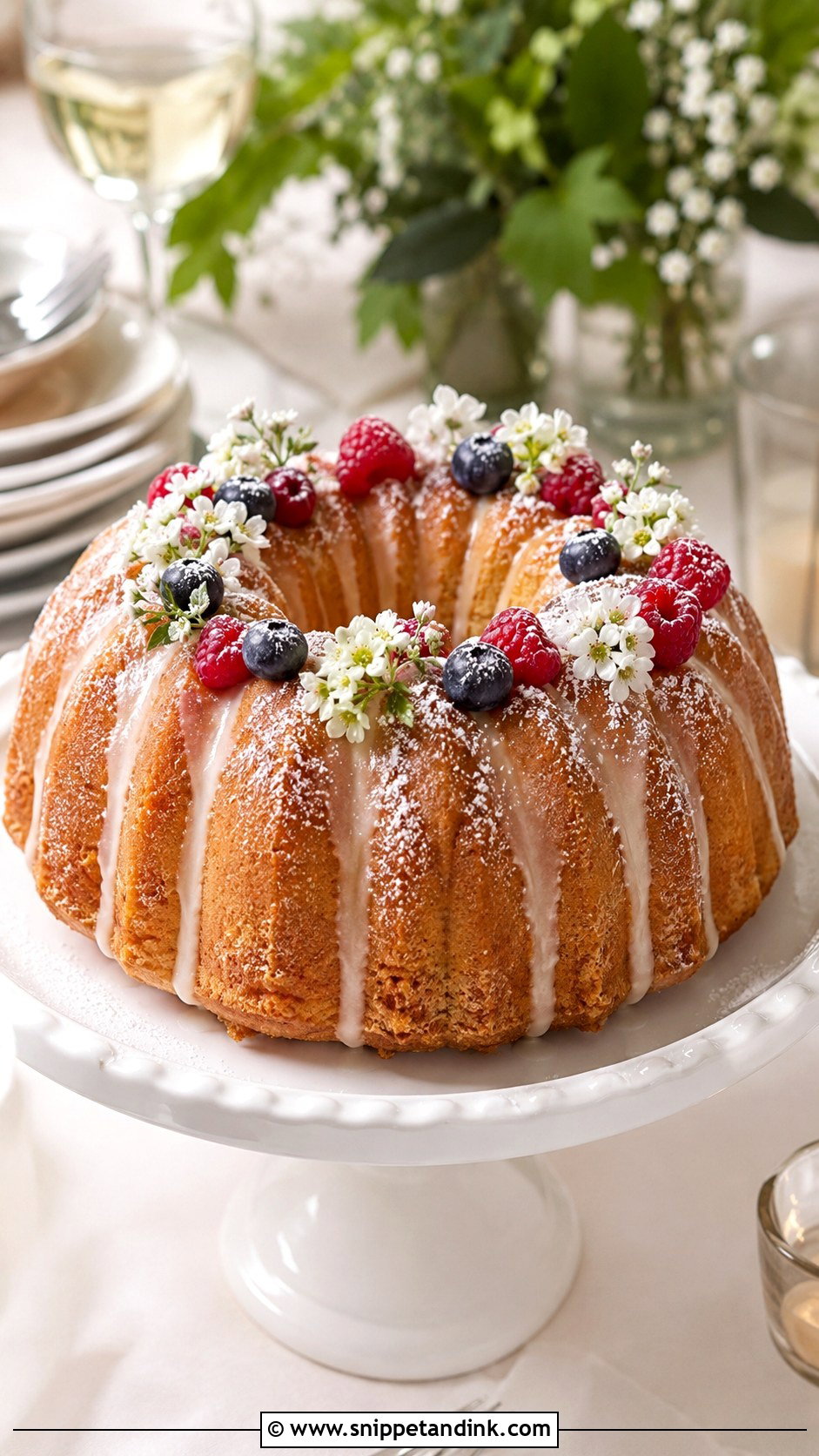
The ring shape is already decorative, so a bundt needs only a glaze, a dusting of powdered sugar, a few flowers or fresh fruit. It slices into neat wedges, and as a denser butter or oil cake it stays moist longer than many layer cakes. Lemon, almond, chocolate, orange and cinnamon all suit it. For a fuller display, I’d set out several small bundt cakes on stands of different heights rather than one large one. Brunch weddings, backyard receptions and family celebrations are where it belongs.
12. Wedding Guest Cheesecake Cake
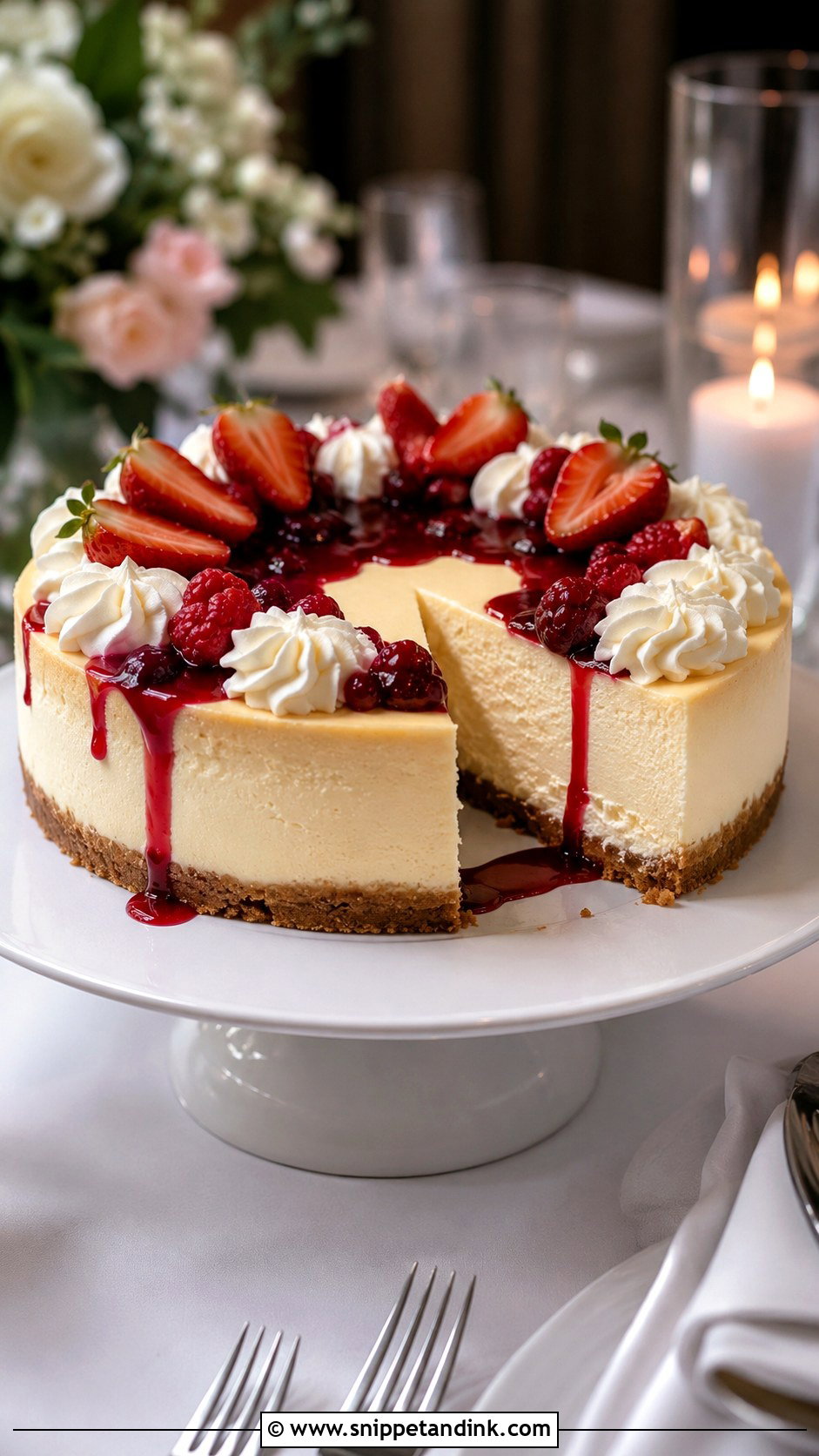
Cheesecake is the swap I suggest when a couple doesn’t love sponge. It can be a full cake, mini cheesecakes or plated slices, and it needs very little decoration. Vanilla with berries is the safe base; chocolate, caramel, lemon or raspberry swirl make the table more interesting. It’s the most temperature-sensitive option on this list, so it needs real refrigeration at the venue and a team ready to serve it straight from cold. For clean edges, cut it with a hot, wiped knife or a length of unflavored dental floss pulled through.
13. Wedding Guest Tres Leches Cake
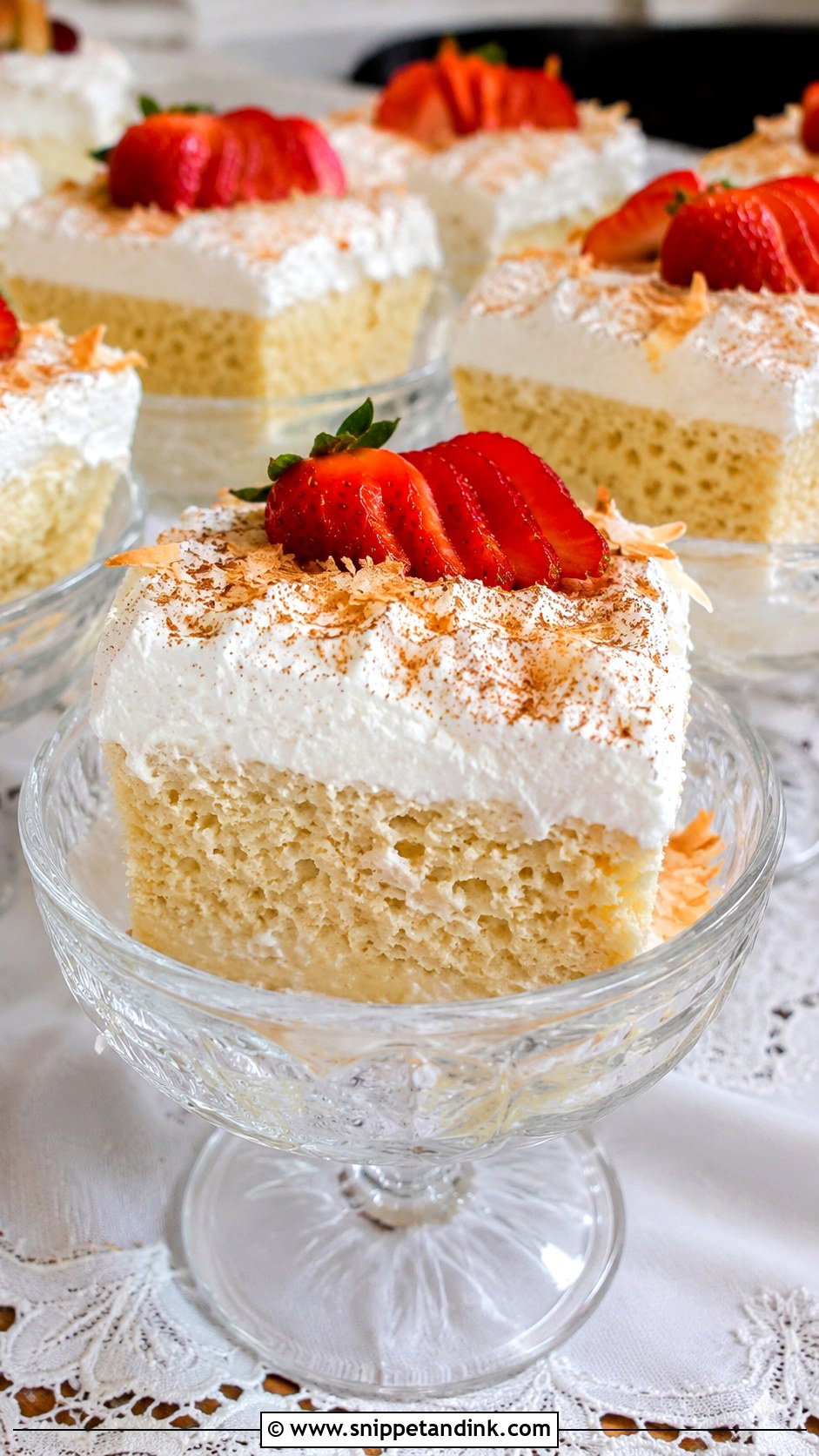
Few desserts feel as cool and tender on a hot night as tres leches cake. The sponge is soaked in a sweet milk mixture and topped with whipped cream, which makes it far too wet to stand up as a slice, so I serve it in squares from the pan, in cups or in small dishes. Strawberries, cinnamon, toasted coconut or a caramel drizzle match it to the mood of the day. Keep it refrigerated until it’s served, both for food safety and because warm whipped cream slides.
14. Wedding Guest Red Velvet Cake
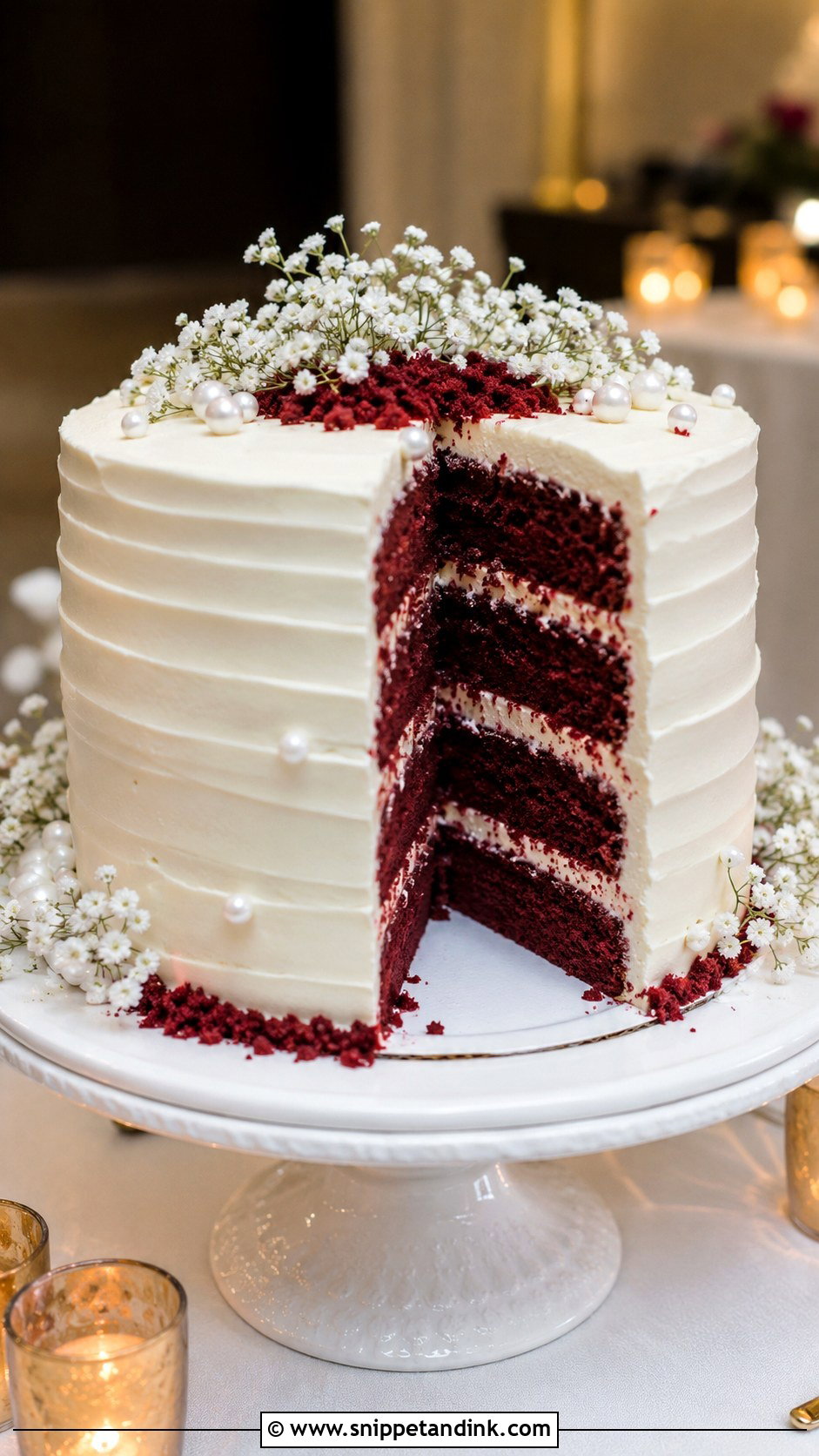
Cut open, red velvet’s deep crumb looks dramatic against white cream cheese frosting. It suits formal and evening receptions and works as a tier, minis, cupcakes or jars. Cream cheese frosting is softer than buttercream and doesn’t last long in heat, so for a warm venue I use a firmer cream cheese buttercream and keep the cake chilled until shortly before serving. Its tang balances the mild cocoa, making it a good middle ground for guests who want more than vanilla but less than fudge. Pearls or a few small flowers are all it needs.

15. Wedding Guest Chocolate Ganache Cake
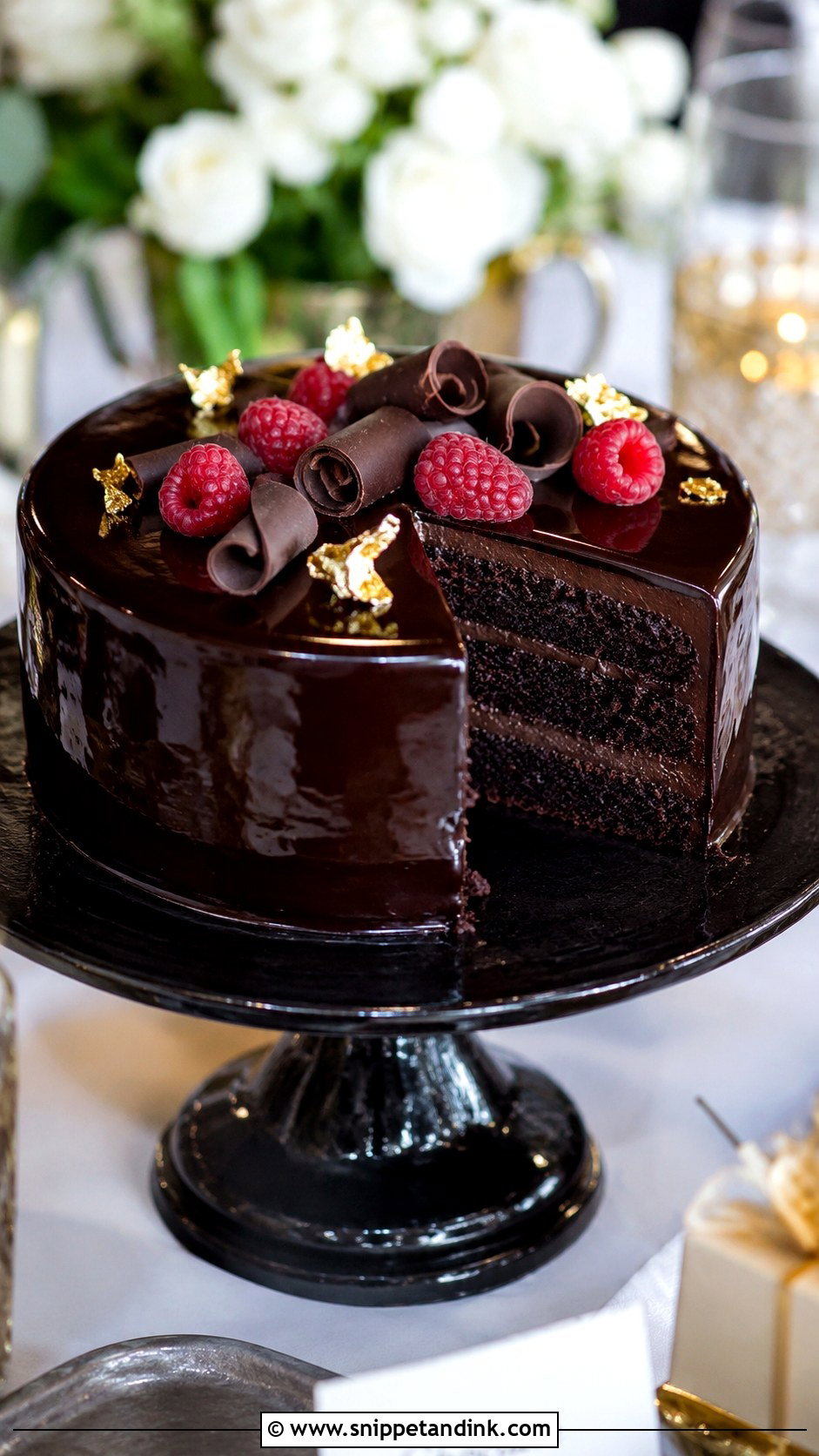
A glossy ganache coat makes a cake look finished on its own. Rich sponge, silky filling and that smooth shell make each slice indulgent, so I cut this one smaller than the others. Ganache also sets firmer than buttercream, which is why I lean on it for summer cakes. Fresh berries, gold accents, white flowers or chocolate curls keep it bridal. Put a lighter flavor beside it so guests can choose.
16. Wedding Guest Lemon Cake
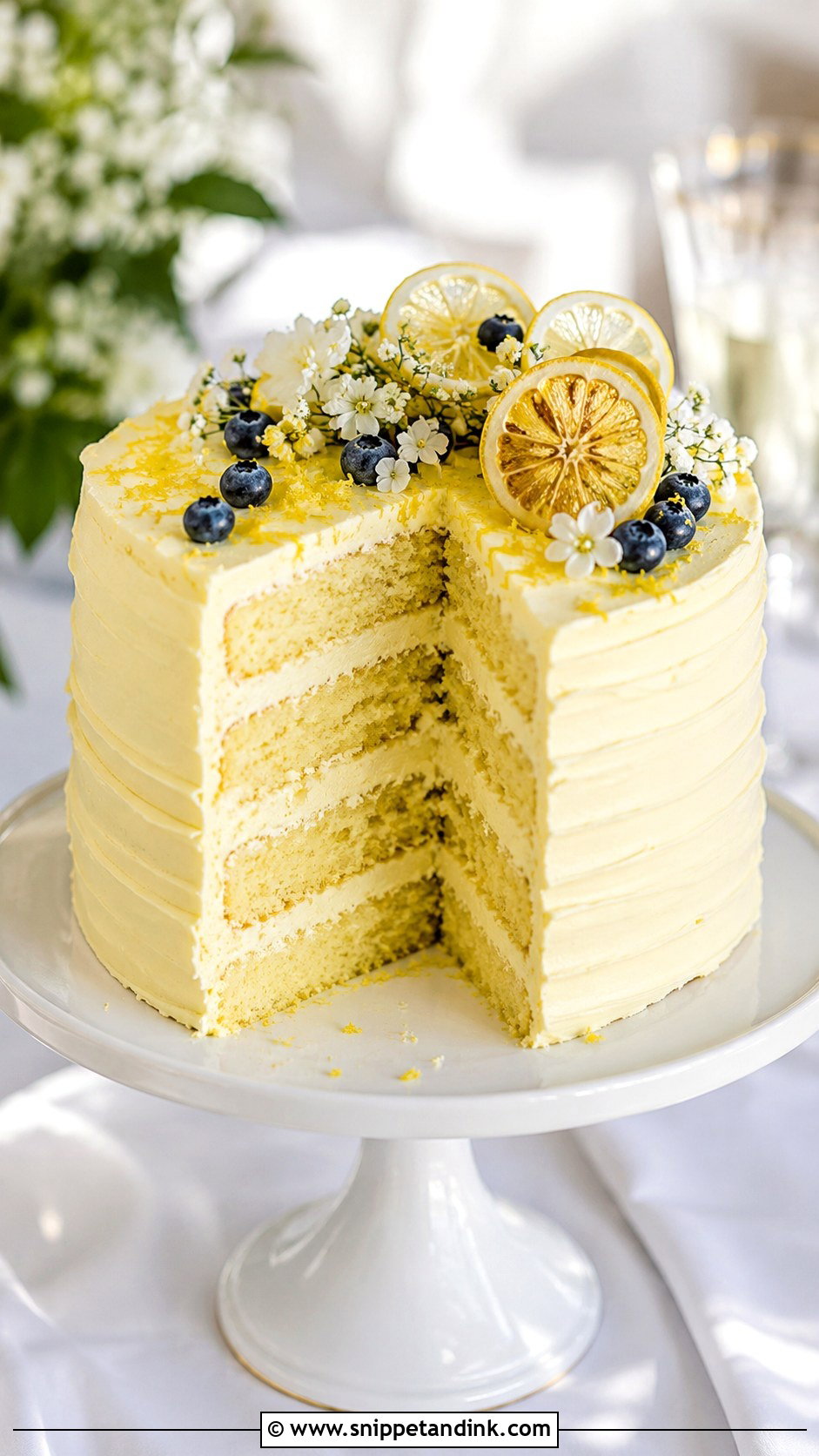
After a heavy dinner, lemon is the flavor I steer couples toward. A pale sponge with lemon curd or lemon buttercream tastes clean rather than rich, and it fits spring, summer, garden and brunch weddings. Curd fillings need a ring of buttercream piped around each layer, or they seep out under the weight of the tiers. Decorate with berries, small flowers, candied lemon slices or a light glaze. It adapts to cupcakes, minis, sheet slices or a single tier.
17. Wedding Guest Carrot Cake
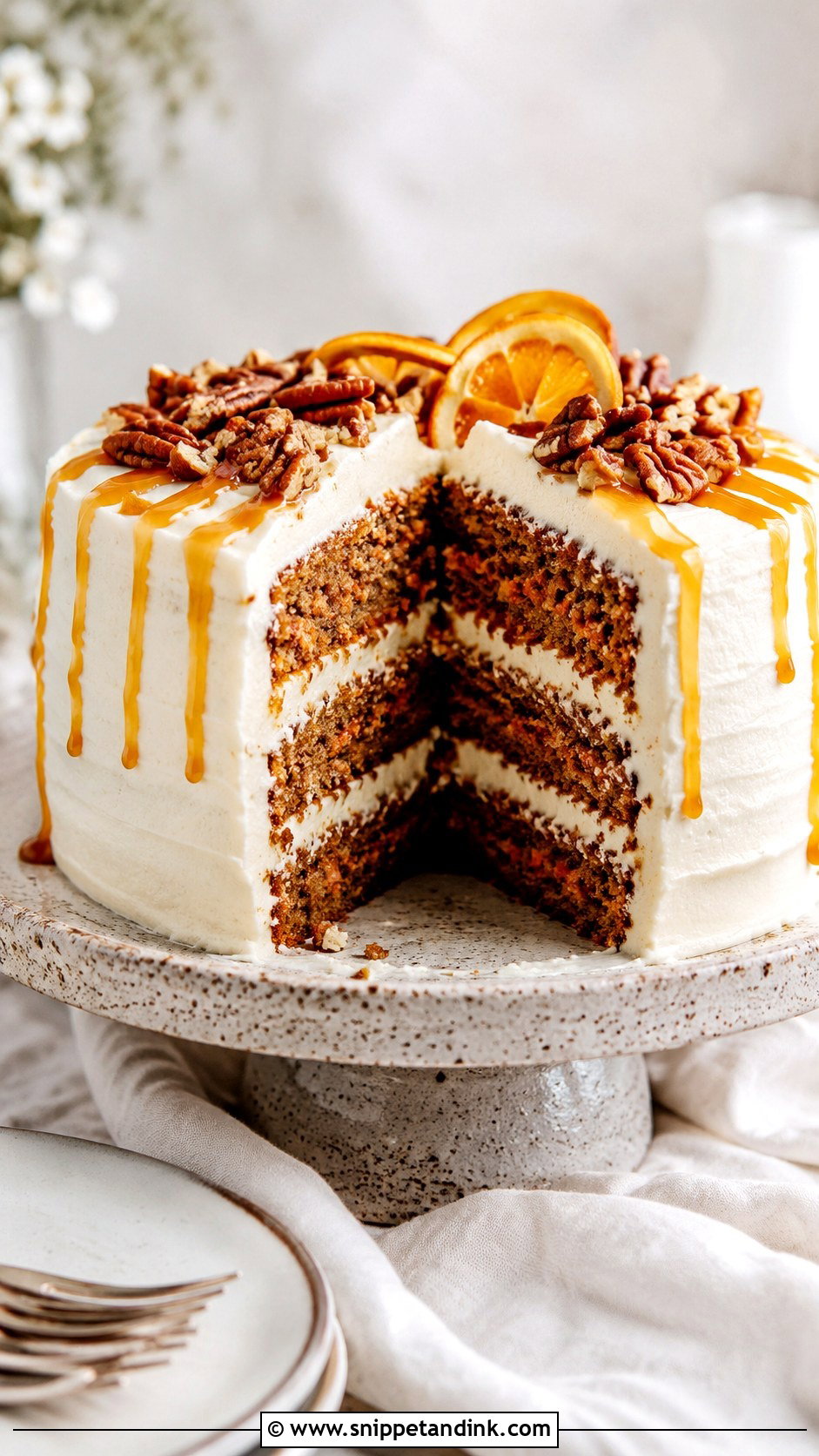
Carrot cake is sturdier than most, which makes it one of the easiest flavors to transport and stack. The spiced crumb, shredded carrot and cream cheese frosting feel comforting, and it suits fall weddings, rustic venues and cozy indoor receptions. Chopped pecans or walnuts, a caramel drizzle or small dried orange slices add texture. Flag nuts on the label, since many recipes include them in the crumb even when the top is plain. Smooth frosting and natural toppings keep it looking like a wedding cake rather than a bake sale.
18. Wedding Guest Sponge Cake
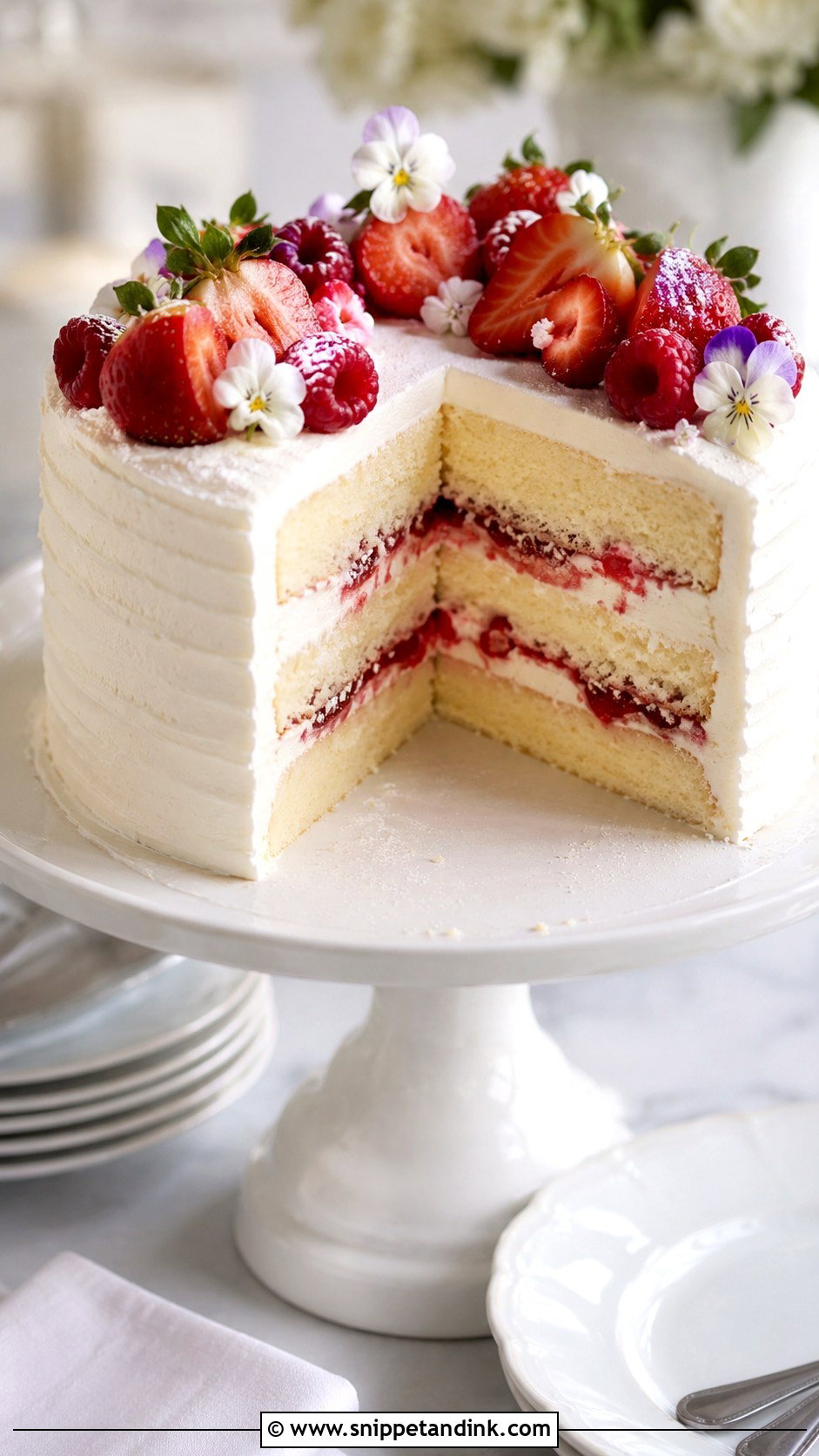
When the menu is rich and the guest count is big, a light sponge is the base I’d choose. It pairs with fruit, whipped cream, jam or buttercream: vanilla sponge with strawberries and cream for a classic feel, almond sponge with raspberry for something more refined. It slices and plates quickly. A true whisked sponge is fragile under heavy tiers, though, so for stacking I use a slightly firmer butter sponge or add internal supports. A clean white finish, fresh fruit and a few small flowers match it to the tables.
19. Wedding Guest Fruit Cake
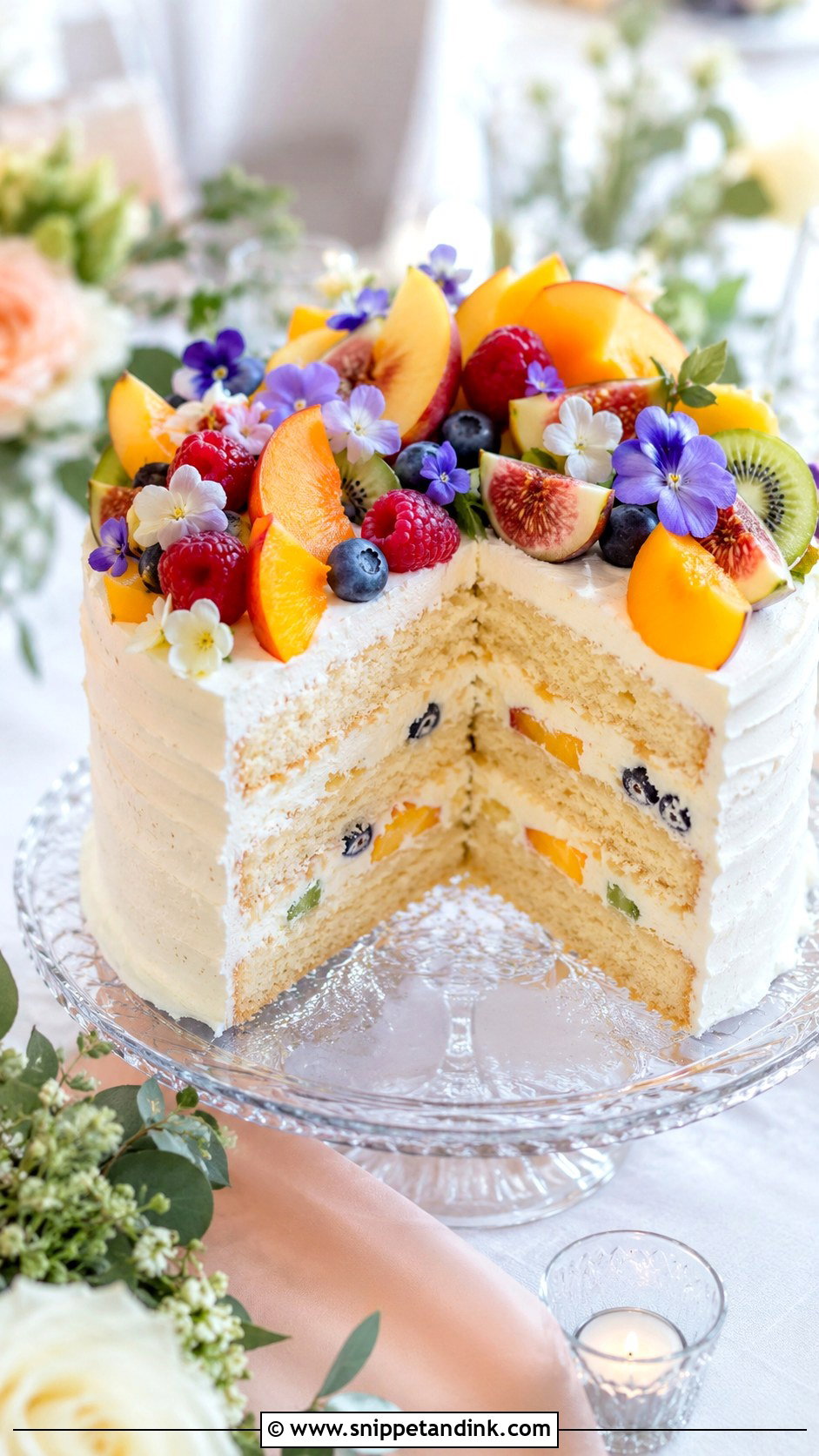
The modern version means fresh fruit on top, not the dense, boozy traditional kind. Think soft vanilla, citrus or almond cake with berries, peaches, figs or tropical fruit, finished with whipped cream, mascarpone or a thin buttercream. It looks bright at outdoor and daytime weddings and appeals to guests who want something lighter. Cut fruit weeps and can brown, so I glaze it lightly with warmed apricot jam and add it as close to serving as possible. If family tradition calls for the dense kind, a small tier of it beside the fresh cake keeps everyone happy.


20. Wedding Guest Cutting Cake
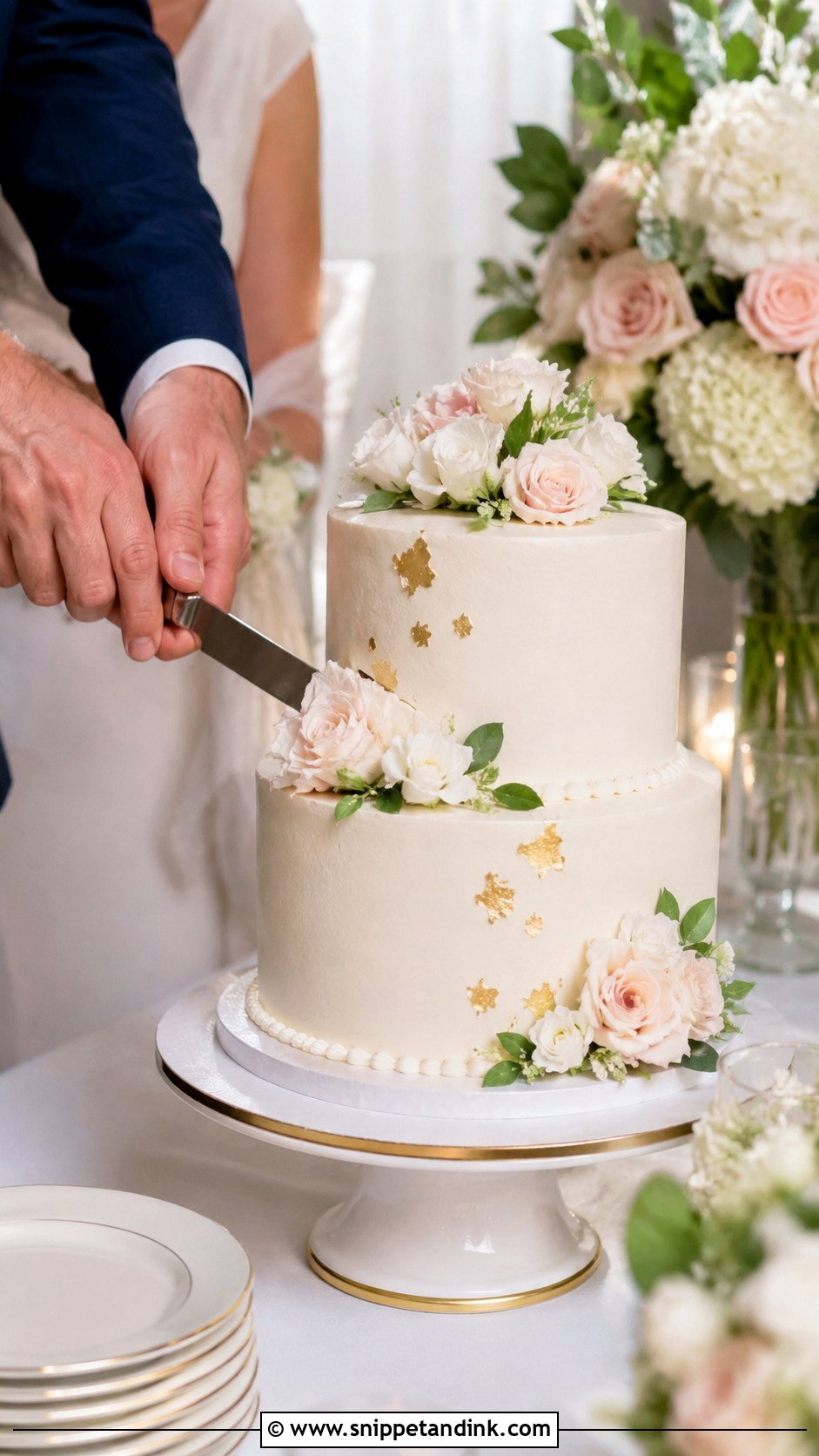
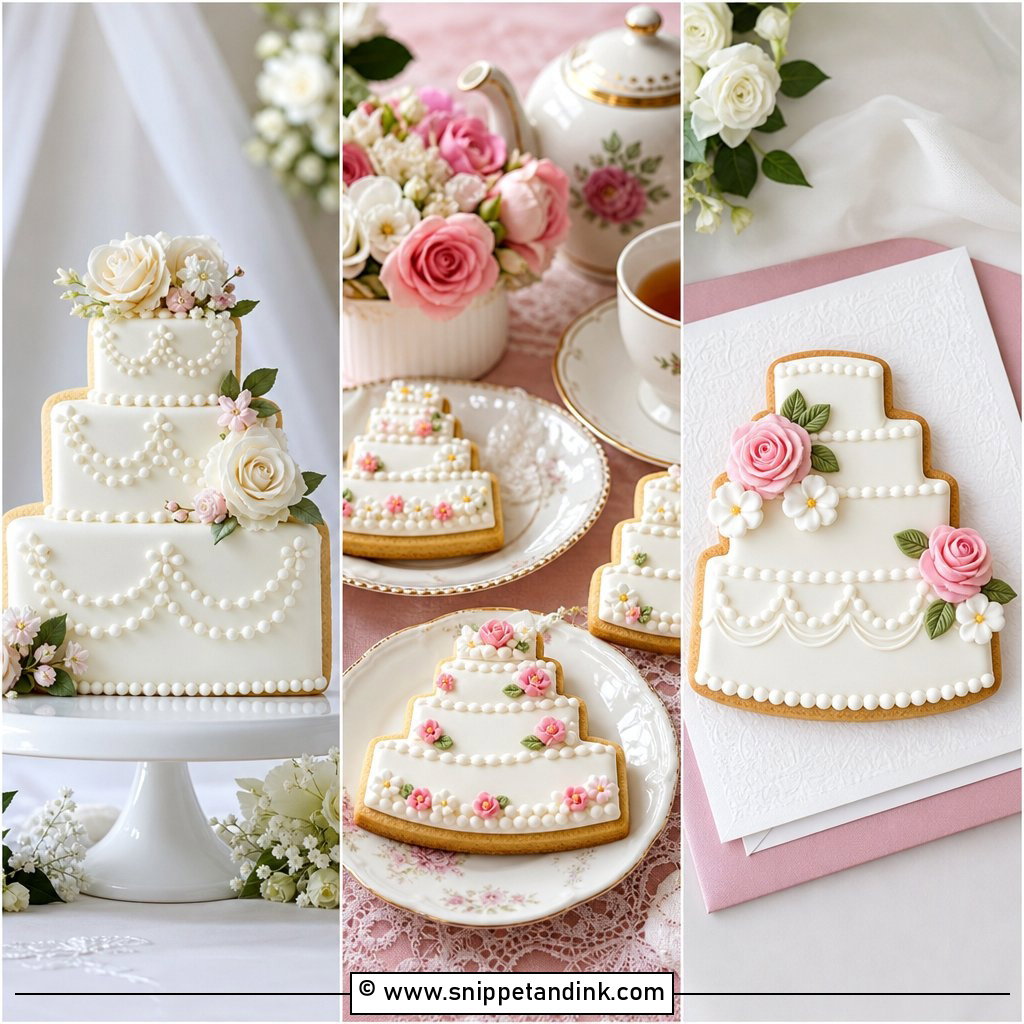
A cutting cake is the small display cake that handles the photo moment while other desserts feed the crowd. One or two tiers in buttercream with flowers, pearls or a textured finish is enough. Guests are then served sheet cake, cupcakes, jars or minis from the kitchen or dessert table. It saves time and money, and the display stays intact all night. Tell your venue in advance, so staff know the cutting cake isn’t for slicing and where the serving cake is kept.
Planning Around Allergies and Dietary Needs
Read the RSVP cards before you finalize flavors. Nuts, gluten, dairy and egg come up most, and they affect how the whole table is set up, not just one guest’s plate.
- Label every cake with its flavor and main allergens, including nuts in the crumb, almond extract and nut-based fillings.
- Order gluten-free or vegan portions as individually boxed minis or cupcakes, so they never meet the knife or board used for the main cake.
- Be realistic about kitchens. A baker who works with flour and nuts every day can reduce cross-contact but rarely rule it out, so a guest with a severe allergy may be safer with a sealed dessert from a dedicated bakery.
- Tell the catering team which special portion goes to which guest, and have those plates set aside before the main cake is served.
None of this has to look clinical. A small card on each stand with the flavor and a short allergen line reads as part of the styling, and it saves the staff from answering the same question all night.
From the Kitchen to Every Seat
The right guest cake depends on your venue, guest count, budget, season and how formal the room feels. Mini and bento cakes feel personal; sheet cakes and cupcakes make service simple; jars and pops suit mingling; a dessert table gives variety. Offer one classic flavor and one fresh or rich one, and plan from the start where the cake will be kept cold. Even the plainest cake looks right when it arrives at the plate in good shape.
You'll Like These Ideas:


Leave a Reply