
A boho cake walks a narrow line. It should look relaxed, yet it still has to stand for six hours, slice cleanly and keep its shape in a tent or a barn. The designs I’m proudest of share a few habits: frosting with visible texture, a short earthy palette like terracotta tones, sage accents and ivory, and decoration gathered in one place instead of sprinkled everywhere. Here are twenty boho wedding cakes I’d happily build, with notes on how each one actually behaves once it leaves my kitchen.
Bring Venue Photos, Not Just Cake Photos, to the Tasting
Most couples show me a folder of saved cakes and nothing else. The more useful pictures are of where the cake will sit: the barn wall behind it, the linen color, the light at the hour you’ll cut it. Boho palettes live or die on undertones, and a terracotta that looks right against whitewashed wood can turn orange against red brick.
- A fabric swatch or paint chip for any color you want matched, because screens distort color.
- Your florist’s proposal, so the cake flowers repeat the bouquet instead of competing with it.
- Your guest count, and whether you’d like a kitchen cake for extra servings.
- Whether the reception is indoors, outdoors or under canvas, which changes the frosting I’d choose.
Popular bakers often fill peak-season Saturdays months ahead, so start the conversation well before the design is settled. A deposit usually holds the date, and the details can keep evolving after that.
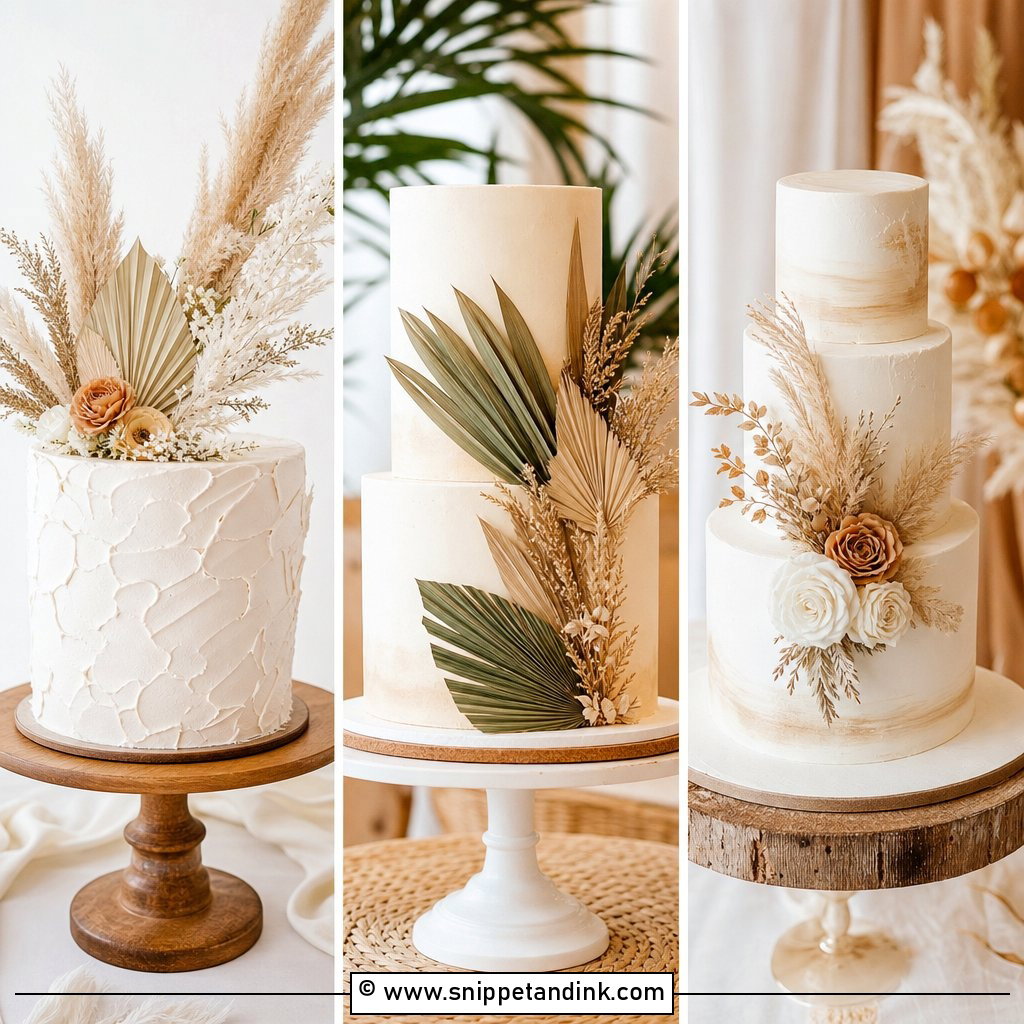
1. Boho Pampas Grass Wedding Cake
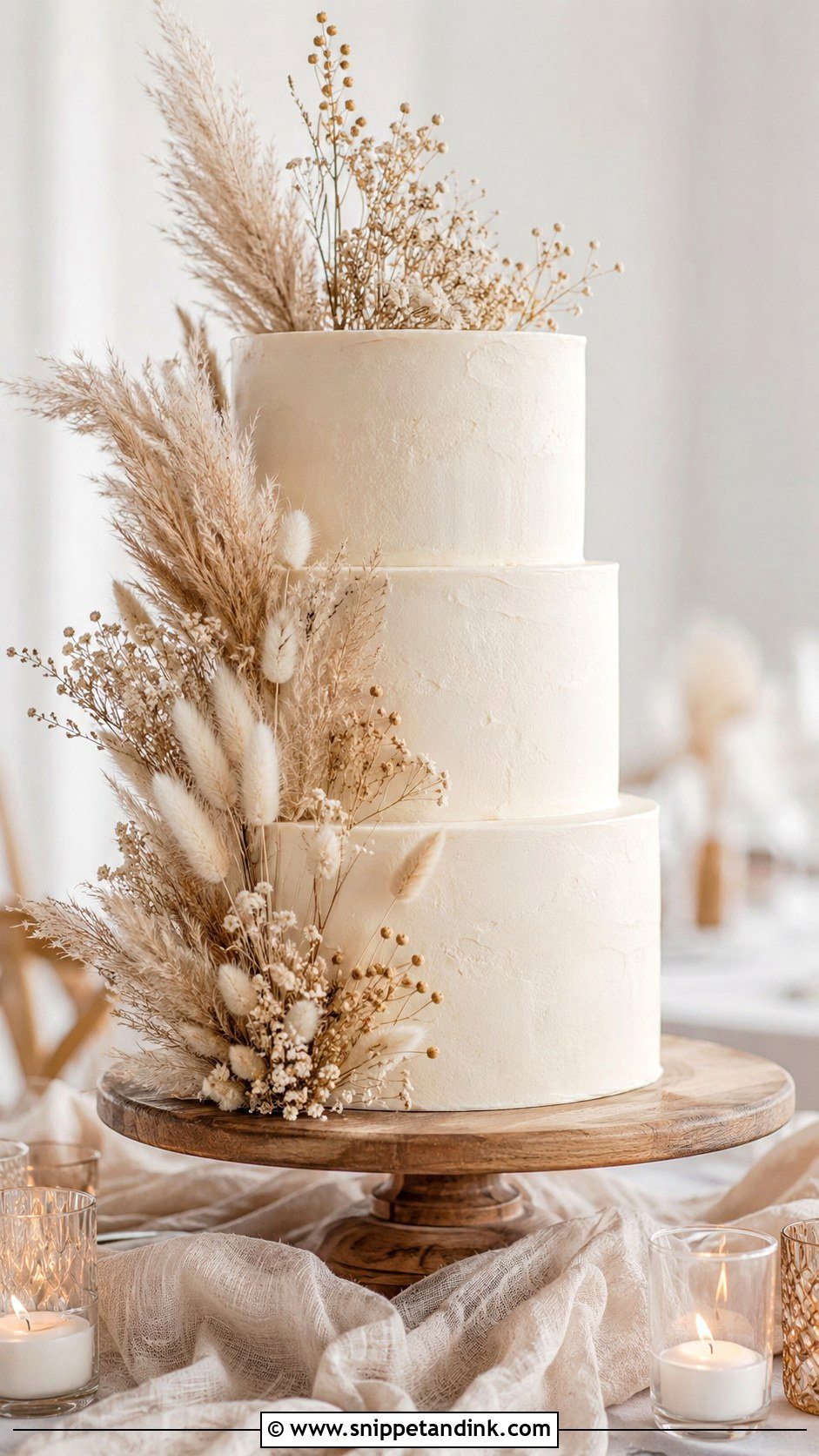
Pampas makes an instant statement, and it’s the decoration I most often have to tame. On a two or three tier cake I set one uneven cluster at a shoulder, off center, so the plumes sweep outward instead of standing up like a feather duster. Stems never go straight into the cake; they sit in a sealed pick or rest as a wired bundle on a parchment pad. A smooth ivory base gives the beige plumes something to read against. On a single short tier, I’d skip pampas. It dwarfs the cake.
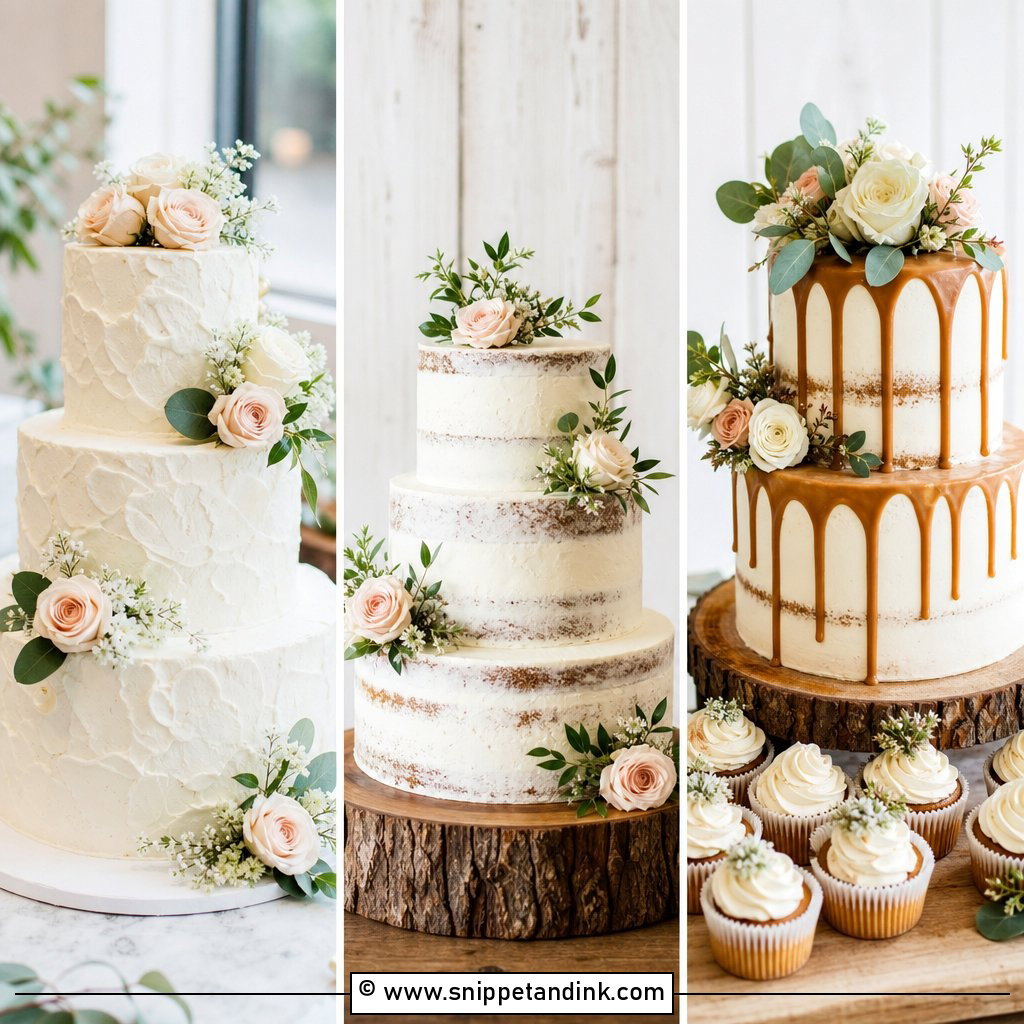
2. Boho Semi Naked Wedding Cake
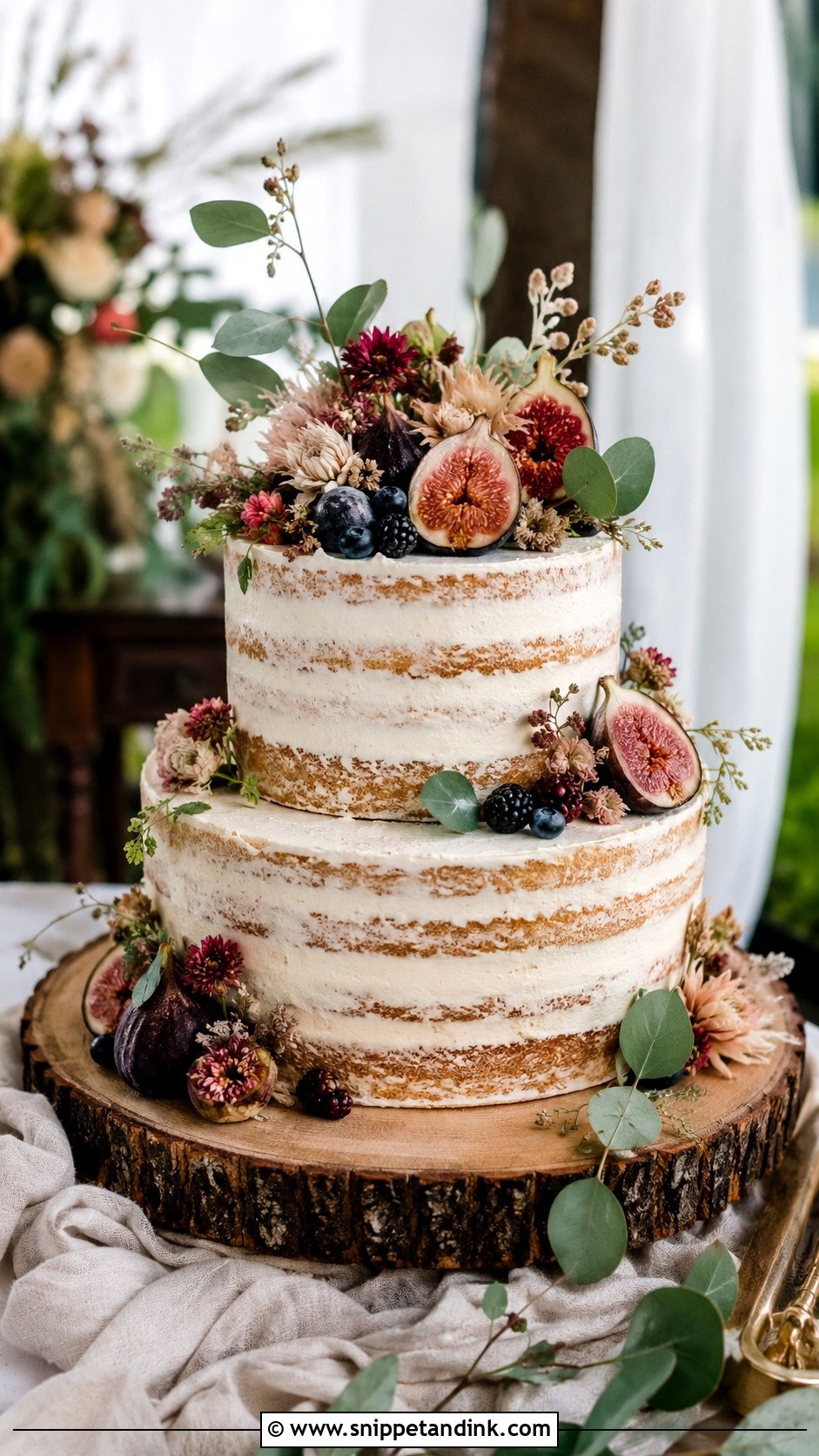
Semi naked is mostly about the scrape. I put on a thin crumb coat, then pull a bench scraper around the tier so the edge of each sponge layer peeks through evenly. Too heavy and it’s just a frosted cake; too thin and it looks unfinished. Exposed sponge dries faster than covered sponge, so I soak each layer with a light syrup and keep tiers wrapped until assembly. Figs, berries and dried flowers go on the morning of the wedding, because cut fruit weeps into frosting.
3. Boho Terracotta Wedding Cake
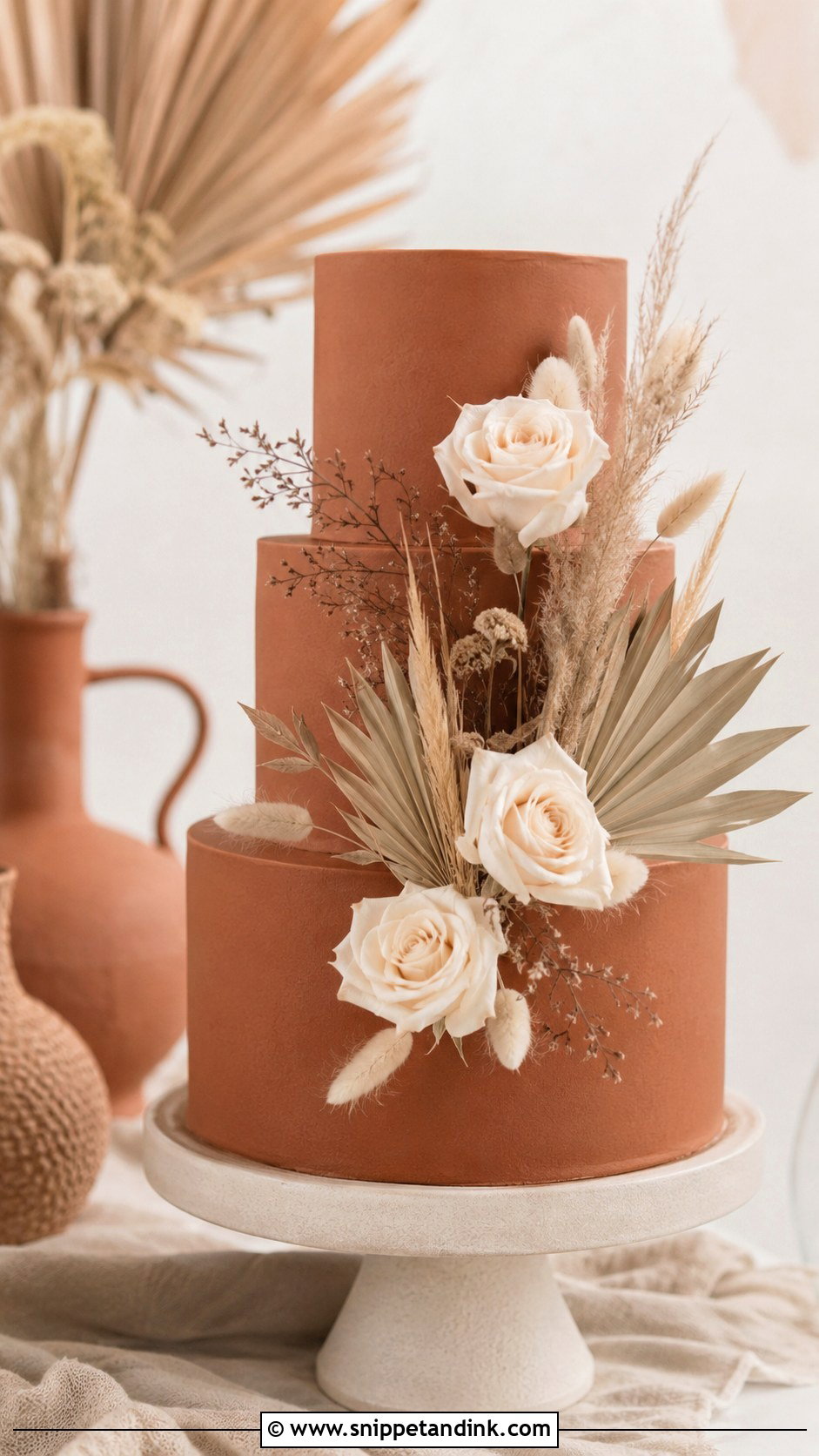
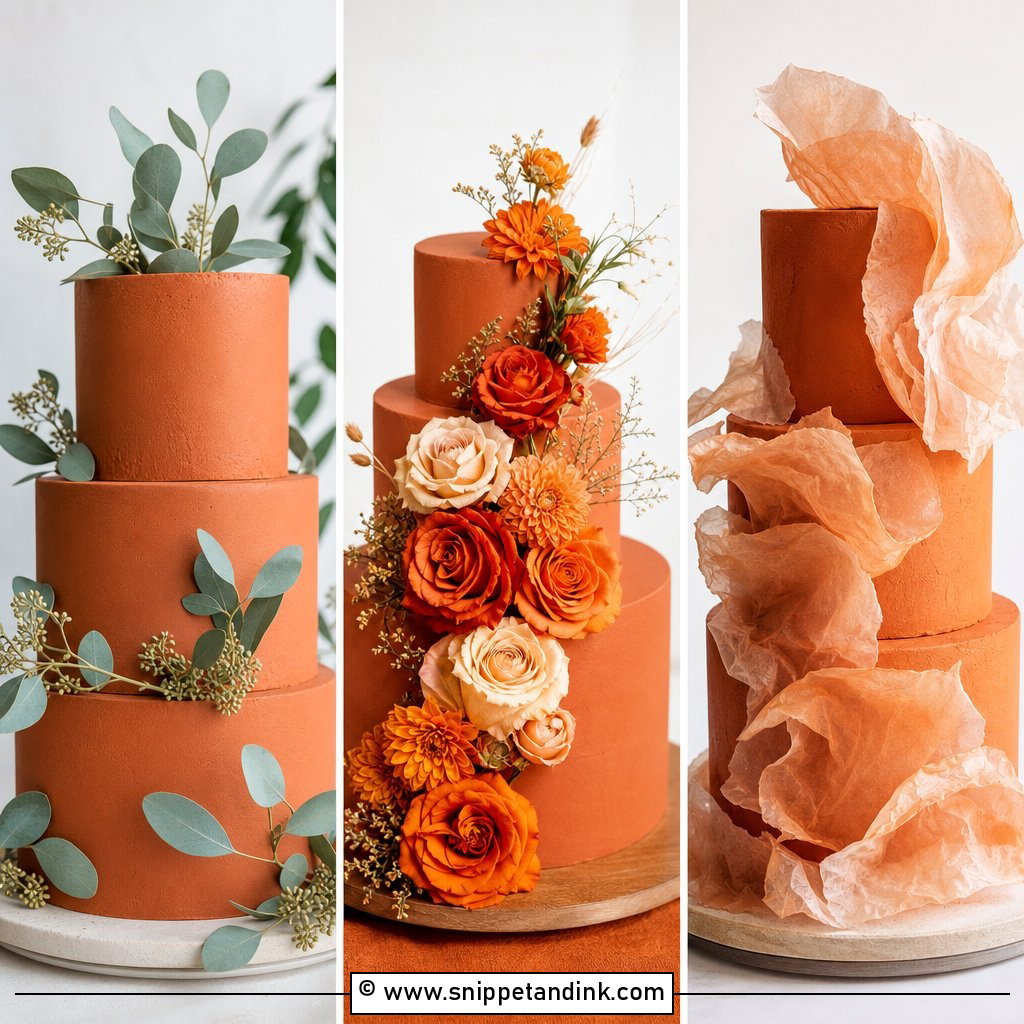
Terracotta warms a cake up without the glare of true orange. I steer couples toward a clay shade with some brown in it, since flat orange looks like a pumpkin under string lights. Two directions work well: clean tiers with a single bold floral arrangement for a modern feel, or textured palette strokes for a handmade one. Ivory blooms and dried palm spears soften the color. It belongs at autumn weddings and desert venues, next to copper and raw wood.
4. Boho Macrame Wedding Cake
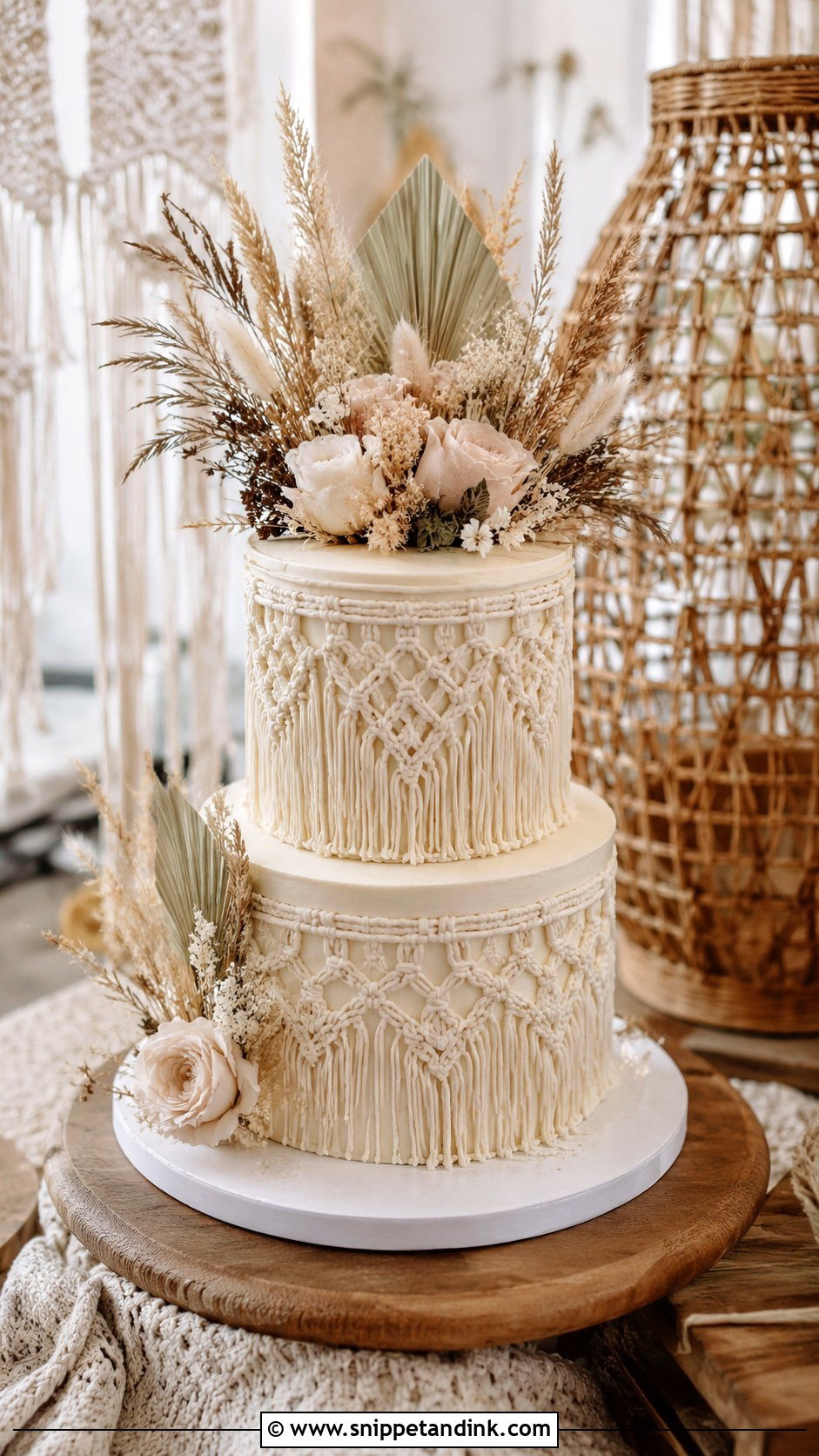
A macrame wedding cake should never have real cord on it. The knots are piped buttercream, embossed fondant or edible lace set in a mold, and each looks different up close. Piping is soft and hand-done, embossing is crisp, and lace is the most delicate, turning sticky in humid air. I usually pattern one tier only and leave the others plain so the work reads as a feature. A few dried flowers at the edge of the knotwork is plenty.
5. Boho Dried Flower Wedding Cake
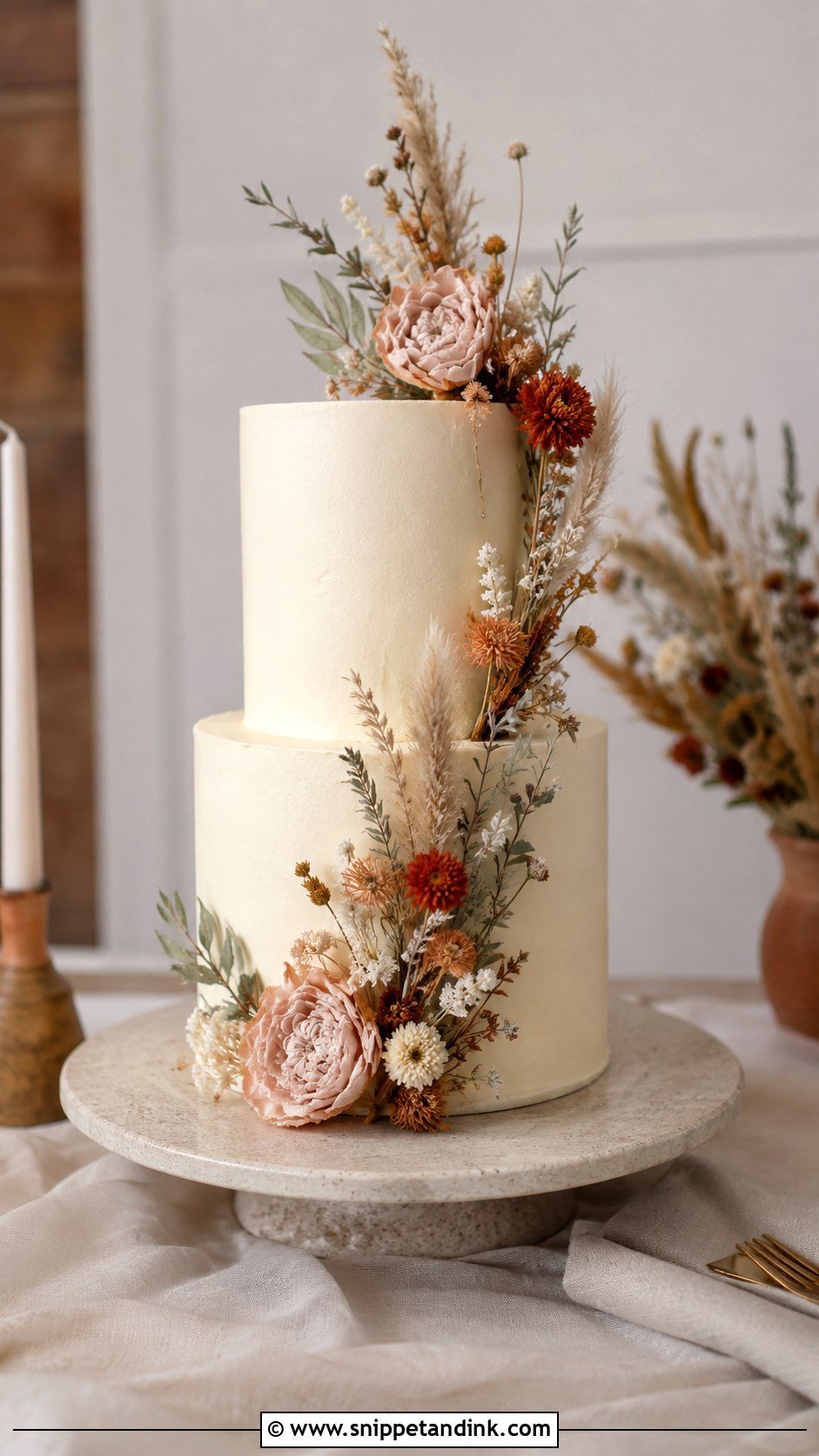
Dried flowers are often the reason couples ask me for a boho cake in the first place. They don’t wilt or brown at the edges, and a cluster I set at noon looks the same at midnight. Placement matters most: a single cascade or one statement cluster looks considered, while scattered stems look accidental. Not every dried flower is safe against food, though. Many are dyed, bleached or lacquered, so most of mine sit on picks, and only food-grade petals touch the frosting.
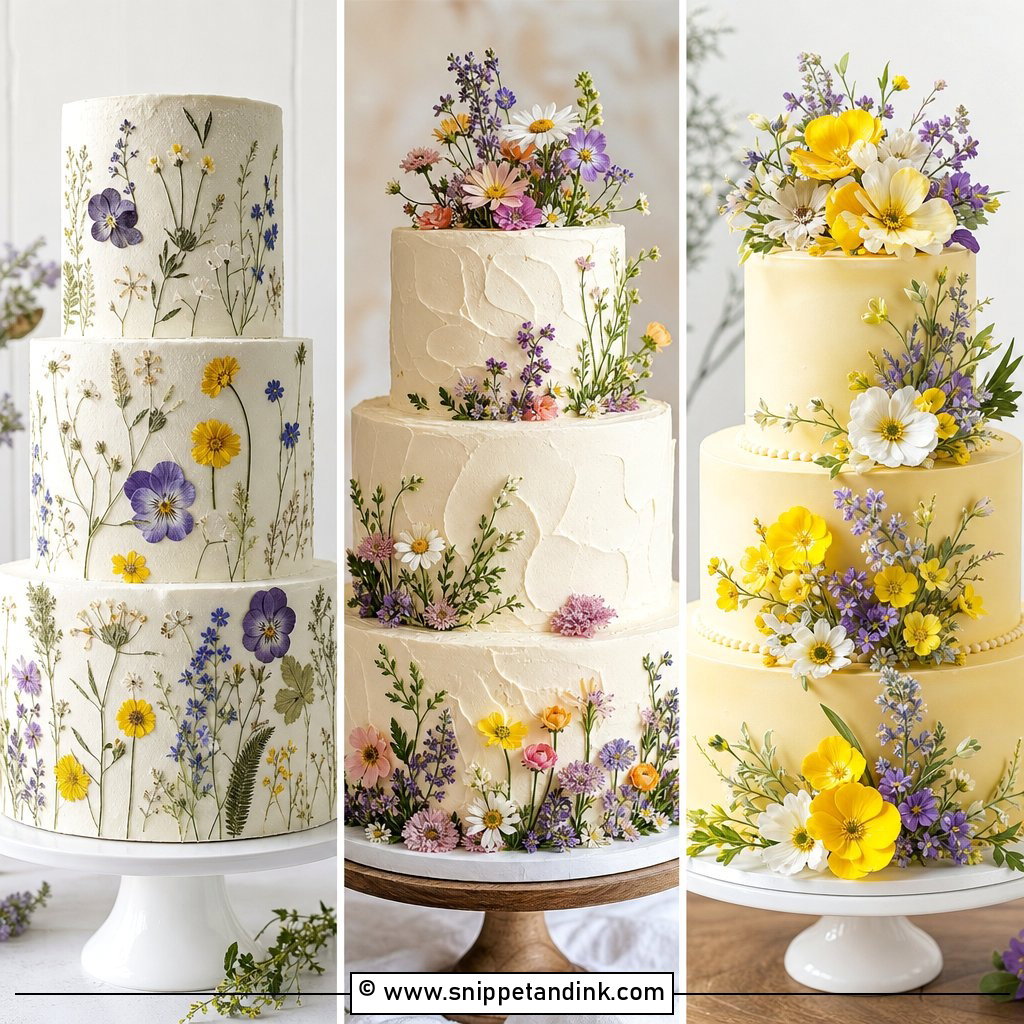
6. Boho Pressed Flower Wedding Cake
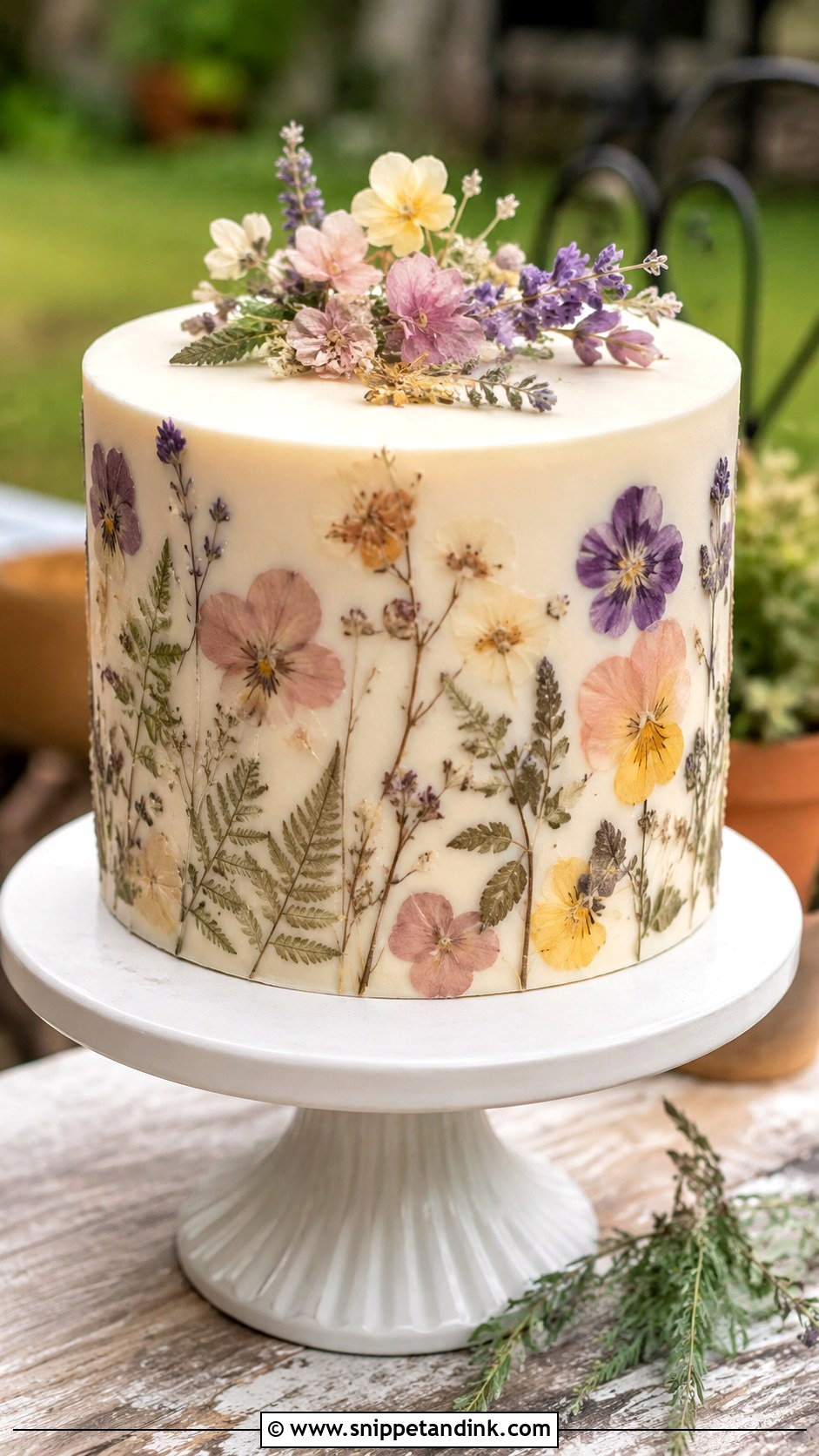
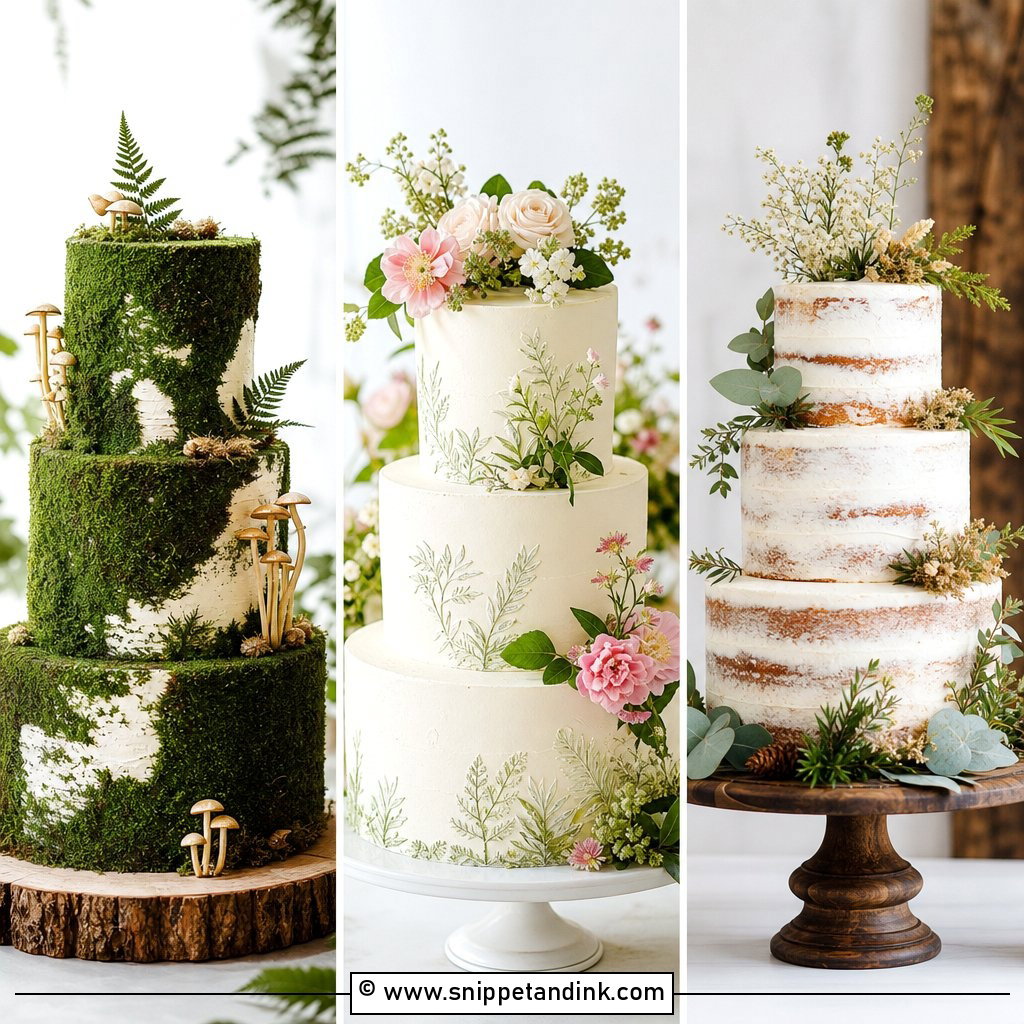
Pressed flowers lie flat, so they need a very smooth surface; textured buttercream leaves gaps behind the petals. I chill the tier until firm and attach each bloom with a thin brush of piping gel. Muted colors like dusty pink, soft yellow, lavender, sage, and ivory keep the botanical feel quiet. Pressed petals fade a little under strong light, so this cake should stay out of direct sun. On a tiered design, each tier can carry its own pattern, giving guests something new on every side.
7. Boho Sage Green Wedding Cake
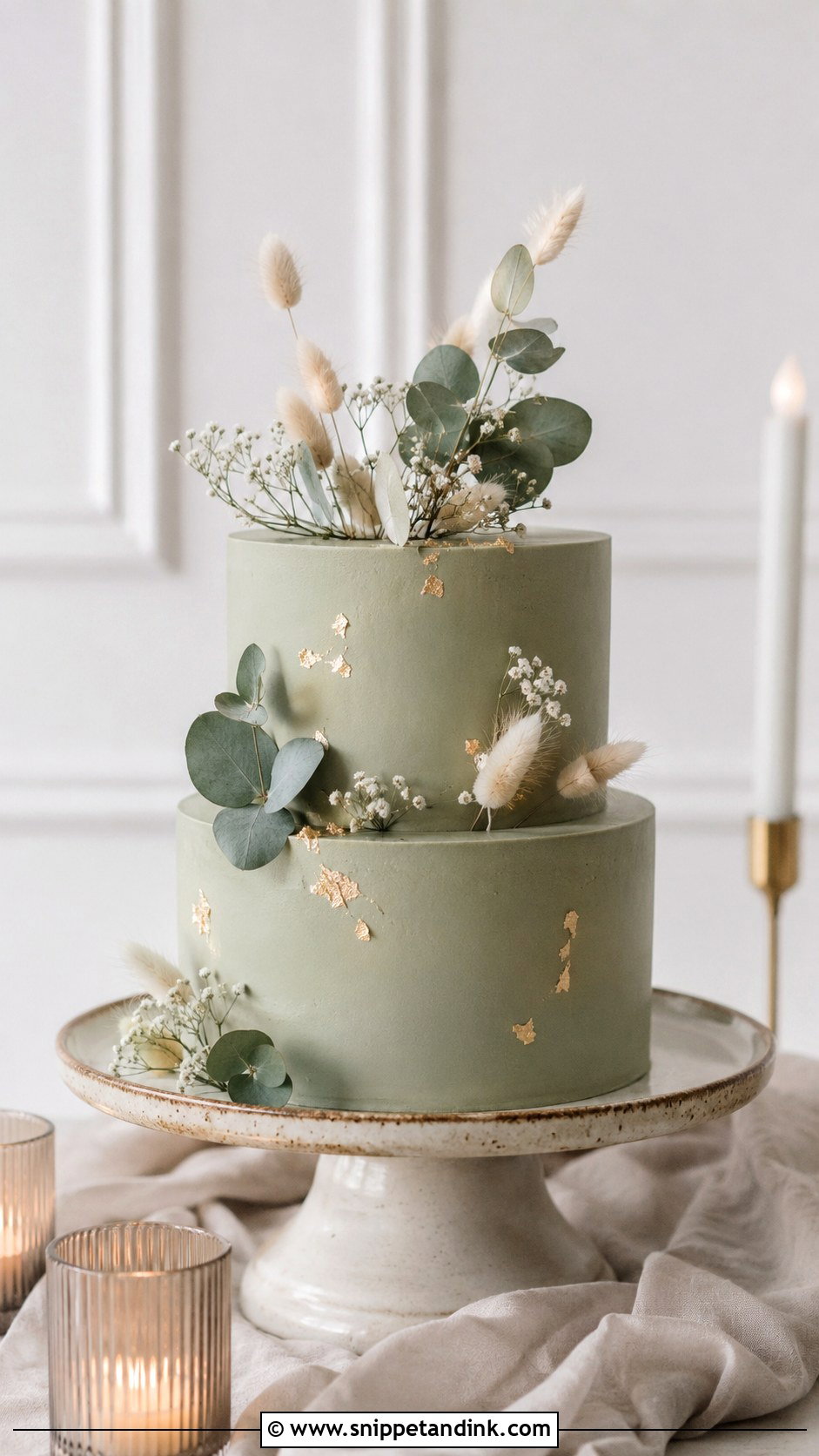
Sage covers a lot of ground. I can do it as a full buttercream tier, a watercolor wash over ivory, or a single accent tier in the middle of a white cake, which is my favorite way to bring in color without committing the whole design. Olive branches and eucalyptus suit it naturally, but eucalyptus is toxic and must stay on a pick. A little gold leaf lifts it for an evening reception. Sage gets along with blush, taupe and terracotta, so it rarely fights the rest of a boho palette.
8. Boho White Wedding Cake
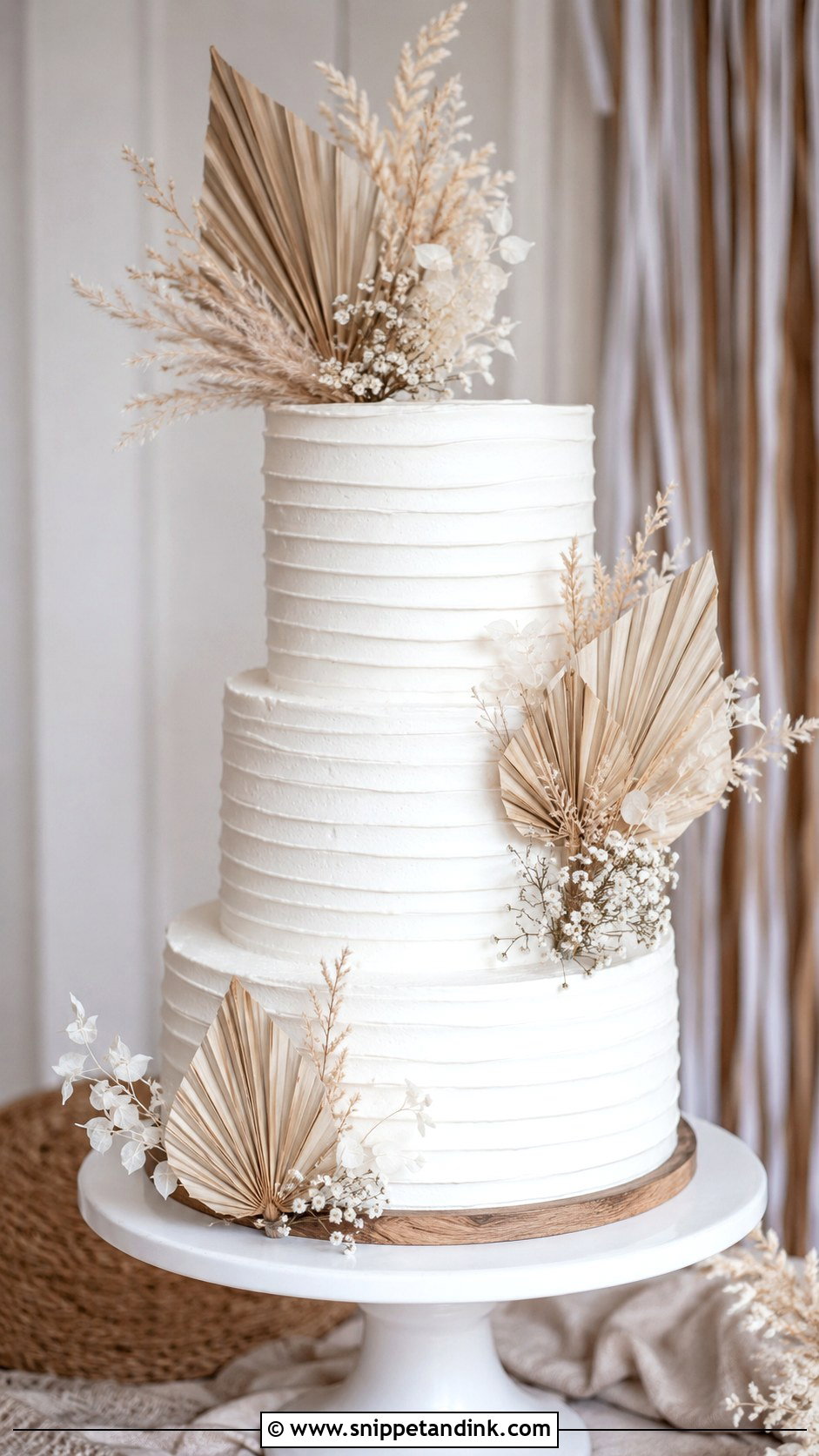
An all-white cake turns boho through texture alone. Ridges pulled with a comb scraper, uneven palette strokes or loose hand piping give white buttercream shadows, and those shadows are what make it look relaxed instead of traditional. Dried grasses, neutral palm leaves or tiny white flowers finish it. I suggest it to couples who are unsure about color, since it suits a loft as easily as a garden tent.
9. Boho Two Tier Wedding Cake
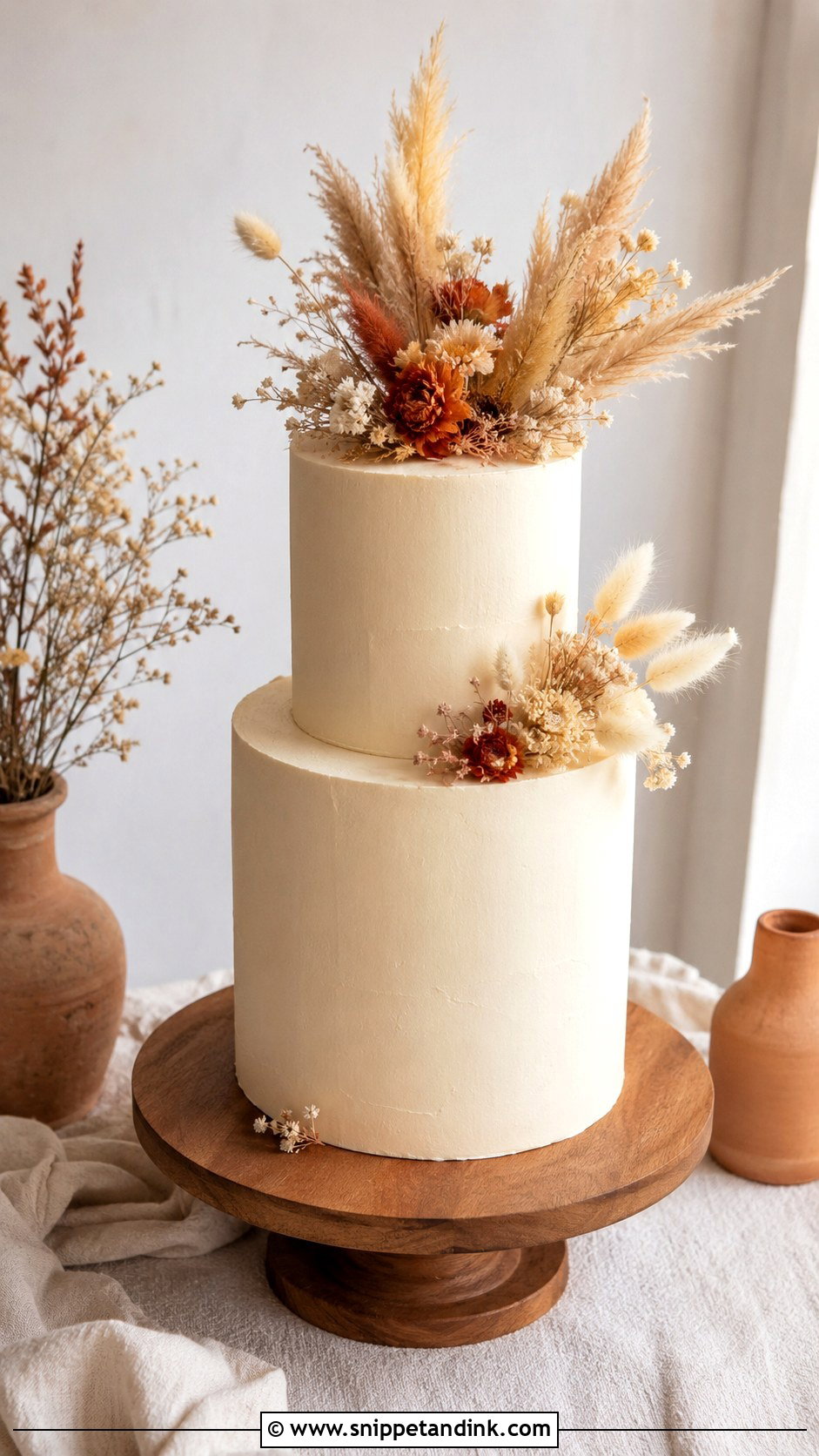
Two tiers is what I recommend most for small weddings, with a kitchen cake if extra servings are needed. I like the bottom tier taller than standard and the top tier a little shorter, which gives a modern silhouette. Because the cake is small, the budget can go into finish: hand-painted texture, edible gold or properly sourced flowers. A ceramic or stone stand adds height so it doesn’t vanish on a long table.
10. Boho Three Tier Wedding Cake
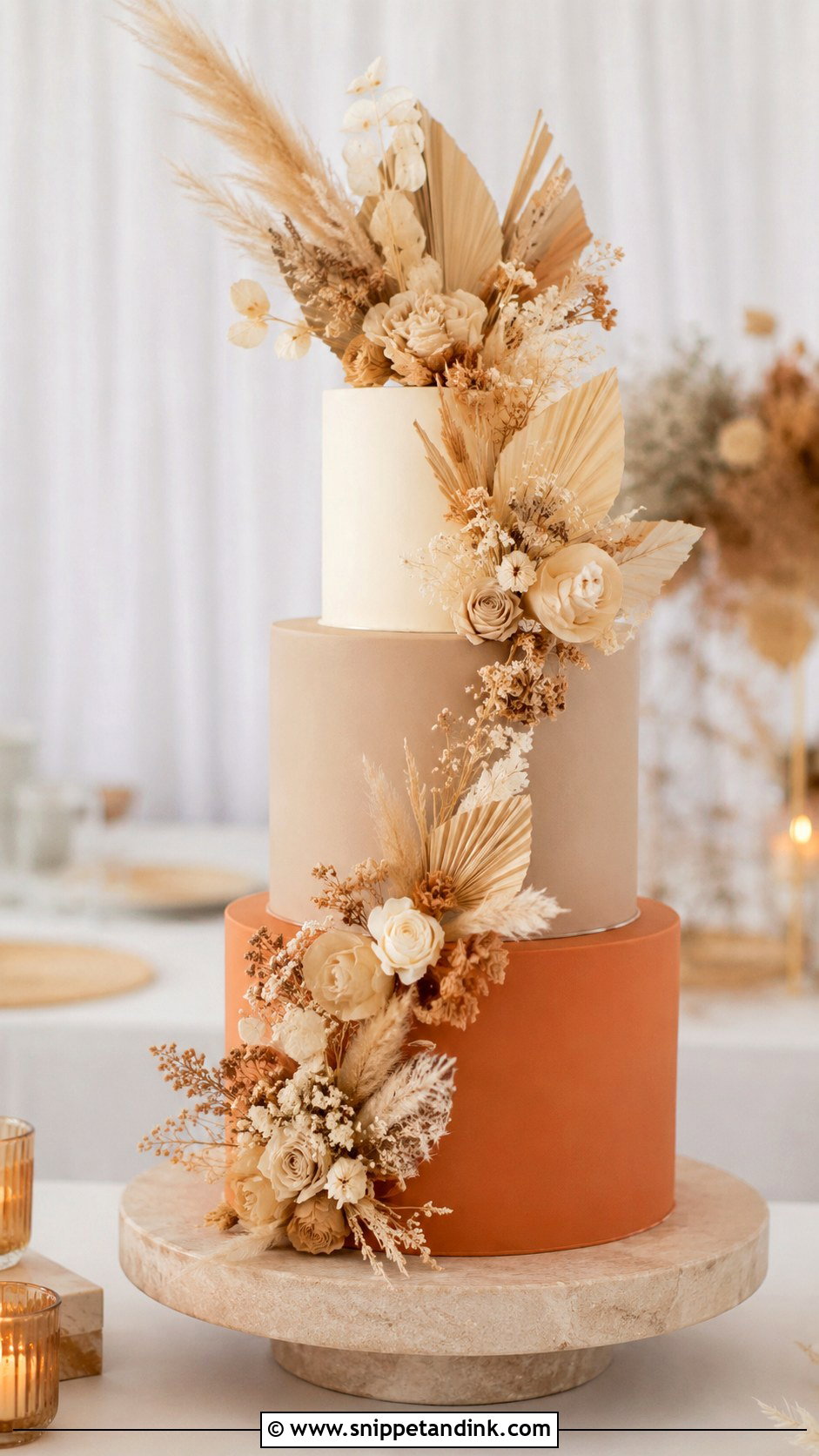
Three tiers gives a boho cake room for a gradient. Ivory on top, warm beige in the middle and terracotta at the base looks grounded, because the darkest color sits lowest. A dried floral cascade can then step from tier to tier. This is also where structure starts to matter: each tier rests on its own board with dowels underneath, and I usually stack on site. I keep one focal area and leave clean space around it, so the shape still reads from across the room.
11. Boho Desert Wedding Cake
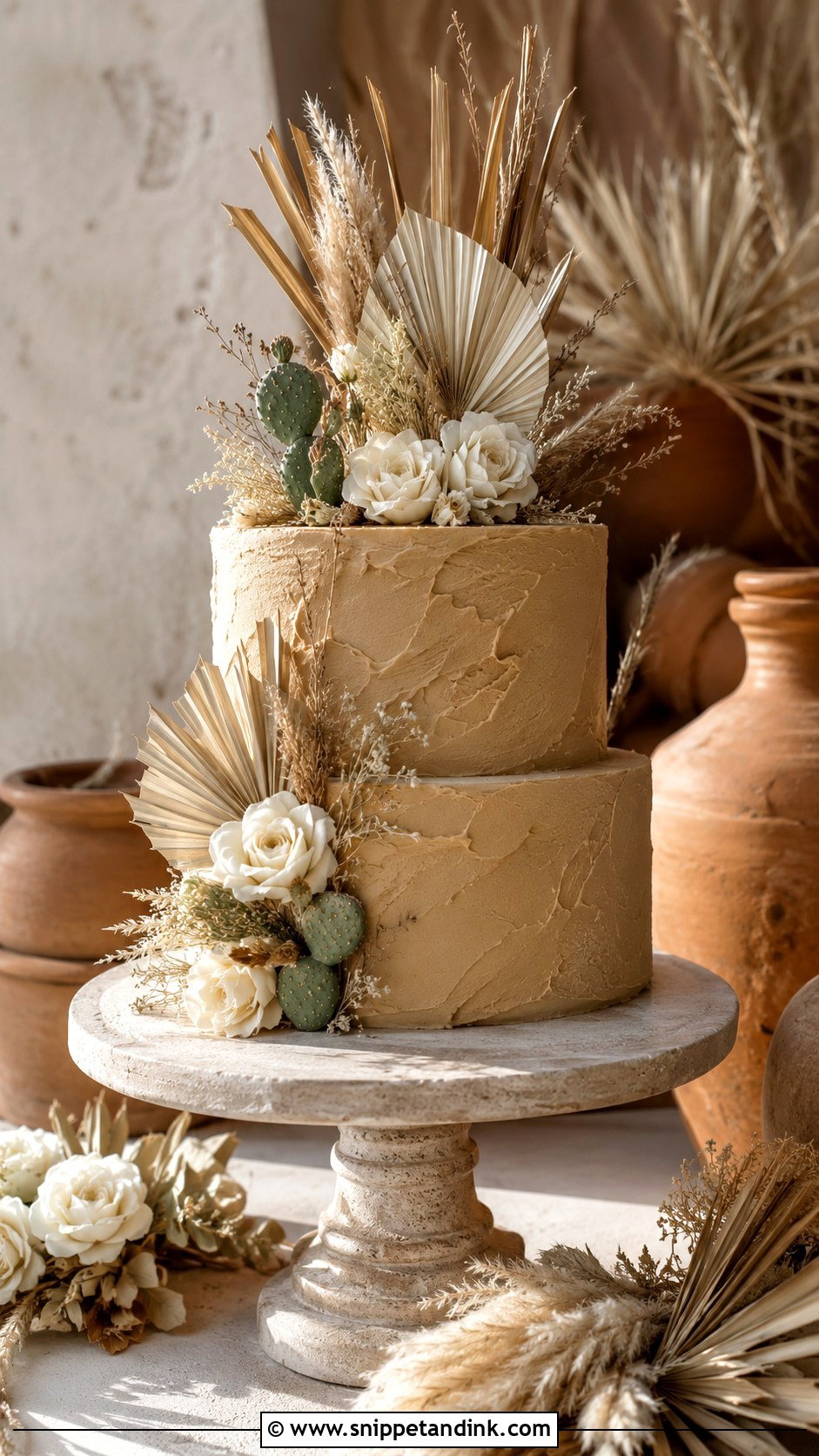
A desert wedding cake has to cope with what desert venues have most, which is dry heat. I keep the finish matte, using sand-colored buttercream with a slight stucco texture, and avoid glossy ganache drips that slump in the sun. Cinnamon, caramel, almond or citrus flavors suit the mood. Dried palm spears and sculptural grasses hold up out there; fresh flowers fade fast. Ask your planner for a shaded cake table before anything else is finalized.
12. Boho Rustic Wedding Cake
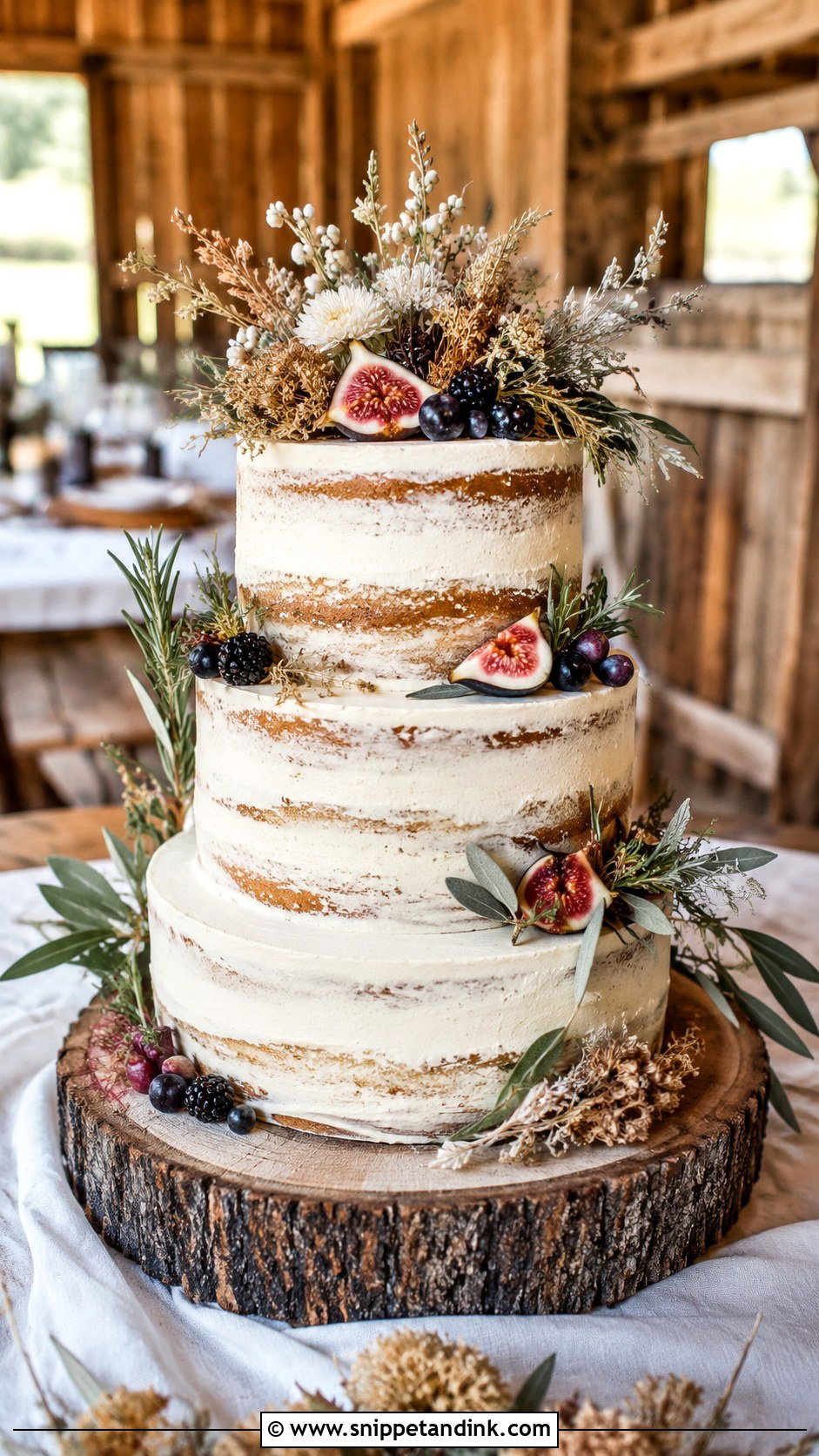
Rustic and messy aren’t the same thing, and I say so early. A rough, lightly scraped finish still needs straight tiers and level tops; the texture is the only loose part. On that base go dried flowers, herbs, figs, berries or small fresh blooms in muted colors. Rosemary and thyme are a nice touch because they’re food to begin with. A wood slice stand makes sense in barns and lodges, but it must be sealed and sit level, or it will tilt the whole cake.
13. Boho Modern Wedding Cake
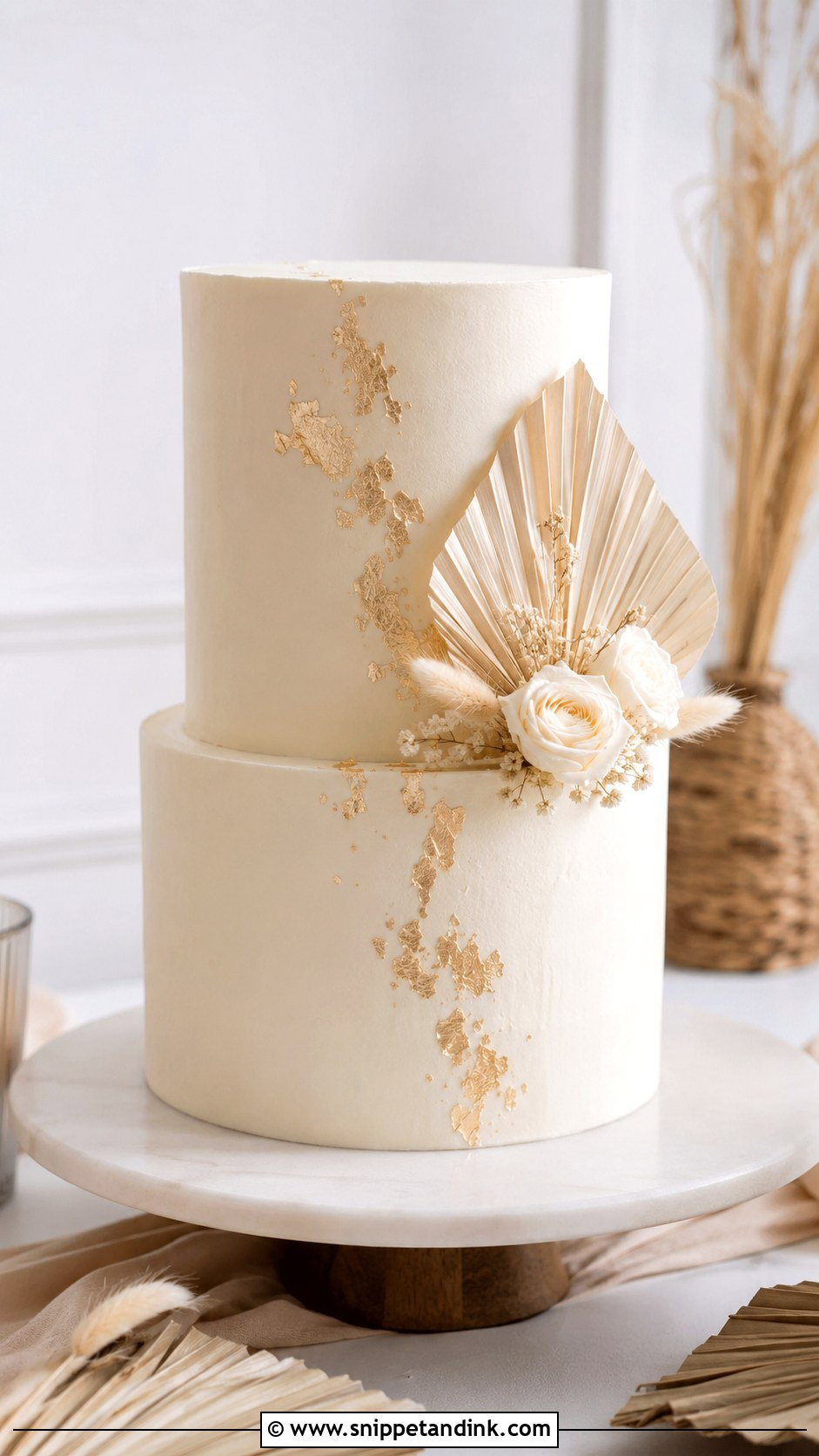
This is boho with most of the decoration taken away. Sharp edges, smooth buttercream and one or two elements, such as a single dried palm or a small floral cluster with a fleck of gold. Those sharp edges take patience: I let each tier set in the fridge and trim the top lip with a warm knife. Blocks of taupe, cream and sage tiers work too. It’s my pick for couples marrying in a modern venue who still want a nod to natural textures.
14. Boho Watercolor Wedding Cake
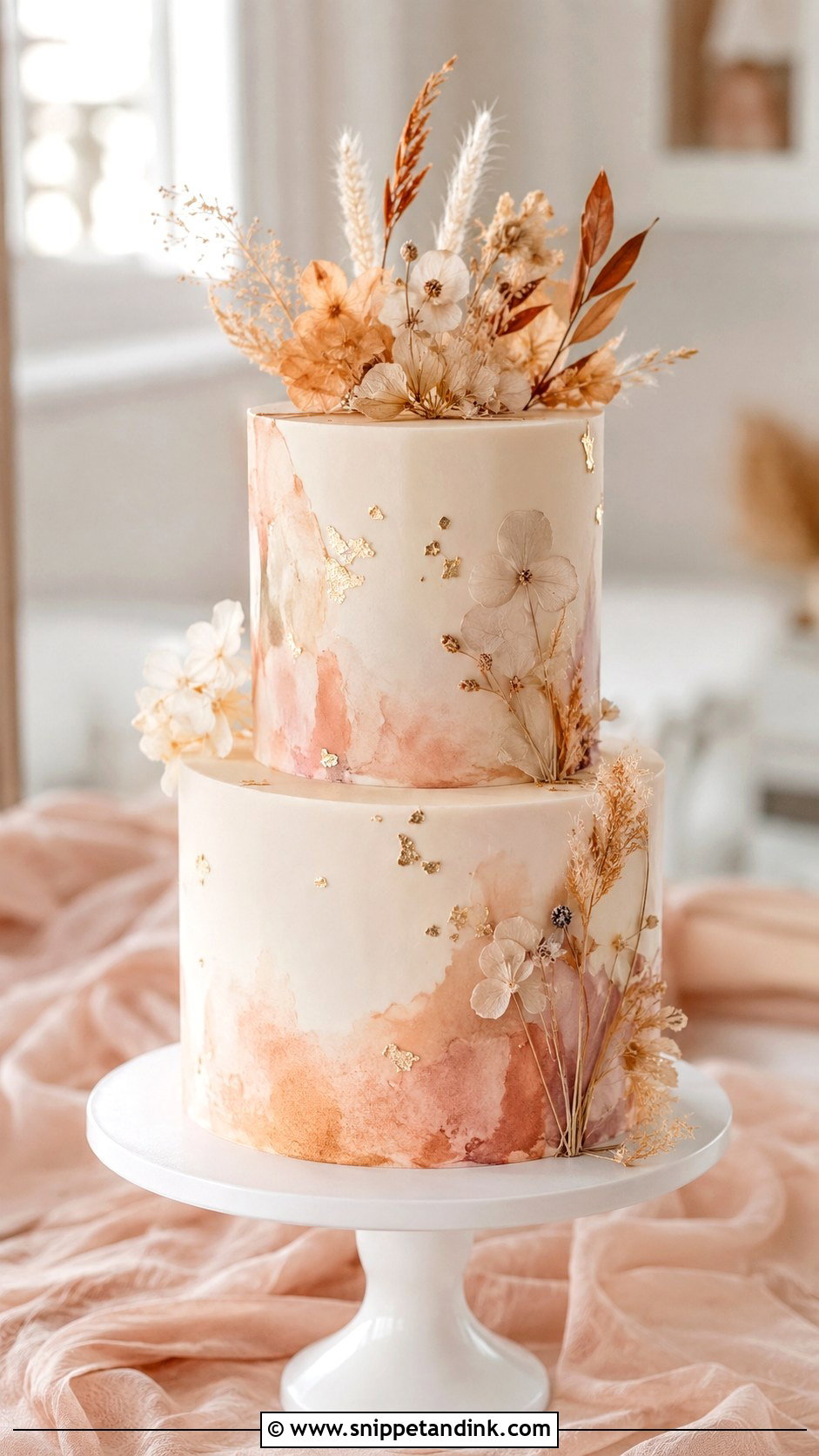
Watercolor needs a very smooth canvas, so I’d do it on fondant or thoroughly chilled buttercream. I paint diluted gel color with a wide soft brush, or smear tinted buttercream and scrape it back so the colors blur into each other. Terracotta, blush, sand and dusty peach look washed when they’re thinned; at full strength they turn stripy. A few pressed flowers or flecks of gold add depth. For a summer reception outdoors, fondant is the safer base for this one.
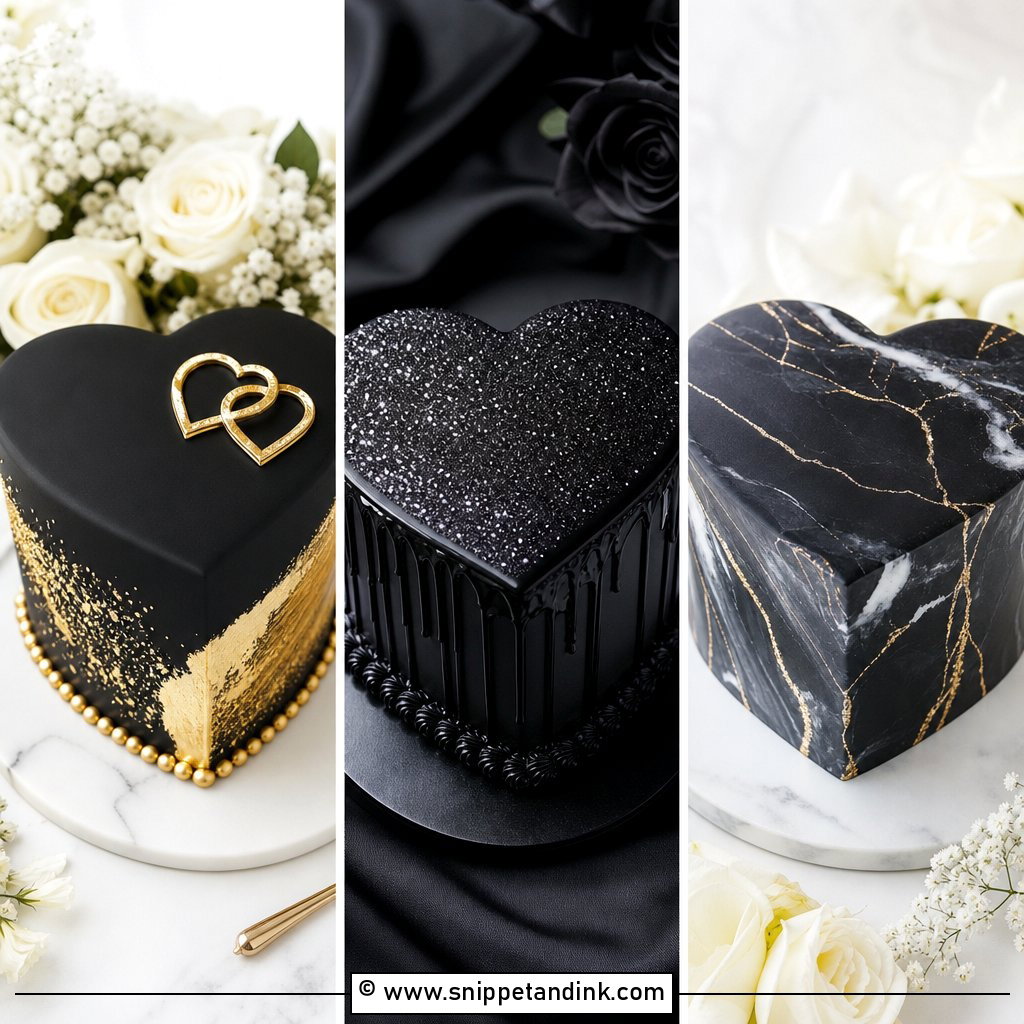
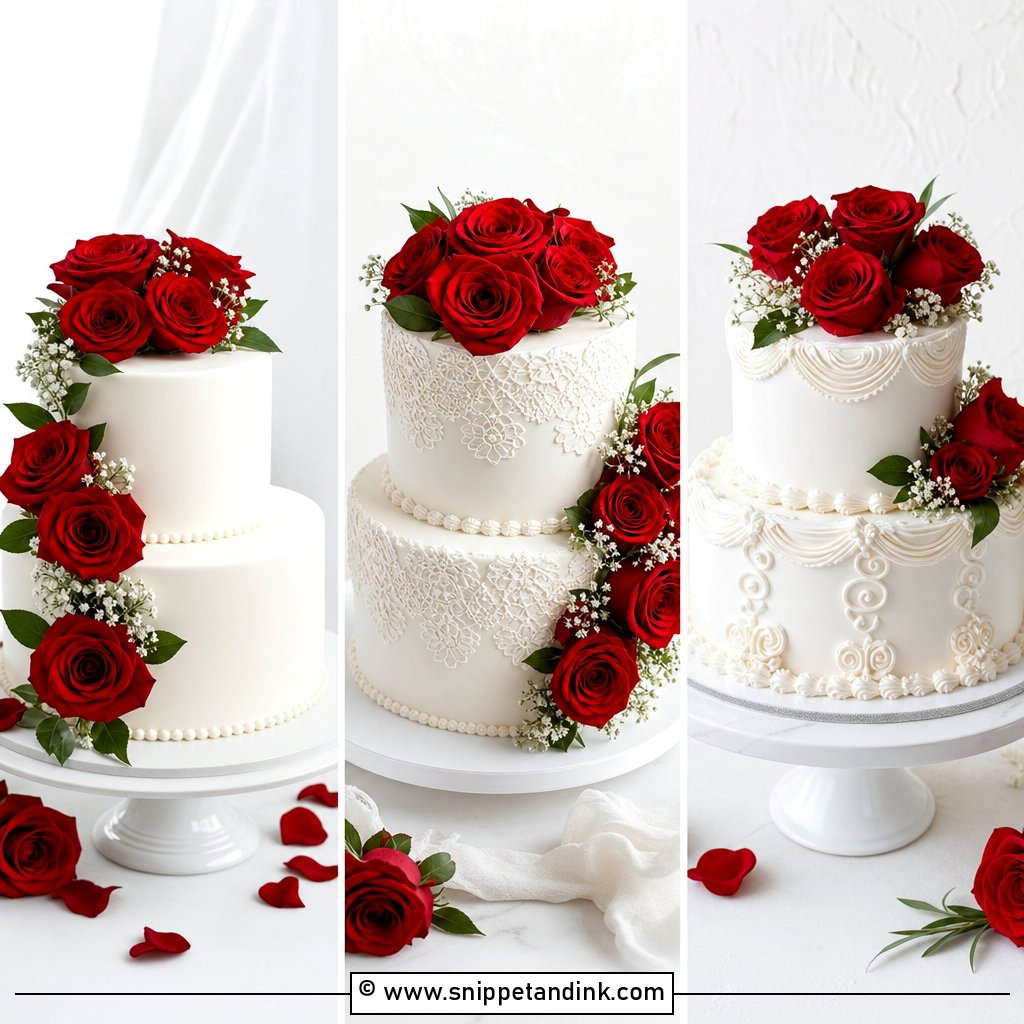
15. Boho Floral Wedding Cake
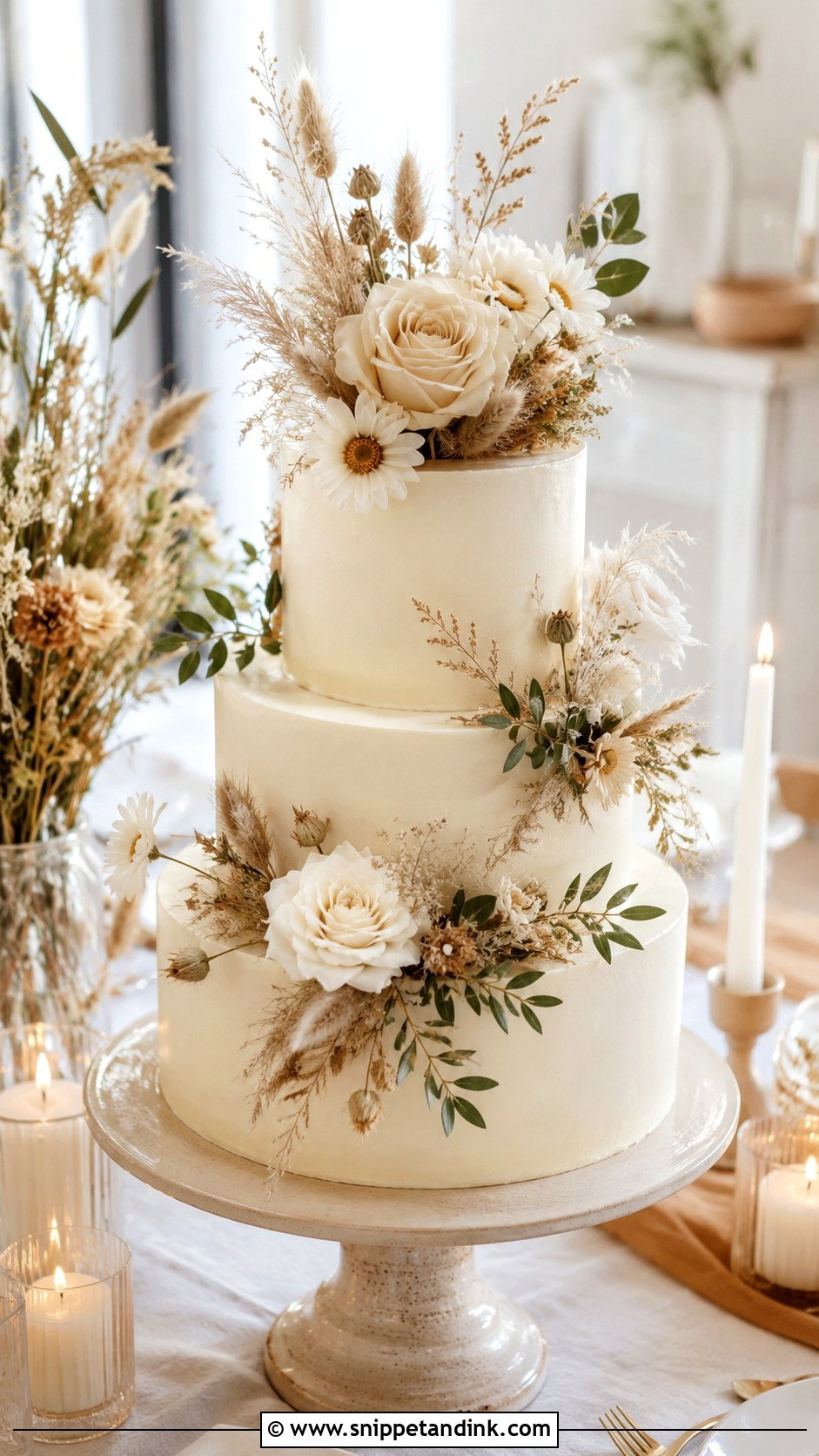
Tight rose clusters read formal. Loose, mixed flowers with air between them read boho. I combine cream roses, preserved daisies, bunny tails and a few dried grasses, but hold the palette to three or four colors so the variety doesn’t look chaotic. Letting the flowers trail down one side or pool at the base gives movement. Orchids are popular here, though most florist orchids are sprayed, so they sit on barriers like everything else.
16. Boho Gold Leaf Wedding Cake
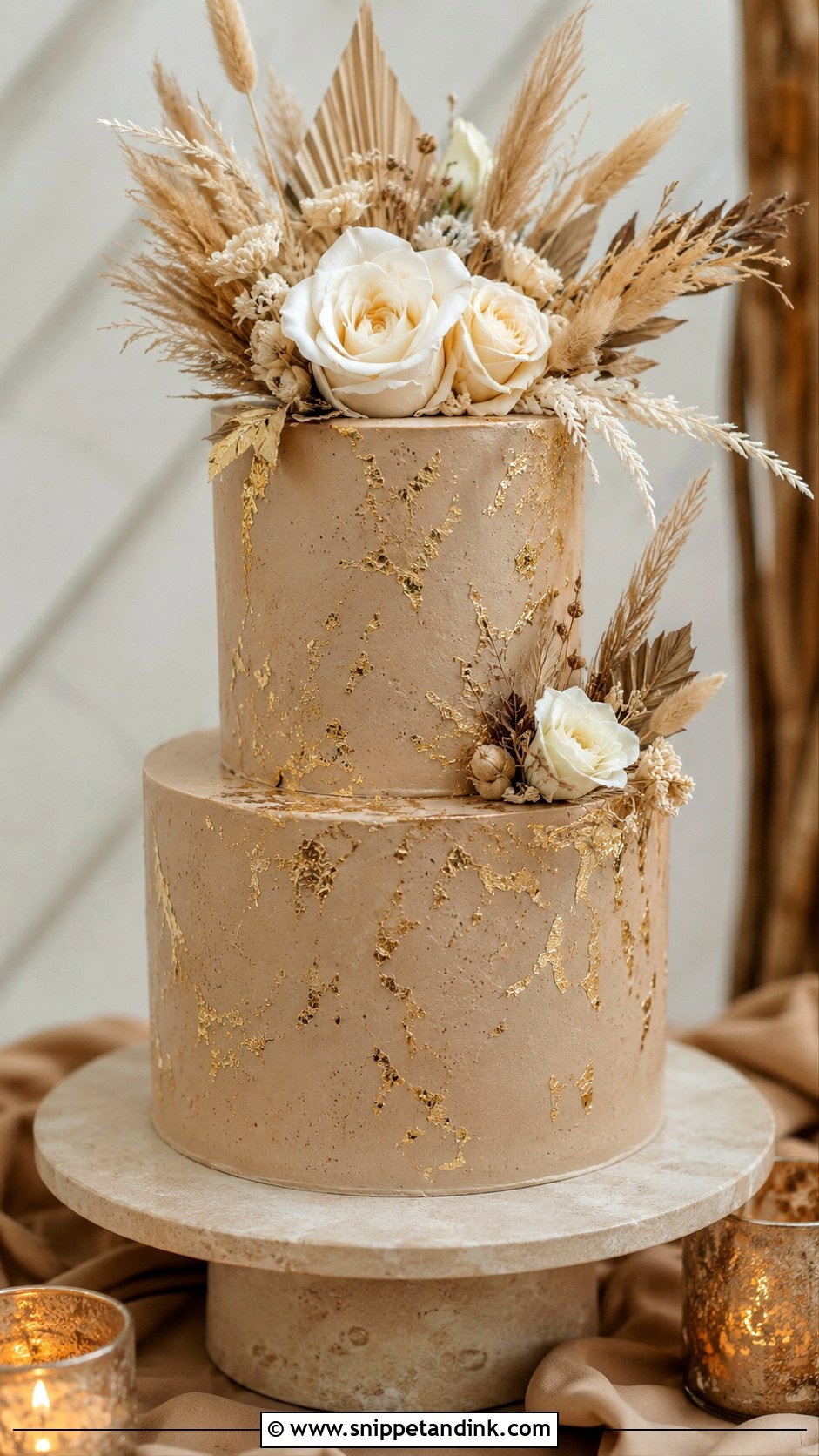
Edible gold leaf is so thin it clings to dry fingers and tears under a breath, so I lift it with a soft brush or tweezers and press it onto lightly chilled frosting. Small broken pieces look more natural than full sheets. It sits well on ivory, taupe, sage or terracotta. Pair it with dried flowers or pampas so the shine stays grounded, and keep it to one tier at most. Candlelight makes even a little gold glimmer.
17. Boho Naked Wedding Cake
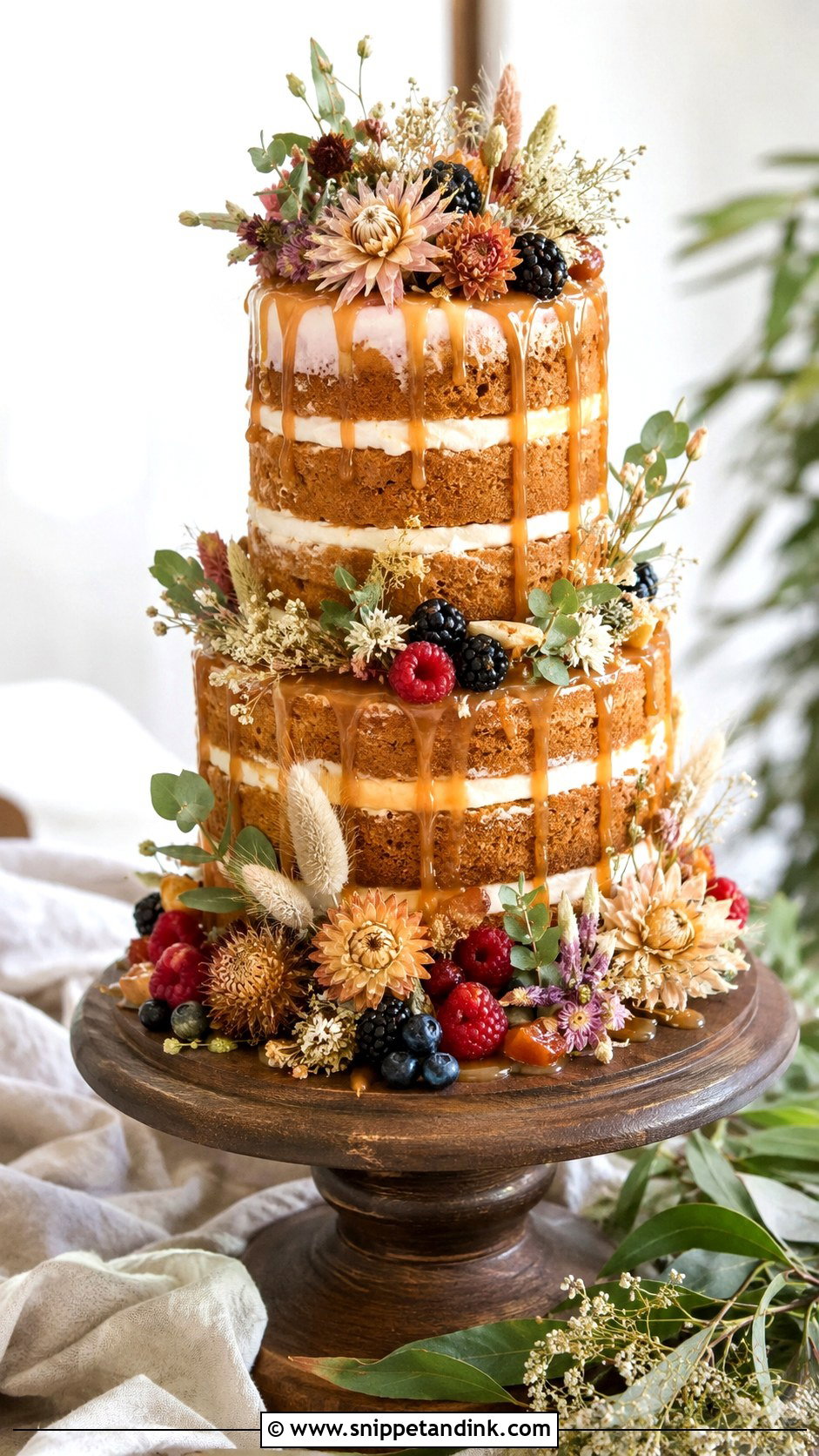
Fully naked means no frosting on the outside at all, so the sponge itself is on display. That makes bake quality visible, because a domed or uneven layer has nowhere to hide. Carrot, spice, lemon and vanilla bean all look good in cross-section, with fillings like cream cheese, berry compote or caramel buttercream between them. The trade-off is that bare sponge dries out within hours in a warm room, so I’d keep this for cooler seasons or indoor receptions. Dried flowers and fruit go on top and down the sides just before guests arrive.
18. Boho Rattan Wedding Cake
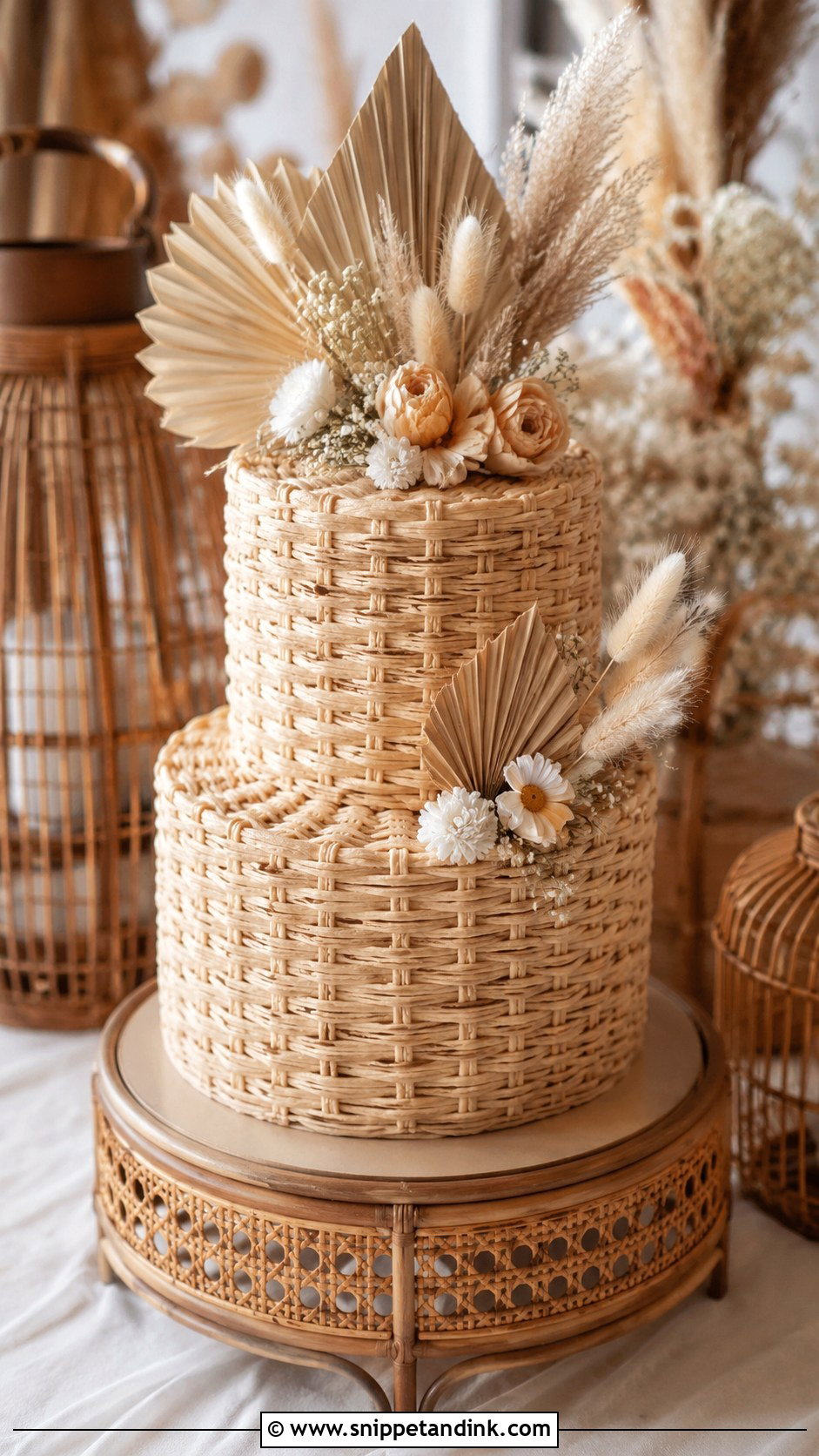
Basket-weave piping is an old technique that suddenly looks right again. It uses a flat ribbed tip, with short horizontal strokes woven over vertical lines, and it’s slow work, so expect it to cost more than a plain finish. You can get a woven feel for less by displaying a simpler cake on a rattan stand. Ivory, beige or tan keeps it natural. Dried palms or a few neutral flowers finish it for beach and backyard receptions.
19. Boho Buttercream Wedding Cake
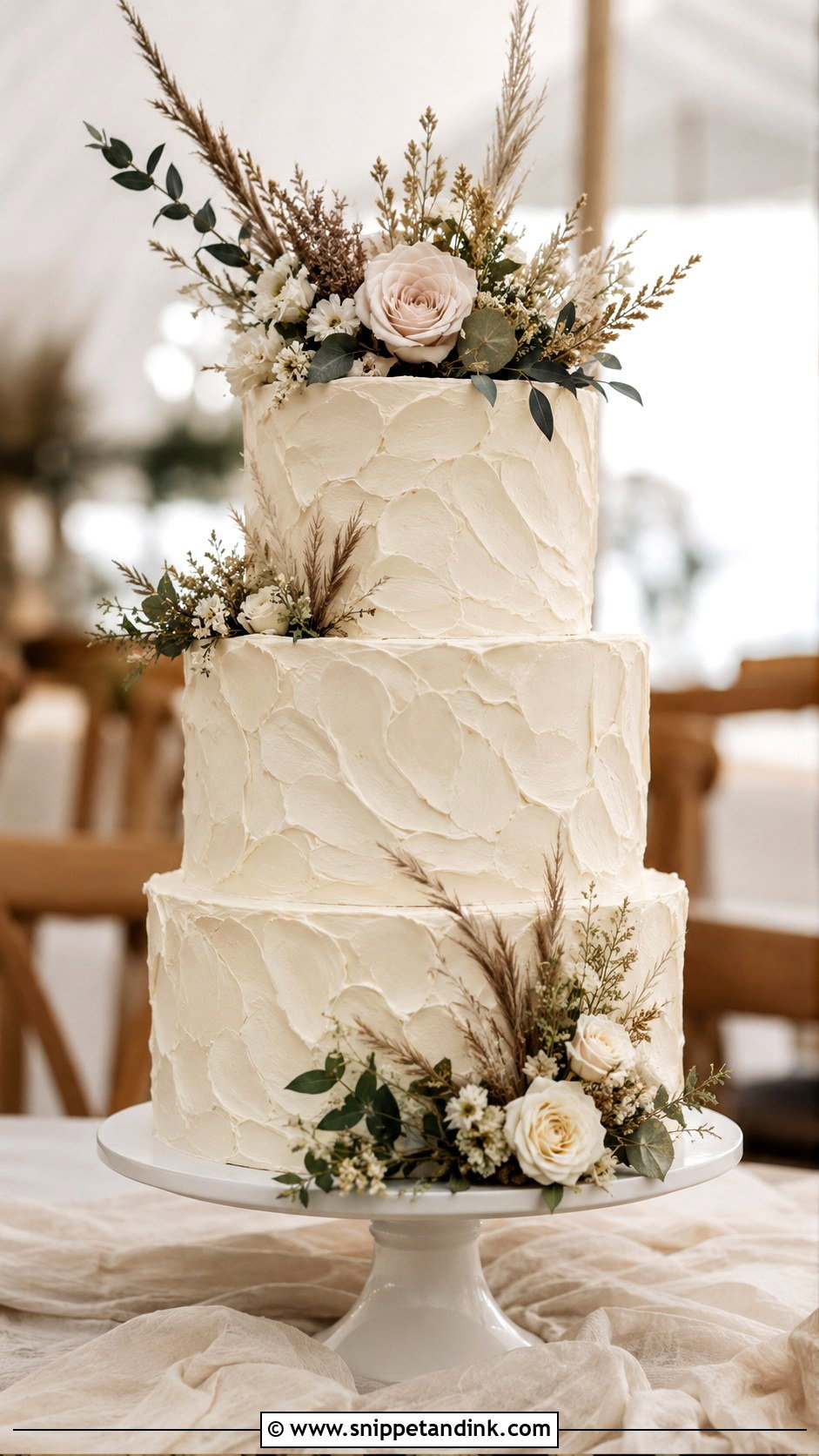
Buttercream is my default for boho because it takes texture so well. Palette-knife strokes, comb ridges, waves and light stucco all come from the same frosting. Smooth sides read modern; textured sides read handmade. Most guests prefer the taste to fondant, too. The one weakness is warmth, since buttercream softens as a room heats up, so a hot outdoor reception might push me toward a firmer recipe.
20. Boho Wildflower Wedding Cake
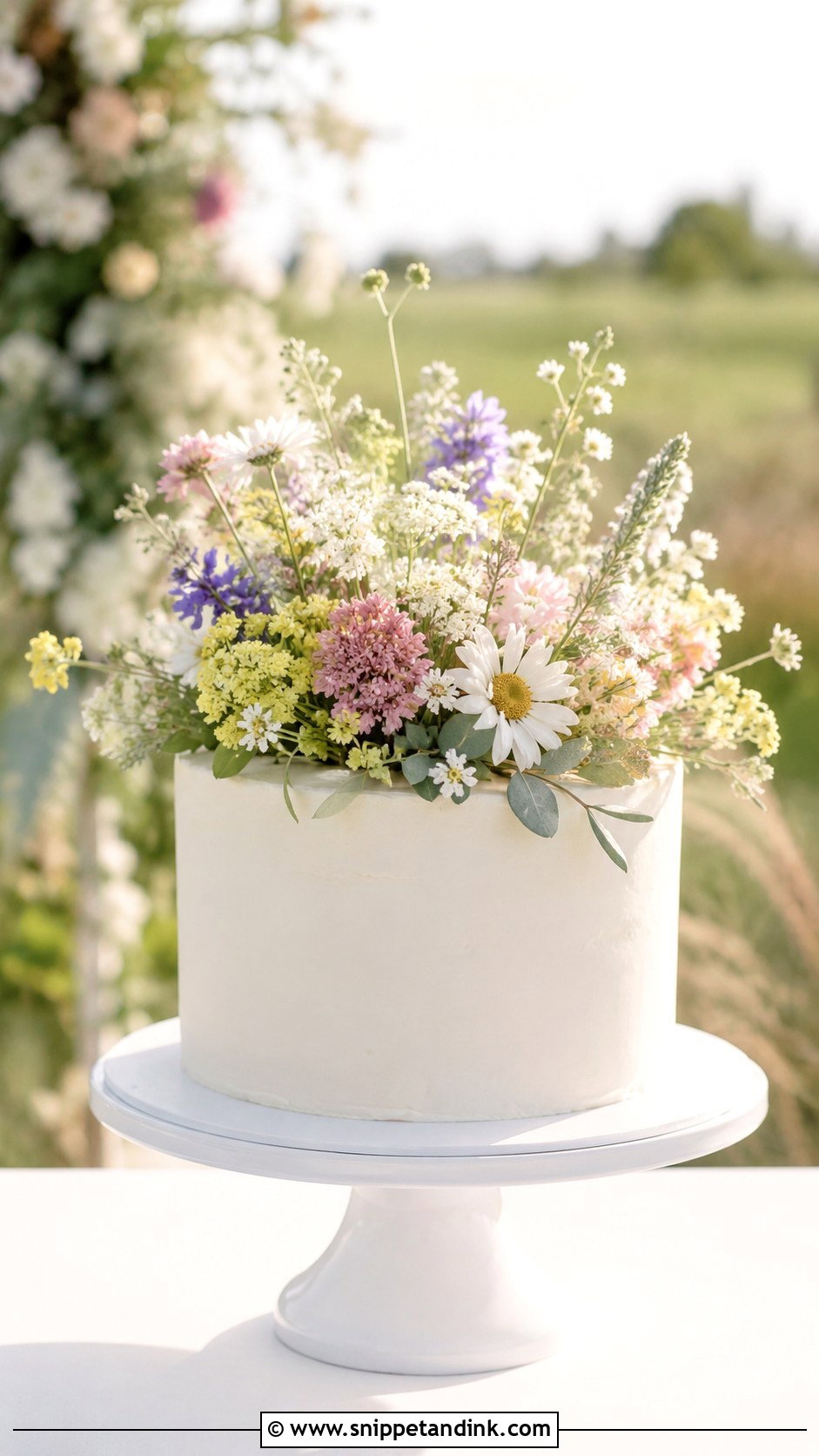
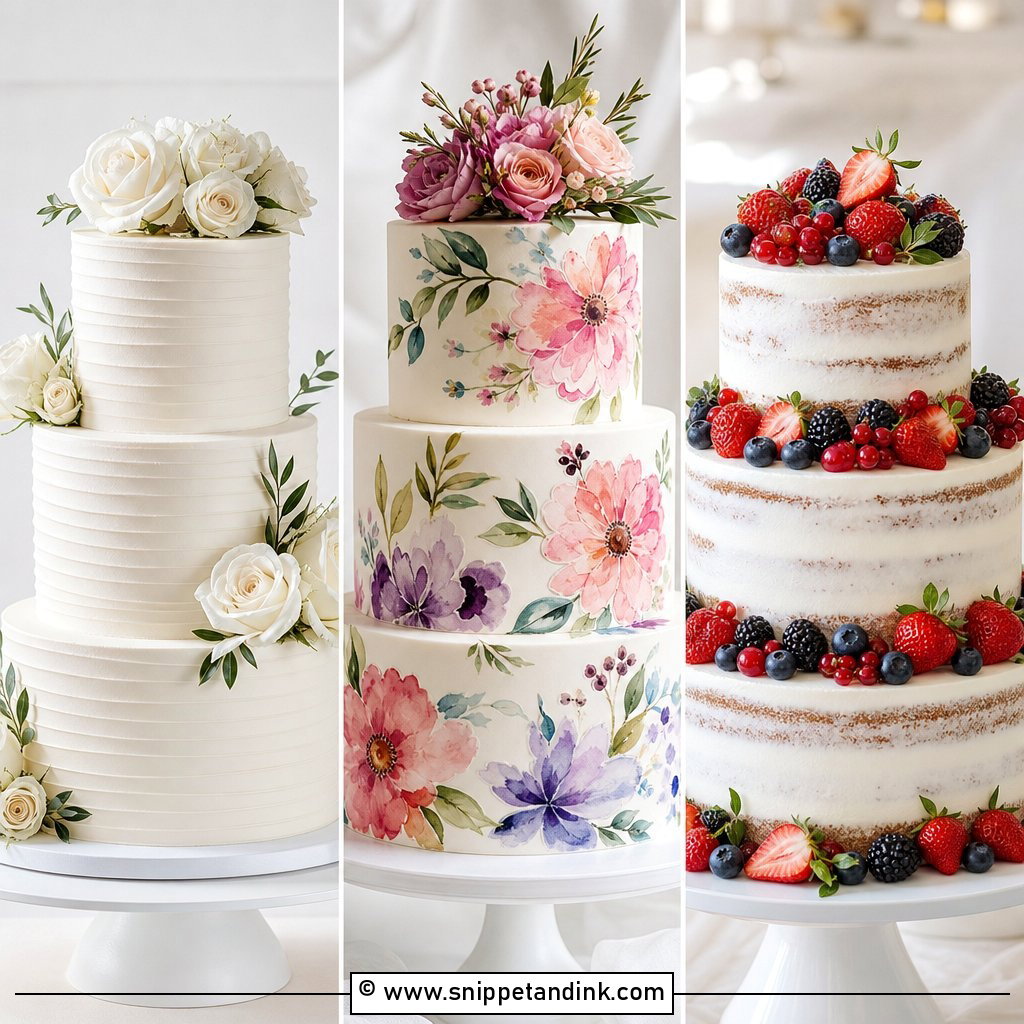
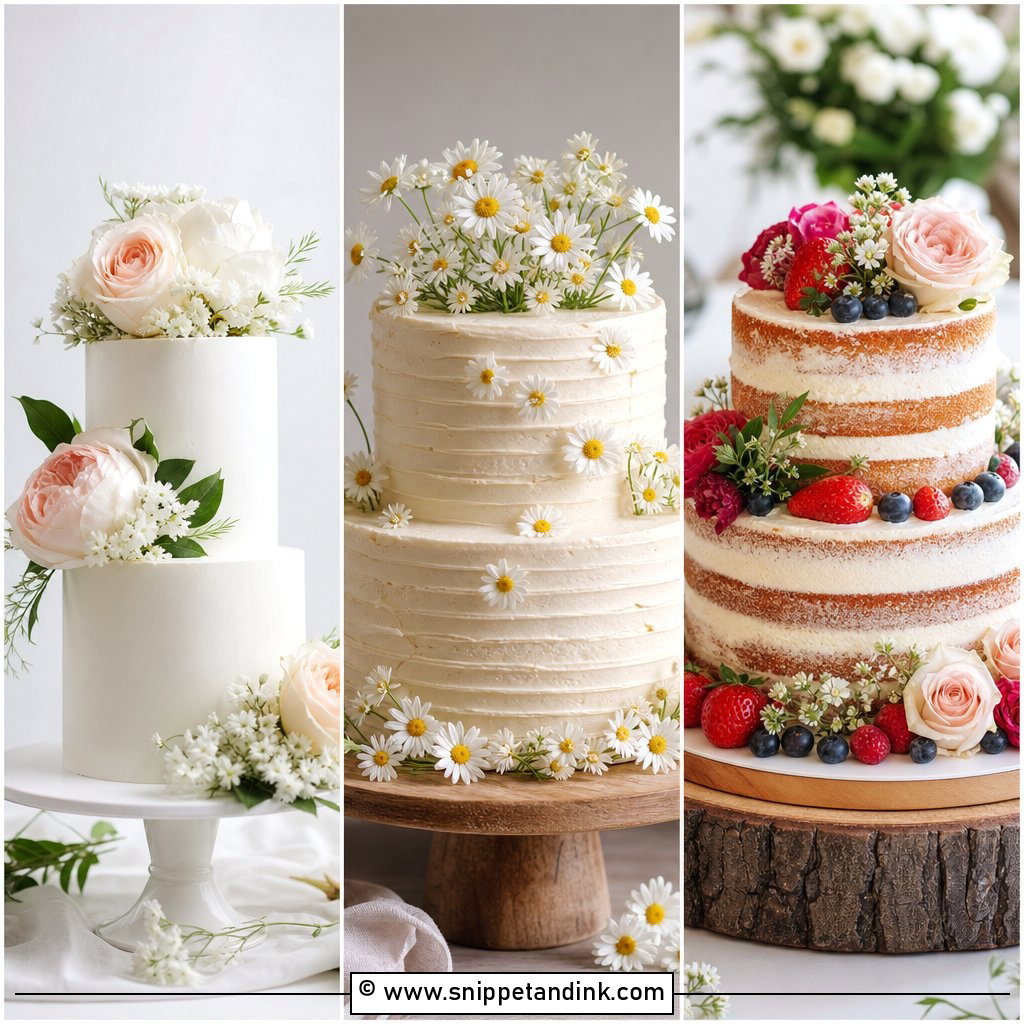
A wildflower wedding cake should look gathered, even though every stem on it was chosen. Muted dusty pink, butter yellow, lavender and soft orange stop it looking like a children’s party. Where I can, I use edible flowers grown without sprays, such as violas, cornflowers and calendula, and keep anything else on picks. A plain white or cream tier lets the flowers lead. For spring and summer meadow ceremonies, this is the one I’d reach for.
How a Three Tier Cake Gets From the Bakery to a Barn Floor
Rustic venues are lovely places to marry and awkward places to deliver a cake. Tiered cakes travel best chilled, in separate boxes, on a flat non-slip mat in the vehicle, and I stack them on site. Each tier sits on its own board with dowels or sturdy straws underneath carrying the weight above, and a central dowel through the stack stops it from sliding.
What I check the moment I walk in
- Whether the table is level. Old barn floors often aren’t, and a cake leaning slightly in the first hour leans more by the fourth.
- That the table won’t wobble when guests brush past it.
- Where the sun and patio heaters will be once the room fills.
- Who on the venue team will remove the dowels and boards when cutting.
Dried flowers and pampas go on after stacking, since they get crushed in transit. If you’re supplying your own flowers for the cake, hand them to the baker or planner rather than the venue staff, so they’re placed with the right barriers.
One Statement Per Cake, With Everything Else in Support
The boho cakes that hold up best follow one rule: pick a single statement and make everything else support it. Pampas, a terracotta gradient, macrame piping or a cascade of dried flowers each work on their own; stacked together they fight. Let your venue and season decide the finish, ask how every decoration is attached, and plan the cake table as carefully as the cake. Do that, and it will look as good at the cutting as it did on arrival.
You'll Like These Ideas:




Leave a Reply