
Most beach cakes I’m asked to fix at the sketch stage have the same problem: too many ideas on one cake. Shells, waves, starfish, sand and hibiscus all at once look like a souvenir shop. Beach wedding cakes look strongest when one coastal idea leads and the rest quietly supports it, and when the flavor inside matches the mood outside. Coconut, lemon, mango and passion fruit are the flavors I reach for most often on the coast. Below are thirty directions, from plain white tiers to bold tropical ones, each with what I’d watch for if I were the one building it.
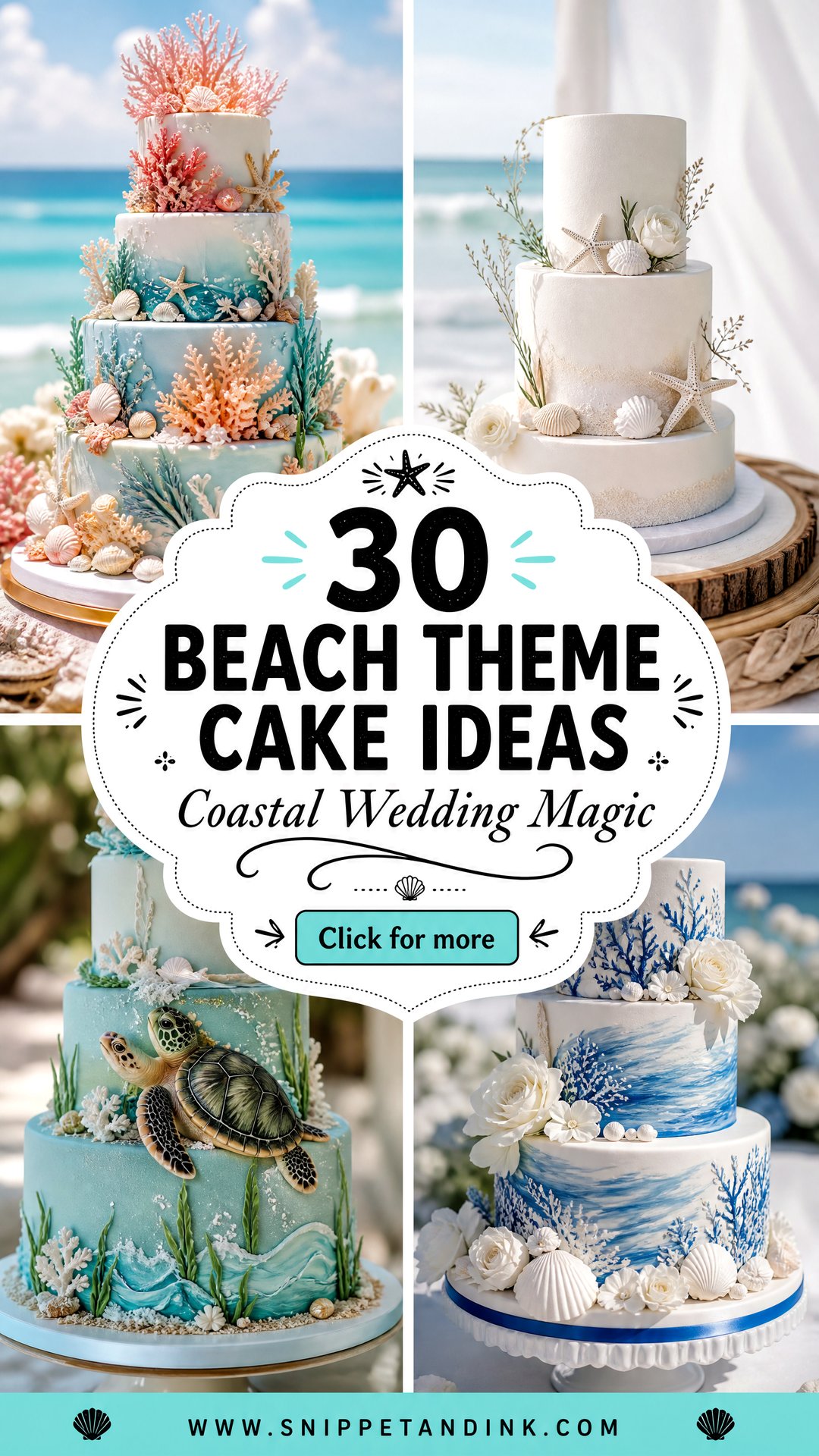
One Motif, Carried Through: How I Sketch a Beach Cake
When a couple shows me a folder of twenty beach cakes, I ask them which single detail they keep coming back to. It’s usually obvious once you look: they love the shells, or they love the watercolor. That detail becomes the lead, and everything else on the cake has to support it or go.
From there I work through three questions in order. How formal is the reception? A pearl-and-orchid cake looks lost at a barefoot bonfire, and a driftwood cake looks underdressed in a resort ballroom. What colors are already on the table? I want a linen swatch, the invitation and a photo of the bouquet before I mix a single shade of blue. And how hot will the room or terrace be? That decides between buttercream, ganache and fondant before anything decorative is drawn.
What to bring to your first design meeting
- Two or three cake photos you love, plus one you dislike and why.
- A fabric swatch or photo of the linens and the bridesmaid color.
- The guest count, so the tier sizes are right before the design is fixed.
- Where the cake will stand and whether that spot gets afternoon sun.
1. Beach Wedding Cake With Seashells
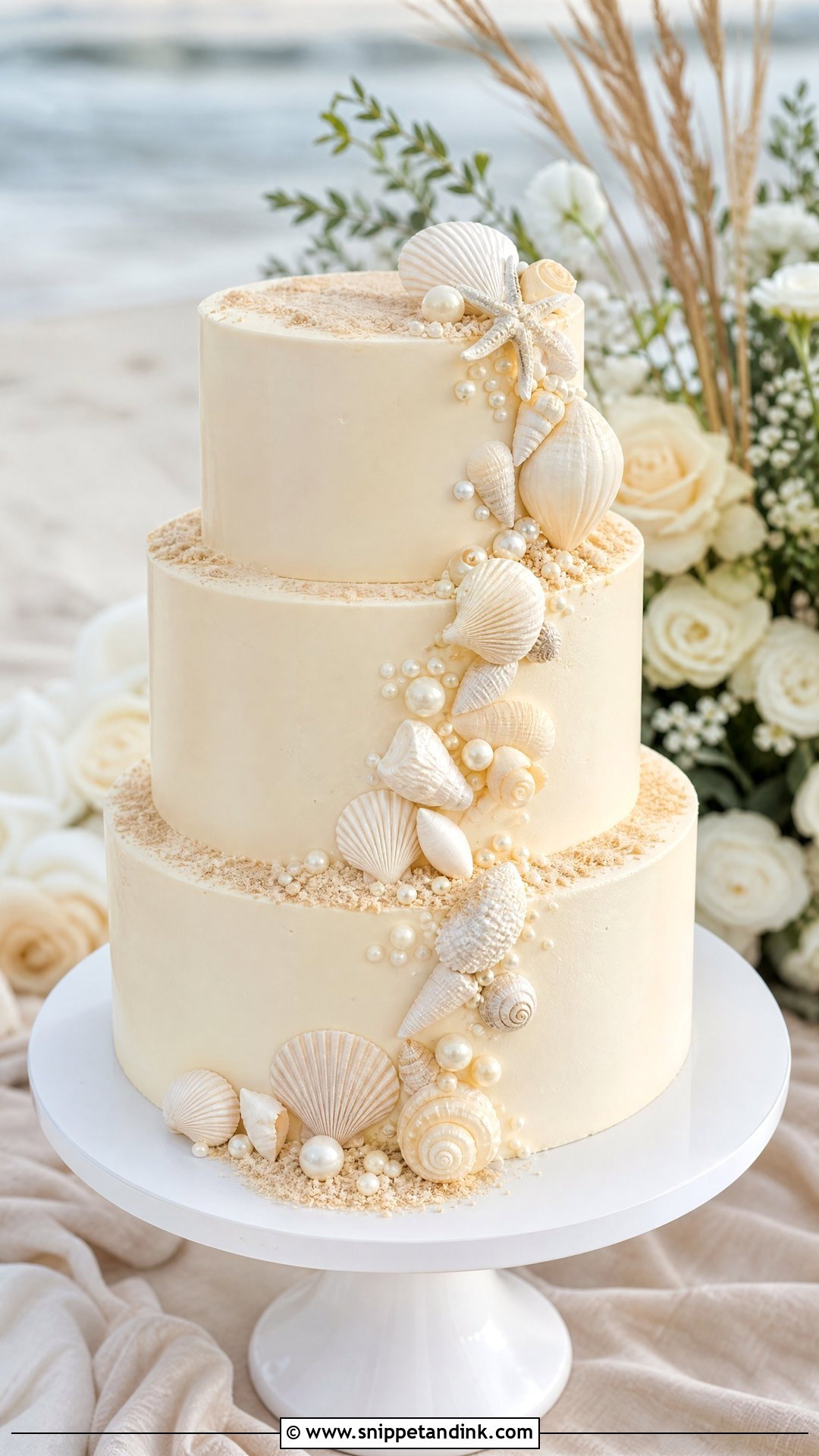
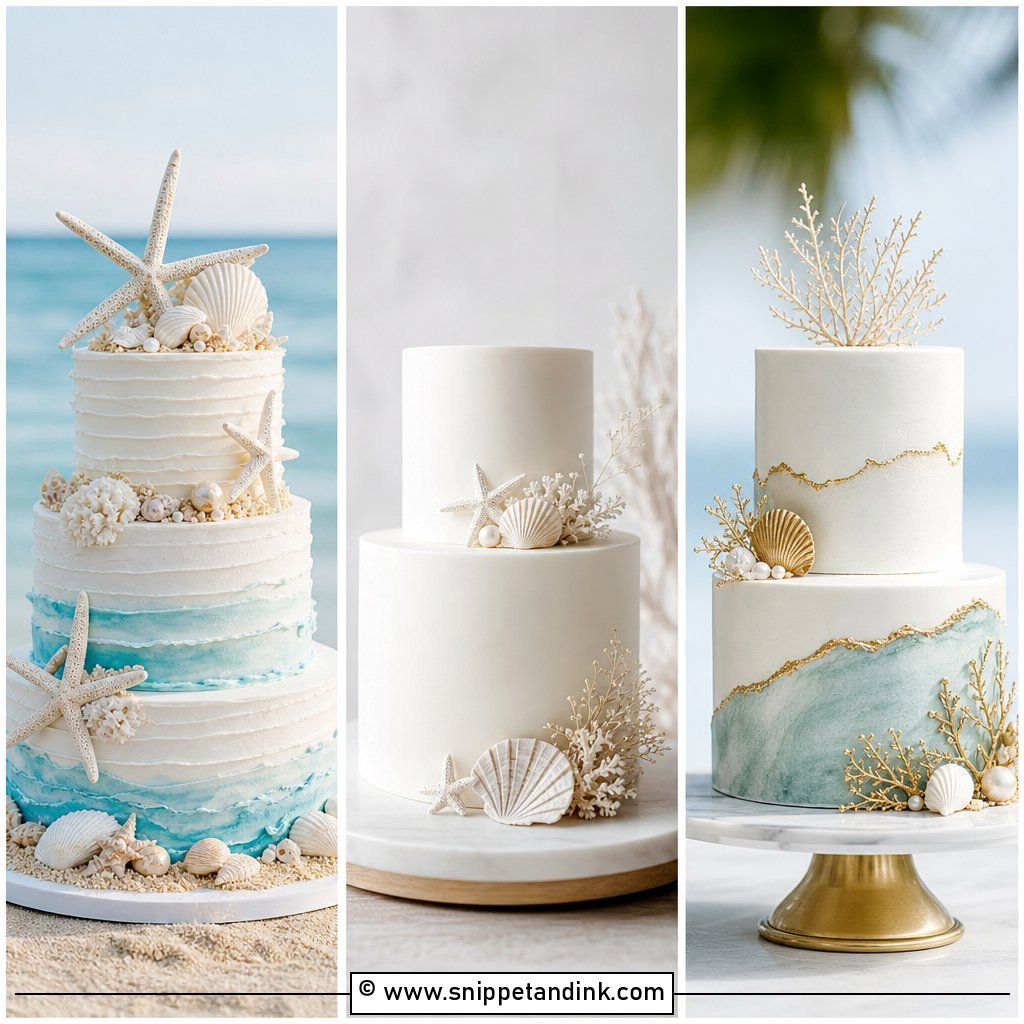
Shells only look elegant when they’re placed with a plan. I keep the cluster heavier at the base and lighter near the top, so the eye travels upward and the cake doesn’t look top-heavy. Sugar, white chocolate and fondant shells all work, though chocolate gives the crispest ridges. Ivory or soft sand tones keep them refined, and a light line of edible sand around the base board finishes the shoreline. I tend to suggest this one for formal oceanfront receptions.
2. Ocean Wave Wedding Cake
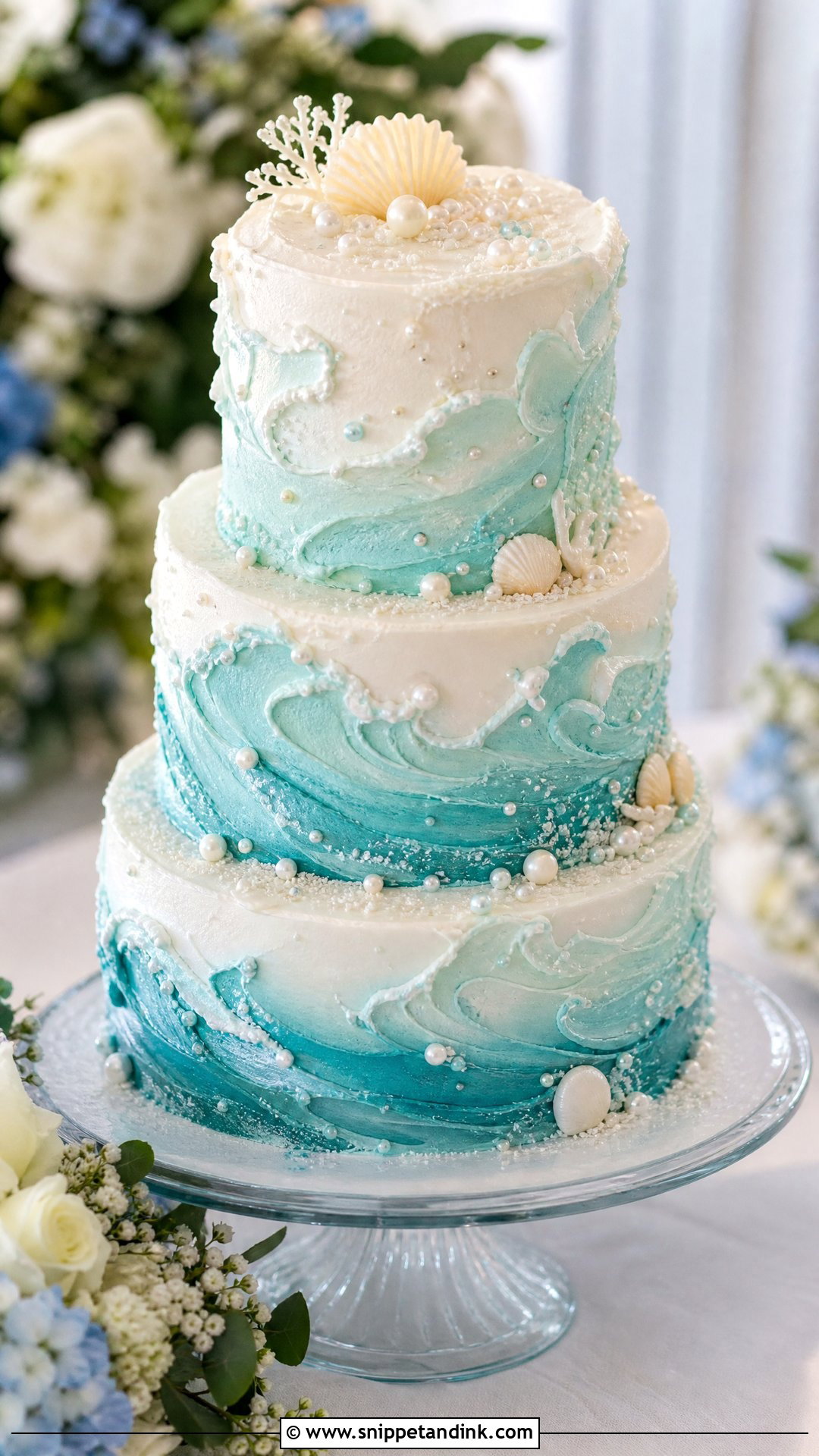
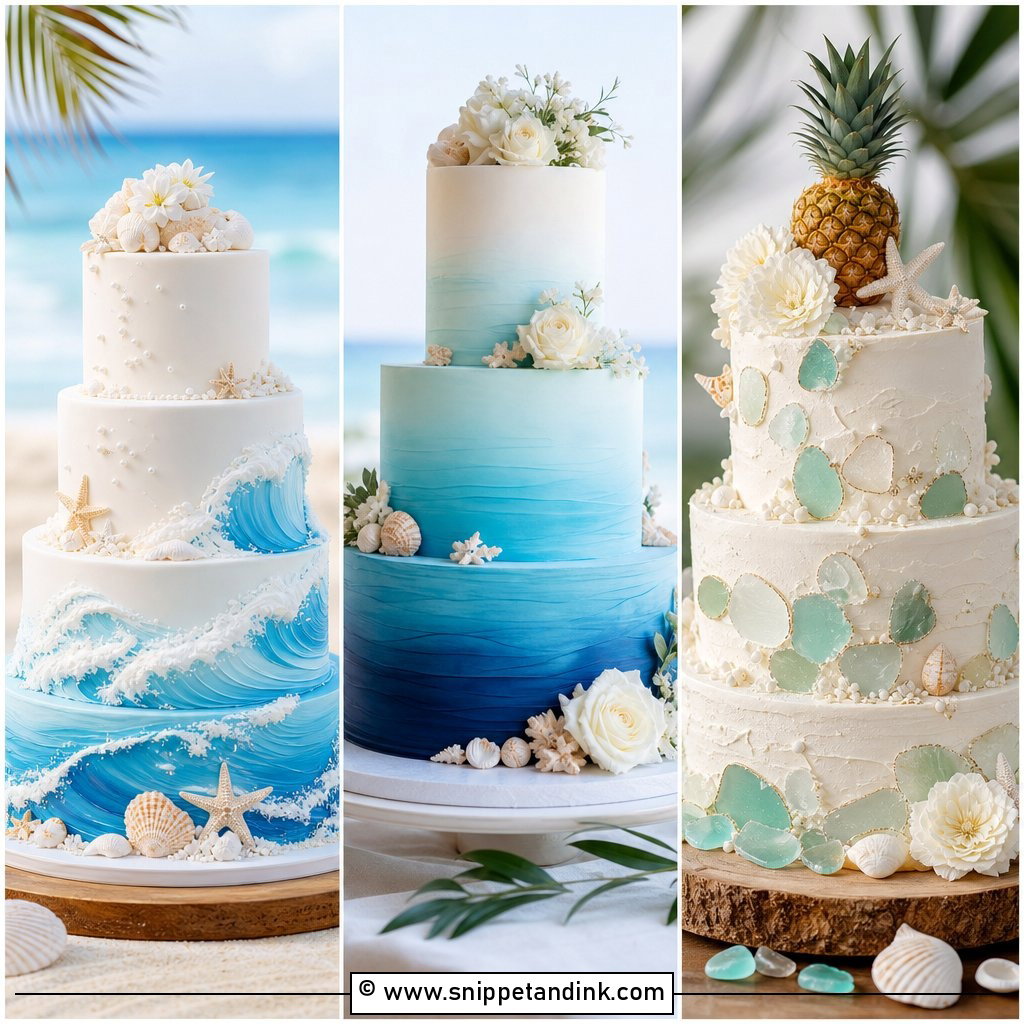
Movement is the point. I build the waves in buttercream with a bent palette knife, blending seafoam into aqua and white, and keep the texture to the bottom tier so the upper tiers read as calm sky. A dusting of pearl shimmer on the crests looks like sunlight on water. Strong blue buttercream can taste of coloring if it’s overdone, so I build the shades in thin layers. Lemon or almond sponge stays fresh tasting under all that color.
3. Sand Beach Wedding Cake
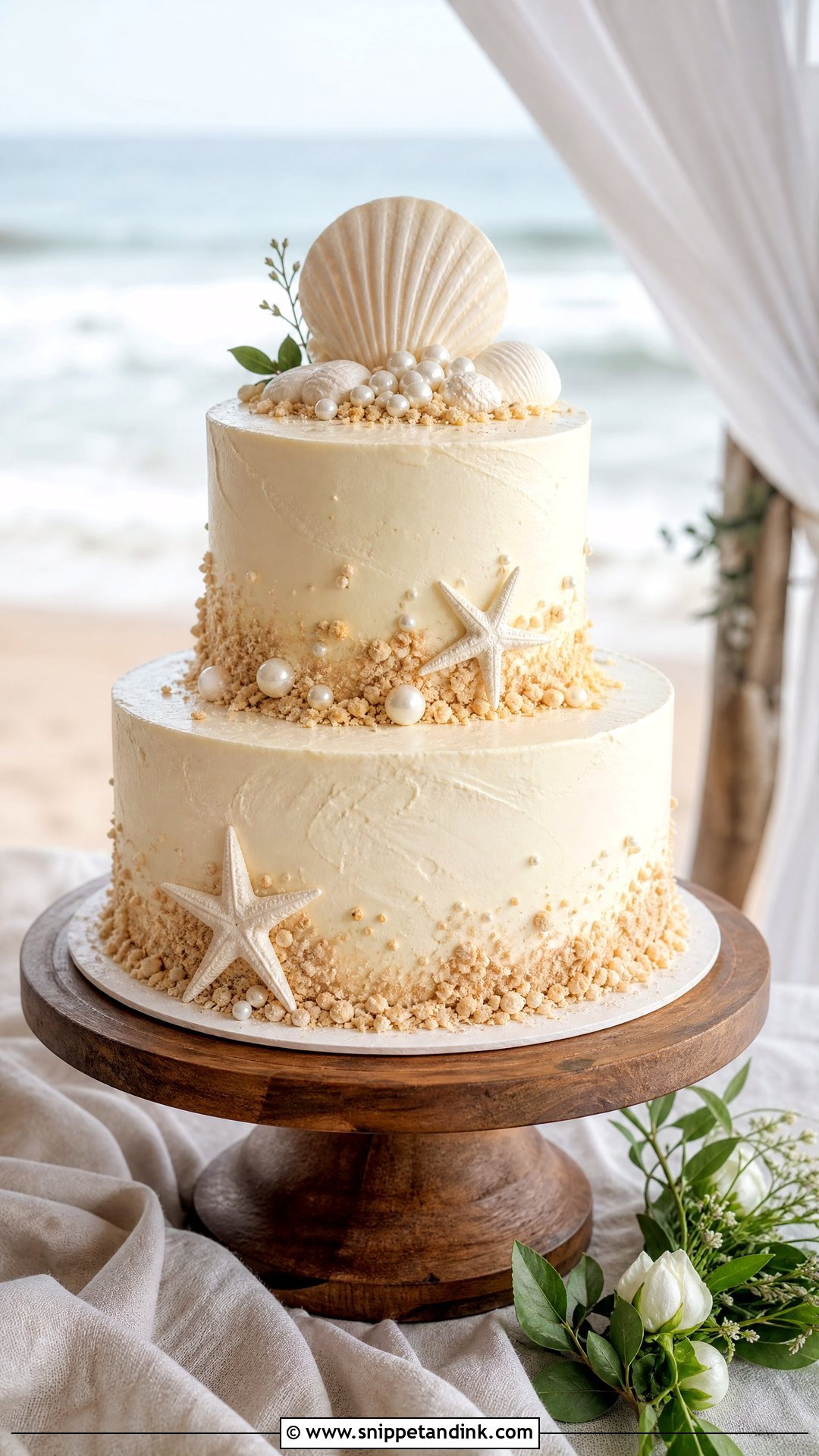
That warm sandy finish usually comes from crushed vanilla wafers, graham crackers or toasted coconut pressed onto ivory buttercream. I comb a soft ripple into the frosting first so the crumbs settle like wind-shaped sand. Crumb coatings absorb moisture from sea air, so they go on as late as I can manage. A few shells or a single starfish is enough decoration. Sit it on a wooden stand or woven charger for a barefoot ceremony.
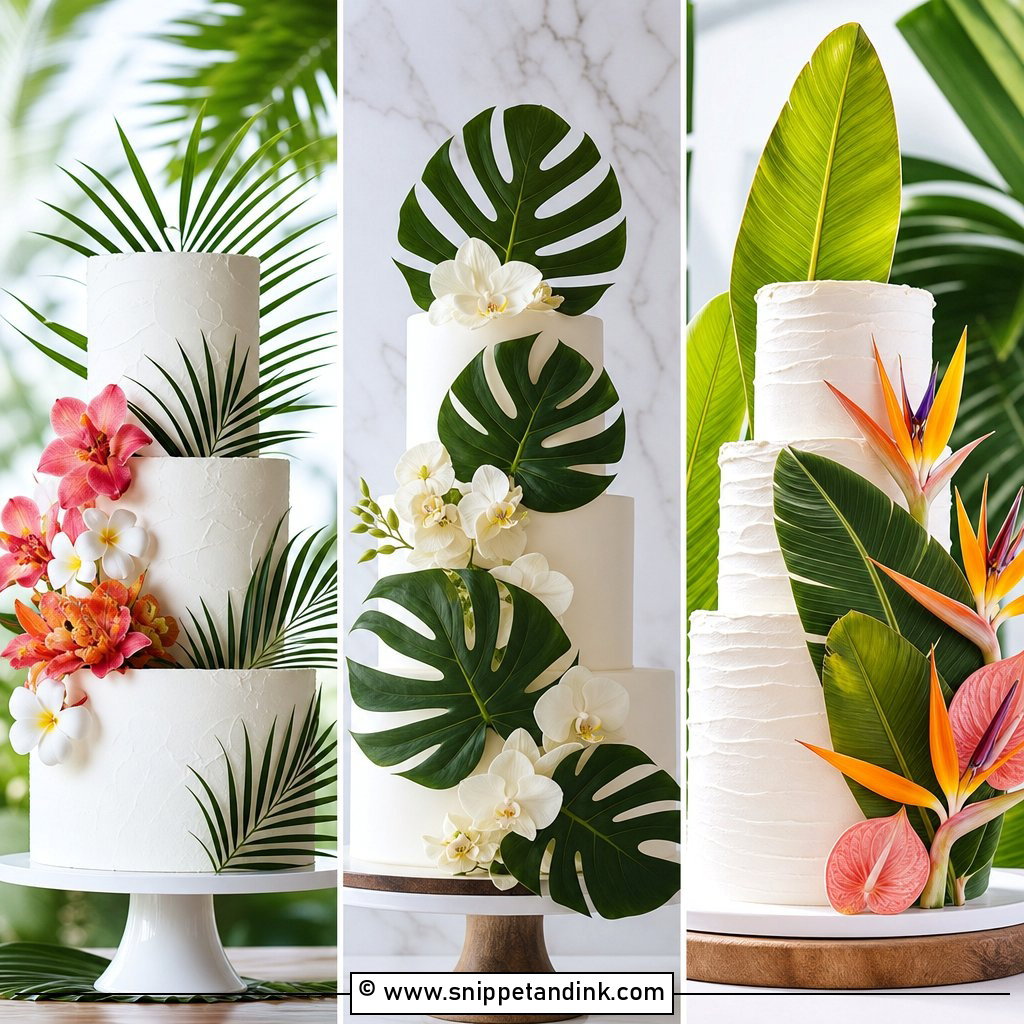
4. Tropical Flower Wedding Cake
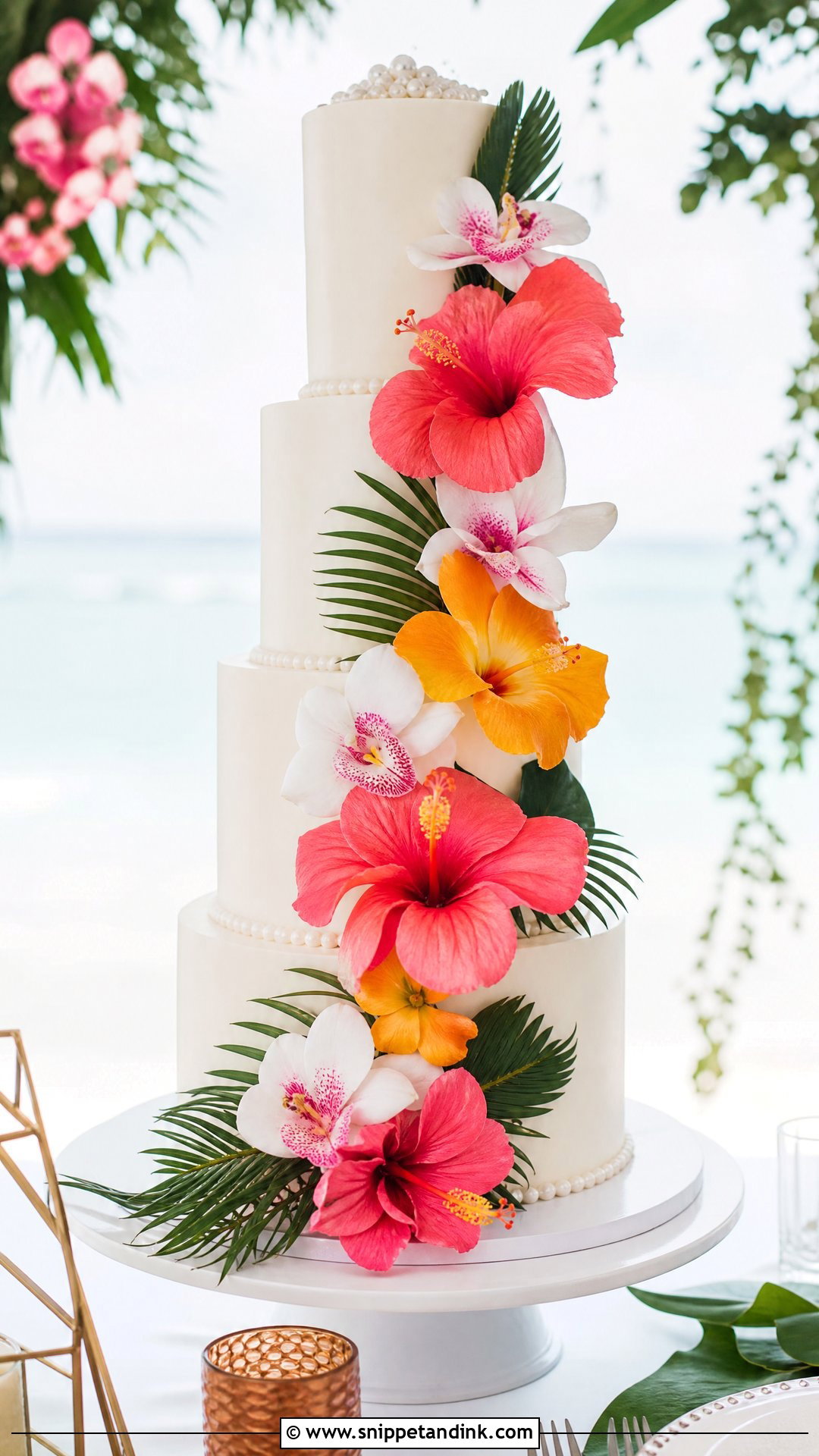
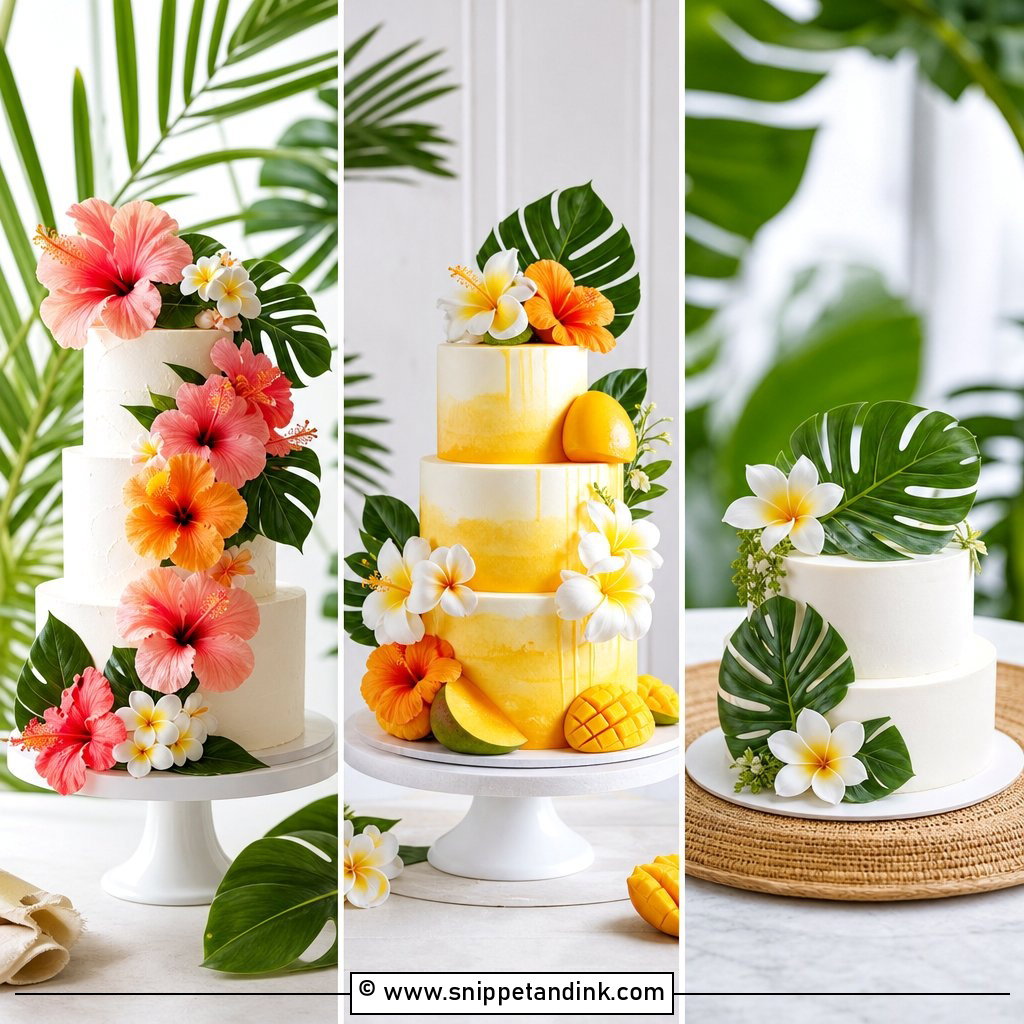
Fresh or sugar hibiscus, orchids, plumeria, anthurium and bougainvillea bring the color; your palette decides the mood. Coral and pink lean romantic, orange and yellow lean bold. I frame the flowers with palm or monstera leaves so the arrangement has a shape instead of looking like a pile. Bougainvillea bracts are papery and drop easily, so I’d use them only as accents. Coconut with mango curd keeps the inside tropical too.
5. Blue Ombre Beach Wedding Cake
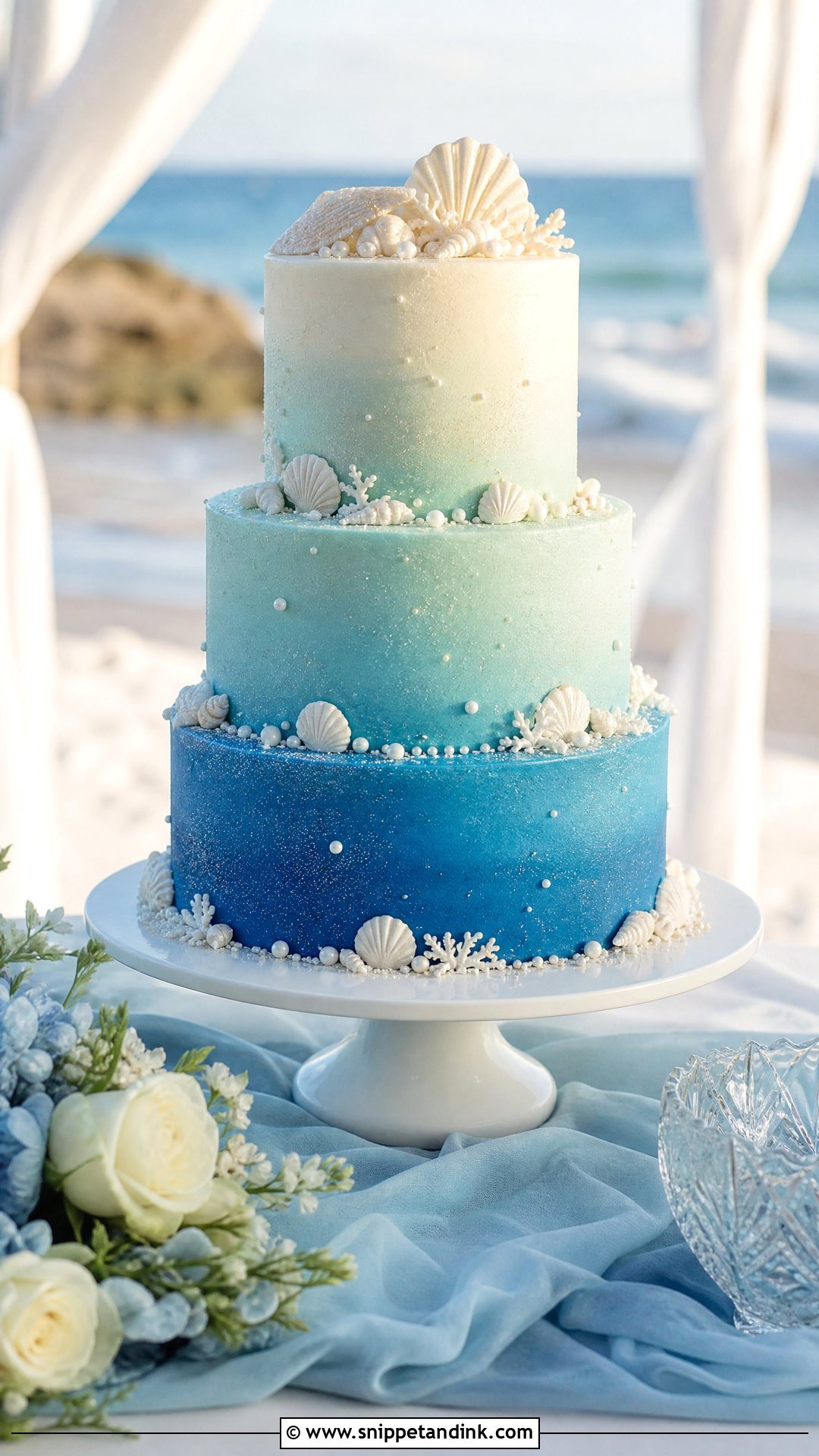
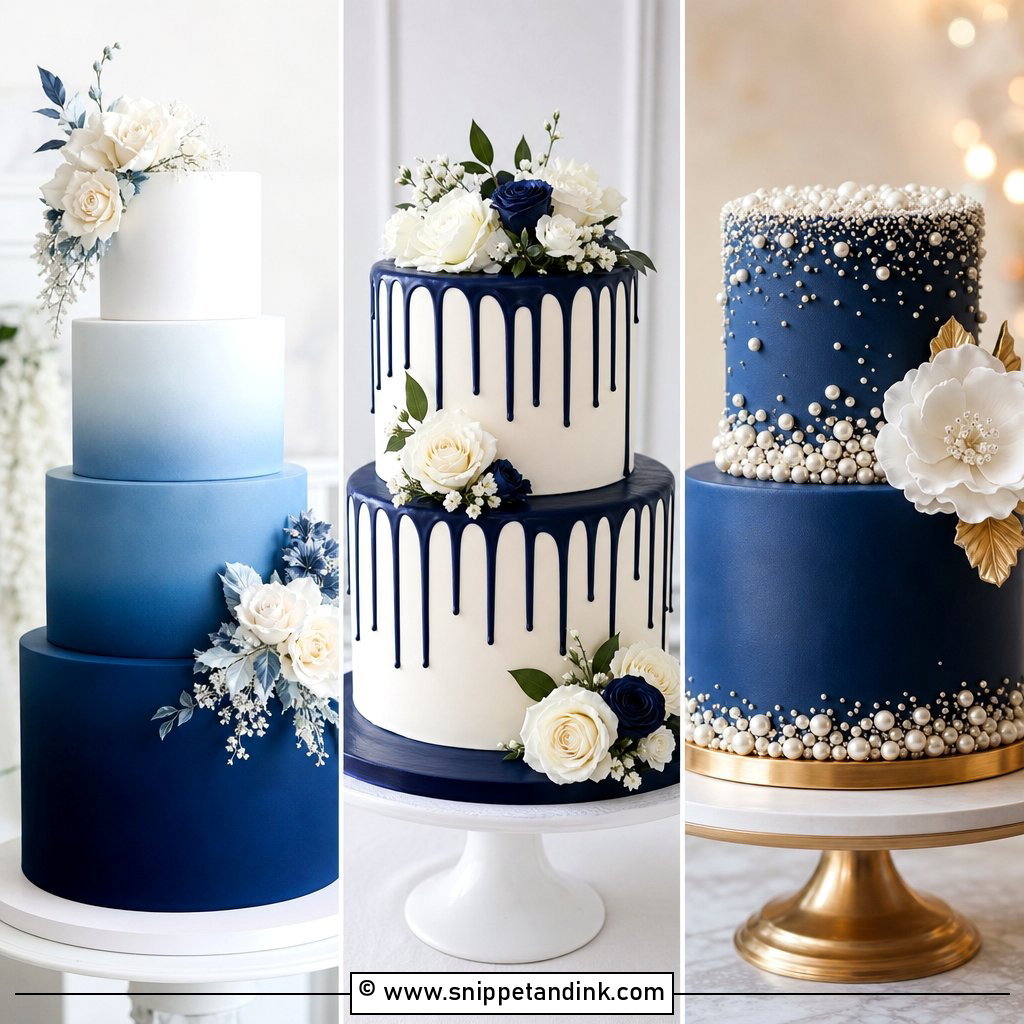
Ombré is easy to describe and fussy to execute. A smooth fade from deep ocean blue through aqua to white needs each band blended while the buttercream is still soft, or you get visible stripes. Watercolor fondant is an alternative when the venue is hot. I keep decoration to a few sugar pearls or one white orchid so nothing interrupts the gradient. Glass decor and pale linens suit it, and vanilla or coconut sponge keeps the flavor simple.
6. White Beach Wedding Cake
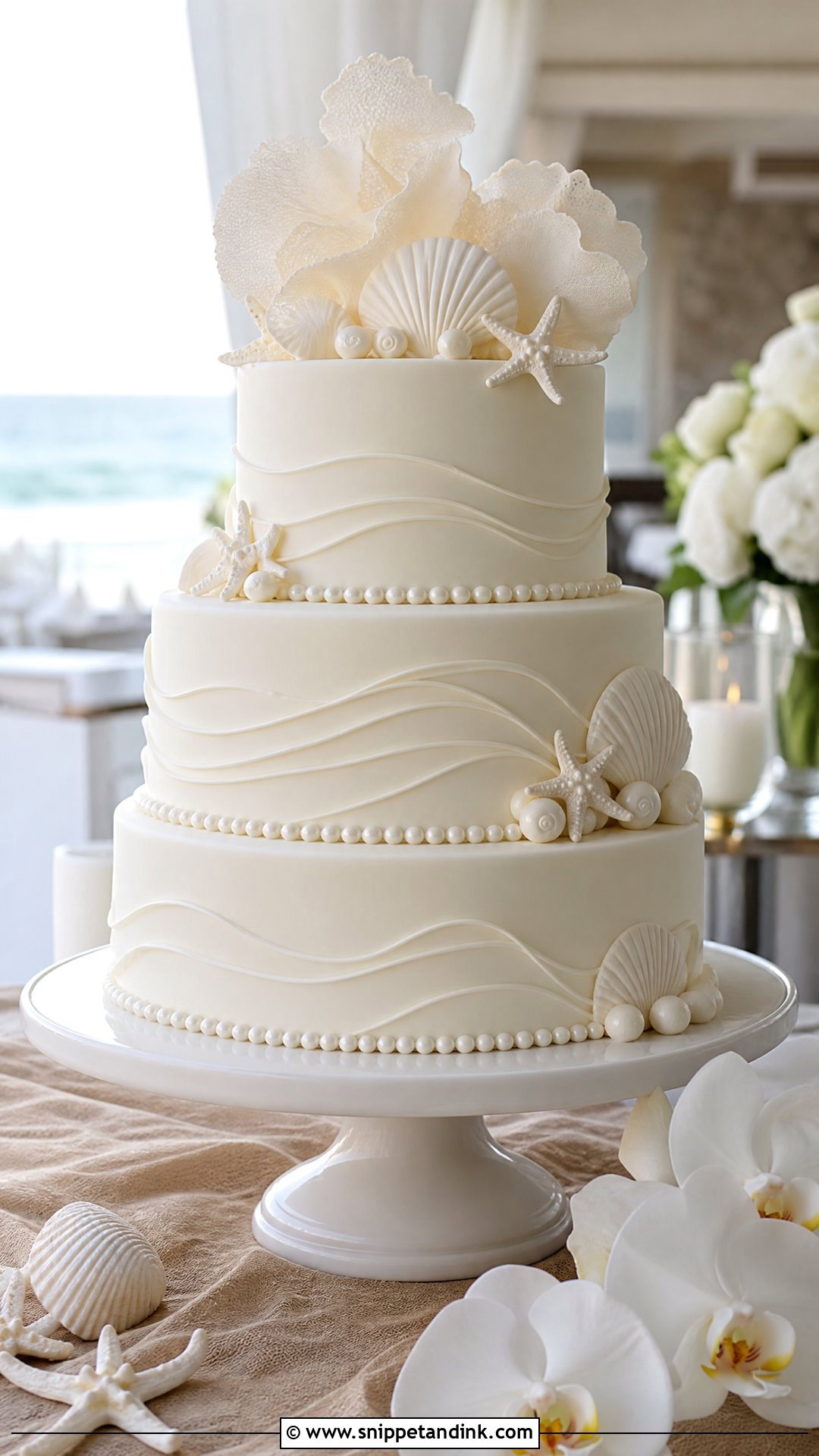
An all-white cake can still read coastal if the texture does the talking: buttercream waves, pearl piping, white sugar shells and soft ruffles that look like sea foam. I always check a white cake against the linens before the wedding, because ivory beside bright white cloth looks yellow in photos. It fits a resort ballroom as easily as a tent on the sand. A hint of sand beige or pale blue adds depth, and lemon elderflower suits the quiet palette.
7. Starfish Wedding Cake
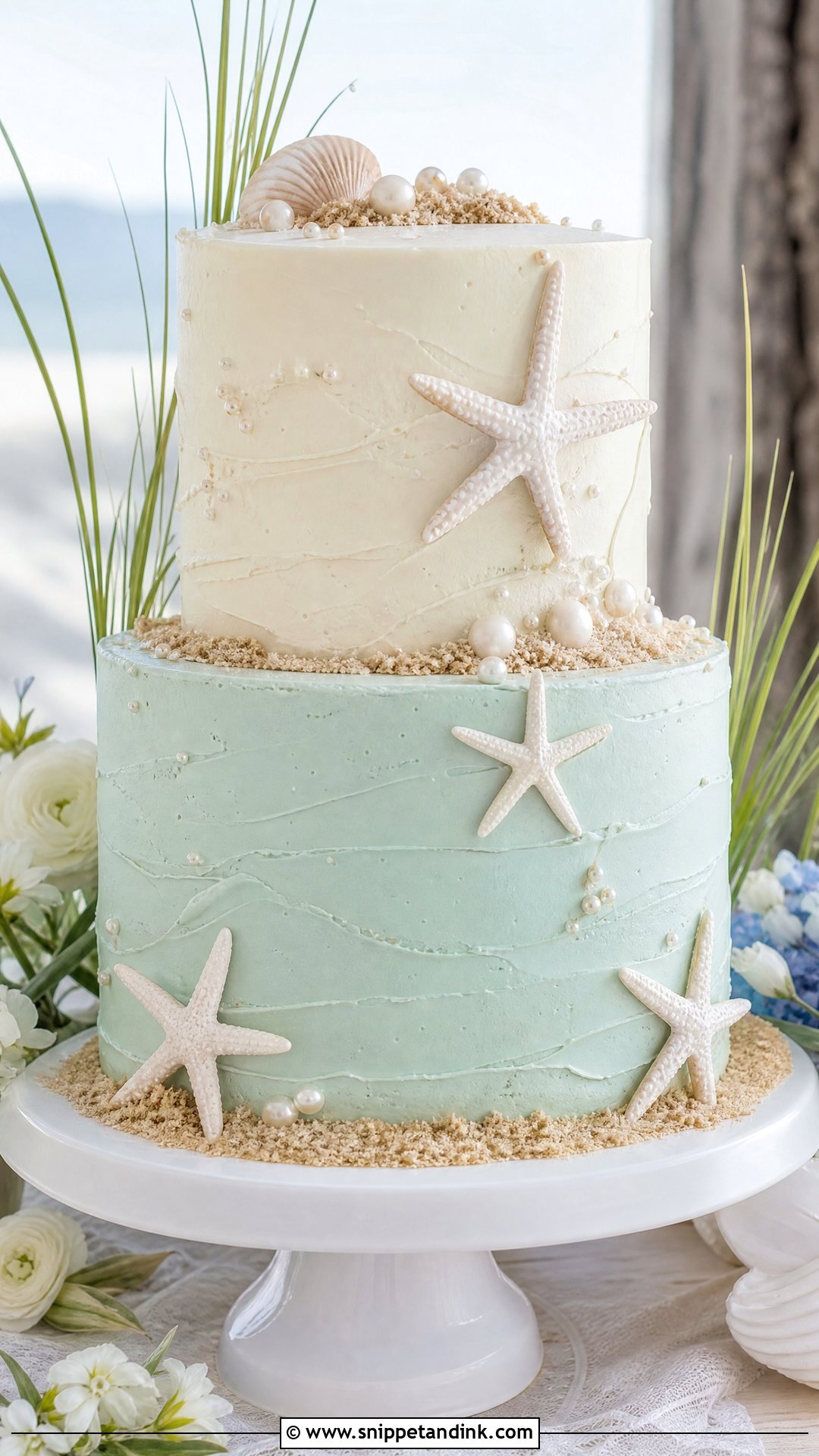
Starfish can tip a cake from wedding into kids’ party quickly. My rule is one large sugar starfish as the topper, or a few small ones placed as if they washed up, never both. I dry them for days so the arms stay rigid, then set them on soft white buttercream or pale aqua fondant with a little cookie-crumb sand. A three-tier cake with just a handful of pieces looks cleaner and more expensive. Small family-focused receptions suit it well.
8. Coral Reef Wedding Cake
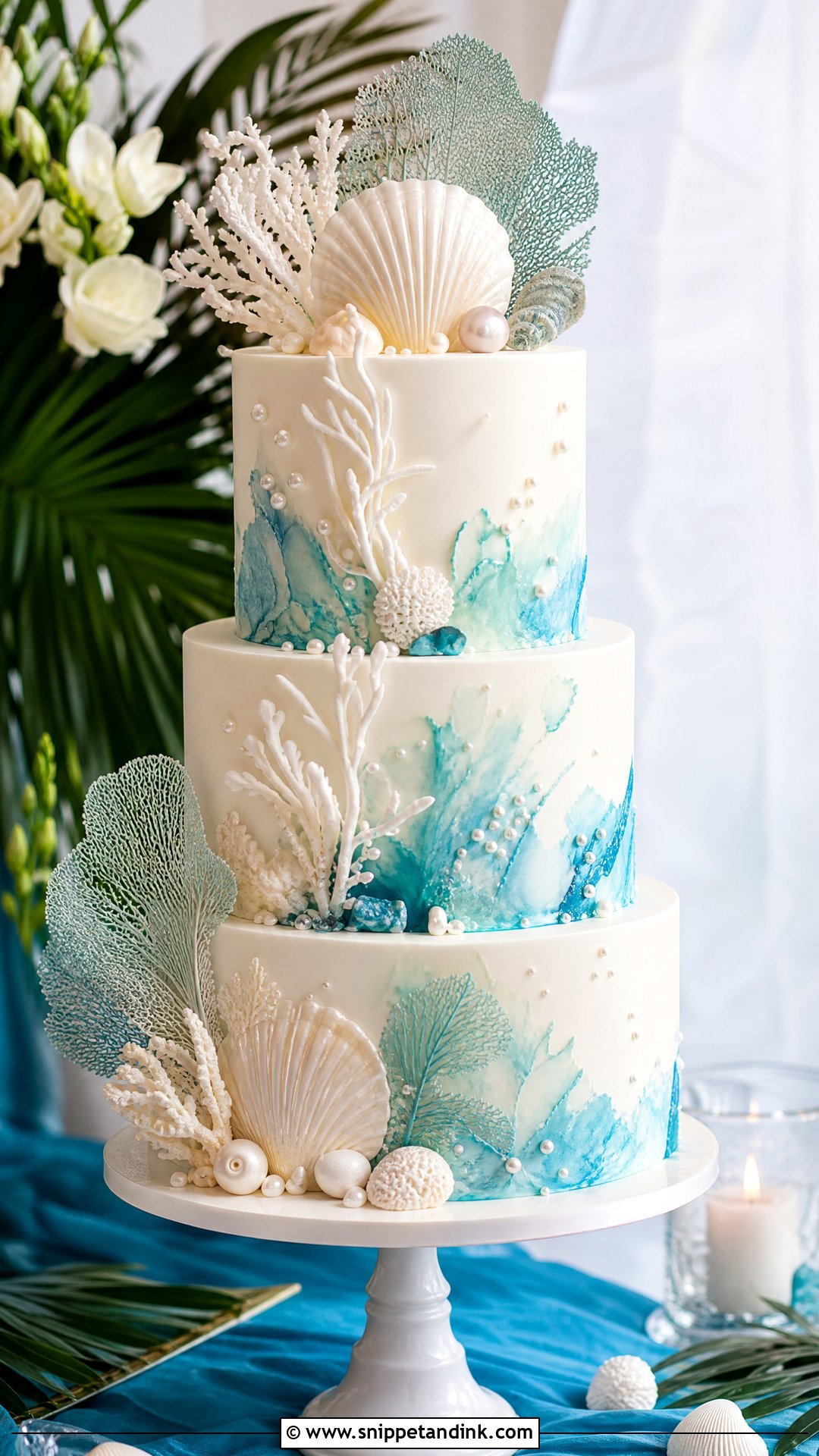
Here’s a true centerpiece cake, and a technical one. Sugar coral branches, fondant sea fans and pearl bubbles are delicate, so I build them in advance, let them dry hard and attach them on site. Limiting the palette to coral, ivory, aqua and pale gold keeps it refined instead of cartoonish. Under warm reception lighting the coral tones glow, which makes it a real focal point. Tropical fruit fillings keep the flavor as lively as the design.
9. Sea Glass Wedding Cake
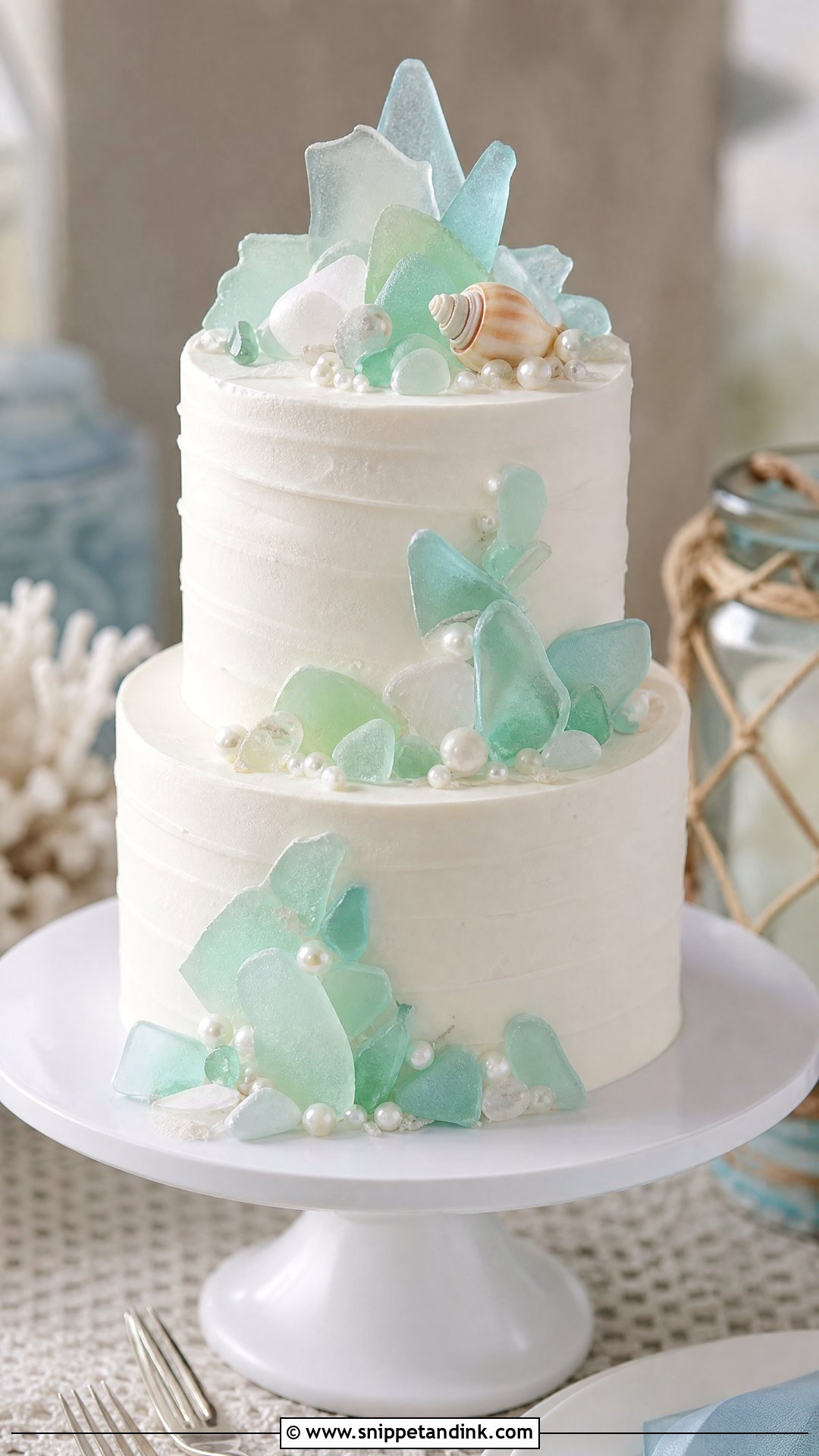
Sea glass gives you the coast without anything obvious like a shell. I cast the pieces in isomalt tinted pale blue, mint and aqua, then frost them so they look tumbled by waves. Isomalt resists humidity far better than boiled sugar, which turns sticky on a beach. A clean ivory cake lets them stand out, whether they sit around the bottom tier or cascade down one side. Lemon or vanilla raspberry sponge suits the cool palette.
10. Nautical Wedding Cake
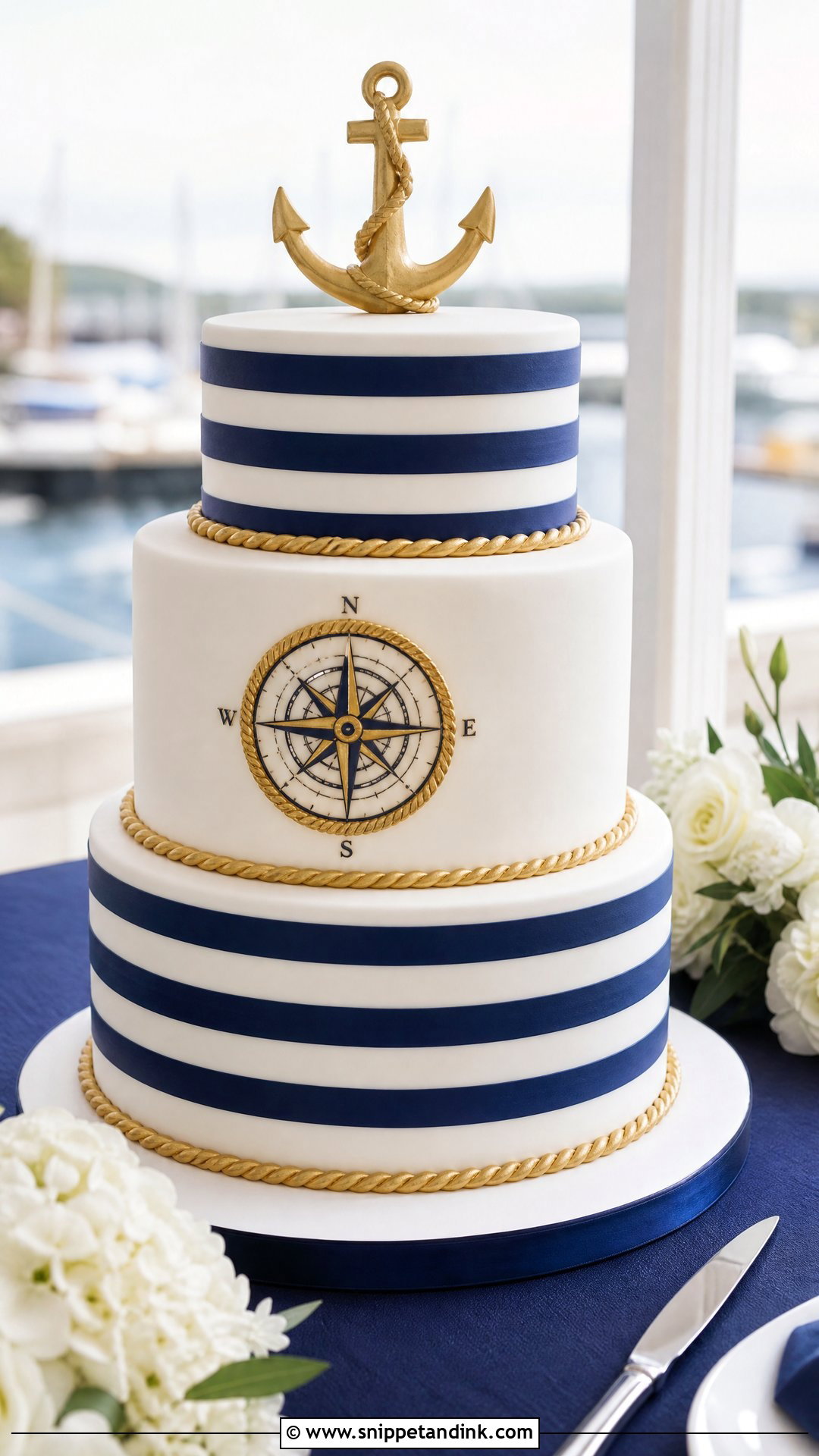
Nautical cakes need tailoring. Navy and white stripes, rope borders, a little gold and perhaps an edible compass look sharp when the lines are crisp and the motifs are few. I often do a white top tier over a navy base with a gold rope trim, which reads yacht club rather than costume. Navy fondant shows every fingerprint, so it goes on last. Chocolate with salted caramel is a surprisingly good match for the darker palette.
11. Palm Leaf Wedding Cake
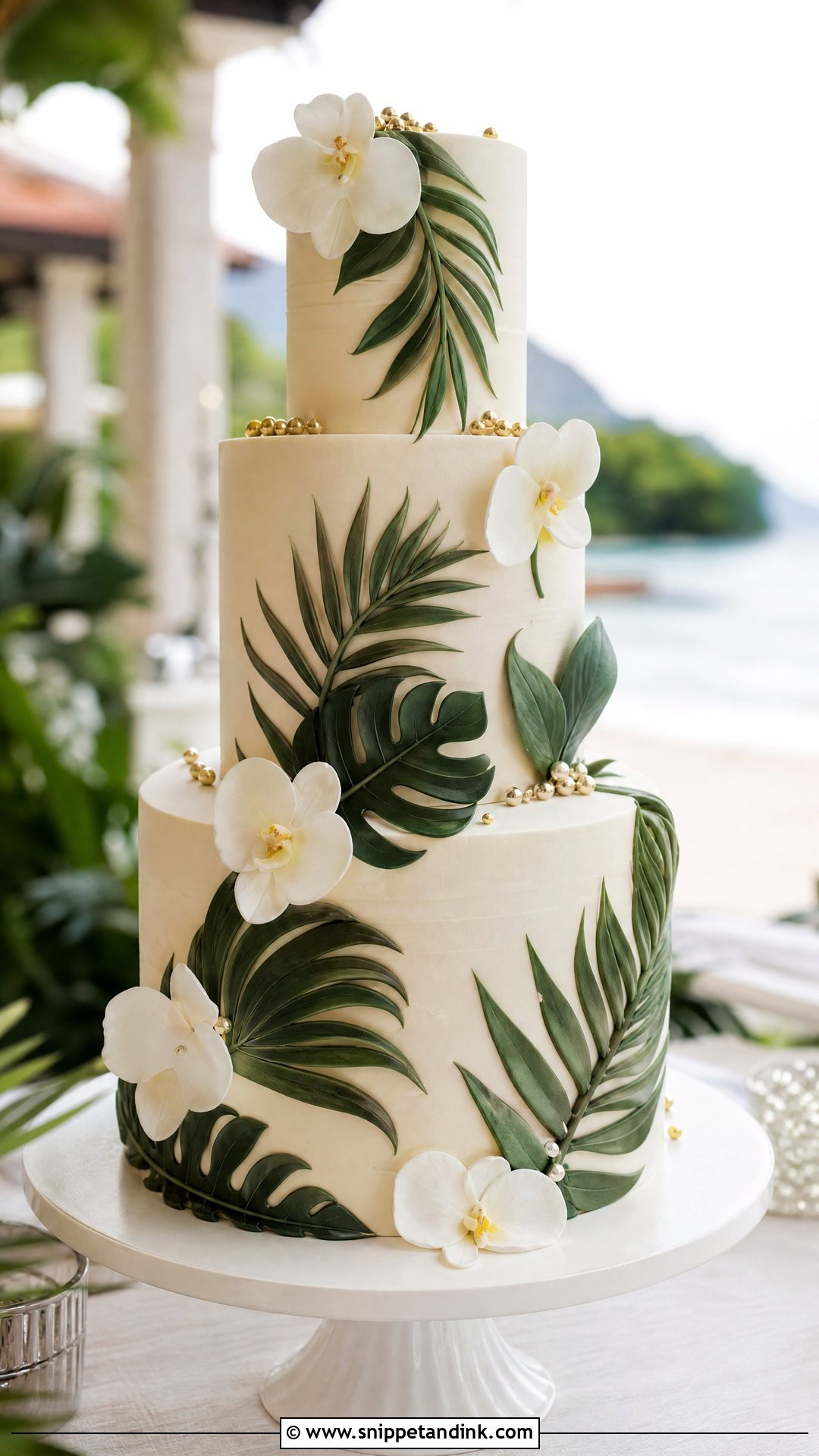
Palm leaves add height and movement without a single flower. Sugar or painted fondant leaves hold their shape all evening, while real fronds need washing, a food-safe barrier and should go on at the venue because they curl as they dry. Deep green on white buttercream feels like a resort; a blush or beige base softens it. A couple of white orchids or a gold edge adds polish. Coconut lime is my favorite pairing here.
12. Beach Wedding Cake With Orchids
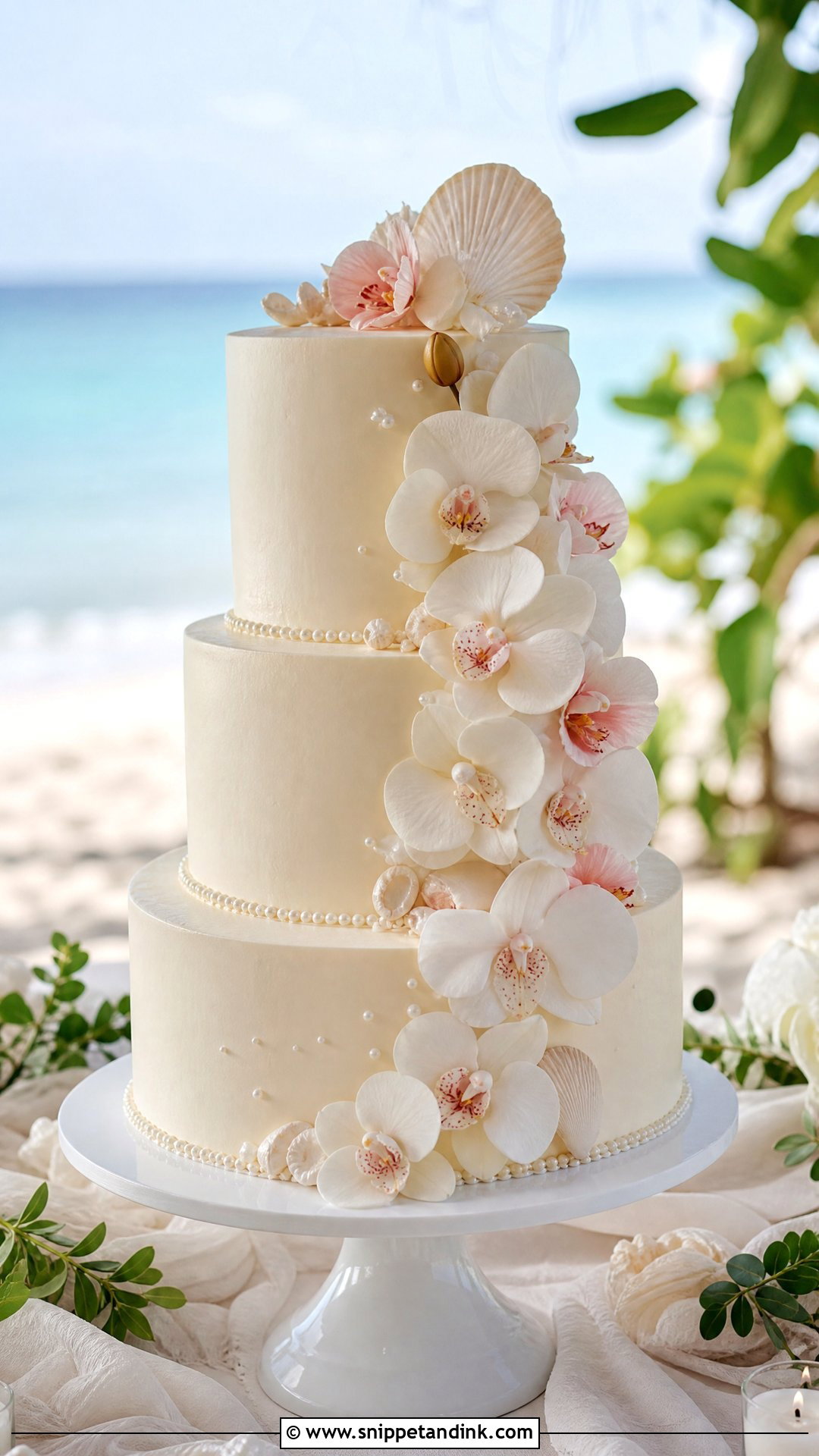
Orchids are naturally sculptural, which is why a cascade from the top tier down one side looks so composed. White orchids feel clean and luxurious; pink, purple or yellow feel more like a destination. They also cope with warmth better than many tropical flowers. I keep the cake itself simple, smooth buttercream or a faint wave texture, and wrap every stem before it goes near the frosting. Passion fruit sponge sits well underneath.
13. Coconut Beach Wedding Cake
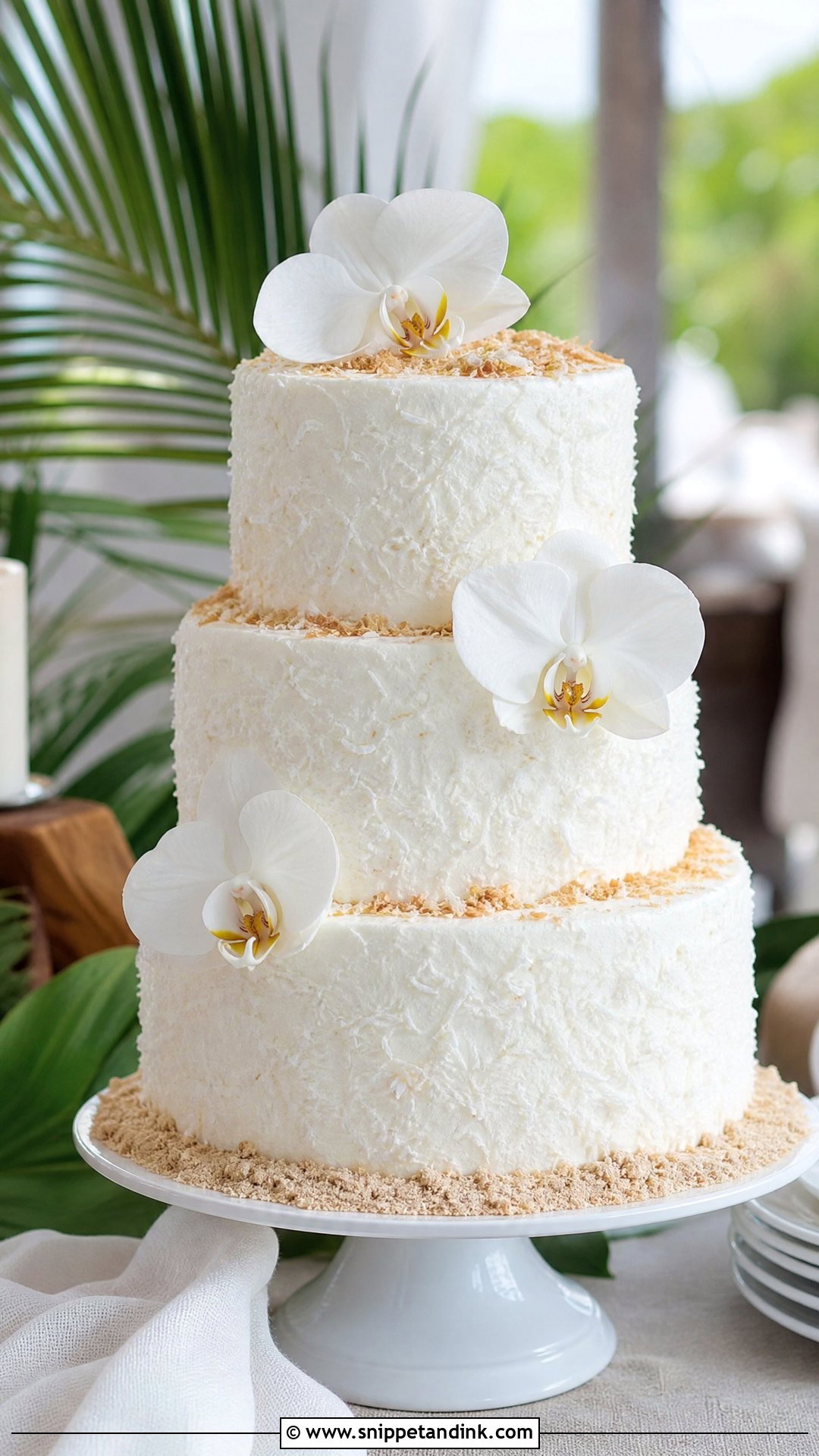
Coconut is the rare case where the flavor carries the theme on its own. Outside, toasted flakes or a smooth white finish with a few tropical flowers is plenty. Inside, coconut cake with lime curd, pineapple filling or a white chocolate coconut cream all taste bright. I’d confirm early whether any guests avoid coconut, because some people with nut allergies are told to steer clear of it too. Add shells or a sandy base if you want a visual link.
14. Sunset Beach Wedding Cake
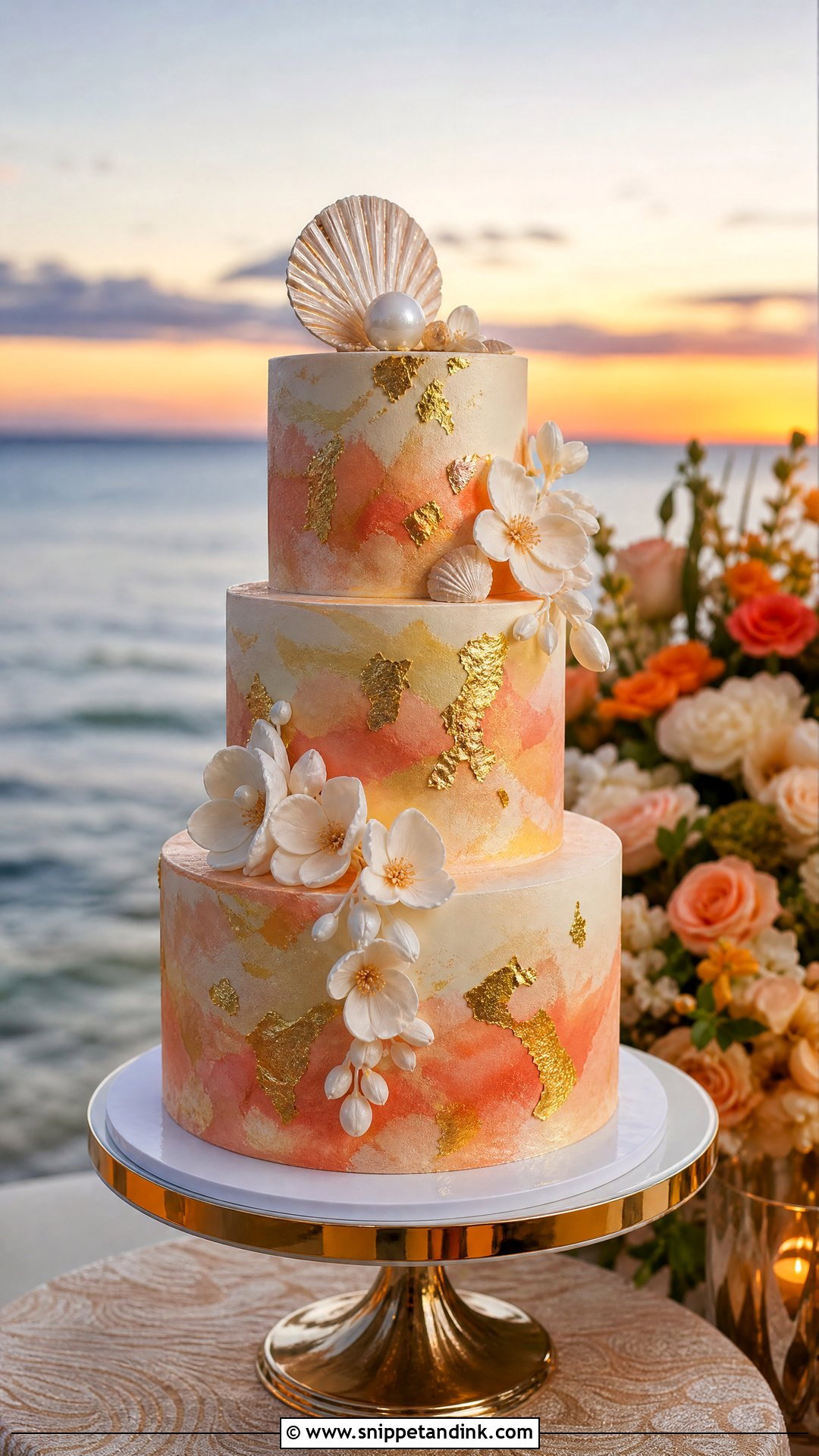
Peach, coral, blush and soft gold blended like the sky at dusk: that’s the sunset cake. I check the colors under the actual evening light at the venue if I can, since warm bulbs exaggerate orange and can make coral look muddy. White flowers, a touch of gold leaf and subtle shells keep it bridal. Keep the silhouette simple so the color stays the story. Vanilla sponge with passion fruit curd or strawberry buttercream suits it.

15. Minimal Beach Wedding Cake
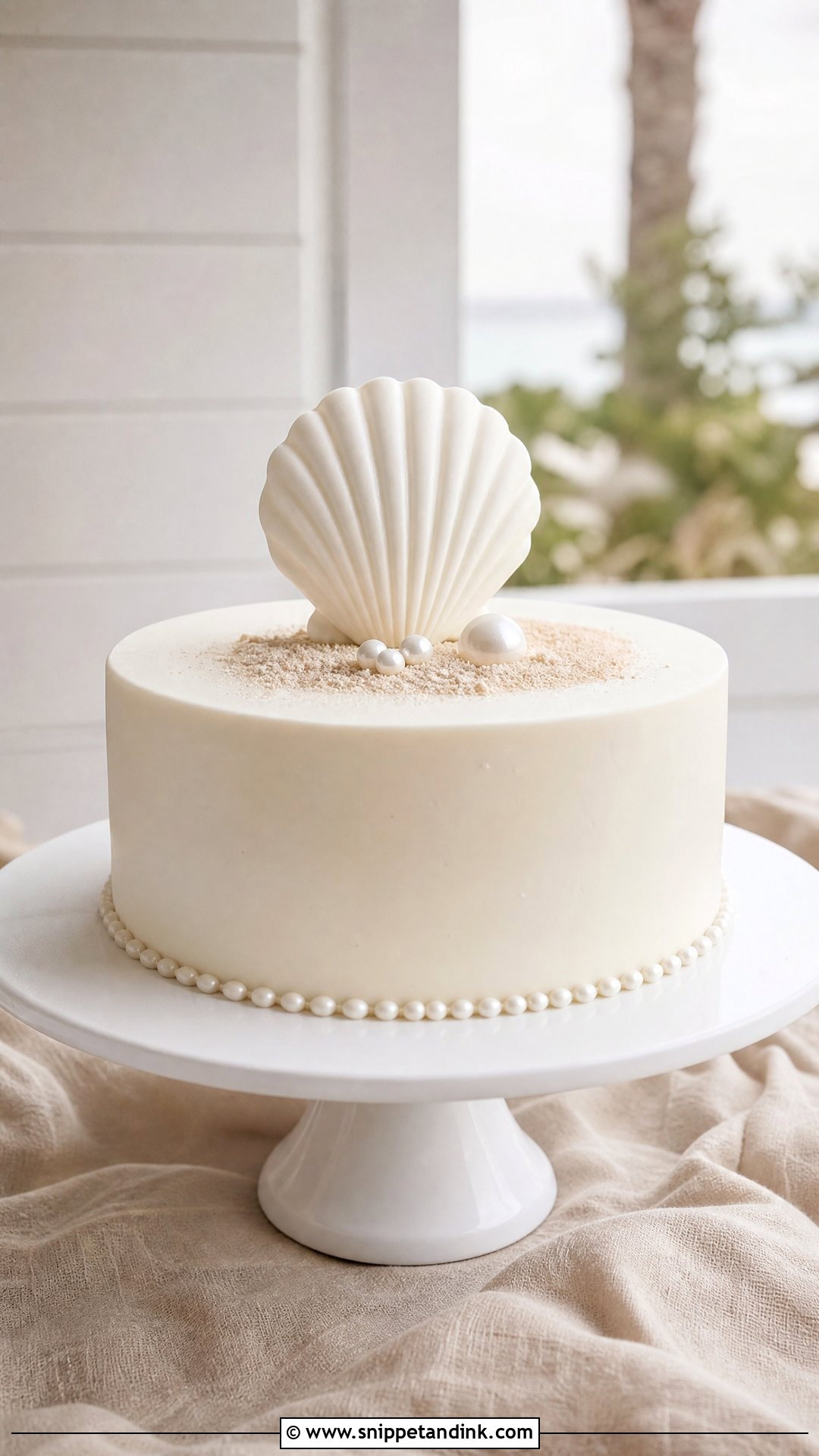
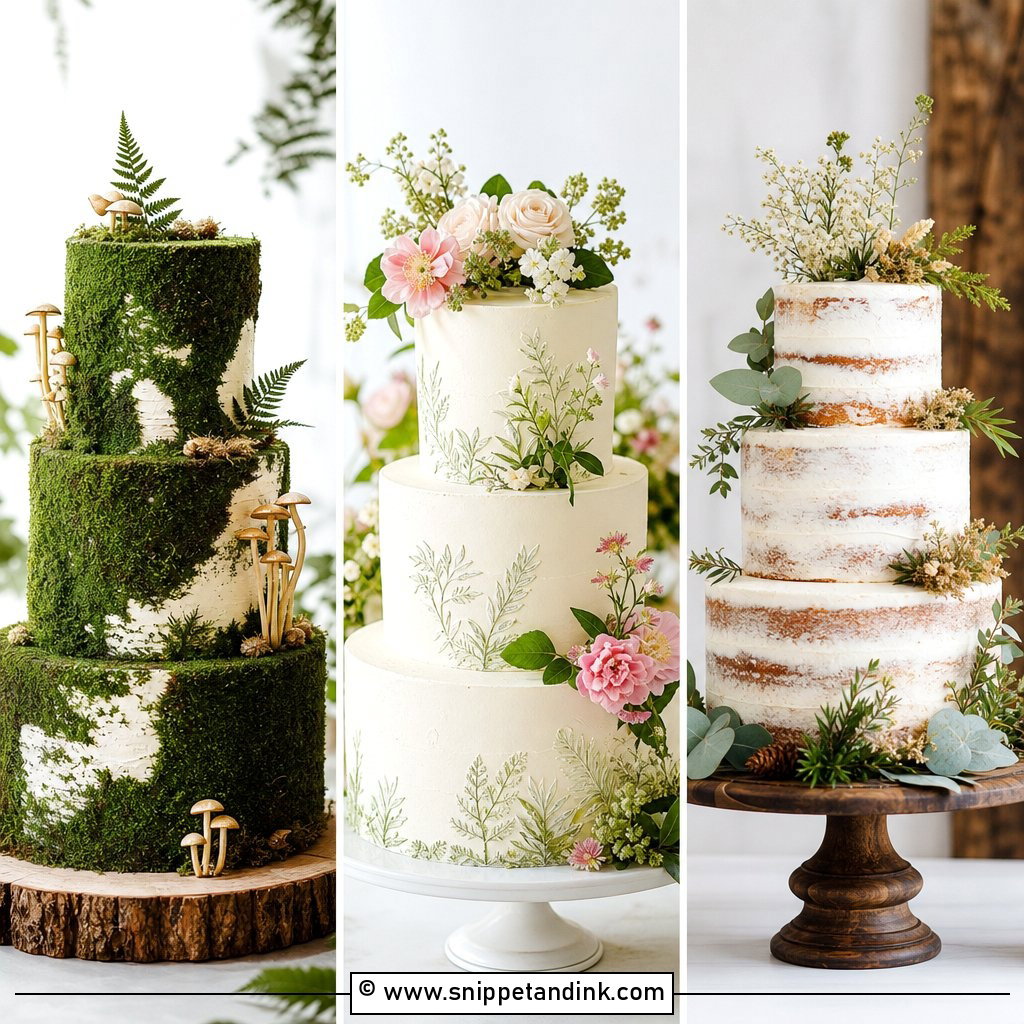
Quiet coastal looks depend on precision. Smooth white buttercream or fondant, then one or two marks of the beach, such as a single sugar shell or a narrow pearl border. With so little decoration, every flaw shows, so I chill the tiers firmly and finish edges with a hot scraper. A single tier looks chic at an intimate dinner; three tiers look grand without shouting. Vanilla bean or almond keeps it crowd-friendly.
16. Rustic Beach Wedding Cake
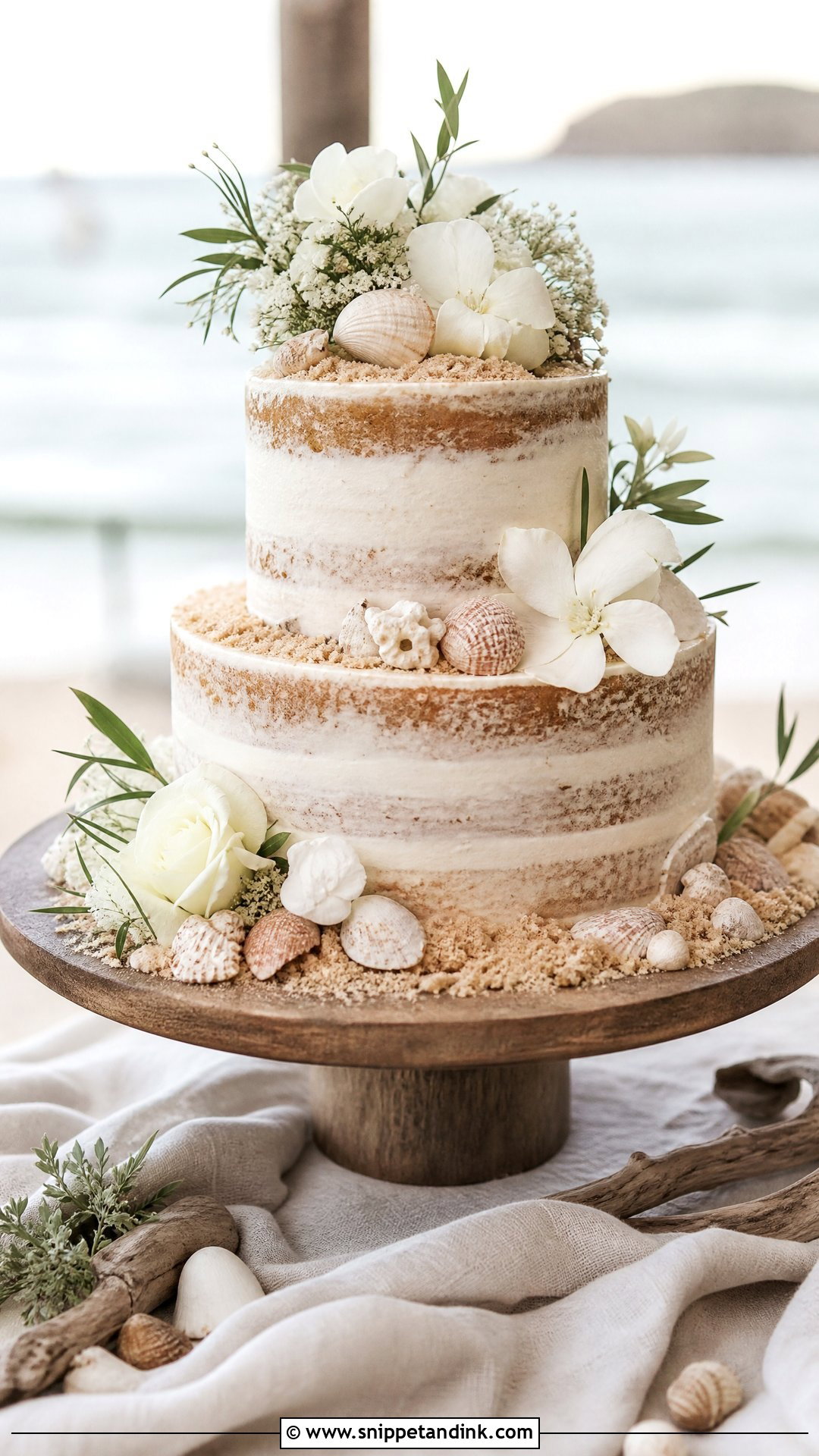
Semi-naked buttercream gives a rustic cake its handmade look, and edible sand, shells and small flowers bring in the shoreline. Neutral tones like ivory, tan and pale blue keep it natural beside driftwood arches and woven chargers. Exposed sponge dries in wind, so I soak the layers in syrup and wrap the cake until setup. Salted caramel with vanilla or coconut with lime both suit it. Think warm and personal, and don’t over-polish it.
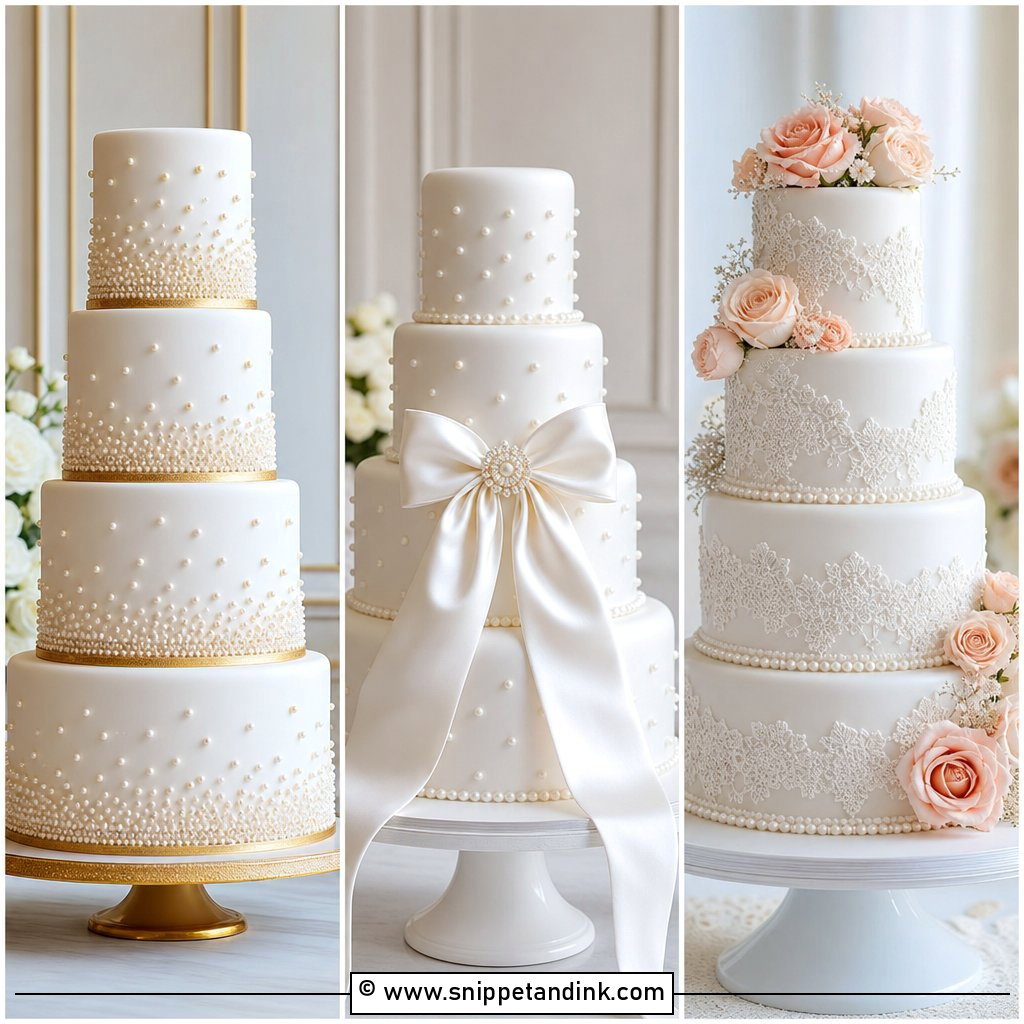
17. Pearl Beach Wedding Cake
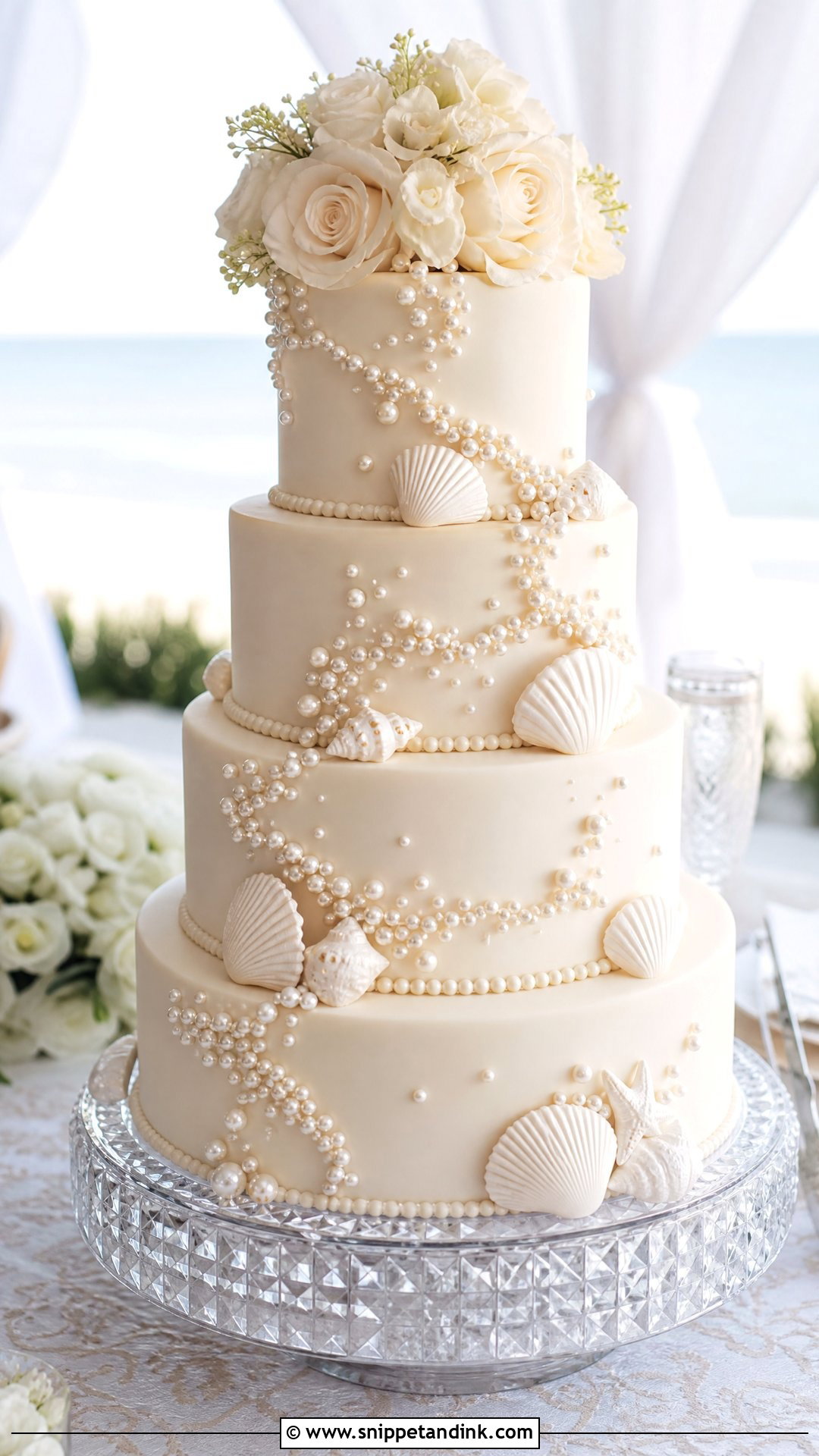
Pearls are the most bridal of the coastal motifs. I use tiny sugar beads along the borders, a scatter across one tier, or a pearl cascade mixed with a few shells, on white fondant or pale champagne buttercream. Hard silver dragées are pretty but tough on teeth, so on served tiers I swap in soft fondant pearls. Formal beach weddings suit this one best. White chocolate raspberry is a gentle flavor match.
18. Beach Wedding Cake With Driftwood
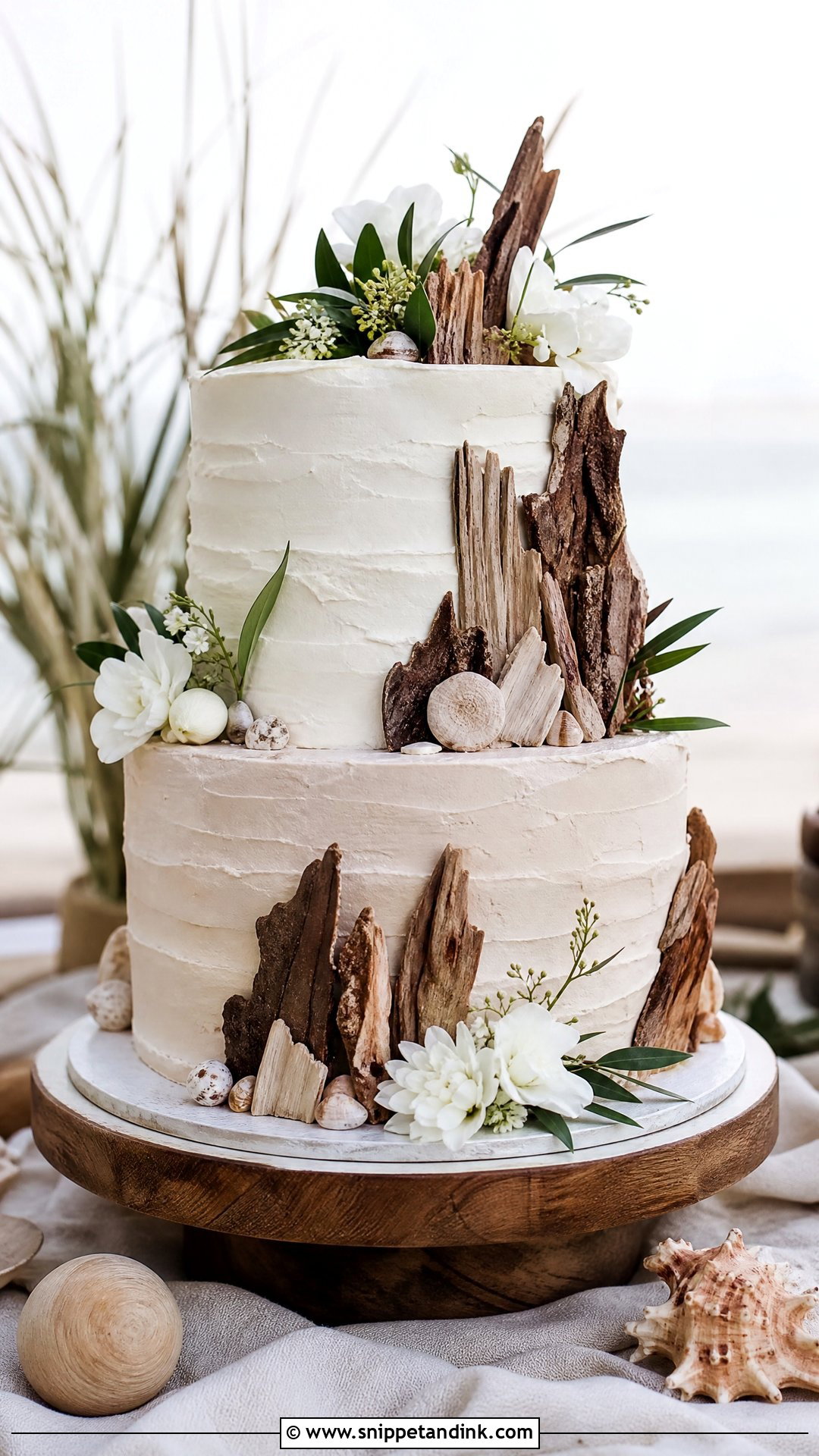
Driftwood gives a natural, colorless kind of coastal feel. Real driftwood must be cleaned and kept on a barrier, so I usually recreate it in chocolate bark or wood-grain fondant, which looks surprisingly convincing up close. Textured buttercream underneath can mimic sand or weathered shoreline. A few small shells or white flowers soften it. Lightly spiced vanilla or lemon suits boho, cliffside and rustic venues.
19. Mermaid Wedding Cake
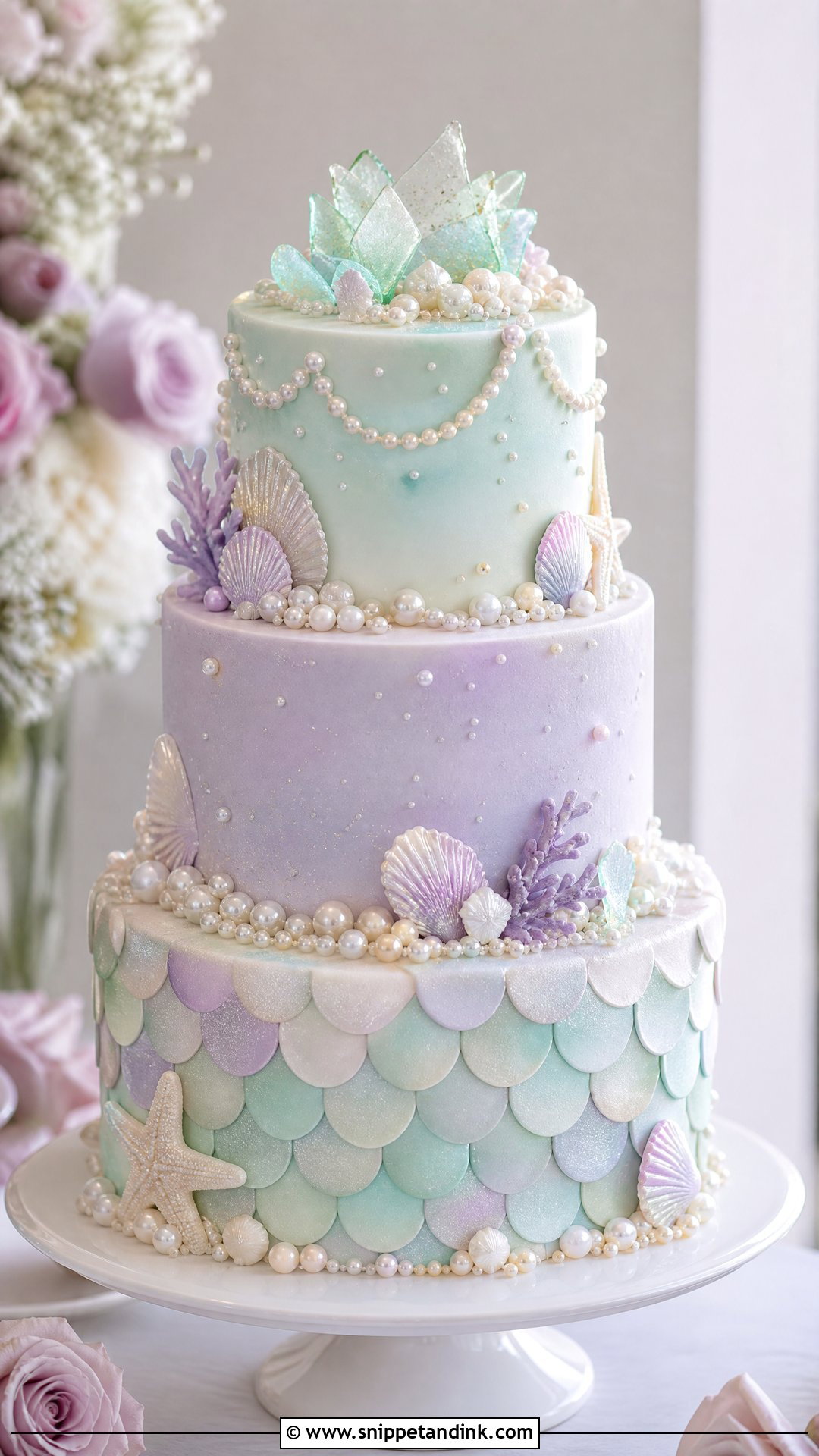
Mermaid cakes walk a fine line, and color is what keeps them on the wedding side of it. I avoid bright cartoon shades and work in pearl, lavender, seafoam and pale aqua, with a scaled fondant texture on the bottom tier and a smooth top tier for balance. Shimmer dust should be edible-grade and used lightly, since too much reads as glitter under flash. Berry or lemon layers keep it light for couples who want a dreamy ocean fantasy.
20. Tropical Fruit Wedding Cake
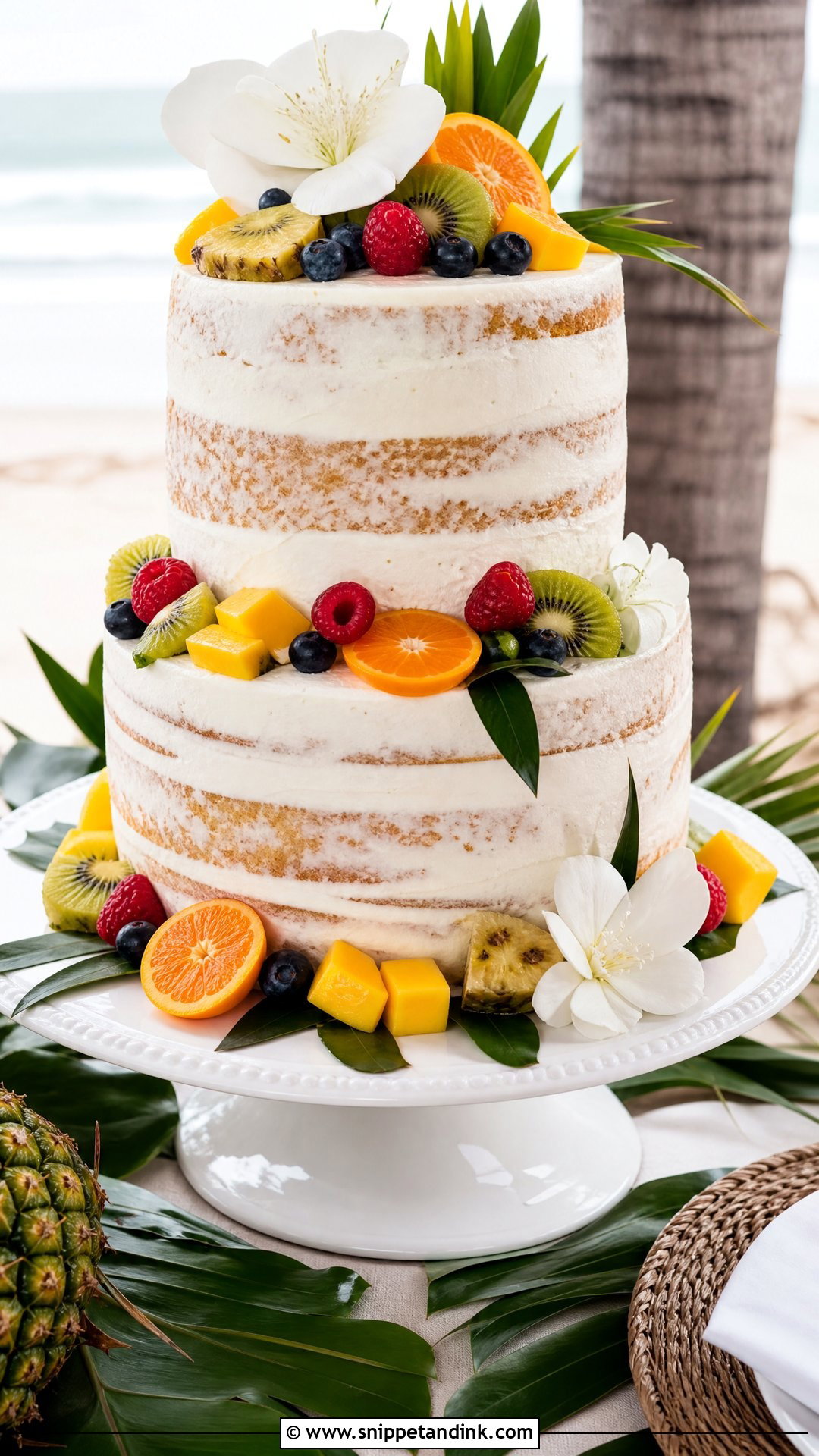
A tropical fruit wedding cake needs styling, not piling. I choose two or three fruits in a clear color story, such as mango, passion fruit and kiwi, and add leaves and white flowers to make it look like a wedding cake. Cut fruit weeps and browns, so I glaze it lightly and place it as late as possible. It suits a semi-naked finish or a single tier at an intimate reception, with coconut or lemon sponge inside.
21. Sea Turtle Wedding Cake
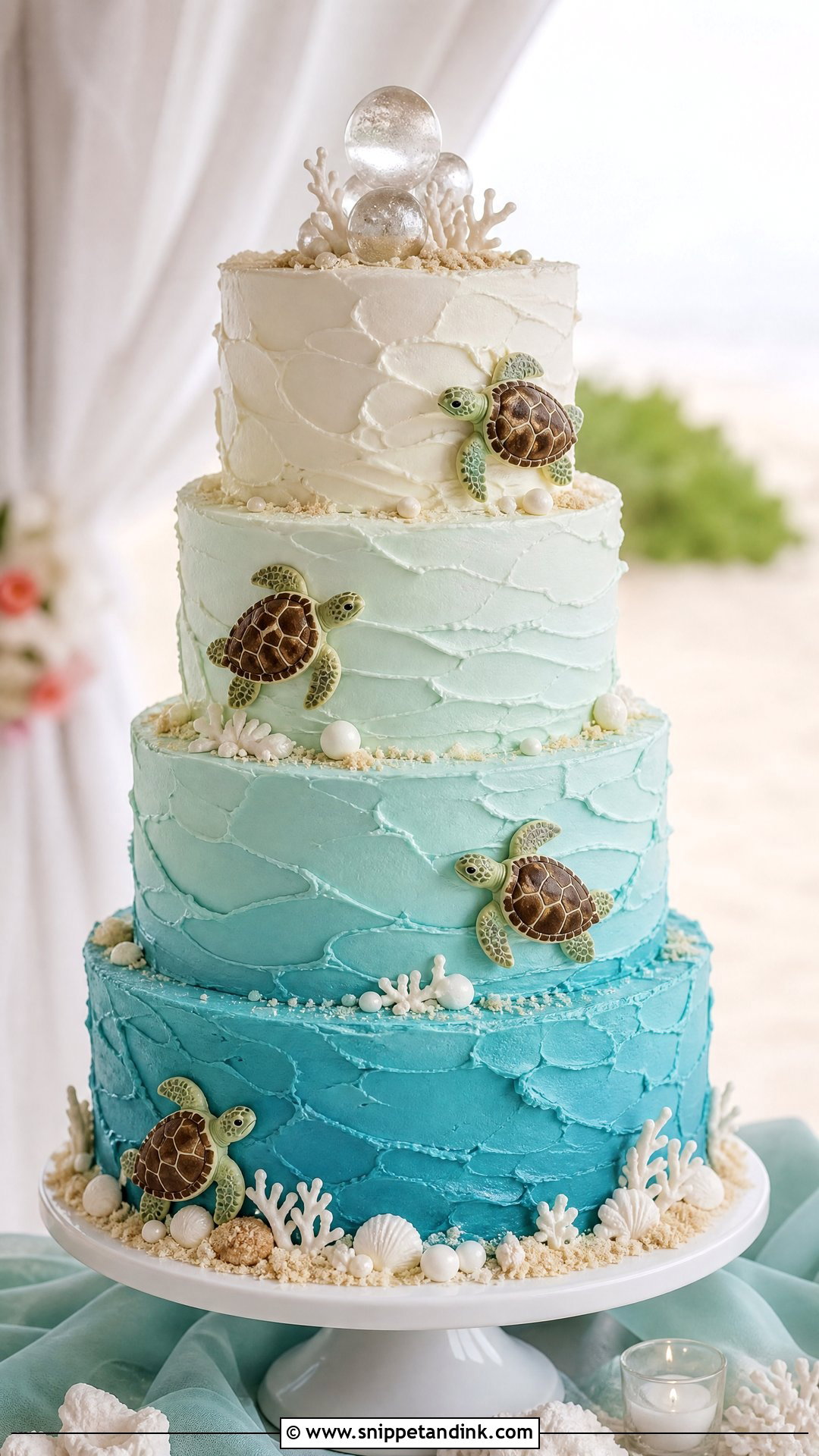
Sea turtles carry meaning for couples who care about marine life, and they need a light hand. I model two or three small fondant turtles as accents within a scene of soft blue ombré, wave texture and a little sugar coral, rather than making one turtle the whole cake. Muted seafoam, ivory and sand keep it adult. It’s especially fitting for island and resort weddings, paired with coconut or vanilla passion fruit flavors.
22. Beach Wedding Cake With Gold Accents
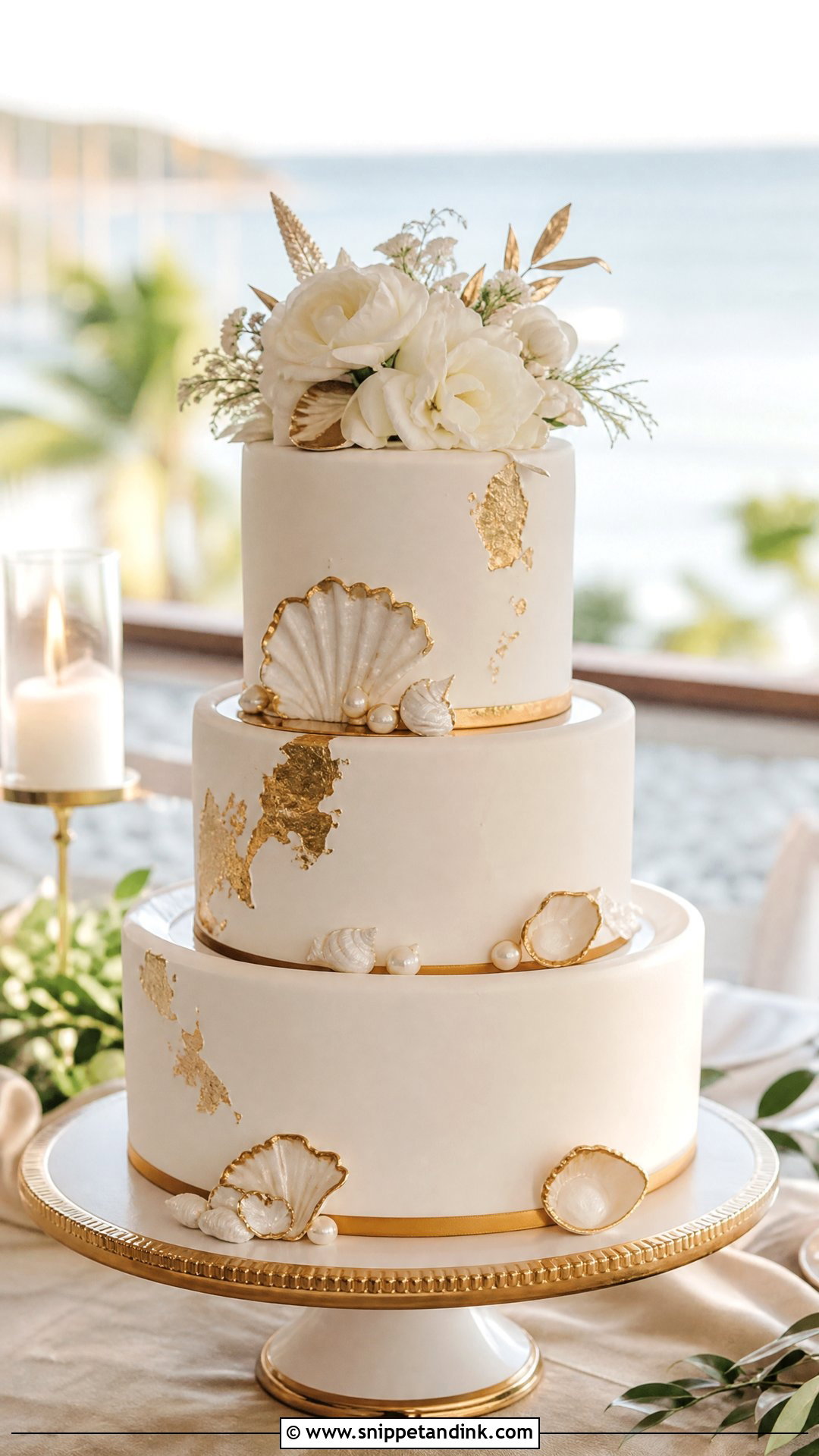
Gold works on a beach cake when it’s a detail, not a coating. Gold leaf on a shell edge, metallic rope trim or a thin band around each tier catches sunset light and looks rich. I check that every metallic used is truly edible, as some dusts are sold only as decorative. White, seafoam or sandy beige bases keep the palette soft. Almond or coconut sponge is a strong flavor choice under all that shine.
23. Blue And White Beach Wedding Cake
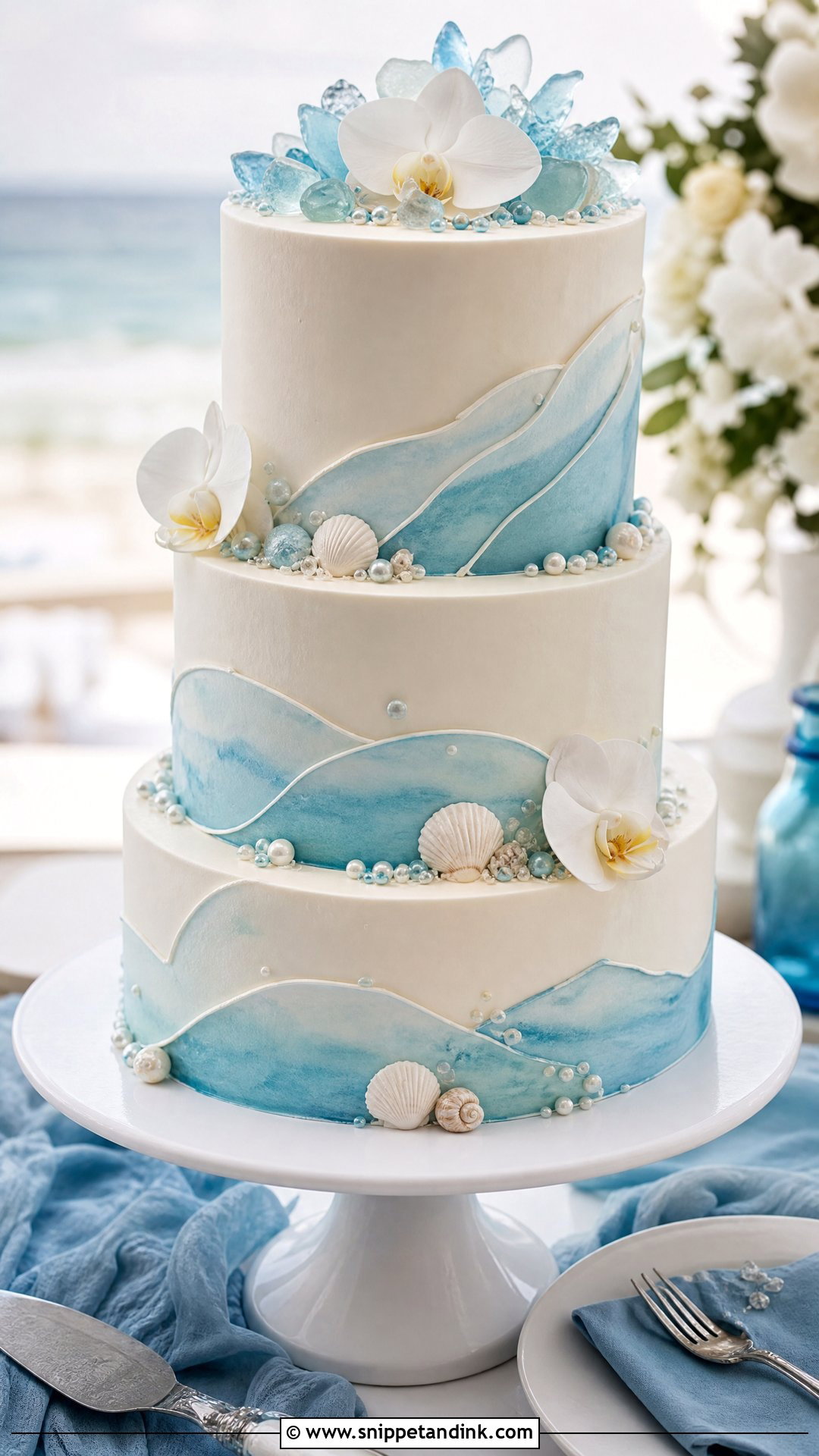
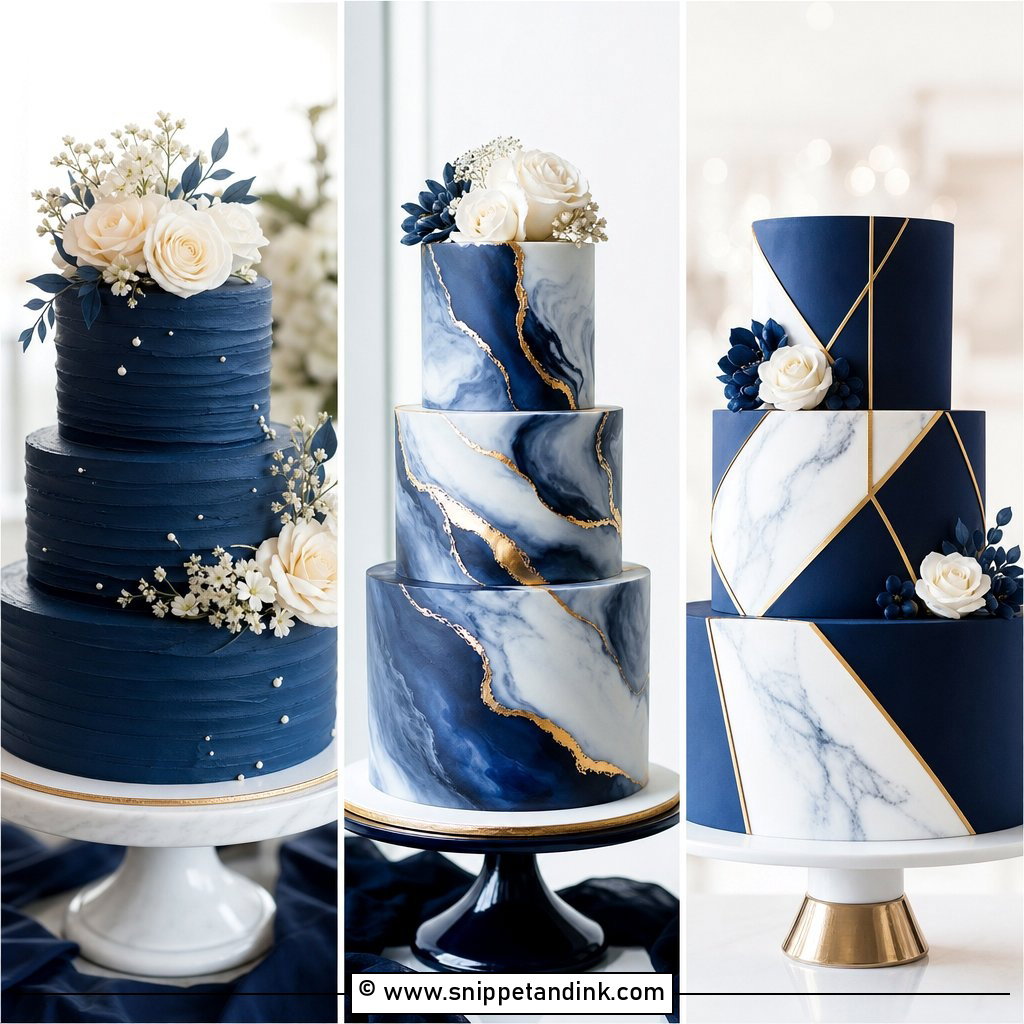
Blue and white is the most versatile coastal palette I work with. Navy suits a nautical wedding, pale blue a soft seaside one, aqua a tropical setting. I usually design one patterned tier, with watercolor, stripes or waves, and keep the other two plain white so the cake stays bridal. It’s easy to match to bridesmaid dresses, linens and invitations, which makes it a practical pick. Sugar pearls or white orchids finish it.
24. Small Beach Wedding Cake
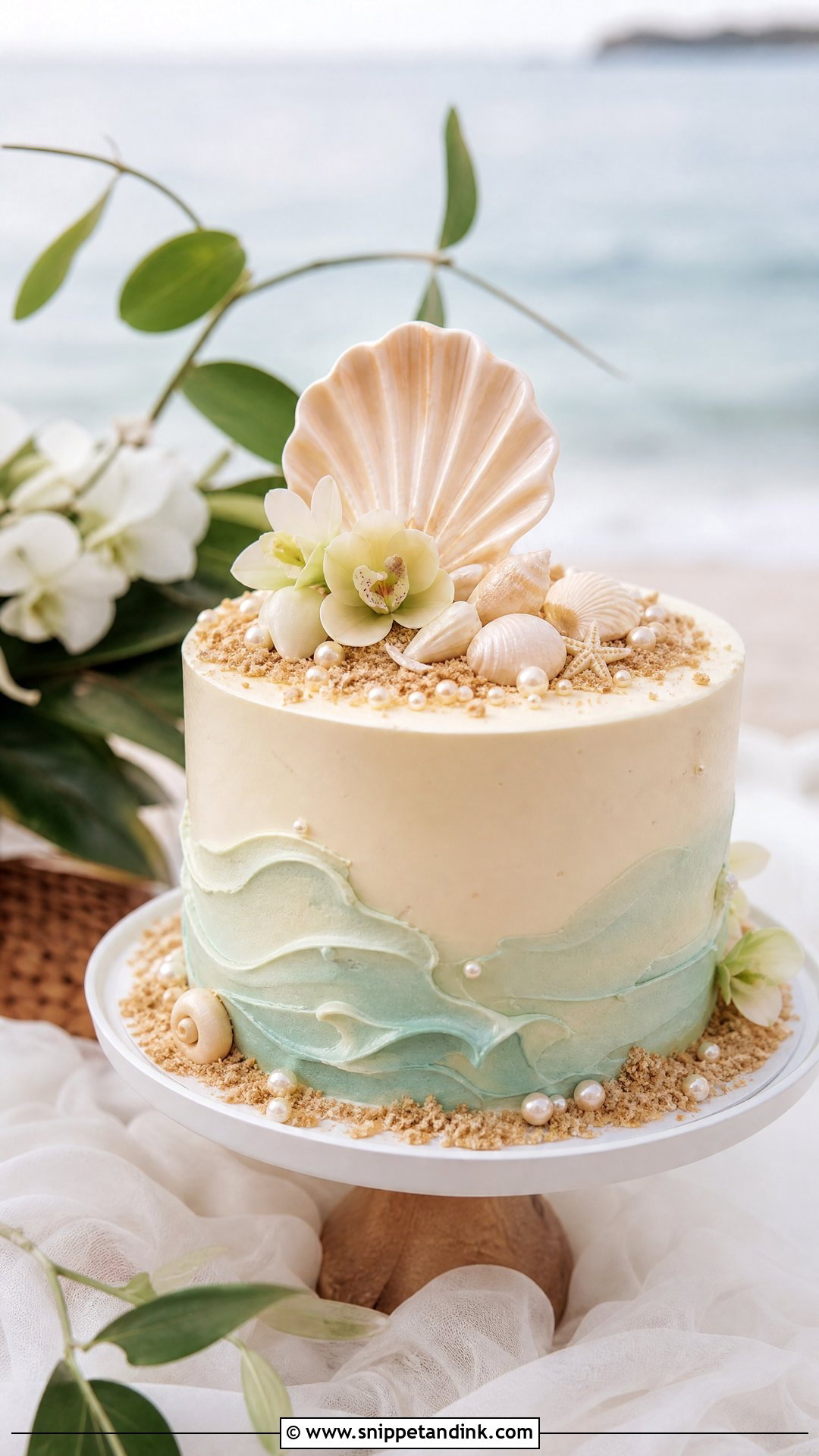
A one- or two-tier cake has room for more detail per inch, which is the advantage I point out to couples planning intimate weddings. A smooth white cake with a shell topper, coconut with orchids or a sand-textured cake with sugar starfish all look complete at that size. Small cakes also travel well and can stay chilled until the last minute. They give you license to choose bolder flavors like coconut lime or passion fruit.


25. Three Tier Beach Wedding Cake
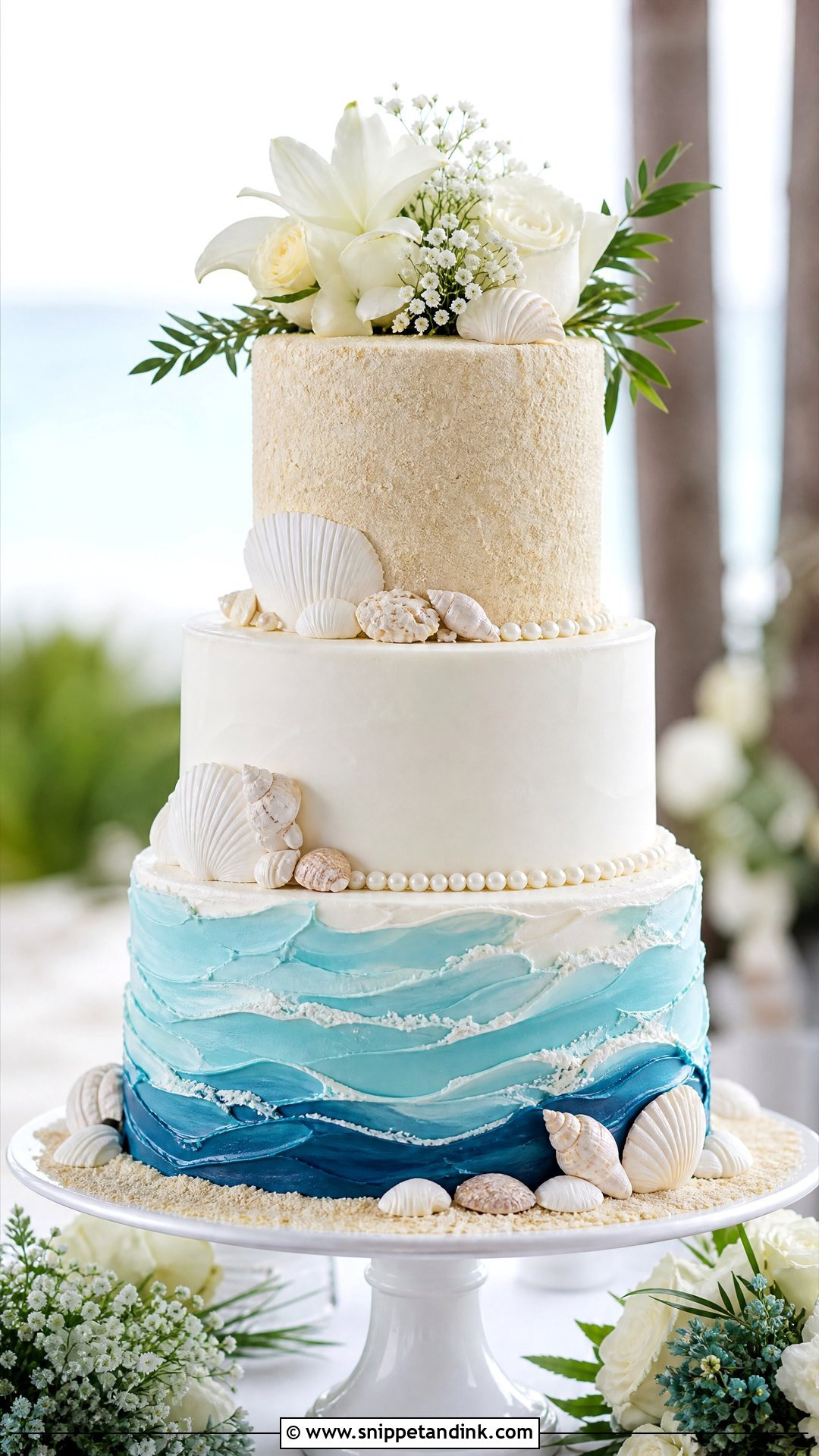
Three tiers let you tell a full coastal story: waves on one, smooth white on another, edible sand or shell texture at the base. The challenge is keeping them related, so I hold the palette to white, aqua, sand and pearl and let one decoration, often a shell trail, cross all three. Structurally, every tier needs dowels and its own board, especially on uneven outdoor floors. Varied flavors per tier keep a larger crowd happy.
26. Beach Wedding Cake With Ruffles
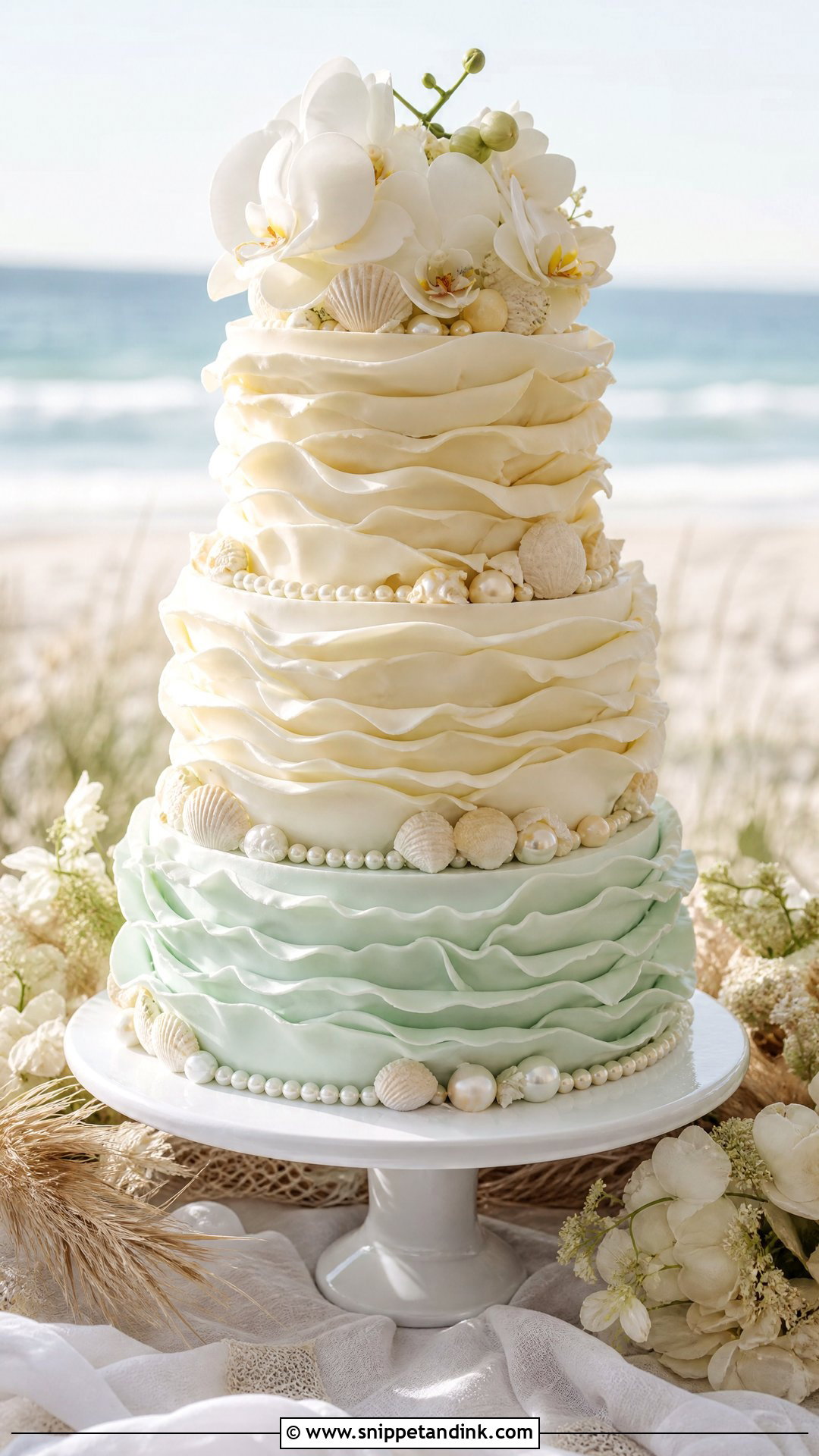
Ruffles can look like sea foam or the movement of a beach dress hem. I pipe buttercream ruffles for softness or cut fondant ones when the day will be hot, since buttercream ruffles lose definition first in heat. Ruffles on one or two tiers with the rest smooth keeps it from feeling heavy. A few pearls, tiny shells or a single tropical flower finish it. Vanilla or almond sponge stays delicate like the design.
27. Boho Beach Wedding Cake
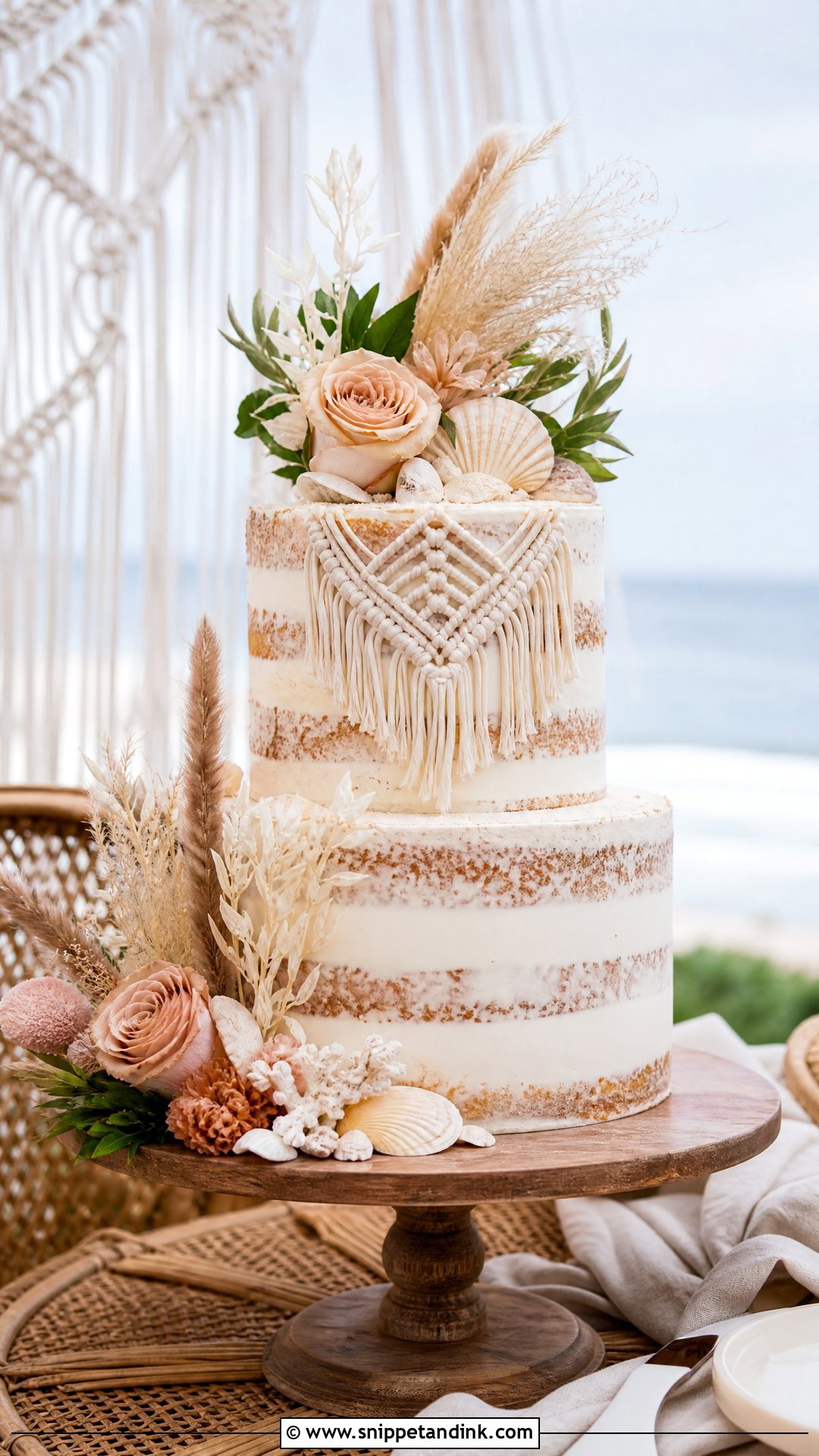
Boho beach cakes rely on texture: a semi-naked finish, pampas-style sugar accents, dried-look edible flowers and macrame-inspired piping in sandy neutrals. Macramé piping is slow, careful work, so give your designer enough time for it. A few shells or palm leaves tie it to the beach. Taupe, muted peach and sage suit linen and rattan settings. Vanilla with caramel or almond with berry filling matches the easygoing mood.
28. Beach Wedding Cake With Hibiscus
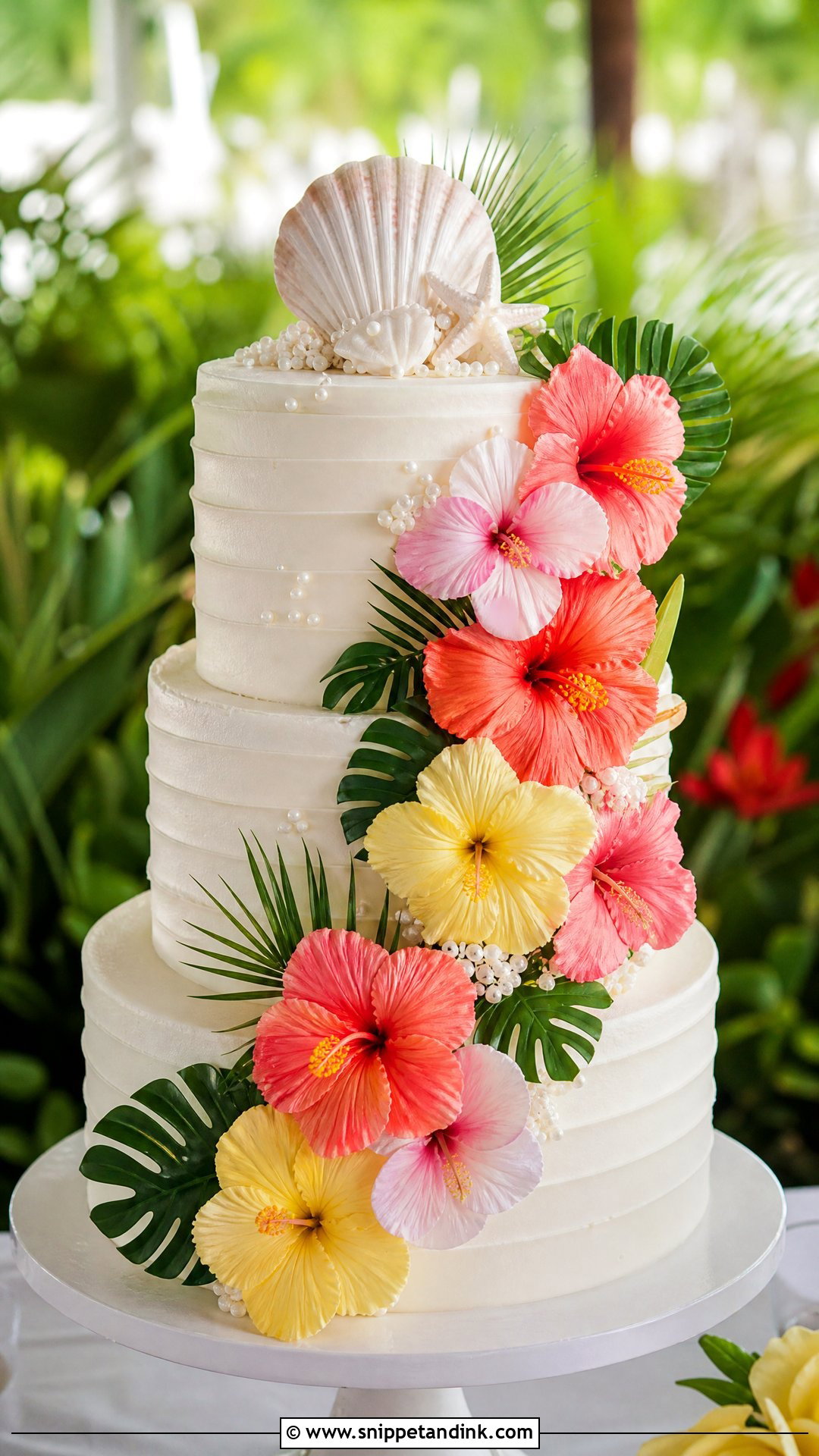
Hibiscus says island instantly in coral, red, yellow or white. I place the blooms in a diagonal cascade or a cluster at the base and keep the tiers clean white with a few palm leaves. Fresh hibiscus blooms close or wilt within a day, often within hours in direct sun, so for a long reception I use sugar versions on the cake and fresh ones on the table. Pineapple or mango flavors fit a Hawaii-inspired or resort wedding.
29. Beach Wedding Cupcake Cake
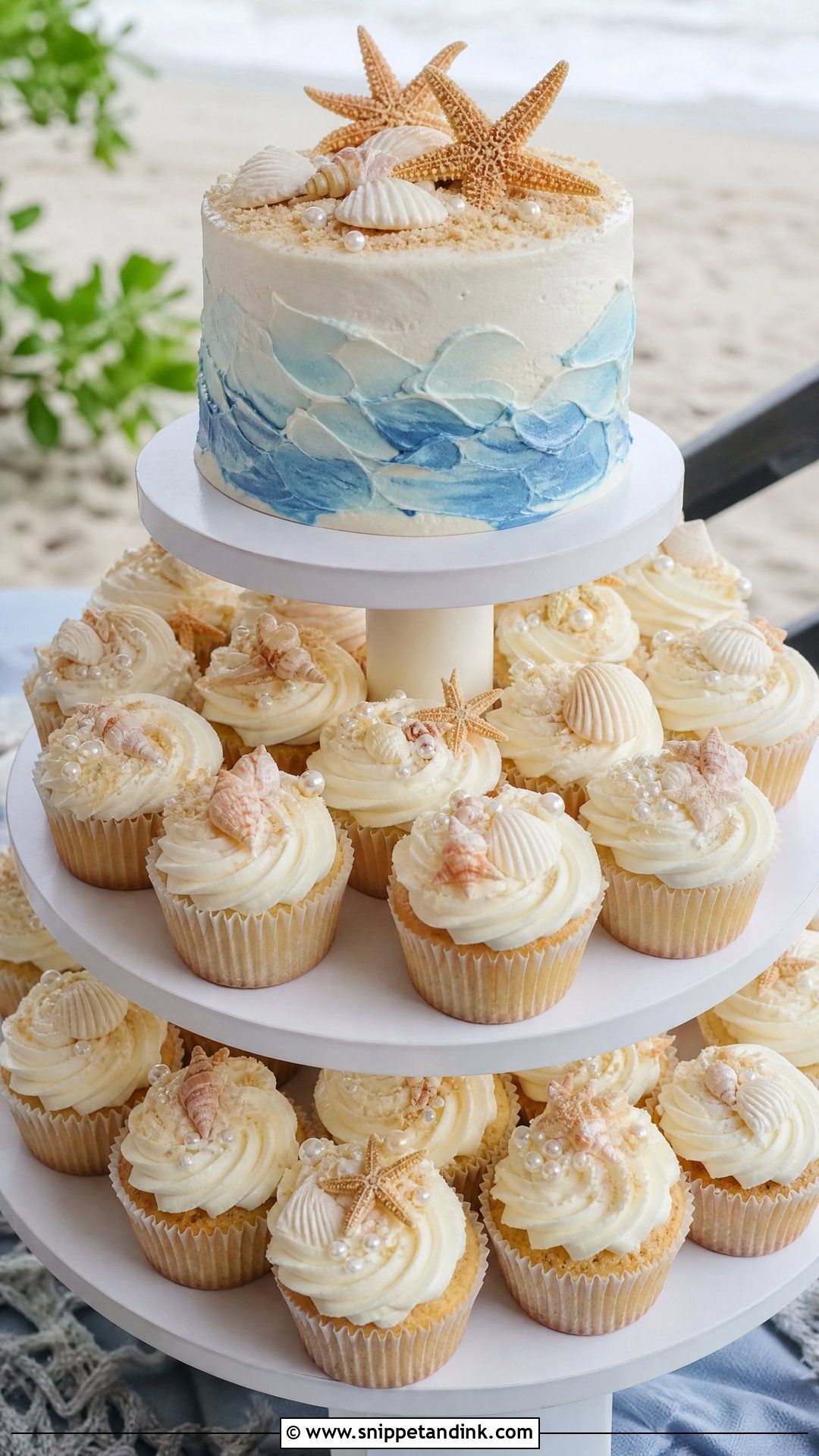
Cupcakes around a small cutting cake keep the traditional moment and make serving fast. I decorate them with blue wave buttercream, edible sand, sugar shells or tiny starfish and repeat the same colors across every one so the stand looks designed, not busy. Cupcakes can stay in a cooler until they’re plated, which matters outdoors. Offer a few flavors, such as vanilla coconut, lemon raspberry and chocolate sea salt, and most guests find one they like.
30. Beach Wedding Cake With Sugar Shell Topper
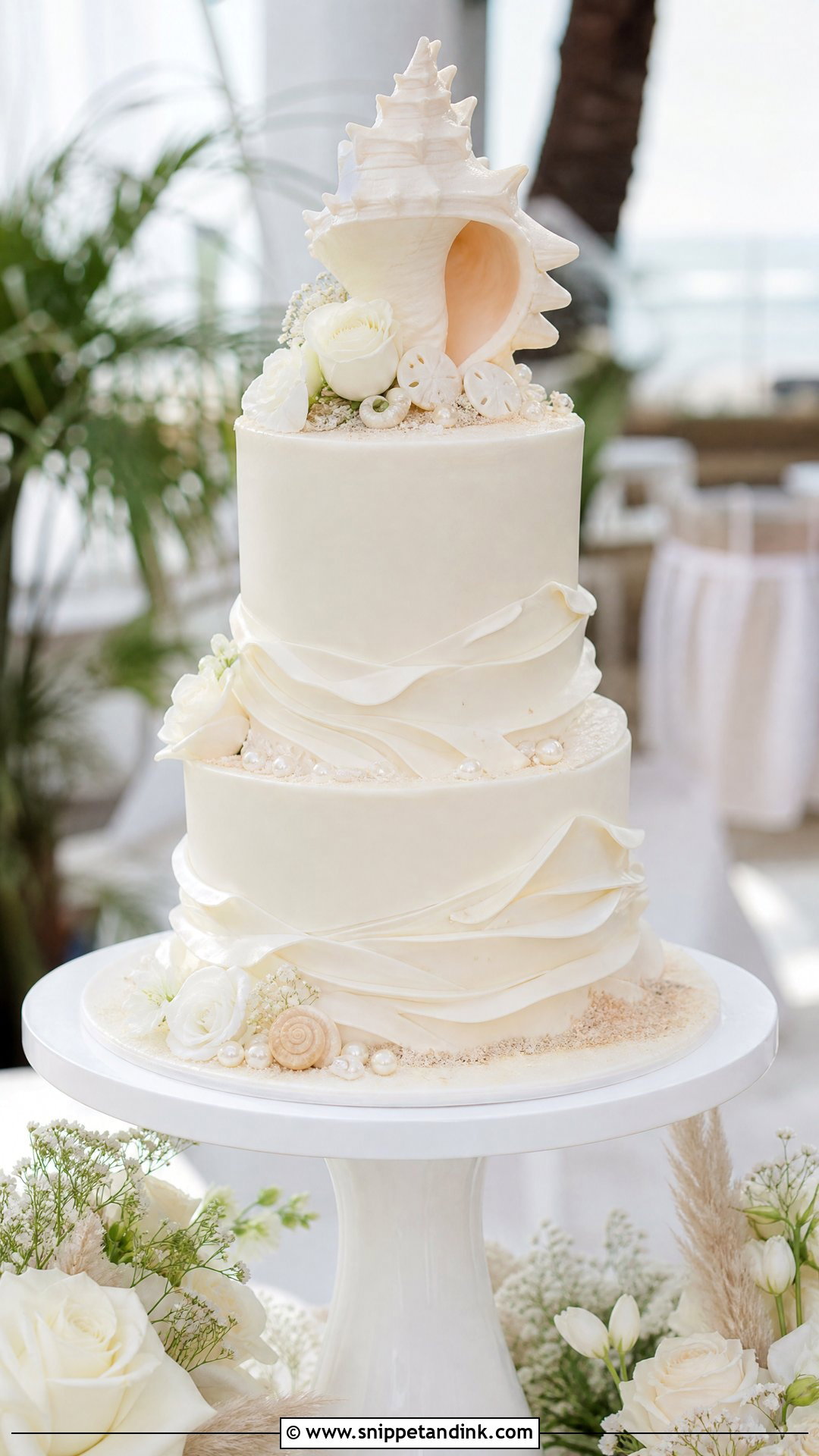
One strong topper is the simplest way to say beach. A sugar conch, a little cluster of shells or a shell set among pearls and a flower gives the cake its focus, so I keep the tiers below clean: smooth ivory buttercream, pale blue fondant or a faint wave. A large sugar topper is heavier than it looks, so I support it on a hidden board or dowel. It reads best from the front, on a tall stand.
Tasting Tropical Flavors Before You Commit
Tropical flavors vary more than vanilla or chocolate. Passion fruit can be sharply acidic, mango depends on the season and the variety, and coconut ranges from subtle to very sweet depending on whether the baker uses milk, cream or flakes. That’s why I never let a couple choose these flavors from a menu alone.
At a tasting, eat each sample at room temperature, not straight from the fridge, because that’s how guests will taste it after the cake has stood on display. Try the filling with the frosting together, as sharp curds can taste harsh alone and balanced in a full bite. If you can’t attend in person, many bakers will ship or courier a tasting box; ask how long it travels and eat it the day it arrives.
Dietary questions worth raising early
- Coconut and almond appear in many coastal recipes, so ask which tiers contain them and label the dessert table.
- Gluten-free sponge can be excellent but tends to be more fragile, which matters for a tall outdoor cake.
- Fresh fruit decorations should be listed for guests with fruit allergies.
- A small separate allergy-safe cake is often easier than changing the whole design.
One Clear Idea Beats Every Ocean Detail at Once
A coastal cake doesn’t need shells, waves, sand and flowers all at once. The ones I’m proudest of pick a single lead, whether that’s sea glass, pearls, waves or tropical blooms, and let color, flavor and styling back it up. Light flavors suit warm venues, and a stable frosting with a shaded table protects the design. Formal, rustic, boho or minimal, a cake built this way becomes one of the most photographed details of the day.
You'll Like These Ideas:





Leave a Reply