
Navy manages to be calm and dramatic at once, which is why so many couples planning a coastal or evening wedding end up asking me for it. It sits comfortably next to ivory, blush, gold, silver and greenery, so it rarely fights the rest of the room. What changes everything is the finish. The same blue can look nautical in a textured buttercream, formal in fondant with gold, or moody under a scatter of painted stars. The designs below are the ones I’d talk through with you, with my notes on where each works and where it struggles.
How Much of the Cake Should Actually Be Navy?
This is the question I ask before sketching anything. A fully navy three-tier cake is a strong statement, and it can look almost black under low reception light. One navy tier among ivory ones reads clearly in every light and is easier to pair with flowers.
My rough guide: in a dim, evening room, lighter tiers or metallic details stop navy from disappearing into the background. In daylight or a white tent, a full navy cake holds its colour and looks bold. If most of your decor is already navy, I’d go lighter on the cake so it doesn’t blend into the linens behind it.
- Full navy: best for evening ballrooms and minimal decor.
- One or two navy tiers: the most flexible, works in almost any light.
- Navy accents only, like ribbon, drip or flowers: right for daytime and garden weddings.
1. Navy And Gold Wedding Cake
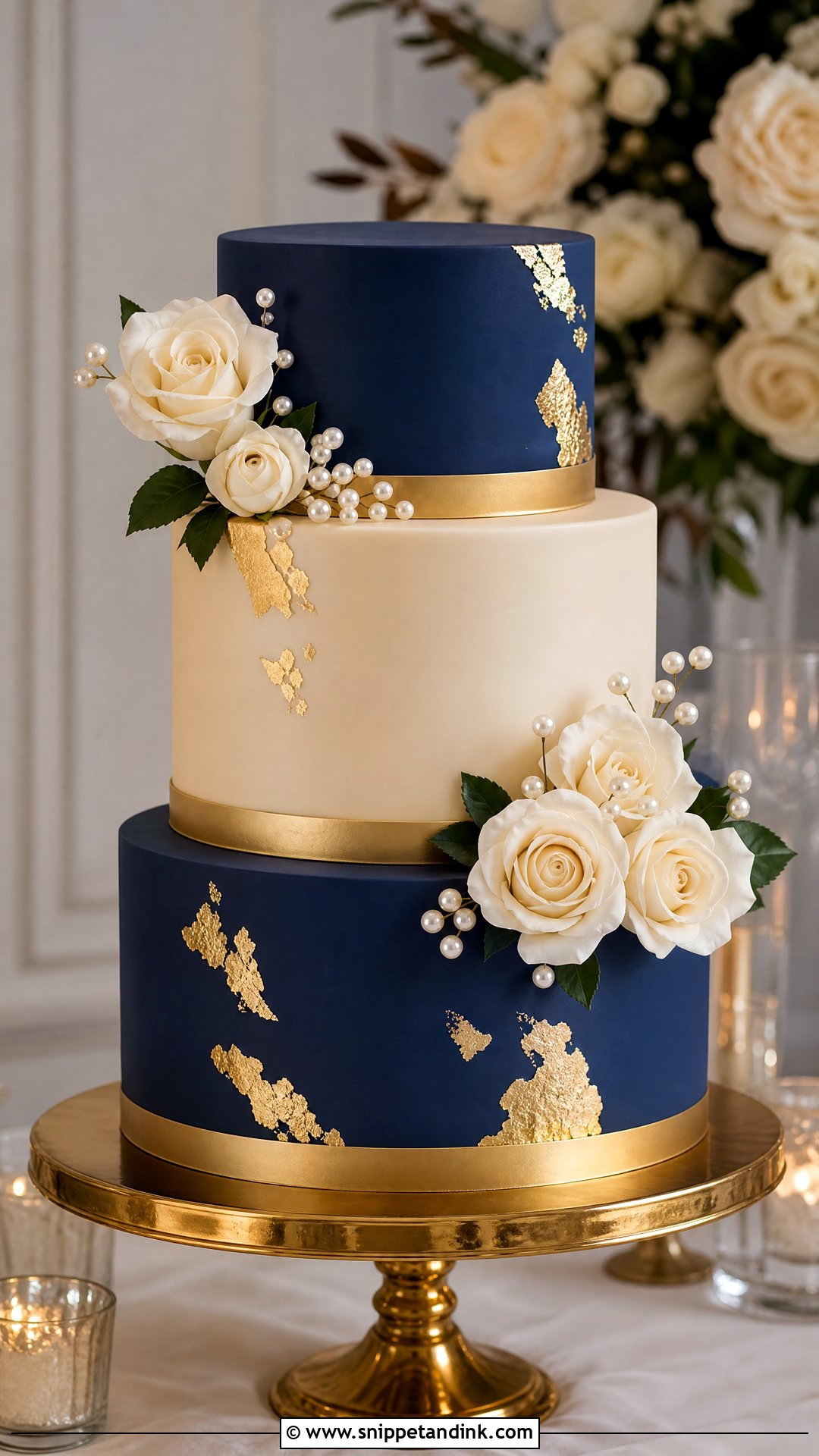
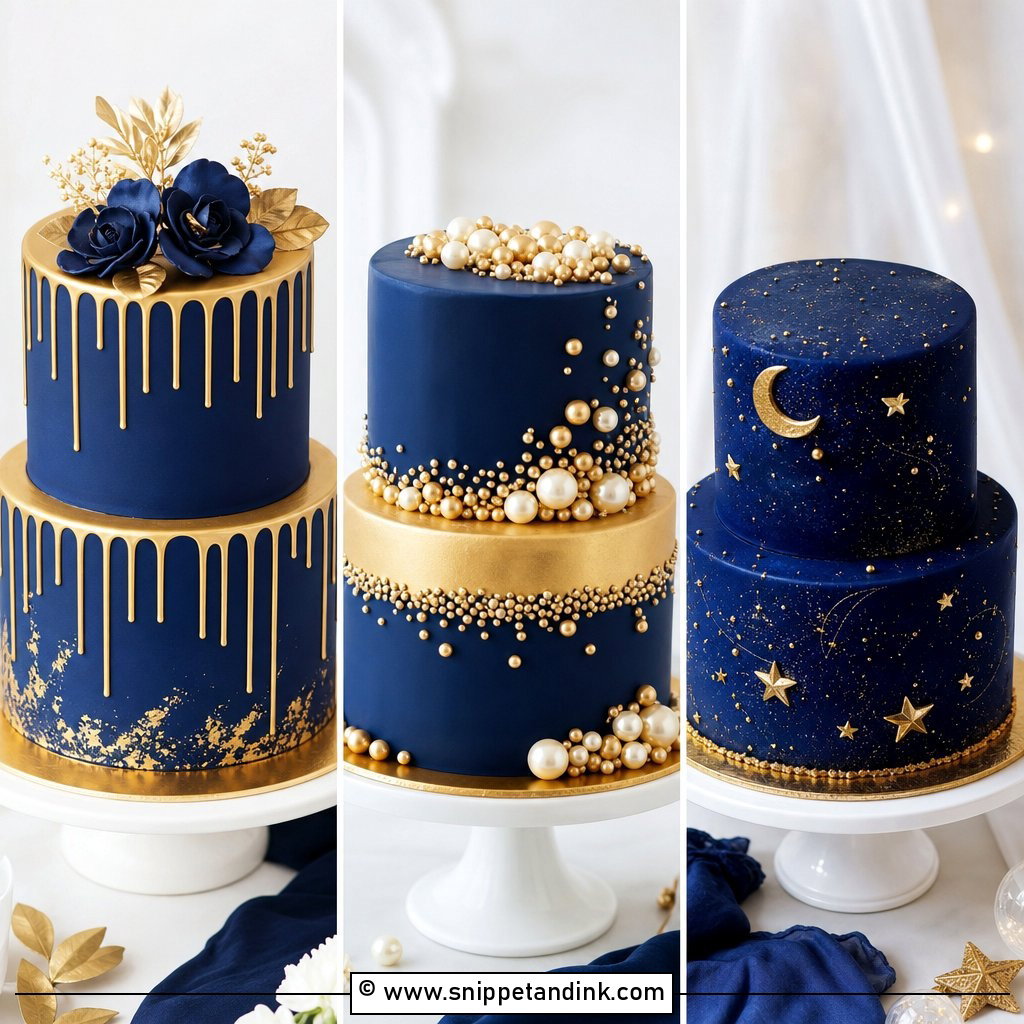
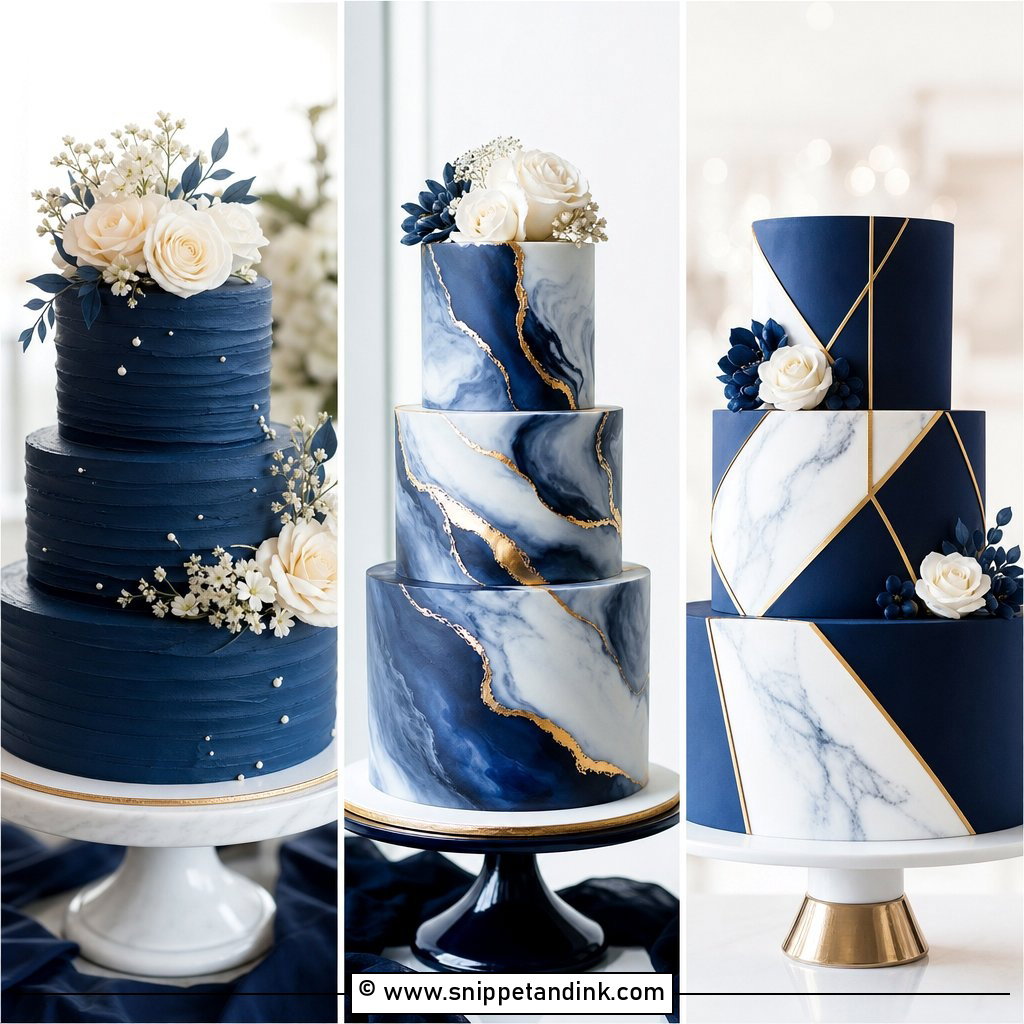
If I had to name the safest formal version, it’s a navy and gold wedding cake. Three tiers in smooth fondant or sharp buttercream, with gold leaf or fine painted lines. Where couples go wrong is too much gold; once it covers more than a few areas, the cake starts to look heavy instead of rich. A few ivory sugar flowers, a row of pearls or a plain gold topper is all it needs. Ballrooms and evening receptions with metallic table pieces are its natural home.
2. Navy Blue Ombre Wedding Cake
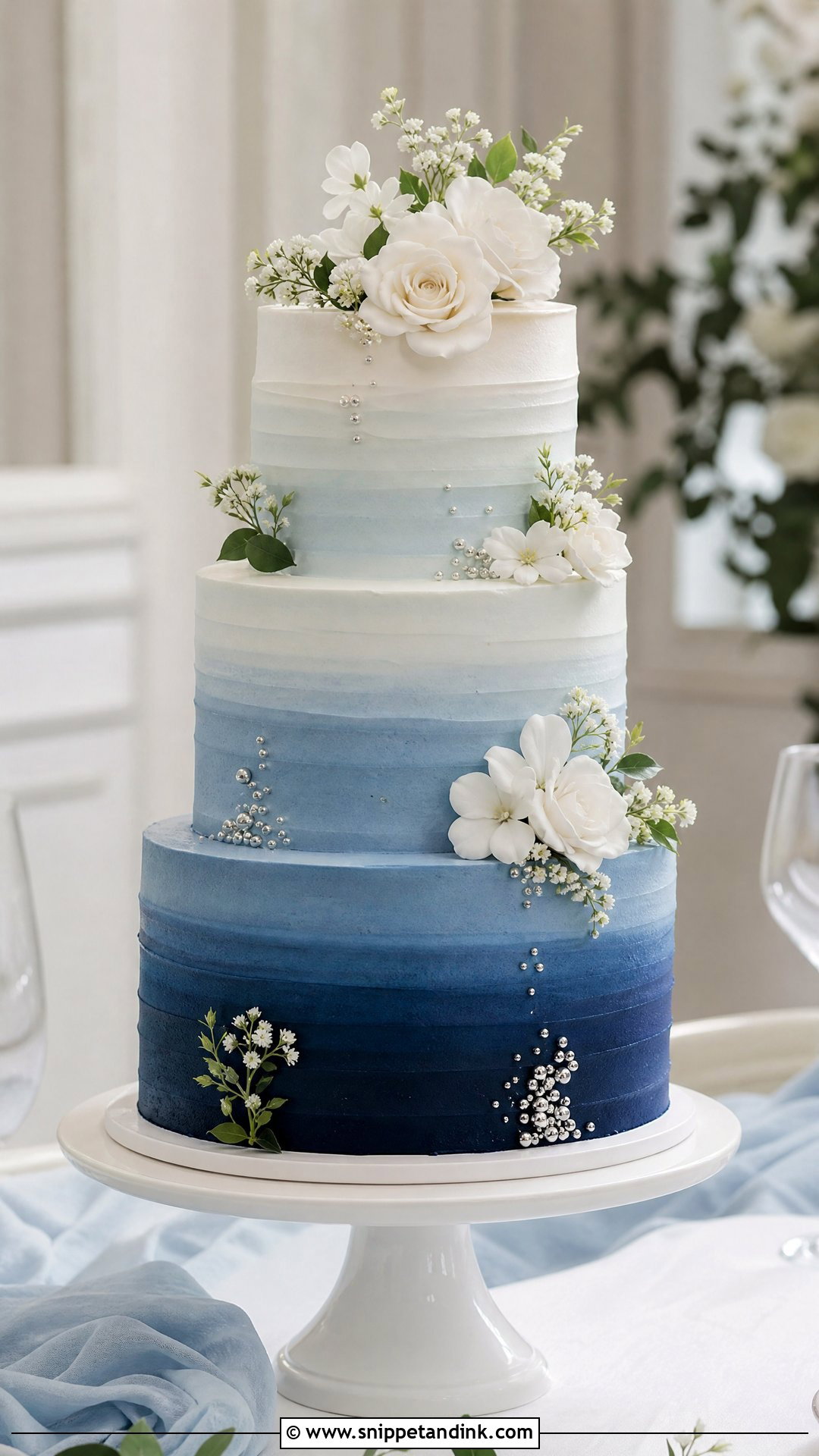
Blending from deep navy at the base up to dusty blue, pale blue or ivory gives a navy blue ombre wedding cake movement without extra decoration. I prefer buttercream for this because I can blend the shades together with a scraper while it’s soft; fondant tiers in separate shades give a stepped look instead. One side dressed with white sugar roses, silver dragées or a little gold leaf is enough. It’s the version I suggest when someone loves navy but wants the cake to feel light at the top.
3. Navy And White Wedding Cake
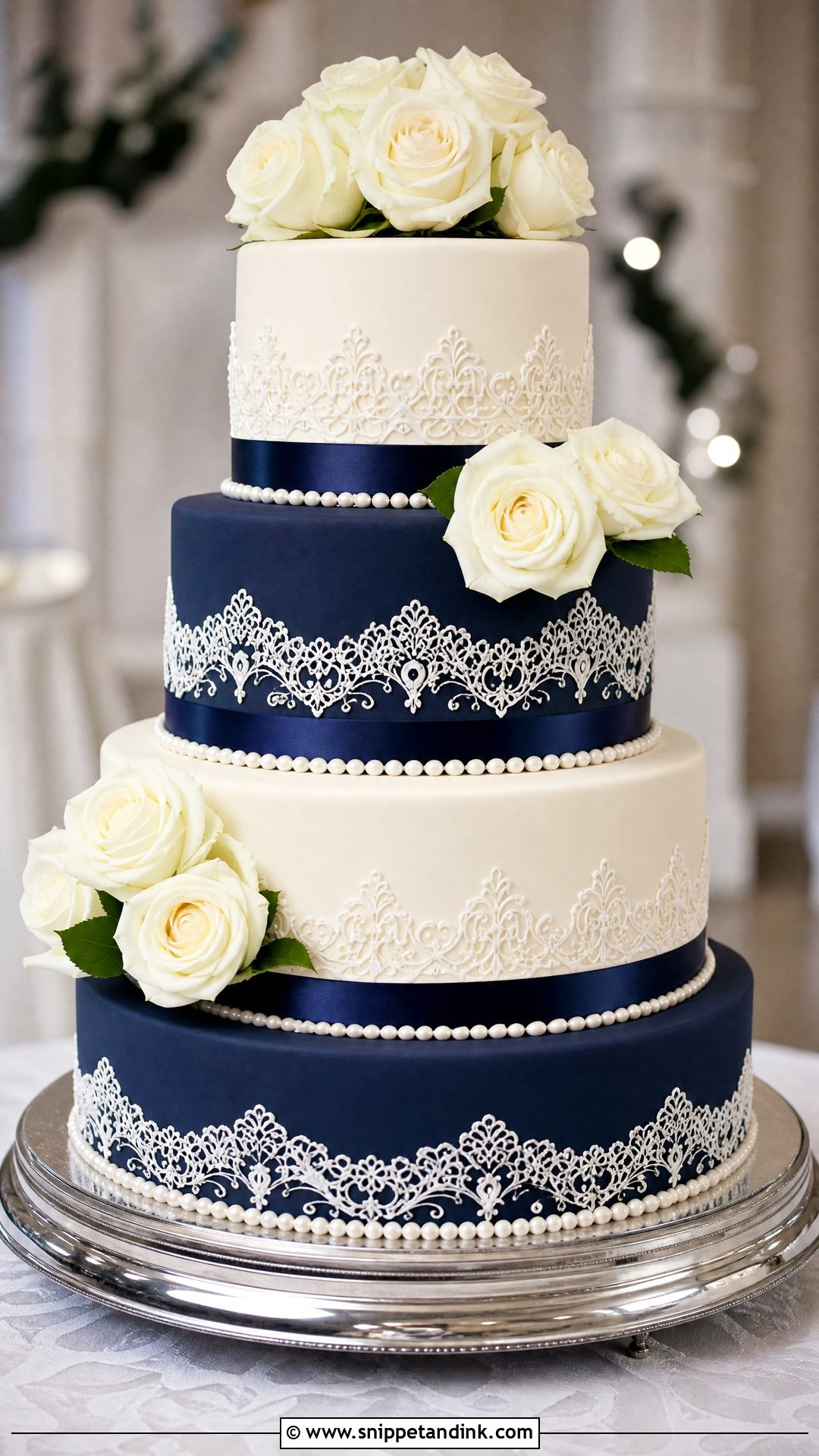
Navy and white is the contrast that never photographs badly. White tiers with navy ribbon, navy tiers with white flowers, or alternating tiers all work. It’s especially useful when the groomsmen are in navy suits and the linens are white, because the cake simply repeats what’s already in the room. Fondant keeps it crisp; buttercream softens it. A quick practical note: real satin ribbon against buttercream absorbs grease and darkens, so I back it with a strip of acetate or tape. Piped lace, pearl borders or a white monogram can make it yours.
4. Navy Marble Wedding Cake
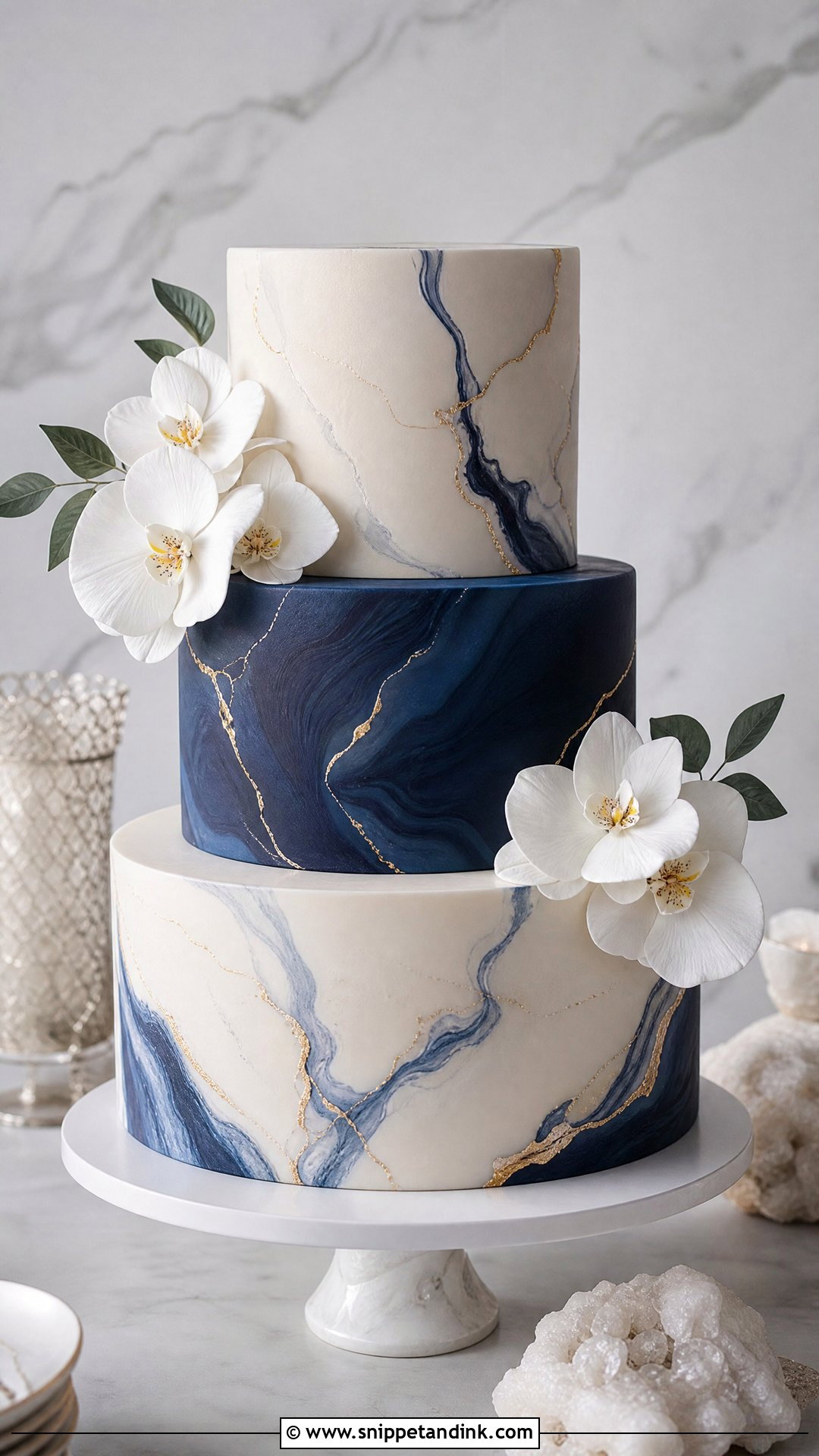
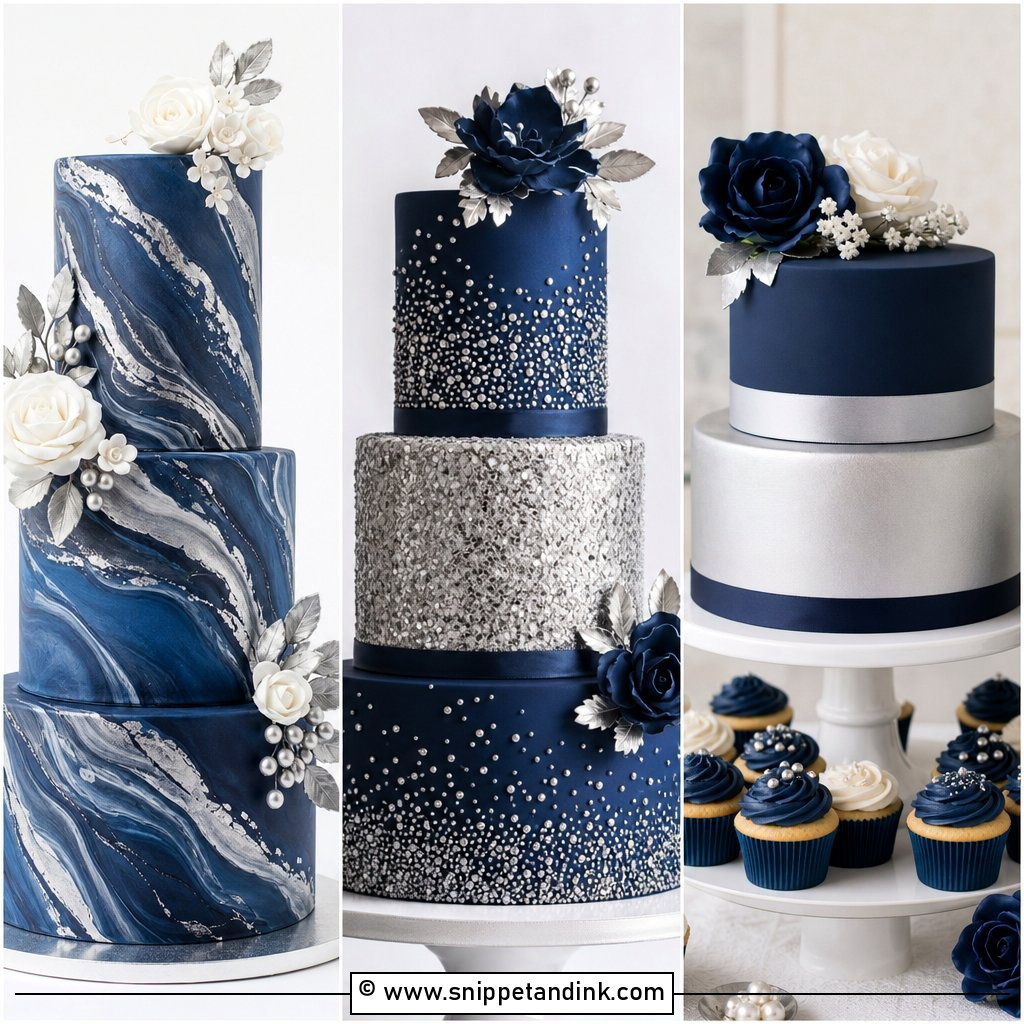
Marbling suits couples who want something artistic but not loud. I knead navy, white, grey and a touch of soft blue fondant together until it shows long natural sweeps, then stop before the colours turn muddy. Thin gold veining painted along those lines makes a tall tiered cake look polished. It pairs well with stone, concrete and minimal flowers in a modern venue. Decoration should stay small, a few white orchids, sugar peonies or brushed metallic edges at most, or the marble loses its effect.
5. Navy Buttercream Wedding Cake
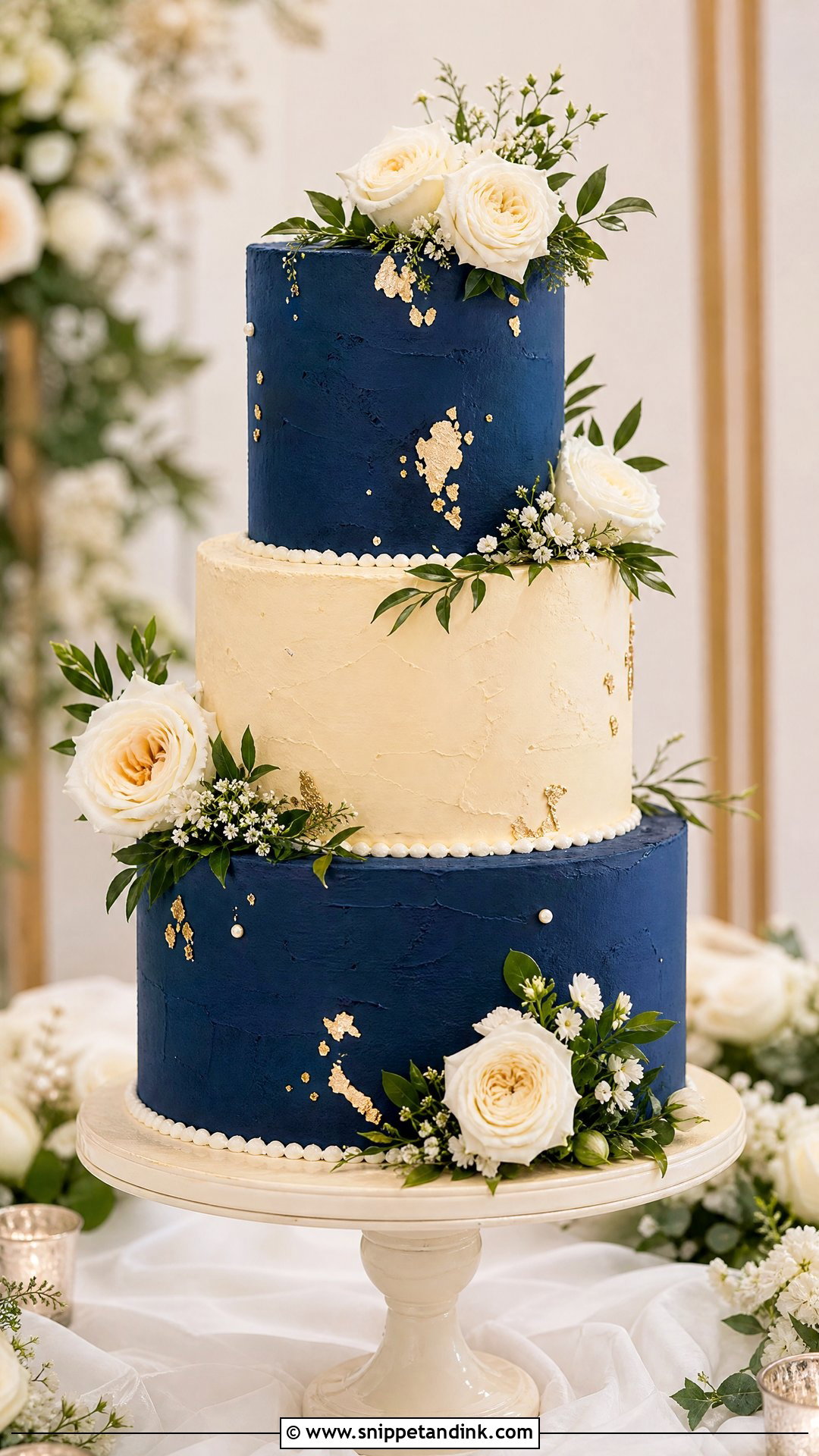
Buttercream makes navy look warmer and softer than fondant does. I’ll either smooth it flat or leave gentle horizontal strokes from a palette knife, depending on how relaxed the reception is. Since the colour is so strong, I’m careful with what goes on it: white flowers, a little greenery, gold leaf or pearls, chosen one or two at a time. It eats like a cake rather than a sculpture, which a lot of couples prefer. The trade-off is that buttercream is more sensitive to warm rooms than fondant, so it needs a cool spot until serving.
6. Navy Fondant Wedding Cake
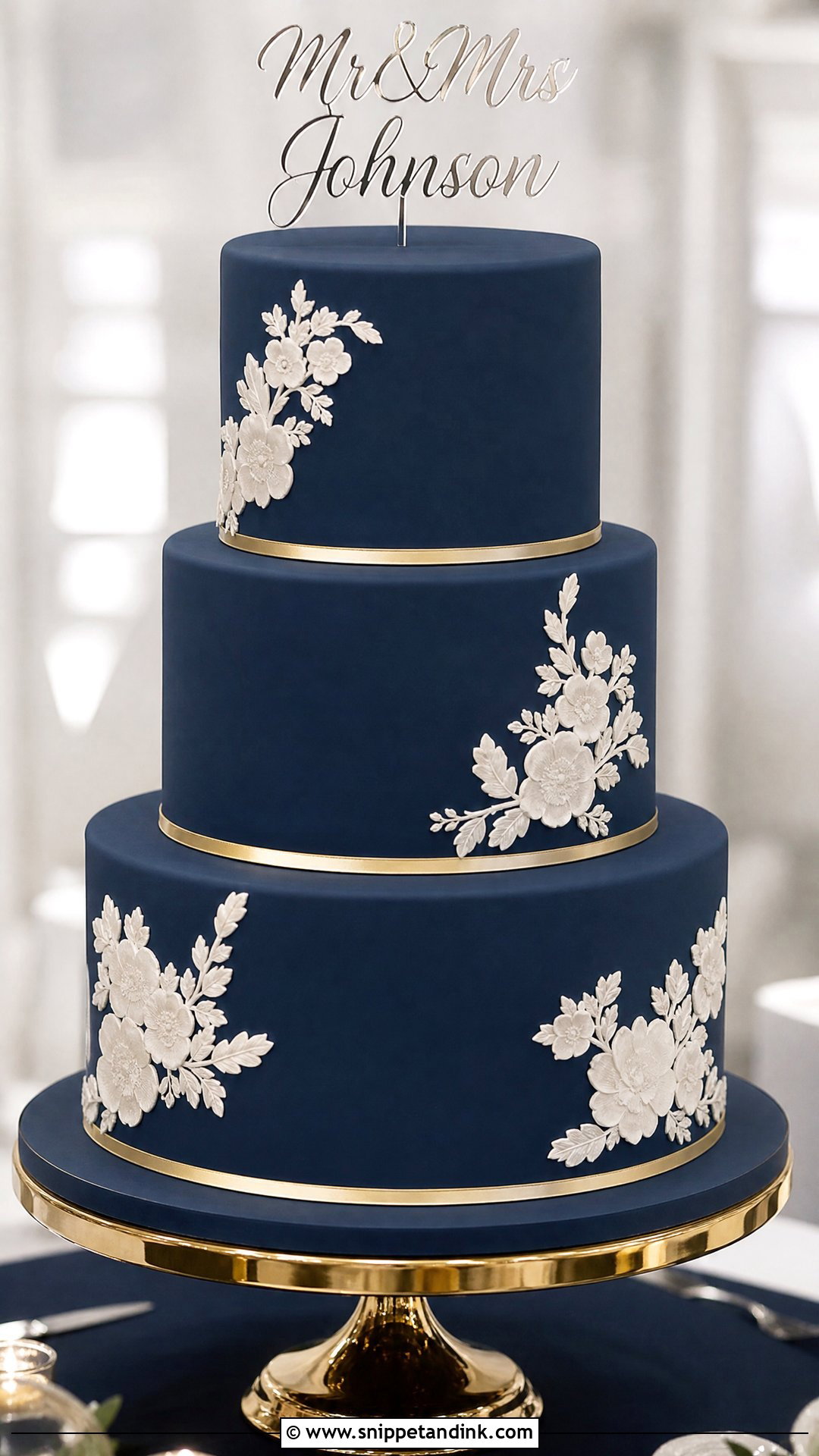
Fondant is what I reach for when the brief says sharp. It gives me clean edges, a surface I can paint on, and the control to keep a deep, even navy all the way round. Gold bands, white sugar flowers, embossed patterns or a single acrylic topper all sit well on it. One thing couples don’t always expect: fondant shows every bump underneath, so the cake below needs a firm, smooth coating first, usually ganache. Keep the tier shapes simple; the colour is already doing plenty.
7. Navy Floral Wedding Cake
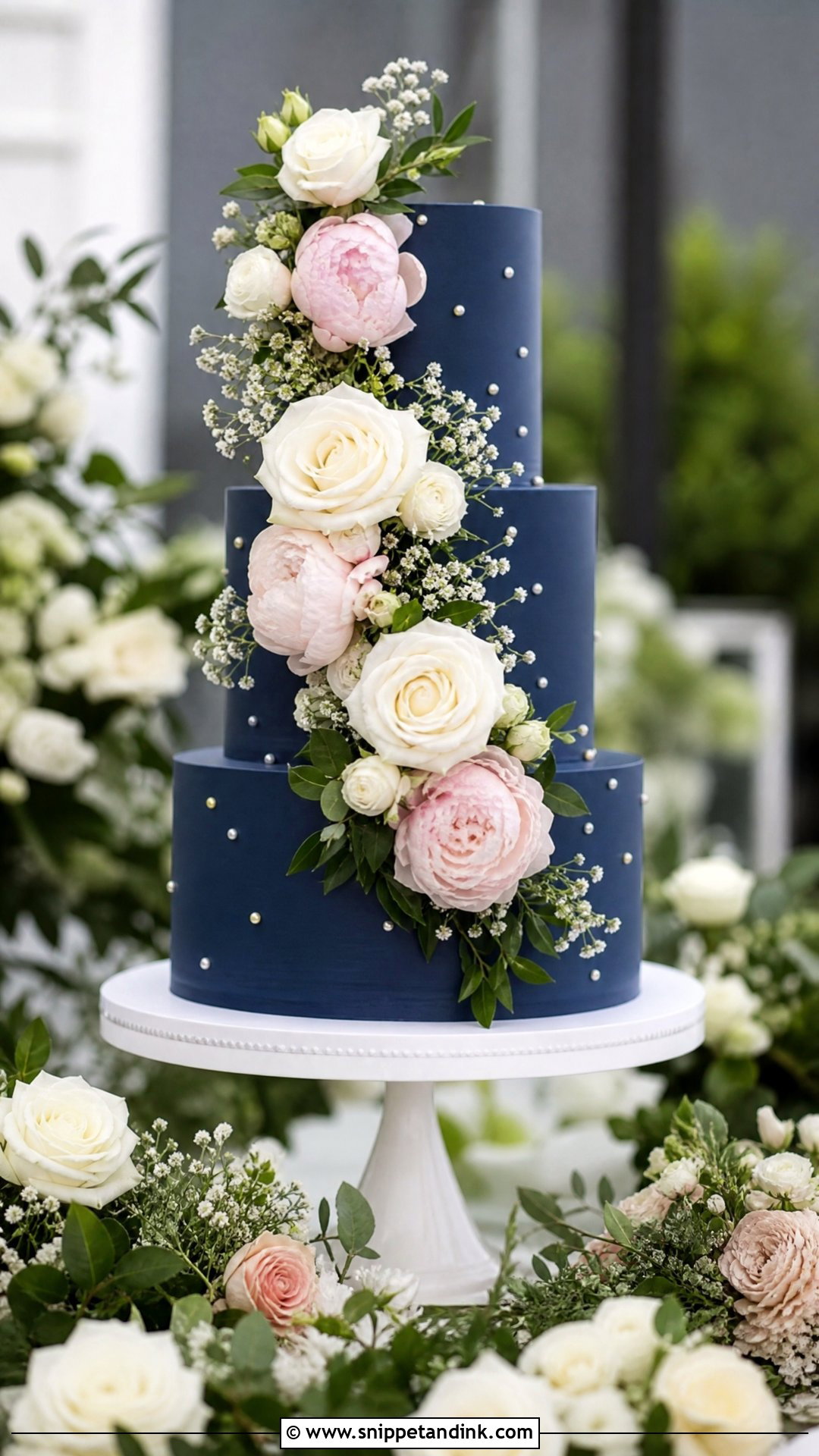
Lighter flowers glow against navy. White roses, blush peonies, ivory ranunculus and soft greenery pop in a way they never do on a white cake. I place them in a diagonal cascade, around the base, or tucked between tiers. Whatever is used has to be safe on food: stems wrapped or put in picks, no flowers sprayed with chemicals, and nothing known to be toxic. That’s a conversation your florist and baker need to have directly, ideally before the week of the wedding. Matching the bouquet blooms ties the cake to the bride’s photos.
8. Navy And Blush Wedding Cake
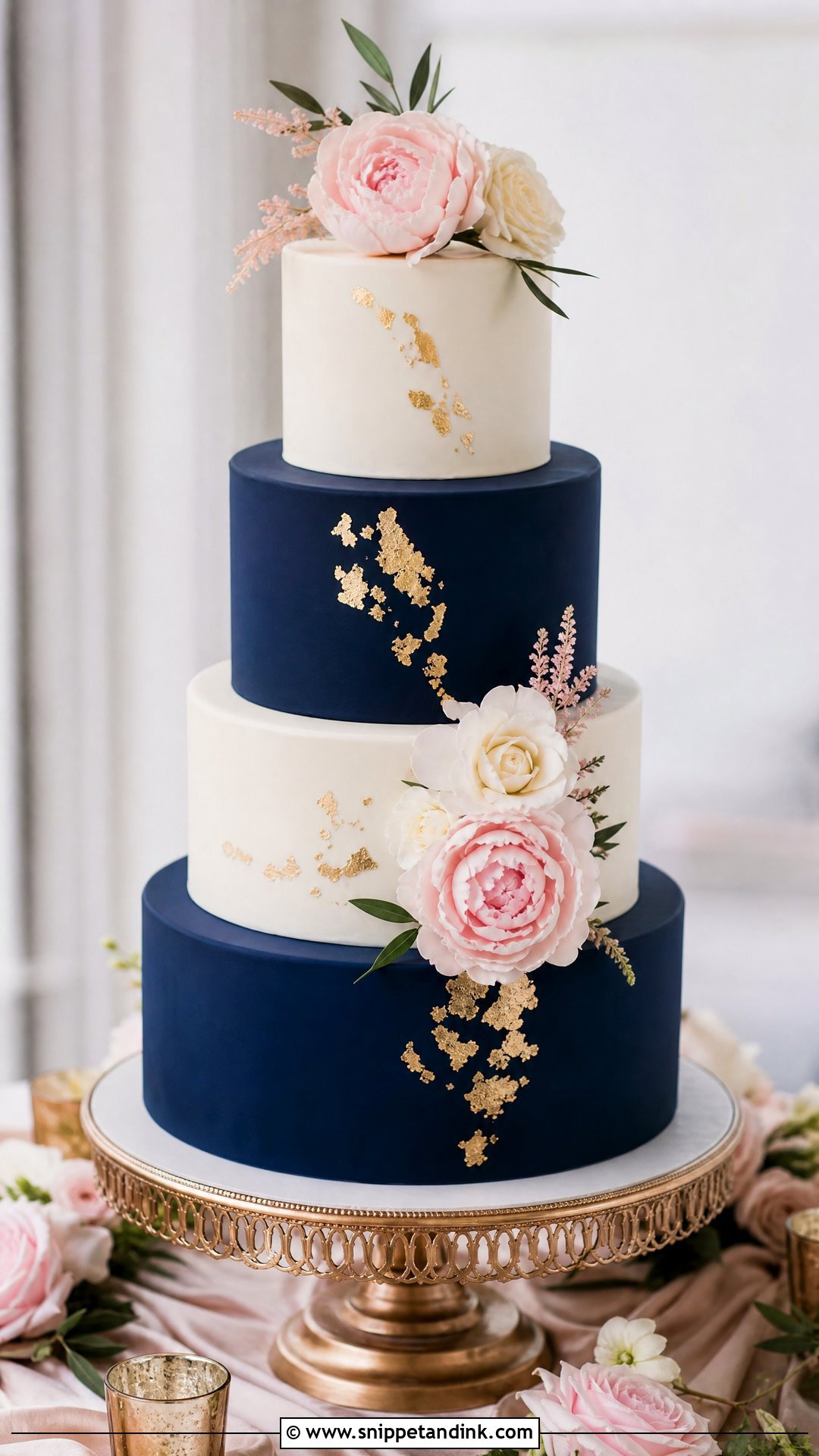
Navy and blush gives contrast without bite. Navy brings depth, blush adds warmth. For a gentle version, I keep most of the cake ivory and add navy only in details; for a bolder one, I do one or two navy tiers and set blush sugar flowers around them, with a little gold. Spring and garden weddings suit it. The thing to watch is blush flowers in very warm light, which can wash them toward peach. It’s worth seeing a sample bloom next to the navy before committing.
9. Navy And Silver Wedding Cake
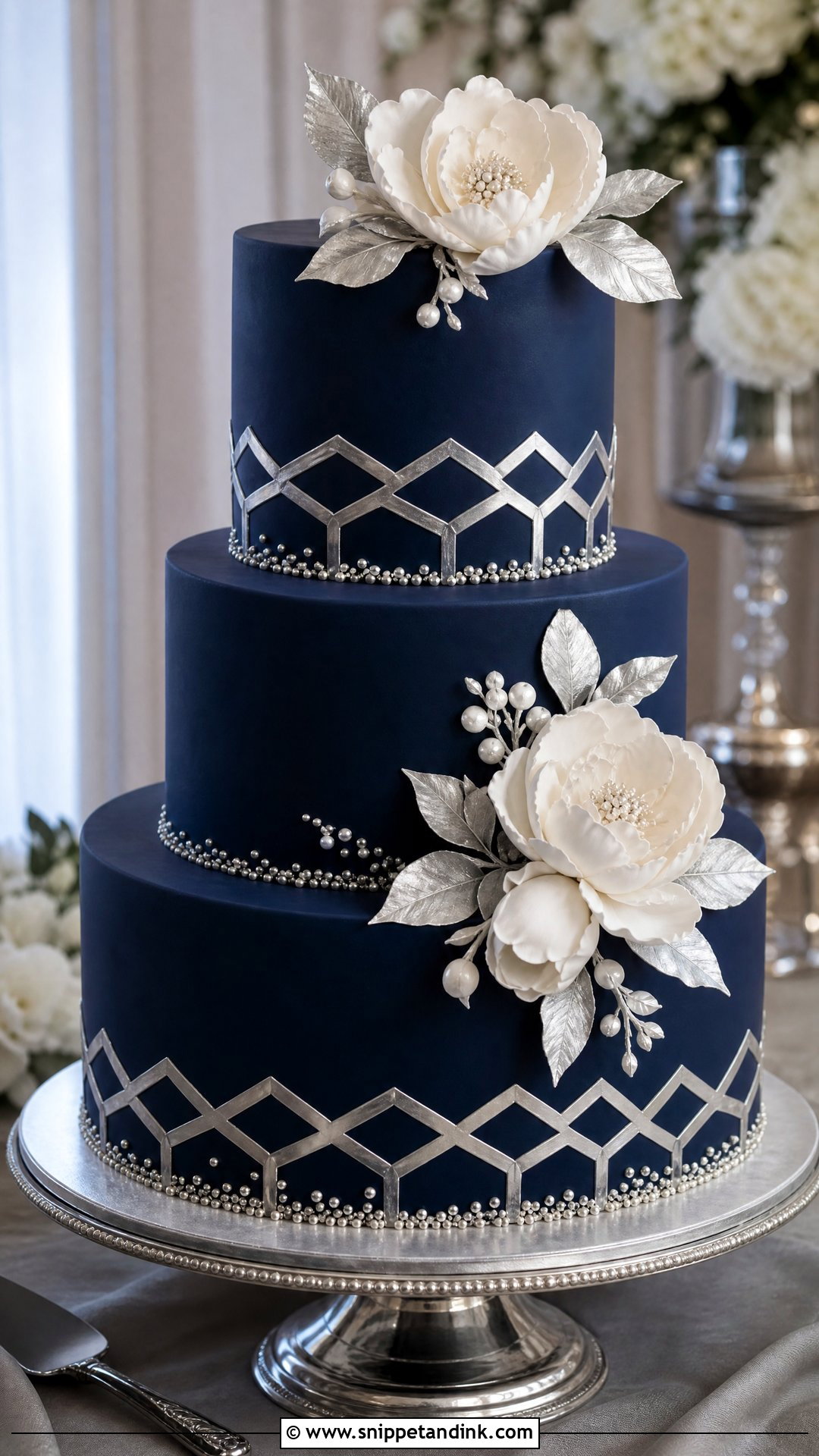
Silver is cooler and quieter than gold on navy. It suits modern weddings, winter palettes that don’t want to look like Christmas, and receptions lit by crystal chandeliers or with grey linens. I apply it as thin bands, brushed strokes, edible silver dragées or geometric lines. Silver lustre can look grey and flat under dim light, so I keep it on raised details where it catches the light. White flowers stop the cake from feeling too dark overall.
10. Navy Lace Wedding Cake
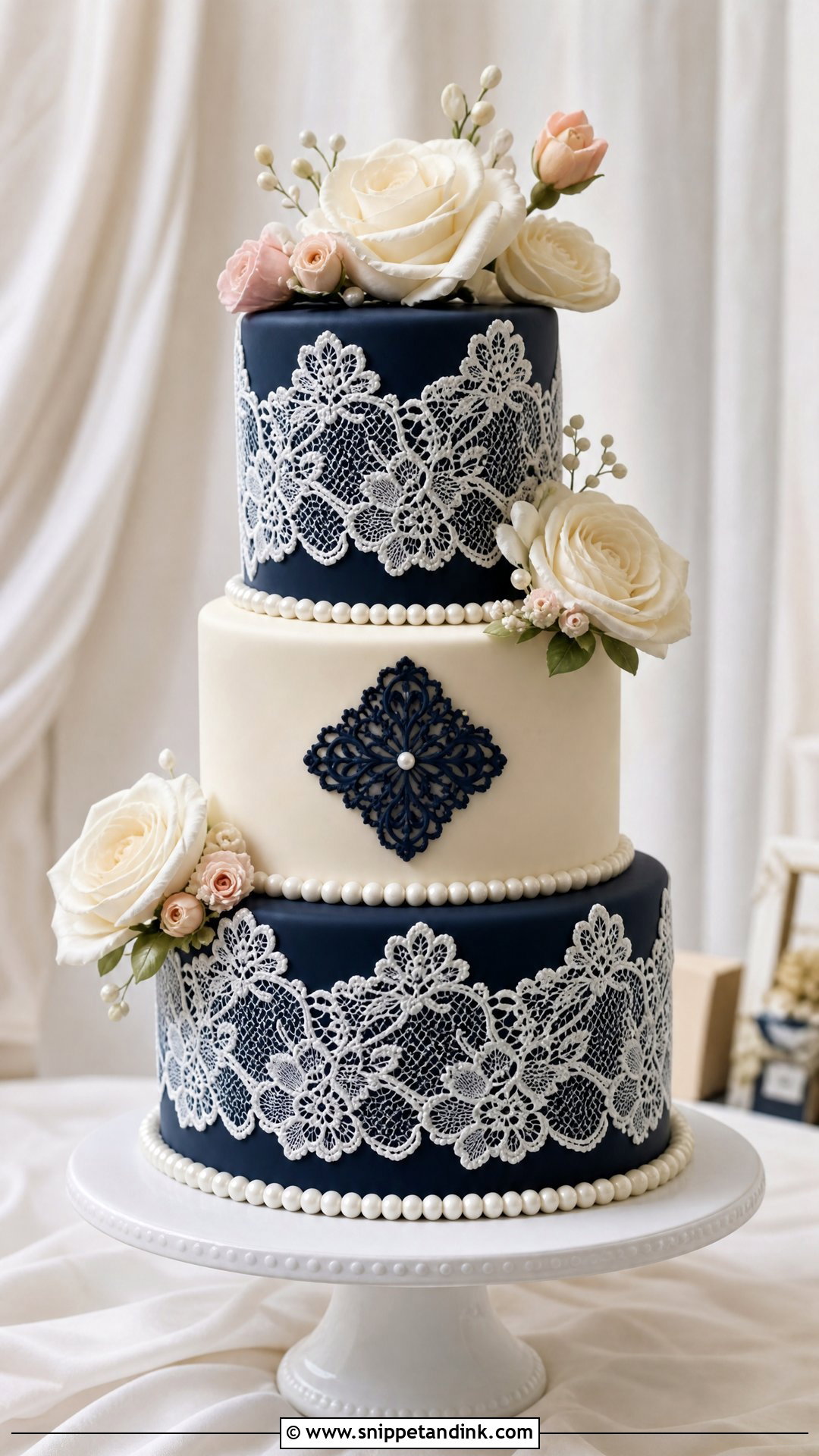
Lace reads as bridal almost immediately. I can do white lace over navy, navy lace over ivory, or a light embossed lace pressed straight into the fondant for a subtle texture. One lace tier with two smooth ones tends to look more balanced than lace everywhere. If you’d like it to echo your gown or veil, bring a close photo of the fabric so the motif and scale feel related, though they don’t need to be an exact copy. Ivory, navy and a touch of blush or champagne is as wide as I’d take the palette.
11. Navy Geometric Wedding Cake
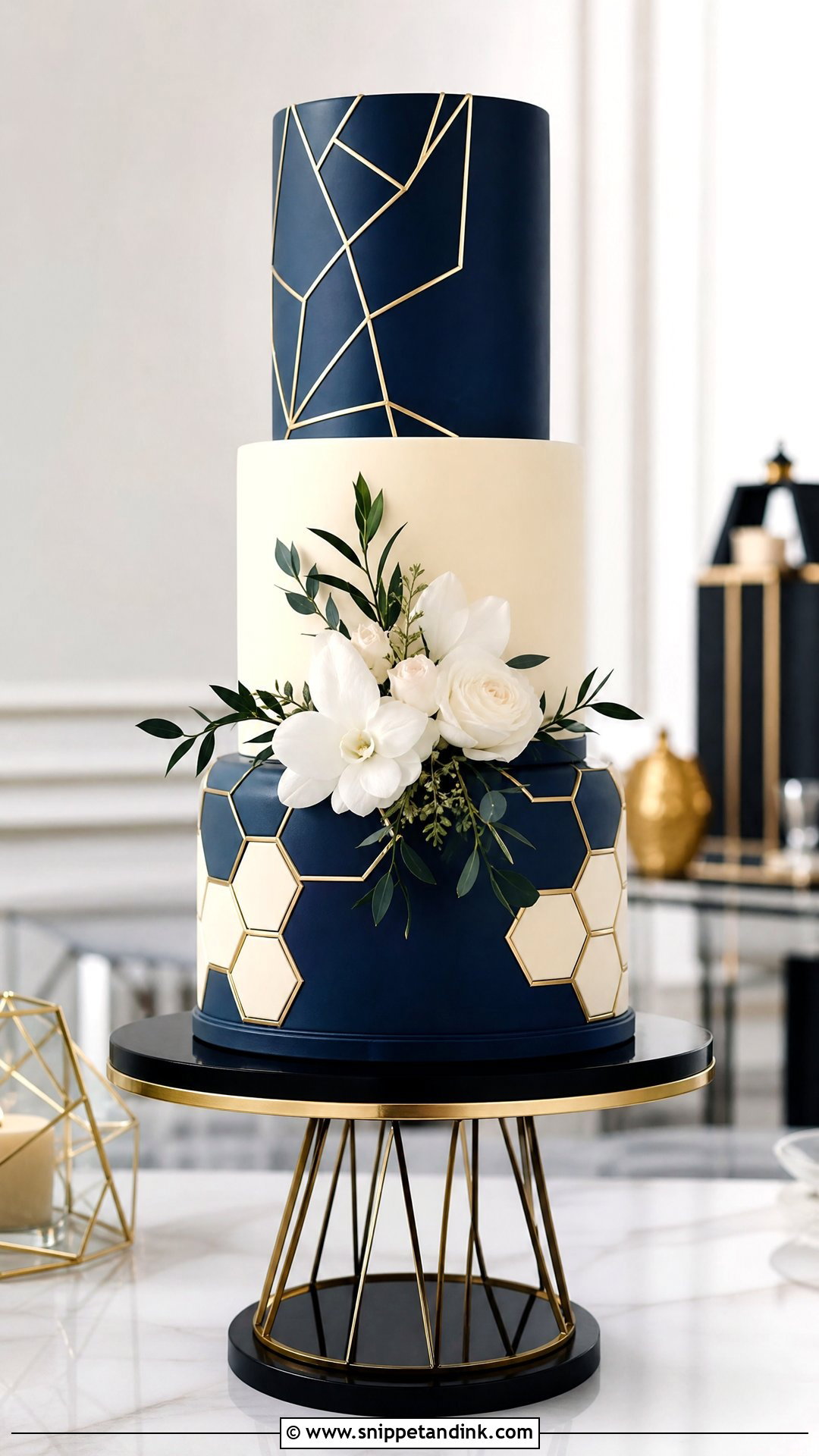
Geometry and navy are a natural pair for lofts, modern hotels and contemporary spaces. Sharp tiers, metallic lines, hexagon patterns and angular fondant panels give the cake structure with almost no flowers. Gold, silver or white all work for the lines, but I’d pick one. These designs depend on precise measuring and straight cuts, and any small error shows, so look at a baker’s previous geometric work before booking. A single cluster of white blooms at the side is a nice way to soften it.
12. Navy Watercolor Wedding Cake
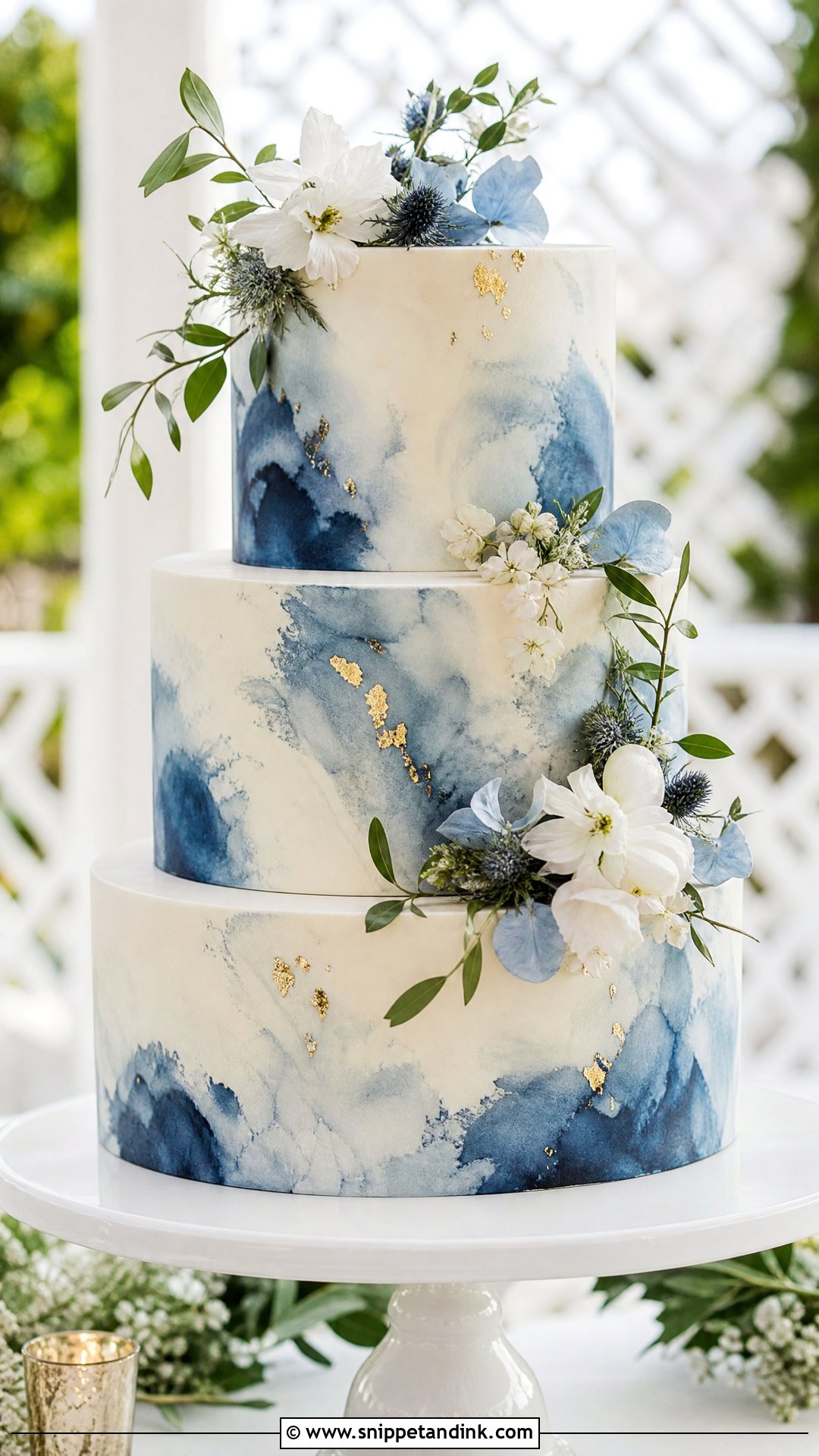
On a watercolour cake, navy appears in brushed washes over a white or pale blue base instead of covering the whole tier. I build it in layers, starting with the palest wash and darkening only where I want depth. That gives you navy without a dark cake, which works well for garden and coastal weddings. A few gold flecks, a loose arrangement of flowers or a simple topper is plenty. Each side looks slightly different, so I ask which side faces the guests before placing the flowers.
13. Navy Drip Wedding Cake
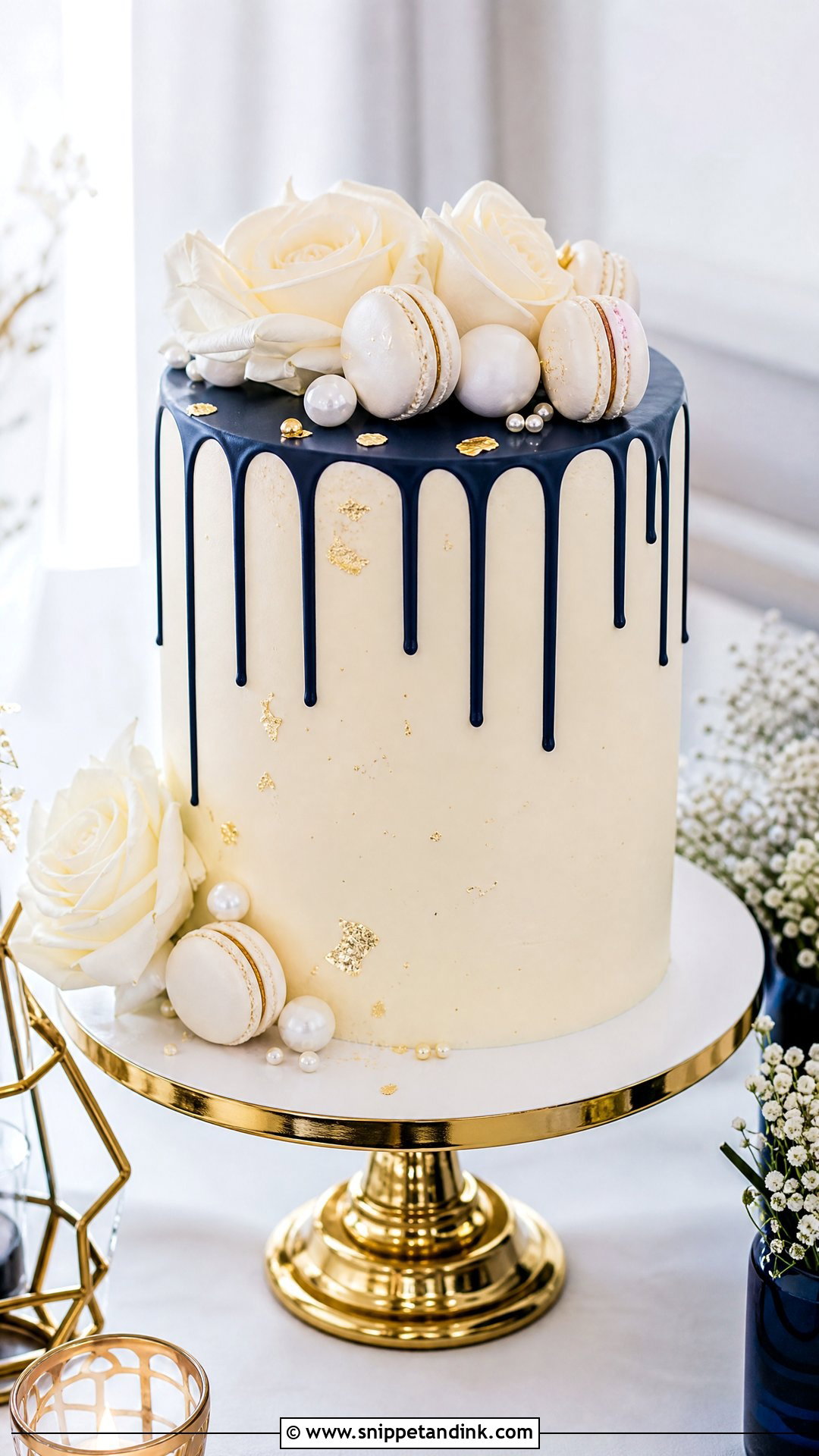
A drip feels younger and more playful, but it can still be refined. There are three versions I make: navy over white buttercream, white chocolate over a navy cake, or gold over navy for the dressier look. Temperature is everything. The ganache has to be cool enough and the cake cold enough that the drips stop where I want them; too warm and they slide all the way down. Macarons, sugar flowers or fresh blooms on top finish it. It’s less traditional than fondant, which is exactly why some couples choose it.
14. Navy Pearl Wedding Cake
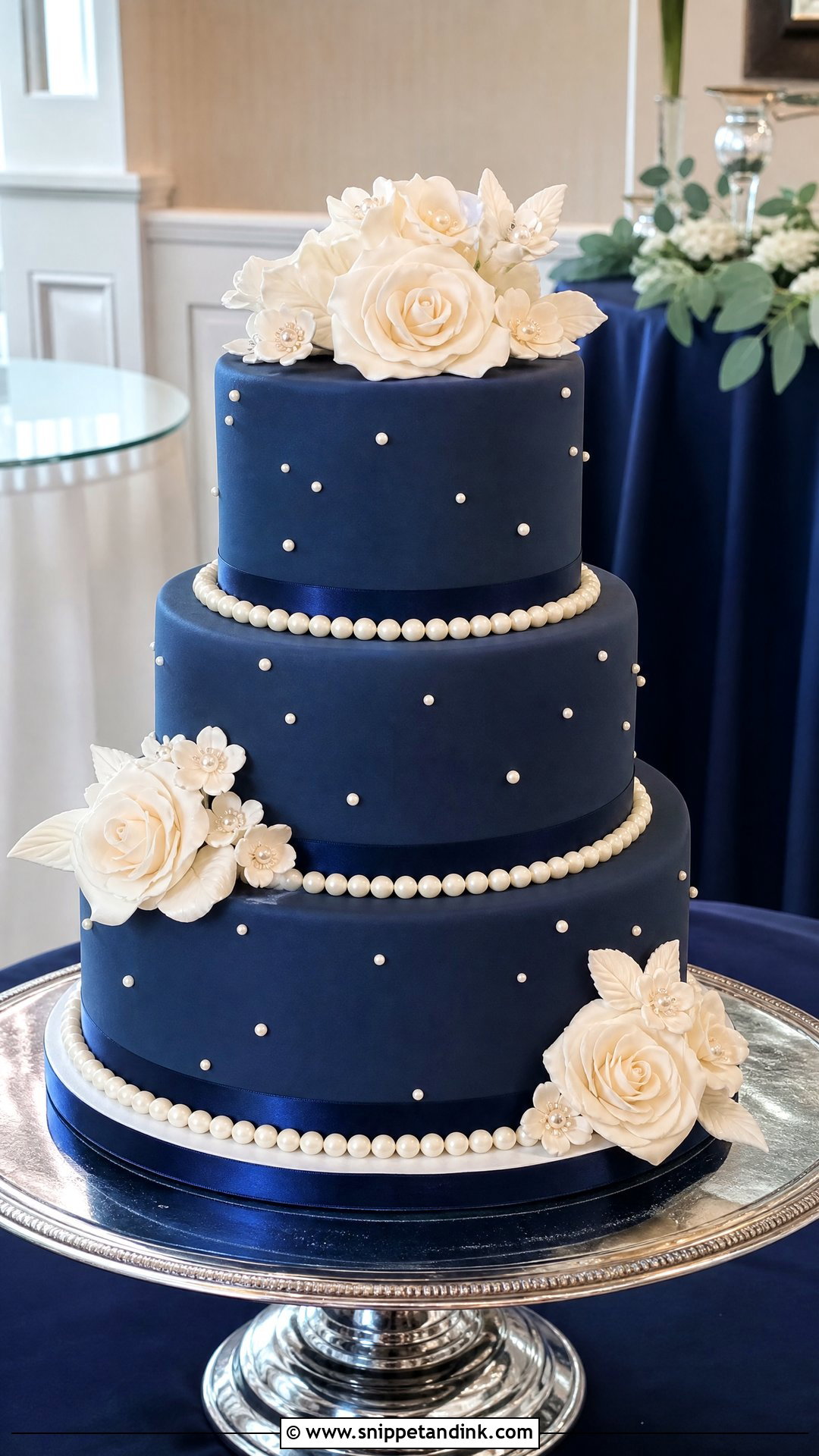
Pearls against deep navy look a little vintage. I pipe them as borders, scatter them across a tier, or set them in small patterns. They suit formal receptions, church weddings and ballrooms, alongside ivory flowers, lace and a satin ribbon. The common mistake is covering every tier; at that point it starts to look like a costume. A few well-placed rows make the navy look richer than a hundred pearls would.

15. Navy Monogram Wedding Cake
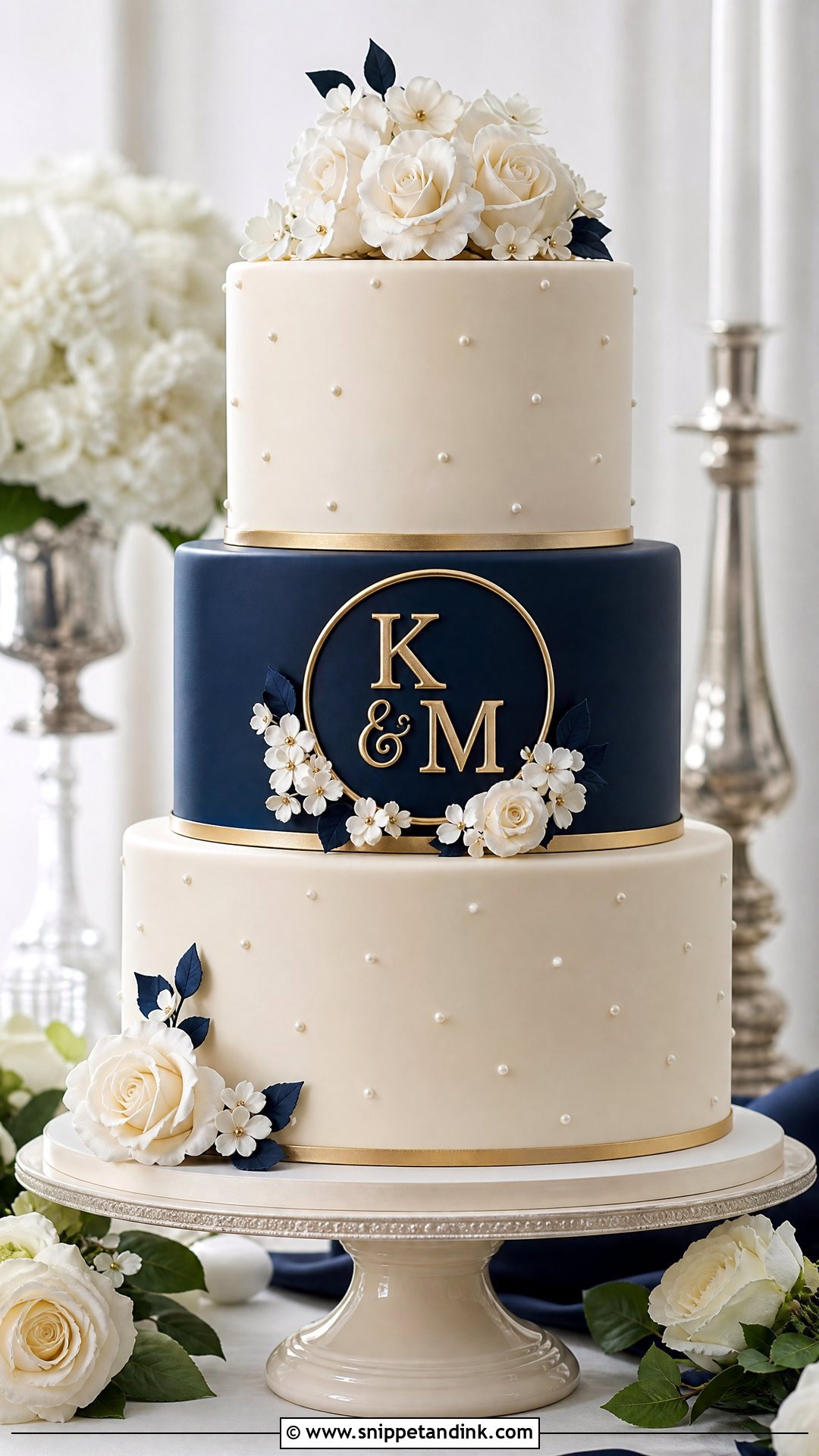
Monograms only work on navy if the lettering is clean, so I usually design the initials on paper first and size them to the tier. They can be painted in gold, piped in white, or cut as a raised fondant emblem on the middle tier. Navy is an excellent background because the letters stay legible in photos even from across the room. Keep the borders simple and the palette narrow. A thin metallic band or a few sugar flowers is enough extra detail for a cake that already feels made for you.
16. Navy Rustic Wedding Cake
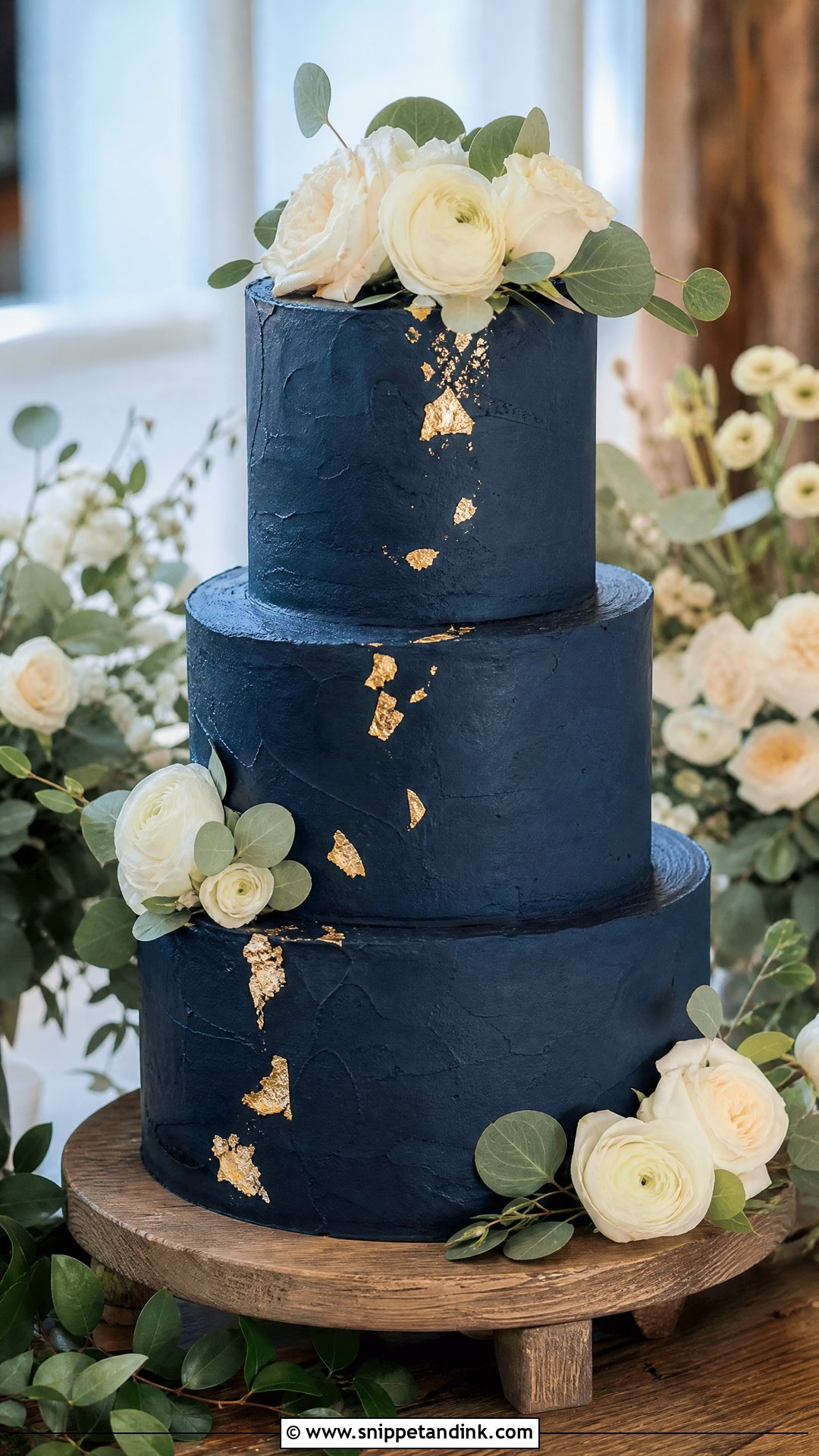
A rustic navy cake skips the perfect finish. I use textured buttercream, a semi-smooth coat or a slightly rough top edge, then pair it with greenery, white flowers, dried accents or a wood slice stand. Barns, lodges, gardens and outdoor venues are where it fits. The risk is it looking unfinished rather than relaxed, so I keep the tiers straight and level even when the surface is loose. A little gold or an ivory ribbon pulls it back toward wedding.
17. Navy Boho Wedding Cake
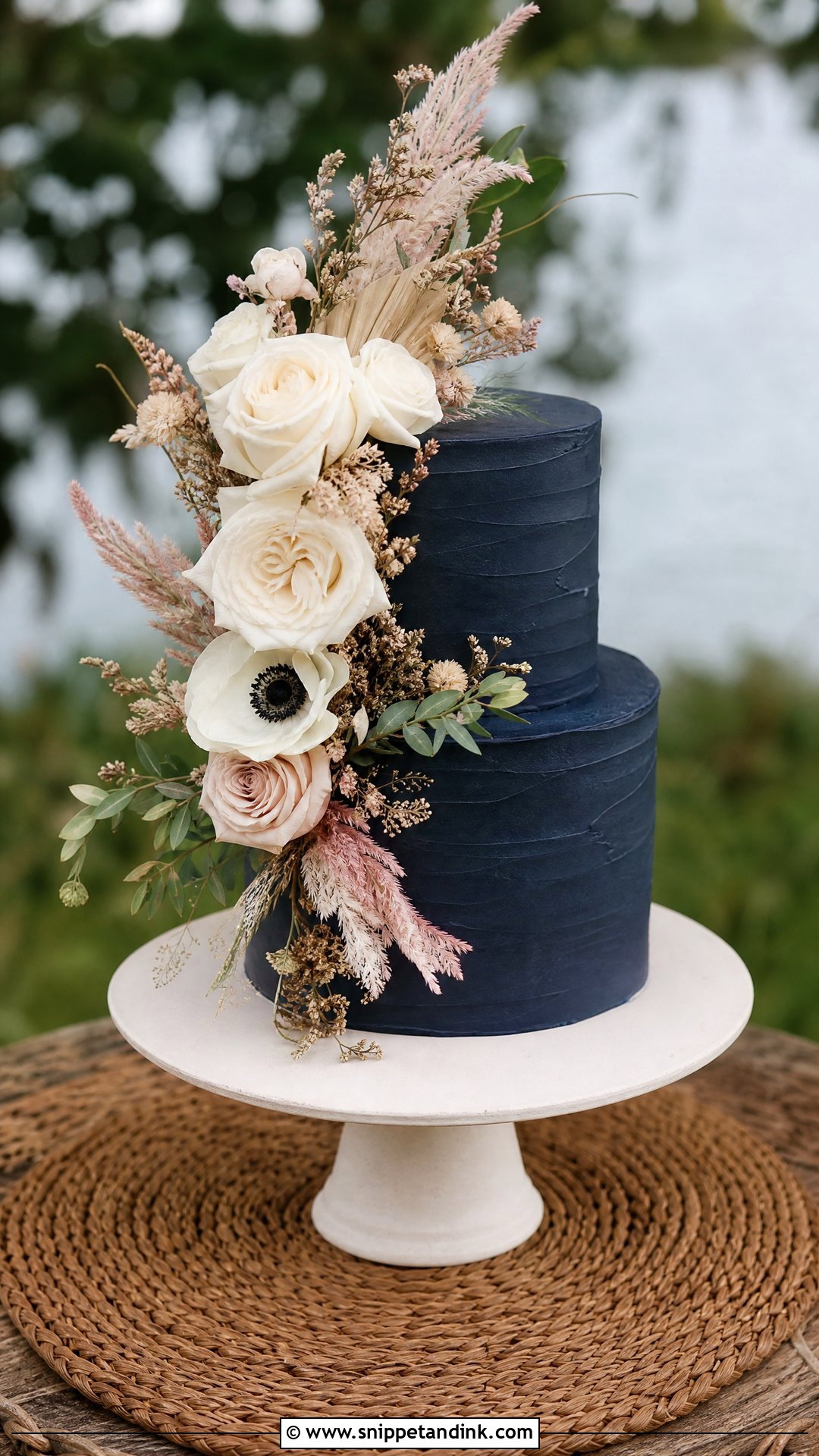
Boho styling uses navy as a moody backdrop for dried grasses, blush and ivory blooms and warm neutral tones. Smooth or lightly textured buttercream both work, depending on how casual you’d like it. Dried pampas and grasses shed, so I seal or wrap the stems and keep them from touching the icing directly. Space is the secret here: an airy arrangement looks deliberate, a crowded one looks like a florist’s off-cuts. Tents, wood and woven decor all suit it.
18. Navy Beach Wedding Cake
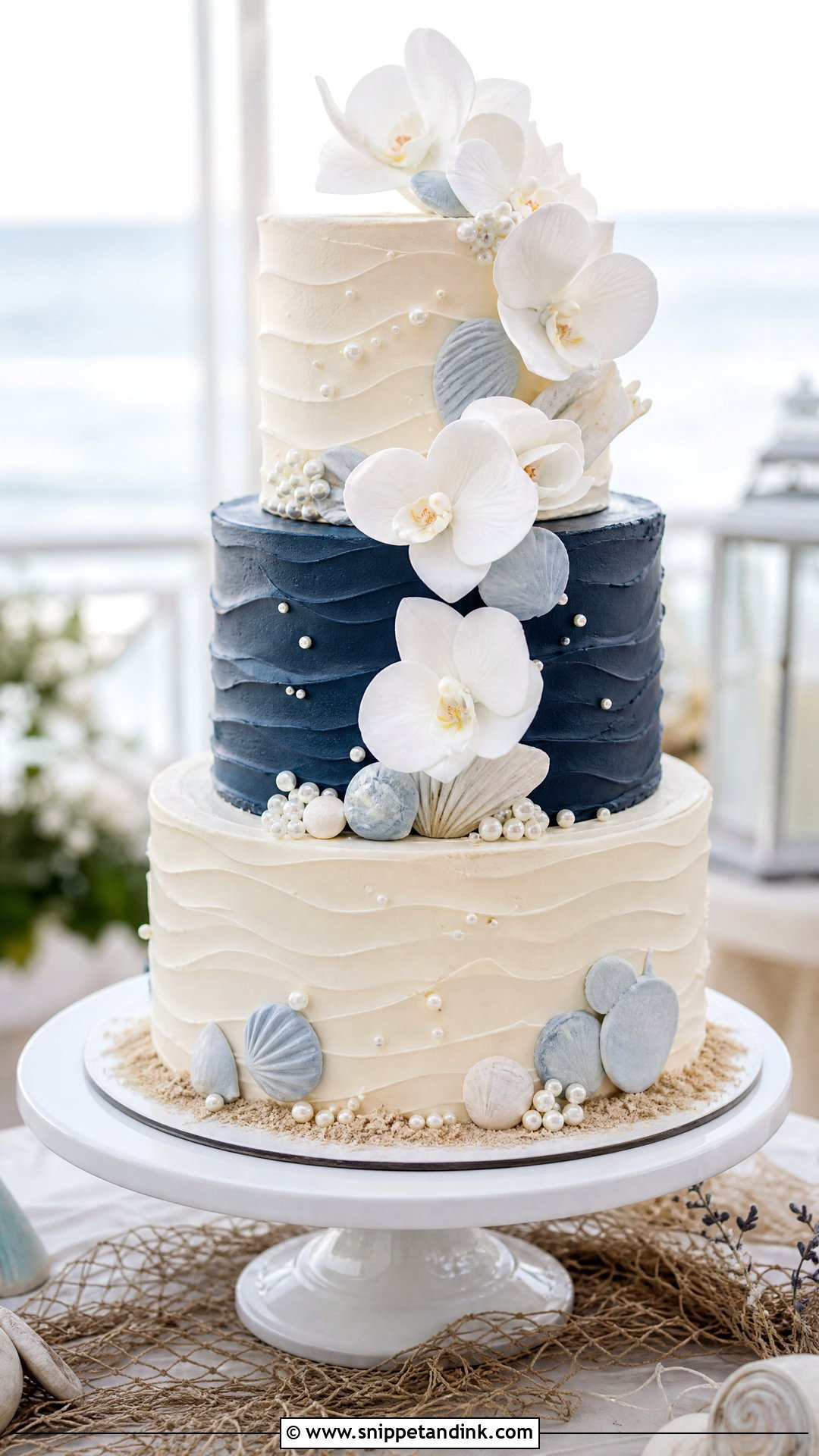
Coastal doesn’t have to mean seashells everywhere. My approach is navy with ivory, sand and soft blue, maybe a subtle shell texture or a gentle wave pressed into one tier. A smooth or lightly textured buttercream finish, white sugar flowers and a few pearls keep it bridal. It suits beach, lakeside and summer receptions with navy linens. A soft watercolour blend or a hint of silver shimmer can suggest water. I’d steer away from bright aqua and sugar starfish if you don’t want it to read as a novelty.
19. Navy Celestial Wedding Cake
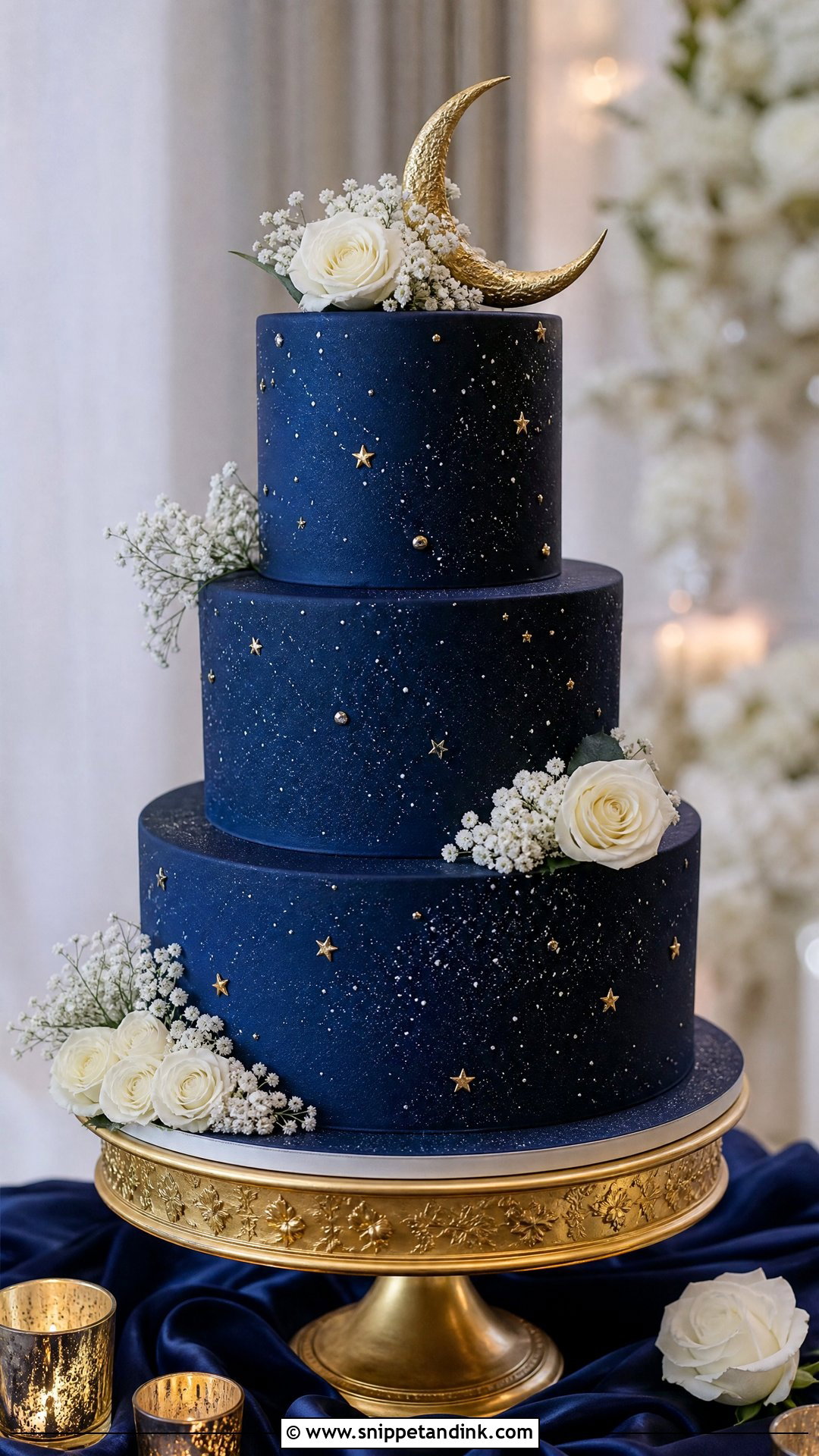
For an evening reception, a navy celestial wedding cake turns the blue into a night sky. Tiny metallic stars, a moon, a fine dusting of shimmer and gold constellations do the job. Crowding is the main risk; with too many stars it becomes a child’s party cake. A crescent topper or a ring of white flowers at the base keeps it romantic. Gold looks warmer under candlelight, silver looks colder and more modern, so think about how the room is lit.



20. Navy Art Deco Wedding Cake
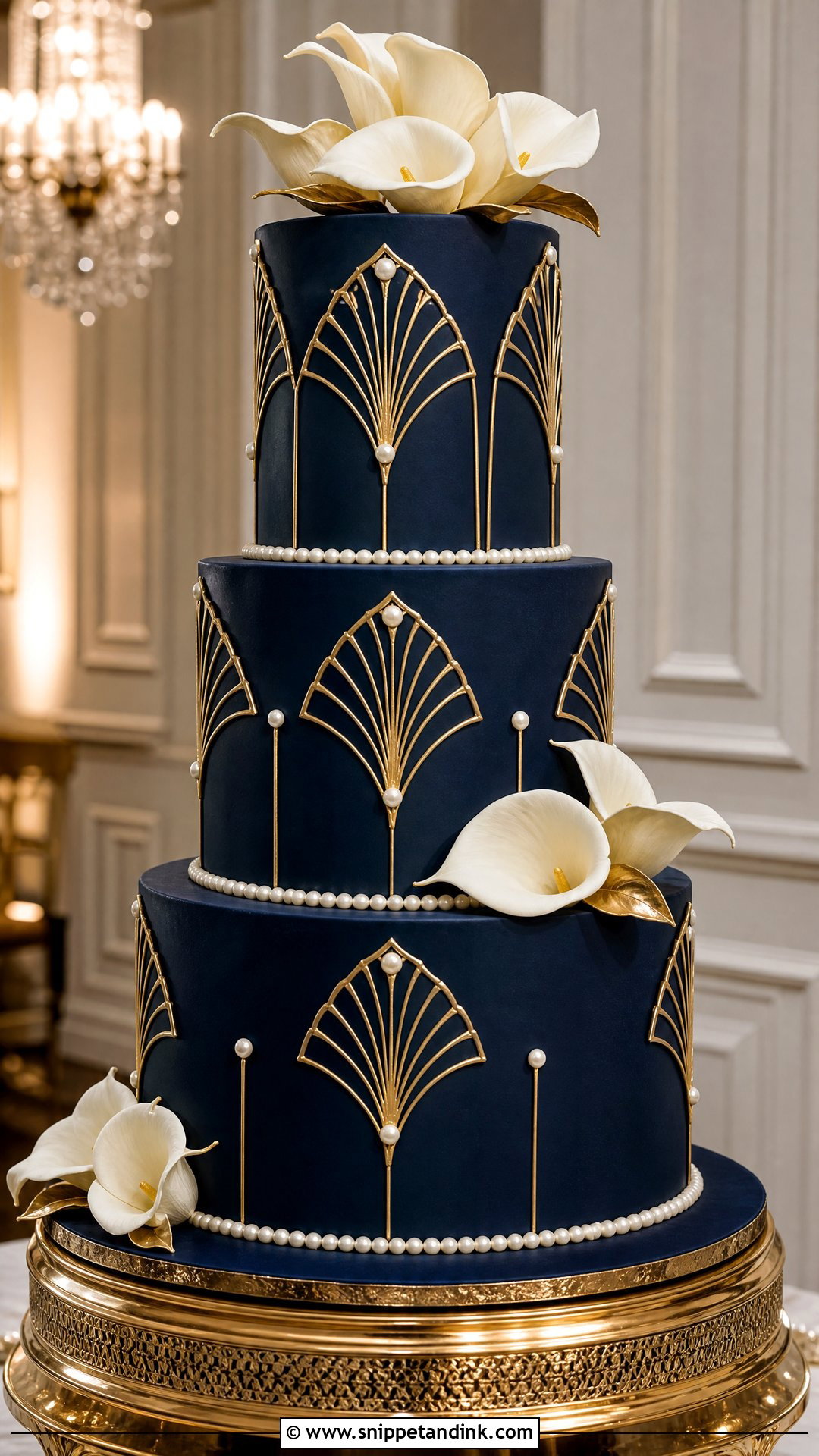
Symmetry, metallic fans, clean lines and pearl beading are what make a navy Art Deco wedding cake work. Navy holds gold or silver beautifully, and the contrast suits hotel ballrooms, historic venues and black-tie dinners. Smooth fondant and sharp edges are non-negotiable; the pattern looks wobbly on a soft finish. I mark the repeat on each tier before painting so every fan lines up. A small white floral cluster is fine, but the geometry should lead.
21. Navy Tiered Wedding Cake
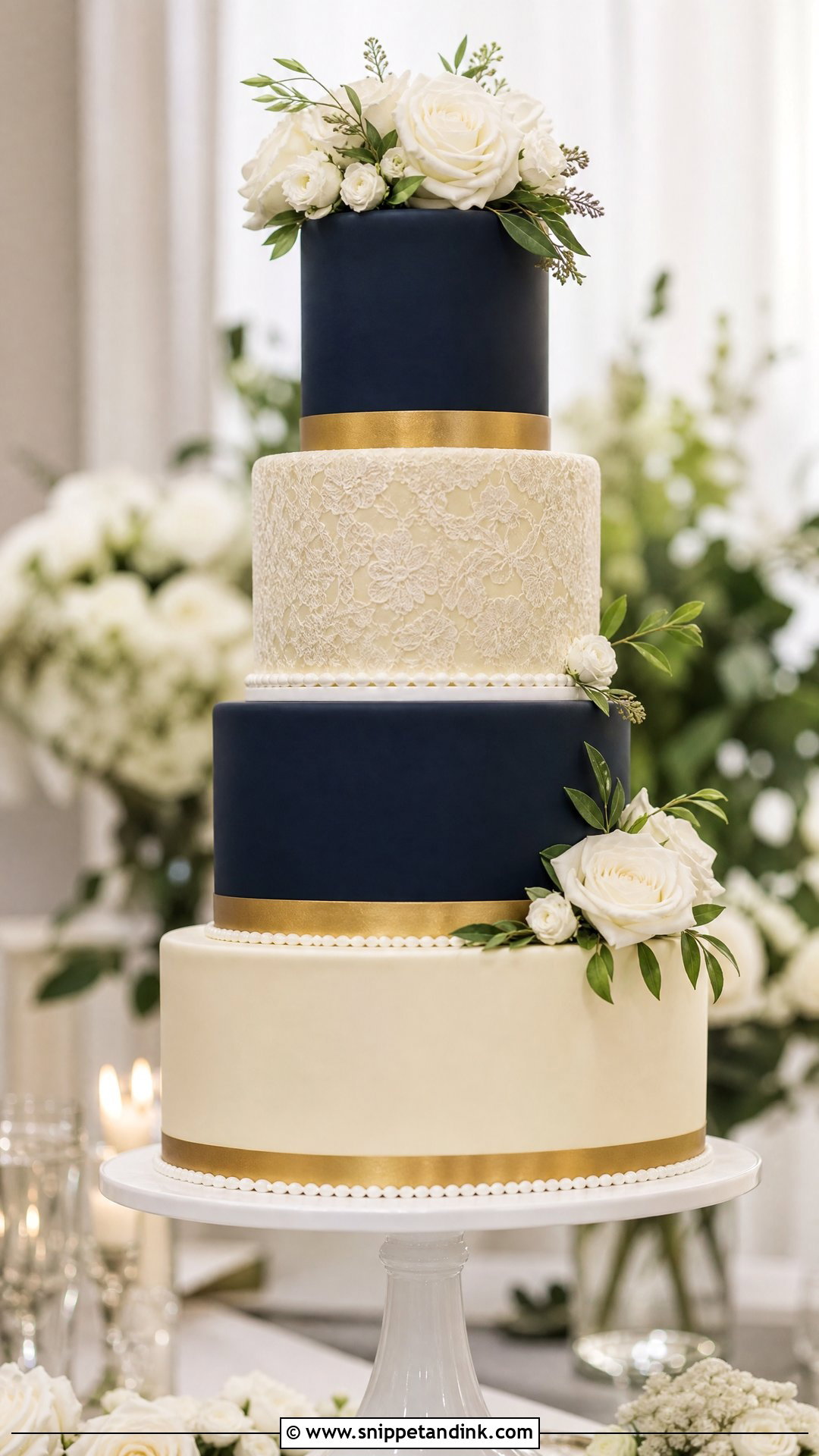
For a larger guest list, tiers let you mix finishes: one navy, one ivory, one lace, one floral. I place navy on the bottom tier to ground the cake or in the middle to balance it. Ribbon, flowers or a metallic accent connect the tiers so they read as one design instead of four ideas. Different tiers can also carry different flavours, which is a practical way to please more guests. Ask how many portions each size serves, since wedding portions are usually smaller than party slices.
22. Navy Single Tier Wedding Cake
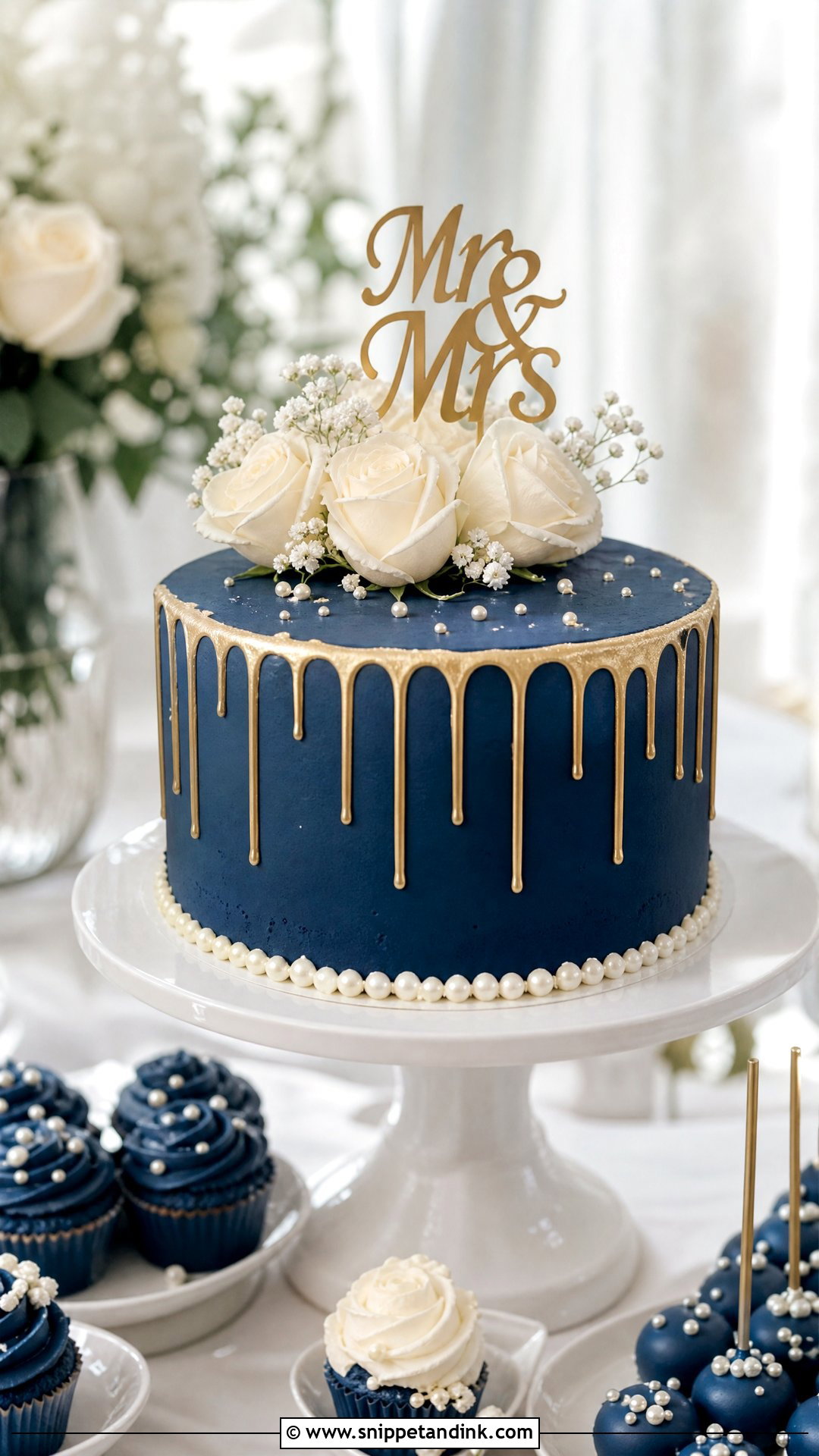
Small weddings, elopements and dessert tables often only need a single tier for cutting. With one tier, the finish has nowhere to hide, so I pick one feature: smooth buttercream, clean fondant, a gold drip or a single flower arrangement. Navy gives a small cake more presence than white would. Raise it on a tall stand. If you want the table to look fuller, a few matching cupcakes or mini desserts around it cost far less than adding tiers.
23. Navy Square Wedding Cake
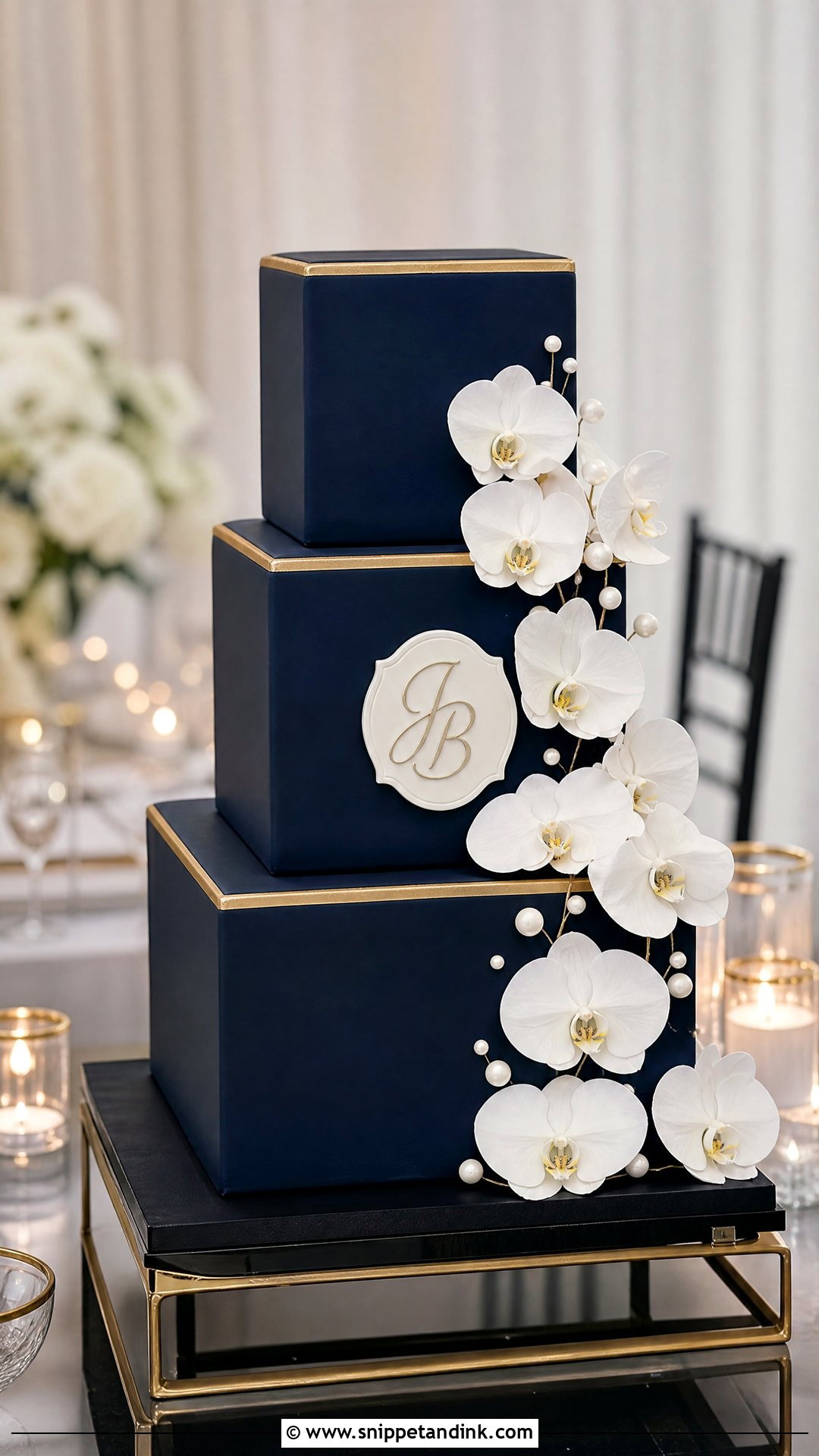
Square tiers change navy from romantic to structured. The corners frame metallic lines, marble, lace panels and monograms very well, and white flowers or gold edging stand out cleanly. They take longer to cover than rounds because each corner has to be smoothed without tearing, and they’re heavier for the same width, so allow for that in the cost. Modern venues and formal receptions suit it. Fewer decorations is better here; let the shape speak.
24. Navy Ruffle Wedding Cake
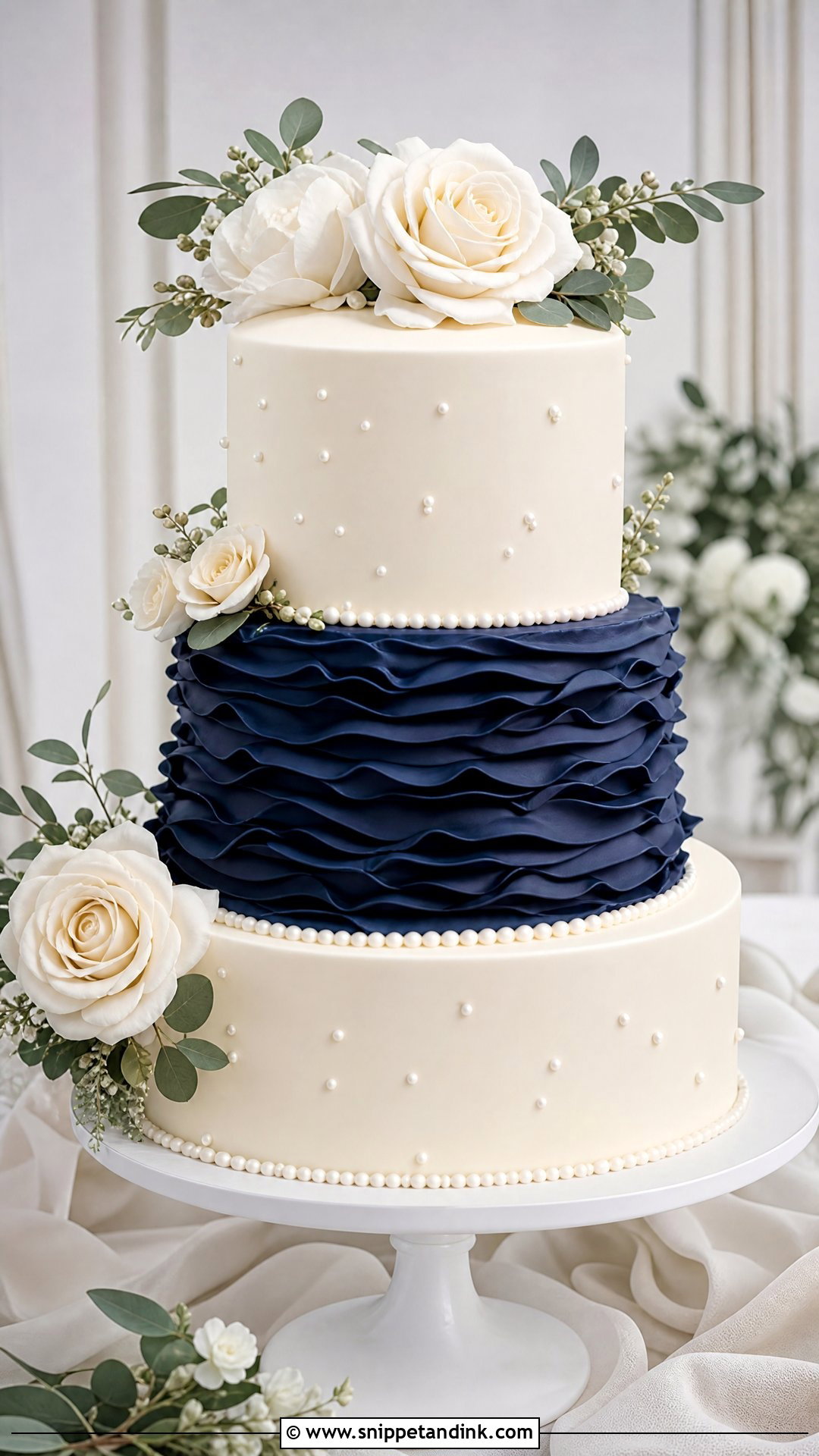
Ruffles bring movement to a dark palette, and a navy ruffle wedding cake looks like folded fabric. Fondant ruffles hold the crispest shape, wafer paper is lighter and more delicate, and buttercream ruffles are soft but sensitive to heat. One ruffled tier among smooth ivory ones is the lighter version; ruffles all over is dramatic. Ivory flowers and pearls keep it bridal. Wafer paper reacts badly to humidity, so I avoid it at outdoor summer weddings.

25. Navy Sugar Flower Wedding Cake
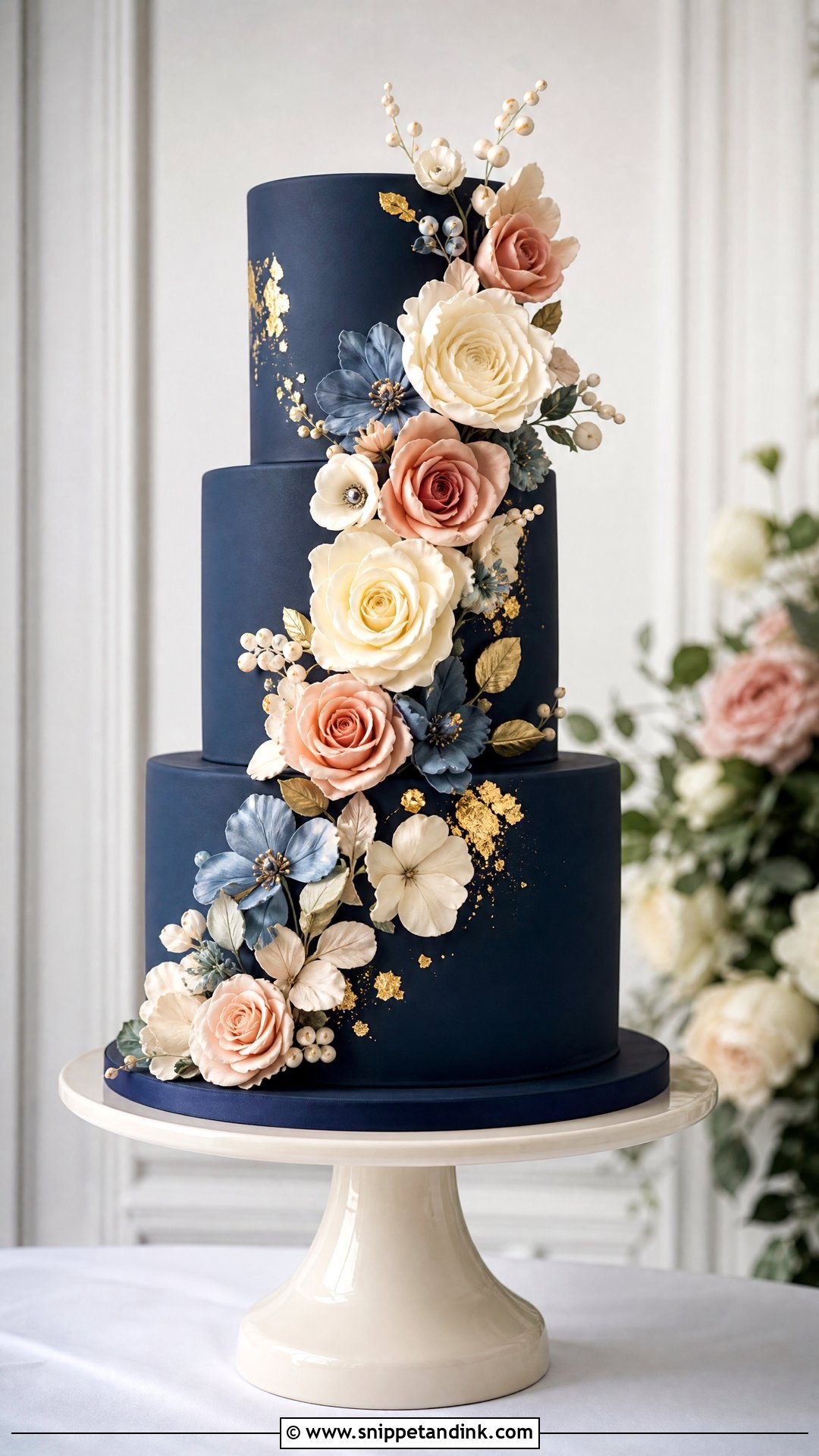
Sugar flowers don’t wilt, bruise or need water, which matters on a long day in a warm room. Ivory, blush, dusty blue and pale peach look especially good against navy. They can be shaped to match your bouquet, but each one is made petal by petal and has to dry, so they’re ordered well ahead. I use them on fondant and buttercream alike, either as a cascade or a small cluster at the top. They’re also a keepsake; many couples save the topper flower afterwards.
Sea Air, Sun and a Dark Cake at a Waterside Reception
Coastal and lakeside weddings are the setting where I worry most about a navy cake. Dark surfaces absorb more heat from sunlight than pale ones, so a navy buttercream tier in direct sun softens faster than an ivory one beside it. Damp sea air adds moisture, which makes fondant tacky and wafer paper droop.
What I do differently near water
- Use a firm ganache coat under fondant, which holds its shape in warmth far better than soft buttercream.
- Ask the venue for a shaded, indoor or tented spot for the cake table, away from open doors and the breeze.
- Deliver as close to the reception as possible, and set the cake out only after guests sit down if it’s very hot.
- Choose sugar or sturdy fresh flowers over delicate blooms that wilt in wind and sun.
If the cake has to be outside for photos, keep it short. A few minutes on the terrace for pictures and back into the shade is fine; an hour in the afternoon sun is not.
Navy on One Tier or All Over? Making the Call
Navy wedding cakes stay popular because the colour is bold without losing its manners. Gold makes it formal, blush makes it romantic, white keeps it crisp, and marble or geometry make it modern. If you love navy but worry it’s too dark, use it on one tier, as a drip, a ribbon or a watercolour wash. If you want the cake to be the room’s focal point, go for full navy fondant or buttercream. Then let your venue, flowers and season decide the details.
You'll Like These Ideas:




Leave a Reply