
The updos brides ask me for now are softer than they used to be. Stiff set curls and heavily lacquered shapes have given way to movement, comfort and a polish that still looks like your own hair: low chignons with loose face-framing pieces, sleek buns that show off a neckline, braids with fine detail and textured knots built to get through photos, hugs and dancing. Which one is right comes down to your dress, veil, texture and venue. I’ve written each one up the way I’d talk it through at a trial.
What’s Really Holding a Modern Updo Up
Soft updos look as if a few pins are holding them. They aren’t. Underneath most of the shapes below is a structure guests never see, and knowing what goes into yours helps you judge whether it will last until the end of the night.
The hidden parts
- A base: usually a small ponytail or flat braid where the updo will sit. Everything else pins to it, which spreads the weight.
- Grip: texture spray, dry shampoo or light backcombing, because smooth, clean hair lets pins slide straight out.
- Two kinds of pins: bobby pins to lock sections in place, and open U-shaped pins to shape without flattening.
- Padding or extensions only when needed: a bun filler for fine hair, or clip-in wefts to add length for a fuller chignon.
If your hair is very fine, unusually slippery or freshly colored, say so at the consultation. Those are the three things most likely to change how your stylist builds the base.
1. Modern Bridal Low Chignon
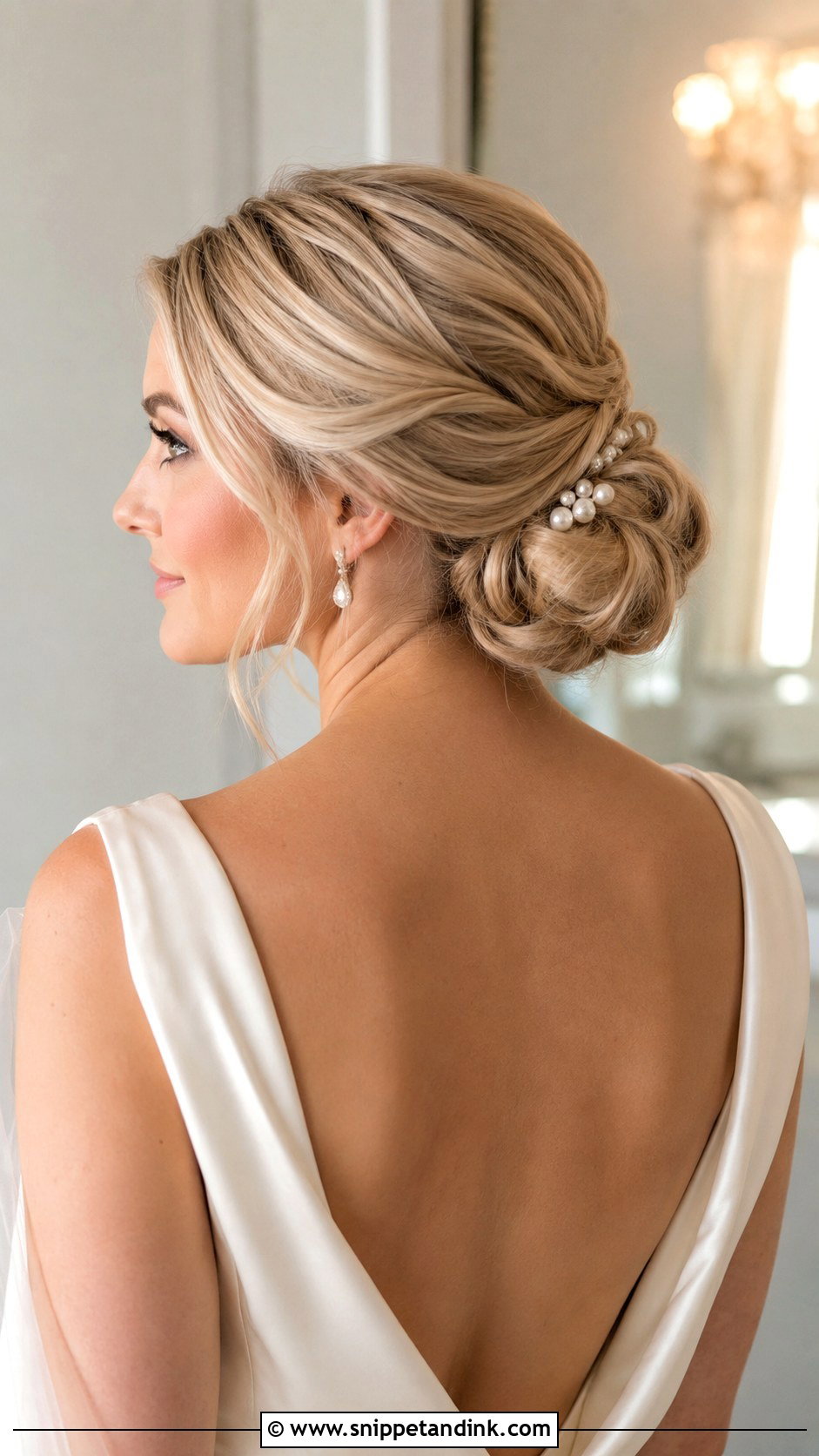
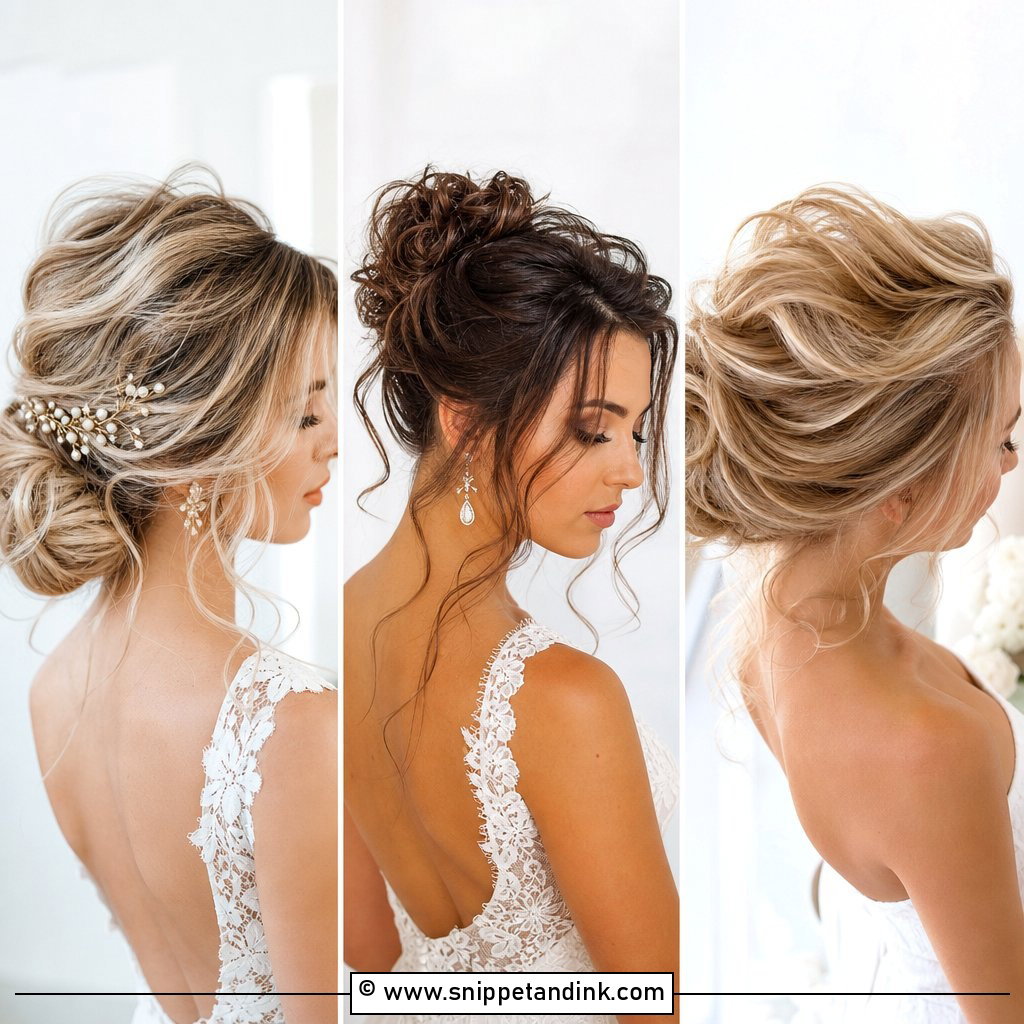
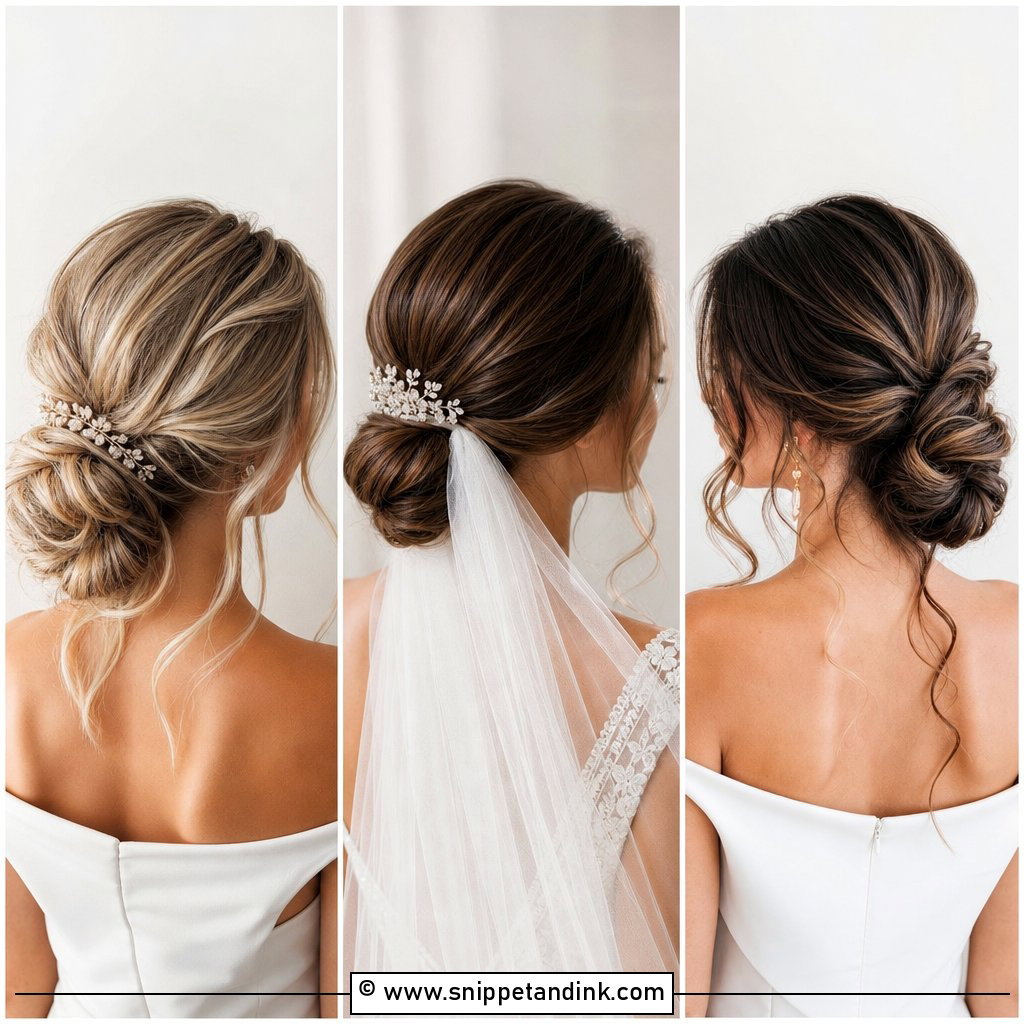
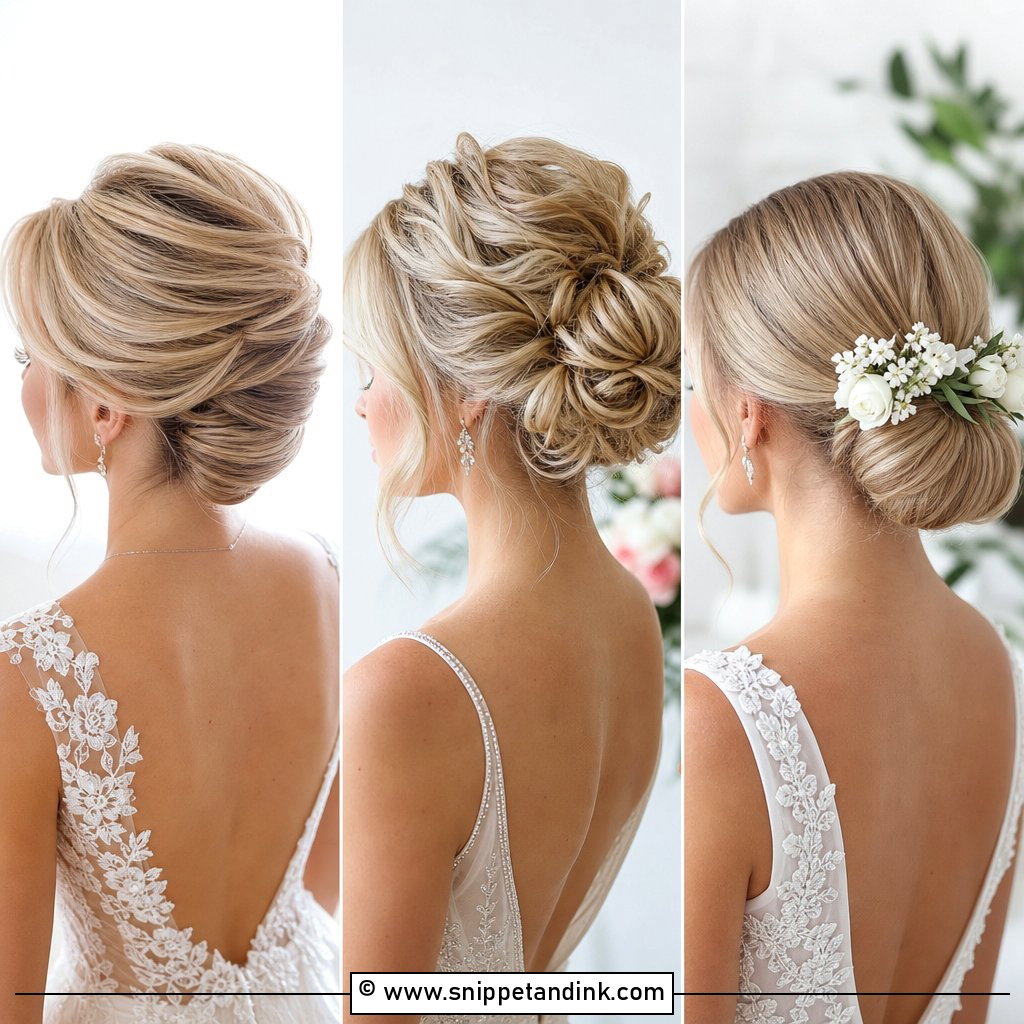
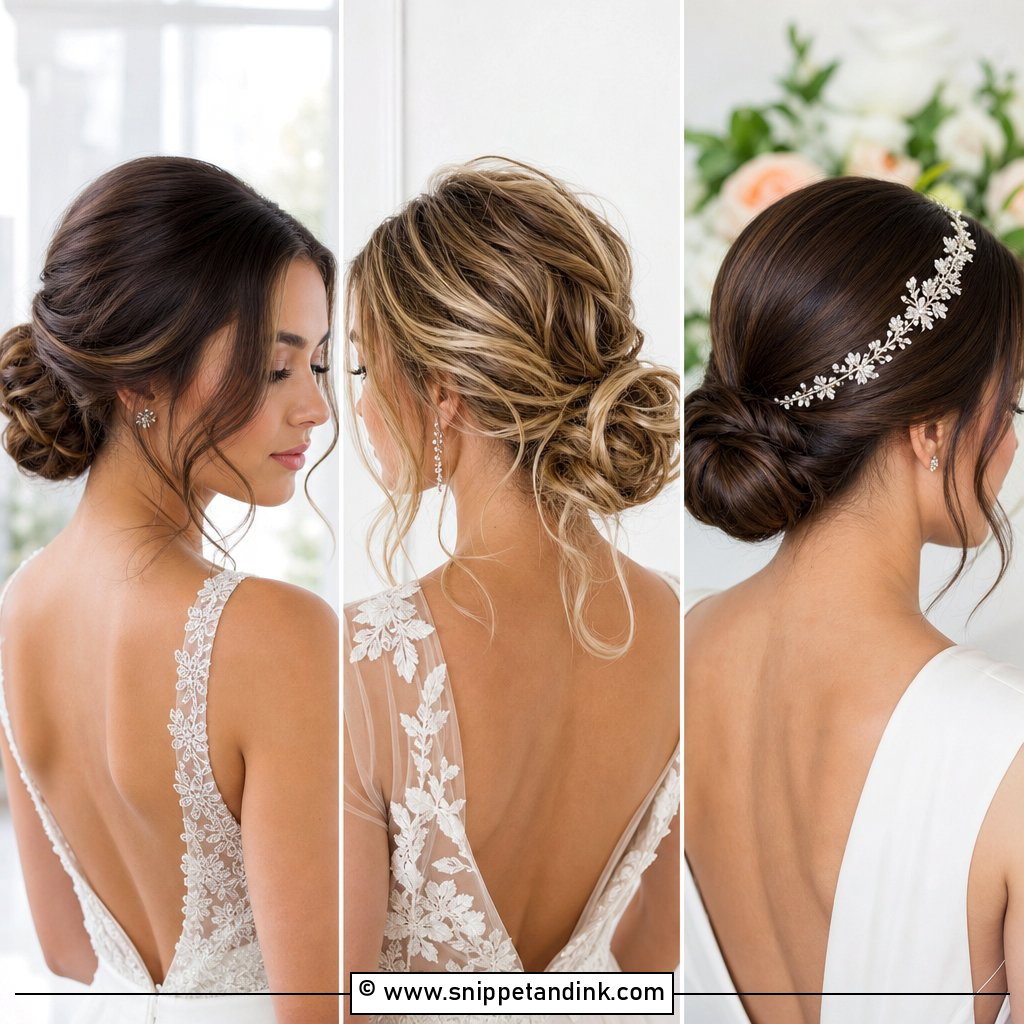
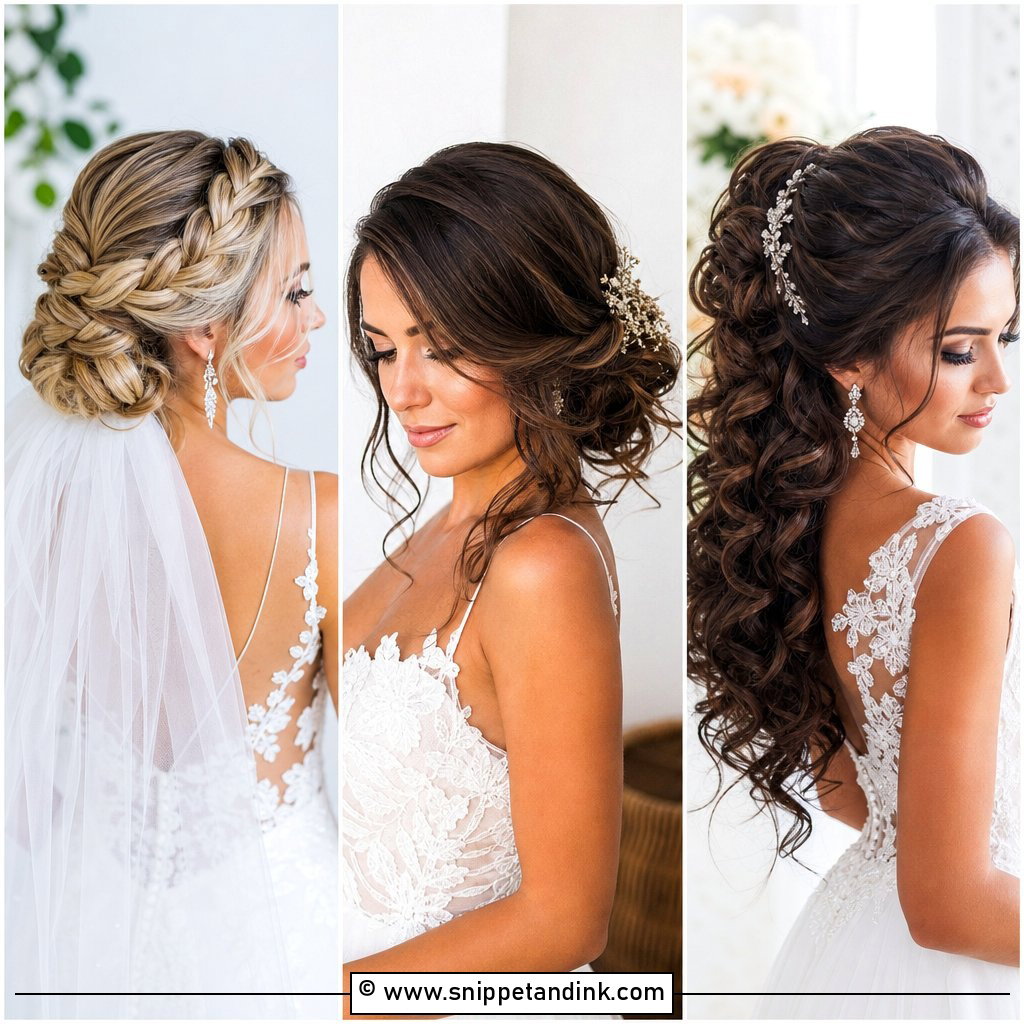
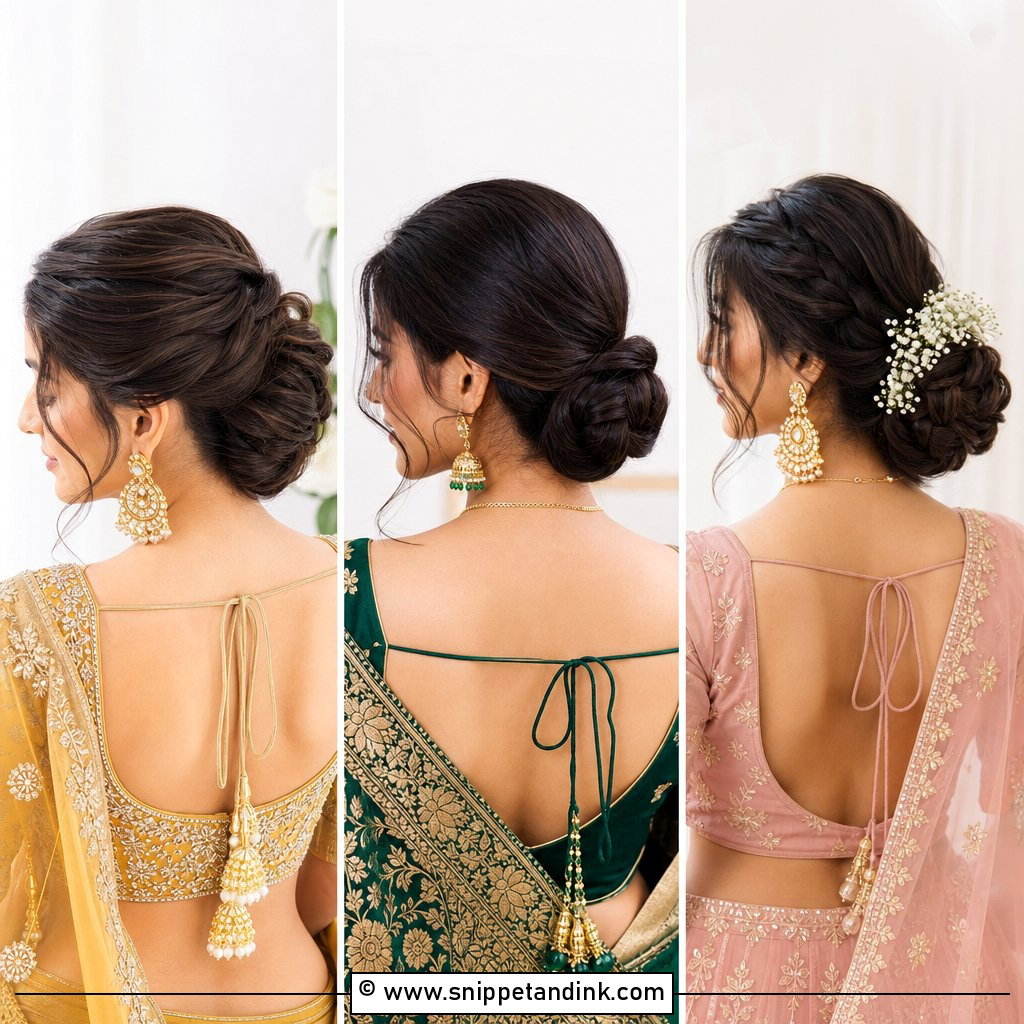
If I had to pick one updo that suits the most brides, it would be this. Sitting at the nape, it leaves room above for a veil comb and works with pearl pins, combs and dresses with back detail. I build soft lift at the crown so the profile doesn’t look flat in photos, then smooth the sides. Curtain bangs or long layers become face-framing pieces rather than a problem. Medium to long hair suits it, worn sleek, textured or slightly loose.
2. Sleek Bridal Bun
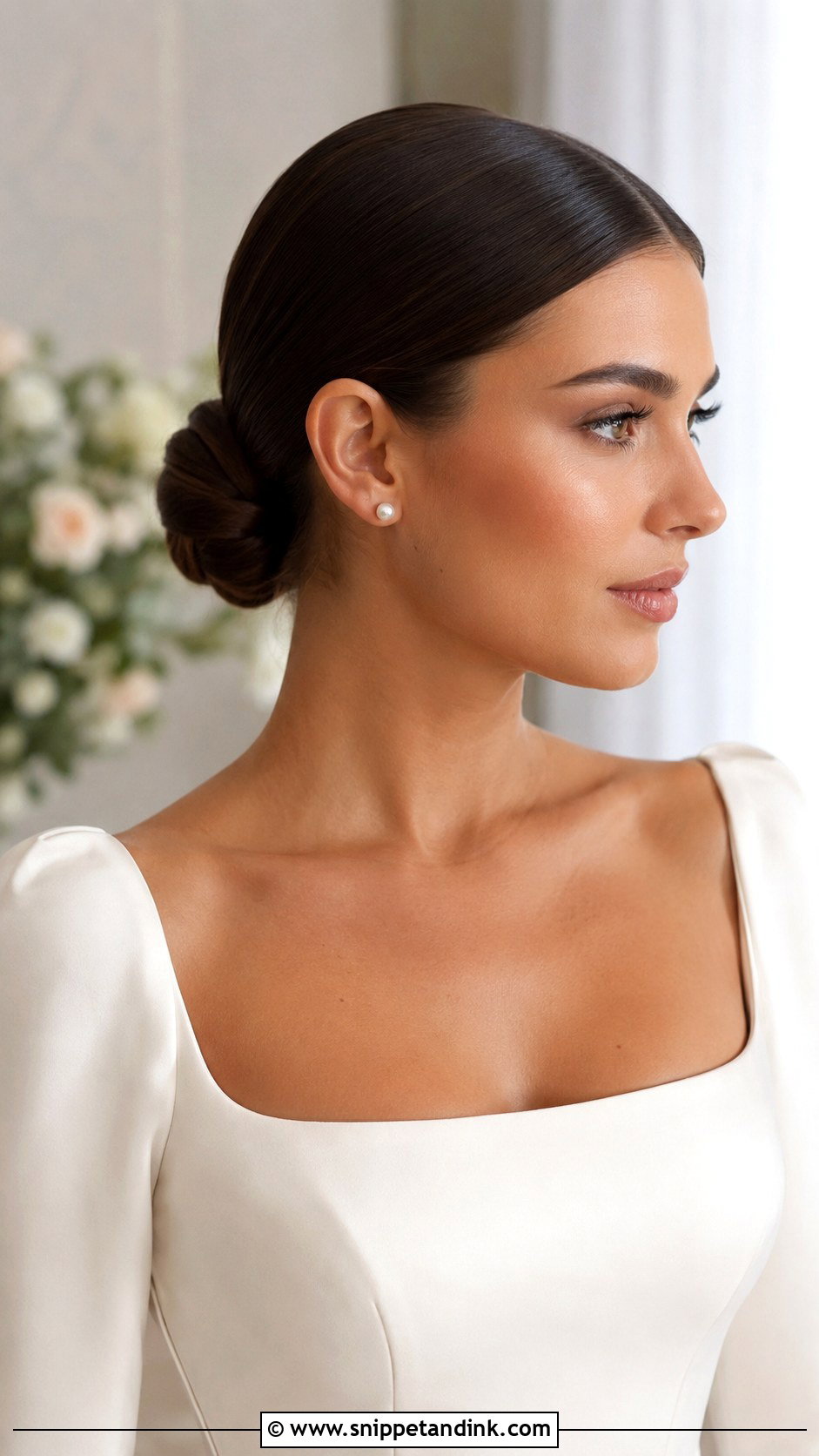
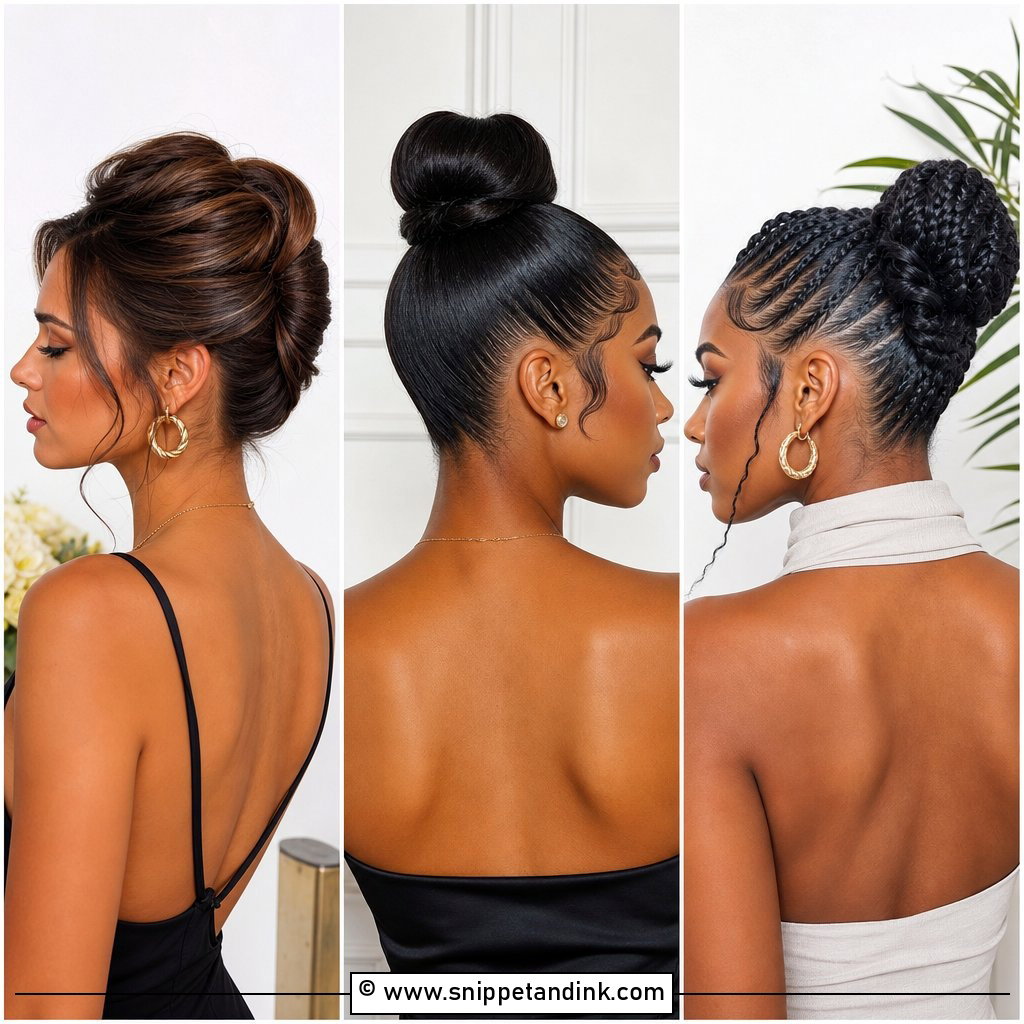
Sleek buns hold up in heat better than almost anything, since there’s no curl to drop and no loose texture to frizz. The hair is smoothed back into a glossy bun at low or mid height, and it sits well with minimalist gowns, square and high necklines and statement earrings. Rather than dragging hair straight back from the forehead, I’d set a center or soft side part, which looks less severe and is kinder to the hairline. Strong pins and a light shine spray keep it camera-ready all day.
3. Textured Bridal Bun
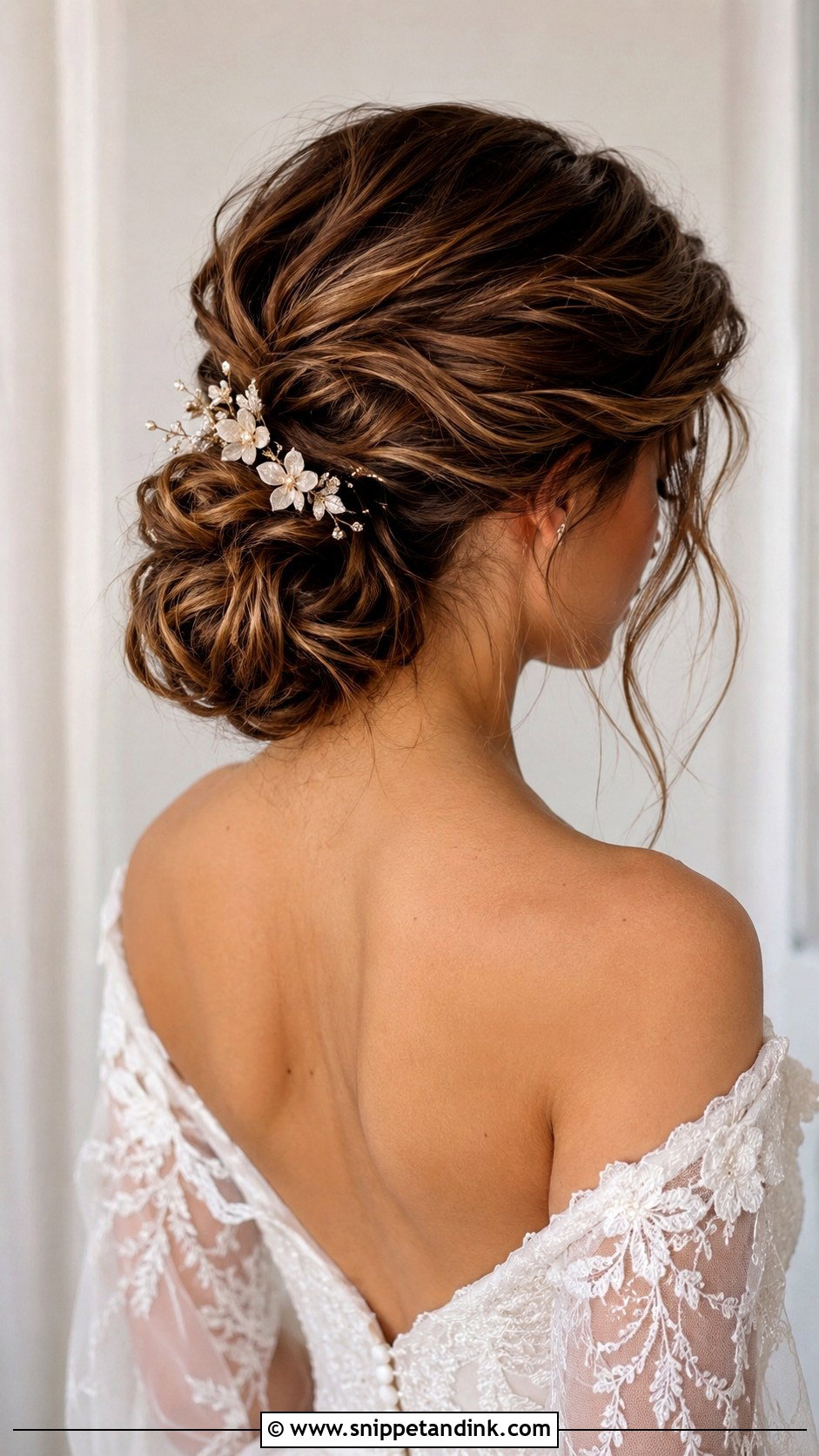
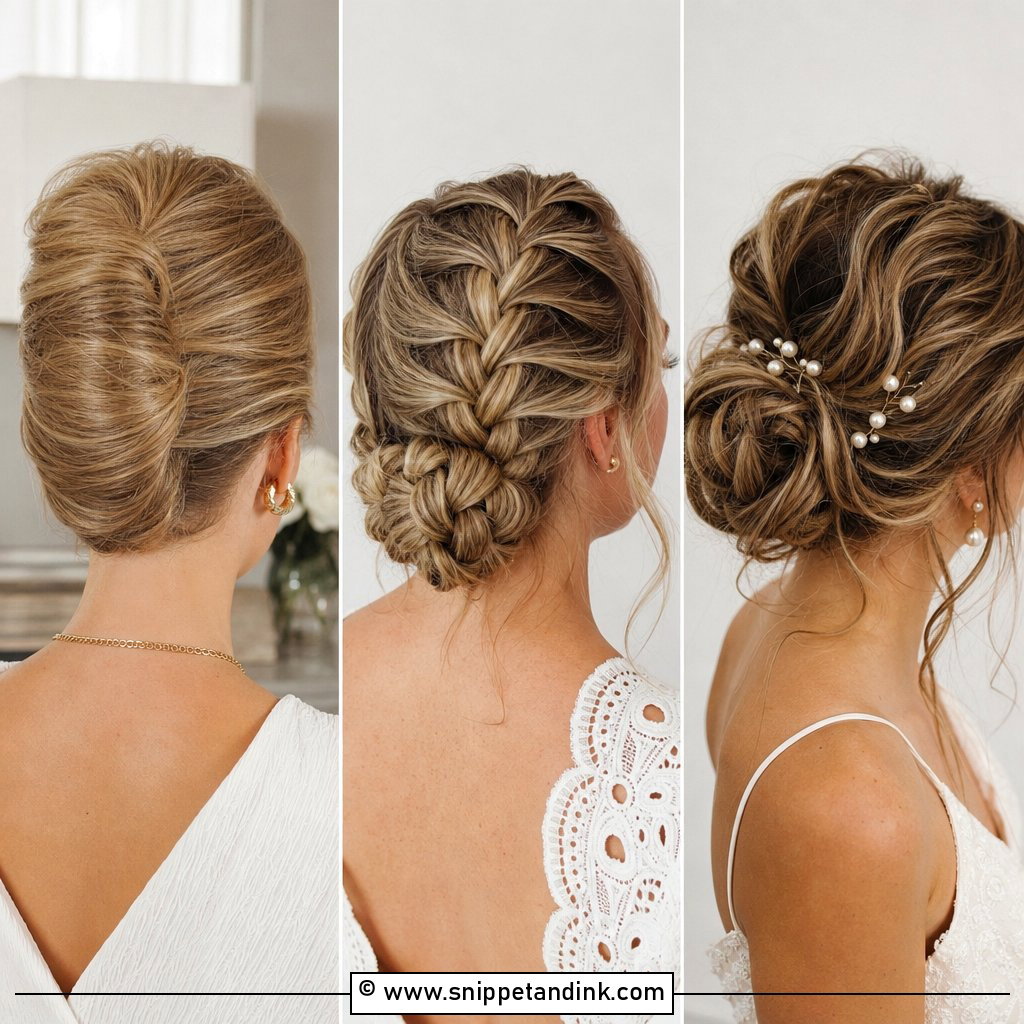
Texture is what gives this bun its life, and it has to be built in before pinning. I curl or wave the hair, let it cool, then lightly backcomb sections so they grip each other. Without that grip, a loose bun relaxes into a droop within a few hours. Highlights and lowlights help because light and dark strands show the shape in photos. Very dark, single-tone hair can photograph as one solid mass, so there I pull out a little more definition. Finish with a few delicate pins, or nothing.
4. Bridal Updo With Face Framing Pieces
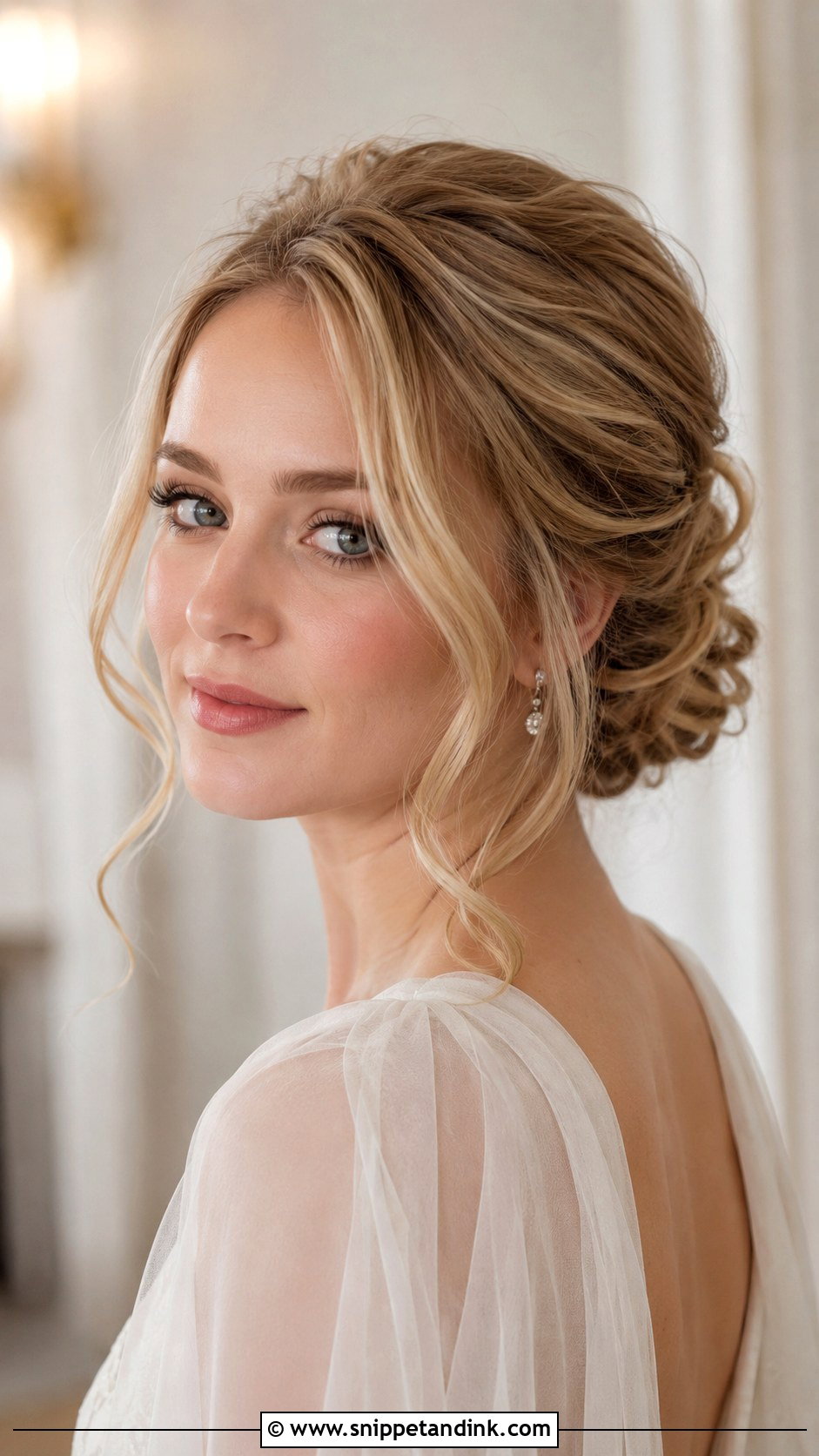
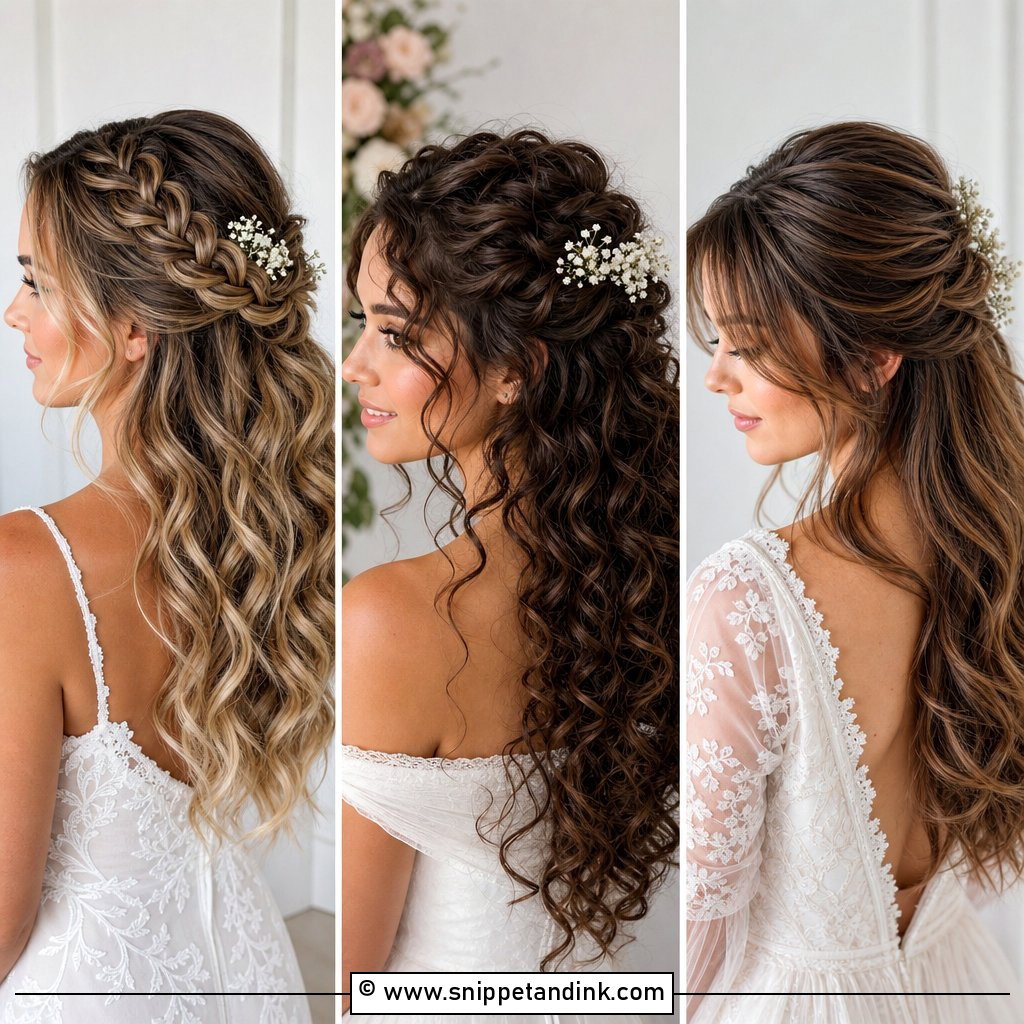
Leaving pieces out is the simplest way to take the edge off an updo, especially if you feel exposed with everything pulled back. The main shape can be a chignon, bun, twist or braid, and the front sections get a soft bend. Brides with layers, curtain bangs or a longer fringe already have the pieces. The trick is weight: thin, light strands move nicely while thick ones just hang. I keep them out of your eyeline so you aren’t tucking them away all evening.
5. Braided Bridal Updo
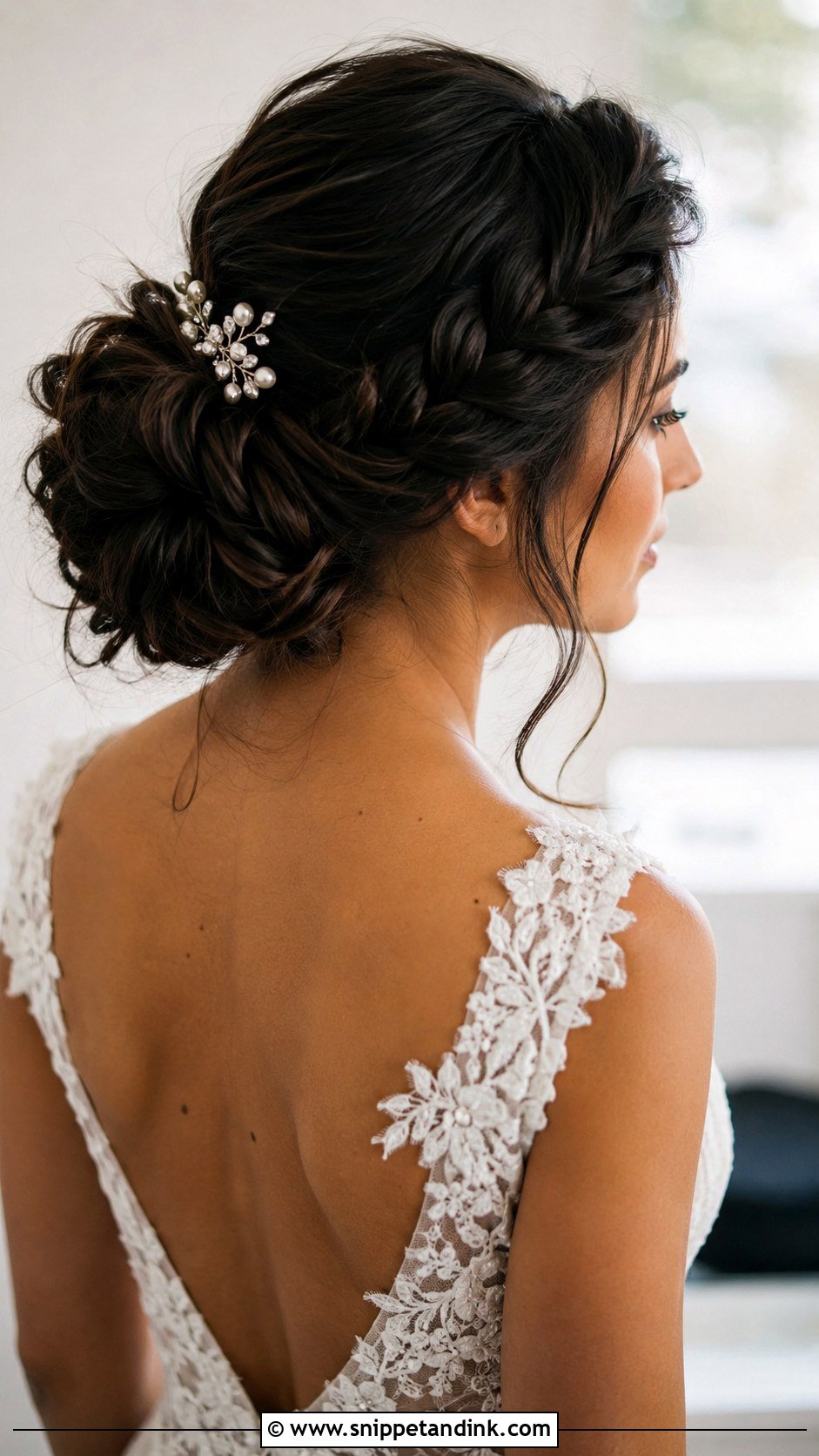
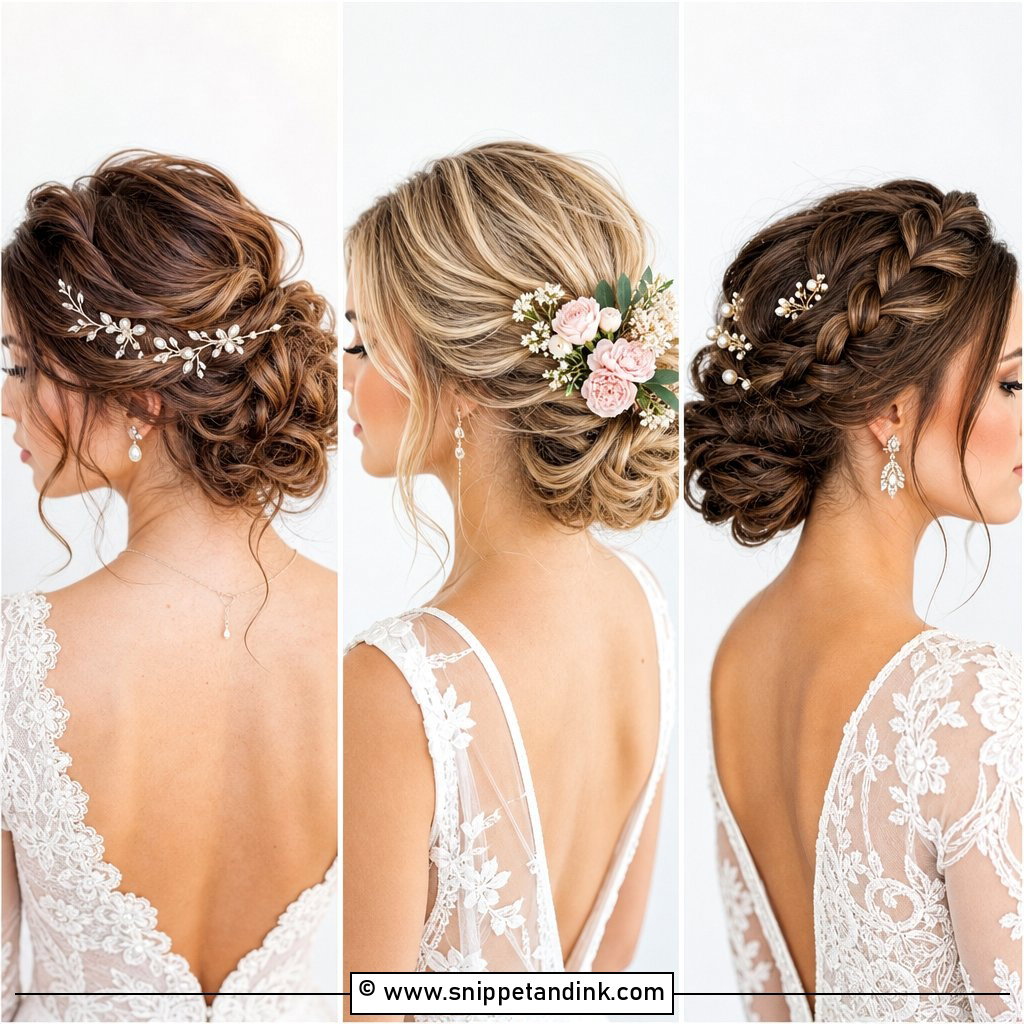
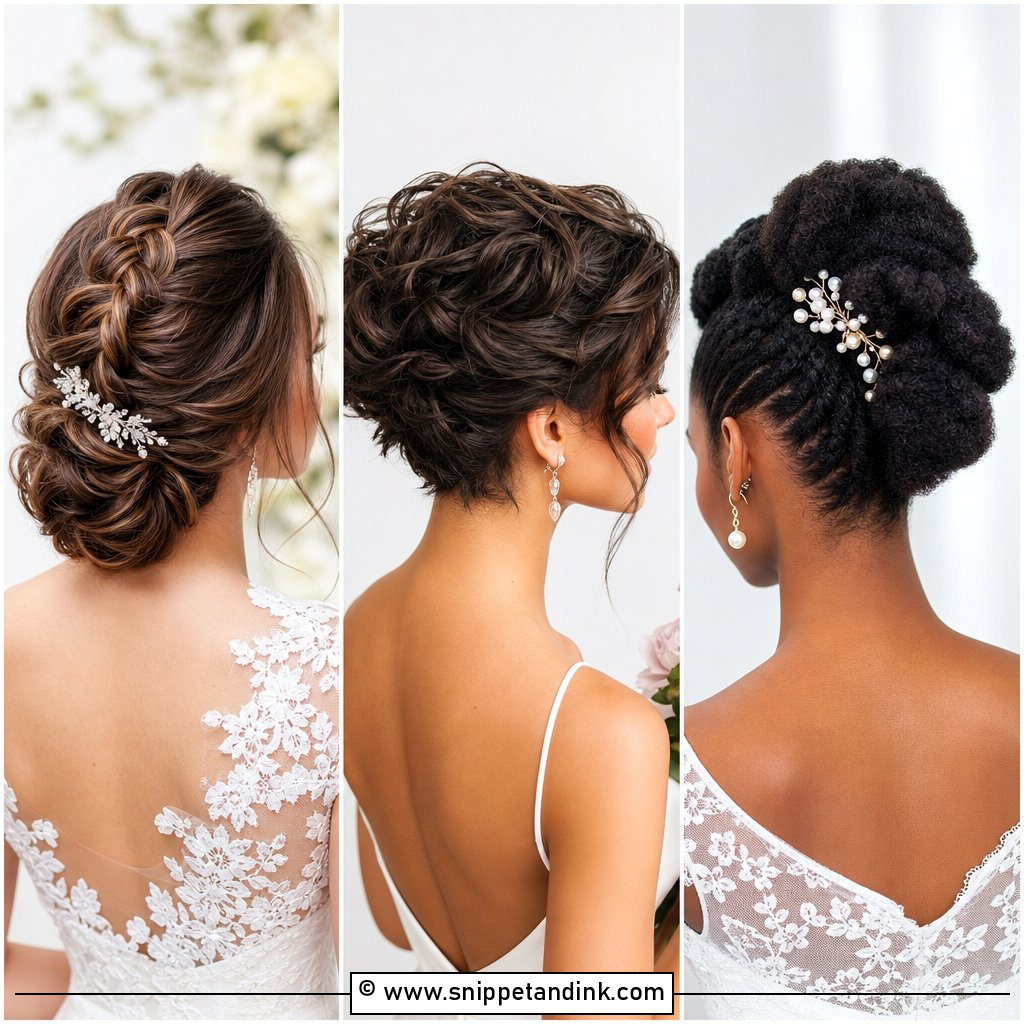
Braids add structure as well as detail, which is why braided updos tend to outlast plain ones on long days. The braid can wrap into a low bun, curve across the crown or blend into a soft textured knot. For the modern version I braid loosely and then gently pull the edges wider, which gives a full, dimensional braid instead of a tight, tiny one. Outdoor and garden venues, lace and soft fabrics all suit it. Check the back in a mirror, because that’s the view guests get for the whole ceremony.
6. Messy Bridal Updo
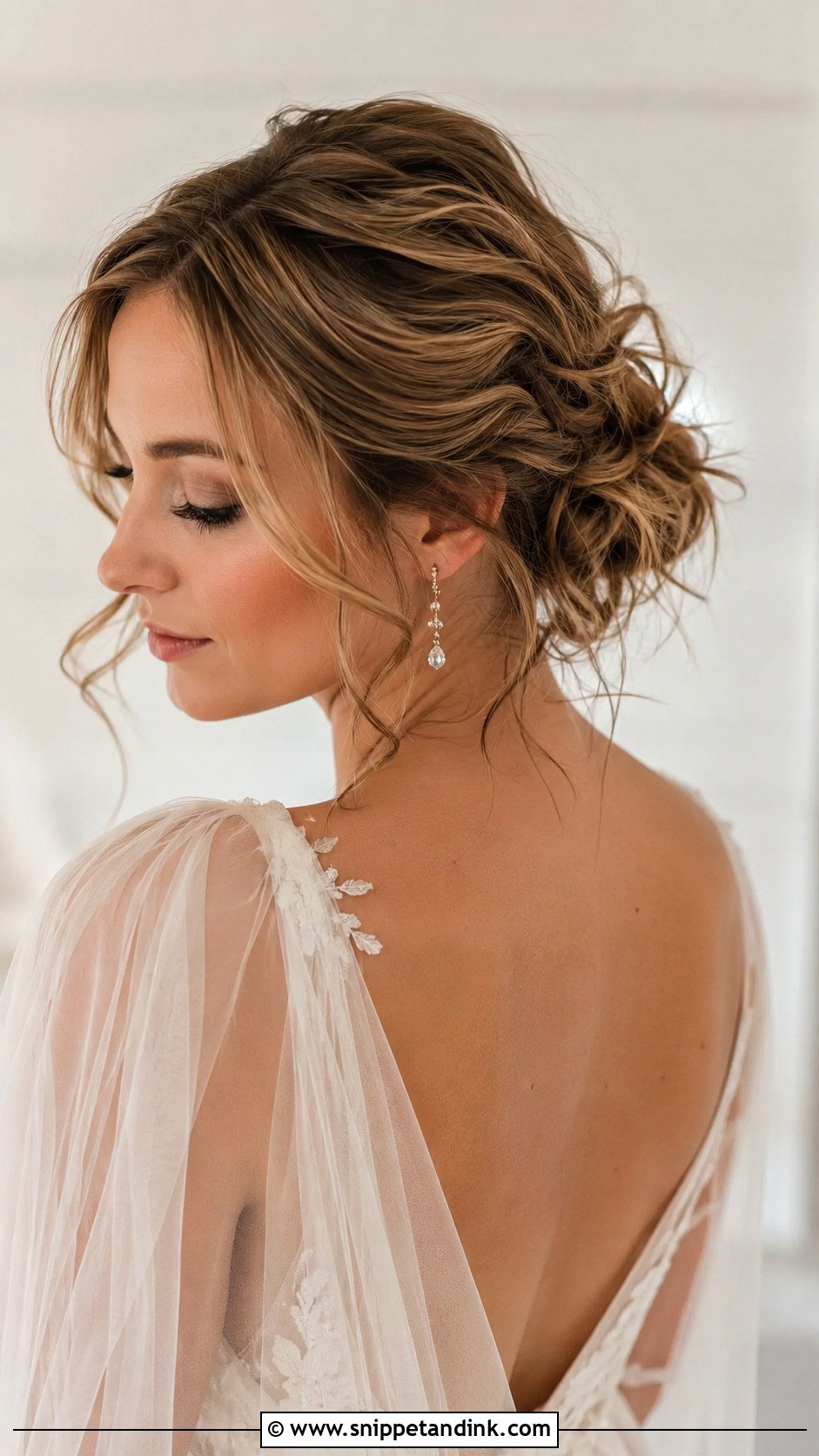
Messy is the hardest updo to get right; the line between undone and unfinished is thin. I create texture first, then pin the hair in layers so each section has its own anchor, which means one loose section doesn’t bring the rest down. Loose pieces need placement rather than accident, balanced around the bun and not all on one side. Soft glam makeup, floaty gowns and outdoor ceremonies suit it, in settings where something sleek can look too formal. In wind, accept that it will get a little messier, and that’s fine.
7. High Bridal Bun
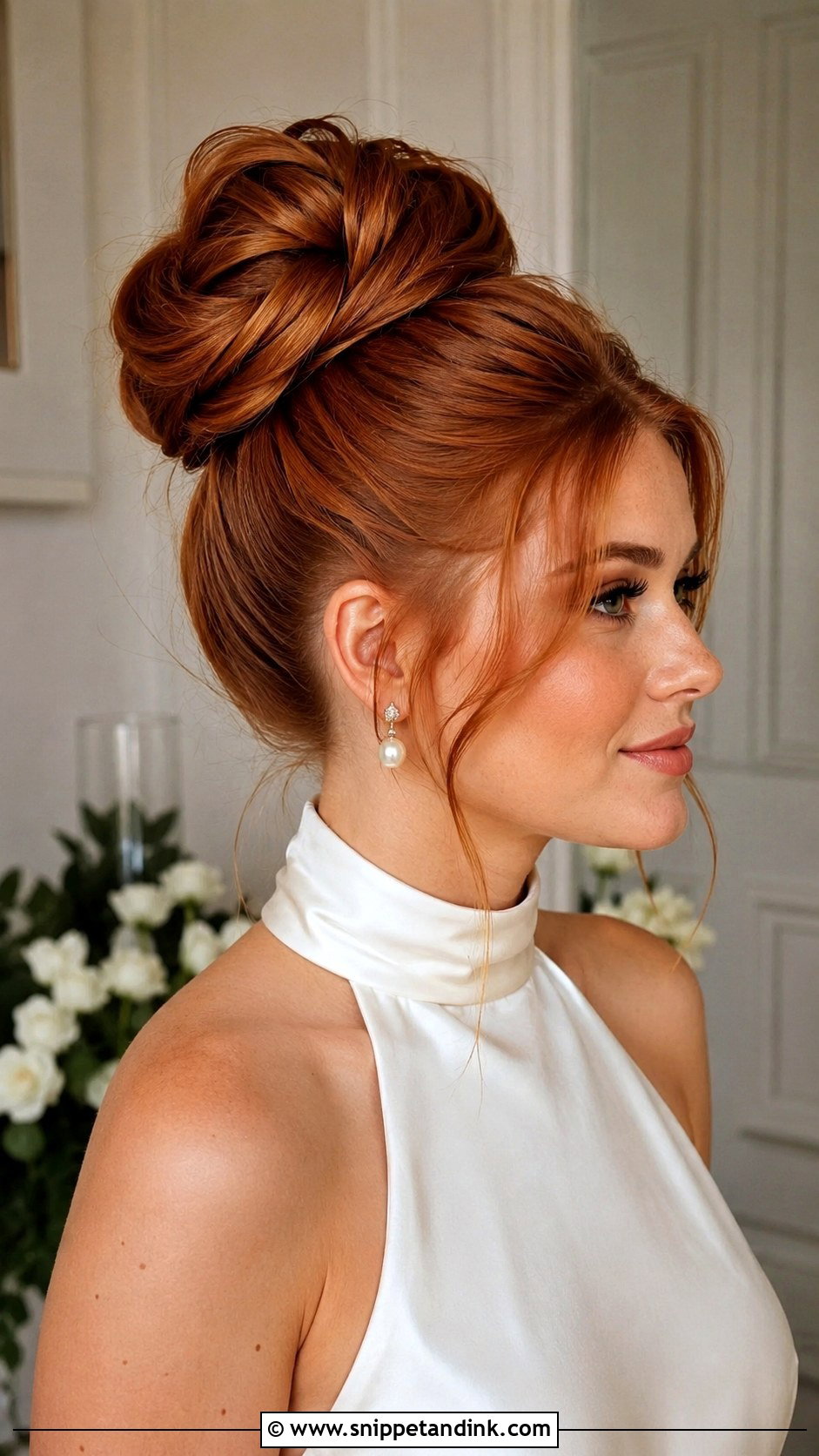
A high bun draws the eye to the cheekbones, neckline and shoulders, and it reads classic, modern or editorial depending on the finish. High necks, halters and dramatic earrings suit it. The height also gives presence under long veils and statement headpieces, which can overwhelm a small, low bun. Current versions are fuller and softer, so for most brides I avoid a tight, tiny ballerina shape. A few fine pieces near the hairline soften it.
8. Twisted Bridal Updo
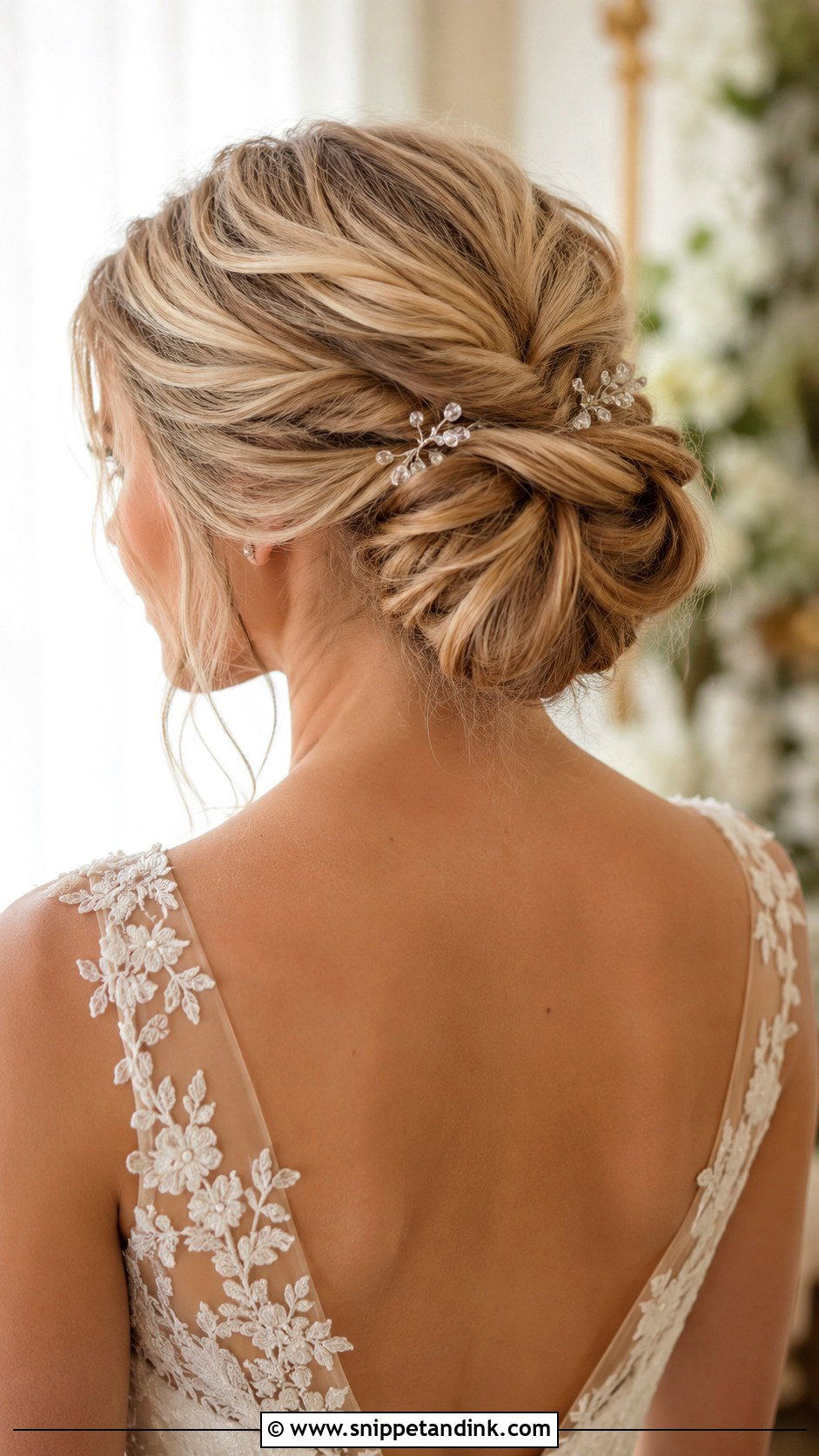
Twists give you detail without the time and tension of braiding, and they forgive layered cuts: short sections can be twisted in and pinned instead of left sticking out. Run them along the sides, gather them into a low bun or layer them through the back. Medium and long hair have enough length for the twists to show dimension. I lift the crown slightly so the whole shape doesn’t sit flat. Pearl pins or a simple veil finish it.
9. Bridal French Twist
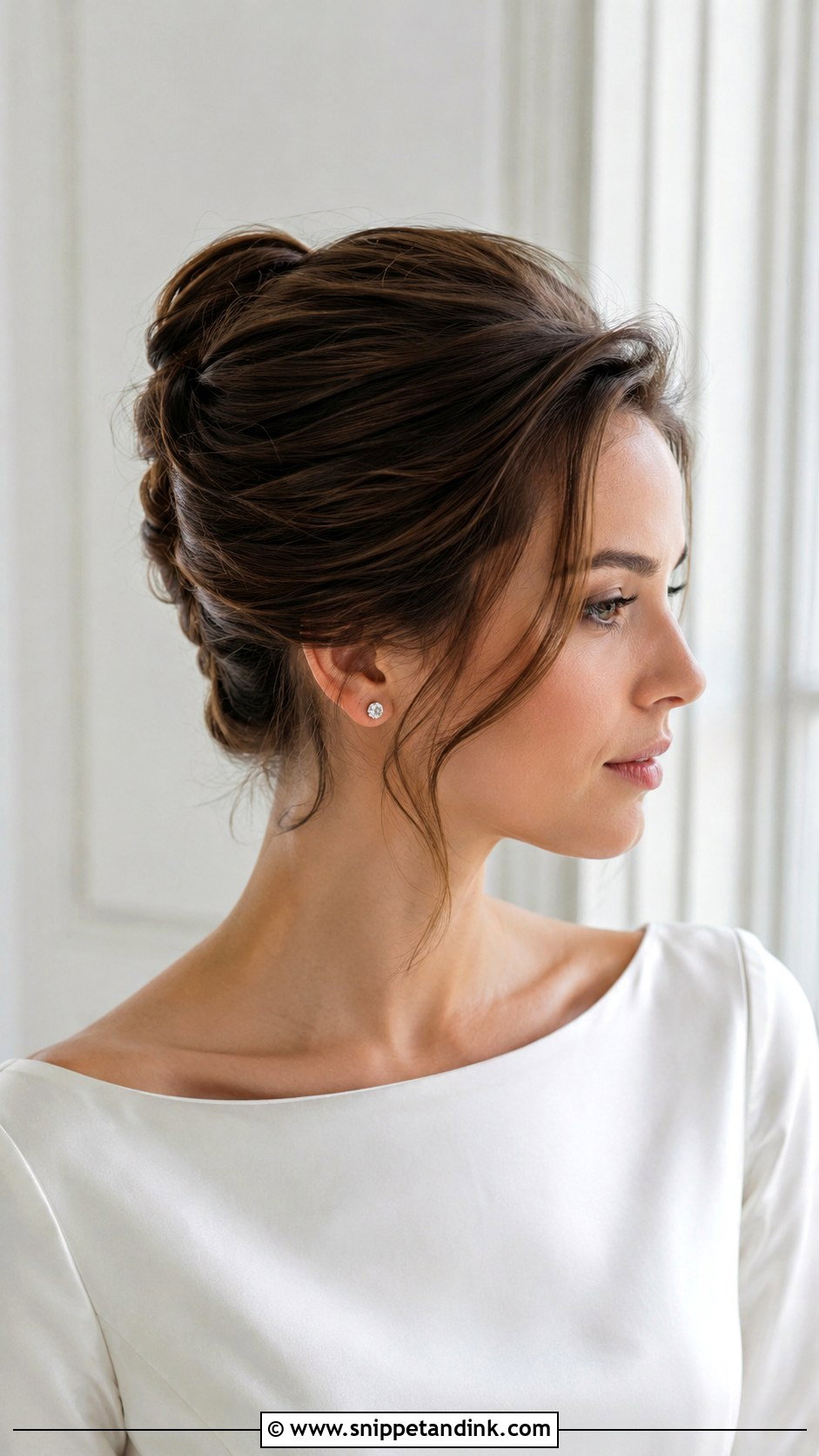
Today’s French twist is softer than the traditional tight one, with a little crown volume and a smooth, tucked roll through the back. Satin gowns, off-the-shoulder dresses and clean silhouettes suit it. On fine hair I backcomb the inside of the roll so it has something to hold; on thick hair I pin a section flat underneath first to reduce the bulk. A few loose face-framing strands keep it fresh. At a formal ceremony it has a quiet drama few other shapes manage.
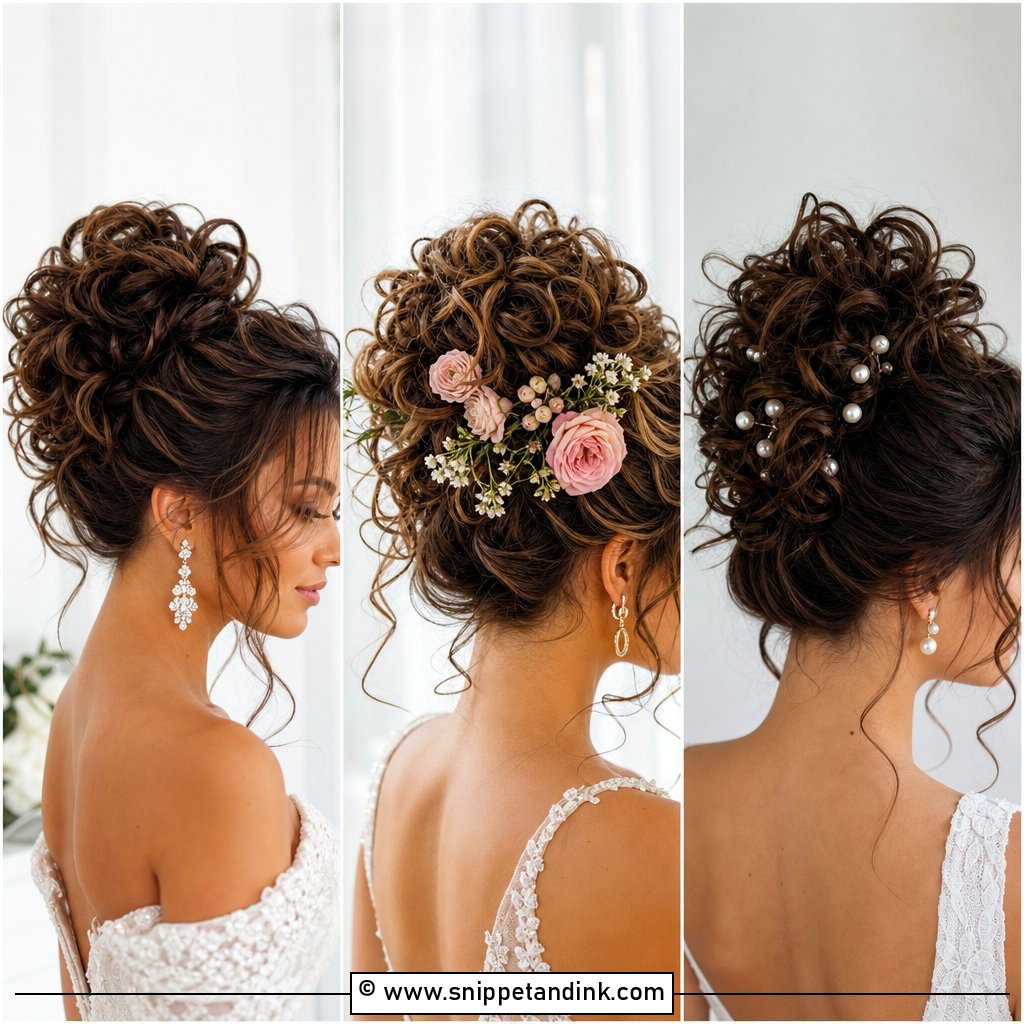
10. Curly Bridal Updo
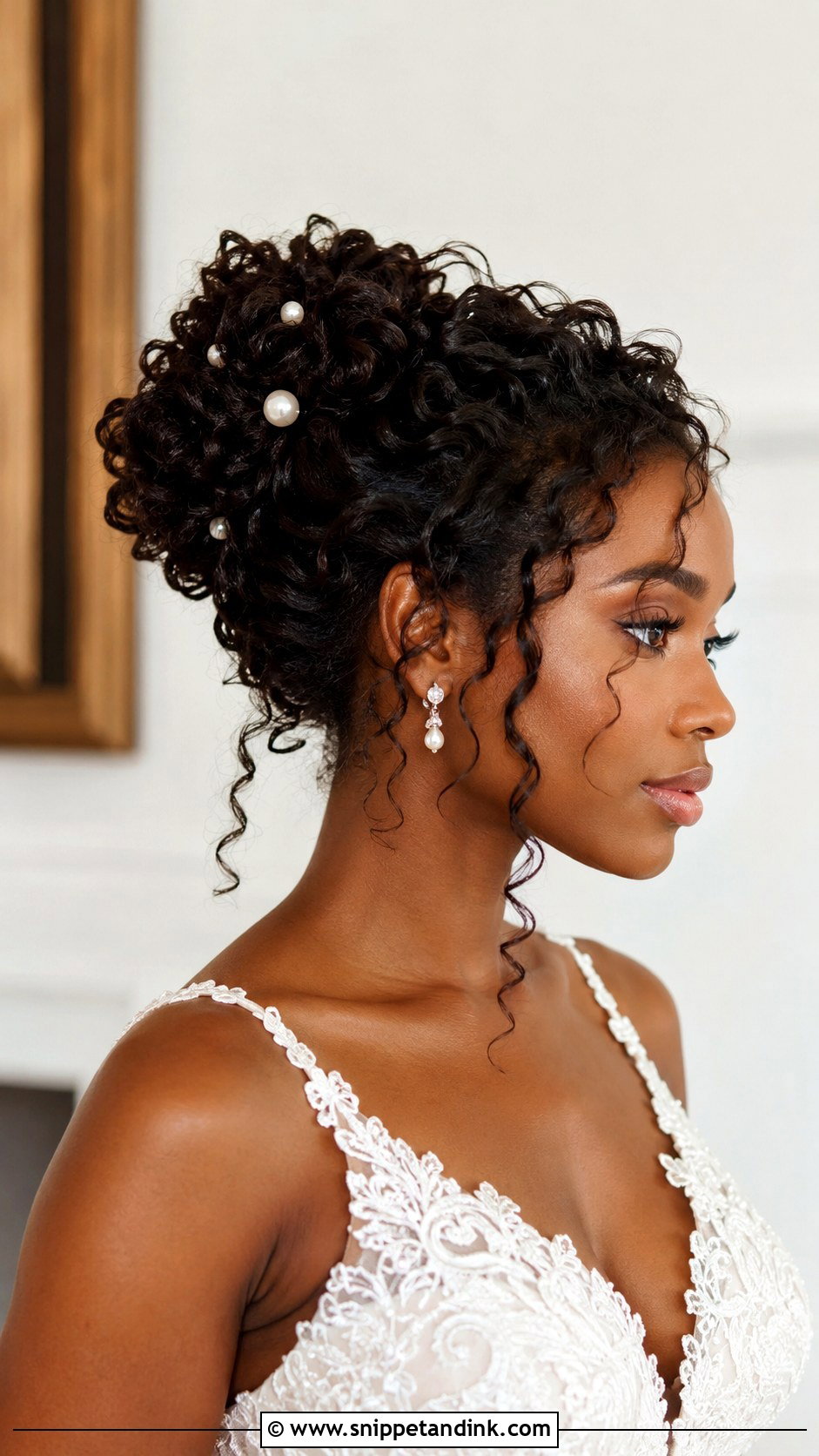
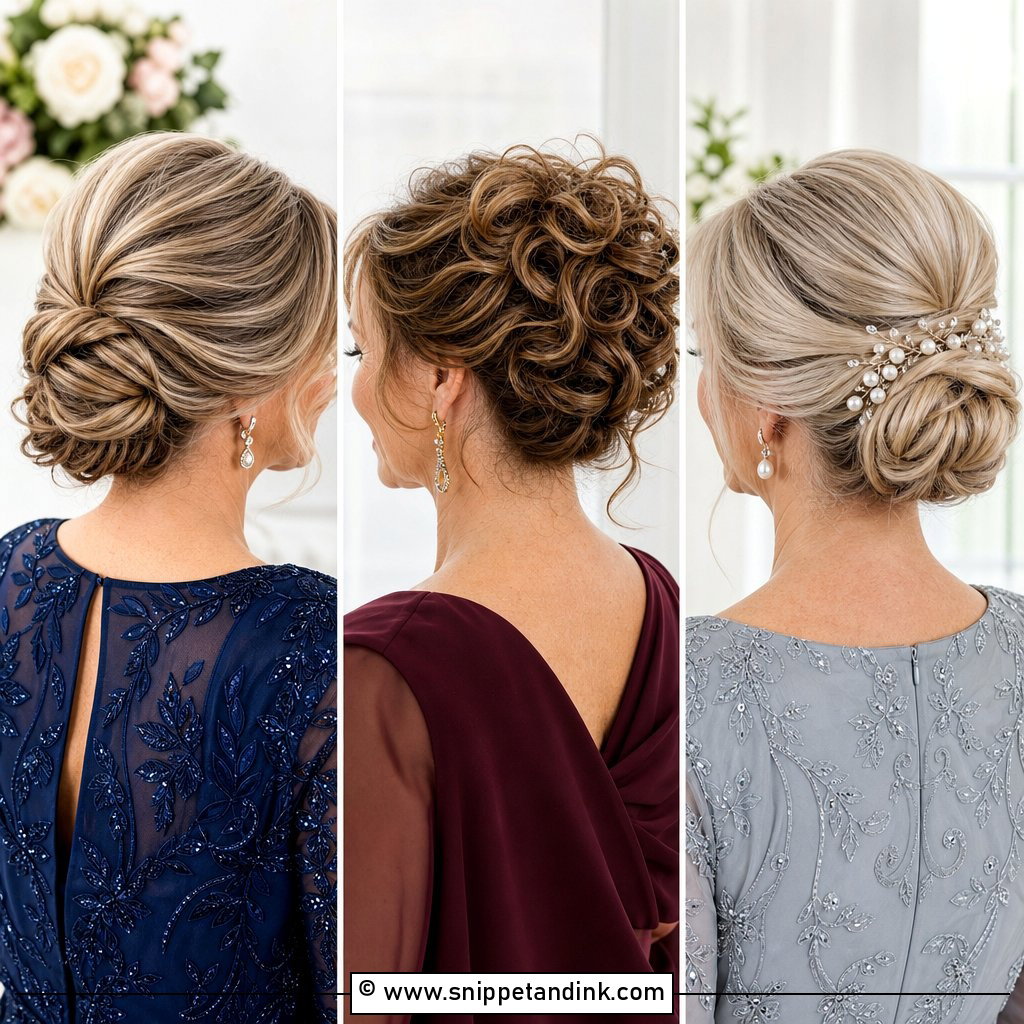
Curly updos should use the curl pattern to build shape, not hide it. Pinned into a low bun, gathered high or arranged into a soft crown, natural curls give the updo texture from every angle. Hydration and definition beforehand keep it smooth and frizz-controlled, so I’d ask you to wash and define on your usual routine rather than having me start from dry, brushed-out hair. Naturally curly and coily hair both work beautifully this way. A few pearl pins or a delicate comb finish it.
11. Bridal Updo With Veil
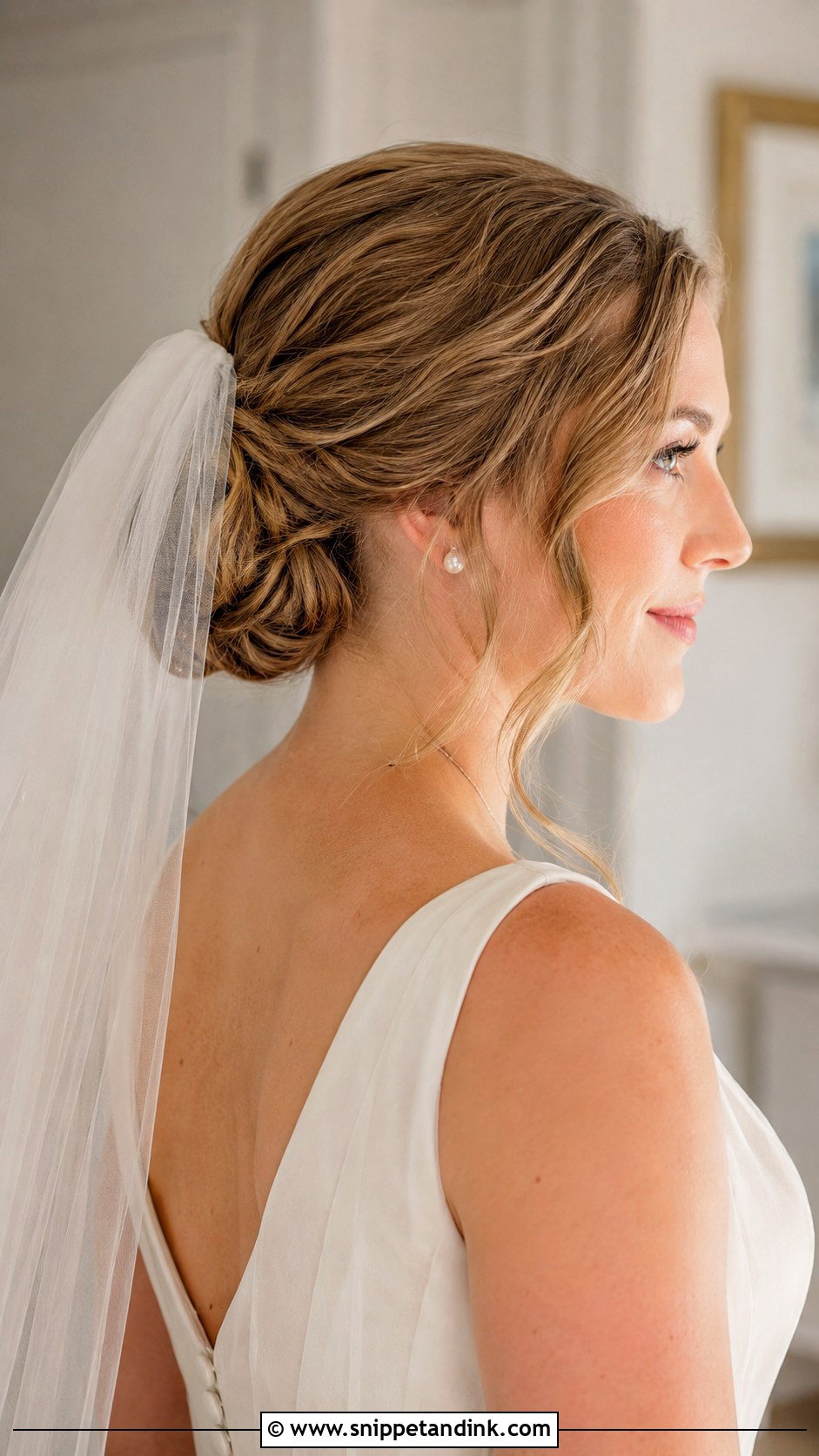
An updo worn with a veil has to look right twice: with the veil, and after it comes off. Low buns and chignons are the most practical because the comb sits just above or just under the bun. A mid-height updo can work too if the stylist builds enough structure for the comb to grip. Bring your actual veil to the trial, not a photo, since weight and comb size change everything. Soft texture around the bun hides the comb’s teeth and the pins, so nothing glints in close-up portraits.
12. Bridal Updo With Pearls
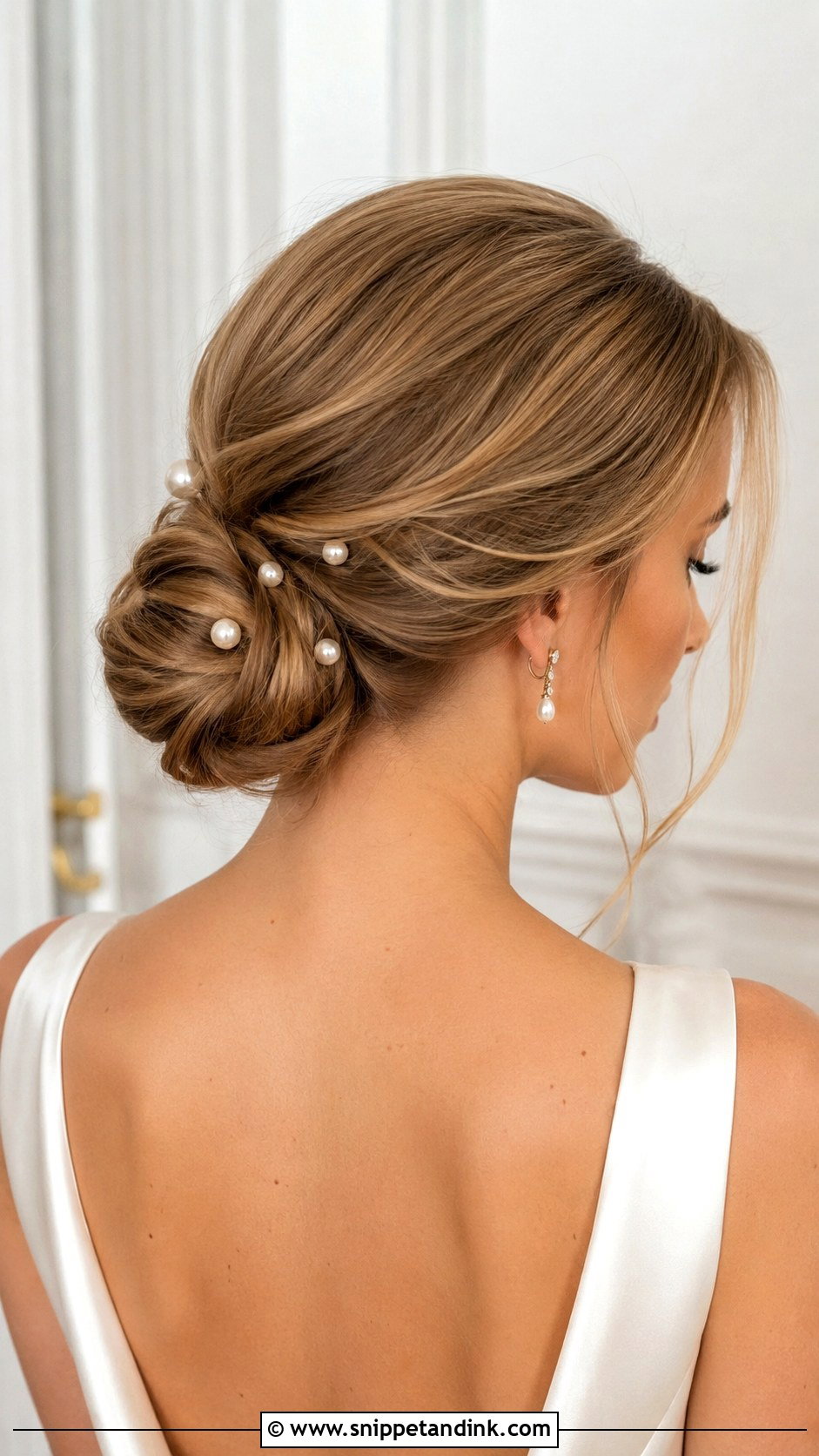
Pearls suit almost any updo, sleek, textured, braided or twisted, provided the placement is planned. Scattered pins through a low bun look playful; a pearl comb on one side of a chignon looks classic. For a minimal finish, a few small pearls near the twist or knot are enough. I anchor each pin through a crossed bobby pin, because single pearl pins slip out of smooth hair. Keep the hair smooth enough for the pearls to stand out, which pairs naturally with simple gowns, lace and soft veils.
13. Bridal Updo For Short Hair
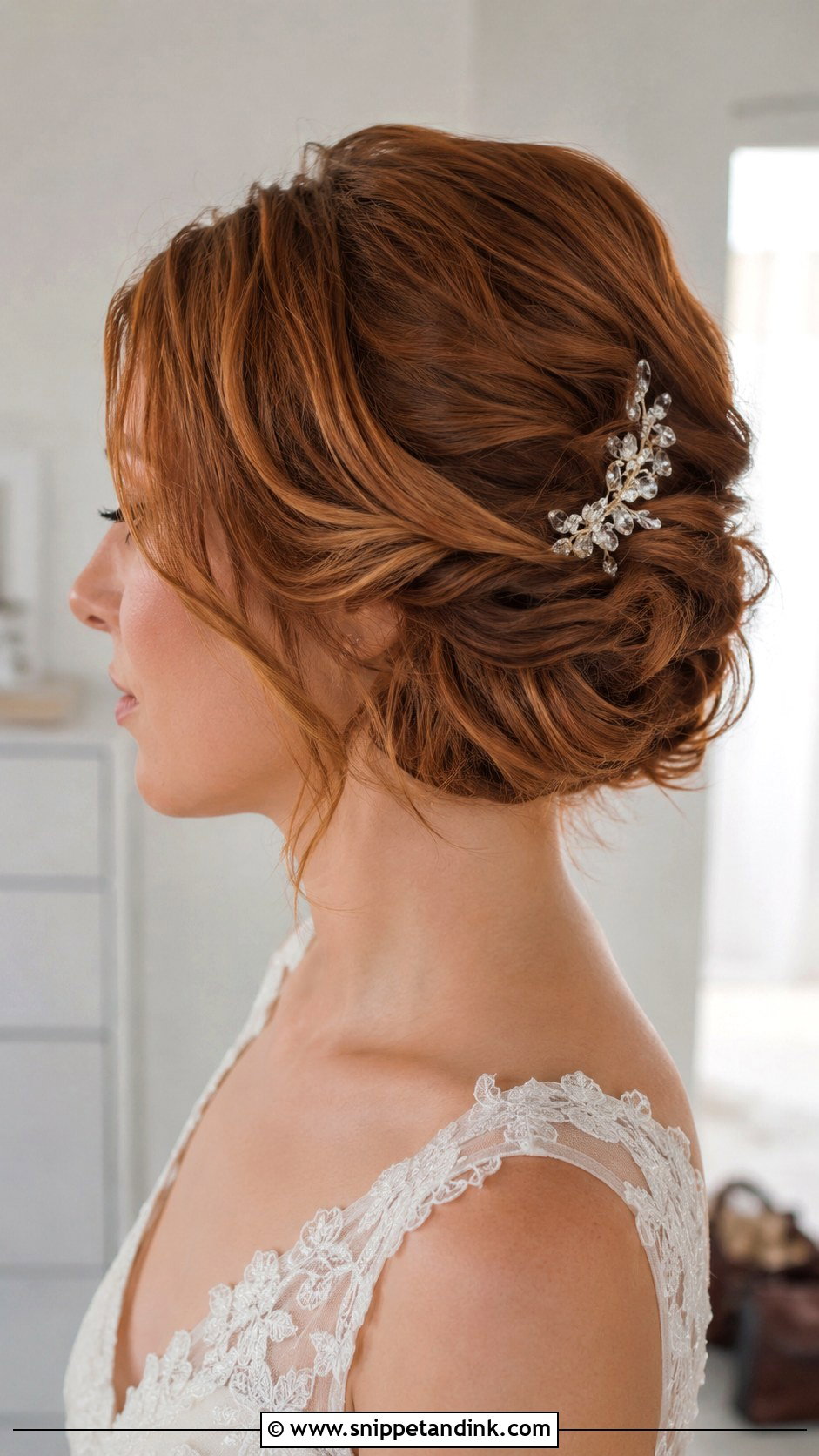
Bob-length hair can make a real updo, just not a big one. What I can usually create is a tucked low bun effect, a mini twist or a soft pinned-back shape. Waves first add volume and help short layers blend, then I pin in small sections with plenty of crossed pins. Combs, pins and small clips work harder on short hair because they hide ends that won’t tuck. The worst outcome is forcing it into a large bun with padding that shows; a neat small shape suited to your length looks far better.
14. Bridal Updo For Long Hair
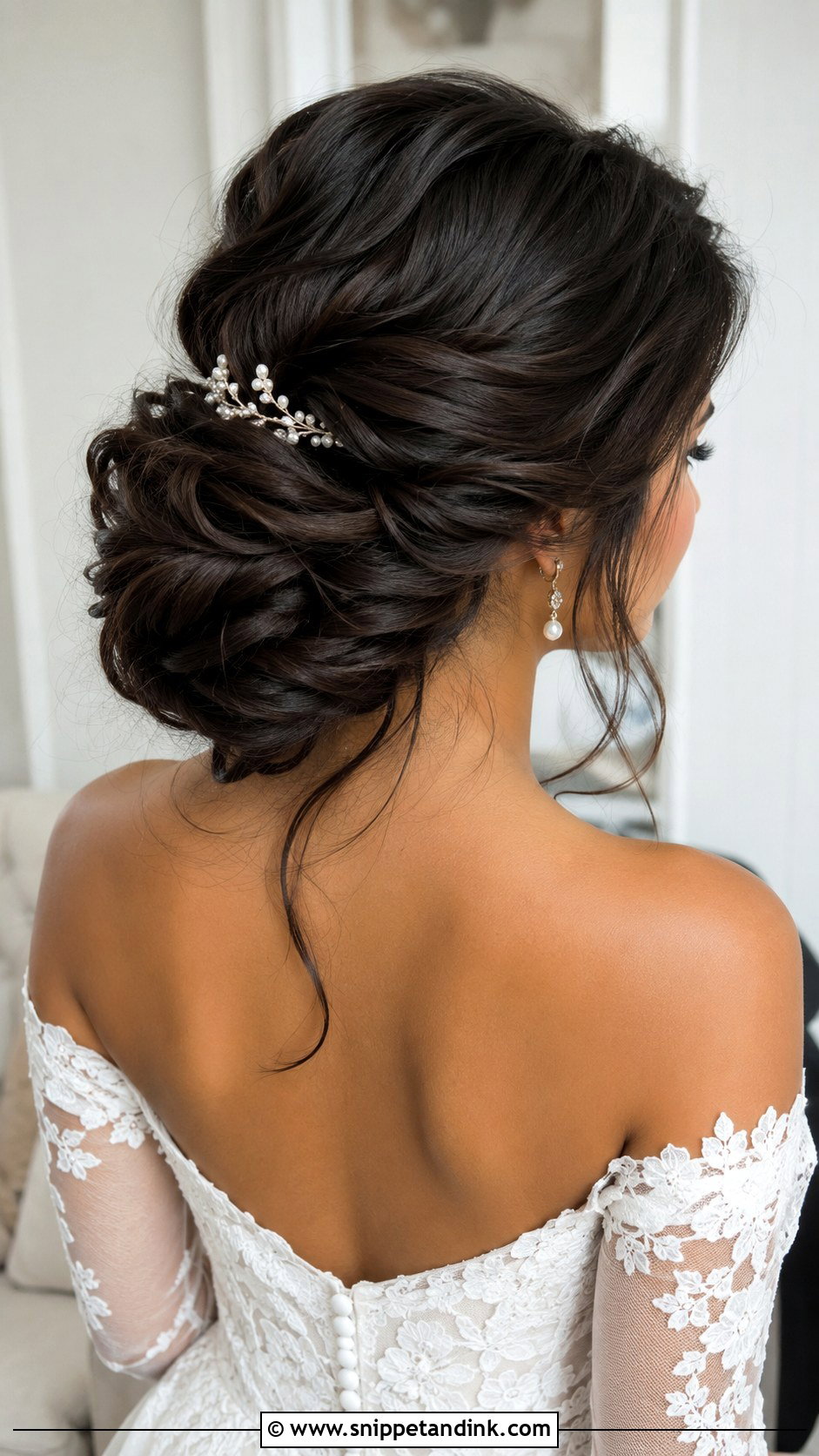
Long hair gives the most options, and the most weight. A large low chignon, a braided bun, a twisted shape or a voluminous textured knot all become possible, but very long, thick hair can pull an updo down and give you a headache by dinner. I build it in sections, each with its own anchor, using strong pins and a hidden base ponytail or braid. The length creates depth through the back. With an open back or detailed bodice, the updo keeps attention on the dress.
15. Side Swept Bridal Updo
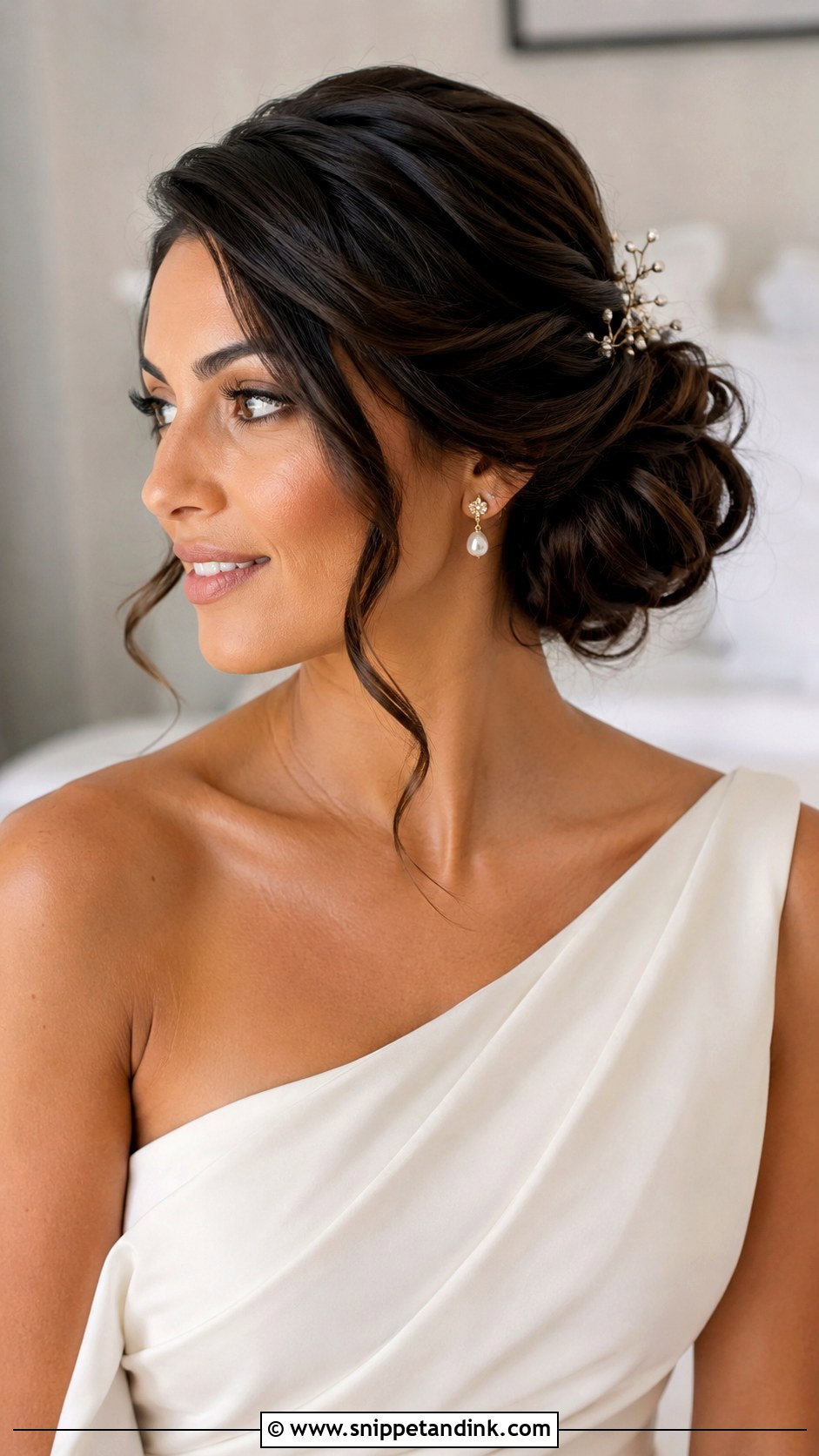
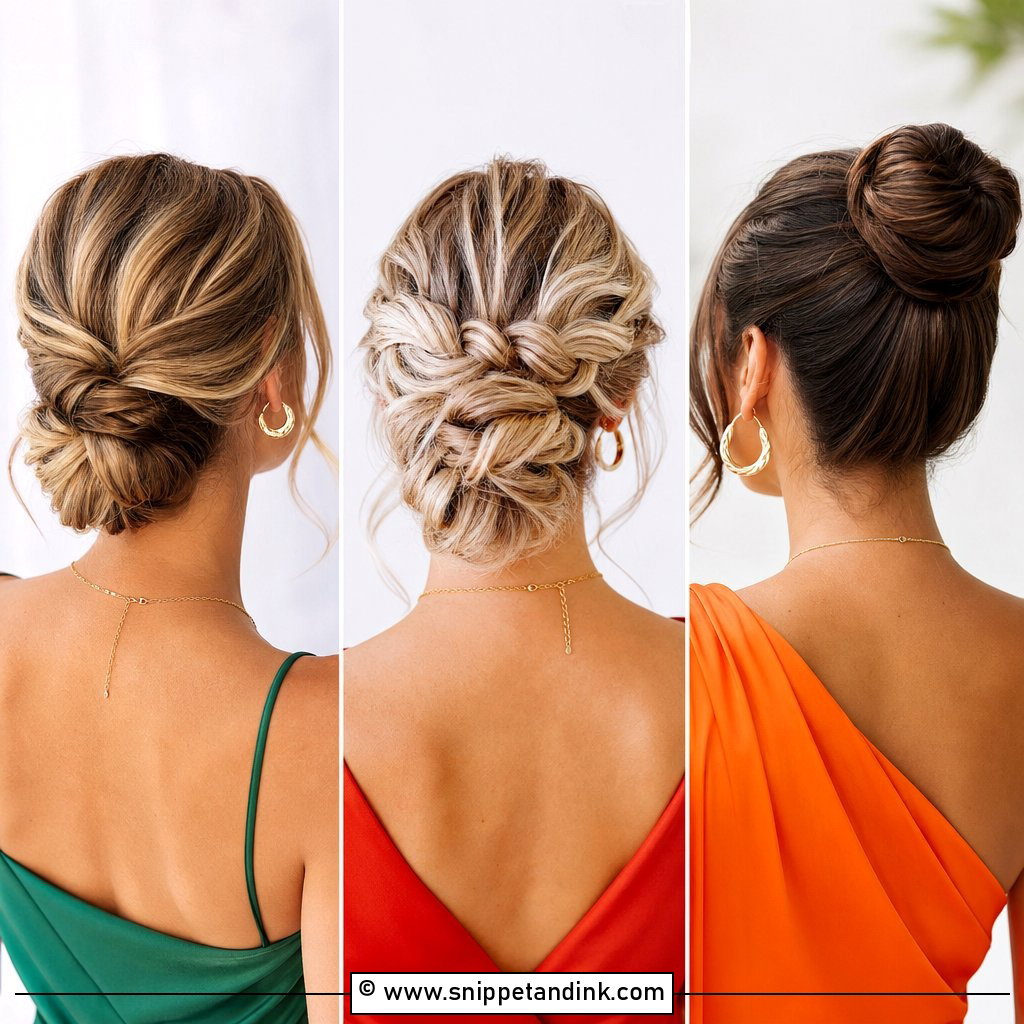
Moving the bun slightly to one side changes the whole feel: it adds movement across the face and neckline and looks less traditional than a centered bun. The front follows with a side part or gentle sweep. One-shoulder gowns, asymmetric necklines and side hair accessories pair with it, usually with the hair gathered on the side opposite the strap. Weight balance is what I watch; too much hair on one side drags and looks lopsided. Soft waves before pinning give it fullness.
At Midnight, the Pins Come Out One by One
Nobody plans the end of the night, and that’s when a lot of hair damage happens. A tired bride tugging at a set updo in a hotel mirror can snap strands and drag through tangles stiff with a day’s worth of spray.
- Find the pins with your fingertips and pull each one out the way it went in. Most go in toward the bun, so pull away from it.
- Ask your stylist roughly how many pins went in. A forgotten one is no fun on a pillow.
- Don’t brush yet. Work a little conditioner or oil through the lengths, then detangle from the ends upward with your fingers or a wide-tooth comb.
- Wash the next day with a gentle shampoo, twice if needed, to clear spray and dry shampoo from the scalp.
Ask a bridesmaid or your partner to help with the back. With two pairs of hands it’s a short job; alone, with arms over your head, it takes far longer and pulls more hair.
An Updo Should Move When You Do
The right updo supports your whole wedding look, not only your inspiration board. Think about the neckline, veil, accessories, venue, season and your hair’s natural texture first. A sleek bun may suit a city wedding while a textured chignon fits a garden ceremony, and braids, twists, pearls and face-framing pieces personalize either one without complicating it. Book a trial, take photos from the front, side and back, and test how it feels when you turn your head, hug someone and sit down. Secure, comfortable and still recognizably you: that’s the one to book.
You'll Like These Ideas:


Leave a Reply