
Most Chinese weddings I style involve more than one outfit, and that changes how I think about hair from the start. A red Qun Kwa at the tea ceremony, a fitted cheongsam for the banquet and a white gown for photos each sit differently at the neck and shoulders, so the hairstyle has to be planned around the changes, not just the first look. Below are twenty Chinese wedding hairstyles, from phoenix crown updos built on Ming court styling to low buns finished with fresh flowers, with notes on how each one is built and which outfit it actually sits well with.
One Base Style for a Tea Ceremony, a Banquet and a Gown
When a bride tells me she has three outfits, my first question is how long she has between each change. Banquet breaks are short, often fifteen or twenty minutes, and that is rarely enough time to take down a structured updo and build something new. So I plan a base that can change shape instead of starting over.
My usual sequence is a smooth, well-anchored bun for the tea ceremony, with the heavy ornaments pinned into it. For the banquet I lift the ornaments out and add a lighter pin or fresh flowers. For the gown, the bun either stays or gets released into waves that I set earlier in the morning and kept pinned underneath. Here is what makes those changes quick:
- Curl the lengths before the first updo, even if they won’t be seen until evening. Released hair that was set in the morning still has shape.
- Keep a labelled pouch for each outfit’s accessories so nothing gets hunted for in a hurry.
- Book your stylist to stay through the changes, or have her teach a bridesmaid the exact release and repin steps at the trial.
- Remove heavy ornaments pin by pin in the reverse order they went in. Pulling one out at an angle drags hair with it and leaves a dent.
1. Traditional Phoenix Crown Updo
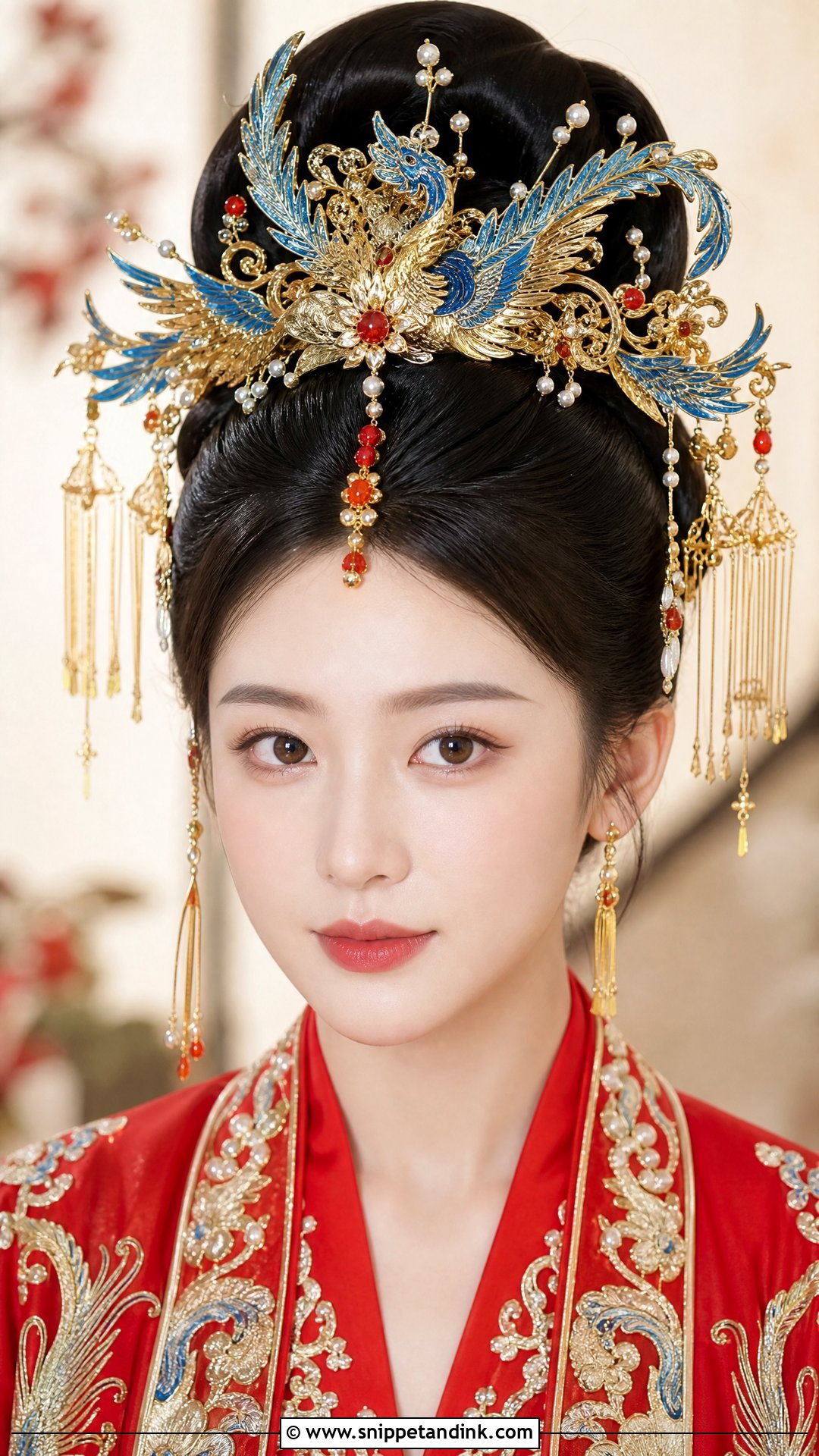
A fengguan is heavy, and the hair underneath it is really a foundation rather than a style. I pull everything into a smooth, high bun and build a firm padded base so the crown has something solid to grip; if the bun is soft, the crown tilts forward within the first hour. The kingfisher-blue work, pearls and gold phoenixes carry all the decoration, which is why I keep the hair itself plain and polished. This belongs with a traditional hanfu wedding robe or Qun Kwa at the tea ceremony, and I always ask the bride to wear the crown for a full half hour at her trial.
2. Sleek Low Bun With Red Hairpin
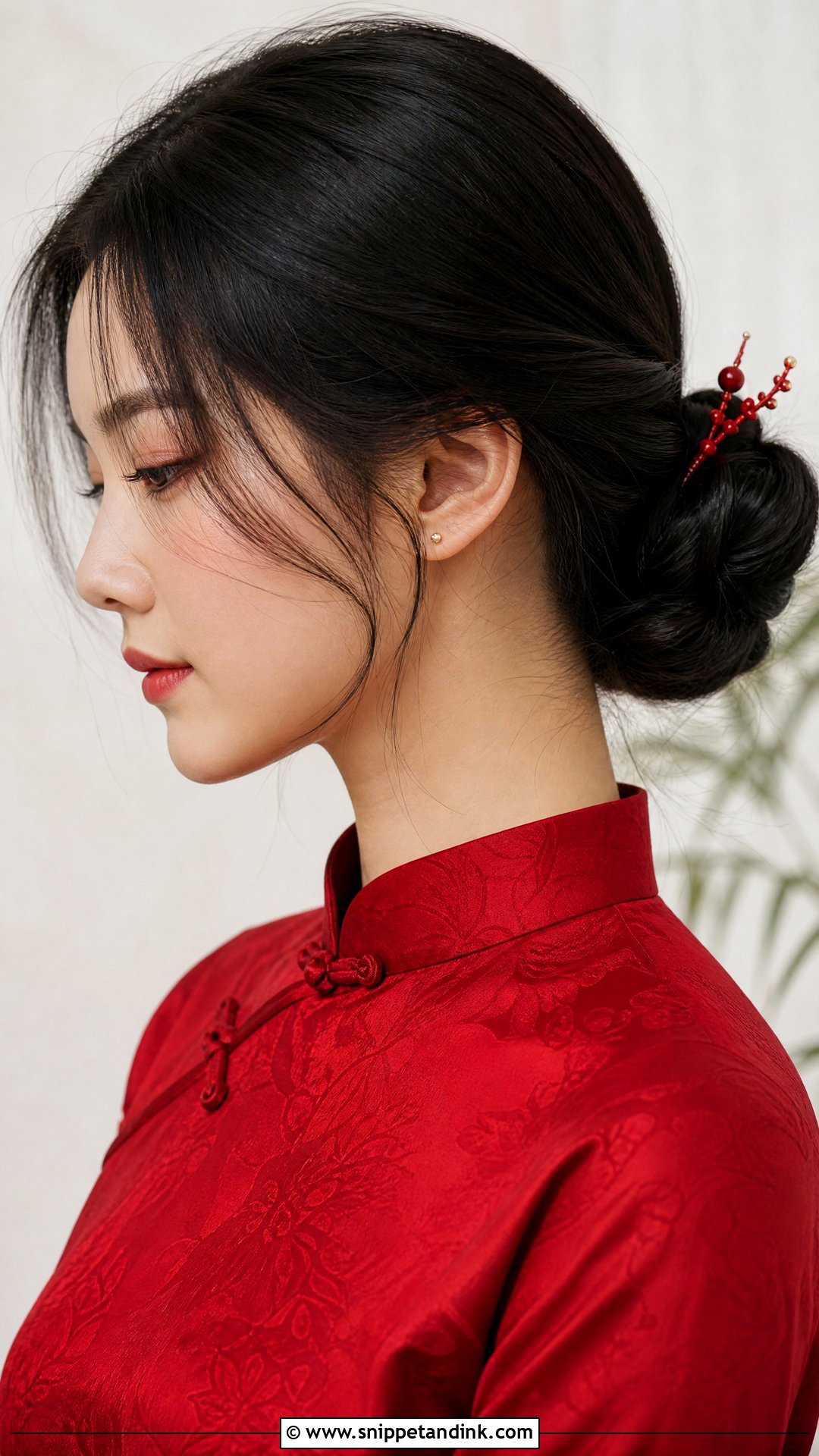
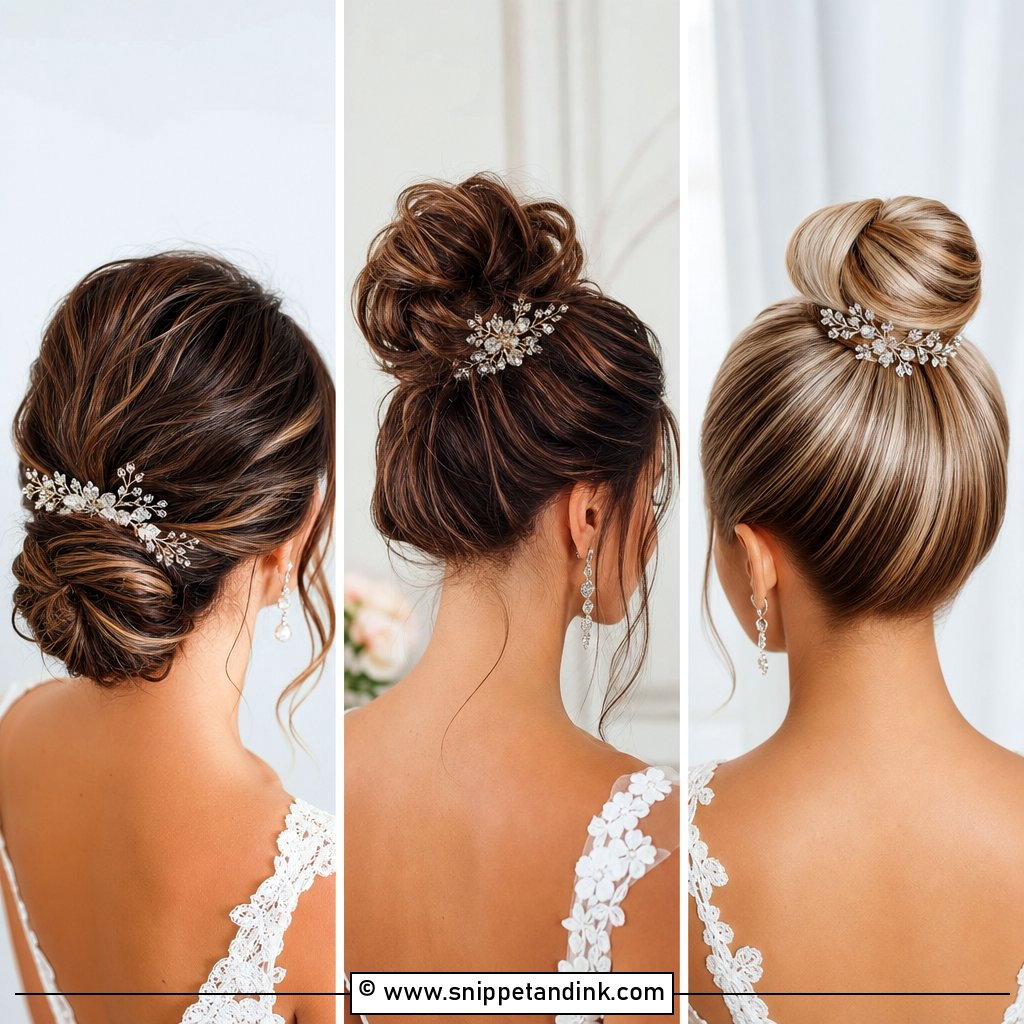
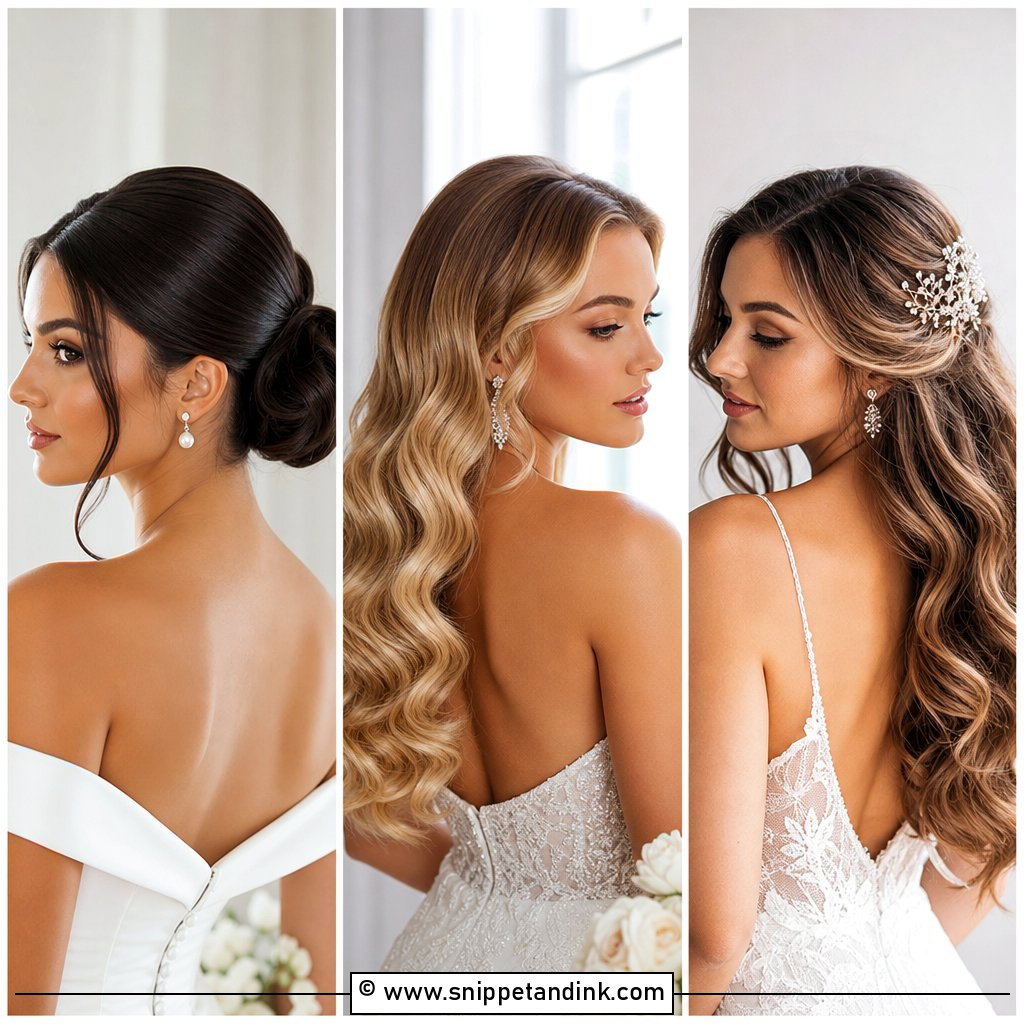
The low bun is the style I’m asked for most by brides wearing a cheongsam, and the reason is the collar. A high mandarin collar needs a clear nape, so I gather the hair low and twist it into a compact knot that sits just above the collar line instead of resting on it. One red and gold hairpin goes through for colour and luck. Short or thin hair can still get there with a small clip-in piece wrapped into the knot. I leave two fine face-framing pieces at most, because more than that starts to fight the clean neckline.
3. Half-Up Half-Down With Fresh Flowers
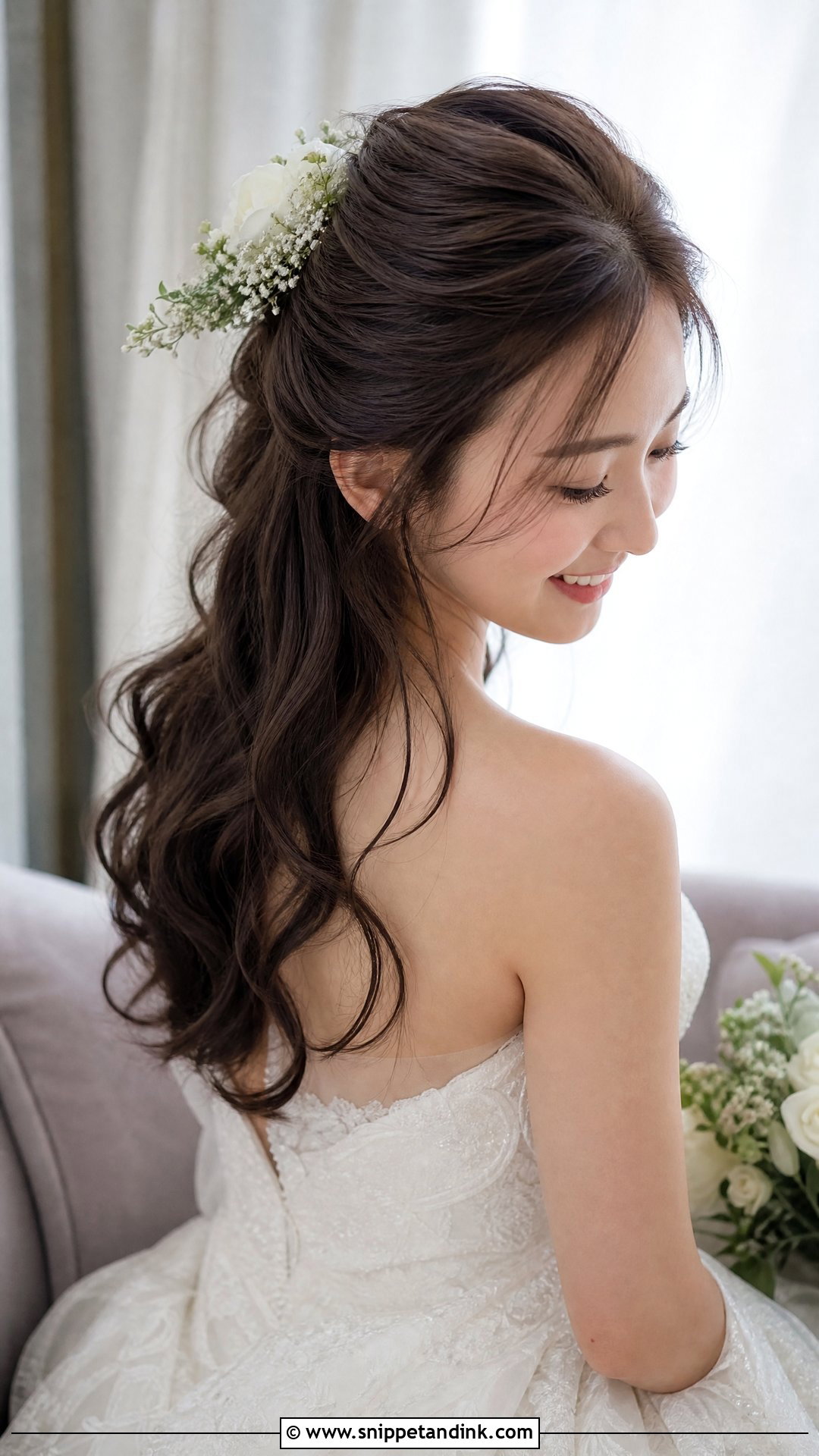
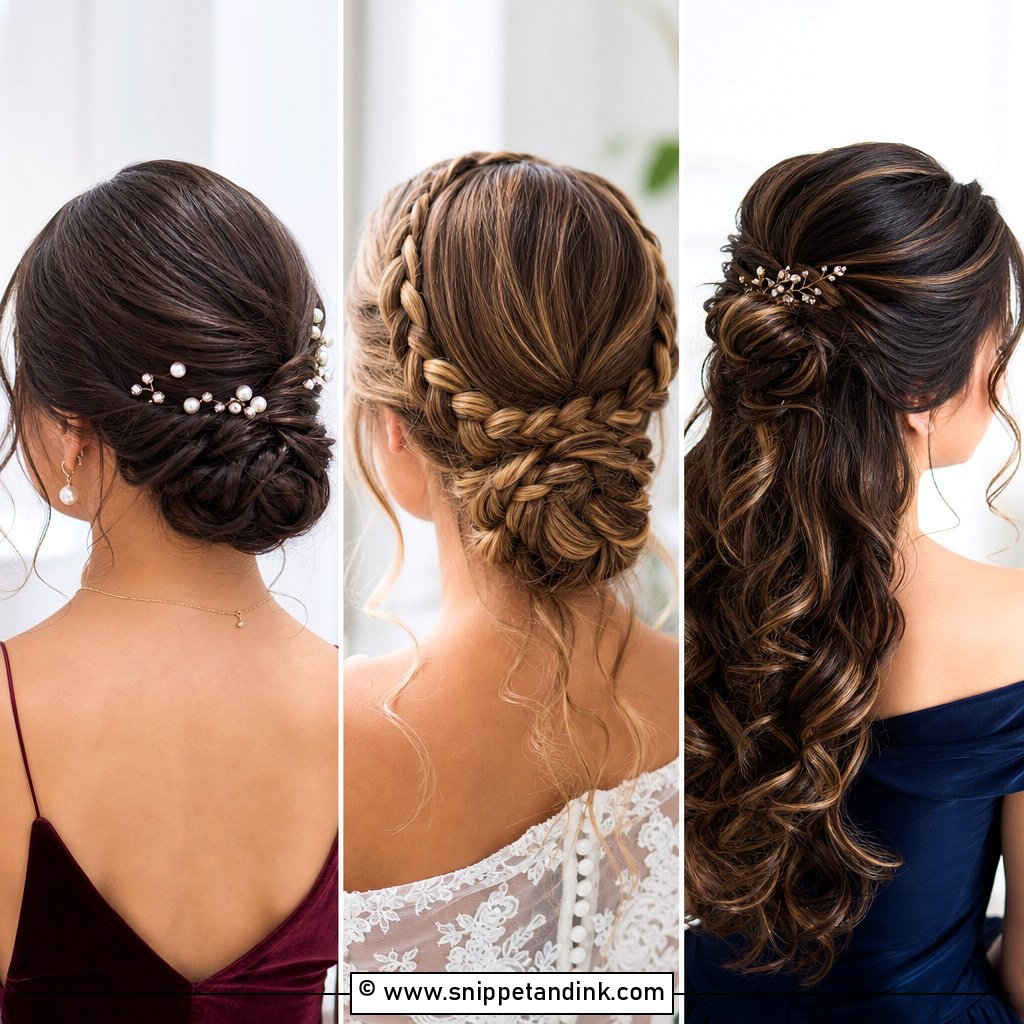
Half-up is the answer when a bride can’t give up the length of her hair. I pin the top section back firmly and set the lower lengths in soft waves, then tuck fresh flowers at the crown. The flowers are my main worry here: blooms out of water wilt fast outdoors, so I ask the florist for sturdy, wired stems and add them last. Jeweled pins are the safer swap for a long, hot day. On very fine hair, I set the waves the night before with a light mousse, otherwise they relax into straight lengths by the first dance.
4. Classic Chignon With Tassel Hairpin
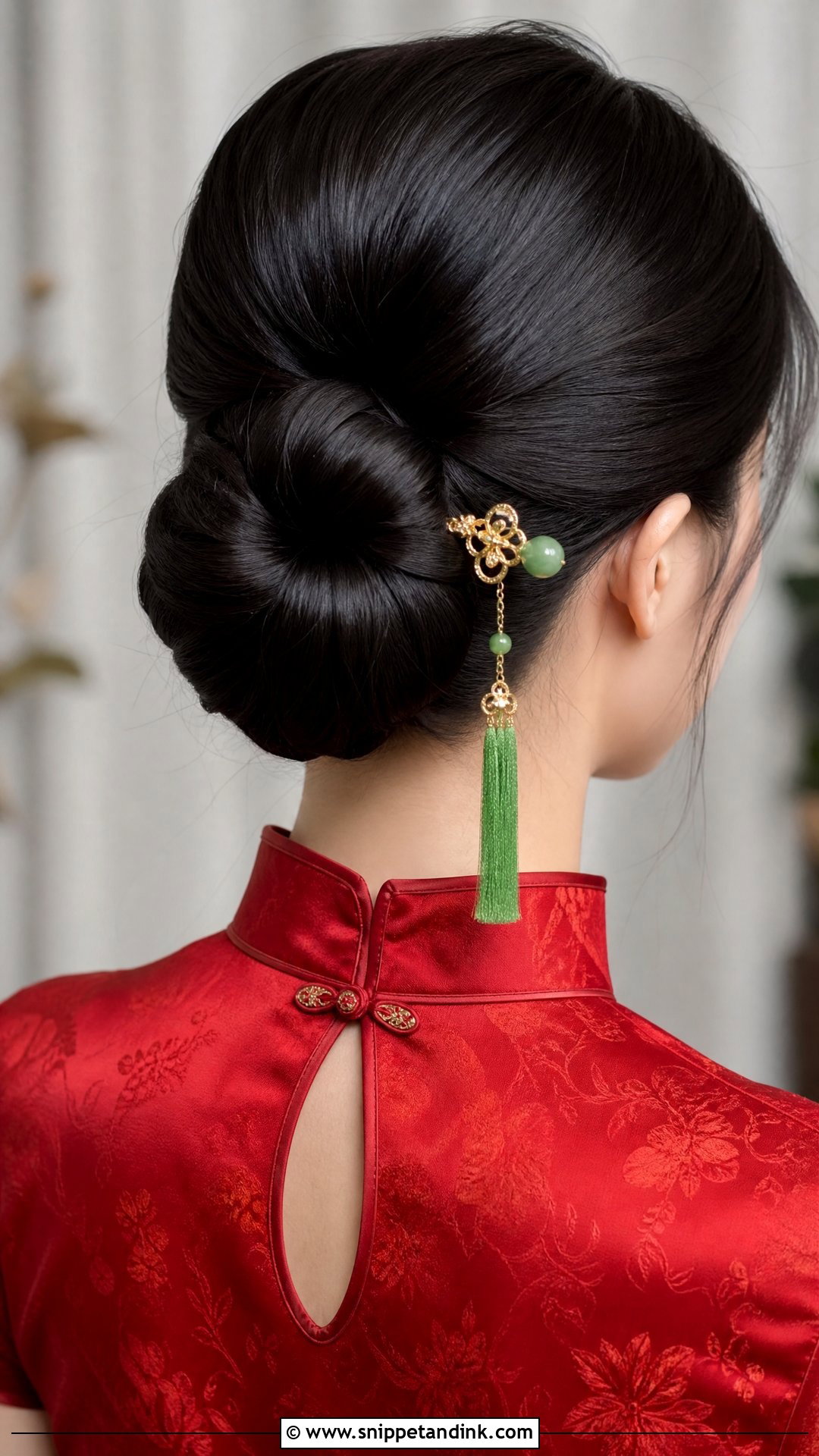
A low chignon is my default when a bride is changing from a cheongsam into a Western gown, because it suits both necklines without being redone. I coil the hair into a rounded knot at the back of the head and slide a traditional tassel hairpin in from one side, usually jade or gold. The tassel swings when she turns, so I anchor the pin into the knot itself, not the loose outer layer, or it works its way out by dinner. A sleek front or a soft side part both work; I choose based on how strong her brow line is.
5. Ming Dynasty Bridal Updo
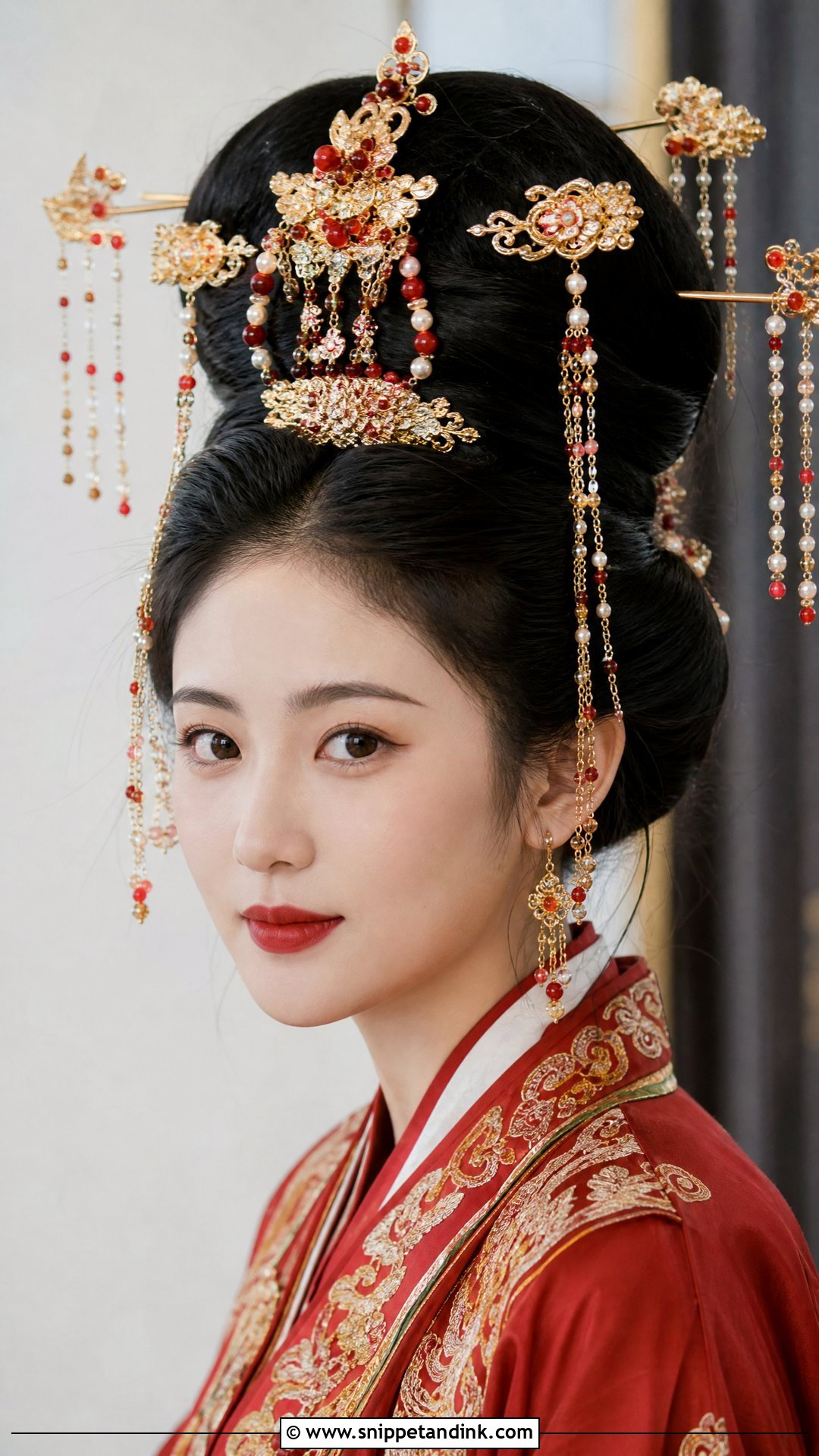
Height and structure define the Ming court updo. The hair is swept up and shaped into a tall form that has to carry layered pins, beaded drops and sometimes a full headdress, so I work in internal sections with padding rather than relying on backcombing alone. Backcombing collapses under weight; a shaped base does not. It belongs with hanfu and ceremonial robes, and it’s best kept for the formal part of the day. I’d steer a bride away from it if she has a sensitive scalp, because several hours of pins and weight can bring on a real headache.
6. Soft Curled Updo With Jeweled Pins
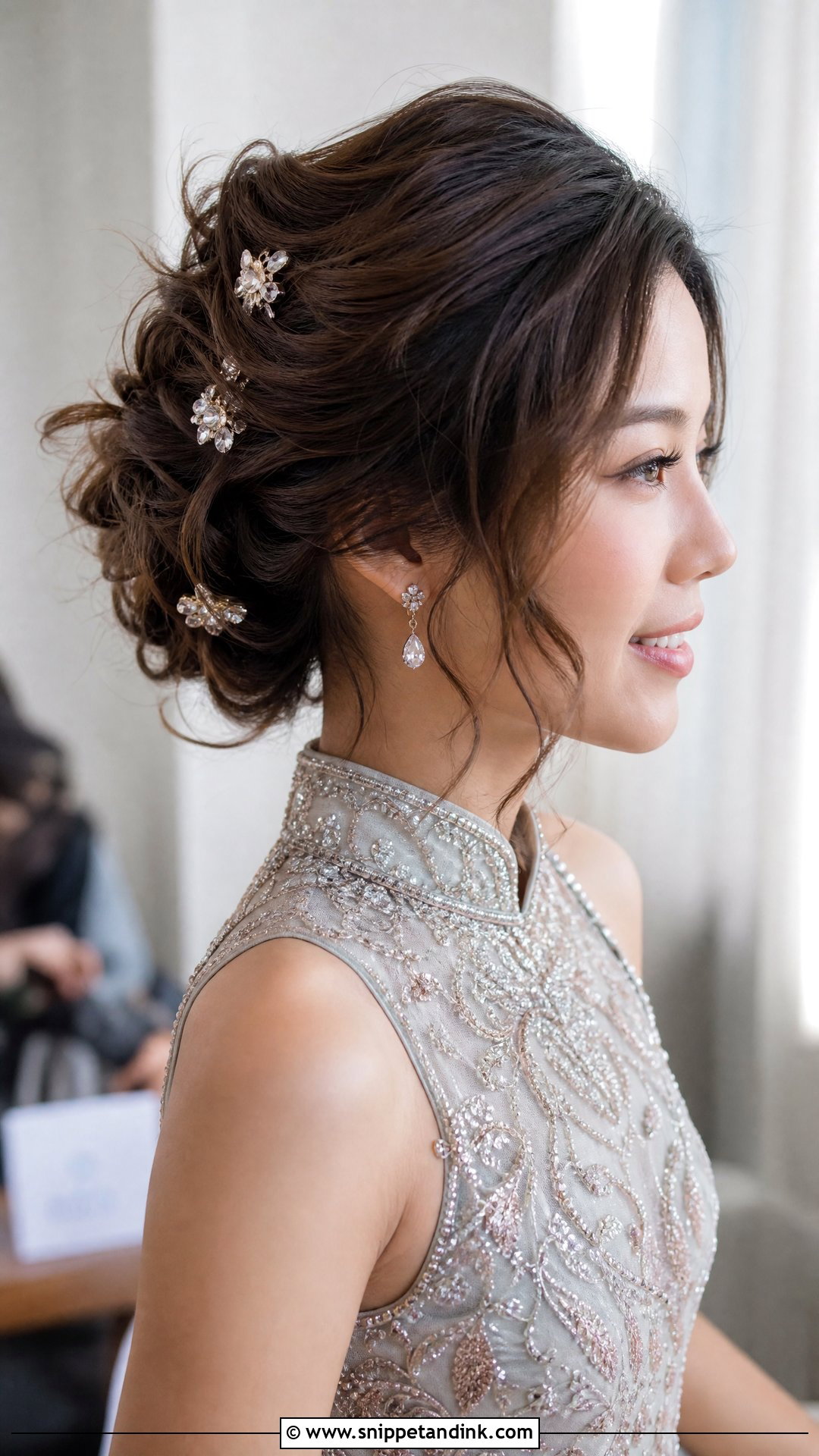
Curling first and then pinning loosely gives an updo texture without making it look stiff. I curl the whole head, let the curls cool completely in pin clips, then pin them up so a few waves still show through the shape. Hot curls pinned straight away drop; cooled curls hold. Scattered jeweled pins or crystal clips pick up the light under banquet chandeliers. A fitted cheongsam or a beaded reception gown both sit well with it, and I leave one or two curled strands near the face.
7. Braided Updo With Gold Accessories
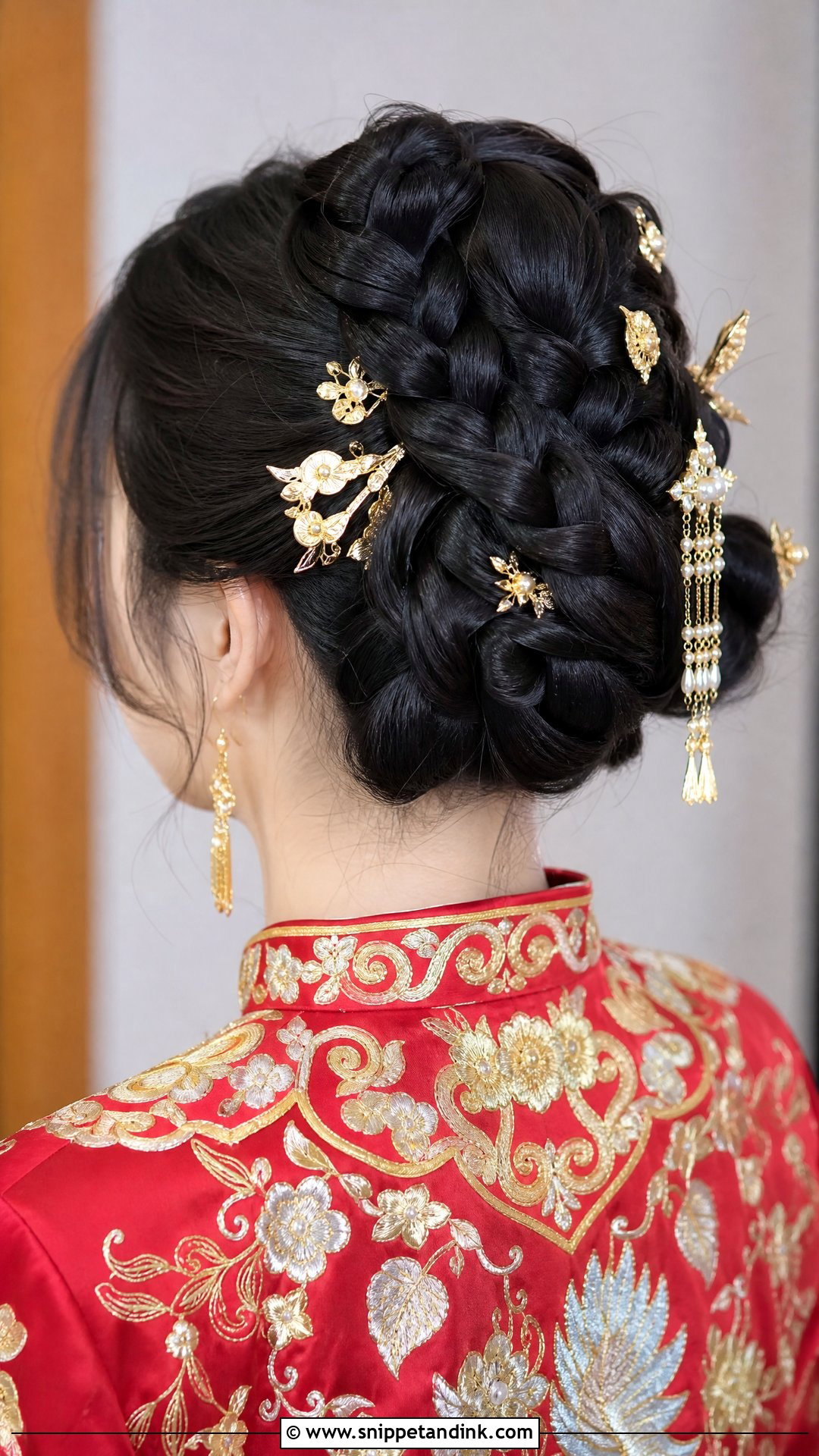
Braids are the most secure thing I can put in a bridal updo, which matters on a day that runs from door games to a late banquet. I braid individual sections, then pin the braids into a structured shape, so each pin locks into a woven section instead of sliding through smooth hair. Gold hairpins, combs and small ornaments tuck straight into the braids and stay put. Thick or long hair suits it best; very short layers poke out of the braids and need a lot of extra pinning. It sits well under a red Qun Kwa or hanfu.
8. High Bun With Beaded Headdress
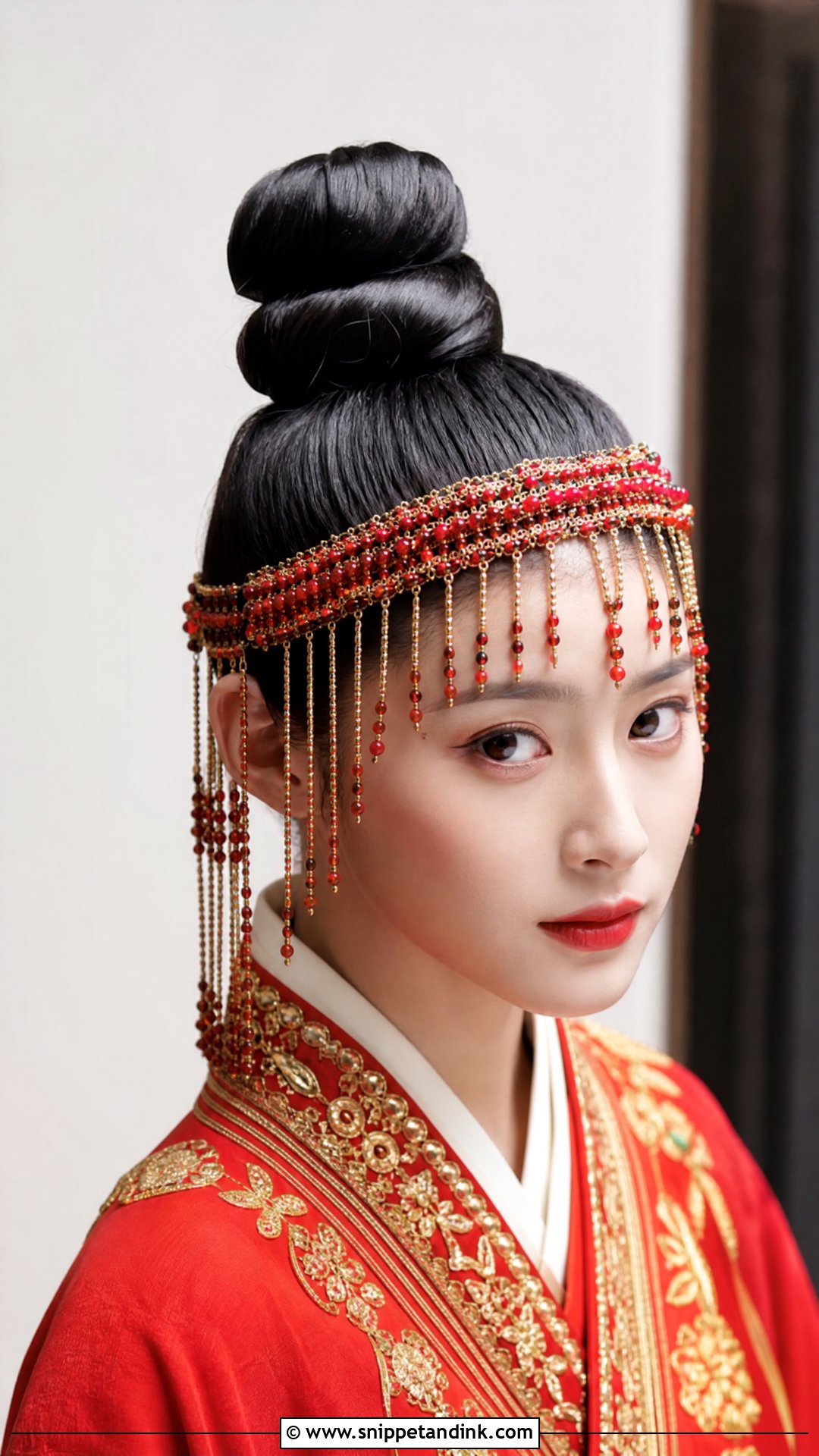
When the headdress is the centrepiece, a high bun gives it a clean platform. I gather the hair high and wrap it into a tight, smooth knot at the crown, which lets a dramatic beaded headdress and its fringes hang around the face without catching on loose hair. The plainness of the bun is the point. My one rule: fit the headdress at the trial and mark where its combs sit, because beaded fringes swing and a bun placed a centimetre too far back throws the whole piece off balance during the tea ceremony bows.
9. Low Chignon With Side-Swept Bangs
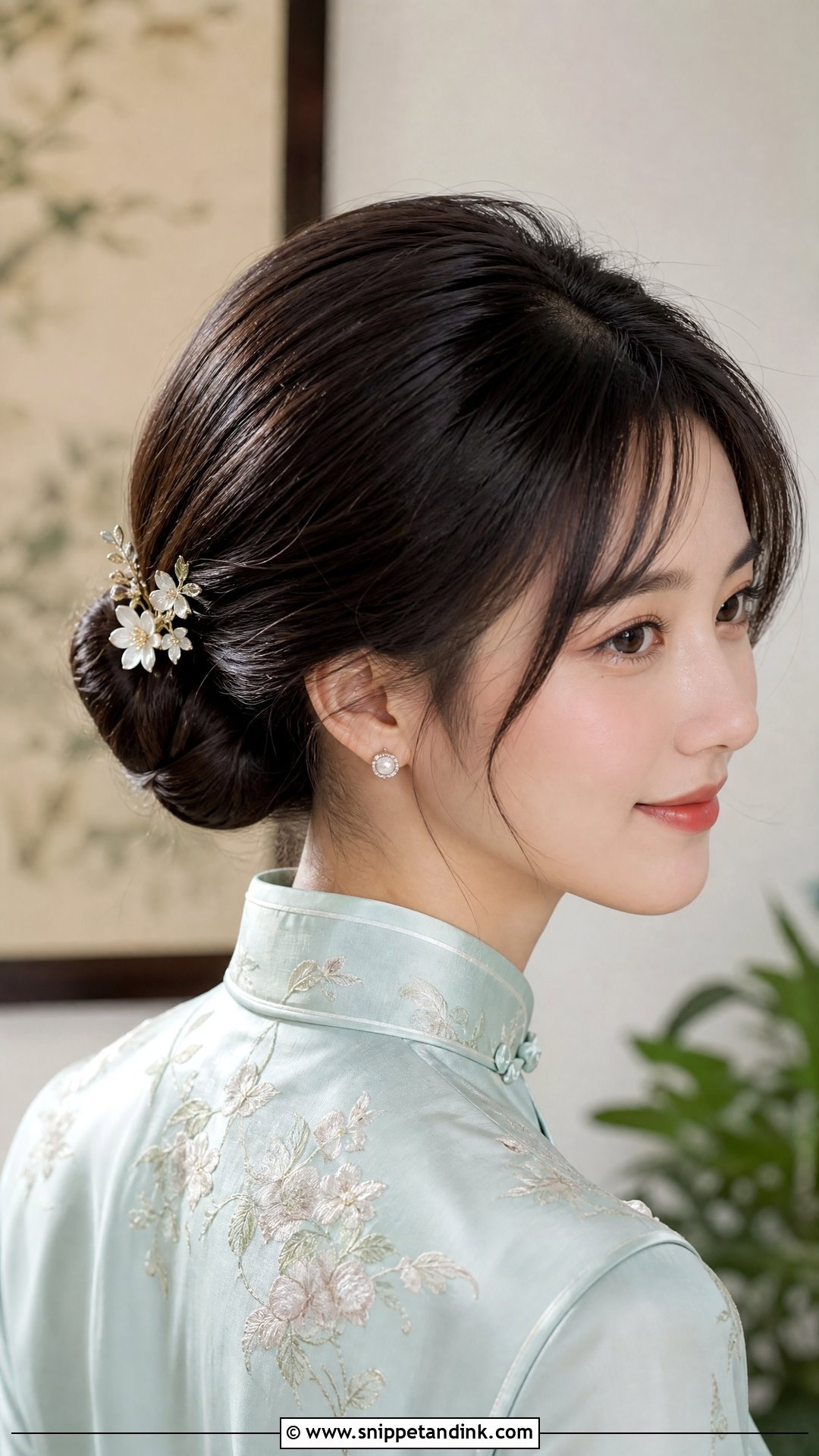
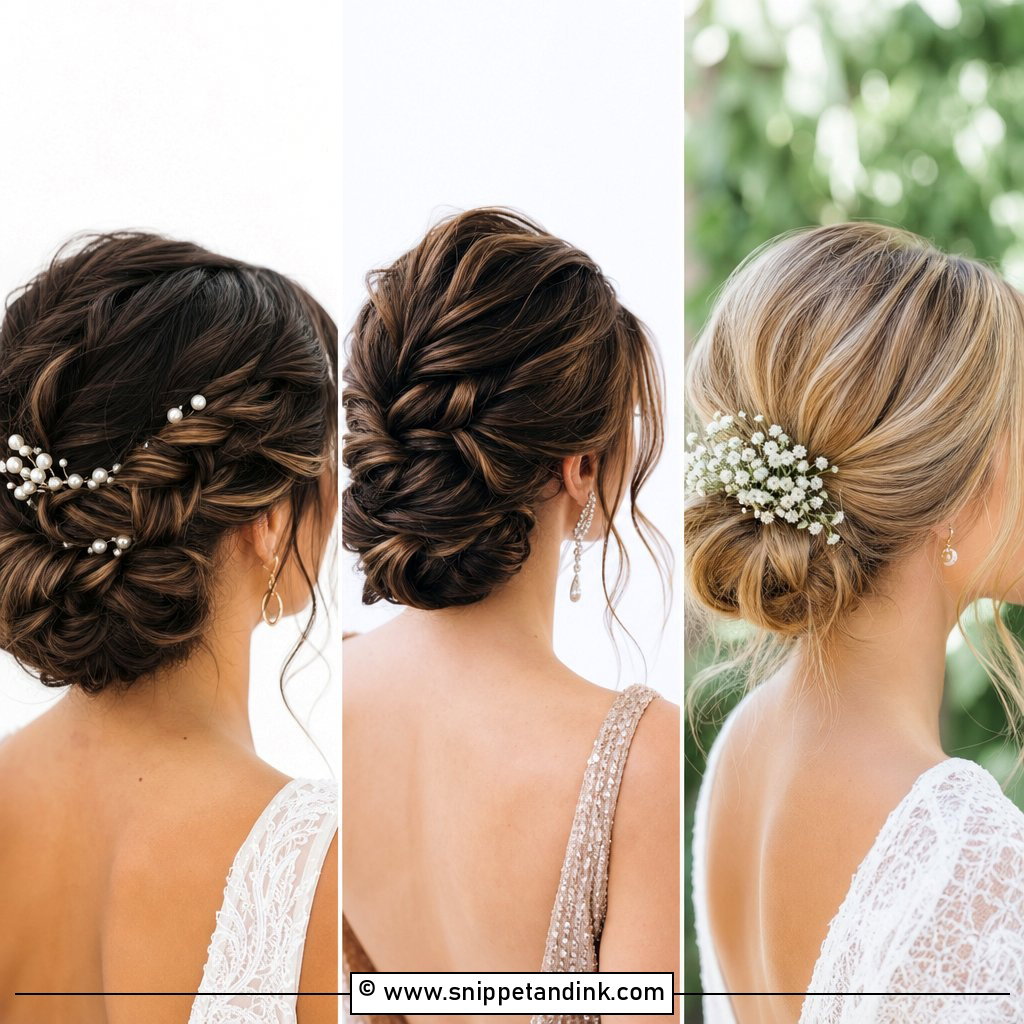
Side-swept bangs with a low chignon soften a strong jaw or a high forehead more than almost any other change I can make. The bun sits quiet at the nape while the bangs fall across one side of the face. Bangs are the part that behaves badly: they separate with sweat and humidity, so I set them with a round brush and a light hold spray rather than heavy product that turns them stringy. It sits well with a cheongsam, finished with a small floral pin or crystal clip beside the knot.
10. Half-Up Curls With Crystal Pins
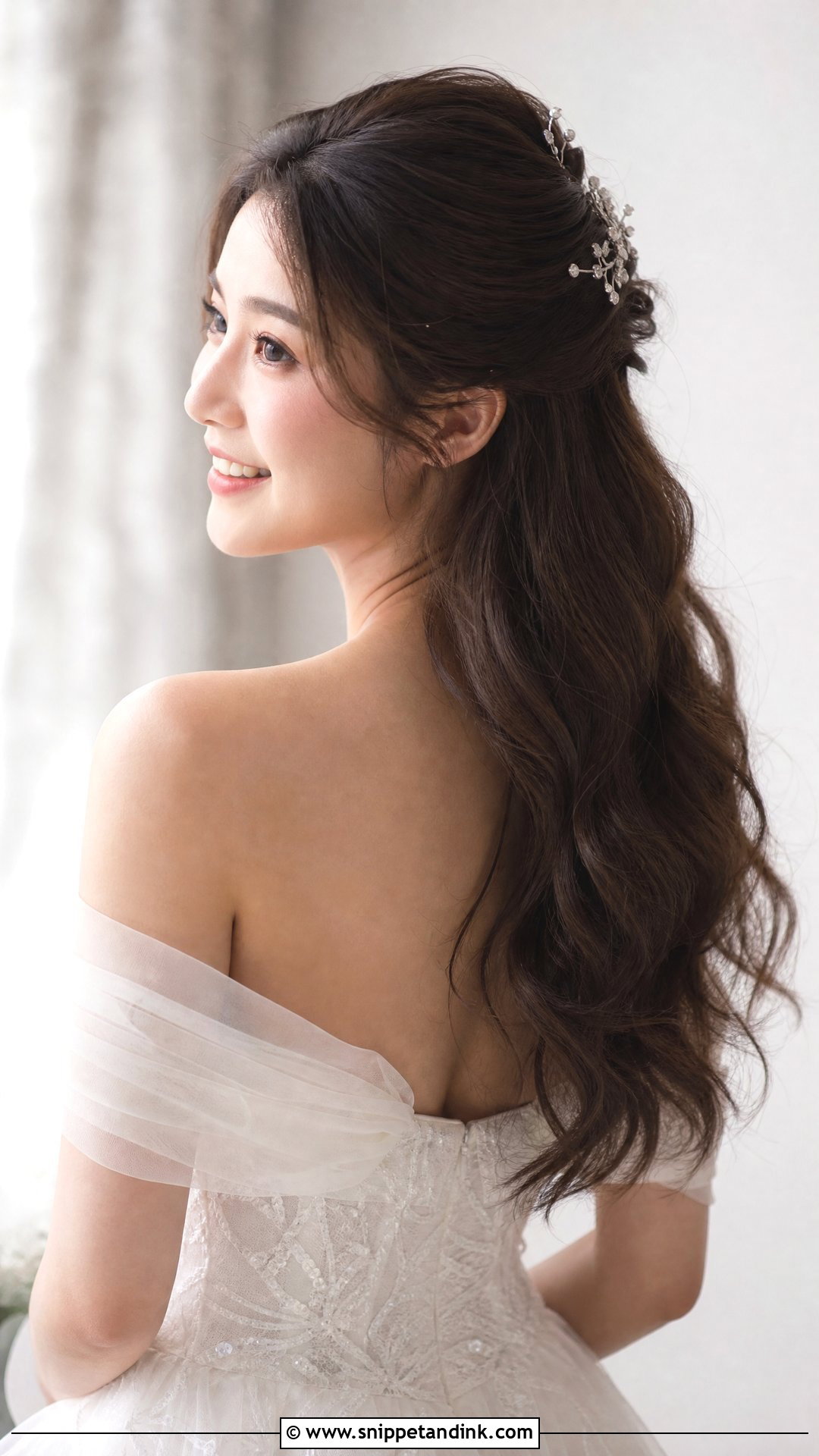
Brushed-out curls are softer than tight ringlets, and that softness is what this half-up style depends on. I pin the top section back gently, place crystal pins along the pinned line and let the rest fall in medium curls. The catch with brushing out is that it relaxes the curl, so I set it slightly tighter than the finished look needs. It’s a good reception change: a bride can go from a structured tea ceremony updo to this with the help of a curling iron and twenty minutes. It sits well with a white gown or a lighter cheongsam.
11. Sleek Bun With Floral Crown
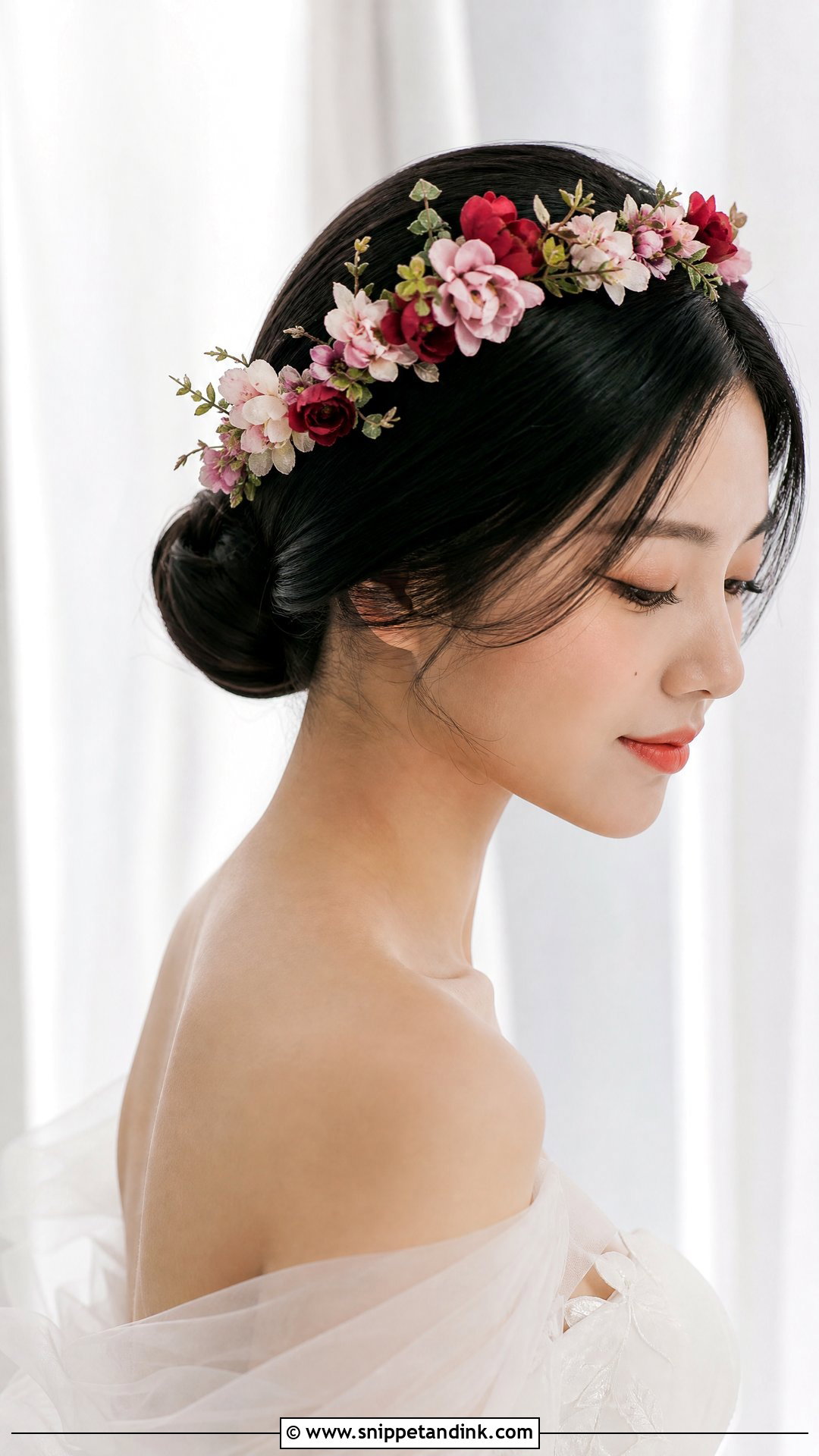
A floral crown on a clean bun is one of the lighter options here, and it suits outdoor ceremonies well. I pull the hair into a smooth low or mid-height bun and rest the crown just behind the hairline, then pin the crown’s wire base to the hair at four points so it can’t ride up. Flowers can follow the wedding palette, from soft pinks to red for luck. Ask the florist to build the crown on the morning, not the night before, as small blooms dry out quickly once they’re wired.
12. Twisted Updo With Hair Sticks
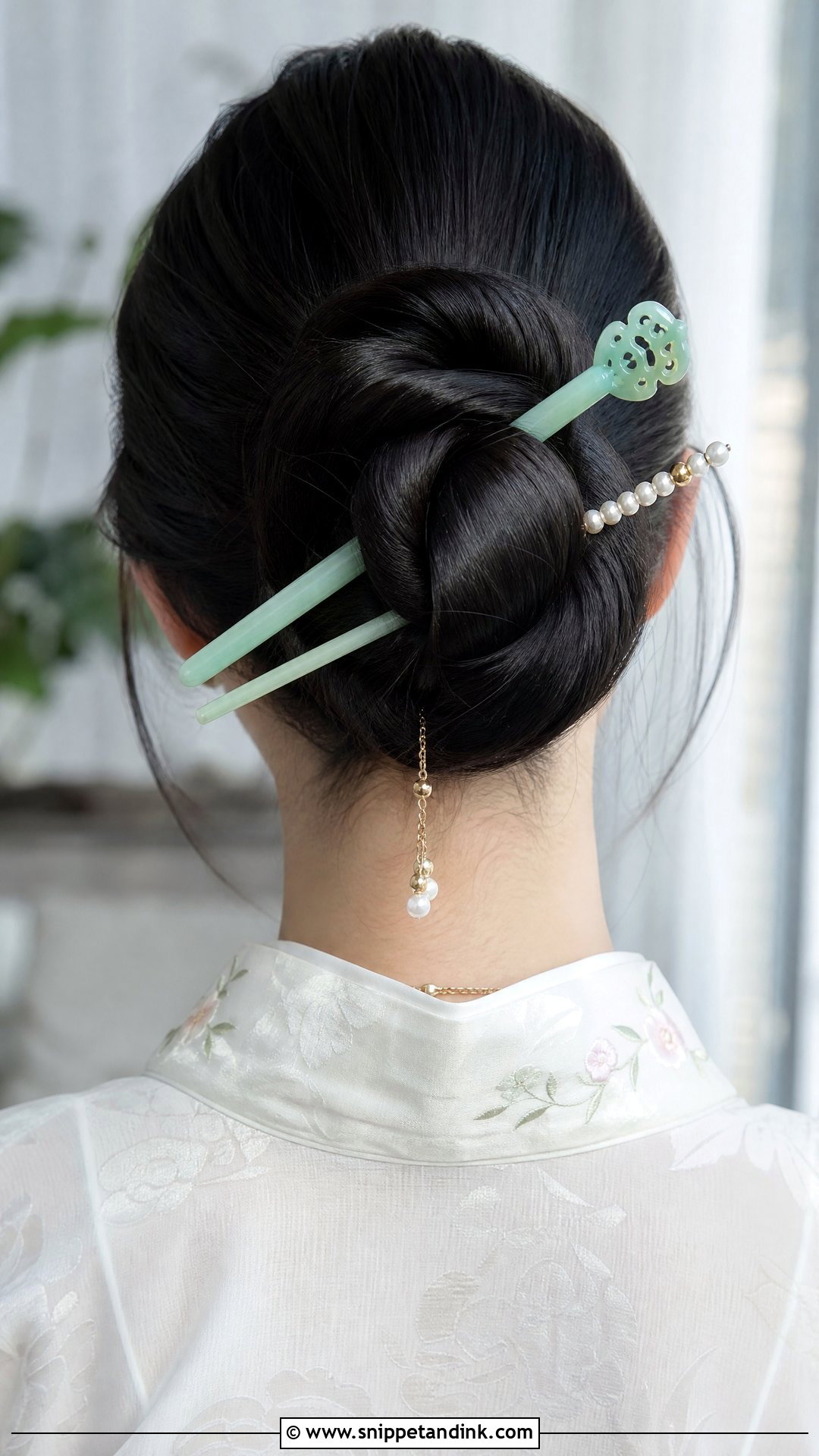
Hair sticks are a traditional fastening, not just an ornament, and a twisted updo is where they work properly. I twist and coil the hair into a sculpted shape and cross one or two sticks through the coil, weaving each one in and out of the twist so it carries load. Jade, pearl or carved ends give the cultural detail. On very fine or layered hair, sticks alone won’t hold, so I hide a few pins inside the coil as backup. It sits naturally with both hanfu and cheongsam.
13. Voluminous Updo For Strapless Gowns
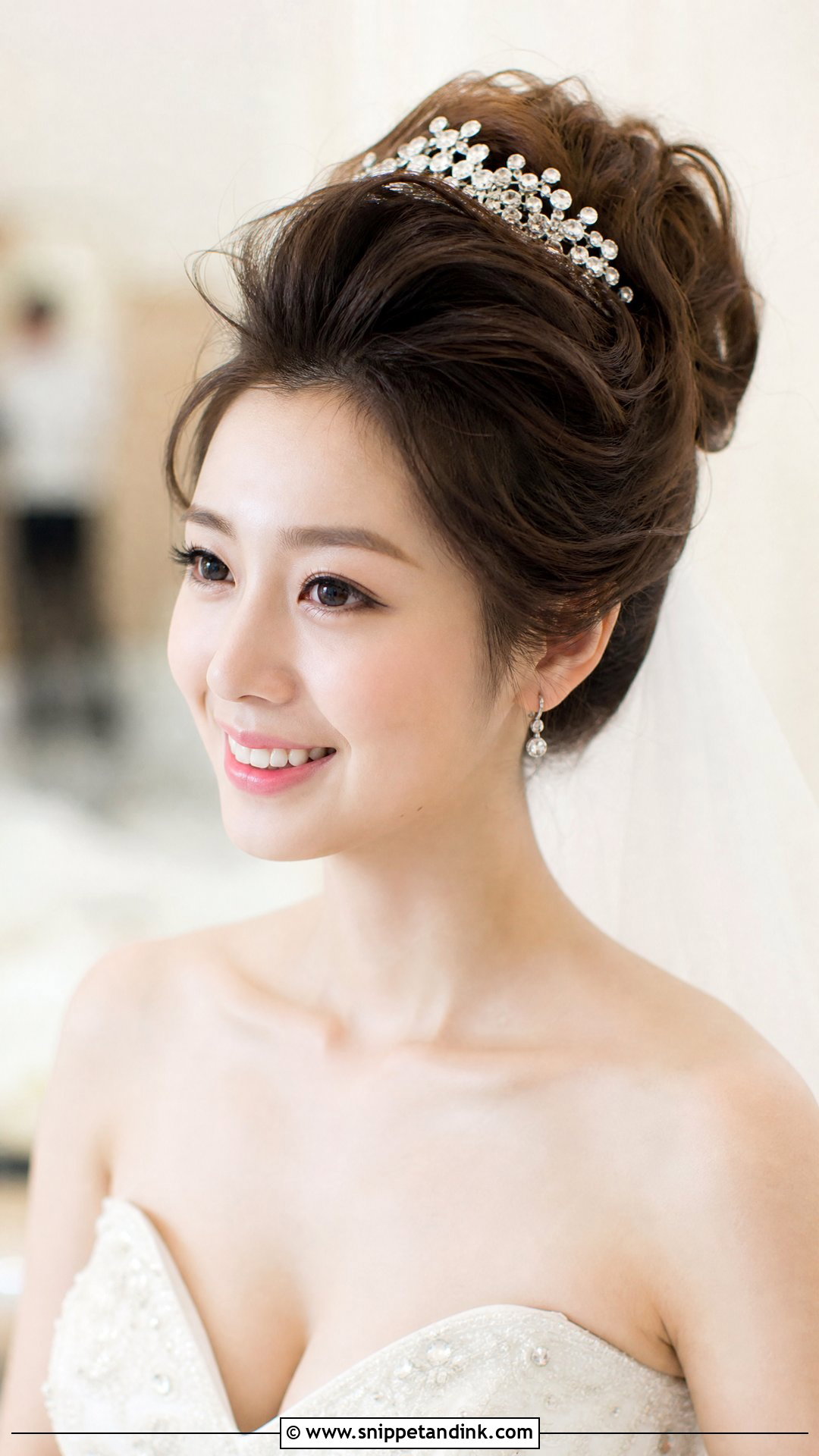
A strapless neckline leaves the collarbone bare, and an upswept style is how I show that off. I lift every strand off the shoulders and build height at the crown with teasing and shaping, so the volume reads from the side as well as the front. Too much height can look dated with a minimal gown, so I keep it in proportion to her neck length. A few small pins or a sparkling comb finish it. It’s a natural fit for the Western gown later in the evening, with earrings doing the rest.
14. Romantic Loose Bun With Tendrils
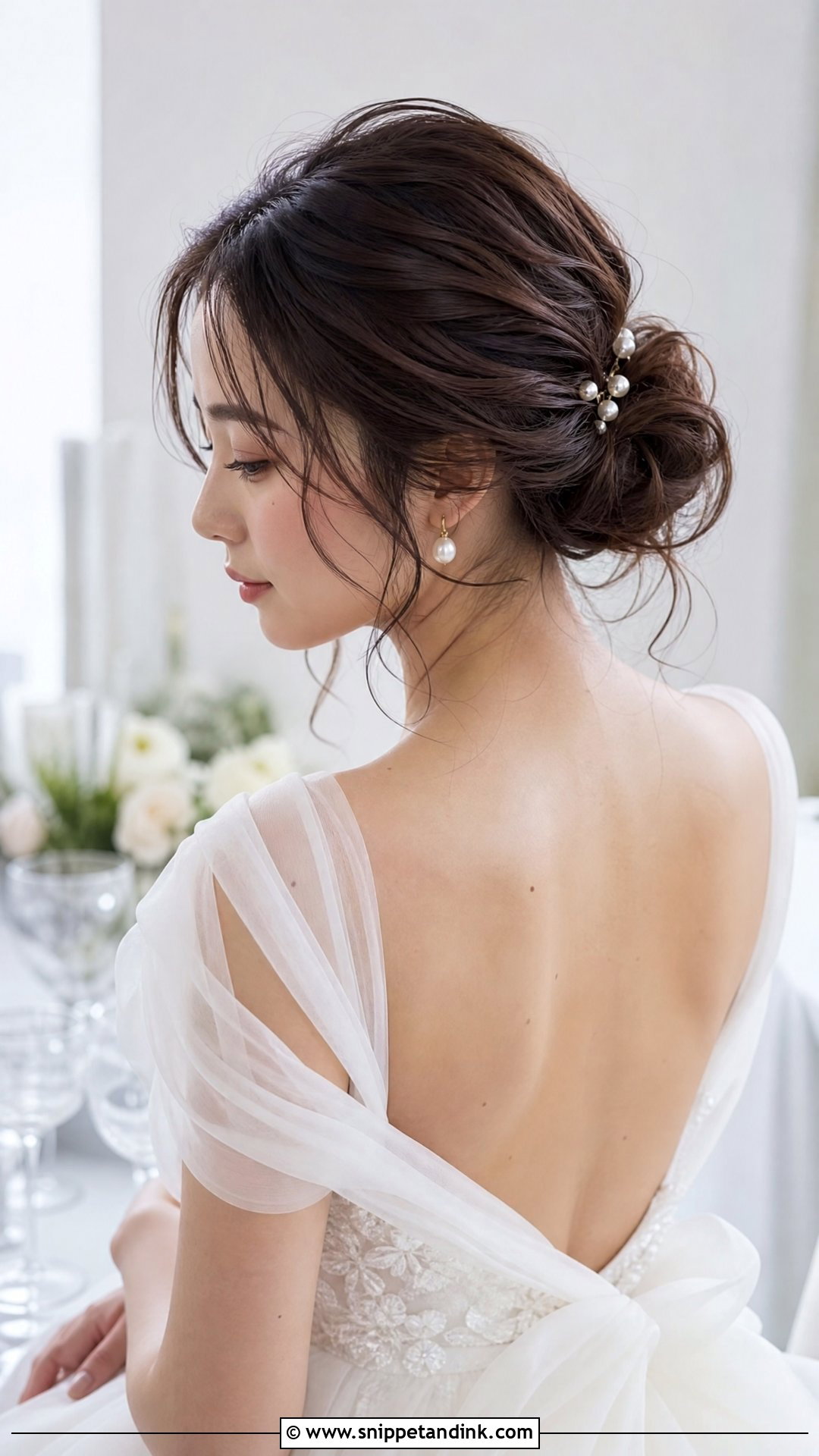
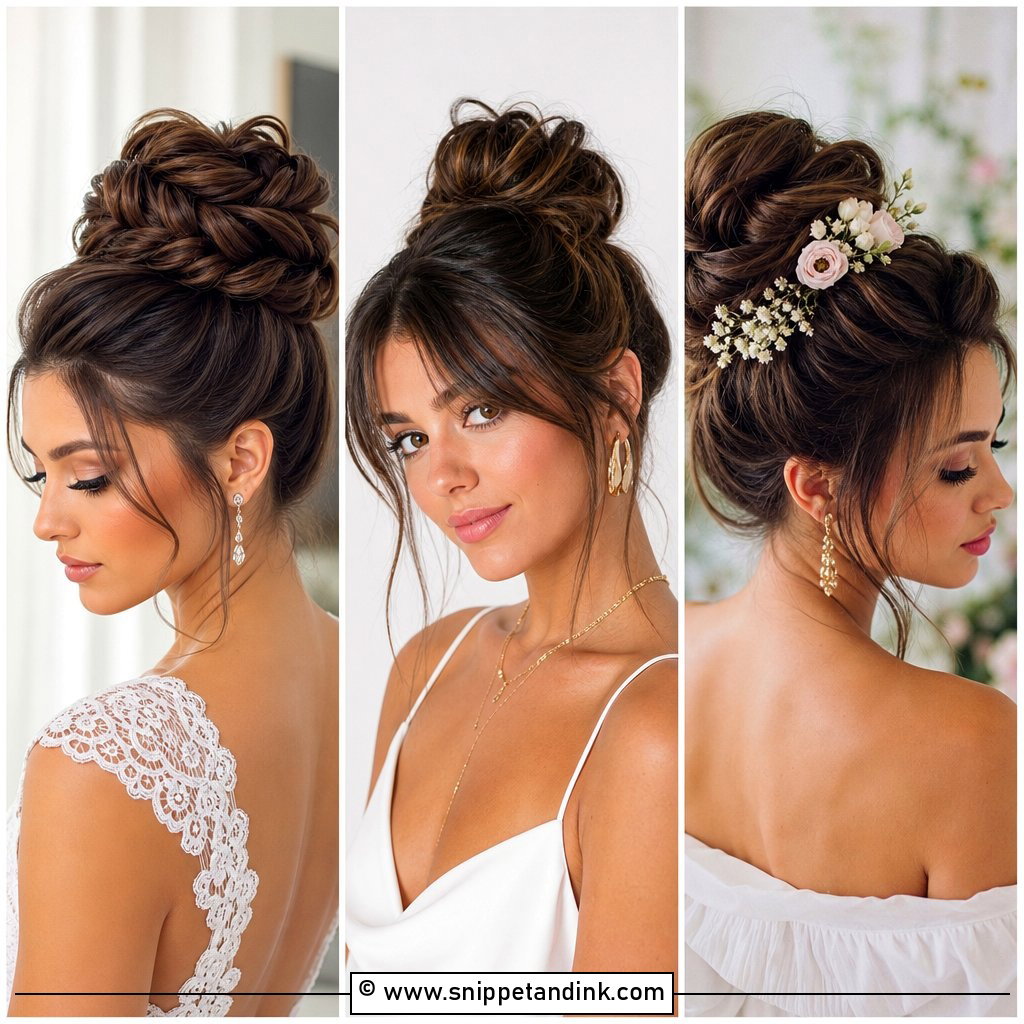
Loose buns look casual, but they’re harder to make last than tight ones. I gather the hair into a soft, undone shape with texture spray, then pin it more than it looks like it needs, because loose sections are the first thing to slip. Tendrils fall around the face and neck. It suits daytime and outdoor celebrations, flowing gowns and lighter cheongsam fabrics, with a few pearl pins added. Brides with very fine, silky hair should expect a firmer version of the photo; I can’t keep slippery hair this loose for ten hours.
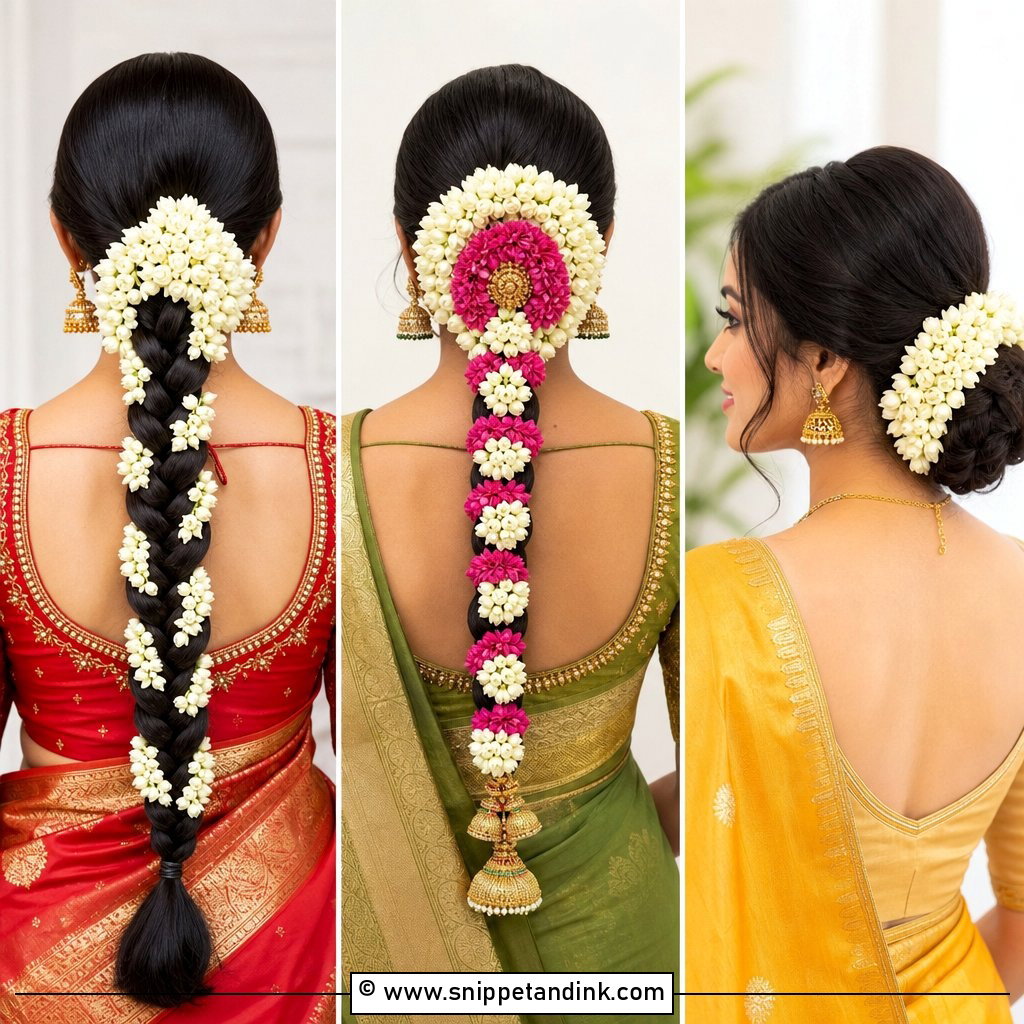
15. Sleek Straight Hair With Hairpin
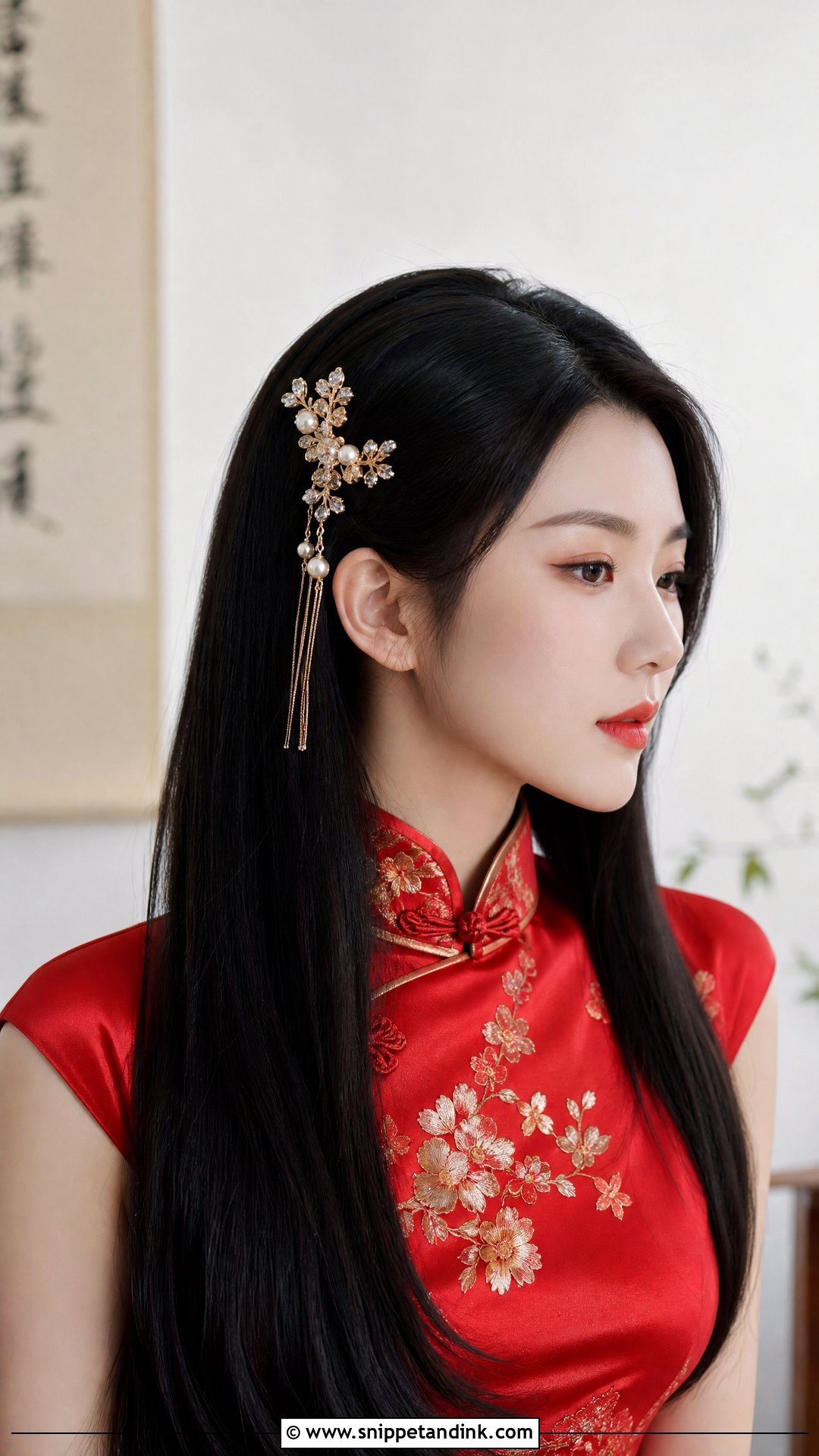
Sleek, straight hair worn down is the simplest look on this list and the most demanding on hair condition. Every split end and flyaway shows against a red outfit, so I’d only suggest it to brides whose hair is already healthy and glossy, ideally naturally straight and dark. I smooth it flat with a flat iron on low heat, finish with a shine serum on the ends only and tuck one ornate pin or comb into one side for decoration and luck. With a cheongsam, it reads modern and very clean.
16. Top Knot Bun With Hanging Tassels
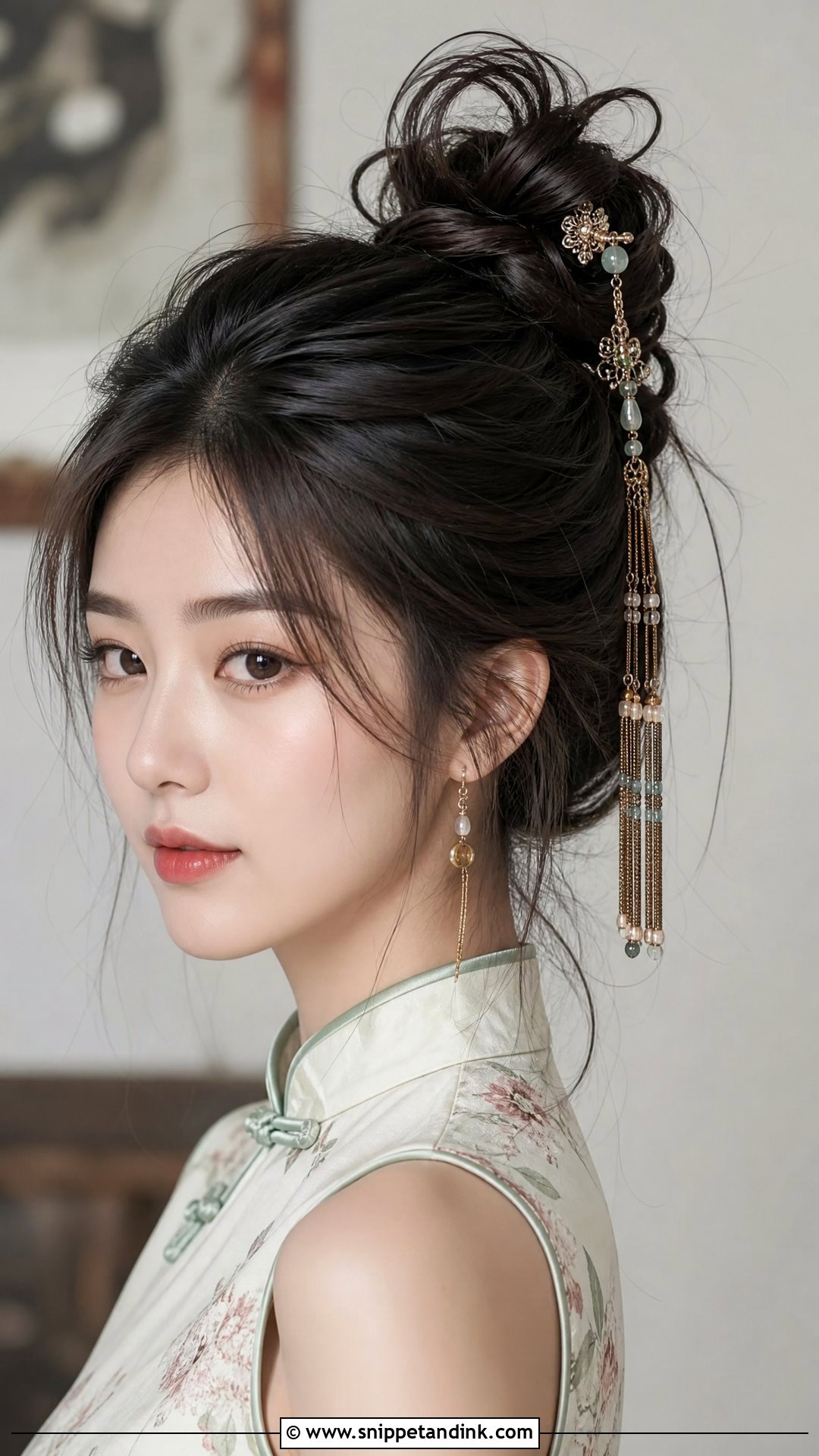
A high knot dressed with hanging tassel ornaments gives a fashion-led bride something that still nods to tradition. I gather the hair at the crown and twist it into a relaxed knot, then pin the beaded or silk tassels so they hang beside it. Tassels get caught in earrings and veils, so I check the length against her jewelry before I fix them in. It sits well with a cheongsam or a modern hanfu, and it’s one of the more playful looks in the set.
17. Side Bun With Pearl Accessories
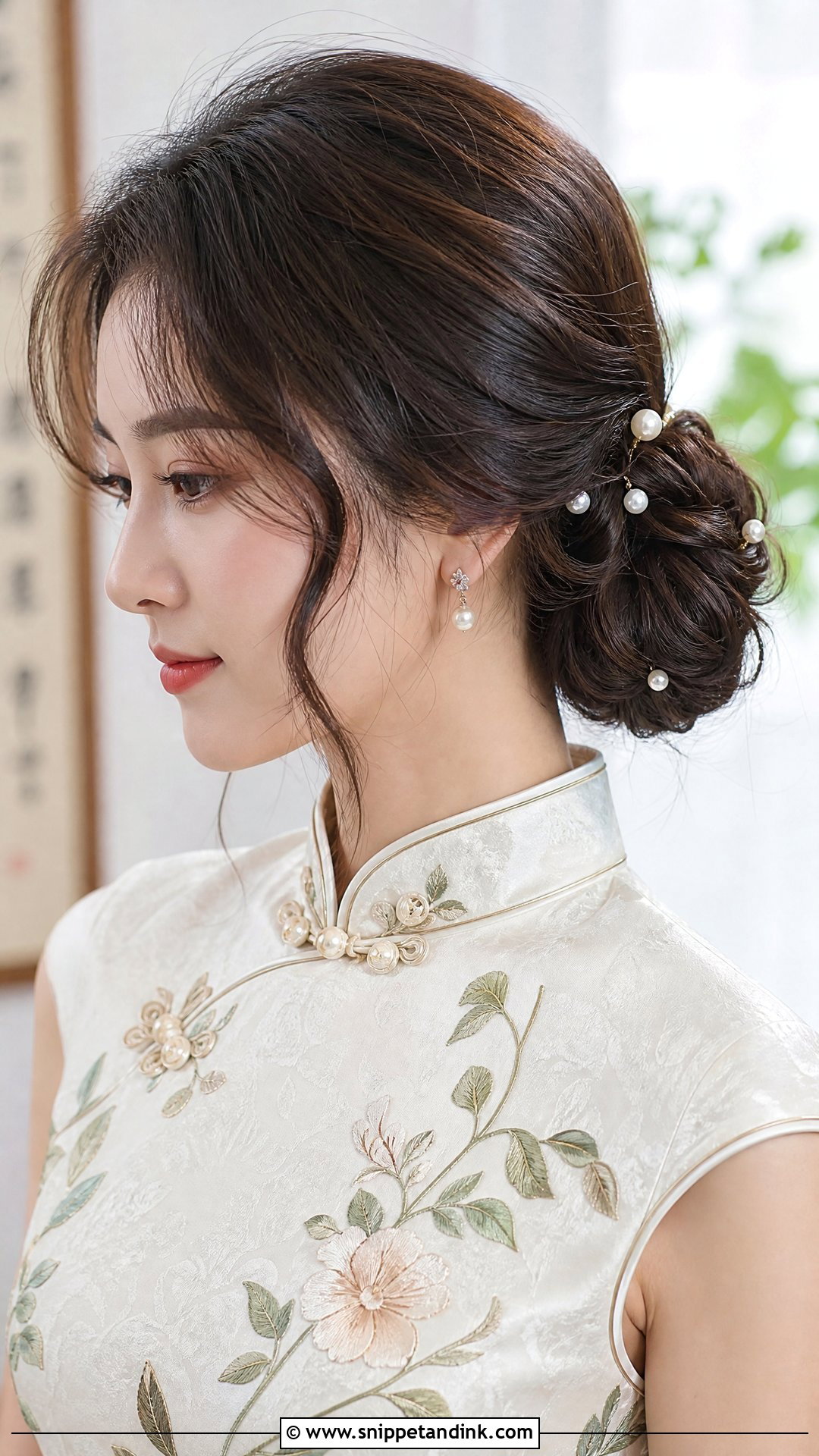
An asymmetrical side bun has a vintage, old-Hollywood feel. I coil the hair low to one side, then dot it with pearl pins. The side I choose matters more than brides expect: I place the bun on the opposite side to where the photographer will mostly be shooting the couple, so it isn’t hidden behind the groom’s shoulder. A few loose waves at the front soften it. It works with gowns and cheongsams, and pearls sit well against any palette.
18. Updo With Curtain Bangs And Comb
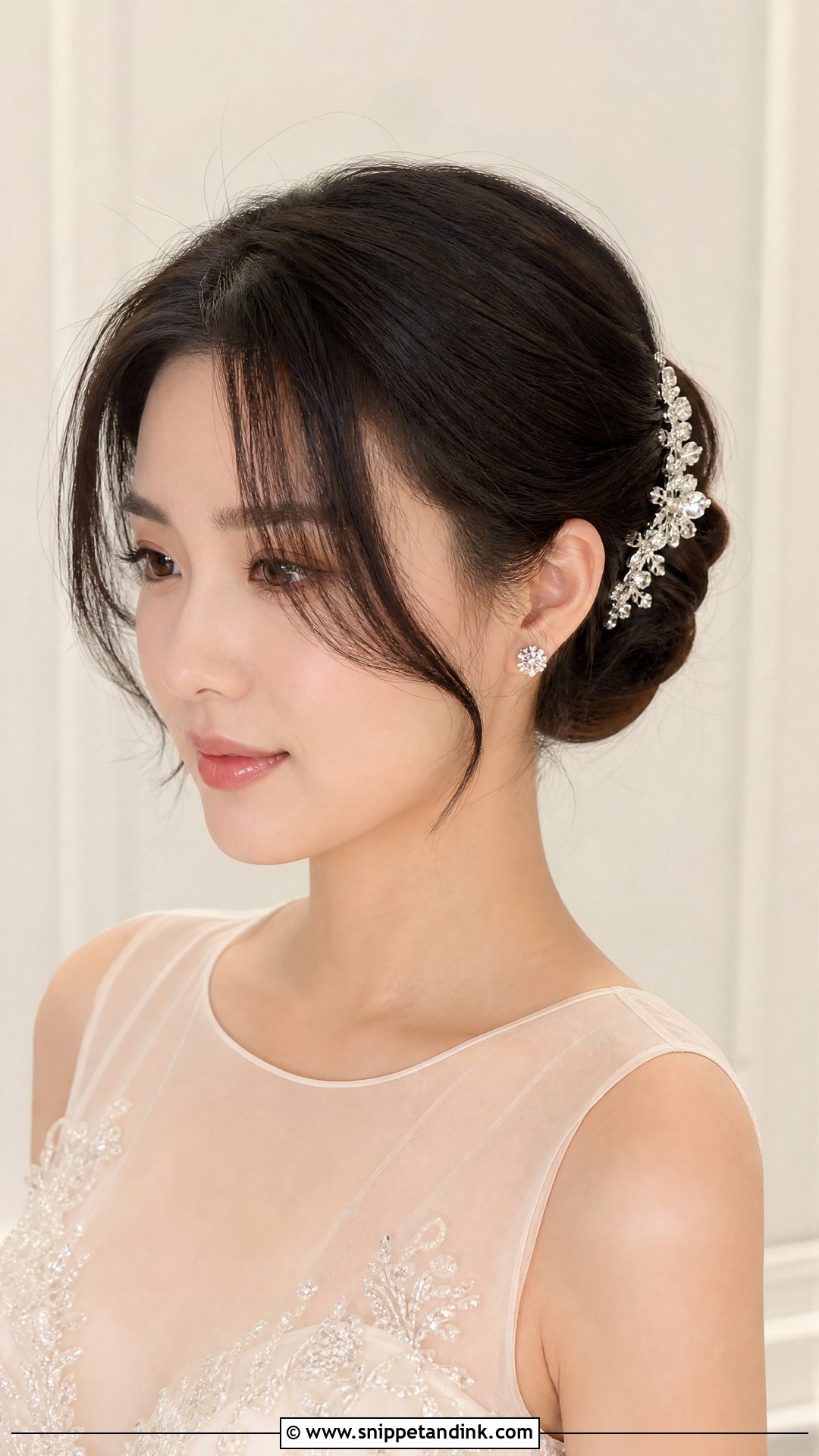
Curtain bangs soften an updo more gently than a heavy fringe does. I sweep the hair into a neat bun or chignon and let the bangs part in the centre and curve along the cheekbones, then tuck a decorative comb into the updo. Freshly cut curtain bangs are often too short to curve properly, so I tell brides to have them trimmed about two weeks before the wedding, not the week of. Round and heart-shaped faces get the most from this one.
19. Braided Crown With Flowers
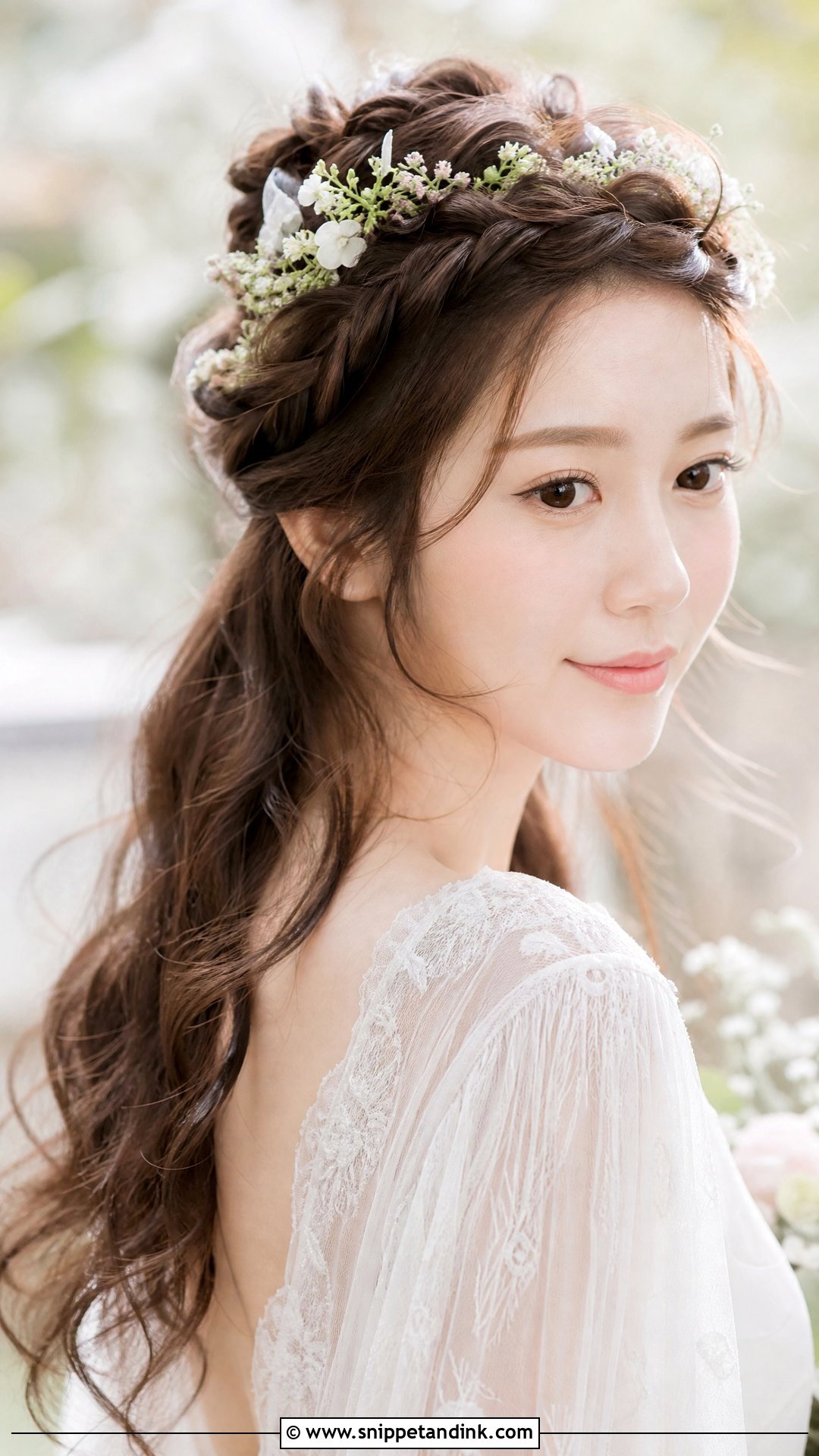
A braided crown wraps the head like a halo and is one of the most secure styles I do, as the braid itself holds the pins. I braid sections and pin them around the crown, leaving the rest up or in loose waves, then tuck small fresh flowers into the braid. Very short or heavily layered hair struggles to reach all the way around; a clip-in braid can fill the gap. It suits outdoor or spring weddings, flowing gowns and lighter traditional outfits.
20. Glamorous Hollywood Waves
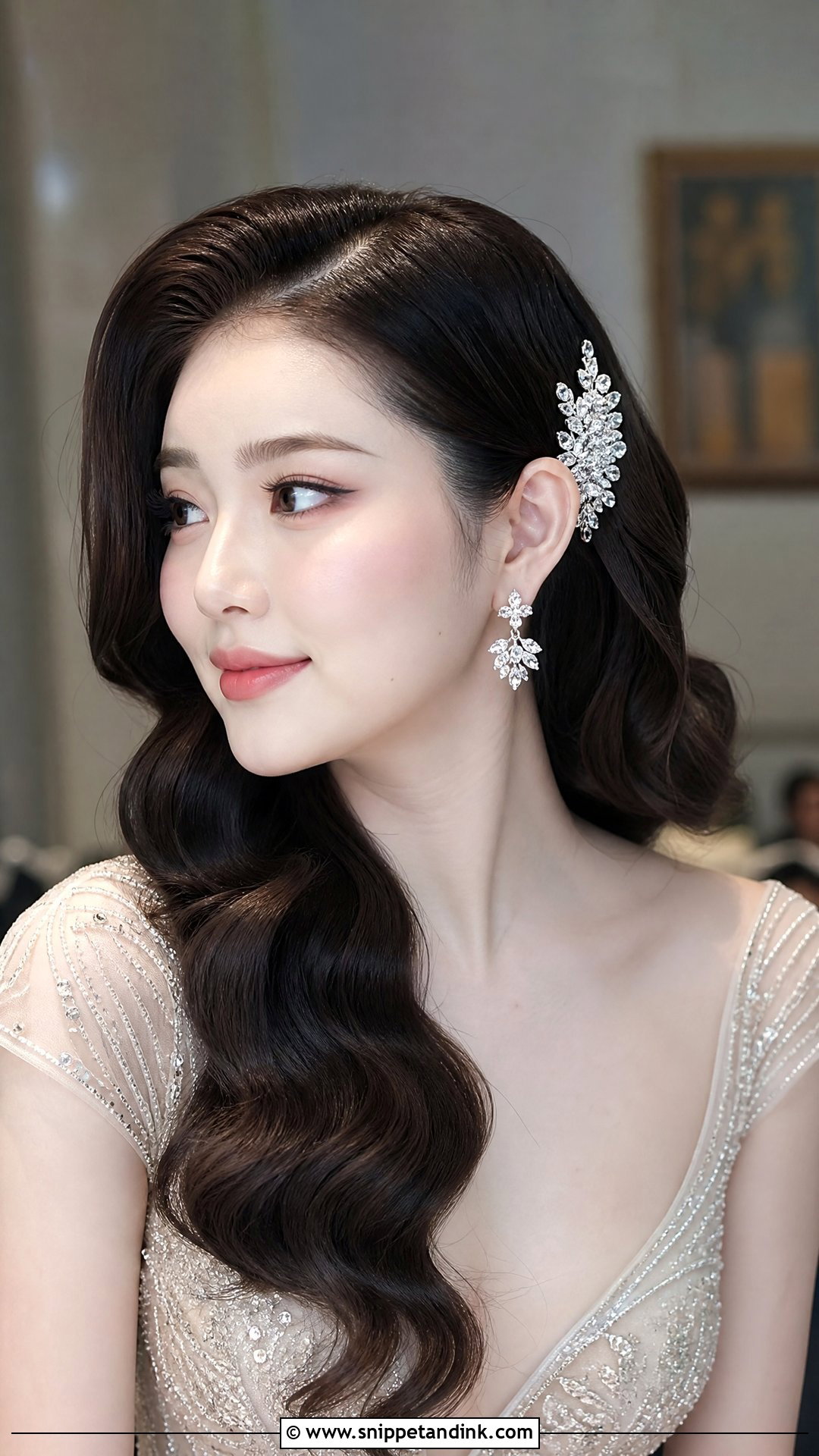
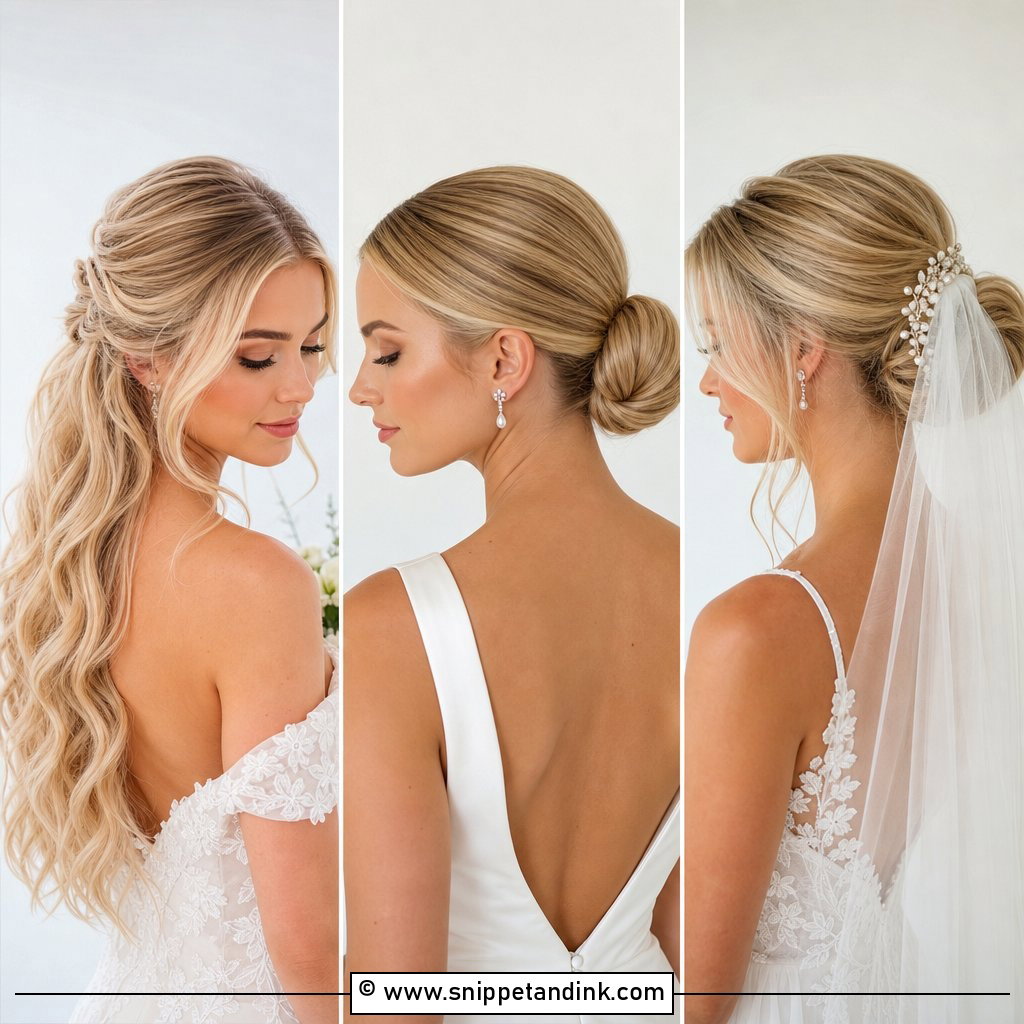
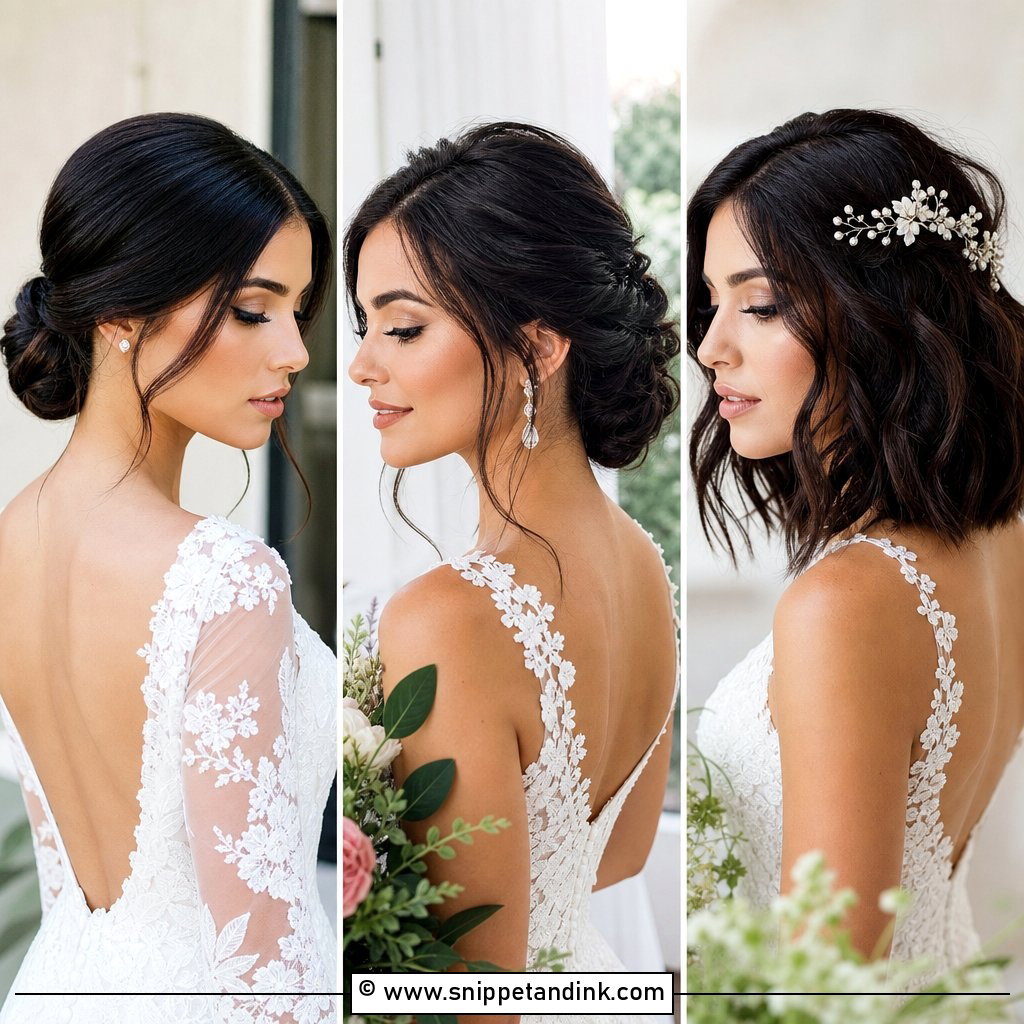
Deep Hollywood waves are a reception and portrait look that I build in stages. I curl in one direction, pin each curl to cool, then brush the set out into uniform waves and press the ridges with clips while the finishing spray dries. A deep side part gives the shape its drama. Straight, heavy hair loses this pattern fastest, so I always set it the same way rather than skipping the cooling step. It goes with a beaded gown or a fitted cheongsam, with a jeweled pin tucked behind one ear.
Heavy Crowns, Slippery Straight Hair and What I Test at the Trial
Thick, straight, glossy hair is lovely to look at and one of the hardest textures to make hold a curl or carry weight. It’s dense and smooth, so curls drop and pins slide. I don’t fight that on the morning; I plan for it at the trial.
Making Curls Last on Straight Hair
I ask brides to wash their hair the evening before, not the morning of, because freshly washed hair is the slipperiest it will ever be. On the day I prep with a texturizing spray or light mousse, use smaller curling sections than looks necessary and let every curl cool fully before touching it. If the trial curls have fallen by the time she gets home, that tells me to change products, not to add more hairspray.
Anchoring a Crown or Headdress
Phoenix crowns and beaded headdresses need a firm base. I build the bun over a padded form or a hair donut, then cross bobby pins in X shapes so each pair locks against the other. Combs on the headpiece go in against the direction of the hair so they bite. At the trial I have the bride bow, turn her head quickly and sit for a while wearing the full piece. If there’s any pressure point or wobble after thirty minutes, it will be far worse after four hours, and that’s the time to move the anchor points.
Bring Your Headpieces to the Trial
Many of the Chinese brides I work with end up wearing two or three of these styles across the day, moving from a tea ceremony updo to something softer for the banquet. The best way to make that work is to bring every headpiece, hairpin and tassel you plan to wear to your trial, along with photos of each outfit’s neckline. Mixing heritage pieces like jade pins with a modern cut is fine. Pick the ones you like here and show them to your stylist with the outfits beside them.
You'll Like These Ideas:


Leave a Reply