
Vintage bridal hair is some of the most technical work I do, and also some of the most rewarding to see in photos. Finger waves, rolls, sculpted chignons and soft 70s movement all come from decades when hair was set, not just curled, and that difference shows. The good news is that these shapes adapt well to modern hair: a little more softness, a lighter hand with the gel and fewer pins showing. Short bobs, long layers and natural volume can all carry a period look if the set suits the texture. Below are fifteen of the styles I’m asked about most, with notes on how each one actually behaves on the day.
Which Decade Your Hair Will Actually Hold
Before we talk about any single style, I look at the hair in front of me, because each era asks for different raw material. A 1920s wave lies flat against the head and loves a short cut or a bob. A 1960s shape lives on crown volume, which fine hair struggles to keep without padding. The 1940s rolls want hair that grips, and 70s movement depends on layers.
- Fine, straight hair: finger waves, pin curls and faux bobs hold well; tall beehives usually need a hidden padding piece.
- Thick, heavy hair: Hollywood waves and Gibson rolls look rich, but expect sculpted ridges to soften within hours.
- Natural curls and coils: rolls, chignons and pin curl shapes work with your texture; I set them on stretched hair rather than fighting the pattern flat.
- Short cuts and bobs: finger waves, Marcel waves and a deep side part are made for you.
Then the dress. A bias-cut satin gown points to the 1930s, a tea-length skirt to the 1950s, and a lace sleeve to the Edwardian or 70s end of things. When hair and dress come from roughly the same decade, the whole look reads as intentional instead of costume.
1. Retro Bride Finger Waves
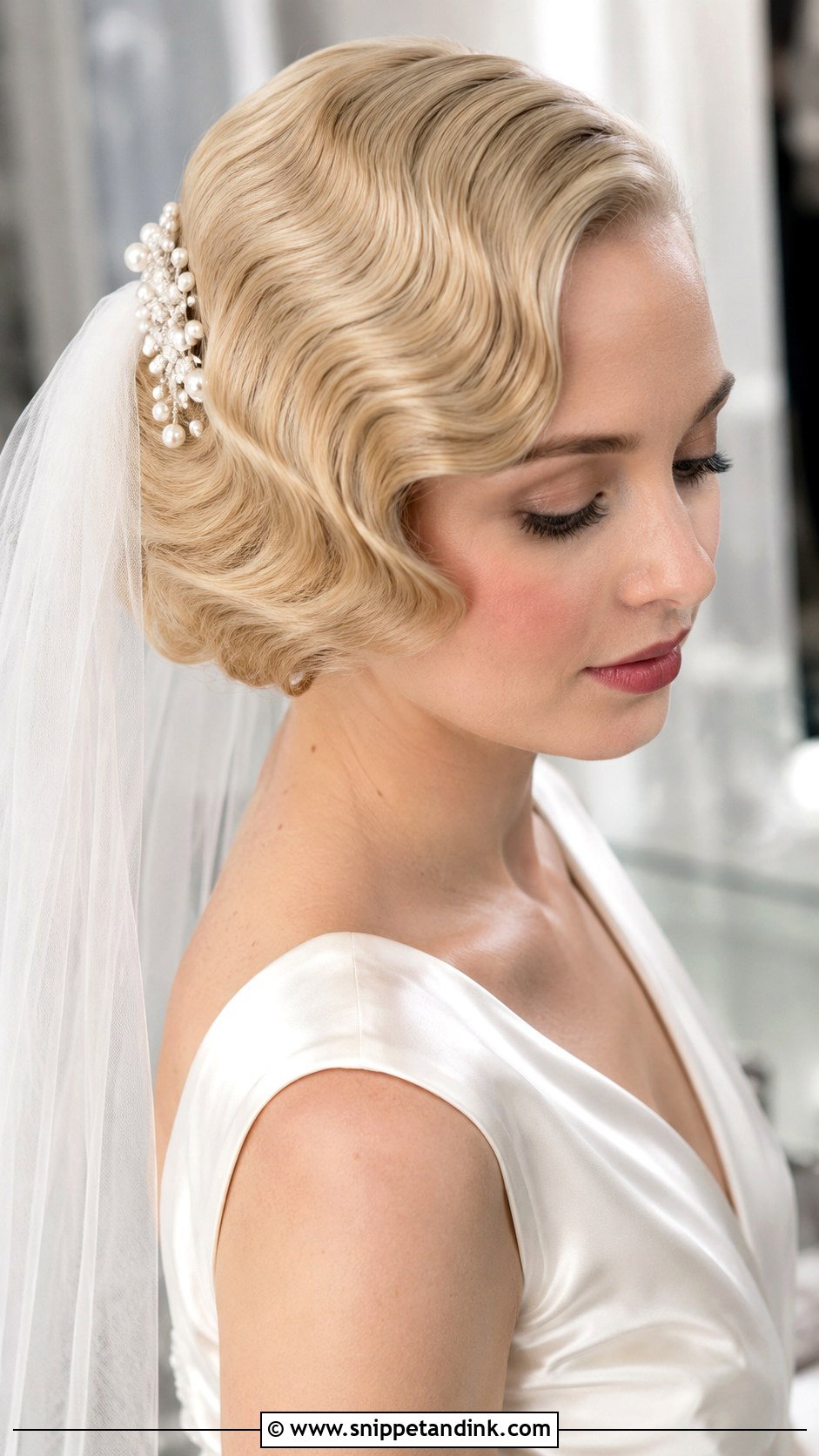
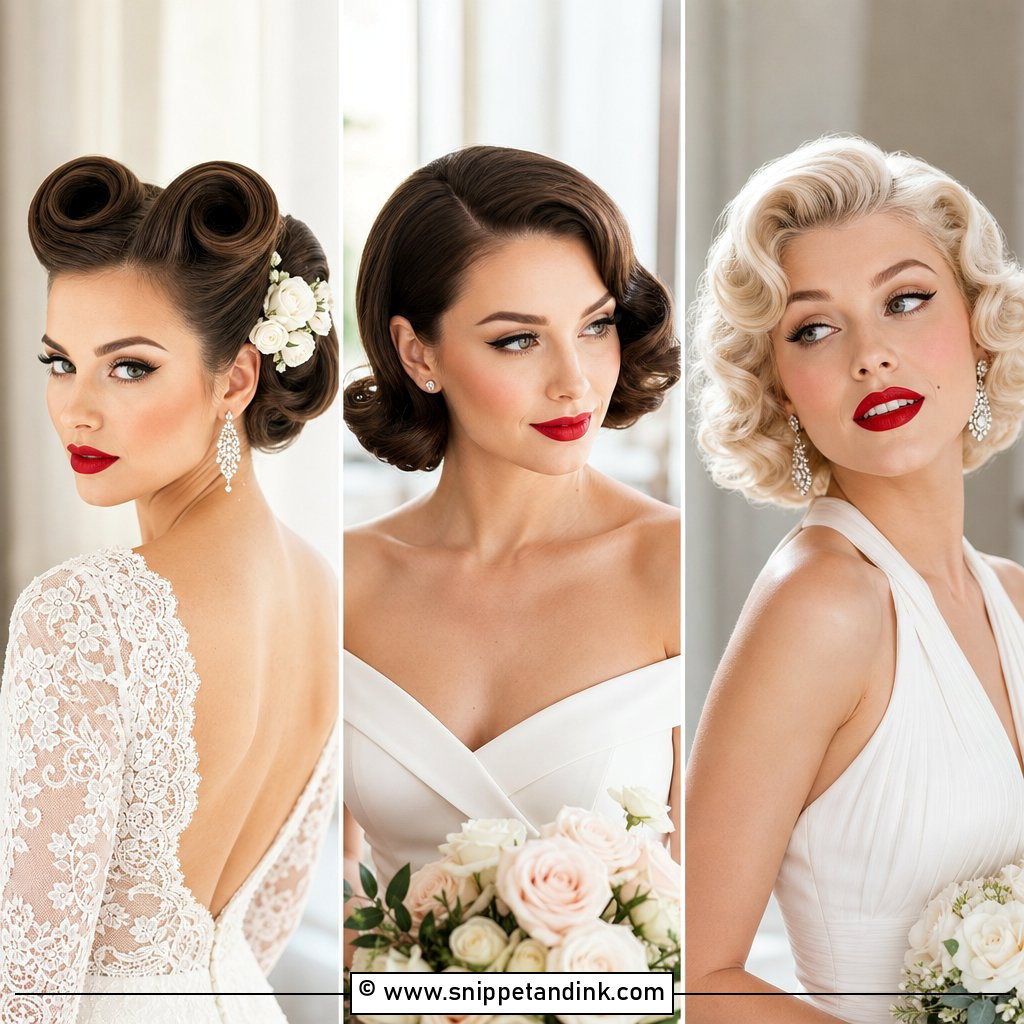
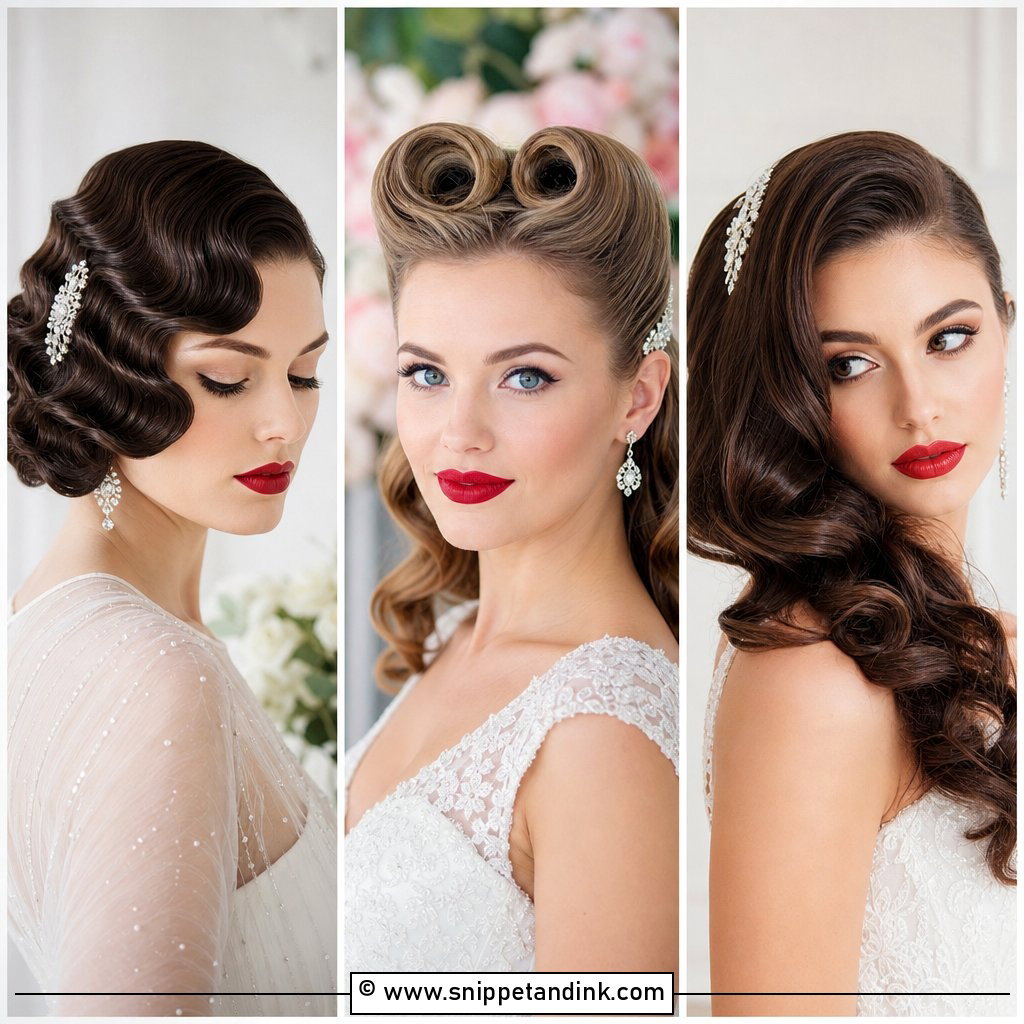
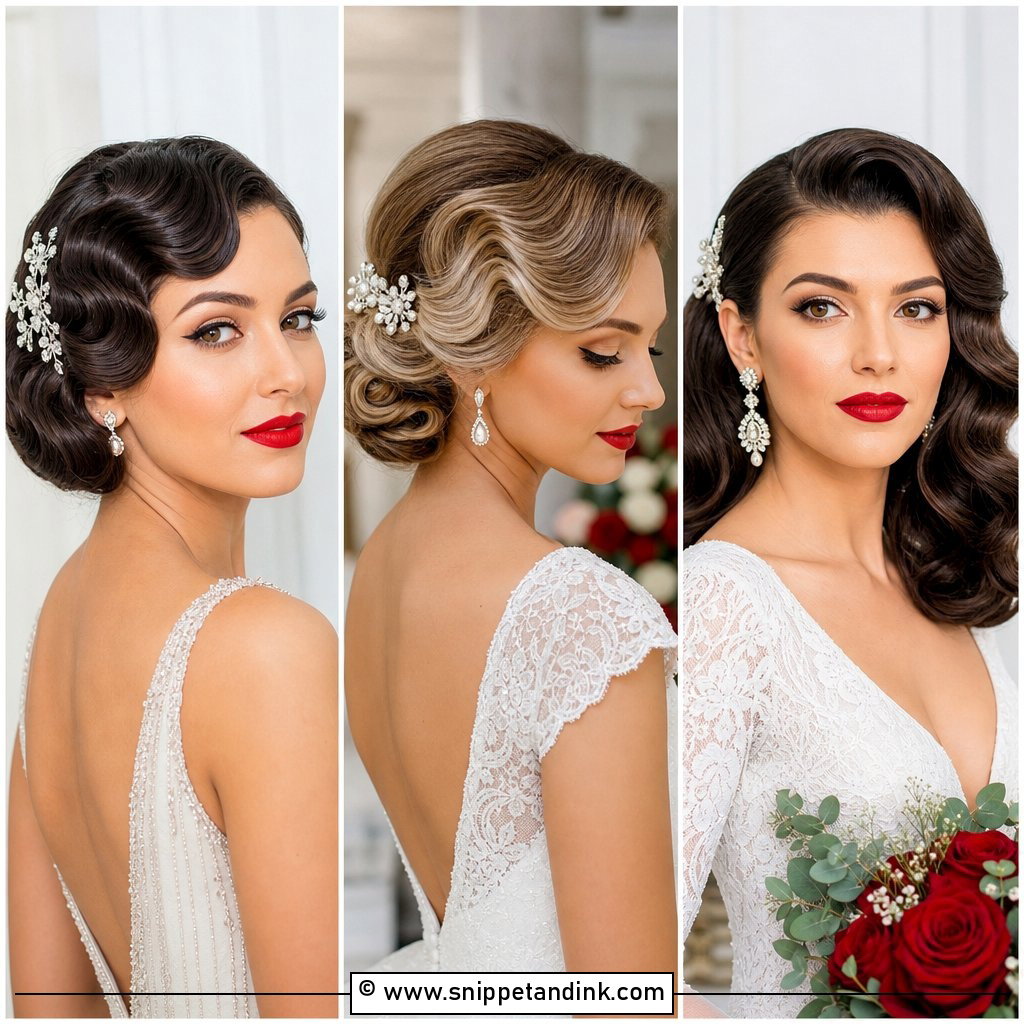
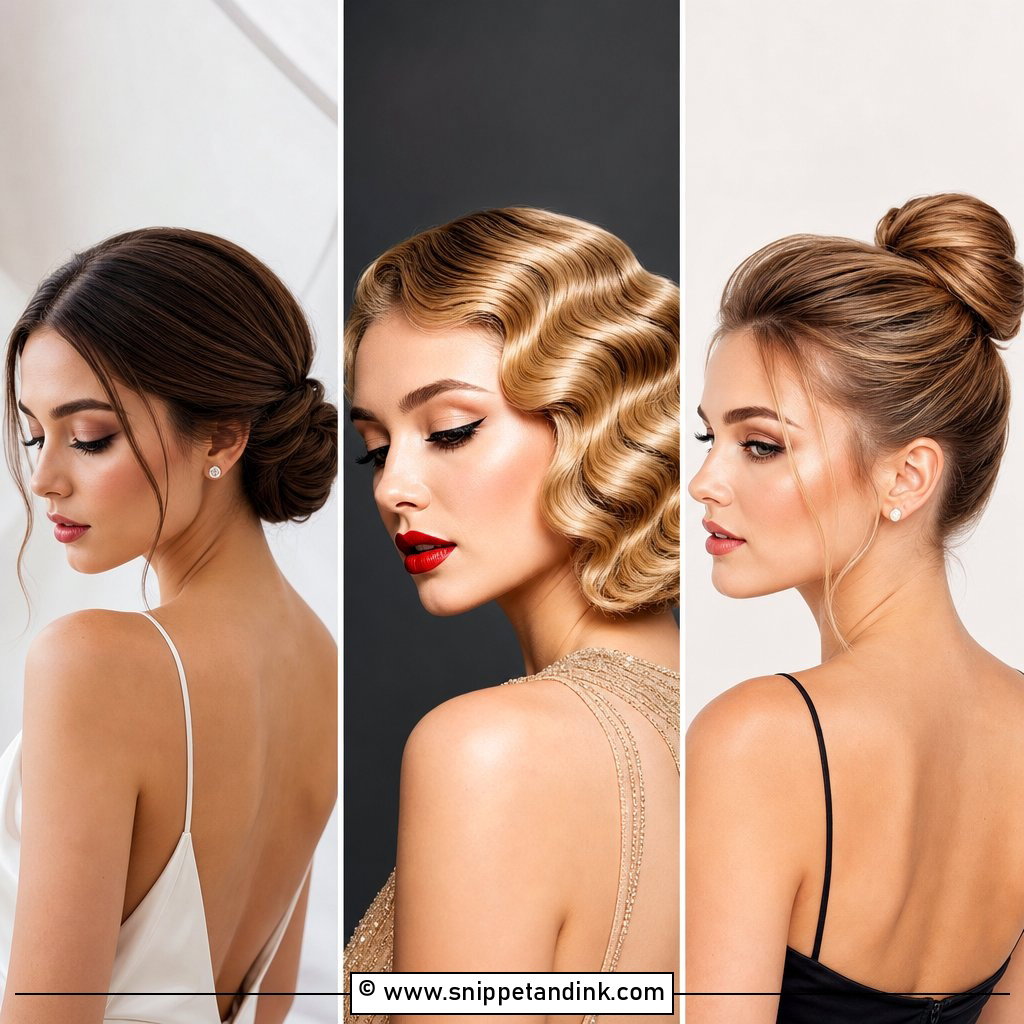
Finger waves are the cleanest route to a 1920s wedding look, and they sit happiest on a bob or on longer hair pinned under into a faux bob. The S-curves are pressed close to the head while the hair is wet with gel, then left to set completely before anything touches them. That drying time is the part people underestimate; I plan for it before makeup starts. A deep side part gives you a natural spot for a pearl clip or a birdcage veil. If your hair is very thick and coarse, expect the ridges to look softer than in old film stills.
2. Retro Bride Hollywood Waves
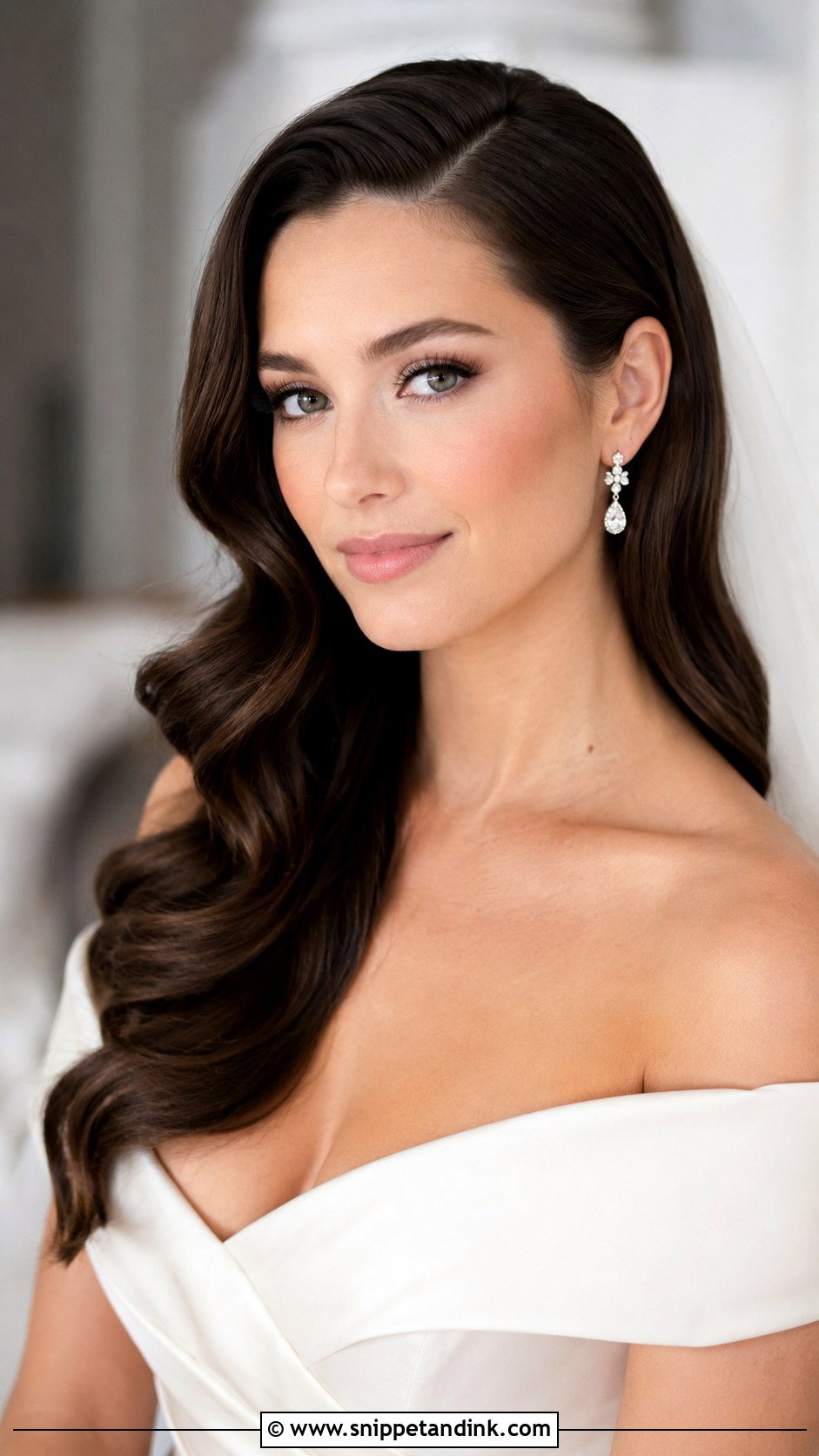
Hollywood waves are the vintage style I’d call the most forgiving. The hair is curled in one direction, pinned to cool, then brushed out until the curls fuse into one glossy wave pattern, so the brush-out decides whether it looks dated or current. Medium to long hair shows the shape best; on shoulder length the wave only completes one turn. Tuck one side behind the ear if you’re wearing big earrings. I build smooth lift at the root first, because flat roots make the whole wave look heavy by the first dance.
3. Retro Bride Victory Rolls
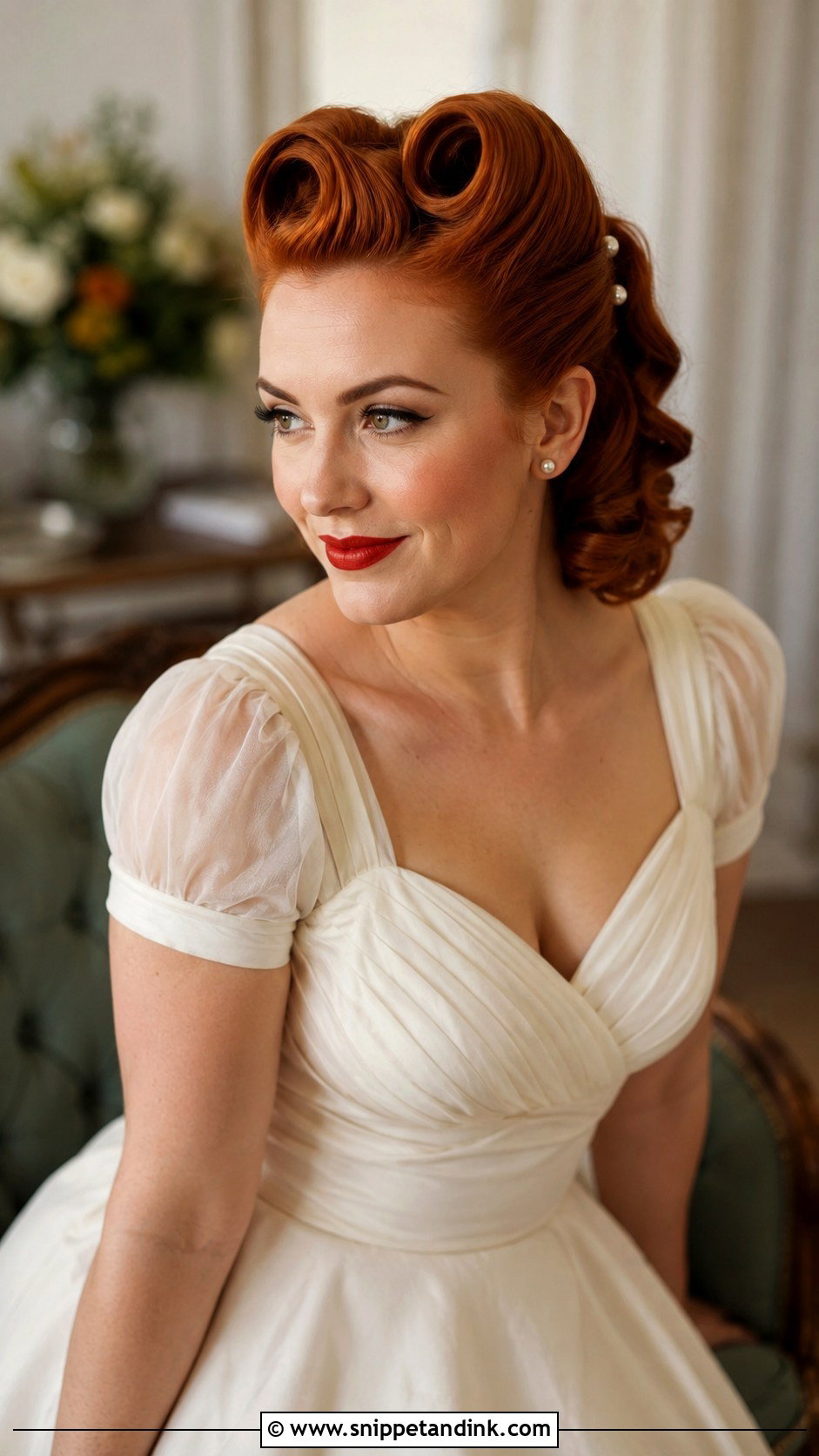
Victory rolls bring 1940s height and attitude, and they suit a tea-length dress and a red lip better than almost anything else. The front or crown sections are backcombed, rolled around the fingers and pinned from underneath, with the rest of the hair curled or tucked into a soft updo. The rolls catch light from the side, so I check them in profile at every trial. Hollow rolls collapse if the hair is too freshly washed and slippery. Second-day hair, a little dry texture spray and pins hidden inside the roll give you the hold you need.
4. Retro Bride Beehive Updo
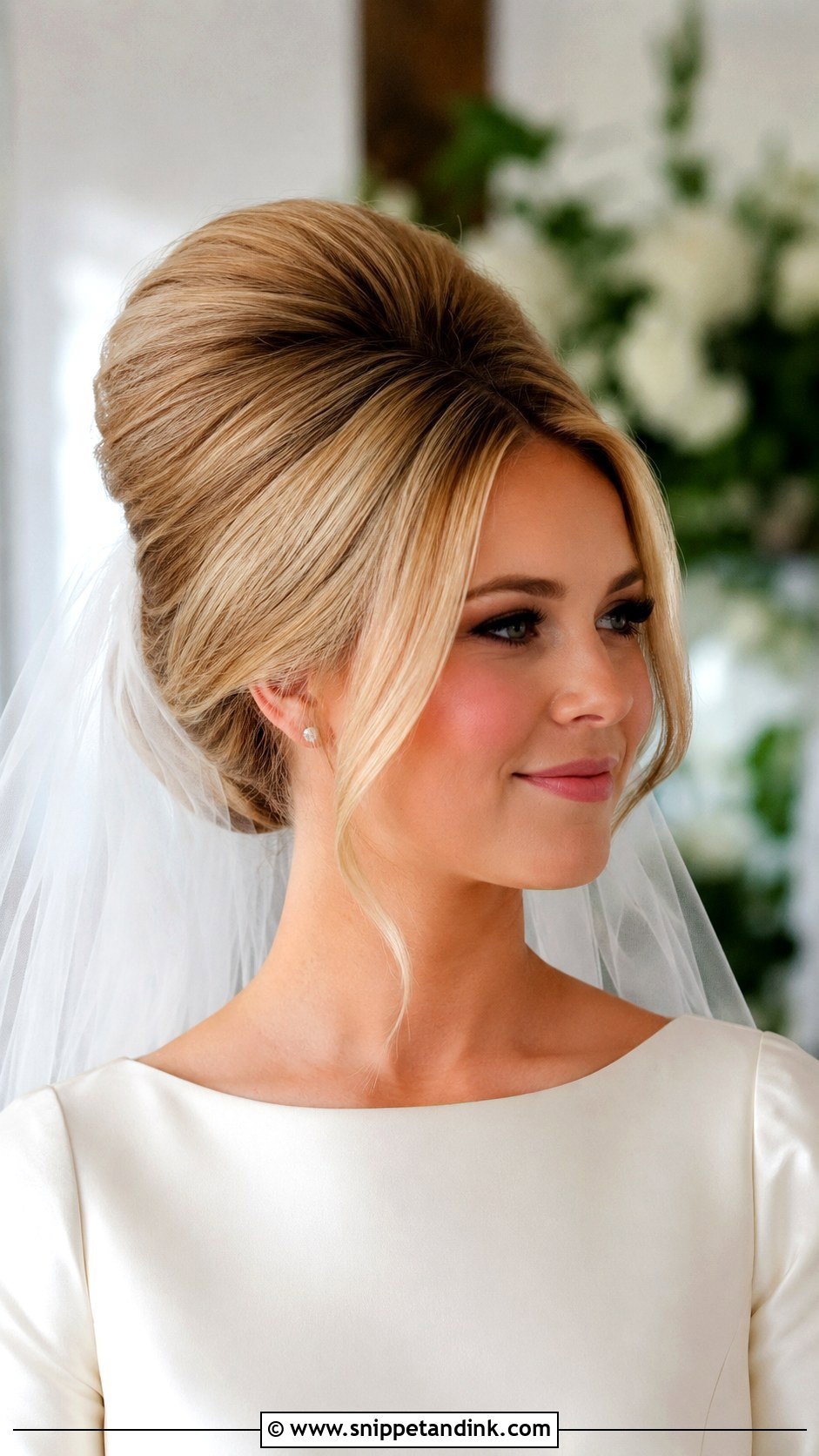
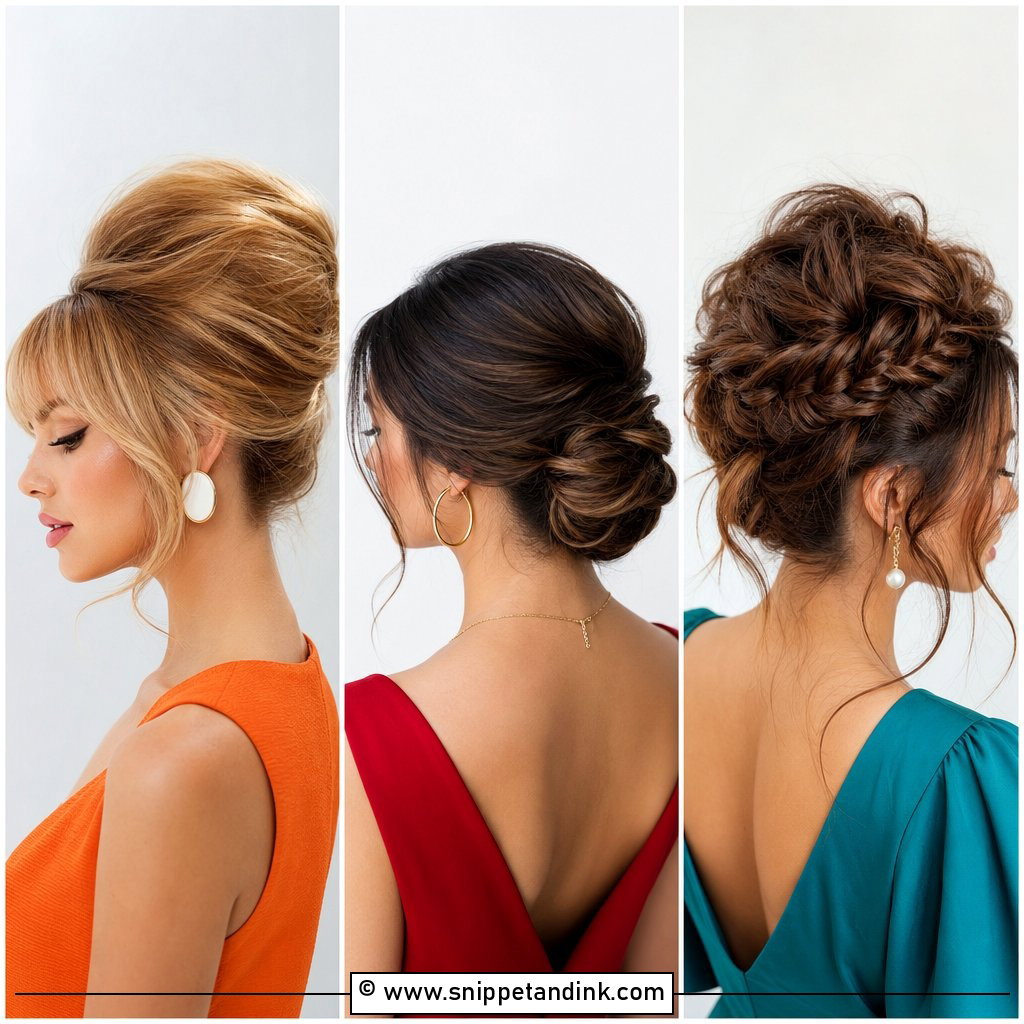
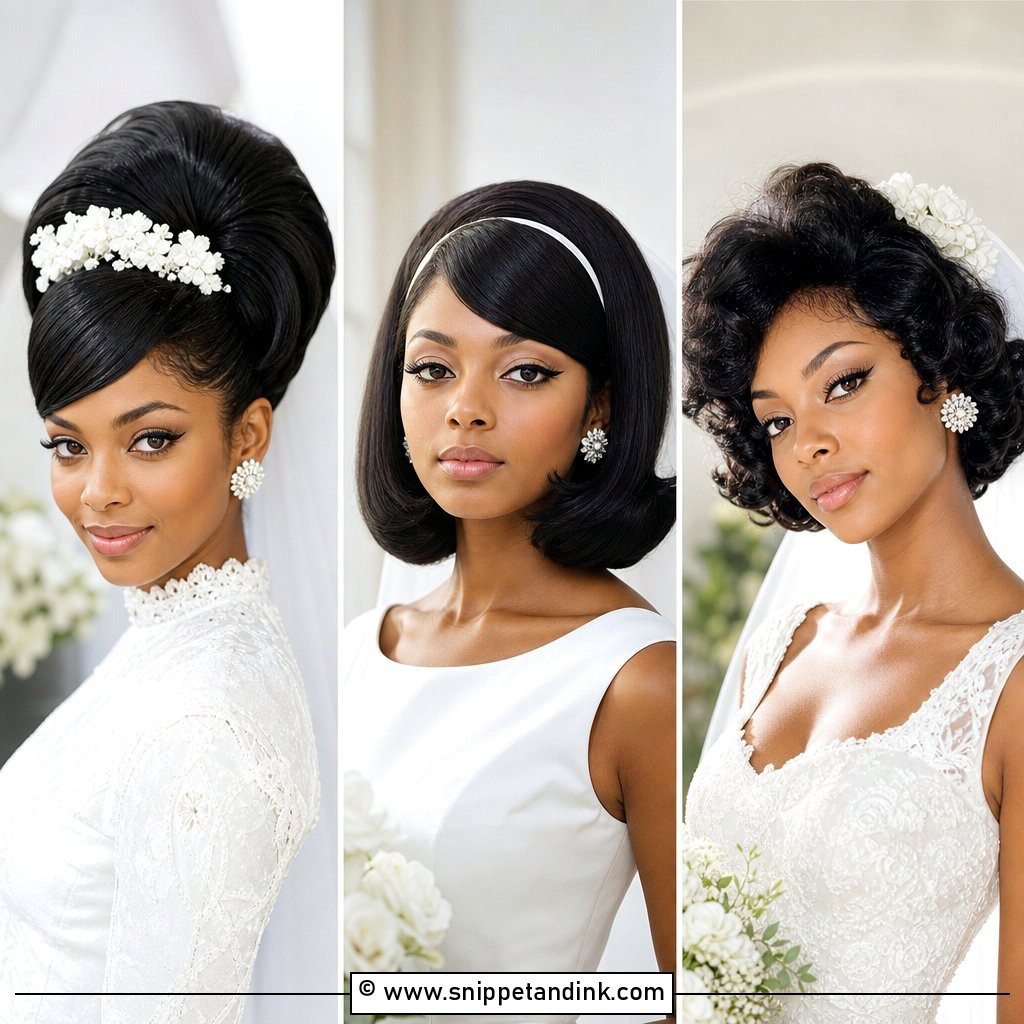
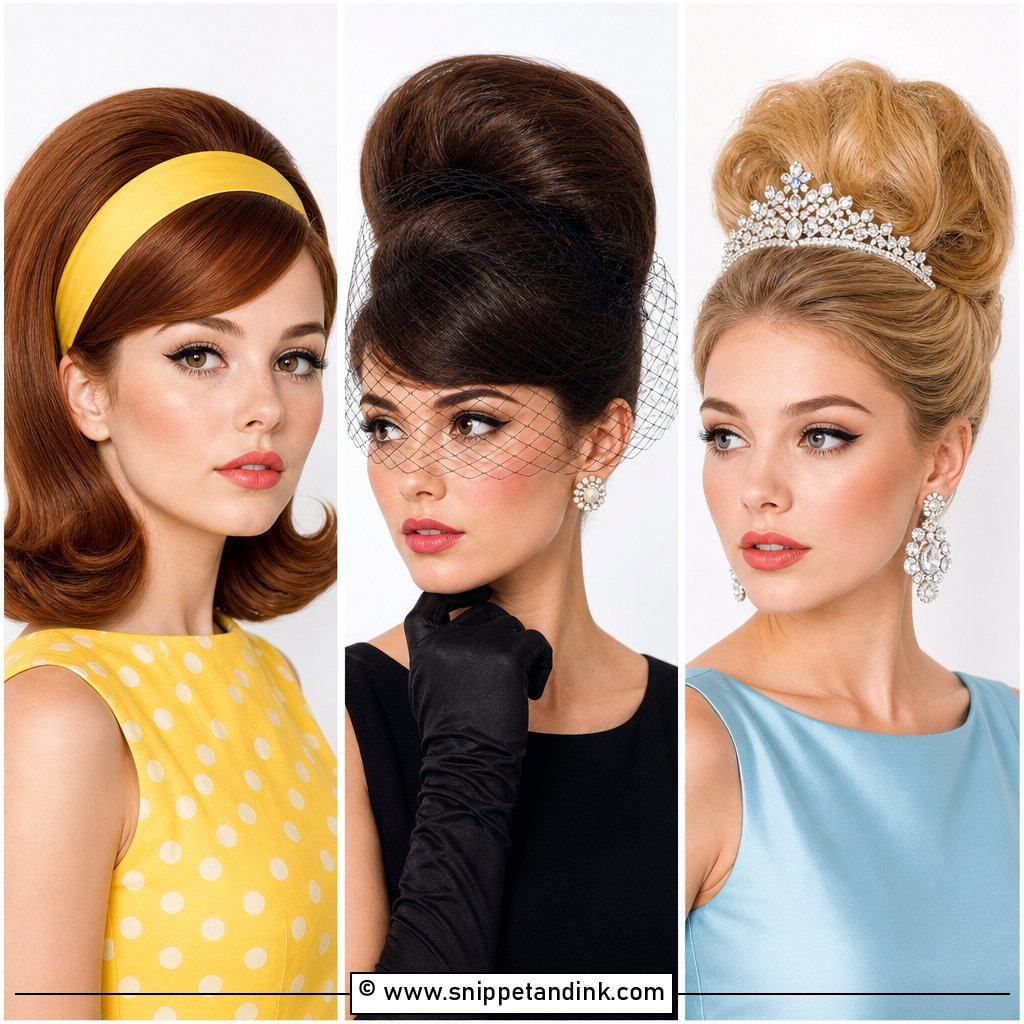
The beehive is pure 1960s elegance, all crown height and a smooth outer shell. I backcomb in small sections close to the root and then smooth only the top layer, so the volume is supported from inside rather than piled on. It is heavier than it looks, which matters if you get headaches from tight styles. Veils need to go in behind the height, not on top of it. If your hair is fine, a hidden padding piece will hold the shape far better than extra teasing.
5. Retro Bride Gibson Roll
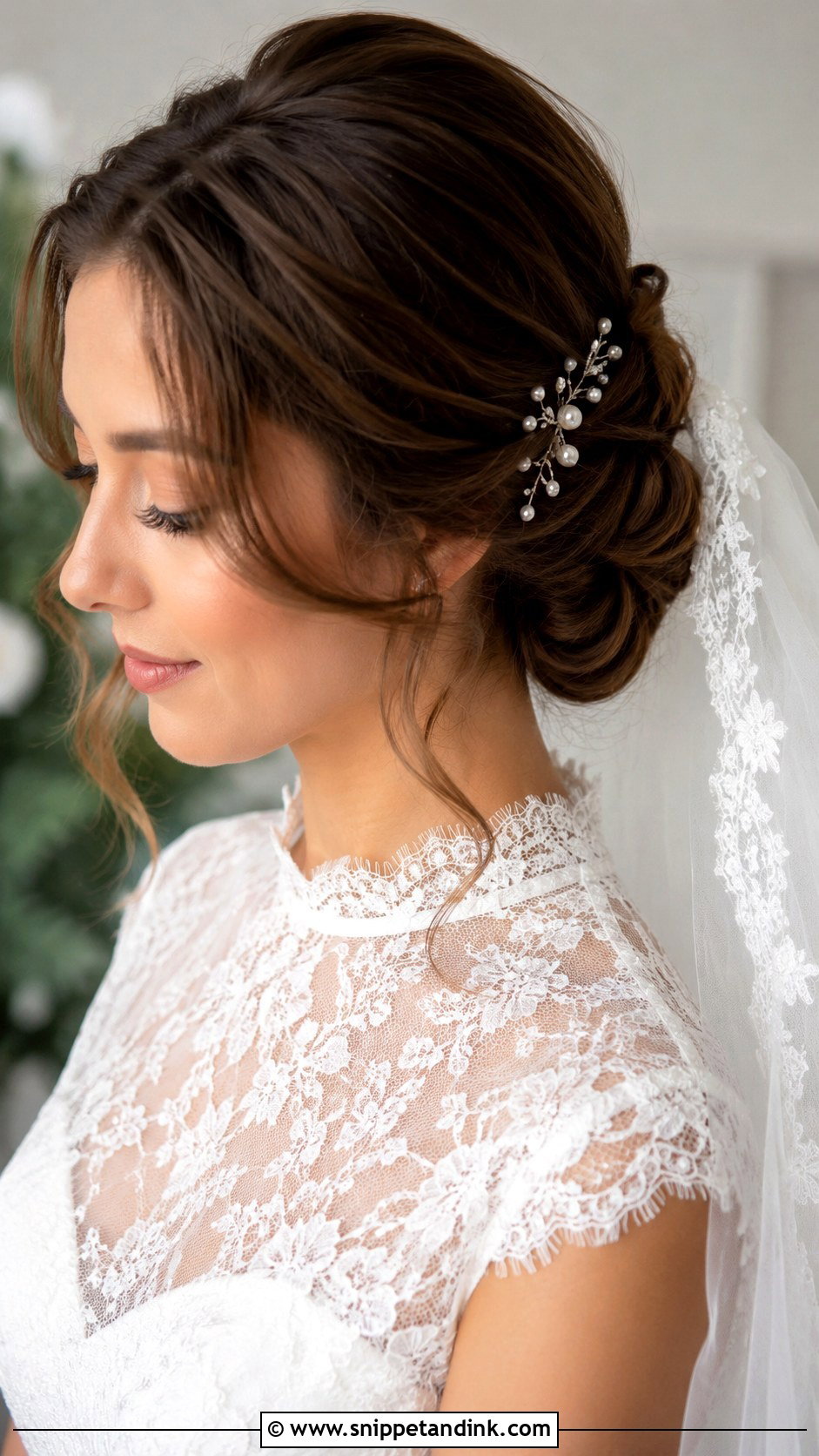
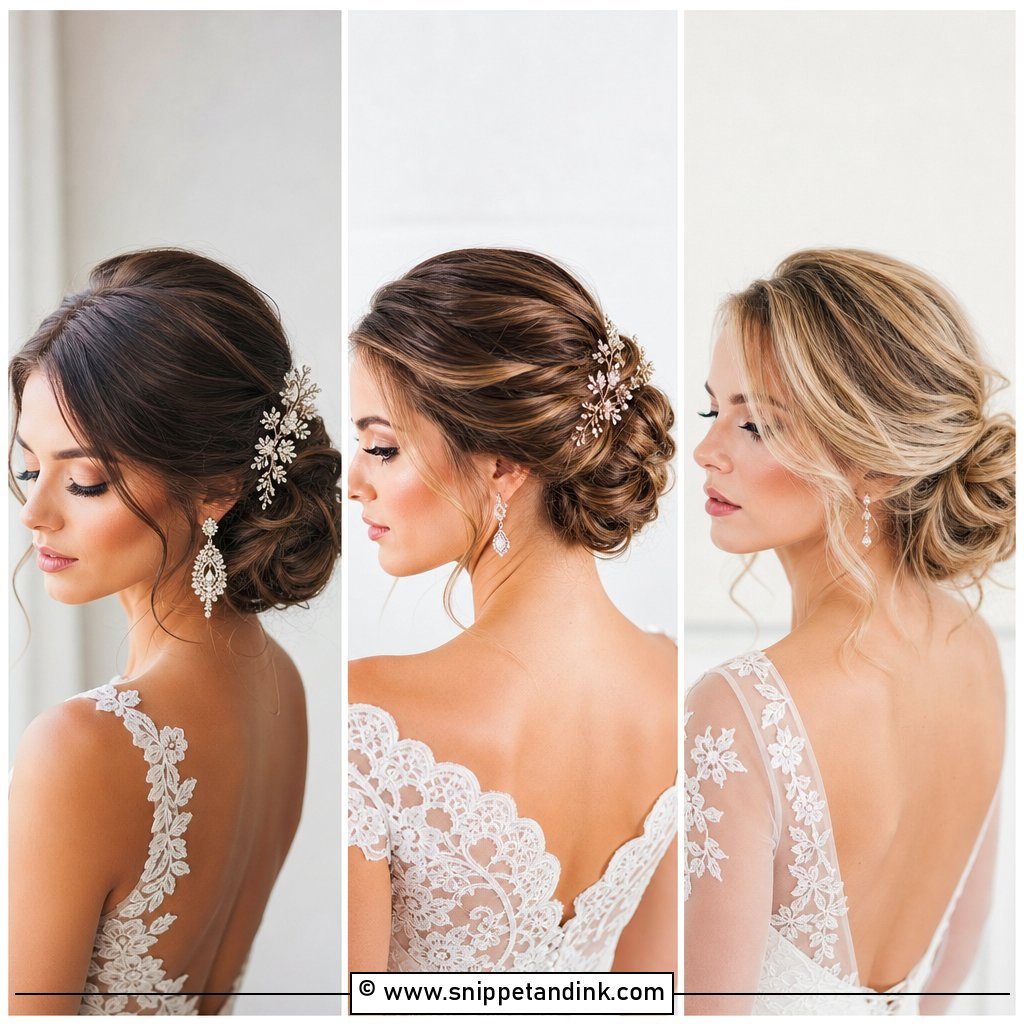
A Gibson roll is the quietest style on this list. The hair is rolled toward the nape and tucked around itself, giving that soft Edwardian shape that sits so well with lace and garden venues. It needs some length, roughly to the shoulders or longer, or the roll looks thin. I leave a few pieces loose at the temples so it doesn’t read as severe. Pearl pins tucked along the roll are enough decoration; anything bulky fights the low profile.
6. Retro Bride Pin Curl Updo
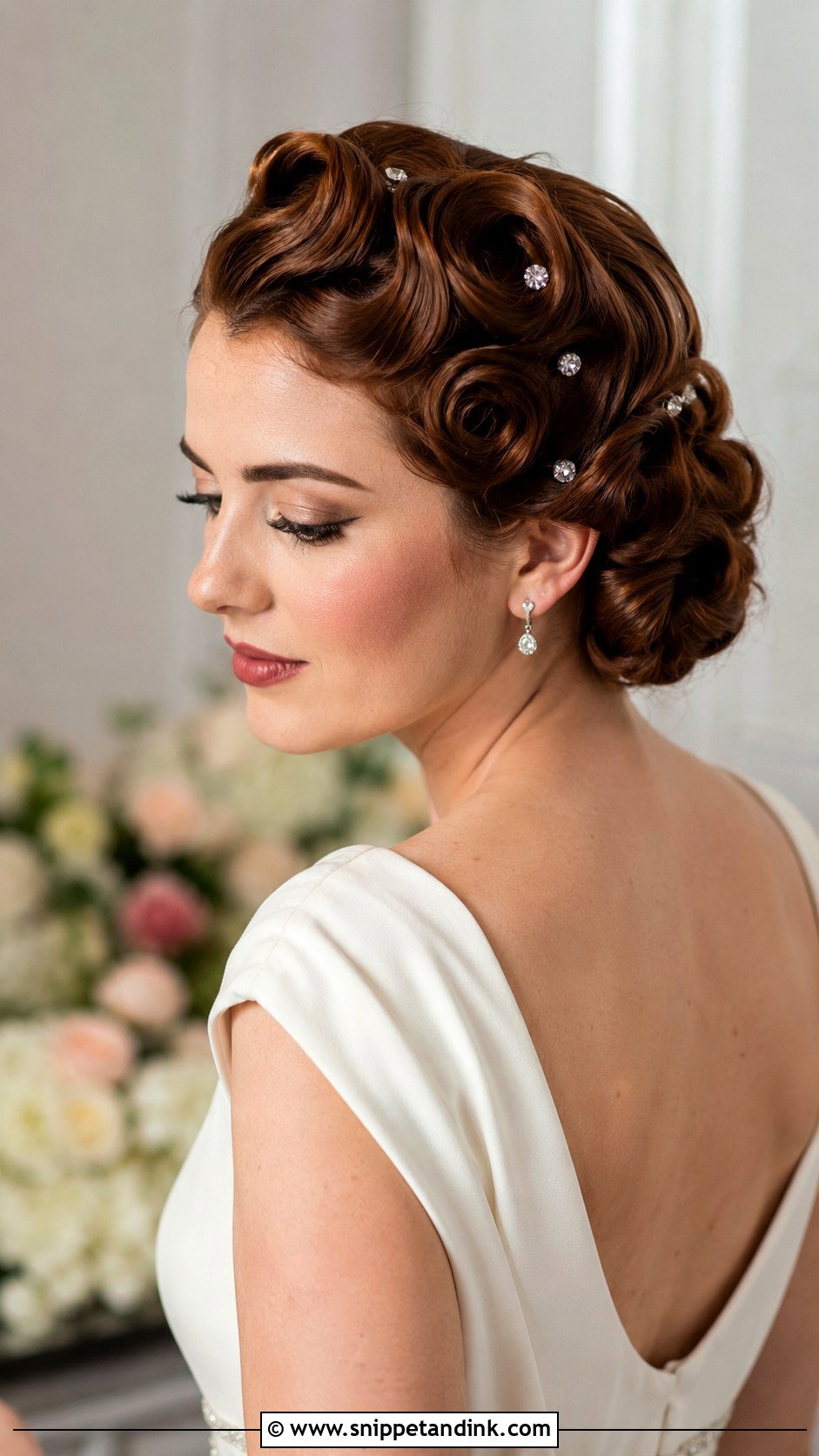
Pin curls are where retro hair started. Each small section is wound flat into a coil and clipped to set, and the arrangement of those coils decides the final shape. For a bride I usually group them into a low cluster or a side arrangement. They are a smart option on shorter hair because the curls create more visual volume than the length really has. The catch is time: a proper set takes a while, so this is not a look to squeeze into a tight morning.
7. Retro Bride French Twist
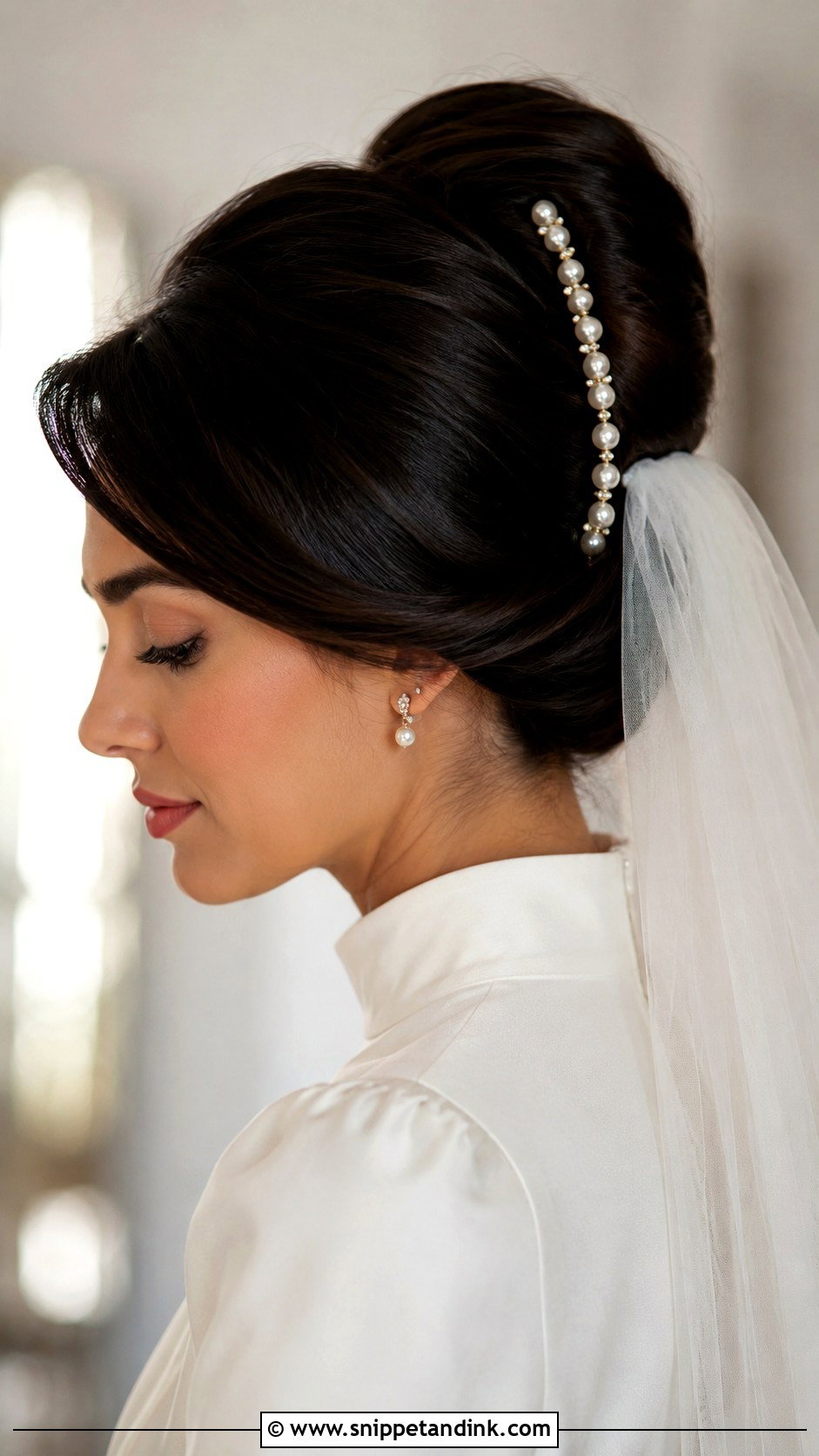
Not every vintage bride wants drama, and the French twist is my answer for those who don’t. The hair is gathered vertically up the back and folded into a long seam, which lengthens the neck and pairs well with high necklines and off-the-shoulder gowns. I add a little lift at the crown and sweep the front to one side to make it read as retro rather than office-smart. The seam is where pins hide, so it holds well through hugs. Very layered hair can poke out along the fold; a smoothing cream before twisting helps.
8. Retro Bride Bouffant Half Up Hair
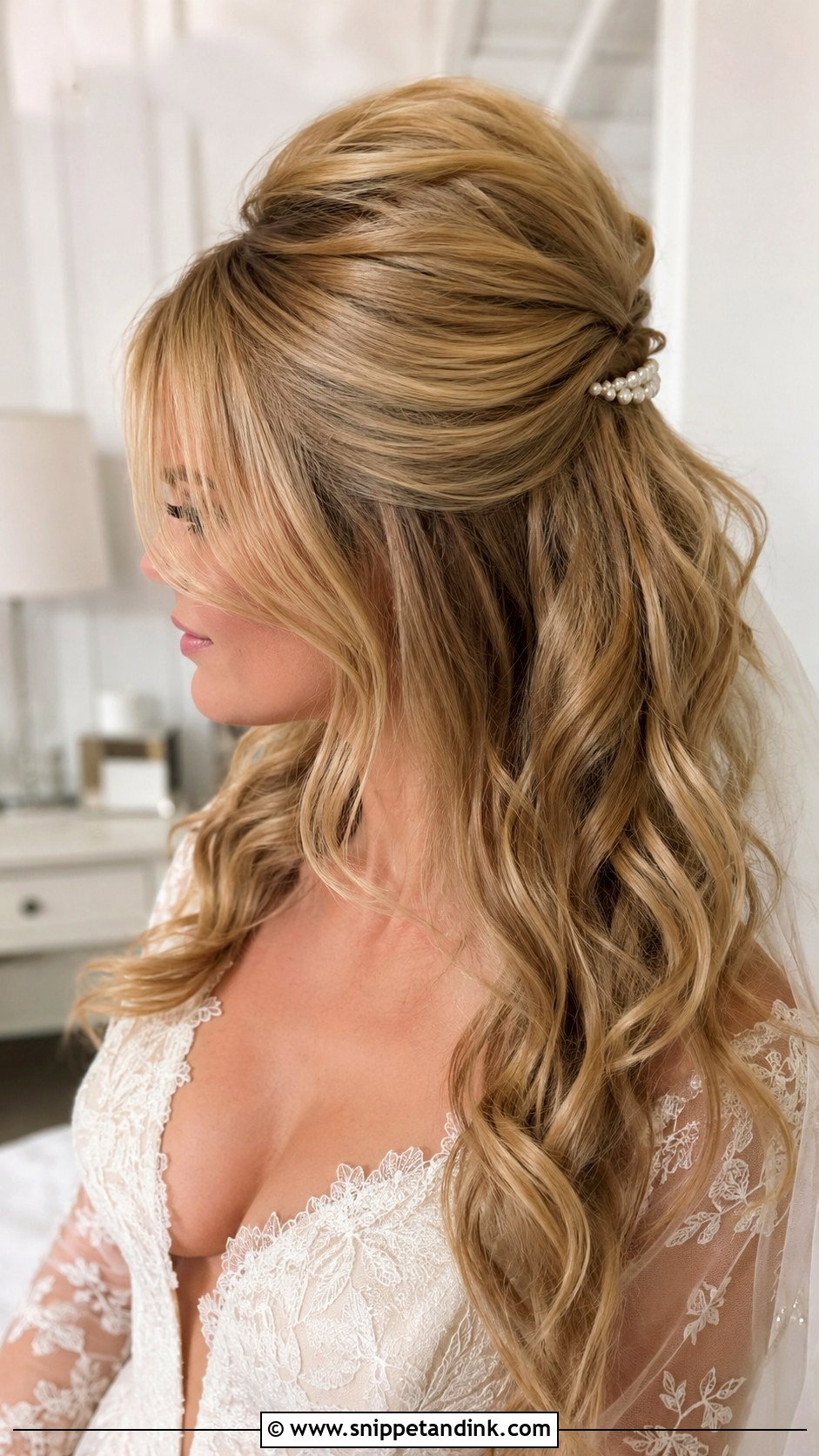
Bouffant half-up hair gives you 1960s lift at the crown with curls still moving below. The top section is teased at the root, smoothed over and pinned back, while the lengths are set into waves. It is softer than a full updo and kinder to curtain bangs and face-framing layers. The usual problem is a fuzzy crown, so I smooth the outer layer with a soft bristle brush after teasing. A ribbon or pearl barrette at the pin point hides the grips neatly.
9. Retro Bride Side Swept Curls
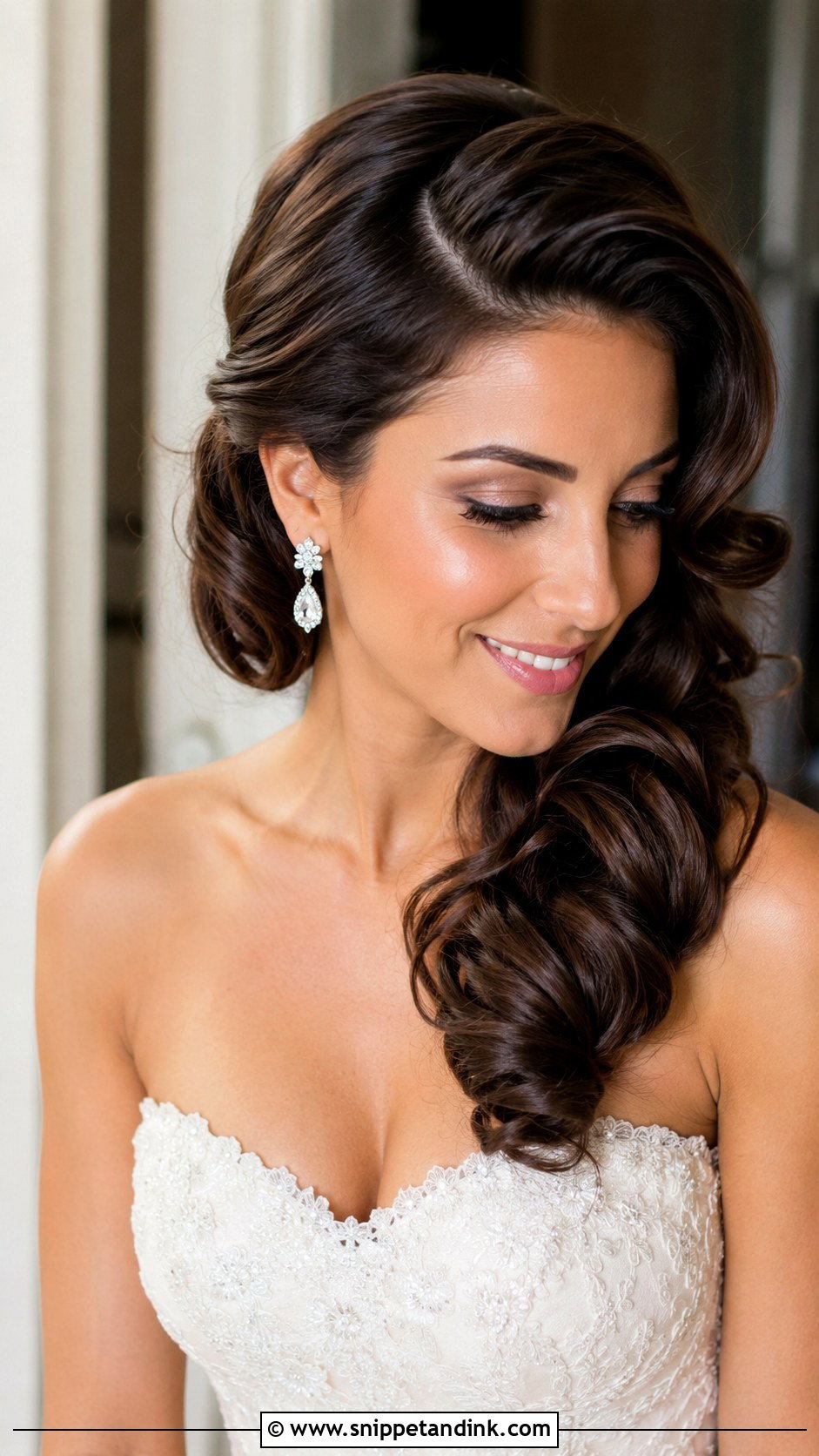
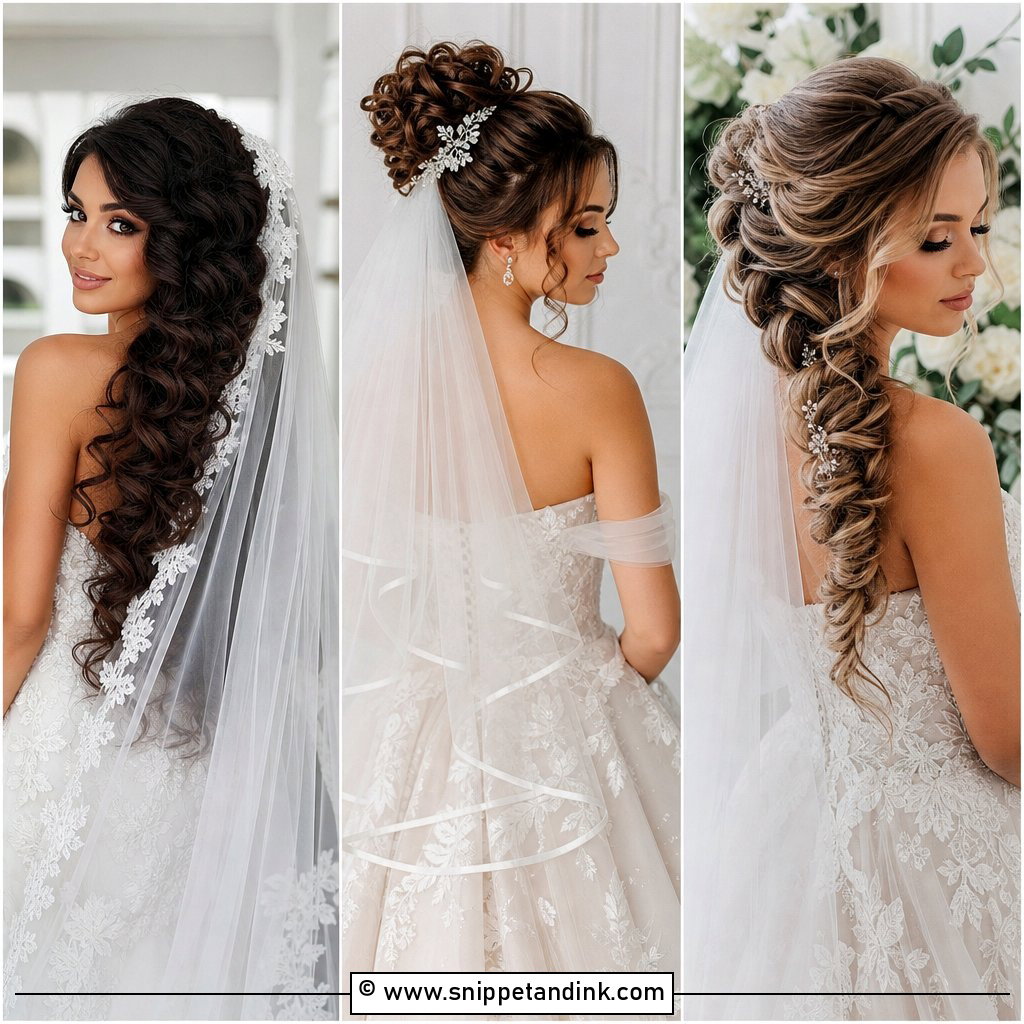
Side-swept curls gather everything over one shoulder, which is ideal with a strapless or one-shoulder neckline and lets earrings show on the open side. You can brush the curls into a smooth Old Hollywood wave or keep them defined for a 1950s feel. The secret is the hidden side: I anchor it with crossed grips behind the ear so the weight doesn’t drag the style back to centre by evening. Check where the photographer will stand for the ceremony. The open side should face the guests.
10. Retro Bride Faux Bob
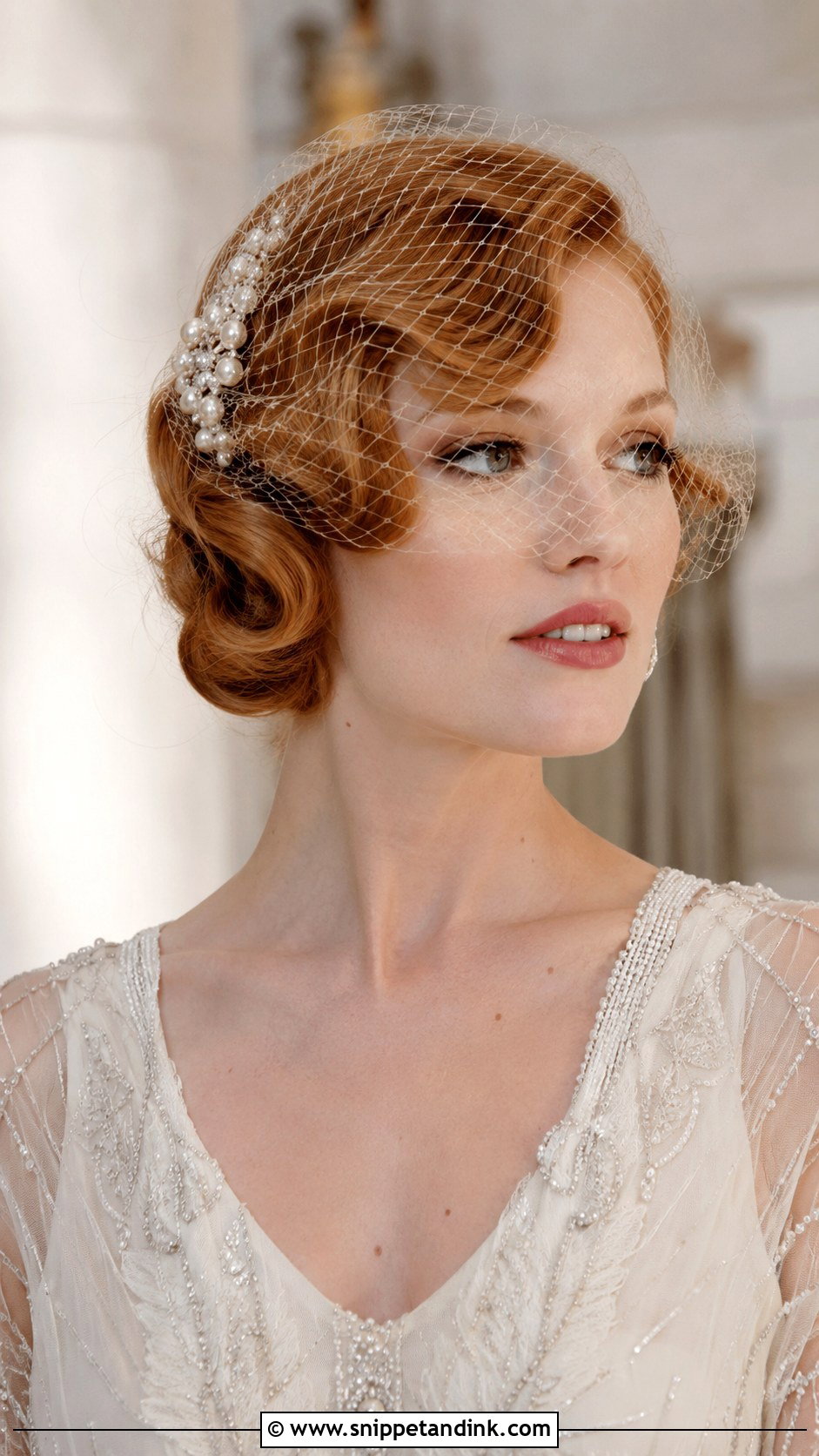
A retro bride faux bob gives you a 1920s or Gatsby silhouette without cutting a single inch. The lengths are curled, rolled under at the nape and pinned so the hem sits around the jaw or just above the shoulder. Very long, thick hair makes a bulky roll at the back, so I sometimes thin it out by braiding part of the length flat first. Finger waves at the front and a birdcage veil finish it. When the night ends, the pins come out and your length is all still there.
11. Retro Bride Low Chignon
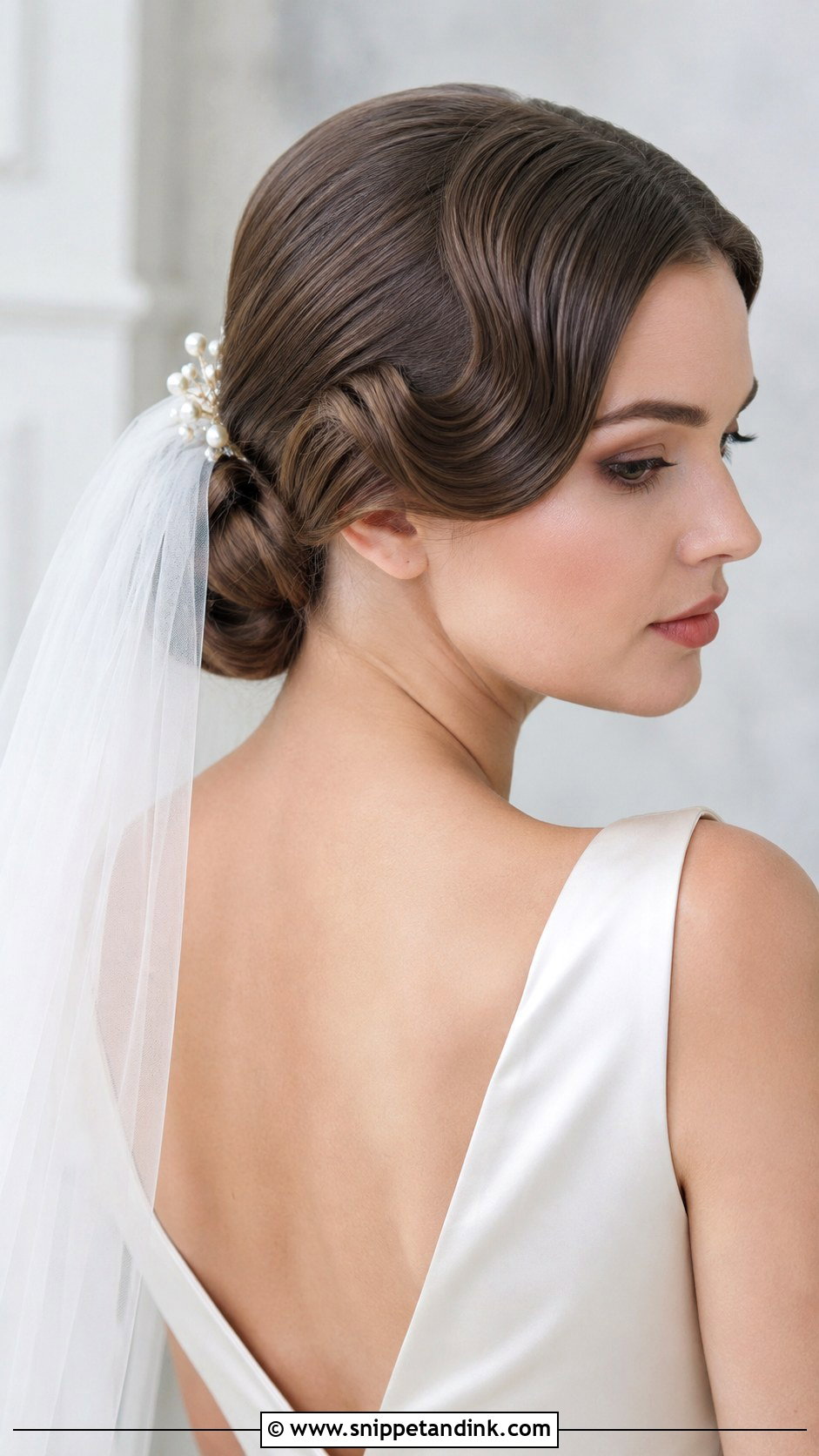
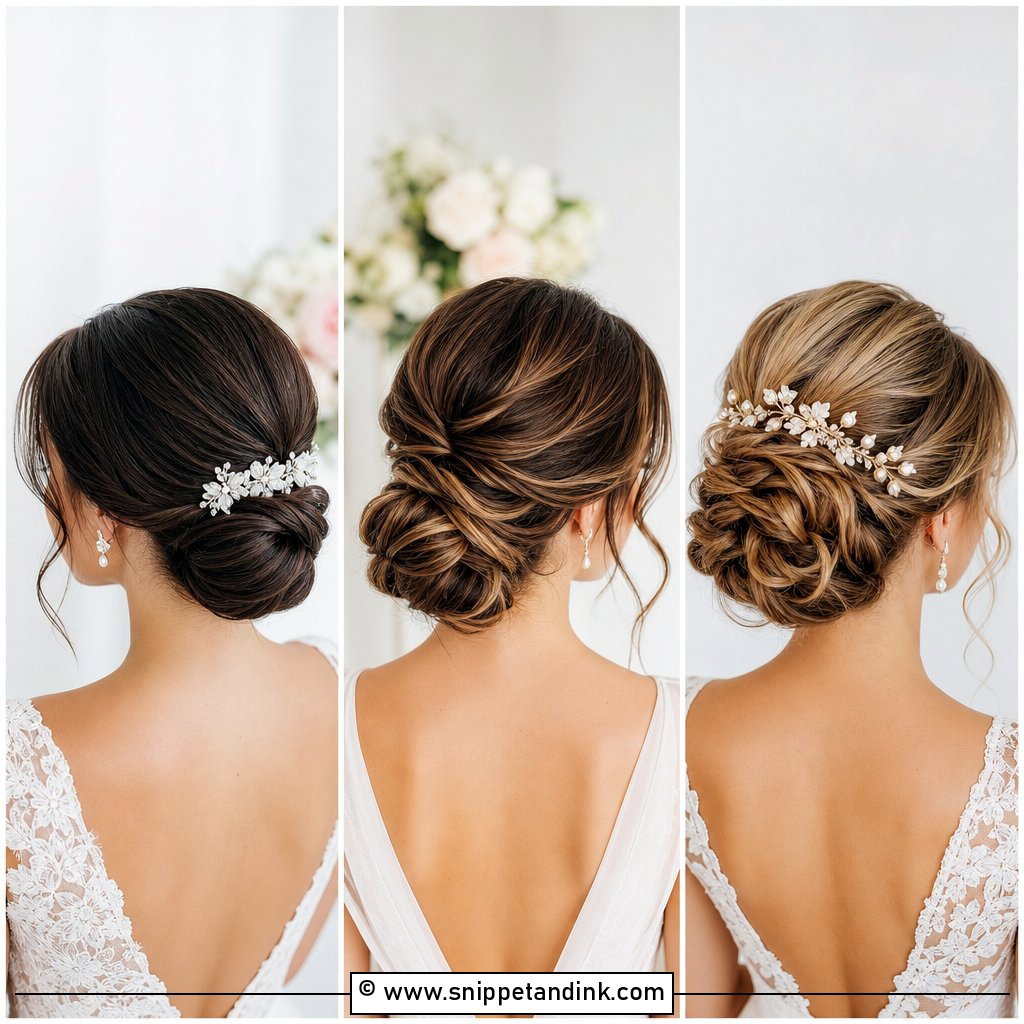
If you’re unsure which decade you belong to, the low chignon is the safest place to start. Gather the hair at the nape, shape it into a smooth bun or a tucked curl, then add the retro cue at the front: a side part, a brushed wave or a little crown height. The bun is a solid anchor for a veil comb and it leaves a detailed neckline uncovered. Sleek or softened with tendrils, it suits nearly every gown I see.
12. Retro Bride Marcel Waves
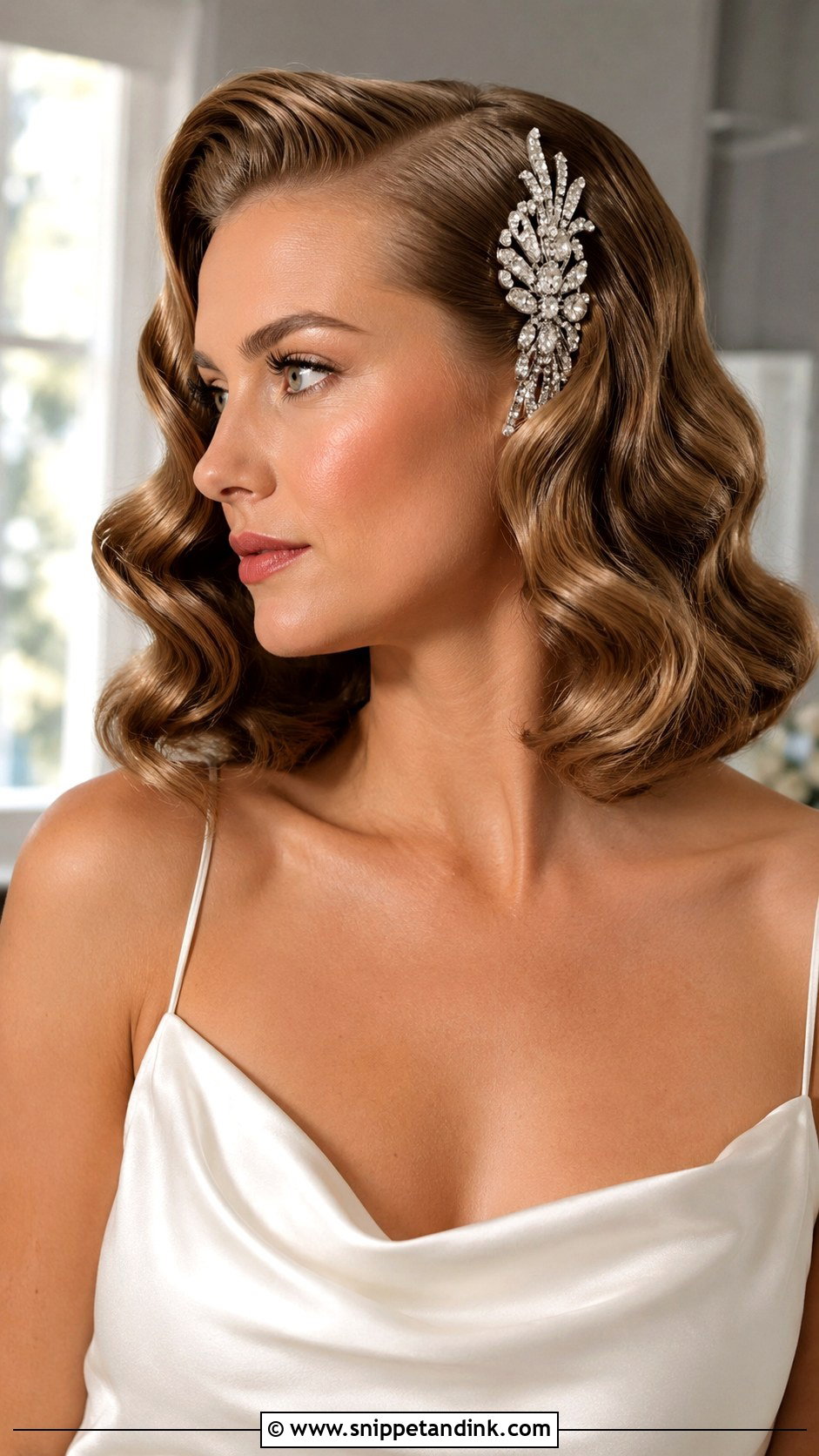
Marcel waves are tighter and more regular than Hollywood waves, with sharp ridges and real shine. Originally they were made with heated irons, and today I still set them with a narrow iron, section by section, rather than brushing them out loose. That precision is why they hold up in close-ups. They can be worn down, tucked behind one ear or folded into a low updo for more security. I would not try these at home the morning of the wedding; the pattern needs practice and steady heat.
13. Retro Bride Rolled Bangs Updo
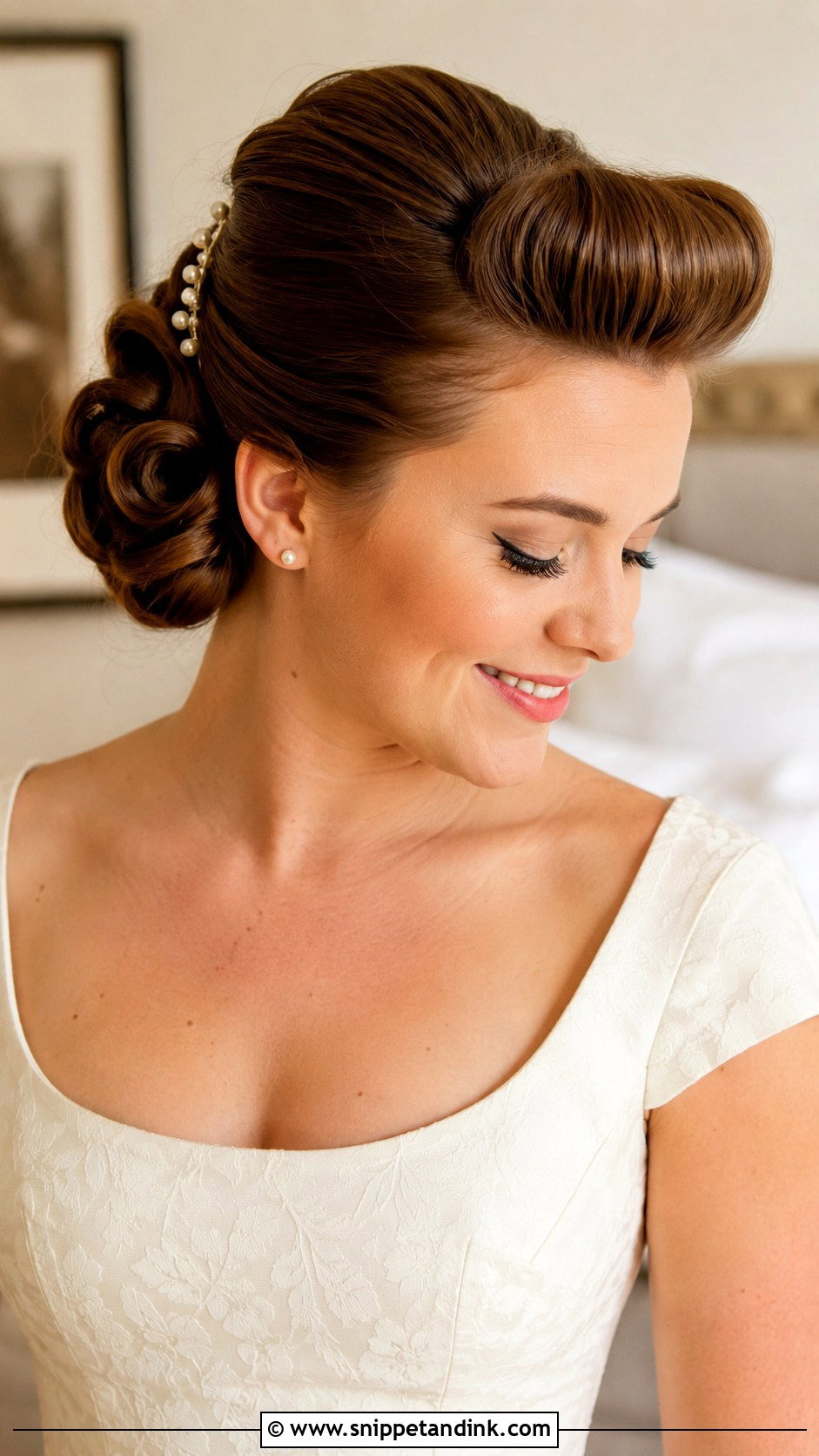
A rolled bang updo takes the front section and rolls it into a smooth bumper, with the rest pinned into curls or a tucked bun. It’s playful, very 1940s and 1950s, and it keeps the neck clear. Because the front roll is such a strong shape, I keep makeup and earrings quieter so the face doesn’t feel crowded. The roll should feel secure but never tight enough to pull at the hairline. Expect a little tenderness if you wear it for twelve hours.
14. Retro Bride 70s Waves
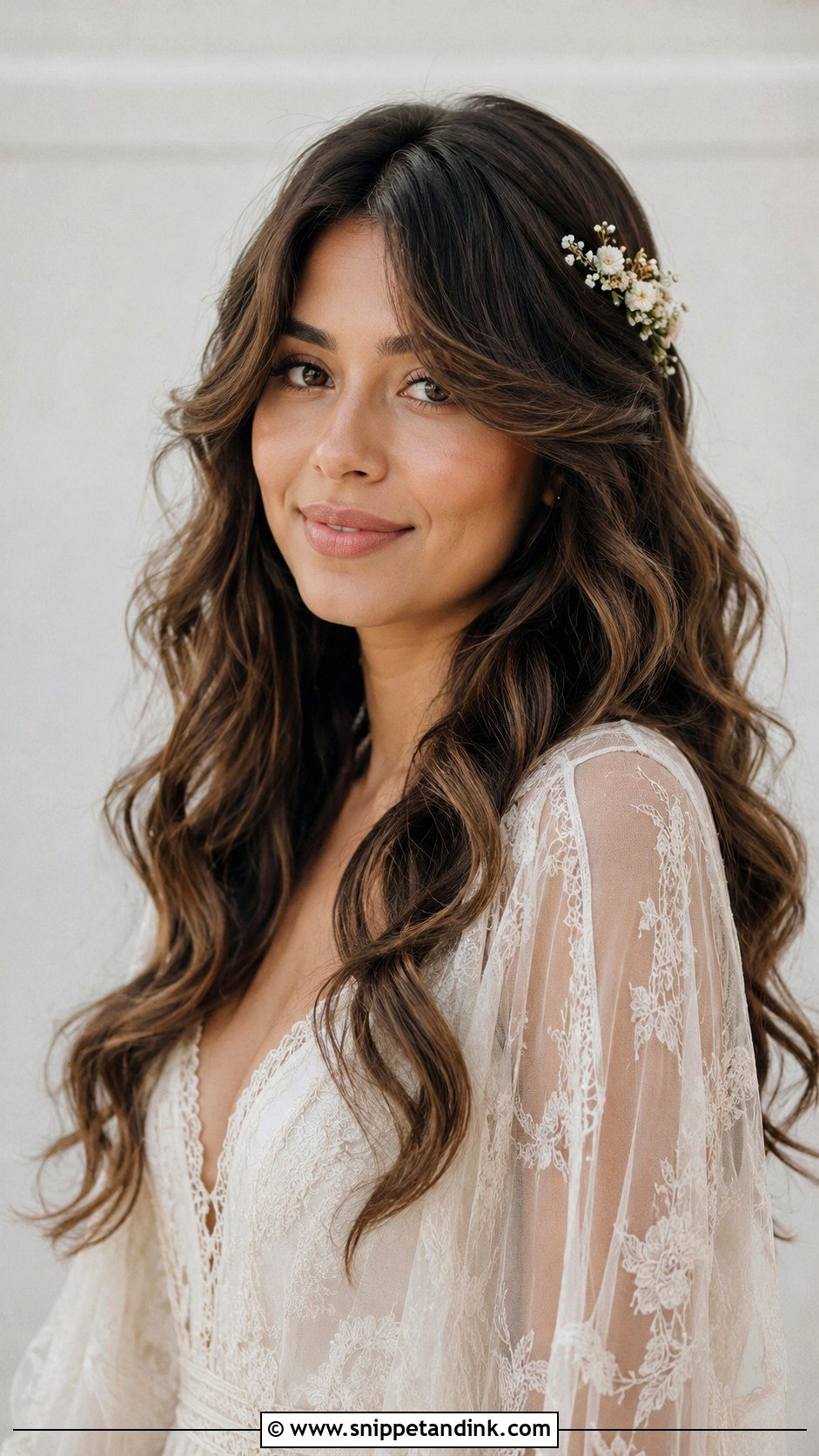
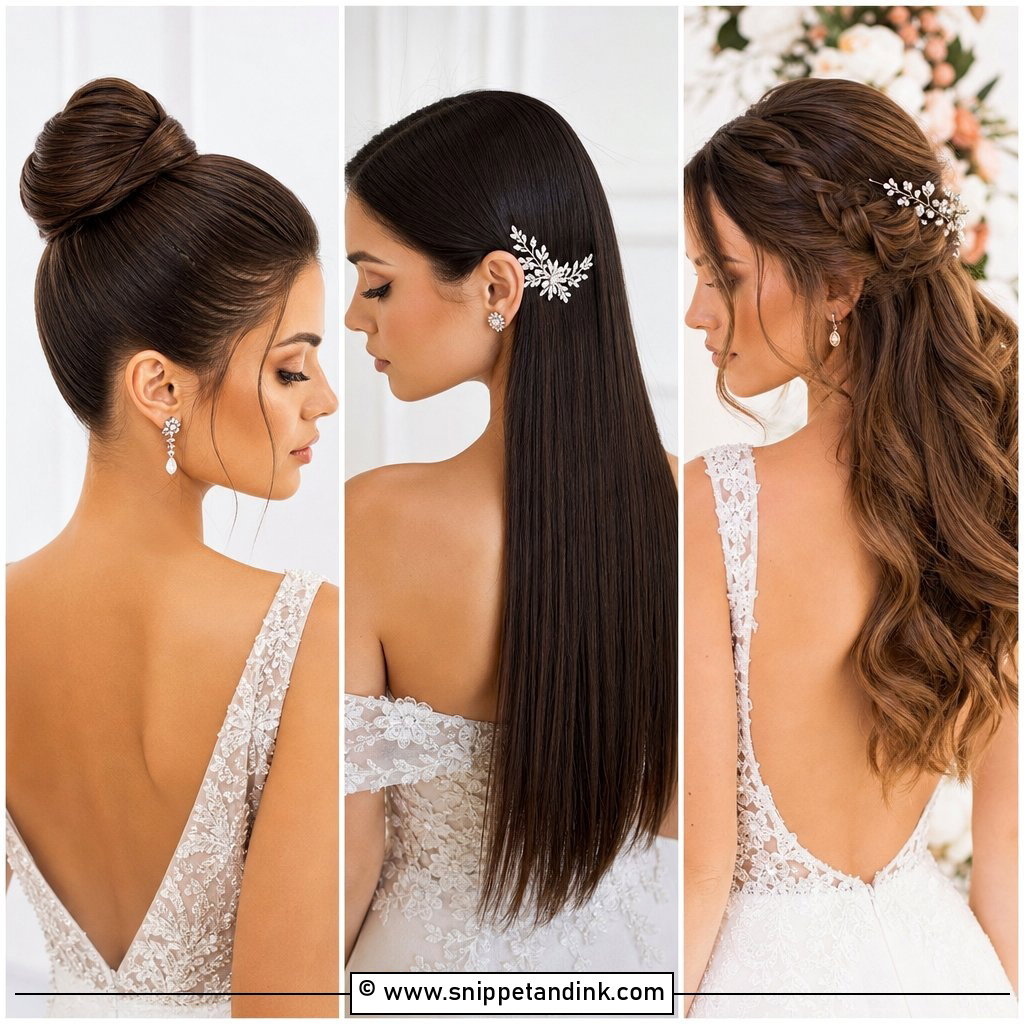
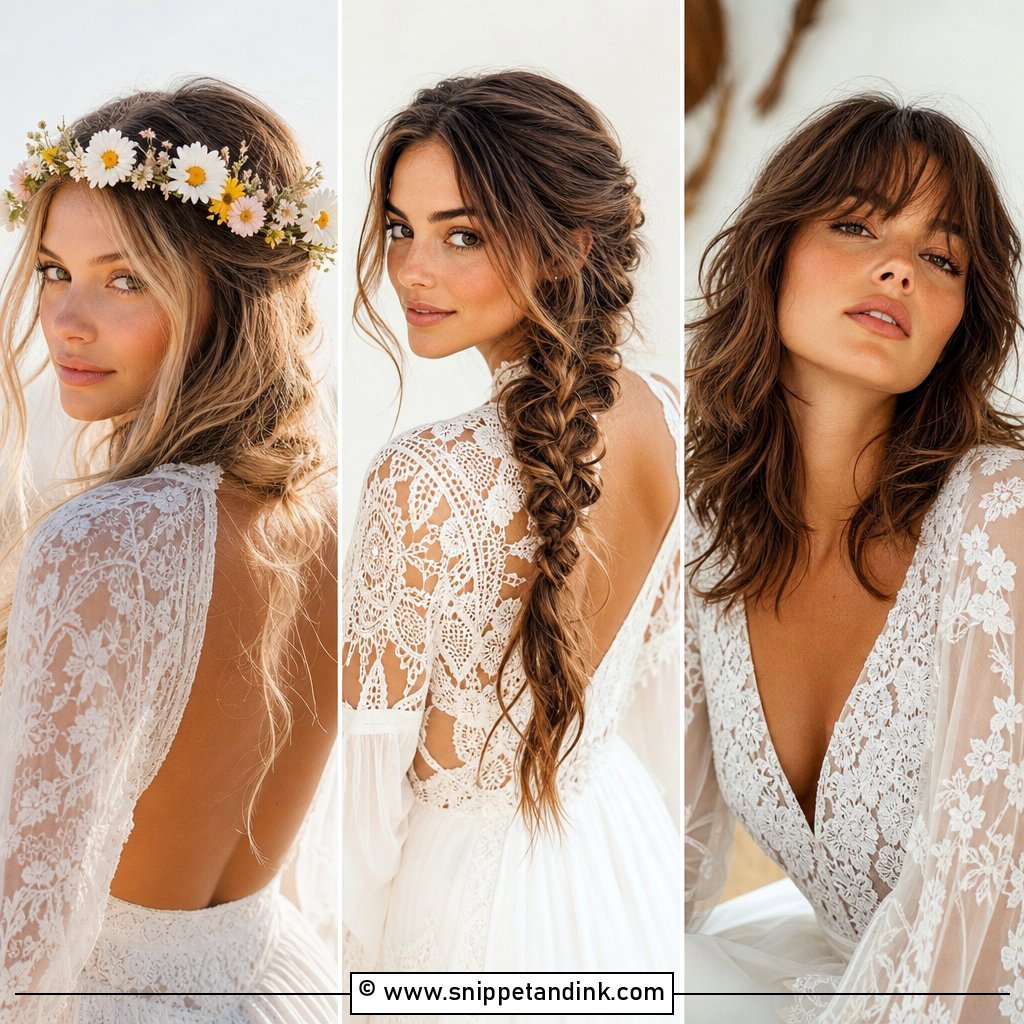
Retro bride 70s waves are the opposite of sculpted: airy, touchable, with a centre part or curtain fringe and movement that falls naturally. They suit boho gowns, sleeves, lace and outdoor ceremonies. Layers are what make the waves open around the face, so this is a style that rewards a fresh cut a few weeks before. I use light mousse and a flexible spray rather than strong hold. Anything stiff kills the swing that makes 70s hair look right.
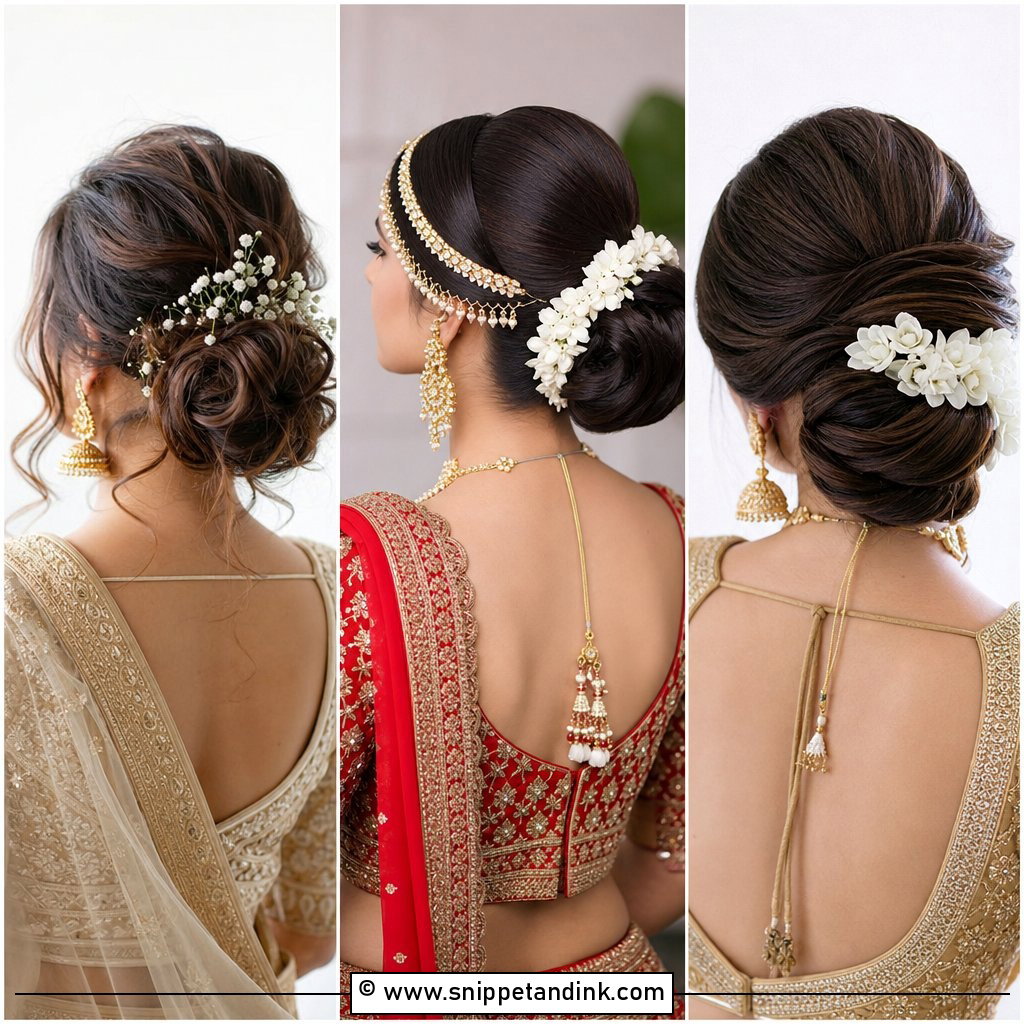
15. Retro Bride Bubble Ponytail
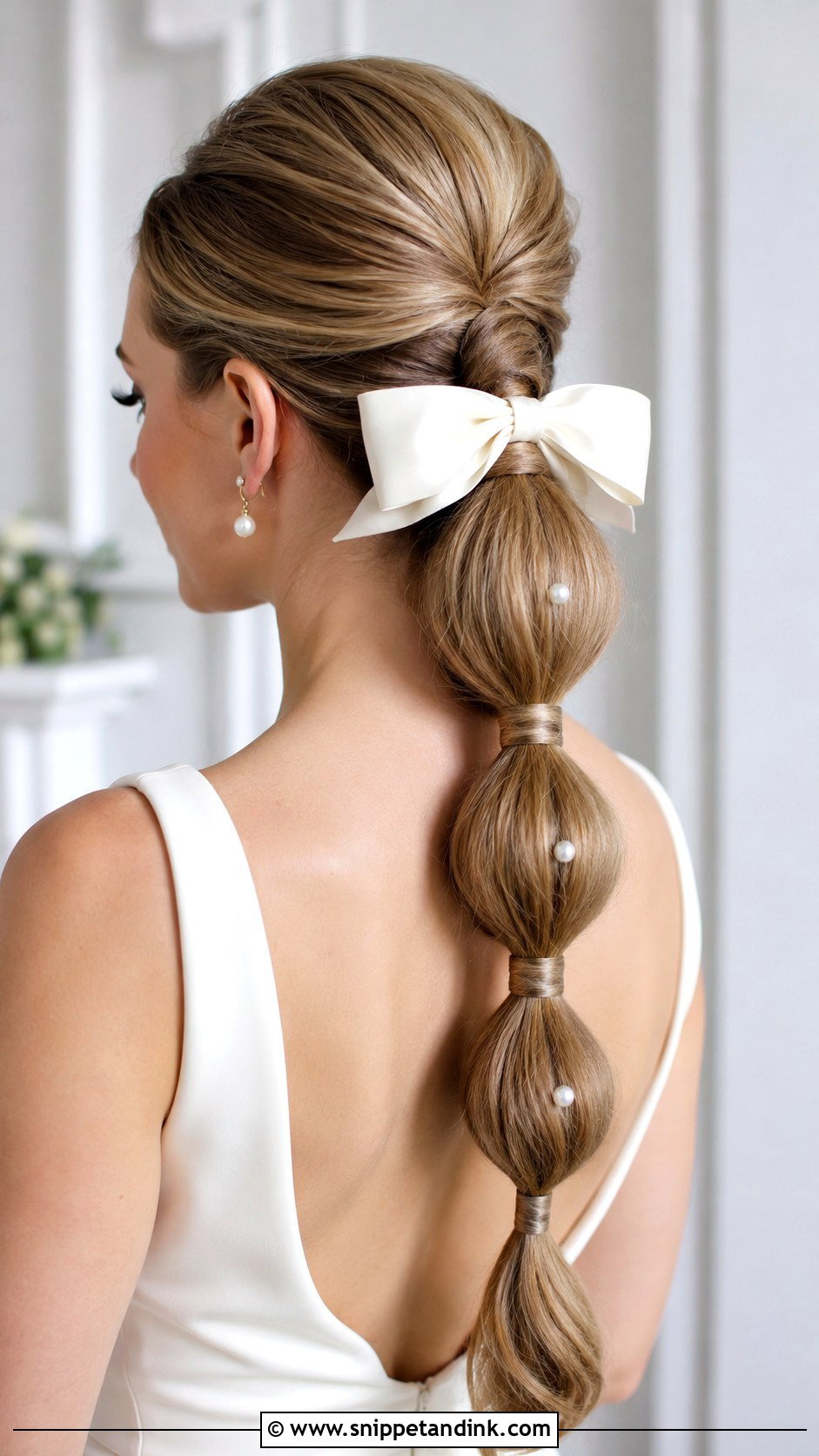
The bubble ponytail is a newer take on 1960s volume: soft crown height, a smooth pony, then elastics placed down the length with each section gently pulled wider. It needs real length, so extensions are common here. I wrap a thin strand of hair around each elastic to hide it, and I space the bubbles evenly or the shape looks lopsided in back photos. Add a satin bow or pearl pins at the base. It is one of the most secure styles in this list for a dance-heavy reception.
Wet Sets, Hot Sets and the Morning Timeline
Retro hair is set hair. A wet set, like finger waves or pin curls, is shaped with gel or setting lotion and has to dry fully before it can be touched; a hot set uses irons or heated rollers and needs a cooling period in pins. Brushing or removing pins while the hair is still warm is the single most common reason a vintage set drops early.
- Arrive with clean but not freshly washed hair for rolls and updos; day-old hair grips pins far better.
- Wear a button-front top so nothing goes over your head after the set.
- Leave pins or clips in while makeup is done, so the curls cool completely.
- Brush out last, close to getting into the dress, and set the shape with a light spray.
On timing, I give a sculpted set noticeably longer in the chair than a loose curled style. Tell your stylist which look you want when you book, because a finger wave or Marcel set changes the whole morning schedule.
When a Wave Starts Dropping After Dinner
Humidity, dancing and hugs all loosen a set. Waves that were crisp at the ceremony can relax into soft curls by the evening, and on most brides that actually looks lovely. If you want the shape kept sharp, ask a bridesmaid to carry a small kit: a handful of matching grips, two duckbill clips, a travel hairspray and a fine comb.
To revive a wave, I pinch the ridge back into place with a clip, mist it lightly and leave it for five minutes while you sit. For rolls, push a fresh grip in from underneath rather than adding pins on top. And if a veil has pulled the style, take the veil out for the reception; the hair usually settles back on its own once the weight is gone.
The Brush-Out Is Where Vintage Hair Turns Modern
Every one of these styles depends on a good set and an honest look at your hair’s length and texture. Sculpted finger waves, a Marcel set or a French twist will give you the most polished photos, while 70s waves and a bouffant half-up keep things softer. Bold victory rolls suit a playful dress and a confident bride. Bring photos of the era you love, book a trial with your veil and accessories, and wear the trial style for a few hours afterwards. How it looks at hour four tells you more than how it looks in the chair.
You'll Like These Ideas:



Leave a Reply