
Ask ten brides what a chignon is and I’ll hear ten slightly different shapes. Some mean a glossy knot at the nape, some a soft roll with pieces falling out, some the vertical fold their grandmother wore. That range is why it keeps turning up at weddings: the same basic construction can sit under a cathedral veil in a stone church, survive a windy garden ceremony or look sharp with a tailored courthouse suit. Below are fifteen versions I build, from very polished to very relaxed, with notes on the lengths and dresses each one handles.
Rolled, Knotted or Folded? The Words I Use at a Trial
Chignon is a loose term, and a lot of trial disappointment comes from the stylist and bride picturing different shapes. These are the constructions I describe when we talk it through, so you can point at the one you mean.
- Knotted or coiled: hair gathered at the nape and wound around itself into a round knot. Compact, classic and the easiest base for a veil.
- Rolled or tucked: hair rolled under along the nape, so the shape is wide and horizontal rather than round. Softer and more vintage.
- Folded: hair twisted up the back in a vertical line, as in a French twist, with the ends tucked into a small low bun.
- Sectioned: separate twists, loops or braids pinned together to build the shape. This is what gives textured and messy chignons their detail.
Describe the size too. Compact and close to the neck and full and wide are both chignons, and the difference matters a great deal under a high collar or a weighty veil.
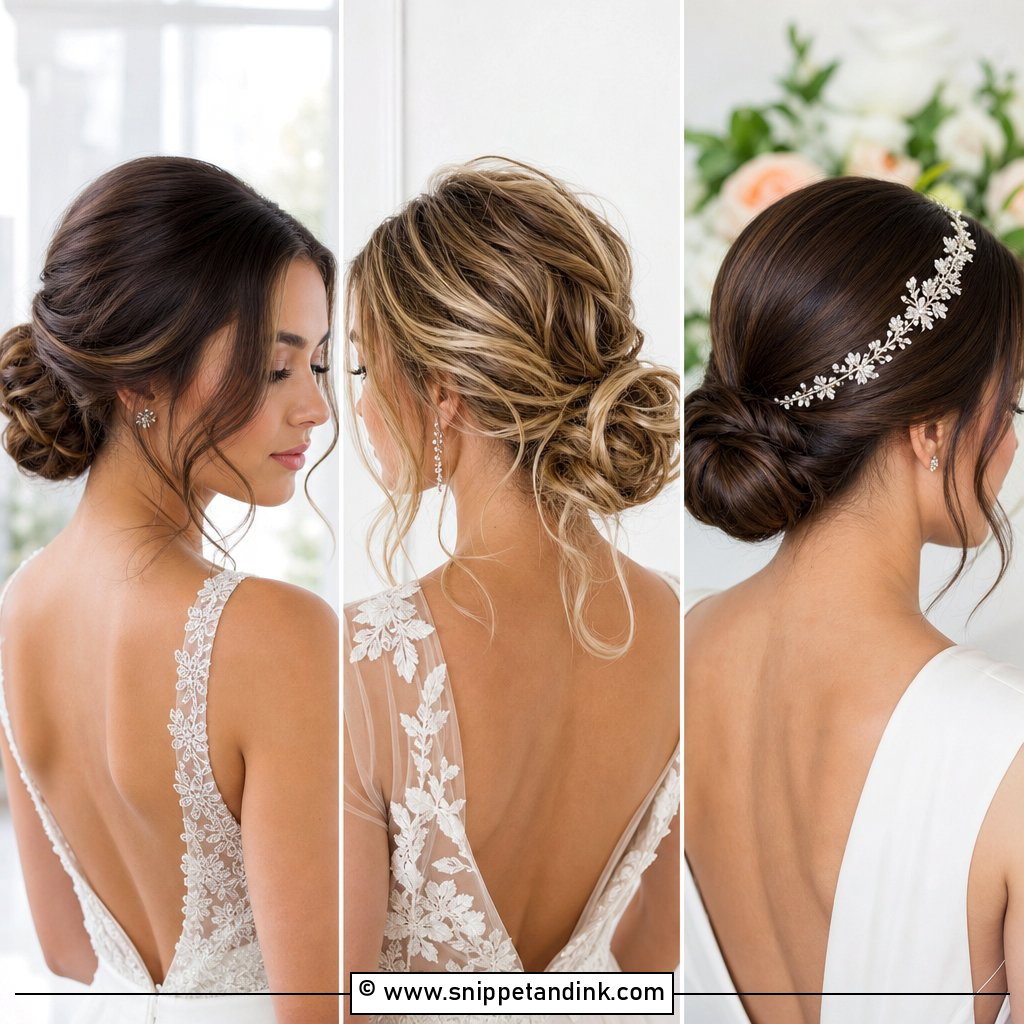
1. Low Bridal Chignon
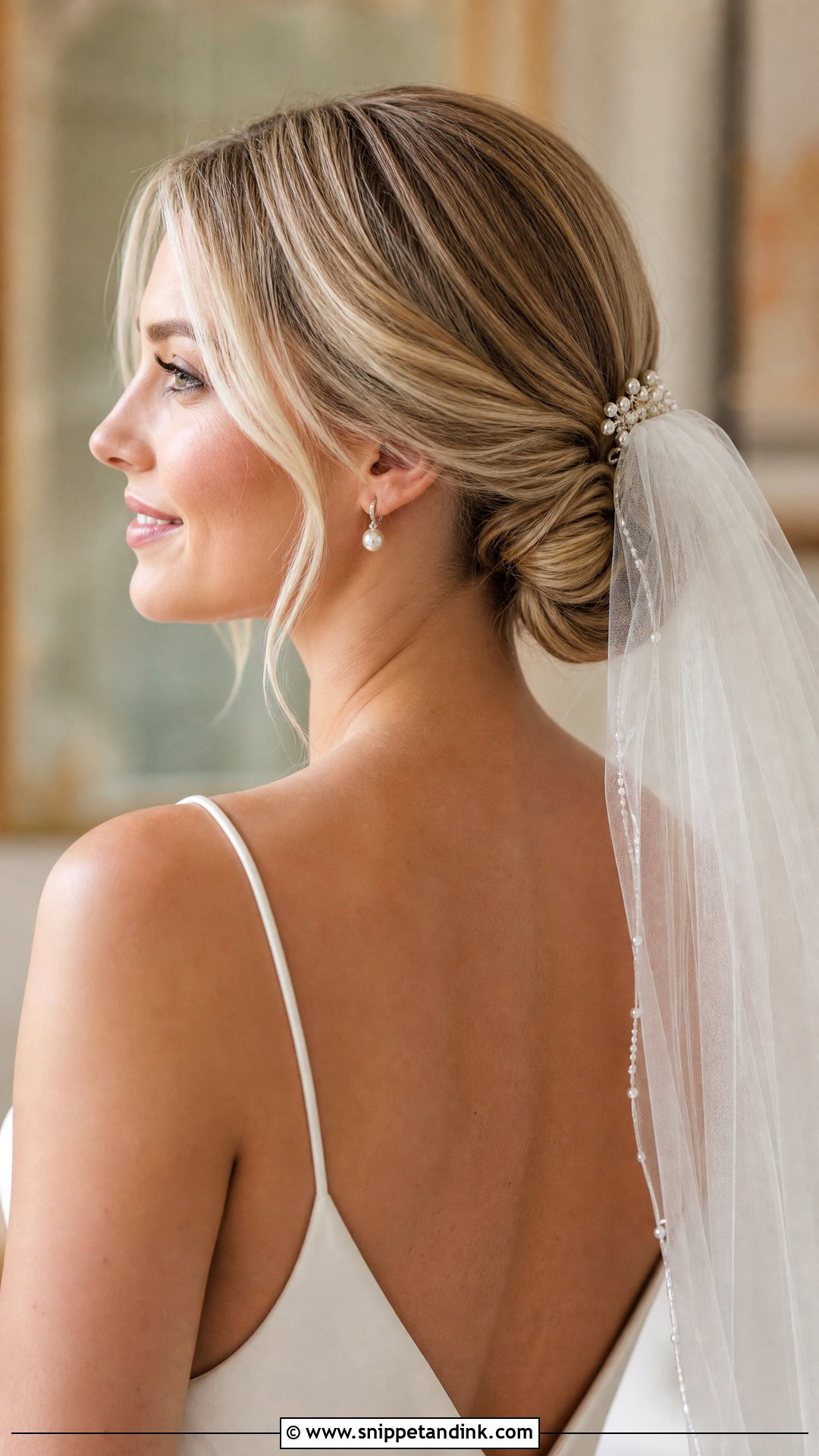
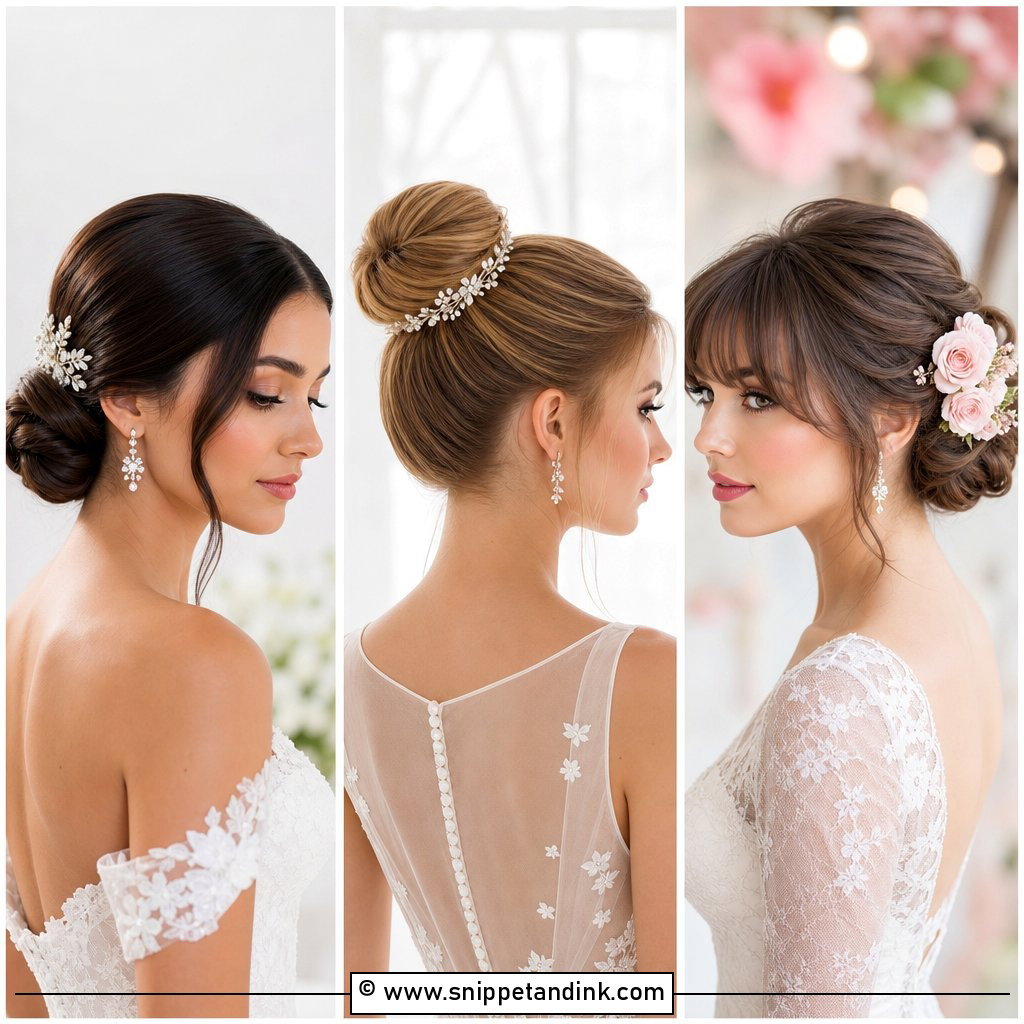
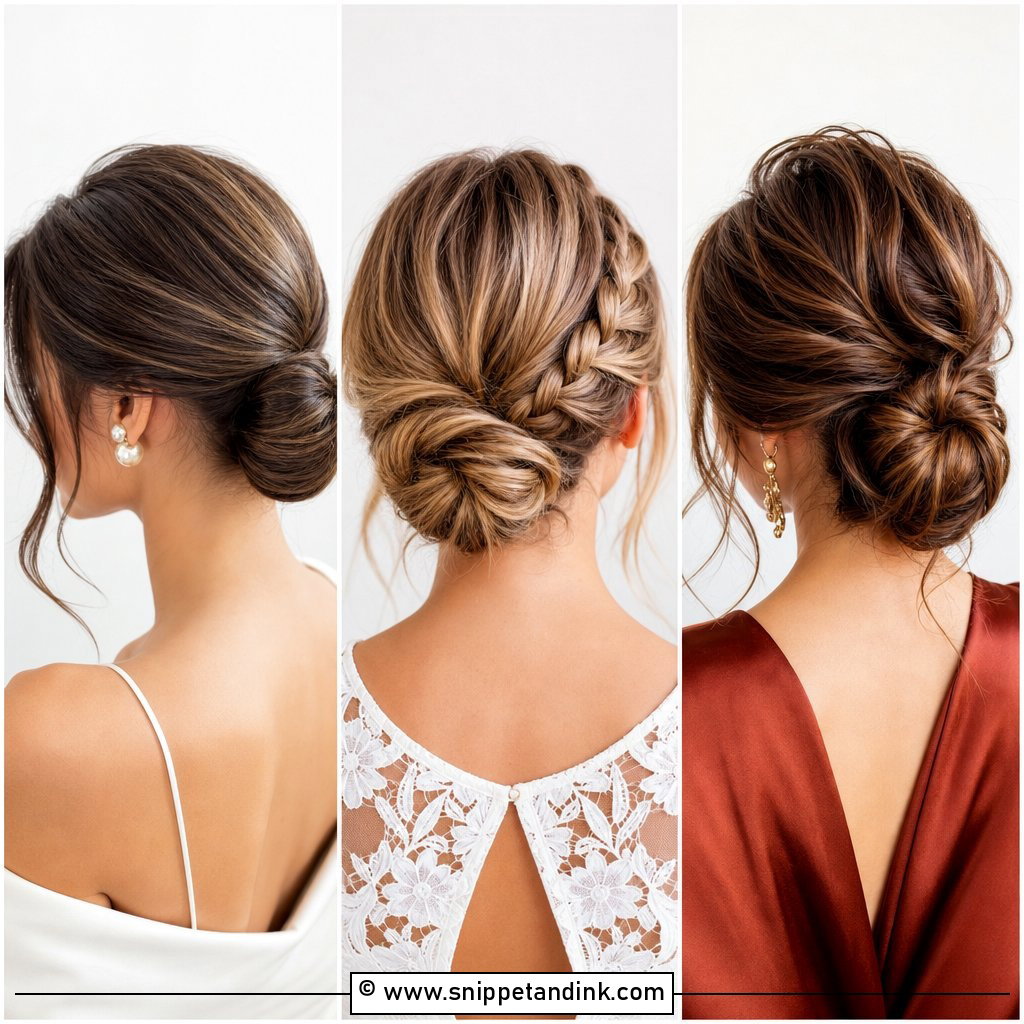
This is the chignon I can promise will still be in place at midnight. Sitting right at the nape, it leaves room above for a veil comb and keeps an open back or lace detail uncovered. Medium to long hair can be folded, rolled, or tucked into a rounded shape, and I choose which by how thick the length is. My one rule is never to flatten the crown completely. A little lift there stops the head looking small in side photos, especially next to a full skirt.
2. Sleek Bridal Chignon
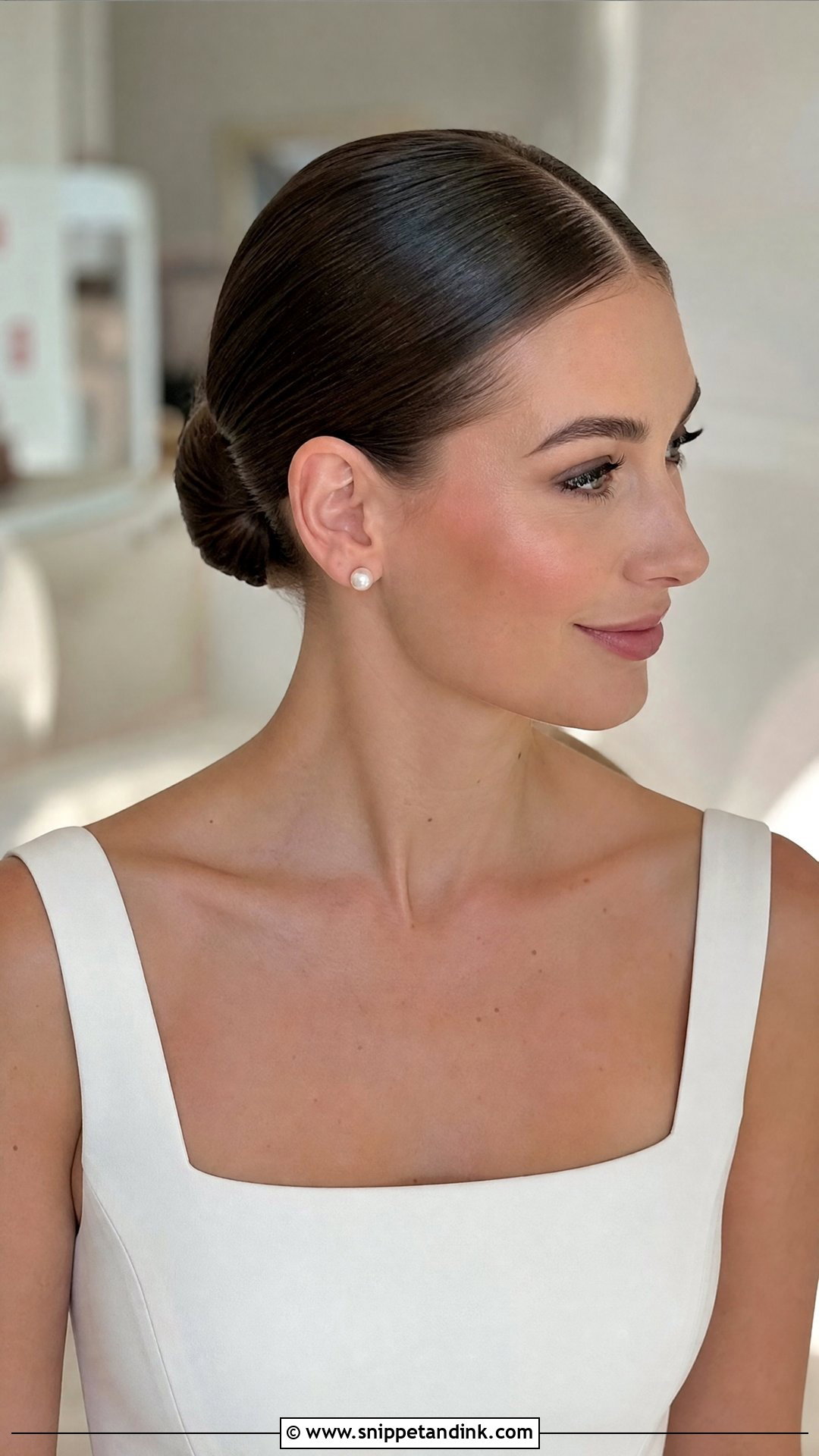
Sleek chignons are unforgiving, and I tell brides that up front. Every line shows, so the hair has to be smoothed in sections with product before it is tied, and the part has to be decided at the trial, not on the morning. It pairs well with minimal satin gowns, square or high necklines and sculptural earrings. Center parts look modern but expose any asymmetry in the hairline. If you have a strong cowlick at the front, a soft offset part is the kinder option. I finish with a flexible hold spray so it doesn’t crack when you hug people.
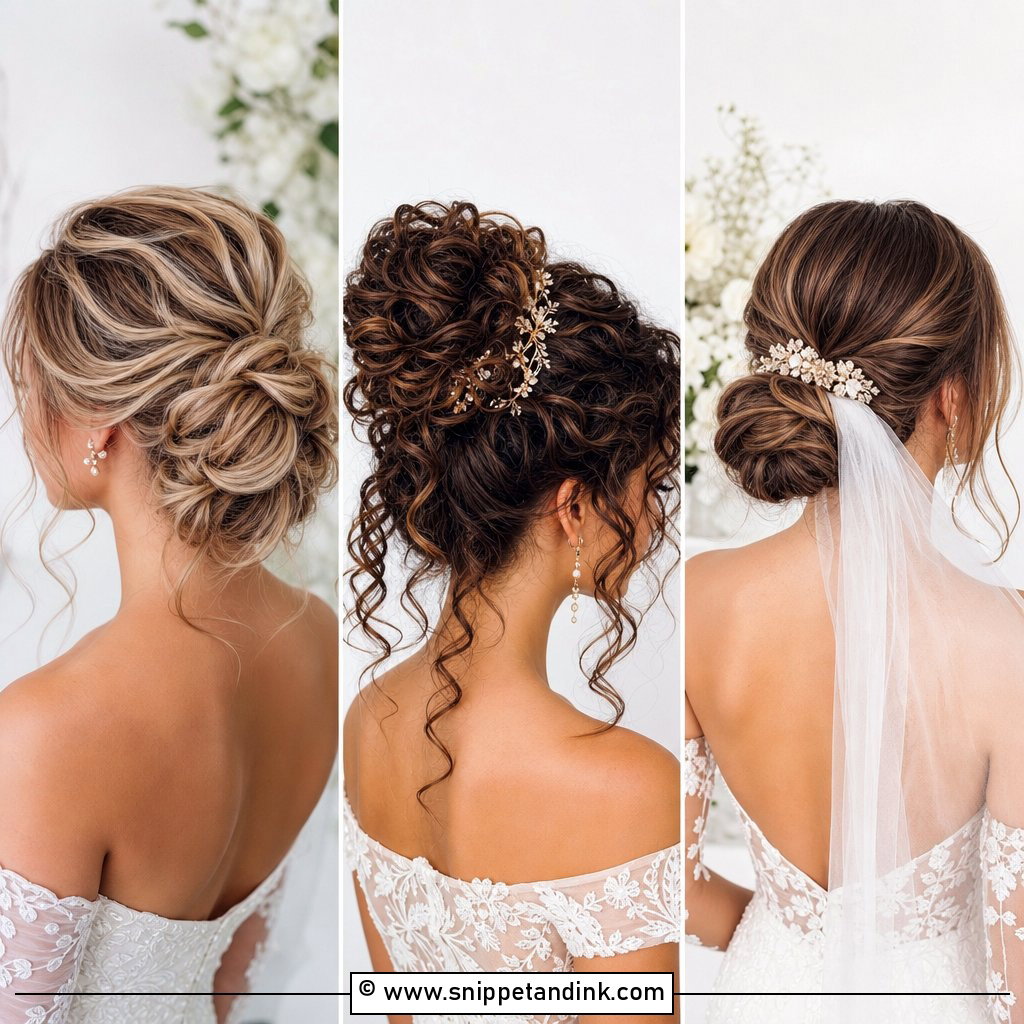
3. Textured Bridal Chignon
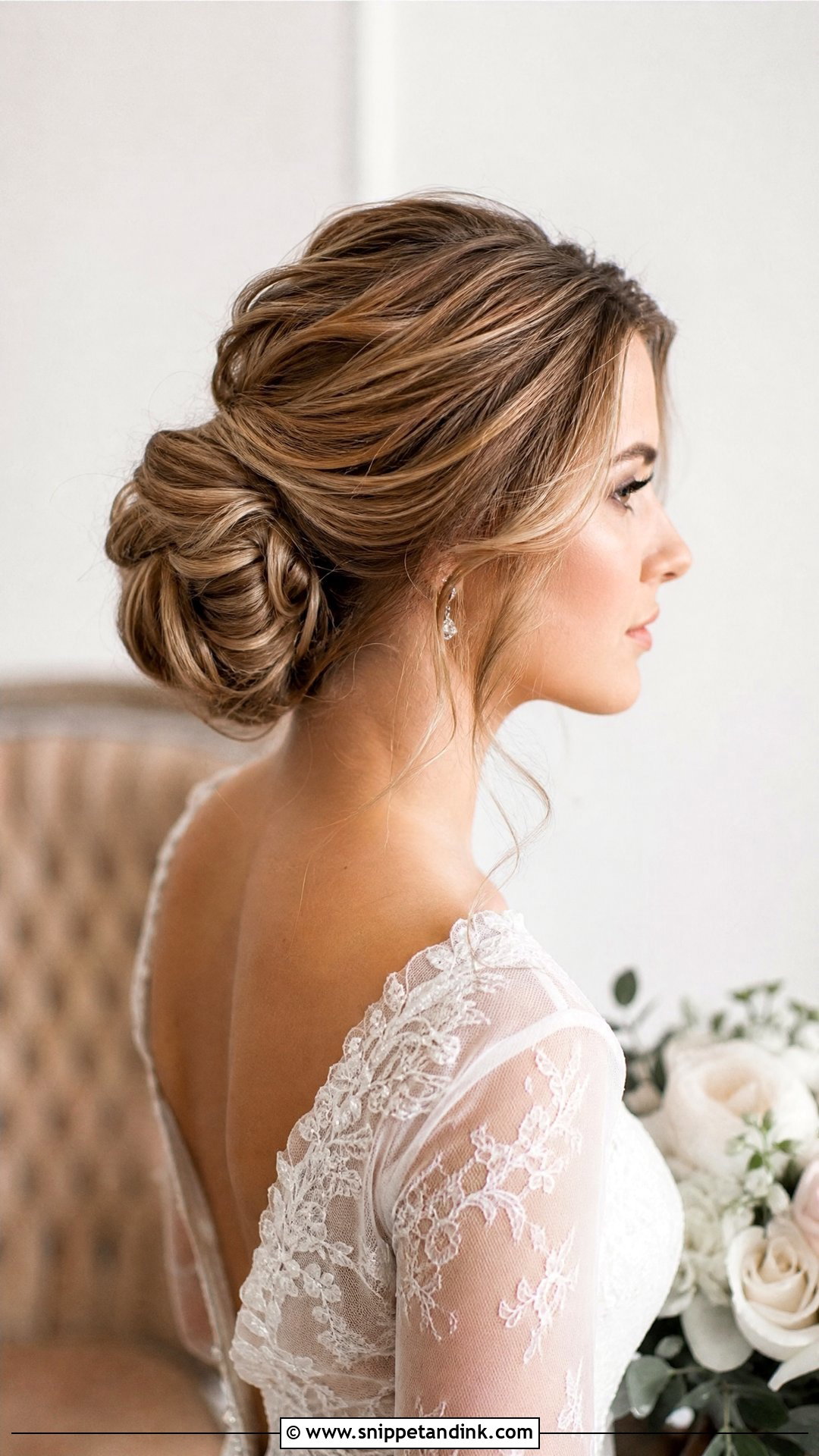
Texture is about bends you can see. I curl the hair in medium sections, let it cool fully so the curl sets, then brush it out before folding it into a low, full bun with a little back-combing at the crown. It shows off balayage, highlights and dimensional brunette tones well because each fold catches a different shade. Outdoors, it handles wind better than a sleek finish, since a piece that shifts just looks like more texture.
4. Messy Bridal Chignon
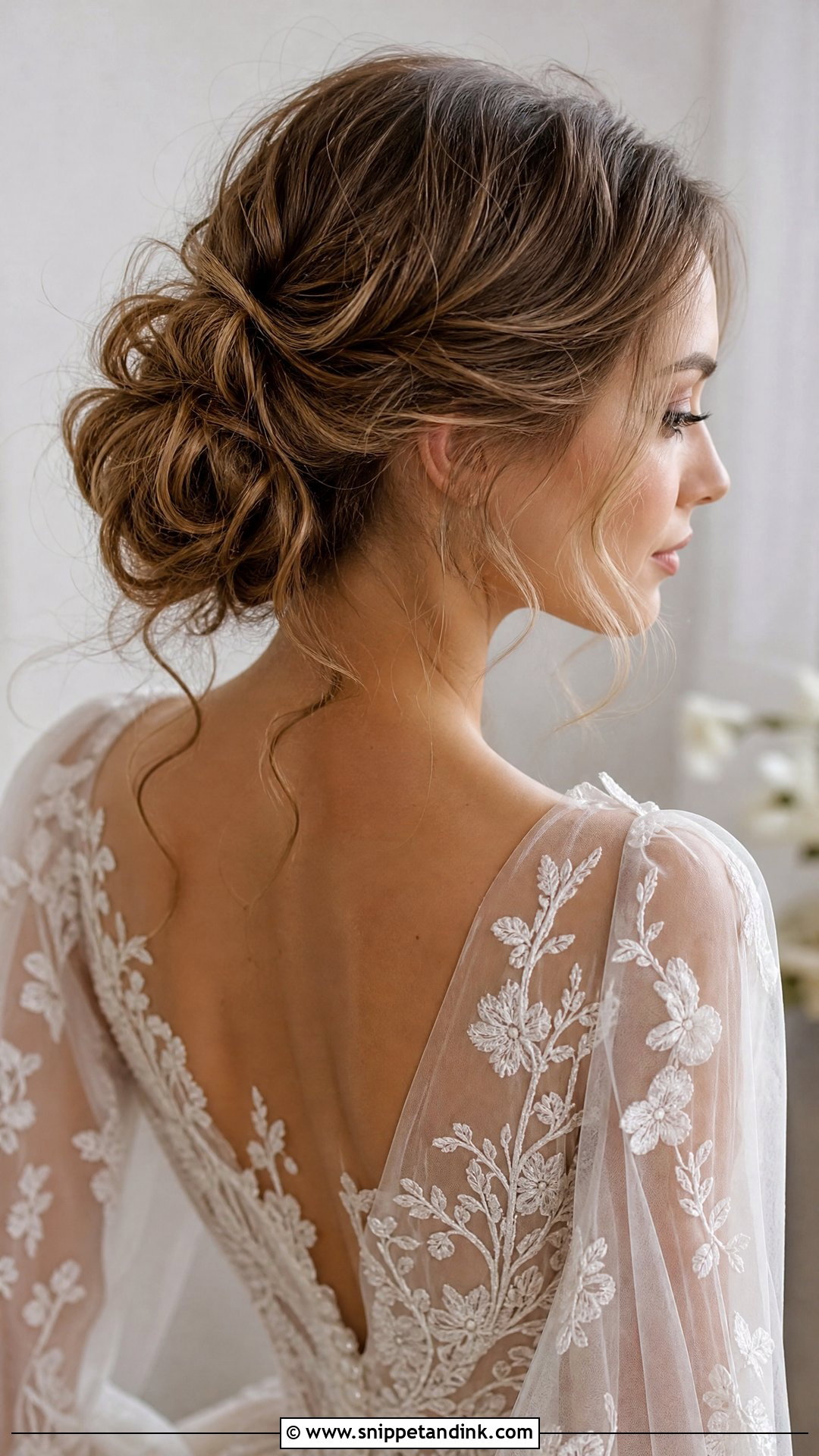
The goal here is never an unfinished bun. A messy chignon is pinned carefully underneath, then loosened only on the surface, so it can relax through the day without falling. Naturally wavy hair does a lot of the work for me because the bends create fullness on their own. Lace, tulle and flowing sleeves sit well with it. Ask for loose curls on the face-framing strands, not tight ringlets, since tight curls look dated once they drop and spring back.
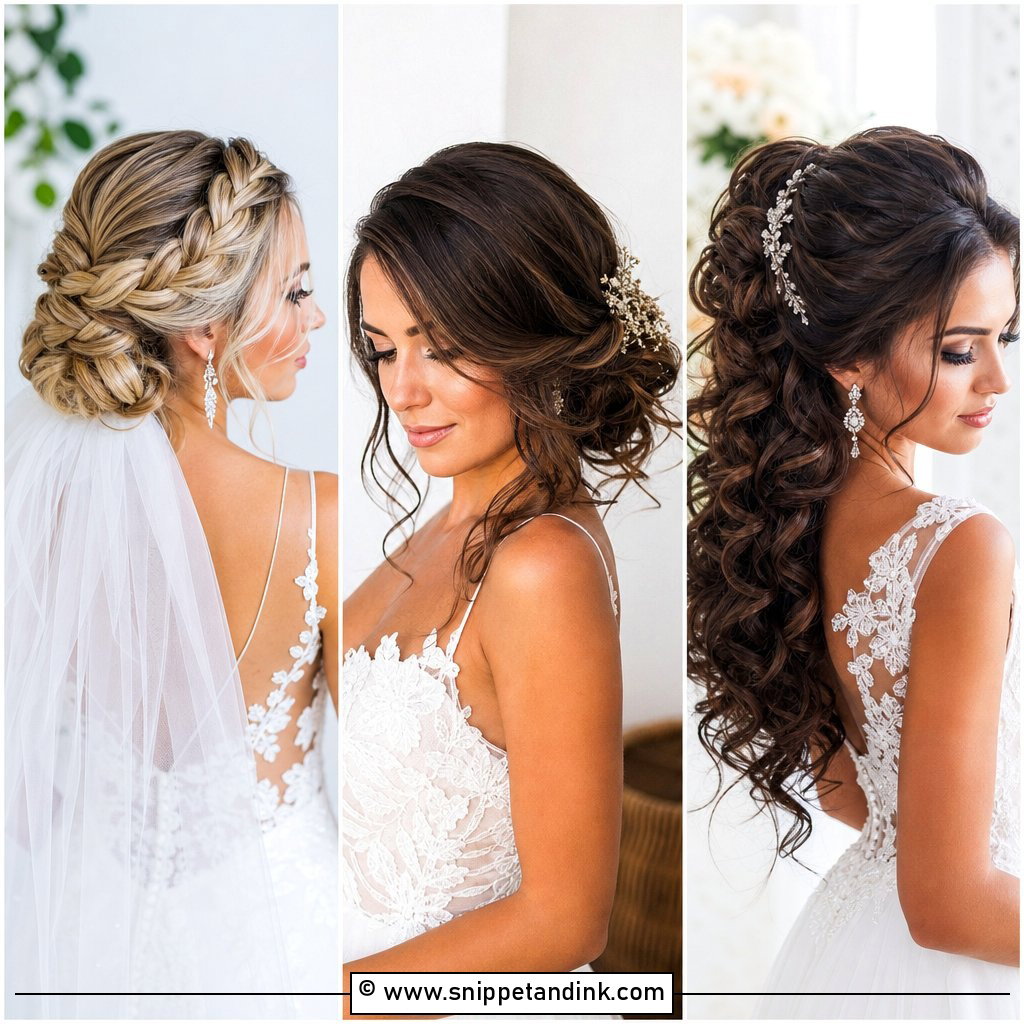
5. Braided Bridal Chignon
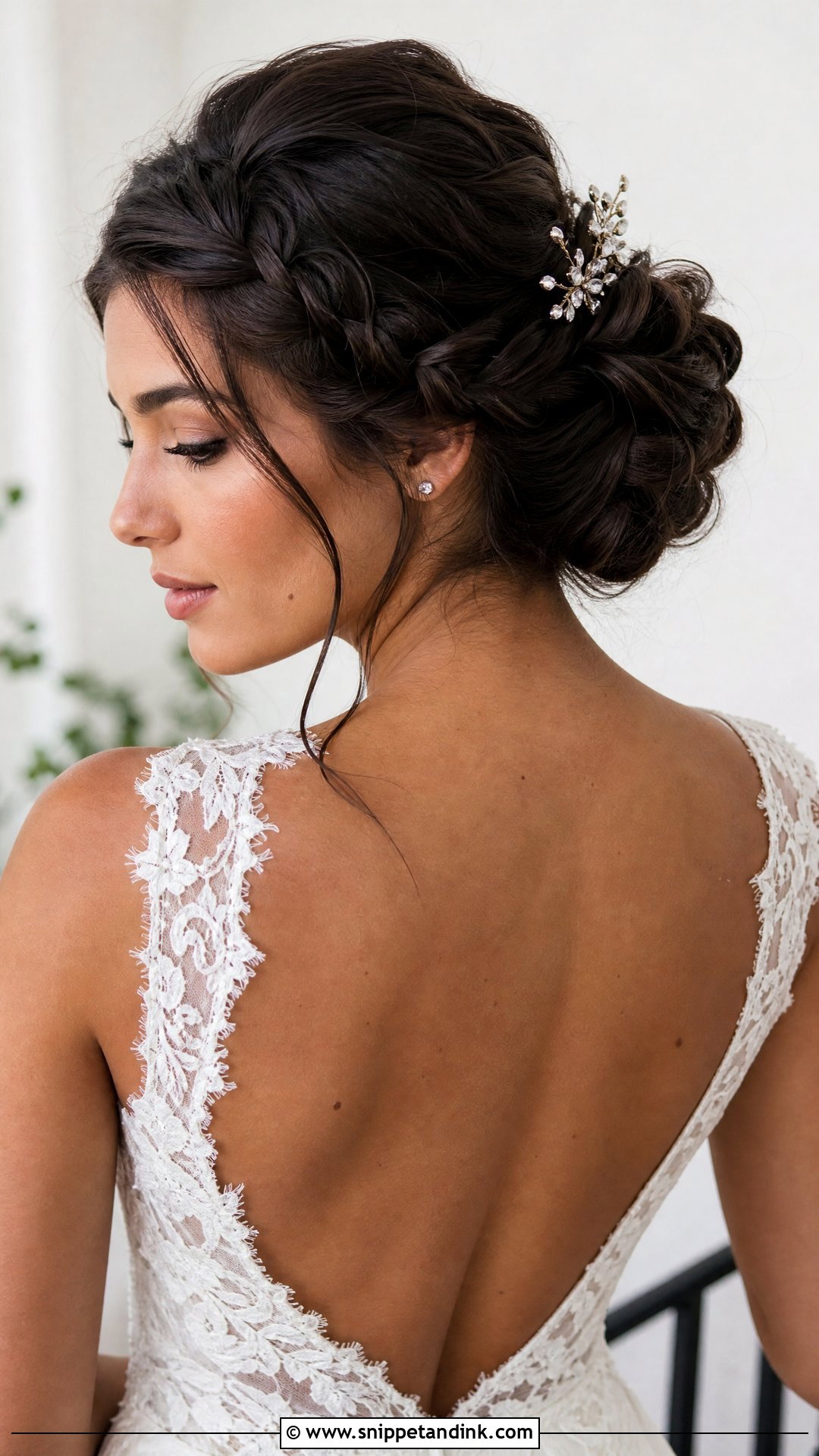
Braiding before pinning does two jobs at once. It gives the back of your head something worth looking at during the ceremony, and it catches the shorter layers that would otherwise poke out of a plain roll. The braid can wrap the bun, start at one temple or run through the crown first. I pull the edges out gently so it reads soft from the pews. It suits open-back gowns, low veils and fine hair vines, which slide neatly between the braid loops.
6. Side Bridal Chignon
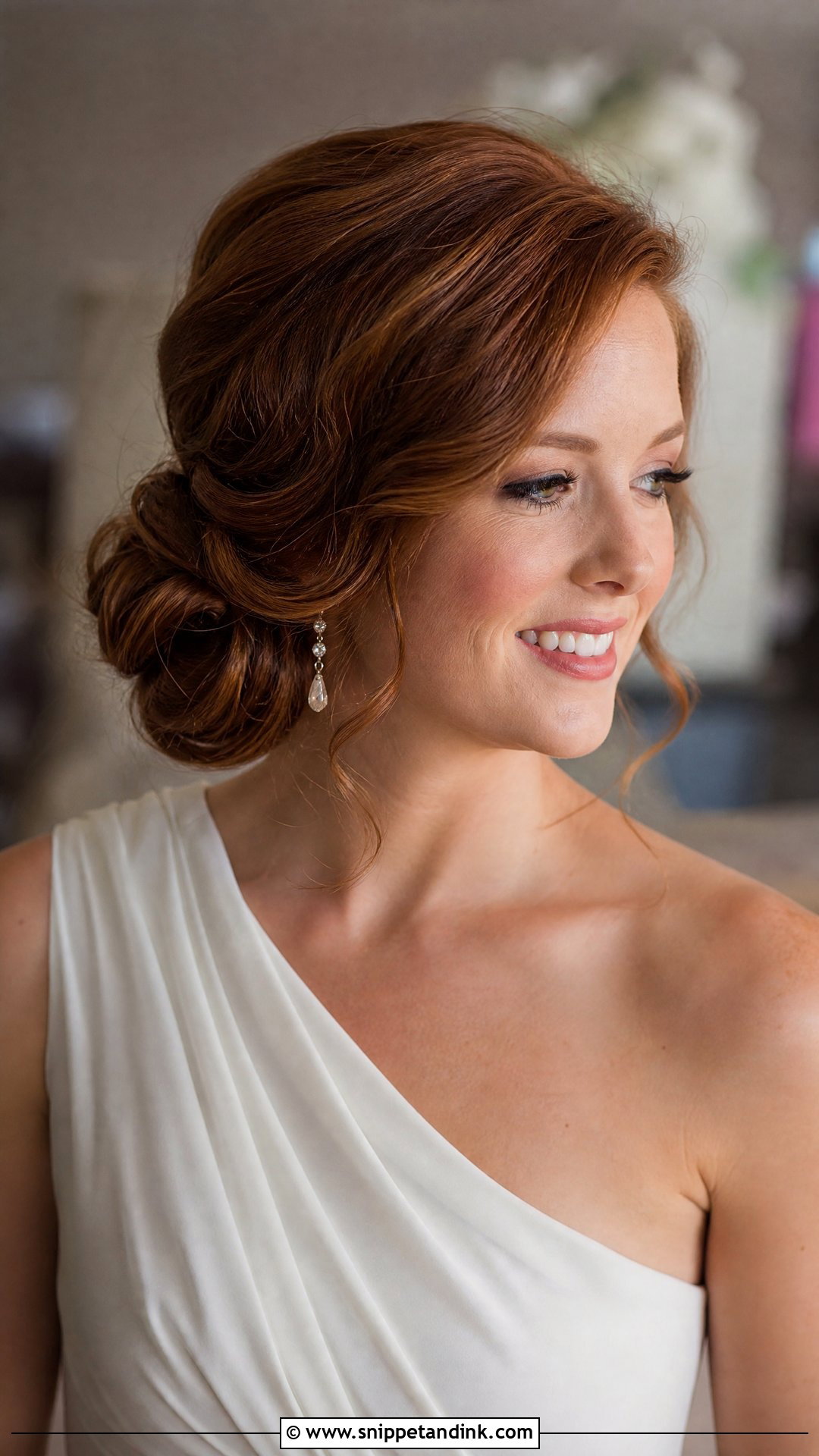
Moving the chignon to the side changes how you photograph more than any accessory. Set near the lower ear or jaw, it is visible in every front portrait. I place it on the side of a deep side part or the bare shoulder of a one-shoulder gown so the weight balances the dress. Earrings are where this goes wrong: on the bun side, a big drop earring collides with the hair, so I suggest one statement piece on the open side and a stud on the other.
7. Twisted Bridal Chignon
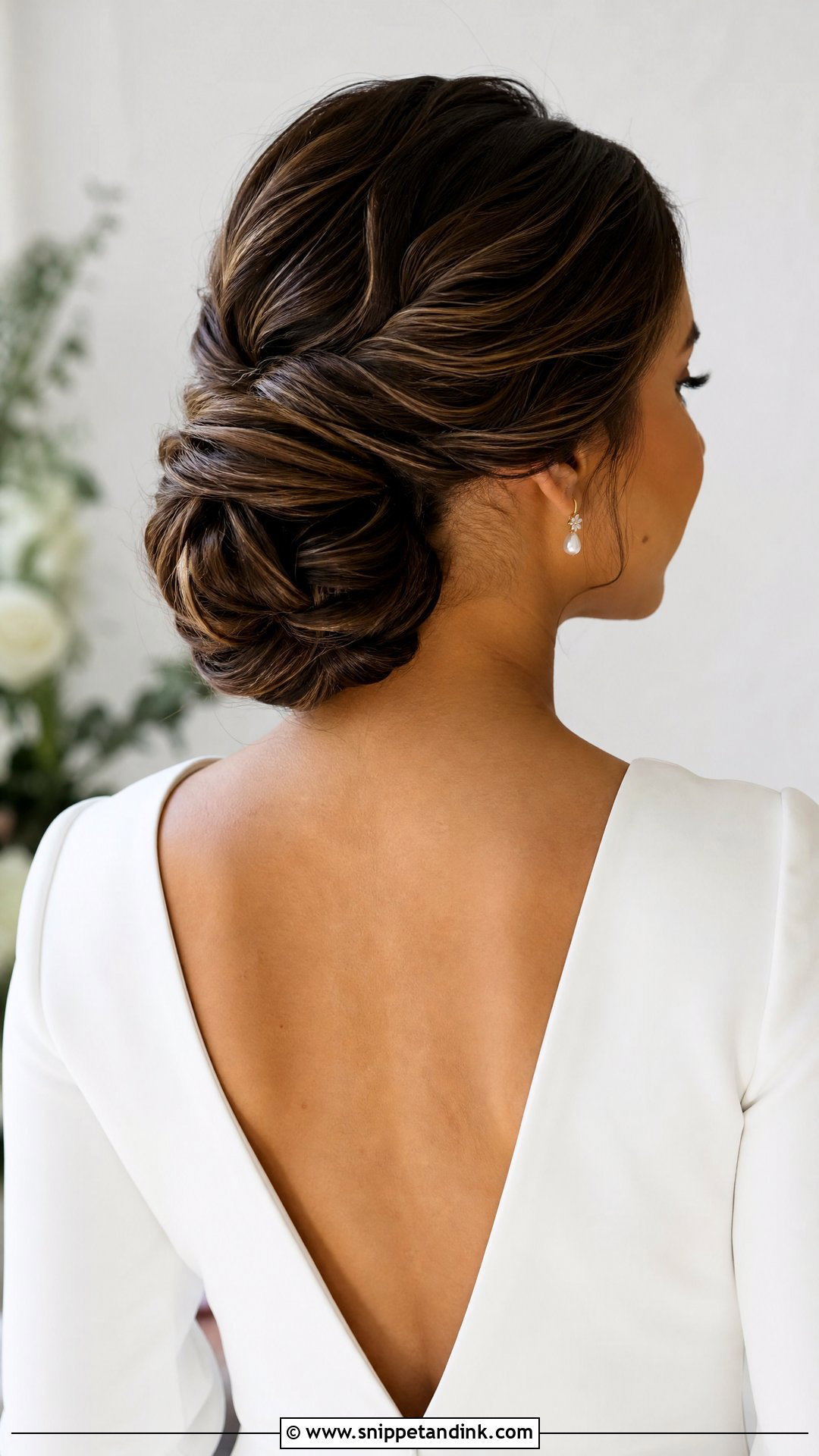
Twists give shape without the pattern of a braid. Each section is twisted toward the center and pinned, which builds a sculpted bun with visible movement. Medium, thick and layered hair suit it best, because the twisting guides shorter pieces into place before they can escape. I keep each twist the same width; uneven ones look rushed from behind. Highlighted hair looks especially rich here, as the lighter strands spiral through each section.
8. Classic Bridal Chignon
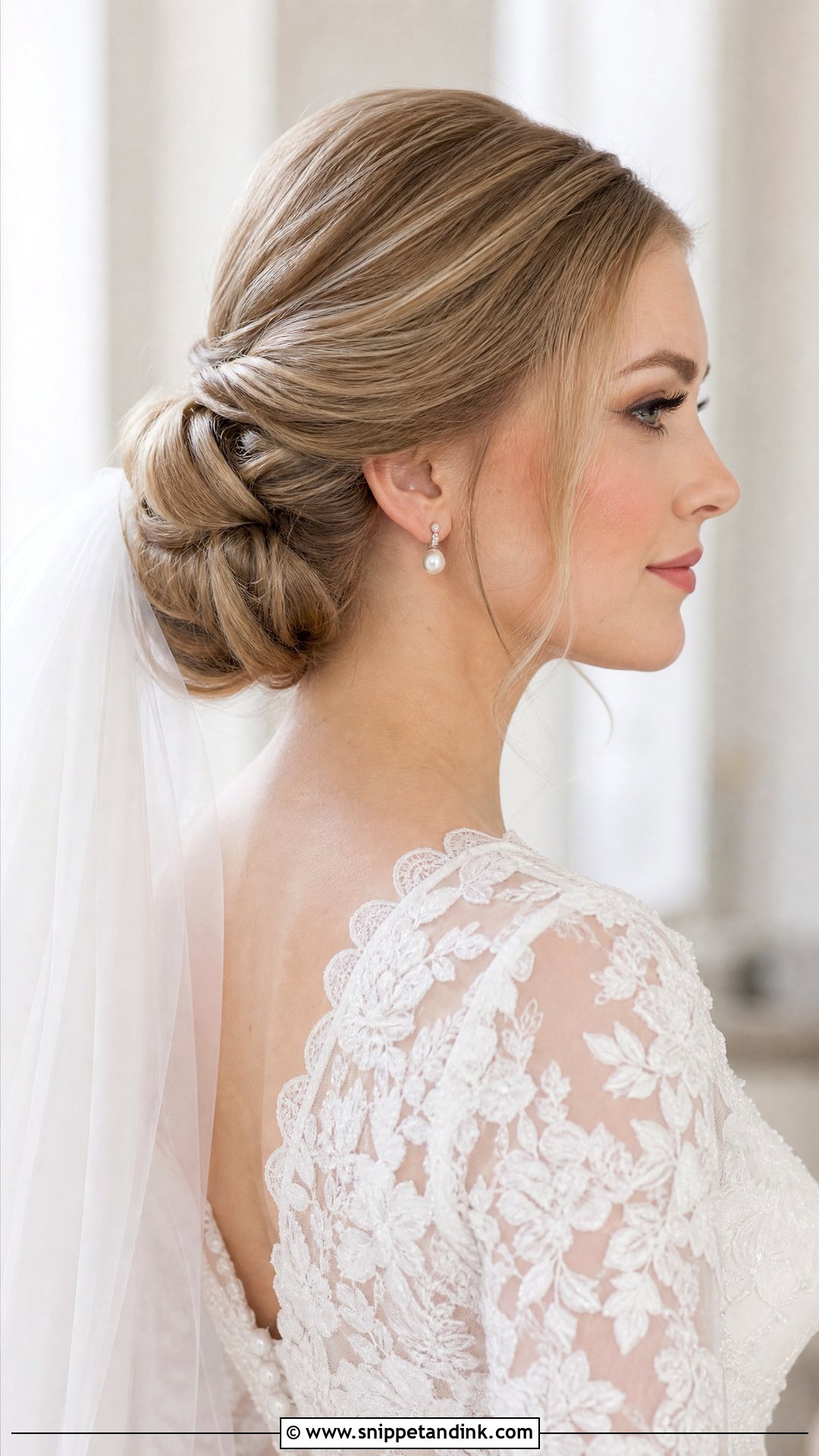
The classic chignon is the one I suggest when a bride is torn between trends and wants photos that won’t date. Smooth at the crown, tucked neatly at the nape, no extreme height or looseness. It works with almost any dress, from ball gowns to sheath dresses, and it takes a veil, tiara, comb or pearl pins equally well. It is also the safest choice if your stylist on the day is someone you have not worked with much, because there is less room for interpretation.
9. French Bridal Chignon
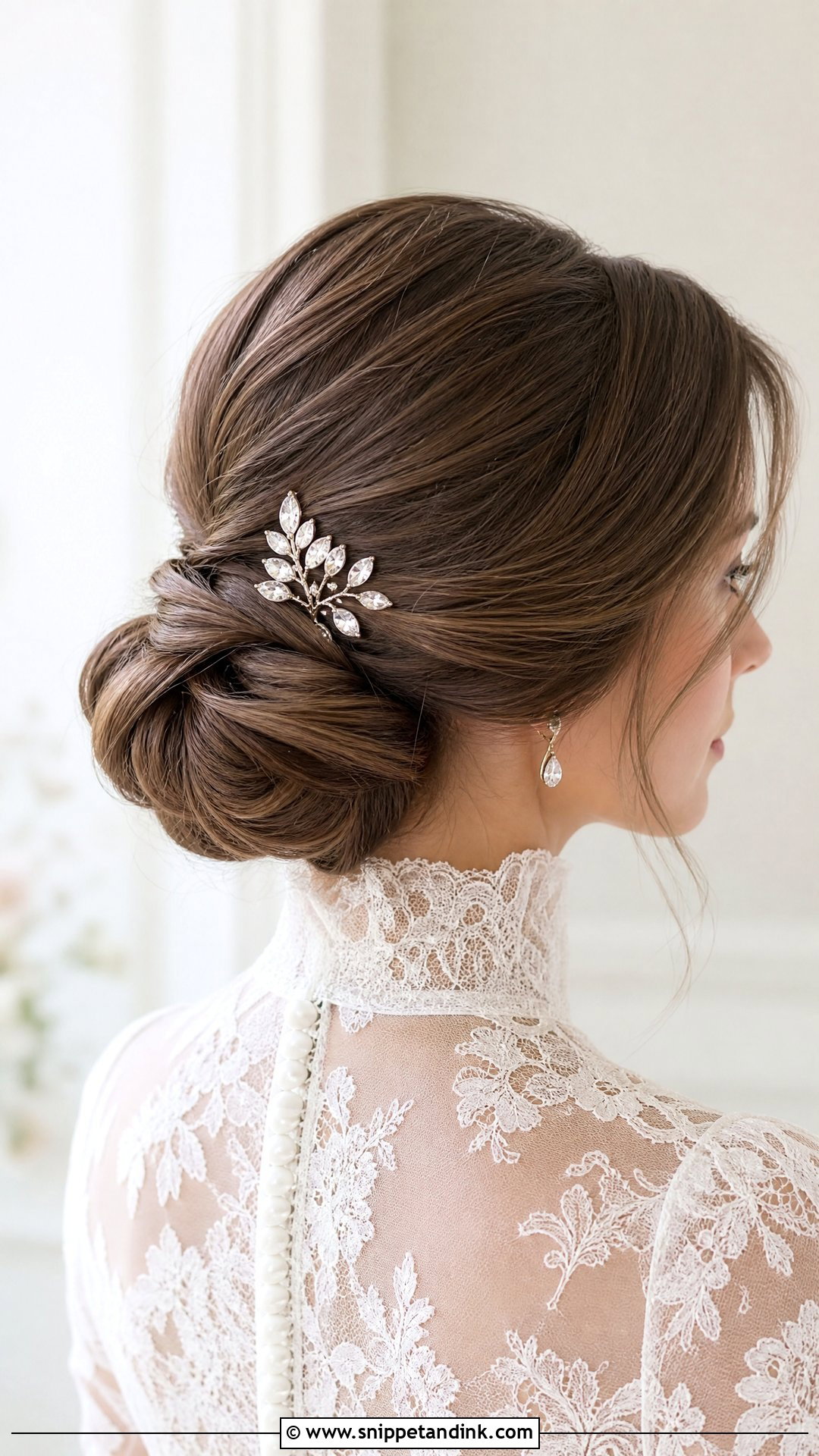
A French chignon has a refined, softly rolled shape that borrows the vertical fold of a French twist and ends in a small tucked bun, so the back reads as one smooth line. Formal venues, cathedral veils, vintage gowns and bridal suits all suit it. Length matters: hair needs to sit past the shoulders to roll and pin securely. I insert the pins along the fold from both sides so they cross and lock, which is what keeps the seam from opening by evening. The side profile is where it really shows.
10. Pearl Bridal Chignon
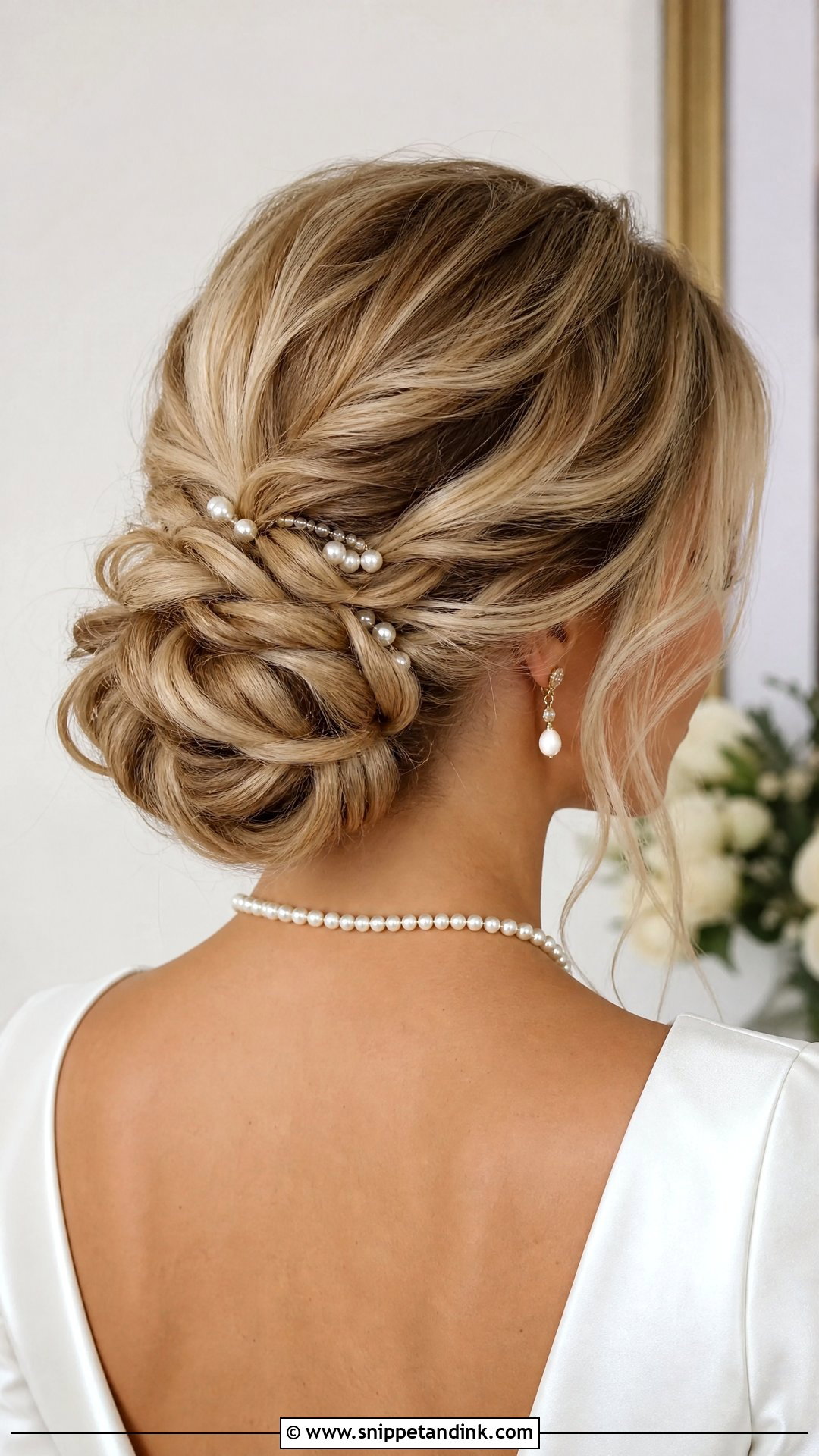
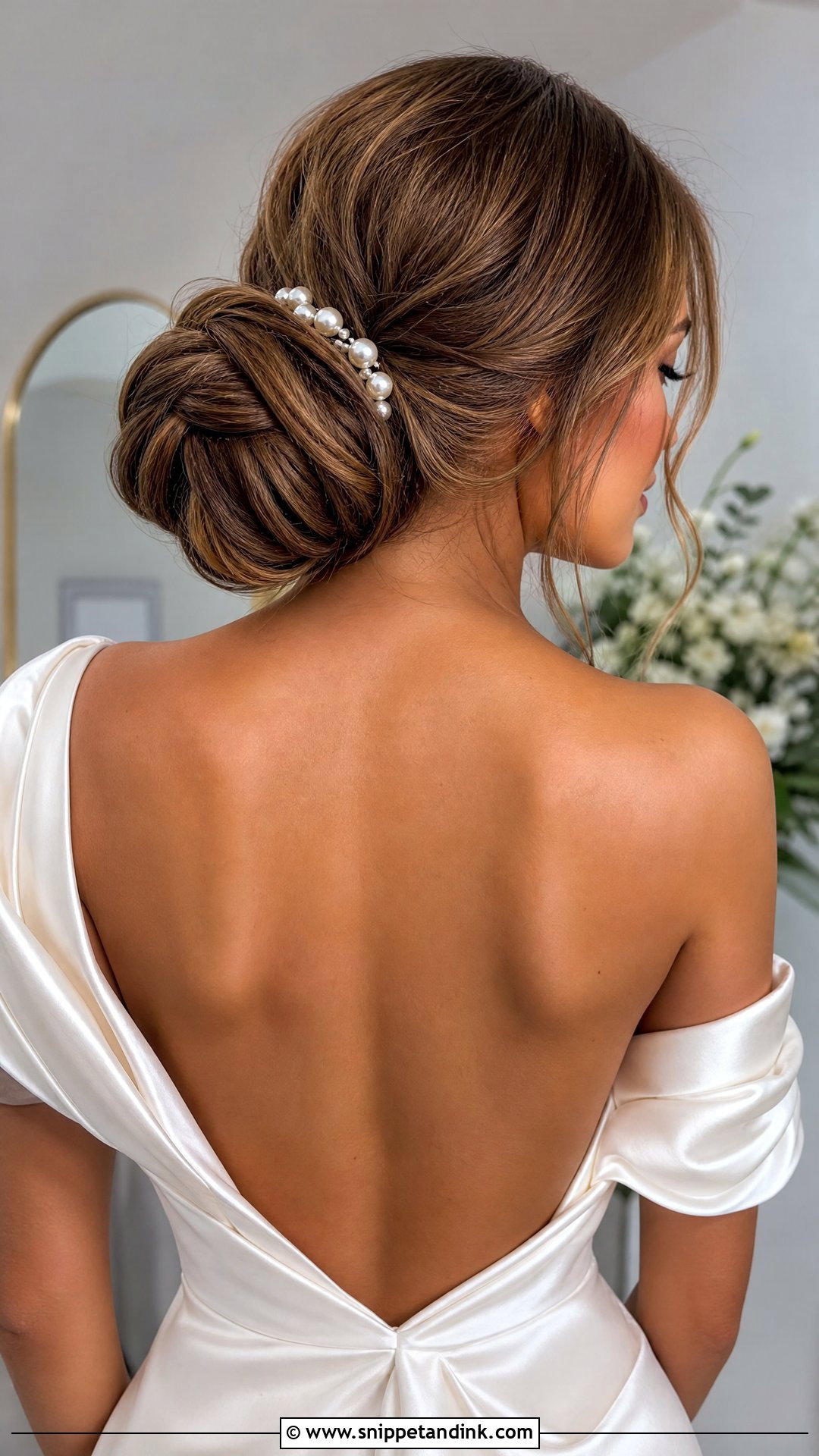
Pearls should finish a chignon, not cover it. The base can be sleek, textured, twisted or braided; I add the pins last and place them along the edges and seams where light naturally falls. Satin gowns, lace veils and square necklines pick up the effect well. Small pearls read delicate, larger ones read bold, and mixing sizes in a loose cluster usually looks more natural than a neat line. In photos, I find a few pins catch more softly than many.
11. Bridal Chignon With Veil
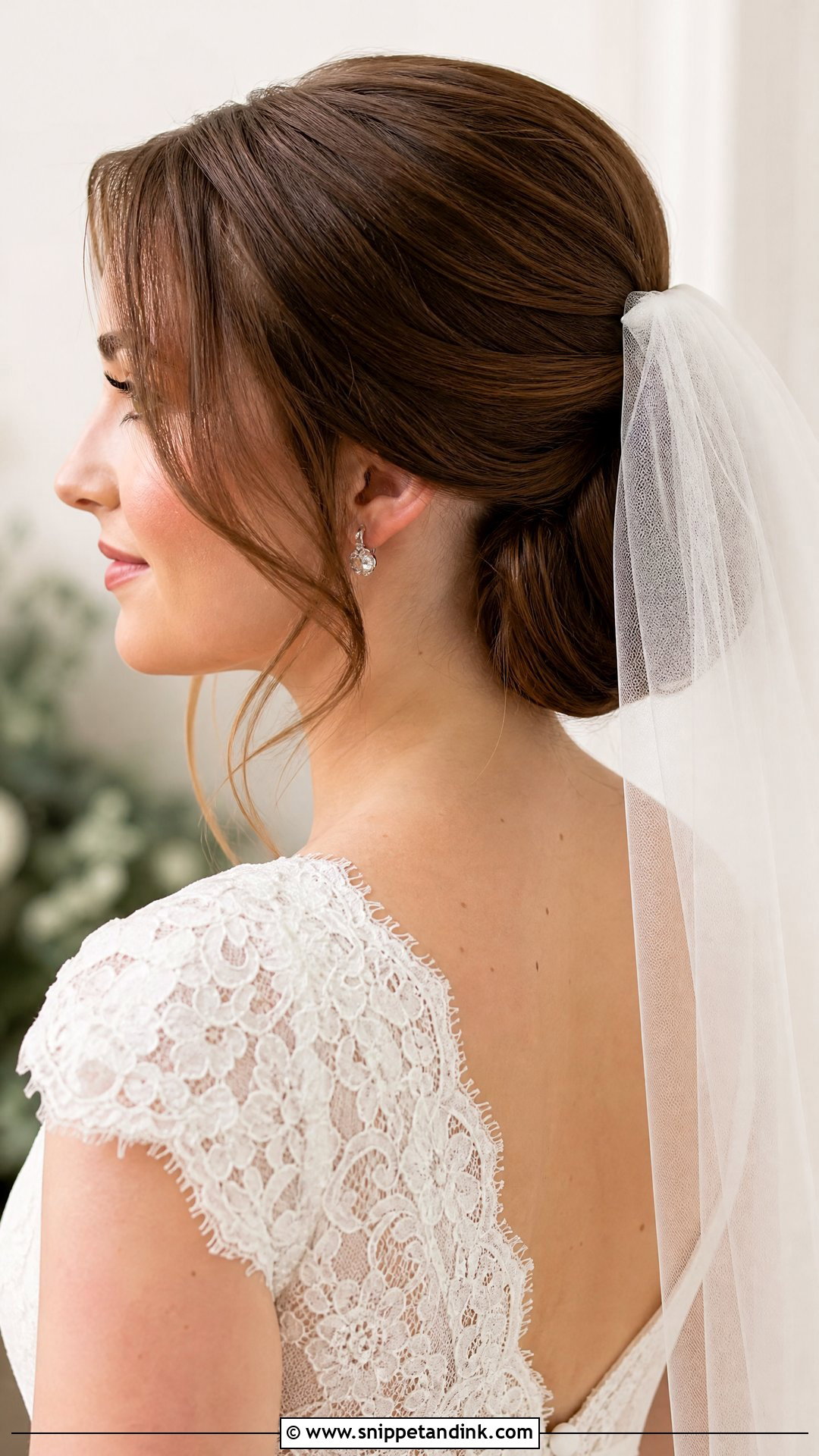
A chignon is the steadiest base a veil can have. With the comb above the bun the tulle gets lift; under it, the line is cleaner and the veil comes out after the ceremony without disturbing the updo. It handles cathedral veils, fingertip veils, mantillas and simple tulle. Mantillas behave differently, though: they sit further forward on the crown, so I build a flatter top for them. Bring the real veil to your trial so we can test the comb angle and the weight.
12. Bridal Chignon With Flowers
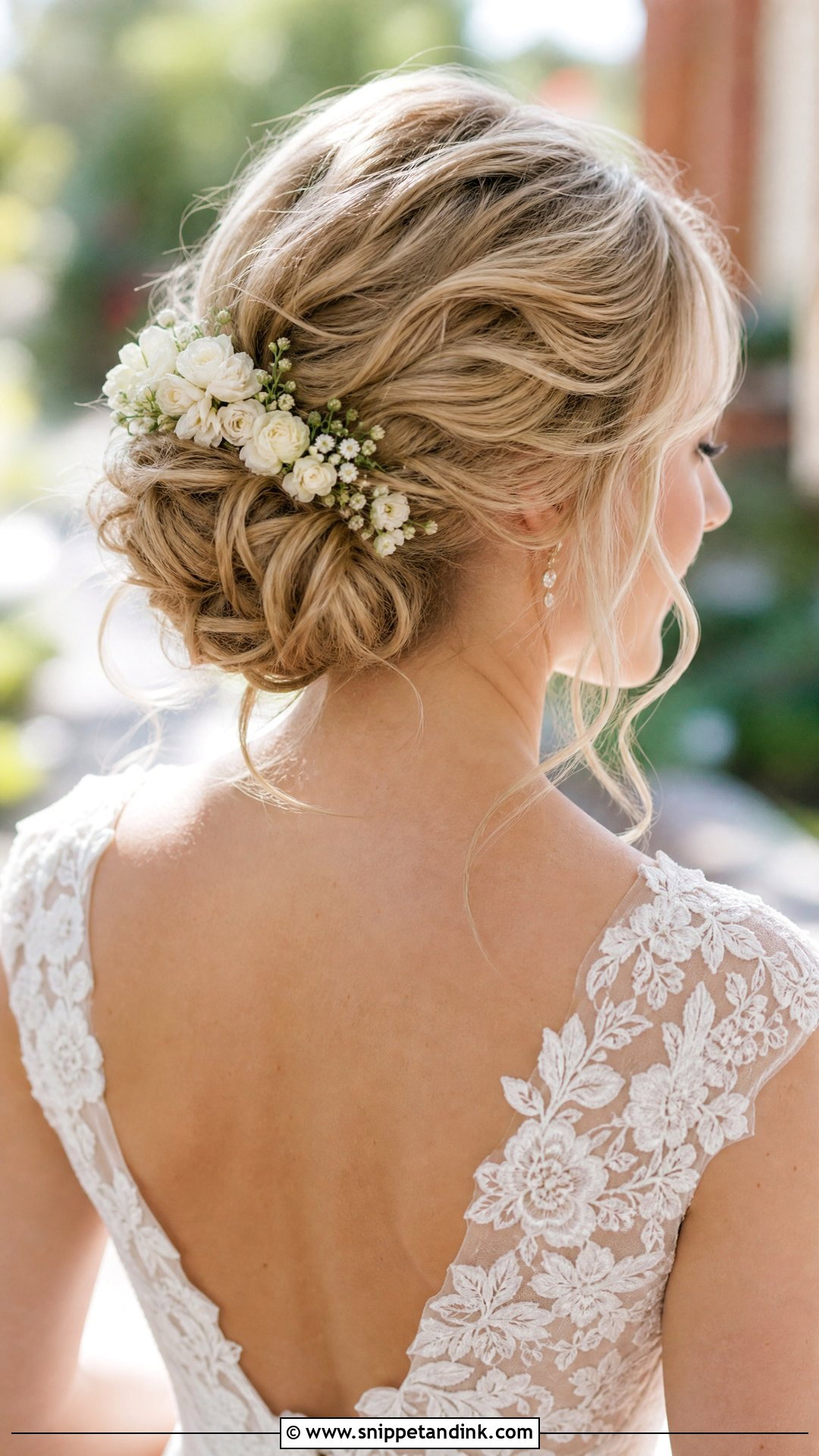
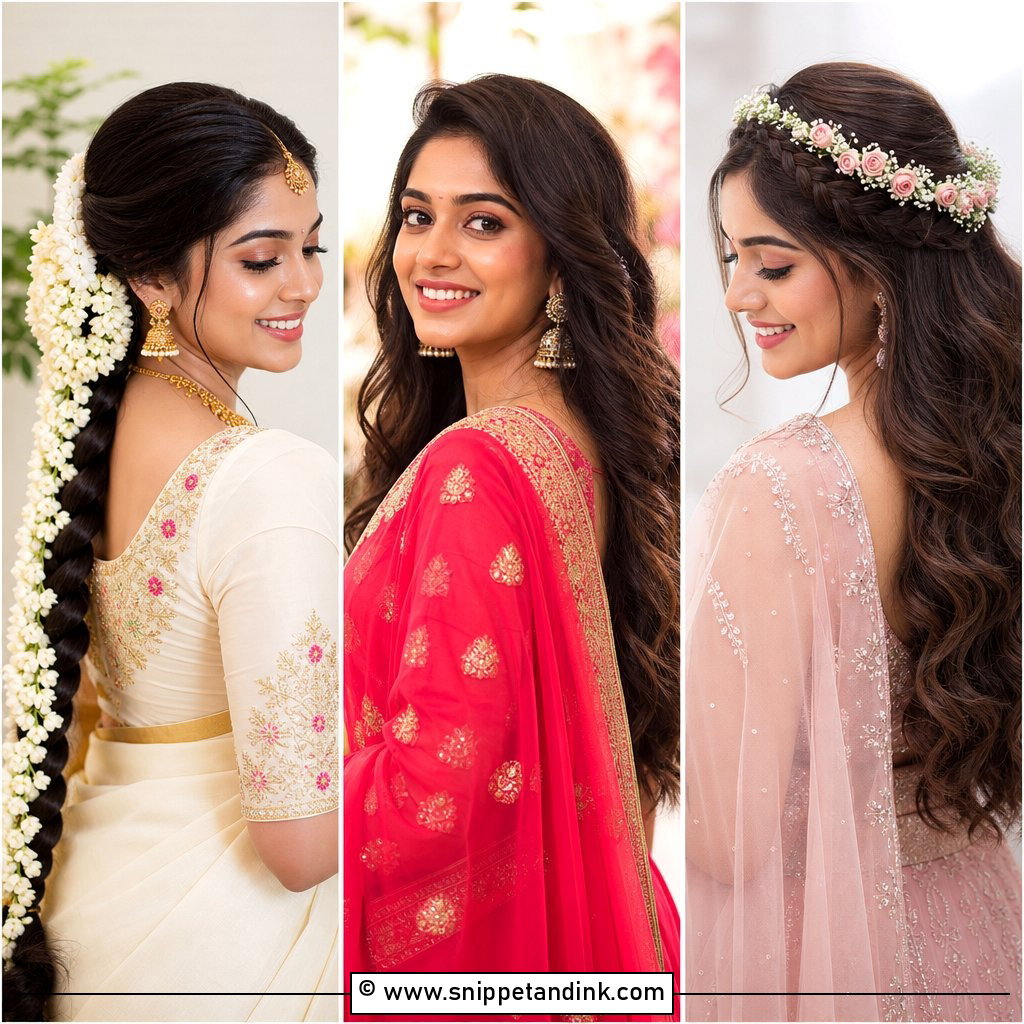
Flowers in a chignon need to look like they grew into the shape. I work them into a softer, textured chignon where there are folds to tuck stems into, either tiny blooms on one side, a floral comb or dried flowers scattered through. Lace, floral embroidery and loose sleeves suit it. Ask your florist for blooms that handle being out of water for hours, and keep the overall weight light, because flowers pinned in at 9am are still there at 11pm.
13. Bridal Chignon For Medium Hair
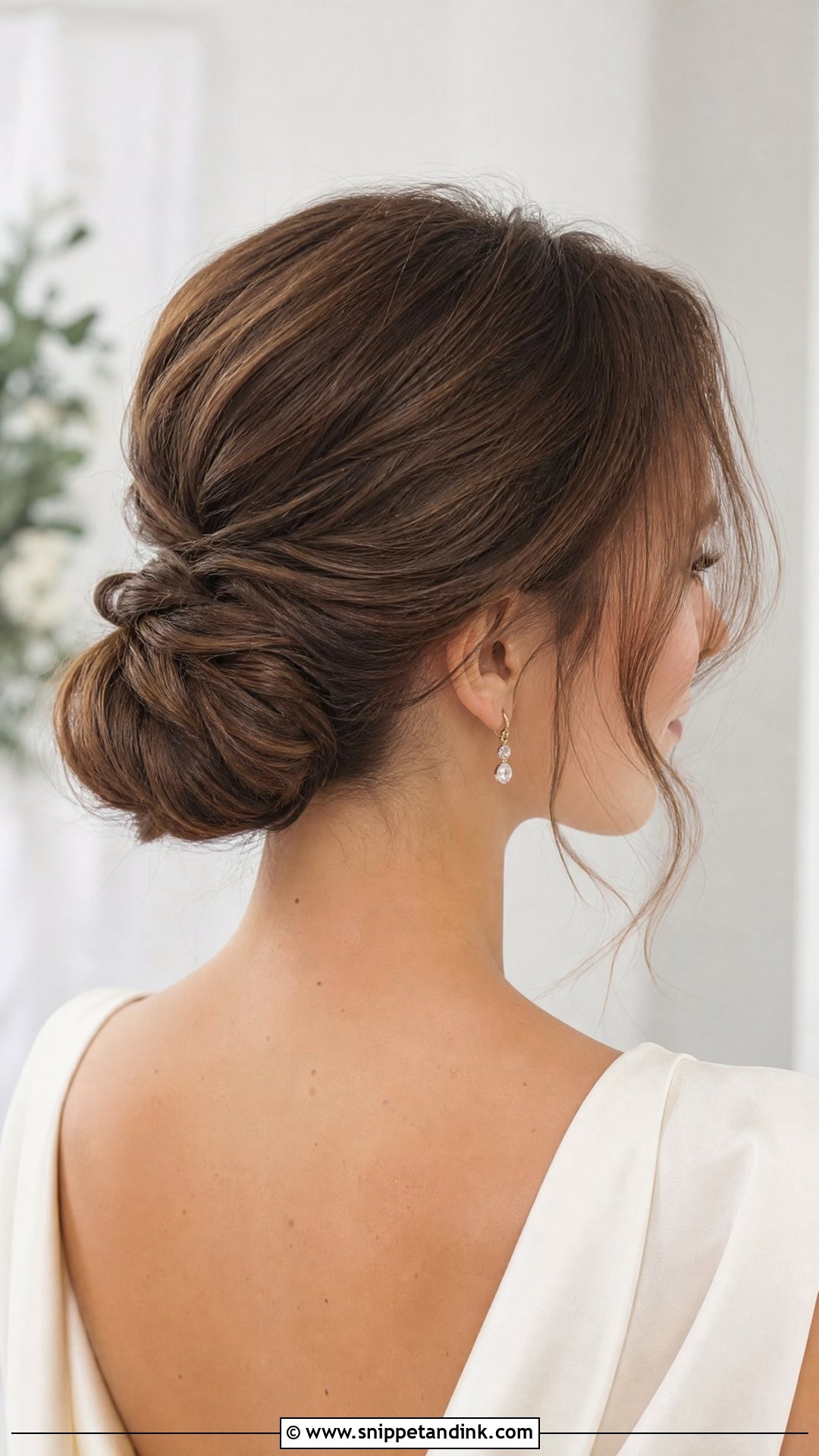
Shoulder or collarbone length can still make a full-looking chignon with good prep. I start with texture spray and soft curls so the hair grips, then tuck it low and add a small padding form if needed. Lobs, layered cuts and finer hair all work. What I avoid is chasing a huge bun on shorter hair; a compact chignon looks far more convincing than an oversized one that relies on obvious fillers. Soft face-framing pieces help balance the smaller shape.
14. Bridal Chignon For Long Hair
Long hair gives me the most options and the most weight to manage. The length can be wrapped, twisted in layers, braided before pinning or folded into a wide tucked shape. Weight is the real issue. A heavy chignon pinned only once drags down toward the neck by the reception, so I anchor it with a hidden elastic and long pins that go into the base, not just the bun. It handles veils, vines and dramatic gowns well and keeps all that length neat.
15. Bridal Chignon For Curly Hair
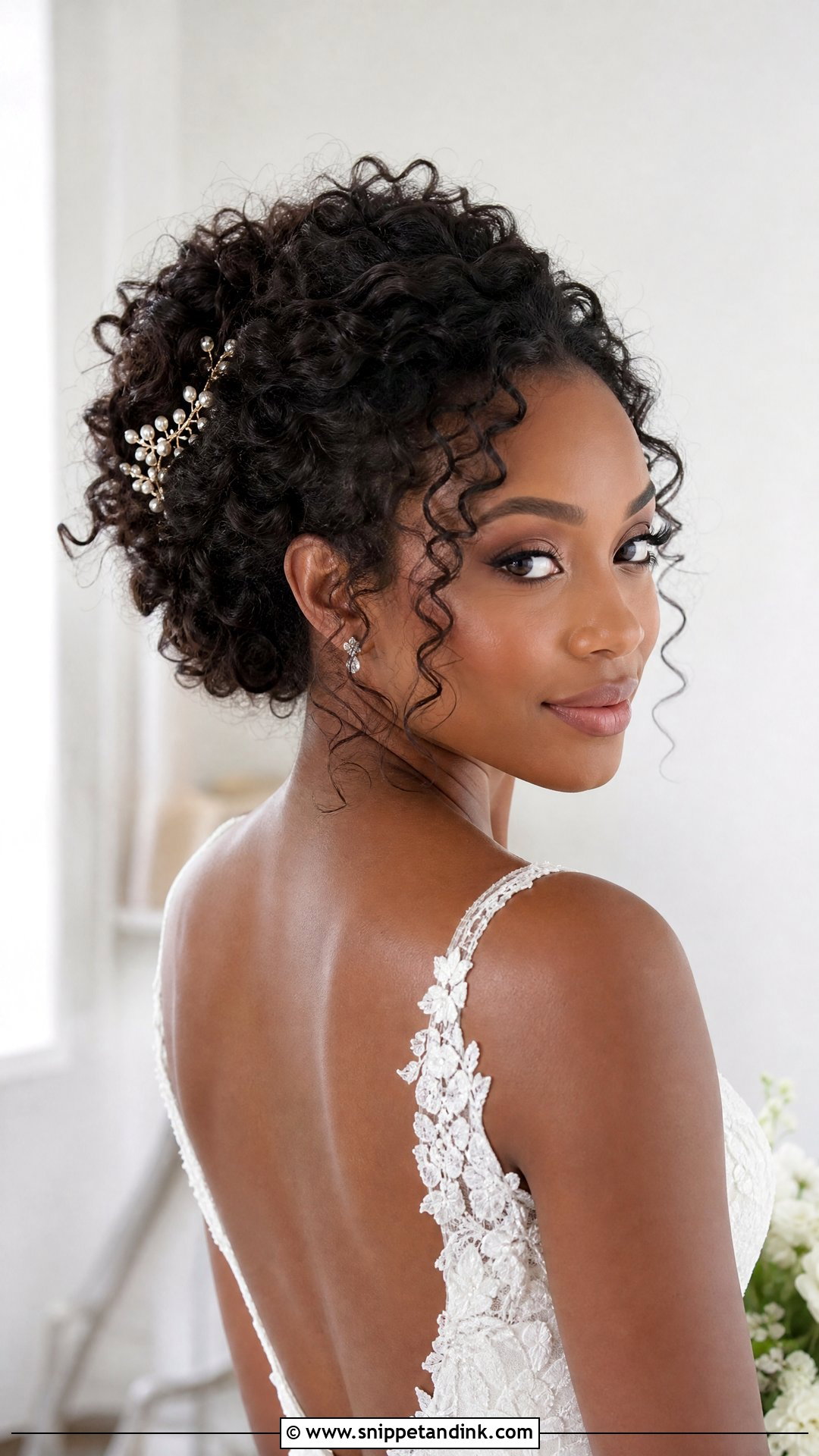
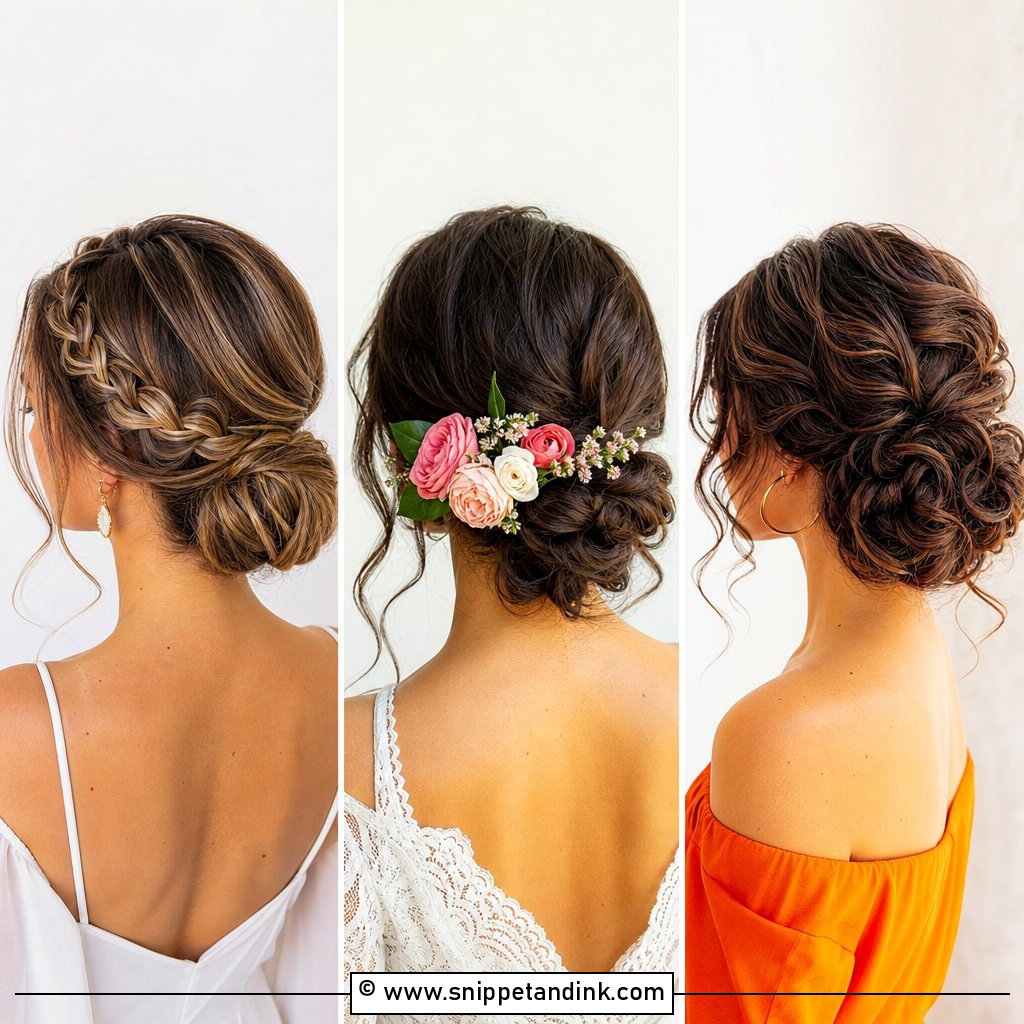
Curly chignons should look curly. Instead of smoothing every curl flat, I use the curl shape to build volume and dimension through the bun. Prep matters most: moisturize and define the curls the day before or that morning, and use a humidity-resistant product so the pattern holds. Then I gather and pin through curl clusters at the nape into a rounded shape, leaving a few curls at the temples. Floral pins, pearls or a veil above the bun all sit well on it.
Layers, Lobs and Short Ends Can Still Make a Chignon
The hair that gives me trouble in a chignon is rarely short hair. It’s layered hair. Short layers around the face and crown slip out of the roll and poke out at odd angles, usually by the walk back up the aisle. Plan your cuts with that in mind.
In the months ahead
If you know you want an updo, ask your hairdresser to stop adding layers and only trim the ends. Even a few extra months of growth on the crown layers makes pinning easier. A big cut close to the date is the riskiest move, because nobody knows how the new shape behaves in an updo until it’s too late to adjust.
Above the shoulders
A small, low knotted chignon is realistic for many lob lengths, especially if I braid or twist the sides first to gather the short pieces. For more fullness, clip-in extensions or a padding form fill the shape. Buy clip-ins well ahead so they can be color-matched and blended at the trial.
Very long, thick hair
Here the problem flips: there’s too much hair, and a single knot gets heavy and drags. I’ll often braid some of the length and hide it under the shape, or choose a rolled chignon, which spreads the weight across the nape better than a round one.
Save a Photo of the Chignon You’d Never Wear
If one of these caught your eye, save it alongside a photo of a chignon you don’t like. I often learn more from what a bride rejects than what she loves, because it tells me how much polish or looseness she really means. Wear the trial version through an afternoon of normal life, then check it from the side in a mirror before you decide. A chignon that still feels like you after five hours is the one to book.
You'll Like These Ideas:


Leave a Reply