
An updo has a practical job before it has a pretty one: it has to stay put through a veil, a hug line, a windy portrait session and several hours of dancing. When it’s built well, it also frames your face and finishes the line of the dress. I’ve grouped these looks loosely from the classic knots to the softer, textured shapes, with a few that lean on loose tendrils or braids for movement. Almost every one can be adapted to shorter, finer or curlier hair than the photo shows, and I’ll point out where that adaptation matters.
Your Hair’s Weight Decides More Than the Photo Does
Most inspiration pictures show thick, long, freshly styled hair, often with extensions. Your own hair might behave very differently, and the shape that suits it depends on how heavy it is and how well it holds a curl.
Fine or slippery hair
Fine hair struggles to grip pins. I add texture at the roots, curl and set every section, and favor braided or twisted shapes because the twists give the pins something to hold. A clip-in piece hidden underneath adds bulk where needed.
Thick, heavy hair
Heavy hair pulls an updo downward over the day and can give you a headache if everything hangs off a few pins. I tie a hidden base ponytail first and build on it, and I keep the shape low so the weight sits on the nape instead of the crown.
Layered cuts
Short layers escape sleek styles. If your cut is heavily layered, a textured or braided updo hides the ends far better than a smooth chignon or French twist.
1. Low Chignon Wedding Updo
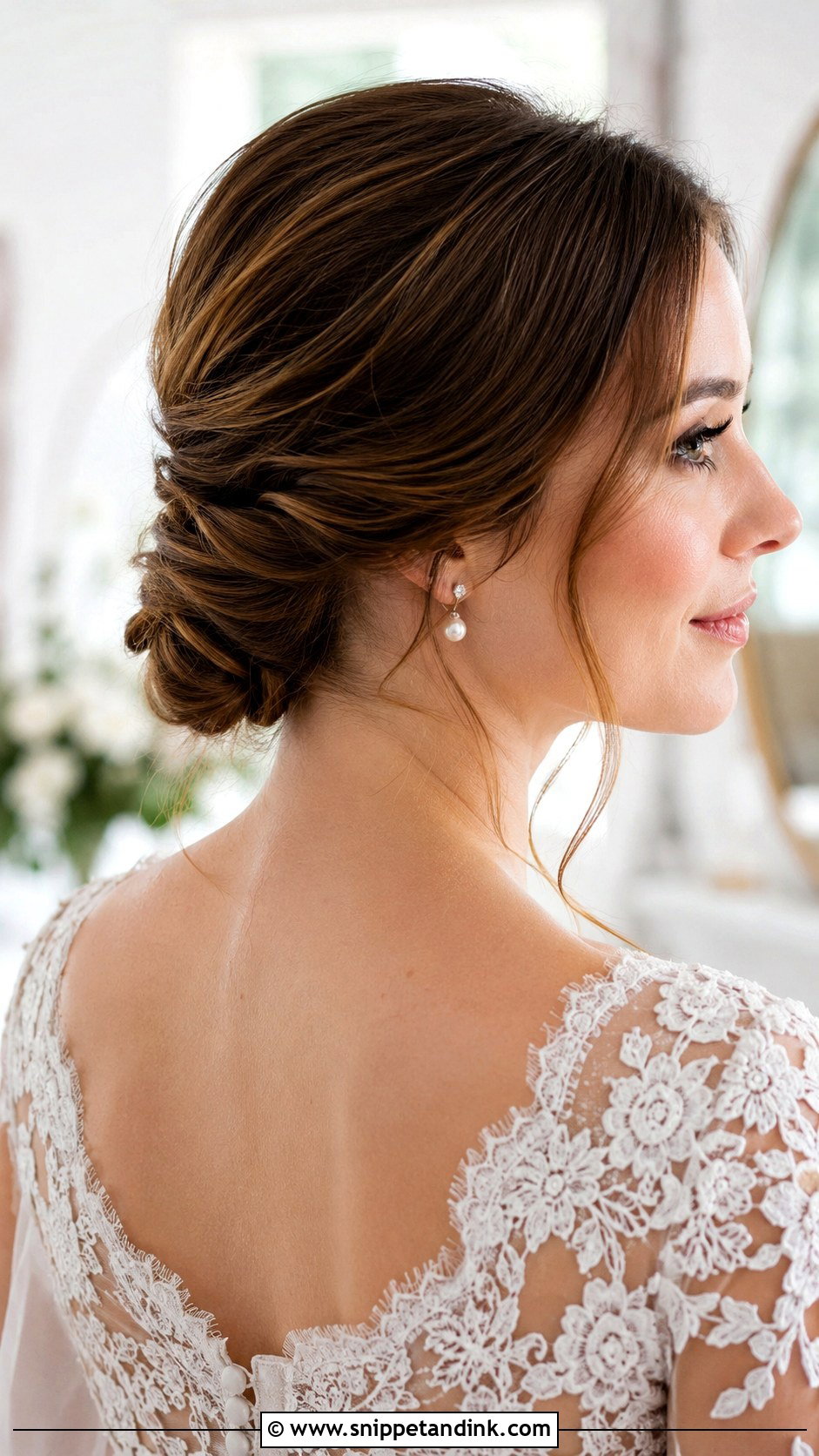
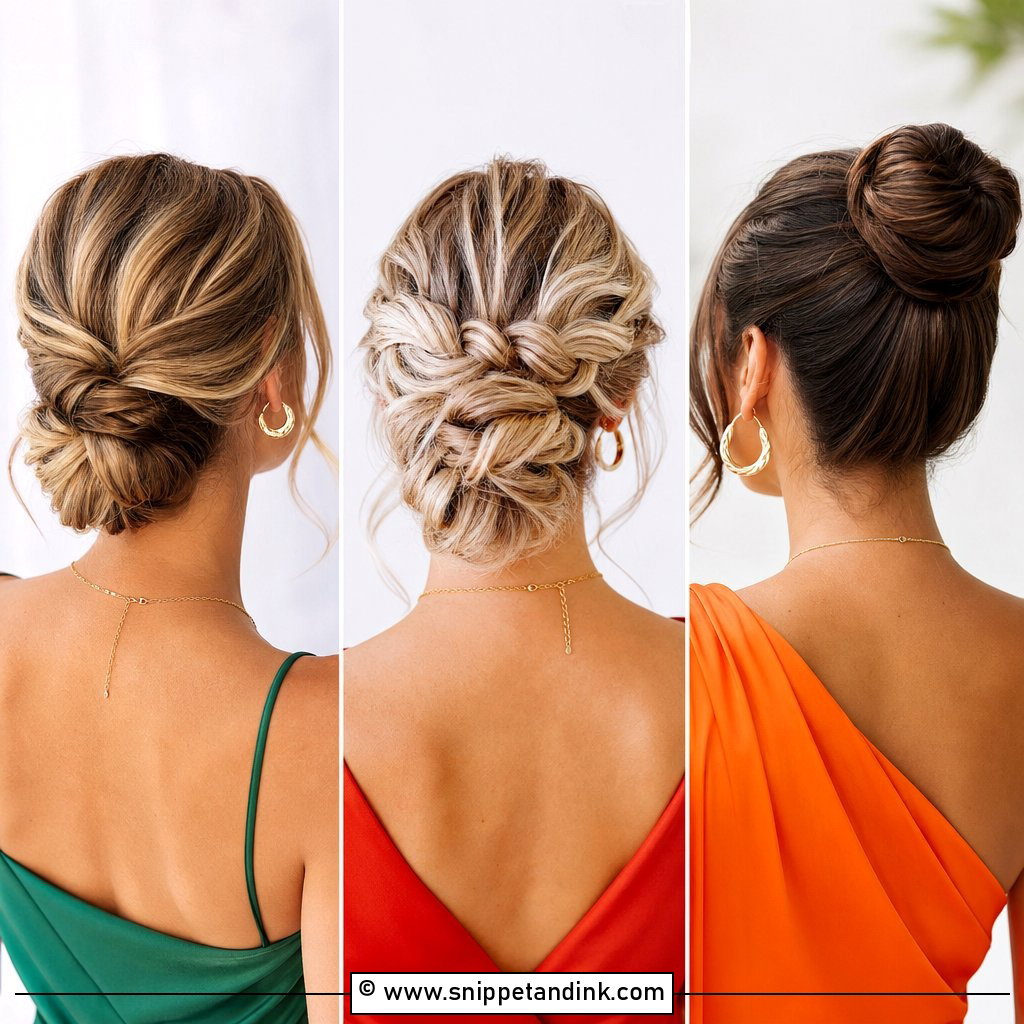
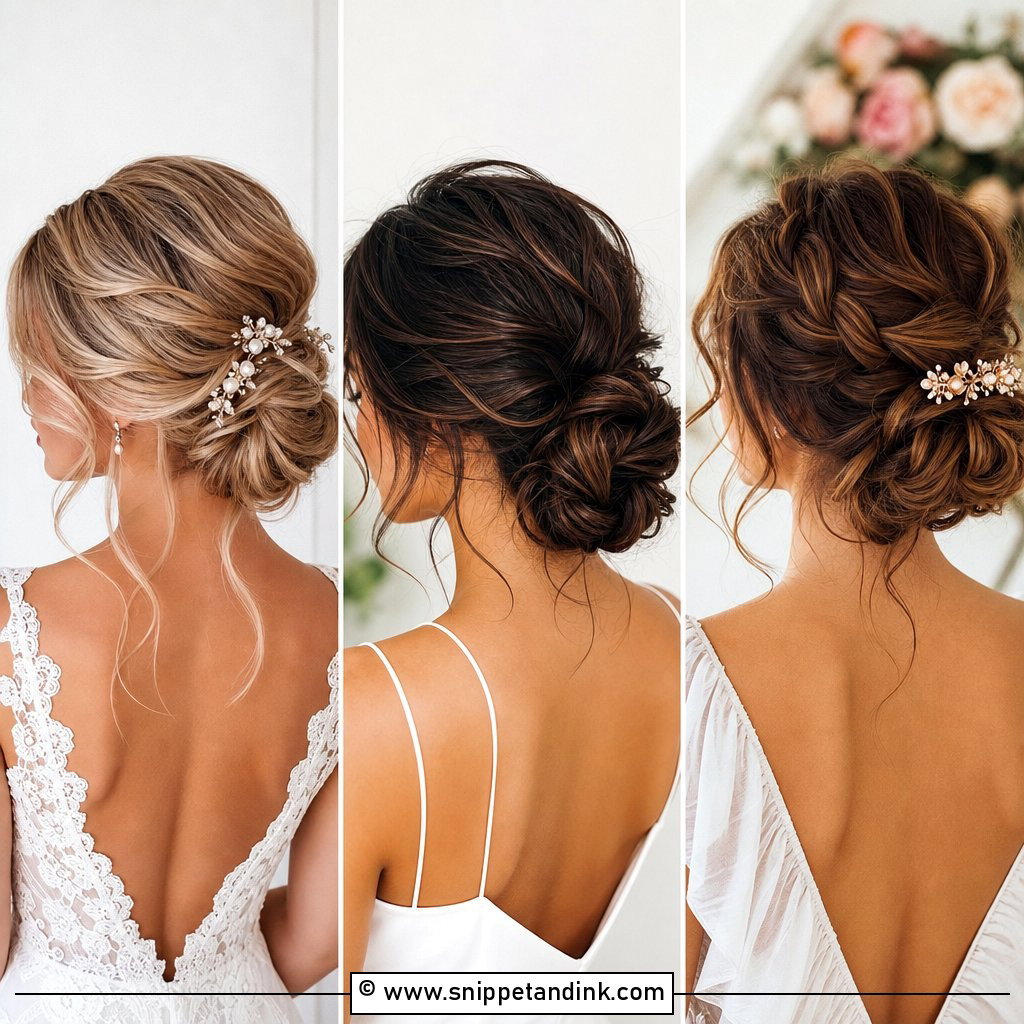
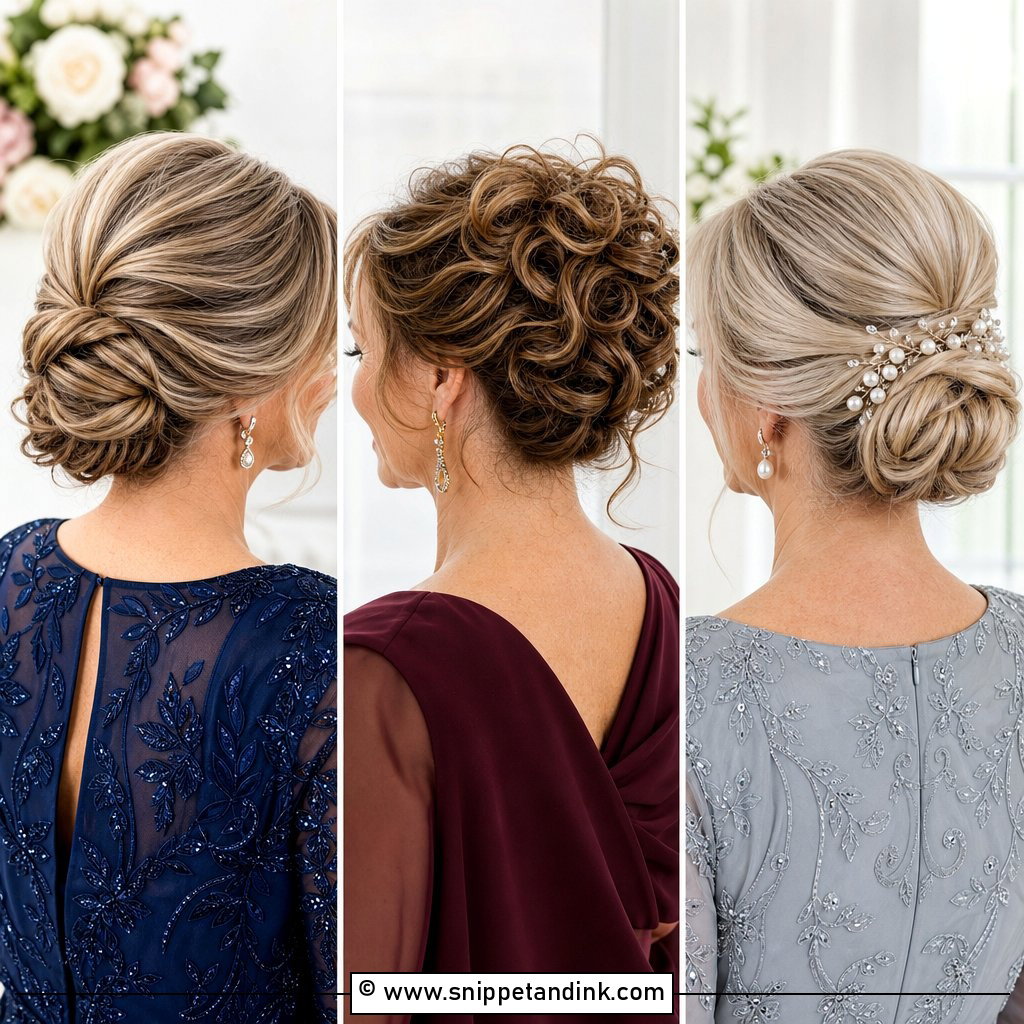
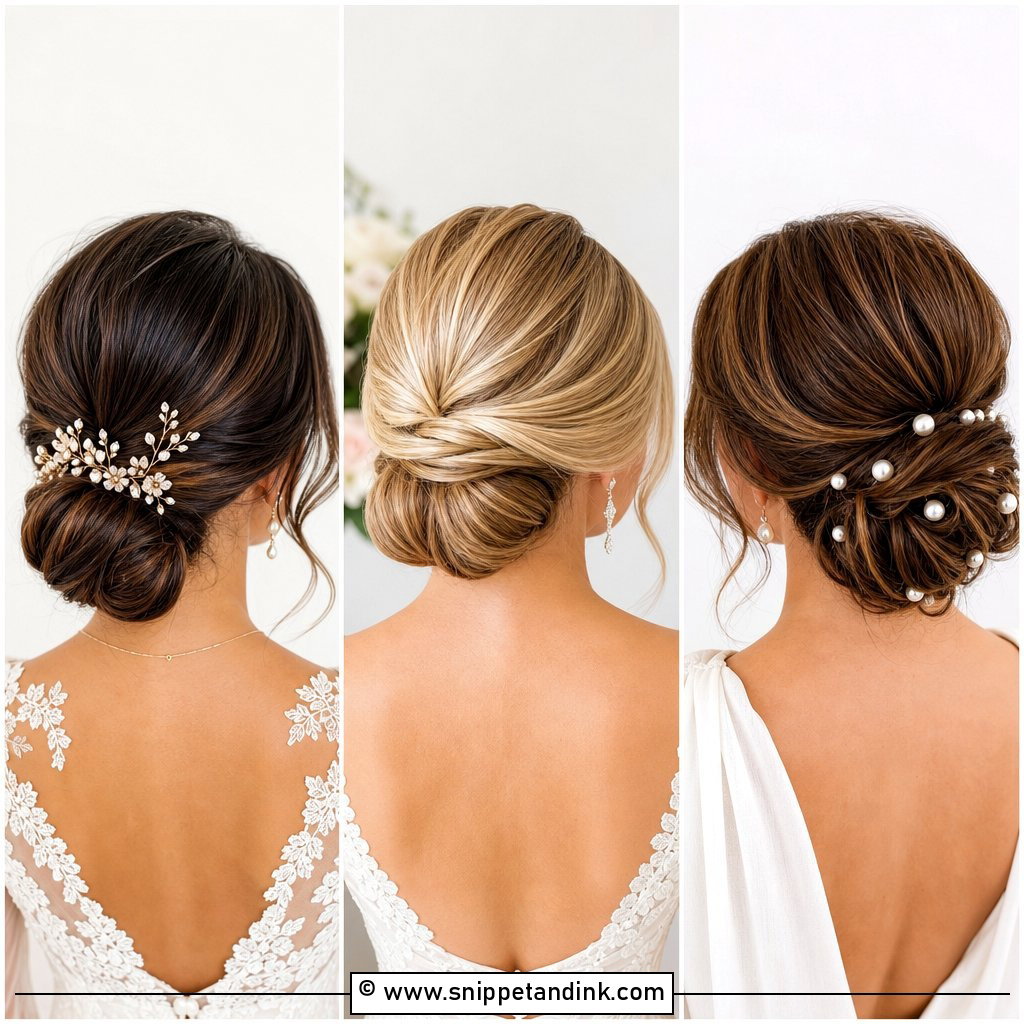
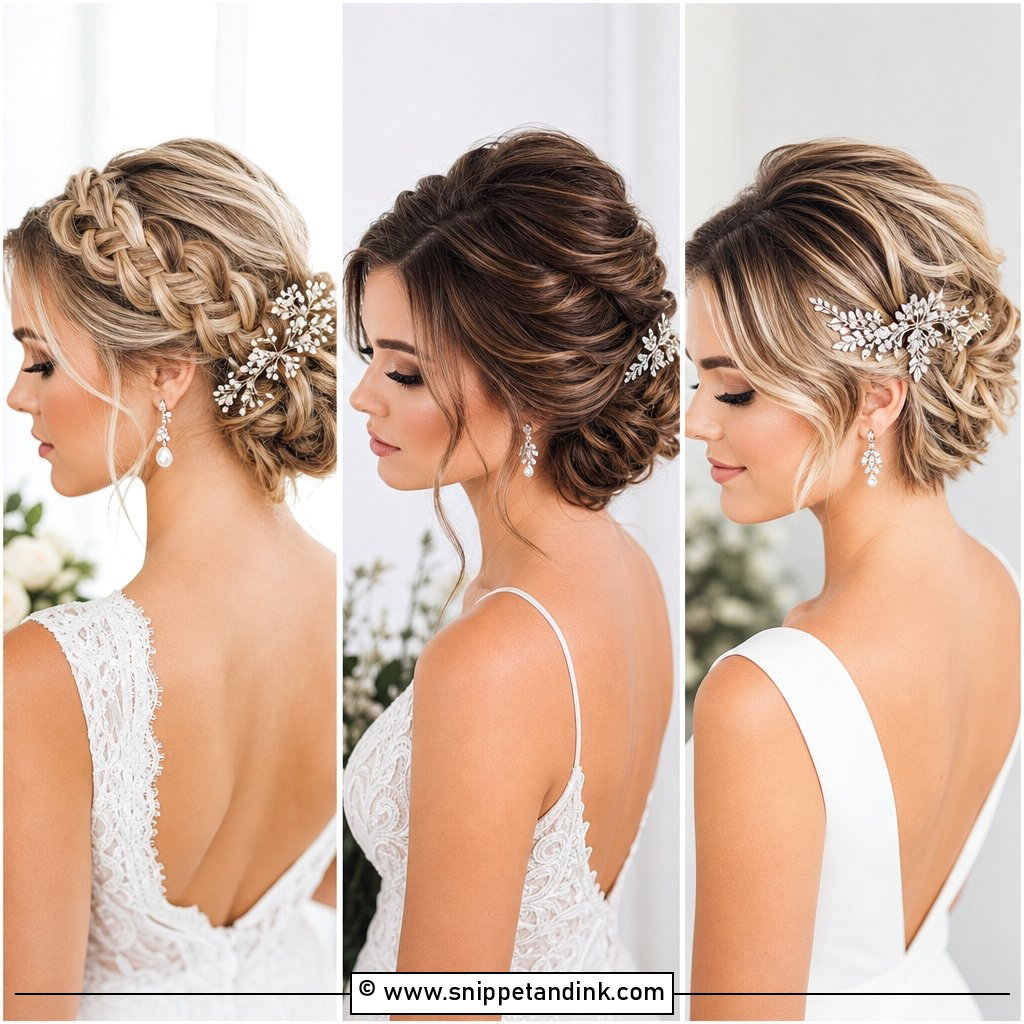
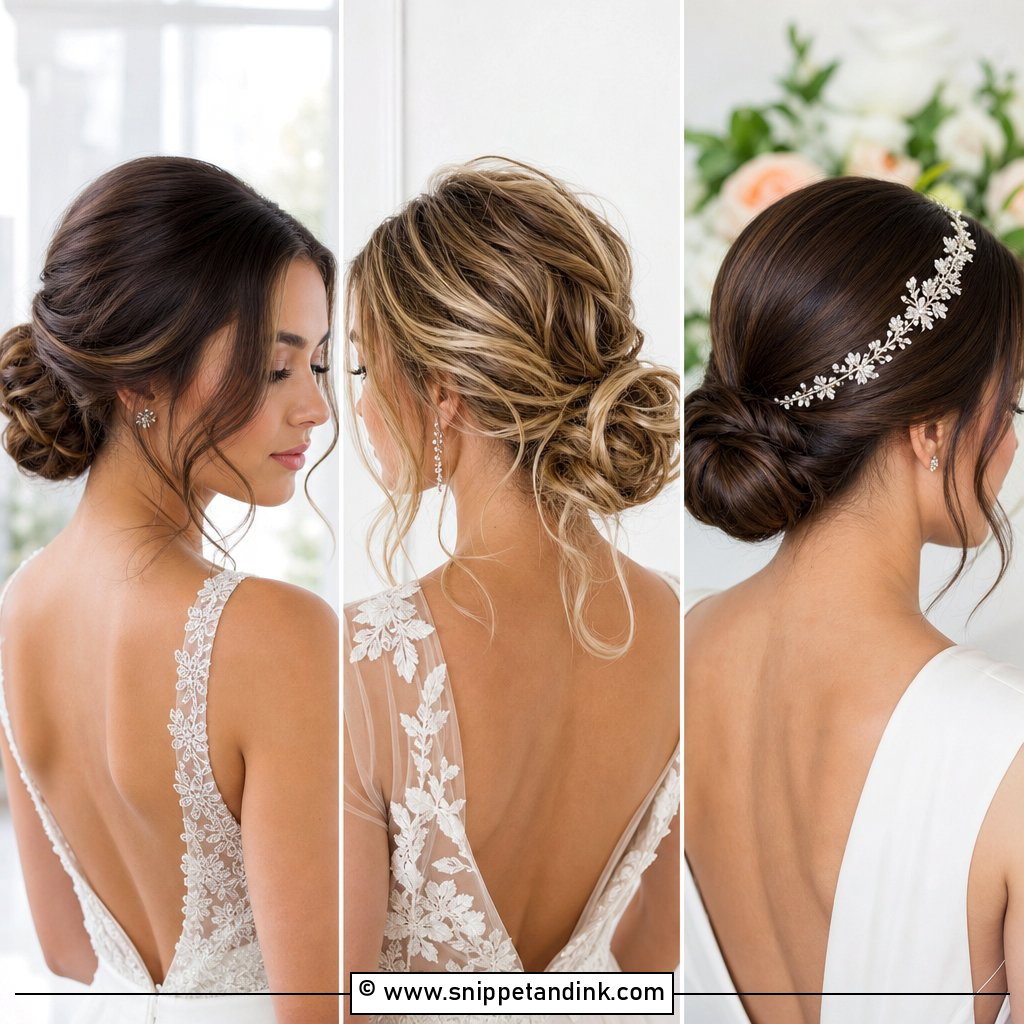
A chignon sits at the nape, which makes it one of the most comfortable updos to wear all day: no weight pulling at the crown, nothing pressing when you lean back in a car seat. I gather the hair low, twist it into a neat knot and secure it with crossed pins, then spin a couple of U-pins through the center so it can’t slide. A veil comb tucks in right above it without any extra anchoring. Pulling a few pieces loose around the face keeps it from looking severe, especially next to a structured gown.
2. Messy Bun Bridal Updo
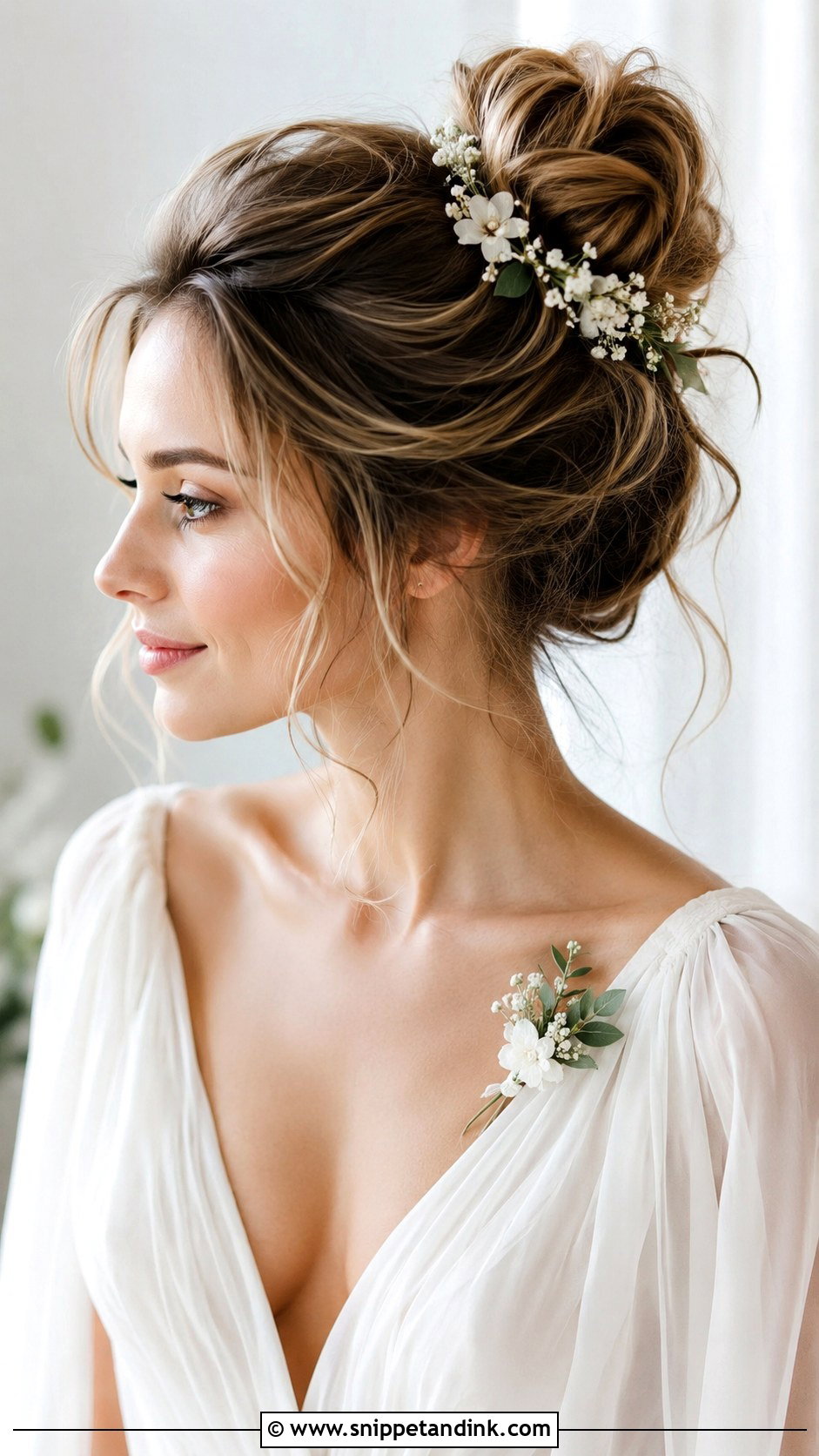
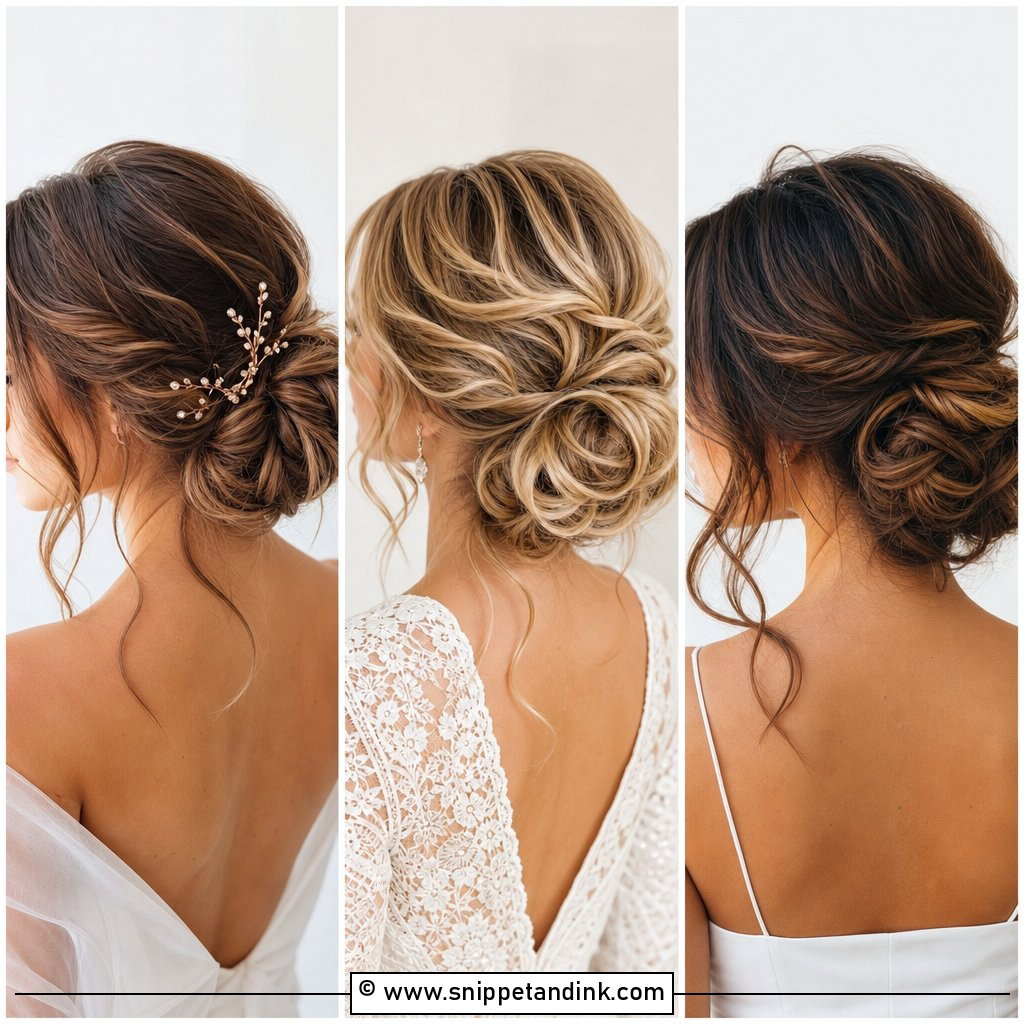
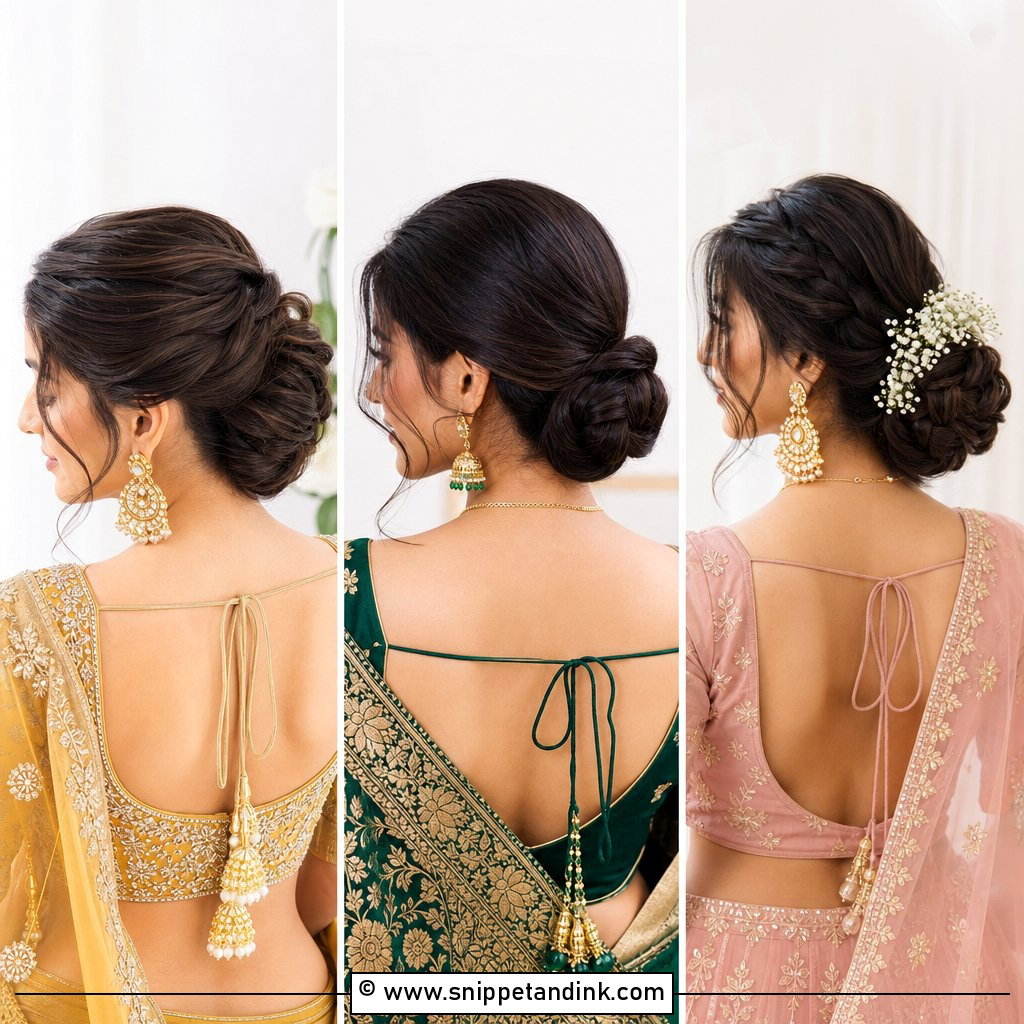
A messy bun is the updo people assume takes five minutes, and it’s often the one that takes longest to get right. The undone look comes from setting the hair with a curling iron first, then pinning each section loosely so the texture sits on top of a secure base. Without that hidden structure, a loose bun drops by the reception. I pull the wispy face pieces last, after the bun is anchored. It’s at home at a garden or boho wedding with a single floral pin. Very slippery, freshly washed hair is the enemy here, so I prep it with a texture spray before anything else.
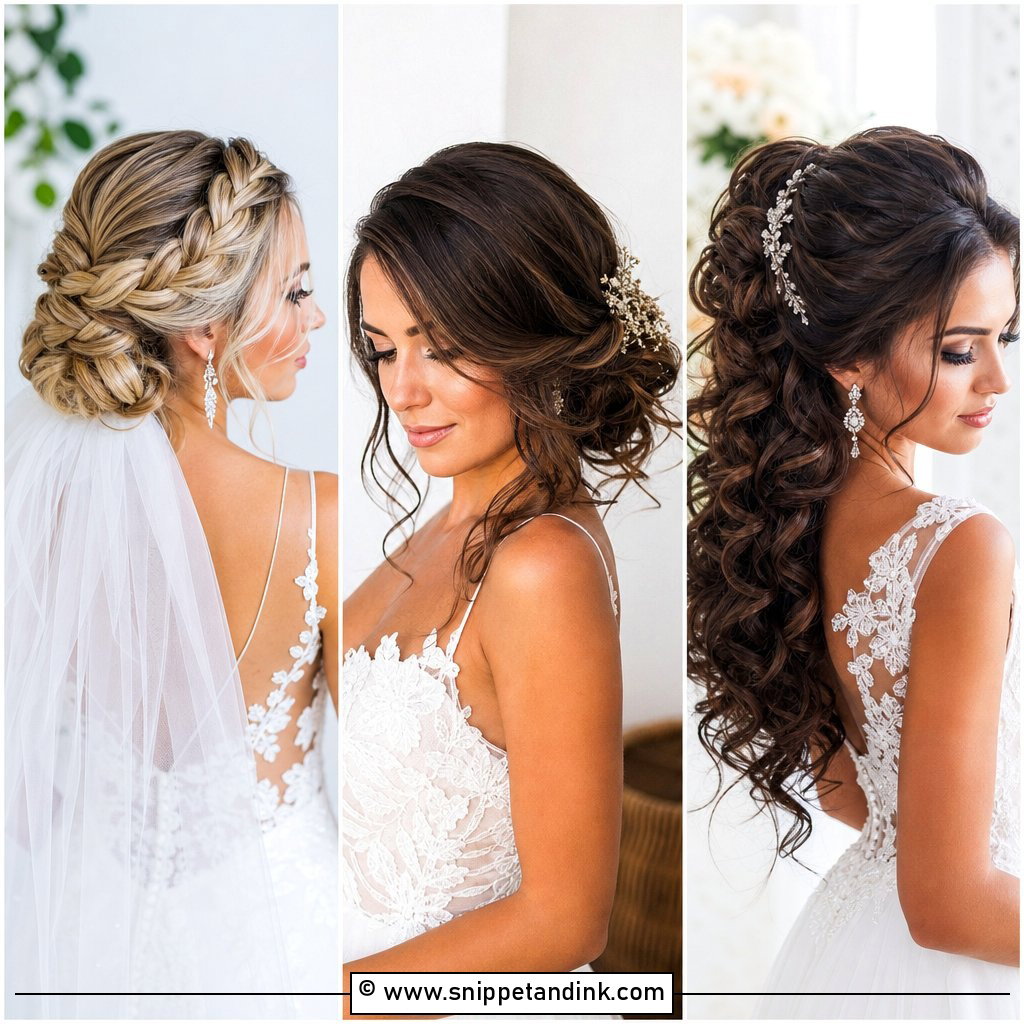
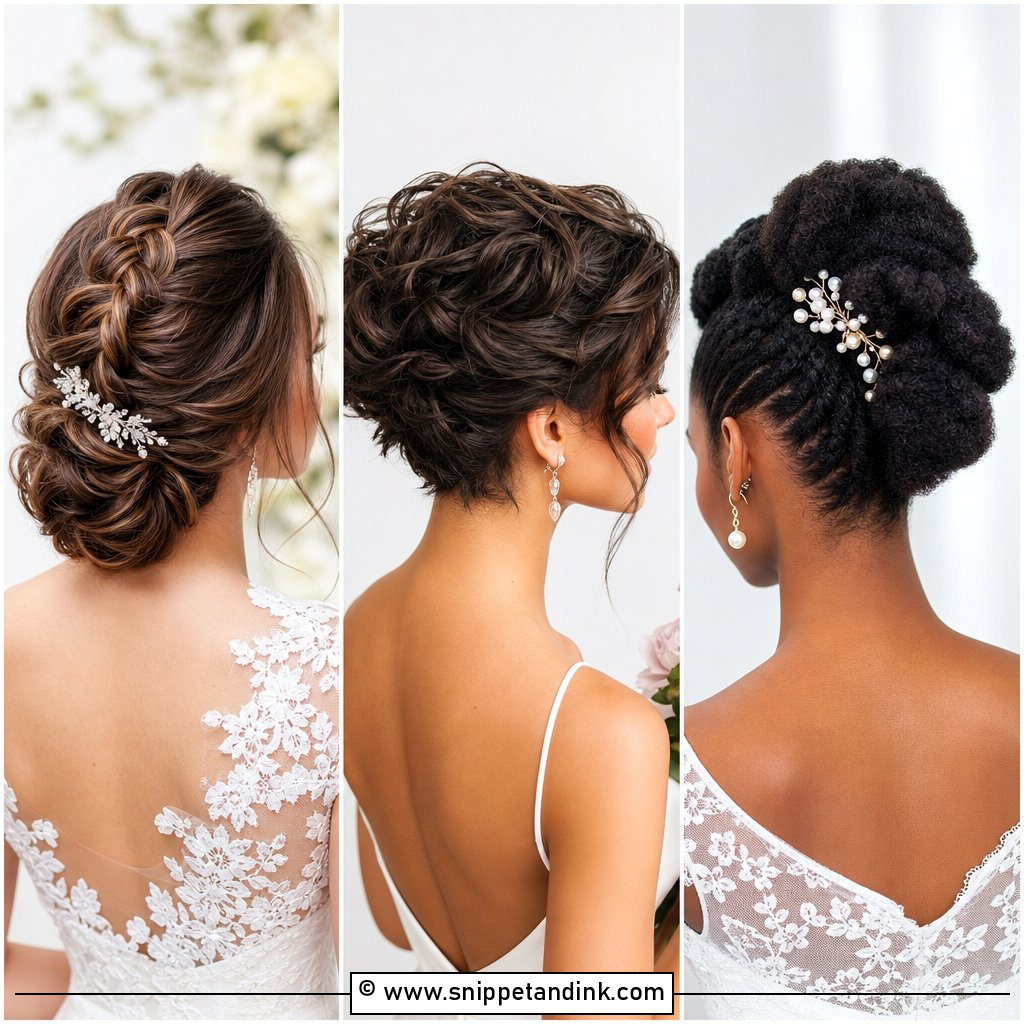
3. Braided Bun Updo for Brides
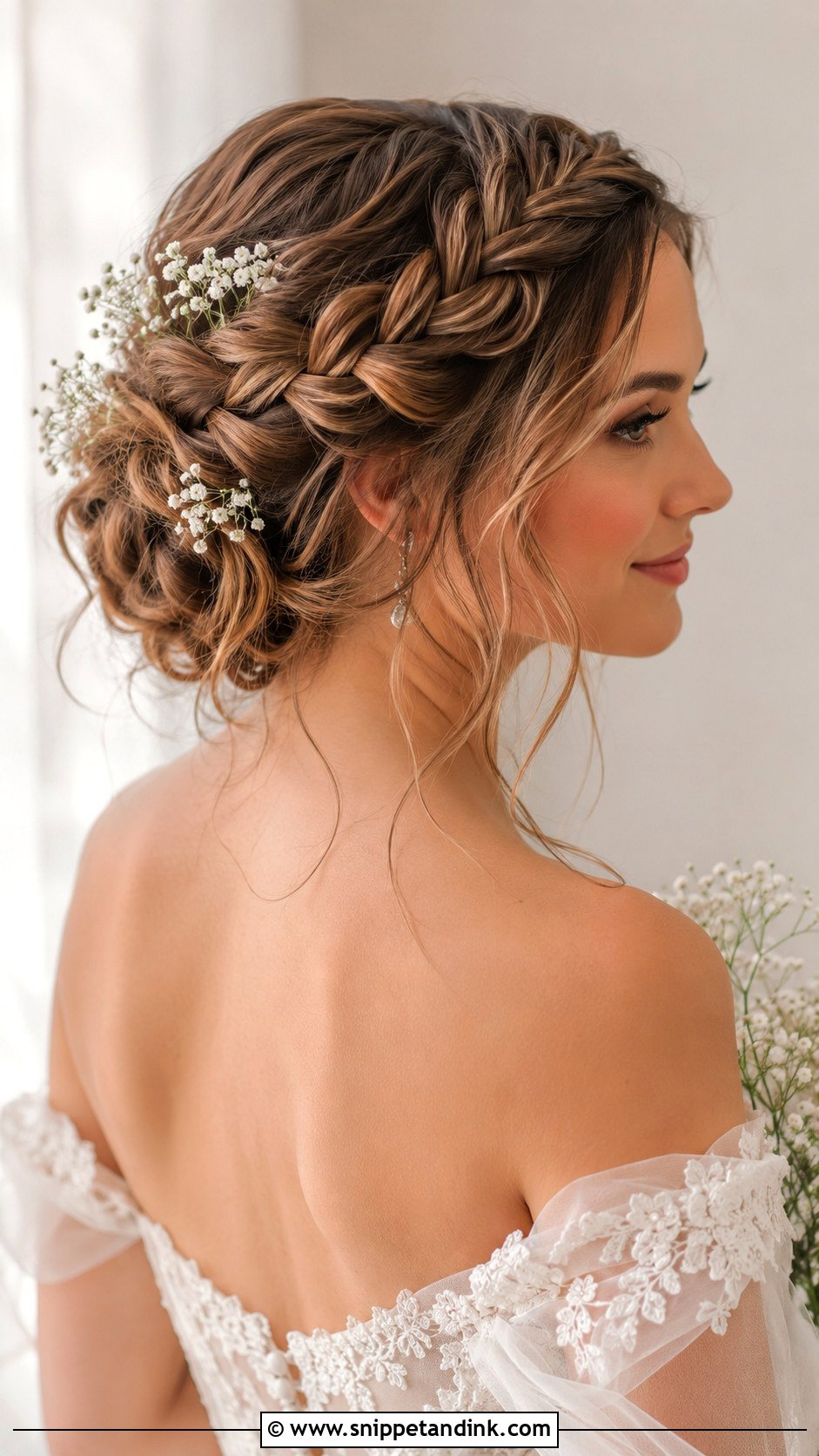
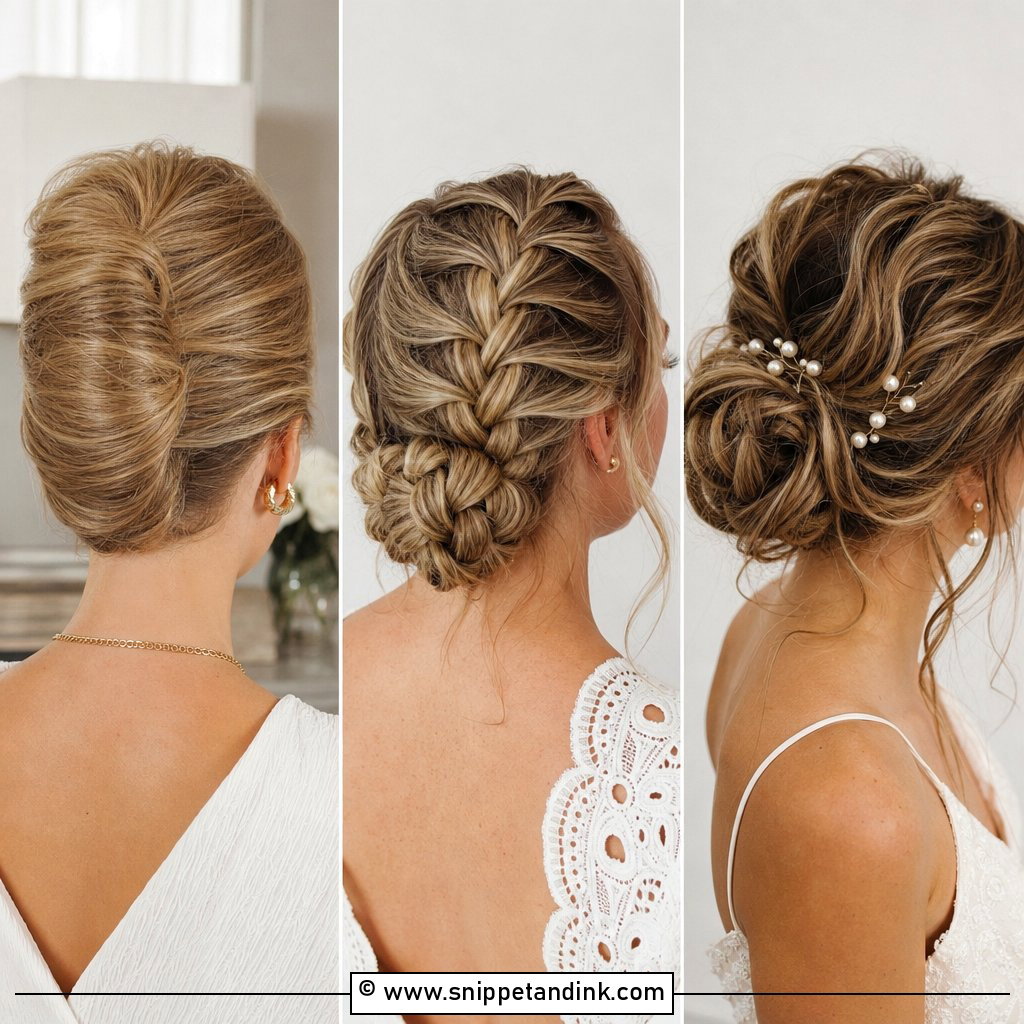
Braids add texture and grip, which is why braided buns tend to hold through long days better than smooth ones. I’ll wrap a single braid around the base or weave two or three into the bun for a fuller effect. Pancaking the braid, gently pulling the edges outward, makes it look thicker than the hair really is, a trick that helps a lot on fine hair. Small flowers tuck naturally into the gaps between plaits. The one drawback: a braid shows any shorter layers poking out, so on heavily layered hair I use a little pomade on each section before I braid it.
4. Soft Curls Updo Wedding Style
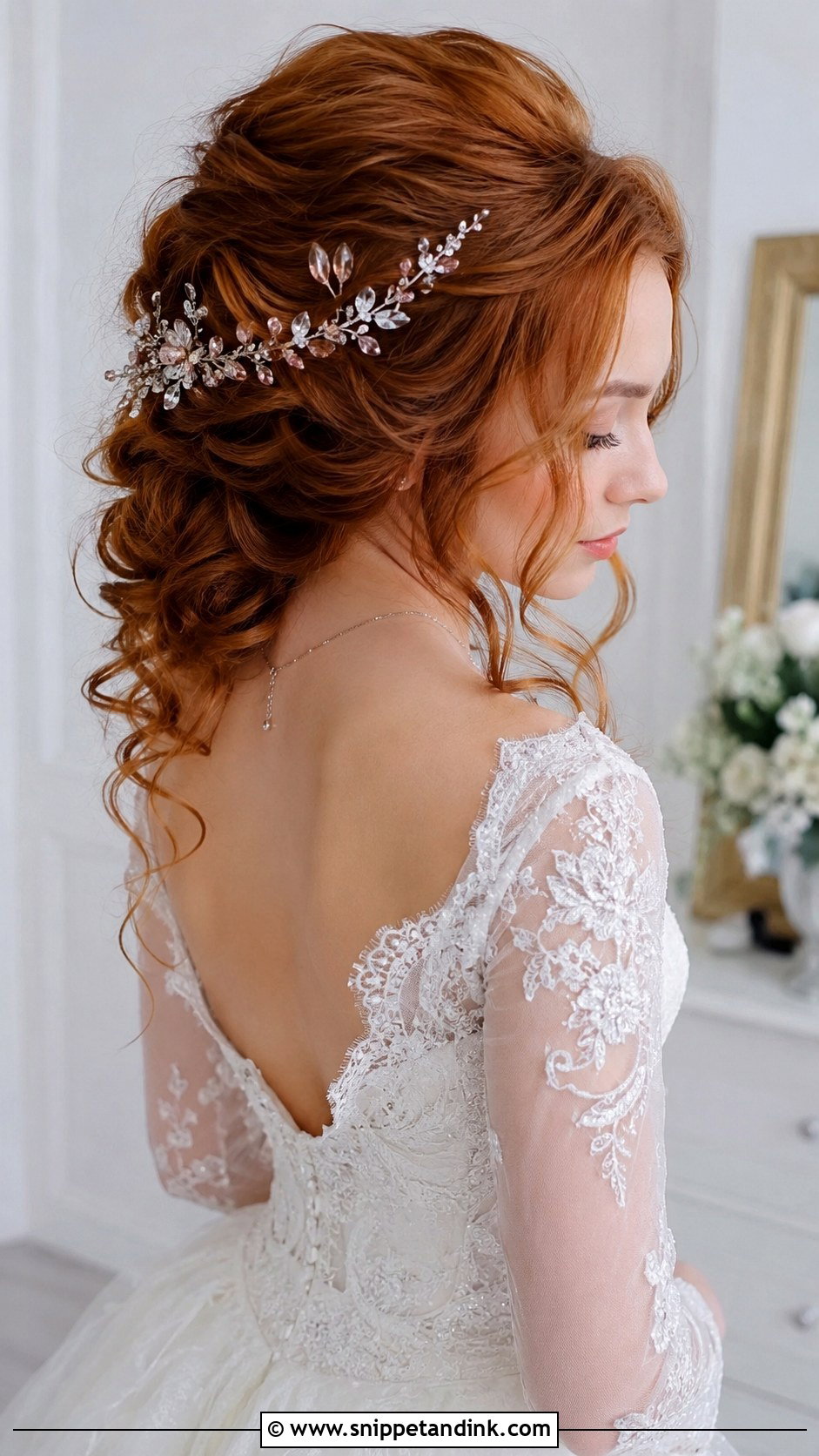
Here a gentle bun is surrounded by curls pinned loosely at the back, with tendrils escaping at the front. The part brides don’t see is the setting: I curl each section, pin it up in a coil while it cools, and only brush it out once it has set, because curls that are pinned warm fall flat within the hour. That cooling step is what makes the shape survive humidity. It gives volume and movement without committing to fully down hair, and it sits comfortably with lace and a fuller skirt. Fine hair needs a light backcomb at the root under each curl, or the whole shape can look sparse from behind.
5. French Twist Wedding Updo
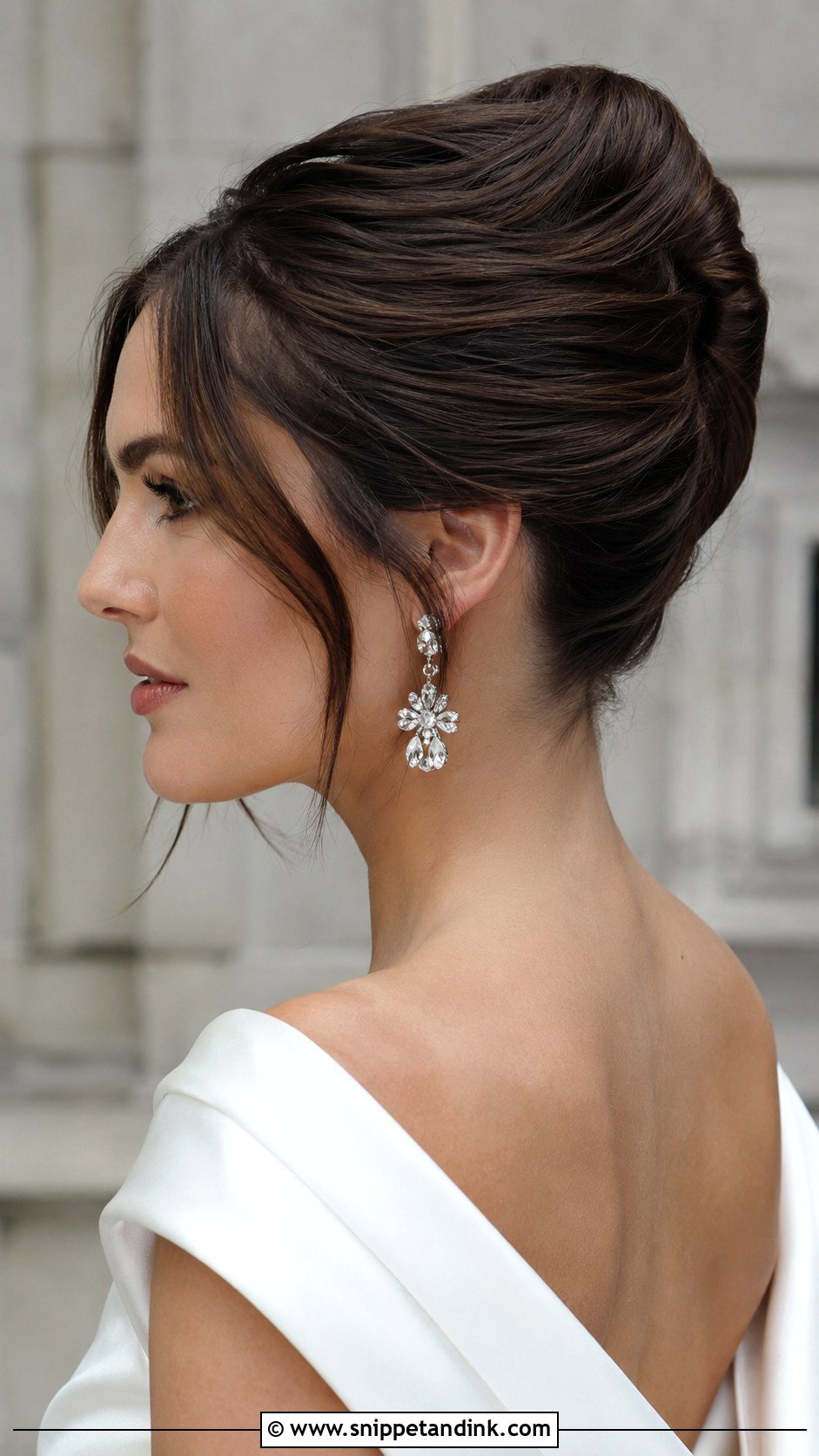
The hair is swept to one side, twisted vertically and tucked into a smooth column at the back. A French twist depends on length and density: it works best from shoulder length down, on hair that has been blow-dried smooth. I secure it with pins interlocked along the seam, which is why a good twist feels solid when you touch it. Very short layers around the nape tend to escape, so I check them at the trial. Statement earrings and a structured gown suit its clean silhouette, and a veil can sit at the base or just above the fold.
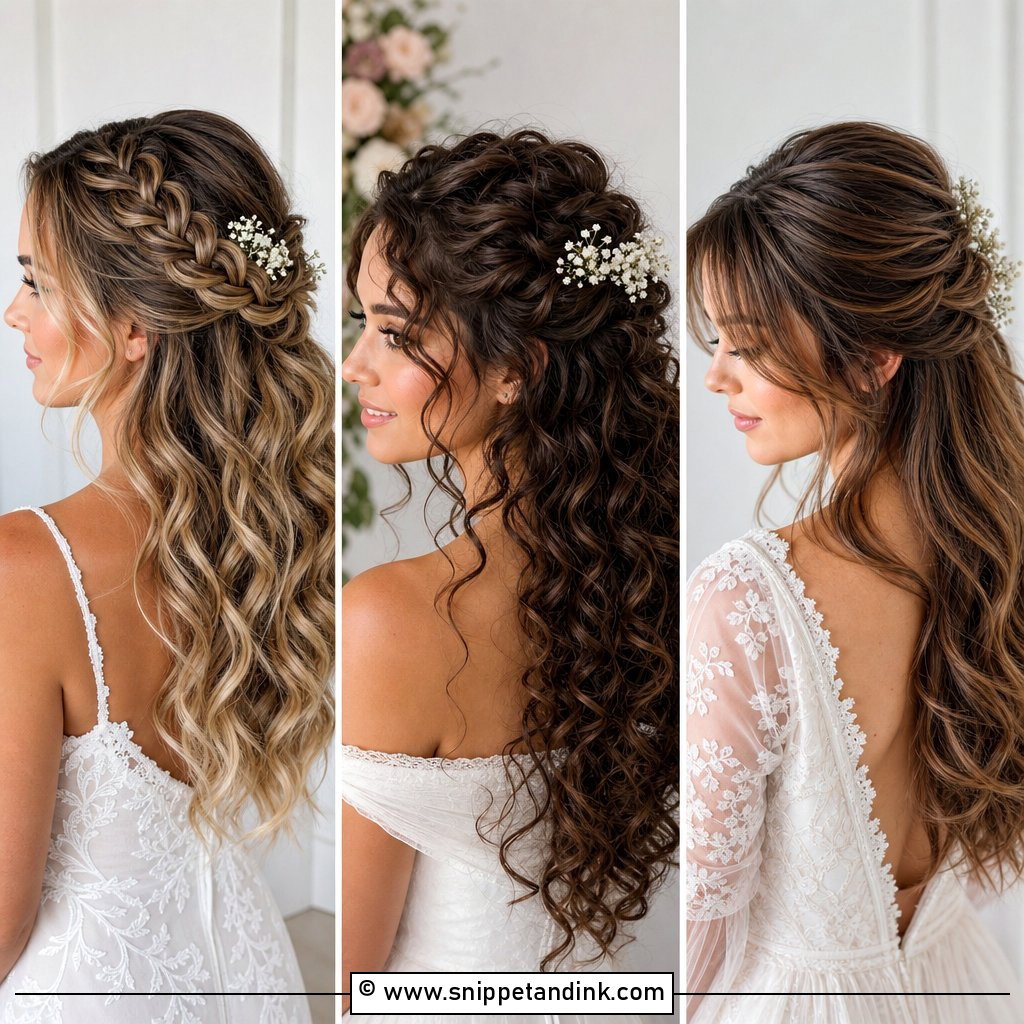
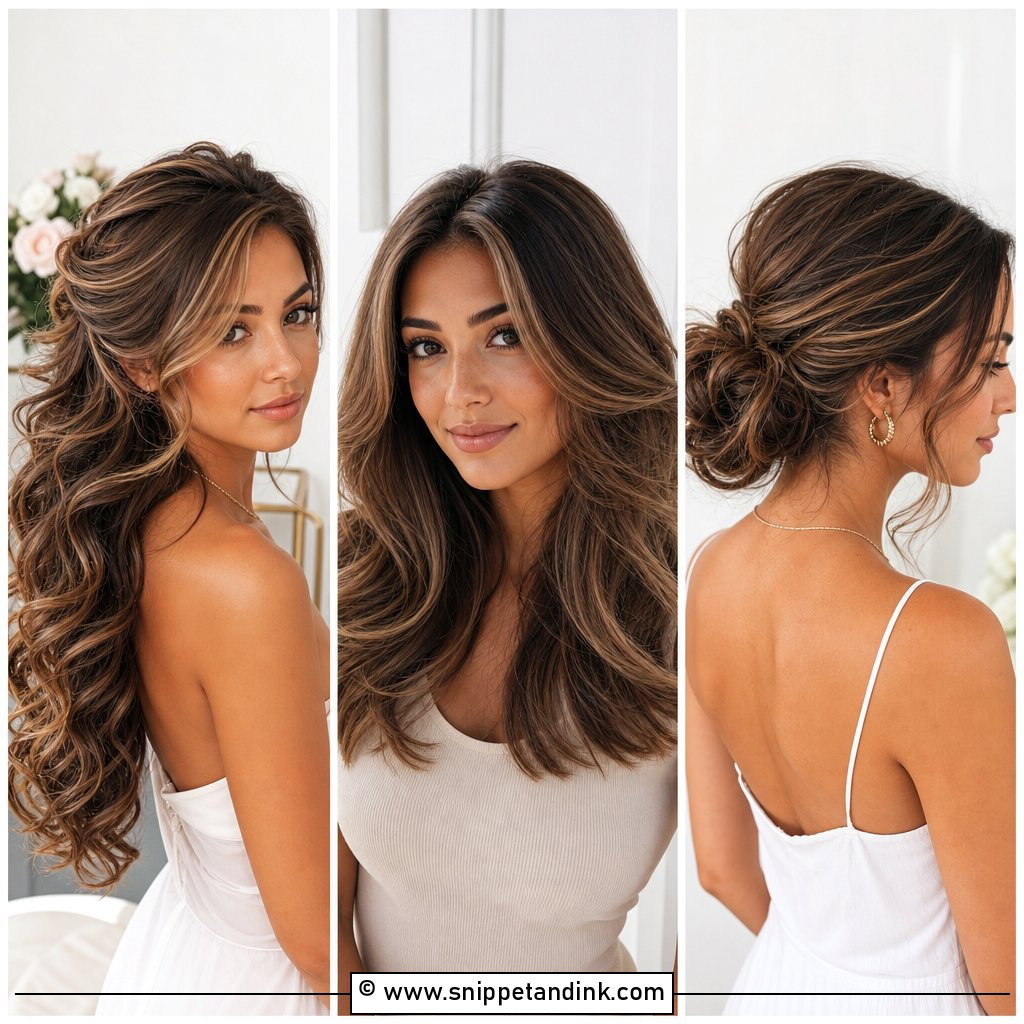
6. Half-Up Half-Down Bridal Updo
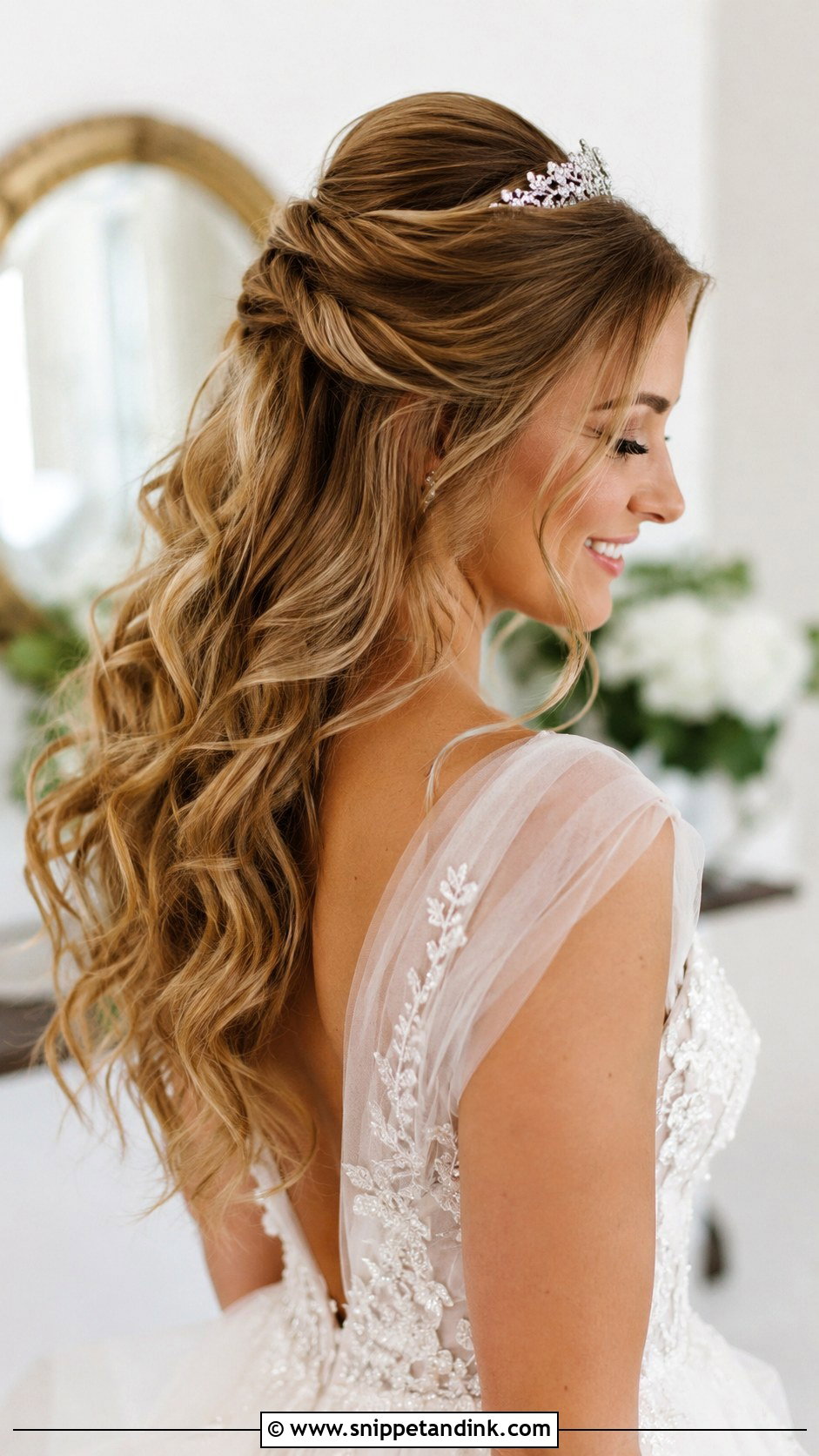
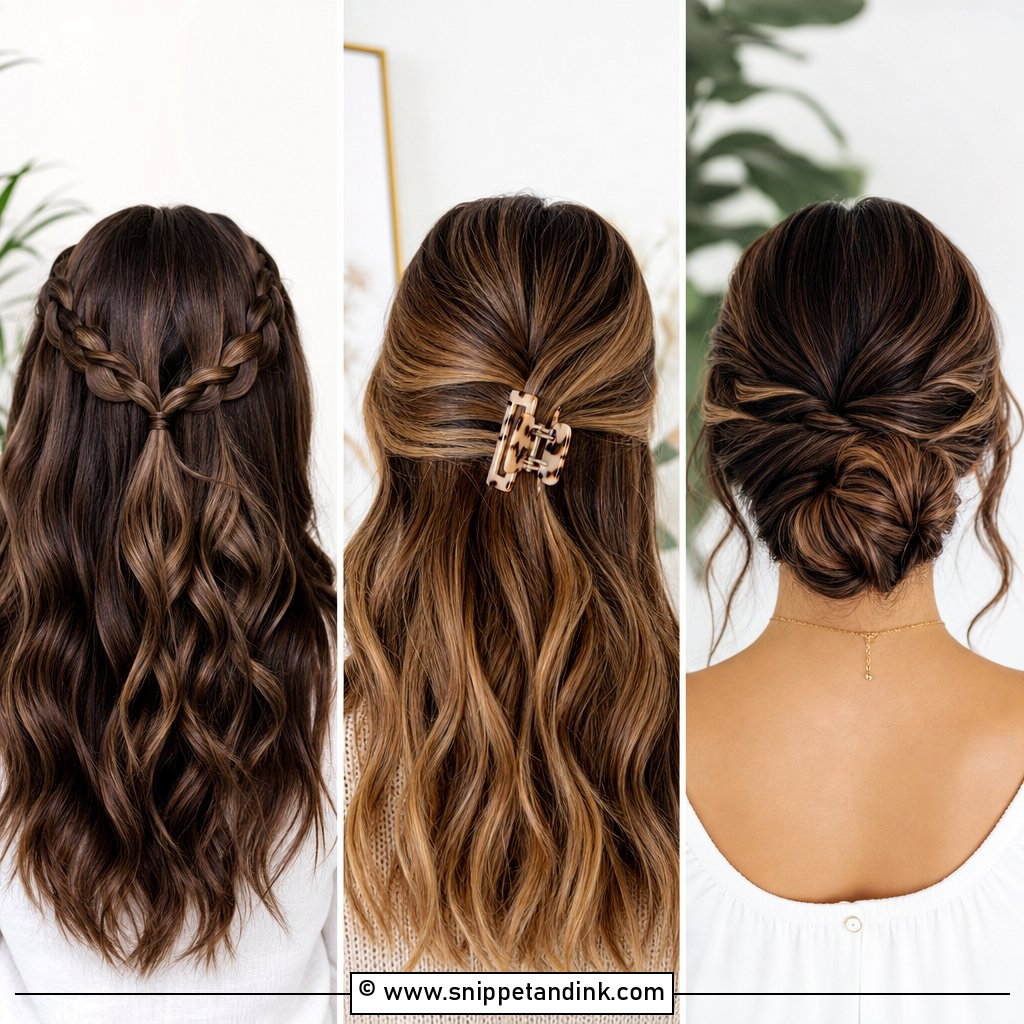
Can’t decide between up and down? Half-up gives you both, with the top section pinned back and the length falling in waves or curls. I secure the top with a small hidden elastic or crossed pins so it stays tight against the head, then add twists or a mini bun for detail. What usually goes wrong is the down part: waves lose their shape in heat and humidity long before an updo would. I curl with a smaller barrel than the final look needs and set it with spray, so it relaxes into the right wave by the ceremony instead of falling straight. A veil or tiara attaches neatly above the pinned section.
7. Twisted Low Bun for Weddings
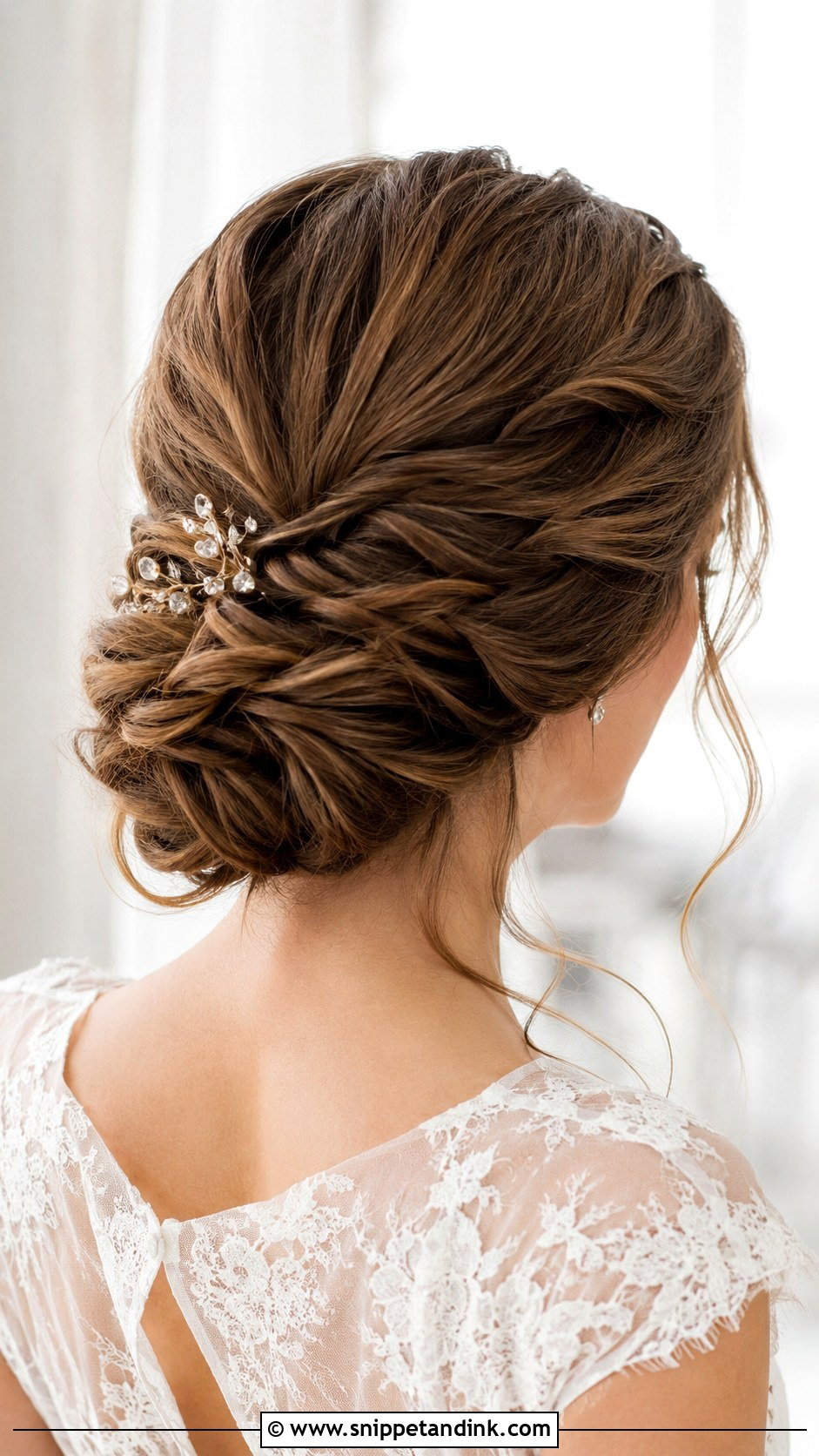
Instead of one plain knot, sections are twisted individually and then gathered at the nape, so the back of the head shows layers of texture. That matters more than people expect, because during the ceremony your guests look at the back of your hair for a long time. Each twist is pinned on its own, which spreads the weight and keeps the bun firm. It suits a bride who wants detail without braids. Leave a few strands loose at the temples to soften the finish and pair it with a single hairpin rather than several.
8. Floral Accented Wedding Updo
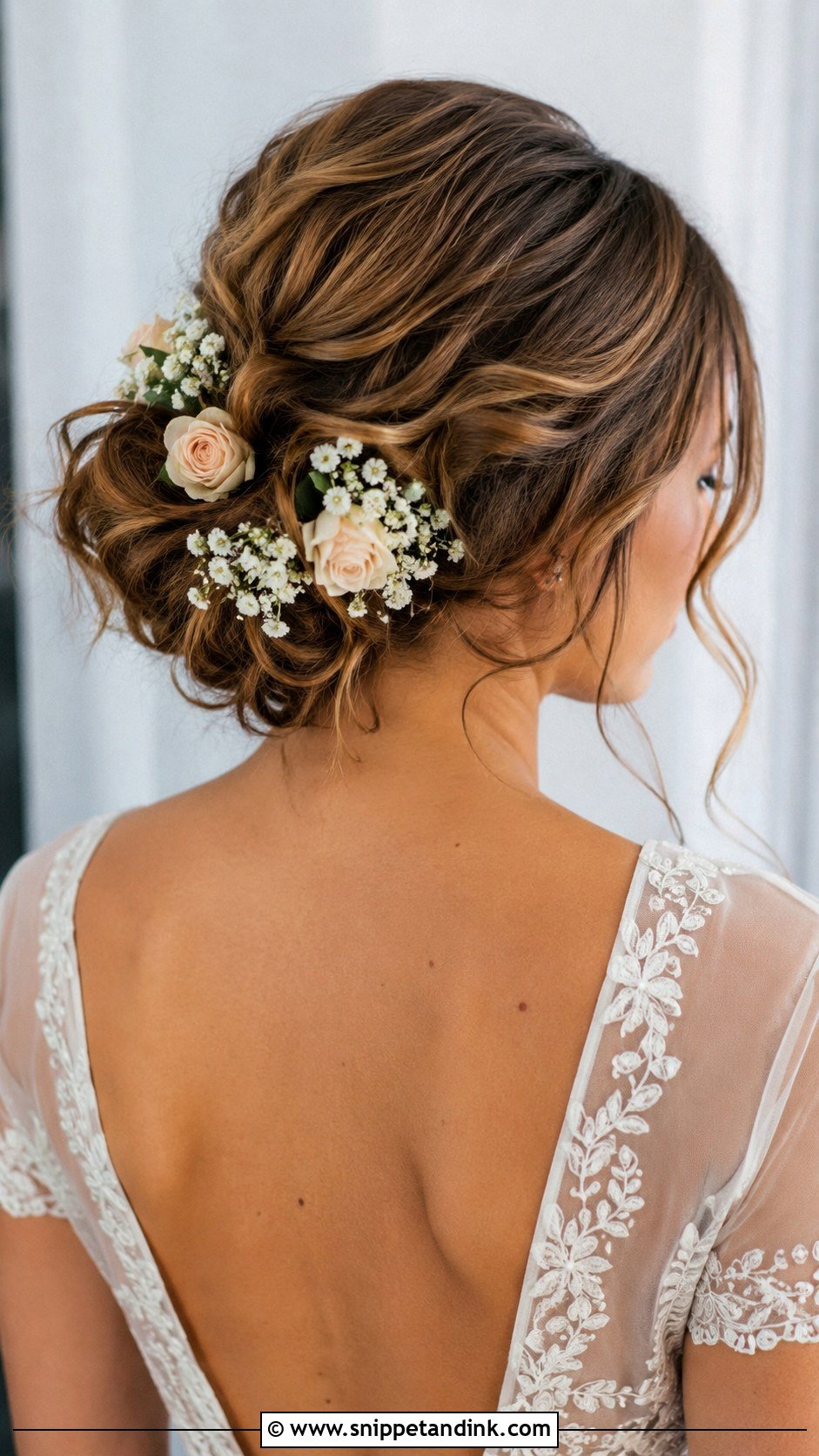
Flowers turn an updo into something you can’t buy off a shelf, but they need planning with your florist. A floral updo works real or silk blooms into the style, either scattered through it or grouped to one side. Sturdy stems like spray roses and baby’s breath last; delicate petals wilt against the warmth of your head within a few hours. I ask the florist to wire or tape the stems and keep them in water until the last moment, then pin them in after the hair is finished. For an outdoor summer wedding, good silk flowers are the safer choice, and in photos almost nobody can tell.
9. Sleek Low Bun Bridal Style
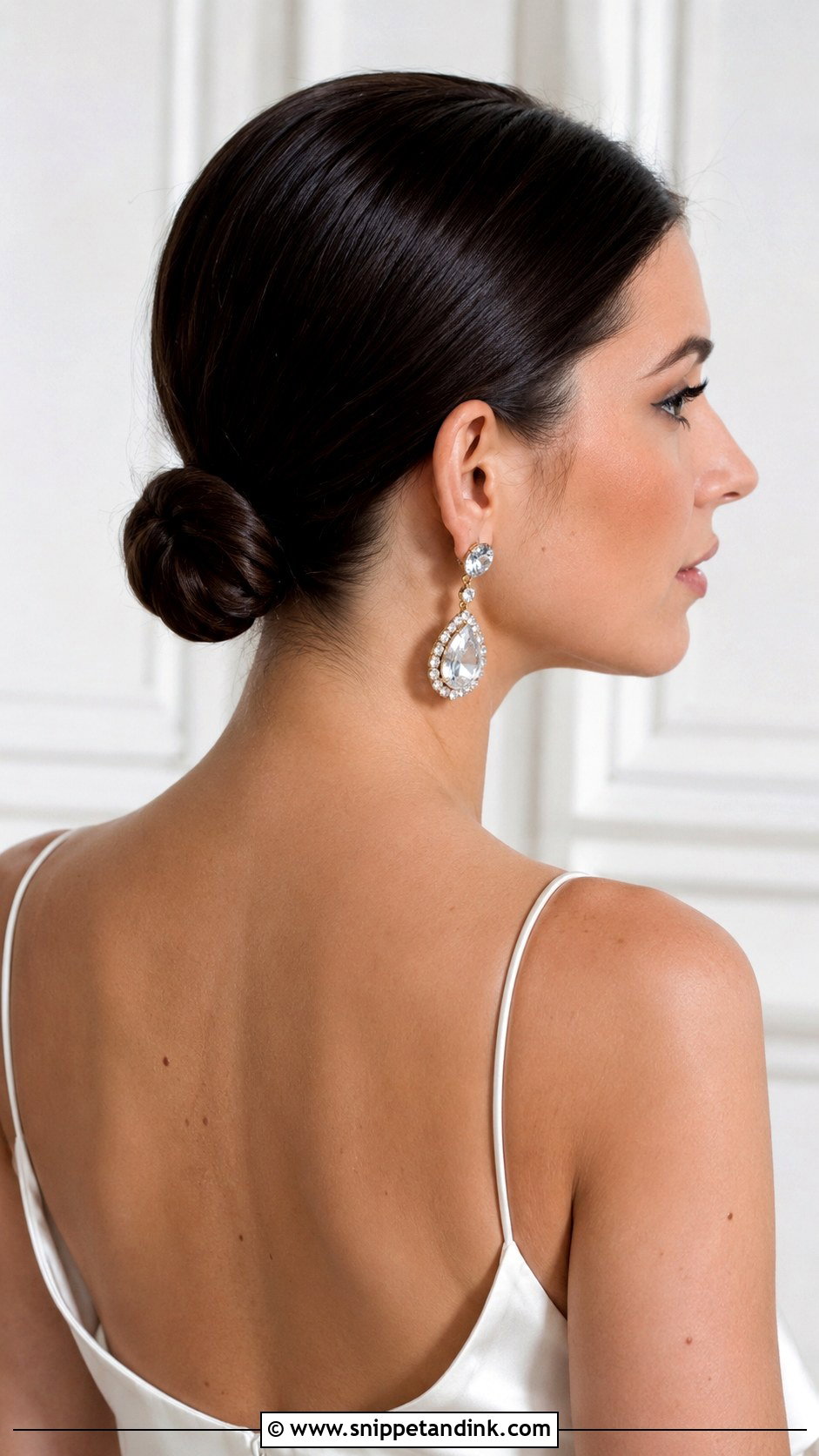
Every strand is smoothed back into a tidy knot at the nape, with no texture to hide behind. That’s the challenge of a sleek bun: it shows every bump, so I blow-dry the hair completely straight first and brush it back with a smoothing cream and a boar bristle brush before tying it. A clean center or side part sharpens it further. It pairs with structured gowns, statement jewelry and a bold lip. I’d steer very fine hair away from it, as pulling everything tight can show the scalp at the part and make the hair look thinner than it is.
10. Vintage Inspired Wedding Updo
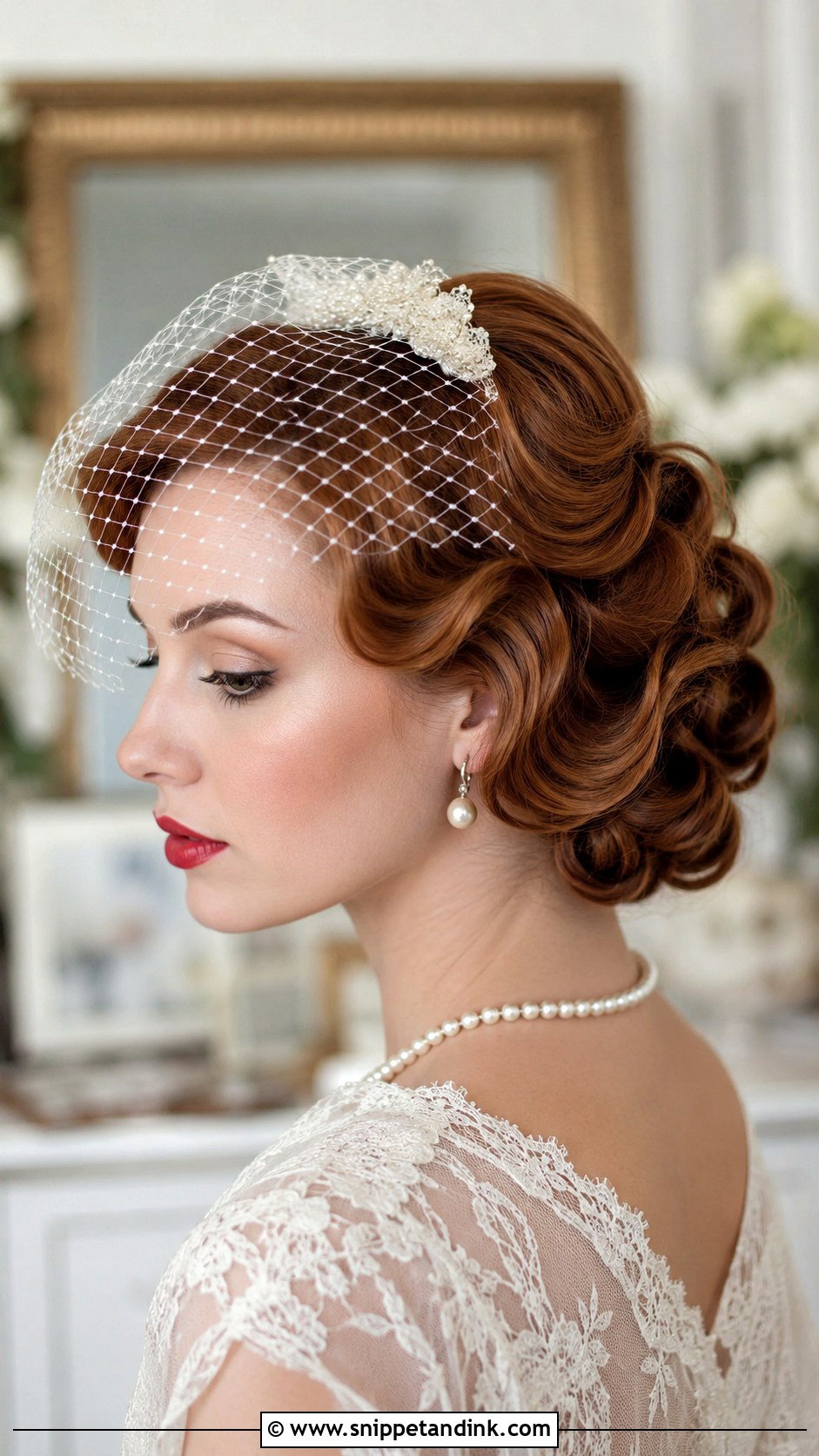
Old Hollywood glamour depends on set curls: finger waves, pin curls and rolled sections that hold their shape because they were set and cooled, not just curled. I set the whole head in pin curls, let them cool completely, then brush them into waves and pin the length into a low shape. Expect this one to take longer in the chair than most. It sits naturally with lace, pearls and a birdcage veil, and it suits art deco or 1920s themes. If your hair resists holding a curl, we test it at the trial with a stronger setting product, because there’s no rescuing flat finger waves on the morning.
11. Crown Braid Wedding Updo
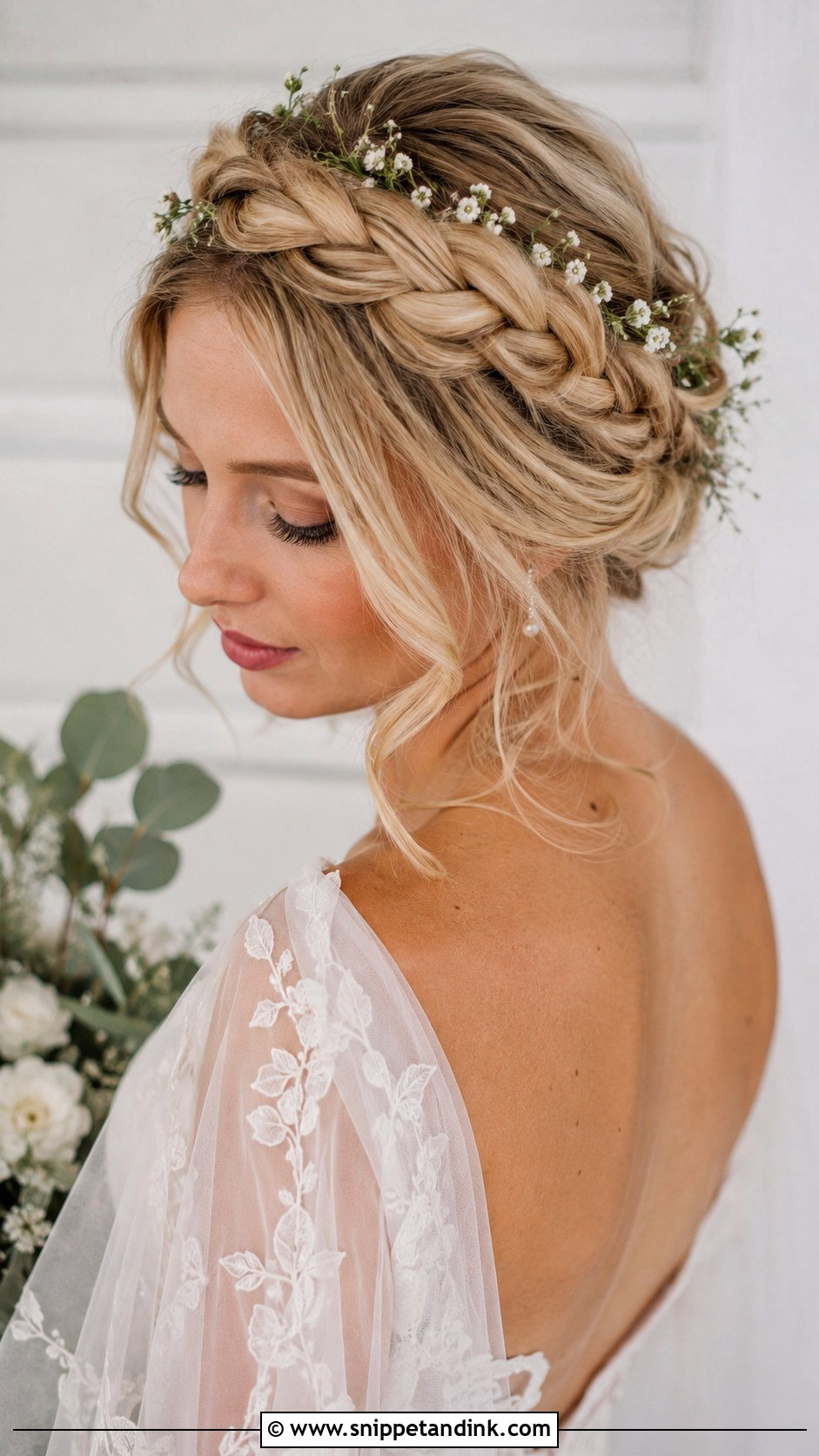
A thick braid circles the crown like a halo, creating a regal, fairytale effect, often finished with a low bun or loose waves at the back. It needs real length to wrap all the way around; on shoulder-length hair I braid two sections from each side and pin them where they meet, so no one can see the join. The braid gives built-in grip, making it one of the steadiest options for an outdoor or rustic wedding. Tuck baby’s breath into the plait if you like. Very fine hair can look thin in a crown braid unless I add a clip-in piece underneath.
12. Loose Updo With Face Framing Tendrils
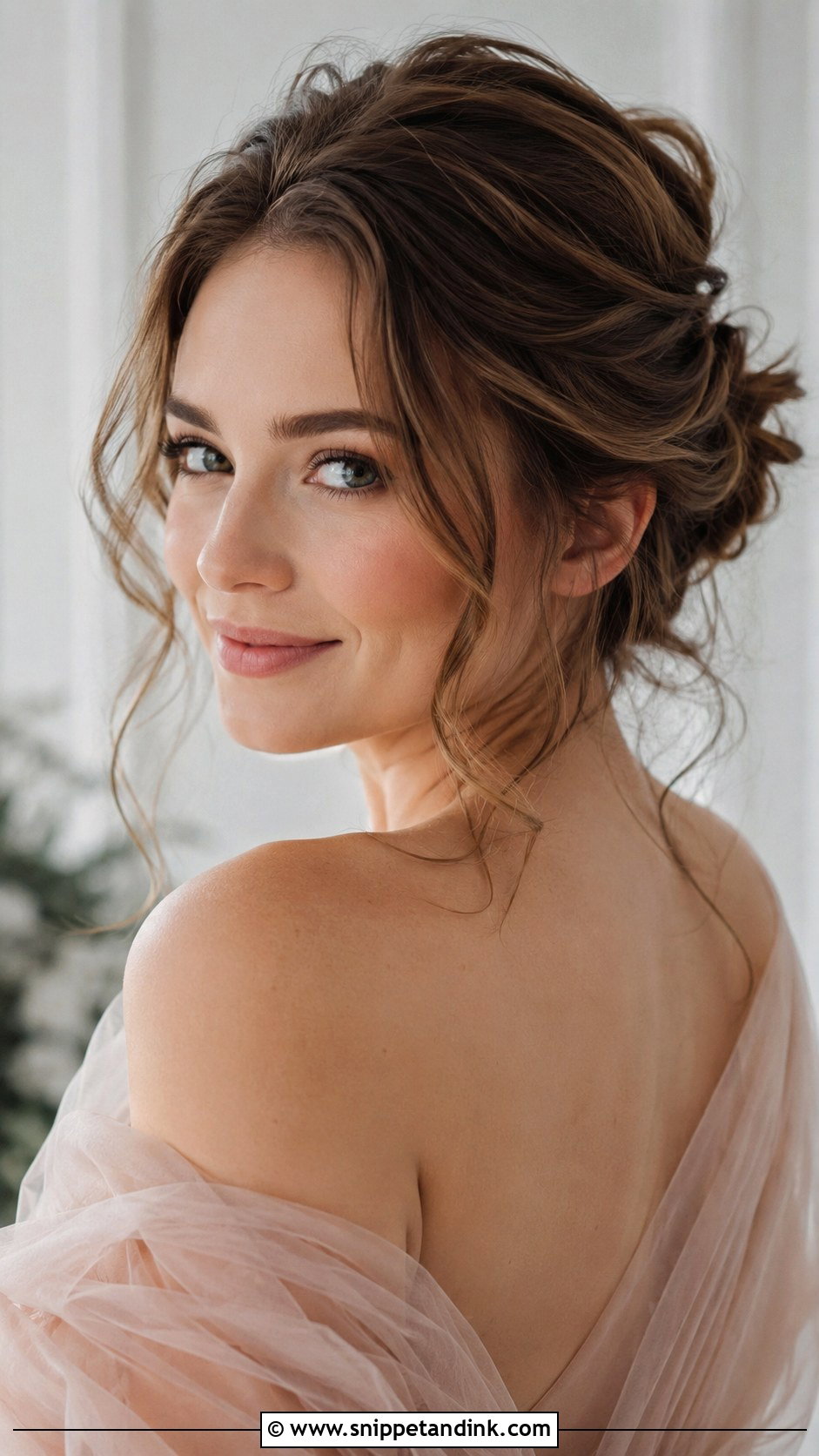
Hair is gathered gently and the wispy pieces are left out deliberately to soften the face. The detail that makes or breaks it is which pieces stay out: I pull them from just in front of the ears and along the hairline, never from the back, or the bun loses its anchor. Each tendril gets its own curl so it doesn’t hang limp by evening. It pairs with a flowing gown and natural makeup. One honest caution: tendrils stick to lip gloss and to damp skin in heat, so keep them a little shorter or longer than your lip line.
13. Dutch Braid Wedding Updo
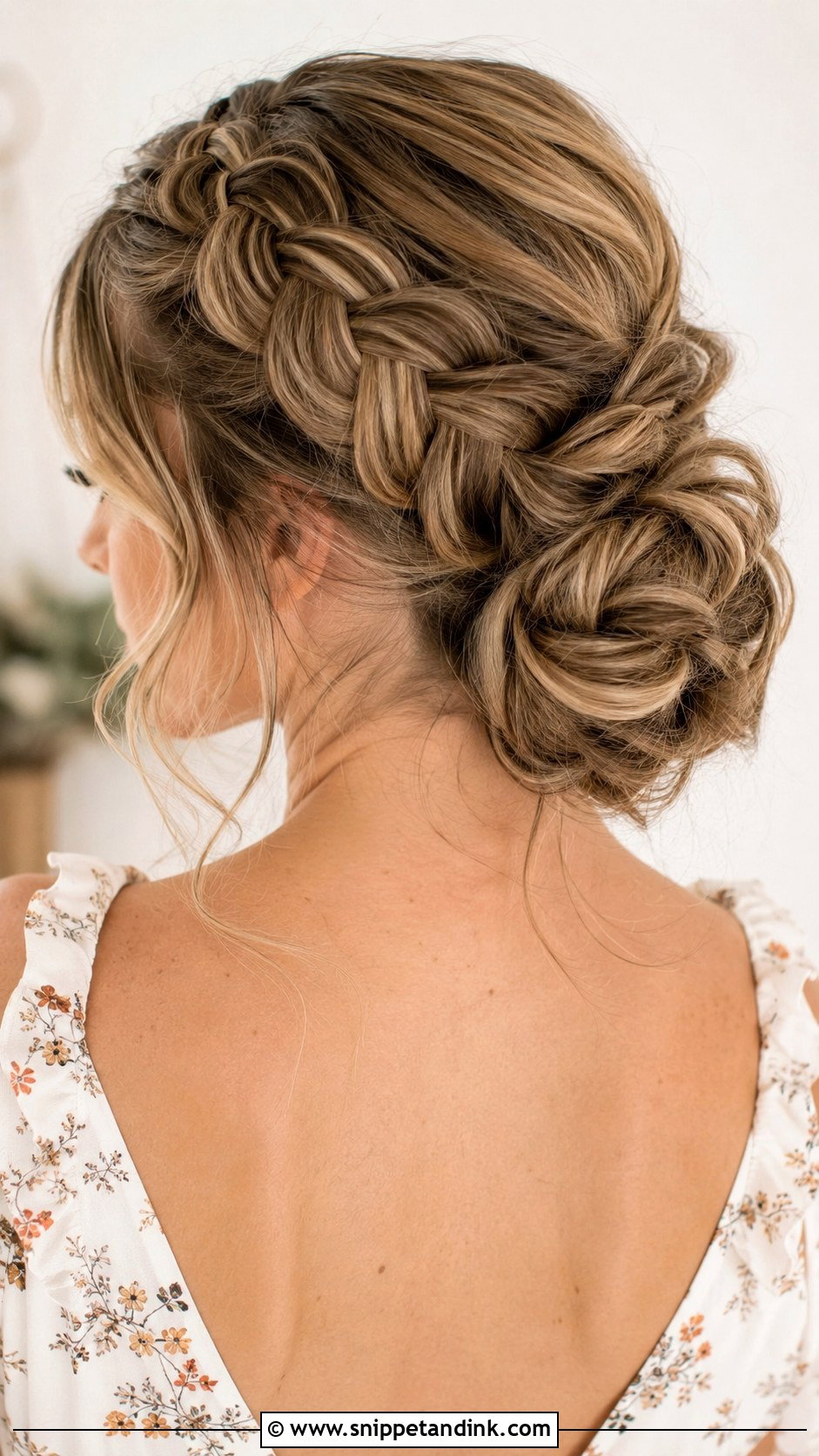
Strands cross under rather than over in this plait. The Dutch braid creates a raised, three-dimensional effect that sits on top of the hair instead of lying flat inside it. For weddings I’ll run it into a low bun or use it as a braided headband. The braid itself does the gripping, so the style holds through long events with fewer pins than you’d guess. Flowers can be tucked in, or leave it clean for a sleeker finish. It’s harder to do on yourself than a regular braid, so if you’re styling your own hair, practice for several weeks first.
14. Bun With Veil Wedding Updo
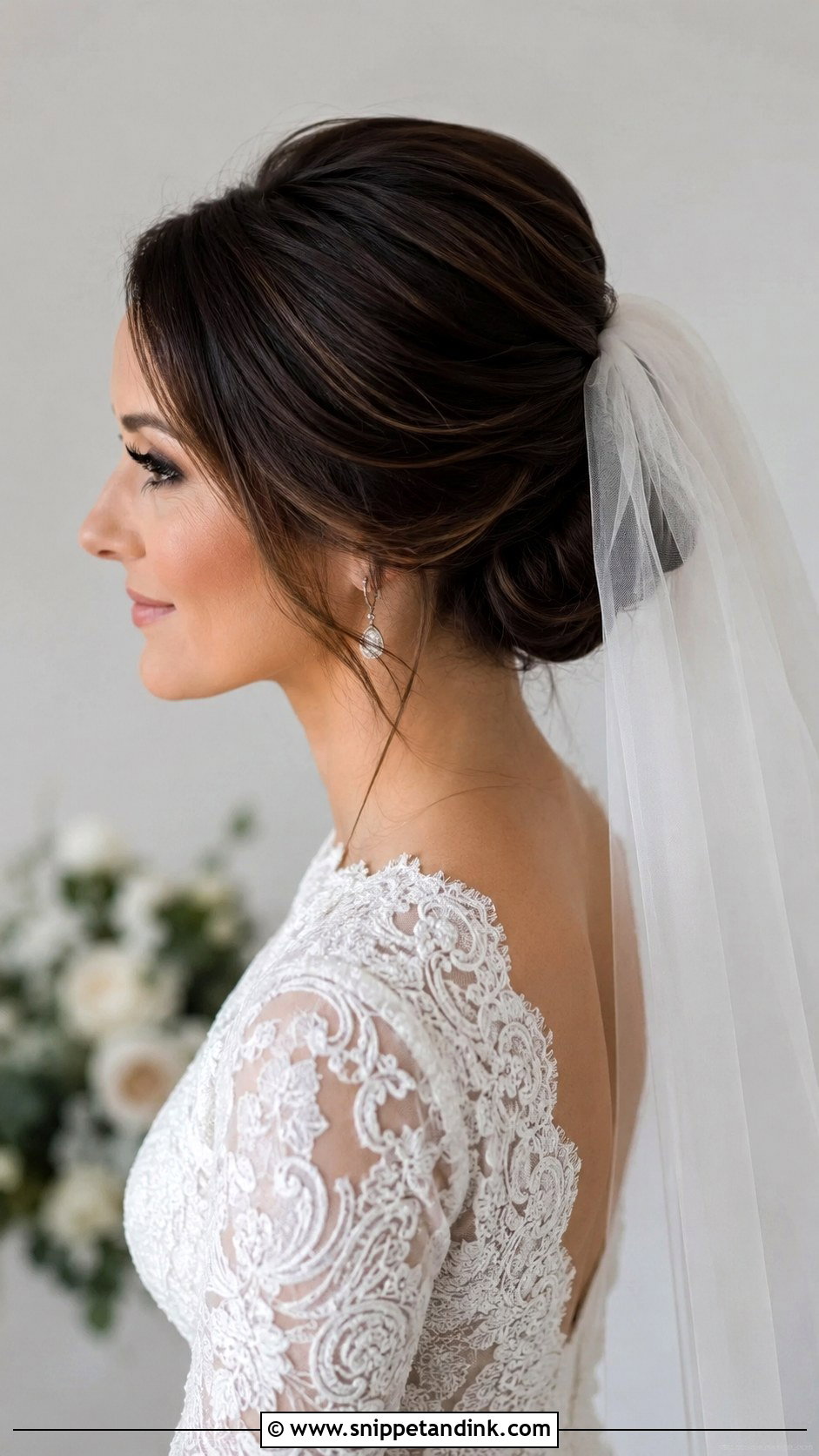
A bun gives your veil something solid to hold onto, and that is half the reason I recommend one for long veils. Whether it’s a chignon, low bun or twisted knot, the veil comb slides in more securely when there’s a braid or a cluster of crossed pins underneath it to grip. Placement changes the look: a comb above the bun lets the veil frame your head, while placing it under the bun shows off the shape of the updo. After the ceremony, the veil comes out and the bun stays exactly as it was. I always show the bridesmaid how to remove the comb without tugging out pins.
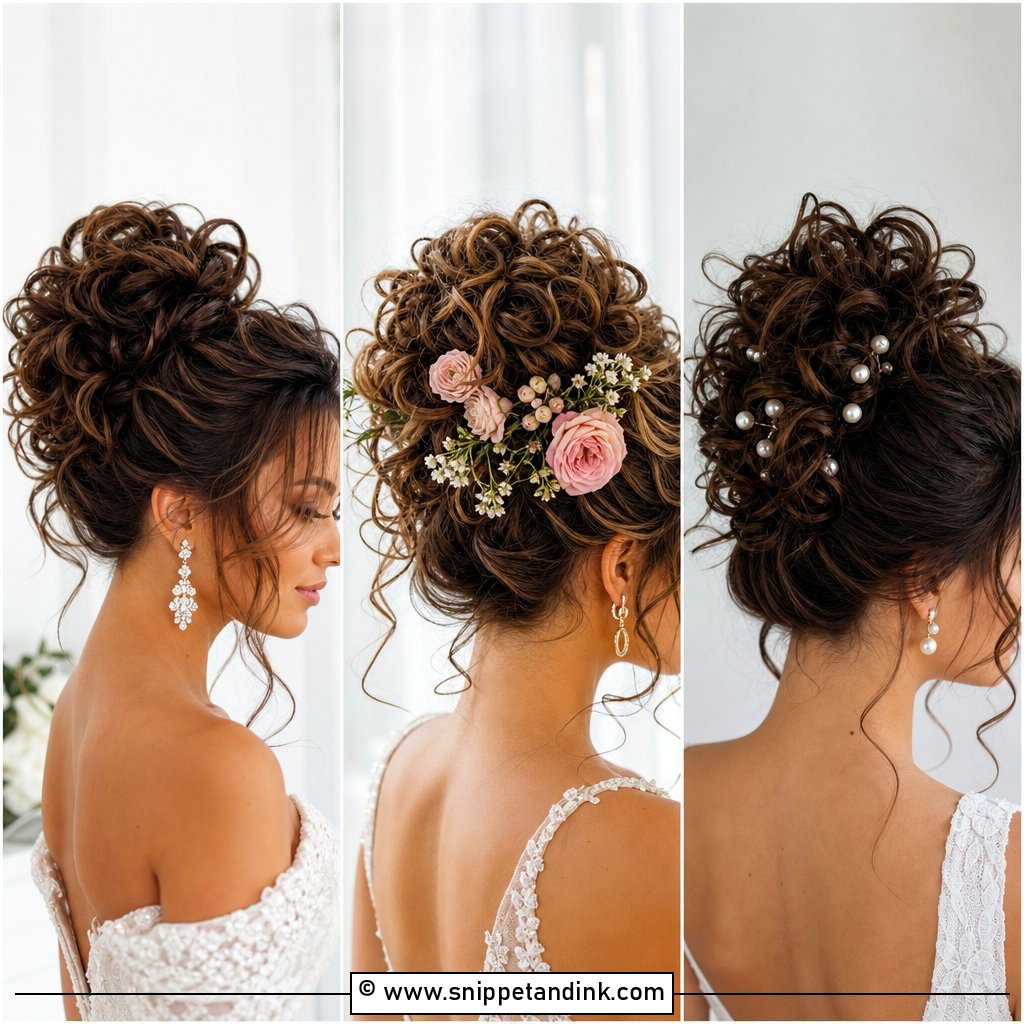
15. Textured Updo for Short Hair
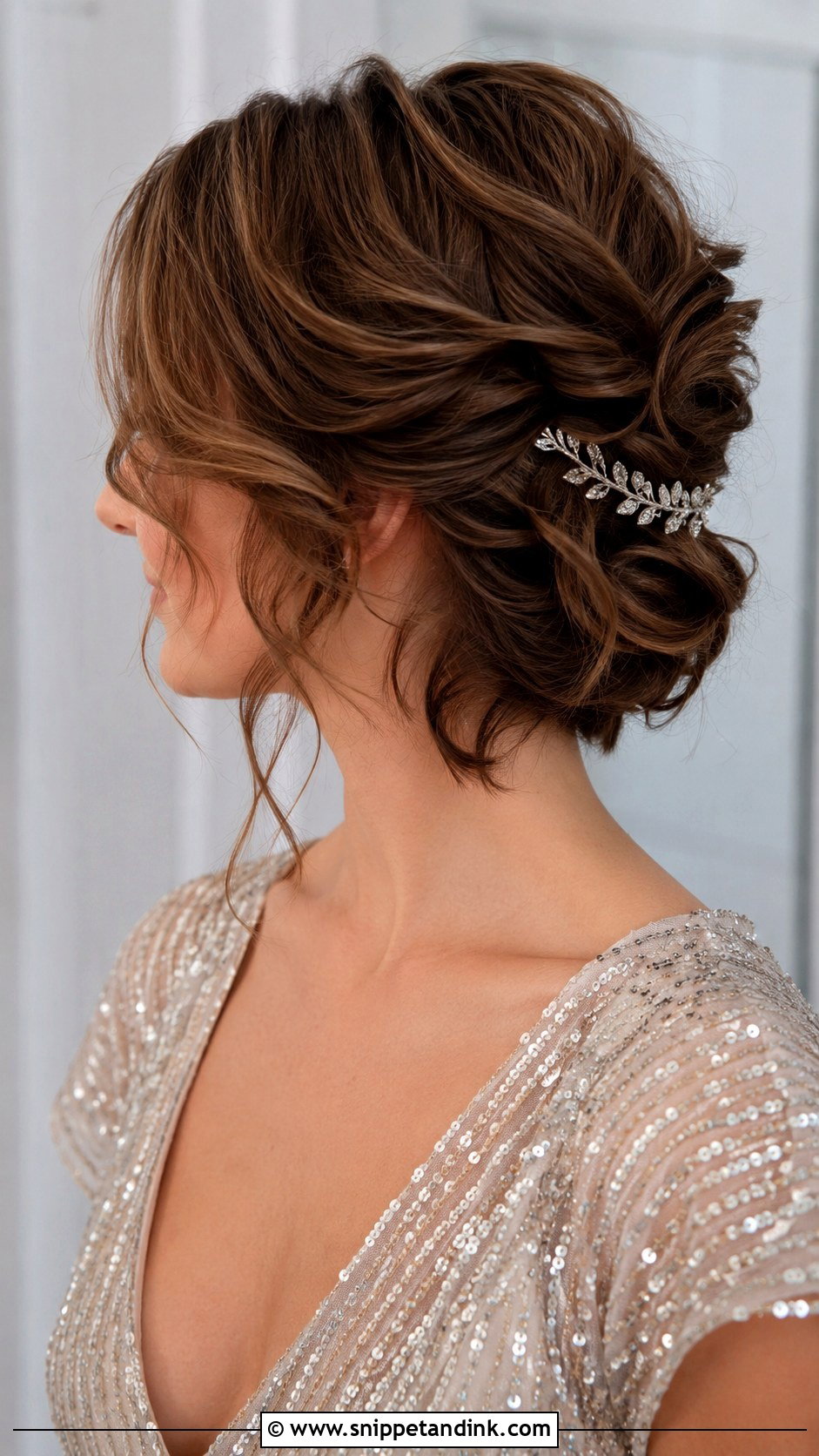
You don’t need long hair for an updo. On a bob or a lob I use small twists, a little teasing at the crown and plenty of pins to create soft volume, with the shortest pieces pinned under or left to frame the face. Below chin length it gets difficult, and that’s when I’d suggest a couple of clip-in wefts to give the style something to hold. A sparkly clip or a few small flowers adds charm without weight. Short updos feel light all day, though the nape needs extra pins because short ends spring free as you move your head.
16. Side Swept Wedding Updo
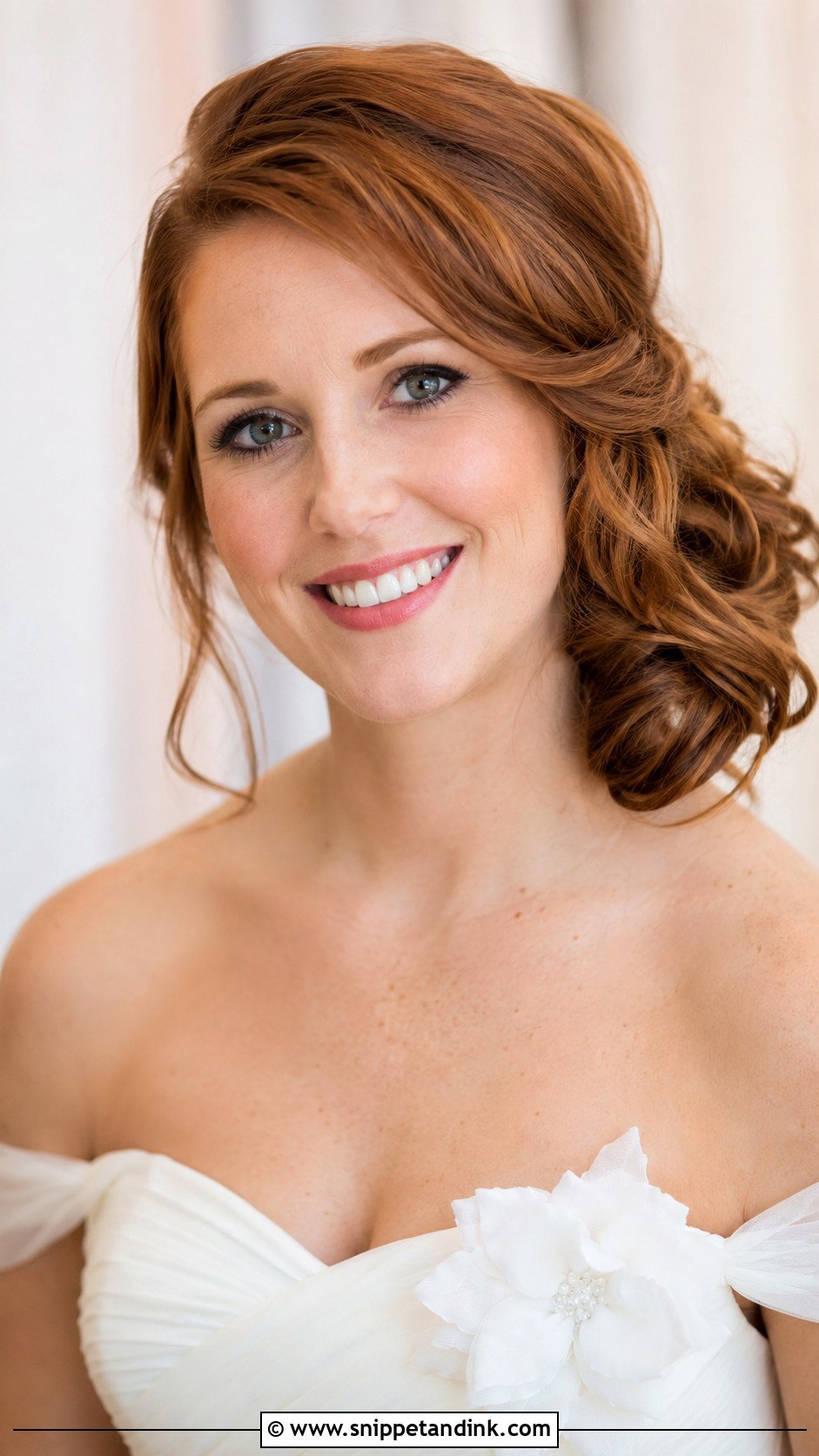
With everything gathered to one side and pinned into a soft bun or twist over the shoulder, a side-swept style lengthens the neck and frees one ear for a statement earring. I place the pins along the back of the head in a line, so the weight is supported from behind rather than dragging forward. Before choosing the side, think about the ceremony: it’s worth sweeping the hair toward the side guests see most, which is usually the side facing them as you stand at the altar. It sits naturally with off-shoulder and one-shoulder gowns.
17. Boho Braided Updo for Brides
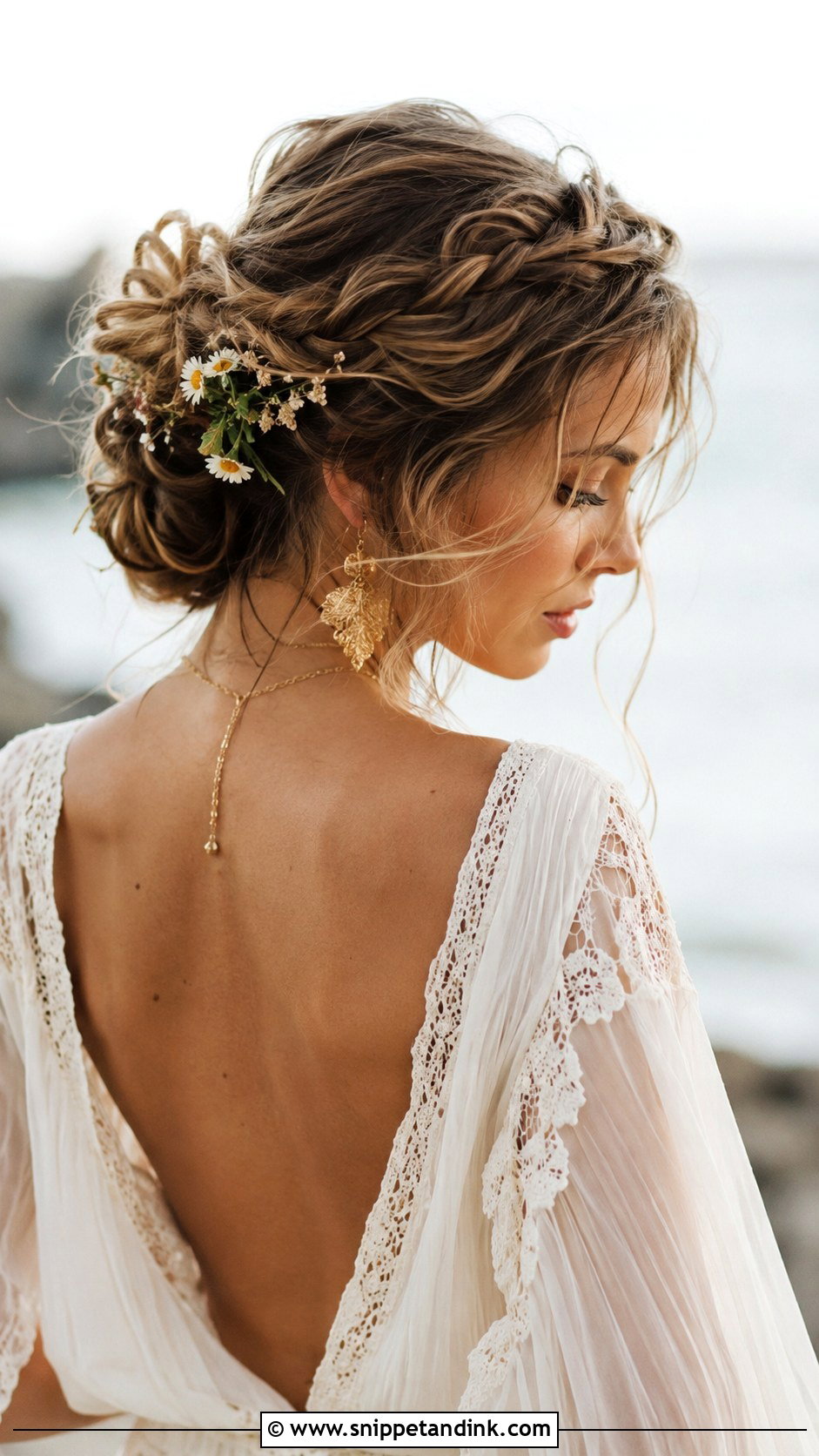
This one mixes loose braids, twists and softly pinned sections, with natural texture left in on purpose. Day-old hair works better than freshly washed, because a little grit helps the braids hold and keeps the shape from sliding. It pairs with flower crowns, greenery and fresh-faced makeup, and it’s at home on a beach or in a field. Add wildflowers or delicate gold accessories for a bohemian finish. On a beach, sea air flattens texture quickly, so I set it with a stronger spray than I’d use indoors.
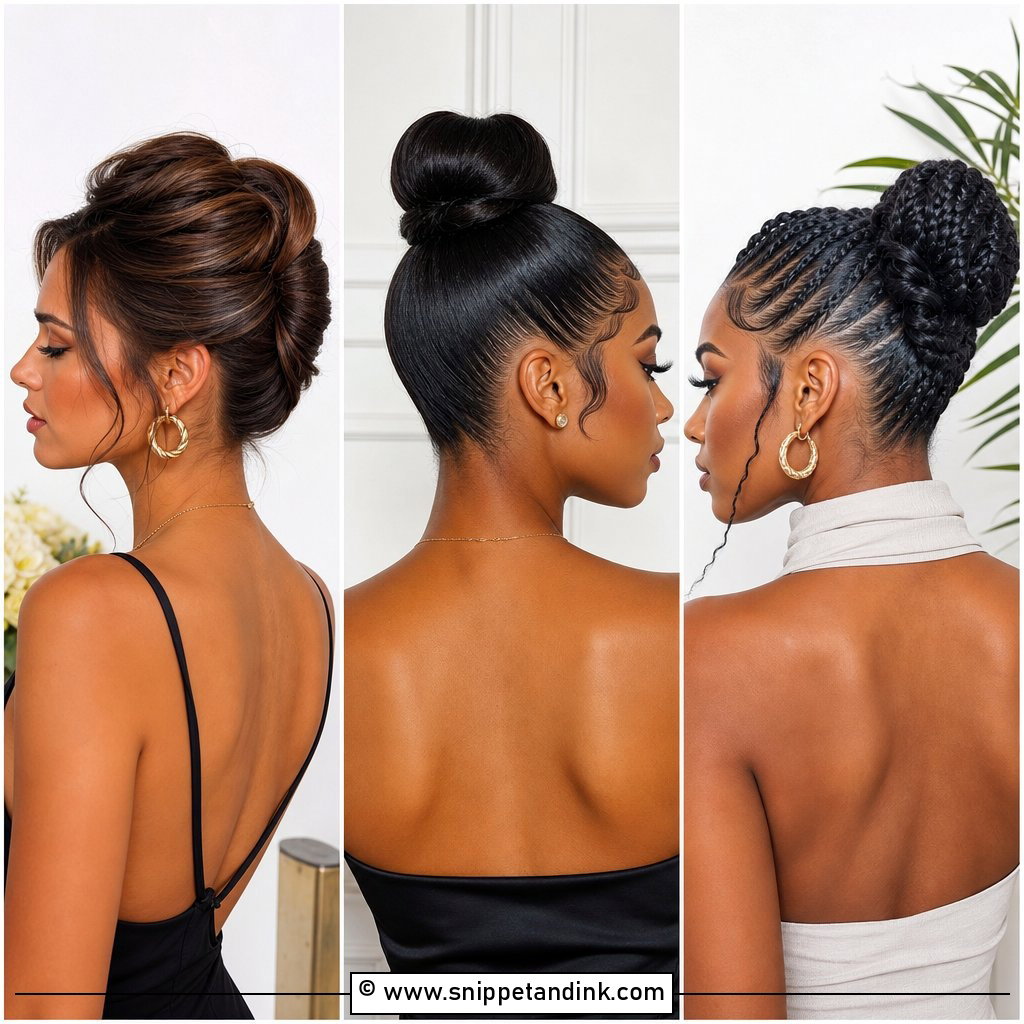
18. Elegant High Bun Wedding Style
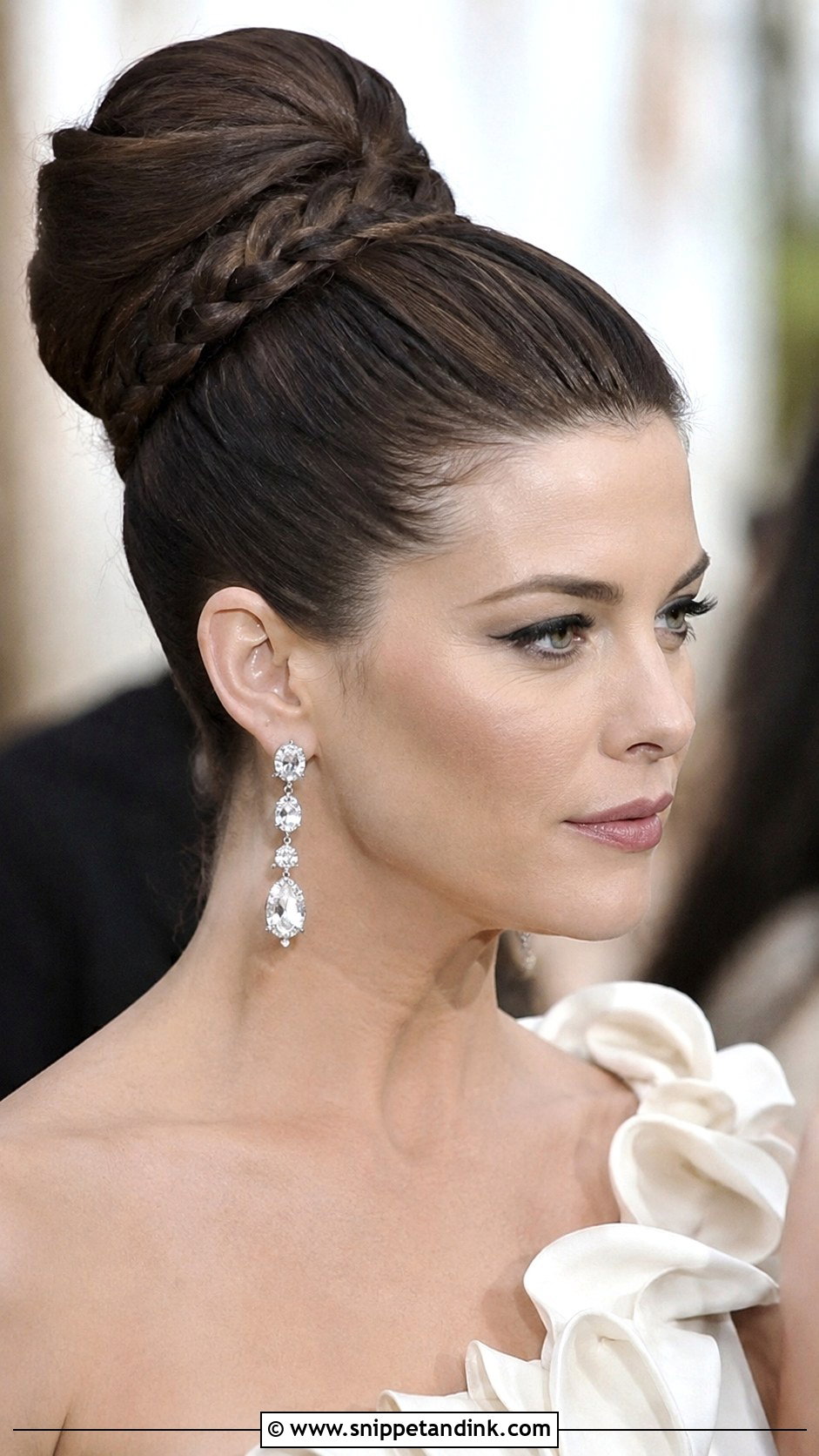
Sitting higher on the head, this bun creates a regal silhouette and makes the neck look longer. Height also means weight at the crown, so I build it on a secure base, usually a ponytail tied with a hidden elastic, and pin the bun to that rather than straight to the scalp. It looks right in a formal ballroom. Keep it sleek or add soft texture, and wrap a braid around the base if you want detail. Think about your veil before you choose it: a high bun pushes the comb much further up, which changes how the veil falls.
19. Rolled Updo Wedding Hairstyle
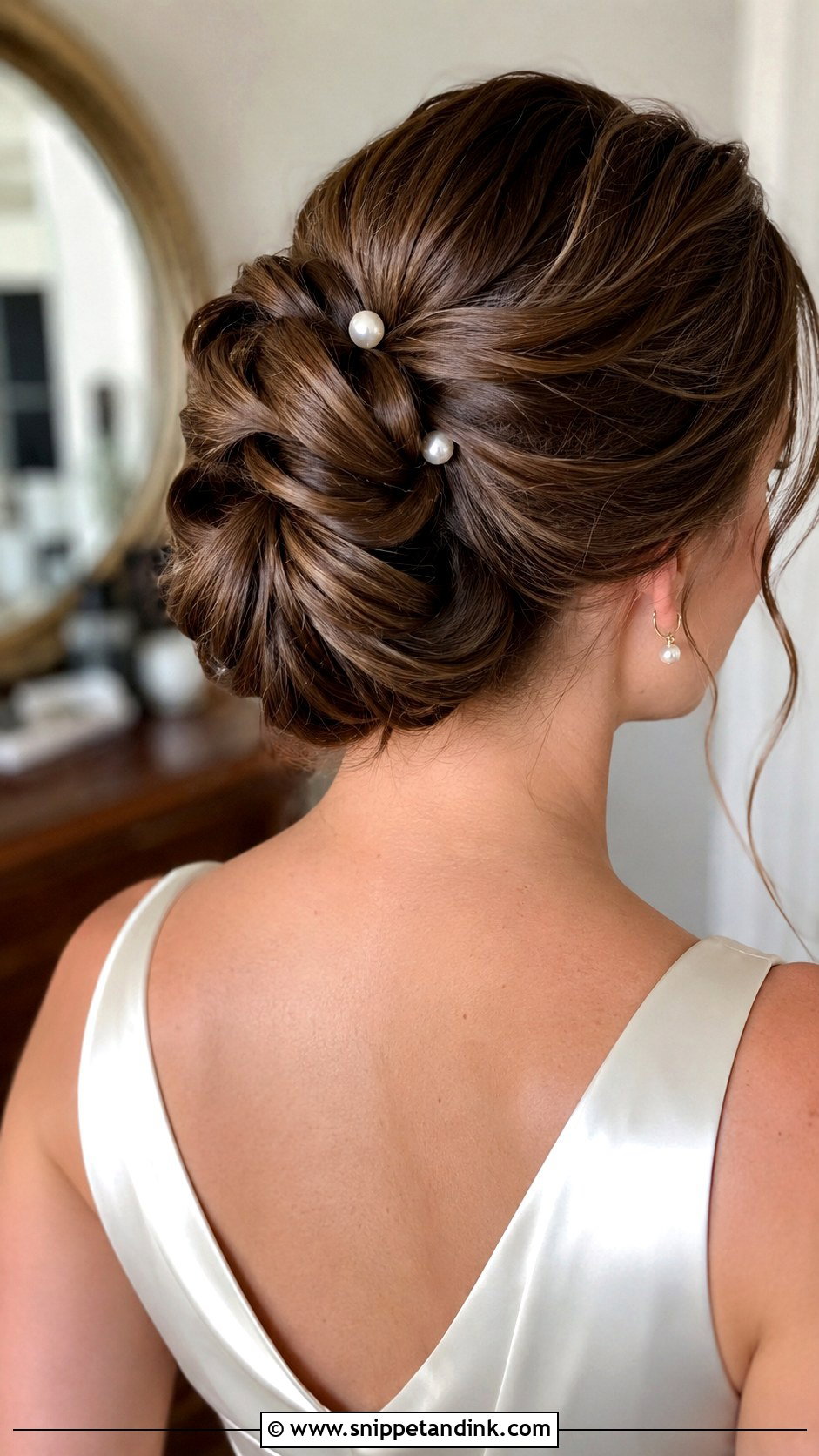
Smooth sections are rolled and pinned into a sculpted shape. A rolled updo features clean lines and real structure, and once it’s pinned it’s among the most secure styles I do. It works best on medium to long hair; on thinner hair I roll the sections over a small padding piece so the shape has body. Keep it sleek, or soften it with a few tendrils. Pearl pins or a decorative comb suit it well. It belongs at a formal wedding where the hair should still look exactly the same at midnight.
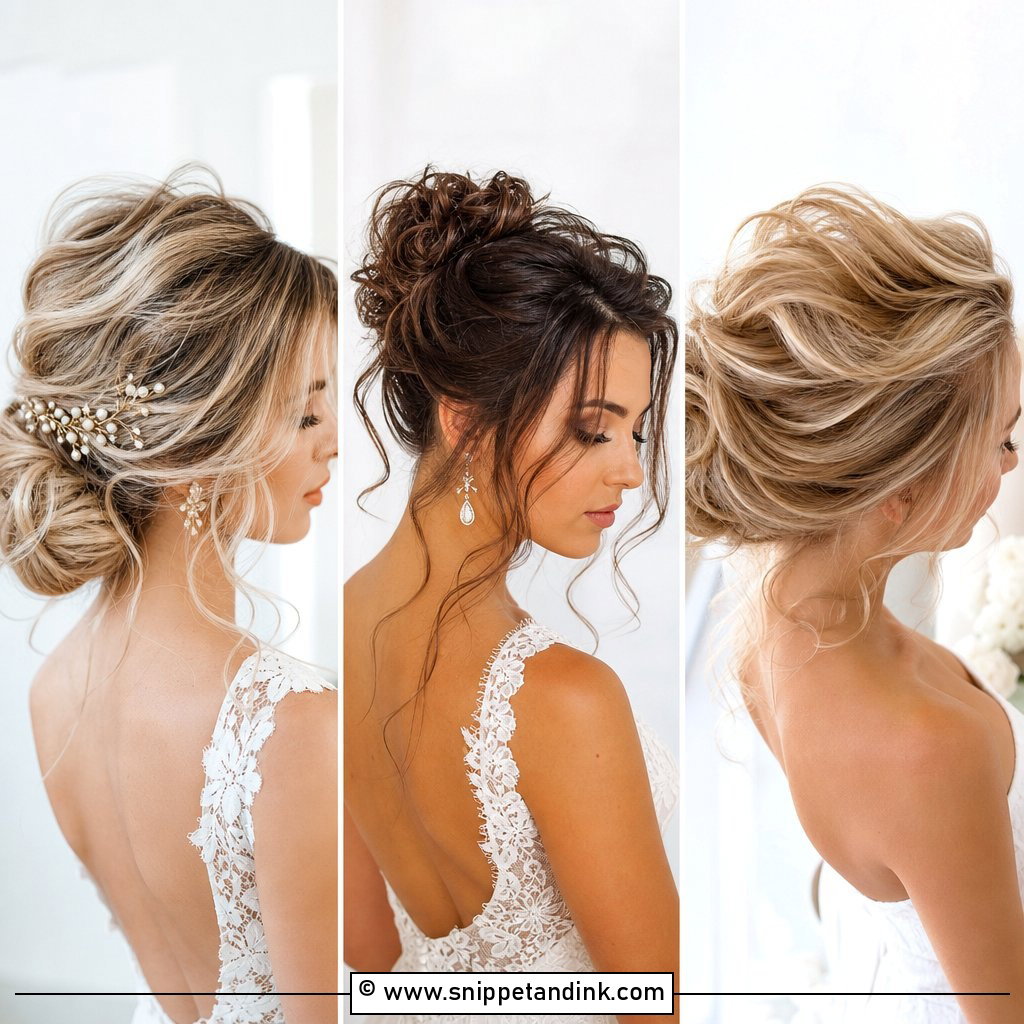
20. Curly Updo for Natural Hair Brides
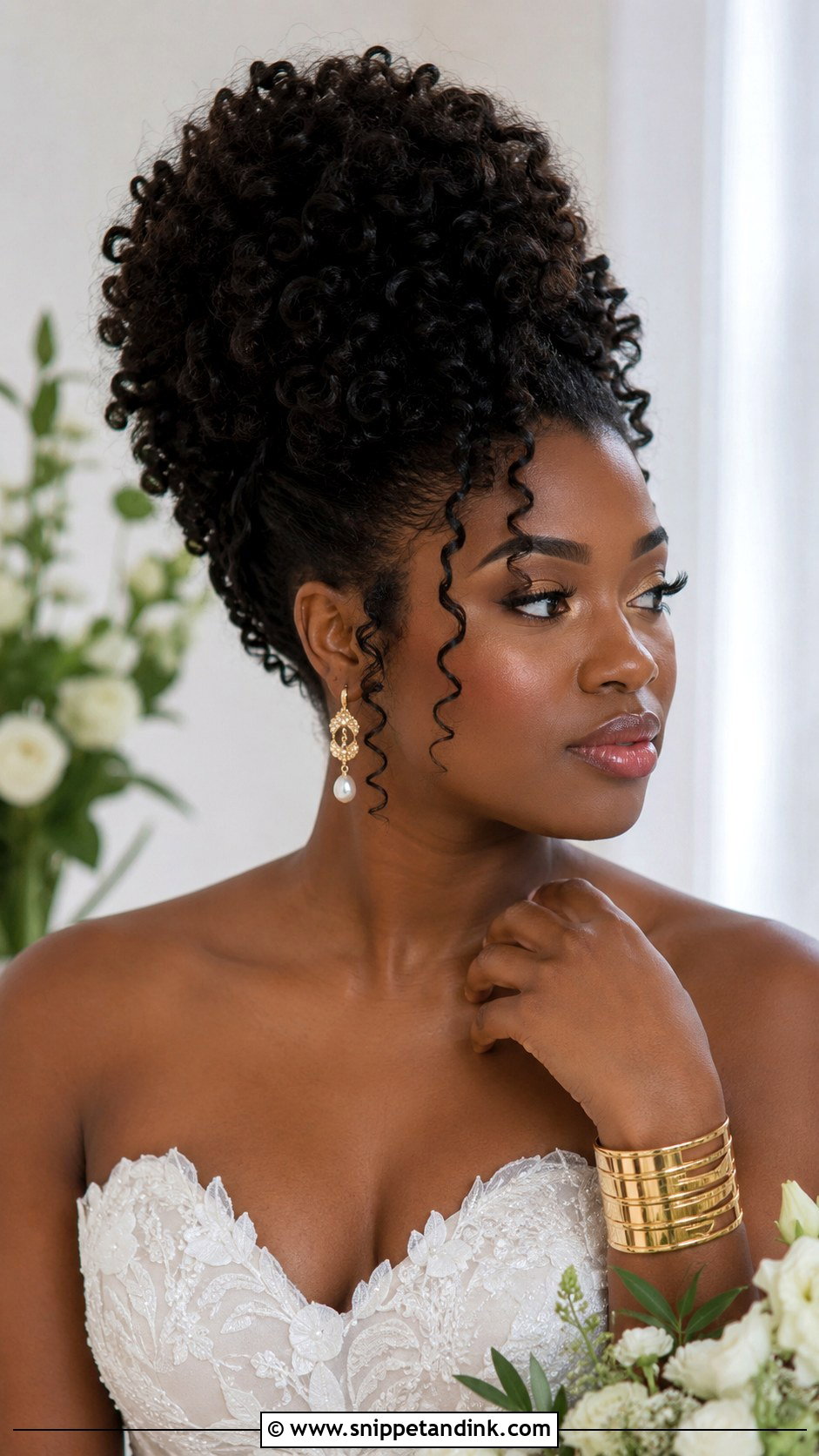
Coils, curls and kinks each hold an updo differently, and the work starts with your natural pattern, not against it. I gather and pin the hair to build height and shape while keeping curl definition visible, using pins that match your hair color so they disappear into the texture. Moisture comes first, then a holding product, and I keep heat to a minimum so curls don’t lose their pattern. Edges can be laid with a gel if you wear them that way. Fresh flowers, a sparkly accessory or gold cuffs all sit well in curly hair. Bring your usual products to the trial, because a stylist who knows your routine gets a far better result.
Arriving at the Chair With Dry, Day-Old Hair
The way you arrive on the morning affects how long the style lasts. My usual request is to wash and fully dry your hair the day before, with conditioner kept to the ends. Very clean, silky hair slides out of pins, while hair washed a day earlier holds texture. If your hair gets oily overnight, tell me, and we’ll adjust the plan.
- Wear a button-up shirt so nothing goes over your head afterwards.
- Bring your veil, comb and every accessory, because placement depends on the finished shape.
- Expect most updos to take somewhere between forty-five minutes and an hour and a half, depending on length and detail.
- Schedule your hair before makeup if the style involves lots of spray, so it doesn’t settle on your skin.
Ask your stylist to leave a few extra pins with whoever looks after you during the day. A loose section can almost always be fixed with two pins crossed in an X.
Late Night, Pins Out Slowly
An updo can hold thirty or more pins, and pulling it apart in a hurry snaps hair. Find the pins by feeling along each section, take them out one at a time, and only then loosen the hair with your fingers. Work a little conditioner through the lengths before you brush; the hairspray softens and the tangles slide out instead of tearing.
Most Updos Are Settled in the Trial Chair
Planning your hair is one of the more enjoyable decisions in the run-up to the wedding, and there’s an updo here for almost every length and texture. Bring photos of the back of the styles you like, not just the front, and wear something with a similar neckline to your dress so we can judge the balance. At the trial, leave the style in for the rest of the day and see how it feels by evening. If it still feels secure and still looks like you, you’ve found your updo.
You'll Like These Ideas:


Leave a Reply