
Low updos are what I build most often for brides, and not because they’re the safe option. A bun at the nape keeps its shape through hugs, a veil and a long dinner, it leaves the face open for the camera, and it doesn’t fight a high collar or a low back the way a top knot can. The range is wide, too: glass-smooth, loosely pinned, braided, rolled, finished with flowers. Below are twenty low styles I’d happily put on a bride, with what each one needs from your hair and where it tends to go wrong.
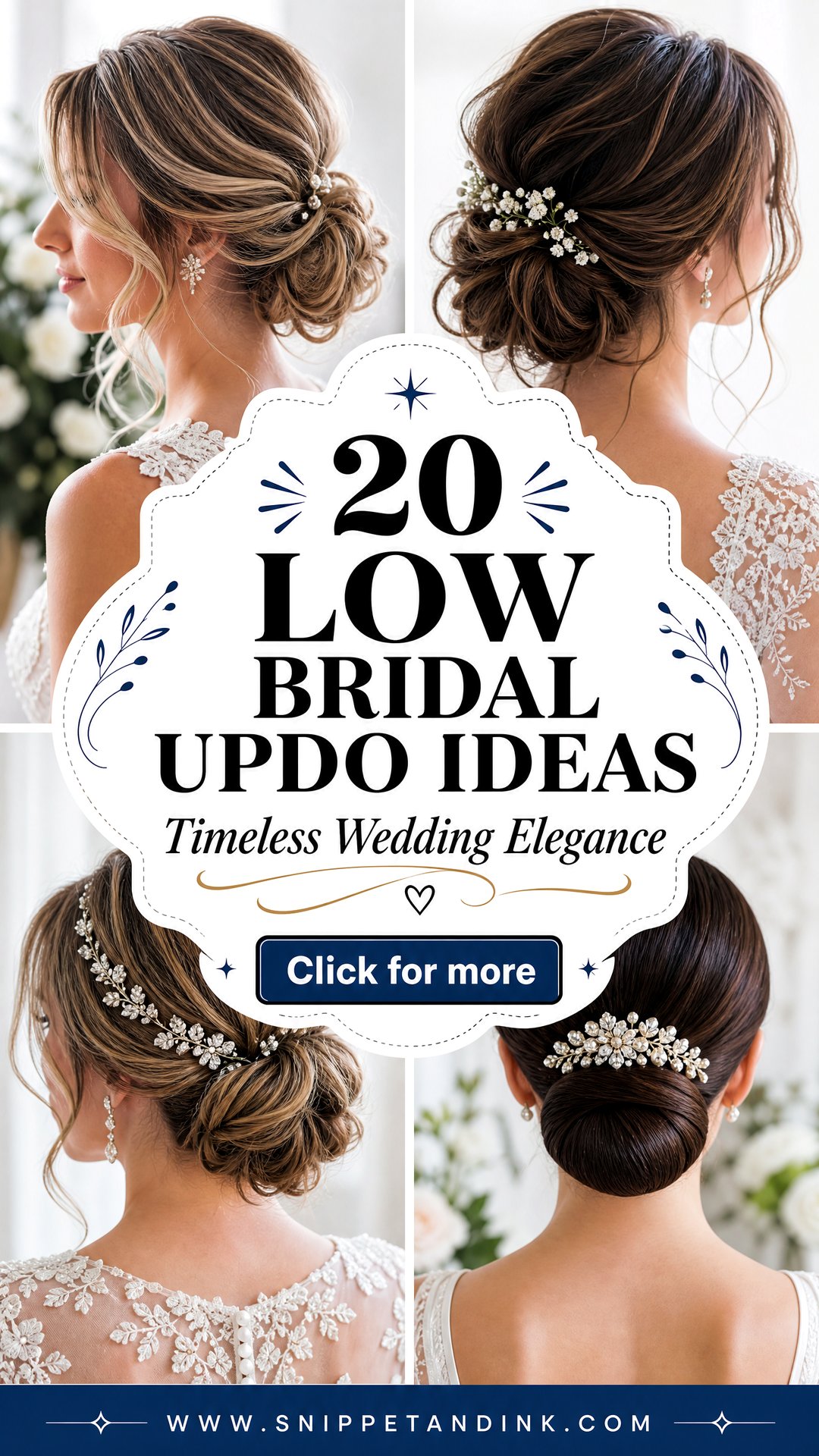
Is Shoulder-Length Hair Enough for a Low Bun?
Usually, yes, though not every bun on this list. Hair that reaches just past the shoulders can make a small sleek bun, a knot or a twisted chignon. The fuller shapes, like a big romantic bun or a full braided crown, need length or help.
- A mesh bun form or a small padding piece adds size underneath and is invisible once the hair is wrapped over it.
- Clip-in extensions matched to your colour can add length and density for the day. I like brides to buy them early and bring them to the trial, so I can blend and colour-check them in daylight.
- Short layers at the nape are the usual trouble. They fall out of low styles first, so I braid or pin them under before building the bun.
Density matters as much as length. Very thick hair can make a low bun so heavy it drags down, and I’ll thin out what goes into the bun by pinning some underneath. Very fine hair needs texture spray or dry shampoo at the roots so the pins have something to hold.
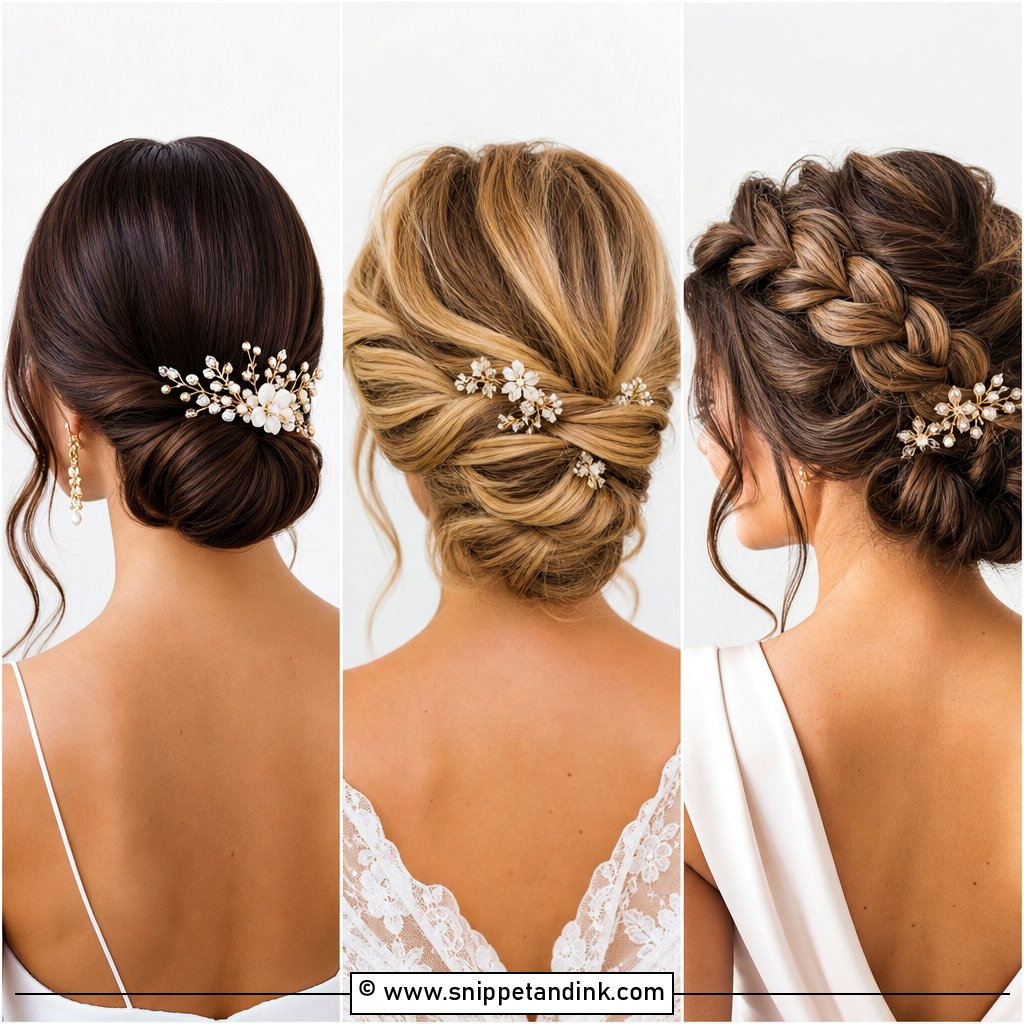
1. Classic Low Bun Wedding Updo
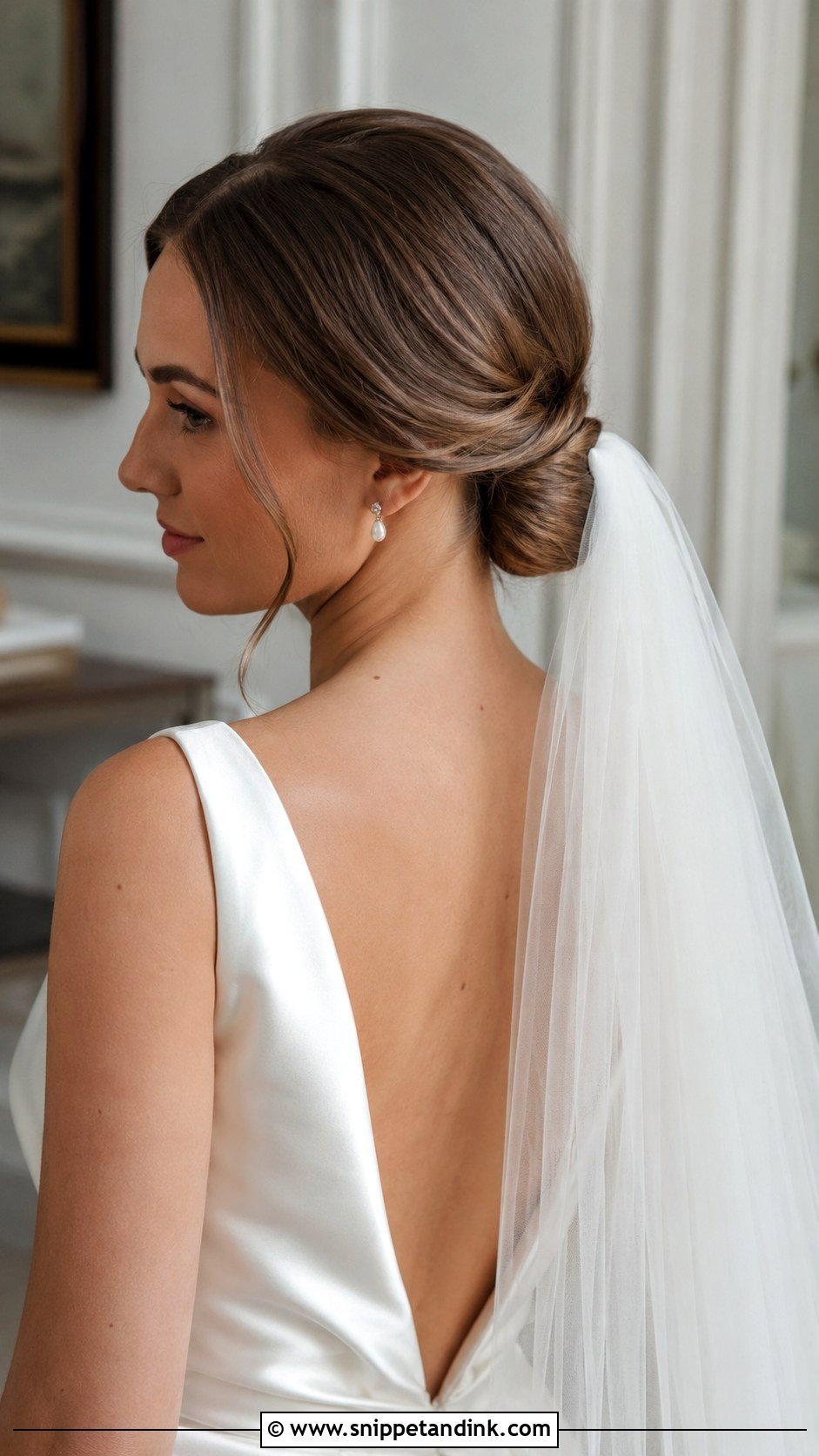
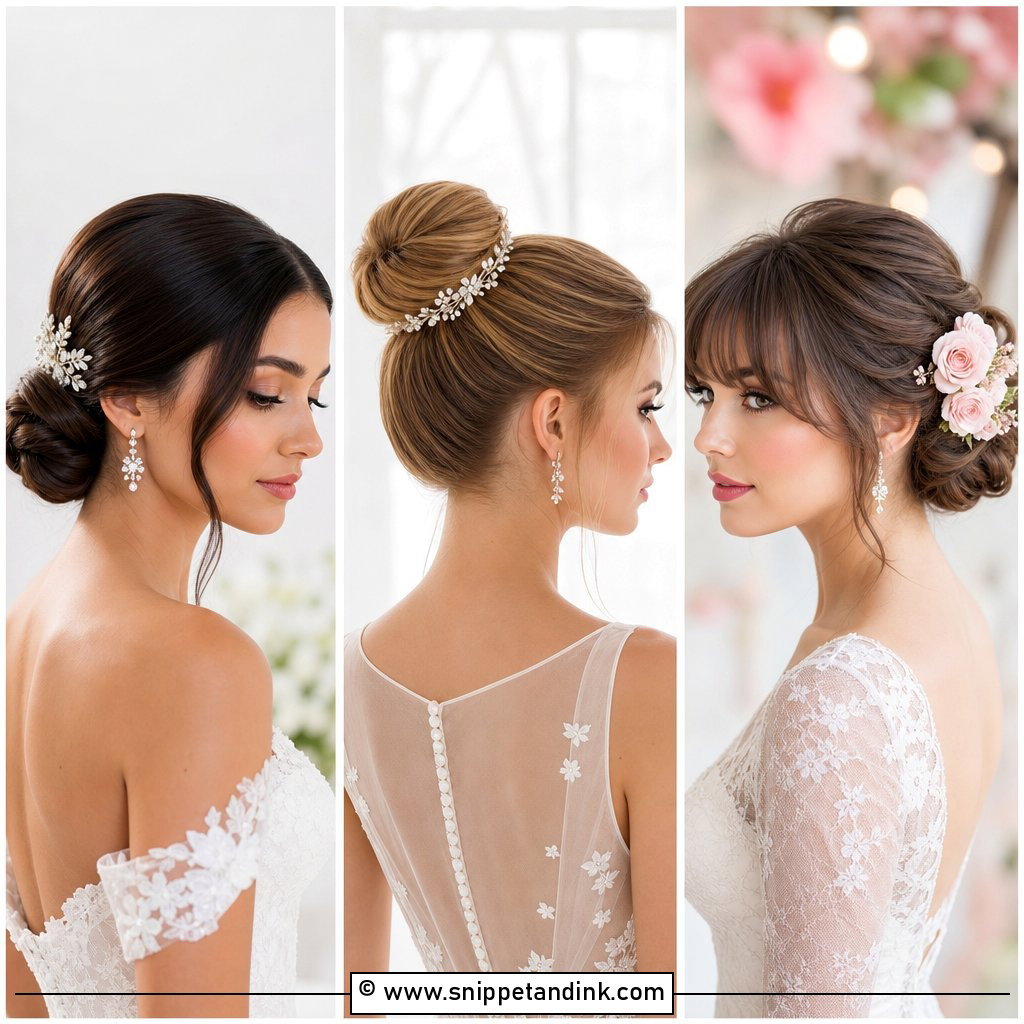
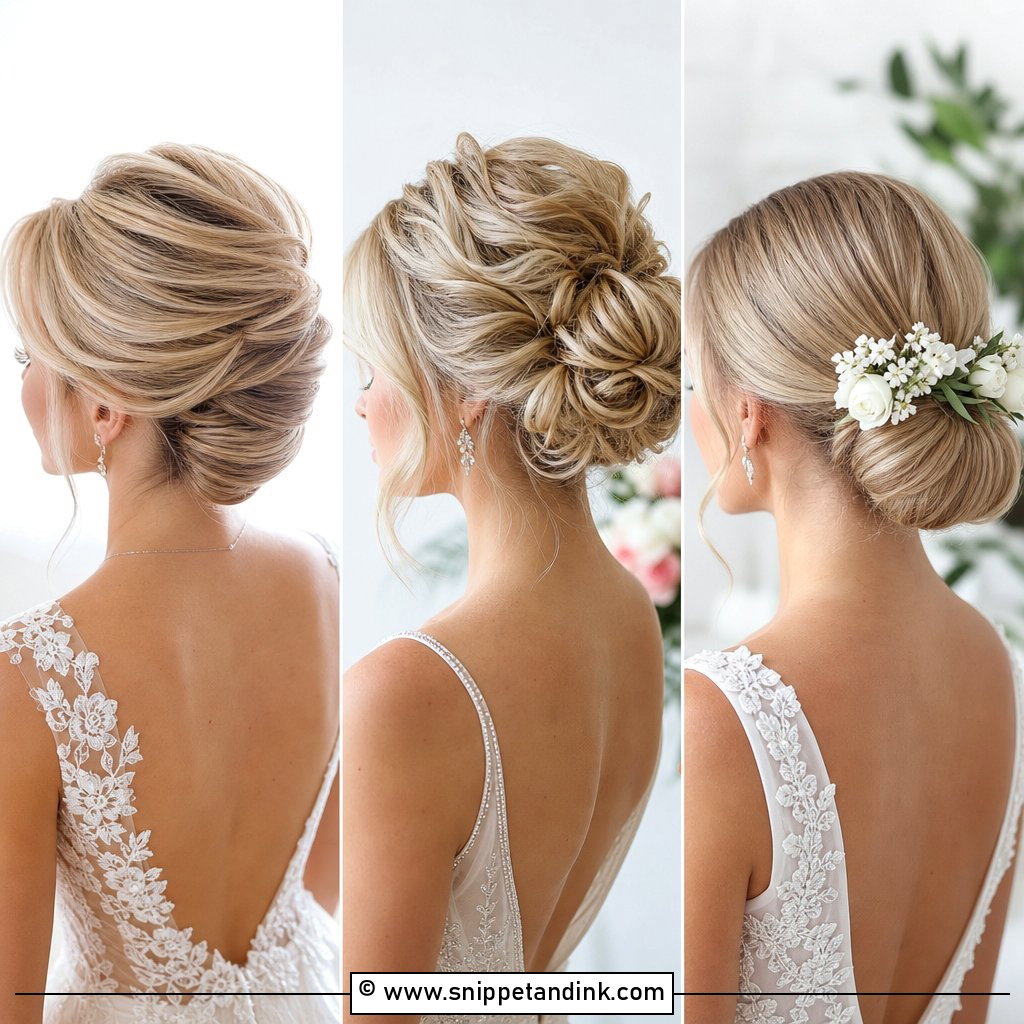
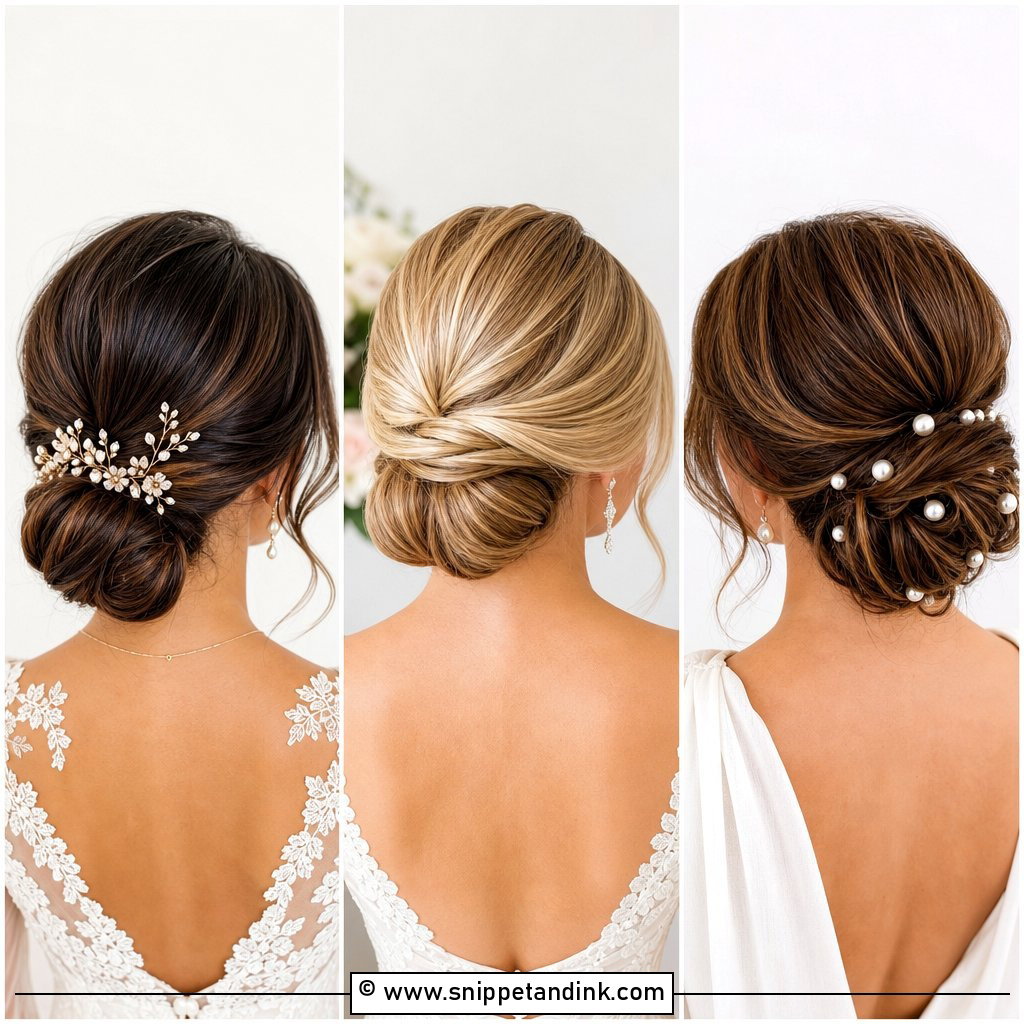
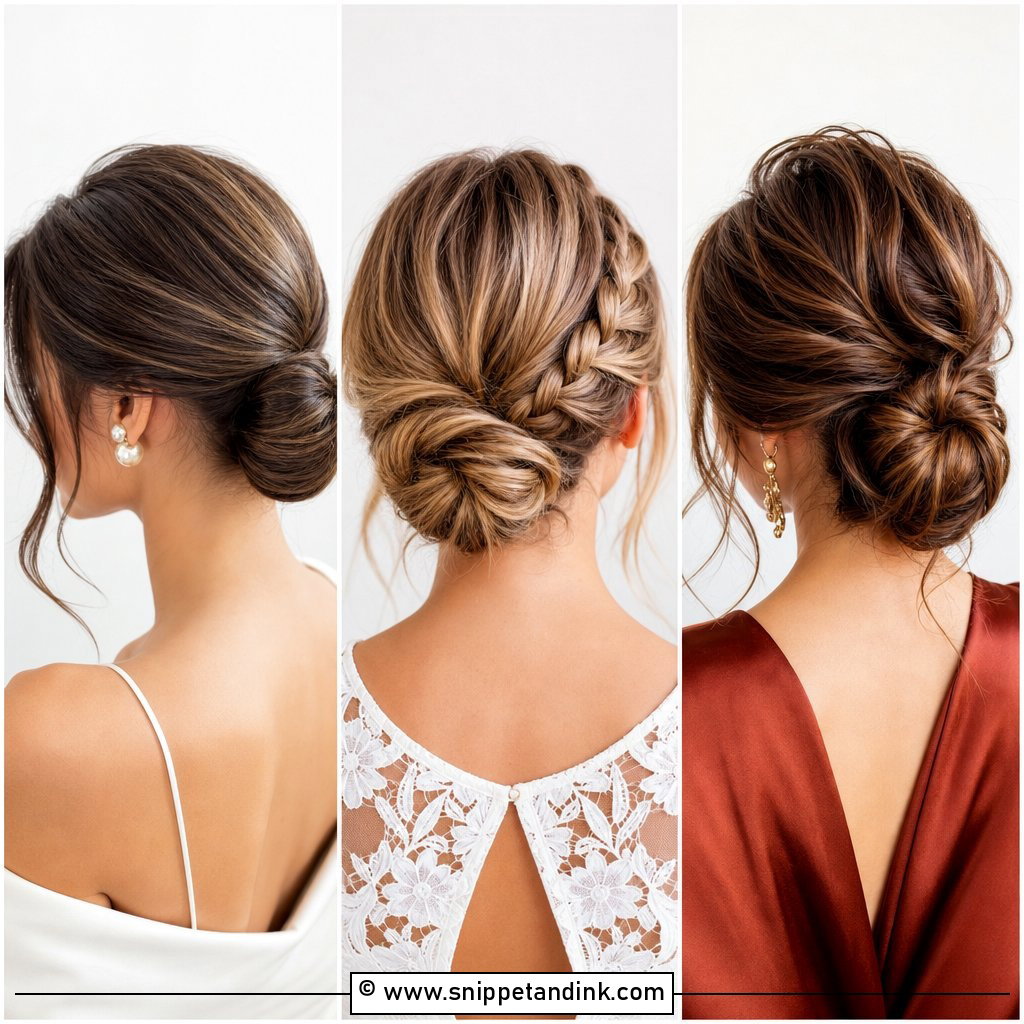
The plain low bun is the style I trust most on a long day. I set it slightly above the hairline at the nape, never right on it, so it doesn’t press into the neck when you lean back in a chair or catch on a high-necked dress. Pulled smooth, it reads modern; with a little lift at the crown it softens. A cathedral veil drops cleanly behind it, which is why it suits satin as well as lace. It’s comfortable in a ballroom or a garden, and it holds without much touching up.
2. Low Twisted Chignon for Brides
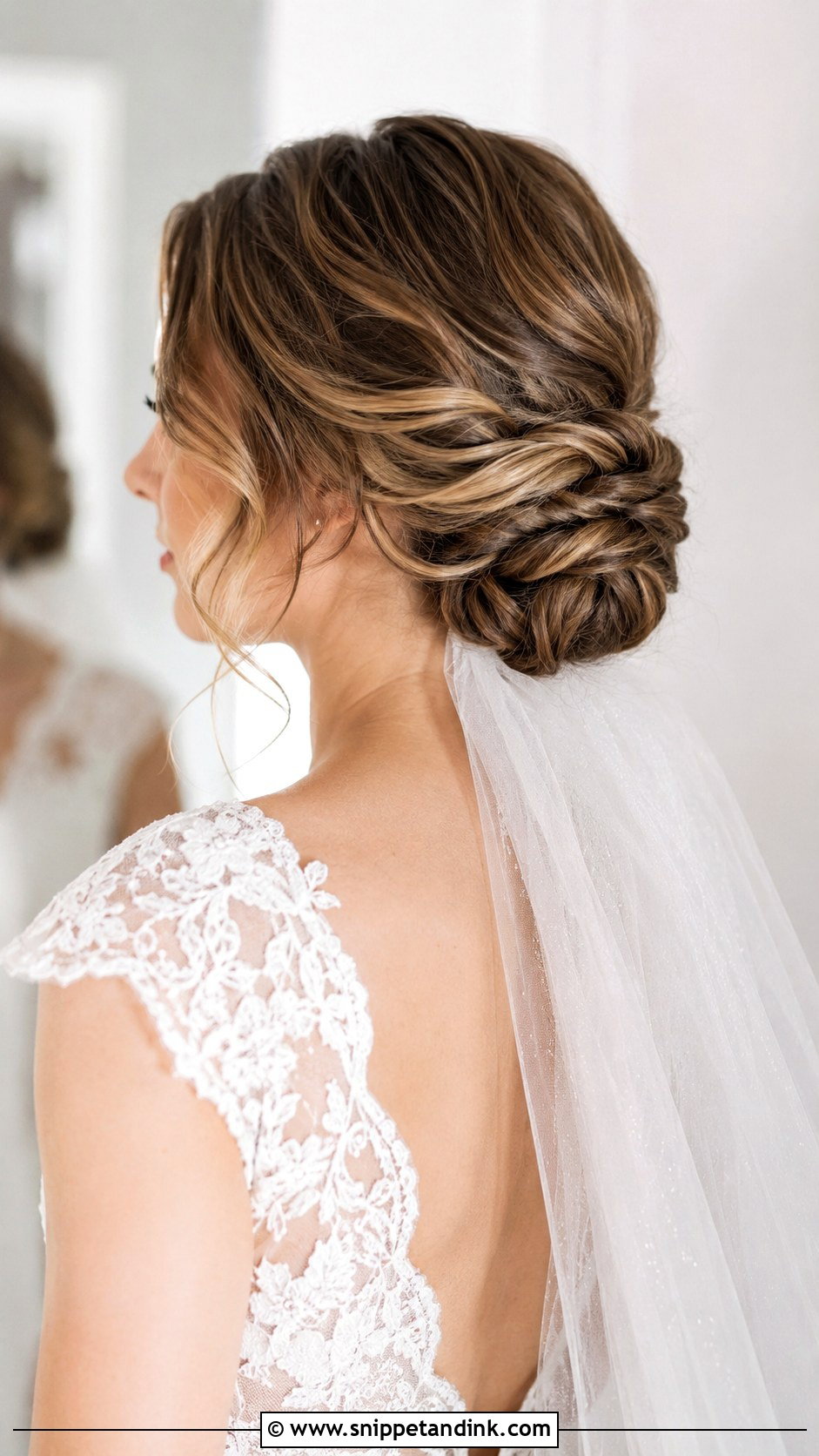
Twists give a chignon its texture without the bulk of extra hair. I twist sections away from the face, pin each one into the base, and the overlapping twists hide every pin. Because each twist is anchored separately, it holds through a long evening. The veil comb slides in just under the chignon, so the tulle falls from the nape rather than the crown. Medium to long hair suits it. On very fine hair I add a little texture spray first, otherwise the twists look thin and slip.
3. Loose Romantic Low Updo
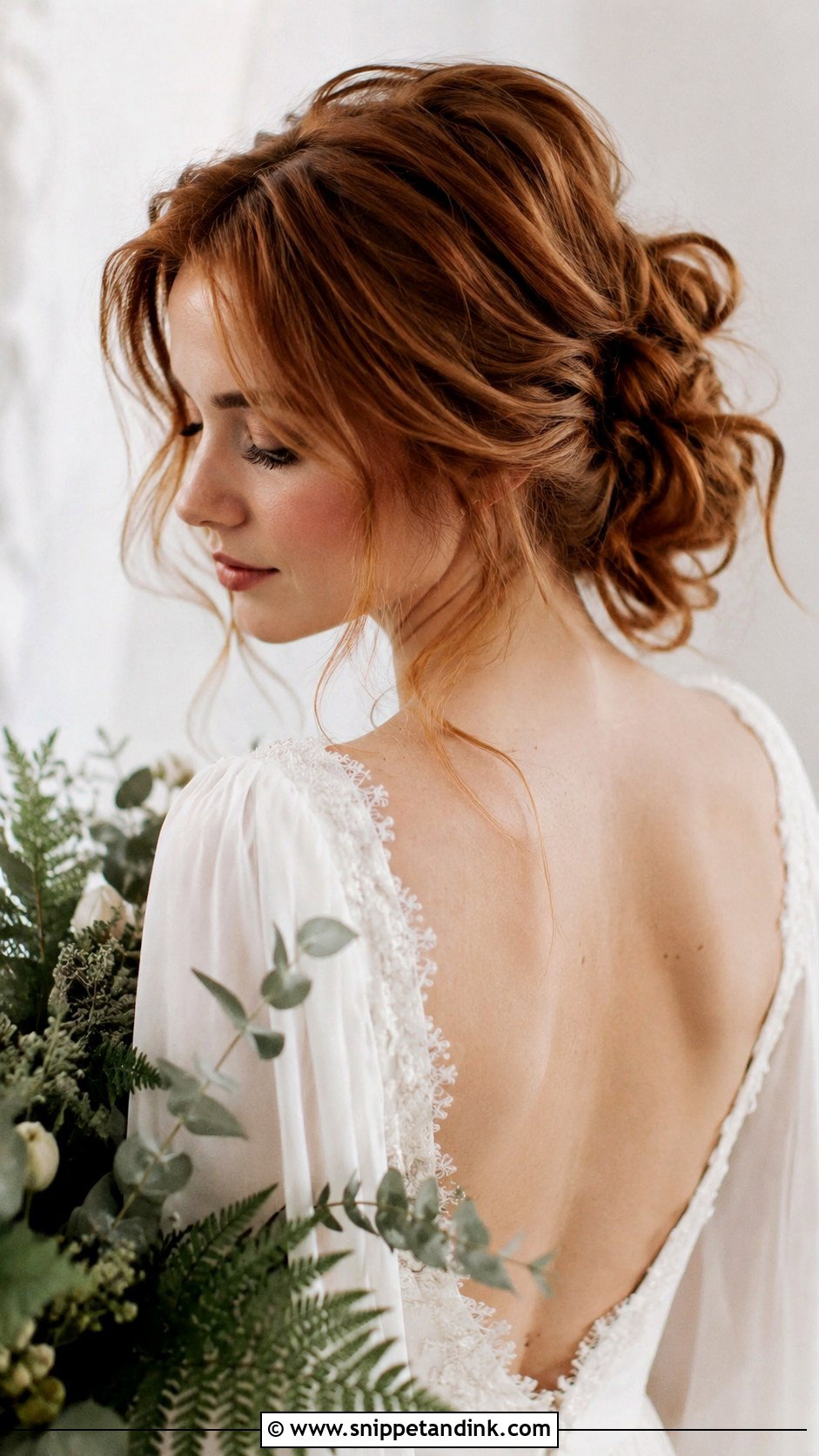
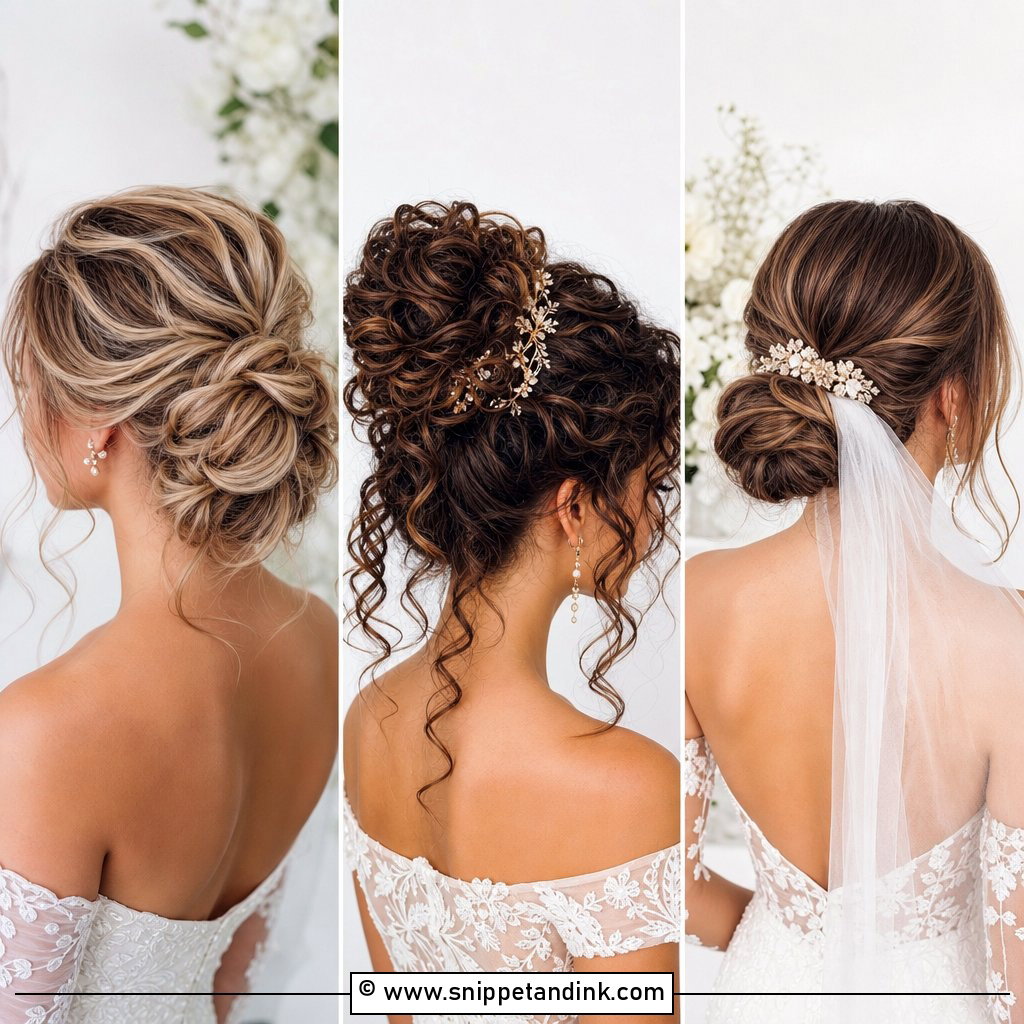
Loose is the hardest kind of updo to make last. That airy, just-pinned shape comes from waves set first and then gathered gently, with a few pieces left out around the face. If the curl isn’t set properly, the whole thing flattens by the speeches. I curl, let every section cool completely, and only then pin. Garden and beach weddings suit it, and small flowers or a sprig of greenery tuck in easily. Expect it to soften through the day; that’s part of the charm, as long as you’re happy with it.
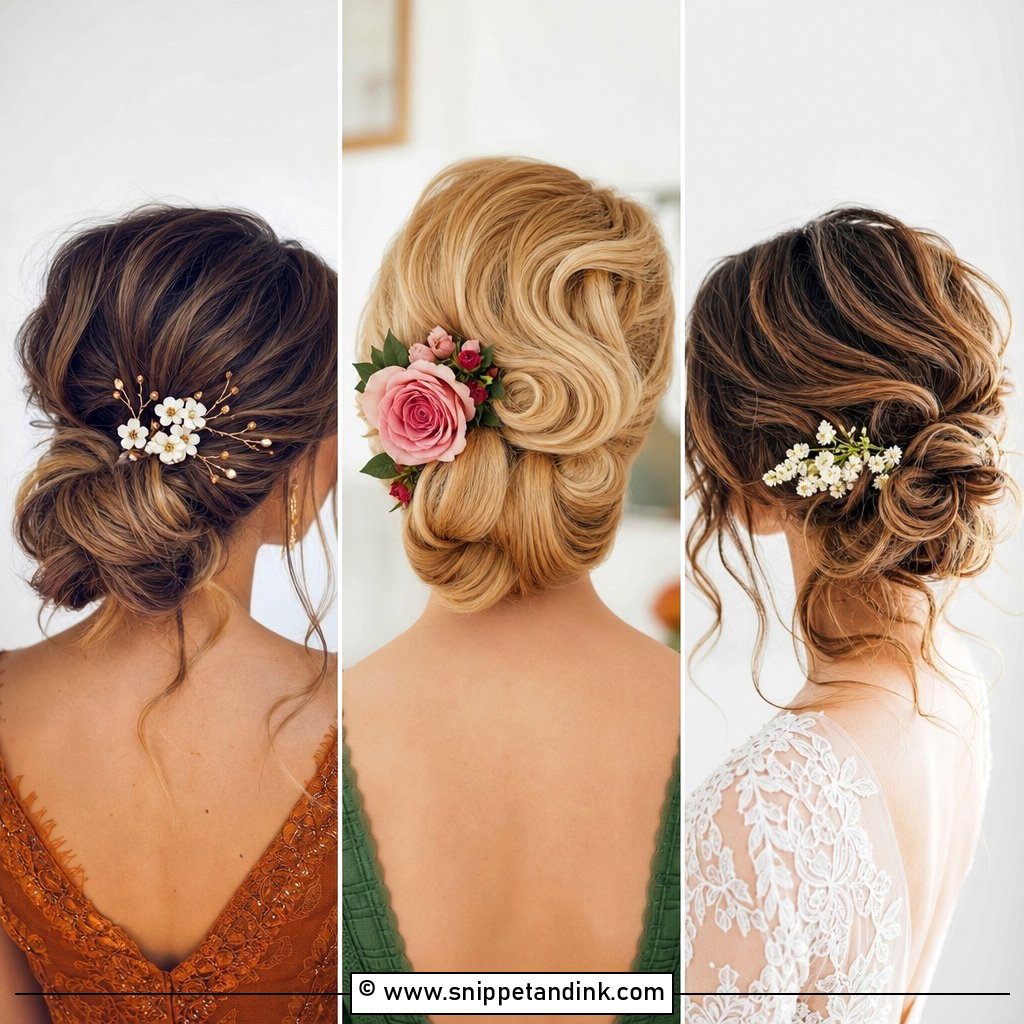
4. Side Low Bun With Soft Waves
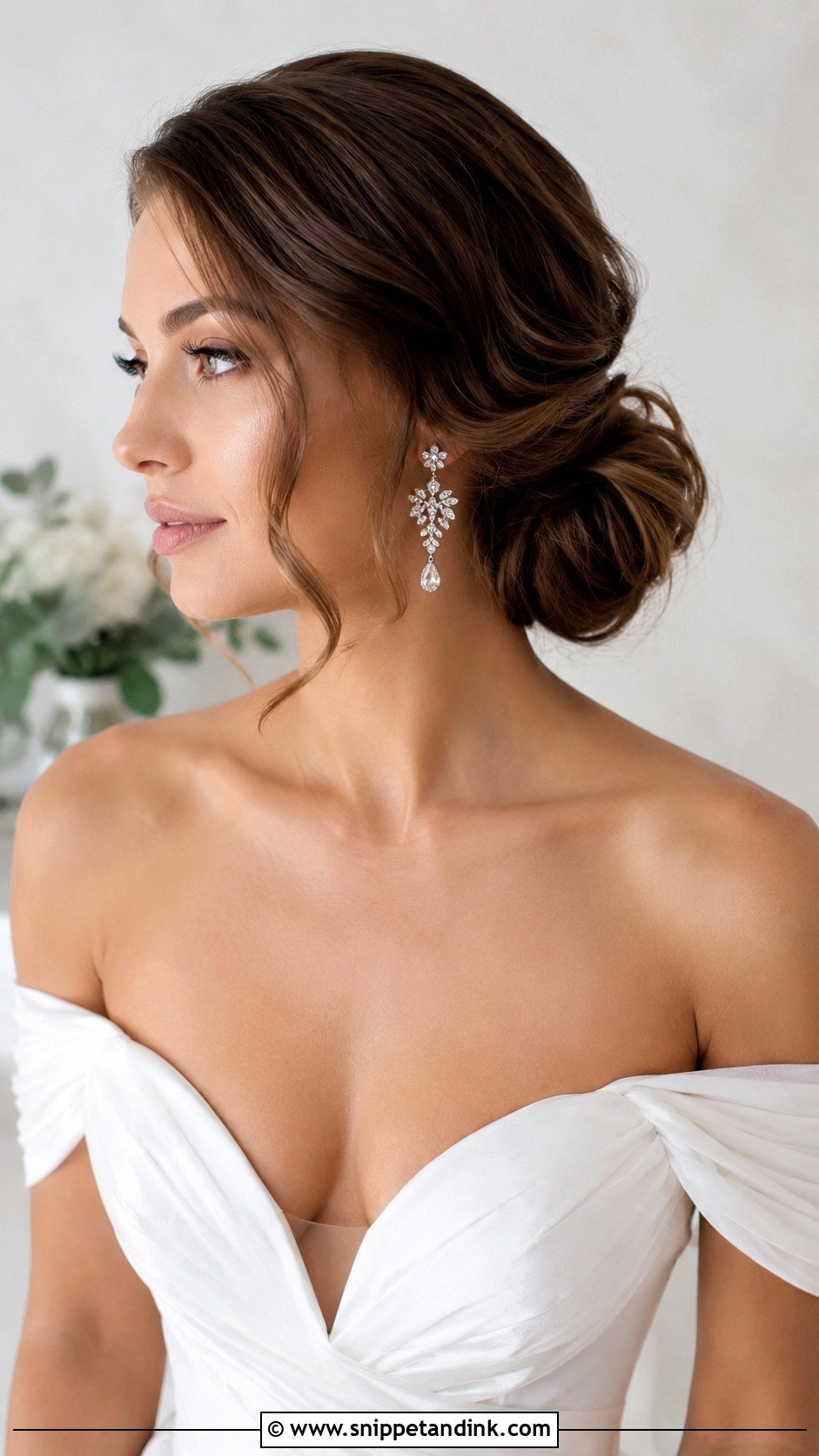
Swept to one shoulder, a side bun shows off an off-shoulder neckline and a statement earring on the open side. The waves leading into it give movement, but here’s what I warn brides about: side buns change how you photograph from each side. On your bun side you’ll be partly hidden in profile shots, so I ask which side you’ll stand on at the ceremony and usually place it opposite your partner. It feels a little vintage and works rustic or formal.
5. Sleek Low Bun for Minimalist Brides
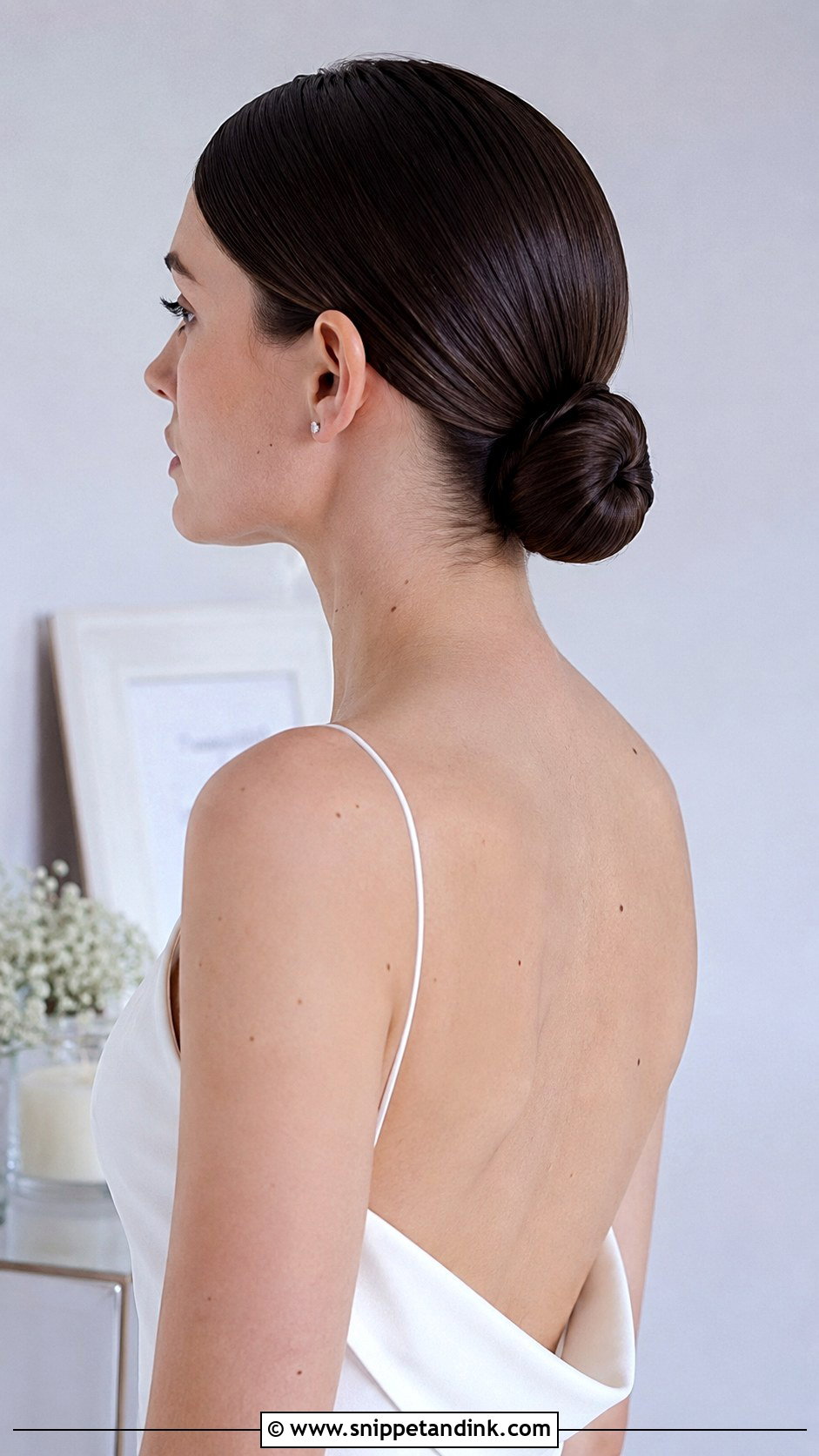
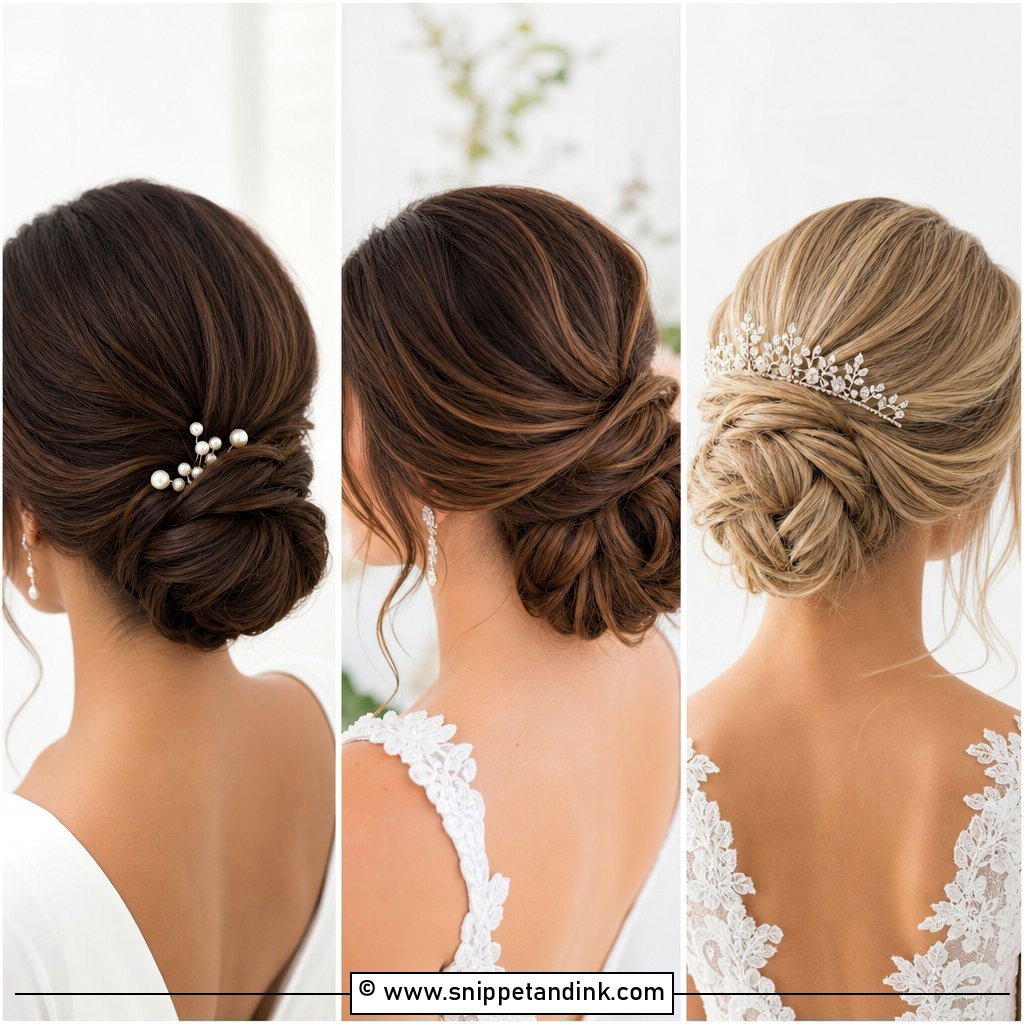
There’s nowhere for a mistake to hide on a sleek bun. Every strand is smoothed back with a fine brush and a smoothing cream, then set into a tight, glossy coil low at the neck. I’d steer brides with lots of short layers or a cowlick at the nape away from it, or plan for more product and pinning, because those pieces pop out within hours. It lets the gown and jewellery lead. A slip dress or a structured gown in a modern venue is its natural pairing.
6. Messy Low Bun Wedding Hairstyle
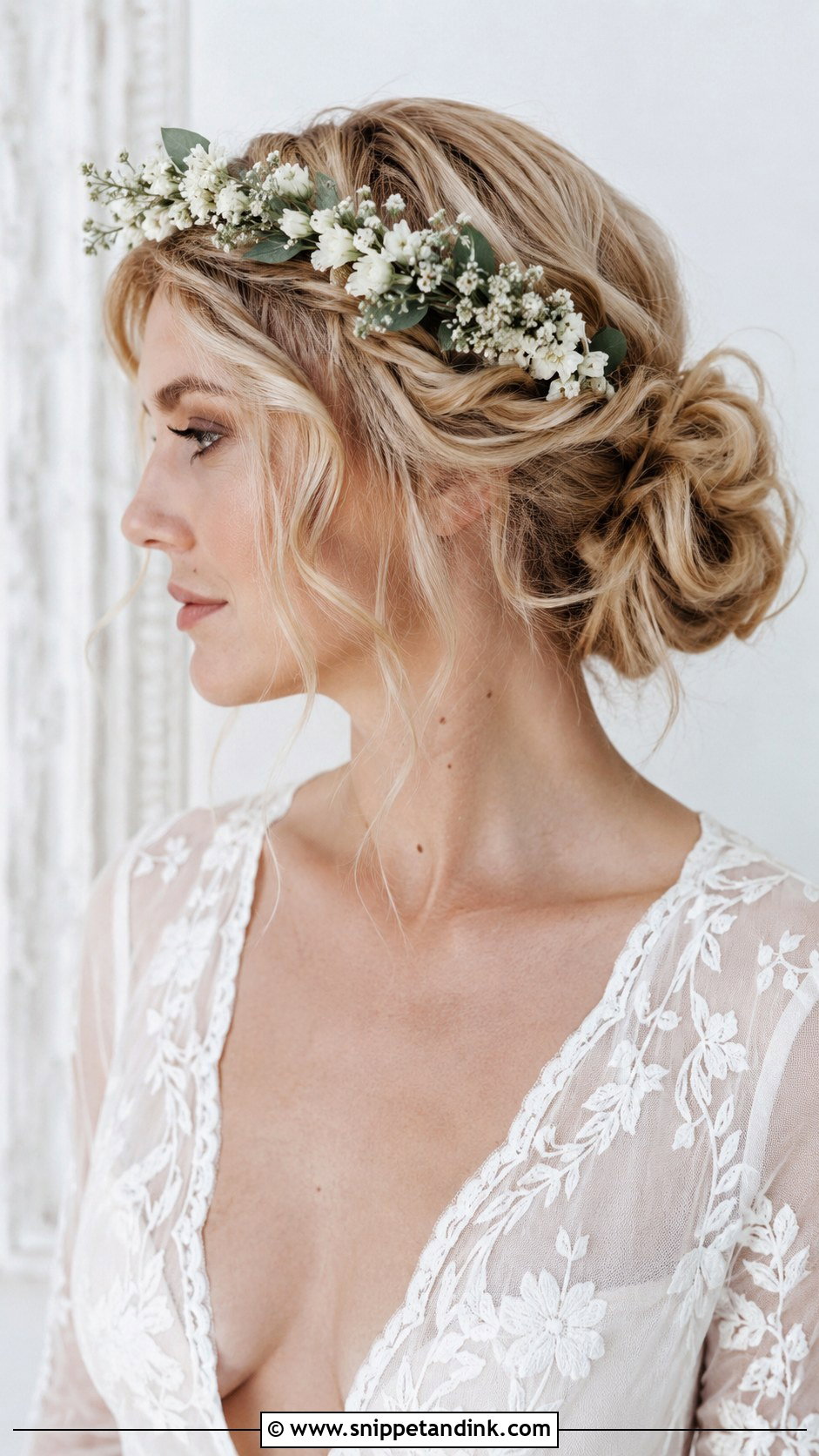
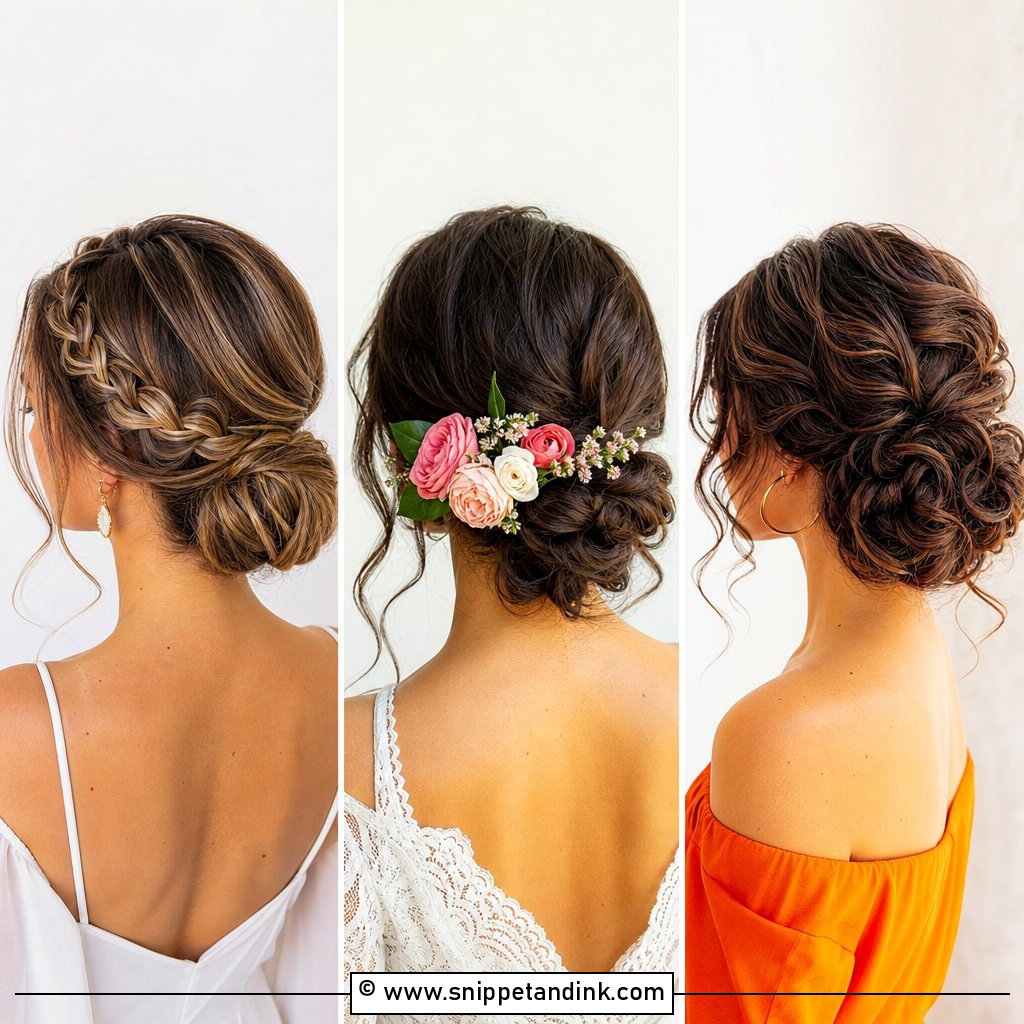
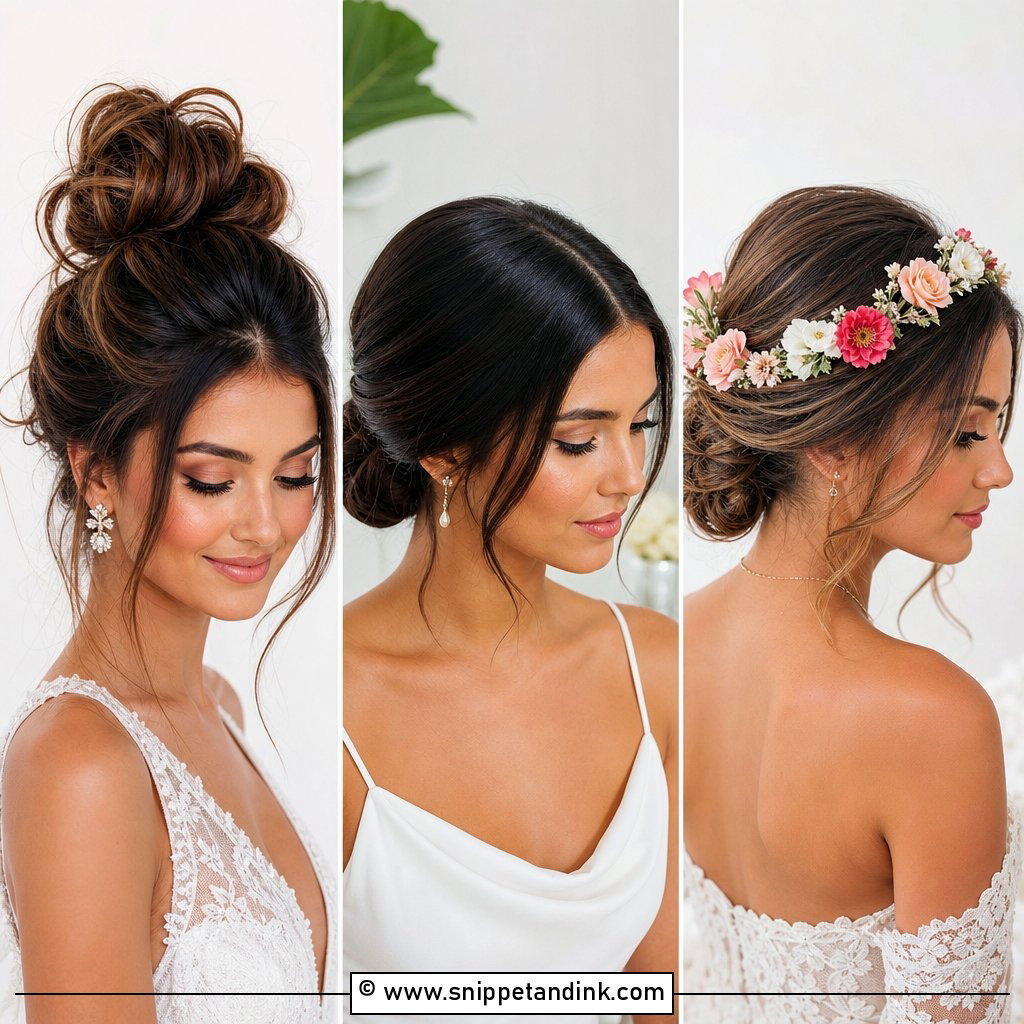
A messy bun that lasts is not messy underneath. The texture you see is pulled out on purpose from a bun that’s firmly anchored with hidden pins and an elastic. Loose strands, a slightly tousled surface and a few face-framing pieces give it that undone look. Boho gowns, flower crowns and field ceremonies suit it. It’s the style I’d pick for a bride who plans to dance hard, because when a piece falls, it just looks like more of the same.
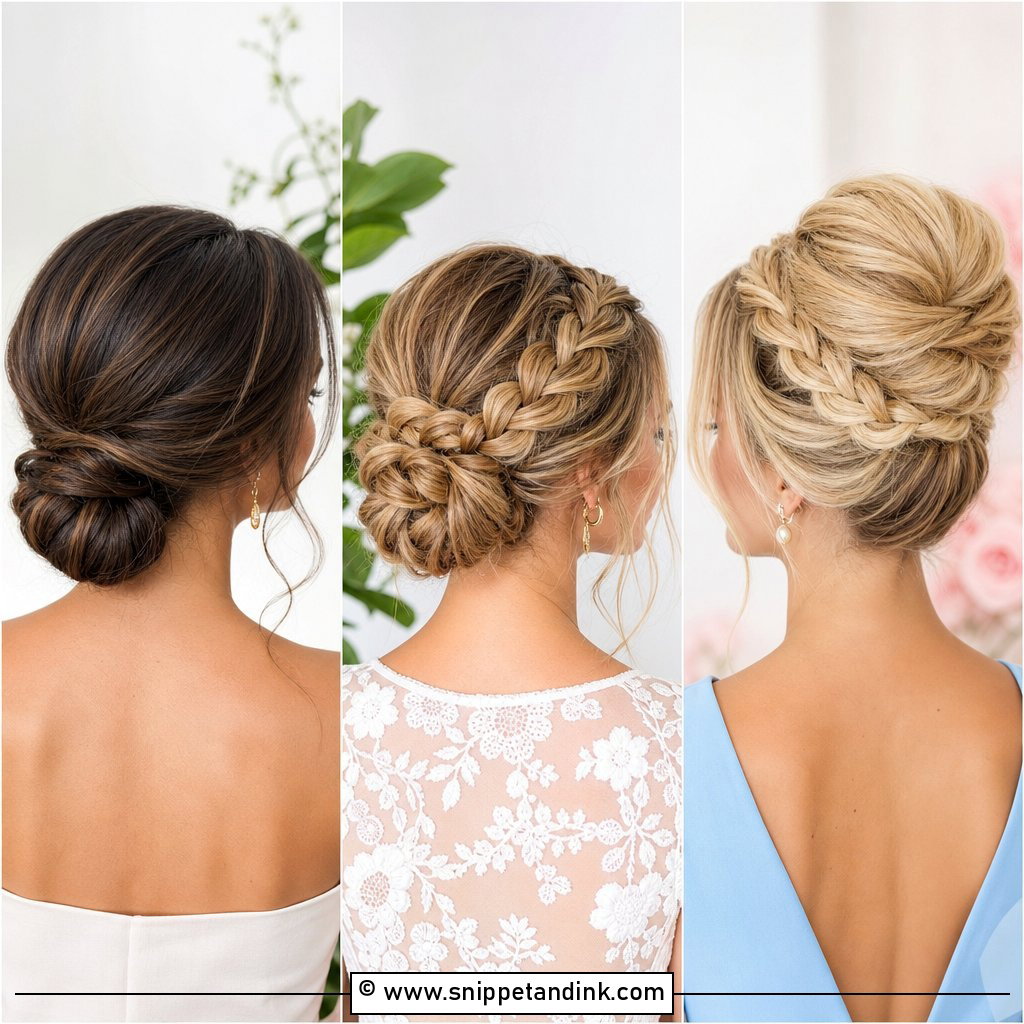
7. Braided Low Bun for Boho Brides
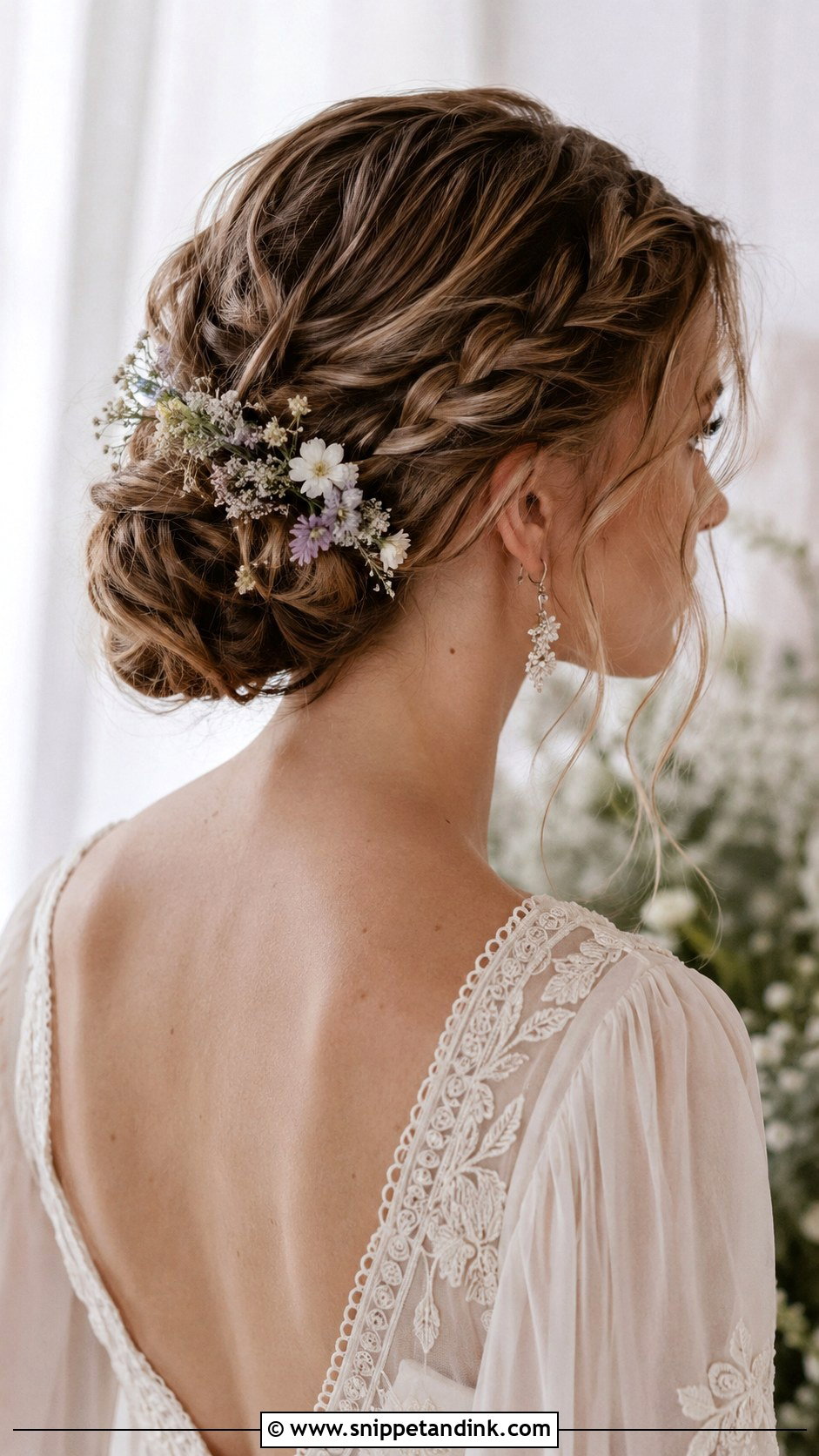
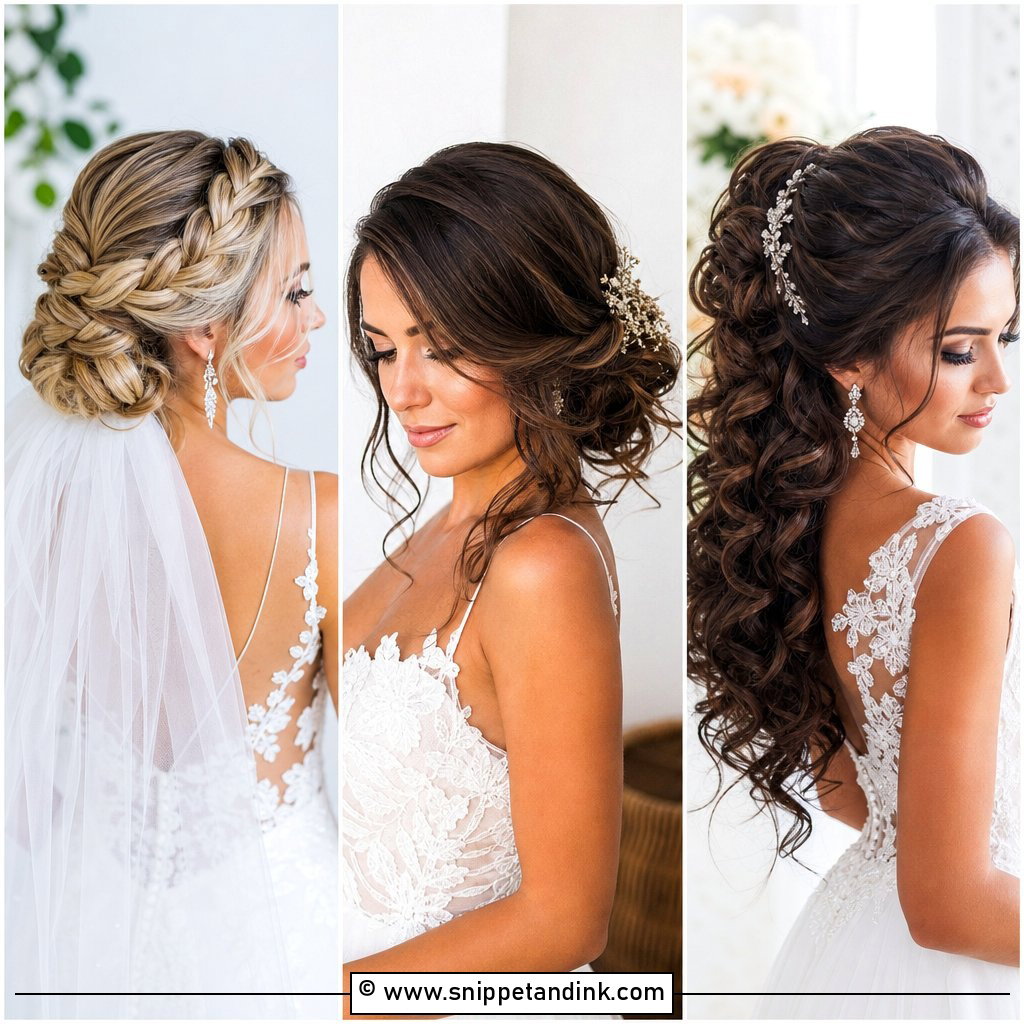
Braids make a bun more secure, not just more decorative. A thick single braid wrapped into the bun, or several thin ones woven through it, gives the hair something to grip, so the shape stays put through an outdoor afternoon. That plaited texture brings bohemian charm and holds wildflowers, greenery or small pins between the strands. Medium and long hair both work. I pancake the braids gently, pulling the edges wider, so they read from the back of the room.
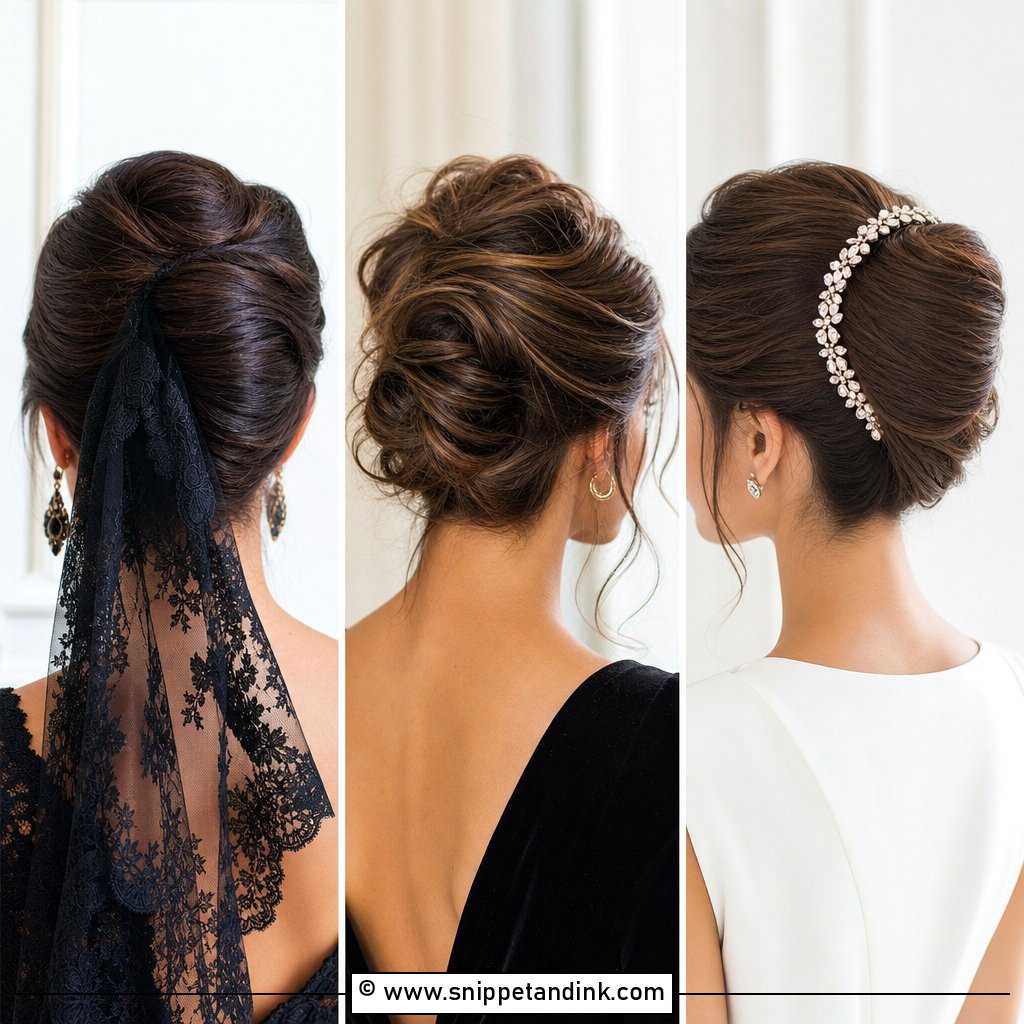
8. Low Chignon With Veil
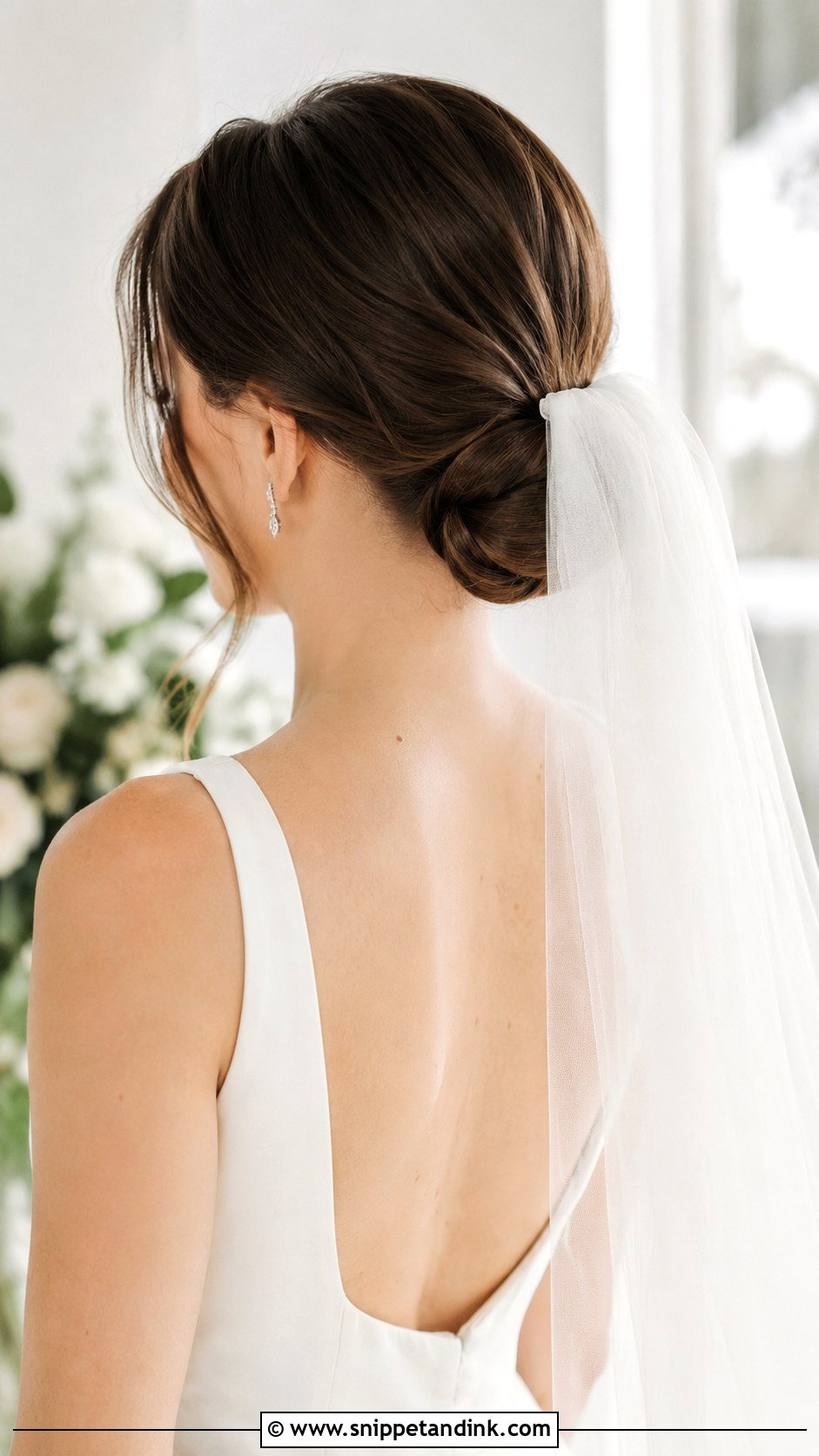
A chignon is the best foundation I know for a veil. The comb needs something solid to grip, and a firmly pinned chignon gives it exactly that. Tucked beneath the bun, the veil falls quietly; set on top, it frames the shape and looks more dramatic. Short and long veils both work. The thing I check at the trial is weight: a long, heavy veil pulls backward, so I cross-pin underneath the comb and have you turn your head and walk before I call it done.
9. Low Bun With Braided Crown
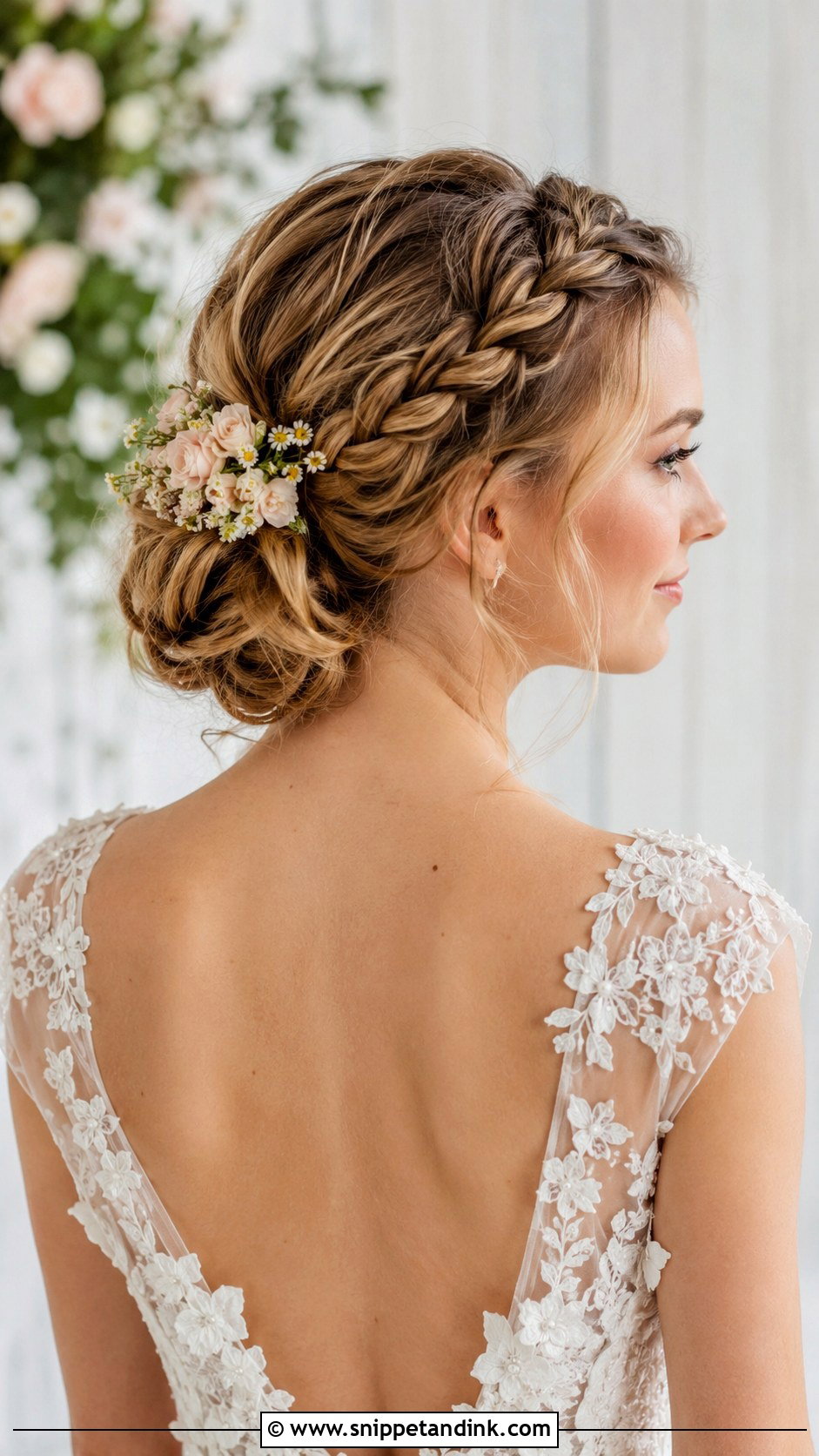
A braid around the head that runs into a low bun is part halo, part practical: it keeps every strand off your face. Flowers sit naturally in the braid, as do small pins. The full crown needs long hair, ideally past the shoulders, to reach all the way round; on medium lengths I’ll often braid just from ear to ear and pin the ends under the bun. It suits boho, vintage and garden weddings, and gives you the feel of a natural tiara without any metal.
10. Low Bun With Curls and Tendrils
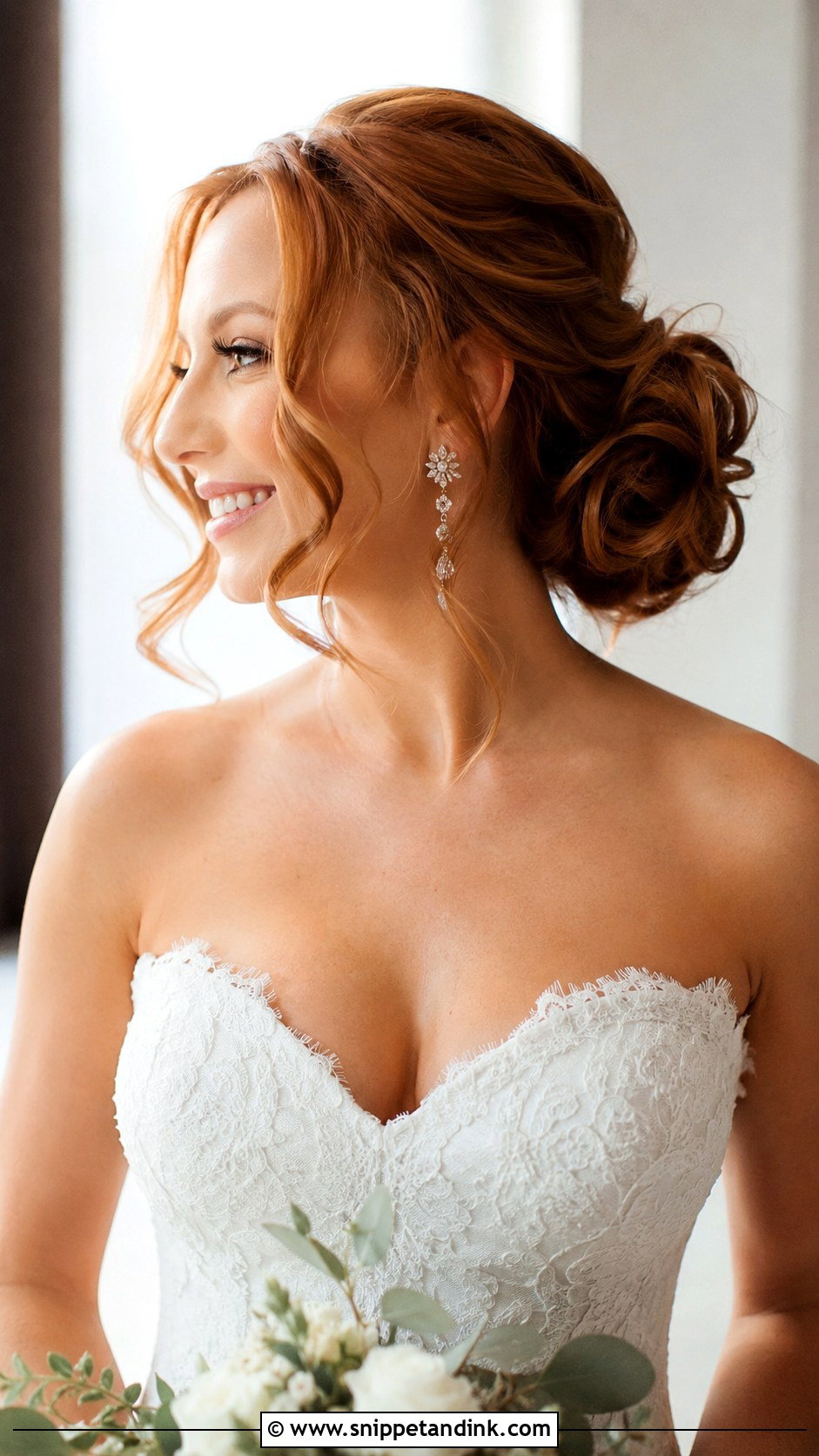
Tendrils need curling, not just pulling out. Left straight, the loose pieces look like the updo is coming apart; curled and set, they frame the face and neck on purpose. I curl them last, keep them a touch longer than you think you’ll want, since they spring up as they dry, and spray them lightly. The curls inside the bun add volume and fullness. Sweetheart necklines and drop earrings look good with the extra softness around the face.
11. Sleek Low Bun With Middle Part
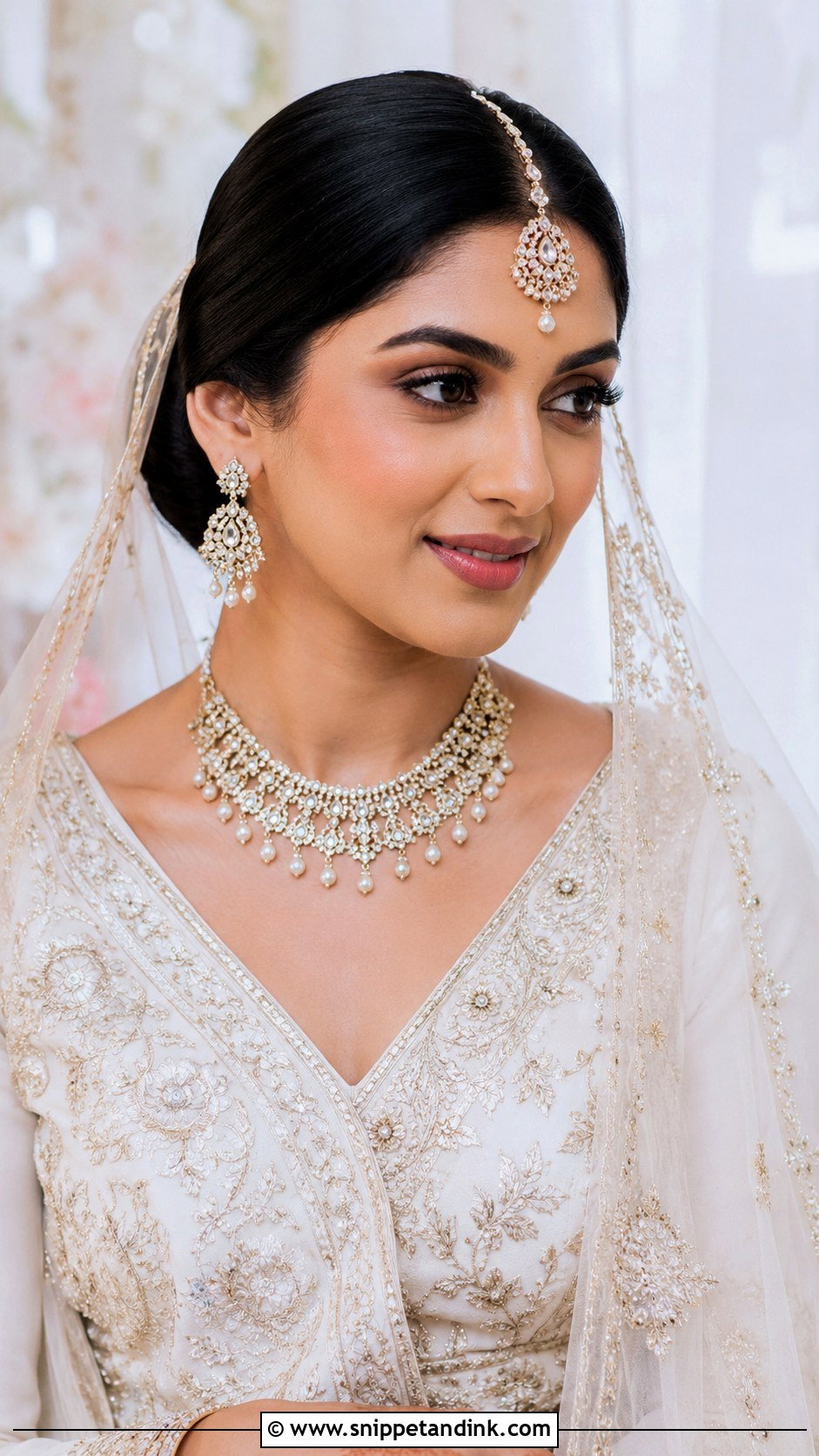
A middle part demands a straight one. I lay it with a tail comb, check it from the mirror and from straight above, because a slightly crooked part is the first thing people notice in a symmetrical style. It frames the face evenly and makes a clean base for traditional jewellery, a headpiece or a fine veil. Oval and heart-shaped faces suit it especially well. If your hair naturally falls to one side, try the centre part a few days before so it settles.
12. Low Knot Bun Bridal Updo
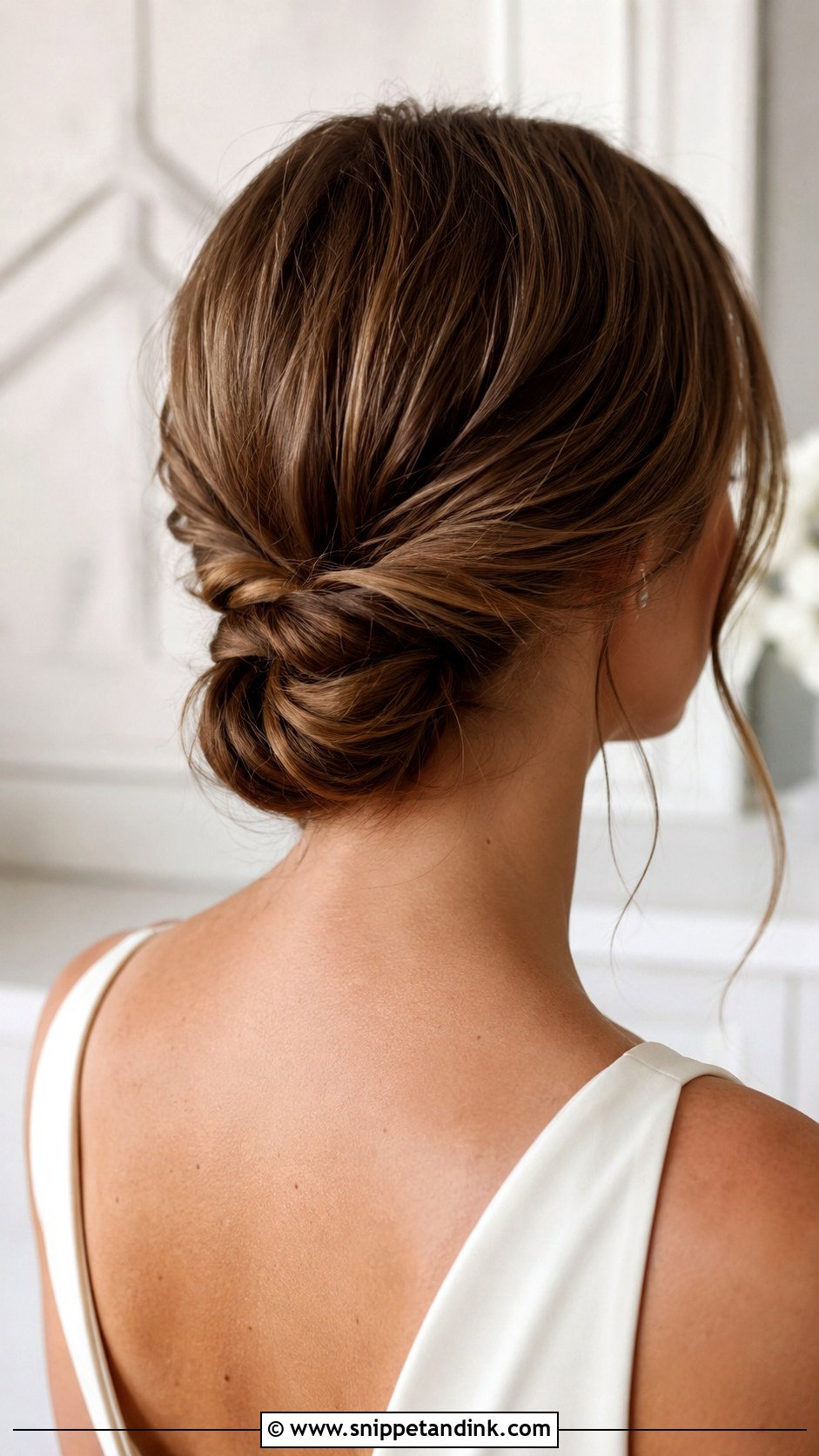
The knot is made by looping the hair through itself at the nape, which gives a twisted shape with very few pins. It’s quicker than most buns and quietly interesting in photos. Keep it smooth for a sharper look, or loosen the loops for something softer. I’d go cautious with very thick hair, which makes the knot bulky; I’ll take a section out and pin it underneath to keep the shape neat. Simple gowns and minimal accessories pair well with it.
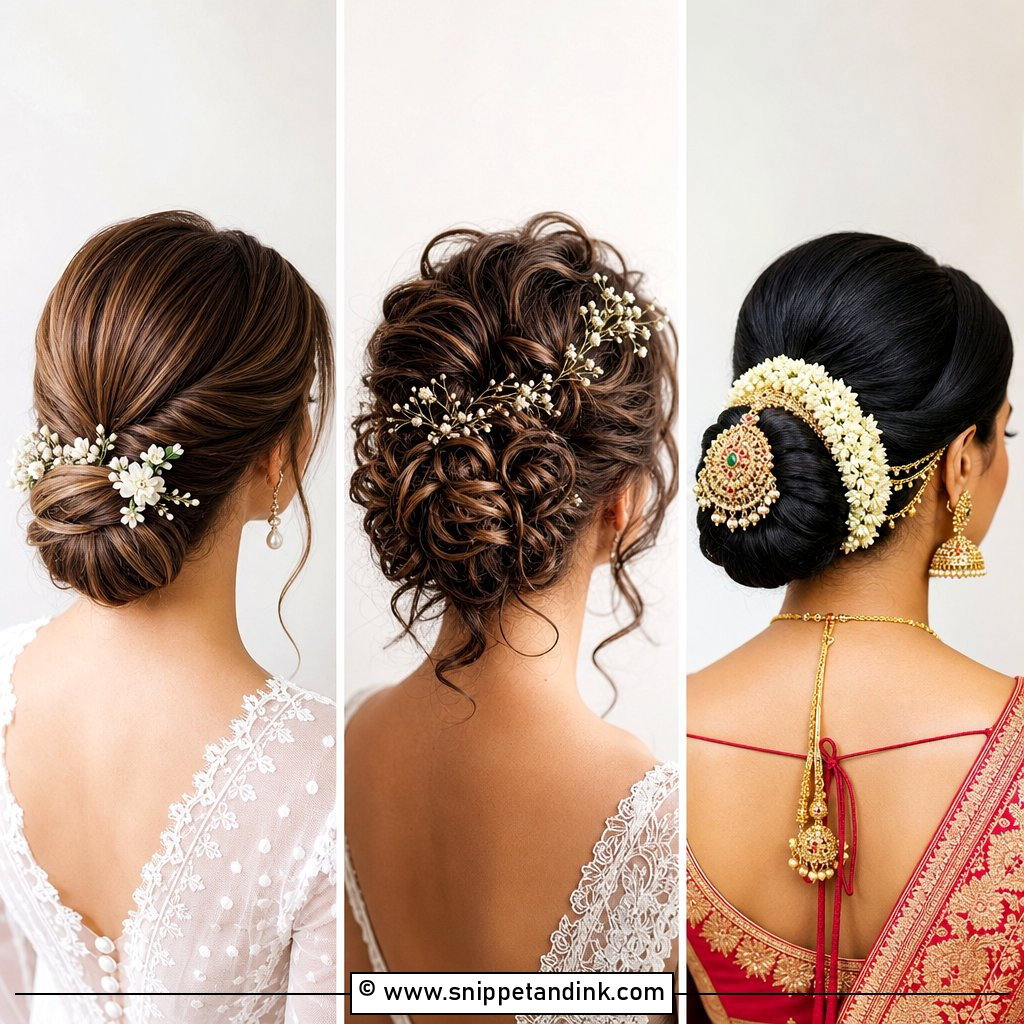
13. Low Bun With Flowers
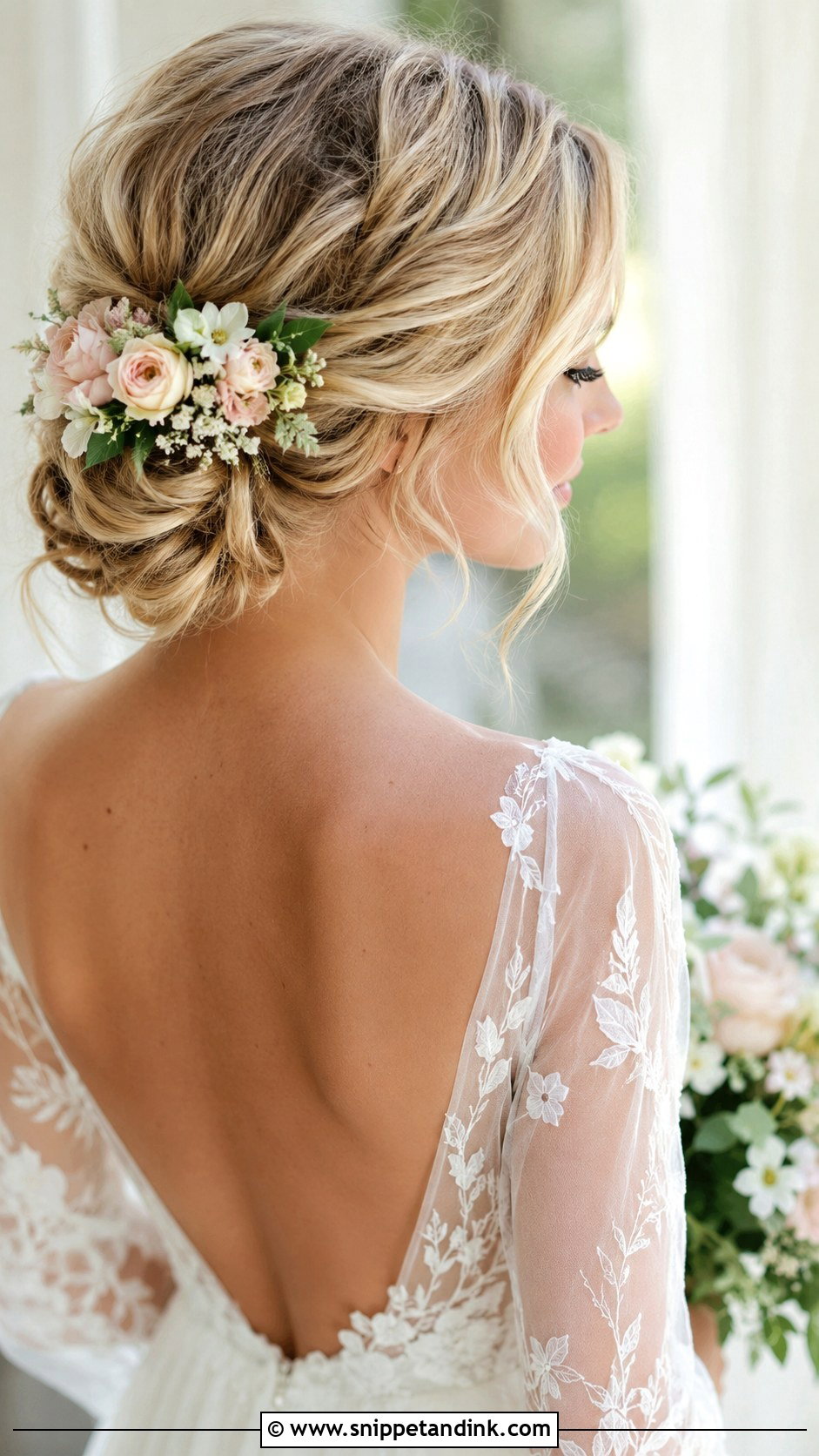
Fresh flowers in hair need choosing for stamina, not just colour. Spray roses, wax flower, baby’s breath and small orchids hold up; gardenias and some delicate blooms brown at the edges within hours out of water. I ask the florist to wire or tape the stems so I can pin them firmly, and I place them last. One larger bloom at the side reads clearly in photos; a scatter of small ones looks gathered from a garden. Outdoor and spring weddings suit it, and the flowers can echo your bouquet.
14. Low Rolled Updo for Brides
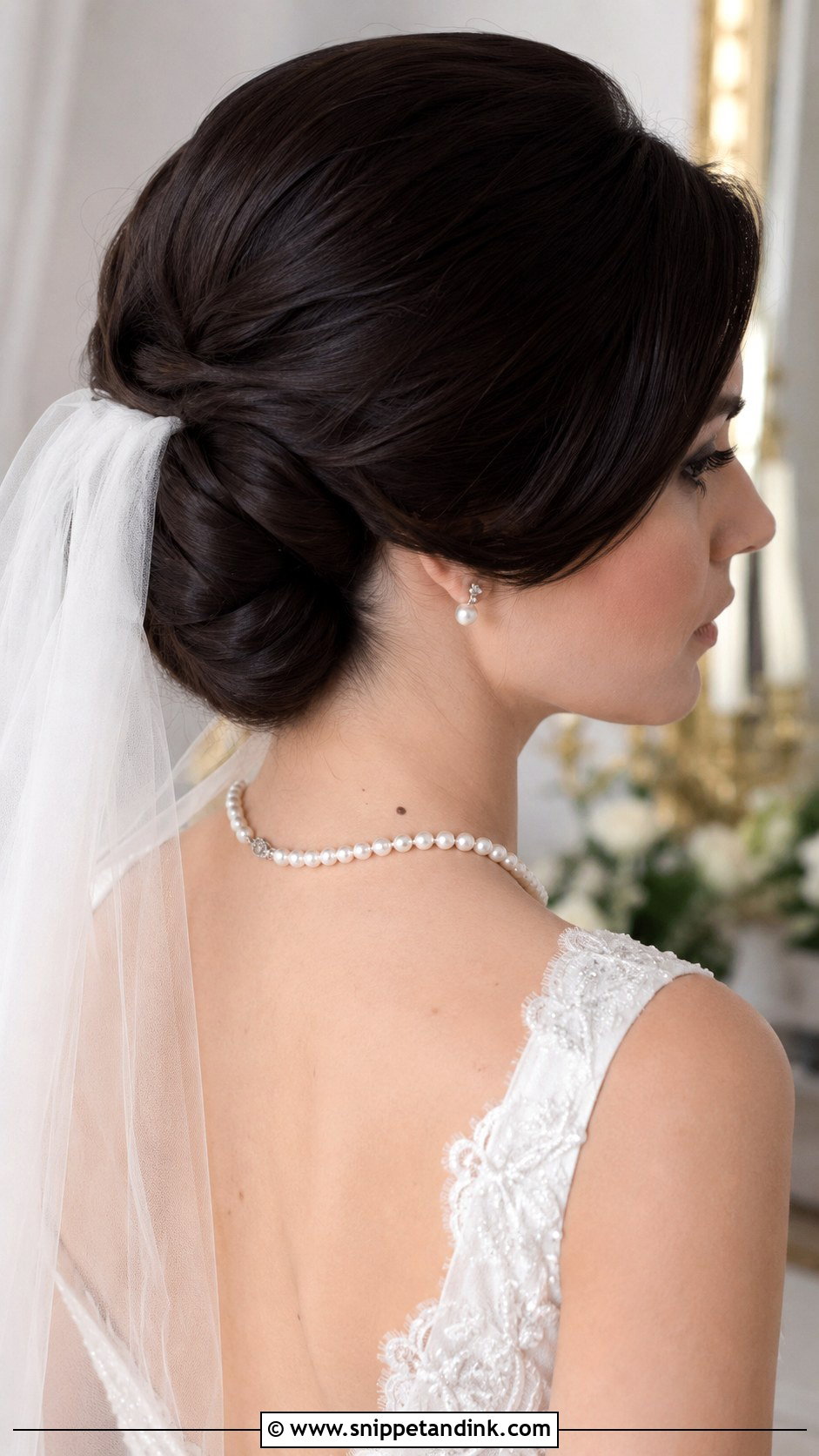
Rolls have a vintage polish that’s surprisingly sturdy. In a rolled updo the hair is rolled under and tucked into a smooth shape at the nape, and the roll itself locks the hair in, which is why it lasts through a long reception. Pearls, a classic gown and a simple veil suit it. It needs some grip, so on silky, freshly washed hair I set the hair first with hot rollers or a light setting spray. Retro-leaning brides tend to love it.
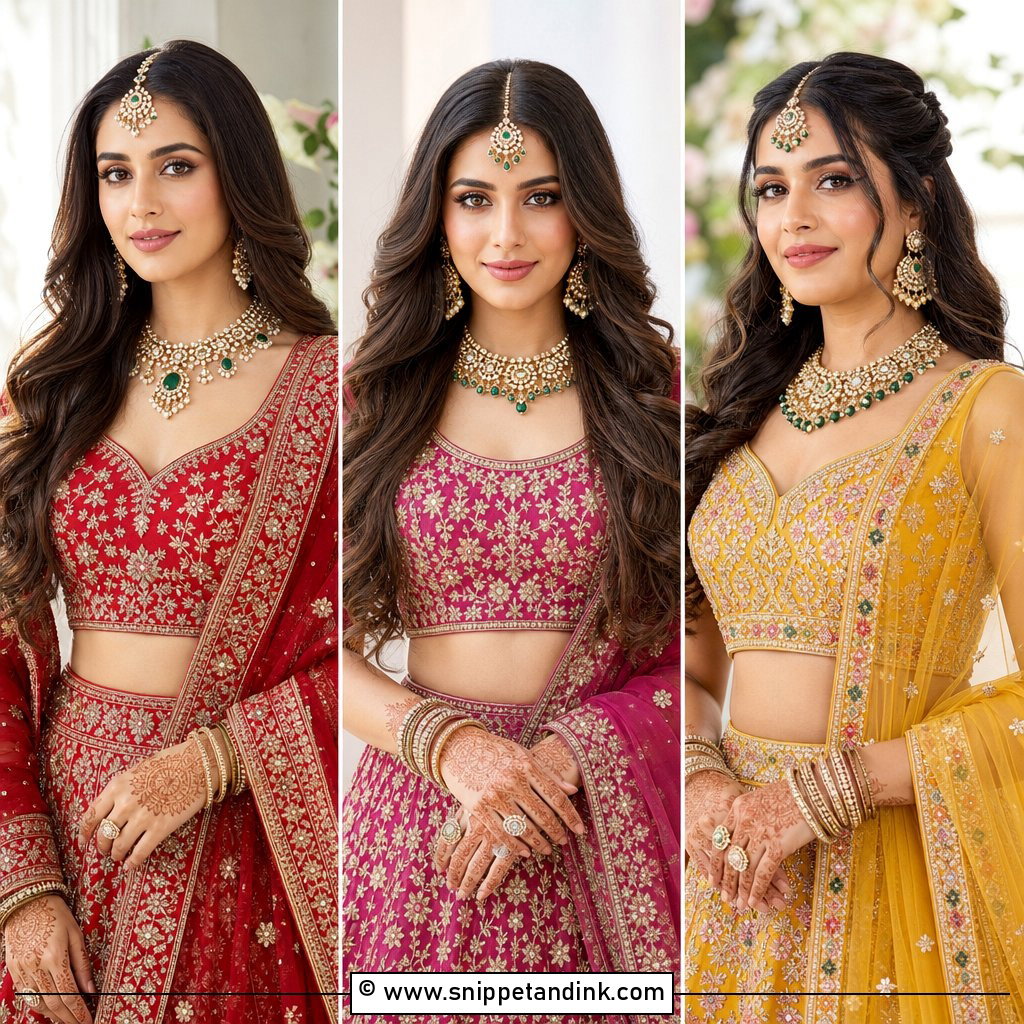
15. Low Bun With Headband or Hairpiece
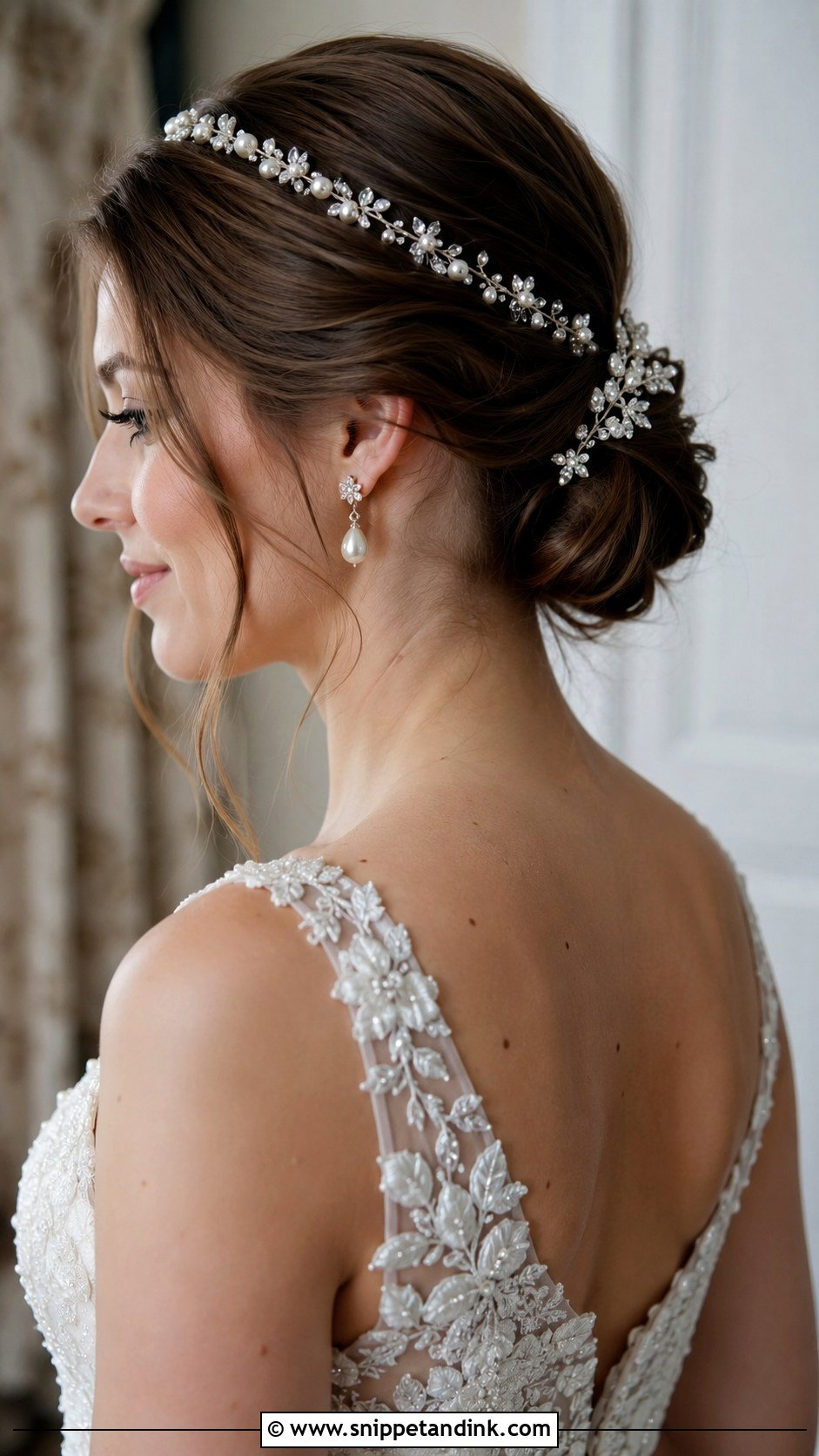
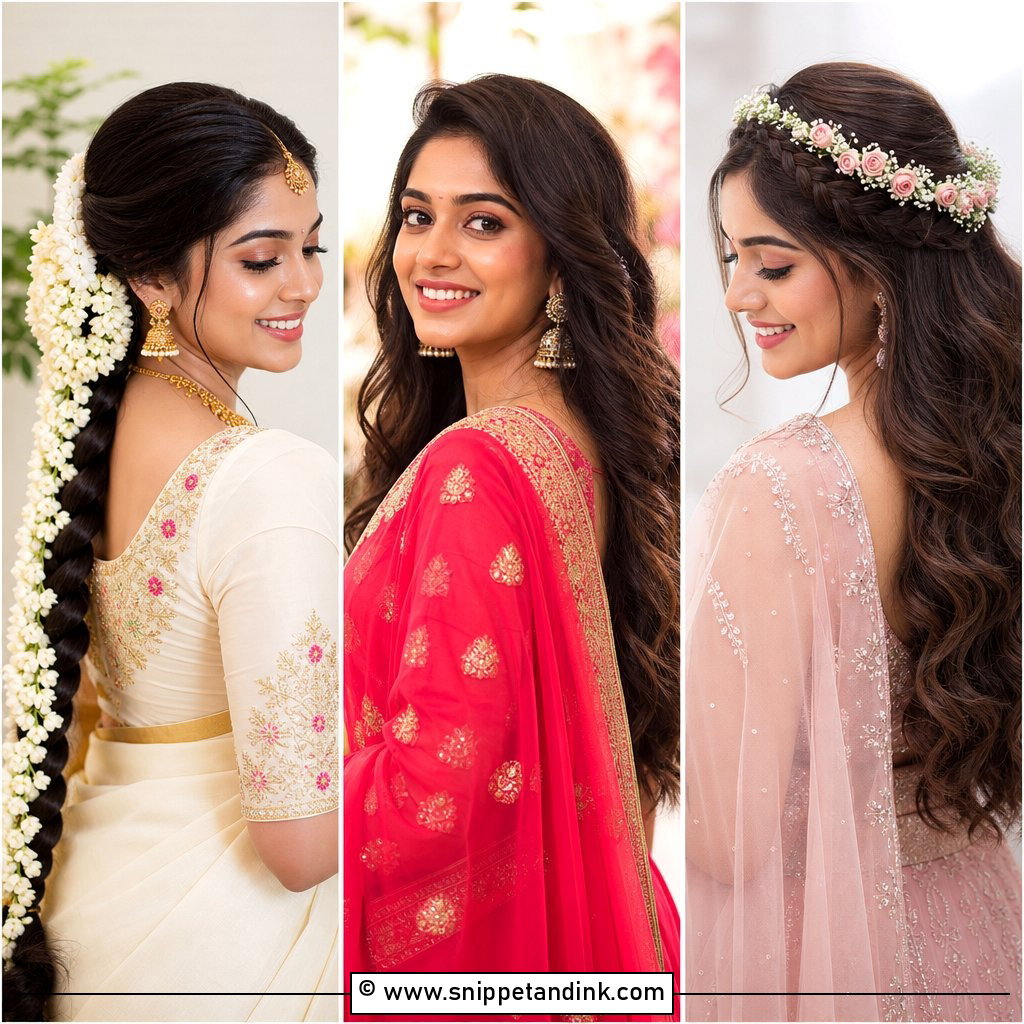
The accessory becomes the focus here, so the bun under it should stay simple. Pearls, crystals or fine metal work in a headband or comb catch the light while the low bun anchors everything. The fit is what I check first: a headband that pinches behind the ears will give you a headache by the speeches, so wear it around the house for an hour before the wedding. I pin the band through the hair at both ends so it can’t slide forward. It sits well with modern and vintage gowns.
16. Low Bun for Black Brides
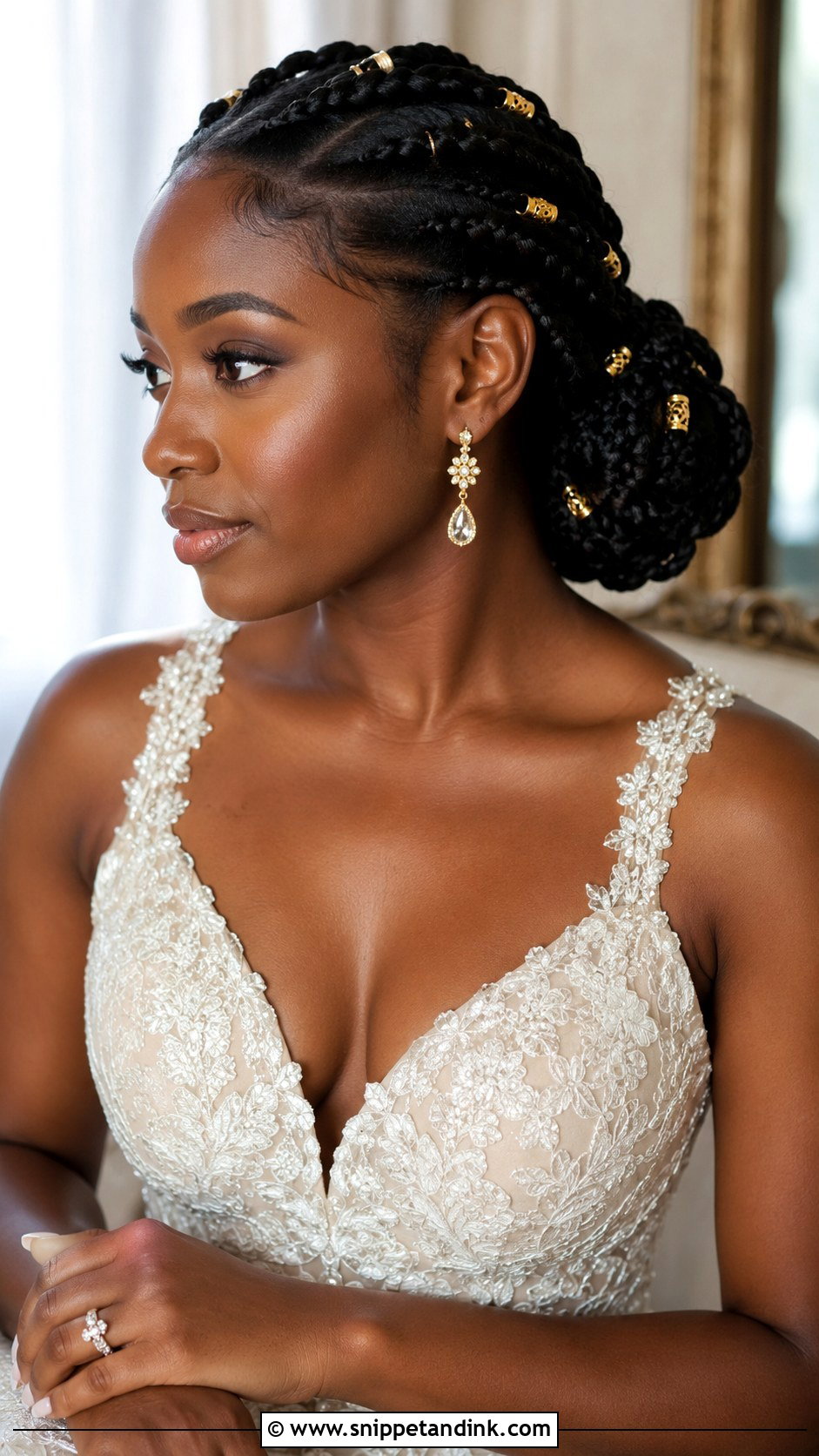
For Black brides, a low bun can carry a lot of texture and personality. Box braids and knotless braids sweep back into a smooth ballerina bun at the nape, finished with gold cuffs, beads or small pins. The thing I watch is weight and tension. A full head of braids gathered into one bun is heavy, so I keep the base slightly loose at the edges and support the bun with more than one anchor to avoid pulling on the hairline. On natural or pressed hair, I keep moisture and humidity in mind: a silk press can revert in damp air, so a textured bun is the steadier choice for an outdoor summer wedding.
17. Low Bun With Face-Framing Pieces
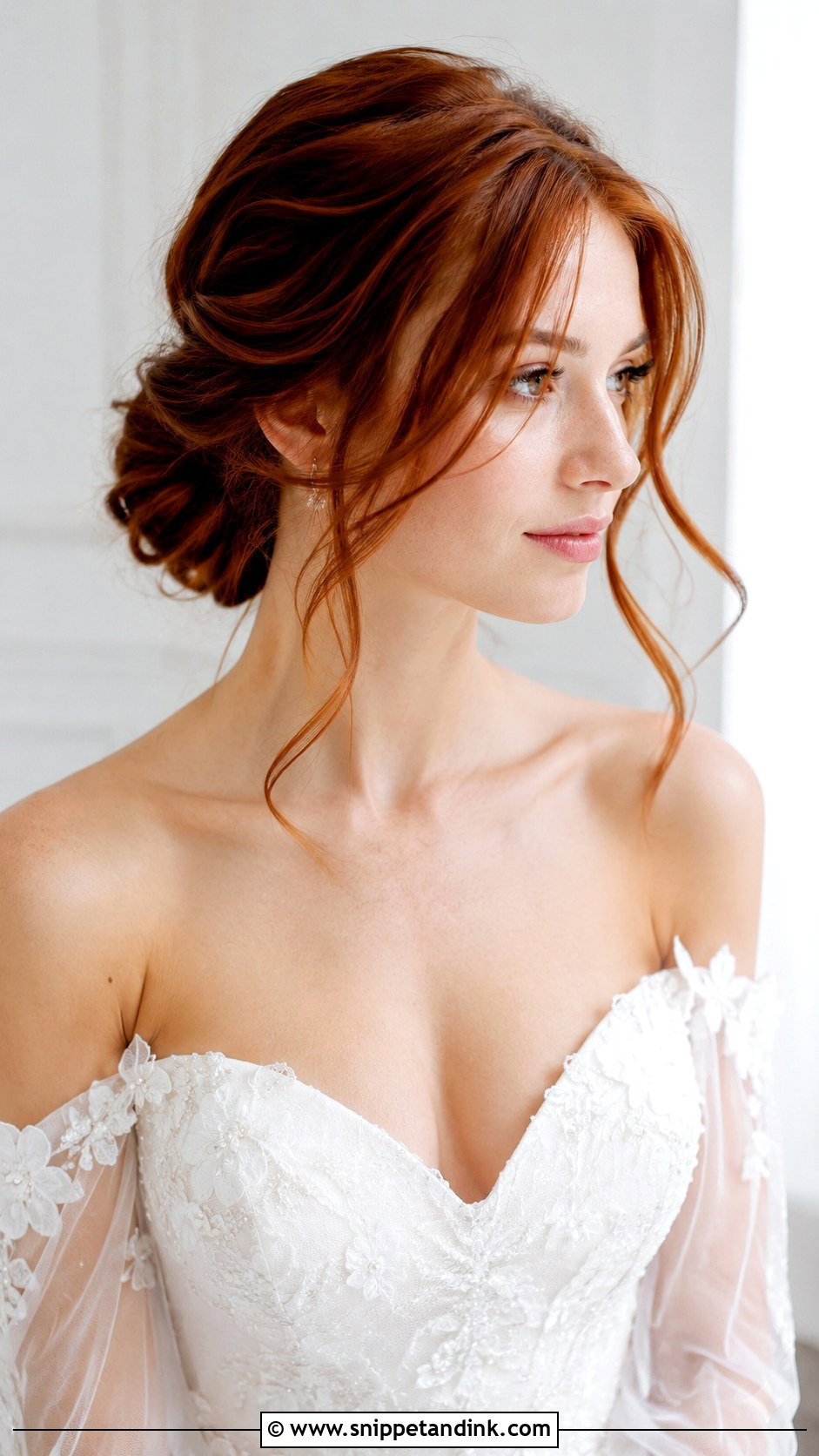
Face-framing pieces sound easy and are where I see the most second thoughts. Too short, and they look like grown-out bangs; too heavy, and they cover your cheekbones in photos. I cut nothing new before a wedding and work with your existing layers, choosing two or three pieces at the front. Curled, they’re soft; straight, they’re cooler and more modern. They suit a sleek or textured bun and add movement around the face without loosening the shape at the back.
18. Low Bun With Twisted Sides
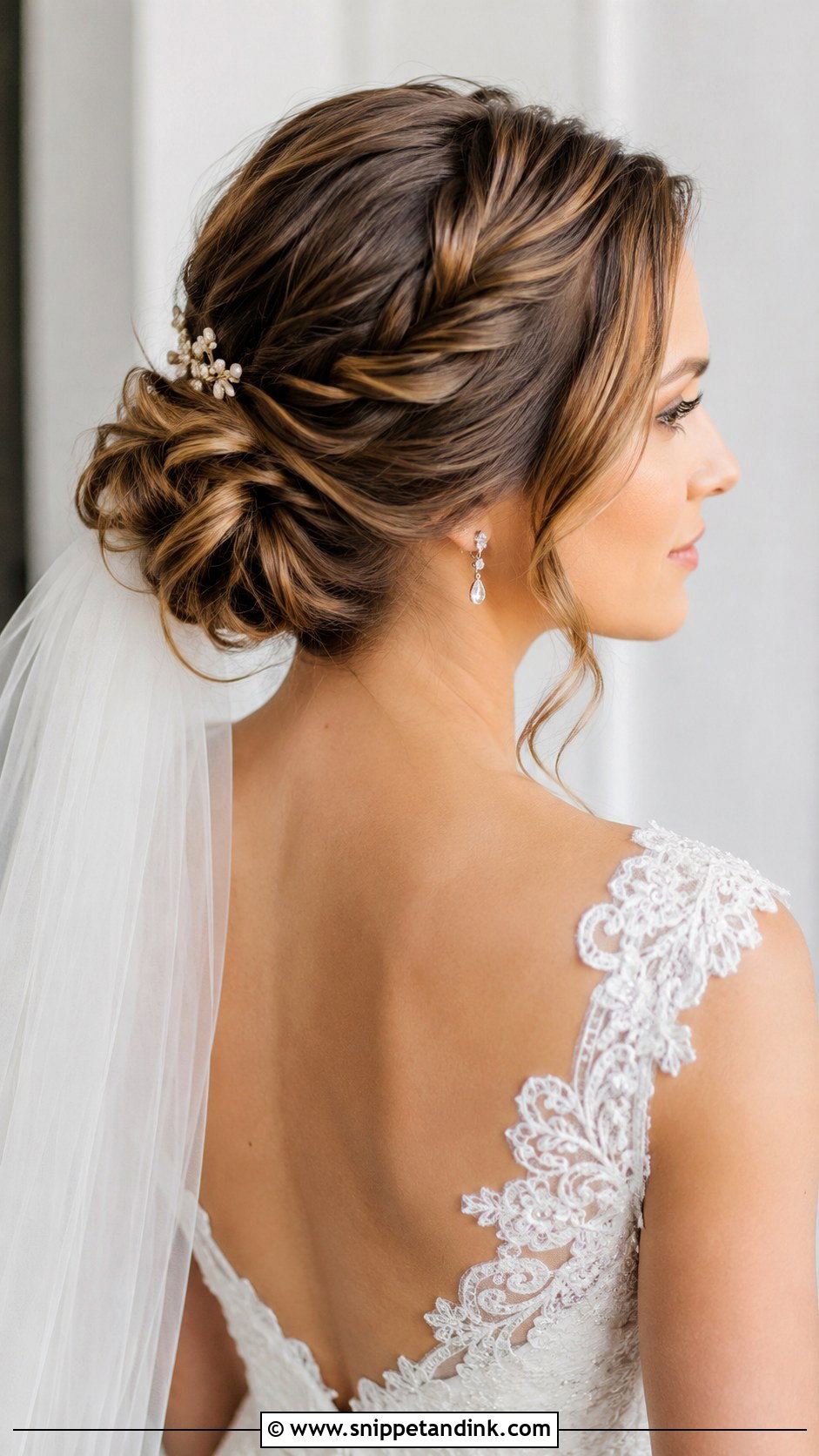
Twisting each side back before it meets at the bun turns a plain shape into something with detail, and keeps hair firmly off the face. I twist toward the back and pin each twist behind the ear, where the pin disappears. Because each side is anchored separately, the style is practical for long celebrations and dancing. Pins, small flowers or a soft veil sit easily at the join. On fine hair, I add a little texture first so the twists have body instead of looking flat.
19. Low Ballerina Bun for Brides
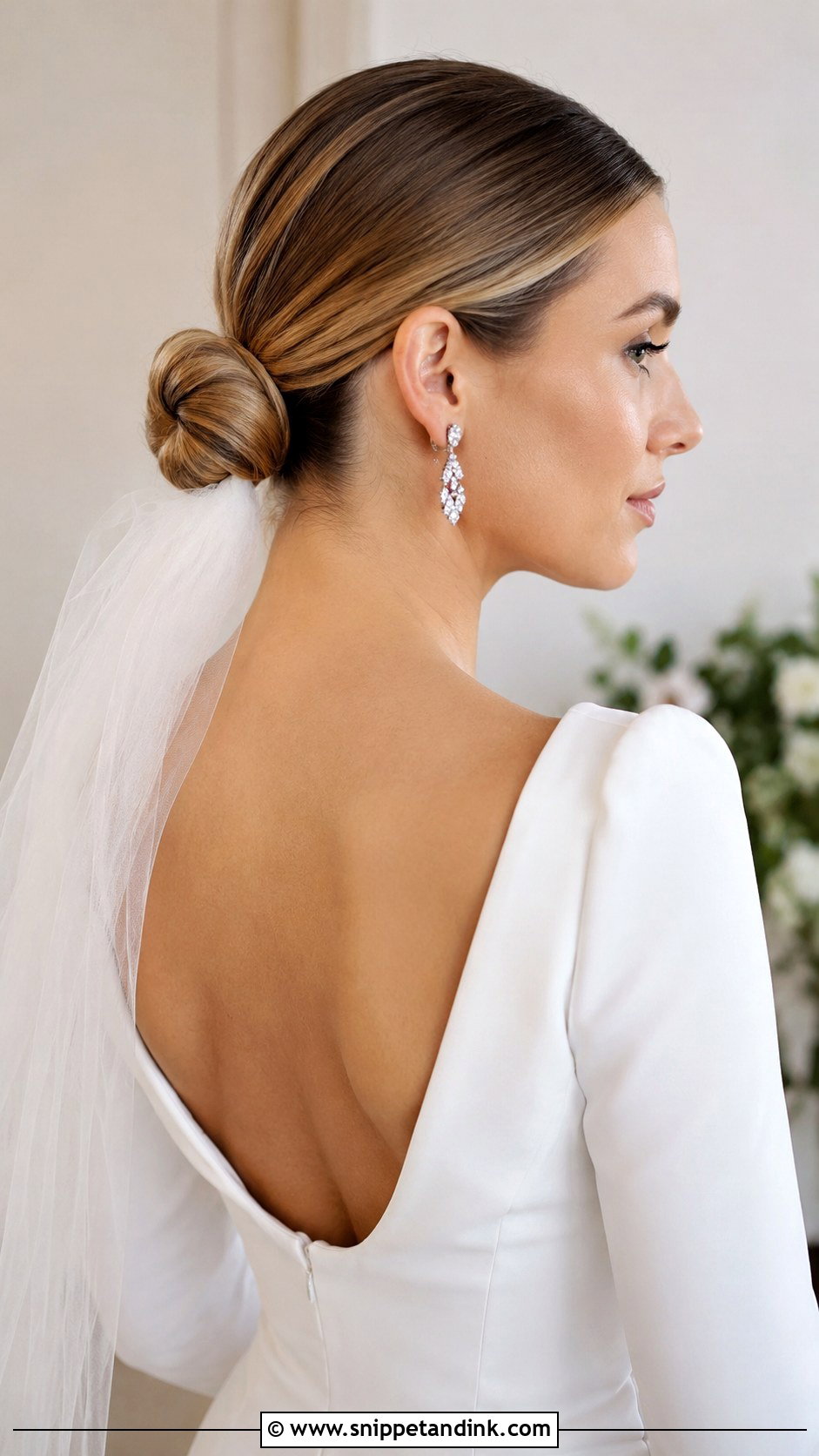
A low ballerina bun is round, sleek and compact, and it suits brides who like minimal styling. The tightness that gives it its polish is also its risk: wear it scraped back too hard for ten hours and you’ll have a sore scalp by dinner. I smooth it firmly but leave a little ease at the crown. It shows off statement earrings and structured gowns, and a veil tucked beneath it stays centred. It’s dependable for dancing, since a coiled bun barely moves.
20. Vintage Low Updo With Waves
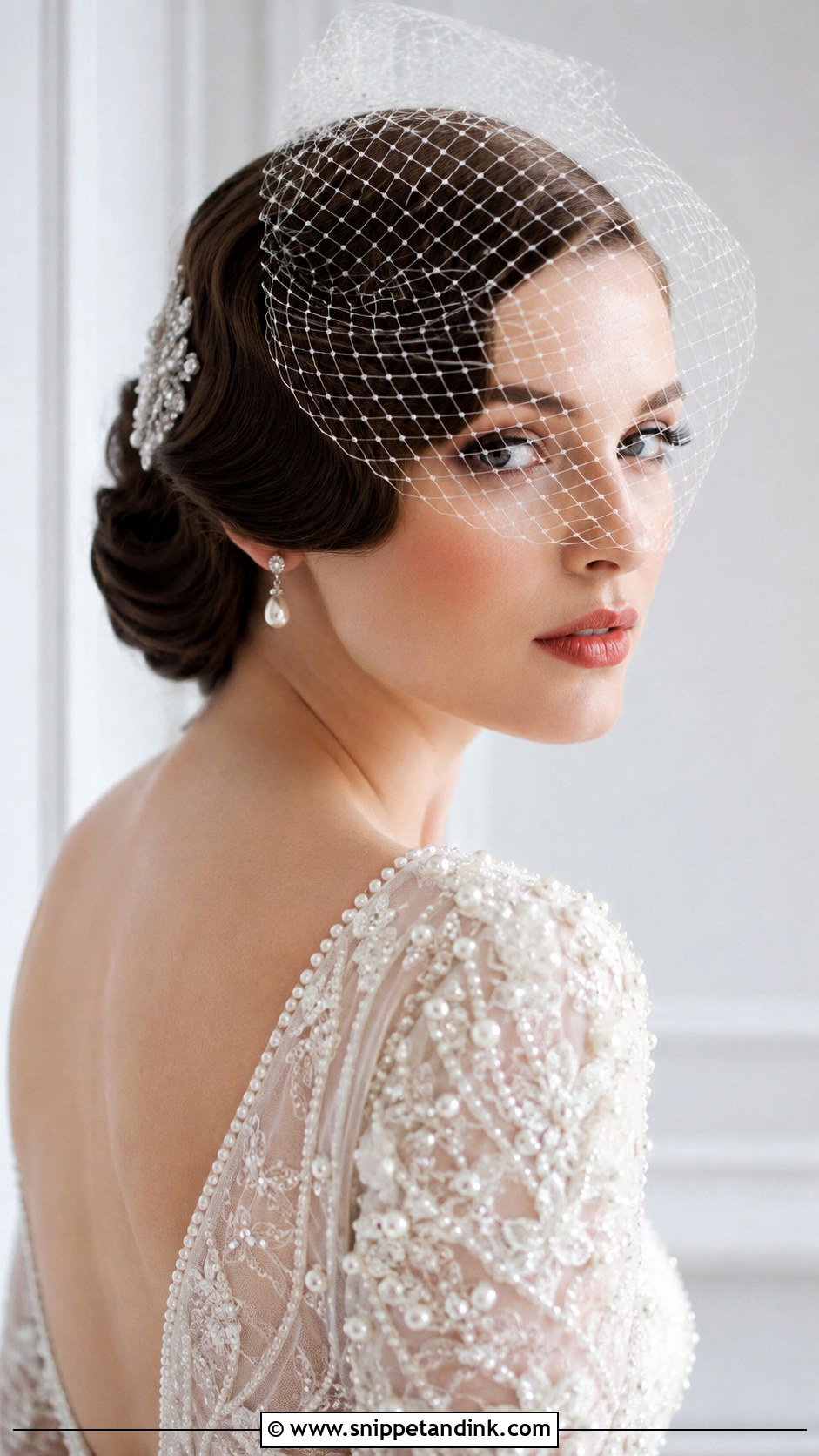
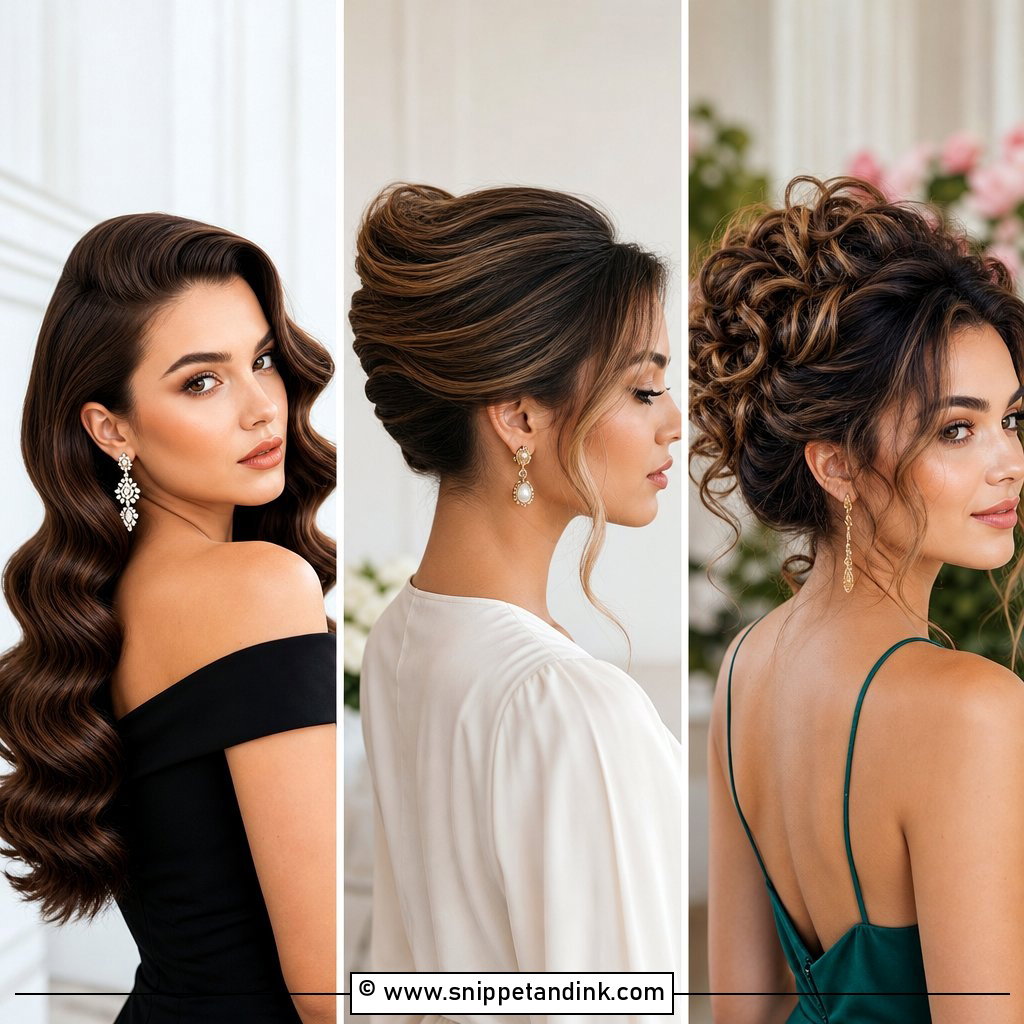
Old Hollywood waves take time. Finger waves or set curls along the front and sides, brushed into a deep S-shape, then swept into a low updo at the nape. I set them with pin curls or hot rollers well before you dress, because brushed-out waves need a fully cooled set to hold. Pearls, a birdcage veil and vintage gowns are natural partners. It reads glamorous and distinctive. If you’re marrying somewhere humid, ask for a firmer set and accept that the waves will relax a little toward evening.
High Collars, Low Backs and Where the Bun Sits
A low bun is low relative to your neck, and the dress changes what that means. With a high neckline or a lace collar, a bun set right at the nape rubs against the fabric every time you turn your head, flattening one side by the evening. I lift it slightly so it clears the collar.
An open or low back is the opposite. There, the bun frames the back of the dress, so I keep it tidy and compact and avoid long trailing pieces that would cover the detail. Strapless and off-shoulder gowns can take a fuller, softer bun, since there’s nothing to rub against.
Taking It All Down at the End of the Night
A bridal updo can hold dozens of pins, and pulling it apart in a rush is how hair snaps. Take it down slowly, ideally with someone helping.
- Remove the veil and any accessory first, then find the pins by touch, working from the bun outward.
- Release elastics by cutting them carefully if they’re tangled, rather than dragging them out.
- Don’t brush yet. Work a little oil or conditioner through the lengths and finger-comb the knots loose.
- Wash the next morning, not at midnight. Set hair with a lot of spray detangles far more easily after a gentle wash and a generous conditioner.
Your Neckline Decides More Than the Inspiration Photo Does
Low updos cover a lot of ground, from a sleek ballerina bun to loose waves, braids and flowers. The one that suits you depends less on the picture and more on your hair’s length and texture, your neckline and how you’ll wear the veil. Bring your favourite photos to the trial, along with a picture of your dress from the back. Wear a top with a similar neckline if you can. Then judge the style the way your guests will see it: from behind, in profile and after you’ve walked around for an hour.
You'll Like These Ideas:


Leave a Reply