
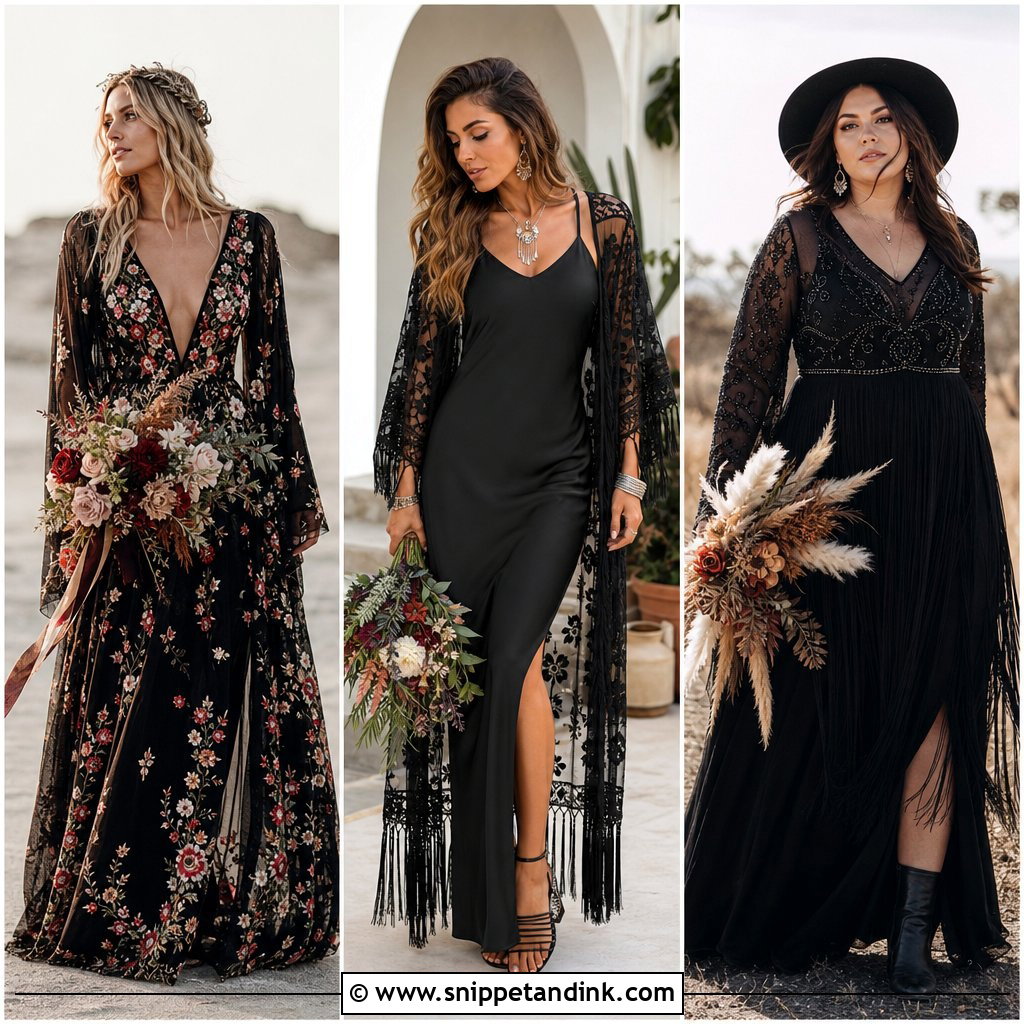
Black on a bride used to need explaining. Now it mostly needs good styling, because the line between a bridal black gown and a very nice evening dress is thinner than people expect. What makes it read as a wedding outfit is intention: a veil, a defined waist, a bouquet that brightens the dark fabric, shoes chosen for the day rather than a night out. Below are twenty complete looks, from lace ball gowns and velvet to a jumpsuit, a suit and a reception mini. With each one I’ve added what I watch for at fittings, since black hides some flaws and shows others very clearly.
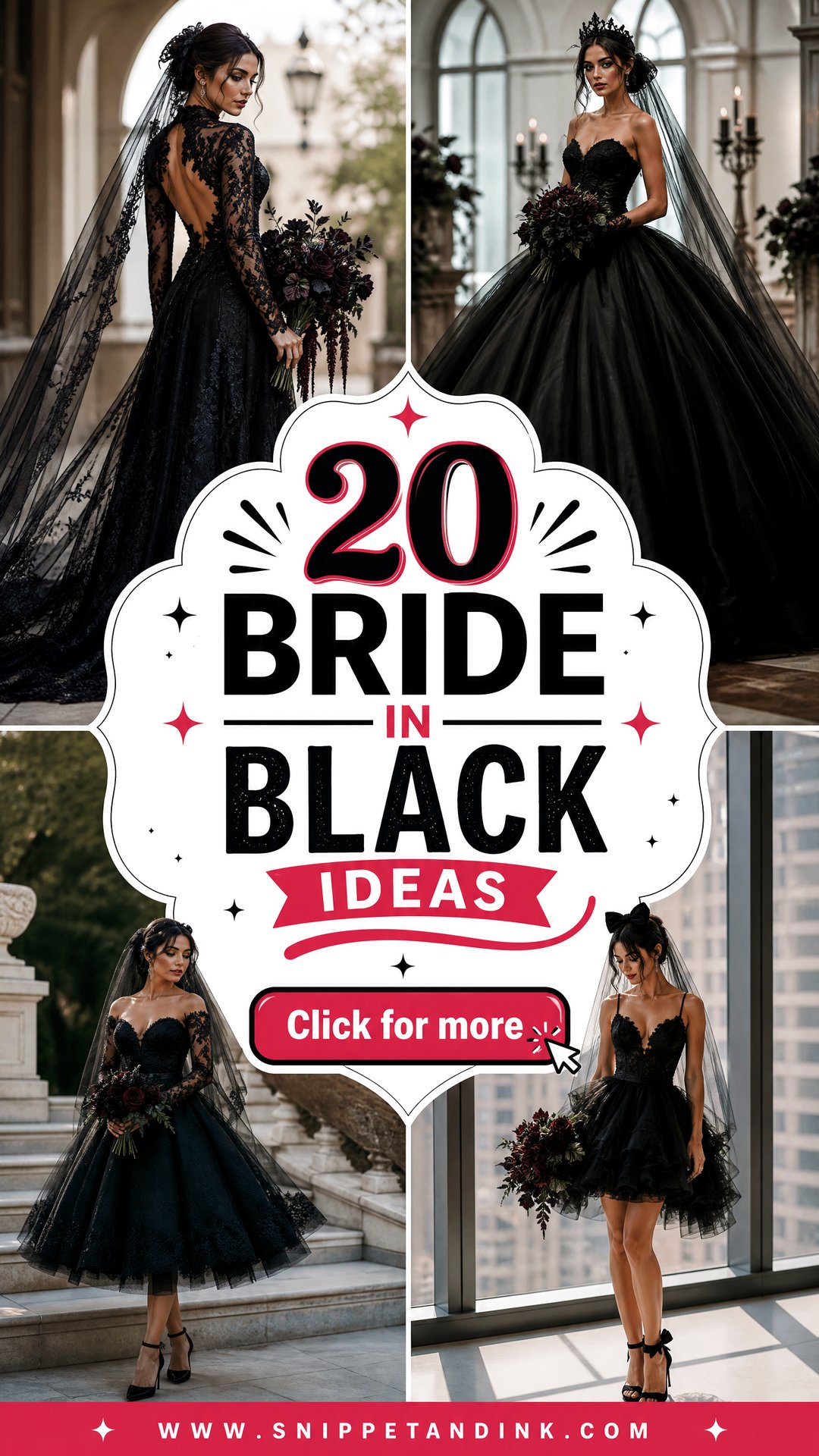
Ordering a Black Gown When Most Shop Samples Are Ivory
The practical hurdle with a black wedding dress is that most bridal boutiques stock their samples in ivory, white or nude. You often try a gown on in one color and order it in another, which takes some imagination and a bit of planning.
- Ask whether a design comes in black before you fall for it. Many bridal designers offer black or dark colorways on request, but not for every style, and some charge extra.
- Request a fabric swatch in the black version. Black lace, satin and tulle look different to the ivory sample, and a swatch held up to your face in daylight shows how it works with your skin.
- Allow the same lead time as any made-to-order gown, which commonly runs several months and varies by designer, plus time for alterations. A special color is rarely faster.
- If you’re browsing evening wear instead, check the fabric quality closely. Occasion dresses are often cut for a few hours, not a full day of wear.
Why I don’t recommend dyeing a white gown
It sounds like a shortcut, but most bridal gowns are polyester or have polyester lace and thread, which don’t take ordinary dyes. The result can be a blotchy dark grey body with white stitching, boning channels and lace motifs. Silk takes dye better, though even then the seams and lining often finish a different shade. Only try it on a dress you could live with ruining.
1. Black Lace Ball Gown Bride
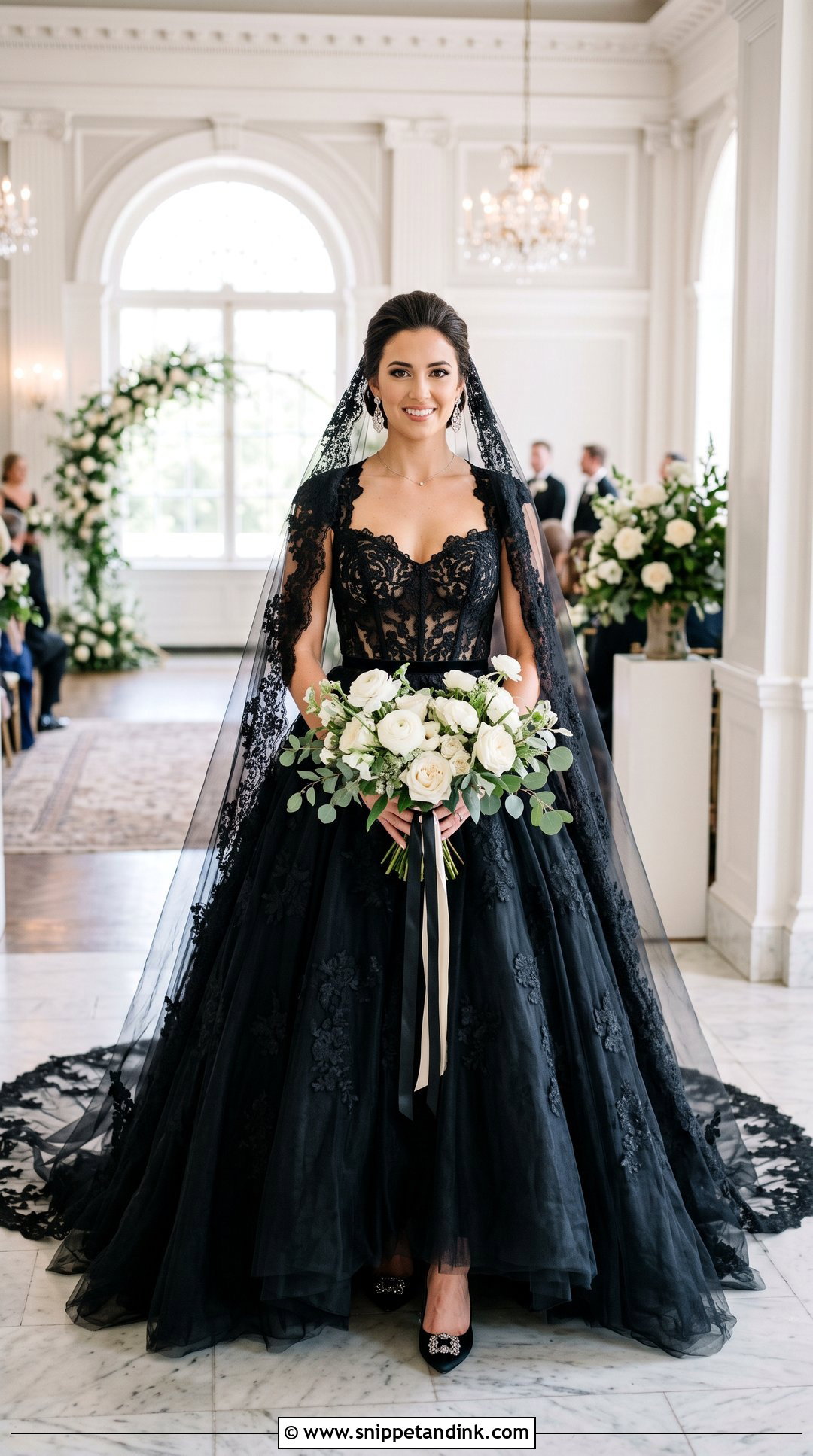
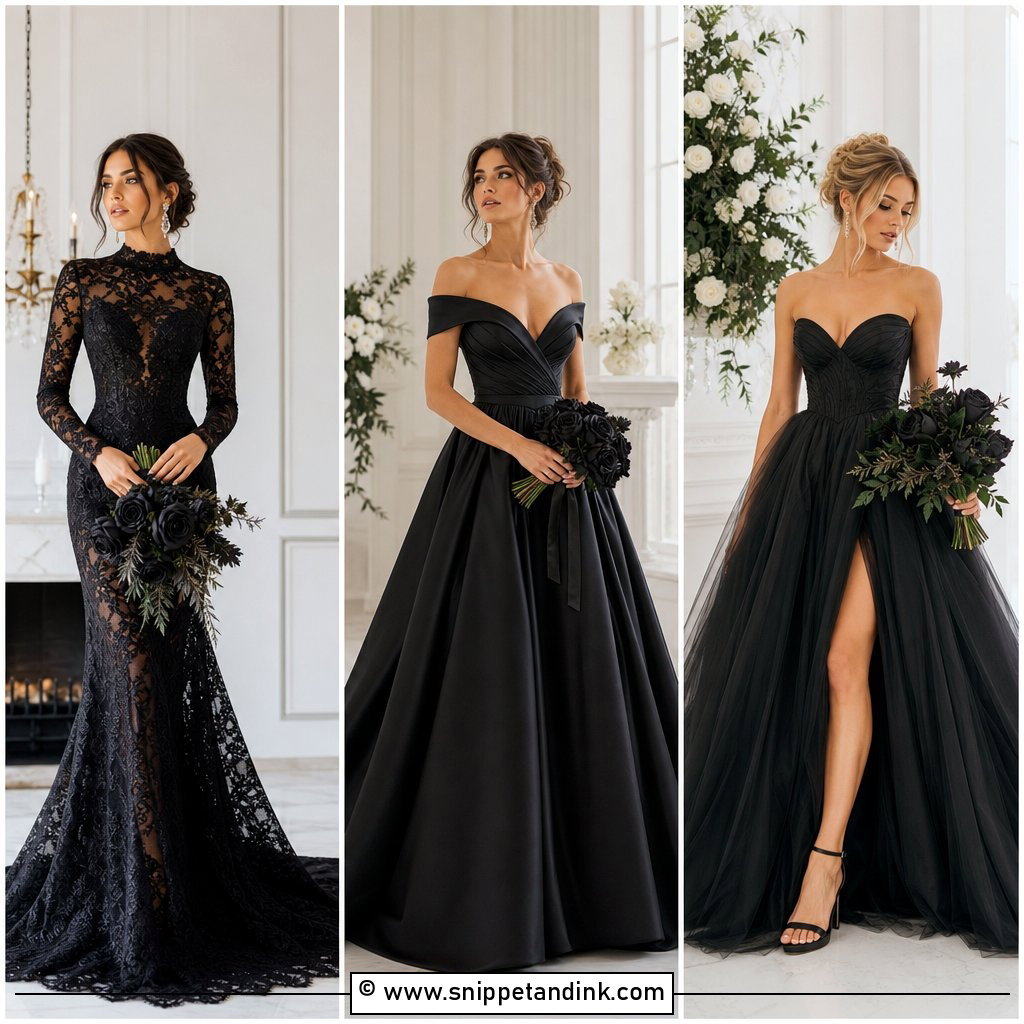
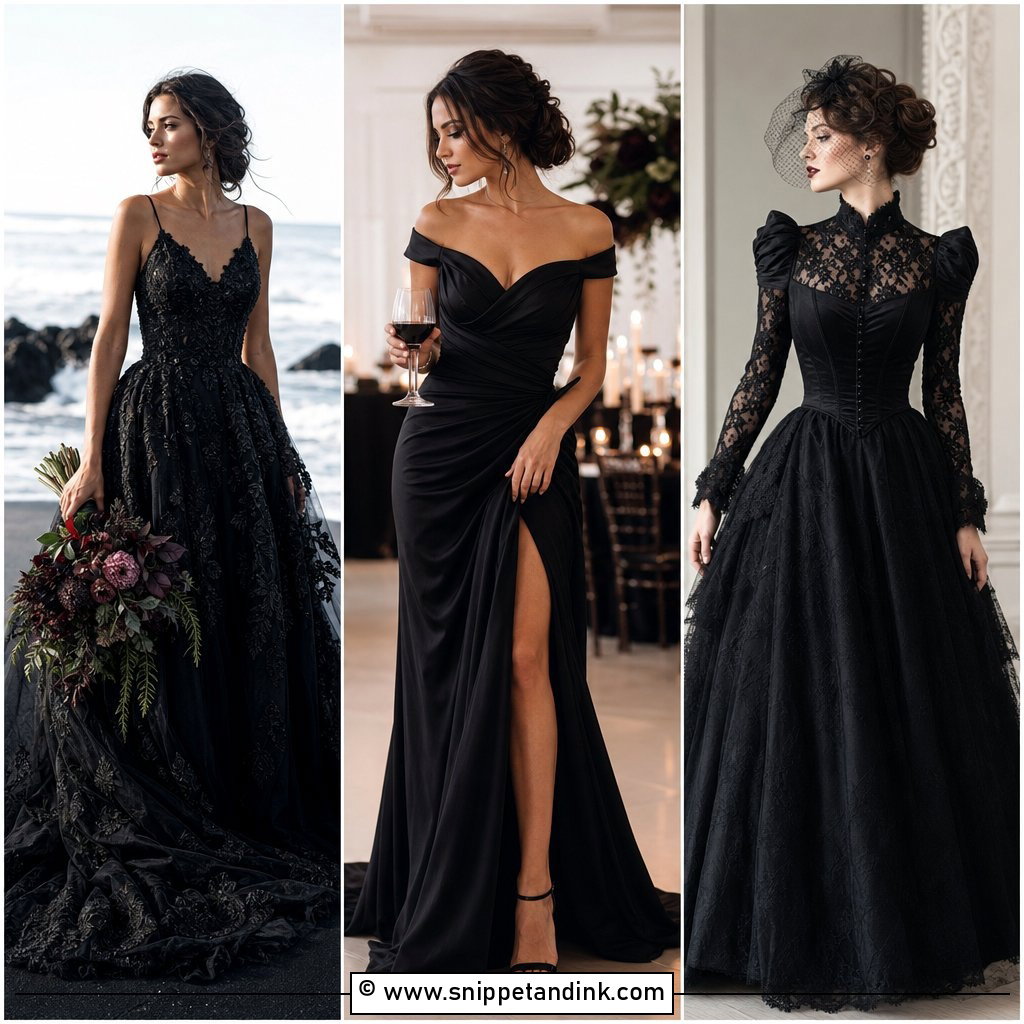
Lace over black tulle is the gown I’d pick for a bride who wants the full fairytale in a different color. The pattern shows best in bright venues and outdoors; in a dim church, black lace on black tulle can read as a solid shape, so ask to see the sample by a window. A boned bodice carries the weight of a layered skirt so it doesn’t pull at the shoulders. Pointed black satin pumps, crystal drops and a long sheer veil edged in matching lace complete it, with a low chignon to keep the bodice visible. White roses and soft greenery give the contrast. Petite brides can ask for fewer skirt layers; taller brides can carry extra volume and a sweeping train.
2. Black Satin Mermaid Gown Bride
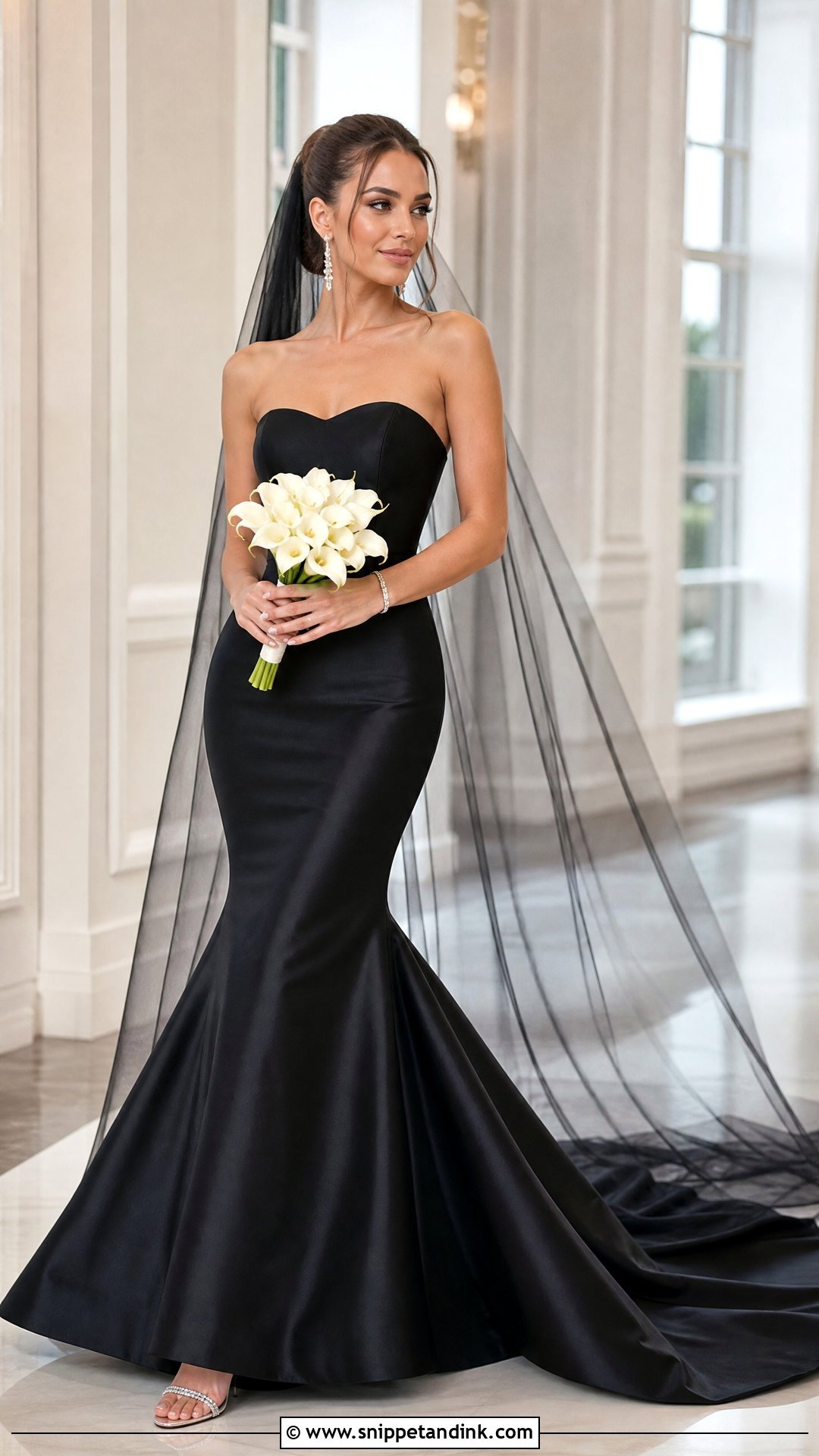
Satin is the least forgiving fabric on this list. It reflects light along every seam, every line of underwear and every pull across the hips, and black satin shows this even more because highlights stand out against the dark. A mermaid shape follows the body to the knee before flaring, so stretch satin or a paneled construction makes it far easier to move and sit in. Budget for proper alterations and smooth foundation pieces. Slim metallic heels, a tennis bracelet and small crystal studs are enough. A cathedral veil in black extends the line, side-parted waves soften it, and ivory callas give the bouquet contrast.
3. Black A-Line Wedding Dress Bride
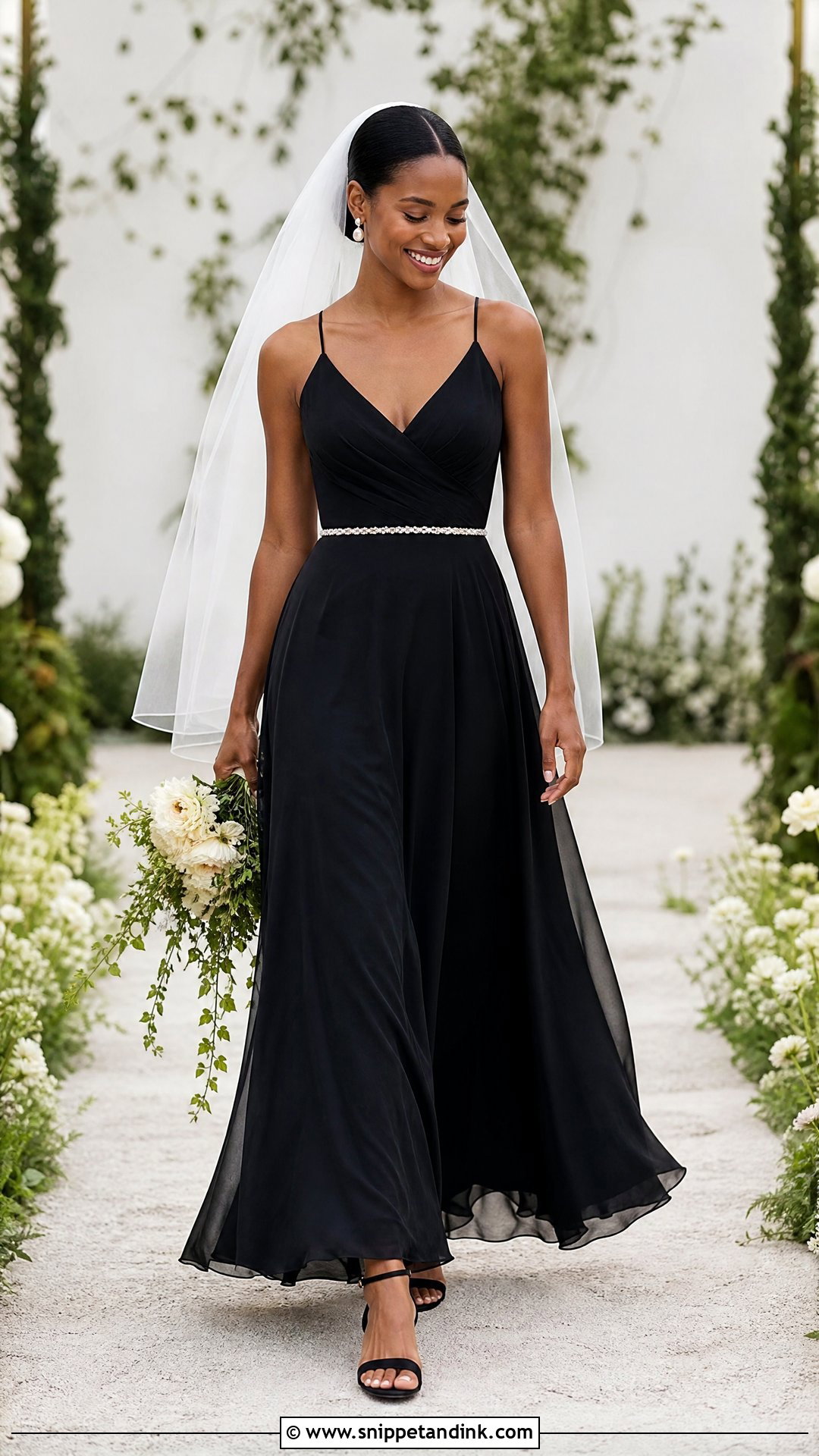
If you’re unsure about black, an A-line is the safest shape to try it in. The fitted top defines the waist and the skirt widens gradually, so it flatters most figures without the commitment of a ball gown. Matte crepe looks modern; layered chiffon feels lighter and moves in a breeze. A narrow belt with subtle beading marks the waist without cutting the line. Block-heel sandals, pearl earrings and a fingertip veil keep you comfortable all day, and soft curls or a relaxed bun suit the approachable shape. Cream flowers with trailing greenery finish it, indoors or out, in any season.
4. Black Long Sleeve Lace Bride
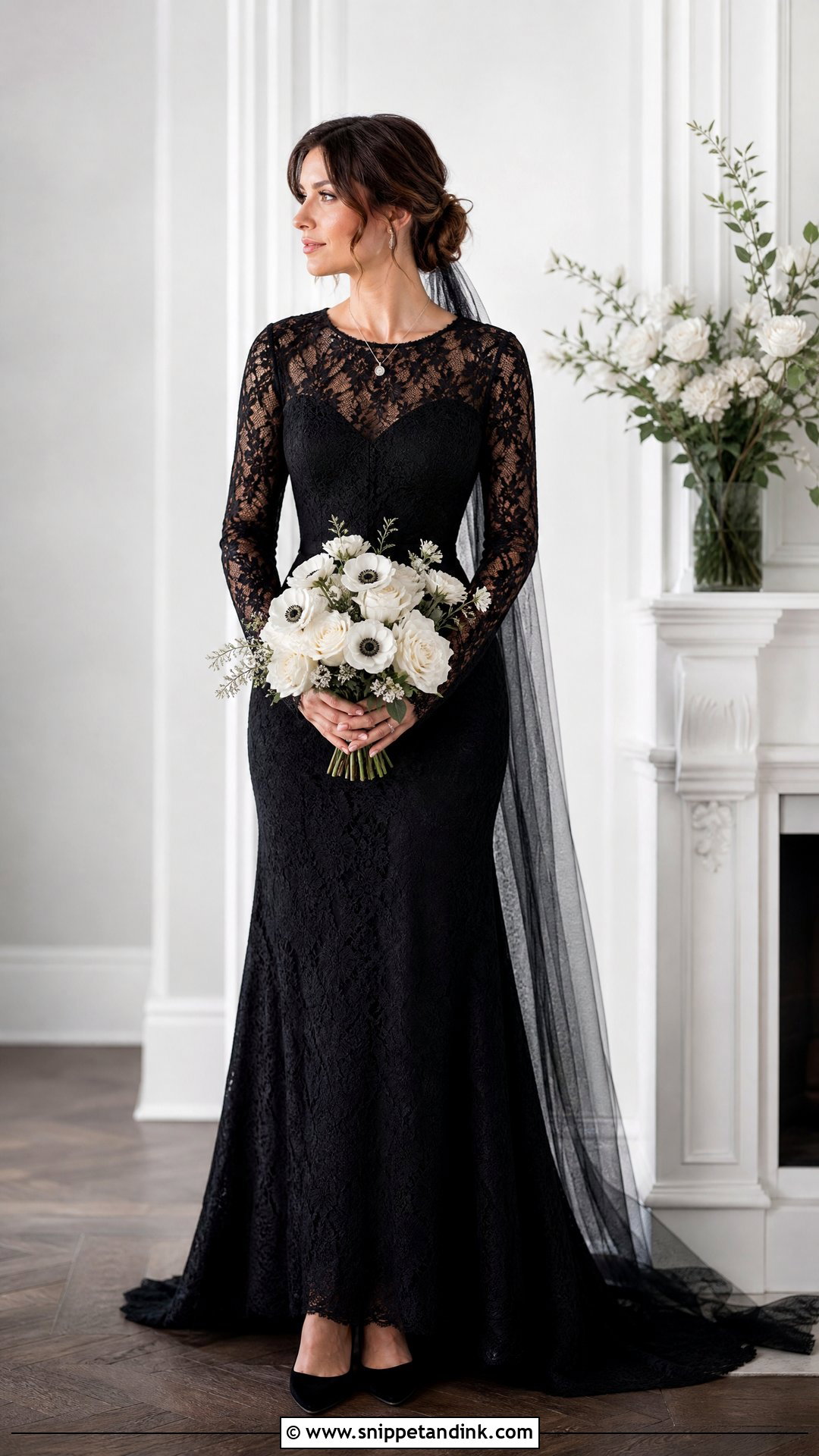
Lace sleeves can be scratchy, and that’s what I check first. Corded lace, which has a raised outline thread, is particularly rough against the inner elbow, so ask for a soft illusion mesh lining under the sleeve. A fitted bodice with a gently flared skirt keeps it from feeling heavy. It’s a cool-weather gown; in a hot summer venue you’ll feel every layer. Closed-toe velvet pumps, a delicate pendant and a plain black veil let the sleeve pattern lead. A low textured bun shows the shoulders, and white anemones with roses and silvery greenery brighten it. If the lace is elaborate, keep makeup and jewelry restrained.
5. Black Strapless Wedding Gown Bride
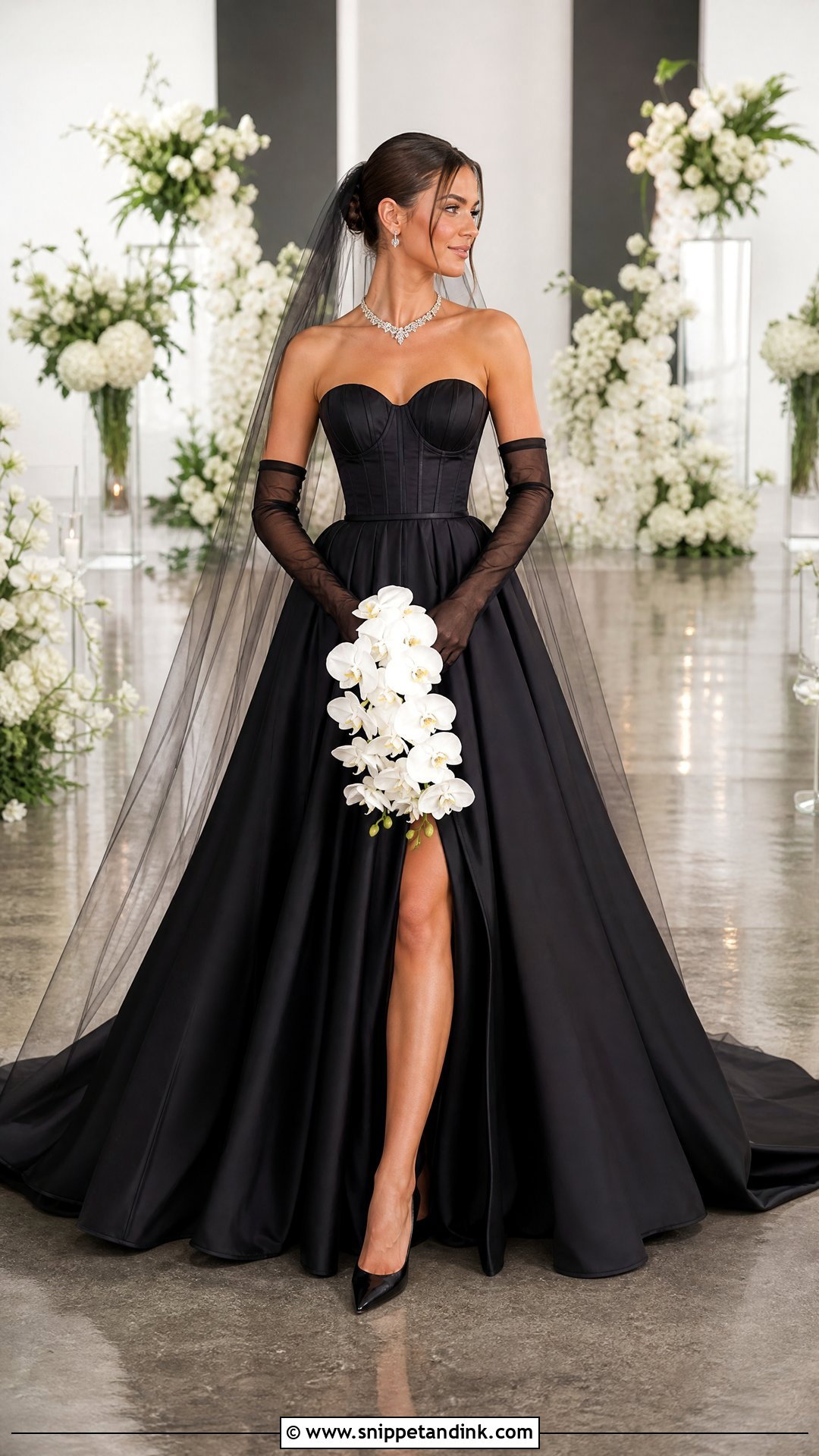
A strapless gown only works if it stays up without you thinking about it. Internal corsetry, grip tape or silicone lining at the top edge, and a bodice altered to your ribcage rather than your bust are what make that happen. The clean neckline then becomes a frame for a crystal collar necklace or elbow-length sheer gloves. A pleated skirt or structured ball gown balances the bare shoulders. Black pointed pumps, a long veil anchored under a sleek bun, and white orchids or roses in a structured bouquet keep it formal. For cooler moments, a tailored black cape or cropped satin wrap goes over the shoulders.
6. Black Off Shoulder Gown Bride
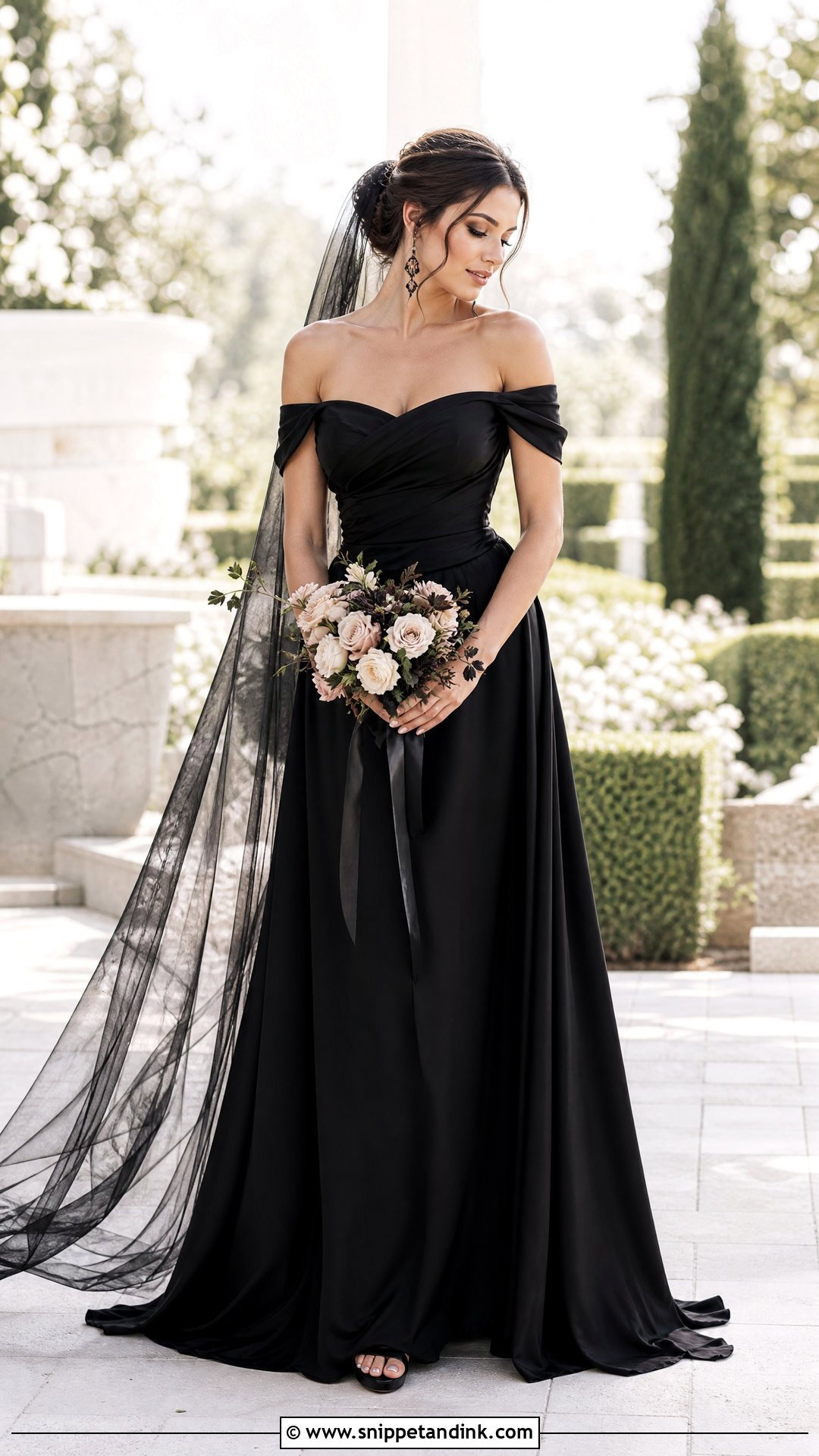
Off-shoulder necklines soften black more than any other cut I know, because the bare collarbone breaks up the dark mass of fabric. Draped sleeves or a folded neckline, a fitted waist and a flowing skirt make the shape. The catch is arm movement: if the sleeves sit tight on the upper arm, you can’t lift them to hug anyone. Raise both arms at every fitting. Drop earrings, a fine bracelet and low black heels hidden under the hem are enough. Wear the veil behind the shoulders, an updo or side-swept waves to show the neckline, and blush and ivory flowers for gentle color.
7. Black Tulle Princess Gown Bride
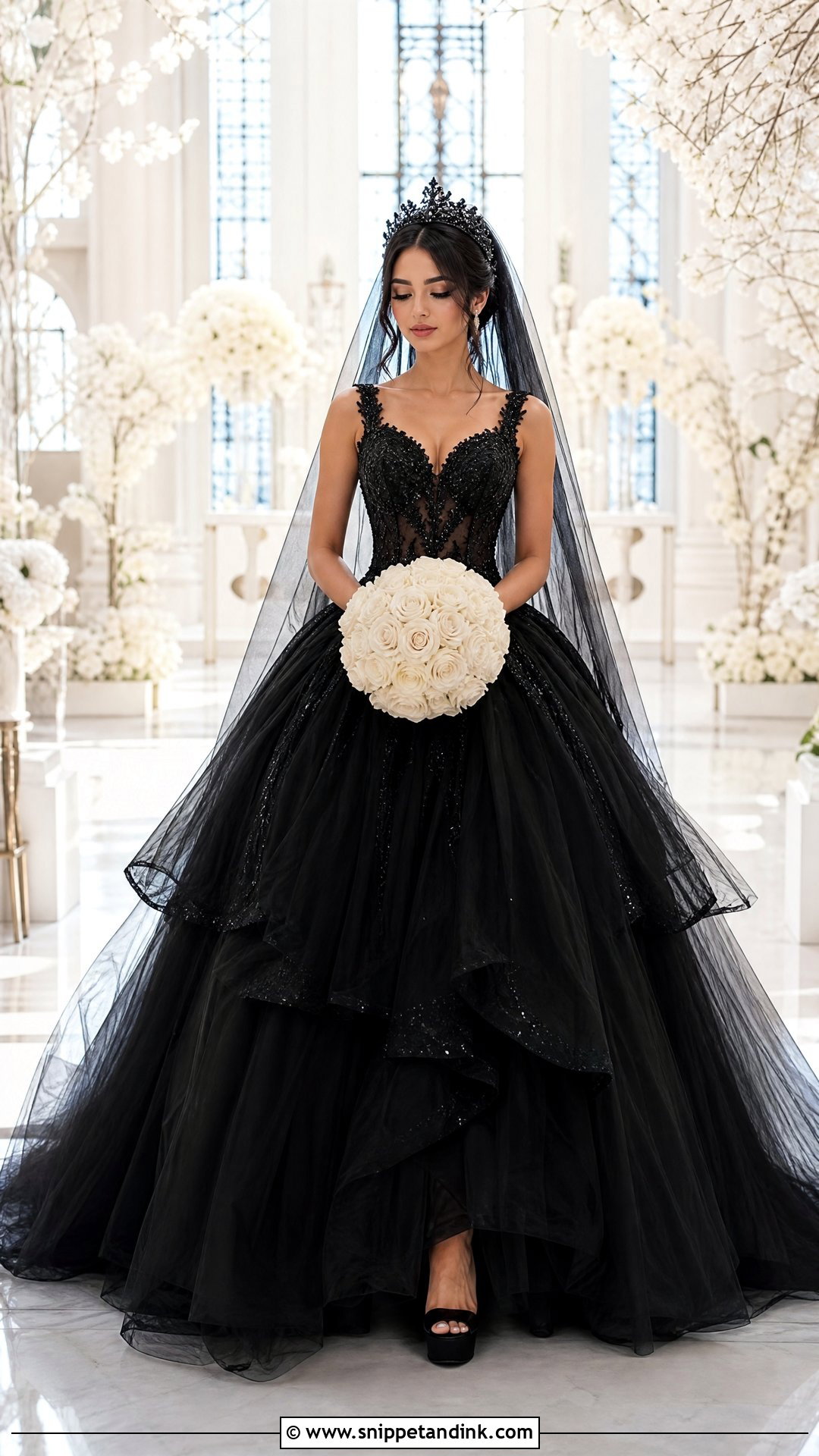
Black tulle has a problem white tulle doesn’t: in photos, multiple layers merge into one dark cloud and lose their float. Scattered crystals, tonal embroidery or small appliqués give the camera something to catch on each layer, so they’re worth having. A fitted bodice and defined waist stop the skirt overwhelming you. Platform heels add height and comfort under all that volume. A fine tiara, a plain long veil and a classic bun or polished ponytail add structure; ivory roses brighten the fabric. A gown with this many layers needs a strong bustle, so ask your seamstress to sew in more than one attachment point.
8. Black Velvet Winter Bride
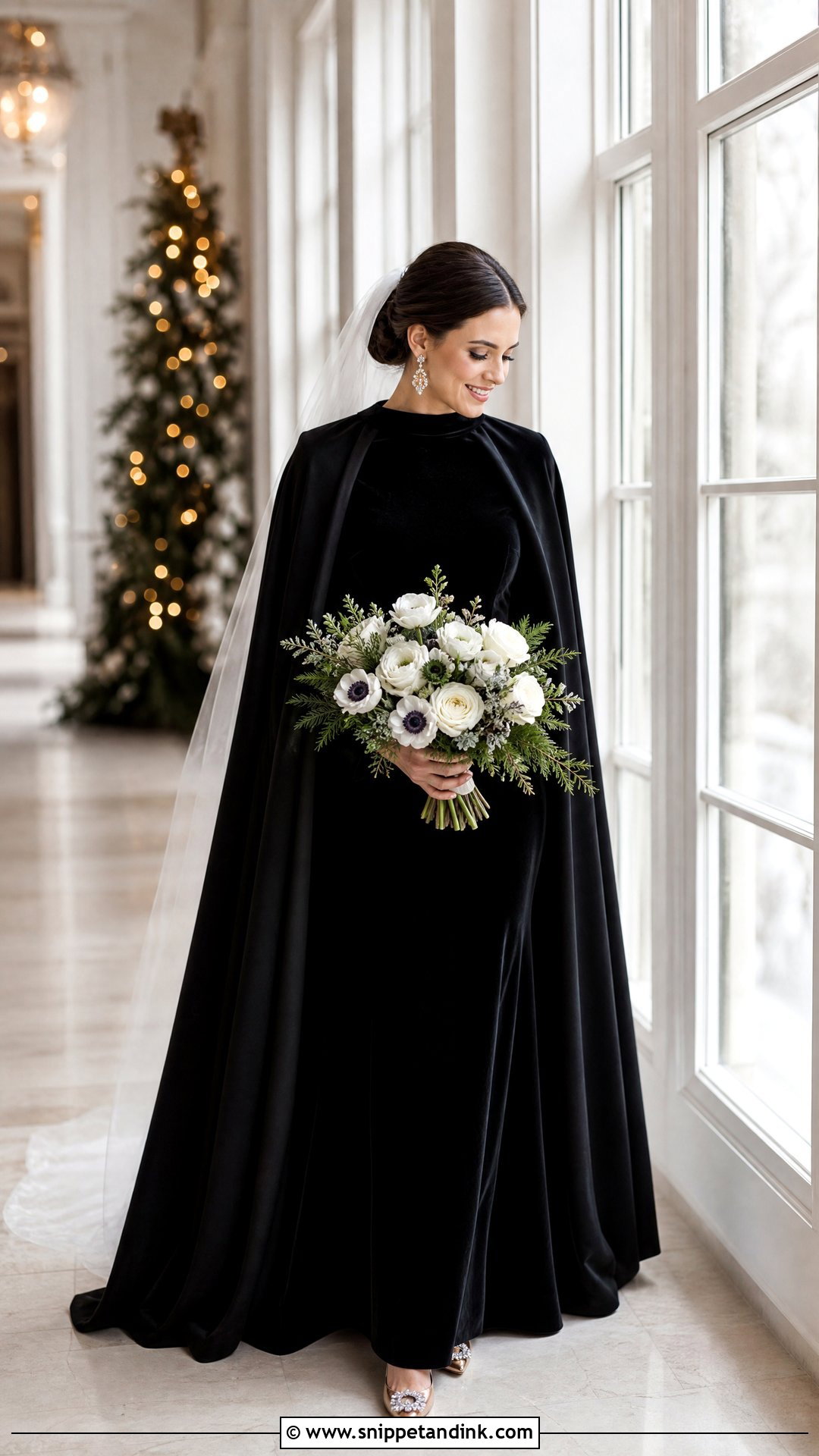
Velvet has a nap, a direction to its pile, and it looks blacker from one angle and almost grey from another. When a gown’s panels are cut with the nap running different ways, the color looks patchy in photos, so check it under a single light from several angles before you buy. In winter, though, nothing looks richer. A column, fit-and-flare or structured A-line with full sleeves suits it. Closed-toe crystal heels, silver earrings, a sheer veil and a tailored black cape for outdoor moments work, with sleek waves or a low bun. White roses, anemones and a little evergreen keep the bouquet seasonal. Breathable lining and a back vent help with warmth and walking.
9. Black Minimalist Crepe Bride
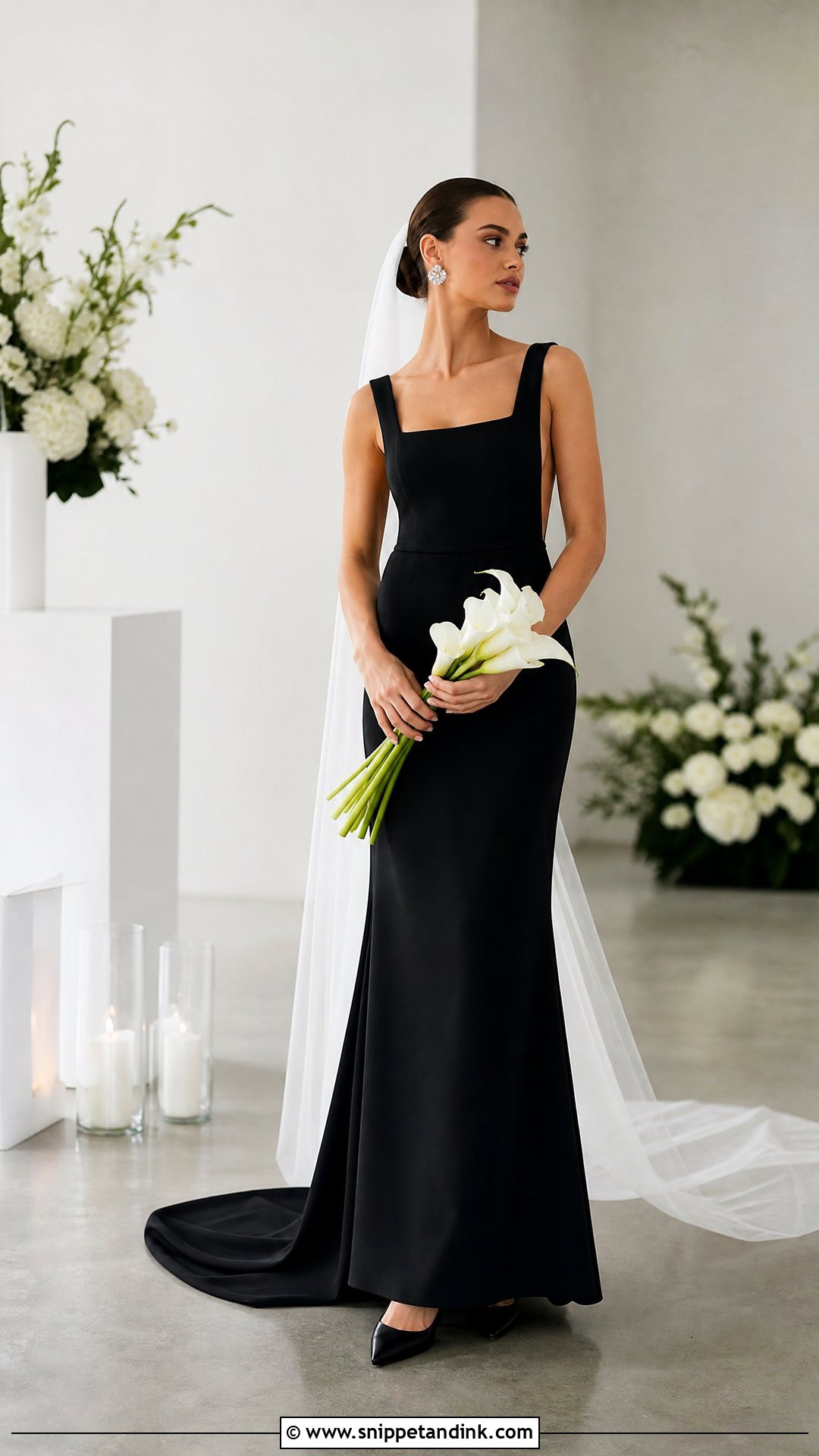
Minimalist gowns have nowhere to hide, so the tailoring is the design. Heavier crepe with real body skims rather than clings, and a square neck, fitted waist and straight or gently flared skirt keep it clean. I check three things obsessively here: where the shoulder seam sits, whether the hem breaks evenly over the shoe, and whether the waist stays level when you sit. A low back, covered buttons or a detachable train adds interest from behind. Sculptural earrings, pointed pumps, an unembellished veil, a smooth low bun and white callas match the precision.
10. Black Sequin Wedding Gown Bride
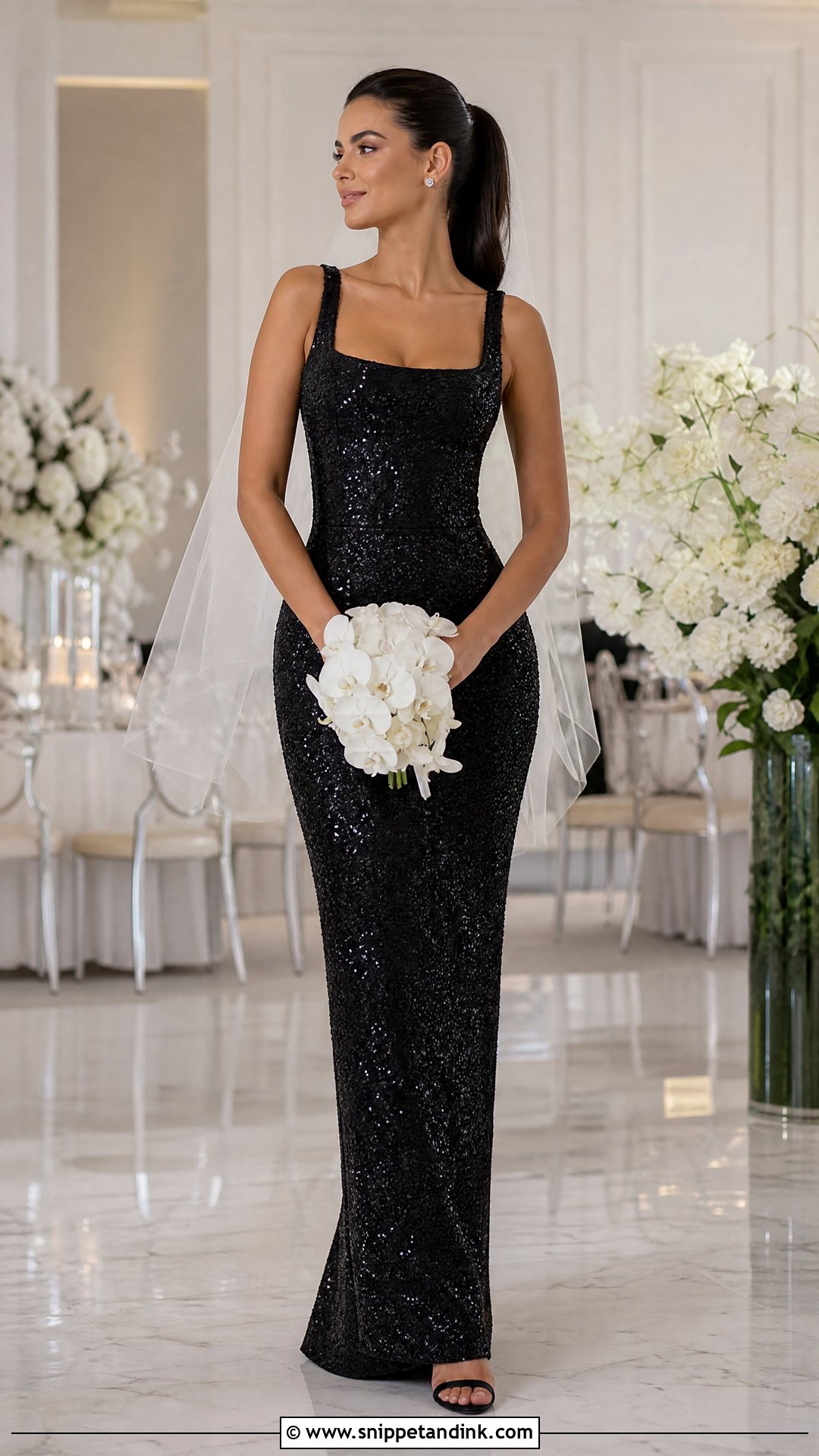
Sequins sparkle constantly, which is the point and also the risk. Tonal black sequins with a consistent finish look elegant; mixing beads and sequins gives richer texture. A column, long-sleeve or softly flared shape keeps the sparkle balanced. Beading under the arms scratches, so ask whether the inner sleeve and side seams are smooth, and whether the lining is soft. Heavy sequin gowns can drop at the shoulders over a long day, which a tailor can reinforce. Simple black heels, small diamond studs, a plain tulle veil and a sleek ponytail let the gown lead. Keep the bouquet compact so it doesn’t cover the bodice.
11. Black Corset Wedding Dress Bride
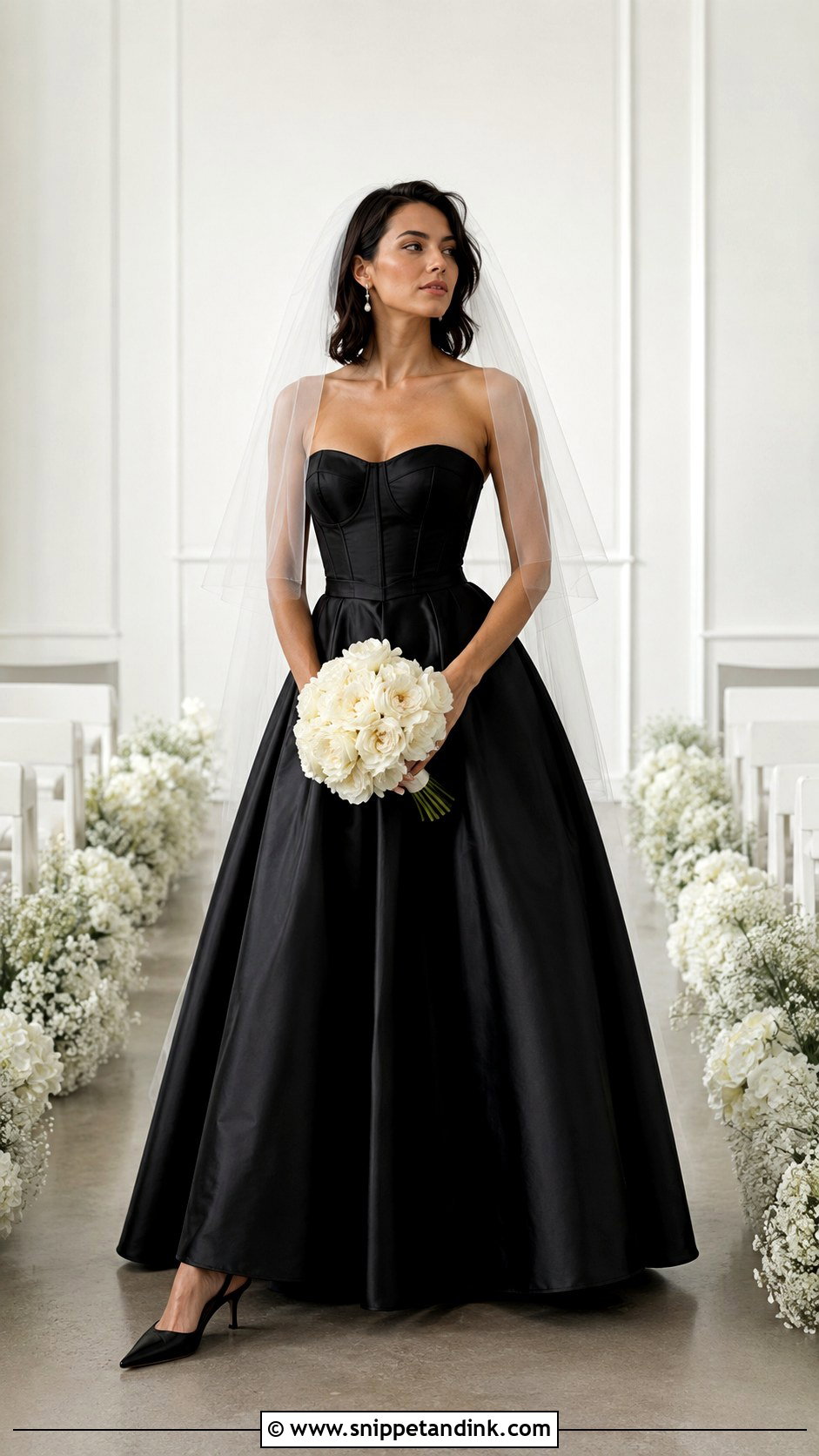
A corset bodice should support your posture, not hold your breath for you. Look for proper cups, smooth boning and enough give to sit, eat and dance. Schedule the final fitting close to the date, because even a small weight change shows in a corset. Pair it with a full tulle skirt for drama or a satin A-line for a cleaner line. If the corset is sheer, tonal lining adds coverage while keeping the seam pattern visible. Pearl drops, black slingbacks, a shoulder-length veil and loose waves soften the structure, and a pale bouquet brightens near the neckline.
12. Black High Neck Wedding Dress Bride
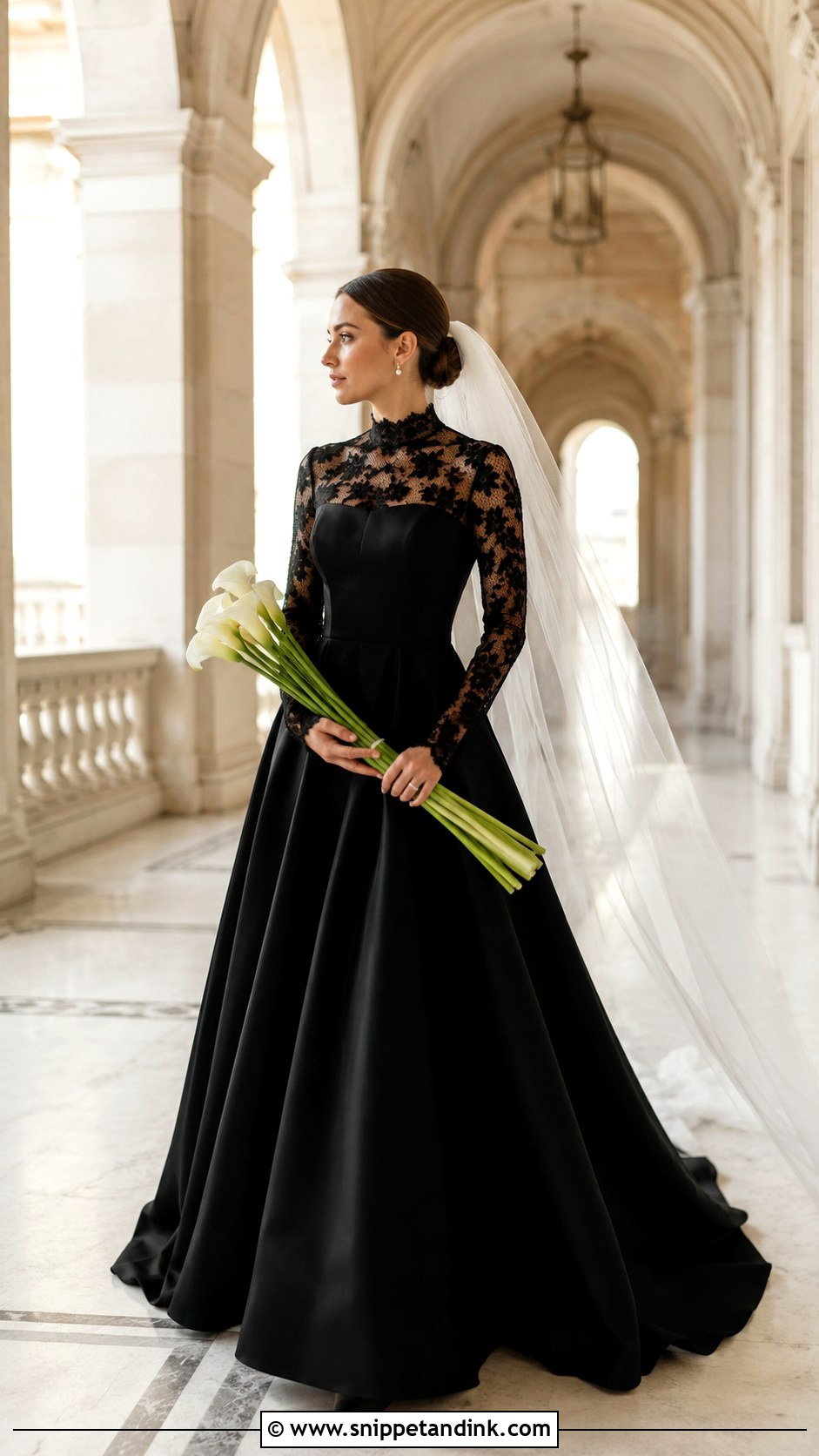
High necklines in black look striking and slightly severe, so the rest of the gown needs some flow. A fitted upper body with a softer skirt balances it. Lace, crepe and satin all work as long as the collar lies flat without rubbing your neck; turn your head side to side at the fitting and raise your arms. Illusion lace at the neck feels delicate, opaque fabric more architectural. Small earrings, a slim bracelet and black pointed shoes are plenty, with no necklace. A low bun with the veil anchored beneath shows the collar from behind, and long-stemmed white flowers add contrast.
13. Black Cape Wedding Gown Bride
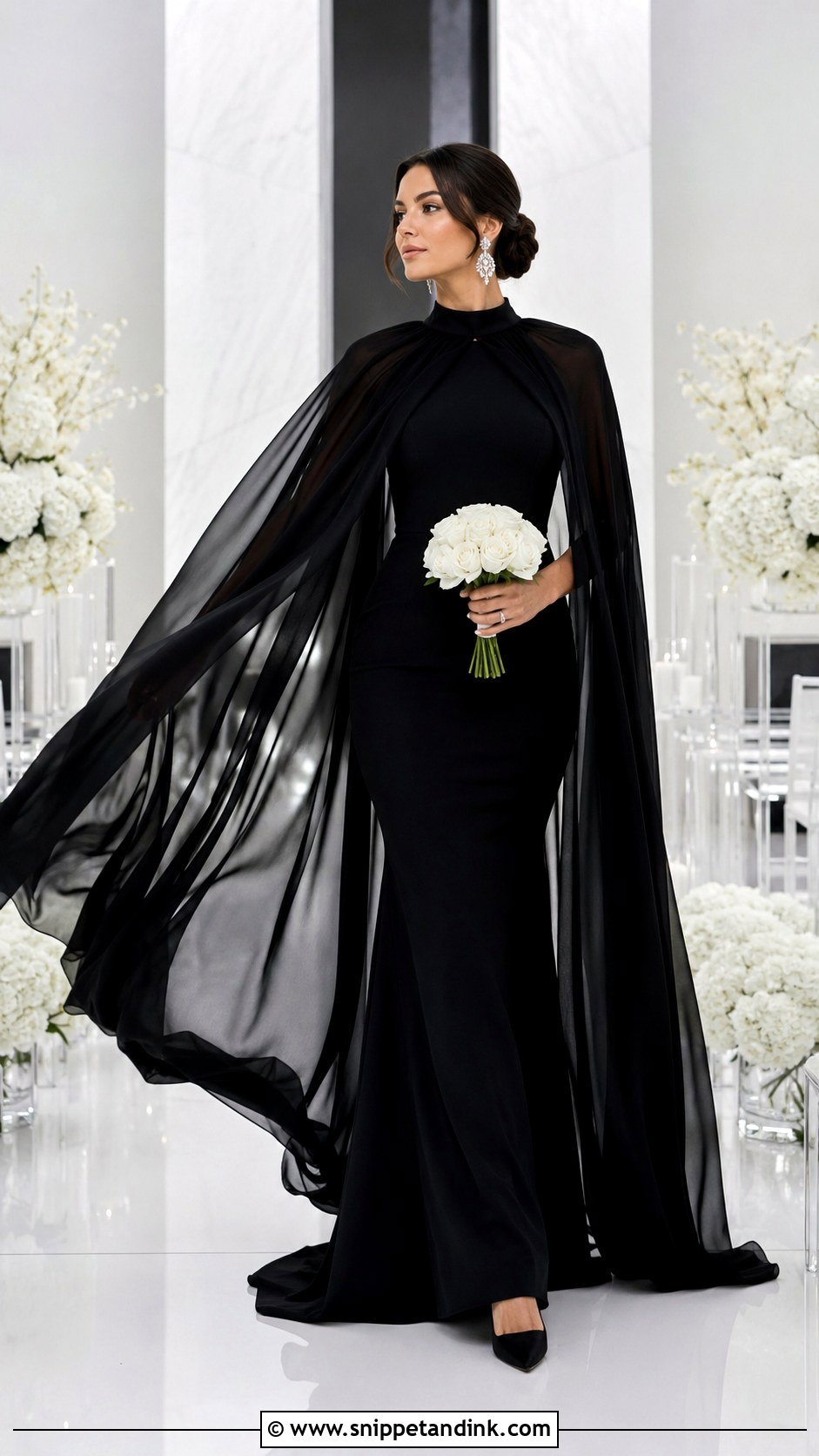
A cape can do the job of a veil, with more movement and a stronger outline. Keep the gown under it simple, a fitted sheath or plain A-line, so the layers don’t compete. A sheer floor-length cape is soft; structured crepe makes a bolder shape. Check how it fastens: a heavy cape pulls a gown’s neckline back, so ask for it to attach at the shoulder seams. Detachable is best, so it comes off for dinner and dancing. If you still want a veil, choose a short, light one that won’t tangle. Crystal earrings, black pumps, a small white bouquet and a polished updo complete it.
14. Black And White Wedding Dress Bride
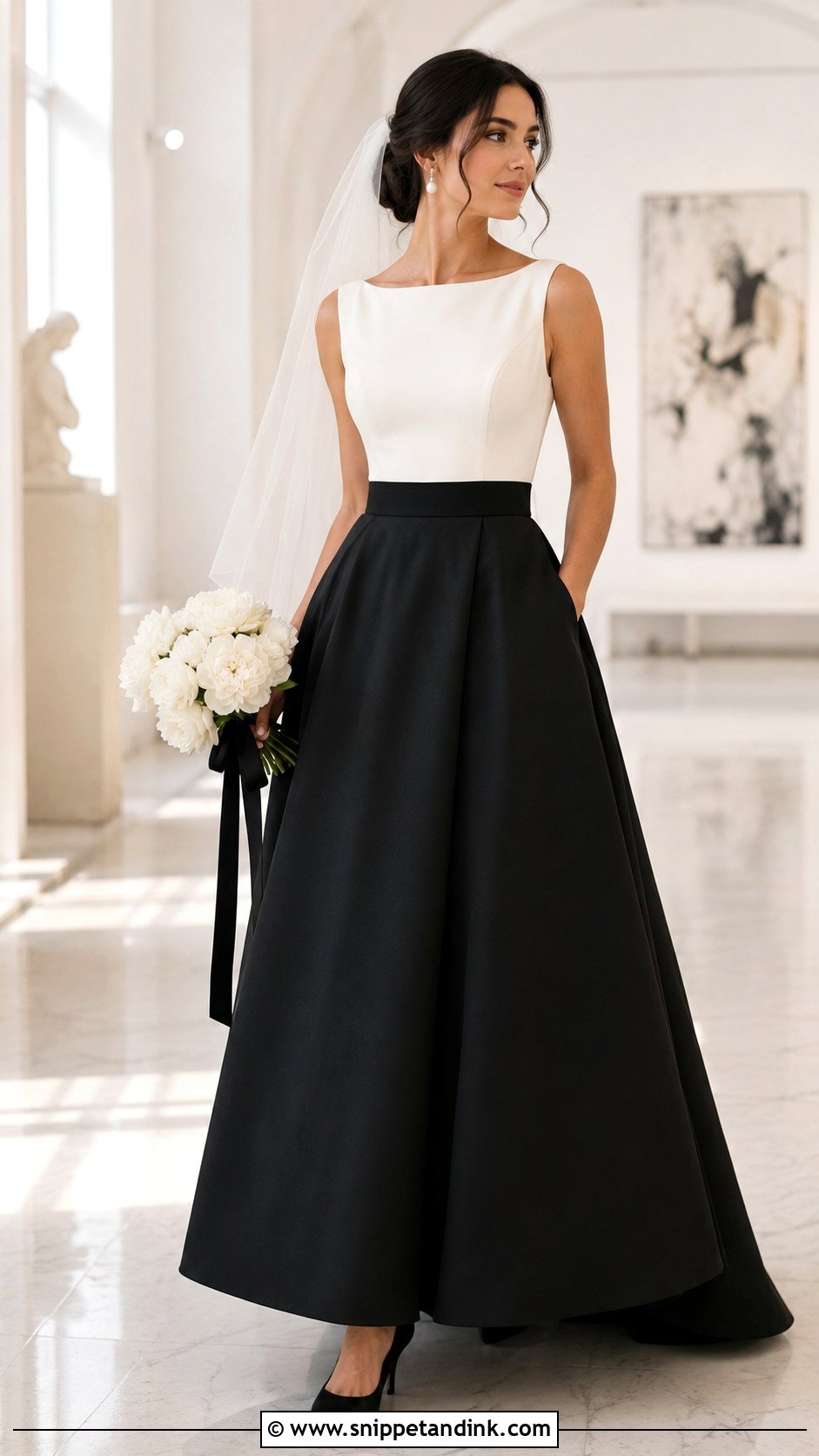
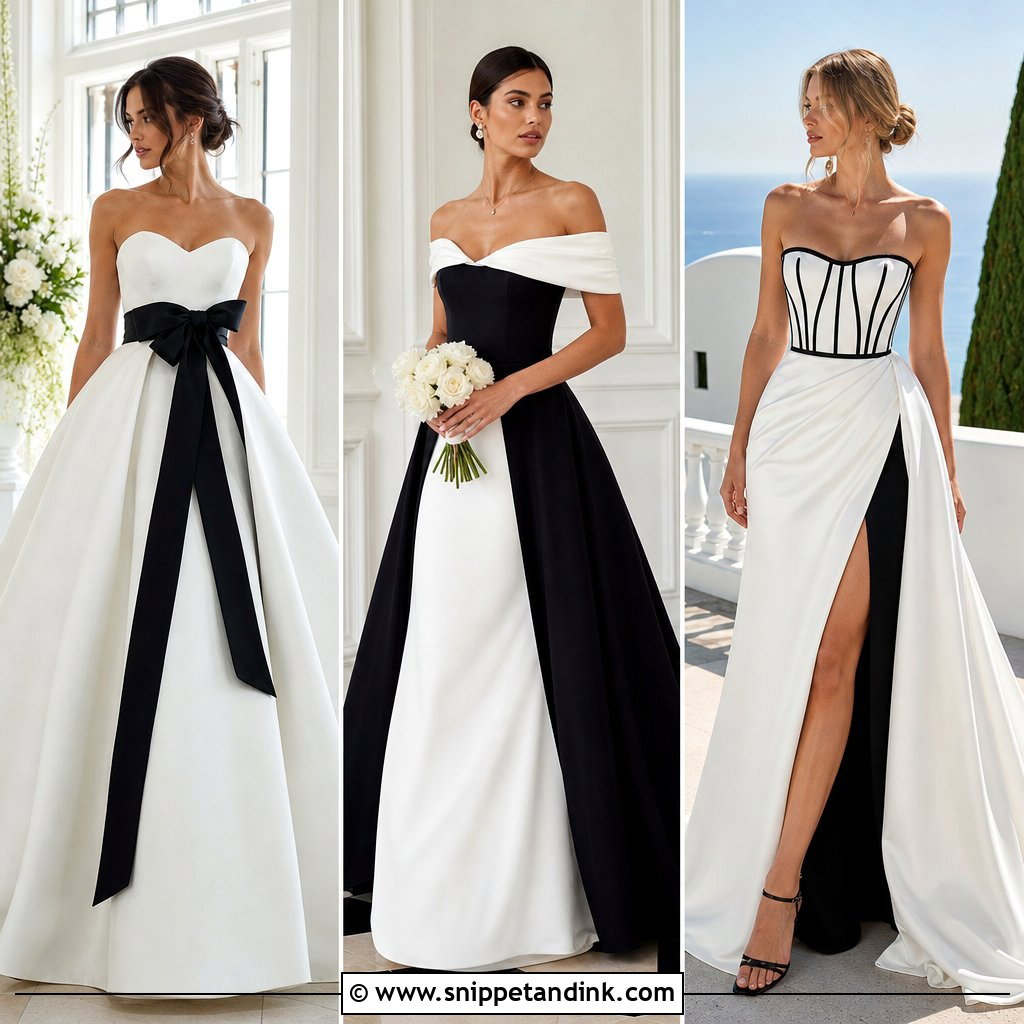
Black and white is the middle ground I suggest when you love black but your family would rather see white. A white bodice over a black skirt, a black gown with ivory appliqués, or contrast panels are all options. Color placement works like contouring: a dark waistband narrows the middle, black side panels lengthen the body. Contrast also exposes every seam and uneven hem, so tailoring matters more here than in a single-color gown. Pearl earrings, black heels, an ivory veil and white flowers tied with dark ribbon carry both colors.
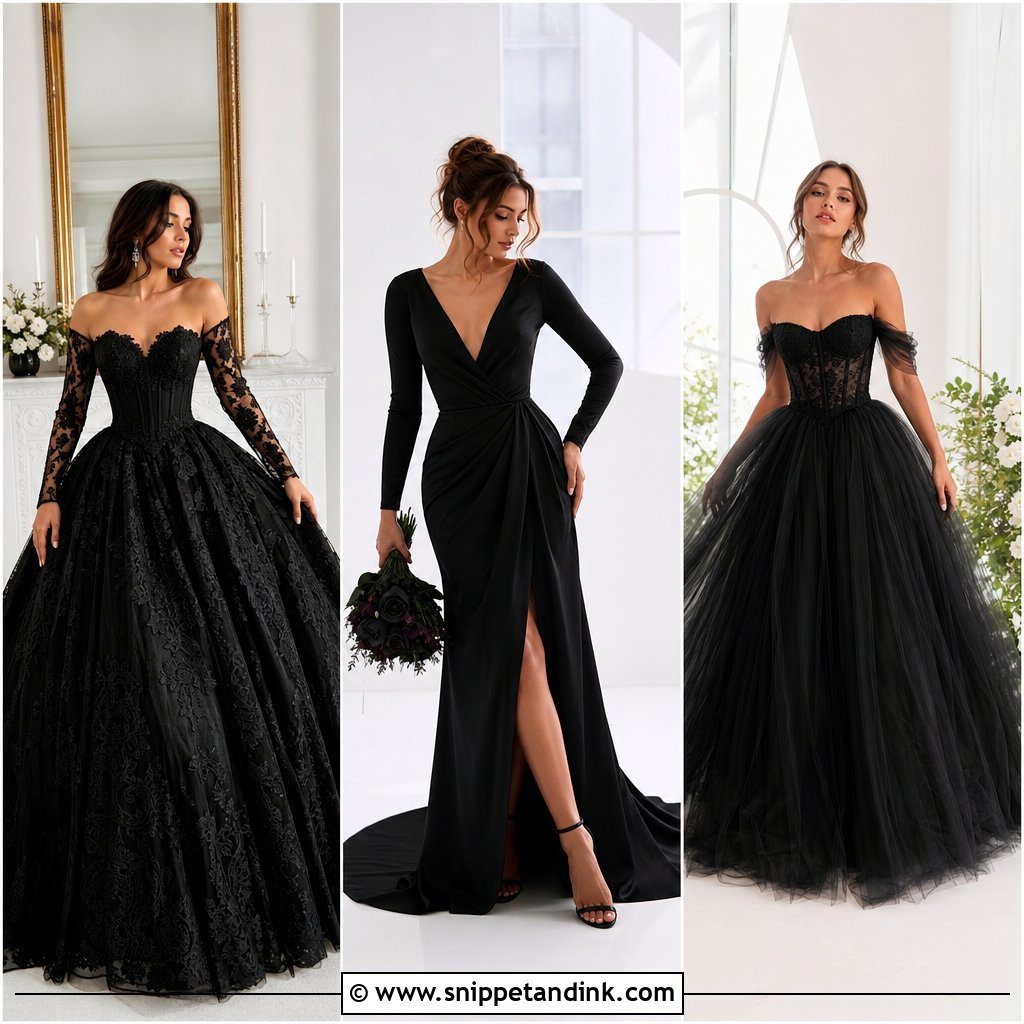


15. Black Tea Length Wedding Dress Bride
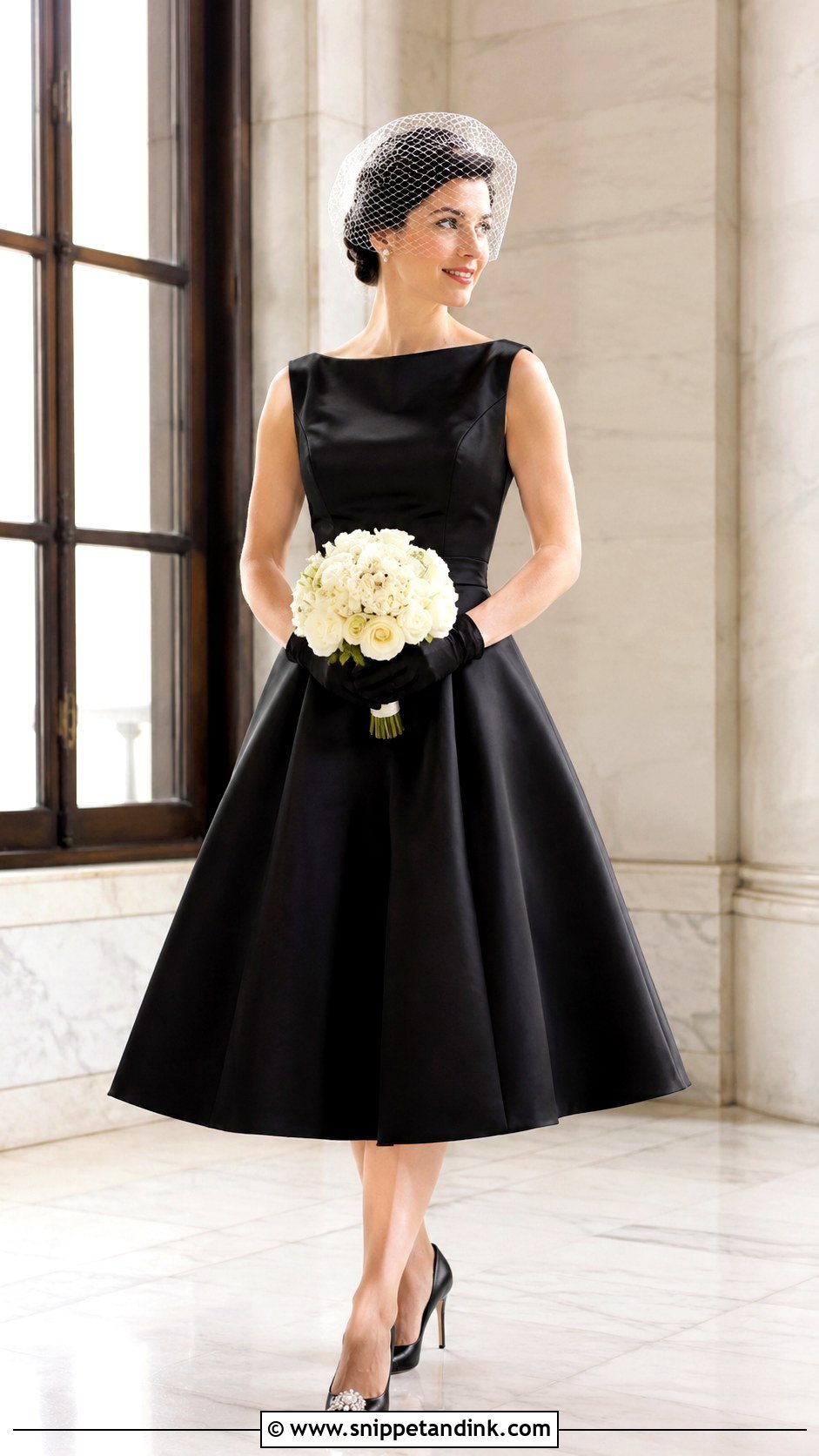
Tea length is the shape I’d recommend for a courthouse wedding or a small dinner. The hem ends between knee and ankle, so the shoes become part of the look; embellished pumps, ankle straps or refined flats all work. Satin, mikado or layered tulle gives the shorter skirt enough body to feel bridal. Mikado is the most practical of the three, since its stiff weave holds the shape and barely creases. A birdcage veil, pearl studs and short gloves give a vintage feel, with a neat bun or curled bob. Keep the bouquet petite so the waist stays visible.
16. Black Bridal Mini Dress Bride
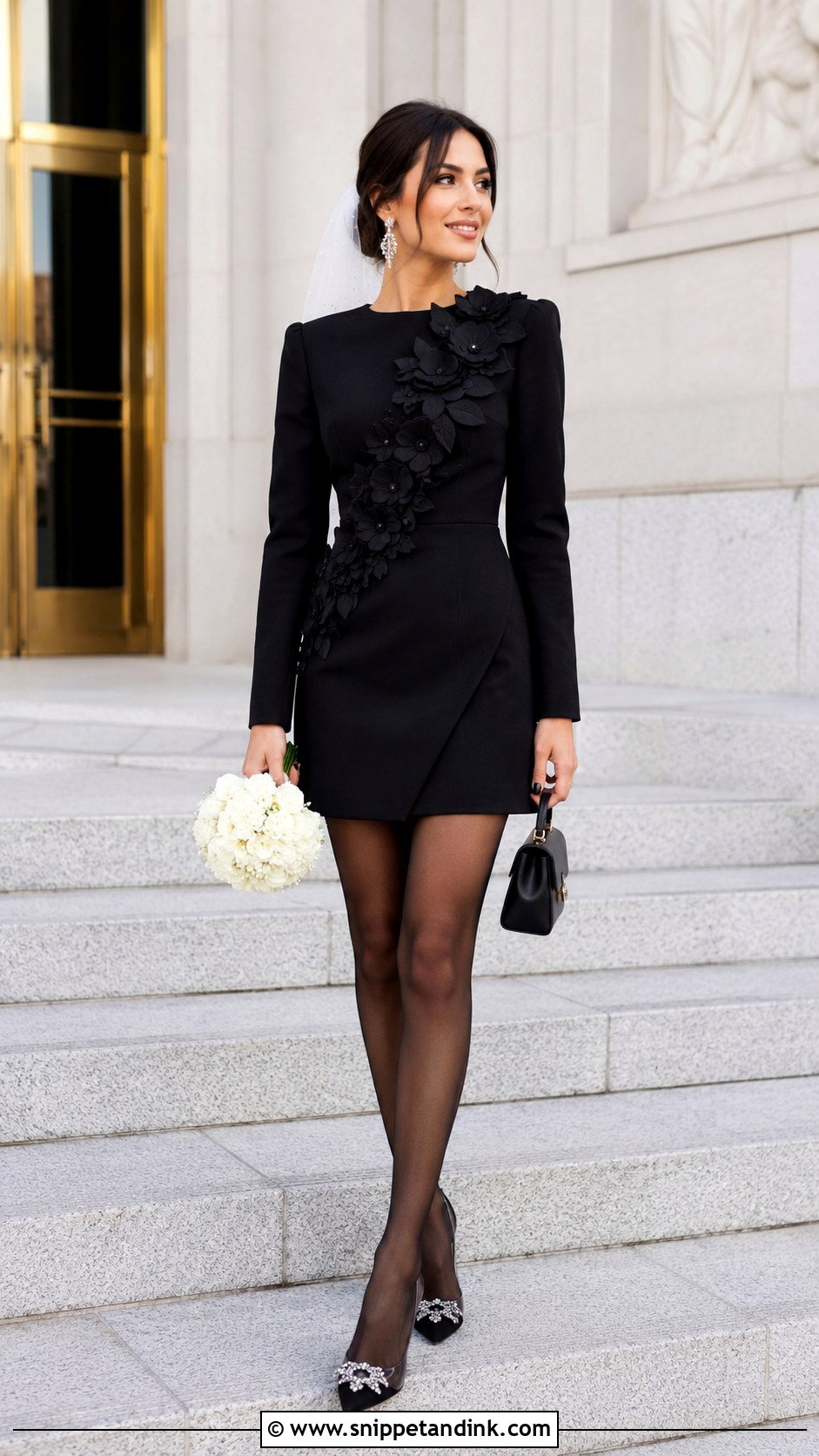
The challenge with a black mini is making it look ceremonial rather than like a cocktail dress you already own. Structure is how: a defined waist, tailored sleeves, a sculptural bow or dimensional florals. Sheer tights in cooler weather, crystal pumps, statement earrings and a short veil push it firmly into bridal territory, with a small top-handle bag for essentials. Adding detachable overskirt panels gives you length for the ceremony and freedom afterwards. A short hem puts legs and shoes on show, so sit and walk in it before the hem is finalized.
17. Black Bridal Jumpsuit Bride
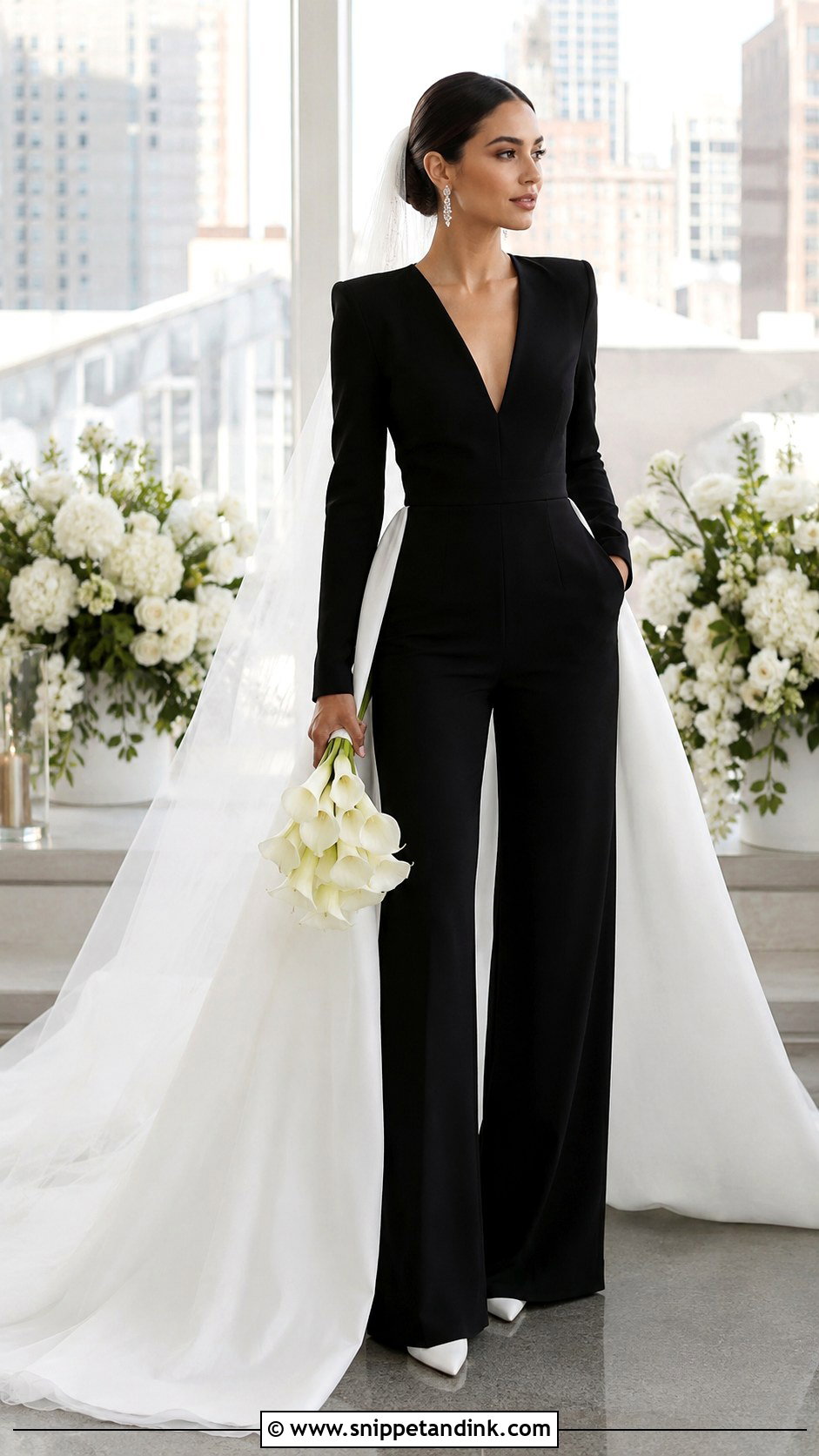
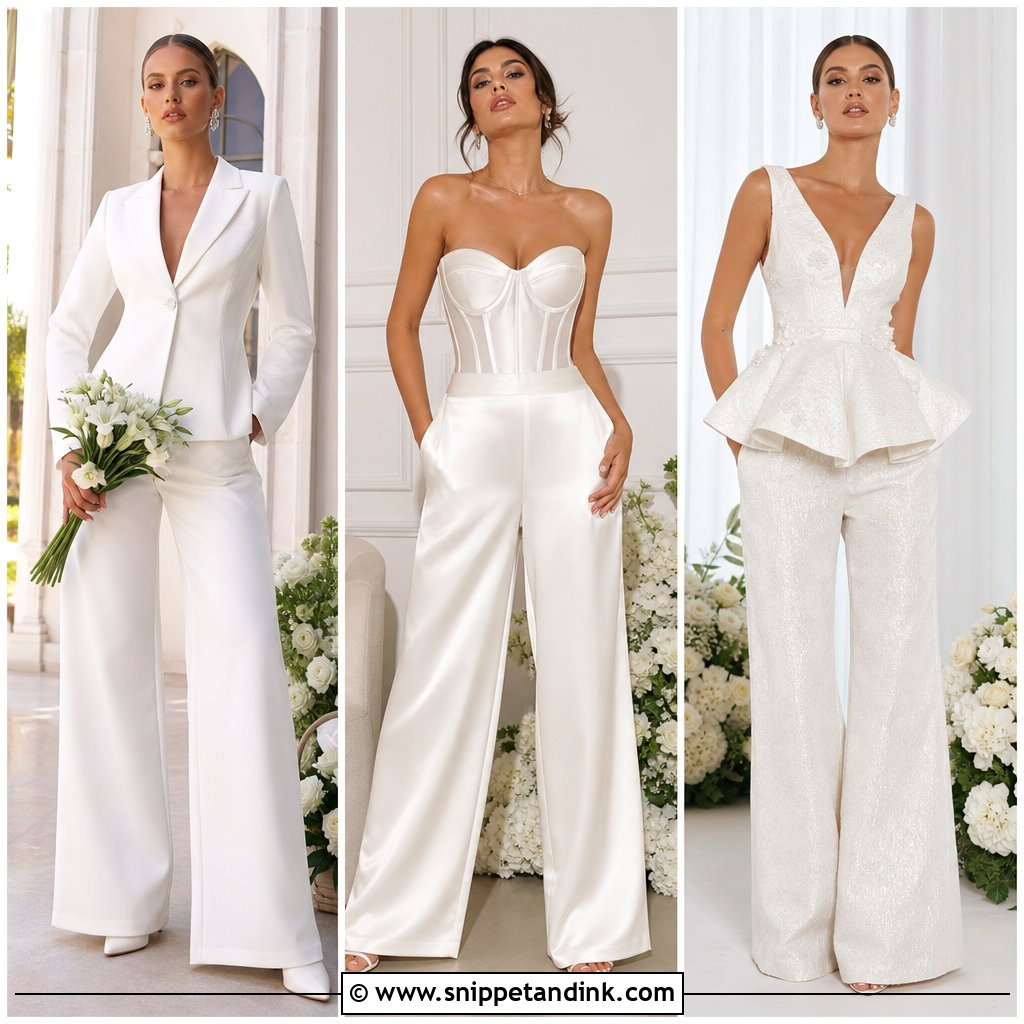
A black bridal jumpsuit looks formal and moves better than any gown. Wide-leg trousers, a defined waist and a structured or draped bodice are the classic shape; crepe tailors crisply, satin feels softer for evening. The fit point people forget is the rise, the distance from crotch seam to waist. If it’s too short, the jumpsuit pulls when you sit or lift your arms. Alter the torso, rise and waist together. A detachable train or overskirt adds ceremony drama. Pointed heels, a metallic clutch, drop earrings, a long veil on a sleek bun and vertical white callas follow the long line.
18. Black Bridal Suit Bride
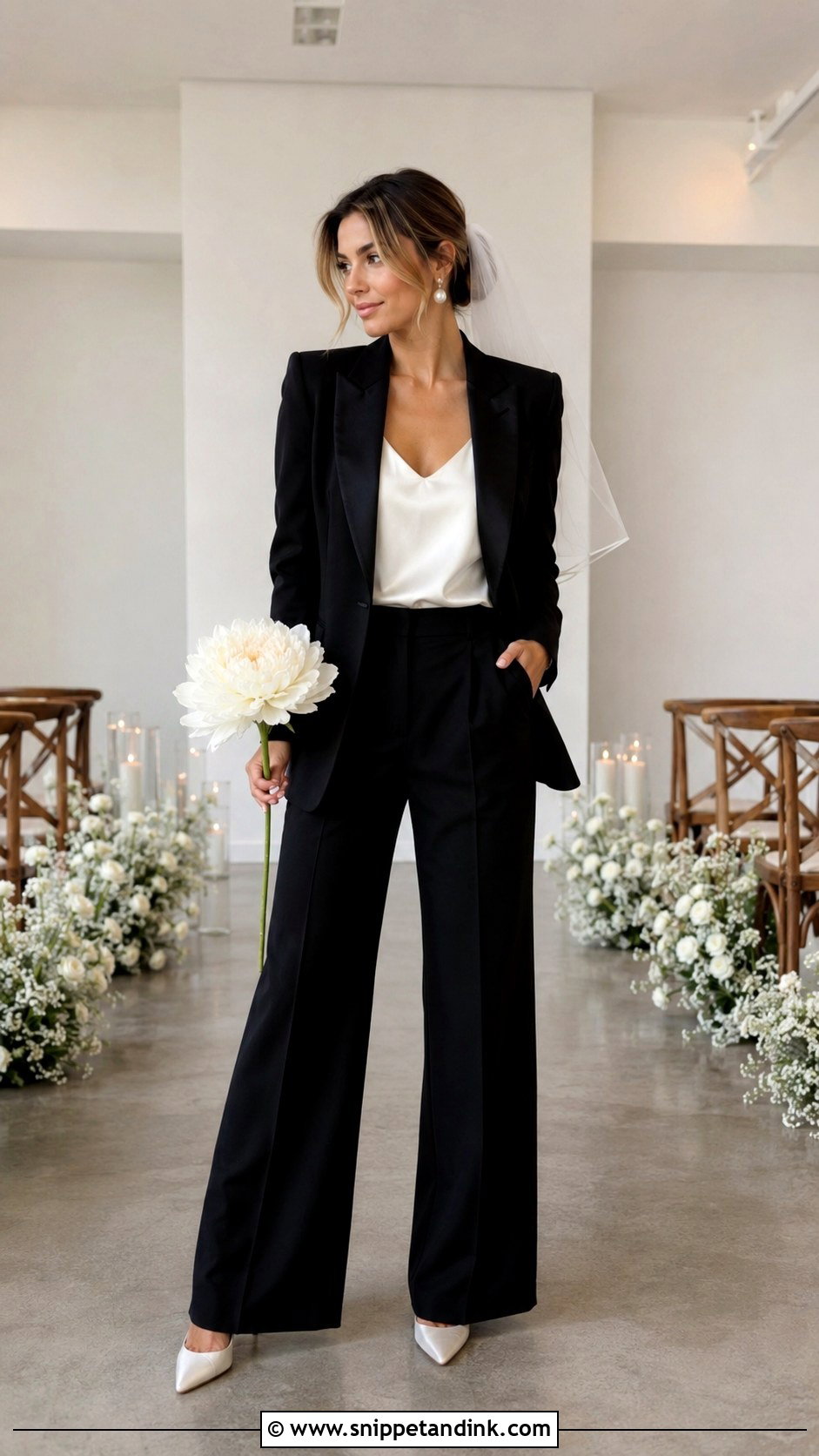
A black suit is the most uncomplicated outfit here, and that’s why the tailoring has to be precise. Choose a fitted blazer with straight, flared or wide-leg trousers depending on your proportions. A silk camisole, high-neck satin top or structured corset underneath sets the mood; ivory under black looks the most bridal. Shoulders, sleeve length, trouser waist and hem all need attention, and the jacket should button without pulling when you sit. A blazer with a defined waist or satin lapels softens the shape. Pointed pumps, pearl earrings, a short veil, a sleek bun and a single oversized flower suit its clean lines.
19. Black Floral Appliqué Gown Bride
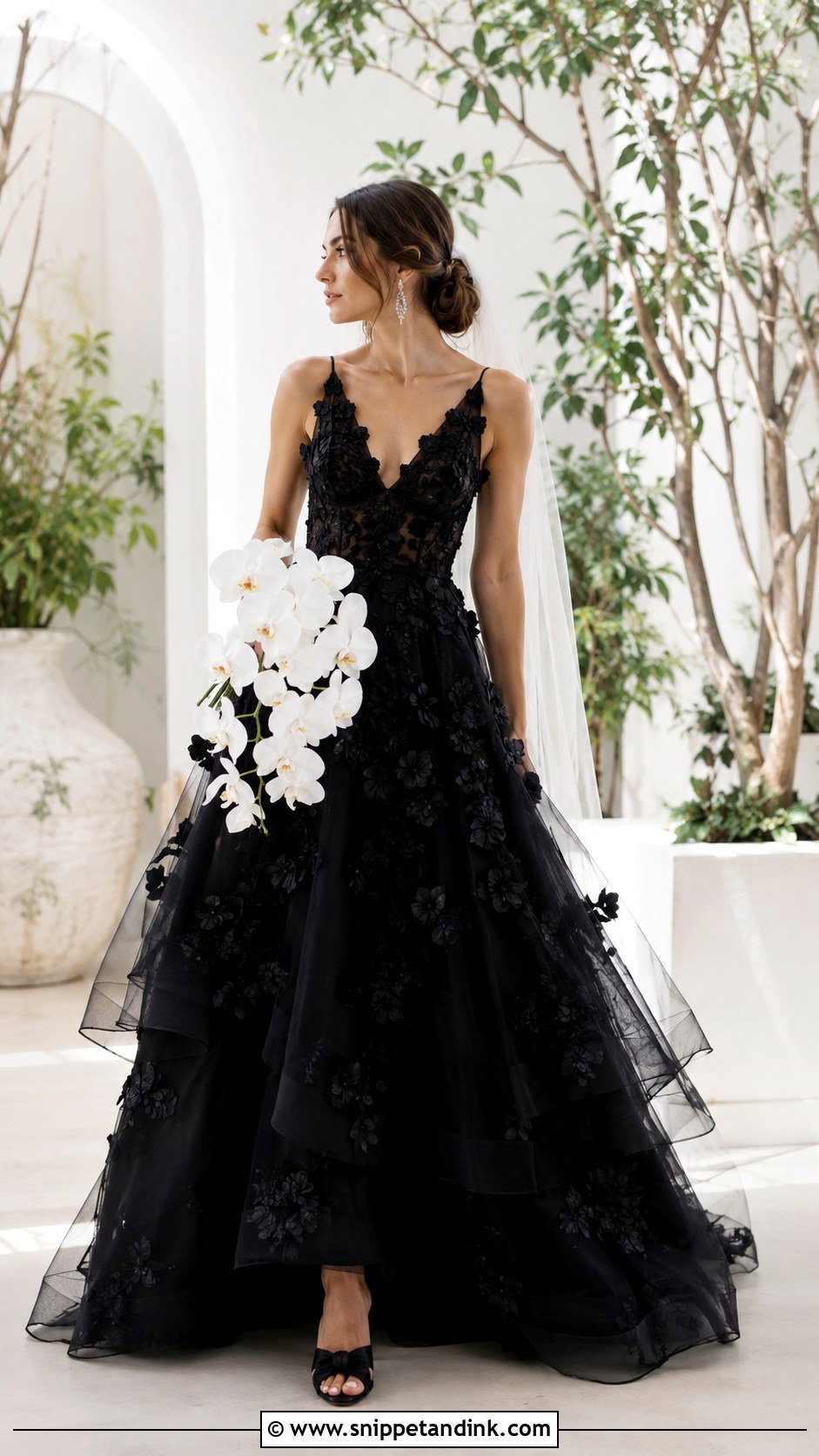
Floral appliqués break up a large expanse of black and give the light something to catch. Tonal black flowers keep it monochrome; ivory ones give strong contrast. Place the larger blooms where you want the eye: neckline, waist or train. Keeping them to the bodice suits anyone who wants subtler detail. Raised flowers catch on veils, so check each is firmly stitched and ask for a soft tulle veil without a heavy edge. A layered A-line skirt gives the decoration room. Simple satin heels, small crystal earrings, a loose low bun and white roses or orchids with minimal greenery keep the rest restrained.


20. Black Reception Dress Bride
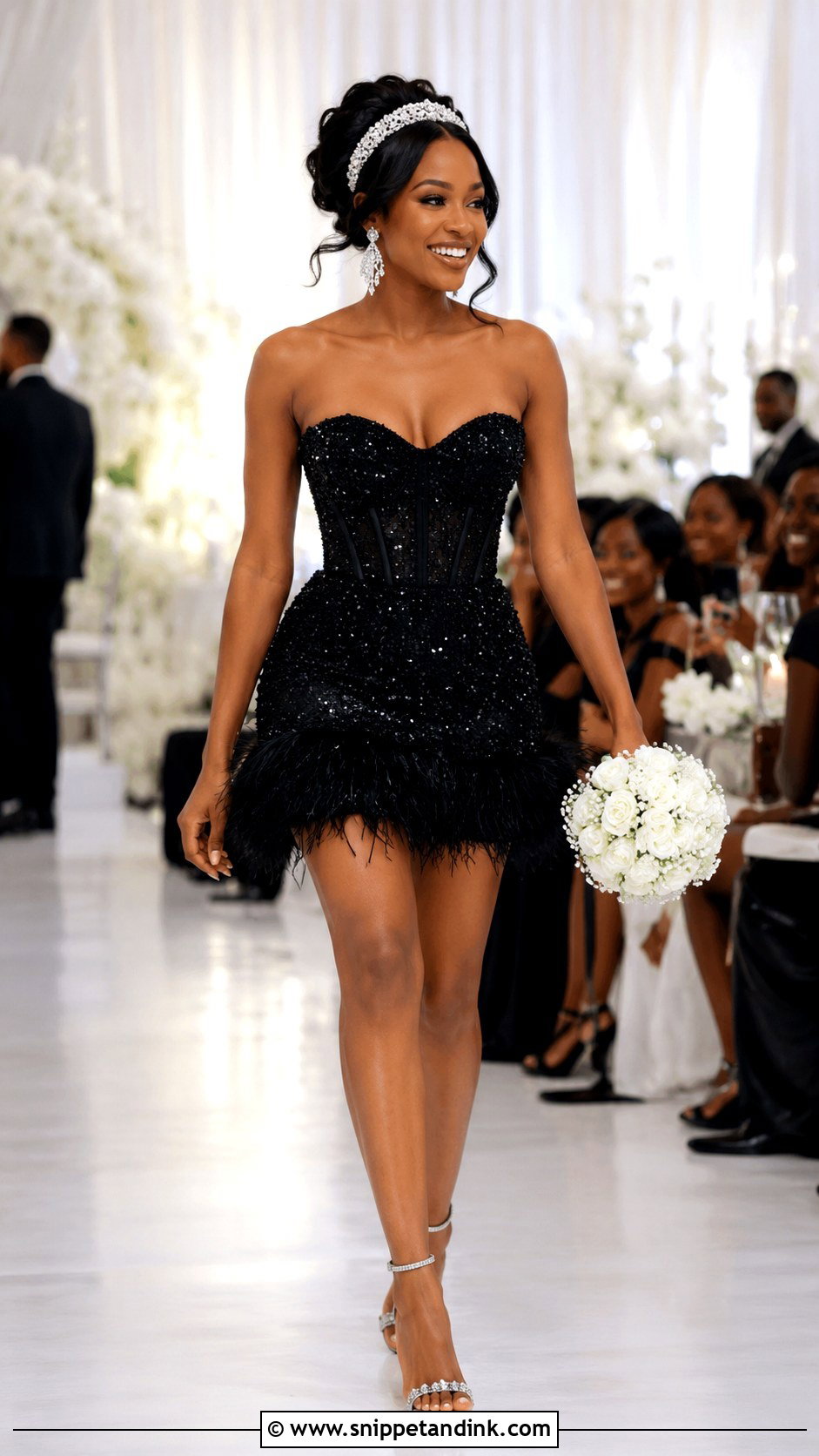
Your reception outfit should let you dance without holding up a train. A satin slip gown, feather-trimmed midi, sparkling column or structured mini can all work. If the ceremony gown was black too, change the fabric or hemline so the swap is noticeable: a sleek satin ceremony gown into a beaded mini, for example. Secure straps and breathable lining matter more now than at any other point of the day. Supportive heels, bold earrings and a smaller version of your bouquet work, with a short veil, jeweled headband or hair bow replacing the long veil. Keep refined flats nearby.
Where the Detail Goes When Black Is Photographed
Black absorbs light, so lace, pleats and seaming that look rich in a mirror can flatten into a solid silhouette in photos. Light coming from the side, a window or low sun, shows texture far better than flat overhead light or a direct flash. Share a picture of the gown with your photographer before the day so they plan for it, and choose ceremony and portrait spots with good natural light where you can.
Black also shows things white hides. Lint, pet hair and veil fluff stand out, as do foundation and powder along the neckline, deodorant at the armholes and dust at the hem.
- Get dressed after makeup is set, with a scarf over your face as the gown goes on.
- Let deodorant dry fully, or use a clear formula.
- Give a bridesmaid a lint roller and a soft brush for velvet.
- Ask your florist to remove the anthers from any true lilies in the bouquet, since their pollen stains fabric.
Black, Worn on Purpose
Black can be romantic, dramatic, minimal or playful, and the difference is almost entirely in the styling. Start from a silhouette that suits your body and the venue, then add shoes you can stand in, jewelry with a purpose, a veil and a bouquet that brightens the dark fabric. Texture matters more in black than in any other color, since lace, satin, velvet, crepe, tulle and sequins all show it differently. Good tailoring does the rest. Choose it because it feels like you, not just because it’s unconventional, and it will look every bit as bridal as white.
You'll Like These Ideas:






Leave a Reply