
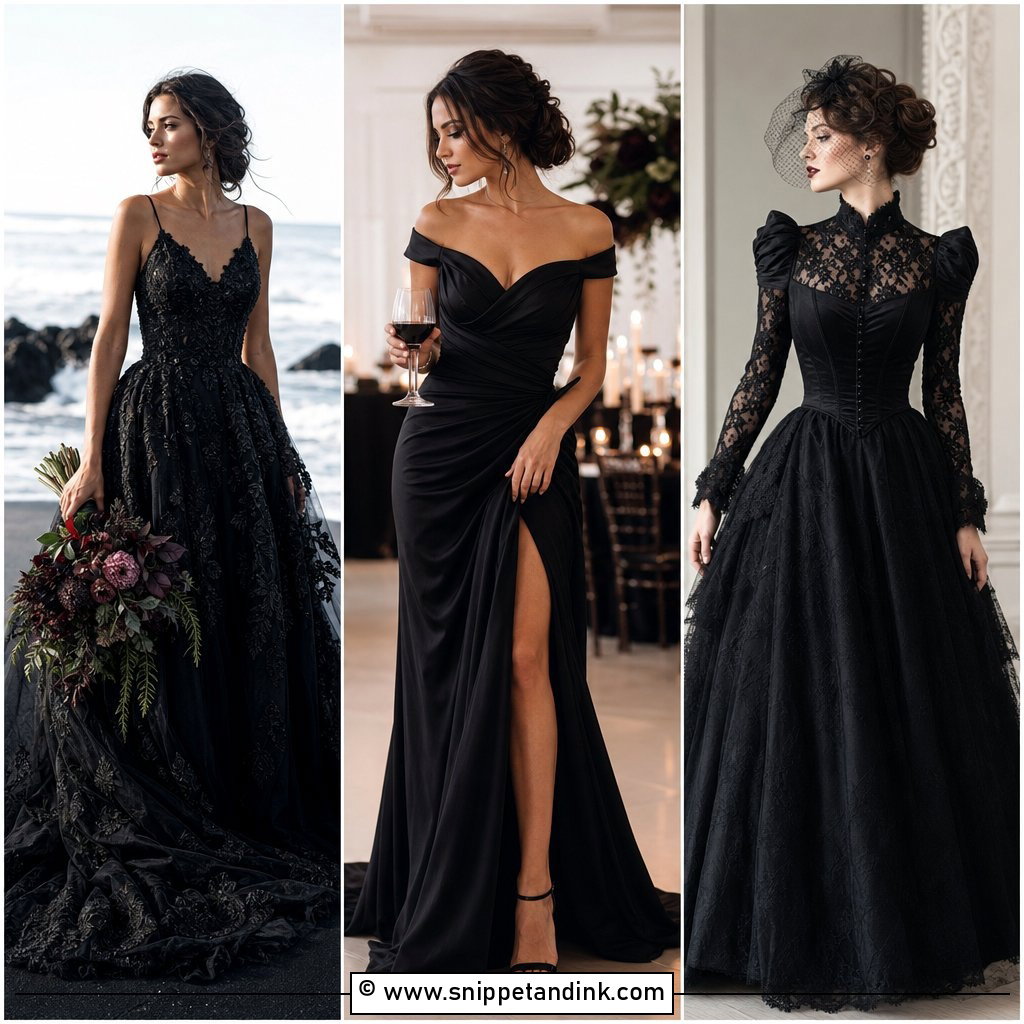
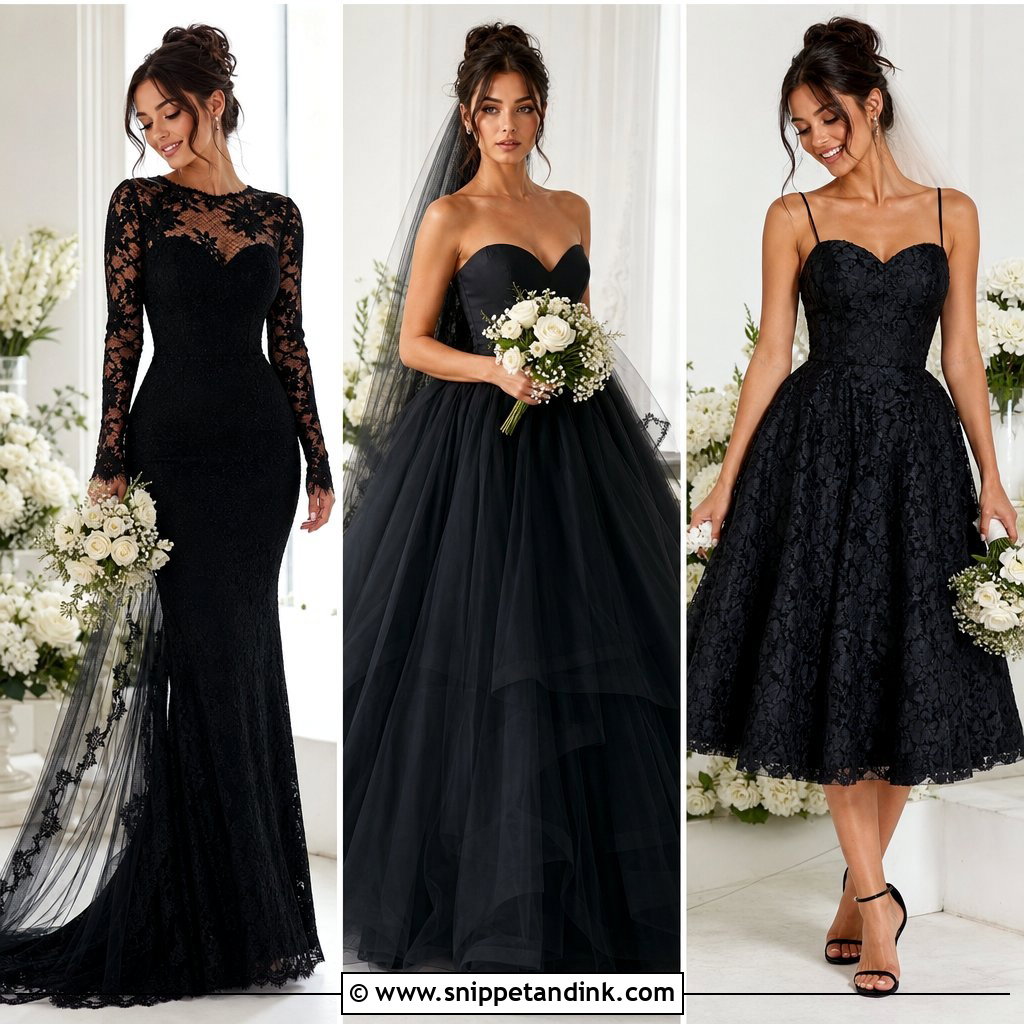
Black reads as bridal when the cut is precise and the finishing details say wedding: a veil, a bouquet held against the dark fabric, jewelry that catches light near the face. Without those cues it can read as a gala gown, which is why I style every look below head to toe rather than just naming a dress. Satin gives polished drama, crepe a matte modern line, and lace a softer surface without busy decoration. The simple black wedding dresses here cover ballrooms, courthouses and outdoor ceremonies, and each one comes with the shoes, veil and flowers I’d actually put with it.
Satin, Crepe and Tulle Are Never the Same Black
The first surprise for most brides wearing black is that black is not one color. Dyed satin often leans blue under daylight, crepe can lean slightly brown, and a cheap tulle veil may look grey next to both. In person you barely notice. In photos taken outdoors, the mismatch shows.
When I put together a black bridal look, I gather fabric swatches of the gown, the veil and anything else black, like shoes or a sash, and look at them together by a window. If one piece is off, I change that piece rather than hope the photographer can fix it.
- Order the veil from the same bridal shop as the gown when possible, and ask for a tulle swatch first.
- Matte shoes sit better with crepe; satin shoes can look too shiny against it.
- If you want the veil to read clearly, ivory or soft white tulle over a black gown is a deliberate contrast rather than a mismatch.
- Black gowns often take longer to arrive than white ones because many designers dye to order, so start shopping earlier than you would for ivory.
1. Black Satin A-Line Wedding Dress
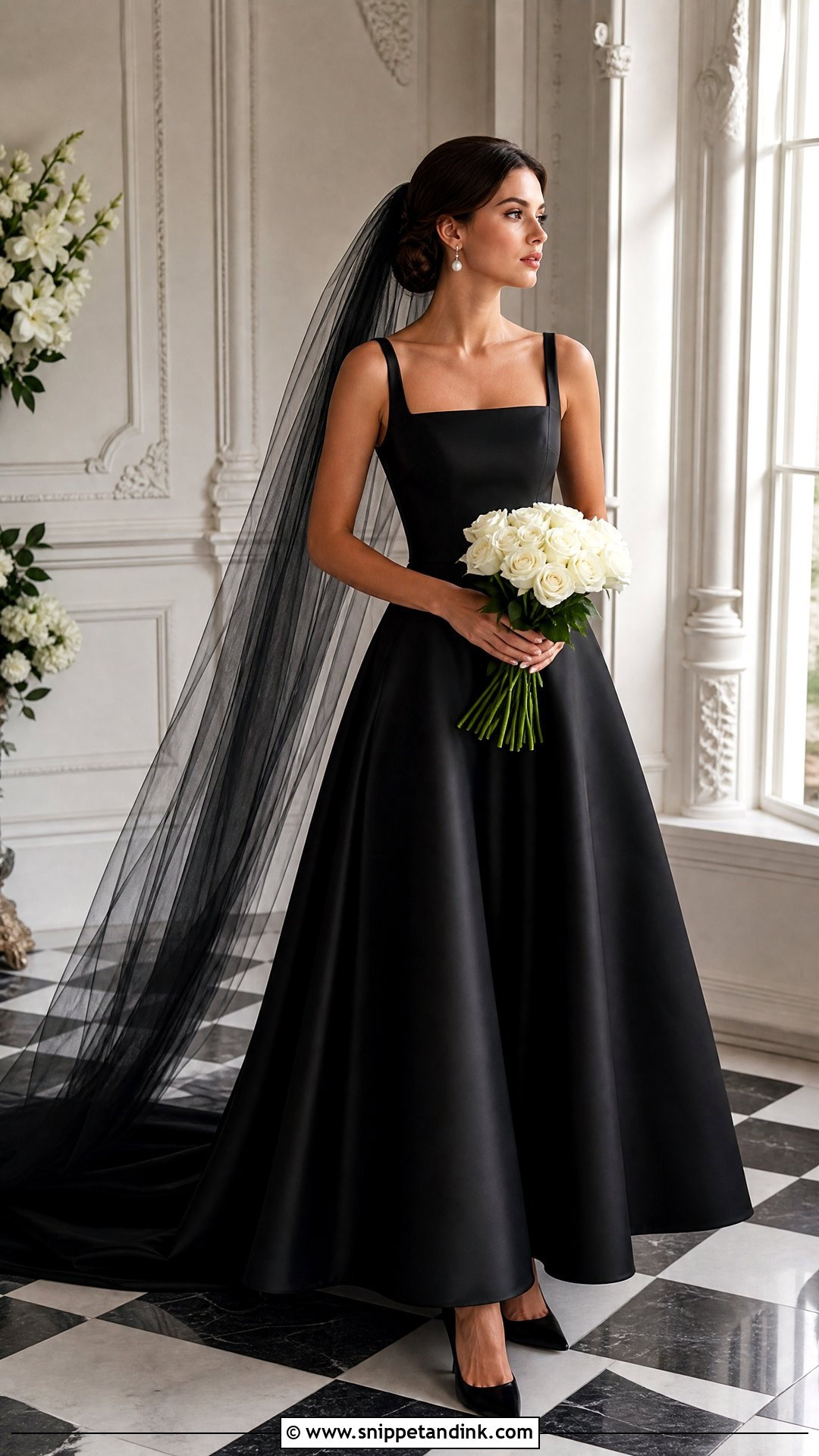
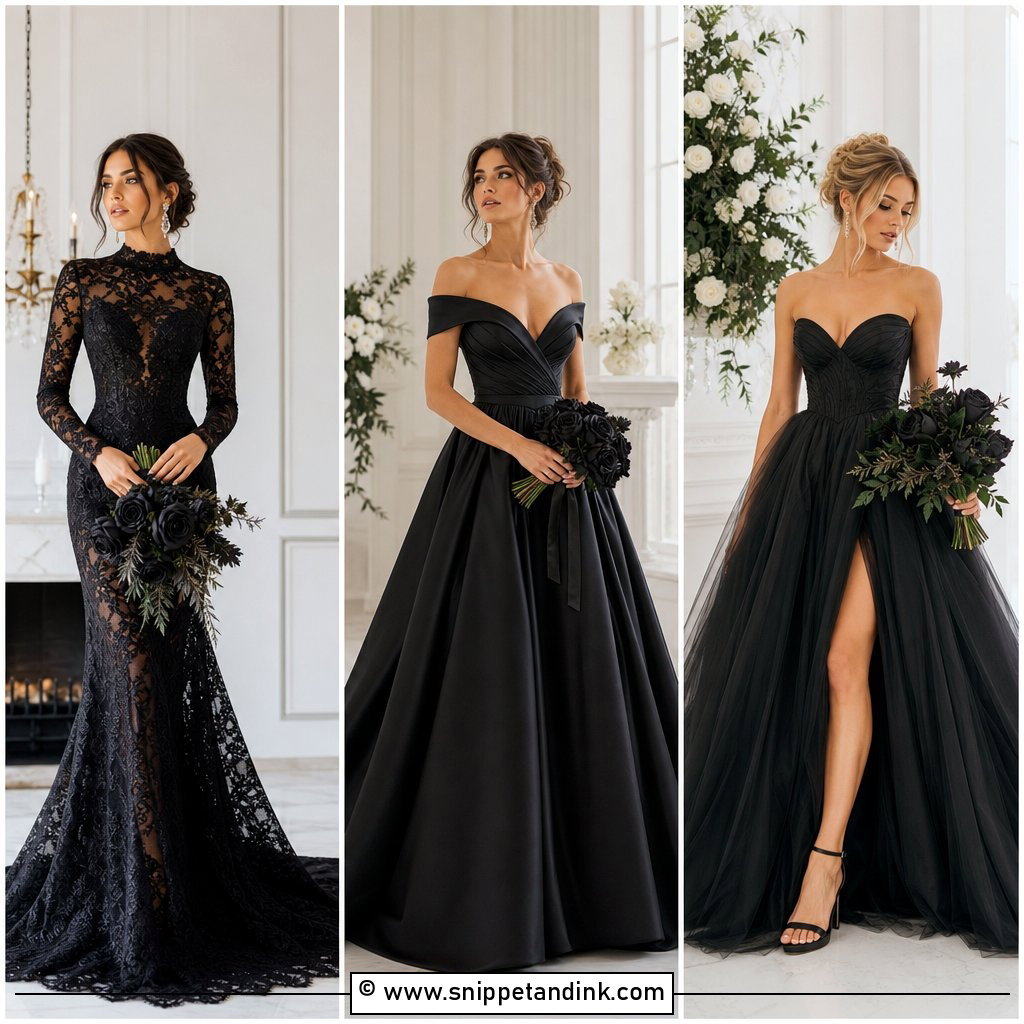
Satin shows every seam and every pull, so on an A-line the bodice fit decides the whole look. At a fitting I check the waist seam first: if it sits even a little low, the skirt loses its lift over the hips. Keep the neckline clean and skip beading so the sheen does the work. Pointed black pumps, pearl drops and a chapel-length black tulle veil finish it, and white roses with greenery give the sharpest contrast against dark satin. Hotels, estates and museums suit it best, where polished details match the room.
2. Black Long Sleeve Crepe Wedding Dress
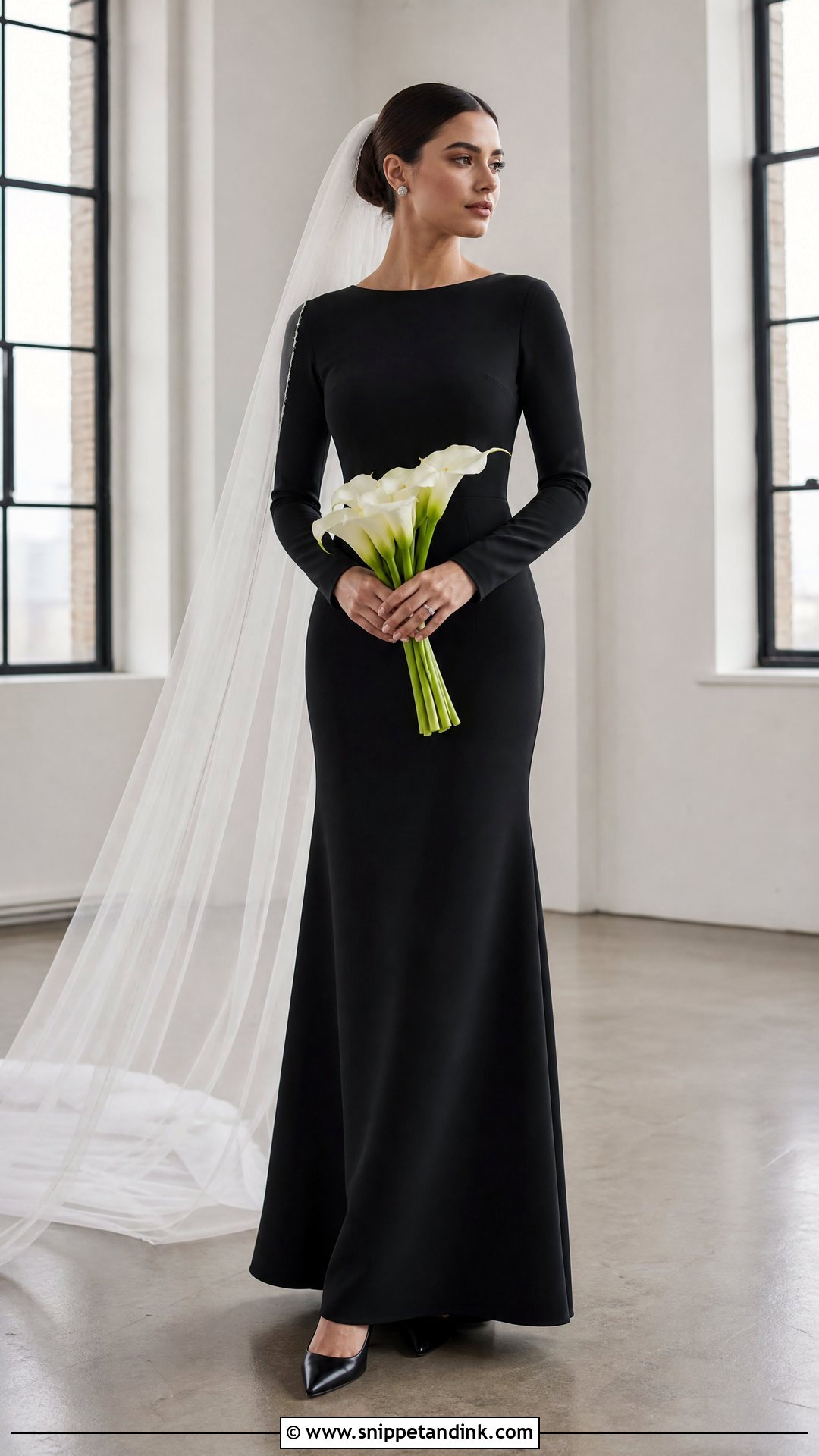
Crepe is the fabric I reach for when a bride wants black without shine. It has enough weight to skim the body, and long sleeves in crepe keep their line far better than chiffon, which tends to twist at the elbow. Ask for lightly defined shoulders and a straight or softly flared skirt. A low bun with a minimalist comb, small diamond studs and pointed heels keep it sleek, while a raw-edge cathedral veil adds the bridal note. White calla lilies or a compact ivory bunch read clearly against it. I’d save this one for fall or winter, in a loft, historic property or city venue.
3. Black Satin Slip Wedding Dress
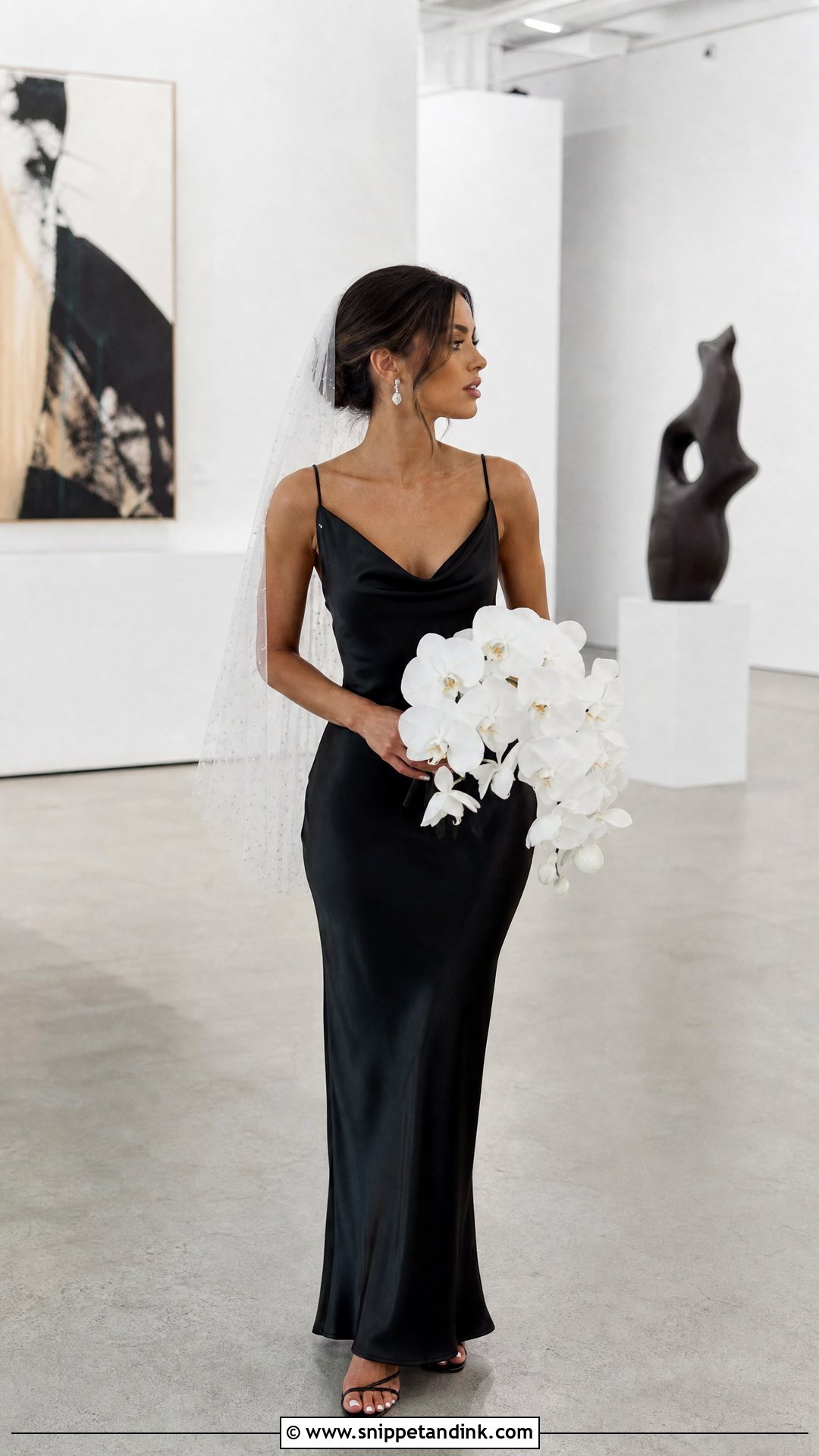
A bias-cut slip moves with you, but it is honest about everything underneath, so plan smooth, no-line underwear before the first fitting, not after. Slim straps and a subtle cowl neckline let the fabric fall without much construction. Delicate black sandals, a fine pendant and small crystal earrings are enough, with a sheer fingertip veil for the bridal note. Outdoors, I like a tailored black blazer over the shoulders before or after the vows. Cream roses, white orchids and greenery keep the contrast soft. It sits naturally in an intimate evening wedding, a restaurant reception or a gallery space.
4. Black Strapless Column Wedding Dress
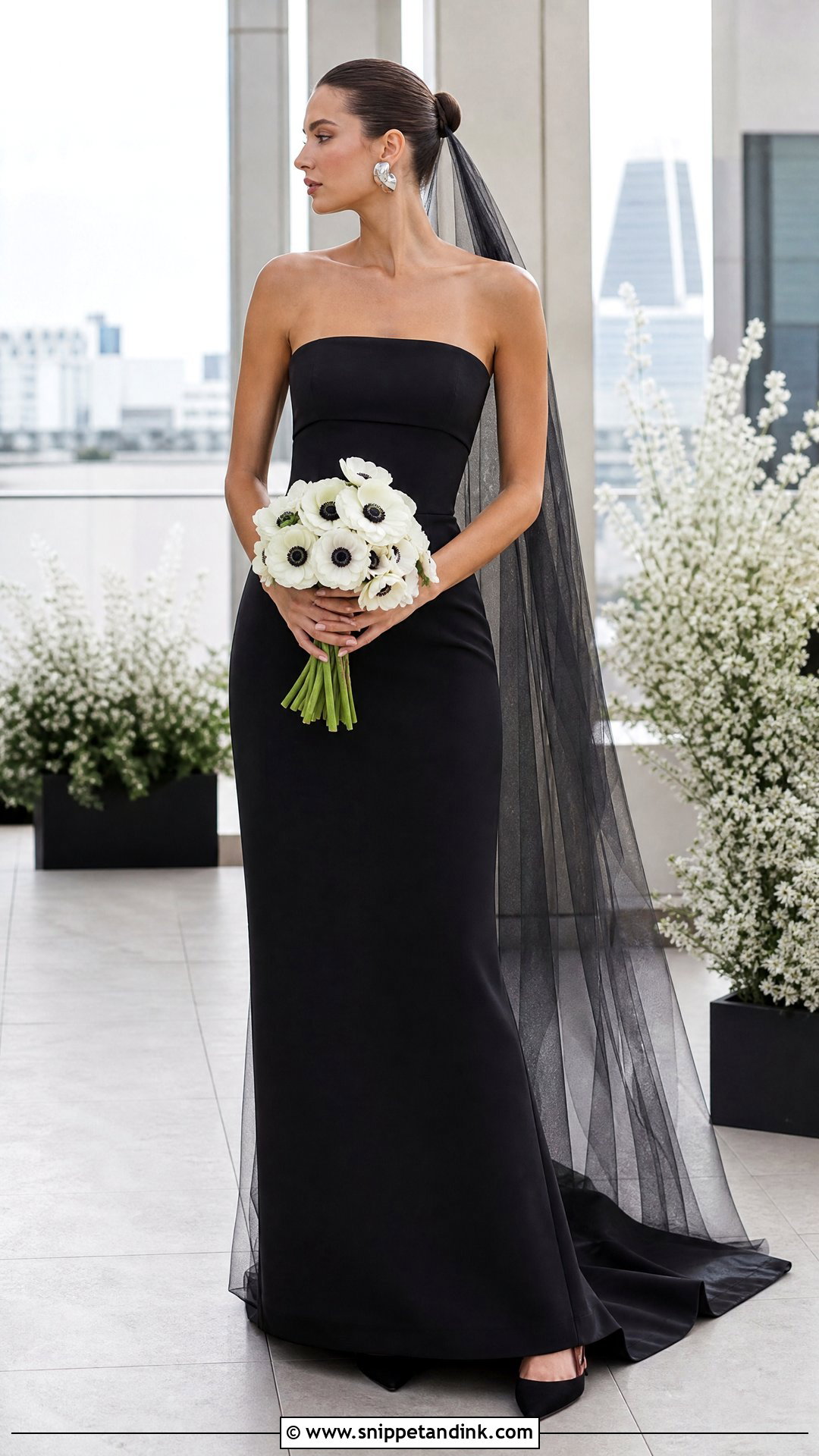
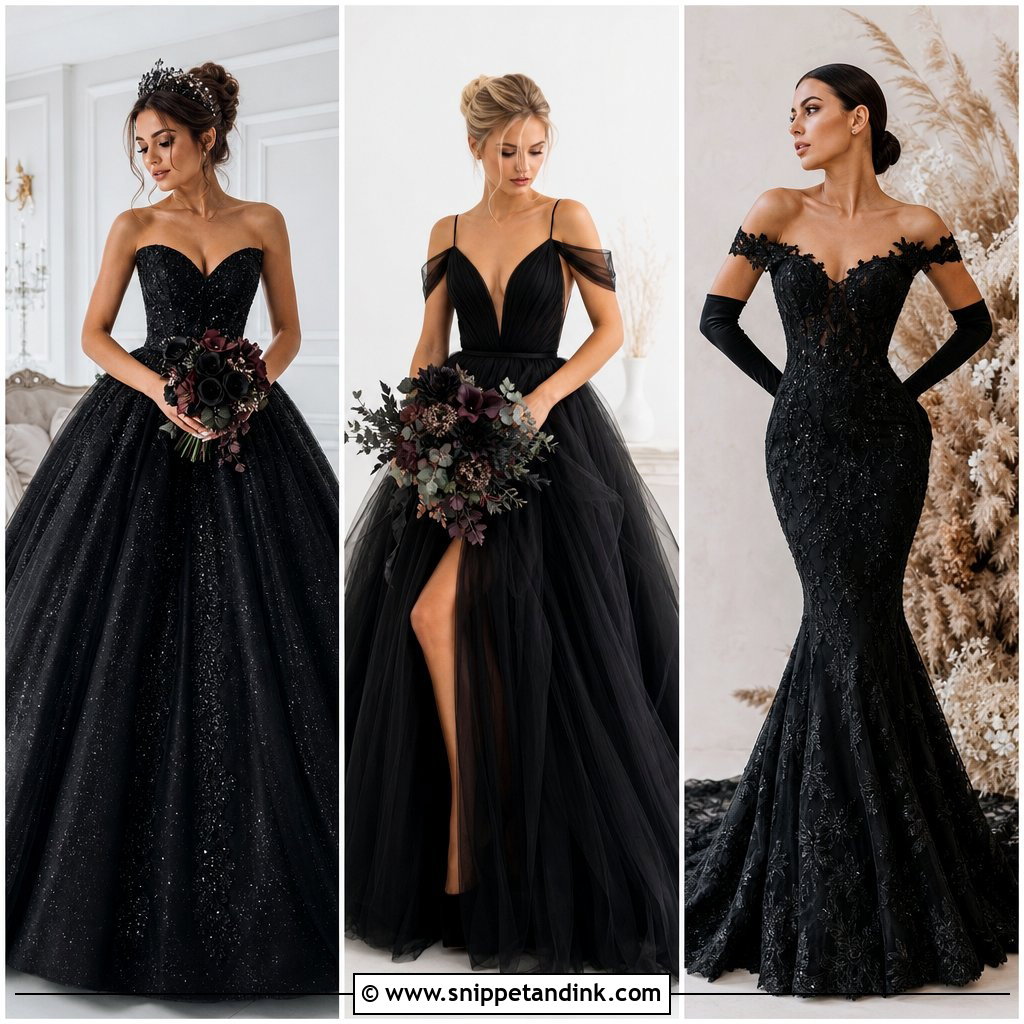
Strapless only works if the gown is built to stay up on its own. I ask whether the bodice has boning and a waist stay, then have the bride raise both arms and sit down at the fitting; if she tugs at it once, it needs taking in. A straight or gently curved neckline and a small train keep the column bridal. Sculptural silver earrings, black slingbacks and a sleek bun suit its sharp lines, with plain floor-length black tulle rather than a detailed veil. White anemones, roses or orchids add contrast. Black-tie weddings, rooftops and modern venues with clean architecture are where it belongs.
5. Black Square Neck Wedding Dress
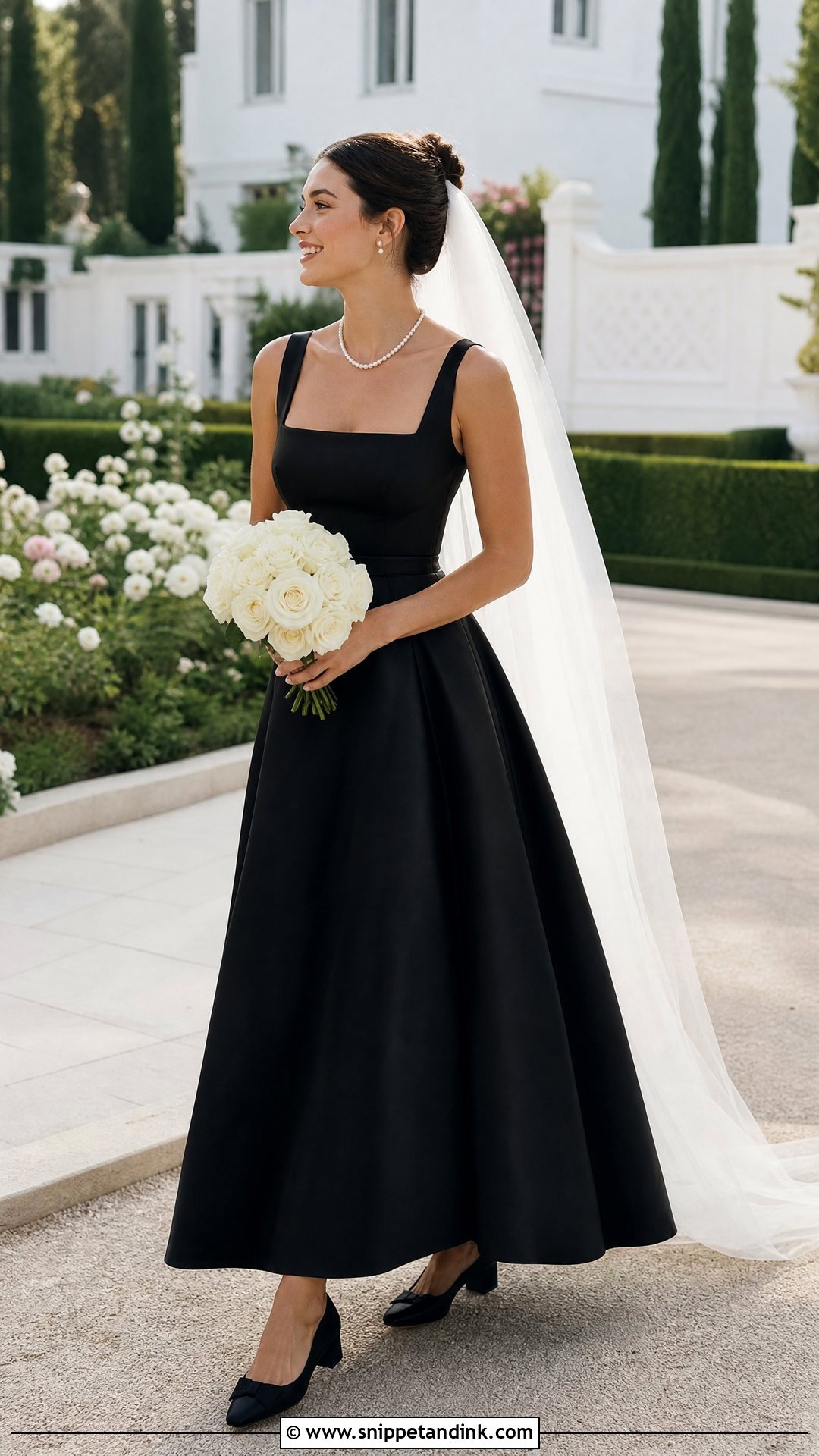
The square neckline frames the collarbones and leaves room for a short pearl strand or a fine silver chain. Wide straps and a fitted bodice over a flowing A-line skirt keep the proportions balanced, and wide straps also mean no strapless bra to worry about. Low block heels, pearl earrings and a neat chignon keep it relaxed. A shoulder-length veil keeps things light; a longer plain one makes it more formal. Ivory roses in a rounded bouquet brighten the palette for a garden, estate or indoor ceremony from spring into early fall.
6. Black Off The Shoulder Wedding Dress
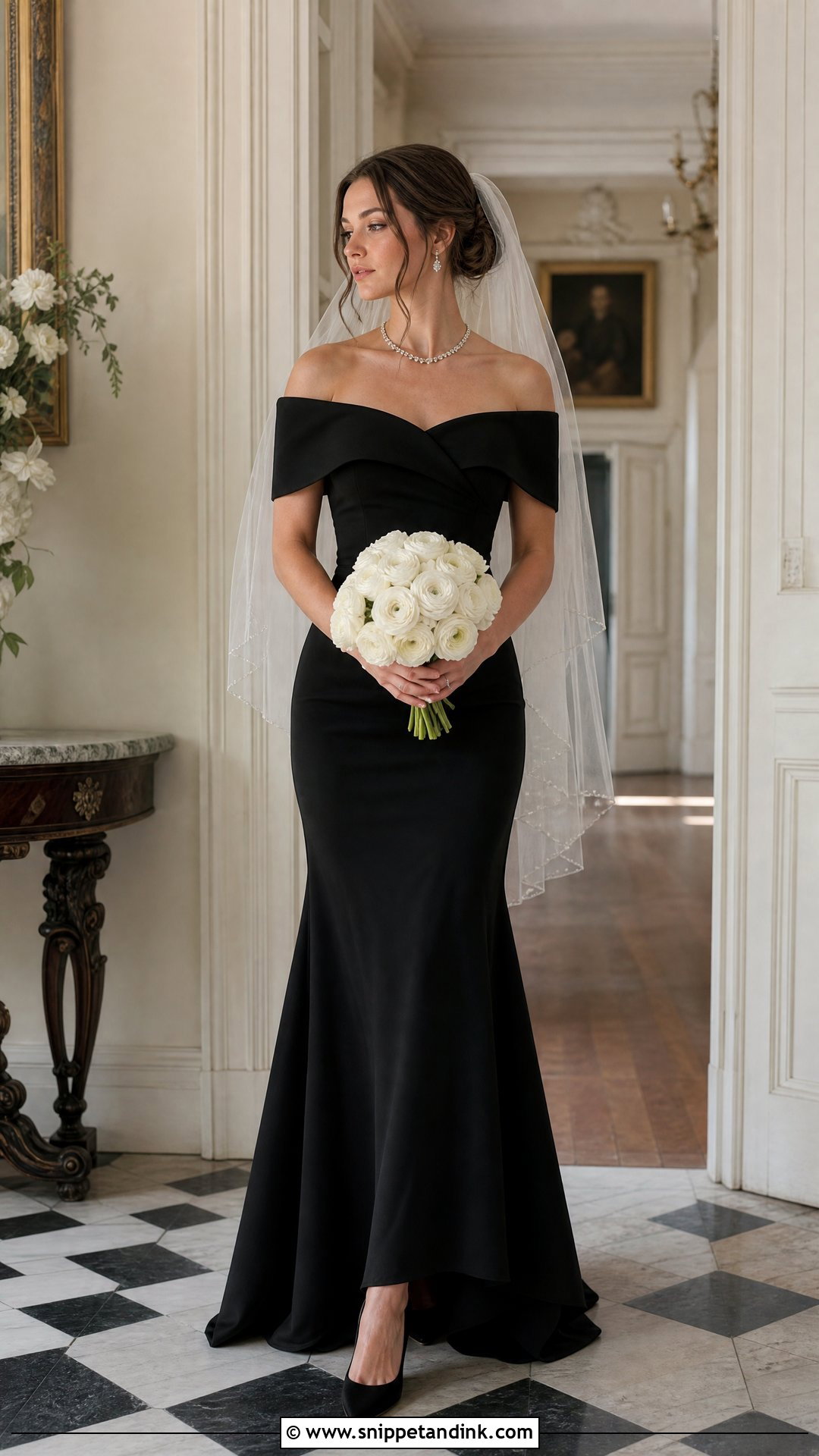
Off-the-shoulder necklines need checking with your arms moving, not standing still. When a bride hugs someone or lifts a glass, a loose folded band slides up, so I want it snug enough to stay put without leaving a red line. Choose a folded neckline or smooth draped sleeves over heavy lace. Pull the hair into a low textured bun to keep the shoulders clear, then add a short crystal necklace, matching studs and pointed heels. A plain fingertip veil and white roses, ranunculus and eucalyptus finish it for gardens, historic houses or formal rooms.
7. Black Halter Neck Wedding Dress
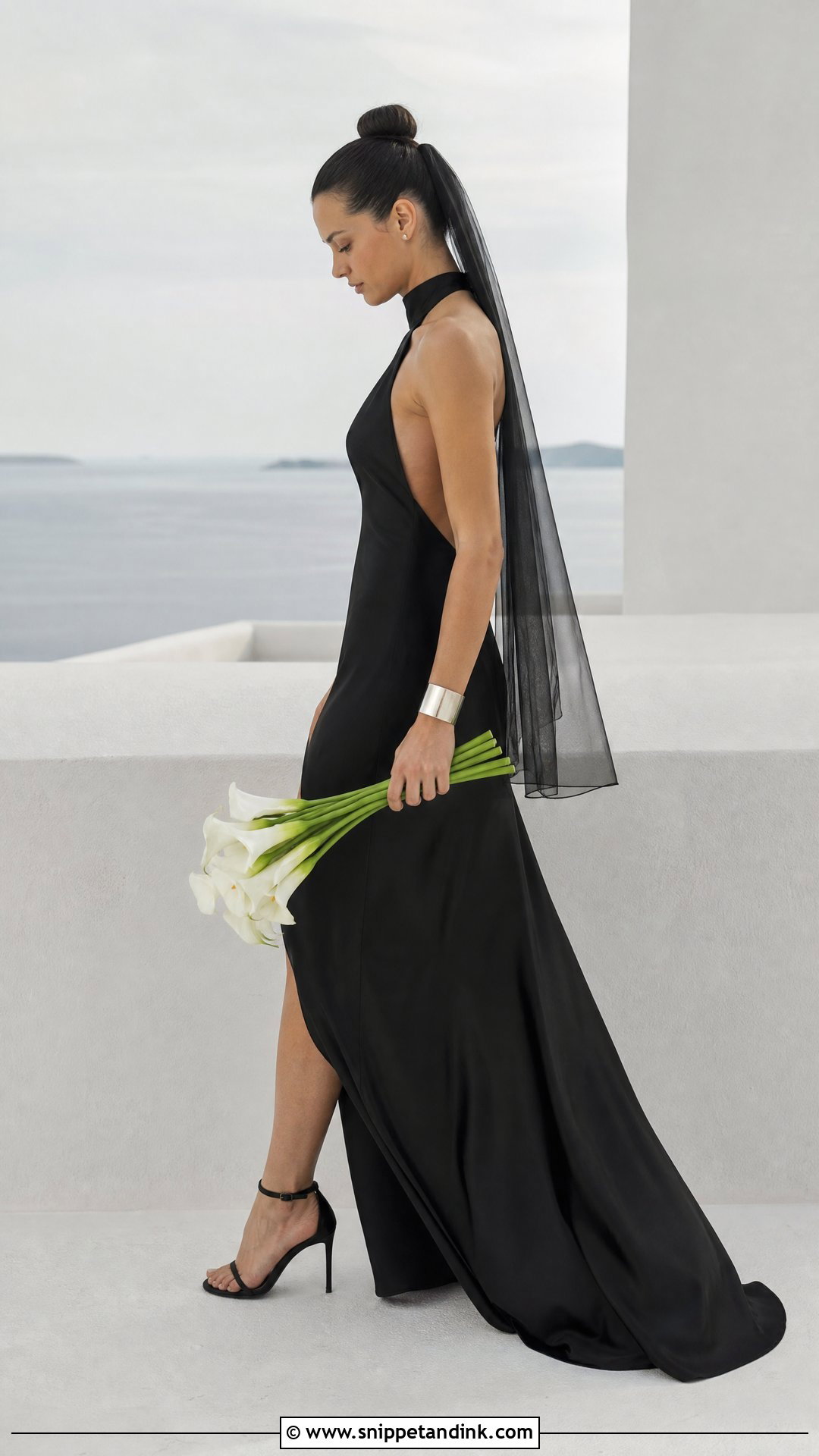
Halters draw the eye straight to the shoulders and back, so I always look at the back of a black halter neck wedding dress before the front. An open back or narrow keyhole is what makes it bridal. Pick fluid crepe for matte, satin for luminous. Ankle-strap heels, silver cuffs and small earrings pair well. A high bun or sleek ponytail shows the neckline, and a narrow black tulle veil tucked under the style keeps it modern. Calla lilies or long-stemmed roses suit the long lines, and it travels well to destination and city weddings. One caution: a heavy necklace tie can pull at the neck by evening, so check that the strap fastens flat.
8. Black One Shoulder Wedding Dress
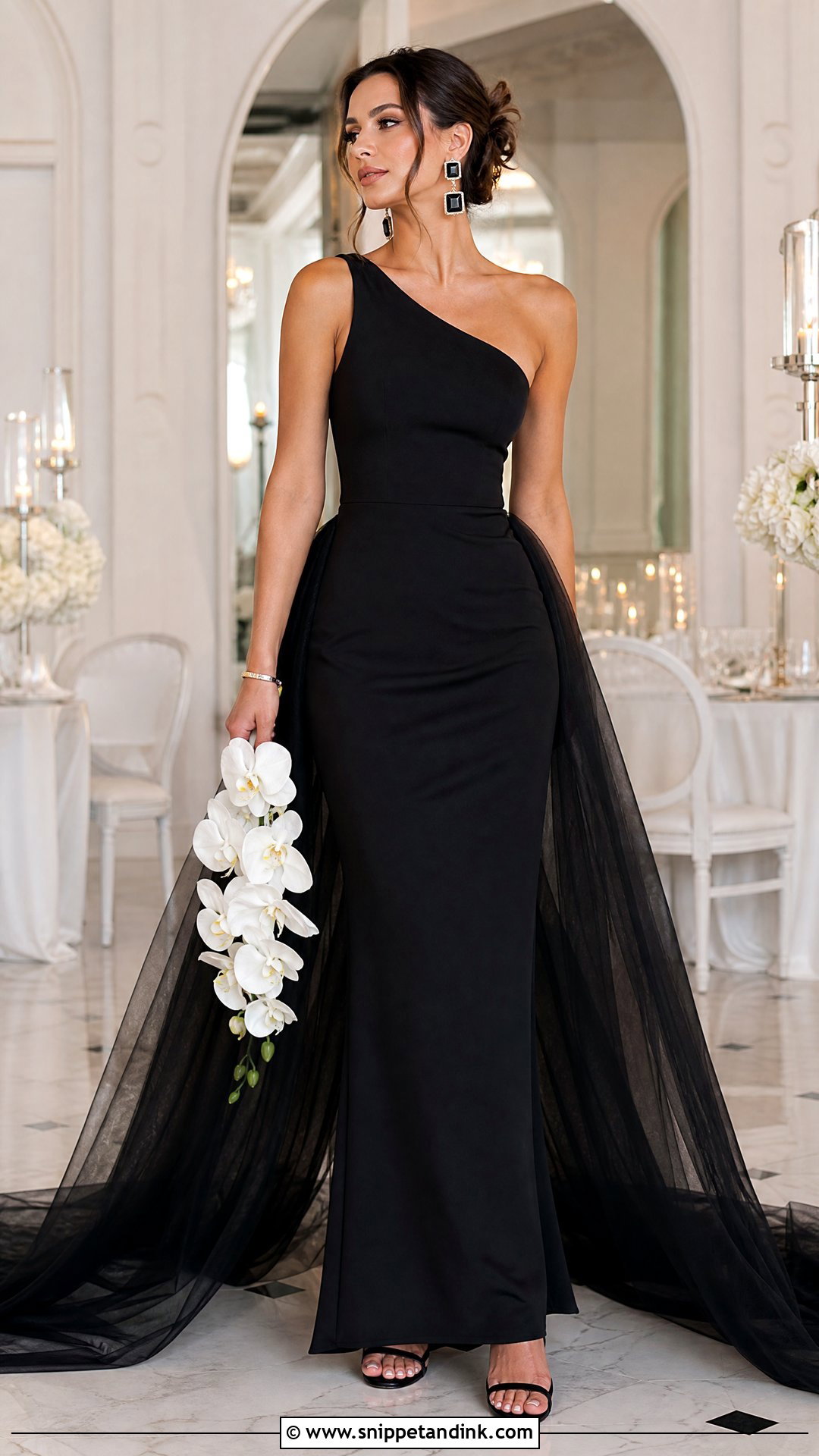
Asymmetry does the decorating on a one-shoulder gown, so I skip ruffles and keep the jewelry to one side of the face. A single statement earring on the bare side, or small geometric pairs, looks deliberate. The strap needs a hidden silicone grip or a small elastic inside; otherwise the single shoulder drifts outward while you dance. Black strappy heels, a slim metallic bracelet and a sleek low bun keep it clean. Instead of a veil, try a detachable black tulle train at the waist, and carry a compact bunch of white orchids for evening or black-tie.
9. Black Tea Length Wedding Dress
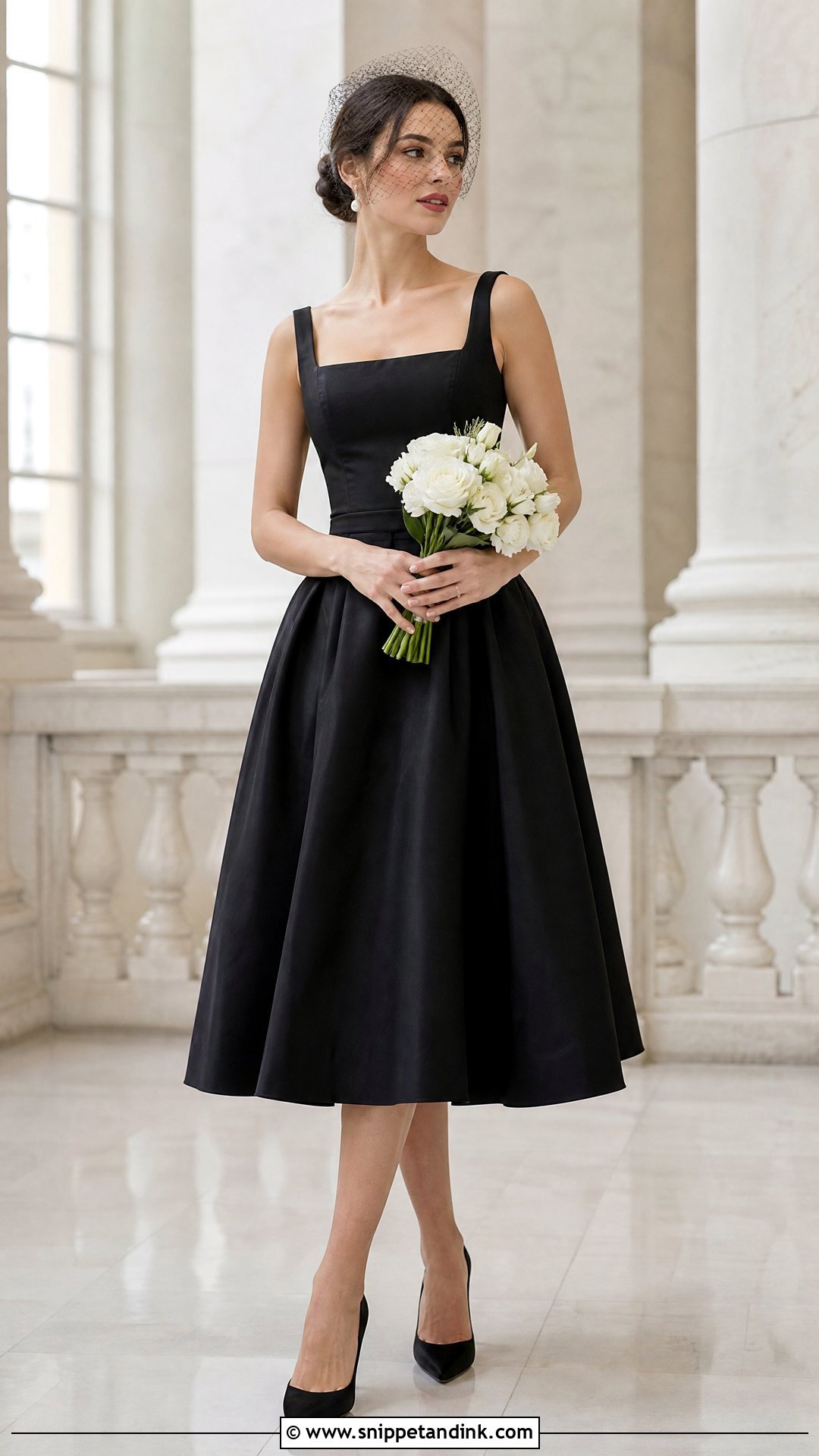
Tea length is the hem I suggest when the shoes deserve to be seen. The skirt should finish below the knee with enough structure that it doesn’t collapse when you sit. A square, boat or sweetheart neckline all work on the fitted bodice. Pointed black satin pumps lengthen the leg and pearl earrings give the classic bridal cue. Match the veil to the scale: a birdcage or shoulder-length tulle rather than anything trailing. A small bouquet of white roses is easy to hold through a courthouse ceremony, daytime reception or restaurant wedding, and you can stay in it all day without a change.
10. Black Midi Wedding Dress
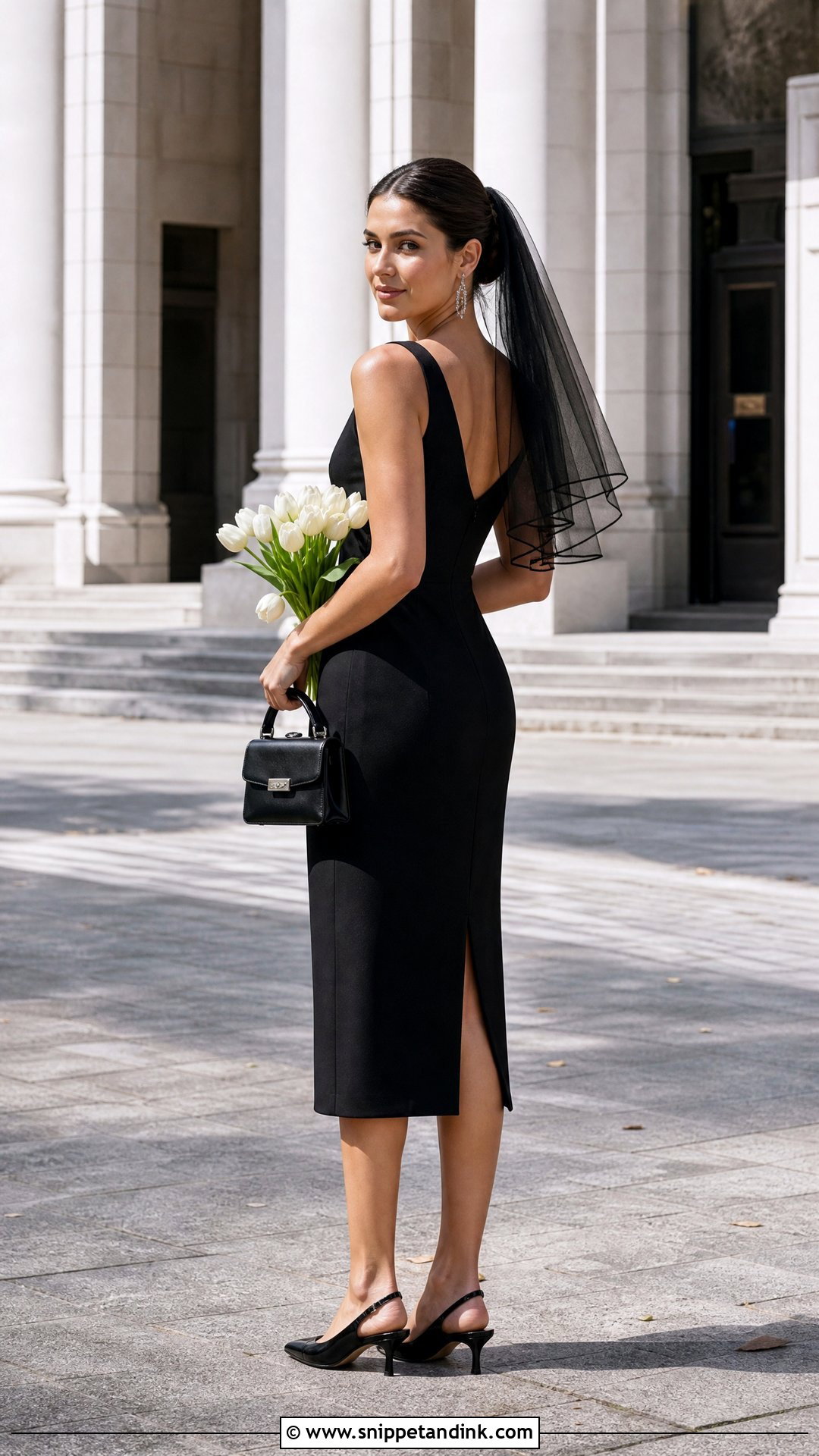
Mid-calf is a tricky length to fit, because a hem that lands at the widest part of the calf shortens the leg. I pin a midi hem with the bride in her actual shoes, then move it up or down by a finger’s width until it hits the slimmer point. A simple black midi wedding dress with a fitted bodice and a small back slit makes walking easy. Kitten heels, a structured mini bag and pearl or crystal drops finish it, plus a short black veil under a smooth bun. Ivory tulips or white roses soften the palette for a civil ceremony or daytime party, and it will be worn again.
11. Black Lace A-Line Wedding Dress
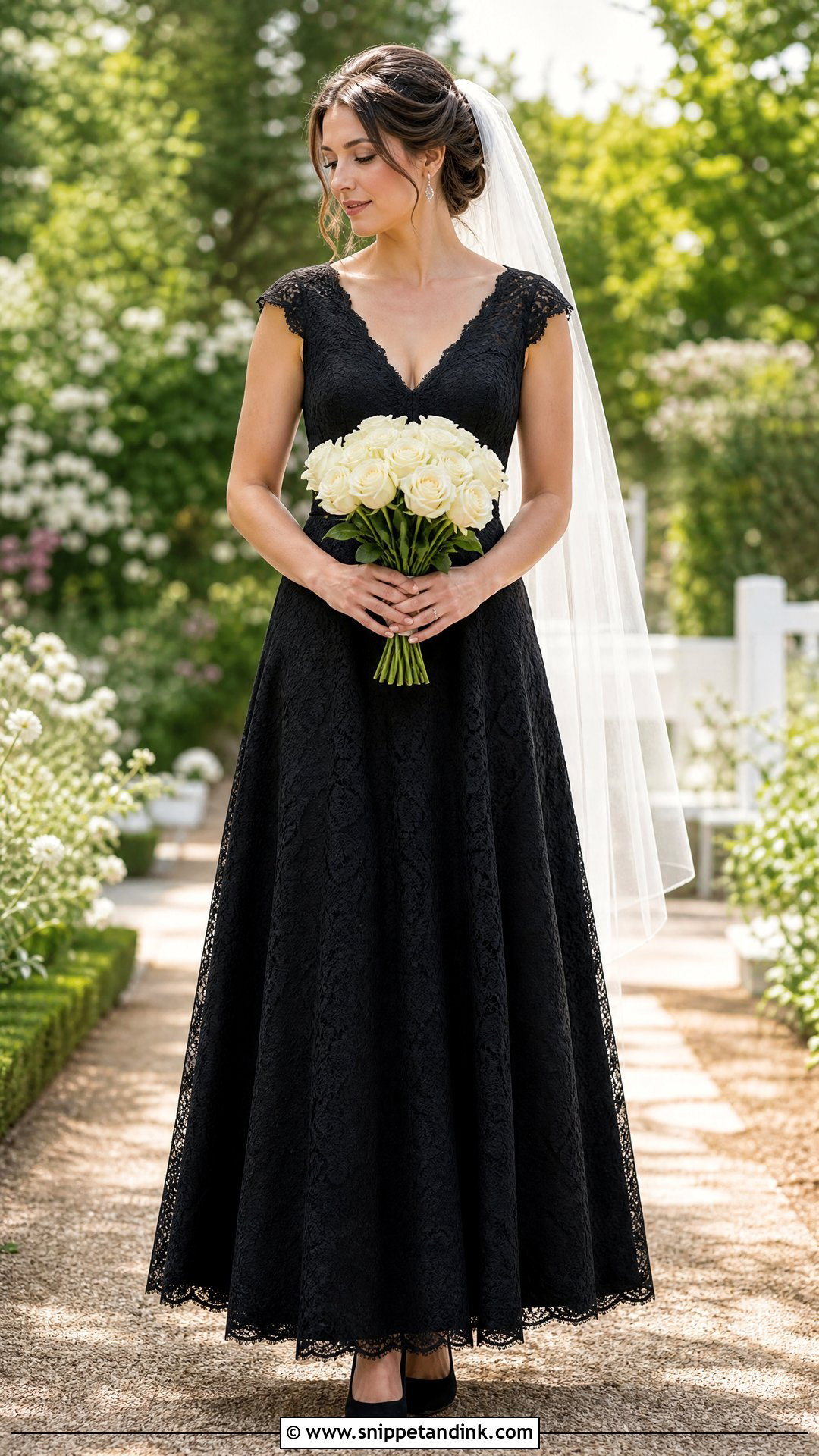
Lace stays simple when it is tonal: black lace over a smooth black lining, one overlay, no contrasting appliqué. The thing I watch is the lining. If it is a different black from the lace, the pattern turns murky in photos, so hold both under daylight before you order. A clean V-neck and lightly fitted waist keep it easy to wear. Closed-toe heels, delicate earrings and a plain tulle veil let the pattern show through. A soft low bun with face-framing pieces and ivory roses suit gardens, woodlands and evening ceremonies without drifting into a gothic theme.
12. Black Chiffon Empire Waist Wedding Dress
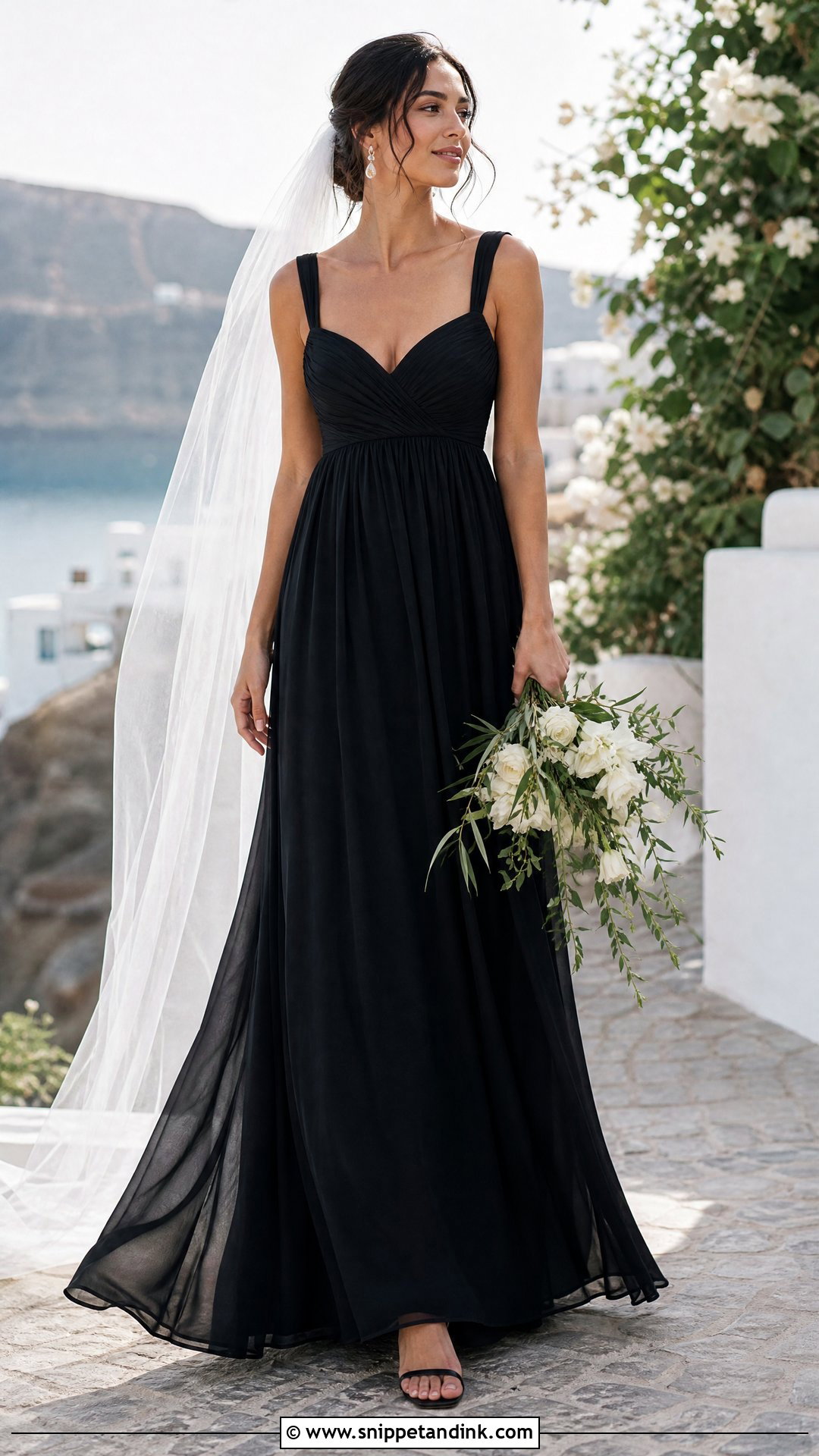
Chiffon in black moves well, but it is sheer in a single layer, so I check that the skirt has at least two layers plus a lining before anyone steps into sunlight. The empire seam just under the bust leaves the waist and hips free, which makes it one of the most comfortable shapes here. Gathered bodice, supportive straps, low sandals, a fine silver bracelet and small drops keep it airy. A soft fingertip veil moves with the fabric. Carry a loose bouquet with trailing leaves for a warm-weather, outdoor or destination ceremony where a breeze helps the skirt.
13. Black Minimalist Ball Gown Wedding Dress
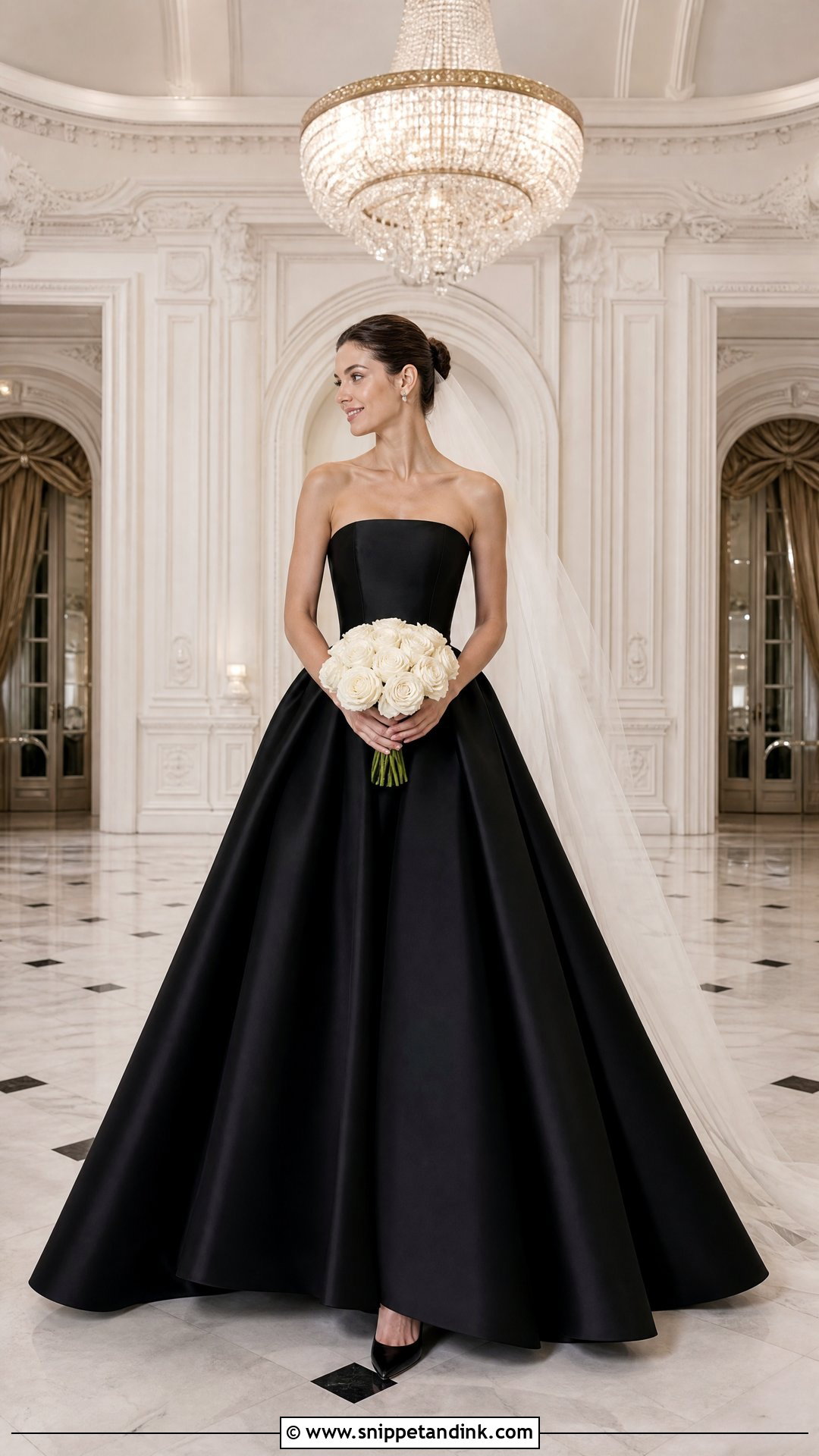
A ball gown makes its entrance through volume, not beading. Satin or mikado holds a full skirt in a clean architectural shape; softer fabrics flatten by the reception. Under it, a petticoat or built-in crinoline is what keeps the skirt from collapsing when you sit, so ask what the gown has before you buy. Understated studs, black pumps and a long raw-edge veil balance the scale, with a neat bun or polished waves. Keep the bouquet modest, white roses or calla lilies, for a ballroom, formal hotel, museum or large estate.
14. Black Mermaid Wedding Dress
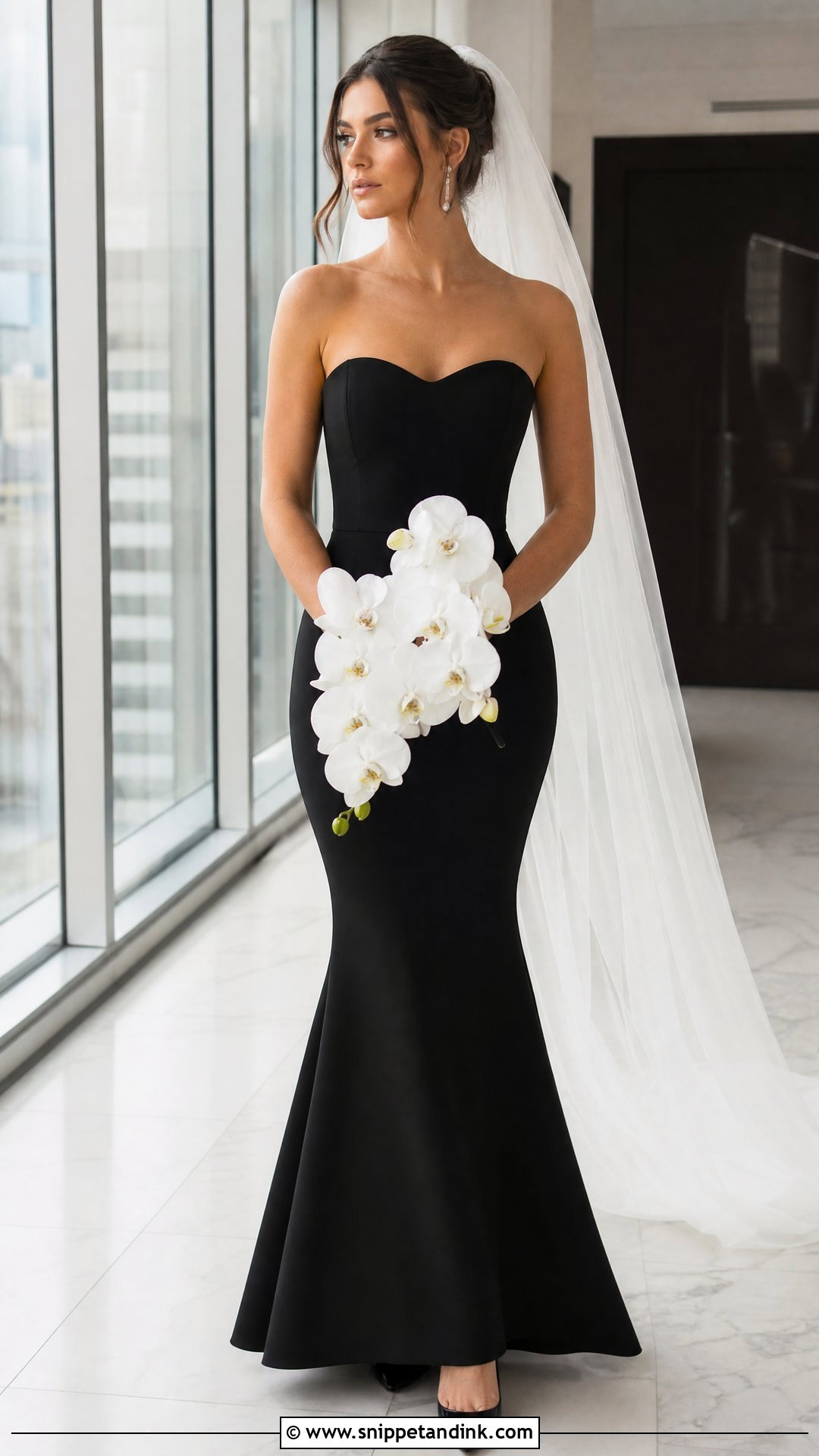
With a mermaid, the knee is everything. The flare should start at or just above it; any lower and you will shuffle. I have brides walk a few steps and climb one stair at the fitting, because that is where a tight mermaid shows its limits. Stretch crepe forgives more than satin. Black pointed pumps, slim drops and a long plain veil under a low bun keep it sleek, and skip a ruffled hem for a modern finish. White orchids or long calla lilies echo the long silhouette at an evening, formal indoor or city wedding.


15. Black Fit And Flare Wedding Dress
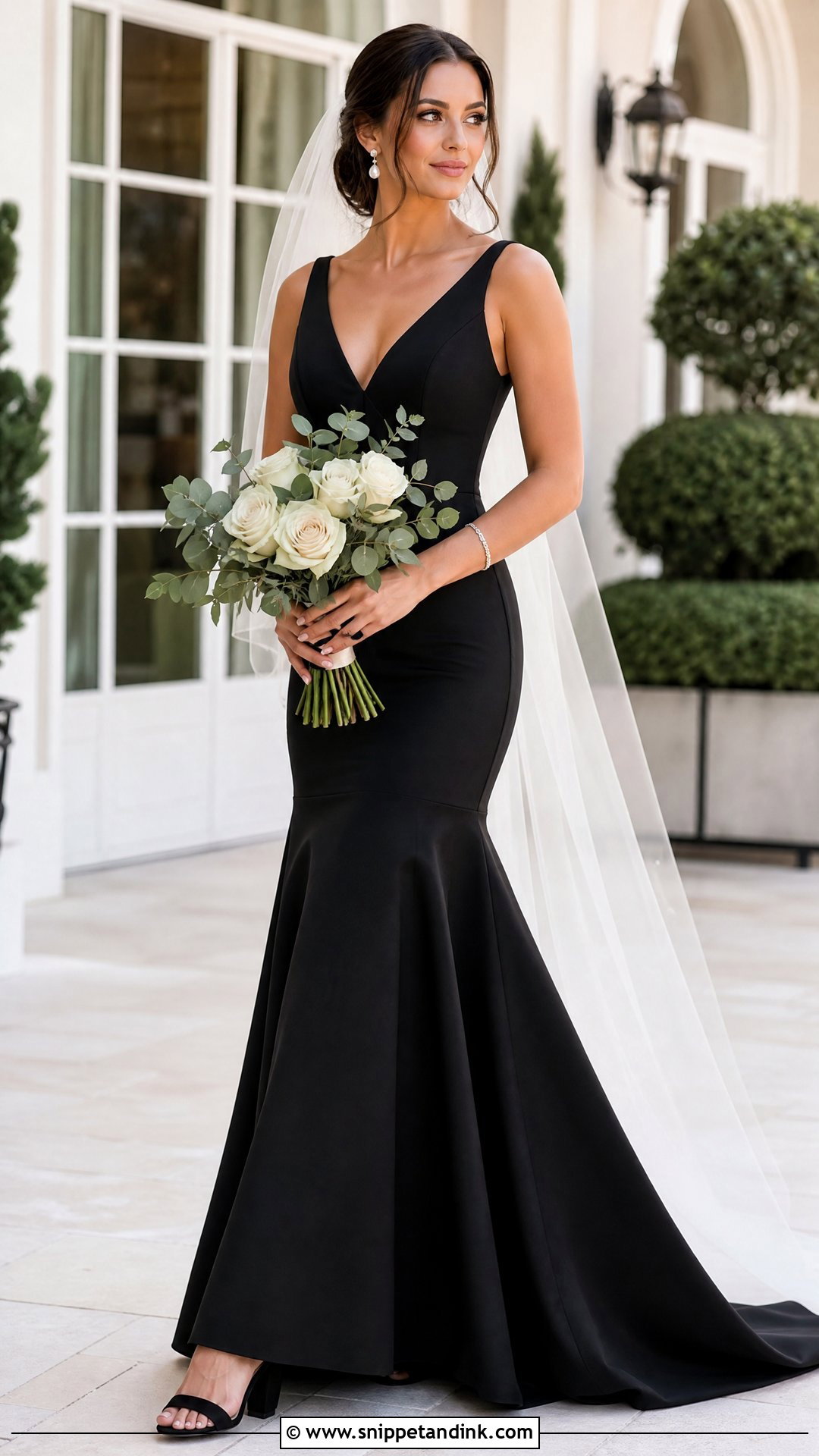
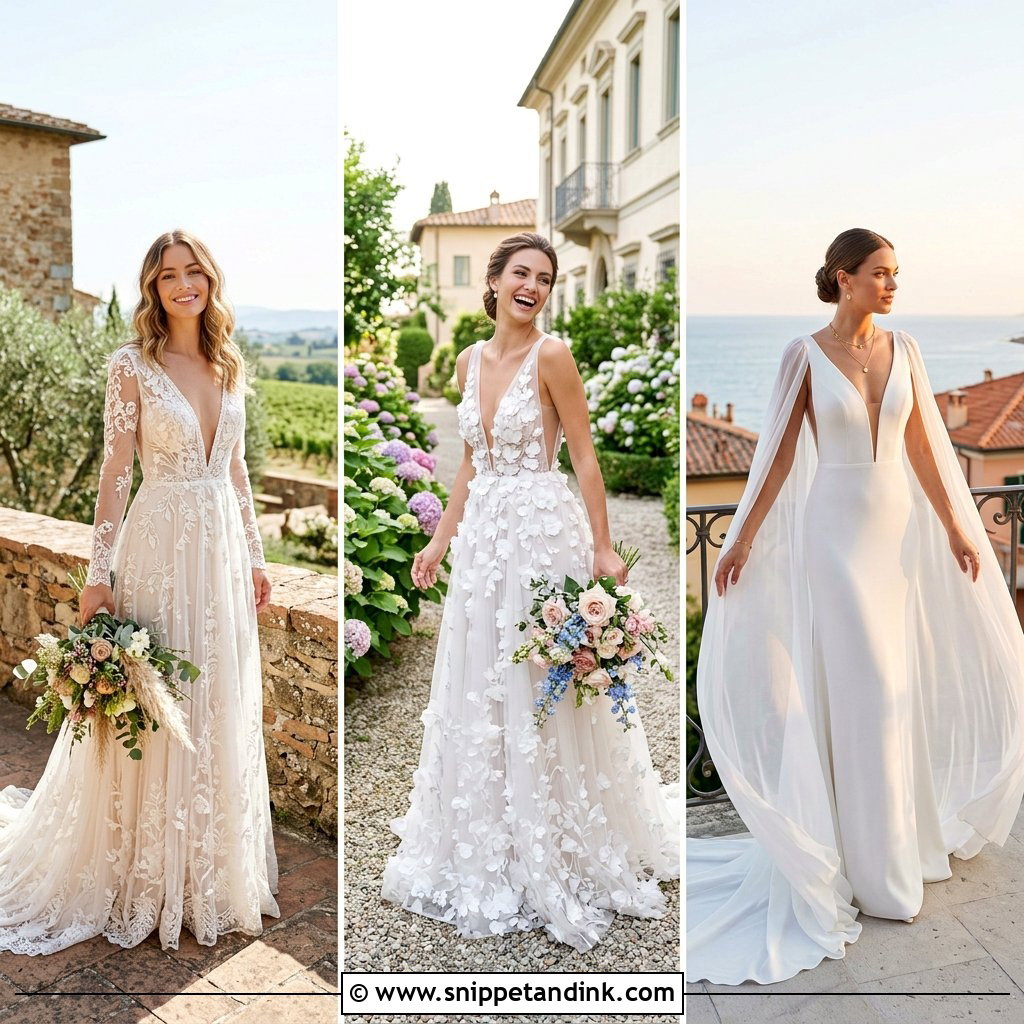
Fit-and-flare is my answer for brides who like the mermaid shape but want to dance. The skirt opens around mid-thigh, so you get the curve without the knee restriction. A clean scoop or V-neck keeps it approachable. Block heels, a simple tennis bracelet and pearl drops pair well, with a chapel-length raw-edge veil adding movement behind. A low ponytail or softly pinned waves, plus ivory roses and eucalyptus, carry it through barns, estates, hotels and gardens, and it moves easily from ceremony to reception.
16. Black High Neck Wedding Dress
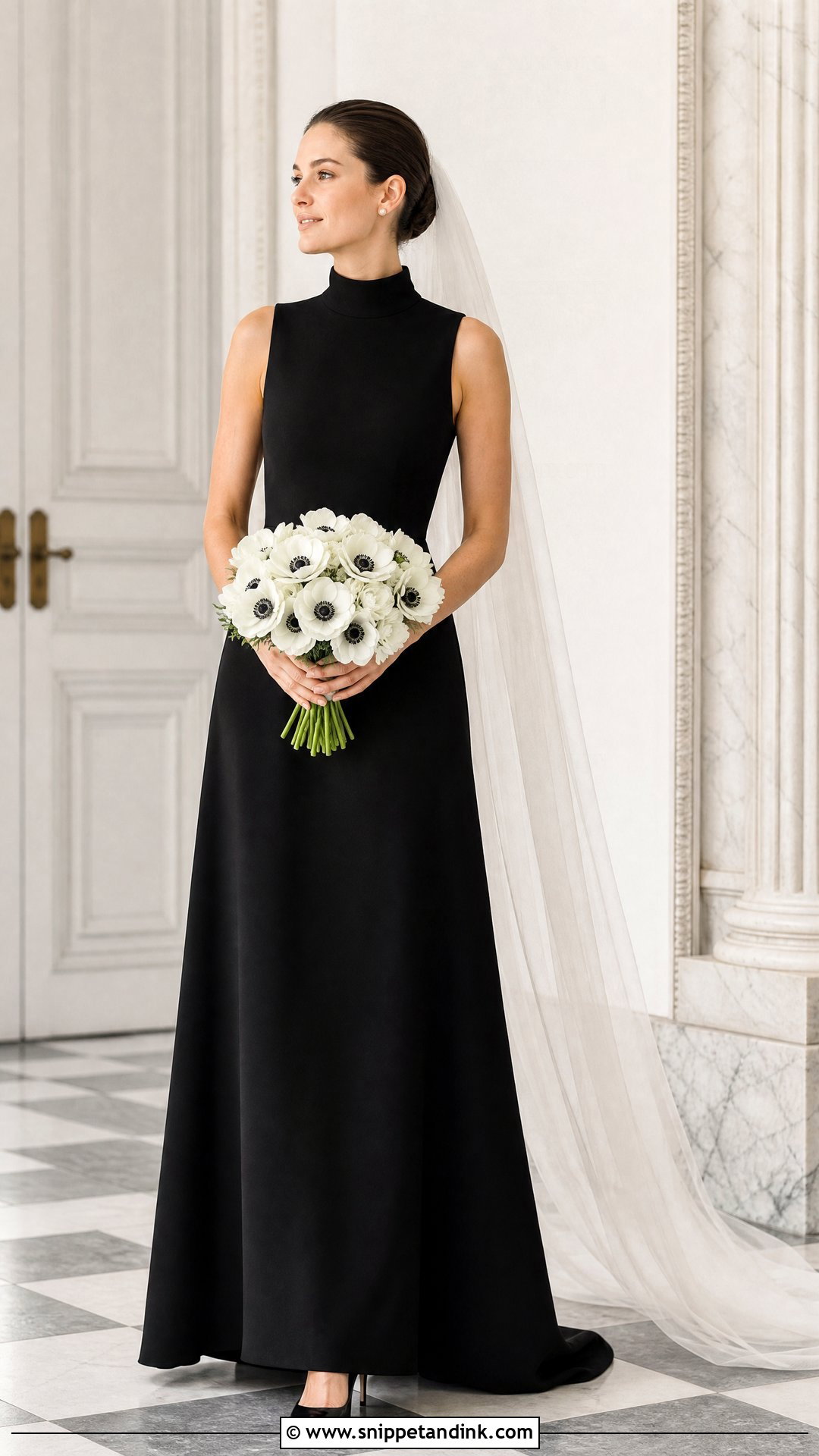
A high neck closes off the front, so the interest has to come from somewhere else: the fabric, the sleeves, or the back. Choose a sleeveless halter-style neck for warmer months or long fitted sleeves for winter, in matte crepe or a satin with slight evening shine. I skip a necklace entirely here and use small diamond or pearl earrings. Pointed boots or closed pumps, a neat bun and a long plain veil set low at the back keep it formal. White anemones or calla lilies give contrast in a historic venue or city hall, and the covered front lets a low back or small keyhole detail carry the surprise.
17. Black Cape Sleeve Wedding Dress
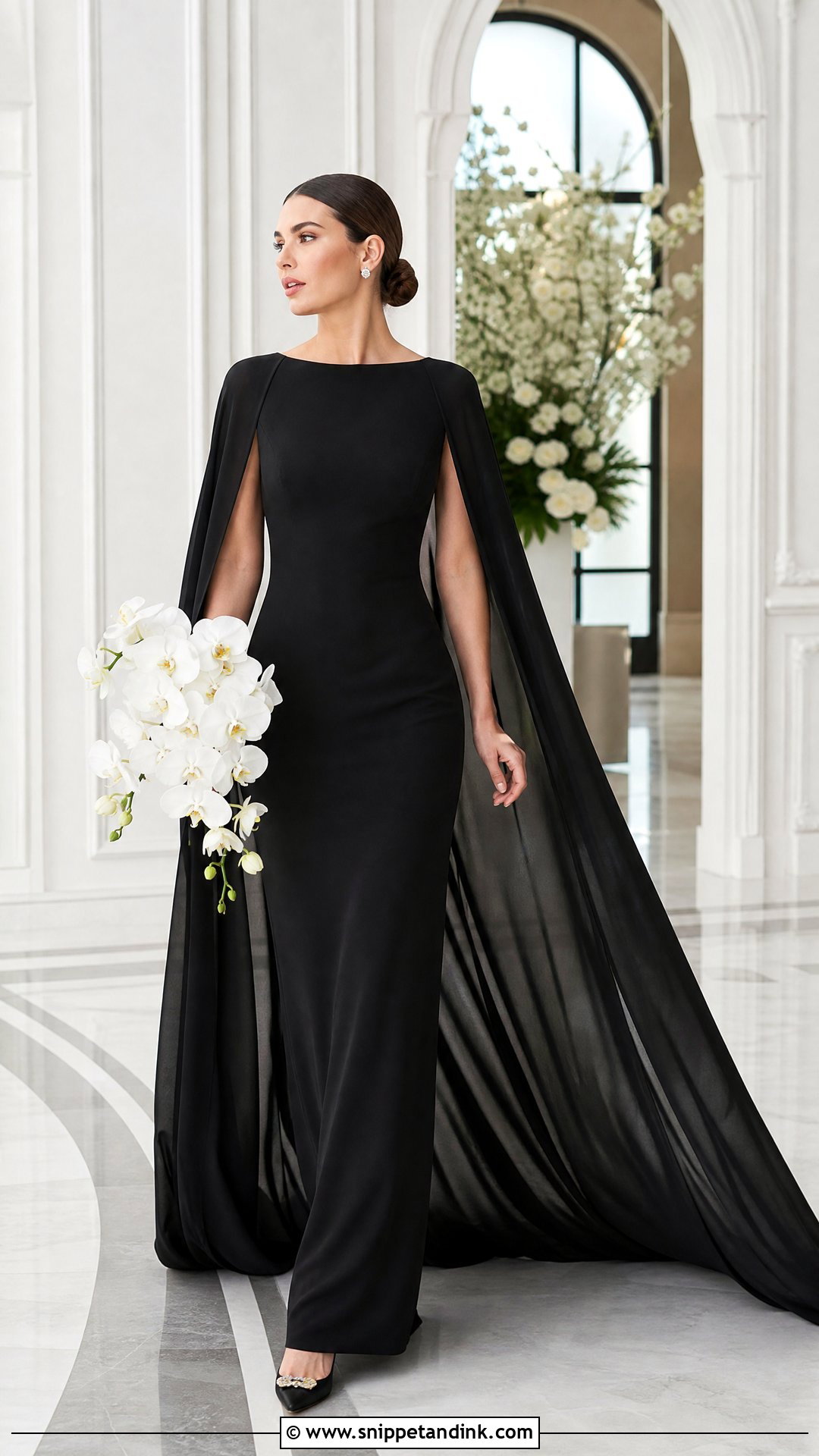
Cape sleeves give coverage and movement without a jacket, and they replace the veil for many brides. Lightweight chiffon panels from the shoulders over a smooth column or A-line keep the cape as the only feature. I check where the cape attaches: if it is stitched at the outer shoulder only, it slides backward when you hug; a few hidden tacks along the armhole stop that. Pointed heels, small crystal earrings and a sleek low bun suit it, with a short plain veil only if you want the traditional cue. A compact white bouquet completes a fall or evening look.
18. Black Puff Sleeve Wedding Dress
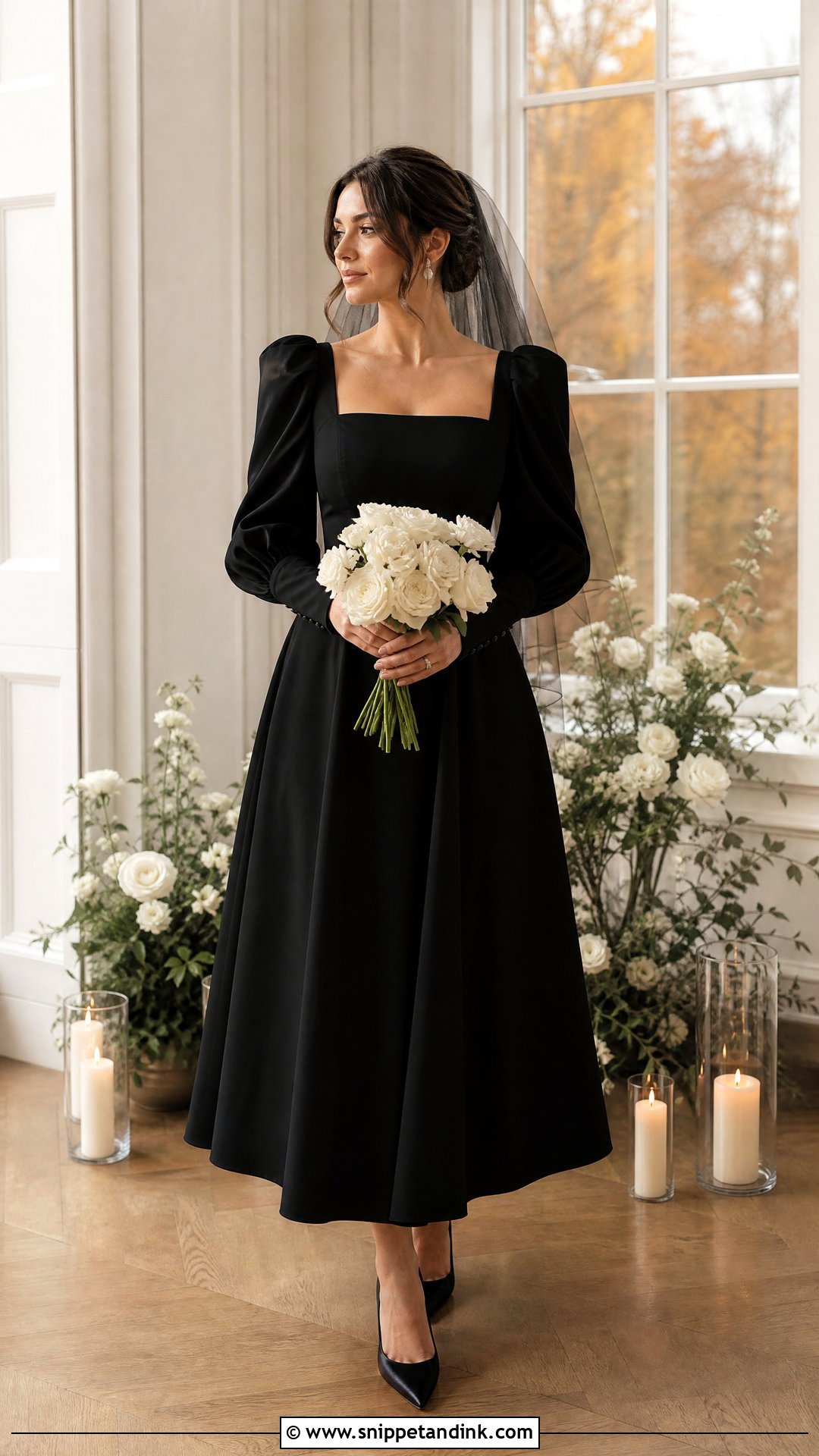
Puff sleeves need controlled volume. Oversized ones swallow the shoulders in a dark color, because black hides the shaping that shows on white. Fitted cuffs, a clean neckline and a smooth A-line or straight crepe skirt balance the top. Classic pumps, pearl earrings and a narrow black headband or plain veil work, and a low bun keeps the sleeve shape clear. White garden roses and greenery finish it. It leans toward indoor fall and winter weddings, though sheer organza sleeves can lift it into spring.
19. Black Backless Wedding Dress
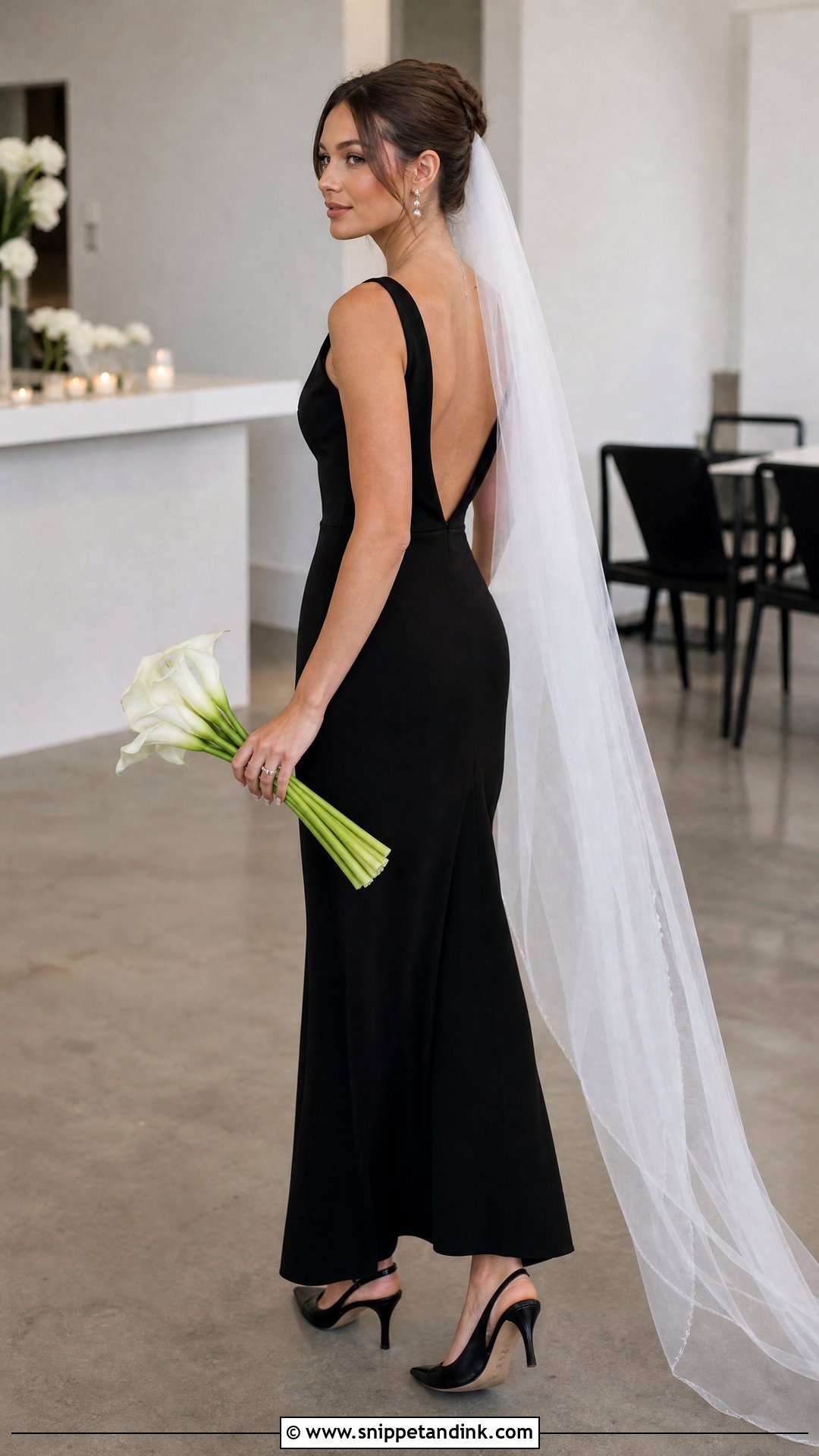
On a backless gown, the front does the holding, so the fit across the bust and shoulders has to be exact or the back gapes when you lean forward. I test it by having the bride bend as if picking up her train. A high neck, bateau or simple scoop front with a low V or rounded back, in crepe or satin, all work once fitted. An updo keeps the back visible, and a raw-edge veil attached beneath the bun frames it rather than hiding it. Delicate drops, black slingbacks and white roses or calla lilies suit a contemporary venue or formal evening ceremony.

20. Black Wrap Wedding Dress
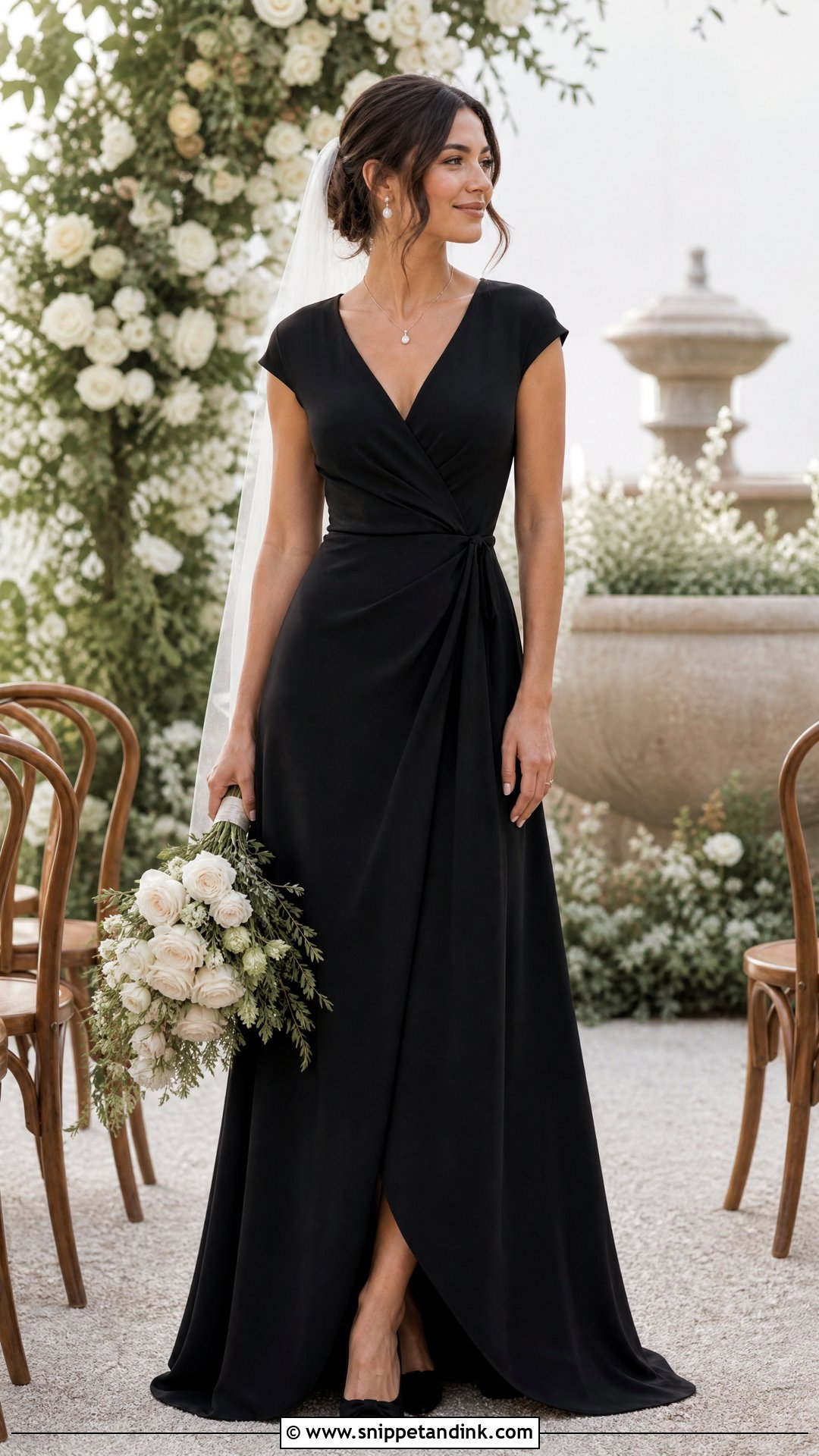
A wrap gown adjusts at the waist, which makes it the most forgiving dress on this list if your measurements might shift before the day. True wraps can open when you sit, though, so I add a hidden snap at the neckline crossover; a faux-wrap with stitched closure avoids the problem. Matte crepe or chiffon moves without excess shine. Low heels, a delicate pendant and small pearls suit it, with a fingertip veil and loosely pinned bun. Elbow-length sleeves and a slightly higher crossover give extra coverage for an outdoor or small ceremony.
21. Plus Size Black A-Line Wedding Dress
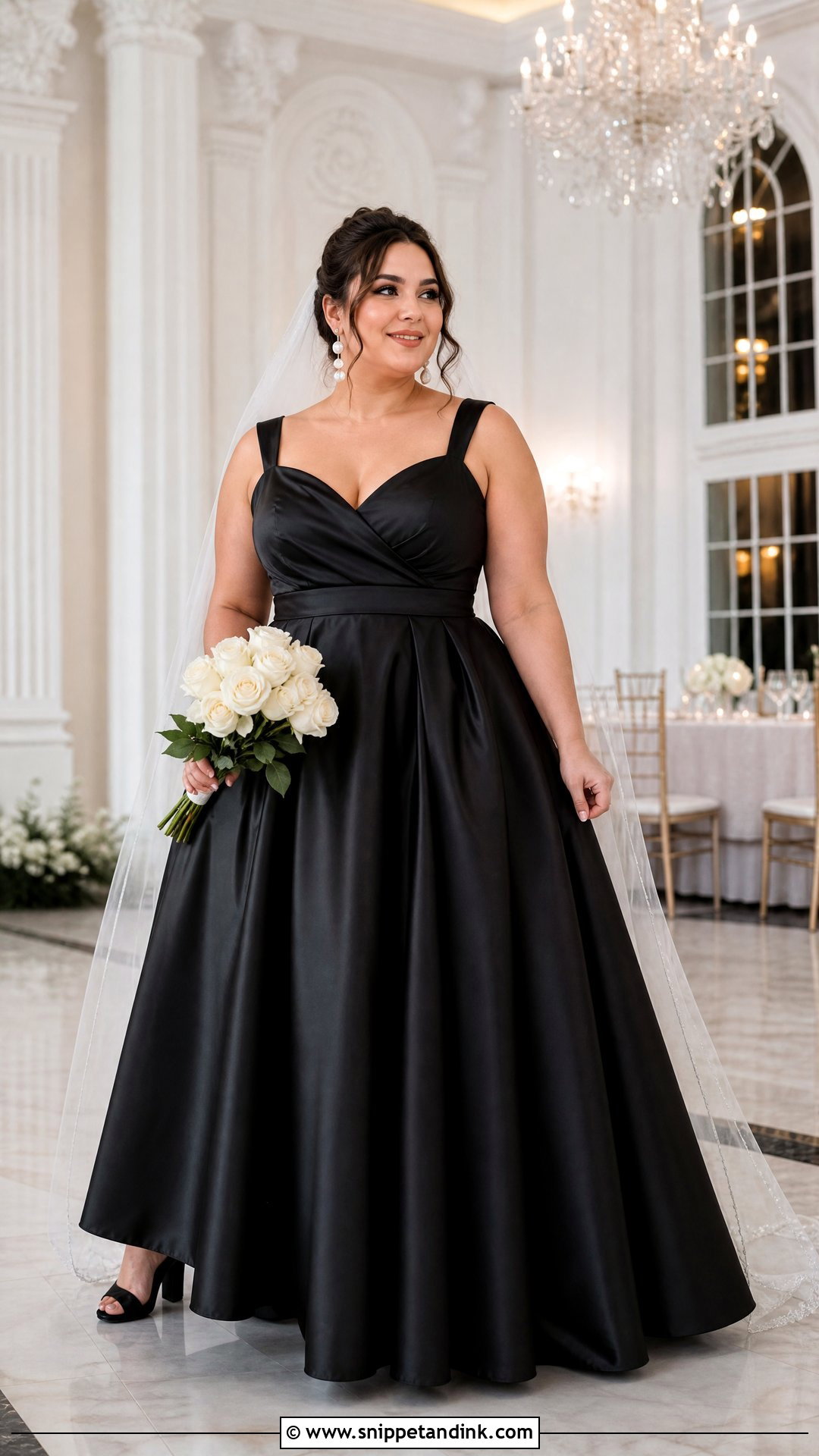
For a plus-size bride, the black A-line I’d reach for has wide straps, a defined natural waist and a skirt that glides over the hips instead of clinging. Satin, mikado and heavier crepe hold the shape through a long day; thin crepe can show every seam of the shapewear. Bring your exact undergarments to every fitting so the neckline and straps can be matched to them. Block heels, statement pearl earrings and a plain chapel-length veil suit it, plus white roses and greenery. Good alterations at the shoulders, bust, waist and hem are what make it feel secure from ballroom to outdoor estate.
22. Petite Black Sheath Wedding Dress
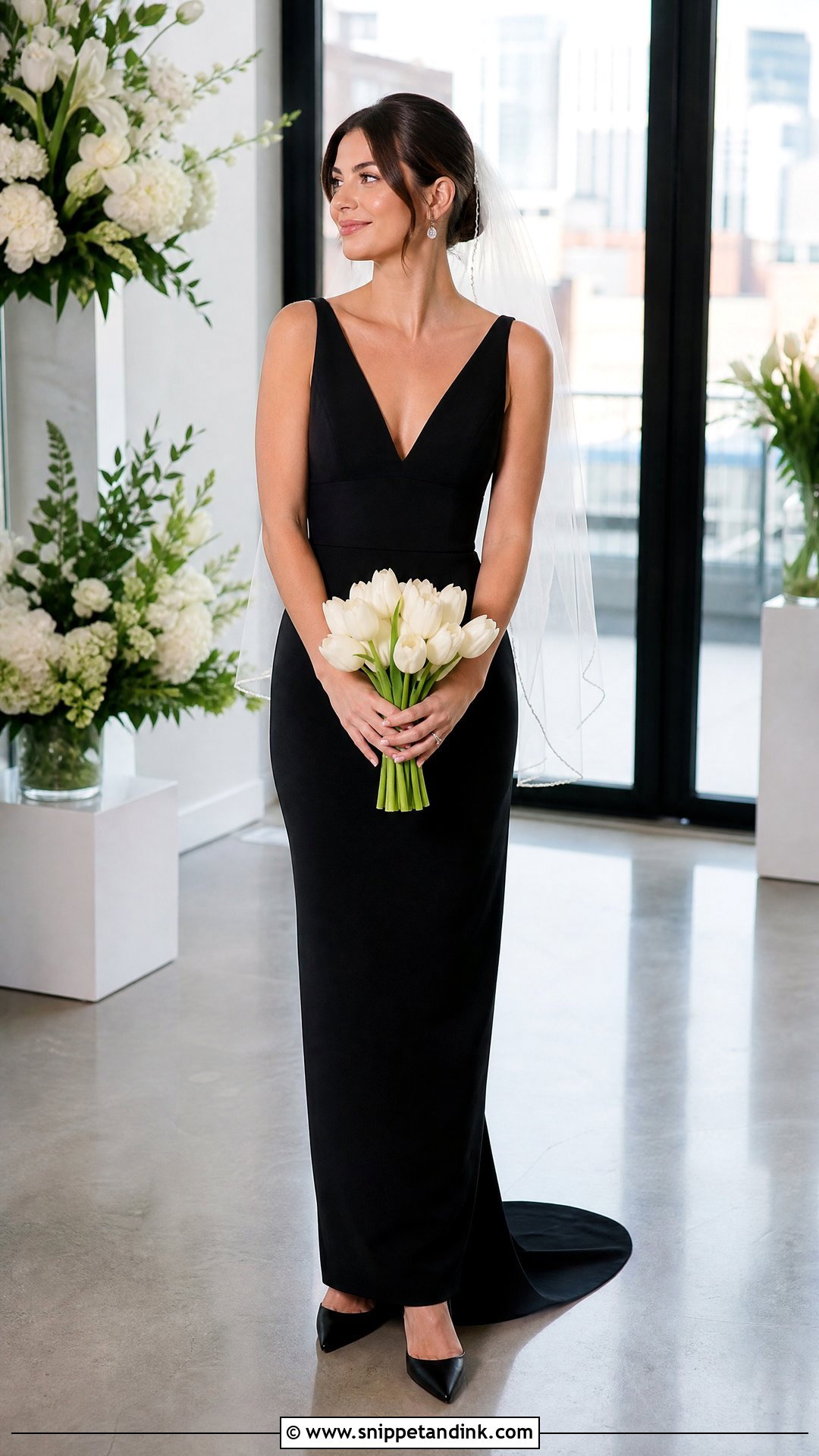
Petite brides get the most from one unbroken vertical line, which is why a simple black sheath wedding dress works so well. A raised waist and narrow straps or a clean V-neck lengthen the frame, and a small sweep train adds drama without fabric to wrestle. The hem matters most: off the rack, a sheath is almost always cut for someone taller, so budget for hemming in your wedding shoes. Pointed heels, delicate earrings and a narrow fingertip veil suit it. Keep flowers compact, white tulips or roses, and wear your hair up for extra height.
23. Black Empire Waist Maternity Wedding Dress
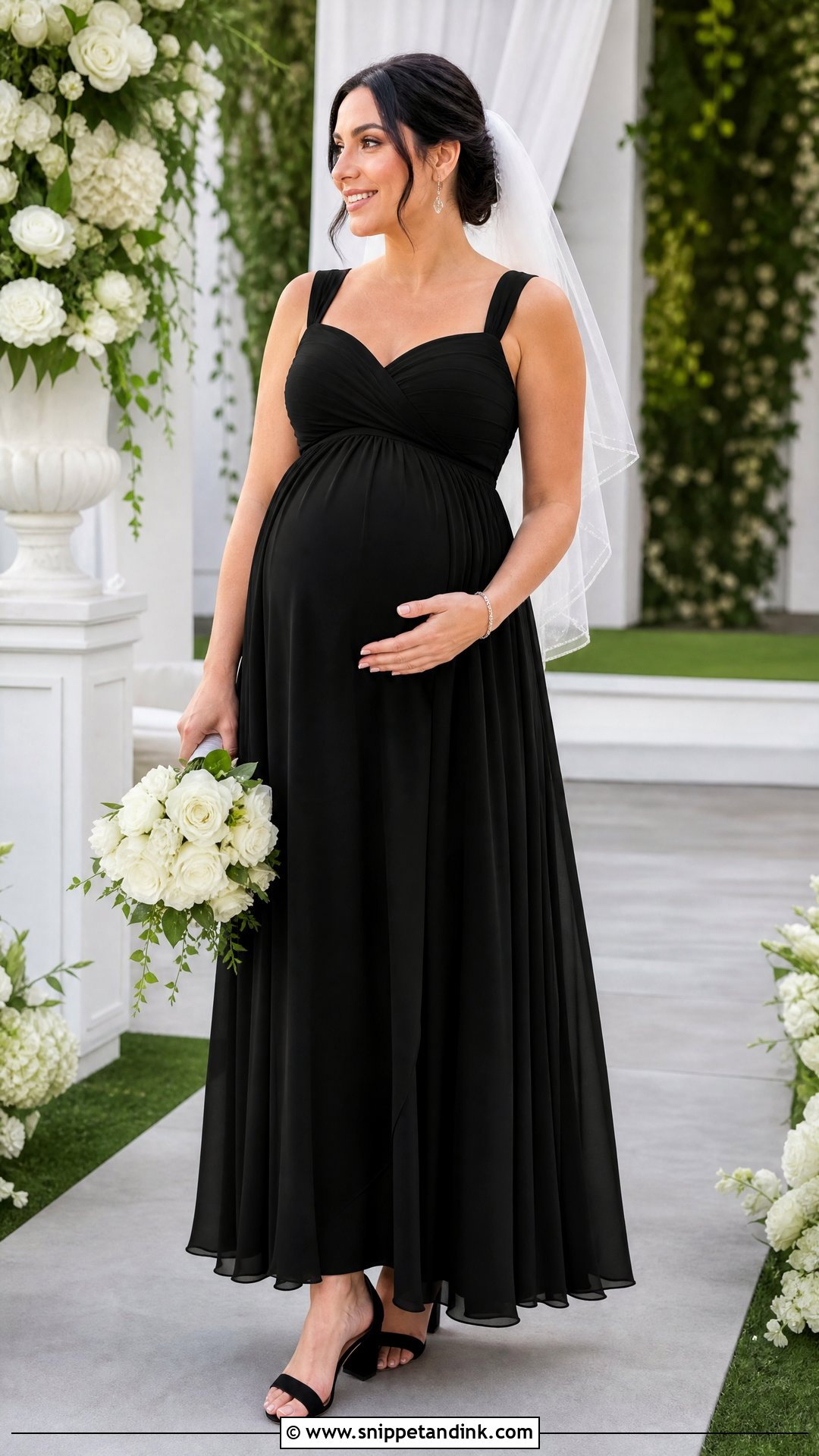
Bodies change week to week in pregnancy, so I schedule the last maternity fitting as close to the wedding as the seamstress allows, often within the final two weeks. A black empire waist maternity wedding dress with a secure bodice and a chiffon or stretch-crepe skirt from just below the bust gives room as you grow. Wide straps, short sleeves or a modest V-neck offer coverage. Low block heels or polished flats are kinder than stilettos by evening. Lightweight drops, a fingertip veil, a loose updo and a small bouquet of white roses or peonies keep everything light enough to carry.
24. Black Mini Courthouse Wedding Dress
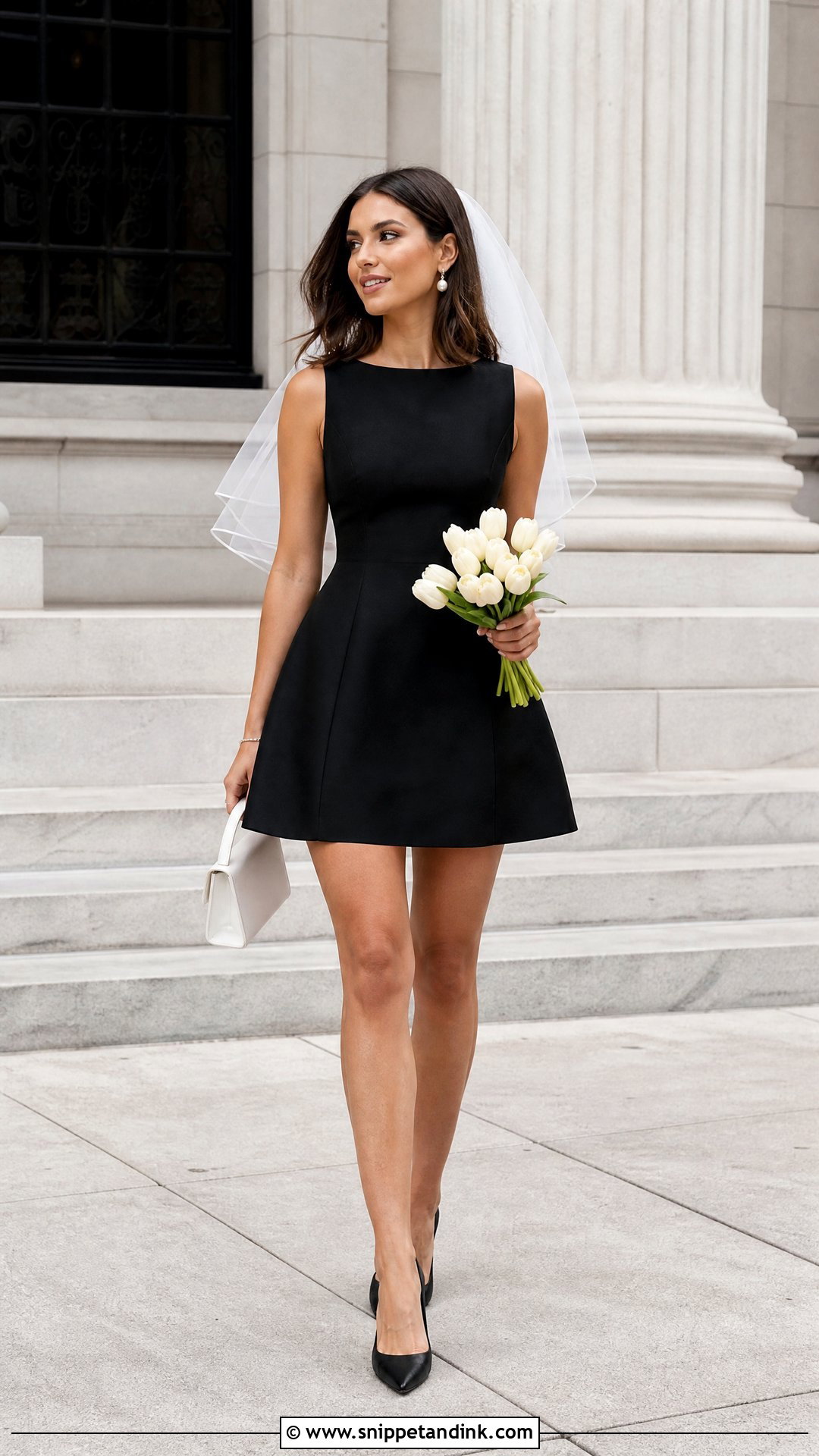
A short black dress reads as bridal only with clear cues, so I never skip the veil on a mini. A birdcage or shoulder-length tulle does it. A structured shift, a fitted blazer dress or a clean A-line mini with a modest hem keeps it polished, and supportive construction stops it riding up when you sit to sign the register. Sheer black tights in cold months, bare legs in warm ones. Pointed pumps, pearl earrings, a compact white bag and ivory roses or tulips finish the courthouse look, and a tailored black coat covers winter.
25. Black Velvet Winter Wedding Dress
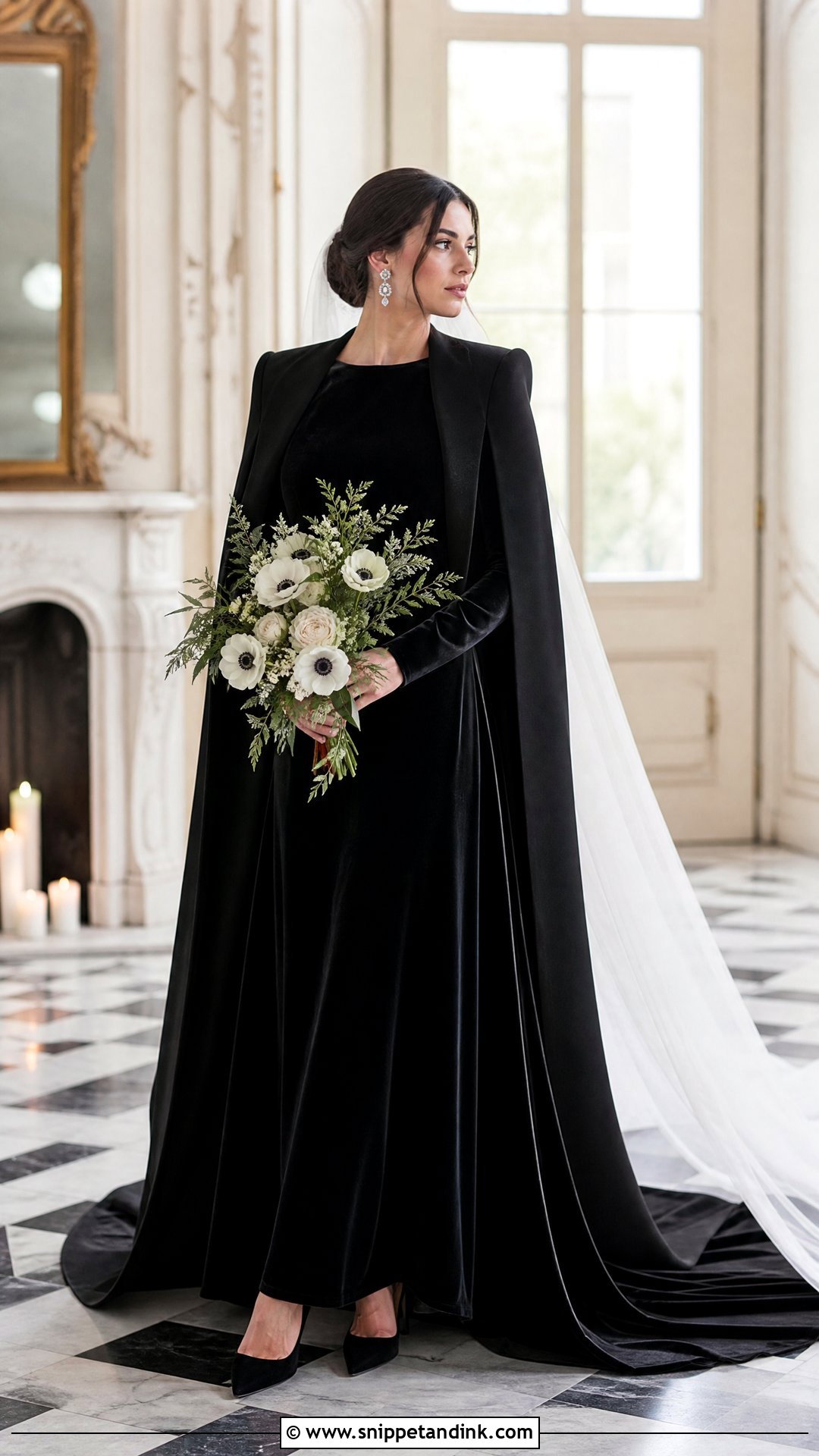
Velvet has a pile, and that pile crushes. It marks where you sit, where a bouquet presses and where a seatbelt crosses, so I tell velvet brides to steam the gown on the hanger and avoid long car rides seated on the skirt. A long-sleeve column, wrap or softly flared shape with few seams lets the texture work on its own. Closed pumps, crystal drops and a long plain tulle veil suit it, with a sleek bun or soft waves. White roses or anemones look fresh against it, and a tailored cape or coat handles outdoor photos at a winter hotel or estate.
Lint, Deodorant Streaks and Pressing Marks on Dark Fabric
White hides small accidents. Black shows all of them. Deodorant transfer at the armholes, white powder from makeup, pet hair, dust from a church pew and fibers from a cream bridesmaid’s dress will all show up clearly in close-up photos.
The getting-ready room
I ask brides to put the gown on after makeup is finished and set, with a scarf or pillowcase over the face while dressing. Clear or gel deodorant, applied early so it dries fully, avoids white streaks. Keep a lint roller and a damp microfiber cloth in the emergency kit, and give one to whoever is helping you dress.
Steaming without leaving a shine
Never put an iron straight onto black satin or crepe; the heat polishes the surface and leaves a shiny patch that won’t come out. Steam from the inside, or through a pressing cloth on low. Velvet should only ever be steamed, holding the steamer a little away from the pile.
After the wedding
Dark dyes can fade with repeated or careless cleaning, so I’d choose a cleaner who handles bridal or evening wear and point out any spills to them, because sugary drinks dry clear and turn brown later. Store the gown in a breathable cotton bag, away from light, which slowly fades black along the fold lines.
Black Works Best When the Cut Carries It
Every gown above earns its bridal look through fit, fabric and a few deliberate cues rather than decoration. Satin and velvet lean formal; crepe, chiffon and slips feel lighter. Start with your venue, season and how much you plan to move, then let the veil, jewelry, shoes, flowers and hair work as one finished outfit. From a full ball gown to a short courthouse dress, a black wedding look should feel unmistakably yours, and good tailoring is what gets it there.
You'll Like These Ideas:







Leave a Reply