
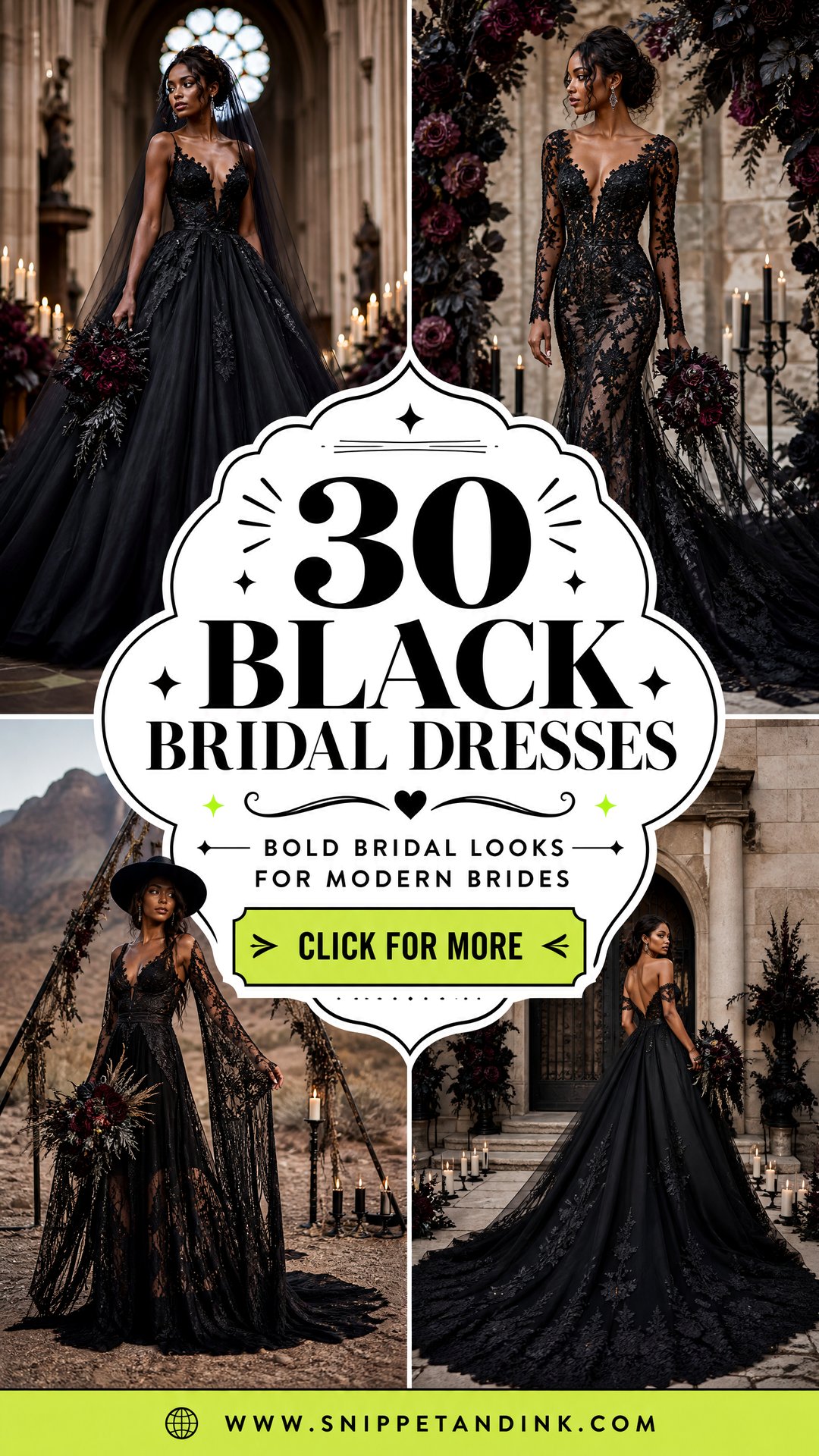
Black Fabric Changes How a Wedding Gets Photographed
Black wedding dresses ask more of the fabric than white ones do. White shows its detail almost by default; black absorbs light, so lace patterns, seams and beading can flatten into one dark shape unless the material reflects some of that light back. When I help a bride choose a black gown, texture is the first thing we talk about, before the neckline.
- Satin, velvet and sequins hold their shape in photos because they catch light along folds.
- Matte crepe looks sharp in person but can read as a silhouette in dim venues.
- Lace needs a visible motif or a lighter lining underneath to keep its pattern.
- Tulle shows depth when layered, but a single layer can look grey in sunlight.
Tell your photographer early that you’ll be in black. They’ll plan to expose for the dress rather than the white sky, and they may suggest more open shade or window light for portraits. A short meeting about it saves a lot of murky shots later.
1. Black Lace Ball Gown Bridal Dress
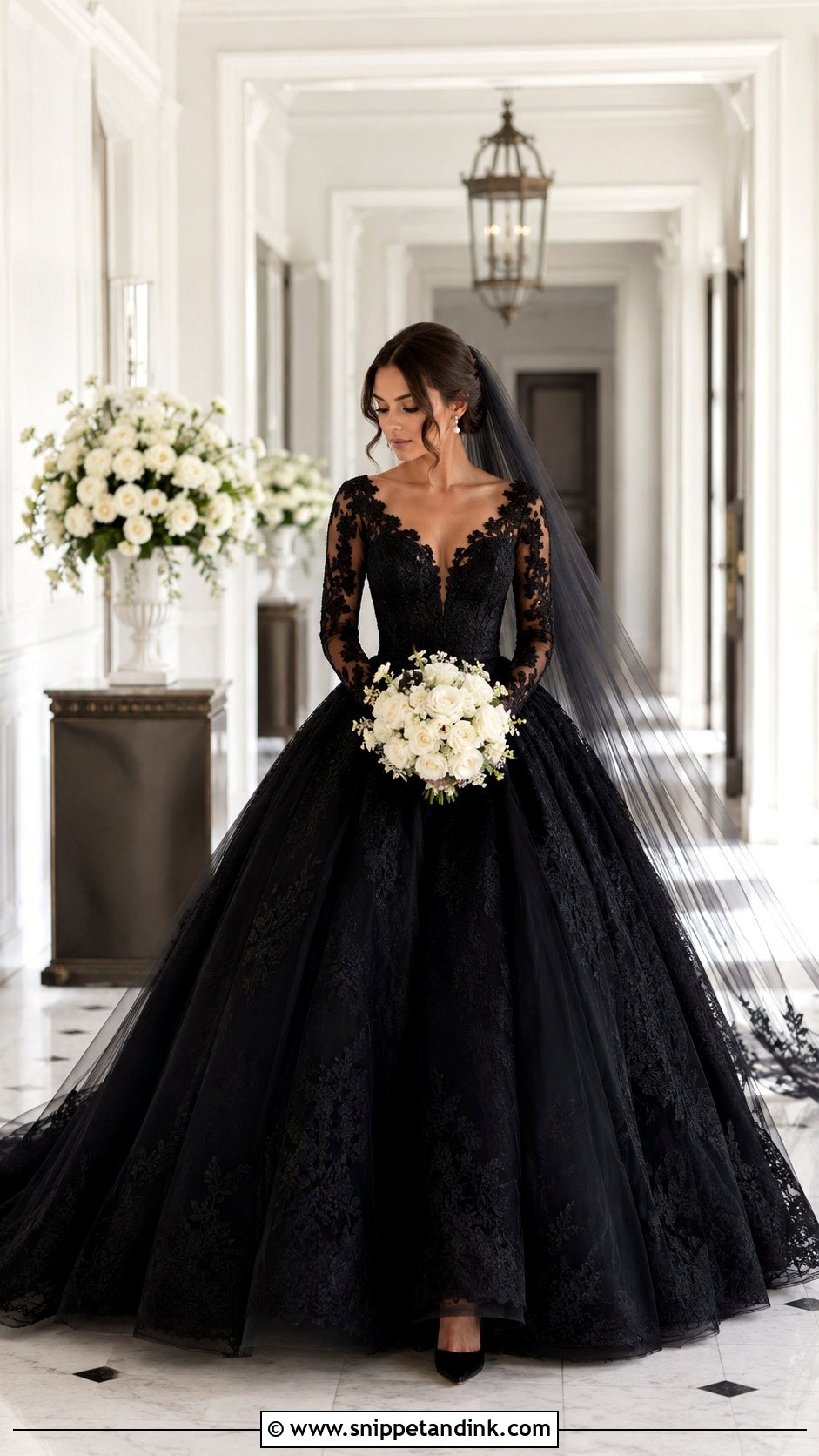
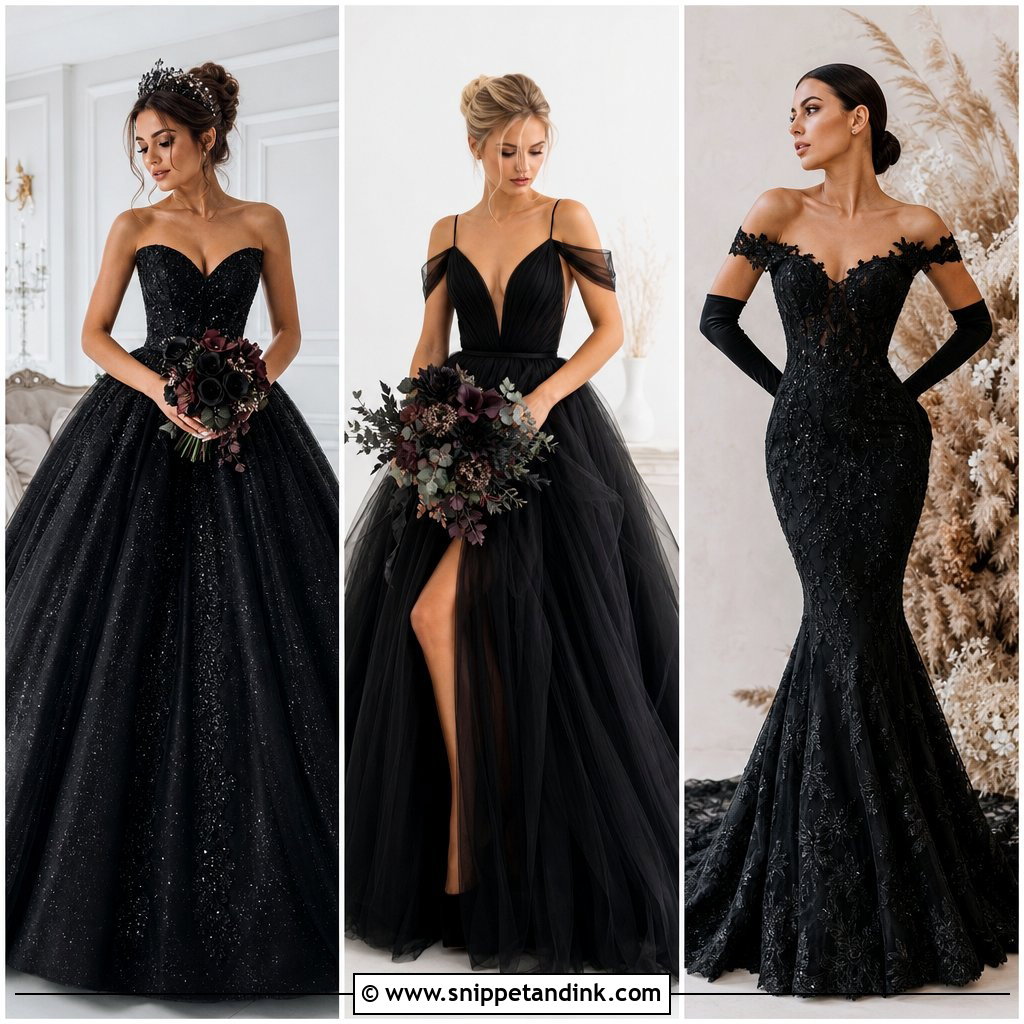
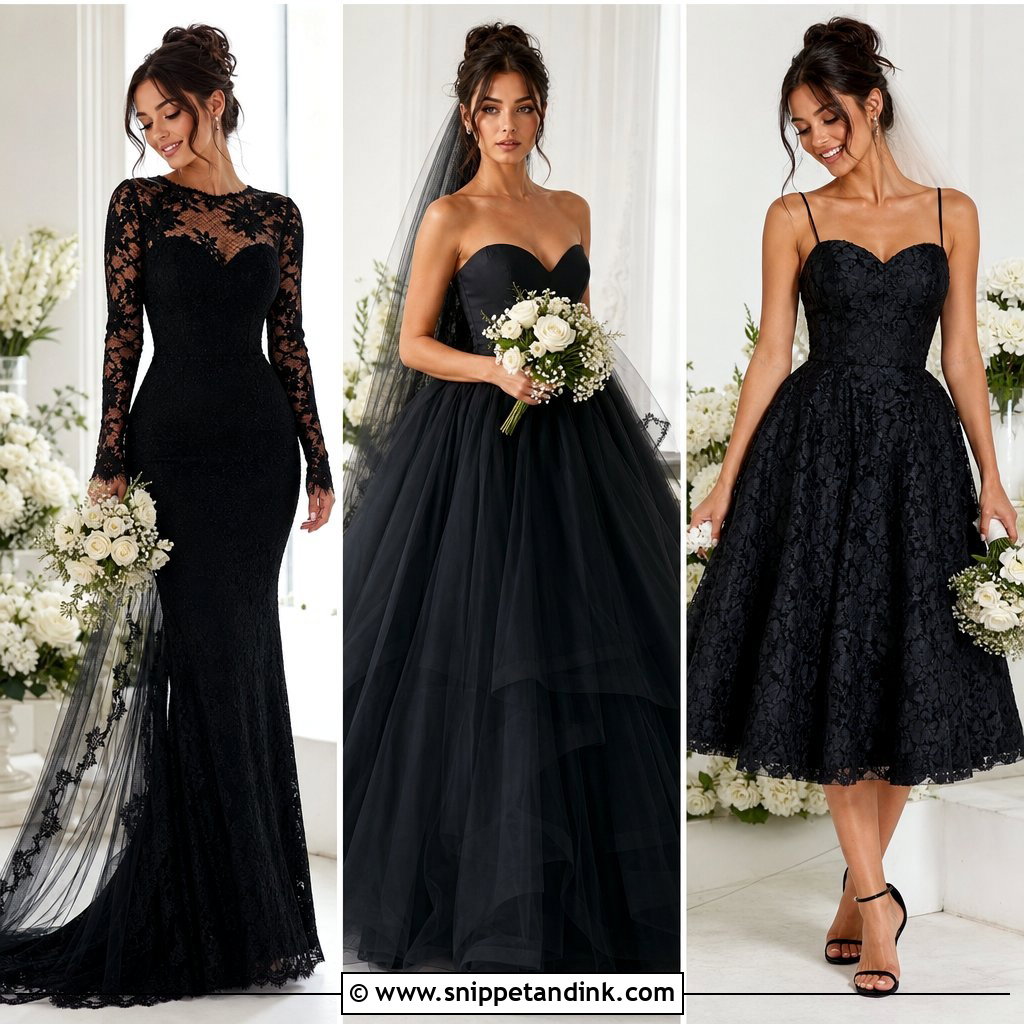
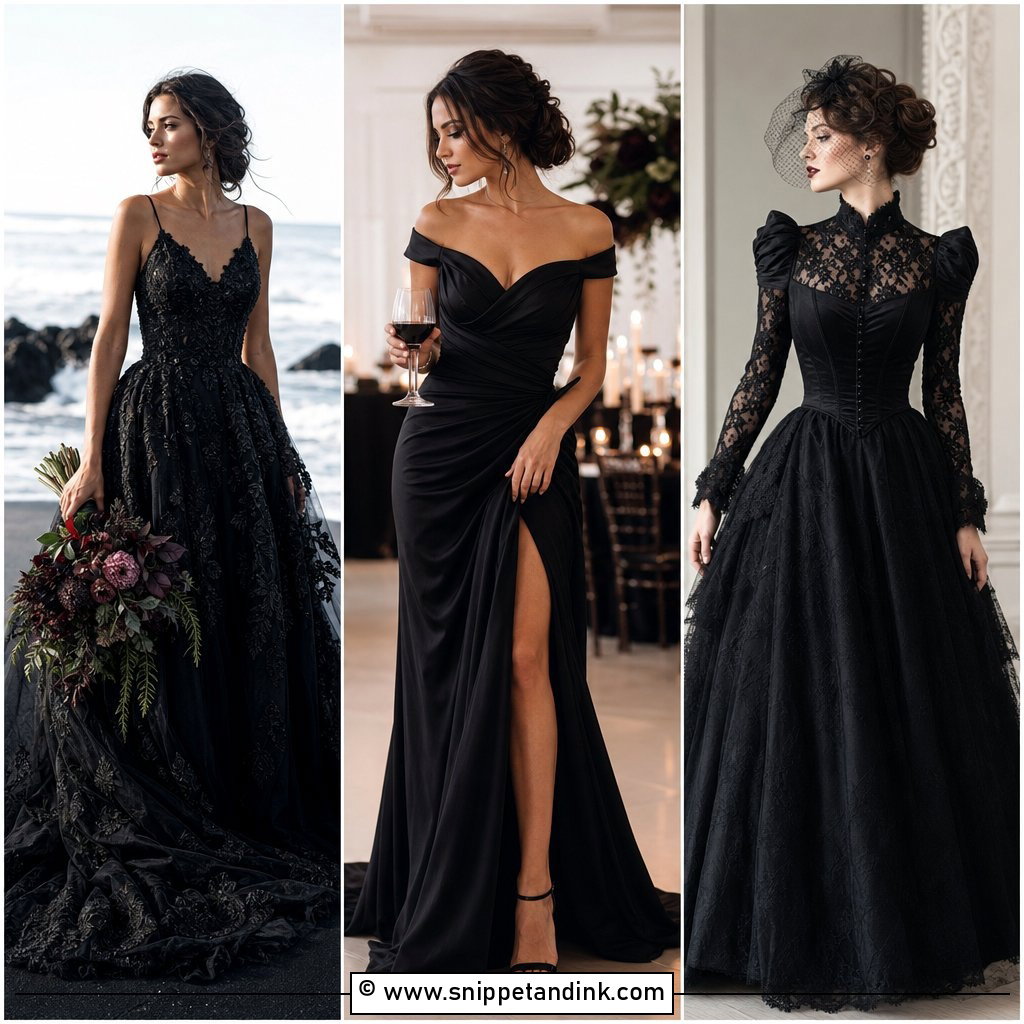
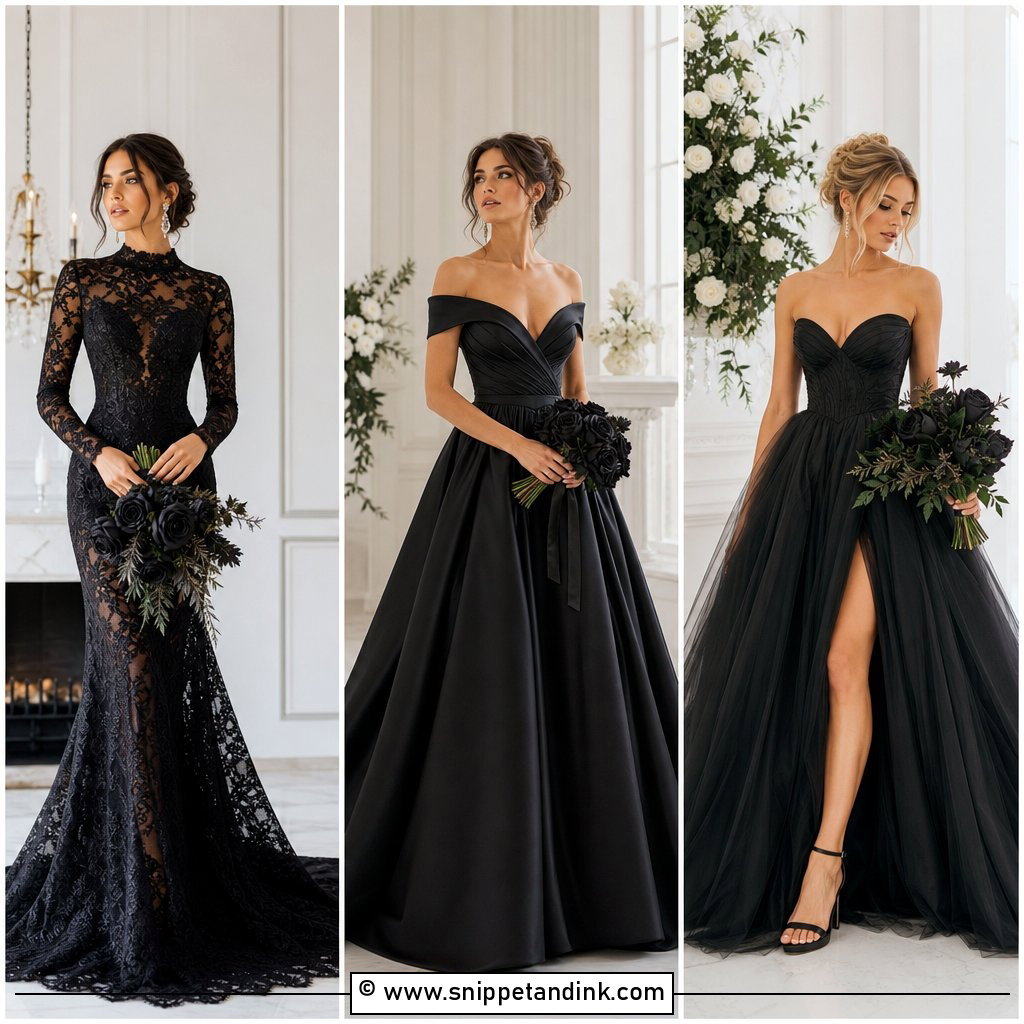
Start with the most traditional shape and change only the colour. A black lace ball gown keeps the fairytale skirt, and the lace stops the black from looking severe. Near the face, I’d soften things with delicate sleeves, a sweetheart neckline or an illusion panel. Lace in black hides its pattern in dim rooms, so pick a lace with a bold, open motif rather than a fine allover one if the venue is lit by candles. A long black or sheer veil, pearl earrings and a structured bouquet in ivory or deep red suit a historic estate or an evening ceremony.
2. Black Satin Mermaid Bridal Dress
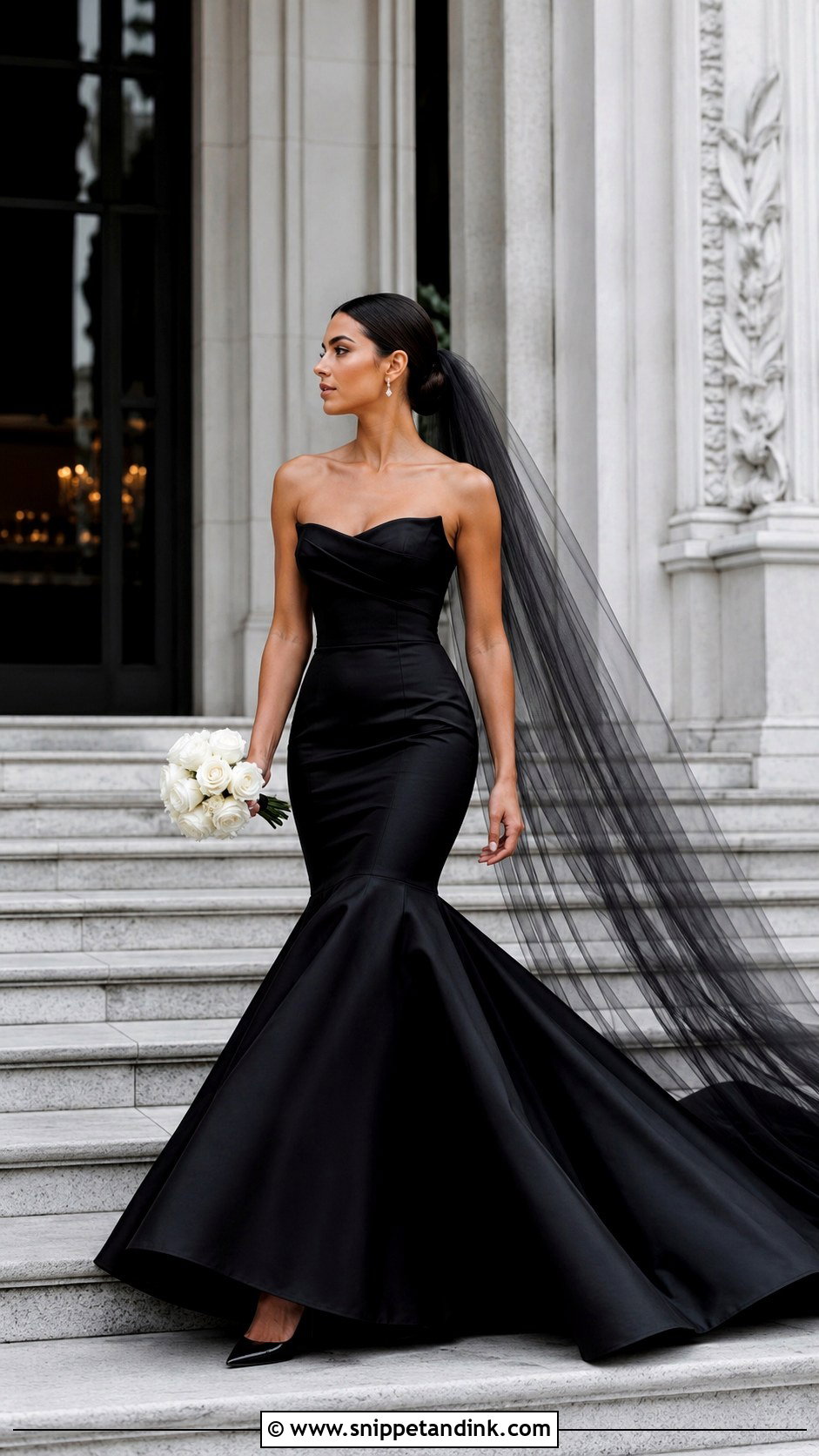
Satin is the fabric that makes black look expensive, because it reflects light smoothly instead of absorbing it. The mermaid cut fits through the waist and hips and flares low, so the knee flare position decides whether you can walk: I test it on stairs before signing off. Pointed satin pumps, a low bun and drop earrings keep it polished. A cathedral veil pulls it toward tradition; a short one keeps it modern. Hotel ballrooms and city venues at night suit it.
3. Black Tulle A Line Bridal Dress
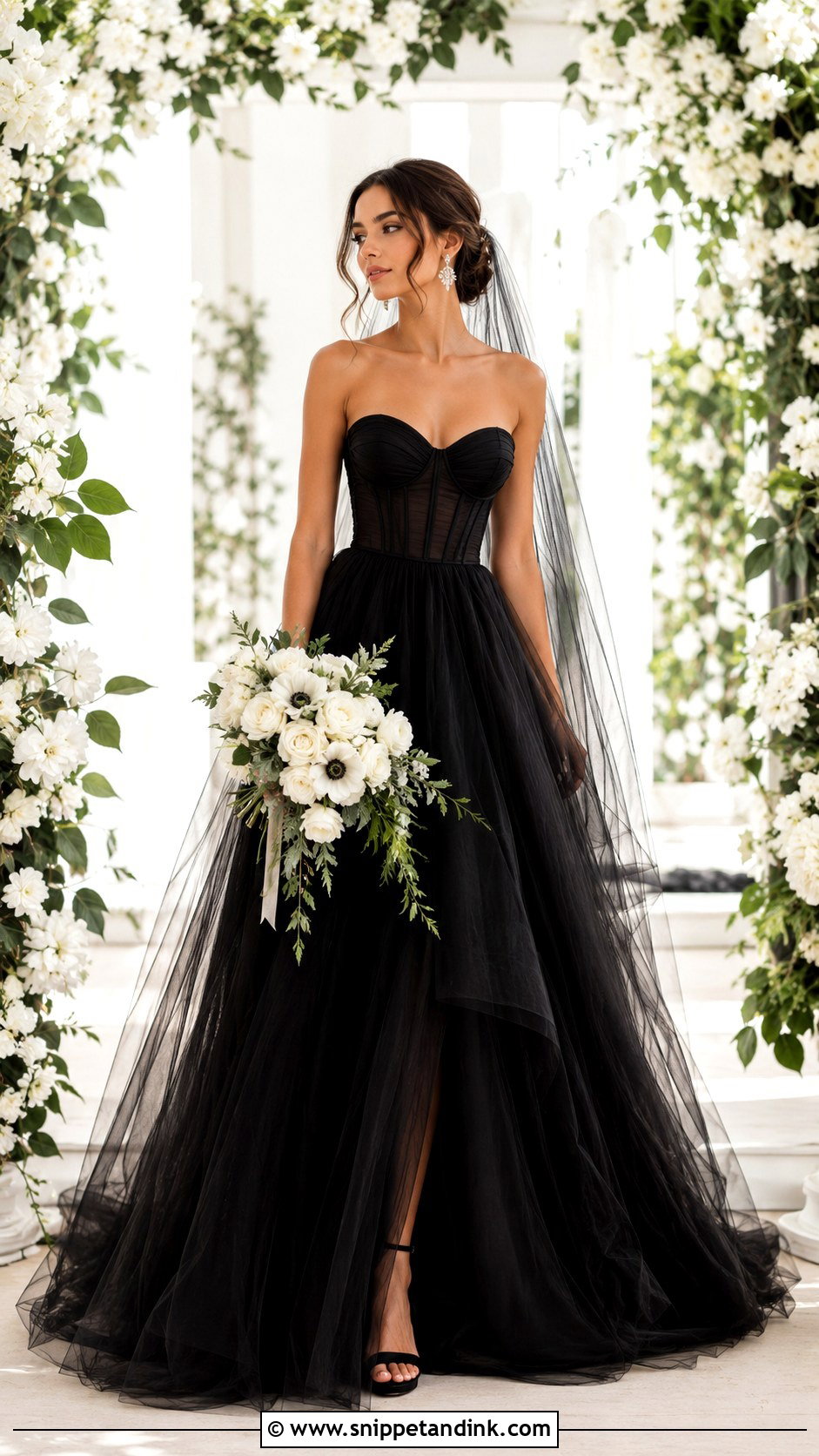
Black tulle has a softness that surprises people. Layered over an A-line skirt, it floats away from the body and suits most figures, and it carries drama without the weight of a ball gown. Fine sparkle, floral appliqué or a corset bodice give it detail. One warning from fittings: black tulle shows lint, pet hair and confetti far more than white, so keep a lint roller in the getting-ready room. Delicate black heels, a sheer veil and a white bouquet with greenery give the contrast it needs.
4. Black Off Shoulder Bridal Dress
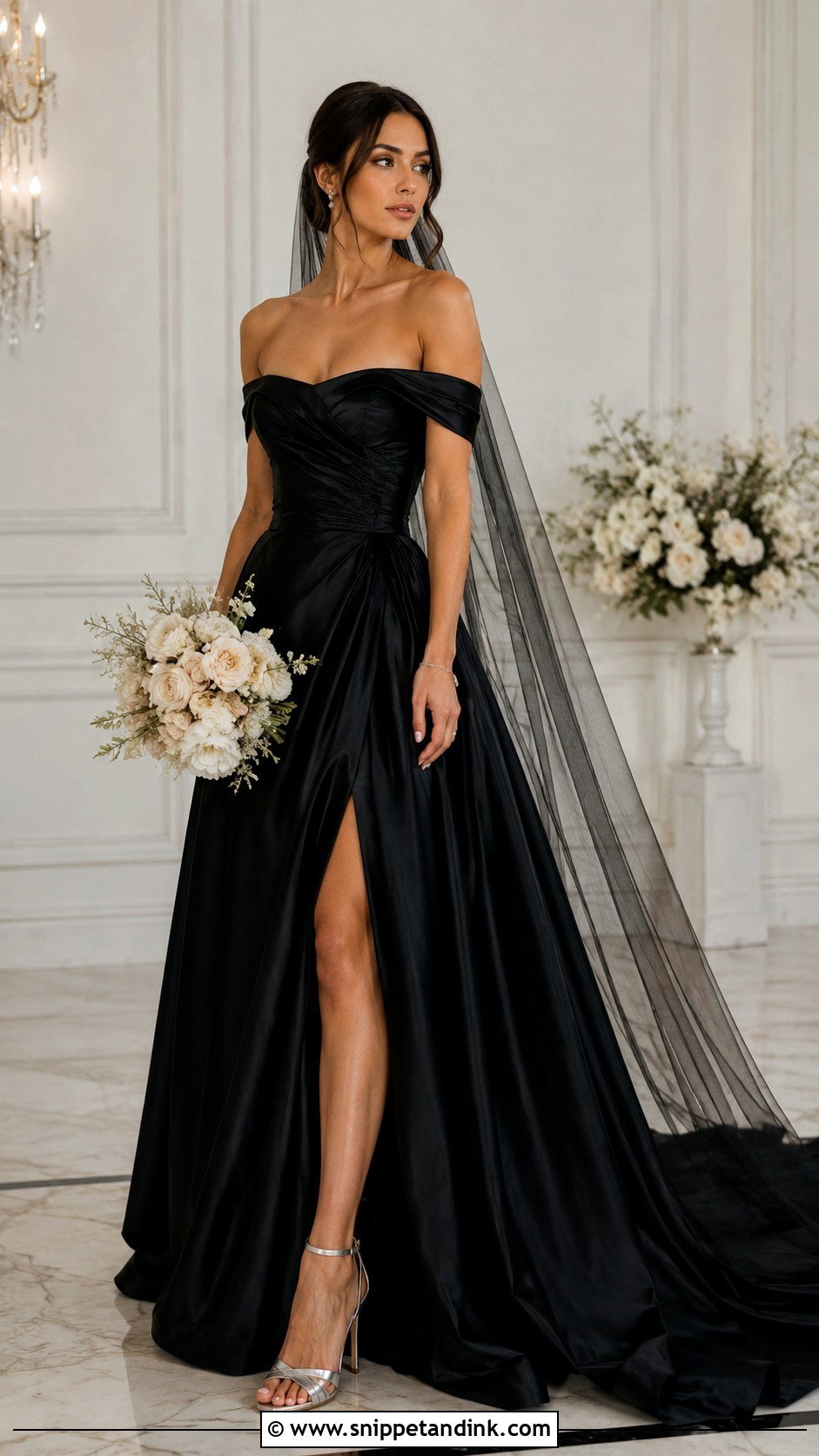
An off-shoulder neckline frames the collarbones, and it adapts to satin, lace, crepe or tulle. For a classic version, add a fitted waist and a flowing skirt; for something bolder, a structured bodice and a long train. Off-shoulder straps sit on the upper arm, which limits how high you can raise your hands, so I always have brides practise a hug in the fitting room. Studs or a bare neckline and a soft updo keep the focus on the shoulders. Pale flowers in the bouquet stop the dark from swallowing the photo.
5. Black Long Sleeve Bridal Dress
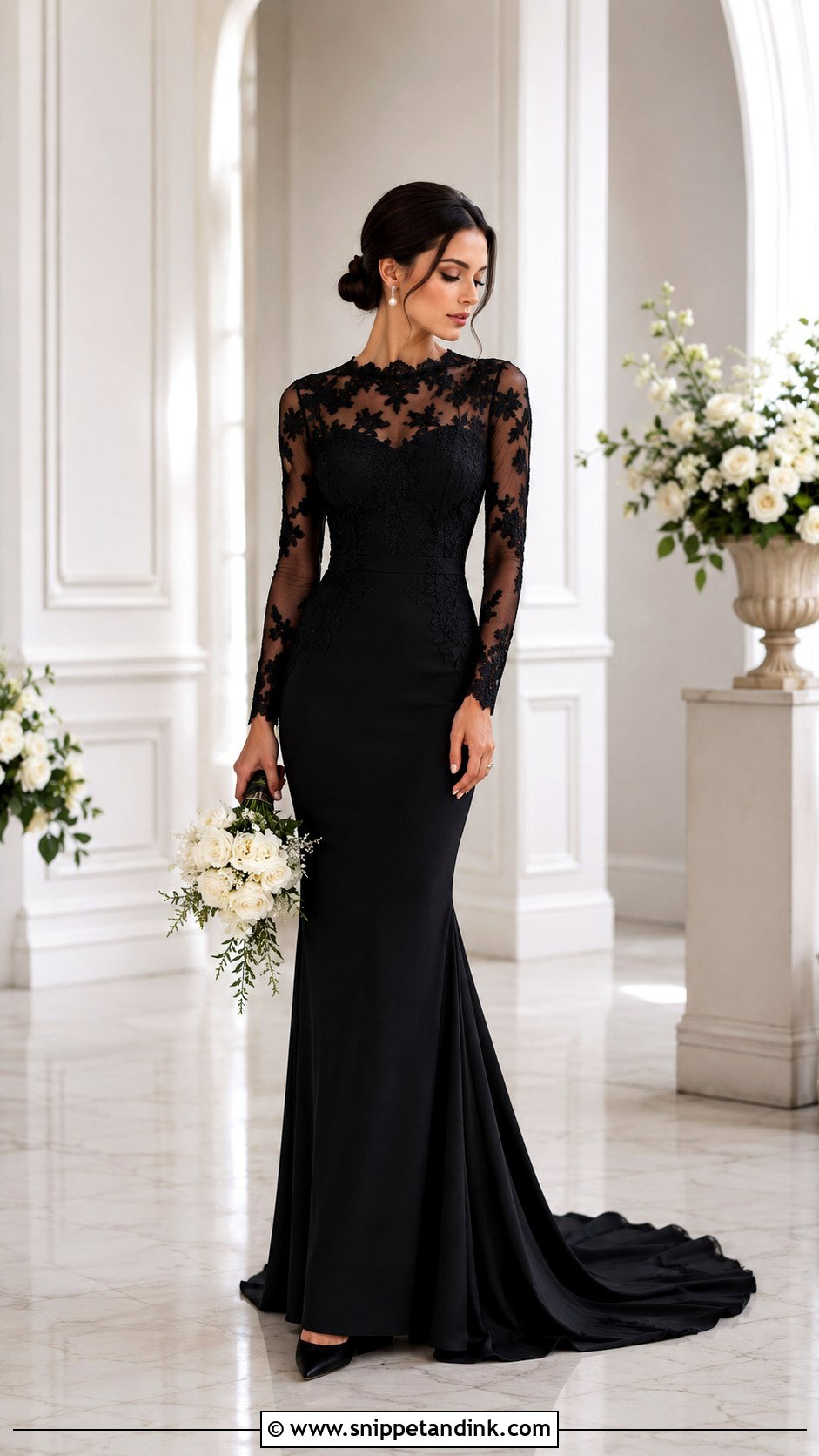
Long sleeves give coverage and a strong presence. Lace sleeves feel romantic, fitted crepe sleeves feel sleek, and sheer appliqué sleeves add detail without bulk. Black long sleeves come into their own at fall and winter weddings held indoors. With a high neckline, skip the necklace and move the interest to the hair. I ask for a little ease at the elbow on fitted crepe sleeves, since a sleeve that’s perfect with arms straight can pull tight when you hold a bouquet for an hour. Closed-toe heels and a long veil finish it.
6. Black Strapless Bridal Dress
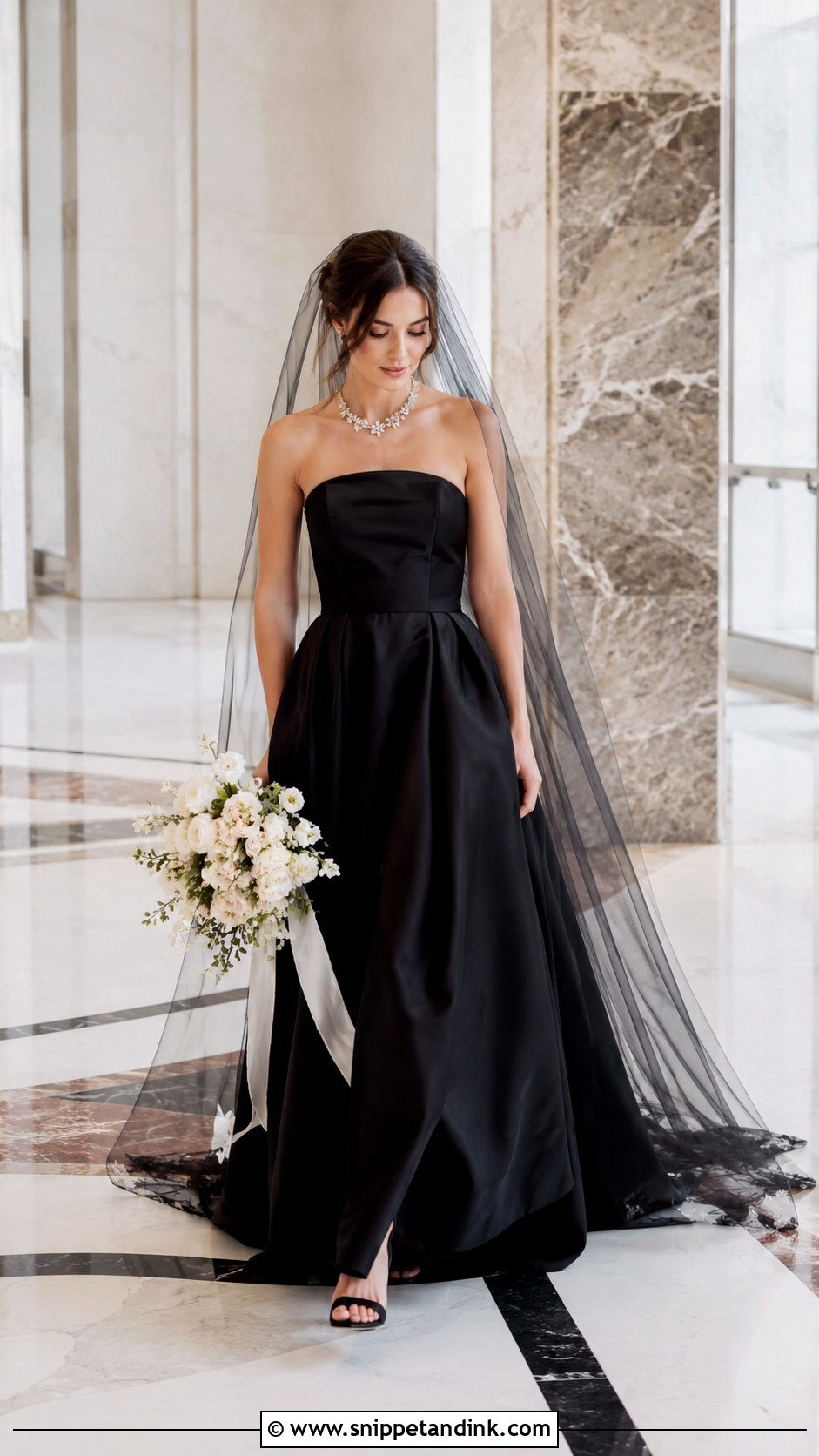
Strapless puts all the attention on your face, shoulders and jewelry. It sits on a satin ball skirt, a sleek mermaid or a simple column, and the bodice can be corseted, boned or softly folded. The make-or-break detail is the top edge: it needs internal boning and a snug fit so it stays up through dancing, and you shouldn’t need to hitch it once all night. With a plain dress, wear a statement necklace; with embellished fabric, keep it bare. A sheer veil and pale blooms finish it.
7. Black Corset Bridal Dress
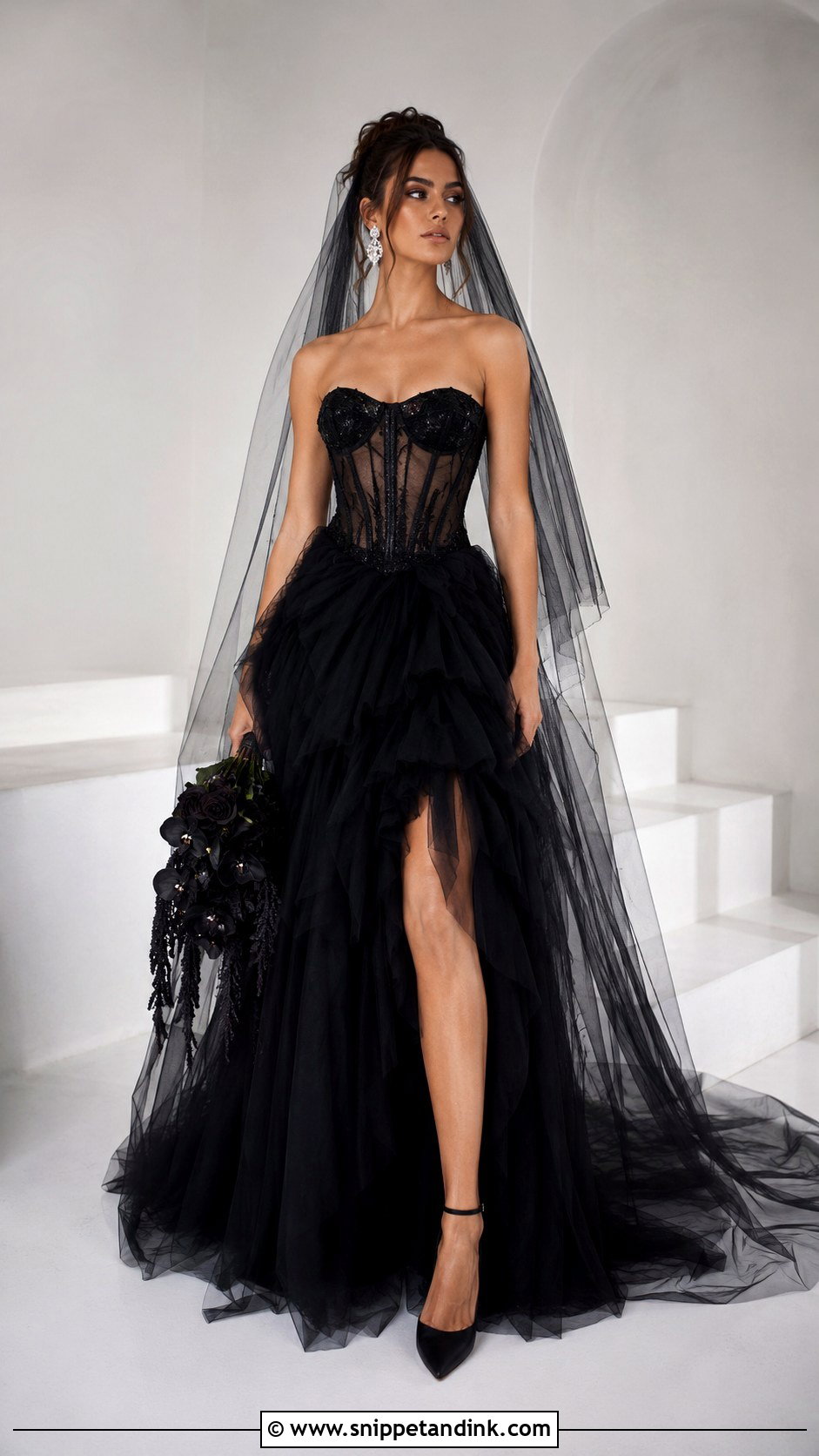
A corset gives you shape and support with a fashion edge. It can hide under satin or show its boning through sheer panels and lace. I fit corsets with the bride breathing deeply and sitting, because a bodice laced tight for the mirror often becomes unbearable at dinner. Balance the structured top with a soft tulle skirt, a full ball gown or a sleek fitted skirt. Smooth hair, drop earrings and a clean veil keep it intentional, whether for an editorial portrait or a formal ceremony.
8. Black Beaded Bridal Dress
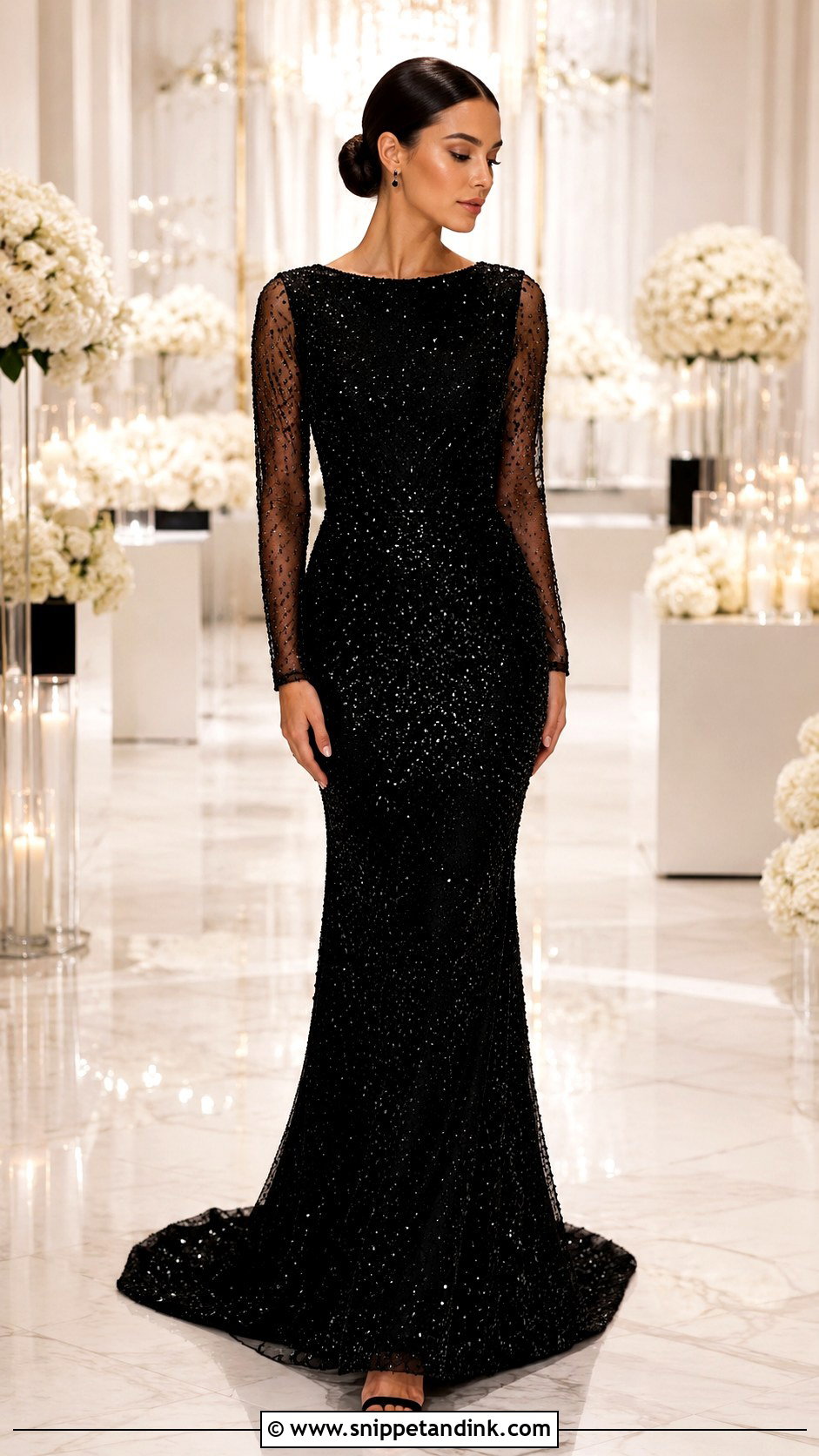
Beading on black shows every crystal, sequin and pearl, which is the point. Go for allover beading if you want a glamorous reception look, or keep it to the sleeves and bodice for something softer. Beaded gowns are heavy, and the weight hangs from the shoulders, so I’d always wear the sample for a while before deciding. Keep accessories minimal: sleek heels, small earrings, a veil with little or no trim. Ballrooms and evening ceremonies under bright lights show it off.
9. Black Velvet Bridal Dress
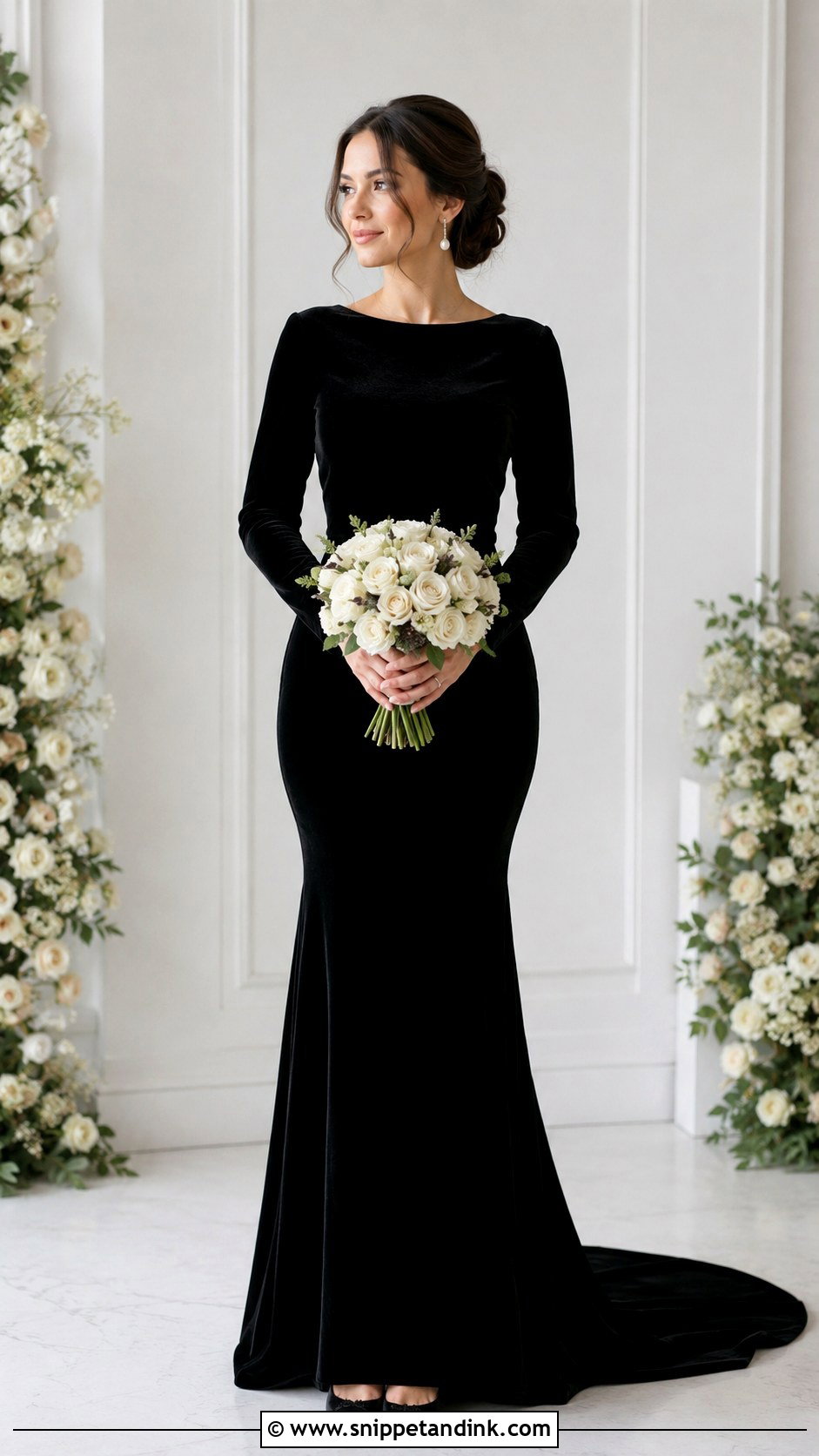
Velvet has weight and pile, so it belongs to fall and winter. A long-sleeve velvet gown looks refined; a strapless one looks modern and dramatic. Velvet does two things you need to plan for. It crushes where you sit, leaving a shiny patch that steaming usually lifts, and it gets warm in a heated room. Keep the silhouette simple, a fitted sheath, an A-line or a gentle mermaid, and pair it with pearl or crystal earrings and a cream or burgundy bouquet. Intimate indoor ceremonies suit it best.
10. Black Sheer Sleeve Bridal Dress
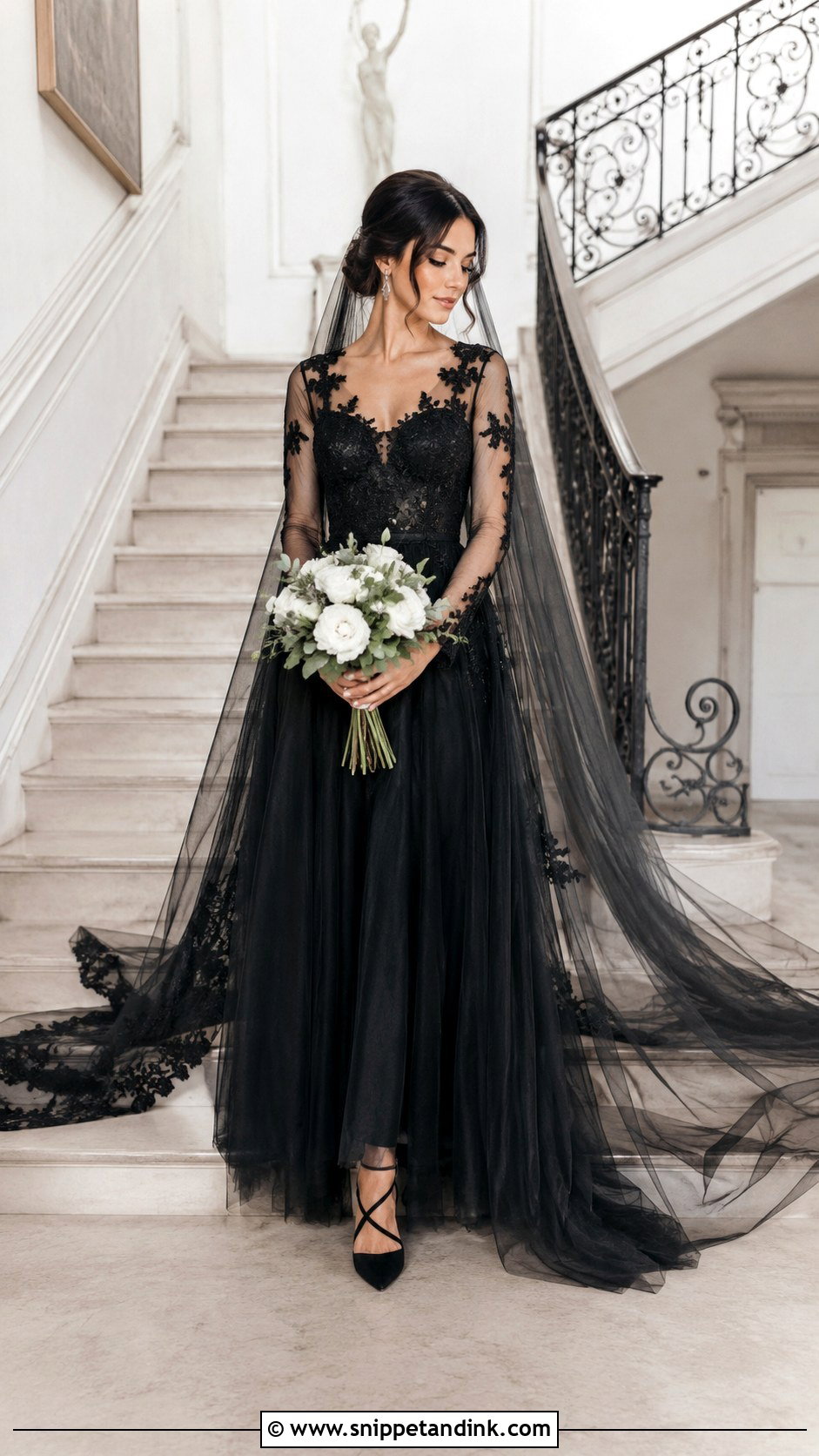
Sheer sleeves soften a black gown and make it feel more bridal. Lace, tiny buttons, floral appliqué or a faint shimmer on the sleeve give it detail. They pair with an A-line skirt, a fitted crepe shape or a full tulle skirt. Black mesh can look grey in bright daylight, so if you’re marrying outdoors at noon, ask to see the sleeve fabric in the sun. A low bun shows off the sleeves and neckline, and small earrings with a long veil keep balance. It’s a lovely pick for a cool-weather wedding.
11. Black High Neck Bridal Dress
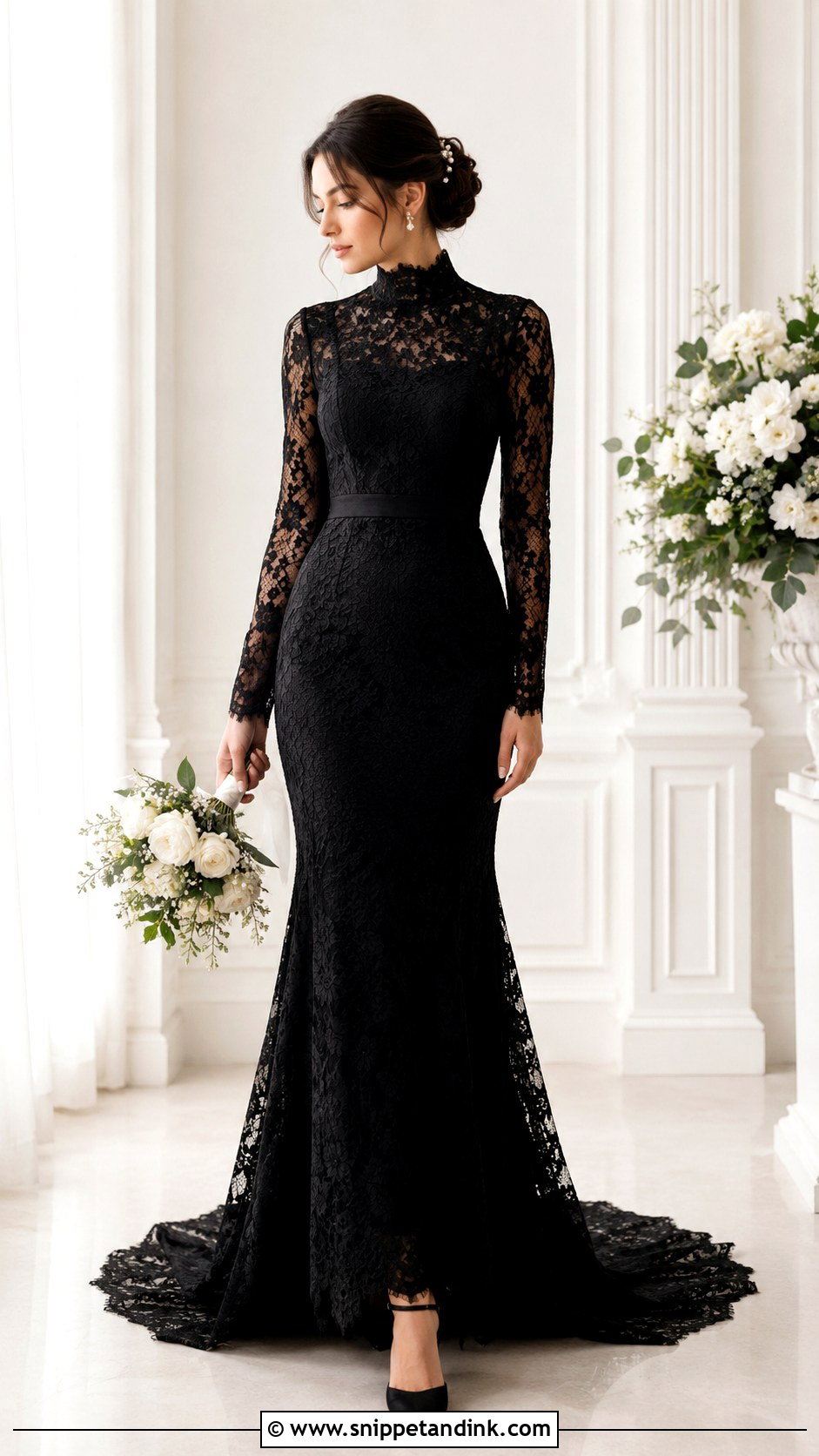
A high neck makes a strong frame and a polished profile. Lace, crepe or sheer mesh all suit it. Since the top is covered, add interest with a fitted waist, an open back or a flowing skirt, and skip heavy necklaces in favour of earrings or hair pins. Hair matters more than usual. Worn down, it hides the neckline and can catch on buttons at the nape, so I usually suggest an updo or a sleek low pony. Black satin heels and a simple bouquet suit a courthouse wedding or a formal evening reception.
12. Black V Neck Bridal Dress
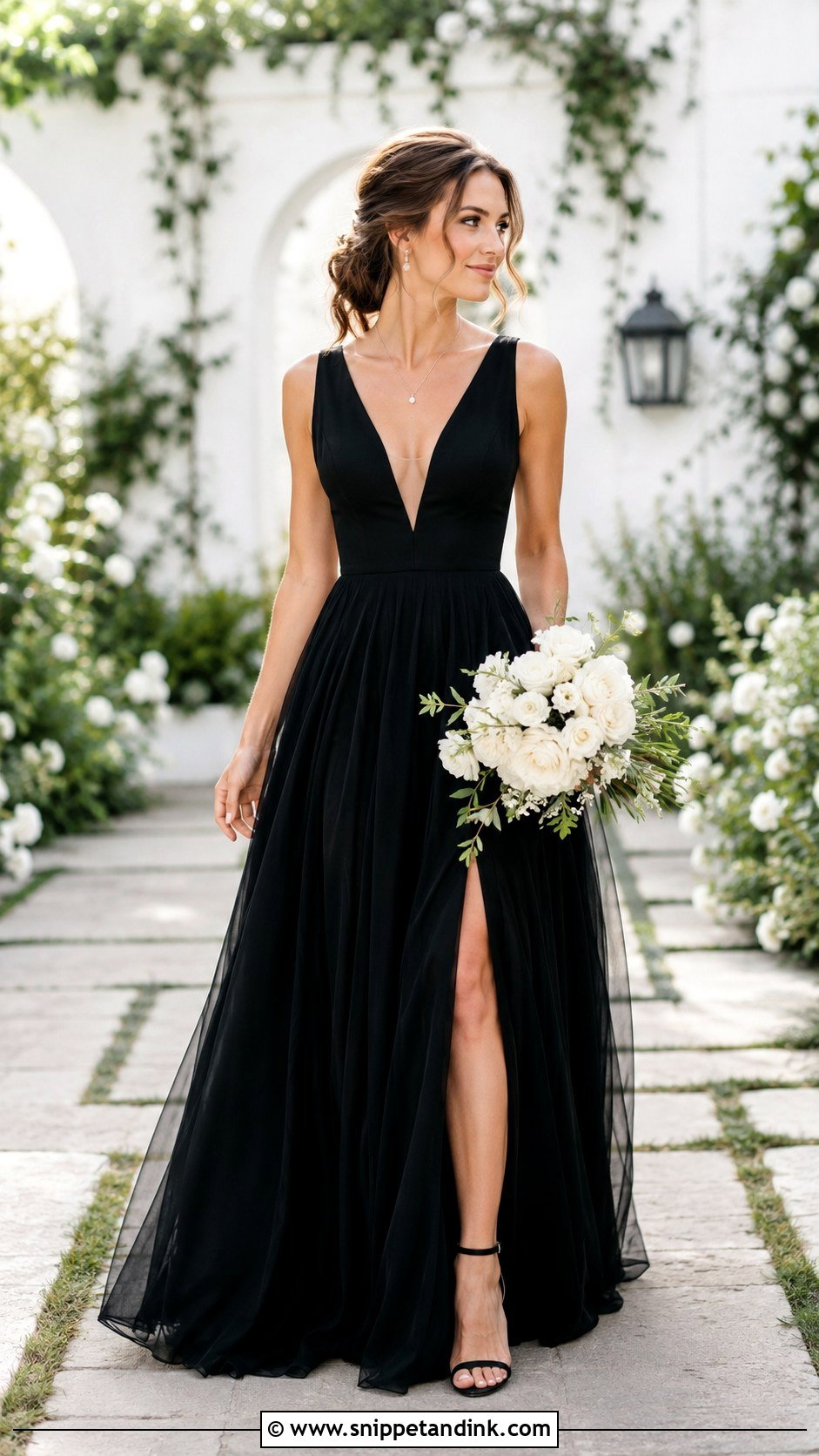
A V neck lengthens the torso and suits a surprising range of figures. A deep V is bold; a modest one is classic. Satin, lace, chiffon and crepe all work. On deeper Vs, I fit with double-sided fashion tape and sometimes a hidden mesh panel so nothing shifts when you lean in for photos. A delicate pendant or drop earrings, a fitted waist, strappy heels and a pale bouquet keep it balanced. Garden venues and formal receptions both suit it.
13. Black Square Neck Bridal Dress
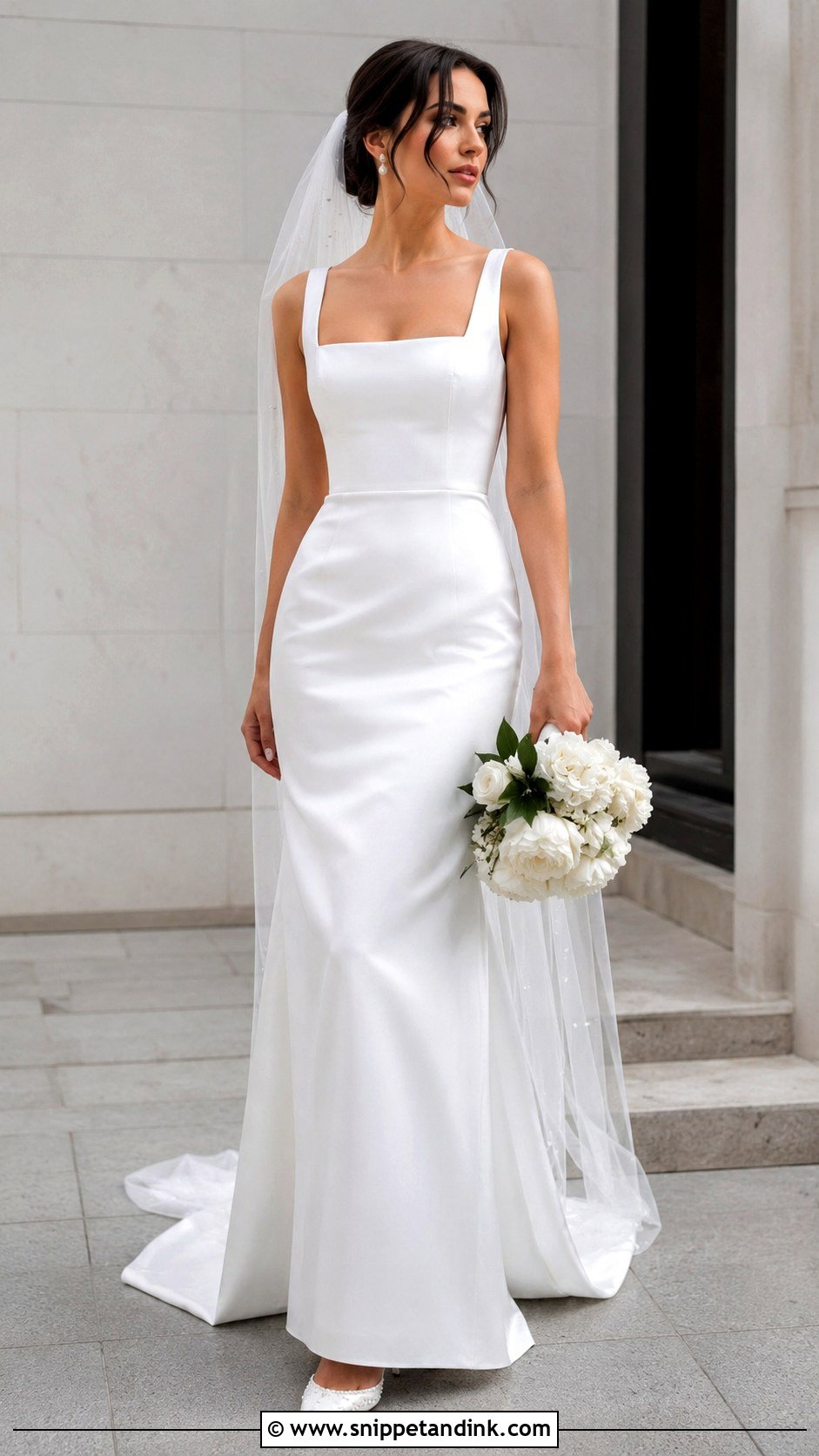
A square neck frames the collarbones without revealing much, and it reads modern without trying. Thick straps, long sleeves or a corset bodice all work with it. A satin version is minimal; a lace version is softer. Width matters. Too wide and it slips off the shoulder, too narrow and broad shoulders look broader, so I pin this neckline more carefully than most. A sleek bun, pearl studs and a medium-length veil suit city weddings and gallery venues.
14. Black Halter Bridal Dress
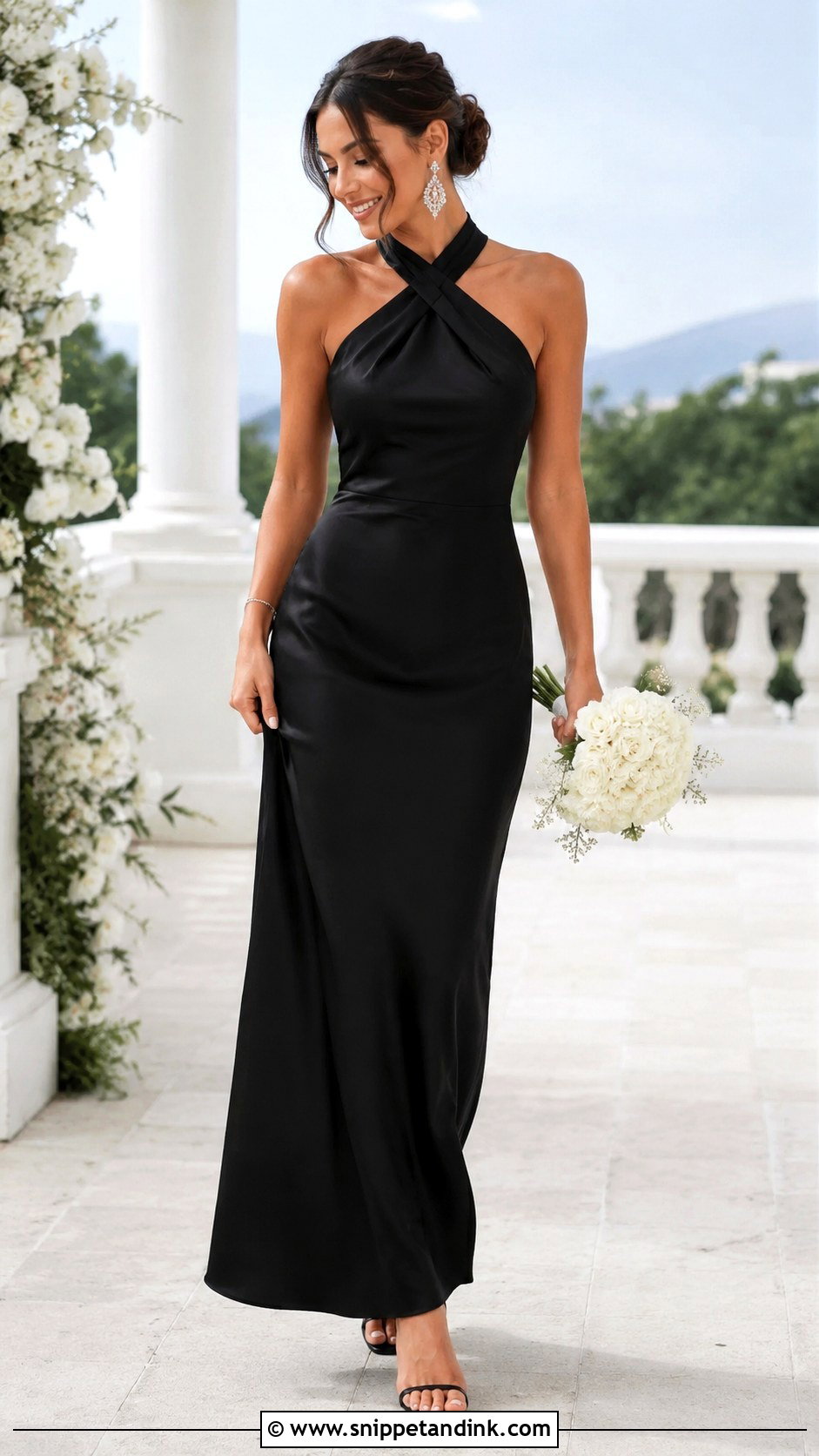
Halters show off the shoulders and lengthen the neck, and they look athletic in plain satin or evening-ready with beading. The neckline is already the statement, so skip the necklace and wear earrings or a bracelet. A fitted skirt or soft A-line balances it. Halters put weight on the back of the neck, which gets uncomfortable with heavy beading, so I check the strap width and whether the bodice carries some of the load. A smooth updo and clean heels suit warm-weather and destination ceremonies.
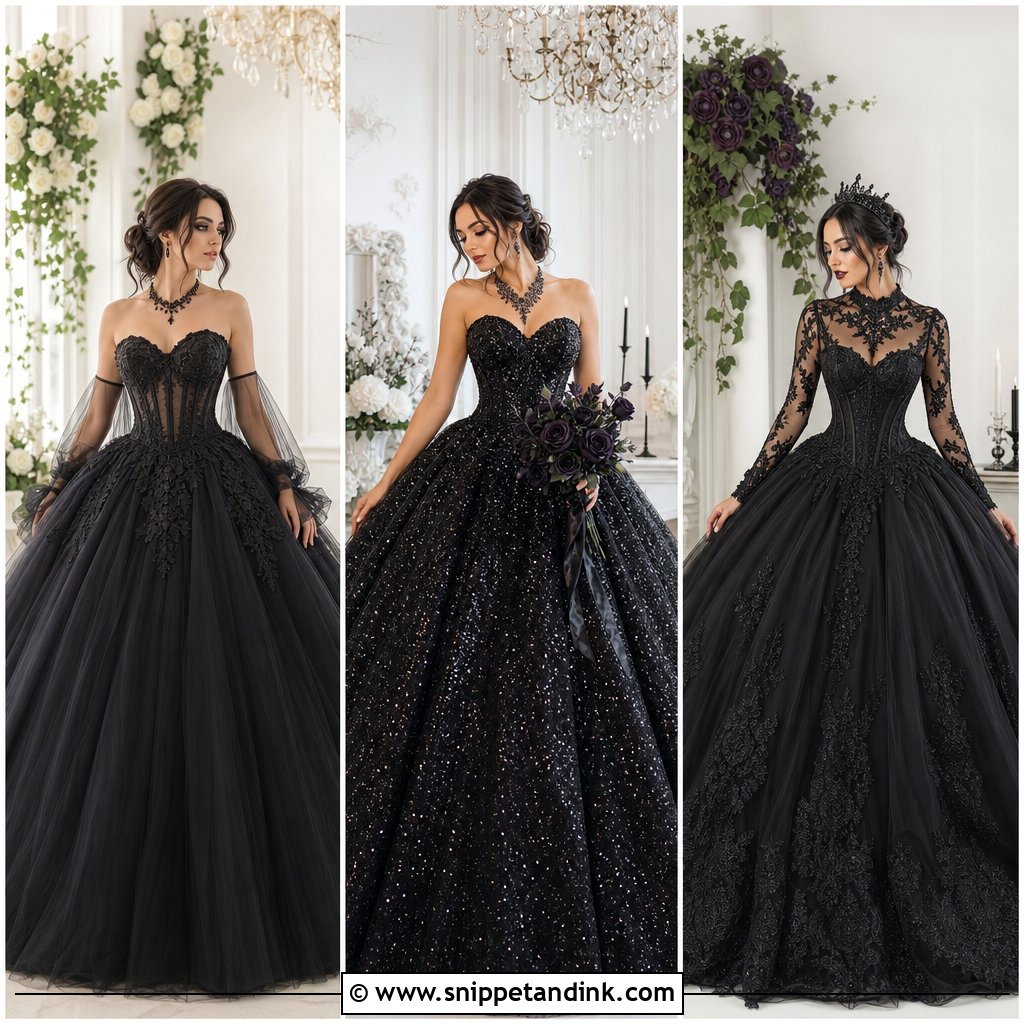
15. Black One Shoulder Bridal Dress
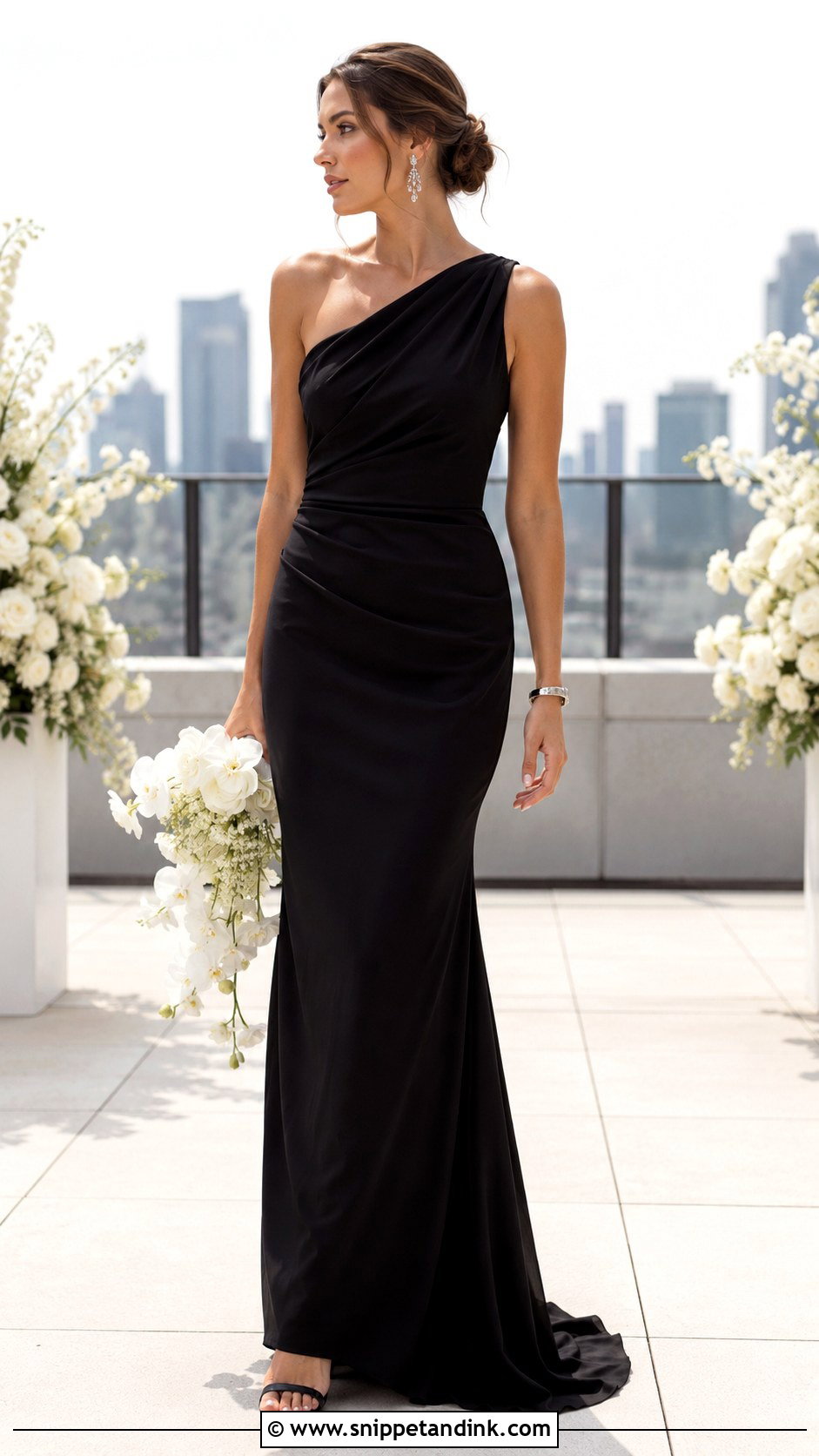
One shoulder draws the eye with very little else needed. The asymmetric line looks modern with a fitted waist or a draped bodice, and satin, crepe or chiffon fold softly across the body. Keep accessories simple: one statement earring on the bare side, a sleek bracelet, plain heels. A short veil or none at all keeps it fashion-forward. I check that the single strap is anchored well inside, because a one-shoulder bodice that slides during dancing is hard to fix discreetly. City rooftops suit it.
16. Black Sequin Bridal Dress
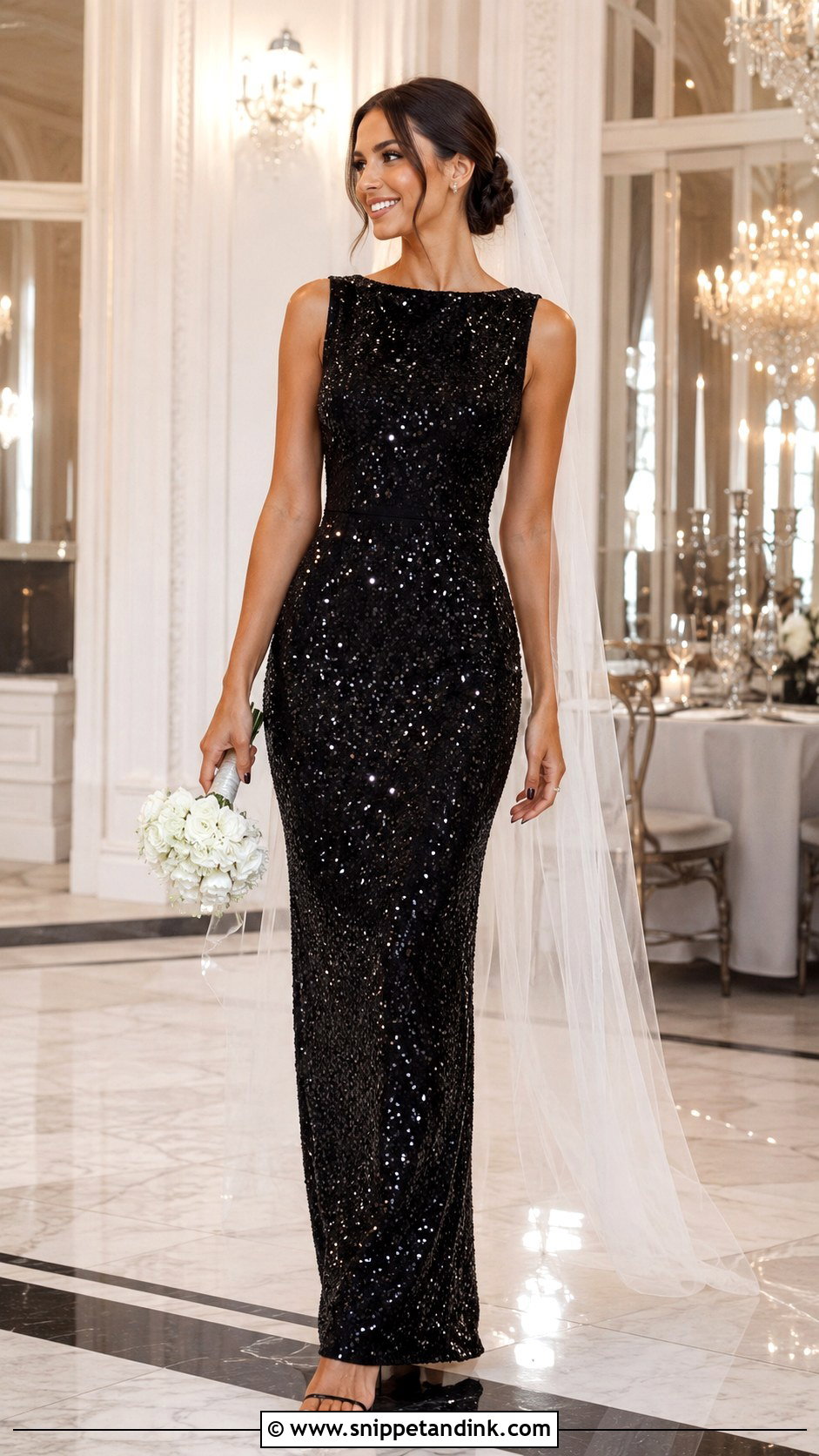
Sequins on black reflect light in every direction and turn the dress into a celebration by themselves. Choose a fitted column for a sleek line, or an A-line sequin gown for more movement. A plain veil tones the sparkle down for the ceremony and comes off for the reception. Sequins can scratch the inner arm and catch on lace, so ask whether the armholes are lined. Smooth hair, small earrings and clean heels keep it focused for an evening wedding.
17. Black Floral Lace Bridal Dress
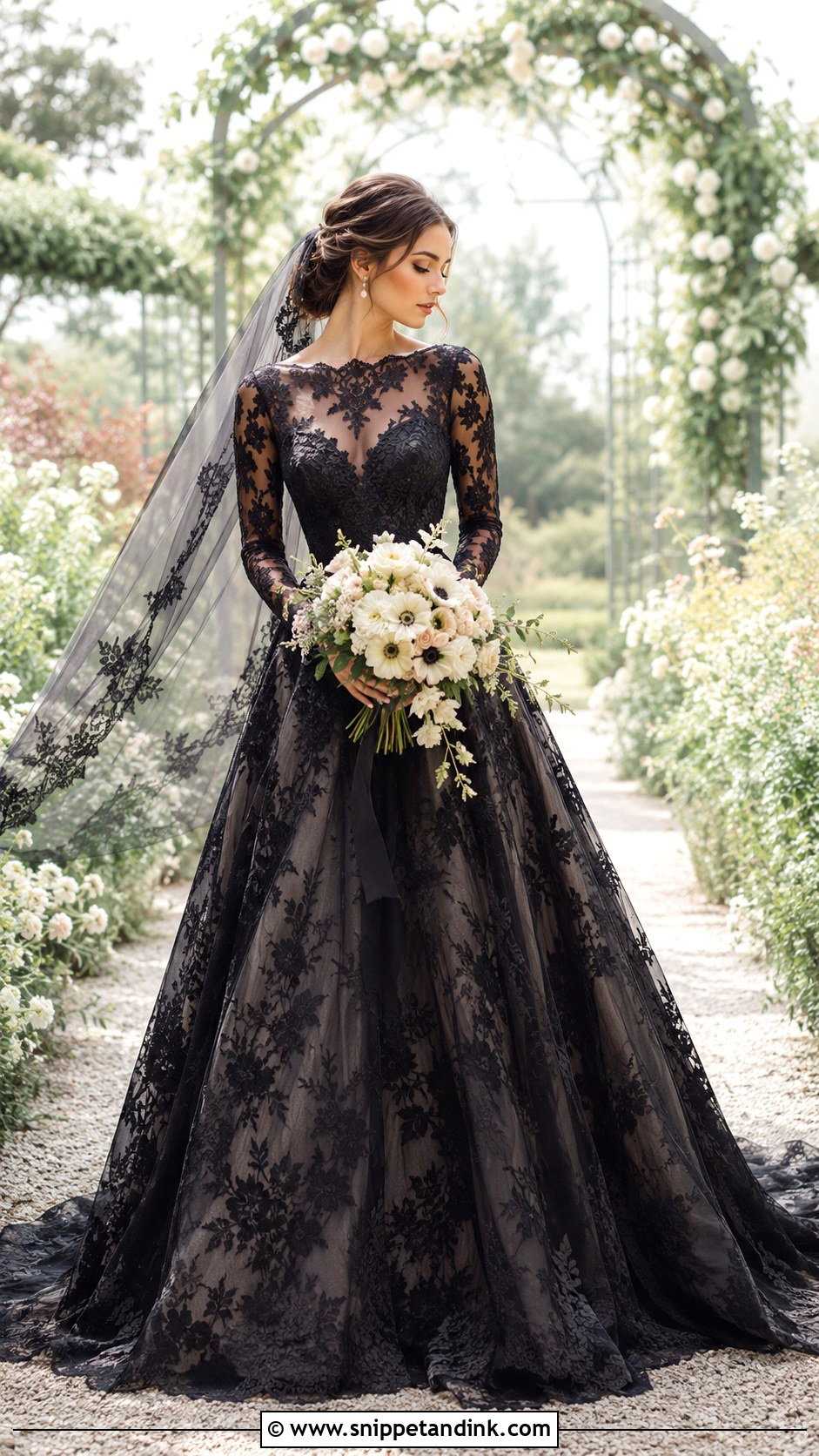
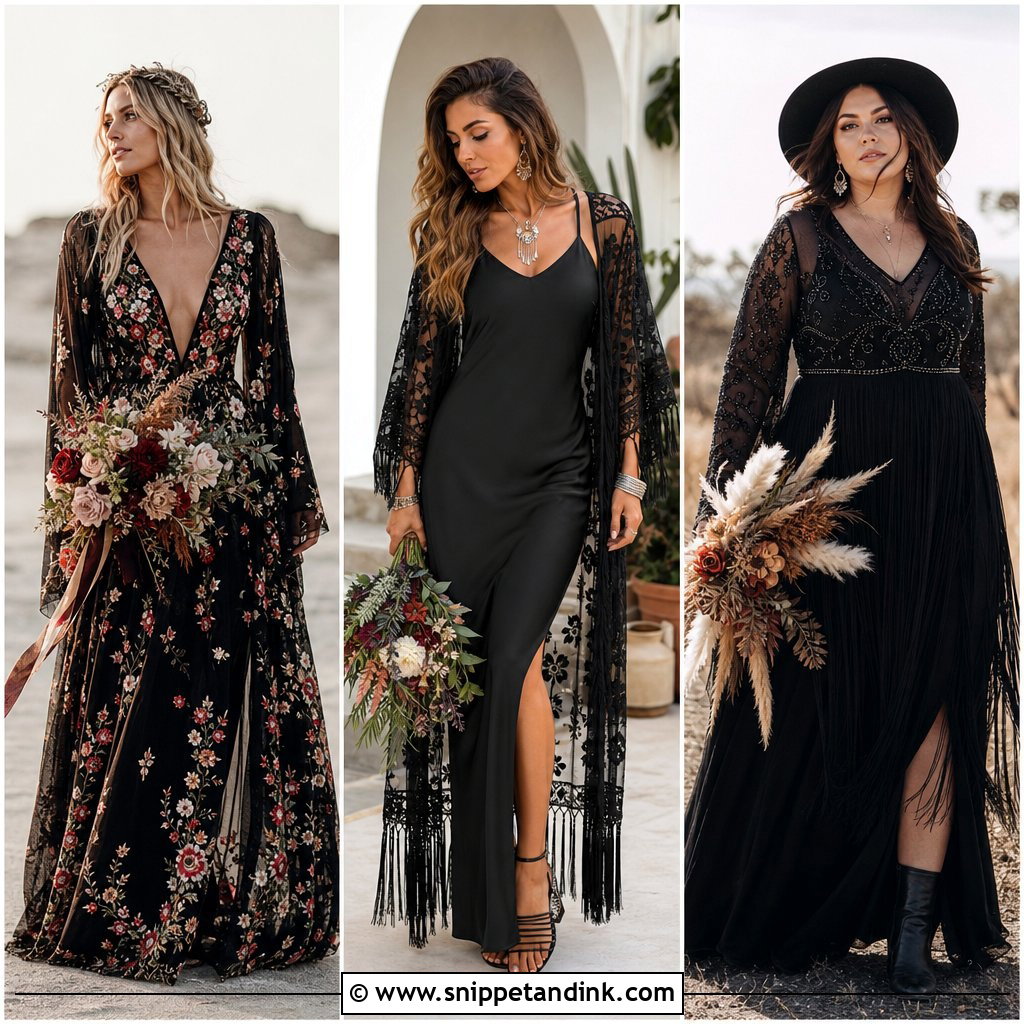
Floral lace softens black with texture. Over nude or ivory lining it shows clearly; over black lining it reads tonal and moody. A full lace gown with long sleeves and a train is the dramatic route, or keep lace to the bodice over a tulle or chiffon skirt. Lining colour changes the whole effect, so I always show brides the same lace over two linings side by side. Pearl earrings, soft waves and a bouquet of white roses or ranunculus suit a garden or vintage venue.
18. Black Minimalist Bridal Dress
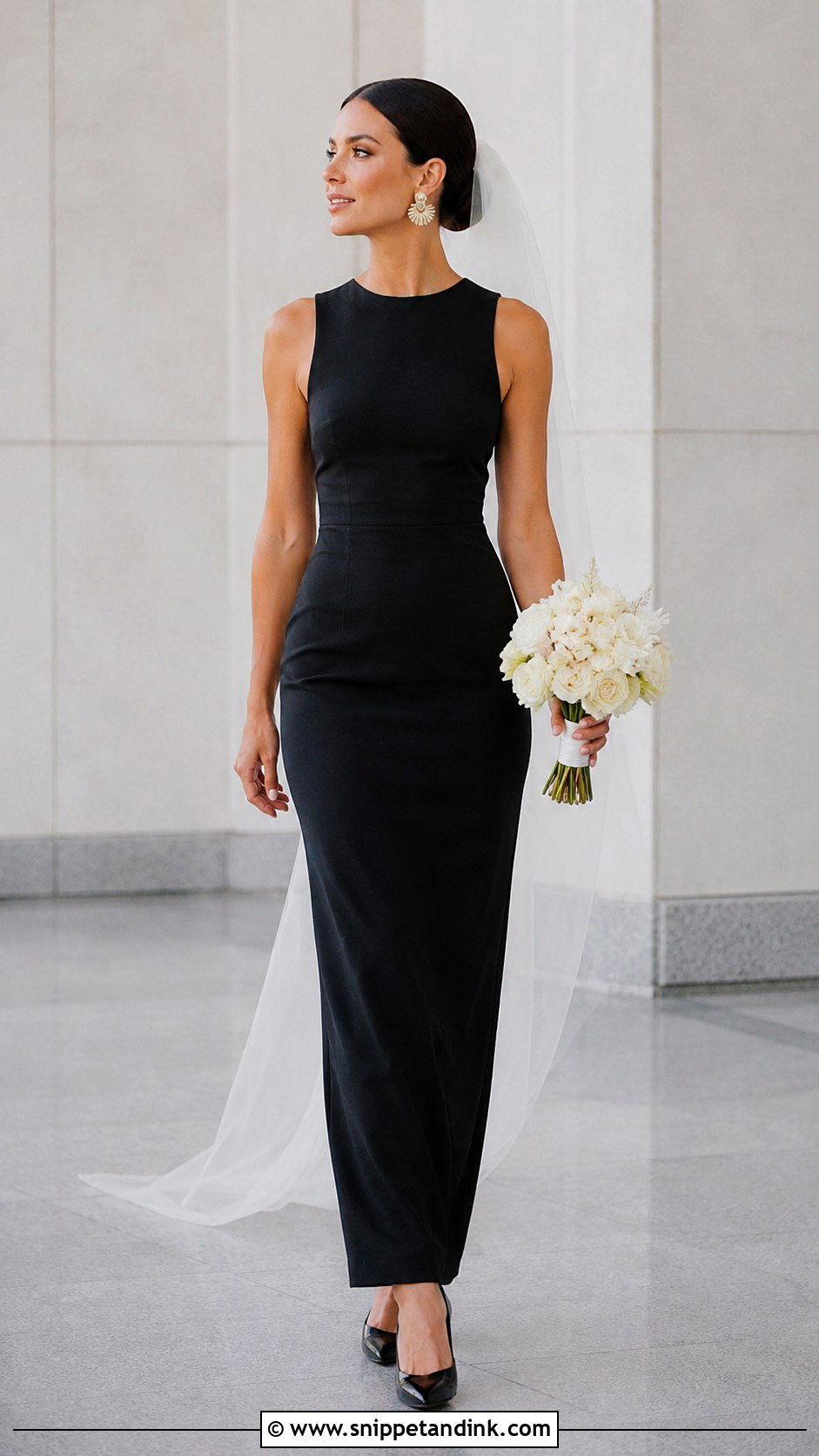
Minimal only works if the tailoring is excellent, because there’s nothing to hide behind. Look for a crepe column, a satin slip or a structured A-line with little or no embellishment. The fit, neckline and fabric quality carry the whole design, which is where I’d spend the alterations budget. Sculptural earrings, sleek heels and a smooth veil or cape suit it. A monochrome bouquet looks editorial; ivory flowers soften it. Courthouse ceremonies and modern venues are its natural home.
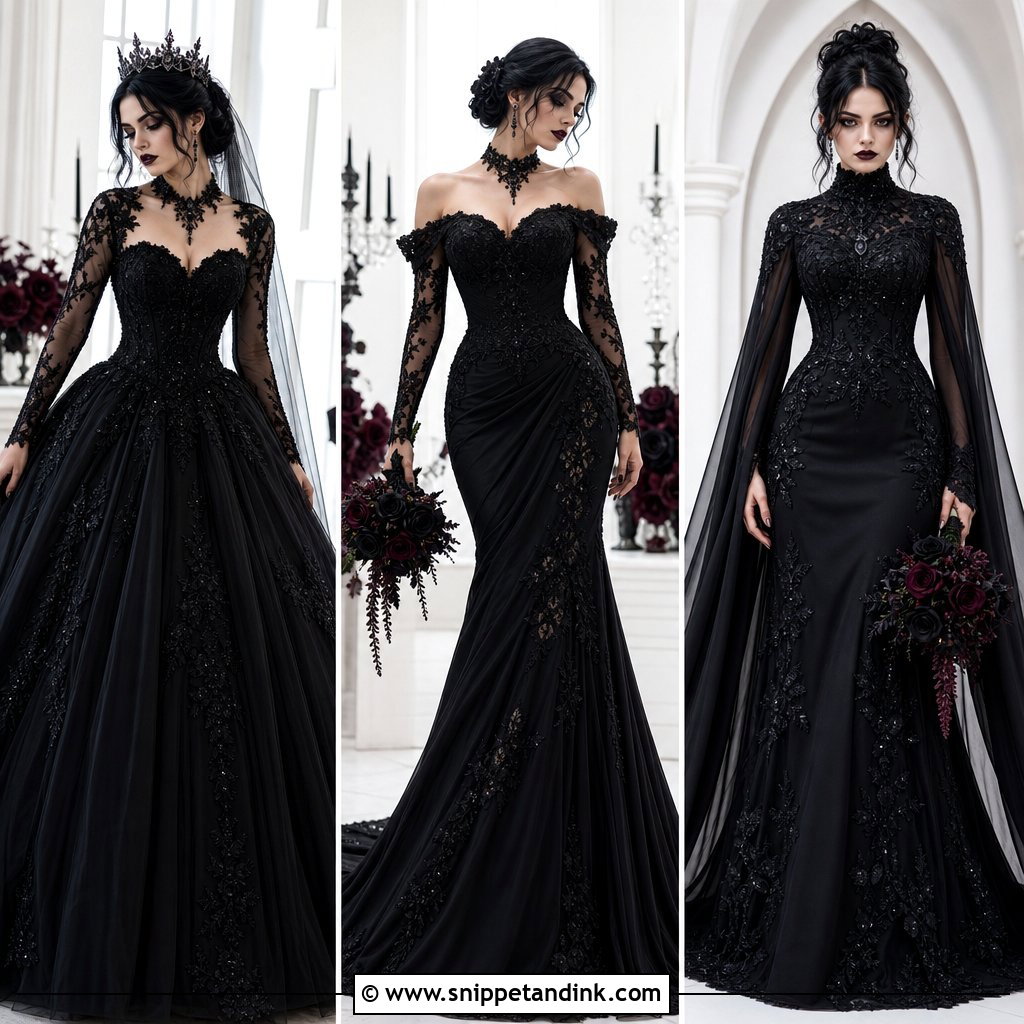
19. Black Gothic Bridal Dress
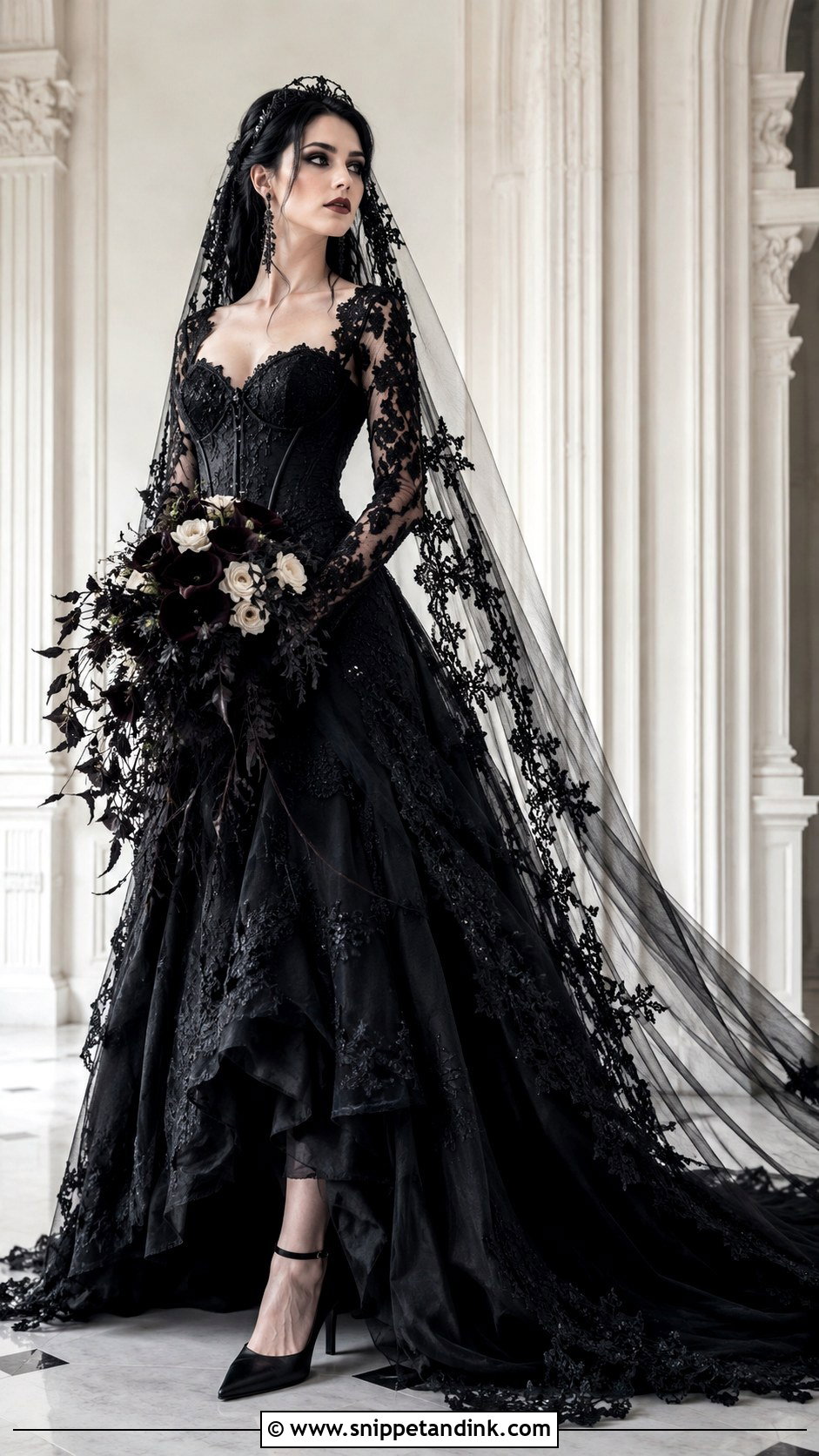
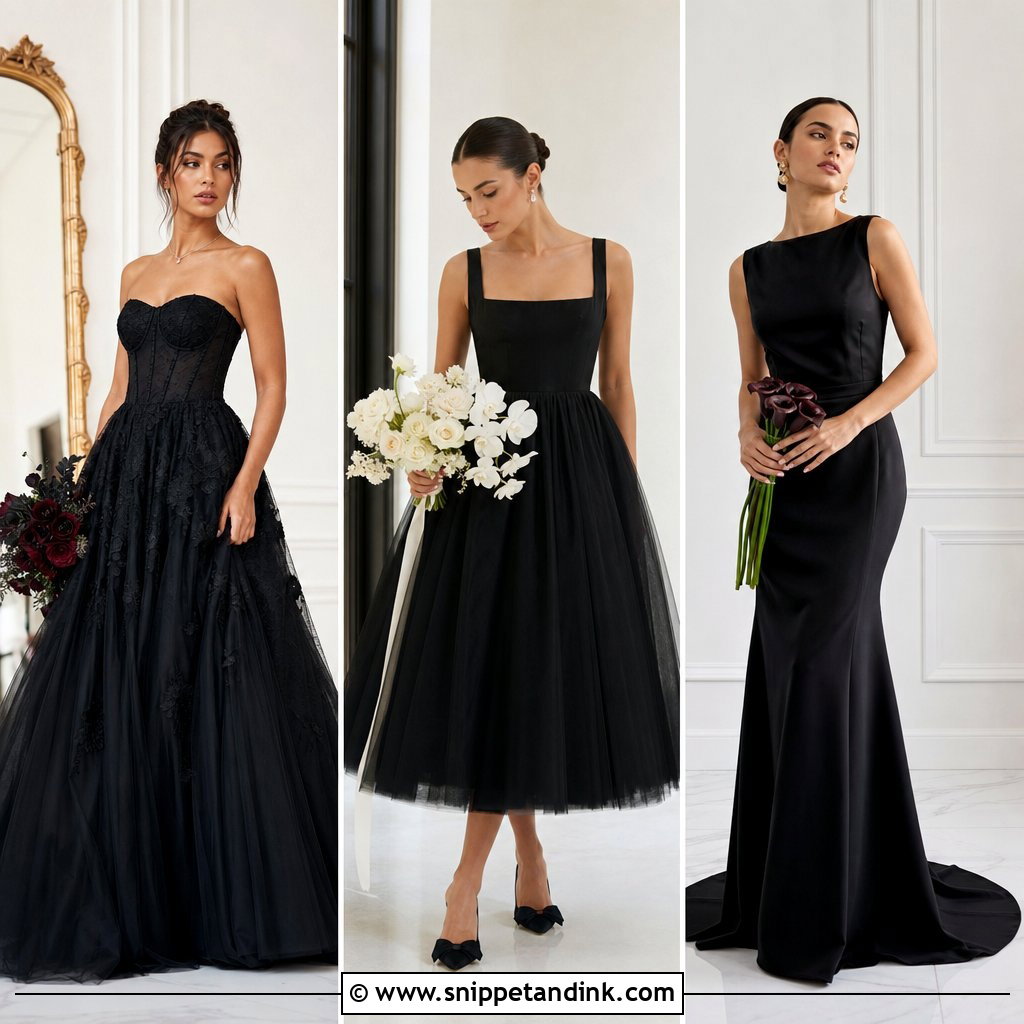
The gothic gown is the most dramatic look here, and quality is what keeps it from costume. Good lace, structured bodices and graceful skirts matter more than how many dark details you add. Long sleeves, corset lines, high necks, layered tulle or a cathedral train all belong. I’d hold back on accessories: black satin heels, a sheer veil, and dark flowers mixed with ivory so the bouquet doesn’t vanish in photos. Polished makeup keeps the look refined. Historic venues and candlelit receptions suit a moody aesthetic like this one.
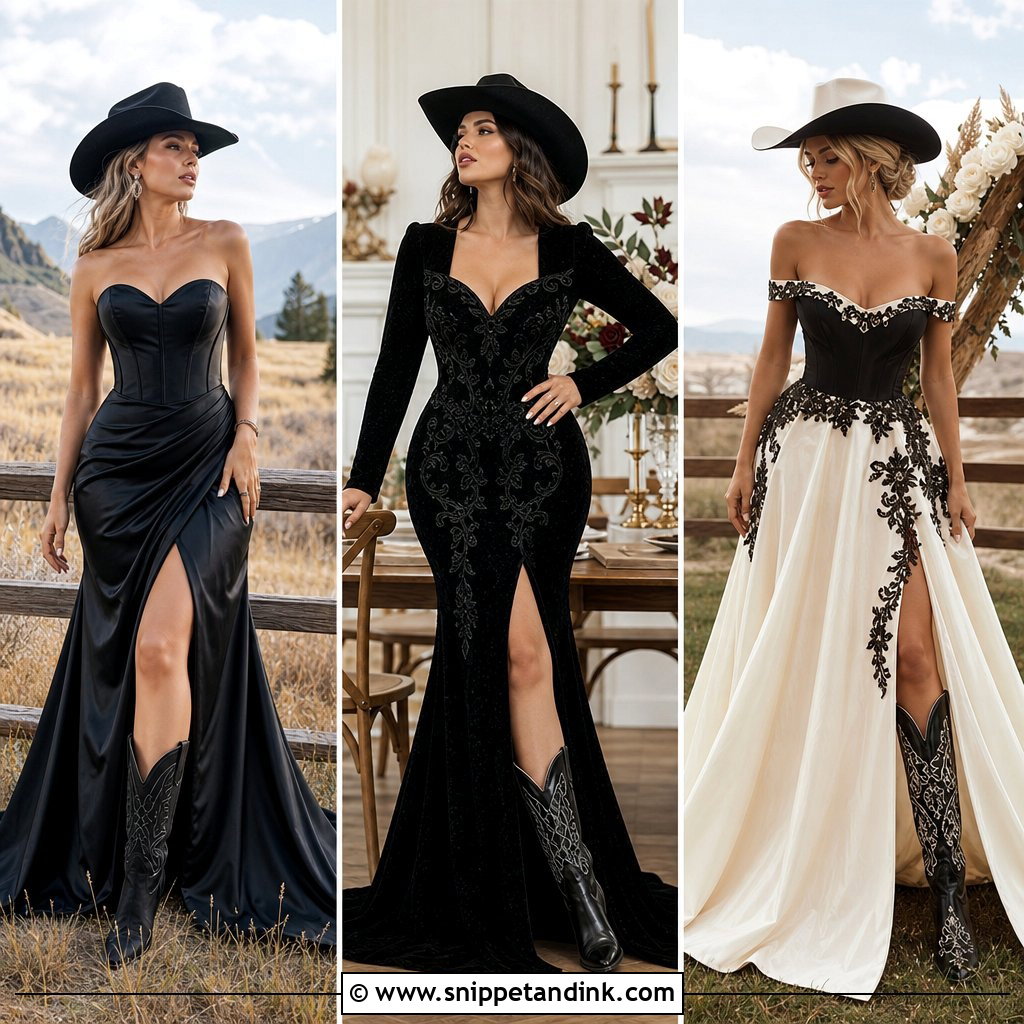

20. Black Boho Bridal Dress
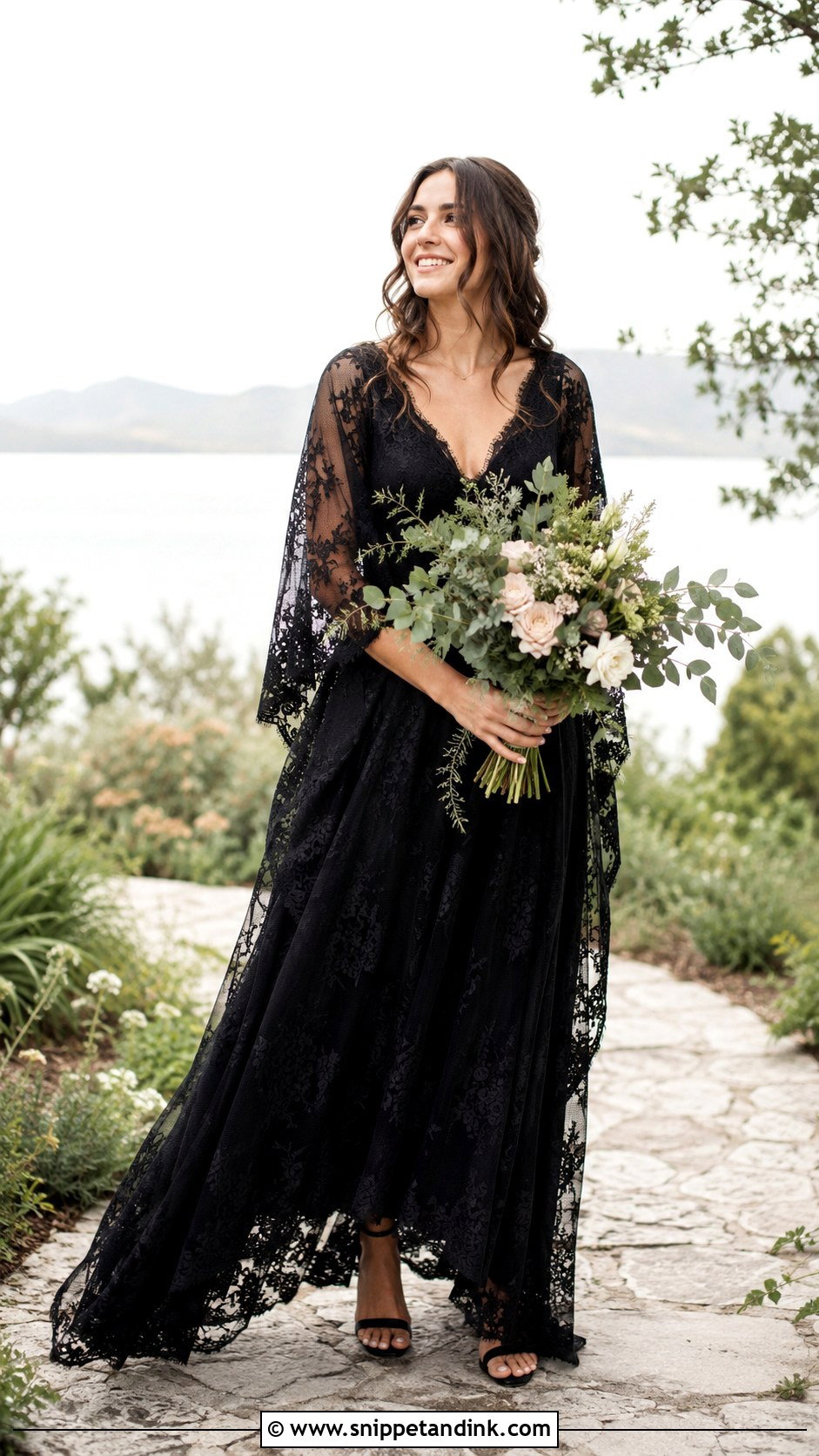
Boho gives a nontraditional wedding look a relaxed side. Skip the heavy structure in favour of soft lace, flowing sleeves, lightweight chiffon or an easy A-line. Bell sleeves and embroidery add movement. Black chiffon absorbs heat in full sun, so for a desert or backyard wedding at midday, I’d suggest a lighter, lined chiffon and an evening ceremony time. Block heels handle grass, and soft waves with a floral comb or fingertip veil finish it.
21. Black Tea Length Bridal Dress
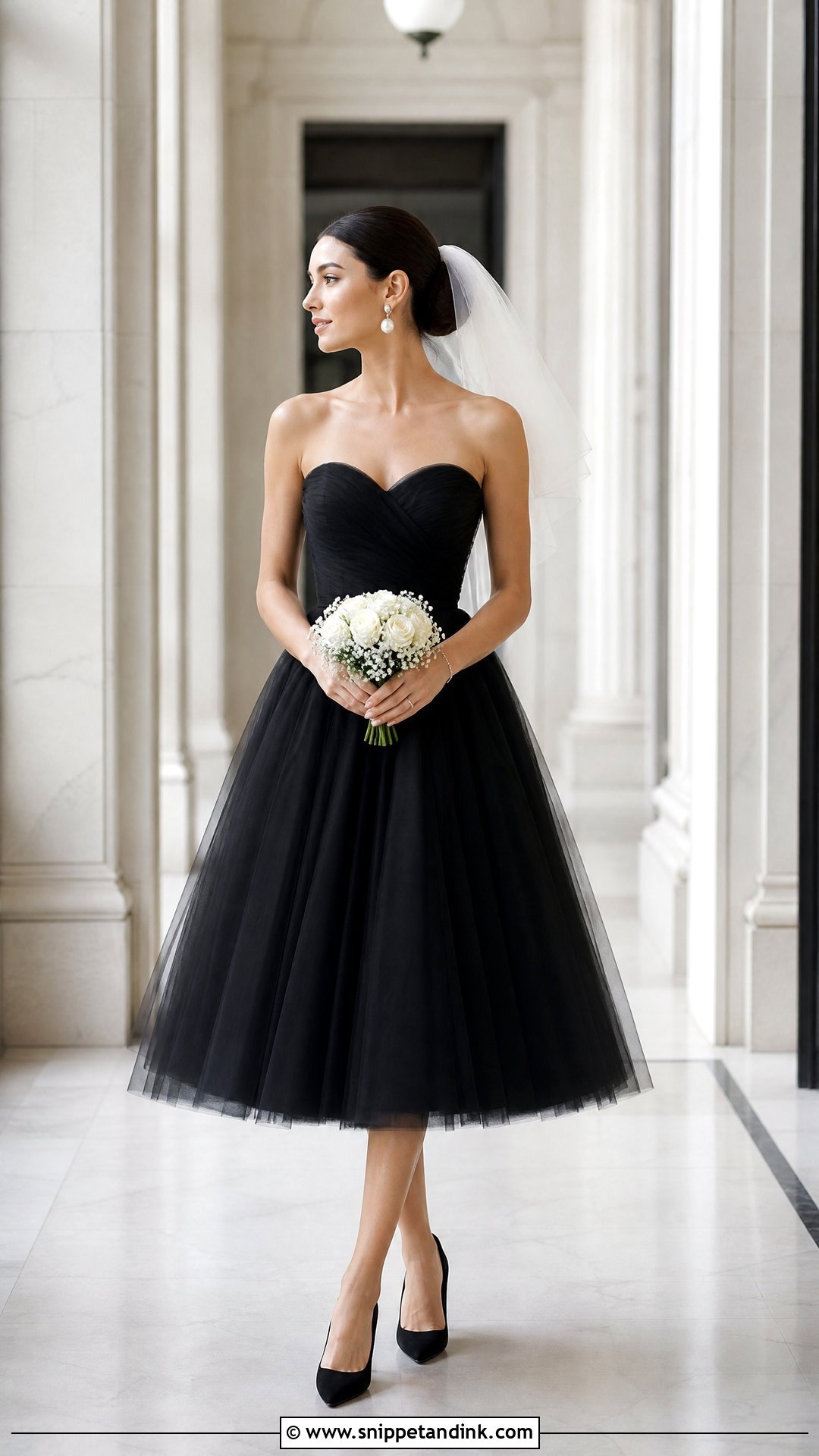
Tea length lands between the knee and ankle, which makes it playful and easy to move in, and it puts the shoes on show. A full tulle skirt feels retro; sleek satin feels clean. Hem length is everything here. I mark it with the bride in her wedding shoes, because an inch too long reads as an awkward maxi. Pointed pumps, pearl earrings, a short veil and a compact bouquet suit courthouse weddings, small ceremonies and reception changes.
22. Black Slip Bridal Dress
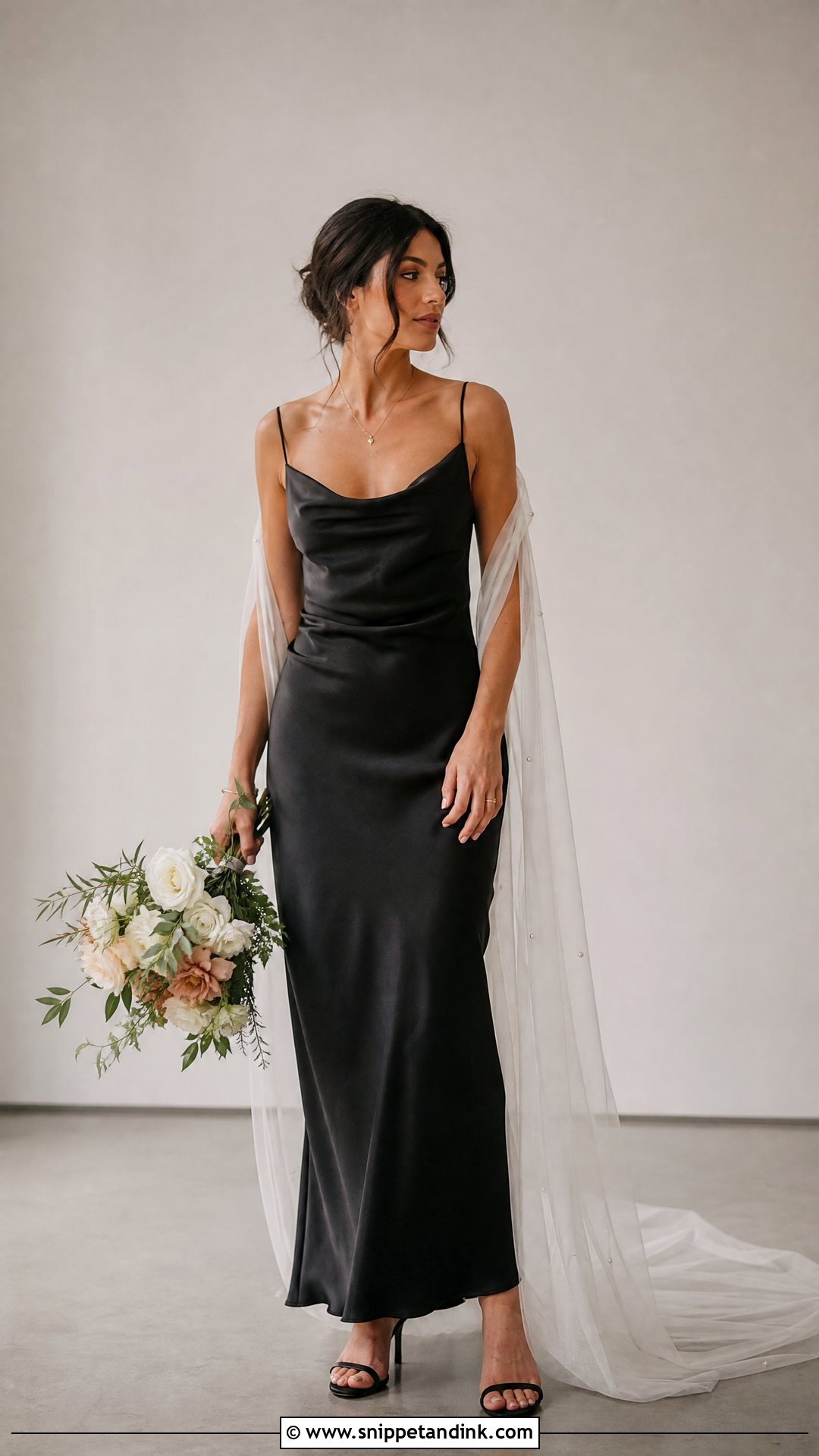
A black slip is the quietest kind of glamour. It skims the body without volume, and a bias cut gives it natural movement. Bias-cut satin shows every line underneath, so fittings should happen in the exact underwear you’ll wear. Keep it minimal with strappy heels and fine jewelry, or contrast it with a dramatic veil. A slip also layers well with a sheer cape, a cropped jacket or gloves. Elopements and destination weddings suit it.
23. Black Bridal Dress With Cape
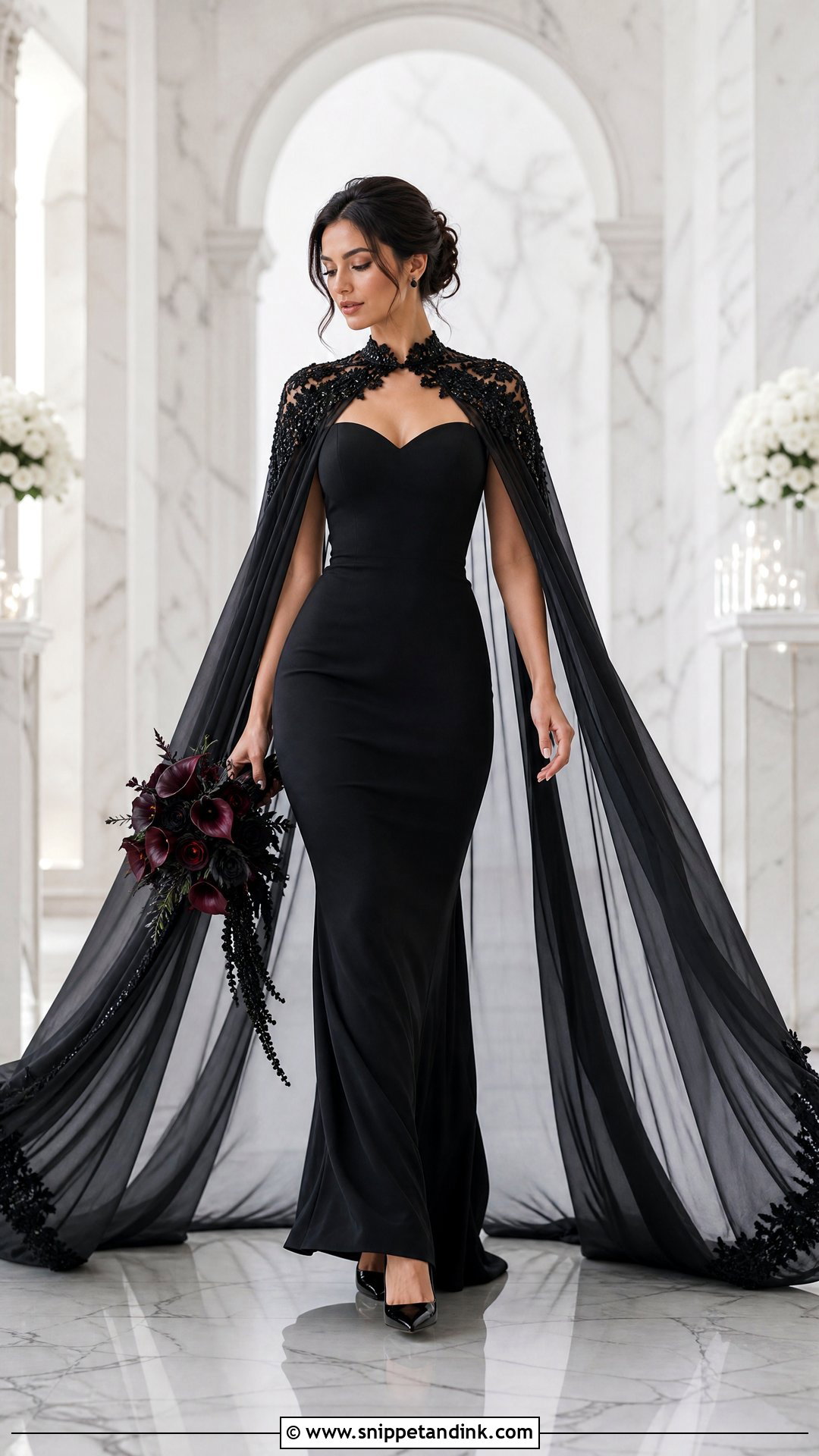
A cape replaces the veil and frames the body from behind as you move. Sheer, lace, satin or embellished capes change the level of formality. Over a sleek fitted gown, it looks powerful; in tulle with floral appliqué, softer. Check the length in your shoes and on stairs, since a cape that touches the floor will catch under a heel. Keep jewelry simple and let the cape lead, especially for walking shots and a formal entrance.
24. Black Bridal Dress With Train
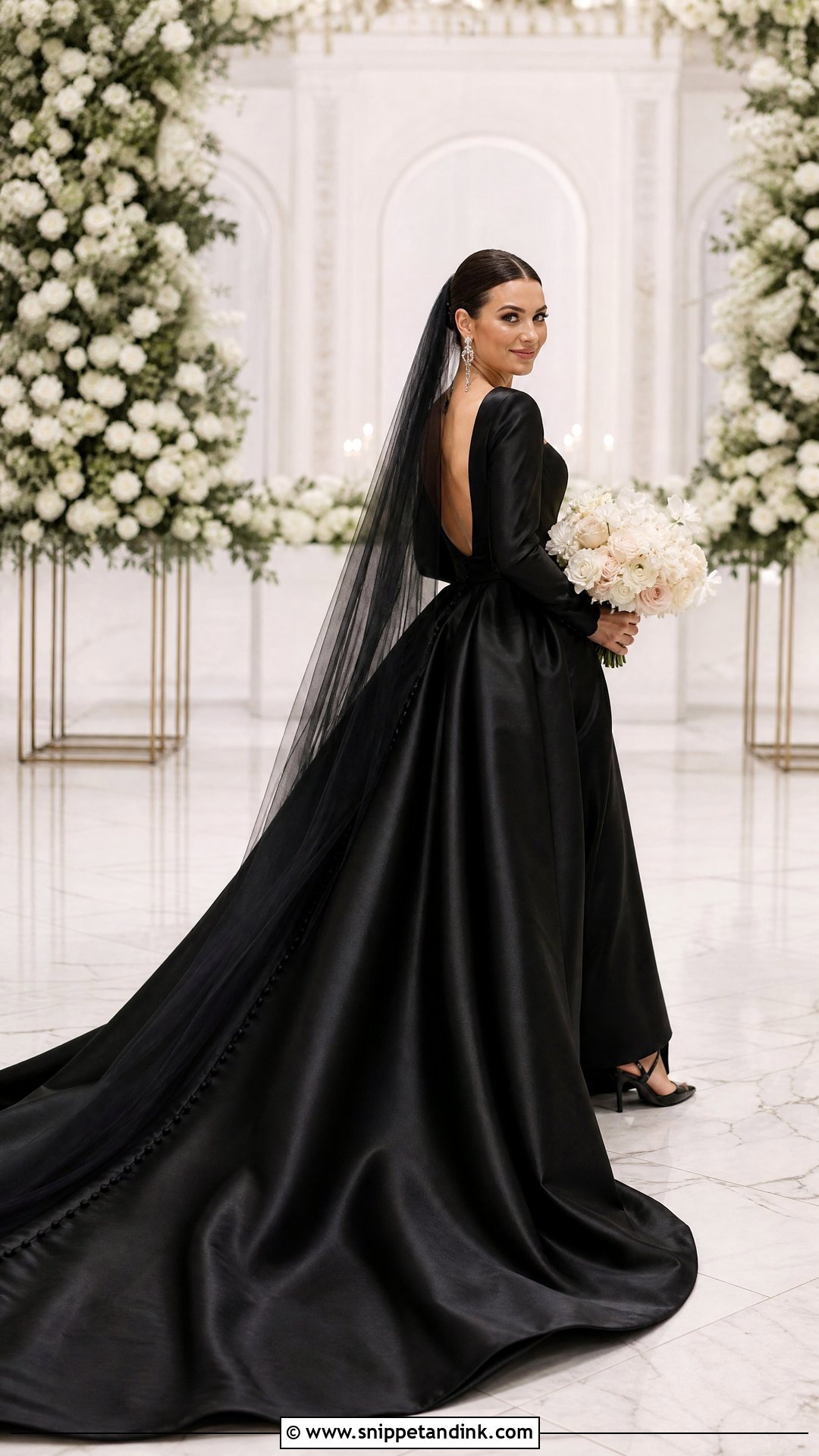
A train gives a black dress its ceremony moment and brings back a classic bridal feeling even in an unconventional colour. Long satin trains feel formal; lace or tulle trains feel romantic. Plan the bustle properly. Black trains hide their bustle points, which makes it harder for a bridesmaid to find the hooks in a dim room, so mark them with a small coloured thread and have her practise before the day. Wear a long veil for full drama, or let the train stand alone.
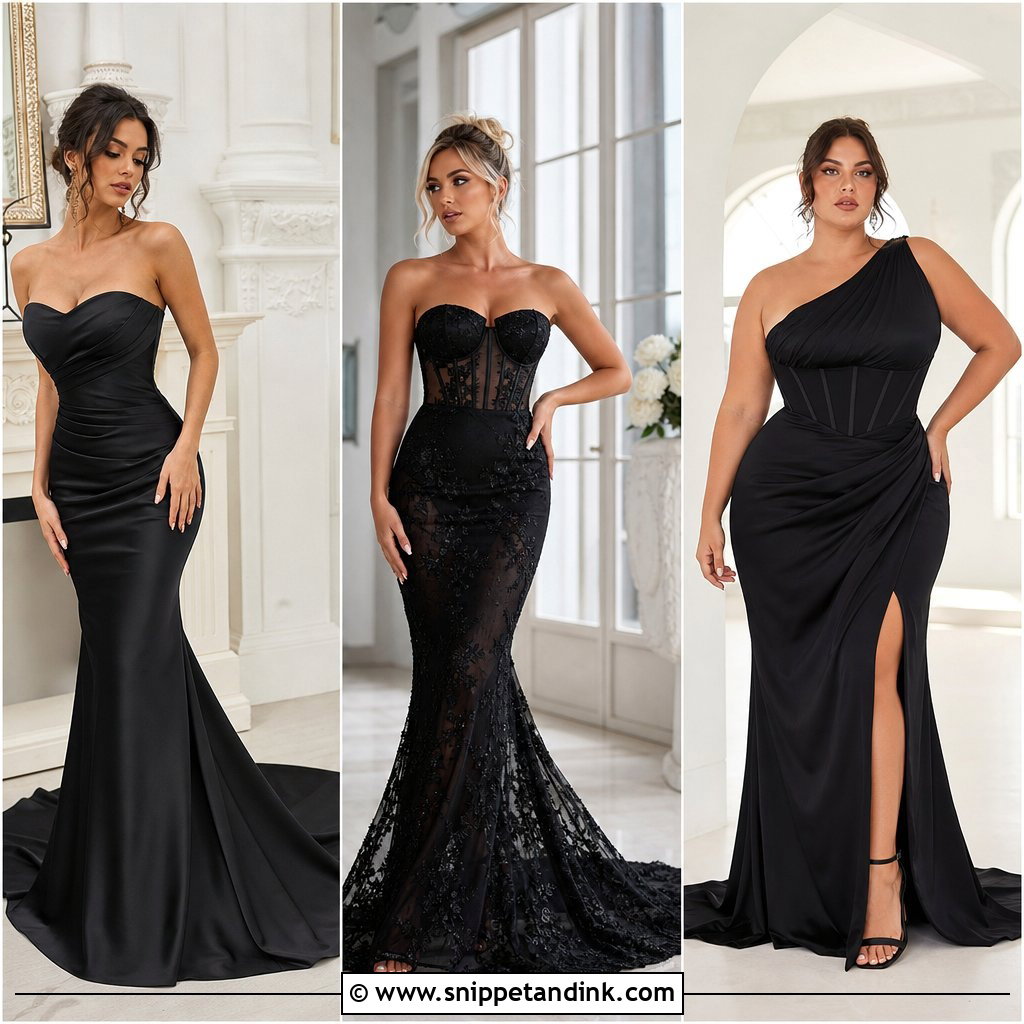

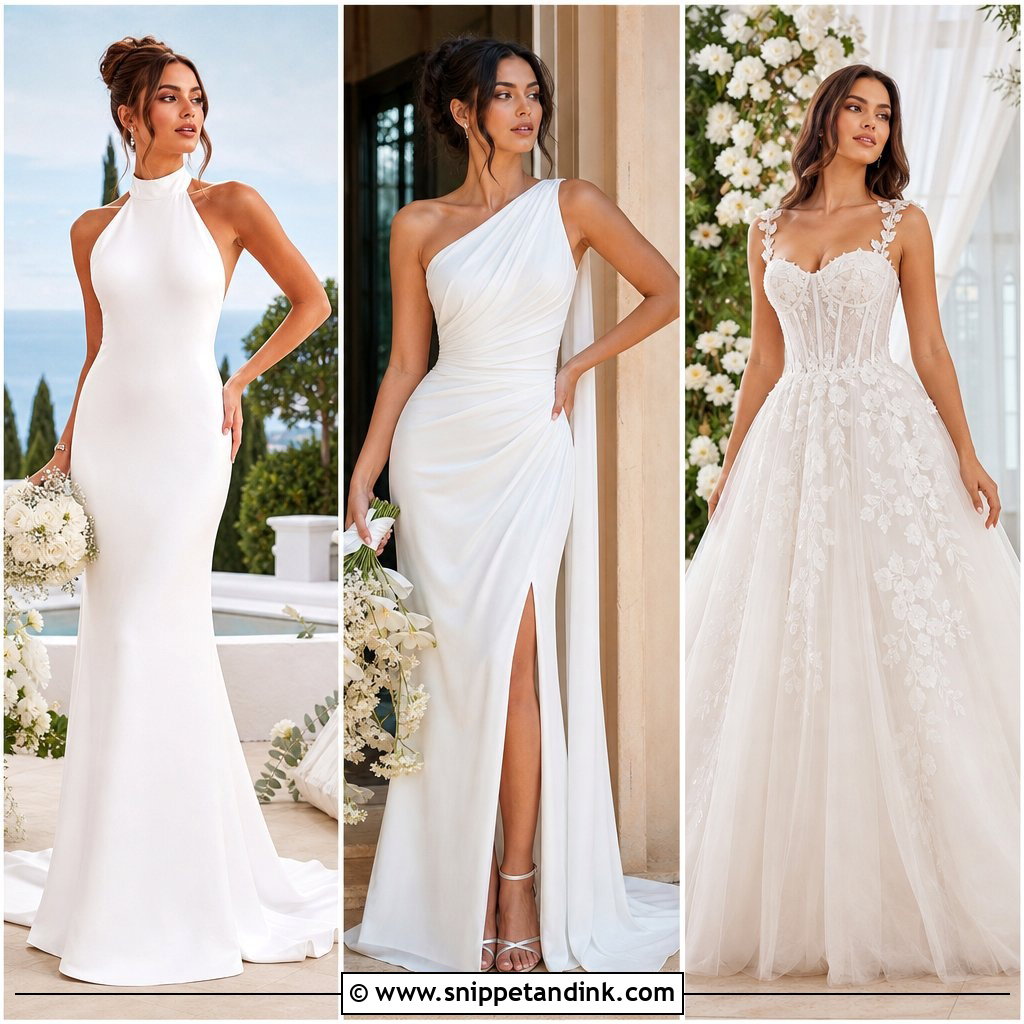
25. Black Bridal Dress With White Lace
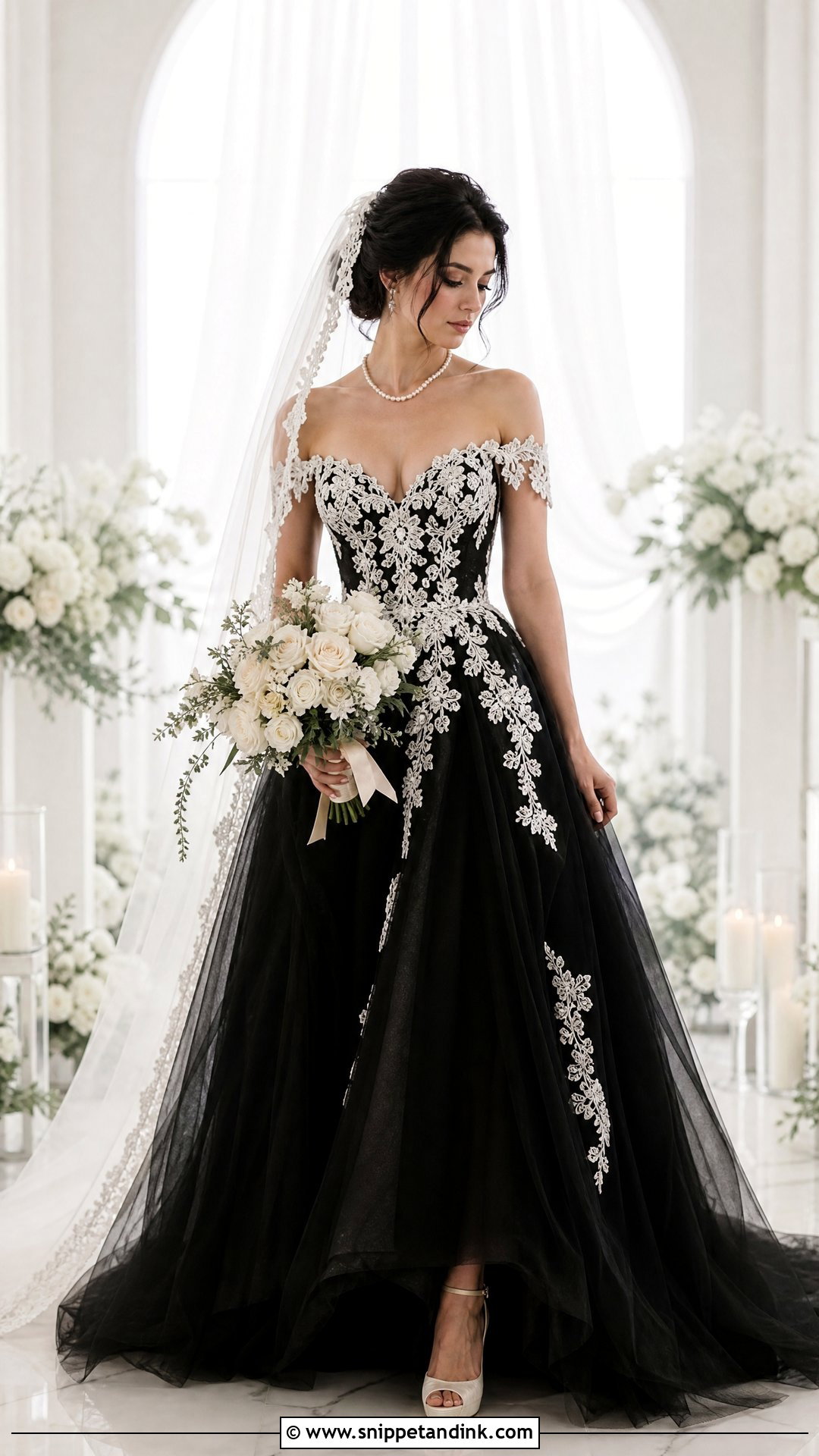
White lace on black adds contrast without leaving the theme. Appliqué near the face brightens the skin and defines the bodice; across the skirt, it creates a floral pattern. Ivory lace reads softer than bright white, which can look stark against black in photos. I check that the lace is stitched flat at every edge, because lifted corners show up immediately against a dark ground. Ivory shoes, pearls and a bouquet that echoes the lighter detail finish it.
26. Black And Nude Bridal Dress
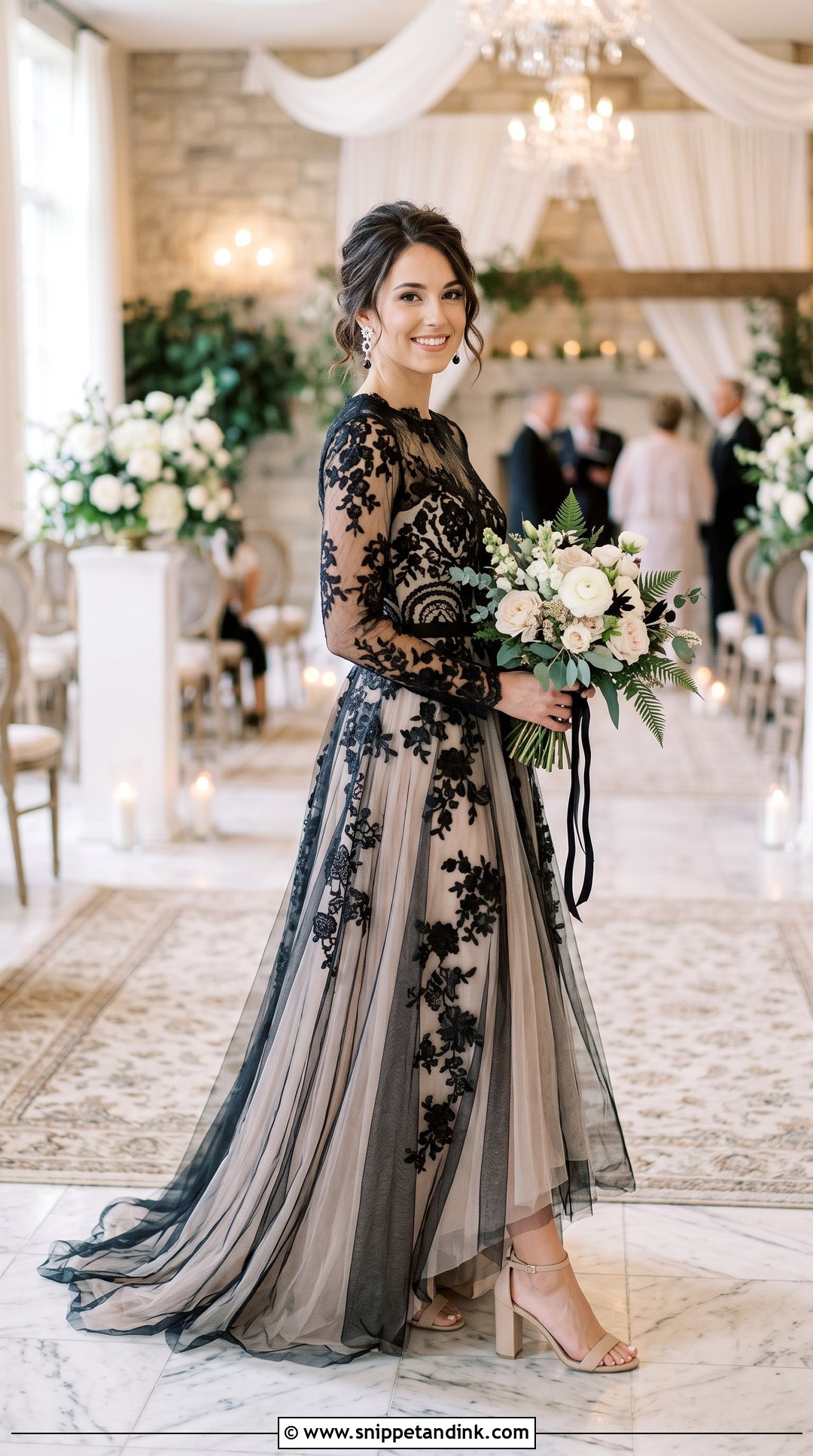
Nude lining under black lace or beading lets the pattern show and gives the gown depth. It suits fitted gowns, illusion sleeves and embroidered bodices. The lining shade should be close to your own skin, which can mean asking the shop for alternatives to the sample’s standard nude. Neutral heels, soft jewelry and a black or sheer ivory veil complete it, with pale blooms in the bouquet to keep it bridal.
27. Black Plus Size Bridal Dress
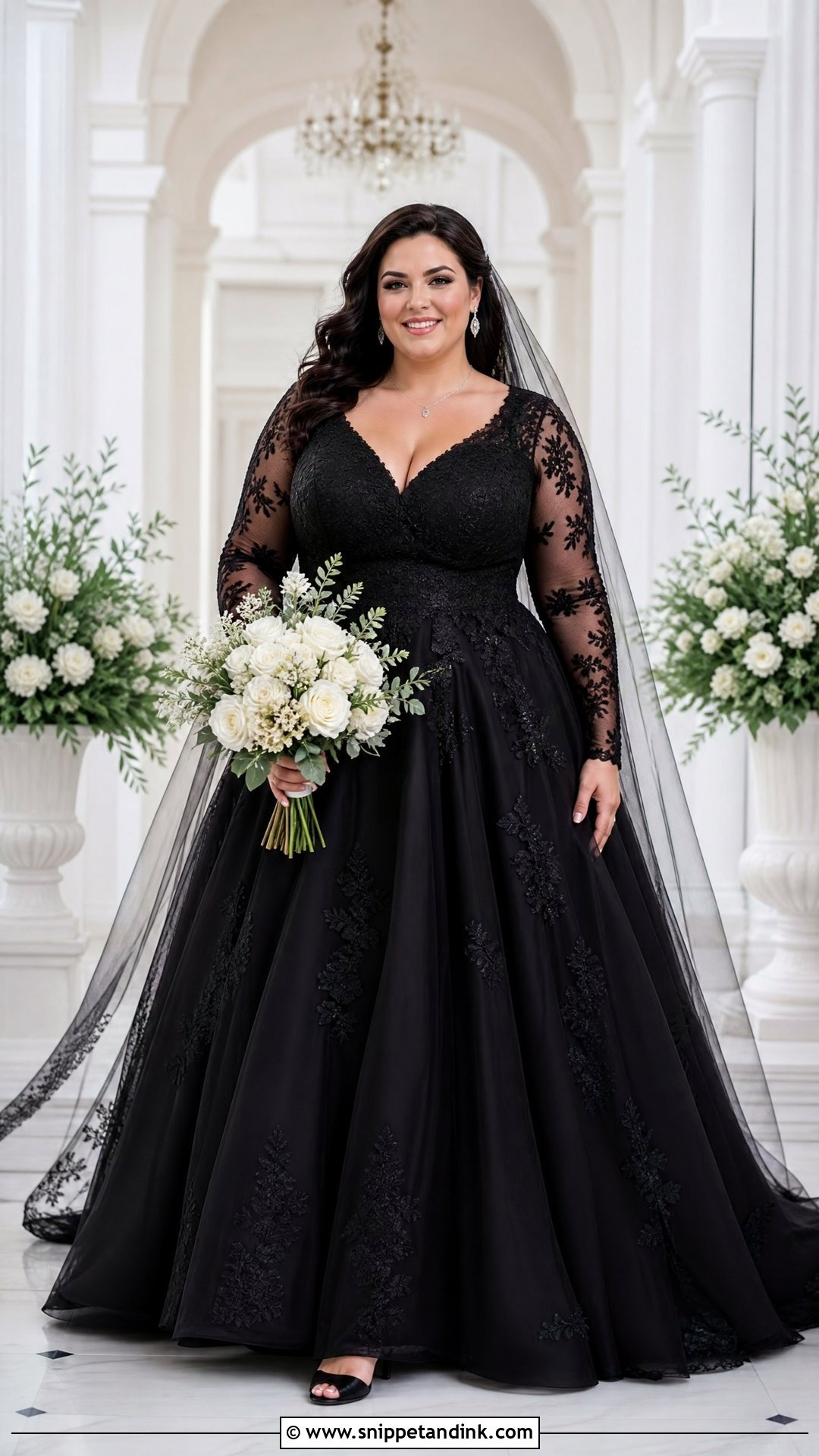
Black on a plus-size bride looks powerful when the construction does the work. Look for strong boning, comfortable lining and a silhouette you feel good in: A-line, corset bodice, wrap neckline, ball gown or fit-and-flare. Your comfort matters more than any old rule about what bodies should wear. I pay close attention to the bodice support and to where the waist seam sits, because a seam placed at your natural waist does more than any amount of draping. Comfortable heels and a veil that matches the gown’s drama finish it.
28. Black Maternity Bridal Dress
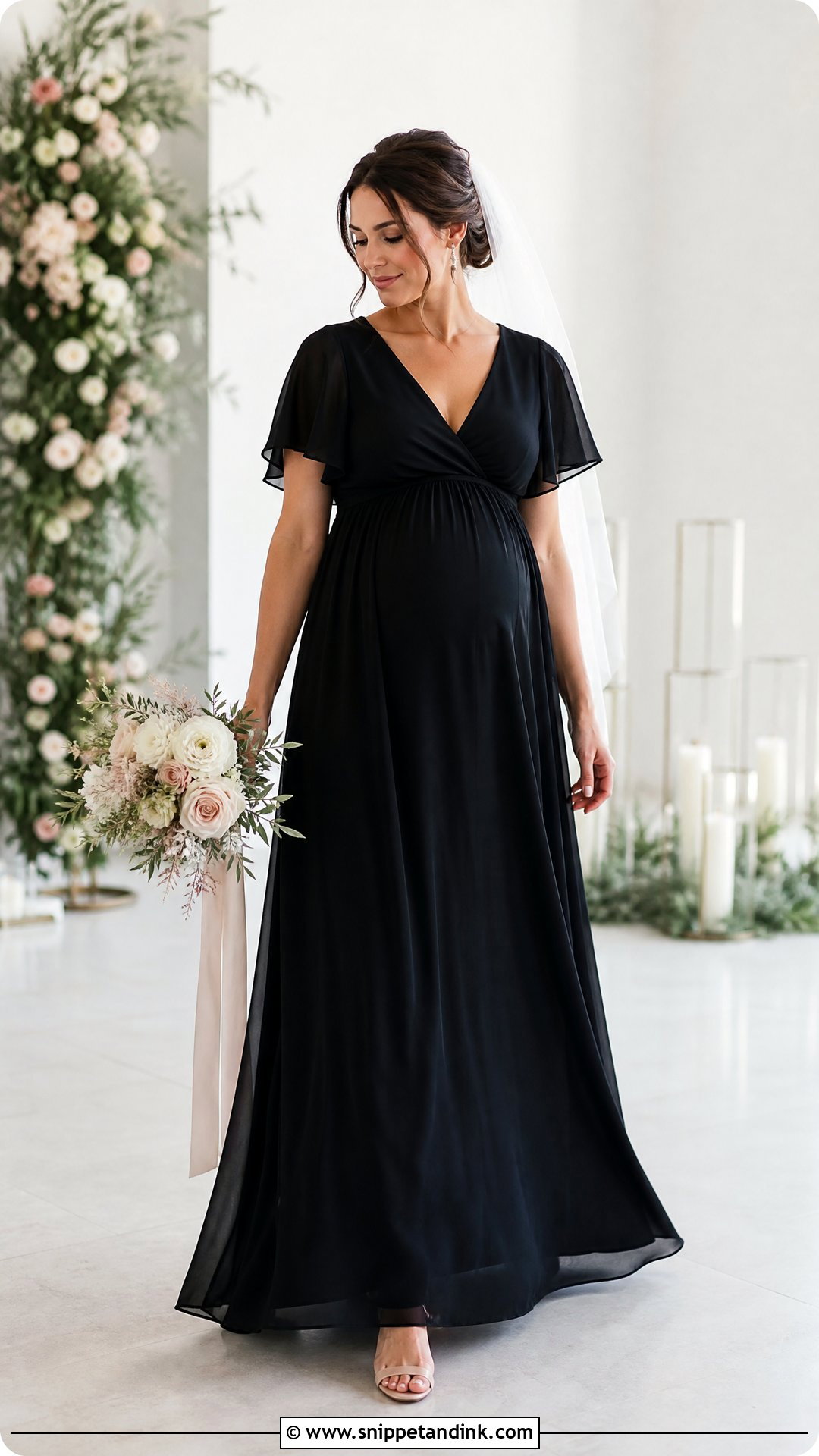
A maternity wedding dress has one job above all: comfort that lasts the whole day. Soft fabrics, flexible waist placement and room to move come first. Empire waist gowns, flowing A-lines, stretch crepe and soft chiffon skirts all work, with a V neck or flutter sleeve for shape. Bodies change quickly in pregnancy, so I schedule the final fitting as close to the date as the seamstress allows and leave adjustable lacing at the back. Supportive low heels and a light veil finish it.
29. Black Courthouse Bridal Dress
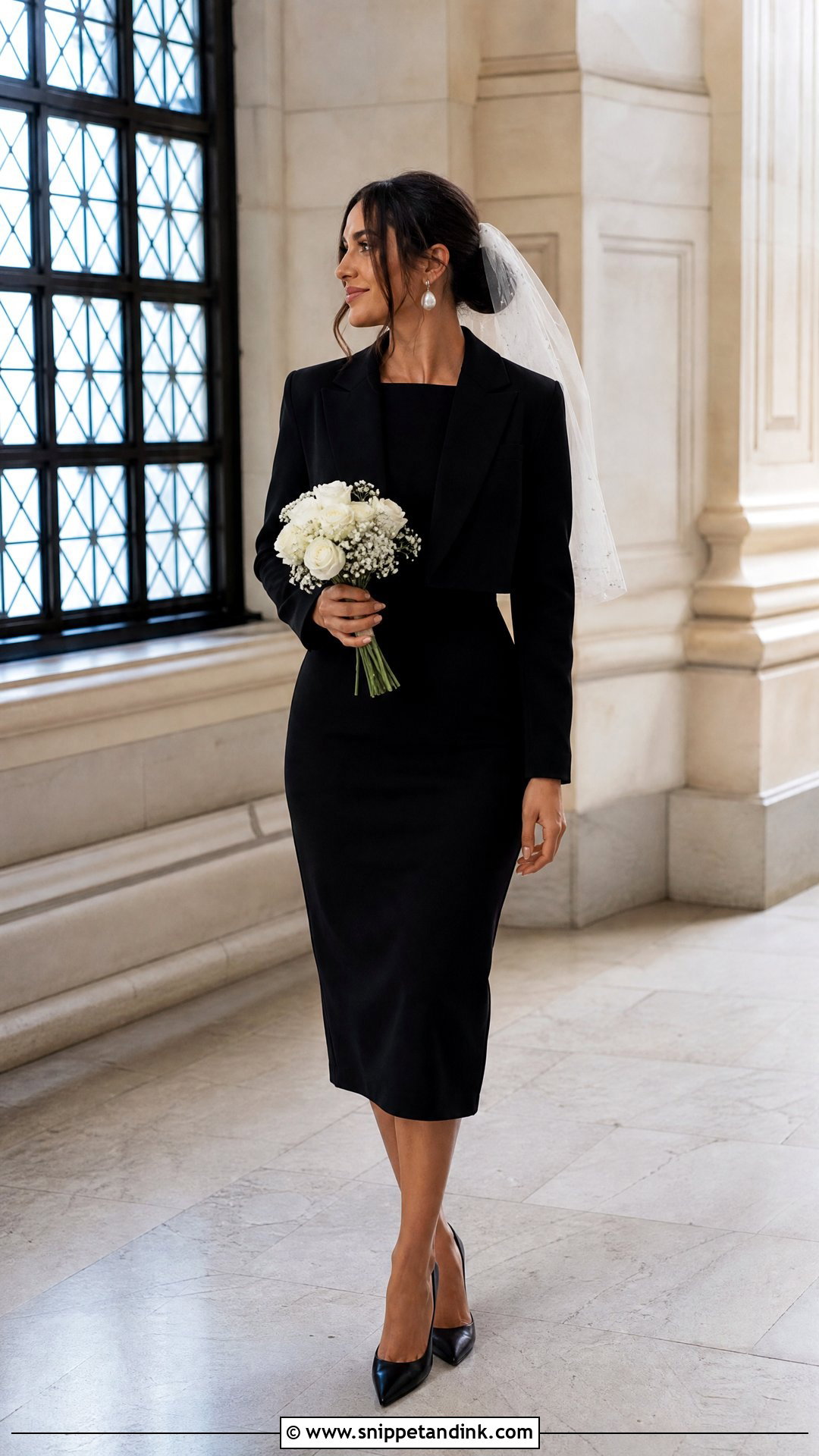
Courthouse dressing should be polished and practical. A satin midi, a tailored sheath, a simple crepe gown or a tea-length dress all suit it. Many courthouse weddings involve corridors, security lines and city pavements, so shoes matter more than at a venue wedding. Pointed heels with a block, a small bouquet, pearl earrings and a short veil keep it bridal. A cropped blazer or coat adds structure and warmth, and you can wear the dress again afterwards.
30. Black Reception Bridal Dress
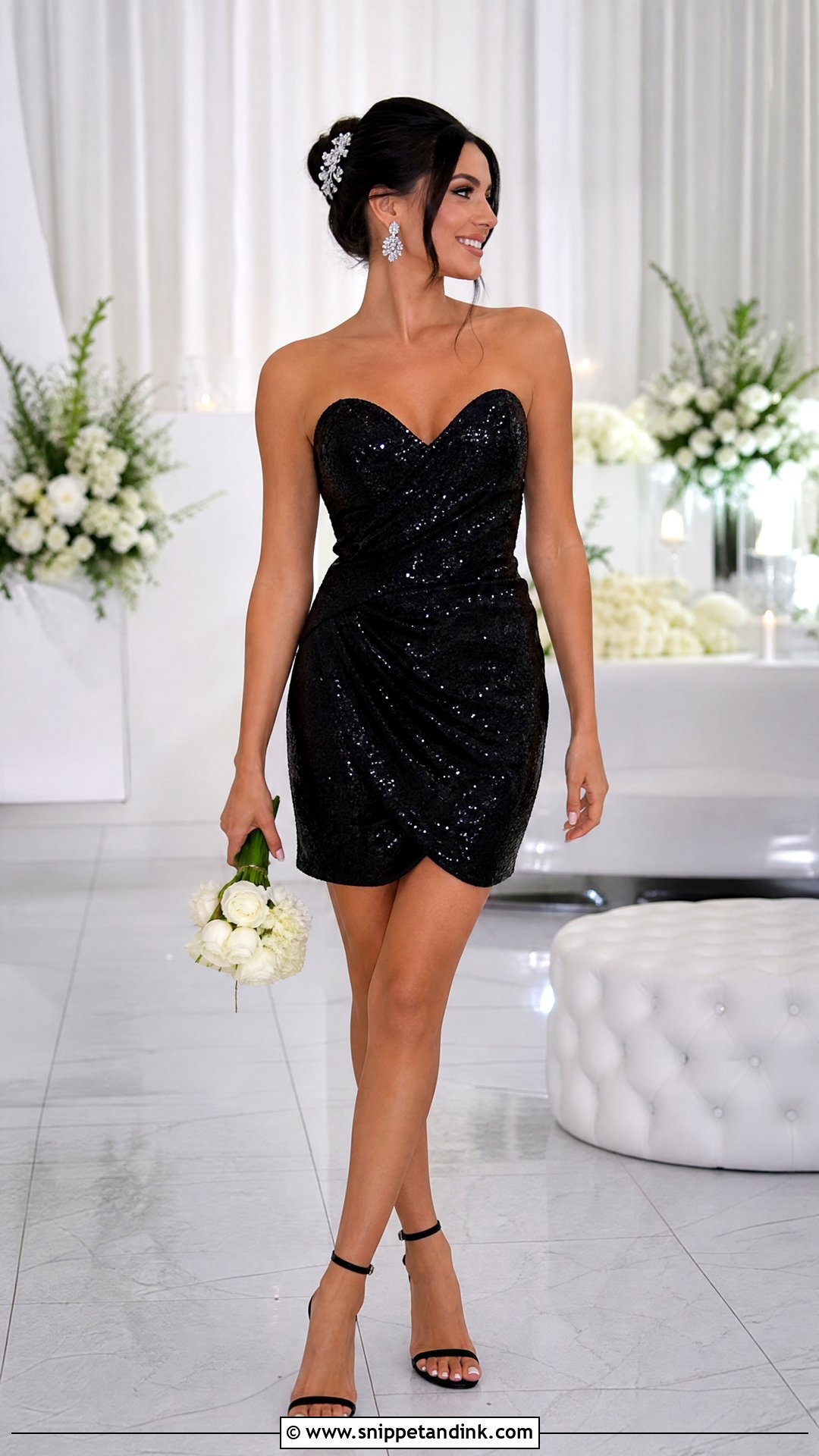
The reception dress is about movement. A shorter hem, lighter fabric, a fitted sequin style, a satin slip or a tea-length gown all free you up after a formal ceremony gown. Keep it bridal with statement earrings, elegant heels and a small hair accessory. Fringe or sparkle adds energy on the dance floor. Change quickly by having the second dress steamed and hanging in the room before dinner starts, so the swap takes minutes, not half an hour.
Telling Family You’re Wearing Black
In some families and cultures, black is still linked with mourning, and a black wedding dress can land as a shock. It’s your wedding, but a little warning makes the day smoother. I suggest showing parents a photo before the ceremony rather than letting them see it for the first time at the aisle. Explaining why you chose it, whether that’s the drama, the fabric or the sense that white never felt like you, usually turns a raised eyebrow into curiosity.
If someone close is truly upset, consider a small bridge: ivory flowers, a white veil for the ceremony or a lighter reception outfit. None of that means giving up the dress.
Keeping black looking black
- Put on deodorant well before dressing; white marks show instantly on black crepe.
- Keep a lint roller and a clothes brush with your getting-ready kit.
- Store the dress away from sunlight afterwards, since black dyes can fade unevenly along folds.
- Have it professionally cleaned before storage, and tell the cleaner about any sequins or velvet.
Wearing Black Because It Feels Like You
A black wedding dress can be soft, minimal or glamorous, and the colour alone doesn’t decide which. The silhouette, fabric, neckline and accessories do, matched to your venue and the way you move. A lace ball gown and a satin slip are entirely different dresses in the same colour. Think about comfort, light and how you want to feel walking into the ceremony, then choose the one that makes black feel like your own decision rather than a statement for other people.
You'll Like These Ideas:






Leave a Reply