
Braids are the most forgiving thing I can do with bridal hair. They lock sections in place, so a style holds through hugs, dancing and humidity far better than loose curls, and they disguise the flyaways that smooth styles show. They also scale from one thin accent to a full crown, which means there’s a braid for almost any dress, venue and hair length, walking down a garden aisle or a ballroom one. Below are twenty I braid regularly, with notes on what each one needs from your hair and what usually goes wrong.
Prepping Hair So a Braid Has Something to Grip
The most common reason a bridal braid slides loose is hair that’s too clean. Freshly washed, conditioned hair is slippery, and the strands escape every crossover. I ask brides to wash the day before, not the morning of, and to skip heavy conditioner on the lengths.
What I do before the first section
- Mist texture spray or dry shampoo through the lengths so the strands catch on each other.
- Curl first for any braid that has loose pieces or tendrils, then braid.
- Add clip-in wefts for fine or shoulder-length hair; they help crowns and milkmaid braids reach around the head.
- Mark where the veil comb and any flowers will go, so I can leave gaps for them instead of forcing them in later.
Fine hair benefits most from this prep. A braid on fine, freshly washed hair looks thin and sparse, while the same braid on textured, day-old hair with a weft added looks much fuller and holds far longer.
1. French Braid Wedding Updo
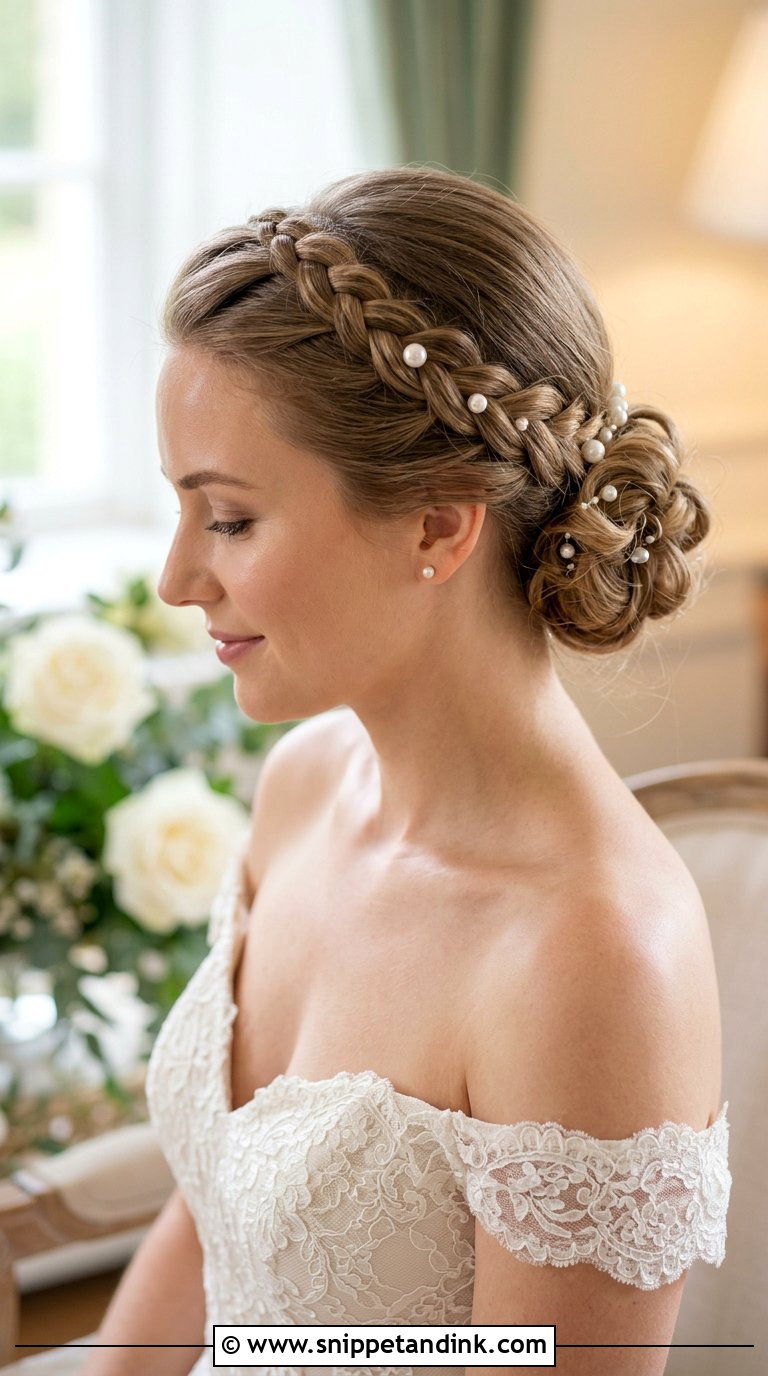
A French braid updo is the dependable classic. I braid smoothly from the crown down, then tuck the tail into a low knot or small bun, which keeps every strand locked in for the whole day. Ballrooms and church ceremonies suit it, and a veil comb slots neatly just above the bun. The hair needs to reach at least the shoulders, so the braid gets to the nape with enough left over for a bun. Very silky, freshly washed hair slips out of the braid, so I prep with texture spray first. A pearl pin or jeweled comb at the join is all it needs.
2. Fishtail Braid for Bride
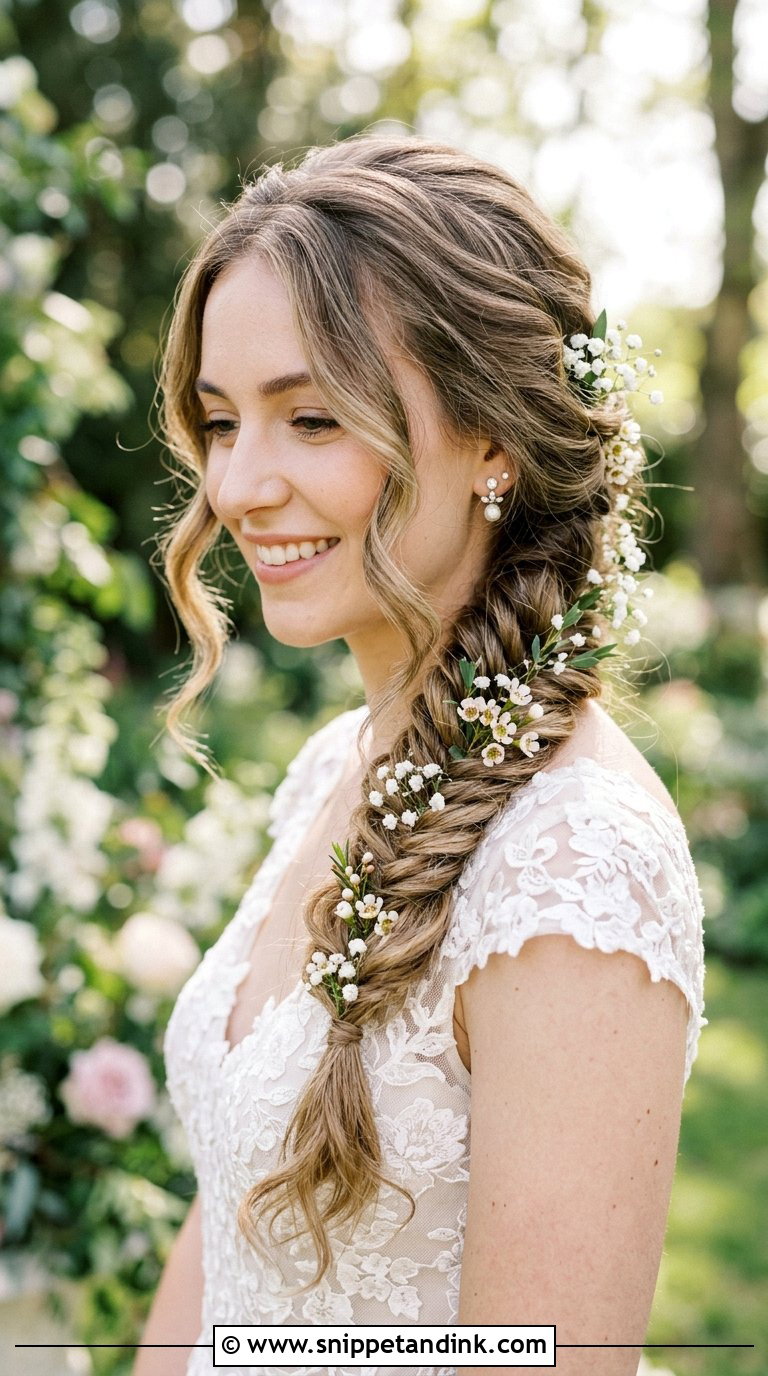
A fishtail weaves two sections in tiny crossovers, so the herringbone pattern carries far more detail than a three-strand braid. Boho and rustic weddings suit it, worn long over one shoulder or pinned into a soft updo. I braid it tight first and then gently pull the edges out, a step stylists call pancaking, which widens the braid without loosening its grip. Heavy layers are its weakness, because short pieces poke out of the small crossovers; long, one-length hair gives the cleanest pattern. Baby’s breath, tiny roses or delicate beads finish it.
3. Crown Braid Bridal Hairstyle
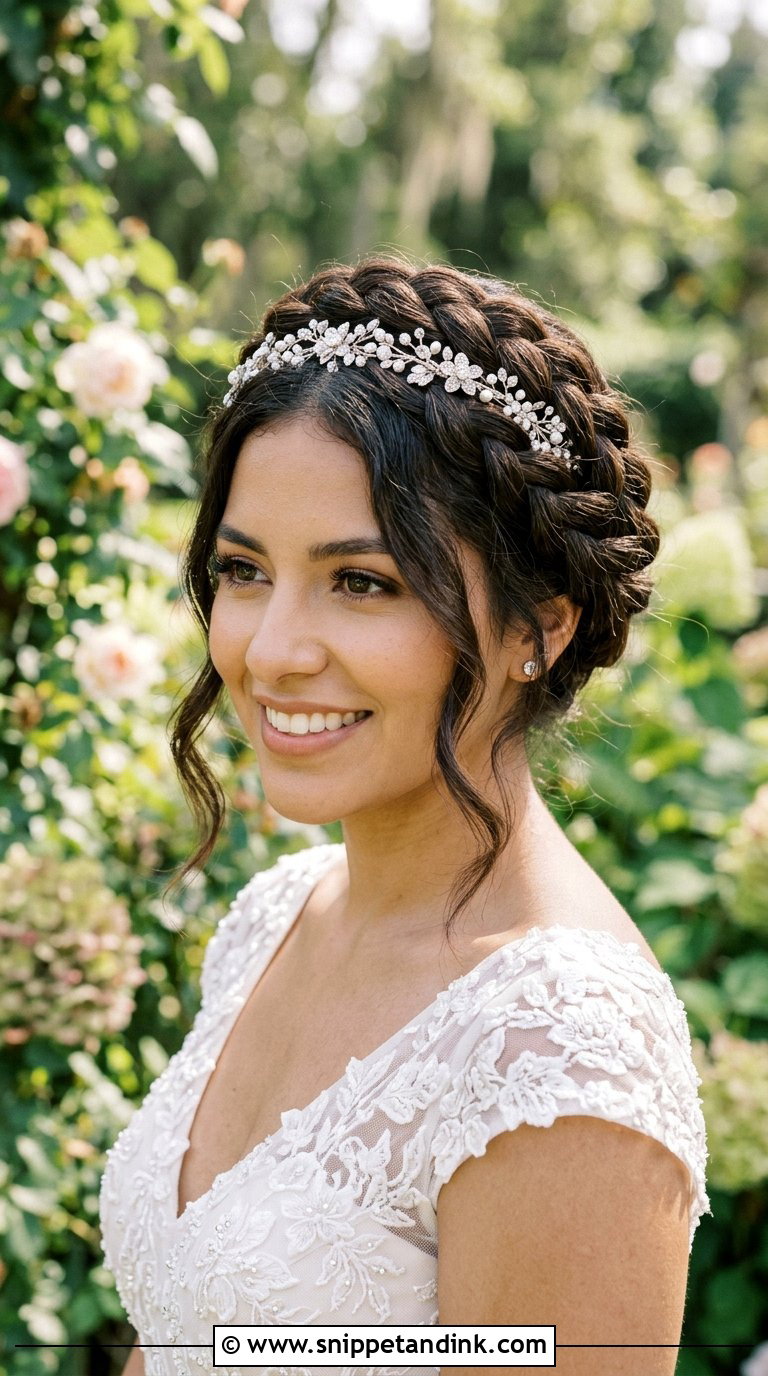
A crown braid wraps around the head like a natural halo, and it pairs well with flower crowns, jeweled headpieces and boho, vintage or princess themes. Because it sits up and away from the neck, it’s one of the coolest styles for a summer ceremony. I usually build it from two Dutch braids that meet at the back, since one braid rarely has the length to circle the whole head cleanly. The join is the tricky part, and I hide it under a pin or a small bloom. It looks tidy from every side, which makes it easy to photograph.
4. Waterfall Braid for Wedding
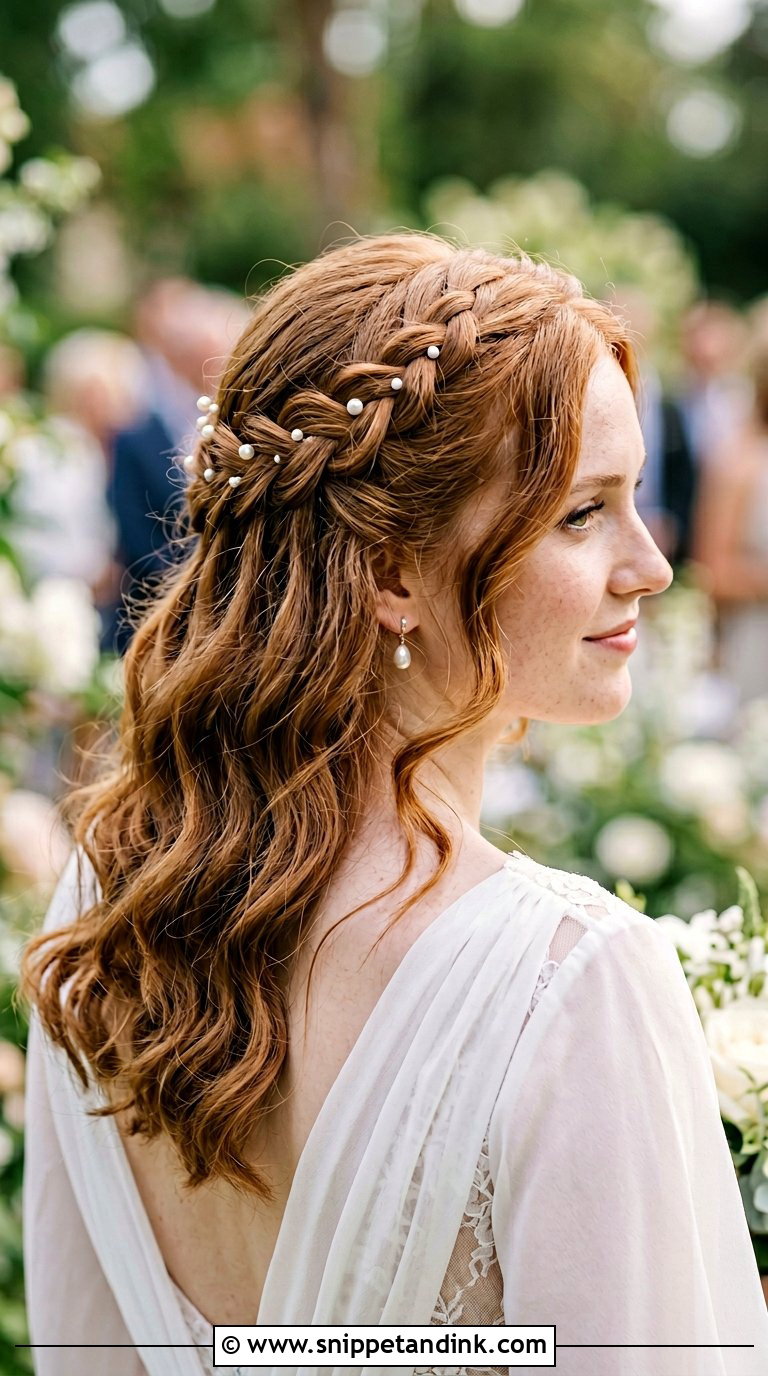
A waterfall braid runs horizontally around the head and drops a strand at every pass, so loose hair spills through it like water. It’s a half-up look that shows off length, and it suits loose waves and garden venues. I always curl first and braid second, because the dropped strands need some bend to look intentional. On very straight hair they can look as though the braid simply came apart. Small flowers or pearls along the braid add detail, and long, wavy hair shows it at its best.
5. Halo Braid Bridal Updo
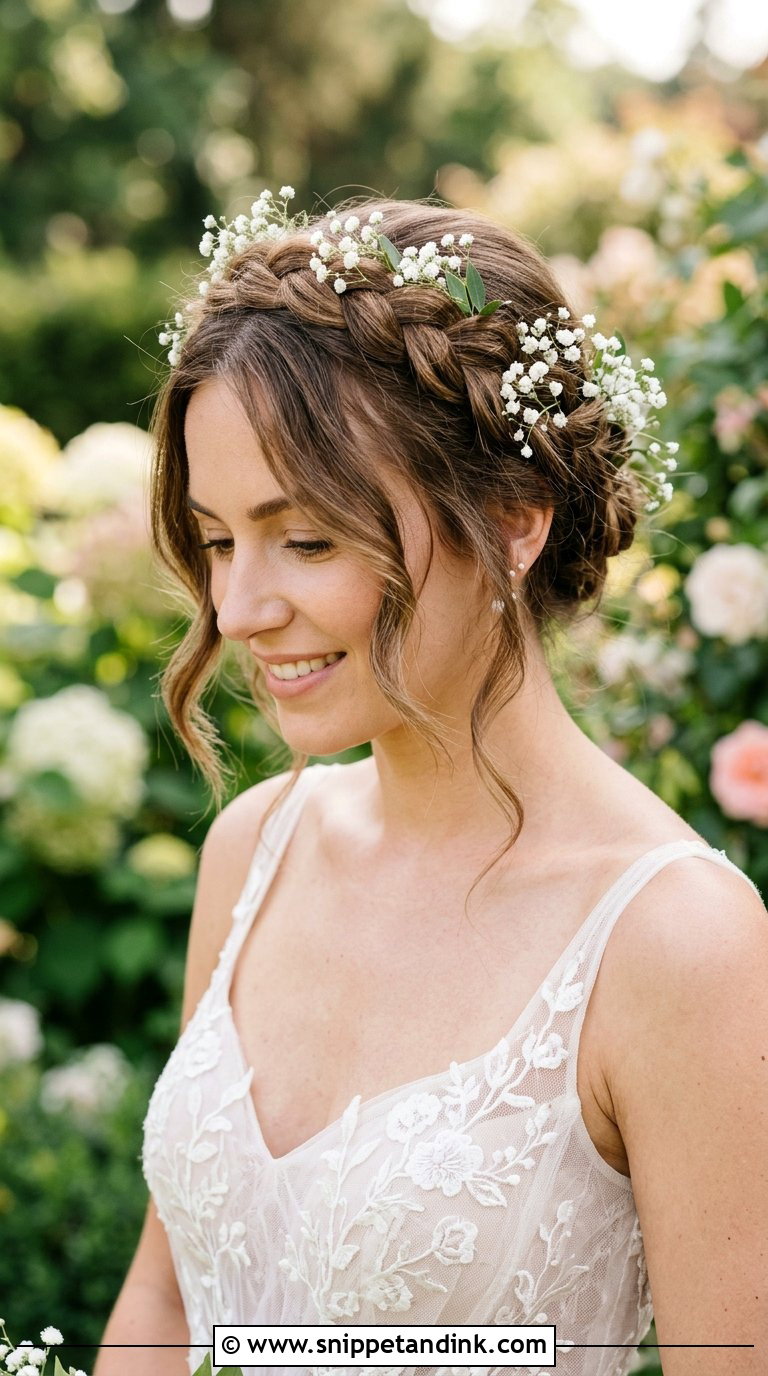
A halo braid sits lower than a crown braid, closer to the hairline, so it reads softer and more bohemian. Summer weddings and outdoor celebrations suit it, and it keeps the neck cool. I leave a few wispy pieces at the temples and add tiny blooms for a garden feel. With medium-length hair, I’ll often add a clip-in weft so the braid reaches all the way around without thinning out at the back. Done well, it gives a relaxed finish that still looks tidy by the last dance.
6. Dutch Braid Wedding Style
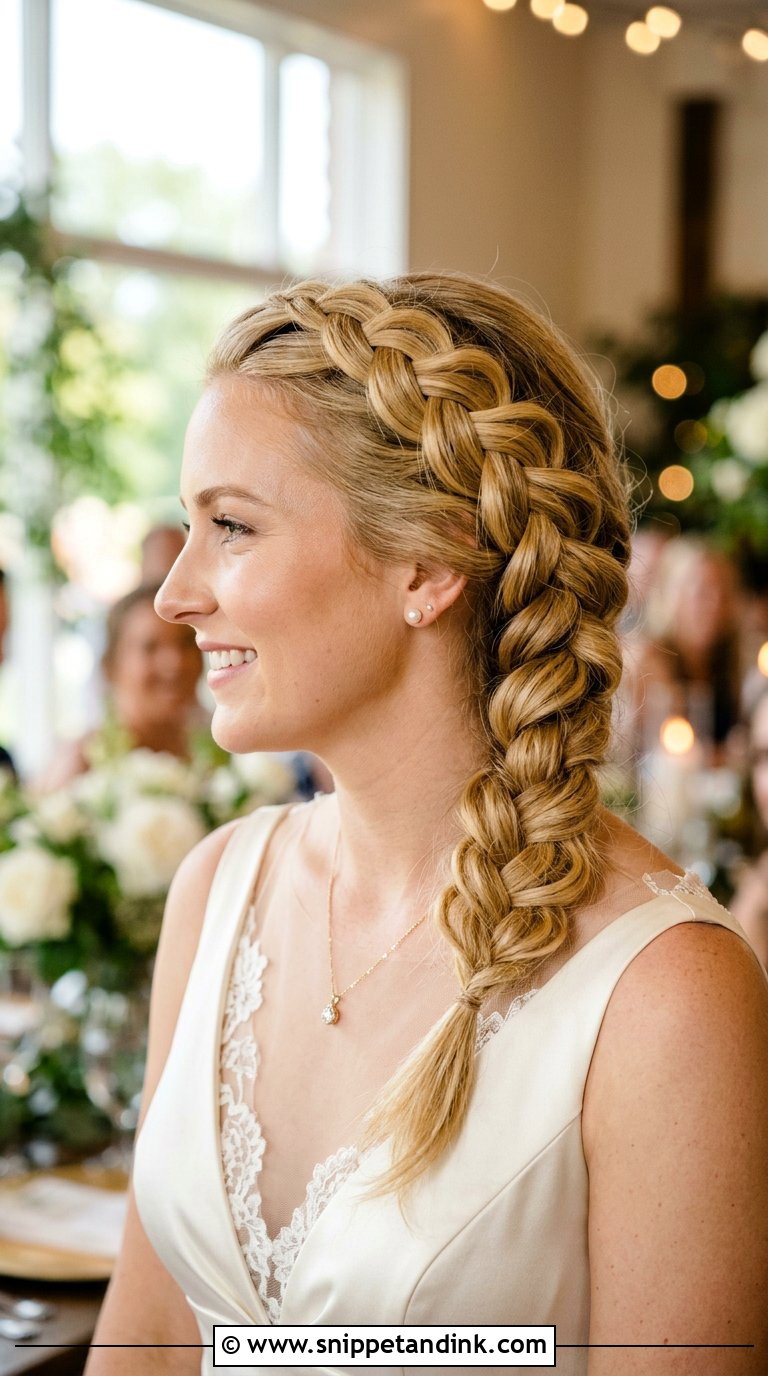
A Dutch braid crosses the strands underneath instead of over, so it sits raised on top of the hair rather than tucked into it. That raised texture reads clearly in photos, even from the back of the room. Worn as double Dutch braids, it looks youthful; a single thick one looks sleek. I loosen the edges after braiding for softness, but only a little, since the grip is what keeps it secure through hours of dancing. Think of it as the sharper, more modern cousin of the French braid.
7. Braided Low Bun for Bride
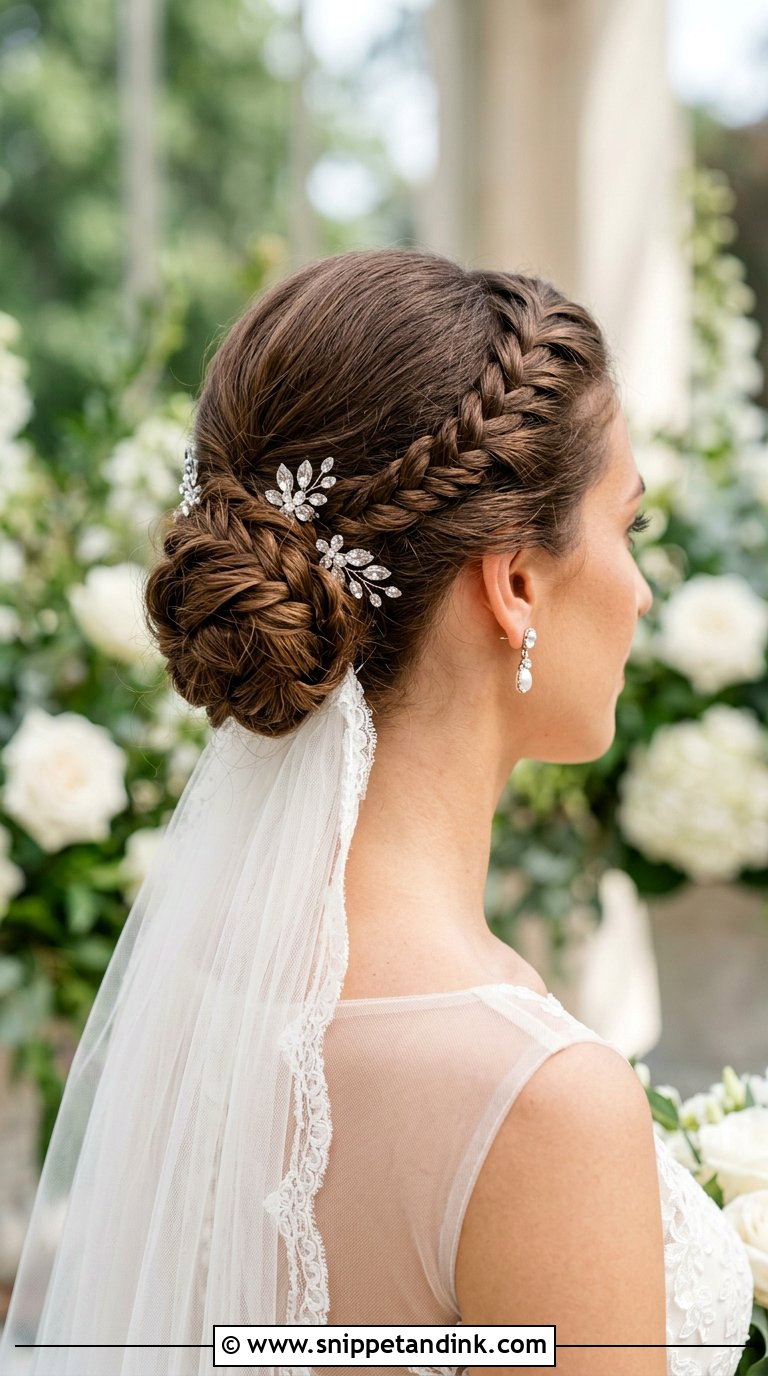
A braided low bun gathers the hair at the nape with braids woven through it for texture. It sits exactly where a veil comb wants to go, and it doesn’t fight with a tiara or statement earrings. I keep it tight and sleek for minimalist weddings and pull strands loose for vintage ones. It’s one of the few braided updos I can make work on shoulder-length hair, because the braids can stay short and the bun small. It suits most face shapes and rarely looks dated in photos years later.
8. Boho Braid for Bride
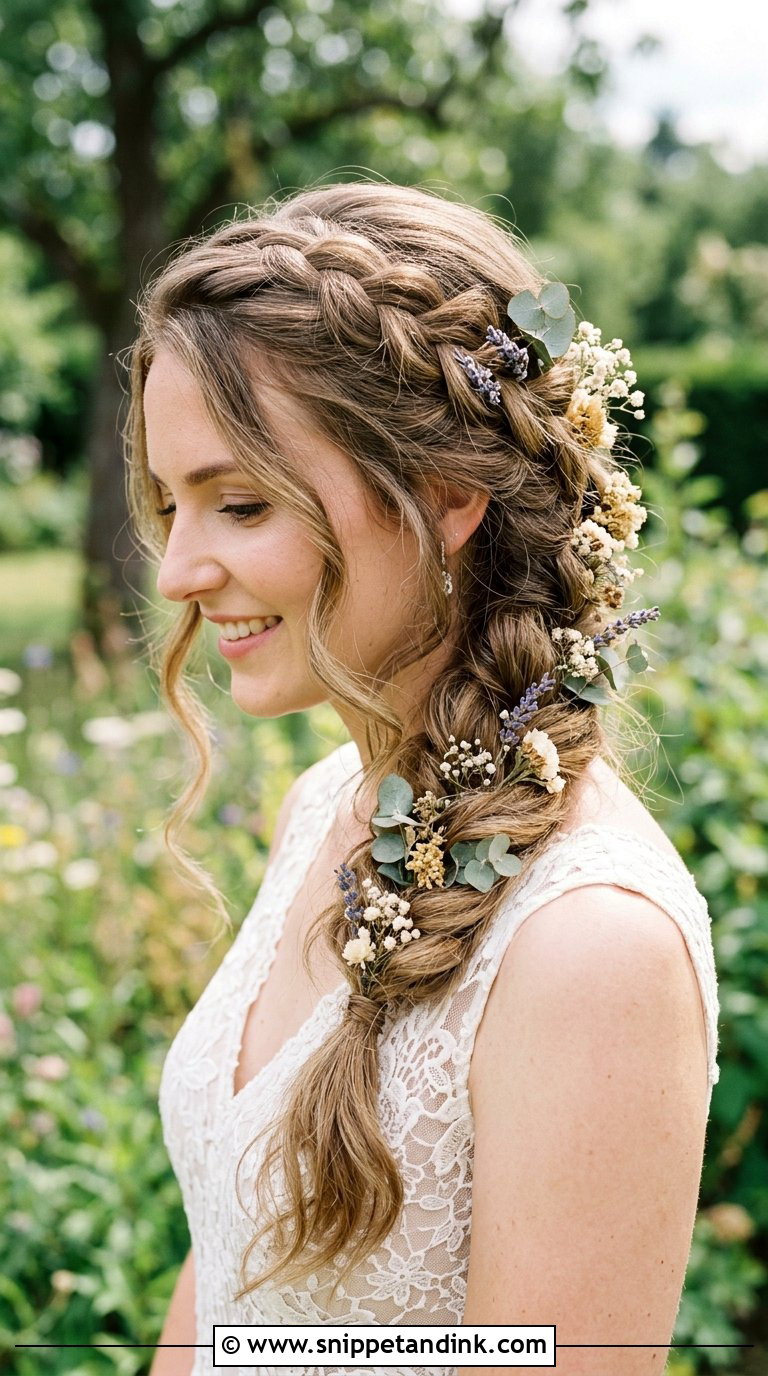
The boho braid is meant to look a little undone: loose braids, soft waves and face-framing pieces with a lived-in feel. Outdoor, beach and rustic weddings suit it, and dried flowers, greenery or small beads add to the earthy mood. Here’s the honest part. It only looks better as the day goes on if the base is set well; I curl the waves and pin them to cool before braiding, or they drop flat by the reception. Medium to long hair with natural movement wears it best, and it’s very comfortable all day.
9. Side Braid Wedding Hairstyle
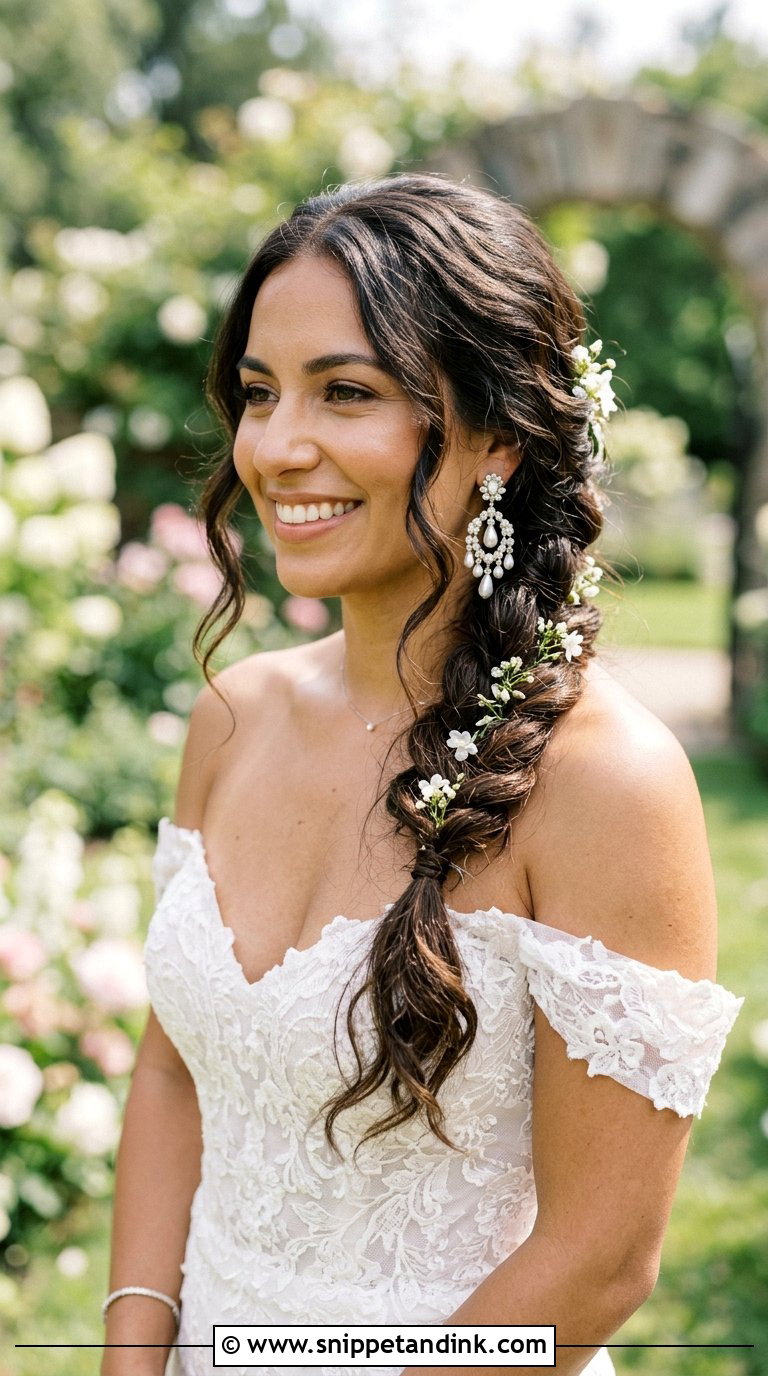
A side braid over one shoulder frames the face and shows off the neckline, especially with off-shoulder gowns and statement earrings. I’ll use a fishtail, French or loose three-strand braid depending on the dress, then loosen it gently for volume. The one thing I check is which side faces the guests during the ceremony, because the braid side is the side that gets photographed. Hugging pushes it around, too, so I anchor it with a hidden pin behind the ear. It needs medium to long hair.
10. Braided Half-Up Half-Down for Bride
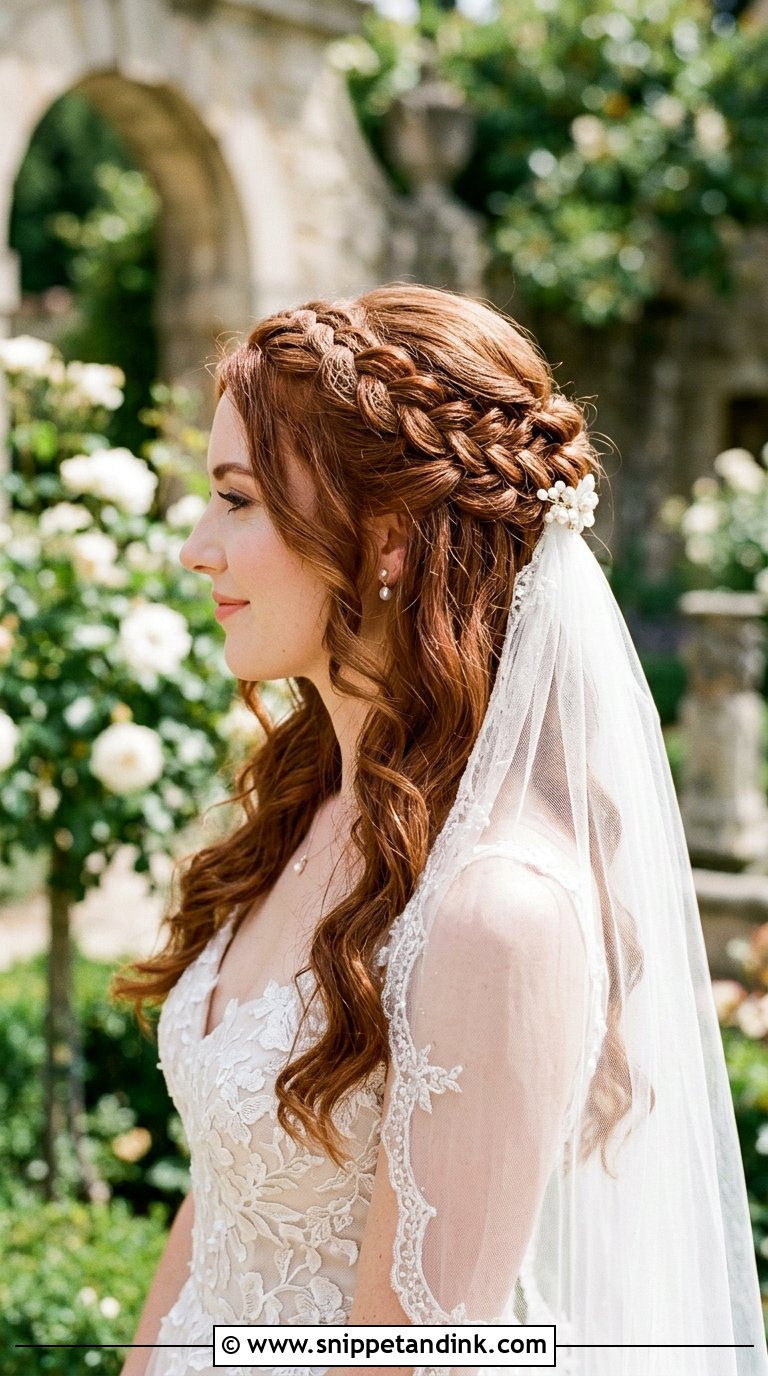
Braiding the top section back gives you an updo’s structure at the crown and loose waves below. I pull two small braids from the temples and join them at the back, sometimes adding twists or a tiny braided crown for more detail. It sits nicely under a veil and holds floral accents well. The loose lengths are what can fail, so I set the curls with a firm-hold spray and pin them up to cool before releasing them. This one works at most lengths, even hair just past the shoulders.
11. Milkmaid Braid Bridal Hairstyle
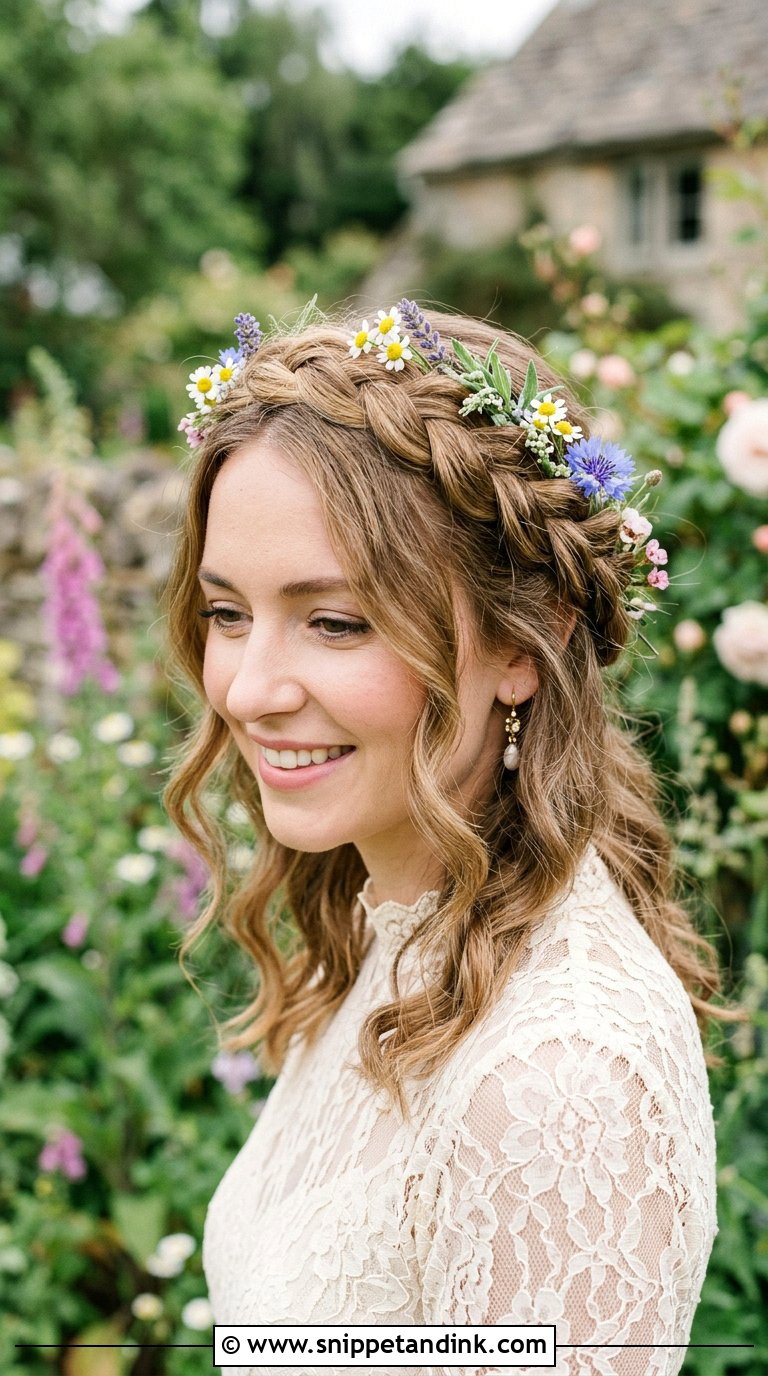
A milkmaid braid takes two braids from the nape and crosses them over the top of the head, pinned like a vintage crown. Rustic, cottagecore and garden weddings suit it, and it keeps hair off the neck in warm weather. You need fairly long hair for the braids to reach across; if yours is shorter, I’ll add a clip-in weft before braiding. I pin each braid with bobby pins pushed in opposite directions so the crossing stays flat. Wildflowers or baby’s breath tucked along the top give it a storybook finish.
12. Braided Updo With Flowers
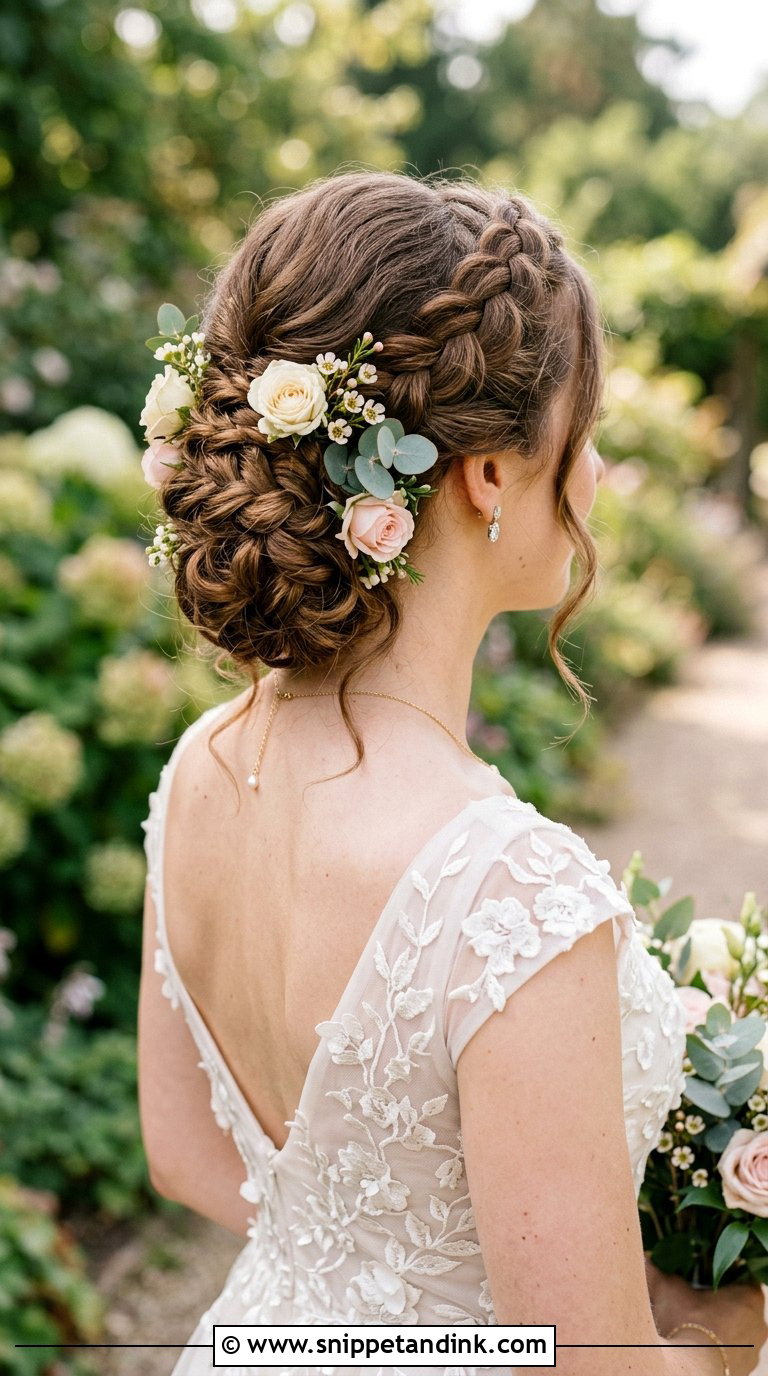
A braided updo adorned with fresh flowers holds its blooms far better than a smooth bun, because the braid’s crossovers give each stem something to grip. Roses, baby’s breath and eucalyptus add color and texture, and matching them to the bouquet ties the look together. I ask the florist for blooms wired and taped for hair, since a raw stem tears through the braid. Spring, summer and boho celebrations suit it best. In heat, pick sturdy flowers; delicate petals wilt within a few hours away from water.
13. Inverted French Braid Bun
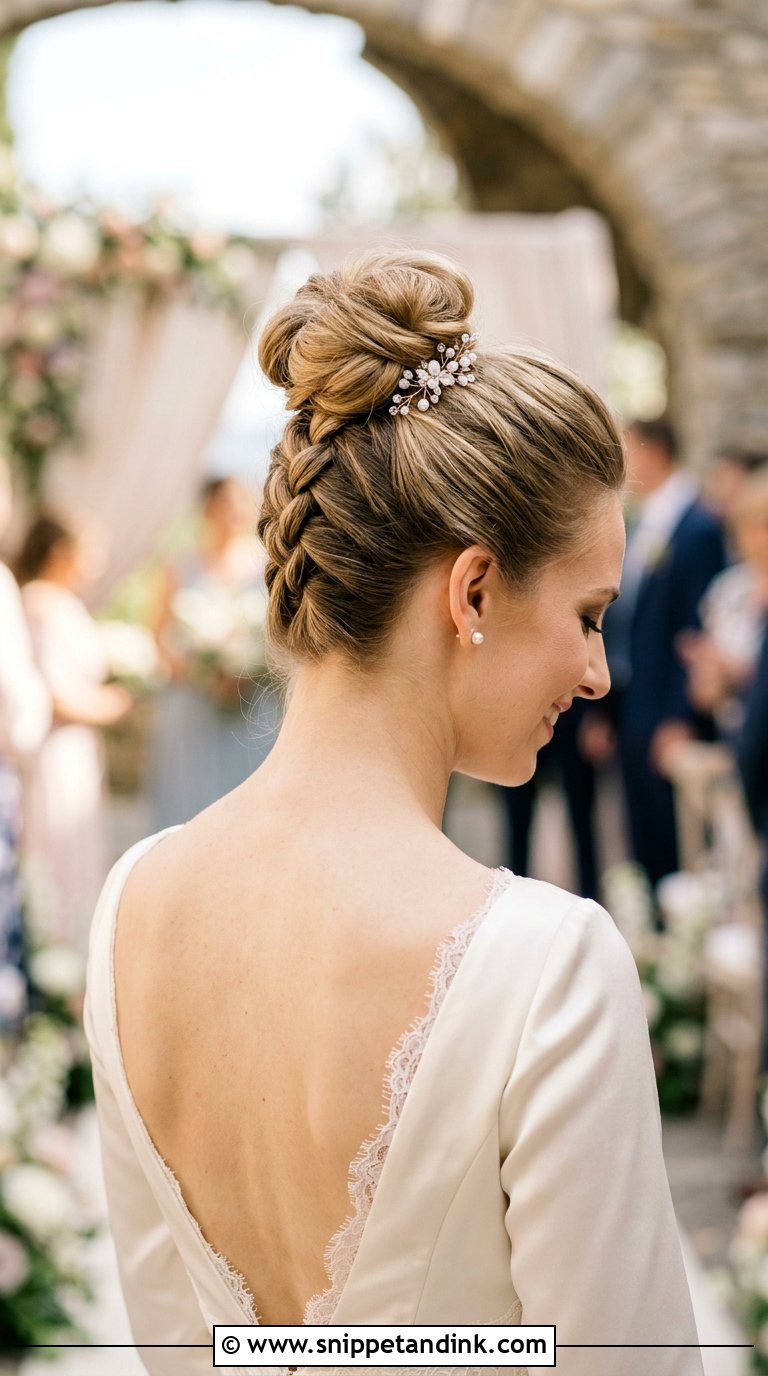
This one starts at the nape and braids upward, finishing in a bun on top, so the detail sits at the back of the head, right where guests are looking during the ceremony. The bride has to lean her head forward while I braid, so I build it early in the morning and hold the braid with clips while the bun goes in. It’s very hard to recreate on yourself, and tight braiding at the nape can pull, so I wouldn’t suggest it for a DIY bride. Loosen it for softness or keep it tight. Medium to long hair works best.
14. Pull-Through Braid for Bride
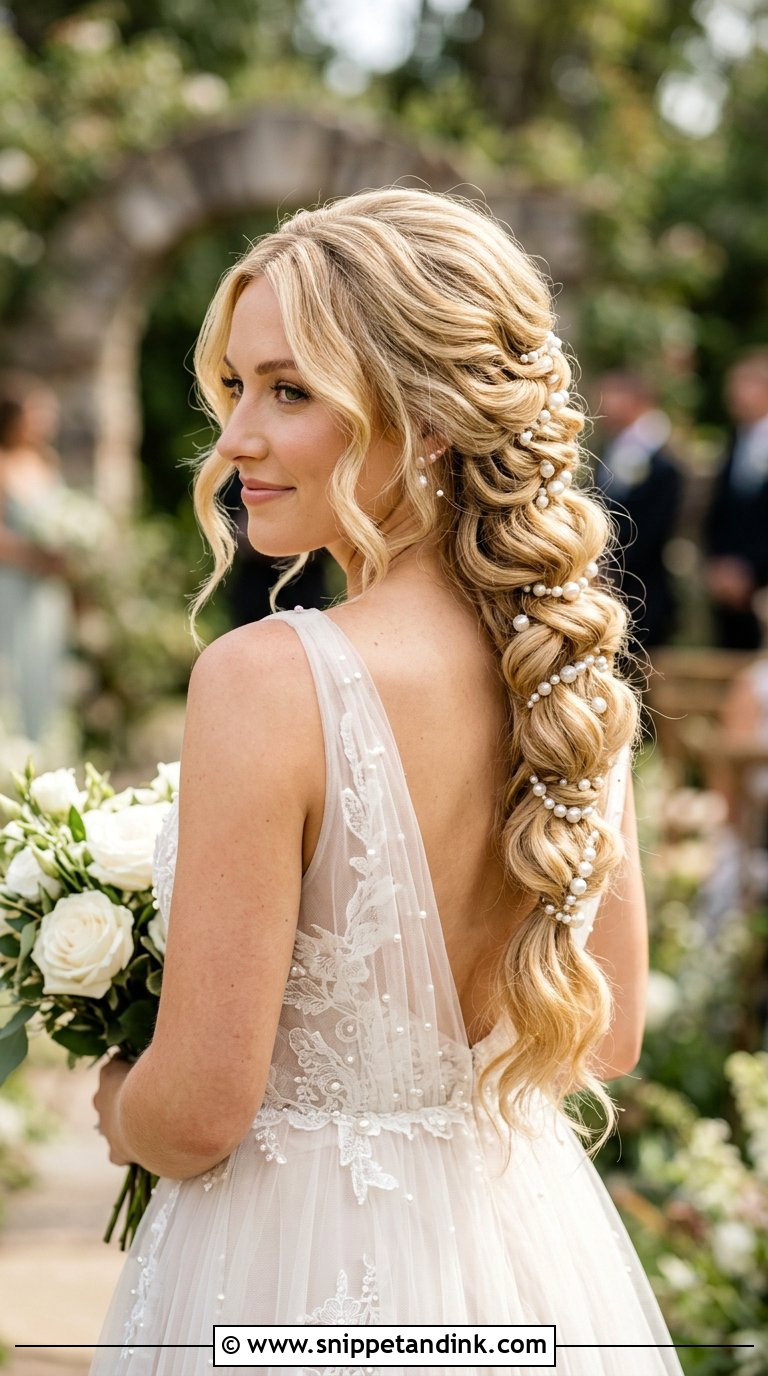
A pull-through braid isn’t woven at all. It’s a chain of small ponytails, each one split and pulled through the next, held with clear elastics. That makes it very full and forgiving, which is why I reach for it with finer hair that can’t make a thick braid otherwise. It works as a single braid or inside a half-up style. I loosen each loop gently for an airy look and hide the elastics under the sections. Pearls or tiny flowers add detail, and it suits most lengths, since each section only needs to reach the next.
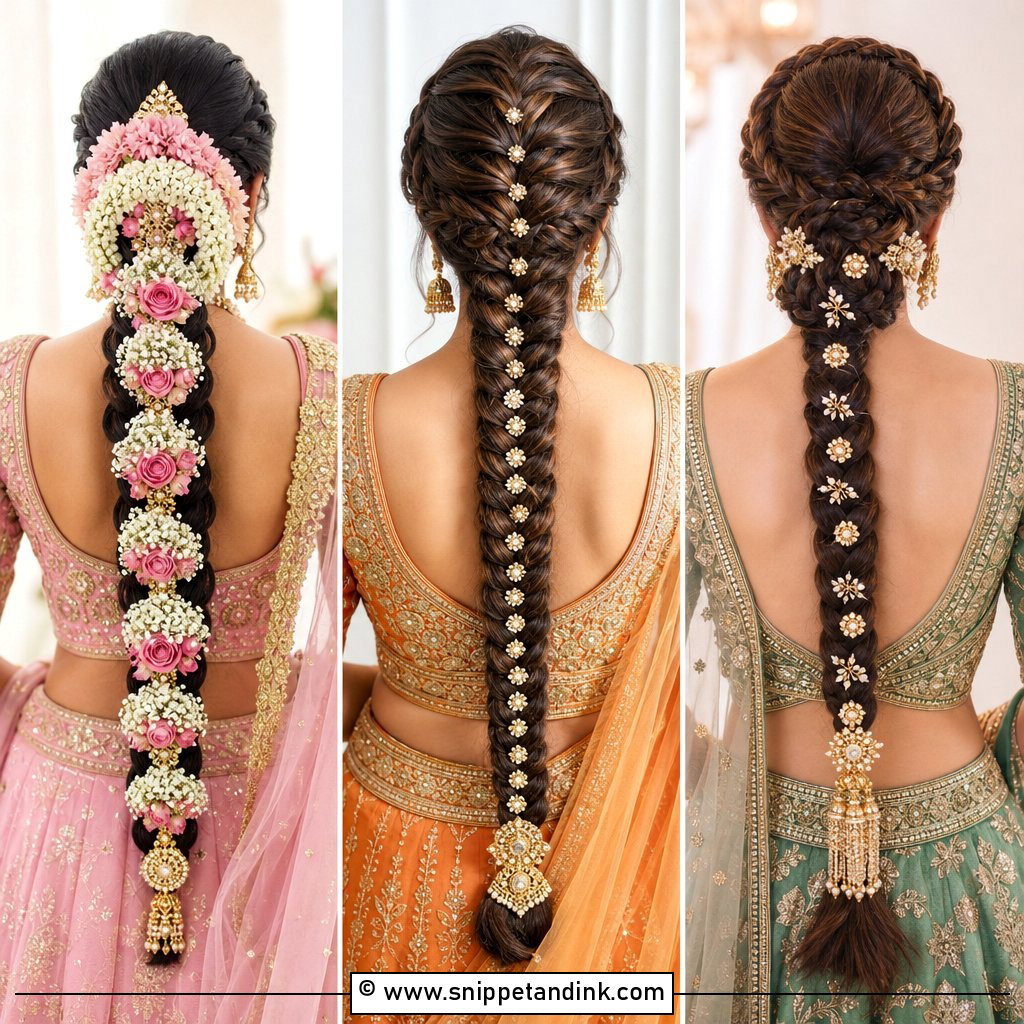

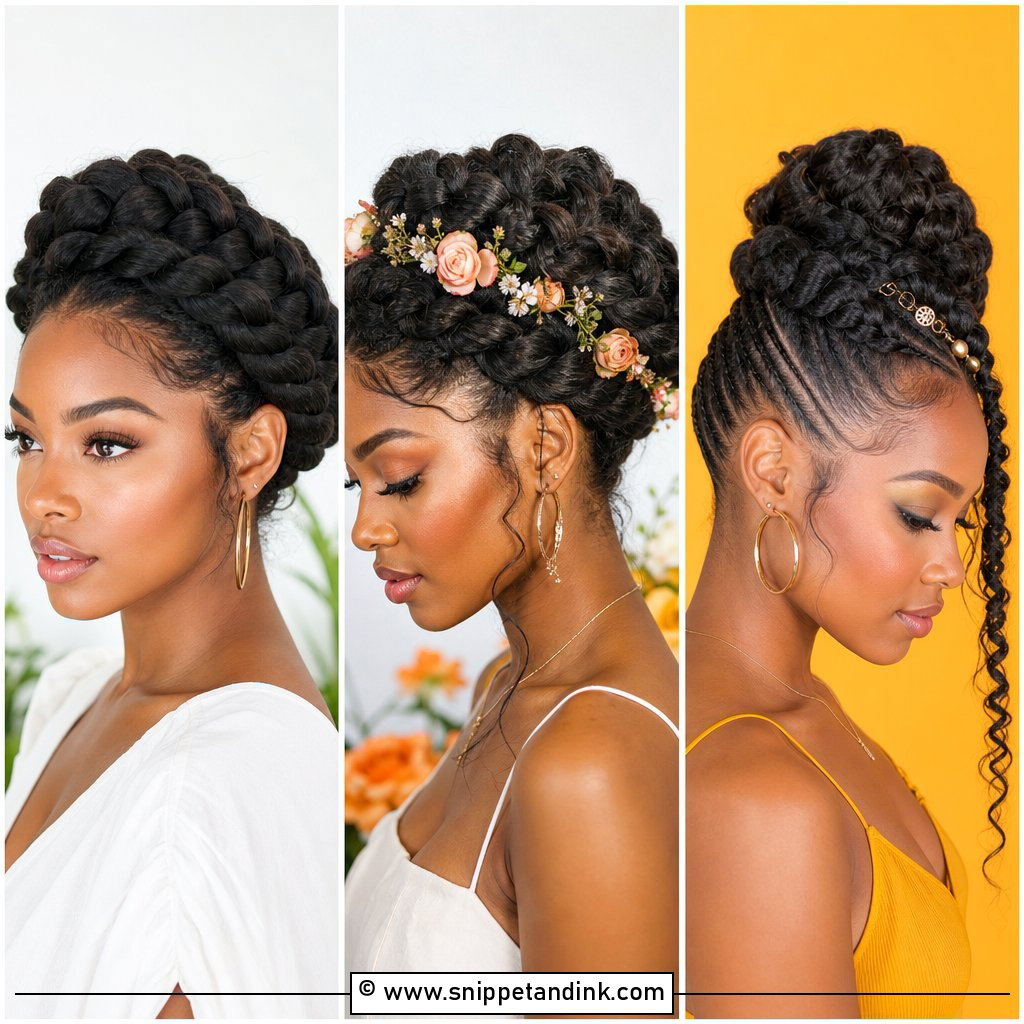
15. Braided Ponytail Wedding Hairstyle
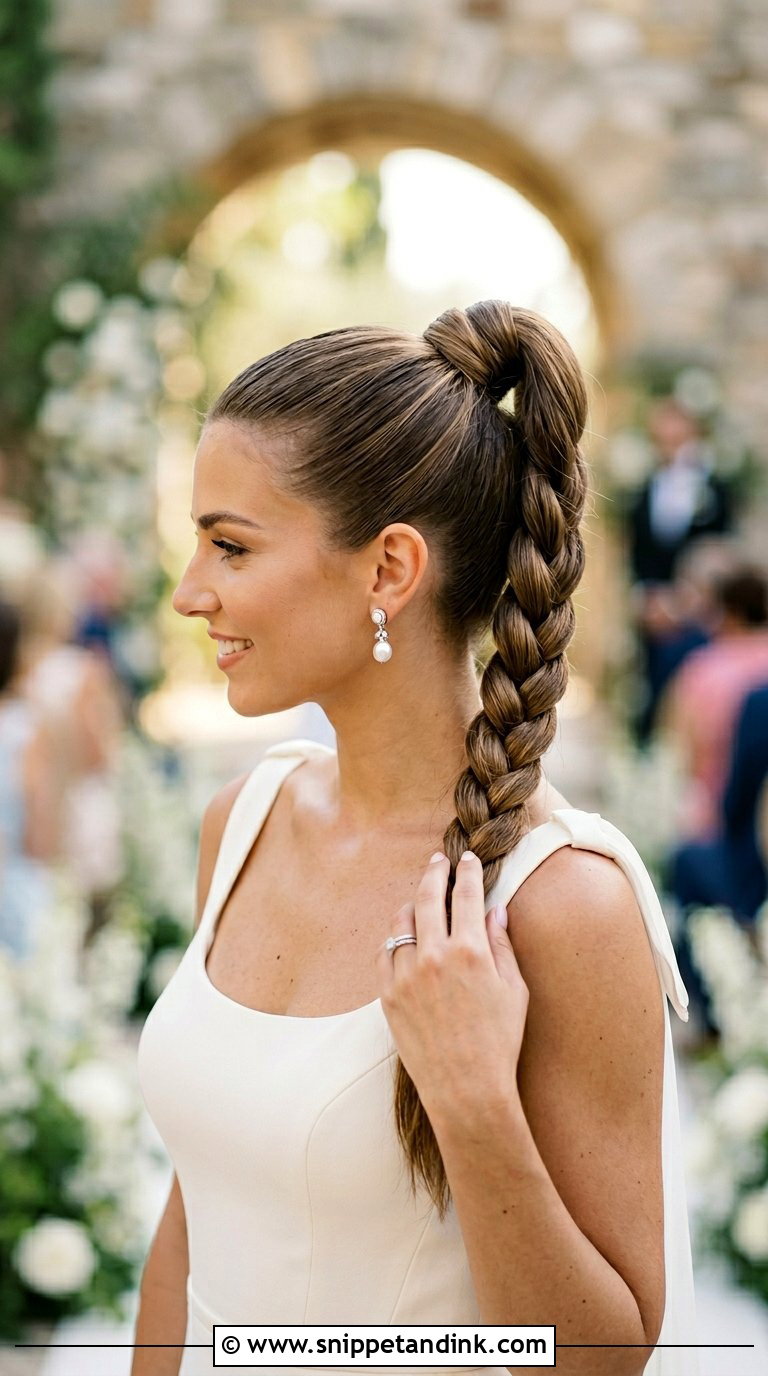
A braided ponytail gathers the hair into a sleek or full ponytail and weaves a braid through it for texture. High looks dramatic; low feels calmer. I wrap a strand around the base to hide the elastic and pin it from underneath. Long, thick hair can drag a high ponytail down by evening, so I anchor it with two crossed pins at the base and a firm-hold spray. It needs length to look right, and it moves nicely when you dance.
16. Goddess Braid Bridal Style
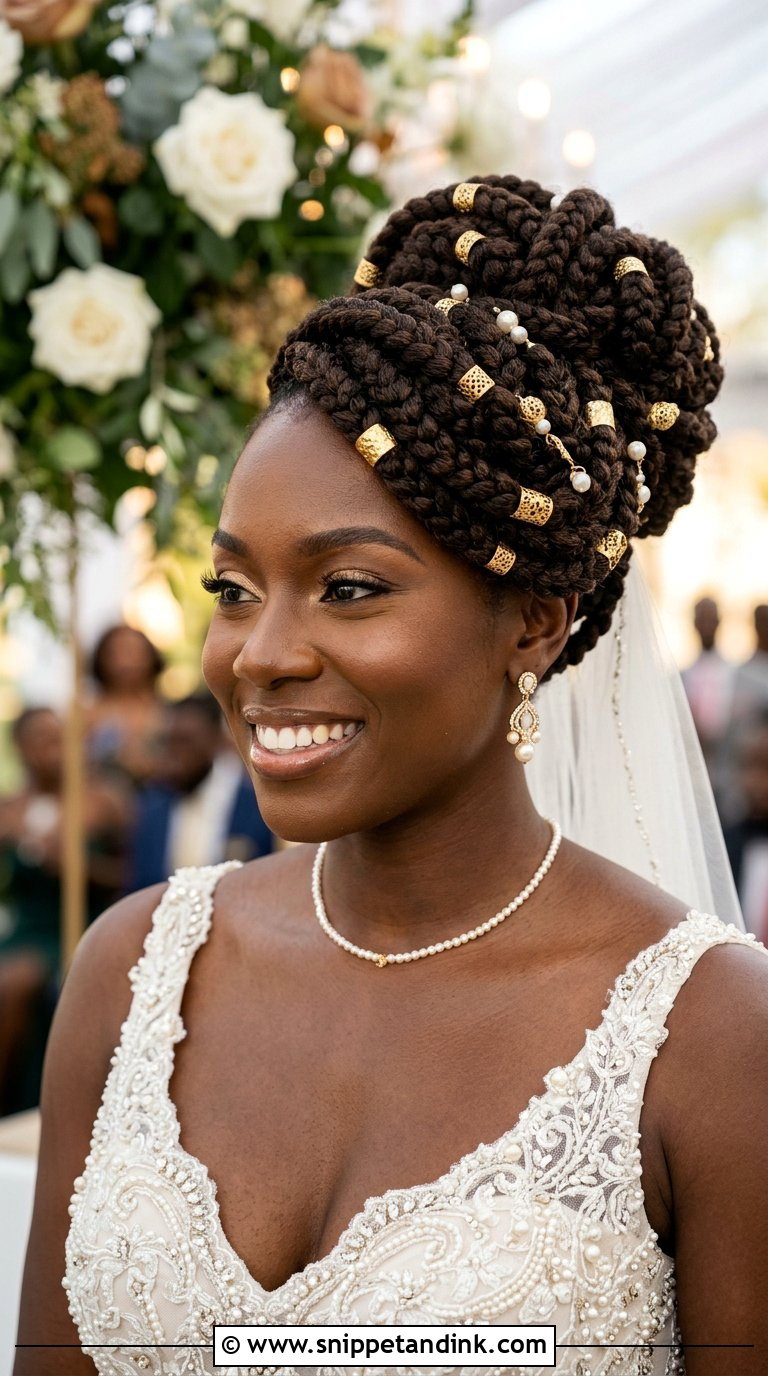
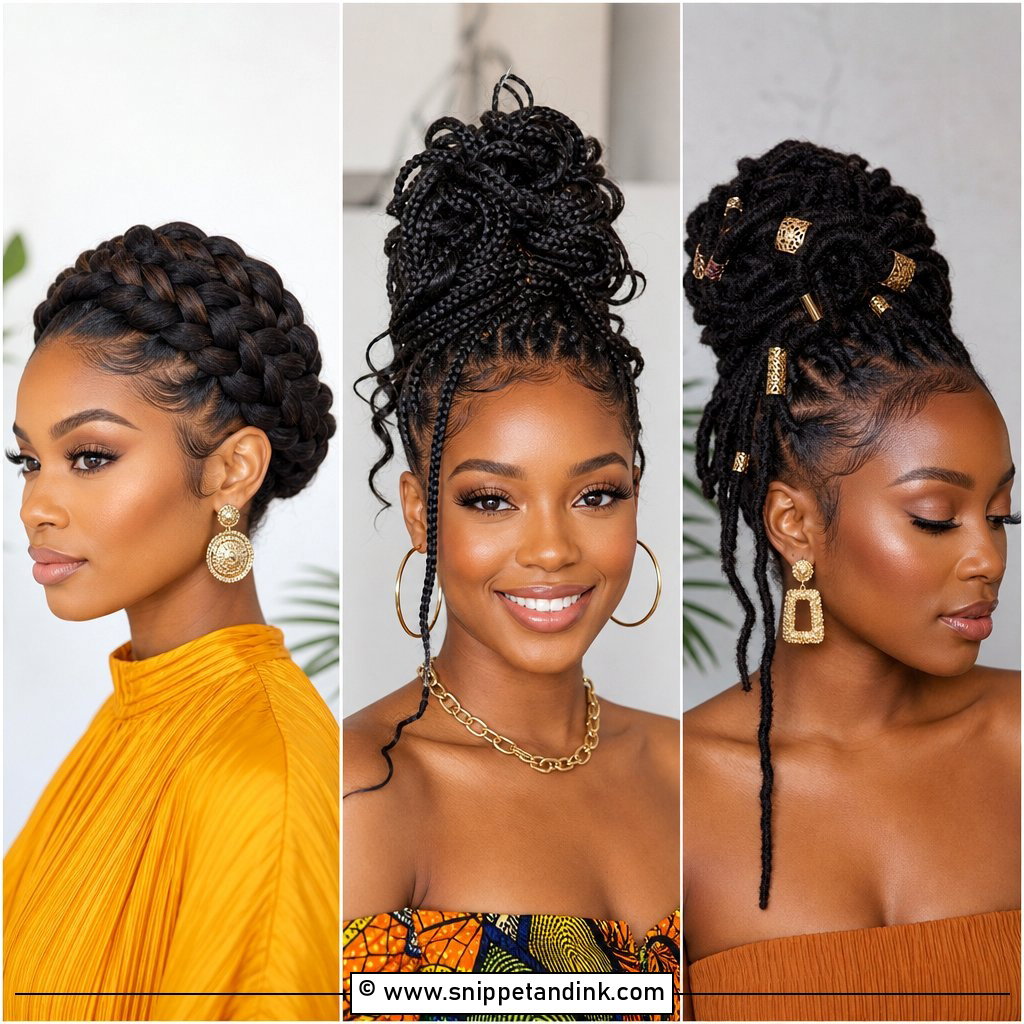
Goddess braids are thick, raised braids, essentially large cornrows, often with extensions added for length and fullness. They suit natural and textured hair, and they can be swept into an updo or crown or left flowing down the back. I’d install them a day or two before the wedding so the scalp tension settles, rather than on the morning itself. Gold cuffs, pearls or fresh flowers finish them, and they hold through every part of the celebration. Ask your braider to keep the edges gentle, because tight installs are what damage the hairline over time.
17. Twisted Braid Updo for Bride
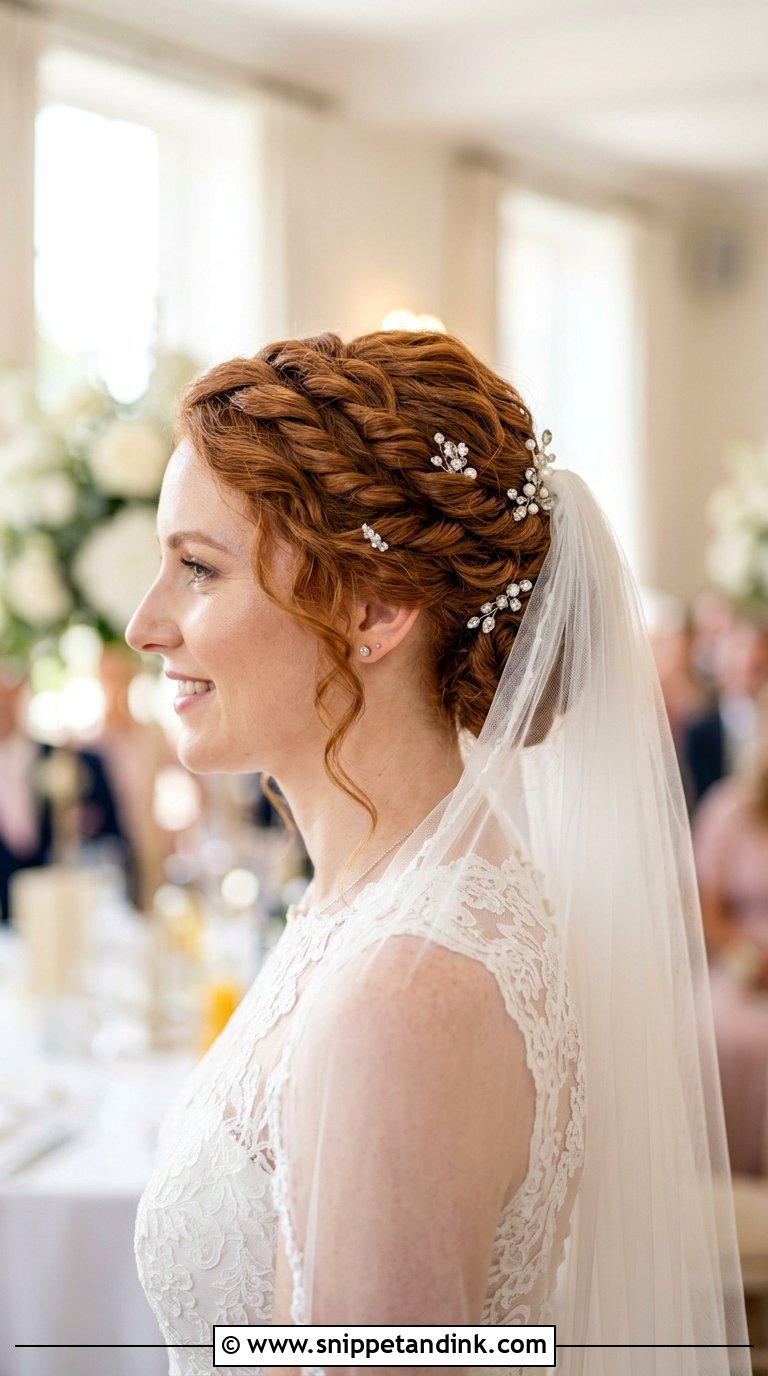
A twisted braid updo combines rope twists with braiding for an intricate, textured finish. I twist each section one way and wrap the pair together the other way; if the twist and the wrap go the same direction, the rope unravels within the hour. The texture suits formal weddings, and crystal pins or small flowers tucked into the twists add sparkle. It sits well under a veil. Medium to long hair suits it, and the more layered the hair, the more pins it takes.
18. Braided Chignon for Bride
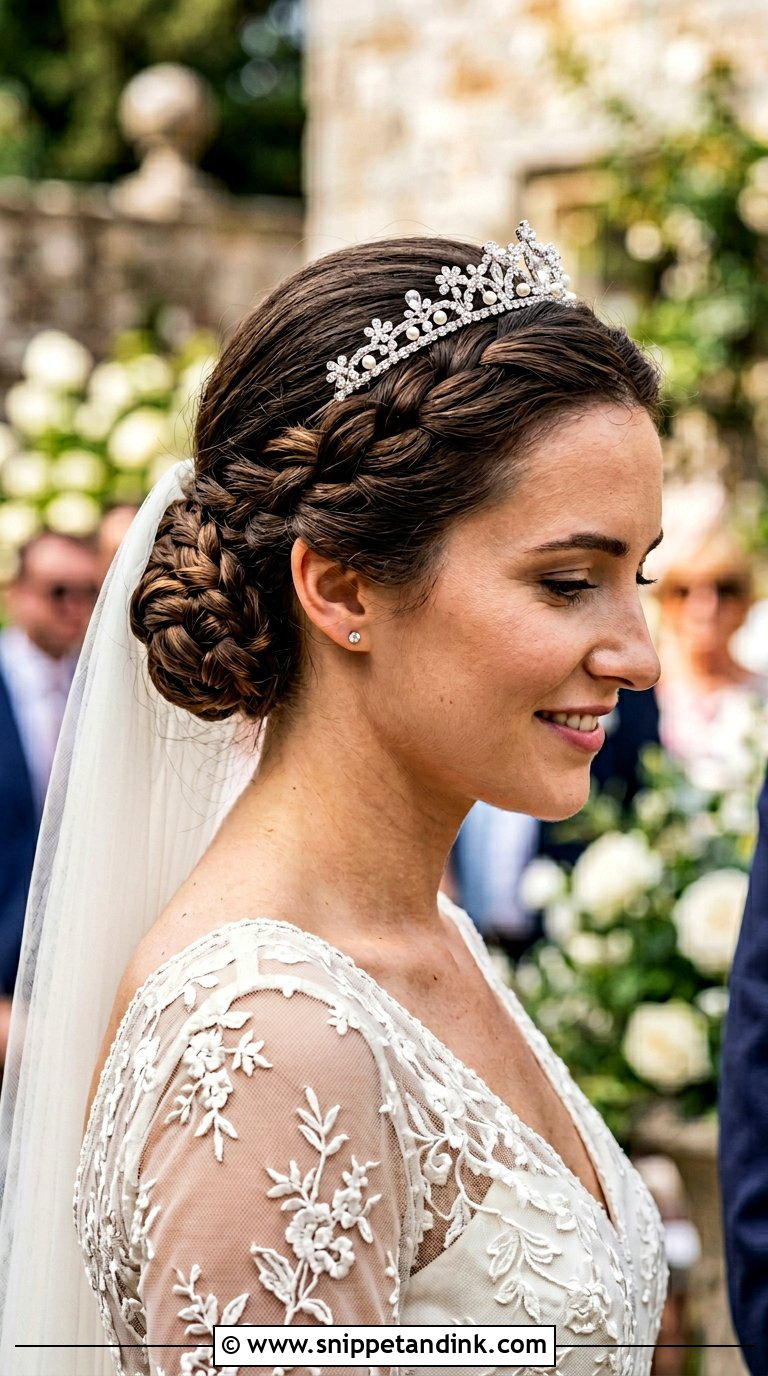
A braided chignon gathers braided hair into a smooth, rolled knot at the nape, and it’s the most formal look on this list. The braiding adds just enough texture to stop a sleek chignon from looking severe. A delicate tiara, pearl pins or a long veil all sit well with it. When hair is fine, I roll the knot around a small padding piece so the shape stays full. It flatters most face shapes, and its quiet shape won’t look dated years from now.
19. Loose Braid With Curls for Bride
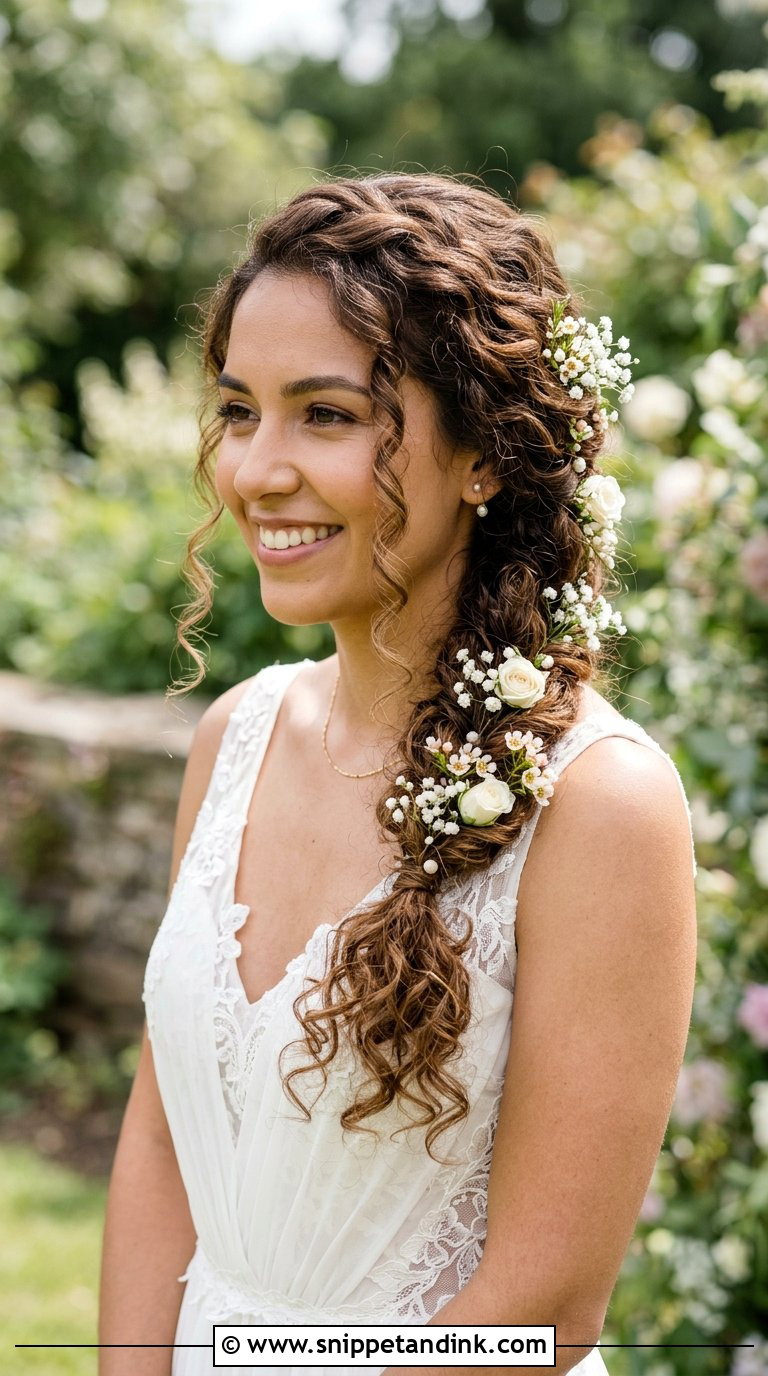
This combines a loose braid with curled pieces left out to frame the face. I curl the whole head first, braid gently, and leave tendrils at the temples and nape, which gives softness without a full updo. The tendrils are the weak point. Curl them too tightly and they turn into ringlets; leave them unset and they fall flat by dinner, so I curl them last and spray lightly. Small flowers or pearls tucked in add charm, and hair with some natural body holds it best.
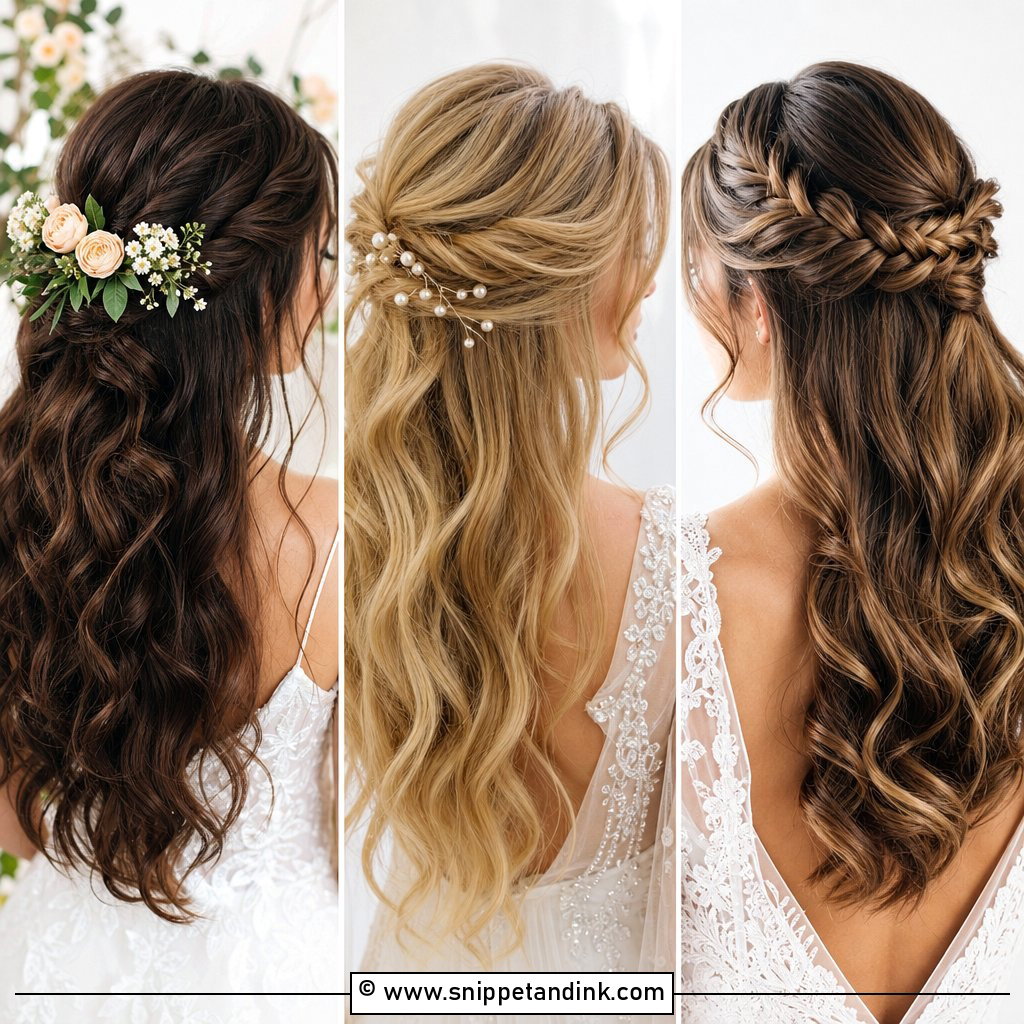
20. Accent Braid Half-Updo for Bride
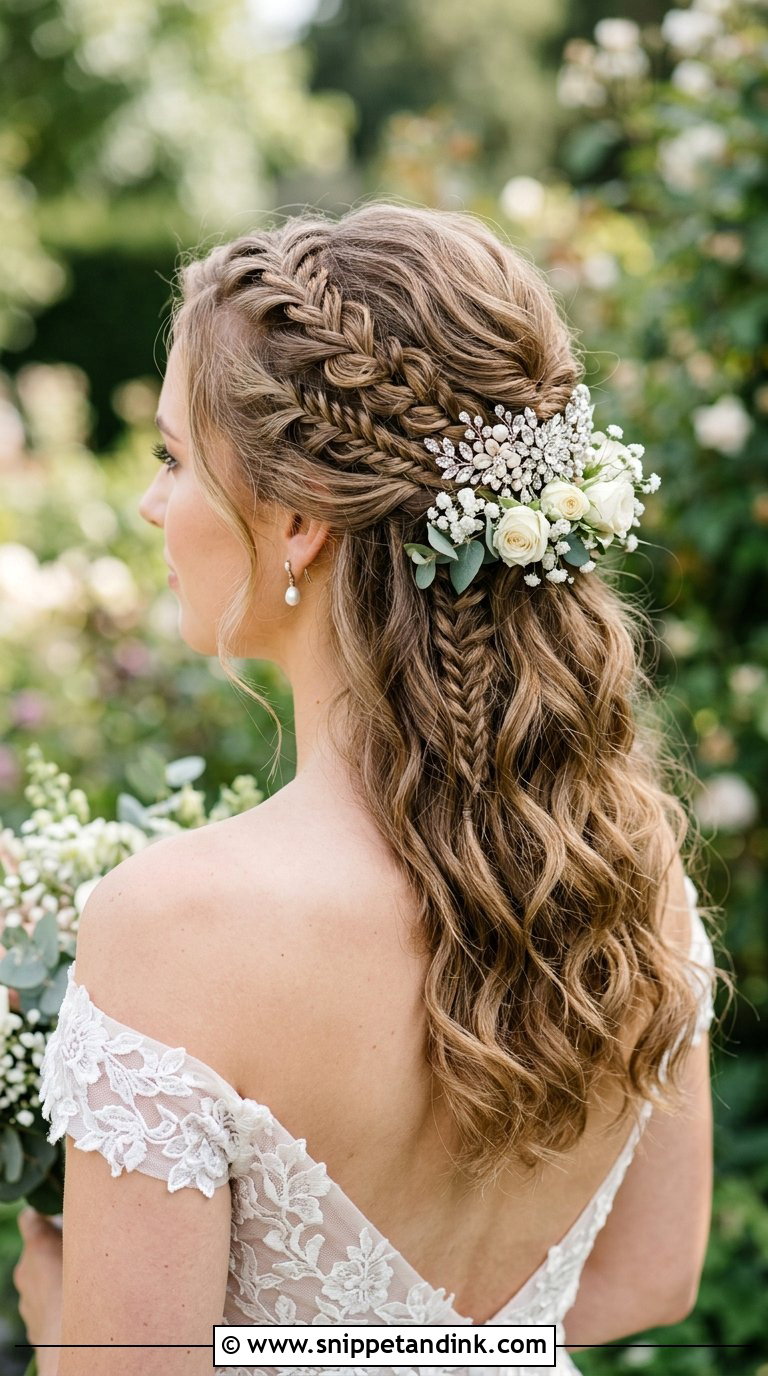
An accent braid half-updo uses one or two thin braids inside a half-up arrangement, enough detail without committing to a fully braided look. The braids pull the front pieces back off the face while the length falls below. I take them from just behind the hairline, not right at it, so they hold even if the front has short layers or growing-out bangs. A clip or fresh blooms where the braids meet finish it. It works on almost every length and texture, and it’s the easiest braid here to recreate yourself.
Layers, Bangs and Shoulder Length: Adapting These Braids
Not every braid here works on every haircut, and it’s better to know that before you fall for one in a photo. These are the adjustments I make most often.
Layered cuts
Short layers poke out of tight, detailed braids like fishtails and inverted styles. Dutch and pull-through braids hide layers better, and a little styling wax on the ends keeps them tucked. If you’re planning a haircut before the wedding, ask for fewer layers rather than more.
Bangs or a fringe
Leave them out. Braiding growing-out bangs into a crown creates bumps and tension at the hairline. I start accent and crown braids just behind them and style the fringe on its own. If they’re long enough to sweep aside, I blow them out with a round brush and hide one small pin under the braid to keep them there through the vows.
Hair that stops at the shoulders
Braided low buns, accent braids and pull-through styles all work. Crown, milkmaid and long side braids usually need clip-in wefts, so color-match them at your trial and wear them for the whole session to make sure they sit comfortably and stay hidden.
Bring a Photo of Your Dress to the Braid Trial
The braids above run from crowns to fishtails, and they work across hair types, lengths and wedding themes. The right one for you comes from your hair’s length and texture, your neckline and your veil. Mix techniques freely, and add pearls, flowers or pins to make it personal. Bring inspiration photos and a picture of your dress to your stylist, and book a trial so the braid is tested before the wedding. Then all that’s left is enjoying it, walking down the aisle in a style you already know will hold.
You'll Like These Ideas:


Leave a Reply