
South Indian bridal hair is built around flowers, gold and a clean, polished shape that sits well with a silk saree. The heaviest look isn’t automatically the right one, though. When I plan a bride’s hair, I’m balancing her face shape, the weight of her jewellery, the rituals she’ll sit through and how many hours the style has to last before anyone can unpin it. Some brides want the full jada braid with jasmine and jada billalu; others want a low bun for the muhurtham and soft curls for the reception. Below are twenty styles, traditional and modern, with the practical notes I’d give at a trial.
Ordering Jasmine Strings So They Open on Time
Jasmine is sold as tight buds strung together, and the buds open over several hours. That’s lovely in a wedding hall, but it means timing matters. Strings delivered the night before and left out will be fully open, browning at the edges and dropping petals before the ceremony.
- Ask for delivery early on the wedding morning, picked that day if the florist can manage it.
- Keep the strings wrapped in a damp cotton cloth in a cool place until I pin them. A fridge is fine; a freezer isn’t.
- Order more than you think. A bun gajra, braid strings and spares for touch-ups add up fast.
- Tell me if anyone in the bridal party reacts to strong scents. Jasmine is intense in a closed room.
If the wedding is far from a good flower market, a set of good artificial jasmine strings is a sensible backup. I’d rather pin realistic fakes than wilted real flowers.
Kanakambaram and roses for a poola jada are sturdier than jasmine, but roses bruise where they’re pressed, so they go on last. Agree with the florist who brings the finished poola jada base and what time, because I need it in hand before I start the braid it attaches to.
1. South Indian Bridal Jada Braid
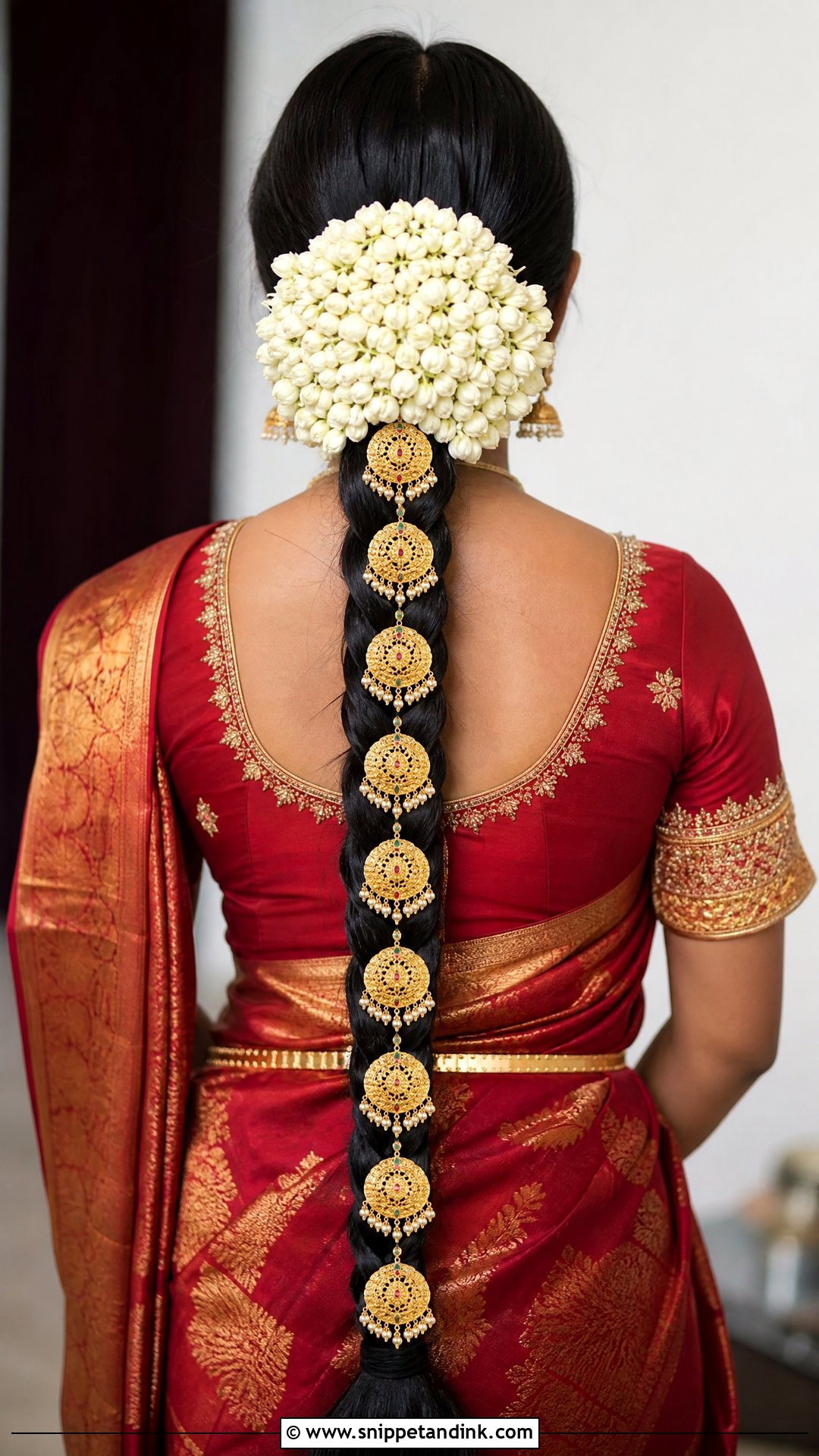
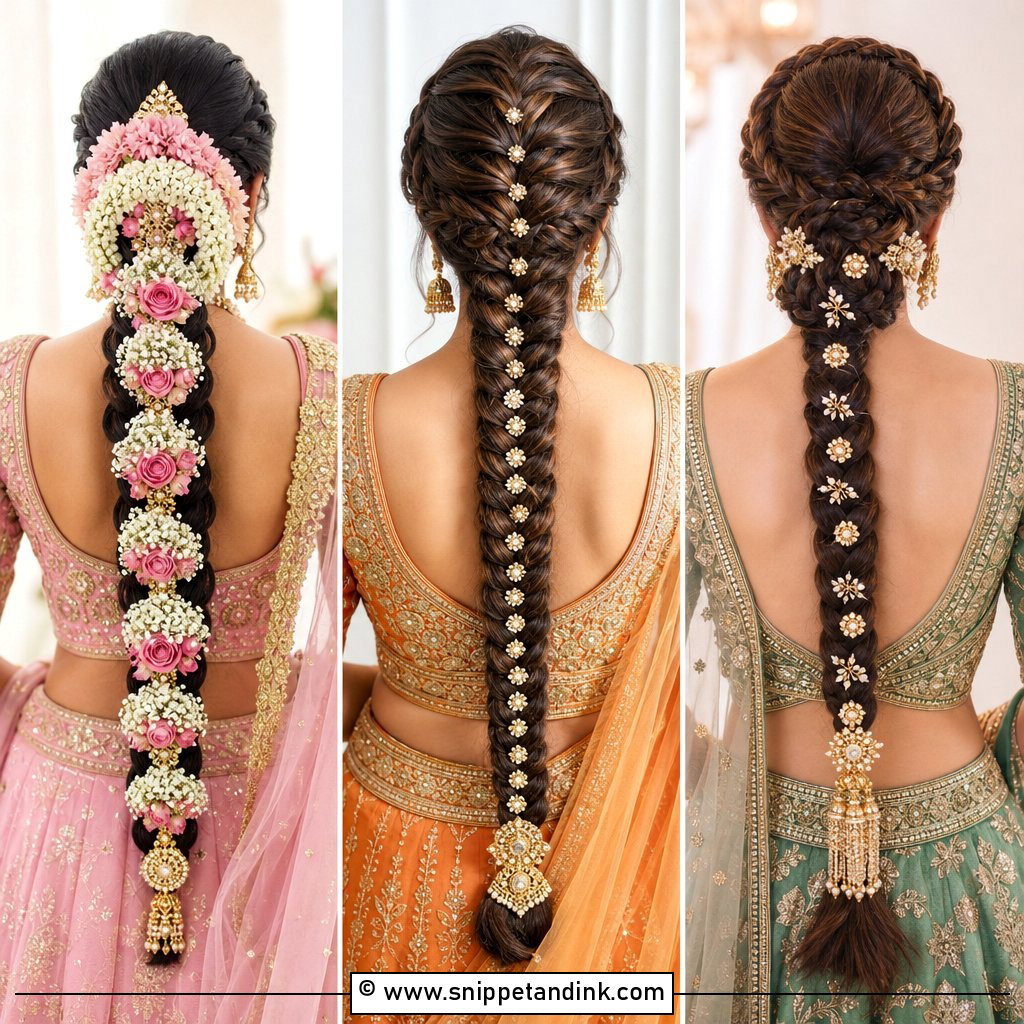
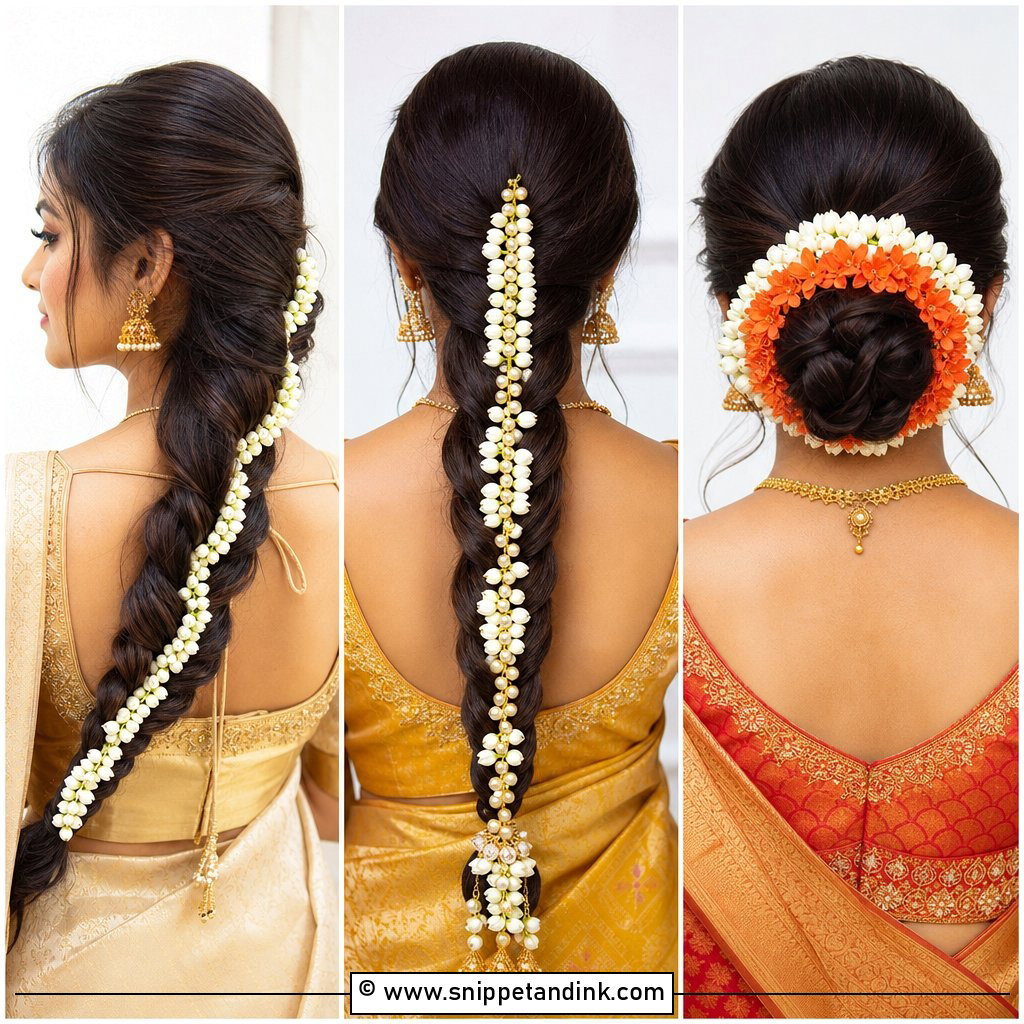
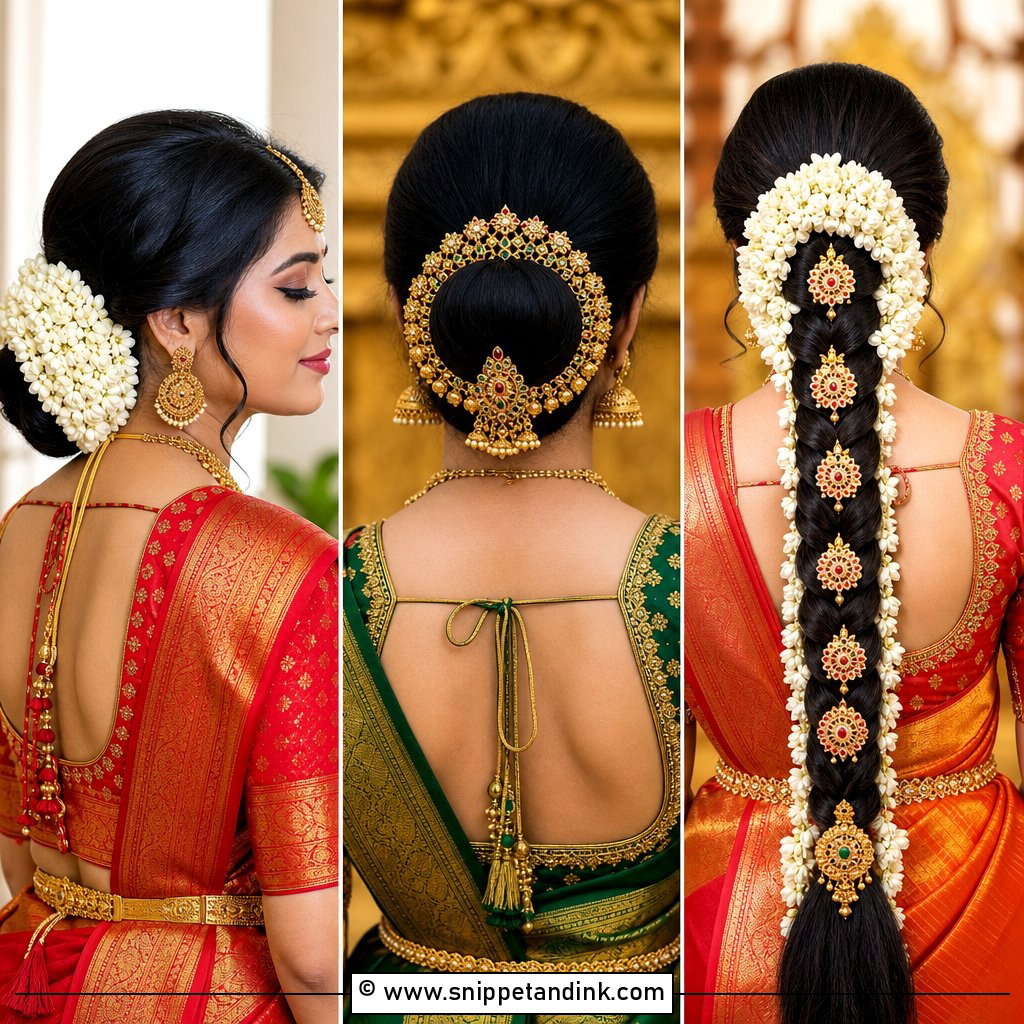
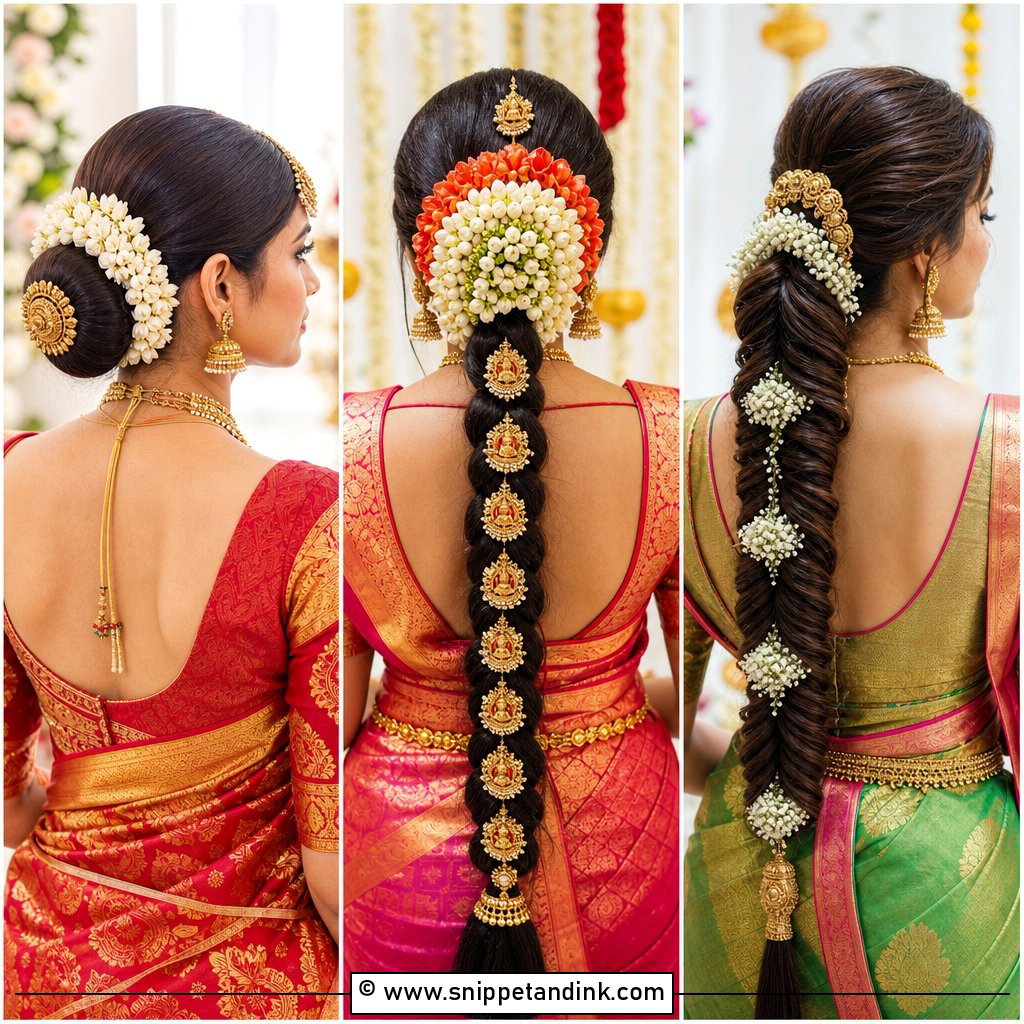
A South Indian bridal jada braid is the most recognisable of these looks, and it’s built from the crown down. I start with a smooth crown or a slight puff, then a thick, neat plait, extended with a matching hairpiece if the bride’s own hair is short or fine. The jada billalu discs are attached last, pinned and often stitched into the plait so they don’t slide. It looks grand from every angle with a Kanjivaram and temple jewellery, and once it’s anchored properly it stays put through long rituals. Match the ornaments to the necklace, waist belt and earrings.
2. South Indian Bridal Poola Jada
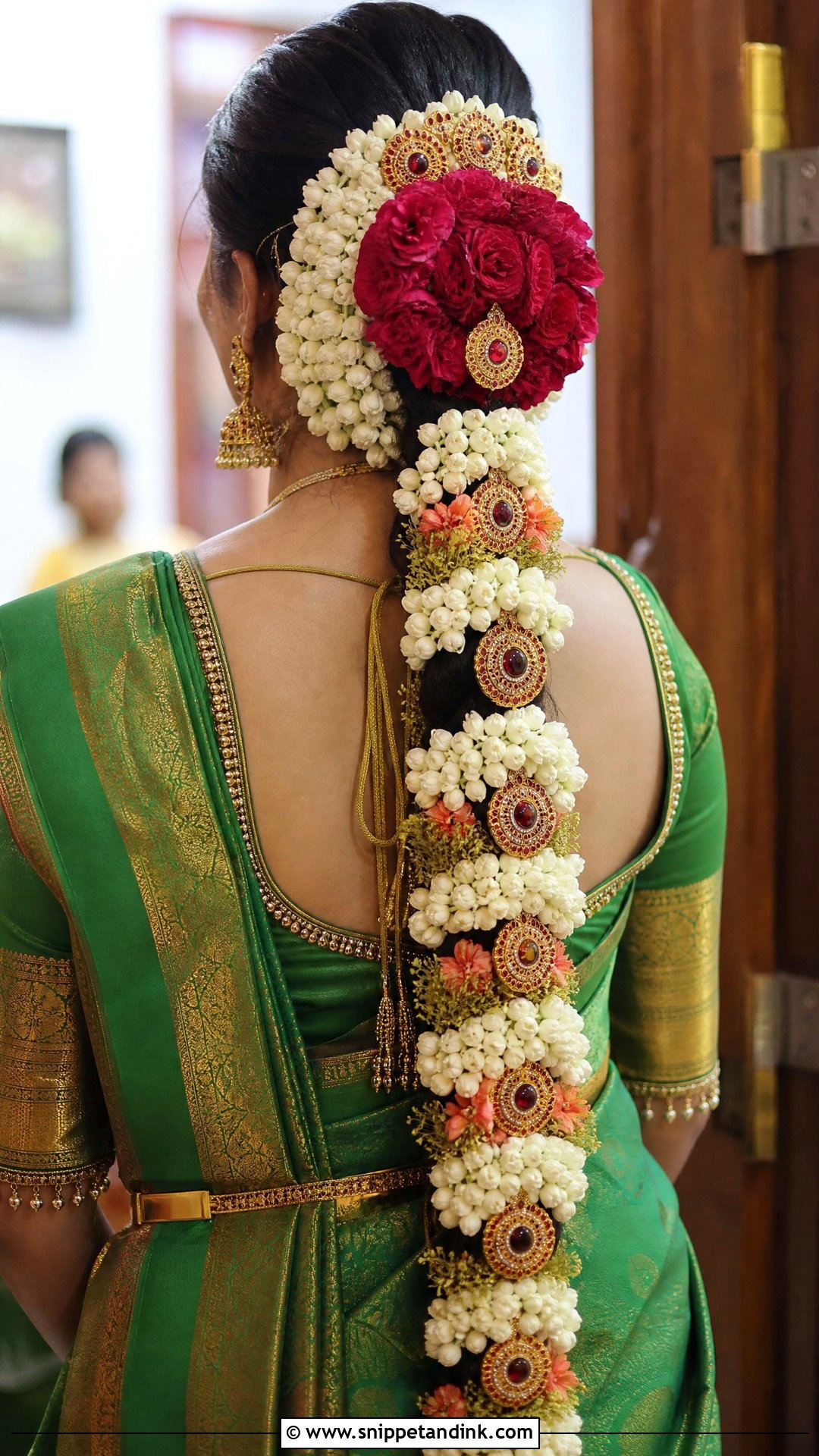
A South Indian bridal poola jada covers the whole braid in flowers: jasmine, roses, kanakambaram, marigolds or seasonal blooms, sometimes mixed with gold pieces. Most florists build it on a separate base that I then attach to the braid, which is far faster and neater than threading flowers onto hair on the morning. It’s central to many Telugu and Tamil ceremonies. Keep the front smooth and simple, because a flower-covered braid already carries a lot of weight and colour.
3. South Indian Bridal Bun With Gajra
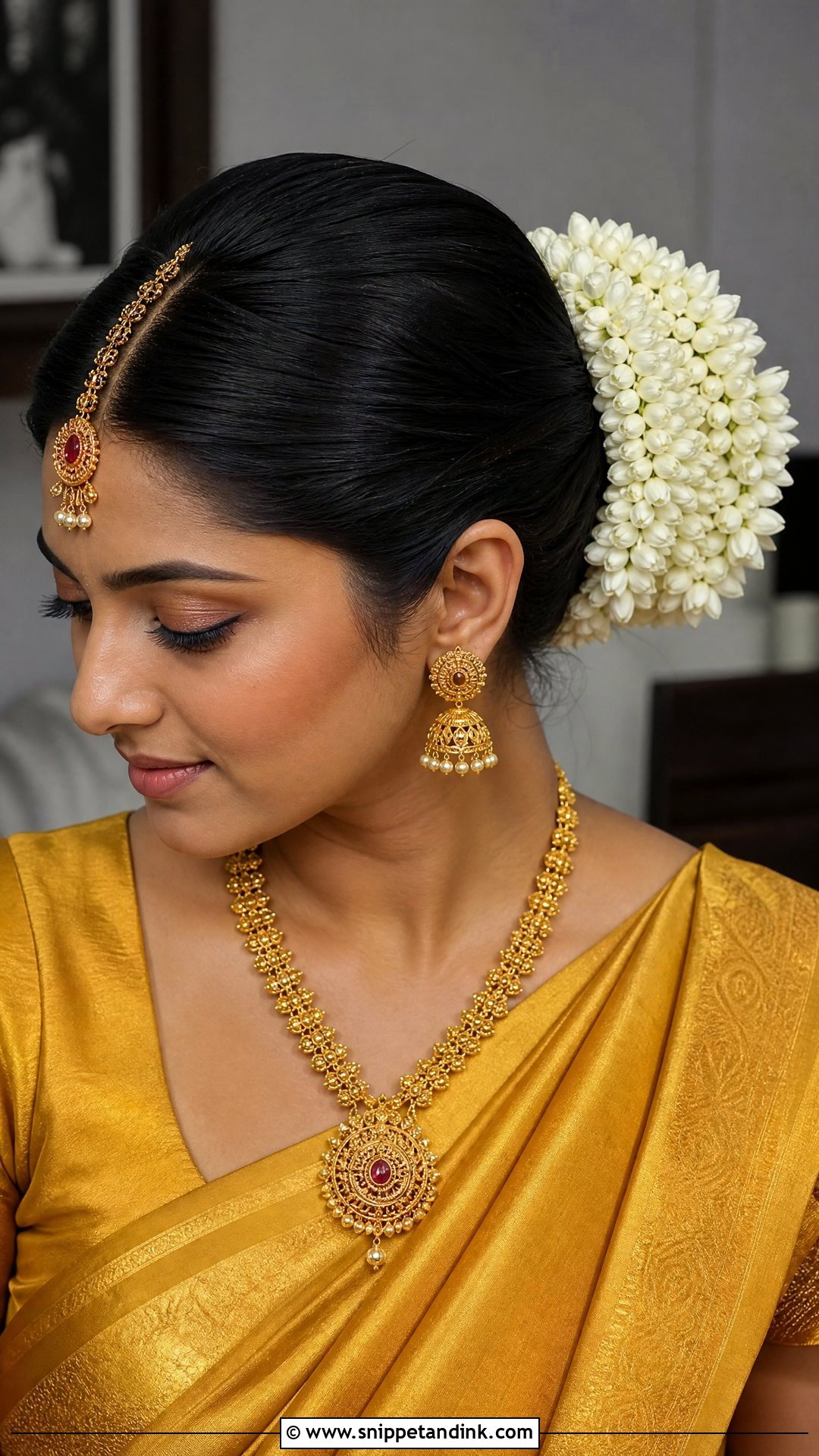
A South Indian bridal bun with gajra is one of the easiest styles to pair with a heavy saree. I part the hair in the centre or lift it gently at the crown, then shape a low or mid bun with a padded base so it holds its round shape. A thick jasmine gajra wrapped around it gives a soft white frame against dark hair. It suits medium-length hair well, since the bun doesn’t depend on length. A temple pin or a round bun ornament in the centre finishes it.
4. South Indian Bridal Low Bun
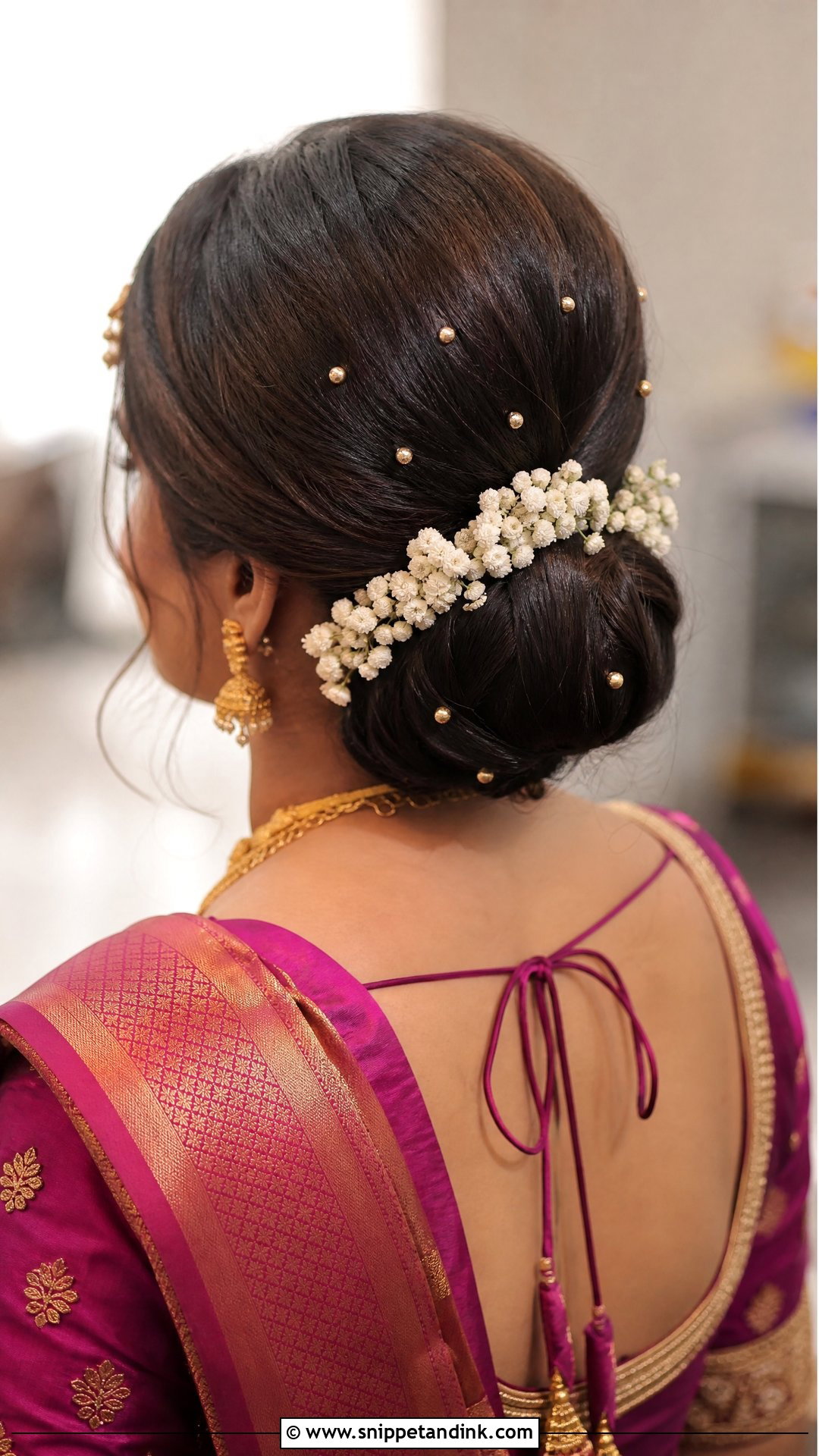
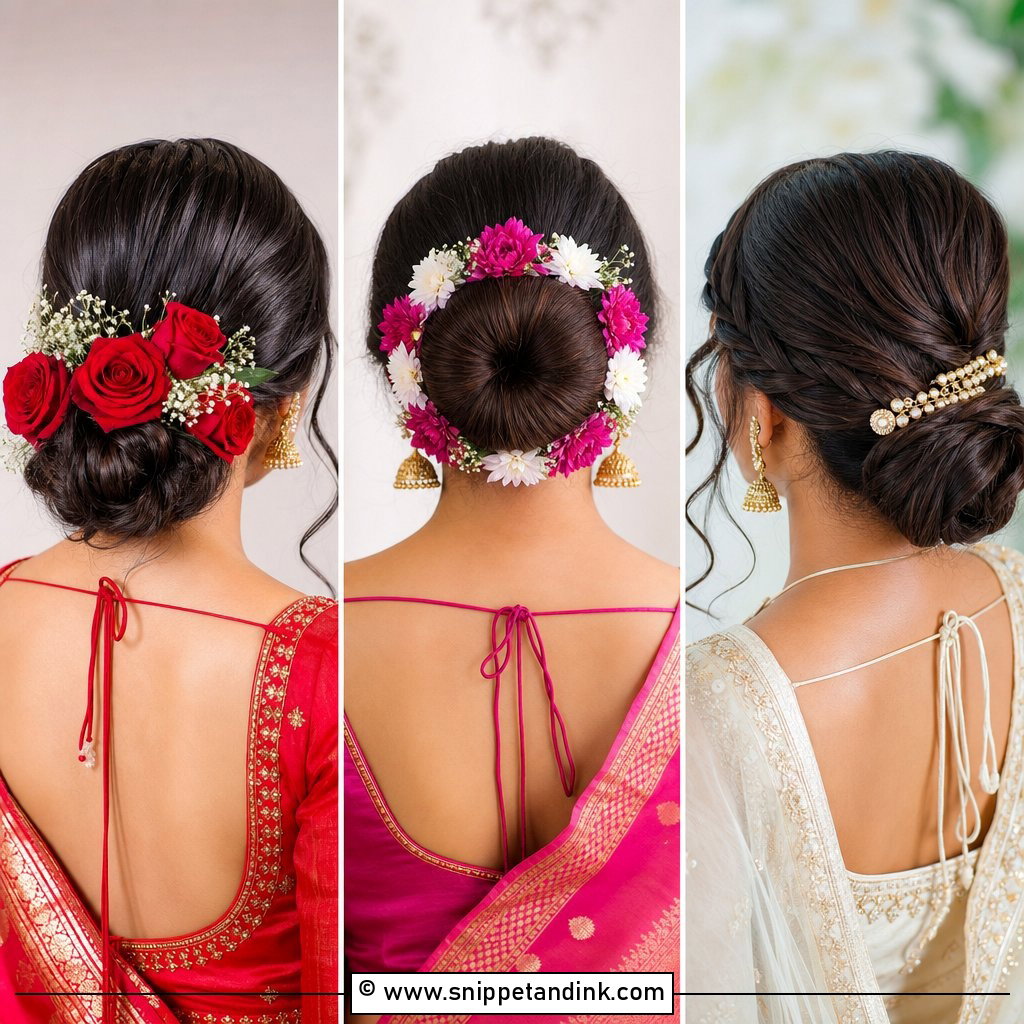
Low buns are the most comfortable choice for a long ceremony. The bun sits at the nape, so the bride can lean back, sit cross-legged and wear the pallu over her head without anything pressing into her scalp. A sleek front, a centre part or a few soft face-framing pieces all work. With layered necklaces and big jhumkas, the open neck matters, and a low bun keeps it clear. Jasmine for the ceremony, pearl pins or gold clips for the reception.
5. South Indian Bridal Braided Bun
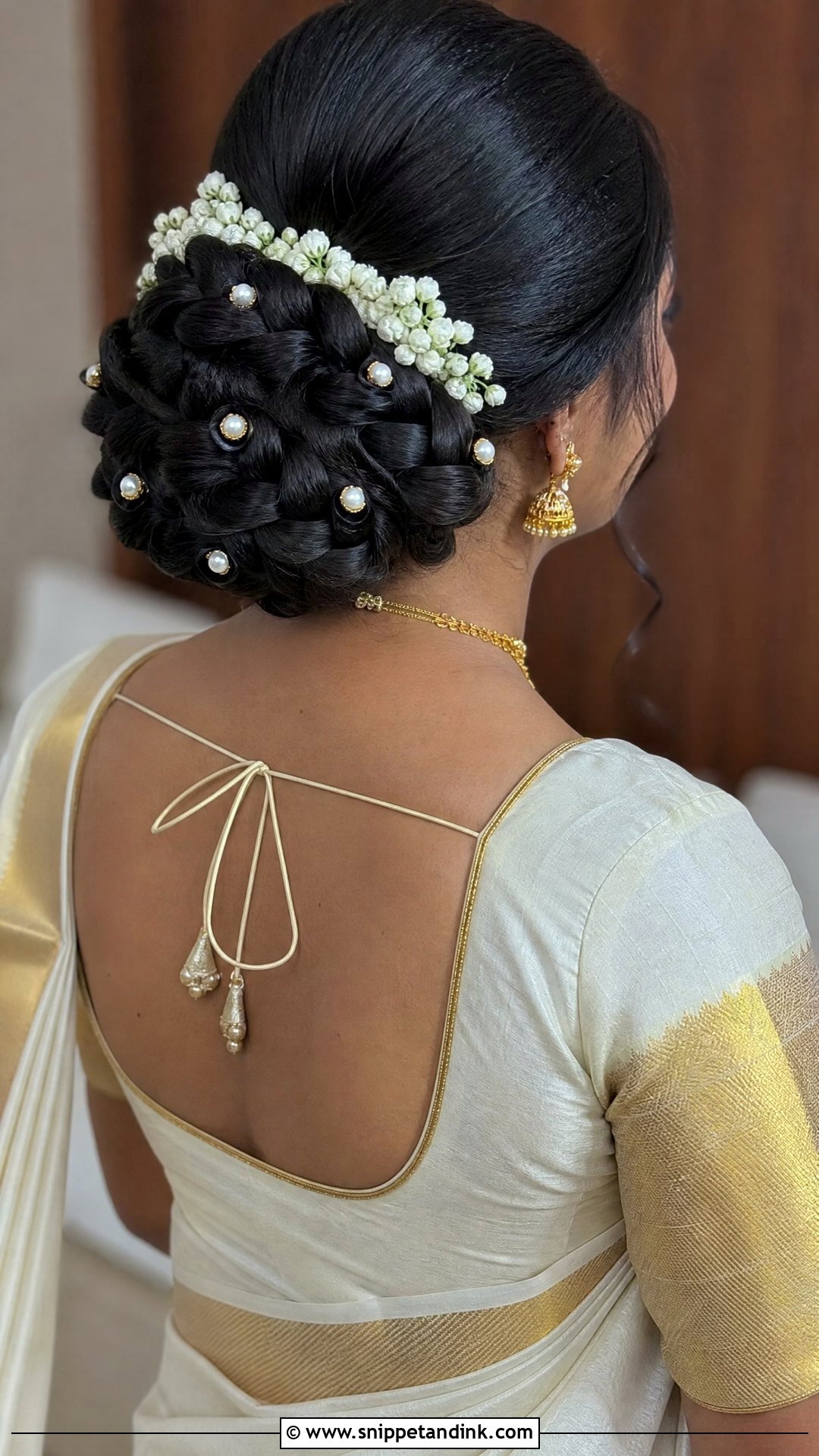
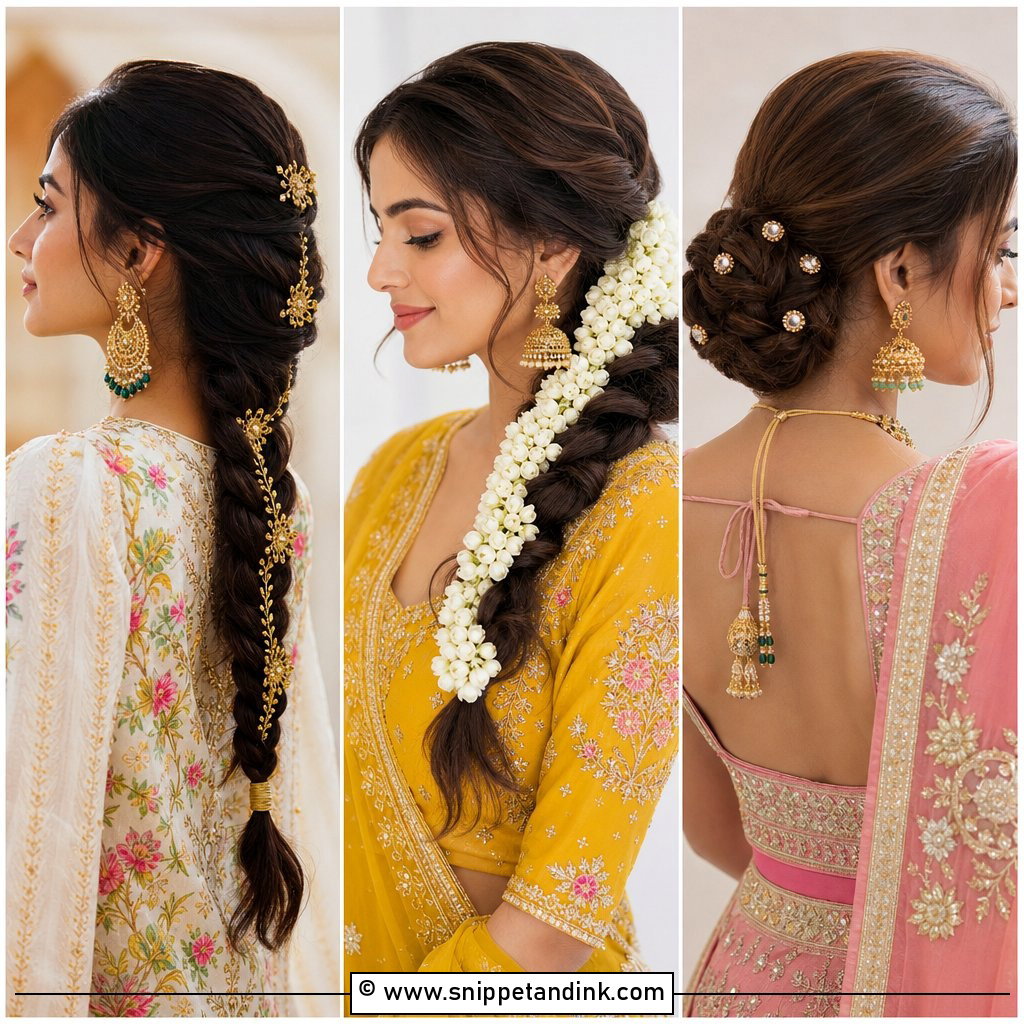
Braiding the hair first and then wrapping it into a bun gives texture and fullness that a plain bun lacks. It’s secure, too, because the braid gives every pin something to grip. On fine hair, I add clip-in extensions to the braid so the bun doesn’t end up small and tight. Keep the crown smooth so the bun looks deliberate. Fresh flowers, gold pins and small pearls all sit well in the braid’s grooves, and the bun reads best from the side and back.
6. South Indian Bridal Temple Jewelry Bun
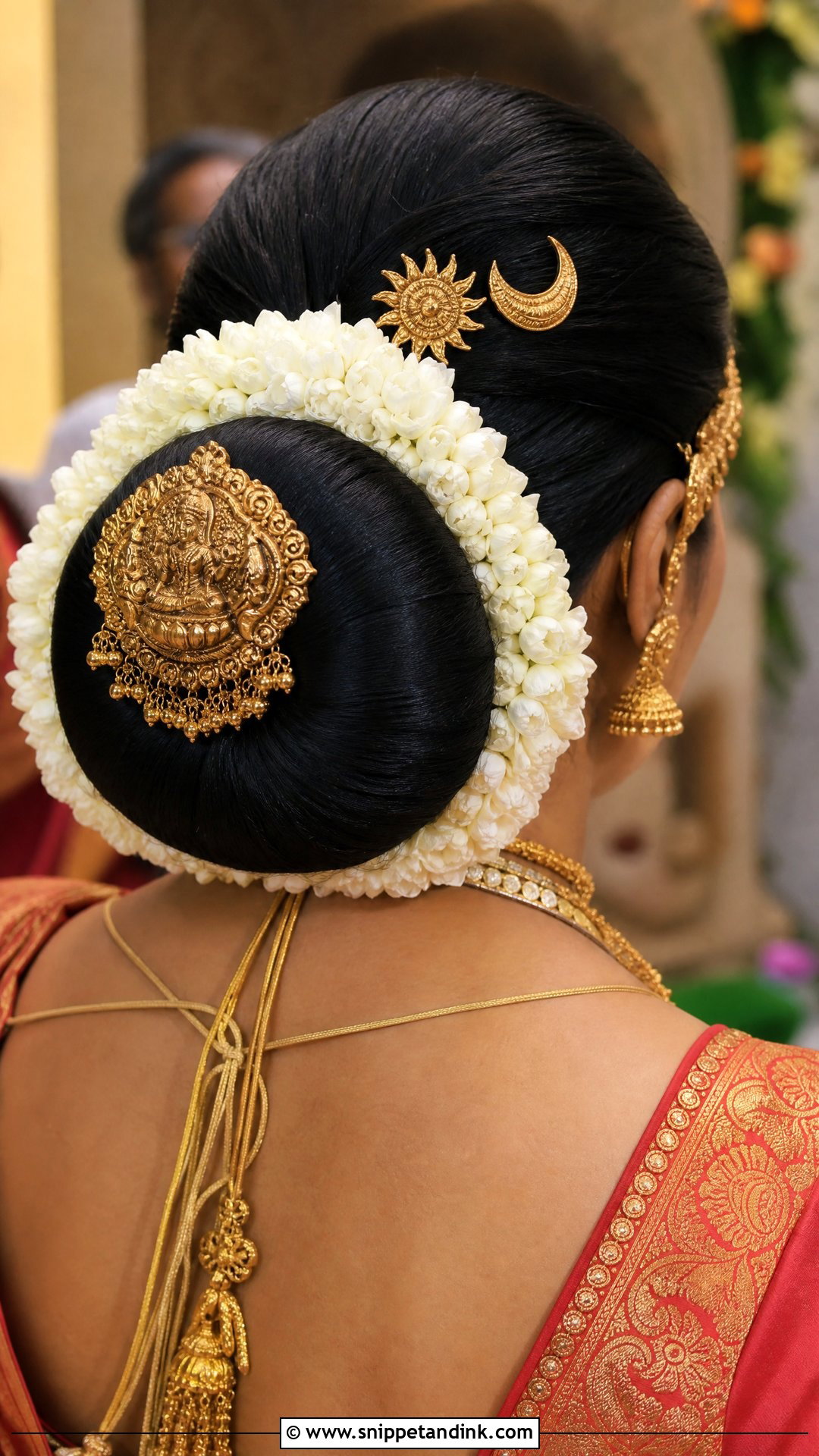
Temple jewellery on a bun looks royal, but it’s heavy, and that’s the first thing I plan for. The bun is sleek and rounded, then decorated with gold pieces inspired by temple motifs: jasmine rings, sun-and-moon pins (surya and chandra) or a central bun ornament. I anchor the heaviest piece on a cross of pins in a firm section of hair, never in a loose part of the bun, or it drags and gives the bride a headache within an hour. It balances heavy gold jewellery and bold silk colours like red, green, mustard and magenta.
7. South Indian Bridal Jasmine Braid
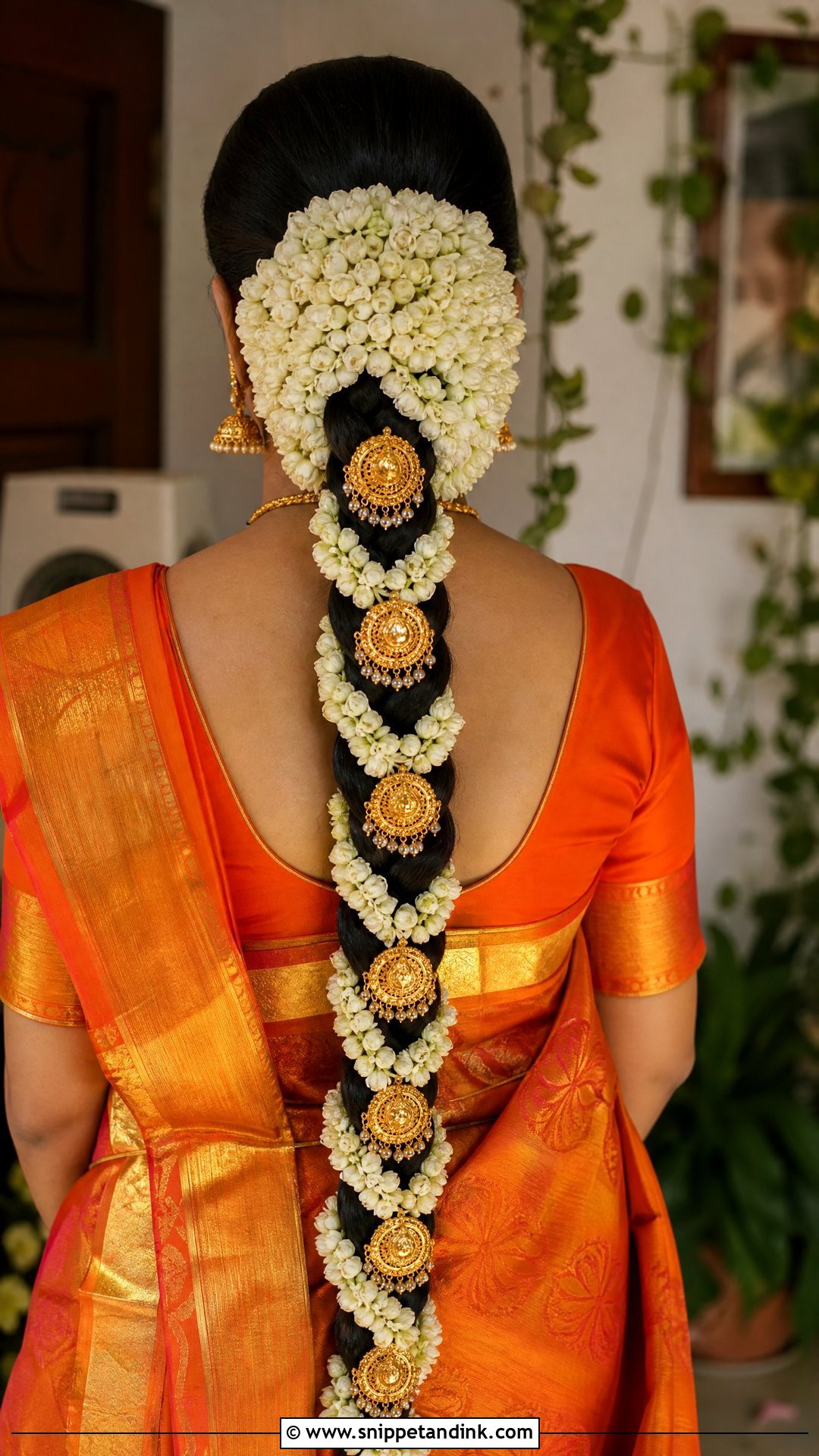
Jasmine is fragrant, white and closely tied to wedding rituals, which makes a South Indian bridal jasmine braid feel sacred. The braid itself stays neat while jasmine strands are woven, wrapped or pinned along its length. It’s less colourful than a full poola jada, and in morning light that restraint looks fresh. Gold braid discs add a classic touch. Jasmine buds keep opening for hours after they’re strung, so a braid that looks tight at 7am will be fuller and softer by the time the ceremony ends.
8. South Indian Bridal Fishtail Braid
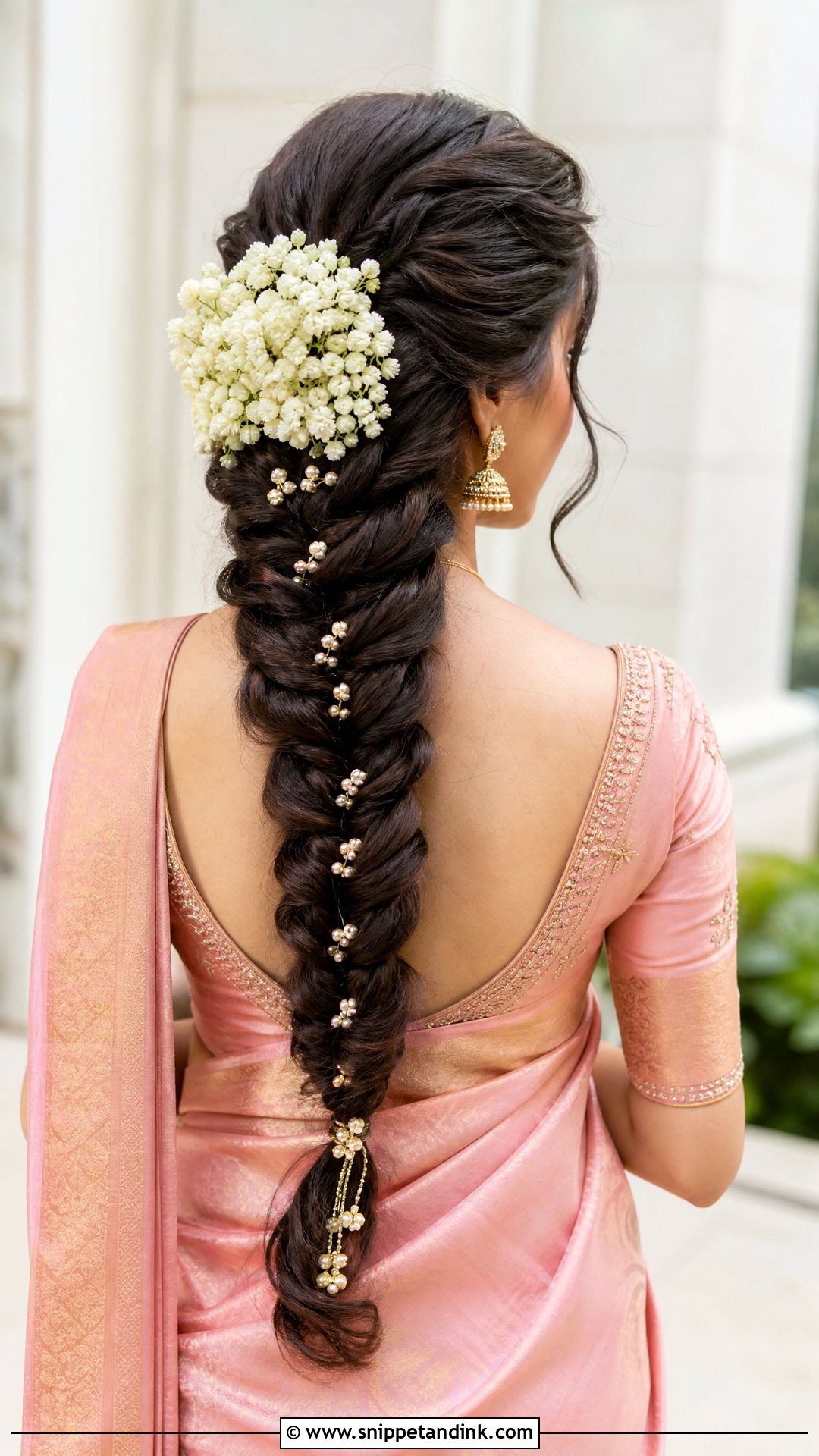
The fishtail has more texture than a classic three-strand plait, which means it needs fewer accessories. It’s a lighter alternative to the jada for receptions and engagements. The difference between a fishtail that lasts and one that falls apart is tension: I keep it full and firm, then pull the edges out gently at the end for width. Tiny jasmine buds, pearls or slim gold pins suit it. A soft crown puff adds height, and it goes well with pastel silk sarees and statement earrings.
9. South Indian Bridal Side Braid
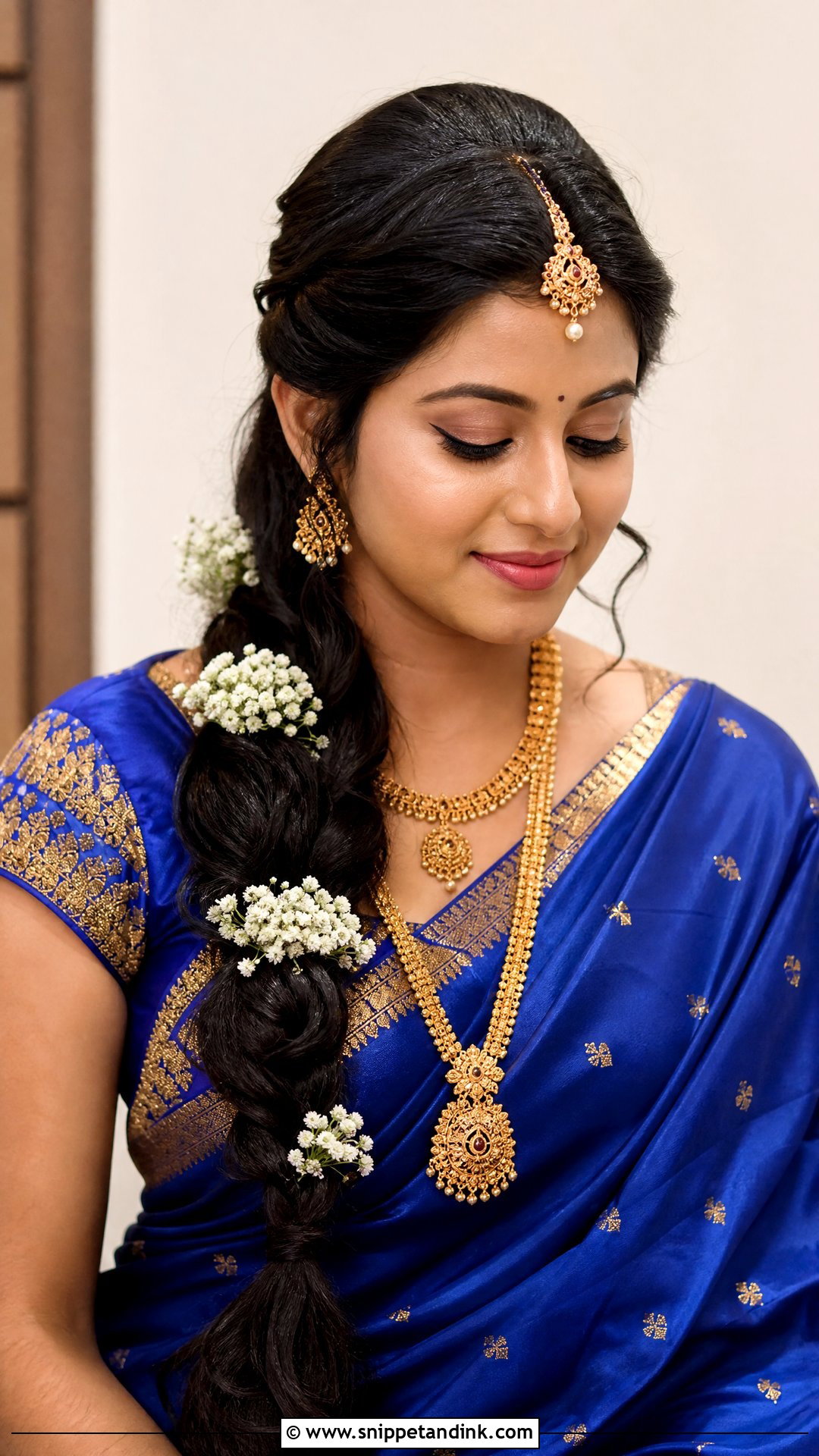
Wearing the braid over one shoulder puts the hairstyle in every front-facing photo, which is why it’s popular for stage events and pre-wedding functions. It can be a regular braid, a fishtail or a soft textured plait with flowers tucked along one side. The weight hangs forward and is easier to carry than a heavy back braid. I start the braid slightly behind the ear rather than right at the side of the face, so it doesn’t pull the parting crooked. Pair it with a maang tikka and keep the opposite side sleek.
10. South Indian Bridal Half Up Hairstyle
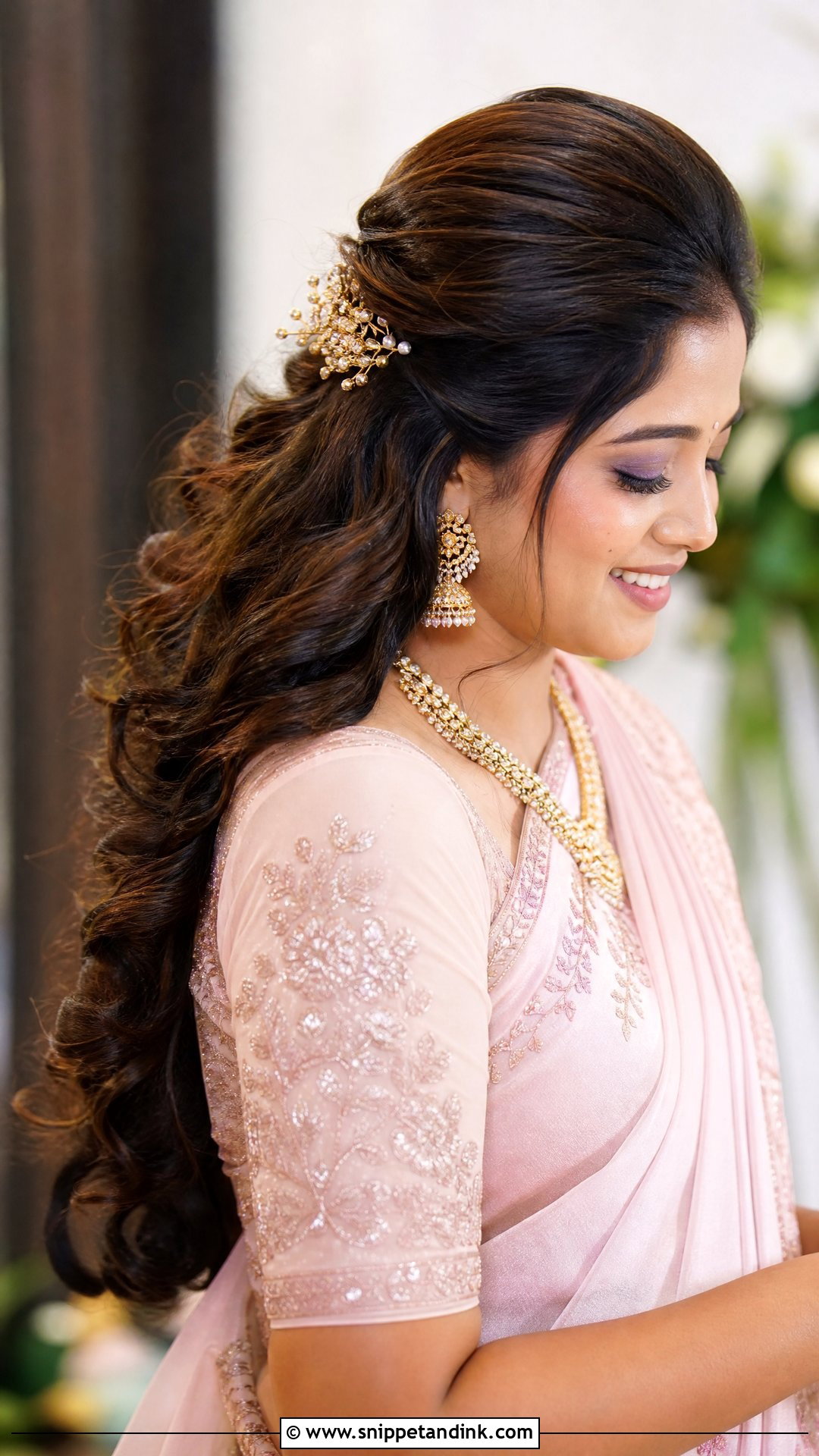
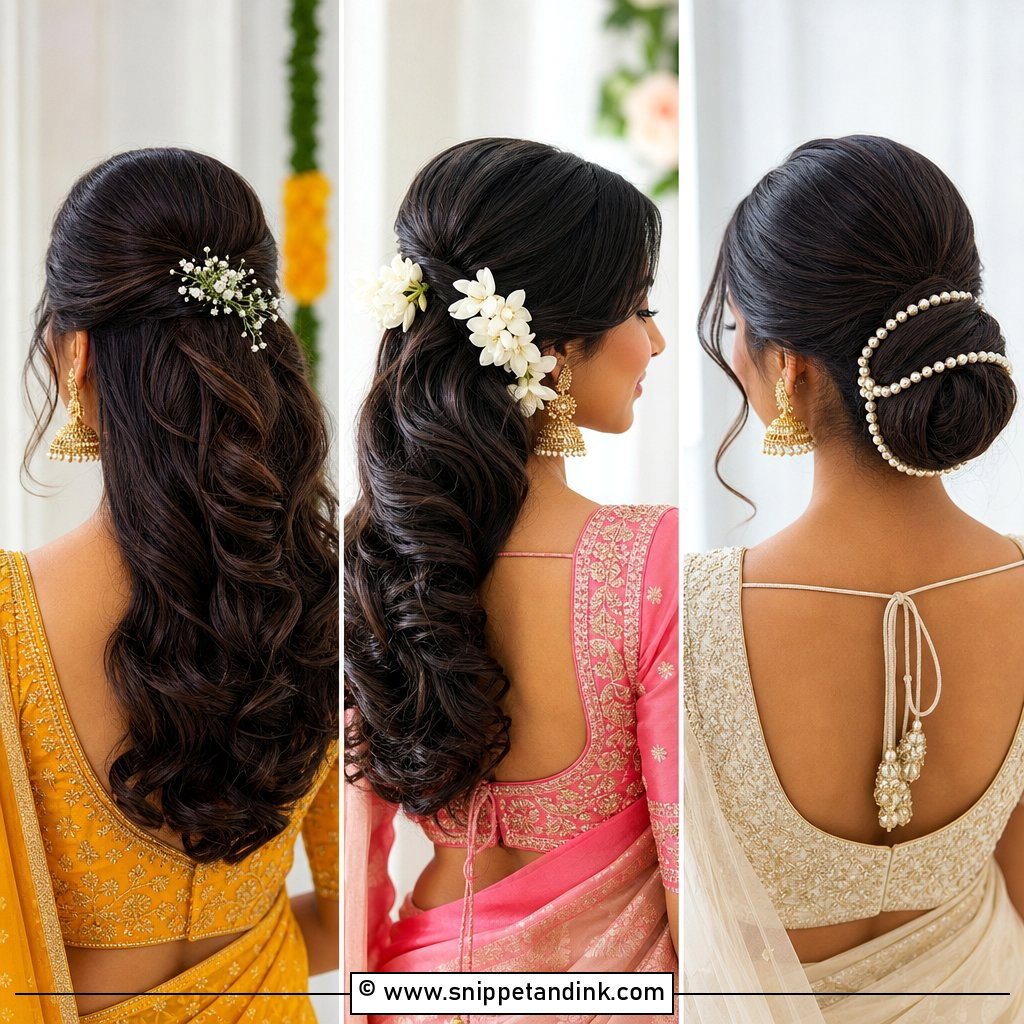
Half up keeps structure on top while the lengths fall in soft waves or curls. It’s a good fit for receptions, engagements or lighter sarees and lehengas. I set the curls with heat and a firm-hold spray before pinning the top section back, because in humid South Indian weather loose hair is the first thing to drop. Jasmine pins, pearl clips or a small gold accessory at the back give it a bridal touch. It’s softer than a bun and more modern than a jada.
11. South Indian Bridal Open Curls
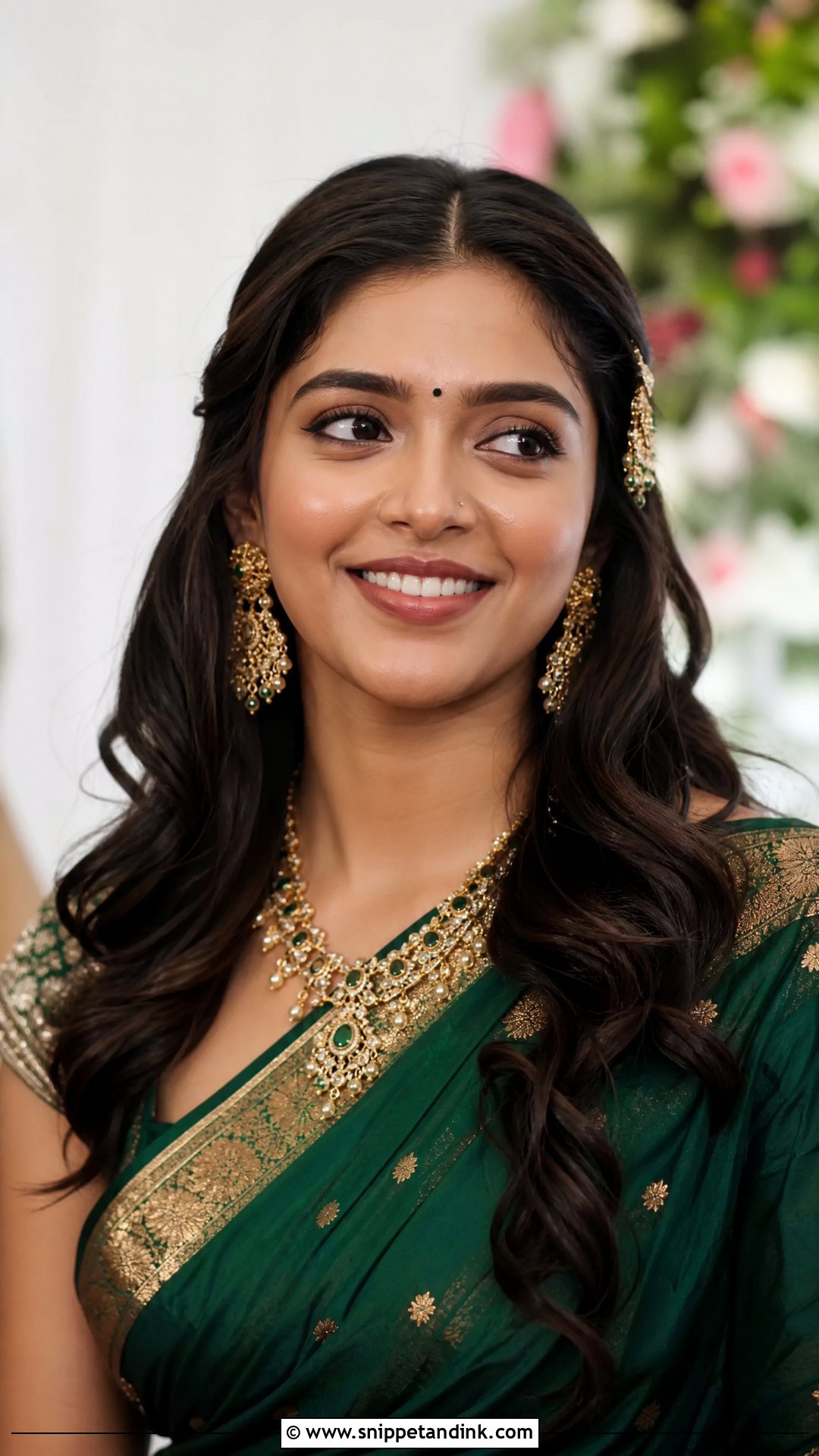
Open curls suit receptions and post-wedding events, with a clean part, a polished crown and smooth curls over the shoulders. They also soften a blouse with heavy work at the back, which can look busy under an updo. The trade-off is heat: in a humid hall, big curls relax within a couple of hours. I curl the hair smaller than the final look, let it cool fully, and brush it out at the end. A maang tikka, side pins or a small floral cluster add the bridal touch.
12. South Indian Bridal Wavy Hair
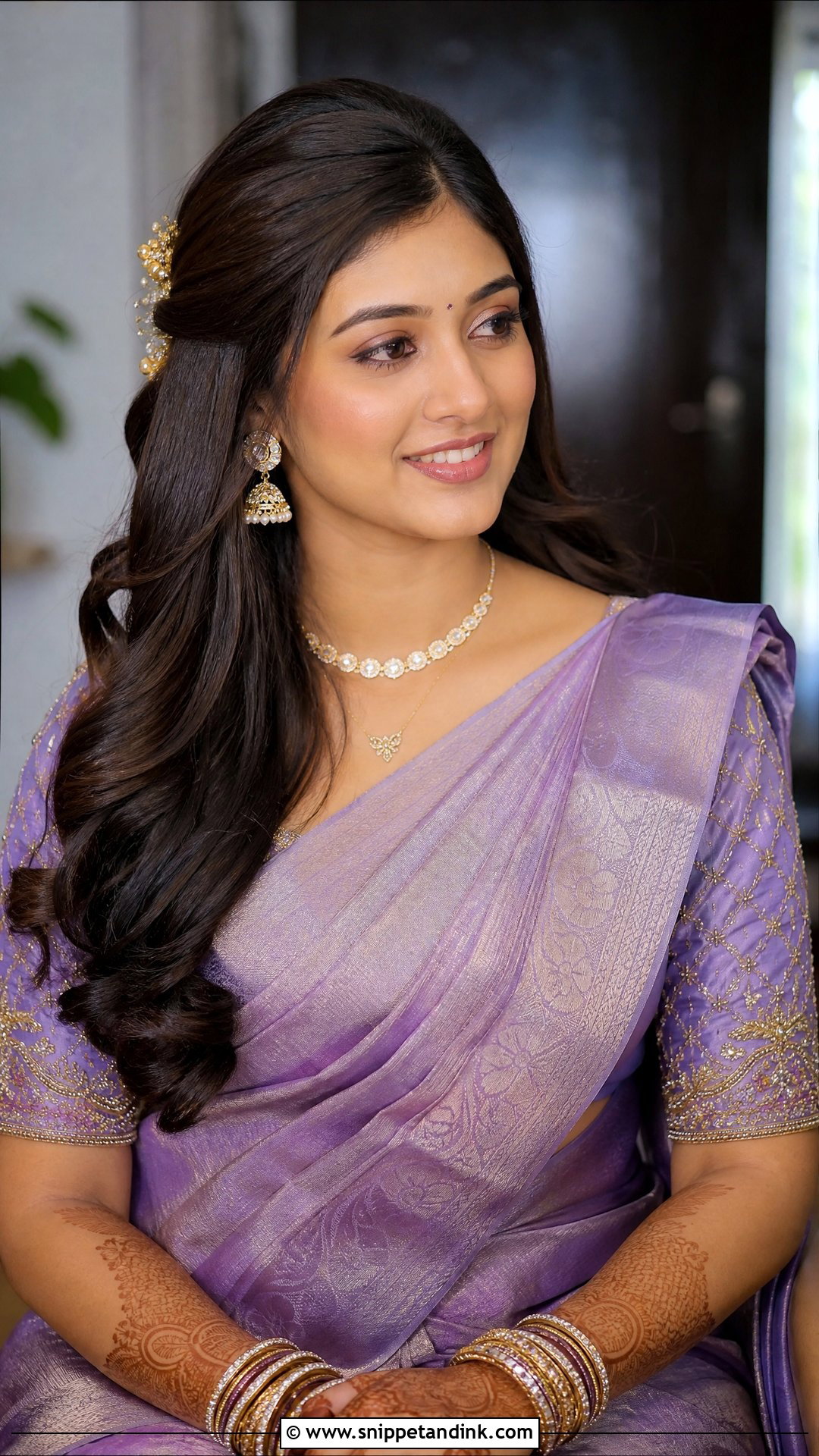
Soft waves are the easy, modern alternative for brides who don’t want a heavy bun or decorated braid at every event. Centre-parted waves frame the face traditionally; side-parted waves feel more like a reception look. The style depends on shine, so I use an anti-frizz serum on damp hair and a light oil at the end. Tucking one side behind the ear shows off earrings, and a small gold pin adds detail. It suits lighter jewellery and pastel sarees.
13. South Indian Bridal Sleek Bun
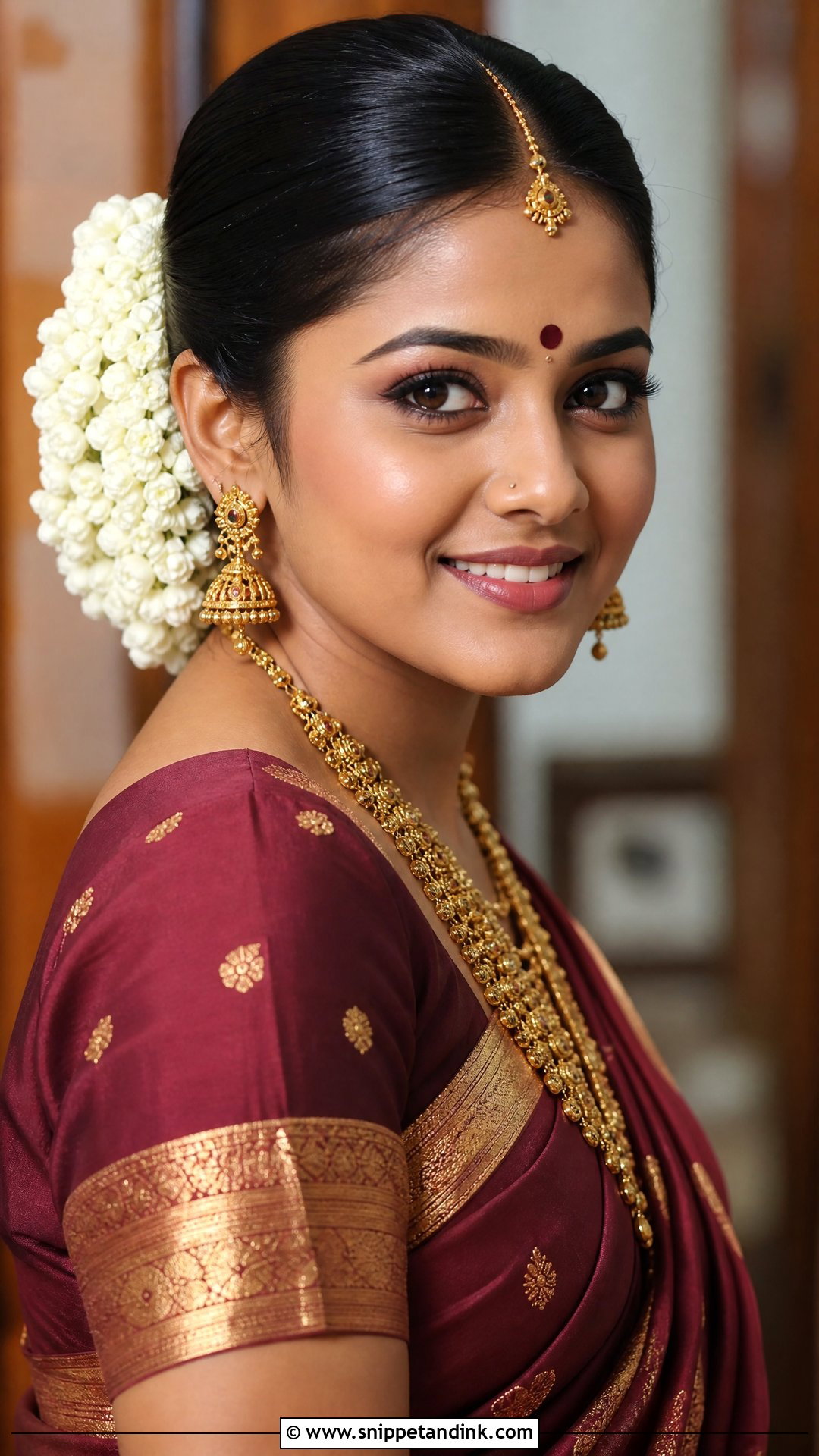
Sleek buns are my top recommendation for coastal and humid weddings, because nothing can frizz once it’s smoothed into a tight shape. A centre or side part frames the face cleanly for jewellery. Add a jasmine gajra for tradition or gold pins for a minimal finish. The one thing to watch is tension: a bun pulled too tight at the hairline gives some brides a headache before the ceremony starts, so I tighten the bun and keep the front just a little softer. It lets the bindi and jewellery stand out in close-ups.
14. South Indian Bridal Puff Bun
A puff at the crown lifts the face and balances layered necklaces and large earrings. The back stays neat and traditional, with a bun decorated with jasmine, roses, gold pins or a round ornament. Under a veil, the puff gives the fabric a shape to sit on. I’d ask for a soft puff rather than a very high one; tall puffs can look dated and they collapse first when the bride leans back. Backcombing at the root with a small padding piece holds it better than teasing alone.
15. South Indian Bridal Rose Bun
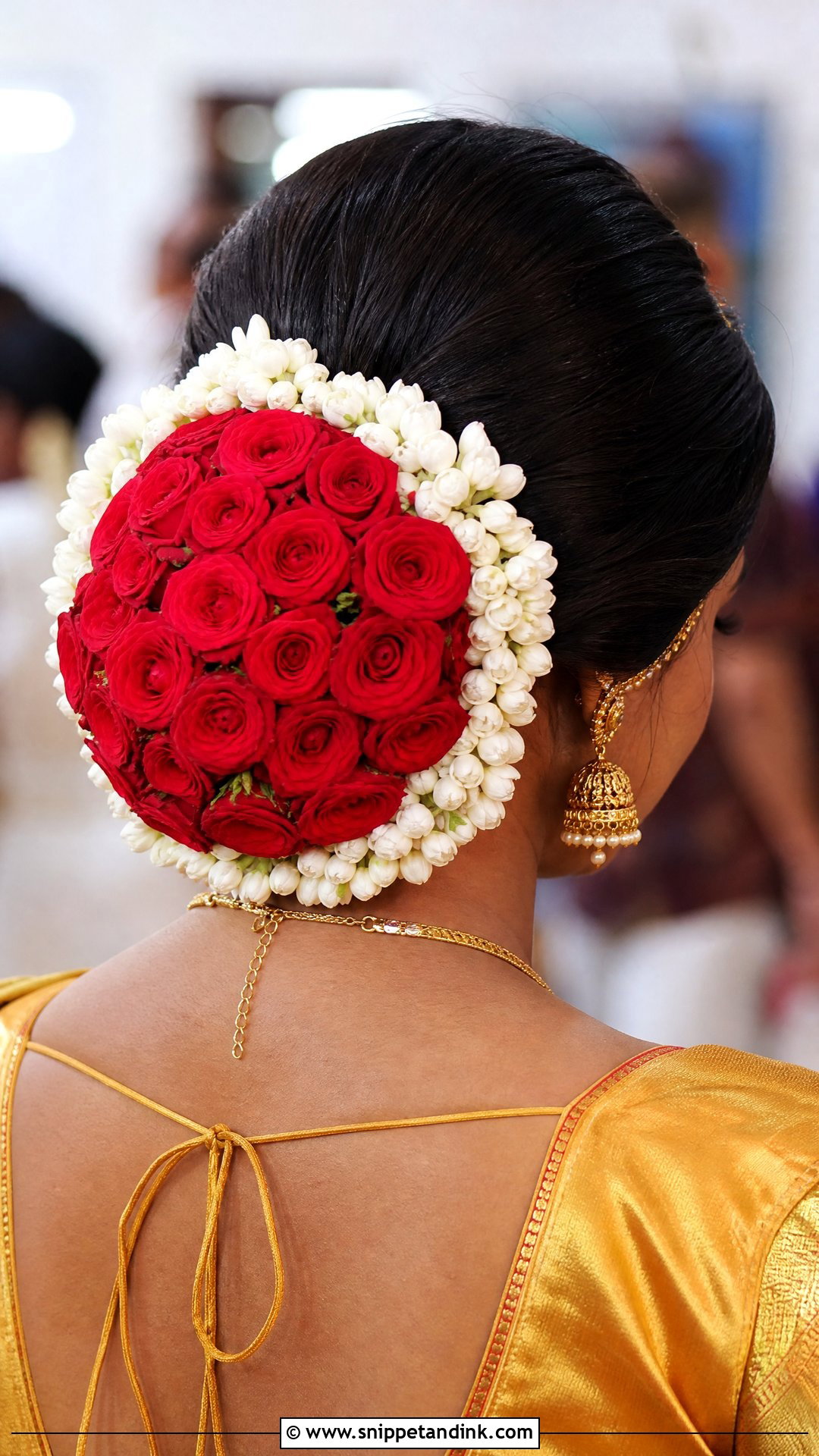
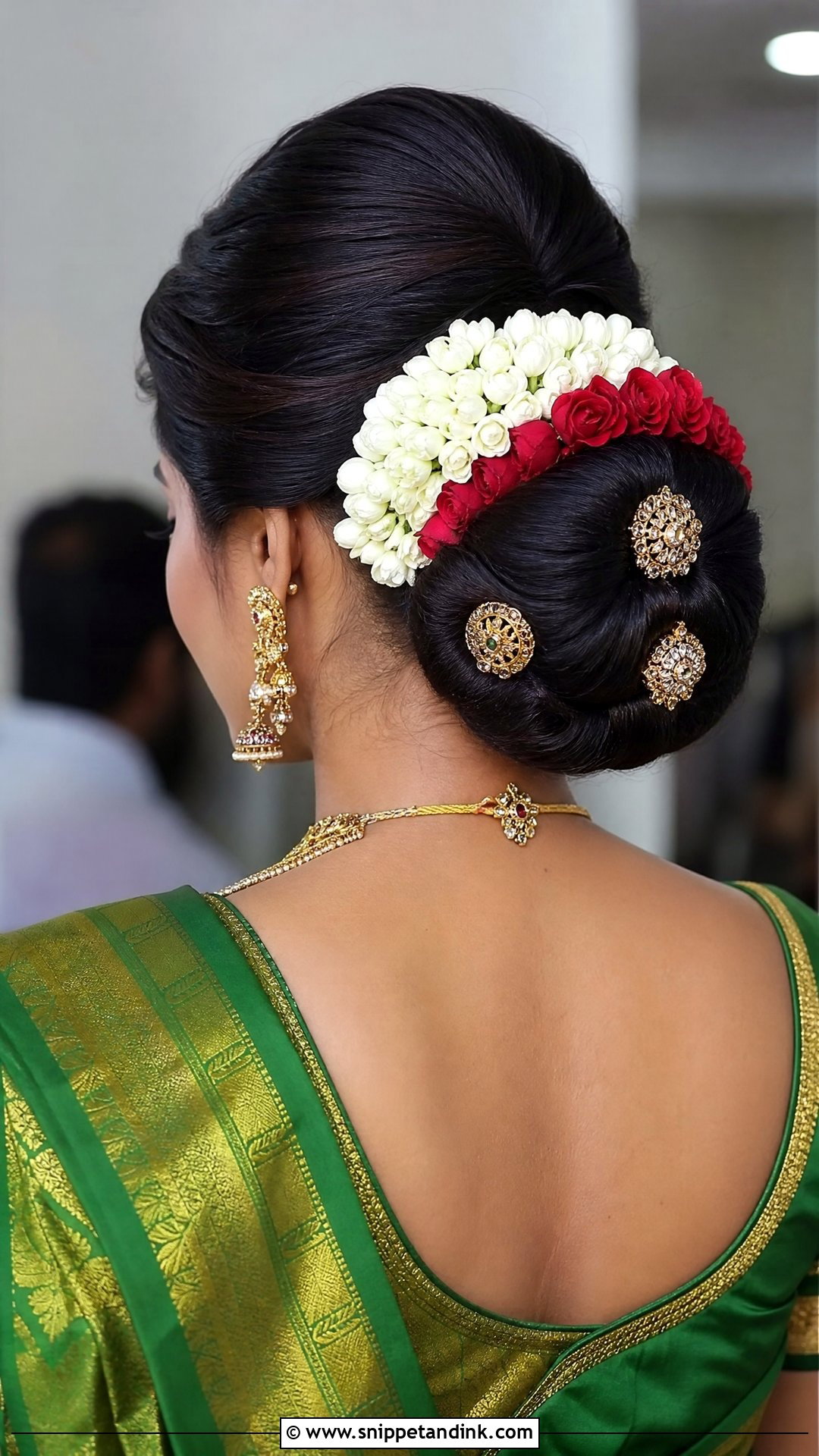
Roses around the edge of a neat bun, or across one side, bring colour. Red roses look classic with gold silk, while pink or peach feel softer for daytime ceremonies. Jasmine around the roses adds contrast and fragrance. Rose petals bruise when pressed, so I pin the roses at the end, after the saree and dupatta are on. It looks best when the flowers echo the saree border or the wedding garland. Keep the front smooth and simple, because the bun already carries strong detail.
16. South Indian Bridal Long Braid
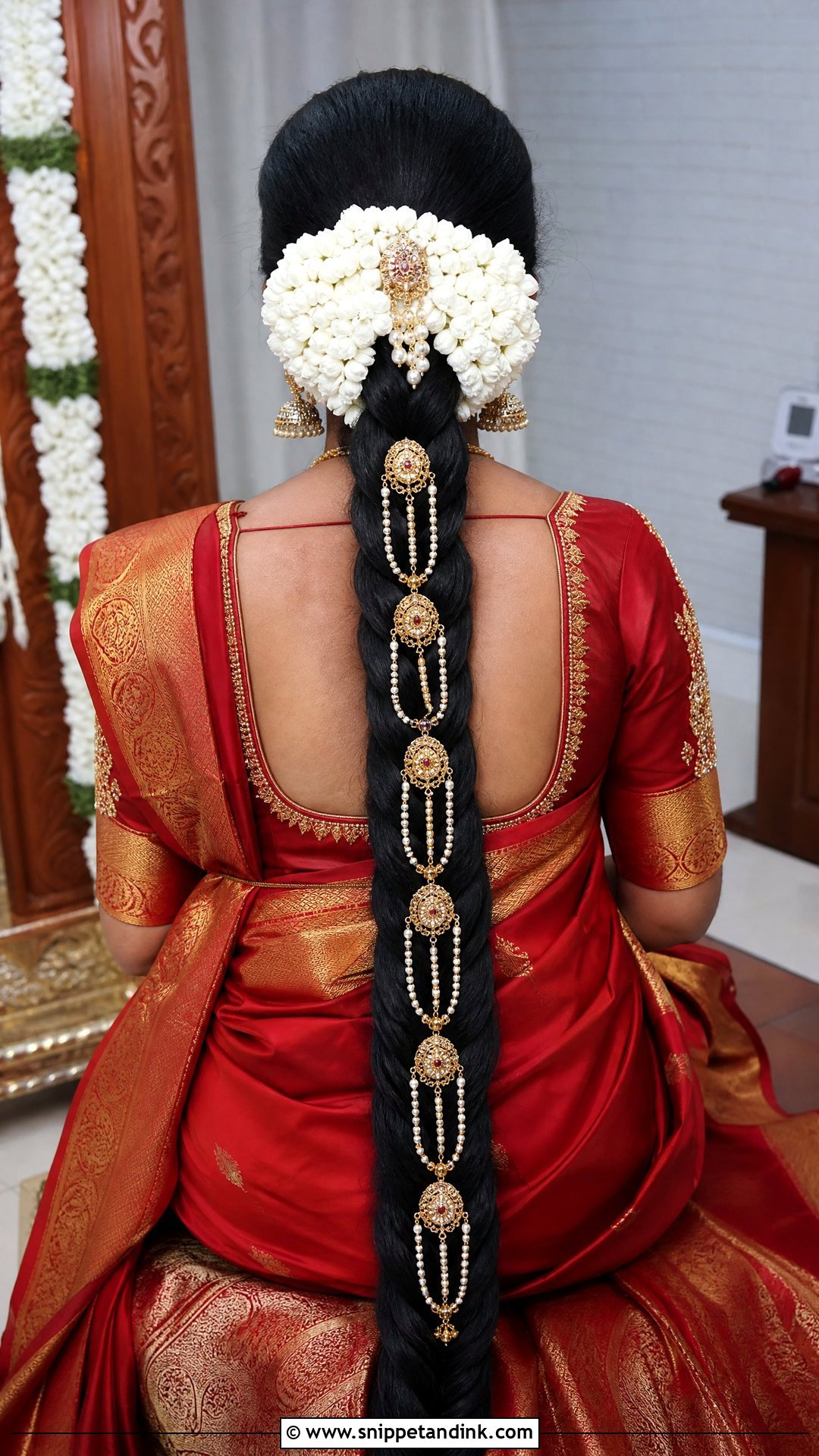
A South Indian bridal long braid follows the long vertical line of a silk saree, which is why it looks so graceful. The braid can be natural or lengthened with a matching hairpiece for a thicker shape, then decorated with flowers, jada billalu, pearls or gold chains. A small bun at the top of the braid gives it a fuller, more traditional start. Once pinned well, it’s secure for long rituals. The weight of a long, decorated braid hangs from the crown, so I make sure that anchor point is firm before anything else goes on.
17. South Indian Bridal Messy Bun
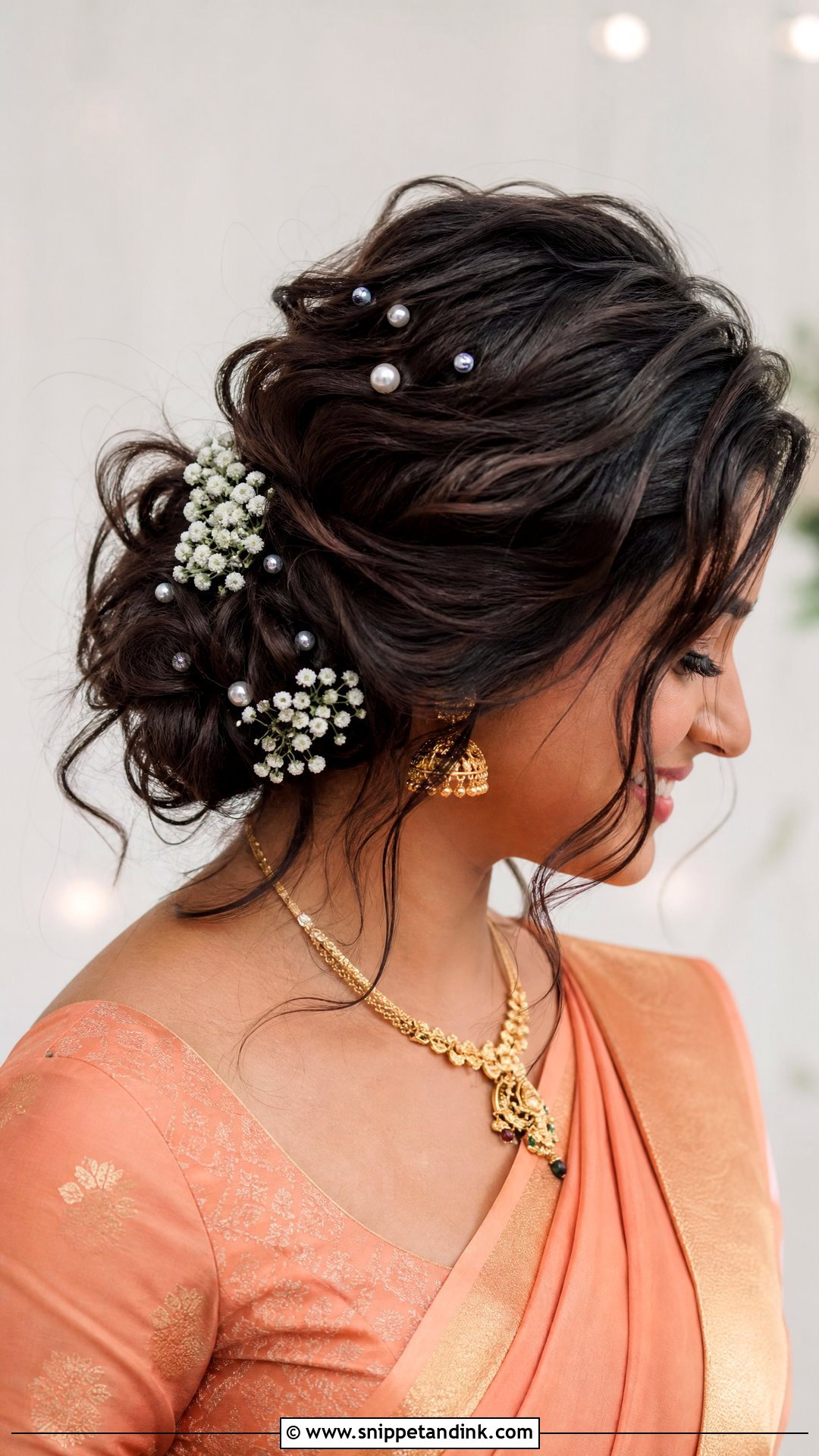
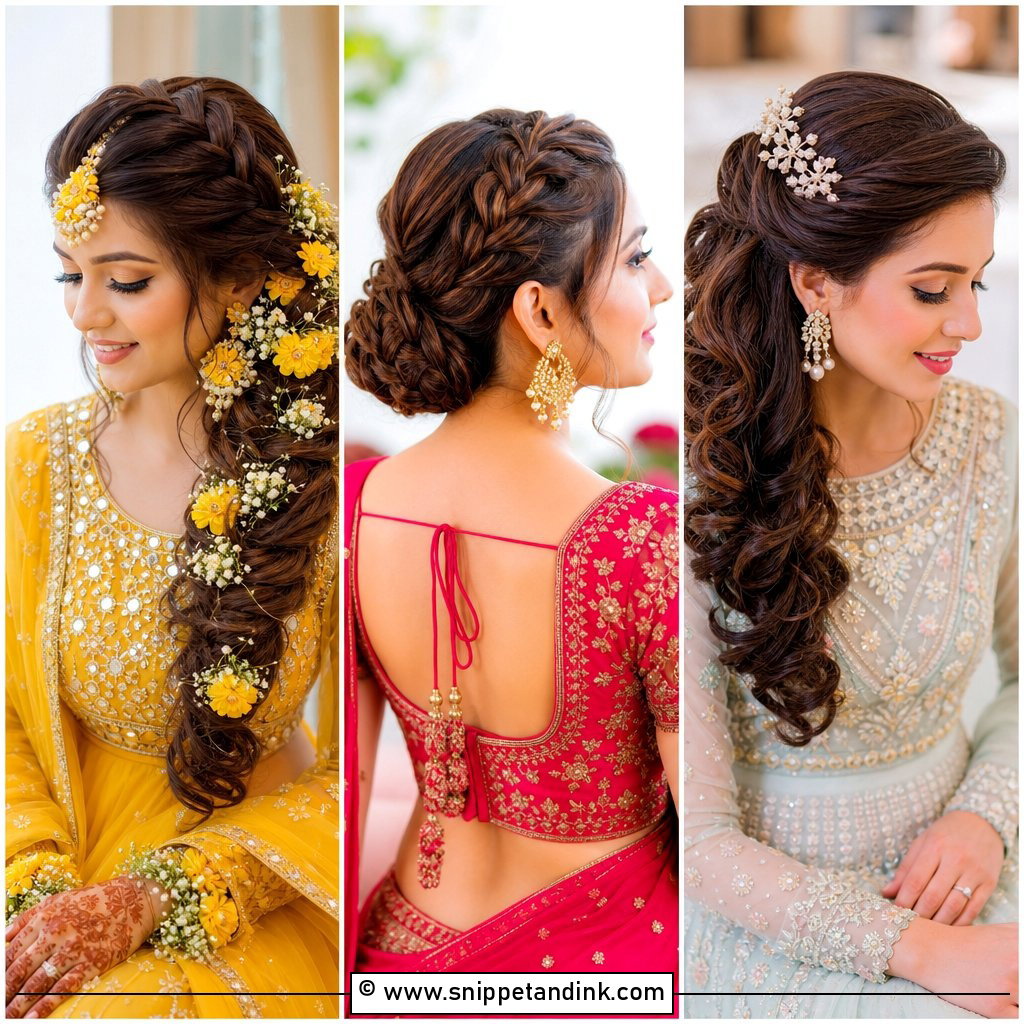
The relaxed bun isn’t messy in structure. It’s a secure bun with soft texture, a few loose pieces and controlled volume. It suits receptions, mehndi functions and brides who want a break from very sleek traditional hair. Jasmine, baby’s breath, pearl pins or a small gold clip all work. If you’ll be moving around and greeting guests all evening, keep the front soft but not too loose, because face-framing pieces that look romantic at 6pm can be stuck to lipstick by 9pm.
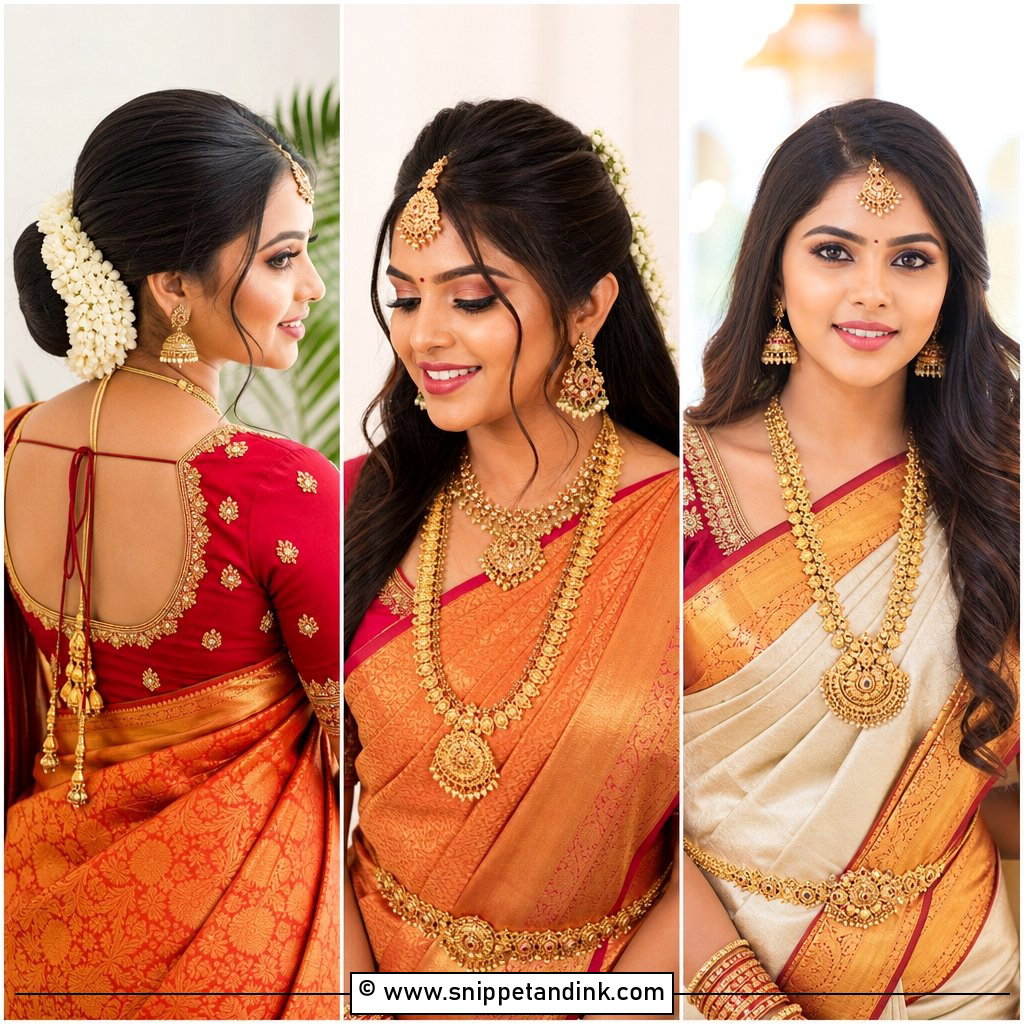
18. South Indian Bridal Maang Tikka Hairstyle
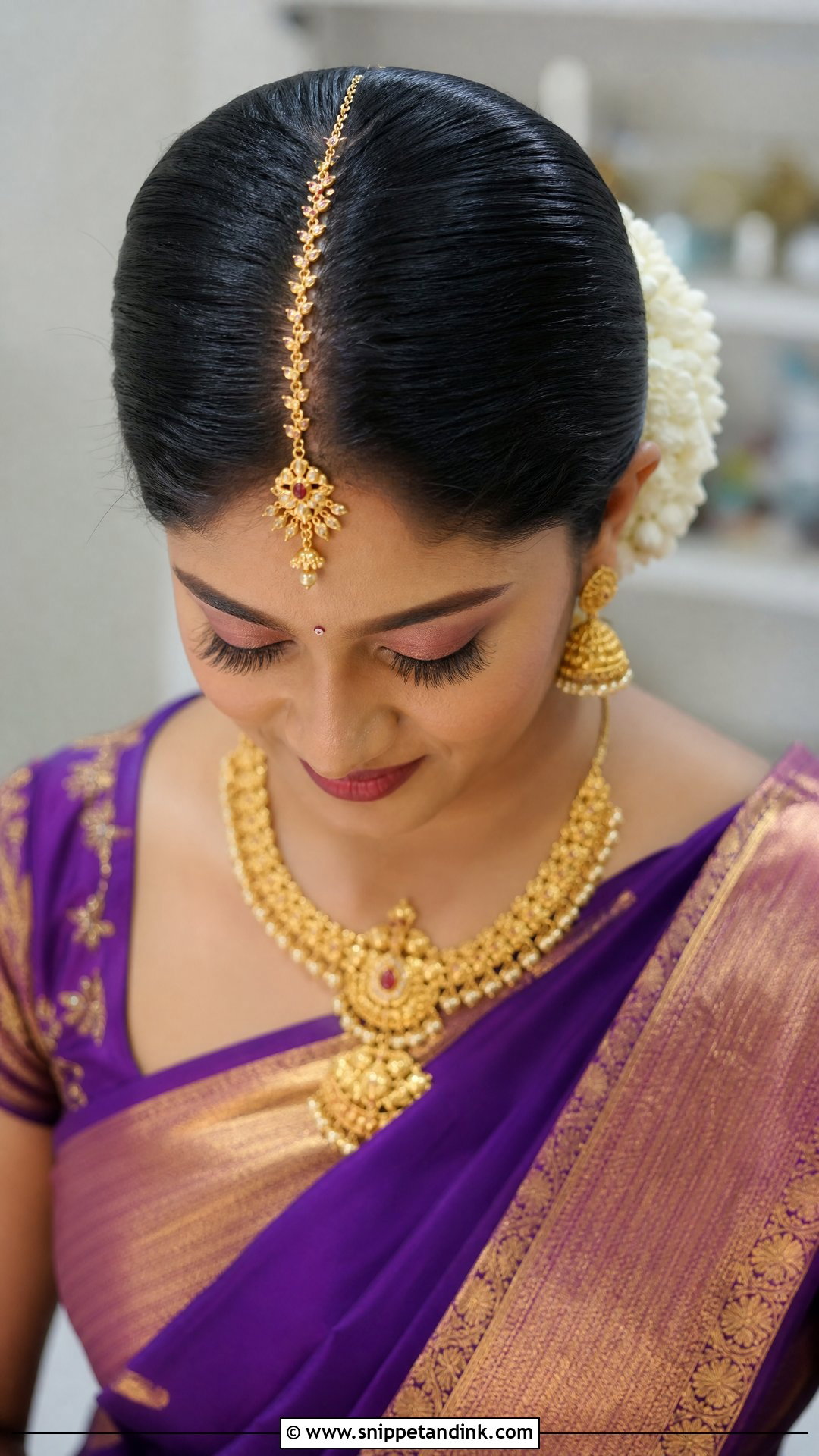
A maang tikka needs a clean, straight centre part, or the tikka sits crooked and the whole face looks off. The hair itself can be a bun, a braid or half up. A low bun with jasmine works well; a long braid gives a more classic finish. I pin the tikka chain under a small section at the crown and secure it with a hidden pin, so it doesn’t pull or slide during the ceremony. Symmetry and comfort are the goal.
19. South Indian Bridal Matha Patti Hairstyle
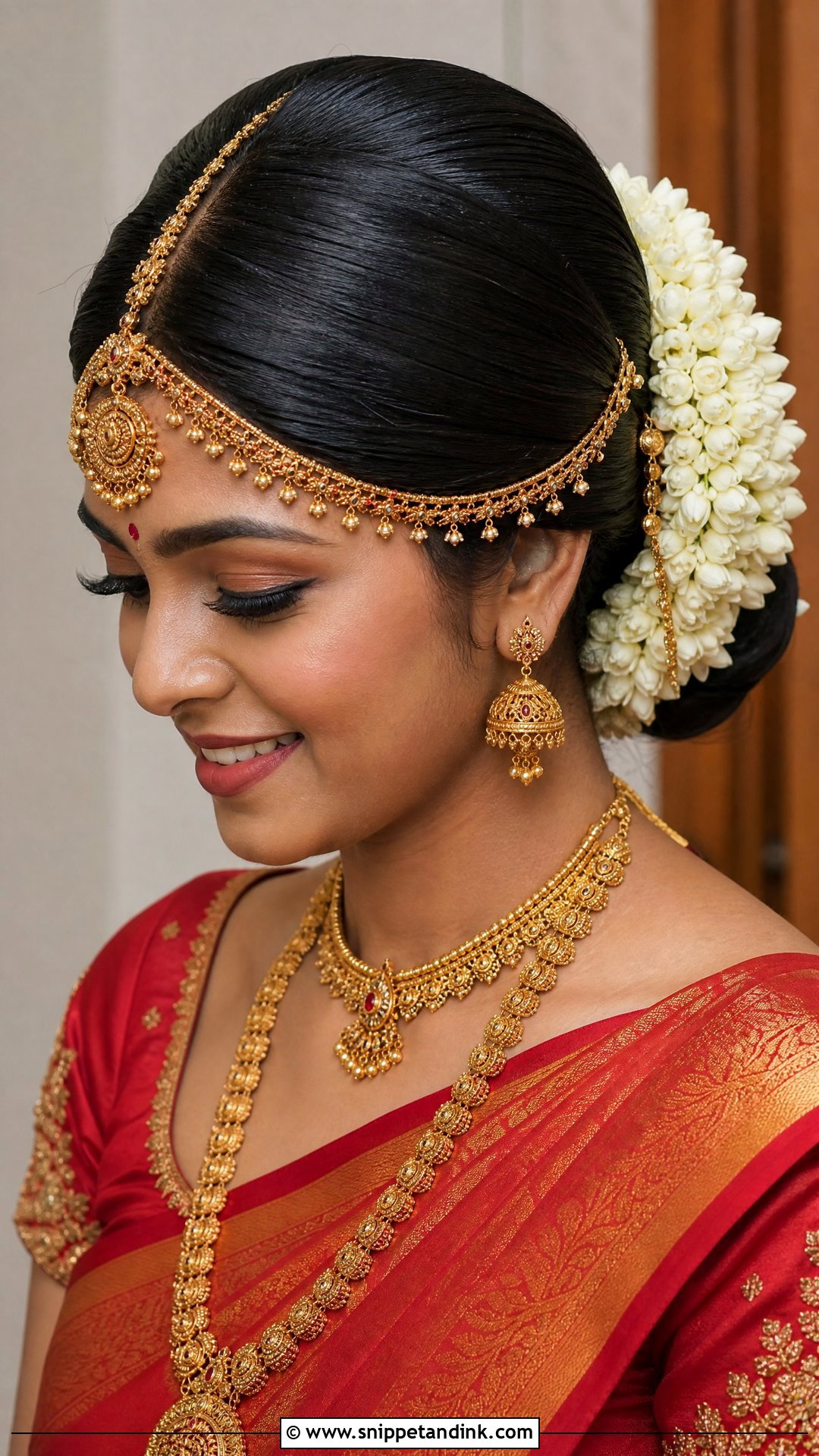
A South Indian bridal matha patti hairstyle frames the face in jewellery, so the hair underneath should support it and stay quiet. A sleek bun, low bun or traditional braid works best. The centre part has to be smooth and the sides pinned neatly, because the side chains of the matha patti sit on them and show any bump. Flowers stay at the back, away from the forehead. It pairs with heavy temple jewellery and richly woven sarees.
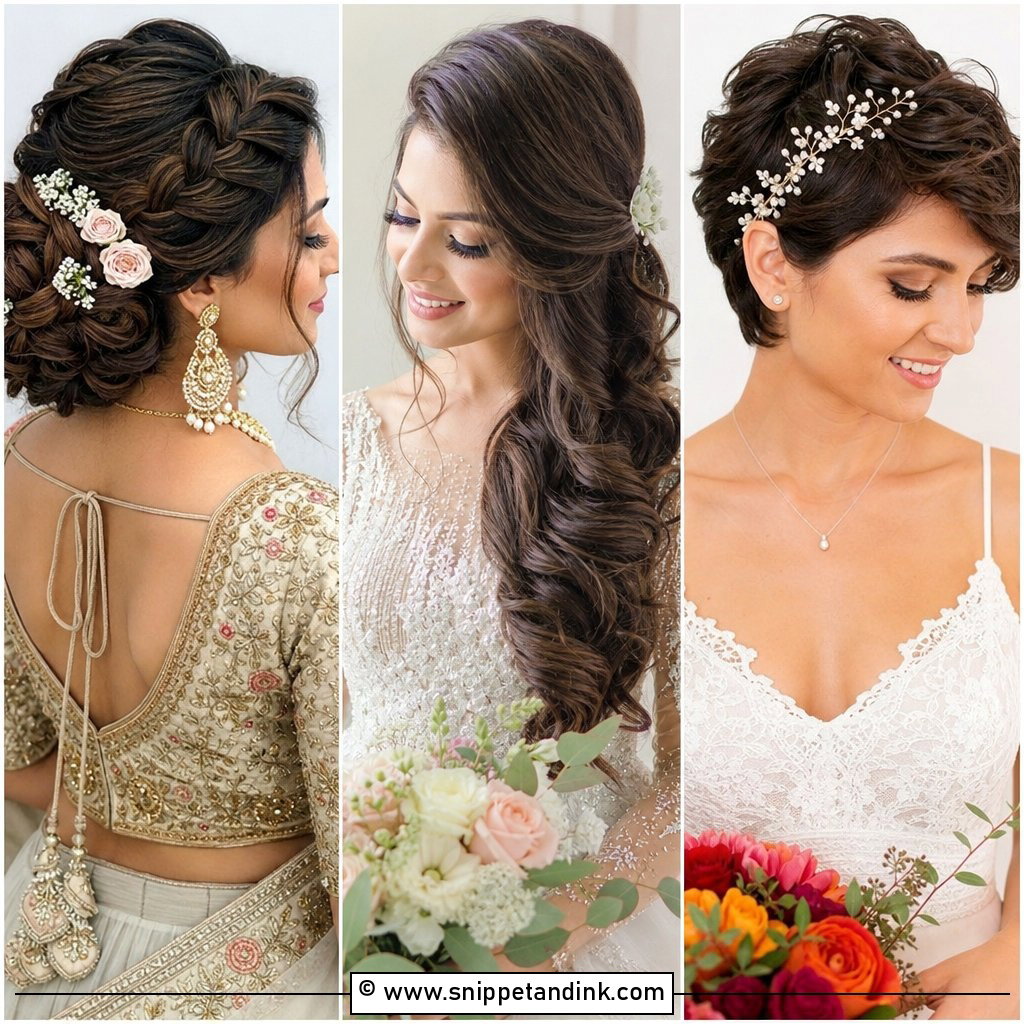

20. South Indian Bridal Reception Hairstyle
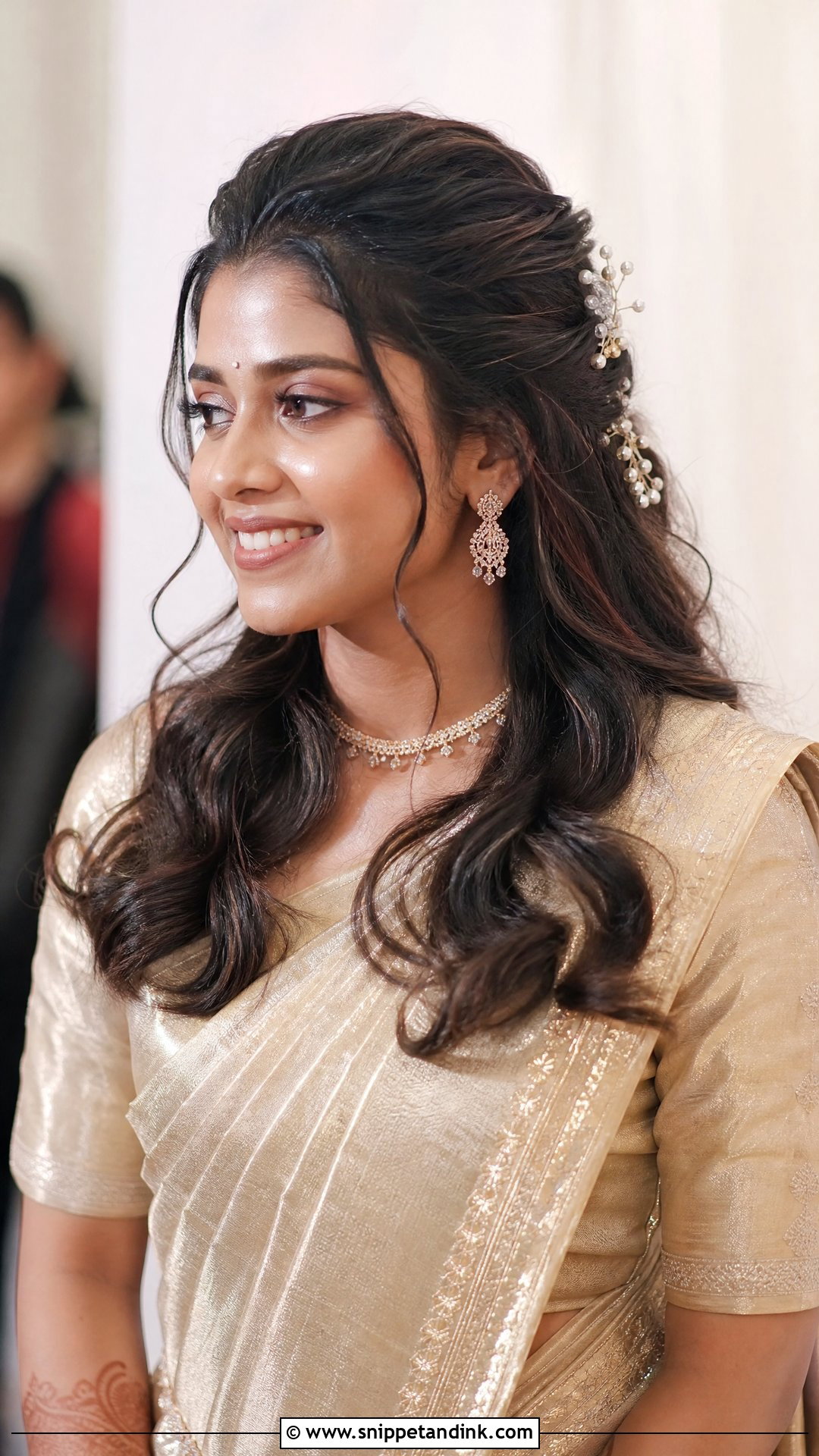
Reception hair can be lighter and more fashion-forward than the ceremony look: waves, half up, a textured bun or a modern braid. It has to feel bridal and stay comfortable through photos, stage moments and greetings. Pearls, crystal pins, fresh flowers or gold accessories suit different outfits. If your ceremony look was very traditional, the reception is a chance to show a different side. Plan the changeover time: taking down a decorated jada, brushing out and restyling takes longer than most families allow between events.
Carrying Gold and Flowers Through a Long Muhurtham
A decorated jada with billalu, a poola jada or a temple-jewellery bun can be surprisingly heavy, and the bride may wear it for many hours while sitting, bending and standing for rituals. I build the anchor first: a firm, tight section of hair at the crown or nape that every heavy piece hangs from, with pins crossed in an X so they lock. Weight spread across several anchor points is far more comfortable than weight on one.
If the scalp starts to ache, it’s usually one piece pulling. Ask someone to find and re-pin that piece rather than putting up with it for the rest of the day.
Unpinning without losing hair
Take the flowers and ornaments off first, then hunt for every pin before touching the braid. Pins hidden inside the braid are what rip hair when it’s pulled out. Once it’s loose, work a little oil through the lengths and detangle from the ends up with your fingers before using a comb.
A Trial With the Real Flowers and Gold Settles It
The right hairstyle supports the whole bridal look, not just the hair. Think about your saree, the weight of your jewellery, the ceremony time, the weather and how long the style has to last. A jada or poola jada gives a rich cultural finish; a low bun, jasmine bun or temple jewellery bun feels graceful; open curls, waves and half up bring movement for the reception. Do a trial with the real flowers and the real gold if you possibly can. Their weight changes everything, and you’ll know within an hour whether the style is secure and comfortable.
You'll Like These Ideas:




Leave a Reply