
A braid is the most hardworking bridal hairstyle I do for Indian weddings. It holds through pheras, photos, dancing and a long reception, and it gives me a firm base to anchor the heavy pieces: matha patti, maang tikka, passa, pearl pins, gold chains and the dupatta. From a classic South Indian jada braid to a soft fishtail for a lehenga, the right braid depends on your outfit, your jewellery and how much hair you actually have. Here are twenty I’d put on a bride, with the way I build each one and where each one tends to fail.
Adding Length With a Choti Without a Sore Scalp by Noon
Most of the long braids on this list need more hair than brides naturally have. I use a braided hairpiece (a choti or savaram) or clip-in wefts, and the way it’s attached decides if you’re comfortable at the reception or quietly taking pins out in the bathroom.
- Match the extension to your hair in daylight, not under salon lights. Black hair often has brown undertones that show next to jet-black extensions.
- Weight should hang from a small anchor braid or a secure base at the nape, never from a single section at the crown.
- Fresh flowers, jada billai and gold ornaments add real weight. I ask brides to bring every piece to the trial so I can feel the total load.
- Wear the full style for at least two hours at your trial. Pressure points show up after an hour, not in the first ten minutes.
If your scalp is sensitive, tell your stylist early. I can spread the load over more pins, use lighter artificial flowers in the lower half, or swap a solid metal ornament for a hollow one.
1. South Indian Bridal Braid
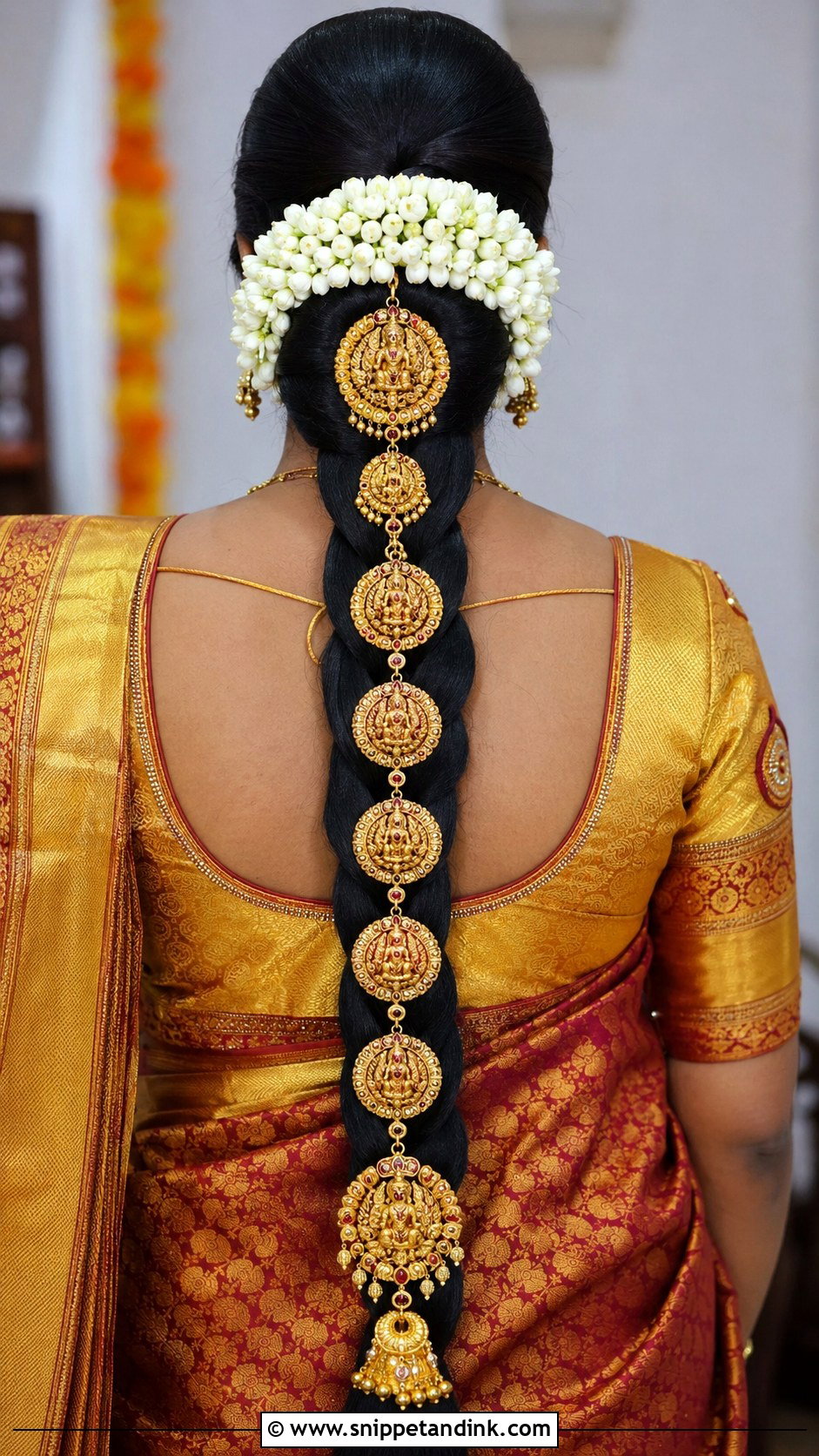
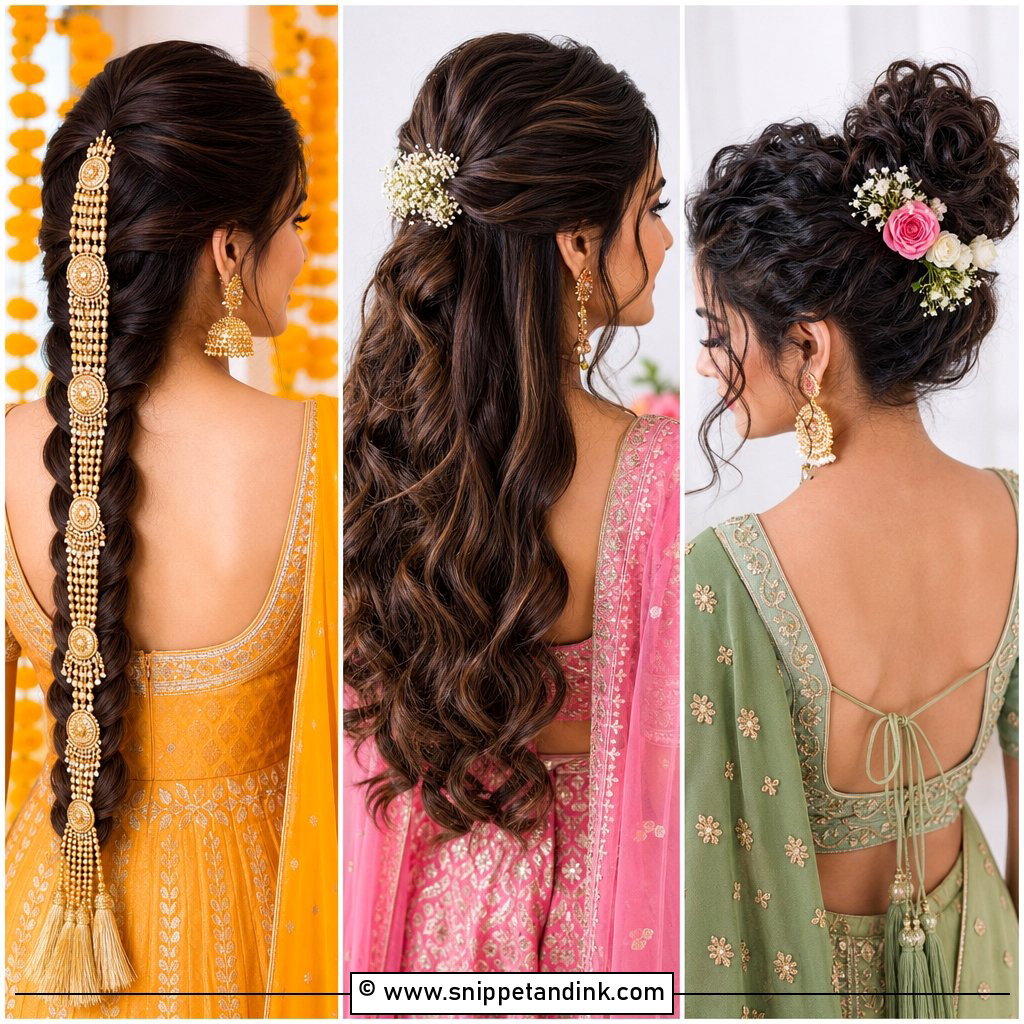
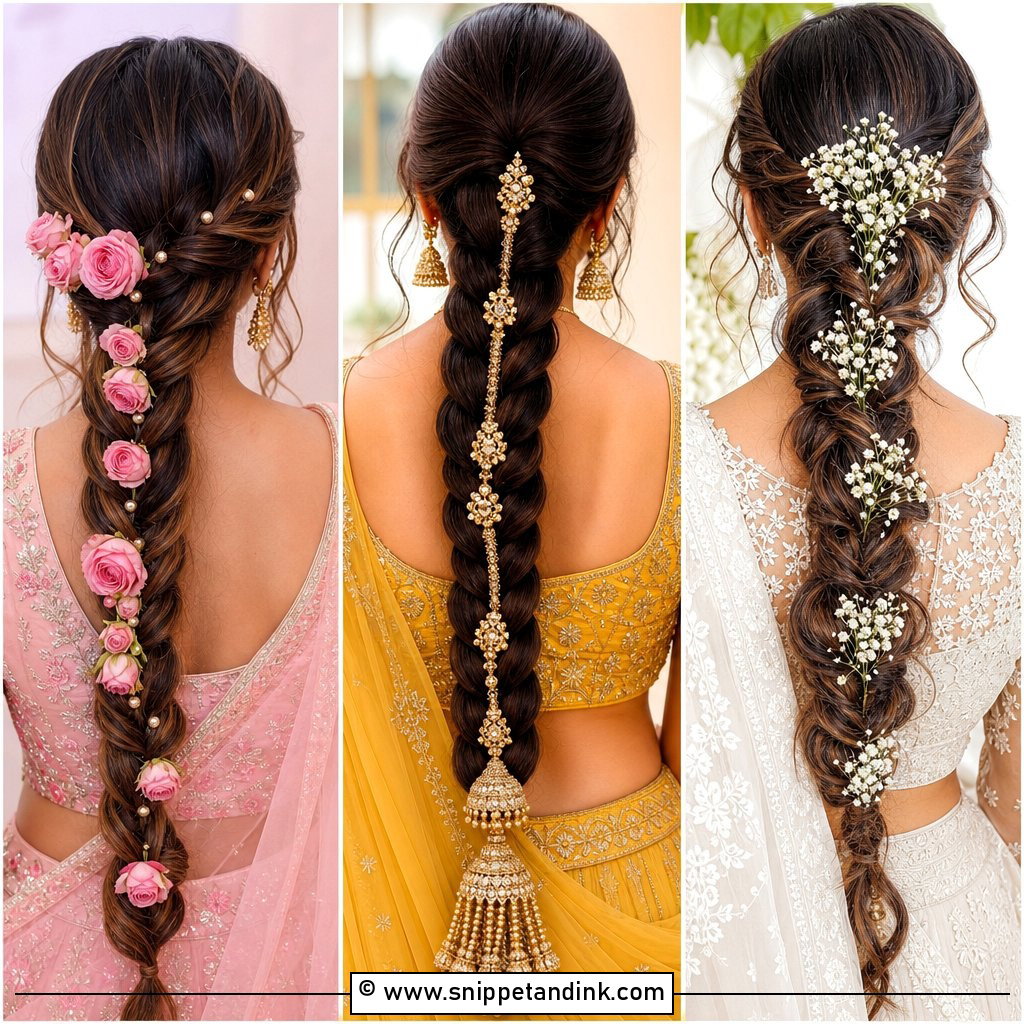
The South Indian bridal braid is a long, smooth plait dressed with jasmine, gold jada billai or temple ornaments, usually with a silk saree and a full set of gold jewellery. I keep the crown sleek or lift it slightly, then part it in the centre for the tikka. Most brides with shoulder or mid-back hair need a braided hairpiece to reach the classic length, and I blend it in at the nape so the join disappears under the first ornament. The braid has to be tight and glossy at the top, because every gold piece pinned onto it shows any lumps.
2. Poola Jada Bridal Braid
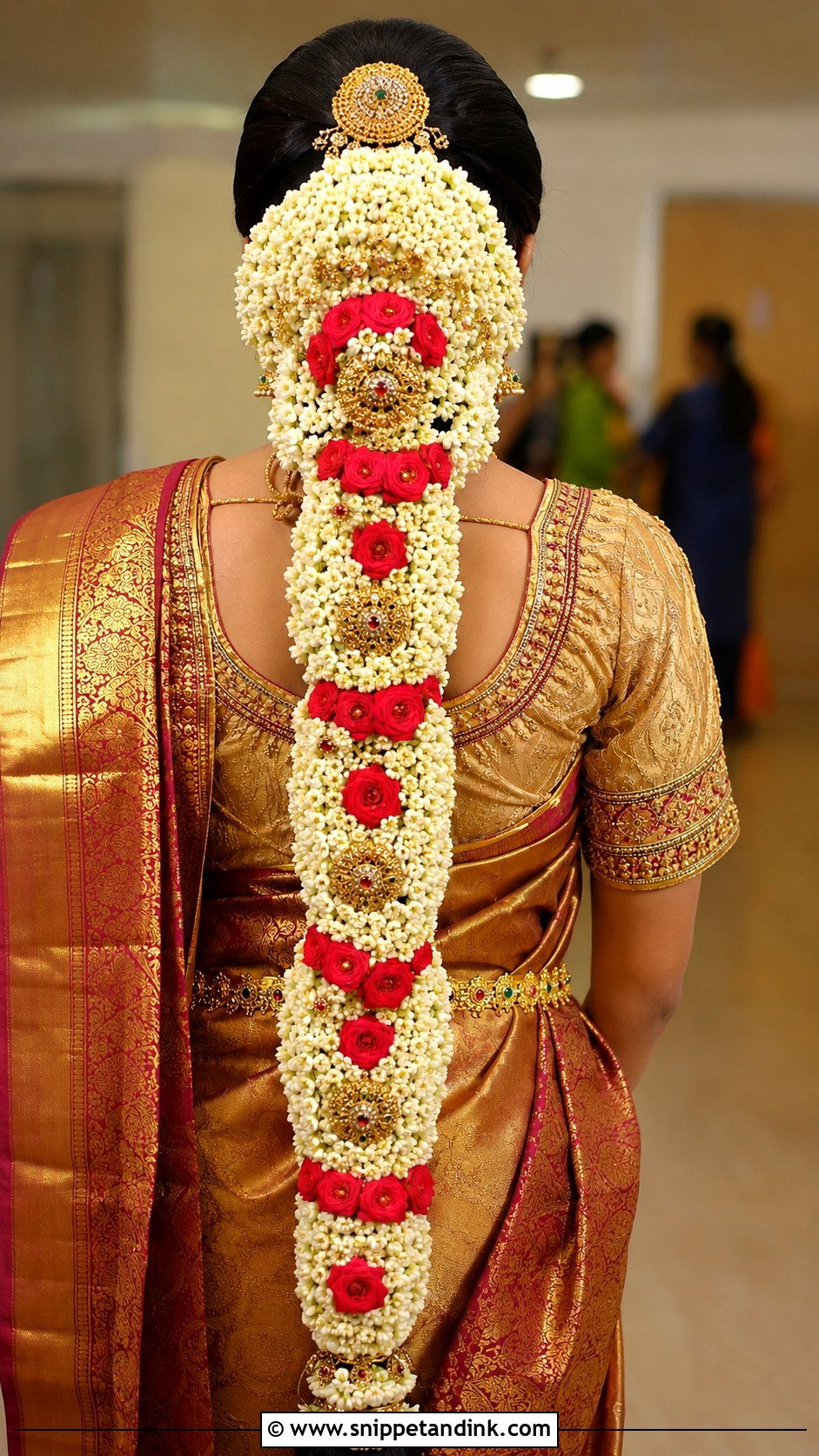
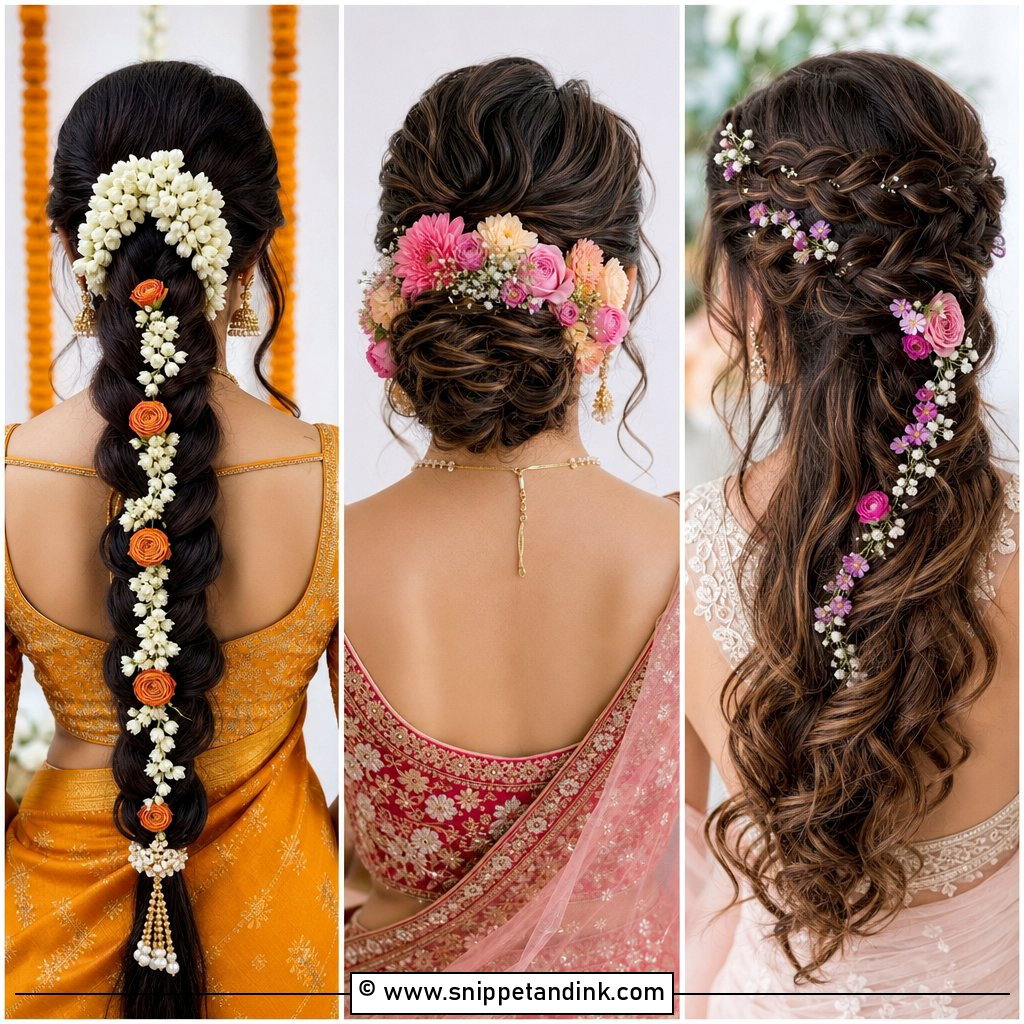
A poola jada bridal braid turns the whole plait into a floral panel from crown to tip, usually with jasmine, roses, marigolds or a mix sewn onto a base. It belongs with kanjeevaram silk, temple jewellery and a centre part. The panel is heavy once fresh flowers are on it, so I pin it to a hidden anchor braid rather than to the main braid itself, which takes the weight off the scalp. Let the flowers follow the shape of the braid instead of burying it. For a long muhurtham, ask your florist for lighter flowers in the lower half.
3. Indian Bridal Braid With Jasmine Flowers
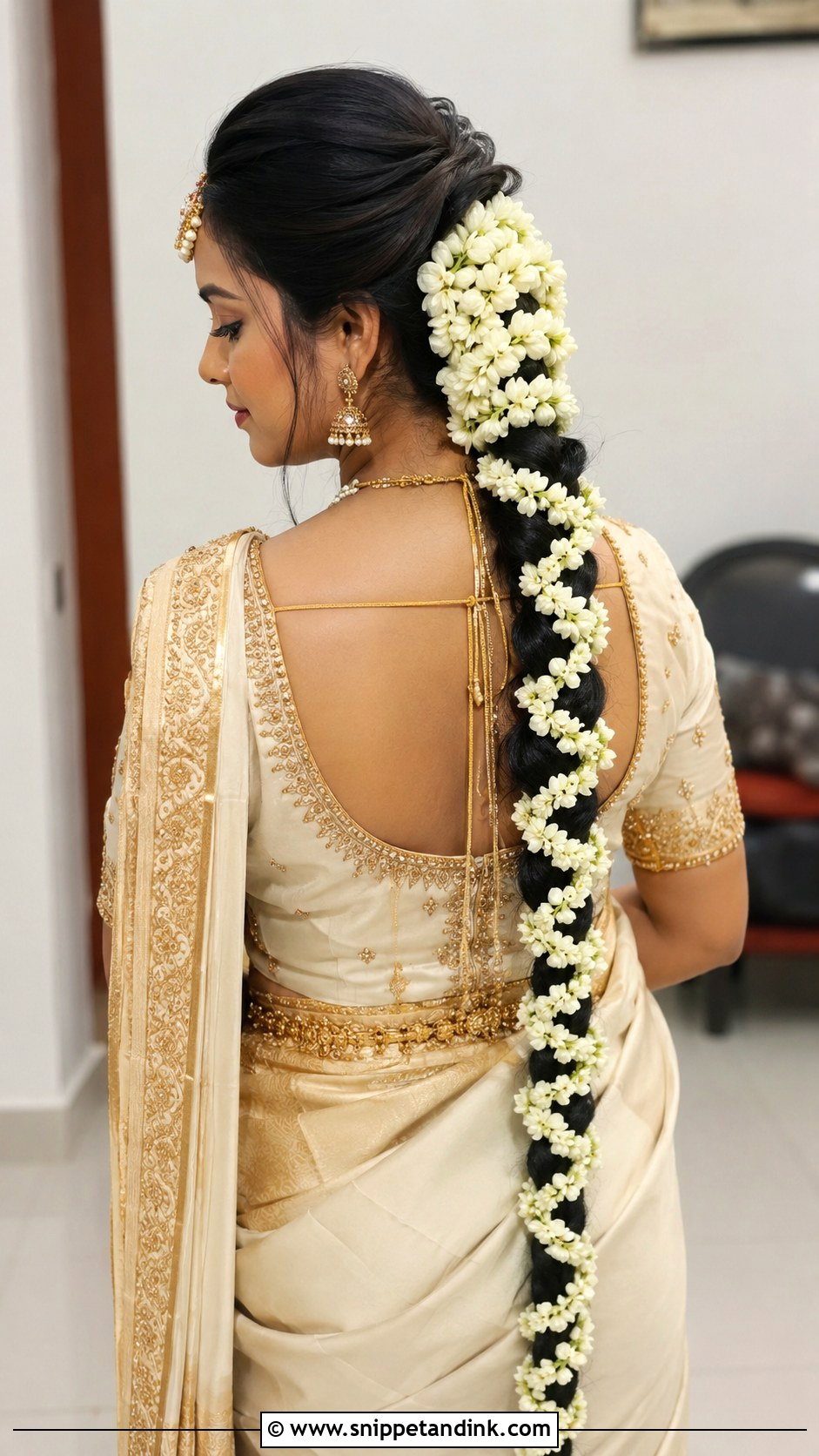
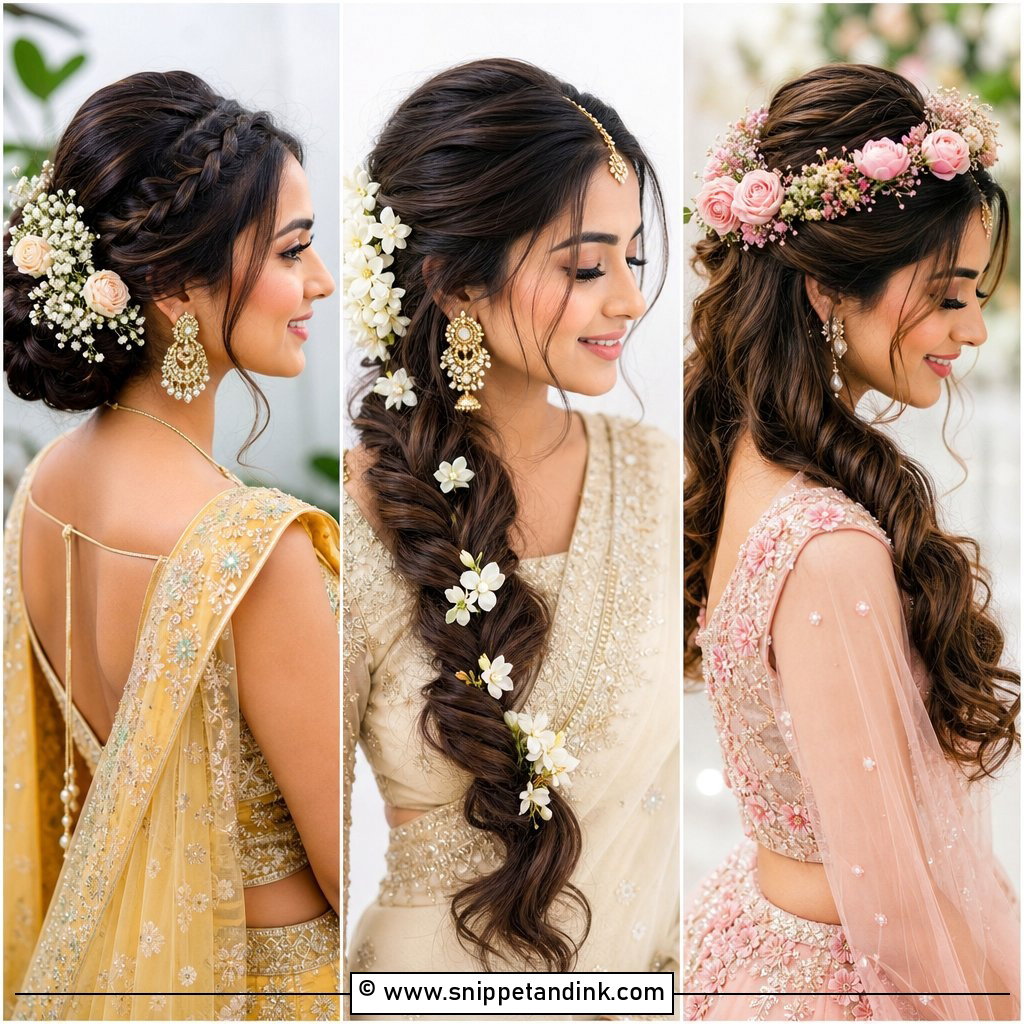
Jasmine brings scent and texture without the bulk of larger flowers. Under it you can have a three-strand braid, a fishtail or a chunky pull-through, depending on length and outfit. White jasmine against black or dark brown hair gives a strong, clean contrast with gold jewellery, and it suits temple weddings as much as a reception entrance. I keep the front smooth with a little lift at the crown, then wrap the strings in neat rows down the braid. Strings wound in a spiral look tidier on camera than strings pinned in loops.
4. Indian Bridal Fishtail Braid
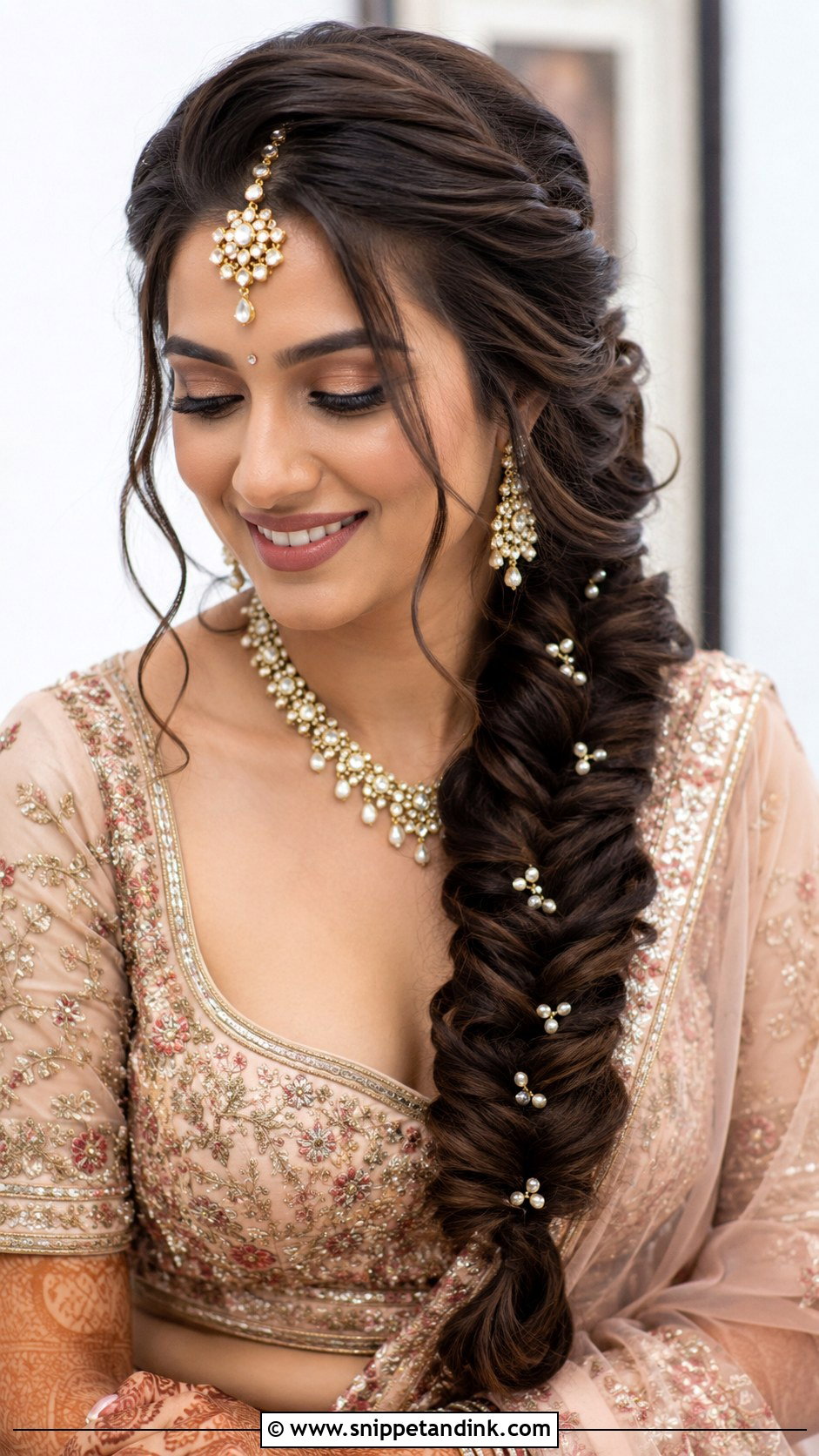
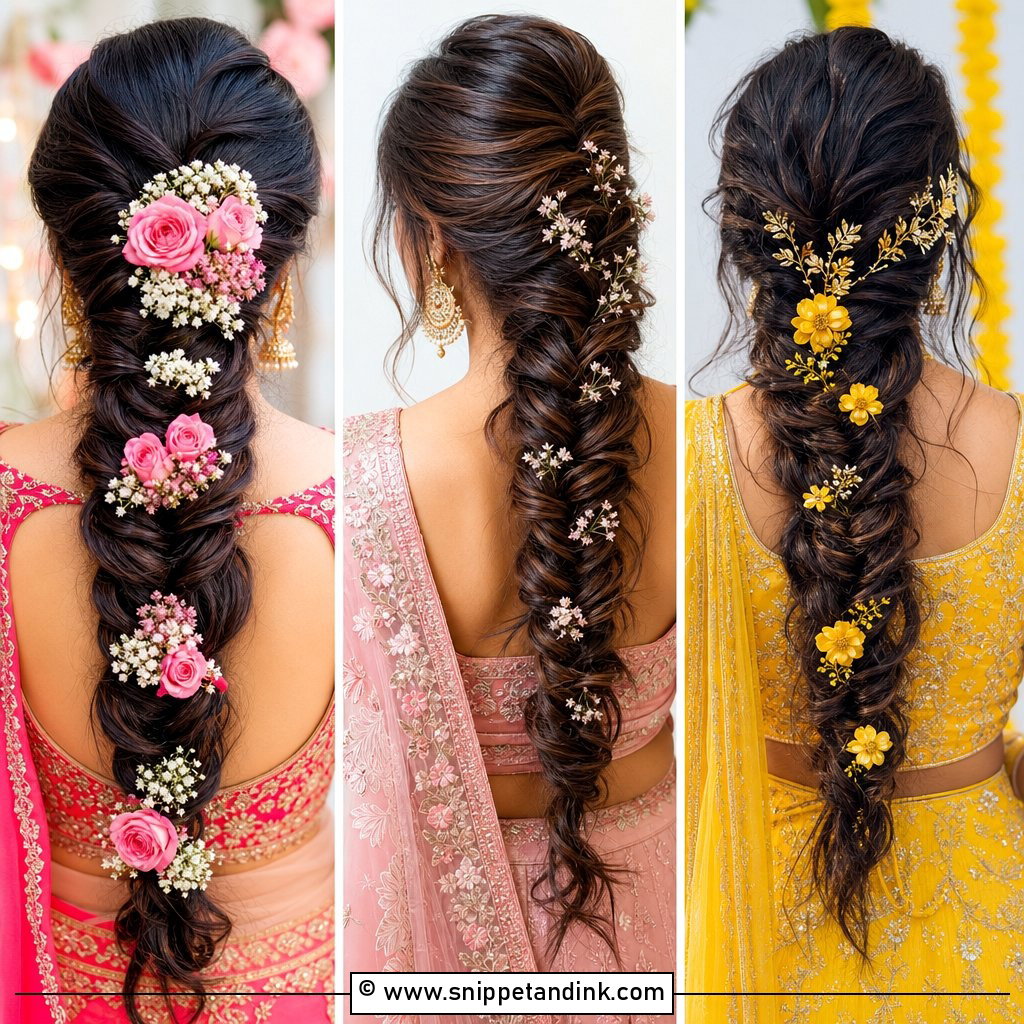
A fishtail gives you a lot of detail without any stiffness. The fine herringbone pattern shows clearly in photos and suits lehengas, sarees and Indo-western outfits. Loosened, it looks soft and wide; kept tight, it reads more formal. On thick Indian hair a fishtail builds quickly and holds well, but on fine or layered hair the short pieces escape, so I prep with texture spray and work in smaller sections. Pearl pins or a few tiny flowers are enough decoration because the weave itself is the feature.
5. Indian Bridal Side Braid
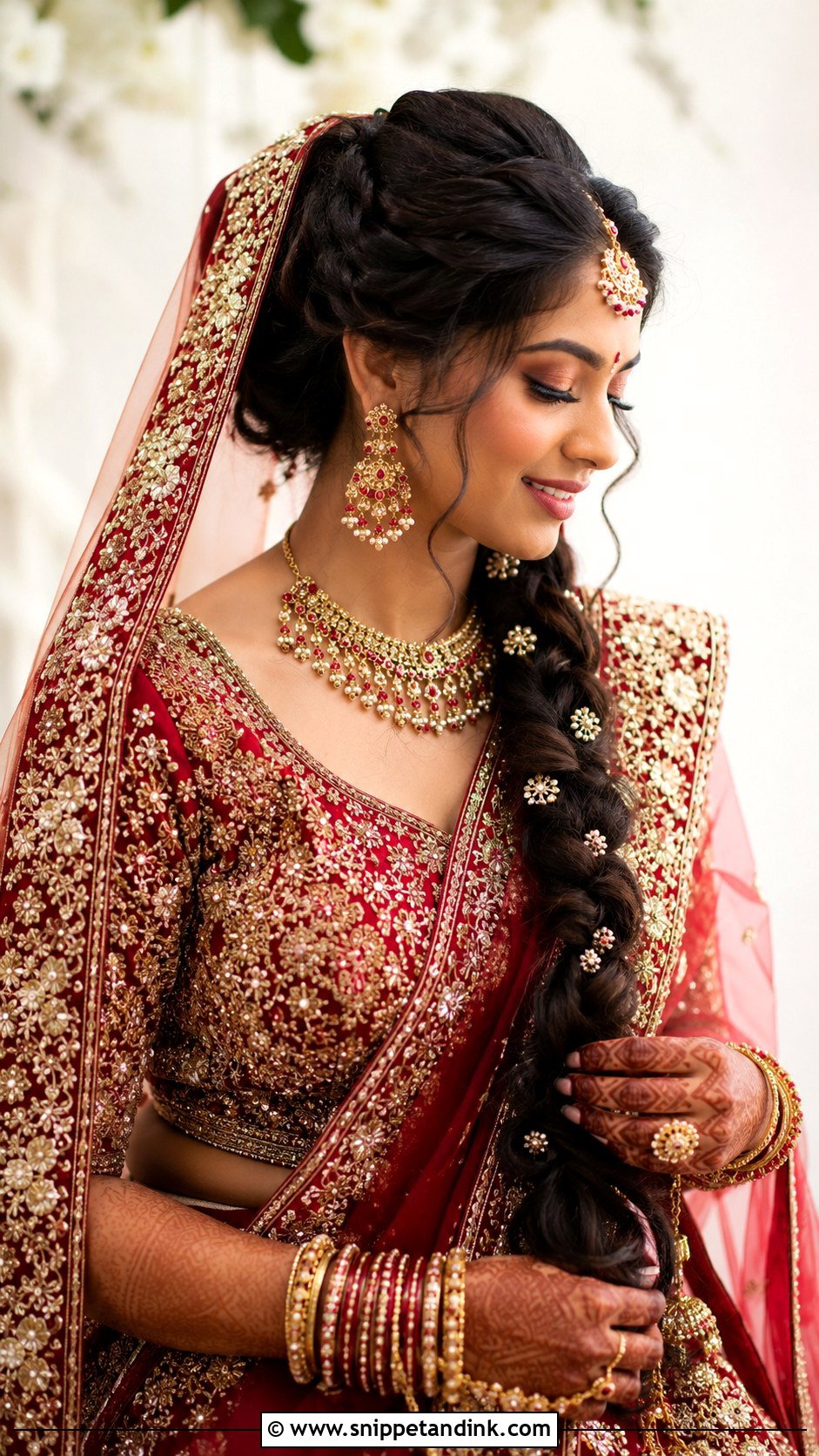
I suggest a side braid when the bride wants her hair visible from the front, especially in seated ceremony photos where a back braid is hidden. It can be textured, fishtail, rope or classic three-strand. It pairs well with a side passa, maang tikka, soft curls at the face or floral pins through the plait. The dupatta drapes over the opposite shoulder, so the braid stays in view all day. My one warning: a side braid flattens against the shoulder after hours of sitting, so I build it fuller than it needs to be at the start.
6. Indian Bridal Braid With Paranda
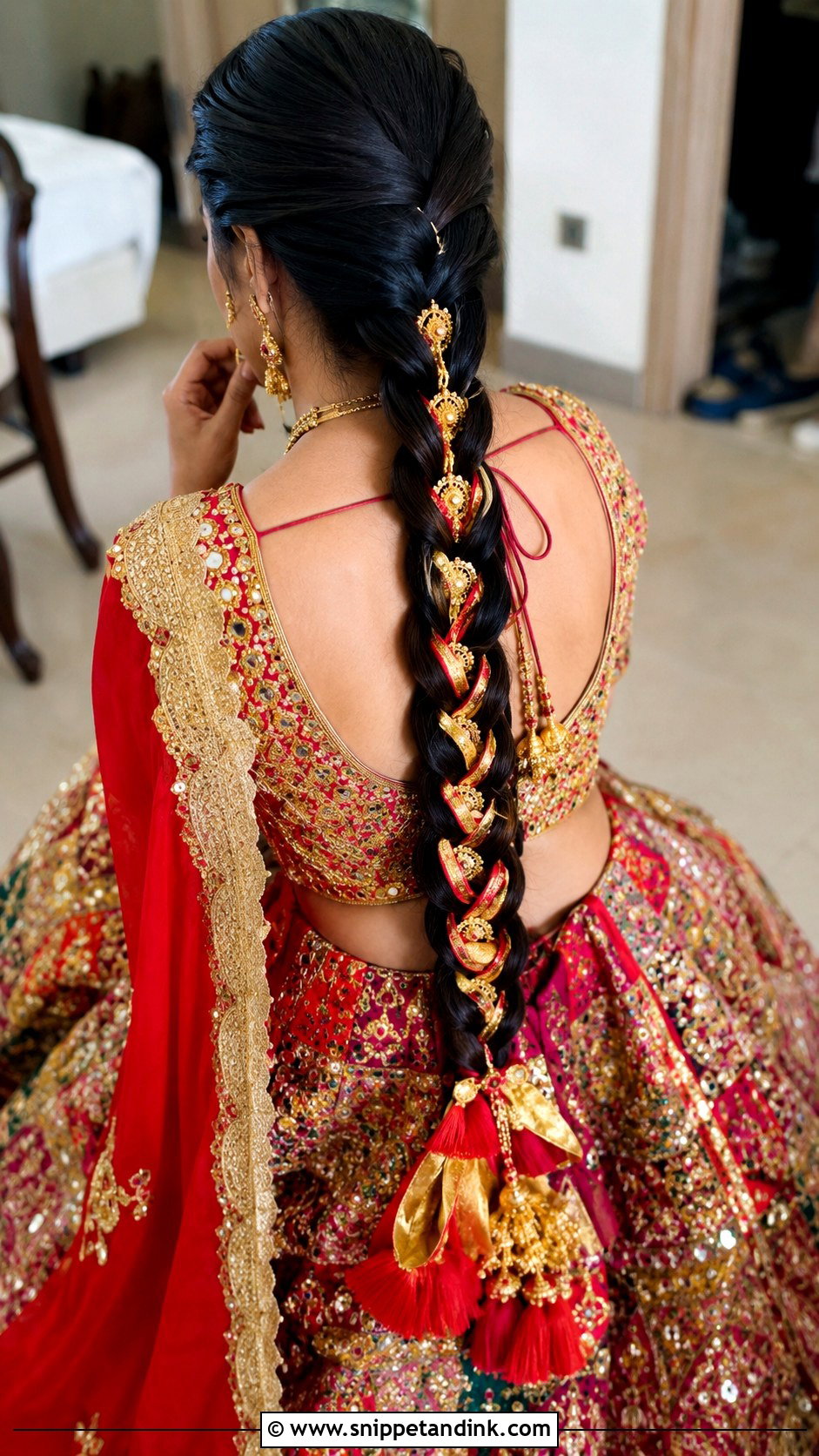
A paranda is a tasselled braid ornament from Punjab, tied in at the base and woven into the lower third of the plait. It adds length, colour and swing, which is why I love it for mehendi, haldi, sangeet or the wedding itself. Gold, red, mirror-work, pearl and gota parandas all exist, so match it to the outfit: it pairs well with lehengas, shararas and phulkari-inspired details. The top can stay sleek with a centre part or have soft crown volume. Avoid a paranda that is brighter than your embroidery; it pulls the eye to your back in every group photo.
7. Indian Bridal Braid With Maang Tikka
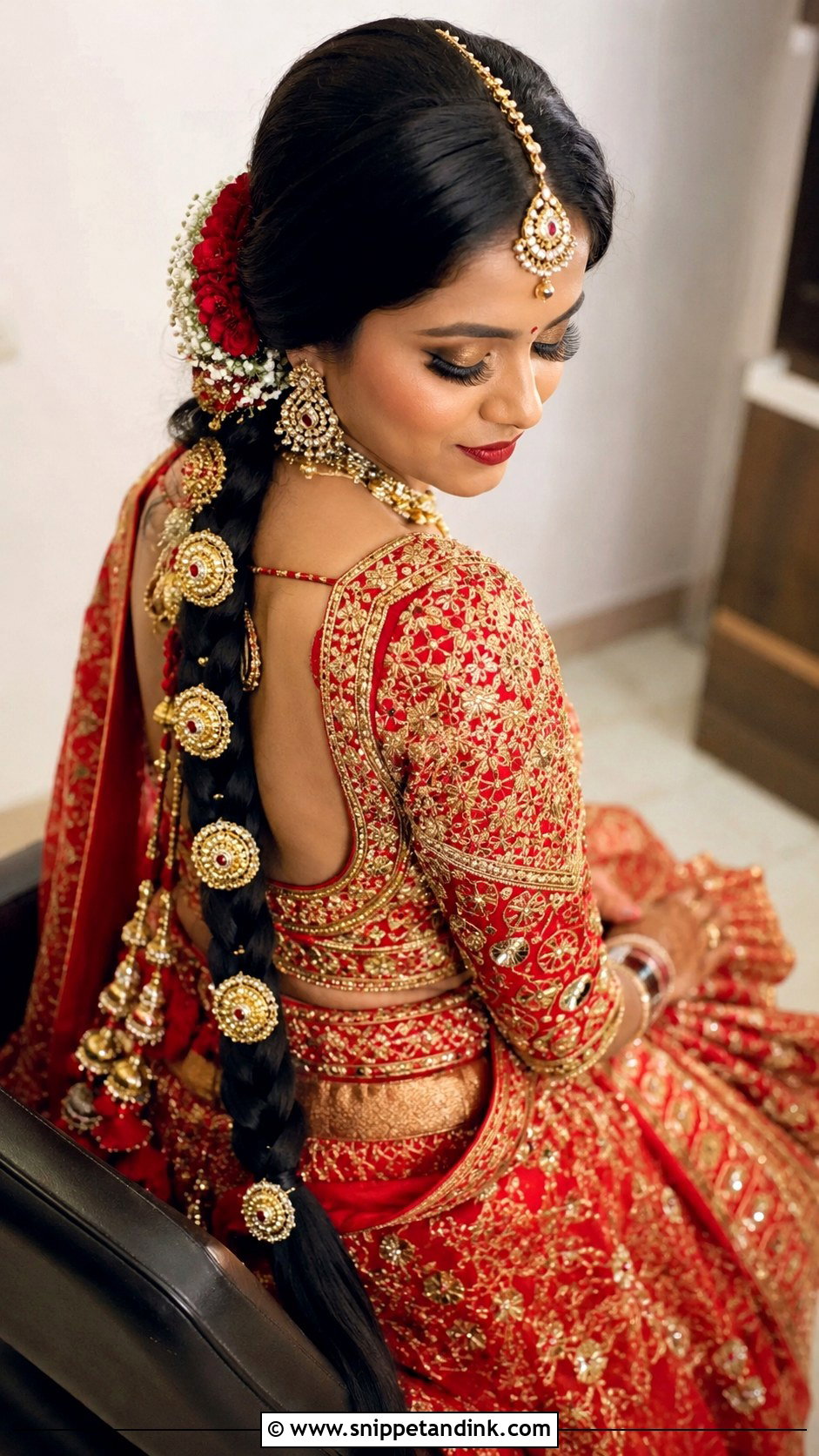
This combination gives a clean front view and a detailed back. The tikka hooks into the centre parting, and I always secure it first, with a small backcombed anchor and a pin hidden under the hook, before I braid anything. If the braid goes in first, the tikka slides sideways the moment the dupatta is pinned. The braid can be traditional, fishtail or dressed with flowers and pearls, and a few small waves at the temples soften the face. Heavy necklaces and earrings sit comfortably with it because the hair stays out of the jewellery.
8. Indian Bridal Braid With Matha Patti
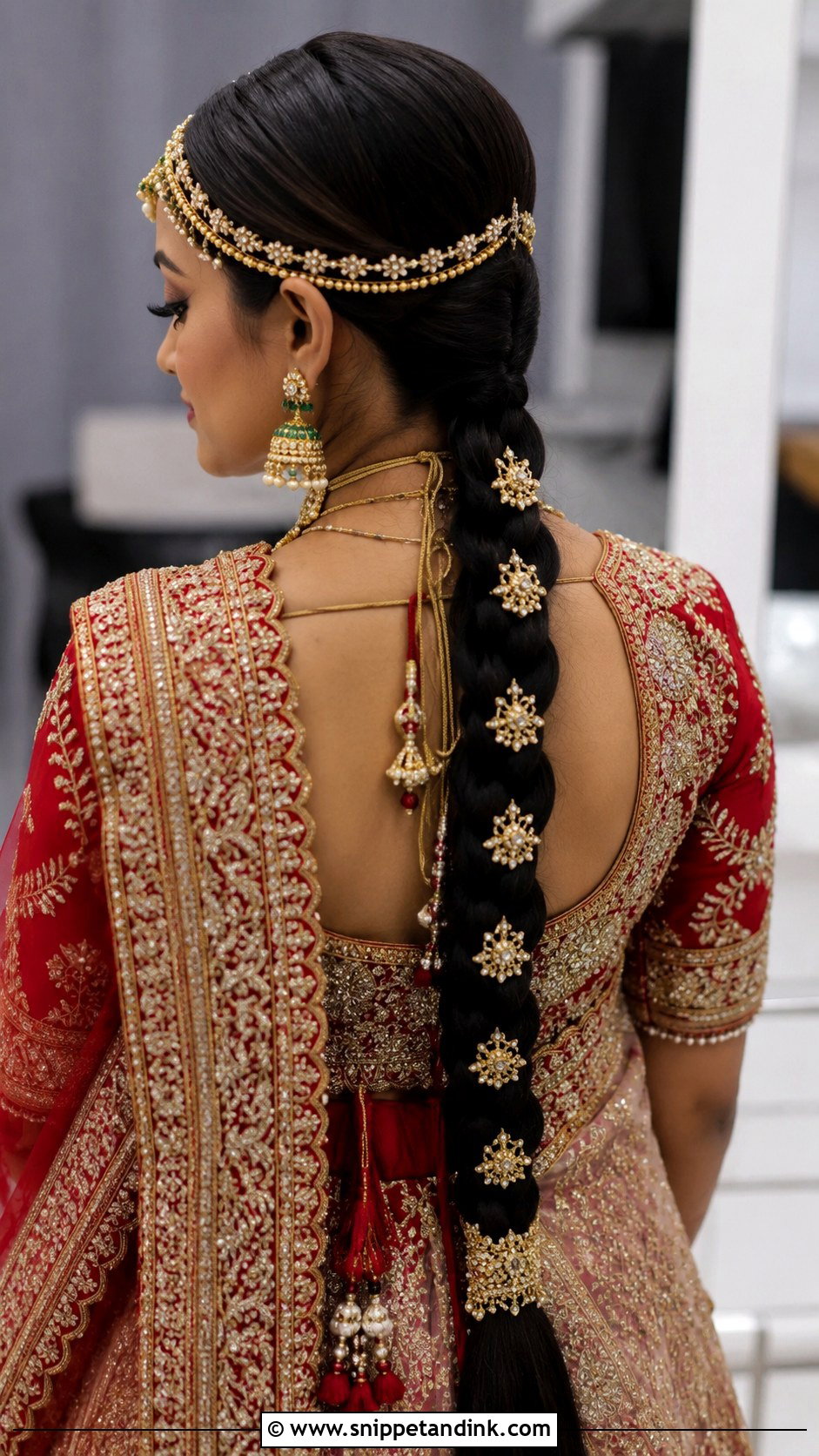
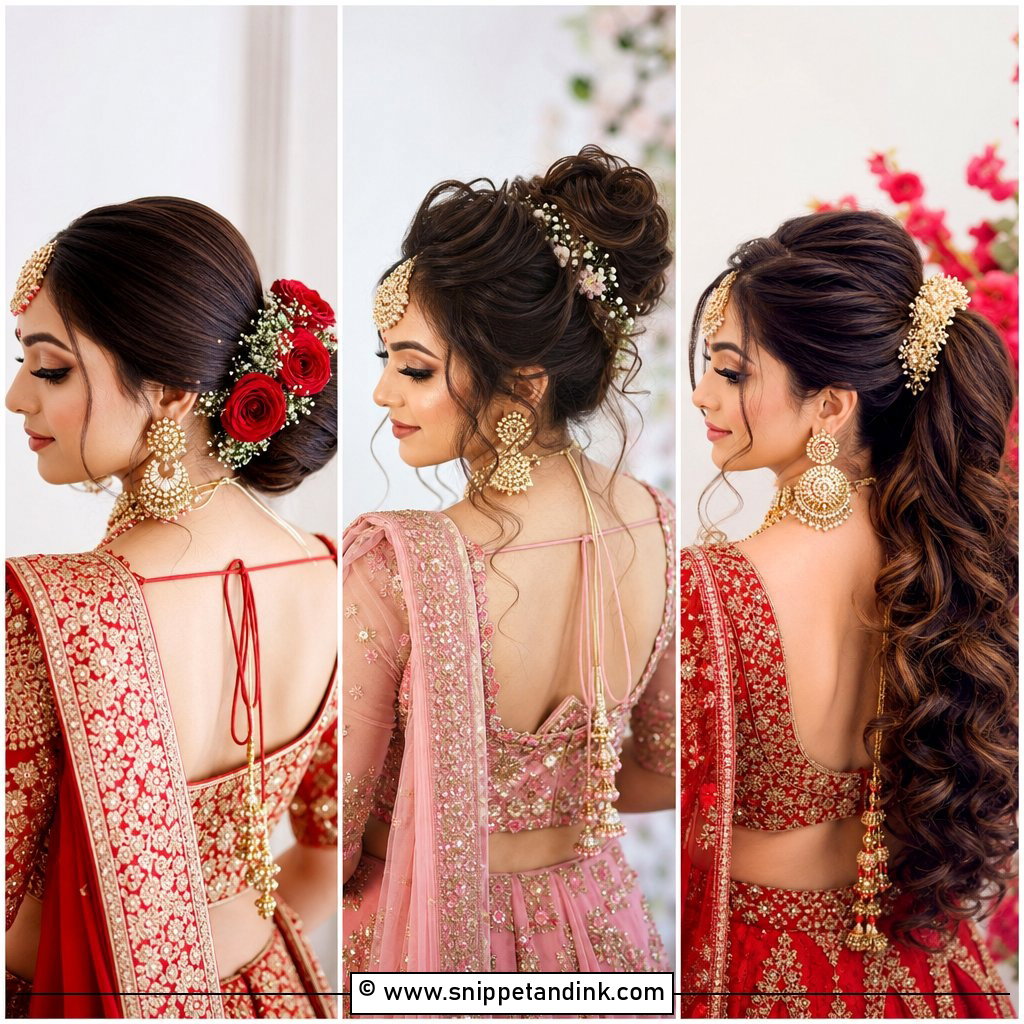
A matha patti frames the whole face and makes a braid look regal. I part the hair in the middle, smooth it around the crown and braid it either down the back or over one shoulder. The side chains of the patti are pinned just above the ears, and a fuller braid at the back balances that weight visually. With a large headpiece, I keep the braid decoration to pearls, a few small florals or fine gold pins. Wear the patti for twenty minutes at your trial; some pinch at the temples, and it’s far easier to adjust the fit then than on the morning.
9. Indian Bridal Braid With Dupatta
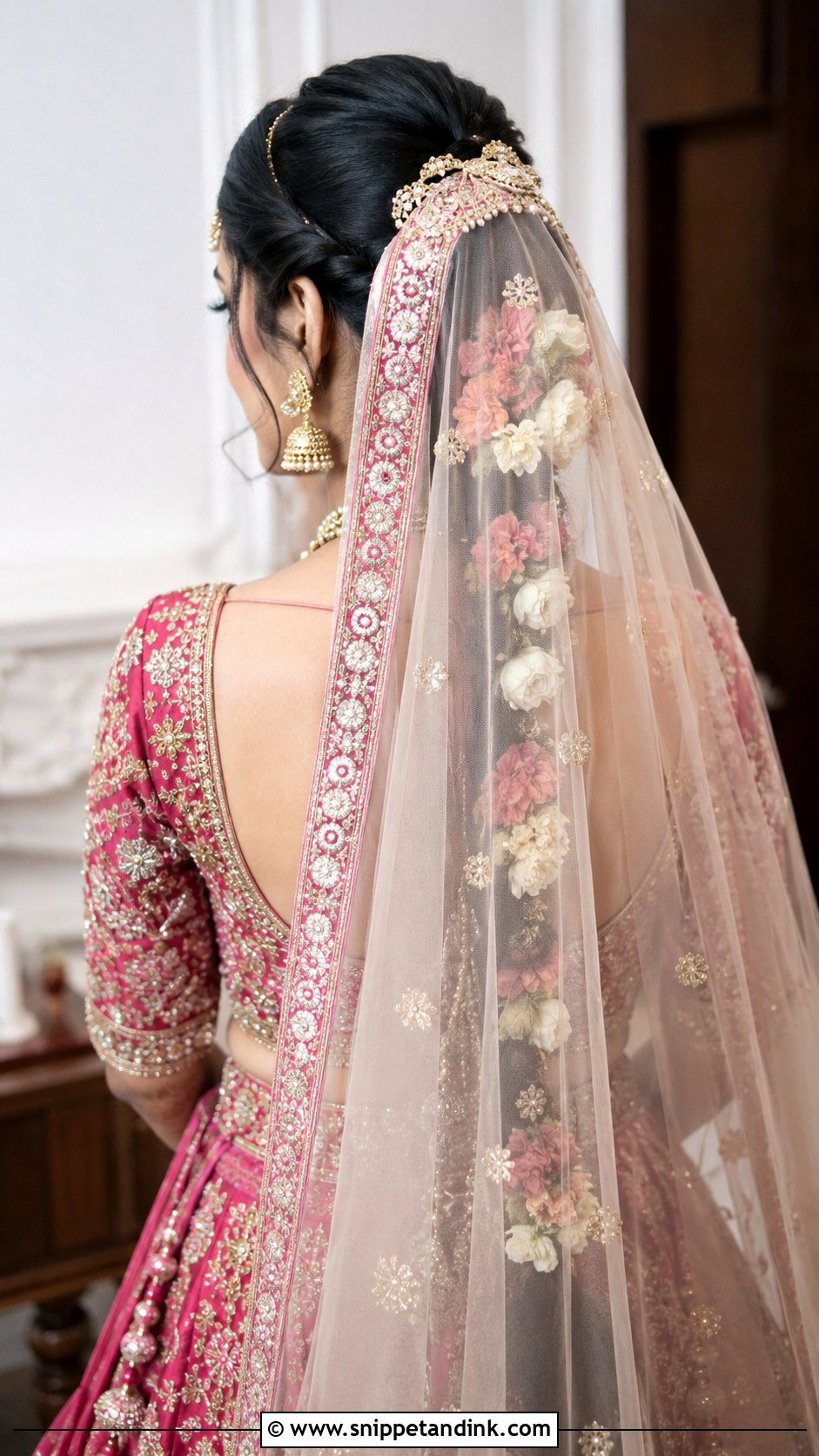
The dupatta is where most braids disappear, so this one needs planning. The braid can run down the back under a sheer dupatta, sit to one side or carry flowers that show through the fabric. I pin the dupatta at the crown, on a small padded base, rather than lower down, so its weight doesn’t crush the braid. Moderate volume works better here than a very loose braid, which simply gets squashed. Put the pins and florals where the fabric won’t cover them, usually the lower half.
10. Indian Bridal Bun With Braid
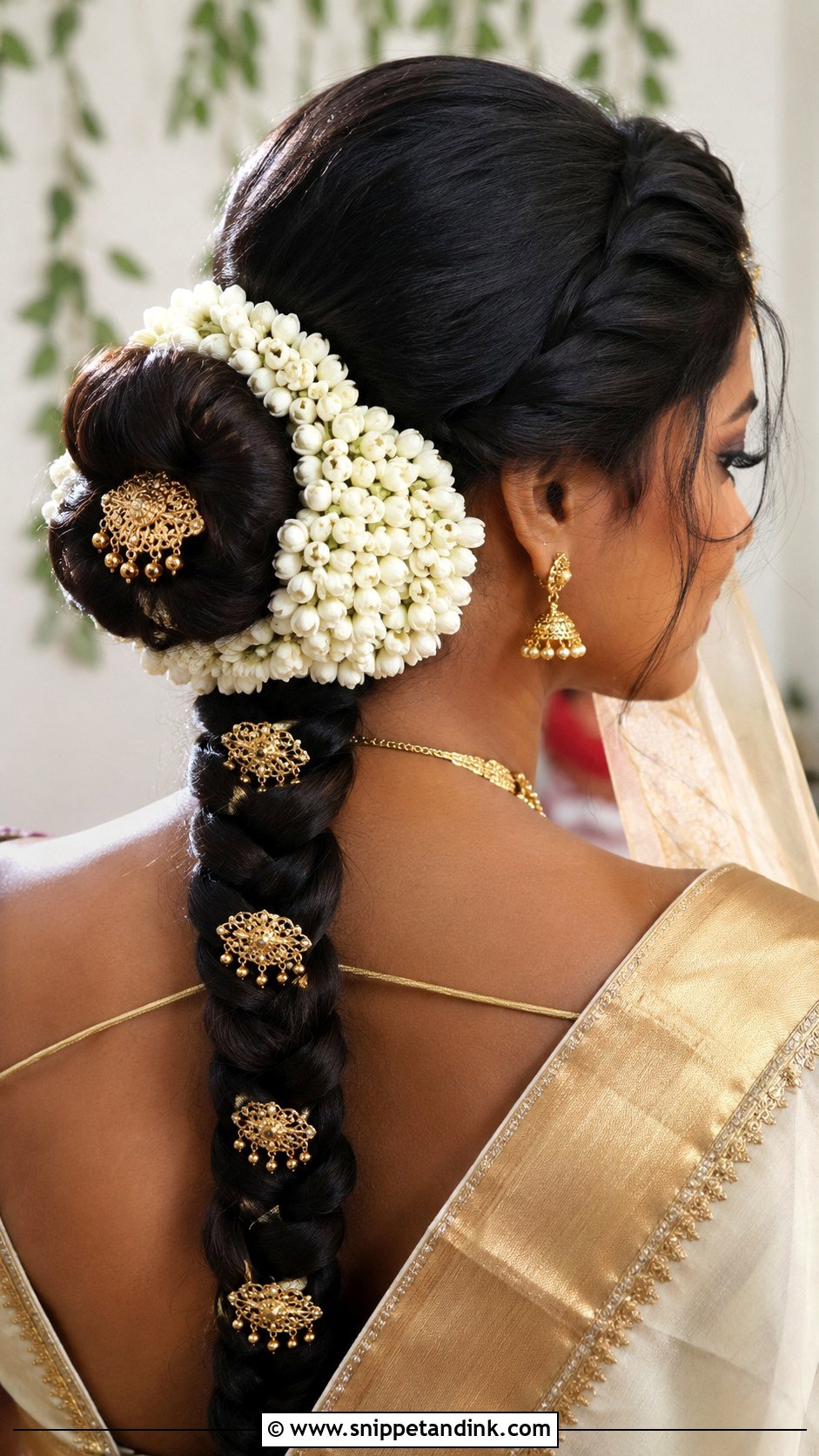
The bun gives structure and a solid anchor; the braid brings the traditional detail. I usually start with a braided crown, a side plait or several small woven sections that wrap into a low bun. Some South Indian brides also add a long braided extension hanging below the bun. It holds up under sarees, lehengas and heavy dupattas because the bun takes the pins. Fresh flowers around the bun soften it. Keep at least one braid clearly visible, or the style reads as a plain pinned bun from across the room.
11. Indian Bridal Half Up Braid
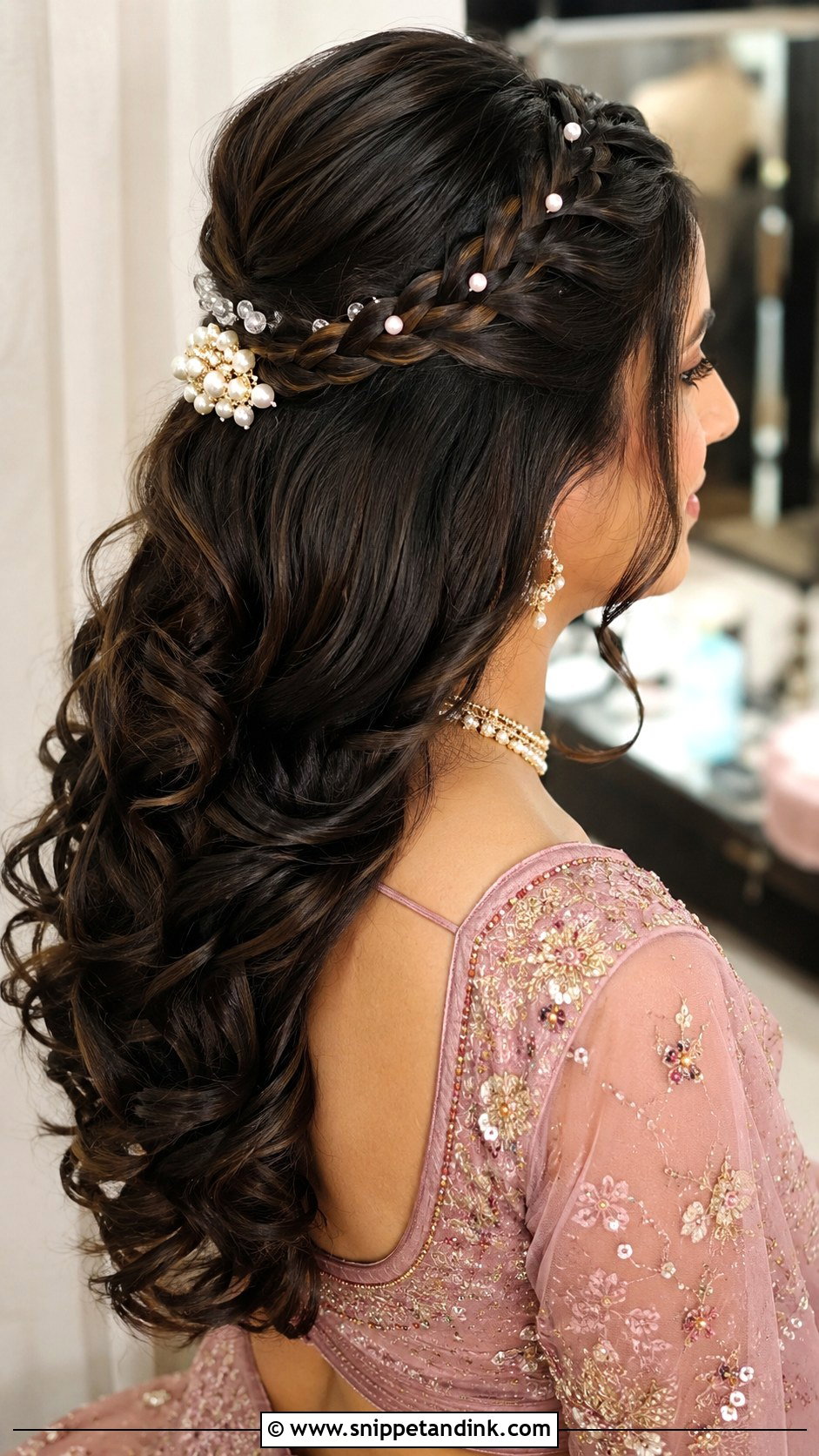
A half up braid keeps some length loose while the top section is braided into a crown, fishtail or twist. I’d save it for the engagement, sangeet, reception or a lighter wedding look rather than a long, hot ceremony, because the loose curls drop in humidity. It pairs well with a maang tikka, delicate pins and floral clips. Thick hair can stay full and flowing at the back; fine hair usually needs clip-in extensions for body. I set the curls with heat and leave them pinned to cool before releasing them, which makes them last hours longer.
12. Indian Bridal Crown Braid
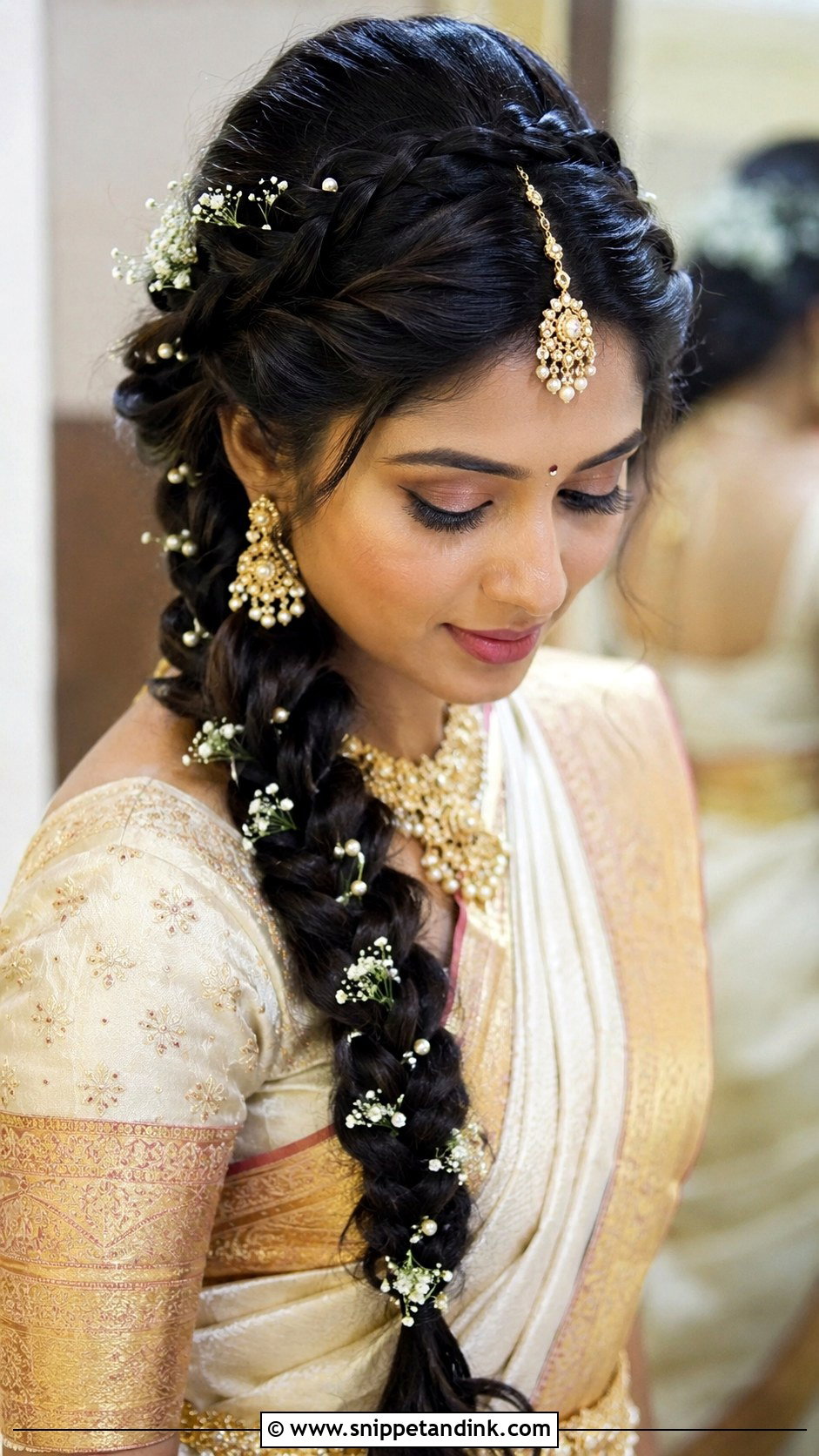
A crown braid wraps around the head and frames the face, then joins a bun, loose curls or a long braid at the back. It keeps hair off the neckline, so jewellery and blouse details show clearly. It’s also my favourite base for a dupatta, because I can pin straight into the braid and it won’t shift. Small flowers, pearl pins or gold beads along it look bridal. I keep it smooth but never tight at the hairline; a crown braid pulled hard gives a headache by mid-afternoon and makes the forehead look strained in photos.
13. Indian Bridal Dutch Braid
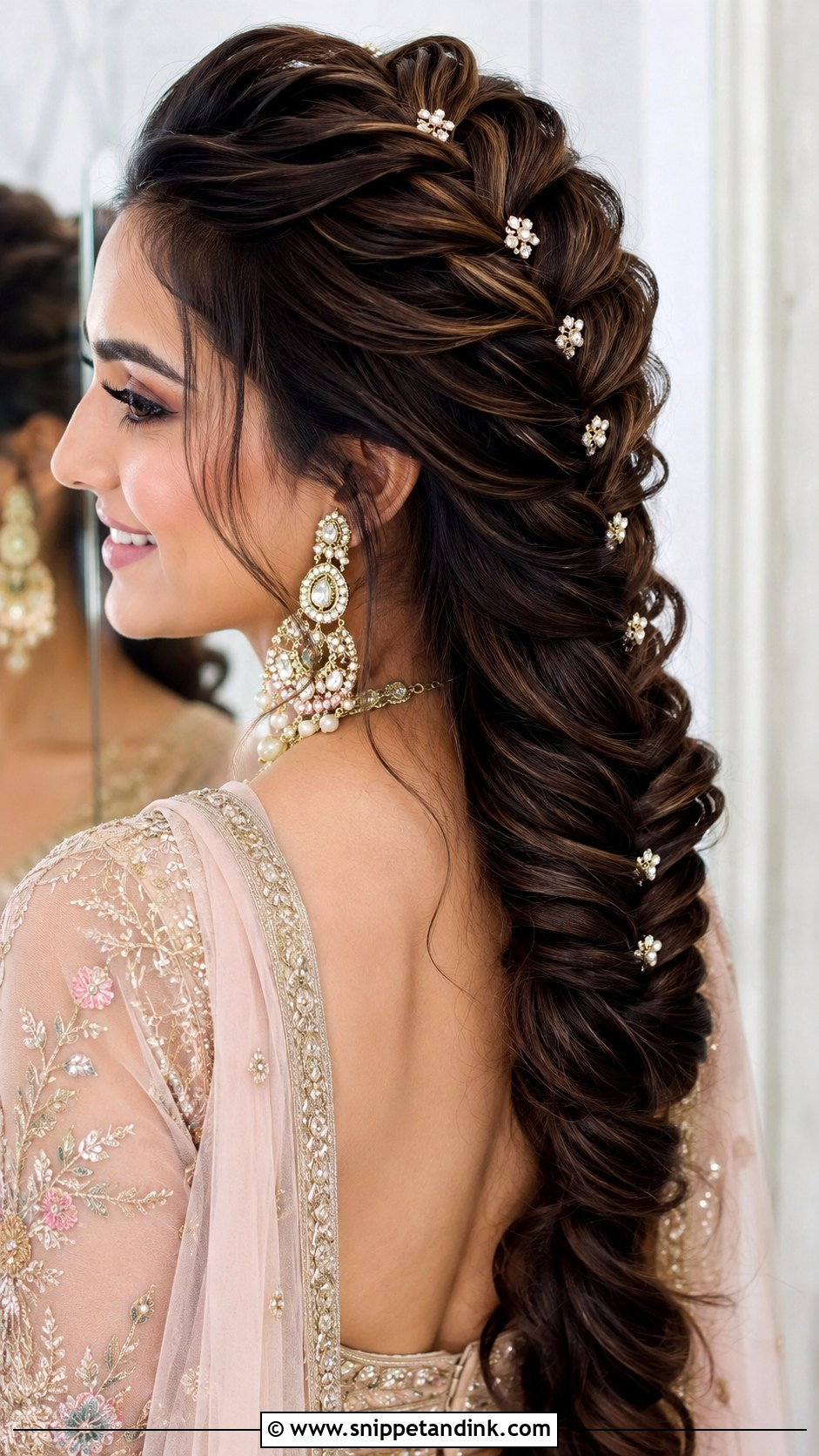
A Dutch braid is an inverted plait, crossing the strands under rather than over, so the braid stands up from the head. That raised shape gives strong structure and shows clearly on camera. It can run down the centre, sweep to one side, or start at the crown and grow into a fuller braid. It suits lehengas, gowns and sarees. I tuck small pearls, crystals or floral sprigs between the sections. Pancaking the edges gives width, but I pin the base firmly first so the pulled-out loops don’t loosen the whole braid.
14. Indian Bridal French Braid
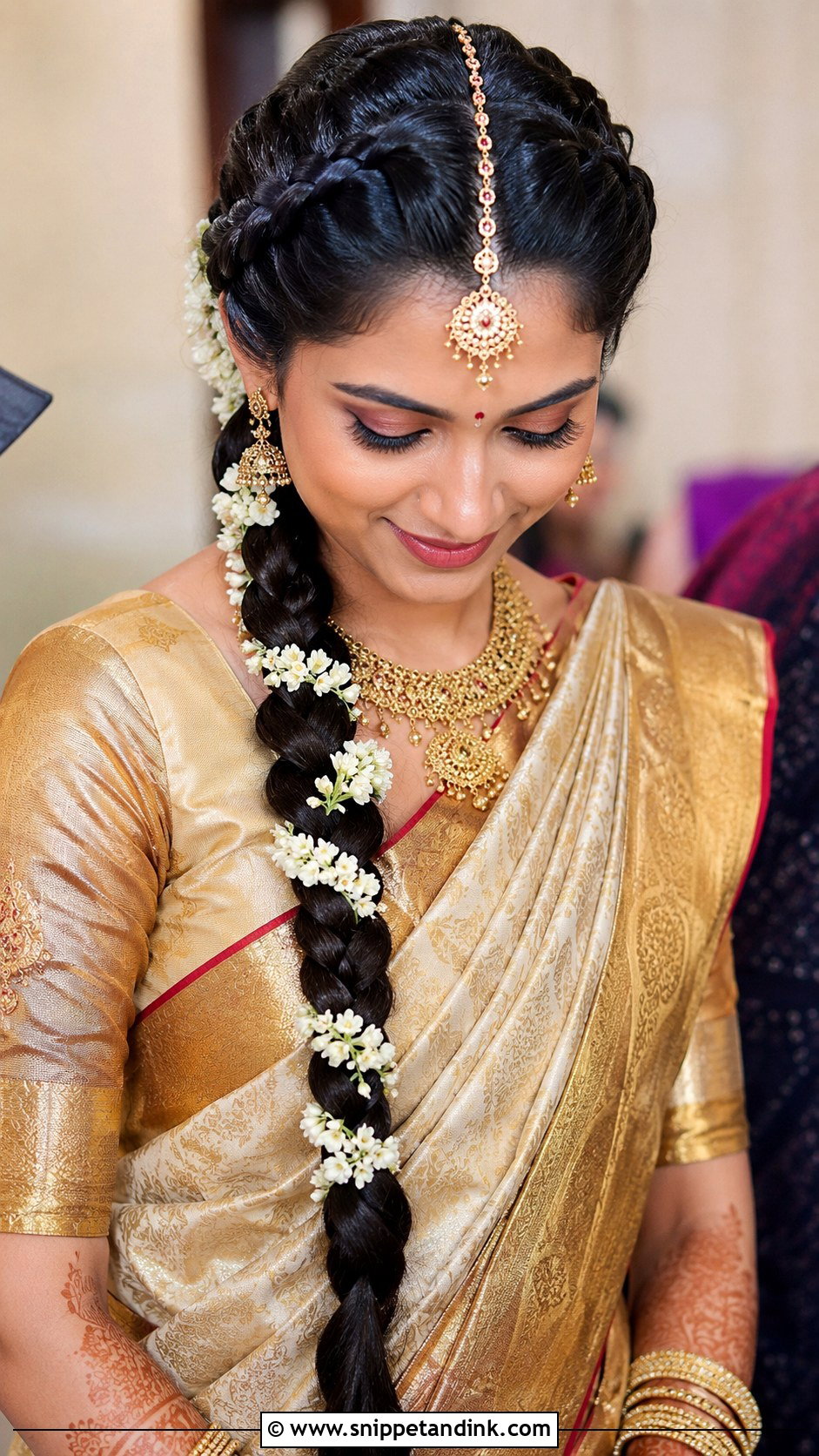
A French braid starts close to the scalp and picks up hair as it goes, so it is one of the most secure options for a long day. It can stay simple for a minimal bride or be dressed with flowers, pearl strings, gold pins and a maang tikka. It suits brides who don’t want a teased crown. It also locks layers in, which helps under a dupatta. To soften it, I pull the braid gently wider and curl the ends. If your hair is very slippery and freshly washed, ask your stylist to wash it the day before instead.

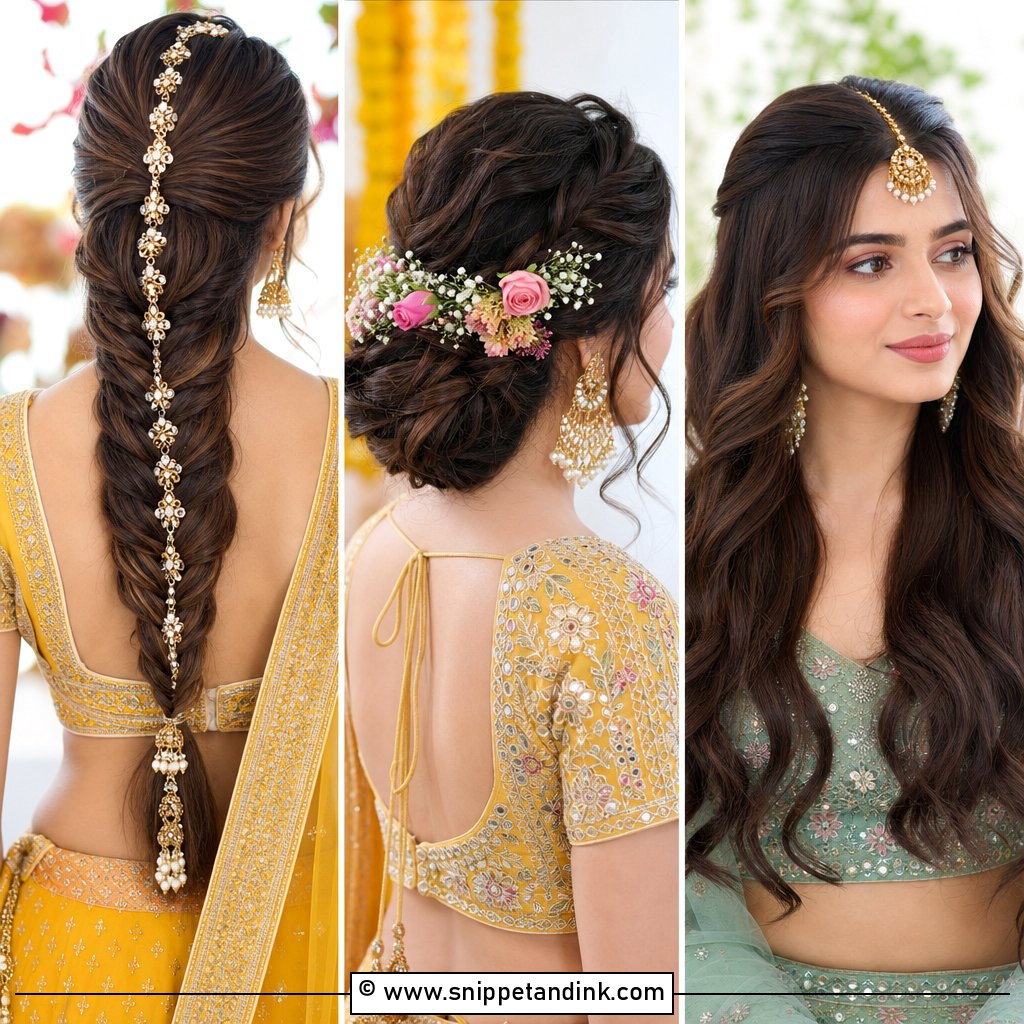
15. Indian Bridal Rope Braid
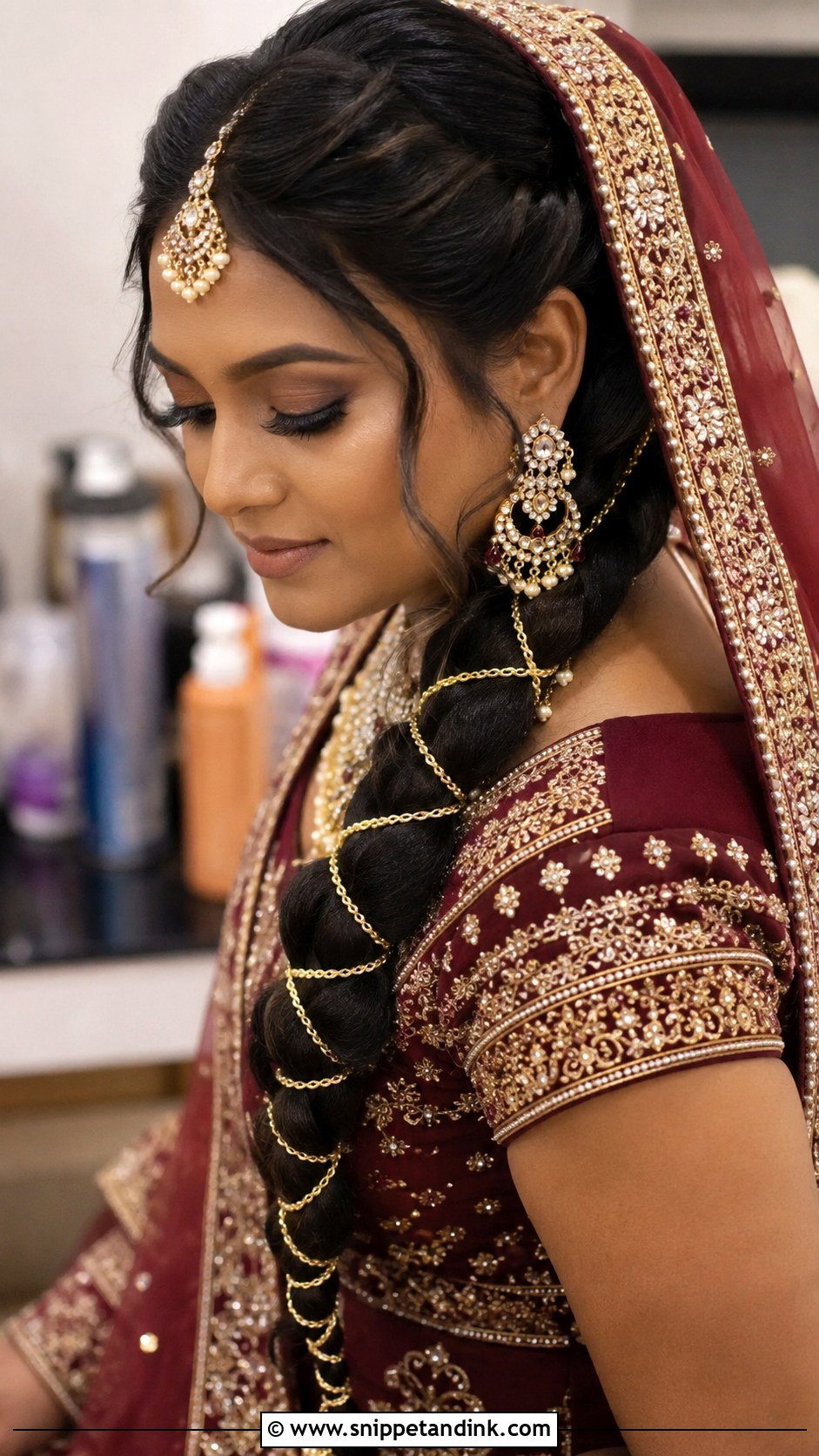
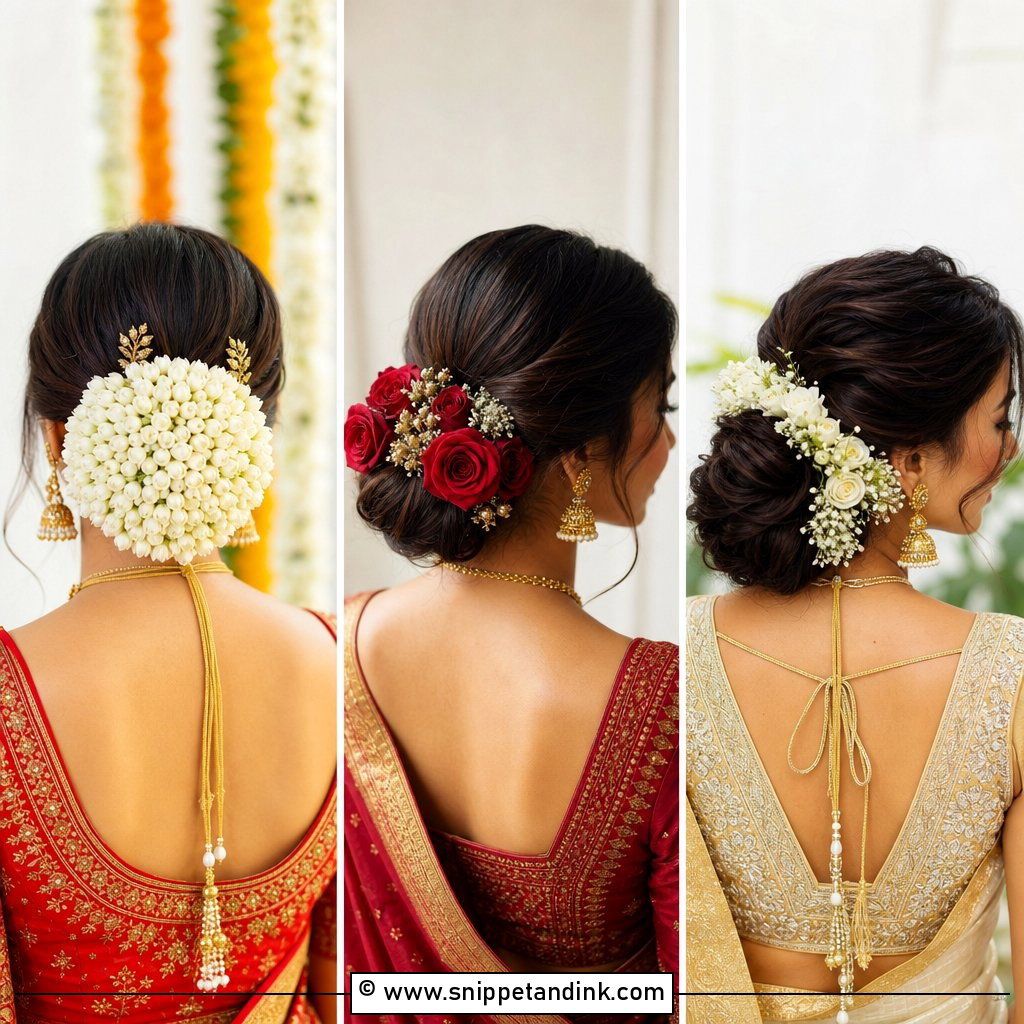
A rope braid is two twisted sections wound around each other into a clean spiral, so it looks sculpted rather than woven. Glossy dark hair shows the twist best. It can hang down the back, sit over one shoulder or wrap into a low bun. Gold thread, pearl pins or small flowers along the twist dress it up. I choose it when the outfit has heavy embroidery, because it stays sleek. The catch: rope braids unwind if each section isn’t twisted in the same direction you wrap them, so I secure the end with a clear elastic and a pin.
16. Indian Bridal Bubble Braid
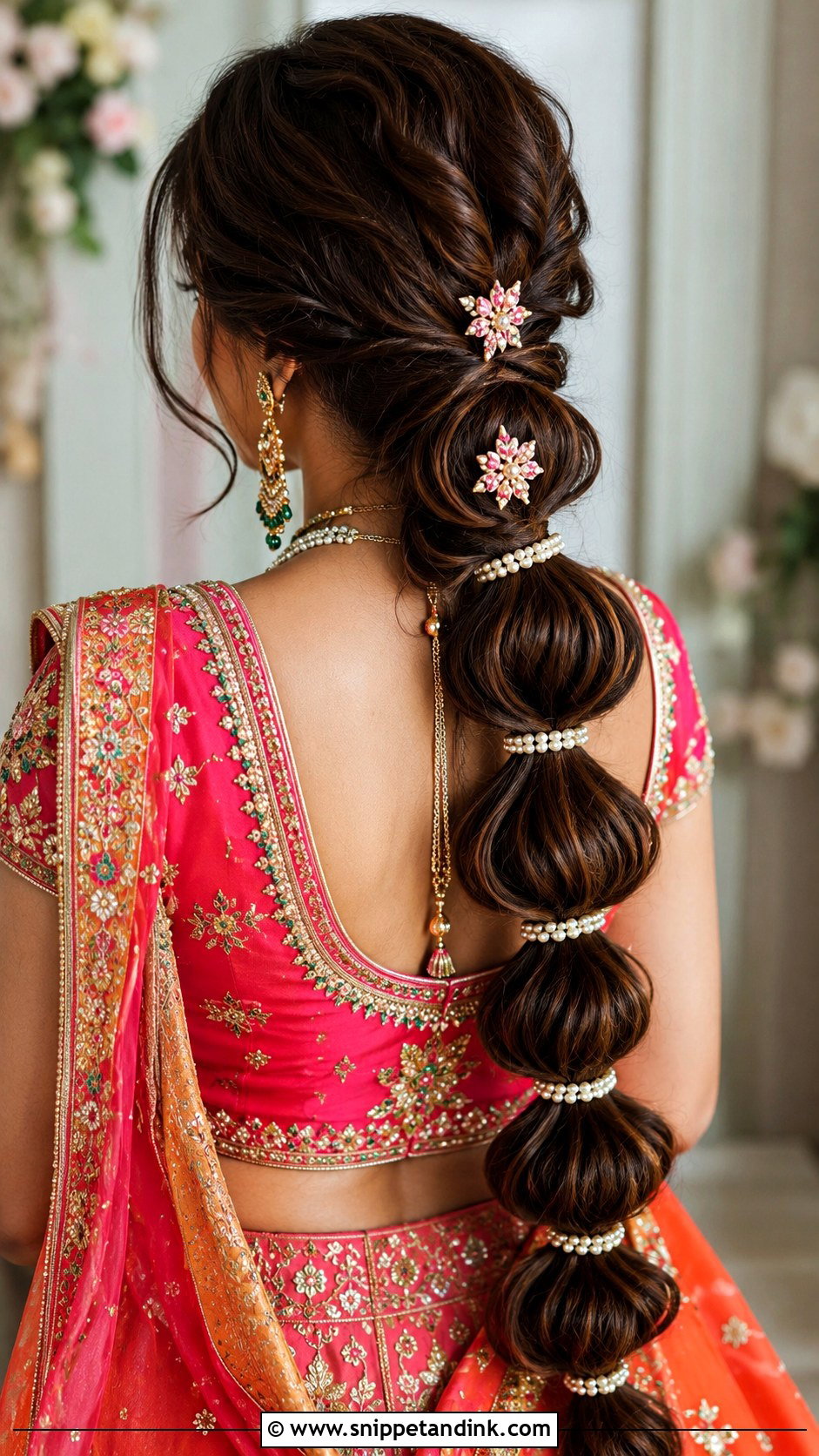
A bubble braid isn’t actually braided; it’s a ponytail sectioned with elastics and each section teased out into a round bubble. I cover the elastics with thread, small cuffs, pearls or jewelled bands. It suits mehendi, haldi, sangeet and receptions more than a formal ceremony, and it really needs long hair or extensions so the bubbles stay full to the end. The crown can be smooth or lifted. Match the cuffs to your lehenga or saree work. It’s comfortable to wear and, unlike a tight plait, rarely pulls at the scalp.
17. Indian Bridal Mermaid Braid
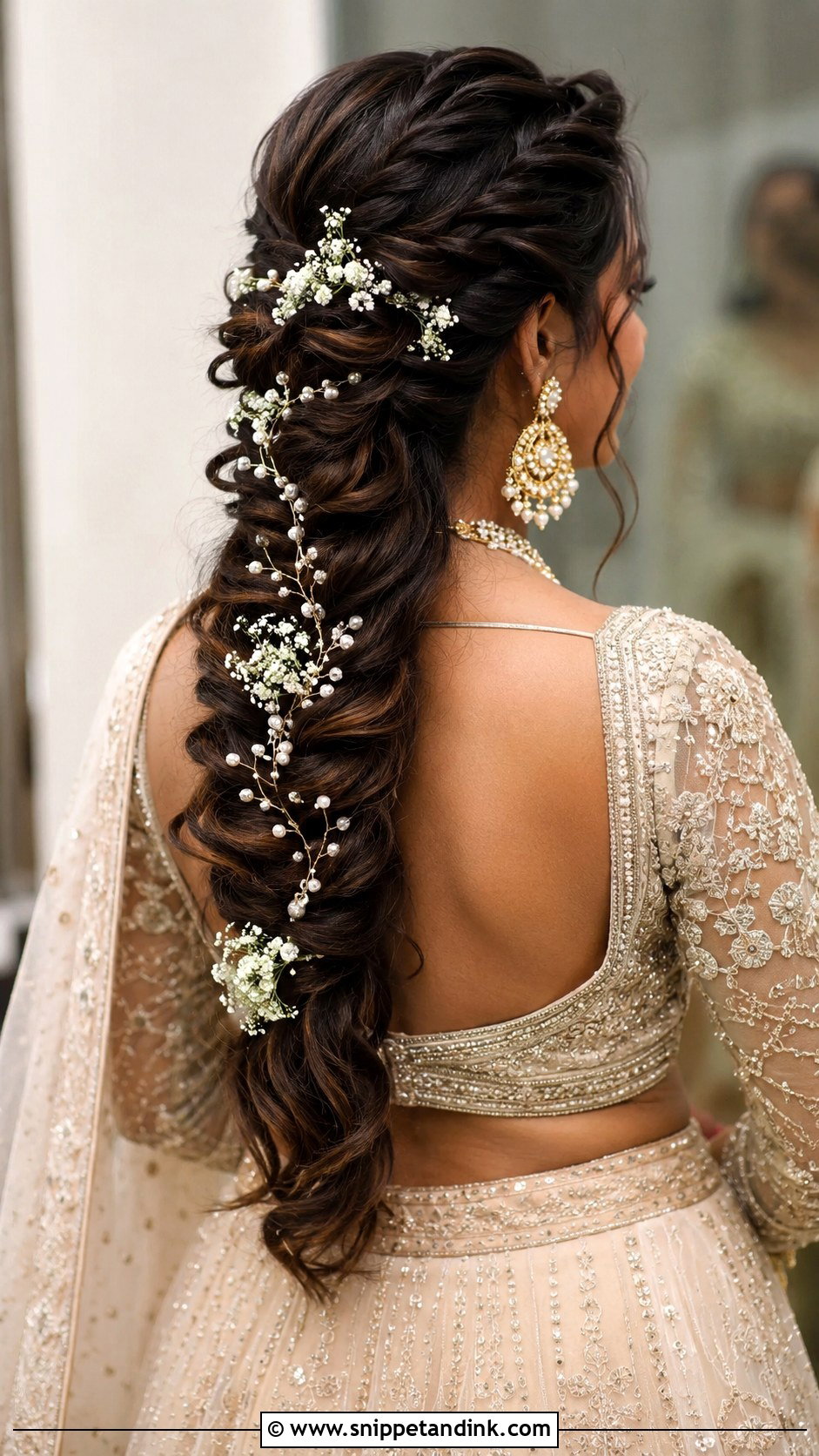
A mermaid braid is built from several smaller braids or pulled sections joined into one wide, layered shape. It’s broader than a regular plait and mixes loose waves with texture, which makes it look full from every angle. It’s for the bride who wants something modern but still controlled. I add tiny flowers, pearl vines or crystal pins through it. Worn down the back with a deep blouse or a dupatta drape, it shows its full width. On very fine hair I’d add extensions, because the shape collapses without enough hair to fill it.
18. Indian Bridal Loose Braid
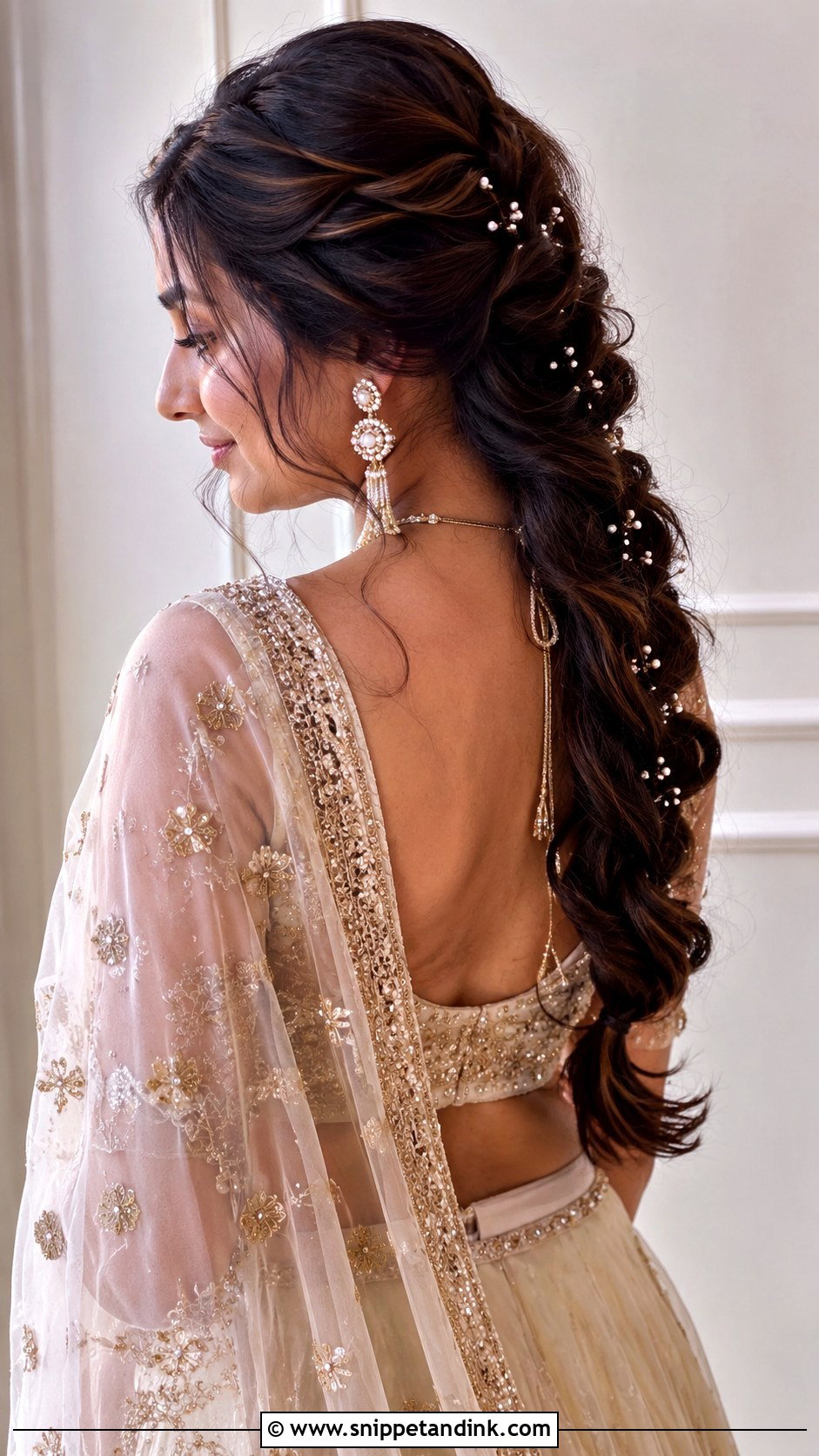
A loose braid is gently pulled apart for volume and movement, so it reads relaxed rather than tight and traditional. I like it for daytime ceremonies, pre-wedding events and fusion outfits. Small flowers, pearl pins or a fine hair chain make it bridal. The front can be soft waves, a middle part or a little crown lift. It looks undone, but I still build it on hidden pins and setting spray; a truly loose braid with no structure under it unravels by the first round of photos.
19. Indian Bridal Pearl Braid
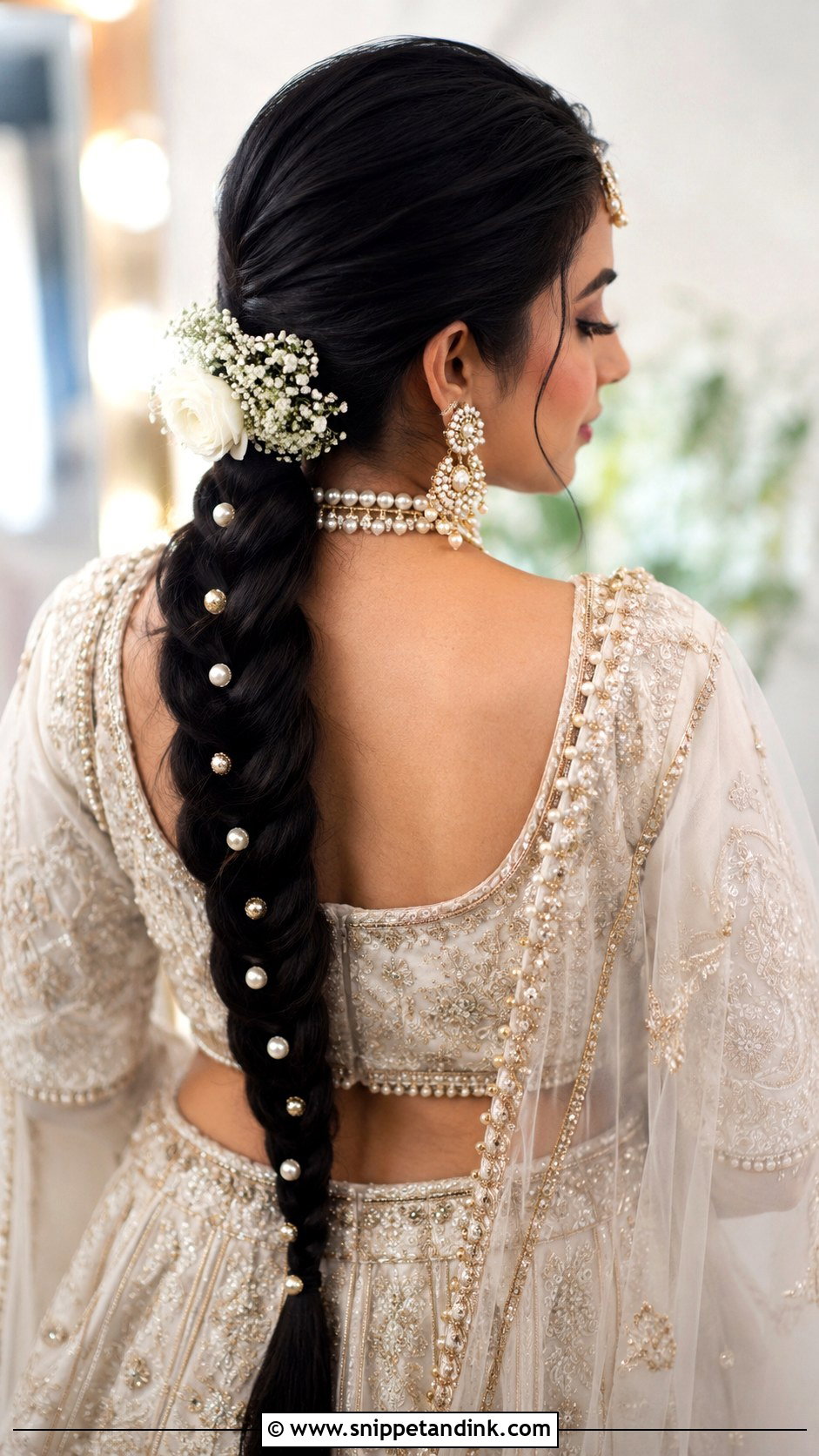
Pearls match almost any bridal palette: ivory, gold, pastel, red and blush. I tuck them between sections or line them along the edge of a classic, fishtail, Dutch or loose braid. I use them a lot for receptions, engagements and softer ceremony colours. Keep the front smooth so the pearls look placed rather than scattered. I use pearl pins with a grip-coated shaft, because plain pearl pins slide out of smooth Indian hair within a couple of hours. If your jewellery already has pearls, repeating them in the braid ties the whole look together.
20. Indian Bridal Gold Chain Braid
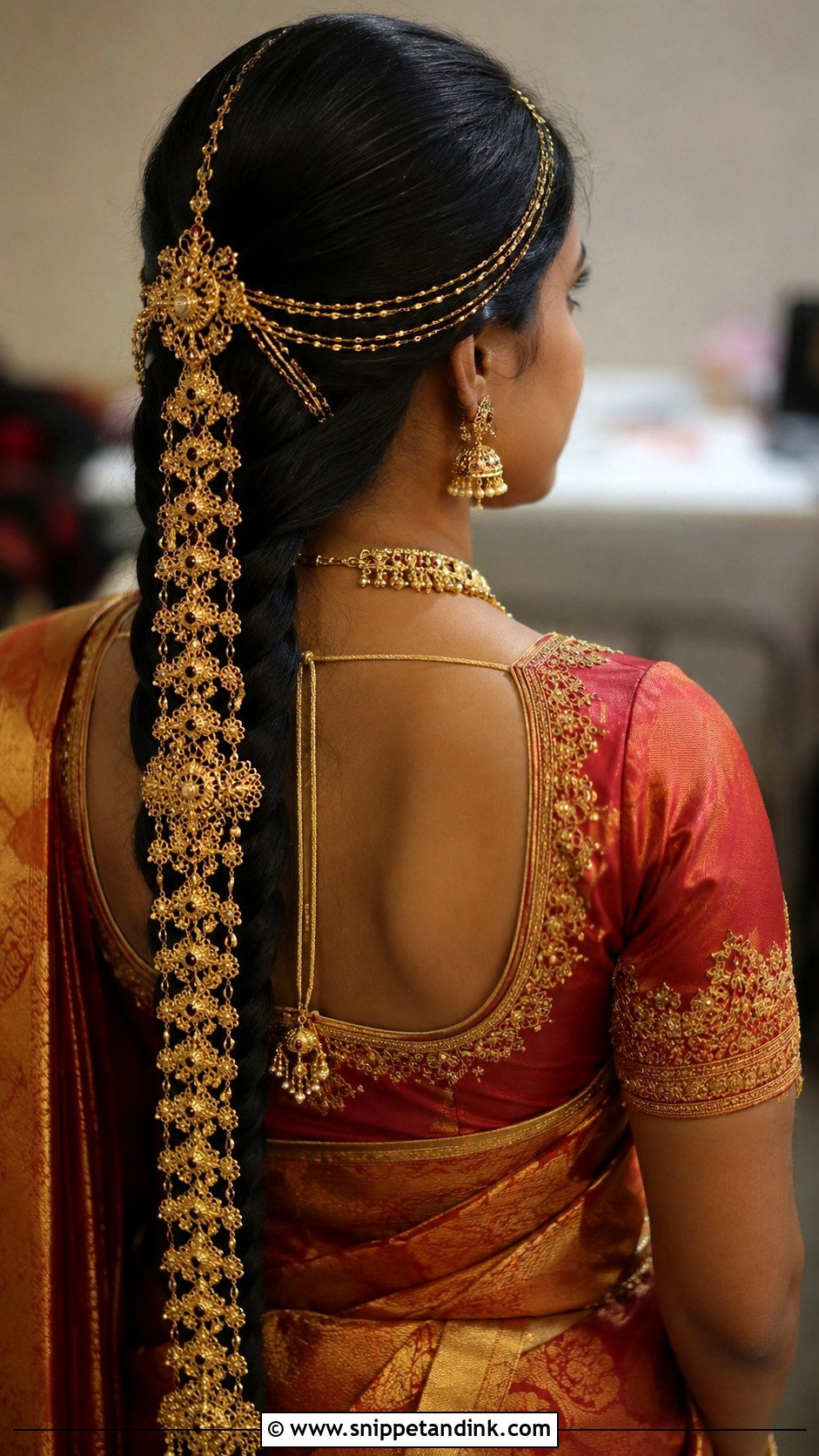
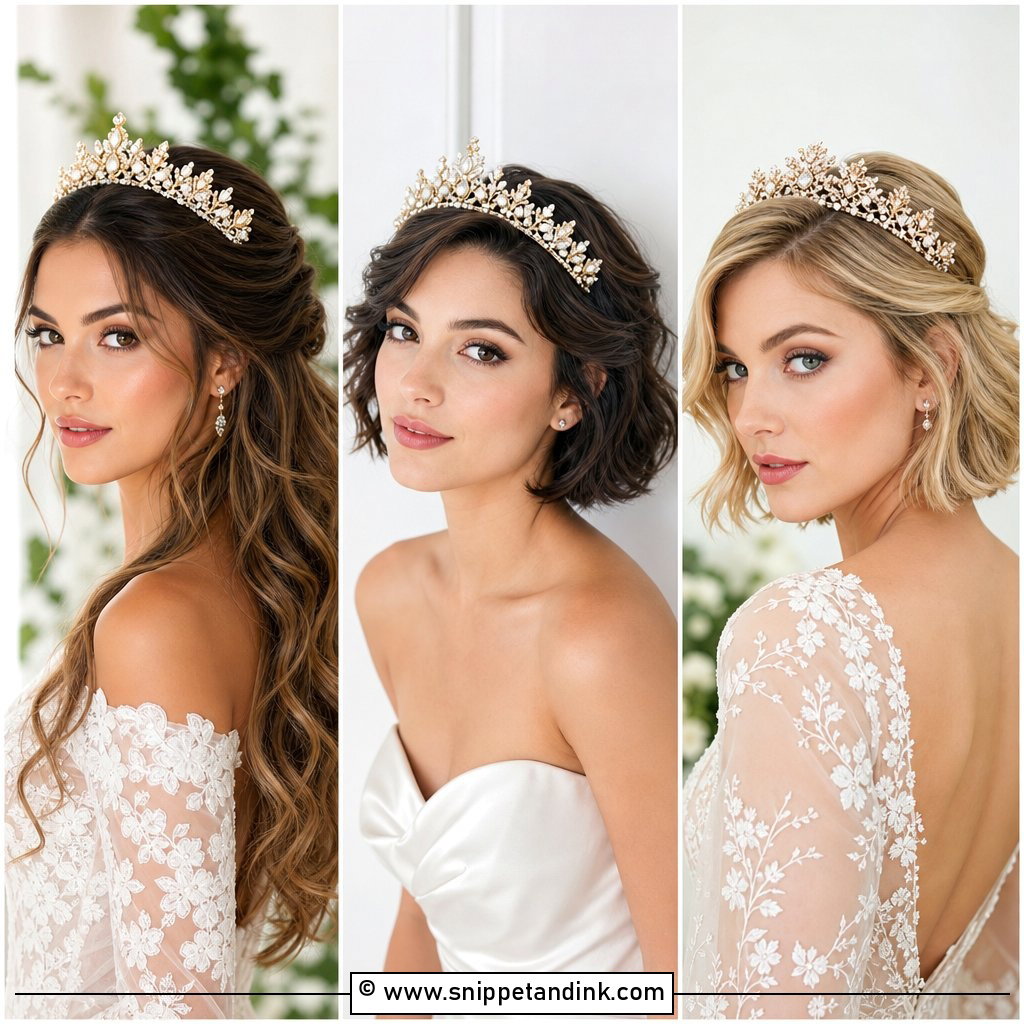
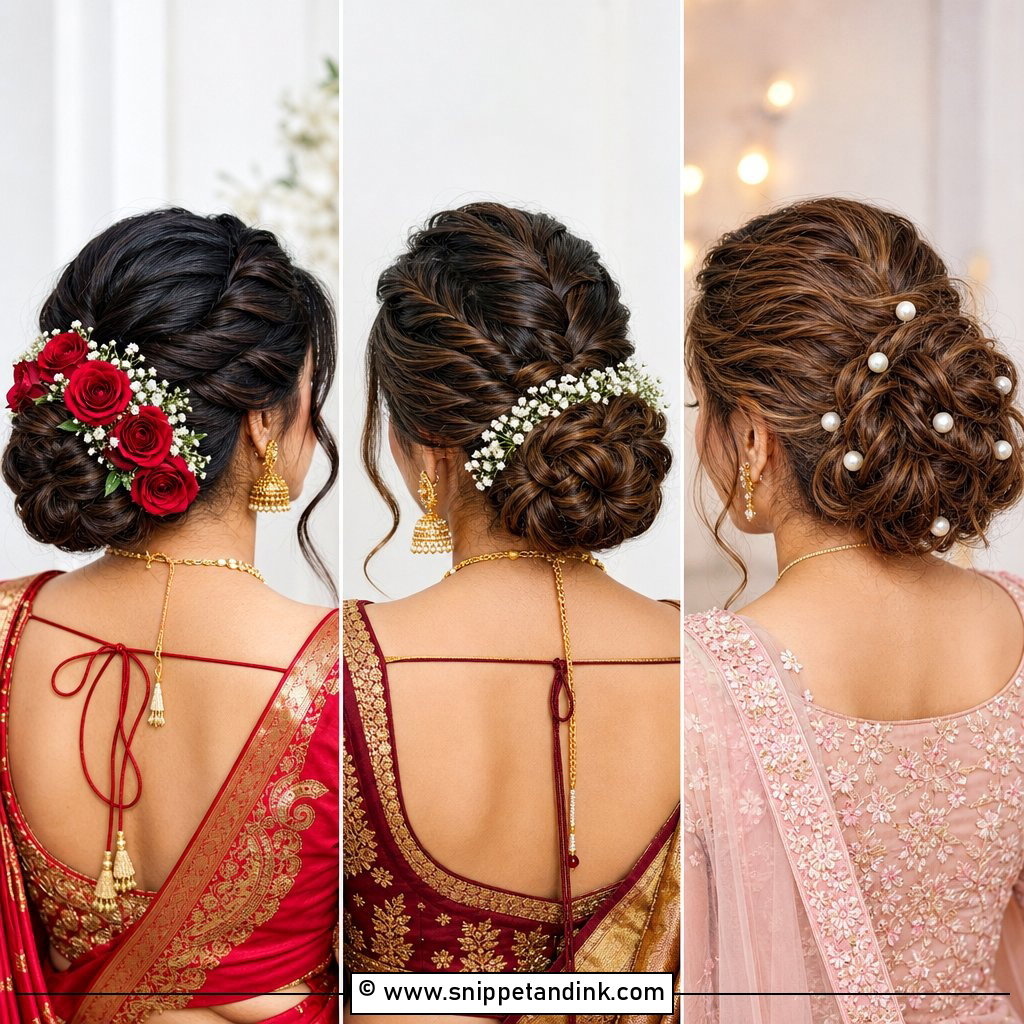
A gold chain braid has fine chains woven through the plait, draped across sections or pinned along its length. It pairs with temple jewelry, kundan sets, silk sarees and heavily embroidered lehengas. The braid underneath must be smooth and full so the chains sit clearly, and I limit other accessories so the chain work stays the focus. A centre part with a maang tikka or matha patti finishes it. Bring the actual chains to your trial; their weight and length change how tightly I need to braid.
Fresh Jasmine Through a Long, Hot Muhurtham
Jasmine and mogra are delicate. Buds bruise brown when handled roughly, and fully opened flowers wilt quickly in heat. I ask for strings of tight buds, delivered on the morning or kept overnight wrapped in a damp cloth in the fridge, never the freezer. They open slowly on the hair, so they look fresh through the ceremony.
Pin the strings on last, after hairspray, because spray turns petals translucent. A light mist of water on the flowers between rituals helps in dry heat. If the ceremony is outdoors at midday, I’d keep a second string ready for the reception rather than expect the first to last until night.
Unpinning a Heavy Braid at the End of the Night
After a long day, brides often pull at the braid to get it out quickly, and that’s how hair breaks. Sit down, take off the ornaments and flowers first, then find the pins from the top down, feeling for each one. Undo the braid from the bottom, then work a little oil through the lengths before you brush, starting at the ends. Leave a proper wash until the morning, when your scalp has had time to settle.
Which Braid Suits Your Ceremony and Your Hair?
There is a braid for almost every Indian bride: a deeply traditional South Indian jada, a flower-covered poola jada, pearls, a side plait or a playful bubble braid for the sangeet. What matters most is that it stays secure and comfortable from the first photo to the last dance. Before you decide, think honestly about your jewellery, where the dupatta will sit, how much hair you have and the weight of everything we’ll pin onto it. Get those right at your trial, and the braid will carry the rest of your look.
You'll Like These Ideas:





Leave a Reply