
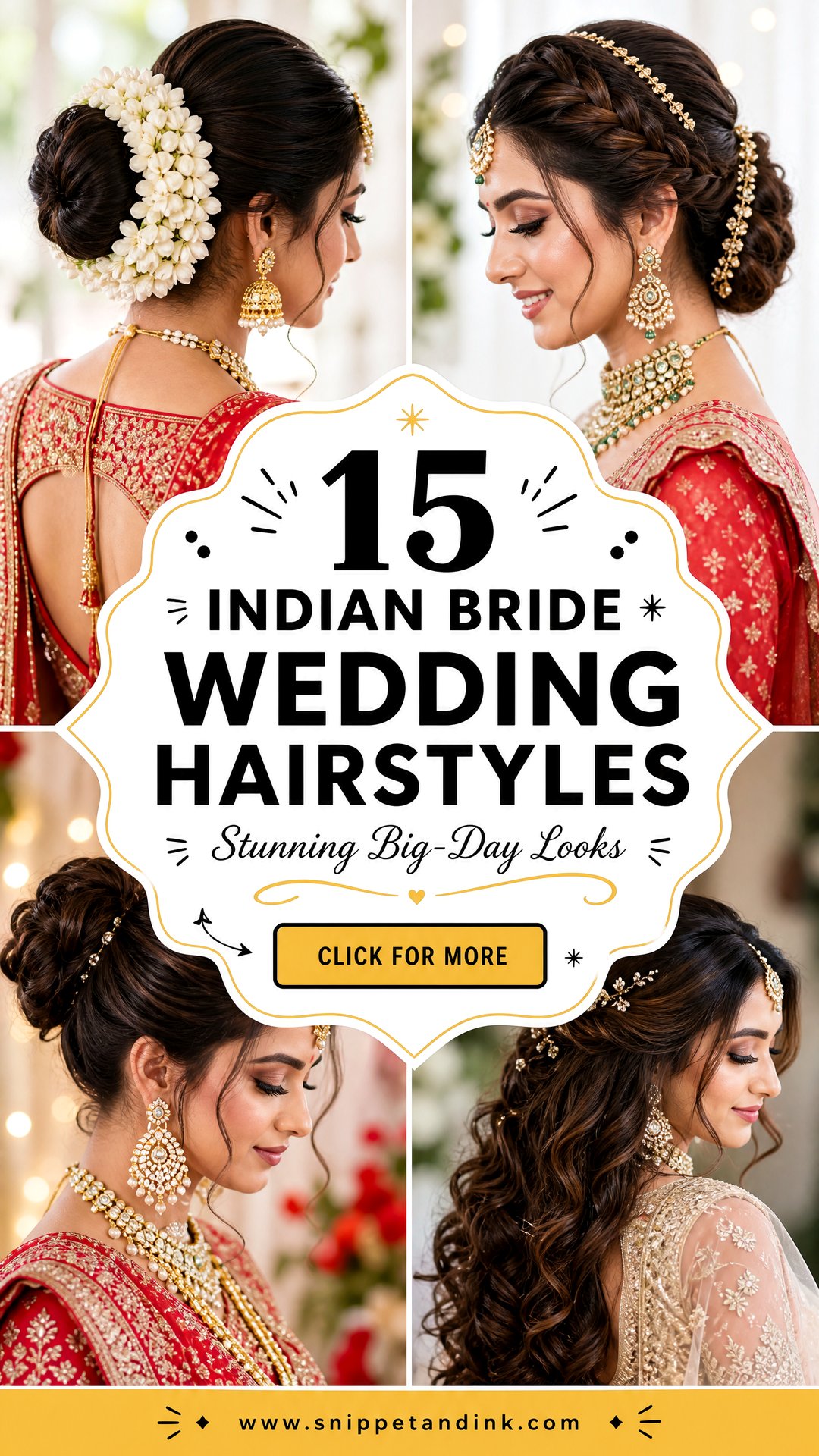
Most of the work in an Indian bridal look happens before a single curl goes in. I need to know what sits on the head, for how long, and how many times the outfit changes. A dupatta pinned over the crown through the pheras asks for a very different base than a reception gown with bare shoulders. Hair texture matters just as much: thick, coarse hair holds a bun all day, while fine, silky hair slides out of pins unless it’s prepped with grip first. These Indian bridal hairstyles run from jasmine-wrapped buns and long South Indian braids to open curls for the sangeet, and with each one I’ve noted where it holds up and where it struggles.
Mapping Jewellery and Dupatta Weight Before the Trial
Before I suggest a single style, I ask the bride to list everything that will sit on her head, function by function. That list decides the base far more than any inspiration photo does.
- A heavy embroidered dupatta pinned over the head needs a low, firm bun or braid at the nape to pin into.
- A matha patti or passa is pinned along the parting and behind the ear, so the hair there has to be smooth and tightly secured, not loosely curled.
- Gold jada or temple pieces are tied or stitched onto a braid, never just pinned.
- No head covering at all opens up open curls, waves, a high bun and half-up styles.
Then I ask for the jewellery itself at the trial, not photos of it. A passa that looks light in a picture can be heavy enough to drag a parting sideways once it’s pinned in, and I would much rather find that out weeks ahead than on the morning.
How Your Hair Texture Changes the Shortlist
Thick, coarse hair holds pins and braids all day but can make a bun oversized, so braiding it first or splitting it into two smaller coils helps. Fine or silky hair needs a dry texture spray and a padded base, and open styles drop faster on it. Naturally curly hair can often skip the curling iron; I define the existing pattern with a cream and build the bun from it, which is gentler over several days of back-to-back functions.
1. Indian Bridal Bun With Gajra
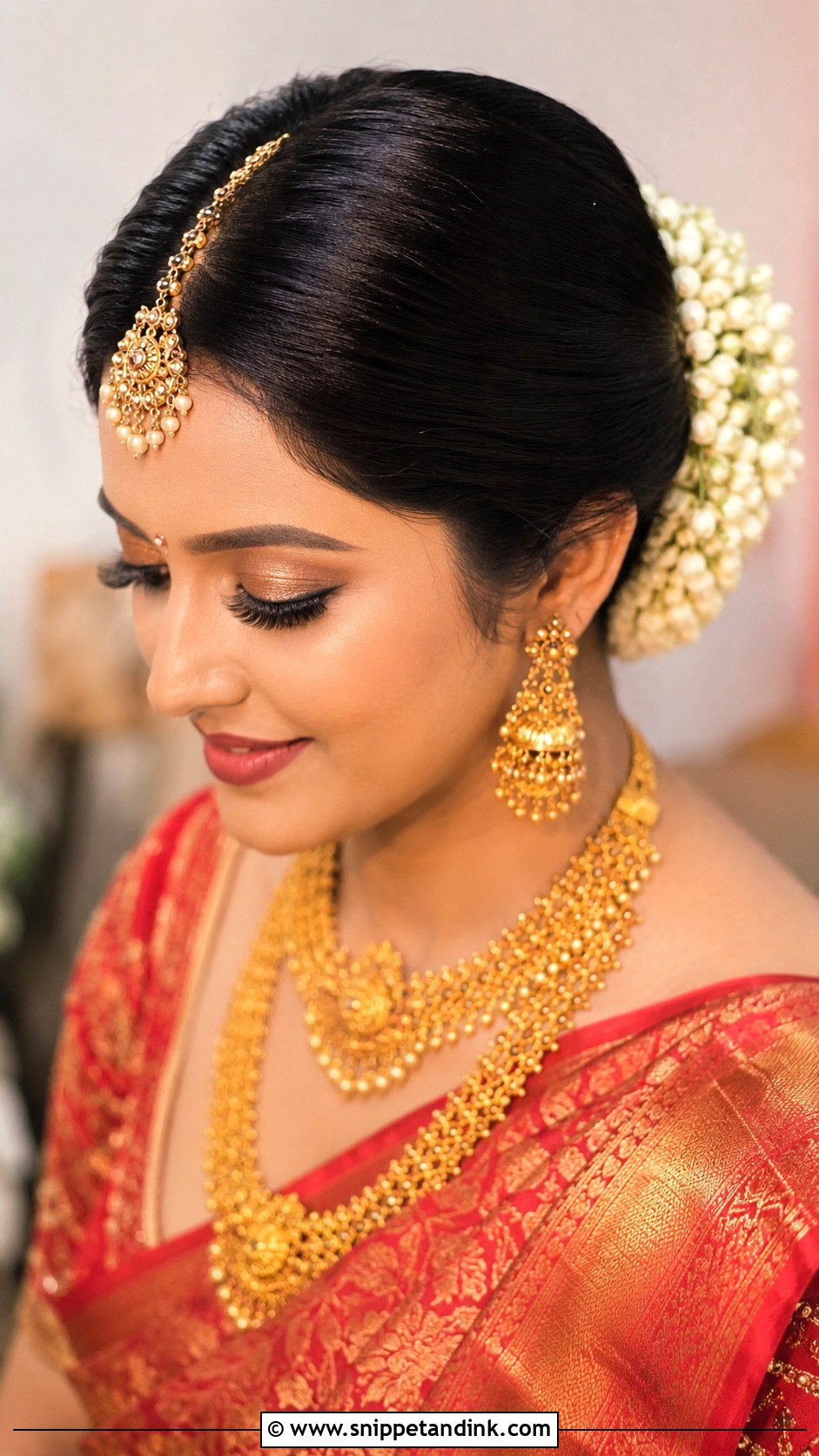
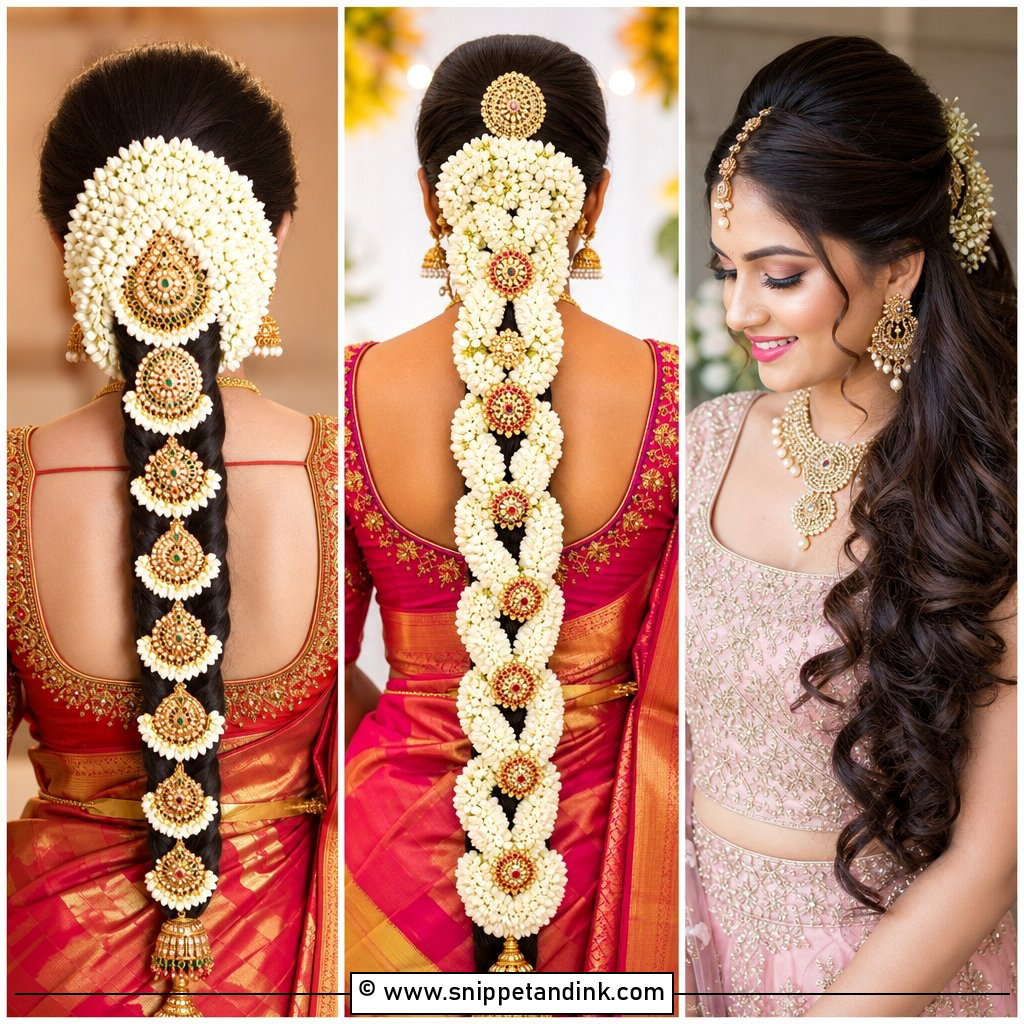
A low bun wrapped in gajra is the look I’m asked for most for the main ceremony, and it earns that place because the bun becomes the anchor for everything else. I build it on a hidden ponytail or a padded donut so the strings of jasmine have something firm to be pinned into, rather than relying on loose hair alone. Fresh jasmine gets heavy once you add several strings, and it browns at the edges after hours in heat, so I have it delivered that morning and kept wrapped in a damp cloth in the fridge until pinning. Under a saree pallu or a dupatta over the head, the bun also takes the pull of a matha patti chain without shifting.
2. South Indian Bridal Braid
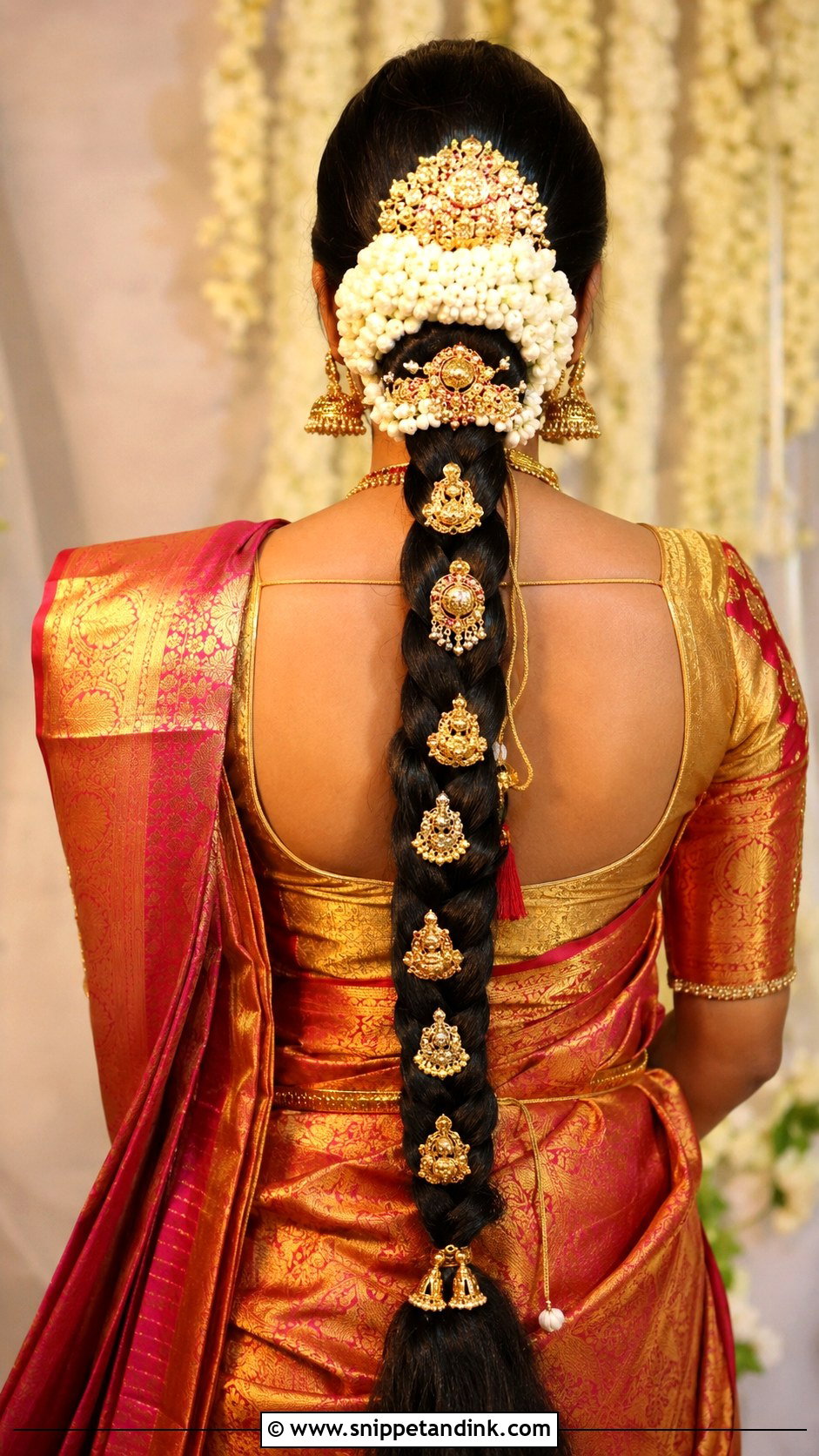
The long jada braid is built for the back view, which is where guests and the photographer spend much of a South Indian ceremony. I part it with the tail of a comb, never fingers, because a crooked parting shows instantly under a nethi chutti. Most brides need a braid extension or filler to reach the full length the jada pieces are designed for, and that’s normal practice, not a shortcut. The gold pieces are heavy, so I tie or stitch them onto the braid at several points; pinned alone, they twist sideways by the second ritual. With a Kanjeevaram and antique jewellery, a South Indian bridal braid carries the whole look with very little else.
3. Indian Bridal Low Bun
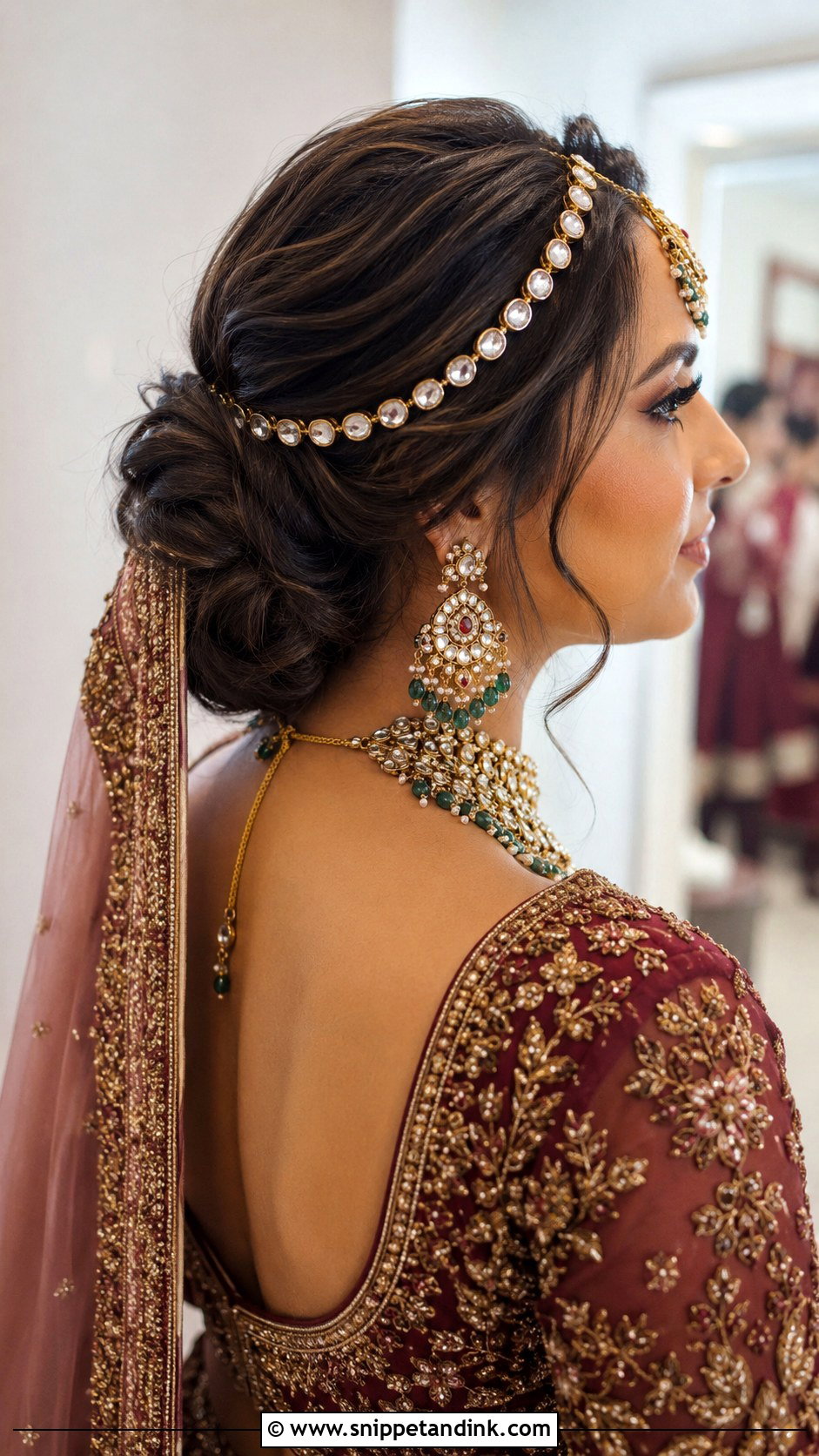
For a bride carrying a heavy embroidered dupatta, I almost always suggest an Indian bridal low bun. Sitting at the nape, it gives me a solid surface to pin the dupatta into without lifting it so high that the fabric tents over the head. I keep the front simple, a clean centre part or a soft twist off each temple, because the passa and earrings will crowd the sides anyway. Roses or pearls can go on the bun, but I leave the top of it bare where the dupatta pins land.
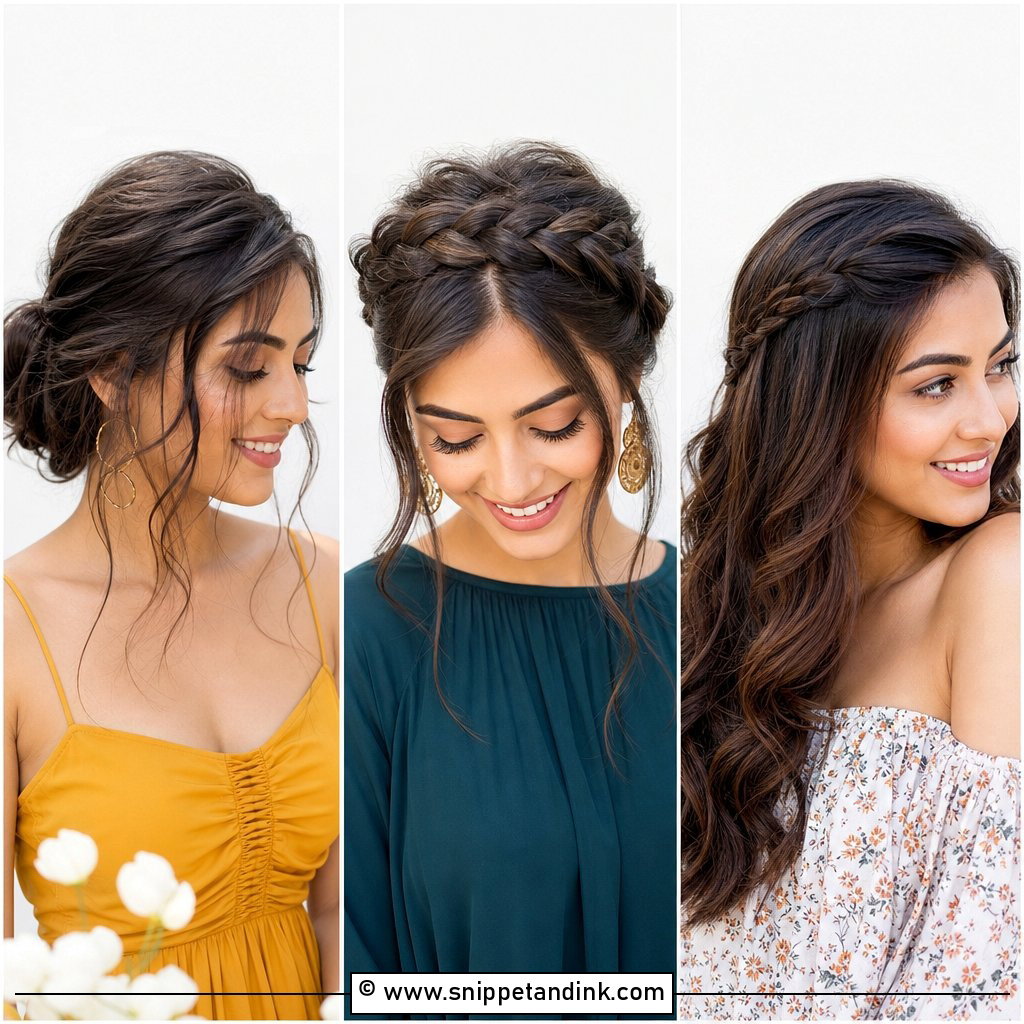
4. Indian Bridal Messy Bun
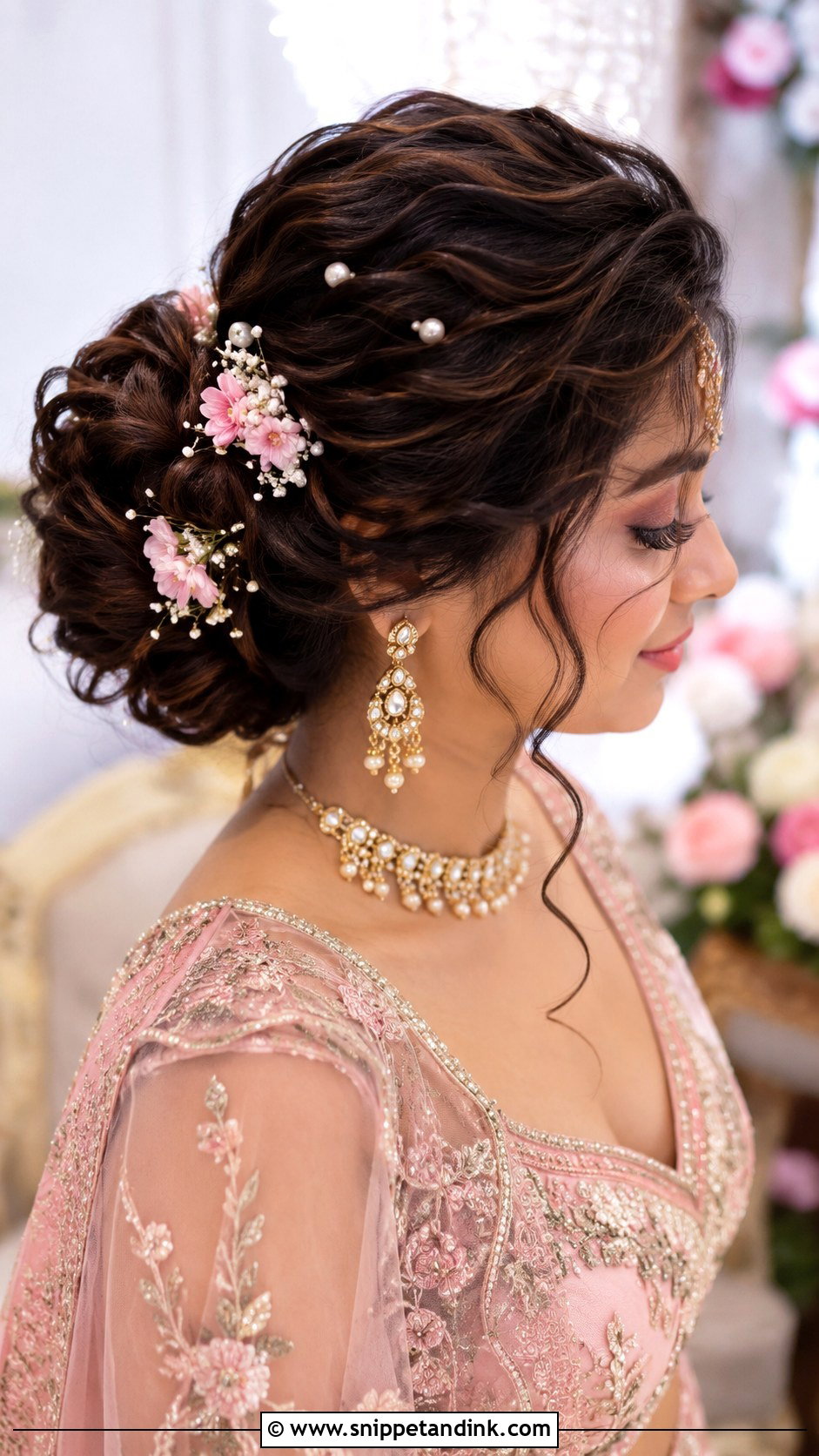
Messy is the word brides use, but nothing about this one is loose underneath. I curl the hair first, let the curls cool completely, then pin each section into a structured base and pull out only the pieces I want soft. Done that way, it adds visible fullness to thin hair and survives the dance floor. Done on uncurled hair with a handful of pins, it collapses within the first hour. It sits well with pastel lehengas and floral jewellery; next to a heavy kundan set it can look unfinished.
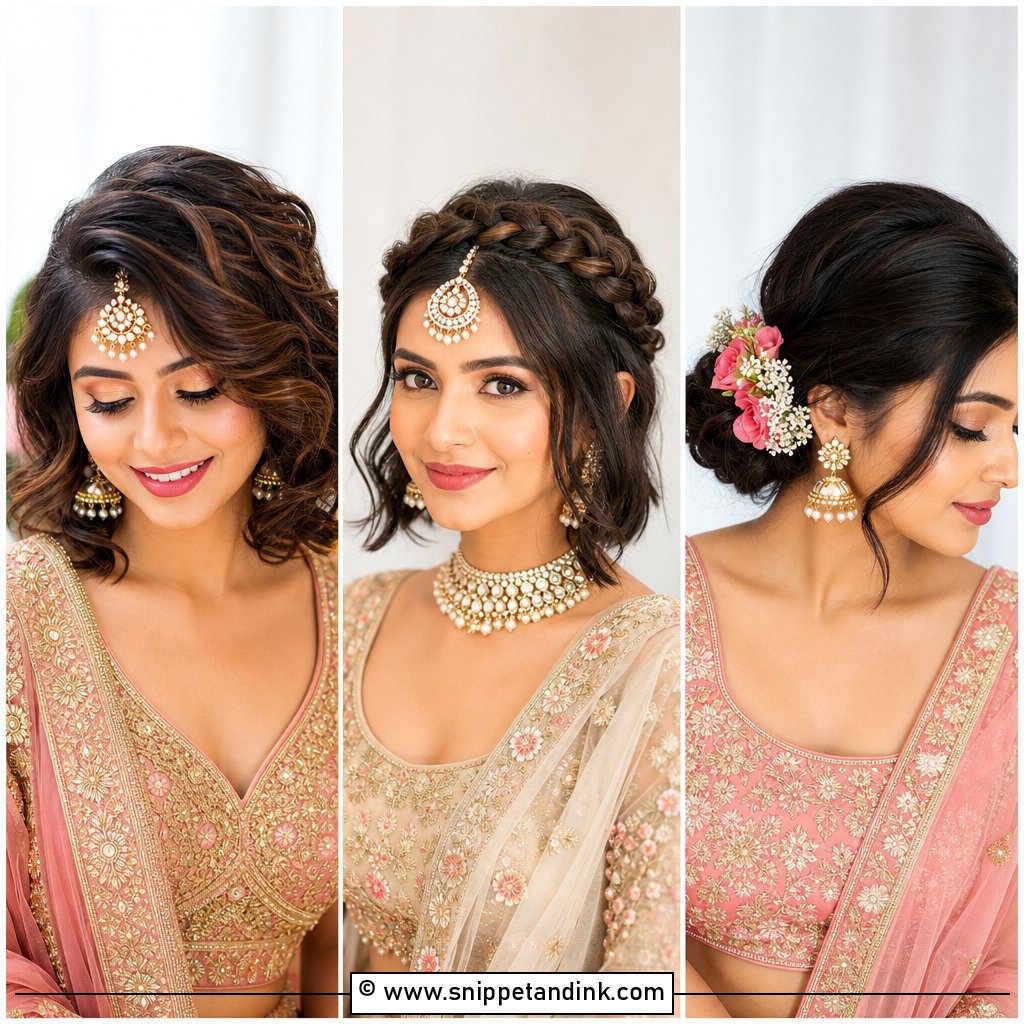
5. Indian Bridal Bun With Flowers
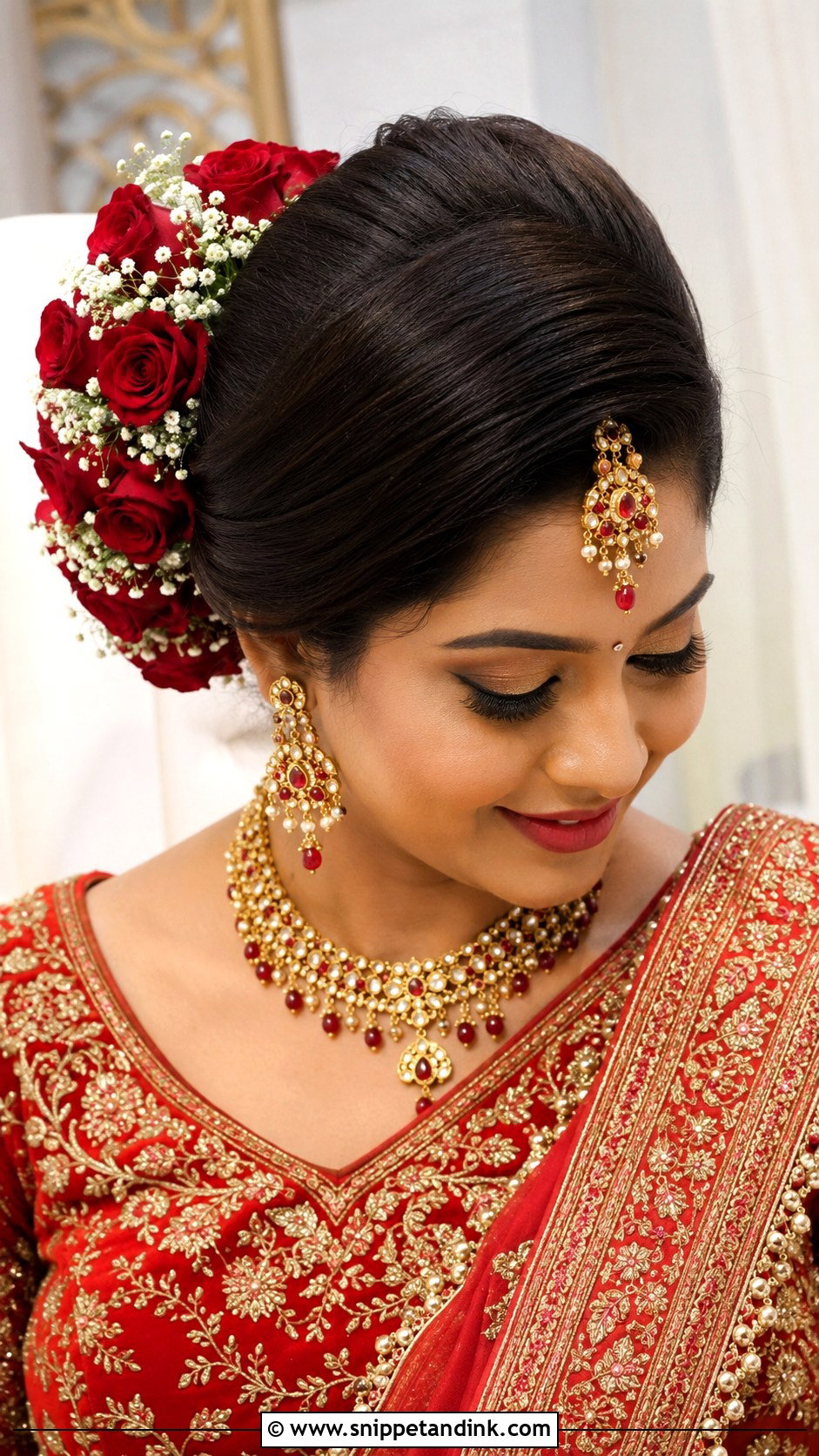
Flowers on a bun need a plan for weight and wilting before they need a colour scheme. Roses and orchids hold up better than jasmine through a long afternoon, while marigolds shed petals onto the shoulders if they’re packed too tightly. I pin each bloom into the base of the bun rather than its surface, so the flowers sit in the hair instead of perched on it. Red roses read clearly against a traditional red outfit, white blooms suit South Indian sarees, and pastels work for daytime events. Keep some of the bun’s outline visible around the flowers, or the photos show a heap of petals with no hairstyle under it.
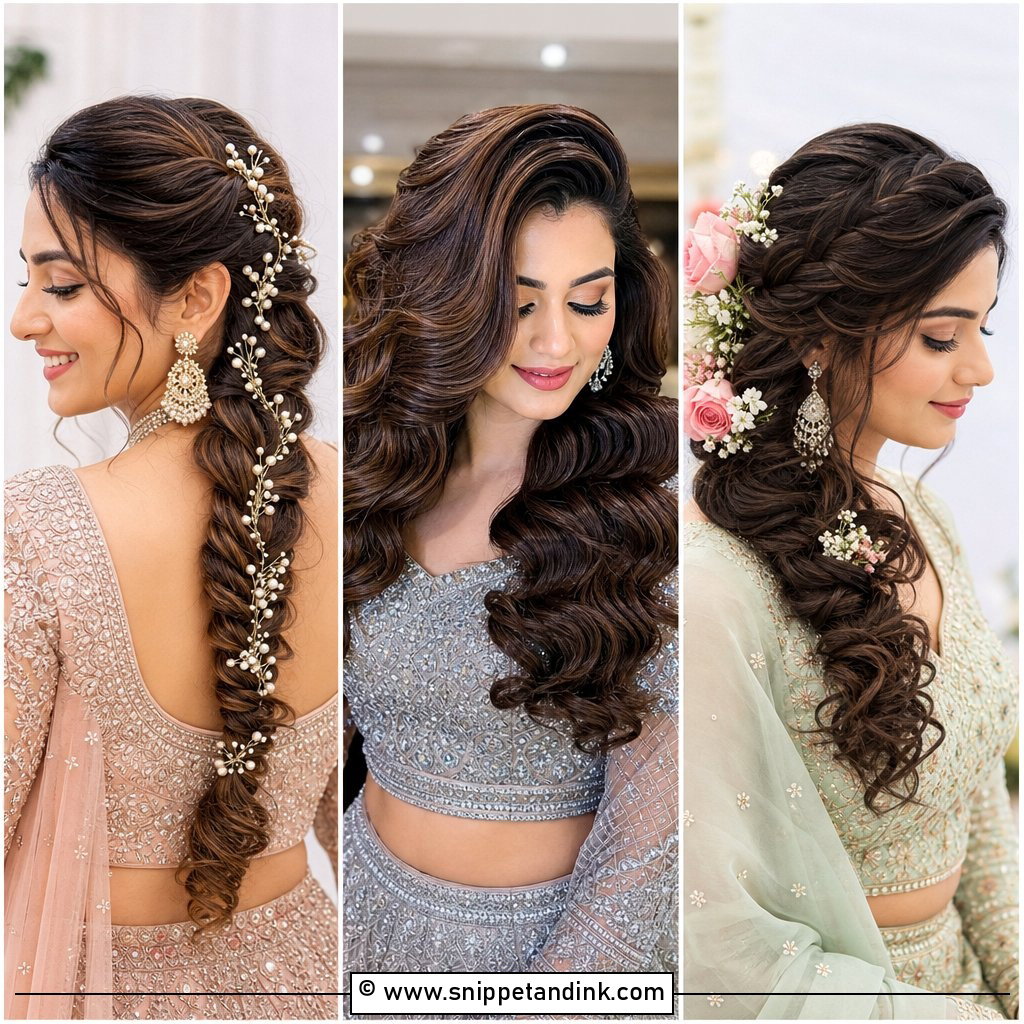
6. Indian Bridal Open Curls
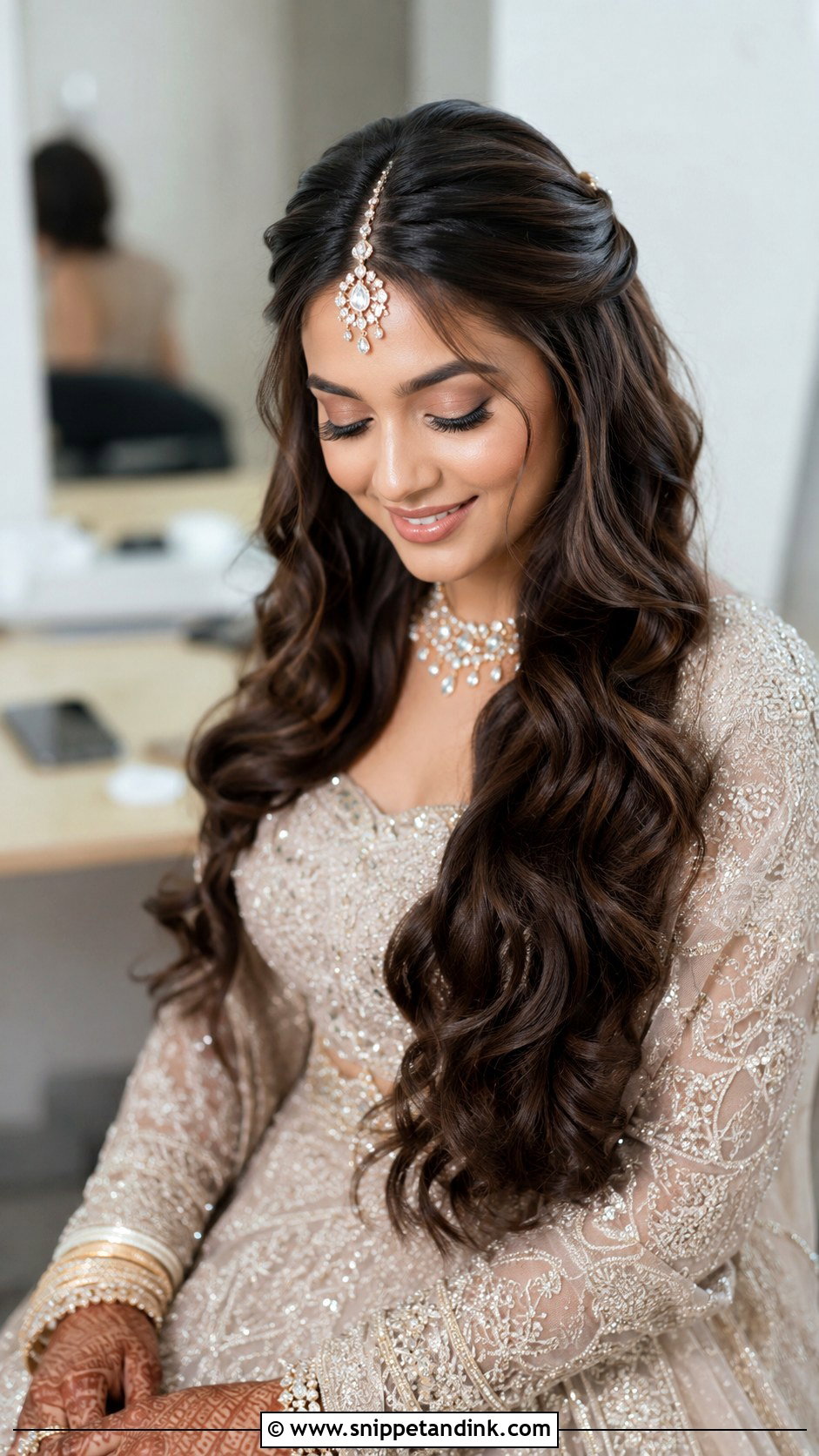
I’d steer most brides toward Indian bridal open curls for the reception or sangeet, not the main ceremony. Open hair under a pinned dupatta flattens and catches on the embroidery within minutes. With a lighter dupatta over one shoulder, or a gown, the curls finally have room to move. I use a larger barrel and pin each curl up to set while it cools, because curls on a humid evening drop from the roots first. In an air-conditioned hall they last well; at an outdoor summer function, I’ll suggest pinning one side back from the start.
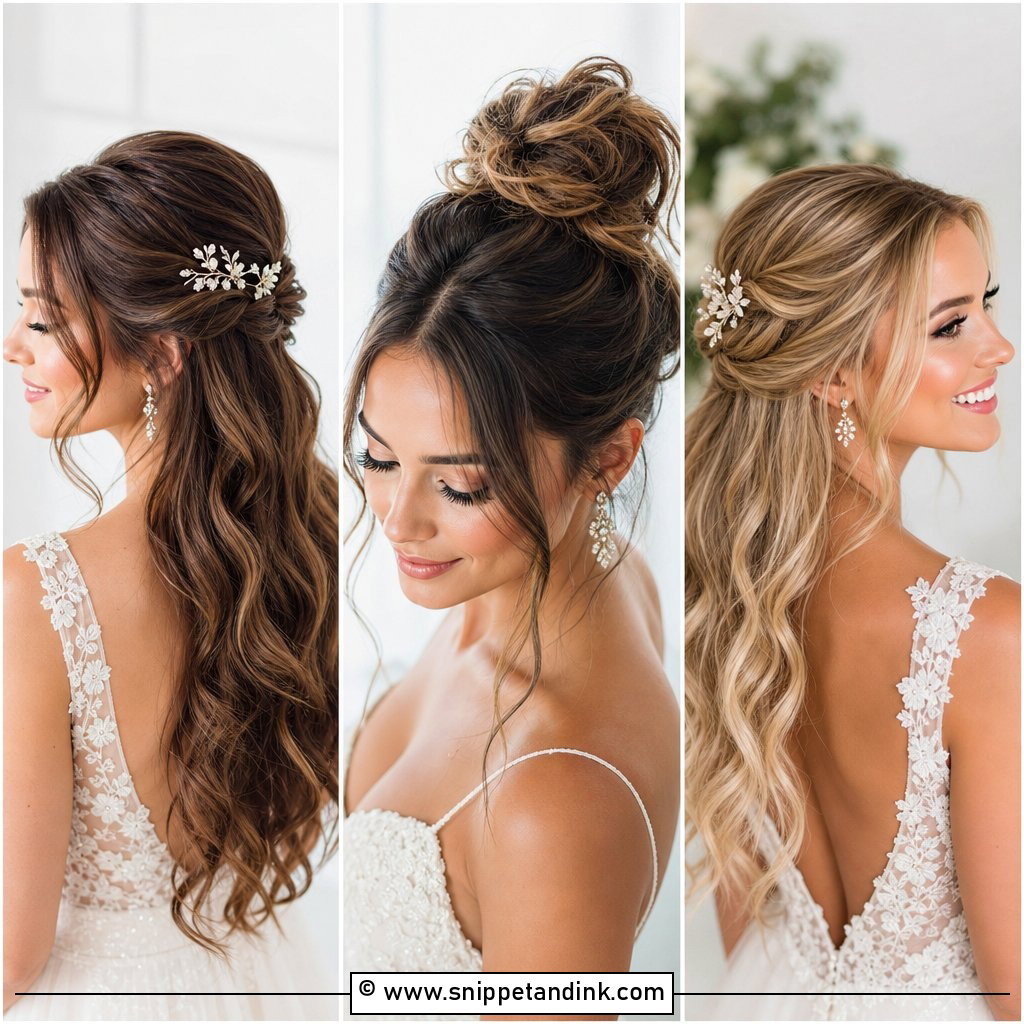
7. Indian Bridal Half Up Hairstyle
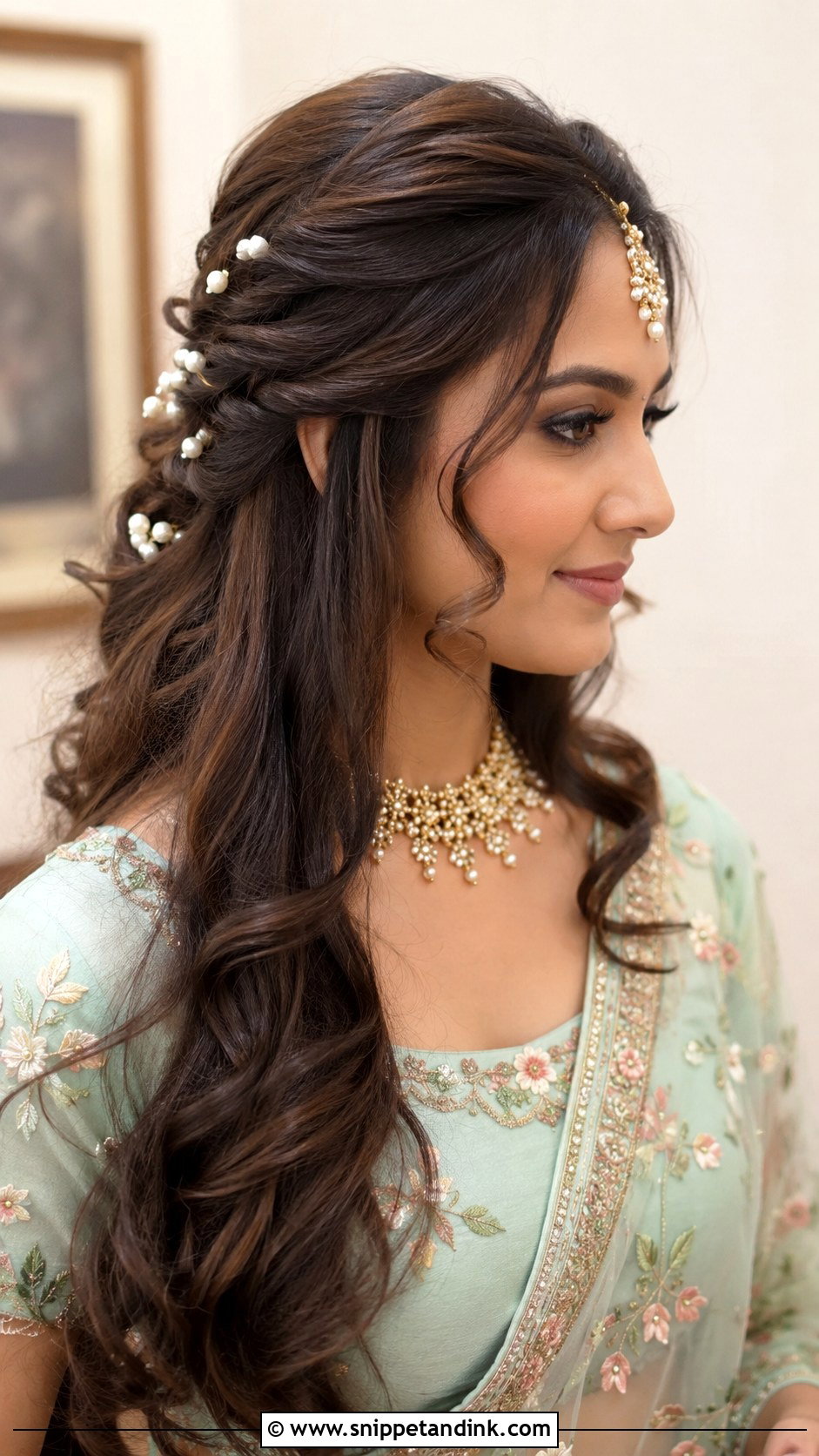
Half-up keeps the face clear for a maang tikka and earrings while the lengths stay soft, which is why it’s my default for engagement and mehendi looks. The top section needs a small backcombed base and crossed bobby pins under it; a single decorative clip sags by evening. It does need medium to long hair. On shoulder-length hair the down portion tends to look unfinished rather than intentional. A twist at each side or a few pearl pins is enough decoration, since the half-up shape is already the detail.
8. Indian Bridal Side Braid
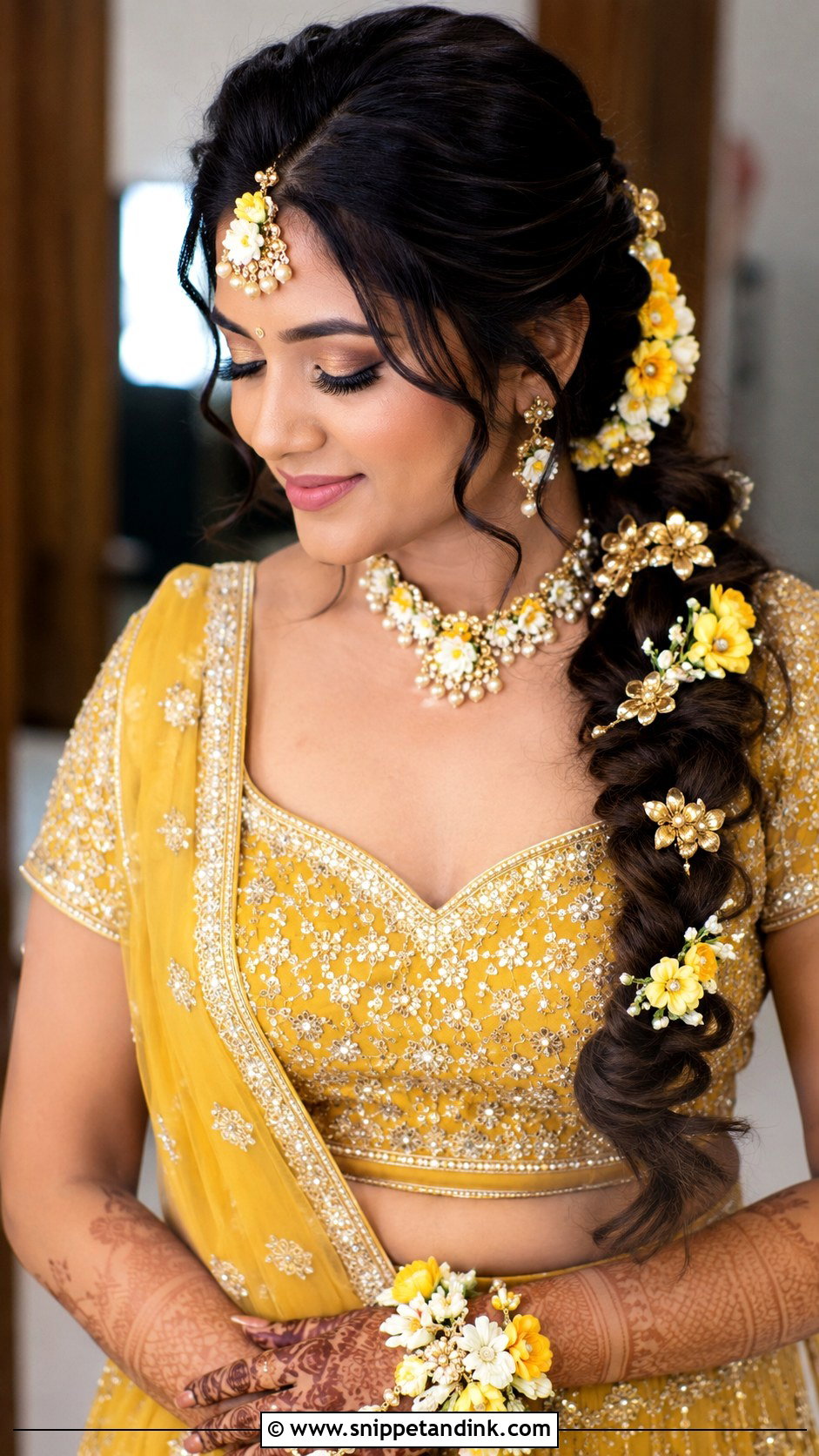
Sweeping the braid over one shoulder means it shows in every front-facing photo, which a back braid can’t do. That makes it a good fit for mehendi and haldi, where the bride sits facing the camera for hours. I braid it slightly loose and gently pull the edges so it reads fuller, then decide the decoration: a paranda for Punjabi functions, a few flowers or gold pins otherwise. One caution from the chair: the braid sitting on the shoulder picks up haldi paste easily, so I often fold it into a low bun just before the paste comes out.
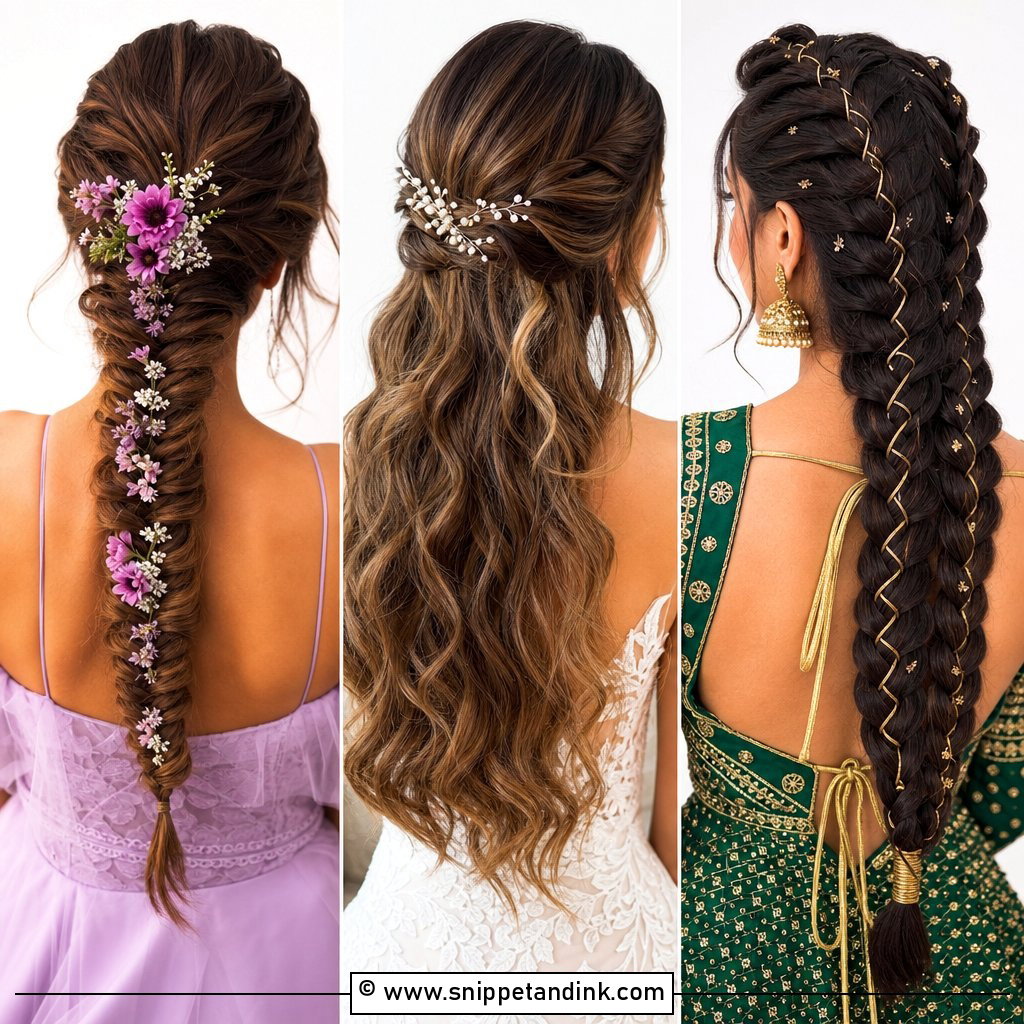
9. Indian Bridal Fishtail Braid
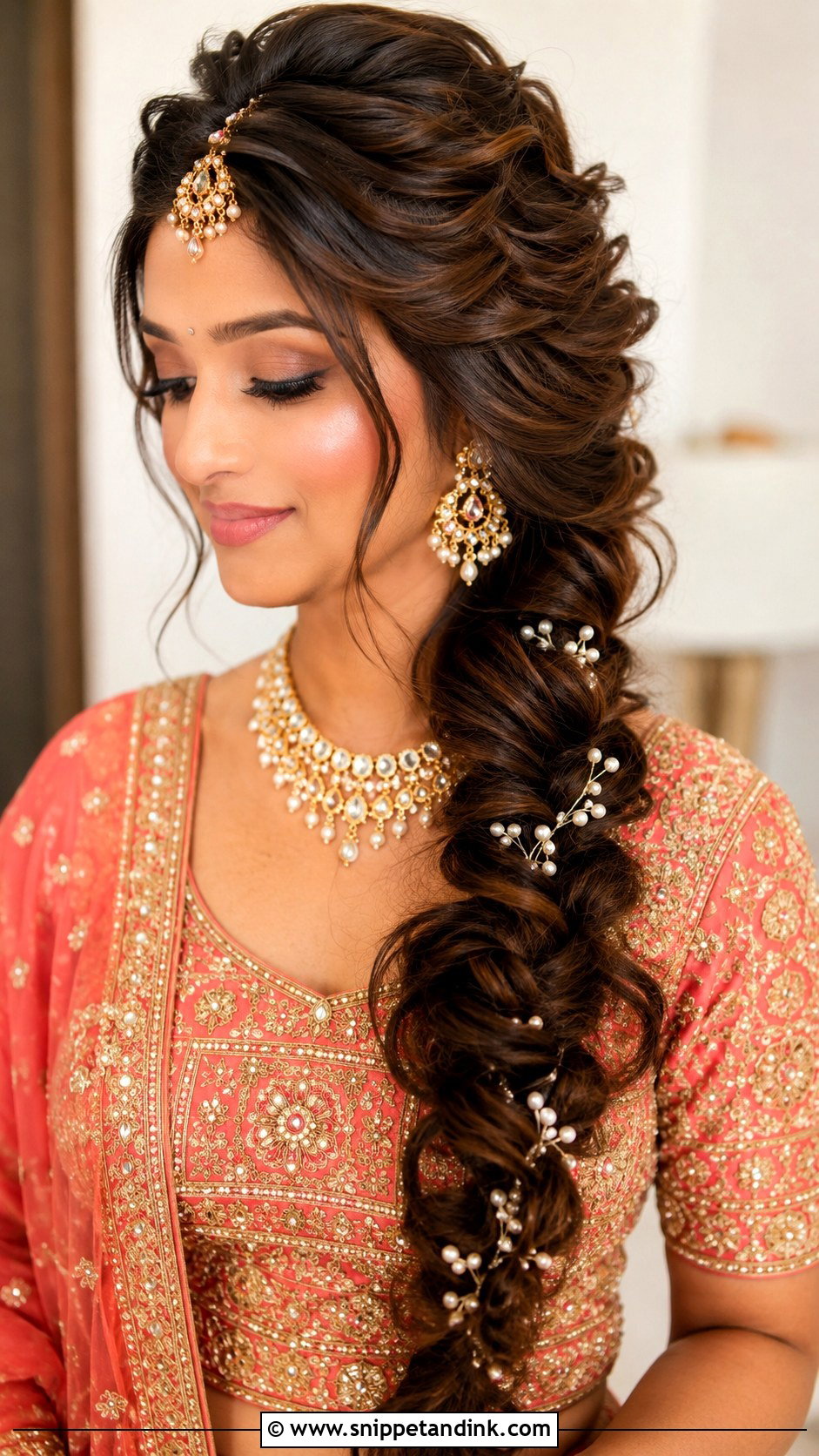
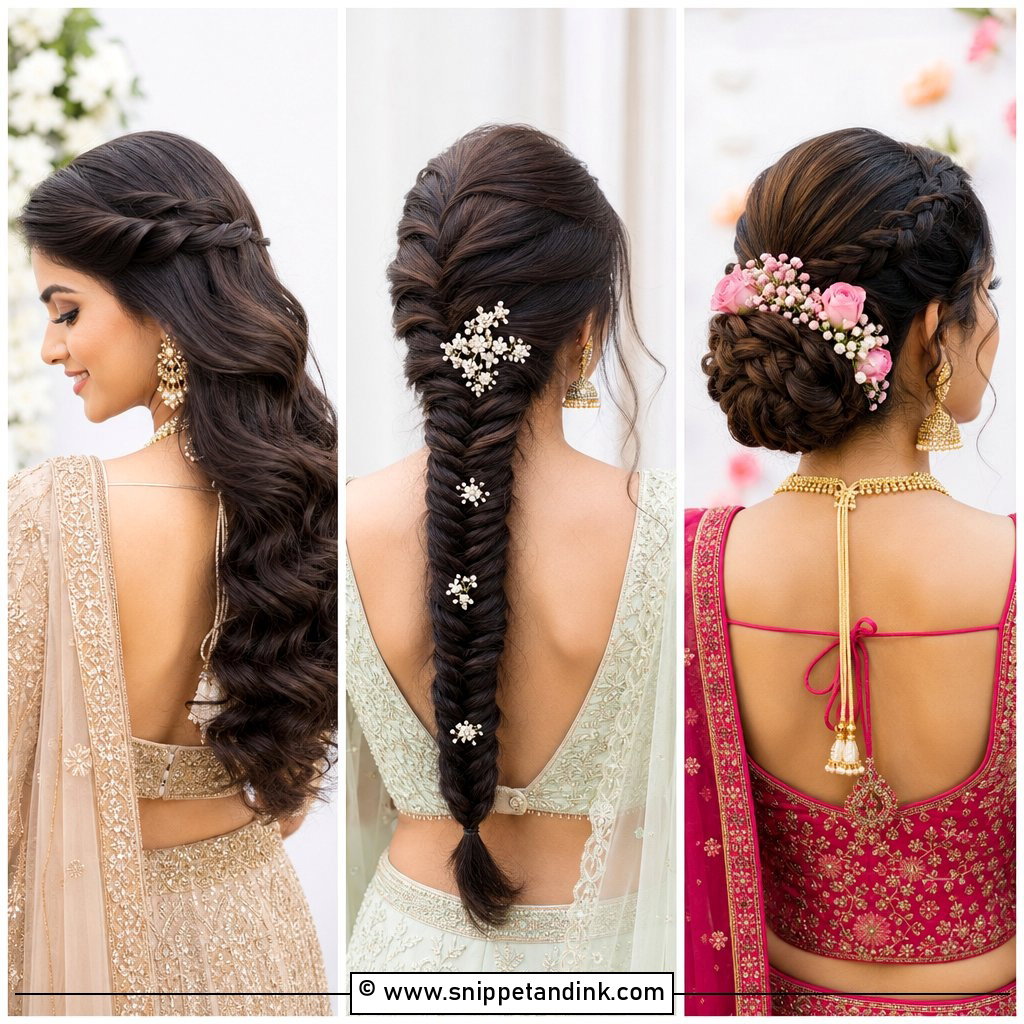
Fishtail looks intricate but goes quickly in practised hands, and it grips better than a three-strand braid because the thin strands lock against each other. Curling the hair before braiding gives the texture you see here; on very sleek, freshly washed hair, the weave slips loose. I like it as a modern braid for sangeet and mehendi, or for a smaller ceremony without a heavy dupatta. Pull the edges apart after the end is secured, not before, or the braid loses its shape at the tie.
10. Indian Bridal Crown Braid
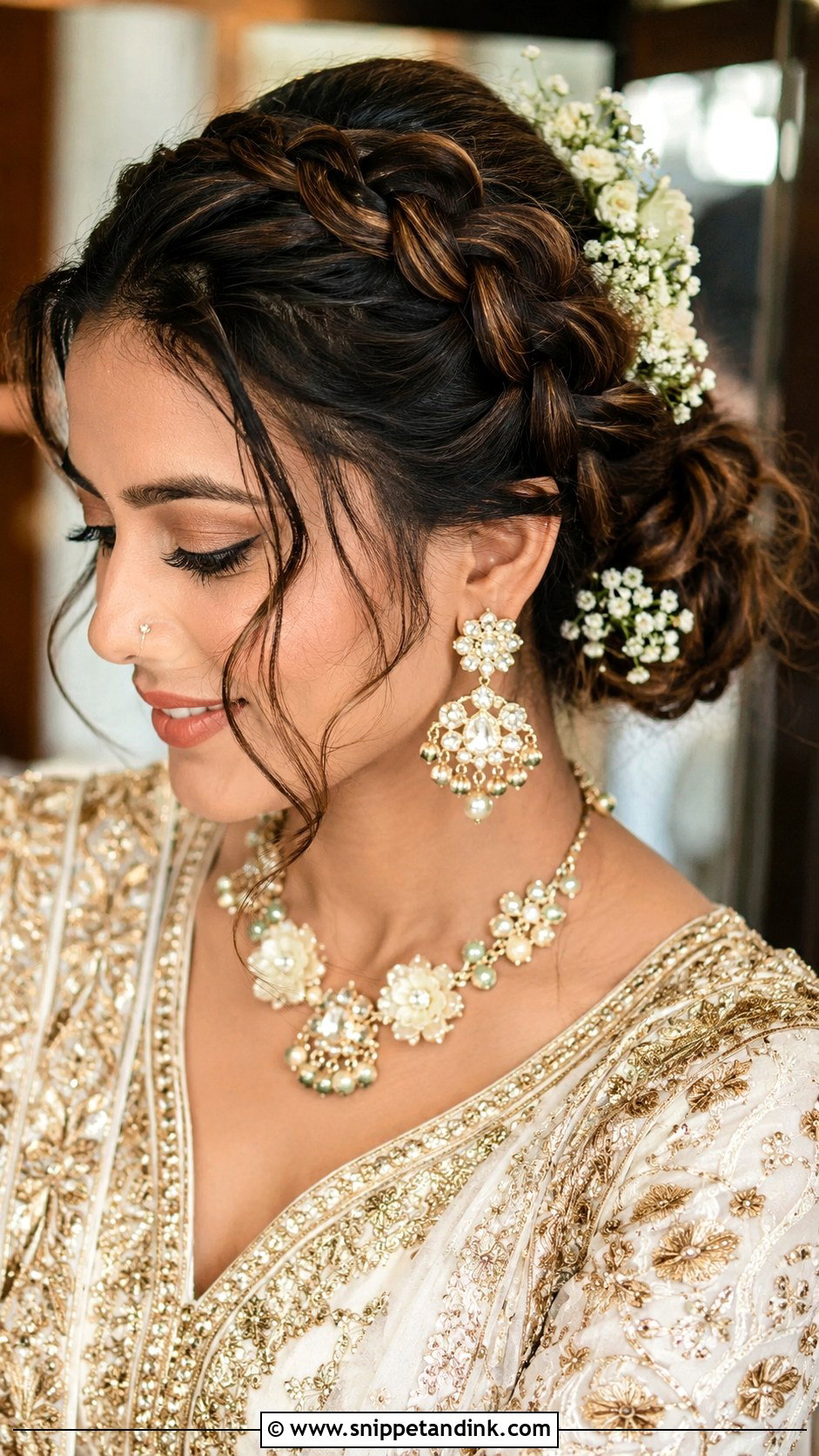
A crown braid does the job of a headpiece, which helps brides who find heavy hair jewellery uncomfortable. I braid from behind one ear across the top of the head and pin the tail under the opposite side, then set the rest into a low bun or curls. It’s also my fix for short front layers that won’t stay in a bun, because they get tucked straight into the braid. On very fine hair it can look thin across the crown, so I add a clip-in braid matched to her colour. I’d keep it for engagement and mehendi; at the main ceremony a dupatta hides most of it.
11. Indian Bridal High Bun
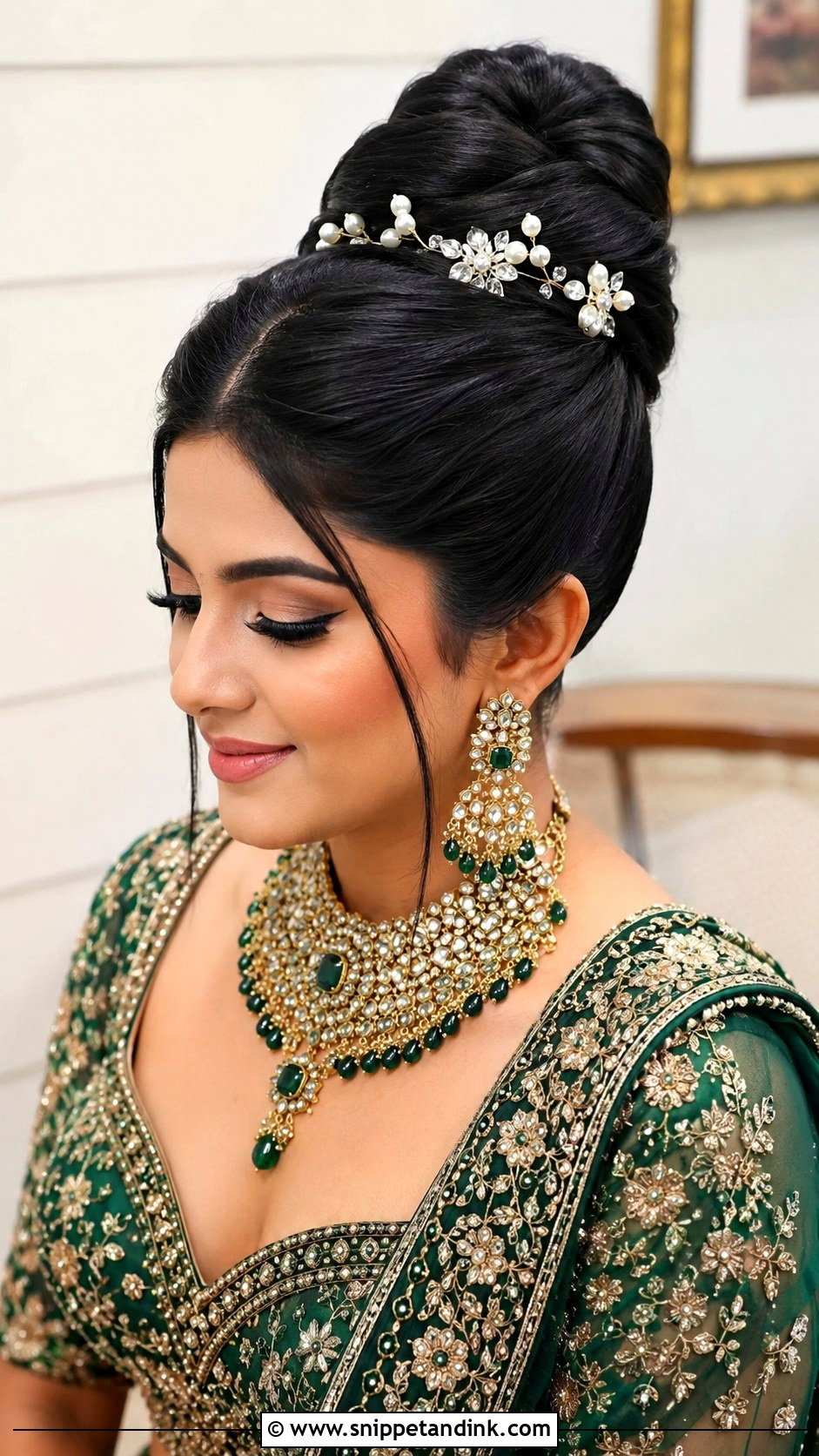
A high bun lengthens the neck and clears space for a heavy choker or long earrings, so I reserve it for reception gowns and structured modern lehengas. It doesn’t work under a dupatta pinned over the head, where the fabric drapes awkwardly over the bump. Because it’s seen from every angle, I check it in a hand mirror from both sides at the trial; a bun sitting slightly off-centre is obvious in profile shots. The pins go criss-cross into the base ponytail, and decorative gold or pearl pins only go where the shape dips.
12. Indian Bridal Braided Bun
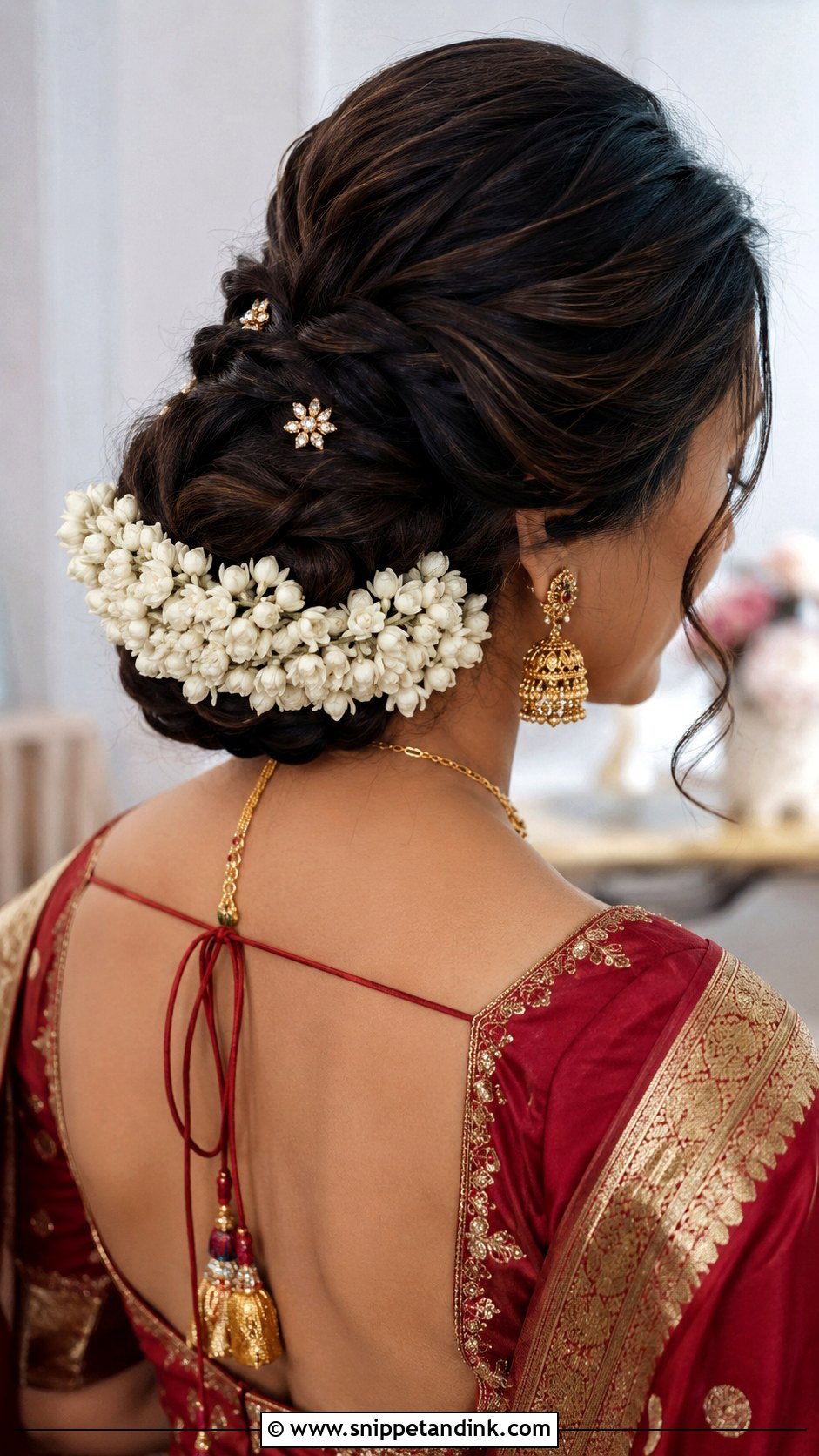
Braiding the hair before coiling it is the easiest way I know to tame very thick hair, because the braid compresses volume that would otherwise make the bun enormous. It also gives the bun built-in texture, so it needs fewer accessories. I can place it at the nape under a dupatta or a little higher for a reception. On fine hair I’d skip it: braiding shrinks the hair and the bun ends up small. A ring of jasmine or a few small gold clips is plenty here.
13. Indian Bridal Sleek Bun
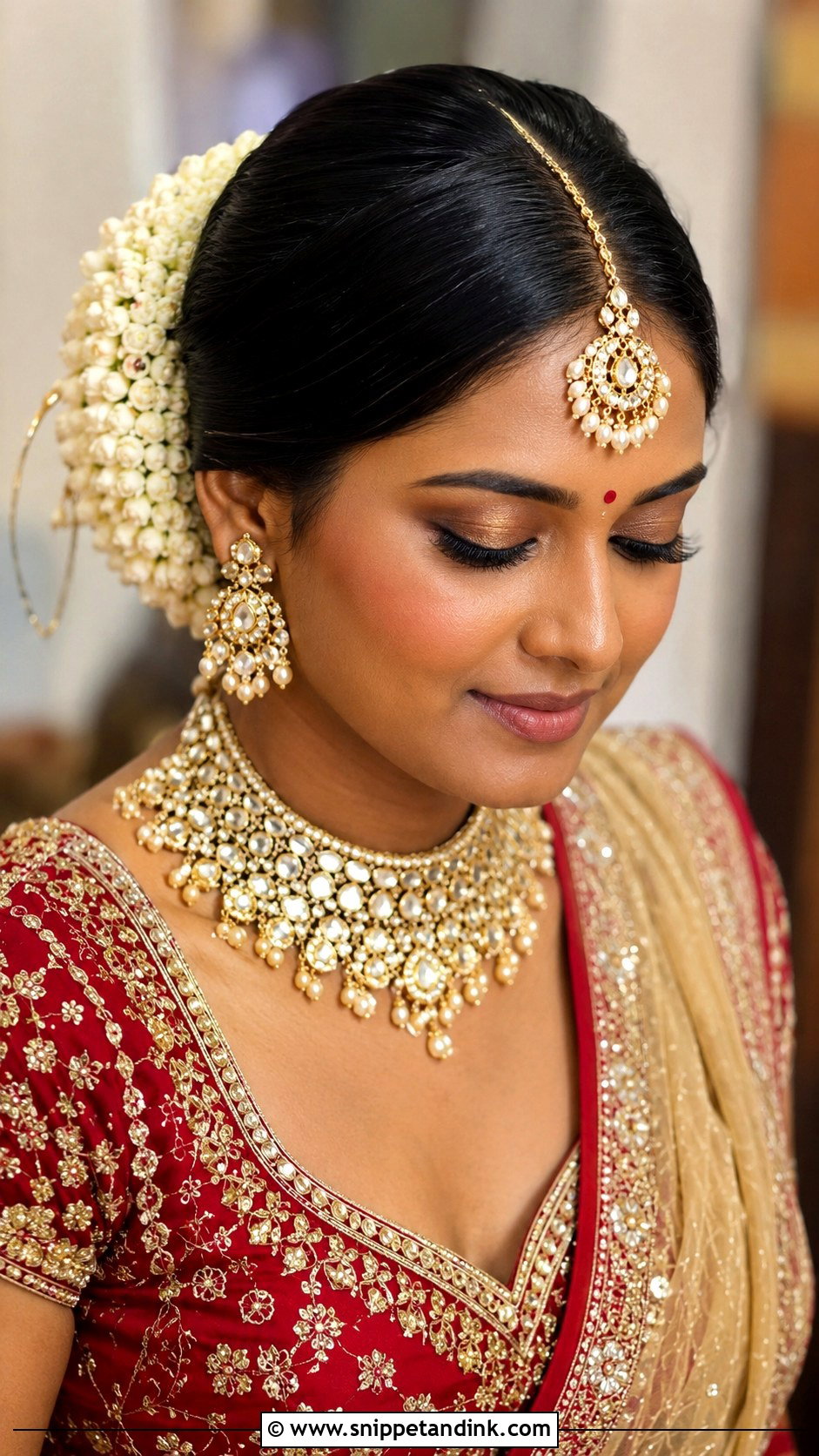
With bold makeup, winged liner and a red lip, an Indian bridal sleek bun stays out of the way and lets the face lead. I smooth it with gel and a boar bristle brush, part with a tail comb, and secure the ponytail with a snag-free elastic before wrapping. It holds through rituals and dancing better than almost anything else here. The trade-off is severity. On a round face, or with sparse hair at the hairline, it can look harsh, so I soften it with a gajra ring around the base or a matha patti across the parting. Baby hairs get a toothbrush and a little gel, not hairspray, which sets them crunchy.
14. Indian Bridal Loose Waves
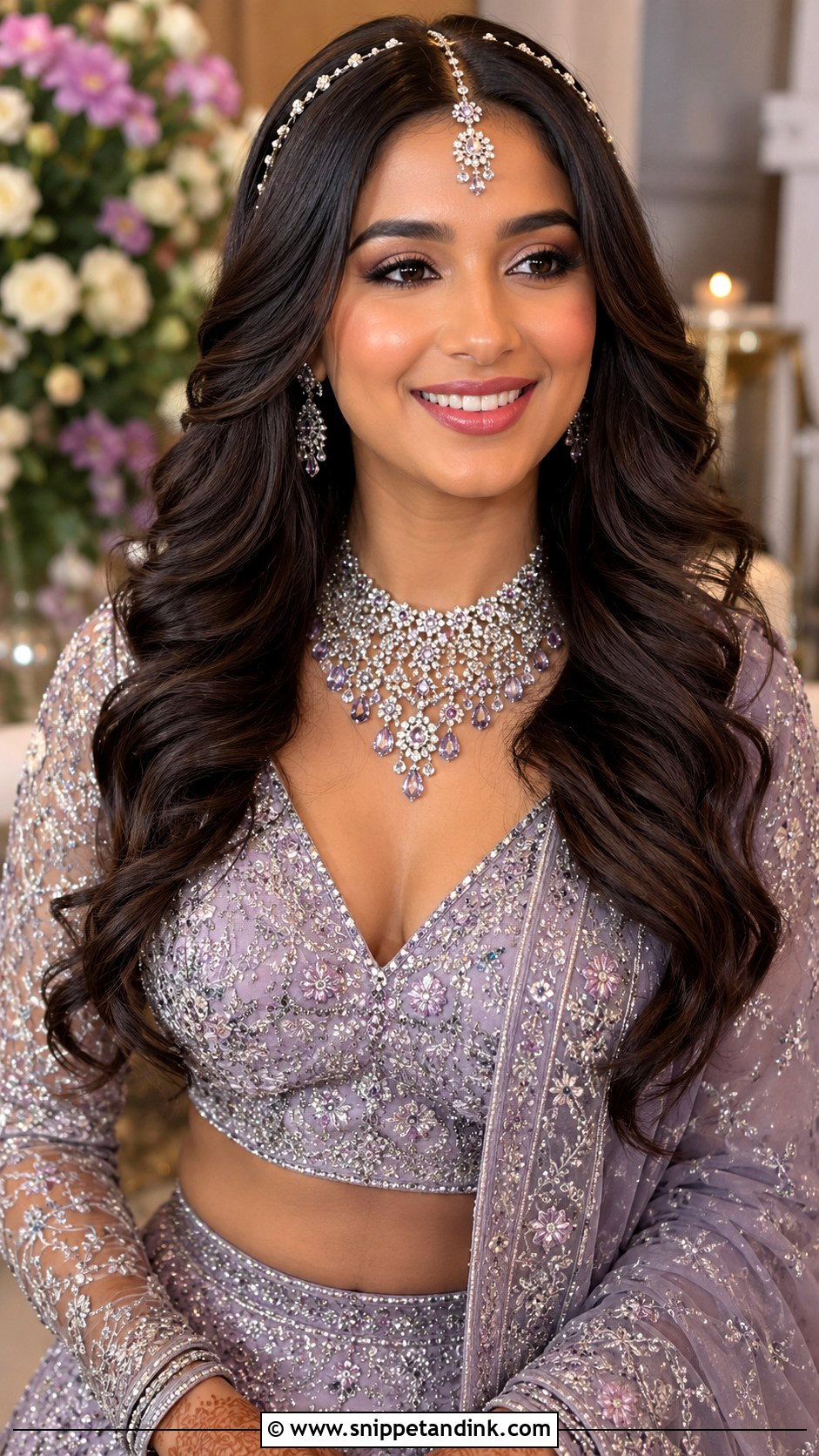
Waves, as opposed to curls, sit flat at the root and open up through the lengths, which reads more modern in photos. For me they belong to the reception or a pre-wedding shoot. A centre parting with a maang tikka pulls them toward tradition; a deep side part makes them more glamorous. They are also the least forgiving style here in humidity, so I prep with heat protectant and a light mousse, set every section, and hide a few pins at the back to stop the whole mass swinging forward when she leans in for photos.
15. Indian Bridal Puff Hairstyle
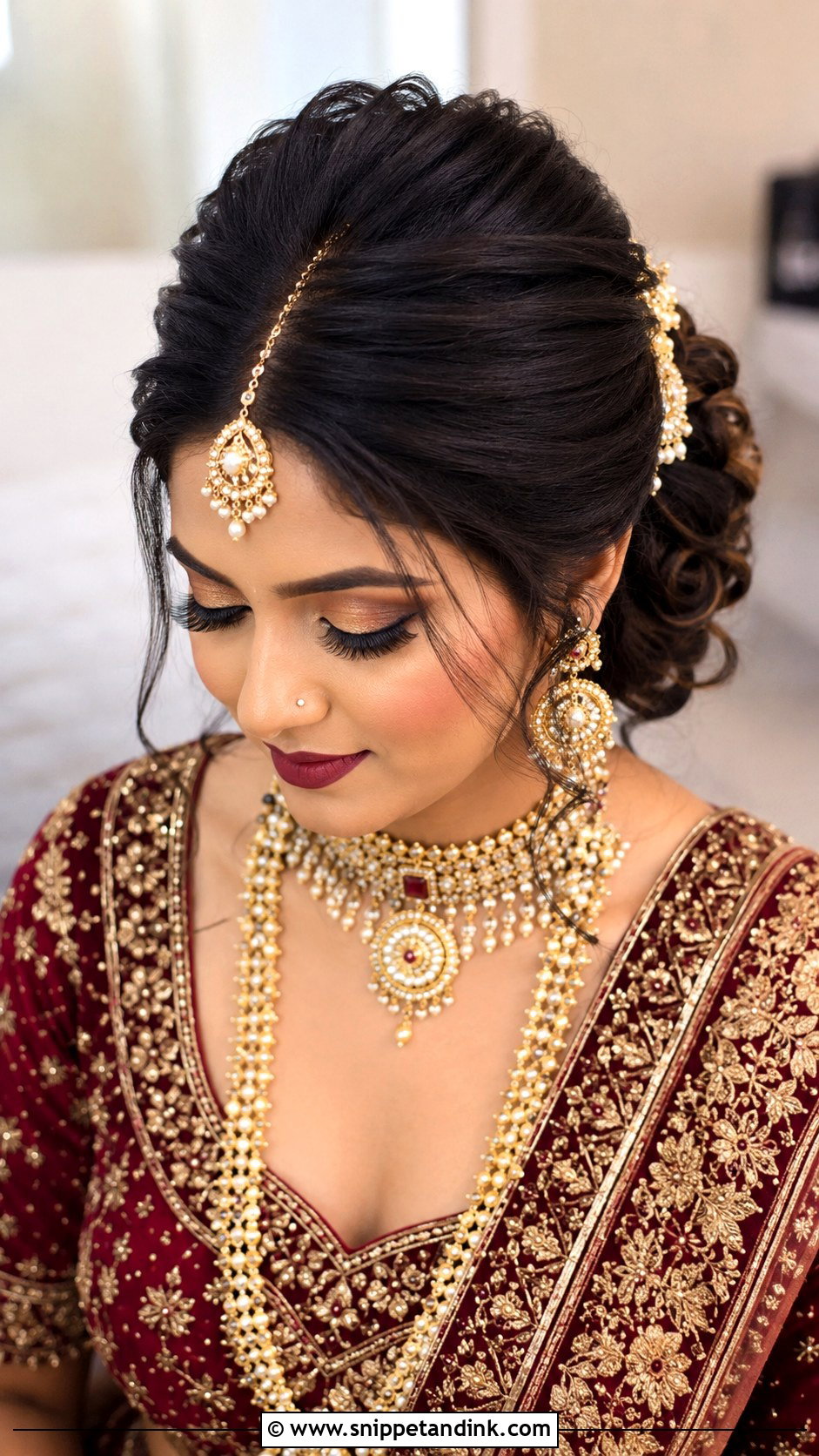
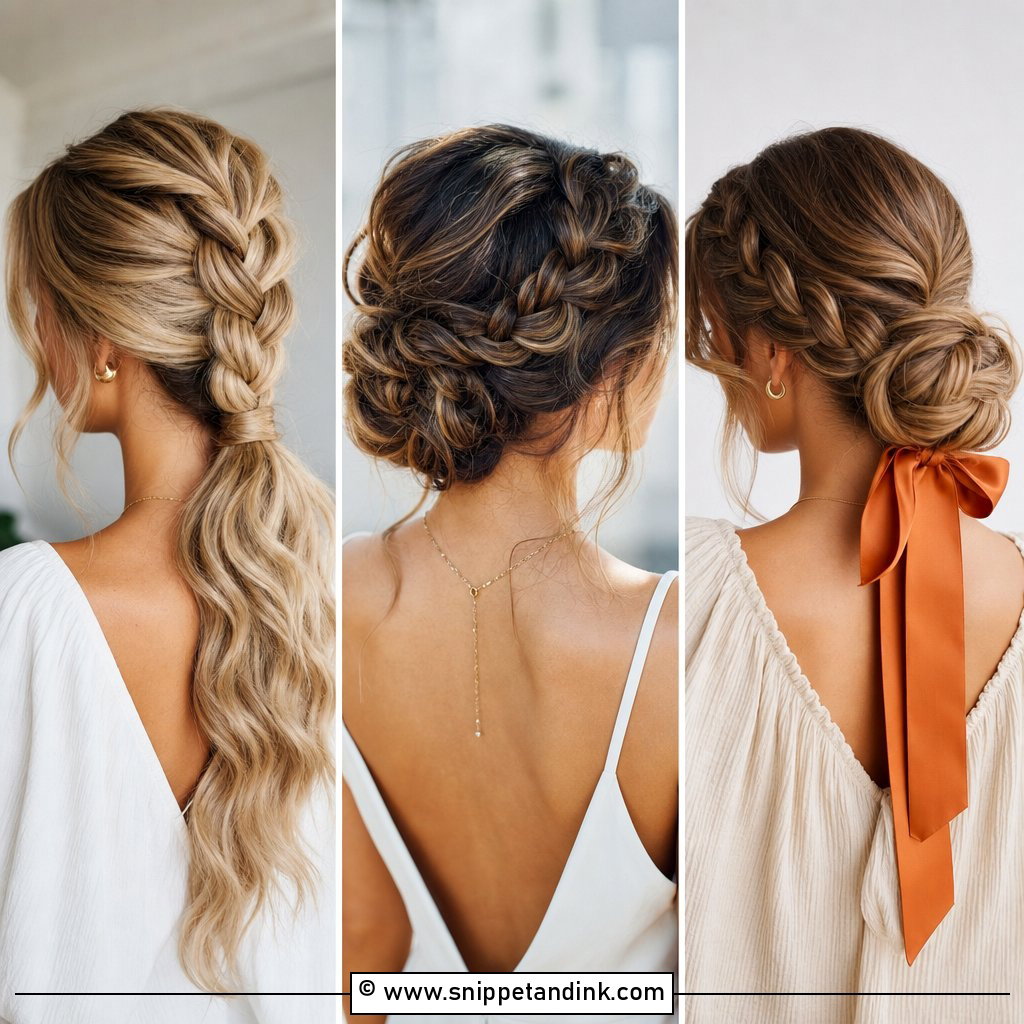
A puff gives lift at the crown, so heavy jewellery and a dupatta don’t flatten the head into a straight line in profile. I backcomb a small section at the roots, smooth the top layer over it and pin from underneath. It pairs with a bun, a braid or a half-up style. The usual mistake is making it too big or too stiff; it should look like natural lift, not a separate mound sitting on top. With a long face, keep the puff low and soft, because extra height lengthens it further.
Oiled Roots, Henna-Dyed Lengths and the Right Wash Day
Many families oil the bride’s hair through the wedding week. It’s a good ritual for the hair, but oil at the roots is the main reason pins slide and buns droop. I ask brides to stop oiling the scalp at least two days before the main ceremony and to wash the day before, not that morning, because squeaky-clean hair is too slippery to hold a structured style.
Hair coloured with henna feels coarser and drier than untreated hair. That actually helps grip, but the ends tangle easily in braids, so a little leave-in conditioner on the lengths and a wide-tooth comb saves a lot of breakage. If you’re adding extensions for a jada braid or a fuller bun, match them in daylight: henna leaves a red-brown cast that cool black extensions won’t blend with.
Mehndi night brings its own problem. Brides often sleep with paste still on their hands and can’t fuss with their hair, so I suggest a loose braid on a silk pillowcase before the paste goes on. It stops the worst of the knots and keeps the lengths smooth for the morning.
Changing From the Pheras Bun to Reception Curls
Plenty of brides switch hairstyles between the ceremony and the reception, and the gap is usually shorter than anyone planned. I set the first style so the second can be built on it: a low bun pinned over hair that was curled underneath can be let down into waves instead of starting again from flat, pin-creased hair.
- Remove the dupatta pins and hair jewellery first, one piece at a time, so nothing snags the embroidery.
- Take the gajra off in one piece by unpinning its ends; tugging it drags hair with it.
- Unpin the bun from the outside in and loosen it with fingers before any brush touches it.
- Re-curl only the sections that went flat, usually the front, and pin one side back if the venue is warm.
If there’s barely any time between events, a sleek bun turns into a high bun far faster than any bun turns into open curls. Tell your stylist the timing before the trial so she plans the change, not just the first look.
Work Outward From the Heaviest Piece on Your Head
Begin with the heaviest thing you’ll wear on your head, whether that’s a dupatta, a jada or a matha patti, and pick a base that can carry it: a low bun, a tied braid or a sleek bun. Save open curls and loose waves for the functions where your head is clear and the hall is cool. Then bring your actual jewellery to the trial, wear it for an hour, and notice whether anything pulls. A hairstyle that still sits right after the pheras is worth more than one that only looks right in the mirror.
You'll Like These Ideas:




Leave a Reply