
Roka is one of the warmest pre-wedding moments: two families meet, bless the couple and, very often, drape a chunni over the bride’s head. It’s smaller and looser than the wedding itself, usually at home or in a small hall, with lots of sitting, hugging and close-up photos. That makes it a good time to try a style you might not risk on the wedding day. Open hair, a bun or a braid can all work, as long as it suits your outfit and the way the day actually unfolds. Below are twenty roka styles I’d do for a bride, with notes on how each one holds up and who it suits.
Will Your Style Survive the Chunni Going On?
At many rokas, the groom’s family drapes a chunni over the bride’s head as part of the blessing. It’s a lovely moment, and it decides more about your hairstyle than your outfit does. A heavy dupatta pressed onto curls flattens them; a high ponytail or crown braid lifts the fabric so it slides off; a low bun gives it a natural place to rest. So the first thing I ask any roka bride is whether a chunni ceremony is planned and whether she’ll keep it on afterwards.
Styles that work under a chunni
- Low buns, sleek or twisted, which give the fabric a ledge to sit on.
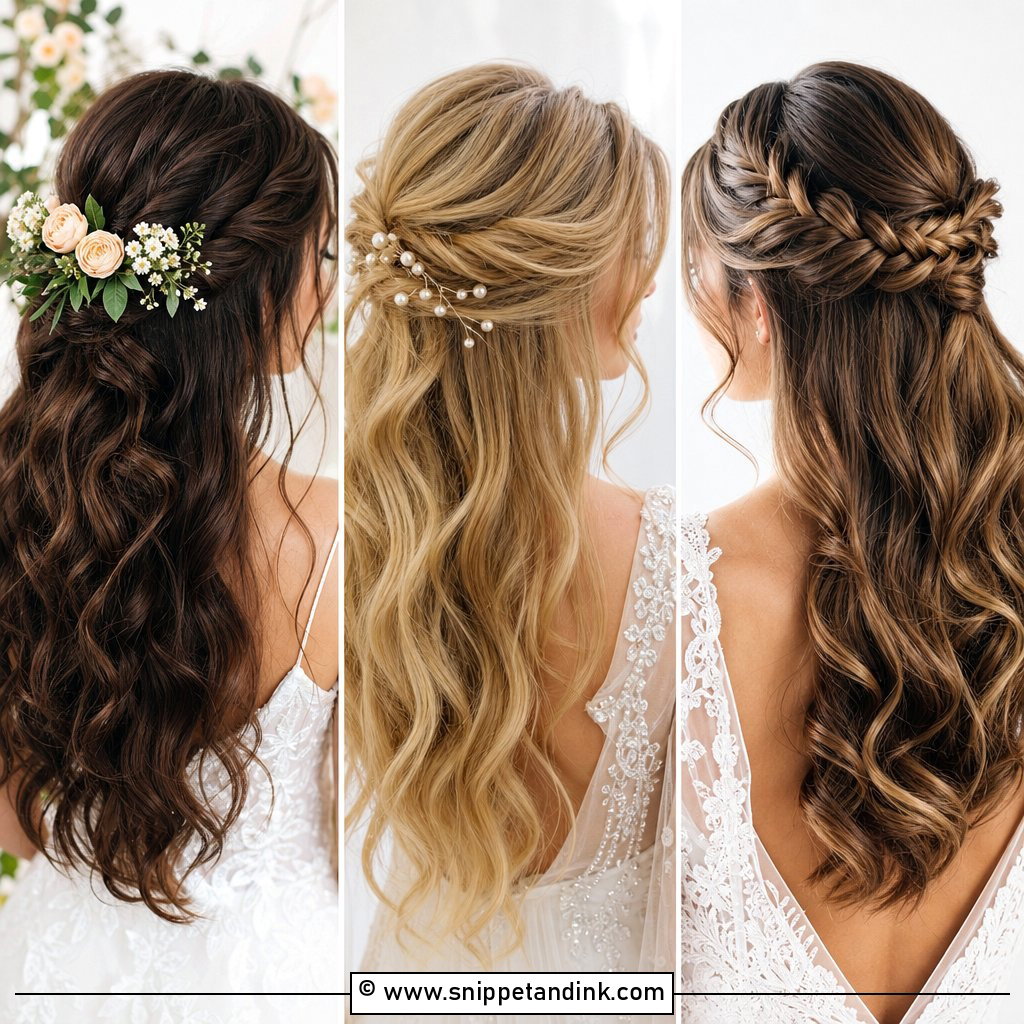
- Open hair with a smooth crown and waves starting below the ears.
- Half-up styles tied low at the back rather than high on the crown.
If you want a crown braid or a high ponytail anyway, ask your stylist to fix the chunni with two or three U-pins once it’s placed, and to keep a few spare pins in her kit for when it’s taken off.
1. Sleek Open Hair With Waves
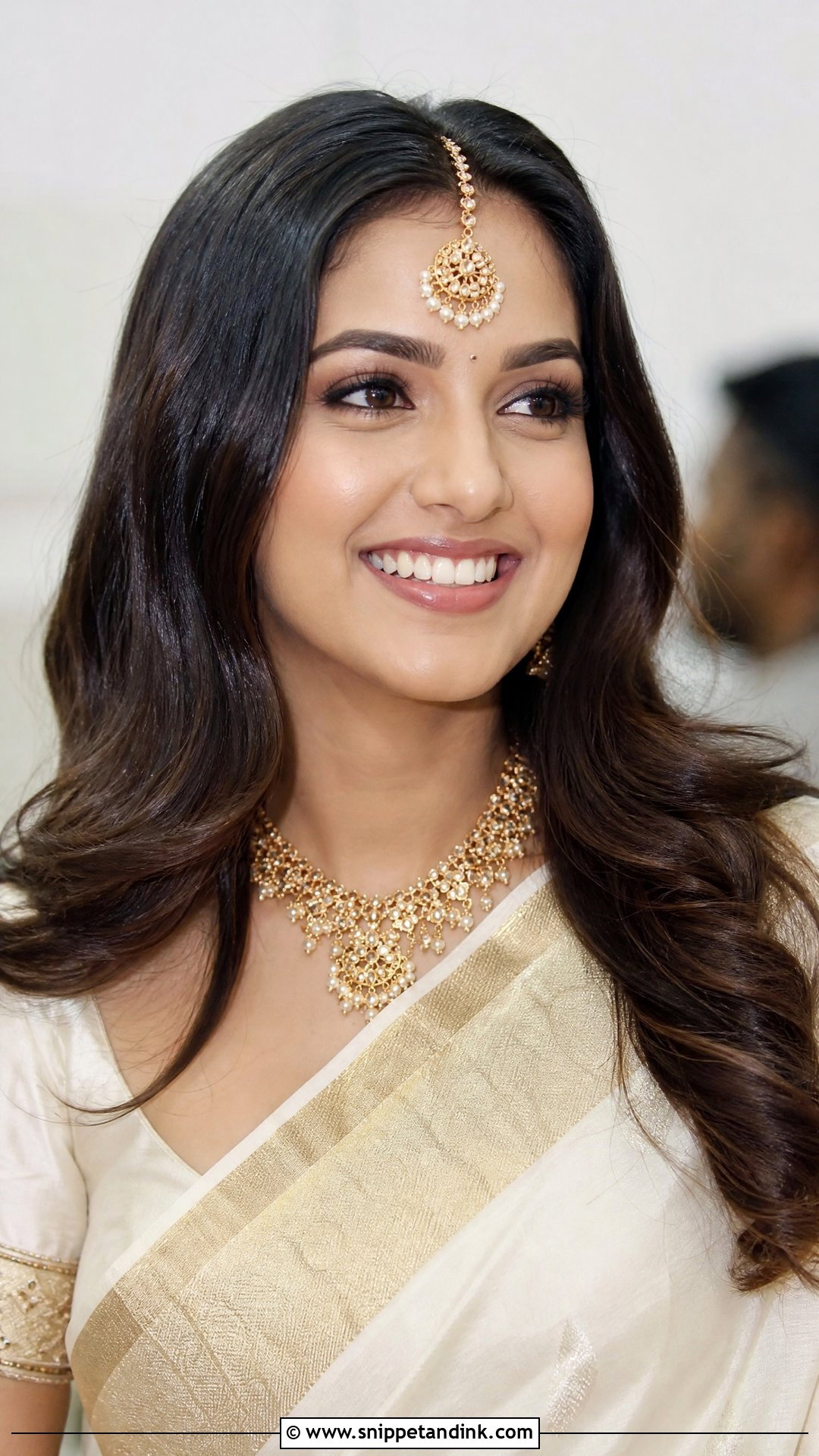
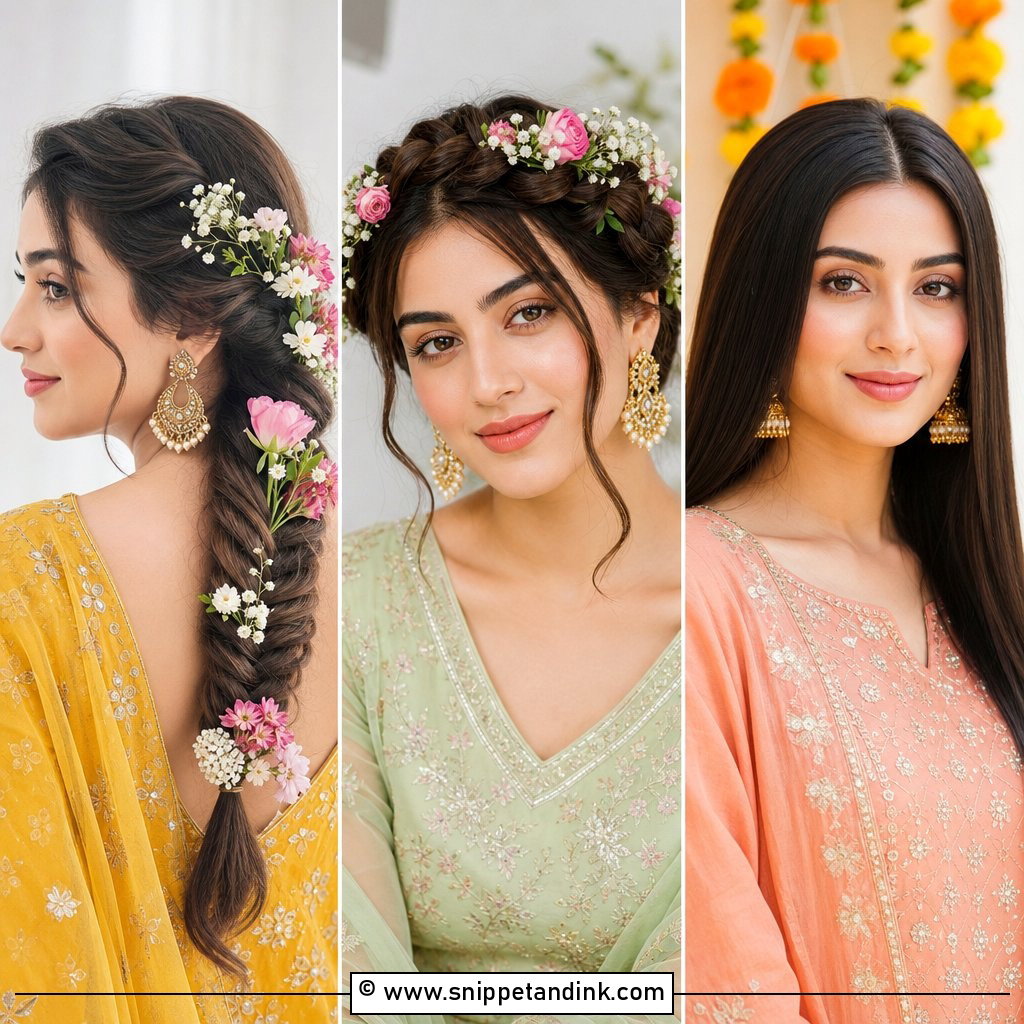
Sleek open hair with waves is the style I’m asked for most at rokas, and it’s easy to get slightly wrong. The crown needs to be smooth and close to the head, with the waves starting below the ears; if the waves start too high the whole thing turns into a halo of frizz once the chunni goes on. It frames the face and leaves room for a statement maang tikka or chandbali earrings, and it suits a silk saree as well as a lehenga. A few pearl pins along the parting are all the decoration it needs.
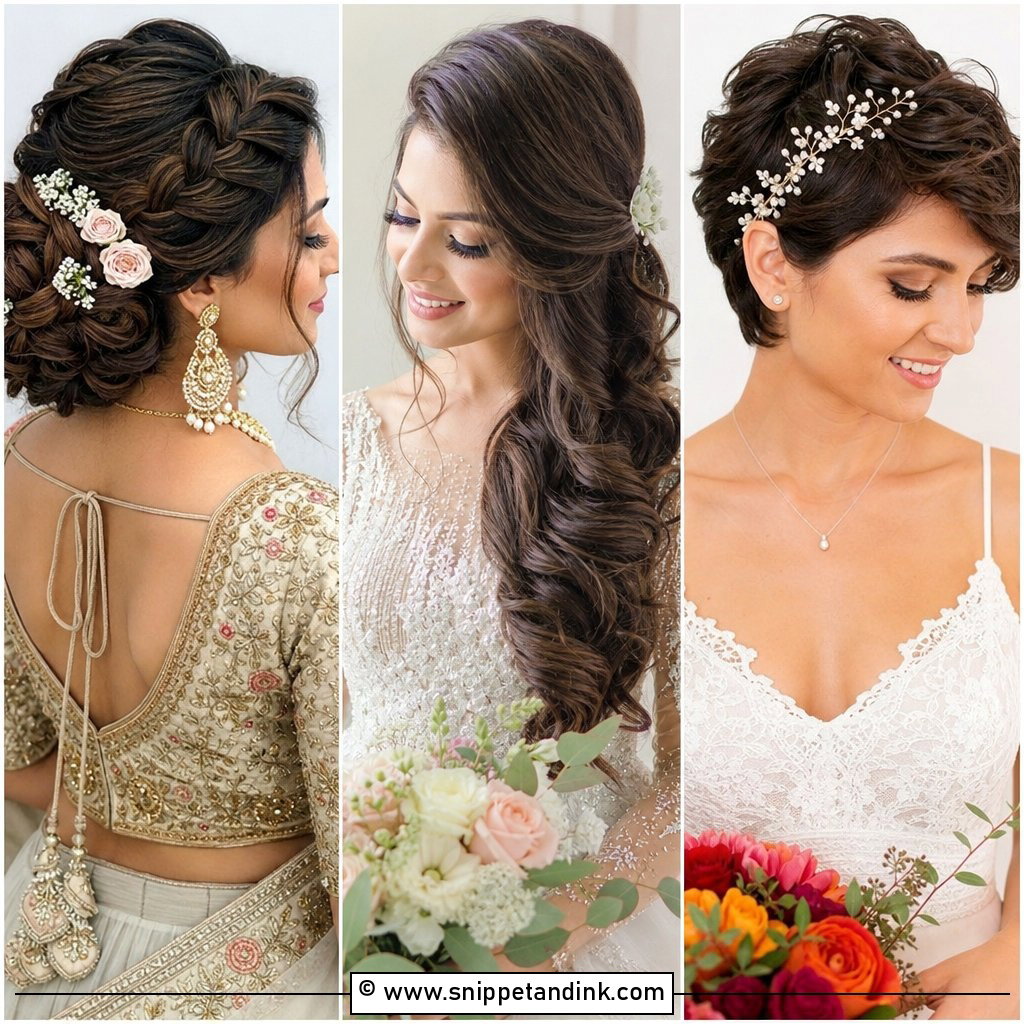
2. Half Braid Half Open Hairstyle
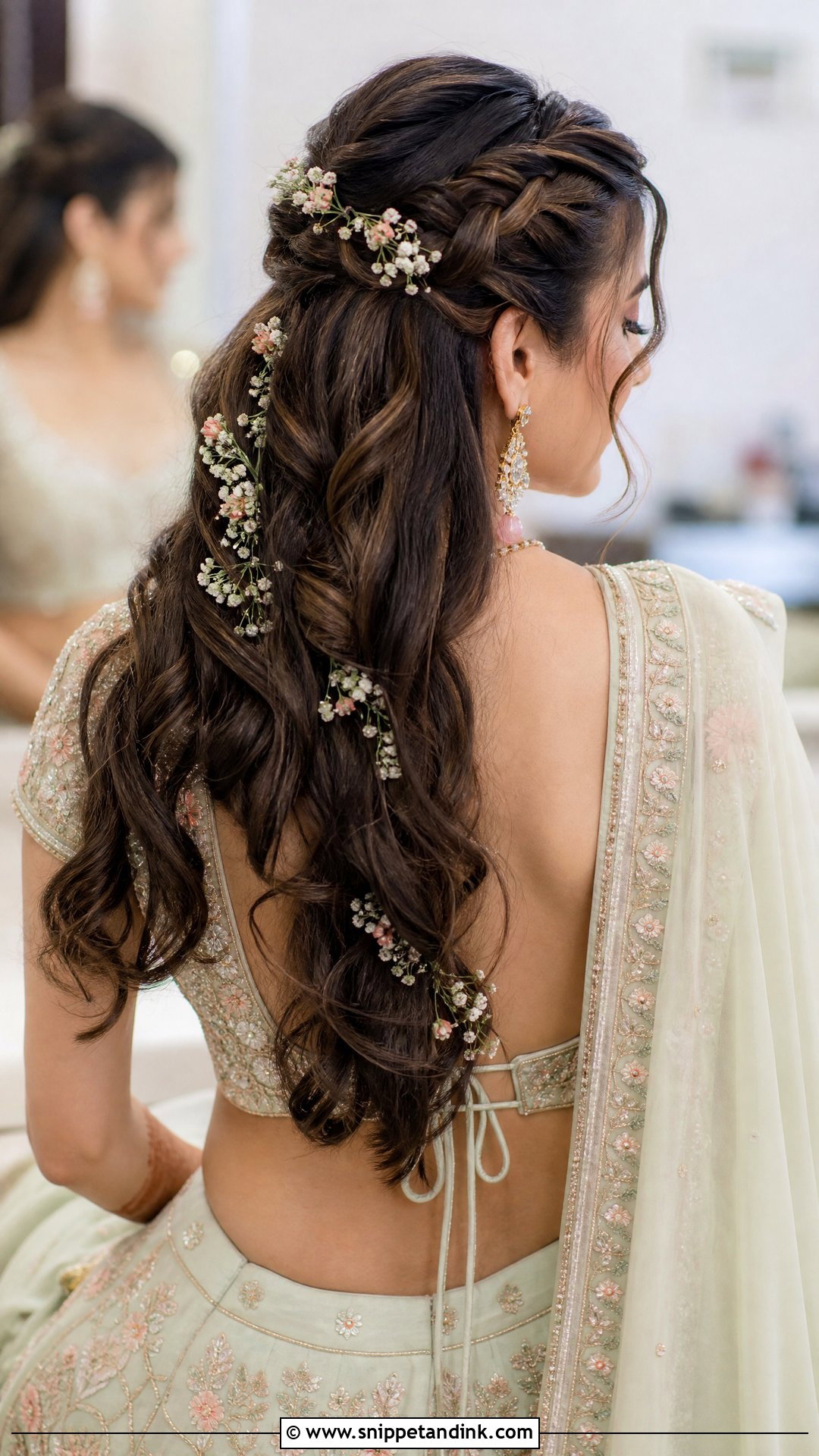
The half braid gives you detail at the top and length at the back. I braid a section from the crown neatly, keep it close to the scalp so a dupatta lies flat over it, and leave the rest loose in soft waves. Tiny flowers or a pearl string woven into the braid catch the light in close portraits. It’s practical for a long afternoon because the braid keeps hair off your face while you bend for blessings and lean in for hugs.
3. Messy Bun With Gajra
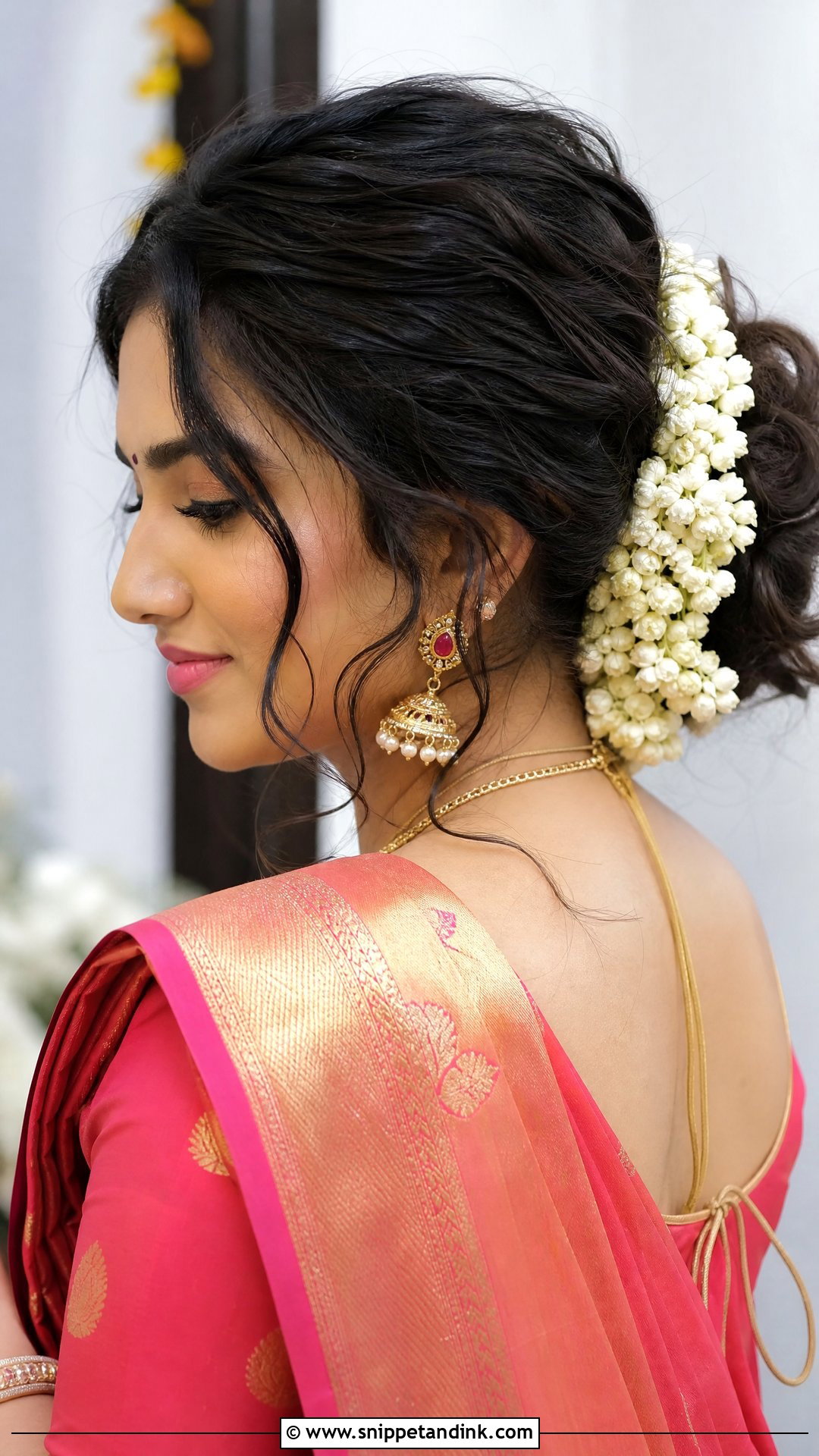
A messy bun looks careless and takes more pins than any other bun I make. The hair is gathered loosely at the nape, teased for grip, then pinned piece by piece so it stays soft but doesn’t slide. Pull out only two or three face-framing strands; more than that and the look starts to read as undone. A fragrant gajra around the bun adds the traditional touch and scent. It shows off a backless blouse or heavy earrings, and suits a daytime roka at home.
4. High Ponytail With Waves
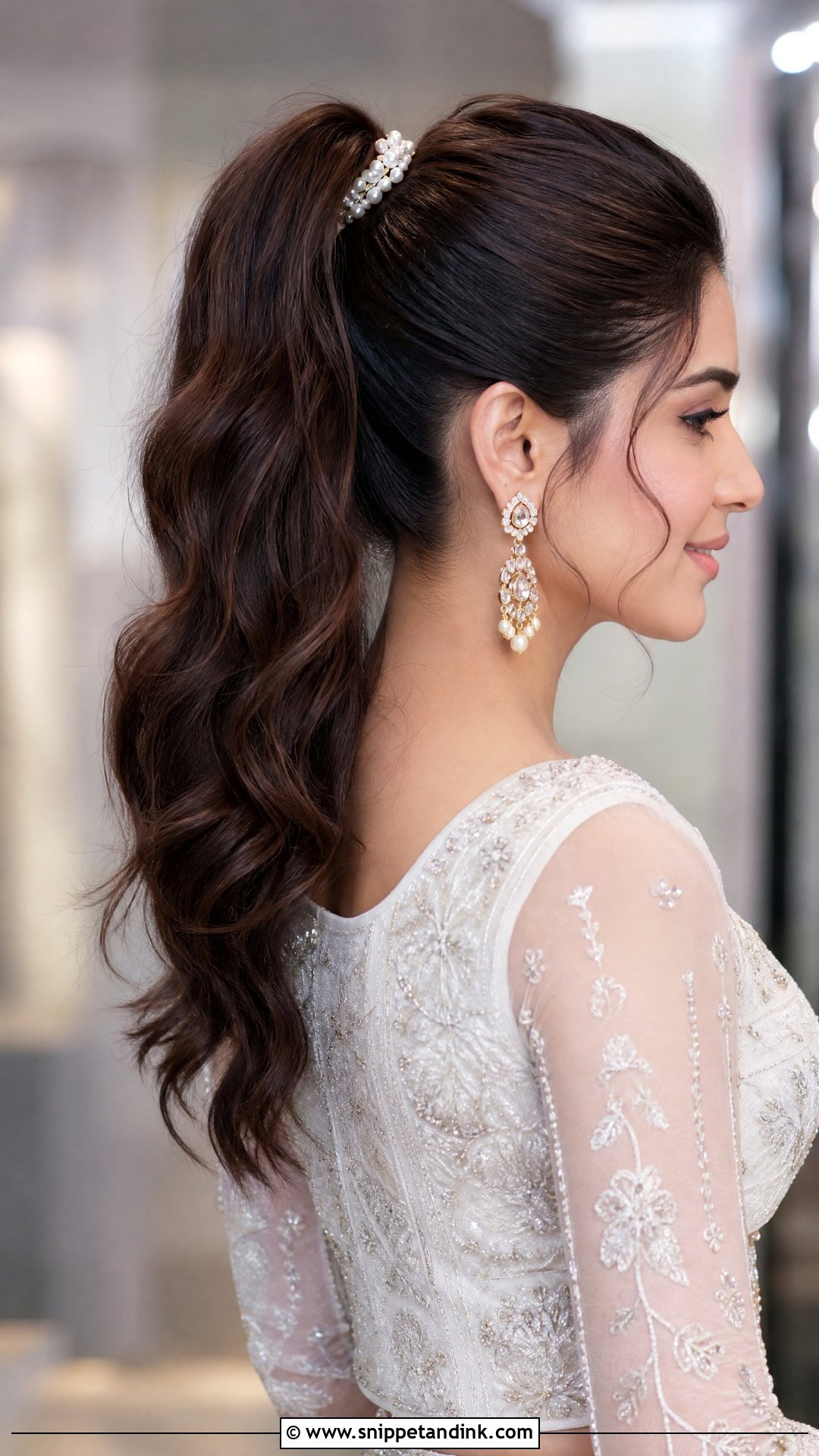
A high ponytail is lively and modern, but I’d check one thing before choosing it: will there be a chunni ceremony? A ponytail sits right where the dupatta needs to rest, so the fabric tents over it and keeps slipping. If there’s no chunni, or you’ll wear it draped only on the shoulders, it’s a fresh choice. I wrap a section of hair round the base to hide the elastic, curl the length loosely and add one sparkly clip. It shows the neckline and holds well through hours of photos.
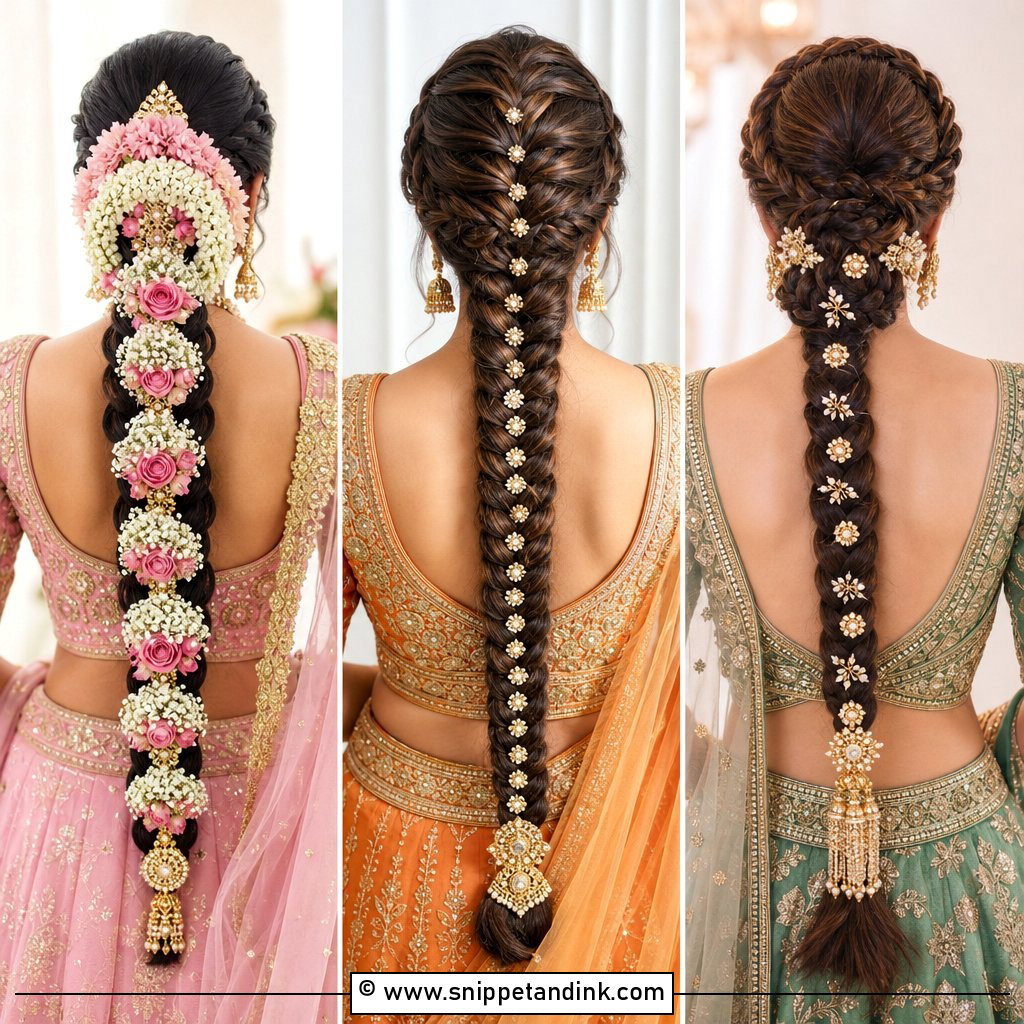
5. Fishtail Braid From The Crown
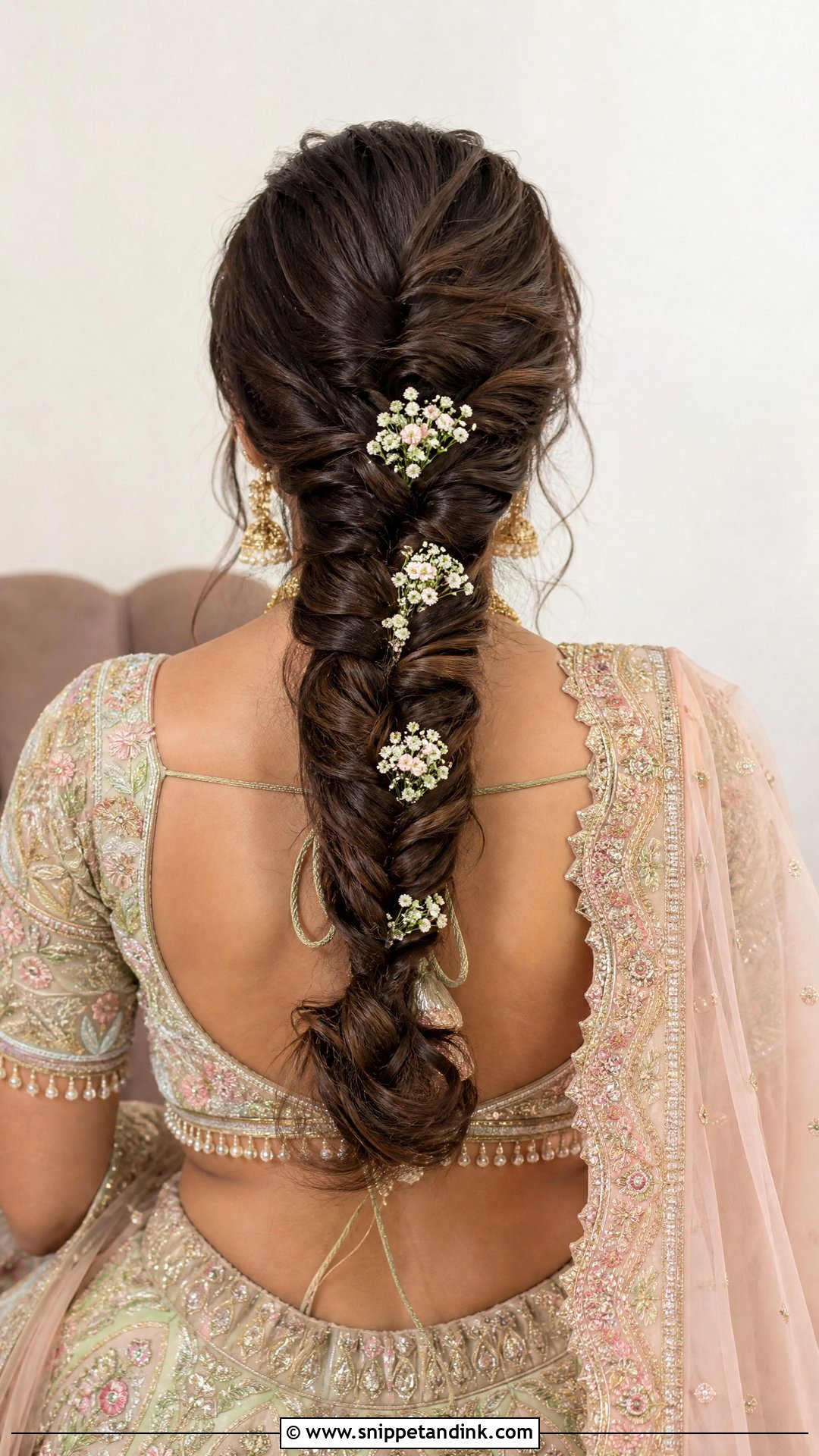
A fishtail is slower to braid than a three-strand plait but it gives a finer, more woven texture. I start it at the crown and work it down to one side, then decide with you how much to loosen it. Tight reads sleek and lasts longer; pancaked wide, it looks fuller in photos but frays sooner. Fine hair needs some backcombing or a little texture spray first, or the braid looks thin. Small flowers or delicate pins tucked into the plaits are enough, and the style works with ethnic and indo-western outfits alike.
6. Sleek Low Bun
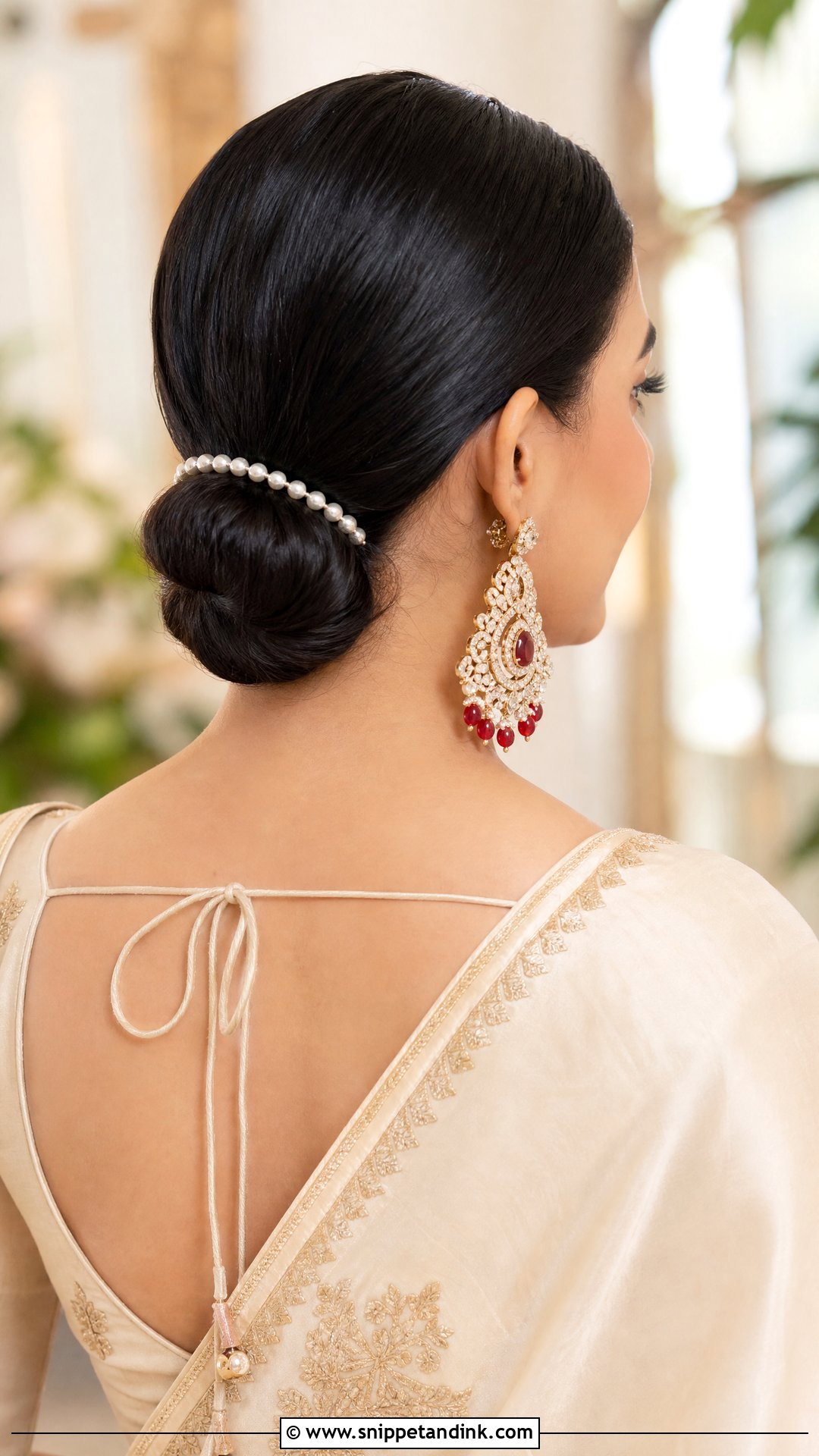
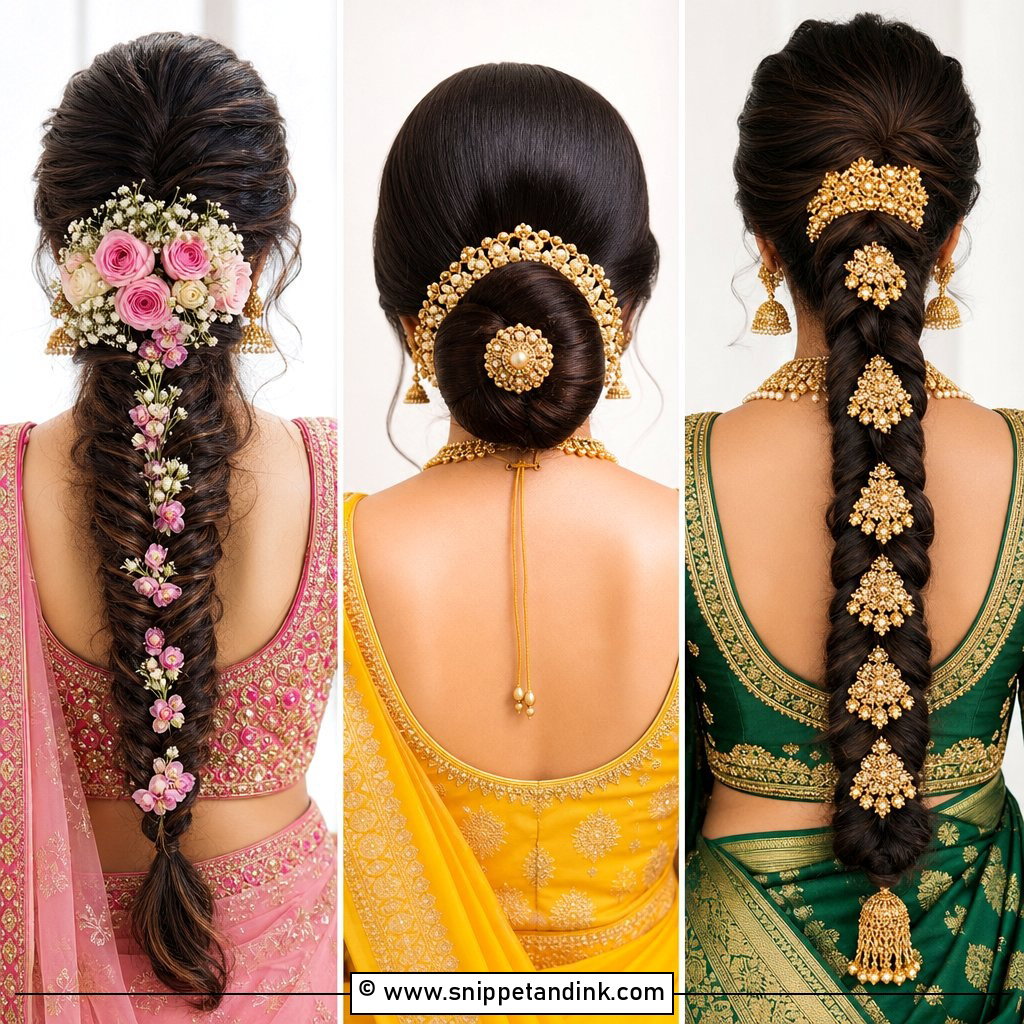
A sleek low bun suits a bride who wants the jewellery and face to carry the look. The hair is smoothed back with a firm gel or cream, twisted and pinned tightly at the nape, and that bun barely moves for the rest of the day. A dupatta sits over it easily. What I watch for is the parting: a sleek bun shows every gap and flyaway, so I set the front with a toothbrush and a light spray. A thin pearl band or a small cluster of fresh flowers is all it needs with a structured saree.
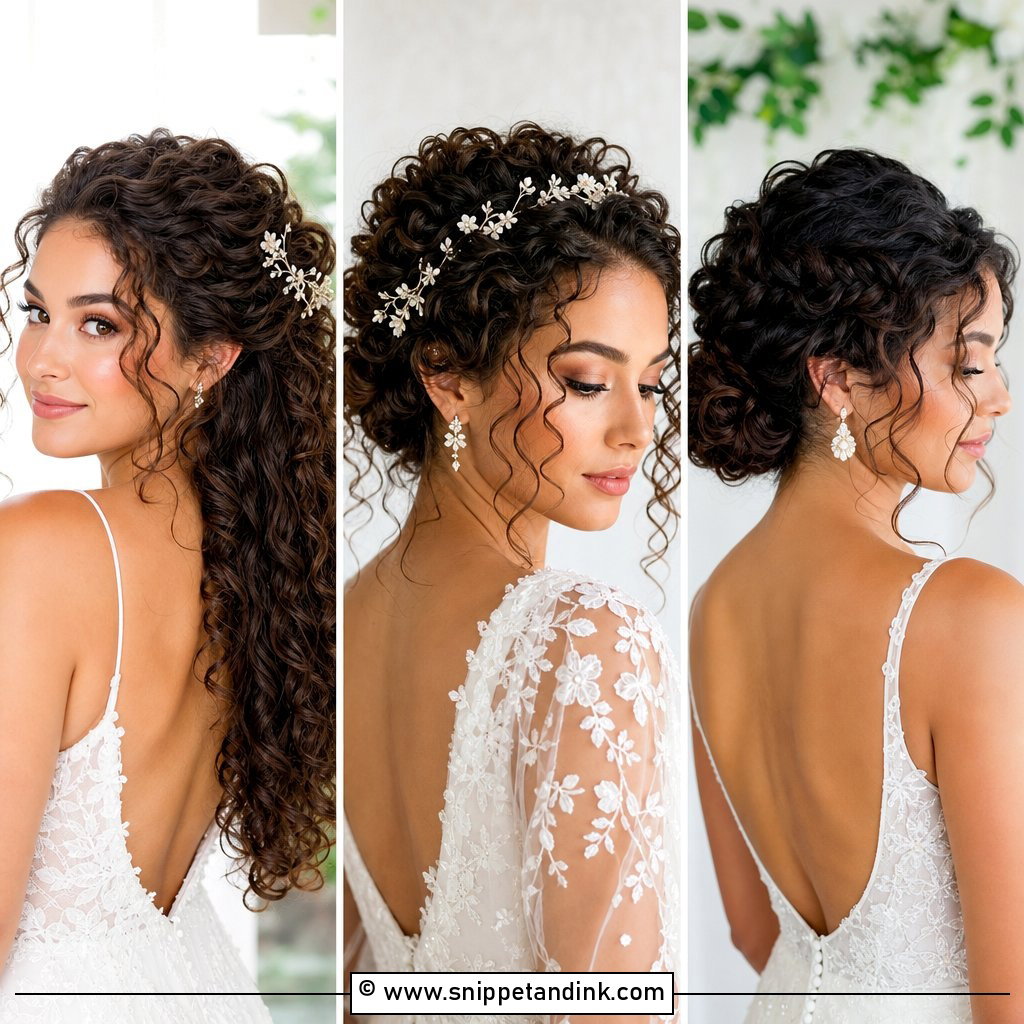
7. Open Curls With Maang Tikka
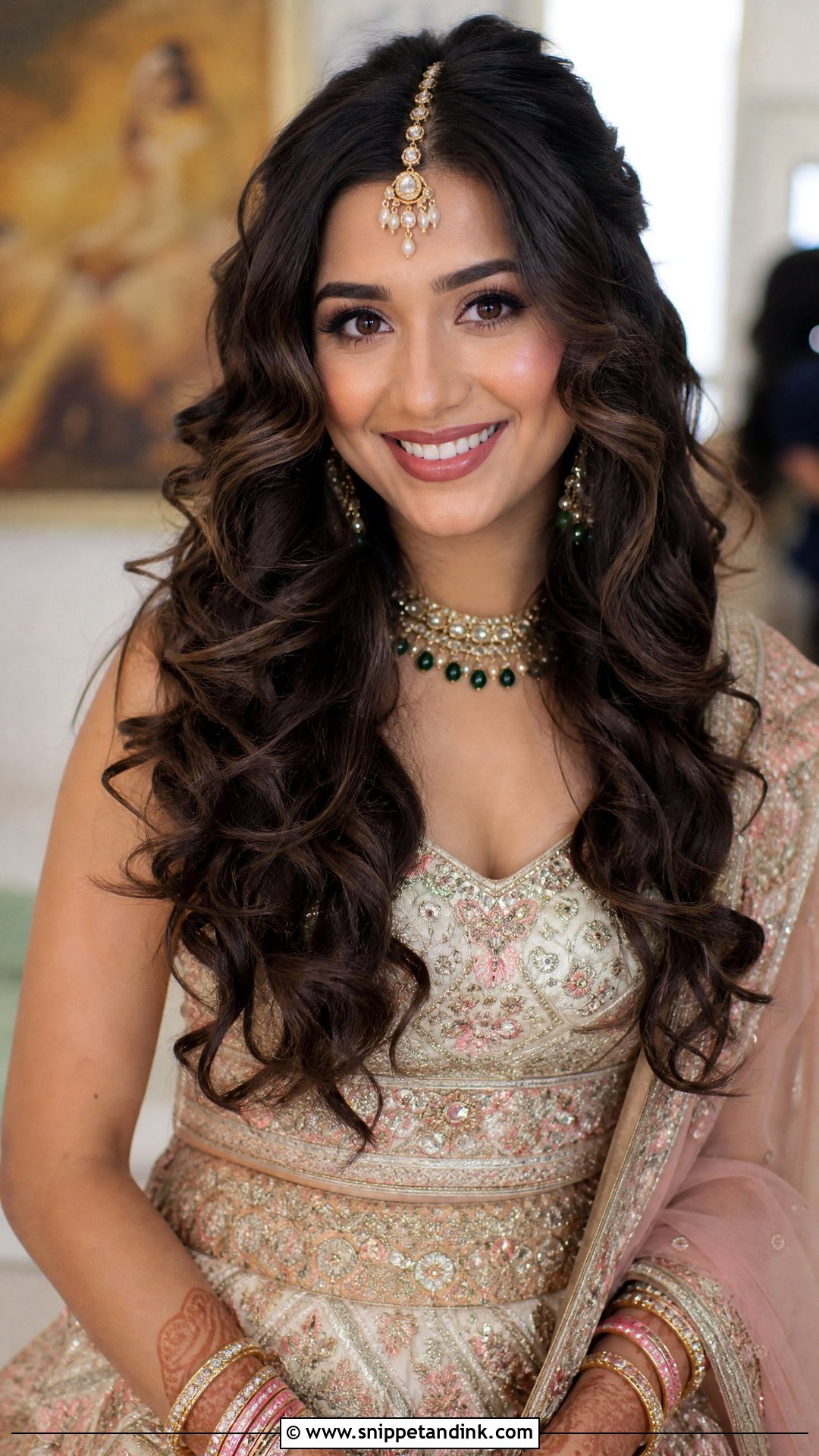
Curls with a maang tikka are close to the classic Indian bridal picture. I let the hair fall open with romantic curls over the shoulders, then fix the tikka chain under a small section at the parting with a bobby pin, so it stays centred when you turn your head. This combination needs medium to long hair to look right. Pin a few curls back behind the ears so they don’t tangle with earrings, and the traditional touch from the tikka does the rest.
8. Side Swept Curls
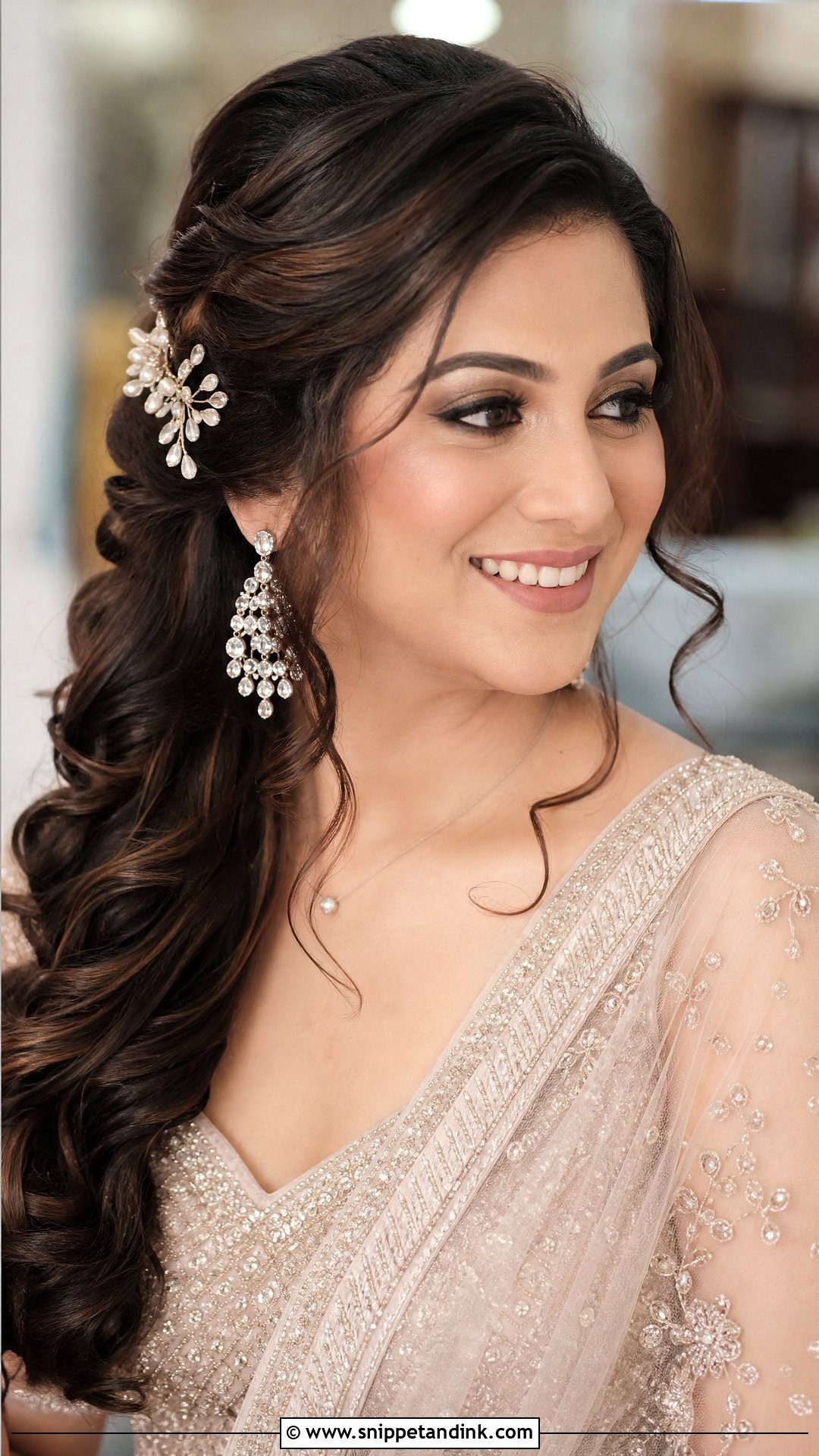
Side-swept curls have an old-Hollywood feel. All the curls are gathered over one shoulder and anchored with crossed pins behind the opposite ear, which is the part that takes the weight. It shows off one earring fully and works without an updo. The trade-off is that you’ll be sitting beside family for long stretches, and leaning to the swept side flattens the curls, so I’d ask where you’ll sit and sweep accordingly. A decorative pin or a few small flowers can cover the anchor point.
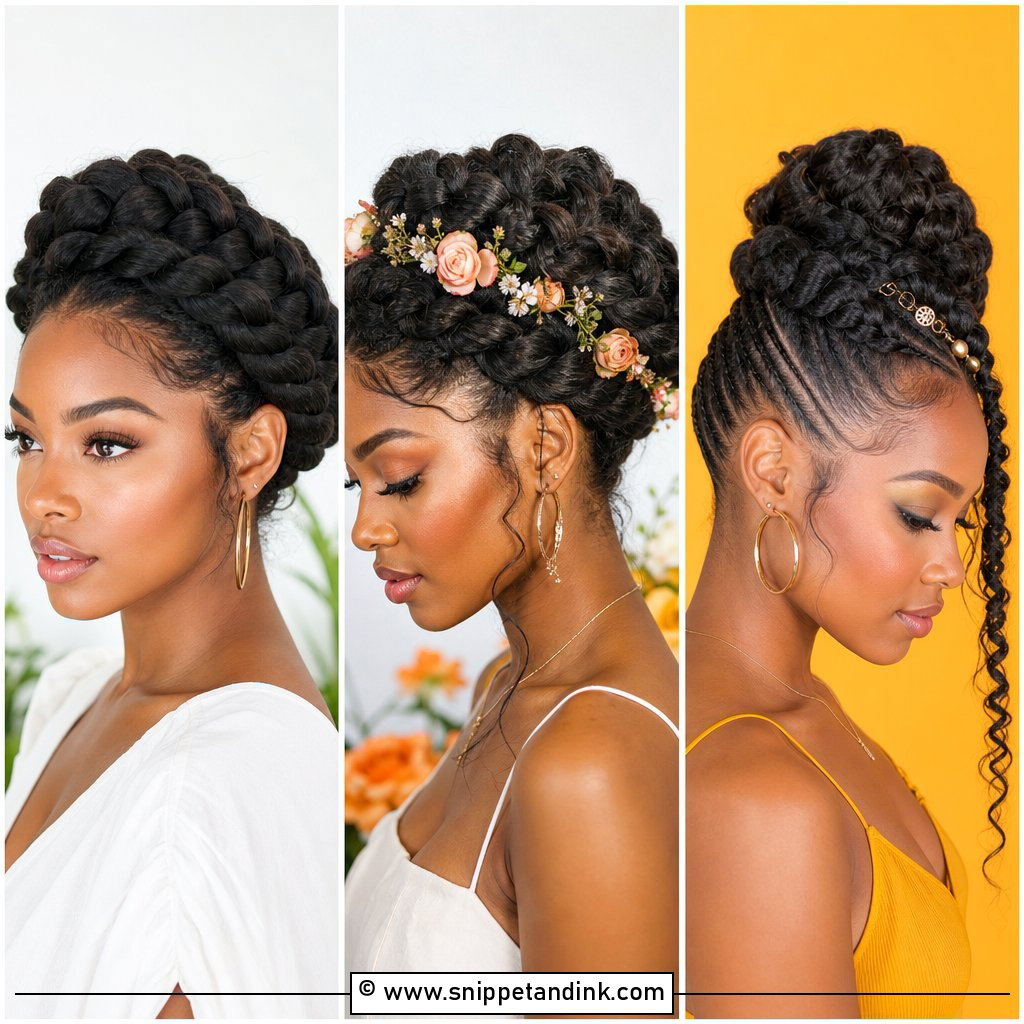
9. Floral Bun With Fresh Flowers
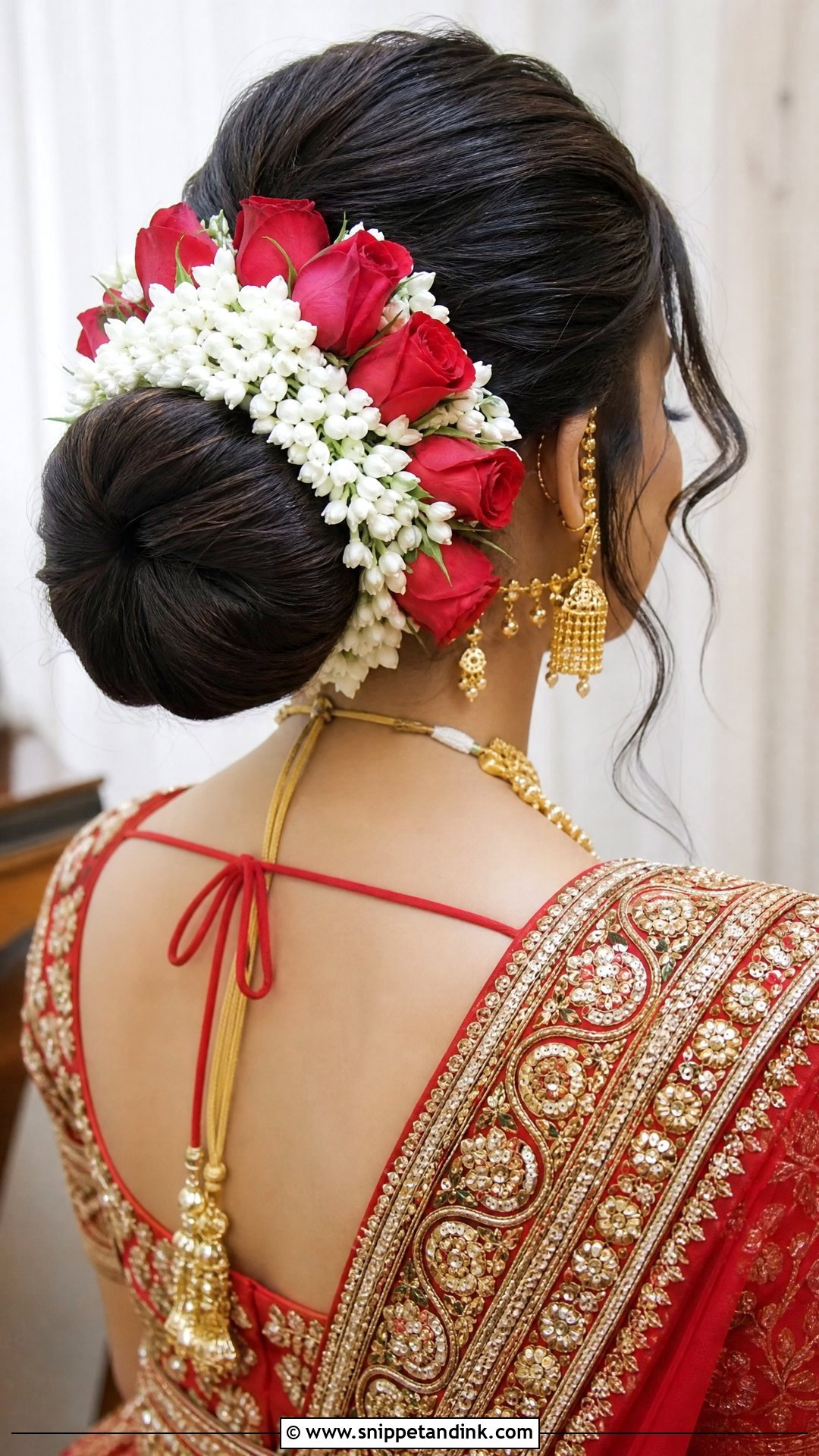
A flower-ringed bun is the most traditional look in this list. I twist the hair into a firm bun and circle it with roses, jasmine or marigold, choosing blooms that match the outfit. Fresh flowers are heavier than they look, so the bun has to be solid and the flowers pinned into it, not just tied around it. They also brown at the edges after a few hours, especially jasmine in warm rooms, so the florals should arrive the morning of the roka and stay cool until I pin them in. It pairs well with silk sarees and vibrant lehengas.
10. Dutch Braid Updo
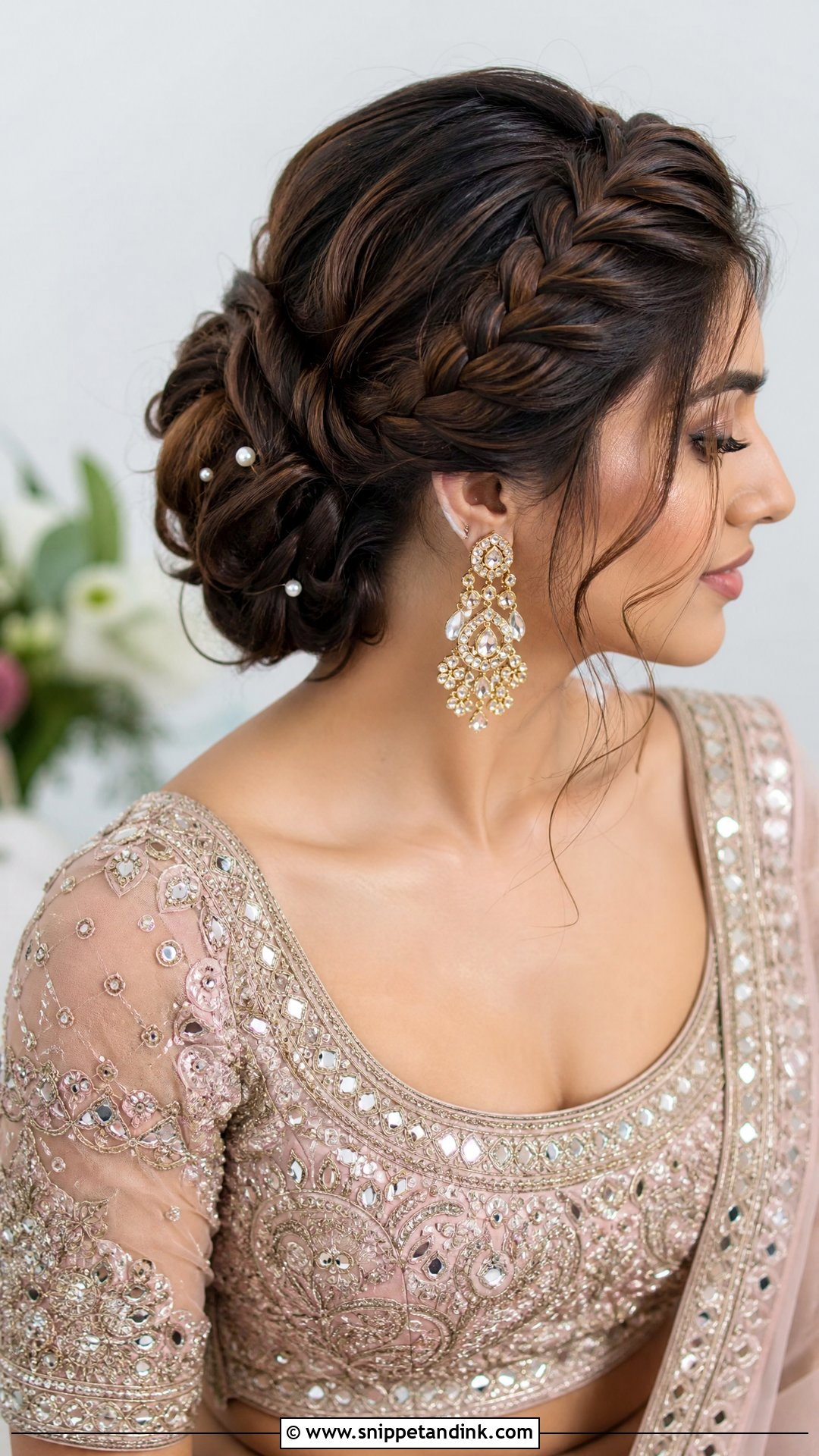
For a Dutch braid updo, I braid one or two Dutch plaits and fold them into a soft updo at the back. Because the braid sits on top of the hair rather than inside it, it shows more texture than a French braid and holds well. This is one of the most secure styles here; it barely shifts through a long ceremony. Tiny pearls or fresh flowers can be tucked into the braids, and the open neckline shows statement earrings. On very layered hair, shorter pieces can poke out of the plaits, so I’d add a little pomade as I go.
11. Pearl String Open Hair
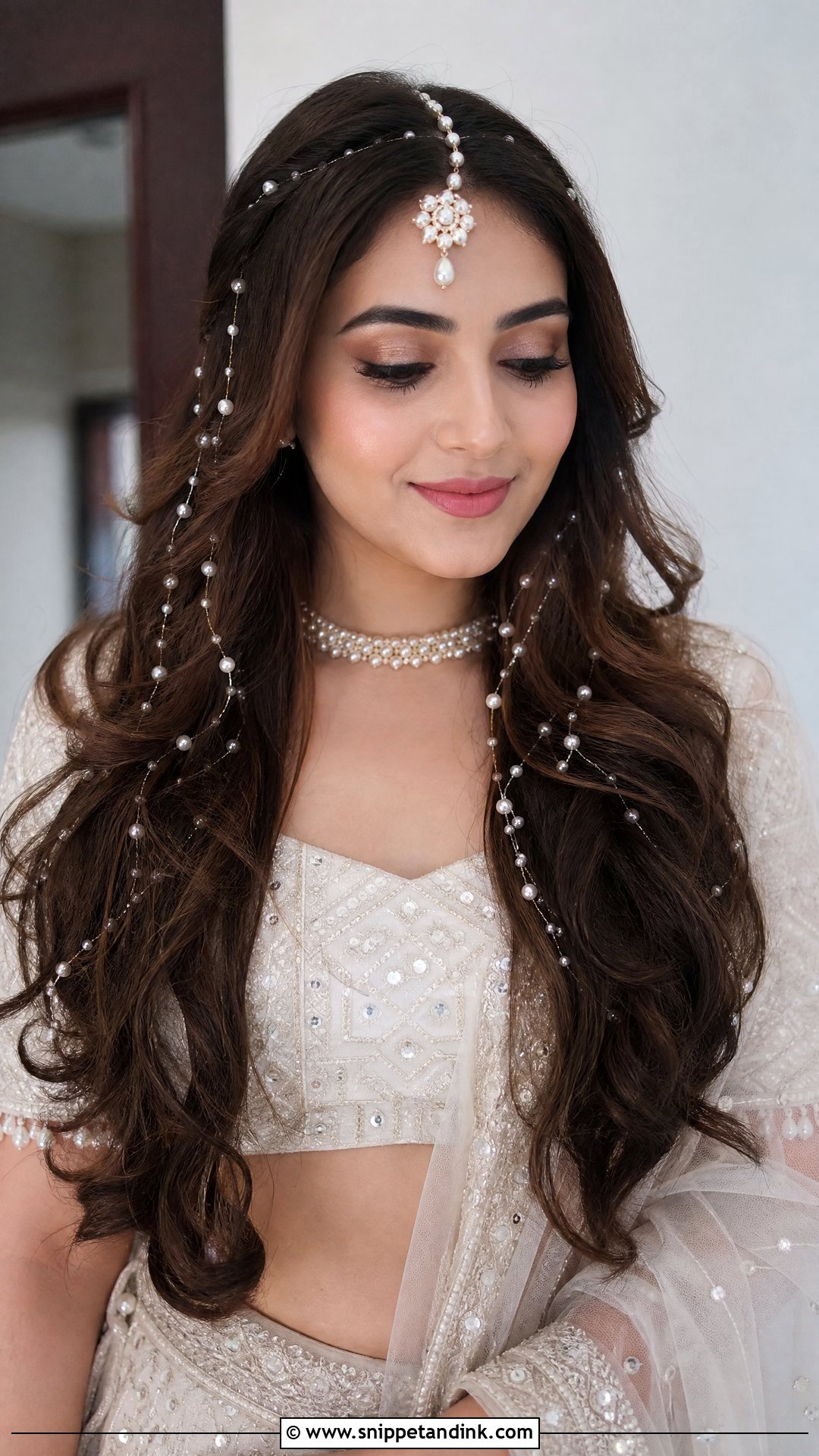
Pearl strings woven through open, softly waved hair look delicate and catch the light in photos. I thread the strings through small braided or twisted sections near the crown, then pin both ends hidden under the hair, because loose pearls swinging free tangle within an hour. Matching them to a pearl maang tikka ties the look together. It’s at its best with a pastel or ivory outfit, and it’s a good pick if you want open hair that still feels finished for an intimate roka.
12. Half Up Half Down With Bow
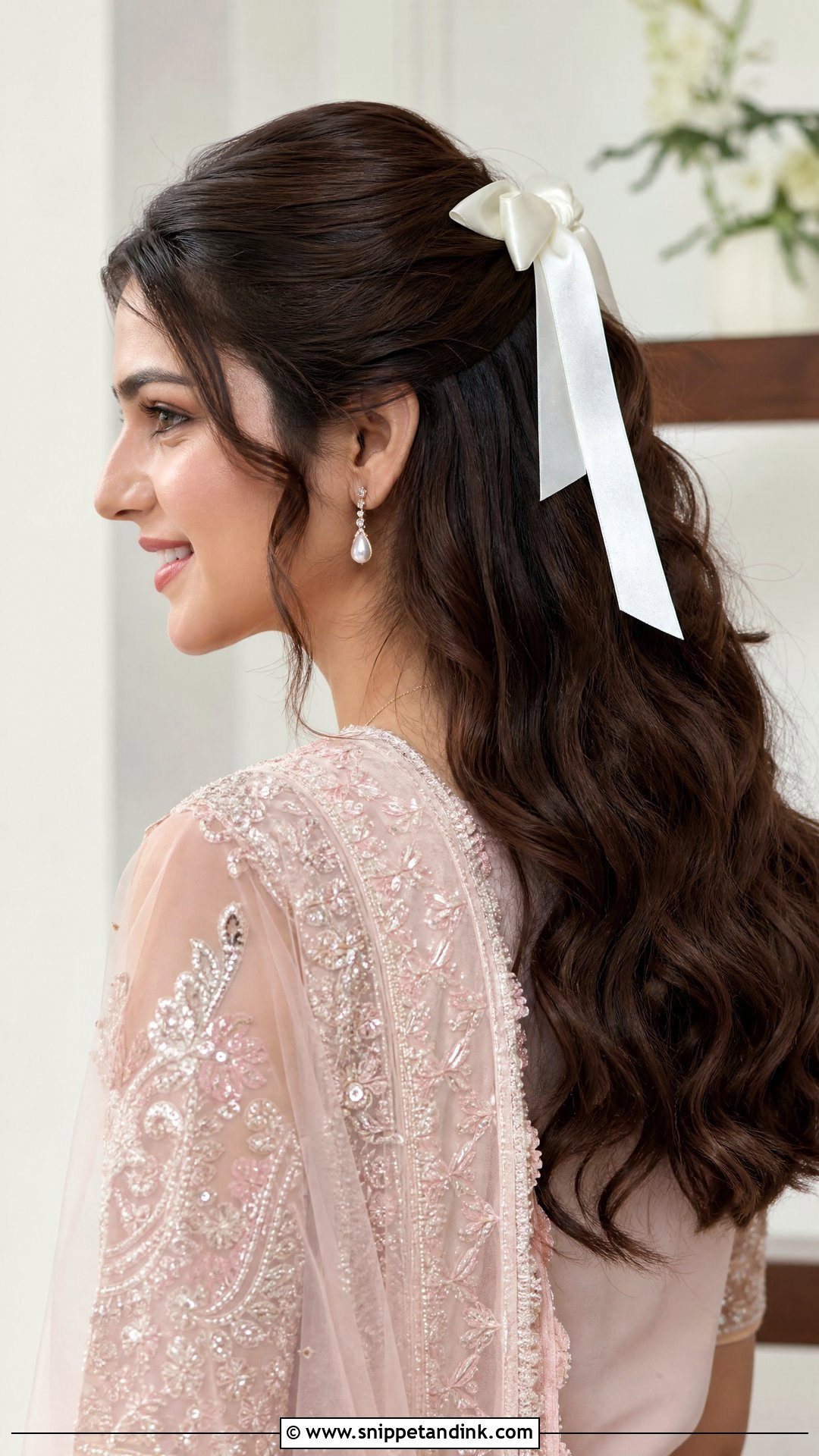
A bow on a half-up style is playful and current. I pull the top section back, secure it with an elastic first, then fix the bow over it with pins, because a bow clip alone slips in silky hair. The rest falls in soft waves. Satin bows suit a simpler outfit; embellished ones match heavier embroidery. It keeps hair off your face and shows your length. I’d skip it for a bride whose family will drape a chunni, since the bow sits right under the fabric.
13. Twisted Low Bun
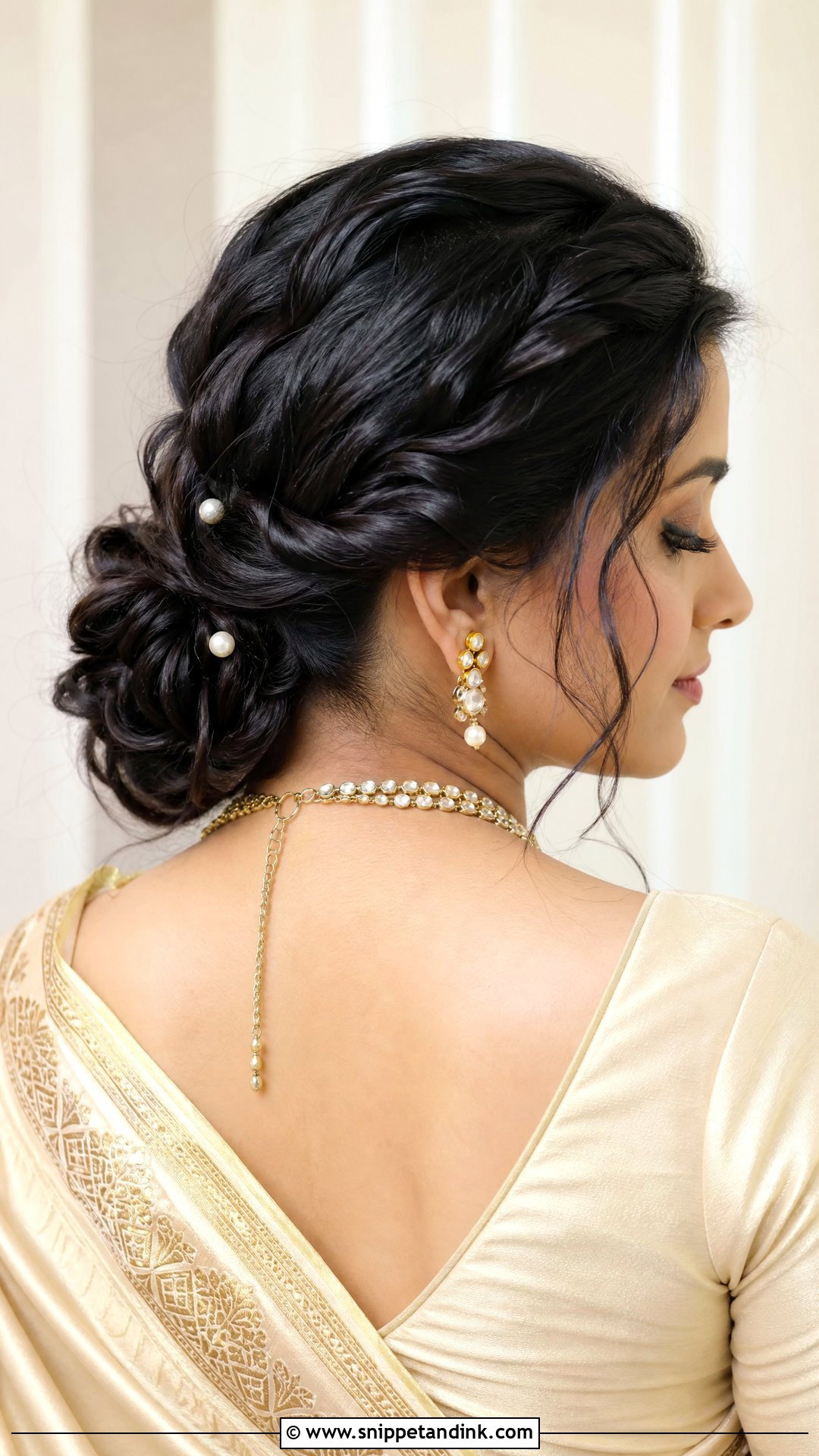
A twisted low bun has more detail than a sleek bun and less effort than braids. I twist sections of hair one by one and gather them loosely at the nape, pinning each twist separately so the bun holds its shape. A couple of face-framing strands soften it. The twists suit hair with some natural wave, which grips the pins better than very straight, slippery hair. Small flowers or pearl pins add the bridal touch, and it stays comfortable for the whole roka.
14. Boho Braids With Open Hair
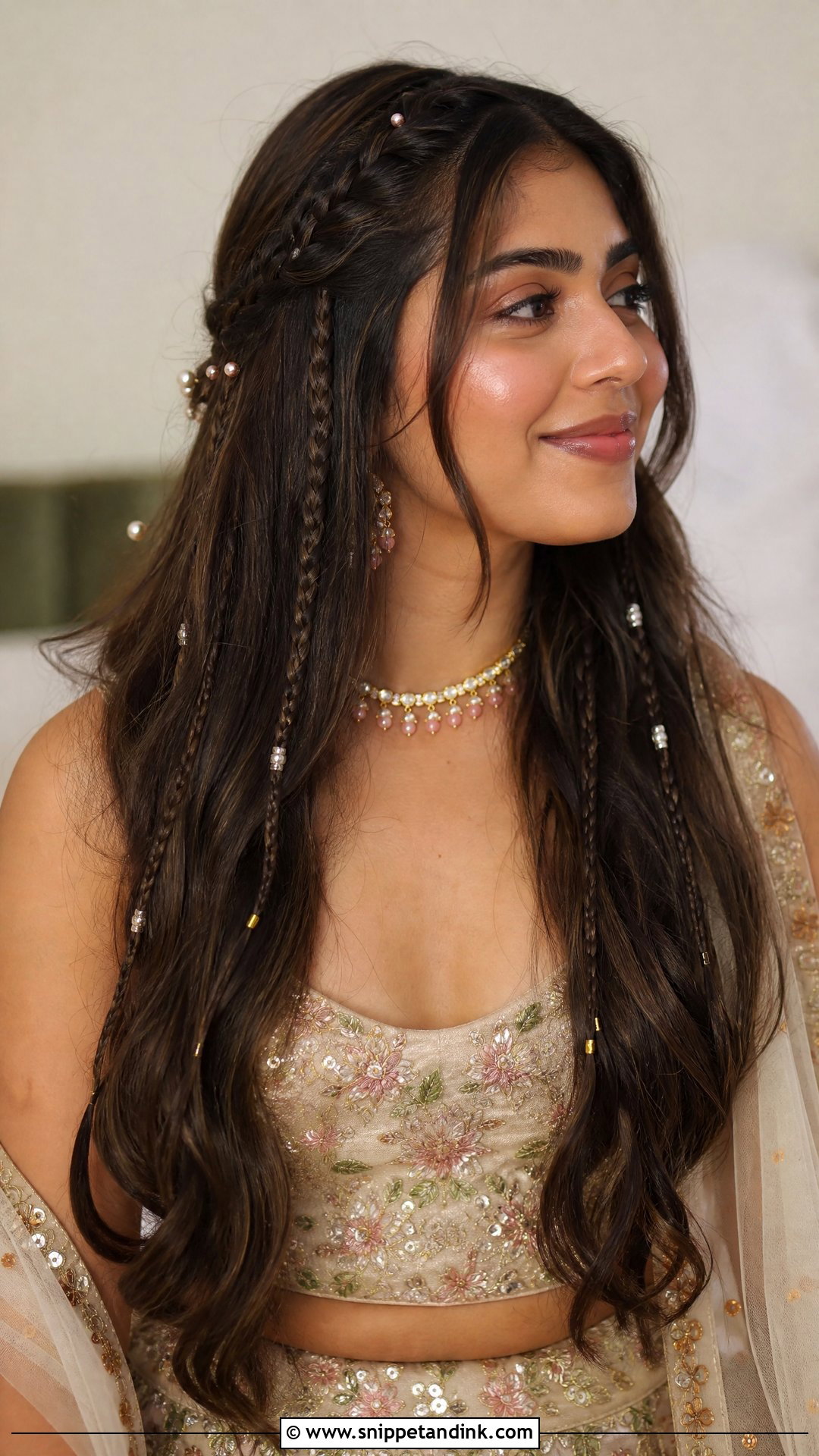
Several thin braids mixed into loose waves give a boho, free-spirited look. I braid four or five small sections at random depths so it looks natural rather than planned, and finish the ends with tiny clear elastics. Beads, small flowers or pearl accents can be added to the braids. The style suits indo-western and contemporary outfits more than a heavy traditional lehenga. Thin braids are also forgiving; if one loosens through the day, it simply looks more relaxed.
15. Sleek Low Ponytail
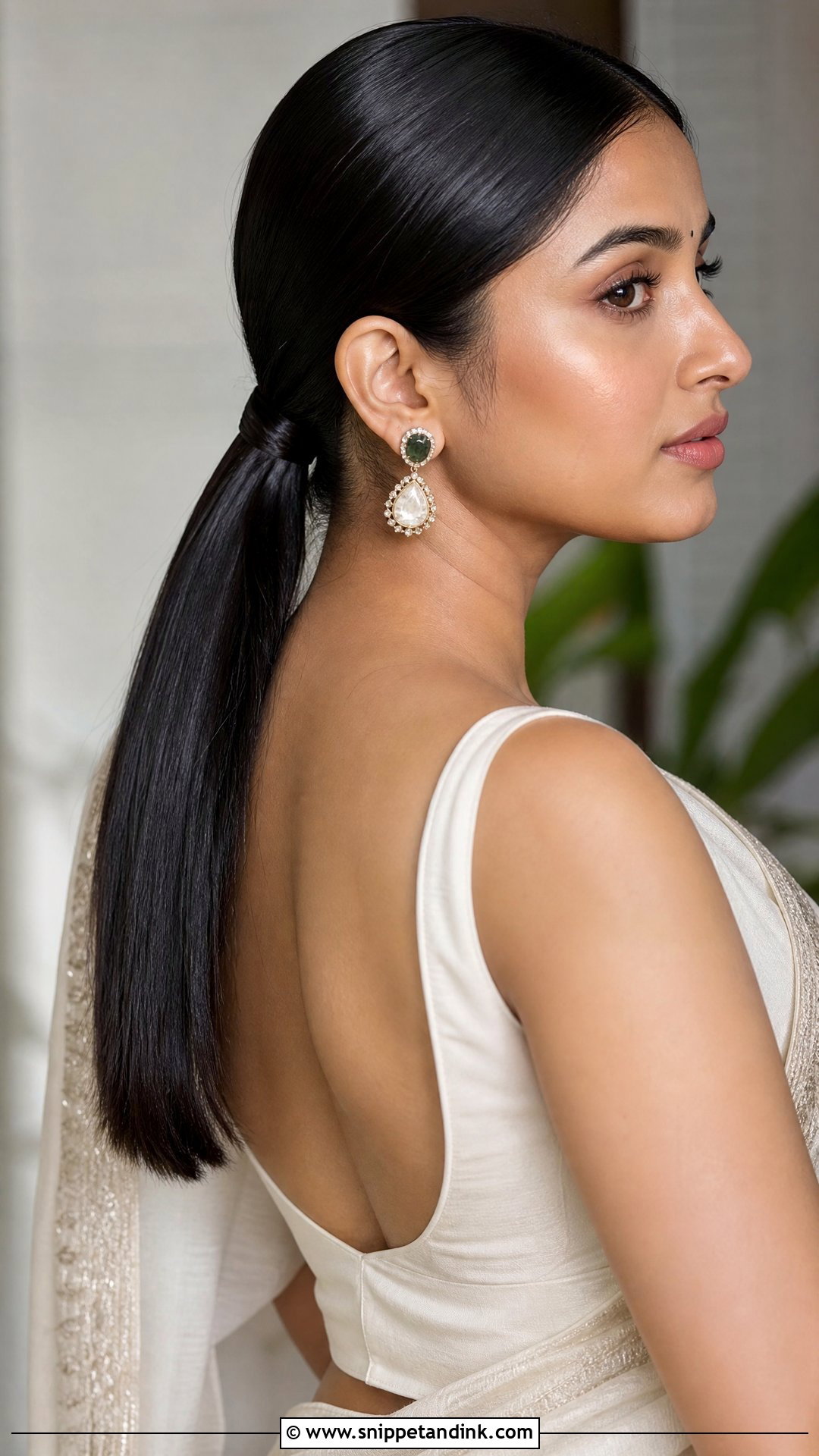
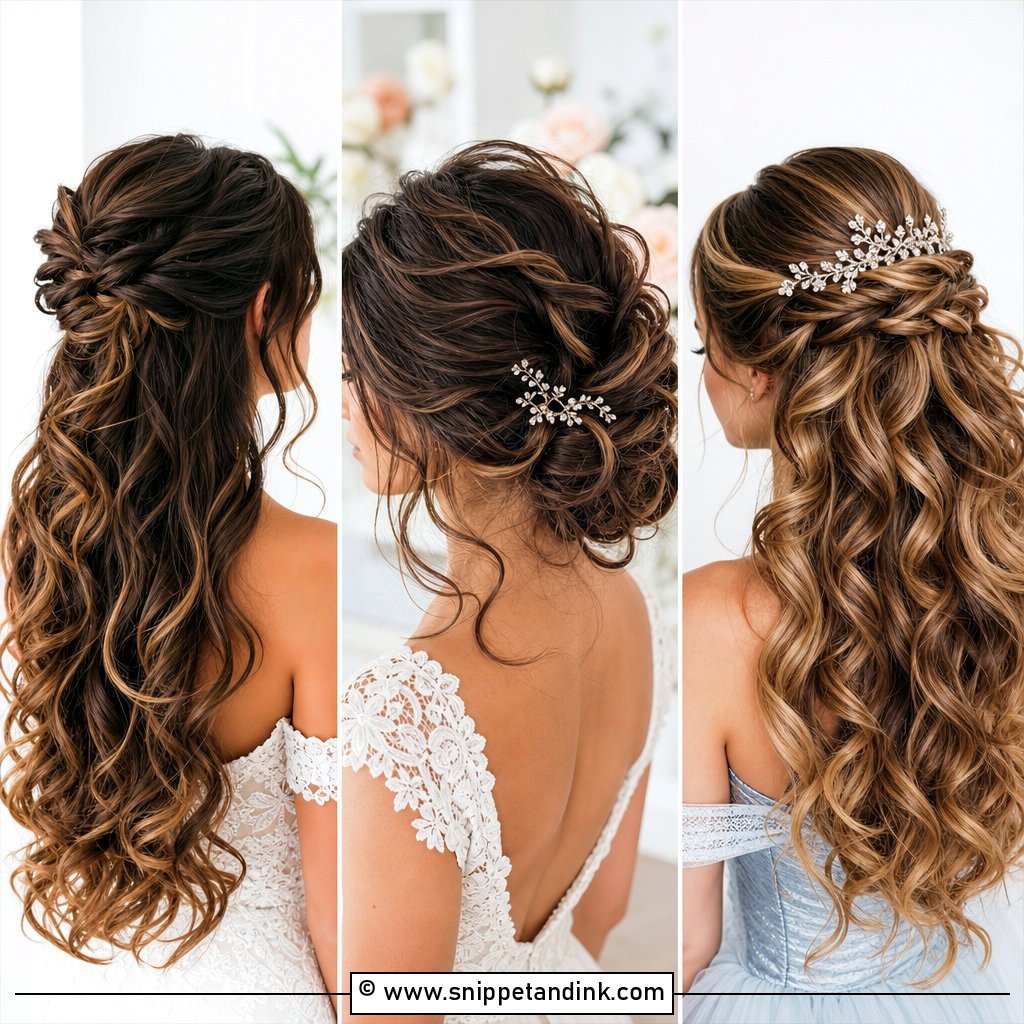
A sleek low ponytail is about finish. The hair is smoothed back, tied at the nape and a section wrapped around the base to hide the elastic. Leave the length straight or add loose waves; either way, I’d put a light shine product through it, because a dull sleek ponytail looks unfinished. It lets jewellery and the outfit carry the look and stays neat for hours. Very thin hair can look sparse in a low ponytail, so I sometimes add a clip-in extension under the wrap.
16. Braided Crown
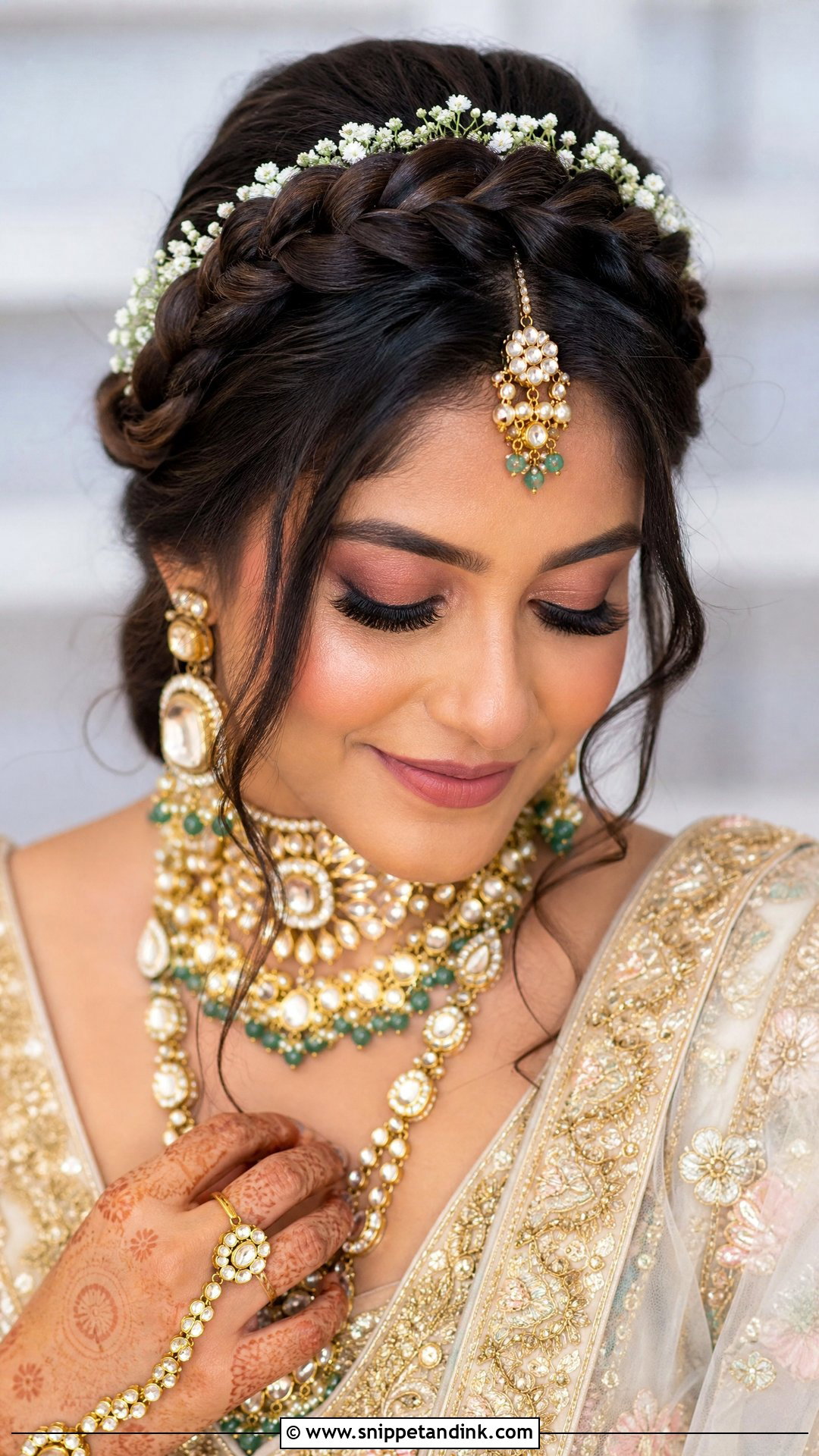
A braided crown wraps a plait around the head like a halo. I braid from behind one ear across the top or the back and pin it every few centimetres. It holds all day and frames the face. It needs at least shoulder-length hair; shorter hair won’t reach around. Small flowers or delicate pins can sit along the braid. One caution: the crown sits exactly where a chunni goes, so the fabric needs a few U-pins of its own to stop it sliding off the raised braid.
17. Soft Curls With Passa
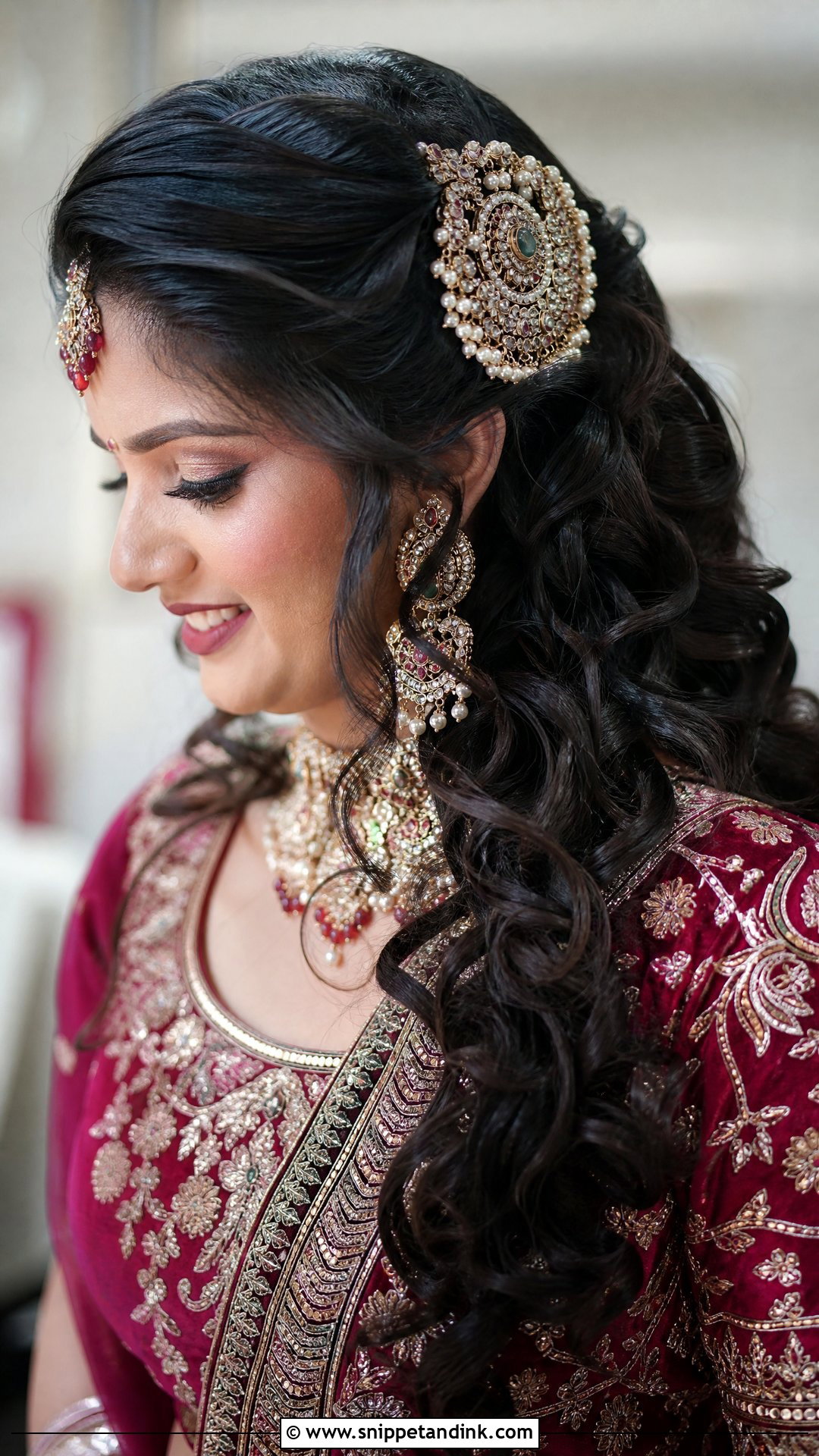
A passa, the fan-shaped piece worn on one side of the head, brings an ornament with Mughal and Rajasthani roots into soft curls. Let the curls fall loosely and pin the passa to the left side, where it usually sits. It’s heavier than a tikka, so I braid a small anchor plait underneath and pin the passa into that, not into loose hair. Pin a few curls back near it to keep it neat. It works with rich, vibrant outfits and needs little else.
18. Wavy Half Ponytail
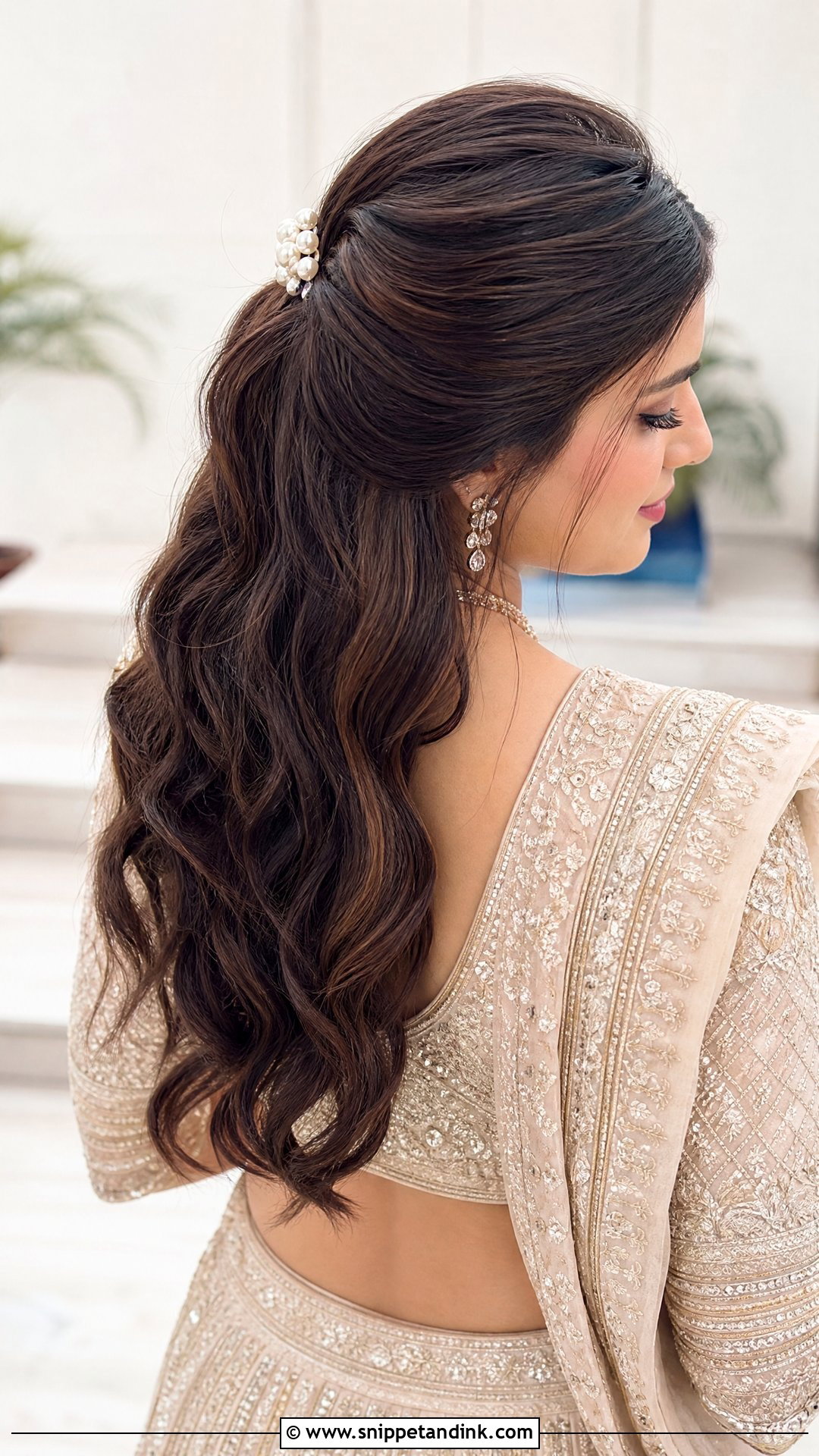
The wavy half ponytail lifts the crown and lets the length flow. I tease the top section lightly before tying it, which gives volume that lasts, then curl the rest in soft waves. A decorative clip or pearl pin at the base finishes it. It works with most outfits and face shapes, and it’s comfortable. Like the high ponytail, it sits where a draped chunni goes, so for a chunni ceremony I’d tie it slightly lower.
19. Bubble Braid
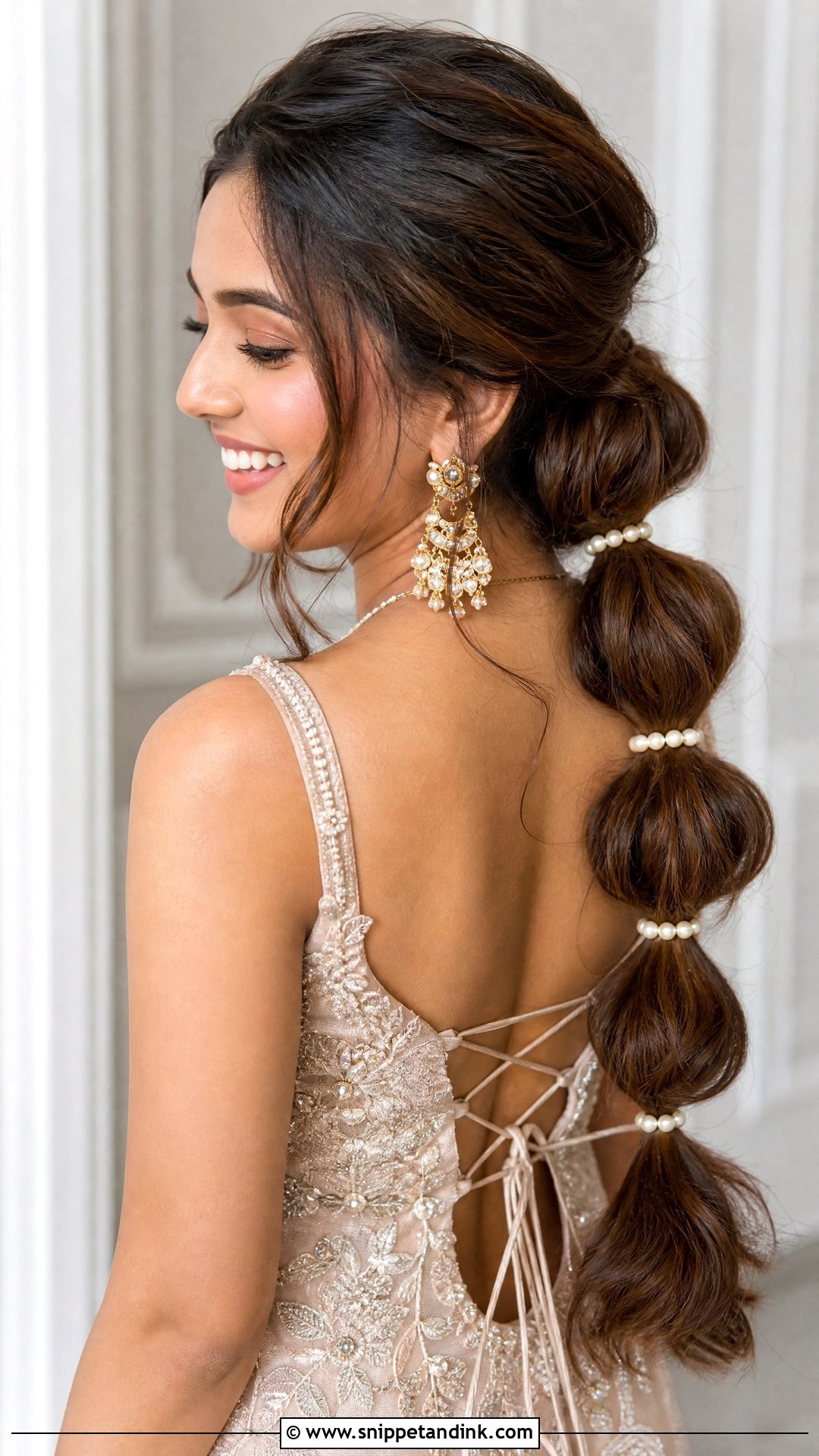
The bubble braid is a playful, trend-led choice. A ponytail is sectioned with small elastics at even intervals and each segment pulled out into a bubble. Keep it sleek or pull the bubbles wider for fullness. Tiny pearls or flowers can sit between the bubbles. It pairs with indo-western outfits, and it’s comfortable for the whole day. Even spacing is what makes it look finished, so I measure the sections rather than guessing.
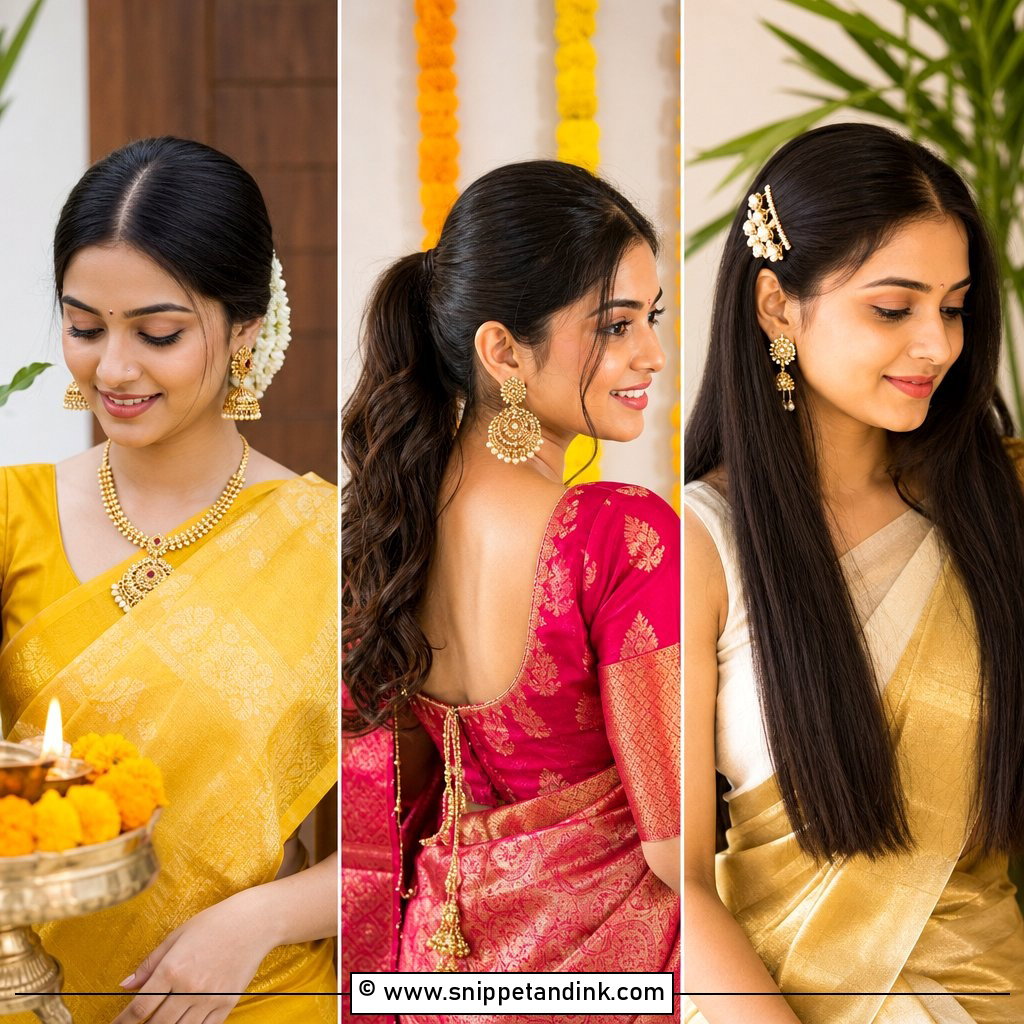
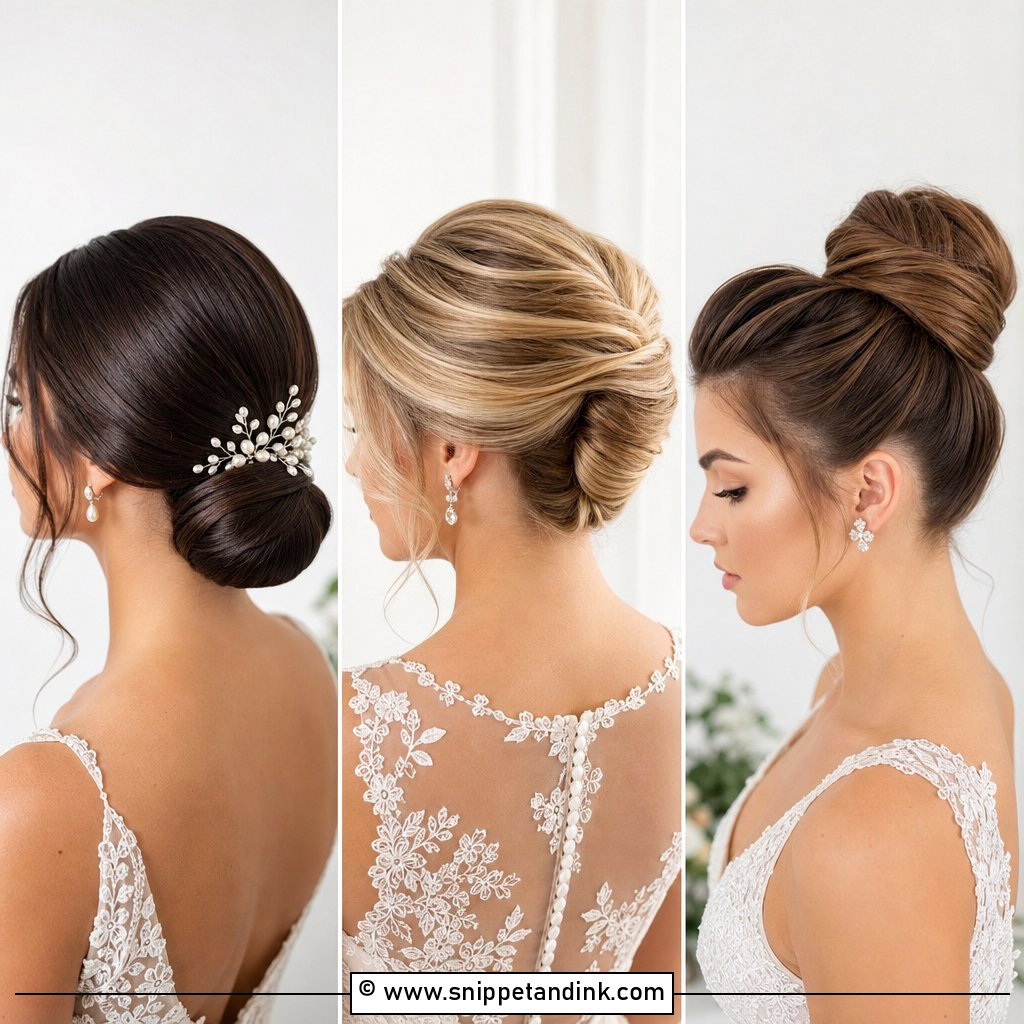
20. Loose Bun With Hair Accessories
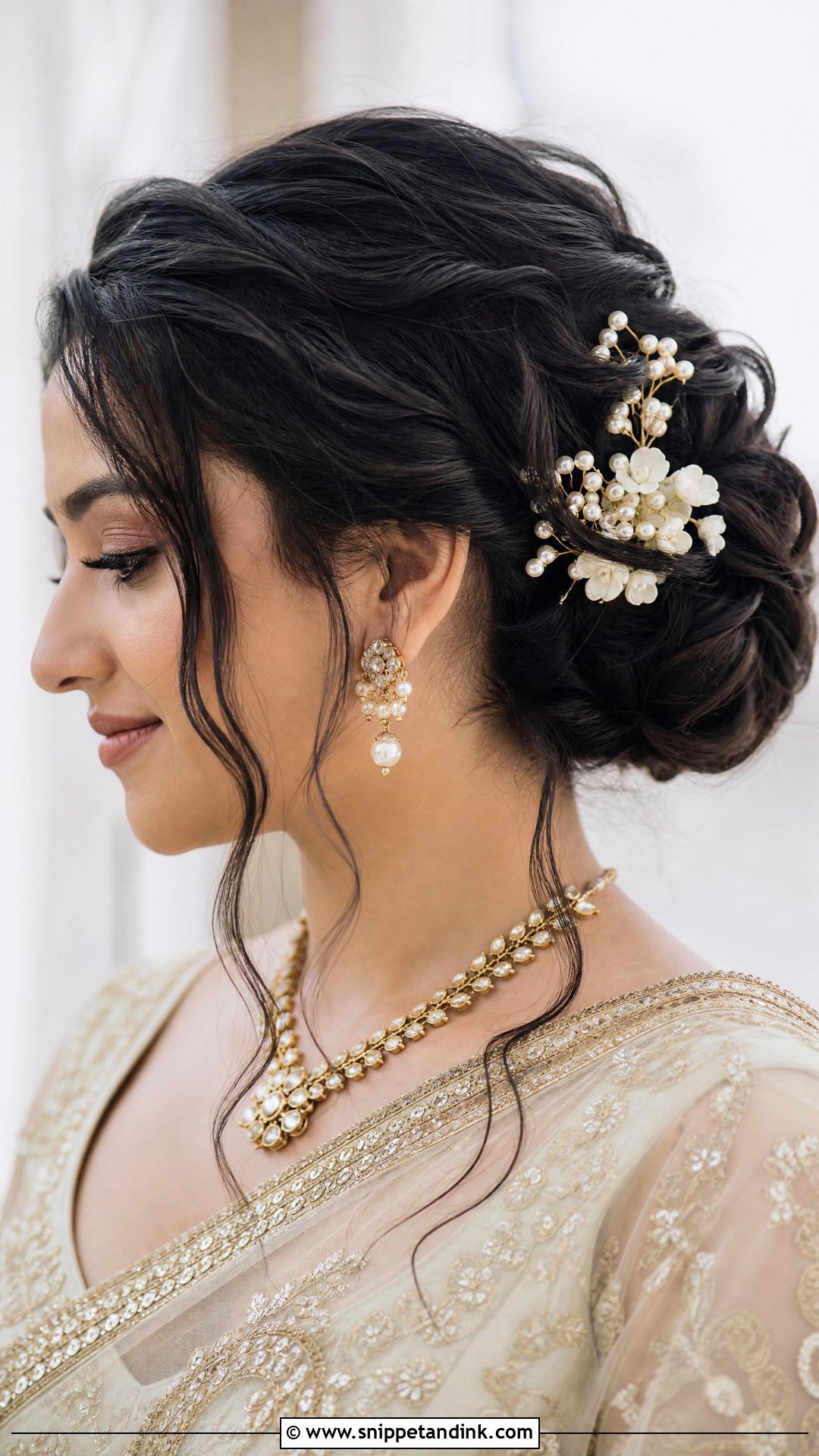
A loose bun decorated with accessories is the low-maintenance option. I gather the hair into a soft bun, pin it securely underneath where the grip doesn’t show, and add pearl pins, flowers or a small hairpiece. A few face-framing strands soften it. It looks relaxed but is sturdy enough for a long celebration, and it suits sarees and lehengas. If your hair is very fine, I add a small padding or a bun maker inside so it doesn’t look flat by evening.
The Day Before: Washing, Oiling and Setting Curls
Hair that was washed the morning of the roka is clean but slippery, and curls slide out of it fast. I prefer hair washed the day before, conditioned only on the lengths, then dried smooth. Oil it two or three days before if that’s your habit, not the night before, because oil left in the roots makes pins slide and waves fall.
On the day, I curl in small sections and pin each curl up to cool before brushing it out. It’s the step people skip at home, and it’s the difference between waves that last into the evening and waves that are gone by lunch. In humid weather, a curl that drops slightly is normal; a light texturising spray, not more hairspray, brings it back.
Gajra, Passa and Tikka Pinned So They Stay Put
- Buy fresh flowers the same morning, wrap them in a damp cloth and keep them in the fridge until they go in your hair. Jasmine browns at the tips within a few hours in a warm room.
- Heavy pieces such as a passa or a big gajra need an anchor, either a small hidden braid or a cross of bobby pins, and should be pinned into that rather than into loose hair.
- Fix a maang tikka by sliding its hook under a thin section at the parting and holding it with a bobby pin, so it stays centred when you bend.
- Wear your accessories at your trial for an hour or two. Weight that feels fine at first can give you a headache after three hours.
Hair That Lasts Through Hugs, Tilak and Close-Up Photos
A roka is a long, close, physical day: you’ll bend for blessings, sit for long stretches, hug every aunty and be photographed from a foot away. Pick a style that survives that, not just one that looks right in a still photo. Think about your outfit and jewellery, whether a chunni will be draped and how warm the room will be. Bring photos of the styles you like to your stylist and a picture of your outfit too. Then add fresh flowers or pearls if you love them, and stop worrying about your hair once the guests arrive.
You'll Like These Ideas:


Leave a Reply