
Hair for the mandap gets judged differently from hair for the reception. Guests spend most of the ceremony looking at the back and side of your head, the photographer shoots you seated and bowing, and your stylist has to build around a maang tikka, a heavy dupatta and, in many traditions, a parting that will be filled with sindoor. When I plan a mandap style, I start by asking how many hours you’ll sit cross-legged near the sacred space and how often you’ll stand for the pheras, because that tells me how much grip the base needs. The fifteen styles below run from firm low buns to open waves, and I’ve been honest about which ones need the most pinning to last.
Sindoor, the Maang Tikka and Your Parting
In many Hindu ceremonies the groom fills your parting with sindoor partway through the rituals, and the maang tikka chain runs down that same line. So the parting is doing two jobs, and I plan it before anything else. I keep glossing serum and oil off the first few centimetres of the part. Powder clings to oily hair and smears down onto the forehead, which is hard to fix without redoing the base makeup.
The tikka chain gets pinned flat at the top of the head with two crossed pins hidden under the hair, so it doesn’t lift or swing when someone reaches toward your parting. If you’re wearing a side part with a jhumar, tell your stylist which side the sindoor will go on in your family’s custom so the part stays clear and visible from where the groom stands.
Setting a Heavy Dupatta Into the Hairstyle
Most mandap styles that fail don’t fall apart on their own. The dupatta pulls them apart. A heavily embroidered one can weigh a surprising amount, and if it’s pinned only to the bun, every time you stand it tugs the whole style backwards. I’d much rather set the dupatta myself once the hair is done than leave it to a relative five minutes before the baraat arrives.
- Bring the actual dupatta to your trial, not a lighter scarf, because weight changes everything.
- Pins should go into a firm base, such as a braid or tight section near the crown, as well as into the bun.
- Spread the anchor points: a couple at the front near the tikka, more on either side, and the heaviest hold at the back.
- Leave a little slack at the sides so turning your head doesn’t drag the fabric.
- Before you leave the chair, sit cross-legged, bow forward and stand up again a few times. Anything that shifts now will shift during the pheras.
1. Mandap Bridal Low Bun With Gajra
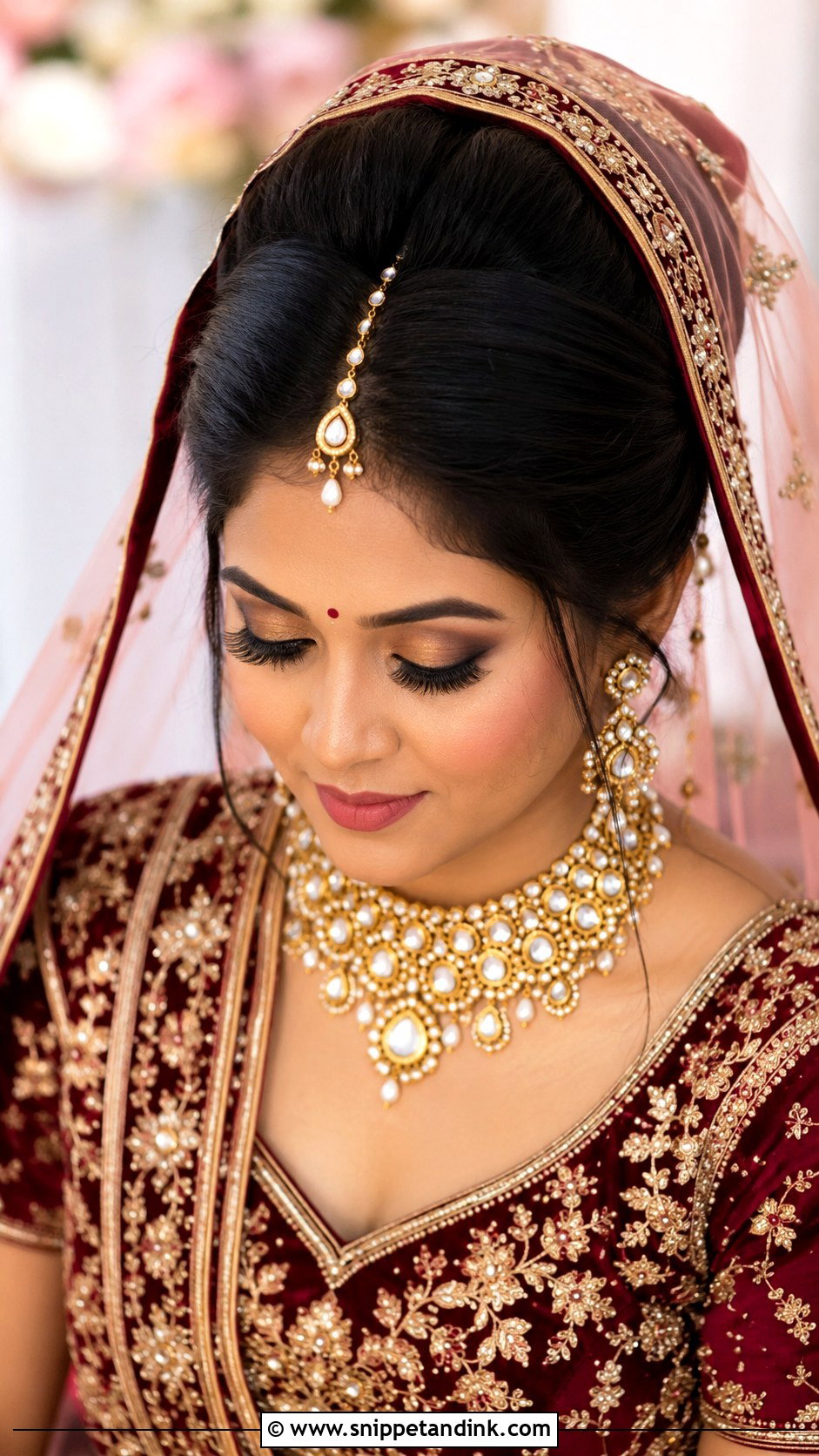
This is the style I reach for most often for the main ceremony, and the reason is mechanical. A bun at the nape gives the dupatta a shelf to rest against, so the fabric doesn’t drag the crown backwards when you stand. A clean center part leaves a straight track for a maang tikka or matha patti. I wrap the jasmine gajra last, after the bun is pinned and sprayed, and anchor it with U pins every few centimetres; a strand slung on loosely slides down the bun once you start bowing. The scent is strong in a closed mandap, so if fragrance bothers you, try a single strand at your trial before committing to three.
2. Mandap Bridal High Bun With Dupatta
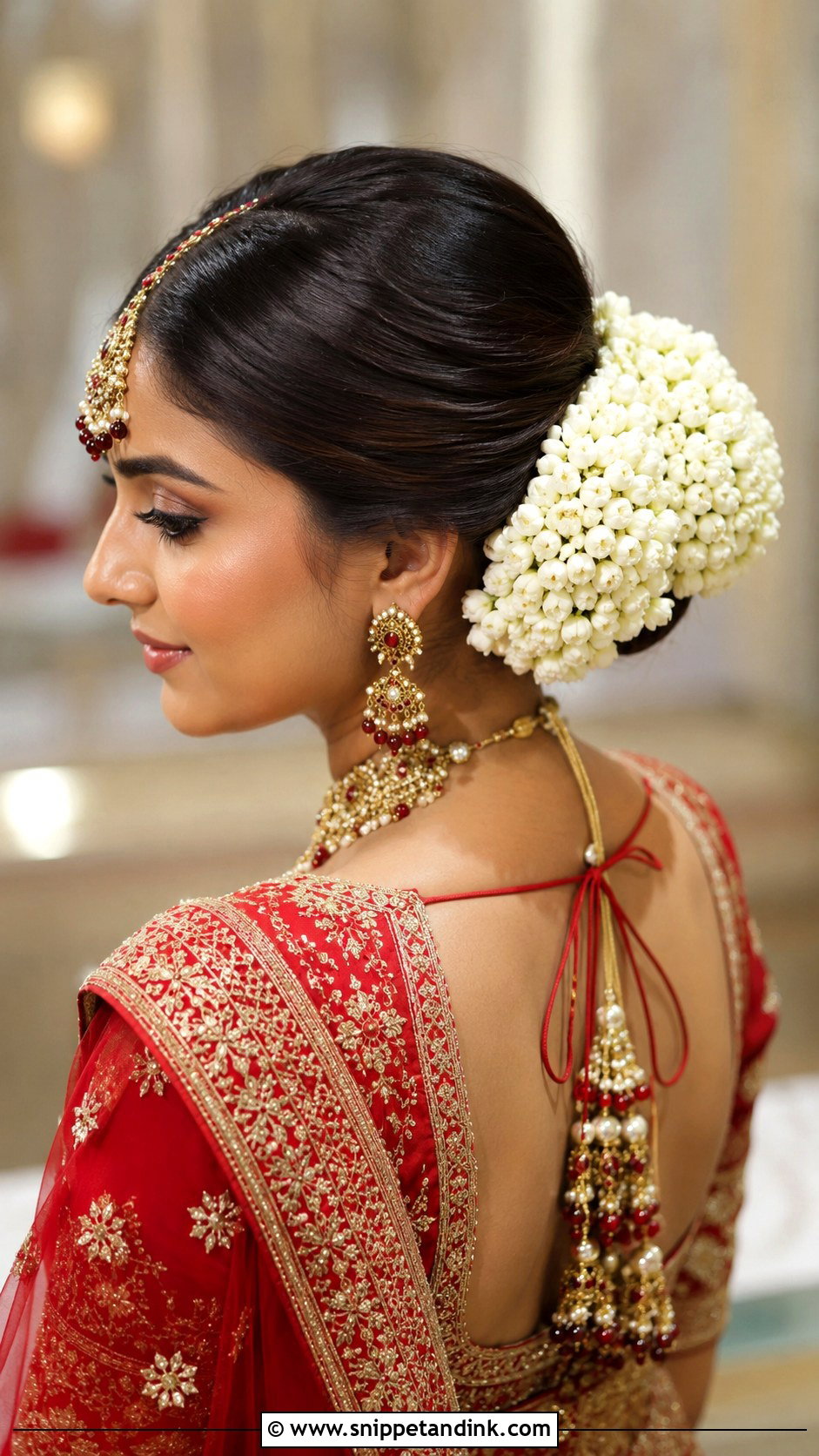
A high bun lifts the face and keeps necklaces, earrings and blouse details clear of hair. The catch is the dupatta. A heavy embroidered dupatta pinned over a crown-high bun sits like a tent and pulls toward the back of the head, so I only suggest this placement when the dupatta is light net or organza, or when it will be set behind the bun rather than over it. I build the bun around a padded doughnut or a very tight base ponytail so the pins have something solid to bite into. Sleek at the front gives you a traditional line; a little height at the crown reads more modern.
3. Mandap Bridal Braided Bun
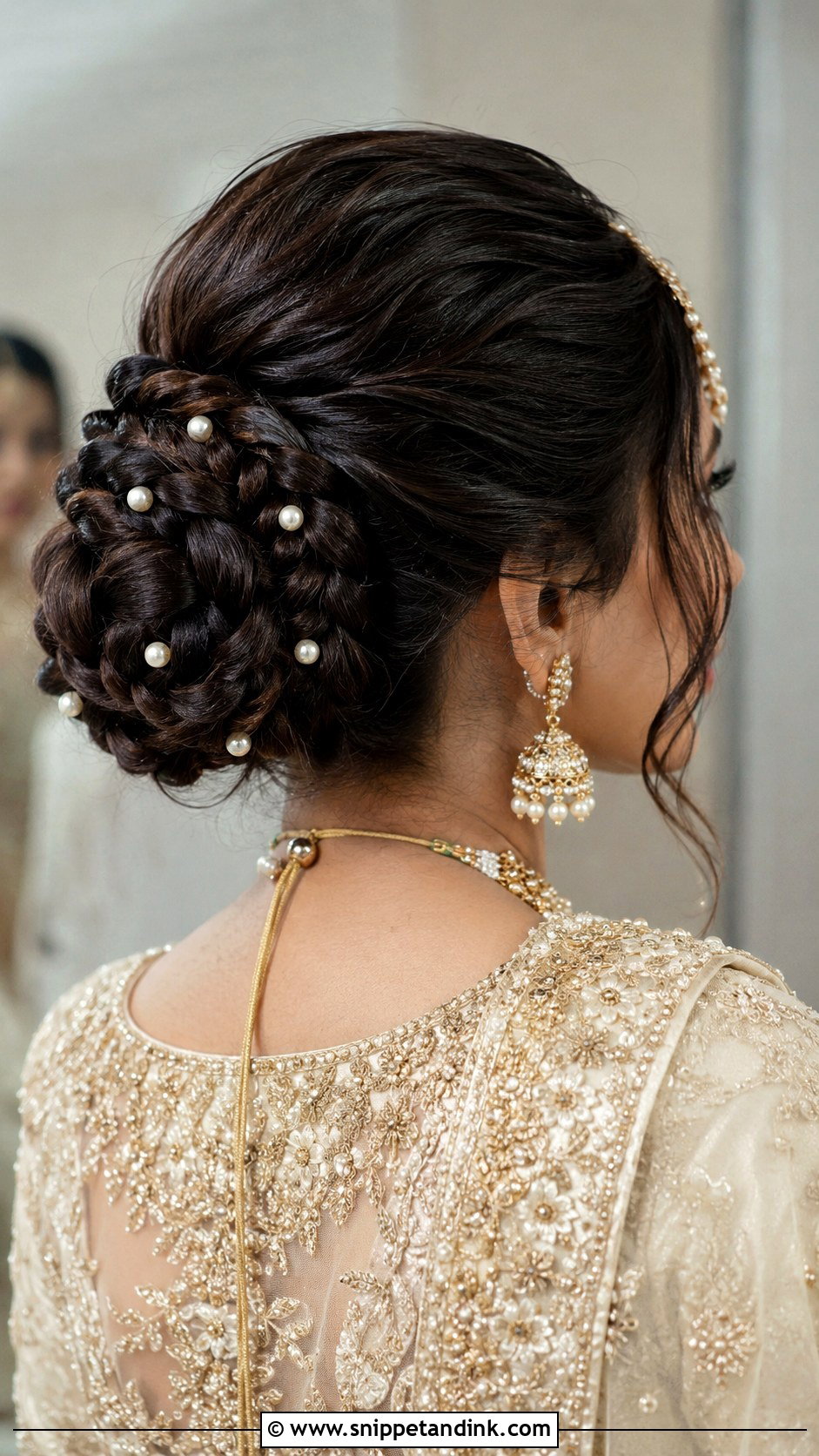
Braiding the length before coiling it gives the bun far more grip than twisting alone, because the plait locks into itself and the pins have ridges to catch. That’s why I trust this one for long pheras and a lot of bowing. The texture also shows up well in close-ups, with pearls or small gold pins tucked into the gaps. Thick, layered or extended hair suits it best. On very fine hair the braid shrinks once it’s coiled, so I add a clip-in weft or a doughnut underneath for size.
4. Mandap Bridal Sleek Bun With Maang Tikka
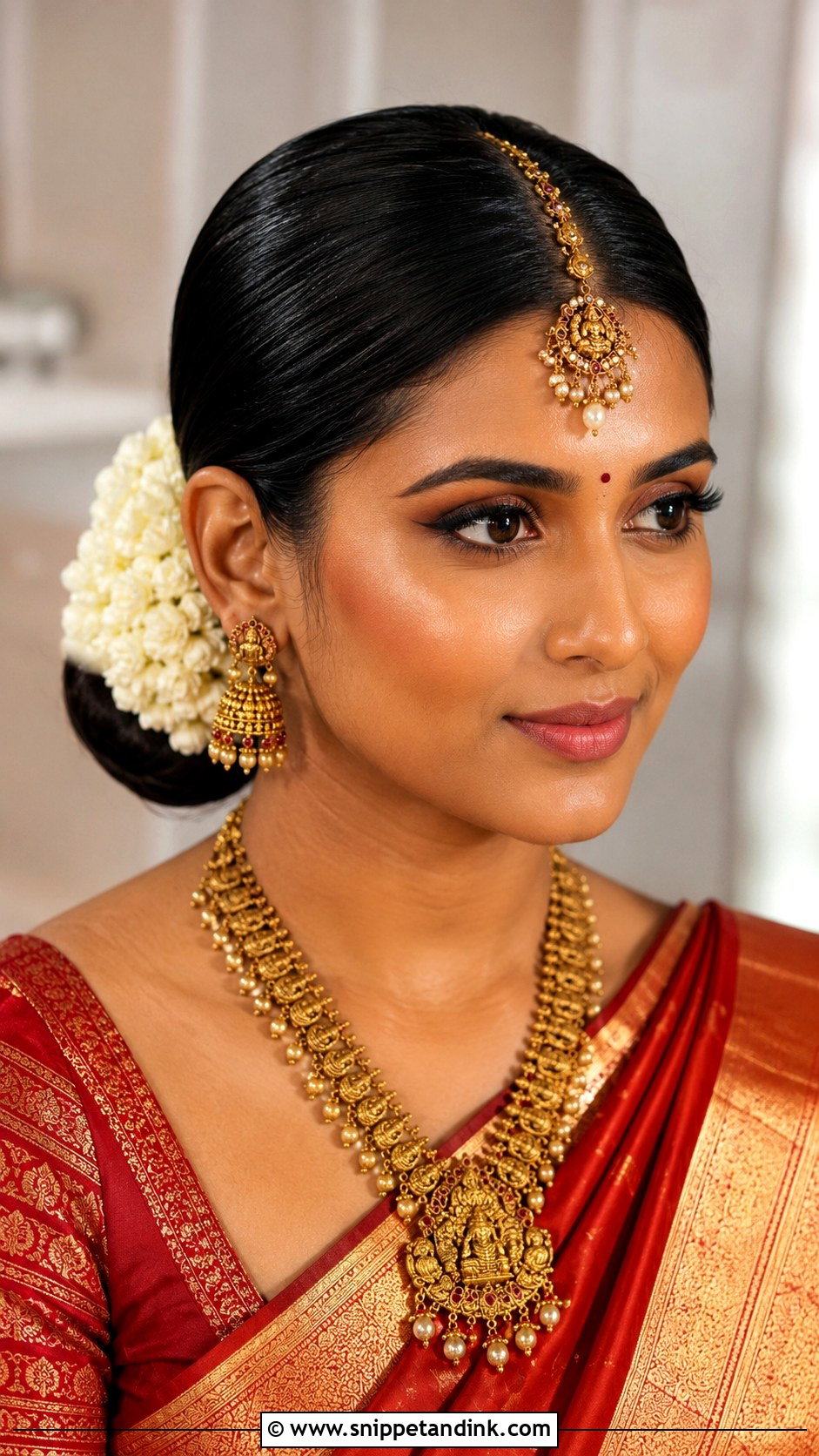
If your lehenga, jewelry and makeup are already heavily detailed, a sleek bun lets them do the talking, and the middle part becomes a clean line for the maang tikka. Sleek styles are unforgiving, though. Every bump and flyaway shows in flash photos, so I smooth the hair with a firm gel while it’s slightly damp, set it with a bristle brush and let it dry under a scarf. Whether the bun sits low or mid depends on your dupatta placement. I’d skip this one if you have lots of short layers at the nape; they spring out by the second hour.
5. Mandap Bridal Loose Curls With Maang Tikka
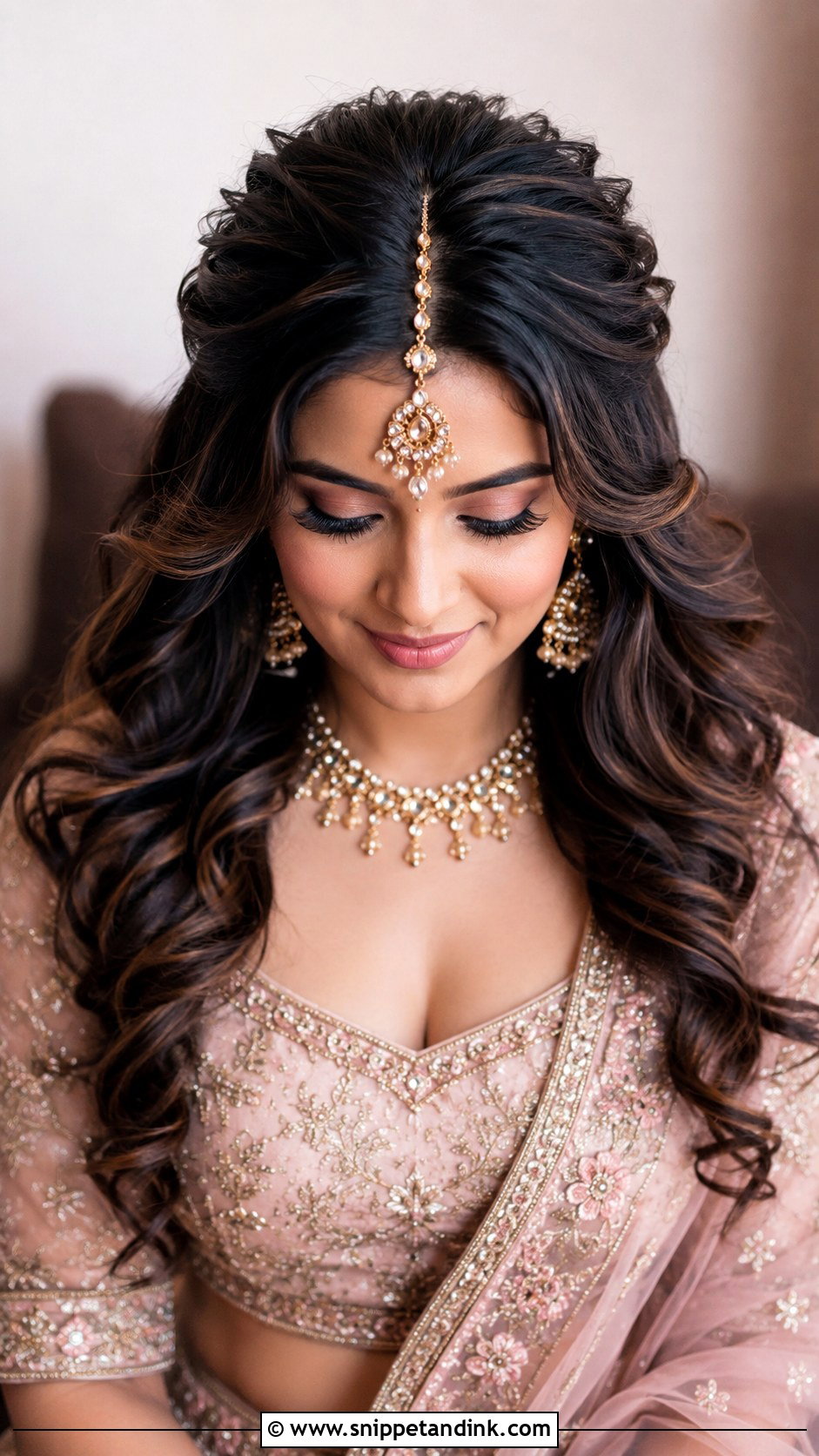
Open curls look soft under mandap lighting, but they’re the riskiest choice here for a long ceremony. Heat from the havan, humid air and leaning back against a cushion all flatten curls faster than brides expect. I set the hair with mousse or setting lotion before curling, let every curl cool pinned in a coil, and brush them out only at the very end. The dupatta has to be pinned lightly or worn behind the shoulders with this look, because a heavy one over the head presses the top curls straight within an hour. A center part keeps the maang tikka straight, and a few curls by the jaw soften the face.
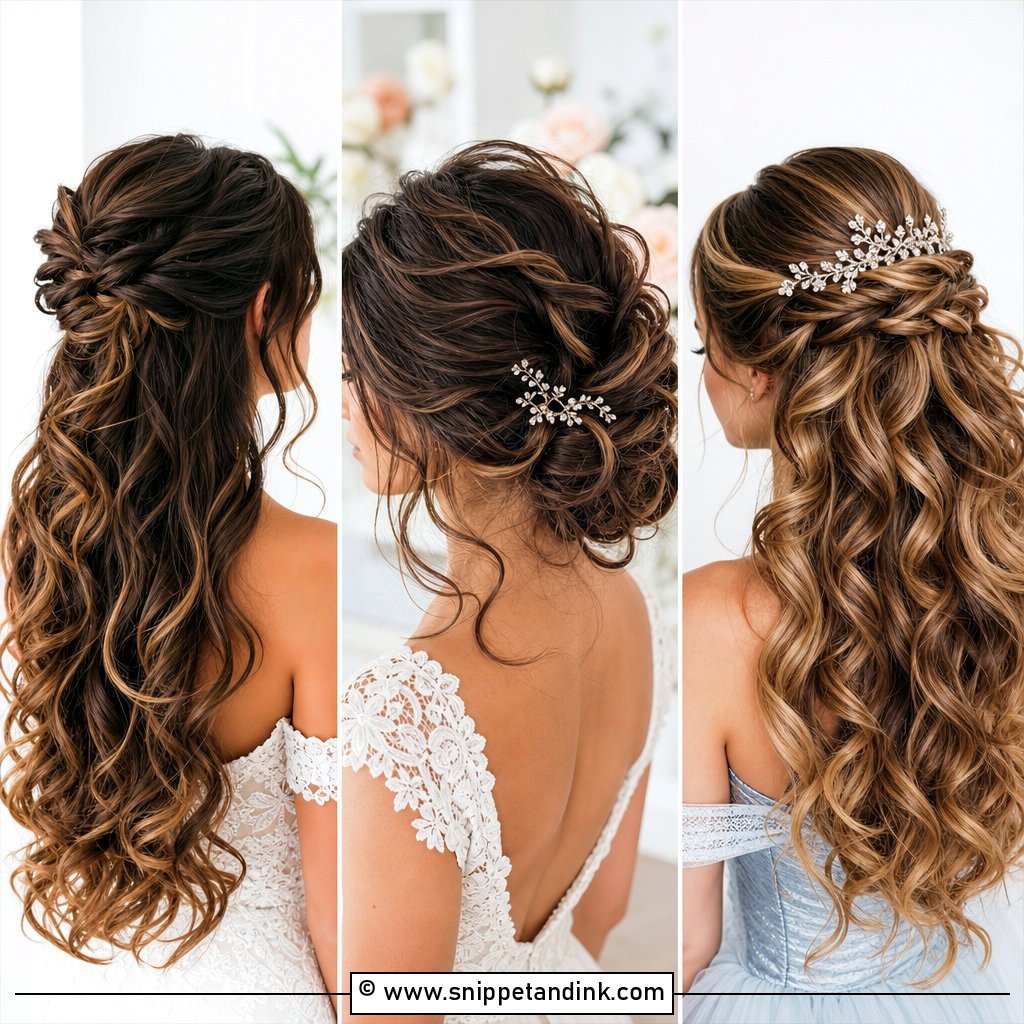
6. Mandap Bridal Half Up Curls
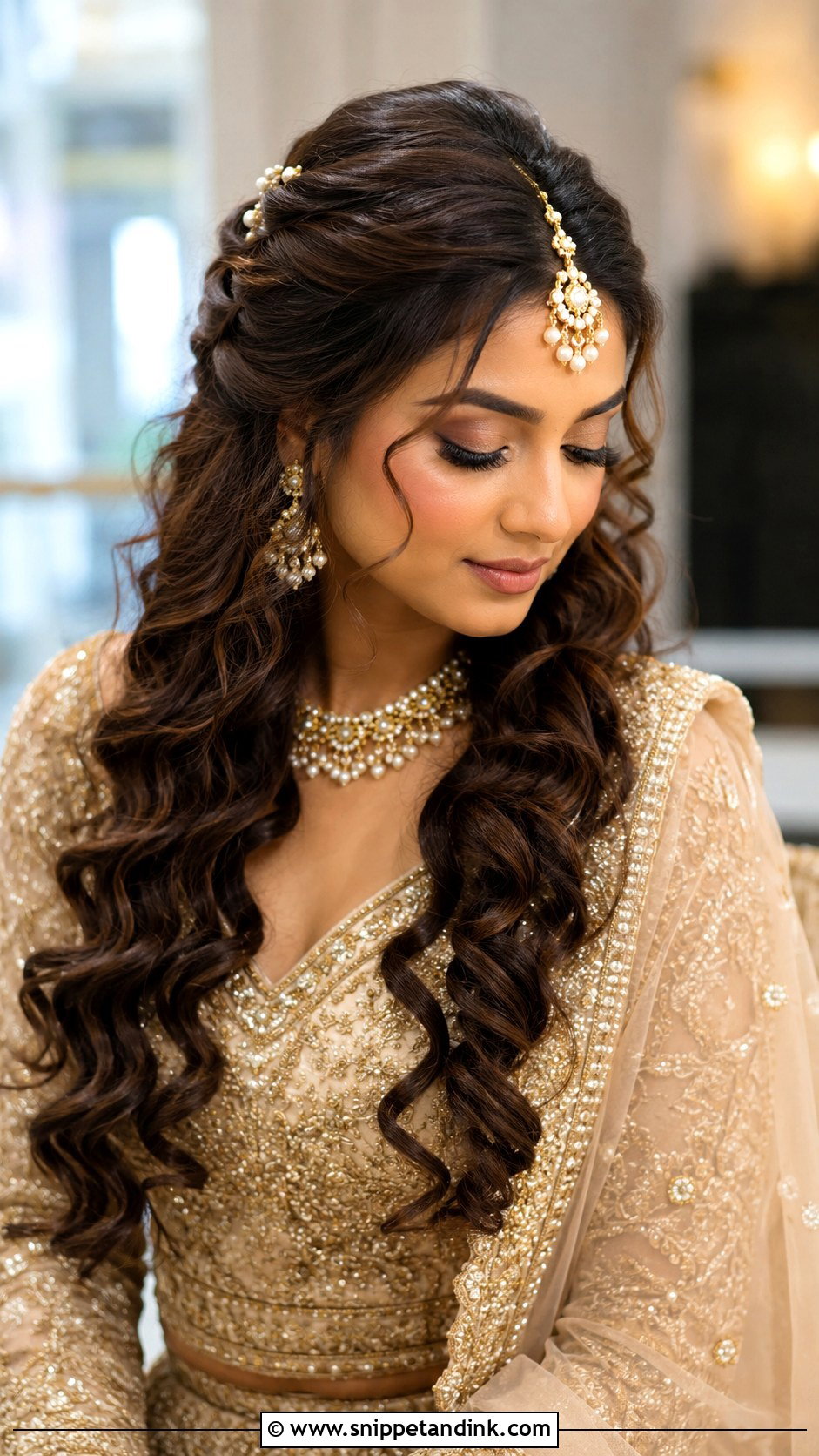
Half up is my usual compromise when a bride wants her hair open but has a real dupatta to secure. Pinning, twisting or braiding the top section back gives me a firm anchor at the crown for the dupatta pins and a passa, while the lower length stays curled. The curls will relax over the evening, but the head shape holds, and that’s what side-profile photos pick up. Keep the crown smooth and lifted. If the top sits flat, the style starts to look like everyday hair.
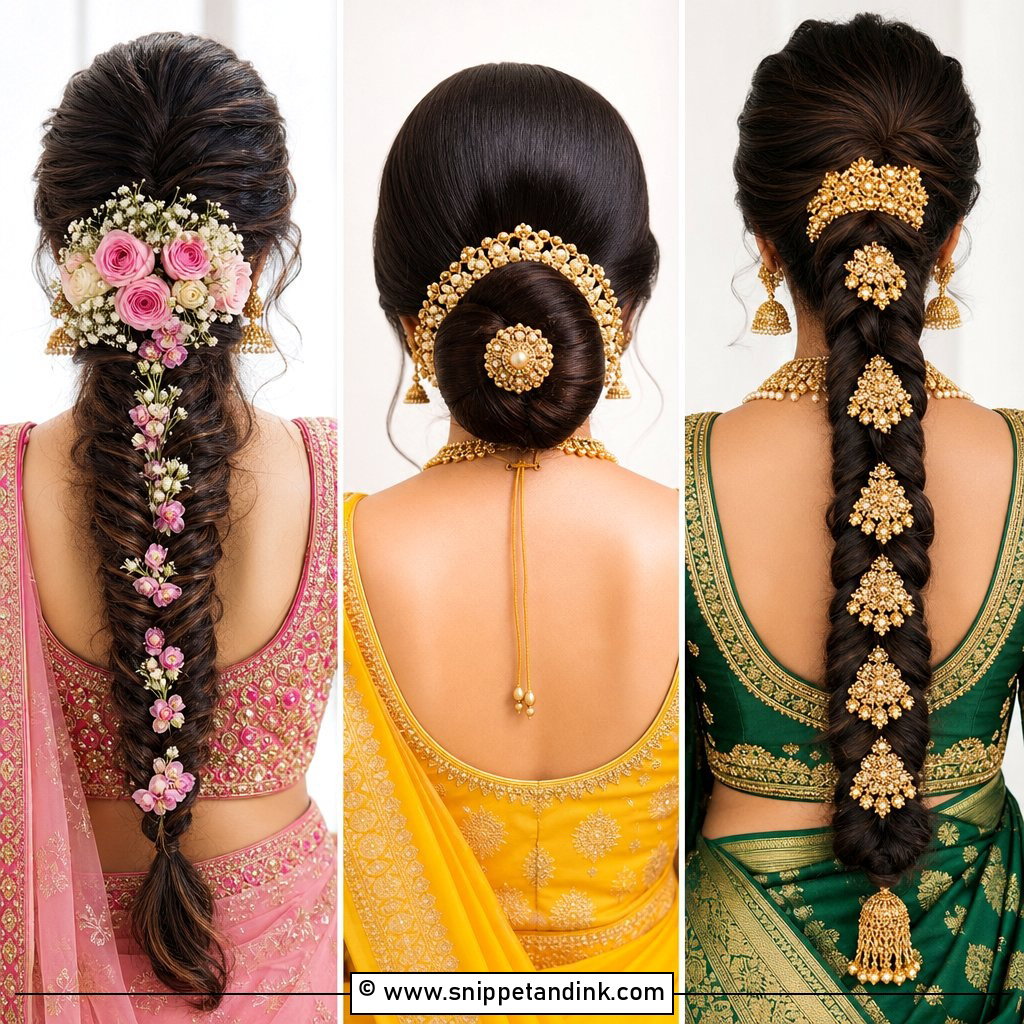
7. Mandap Bridal Long Braid With Flowers
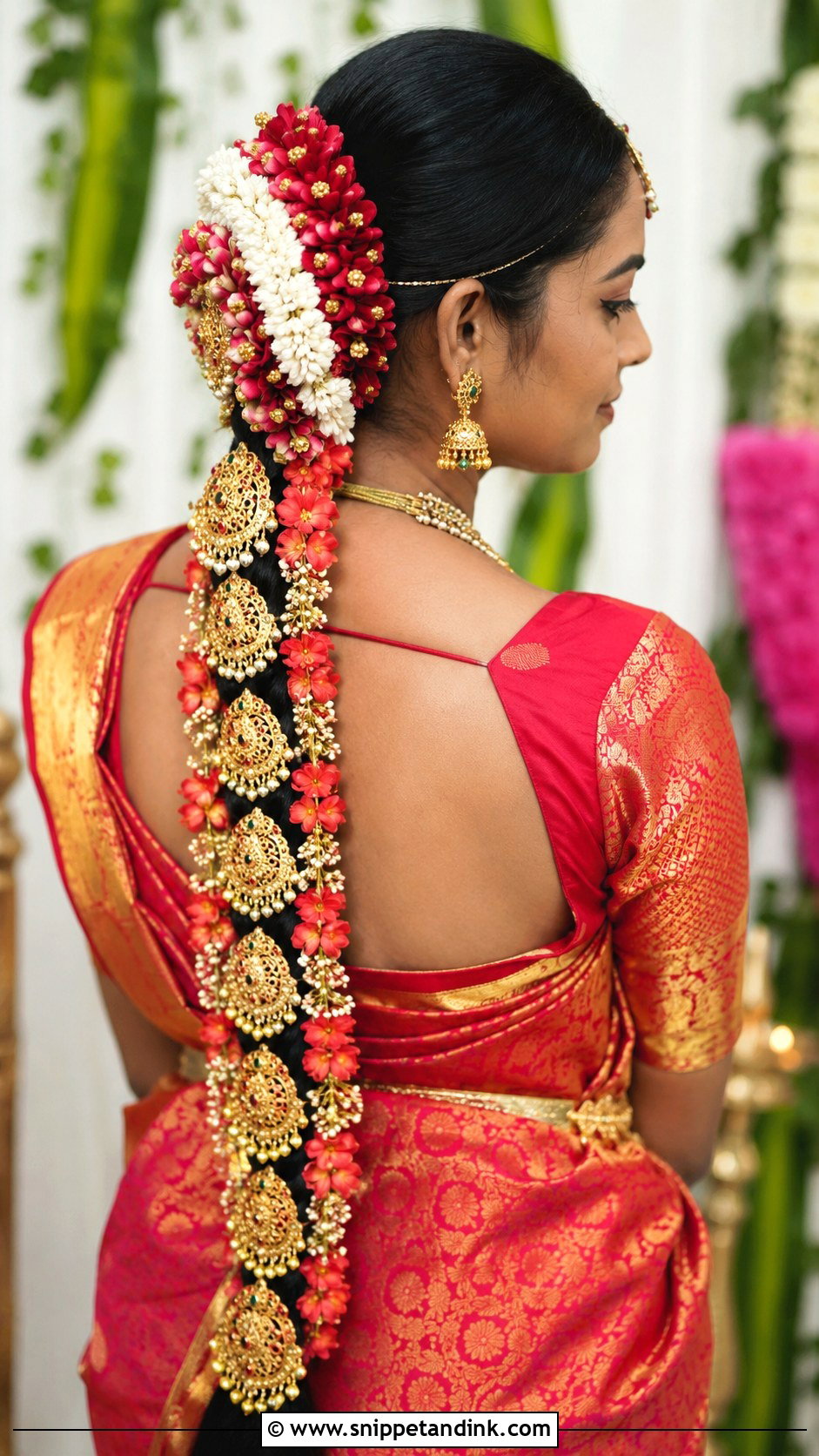
A long braid is the most comfortable style on this list for a seated ceremony, since nothing at the back of the head presses against a chair or cushion. It can be smooth and thick, decorated with jasmine, roses or fabric flowers, and it reads strongly from behind as you walk toward the mandap. It sits most naturally with sarees and South Indian bridal looks, though it works with a lehenga too. If your own length stops at the shoulder blades, a braided-in extension adds the rest; I match its colour in daylight, never under salon lights. Temple jewelry and pearl strings along the braid add weight, so the base has to be tight right from the nape.
8. Mandap Bridal Poola Jada
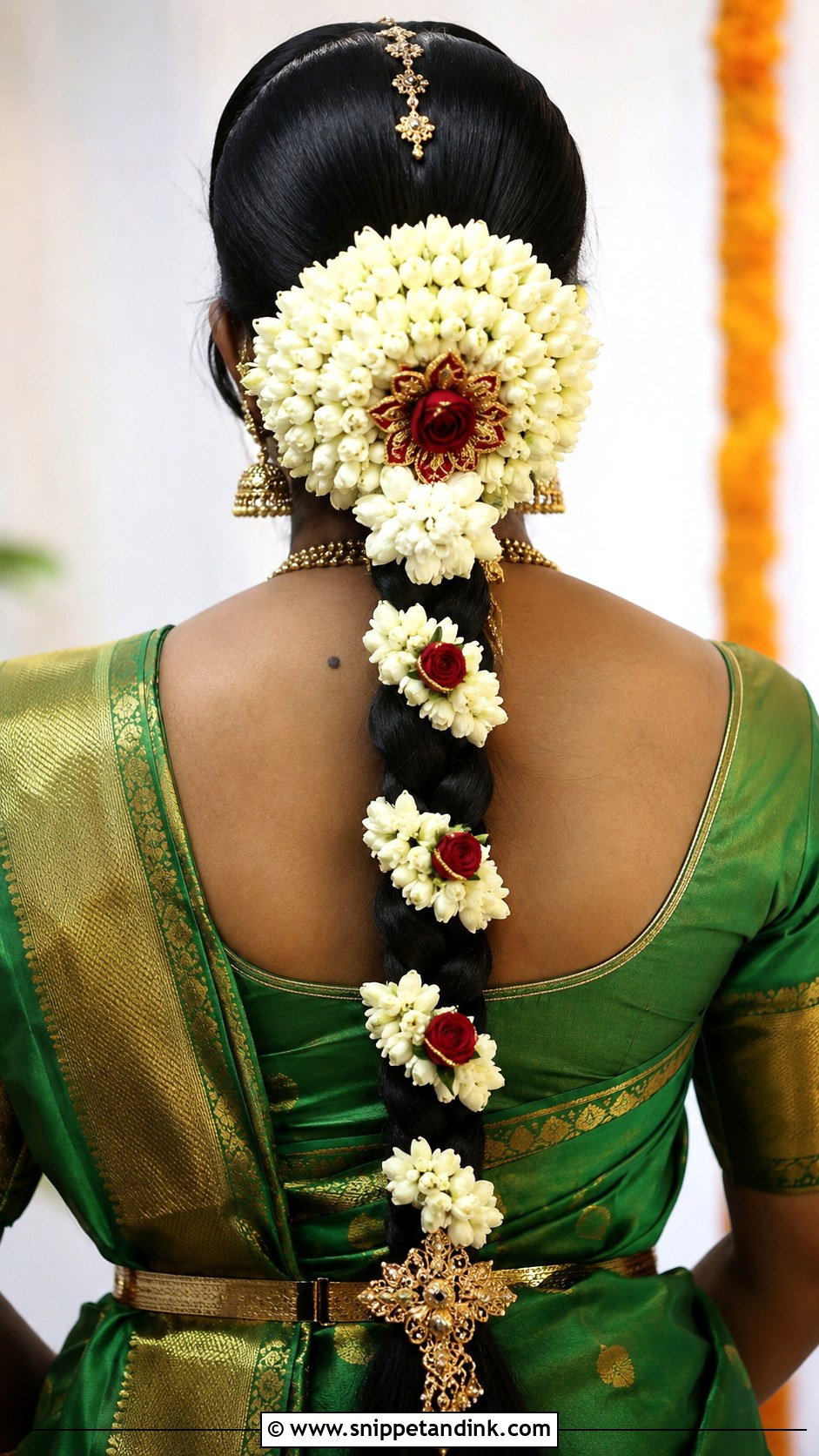
A traditional mandap bridal poola jada is built for the back view: a long braid covered in layered flowers, with jada billalu and ornaments down its length. It belongs with silk sarees and temple jewelry, and it looks grand in entrance shots and seated rituals. What brides don’t always expect is the weight. A full flower jada with ornaments pulls hard on the nape, so I braid the base very firmly and attach the jada to a strong anchor at the crown rather than to loose hair. Shorter hair can carry it with extensions. Ask for the flowers to arrive early enough that the jada is fitted before your makeup is finished, not after.
9. Mandap Bridal Fishtail Braid
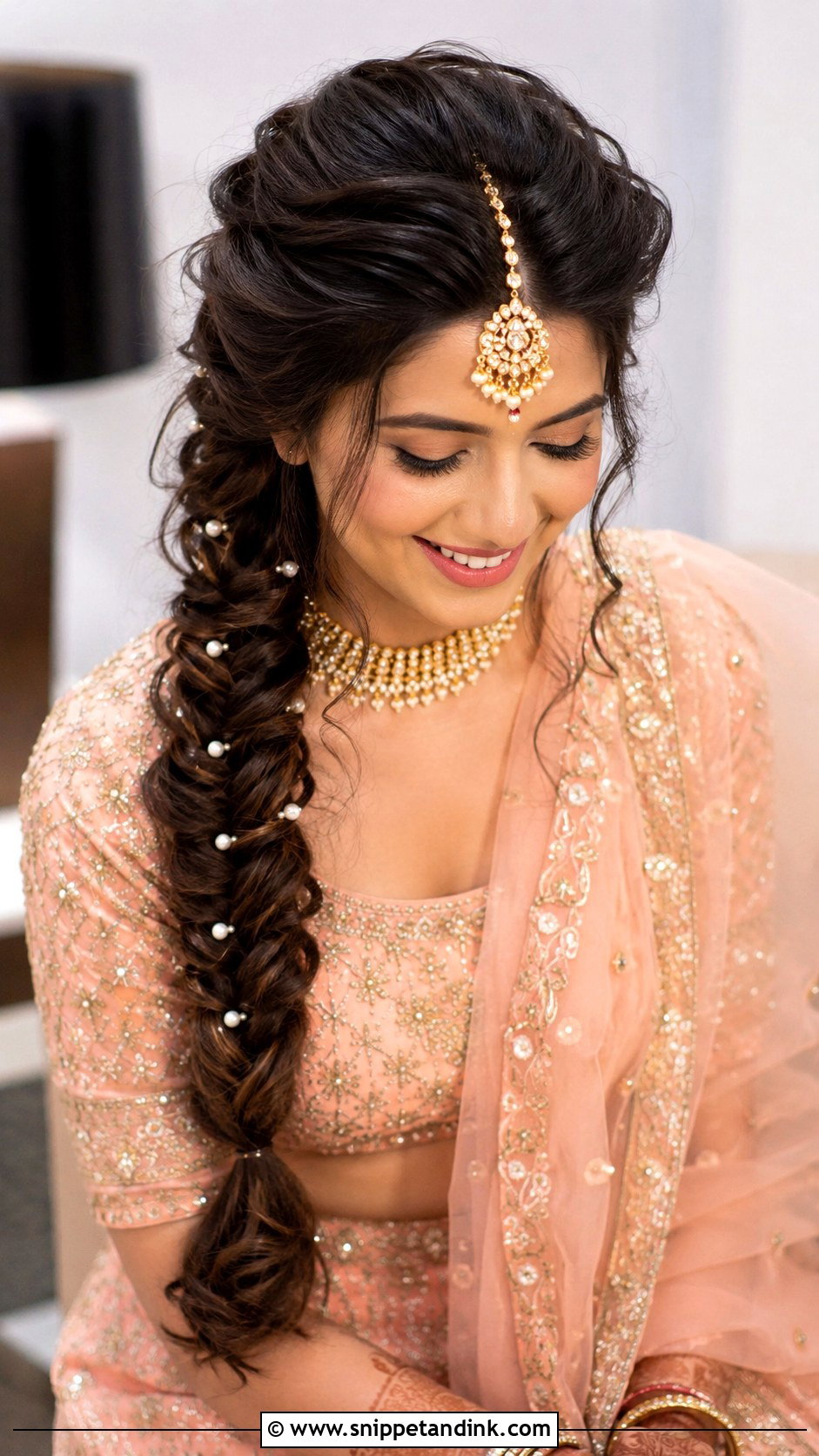
A fishtail has a finer, more woven pattern than a three-strand plait, and I usually pull the edges out a little for width once it’s tied. Pearls, small blooms and gold pins sit neatly in that tight weave. The trade-off: fishtails loosen at the edges faster than classic braids, especially on slippery, freshly washed hair. I prep with a texture spray and finish with a light hold rather than heavy lacquer. Worn over one shoulder, it also gives you a softer option for portraits before the ceremony begins.
10. Mandap Bridal Bubble Braid
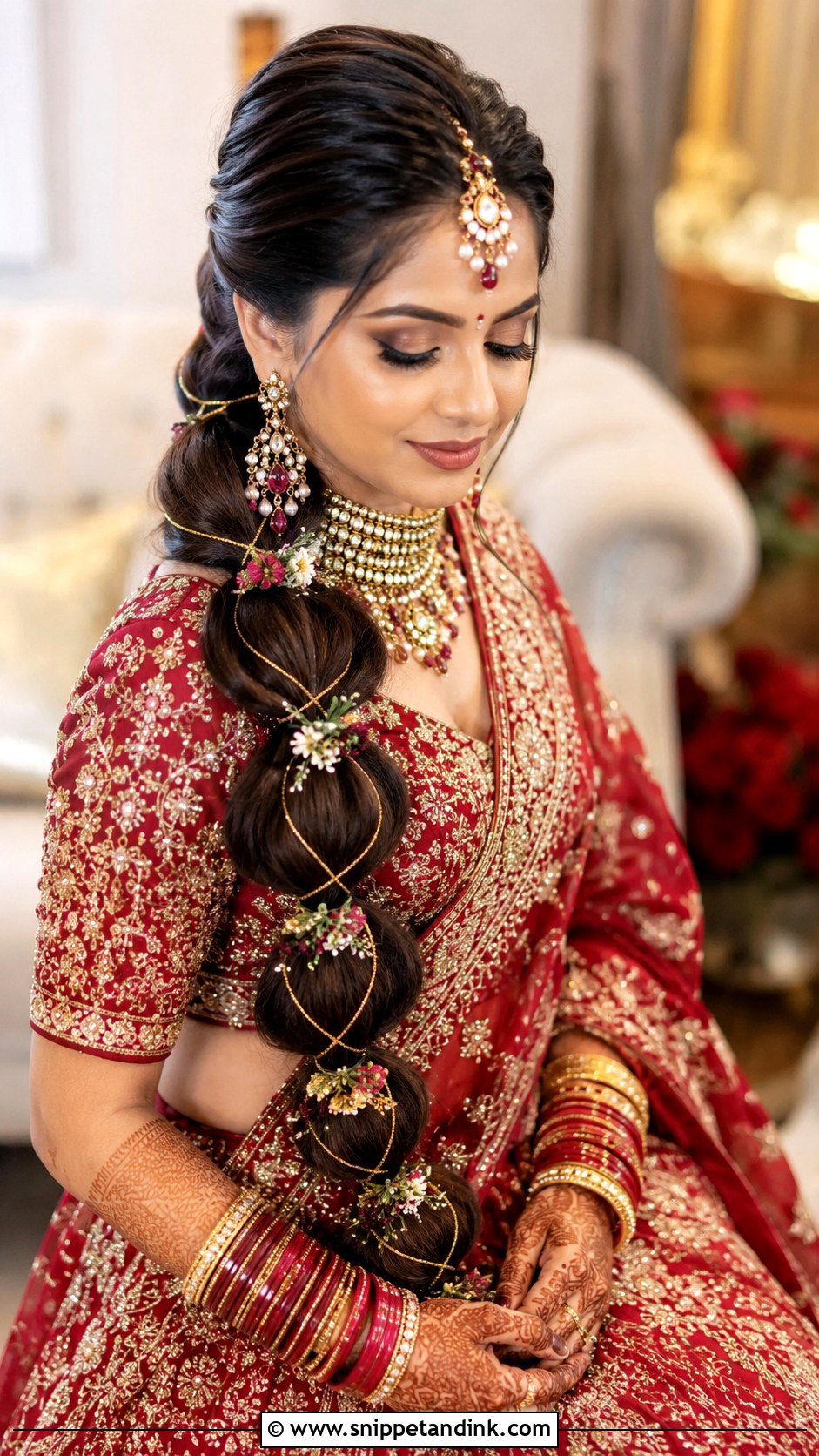
The mandap bridal bubble braid needs no weaving at all. The length is tied into sections with small elastics and each section is teased out into a rounded bubble, which makes it quick and very stable through rituals. Gold thread, pearls or tiny flowers can hide each elastic. It depends entirely on volume, so on thinner hair I add extensions; otherwise the bubbles look small and gappy in photos. Pair it with a sleek front and a maang tikka, or it reads more like a mehndi-night style than a ceremony one.
11. Mandap Bridal Side Swept Curls
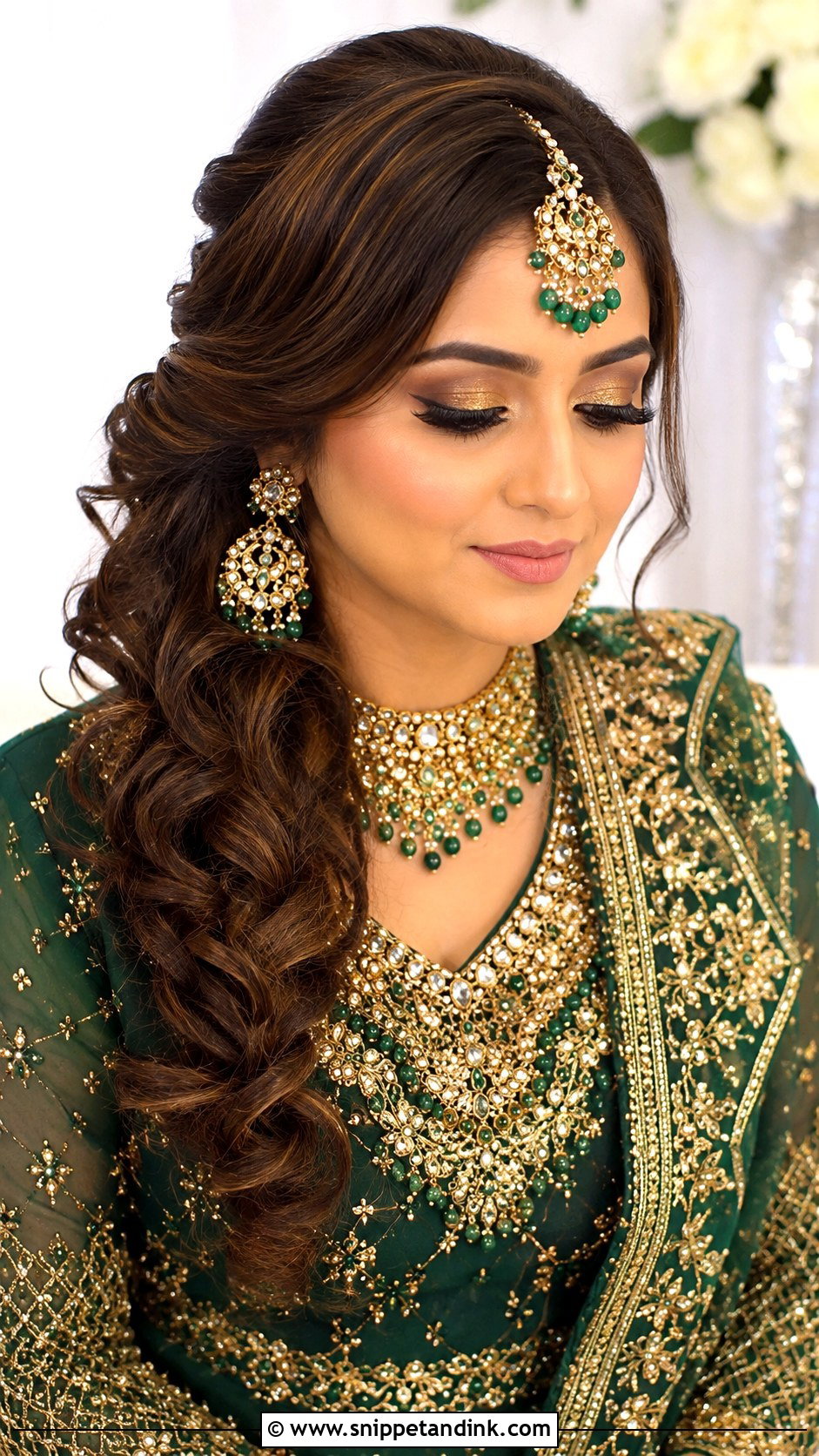
Sweeping the curls over one shoulder keeps them moving in one direction, which is far easier to manage than fully open hair. It also leaves the blouse back on view, so it suits detailed back work and a lighter dupatta. A side part pairs well with a jhumar or passa on the fuller side. Under the curls I set a hidden row of crossed bobby pins behind the ear; without it, the hair drifts back to center every time you turn your head. Bear in mind that the shoulder carrying the hair gets warm sitting by the fire.
12. Mandap Bridal Twisted Low Bun
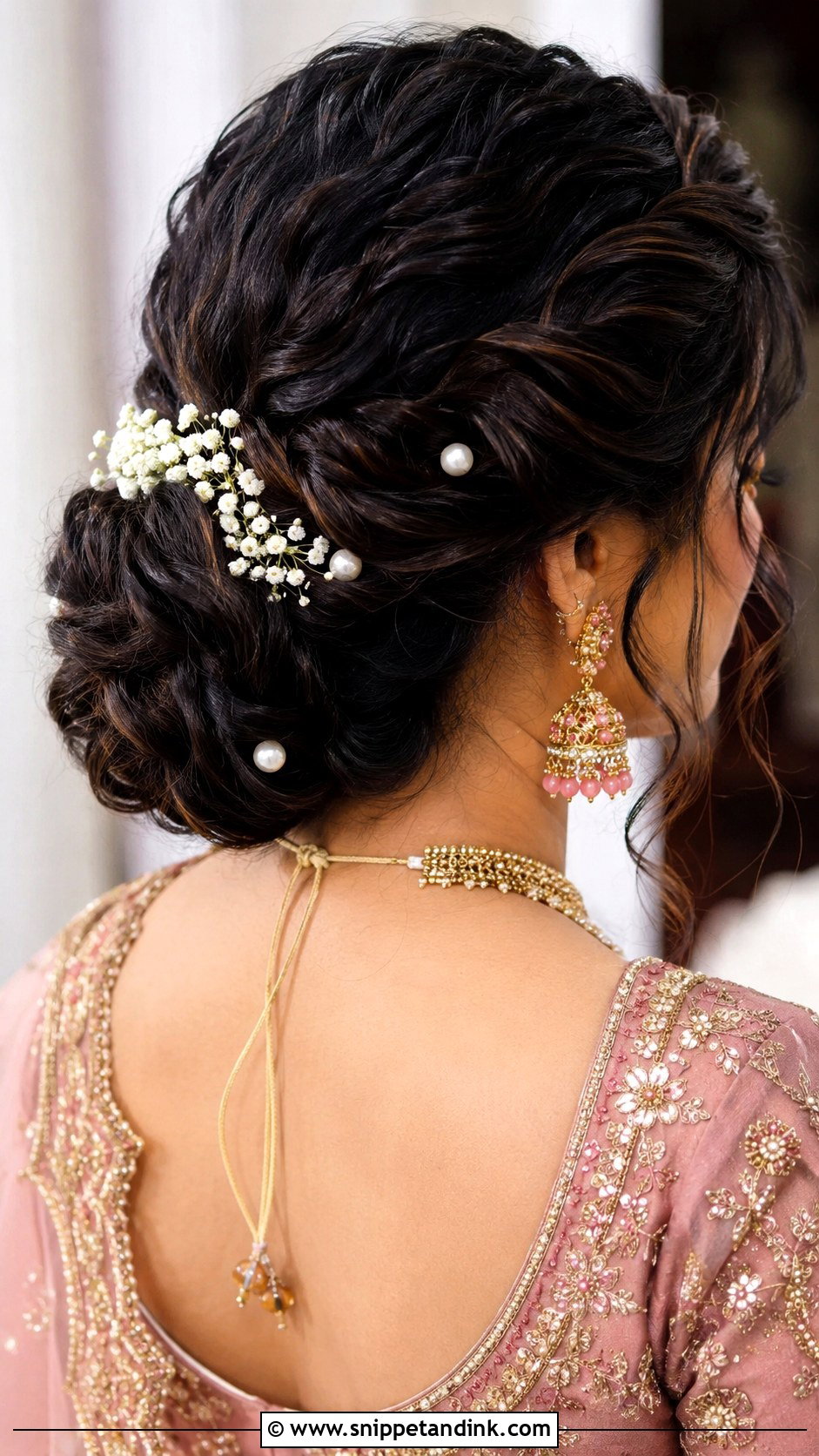
Twisted sections pinned into a low round shape give the bun texture without the strictness of a sleek finish. I suggest it to brides whose faces look harsh with the hair scraped back. Small roses, pearl pins, jasmine strands or a fine hair chain all sit comfortably in the twists, and the low placement makes the dupatta easy to drape. Ask for the front to be smooth with a little lift at the roots. A perfectly flat top next to a textured bun looks unbalanced from the side.
13. Mandap Bridal Floral Bun
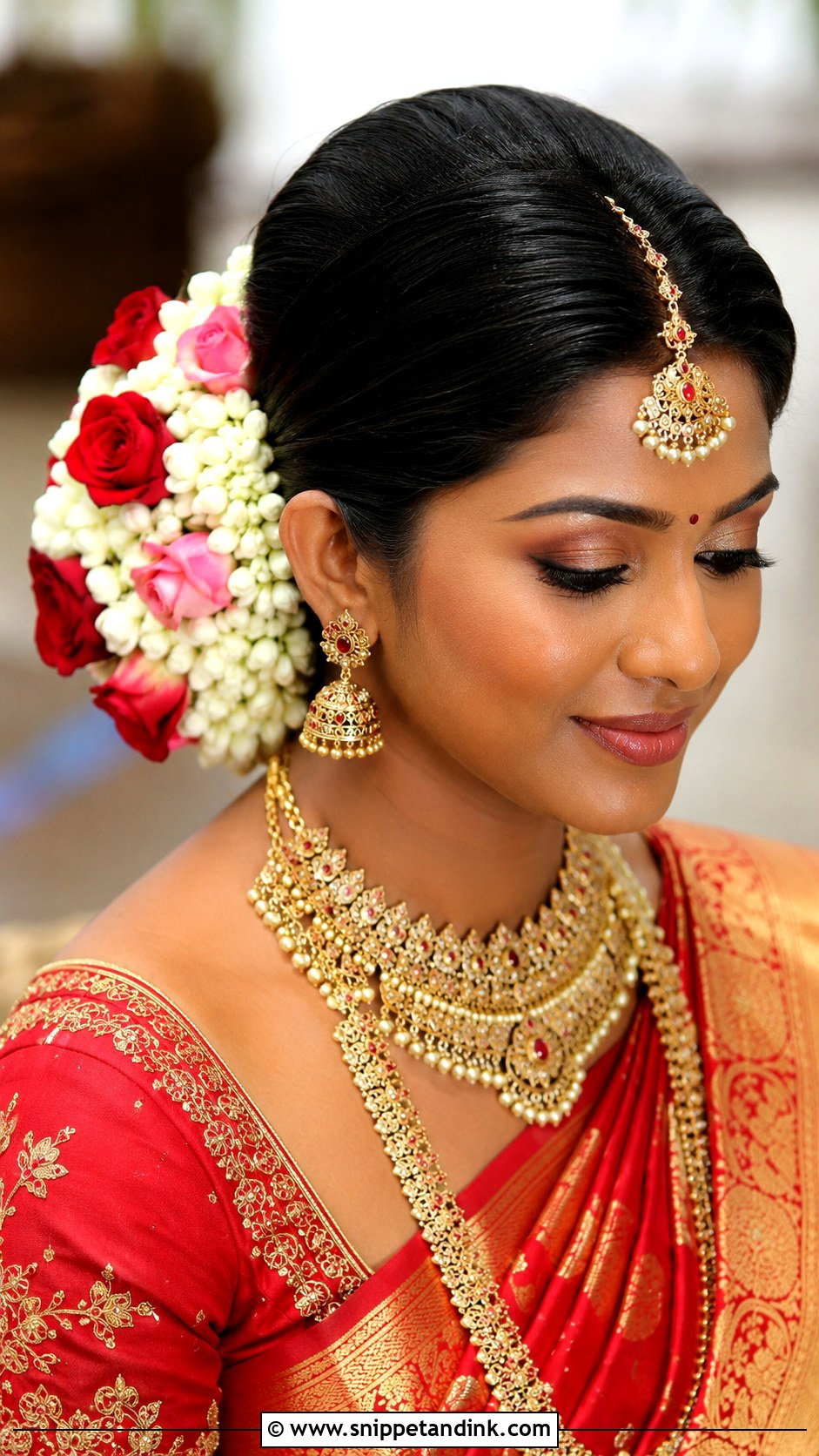
Flowers crowded onto a bun at random look cluttered in photos, so I place them to a plan: a full ring around the bun for a classic look, or a crescent on one side for something more modern. Roses, jasmine and orchids all work, and they can follow your wedding palette. Fresh flowers go in last, after the base is set, each on its own pin. Roses and orchids hold up through a long ceremony much better than delicate seasonal blooms, which can droop near the fire. Give a few spare stems to a bridesmaid for touch-ups.
14. Mandap Bridal Open Waves With Dupatta
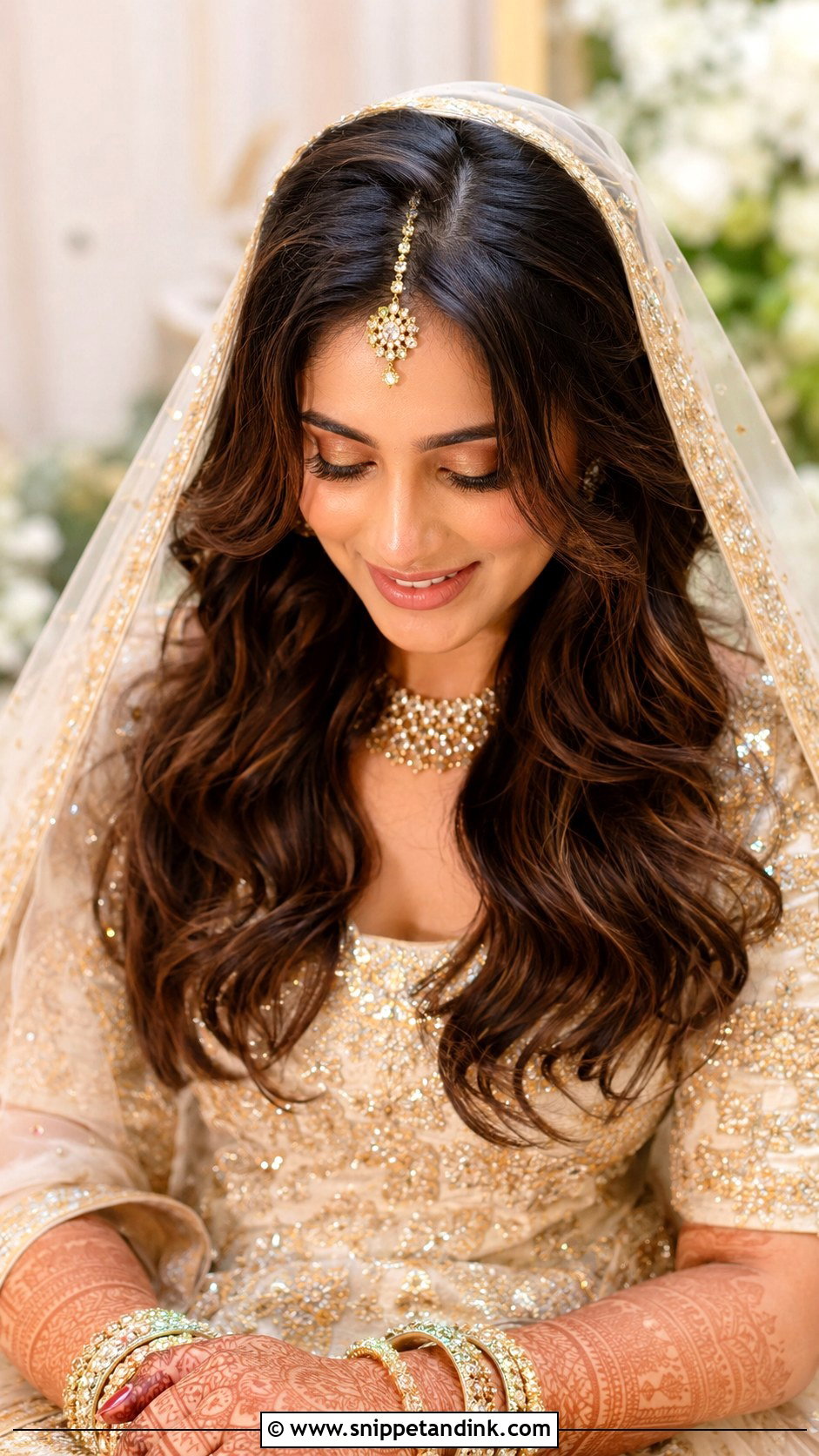
Open waves can work under a dupatta, but only with control built in. I pin the crown gently on each side so the dupatta has something to grip and doesn’t slide backwards. The waves should be smooth and defined, more polished than beachy, and they suit lighter dupattas and minimal florals. Loose hair is the biggest nuisance during rituals. It catches on jewelry, sticks to lip gloss and falls forward when you bow, so I tuck hidden pins behind the ears and finish with a strong spray that can still be brushed through.
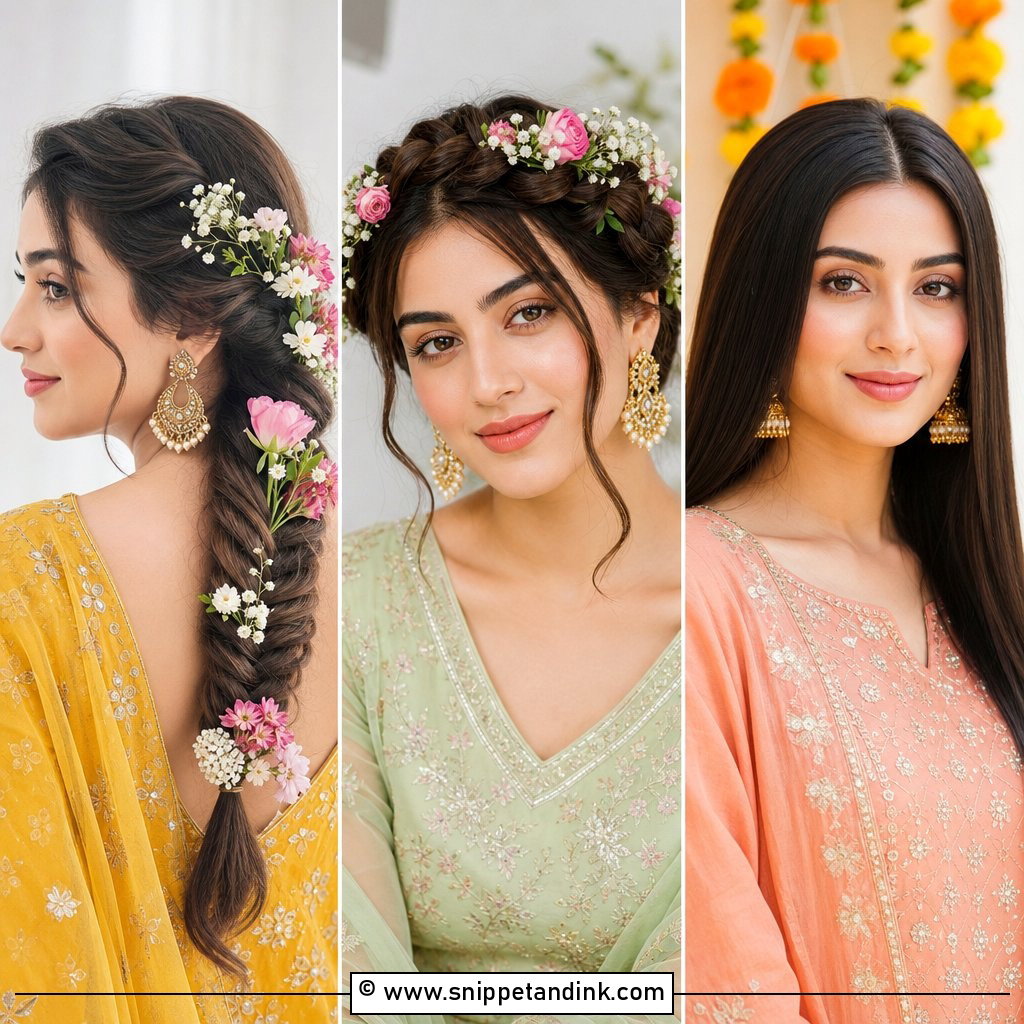
15. Mandap Bridal Crown Braid Bun
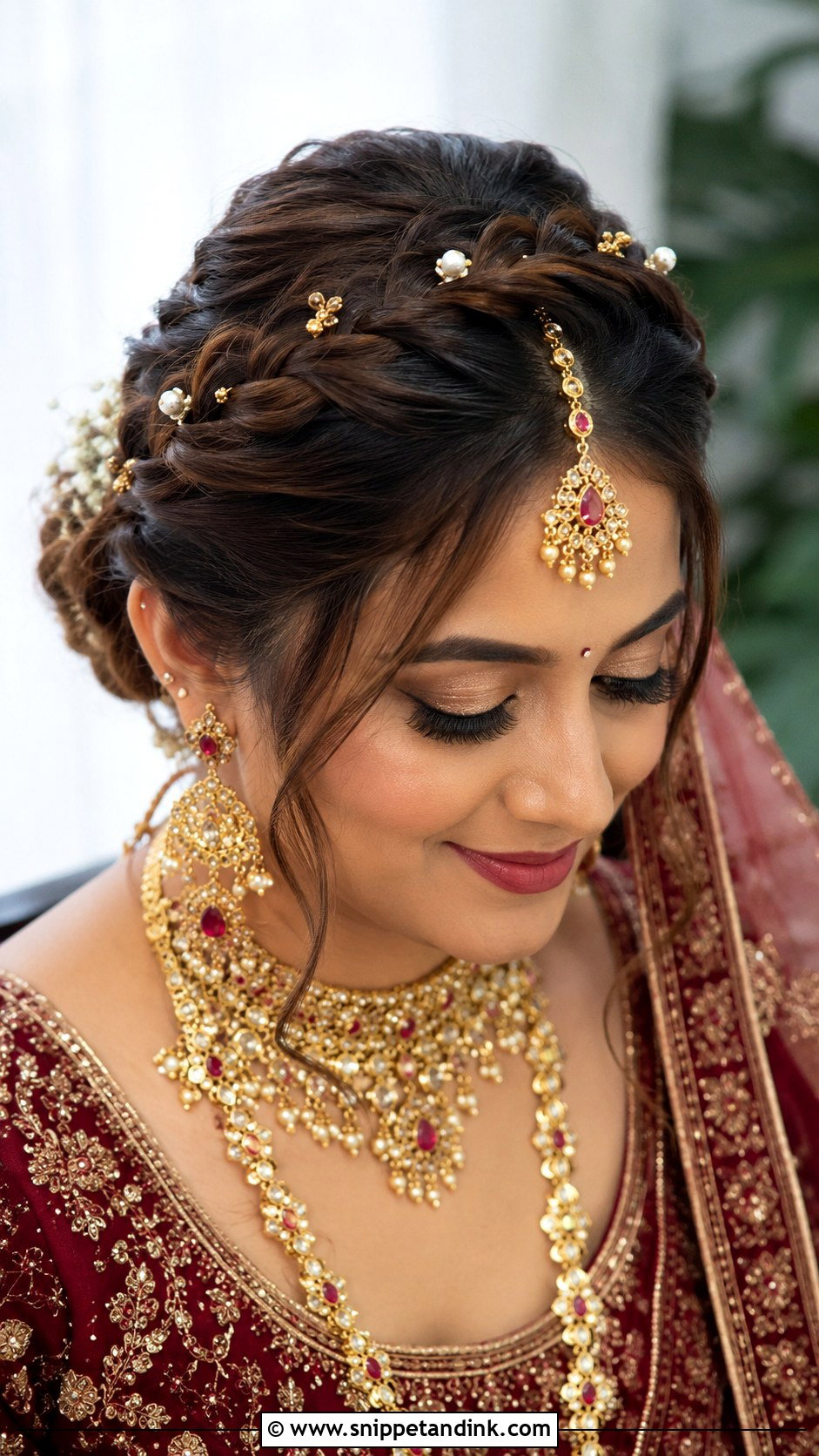
Here a braid wraps around the crown or front hairline and joins a bun at the back, so the face gets a frame and the dupatta has a natural ridge to sit against. It still looks detailed when most of the head is covered. Tiny flowers or pearl pins along the braid add finish. It flatters oval, round and heart-shaped faces because it adds structure at the top. On a long face I keep the braid set back from the hairline, since a braid right at the front makes the forehead look taller.
Heat, Smoke and Hours Spent Cross-Legged
The havan is the part of the day nobody thinks about at a hair consultation. You’ll sit close to an open flame for long stretches, often in a warm tent or hall, and the smoke and heat soften curls and wilt fresh flowers faster than anywhere else at the wedding. Hairspray is flammable, so I finish all heavy spraying well before you’re seated and let it dry completely. Loose ends of hair and dupatta should fall behind you, never forward toward the fire.
A Small Repair Kit for Your Bridesmaid
- U pins and bobby pins in your hair colour, plus a few safety pins for the dupatta
- A travel-size flexible hairspray and a tail comb
- Spare gajra buds or stems wrapped in a damp tissue
- Blotting papers, since a hot forehead pulls the tikka out of line once it gets slippery
Most ceremonies have natural pauses between rituals. That’s the moment for a quick check of the back of the bun and the dupatta pins, rather than waiting for the photographer to point out a slipped flower.
Ritual Hours Decide More Than Photos Do
Buns are the safest base when the dupatta is heavy and the ceremony is long. Braids bring tradition and the strongest back view. Open curls and half-up styles read softer and more modern, but they need the most pinning to stay neat. Weigh your dupatta in your hands, look at your neckline, and be honest about how long you’ll sit near the fire. Then book a trial and wear the real dupatta to it, because that’s the only way to see whether the style holds. Done that way, your hair should look as good during the last phera as it did when you walked in.
You'll Like These Ideas:


Leave a Reply