
Braids are the one bridal style I can promise will look the same at midnight as they did at the first look. They don’t drop in humidity, they don’t frizz when you cry, and a good install protects your own hair through a week that is usually hard on it. The real decisions are size, length and how much weight you can carry on your head for twelve hours, and that is what I talk brides through before anyone picks up a comb. Below are 20 braided wedding hairstyles to inspire that conversation, with notes on what each one asks of your hair and your scalp.
Install Day: Why I Book Braids Four to Seven Days Before the Wedding
Fresh braids are at their tightest on day one. The roots ease over the next few days, any tension bumps settle, and you get to sleep in them and find out where they pull. That’s why I ask brides to book the install about four to seven days out, never the night before. A knotless or small box braid install can take most of a day, so it also keeps one very long appointment away from your rehearsal.
A week or two before, prep your own hair so it goes in healthy:
- Trim any split ends so the braids don’t fray at the root later.
- Deep condition and stretch your hair on low heat or by banding, so parts come out clean.
- Skip a relaxer or color service in the final two weeks; freshly processed hair handles tension poorly.
- Tell your braider out loud that you want them firm, not tight. If you see small bumps or feel a headache that night, have the front rows loosened.
Bring your veil, comb and any cuffs to the install if you can. Seeing where the comb will sit tells the braider which rows need to stay flat.
1. Box Braid Updo for Black Brides
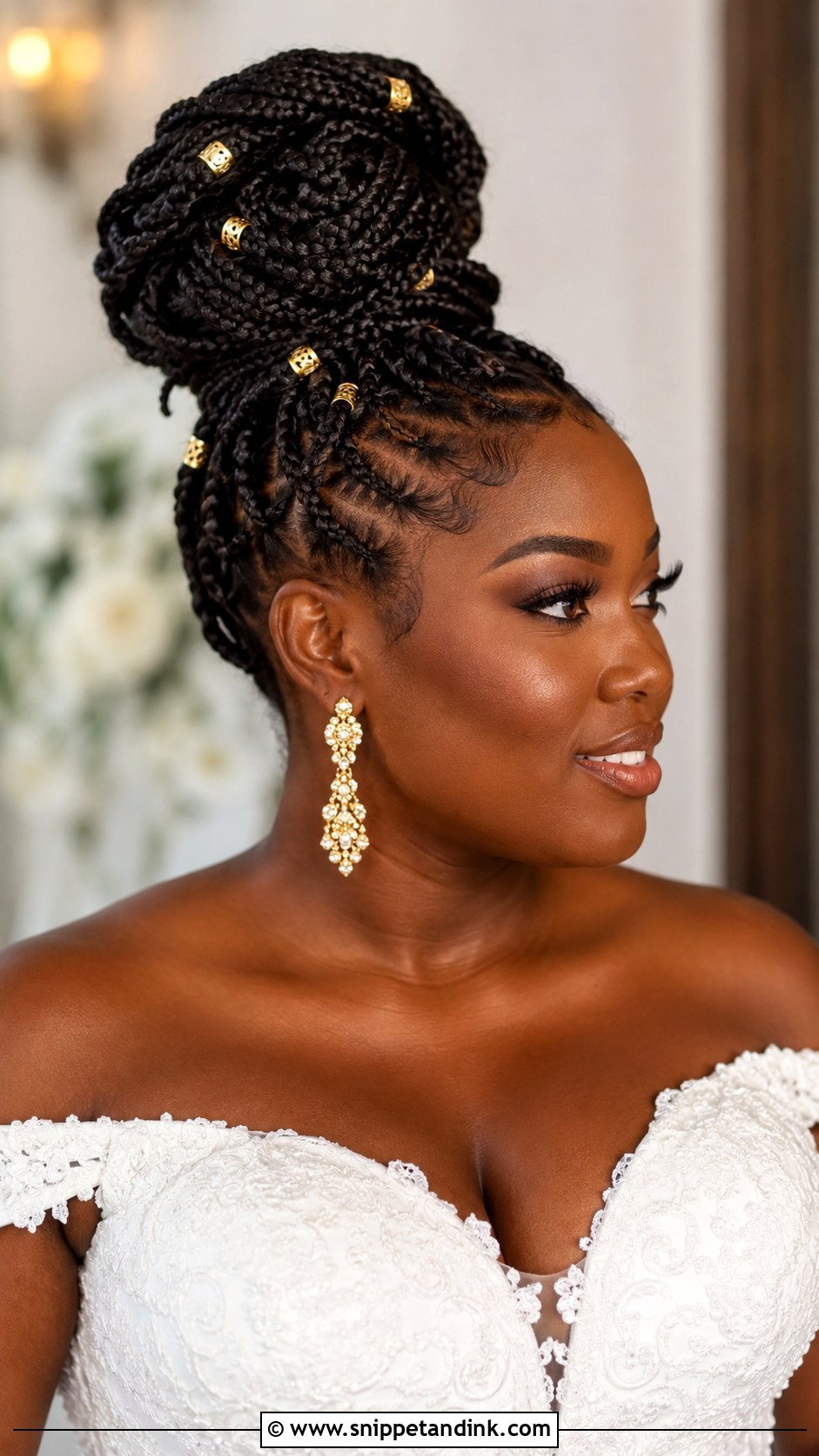
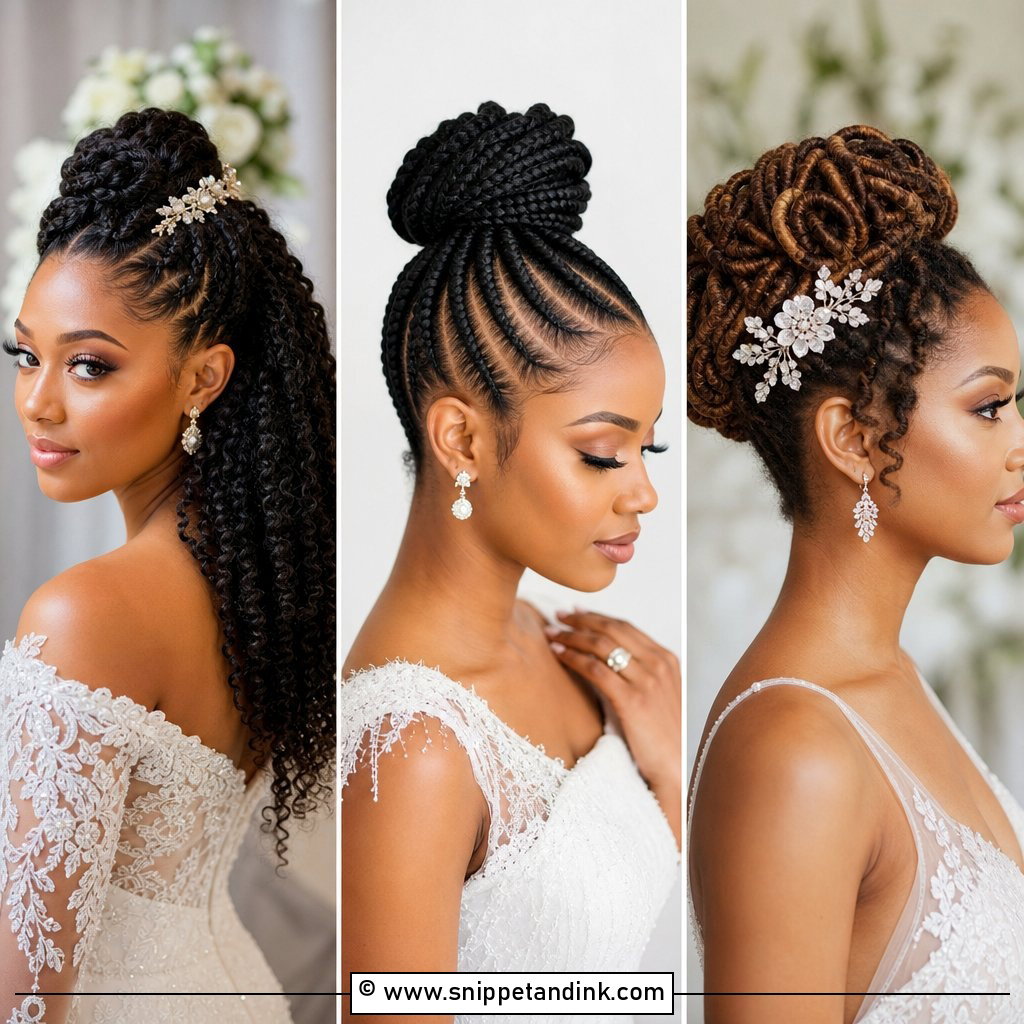
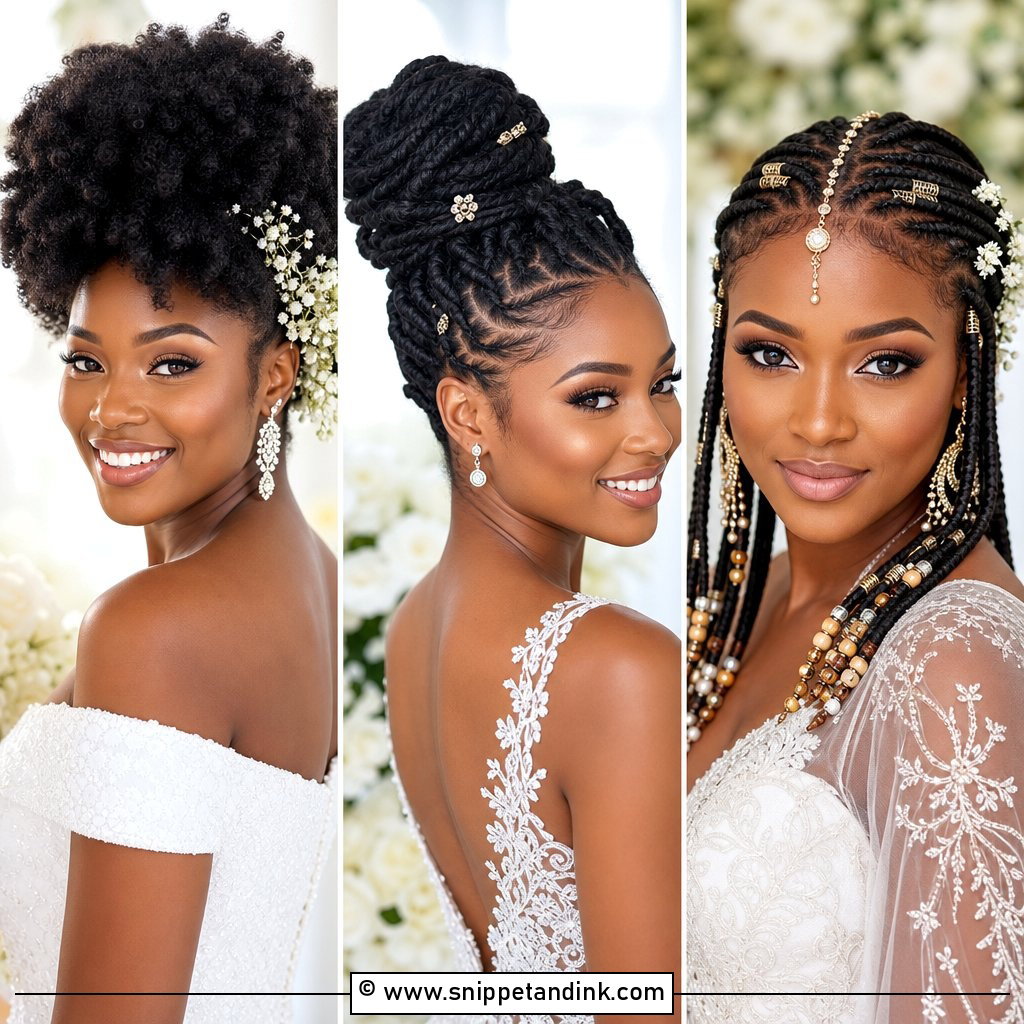
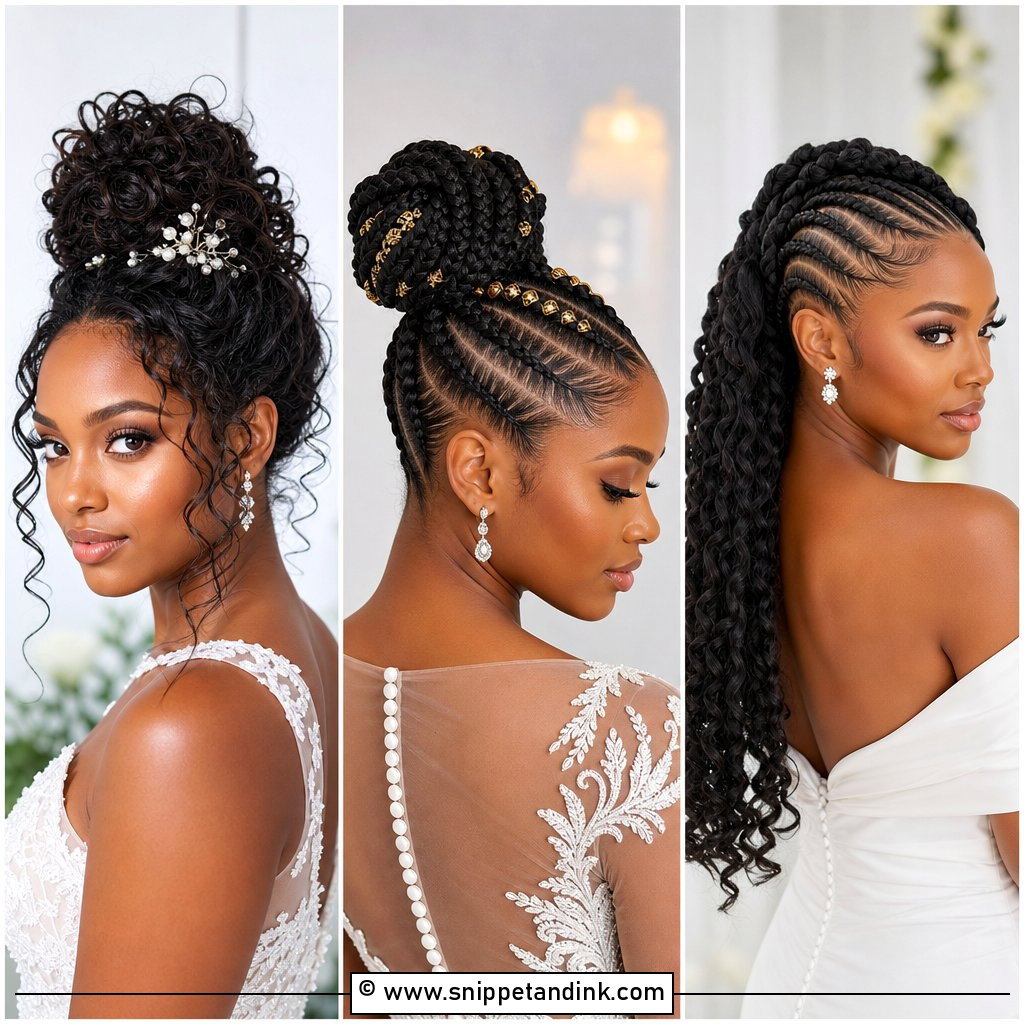
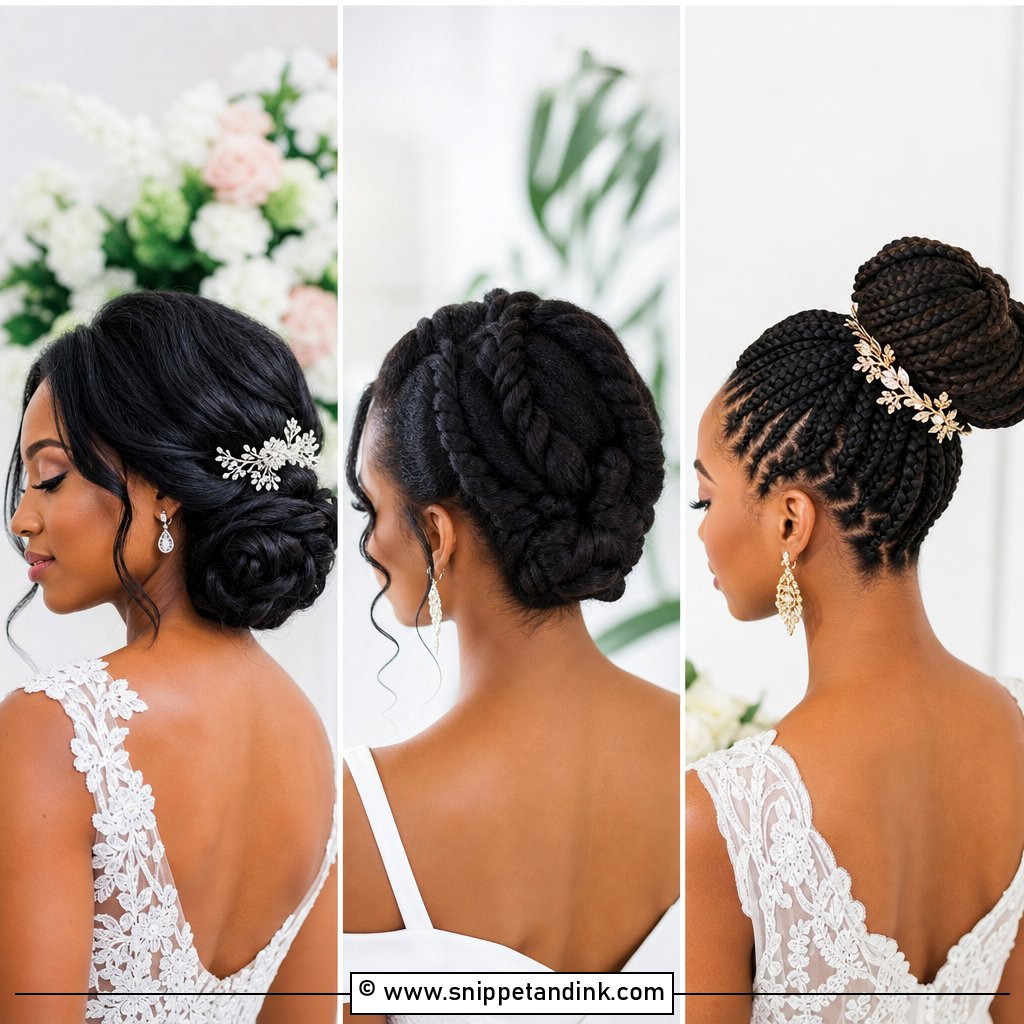
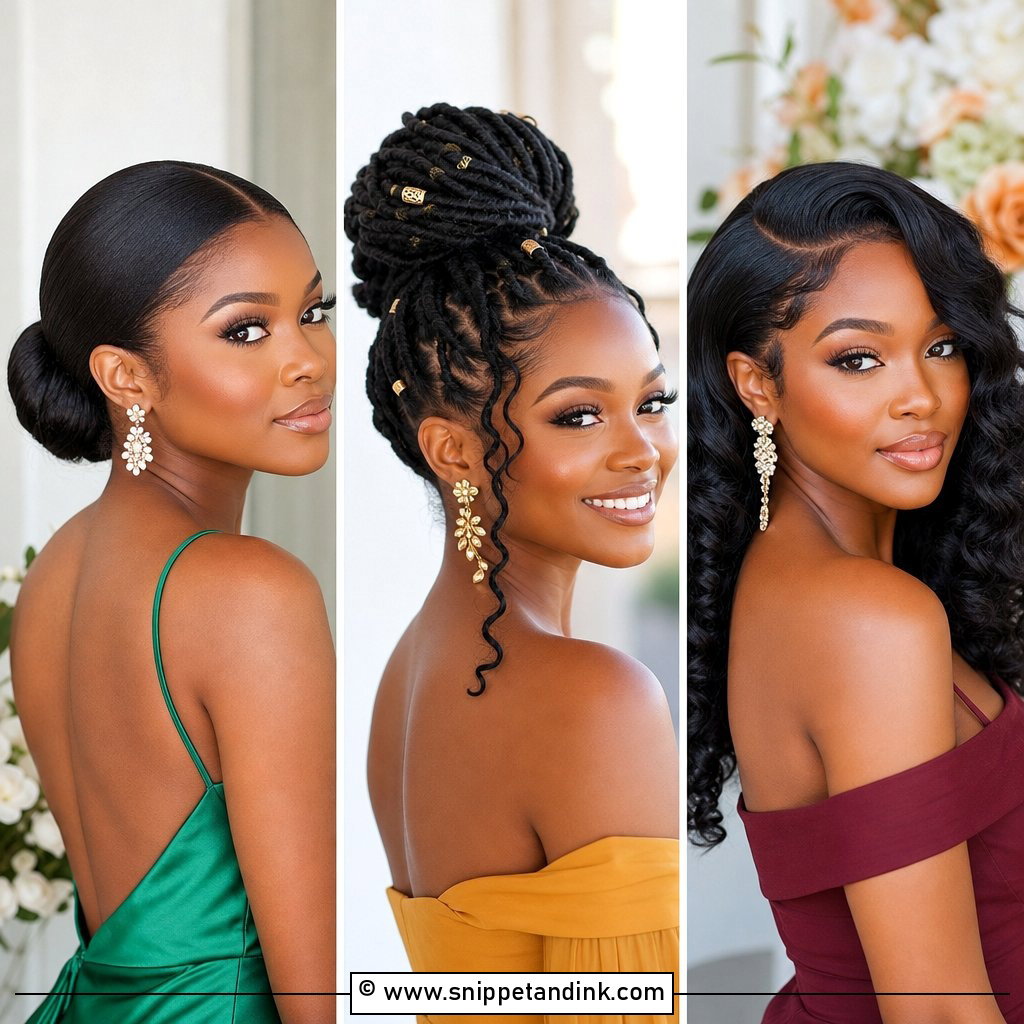
A box braid updo is the style I get asked for most, and the one I adjust most often. Long braids piled high carry real weight, so I usually ask for mid-back length rather than waist length if the plan is an updo. I build the base with a soft elastic and U-pins, not a tight band, because a high bun on fresh braids tugs the hairline all evening. Wrapped, swirled or stacked into a crown, it keeps your neck clear for earrings, and it is still standing at the last song.
2. Cornrow Braids Into a Low Bun
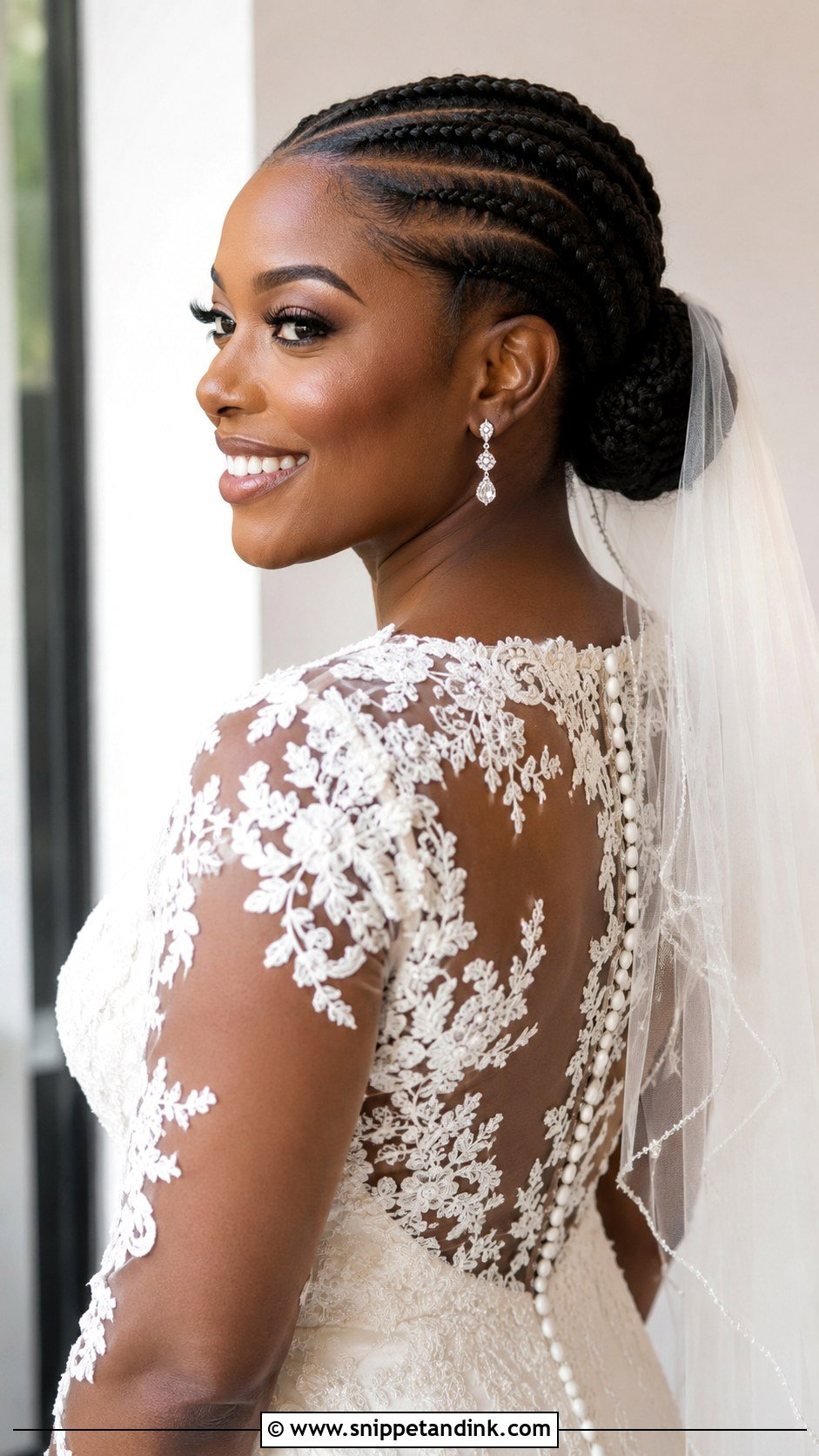
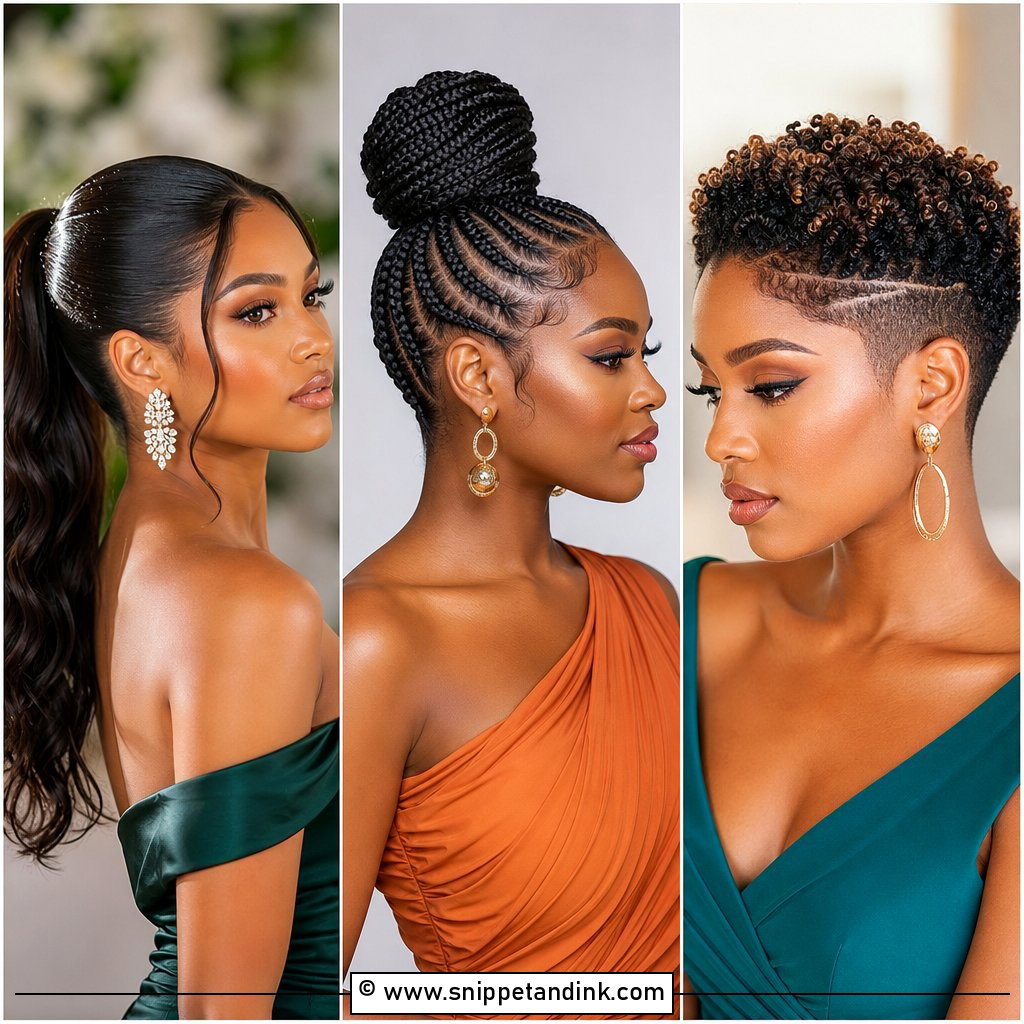
Cornrows running back into a low bun are what I suggest when a bride needs something tidy that a veil sits on without a fight. The comb slides in just above the bun and catches the rows underneath, so it rarely slips. I ask the braider to keep the nape rows a little looser than the crown, since that area takes the strain of the bun. Straight-back rows read classic; curved rows add pattern you’ll see in every back-of-head photo.
3. Fulani Braids for Wedding Day
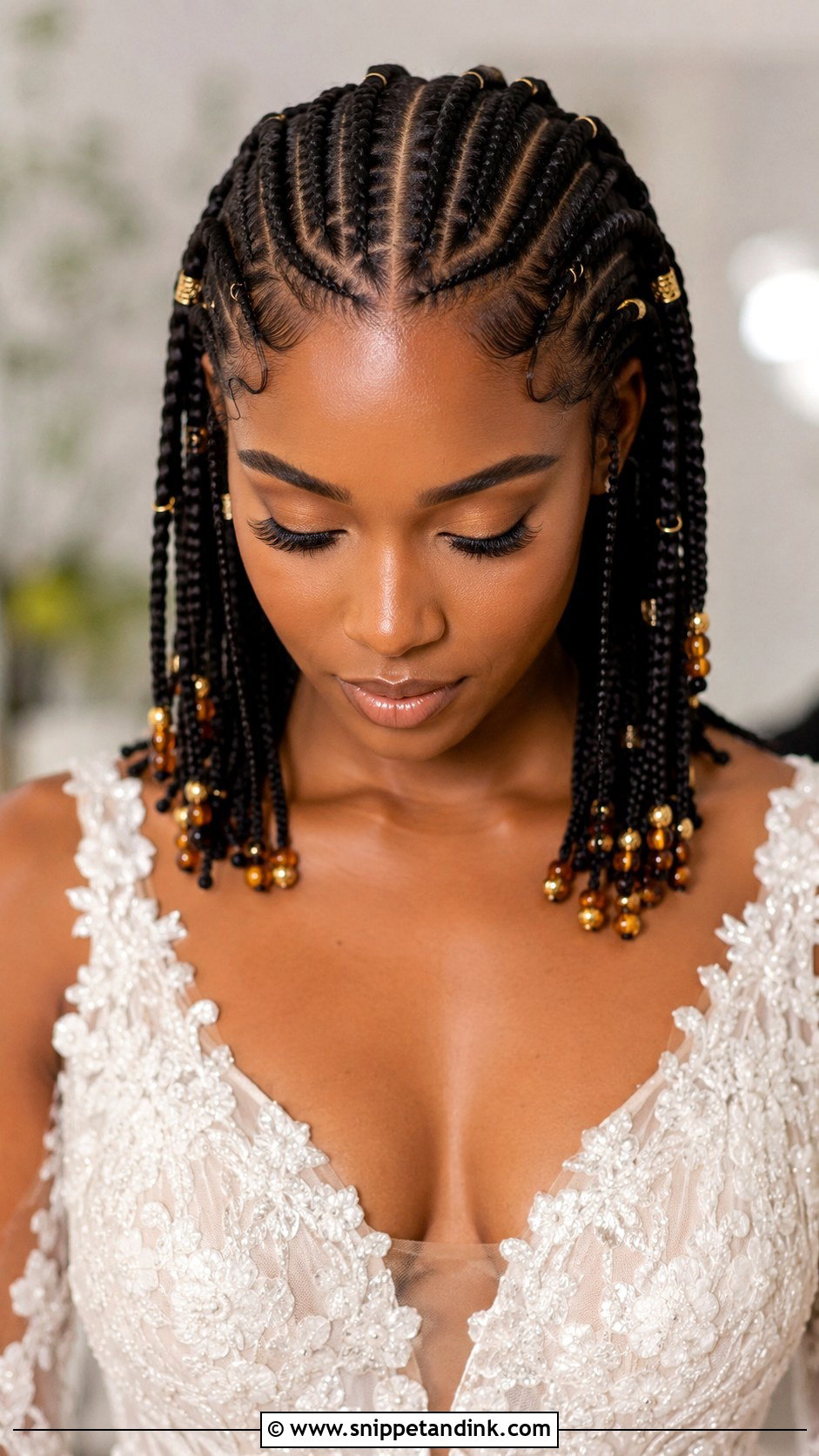
Fulani braids have a set structure: a center part, a cornrow running down the middle, side rows angled toward the face and plaits hanging free. That structure carries meaning, so I don’t treat it as a trend to reshape at will. My one practical check is the cuffs and beads. A dozen metal cuffs add up, and I’d rather see fewer, placed near the face where the camera finds them. Shoulder length moves more freely in a long day; longer lengths can be swept into a loose low bun for the reception.
4. Knotless Braids in a Bridal Bun
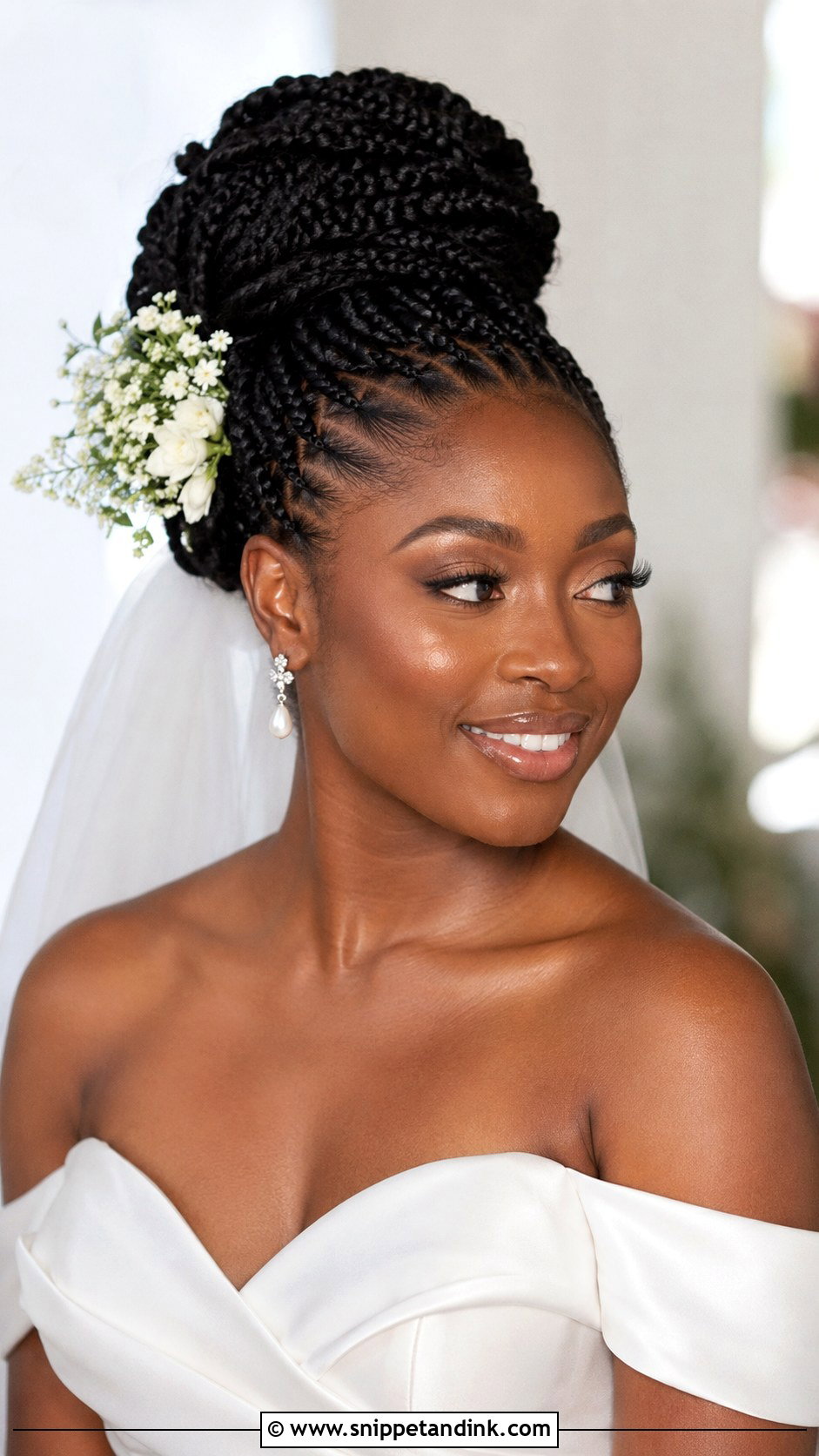
Knotless braids start with your own hair and feed extension in gradually, so there is no hard knot pulling at the root. That’s why they feel lighter and lie so flat. The trade-off is time: a full head is a long appointment, so book it days ahead, never the day before. In a bun, I keep the parts small near the hairline so nothing gappy shows when you tilt your head down at the altar.
5. Fishtail Braid Crown for Boho Brides
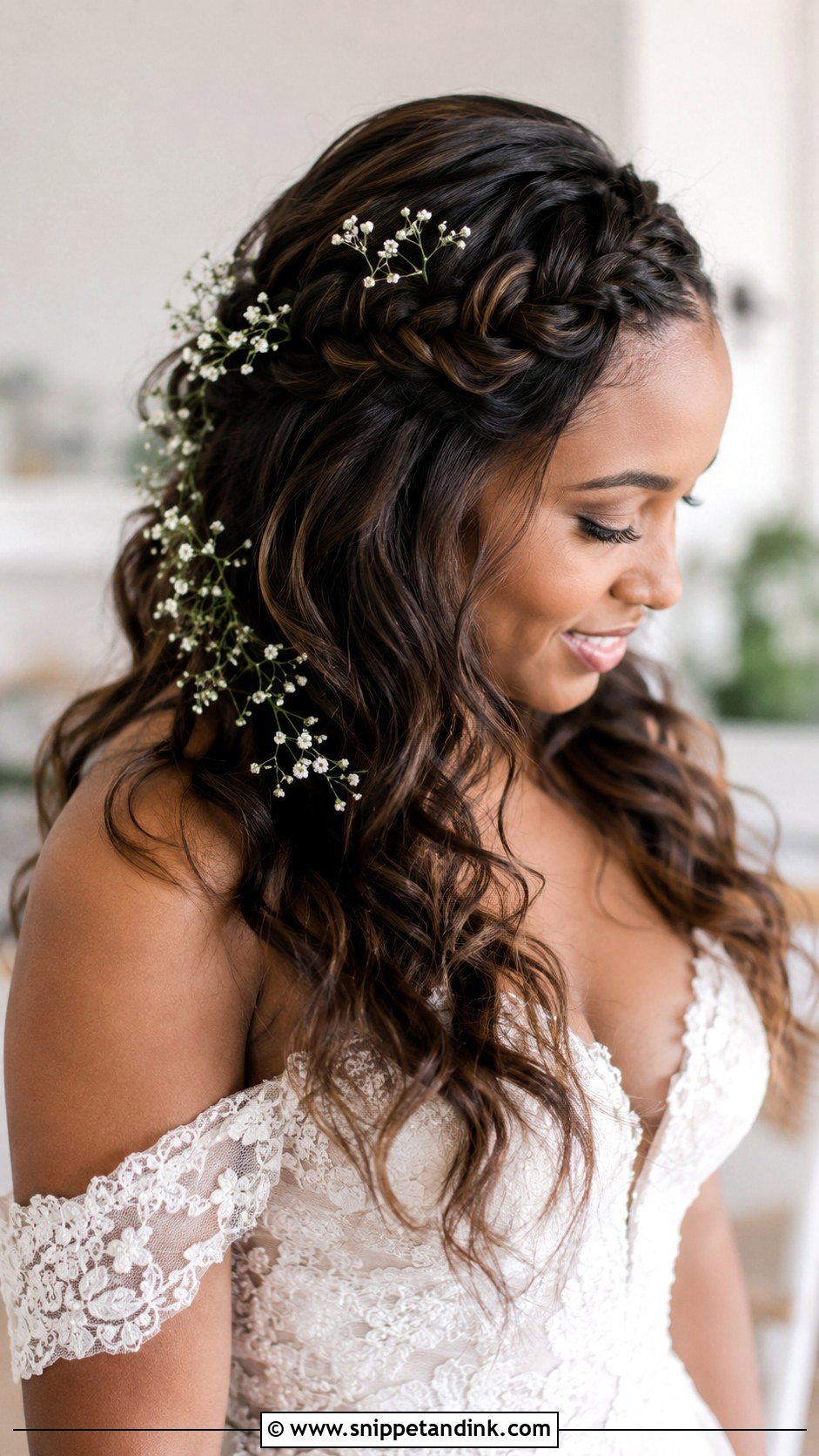
I’ll be honest about this one. A fishtail crown needs stretched or straightened hair, because tight coils shrink back and hide the fine herringbone pattern. On a silk press, humidity can revert it before dinner, so for an outdoor wedding in summer I’d do the fishtail with braiding hair blended in, or choose another style. When conditions suit it, the crown with loose waves underneath is soft and easy to wear, and baby’s breath tucks into the weave without needing wire.
6. Goddess Braids for Black Brides
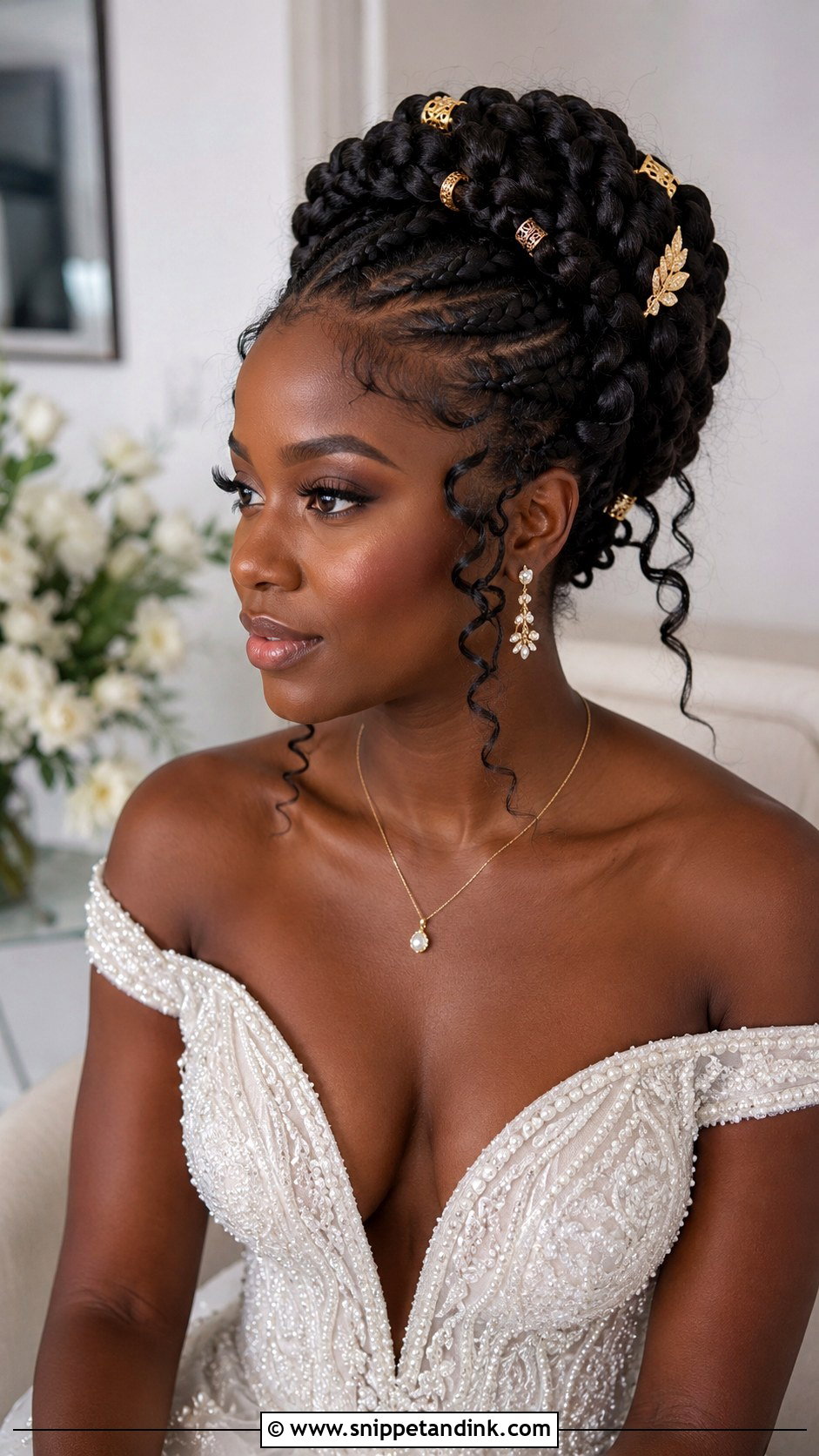
Goddess braids are raised, chunky cornrows with curly pieces left loose along the length. Those curly bits are where trouble starts: synthetic curls tangle by evening, so I steer brides toward human-hair curls if the budget allows, and I pack a small spray bottle of water and leave-in to revive them. Shaped into a halo or swept into a high bun, they have real presence, and a thin gold tiara sits well across the raised rows.
7. Lemonade Braids for Wedding
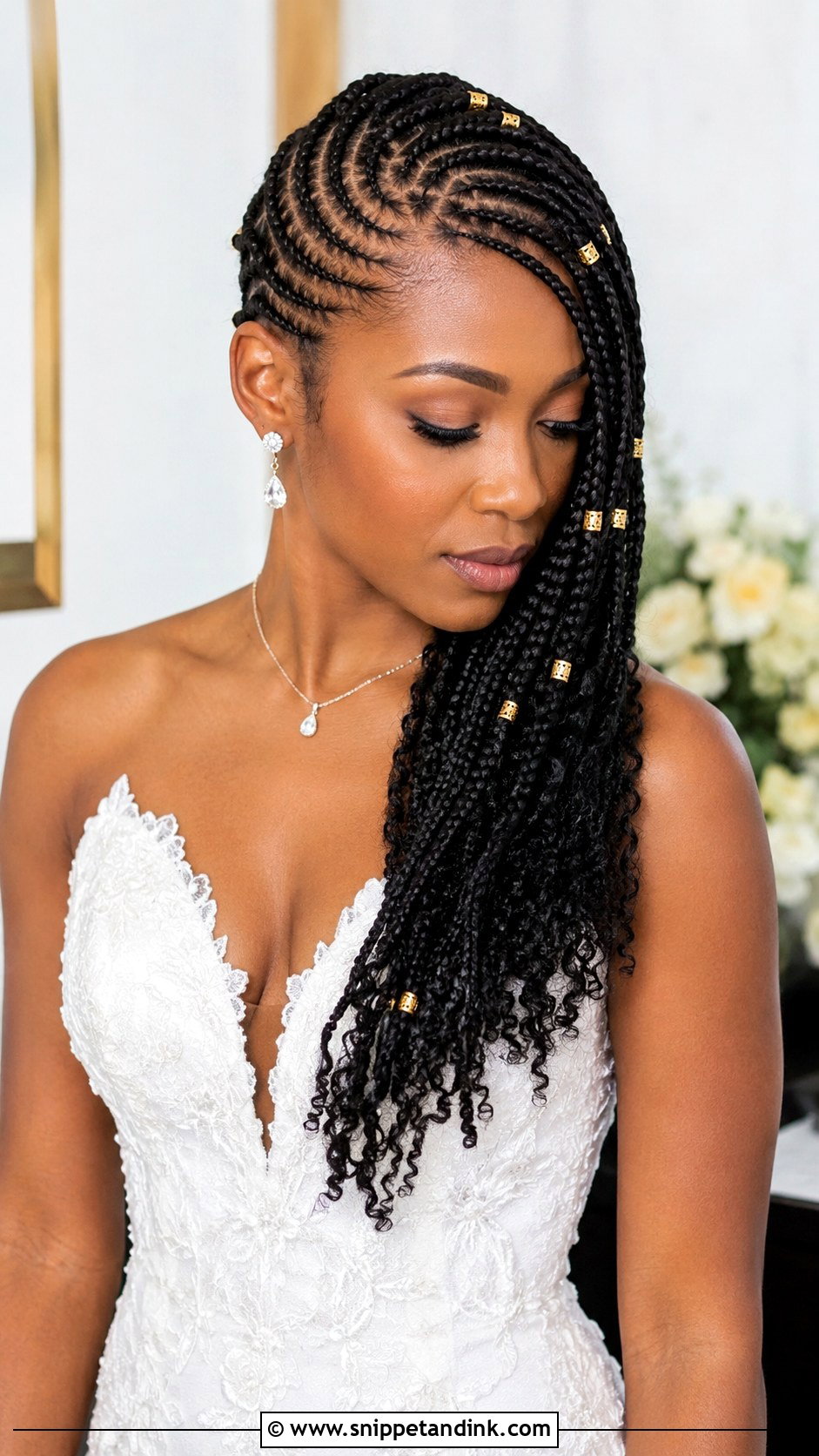
Lemonade braids sweep every row to one side, so think about which side your guests see during the ceremony. If you’ll stand with your left side to the room, put the sweep and your statement earring on that side. Kept long or tucked into a low bun at the opposite ear, the clean diagonal lines show your jaw, and a few gold cuffs near the ends catch the light without crowding the pattern.
8. Halo Braid for Natural Hair Brides
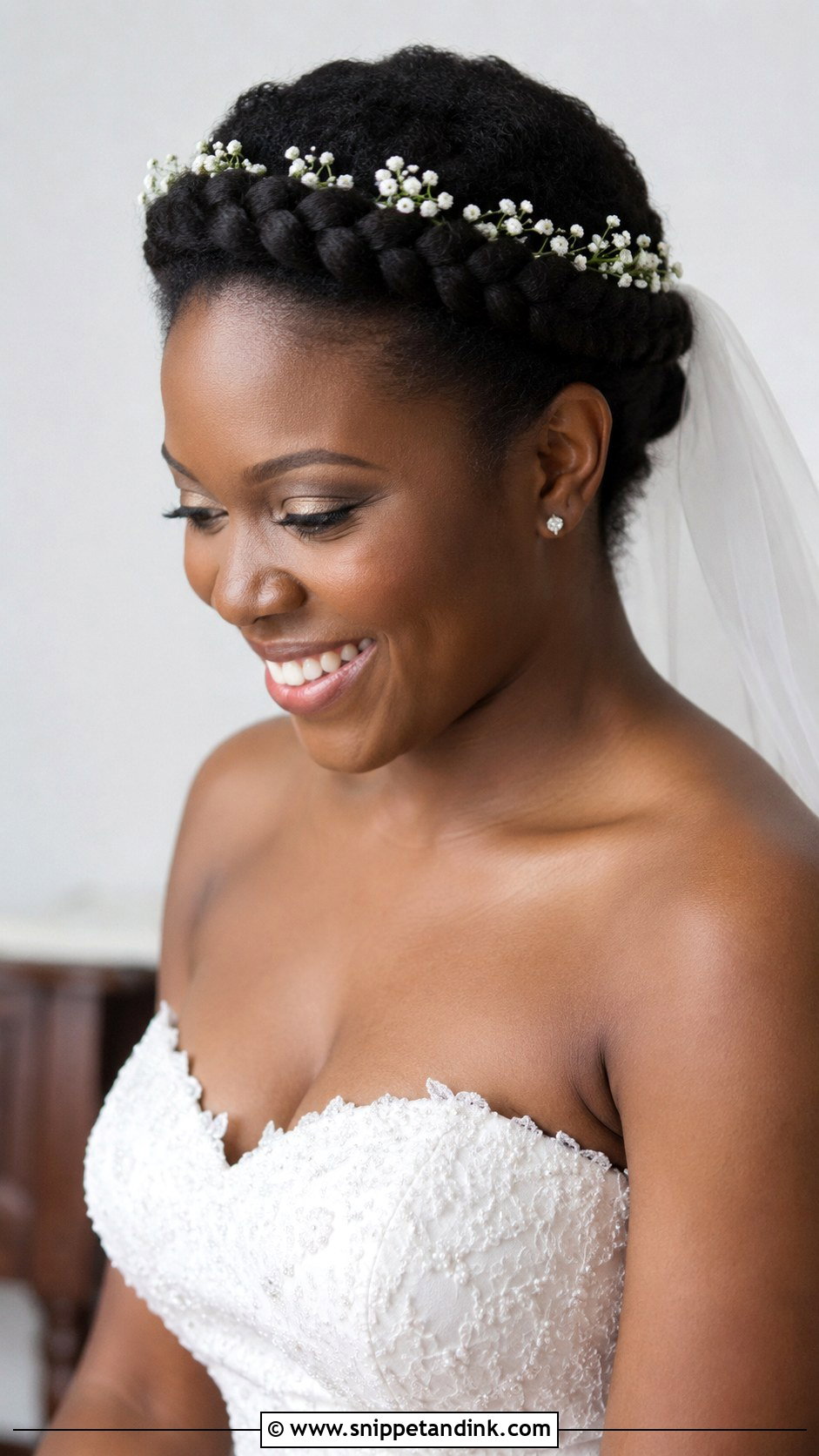
A halo braid circles the whole head, so length decides whether you can do it with your own hair. If your stretched hair doesn’t reach around comfortably, I add braiding hair or a pre-braided halo piece and pin it with crossed bobby pins every few inches. Kept snug it looks classic; pulled out slightly it reads softer. A veil comb goes in just behind the braid, which acts as a ready-made anchor.
9. Jumbo Braids in a High Bun
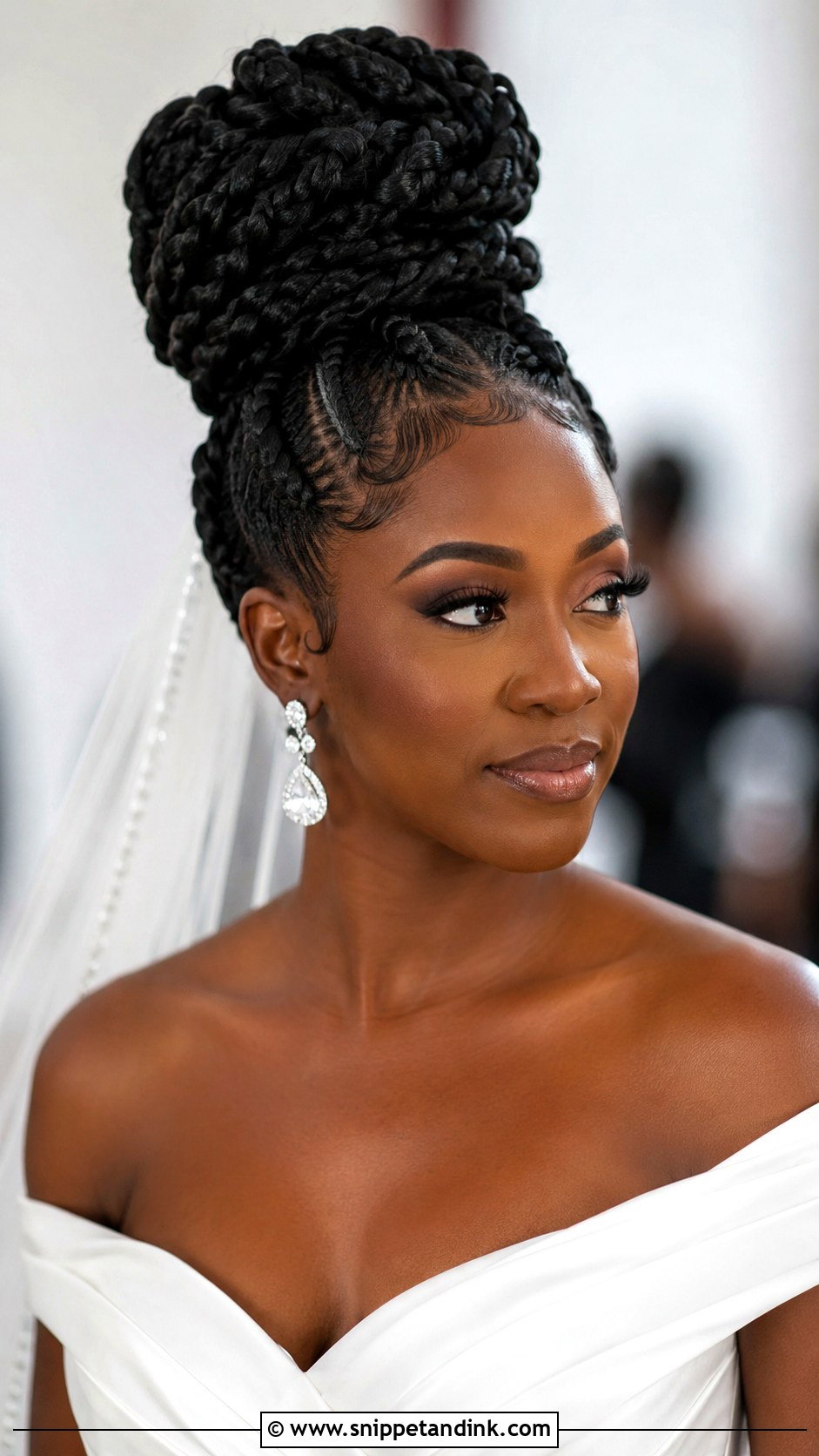
Jumbo braids are quick to install, which helps when the wedding week is already full. The catch is that fewer, bigger braids mean bigger parts, so more scalp shows; I ask for neat, squared parts if you’ll wear them in a high bun where the back is on display. A high bun of jumbo braids also gets heavy, so wrap the base with a braid instead of adding more hair. It keeps your neckline open and earrings fully in view.
10. Tribal Braids for Black Wedding
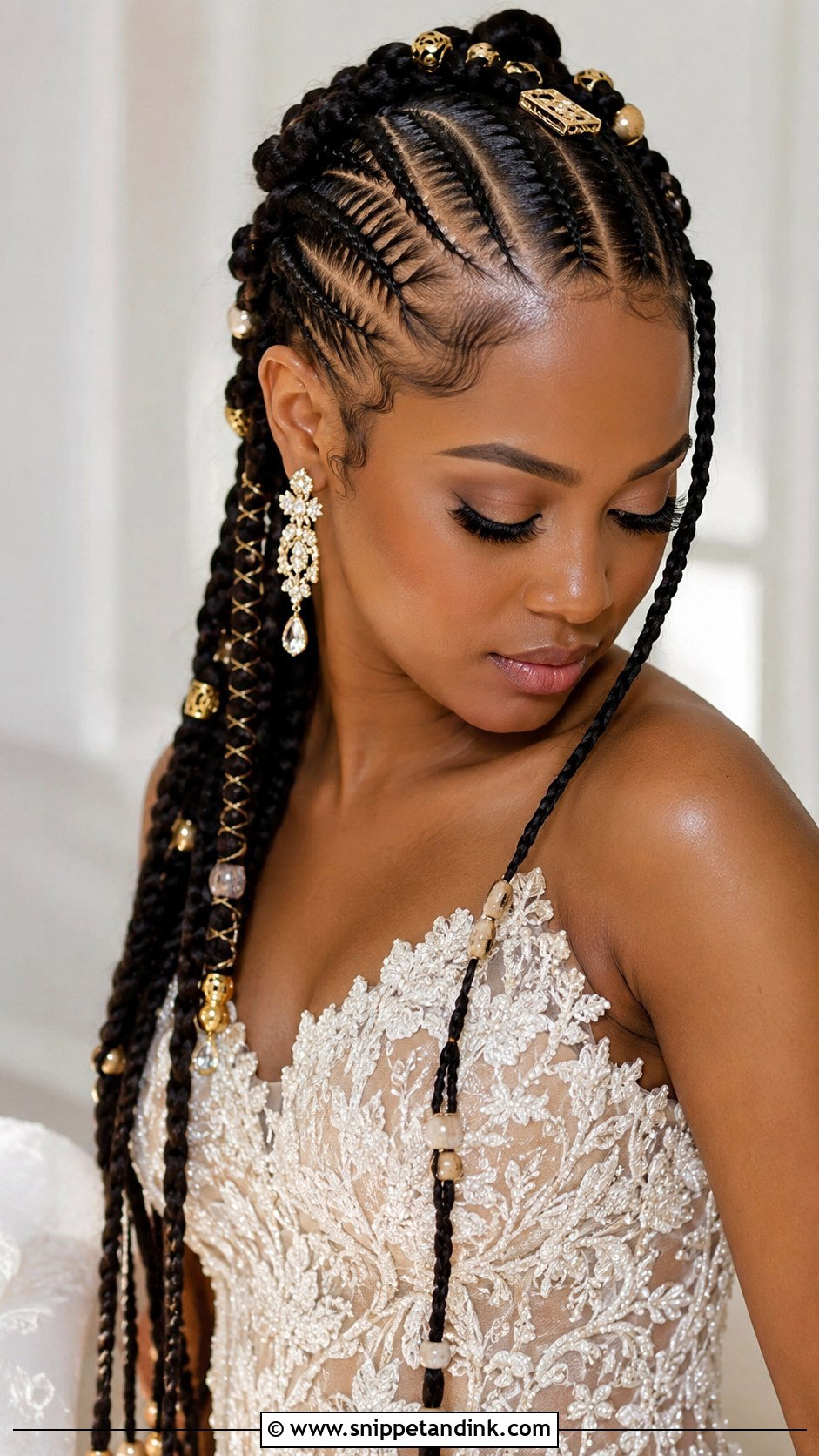
Tribal braids mix sizes and directions, often with a cornrow pattern up front and free braids behind, finished with beads or cuffs. The detail lives in the parting, so I want a braider who maps the pattern before starting, not one who improvises halfway. Worn down, half-up or in an updo, the varied sizes give texture you can see from the back row. Gold accessories suit it, but keep them to the ends and the face frame so the scalp pattern still reads.
11. Dutch Braid Into a Sleek Low Bun
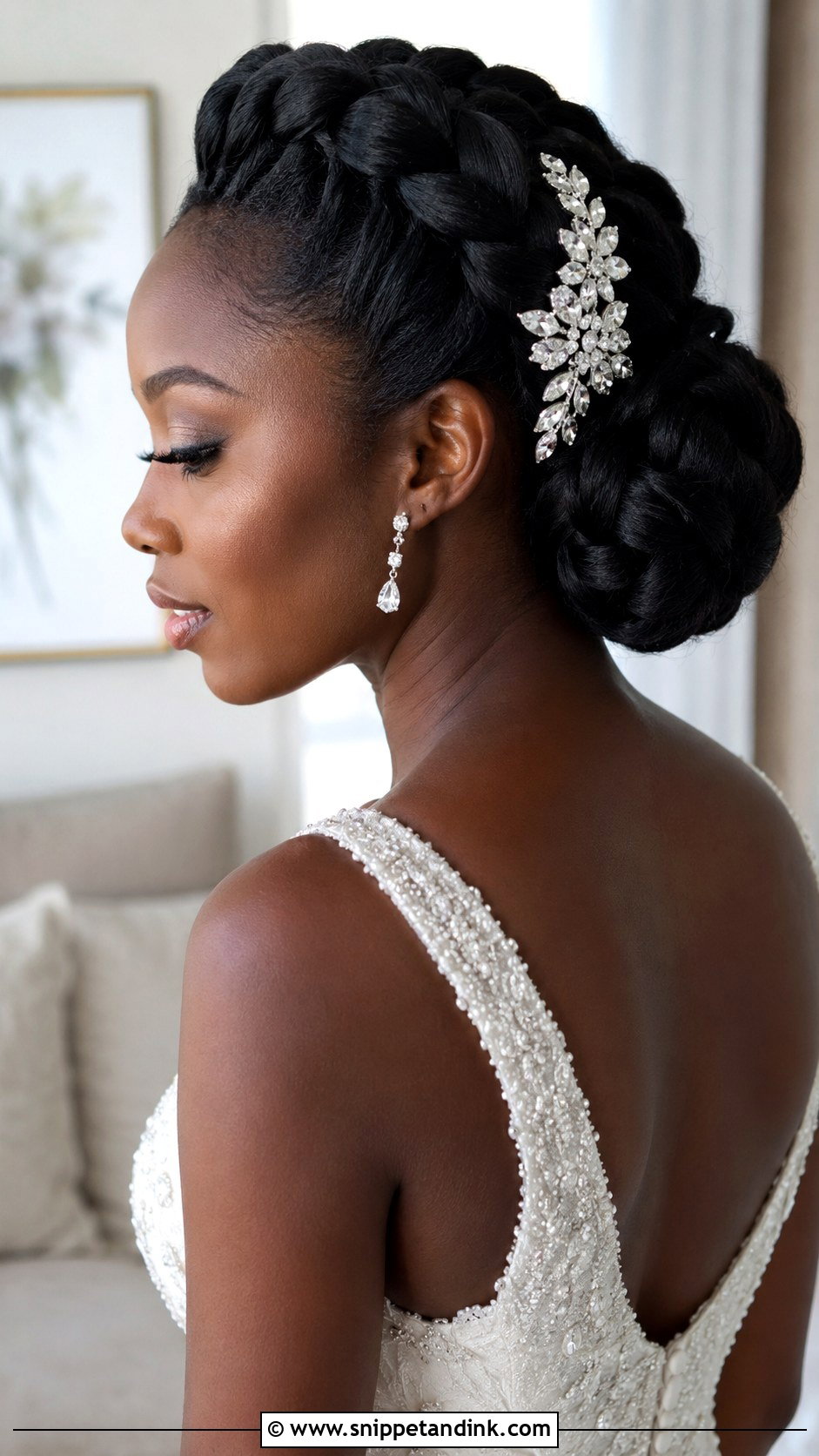
A Dutch braid is woven under rather than over, so it sits raised on the head. Running from the crown into a sleek low bun, it gives a formal look with one clear line of detail. On natural hair I stretch it first with a low-heat blow-dry so the braid looks even. It holds well enough to dance in, and a veil or a single sparkly clip at the bun is all it needs.
12. Cornrow Updo With Curls
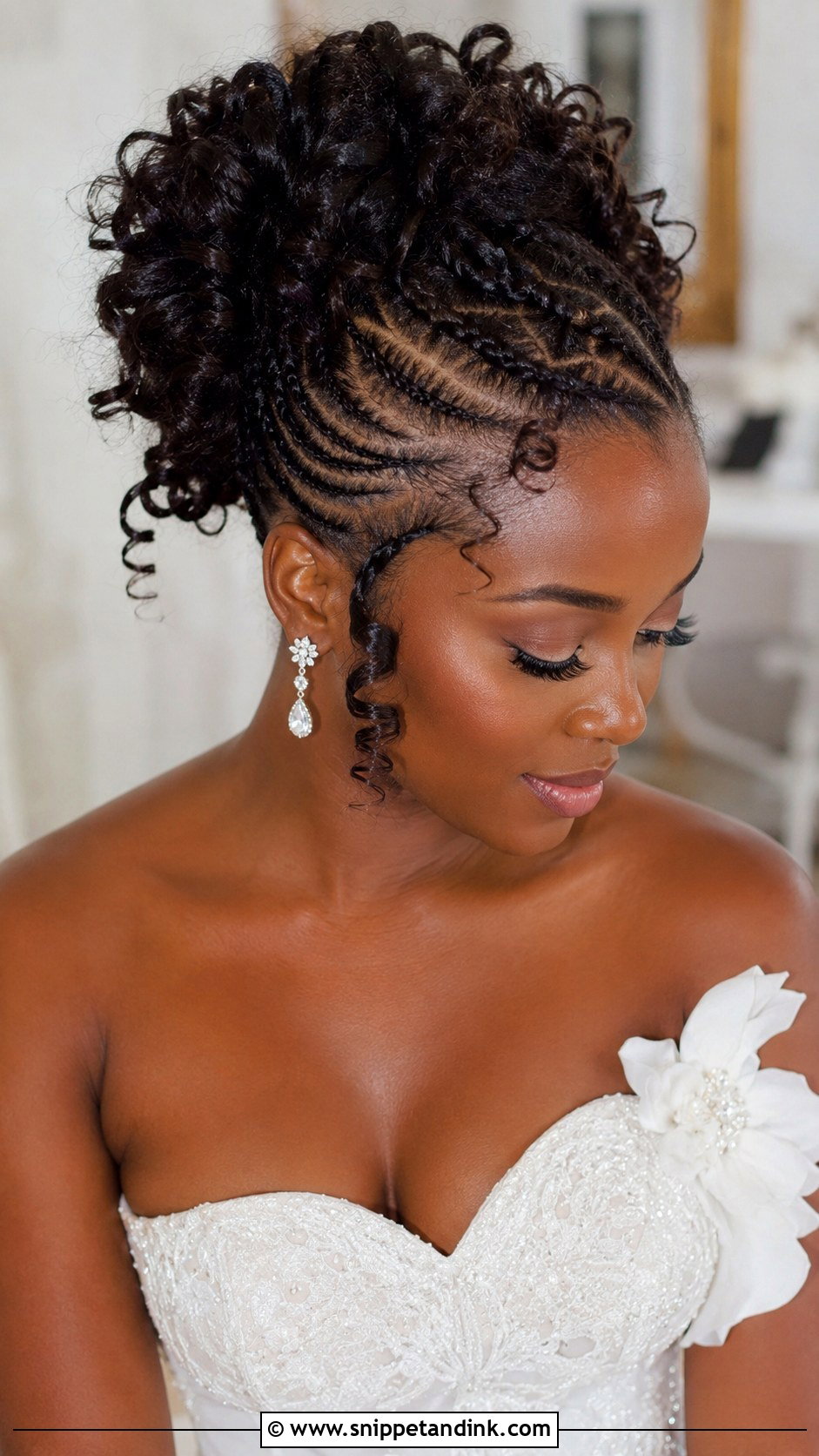
This is my pick for a bride who wants both structure and movement. Cornrows lead back to a section of curls, set on flexi rods the night before or added with curly hair if your own pattern won’t hold. In humid weather the curls are what change first, so I’d put the curl section into a loose updo rather than leave it hanging. A pin or small flower where braid meets curl hides the transition.
13. Feed-In Braids for Wedding Day
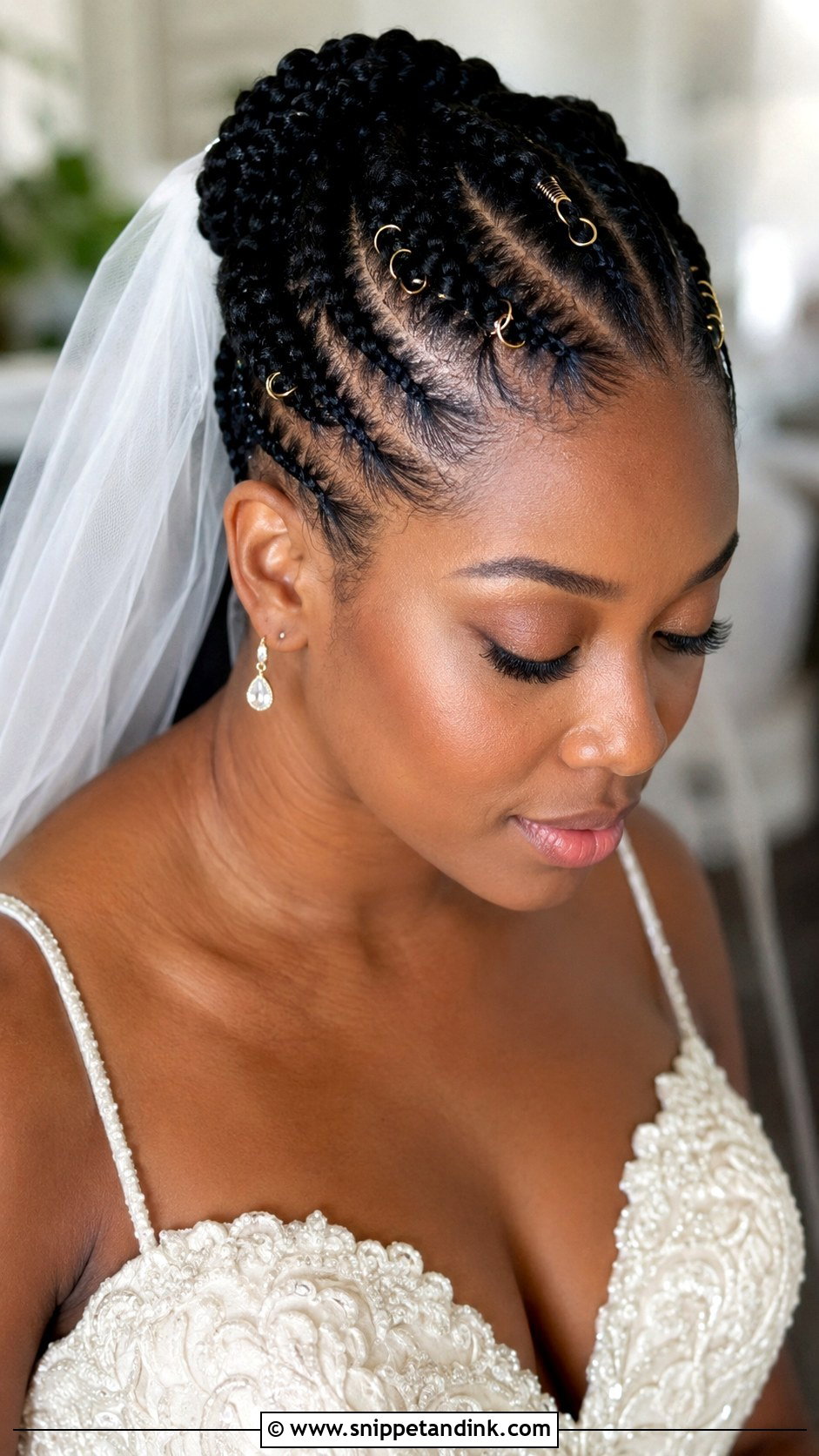
Feed-in braids start with a tiny amount of extension at the hairline and add more as the braid travels back, which keeps the weight off your edges. That gentleness is why I suggest them to brides whose hairline is already fragile. The tapered root looks like your own hair growing into the braid. Styled up, into a ponytail or left down, they take gold rings well, but stop short of adding so many that the light front braids get dragged.
14. Braided Crown With Fresh Flowers
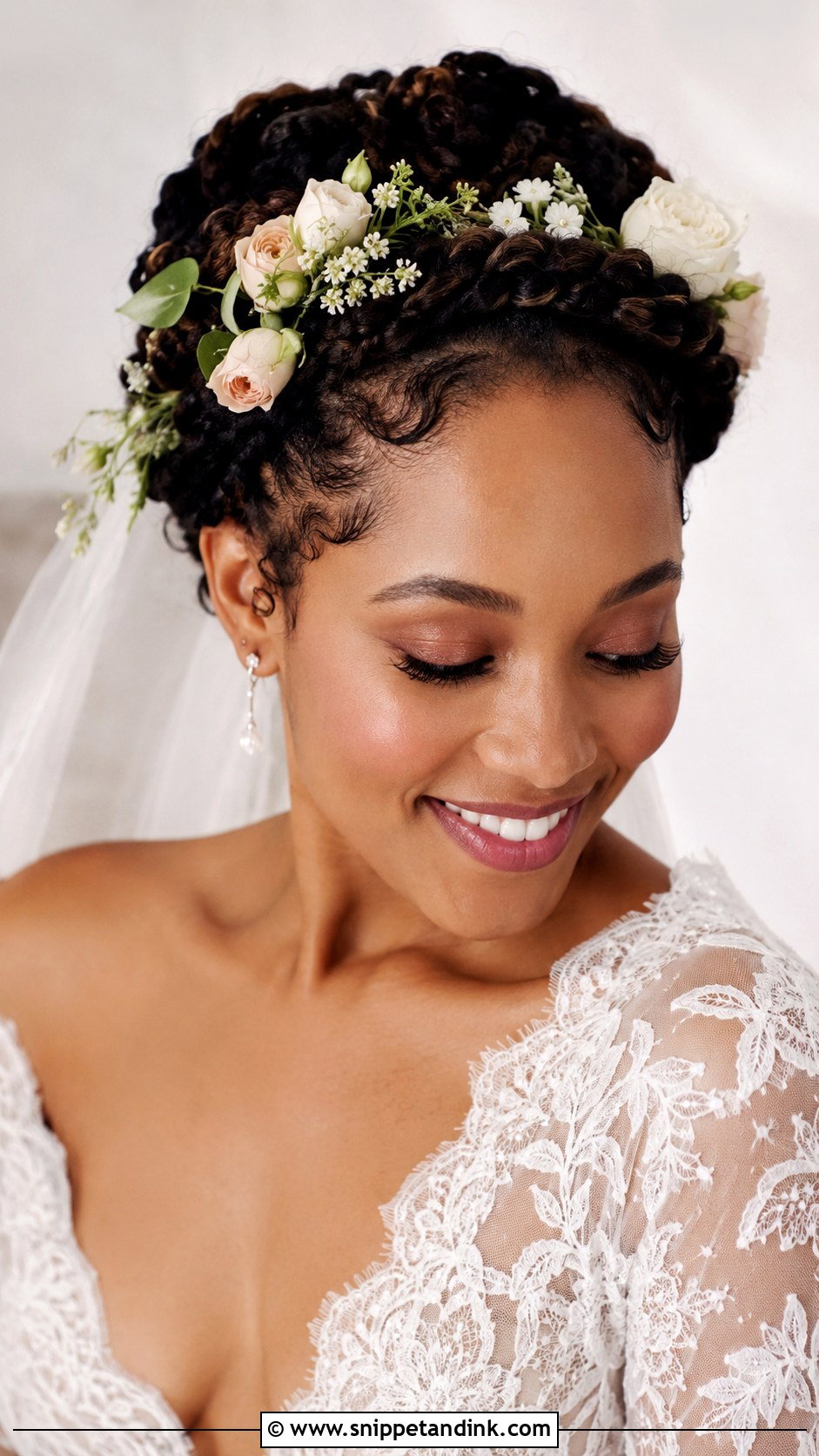
Fresh flowers in a braided crown have to survive hours without water, so this is a job I plan with the florist. Spray roses, wax flower and small orchids hold up; soft garden roses and hydrangea wilt quickly against a warm head. I ask for the blooms wired or taped into small picks and add them last, after the braids are set. Matching them to your bouquet ties the look together, and a few spares in a cooler let you swap any that droop before the reception.
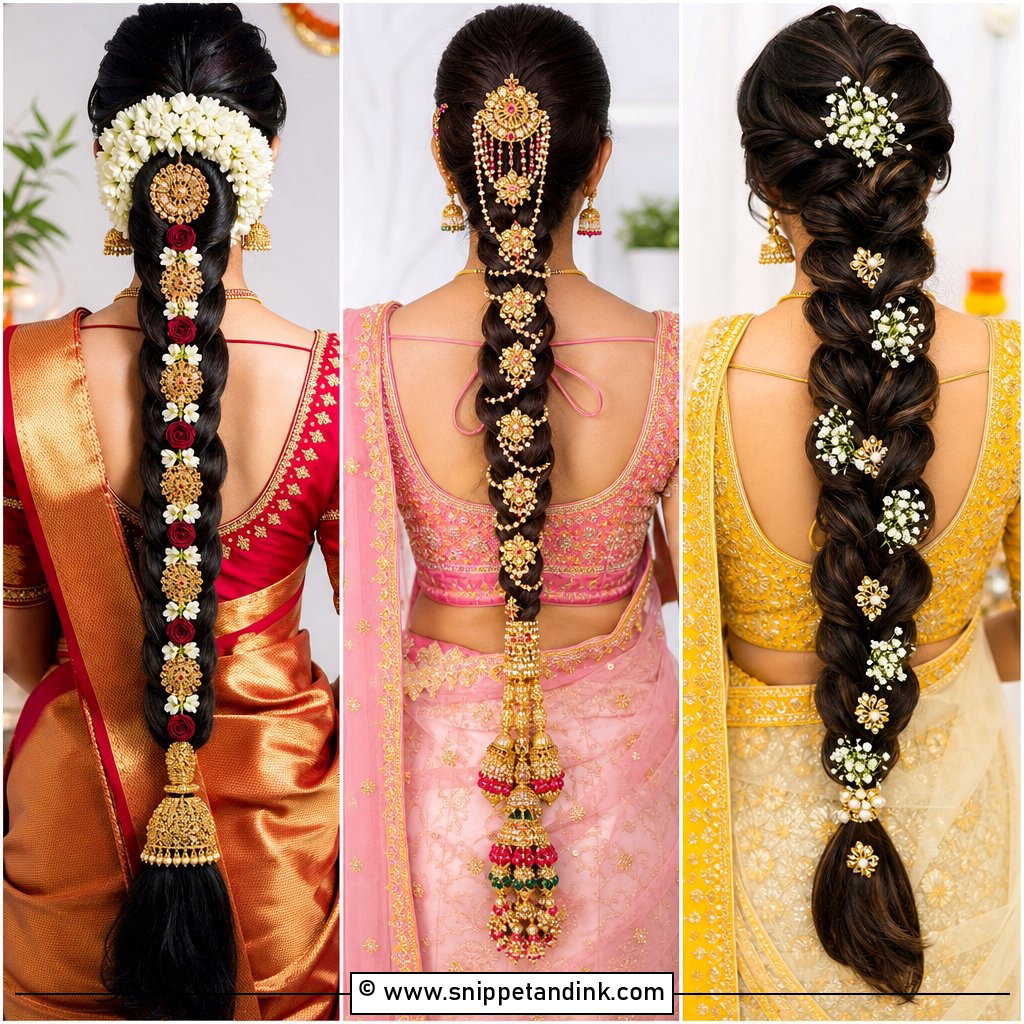
15. Half-Up Half-Down Braided Style
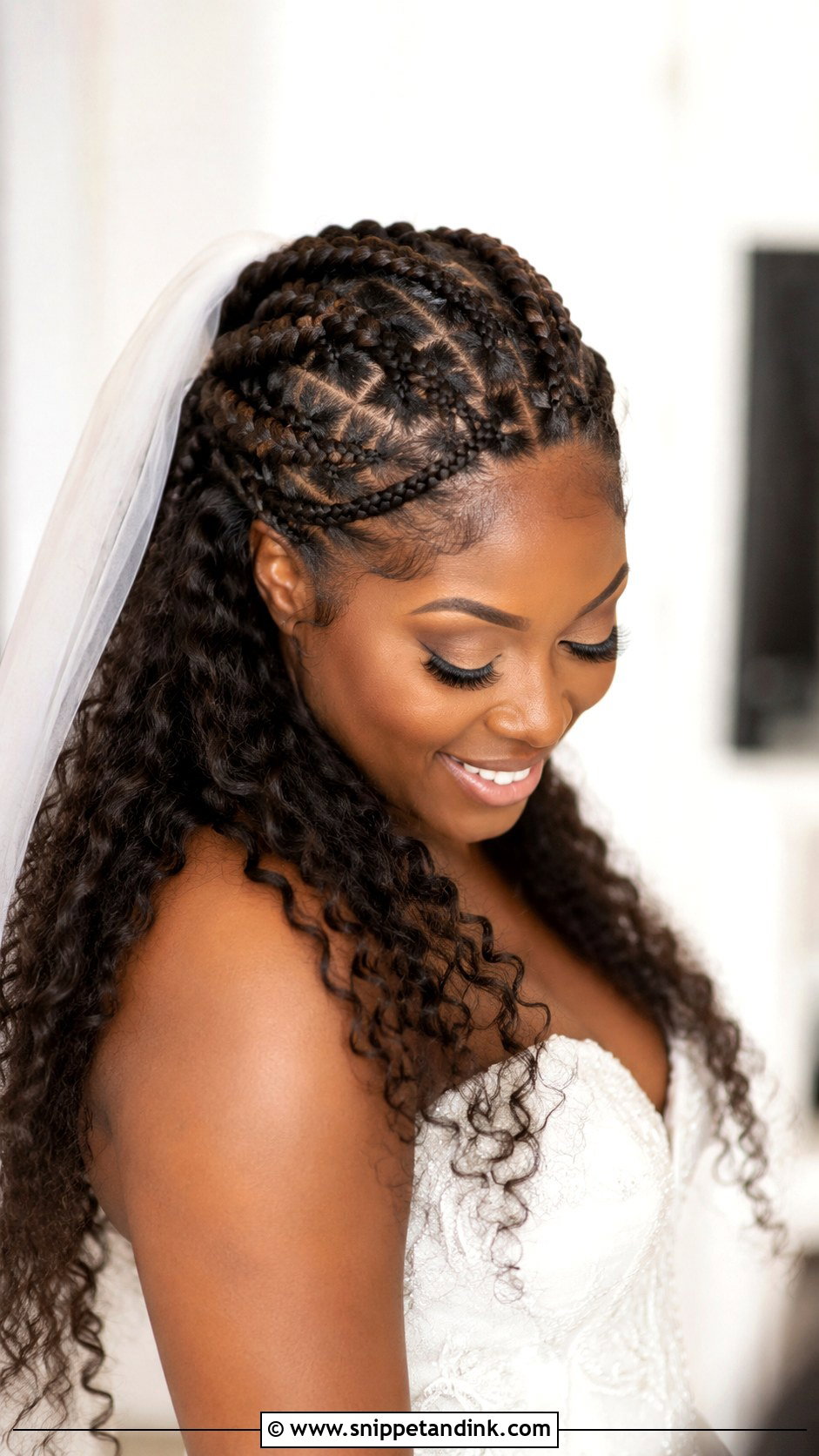
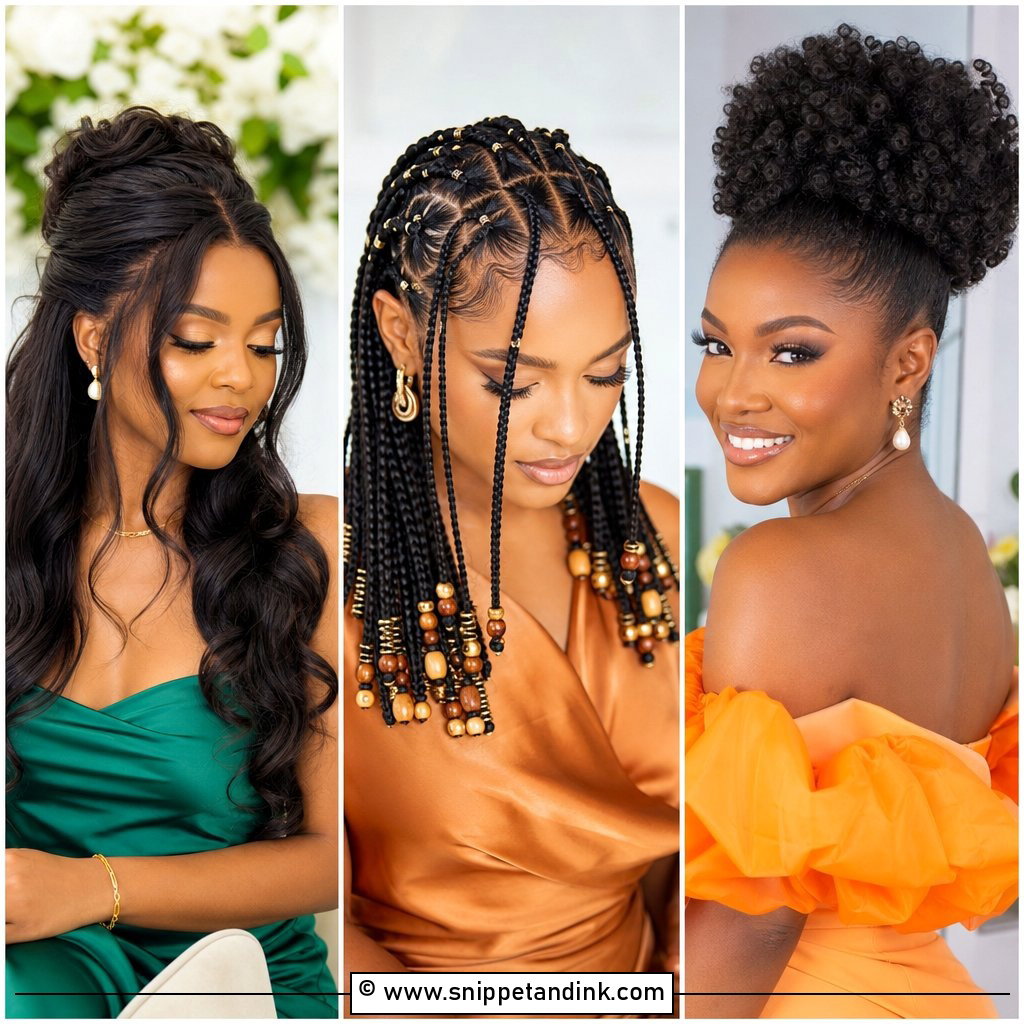
Half-up, half-down braids give you length in photos while keeping your face clear. The braided top is secure; the loose half is what reacts to weather. If that loose half is your own stretched or curled hair, I set it well and treat humidity as the deciding factor. If the loose half is braids too, there’s almost nothing to worry about, and it falls well under a veil.
16. Ghana Braids for Black Brides
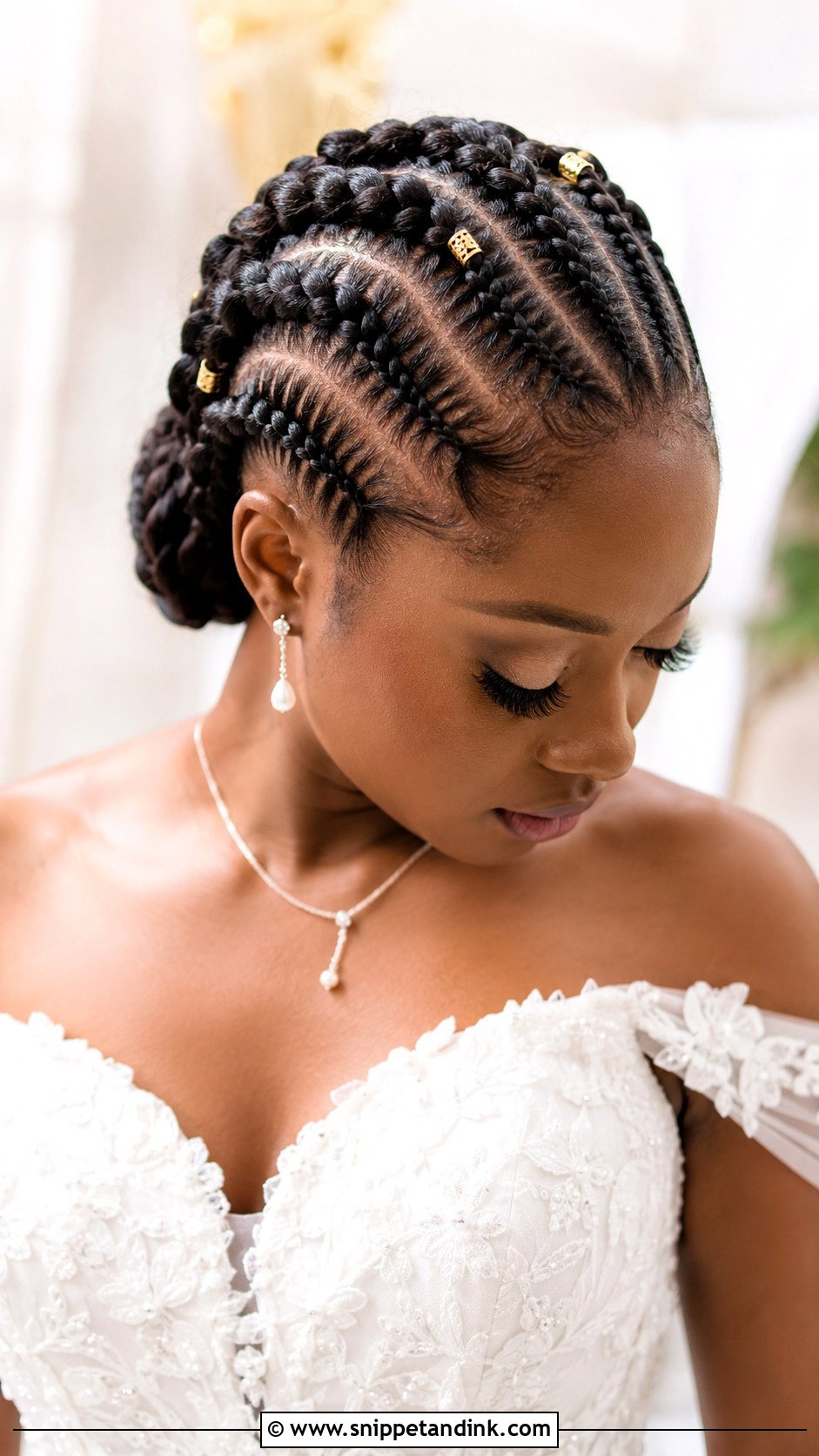
Ghana braids taper from thin to thick as they run back, because extension is fed in a little at a time. That gradual build is what gives them the clean, dimensional look. I like them for ceremonies where guests spend a long time looking at the back of your head, since the pattern can sweep, curve or zigzag into an updo. They’re low maintenance once installed, and a few gold cuffs at the ends are plenty.
17. Braided Ponytail for Wedding
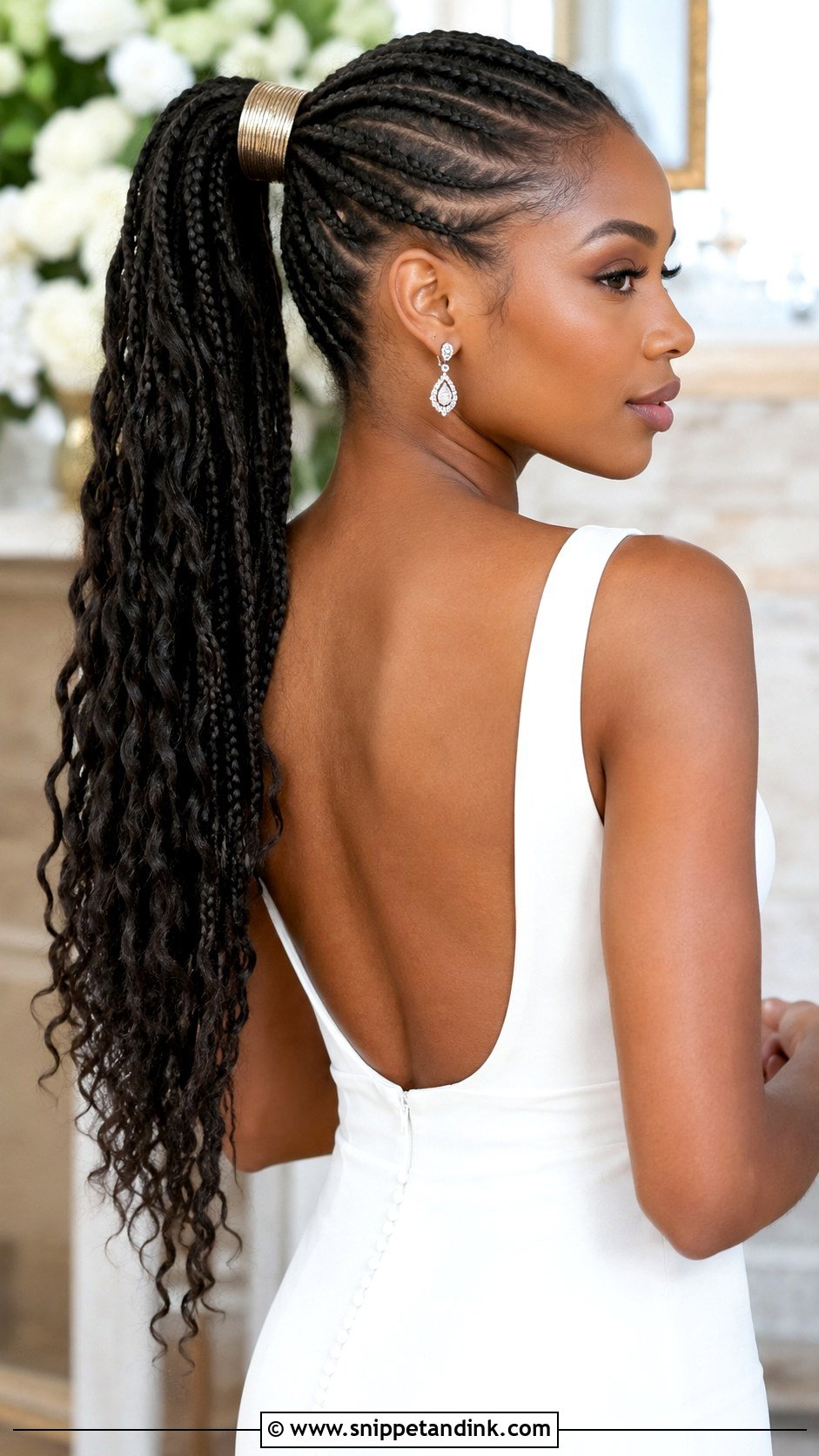
A braided ponytail is fun and practical, but height matters. A high ponytail of long braids puts all its weight on one point, and by late evening many brides get a headache from it. A low ponytail sits easier and pairs better with a veil. Either way, I wrap one braid around the base to hide the elastic and finish with a small clip or two cuffs.
18. Twisted Braid Updo
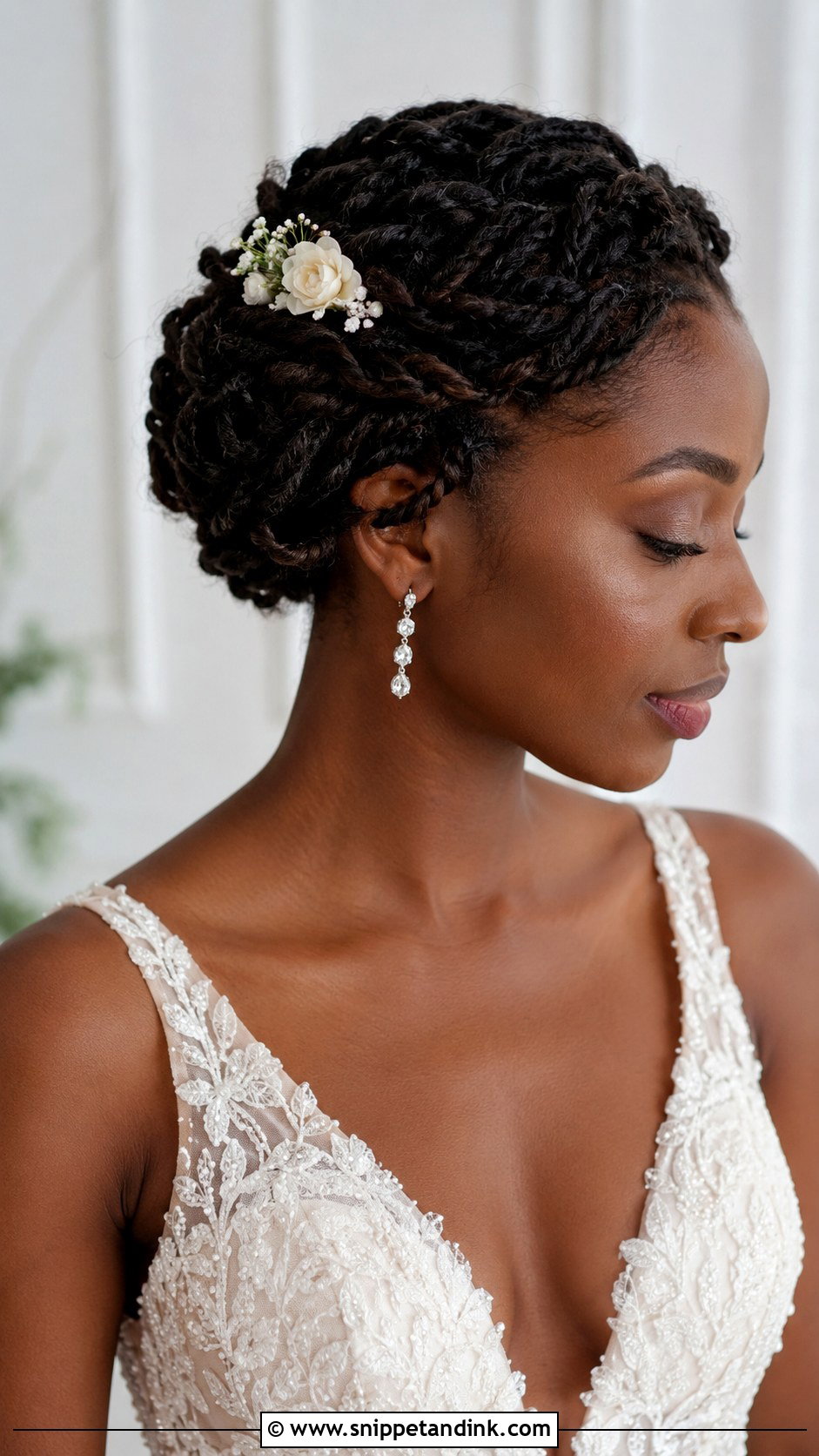
Twists use two strands instead of three, which gives that rope texture but also means the ends can unravel more easily than braids. I seal synthetic ends with hot water and keep the twists slightly shorter for an updo. Lifted off the neck, they’re comfortable all day and gentle on natural hair. Pull a few pieces loose around the face for softness, and add pins or a small hairpiece where the twists gather.
19. Cornrows With Beads for Wedding
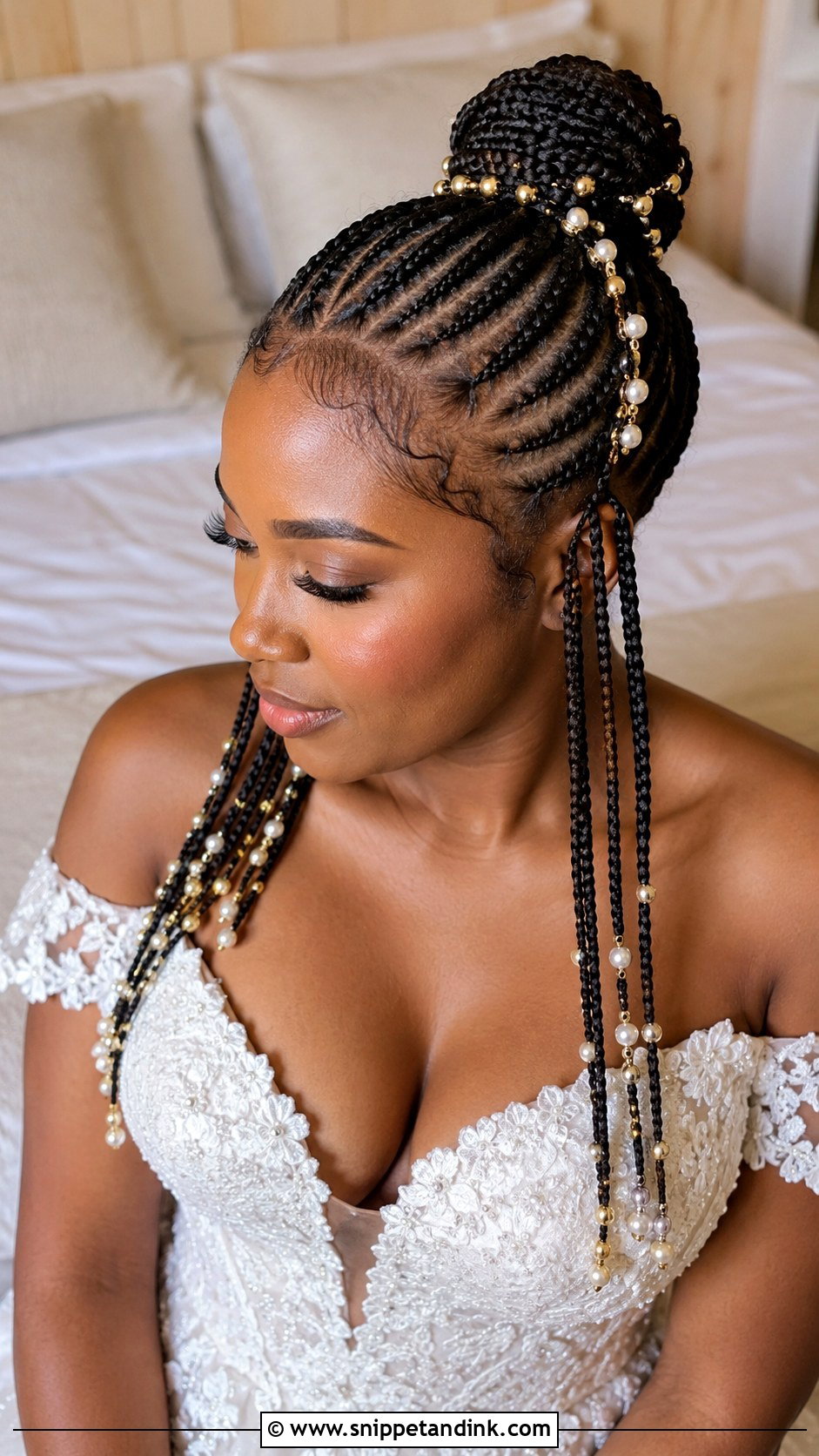
Beaded cornrows add sound and movement, and that’s exactly why I check two things at the trial. First, weight: wooden and acrylic beads are lighter than glass or metal on long braids. Second, the veil: tulle can catch on bead edges, so I place beads below where the veil falls or skip the veil for this one. Gold, pearl or colored beads can match your palette, worn down, in a ponytail or up.
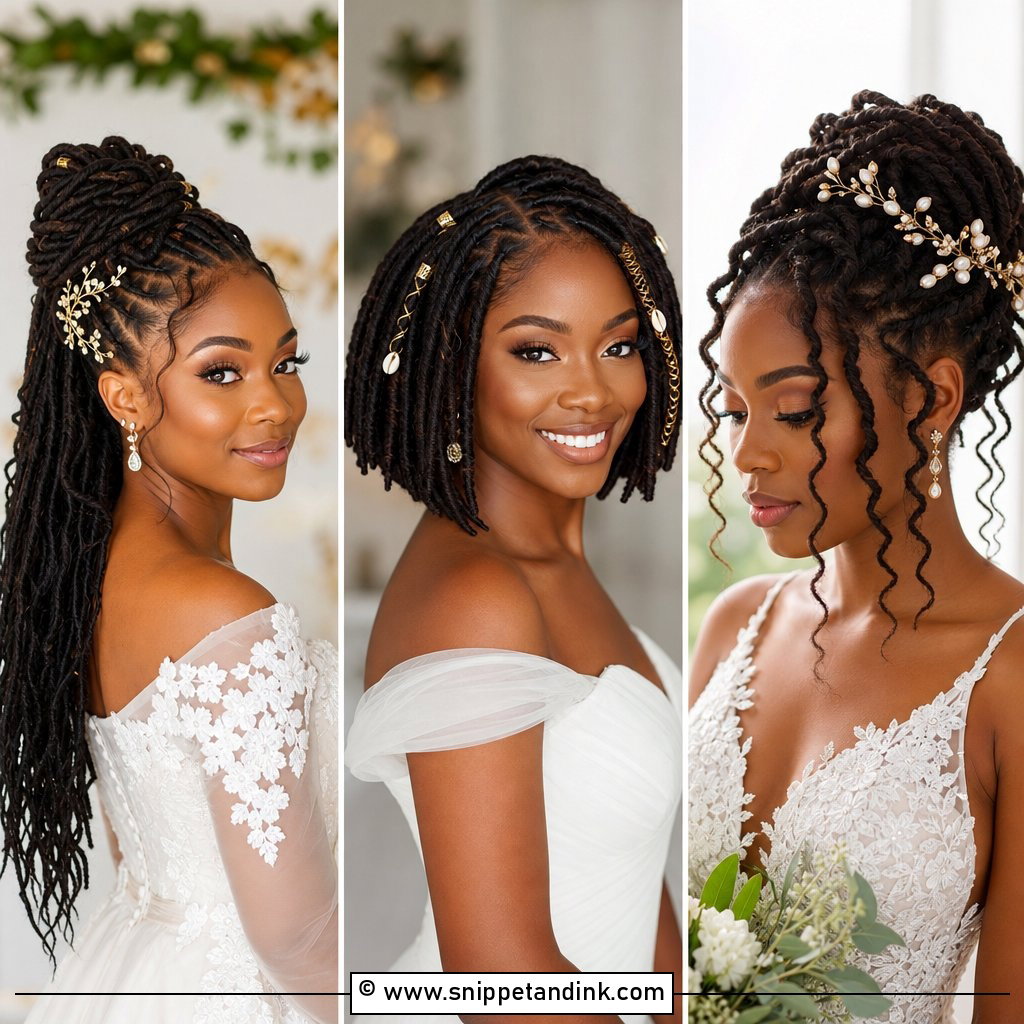
20. Braided Low Bun With Baby Hairs
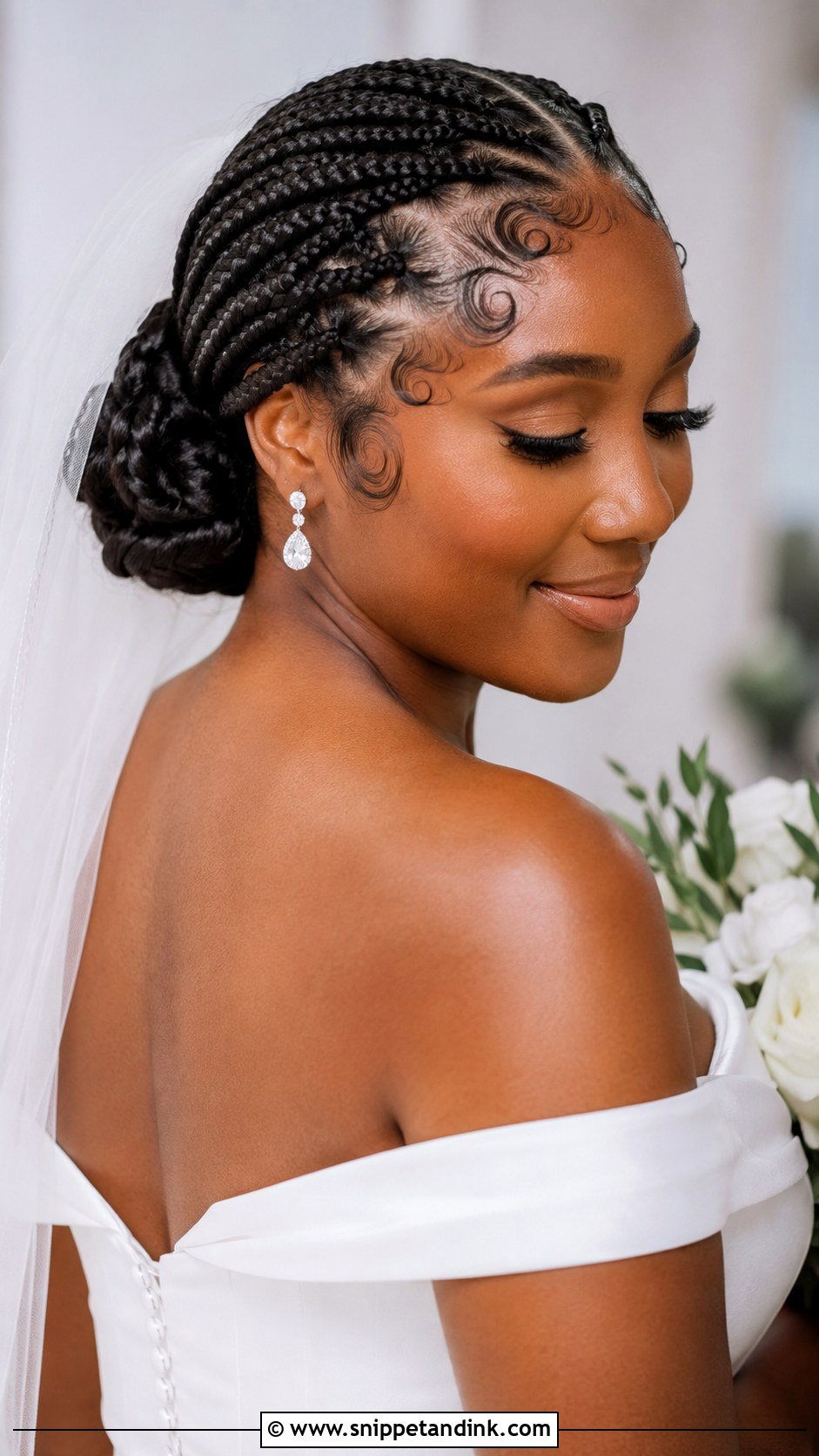
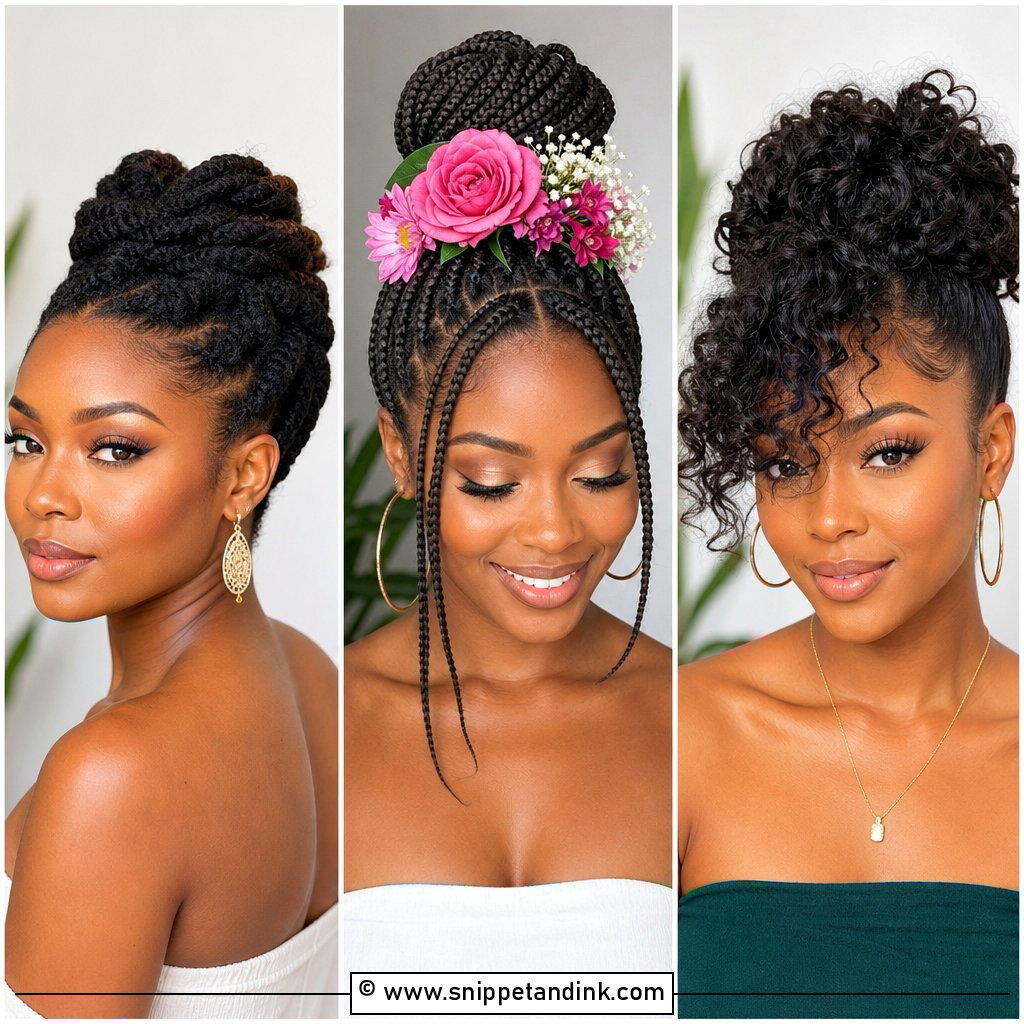
A braided low bun with swirled baby hairs puts all the attention on your face. The bun is easy; the edges are the detail that needs care. I lay them with a light edge control, tie a scarf over them for ten minutes to set, and never brush fragile edges over and over. Sweat can soften the swirls by the reception, so a small edge brush in your clutch fixes them in a minute. It looks polished from the front and the back, and a single clip at the bun is plenty.
Carrying the Weight: Veils, Cuffs and an Itchy Scalp on the Day
Braids don’t fall, but they do get heavy. Add a cathedral veil and twenty cuffs to a waist-length bun and many brides feel it by the speeches. At the trial I put the full veil on and leave it for an hour. If your neck aches, we shorten the braids, move the comb lower or take accessories off.
Anchoring the veil
A veil comb slides out of smooth braids. I slide it under a cornrow or a few braids at the base of the bun, then lock it with two bobby pins crossed in an X. For long veils, a few stitches of thread through the comb into a braid hold it through hugs and wind.
Scalp comfort and the night before
- Sleep in a satin bonnet or scarf so the braids and laid edges stay neat.
- For itching, dab a cotton pad with a little witch hazel along the parts instead of scratching; a light scalp oil helps too.
- Keep an edge brush, a travel gel, bobby pins and a satin scarf in your bag for the photos after dinner.
After the wedding, don’t let the install stretch too long. Most protective styles should come out within six to eight weeks, then detangle gently with plenty of conditioner before your next style goes in.
Matching the Braid to Your Hairline, Your Veil and Your Day
The best braided style is the one your scalp can carry comfortably from getting ready to the send-off. Size, length and accessories matter as much as the shape, so bring photos to your braider and stylist and say plainly how long the day runs. If you’re between a few options, from bold box braids to sleek cornrow buns, let your hairline decide: gentle tension now means healthy edges after the honeymoon. Book the install early, try the veil on top, and you’ll walk out with hair you never have to think about once the music starts.
You'll Like These Ideas:


Leave a Reply