
Most of the brides who sit in my chair already know the look they want. What they usually haven’t been told is how their own texture, density and wedding timeline will treat it. A coily afro with fresh flowers, goddess braids finished with pearls, a silk press for a black tie room: each one asks something different of your hair and of your calendar. Below are 20 bridal hairstyles handpicked to inspire the walk down the aisle, with notes from the styling side on what holds, what shrinks and what needs planning weeks ahead.
Your Hair Calendar From Install Day to Wedding Morning
Timing does more for a natural or protective bridal style than any product. Most of the problems I fix on wedding mornings come from something done too early or too late.
- Braids, twists and Fulani styles: install roughly a week before. Fresh braids feel tight and look stiff in photos, and a week lets the scalp settle without the style looking fuzzy.
- Locs: book the retwist one to two weeks out so roots are neat but not tender.
- Cuts and shape trims on curly bobs: about two weeks before, never the week of the wedding.
- Silk press or blowout: one to two days before, then wrap it each night and keep it away from steam.
- Twist outs and wash-and-go styles: wash and set the day before so the hair is fully dry by morning.
Have a trial with the exact accessories, veil and any added hair you plan to use. Wear it for several hours afterward. A style that feels fine in the chair can start pulling at the nape by the fourth hour, and the trial is where you find that out.
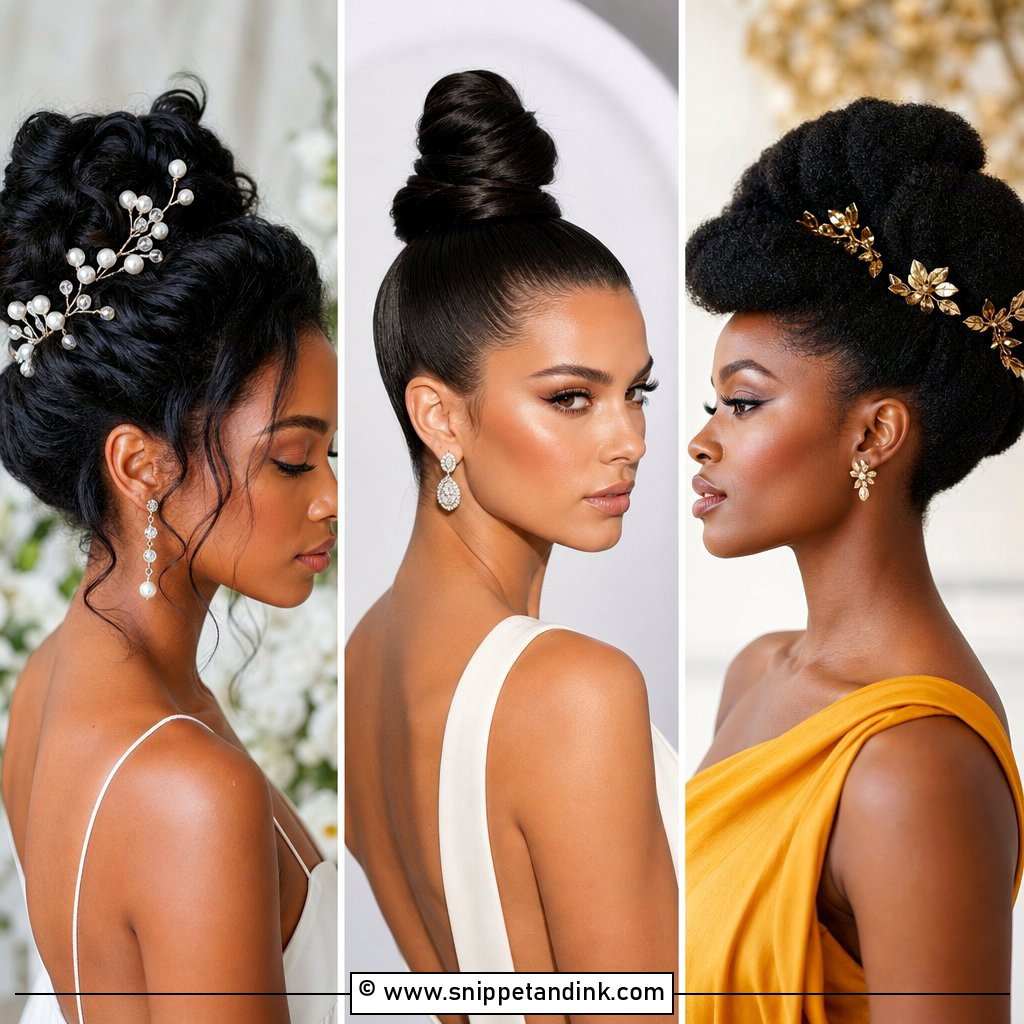
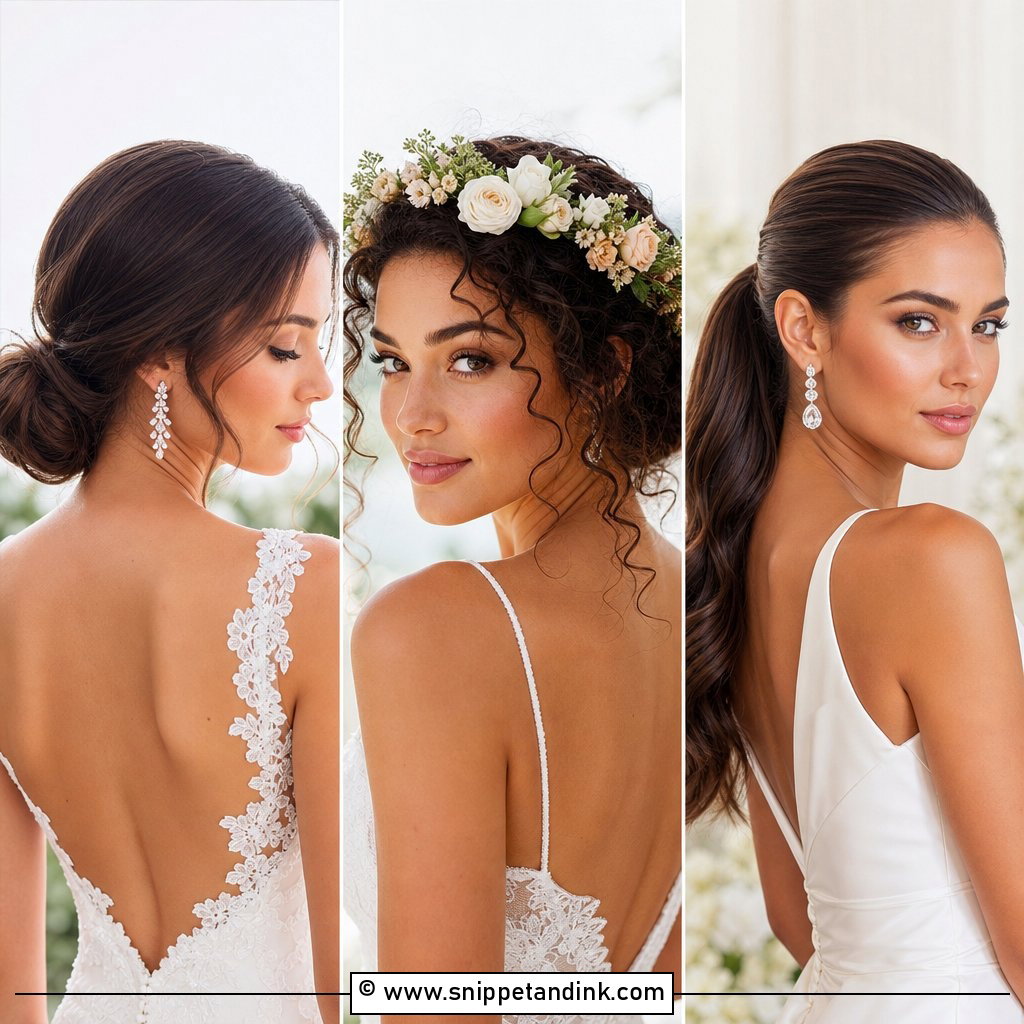
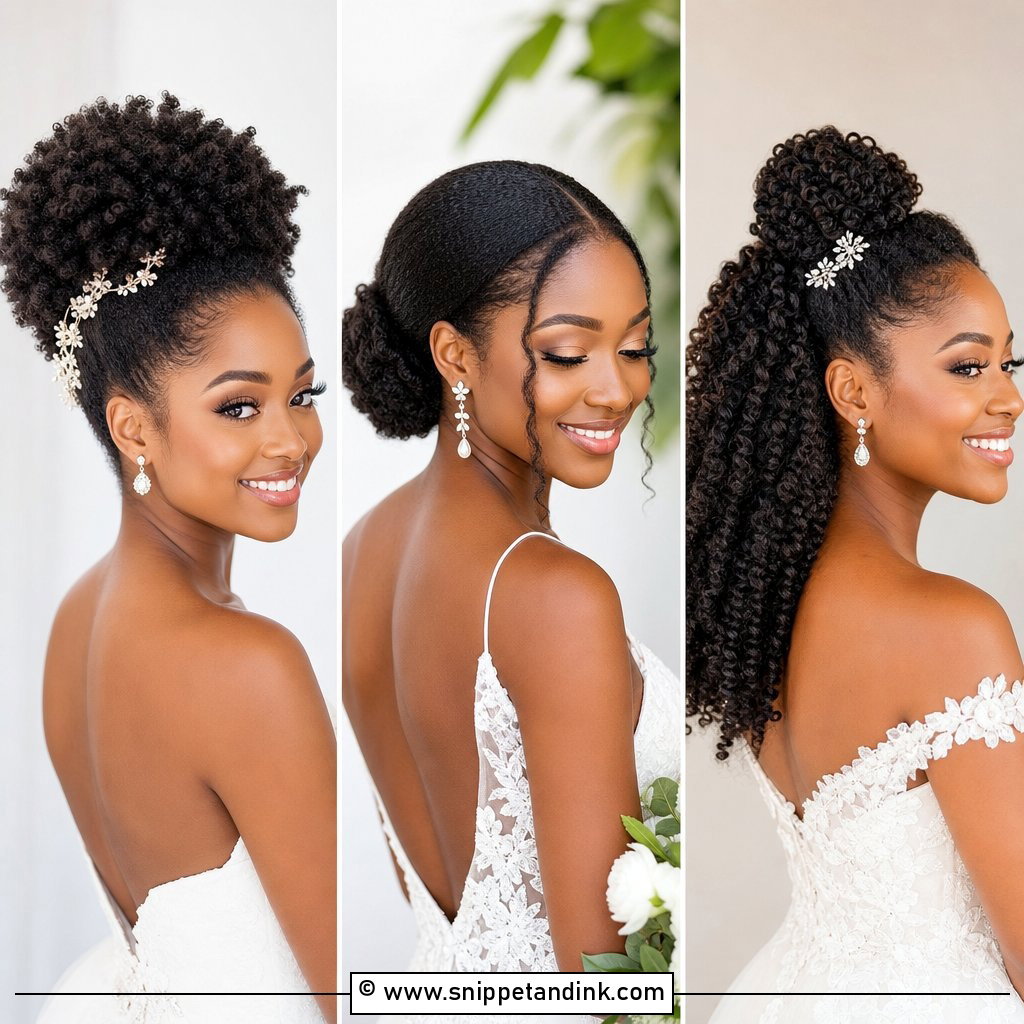
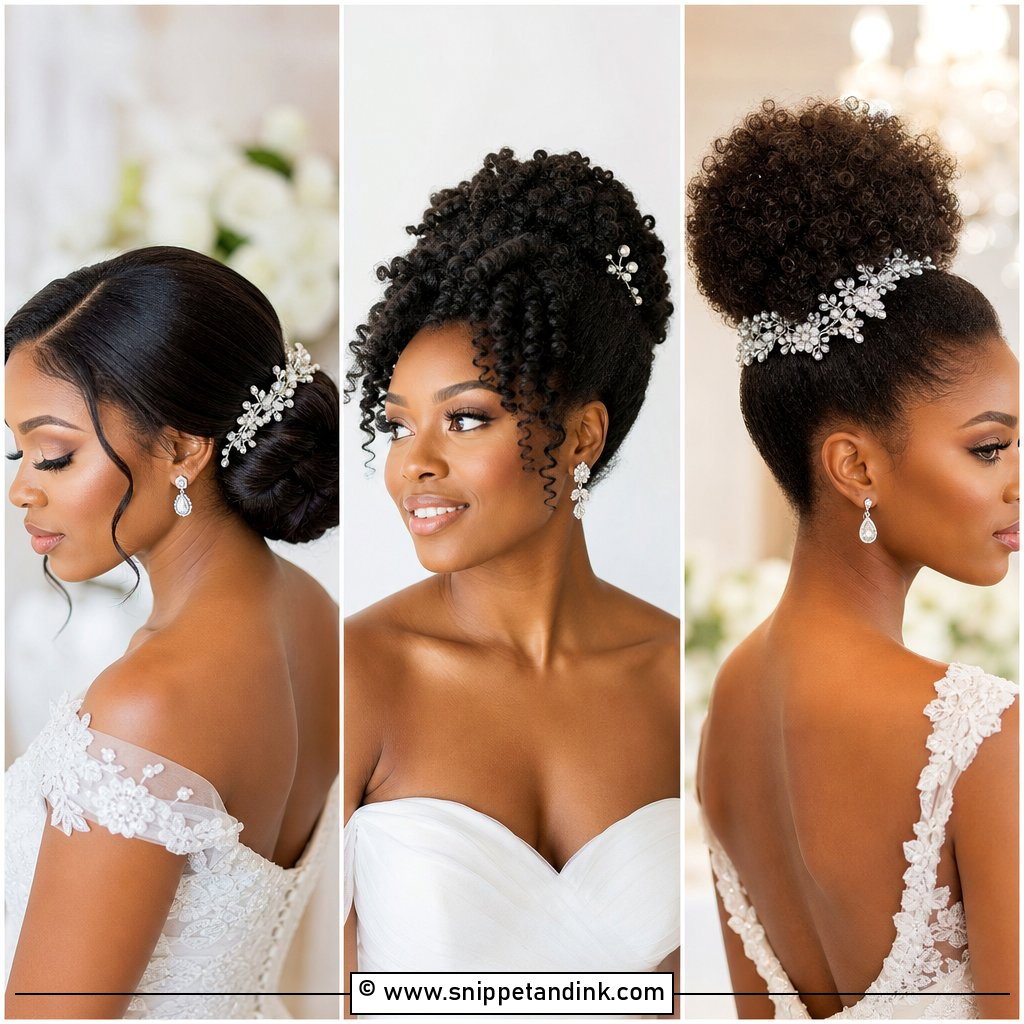
1. Bridal Updo With Natural Curls
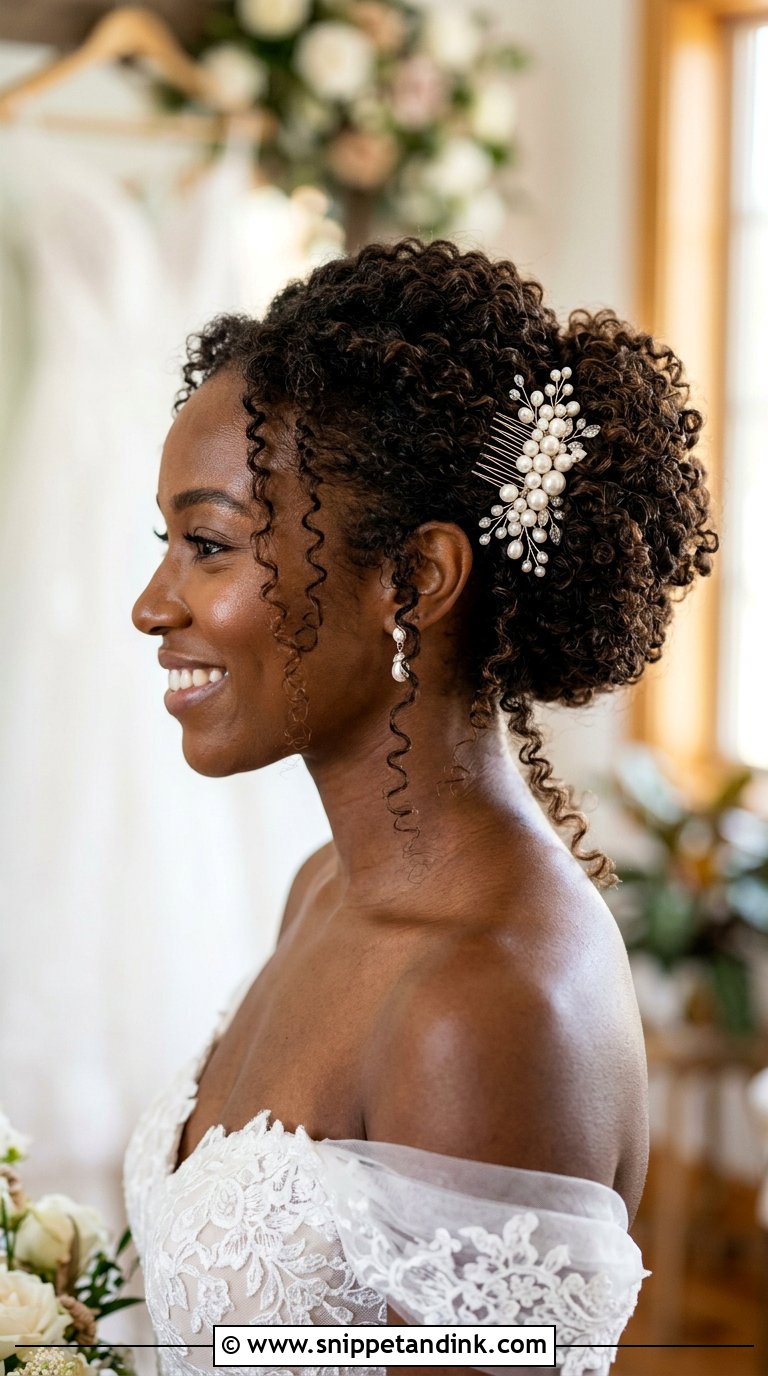
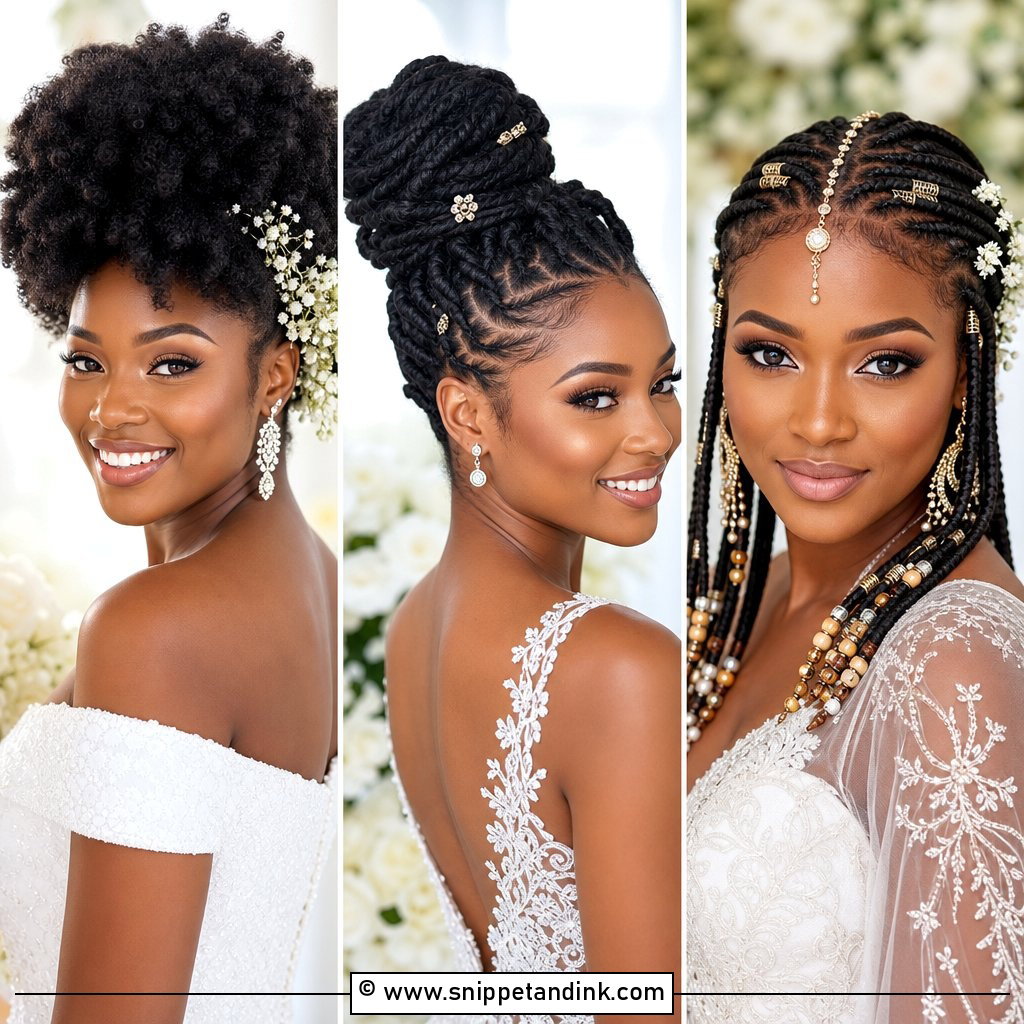
A curly updo works with your pattern instead of fighting it, which is why it lasts. I gather the coils upward in loose sections and pin them with open-ended U-pins rather than bobby pins, because U-pins hold shape without crushing the curl. A few tendrils at the cheekbones soften the line. Moisture matters here: curls that are well hydrated the day before clump and hold through dancing, while dry ends frizz by the first dance. A pearl comb or a sprig of baby’s breath is plenty of decoration.
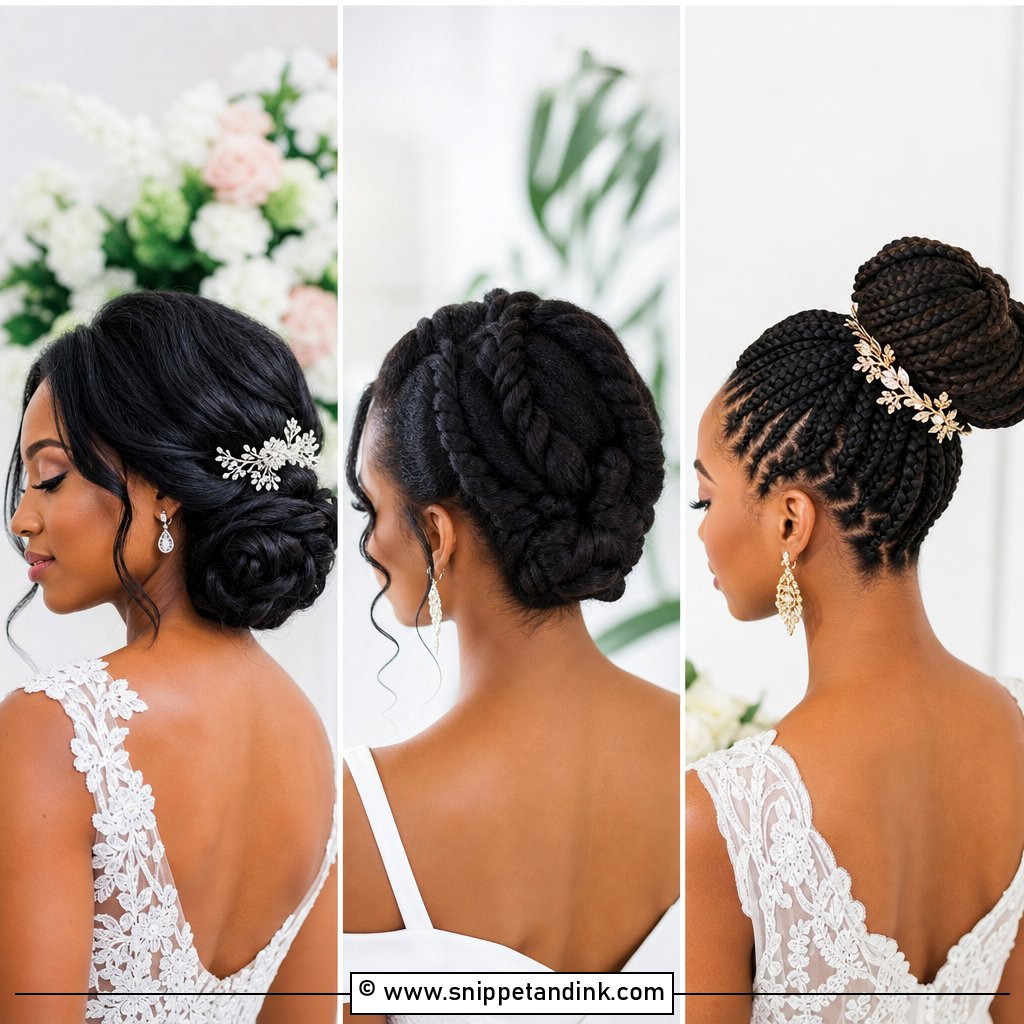
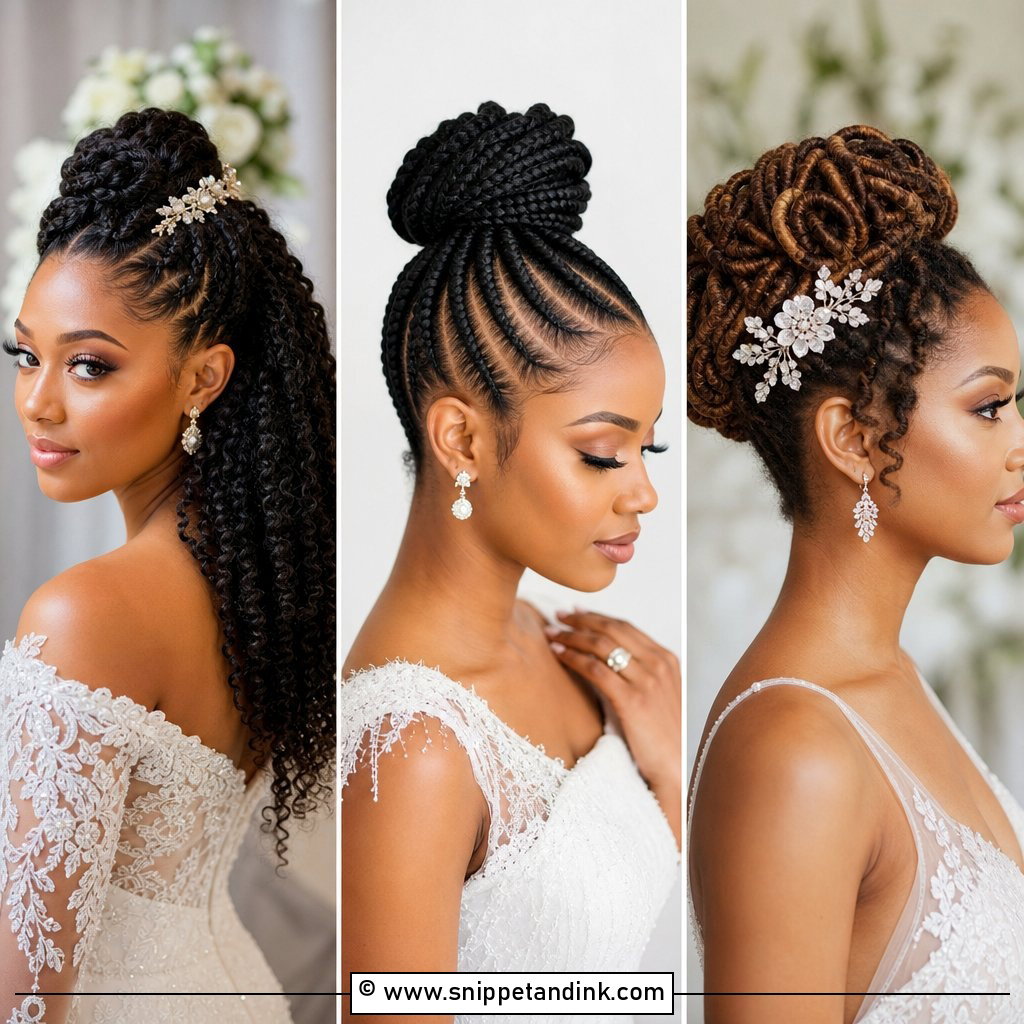
2. Goddess Braids Bridal Bun
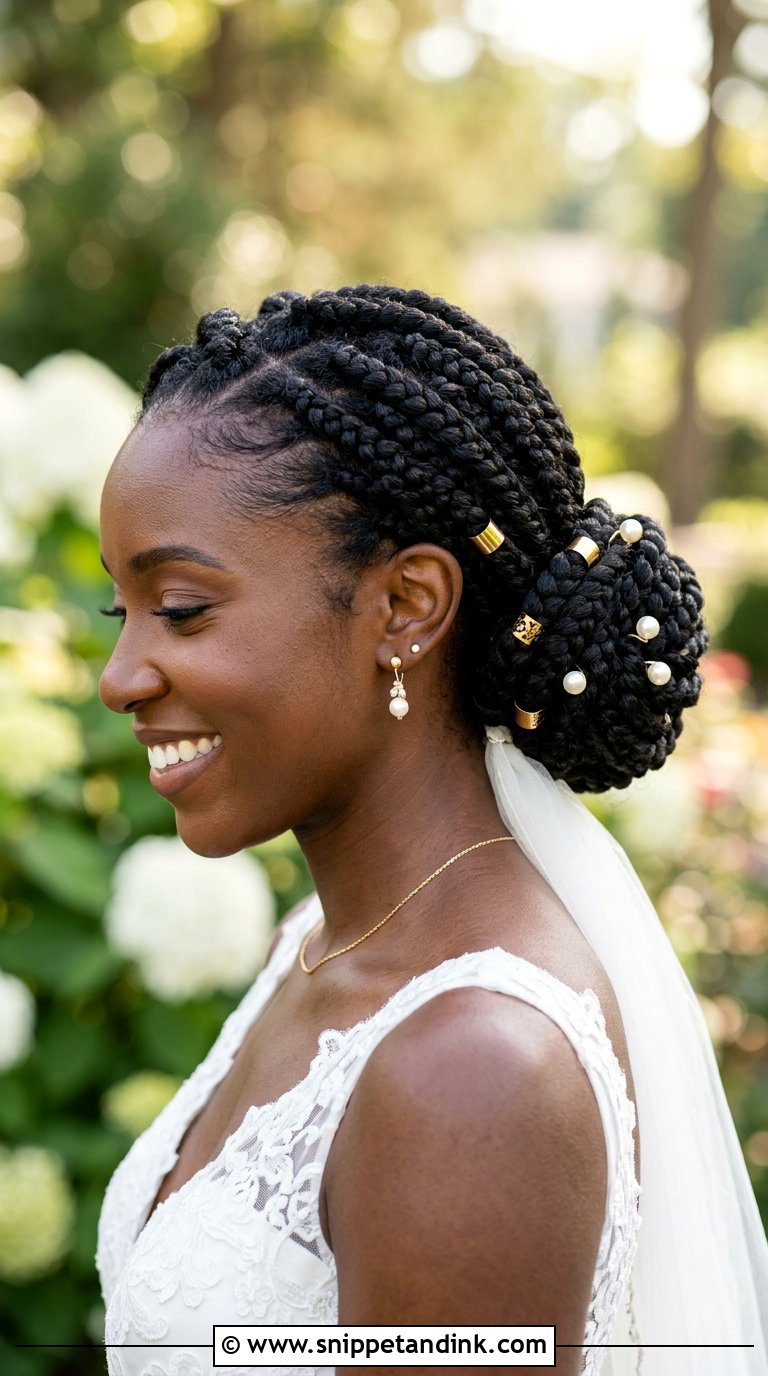
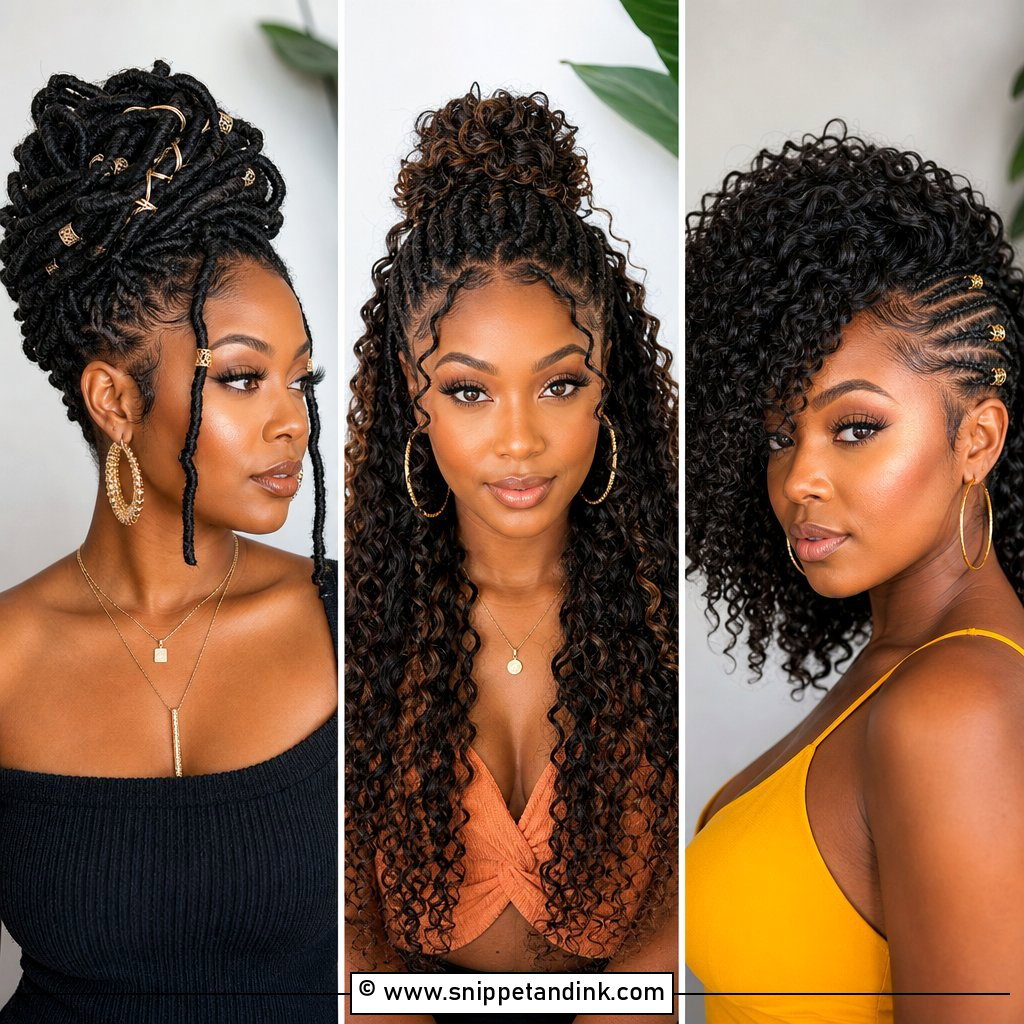
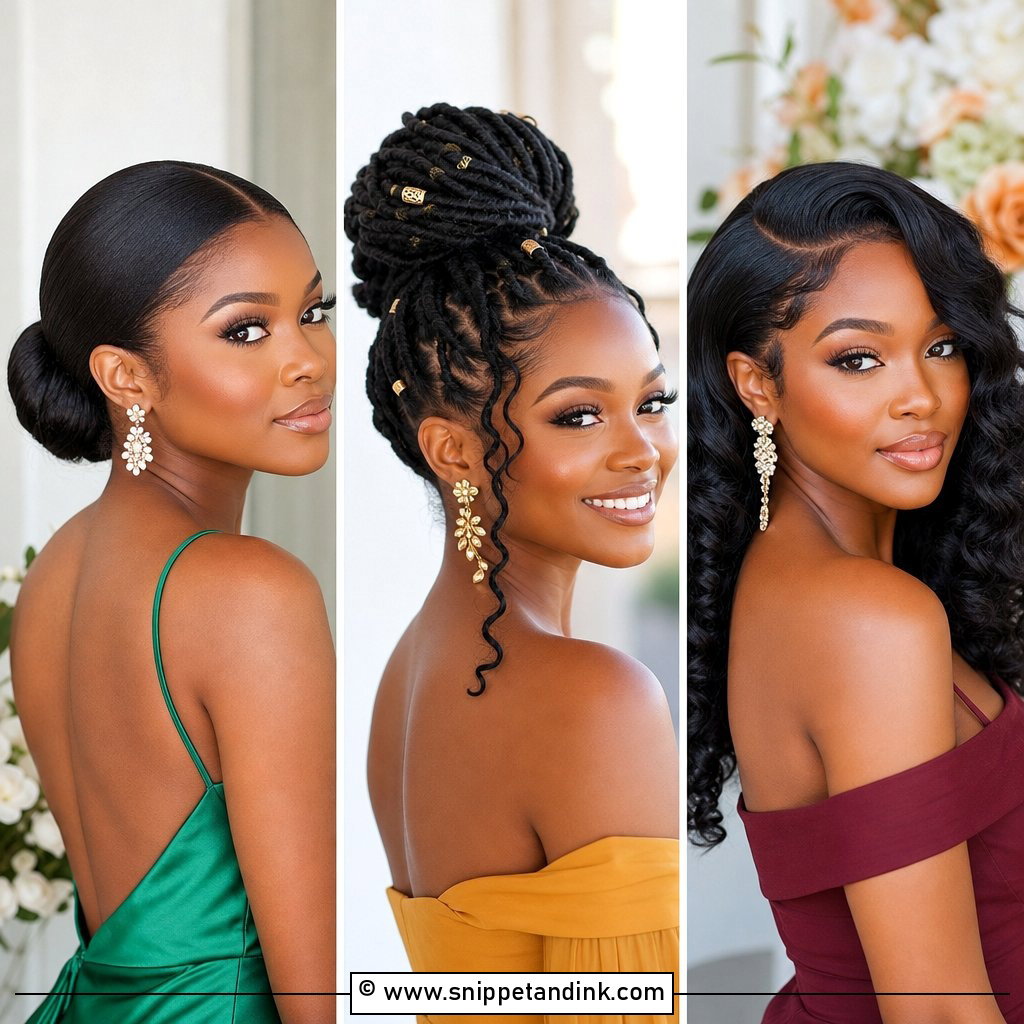
Goddess braids coiled into a low bun at the nape give you a sculpted shape that barely moves all day. The braids are thick and smooth, so the bun has real weight, and I anchor it with crossed pins into the braid base, never into loose hair. Gold cuffs or small pearls slide easily onto the braids. Have them installed about a week out. Fresh braids pull at the scalp and look a little stiff, while seven days lets the tension ease and the parts settle.
3. Afro With Floral Crown
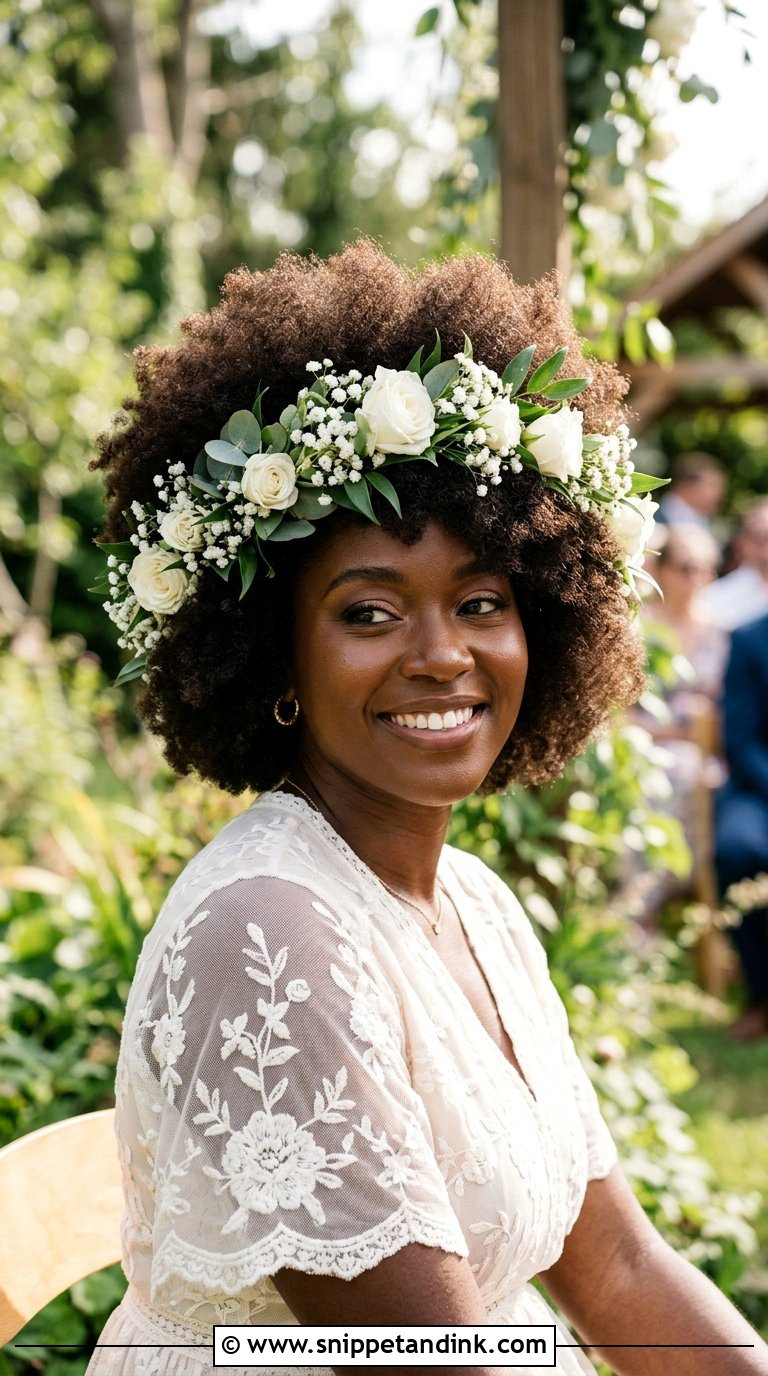
A picked-out afro is the most honest version of natural hair you can wear down the aisle, and it needs the least hardware. Shape is everything. I pick from the roots outward and check the outline from the side, because an afro that’s round from the front can be flat at the back where you’ve slept on it. White roses or baby’s breath sit along the hairline on a thin wire band. One warning: in humid weather the shape grows, so set the size a touch smaller than you want it at the ceremony.
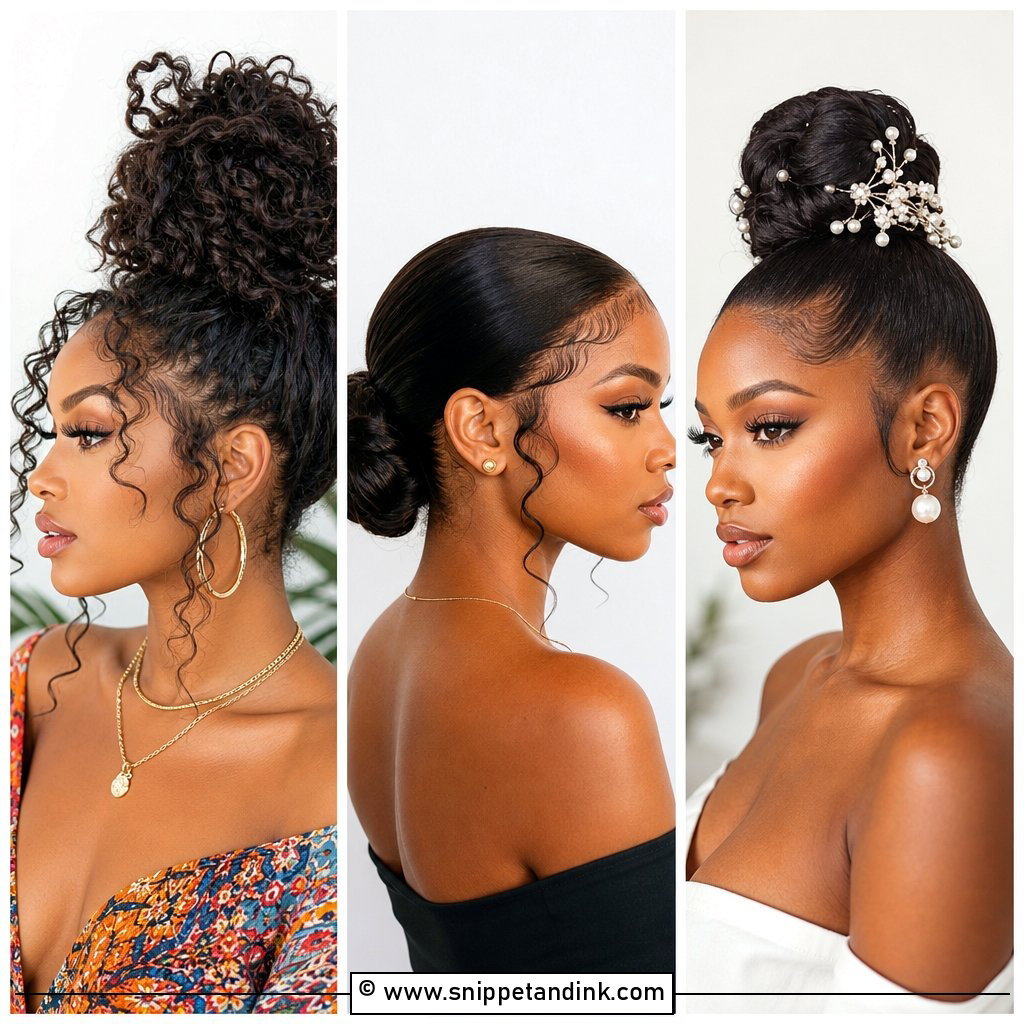
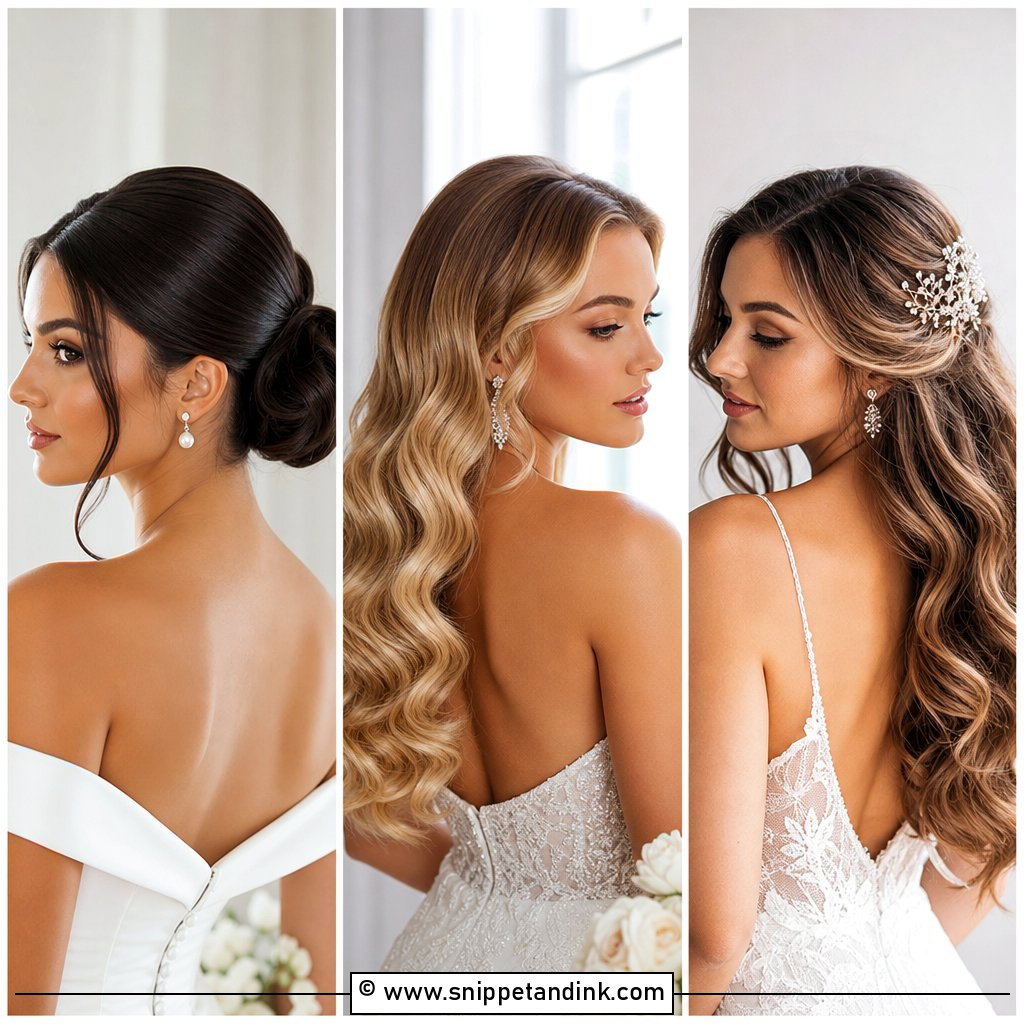
4. Sleek Low Bun With Baby Hairs
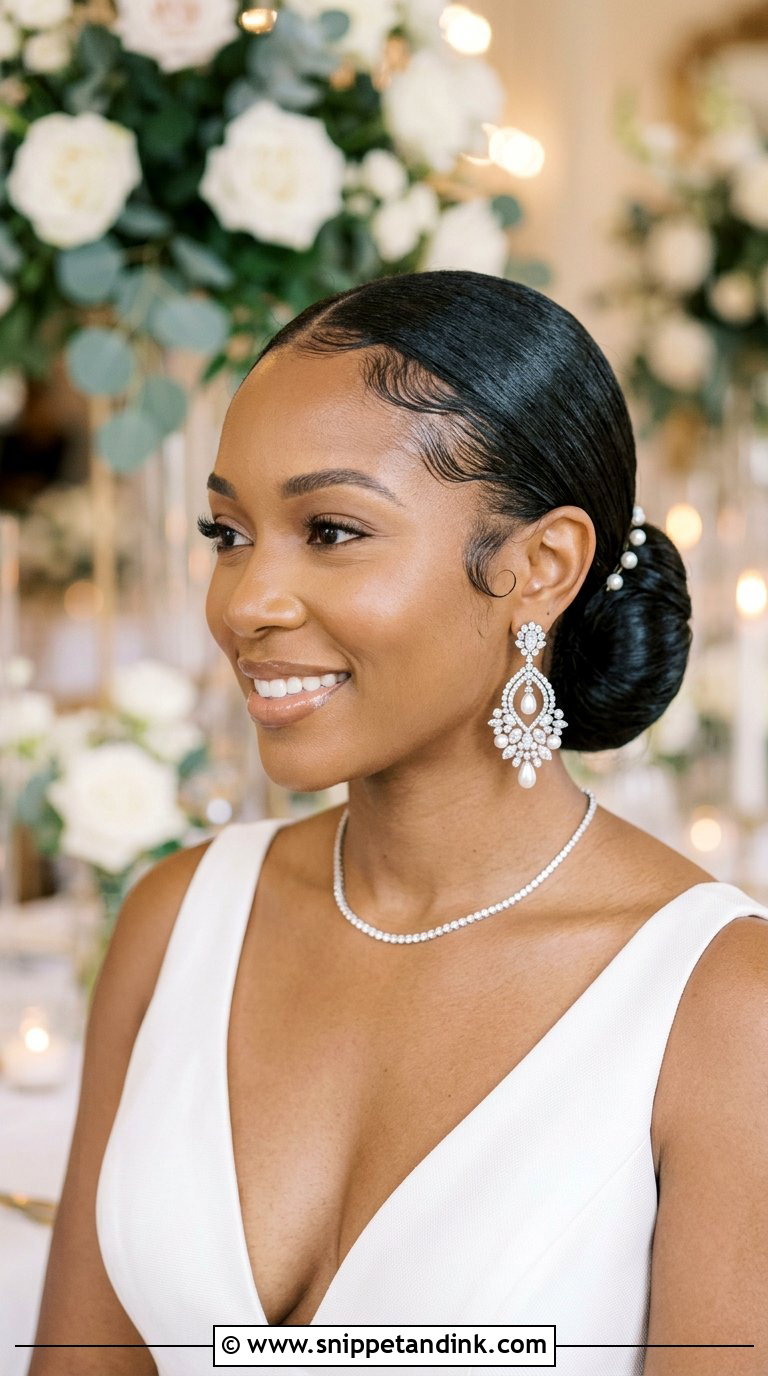
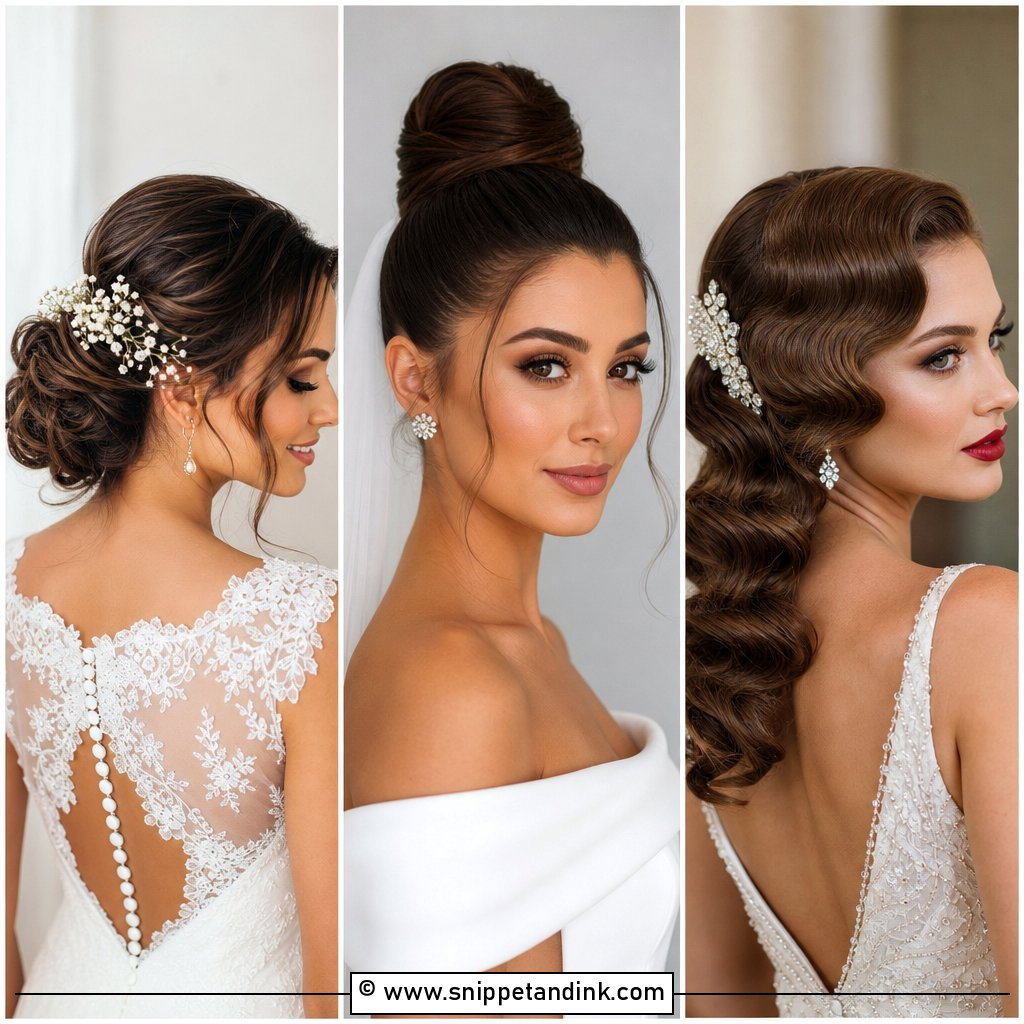
A sleek low bun is about precision. Everything is brushed back with a firm gel and a boar bristle brush, tied at the nape and wrapped, then the edges are laid last. Baby hairs swirled into a few deliberate waves make it personal. The bun leaves room for a dramatic veil or big earrings. If your edges are thin or recovering from tight styles, I’d keep the gel and tension light; pulling hard for one day isn’t worth the breakage afterward.
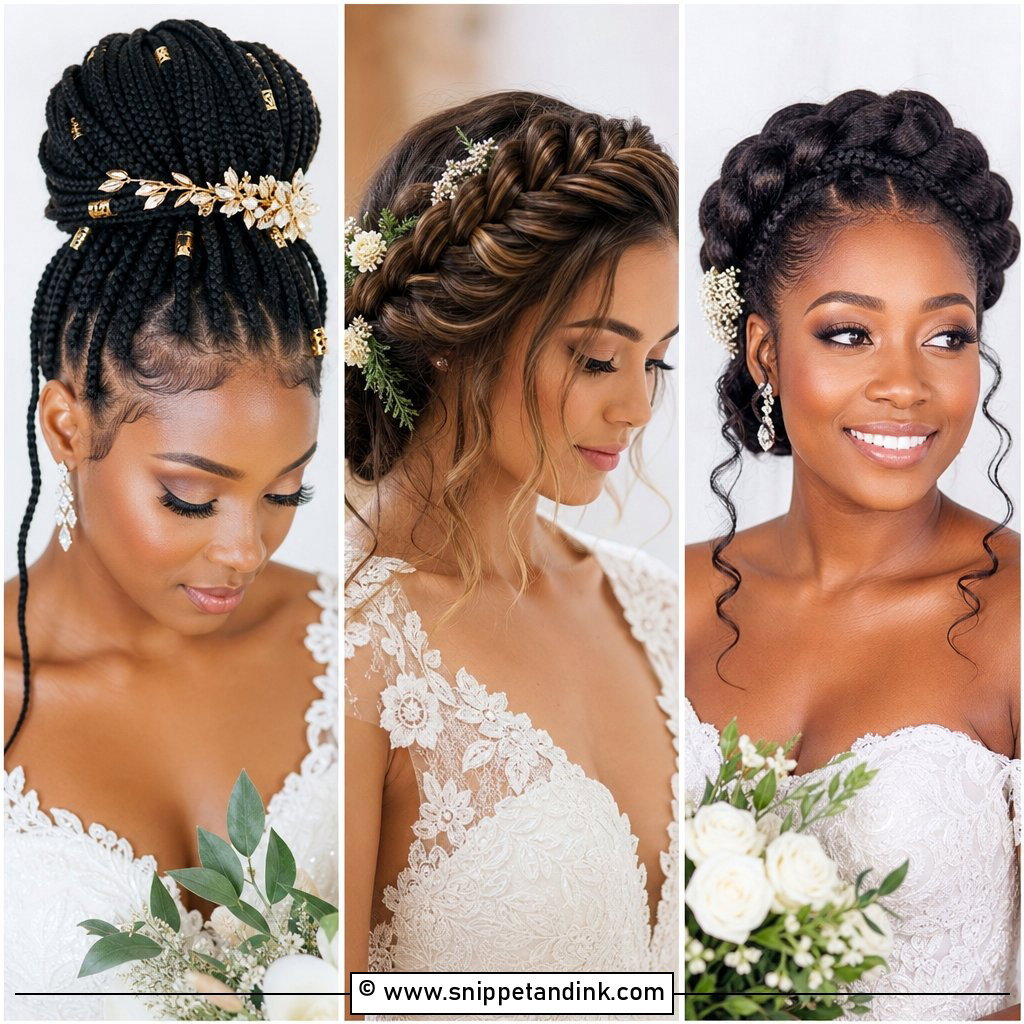
5. Fulani Braids With Beads
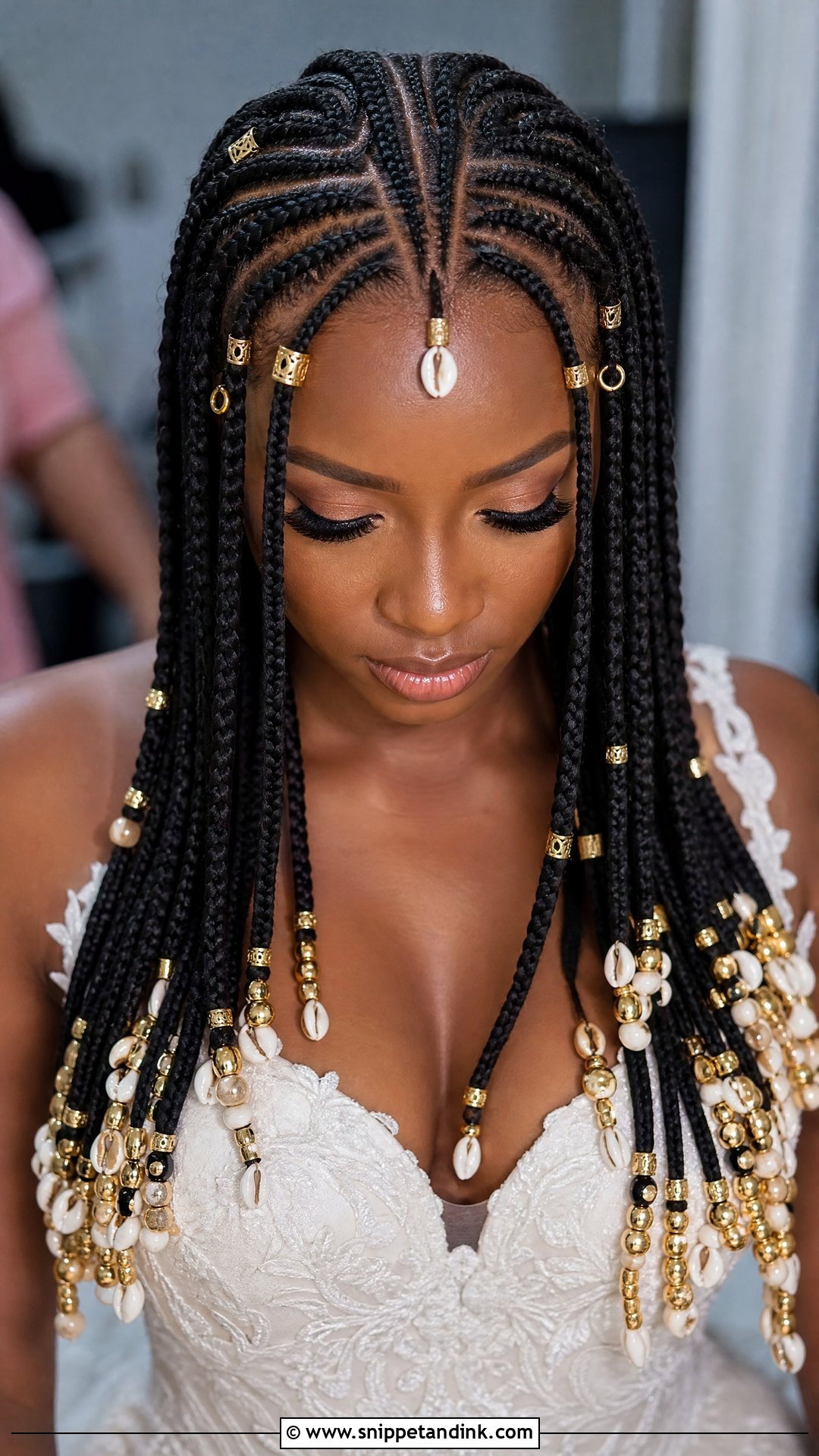
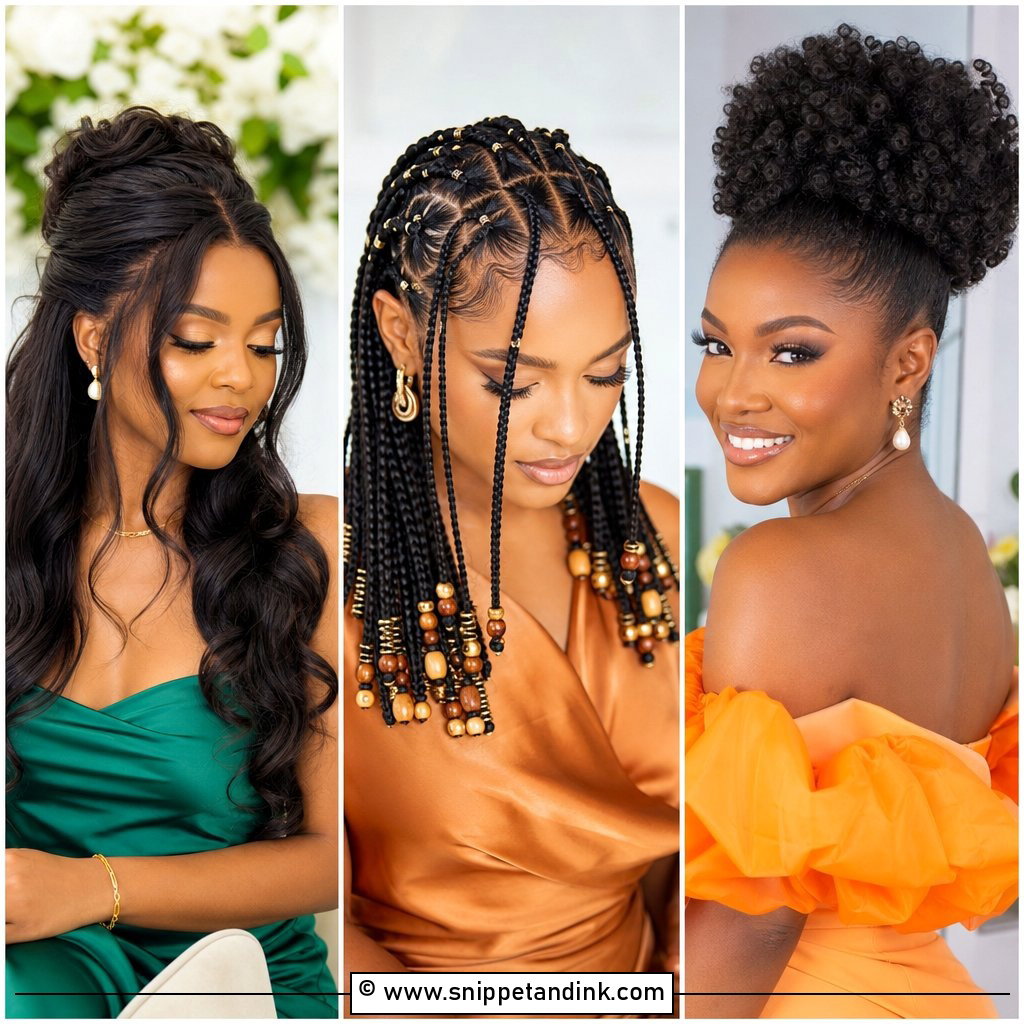
Fulani braids pair cornrows running from a center part with free-hanging plaits, and the beads are where the bridal character comes in. Gold beads, cowrie shells or pearls catch light as you move. Because the style lasts for weeks, it suits weddings spread across several events or a trip straight afterward. Do count the beads, though. A full head of metal beads gets heavy by evening and clicks every time you turn. Worn long or lifted into a half-up shape, Fulani braids honor African heritage and still read as finished, formal hair.
6. Curly Half-Up Half-Down
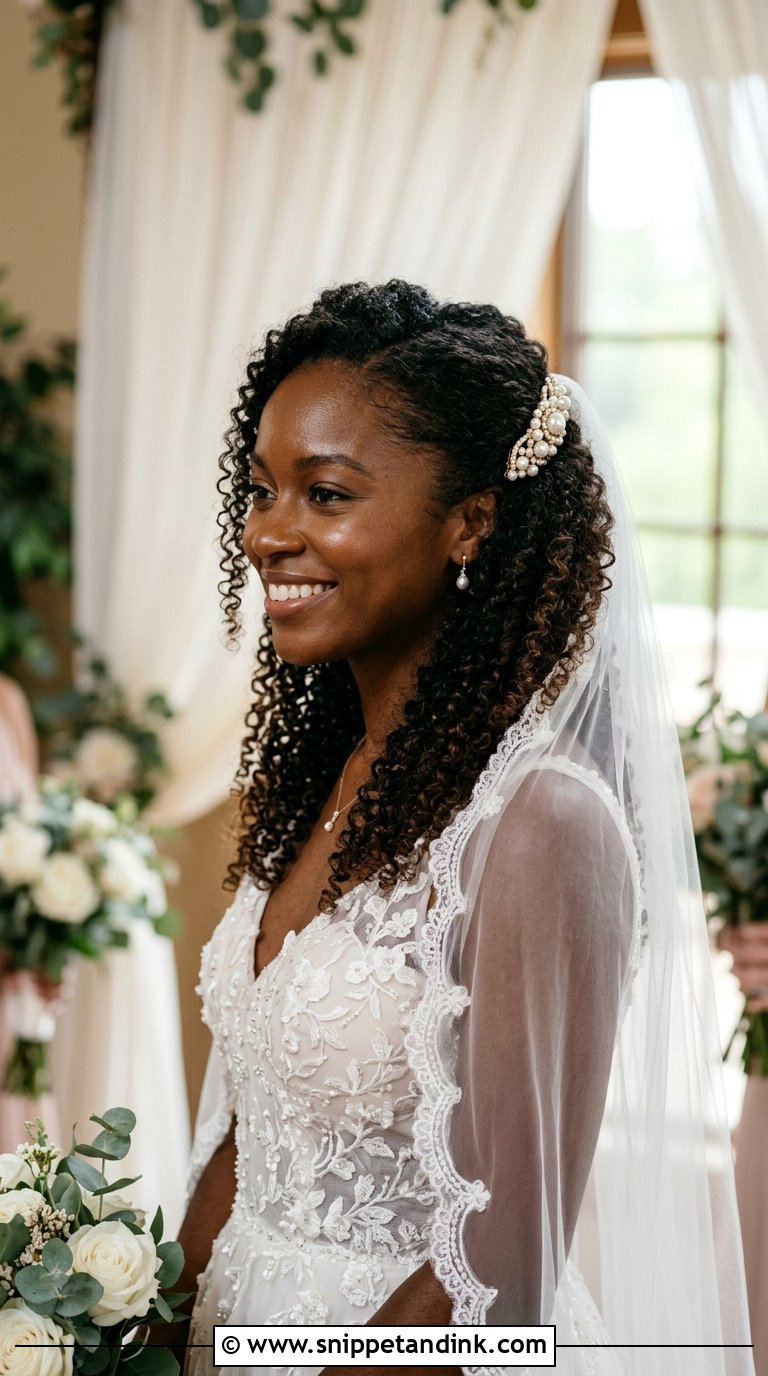
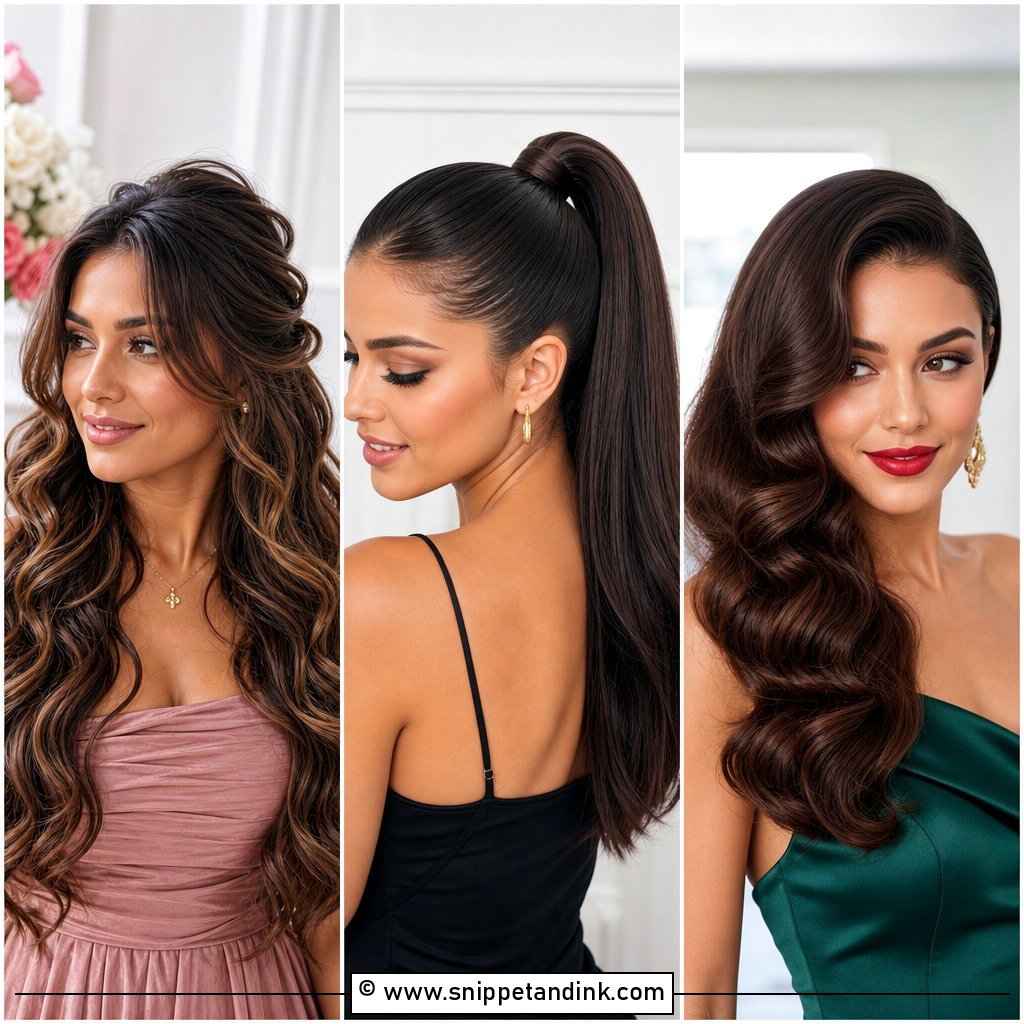
Half-up, half-down keeps curls off your face for the vows while your length and texture stay on show. The top section is lifted and secured with a small elastic hidden under a coil, and the rest falls loose. The risk is the hanging lengths shrinking through the day, especially in heat. I set those curls with a light hold product and remind brides not to touch them; hands are what break up a curl clump. A clip or a few pearl pins at the crown finishes it, and a veil slides in neatly above the gathered section.
7. Flat Twist Updo
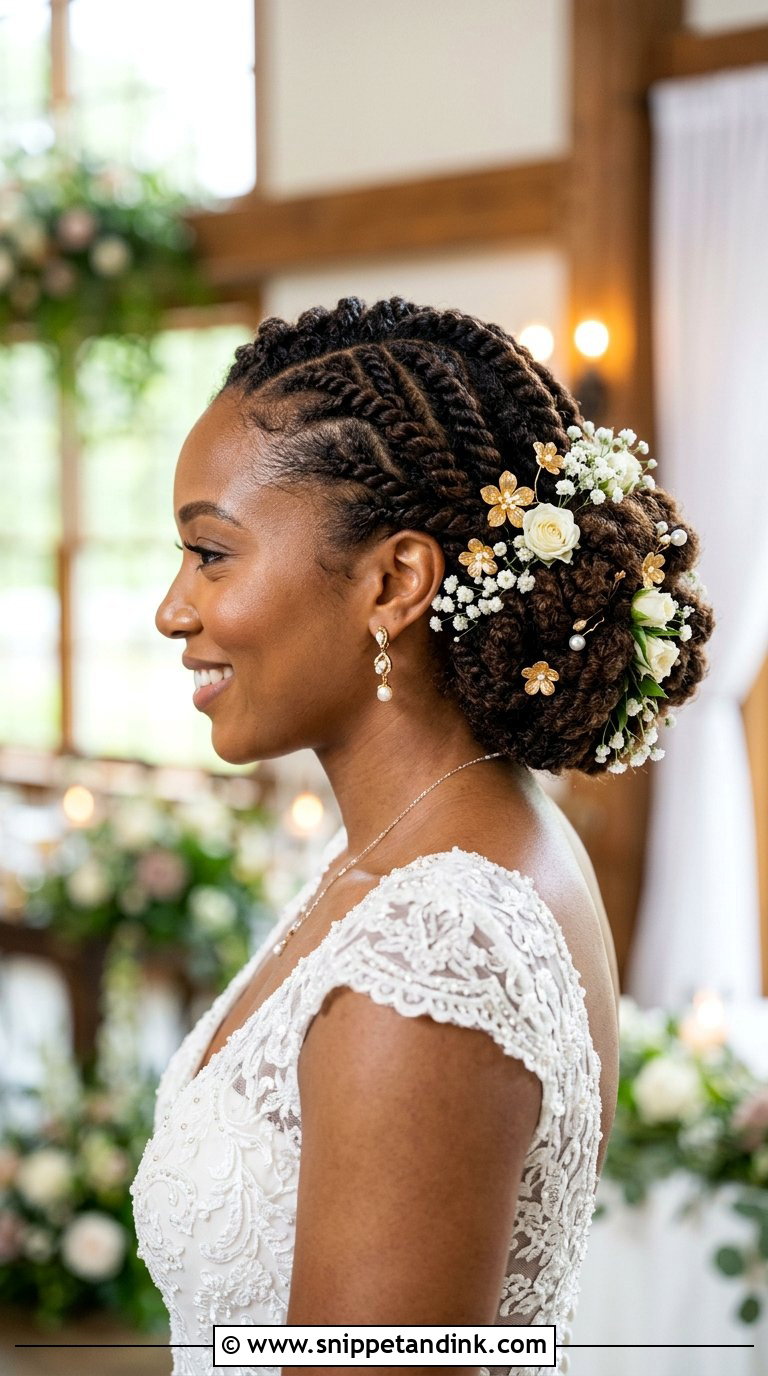
Flat twists are done close to the scalp, then the ends are gathered and pinned into a shape at the back. No heat is involved, which is a real plus if you’re protecting your curl pattern before the wedding. The twisted rows give texture that reads clearly in close-up photos. A bride who is handy with her own hair can practice this one at home, but the part lines are what make it look bridal, so I’d still have someone else map them. Gold pins tucked between rows hold through hugs and a long dance floor.
8. Bridal Cornrows Into Ponytail
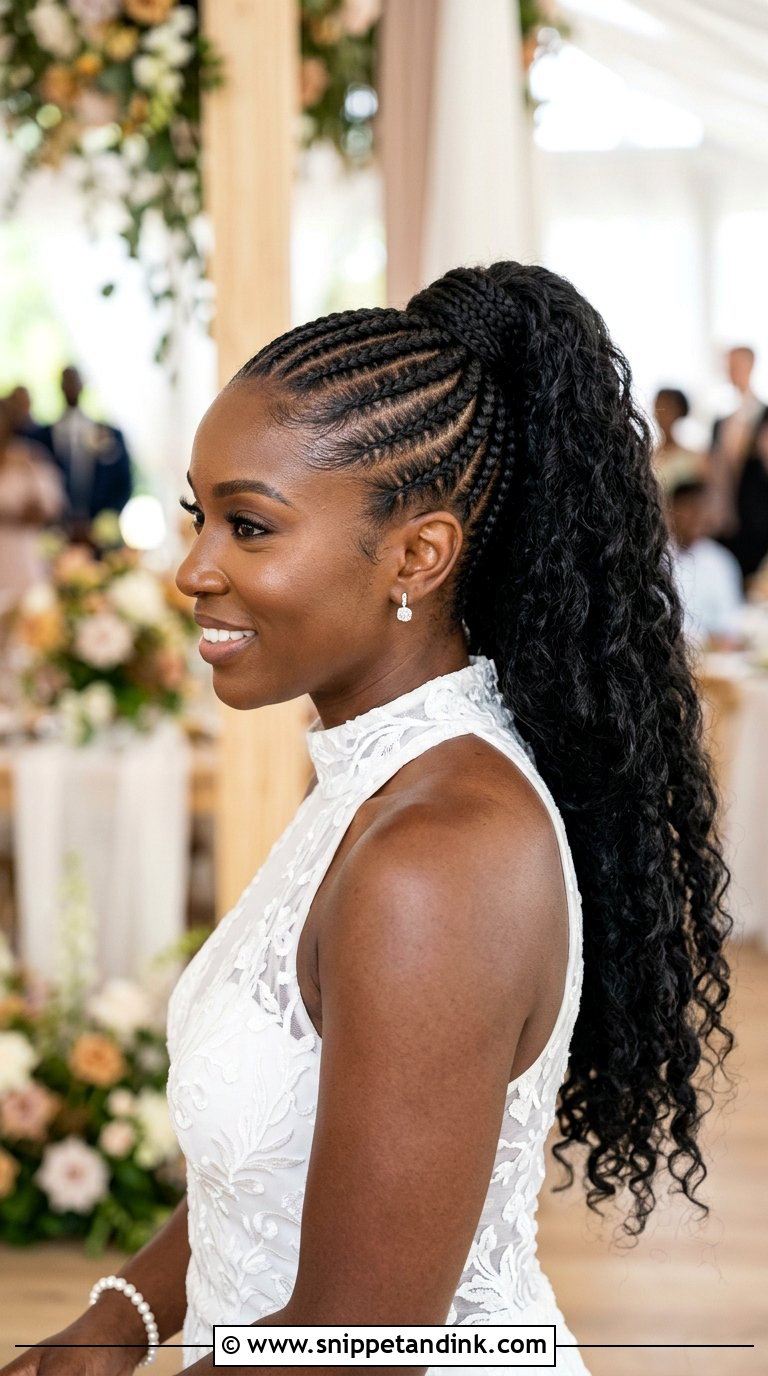
Cornrows feeding into a long ponytail give a clean front and plenty of movement behind. The ponytail is usually added hair, and its weight is the thing to plan for: a very long, full piece pulls on the braids all day. I’d ask your braider to spread that load across more rows near the nape. Wrapping a strand around the base or adding a gold cuff hides the join. Warm venues and active receptions suit it well, and cornrows into a ponytail stay neat long after other styles have softened.
9. Voluminous Blowout With Side Part
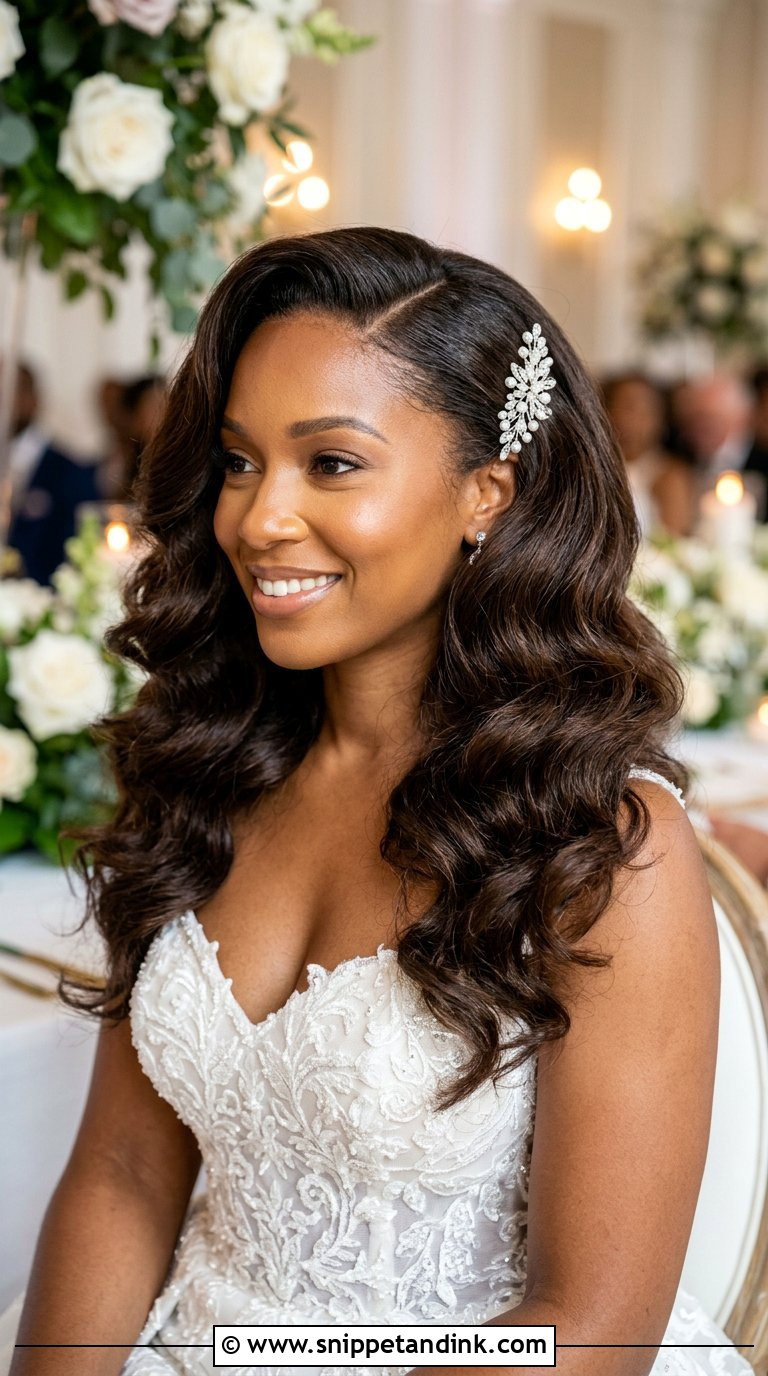
A silk press with a deep side part is the most humidity-sensitive look here. The smooth, full finish depends on hair staying dry, and steam, rain or a sweaty dance floor can start reversion at the roots within hours. I schedule the press close to the wedding, a day or two out, wrap it every night and keep a fine-tooth comb and a light serum in the kit. The side part gives softness to most face shapes. If your venue is outdoors in summer, have a backup plan such as a sleek low bun.
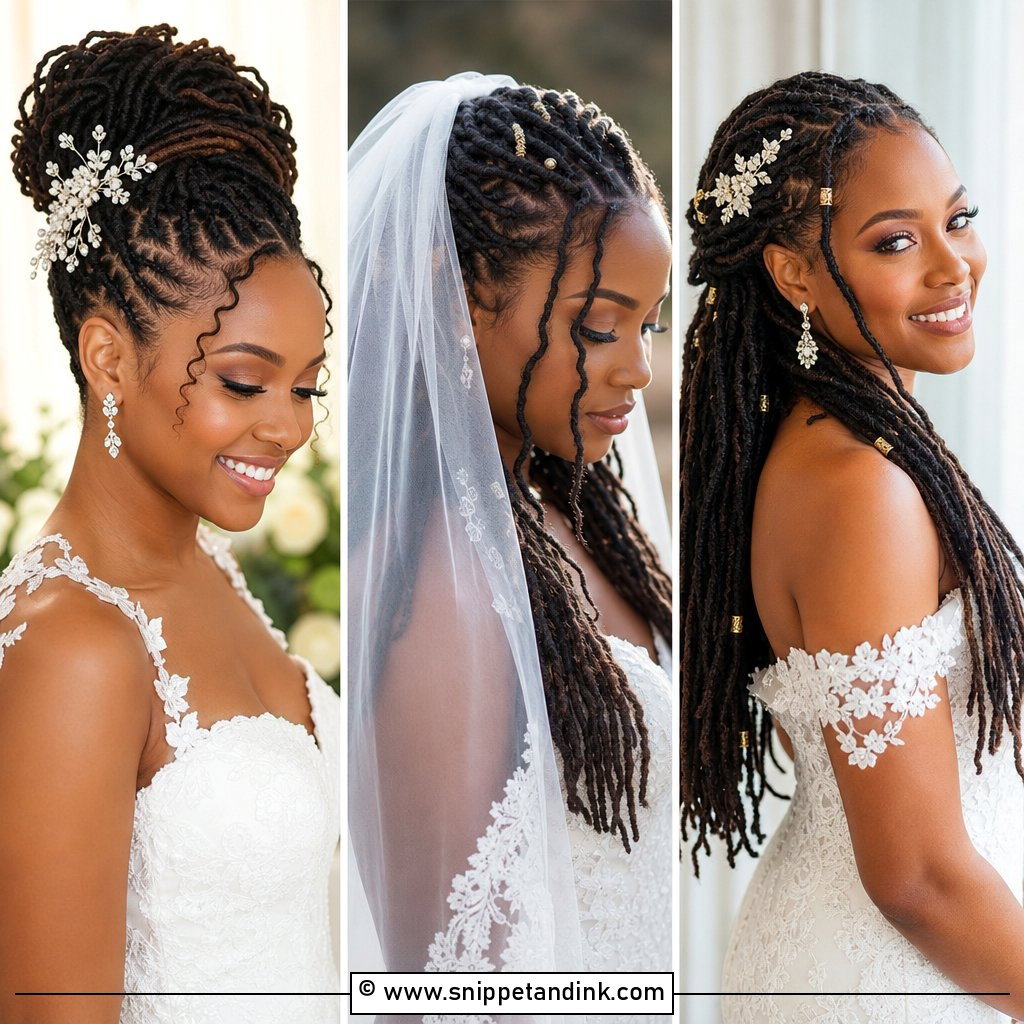
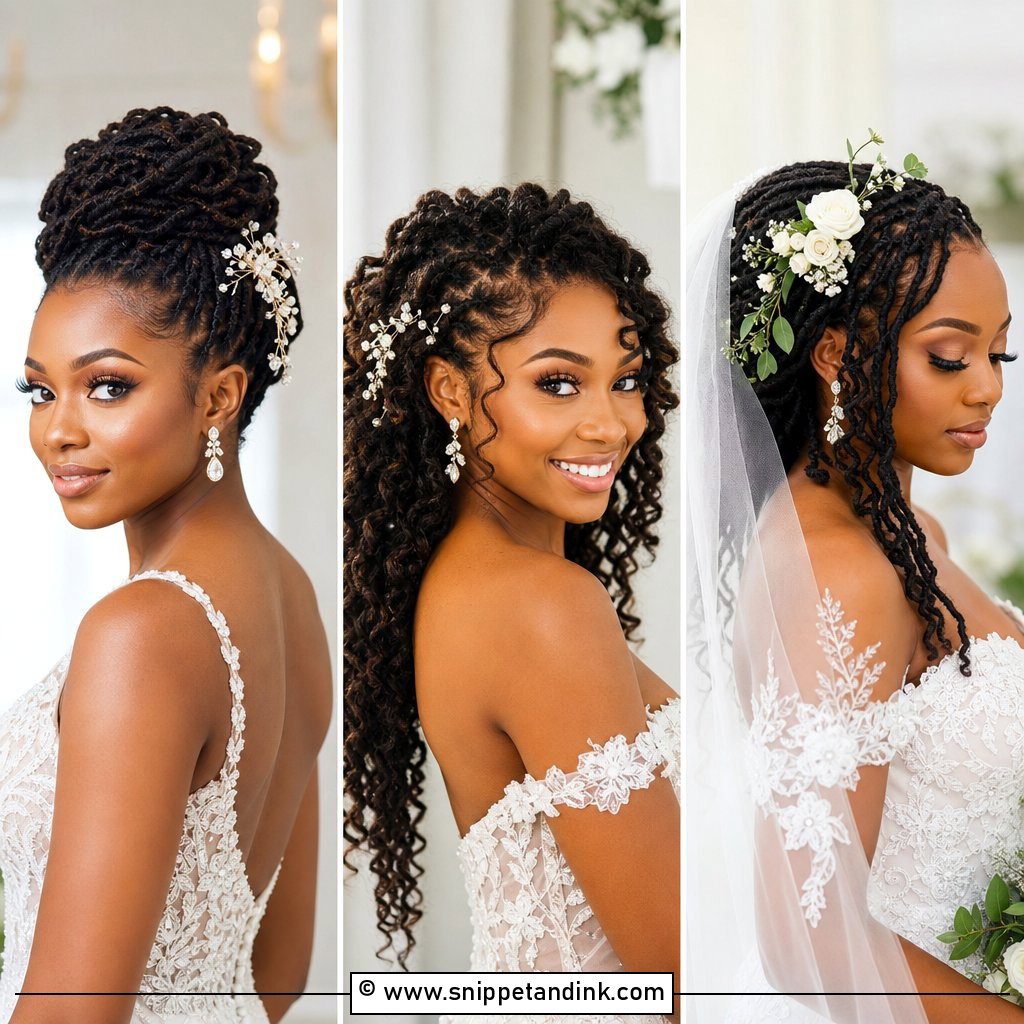
10. Bridal Locs Updo
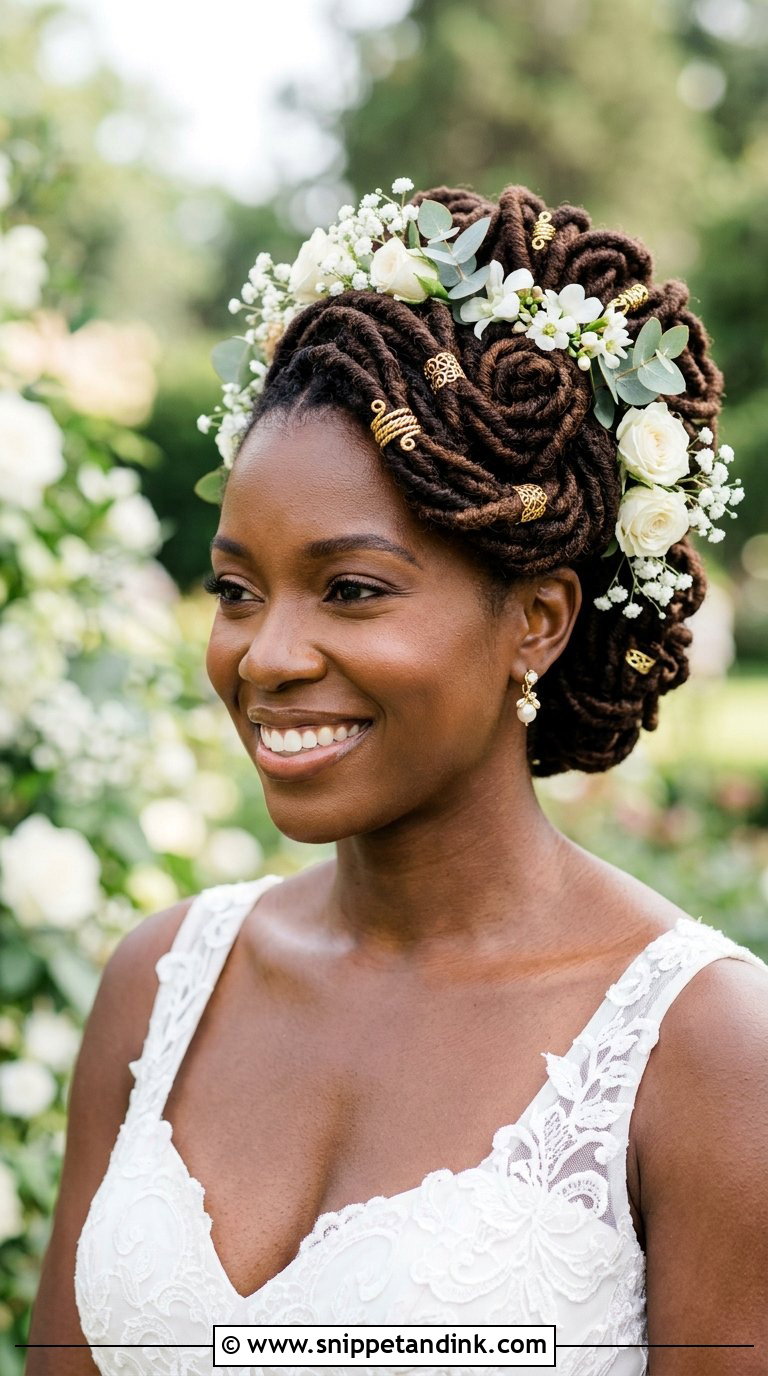
Locs give you a strong base for an updo because they hold their own shape. They’re gathered, twisted and pinned into a sculpted form, and the main thing I watch is weight; long, thick locs can pull at the nape, so I build the structure higher and distribute the pins wide. A retwist about a week or two before means fresh roots without the tightness of same-week maintenance. Gold cuffs and pearls thread on easily, and fresh flowers sit well between the locs.
11. Twist Out With Side Flowers
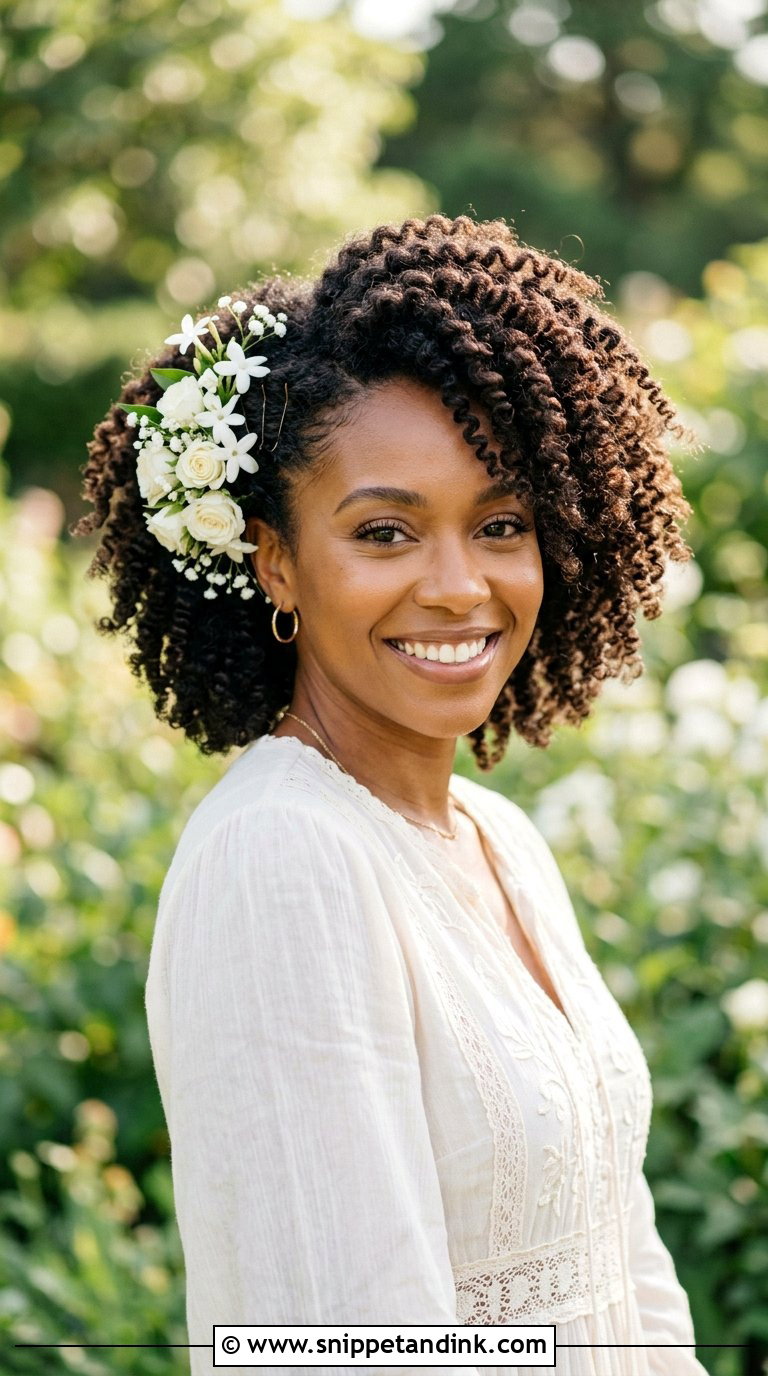
A twist out depends almost entirely on how the twists were set and how fully they dried. Undo them while damp and you get frizz and lost definition. I set twists the night before on fully stretched hair, let them dry completely, then separate gently with oiled fingers. One side gets pinned back and fresh flowers go in. Expect some shrinkage outdoors, particularly at a beach venue, so plan the length for the end of the day rather than the start.
12. Sleek High Bun With Edges
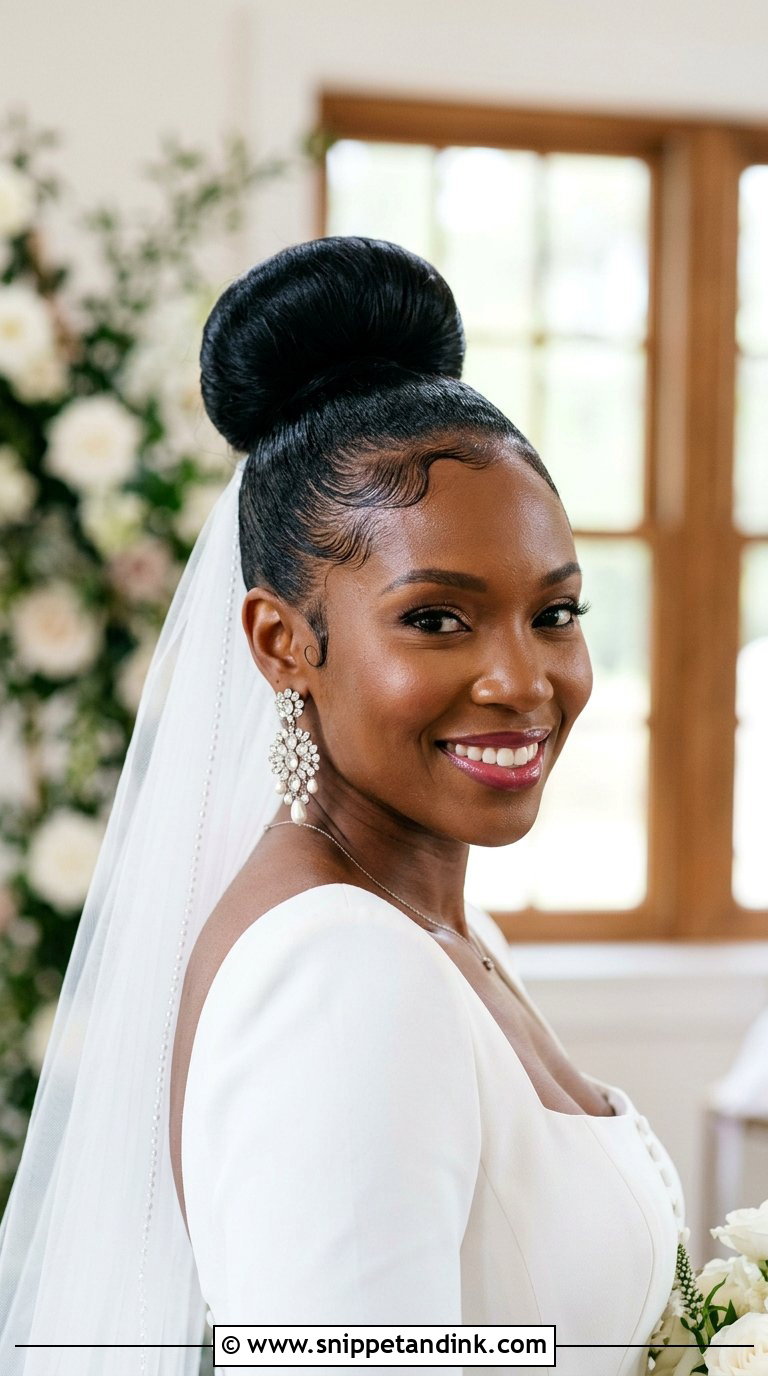
A sleek high bun lifts everything onto the crown, lengthens the neck and keeps you cool through a long reception. The edges are laid crisply once the bun is secure. The trade-off is veil placement: a high bun pushes a veil comb lower, so try both at your trial. I’d also be honest that a very tight high pony base can cause headaches by evening. If you’re sensitive there, set it slightly lower and with less tension.
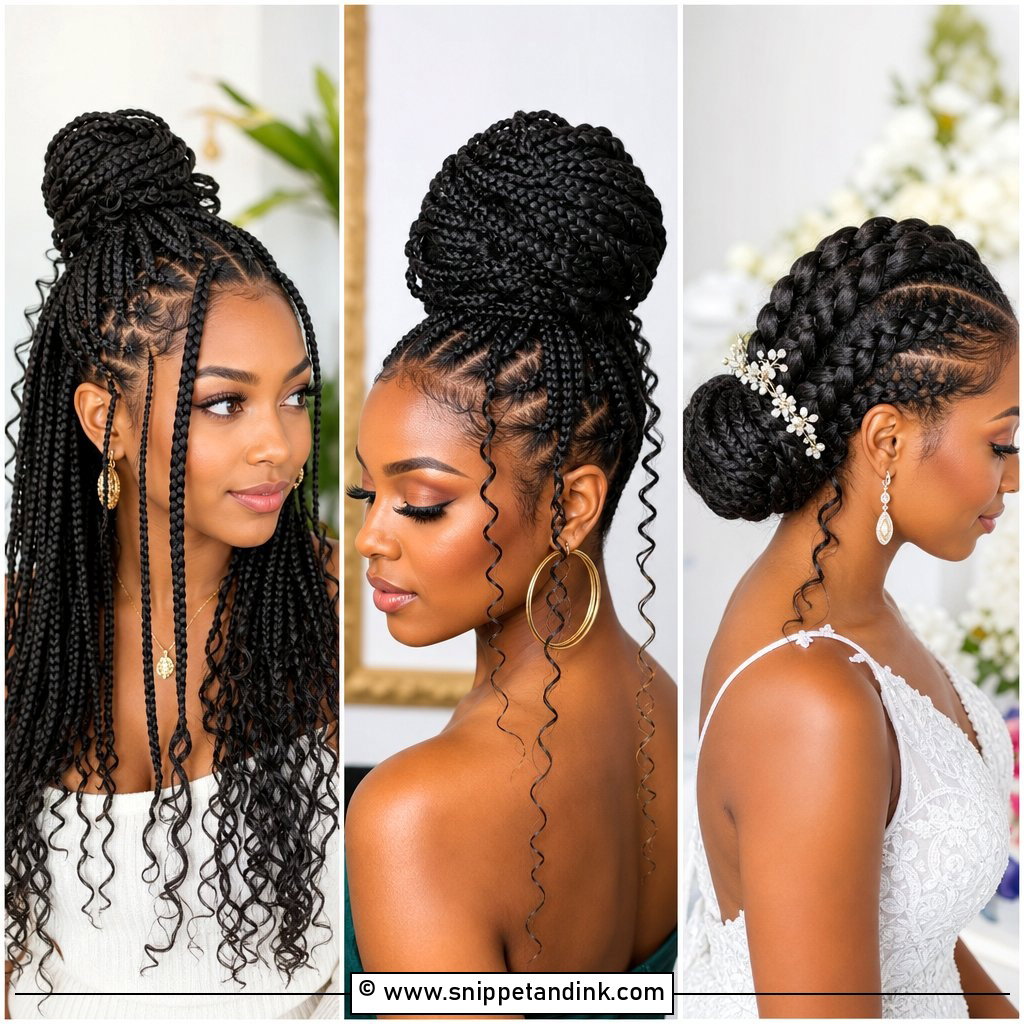
13. Box Braids Bridal Updo
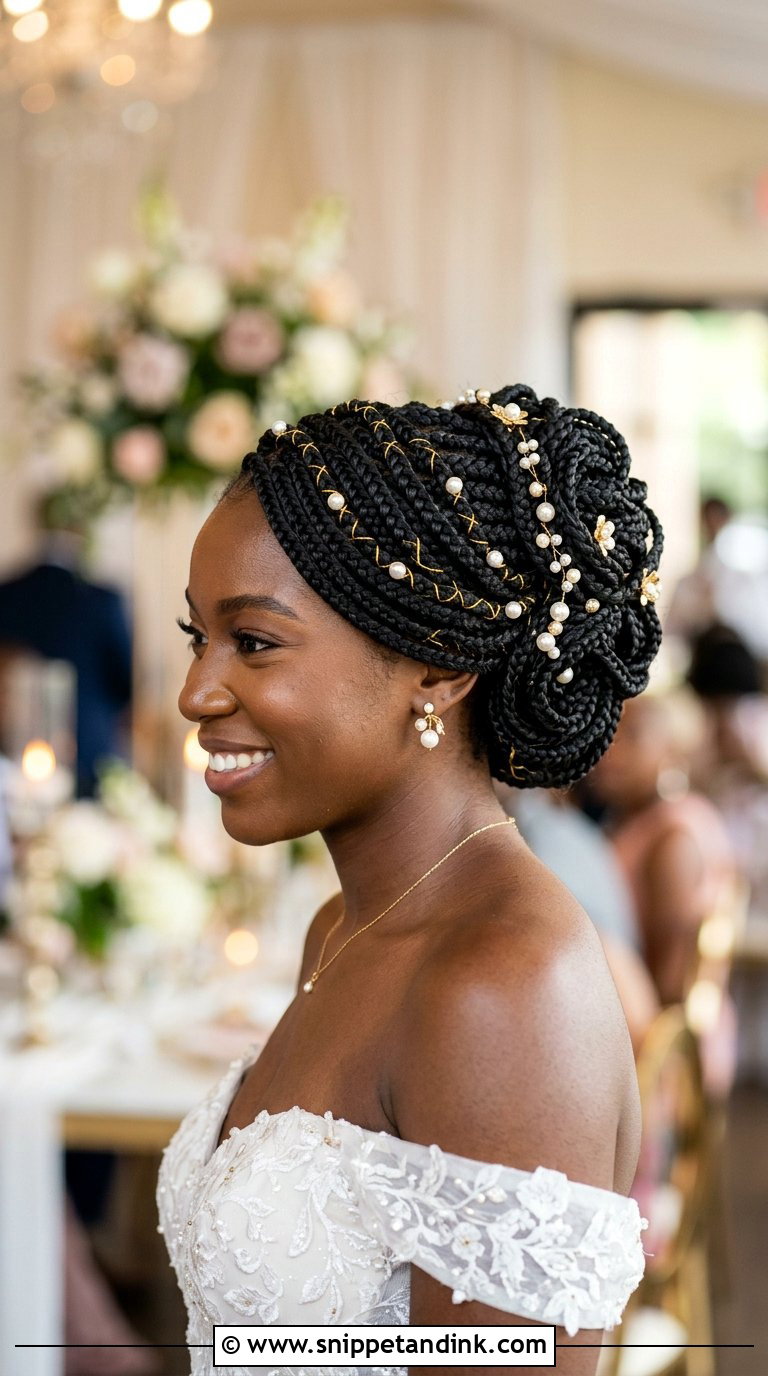
Box braids give you more updo options than almost any other style, since each braid can be coiled, crossed or wrapped like rope. They’re swept up and pinned into buns, crowns or twisted halos. The style lasts for weeks, which helps for weekend celebrations or a honeymoon. Gold thread or pearls weave in easily. Ask for a medium braid size if you want an updo; very small braids take hours to arrange and very large ones get heavy once stacked.
14. Finger Waves With Updo
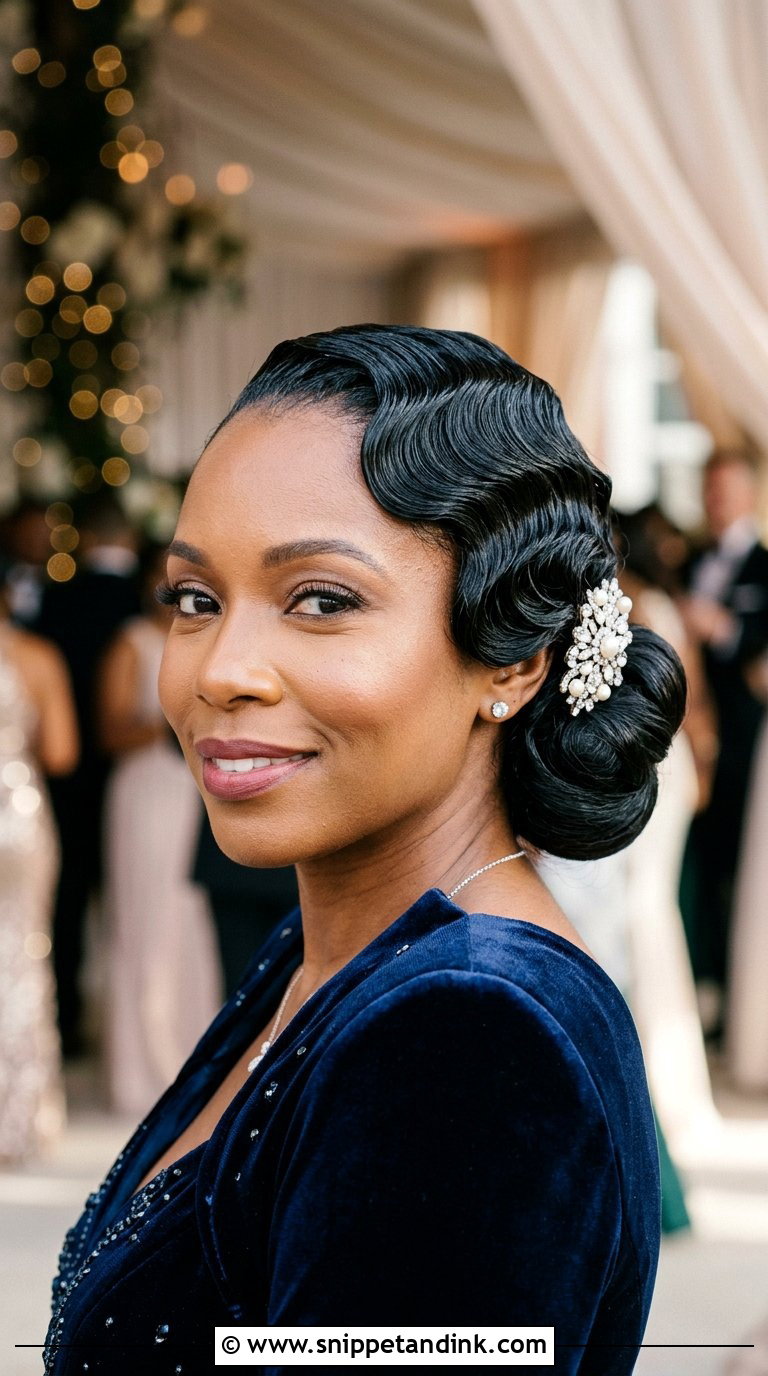
Finger waves are sculpted S-shapes set flat against the head, usually with a smooth low bun behind. They need short, relaxed or pressed hair at the front and a setting lotion that dries firm, then time under a hooded dryer. Rushing the drying is what ruins them. Once set, they hold remarkably well and read as a deliberate, vintage choice next to bold lips or structured gowns. A jeweled pin along one wave line is the only accessory I’d add.
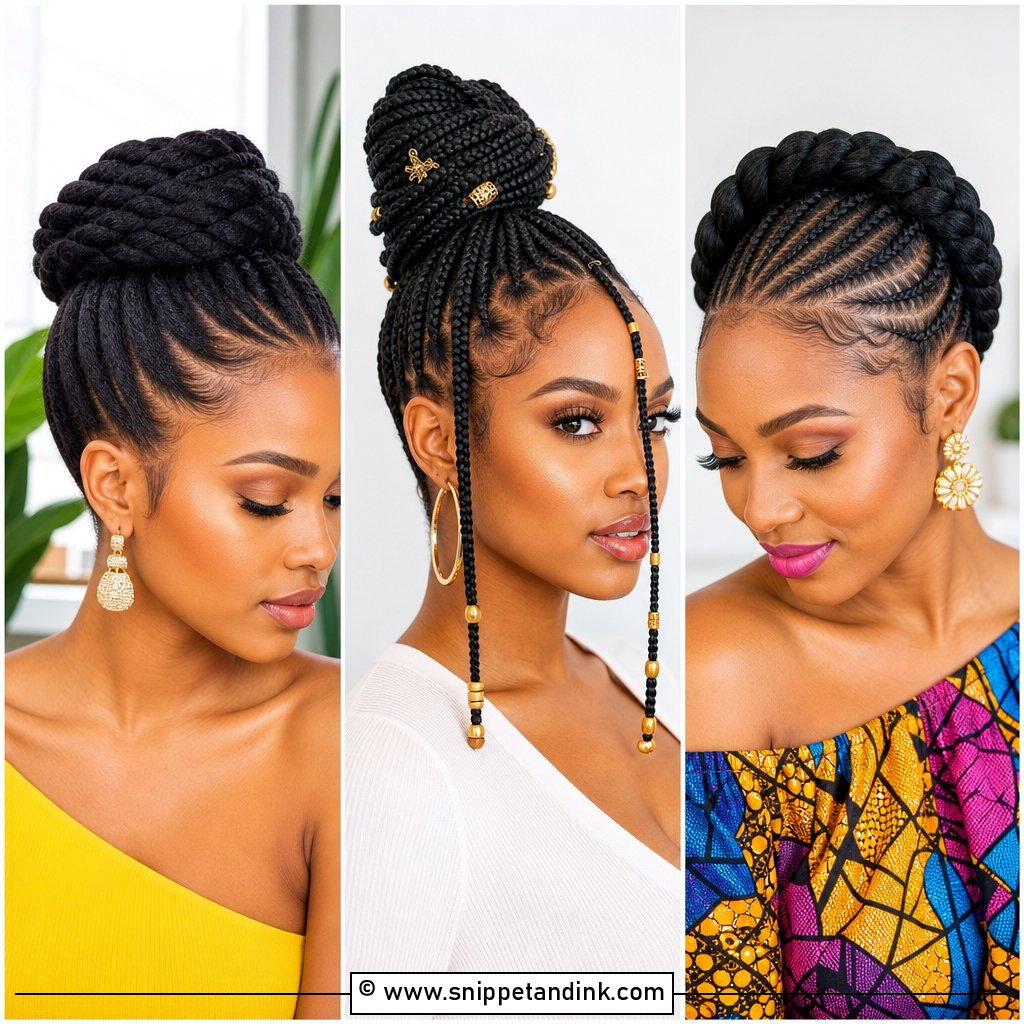
15. Curly Bridal Bob
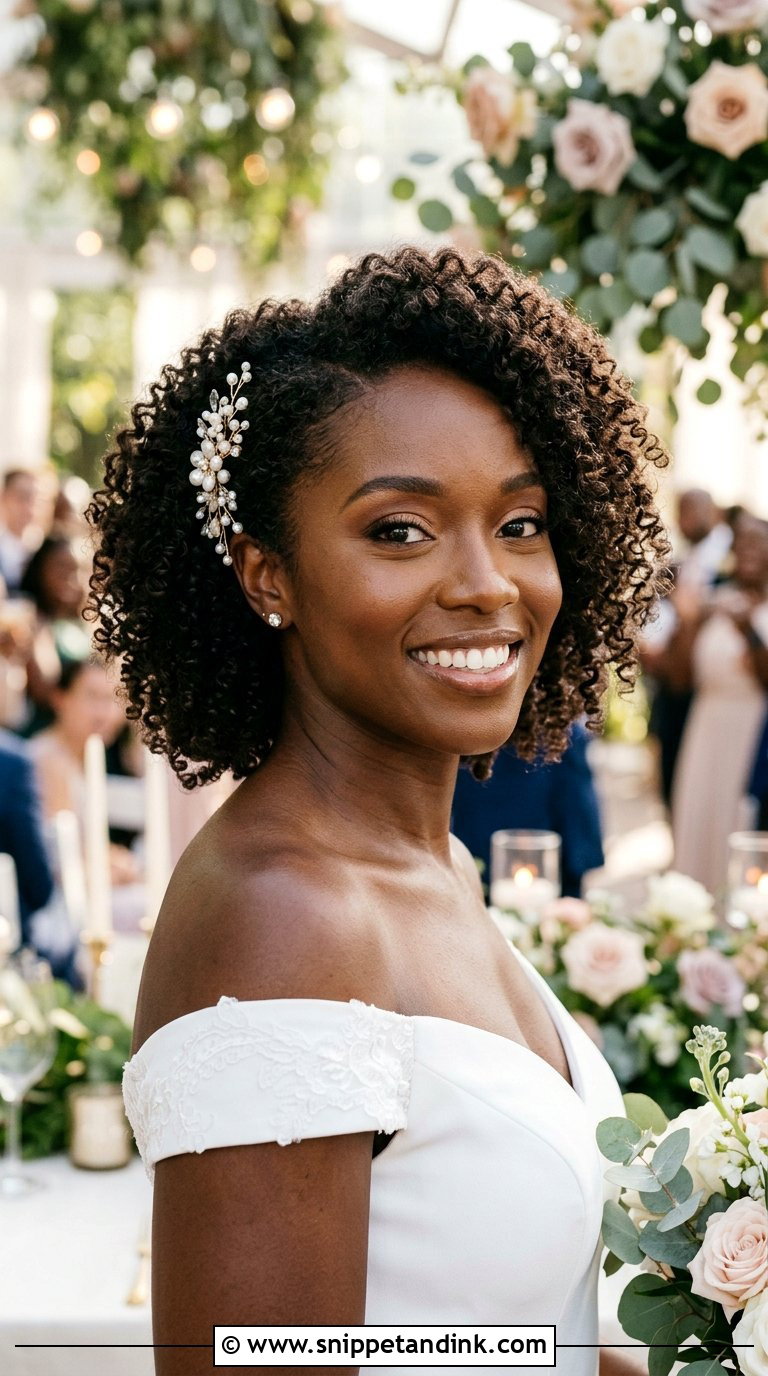
A curly bob is a confident length for a bride who already loves her short cut. The defined curls frame the face and sit off the neckline, so earrings and necklines get full attention. I’d have the shape trimmed about two weeks out, never the same week, so the curls have time to settle. Accessories need to be small: one side clip or two pearl pins. Shorter curls dry fast and are easy to refresh with a spritz of water and a scrunch.
16. Halo Braid Crown
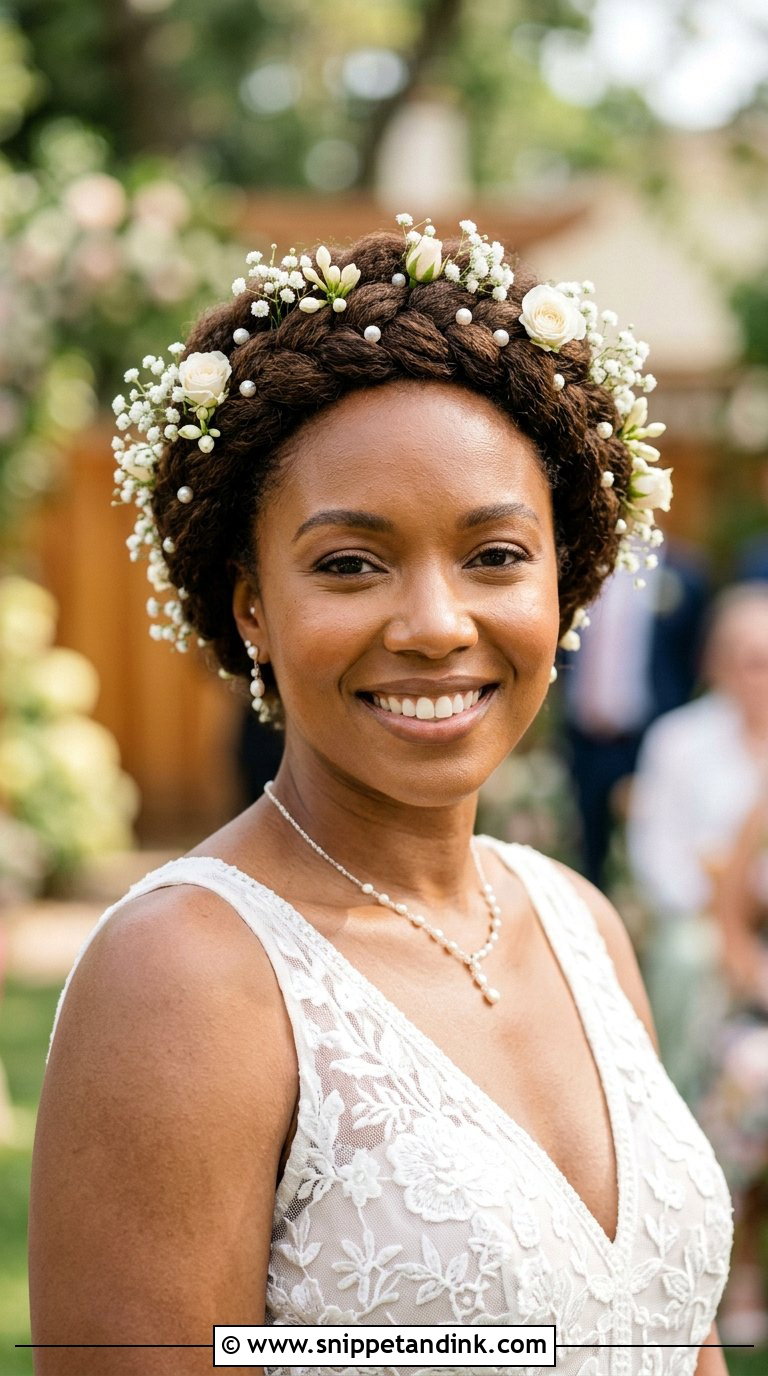
A halo braid wraps around the head and keeps every strand off your face. It needs real length, roughly shoulder blades or longer; shorter hair can be braided in two sections joined at the back, or with a braiding extension added. Pinning the braid flat against the head every few inches is what stops it slipping. Fresh flowers or pearls tucked along it look natural, and it holds through wind at outdoor and destination weddings.
17. Pinned Back Afro Puff
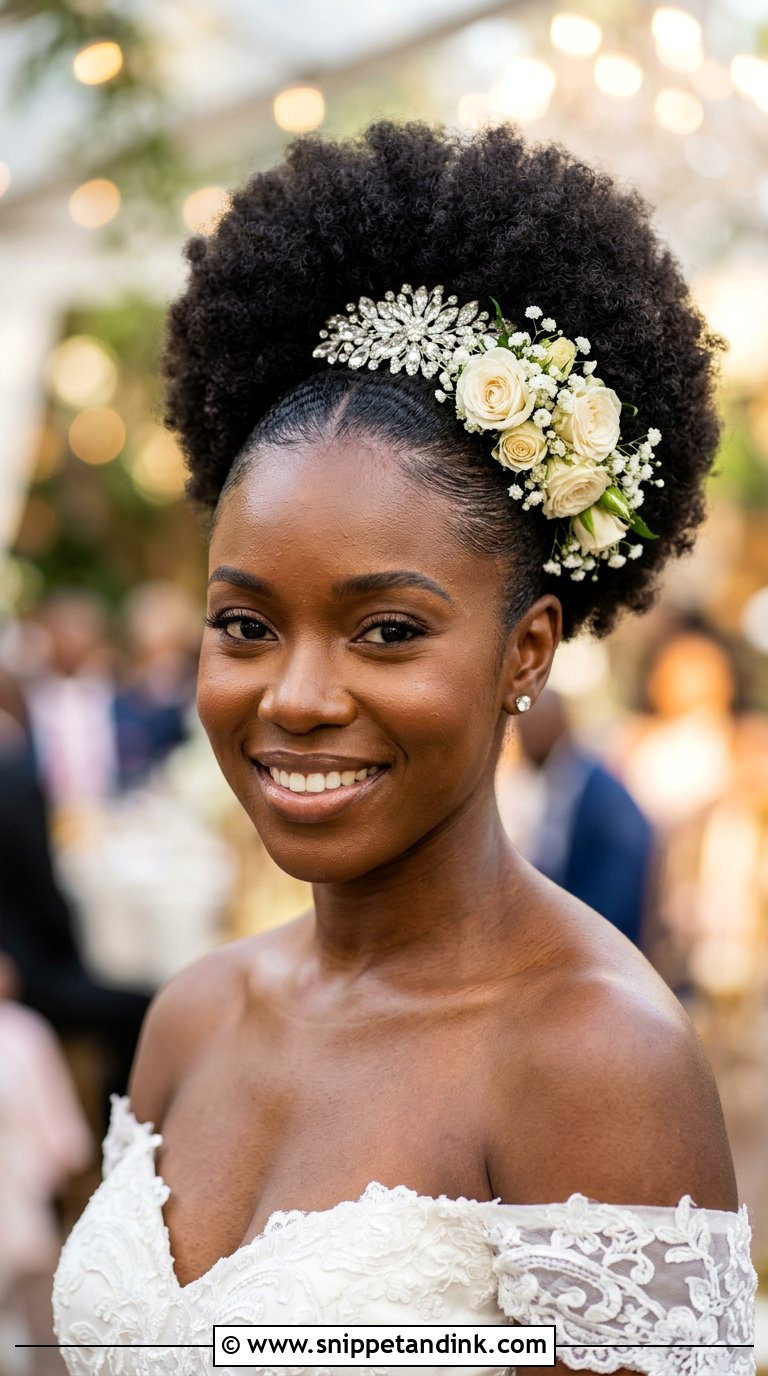
A pinned-back afro puff smooths the front and lets the back form a full, round puff. The trick is a soft hold at the front: a satin band or a scrunchie stretched over the base works better than a tight elastic, which can snap coils. I shape the puff last, after the front is set, so it doesn’t get flattened. A sparkly pin, pearls or a few flowers beside the puff are enough. Off-the-shoulder necklines show it off well.
18. Tucked Bob With Deep Wave
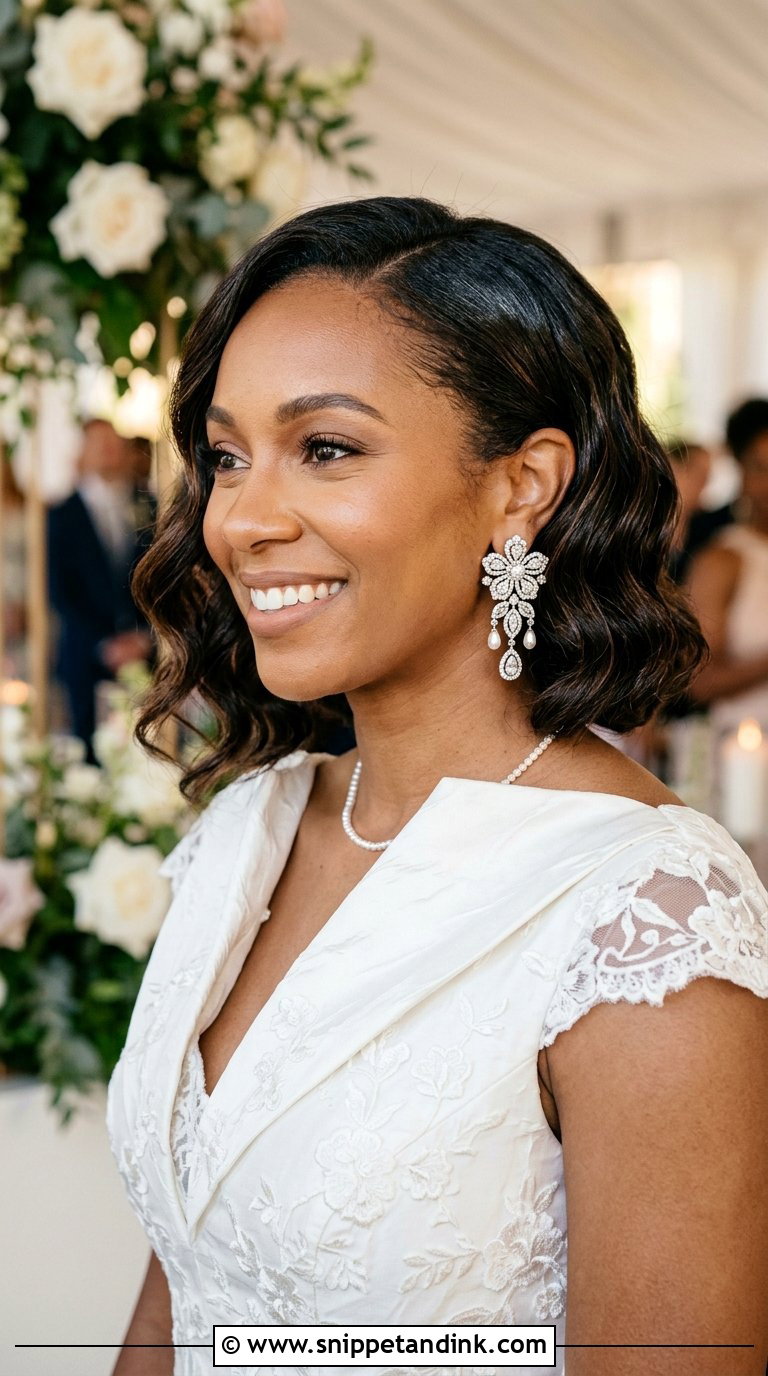
A tucked bob with deep waves is glossy, short and tucked behind one ear so an earring takes the spotlight. The waves are set with a curling iron or flexi rods and brushed into soft ridges. On pressed hair, humidity is again the enemy, so keep a small holding spray close. Wear it sleek or with one hairpin. It sits comfortably with structured gowns and stronger makeup, and it suits brides whose daily look is already polished rather than undone.
19. Bridal Knotless Braids Half-Up
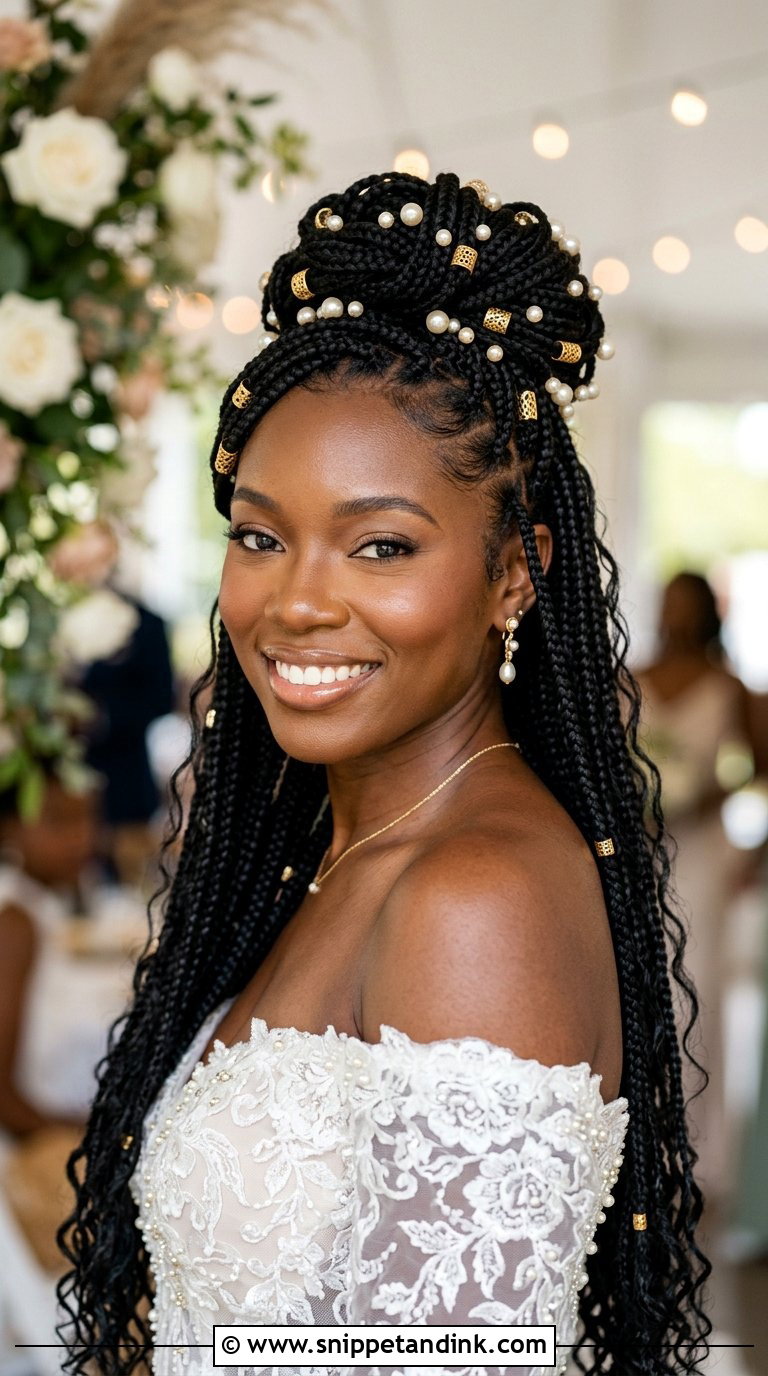
Knotless braids are lighter than traditional box braids because the braid starts with your own hair and the extensions are fed in gradually. That makes them gentler at the root and comfortable to wear through several events. For the half-up shape, the top braids are gathered into a bun or crown while the rest hang down your back. Gold cuffs, beads or pearls slide on easily. Install them a week ahead so the parts settle and the scalp has calmed before the photos.
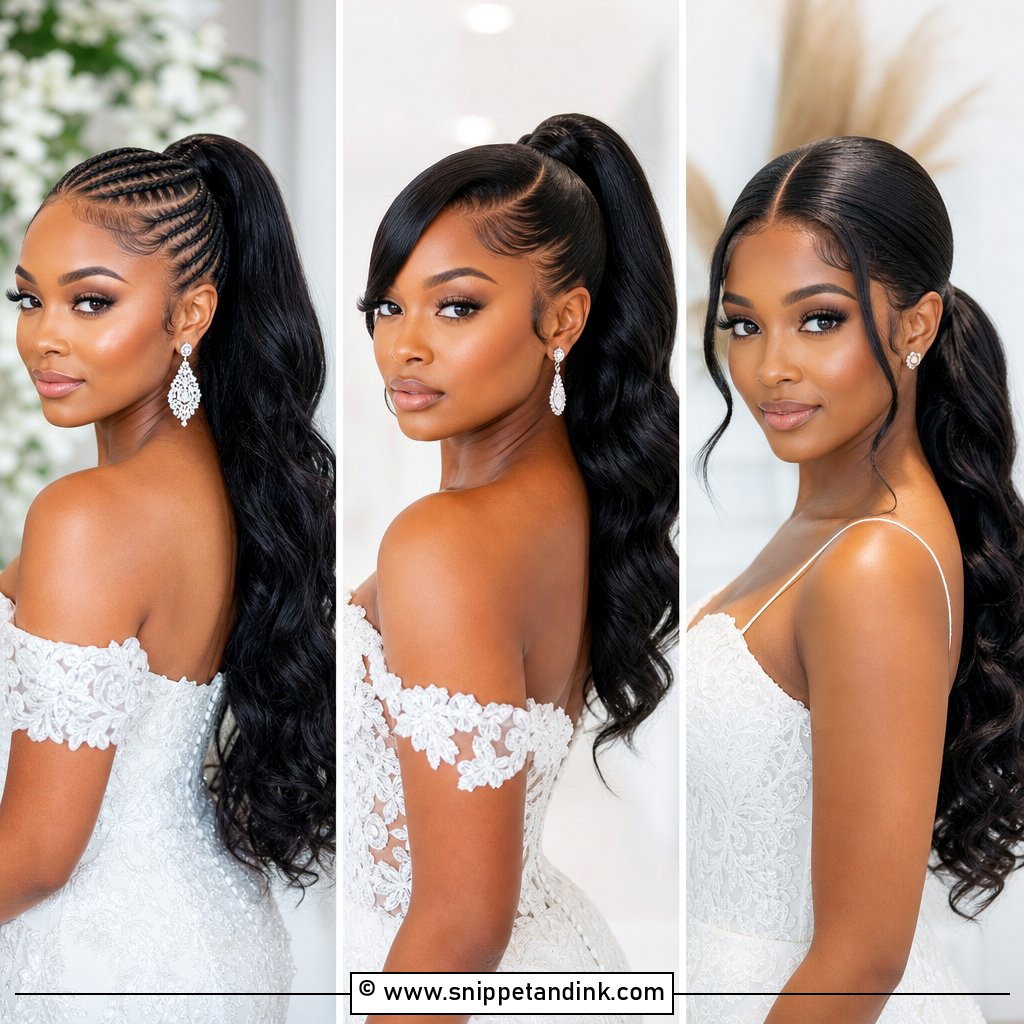
20. Pin Curls With Side Sweep
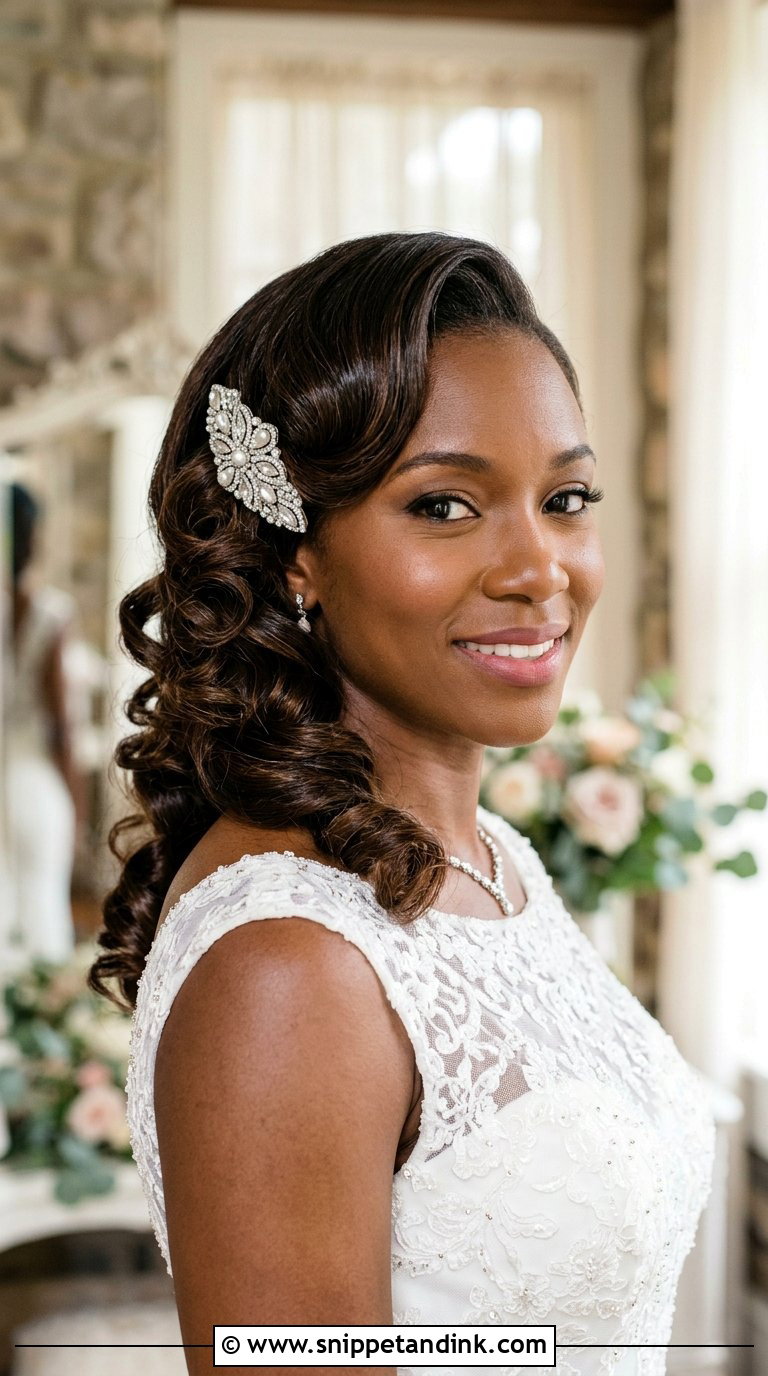
Pin curls swept to one side give a retro shape with real movement. The hair is wound into small flat coils, pinned, and left to set completely before being brushed out and pushed to one side. Brushing too early leaves a limp result. I finish with a jeweled clip or a single flower where the sweep gathers. Pair this with a classic gown and simple earrings, so the sweep stays the main point of interest.
Shrinkage, Steam and Veil Combs on Coily Hair
Natural hair reacts to the room it’s in. Coily styles shrink in humidity, pressed styles revert, and both respond badly to anxious touching. A few things help.
Anchoring a veil
A veil comb slides out of smooth pressed hair and won’t grip loose coils at all. I build a small anchor first: two bobby pins crossed into an X under the spot where the comb sits, or a short braid hidden beneath the top layer. The comb slides through the pins, and the veil stays put when someone steps on the train.
A small kit for your attendant
- Edge control and a soft toothbrush for the hairline
- Bobby pins and U-pins in your hair color
- A small water mist bottle to wake up curls
- A silk or satin scarf for the car ride and the night before
- Blotting papers, since forehead shine shows most against sleek styles
When choosing a stylist, look at photos of their work on hair like yours, not just on looser curl patterns. Ask how they handle shrinkage and how they hold a style in heat. Someone who works with coily and kinky textures every week will answer without hesitation.
Your Texture Sets the Plan, Not the Other Way Round
From a picked-out afro and beaded Fulani braids to sleek buns, twist outs and finger waves, these 20 looks cover a wide range of what Black hair can do on a wedding day. The best choice is the one your texture, your venue’s climate and your calendar can support. Book a stylist who works with your hair type every week, do a trial in the same conditions as the wedding, and give braids and locs the lead time they need. Then you can stop thinking about your hair and enjoy the day.
You'll Like These Ideas:


Leave a Reply