
Locs don’t need disguising for a wedding. They already carry texture, history and a presence that loose hair works hard to fake, so when I style a loc bride, I build on what’s there instead of hiding it. Buns, crowns, curls, ponytails, rolls and half up shapes all work, in a ballroom or a backyard. Comfort matters as much as shape, though. Locs are heavier than most people realize, and the style has to stay put through vows, hugs, tears and a long night of dancing without making your scalp ache. These are fifteen ways Black brides wear their locs on the day, with what I’d watch for in each.
A Loc Calendar for the Last Two Weeks
Most loc problems on a wedding morning start days earlier, with a retwist done too late or locs that never dried properly. This is the rough timing I give my loc brides. Adjust it with your loctician, since loc size, age and density all change it.
- Ten to fourteen days out: retwist or interlock. A fresh retwist can look very tight and feel tender at the scalp; a week or two lets new growth settle.
- Same visit: test your chosen updo or crown, especially on long locs, to learn how comfortable the weight is and how many pins it needs.
- Two to three days out: wash. Thick locs can take a full day or more to dry right through, and locs styled while damp inside can develop a musty smell.
- Two nights out: set curls if you’re wearing them, so the set dries completely.
- Every night that week: sleep in a satin bonnet or on a satin pillowcase to keep frizz and lint down.
- Wedding morning: styling only. No washing and no new retwisting.
1. Bridal Loc Bun
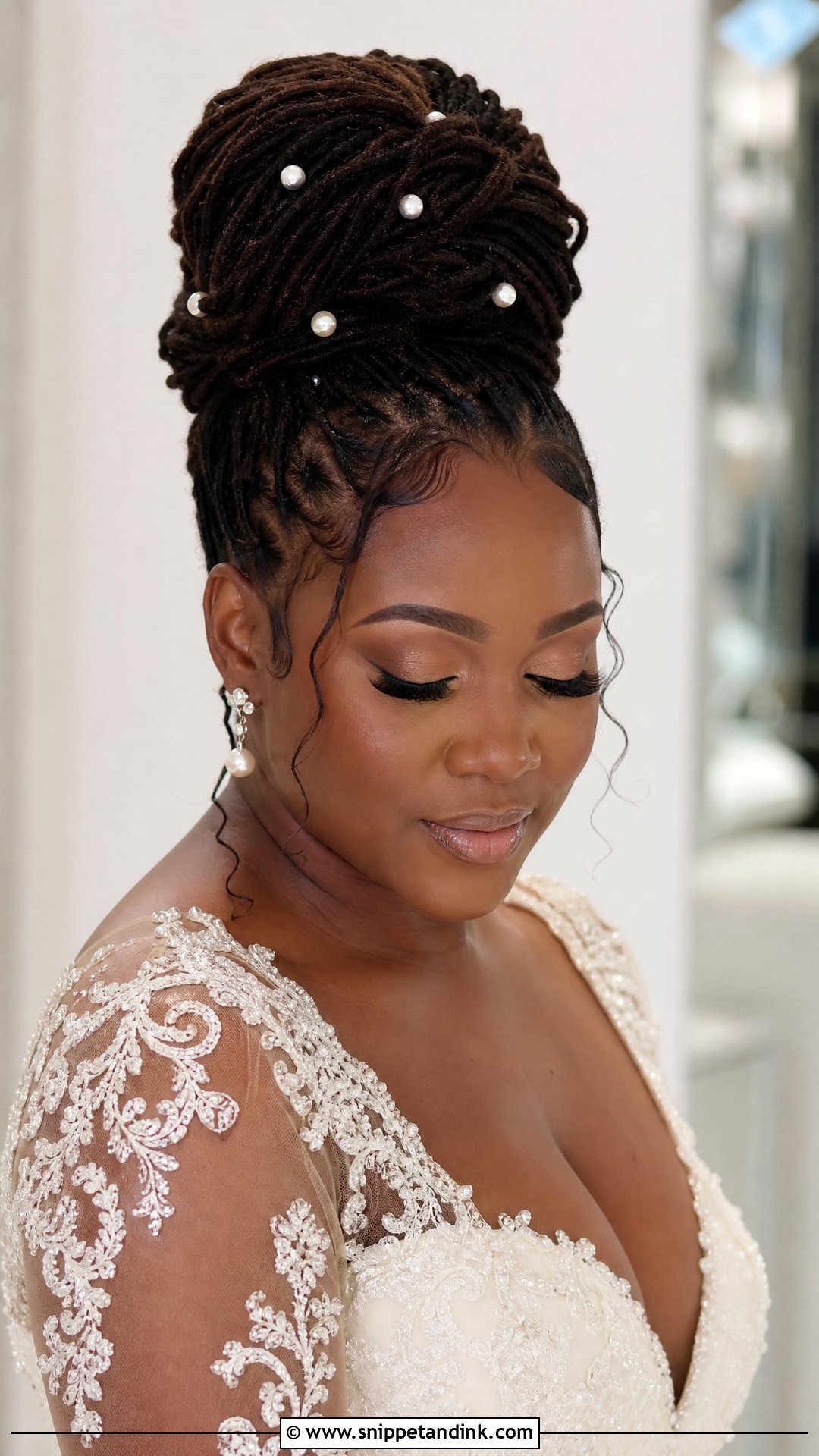
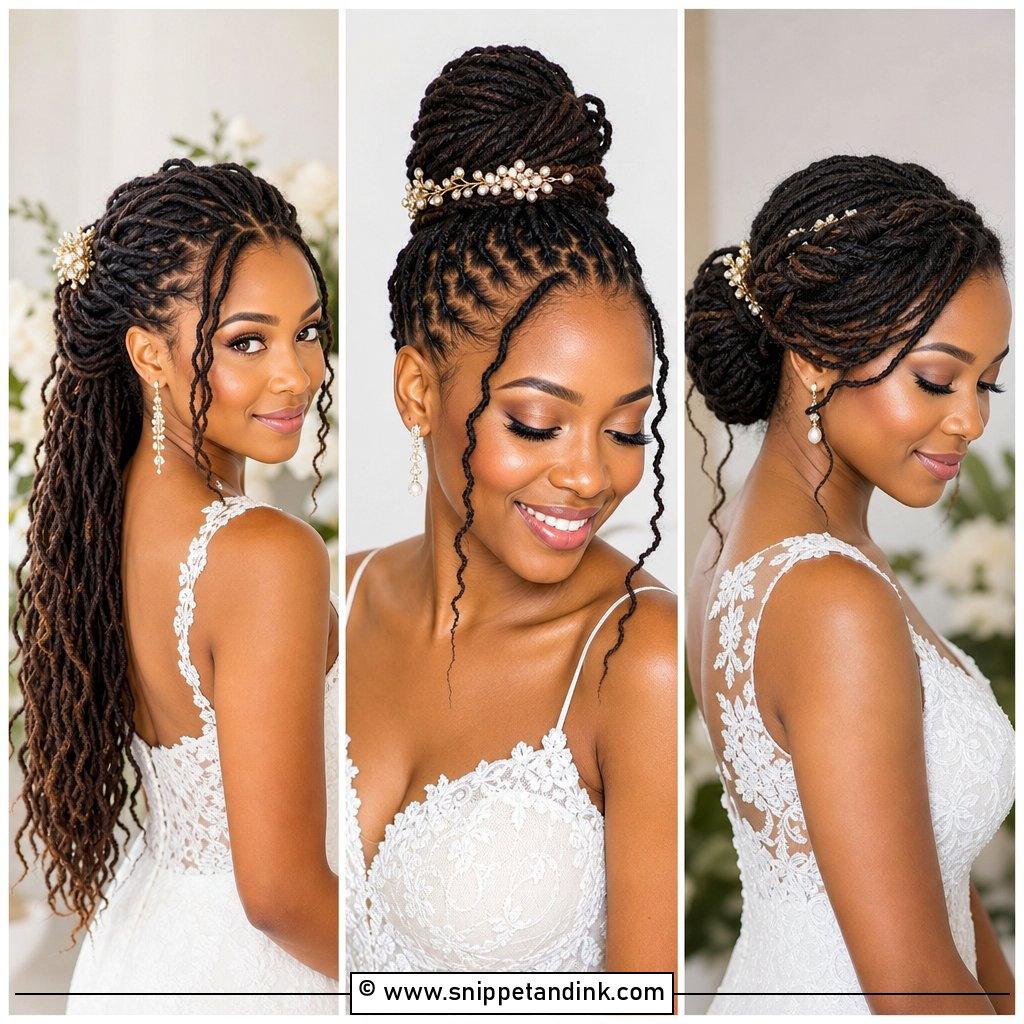
The loc bun is the shape I suggest most, because it can sit at the crown, the middle or the nape depending on your neckline and veil. High suits strapless gowns and statement earrings; low feels softer with lace or off-shoulder dresses. With long, thick locs, I usually split the length in two and wrap each half, which keeps the bun from becoming a heavy ball pulling backward. It should feel secure, never tight. Pearl pins, gold cuffs or small flowers can circle the base without covering the locs themselves.
2. Bridal Loc Updo
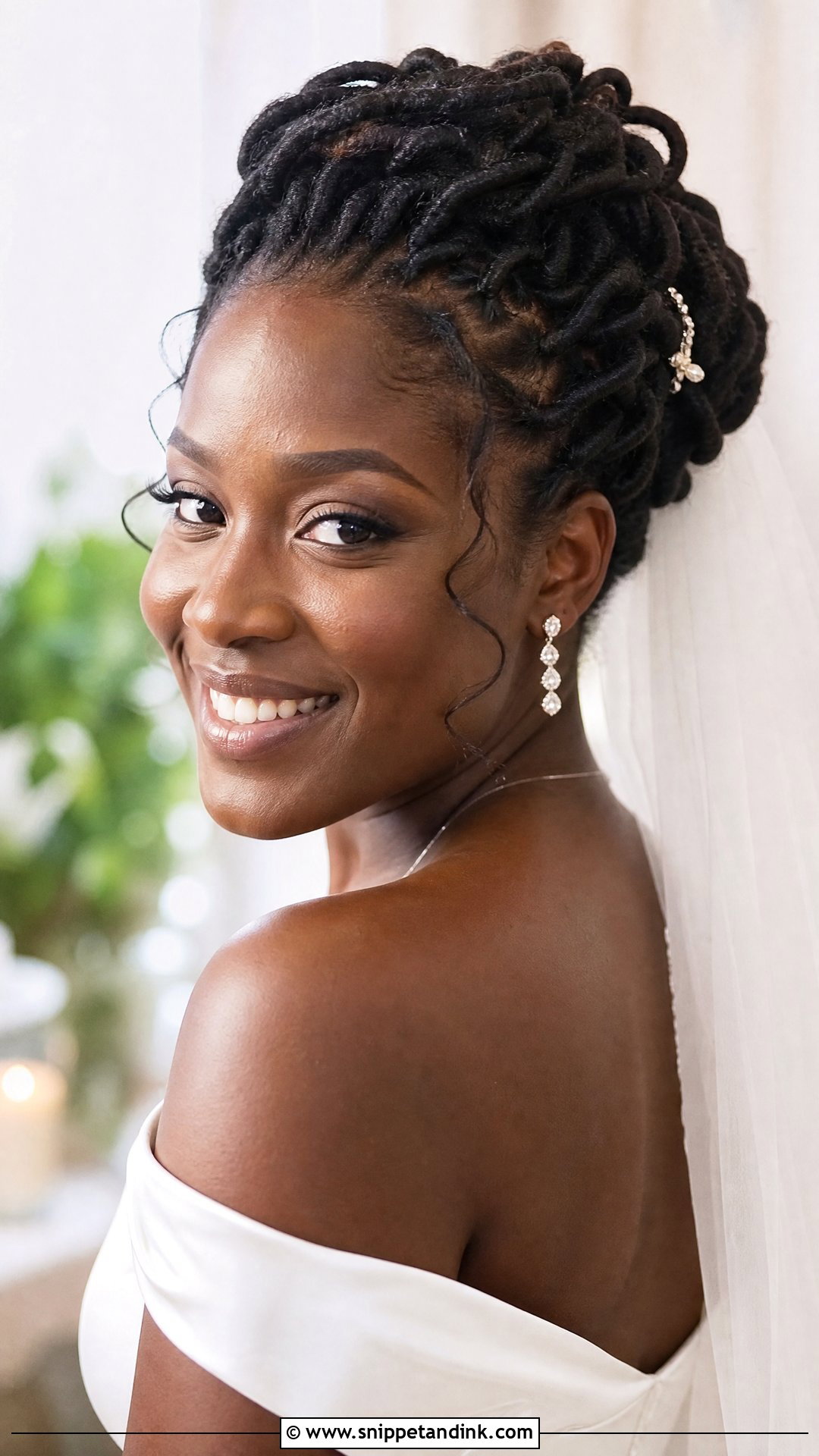
An updo gives locs height and structure without any extensions. I build it from tucked locs, twisted sections and wrapped sides, with a few softer pieces around the face. Your shoulders, jewelry and neckline stay visible, and in summer your neck stays cool. The common mistake is pulling every loc flat against the scalp; I’d rather lift the sections slightly so the shape has volume and your edges aren’t strained. A veil can tuck under the back, or decorative pins can line one side.
3. Bridal Loc Ponytail
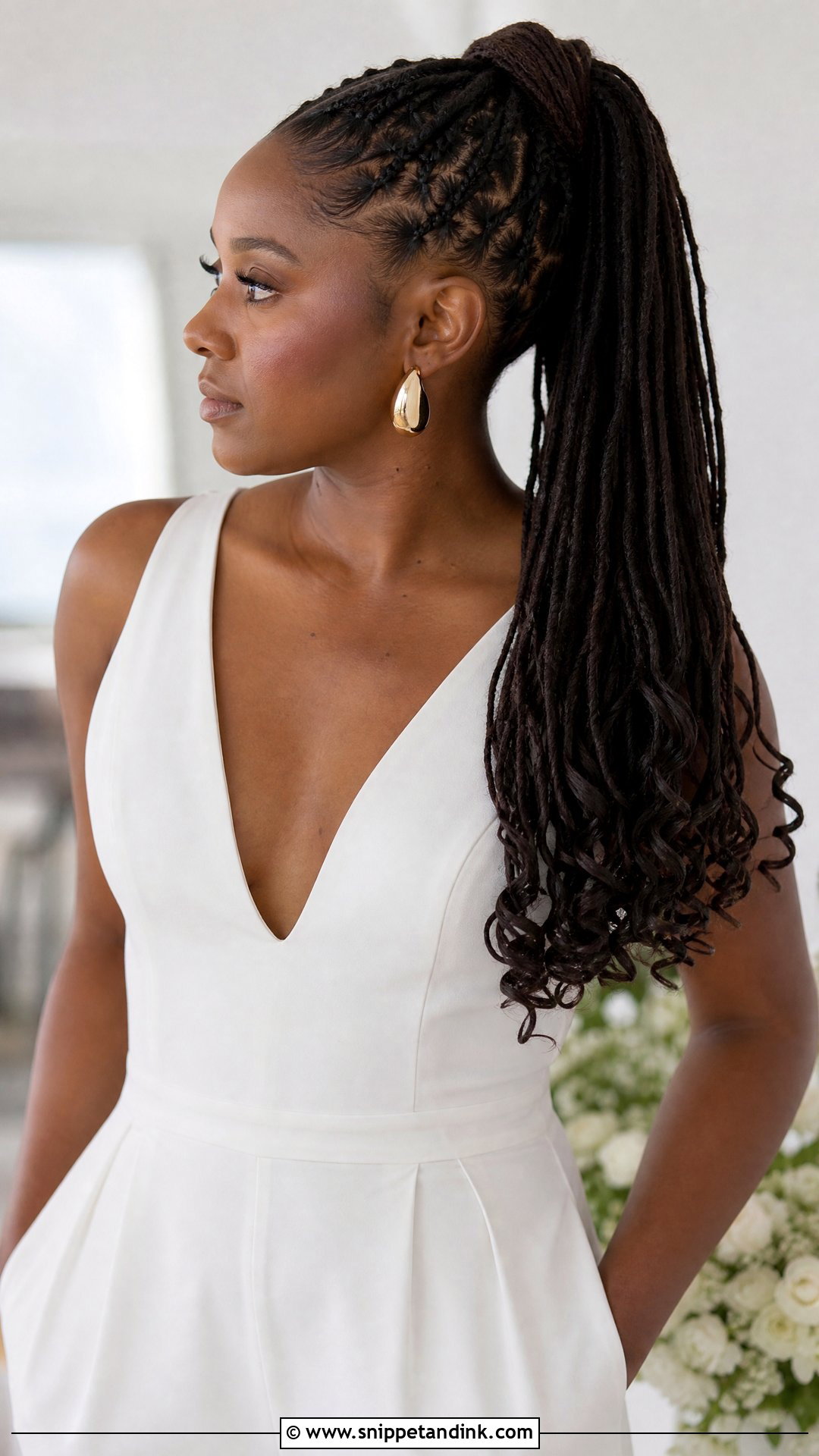
A loc ponytail is quick to style and easy to wear for twelve hours. High, mid or low, the locs are gathered and wrapped at the base with a single loc so no tie shows. Long locs carry real drama here. The trade-off is weight hanging from one point: on long, dense locs, a high ponytail can start to pull after a few hours, so I’d lean toward mid or low height. Curl the ends a couple of nights before if you want movement. Sleek gowns, jumpsuits and minimal looks pair well.
4. Bridal Half Up Locs
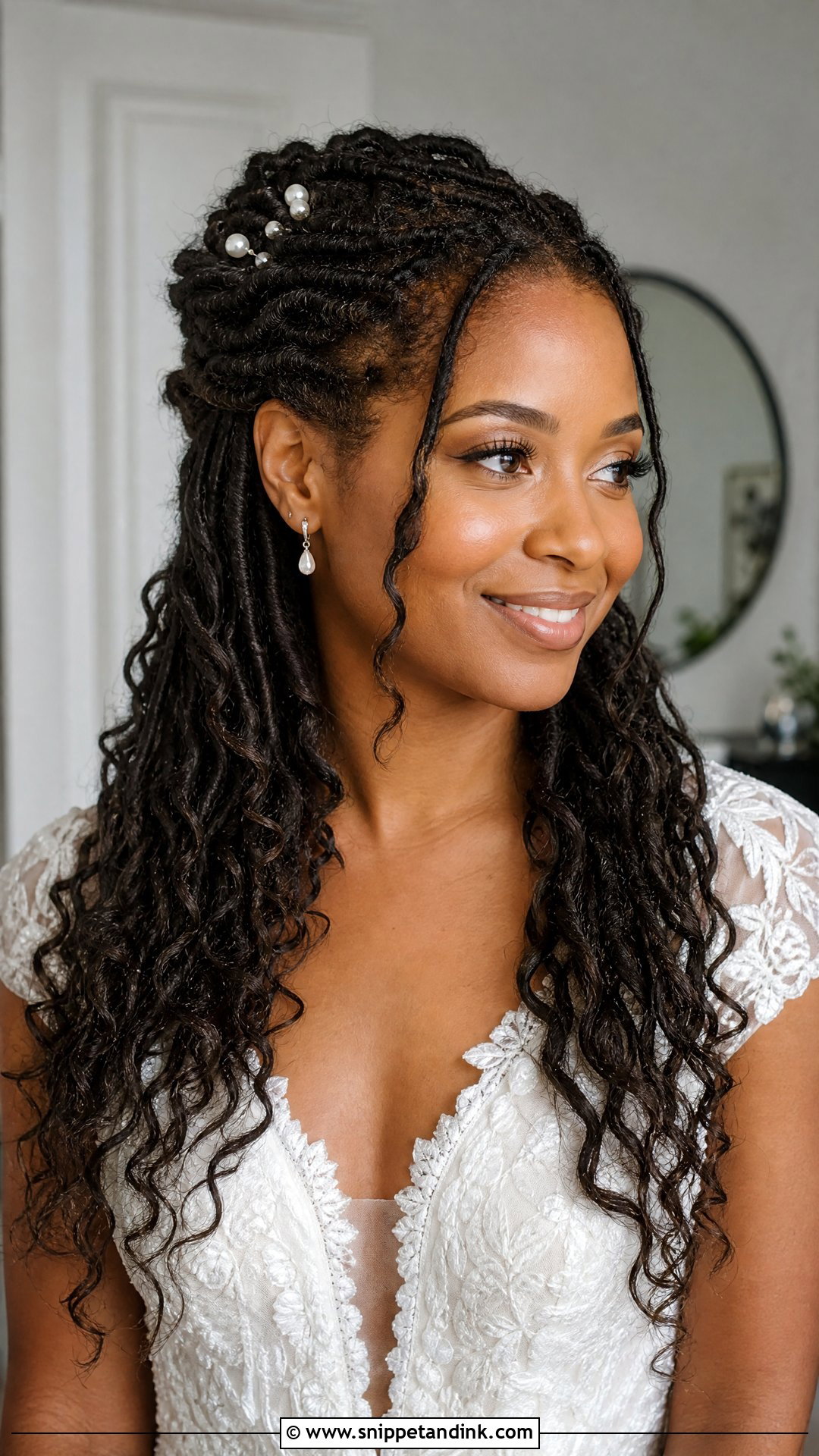
Half up locs keep the length on show while clearing your face for photos. I pin, twist or gather the top section, and let the back hang full. Medium to long locs work best, since shorter ones don’t leave much to fall below the pinned section. This is one of the most comfortable options on the list because only part of the weight is gathered. Curled ends or a few face-framing locs soften it for a garden or beach ceremony.
5. Bridal Loc Chignon
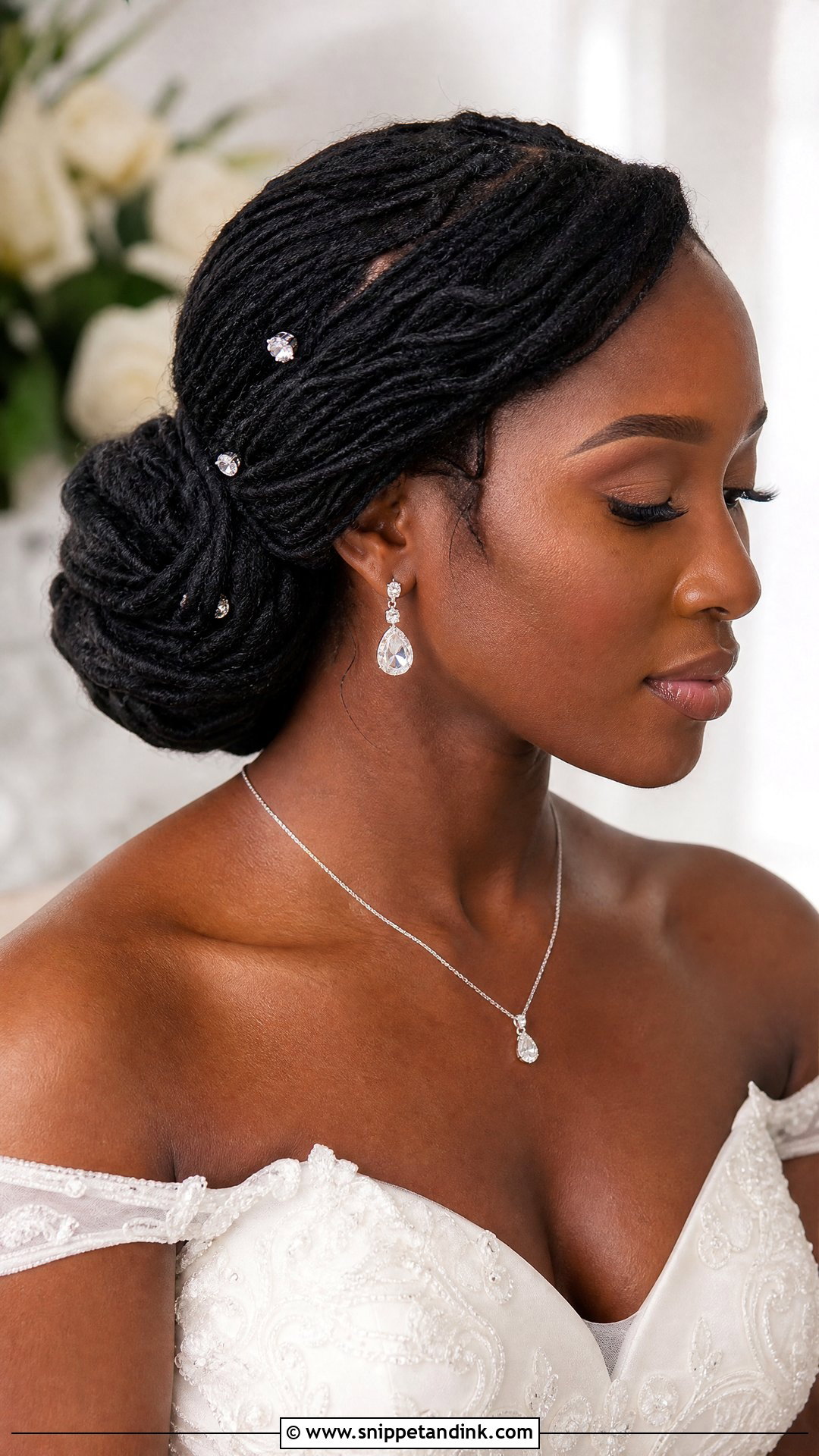
A loc chignon sits low and close to the head, which makes it one of the steadiest shapes for a long ceremony. I fold, twist or wrap the locs into a soft low form rather than winding them tight. It flatters high necks and detailed backs, and gives a veil a firm base. A side part leans romantic; a center part looks balanced. Pearl clips, crystal pins or fresh white flowers are enough, as the texture of the locs does most of the decorating.
6. Bridal Loc Crown
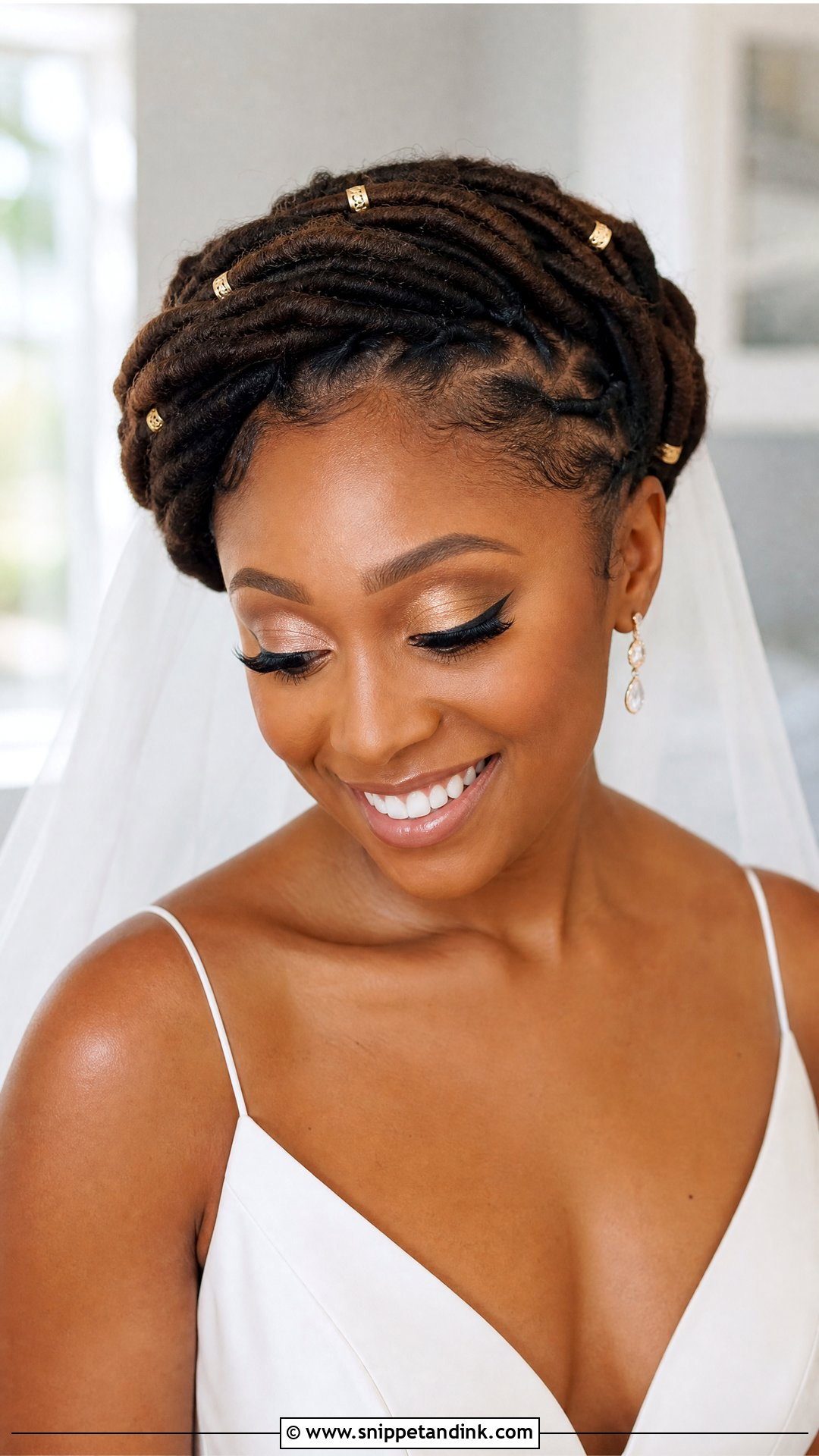
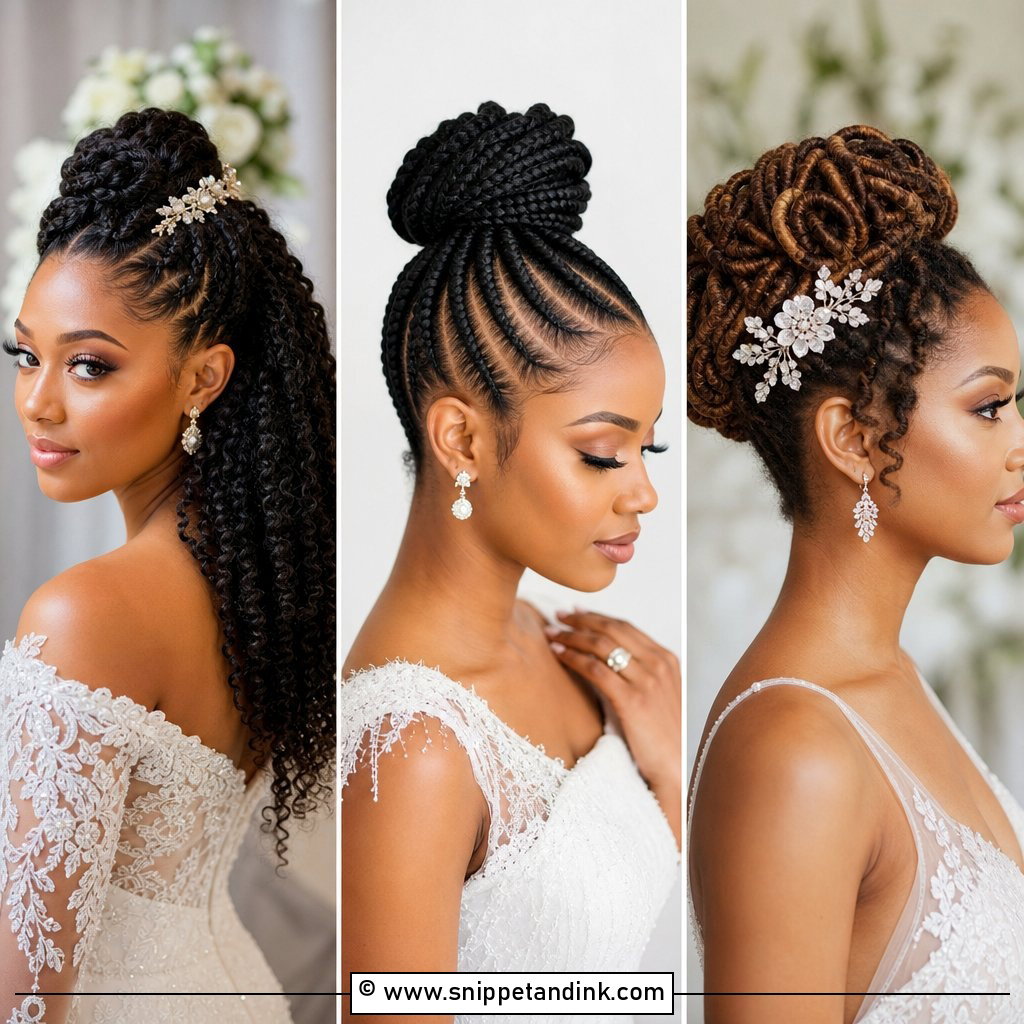
Wrapping locs around the head turns them into the crown itself, and for many brides a bridal loc crown means more than any tiara could. The locs are wrapped, twisted or braided into a halo. Getting the volume right is the skill: enough to look intentional, not so much that you’re balancing a heavy ring on your head. I check comfort by having the bride look down and turn her head side to side before I finish pinning. Clean necklines and simple earrings let the crown lead. Small gold cuffs tucked in pick up the light in photos.
7. Bridal Curly Locs
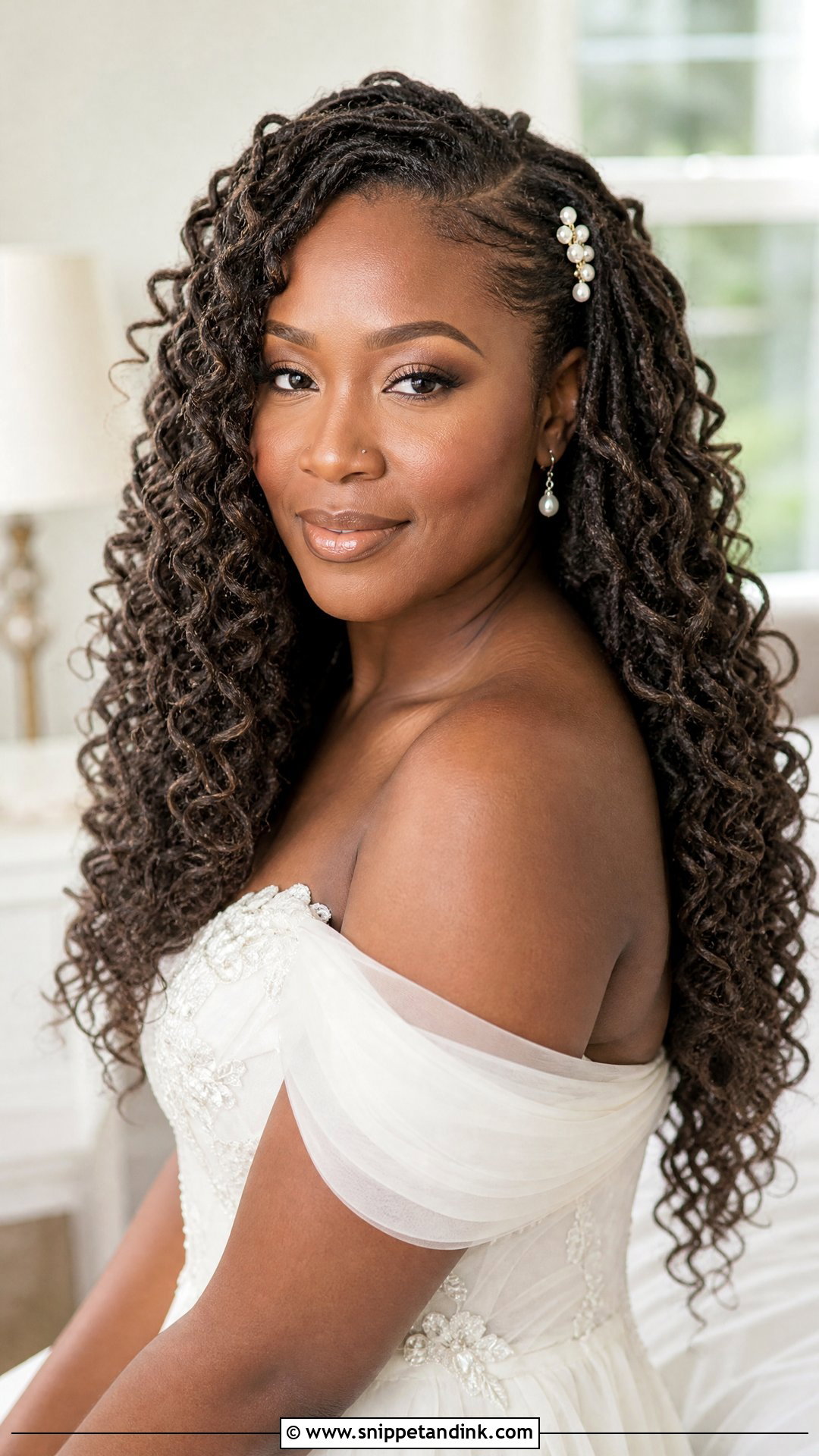
Curly locs bring softness without hiding what locs are. The curl is set with rollers, pipe cleaners, rods or flexi rods, all heat-free. Timing is where most brides get caught out: locs take far longer to dry than loose hair, and a set that’s still damp inside won’t hold and can start to smell. I’d set at least two nights ahead. Worn down, half up or pinned to one side, the curls should carry only light accessories, since anything heavy pulls them straight again.
8. Bridal Side Swept Locs
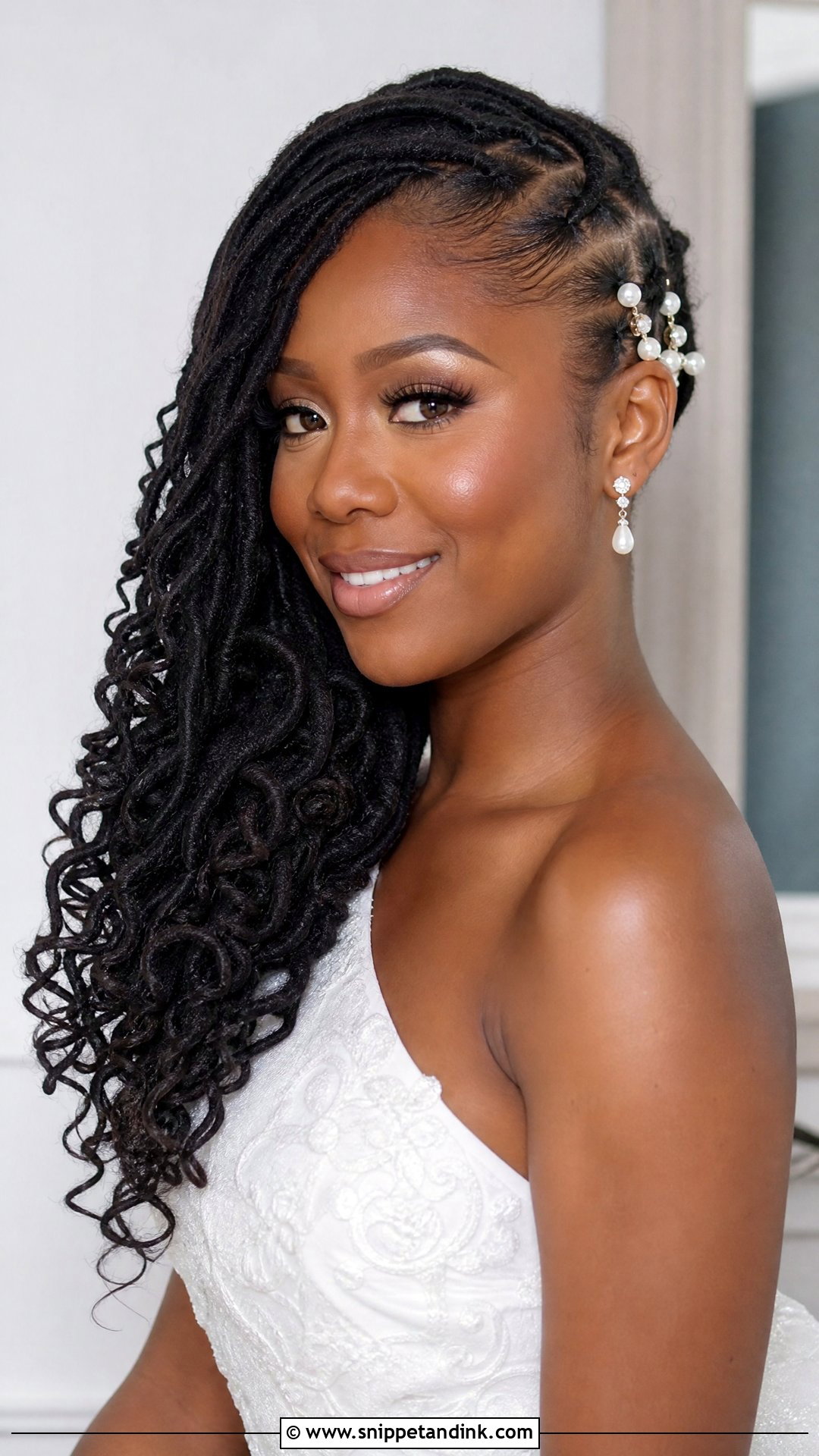
Swept to one side, locs fall over the shoulder and show their length from the front, which makes this a strong portrait style. It suits one-shoulder gowns, sweetheart necklines and a statement earring on the bare side. The weight all goes one way, so I anchor the sweep behind the ear with pins into a small twisted base; otherwise it slowly drifts back by the reception. Curled ends or a couple of loose face-framing locs add softness.
9. Bridal Loc Petal Bun
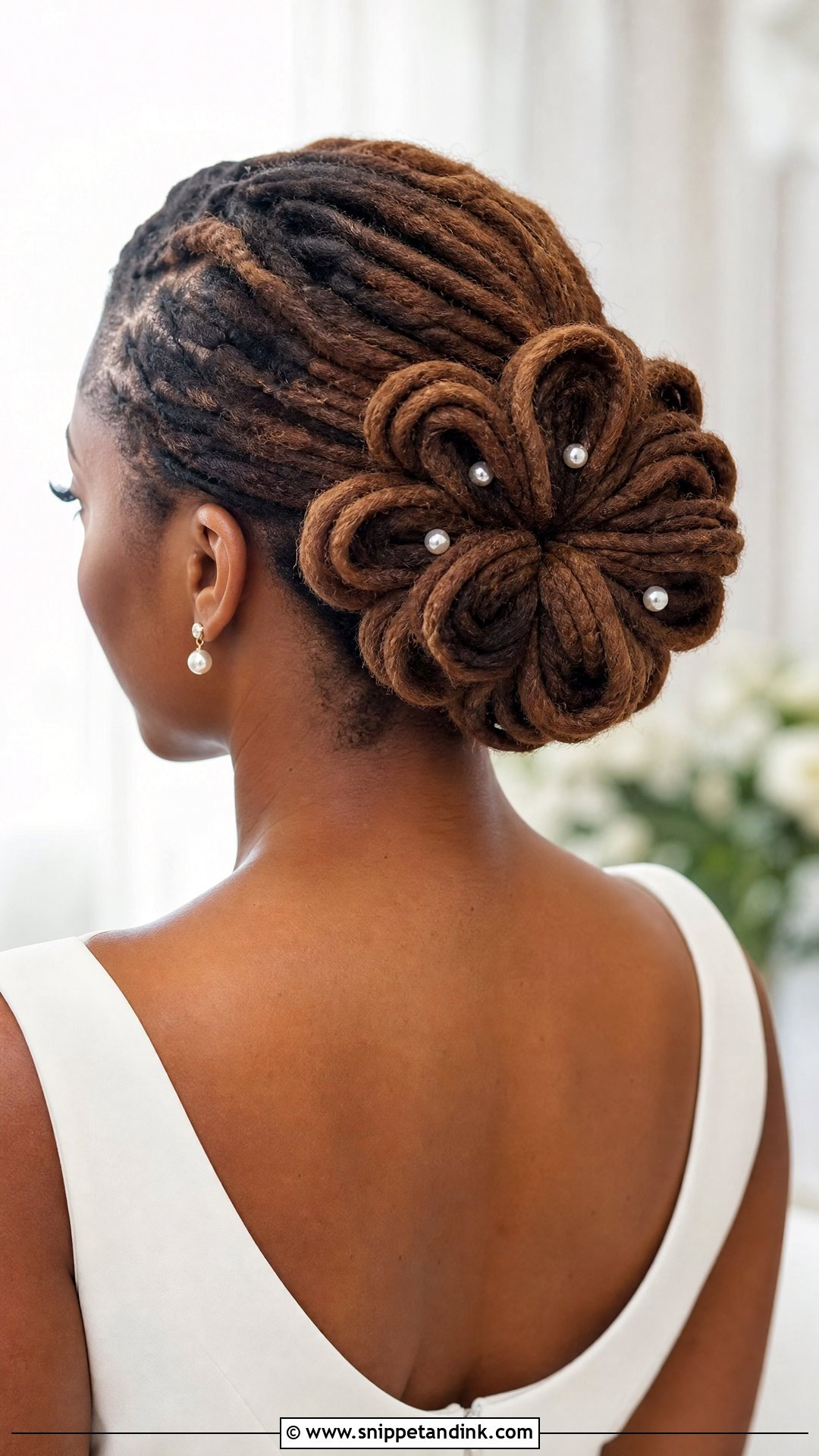
Looping each loc into a petal shape at the crown or back of the head, a bridal loc petal bun becomes a sculpted flower, and it’s the most artistic shape here. It takes time and medium-length locs that bend easily; very thick or very short locs resist forming tight petals. Because the style is the focal point, I’d skip a veil or use a sheer one placed underneath. It can be sleek or softened with a few loose locs at the temples.
10. Bridal Loc French Roll
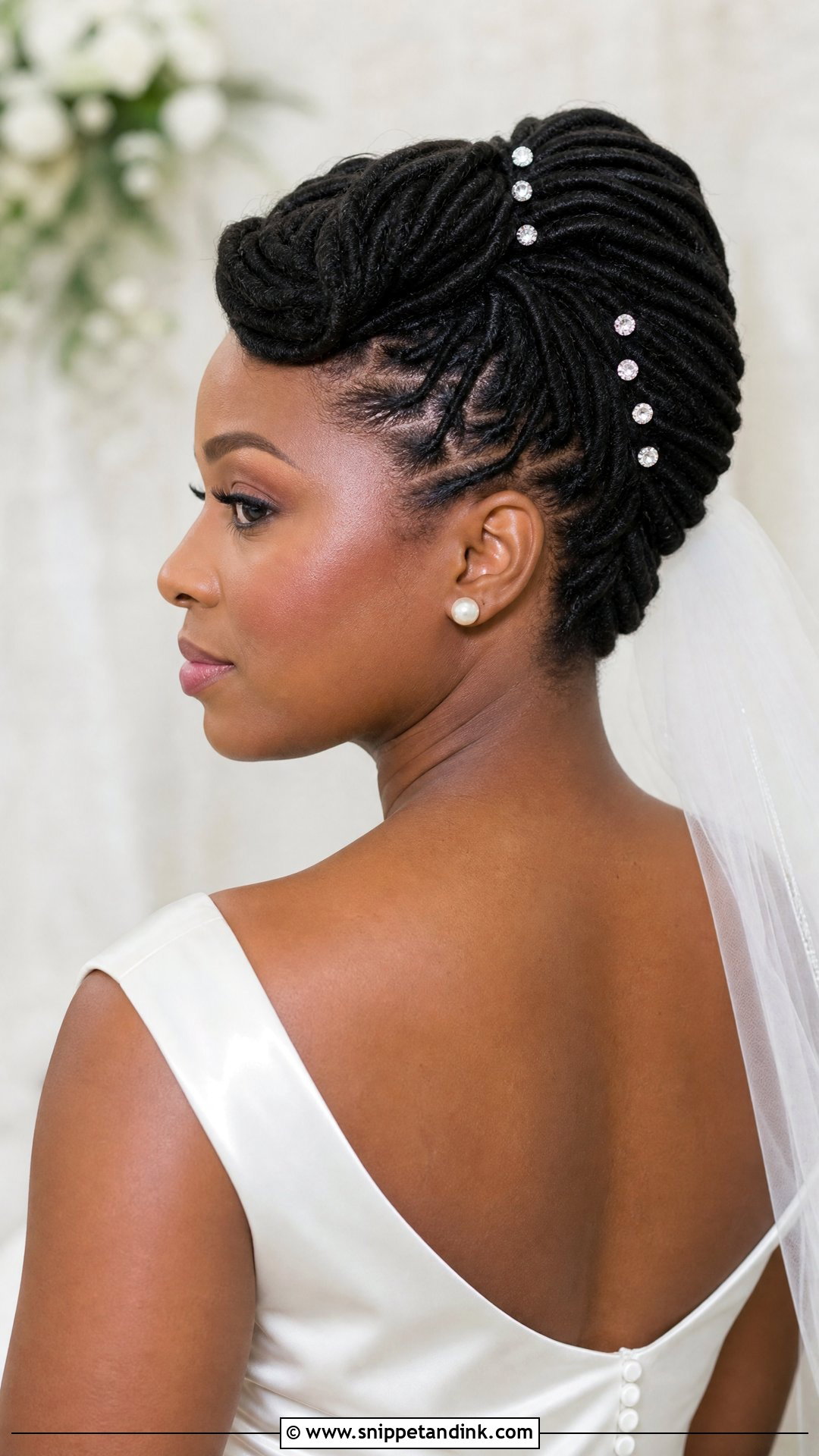
A French roll lifts the face and keeps everything secure. The locs are rolled upward or inward and pinned into a vertical shape, and because locs have their own texture, the roll has more depth than one done on straight hair. Pin placement matters more with locs, since pins can slide between them; I lock them in pairs. It pairs well with birdcage veils, pearl earrings, satin gowns and classic makeup. Keep the edges neat and the shape softly rounded.
11. Bridal Loc Bob
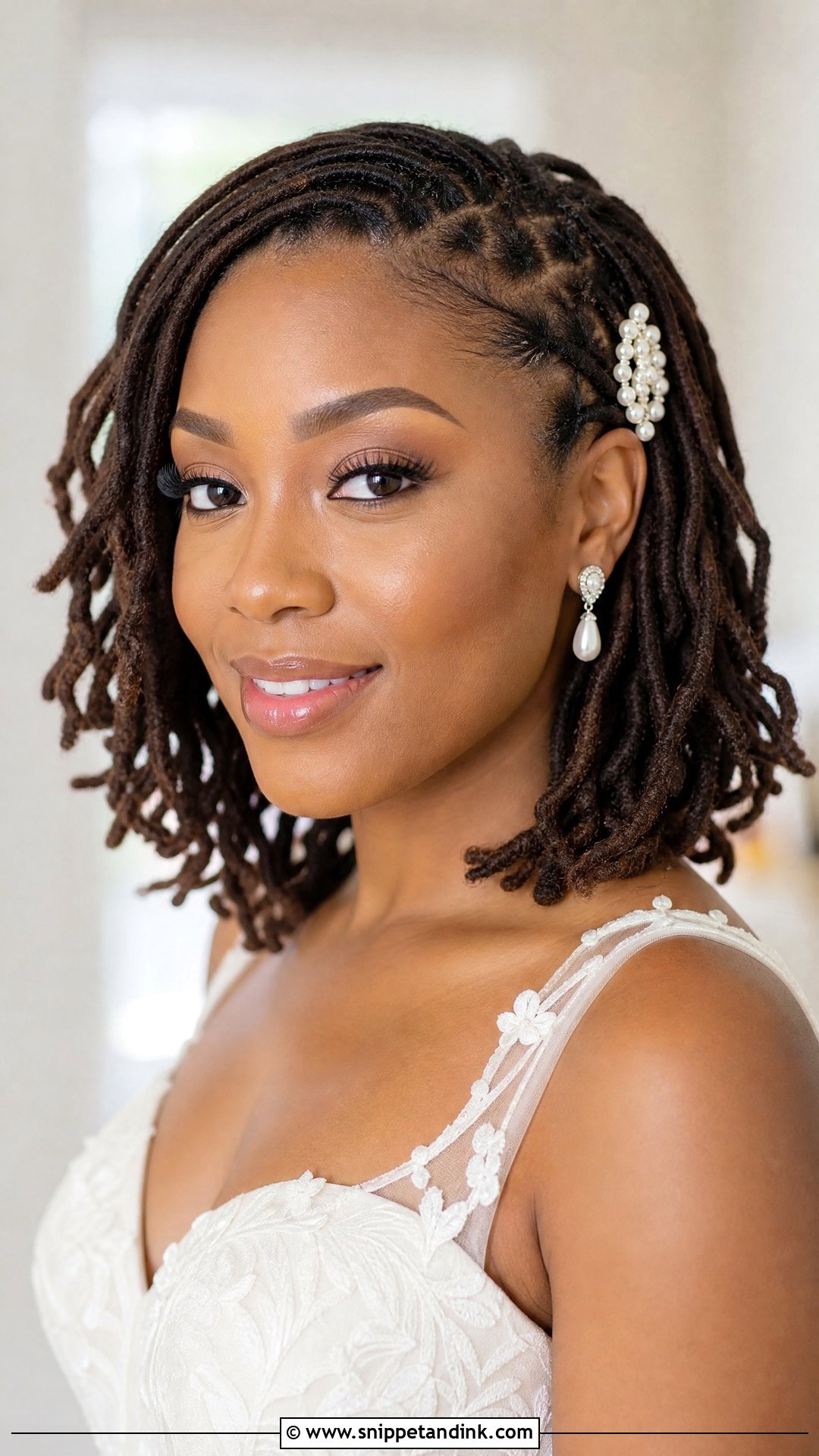
Short or shoulder-length locs look polished in a bob, and the light weight makes this one of the most comfortable bridal options. The locs can be shaped softly, curled at the ends, tucked behind one ear or accessorized with pearl clips. A side part softens; a center part looks modern. Veils, headbands and small crowns all sit easily on shorter locs. If the length is uneven, a light curl set the night before blends it so the shape looks deliberate.
12. Bridal Goddess Locs
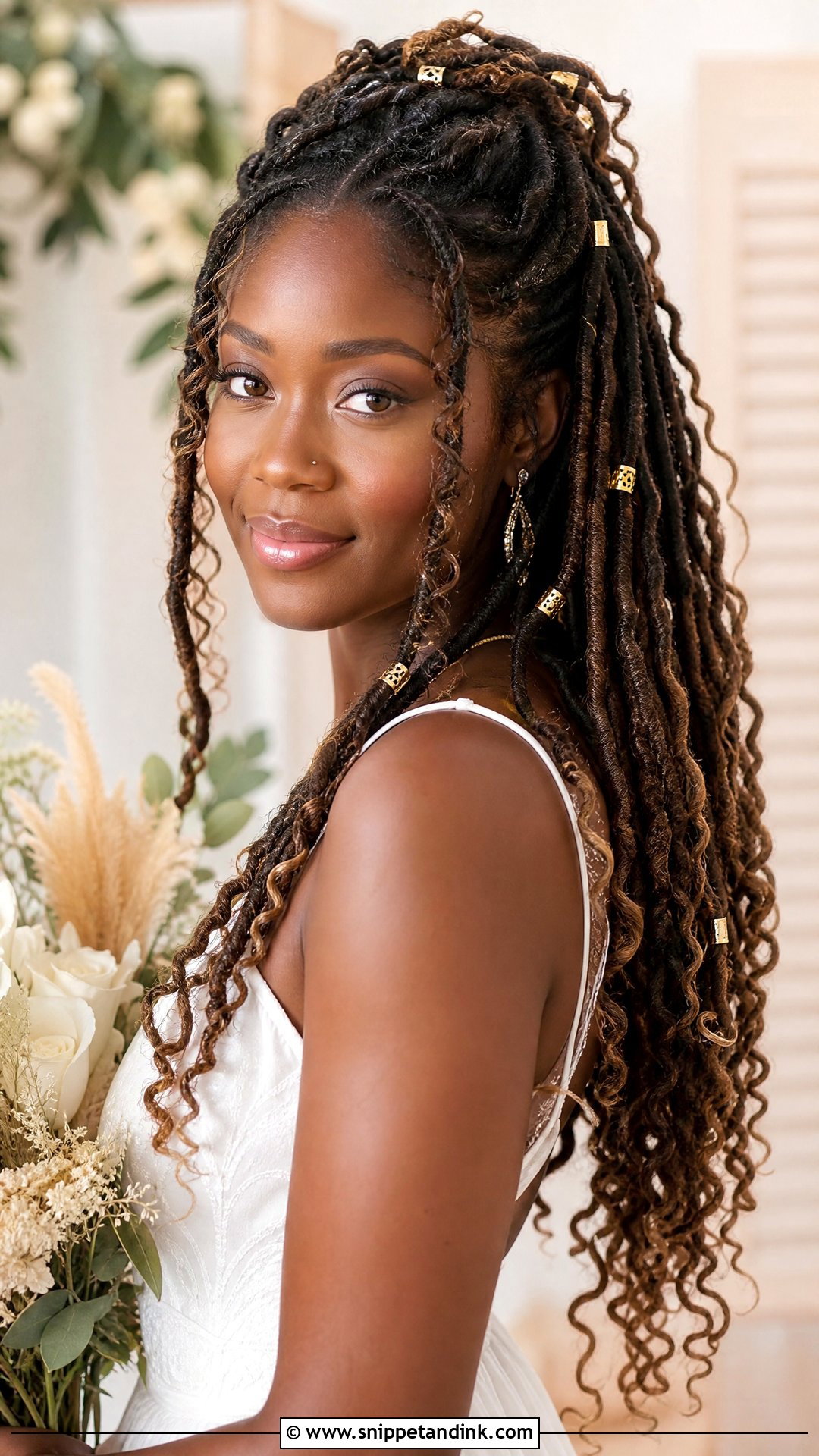
For extra length and a boho mood, Bridal goddess locs are usually installed as faux locs with curly or wavy strands left loose along the length. Installation takes many hours, so book it a few days before the wedding, not the day before, and give your scalp time to settle. They can be worn down, half up, in a low bun or to one side. I keep the parting neat and the roots polished while the loose ends stay airy. Faux locs add real weight, so I’d avoid high styles if the install is long.
13. Bridal Sisterlocks Updo
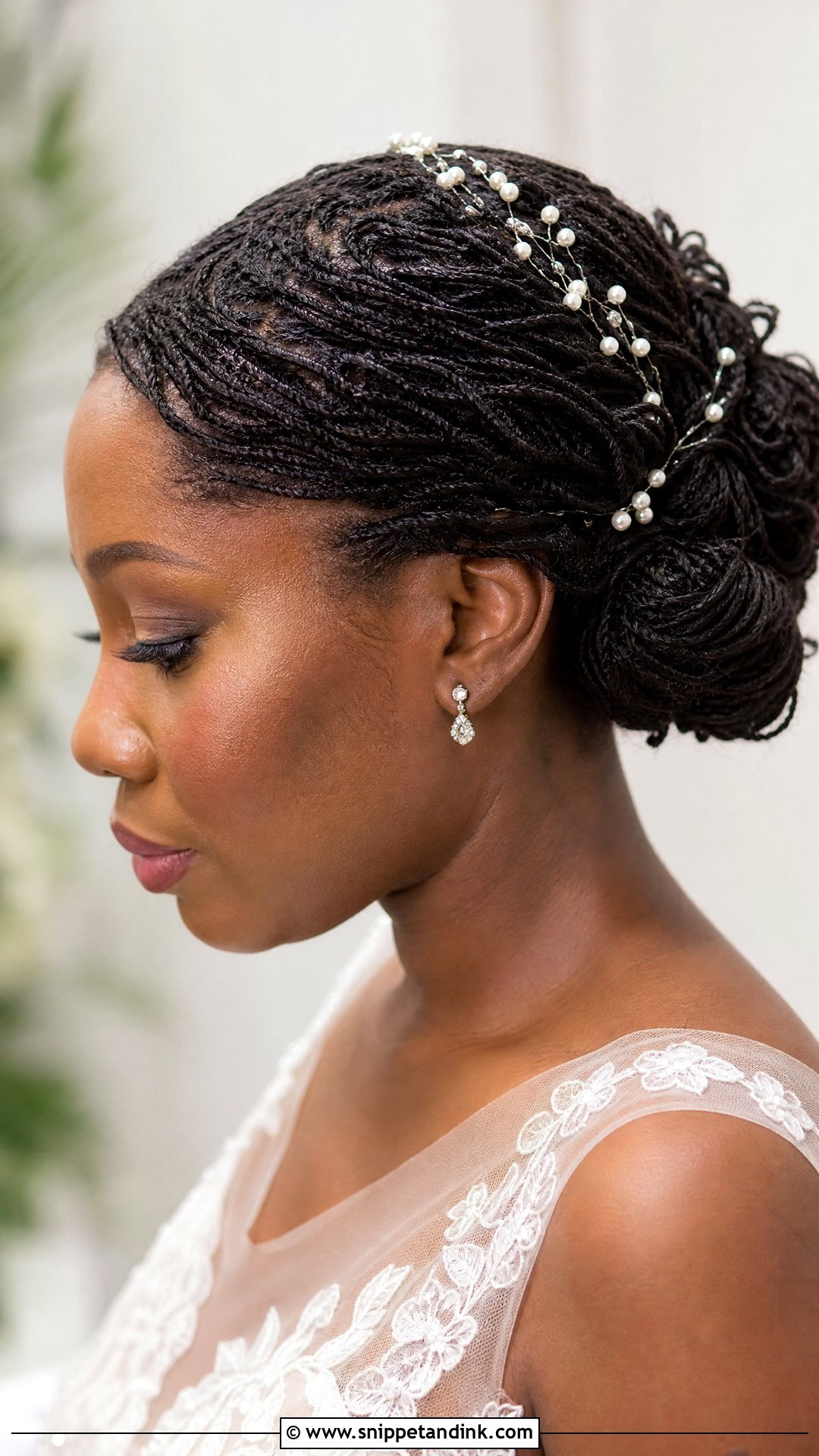
Sisterlocks are fine and light, which means they can be shaped into detailed buns, rolls and pinned designs that larger locs can’t manage. They also make soft face-framing pieces easy. The texture is already intricate, so dainty accessories are plenty. My caution is the hairline: small locs at the edges are delicate, and I keep tension off them by pinning the weight further back. Schedule your retightening with your consultant a week or two ahead so the roots look settled.
14. Bridal Locs With Veil
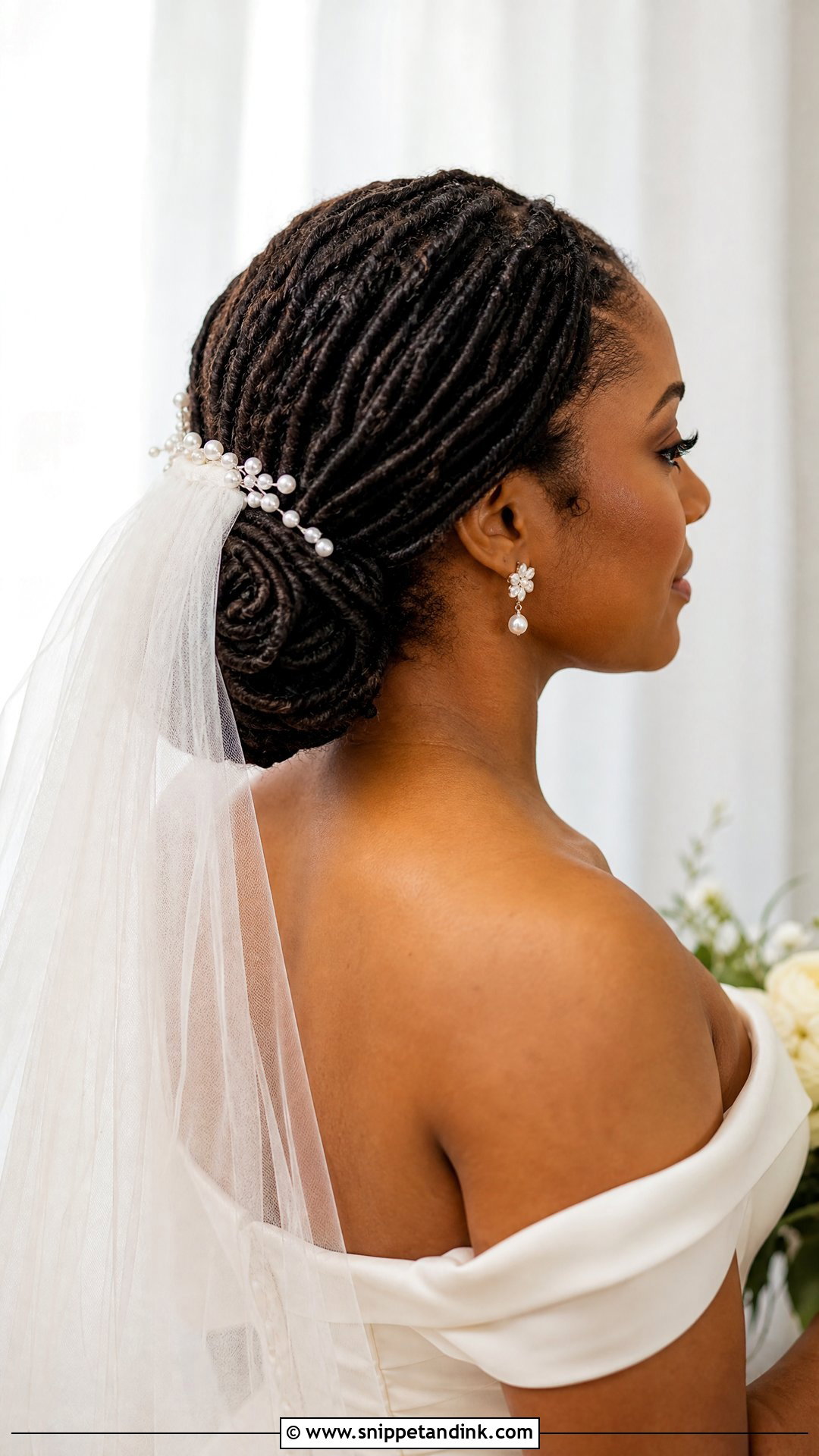
Locs can hold a veil well, but the comb needs a proper anchor point. A low bun, half up style, chignon or crown gives it something to grip without dragging on your hairline. Pushing a comb directly between loose locs rarely works, because they slide apart, so I pin a small base first and set the comb into that. A long or heavy veil needs extra pins. Plan for the evening too: the style should look complete once the veil comes off.
15. Bridal Locs With Flowers
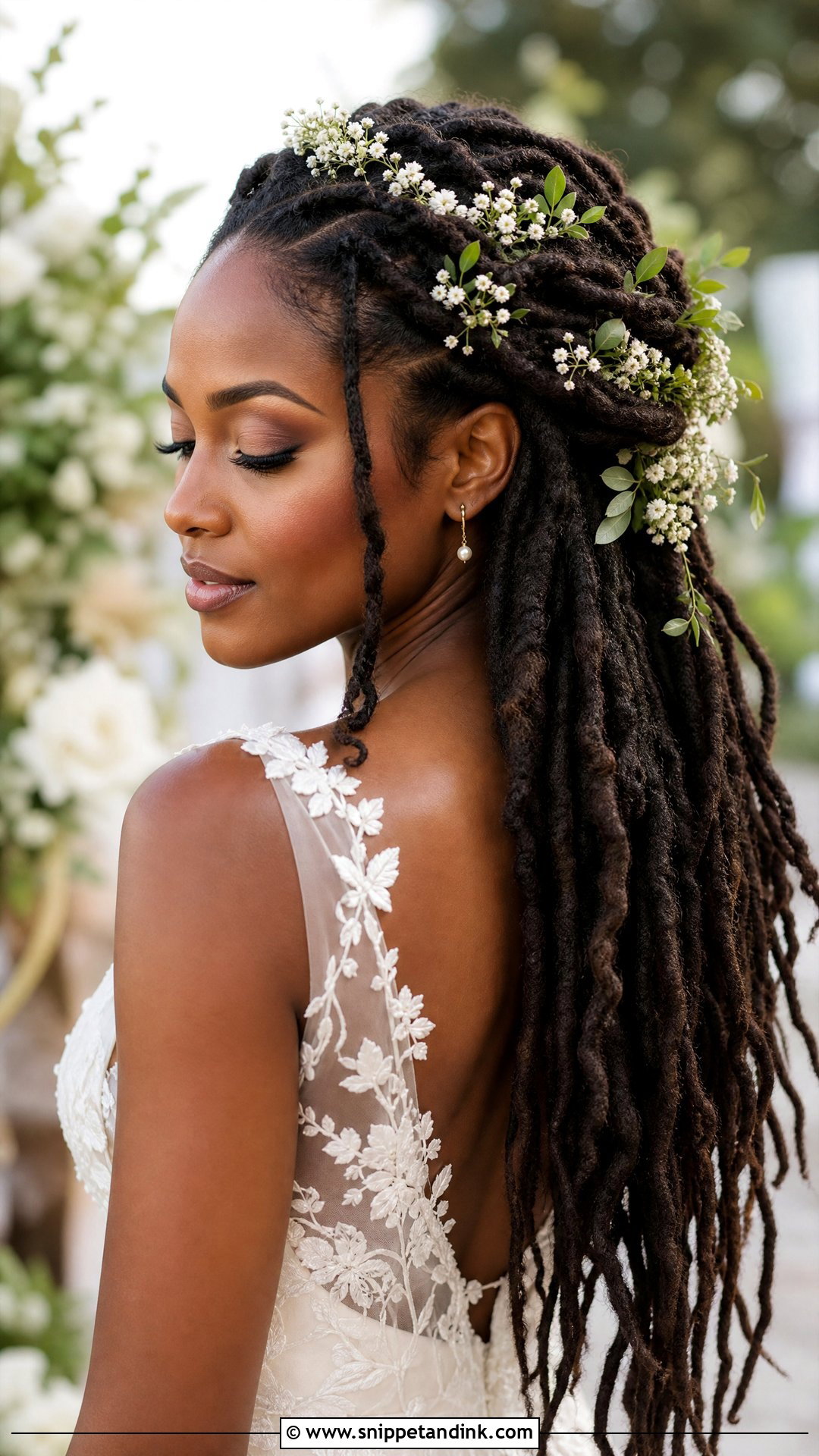
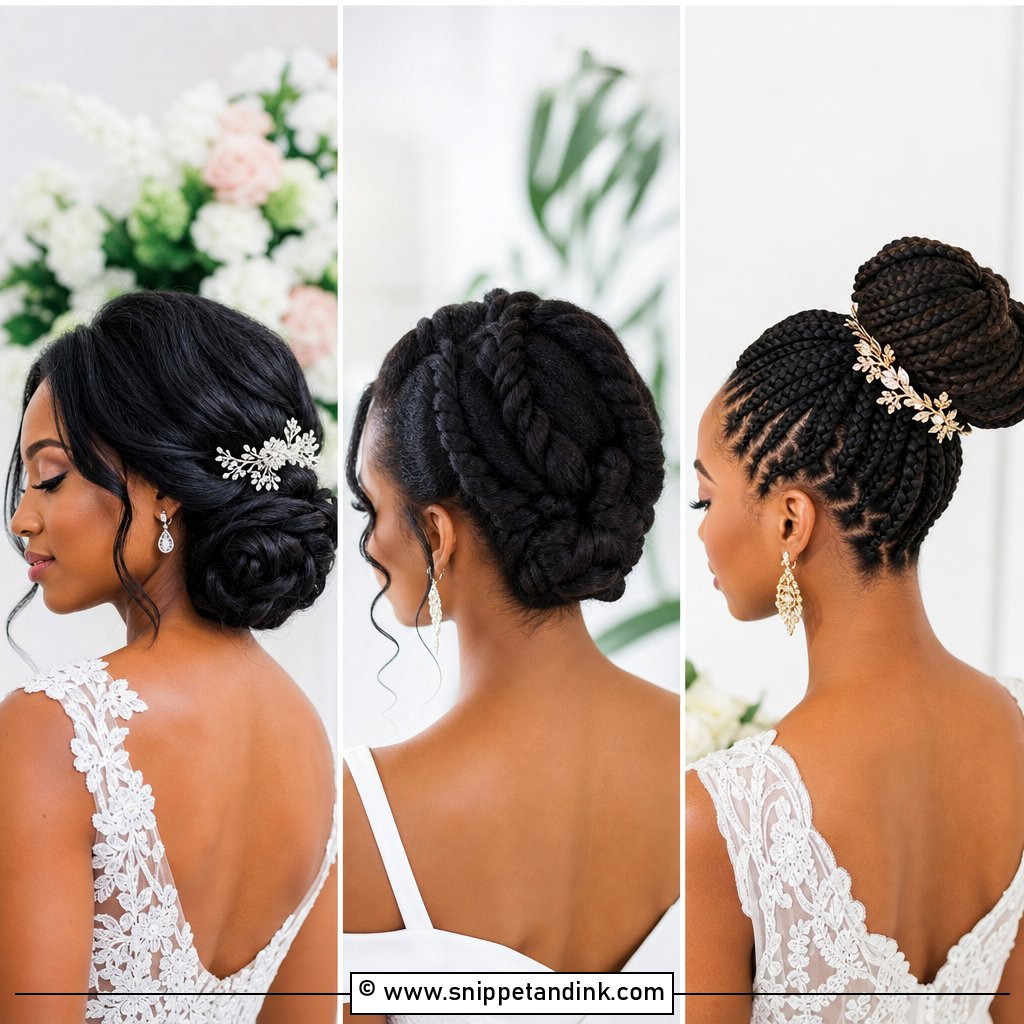
Flowers suit locs at outdoor, garden and warm-season weddings. They can go into a bun, along a crown, beside a side sweep or scattered through loose locs. Small, sturdy blooms work best, since big fresh heads are heavy and wilt fast in heat. White reads classic; blush, cream or greenery can echo the bouquet. Ask your florist for wired stems so they can be pinned firmly, and keep a few spares in water until the last minute.
Go Easy on Your Edges, Even for One Day
Gathering long locs into one high bun or a full crown puts real pressure on the hairline and the roots at the back. One tight day won’t usually do lasting harm, but a style that hurts by the first dance is one you’ll fight all night, and strained edges show in close-up photos.
Ask for the front to be smooth but loose enough that you can raise your eyebrows freely. With very long or dense locs, a low bun, chignon or half up style spreads the weight better than a high bun. Loc cuffs should slide on without forcing; a cuff that’s too tight crushes the loc where it sits. Choose smooth pins and combs, since rough metal and glued gems snag loc texture and leave fibers behind.
Taking it down that night
Remove pins slowly, in the reverse order they went in, ideally with someone helping at the back. Locs hide pins well, and it’s easy to sleep on two or three you missed. A gentle rinse or scalp spray the next day clears out hairspray and any glitter before it settles into the locs.
Your Locs Lead, the Style Follows
Sleek buns, chignons, curled locs, crowns and flowers all have a place. What decides it is your loc length and thickness, the dress neckline, the veil, the setting and how much weight you’re comfortable carrying for hours. A good bridal style never forces locs into something they aren’t. Book a trial with the person who’ll style you on the day, bring photos and settle accessories early. Prepared well, your locs will look elegant and secure, and entirely yours.
You'll Like These Ideas:


Leave a Reply