
Most of my bridal consultations with Black brides start with the same question: do I wear my texture, or do I press it? There is no wrong answer, but each route asks for a different plan, from when you book your braider to how you sleep the night before. Coils, braids, locs, presses and installs all behave differently over a fourteen-hour day, so I’ve written notes on each of these 25 bridal hairstyles for Black women from the chair, including where each one tends to struggle.
When to Sit for Braids, a Press or an Install
Timing is where I see the most avoidable trouble. A protective style done the day before the wedding is tight at the root, the parts look raw and the scalp can be sore in every photo. A silk press done a week out has usually reverted by the rehearsal. Each style has its own window, and I plan backwards from the date.
- Box braids, knotless braids and faux locs: about five to ten days before, so the tension eases and the roots settle.
- Cornrows, flat twists and Fulani braids: three to five days out, when the parts are still sharp.
- Silk press: one to three days before, kept wrapped in satin until the morning.
- Twist outs and bantu knot outs: set the night before and left to dry completely.
- Trims and curly cuts: three to four weeks ahead, never the week of the wedding.
Book your trial with the same stylist who will do the day, and in the same kind of weather if you can. A style that holds in an air-conditioned salon in March tells you little about an outdoor ceremony in August.
1. Natural Afro Updo for Brides
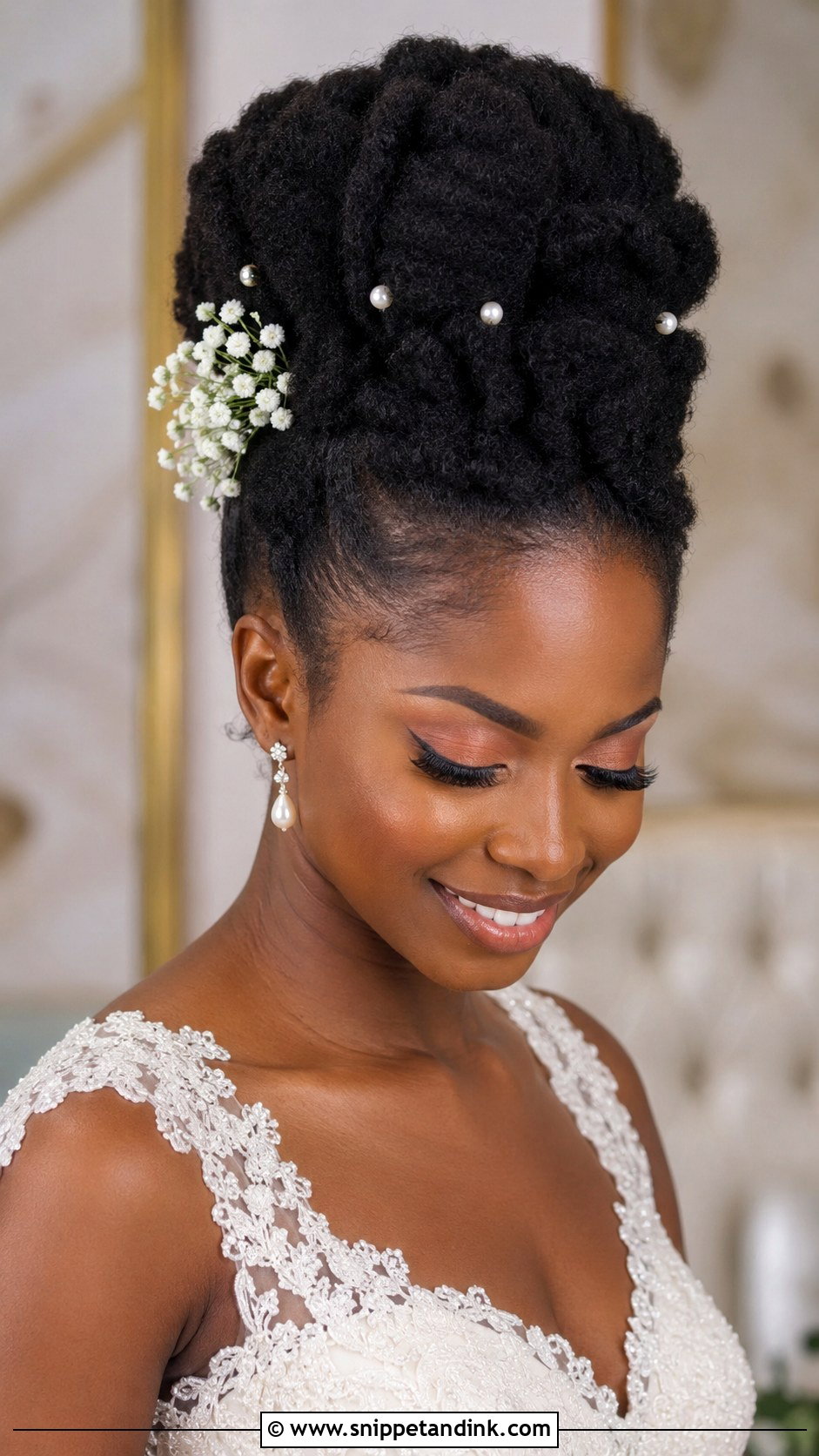
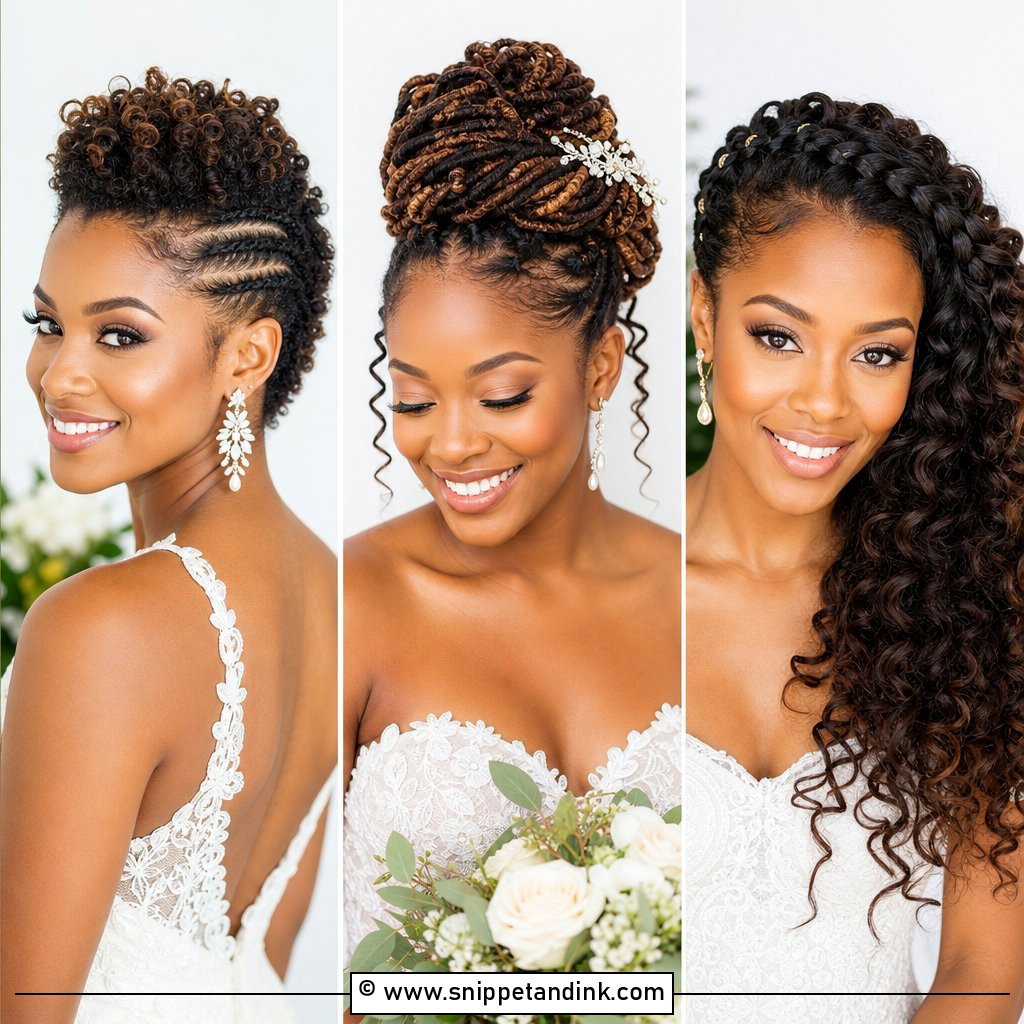
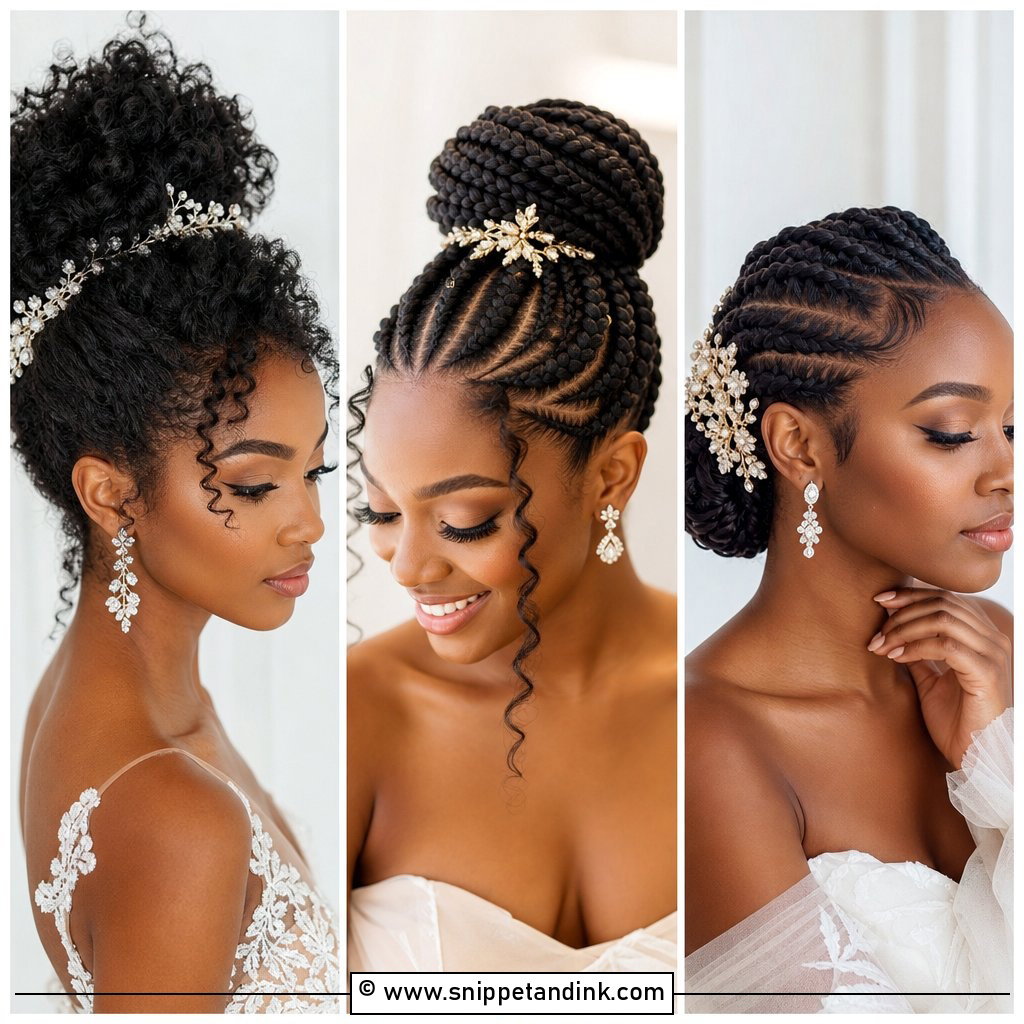
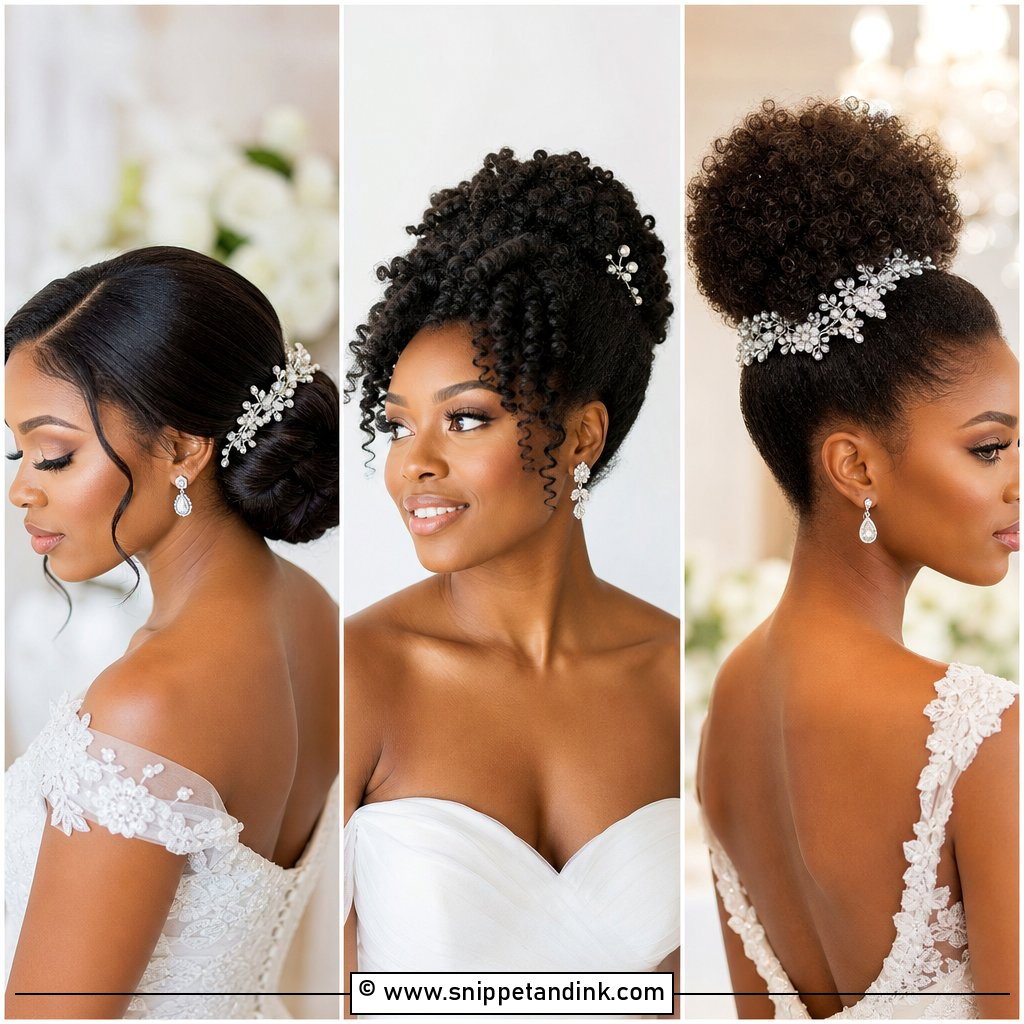
I build this shape on stretched hair, never on a fresh wash-and-go, because shrinkage keeps working for hours and the outline goes lopsided by the reception. A banding or threading session the night before gives the coils enough length to sculpt. At the crown it reads tall and dramatic; at the back it sits lower and leaves room for a cathedral veil. Pearl pins slide into dense coils and stay put without any extra grip.
2. Fulani Braids for Wedding Day
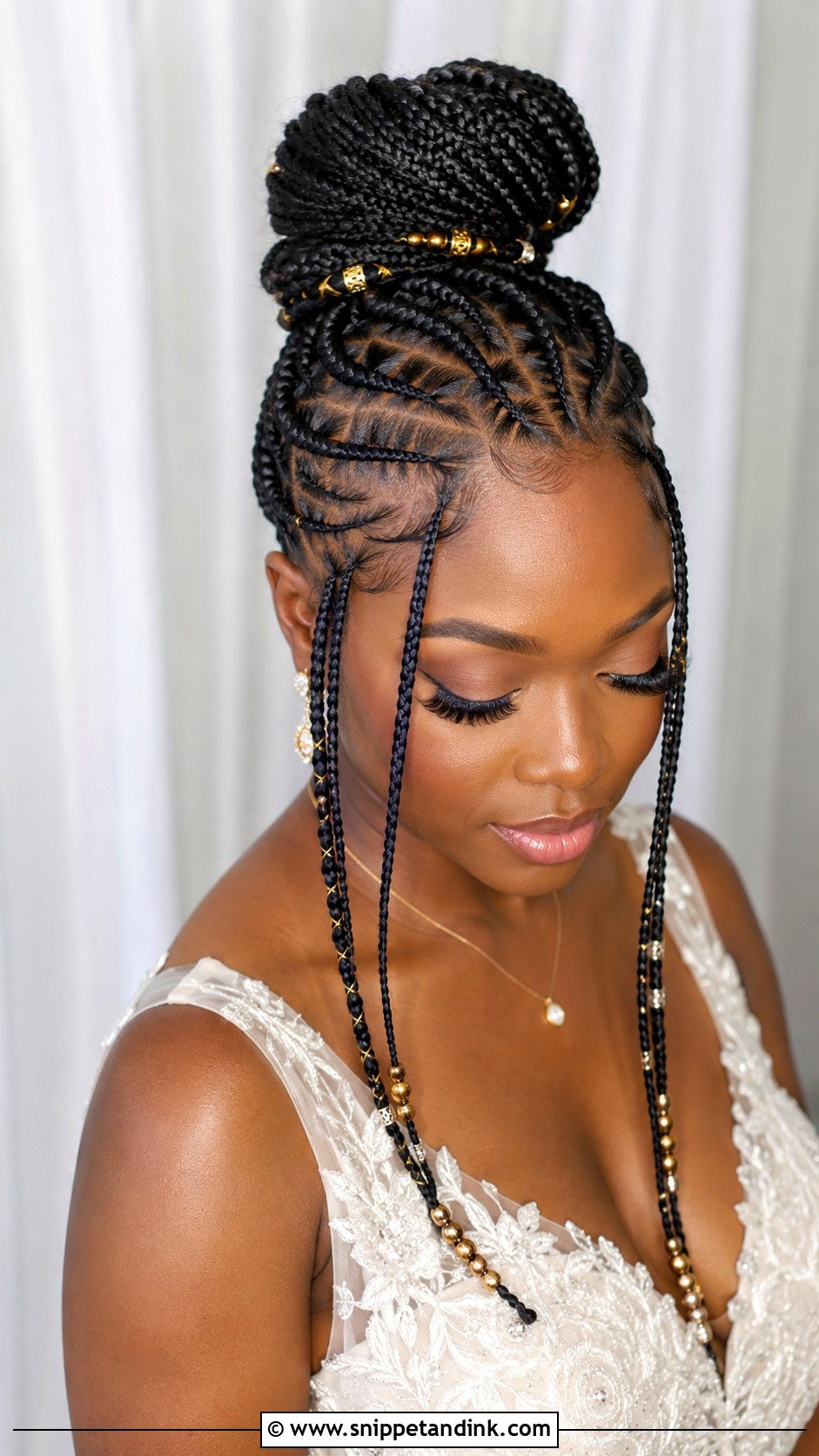
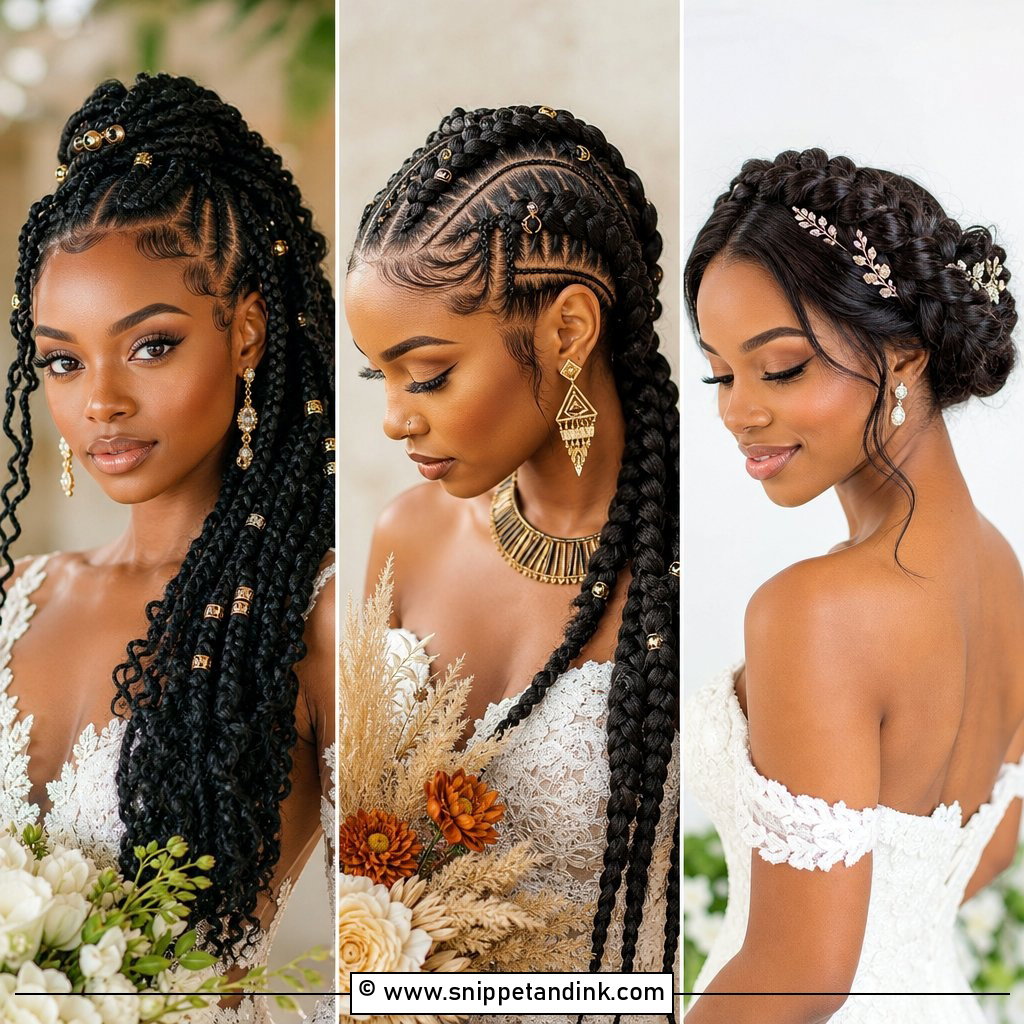
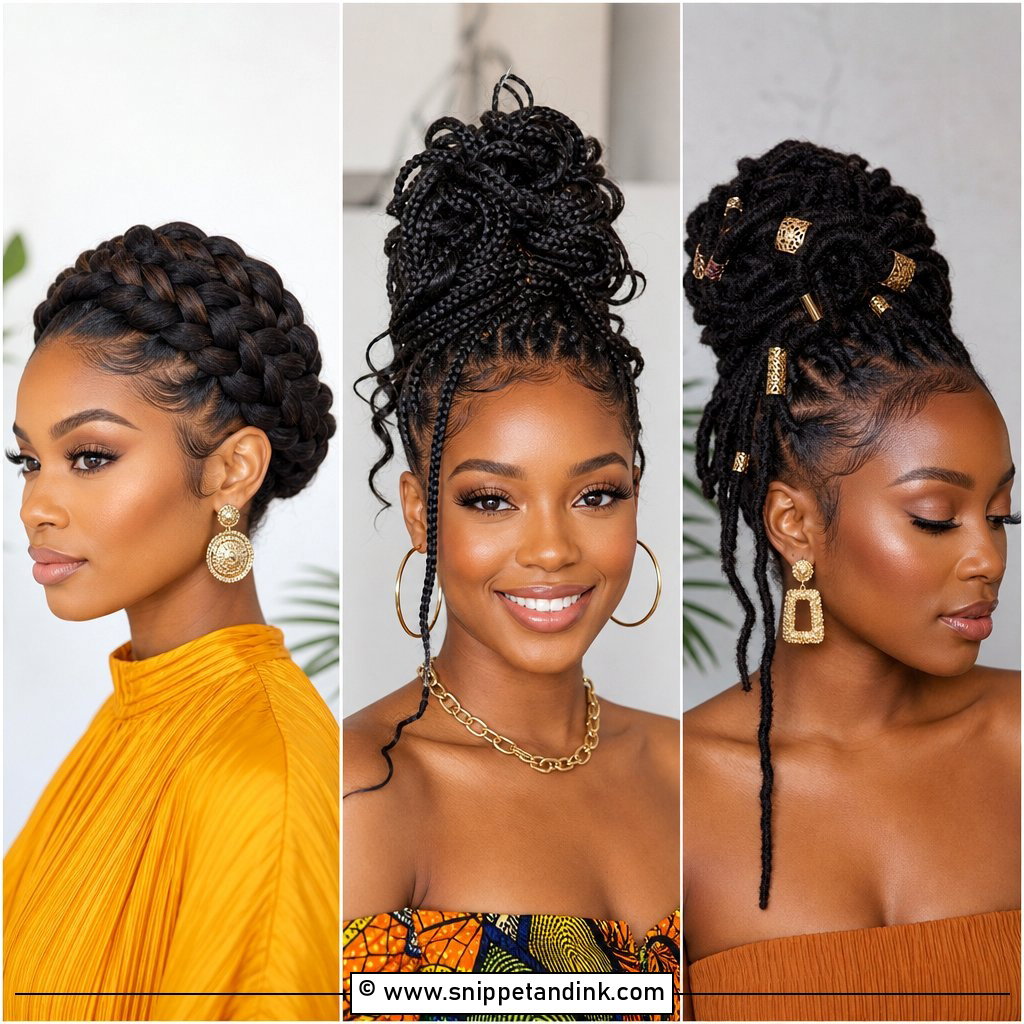
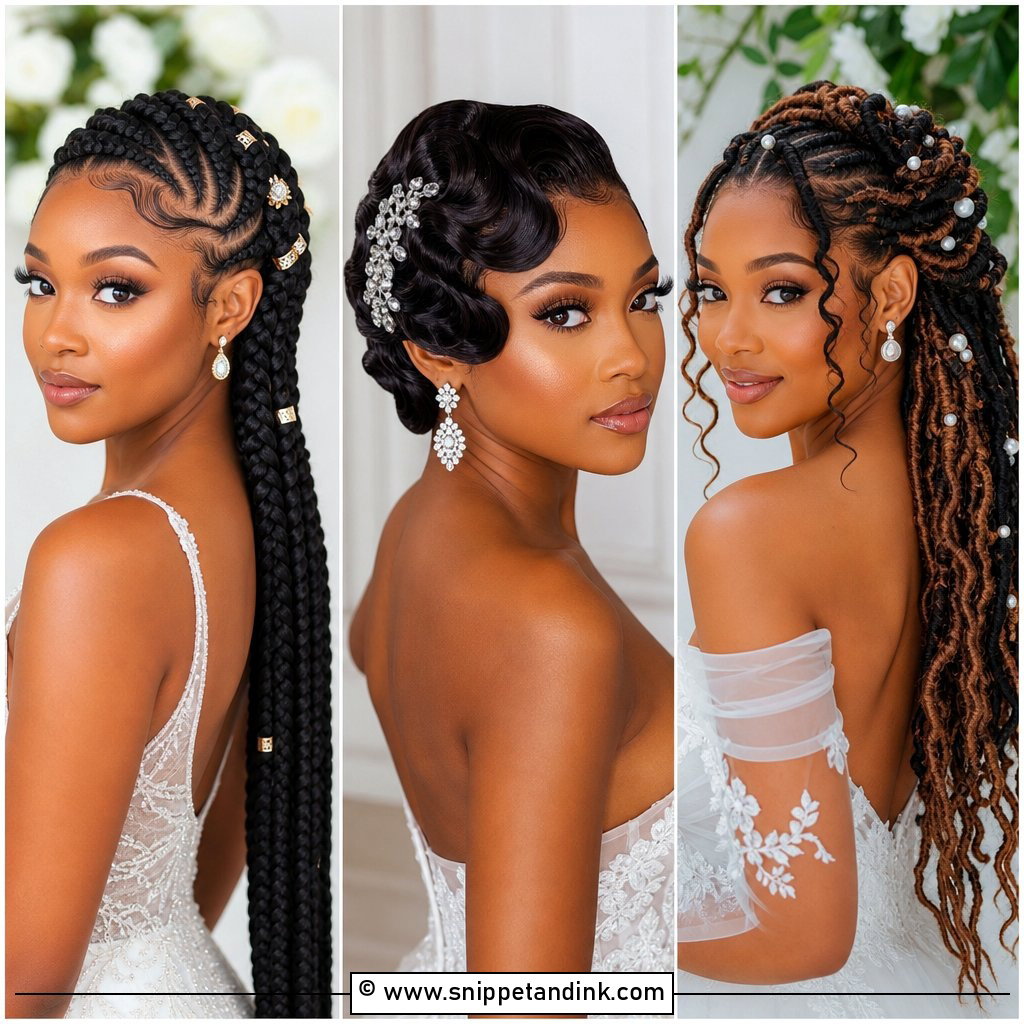
Fulani braids are a cornrow front with individual plaits behind, and the parting at the hairline is what makes or breaks them in close-ups, so I ask the braider to keep those parts crisp and symmetrical. Gold cuffs and beads add weight, which is worth remembering if you plan to pile the plaits into a high bun for eight hours. Let them hang for the ceremony and sweep them up for dancing if your scalp is tender.
3. Sleek Low Bun for Black Brides
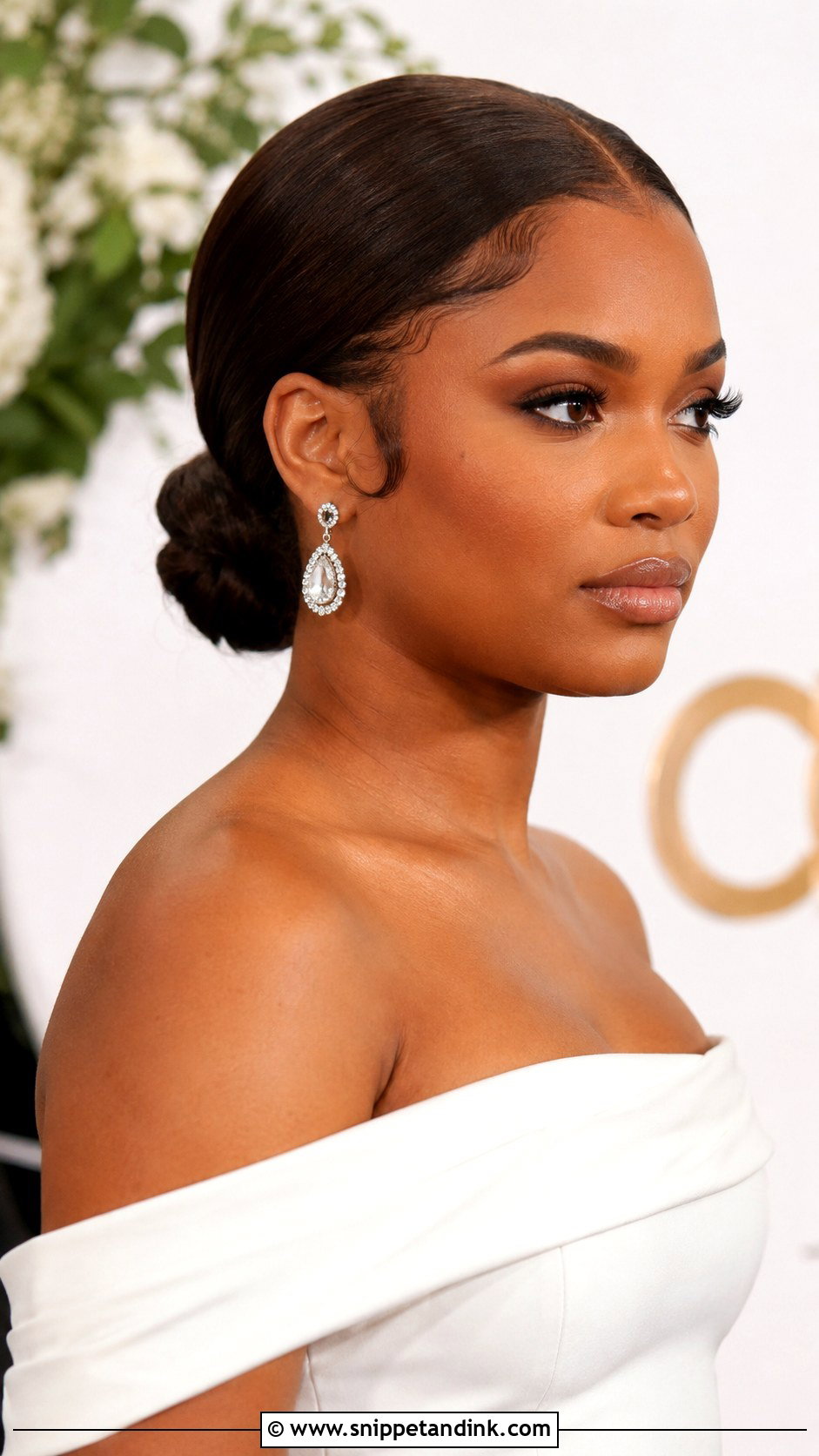
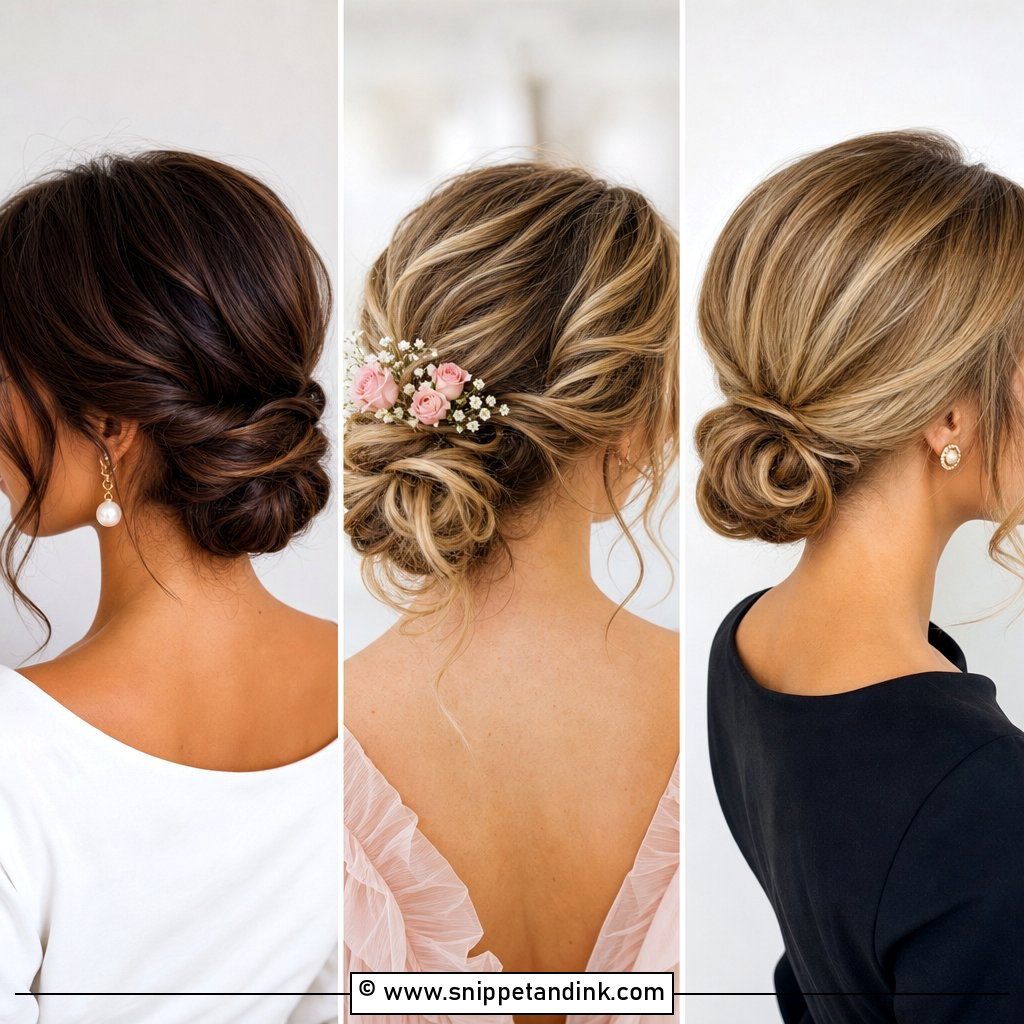
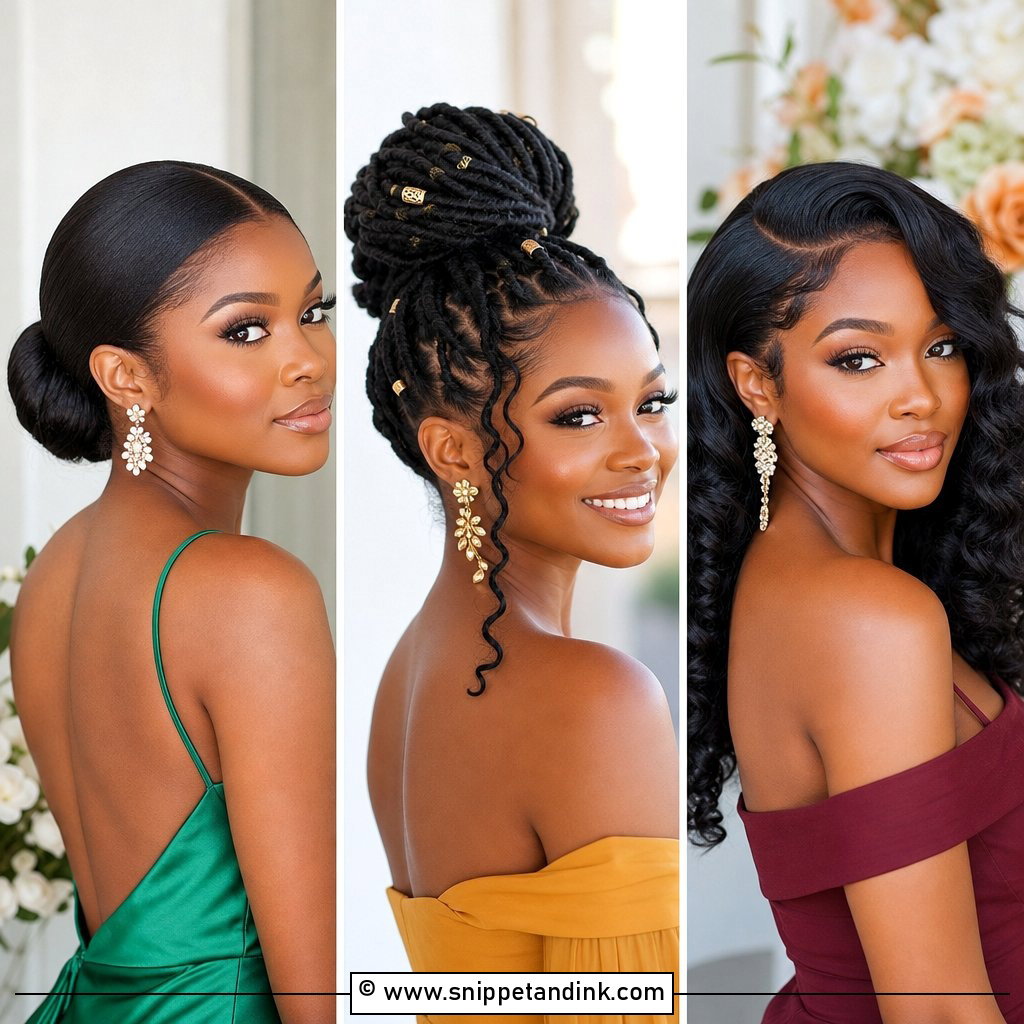
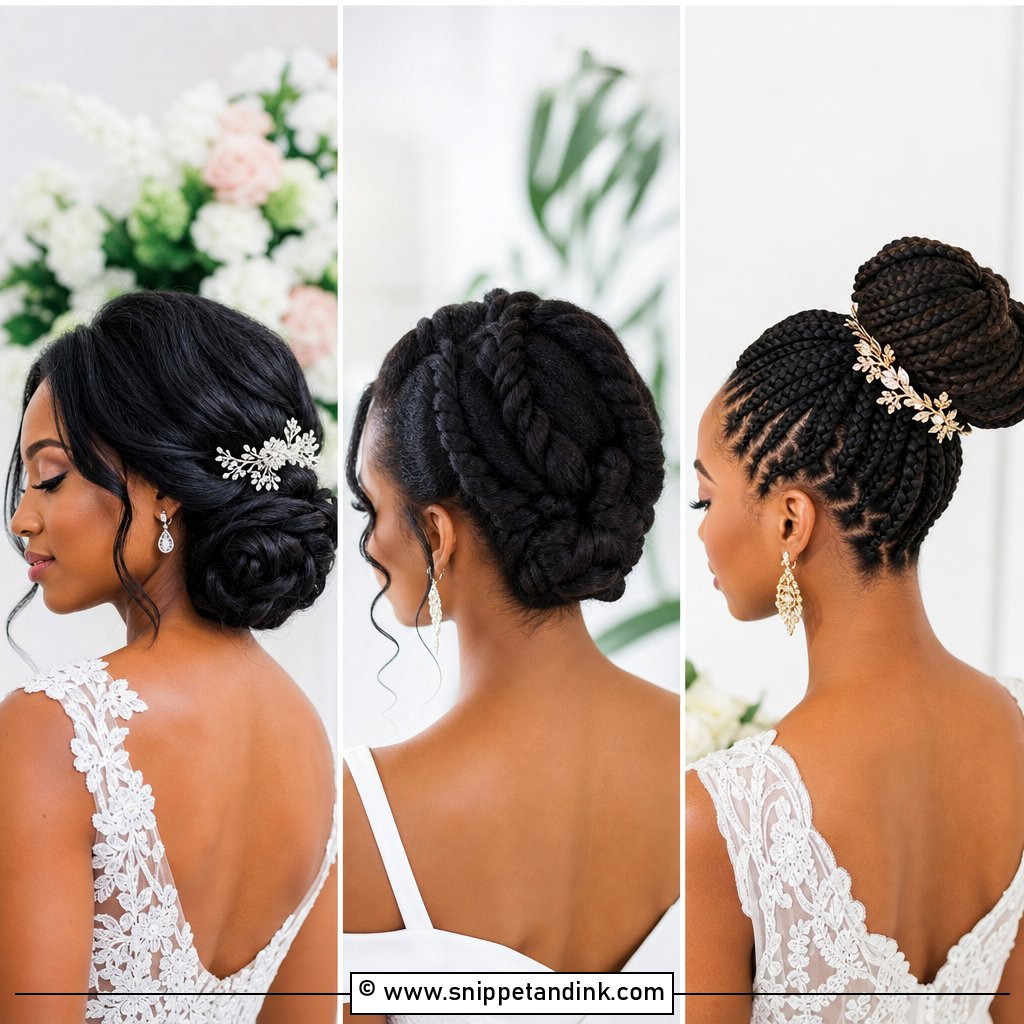
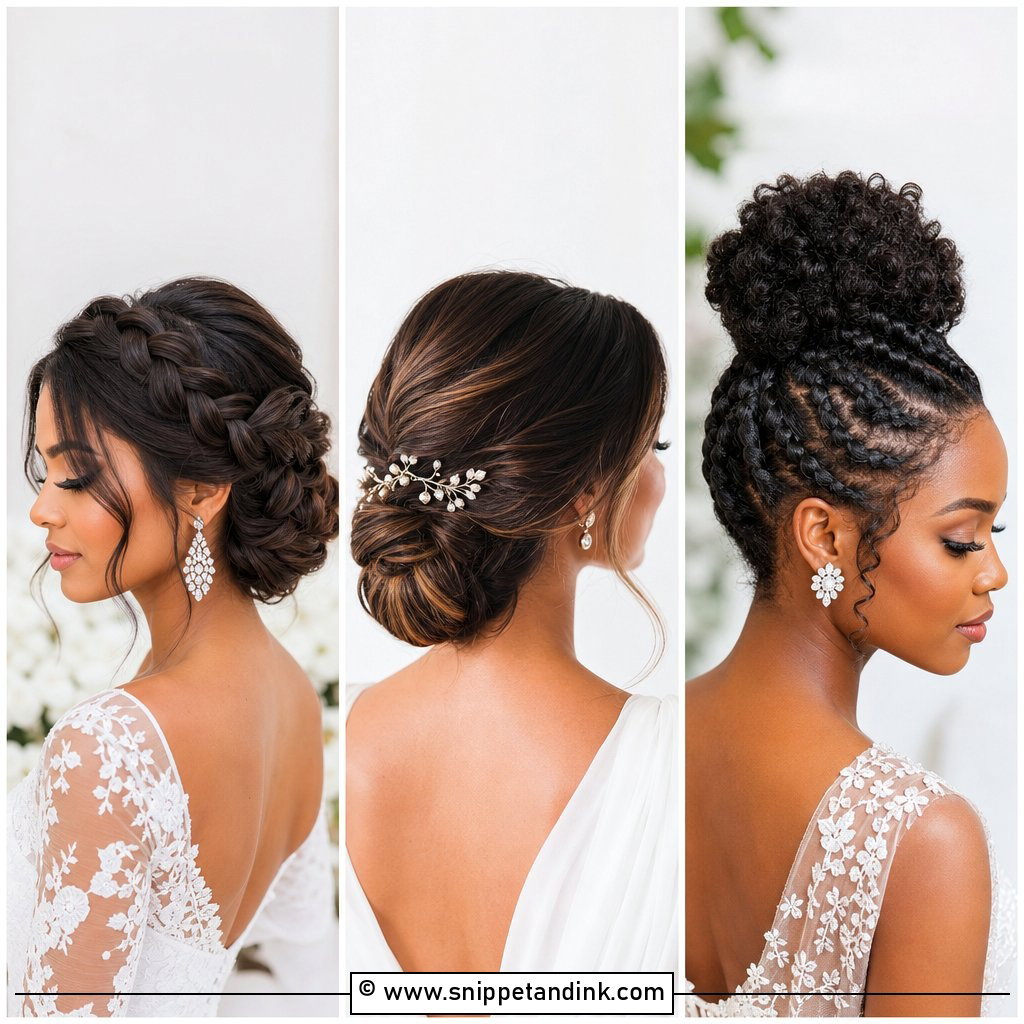
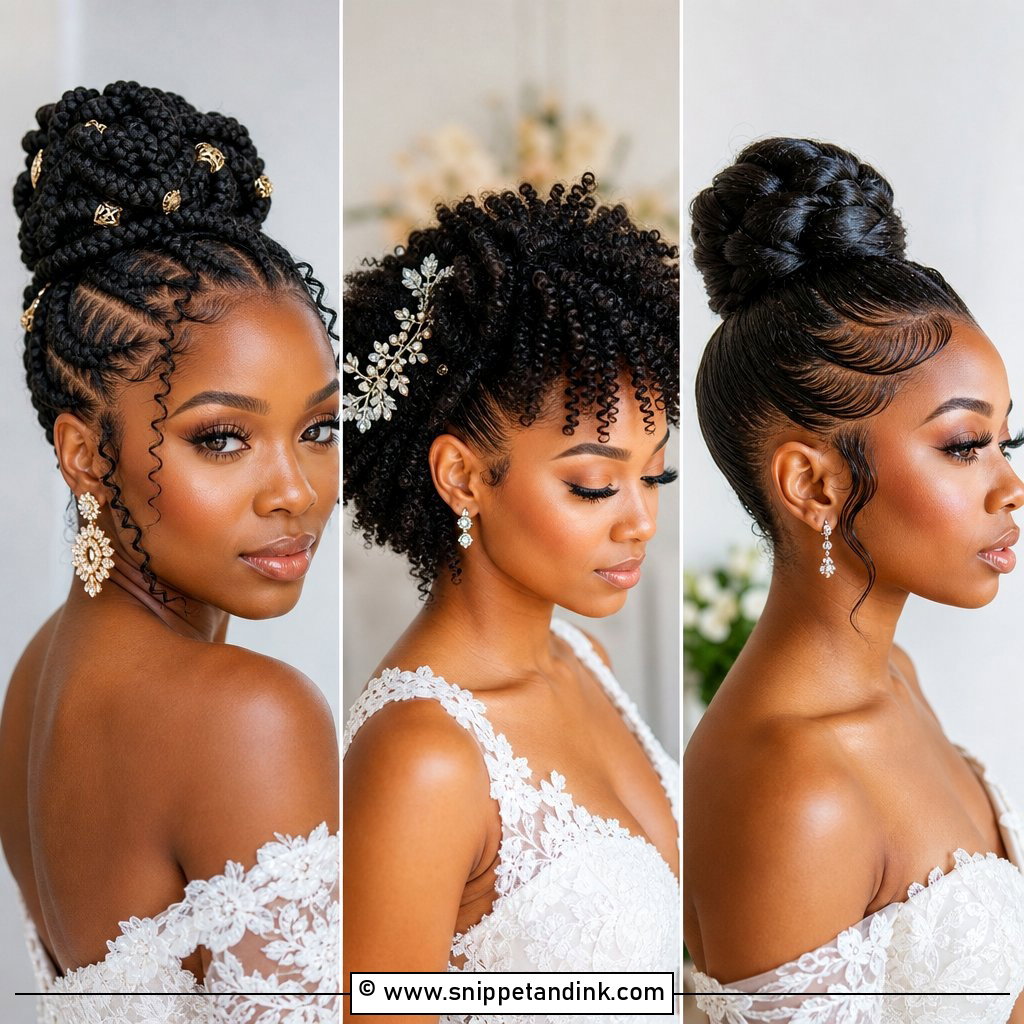
A low bun looks simple, and that is exactly why every flaw shows. I wrap and set the hair first so the surface is flat before it ever meets the brush, then smooth with a boar bristle and a light edge control instead of piling on gel that flakes white by evening. It works on a silk press, relaxed hair or a sleek install, and it leaves the stage clear for statement earrings or an open back.
4. Halo Braid Bridal Crown
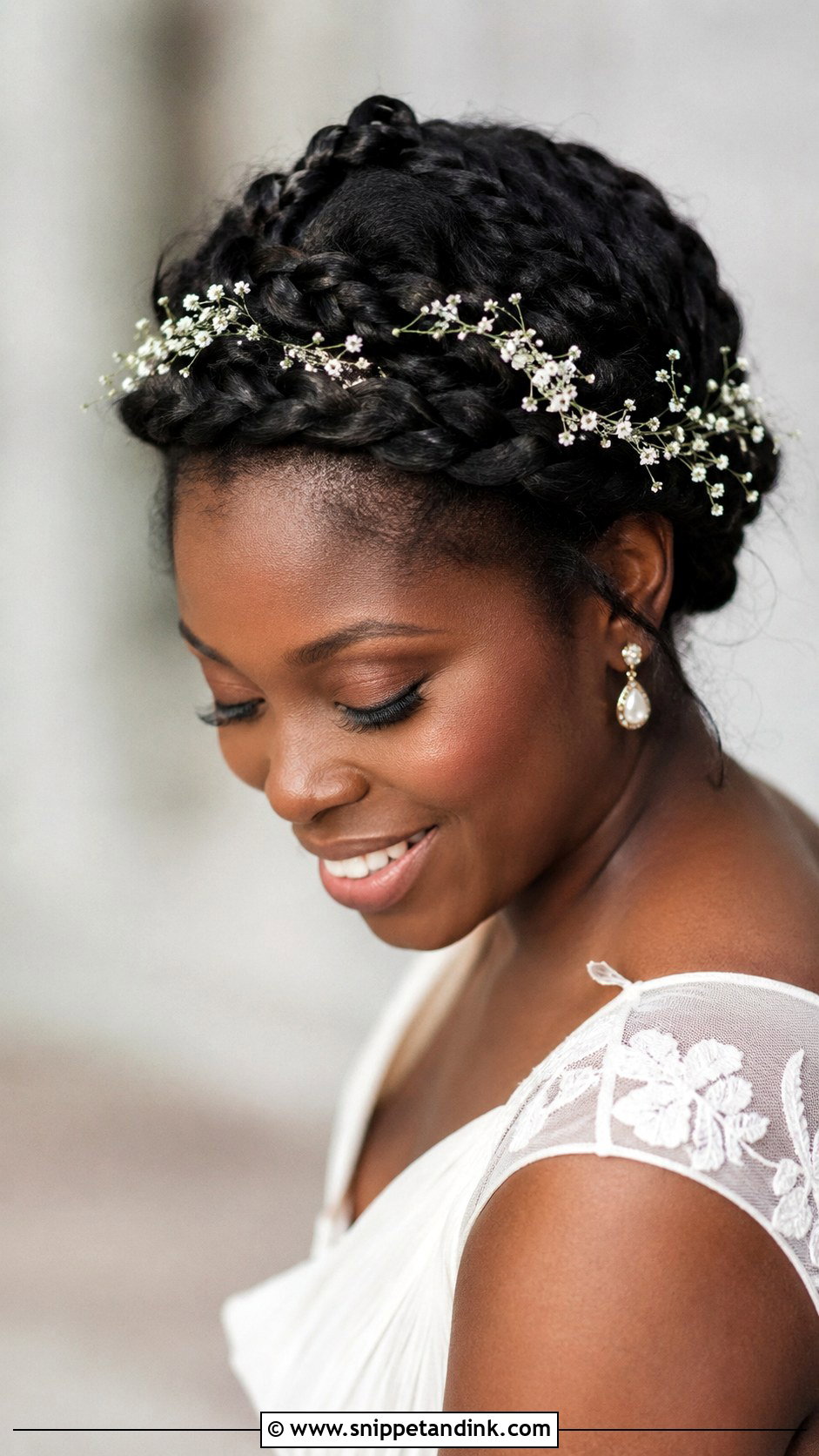
A halo braid has to start low enough at the nape that it doesn’t pull up and show bare scalp behind the ears. On shoulder-length natural hair I usually feed in braiding hair so the braid stays an even thickness all the way round. Baby’s breath or tiny pearls tucked along the plait read softly, and with the neck fully clear it is a sensible pick for an outdoor summer ceremony.
5. Goddess Braids Updo for Weddings
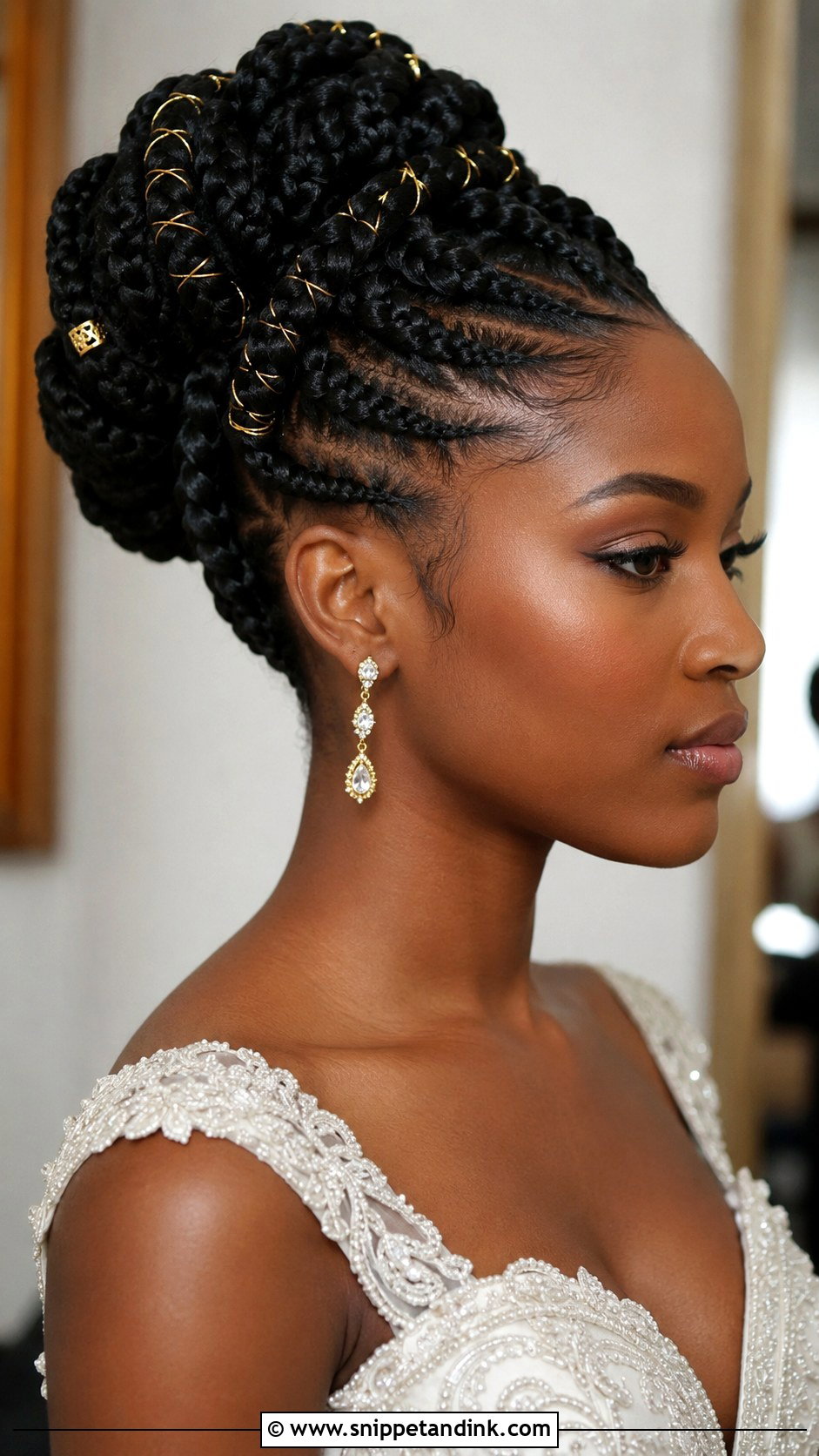
Goddess braids are thick and defined, so a sculpted bun made from them carries real presence without needing many accessories. The trade-off is weight: a bun built from a full head of large braids can feel heavy by the speeches, so I pin it low and anchor it across the base rather than at one point. Gold thread or a few fresh blooms finish it. Humidity barely touches it, which matters for a garden or beach date.
6. Silk Press With Soft Curls
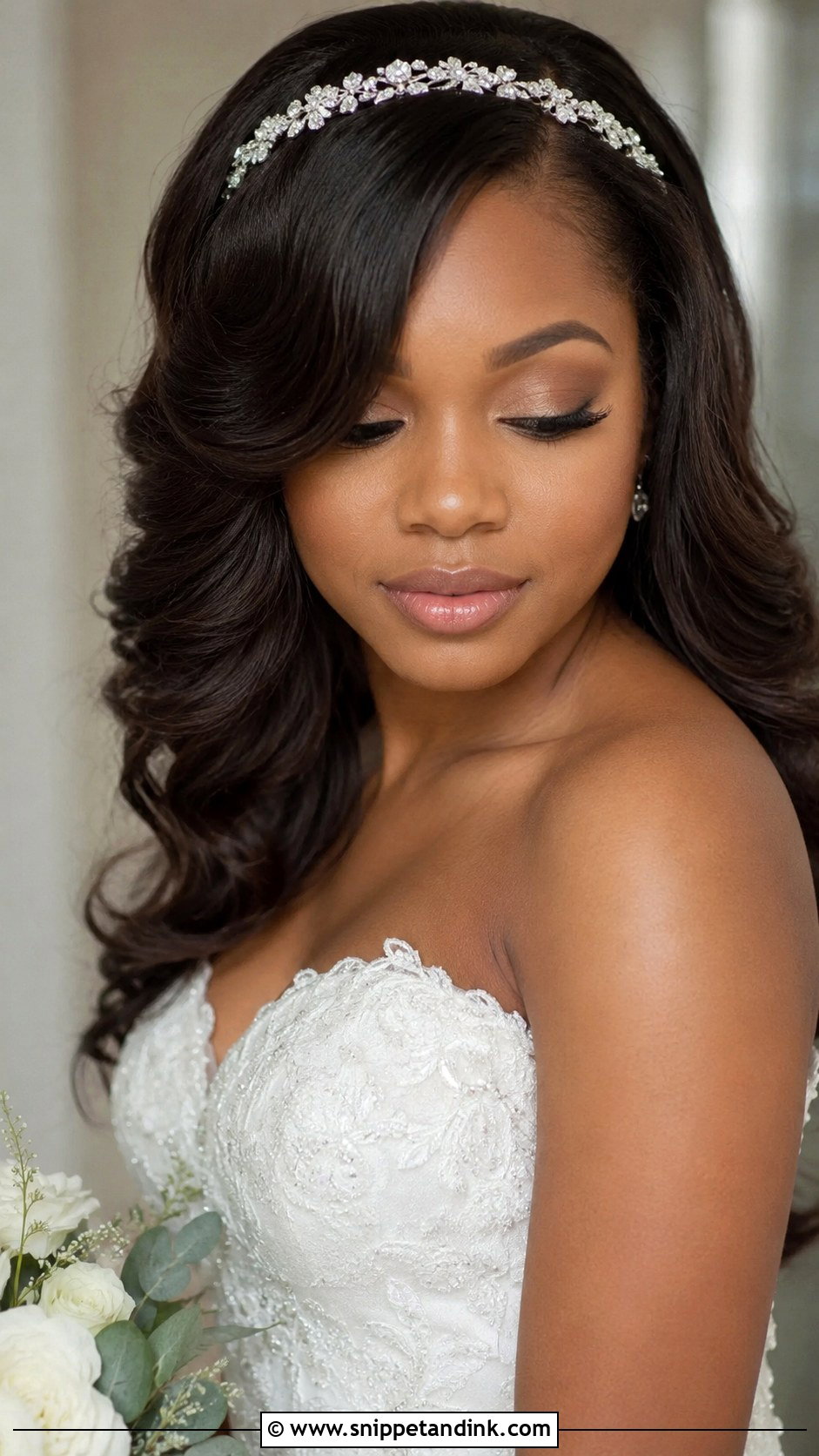
A silk press is the style I’m most cautious about for summer weddings. Pressed hair reverts the moment it meets moisture, so I schedule the press one to three days out, set curls with a cooler iron on the day and send the bride off with a satin scarf for any outdoor walk. Done well, the movement and shine are hard to match. If the forecast says rain, I’d rather pin it up than leave it down.
7. Box Braids Half Up Half Down
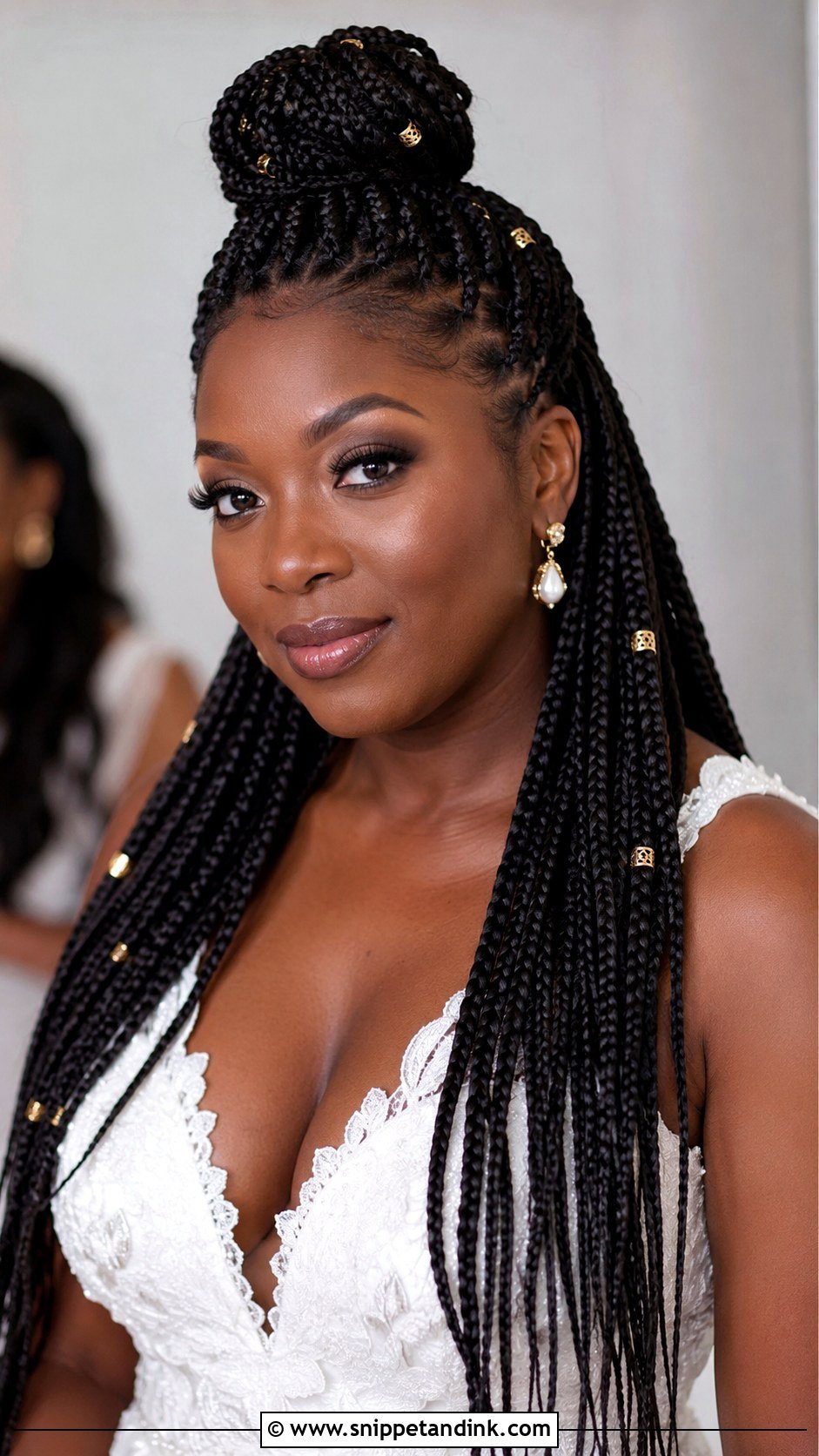
Half-up box braids give you length in photos without the full weight hanging on your neck all night. I gather the top section into a twist or small bun and secure it with braid-friendly elastics, because standard pins slide straight out of synthetic hair. Install them about a week ahead so the roots relax and the parts look settled, then add gold cuffs to a few braids around the face.
8. Bridal Bantu Knots Style
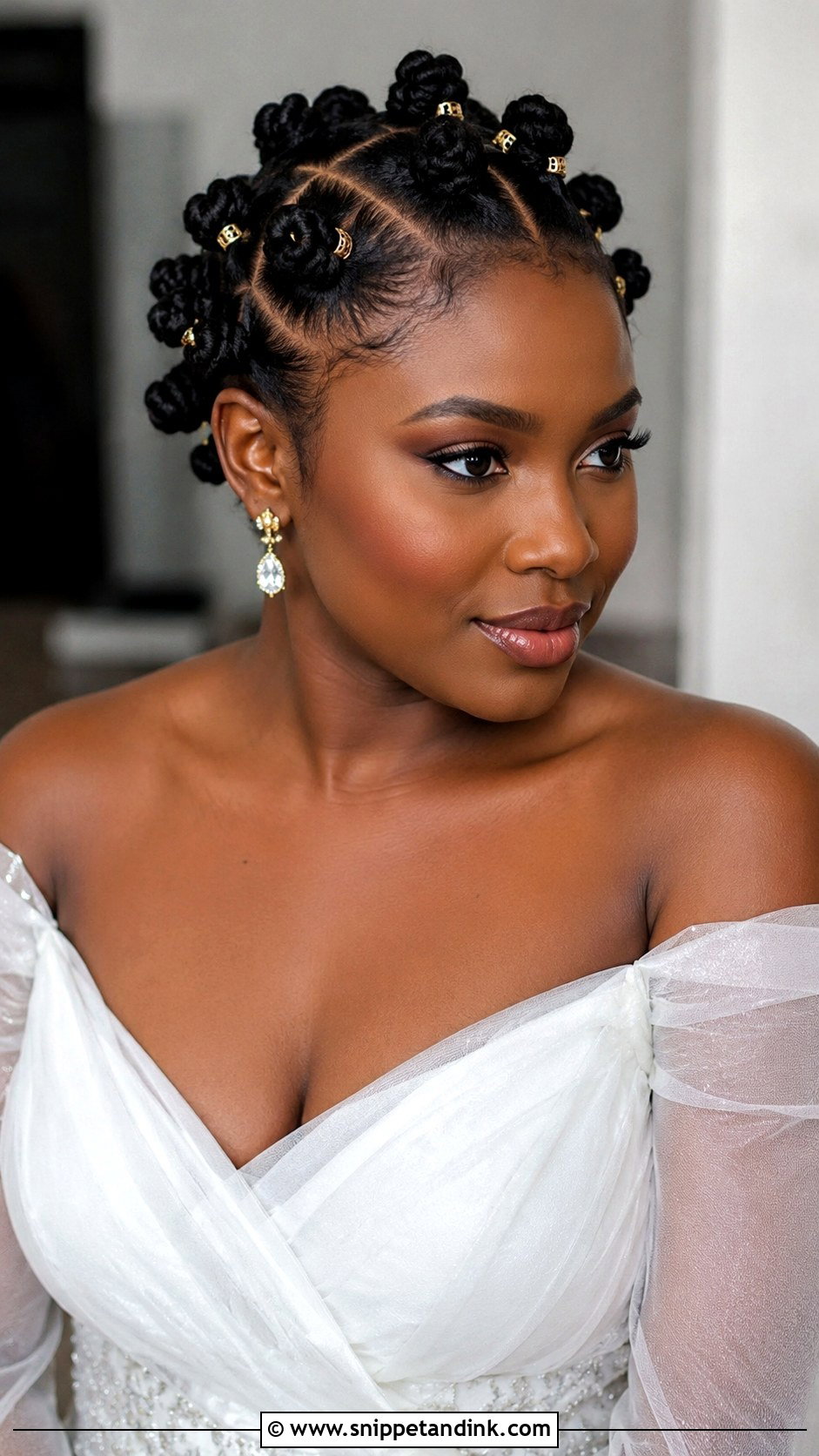
Bantu knots work two ways, and I ask brides to decide early. Worn as knots, they are sculptural and the parting pattern becomes part of the design, so the sections need to be even. Unravelled, they give a defined, springy curl, but only if the hair was set damp and allowed to dry completely, which can take a full night on thick hair. Gold accents between the knots look intentional rather than busy.
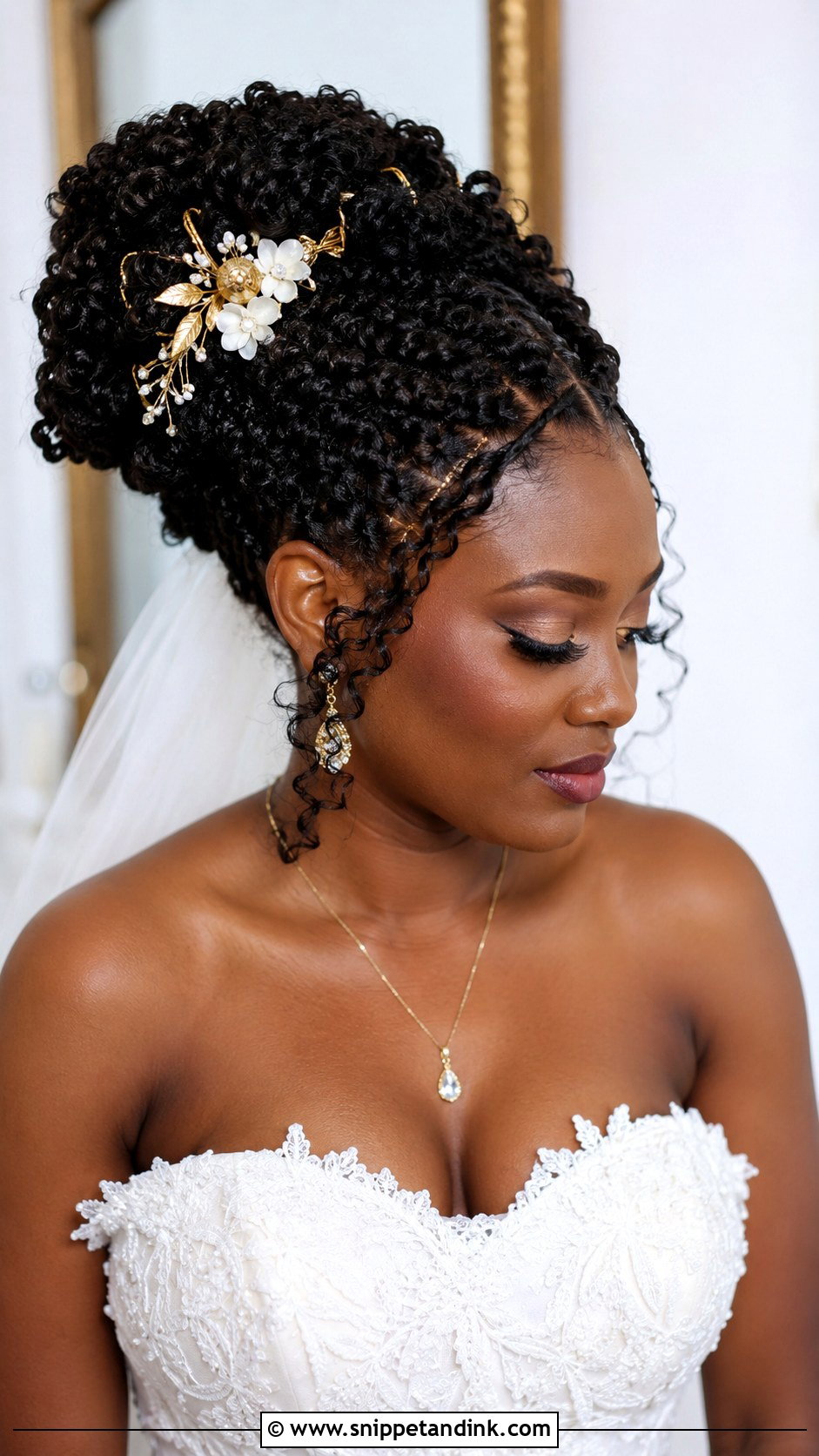
9. Curly Updo With Baby Hairs
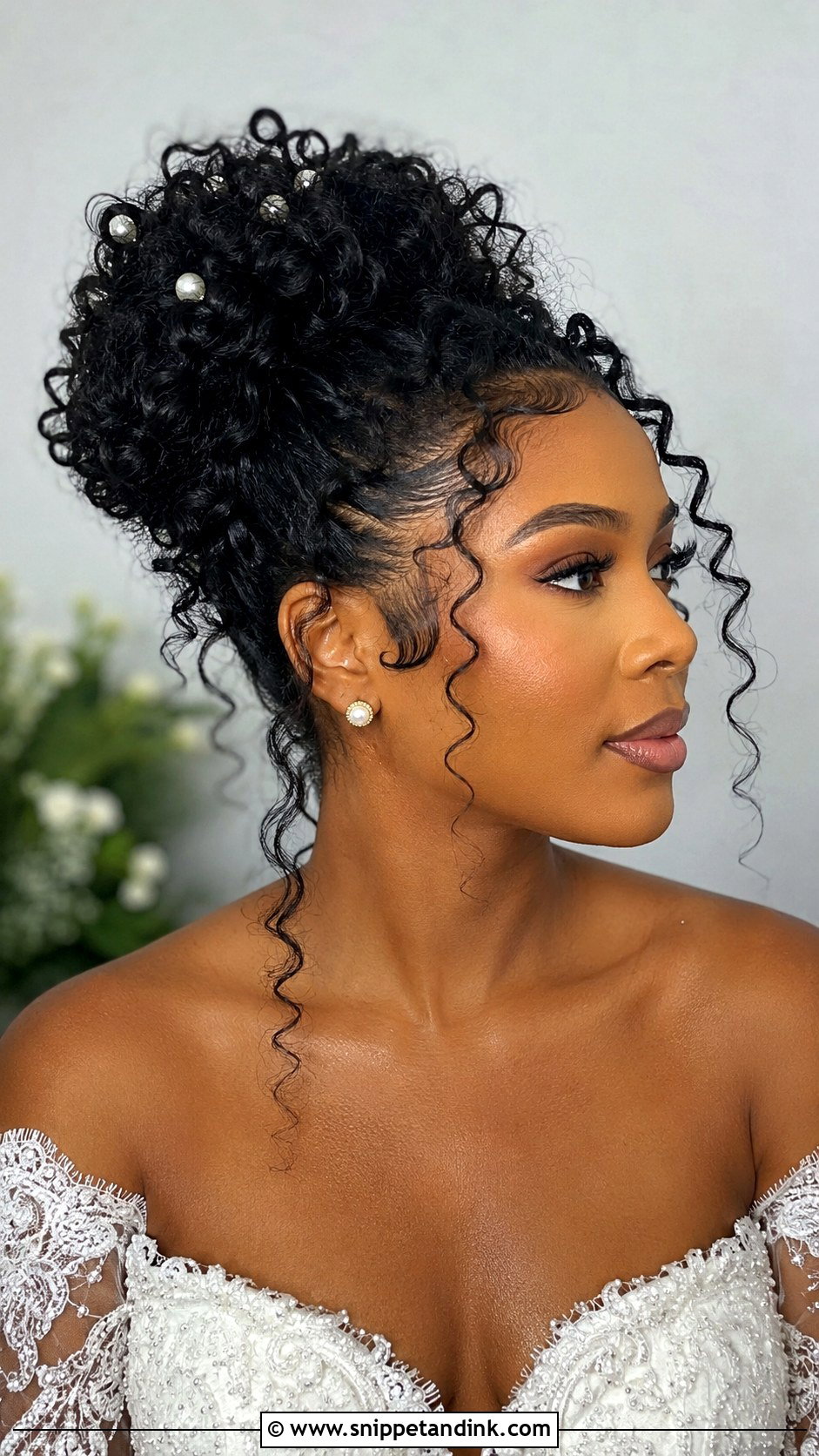
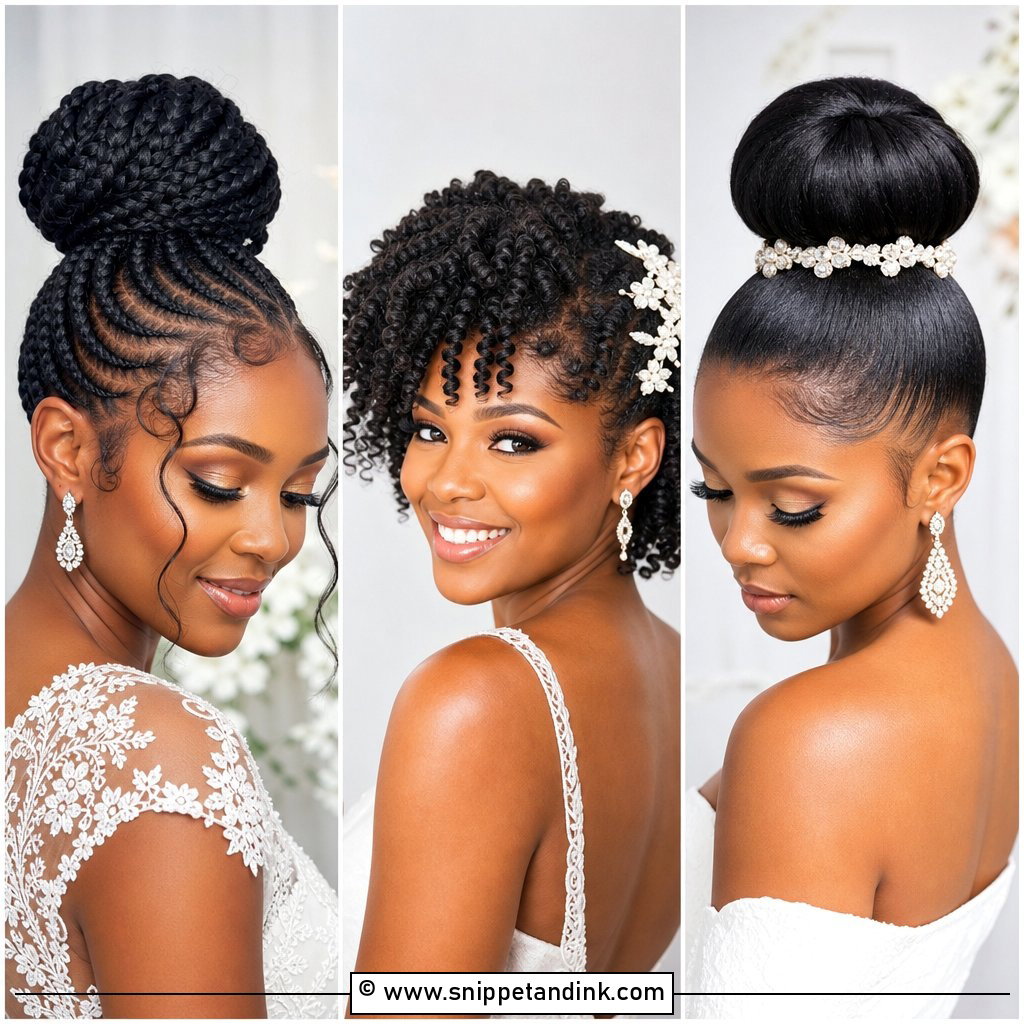
This updo depends on curls that are already defined before I touch them, so I ask brides to arrive with a fresh twist or braid out rather than loose hair. The face-framing pieces get left out before anything is pinned. Edges are laid last, after makeup, since foundation and setting spray can smear swirls done too early. A jeweled clip at the side of the bun adds sparkle without hiding the texture.
10. Cornrow Updo for Black Brides
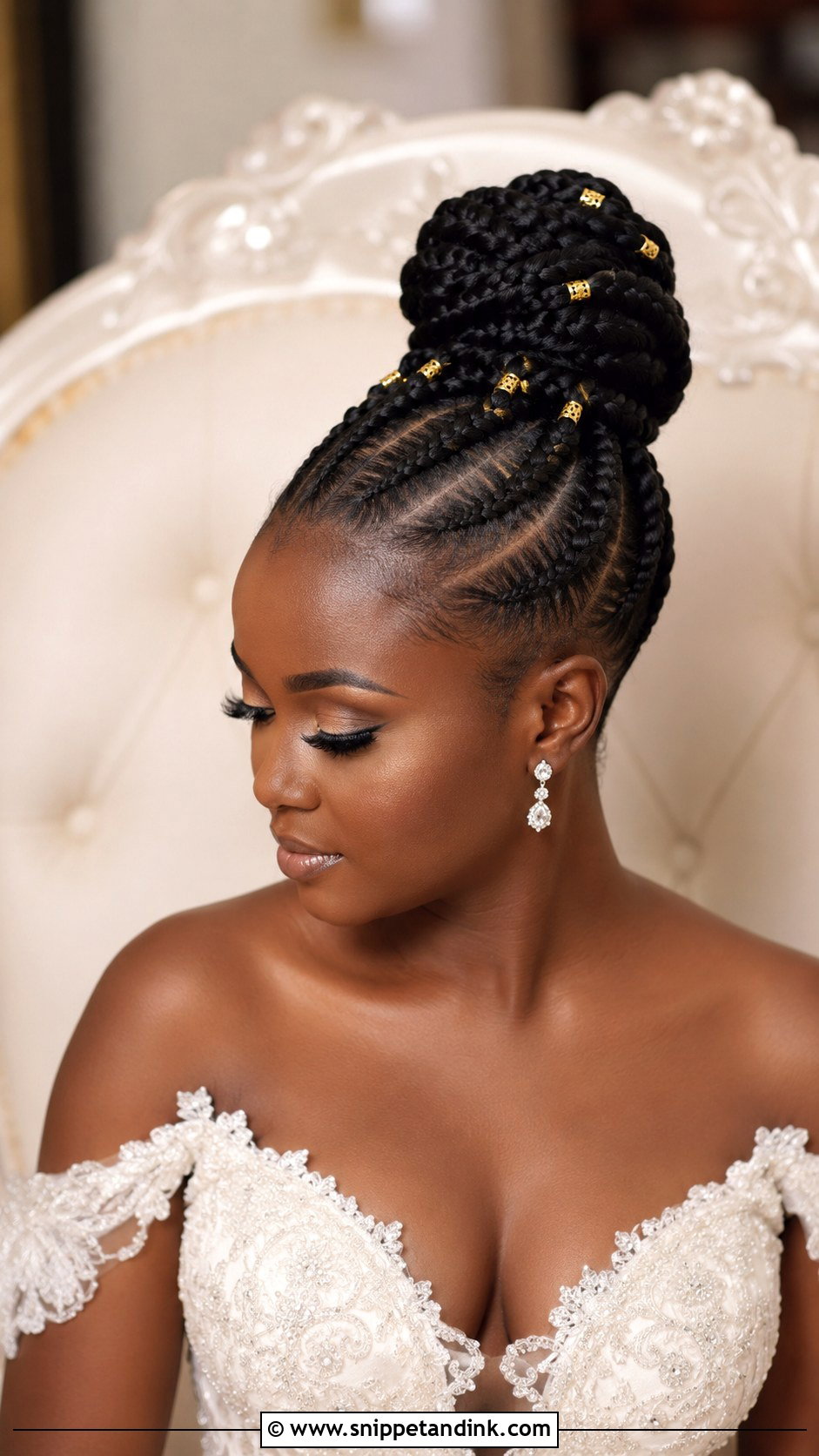
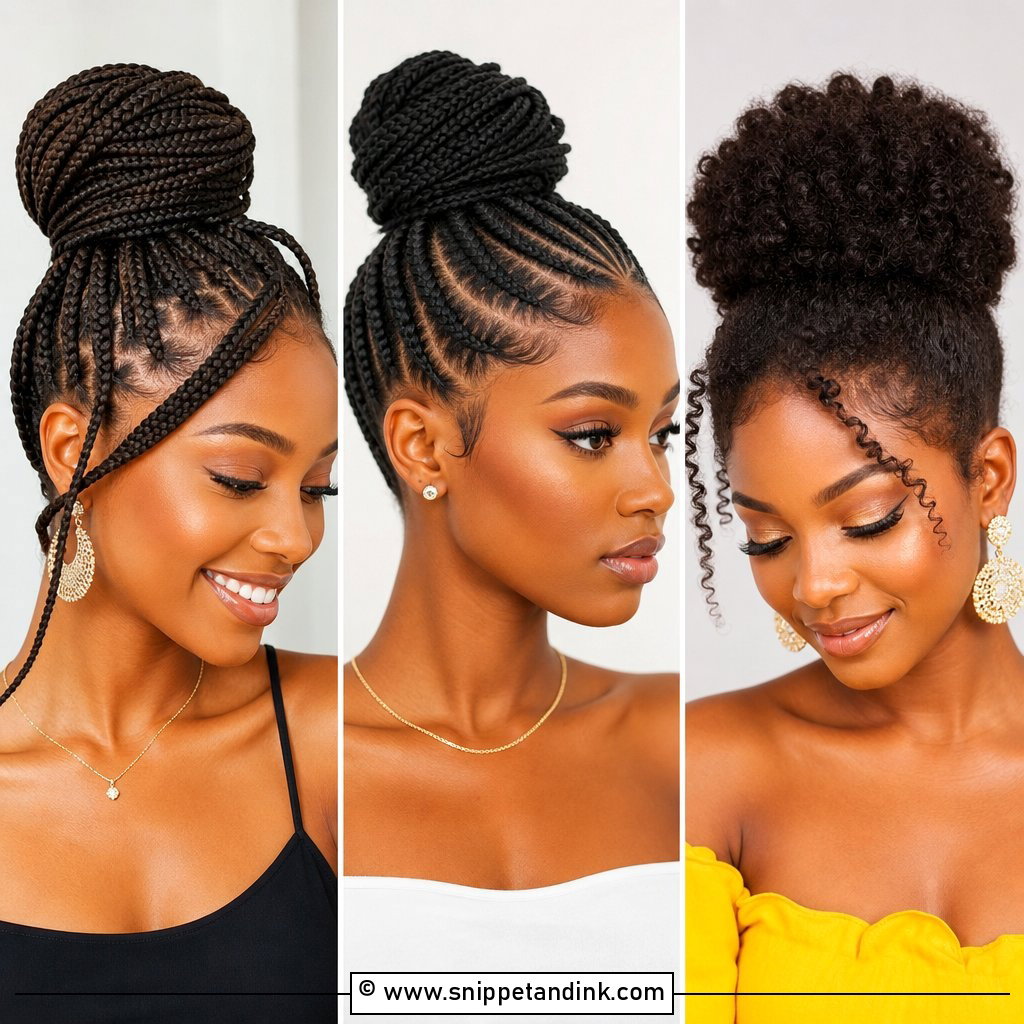
Cornrow updos are among the hardest-wearing options here. The braids sit close to the scalp, so there is nothing to collapse in heat or humidity, and the parting pattern itself becomes the detail people notice. I ask for the cornrows to be done no more than five days before so the lines stay sharp. Gold beads or a few pearls at the bun finish it, and you can dance without checking a mirror.
11. Voluminous Ponytail Bridal Look
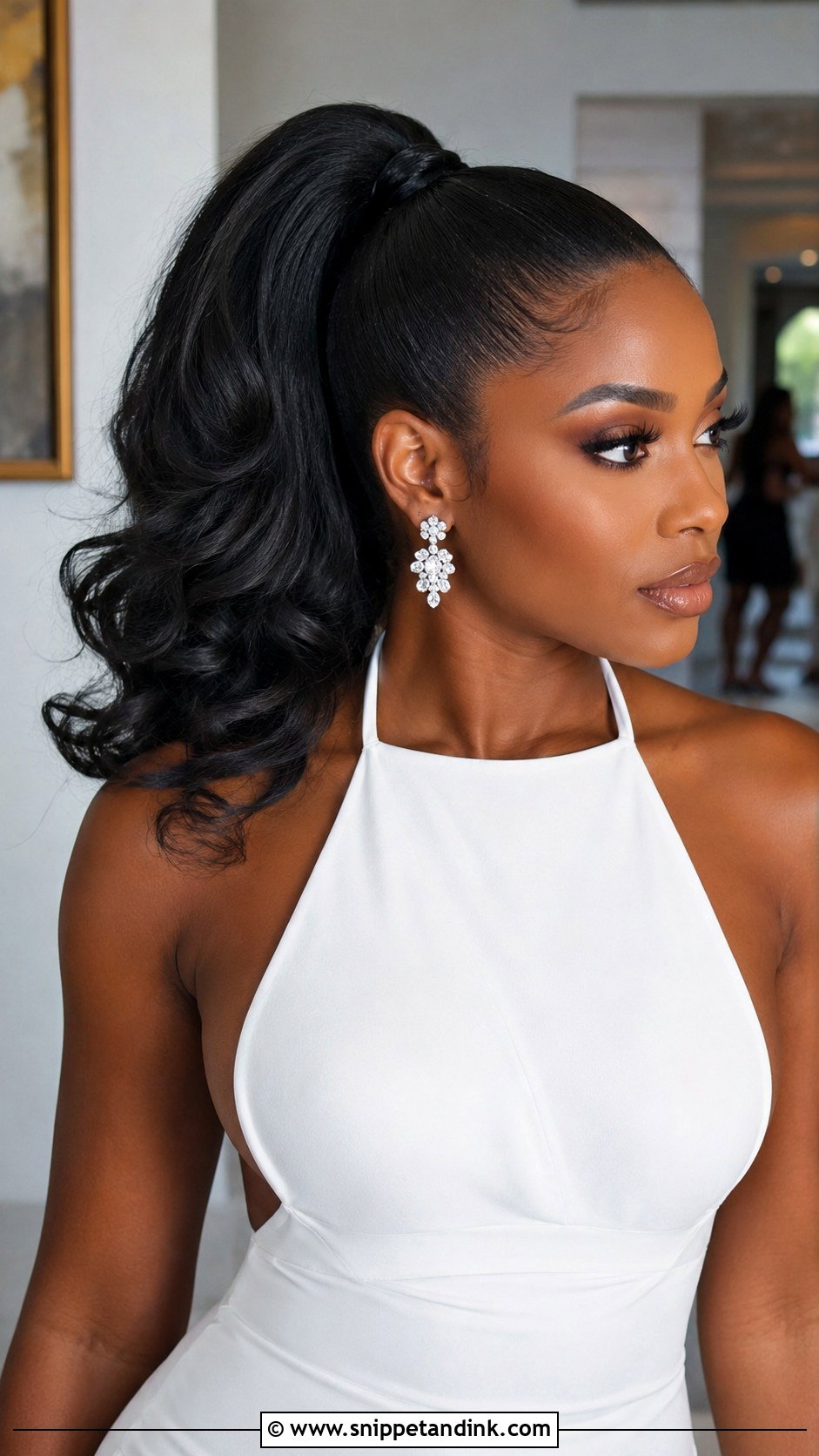
A voluminous ponytail in the Diana Ross spirit needs a solid base. I set the base with a secure elastic, then wrap a section around it to hide the band, and on most brides I clip in extra wefts for the fullness people expect from this look. High reads more dramatic; low is kinder to a veil. Bold earrings are enough jewelry here, since anything in the hair competes with the volume.
12. Knotless Braids Bridal Bun
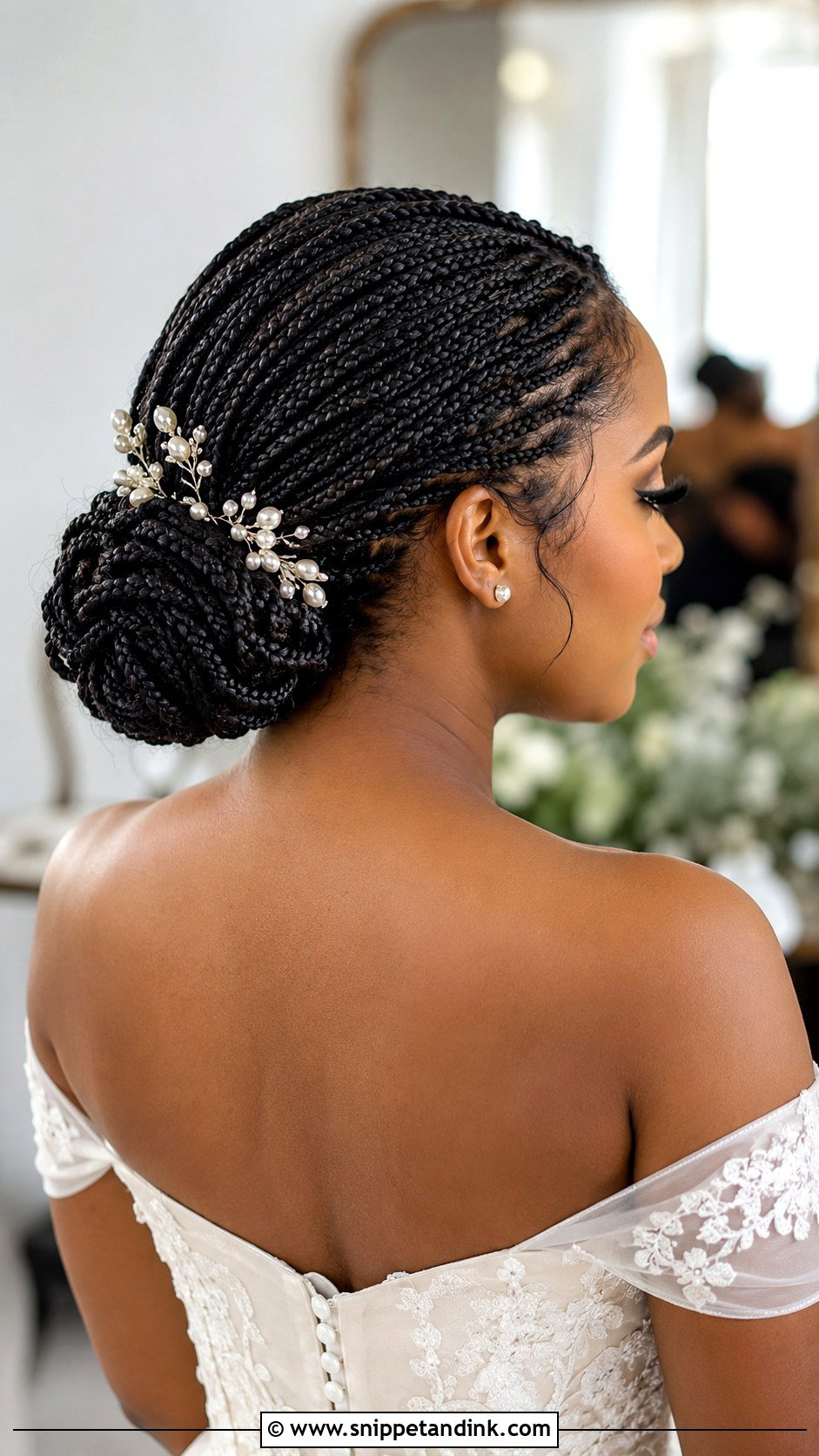
Knotless braids start with your own hair and feed in extensions gradually, so there’s far less pull at the root, which matters when you’ll be wearing them in a bun for hours. The flat, natural start at the hairline also looks cleaner in close-up portraits than a traditional box braid knot. A medium-sized bun keeps the weight comfortable. Pearls or gold thread can be added the morning of without disturbing the install.
13. Finger Waves for Wedding Day
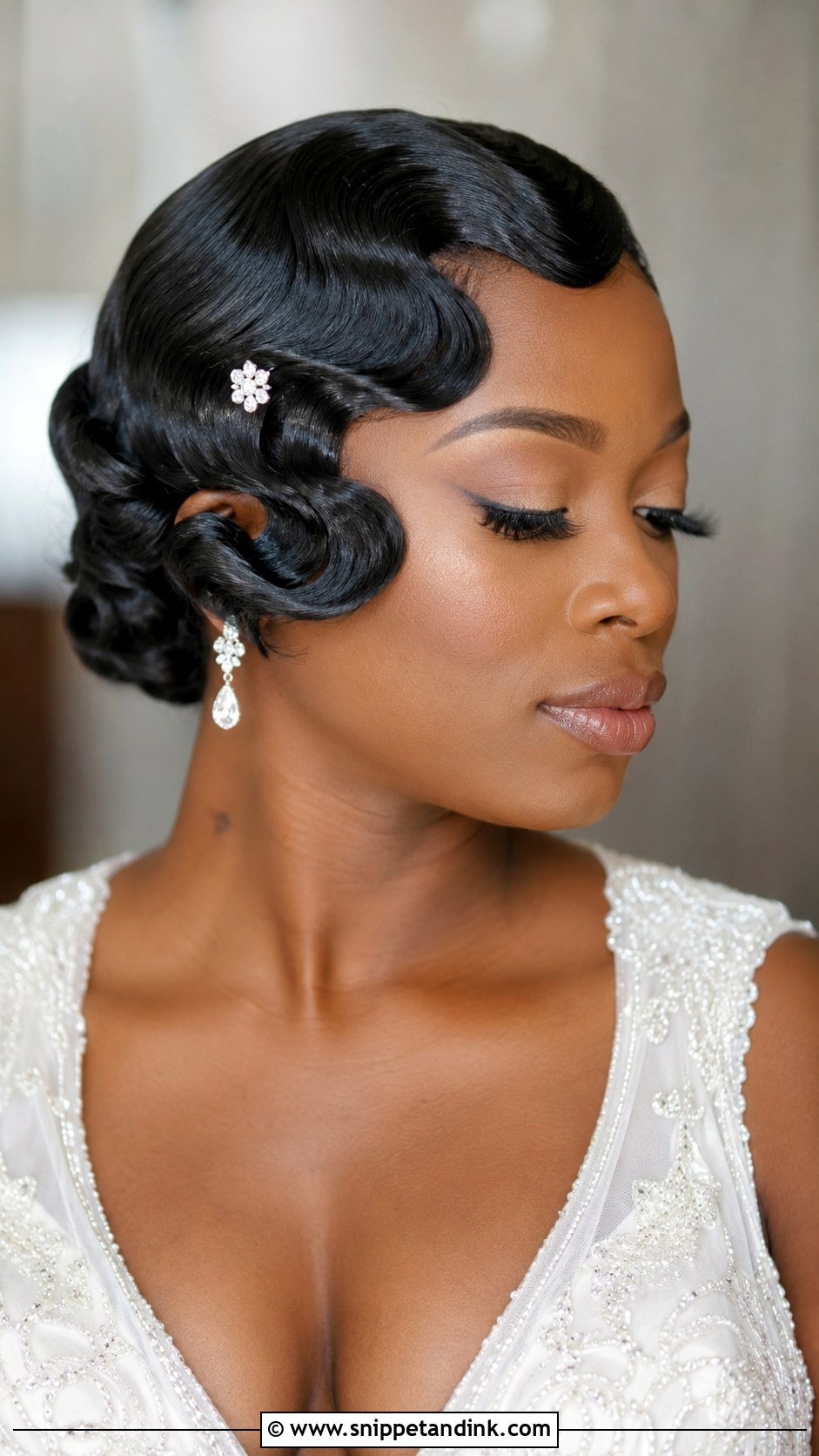
Finger waves are a short-hair specialty, and they need a confident stylist: each S-ridge is set wet with a styling gel and a comb, then left to dry fully before anything else happens. That drying time is easy to underestimate, so I build an extra hour into the schedule. On a tapered cut the result is sharp and graphic. On longer hair, waves at the front with curls at the back give the same vintage reference.
14. Twist Out Bridal Hairstyle
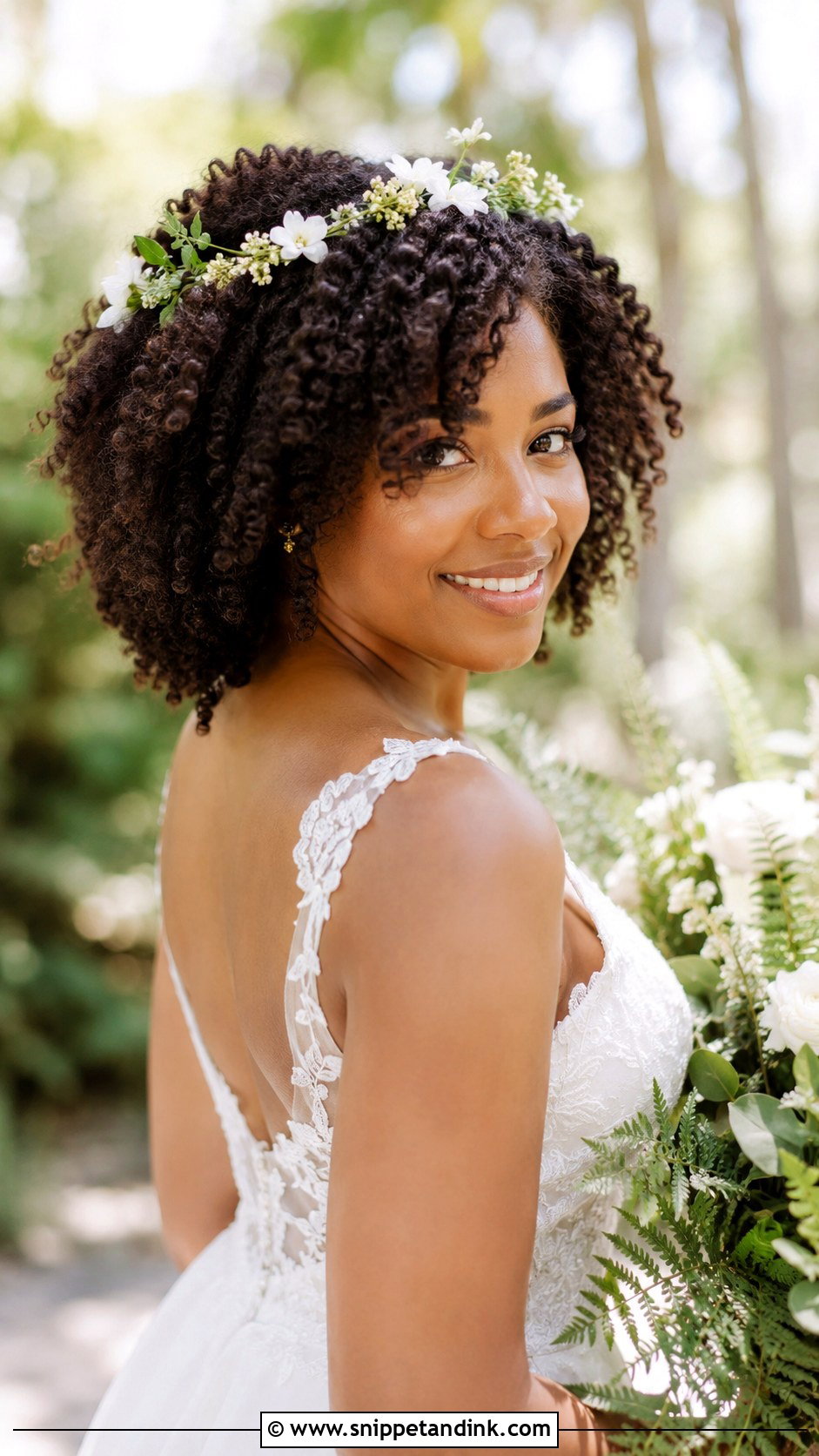
A twist out is only as good as the night it was set. Twists done on damp hair with a holding cream and left to dry overnight unravel into defined curls; rush it and you get frizz and half-formed coils. I separate gently on the morning with oiled fingers. Worn down it suits a relaxed garden wedding, and if the day turns humid, pulling the front up keeps the definition around the face.
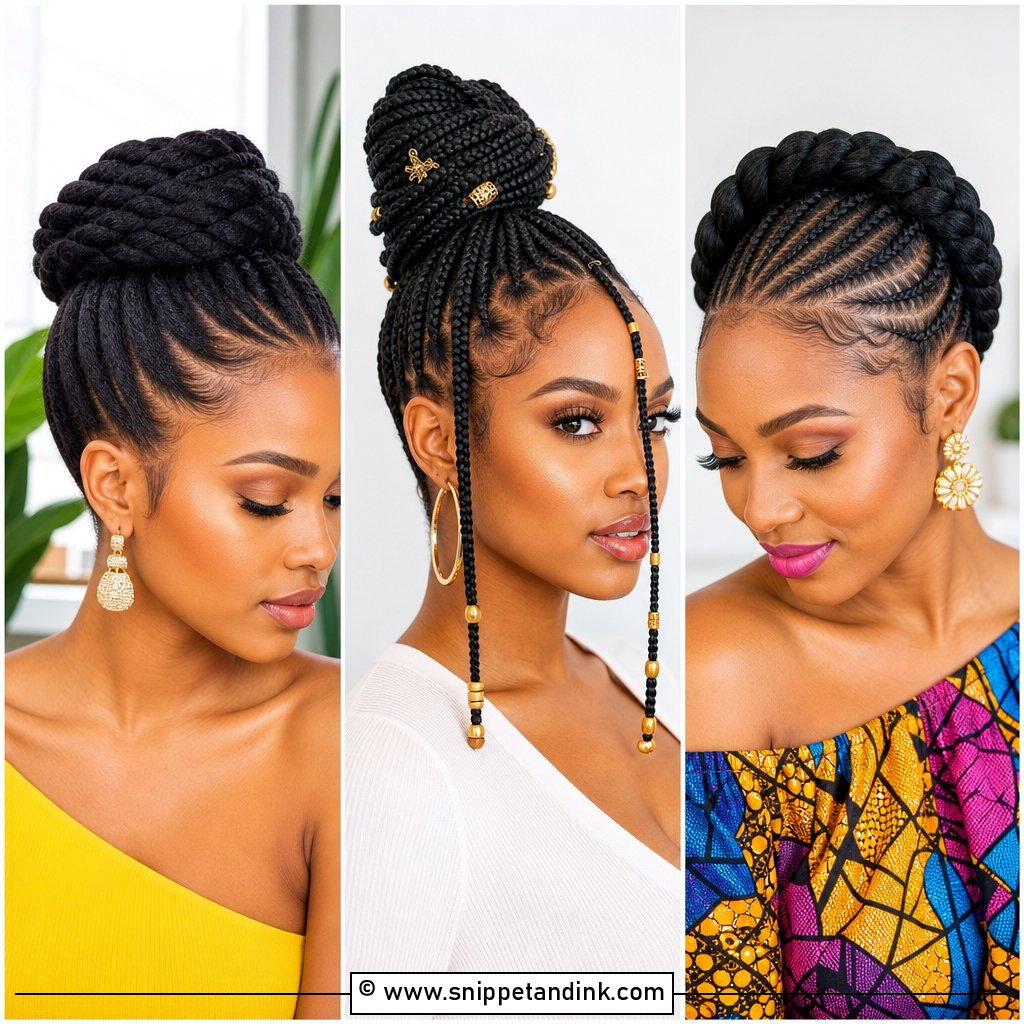
15. Faux Locs Updo for Brides
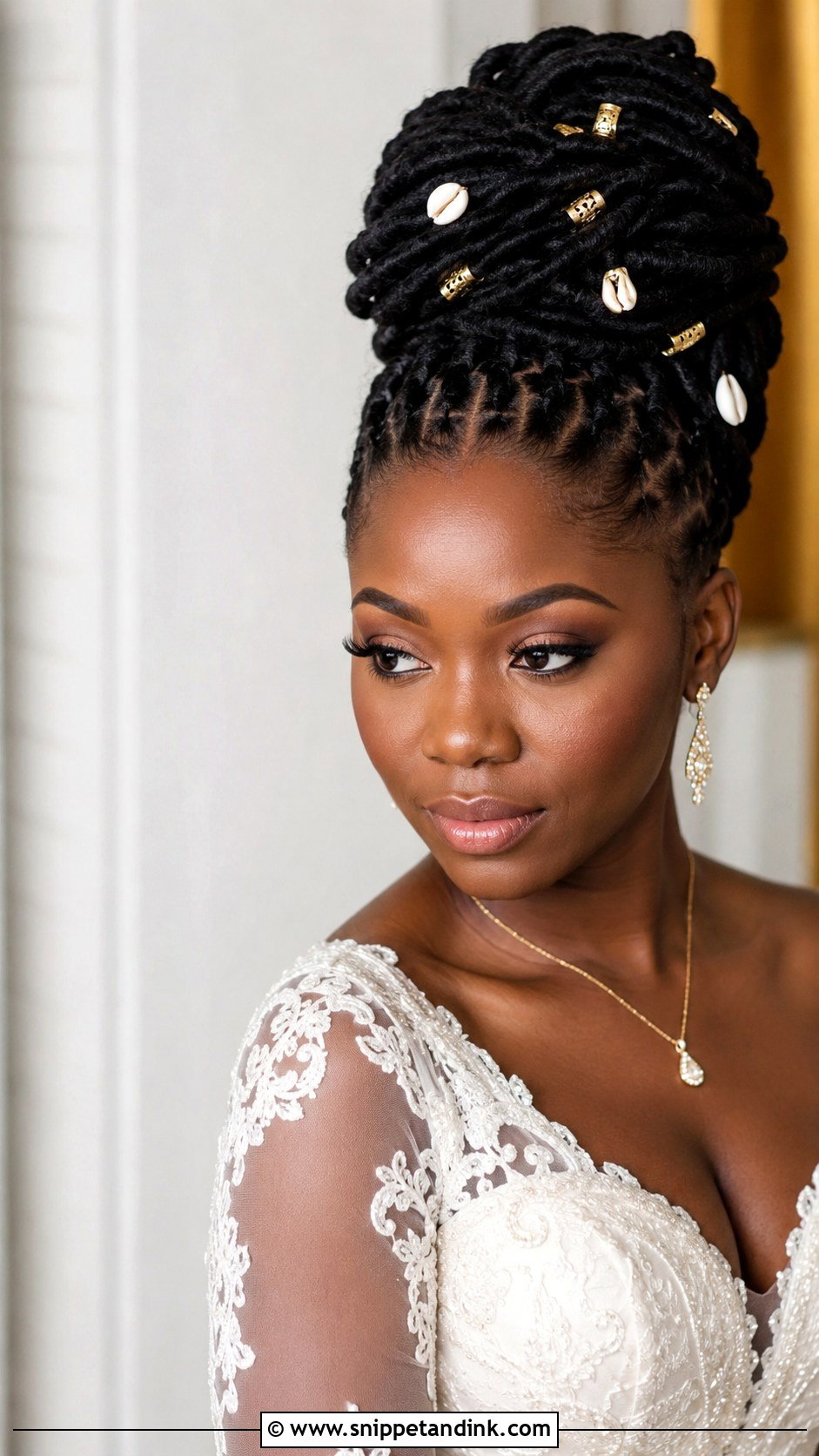
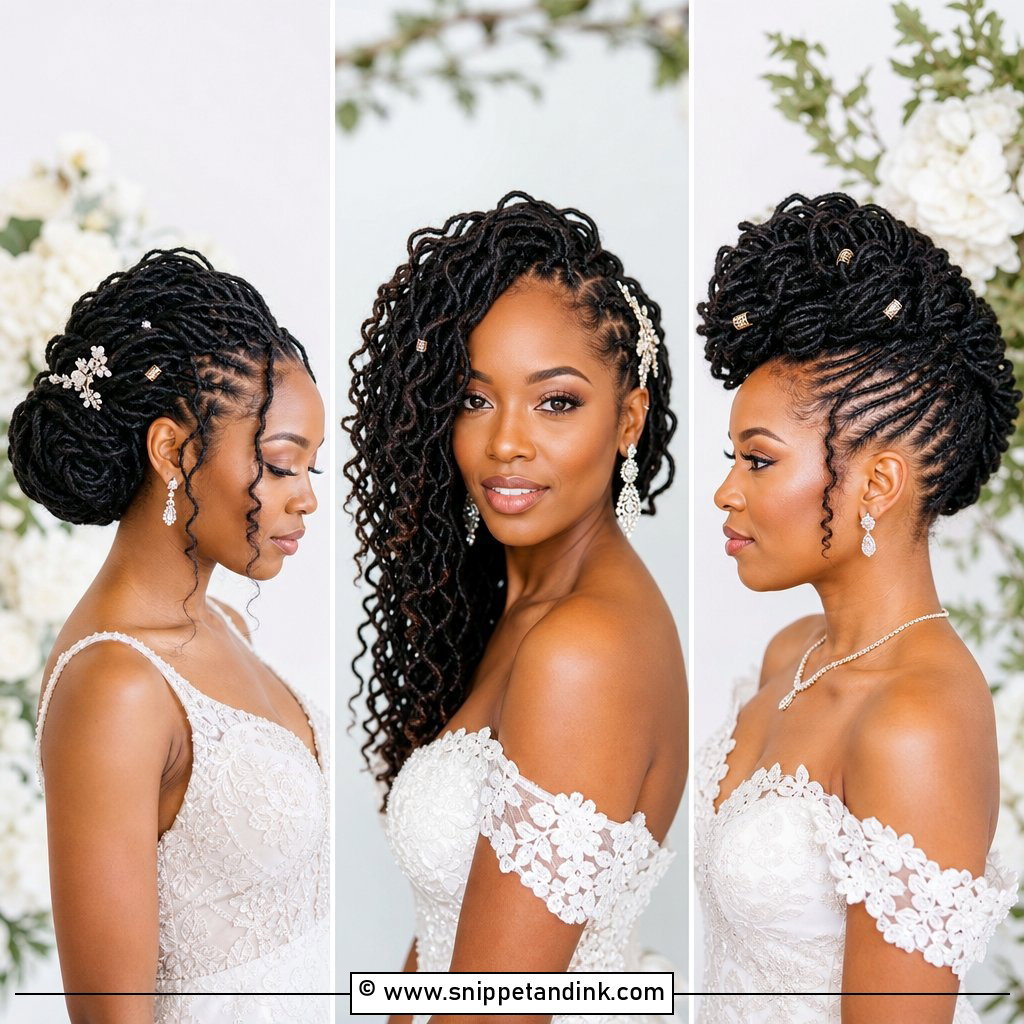
Faux locs carry a lot of length and weight, so when I sweep them into an updo I divide them into two or three smaller sections first rather than forcing them into one huge bun. That spreads the load across the scalp. Gold cuffs and shells look right threaded onto individual locs near the face. Have them installed a week or so ahead so the tightness at the root has eased by the wedding.
16. Pin Curls for Black Brides
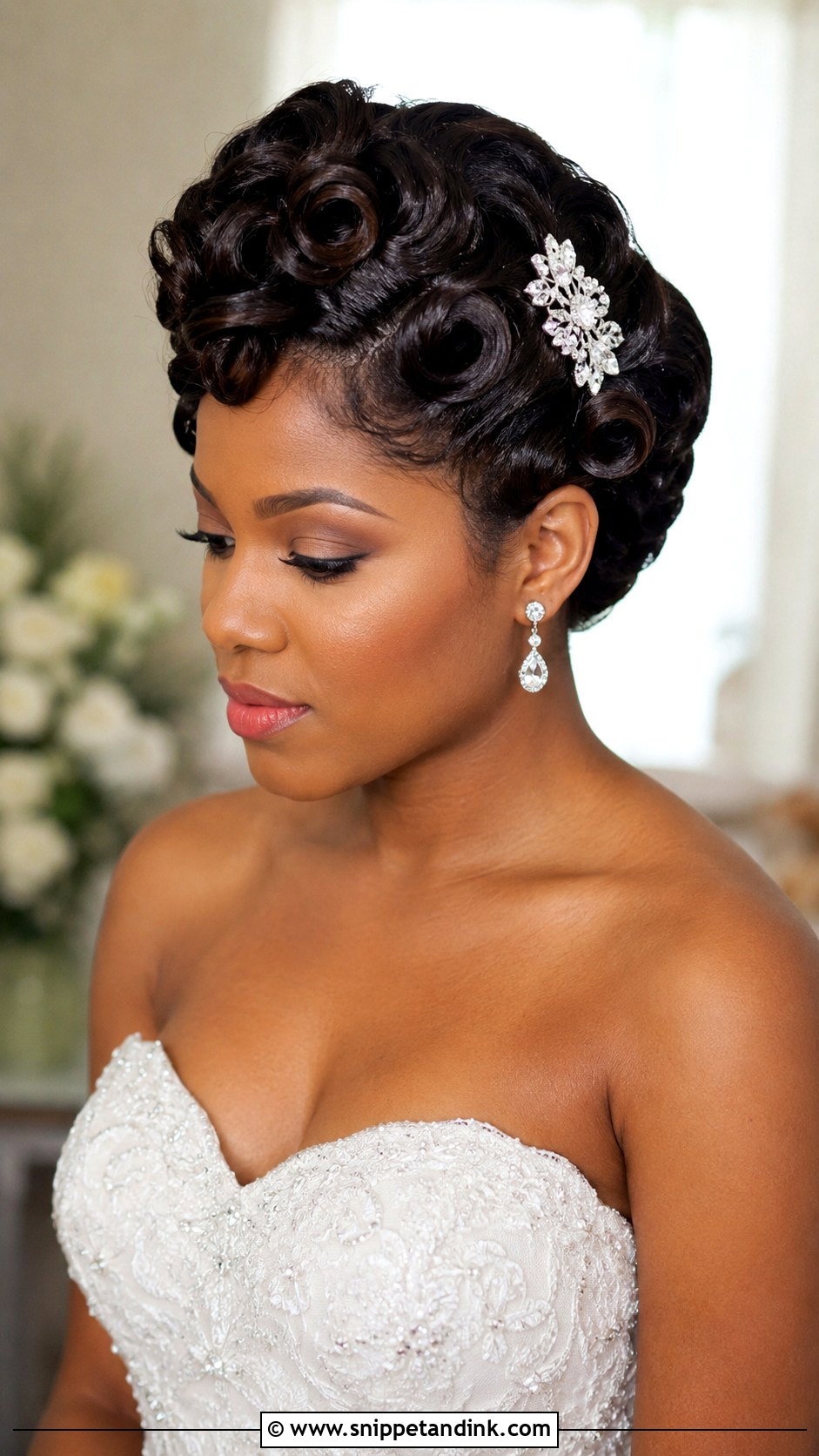
Pin curls are a setting technique as much as a style: each curl is wound flat, clipped and left to set before being brushed into soft waves or kept tight. They need smooth, straightened hair to start with, so a silk press or relaxed hair is the usual base. Swept to one side with a sparkling clip, they give classic Hollywood polish, but schedule a dry day or the set will relax quickly.
17. Big Curly Afro With Accessories
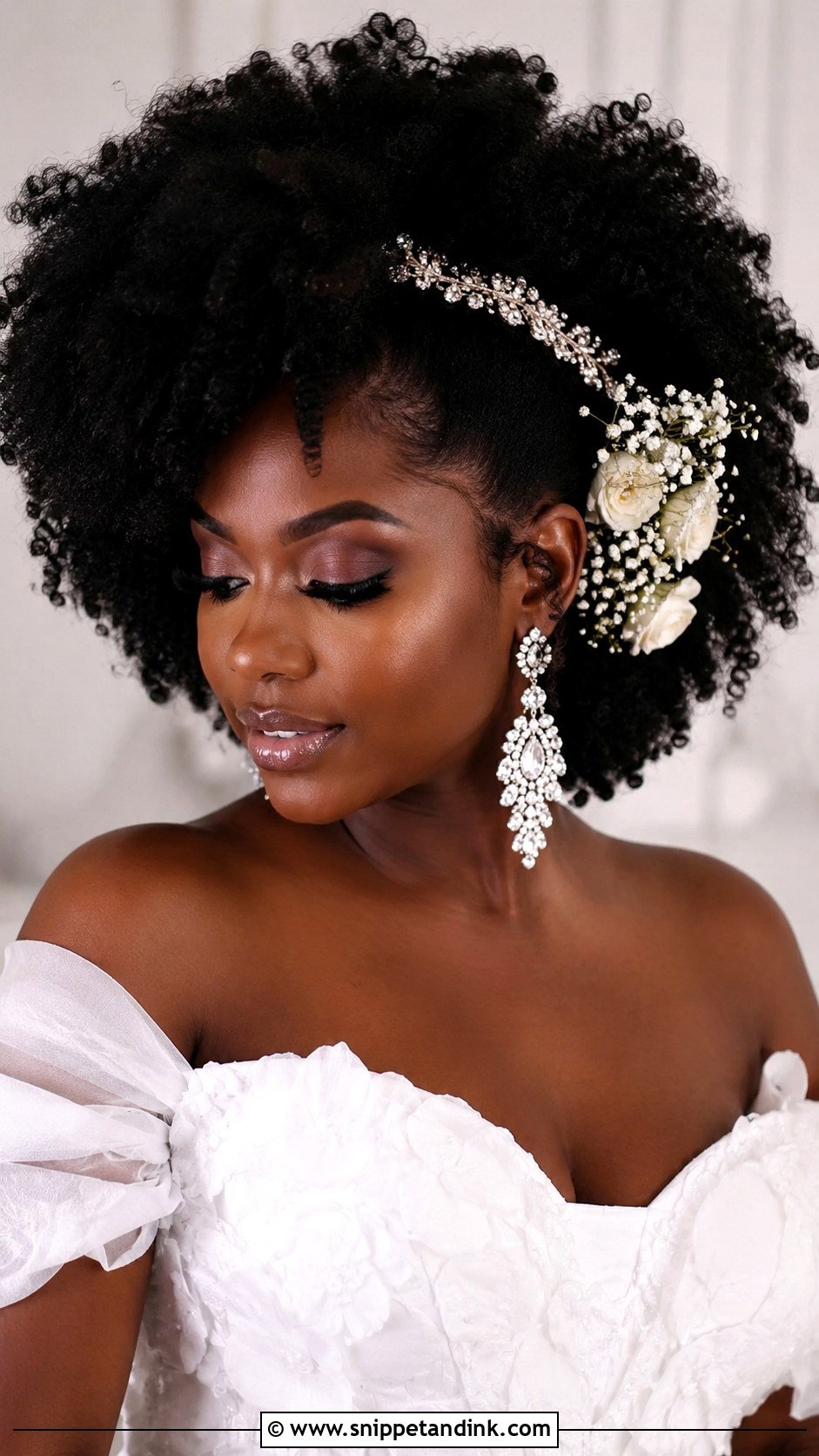
A big afro is the simplest style here to do on the day and the hardest to keep the exact shape of in humidity. I pick it out after makeup and use a light hold spray, then leave it alone. Accessories should sit at the side or front: a barrette or jeweled headband stays secure, while flowers tucked into dense hair need floral pins to stop them sliding. A big curly afro with one well-placed accessory is enough of a statement on its own.
18. Flat Twist Updo Bridal Style
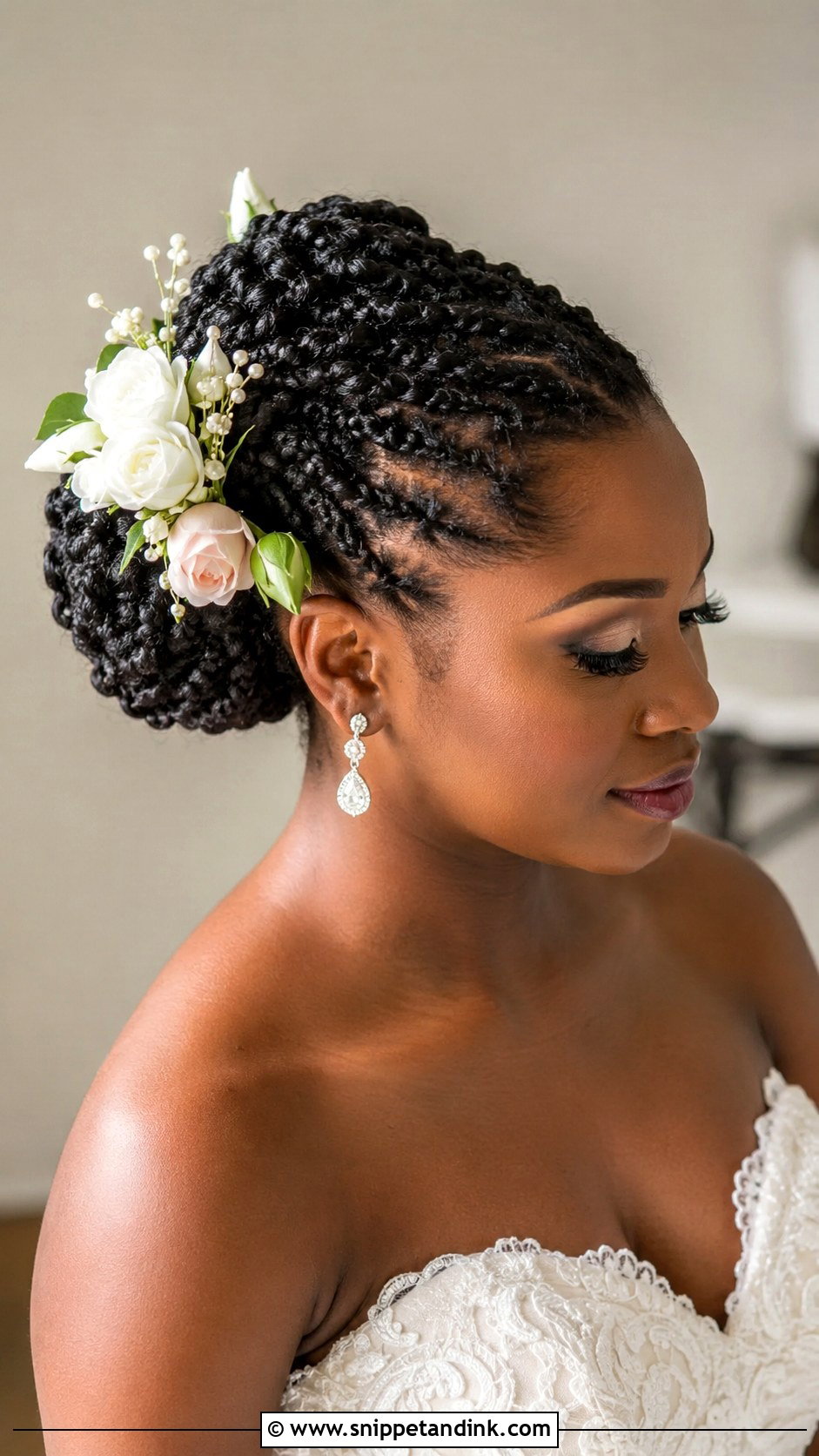
Flat twists look like cornrows from a distance but use two strands, so the finish is softer and slightly raised. They’re quicker to install and easier on fine edges, which is why I suggest them to brides with thinning hairlines who still want a protective updo. Gathered into a bun at the back, they keep the neck clear for an intricate gown back. Pearls or small gold accents finish them.
19. Side Swept Curls for Weddings
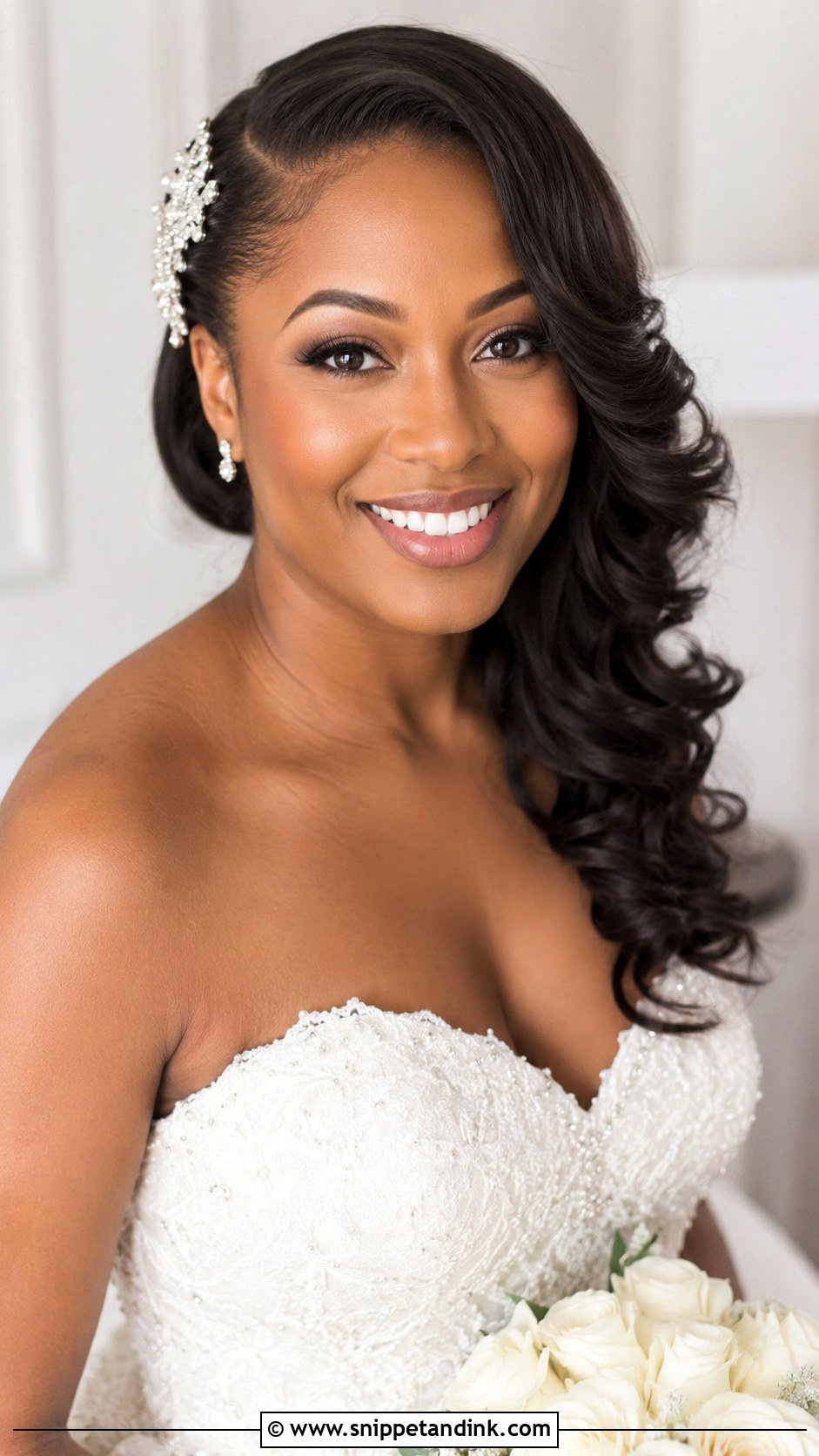
A side-swept drape looks loose but needs anchoring: I cross-pin the curls behind the opposite ear with bobby pins sprayed with dry texture spray first, so they grip. Without that, the whole drape slides back by the first dance. It works on a silk press, twist out or curly install. The open side shows your earrings and neckline, and a jeweled clip covers the pins.
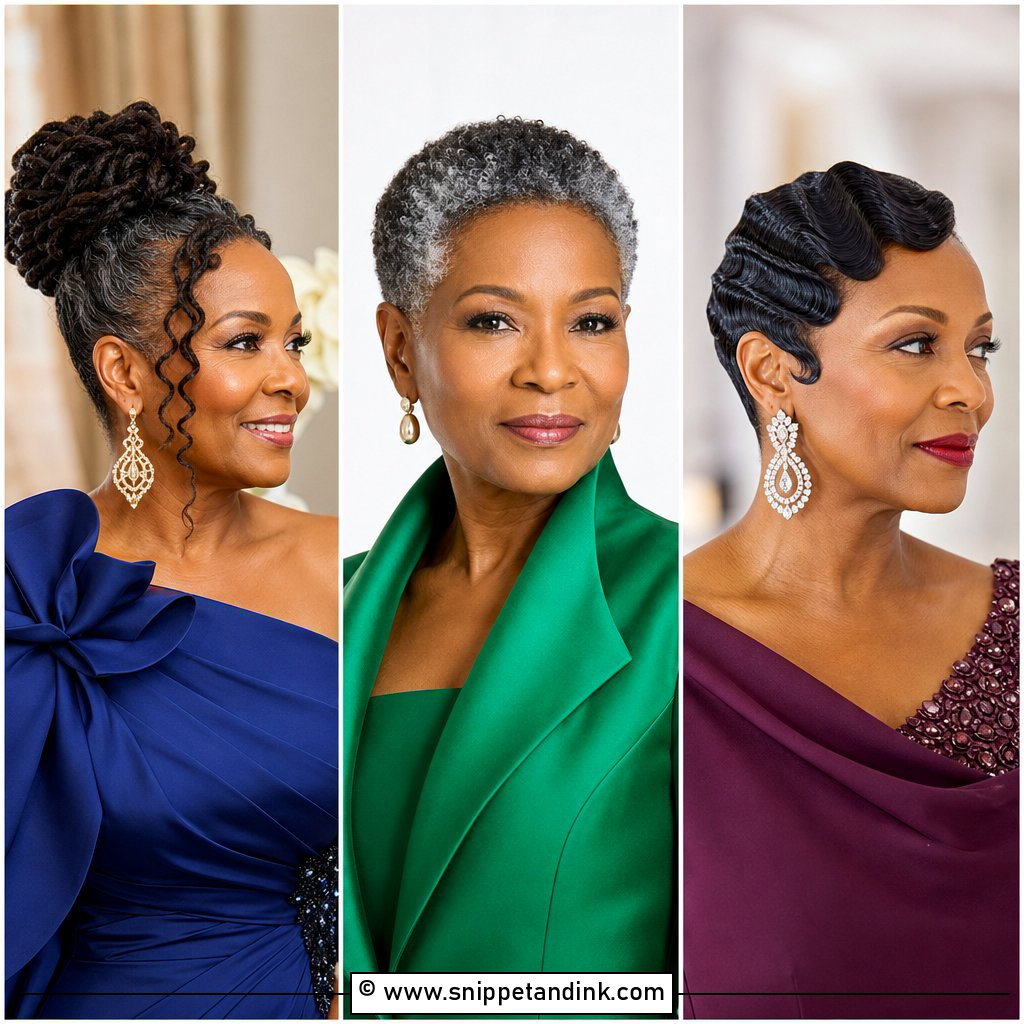
20. Crochet Braids Bridal Updo
Crochet braids are installed by looping pre-styled hair onto a cornrow base, so the whole look can be done in a few hours rather than a full day. That’s the practical appeal. Curly, wavy and straight textures are all available, and for an updo I prefer a looser curl pattern because it hides the base better. Pearls or gold thread finish it, and the lightweight hair stays comfortable through a long reception.
21. Low Chignon for Black Brides
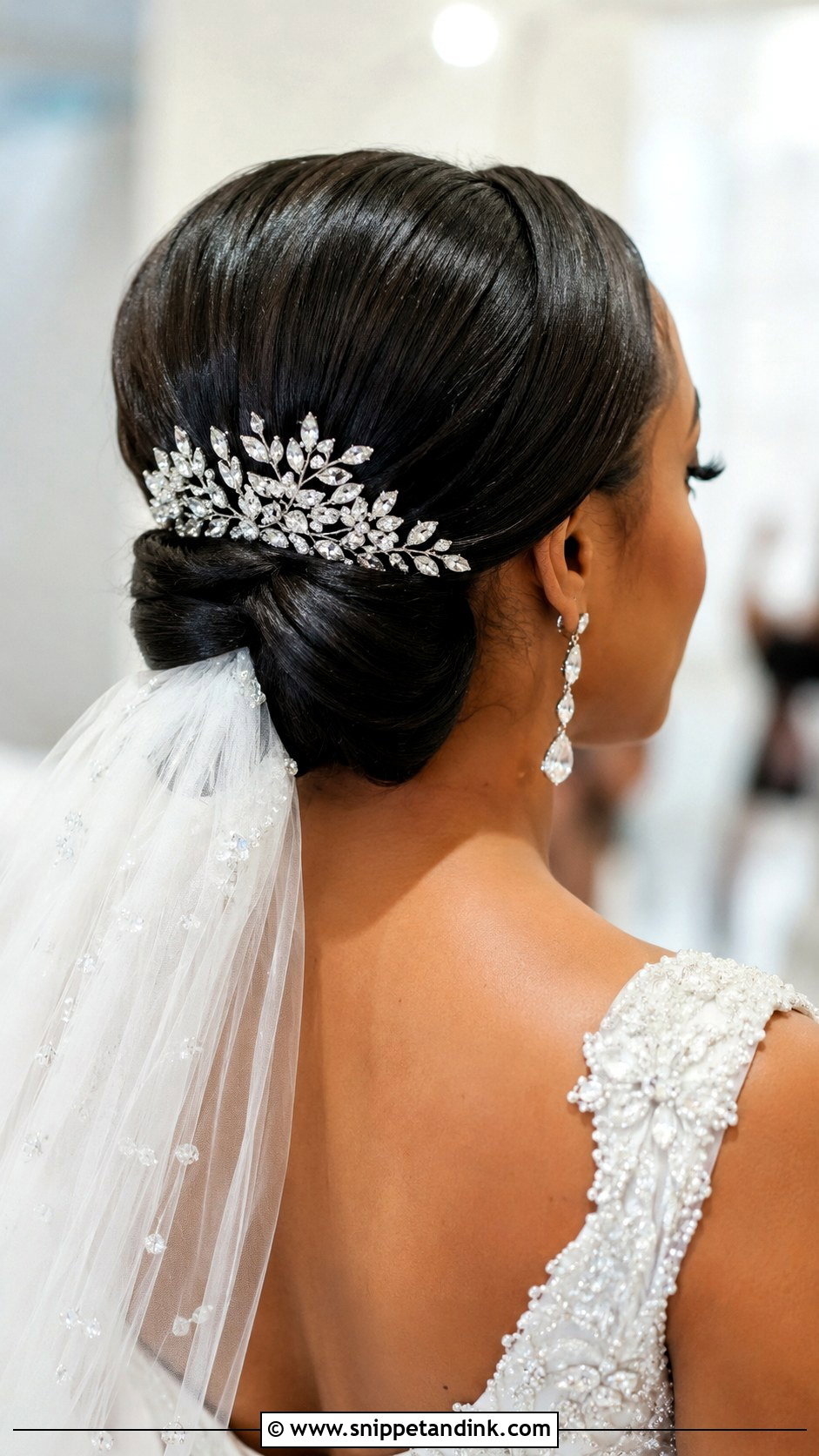
A low chignon is the style I recommend most often to brides wearing a heavy cathedral veil, because the comb has a solid knot to sit under. I twist and tuck rather than roll, so the knot holds its shape when you turn your head. It needs smooth hair, so a silk press, relaxed hair or a sleek install all work. A jeweled comb at one side is the classic finish.
22. Tribal Braids With Beads
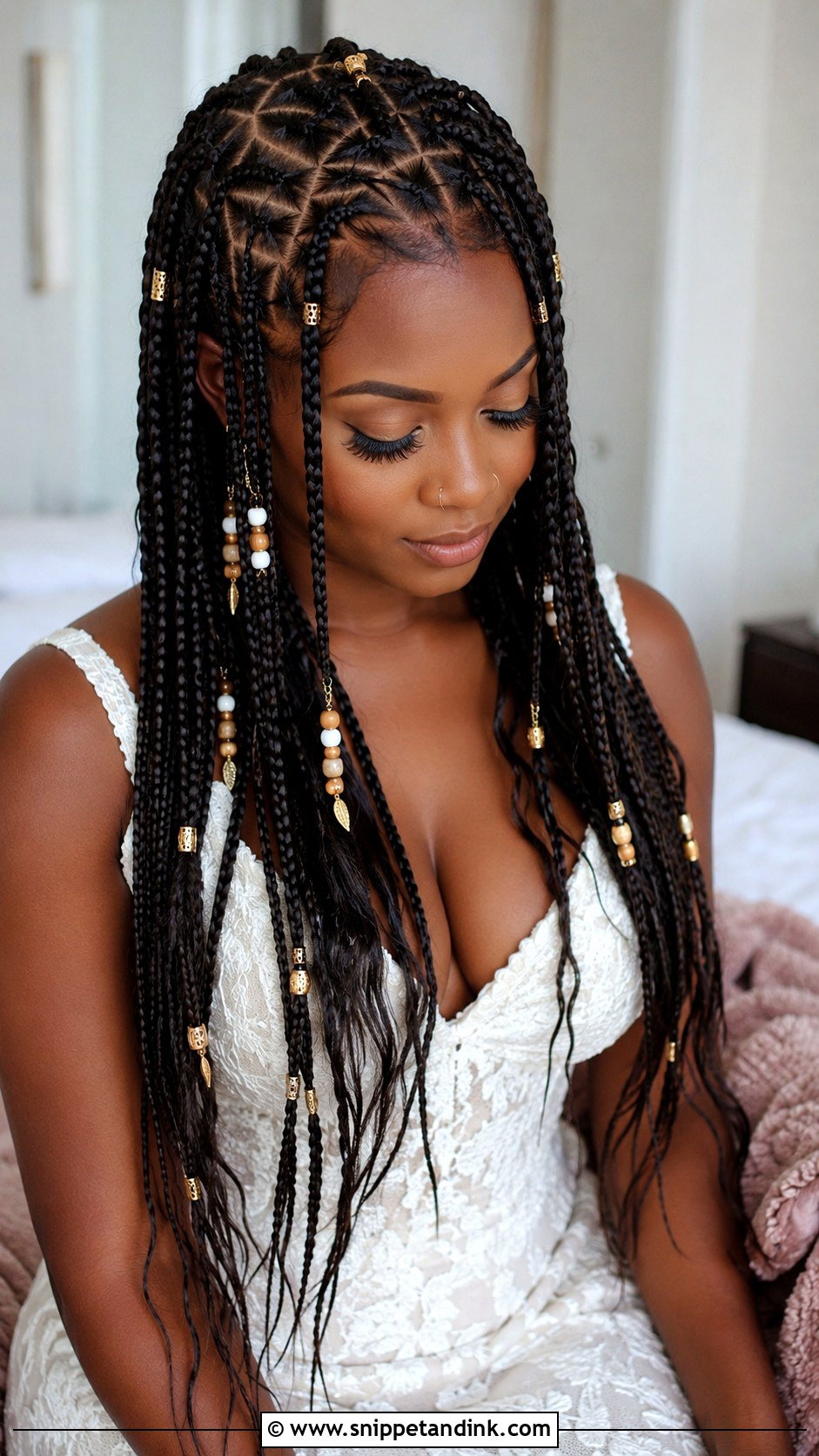
Tribal braids mix sizes and parting designs, so I ask brides to bring a clear reference photo to the braider: freehanded patterns vary a lot between artists. Beads and cuffs catch light in photos, but too many on long braids can clack loudly during a quiet ceremony. Worn down or in an updo, the pattern carries the look, and the cultural meaning is what many brides tell me they wanted most.
23. Sleek Top Knot Bridal Look
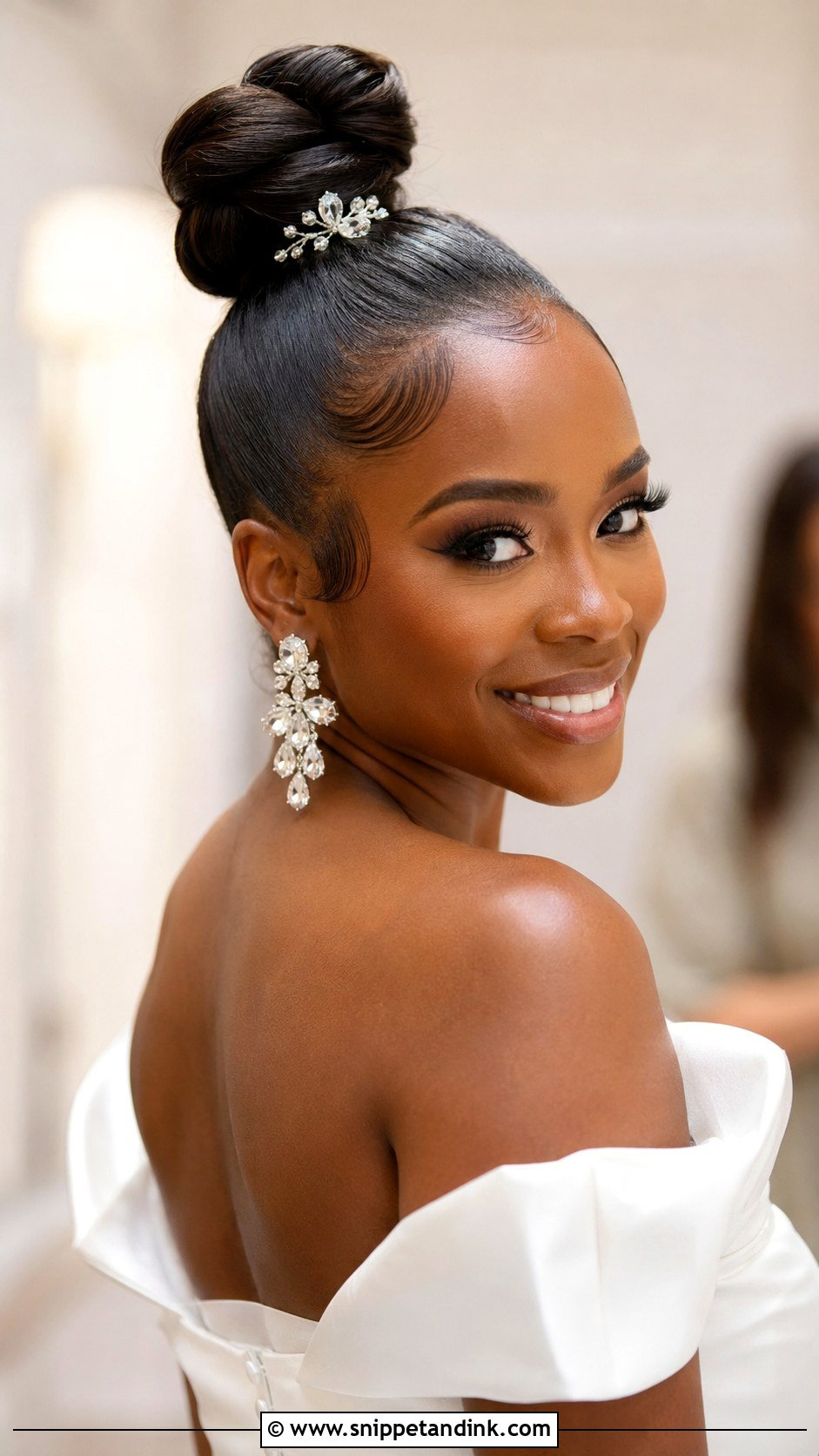
A top knot adds height, which suits petite brides and long necks, but it isn’t the best partner for a veil because the comb has nowhere sensible to sit except below it. I set the base tight with an elastic and build the knot from a smooth press or sleek install. A single jeweled pin is plenty. It does keep you cool in summer, which brides appreciate by the evening.
24. Curly Bob for Black Brides
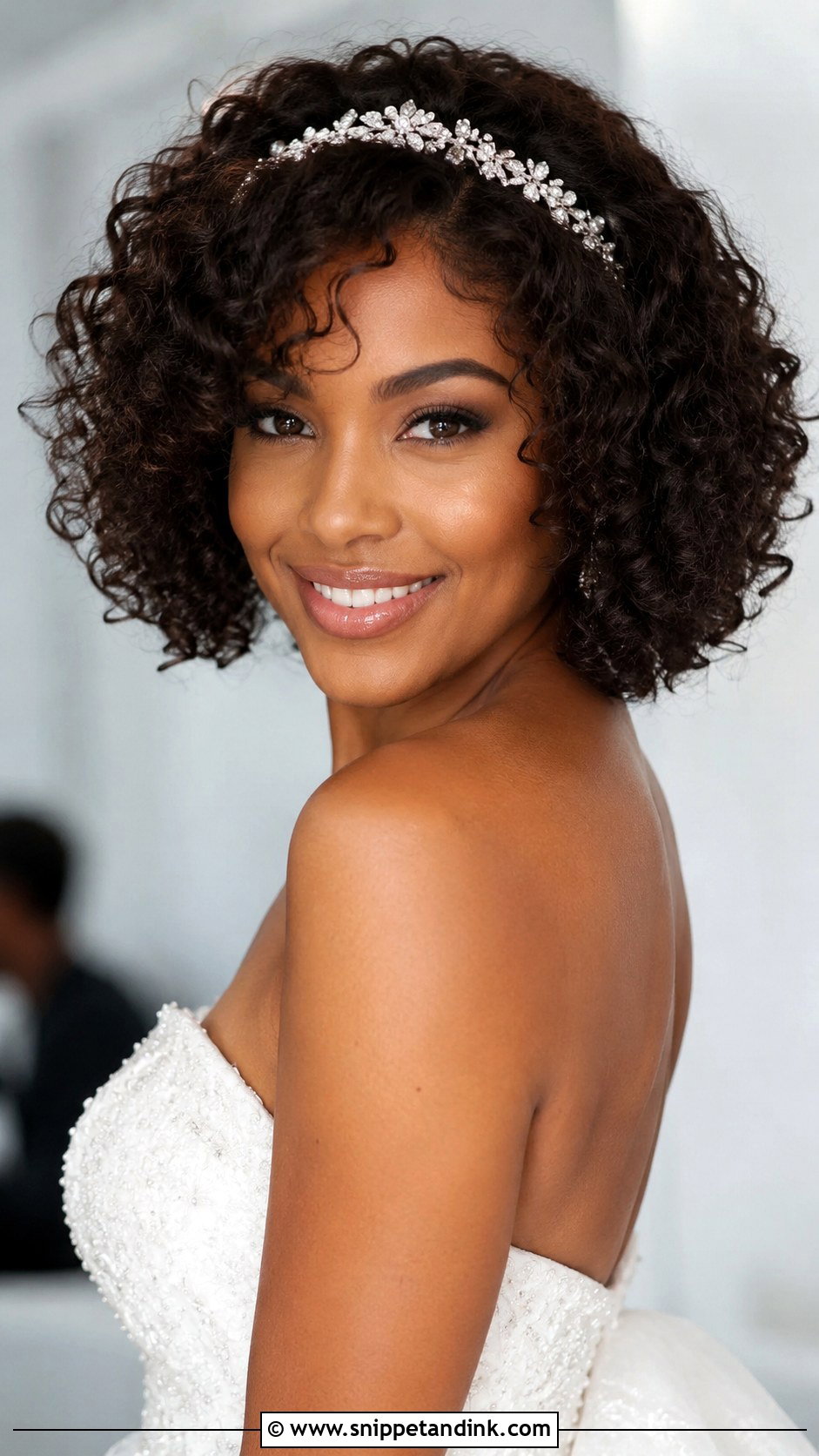
A curly bob is easy to wear, but it needs a cut shaped for curls, ideally done three or four weeks before the wedding so the ends have settled. I refresh the curls on the morning with a little water and curl cream rather than restyling from scratch. A jeweled headband or small clip is enough. It photographs fresh and modern, and there’s very little to fix during the day.
25. Braided Crown With Fresh Flowers
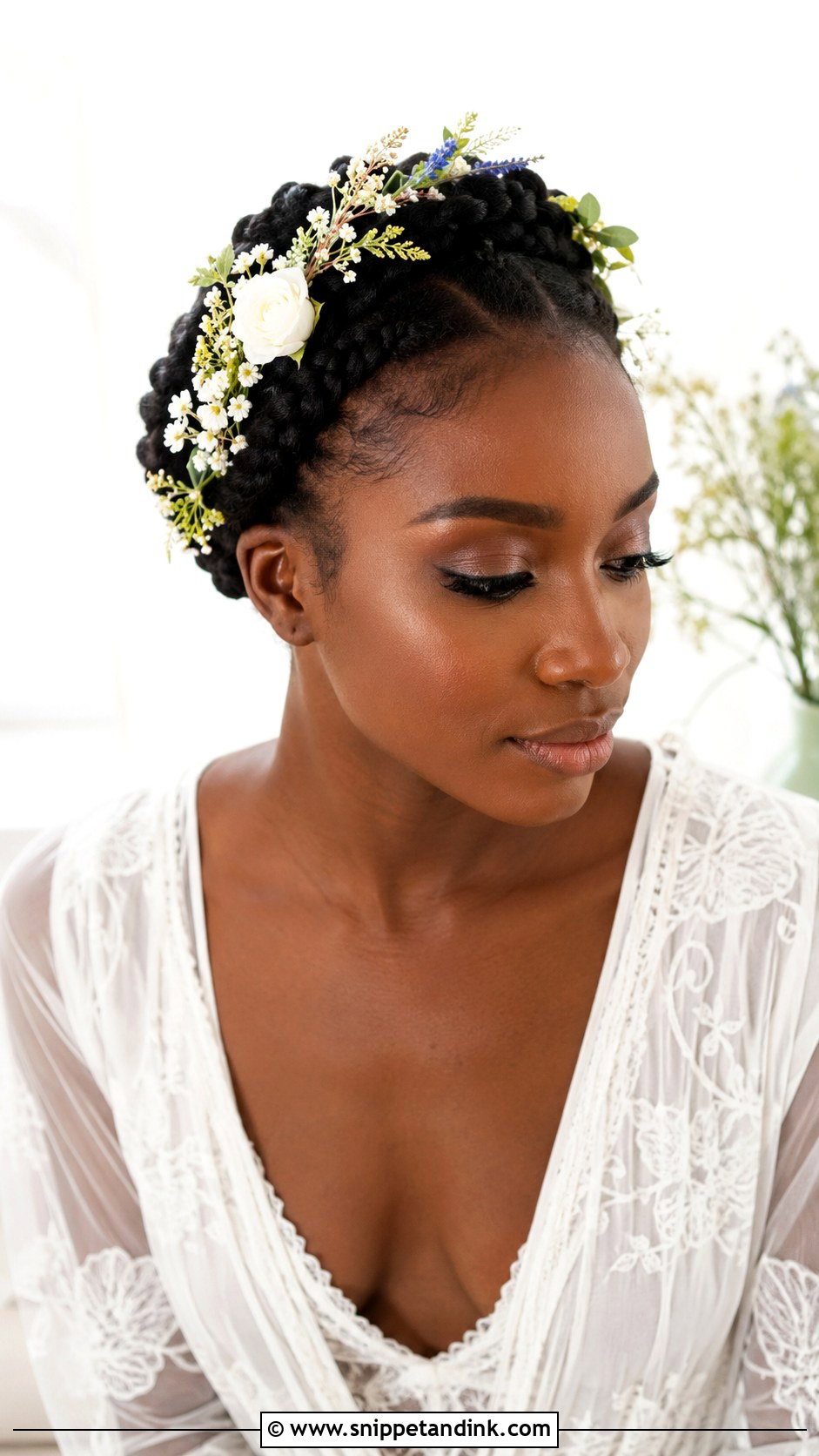
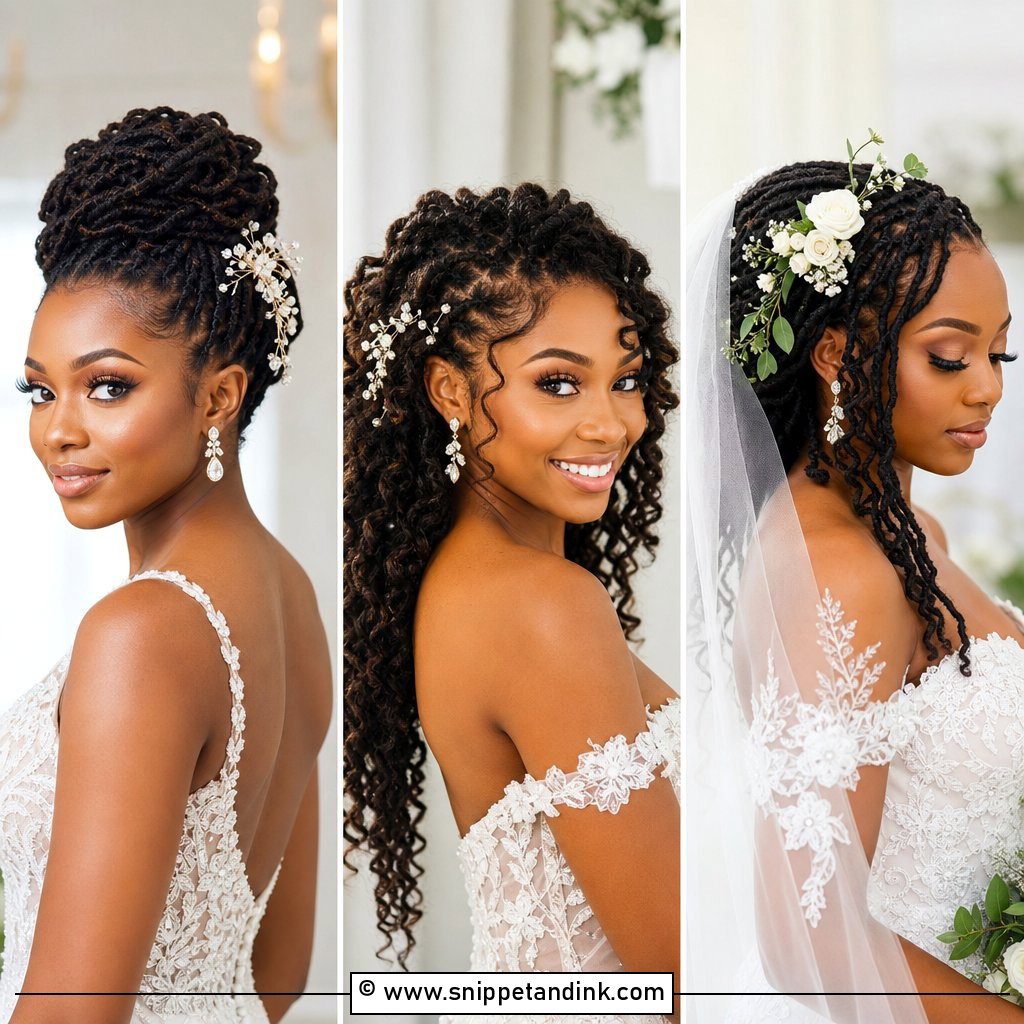
A braided crown is the halo braid’s more decorated cousin, and the flowers are where planning matters. Fresh stems wilt in heat, so I ask the florist for hardy small blooms like spray roses or waxflower, wired and kept chilled until I pin them in. It works on natural hair or with extensions for fullness. With the neck clear and the flowers framing the face, it reads romantic without needing a veil.
A Veil Comb Needs Something to Grip
Veil combs are designed for straight hair, and on coils, braids or locs they often slip within the hour. The fix depends on the style underneath.
On braids and locs
I thread a couple of small elastics through the comb teeth or sew the comb directly onto a braid at the base of the bun. It is quick to unpick after the ceremony and won’t budge while you hug guests.
On afros, curls and twist outs
Dense texture actually grips well, but only if the comb goes in against the direction of the curl and then gets locked with two crossed bobby pins underneath. For a heavy cathedral veil, a small hidden braid or cornrow at the anchor point gives it a firm base.
Sweat, Humidity and Shrinkage After Sundown
Hair on a wedding day goes through a lot: hugs, heat from the dance floor, maybe rain between the ceremony and reception. Braided and locked styles shrug most of it off. Presses, curls and laid edges are the ones that need a small rescue kit.
- A satin scarf for any outdoor walk or car ride on a damp day.
- A small edge brush and a travel-size edge control for the bathroom break before speeches.
- Spare bobby pins in your hair color, already sprayed for grip.
- A wide-tooth pick to lift flattened curls without breaking up the definition.
- Blotting papers for the hairline, since sweat there is what lifts laid edges first.
Hand the kit to someone in your bridal party and show them where the pins go. Two minutes of fixing between the speeches and the first dance keeps the shape you had at the altar.
Your Texture Sets the Plan, Not the Other Way Round
Start with how your hair behaves on a normal humid afternoon, then pick the style, not the other way round. Book a stylist who works with your texture every week, line up your install dates against the wedding, and protect the finished look the night before. Do that, and whichever of these you wear will last from the vows to the last song.
You'll Like These Ideas:


Leave a Reply