
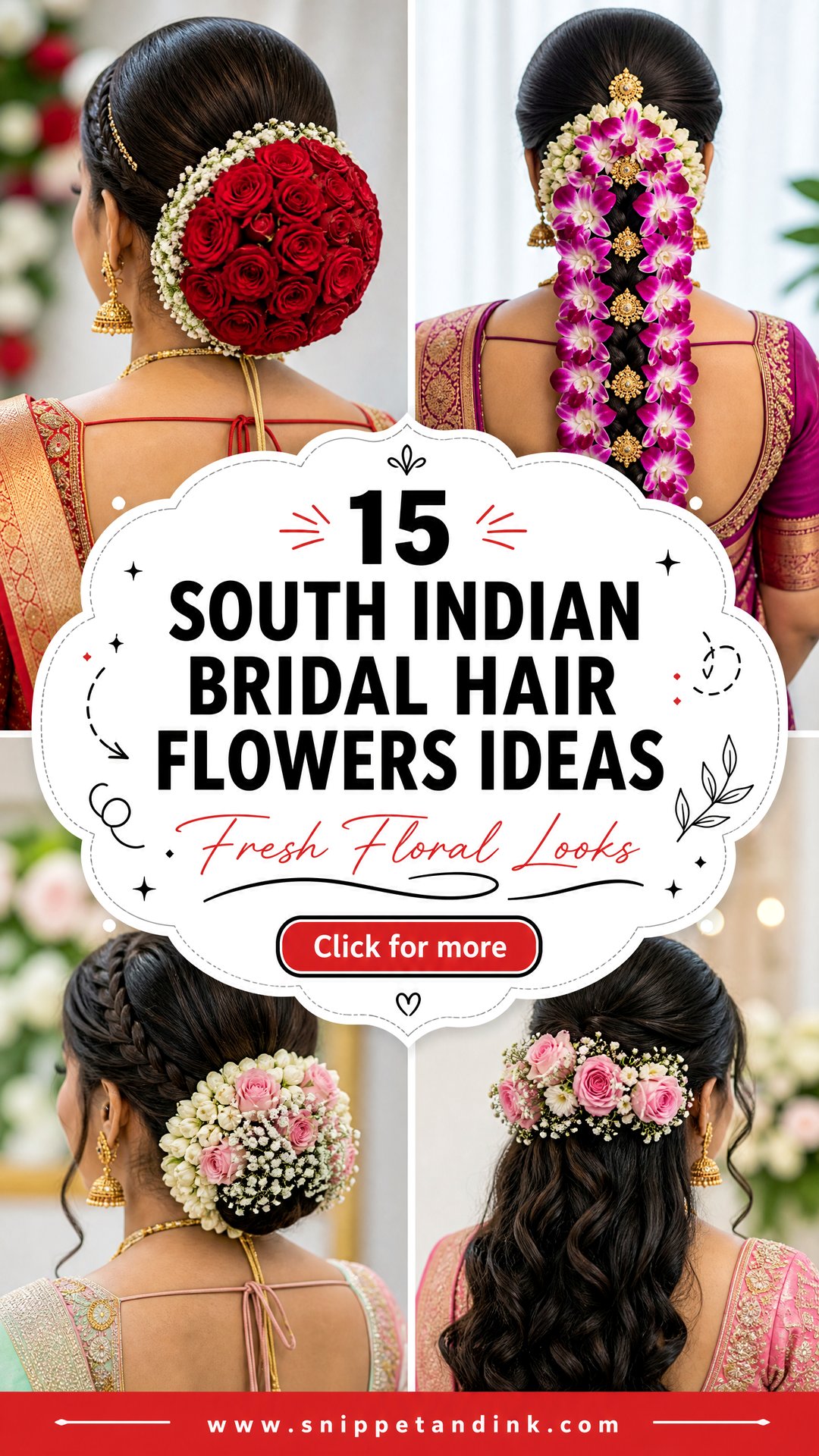
Flowers are the part of a South Indian bridal look I plan around first, because they decide how the braid is built, how heavy the back of the head will feel, and how the hair holds up through a muhurtham that starts before sunrise. From classic jasmine poola jada to rose-wrapped buns and orchid braids, the bloom you pick changes the mood of the whole look. Families often have firm views on which flowers belong at which ritual, and I always ask about that before we talk about saree colour. Below are fifteen floral styles I’d happily put on a bride for a temple wedding, an engagement or a reception, with notes on how each one actually wears.
Ordering Jasmine Buds So They Open on Your Wedding Morning
Fresh flowers are the one part of bridal hair I can’t fully control at the trial, so I plan them with the flower vendor as carefully as the braid. Jasmine and mogra are sold as closed buds, and they open as the day warms up. Strings bought already open look full in the shop but tired by the time the muhurtham begins.
- Order the strings from a vendor who regularly makes bridal jada, and confirm whether the jada will come pre-stitched on a base or be built on your braid.
- For a pre-dawn muhurtham, collect the flowers the evening before and keep them wrapped in a damp cotton cloth in a cool place. A fridge works; the freezer burns the petals.
- Ask for a spare string or two. I use them to cover gaps, hide a pin, or refresh the bun before the reception.
- If you have a fragrance sensitivity, smell the flower you’re considering at full bloom first. Tuberose and mogra are far stronger by evening than in the morning.
At the trial I work with a cheap string or artificial flowers in roughly the same size, because what we’re testing is the braid, the base and the pinning. The real flowers only arrive on the day.
1. Jasmine Poola Jada
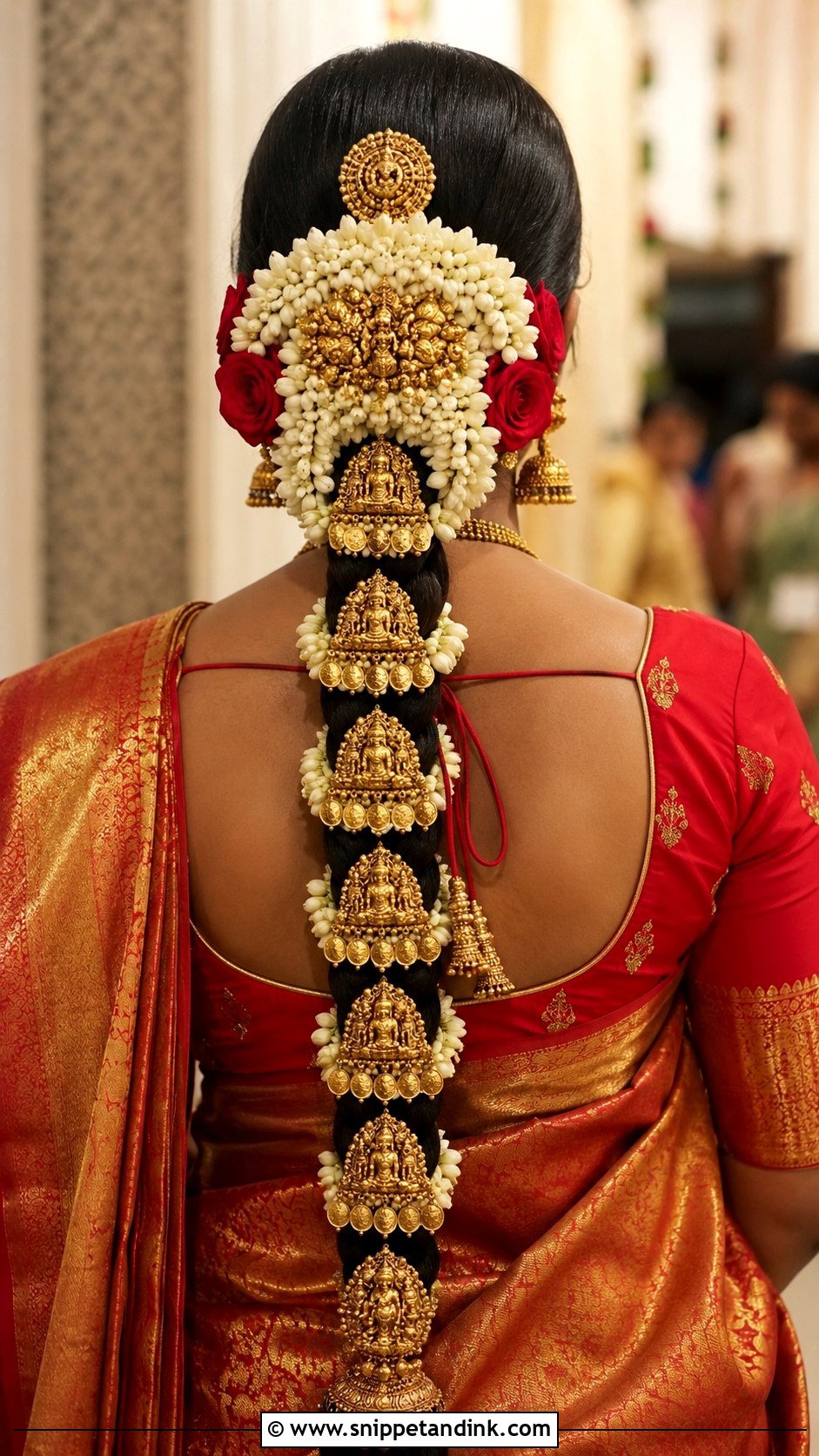
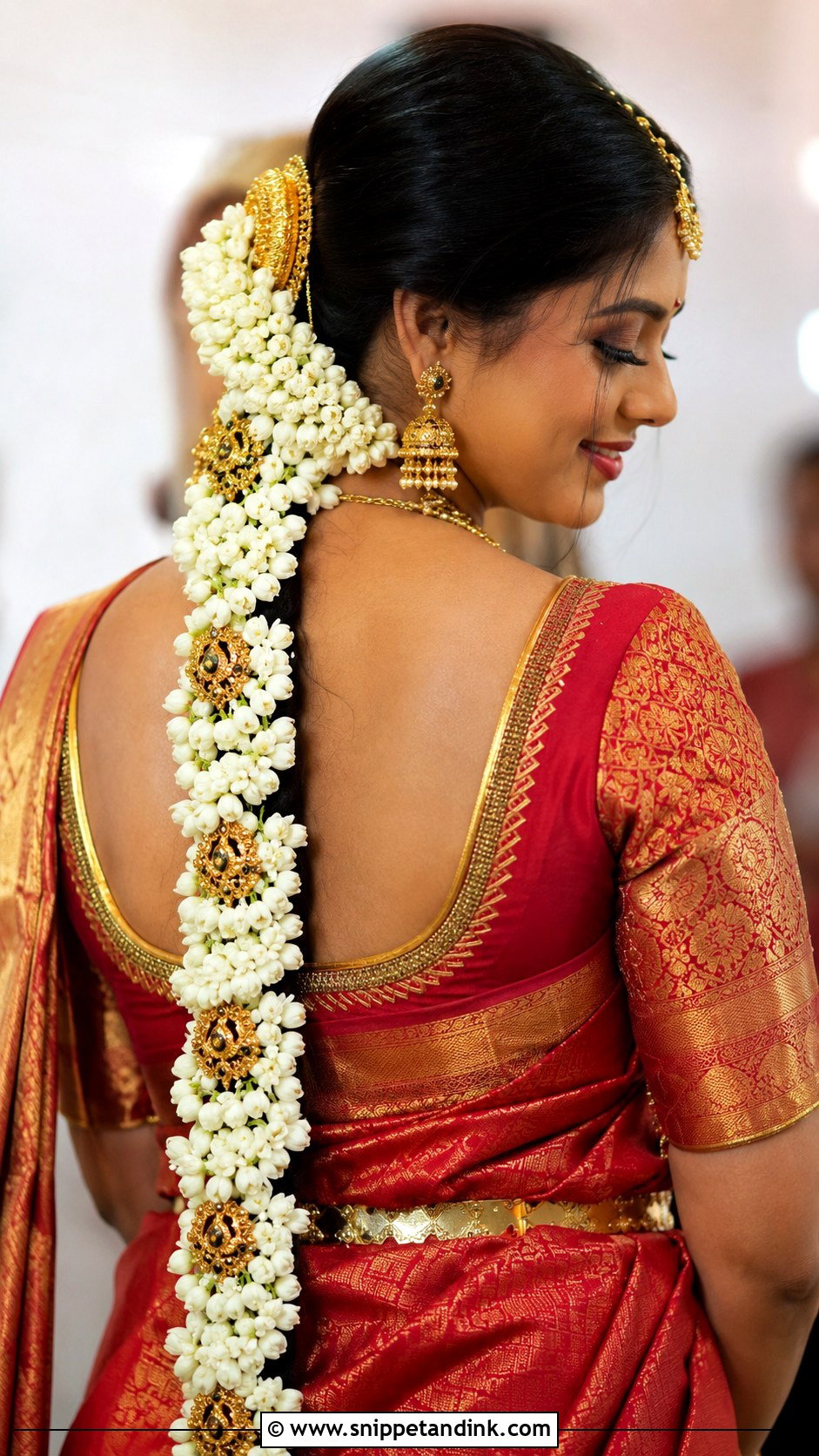
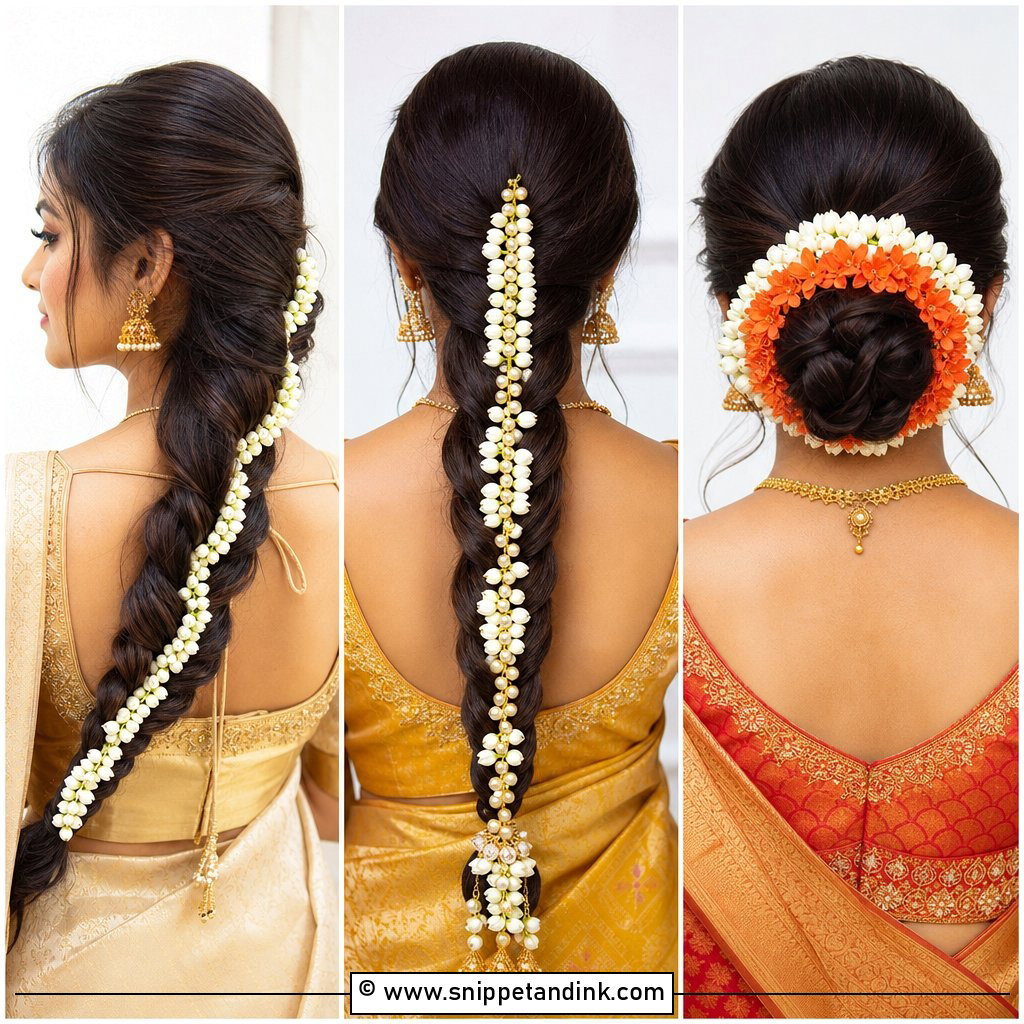
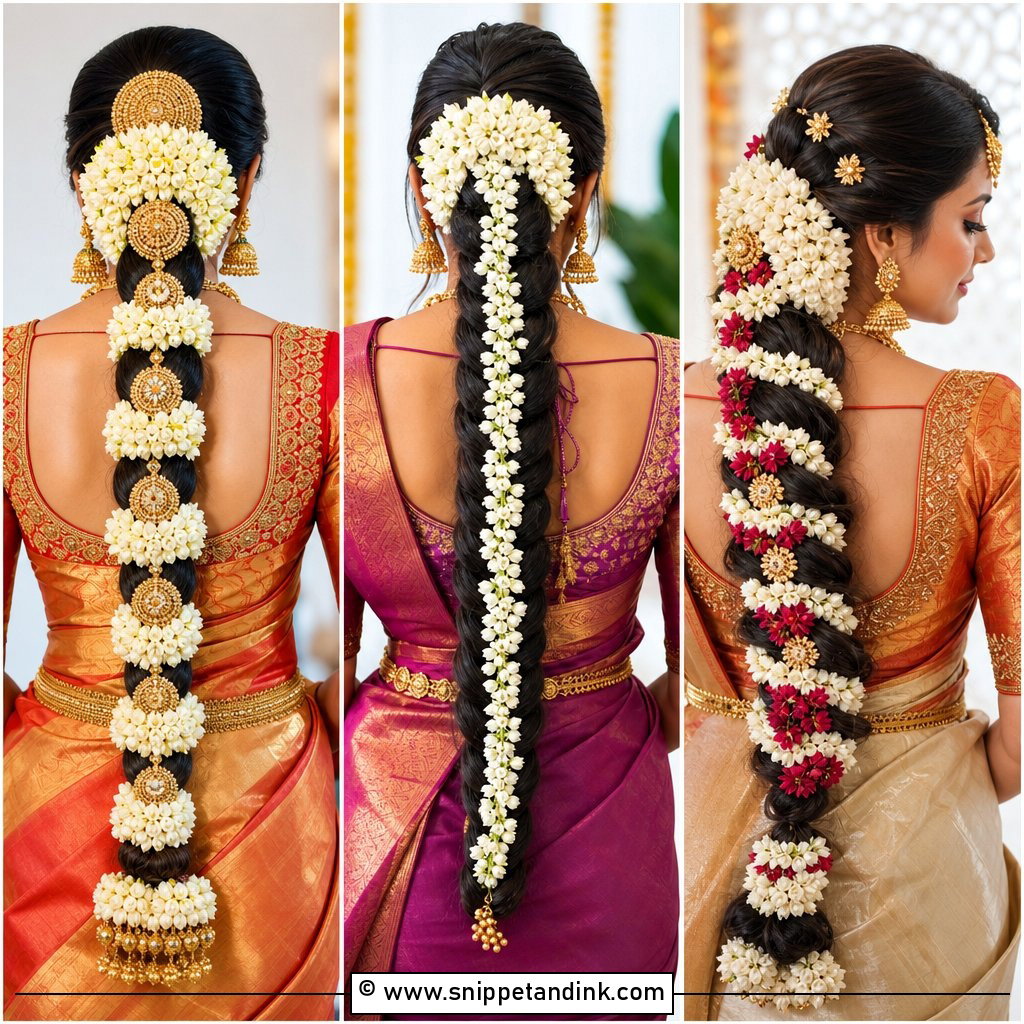
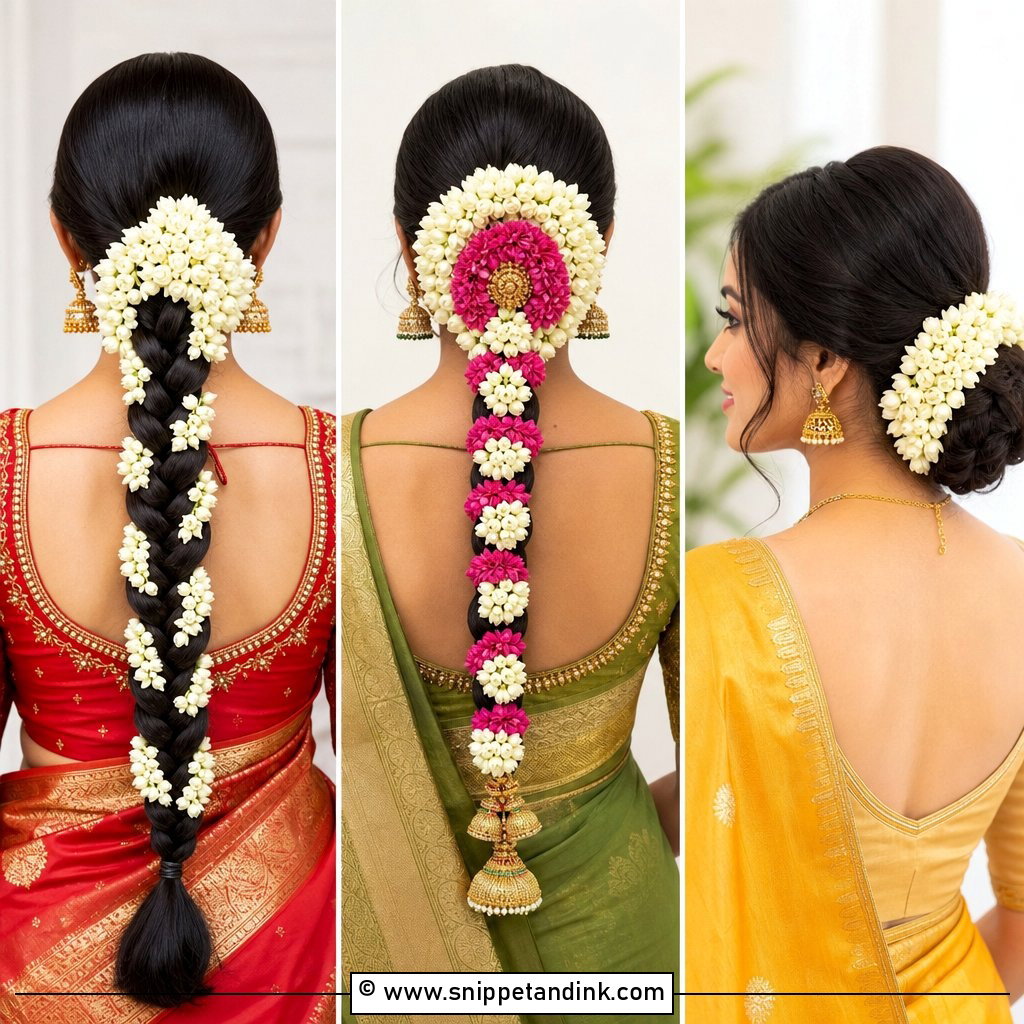
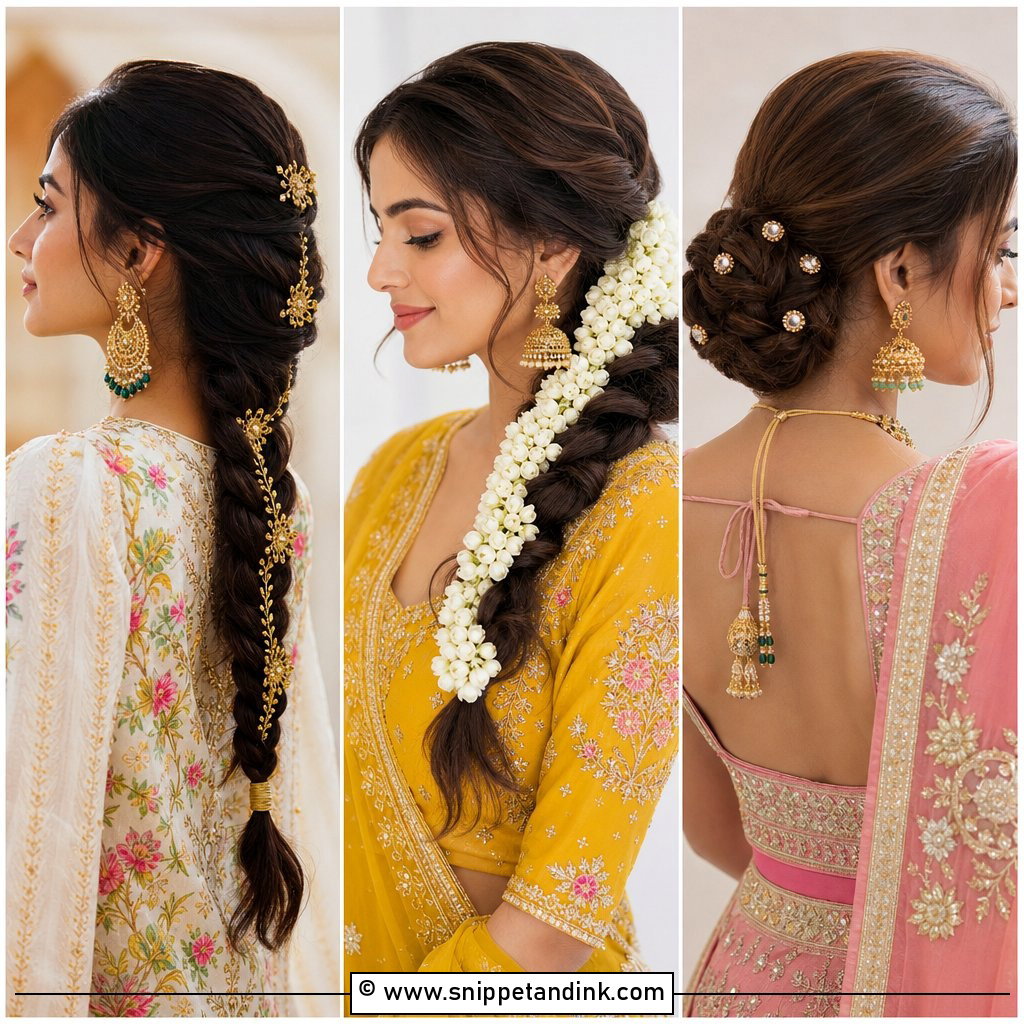
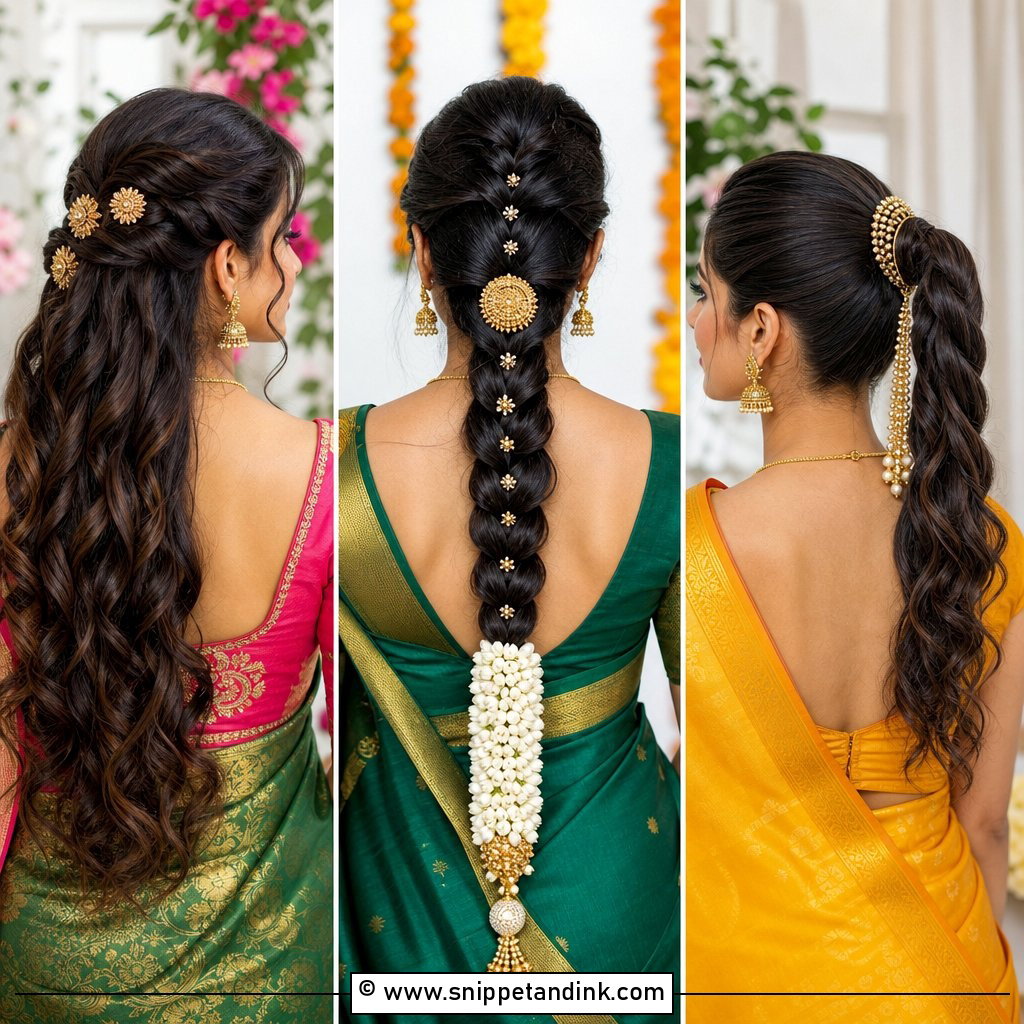
This is the look most of my South Indian brides grew up seeing on their mothers and aunts, and it still earns its place. The long braid is covered with fresh jasmine strings, floral discs and often gold jada billas, with a clean centre parting in front. Most brides need a braided extension to get the length, and I blend it in at the nape before any flowers go on, because a join that shows through the jasmine is impossible to hide later. The white sits well against red, green, magenta and mustard silk. I anchor the stitched jada at the crown and again halfway down, otherwise it swings and drags every time she bends for a ritual.
2. Rose Poola Jada
Roses turn the classic jada into something much warmer. I usually lay red, pink or deep maroon blooms down the centre and edge them with jasmine so the outline stays crisp in photos. Roses are heavier and wetter than jasmine, so I keep the clusters smaller near the crown and save the bigger heads for lower down the braid. Pearl pins or gold beads between the flowers work, but go easy, since the roses already carry a lot of colour. With a red or wine Kanjeevaram this reads as rich rather than busy.
3. Mogra Bridal Bun
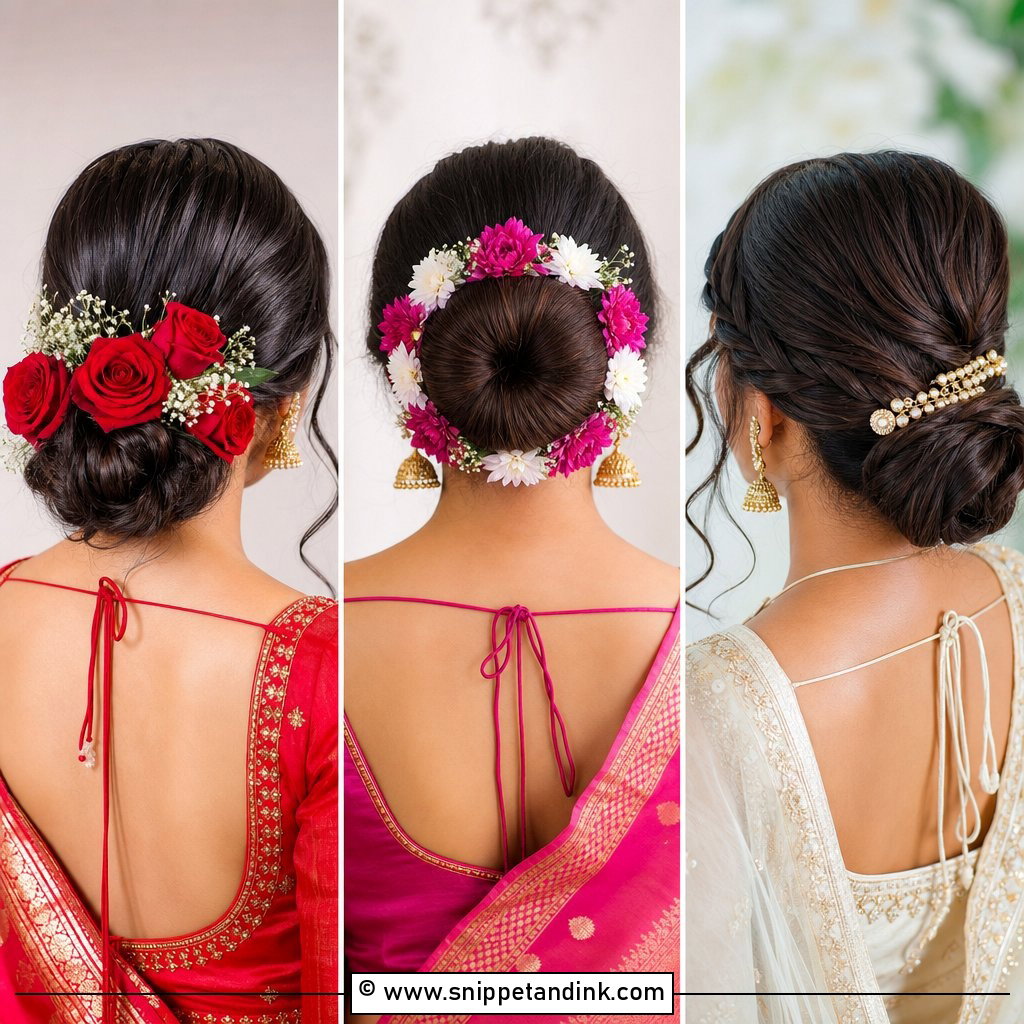
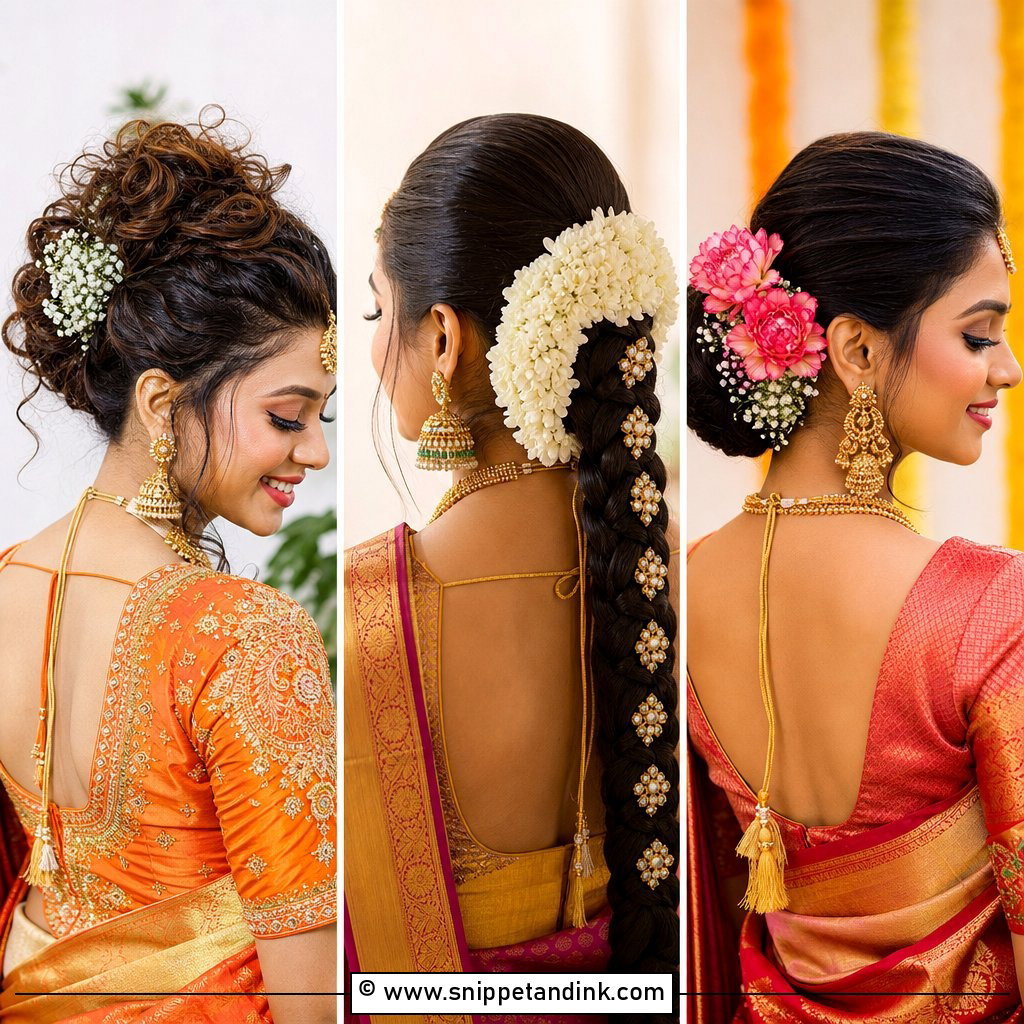
For a low bun, mogra is my favourite wrap because its scent carries without the flowers needing to be dense. I part the hair neatly, build the bun low enough that a seated bride can lean back against a chair, then coil thick mogra or jasmine strings around it. Keeping everything compact means earrings, necklace and the blouse back all stay visible. A central bun ornament or a crescent-shaped floral layer adds detail. Engagements and pre-wedding rituals suit this one best, when nobody wants the weight of a full jada.
4. Fresh Flower Braid
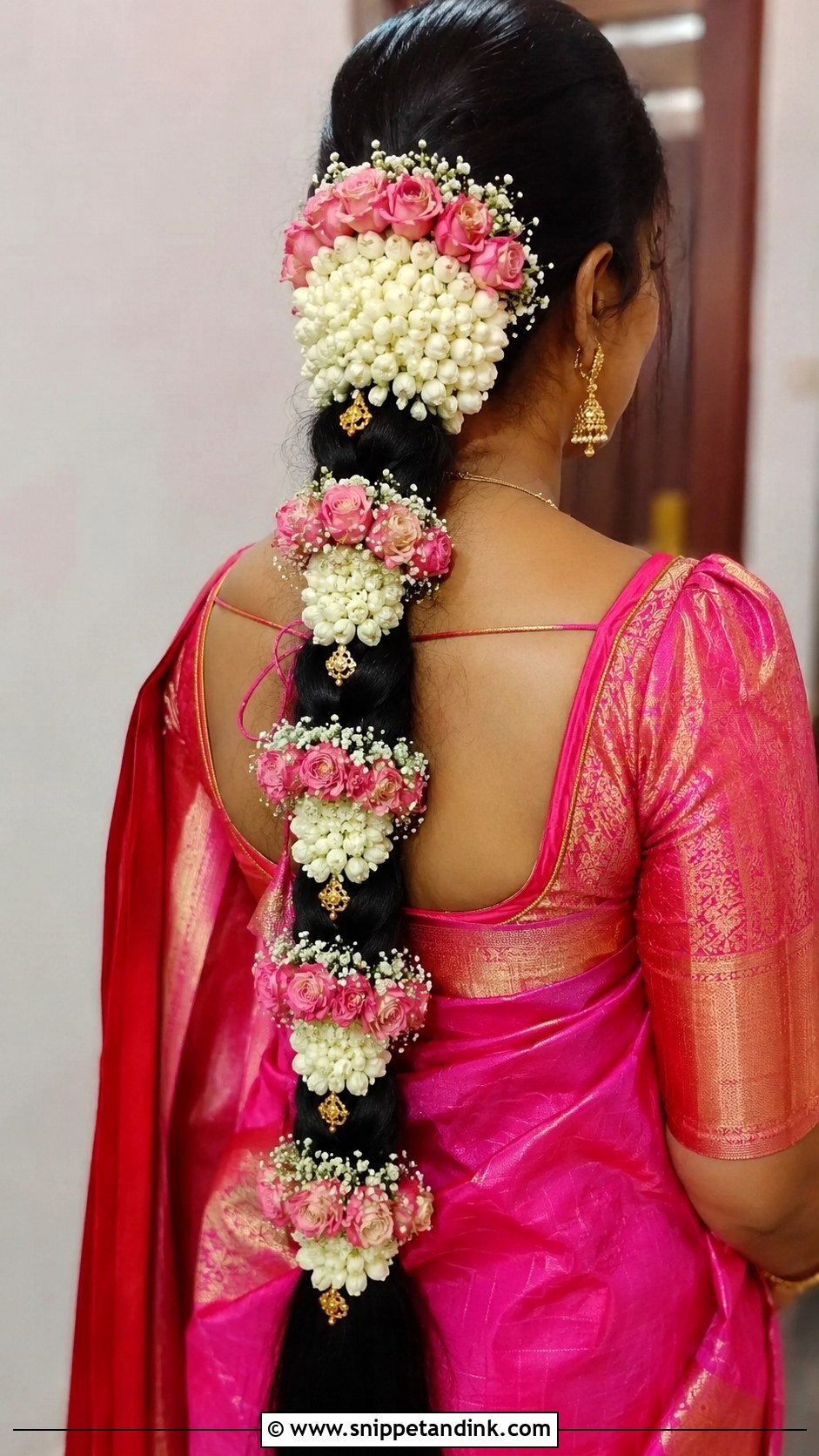
Think of this as the lighter cousin of the poola jada. Rather than one dense stitched panel, I tuck flowers into the plait section by section, so the hair itself still shows between them. That makes it easy to tune: mostly jasmine for a quieter look, or a mix of roses, baby’s breath, kanakambaram and marigold to echo the saree border. It wears well with heavy silks and lighter outfits alike. From behind it only looks tidy if each braid section is the same size, so I measure them by eye before I start adding any flowers.
5. Temple Jewelry Flower Jada
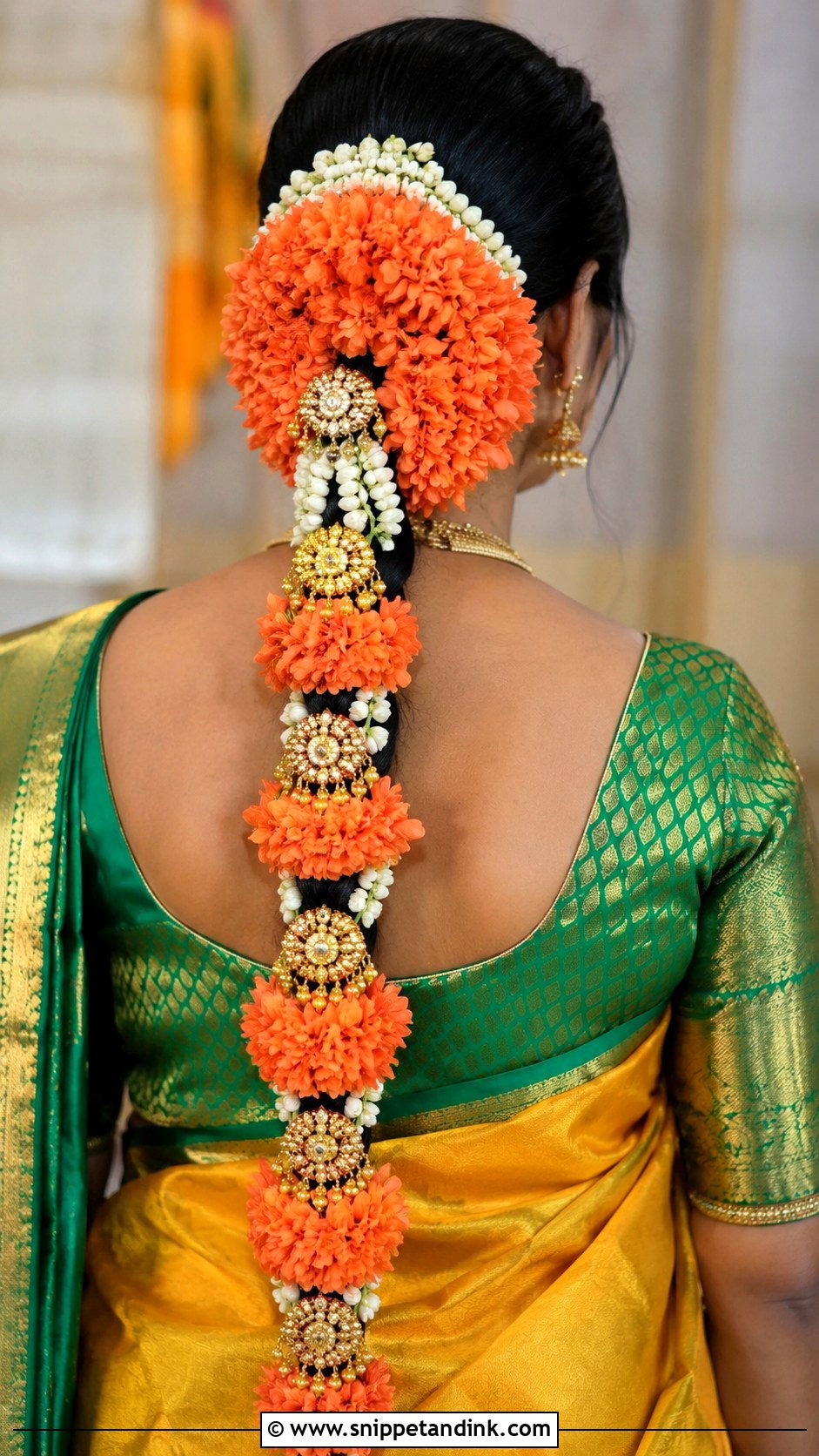
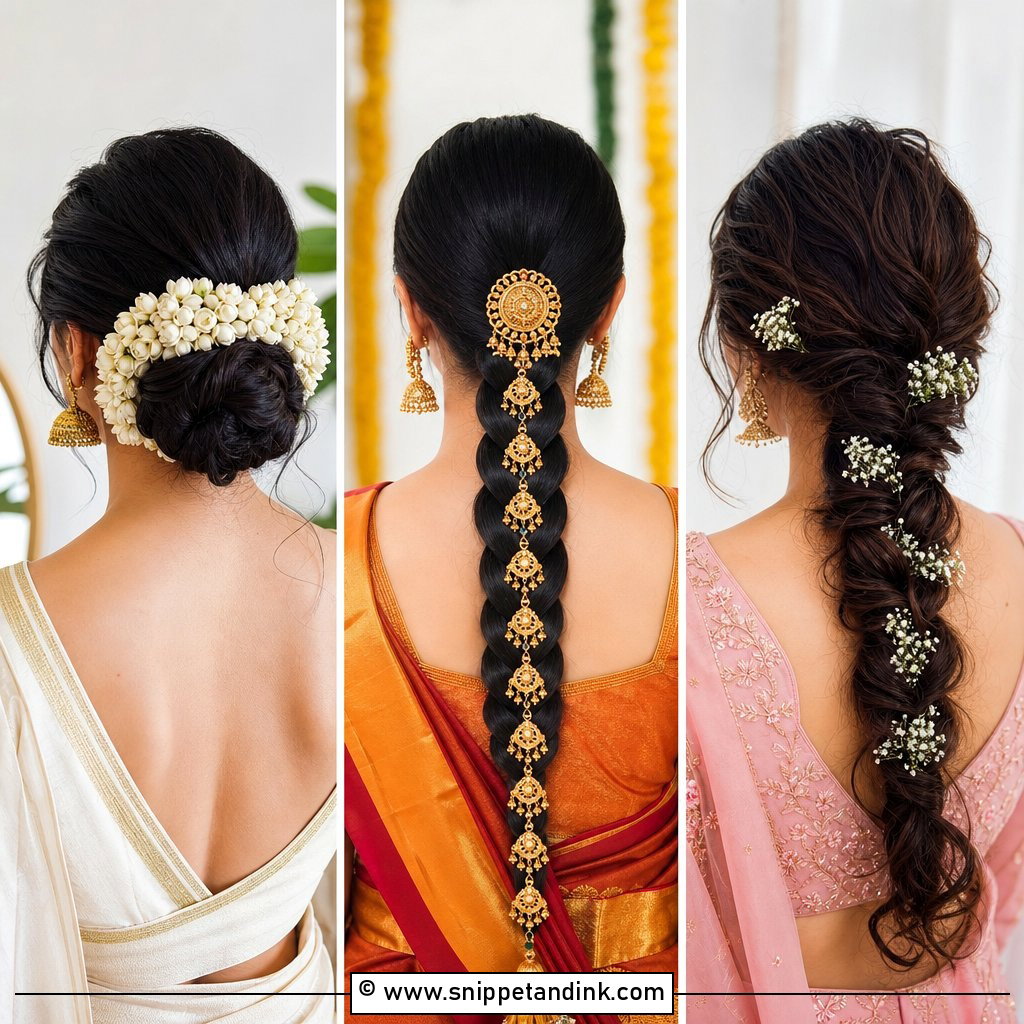
When a bride wants the full traditional effect, this is where we go. The braid carries gold jada billas, coin motifs and goddess-inspired ornaments, with jasmine filling the gaps so the gold reads clearly. A few red flowers near the braid end bring some festivity. It belongs with antique gold, kasu malas, vaddanam and a heavily woven silk saree. The honest drawback is weight: metal plus fresh flowers pulls hard on the scalp, so I build a firm base braid and spread the pins wide rather than stacking them in one place.
6. White Flower Bridal Bun
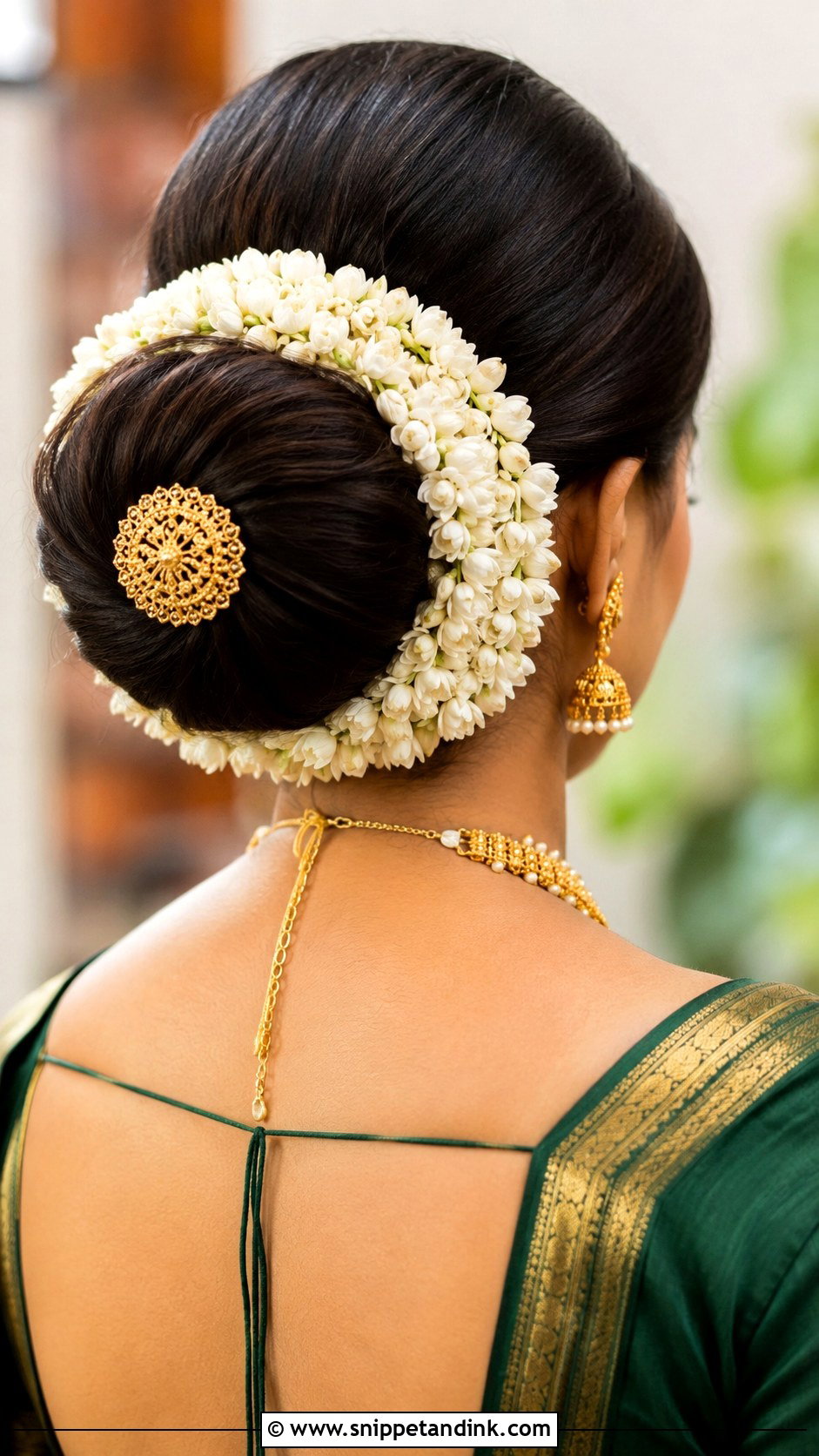
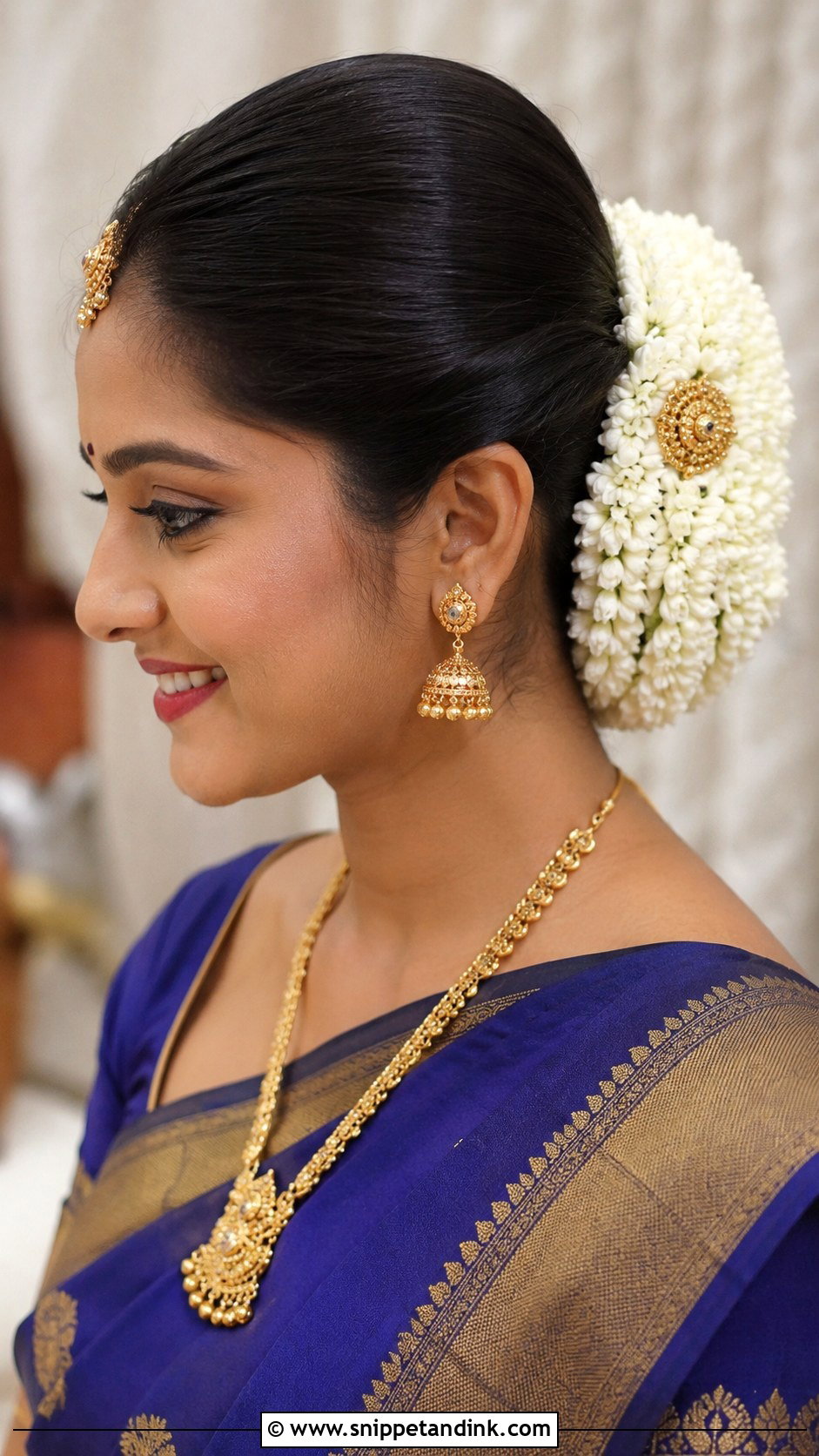
Wrapping a whole bun in jasmine, mogra or tuberose gives a bright white halo at the back of the head. I reach for it when the saree already has bold colour and heavy zari borders, because the white calms everything down instead of competing. A middle part with sleek front sections keeps it classic, and soft waves at the hairline make it gentler. Comfort is the quiet advantage: the weight sits close to the skull, so it does not tug during long rituals. Tuberose is the one to watch, as the scent is strong and some brides find it too much by evening.
7. Red Rose Bridal Bun
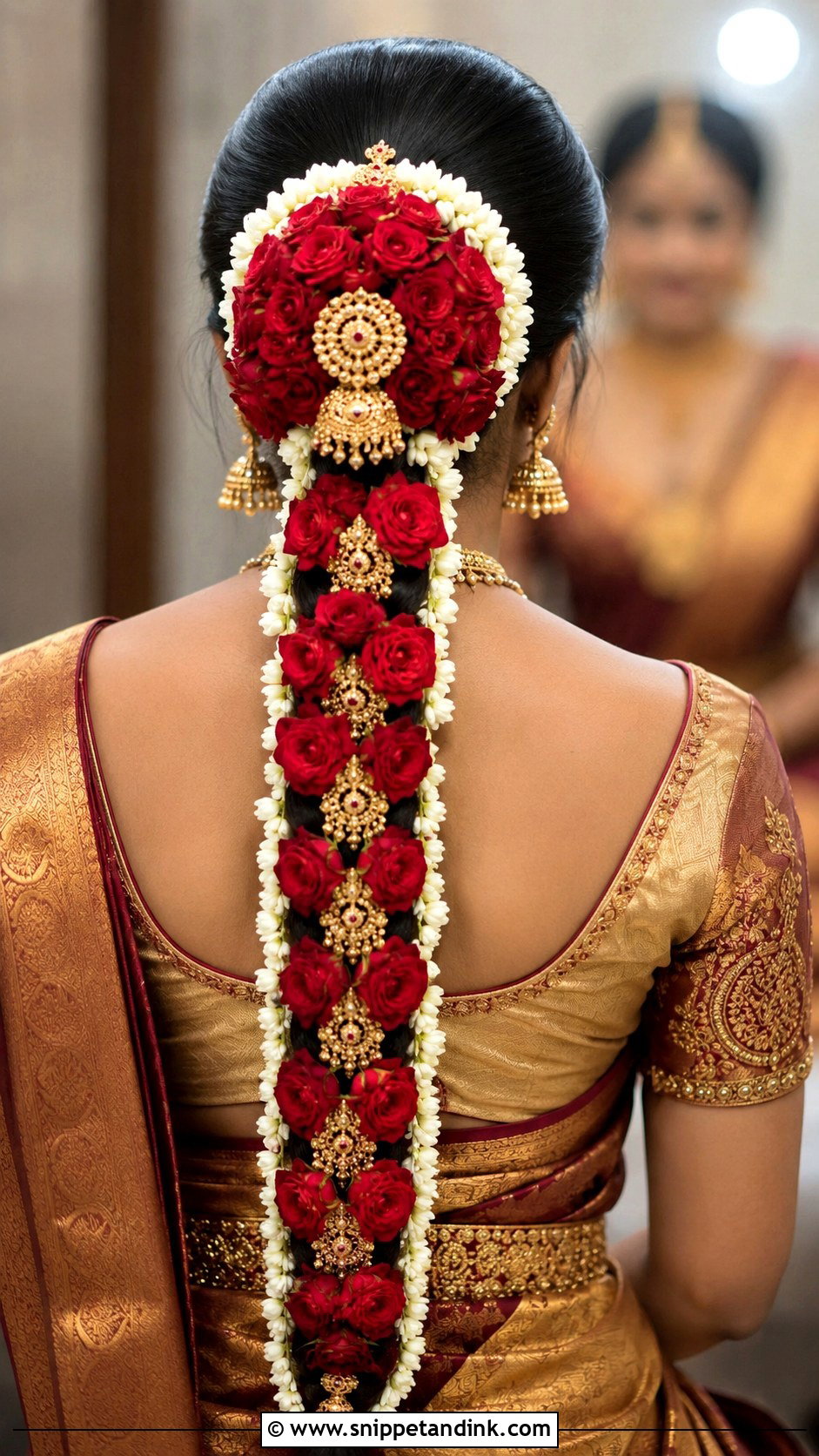
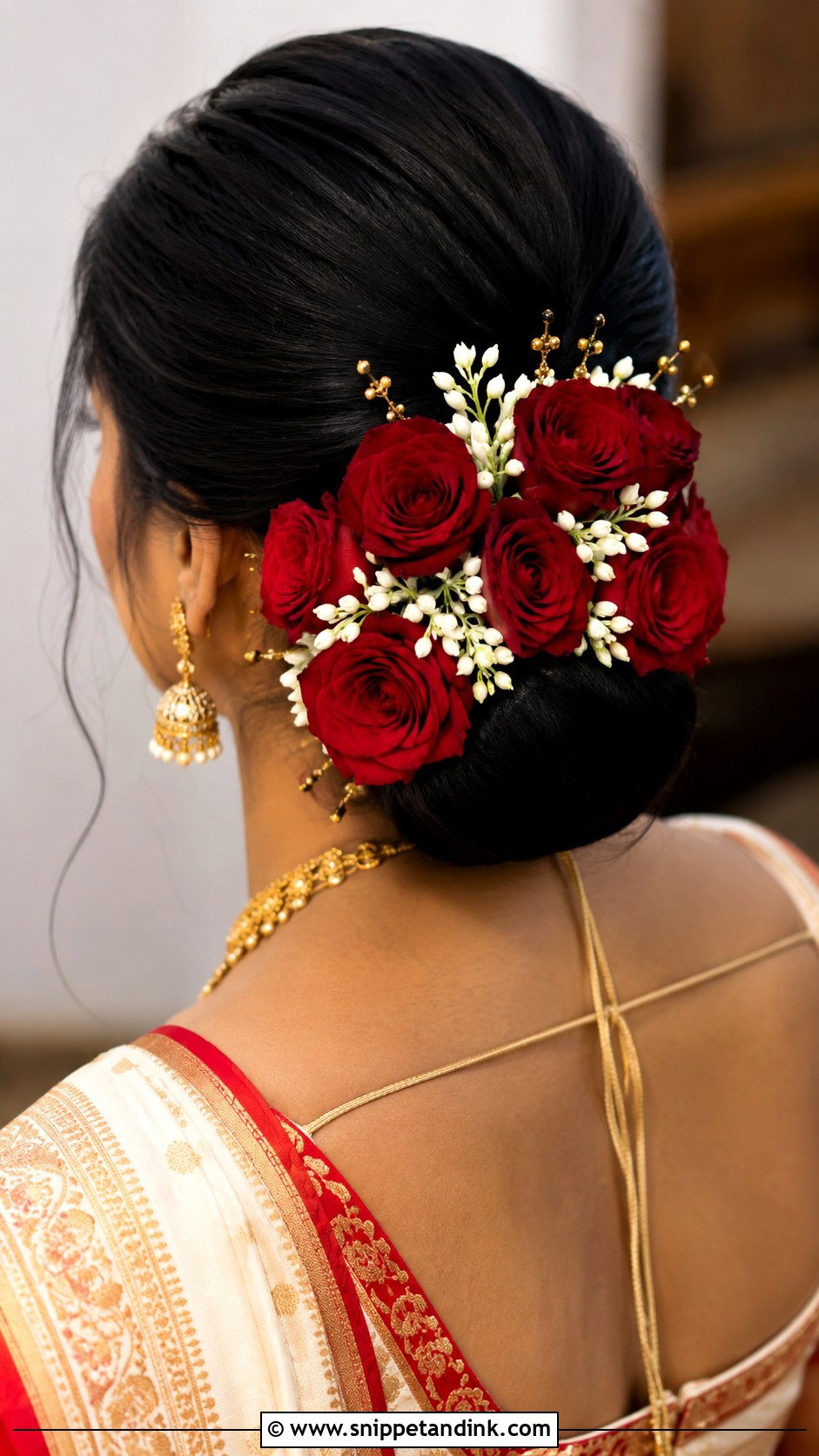
A rose bun suits brides in red, gold, green, cream or maroon who want the hair to carry as much colour as the silk. I arrange the roses around a low bun, tuck them along one side, or alternate them with jasmine for a red-and-white finish. The bun has to be firmly structured underneath, because roses on a soft bun make the whole thing look bulky and lopsided by the second hour. Gold pins or a little temple jewellery are enough for shine. Up close, the warmth of the red reflects onto the face in portraits.
8. Kanakambaram Flower Braid
Kanakambaram has no real fragrance, which surprises a lot of brides, but it holds its colour and shape for hours, far longer than jasmine. That bright orange next to white jasmine is a contrast families recognise instantly. I use it as a braid border, a small crown, a bun wrap or an accent on the jada, and it sits especially well with green, yellow, red and gold silks for morning ceremonies. Because the colour is so strong, I keep the placement symmetrical. A crooked line of orange is the first thing the eye catches in a back shot.
9. Marigold Bridal Braid
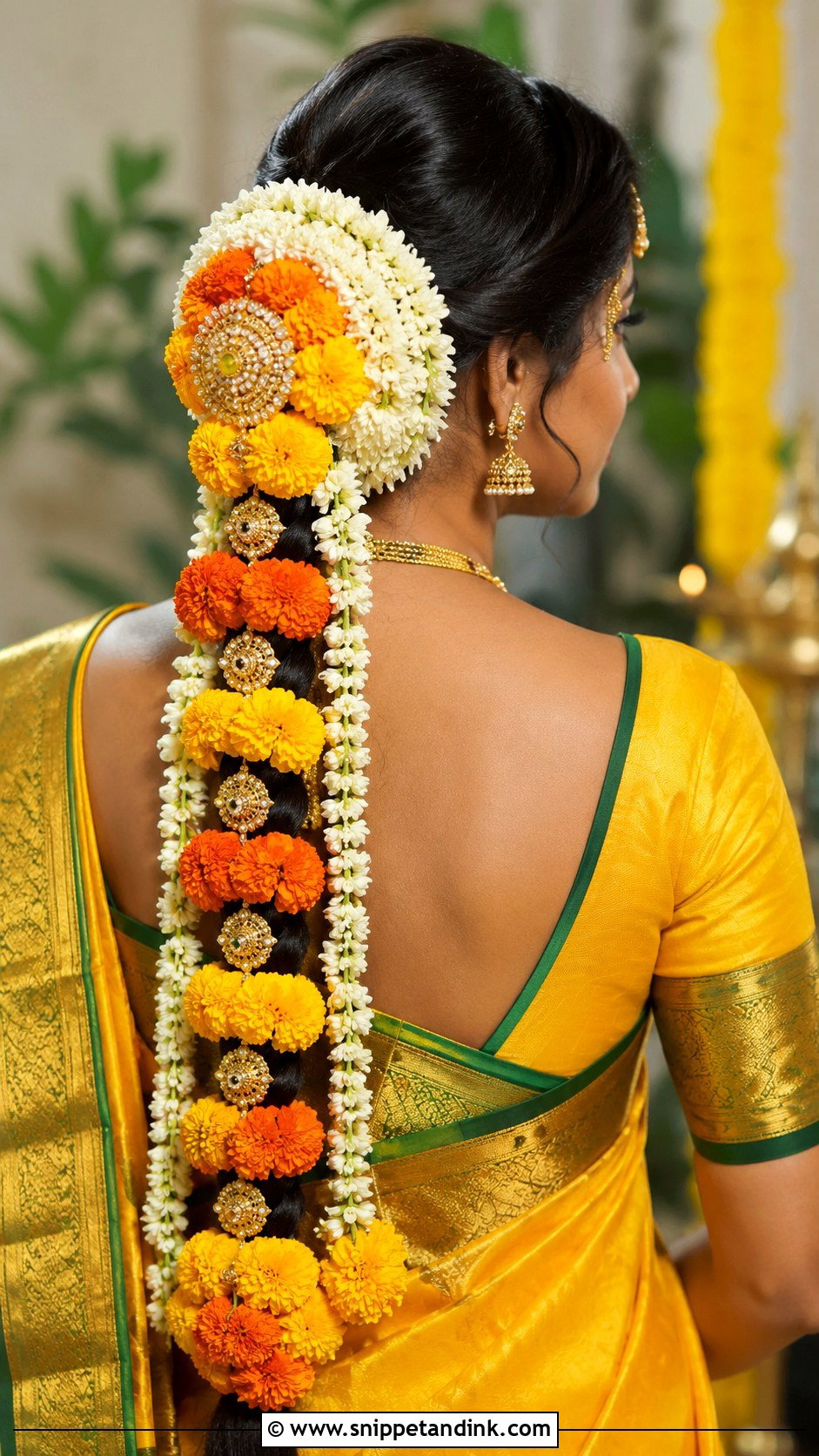
Marigolds are sturdy, cheerful and forgiving in heat, which is why I like them for haldi, nalangu, mehendi and daytime rituals. Woven with jasmine strings they give a textured, ceremonial braid. Their rounded heads are bulky, though, so the braid underneath needs to be thick, or the flowers end up looking bigger than the hair. I keep the front simple with a centre part, a maang tikka and smooth sides. Turmeric yellow, green, coral and gold outfits all pair naturally with them.
10. Orchid Poola Jada
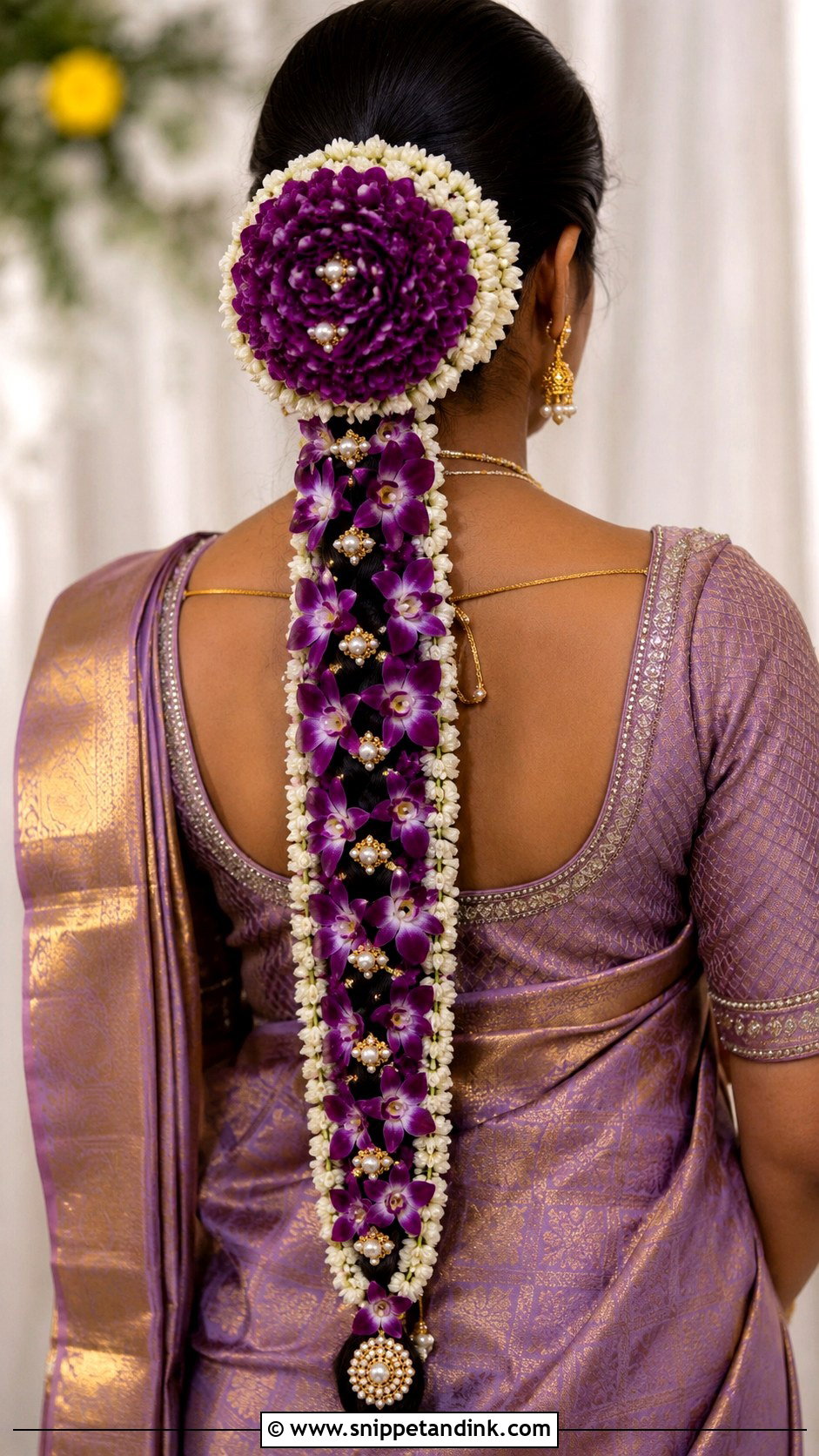
An orchid poola jada is the modern version I suggest to reception brides who still want the shape of a jada. Orchids come in purple, white, pink and peach, and they hold up out of water much better than roses, which helps on a long evening. I set them along the braid with jasmine borders or group them as statement clusters near the bun and braid end. Their smooth petals need very little extra jewellery. Keep the braid clean and structured underneath, because orchids show every bump in the hair beneath them.
11. Baby Breath Bridal Bun
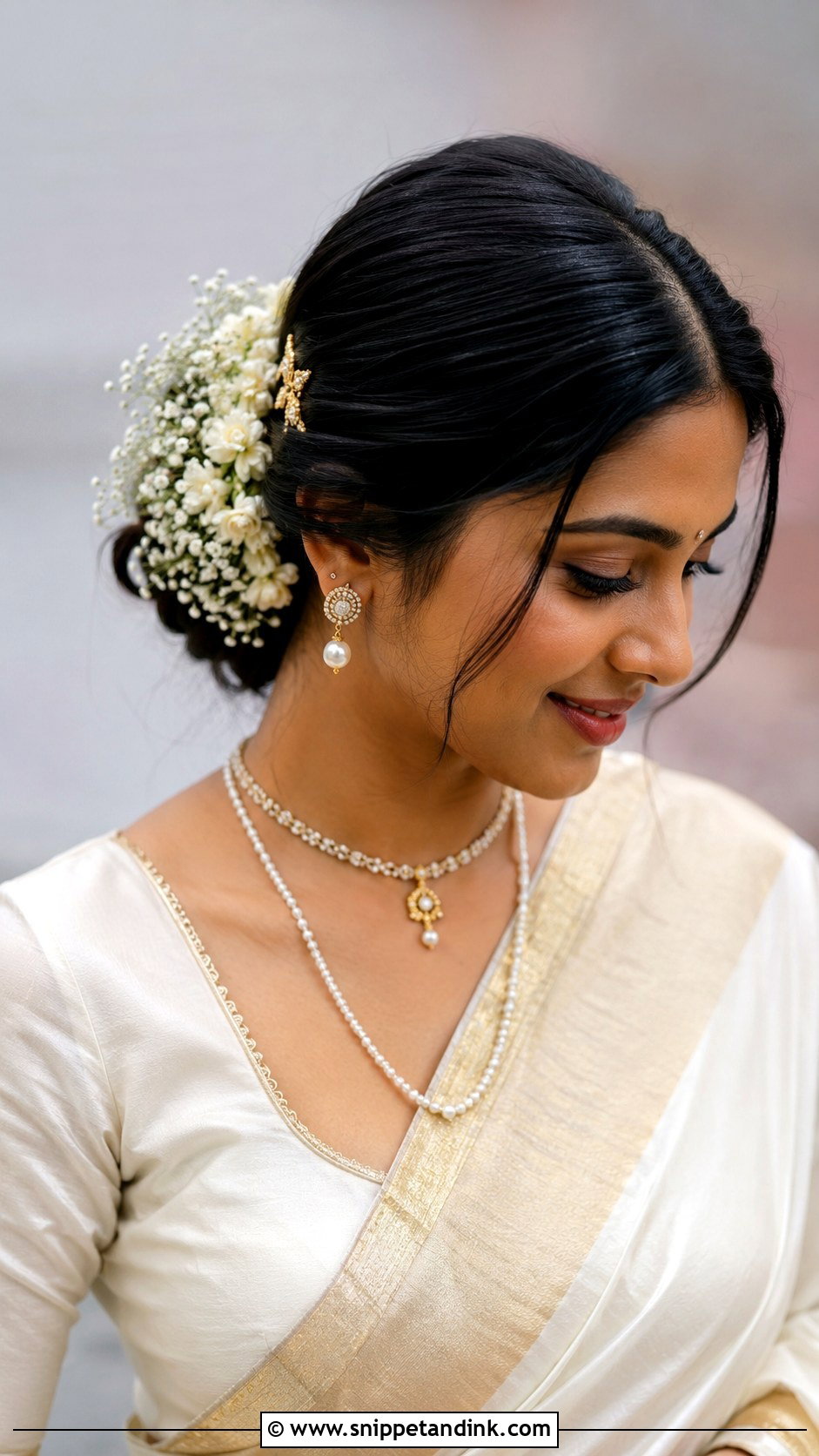
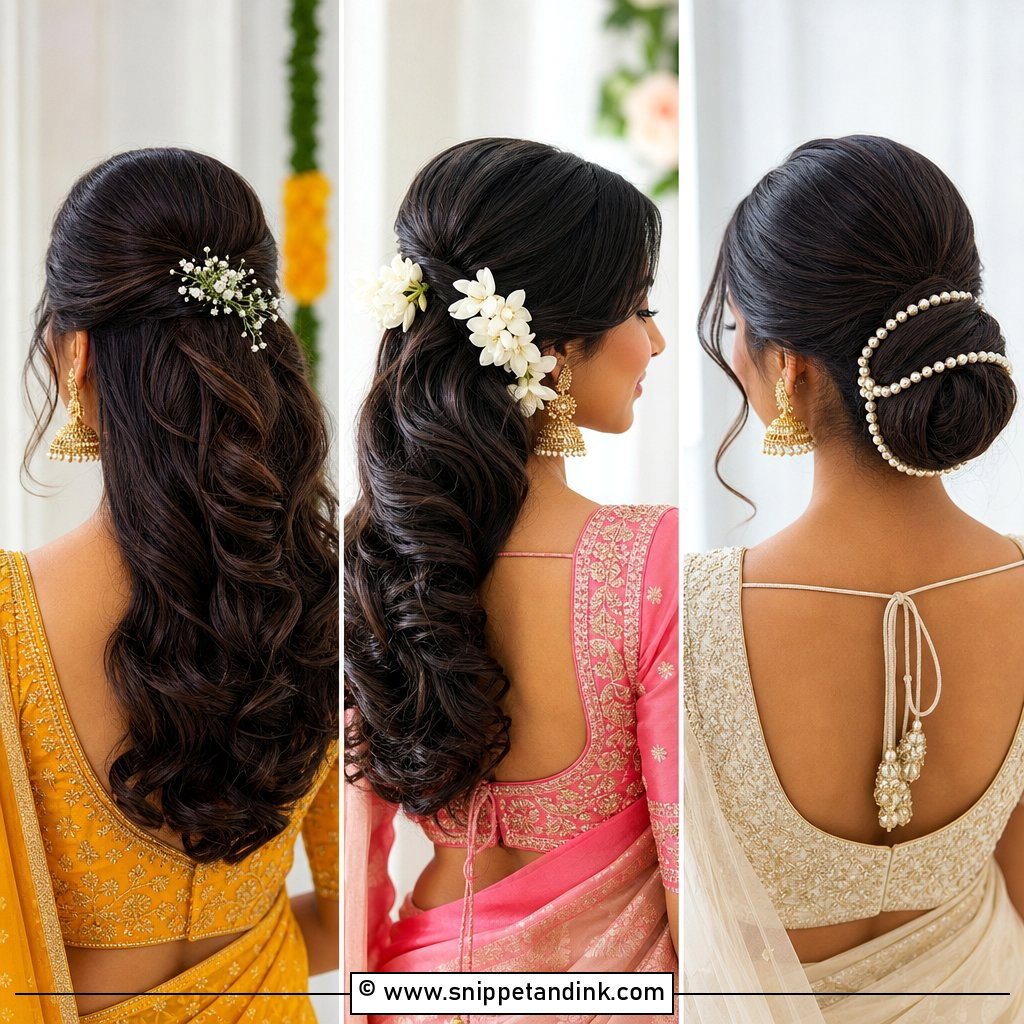
A baby breath bridal bun is the lightest option on this list. I tuck the tiny white sprigs around a bun, mix them with jasmine, or scatter small clusters over a braided updo. It weighs far less than a heavy gajra, so it suits receptions, engagements and smaller weddings where the bride wants to move freely. Baby’s breath also dries gracefully instead of browning, a real plus for an evening event. To keep it recognisably South Indian, I add a jasmine garland or a small gold bun pin with pastel sarees, ivory silk and pearls.
12. Floral Bun With Braid
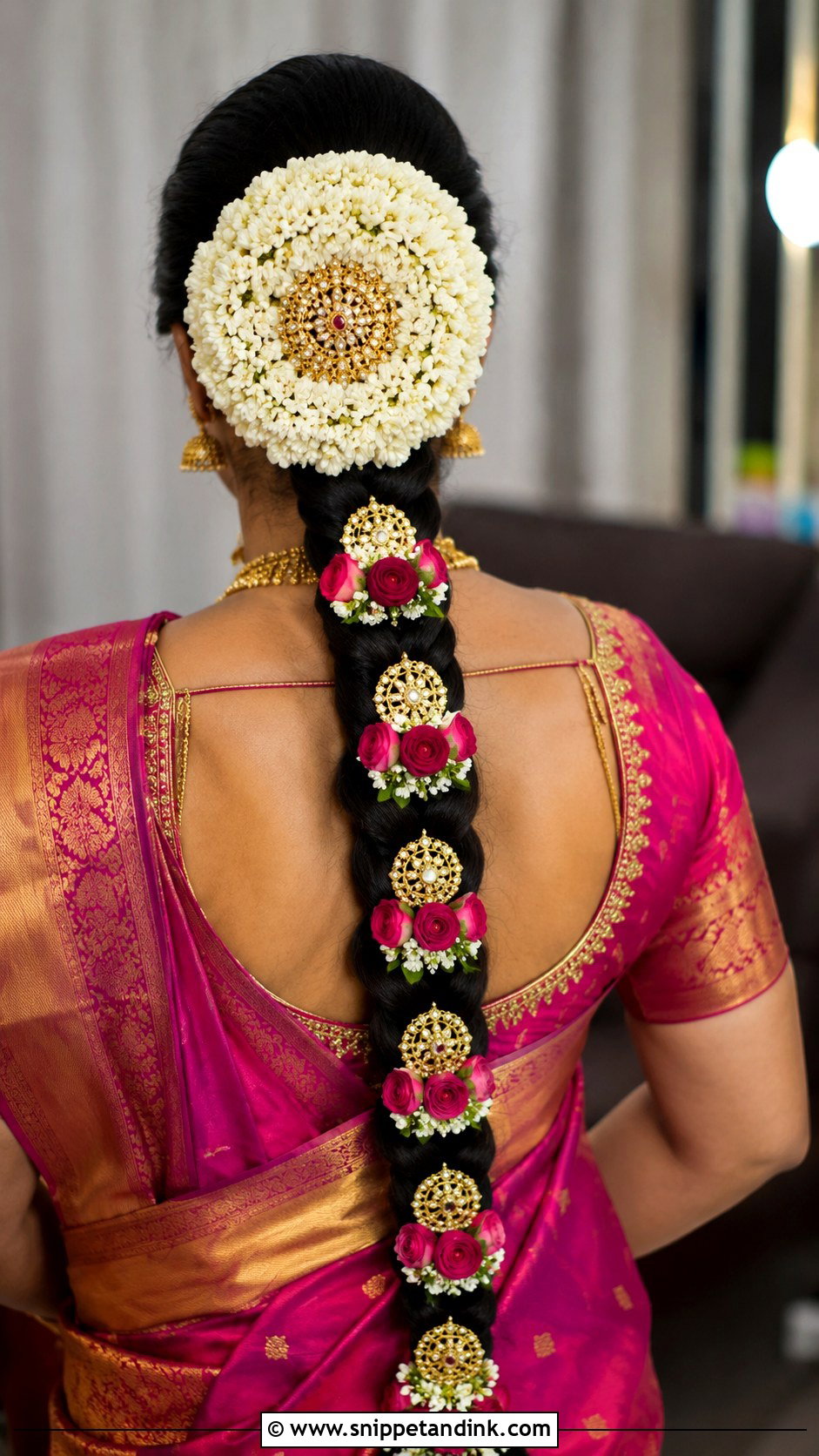
Combining a decorated bun with a flower-accented braid gives volume at the back without giving up the braid tradition. I wrap the bun in jasmine or roses at the crown or nape, then let a braid fall below it with smaller floral sections or gold jada pieces. It holds its own against heavy sarees. This style needs the most hair of anything here, so brides with fine or shoulder-length hair should plan on extensions for both parts. In front, a sleek middle part and traditional jewellery keep it balanced, and the back shots show off all that detail.
13. Side Braid With Flowers
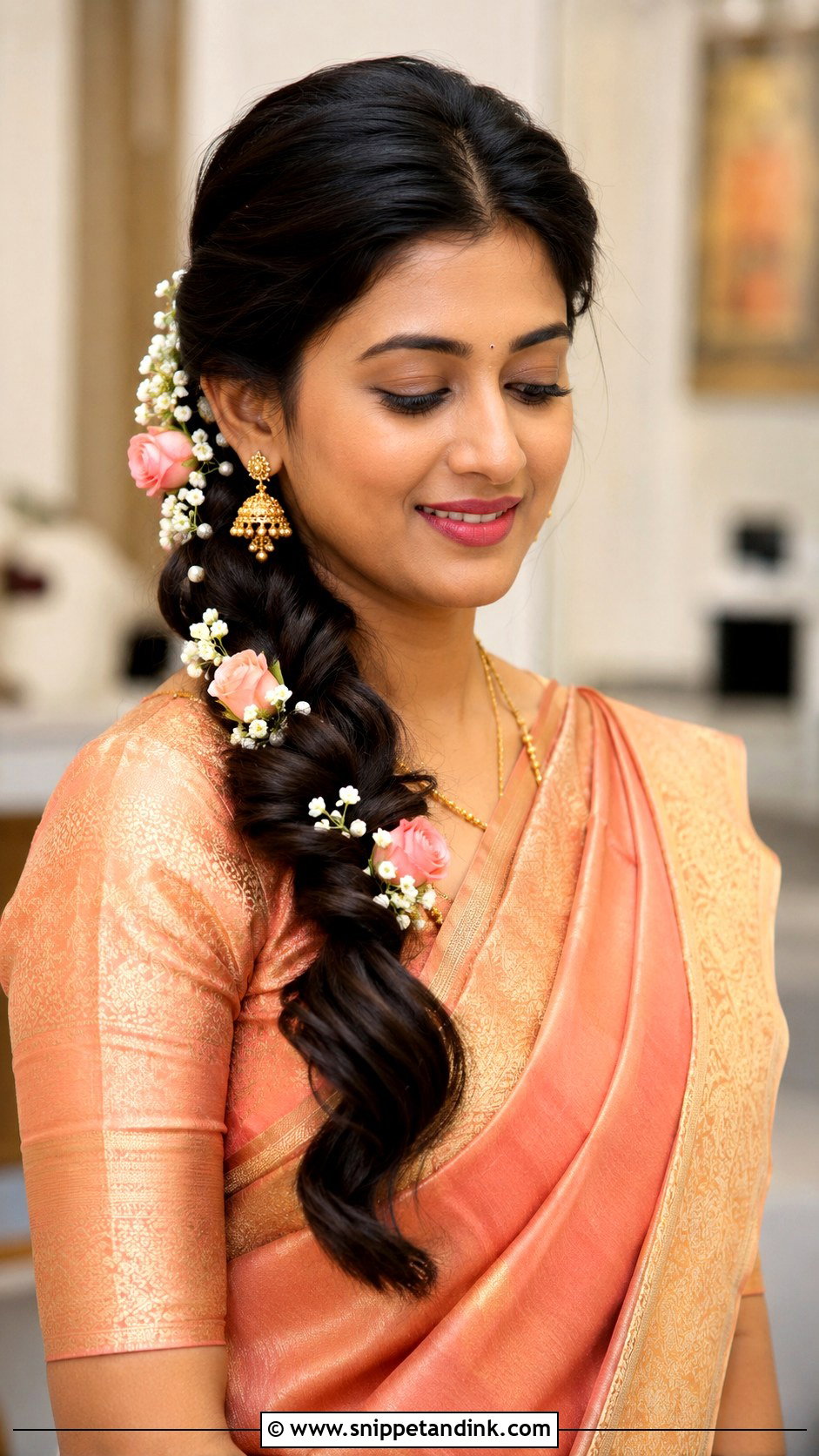
Bringing the braid over one shoulder means the flowers are actually seen in front-facing portraits and during seated rituals, which a back braid can never offer. I dress it with jasmine, roses, pearls or small floral pins. Brides who dislike weight at the back of the head tend to love this. Be aware that a front braid rubs against the saree pallu and blouse every time you move, so I stitch the flowers on more tightly than I would for a back braid. Polished or slightly textured both work; keep the hairline neat either way.
14. Half Up Bridal Hair With Flowers
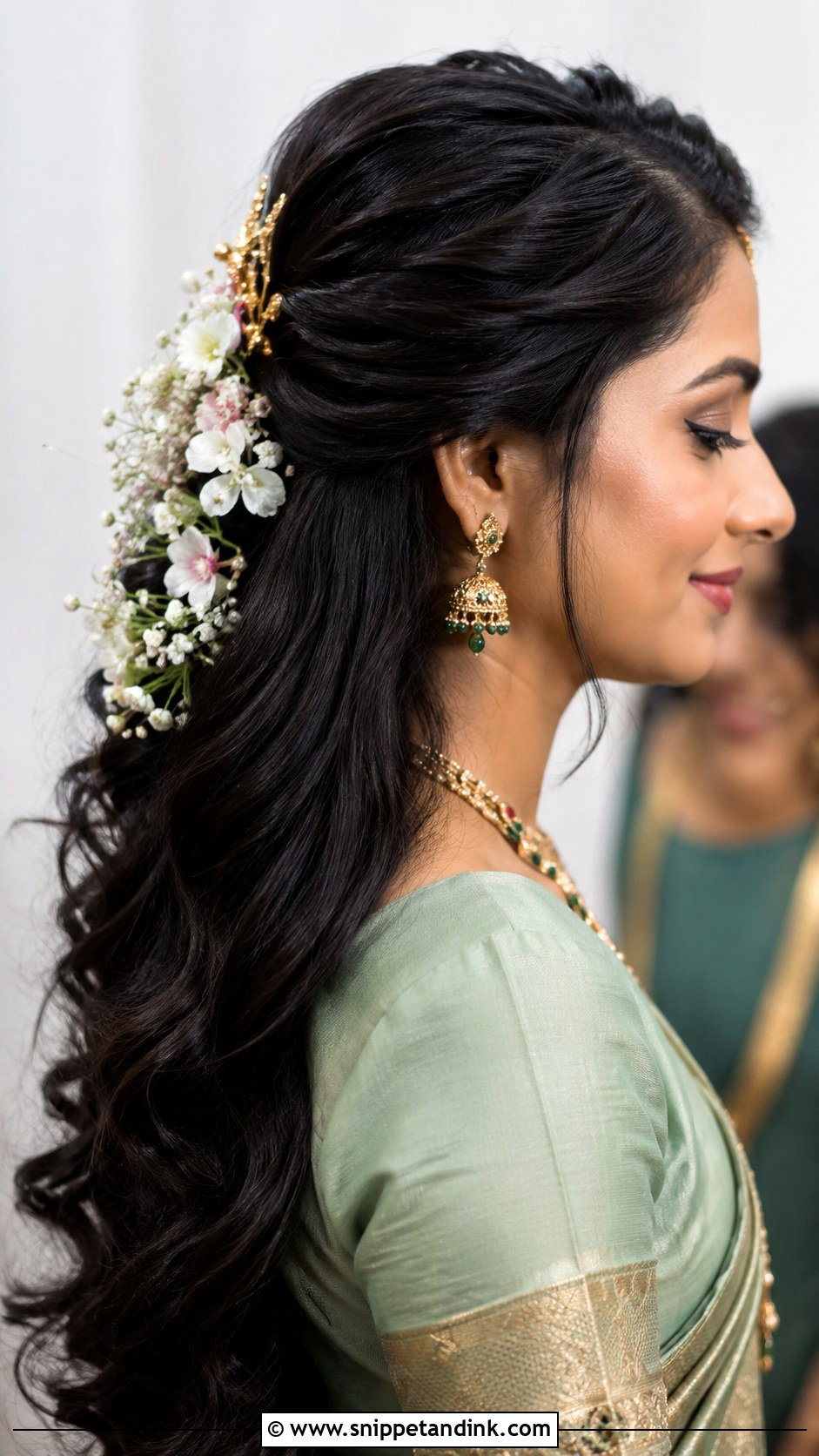
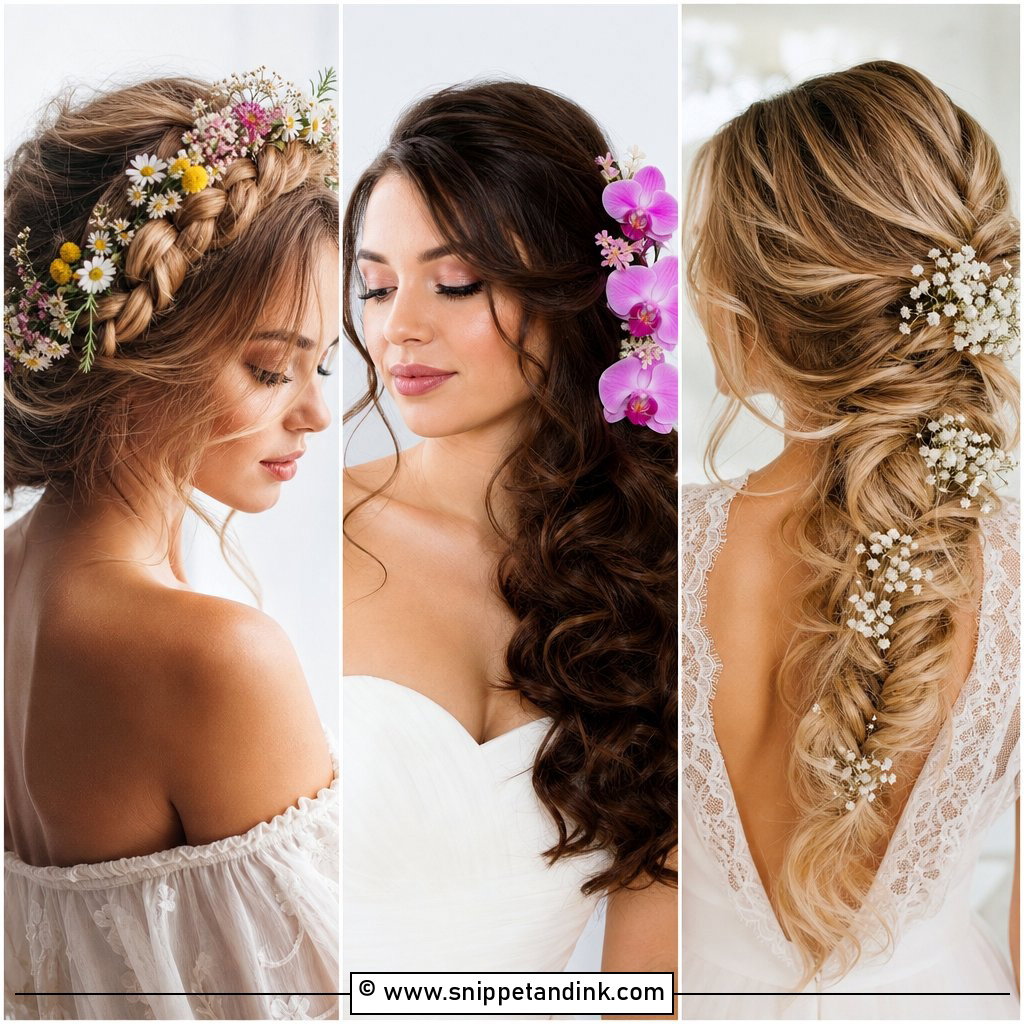
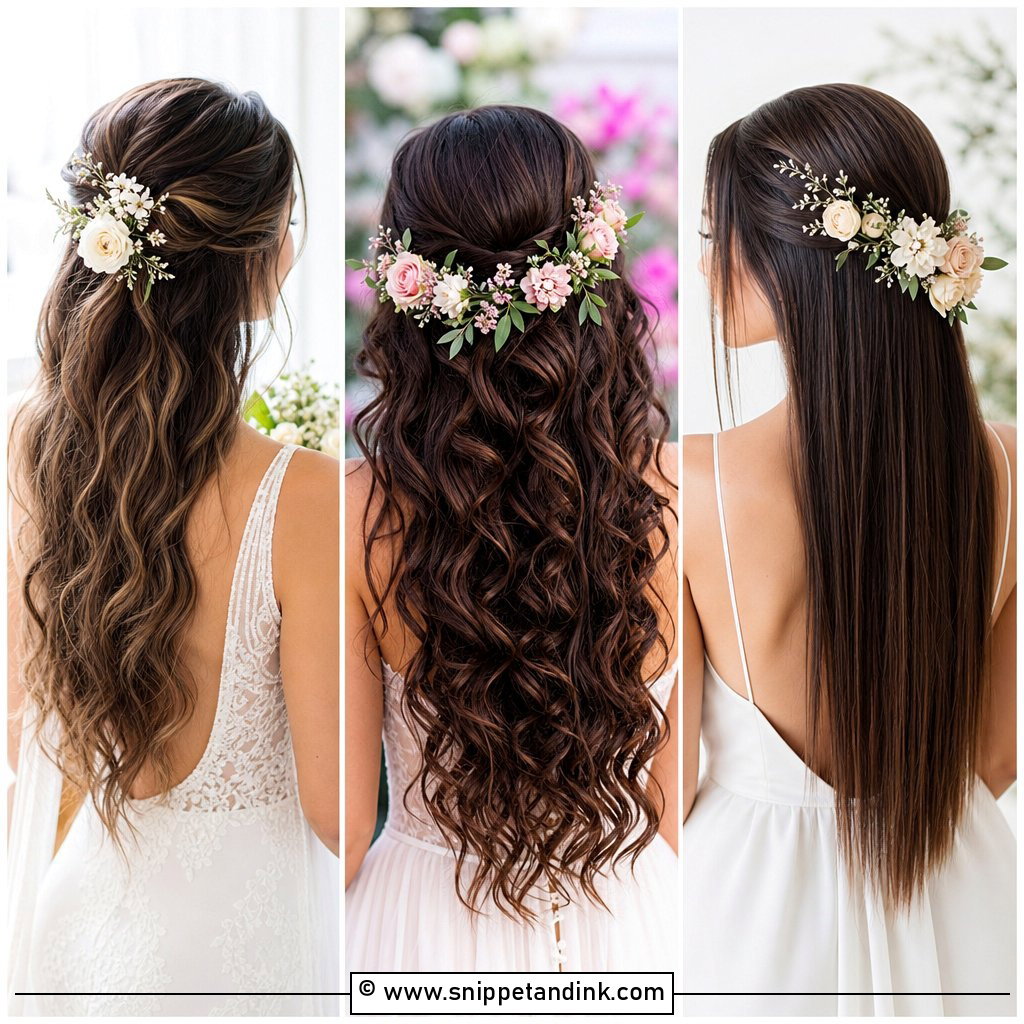
For receptions, engagements and pre-wedding events, a half-up style lets the bride wear flowers without the commitment of a full updo. I pin the top section back, then leave the rest in soft waves or a loose braid, adding jasmine strings, small roses, orchids or baby’s breath around the pinned part. Space the flowers evenly and keep them light; loaded too heavily, the pinned section slips down by evening. Lighter sarees, lehengas and modern jewellery suit it. A small gajra curve or a gold hair accessory brings it back to South Indian tradition.
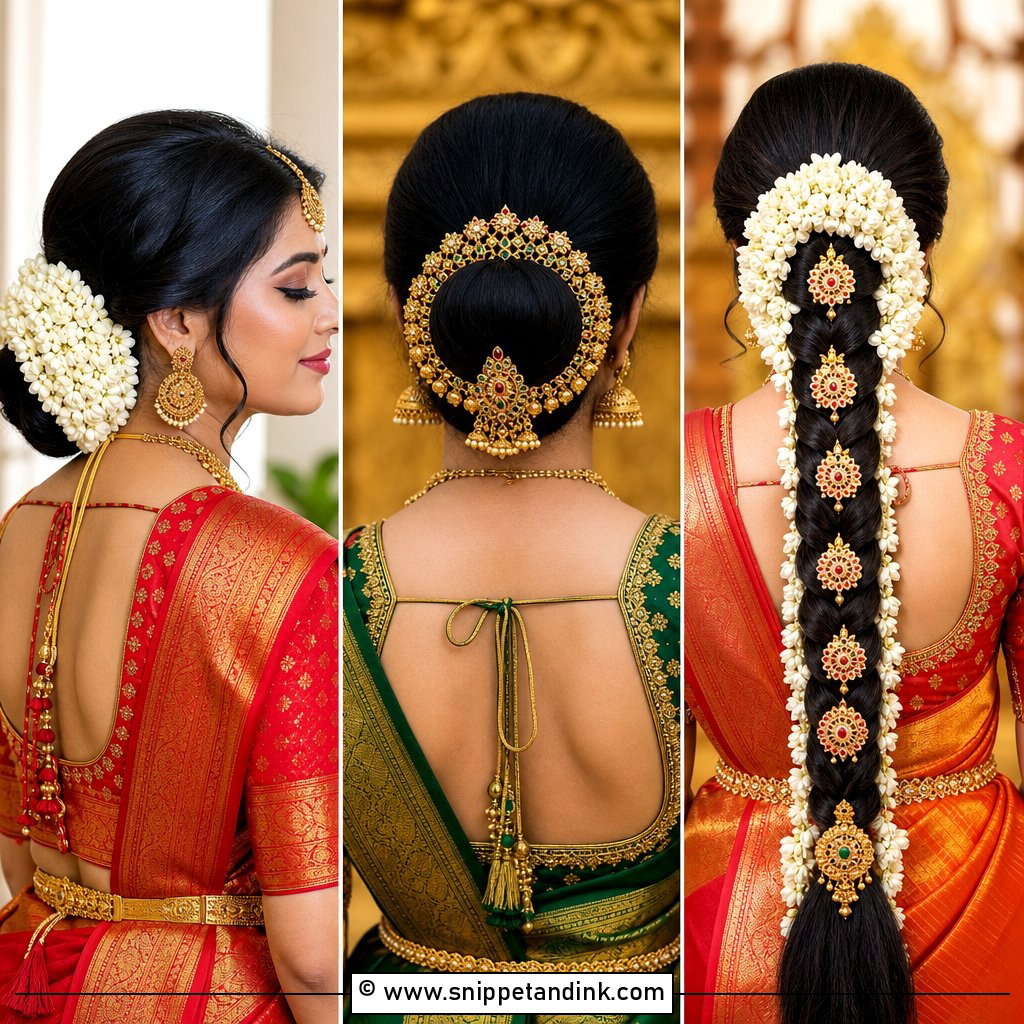
15. Minimal Jasmine Bridal Hair
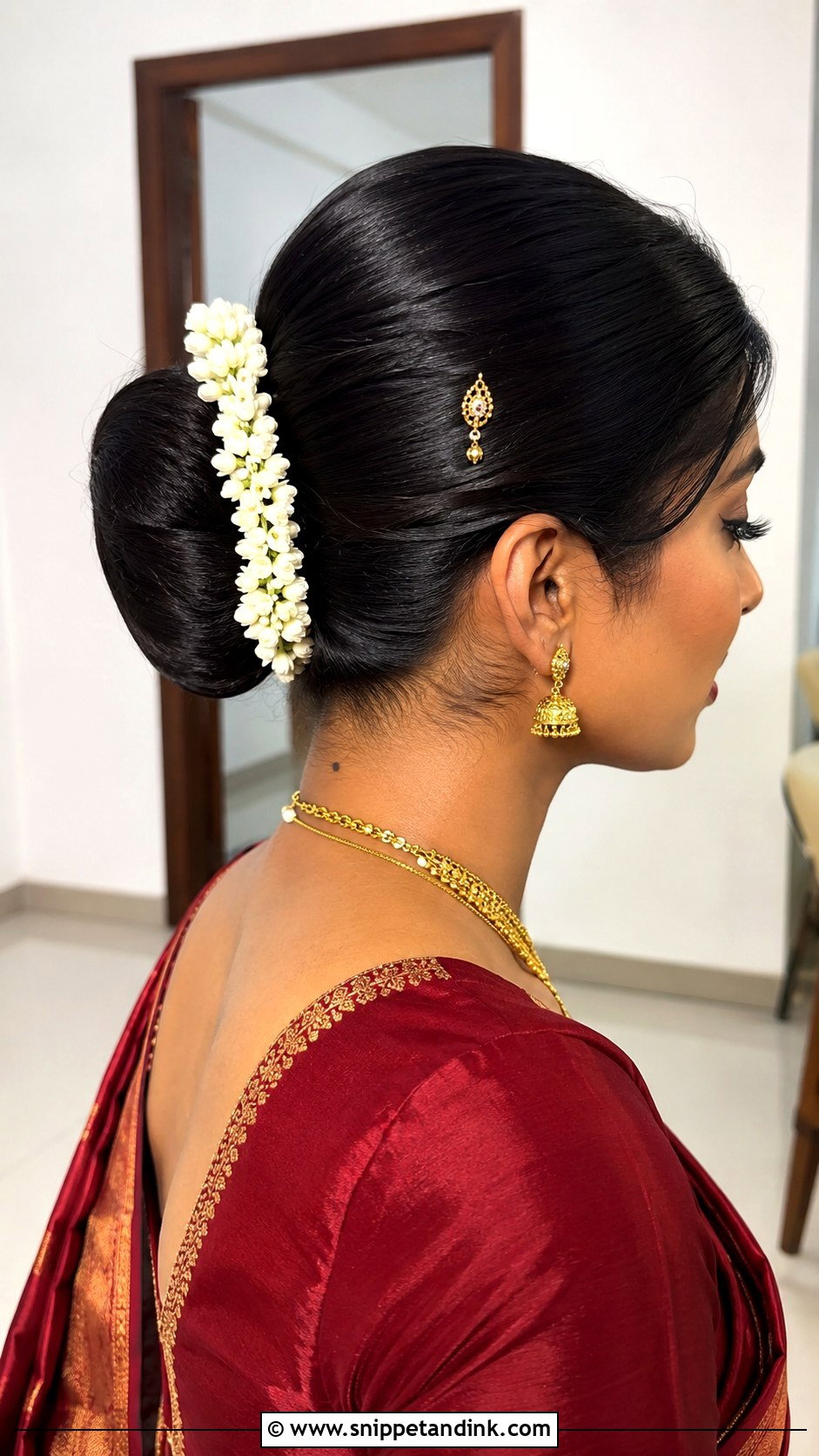
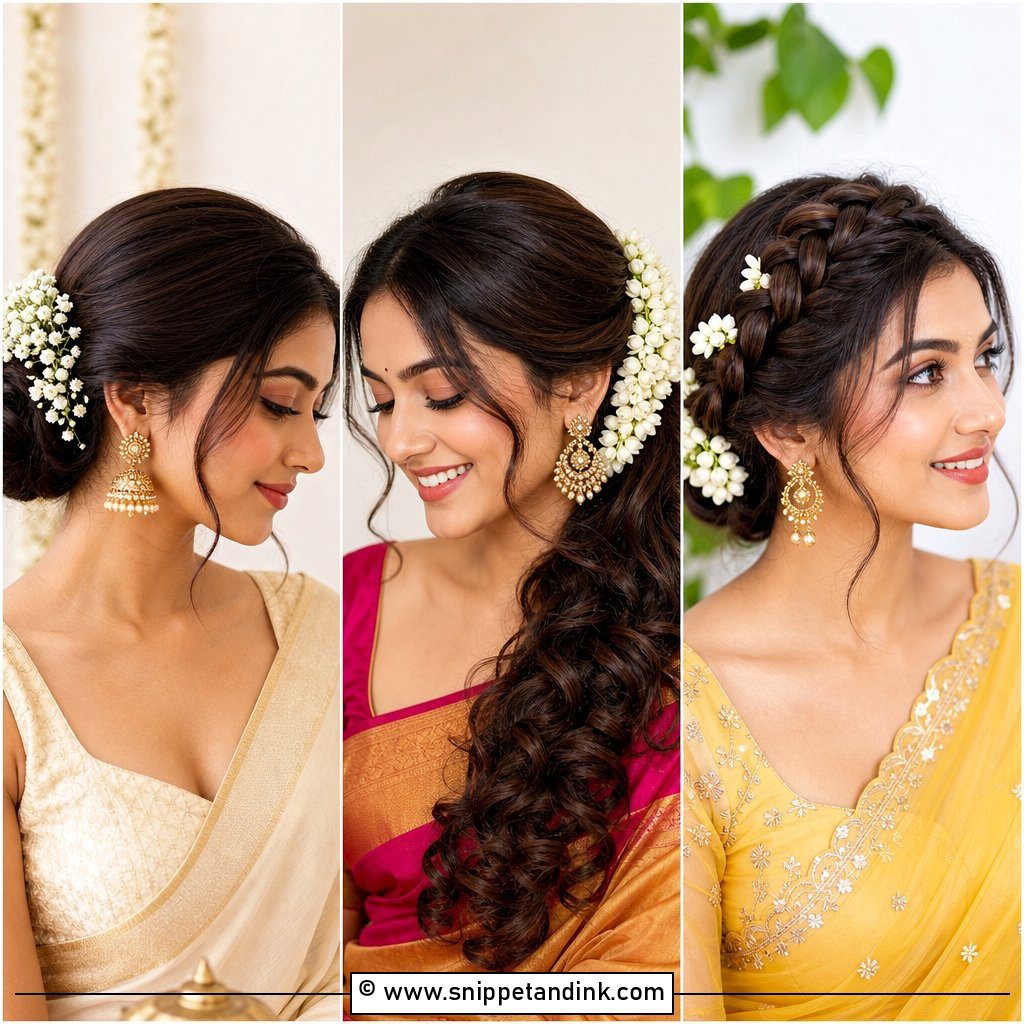
Not every bride wants a full jada, and I never push one on a bride who doesn’t. Here jasmine goes on in slim strands, small clusters or one neat garland across a sleek bun, a simple braid or a half-up style. It is the practical answer for hot weather and long ceremonies, and it lets the saree, jewellery and makeup take the attention. Ask your flower vendor for tightly packed strings made from unopened buds. Loose, already-open flowers look scrappy within a couple of hours and lose their scent early.
Carrying a Heavy Jada Through Rituals Without a Headache
A full poola jada with gold billas can feel light for the first twenty minutes and then start pulling at the crown. The fix is in the foundation. I braid the real hair firmly, attach the extension low at the nape, and secure the jada base with large U-pins crossed in two directions rather than a cluster of bobby pins in one spot. Weight spread across the scalp is weight you stop noticing.
Think about the rituals too. You will sit on the floor, bend for blessings and walk around the fire, and a long jada drags behind you or gets caught under you. I usually leave the last section of the braid lighter so it can be lifted aside when the bride sits. Crushed rose petals can also mark pale silk, so keep red flowers away from where the braid rests on an ivory or pastel saree.
Swapping Flowers Between Muhurtham and Reception
Jasmine starts to brown at the edges after several hours on warm hair, especially wherever hands have touched it. If the reception follows the same day, I would rather change the flowers than fight them. Taking down a jada and rebuilding a bun with fresh strings, orchids or baby’s breath is quicker than most brides expect, and it gives you a different look for the evening photos.
Keep the evening flowers wrapped and cool until the change, and plan a short break in the schedule for it. A light mist of water on the strings during the day helps the scent, but stop well before photos, since wet petals look darker on camera and can drip onto the blouse.
Matching the Bloom to the Ceremony Clock
Every flower here has its own personality: jasmine for fragrance and tradition, roses for colour, kanakambaram for staying power, orchids and baby’s breath for a lighter evening look. What I’d weigh first is when each ceremony happens and how long you’ll wear the flowers, then your saree colour, jewellery and hair length. Fresh blooms carry the scent and the meaning, and a few lightweight pieces can carry you through a long reception. Save the styles you like, show them to your hairstylist and your flower vendor together, and plan the flowers with the same care as your saree.
You'll Like These Ideas:


Leave a Reply