
Dense hair is a dream for wedding updos in one sense: you never need padding or a donut to get a full shape. The catch is weight. A head of thick hair pinned into a single tight knot will pull at the scalp within a couple of hours, and gravity starts working on the pins long before the first dance. Every style below handles that problem in its own way, usually by splitting the hair into sections, braiding or twisting some of it flat, and building the shape from several smaller anchors instead of one. I’ve noted where each one sits, what it asks of your hair, and where it tends to fail.
What Dense Hair Needs Before a Single Pin Goes In
Most updos on thick hair fail because the prep was skipped, not because the style was wrong. Hair that is still slightly damp at the root will drop everything pinned to it, and dense hair can stay damp underneath long after the surface feels dry. I blow-dry the whole head fully, section by section, before a curling iron comes near it.
- Wash the day before, not the morning of. Day-old hair has a little grip, while freshly washed thick hair is slippery and heavy.
- Skip rich conditioner on the lengths that wash. It adds weight and makes pins slide.
- A texture spray or dry shampoo worked into the roots gives the pins something to bite into.
- Ask your stylist which pins they use. Long, sturdy bobby pins and U-pins hold dense hair; short fine pins bend open.
I also build a small anchor first, usually a tight braid or a tiny ponytail hidden under the style, so the heavier sections have a fixed point to pin into. It’s invisible in the finished look and it’s the difference between an updo that holds and one that slowly slides.
1. Low Bun Wedding Updo For Thick Hair
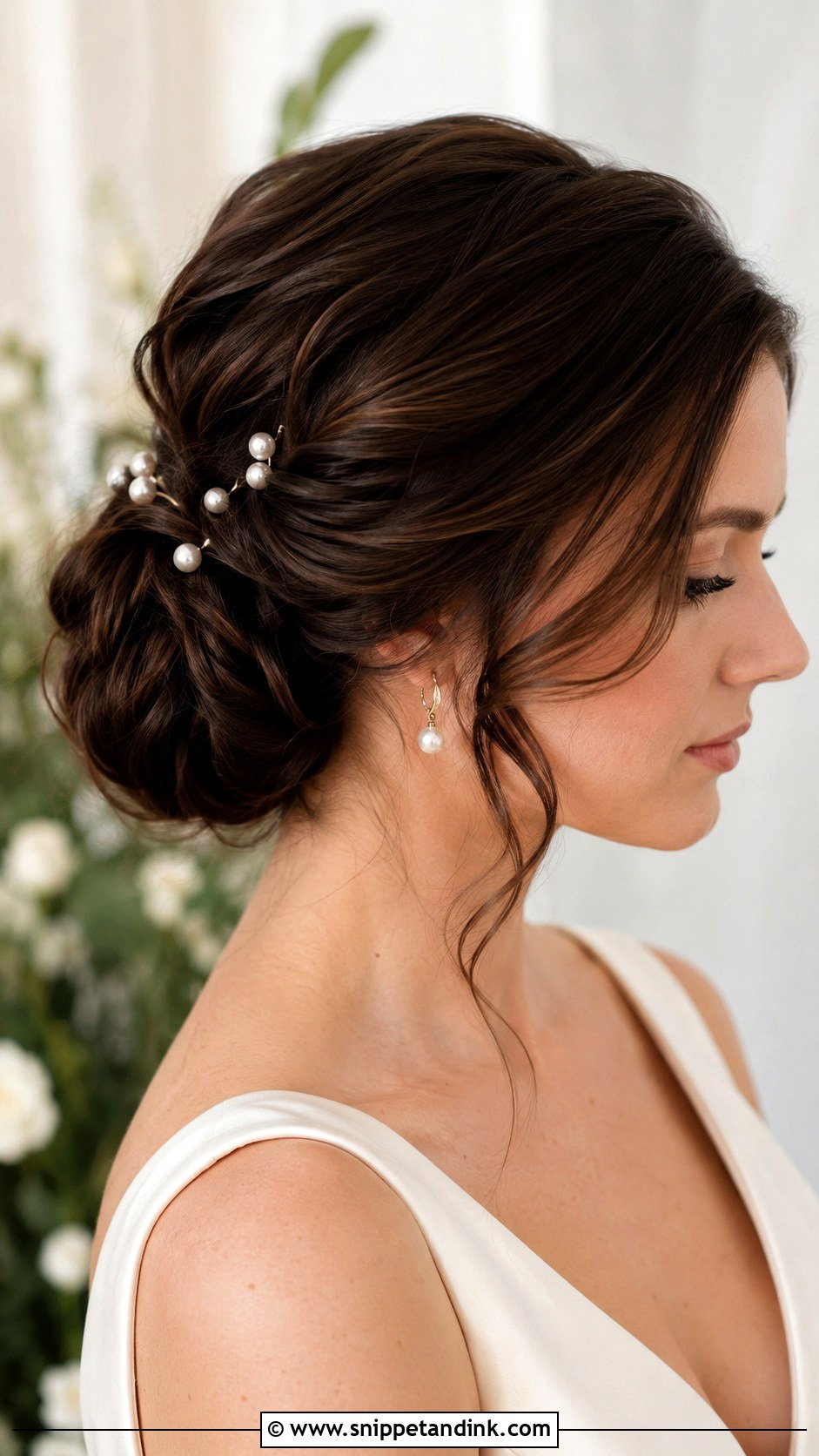
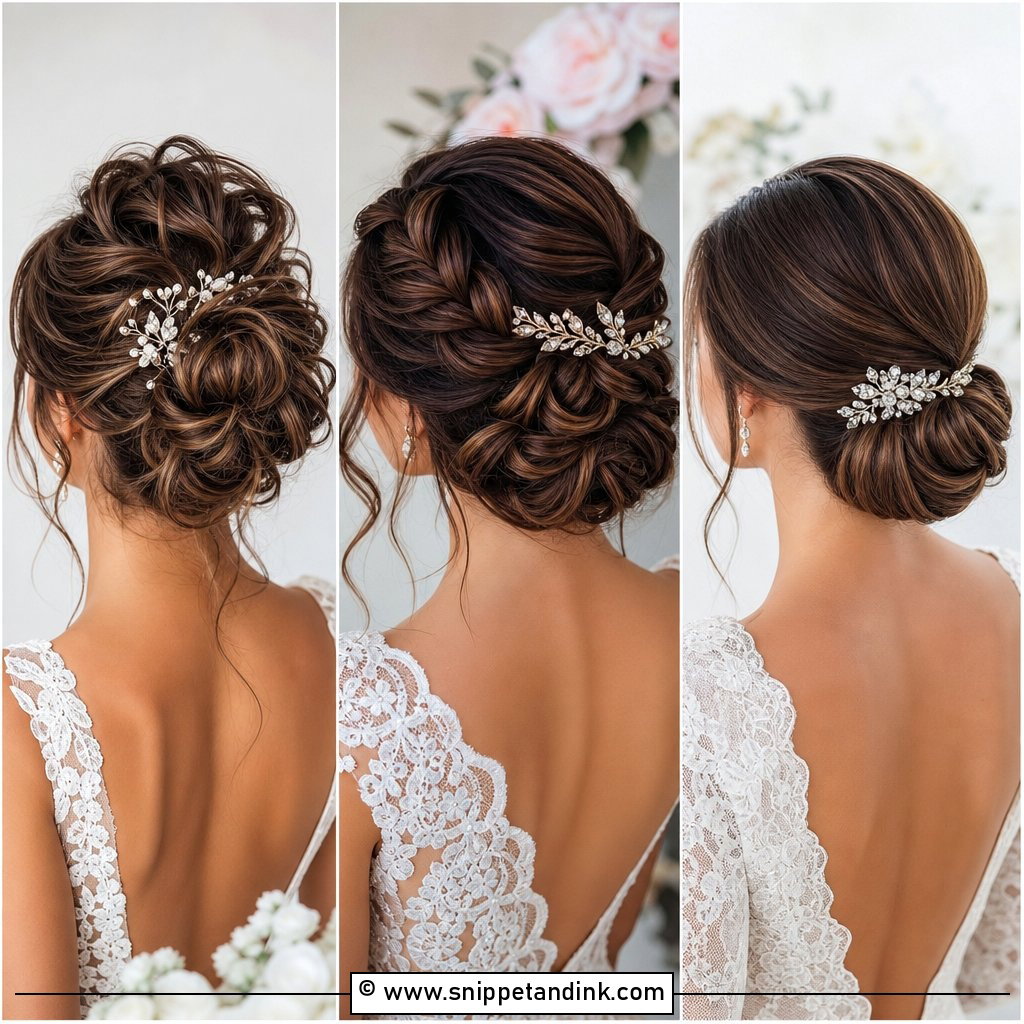
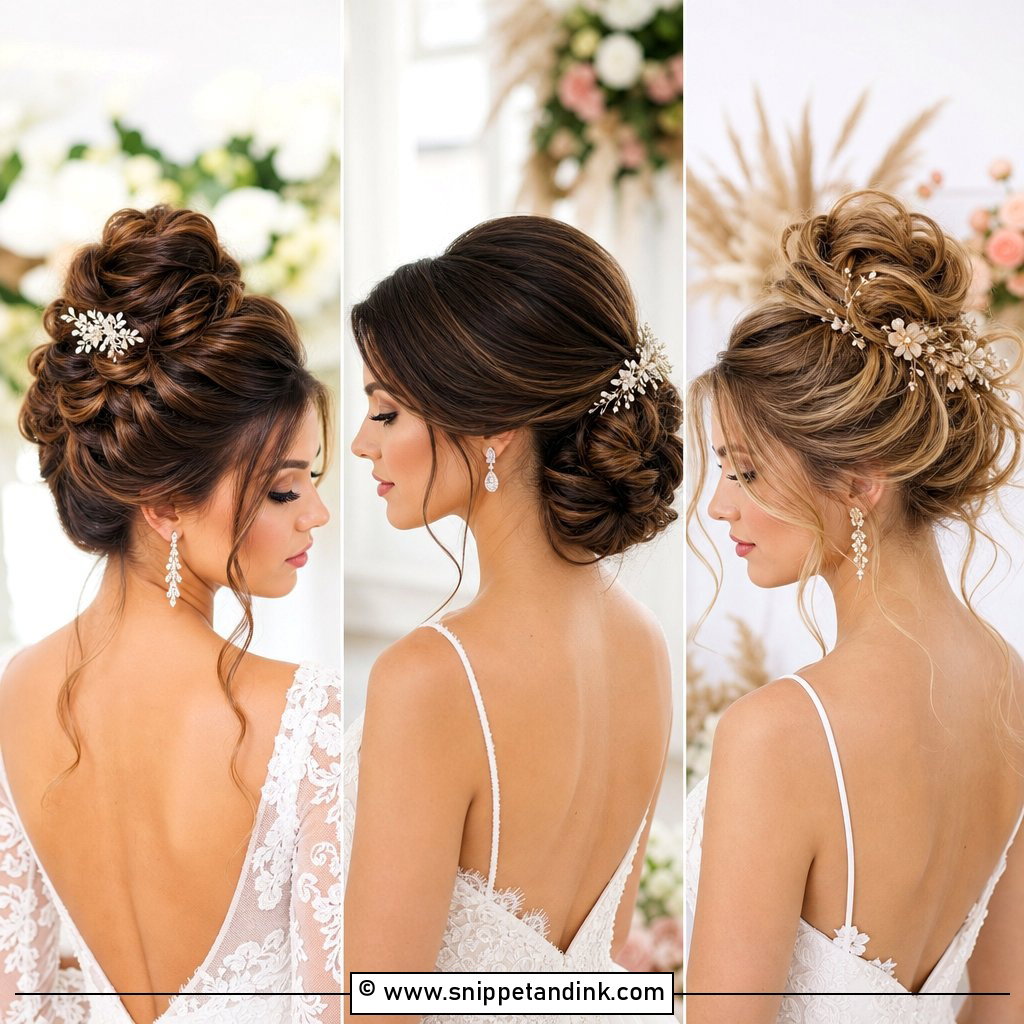
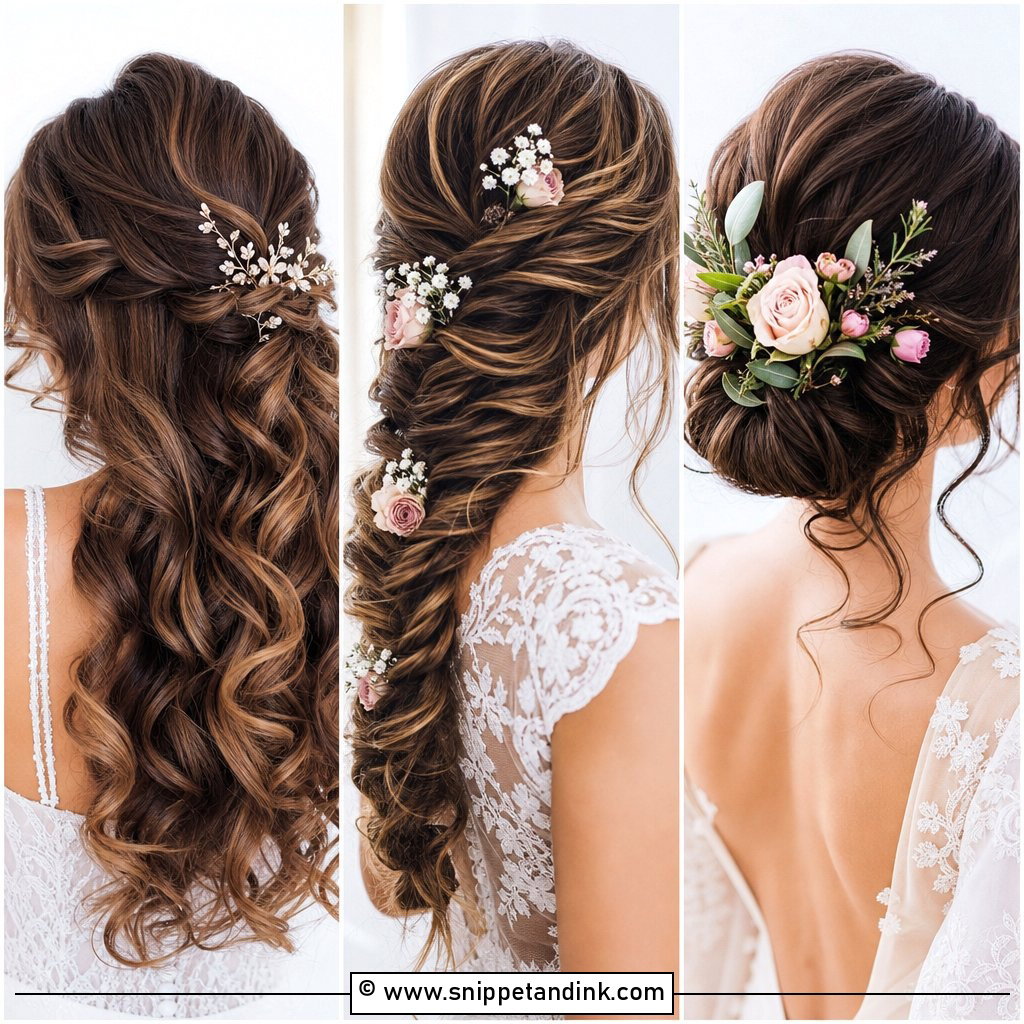
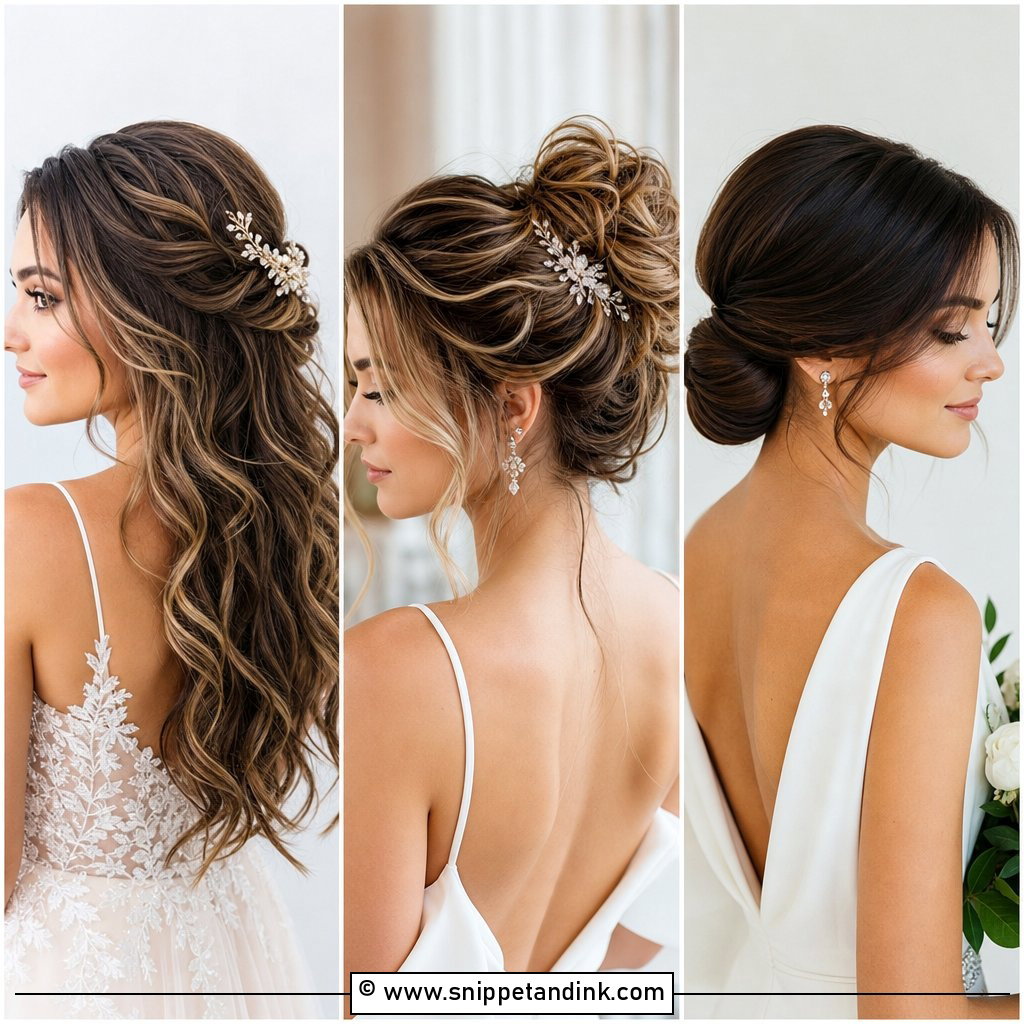
The low bun is where I start most brides with a lot of hair, because the weight rests on the nape instead of hanging off the crown. I never wrap it as one dense coil. Two or three sections, each pinned separately and then pinned to each other, give a bun that holds its shape and doesn’t throb by evening. A few pieces left out around the cheeks take the severity off. Veils, pearl pins and open-back dresses all sit easily with it.
2. Braided Chignon Wedding Updo For Thick Hair
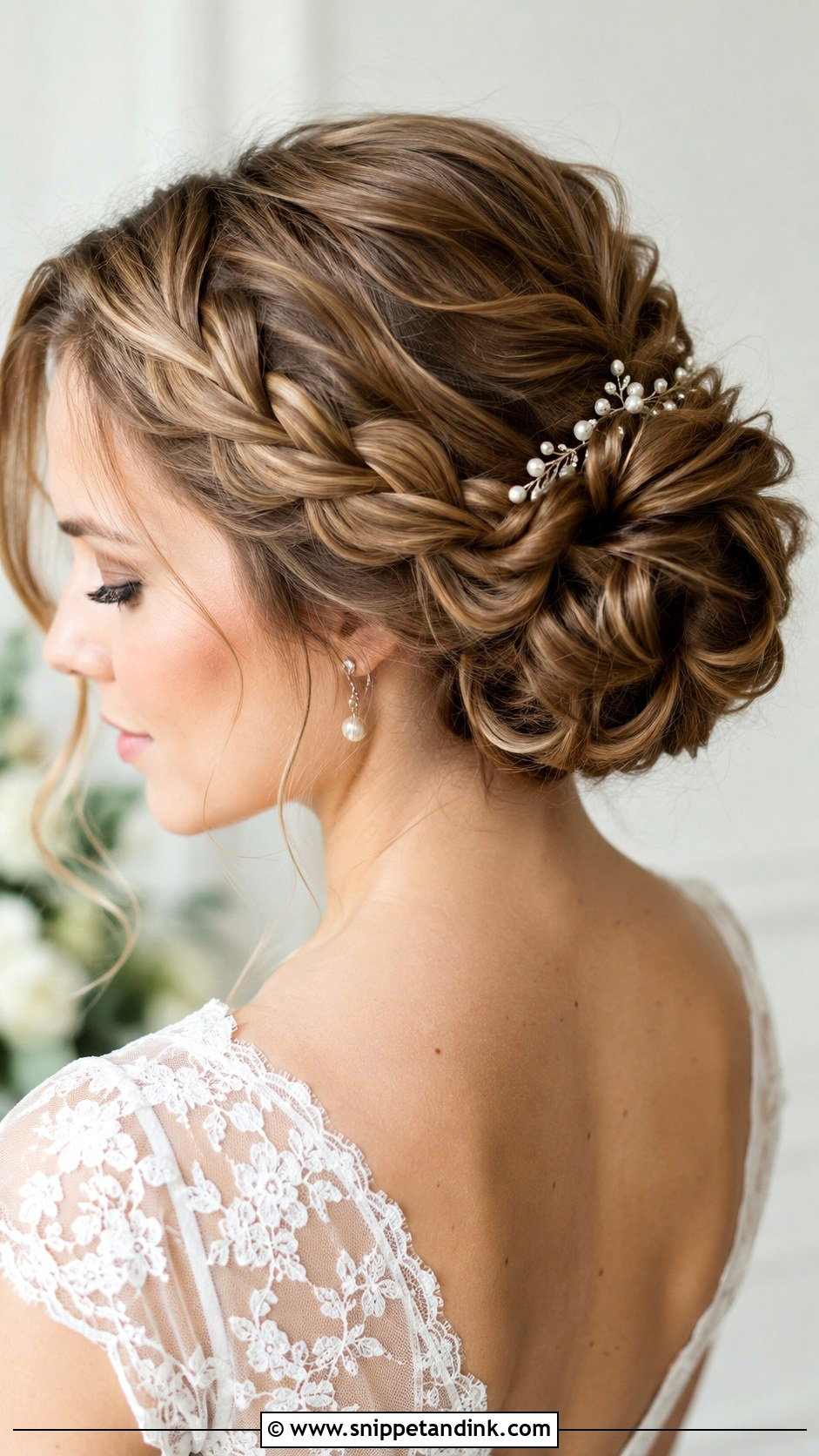
Braiding a section before it goes into the chignon does two jobs: it compresses some of the bulk, and it gives the bun a texture that reads well in side and back photos. On thick hair the braid comes out wide and full without any pancaking. I usually braid only the back third, since braiding everything makes the chignon too large for most heads. Keep the front soft with loose tendrils or a gentle side part so the face doesn’t look scraped back.
3. High Bun Wedding Updo For Thick Hair
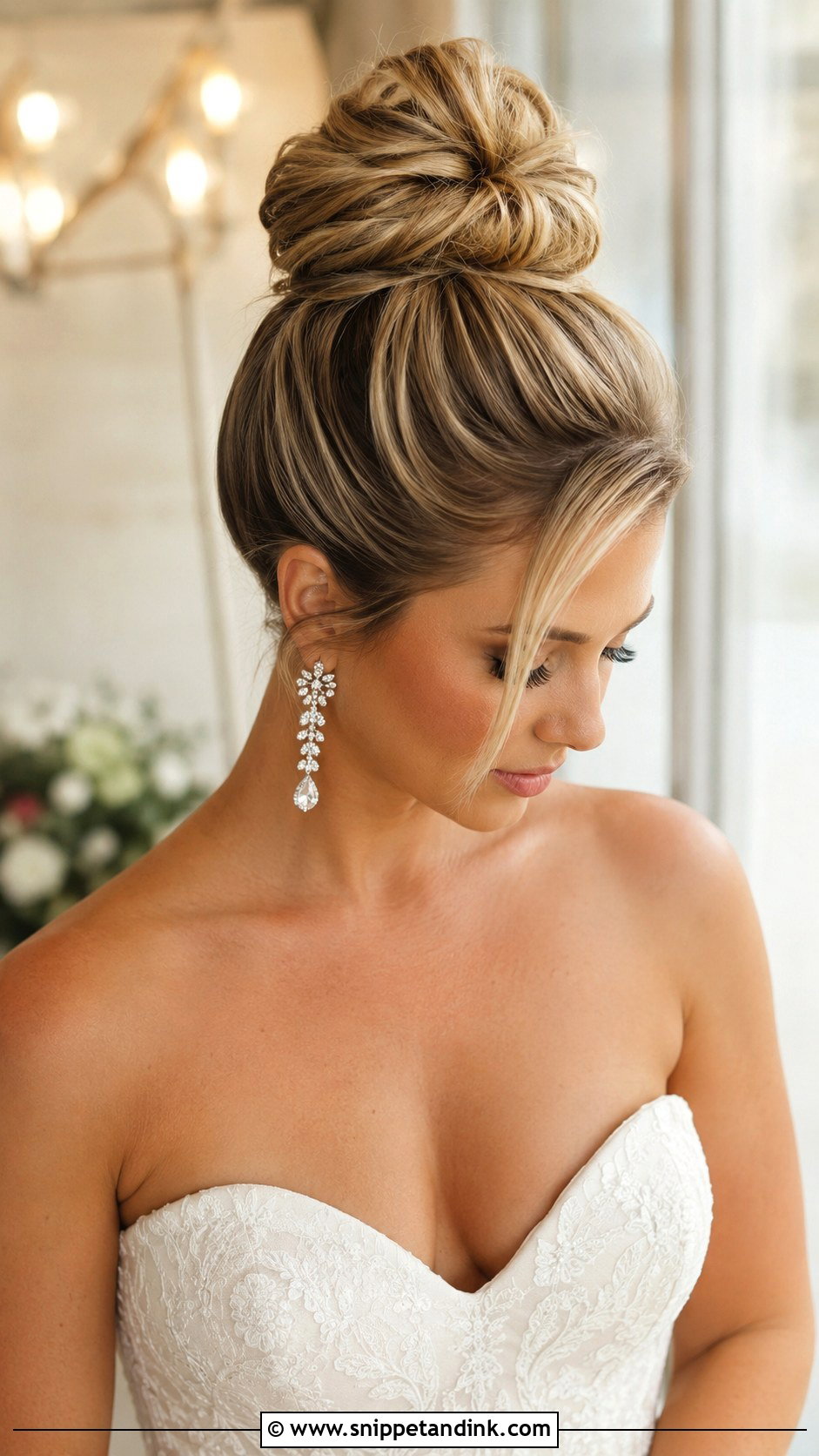
A high bun on dense hair has to be engineered. Wrapped all at once, it slides backward within the hour because the mass is heavier than the elastic and pins can hold at that angle. I build it from sections, anchoring each one with criss-crossed bobby pins into a small braided base. Done smooth it reads modern; pulled slightly apart it’s softer. It works best with high necks, strapless dresses and statement earrings, and it keeps every strand off your shoulders on a hot day. If you get tension headaches, pick something lower.
4. Messy Bun Wedding Updo For Thick Hair
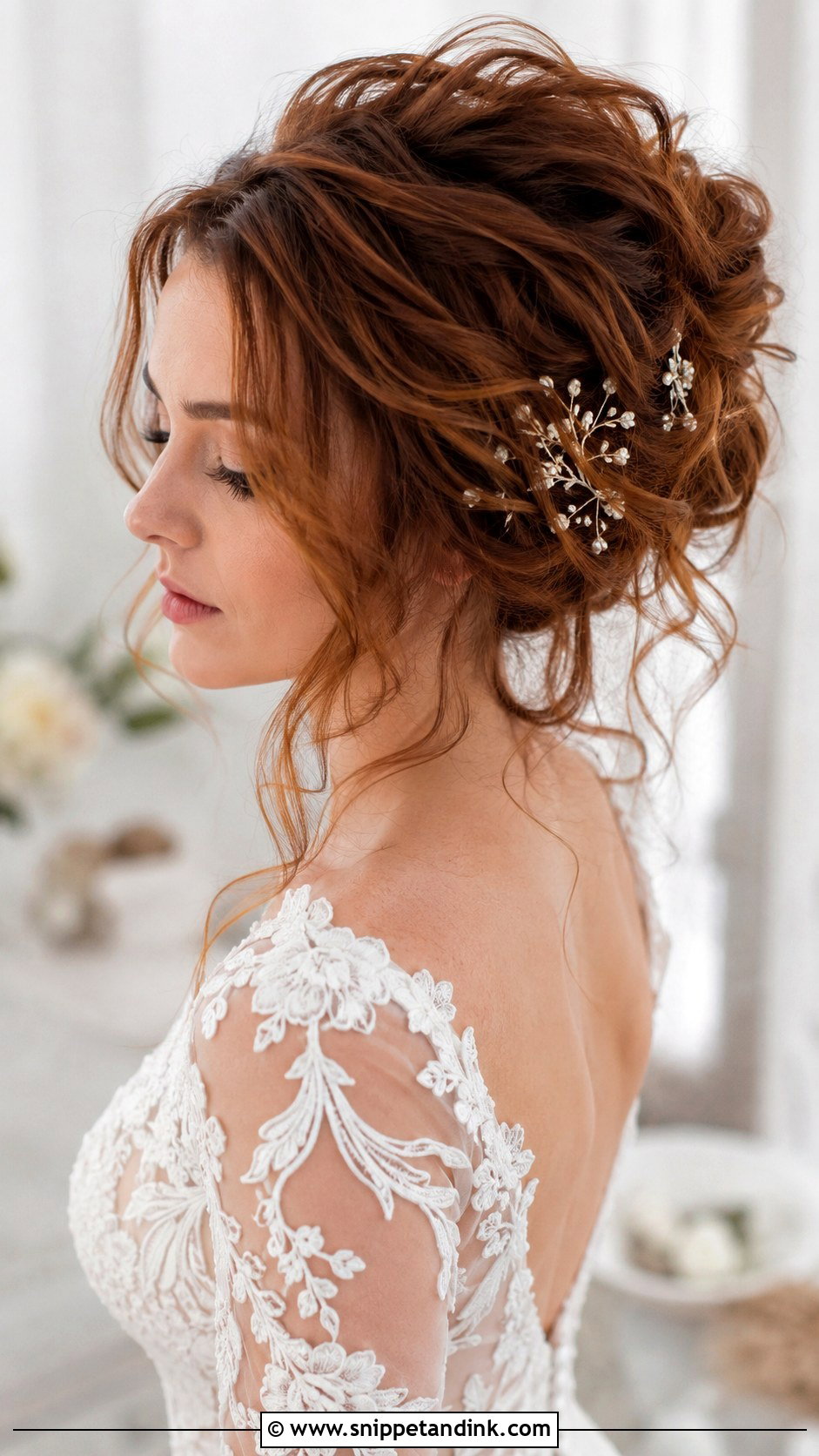
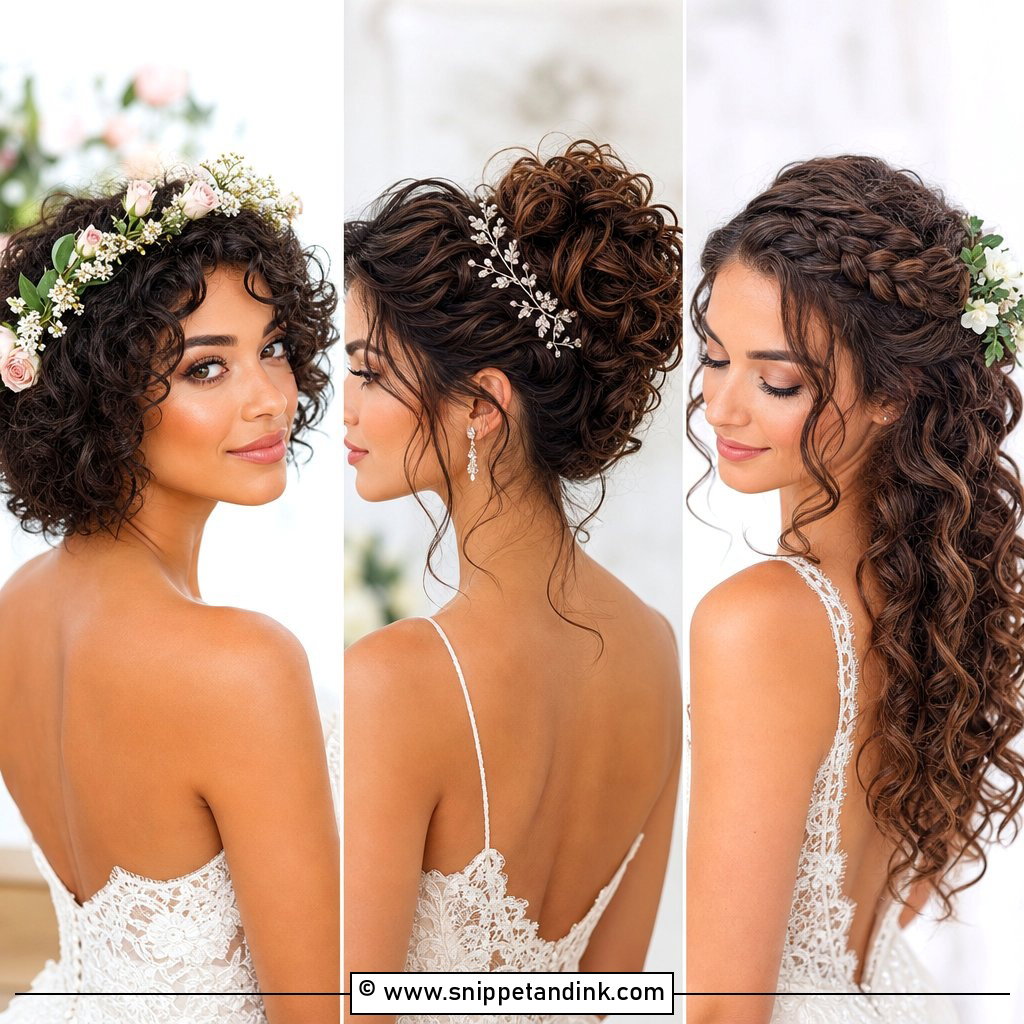
The irony of a messy bun on thick hair is that it takes more pins than a sleek one. Loose pieces need to be held loosely, which means placing each one rather than tucking a mass in. The upside is that you need almost no backcombing, since the hair already has the body. I curl first with a large barrel, pin in loops, then pull a few strands free around the face once everything is secure. Lace gowns and outdoor venues suit it.
5. Twisted Low Updo For Thick Hair
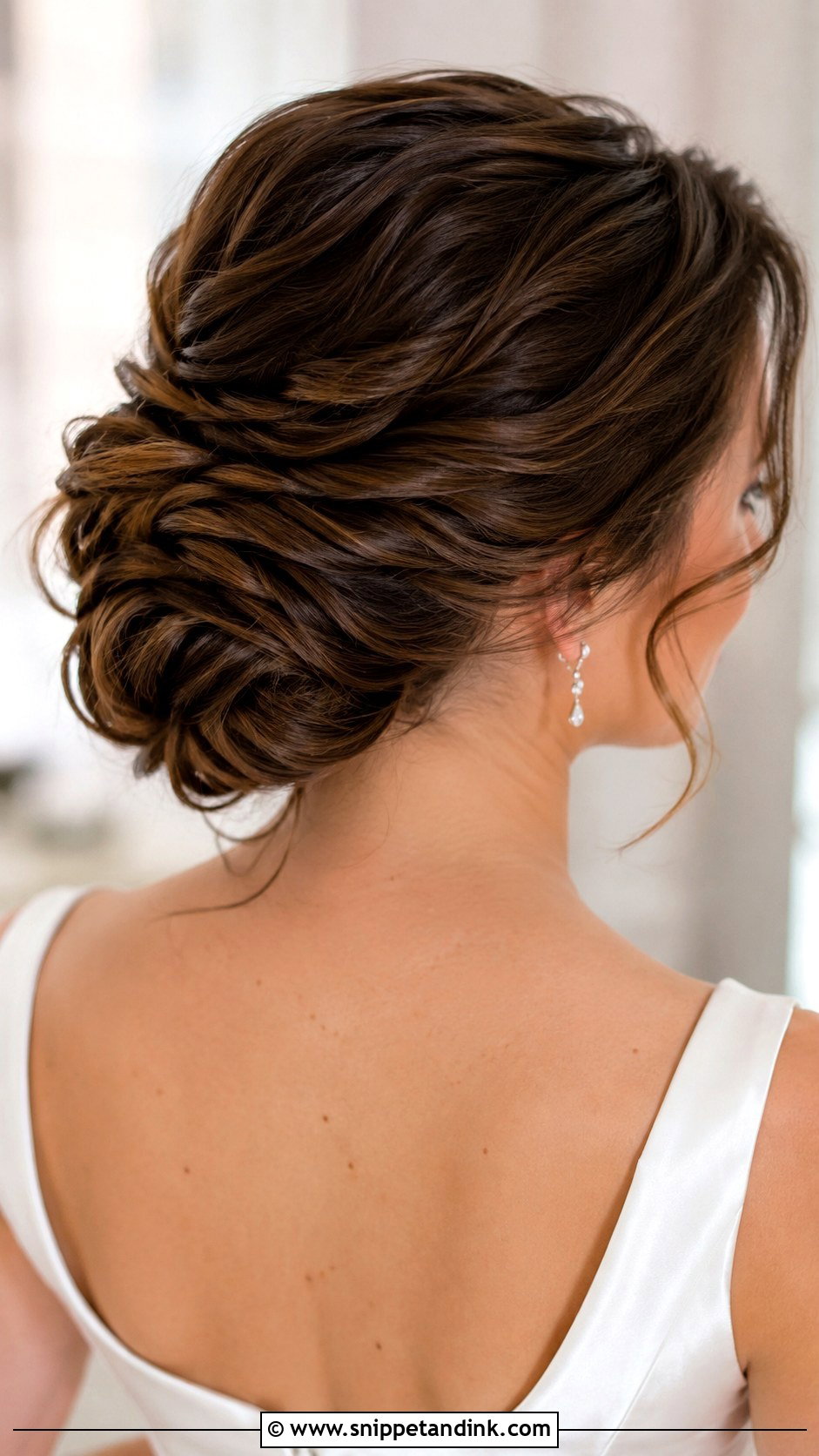
Twisting is my quiet favorite for dense hair that doesn’t like to braid. Each section is twisted toward the nape and pinned flat, so the weight is shared across the whole back of the head. Smooth twists look formal; gently pulled twists show more texture. A veil can tuck above or below without crushing anything, because there’s no single bun to flatten.
6. Curly Wedding Updo For Thick Hair
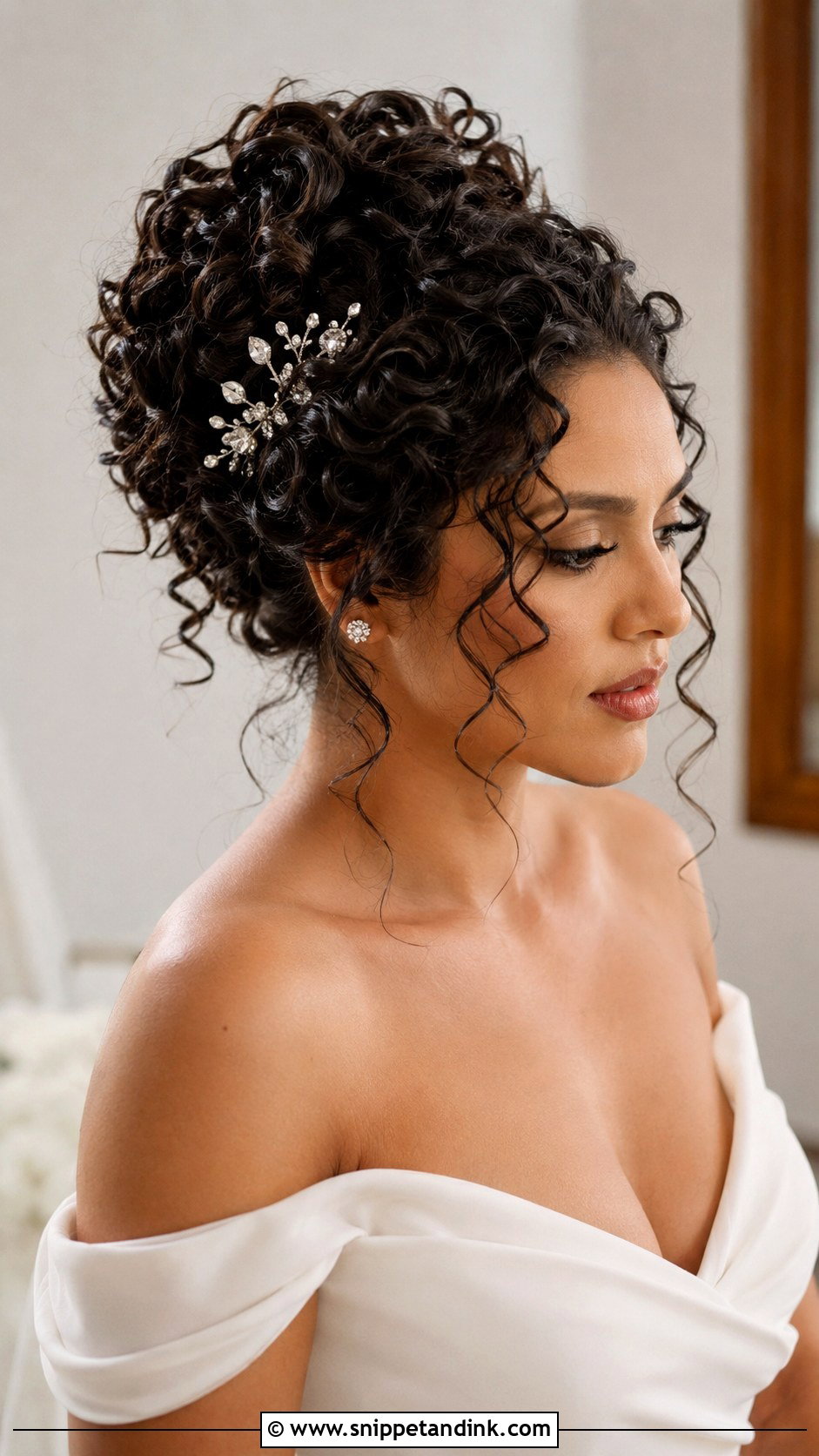
Brushing thick curls into a flat bun destroys the very thing you’re paying to show off. I pin curls in clusters instead, shaping them by hand at the crown or nape with only a little product to keep definition. The front pieces are better shaped around the face than slicked back. Curly hair grips pins well, but heavy curls clustered in one place still drag, so I spread the clusters wider than you’d expect. If your curls frizz in humidity, test the style on a damp day before the wedding.
7. Sleek Bun Wedding Updo For Thick Hair
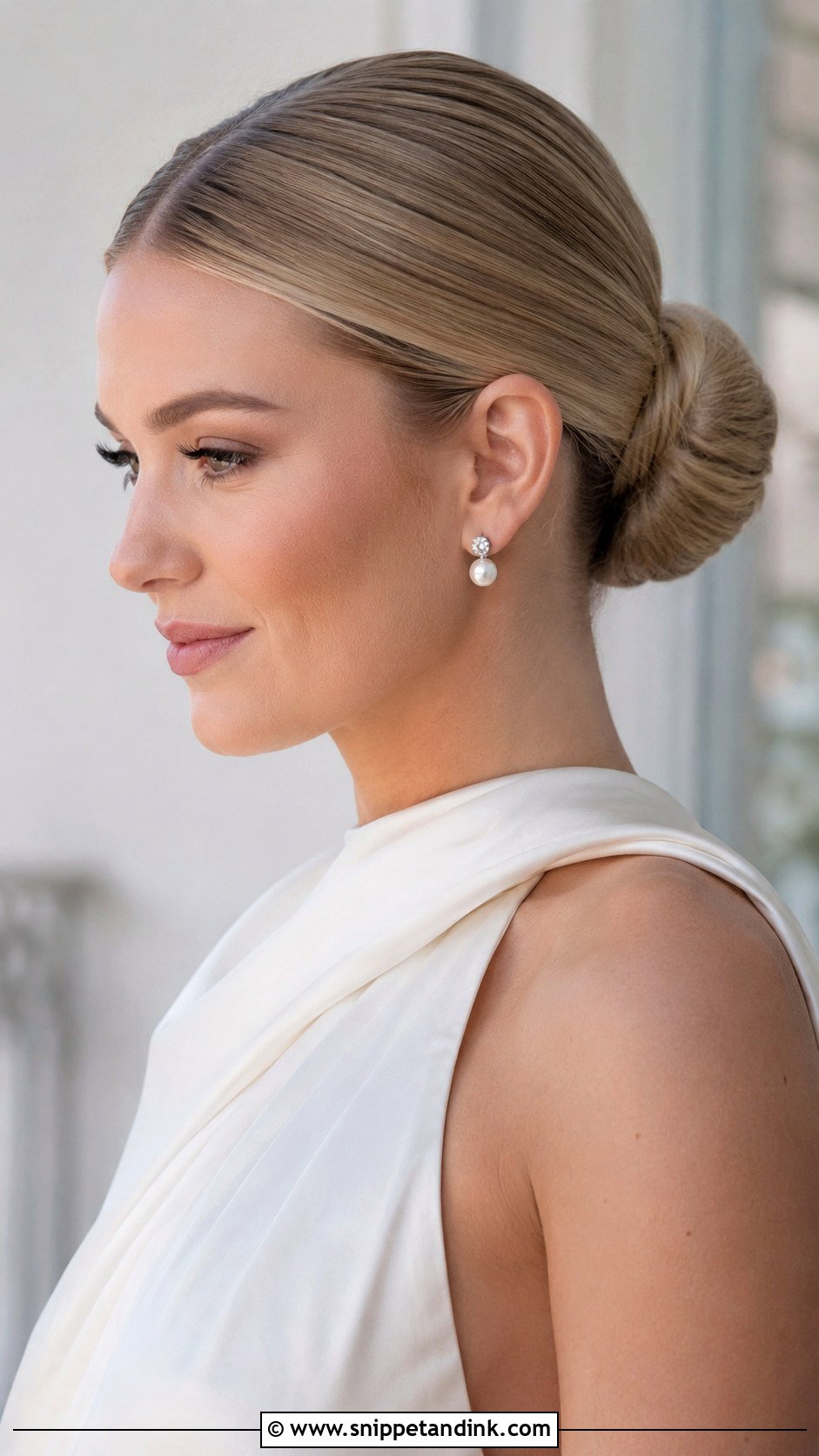
Sleek is harder on thick hair than it looks, because every bump shows. I blow-dry the whole head smooth first, then brush it flat with a boar bristle brush and a light cream before tying it at the low or mid point. The bun can be generous without any padding. Getting the surface perfectly flat usually needs more than one elastic: one to set the shape, a second to lock it. Minimalist and satin gowns are its natural partners.
8. French Twist Wedding Updo For Thick Hair
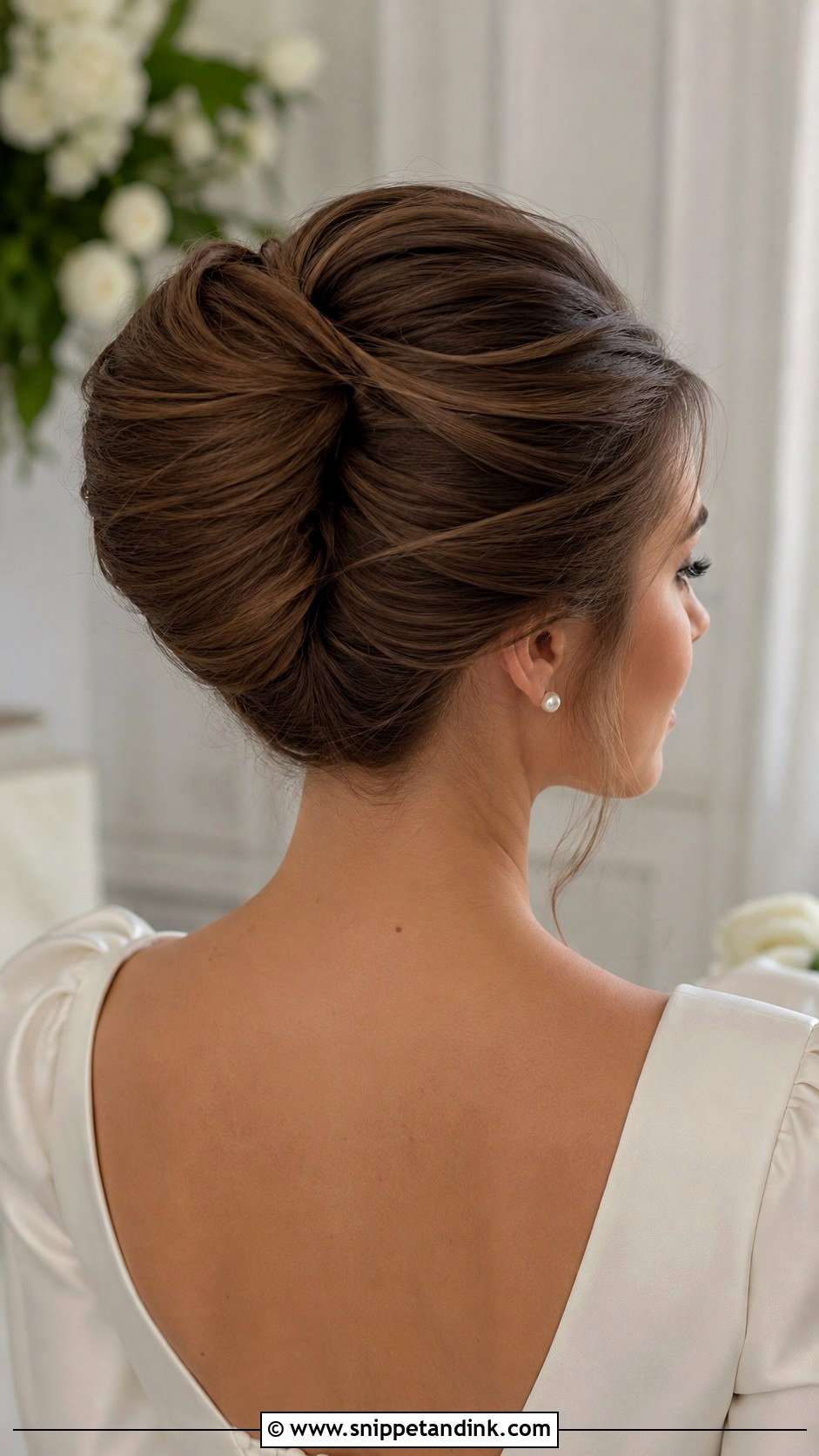
A French twist on a lot of hair can easily become a sausage roll down the back of the head. The fix is pinning it in layers: half the hair twisted and pinned as a base, then the rest folded over and pinned into that. The silhouette stays slim and the pins have something firm to bite into. A smoother finish suits structured gowns and cathedral veils; a softer one with pieces left loose near the face is less formal.
9. Side Bun Wedding Updo For Thick Hair
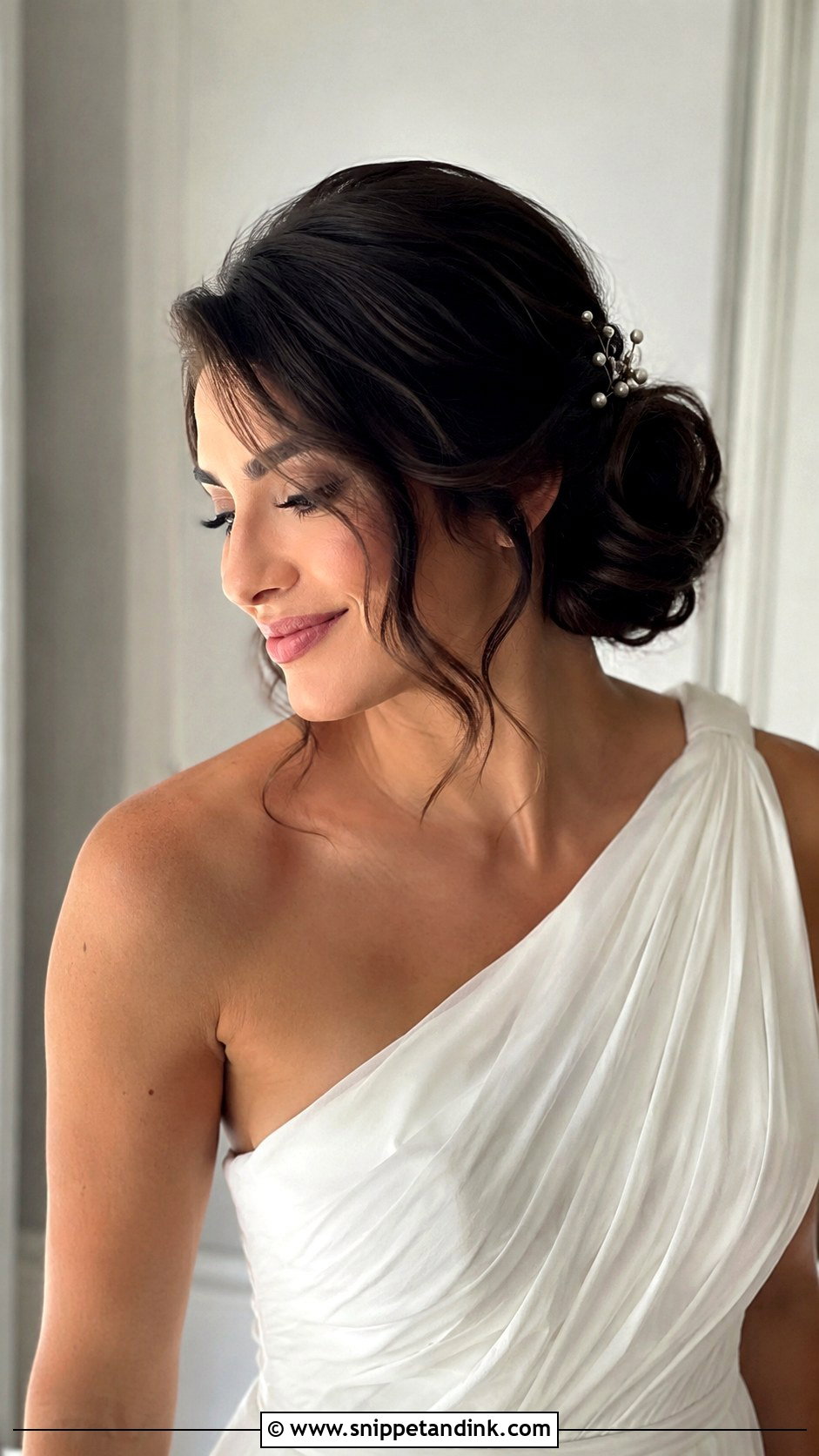
Asymmetry works in thick hair’s favor, since the volume sits where people can see it. The bun sits low on one side of the nape, which suits a one-shoulder dress or a decorative back. I pin it into a small hidden braid running across the nape so it doesn’t drift to the middle during the day. Loose waves at the front balance the side that carries the bun. Side buns are also kind to the photographer, giving a clear profile from the aisle.
10. Boho Braided Updo For Thick Hair
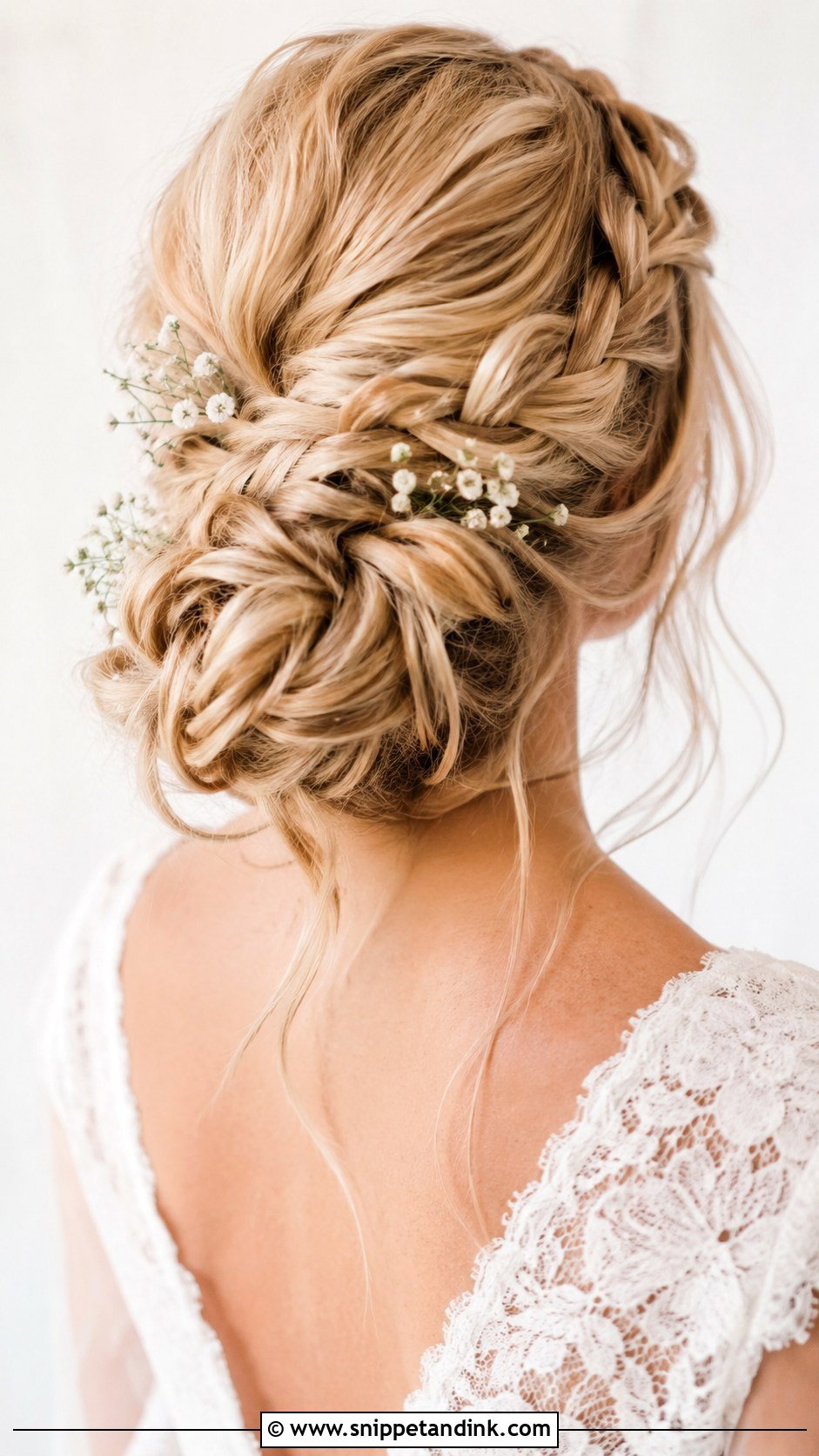
Boho braiding turns fullness into texture, and on dense hair the braids come out big enough to read from across a garden. The braid can wrap the crown, run into the bun or sit along one side. What matters is leaving the plaits loose. A tight boho braid looks like a school plait, so I braid firmly for hold and then gently pancake the edges after pinning. Floral hairpieces sit nicely in the gaps between braid and bun.
11. Half Crown Braid Updo For Thick Hair
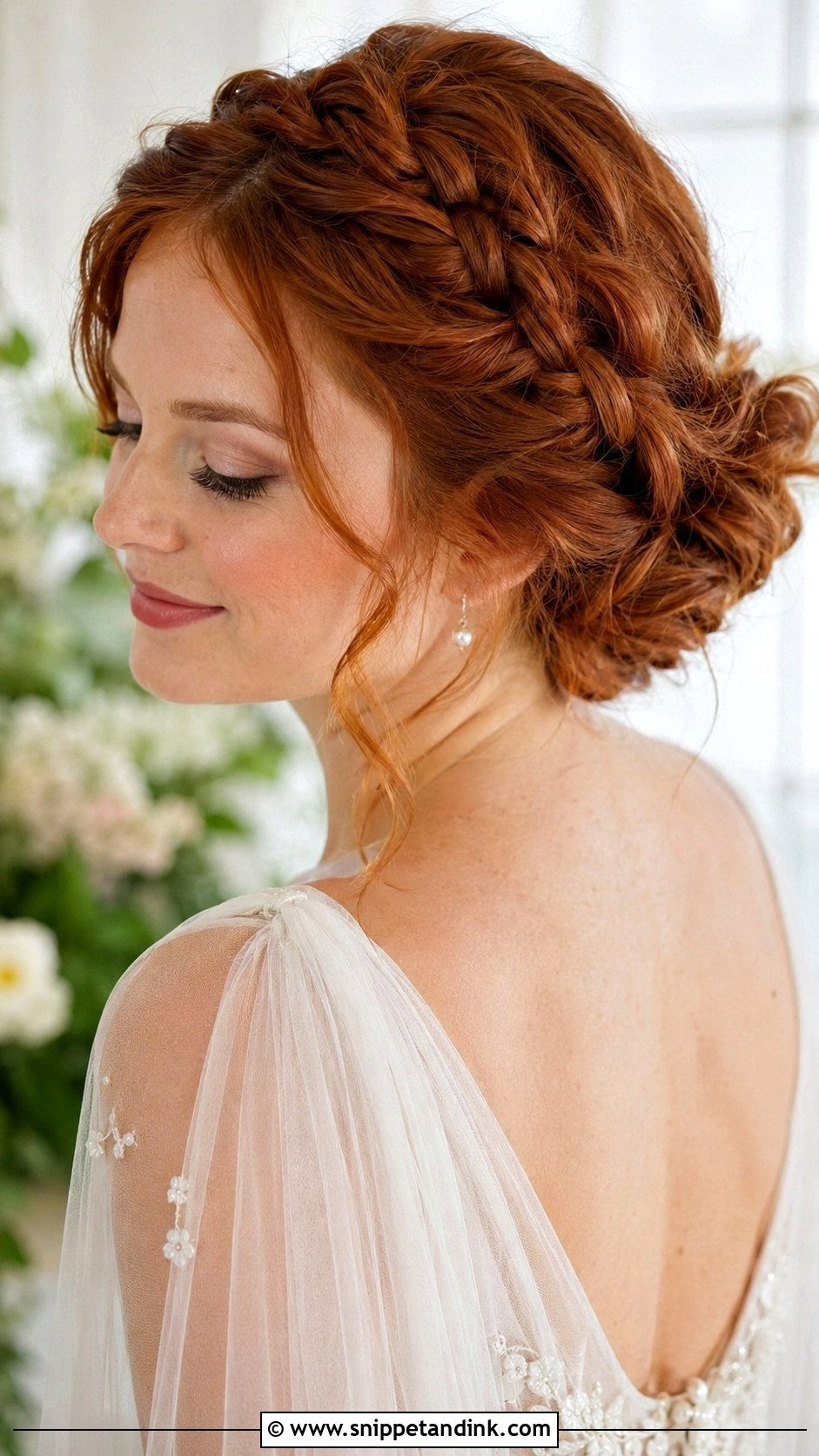
A half crown braid controls the top sections, which are often where thick hair puffs up as the day goes on. The braid wraps partway across the head and blends into a pinned bun or low textured updo, and the rest of the hair is twisted and pinned to keep the nape balanced. It gives detail without needing heavy accessories. I’d leave a few soft tendrils near the face. If you have a strong cowlick at the front hairline, tell your stylist early, because it affects where the braid can start.
12. Textured Updo With Face Framing Pieces
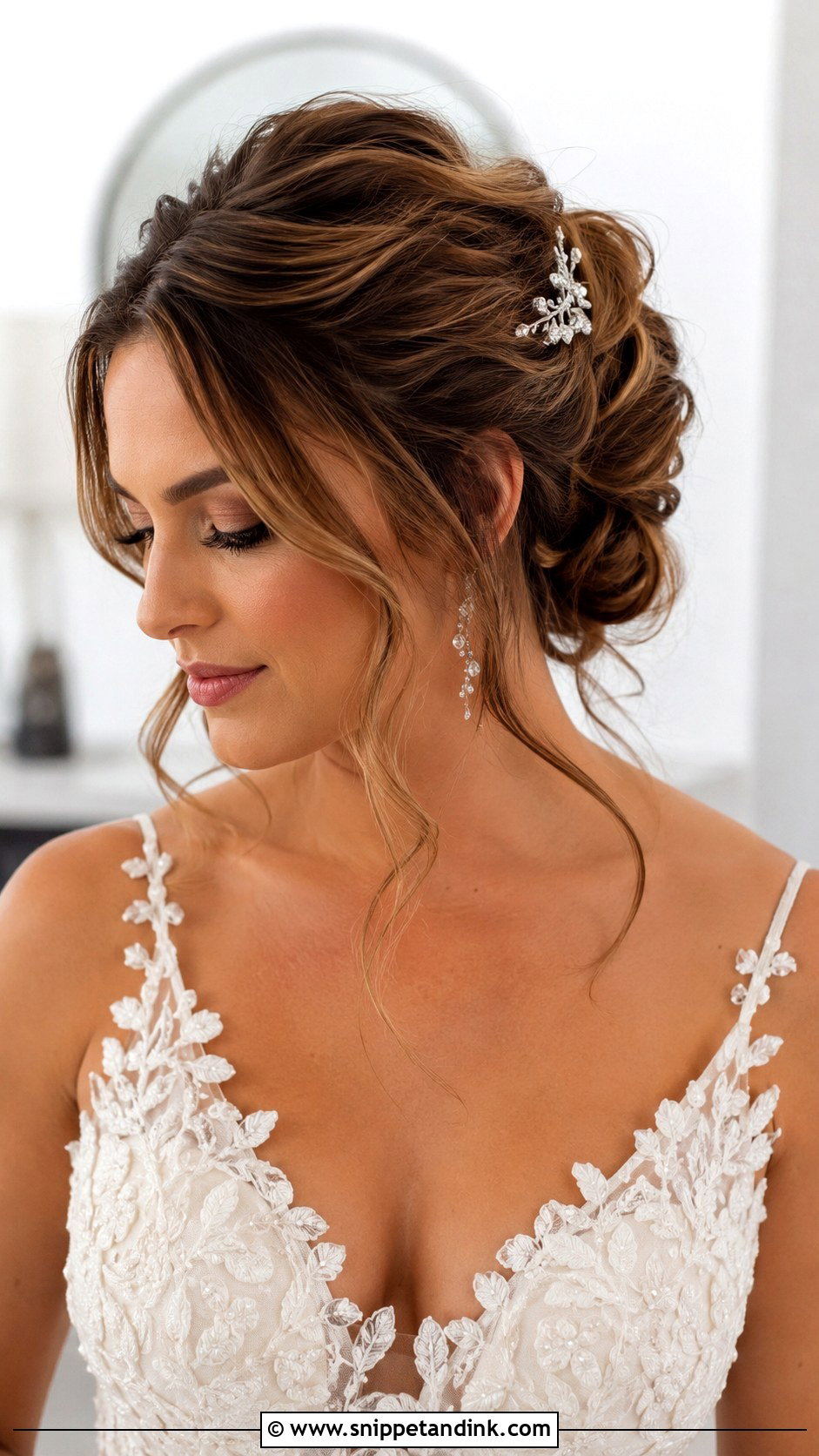
Texture breaks up density. Hair curled first, then loosely pinned in a low or mid updo, looks lighter than the same amount of hair pinned smooth, and it hides the pins far better. I leave small sections loose to soften the forehead and jaw. Because thick hair keeps its shape at the back, this style rarely collapses. It’s the one I suggest when a bride can’t decide, since it sits comfortably with most necklines and settings.
13. Low Ponytail Updo For Thick Hair
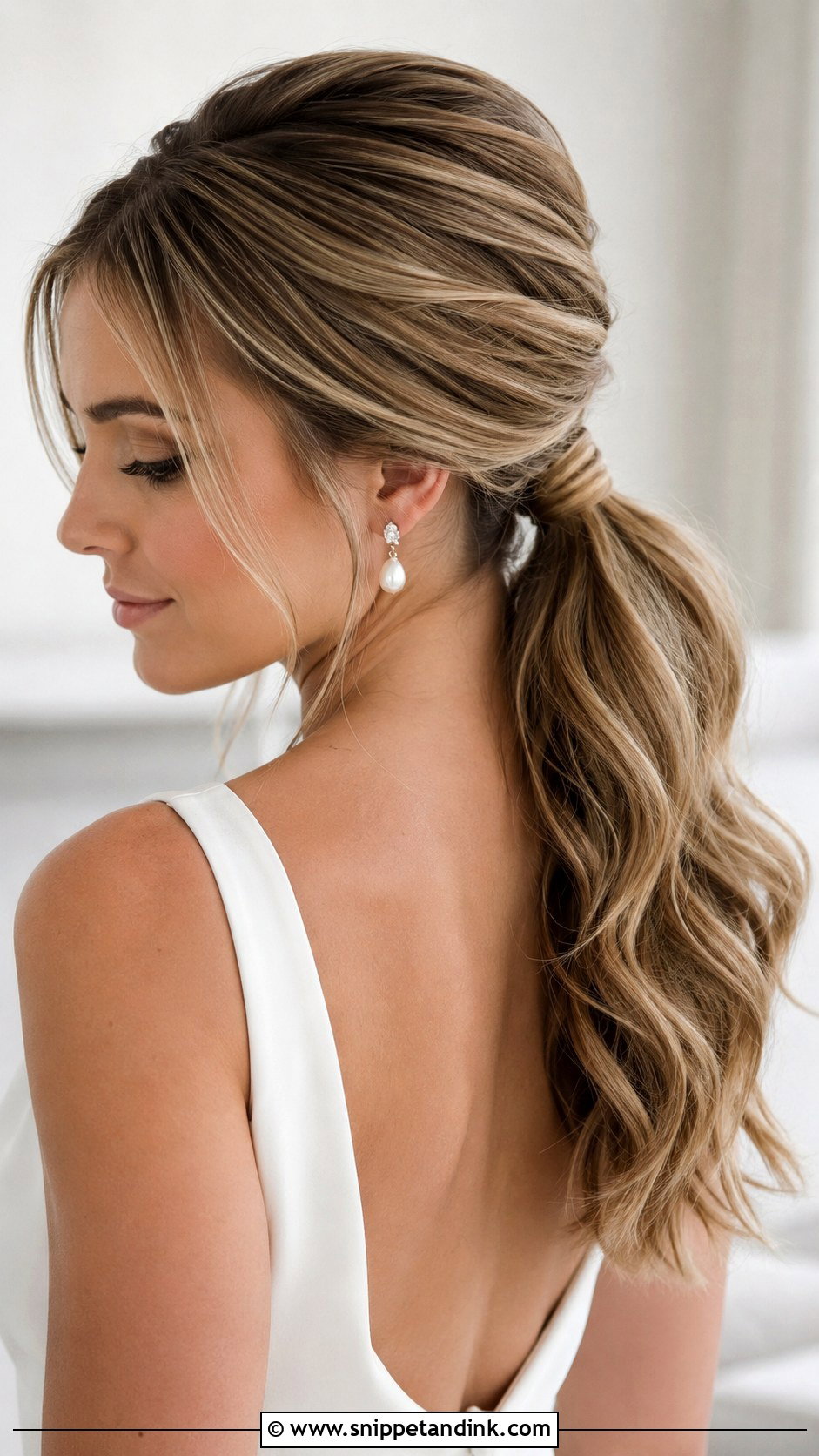
Low ponytails make sense for thick hair because the weight sits at the nape and nothing pulls from the crown. Full hair gives the pony a rich finish without extensions. I wrap a strand around the base to hide the elastic and pin it underneath, then finish the length with waves, soft curls or a smooth blowout texture. One warning: a heavy ponytail swings, and over a long day the elastic loosens. A second elastic just below the first holds it.
14. Vintage Roll Wedding Updo For Thick Hair
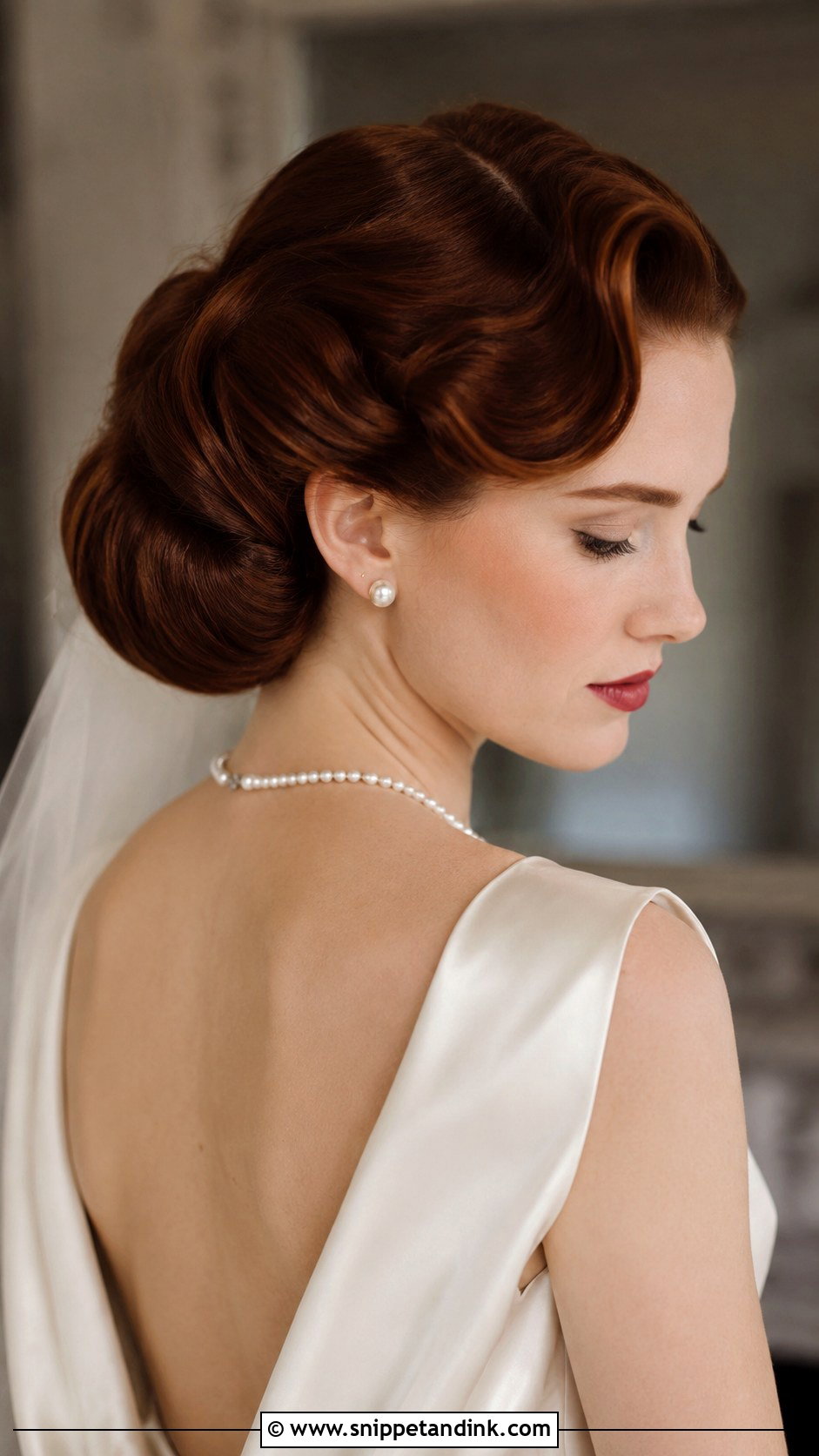
Vintage rolls need volume to look right, which is why they suit thick hair so well. The hair can be rolled at the nape, swept to one side or set into retro-inspired curves. The risk is bulk. I set the hair the night before or with hot rollers, then smooth each section individually before rolling, so the shape is sculpted rather than puffy. Satin gowns, pearls and classic makeup suit it. Brushed waves near the face soften it if the full style feels too costume-like.
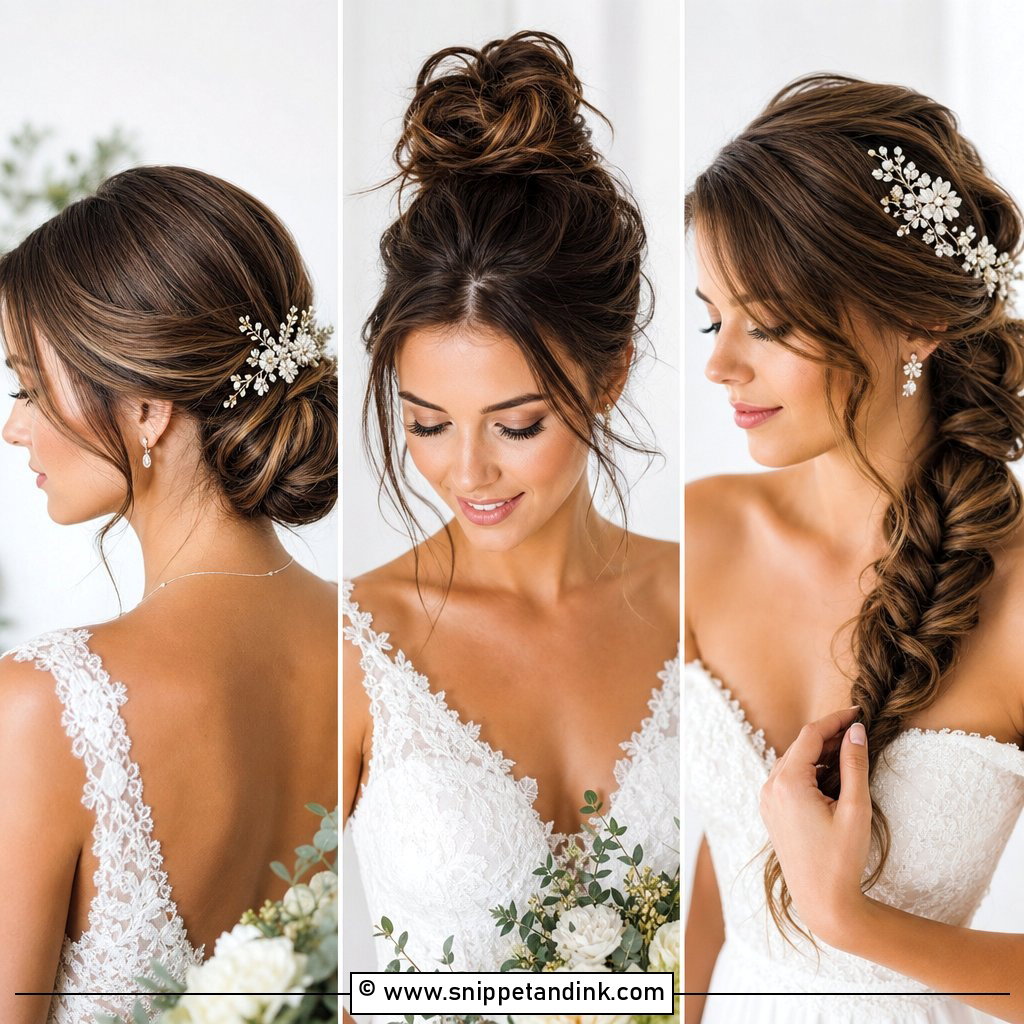
15. Loose Romantic Updo For Thick Hair
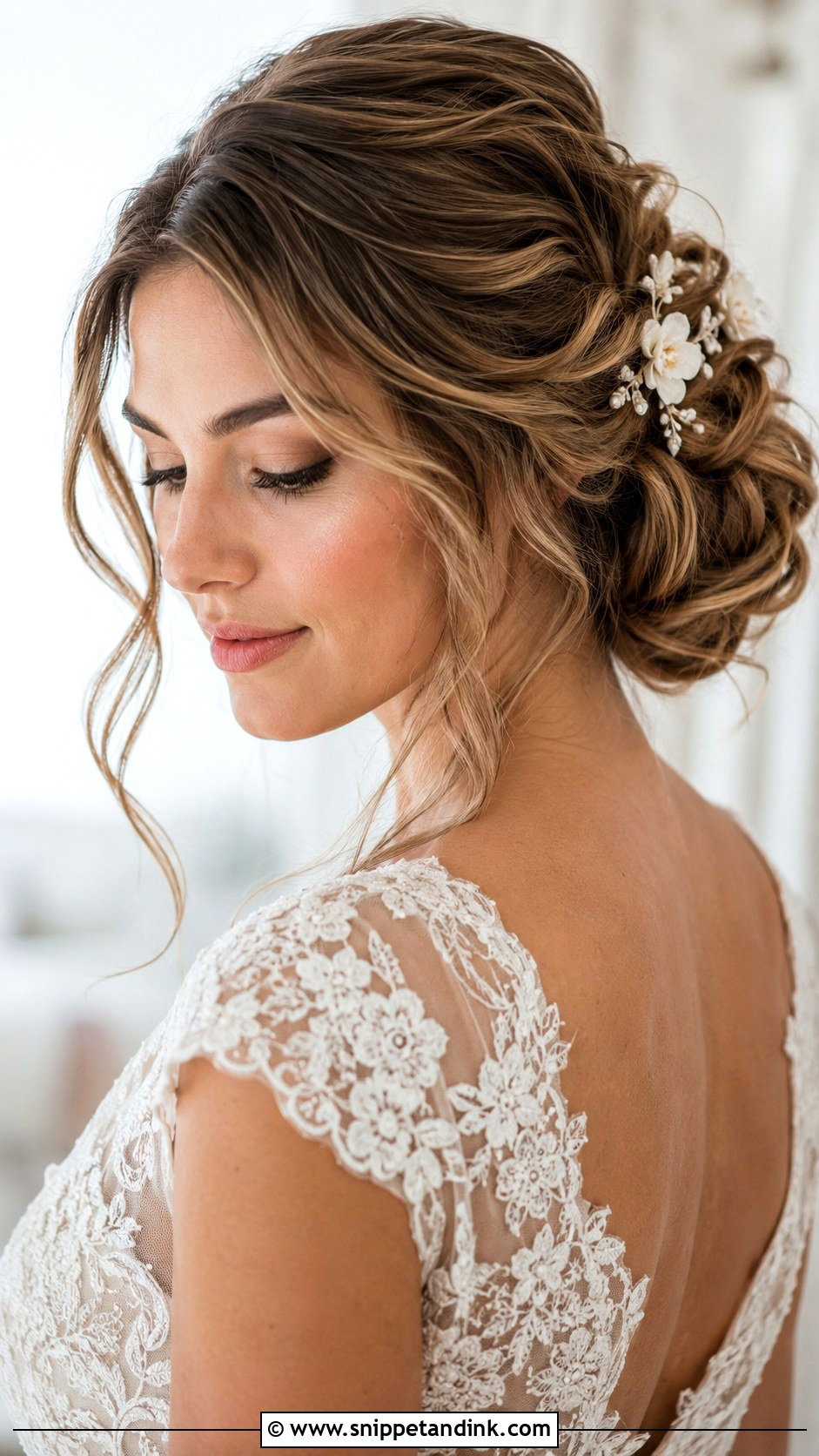
The airiest style on the list is also the most deceptive. It looks unstructured, but every curl is pinned in its own pocket so the whole thing doesn’t flatten into one dense mass by evening. I curl first, let the curls set cool, then pin in small loose sections, leaving pieces around the face and a little lift at the crown. Floral pins, combs or a veil placed at the back all fit into it easily.
Headaches by the Speeches? How to Tell at Your Trial
Thick hair carries real weight, and when it’s all pinned up the scalp feels it. Some brides don’t notice until the reception, by which point the only fix is taking pins out. That’s why I ask brides to wear the trial style for the rest of the day, not just for the mirror.
Signs the style is too tight
- A dull ache at the crown or behind the ears after an hour or two.
- Pins you can feel pressing when you rest your head back against a chair.
- The urge to touch or push the bun up, which usually means it’s already sliding.
If any of these show up, the answer is usually to move the shape lower or split it into more sections, not to add more pins. More pins add more pressure points.
Planning the take-down
A heavily pinned updo on dense hair can hold dozens of pins. Pulling it down in a hurry tears hair and hurts. Ask your stylist roughly how many went in, take them out slowly in reverse order, and brush only once the hair is completely loose, starting from the ends. A little oil or conditioner on the tangles at the nape the night after helps.
Spread the Weight, Then Pick the Shape
Every style here works on thick hair for the same reason: the weight is shared across several anchors rather than hung from one. Low buns and chignons are the safest; sleek buns and French twists need more prep; braided and loose styles are the most forgiving of humidity. Your dress, venue and hair texture narrow the list. A trial is worth more with dense hair than with almost any other type, because it’s the only way to know how the style feels at hour six, where the veil comb will grip, and whether the shape holds up in your photos.
You'll Like These Ideas:


Leave a Reply