
Fine hair worries a lot of brides before their trial, mostly because they’ve watched a ponytail slide out by lunchtime. In my chair, fine strands are often easier to sculpt than people expect. The hair is light, so it doesn’t drag pins down the way heavy hair does; the real challenge is grip and bulk, not weight. With prep texture, the right pins and a little hidden padding, an updo can look fuller than the hair it’s made from. Below are 25 updos I’d consider for fine hair, with notes on how each one is built and where it can let you down.
Grip, Padding and the Pins I Trust on Fine Strands
Fine hair slides. Each strand is smooth and narrow, so a pin closes around very little and slips when you move your head. Most of what I do before styling is about giving the hair something to hold.
- Texture first: volumizing mousse on damp roots, blow-dried in, then dry shampoo or texture spray once the hair is dry. Freshly washed, heavily conditioned hair is the hardest to pin, so I prefer hair washed the night before with conditioner on the ends only.
- Crossed bobby pins: two pins pushed in from opposite directions form an X that holds far better than single pins. I build an X anchor under every bun, comb and veil.
- Matte pins in your hair colour: shiny pins show through thin hair. Spin pins and U pins help too, since they hold a bun without packing the hair flat.
- Hidden padding: a small filler in a shade near your own hair gives a bun its size. On very fine hair, a clip-in weft placed just inside the updo adds bulk nobody sees.
Skip heavy oils and silicone serums on the morning itself. They look glossy in the mirror but take away the grip everything else depends on.
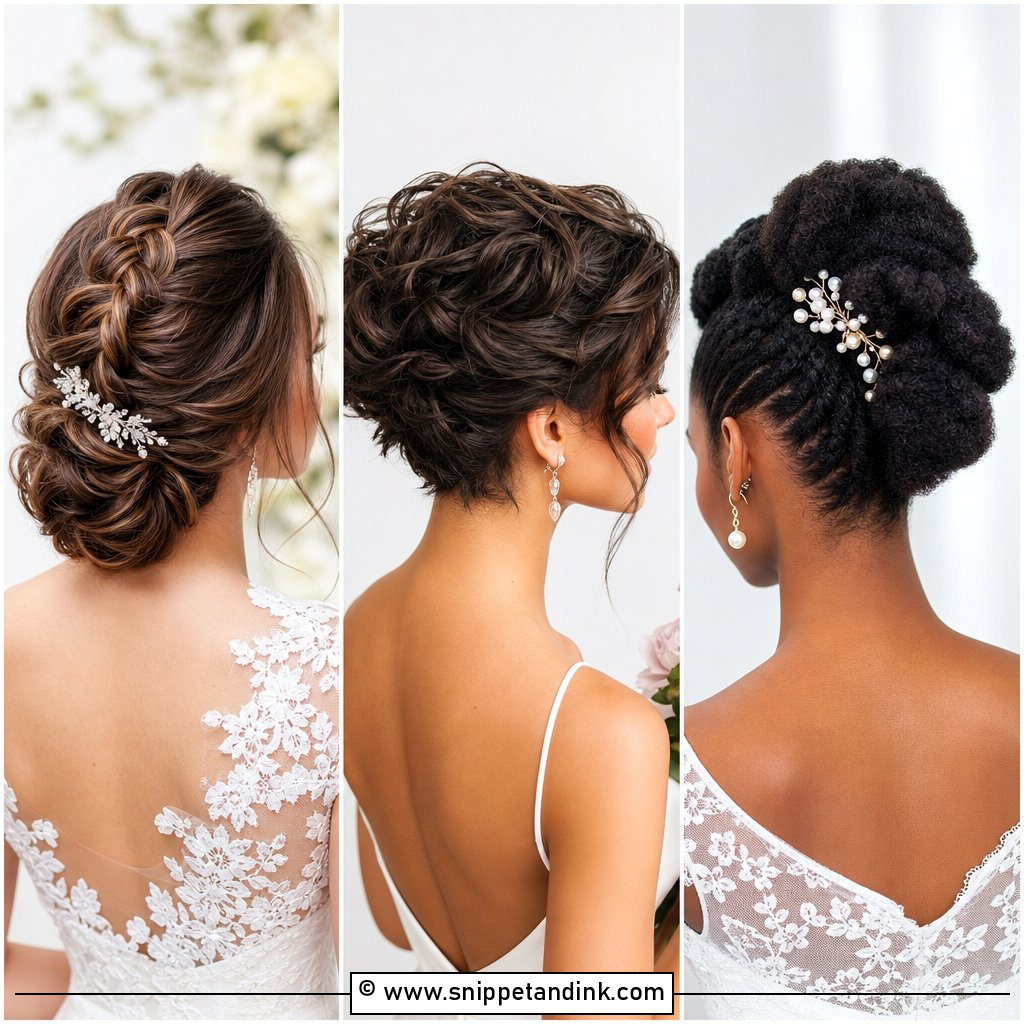
1. Low Messy Bun for Fine Hair
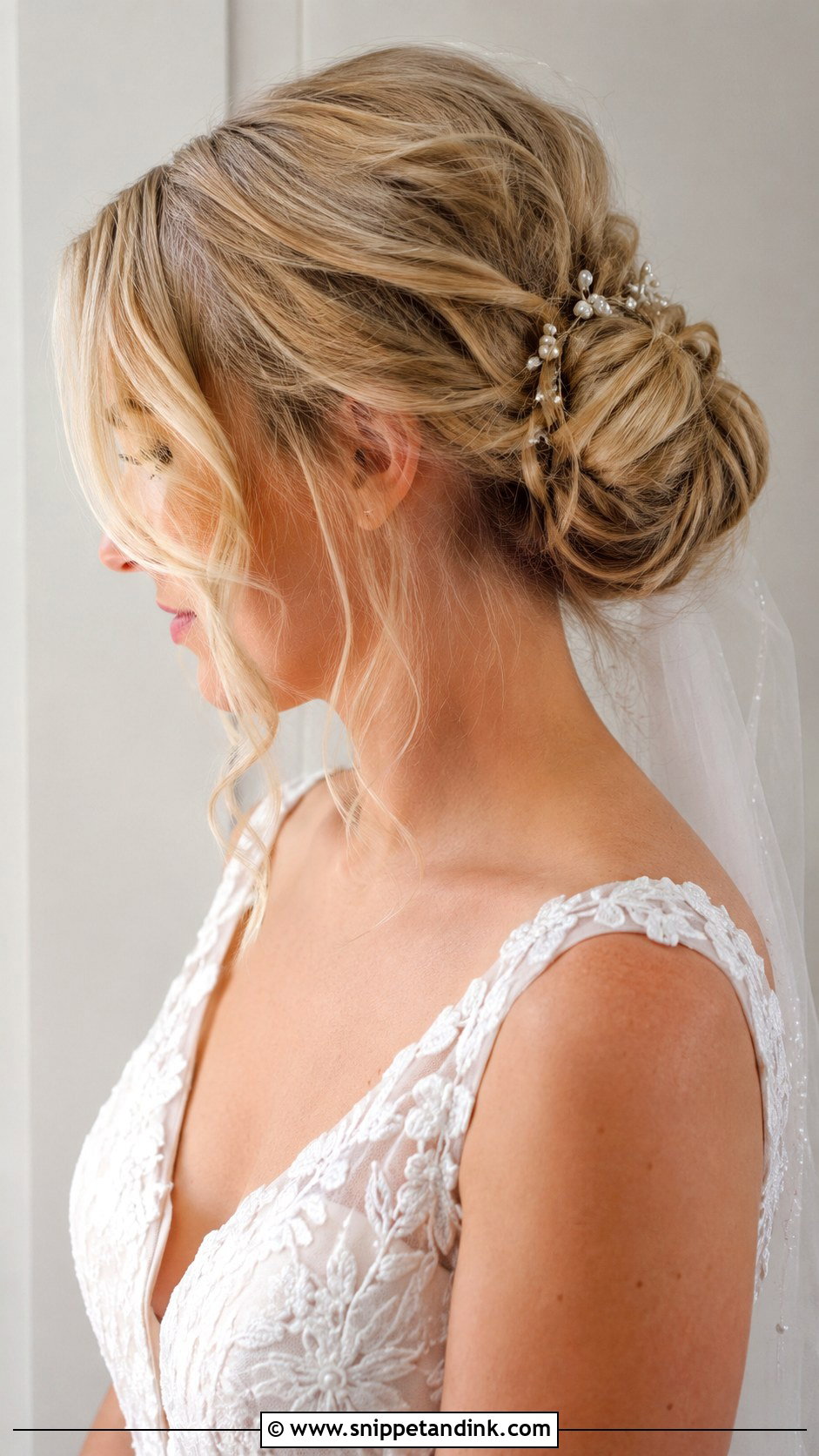
This is the first shape I reach for when a bride has thin strands and not much length to spare. The undone texture hides gaps, so I don’t need a lot of hair to fill it. I backcomb the crown lightly, pin the bun with the ends tucked rather than wrapped, and pull out a few face-framing pieces. It sits under a veil comb without crowding it. Small pearl pins are fine, but keep them light; heavy accessories drag fine hair and open the bun up by evening. Any shifting through the day just reads as part of the style.
2. Textured Chignon for Thin Hair
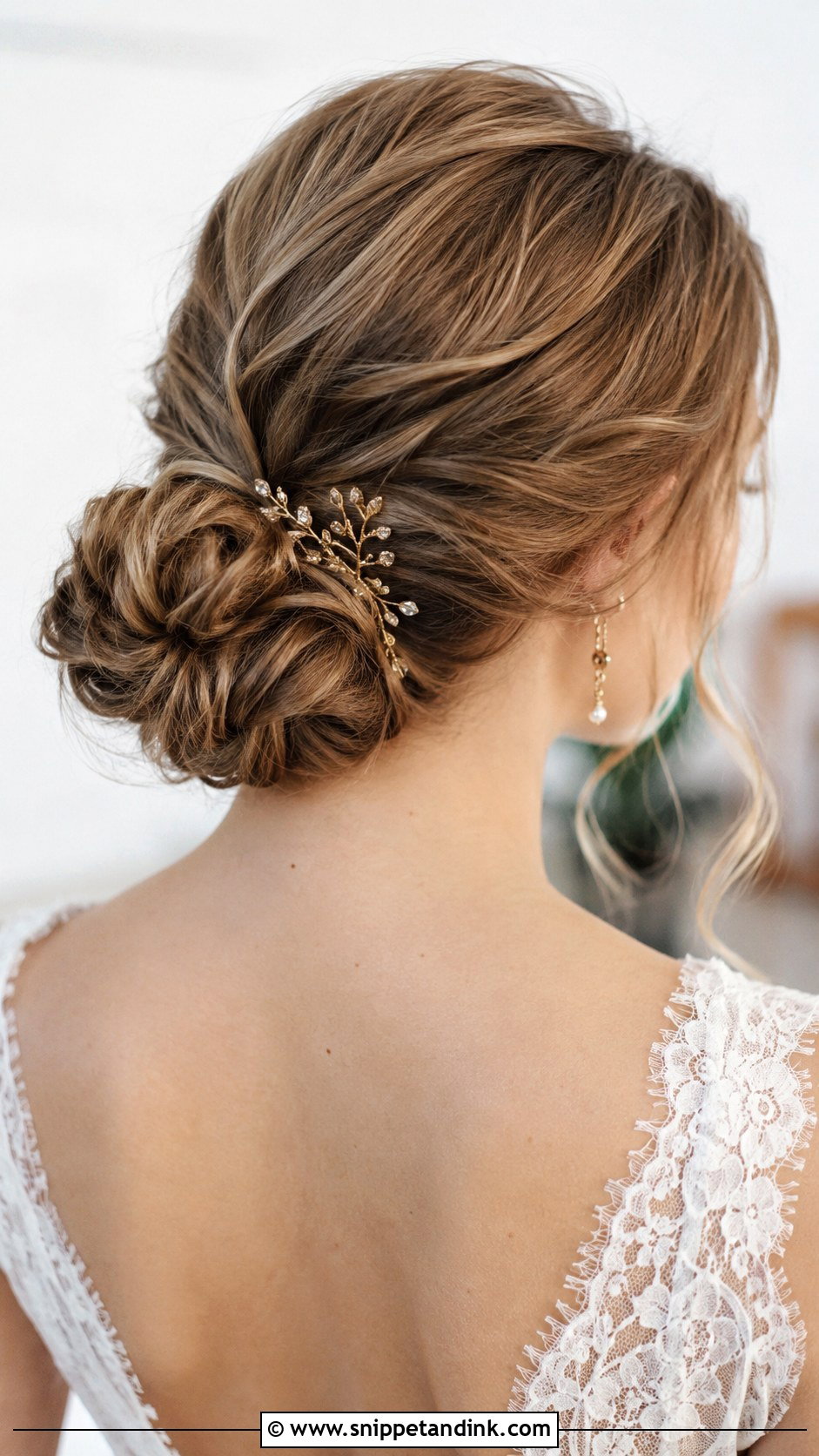
On fine hair I build a chignon loosely, because a sleek, tight knot shows the scalp and the true size of the hair. I backcomb at the roots to lift the crown, then form the knot from two or three soft twists so it has depth. It sits low enough to balance a delicate veil or hairpiece. A gold pin or jeweled comb works if it’s anchored into a crossed pair of bobby pins underneath, not into the chignon itself.
3. Braided Crown Updo
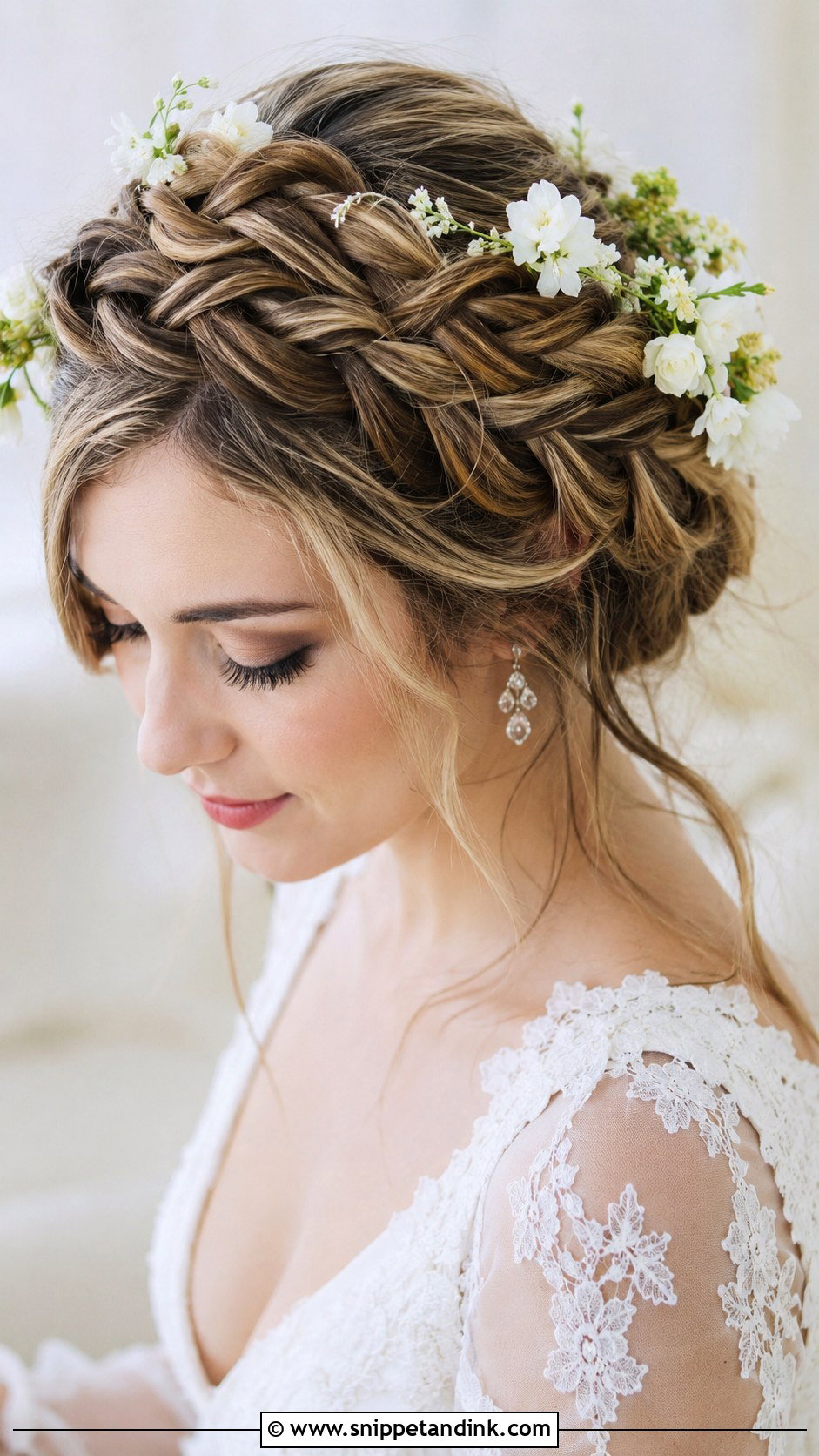
Dreaming of something romantic and bohemian? A braided crown wraps around the head like a halo, and on fine hair the braid has to be loose and pancaked. I pull each loop outward with my fingertips so every section looks twice its width. Do that before pinning, not after, or the pins pop out. Fresh flowers tucked into the weave suit a garden wedding, though the stems need wiring and taping or they wilt against warm skin. Shoulder length is roughly the minimum to reach all the way round; shorter hair needs a clip-in braid to close the gap.
4. Twisted Low Bun
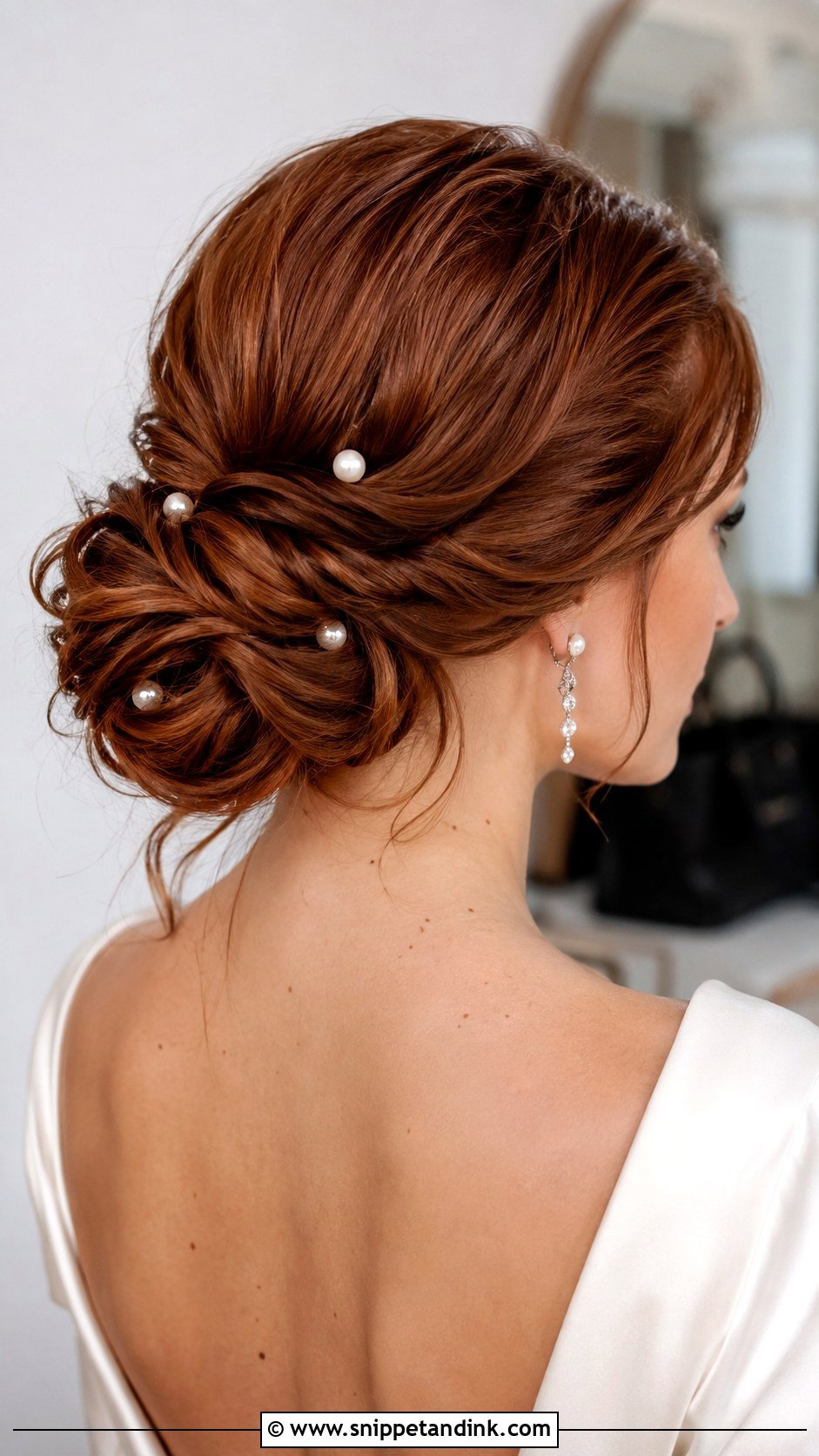
Twists are one of the most reliable ways I know to add bulk to thin hair, because each rolled section holds air inside it. For this bun I take four or five sections at the nape, twist each one away from the face, and pin them in overlapping loops. Loosening the twists slightly before pinning gives a softer outline. It reads well from the back and the side, which matters during the ceremony when guests mostly see the back of your head. One or two pearl pins near the bun are plenty.
5. Half-Up Half-Down Updo
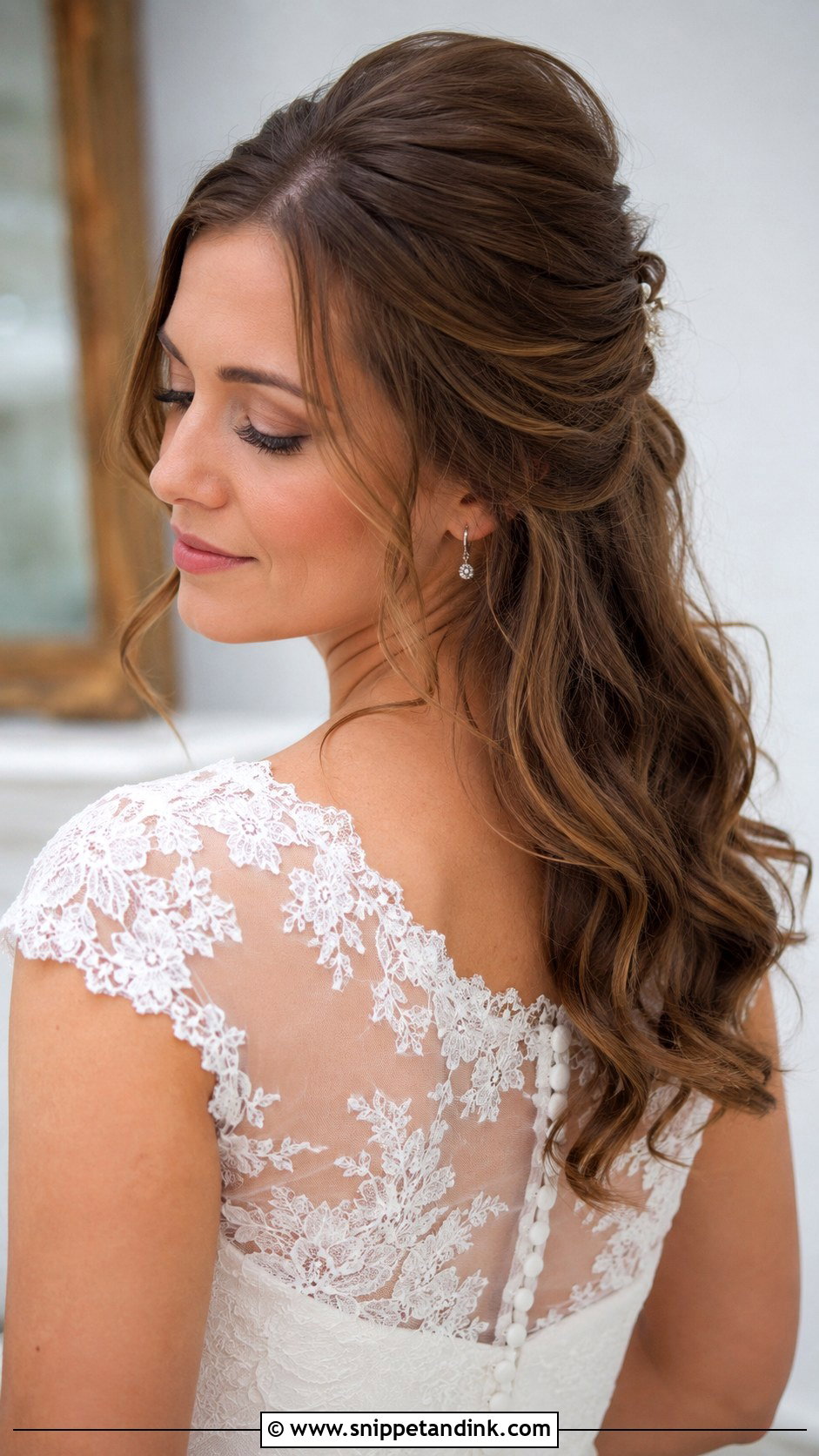
Honestly, this one suits fine hair less often than brides hope. The loose lengths are the problem: fine curls drop within a few hours, especially in humid weather, and then the down portion looks flat. When a bride is set on it, I curl with a smaller barrel than her final wave, set the curls in pin curls while they cool, and tease the crown for lift. A small twist or bun at the back gives the top section something to hold onto. It sits comfortably under most veils.
6. Voluminous Top Knot
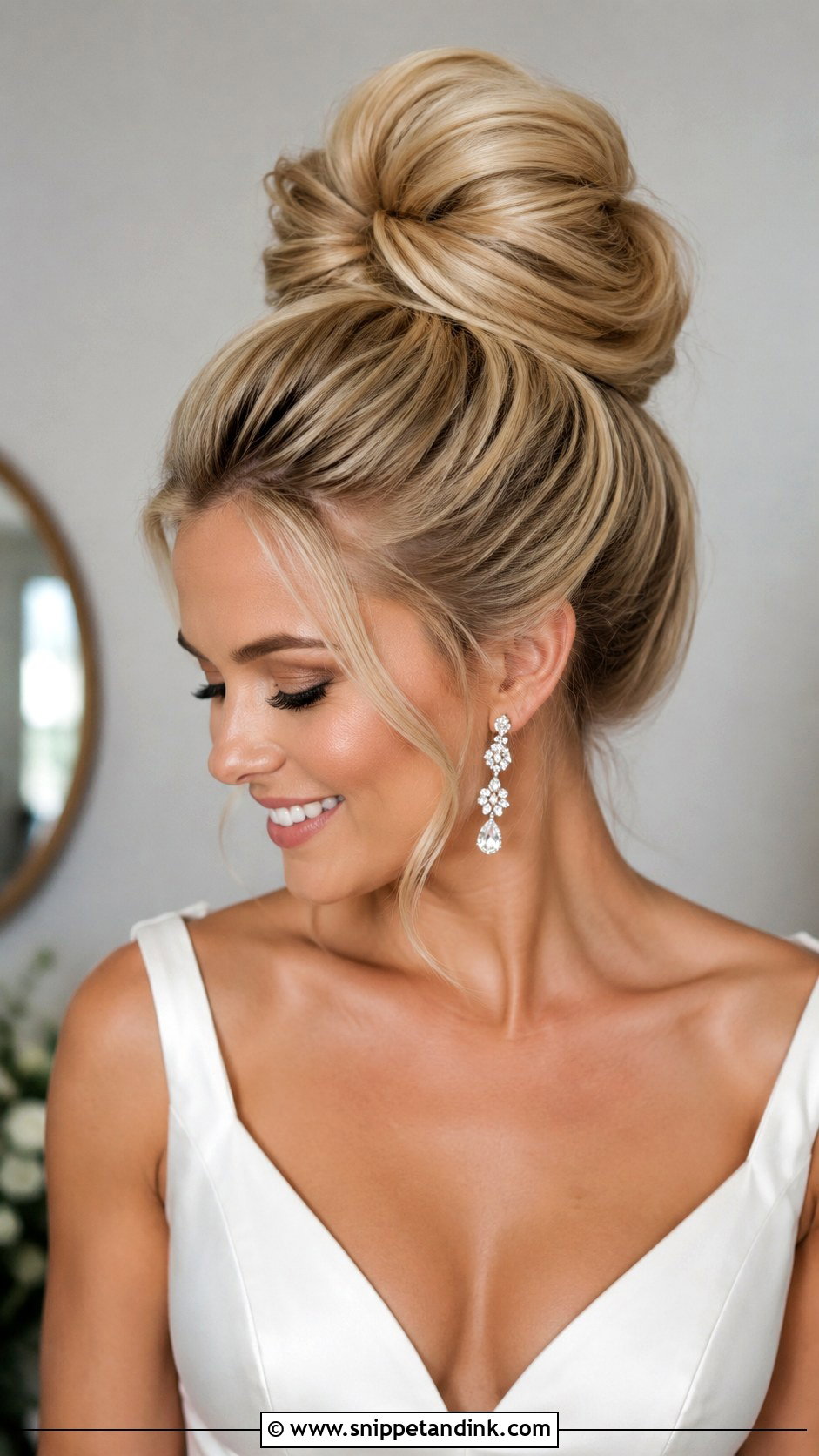
A high knot on fine hair is a construction job. I use a bun filler in a shade close to the hair, tease the roots for lift, then wrap the lengths smoothly around the base and pin into the filler. It lengthens the neck and works with statement earrings, though a long veil has to sit beneath it rather than above. What I check at the trial is coverage: if the filler shows through when you turn your head, we size it down. Finish with a light-hold spray rather than a heavy lacquer, which clumps fine strands together and shows the gaps between them.
7. Fishtail Braid Updo
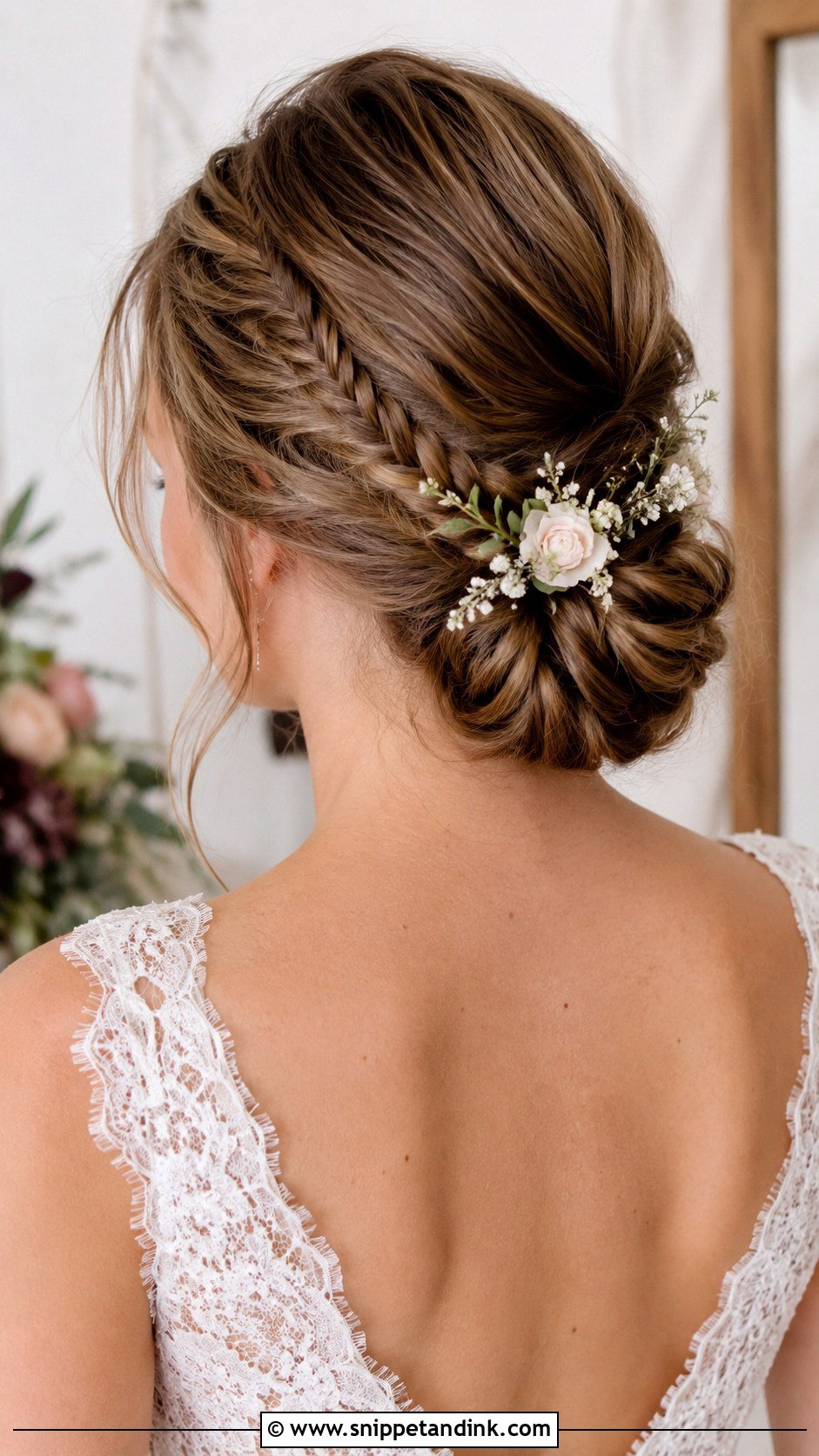
A fishtail has many more crossings than a three-strand braid, so it looks detailed even when there isn’t much hair in it. Pancaked properly, it can read surprisingly full. I usually wrap it into a low bun or coil it at the nape. Fine hair often has short layers that poke out of a fishtail, so I work a little texture paste through the lengths before braiding. The woven pattern holds up well through hugs and suits a barn or garden setting.
8. Pinned Curls Updo
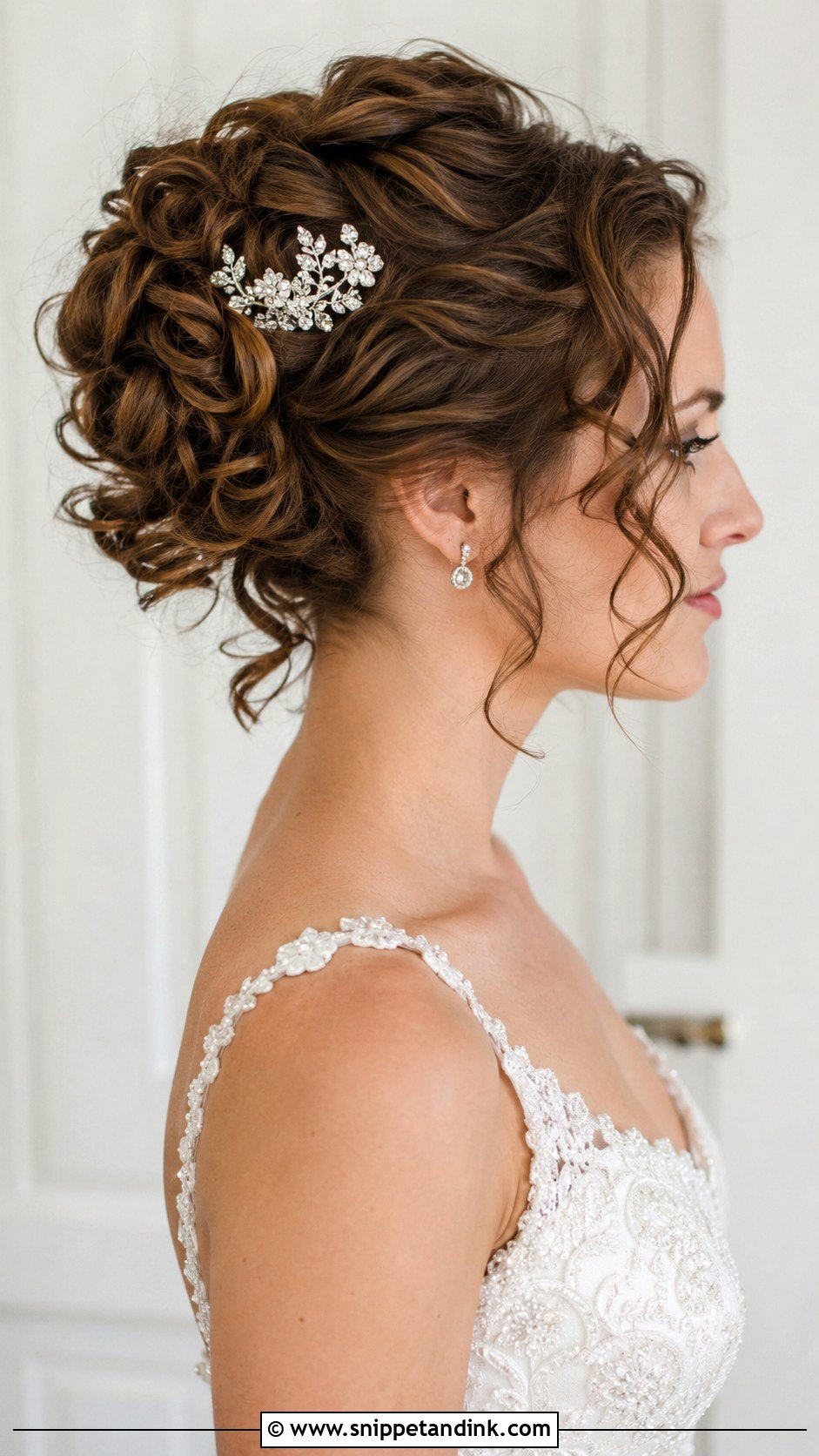
For pinned curls I set every section on a hot tool, let it cool in a clip, and only then pin it up. Fine hair takes a curl quickly but drops it just as quickly if it’s moved while still warm. Arranged loosely at the back, the curls give real height and bounce, with a few tendrils left out to frame the face. A birdcage veil or a single sparkling clip is enough decoration. Once set, they hold from the ceremony through the reception.
9. Loose French Twist
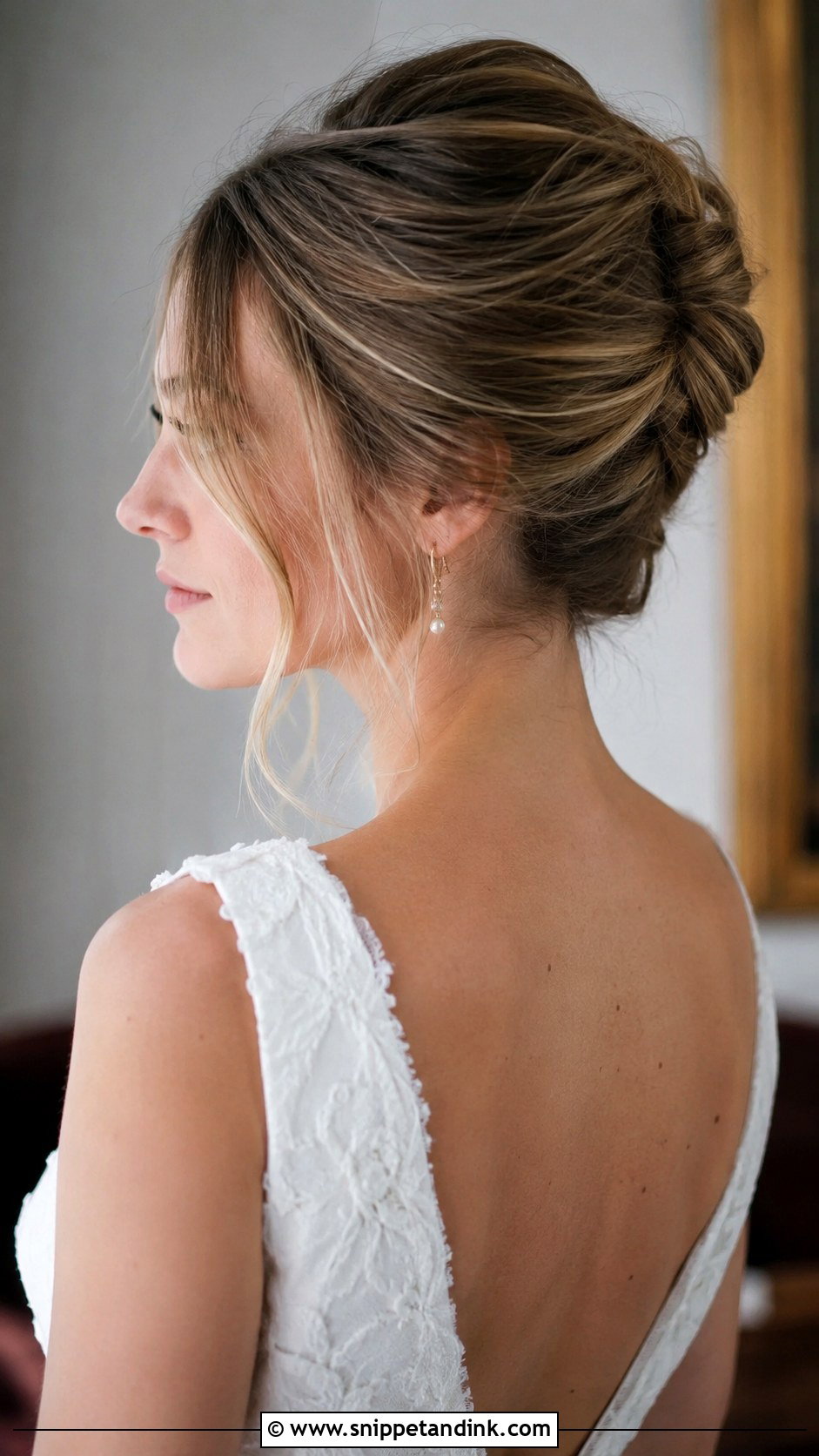
A tight French twist exposes fine hair, so I build a looser version with lift at the crown and a few wispy pieces left out. Crossing bobby pins up the seam, then hiding them in the fold, is what keeps the roll upright on thin hair. The vertical line suits a fitted gown. A long veil tucks under the twist with its comb pointing down into those crossed pins. On very short layers the twist can be too narrow to hold, and I’d suggest a low chignon instead.
10. Rolled Updo With Volume
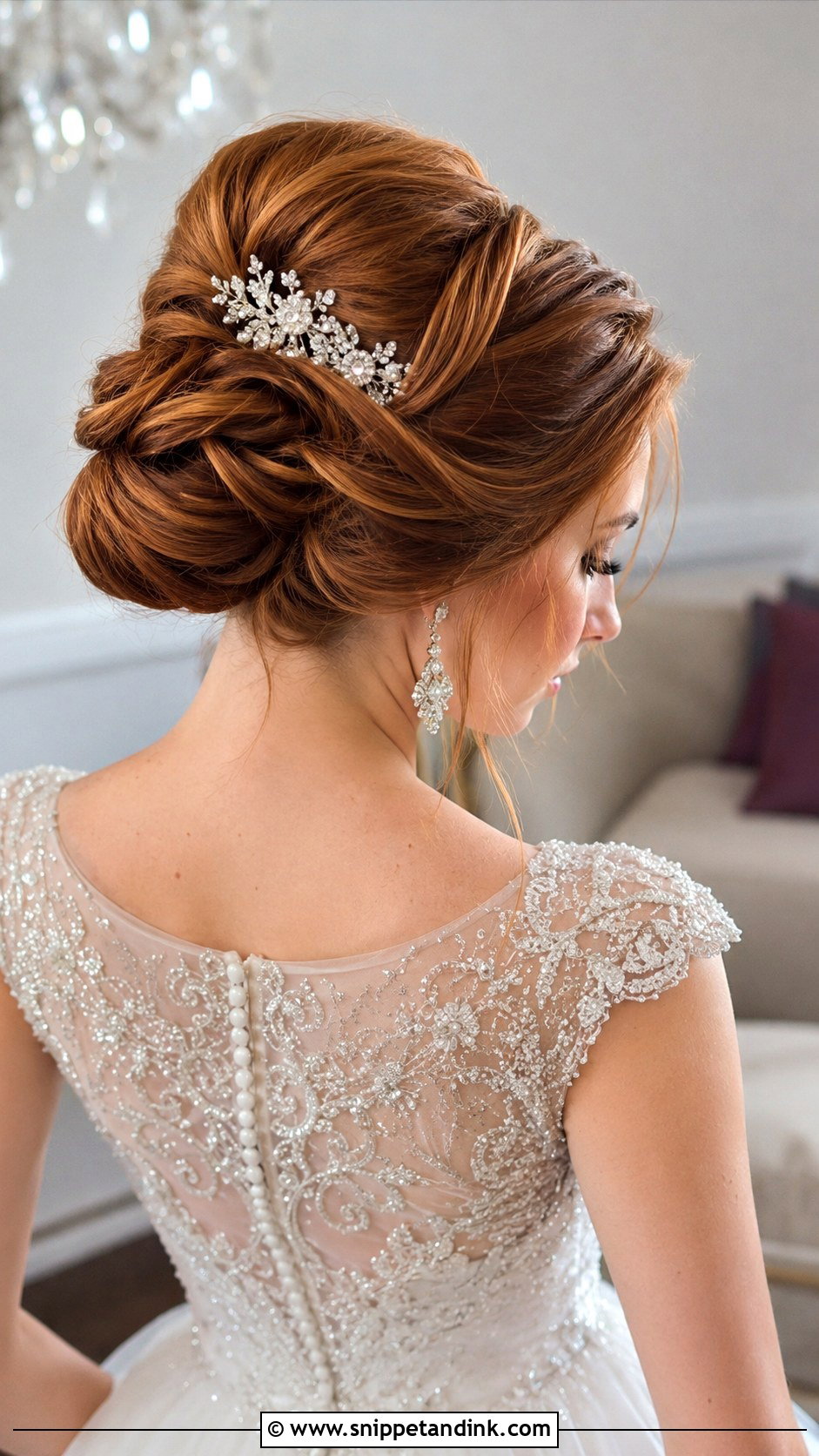
Rolled shapes give fine hair structure it can’t make on its own. I tease the underside of each section, smooth the top layer over it, and roll the hair around two fingers before pinning so the curve stays hollow and round. A jeweled comb or a few pearl pins are all it needs at a formal ceremony or ballroom reception. Rolls forgive a long day, too; once pinned into a backcombed base they barely move.
11. Boho Knotted Updo
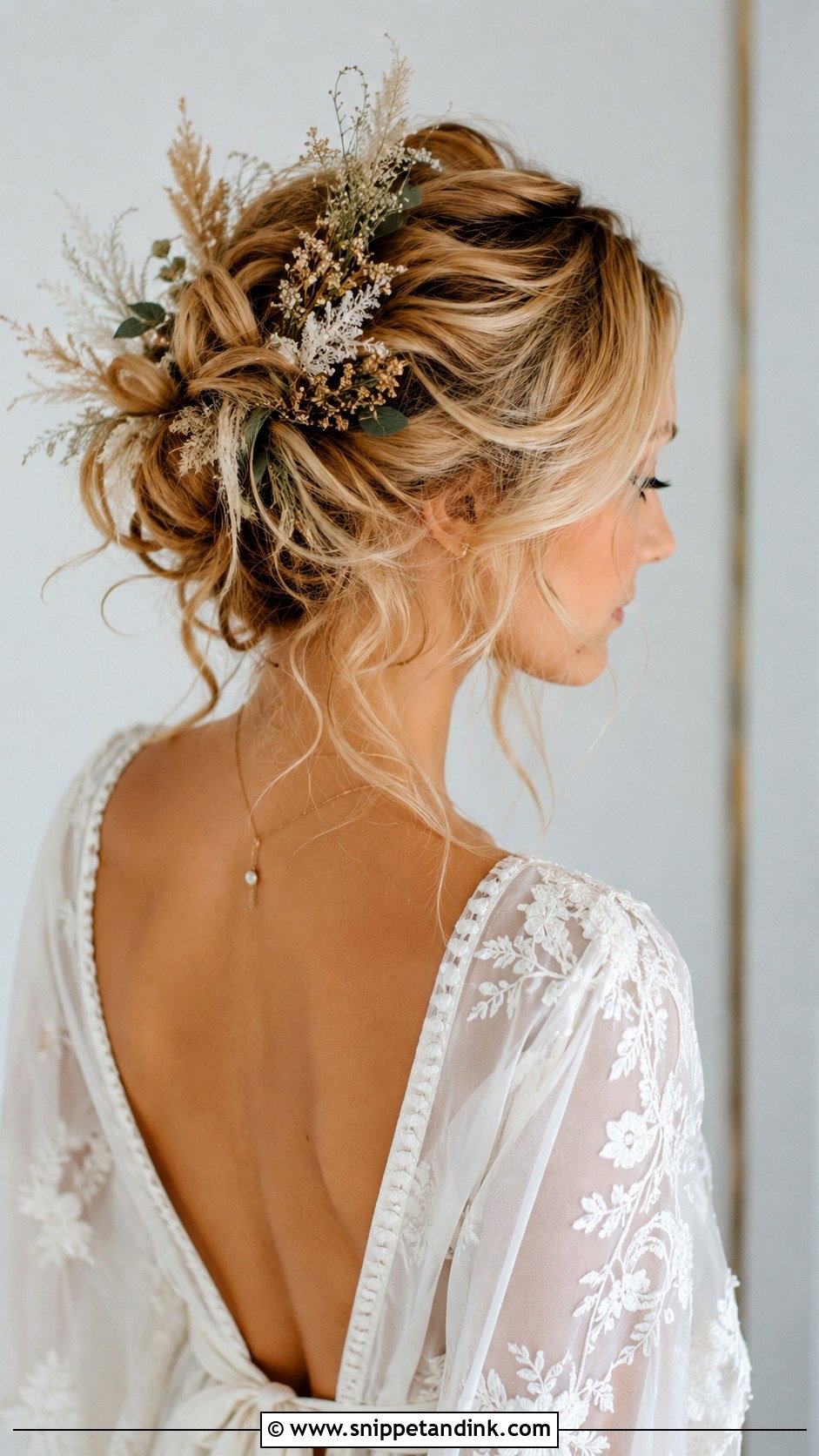
Small knots and loose twists don’t need thick hair to work, which is why I like this one for fine hair. I knot two thin sections together, pin, and repeat, letting the arrangement stay irregular. A few tendrils around the face finish it. Dried flowers or greenery are better than fresh here, since they weigh almost nothing and won’t wilt. It goes naturally with a flowing gown and an outdoor setting.
12. Sleek Low Bun With Accessories
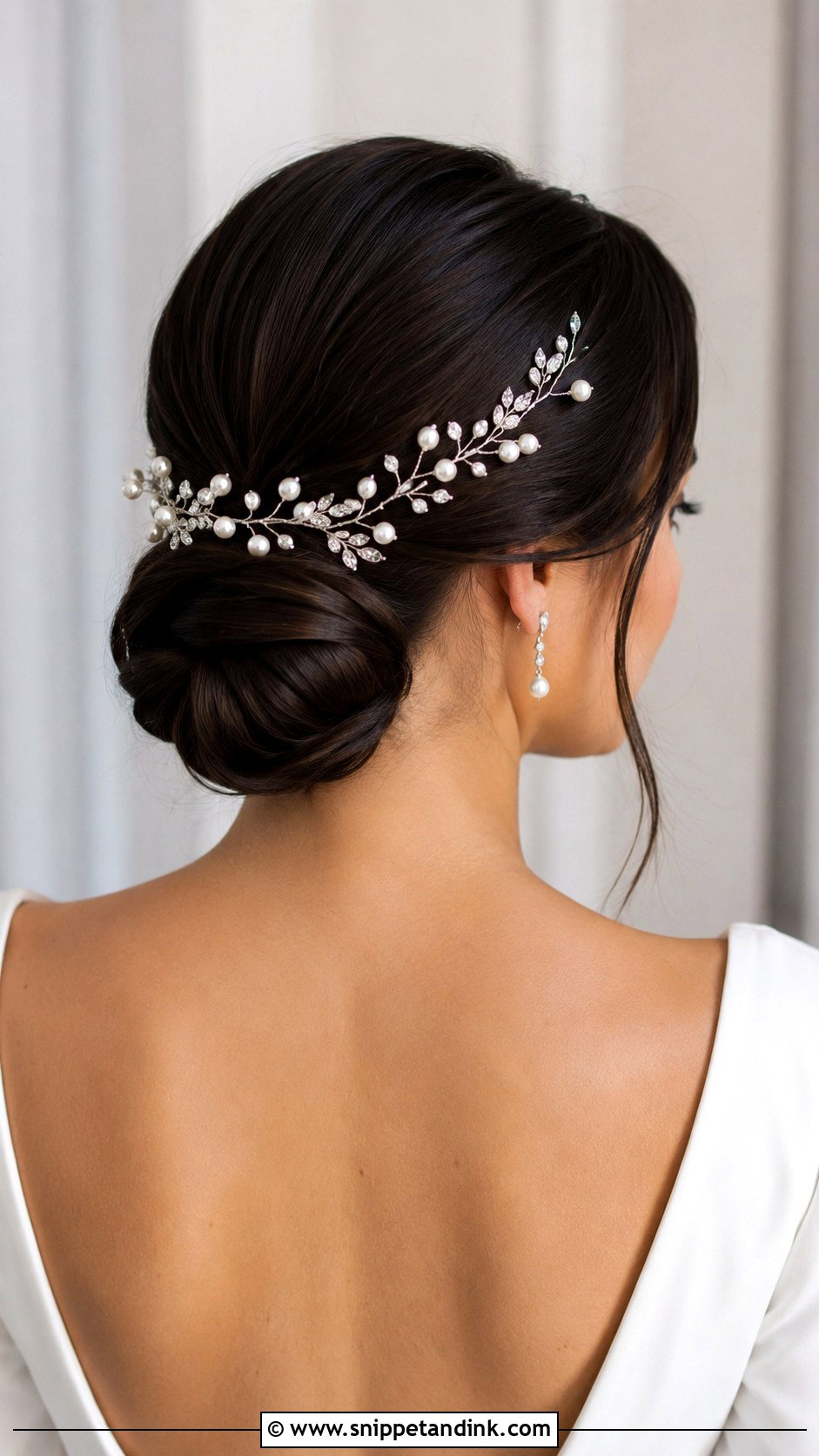
Sleek styles are the hardest on fine hair because they show everything, including the scalp and any thin areas at the temples. I only suggest this bun when a bride’s hairline is fairly dense. Smoothed back and secured into a neat knot at the nape, it relies on accessories: a hair vine, pearl pins or a decorative comb. A small amount of shine spray adds gloss, but too much makes fine hair look greasy under flash. It sits well with a minimal gown and statement jewelry at a city wedding.
13. Braided Bun Combo
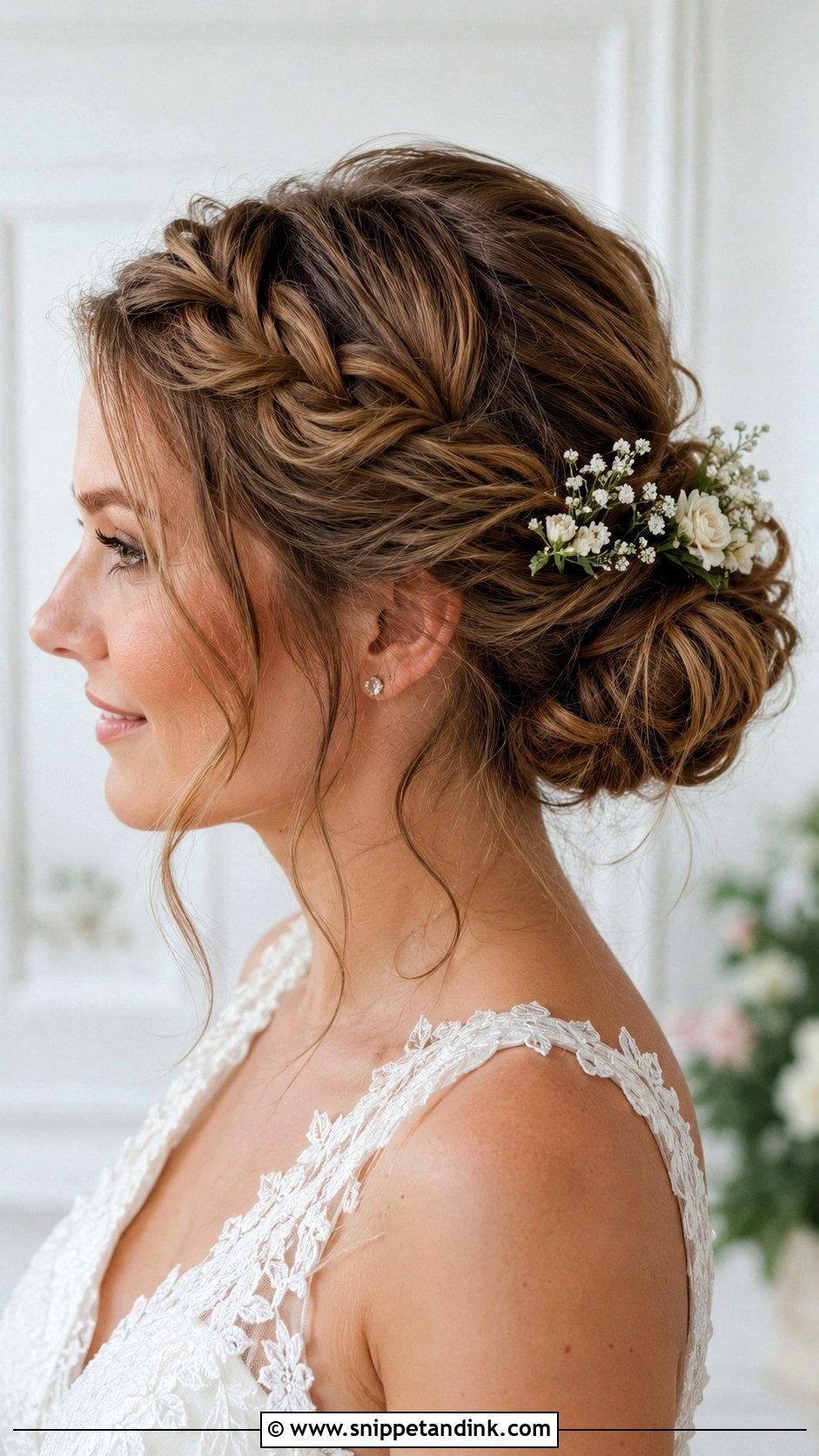
Here the braid adds texture and the bun provides the round shape. I braid first, pancake it, then wrap it around the base of the bun to cover the elastic and any thin patches. How polished or loose you make it decides whether it reads formal or casual. On very thin hair, I sometimes add a clip-in weft only inside the bun, so the braid can still be made from your own hair. A small flower or a delicate pin finishes it.
14. Curly Updo for Fine Hair
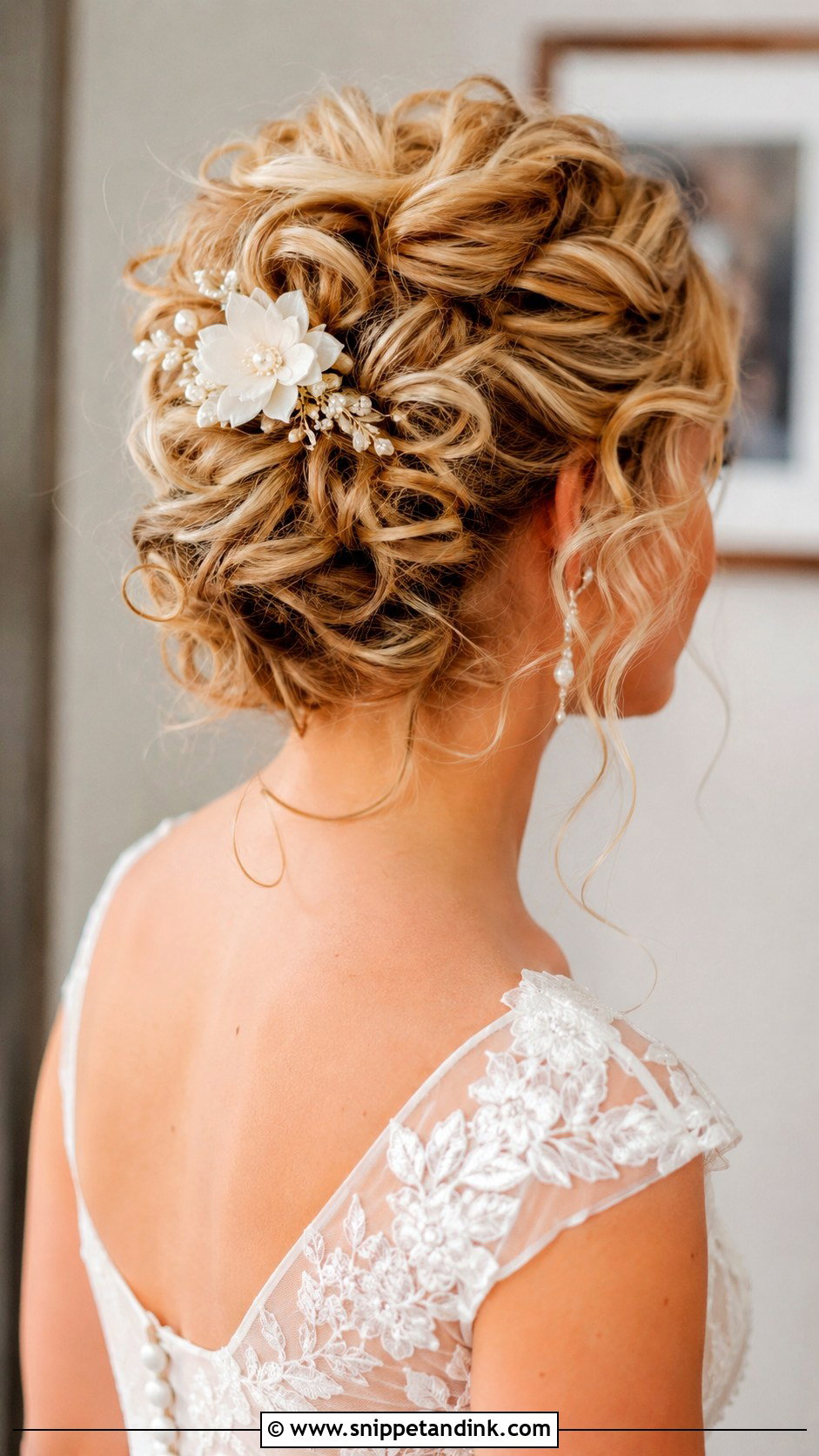
Curling is usually step one for volume, because a curl takes up more space than a straight strand. For this updo I curl everything, brush the curls out gently, then gather and pin them loosely at the back so a few spiral down. If your hair won’t hold a curl overnight, curl on the morning itself, with a setting spray before the heat. Spring and summer weddings suit it, but in high humidity I’d leave fewer spirals hanging loose.
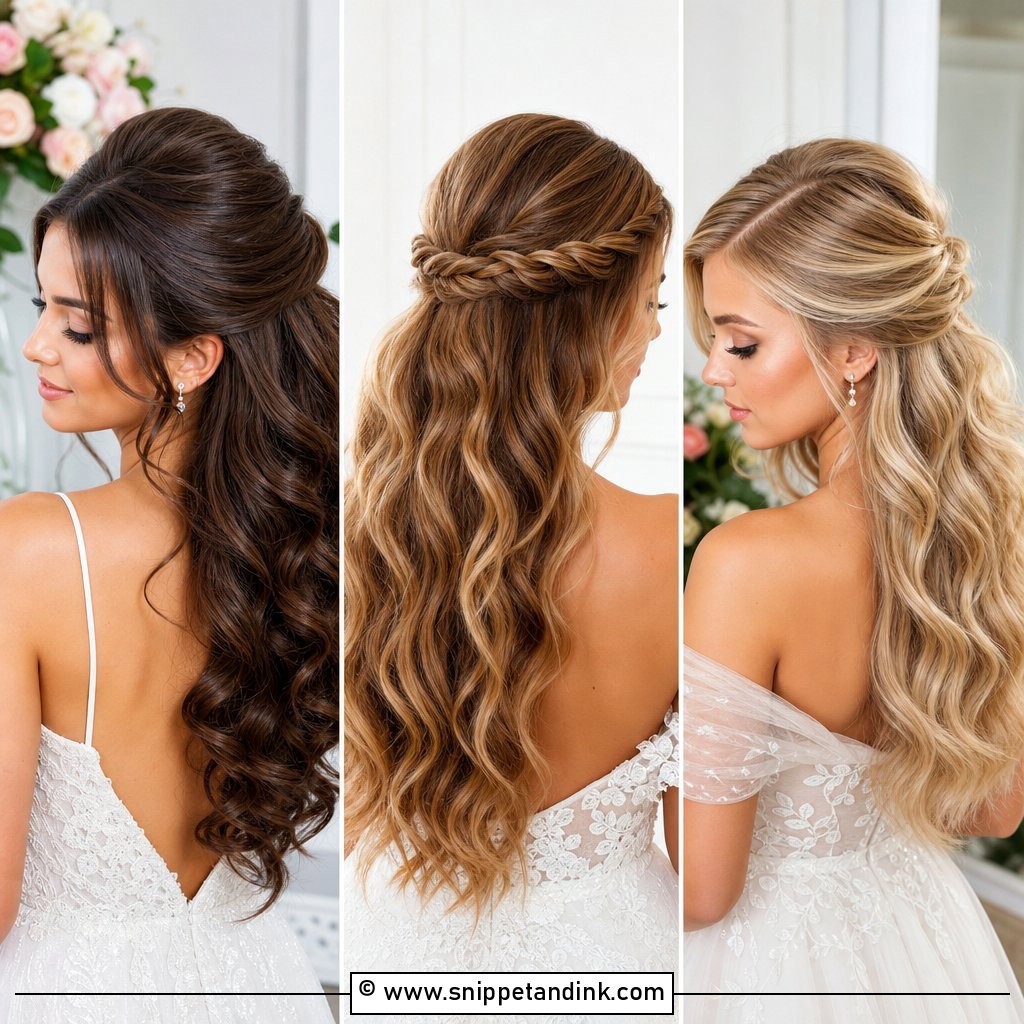
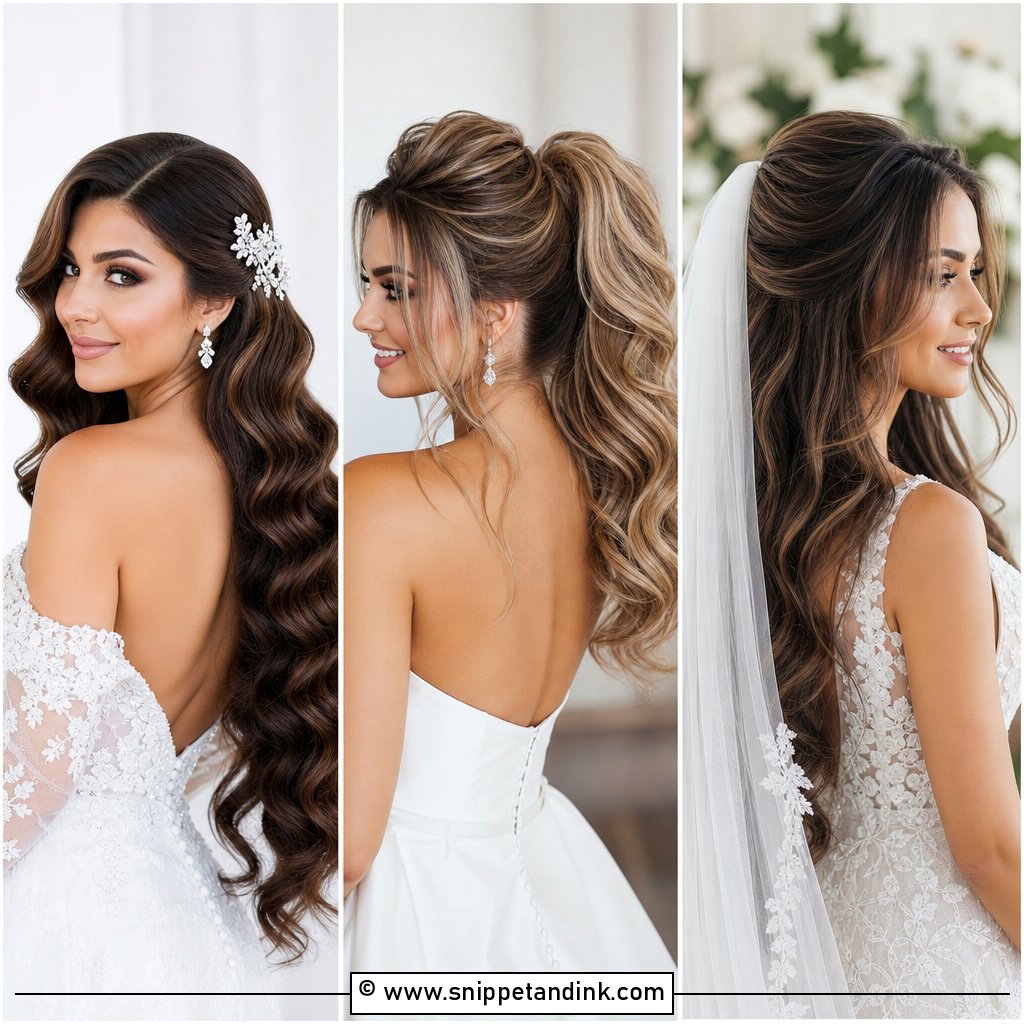
15. Twisted Halo Updo
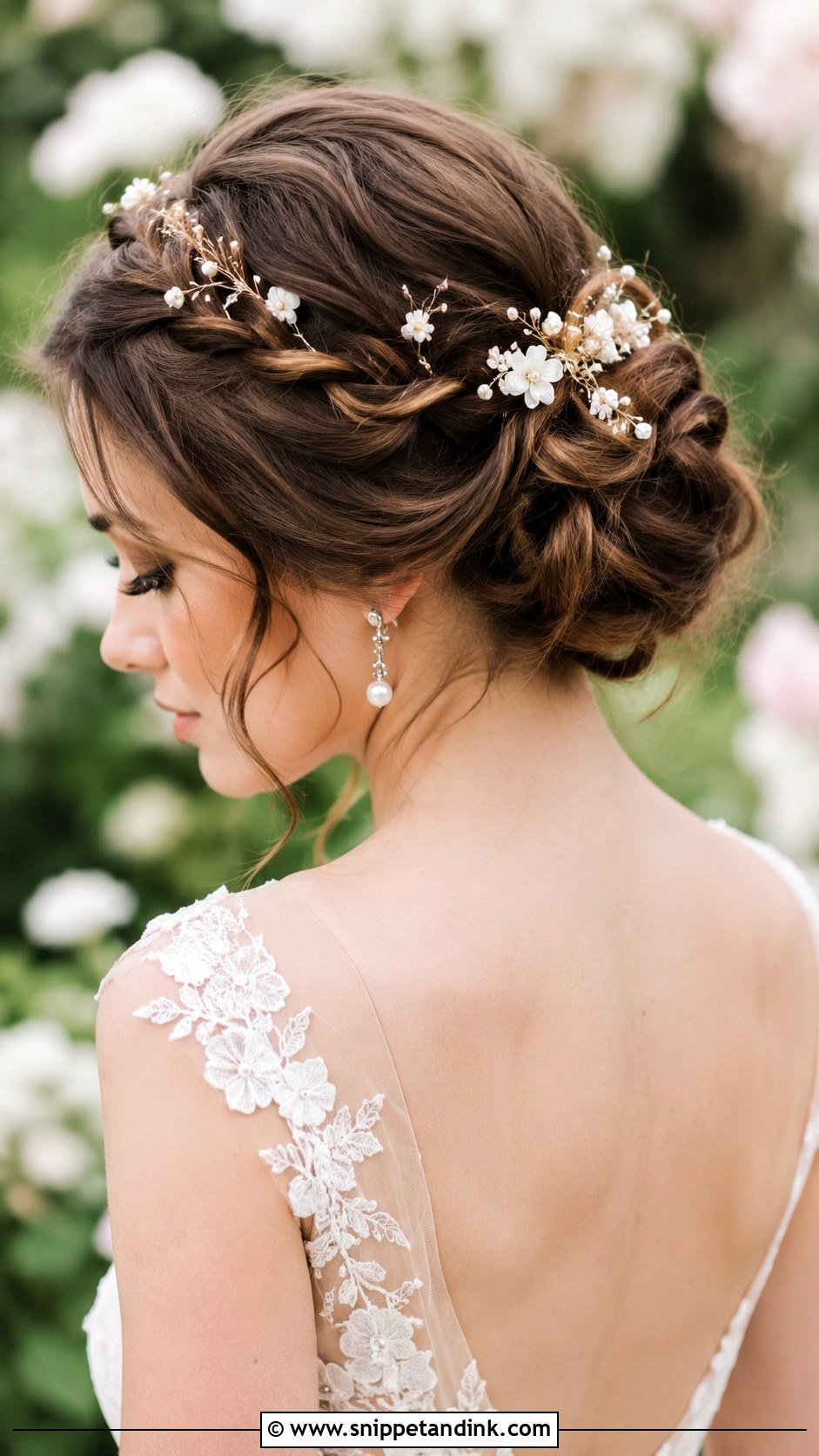
A halo of rolled sections builds width around the head. I start at one temple, twist backward while adding hair, and pin every few inches so the weight doesn’t pull from one spot. Each twist then gets loosened gently to fill it out. Tiny flowers or pearls tuck into the folds. Keeping hair off the neck helps at a hot outdoor wedding. Very short layers at the nape can escape, so I pin those separately underneath before I start the twist.
16. Low Chignon With Tendrils
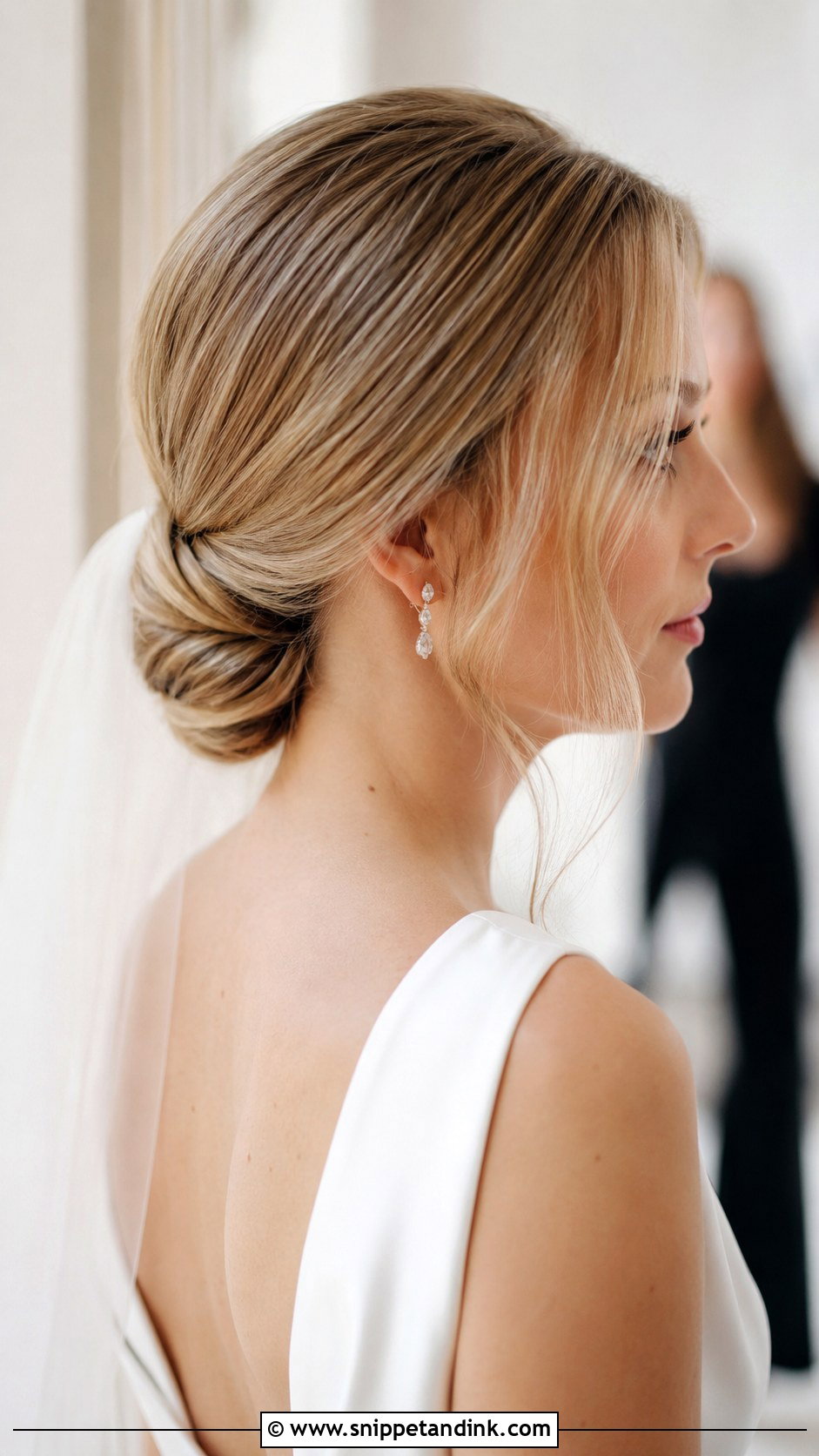
A low chignon with loose tendrils balances a smooth knot with soft pieces at the face. With fine hair, I pull the tendrils from the front hairline only after the chignon is pinned, because taking them first steals hair the knot needs. A little teasing at the crown adds height. Keep the tendrils curled with a small iron; straight wisps on fine hair just look like they fell out. It sits well with a sleek gown and statement earrings.
17. Knotted Ponytail Updo
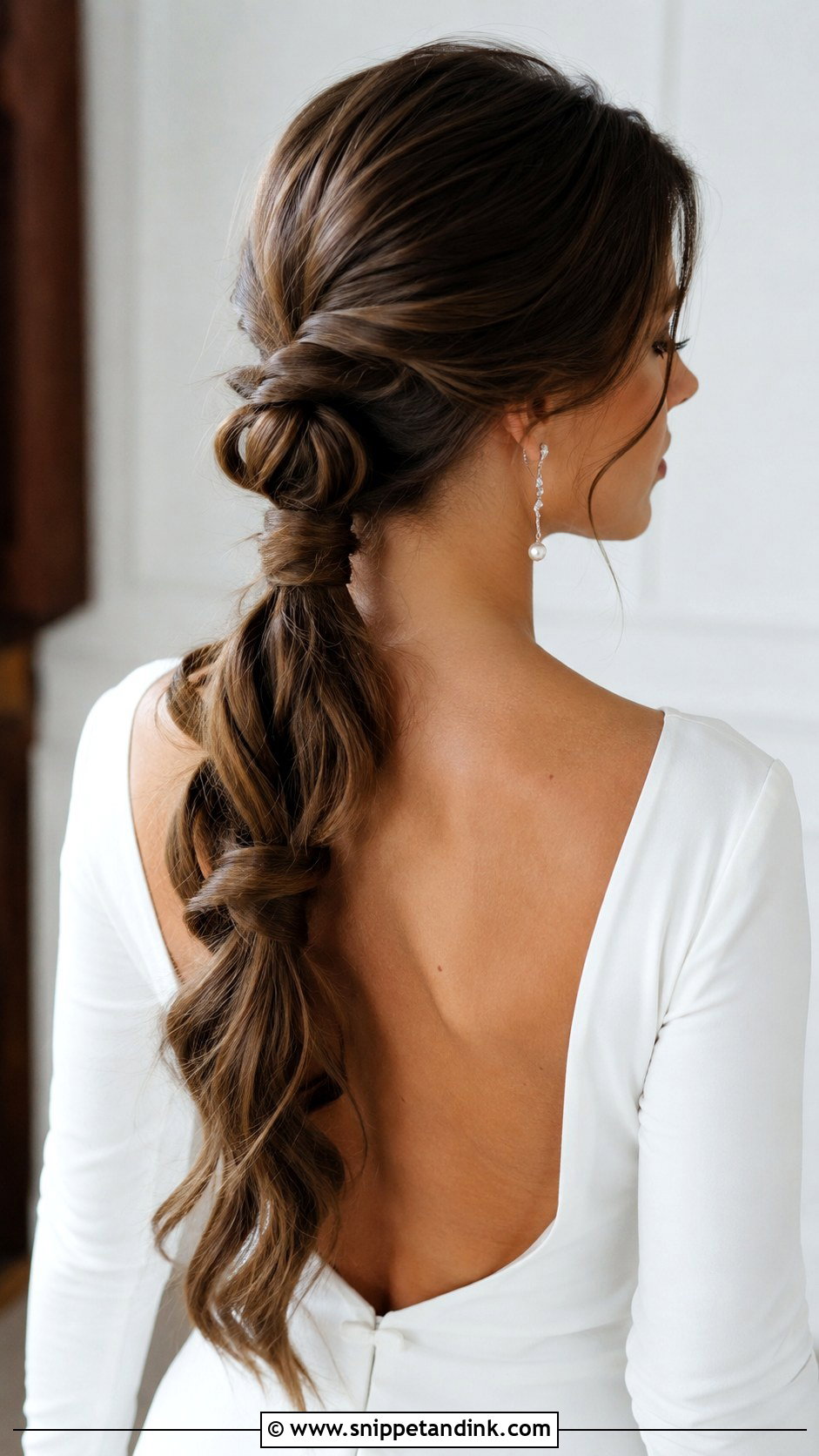
Picture a low ponytail with a series of small knots running down it. Each knot gathers the hair, so the length looks thicker than a plain pony would. I hide the elastic with a wrapped strand and loosen every section slightly. The weak point on fine hair is the ends: if they’re very thin, the last few inches look wispy, and I’d finish with a small curl or tuck them under. A sleek gown and minimal accessories keep it modern.
18. Vintage Victory Rolls
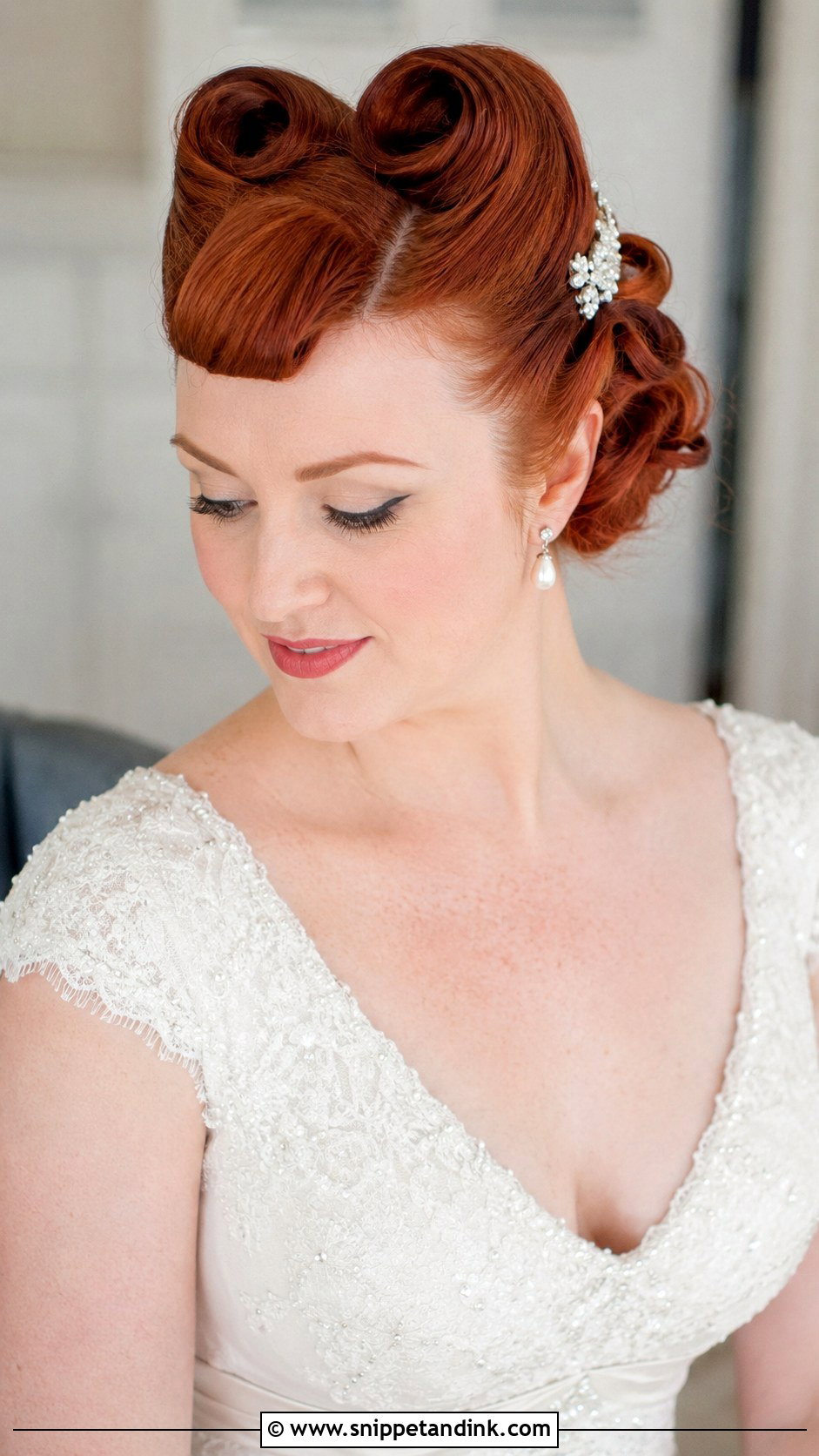
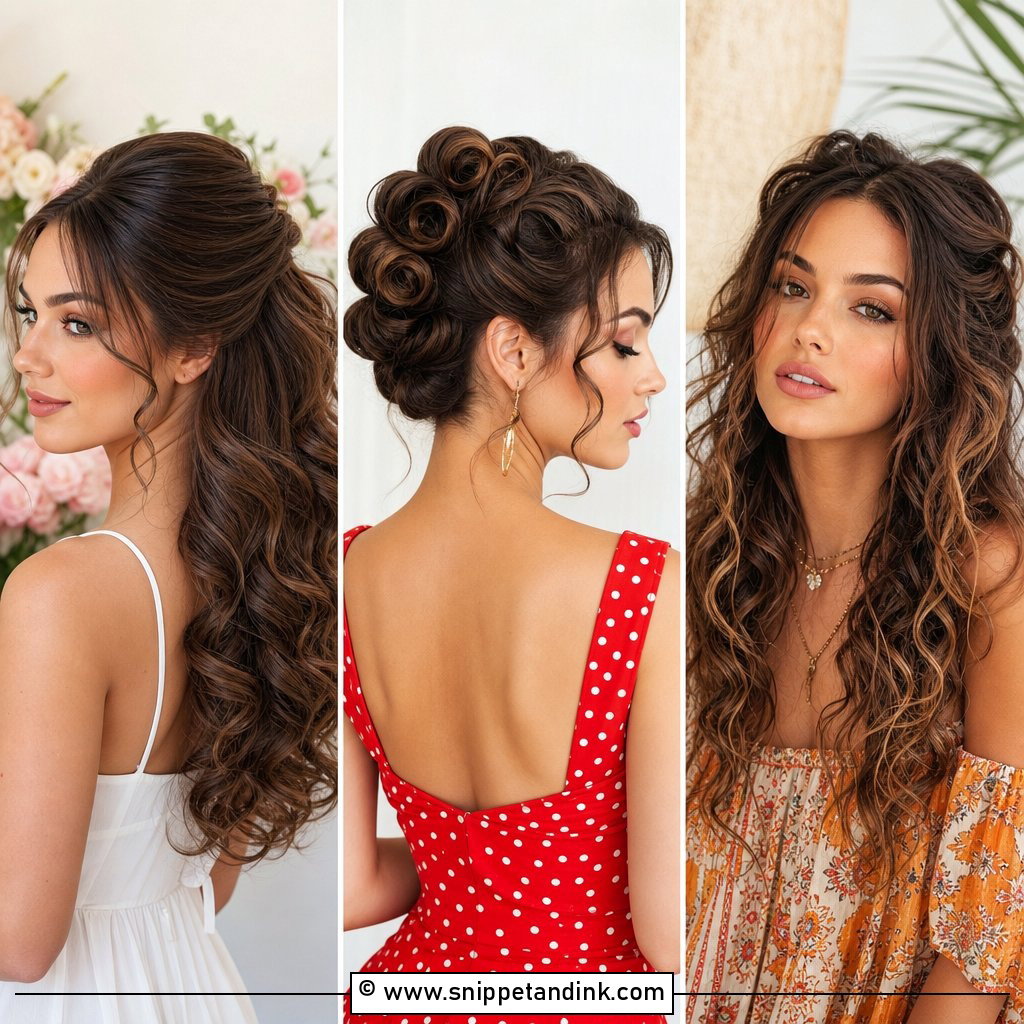
Inspired by retro glamour, vintage victory rolls give fine hair real height at the crown. I backcomb the inside of each roll, smooth the outside, and roll it over two fingers before pinning so it stays hollow. Fine hair actually rolls well because it’s light; the risk is visible teasing if the outer layer is too thin to cover it. Pair the rolls with a low bun or soft curls at the back, and add a vintage comb or small fascinator. It’s theatrical, so the gown and makeup need to belong to the same era.
19. Romantic Side Swept Updo
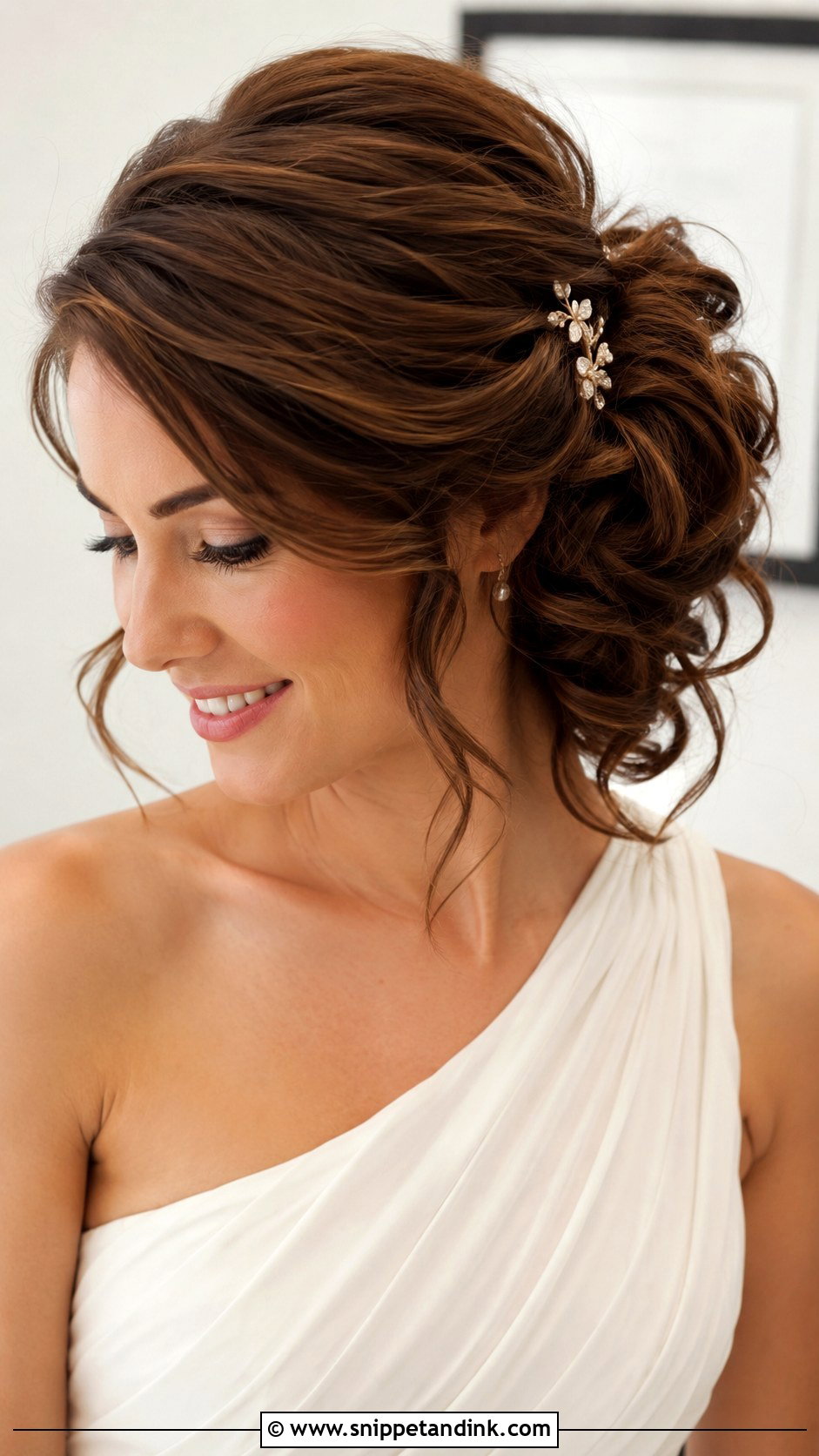
Sweeping everything to one side puts all your hair in one place, which concentrates the volume. I pin a crisscross of bobby pins behind the ear on the far side as an anchor first, then build curls or twists on top of it. It flatters a one-shoulder gown and leaves the other ear open for a statement earring. Think about which side your partner stands on at the ceremony; sweeping the hair away from them keeps it visible in your shared photos.
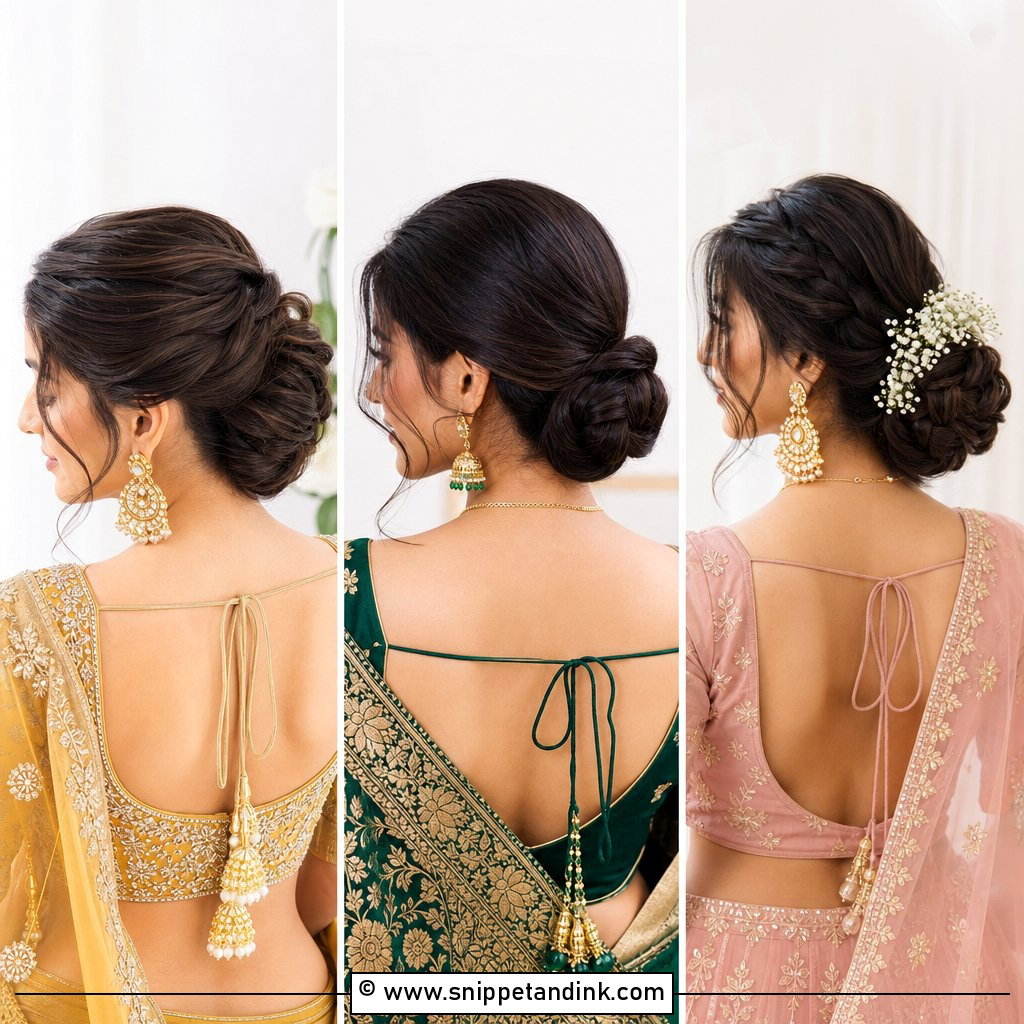
20. Tousled Updo With Flowers
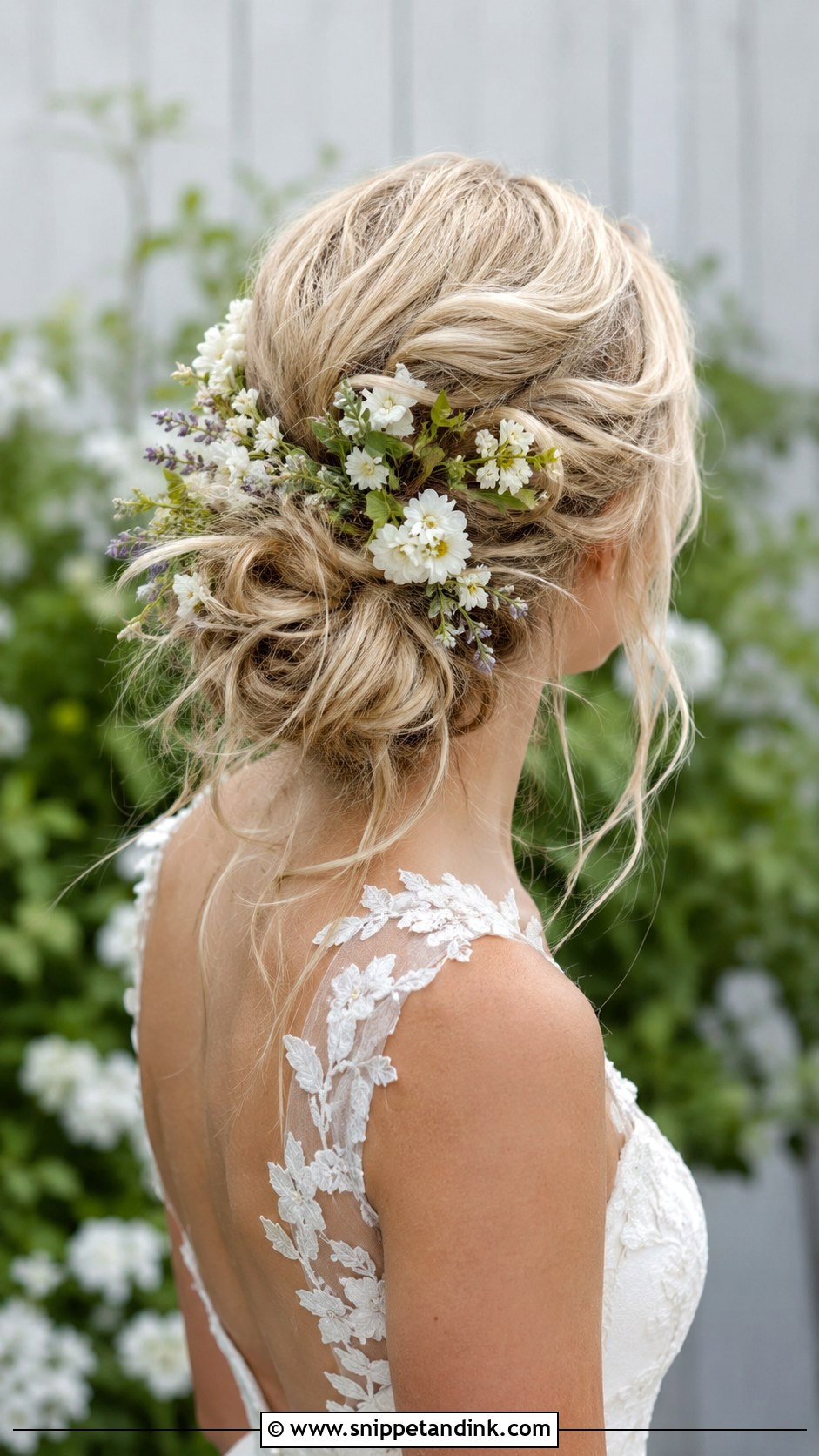
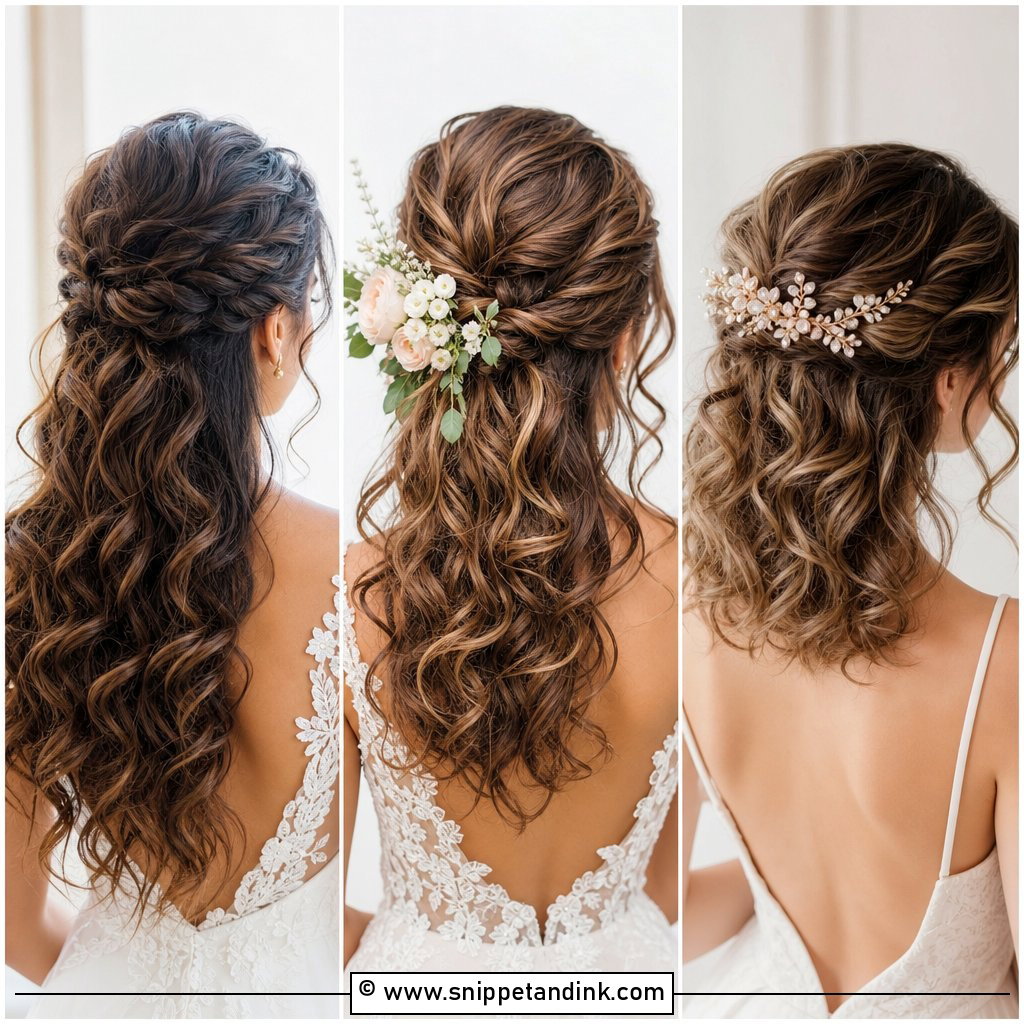
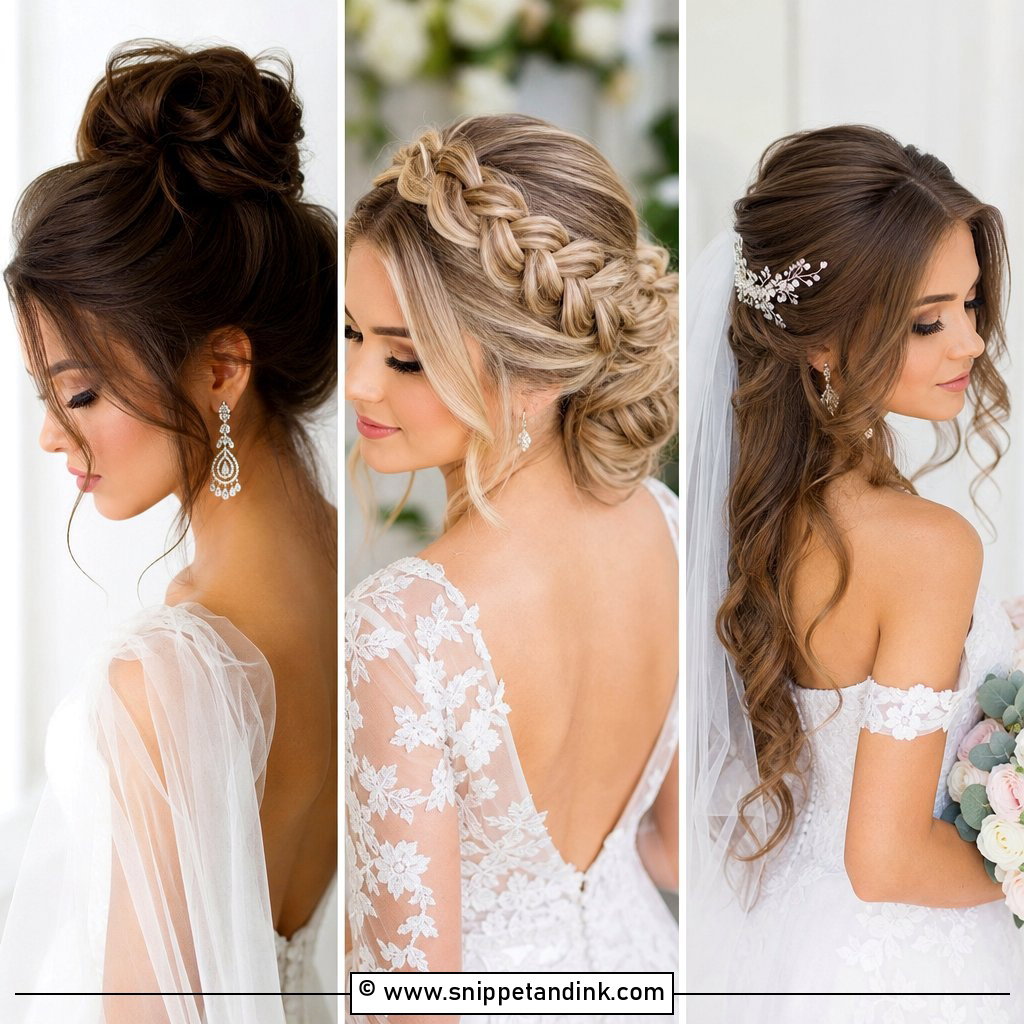
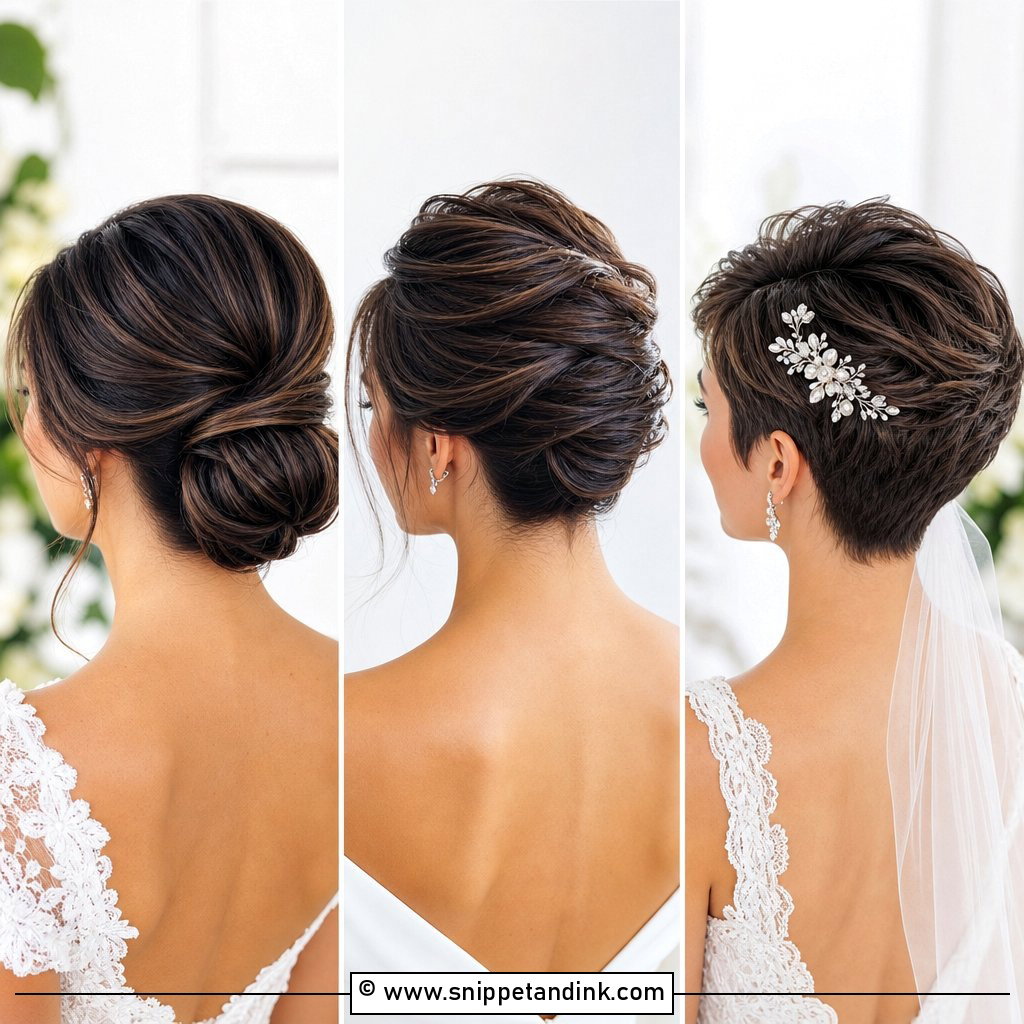
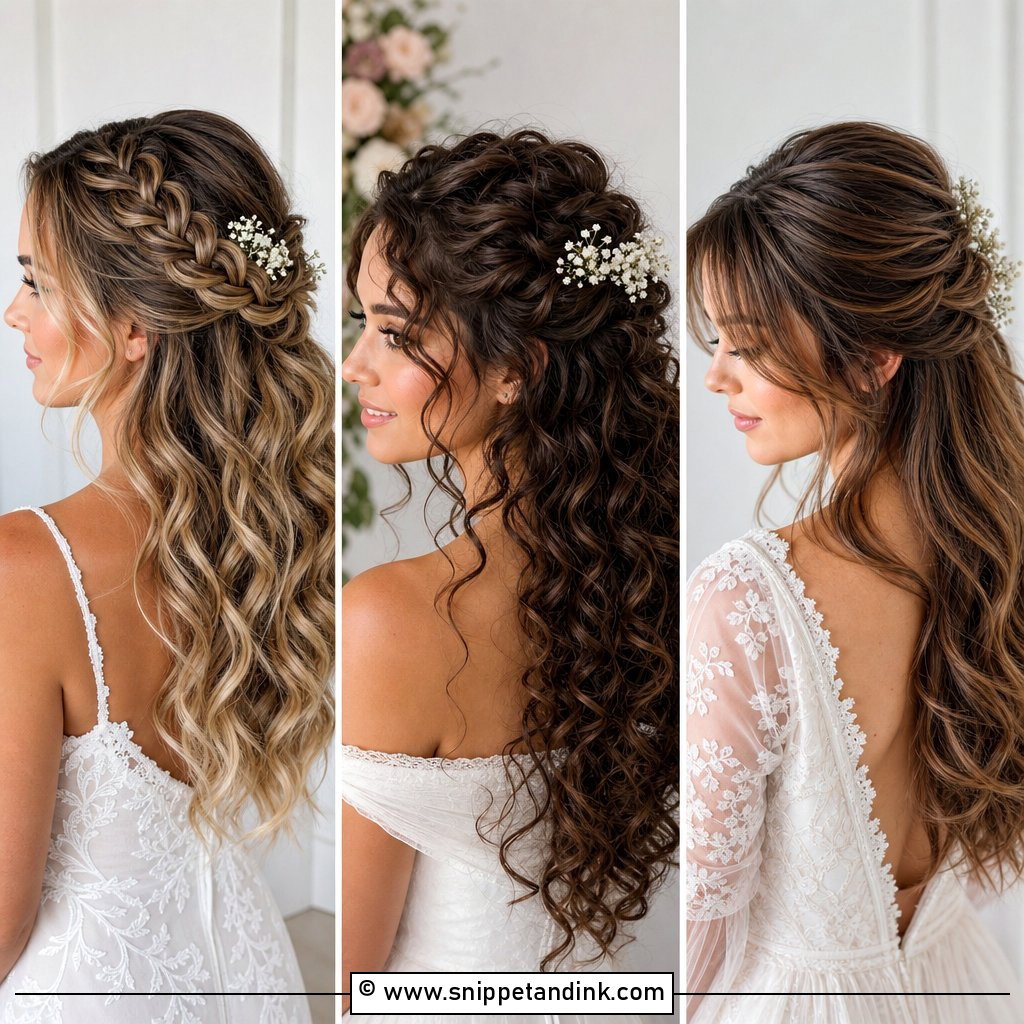
Flowers fill gaps in a loose updo, which is handy on thin hair. The style itself is loosely gathered and pinned into an undone shape. I wire small blooms and pin them into the backcombed base, never into loose strands, because a stem pulls fine hair out of place within an hour. Sturdy blooms like spray roses or wax flower last far longer out of water than delicate ones. Matching them to your bouquet ties the look together.
21. Elegant Bun With Braided Detail
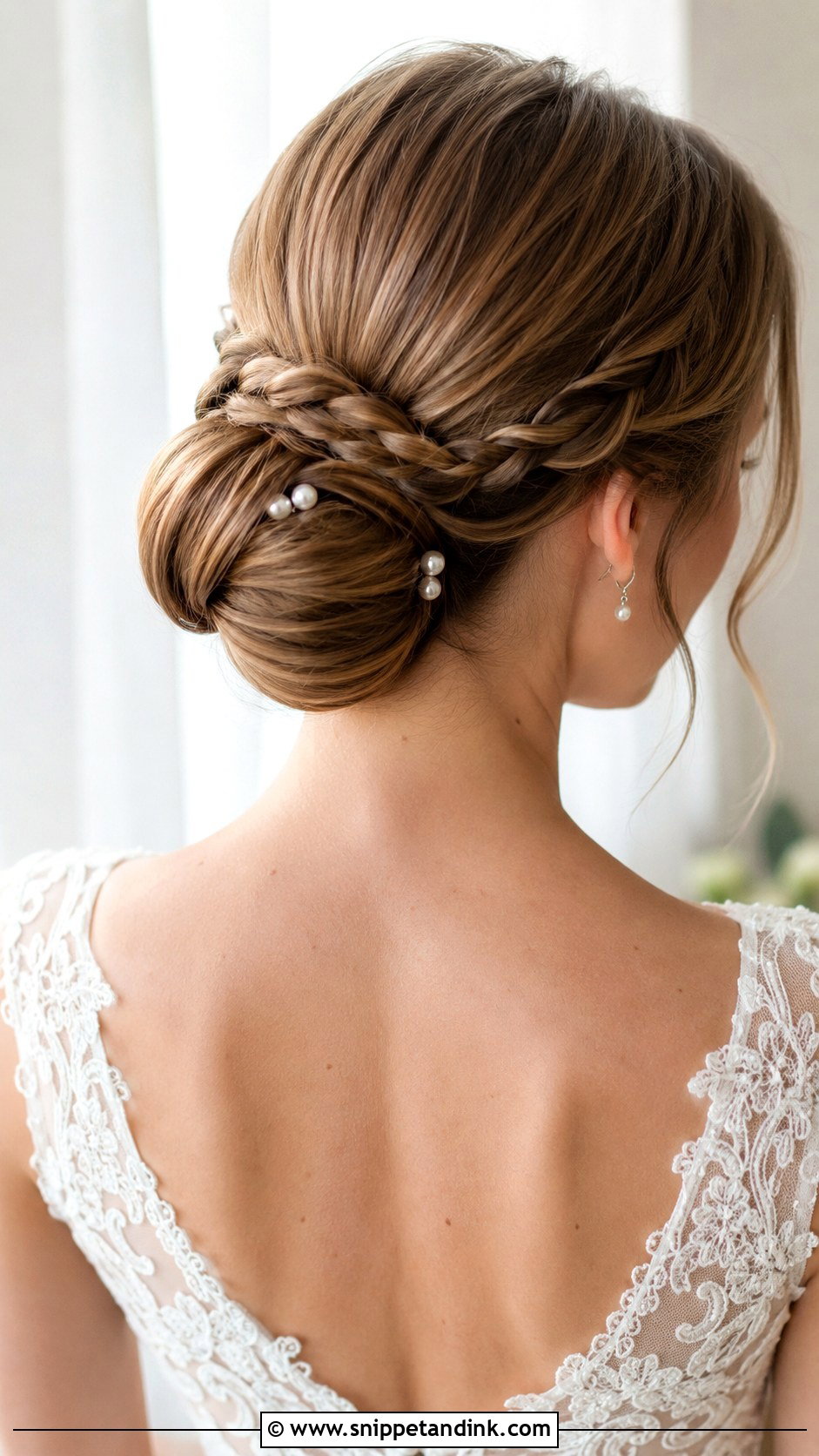
A thin braid wrapped around or through a smooth, low bun turns a simple shape into something with detail. On fine hair the braid adds texture and makes the bun look thicker. I take the braid from underneath at the nape so it doesn’t reduce the hair available for the bun. Loosen the bun slightly for softness. Pearl pins or a small comb are enough for a formal ceremony.
22. Soft Waves Pinned Updo
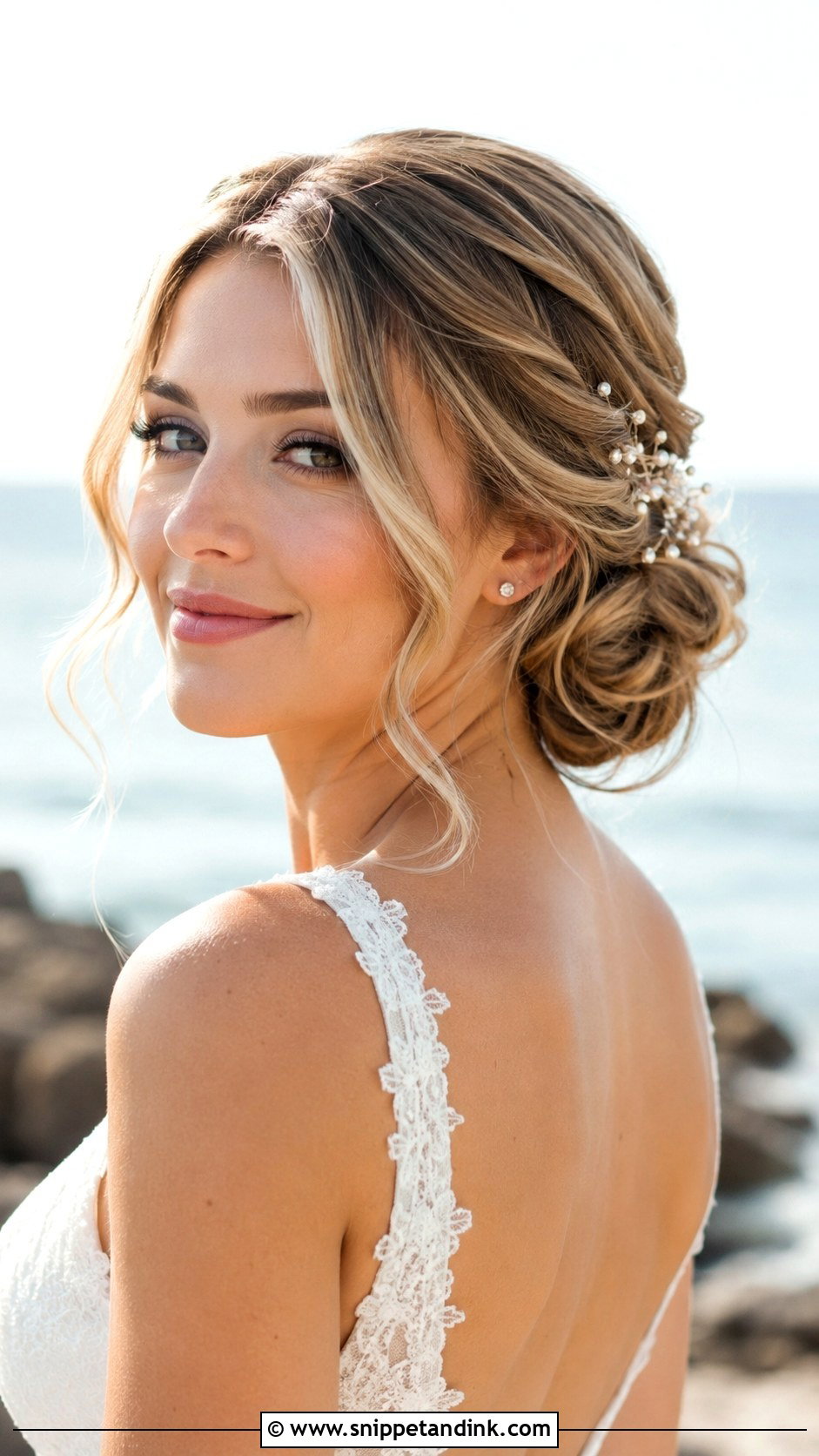
I wave the hair first, then pin sections up loosely so the waves stay visible. Fine hair waves easily but flattens as soon as it’s brushed hard, so I separate the waves with my fingers only. Soft pieces around the face finish it. At a beach wedding, wind and salt air loosen this more than most styles, so I pin it a little tighter there. A delicate hairpiece or a few small flowers suit it.
23. Crown Twist Updo
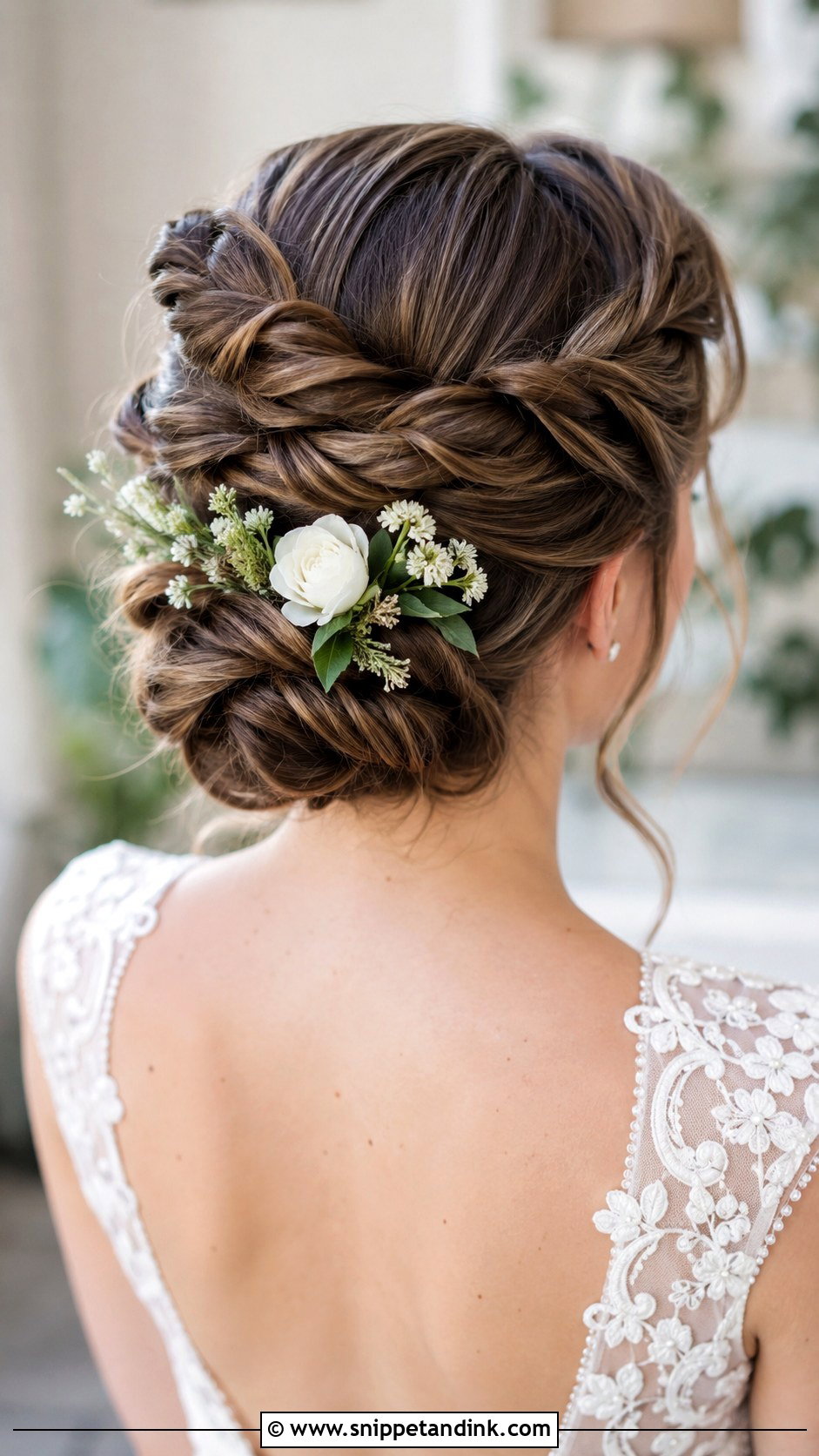
Twists taken from the front and sides meet at the back of the head and finish in a soft bun or roll, which builds the crown height fine hair often lacks. I secure each twist as I go instead of gathering everything at the end, because fine hair slips out of a twist under its own tension. Loosening them adds fullness. It keeps hair off the neck and frames the face, and accessories or fresh flowers slot easily into the twists.
24. Low Knot With Pearl Pins
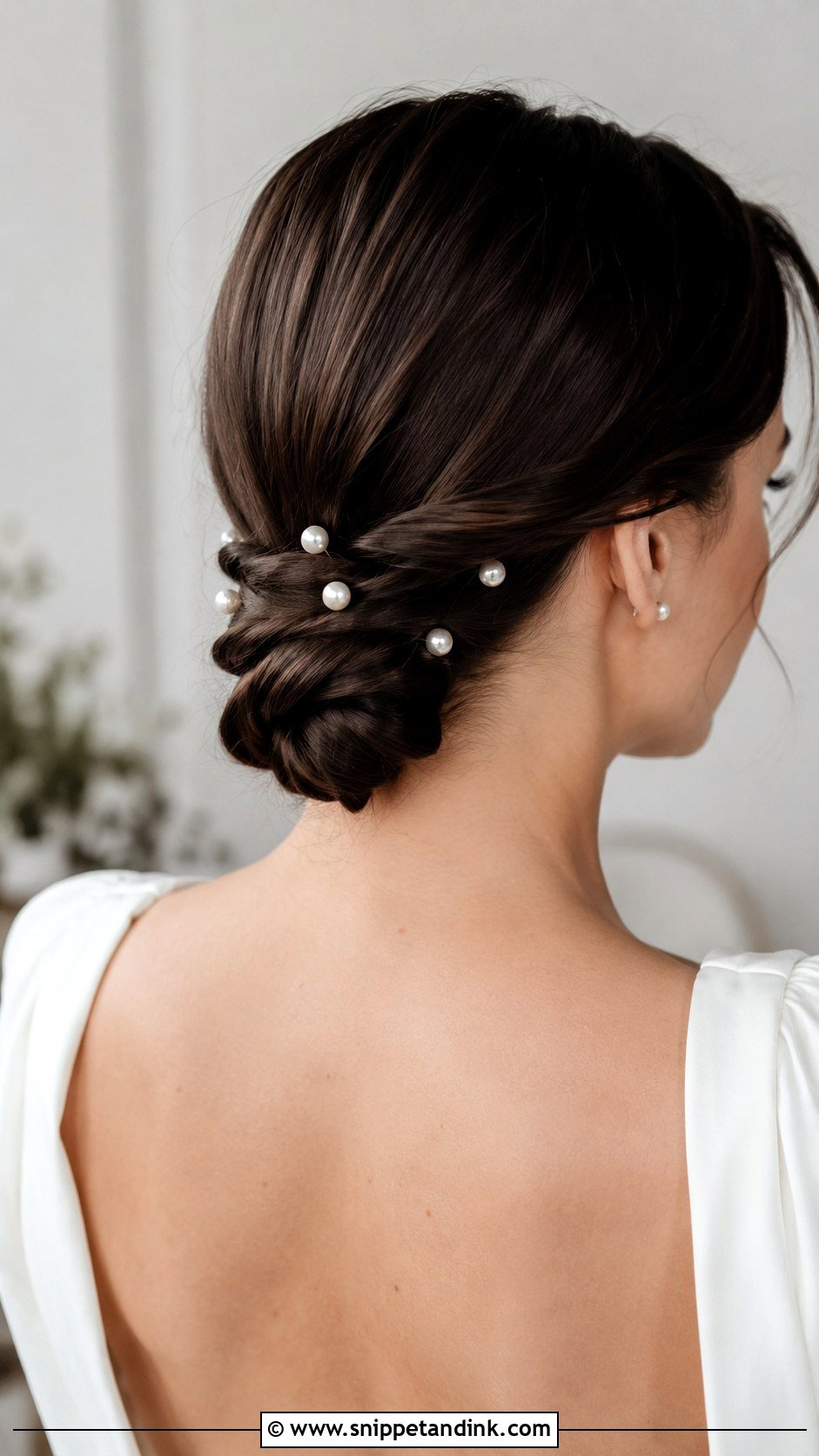
A smooth knot at the nape with scattered pearl pins is one of the simplest updos here. The focus shifts from volume to detail, which takes pressure off fine hair. I tease the crown lightly for lift. Pearl pins with a spring or a slightly bent shank grip fine strands better than straight ones; plain decorative pins tend to slide out by dinner. It suits nearly any theme and gown.
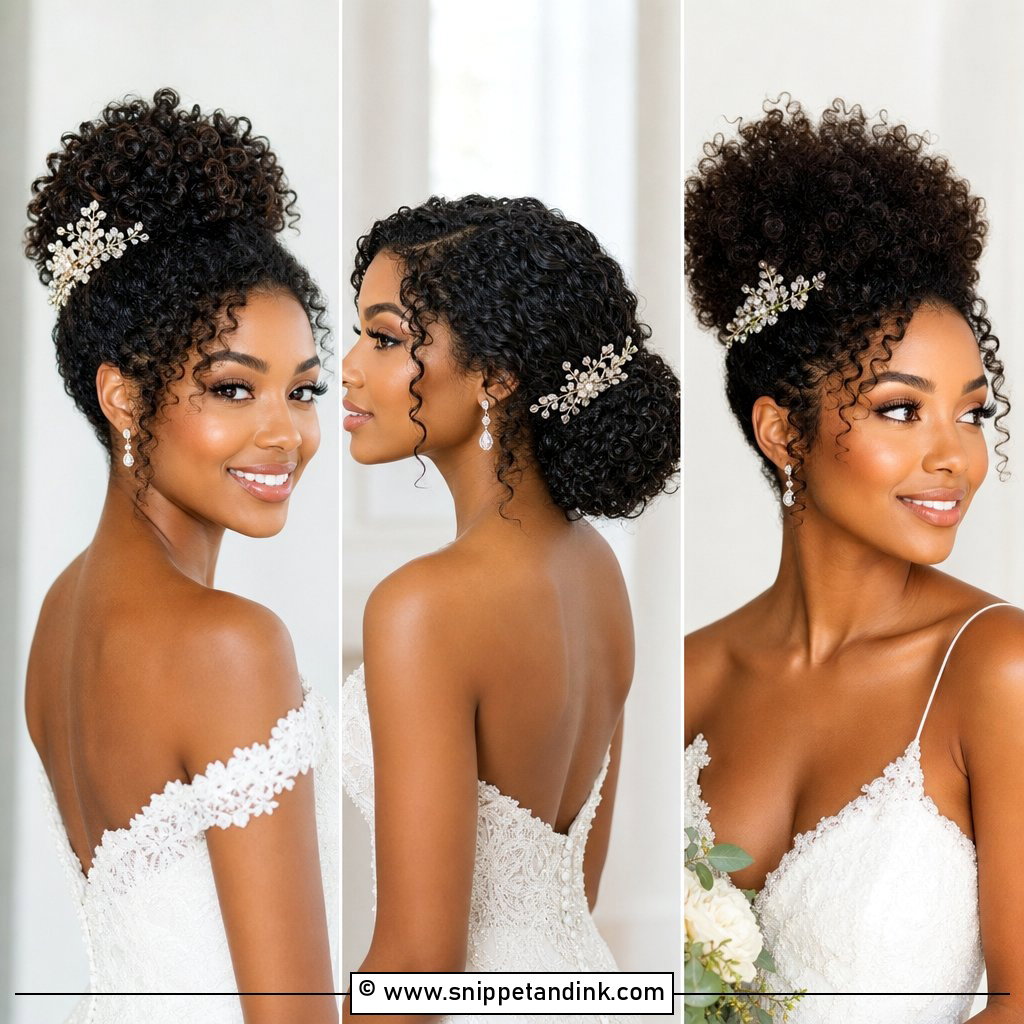
25. Messy Updo With Face-Framing Pieces
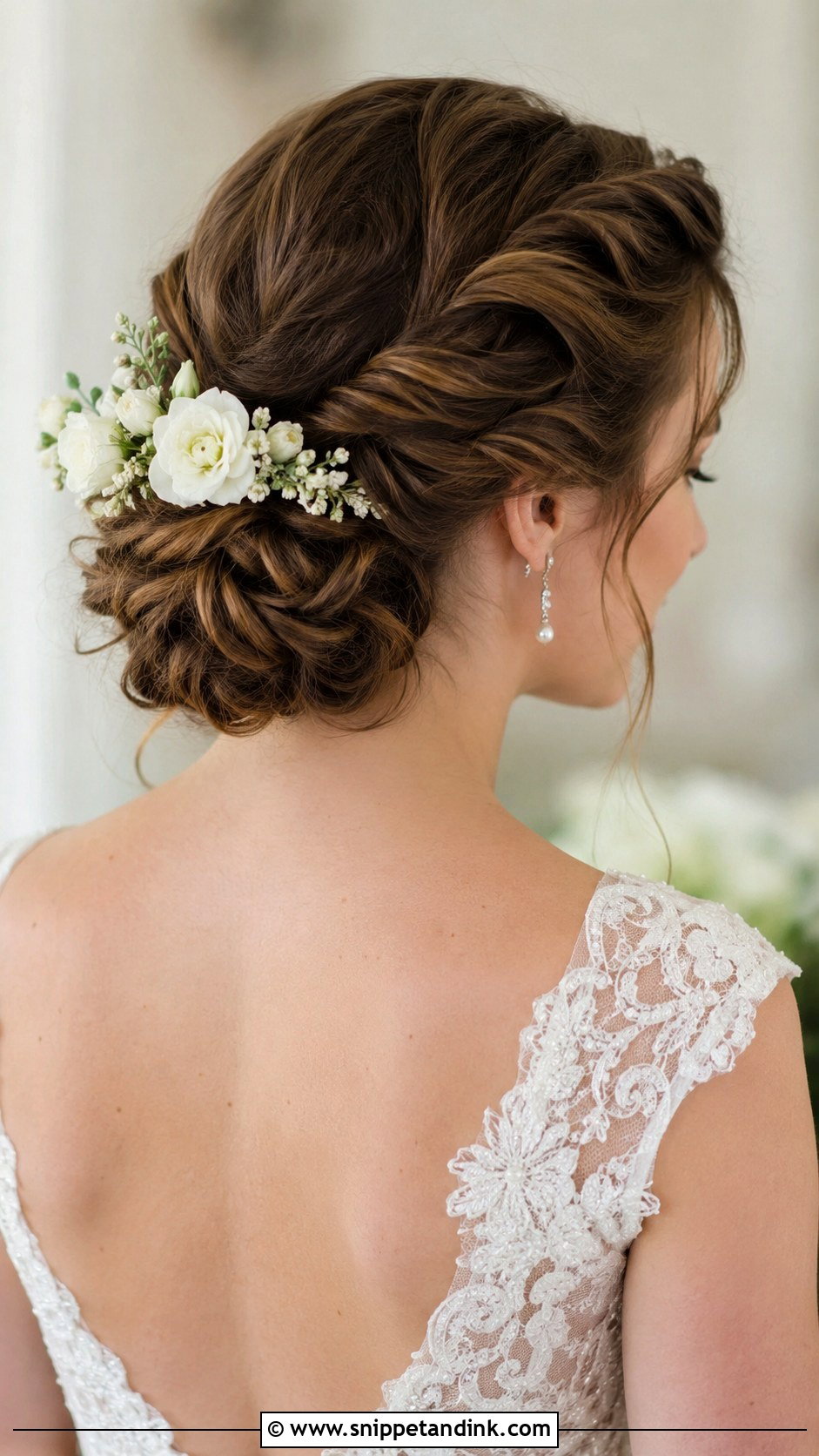
Last is a loose, textured arrangement with wispy pieces left around the face. Fine hair needs texture spray or dry shampoo at the roots first, so the strands have something to grip. I tease the crown and pull pieces out after pinning, not before. It forgives a lot, which makes it a good fallback if a more structured style doesn’t hold at your trial. Small flowers or a delicate pin are enough.
Why Fine Updos Sag by the Speeches, and How I Prevent It
Most fine-hair updos don’t fall; they sag. Curl drops, twists relax, and by the evening the shape has flattened. Heat and humidity speed this up, and so does a heavy veil or headpiece pulling on one spot.
After a trial I ask brides to keep the style in for the rest of the day and send me photos in the evening. That tells me far more than how it looked leaving the chair. If it slipped at the back, we add a second anchor. If the curl fell, I change the barrel size or let the curls set longer before pinning.
On the day, keep a small kit nearby: eight to ten bobby pins in your colour, a travel hairspray and a fine-tooth comb. Ask a bridesmaid to check the back after the ceremony and again after the first dance. Taking the veil off once the formal photos are done also helps, since its weight is usually what drags a fine updo loose.
Honest Notes to Bring to Your Trial
Inspiration photos are usually of thick hair, often with extensions in it. Bring them, but also bring a photo of your own hair down and dry, taken from the back. It shows me how much of the shape we can make naturally and how much needs a filler or a weft.
- Tell me how your hair behaves day to day: does a curl last an hour or a whole day, and does a ponytail slide?
- Mention any thinning at the temples or crown so I can avoid partings that expose it.
- If extensions might help, raise it early; colour matching and blending clip-in wefts can take a few weeks.
- Wash your hair the way I suggest before the trial, so the result matches what we’ll get on the wedding morning.
Thin Strands, Built Up Carefully
Fine hair doesn’t stop you from wearing an updo; it changes how the updo is built. Prep texture, crossed pins, hidden padding and loosened twists are what make thin strands look full in person and in photos. A stylist who works with fine hair regularly will know which of these shapes suits your density and length. Do a trial, wear the style for a few hours afterward, and choose accessories last so they don’t weigh the hair down.
You'll Like These Ideas:


Leave a Reply