
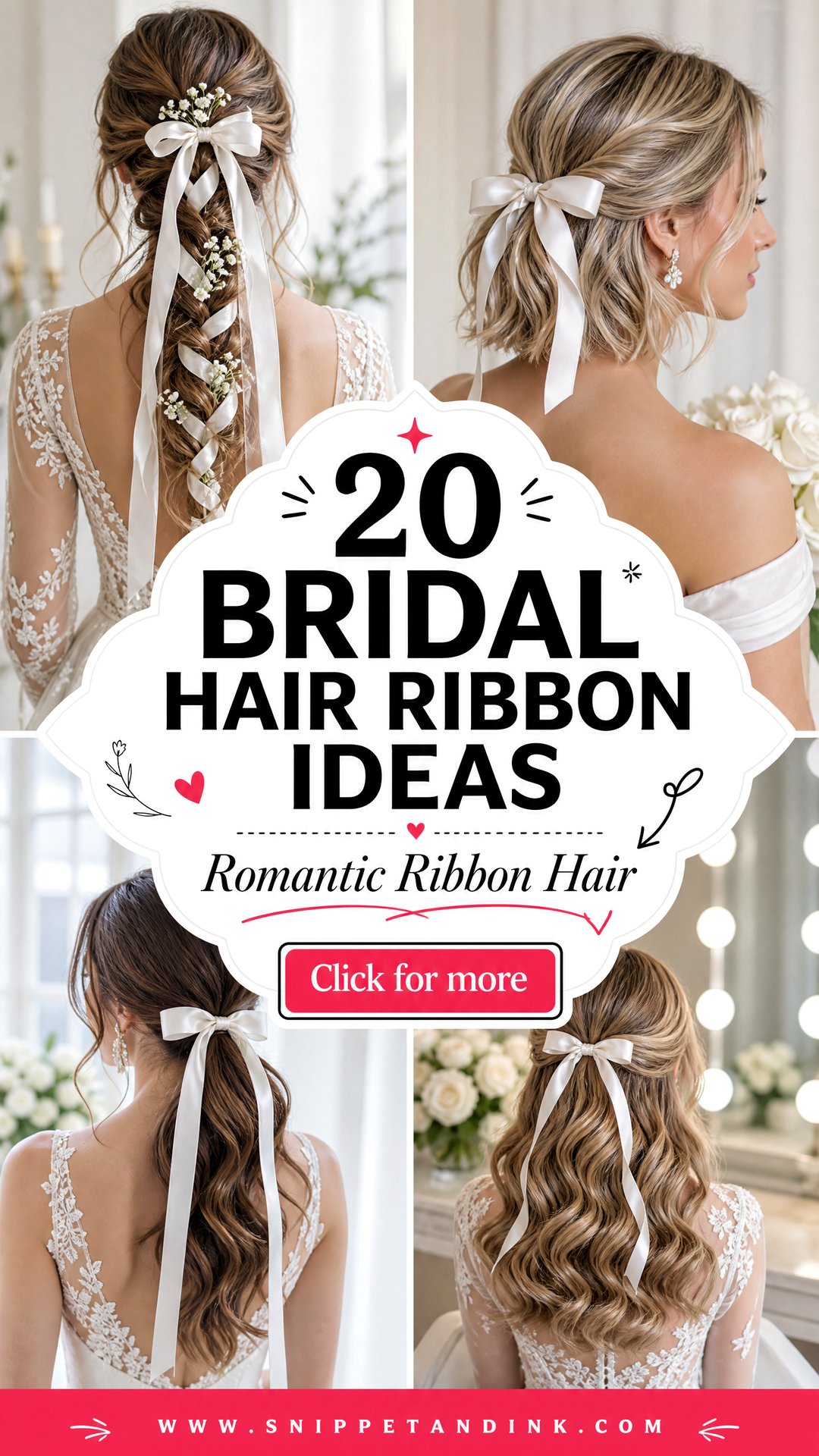
I’ve watched ribbon go from a flower-girl detail to something brides ask for by name, and I understand why. A length of fabric tied into the hair changes a plain bun or ponytail more than a jeweled pin does, because it moves. It also costs very little and can match your gown in a way metal accessories never quite manage. The catch is that ribbon behaves like fabric, not hardware: it creases, slips and frays if nobody plans for it. These twenty styles show where a ribbon sits well, and my notes explain what each one needs to stay put.
Silk, Velvet or Organza? How Each Ribbon Behaves in Hair
Brides usually pick ribbon by color. I’d pick it by how it grips, because that decides whether it’s still in place at midnight.
- Velvet has a pile that clings to hair. It barely moves, so it’s my choice for buns and anything you’ll dance in. It can feel heavy in high summer.
- Silk drapes and moves beautifully but slides off smooth hair. I always pin through the knot.
- Satin sits in between: good sheen, decent grip, and it holds a bow shape well.
- Organza and chiffon are light and float in a breeze, which makes them pretty for outdoor weddings but prone to tangling in loose waves.
- Grosgrain is crisp and holds structure, but the ribbed texture can rough up curly or fragile hair.
Width matters as much as fabric. Narrow ribbon, about a centimeter, weaves into braids and ties neatly around a bun. Wider ribbon, three centimeters or more, is for bows and statement tails. Buy more than you think: I’d rather trim a long ribbon on the day than discover it’s too short to tie a proper bow.
1. Bridal Hair Ribbon Low Bun
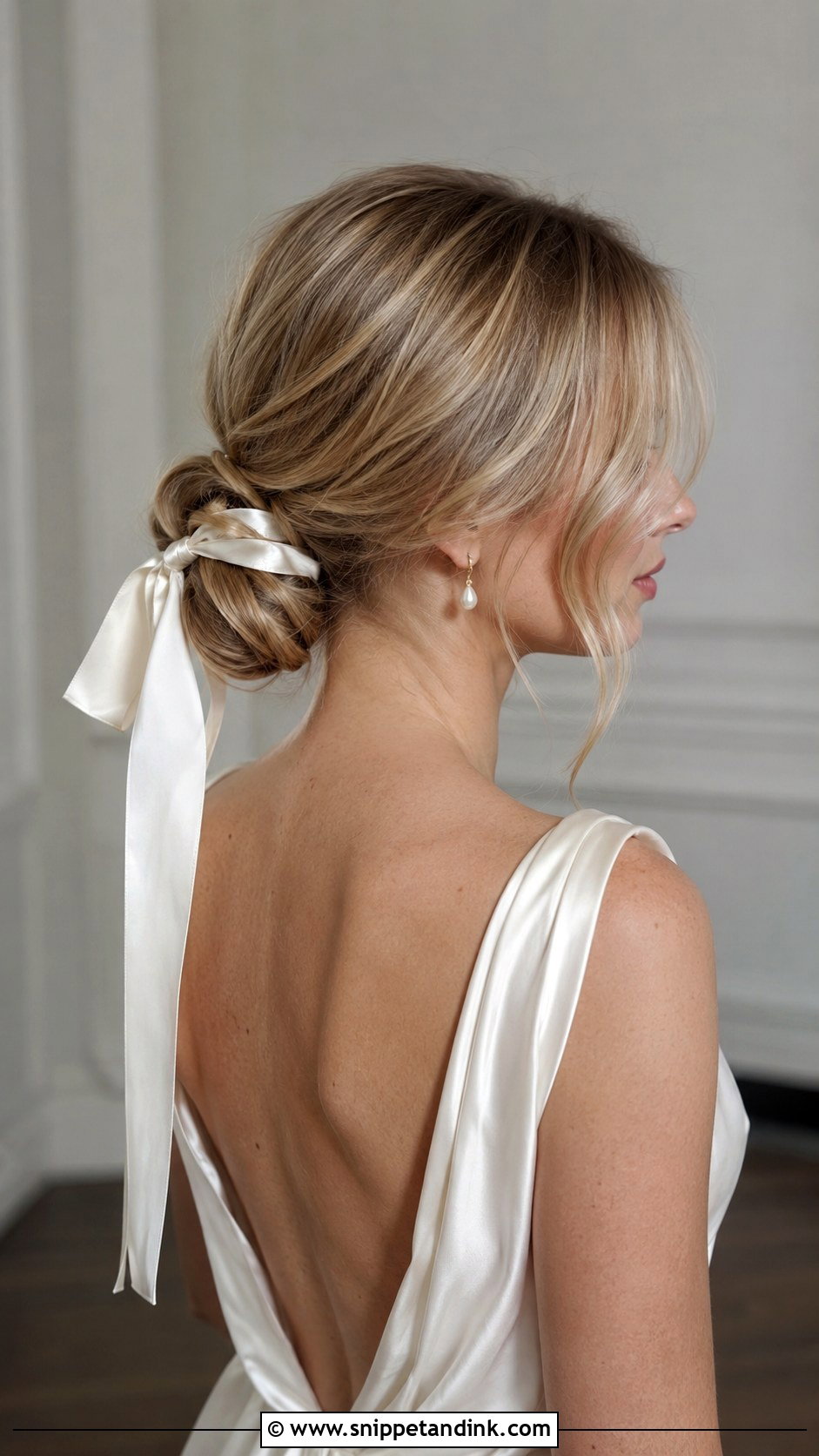
At the nape, a ribbon has the bun to grip and a whole back of the head to hang against, which is why this is the version I suggest first. I pin the bun completely before the ribbon goes on, then wrap the ribbon twice around the base and tie it underneath so the knot is hidden. Velvet grips hair best and almost never slides. Silk is the slipperiest, so with silk I add a bobby pin straight through the knot into the bun. A veil comb can go in above it without disturbing anything.
2. Bridal Hair Ribbon Ponytail
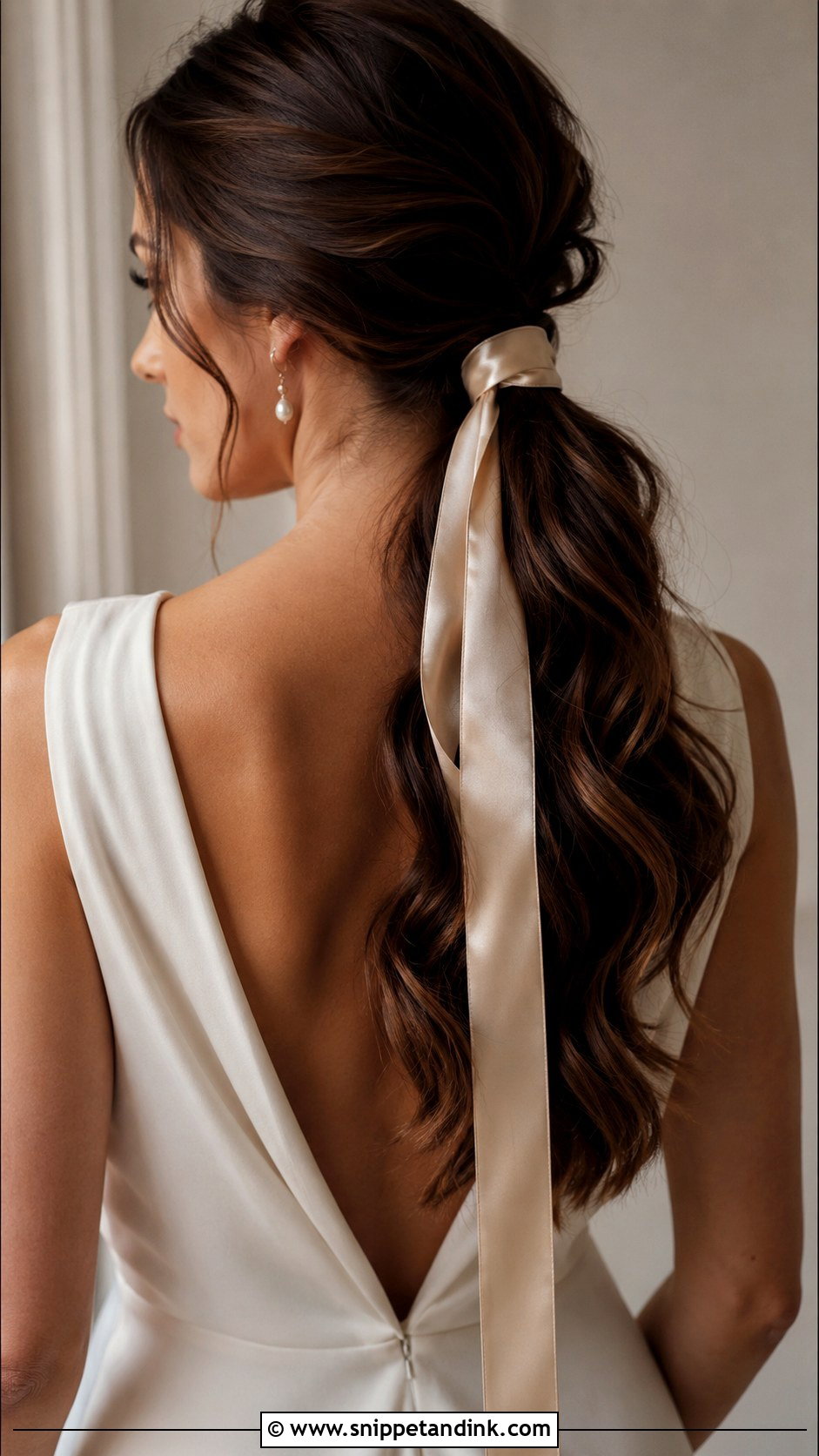
The ribbon here does one job: covering the elastic. I wrap the base with a strand of hair first, so if the ribbon shifts there’s no bare band showing underneath, then tie the ribbon over the top. Mid to low height suits this best, since a very high ponytail with long ribbon tails can look like a cheerleading uniform. Pale blue makes a good something-blue if you want it, but test the shade next to your dress in daylight. Some blues turn grey against ivory.
3. Bridal Hair Ribbon Half Up
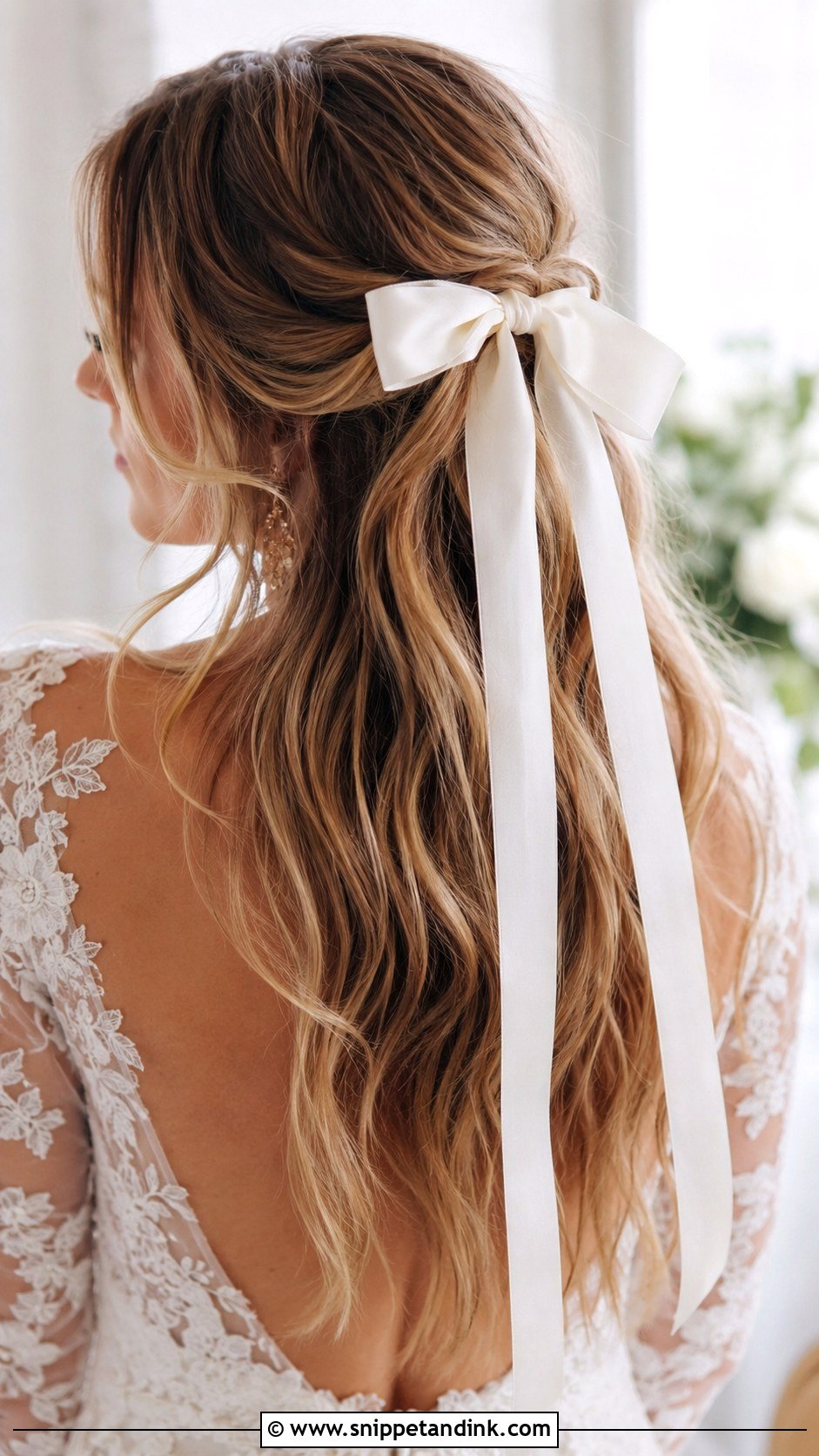
Half up is the most forgiving style for a first-time ribbon wearer. The ribbon can be tied right where the top section is pinned, so the pins underneath do the holding and the ribbon is purely decorative. I lift the crown slightly before gathering it, otherwise the section lies flat once the bow adds weight. Long trailing ends look romantic but tangle in loose waves after a few hours, so I keep them a little shorter than the hair.
4. Bridal Hair Ribbon Braid
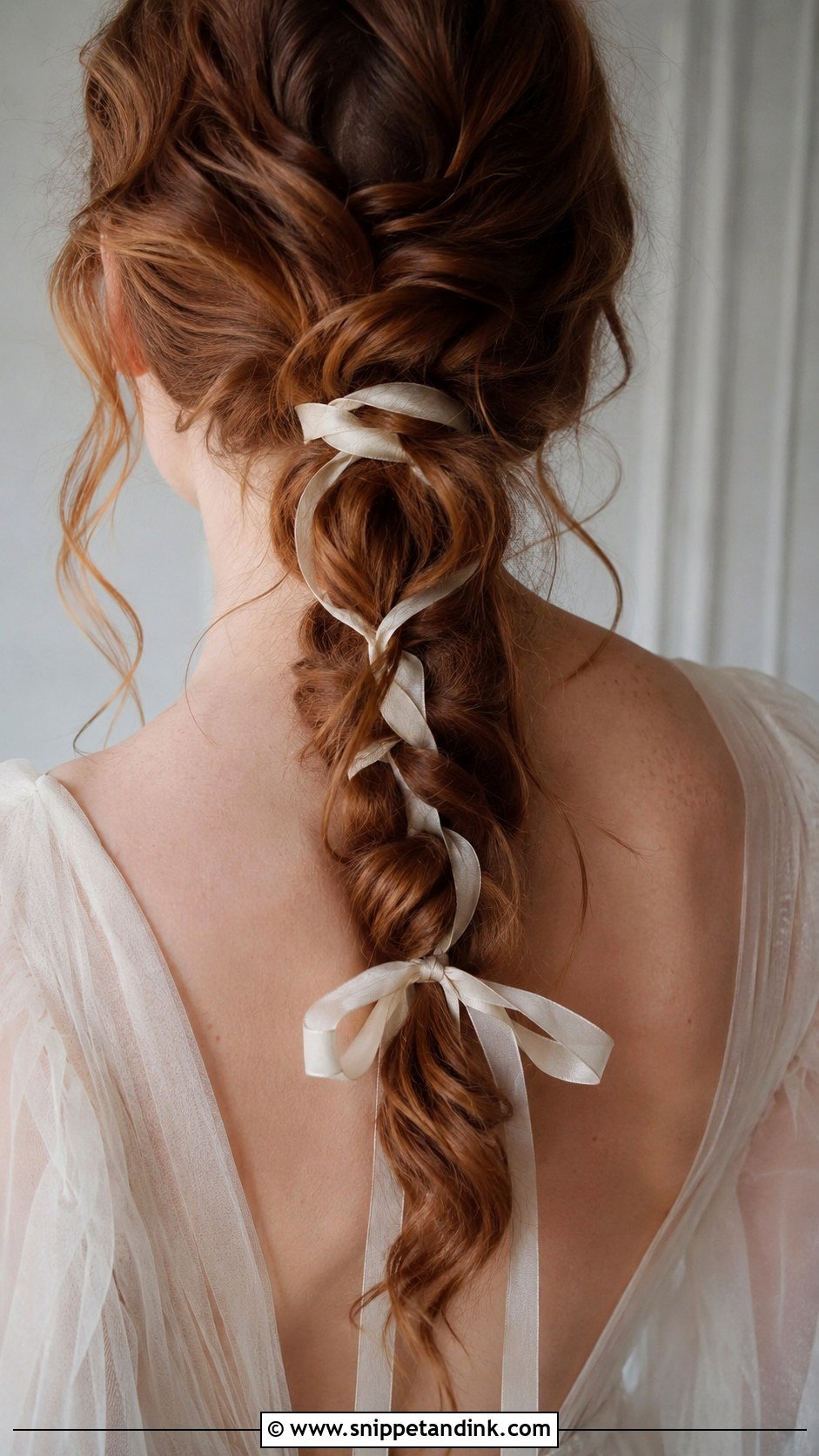
Weaving ribbon into a braid is fiddly but secure, since every crossing of the plait locks it in place. You can thread it through, wrap it around the base or have it tied at the end. I treat the ribbon as one of the three strands in a regular braid, which keeps it lying flat instead of twisting. Narrow ribbon (around a centimeter) works for weaving; anything wider bunches up. Loose braids suit outdoor weddings, and a tighter plait reads more formal.
5. Bridal Hair Ribbon Chignon
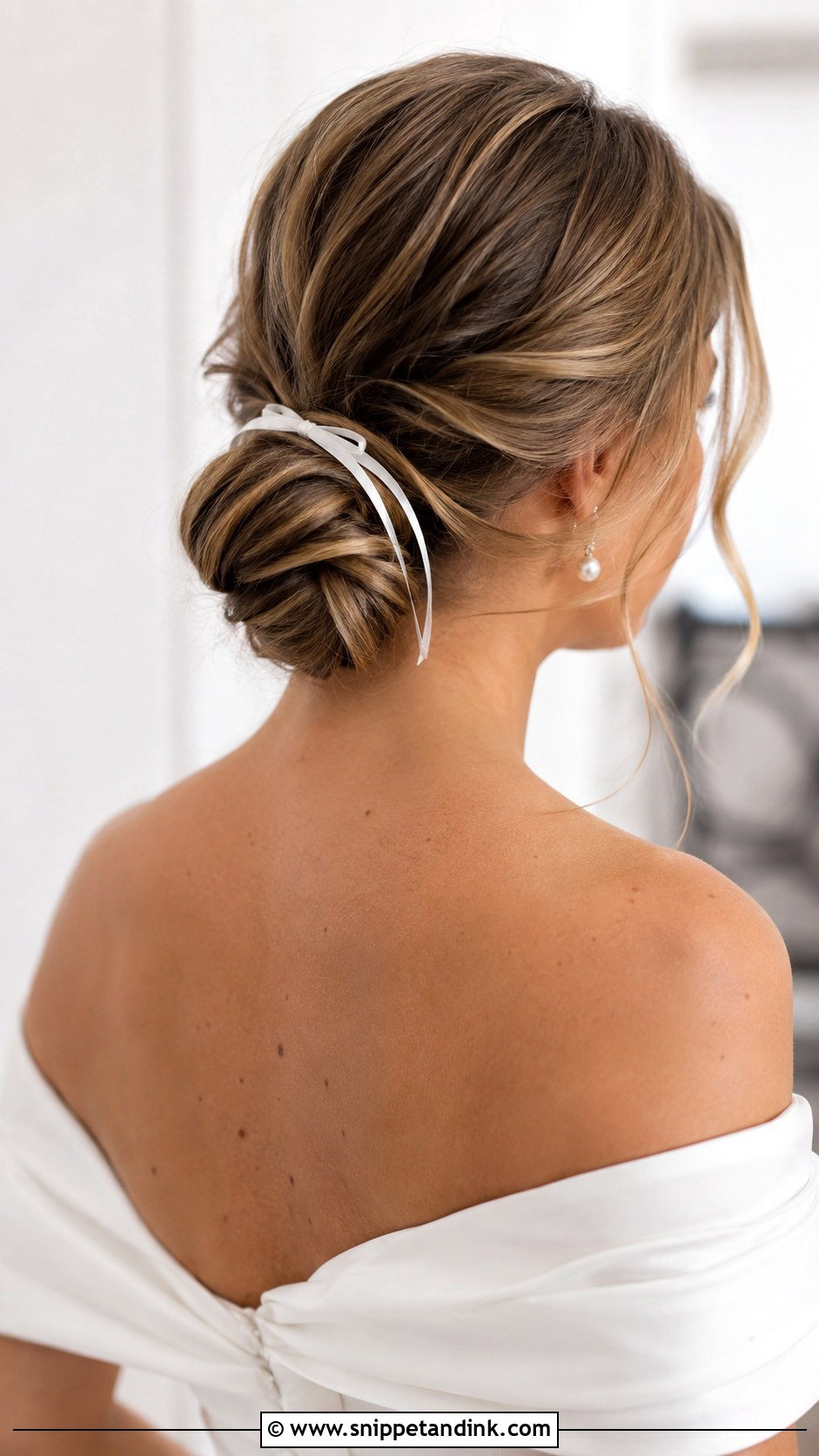
A chignon is already structured, so a ribbon softens it. I place the chignon first according to the neckline, low for a high neck and slightly higher for strapless, then wrap a ribbon around its widest point. Cutting the ribbon from the same fabric as your gown, if your seamstress has offcuts, ties the whole look together in a way a shop-bought ribbon can’t. Leave out a few face-framing pieces for a softer version. For a cleaner one, tuck every strand and let the ribbon be the only detail.
6. Bridal Hair Ribbon High Bun
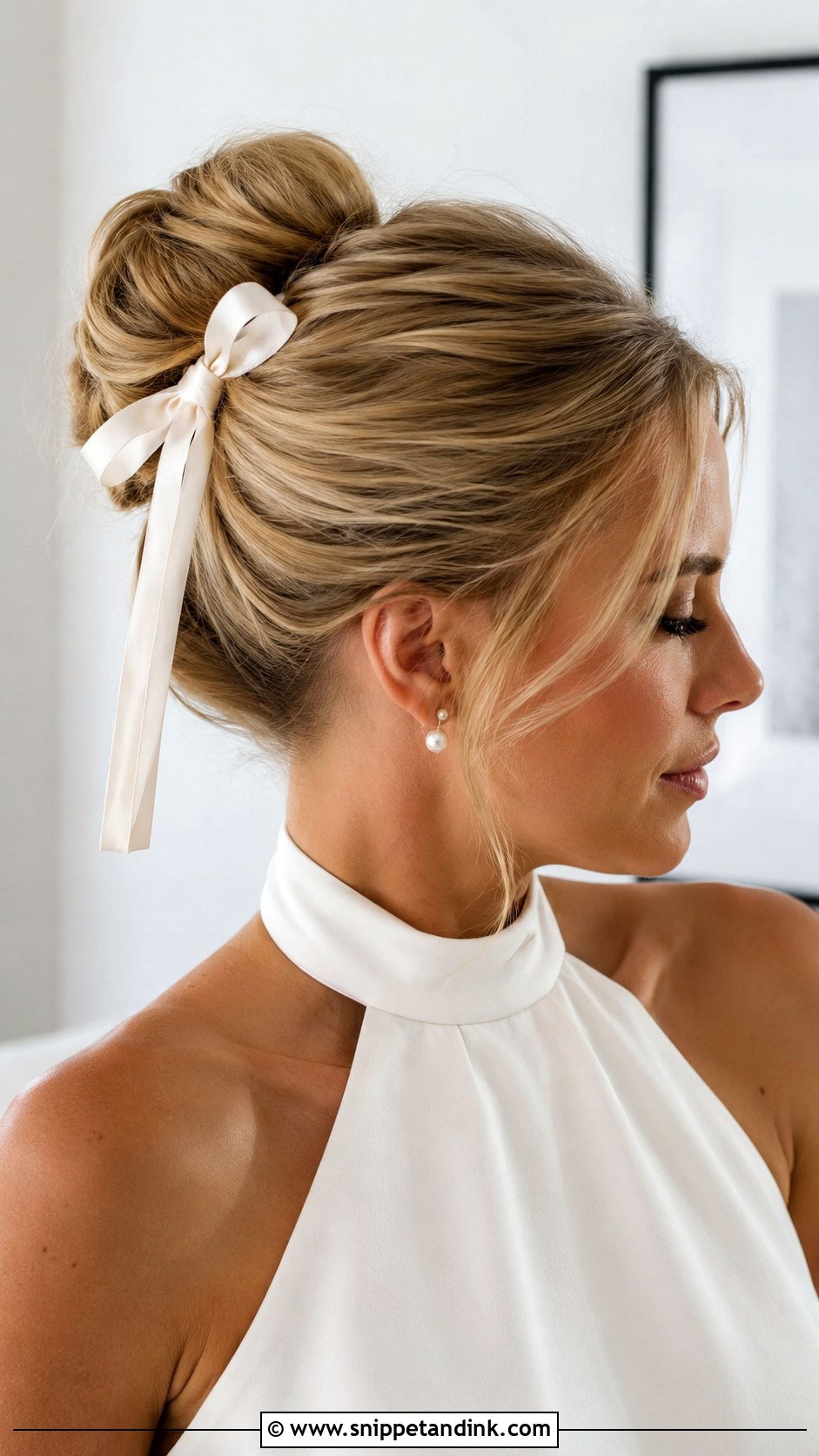
Height lengthens the neck, which is why a high bun sits so well above strapless and halter gowns. The trouble is that a ribbon tied at the base of a high bun slides downward over the day, because gravity is working against it. I tie it slightly into the bun rather than below it and pin through the knot. A slim satin ribbon stays delicate; a wide bow turns the bun into the statement, so skip big earrings if you go that way.
7. Bridal Hair Ribbon Loose Waves
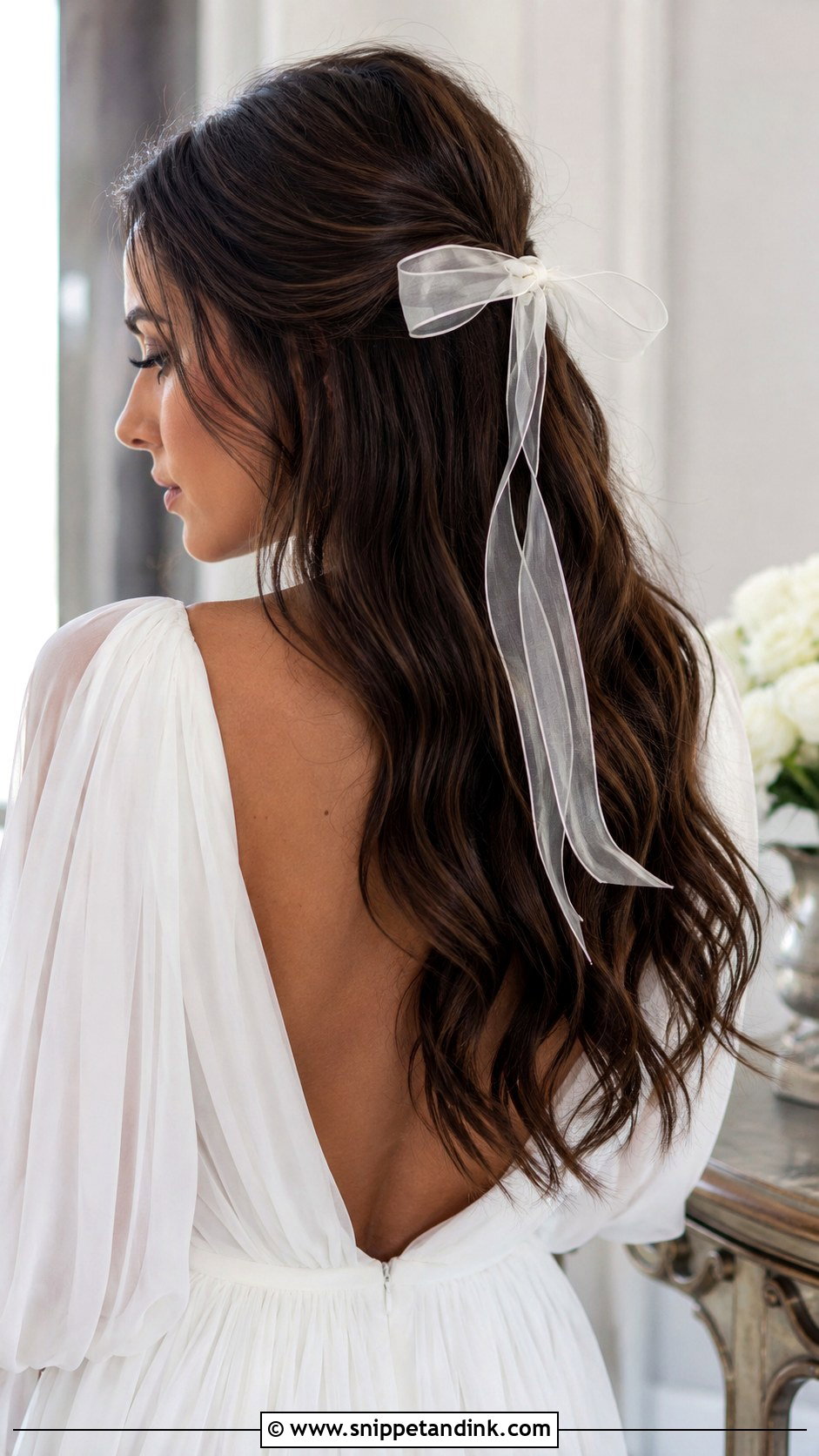
Loose waves move constantly, so the ribbon has to be light enough to move with them. I tie it around a small pulled-back section at the crown, or onto the end of a tiny side braid, rather than as a band across the head, which tends to slide forward. Satin catches light, silk is softer and organza almost disappears. Wind is the real issue at a coastal wedding: long, light ribbon ends whip across the face, so trim them before the ceremony.
8. Bridal Hair Ribbon Short Hair
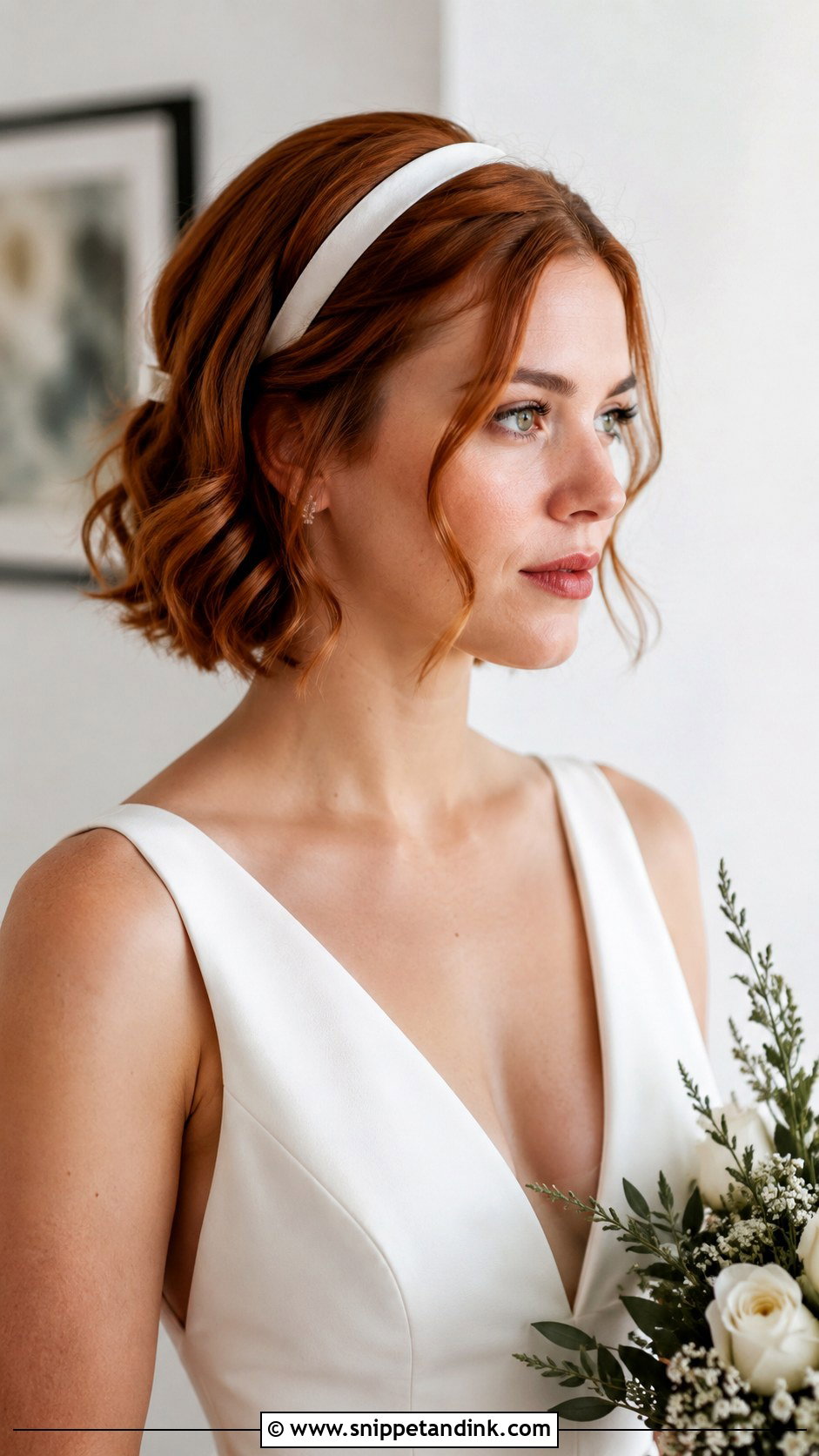
Short bobs, lobs, pixies and cropped cuts can all carry a ribbon, they just carry it differently. A ribbon headband sewn onto a thin plastic band is the most secure option on short hair, since there’s not enough length to tie around. A small bow on a clip near one side also works. On a bob I tuck the front behind the ears, then tie a narrow ribbon at the back over a pinned section. Keep the size in proportion; a huge bow on a pixie can look like a costume.
9. Bridal Hair Ribbon Curly Hair
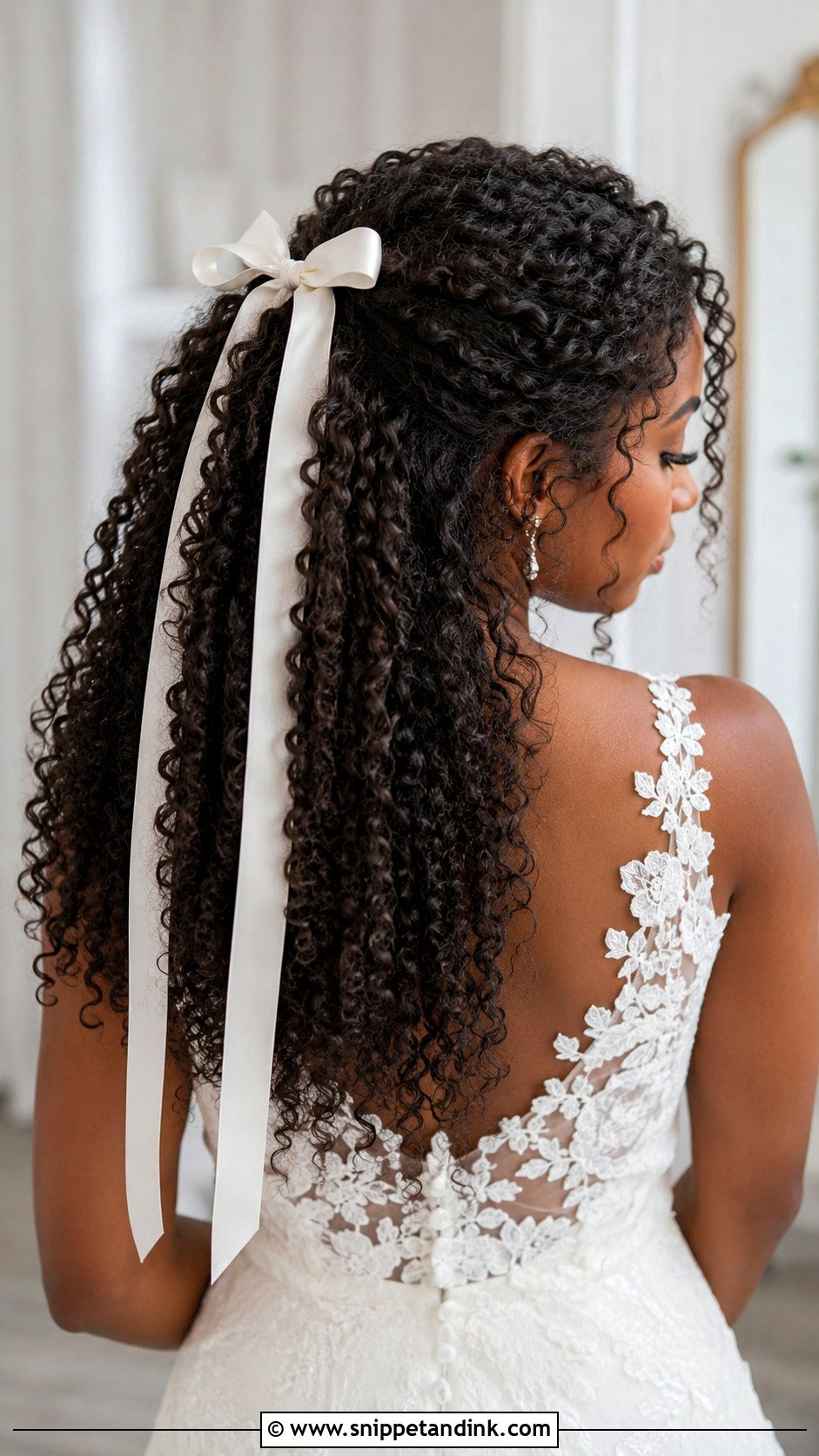
Curls need a ribbon that won’t catch. Rough or stiff fabrics, like some cheap grosgrain, can snag curls and leave frizz where they rub, so I reach for smooth satin or silk. A low curly ponytail with the ribbon at the base is the easiest version, and a half-up style with long tails shows off the volume. If you’d like a ribbon headband, place it gently on dry, finished curls and never press it flat. The volume is the point here, and the ribbon should sit on it, not squash it.
10. Bridal Hair Ribbon Bubble Ponytail
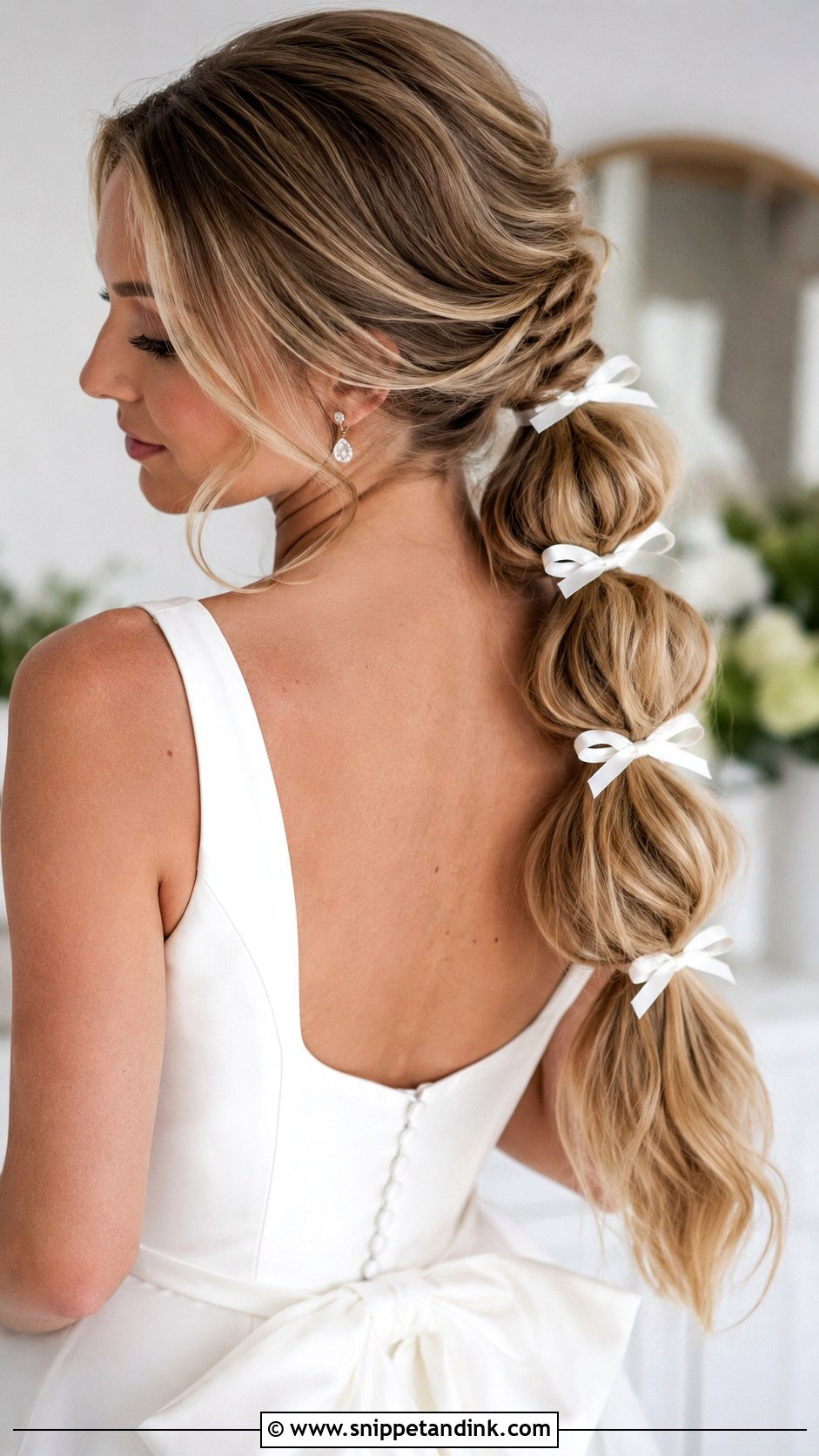
A bridal hair ribbon bubble ponytail needs medium to long hair, or clip-in wefts, for the bubbles to read. I tie ribbon only at the base on most brides, because tiny bows at every elastic can start to look busy and they’re hard to keep even. If you love the repeated bows, use a narrow ribbon and the same tie length for each. Soft bubbles look more bridal than tight ones. Open backs and lace details frame this well, since it’s designed to be seen from behind.
11. Bridal Hair Ribbon Side Braid
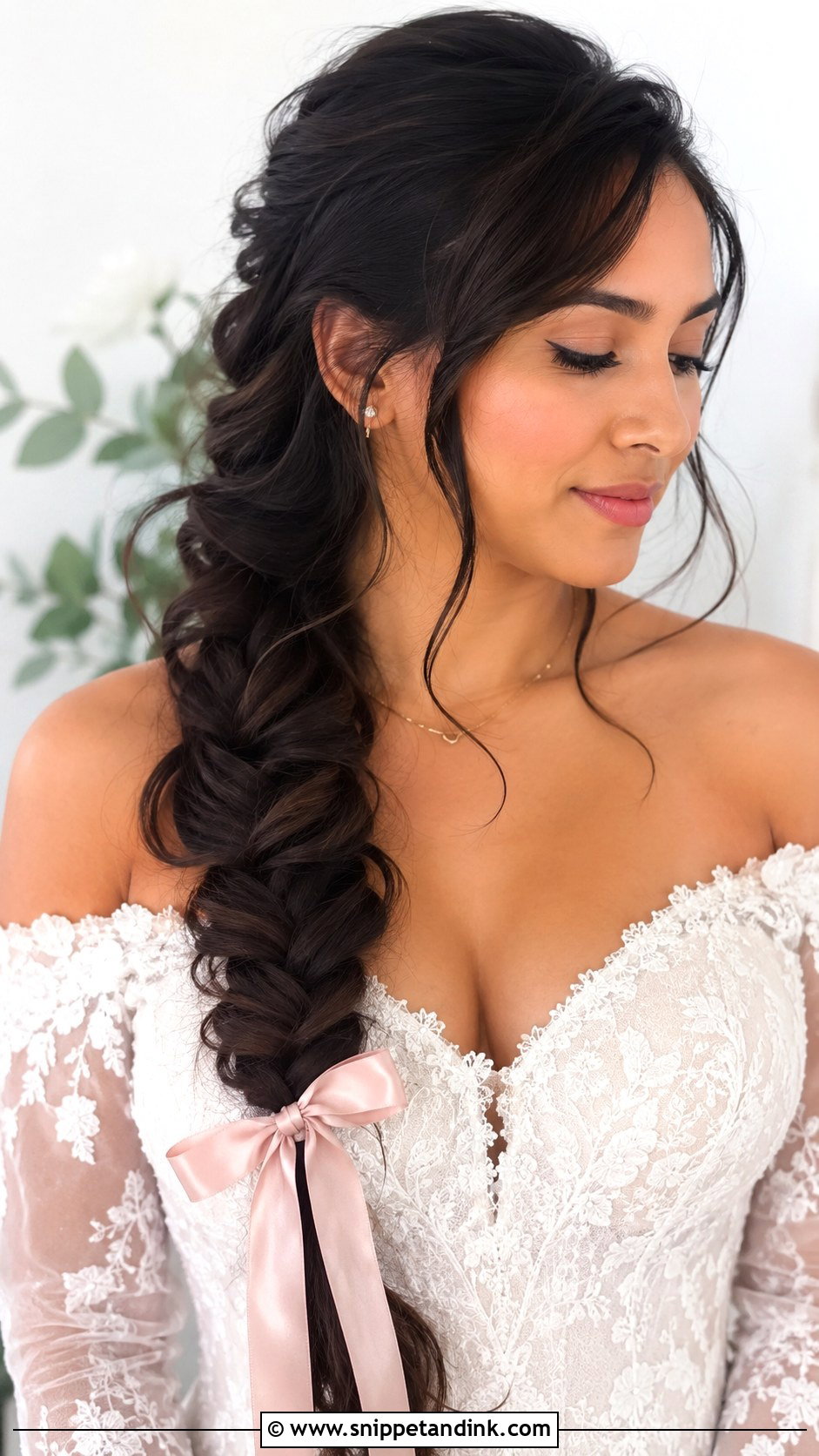
Over one shoulder, the braid shows up in nearly every front-facing ceremony photo. I start it behind the ear rather than at the side of the neck, so it doesn’t rub the jaw. On fine hair I pull the braid apart gently after it’s tied to make it look fuller; with a ribbon woven through, do that carefully so the ribbon doesn’t loop out. A long ribbon tail catching a breeze looks lovely in portraits. Just check which side your bouquet will be carried on.
12. Bridal Hair Ribbon Sleek Bun
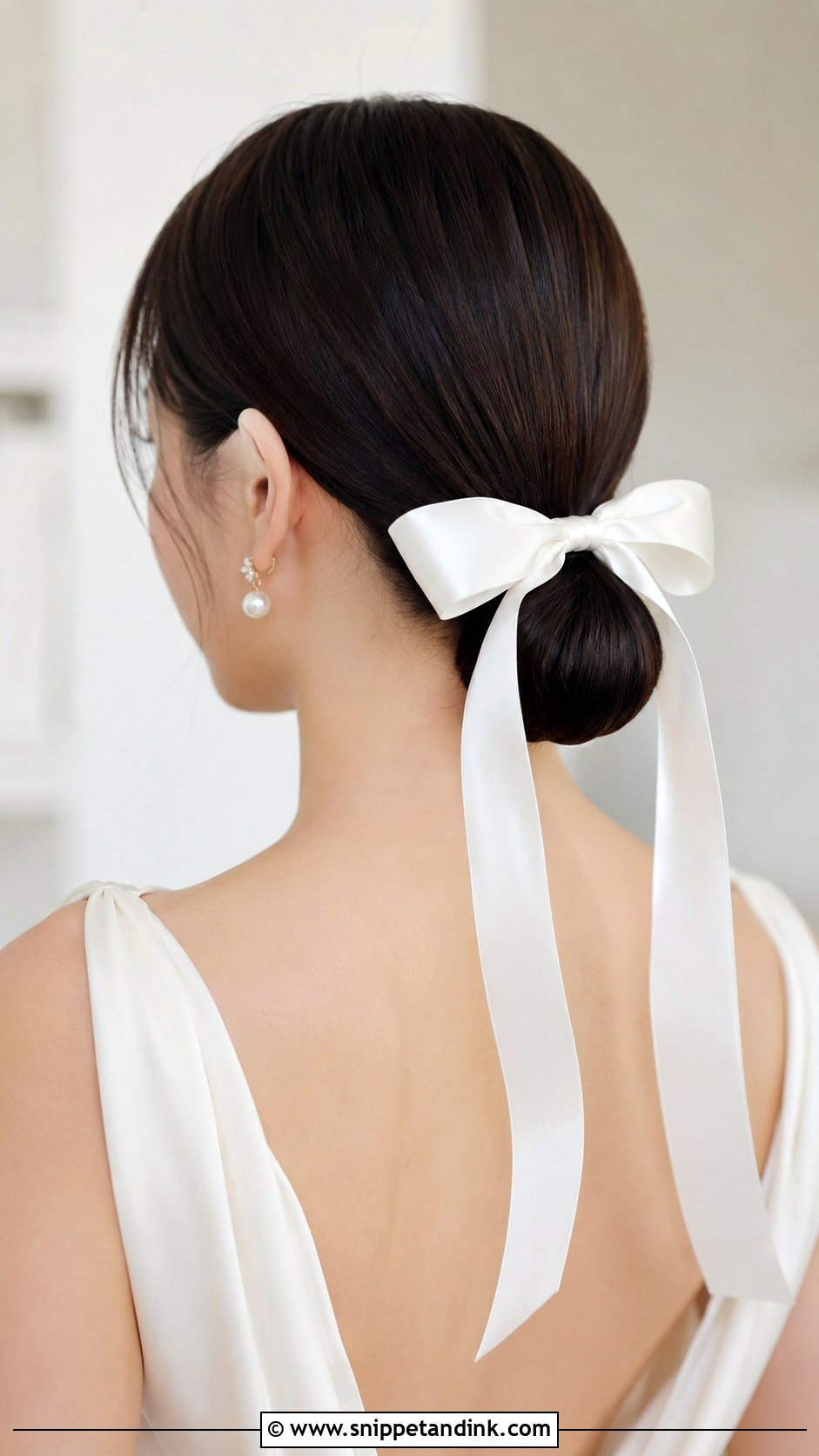
Sleek styles show everything, including a ribbon tied crooked. I smooth the hair back with a light gel and a fine-tooth comb, shape the bun at the nape, then tie the ribbon and turn the knot underneath. Satin or silk with a sheen suits the glossy finish. The risk with a very sleek look is that it can feel severe, and the ribbon is what takes that edge off. Pairs naturally with statement earrings, since nothing is competing around the face.
13. Bridal Hair Ribbon Messy Bun
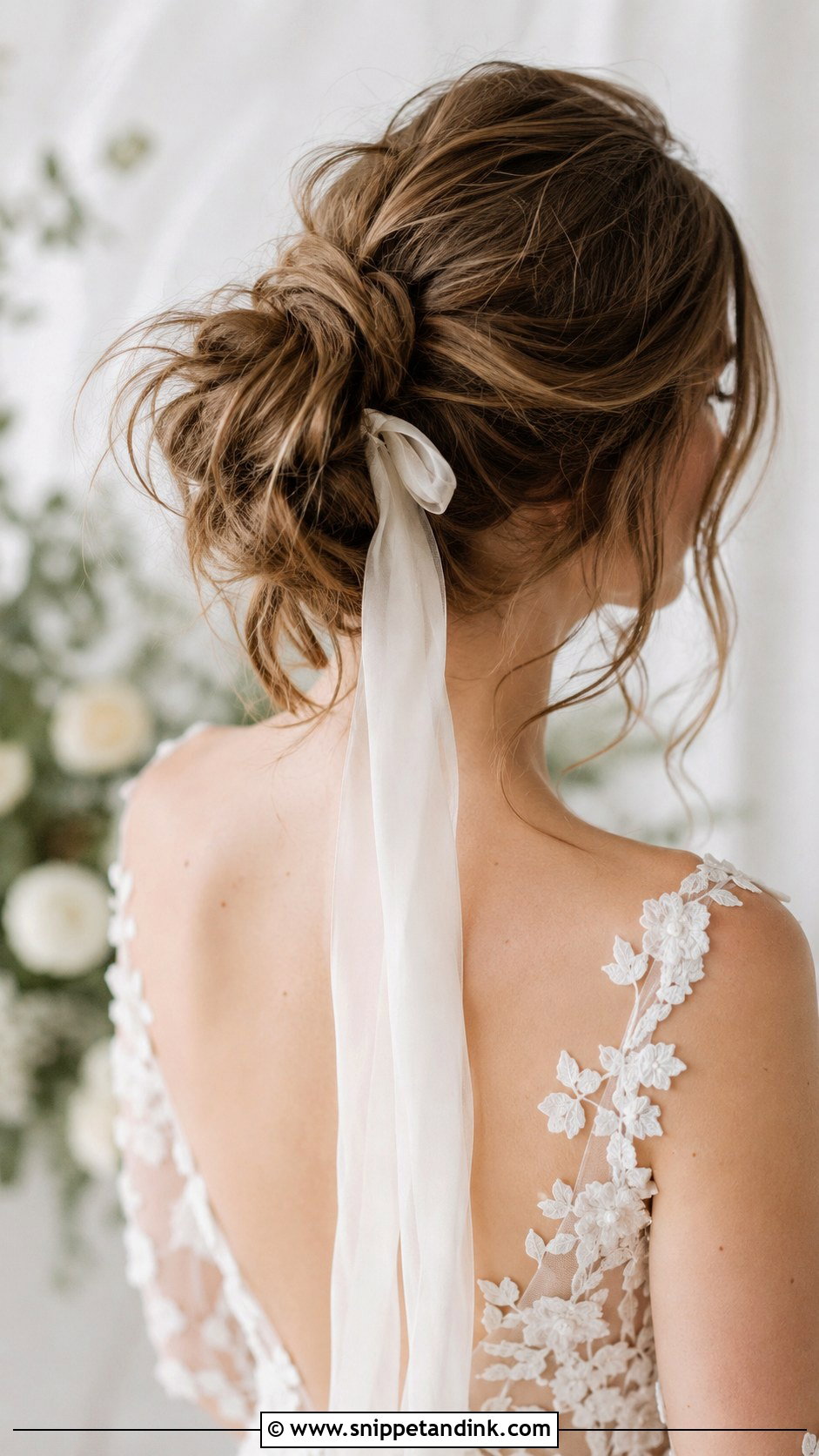
Here’s the honest part about messy buns: they take more pins than sleek ones. The texture is placed piece by piece and secured so it looks loose without coming apart during hugs. A silk or chiffon ribbon suits it, tied around the bun or just below it with ends falling down the back. Avoid stiff fabric; it fights the softness. I leave a few strands around the face, but only a few. Too many and it starts to look like the bun fell out.
14. Bridal Hair Ribbon French Twist
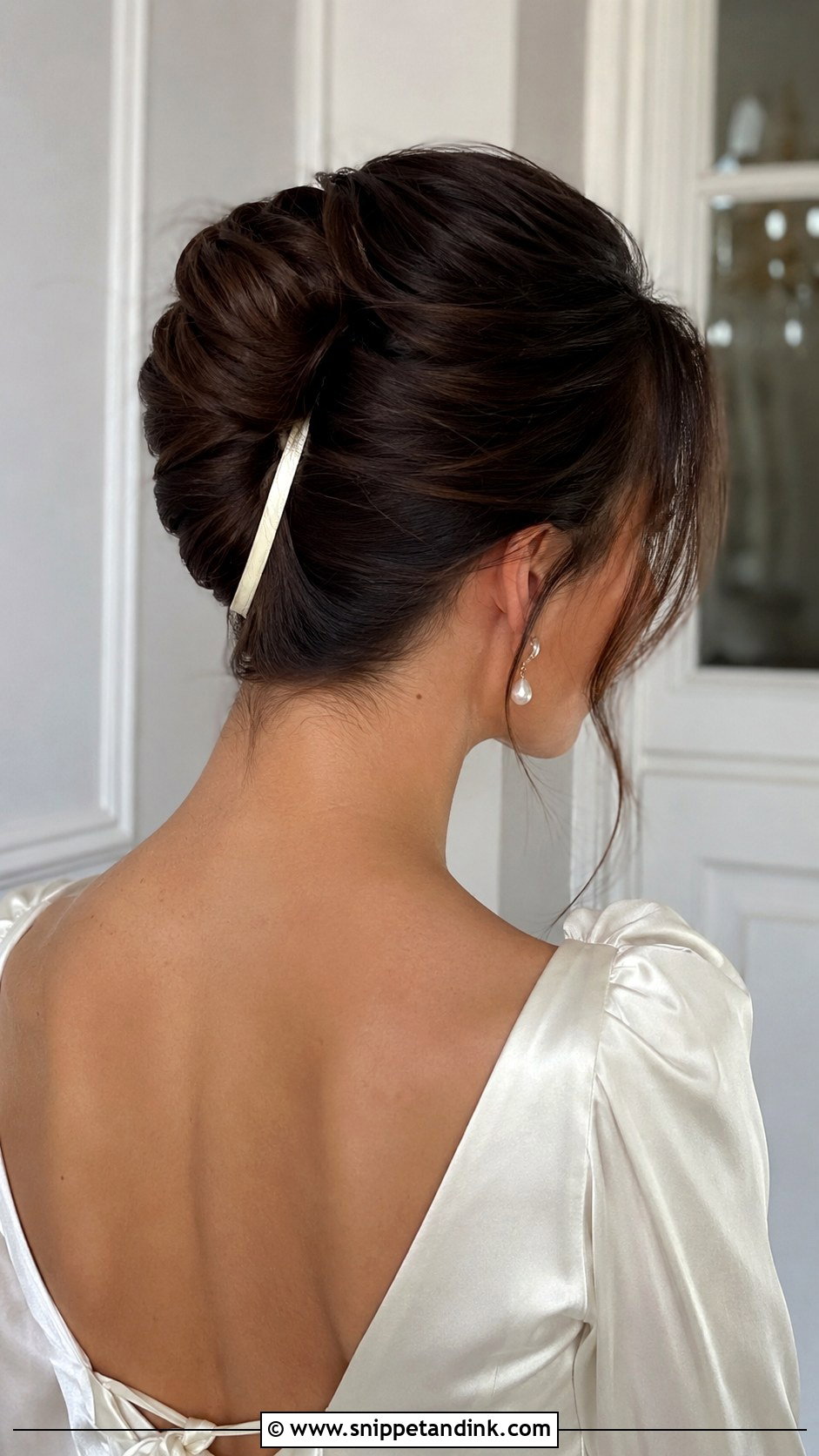
A French twist relies on a tight inner roll locked with pins along the seam, so the ribbon has to work around that seam rather than over it. I tie a slim bow at the base or near the top of the twist, never wrapped around it, because wrapping a twist flattens its shape. It suits vintage-inspired and satin gowns. If your veil is pinned above the twist, place the ribbon lower so the comb doesn’t crush the bow.
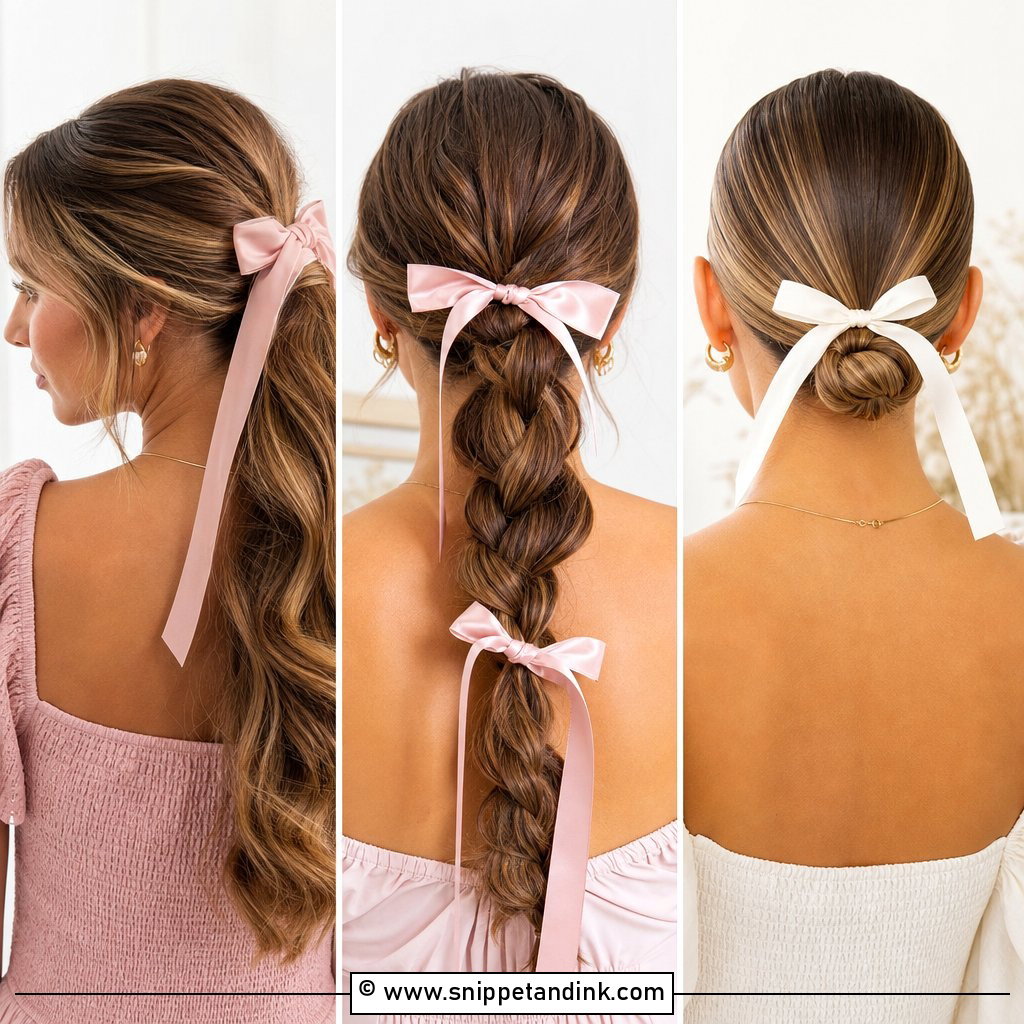
15. Bridal Hair Ribbon Fishtail Braid
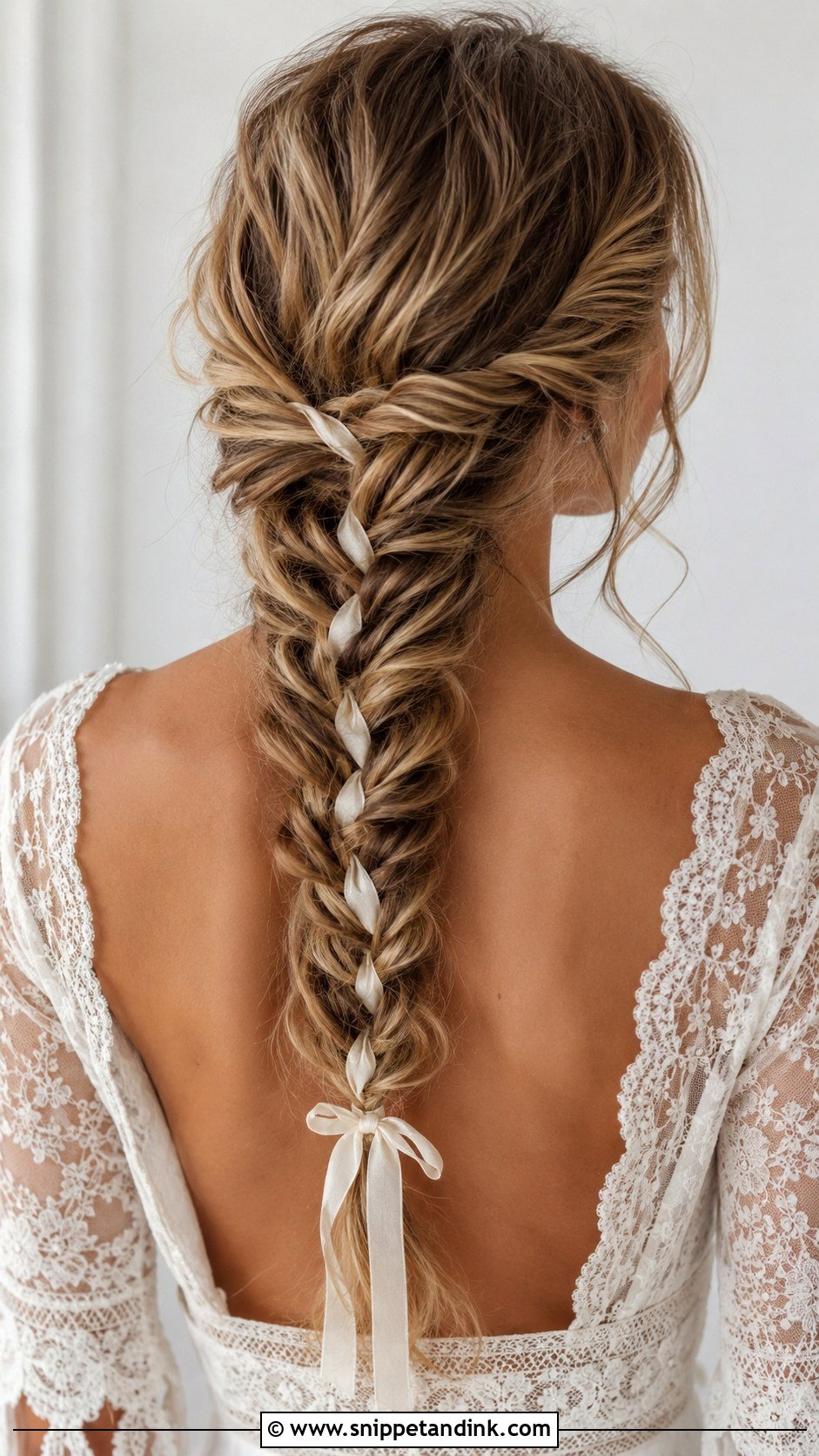
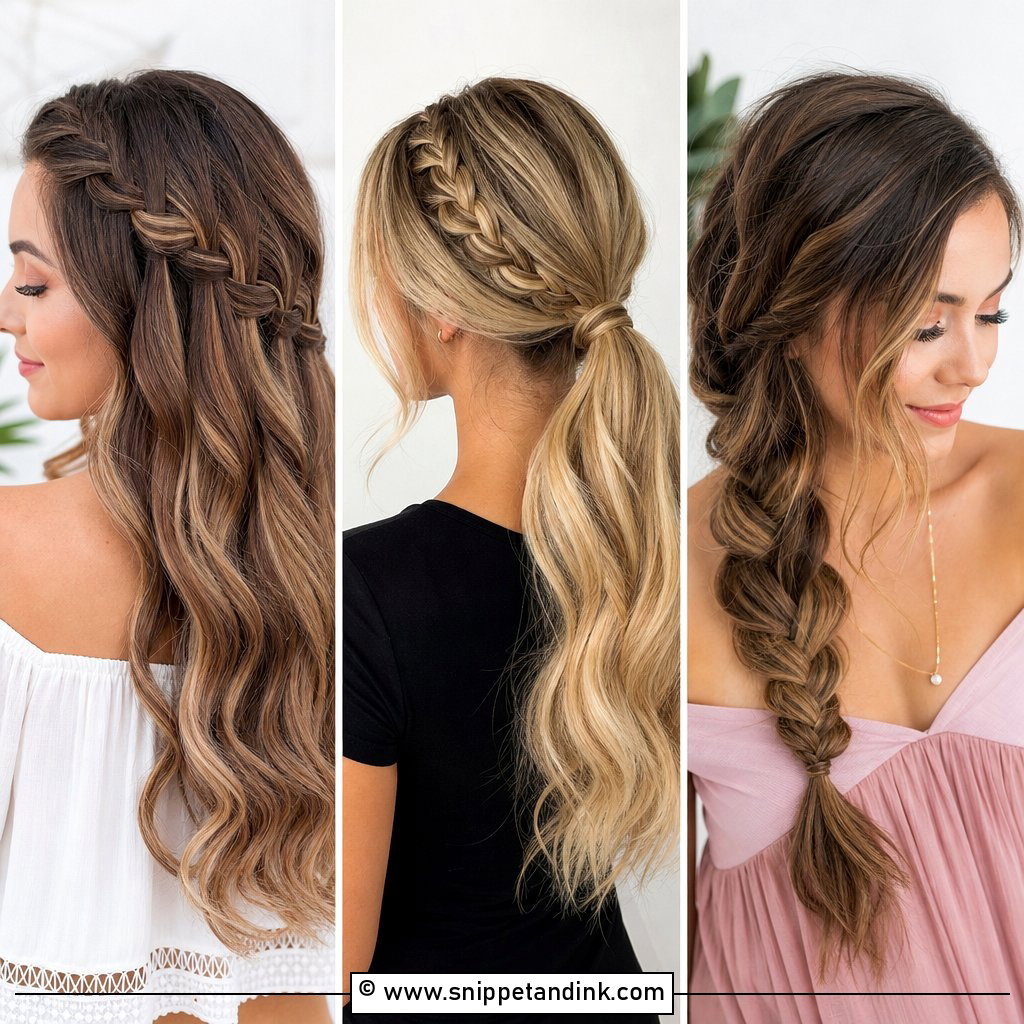
Fishtails have so many tiny crossings that a ribbon can look busy if it’s too wide. A thin ribbon, woven through or tied at the end, keeps the detail of the braid readable in close-ups. This braid looks best on long hair and on highlighted color, because the lighter strands catch the pattern. I pull it apart a little once it’s done for fullness. Keep the ribbon in a soft tone so the plait stays the focus.
16. Bridal Hair Ribbon Crown Braid
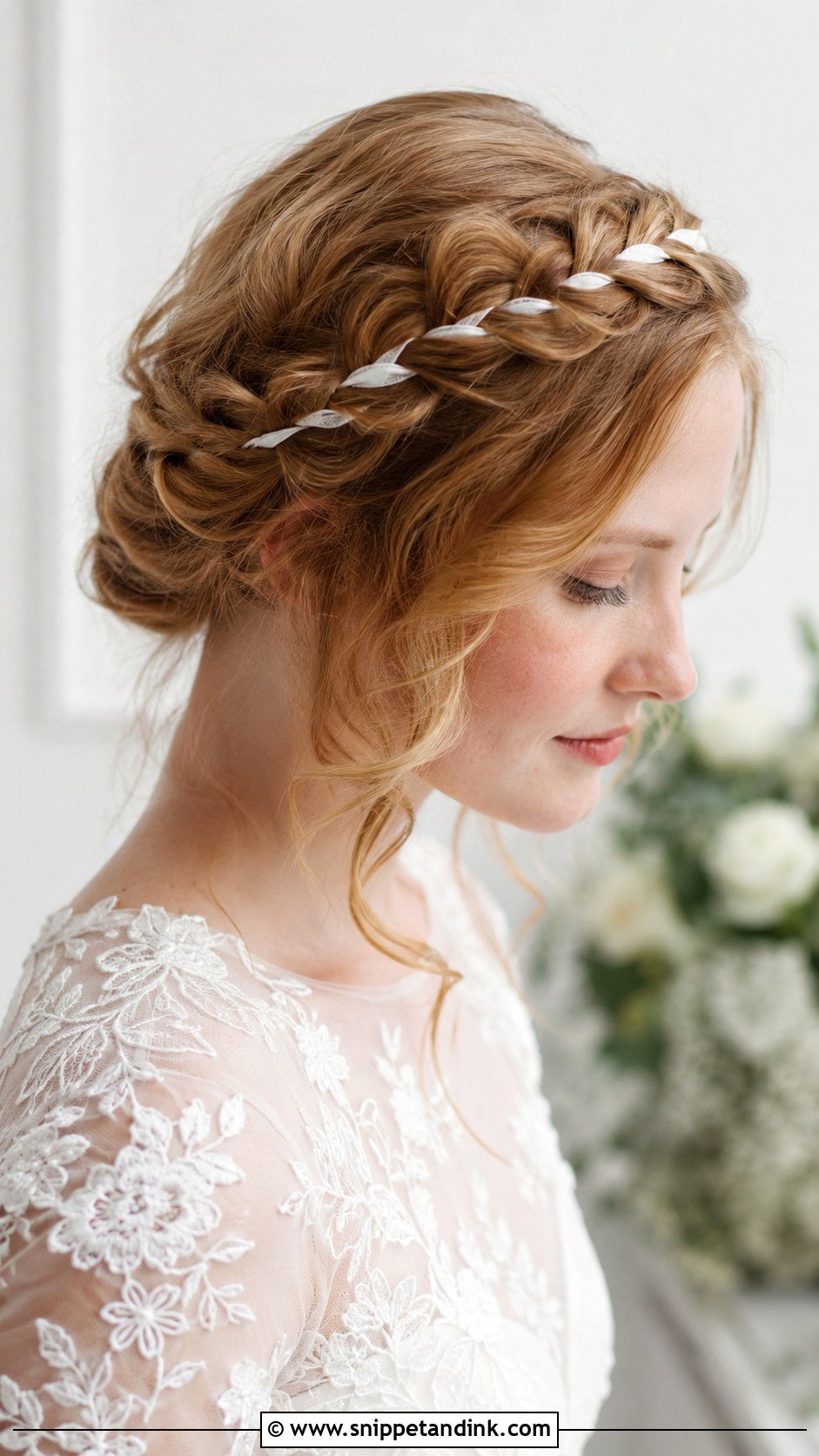
A crown braid gives a fairytale feel without needing a tiara, and it’s one of the most secure updos I do. The braid wraps around the head and is pinned along its whole length, so a ribbon woven into it isn’t going anywhere. Tie the ends at the back where the braid meets. It shows off the face and neckline. On short-layered hair, the crown braid can push stray ends out, so it may need small hidden pins along the hairline.
17. Bridal Hair Ribbon Low Ponytail
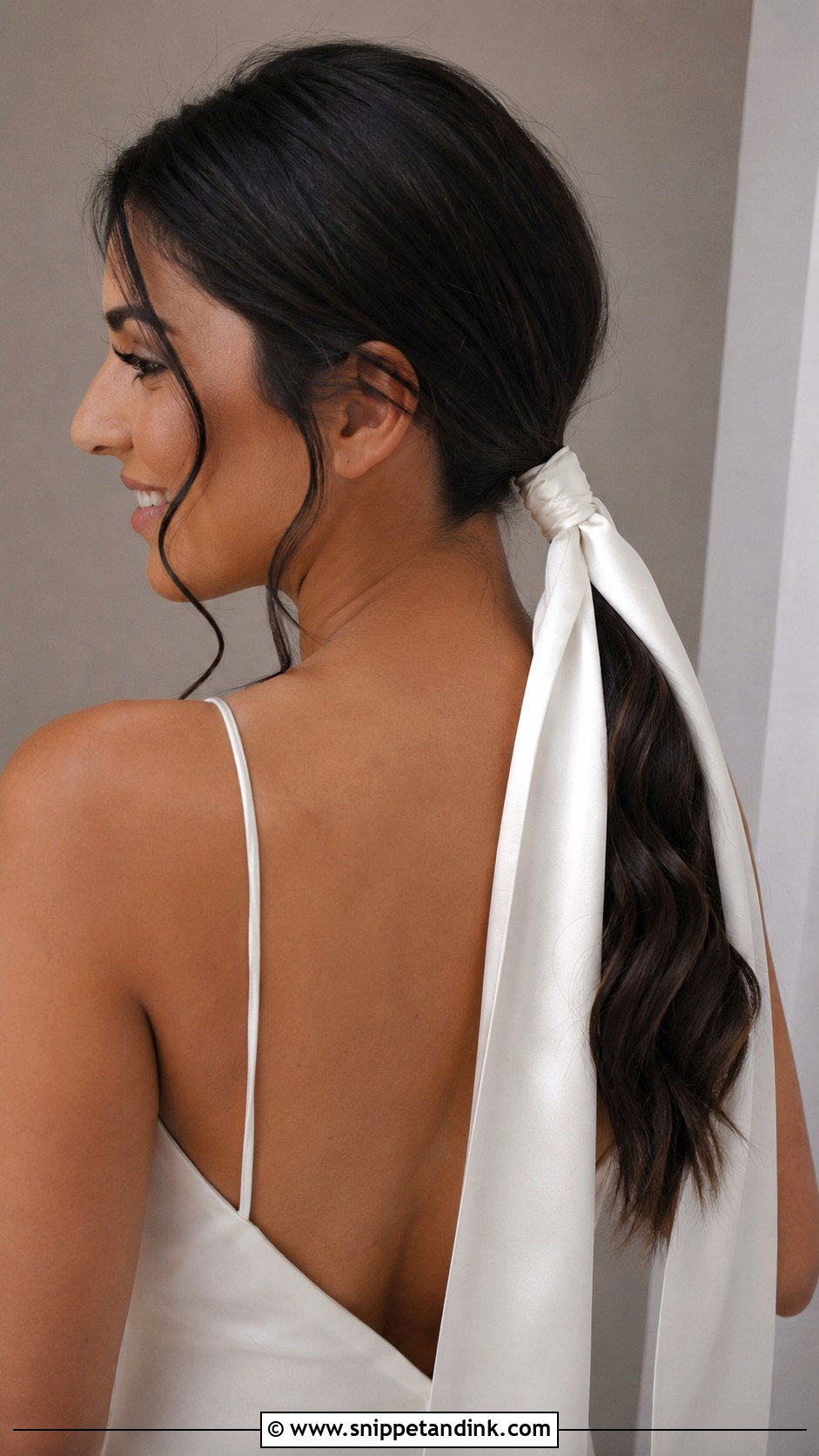
Comfortable, simple and very wearable through a long reception. The ribbon covers the elastic and falls with the tail, which gives a clean back view under or after a veil. Smooth hair looks modern and waves look softer. Think about length: a ribbon that hangs past the hair can get caught when you sit back in a chair or lean against your partner for photos, so I trim it to stop just short of the ends.
18. Bridal Hair Ribbon Veil Hairstyle
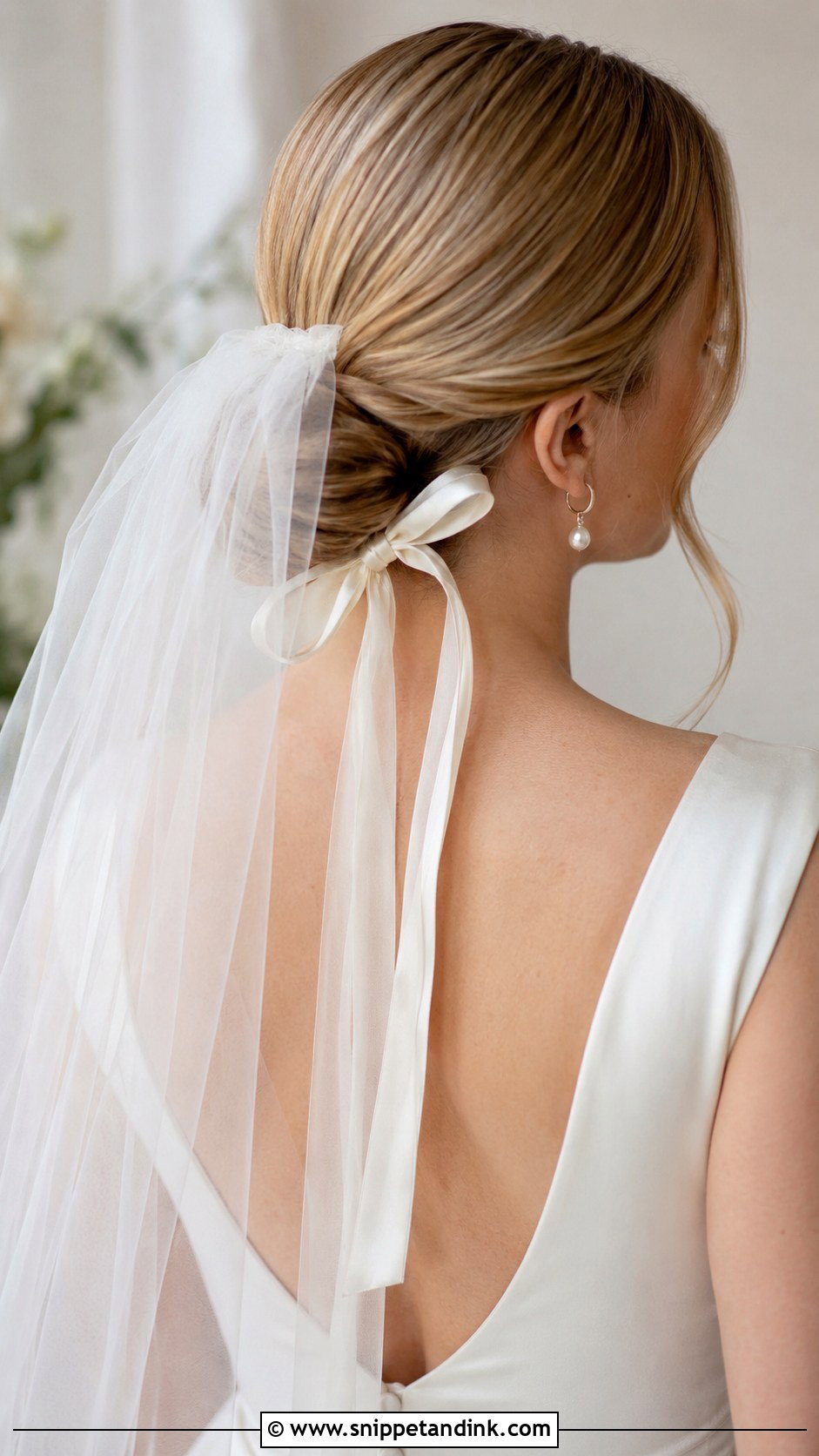
The ceremony-to-reception switch is where ribbon earns its place. The veil sits above a bun, braid or ponytail, and the ribbon sits underneath or around the base, so once the veil comes off you still have a finished look. Keep it simple, a narrow ribbon under a detailed veil, a wider one under a plain veil. I place the veil comb first at the trial, then fit the ribbon around it, because the comb needs the firmest spot and the ribbon can adjust.
19. Bridal Hair Ribbon Bob
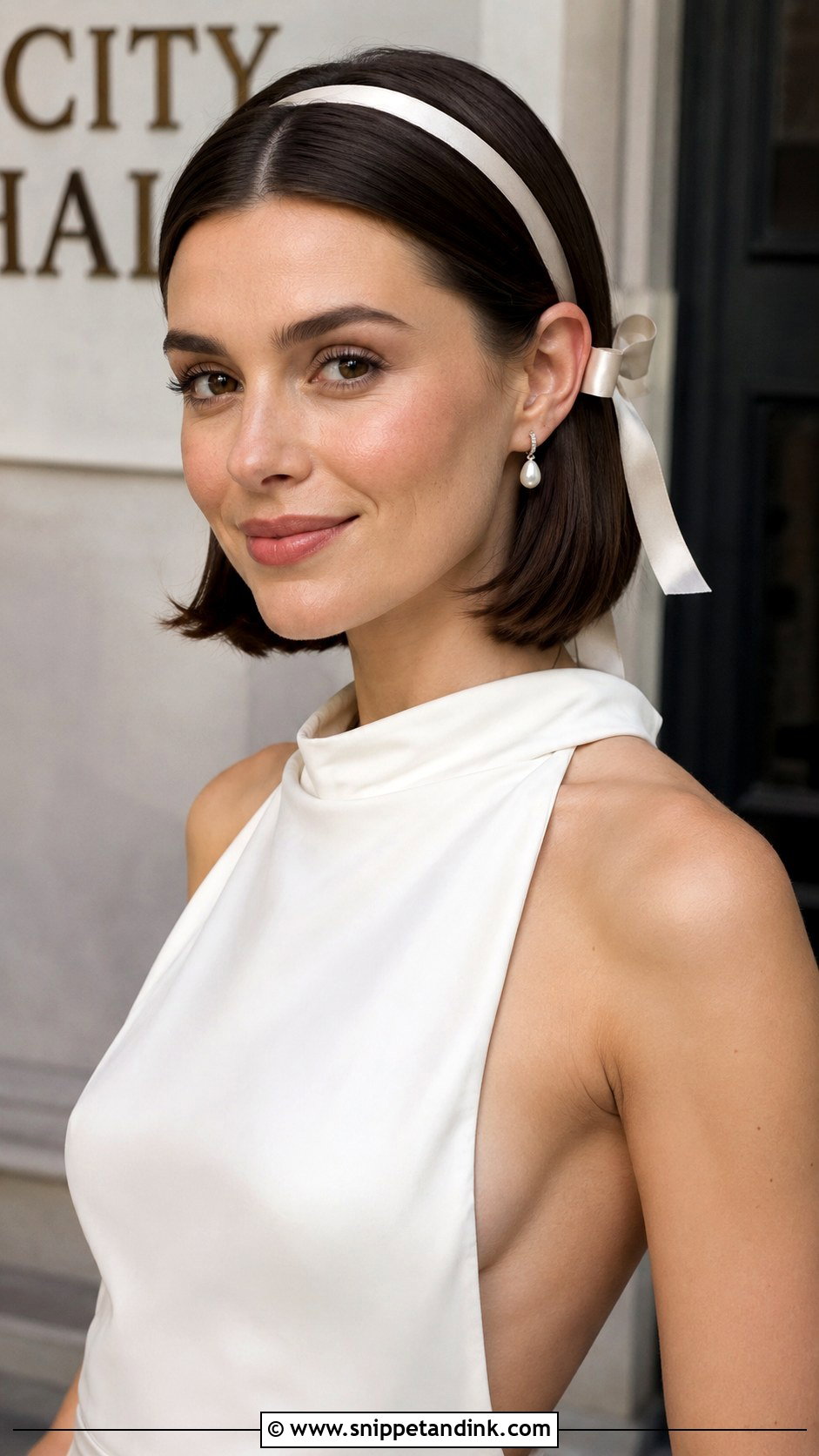
A bridal hair ribbon bob works on sleek, waved or tucked-behind-the-ear cuts. A blunt bob looks softer with a ribbon; a wavy bob looks more polished. On bobs I usually suggest a ribbon headband or a small bow clipped at the back or side, as there isn’t enough length to wrap. A narrow satin ribbon reads refined; a wider bow is more fashion-led and suits courthouse weddings and smaller ceremonies.
20. Bridal Hair Ribbon Hollywood Waves
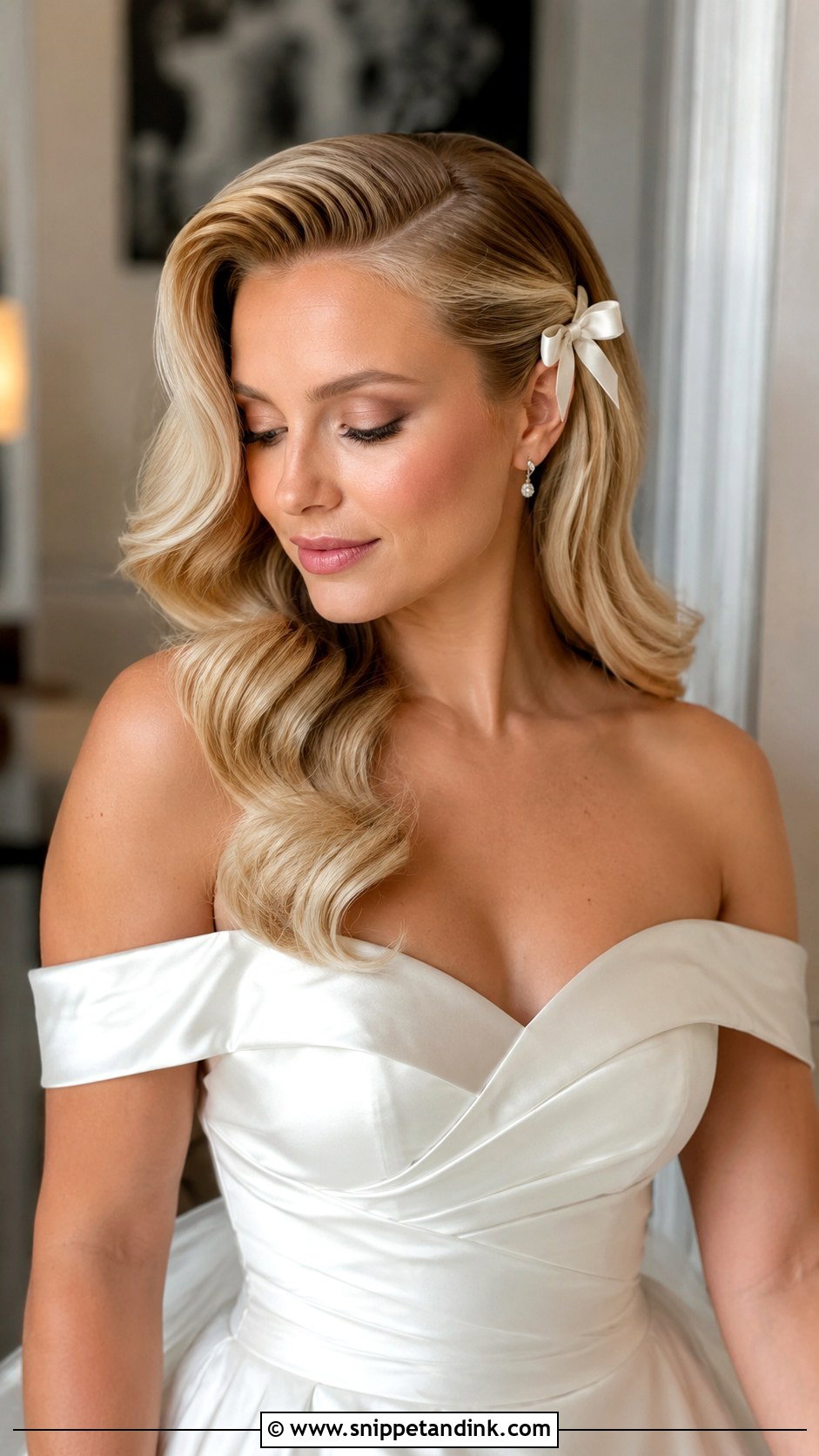
Hollywood waves are brushed into one shining shape, and the ribbon should not break that shape. I set the waves first, brush them together, then add a slim headband ribbon or a bow clip securing one side. Anything bulky interrupts the line of the wave. A ribbon with a little sheen blends with the gloss of the hair. Satin gowns and off-the-shoulder necklines suit it best, and it holds up well under evening lighting.
Cutting, Steaming and Anchoring the Ribbon the Week Of
Ribbon arrives creased from the spool and frays the moment you cut it. A few small jobs the week before stop both problems.
- Cut the ends at a sharp diagonal or into a small V. It looks finished and frays less than a straight cut.
- For synthetic satin or organza, a quick pass of a flame or a dab of clear fray stopper seals the edge. Natural silk scorches, so use the liquid only, and test it on an offcut first.
- Steam out spool creases on a low setting with a cloth between the iron and ribbon. Velvet should only be steamed from a distance, never pressed, or the pile flattens.
- Check the color in daylight next to the dress. Ivory, champagne and white are all different whites, and a mismatch is more visible in photos than in a shop.
- Pack a spare length and a few bobby pins in your stylist’s kit, or your maid of honor’s bag, in case a bow gets crushed or a tail gets caught.
If you’re using a family ribbon
Brides sometimes bring ribbon cut from a mother’s dress or an older heirloom. Old fabric can be brittle, so I’d sew it onto a hidden comb or clip rather than knot it, which puts much less strain on the fibers. If it’s stained or yellowed, give it to a dry cleaner who handles vintage textiles well before the wedding, not the week of.
Fabric, Width and One Honest Test Run
Ribbon is popular because it’s simple, but it rewards a bit of planning: fabric, width, length and where it attaches all change how it looks in photos and how it lasts. Velvet stays put, silk moves and organza floats. Bring the actual ribbon to your trial along with your veil, and let your stylist decide where it needs pinning. That small test makes the difference between a ribbon that slides by dinner and one that’s still in place at the last song.
You'll Like These Ideas:




Leave a Reply