
Braids are the one bridal style I can promise will look nearly the same at midnight as at noon, because the weave itself holds the shape that curls can’t. That’s why I suggest them so often for long days and outdoor weddings. Below are 25 braided looks, from a loose fishtail to cornrows built into an updo, with what each one needs from your length and texture, and where I’d place it around your gown and veil.
French, Dutch and Fishtail Are Not the Same Braid
Inspiration photos get labelled loosely, and asking for the wrong weave is a common reason a trial disappoints. These are the weaves you’ll see in this list and what each one does on the head.
- French braid: strands cross over the middle, so the braid lies flat against the head. Quiet and classic.
- Dutch braid: strands cross under, so the braid stands up in a raised ridge. More visible in photos and easier to pull out for volume.
- Fishtail: only two sections, with tiny pieces crossed from the outside. The finest pattern, and the slowest to make.
- Waterfall: a French braid that drops a strand after every crossing so hair falls through it. Pretty, but the least secure.
- Rope twist: two sections twisted around each other. Fastest and gentlest, but it needs pinning at both ends or it unwinds.
- Cornrows: tight braids along the scalp, usually done days ahead by a specialist braider.
When you show a photo, also point to how loose you want it. A pancaked braid, with the edges gently pulled out, can look nearly twice as wide as the same braid left tight, and that one detail changes the whole style.
1. Boho Fishtail Braid
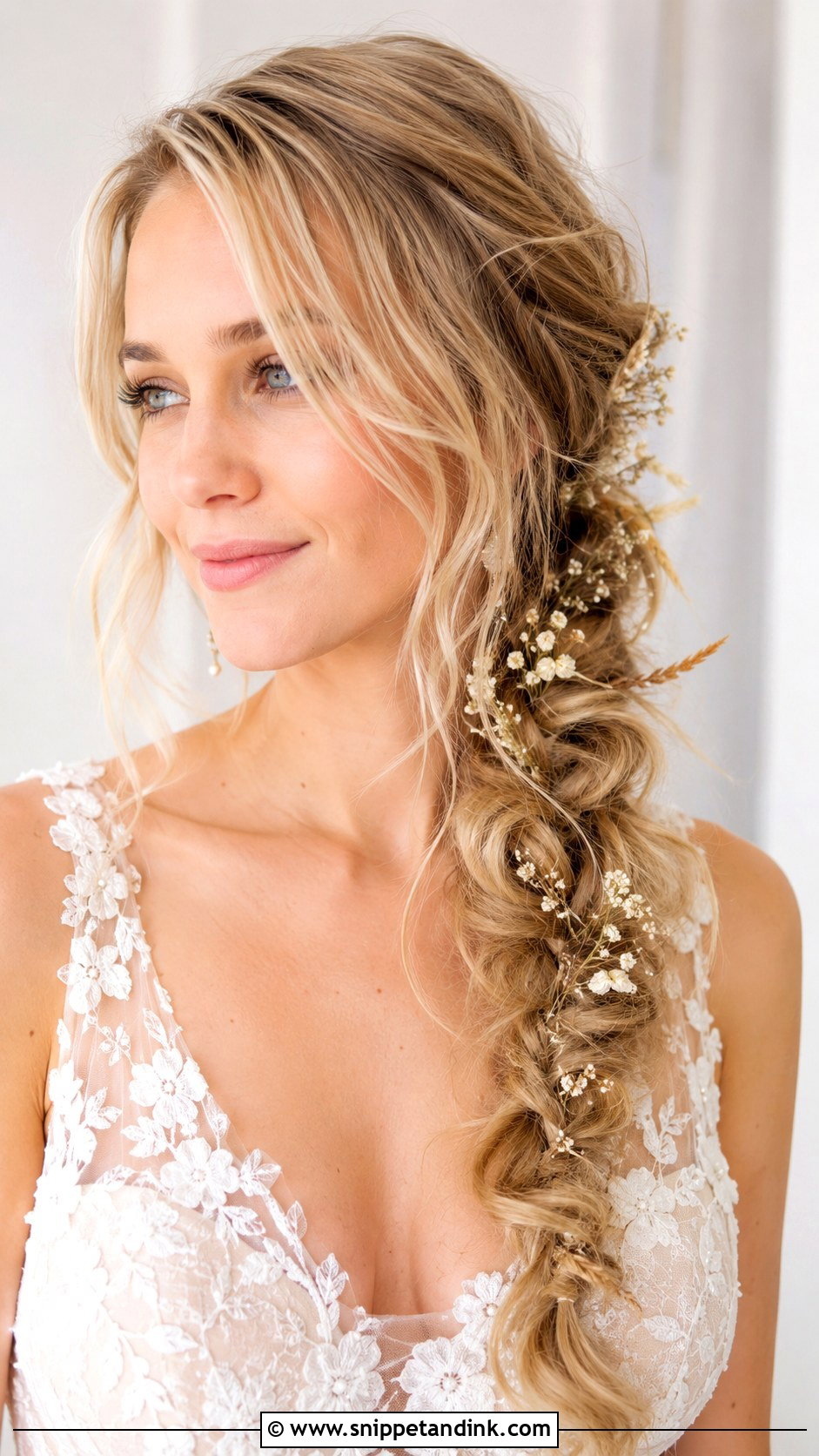
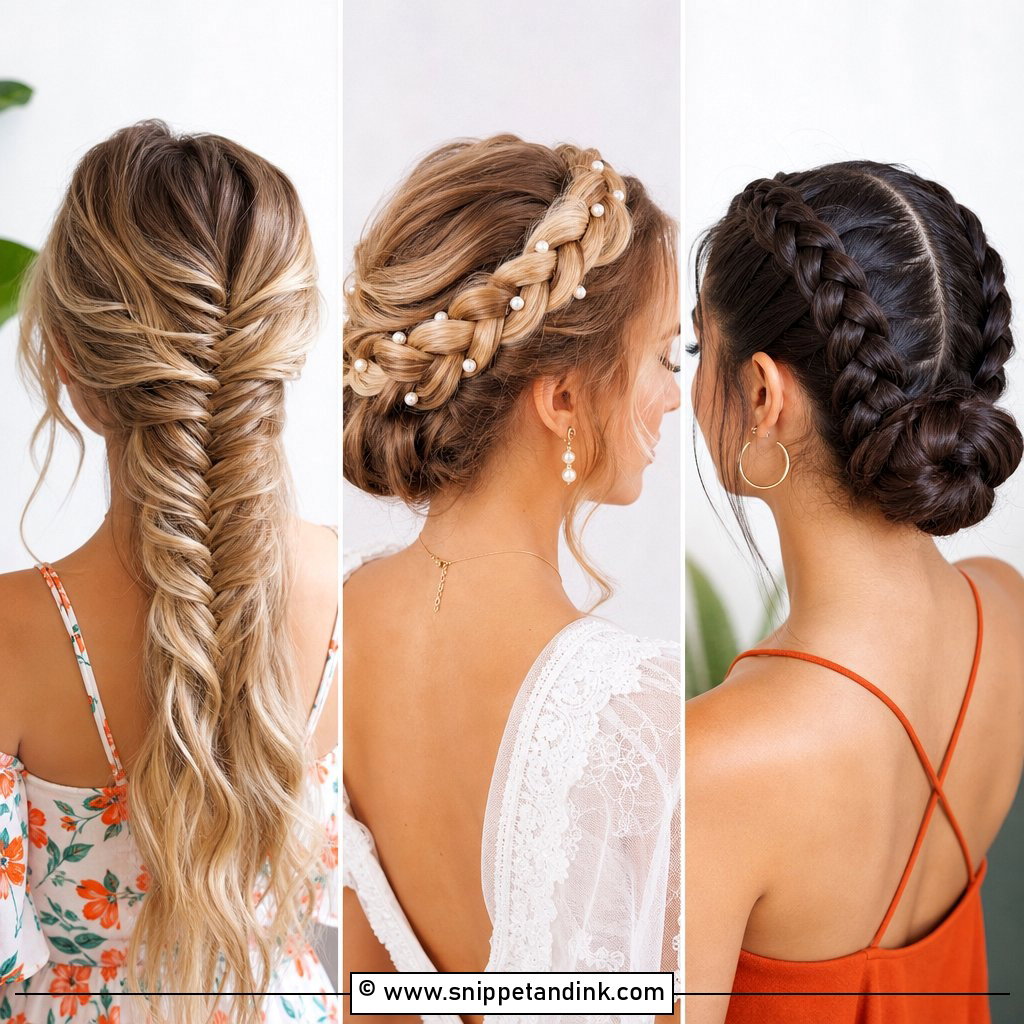
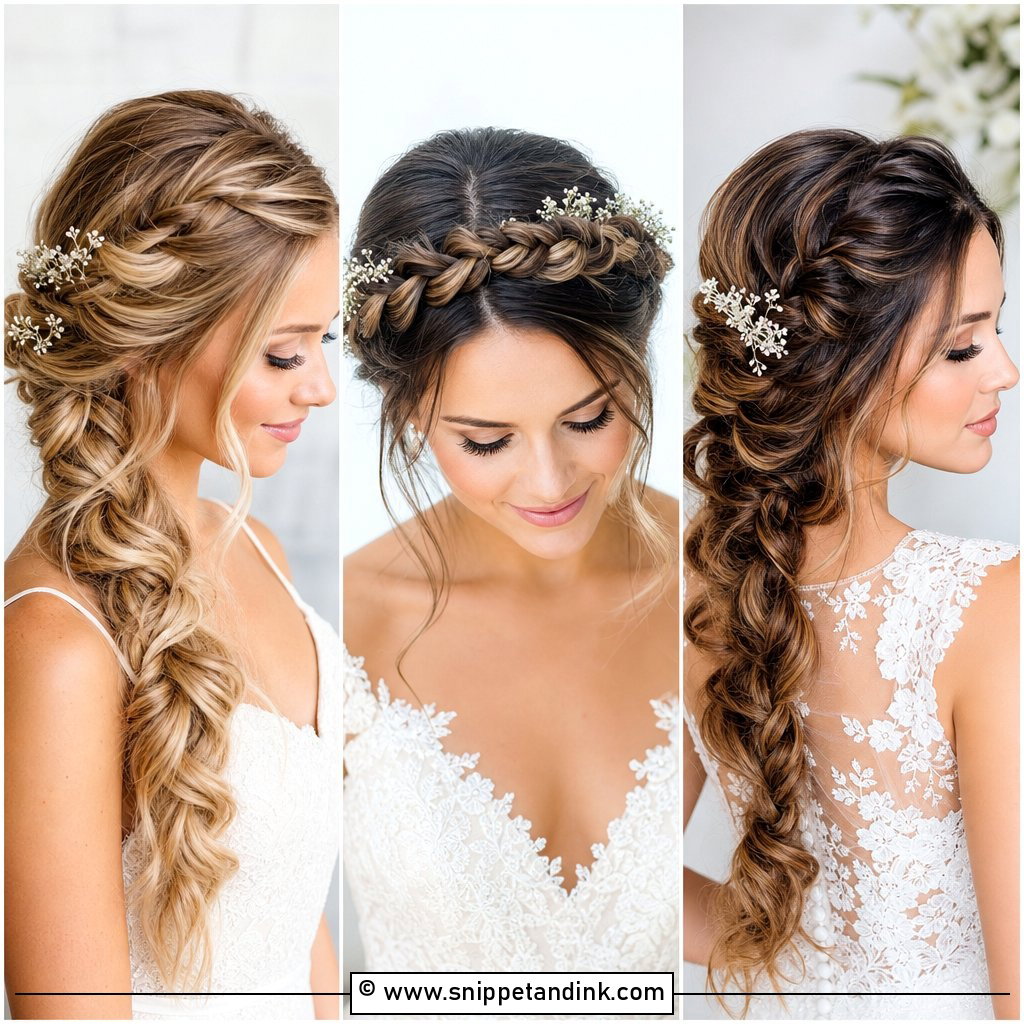
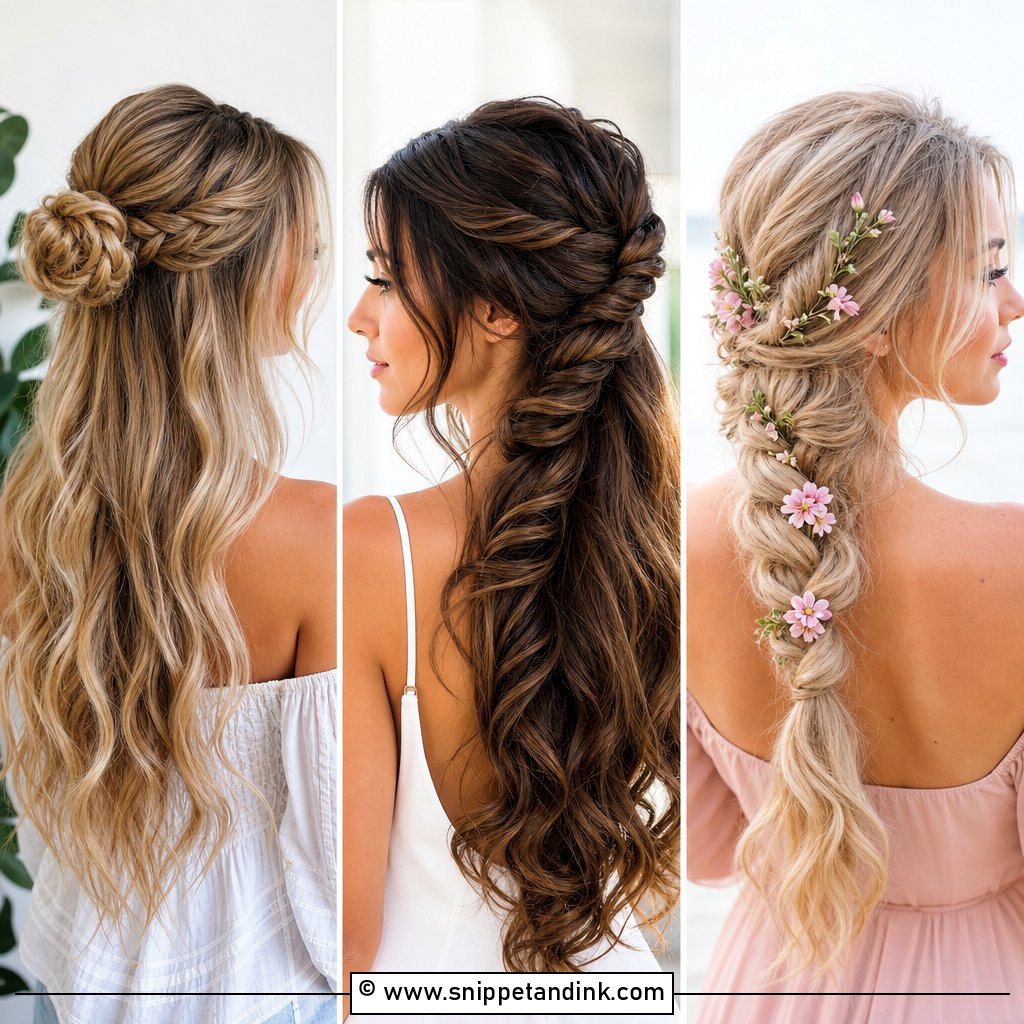
A fishtail is woven from just two sections, crossing tiny pieces from the outside in, which is why the pattern looks so fine. Pulled apart at the edges, it falls over one shoulder looking soft and lived-in. I prep with texture spray first; on freshly washed, silky hair a loosened fishtail slips apart within an hour. Tuck dried flowers or baby’s breath into the weave rather than soft fresh blooms, which wilt against warm hair. You need at least shoulder length to show the pattern, and longer is better.
2. Crown Braid Updo
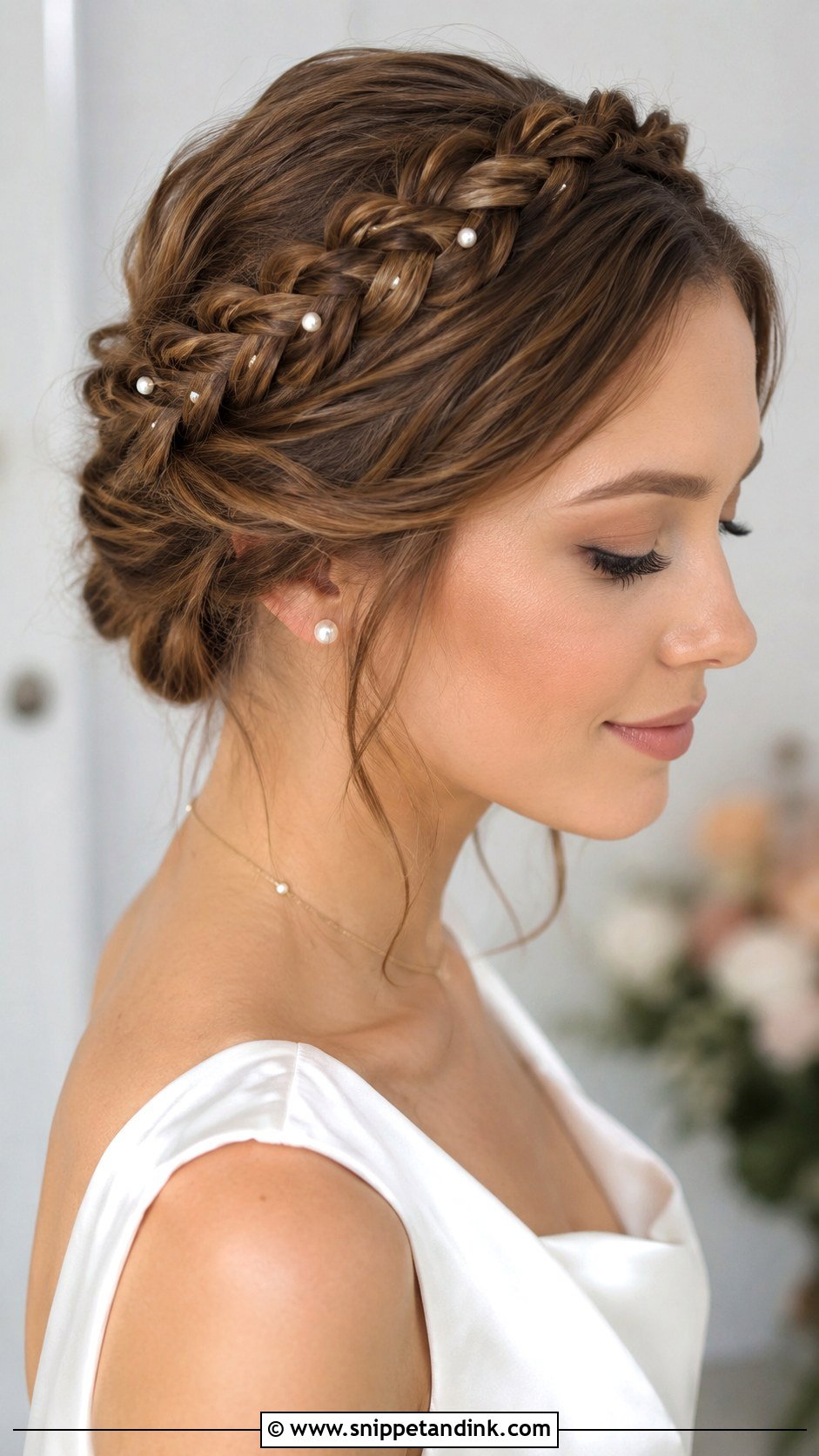
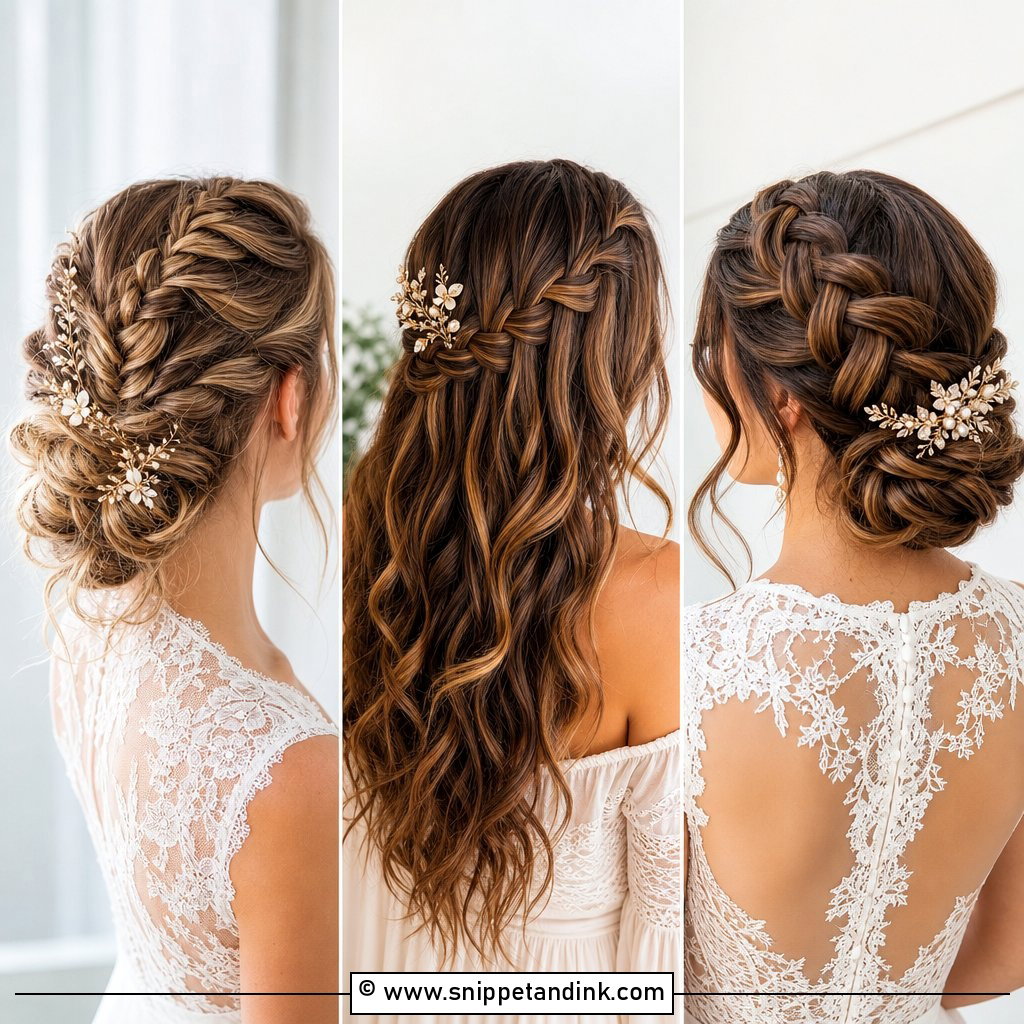
Two braids start behind the ears, travel up over the head and pin together at the crown, so the style is anchored at several points. That’s why it barely moves through hours of dancing. For a veil, I slide the comb just below where the braids meet. Braid width decides the mood: chunky and pancaked reads relaxed, narrow and tight feels formal and a little vintage. Pearl pins or small blooms fit into the plaits without extra hardware.
3. Half-Up Braided Crown
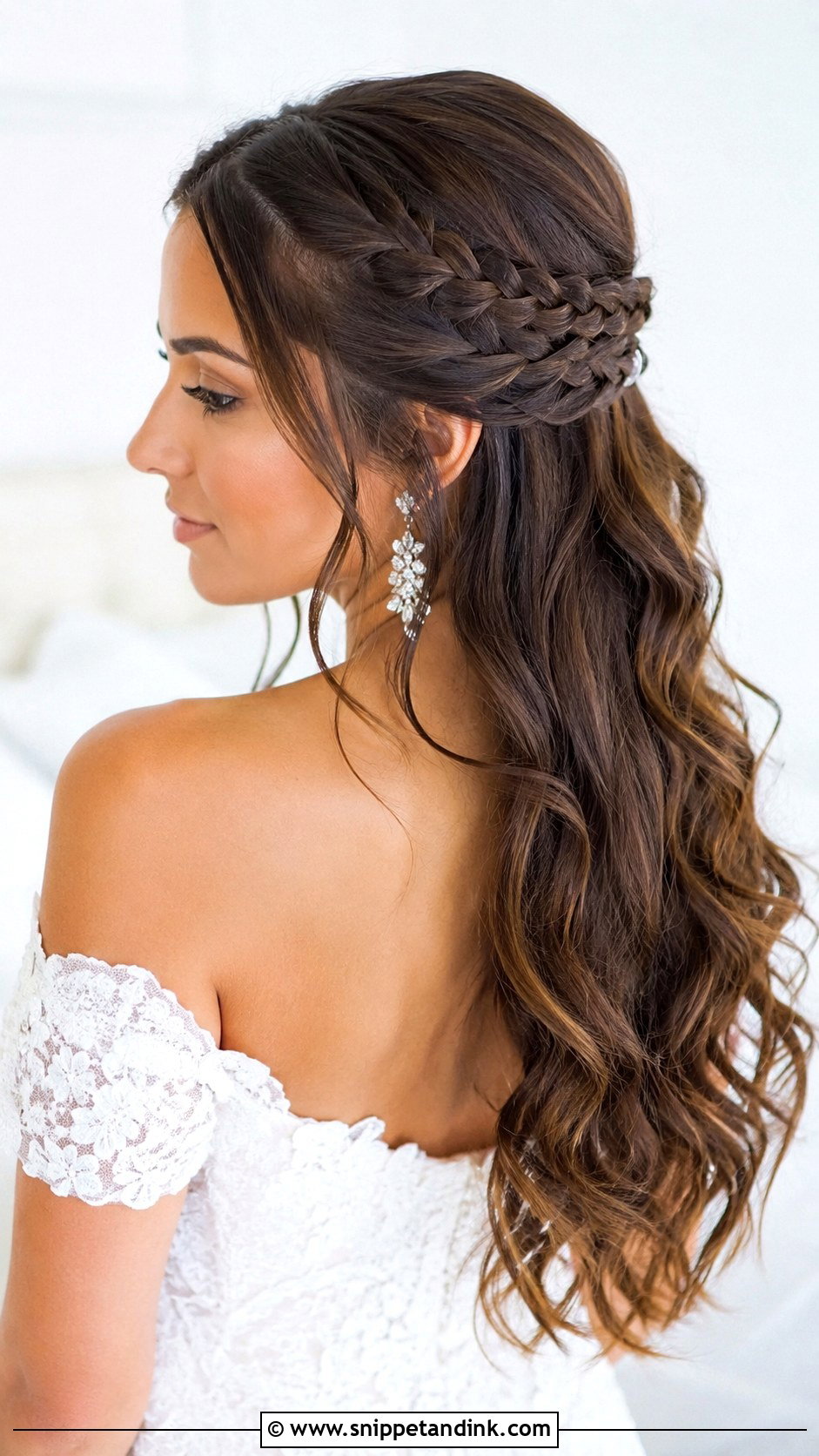
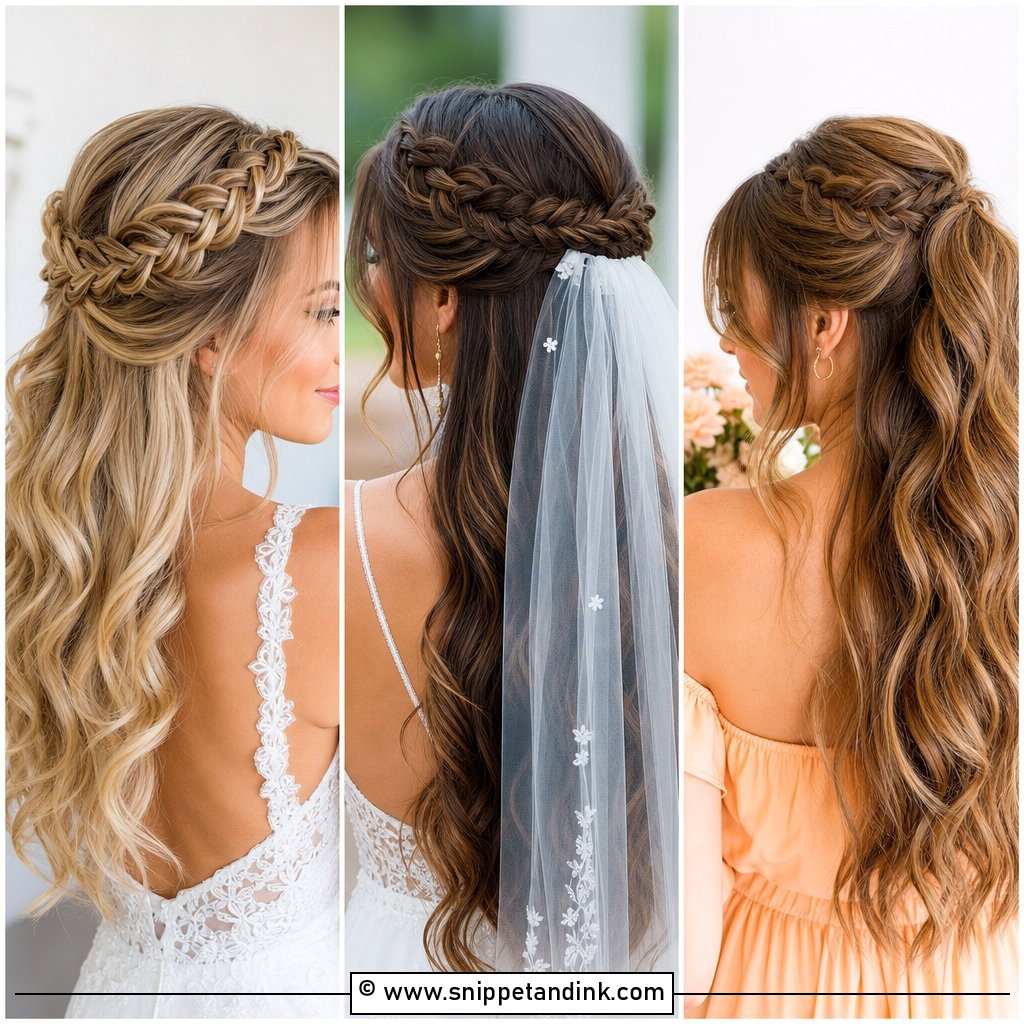
Thin braids start at each temple and meet at the back of the head, holding the front off your face while the rest stays down in waves or your natural texture. It’s the braid I suggest most to brides who feel exposed in a full updo. The catch is that the lengths underneath behave like any down style: in humidity your waves drop while the braids stay put, so set them a little tighter than you want them to finish. Because the sides are clear, statement earrings and open necklines suit it.
4. Dutch Braid Bun
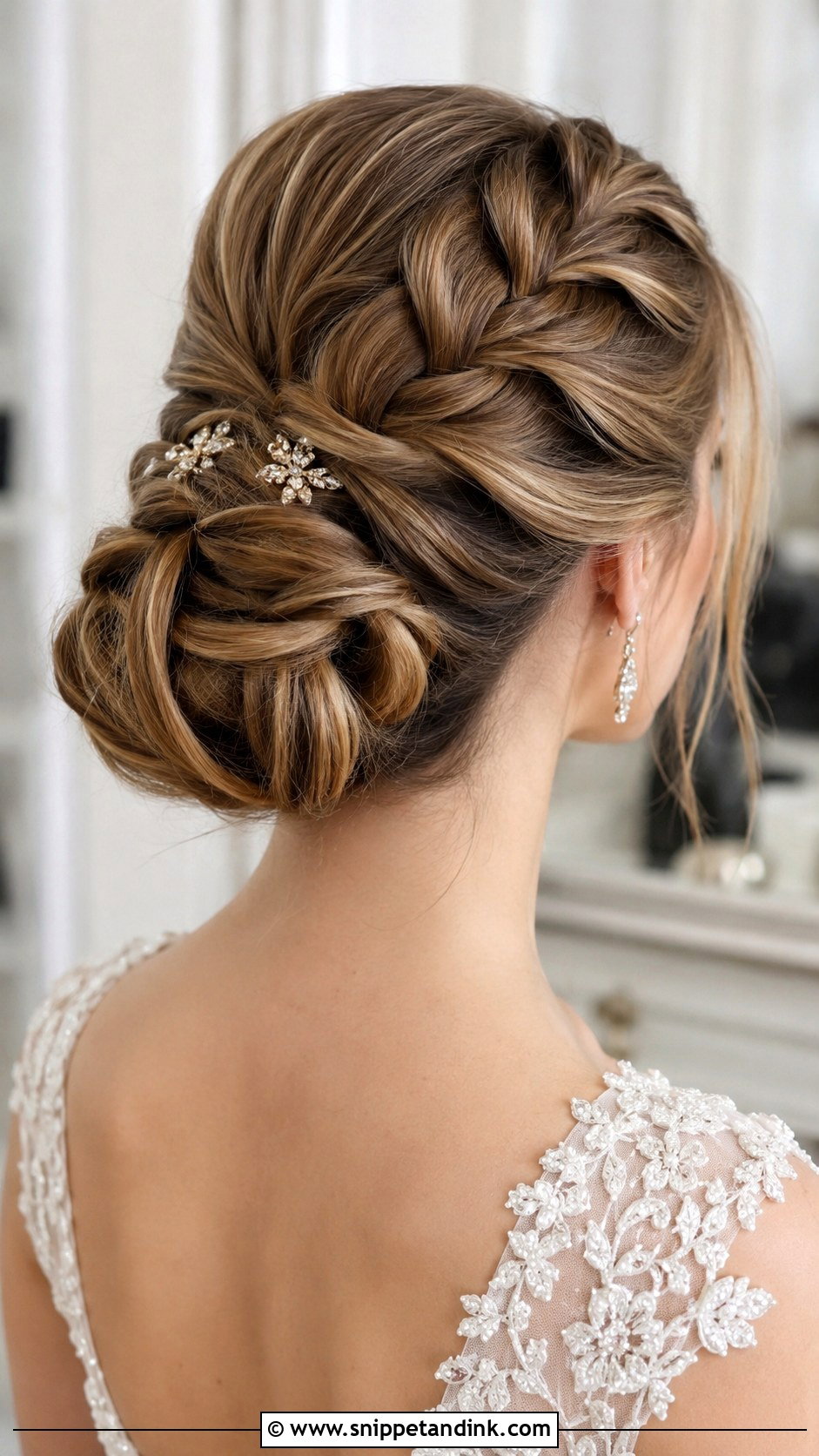
A Dutch braid is woven under rather than over, so it sits raised on top of the hair instead of lying flat. That ridge is what gives the bun its structure in photos. It runs from the hairline into a low twisted bun at the nape, and with both ends pinned it’s among the most secure styles here. I’d steer heavily layered hair away from a very tight version, since short layers poke out of the ridge. A hair vine or a few jeweled pins along the braid suit an evening reception.
5. Braided Chignon
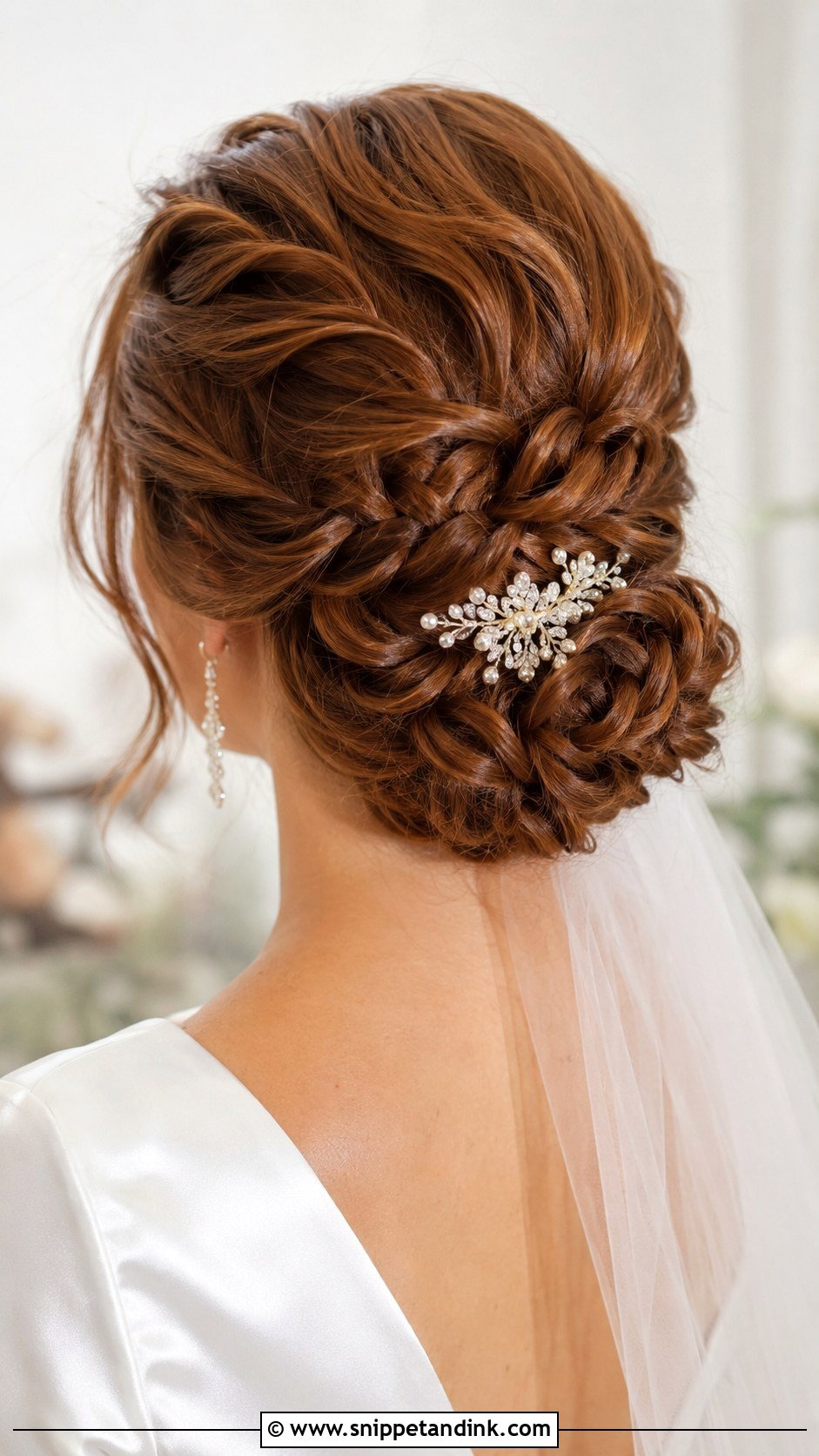
This is a braid looped into a low bun, which gives the chignon a woven surface instead of a smooth one. I pancake the braid before coiling it so the bun looks fuller than the hair really is, a trick that helps a lot on fine hair. It sits low enough for a cathedral veil to rest above it. You’ll need medium to long hair to have enough braid to loop. A comb or a few flowers beside the bun finish it.
6. Waterfall Braid
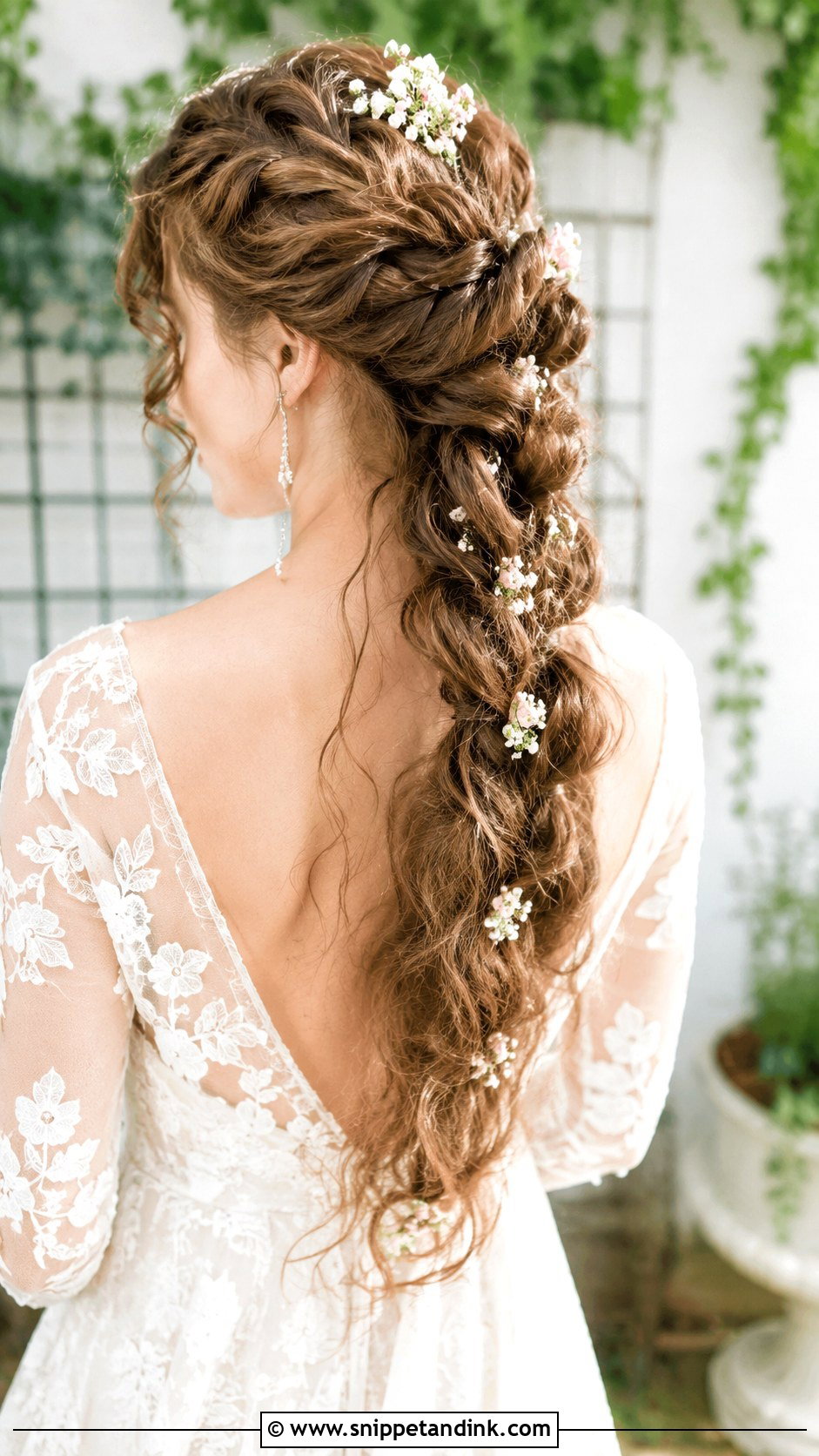
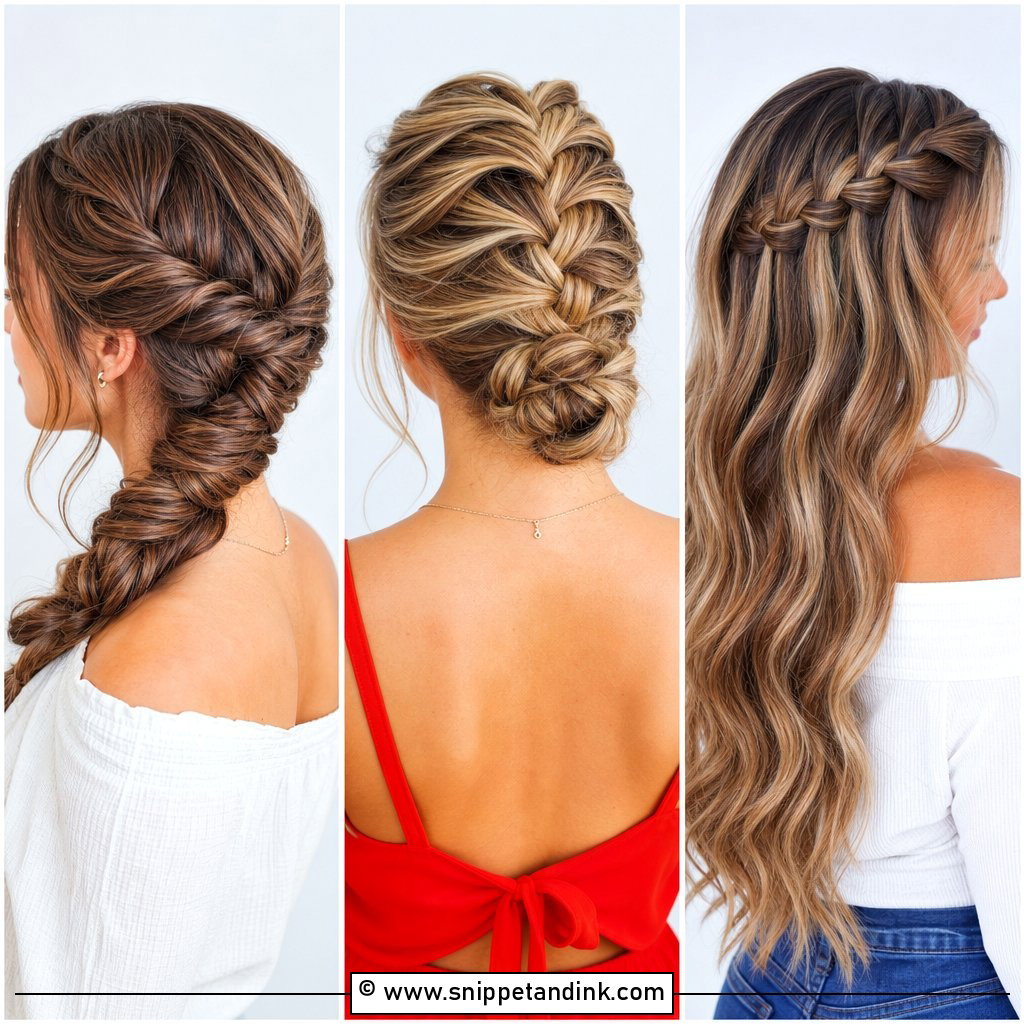
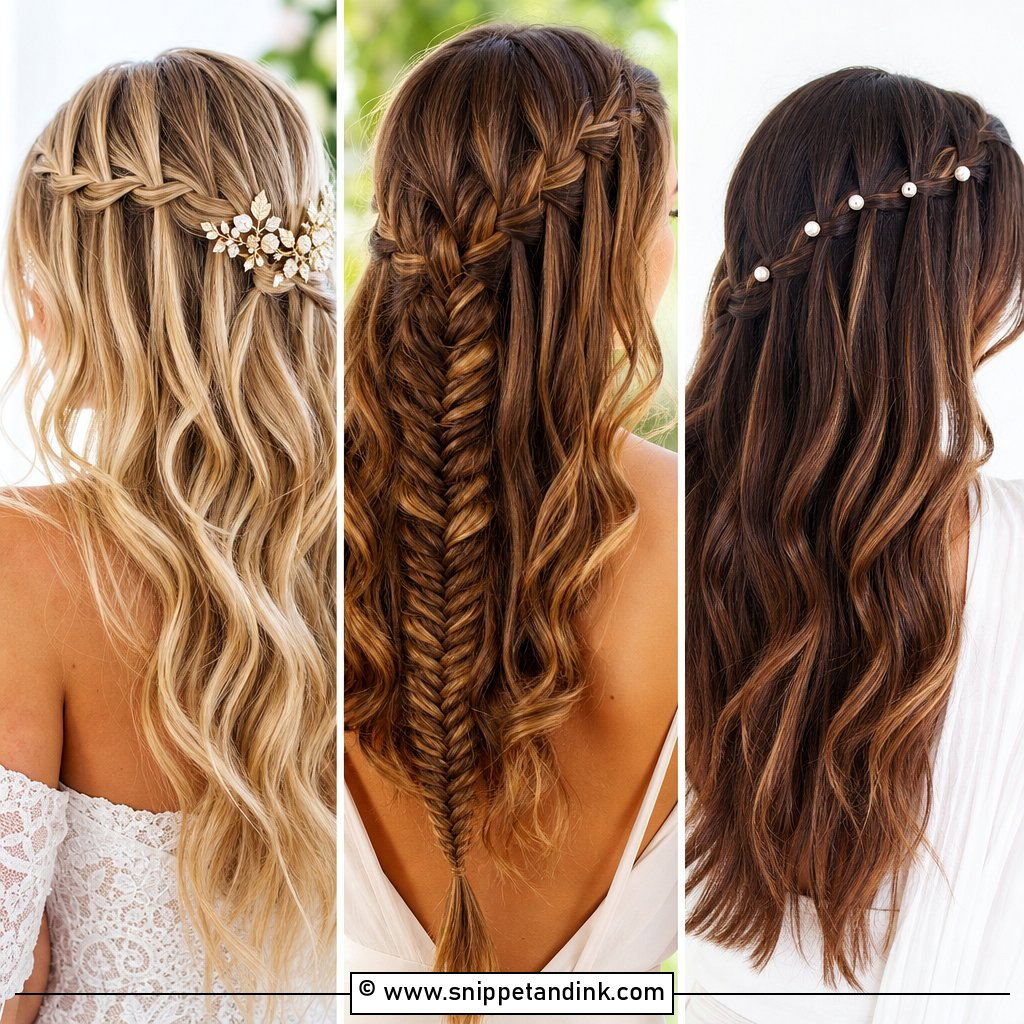
The waterfall braid drops a strand after every crossing and picks up a new one, so hair falls through it like water. It’s one of the hardest braids to do on yourself and one of the quickest to lose shape, because the dropped strands carry no grip. I set waves first and mist the braid lightly so it holds. Wavy or curly hair shows the falling strands best; on very straight, fine hair the braid can almost disappear. Small flowers along the braid line suit an outdoor ceremony.
7. Side Swept Braid With Flowers
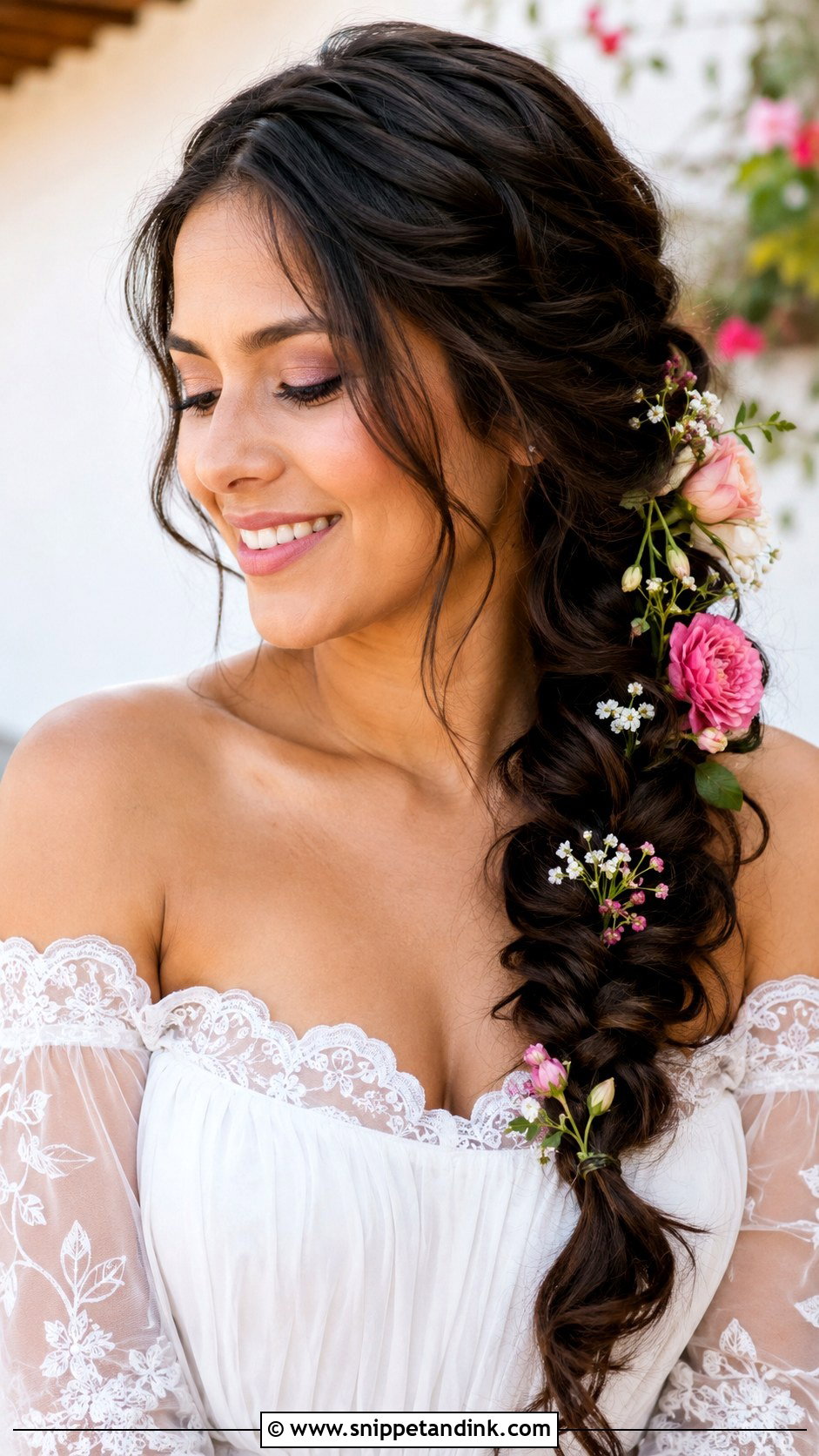
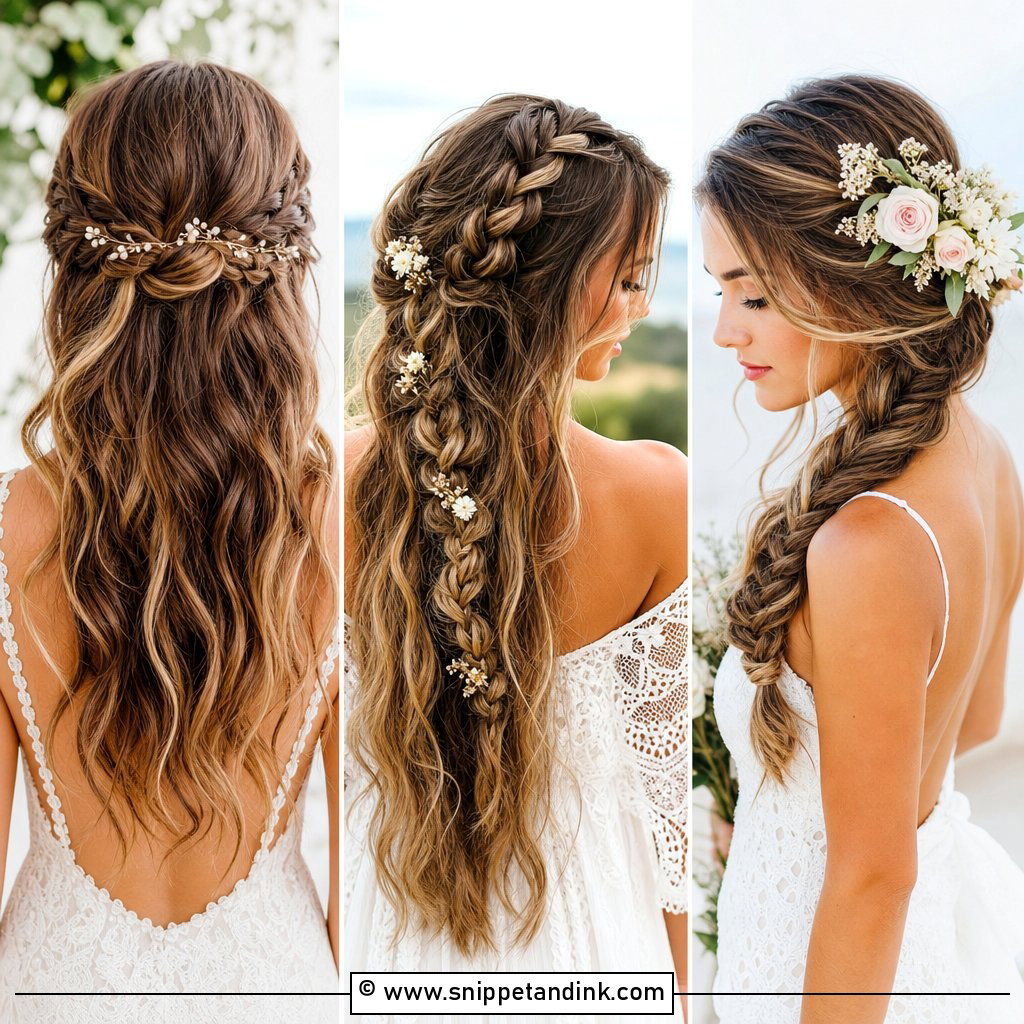
Everything goes to one side, braided loosely and draped over the shoulder. Fresh flowers threaded through add color and scent, but they add weight too, so I fix them with wired picks rather than relying on the braid to grip them. Choose the side away from any strap on your dress. Long, thick hair gives the fullest result; if yours is finer, clip-in wefts behind the ear bulk it out. An off-shoulder gown leaves the opposite shoulder bare, which balances the shape.
8. Braided Low Ponytail
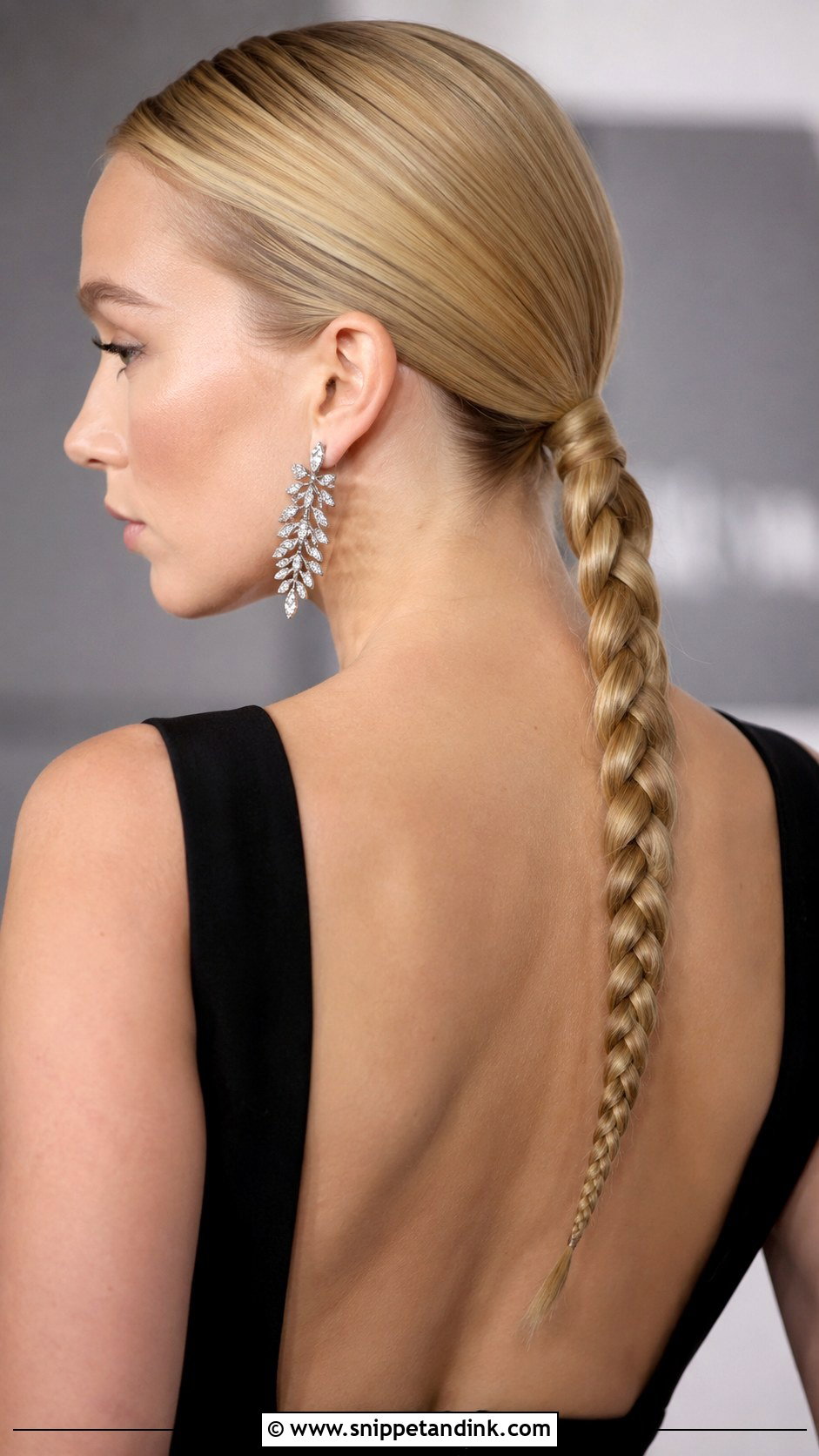
The braided low ponytail is smooth on top and textured below: hair is pulled into a low pony, then braided down the length. The detail people notice is the base. I wrap a strip of hair around the elastic and pin it underneath so no band shows. Keep the braid tight with a minimalist gown or pull it apart for volume. It’s a good answer if you wear your hair down every day and find updos too formal.
9. Messy Braided Updo
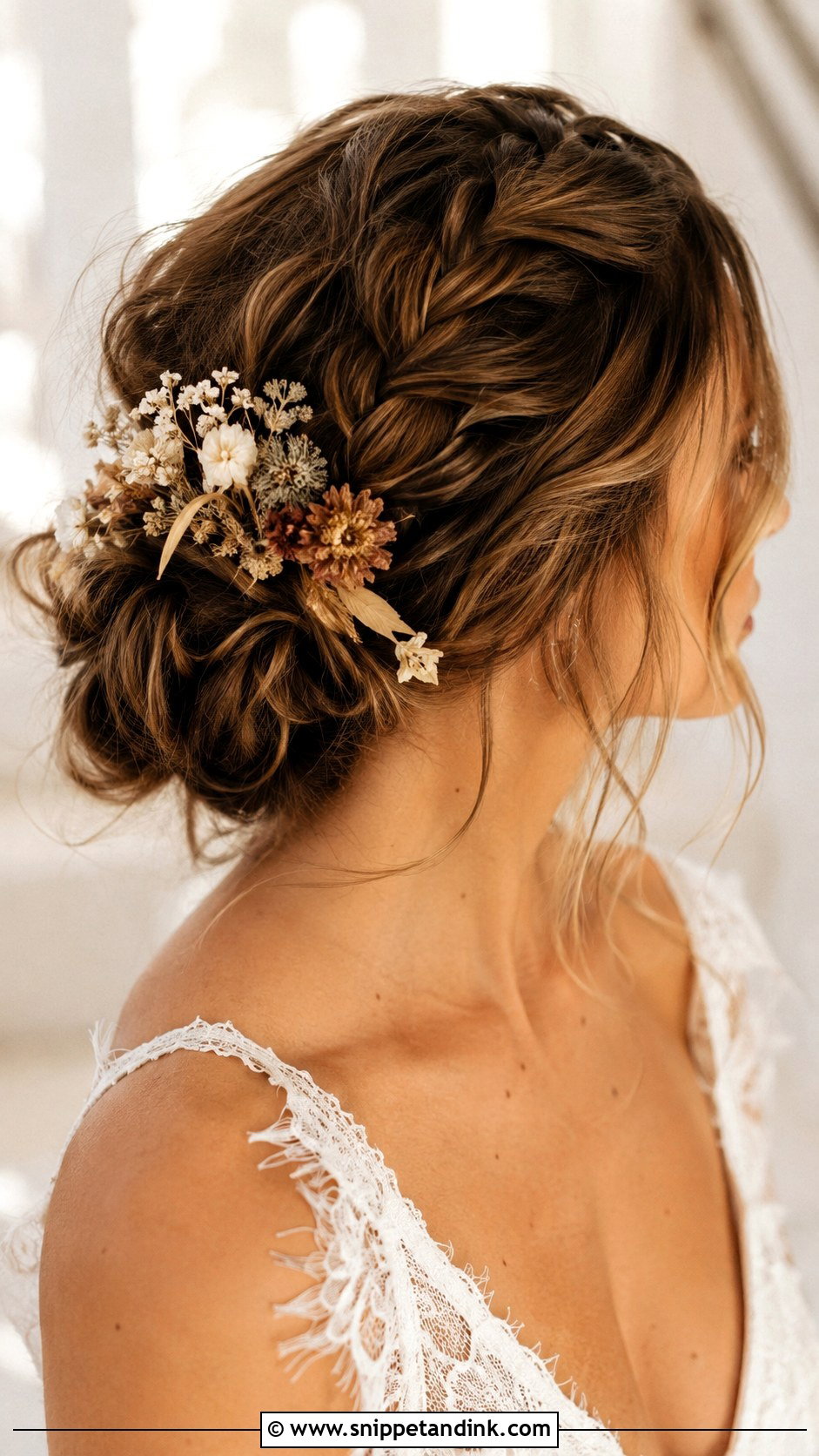
Messy has to be planned, or it just looks unfinished. Loosely woven braids are pinned into a soft shape, with pieces left around the face. I tease lightly at the root and work on second-day hair, which has the grip this style needs. Dried flowers or small pins tuck in anywhere. Naturally wavy medium to long hair suits it; very fine, straight hair tends to flatten by mid-afternoon, so I’d pick something more structured for you.
10. Fishtail Braid Updo
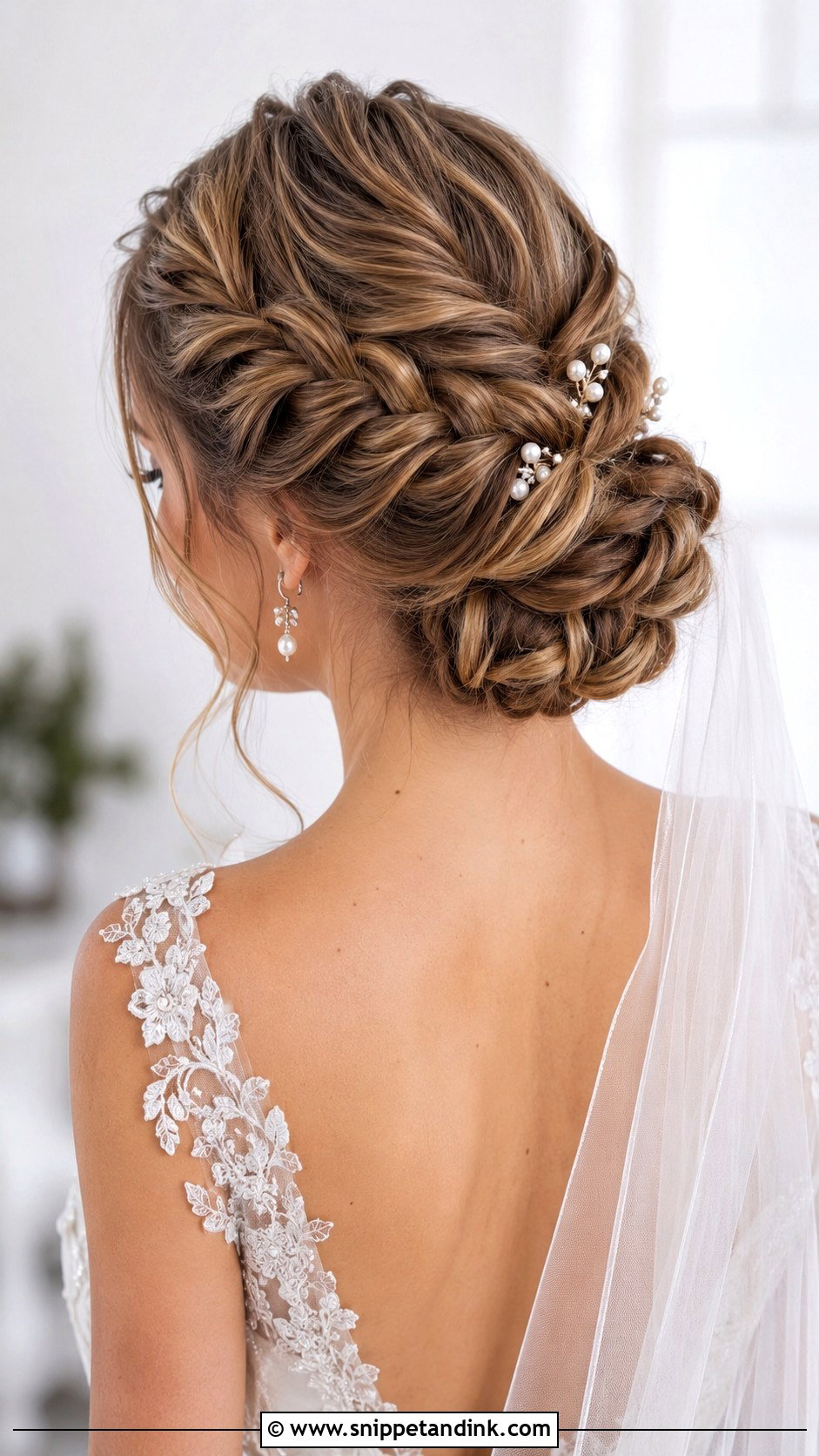
Coiling a fishtail into a low bun shows off the herringbone pattern while keeping everything off your shoulders. I loosen the braid before coiling it, which makes the bun rounder and hides the pins. Structured gowns and long veils suit it. It needs longer, thicker hair to make a substantial bun; on shorter hair I add a small padding piece underneath. Pearl pins or a jeweled comb bring the shine.
11. Boho Rapunzel Braid
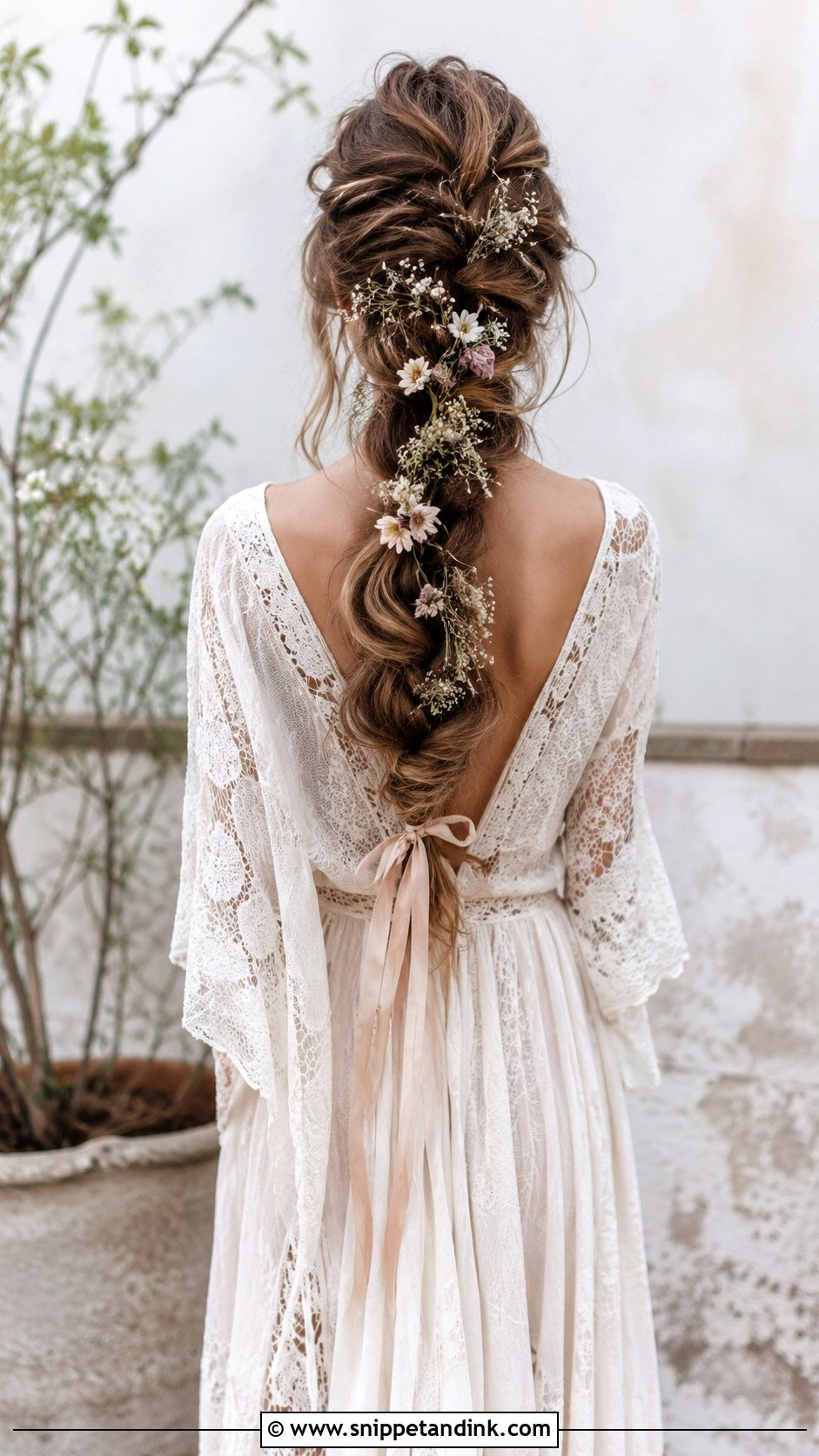
Rapunzel braids are usually built with extensions, even on brides with long hair, because the thickness you see in photos rarely comes from one person’s own hair. A thick, loose braid runs down the back and is pulled apart generously. Dried flowers, ribbon or a vine woven along it suit lace gowns and boho settings. Check the weight at your trial: a long extended braid tugs on the clips at the crown by late evening. A few strands left around the face soften it.
12. Braided Halo With Veil
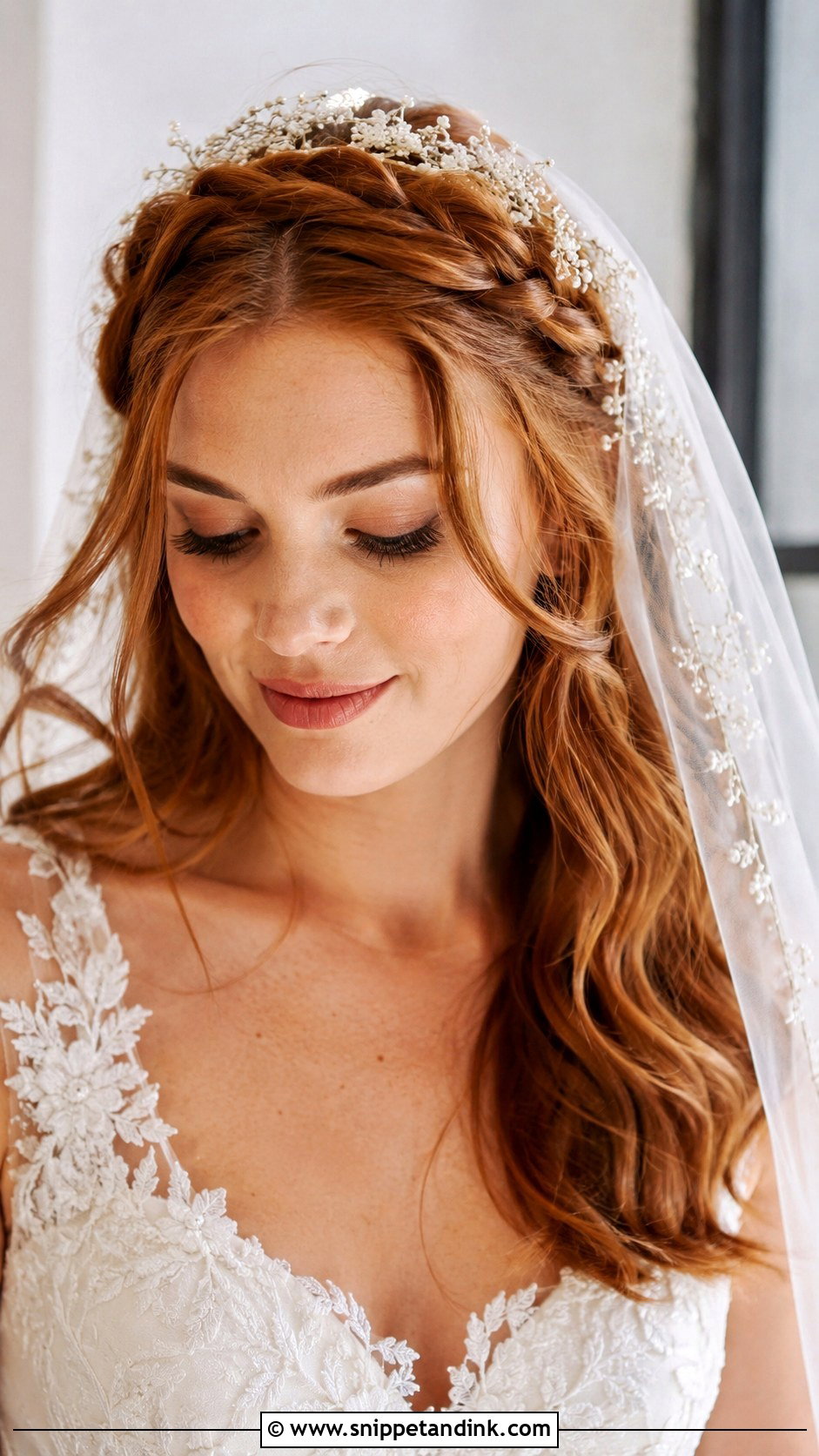
Here the braid is doing engineering. It wraps around the head like a ring and gives the veil comb something firm to grip, which smooth hair can’t offer. I tuck the comb just beneath the braid so it vanishes. If your veil is the focus, this keeps your hair quiet and secure through the ceremony and well into the reception. Small florals or pearls along the braid add detail without competing.
13. Twisted Braid Half-Up
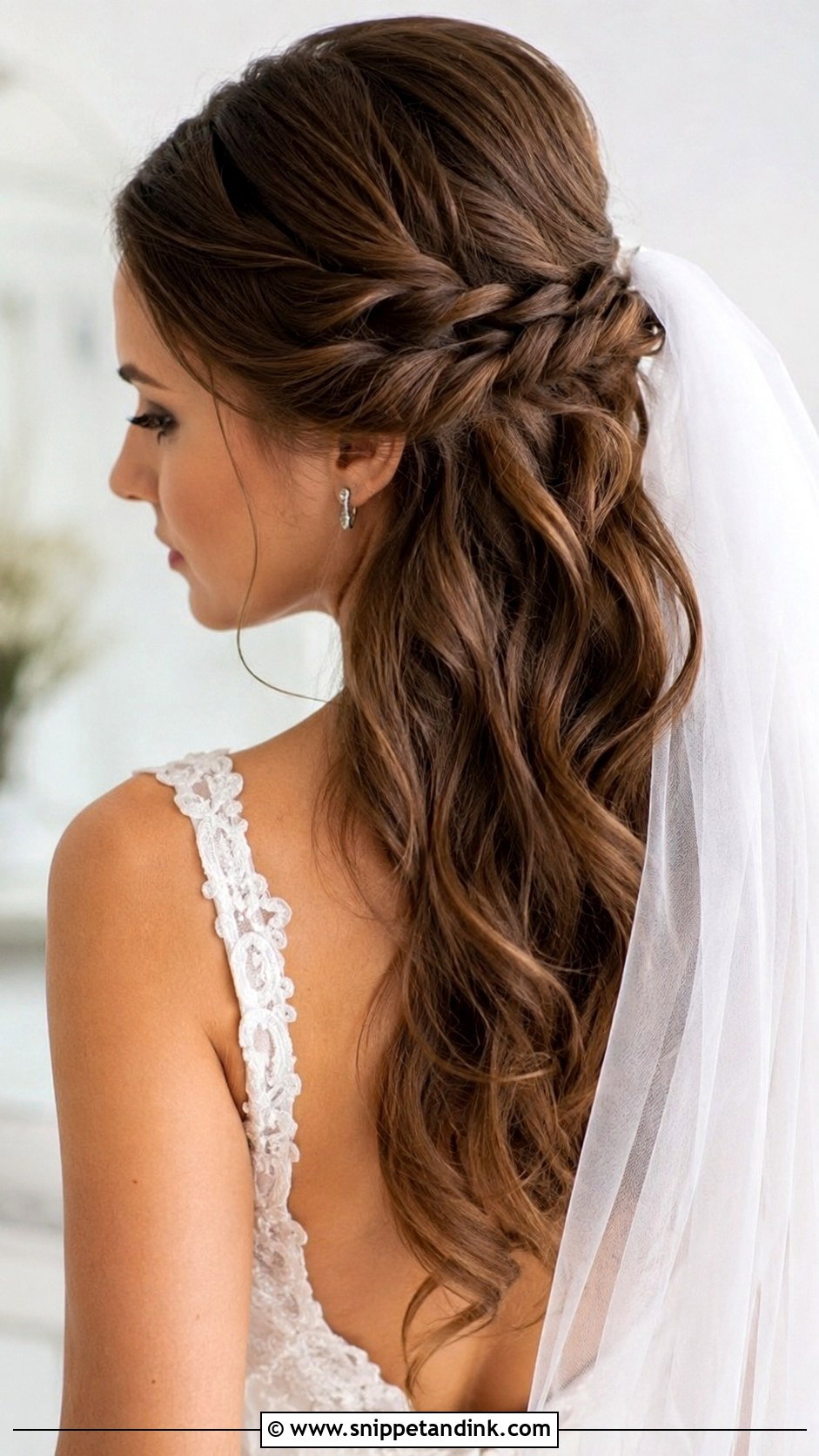
A twisted braid half-up swaps a plait for rope-like twists pinned back, with the rest of the hair left in loose waves. Twists are faster to build and gentler than a tight braid, which is why I reach for them on brides with breakage or short layers. They do unwind if they aren’t pinned at both ends, so ask for each twist to be secured. Pull them apart gently for volume. Veils and floral pieces sit comfortably above the pinned section.
14. Braided Bun With Loose Strands
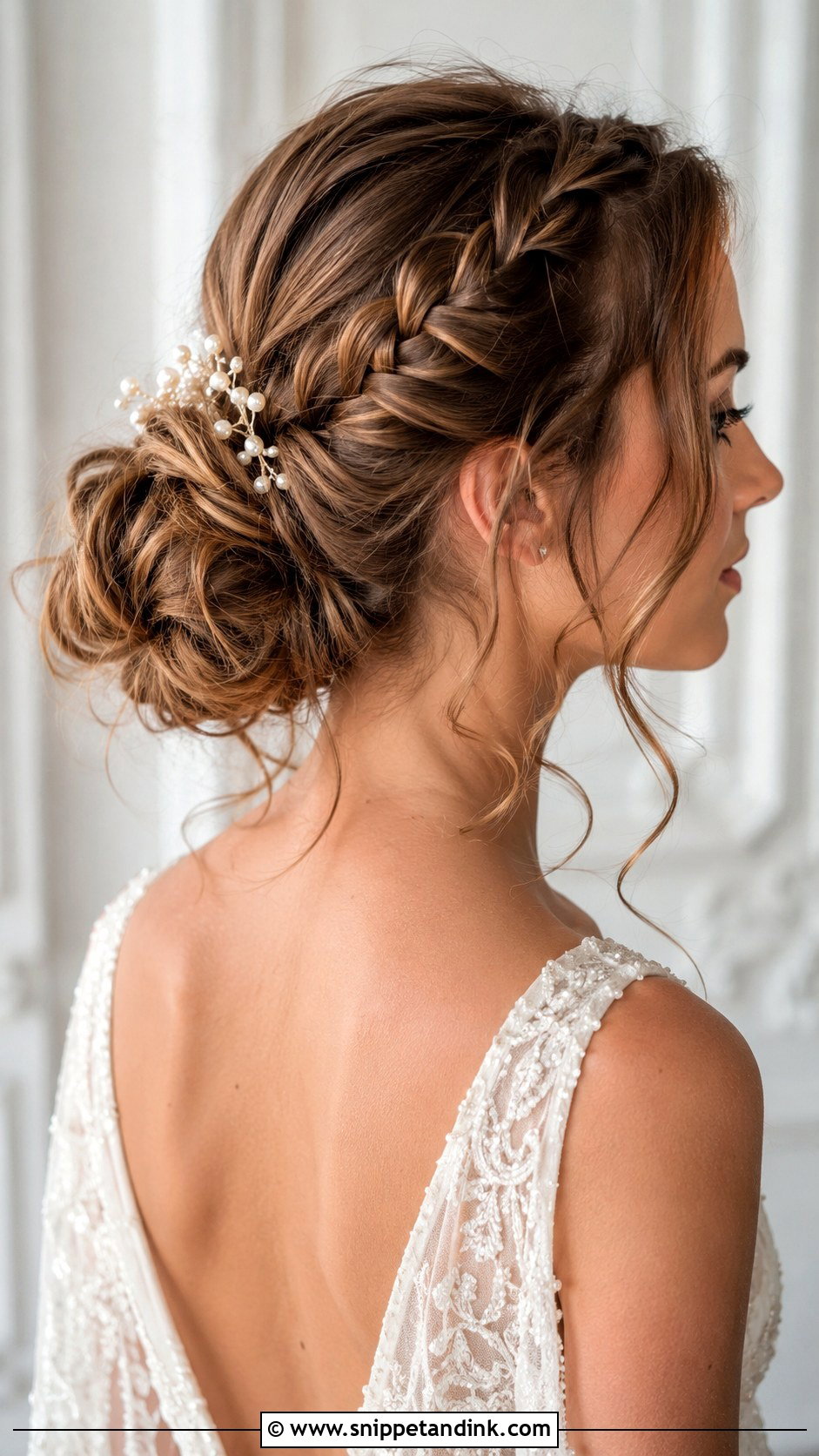
A braid wound into a low bun, with a few pieces left free. The skill is in choosing those pieces. I pull them from in front of the ears rather than the forehead, and curl them a size smaller than the rest, because they relax first. Pearl pins or fresh flowers near the bun add detail, and on medium to long hair it holds all day.
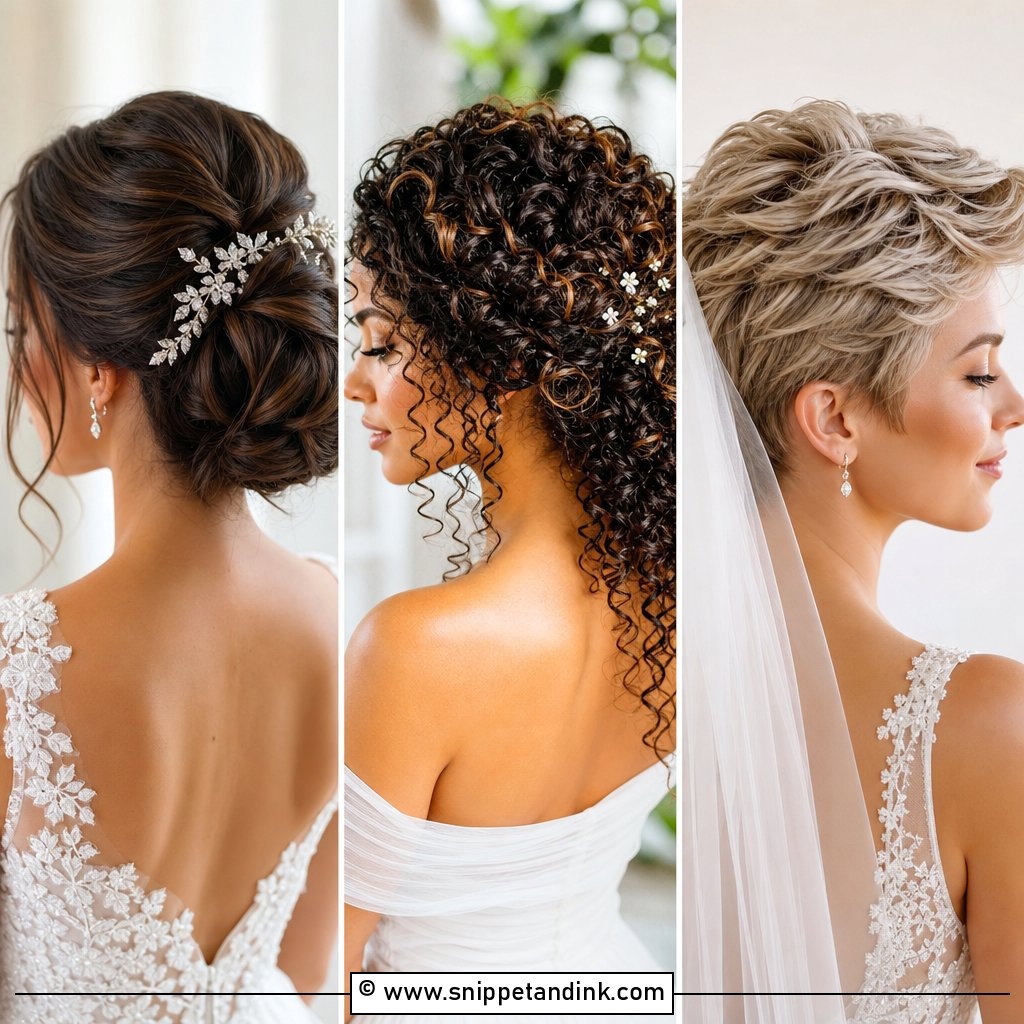
15. Double Dutch Braid Updo
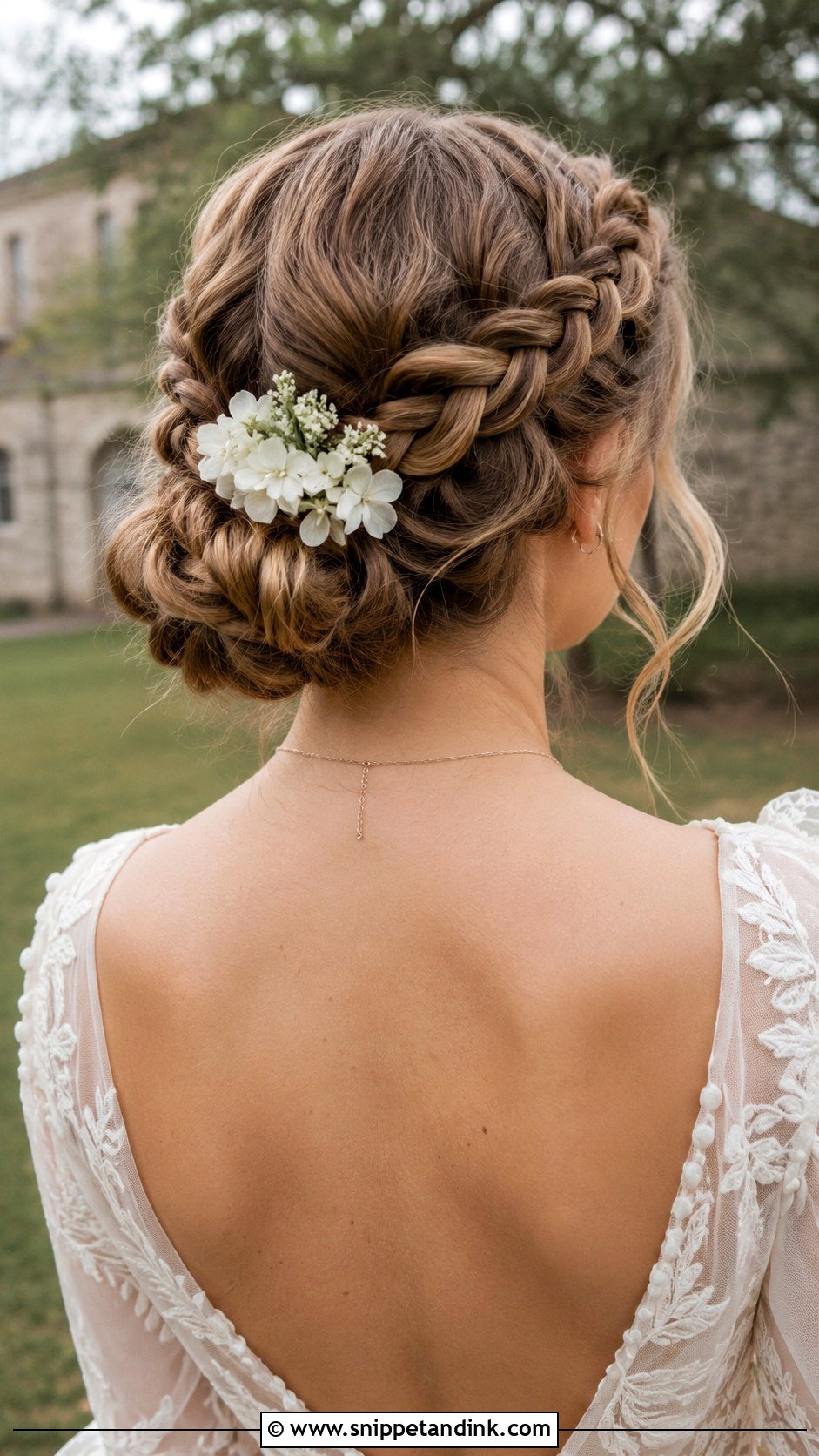
The double Dutch braid updo runs two raised braids along the scalp into a low twisted bun. It’s built for an active day: an outdoor ceremony, wind, a lot of dancing. The parting matters more than brides expect, since it runs down the centre of your head in every back-view photo, so ask for a clean, straight line. Loosen the braids only slightly if you want softness. Florals or jeweled pins sit neatly where the braids meet the bun.
16. Romantic Braided Half Updo
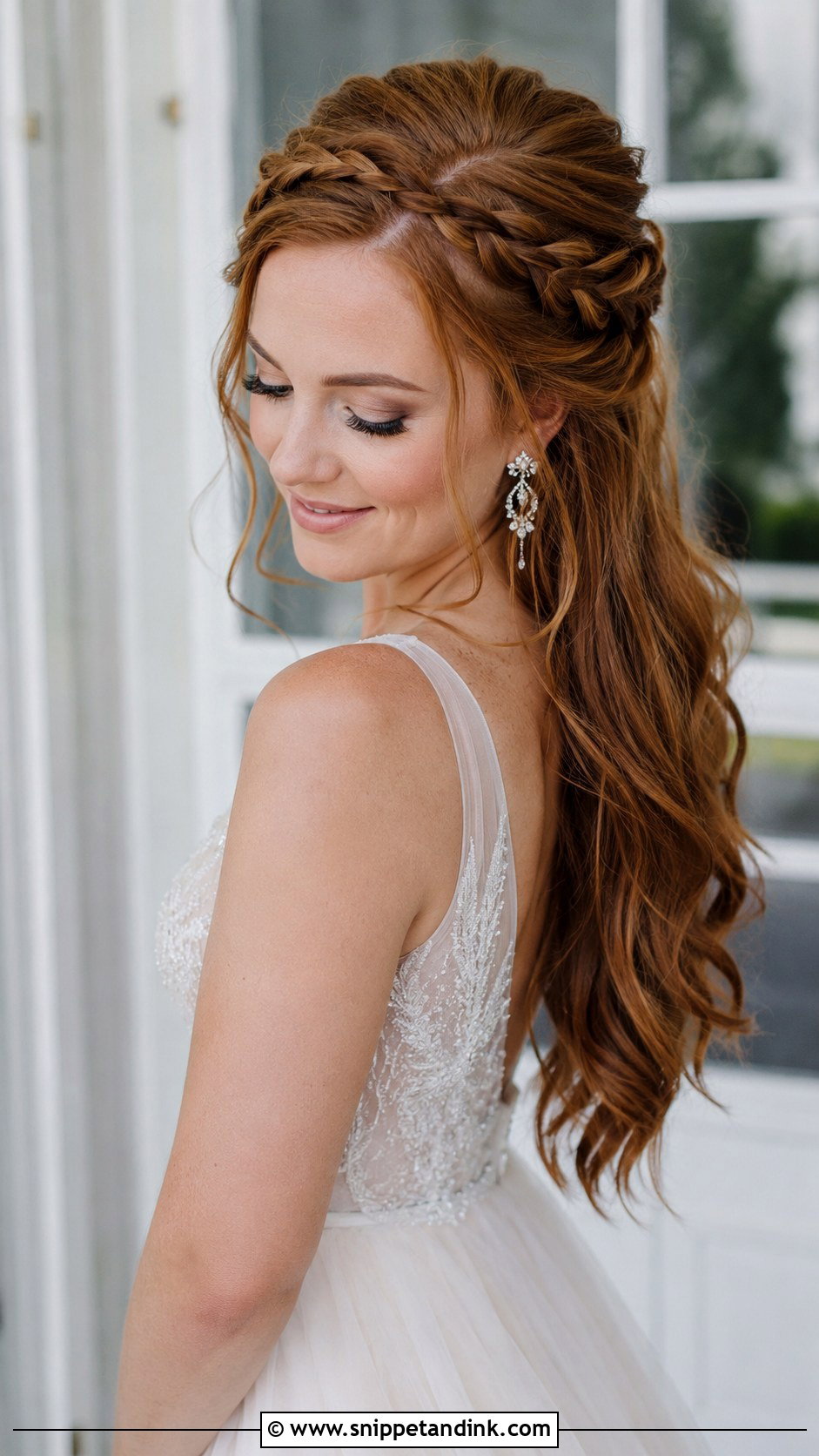
The top section is braided and pinned back, and the lengths below hang in loose waves. It shows off your length while keeping hair out of your face for the vows. I place the braid at the crown rather than lower, so it’s still visible above a veil. Pull a few pieces free for a relaxed finish. It adapts to most hair types; on very fine hair, one or two clip-ins hidden under the braid add body.
17. Pearl Embellished Braid
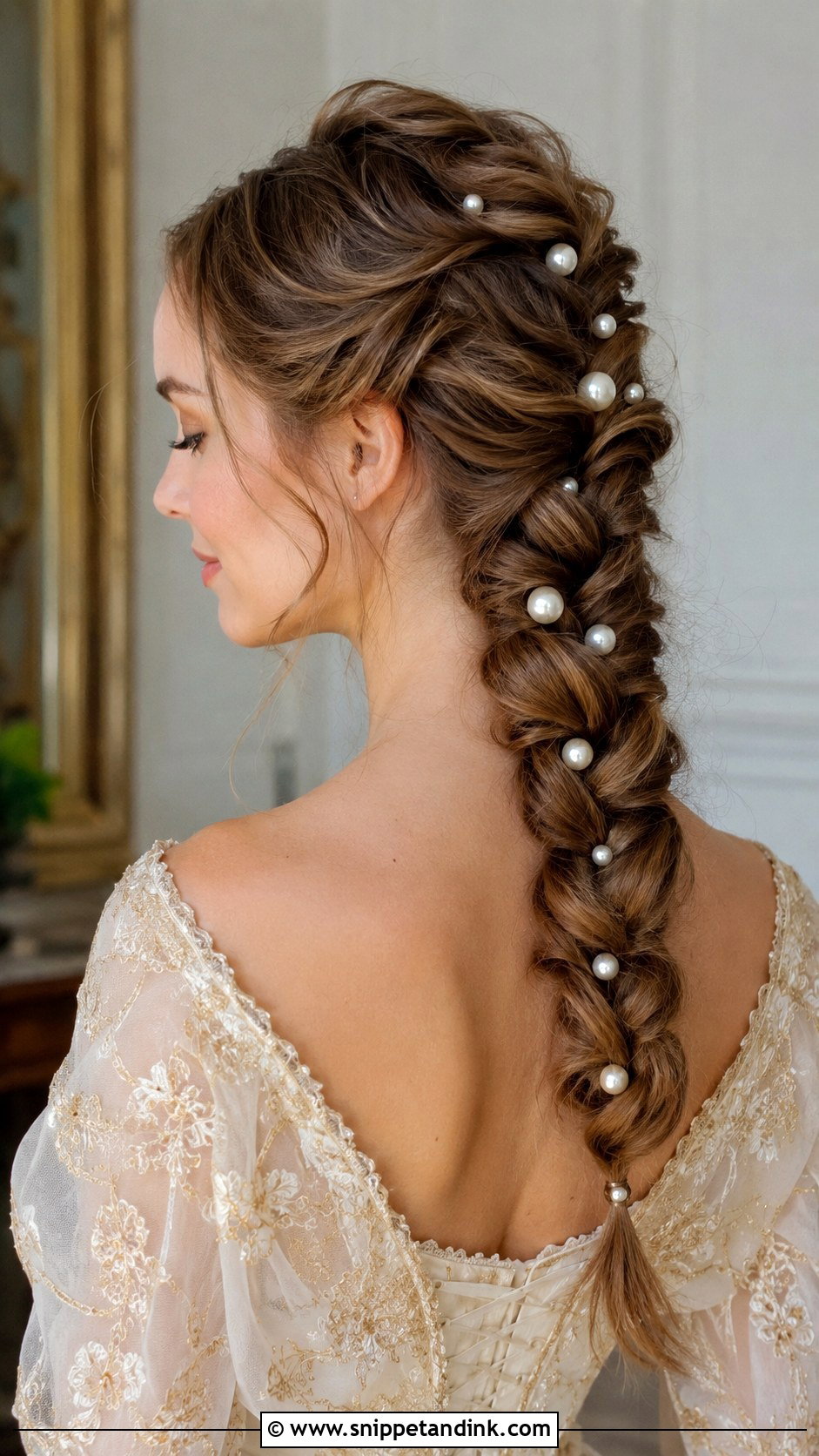
Pearls look best in a braid when they’re placed with some irregularity, not marching along at equal distances. I set them into the crossings of the braid, where pins grip best. Fishtail, Dutch and loose boho braids all take pearls, and the denser the weave, the more secure they sit. Choose pins over strung pearls if you’ll be hugged by a lot of people, since strands snag on clothing and jackets. Classic and vintage-inspired gowns pair especially well with it.
18. Braided Updo With Hair Vine
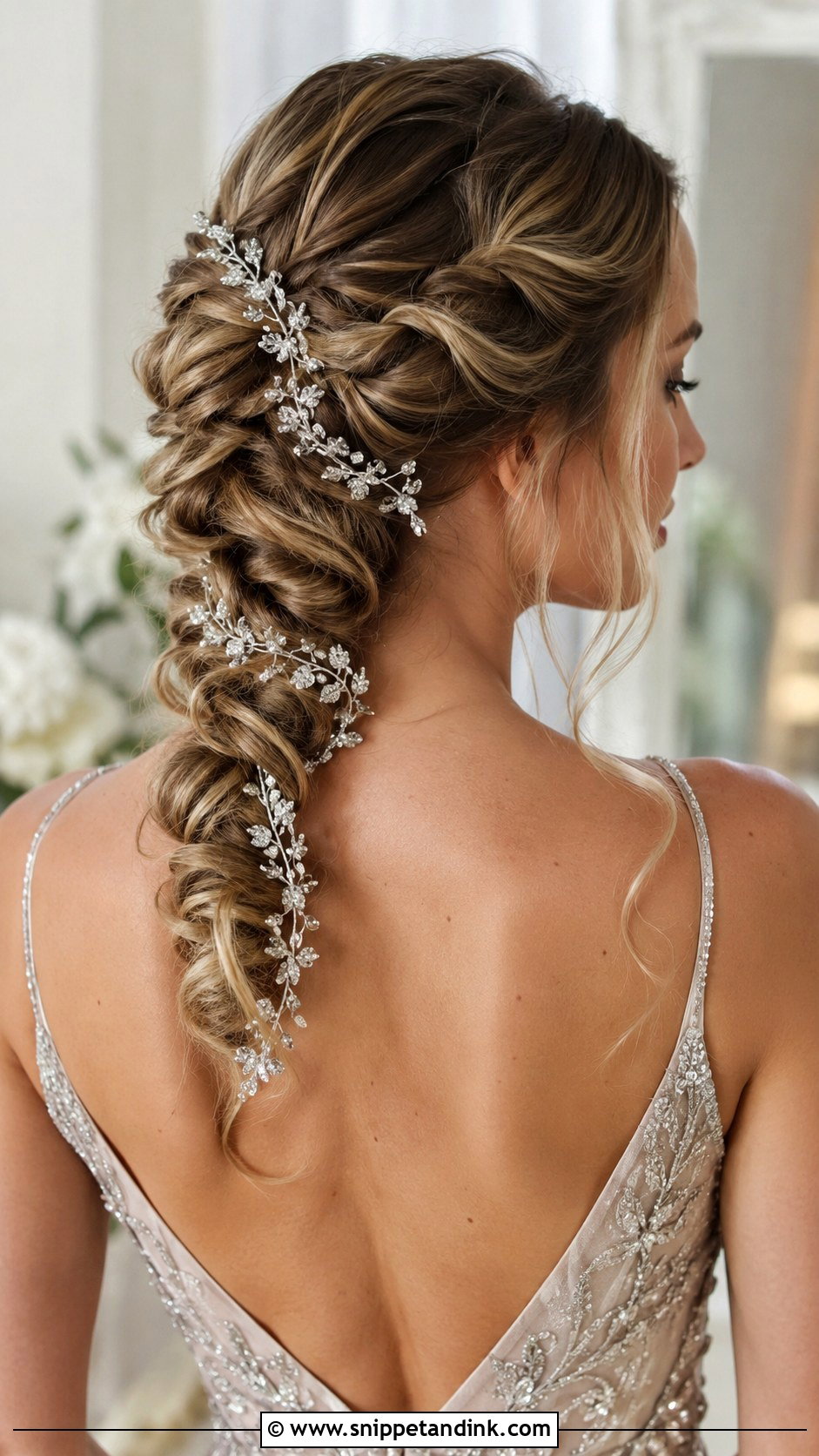
A vine of crystals or pearls woven through a low braid or bun adds sparkle without a full headpiece. I weave the vine in as I braid rather than laying it on top, so the wire follows the braid’s line and the ends tuck under. Bendable vines are the easiest to adjust on the day. Before you buy, run a finger along the ends for sharp wire; it sits against your neck for hours. Formal gowns and evening venues suit it.
19. Loose Side Braid
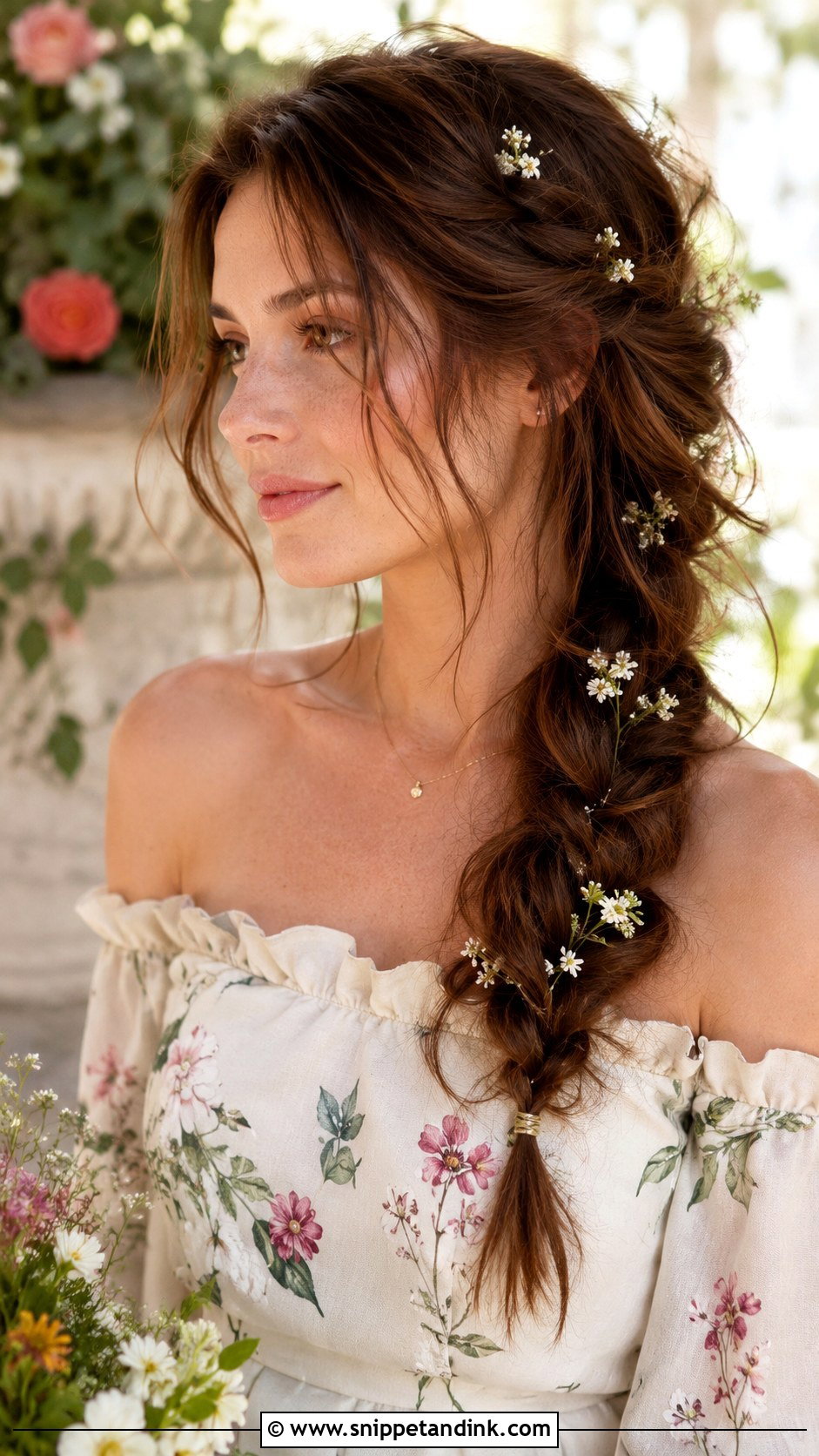
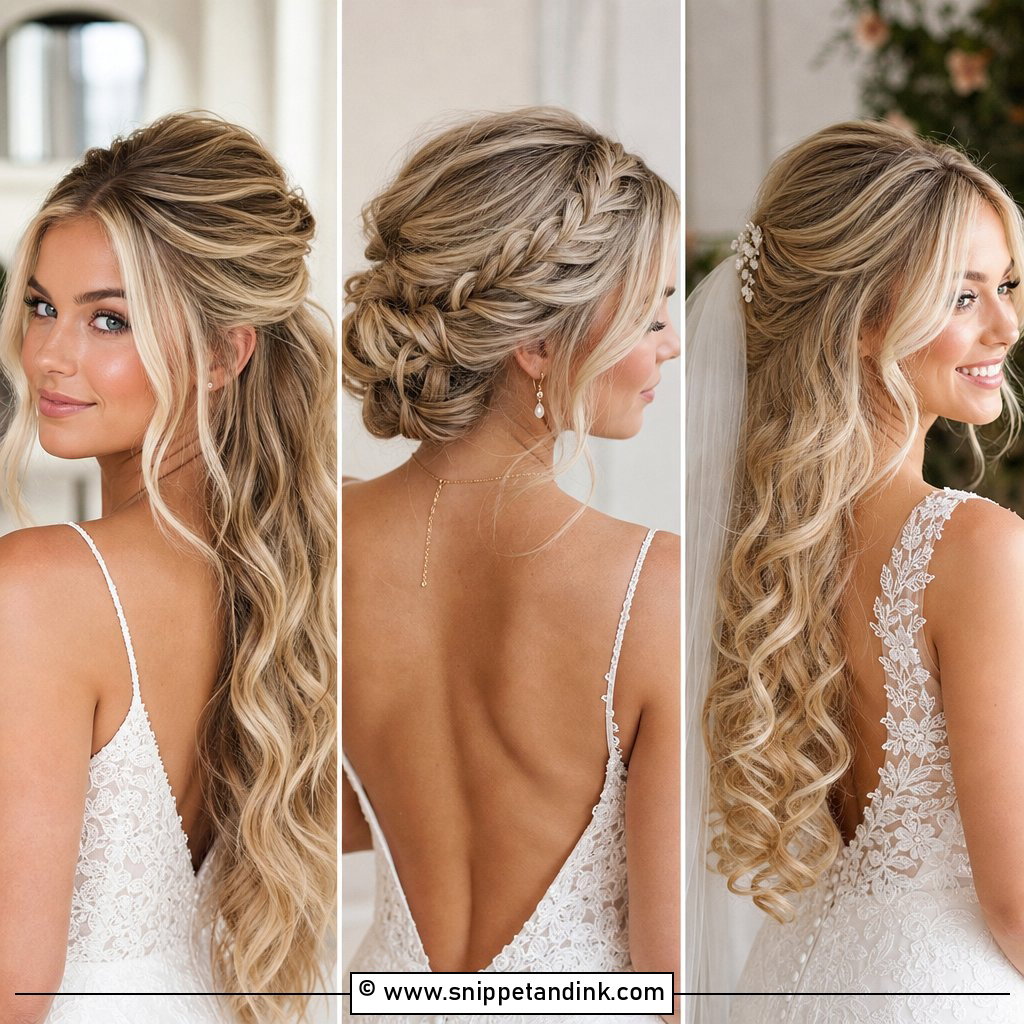
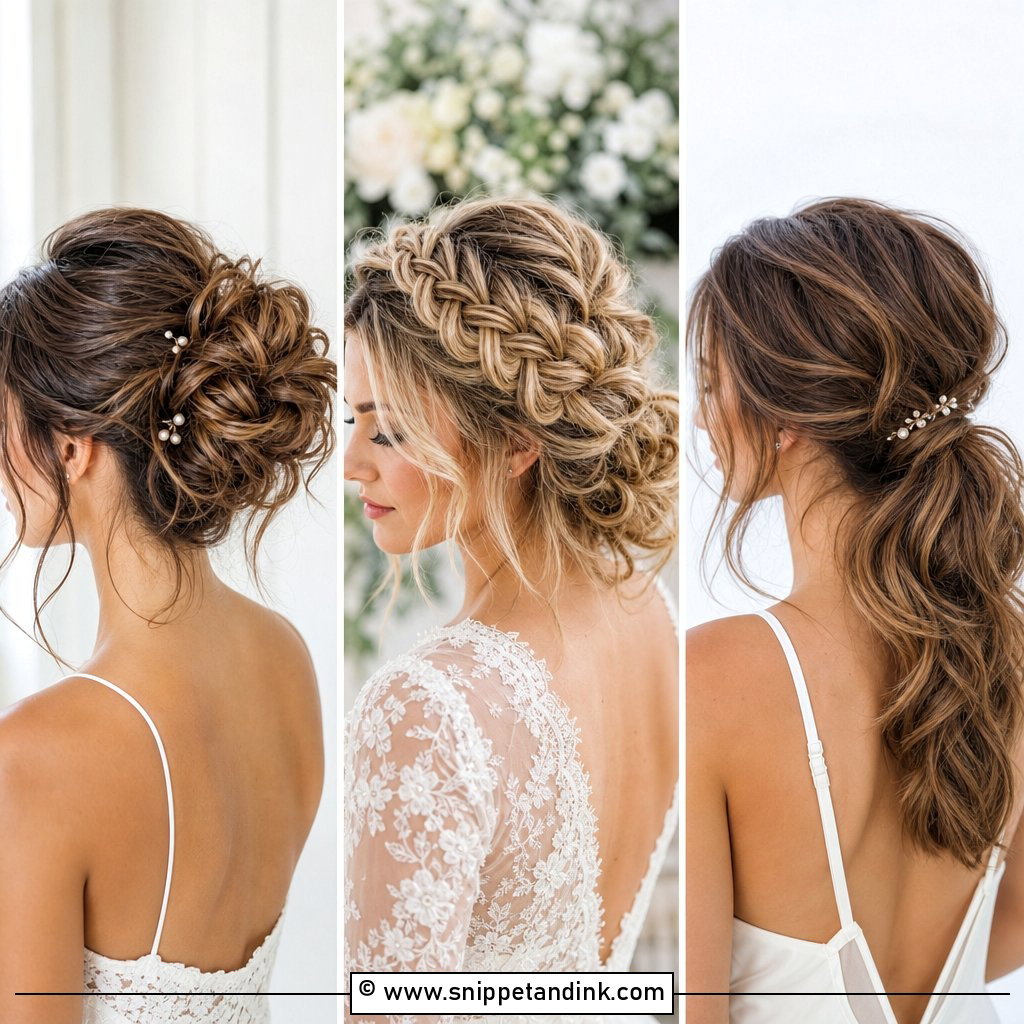
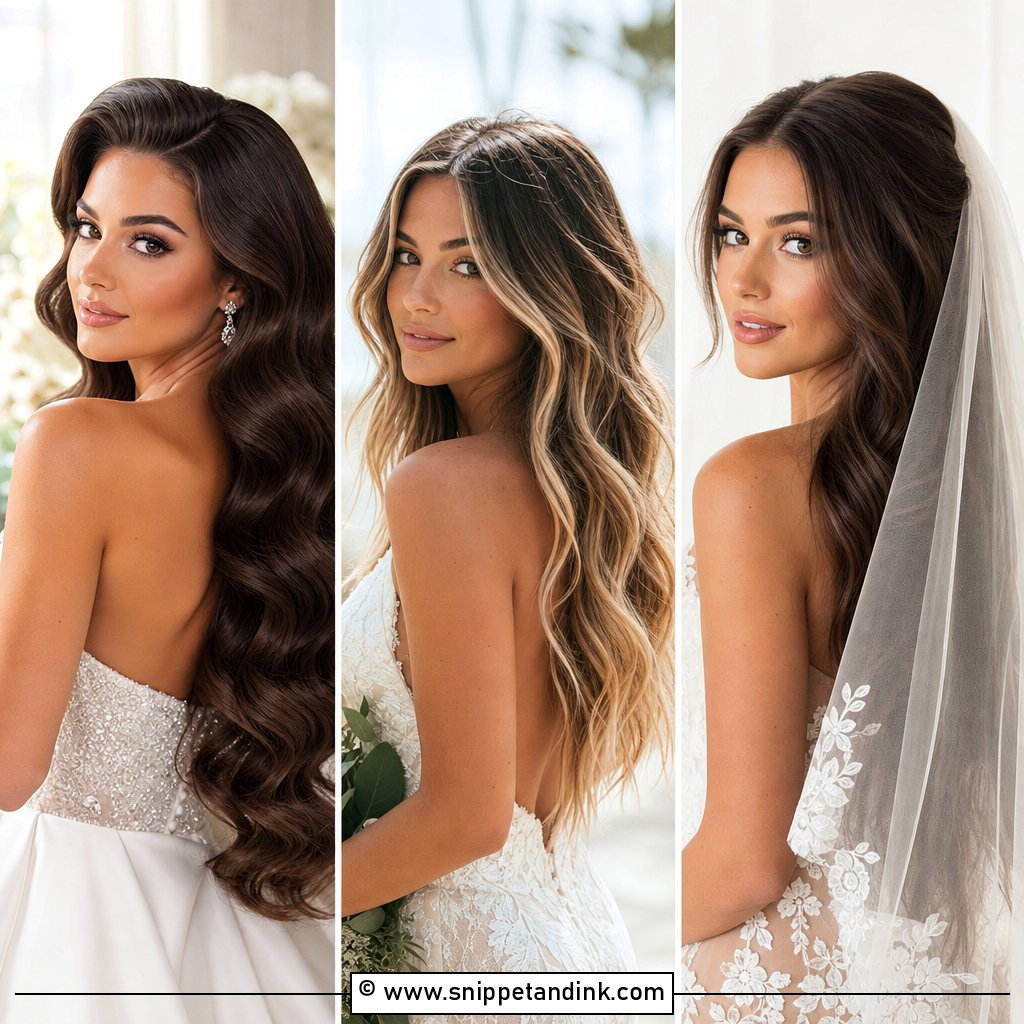
Hair goes to one side in a gentle, textured braid, then the edges are pulled apart for softness. It needs long, thick hair for the full shape and a few loose pieces near the face. It’s also quick, which matters if you’re last in the chair.
20. Braided Top Knot
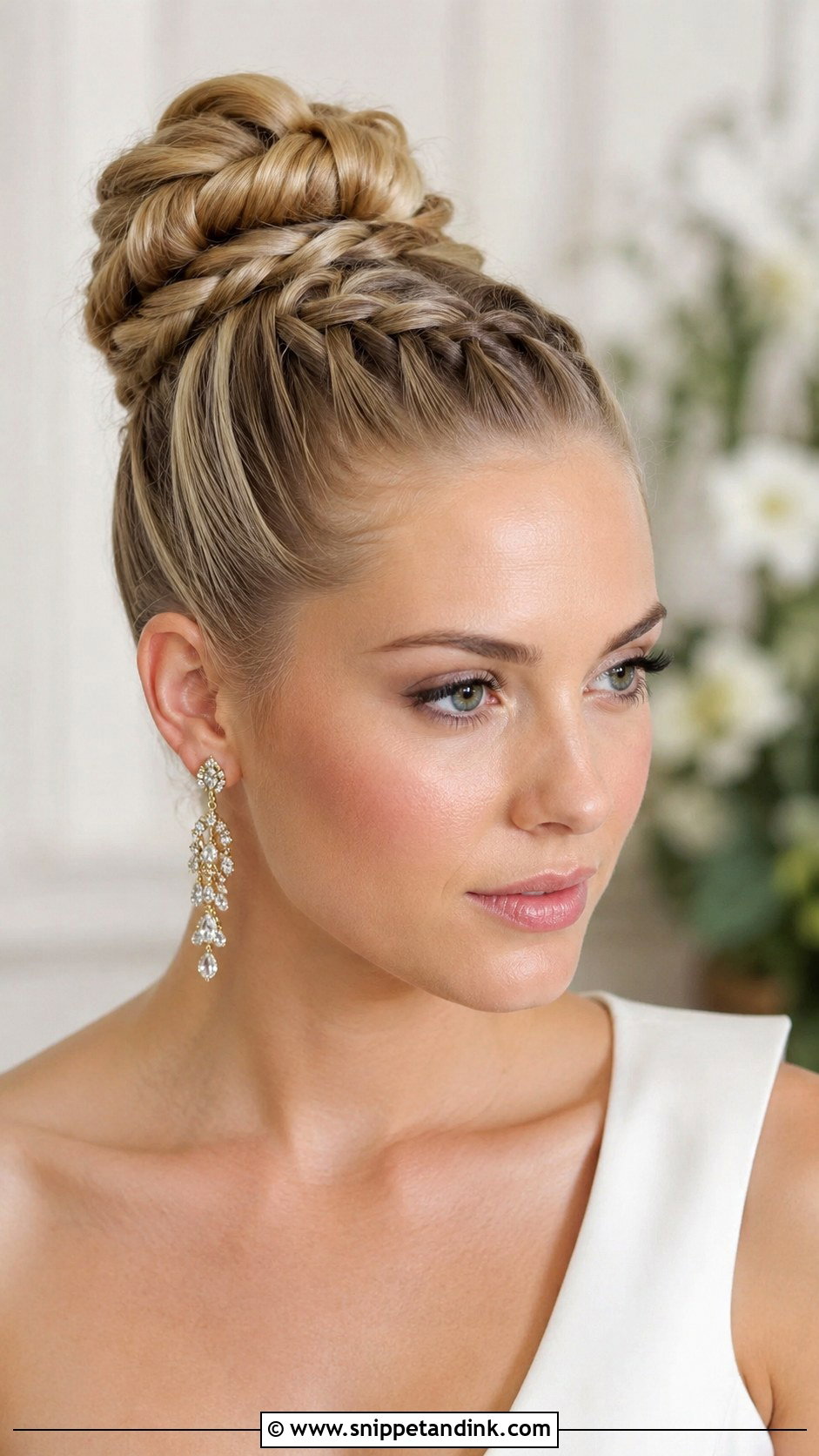
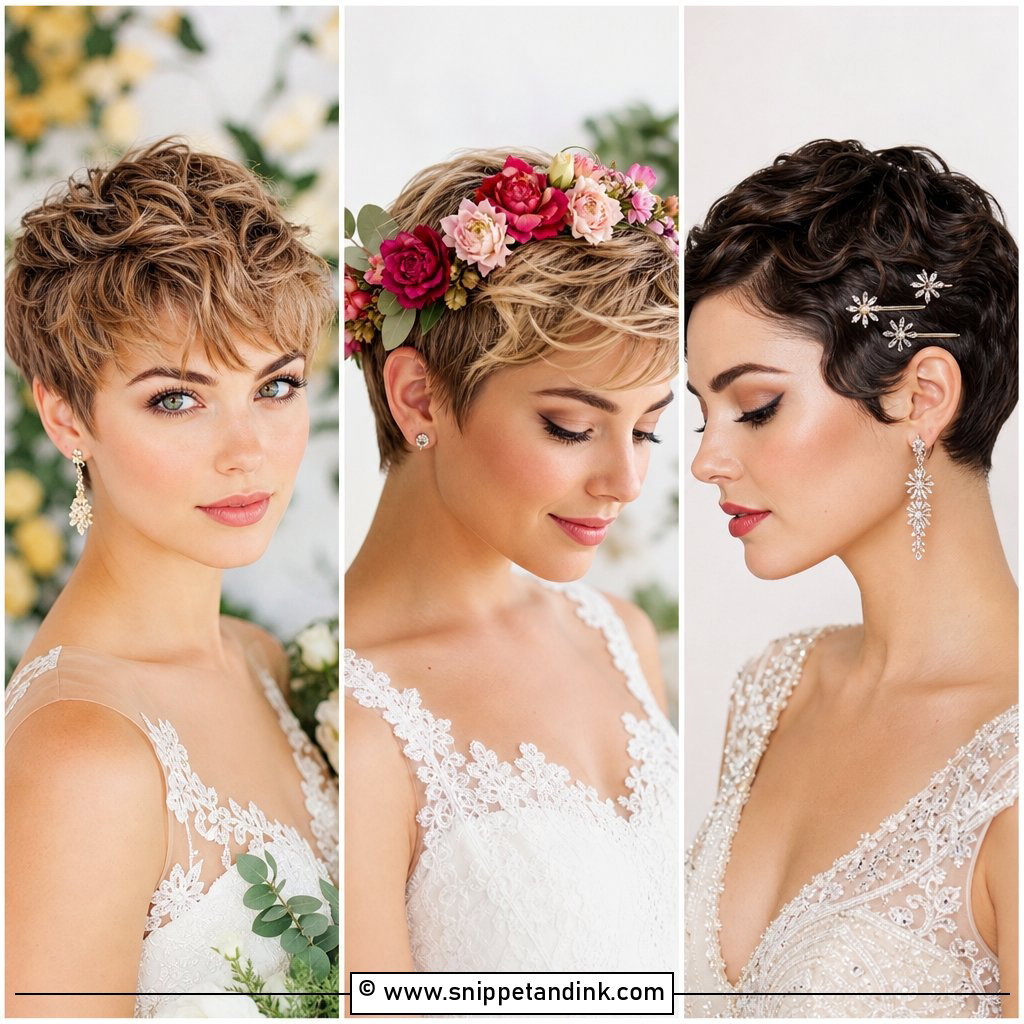
A braid runs up the back of the head into a high knot at the crown. It’s fashion-forward and practical with strapless and halter gowns, since nothing touches your shoulders. Because the braid starts at the nape, ask your stylist to show you the back in a hand mirror; that’s the view guests have through the whole ceremony. Keep the braid tight for a sharp finish or loosen it for softness. A veil goes beneath the knot, never on top.
21. Cornrow Braided Updo
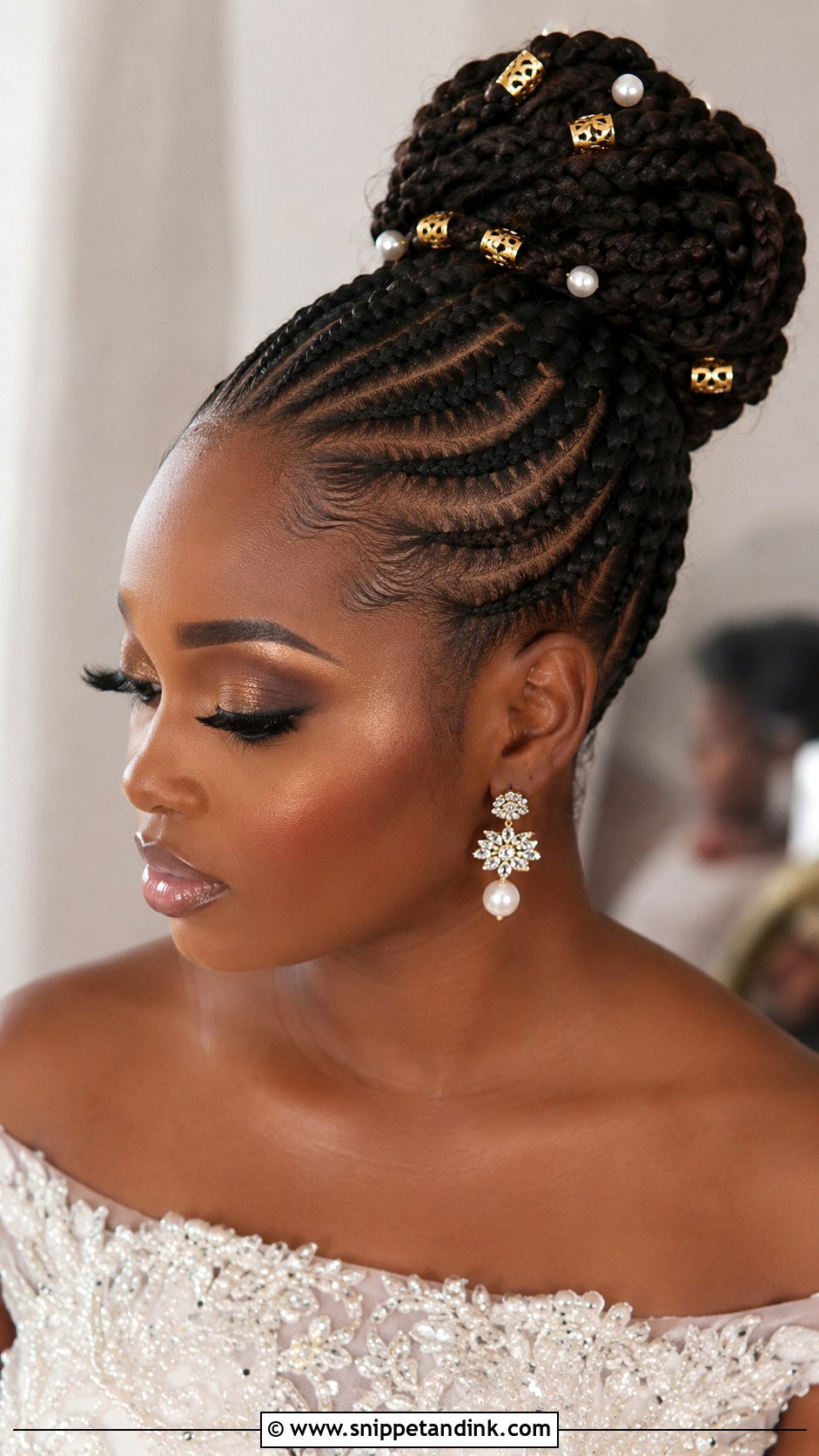
Cornrow braided updos are woven close to the scalp and gathered into an updo or bun, about as secure as bridal hair gets. They’re braided in advance, so the wedding morning only needs finishing. Ask your braider to keep tension low at the hairline, because tight edges sting by the end of a long day. Gold cuffs, pearls or fresh flowers personalize the pattern, and the style holds through every dance.
22. Fishtail Crown Braid
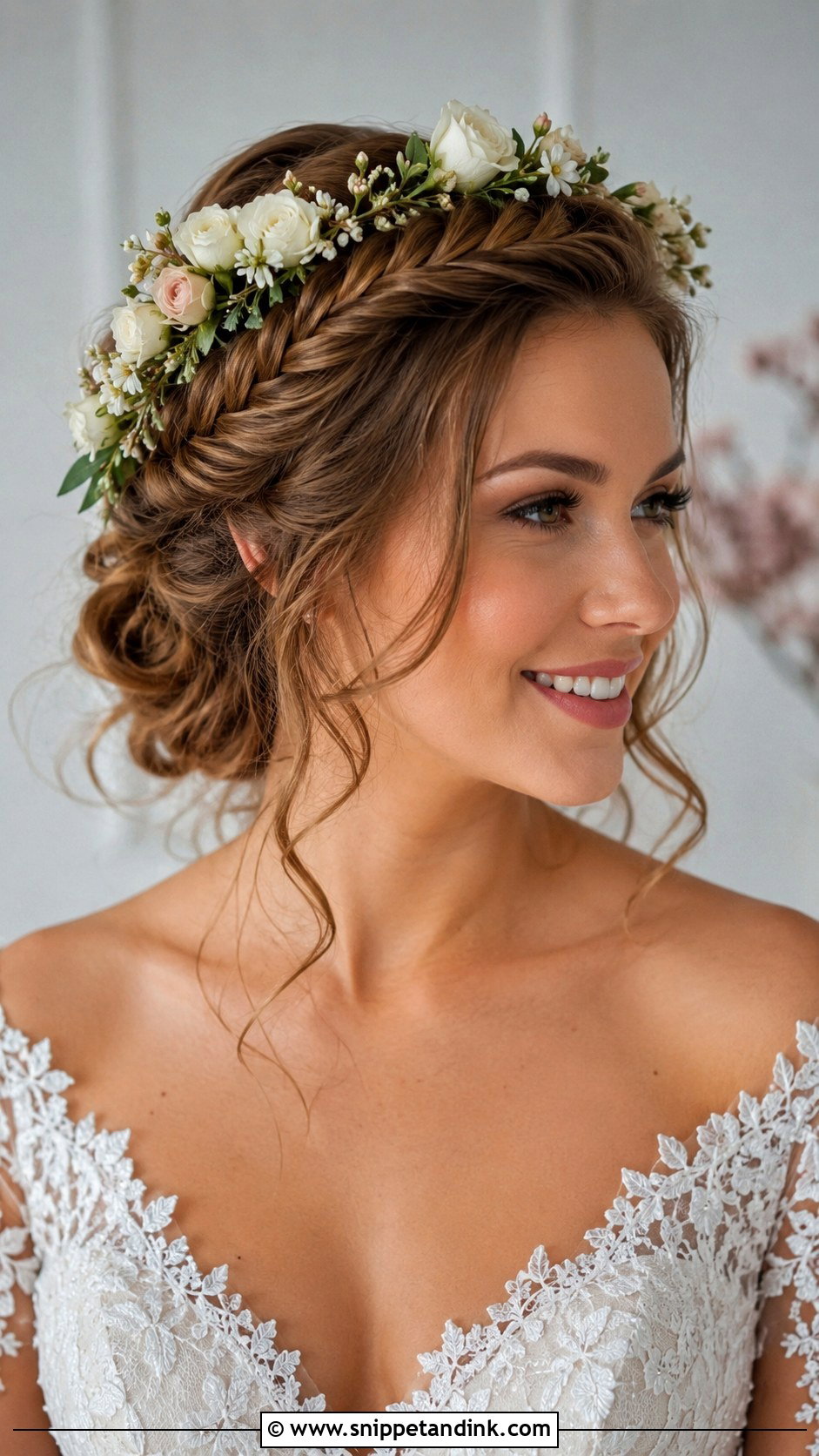
Imagine a fishtail woven around the head like a tiara: the fine texture of a fishtail with the security of a crown braid. It takes longer than a standard crown, so allow an extra fifteen minutes in the chair. Loosen it gently for a softer edge. You need medium to long hair to wrap the full circle. Veils, flower crowns and statement earrings all work with it.
23. Braided Updo With Curls
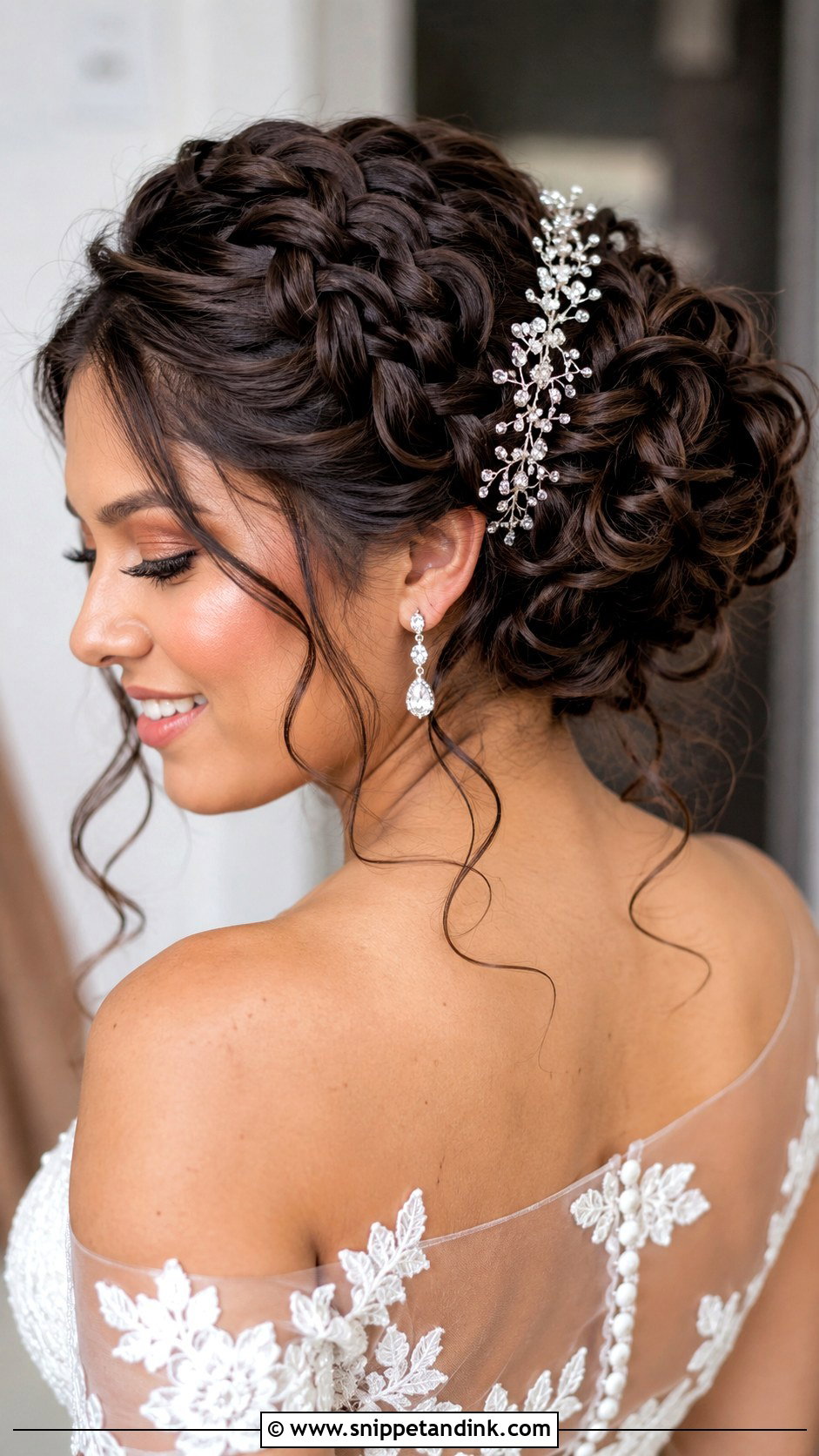
Braids woven into a curly updo, with curls left loose around the face. Curly and wavy hair is ideal because the texture hides pins and holds shape. I braid after the curls are set, not before, so the pattern isn’t flattened. It reads relaxed with a boho gown and polished with a structured one, and a pearl pin or comb is all it needs.
24. Milkmaid Braid
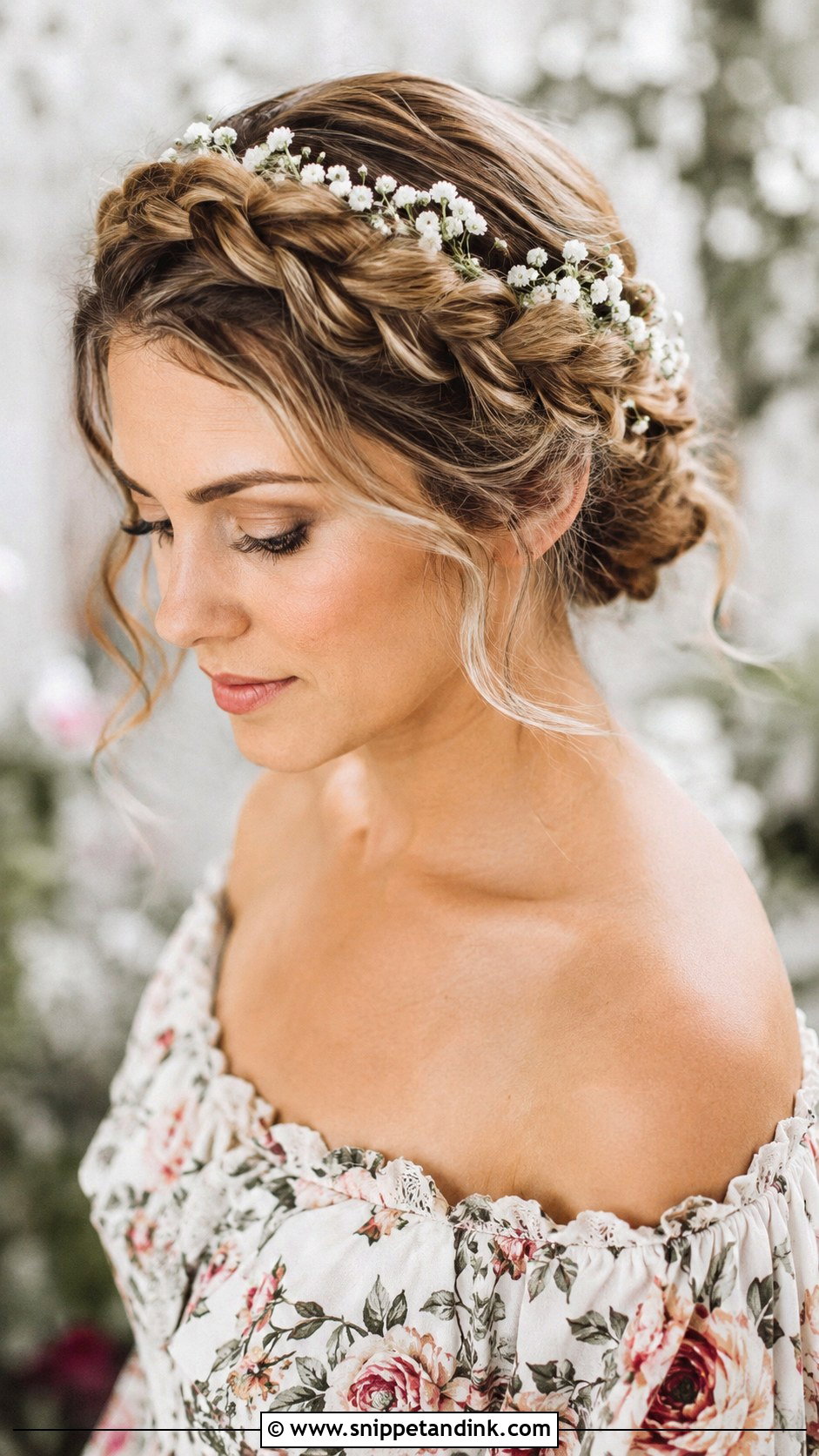
Two braids are wrapped over the crown and pinned, giving that vintage, farm-girl shape. Keep them tight and neat or loose and textured, depending on your dress. Tuck fresh flowers or baby’s breath along the braids for a garden wedding. Medium to long hair is needed for the braids to meet over the top. If yours is shorter, a braided hairpiece pinned across the crown gives the same look.
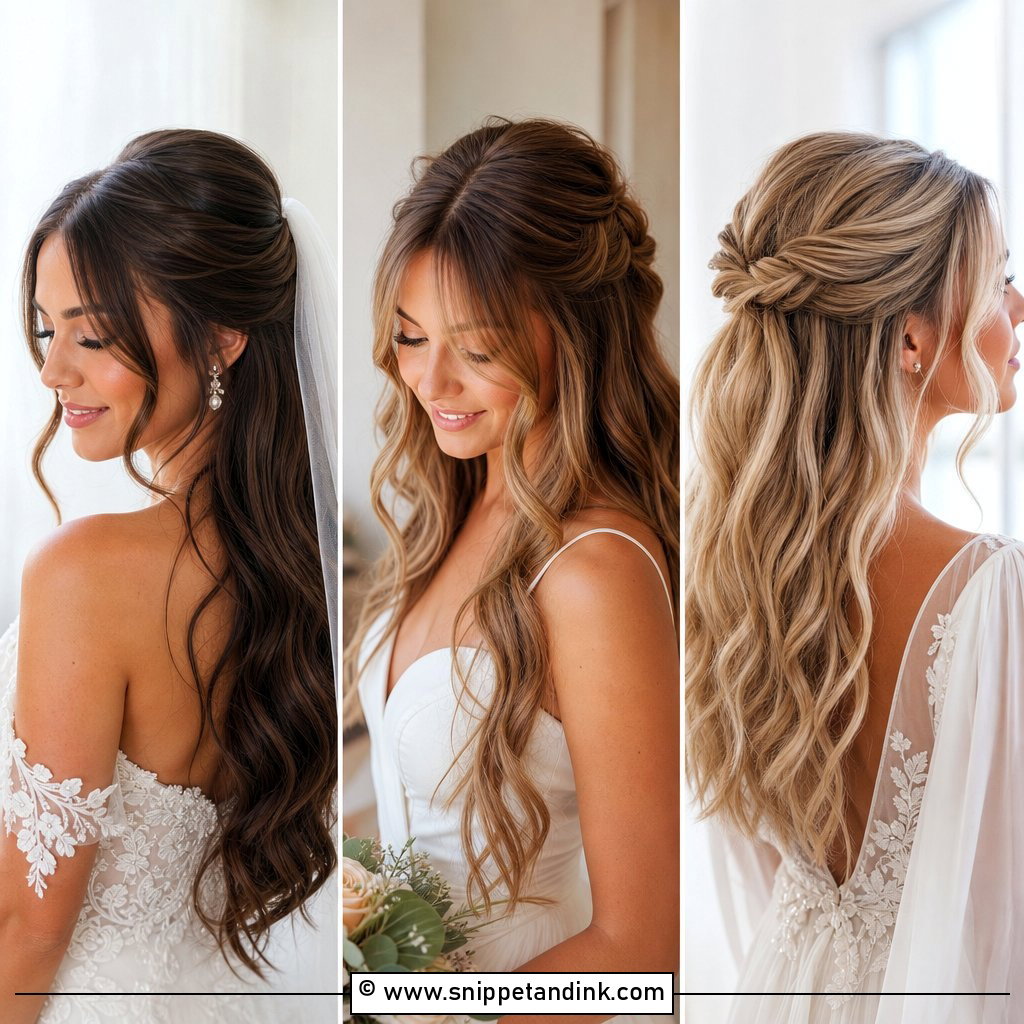
25. Braided Ponytail With Volume
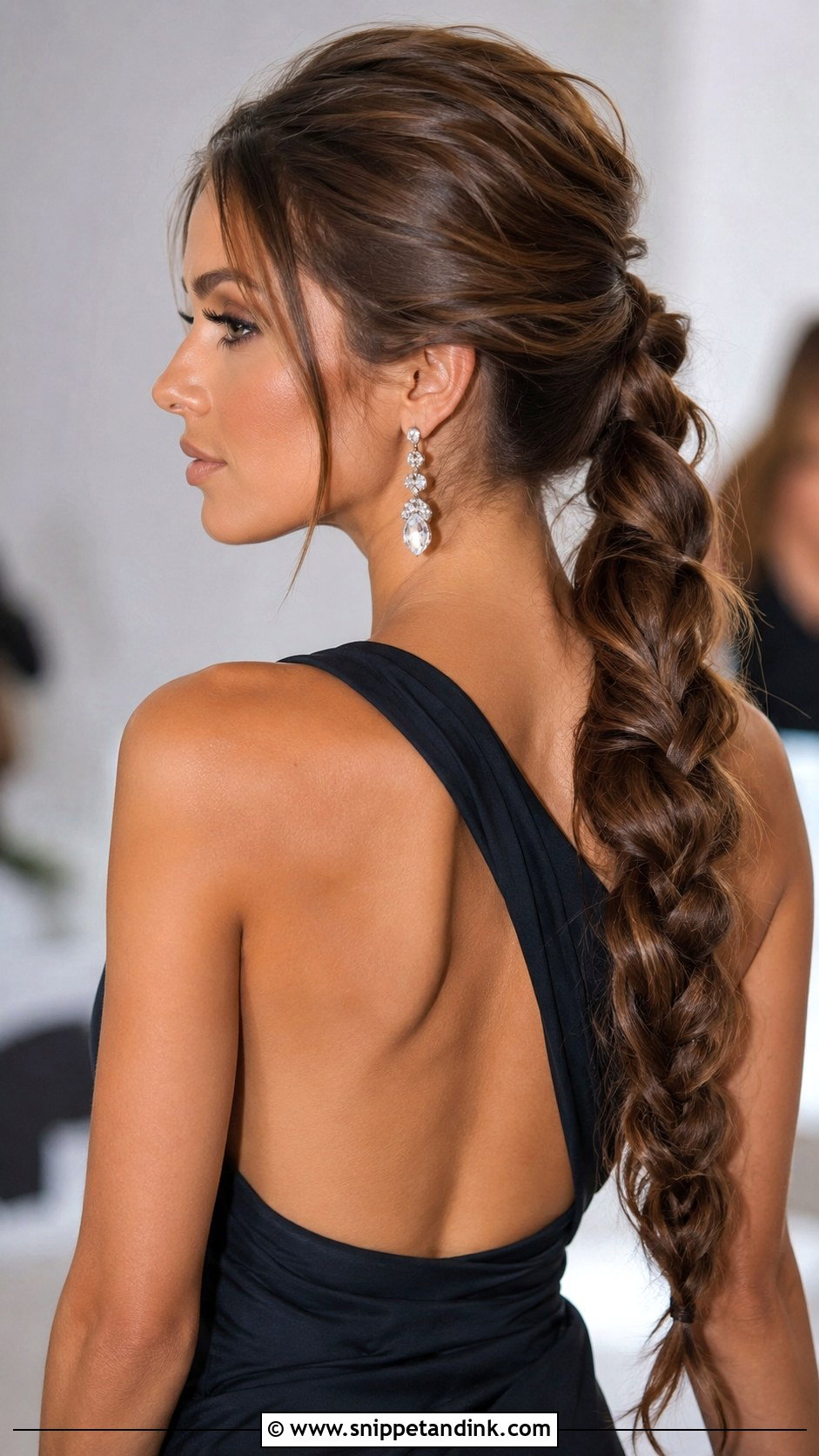
This one is for long, thick hair. The crown is teased, everything is gathered into a full pony and braided down the length, and a strip of hair hides the elastic. The volume at the crown is what makes it dramatic, so I set it with a firm spray before anything else. Pull the braid apart for fullness. Sleek gowns and statement earrings suit it; a long veil fights with the height, so go short or skip it.
Braiding Fine Hair, Short Layers and Bobs
A braid needs two things: enough length to cross, and enough grip to hold. If you’re short on either, there are workarounds I use all the time.
Fine or Slippery Hair
Wash the day before and add dry shampoo or texture spray at the roots. Pancaking makes a braid look thicker, but pull carefully, because fine hair simply falls out of the weave if you overdo it. Color-matched clip-in wefts placed underneath add bulk and disappear inside the braid.
Layers That Poke Out
Short layers escape tight braids, especially around the crown. A slightly looser weave, a touch of pomade on the fingertips while braiding and a few pins at the ends hide most of them. A few wisps are fine; they read soft in photos.
A Bob or Shoulder-Length Cut
This length can take a crown braid or a half-up braid across the back, but not a Rapunzel or a long side braid. For those, a braided hairpiece made in your color gives you the shape, and it’s far simpler to place than a full head of clip-in extensions.
Your Braid Starts With Hair Washed the Day Before
Nearly every braid in this collection holds better on hair washed the day before, with a little texture, than on squeaky-clean hair. From a soft fishtail to a cornrow updo, the right one depends on your length, how much you’ll be moving and what has to sit on your head. Show your stylist the back of your dress and your veil, try the braid at your trial, and wear it for the afternoon to see how it settles. Save the photos you like and bring them with you.
You'll Like These Ideas:



Leave a Reply