
Medieval bridal hair is mostly a vocabulary of braids, veils, circlets, ribbon and loose length, and the skill is in using two or three of those words rather than all of them at once. Every look below can lean historical or read as modern bridal depending on the dress and venue. A castle hall and a walled garden suit it equally well. I’ve described each one from the front, sides and back, because braided styles change a lot as you walk around them, and the back is what your guests see during the vows.
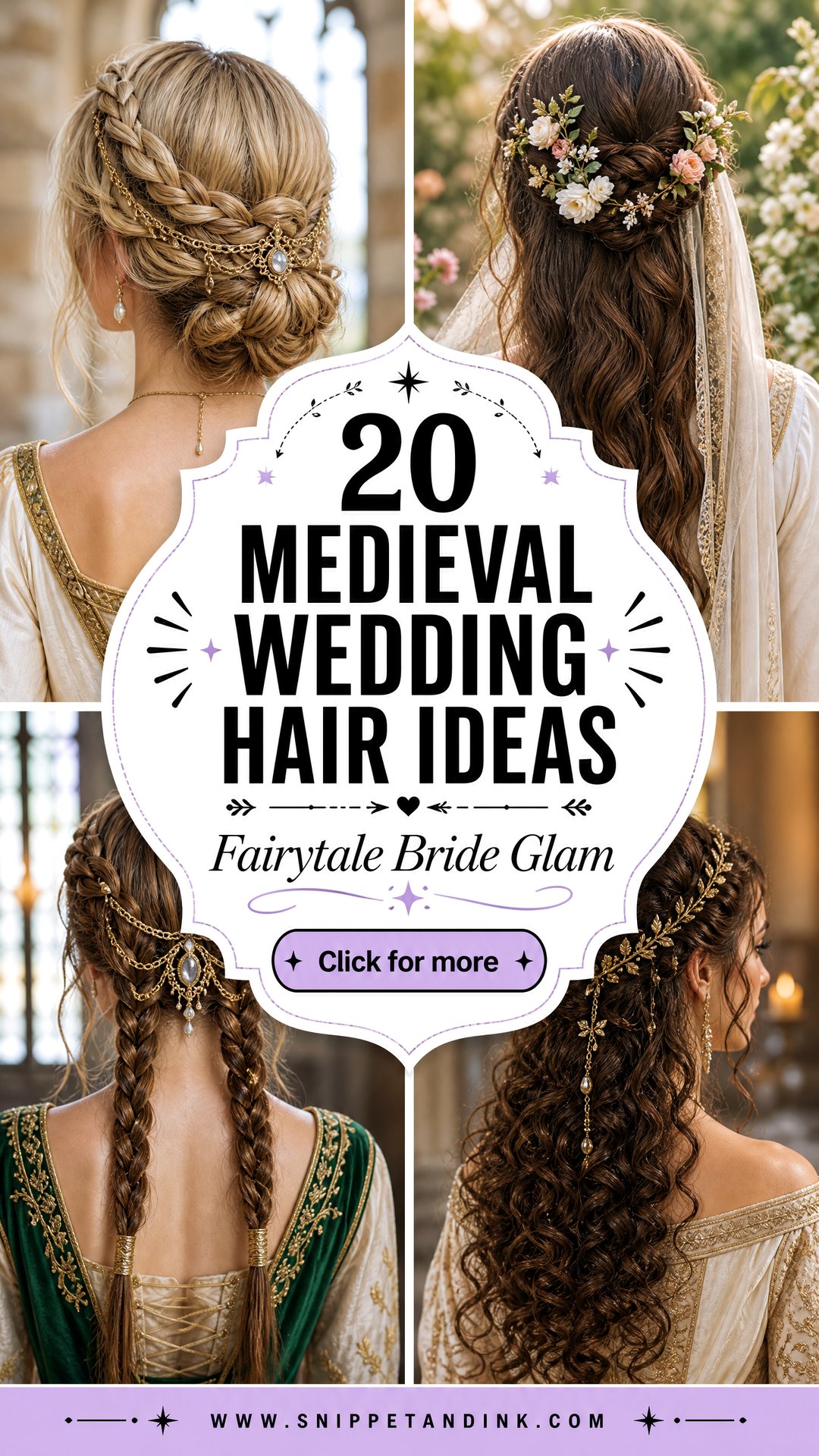
What Medieval Brides Really Wore on Their Heads
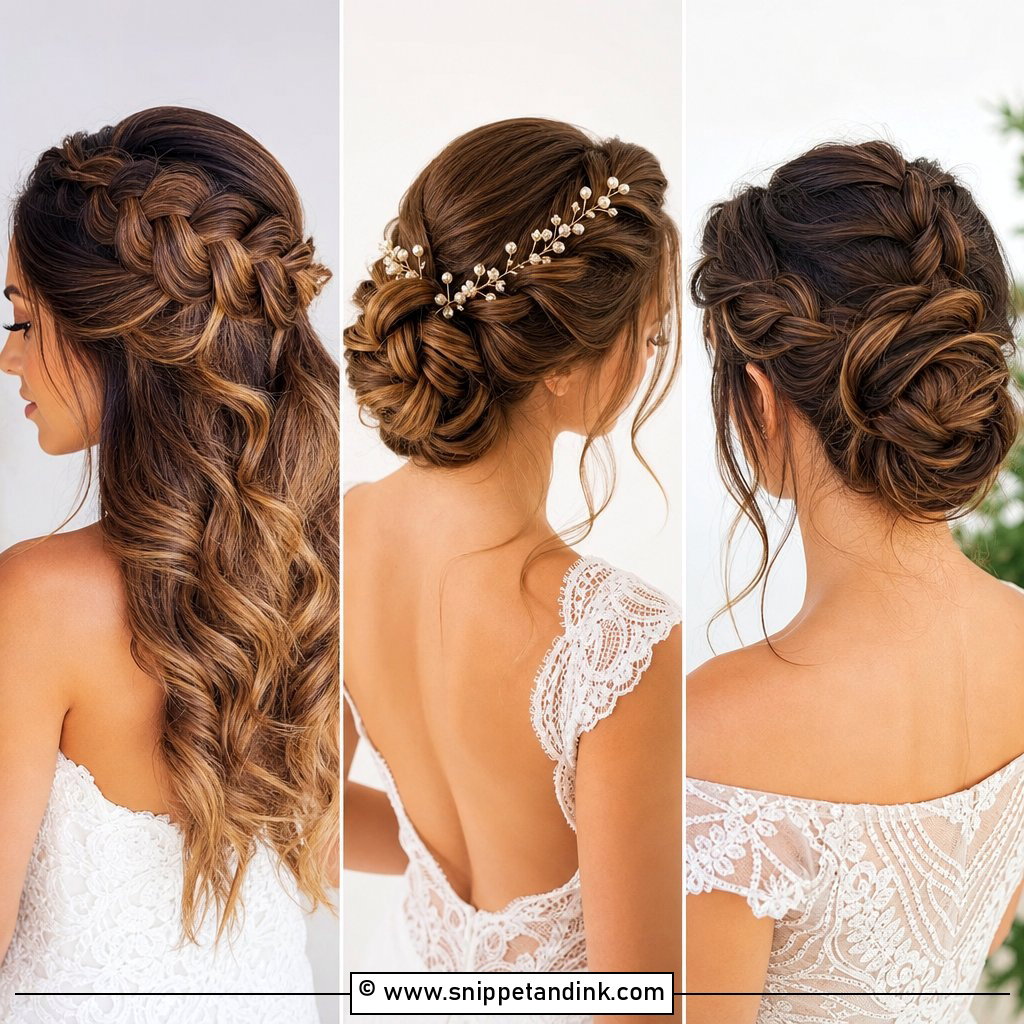
A little history helps you borrow the right details. In the Middle Ages, a bride typically wore her hair loose, because unbound hair marked an unmarried woman, often with a simple circlet or garland on top. Married women covered or bound their hair, which is where veils and headdresses come into the story. Elaborate braided updos belong more to later periods and to fantasy than to the actual medieval wedding.
None of that means you need to be accurate. It means the strongest medieval looks usually rest on two or three real reference points, not a pile of them. When I plan one of these styles, I sort the details into three groups and pick from each sparingly:
- Shape: loose length, a centre part, or a low gathered style at the nape.
- Structure: a braid or twist that does the holding.
- One headpiece: a circlet, a veil, a ribbon or flowers. Two at most, and only if one is very fine.
Go past that and the result drifts toward fancy dress. Keep the makeup modern and the hair soft, and the medieval mood comes through without anyone wondering if it’s a themed party.
1. Medieval Crown Braid Wedding Hair
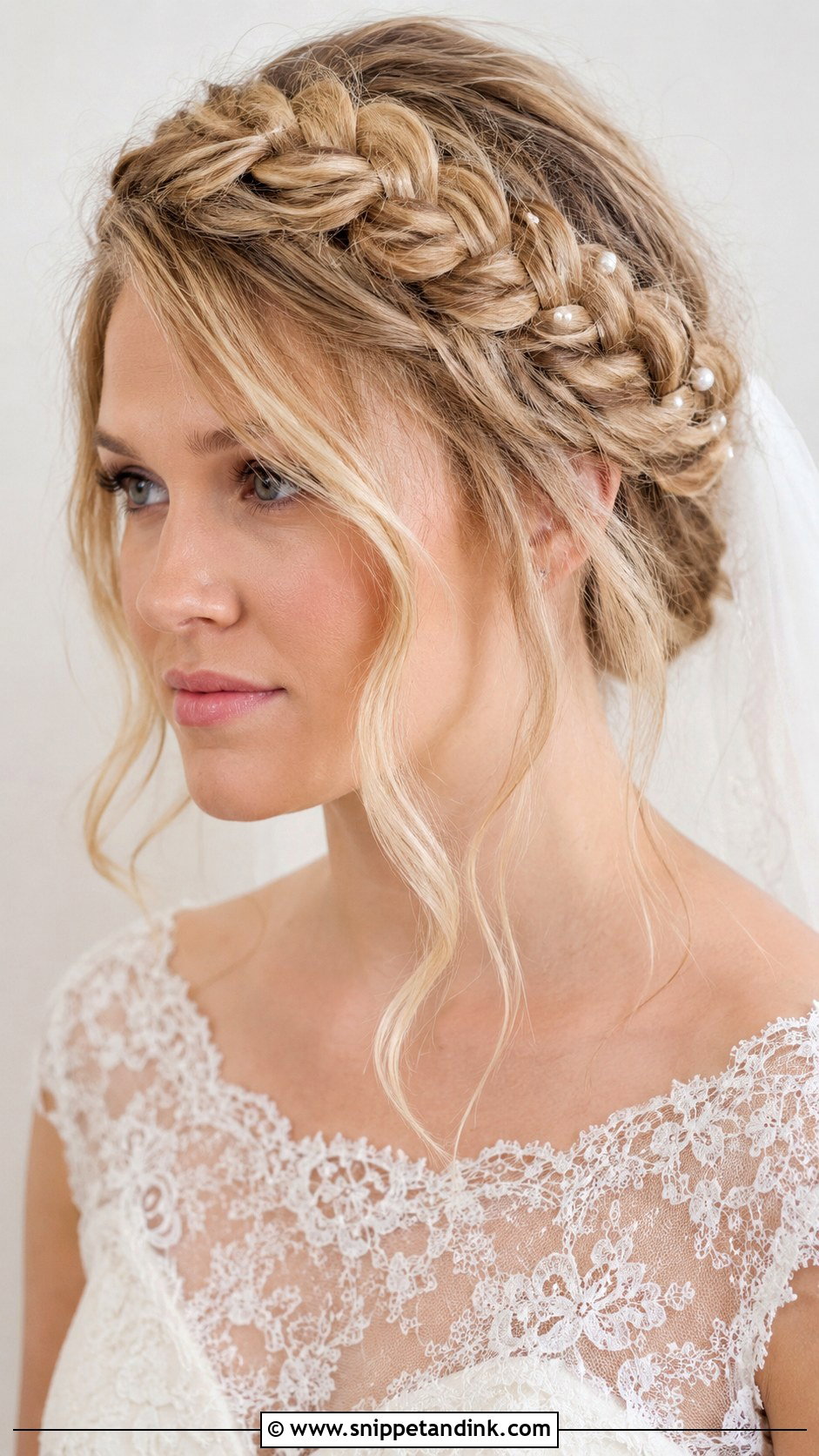
The crown braid is the shape most people picture first: a plait that circles the head like a halo and leaves the face open. It needs hair at least past the shoulders, and on thinner hair I braid two sections and pin them to meet over the top rather than wrapping one long plait around. Smooth for a structured gown, gently pulled out for a garden. Tiny pearl pins or a slim gold circlet are enough decoration. Because every section is pinned against the head, it holds through the ceremony, portraits and dancing better than almost anything else here.
2. Medieval Half Up Half Down Wedding Hair
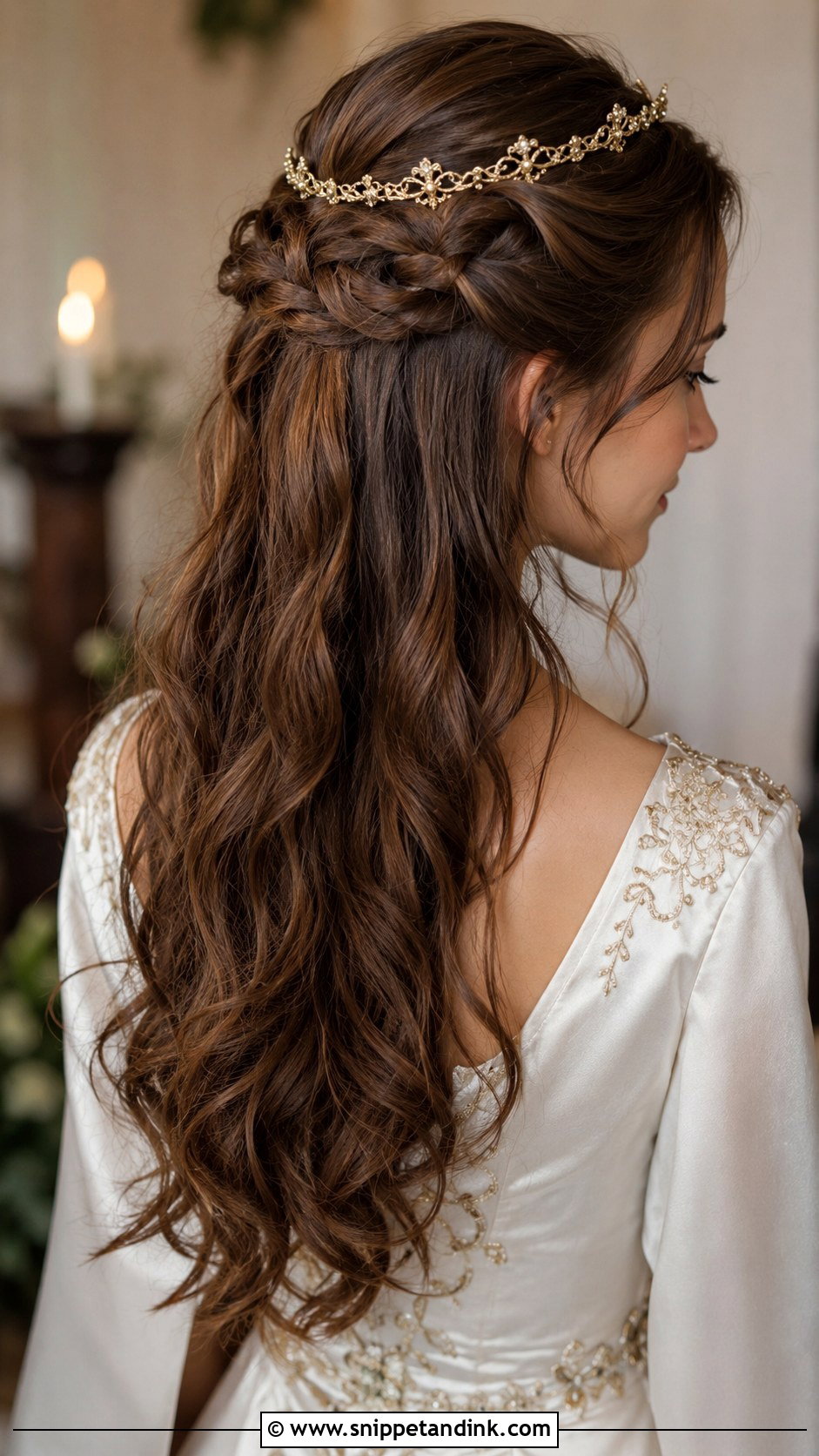
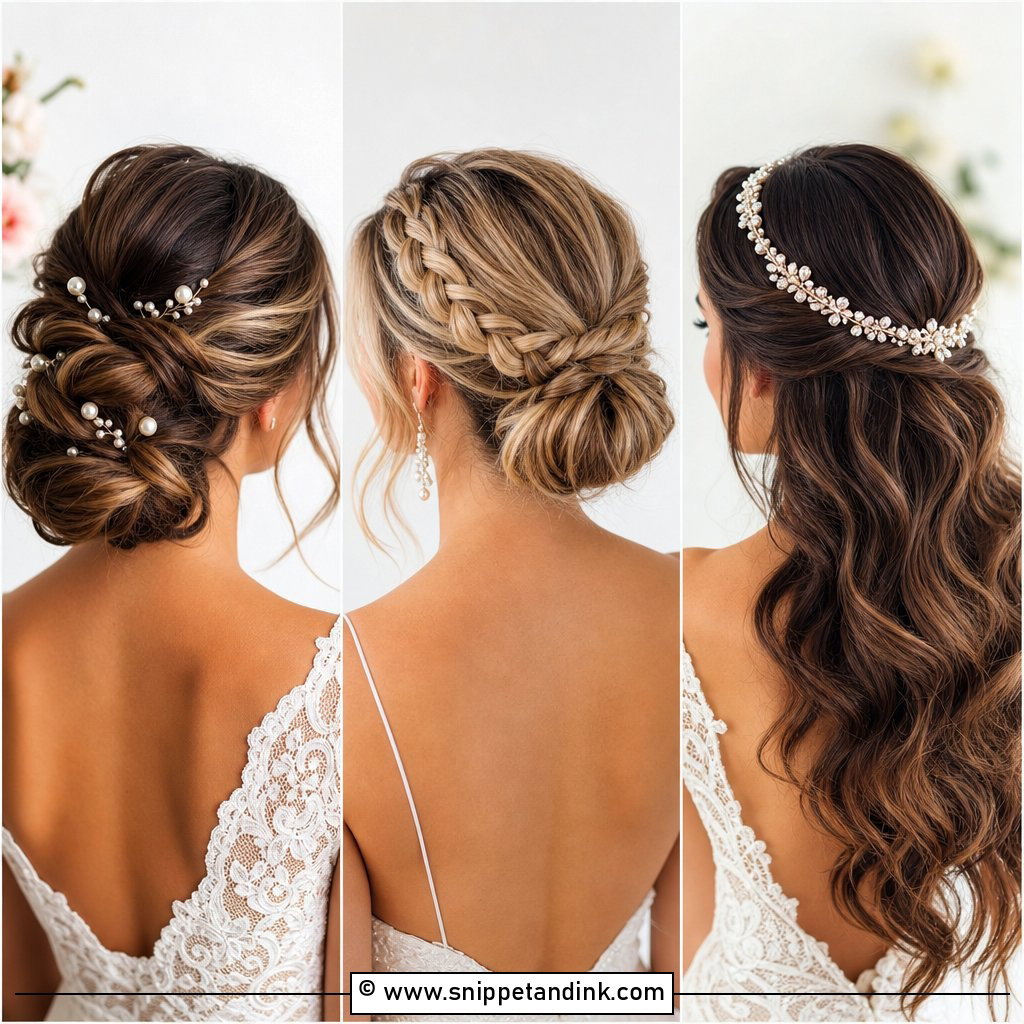
Half up hair gives you the length on show with a pinned crown that won’t move. I twist or braid the top section back and let the rest fall in waves. That pinned crown is also the best base you can give a veil comb, which matters with medieval styles because the veil is often long. A delicate circlet or ribbon threaded through two small braids adds the period mood. I leave a few soft pieces at the cheekbones; pulled fully back, this look can feel stern under a circlet.
3. Medieval Braided Low Bun Wedding Hair
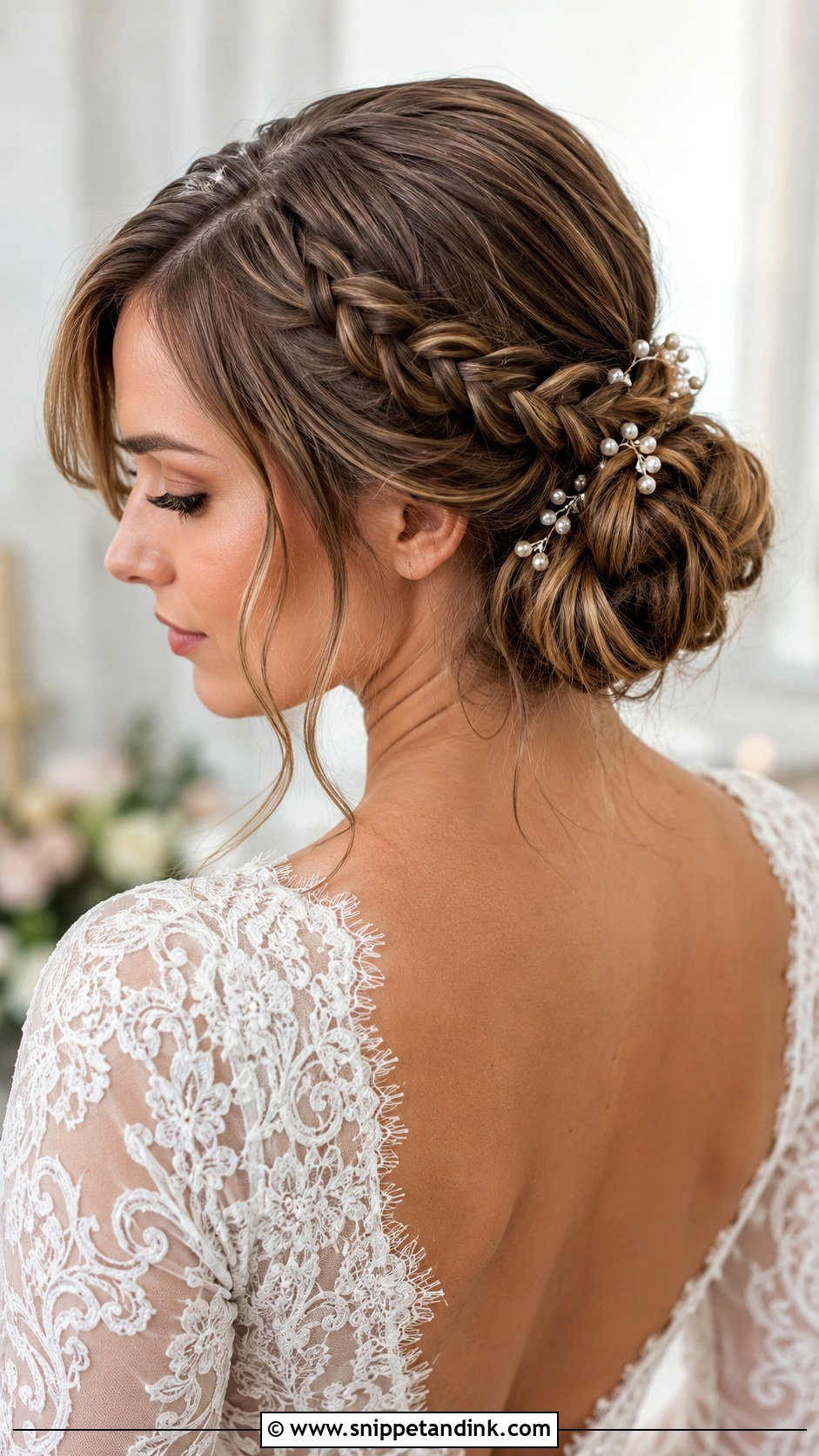
Braided sides gathered into a low bun at the nape is the most wearable look in this collection, and the one I’d suggest to anyone unsure about going full fairytale. It keeps the neck and the back of the dress visible, which suits lace gowns, long sleeves and high necklines. A veil can sit above the bun, or a jewelled comb can slide into the braid itself. Ask your stylist for a secure finish that still moves when touched. A stiff, lacquered bun looks out of period instantly.
4. Medieval Long Braid Wedding Hair
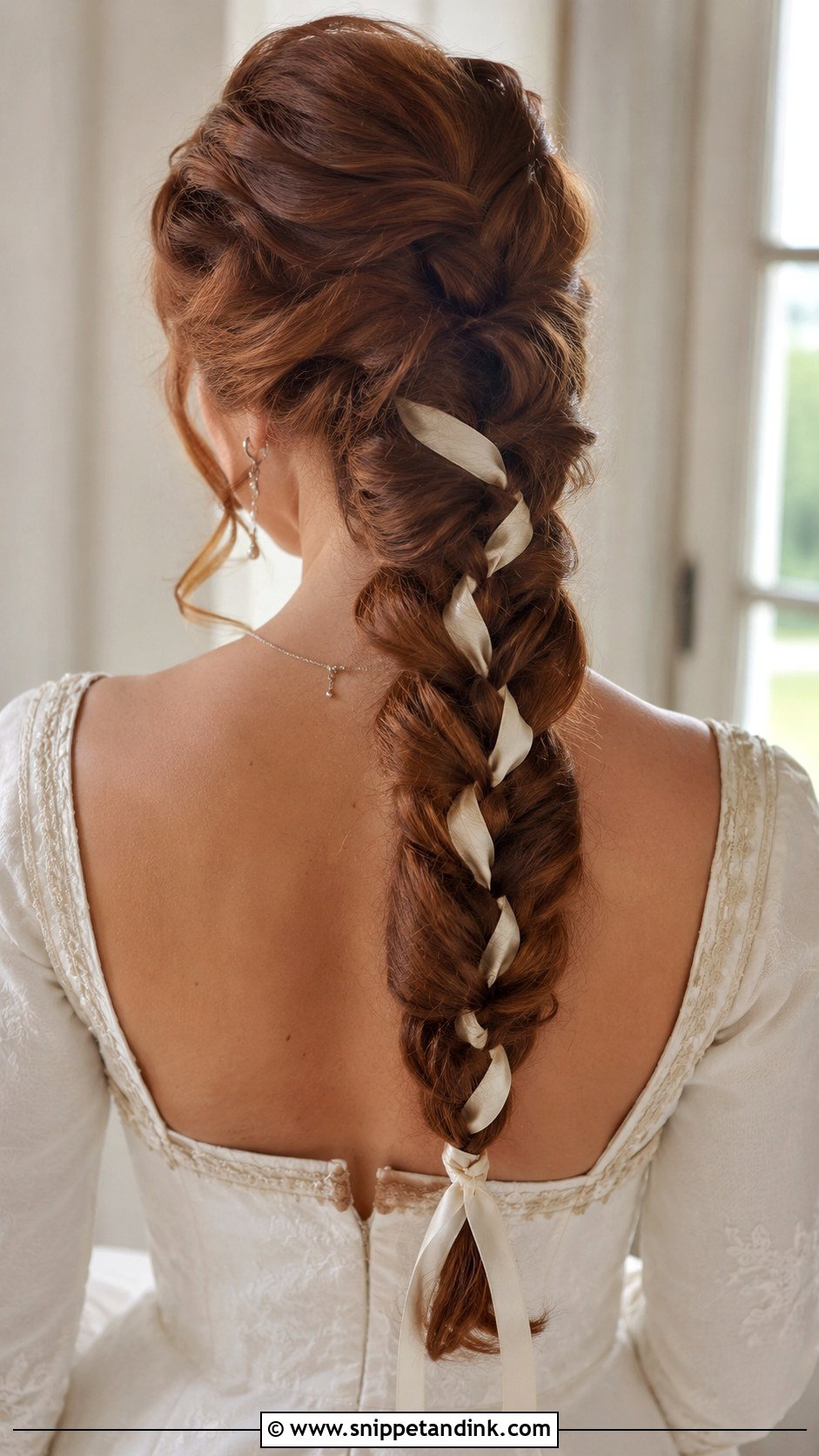
One long braid down the back is the most storybook image on this list, and it asks the most of your hair. Braiding uses up length quickly, so hair that reaches the waist loose will finish well above it once plaited. A pull-through braid looks fuller than a classic three-strand on the same hair, and I’ll often add a few clip-in wefts underneath for thickness. Weave ribbon or gold thread in as you go rather than afterwards. With an open-back gown it frames the skin rather than covering it.
5. Medieval Loose Waves With Circlet
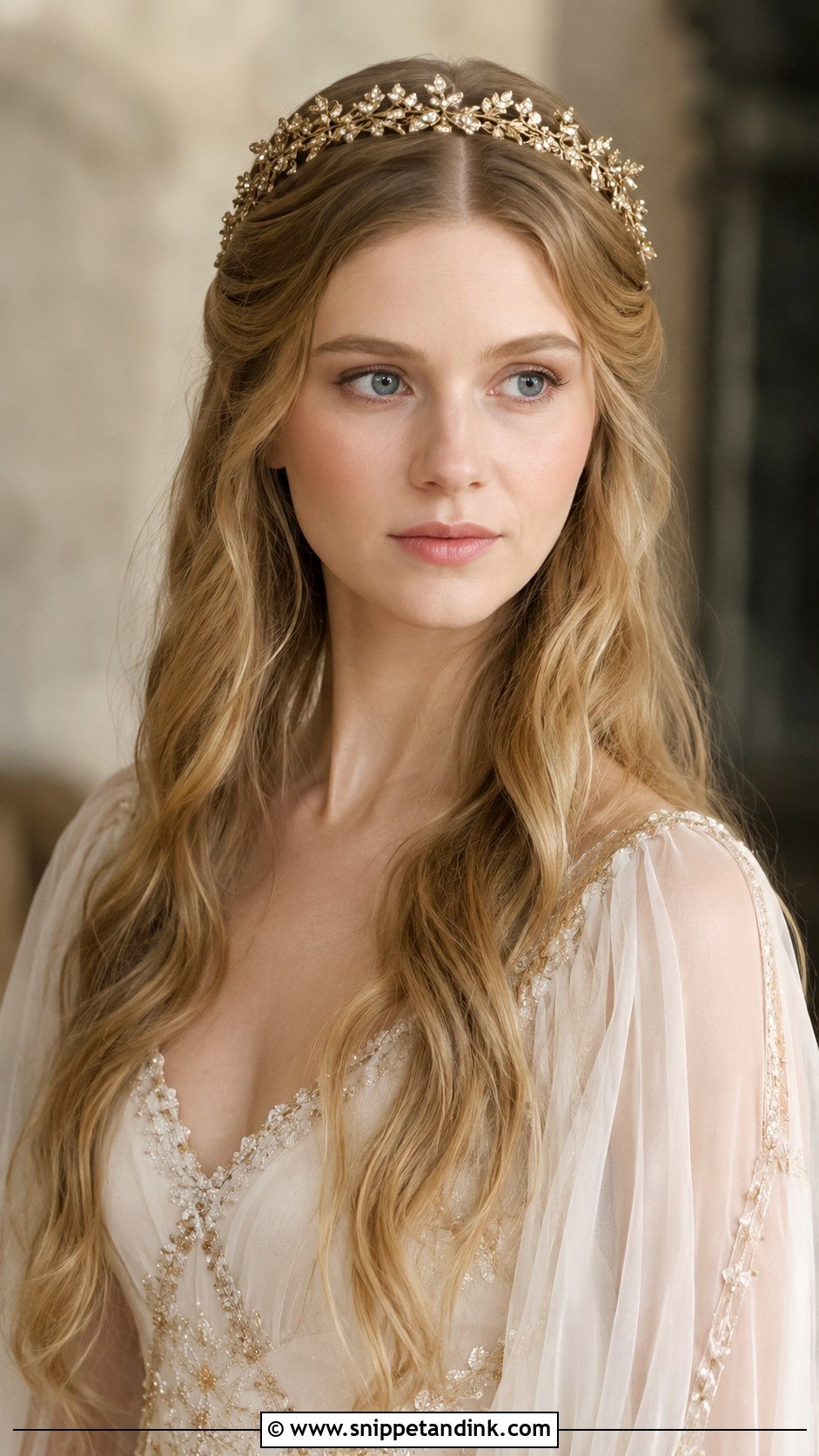
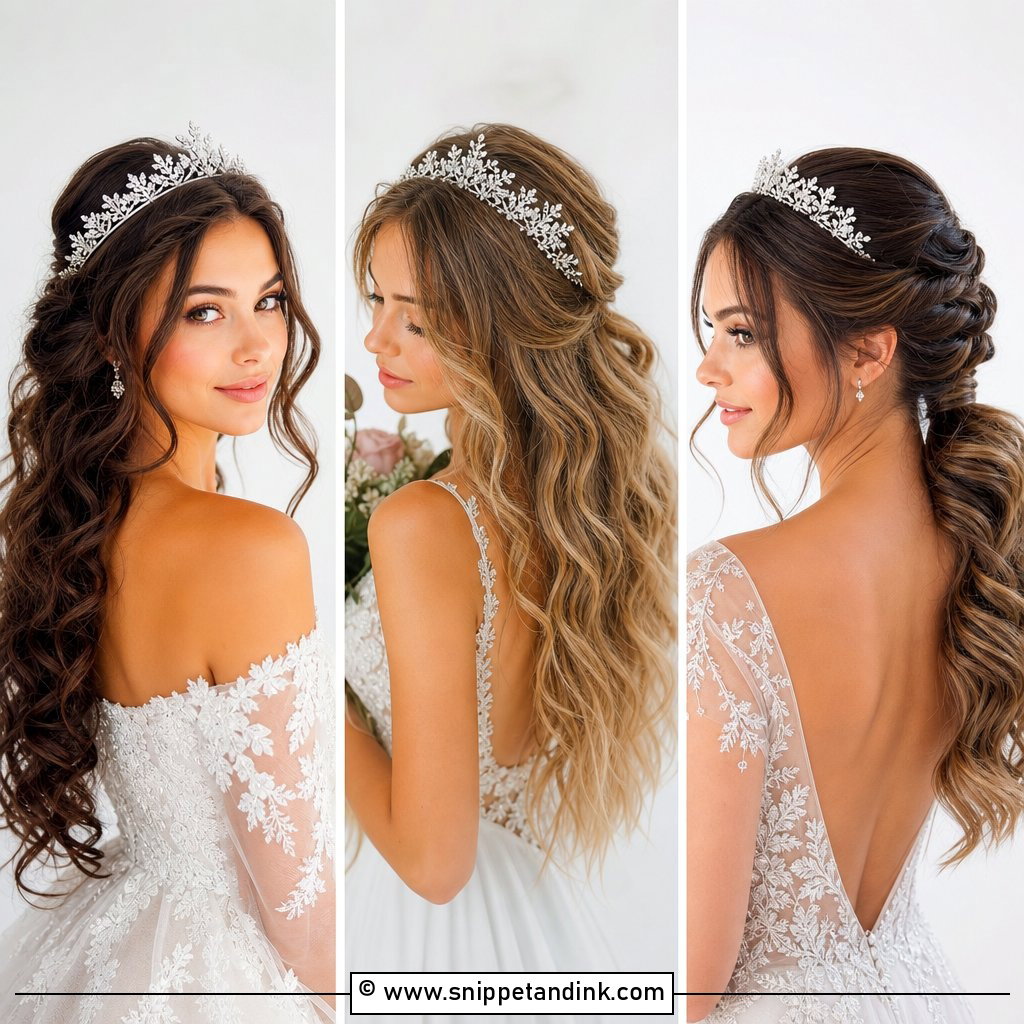
Loose waves under a circlet is the closest look here to what brides of the period actually wore, since unbound hair was the old sign of a maiden. Centre part, smooth waves past the shoulders, and a thin circlet or forehead band. That’s the whole recipe. I keep the waves glossy but not perfectly uniform; tight identical curls make it look like a costume. It suits a chapel or an outdoor ceremony and anyone after a princess-inspired look with natural movement. The one thing to plan is hold, because loose hair outdoors needs a firmer set than you’d think.
6. Medieval Wedding Hair With Veil
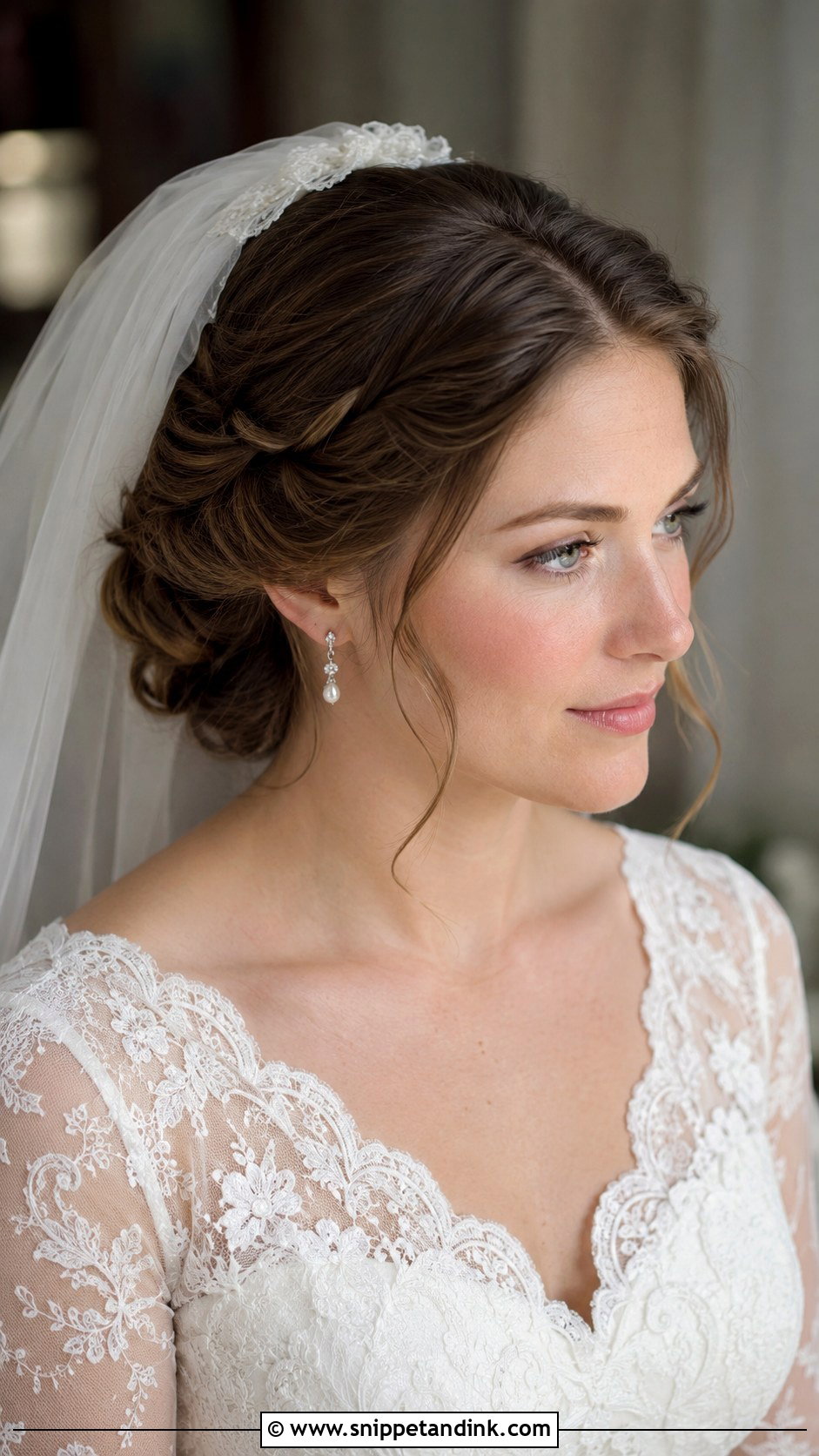
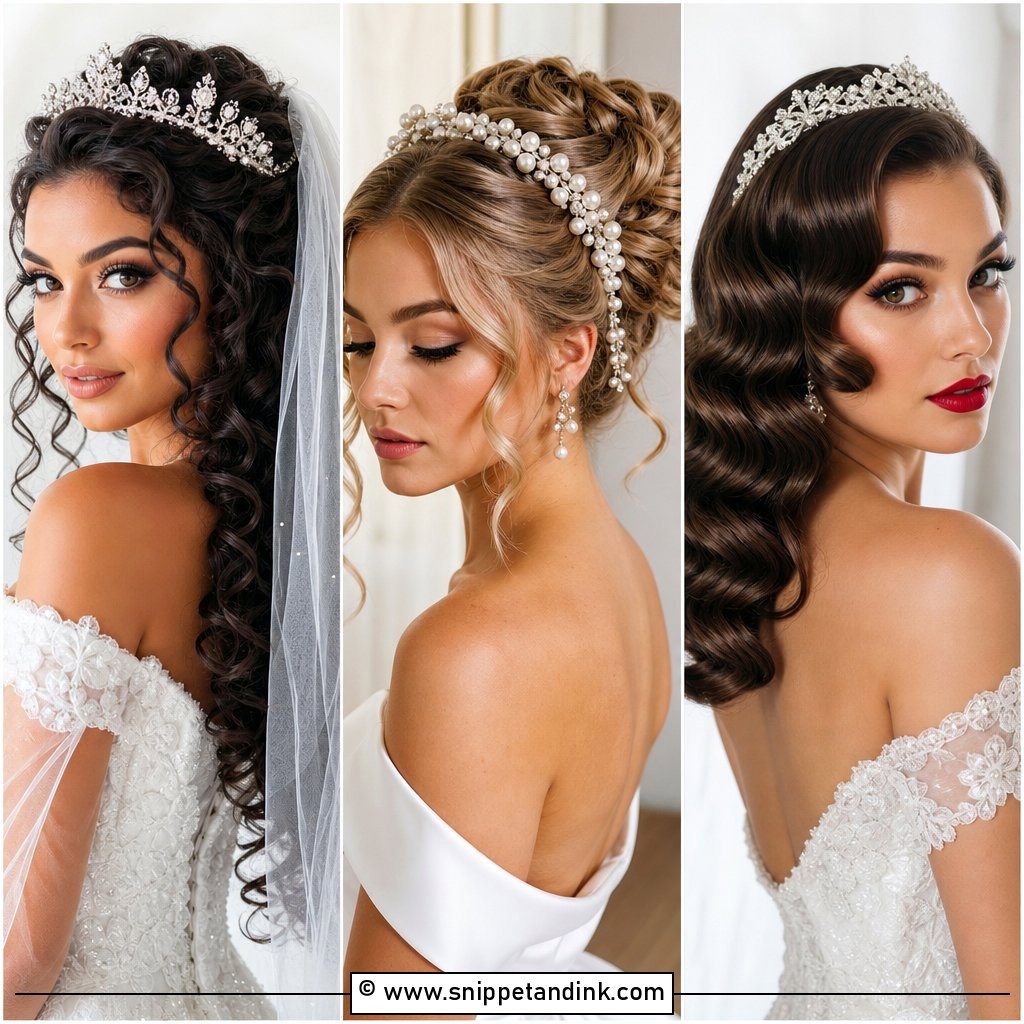
Veils carried a lot of weight in historic weddings, and pairing one with a soft low bun, a braided crown or a half up style is the simplest way to borrow that mood. My first question is always how heavy the veil is. A long or embroidered veil needs a pinned base under the comb, and loose hair alone won’t carry it. If the veil has lace, embroidery, or beading, I keep the hair accessories to almost nothing so the two don’t compete. A centre part and a clean pinned shape do the rest.
7. Medieval Side Braid Wedding Hair
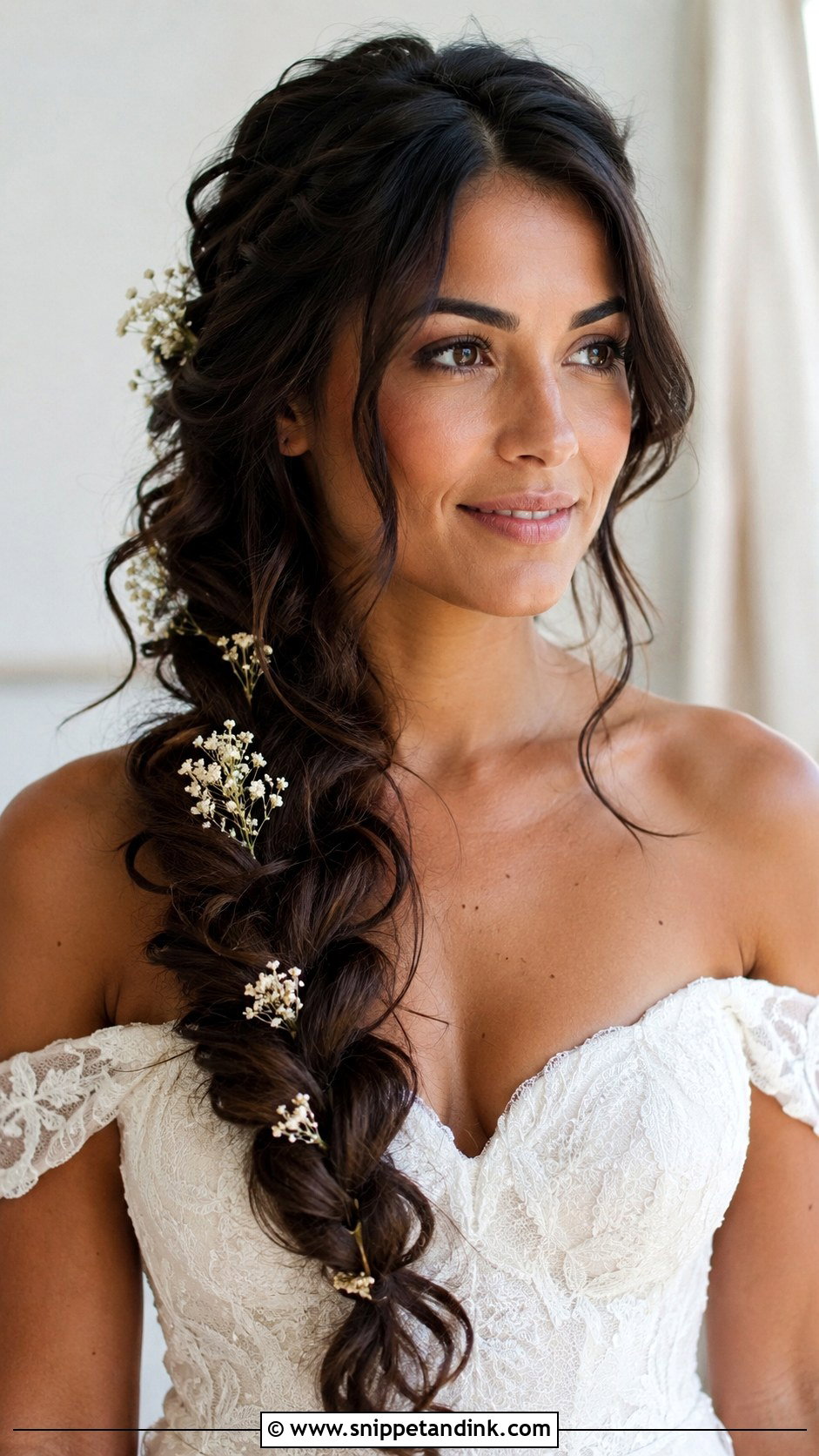
A braid swept over one shoulder shows the length from the front, which is where most of your photographs will be taken. Smooth, it reads noble; loosened, it feels like a woodland ceremony. I anchor the base behind the ear with crossed pins, otherwise the braid slides toward the back every time you turn your head. A few face-framing pieces keep it bridal rather than costume. It pairs well with off-the-shoulder gowns, scoop necklines, and plain dresses that need one strong feature.
8. Medieval Twisted Updo Wedding Hair
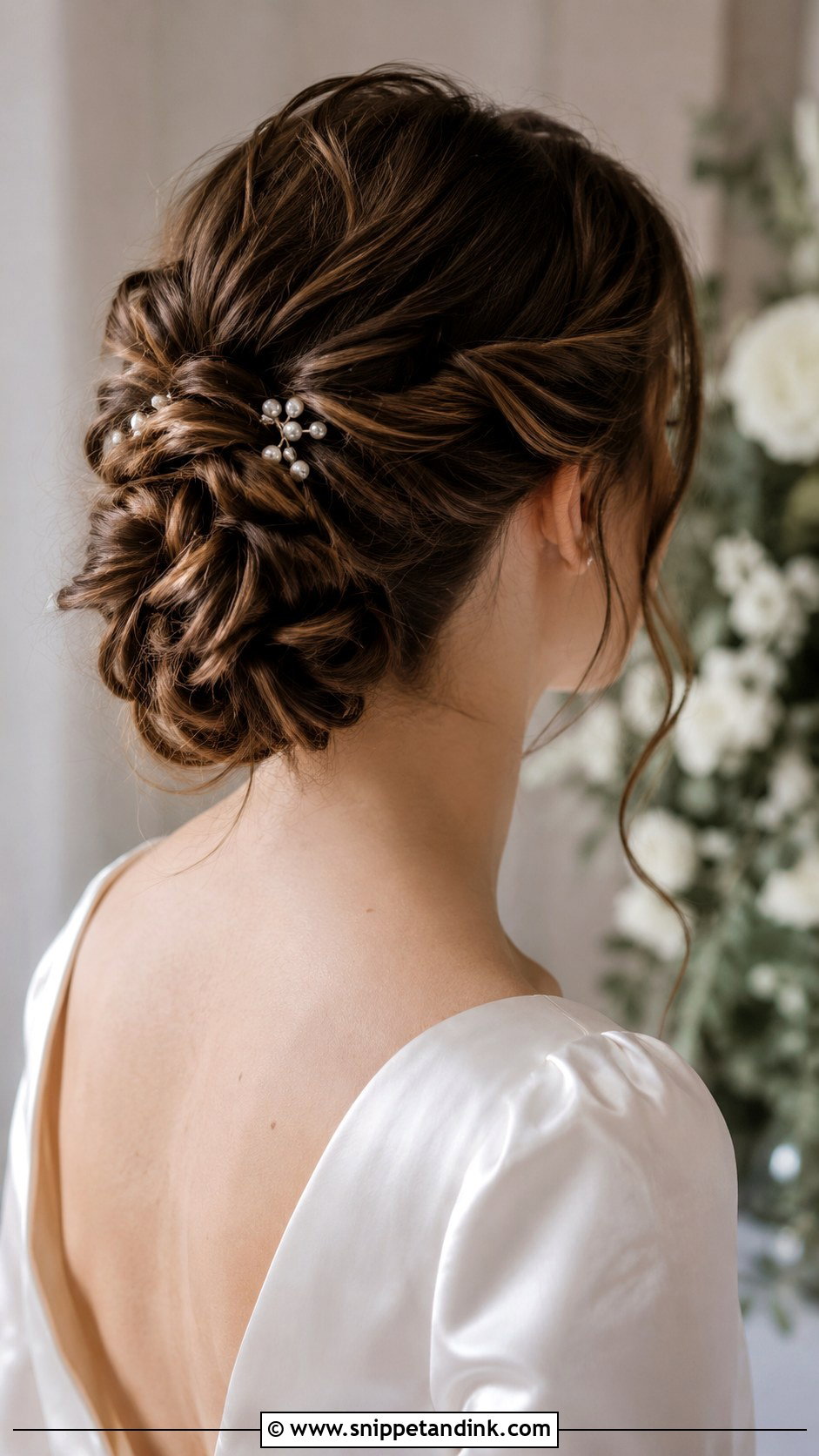
Twists give the romance of braids with a softer, less structured line. I twist sections back from the temples and pin them into a low or mid-height bun, then loosen each twist gently for volume. This is my go-to medieval style for fine hair, since a loosened twist looks fuller than a thin braid made from the same amount of hair. A few pearl pins or a small gold comb at the back finish it, and the pinned twists double as hidden support for a veil.
9. Medieval Wedding Hair With Flowers
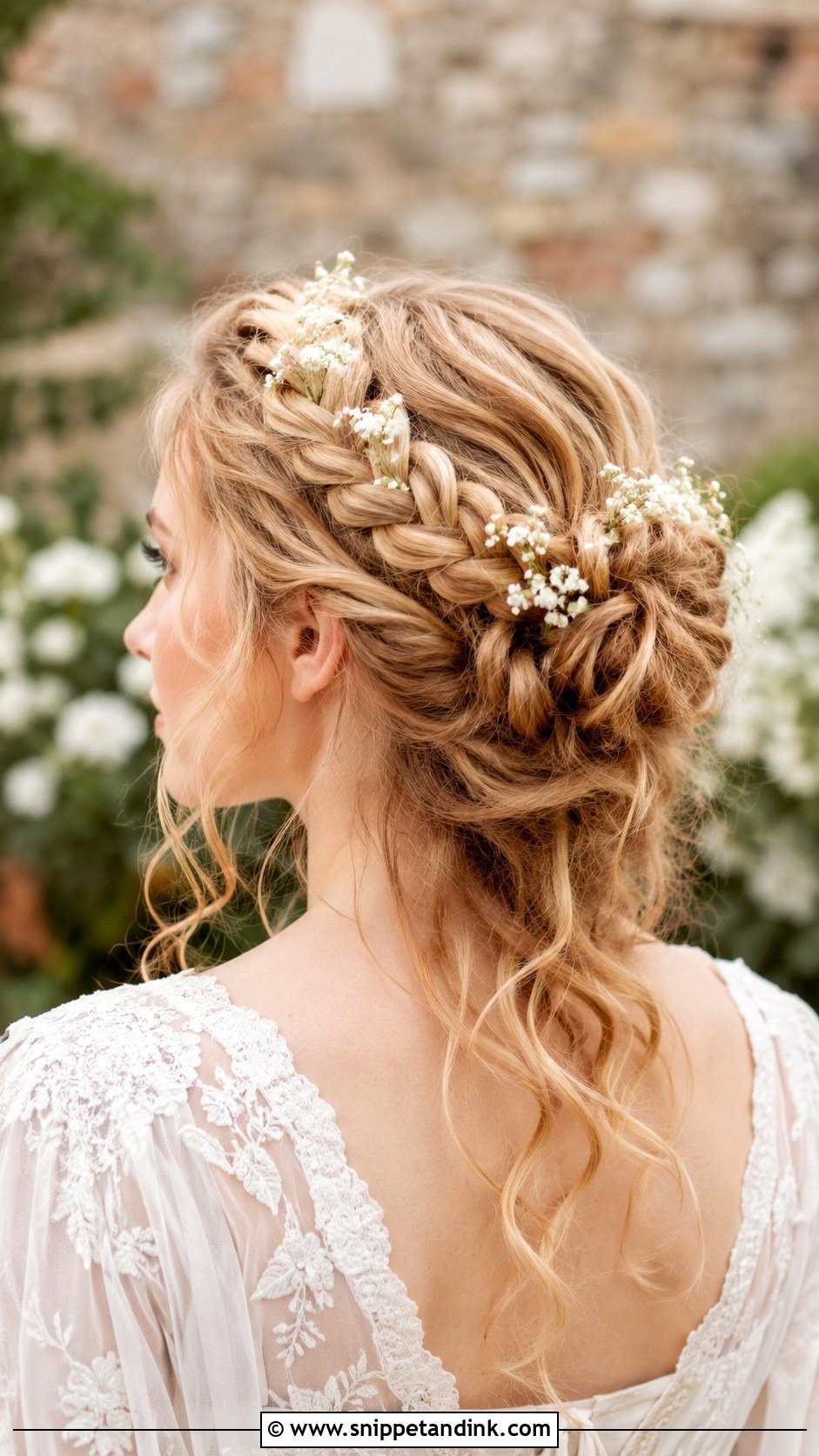
Flowers suit a garden or countryside wedding, as long as they stay small enough that the braid still shows. Tuck tiny blooms into a crown braid, scatter flower pins through a half up style, or add a small floral circlet to loose waves. I’d pick baby’s breath, waxflower, mini roses or dried flowers, since all of them survive hours out of water. Keep the colours close to your bouquet. Braids and textured curls hold stems best because the plaits give each one a natural pocket to sit in.
10. Medieval Wedding Hair With Ribbon
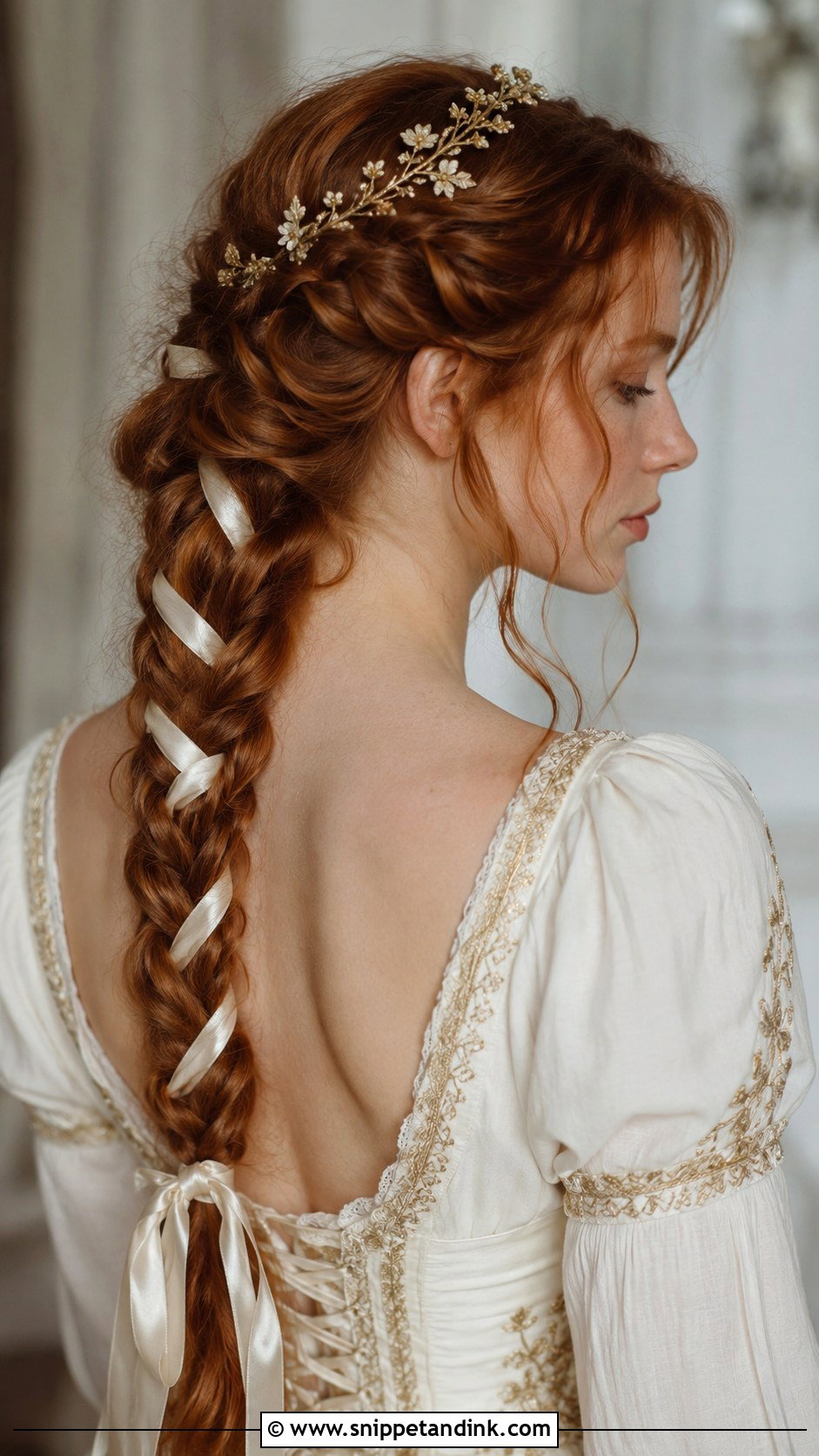
Ribbon is the cheapest detail on this list and one of the most effective. Braid it through a long plait, tie it around a low bun, wrap two side braids, or lay it as a slim headband across the crown. Velvet grips hair far better than satin, which slides; silk sits in between. I’d keep to ivory, champagne, pale gold, dusty blue or soft blush. Bright colours tip it toward childish fast, and so does loose, flyaway hair around the ribbon, so the rest of the style should stay controlled.
11. Medieval Wedding Hair With Pearls
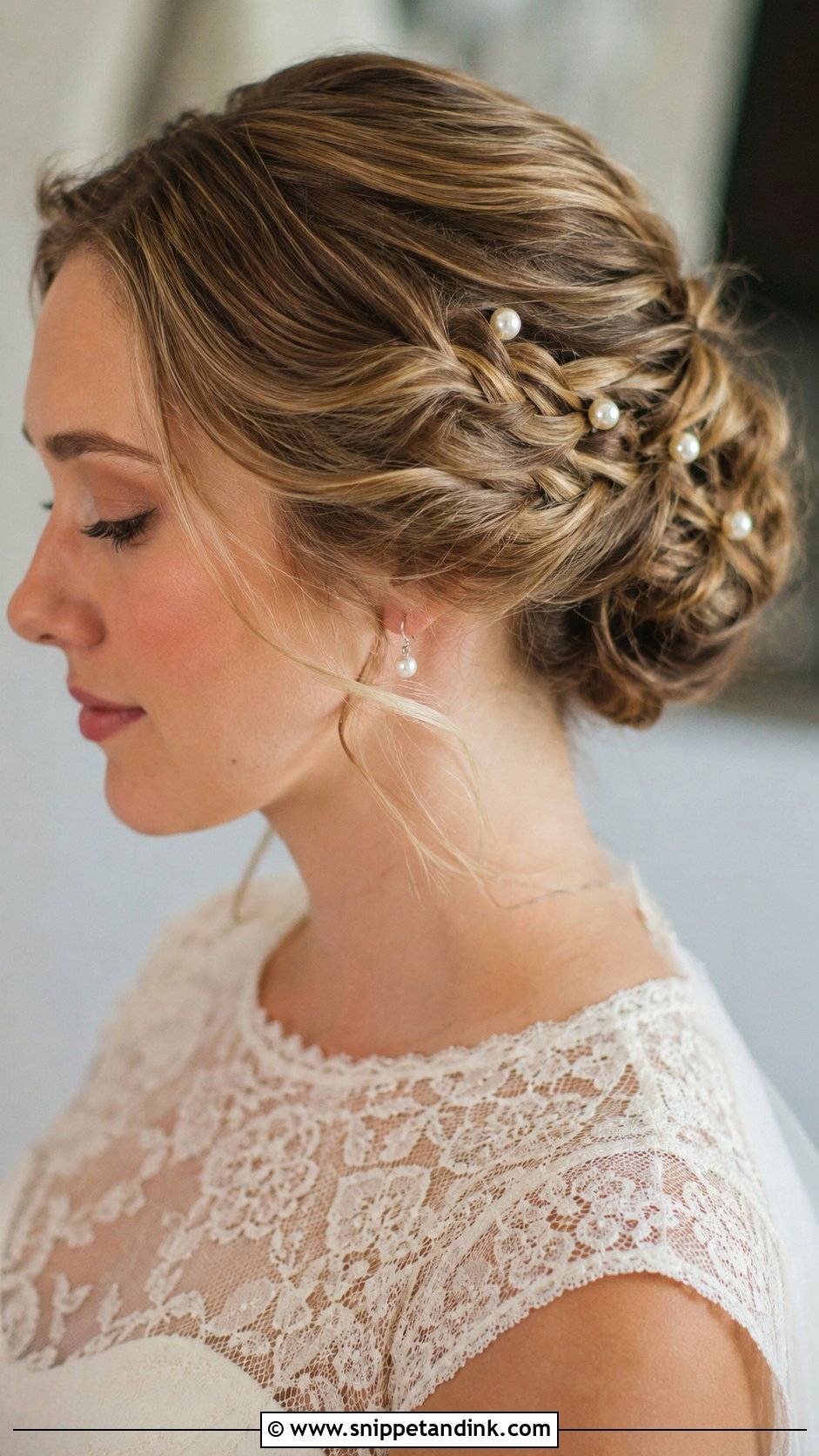
Pearls make a braided style look finished without a full crown. The mistake I see most is scattering them everywhere. Concentrate them along the line of one braid, or around the point where the hair is pinned, so the eye has a path to follow. Small pearl pins read like tiny jewels from a distance and weigh almost nothing. They sit well in crown braids, low buns, twisted updos and half up waves, and look right with a lace gown or a plain veil.
12. Medieval Wedding Hair With Tiara
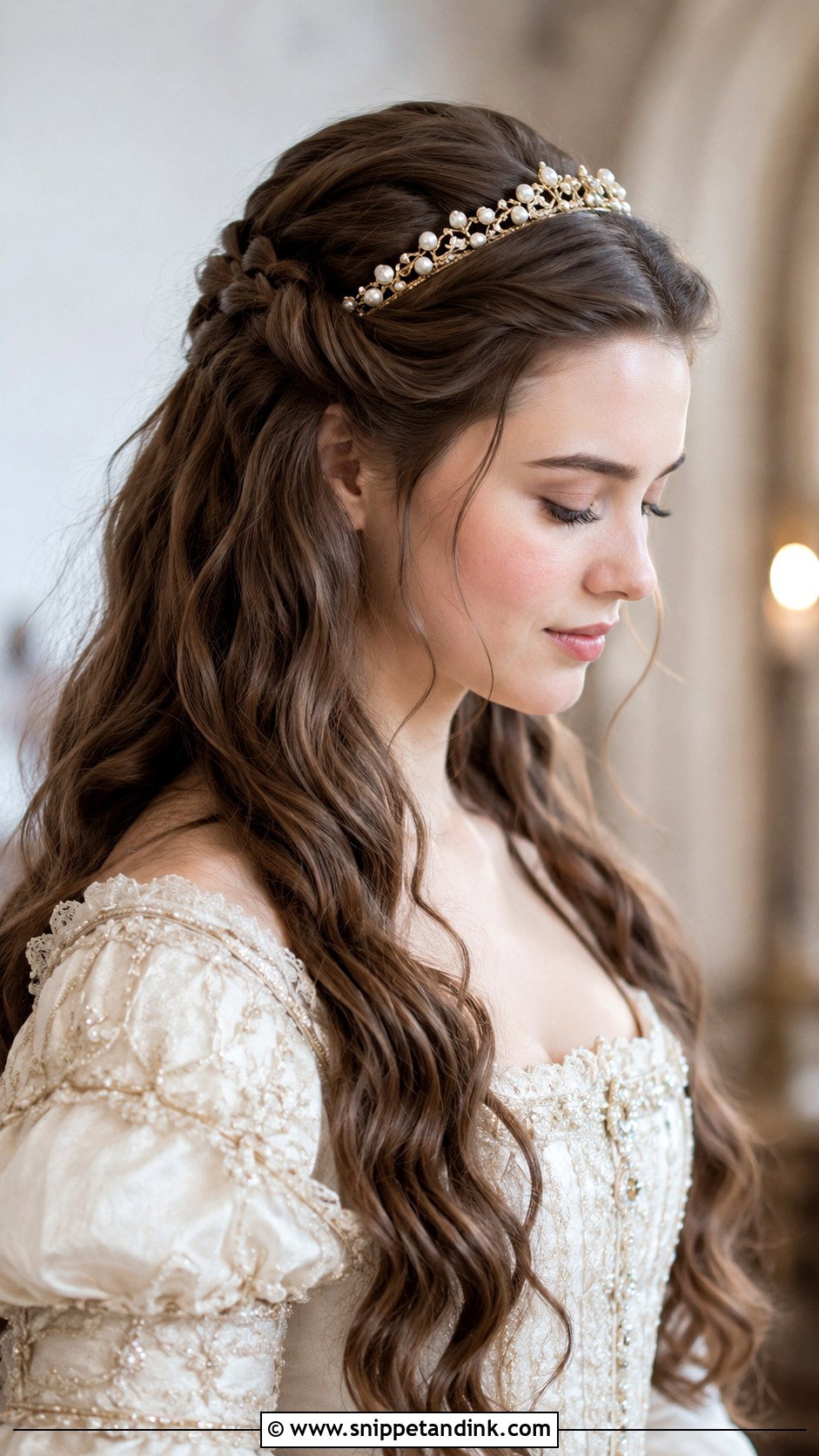
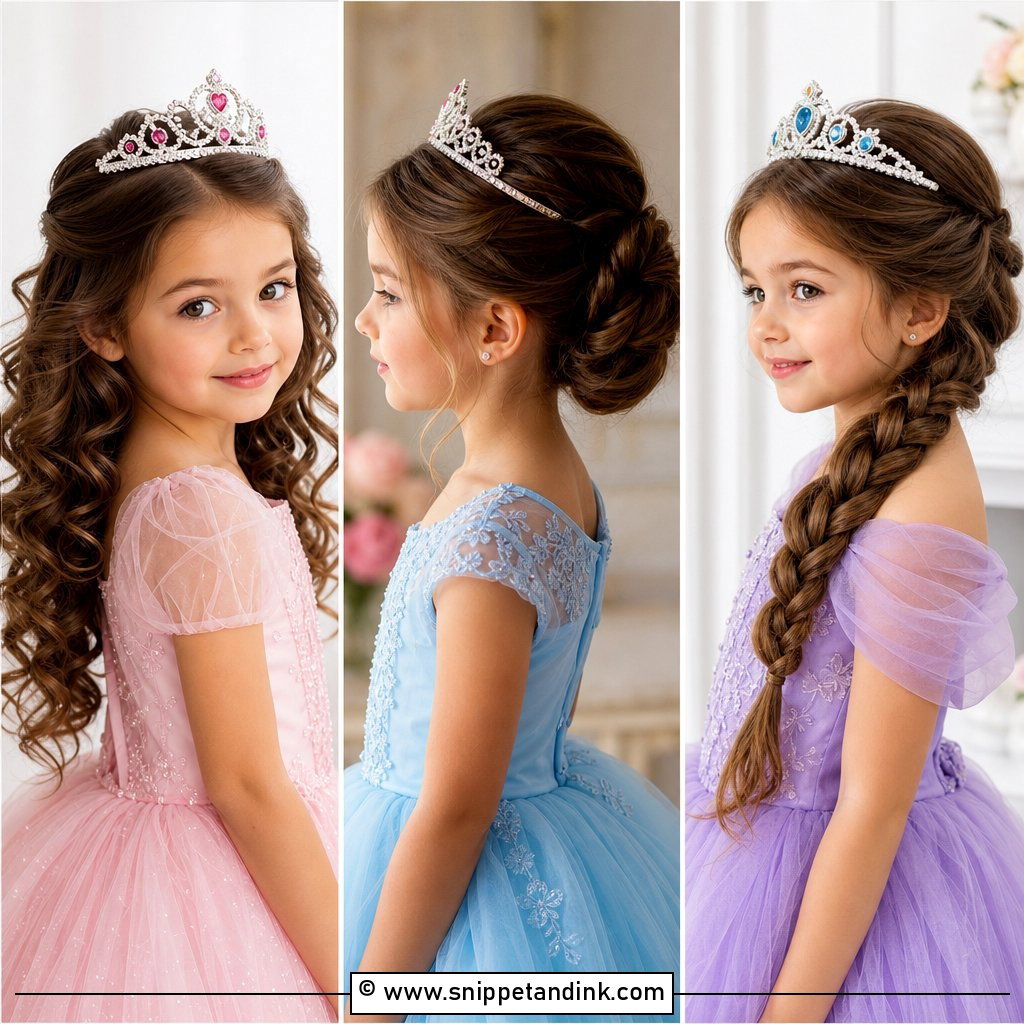
A tiara is a bold choice in a medieval look, and it only works if the hair underneath supports it. A low braided bun, soft half up waves or a smooth crown braid gives it a natural base. Shape matters more than sparkle: a slim gold band reads medieval, while a crystal or pearl tiara reads classic bridal. I anchor tiara combs into a small backcombed section with pins crossed through the combs, then keep every other accessory off. Soft volume at the front and controlled sides stop it looking perched on top.
13. Medieval Wedding Hair With Forehead Band
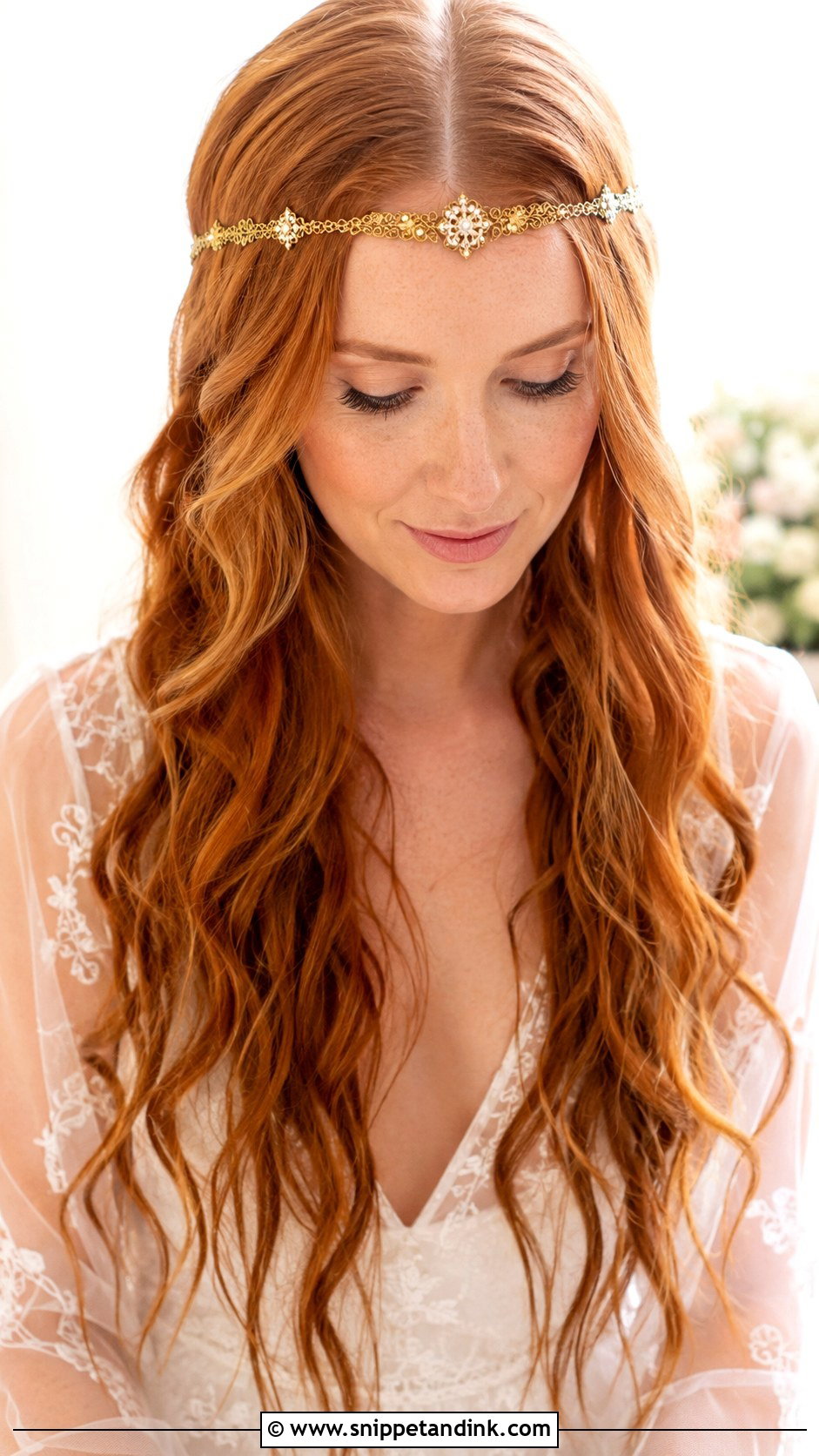
A forehead band is the most obviously medieval accessory here, and it’s the one I’d test longest at a trial. It sits across the forehead or right along the hairline, giving a portrait-like look over loose waves or long straight hair. Choose a fine chain or slim band rather than anything heavy; weight on the forehead becomes a headache by evening. The hair underneath should be smooth or softly waved with light braids at the sides, which also hide the pins that hold the band level. If you wear a veil too, set it further back on the head.
14. Medieval Two Braids Wedding Hair
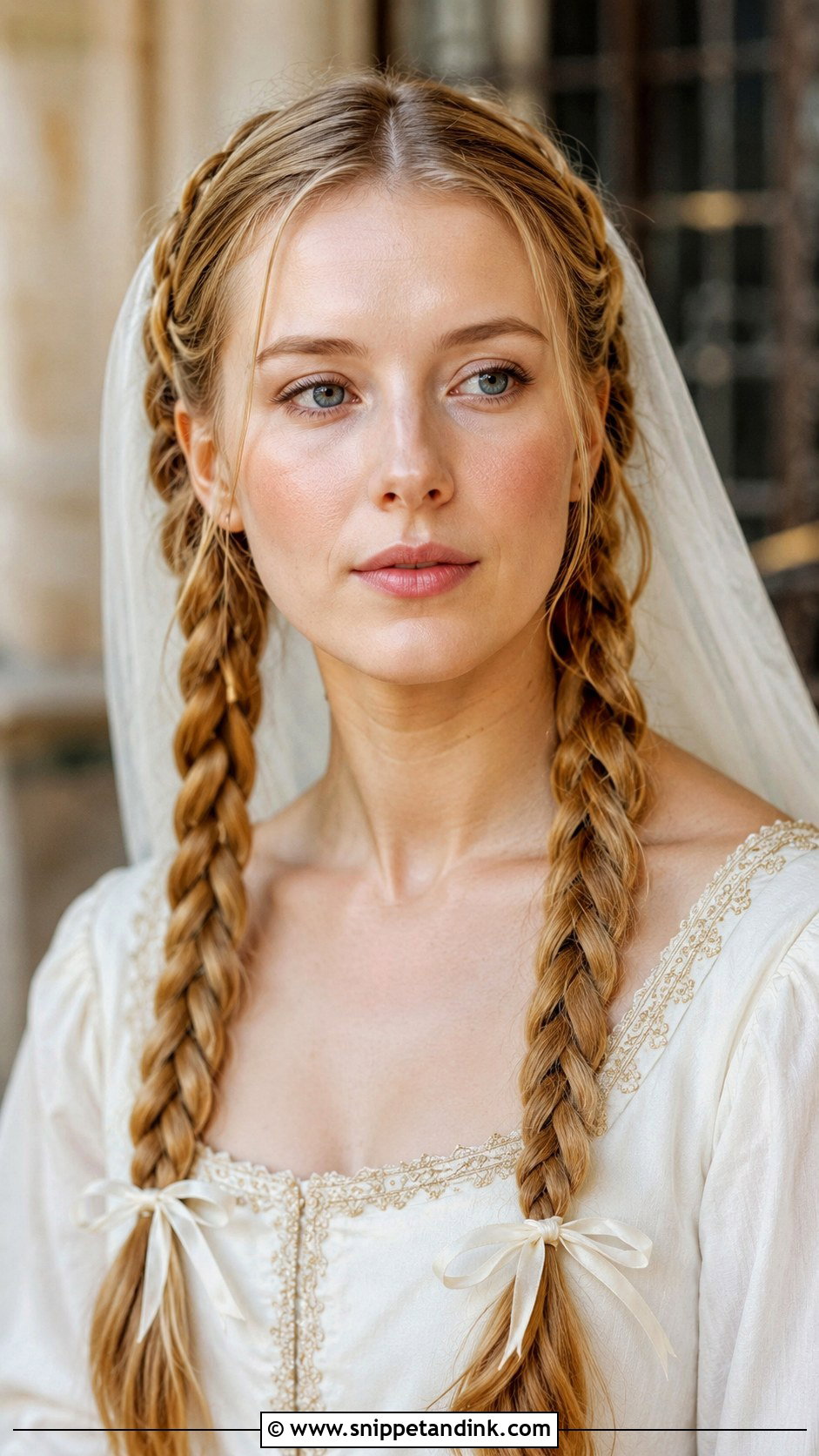
Two braids can look childlike unless the finish is deliberate. I start with a clean centre part, keep the crown smooth, then make two thick braids that rest forward over the shoulders. Loosening them slightly, wrapping them in ribbon, or adding pearl pins near the face shifts them firmly into bridal territory. One refined accessory, a circlet or a veil, completes it. Very comfortable to wear, very secure outdoors, and it holds even in wind.
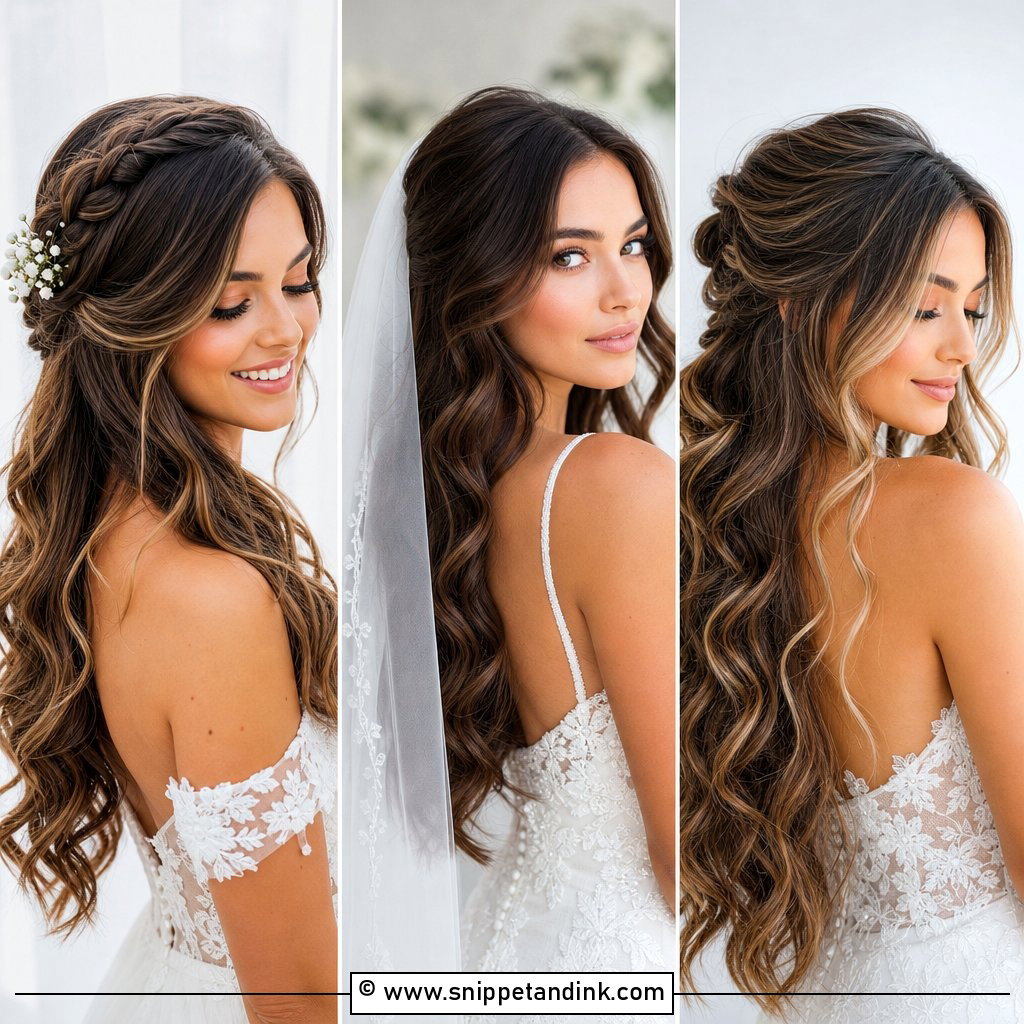
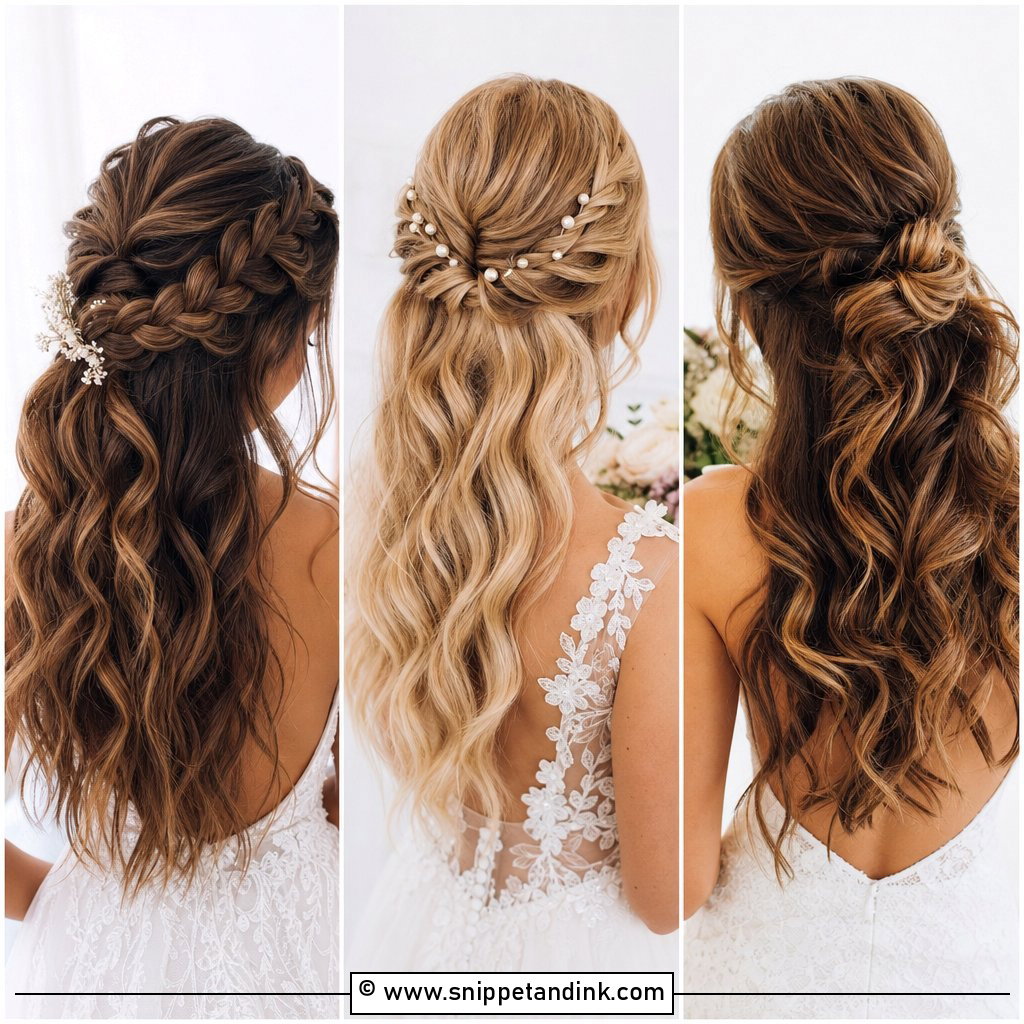
15. Medieval Braided Crown With Veil
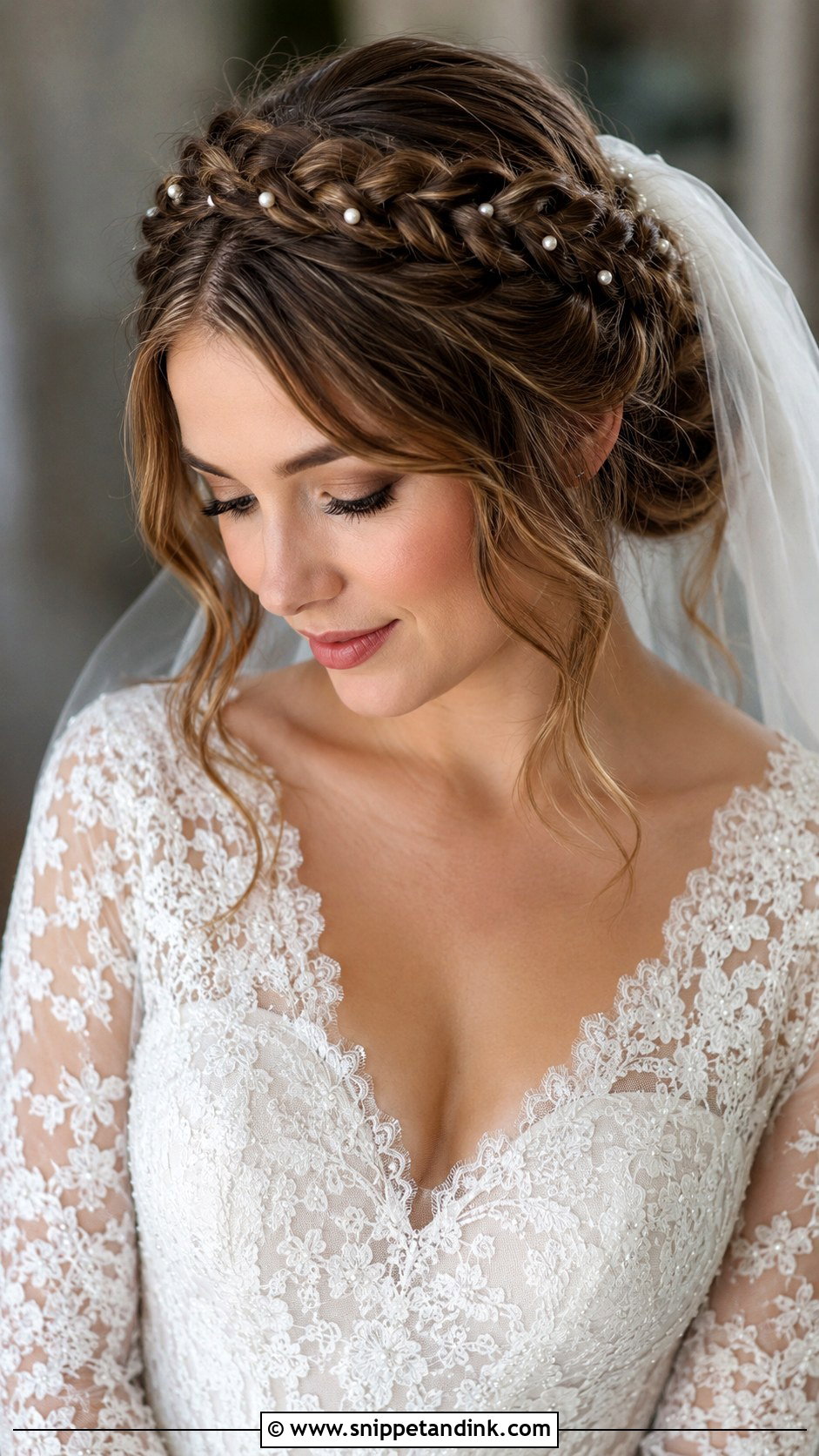
Combining the crown braid with a veil gives you the fullest medieval bridal silhouette in one look. The braid circles the head and gives the veil comb something solid to grip, and the veil softens the structure. A thick, smooth braid suits a formal gown; a slightly undone one suits a garden. If the veil is detailed, I leave the braid plain. Because everything is pinned close to the head, this is the look I’d suggest for a long ceremony followed by a full evening.
16. Medieval Low Chignon Wedding Hair
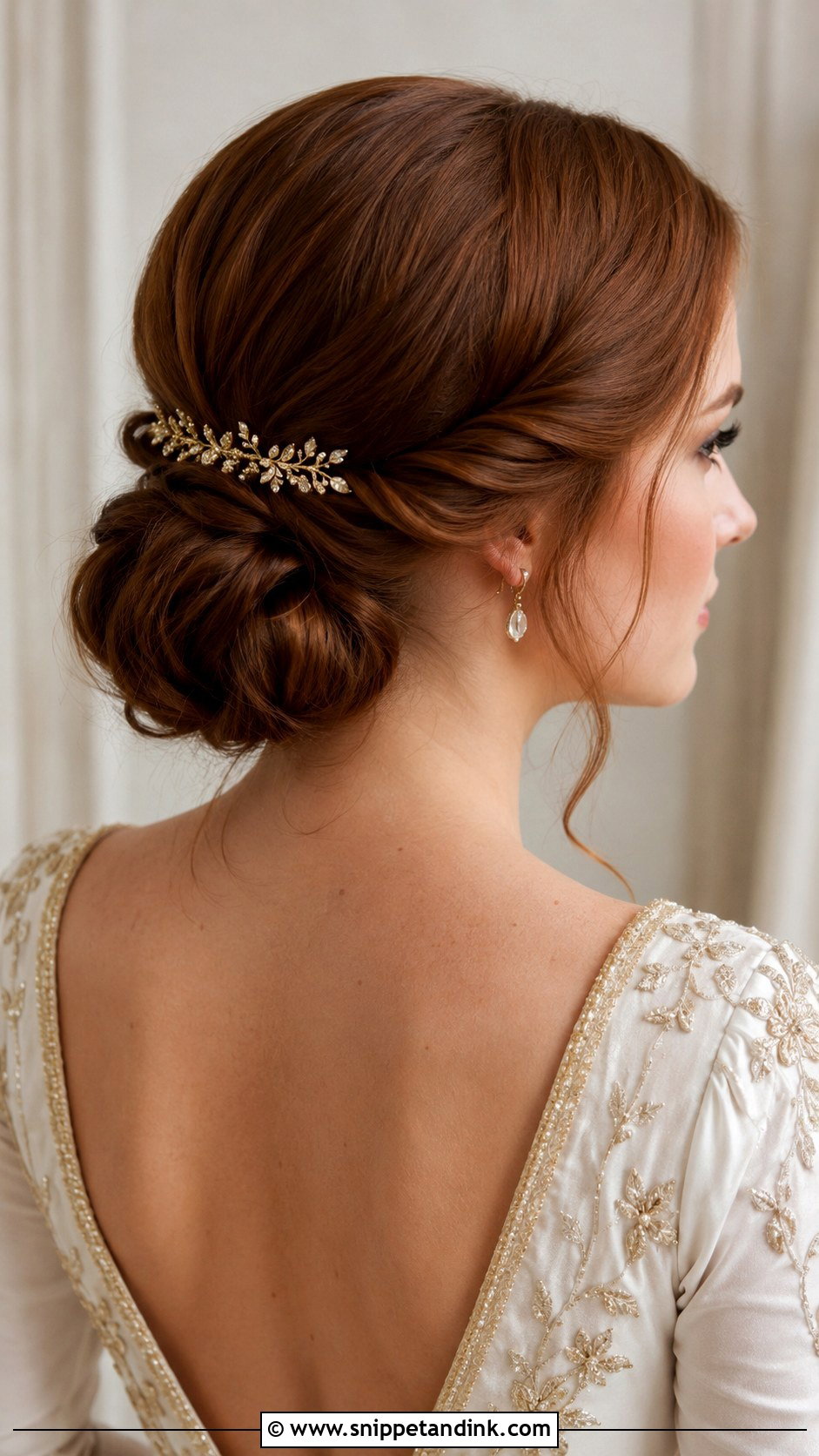
A low chignon fed by small twists or braids is the quiet option. It keeps the neckline clear, which is why I steer brides with detailed bodices toward it. It carries a veil, a crown, a hair vine or a comb equally well. For a stronger period feel, add a centre part, a slim circlet or a few braided pieces around the sides. I keep the bun soft rather than tight, with enough texture to show up in close portraits.
17. Medieval Hair Down With Small Braids
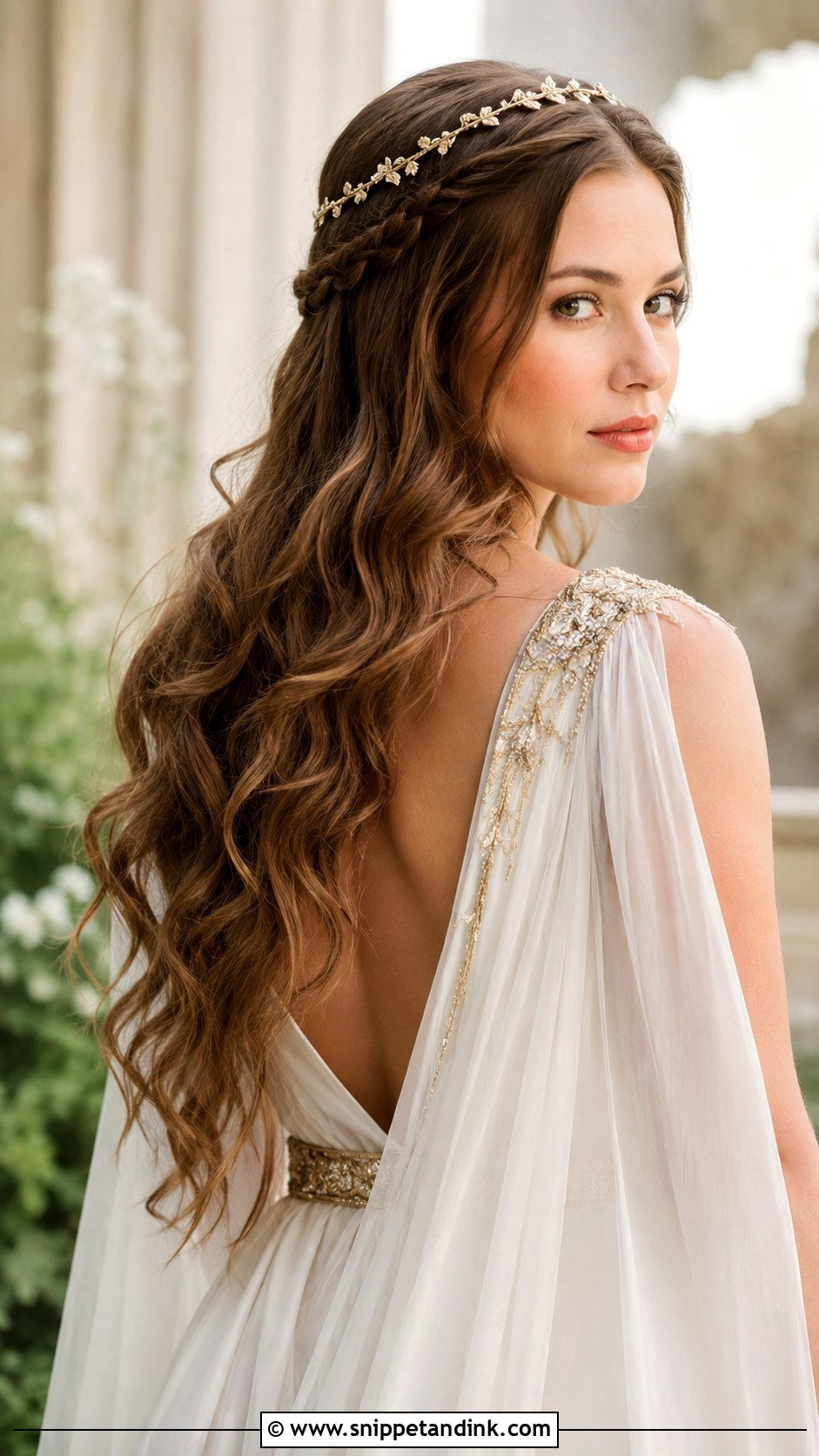
Loose waves with a few small braids at the temples or crown give detail without tying the hair up. The tiny braids can be pinned back, crossed behind the head, or woven into a light half up shape. Plait them before curling the rest so they don’t loosen with the heat. Long hair suits this best because the braids add interest while the length still moves. A circlet, a ribbon or a few small floral pins strengthen the medieval feel without hiding the hair.
18. Medieval Wedding Hair For Short Hair
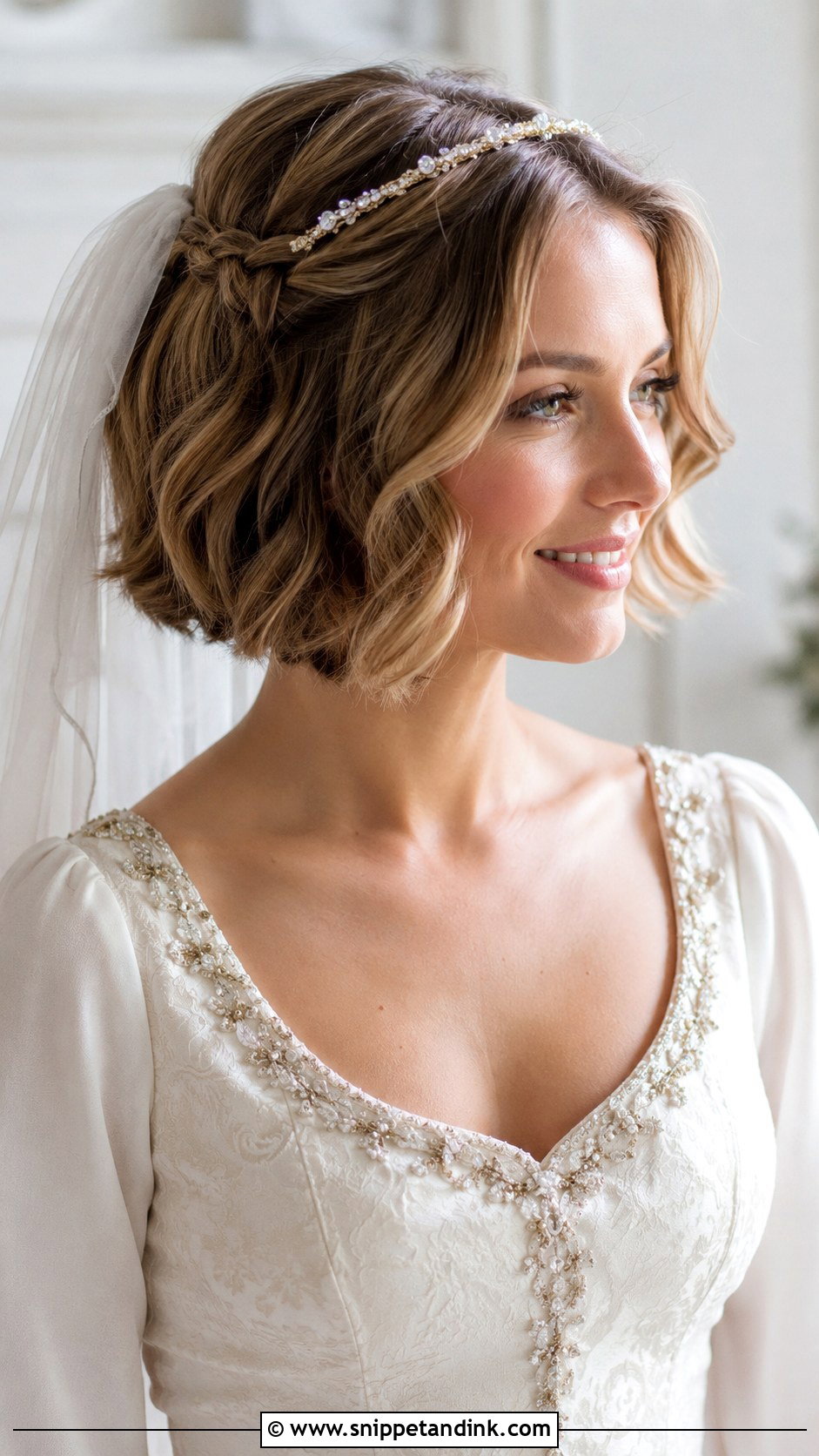
Short hair carries a medieval look through accessories more than shape. A soft bob, curled lob or pixie with sculpted waves can take a circlet, a jewelled headband or a short veil. If there’s enough length at the temples, I’ll add tiny side braids or twists for texture. A veil on very short hair needs anchoring with hidden pins or a small braided section, so try it at your trial. Keep the finish soft rather than sleek; sleek short hair under a circlet looks more modern editorial than old world.
19. Medieval Wedding Hair For Curly Hair
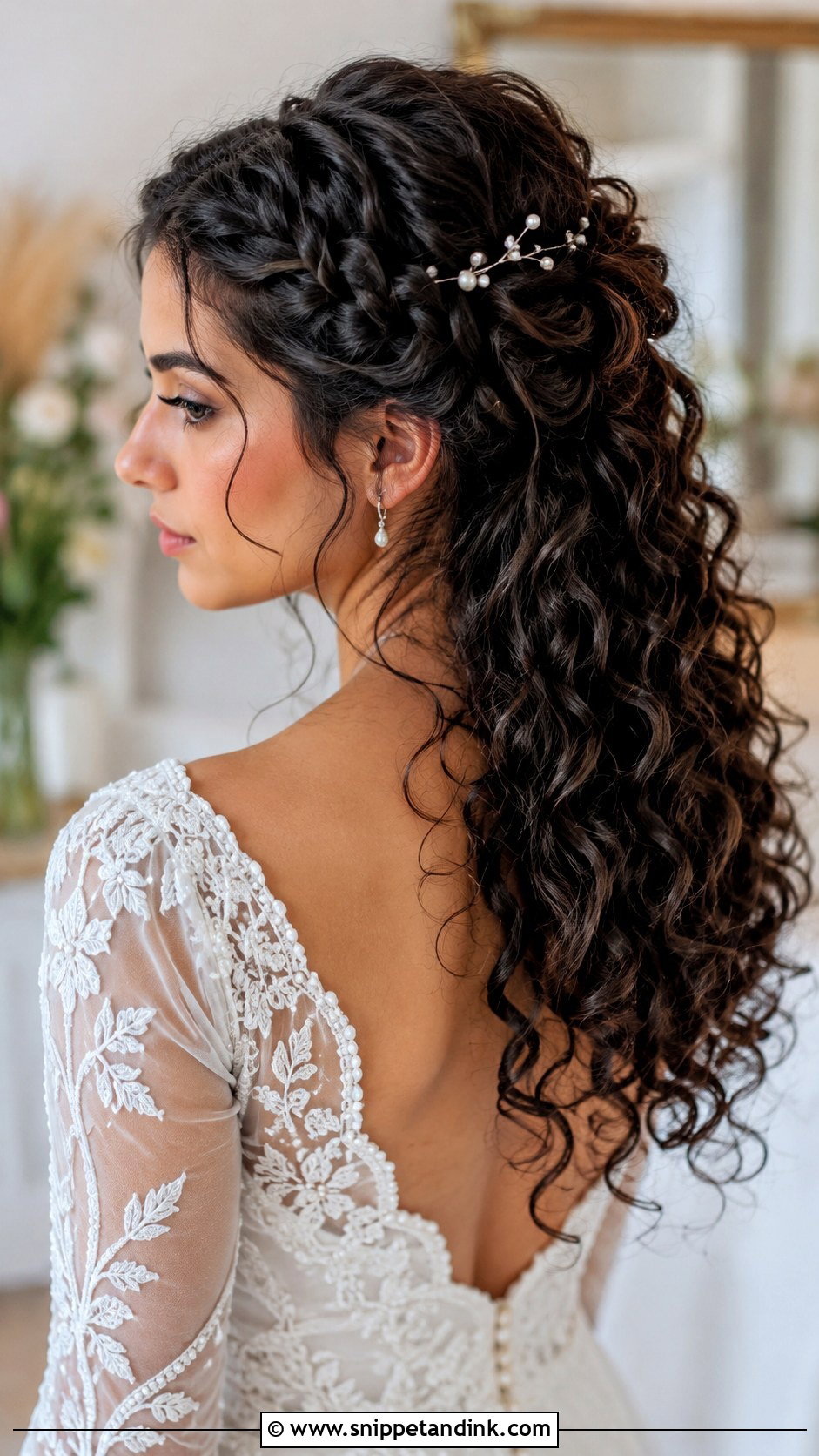
Curly hair has a head start here, because the volume already reads as romantic. A curly half up style, a braided crown or a low pinned updo all keep the texture on show. Work with your curl pattern instead of smoothing it, and keep defined curls around the face. Curls also give pins and accessories better grip than straight hair, so pearl pins, a thin circlet or small flowers stay put. The prep matters: I define curls the day before or that morning, and avoid brushing them once set, or they turn to frizz by the reception.
20. Medieval Wedding Hair With Hair Vine
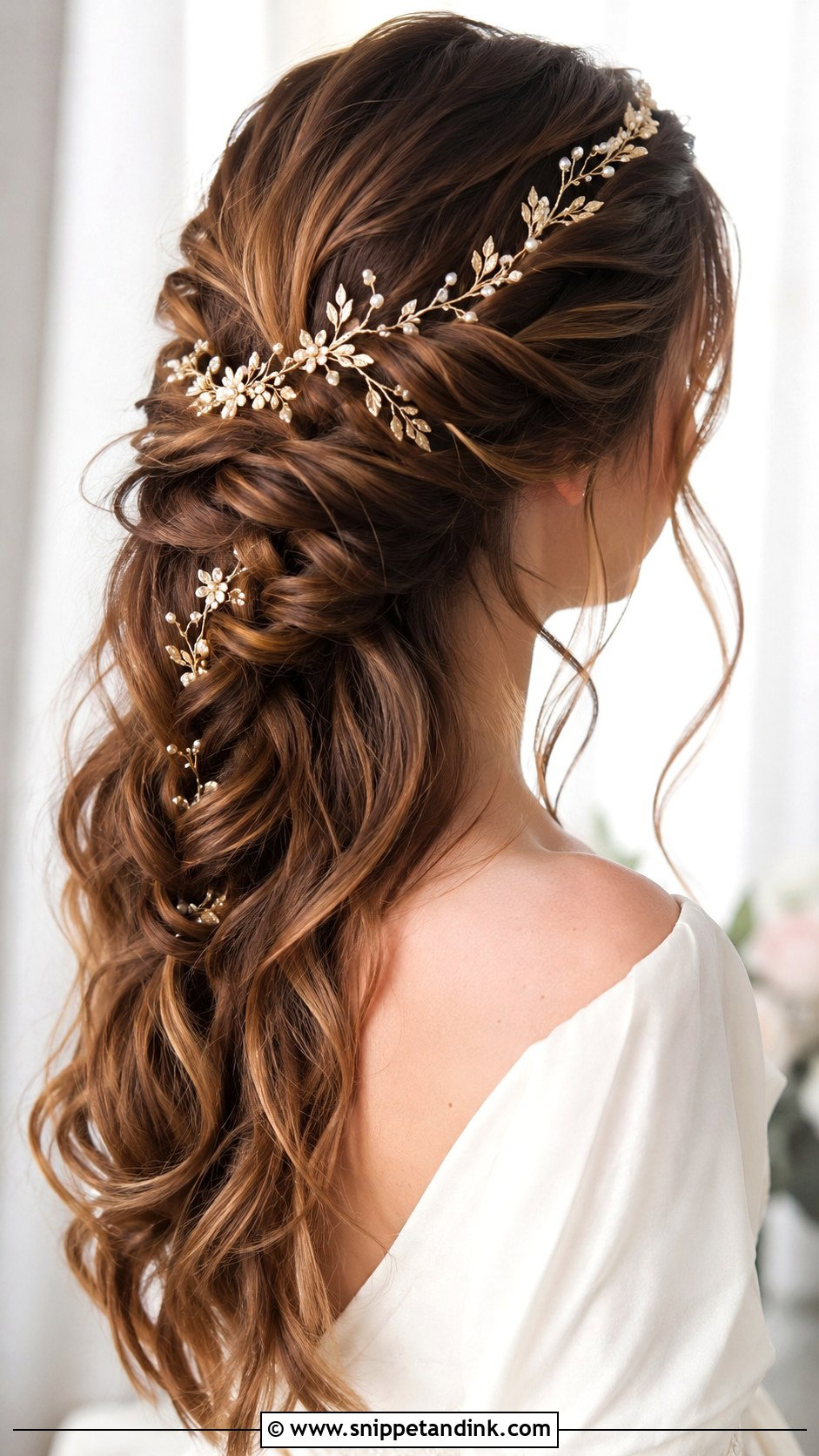
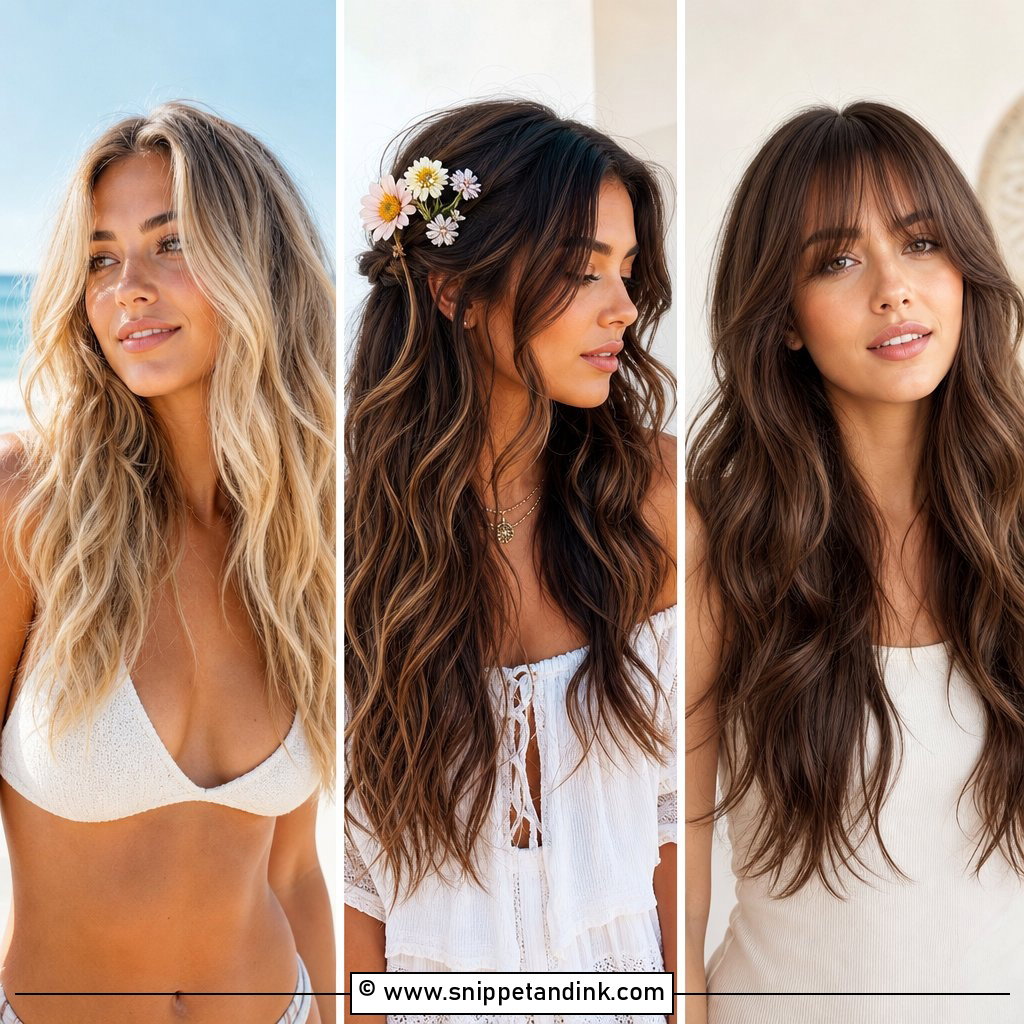
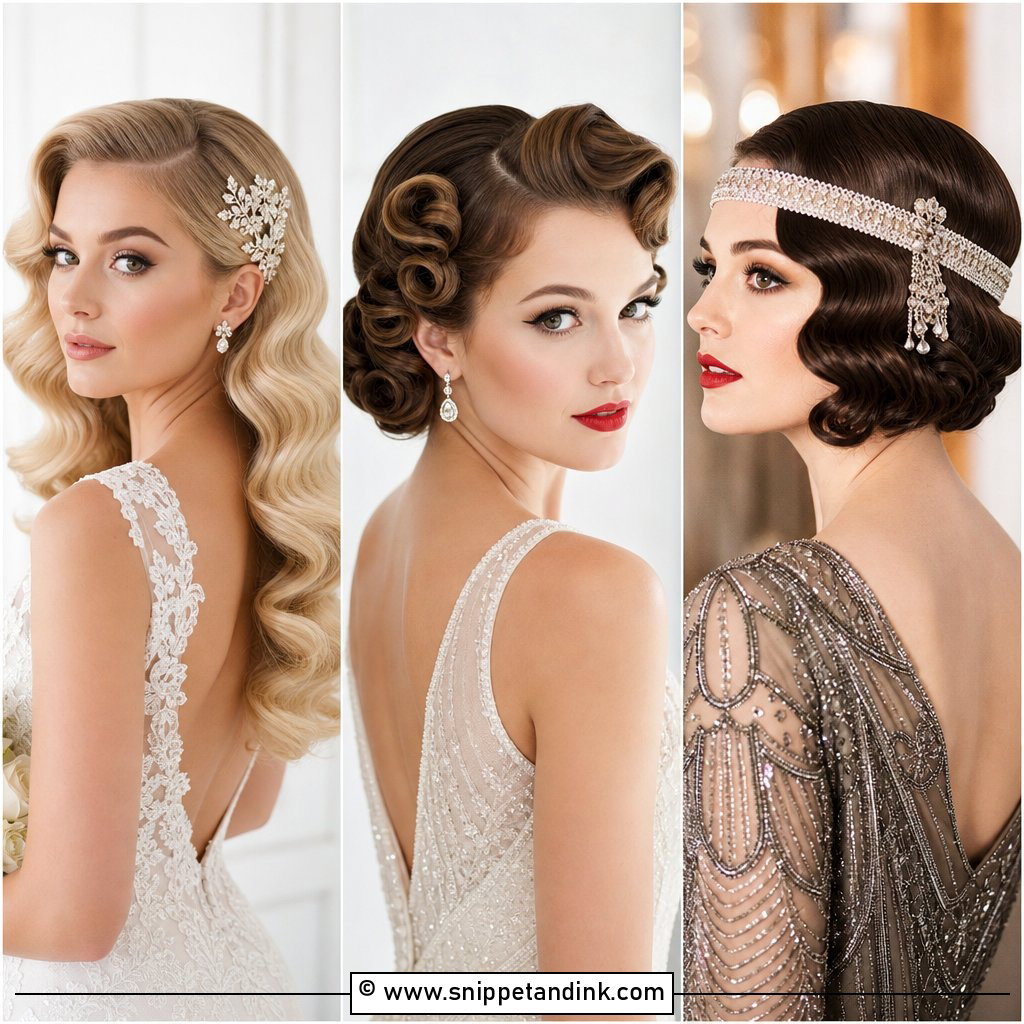
A hair vine bends into almost any shape: across the crown like a circlet, woven through a braid, or curved around a low bun. That flexibility is why I like it for medieval styles. Pearls, tiny leaves, crystals or gold details all suit an old world finish. It needs texture to hold, so I sew it in with bobby pins through its own loops along waves, twists or braids rather than laying it on smooth hair. Balance it against your veil and jewellery so the head doesn’t carry three competing pieces.
Fitting a Circlet So It Sits Level for Ten Hours
Circlets and forehead bands are the accessories that cause the most trouble on the day, because they look weightless in photos and sit on the most sensitive part of the head. I treat fitting one like fitting a shoe.
Size it on your styled hair, not bare hair
A circlet that fits a bare head will be too tight once there are waves or braids underneath it. Order an adjustable one if you can, and try it at the trial with the hair finished. It should rest without pressing, with room to slide a fingertip under it at the temple.
Hide its anchors
I never rely on tension alone. A circlet gets small bobby pins crossed over it behind each ear and at the back, slid into a braid or a backcombed section so they disappear. Many circlets have tiny loops for exactly this; if yours doesn’t, clear elastic thread tied to each side and pinned works well.
Decide where it sits before the veil goes on
A band across the forehead and a veil comb at the crown pull against each other. Set the circlet first, then place the comb behind it, never on top. And take it off for the evening if it starts to ache; the hair underneath will still look finished if the braids are doing the real work.
Which Medieval Detail Will You Wear?
Medieval bridal hair can be fully regal, with a crown braid, tiara, veil and long waves, or a quiet nod through a soft low chignon, a ribbon braid or a pearl-pinned half up style. Your hair length and texture narrow the list faster than anything else, then the dress and venue decide the rest. Braids are worth leaning on because they look good and quietly hold every accessory in place. Pick one period detail to lead and let the others support it. That restraint is what keeps the look bridal.
You'll Like These Ideas:


Leave a Reply