
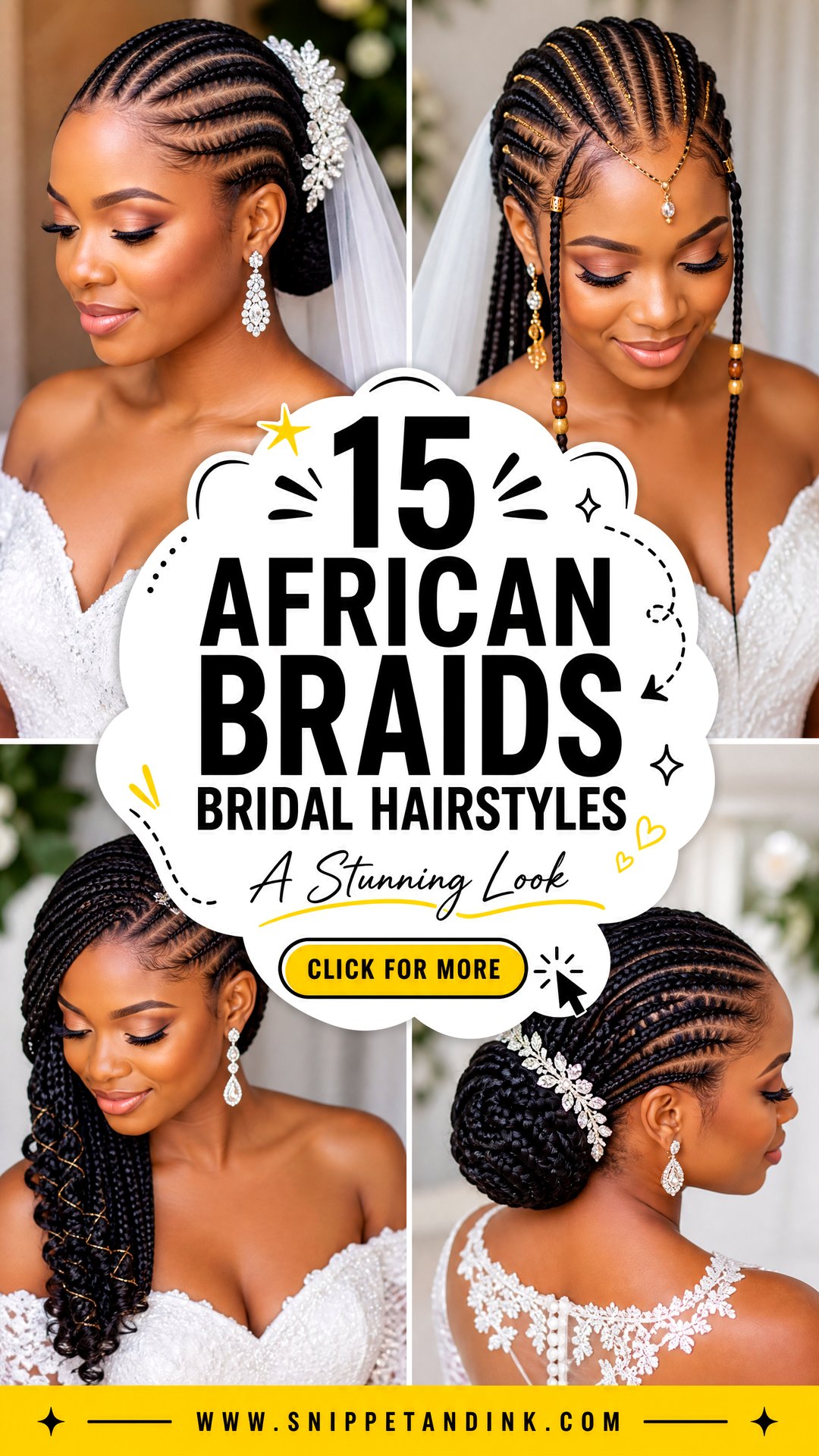
Braids carry more meaning than almost any other wedding hairstyle, and they’re also one of the most practical. African braids bridal hairstyles hold through hugs, heat and hours of dancing in a way loose curls never will, and they protect natural hair while you’re at it. I think of the install and the wedding-day styling as two separate jobs: the braids are the foundation, and the bun, crown or ponytail is built on top. Cornrows, Fulani, knotless, goddess, Ghana braids and box braids all appear below, with notes on how each one handles a veil, a heavy accessory and a long day.
Timing the Install So Braids Look Fresh but Not Tight
Braids done the night before look neat, but they’re also at their tightest, and an aching scalp under a veil is miserable. Done two weeks before, the parts start to fuzz. I aim for a window in between.
- Two to three months out: book your braider. Wedding season is their busiest time and weekends fill early.
- A few weeks out: consultation, braid size, length, color and how much extension hair goes in.
- Three to seven days out: the install. The tension relaxes while the parts still look crisp.
- Wedding morning: the updo, bun or accessory styling, a separate and much shorter appointment.
Small knotless or long box braids can take most of a day, so keep that day clear of the rehearsal dinner or a dress fitting. Arrive with hair washed, deep conditioned, fully dry and stretched. Prepped hair braids faster and the parts come out cleaner.
1. African Braids Bridal Updo
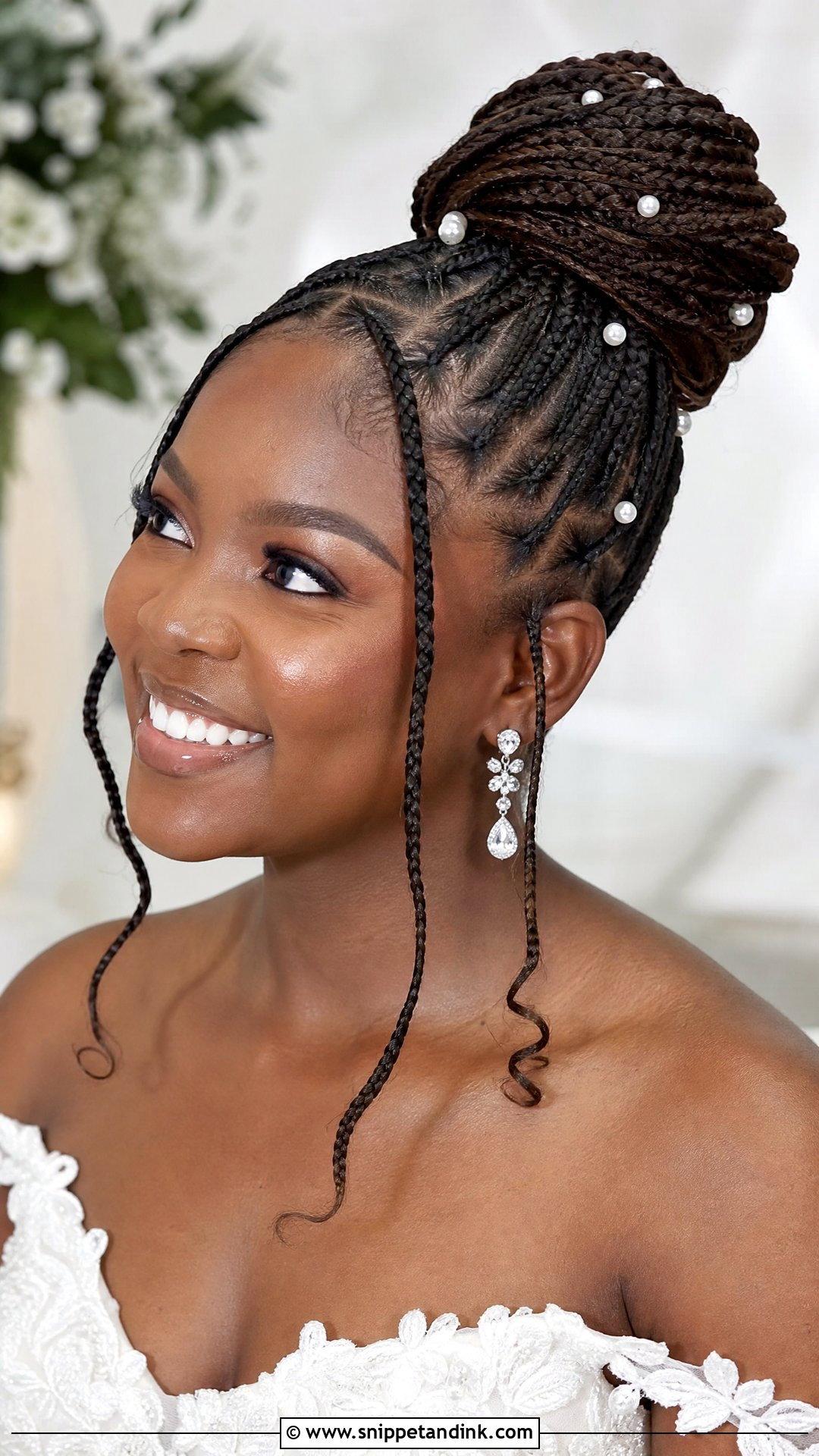
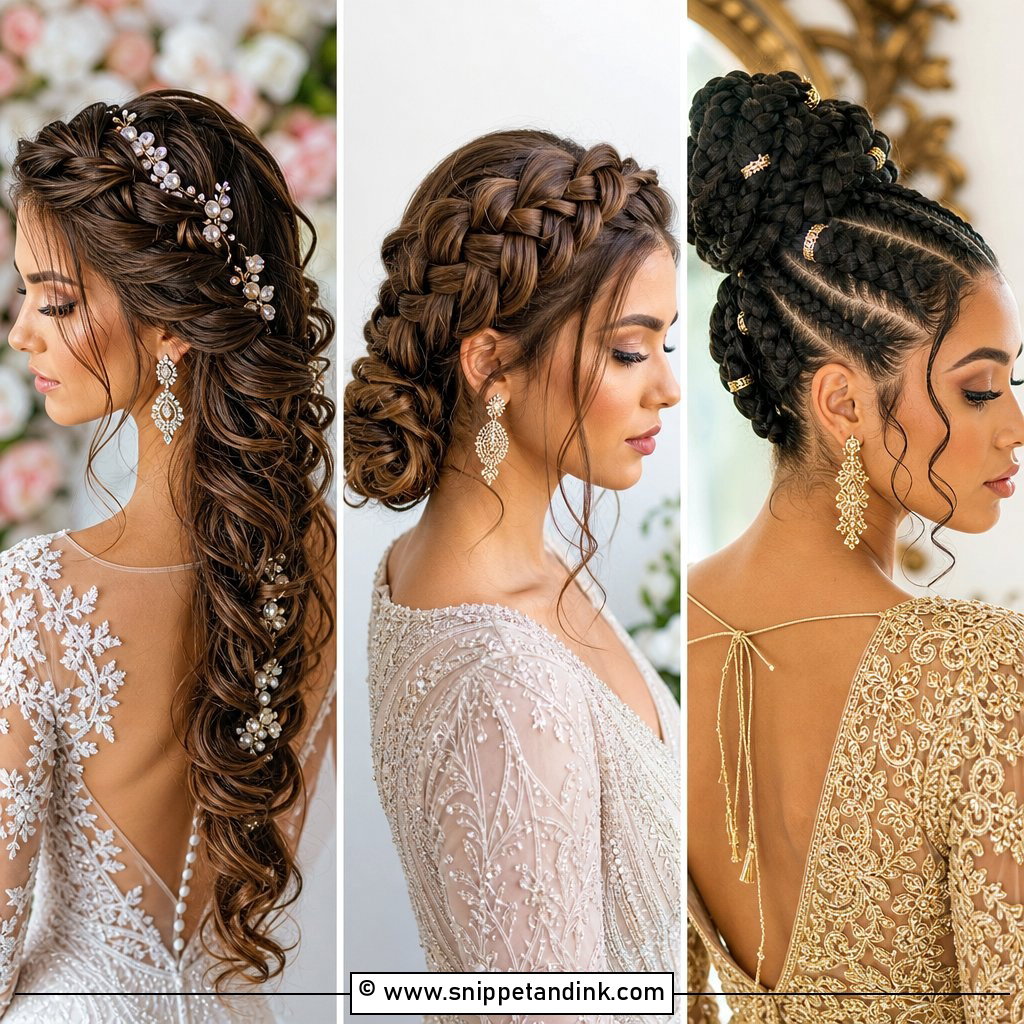
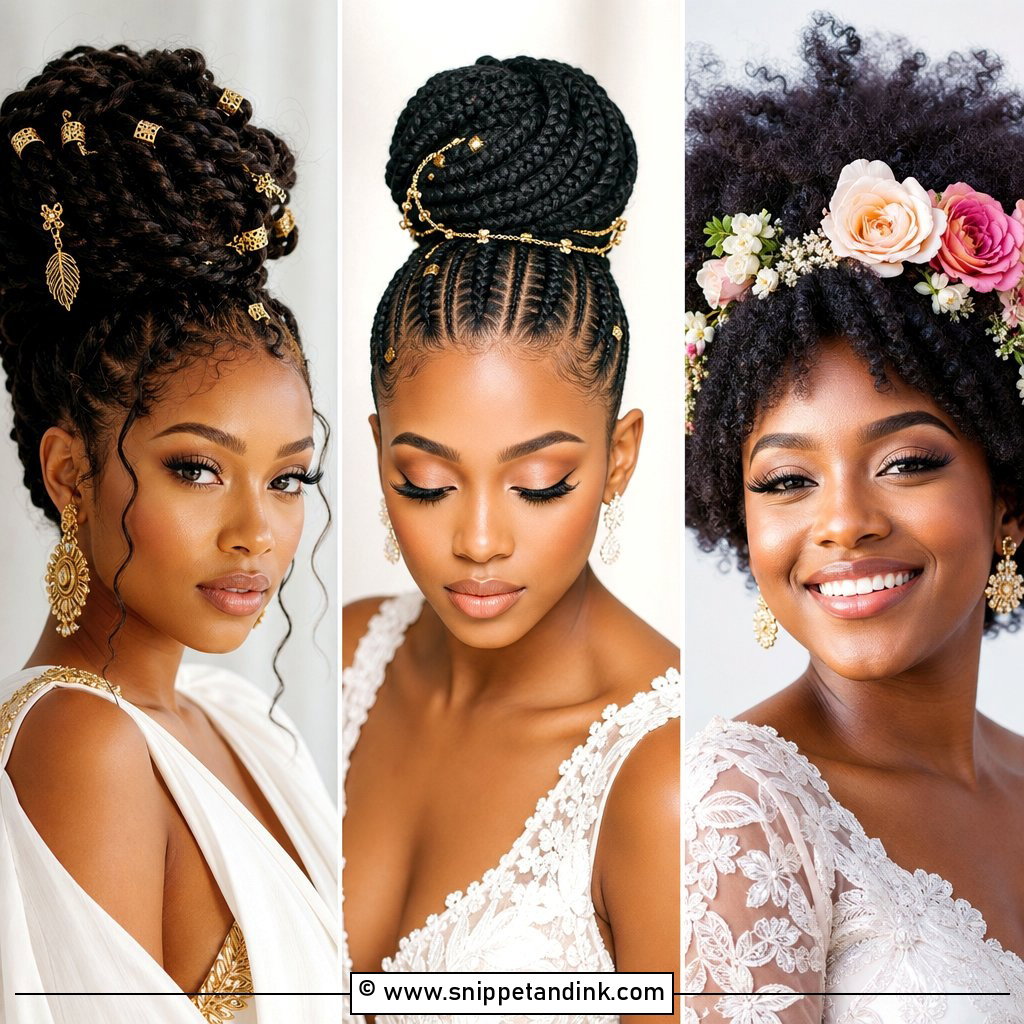
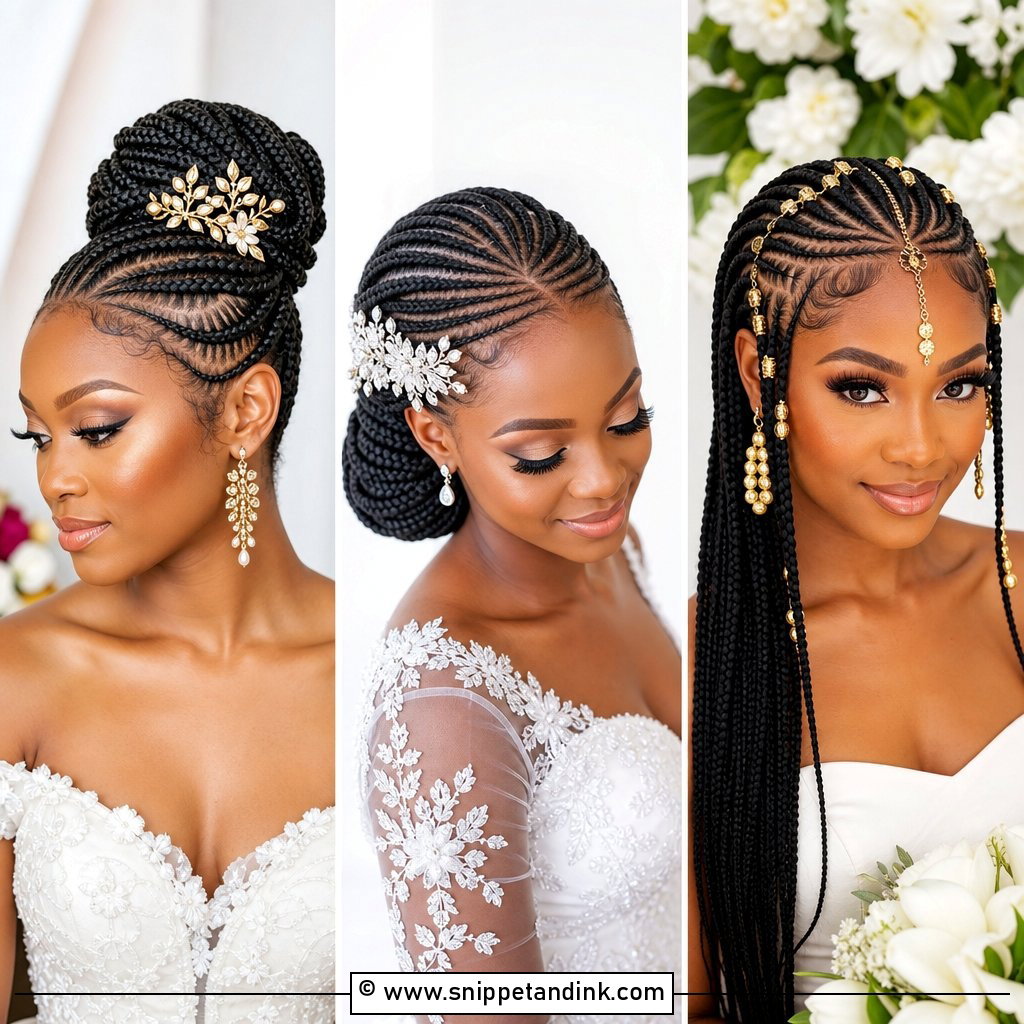
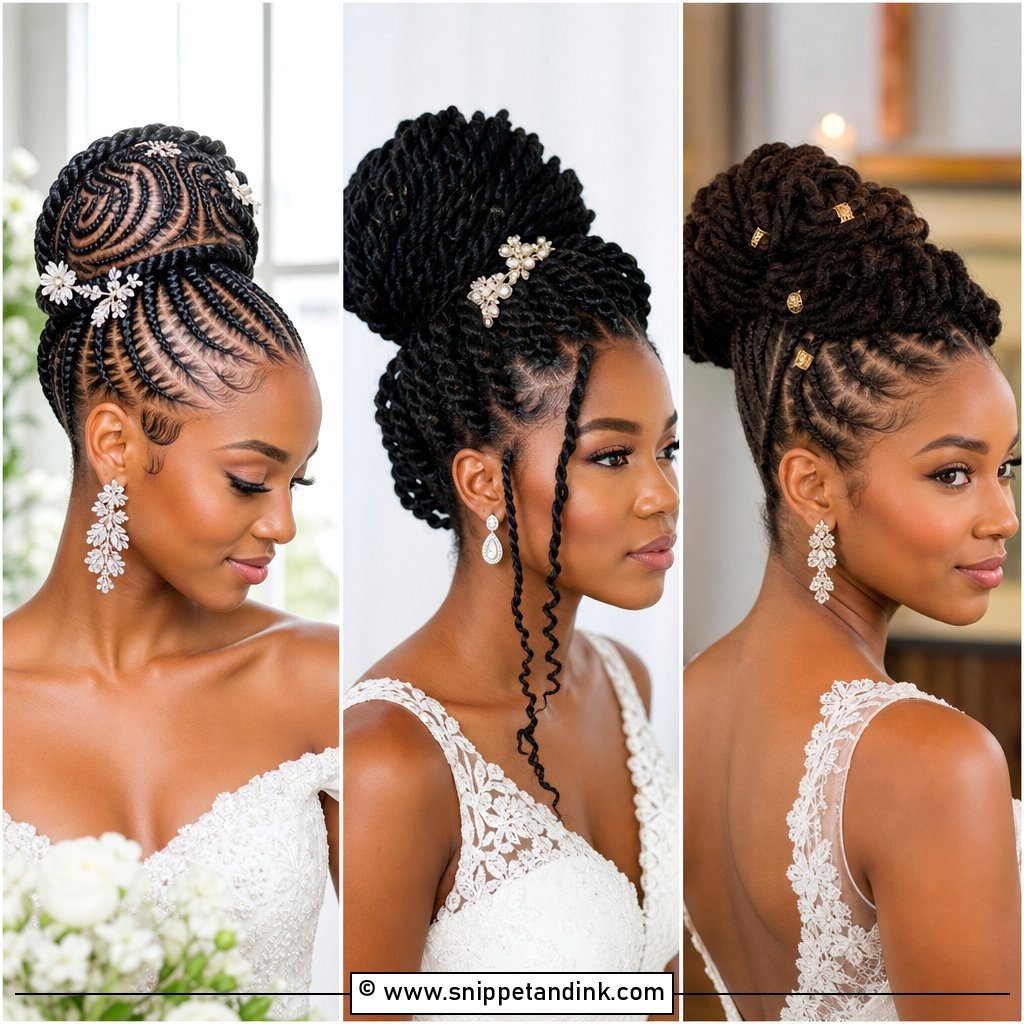
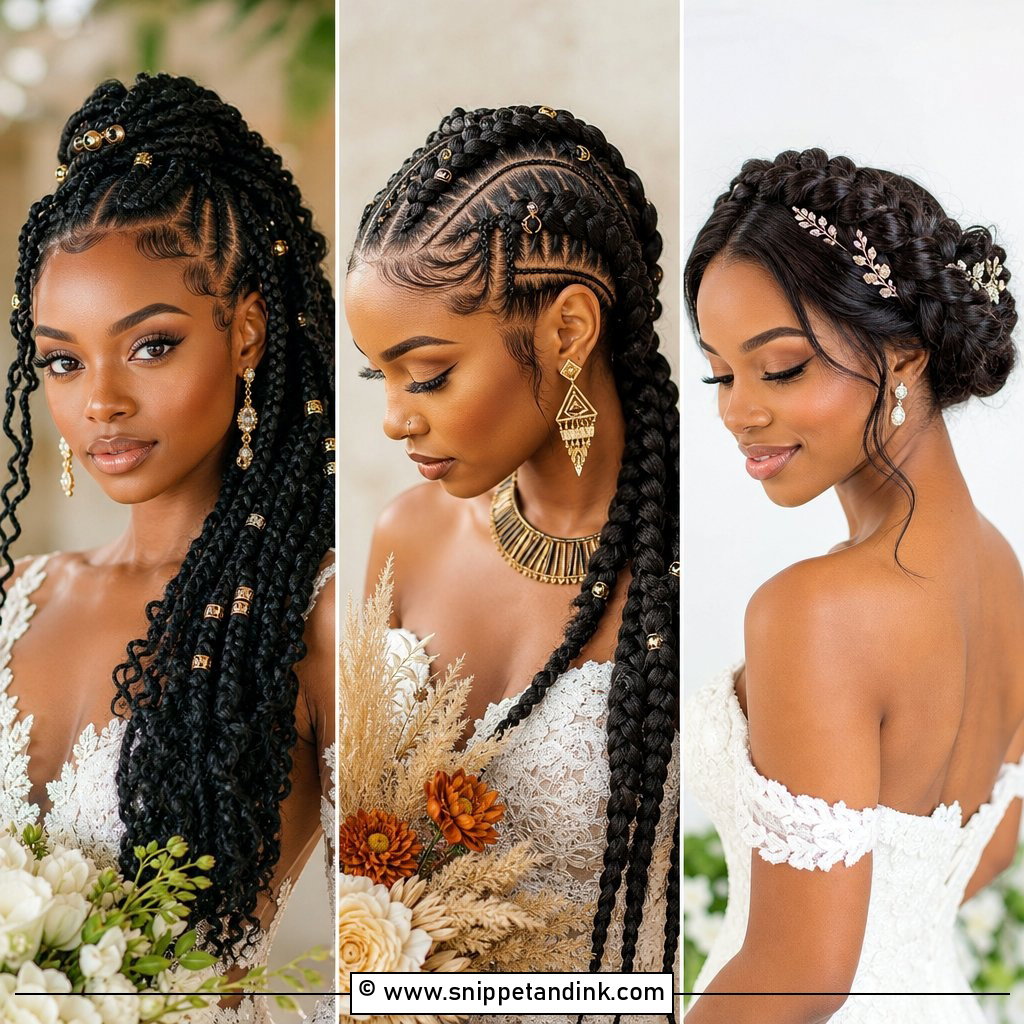
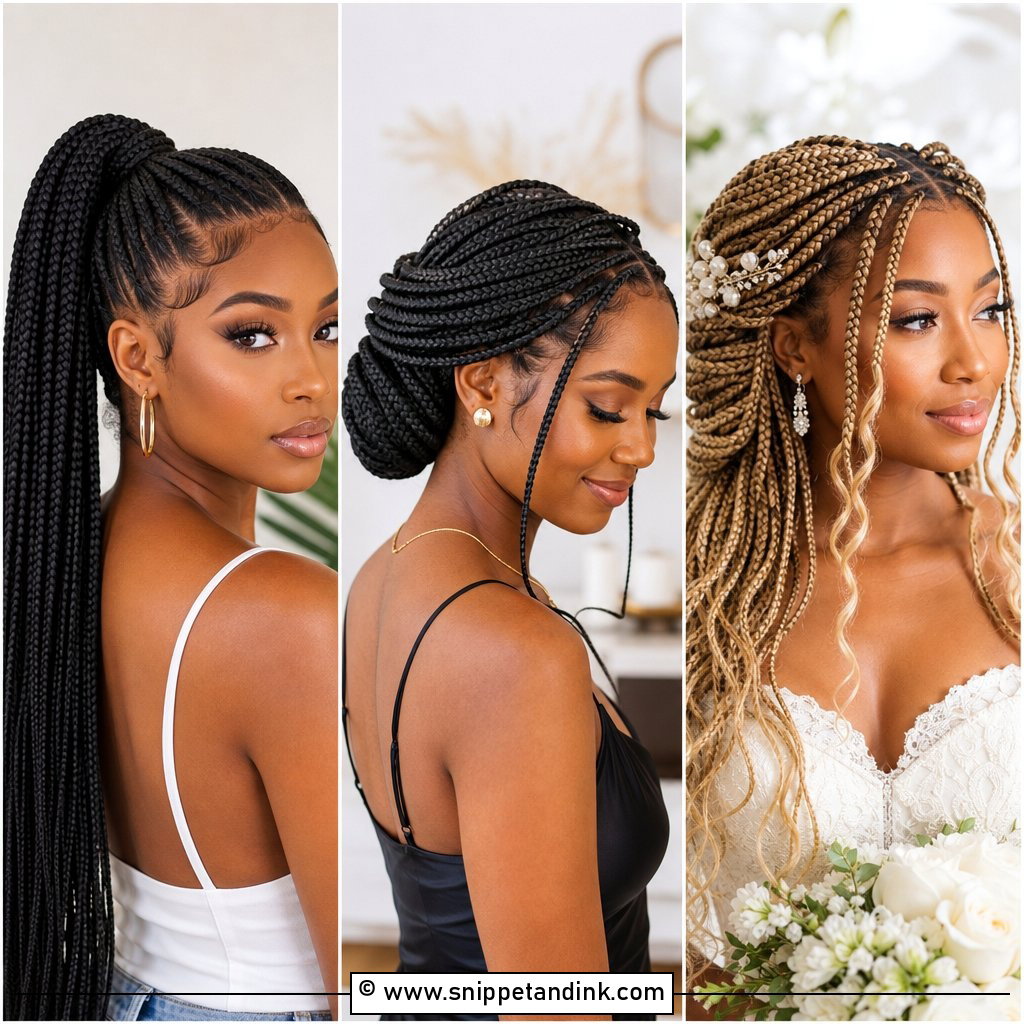
A braided updo keeps the neckline open and shows the braid pattern off at the same time. The braids can be gathered into a sculpted bun, a roll or a tucked crown shape. It works with box braids, knotless braids, micro braids or medium cornrows. The part I watch most closely is the hairline. Pulling a full head of braids up into an updo adds tension right at the edges, so I gather them a little looser at the front than at the nape, and I’d never stack the updo on braids installed the day before. Pearl pins or gold cuffs can sit right in the shape.
2. African Braids Bridal Bun
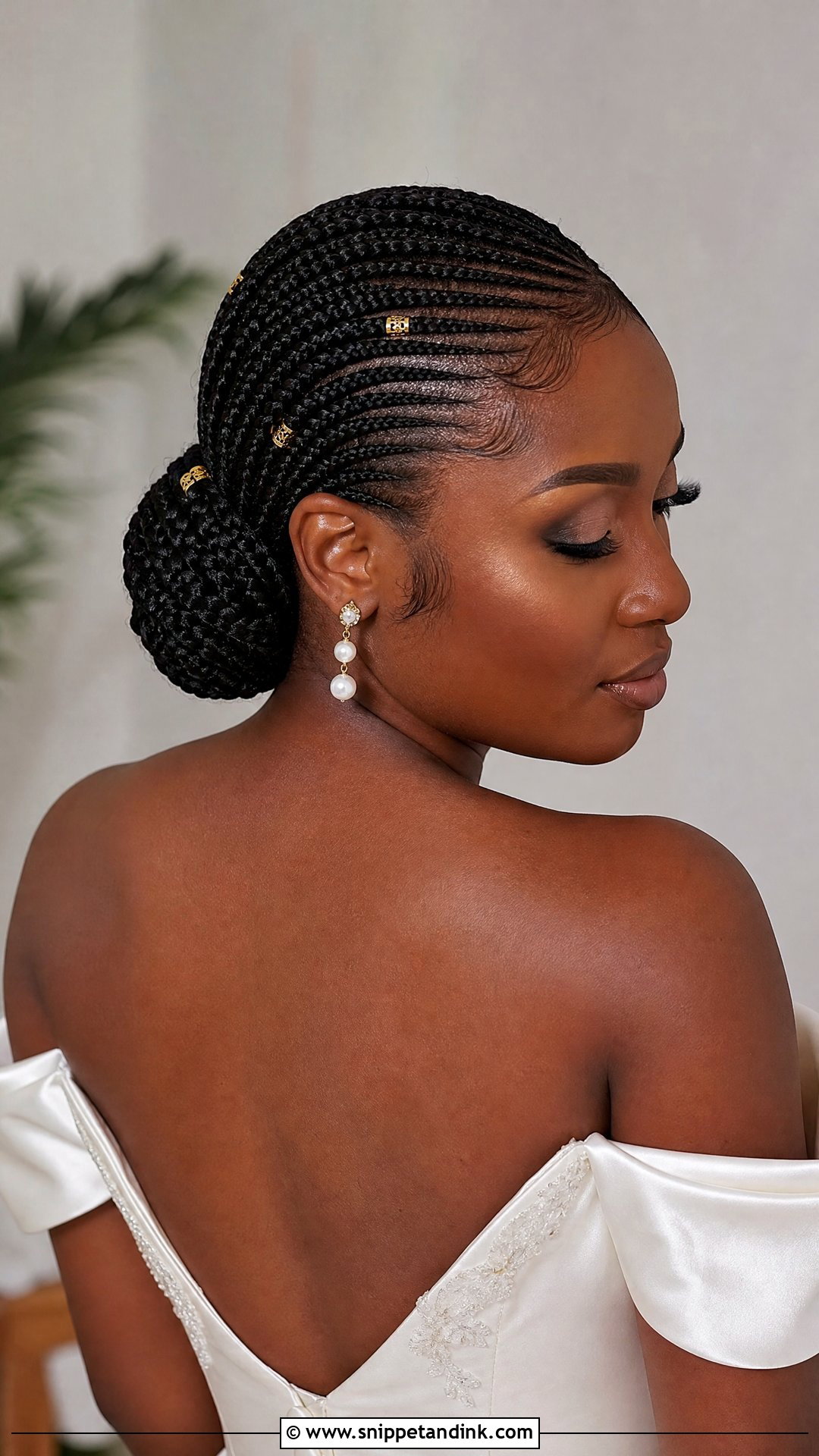
Weight is the first thing I think about with a braided bun. A full head of long extension braids coiled into one spot can weigh far more than a bun of natural hair, and that pull sits on your scalp all day. For long installs I sometimes tuck part of the length inside the bun and pin it flat rather than wrapping every braid round. Low at the nape suits a classic gown; high reads regal; slightly off-center feels more modern. It’s a strong pick when the dress has a dramatic back or beaded straps. A couple of face-framing braids soften the shape.
3. African Braids Bridal Ponytail
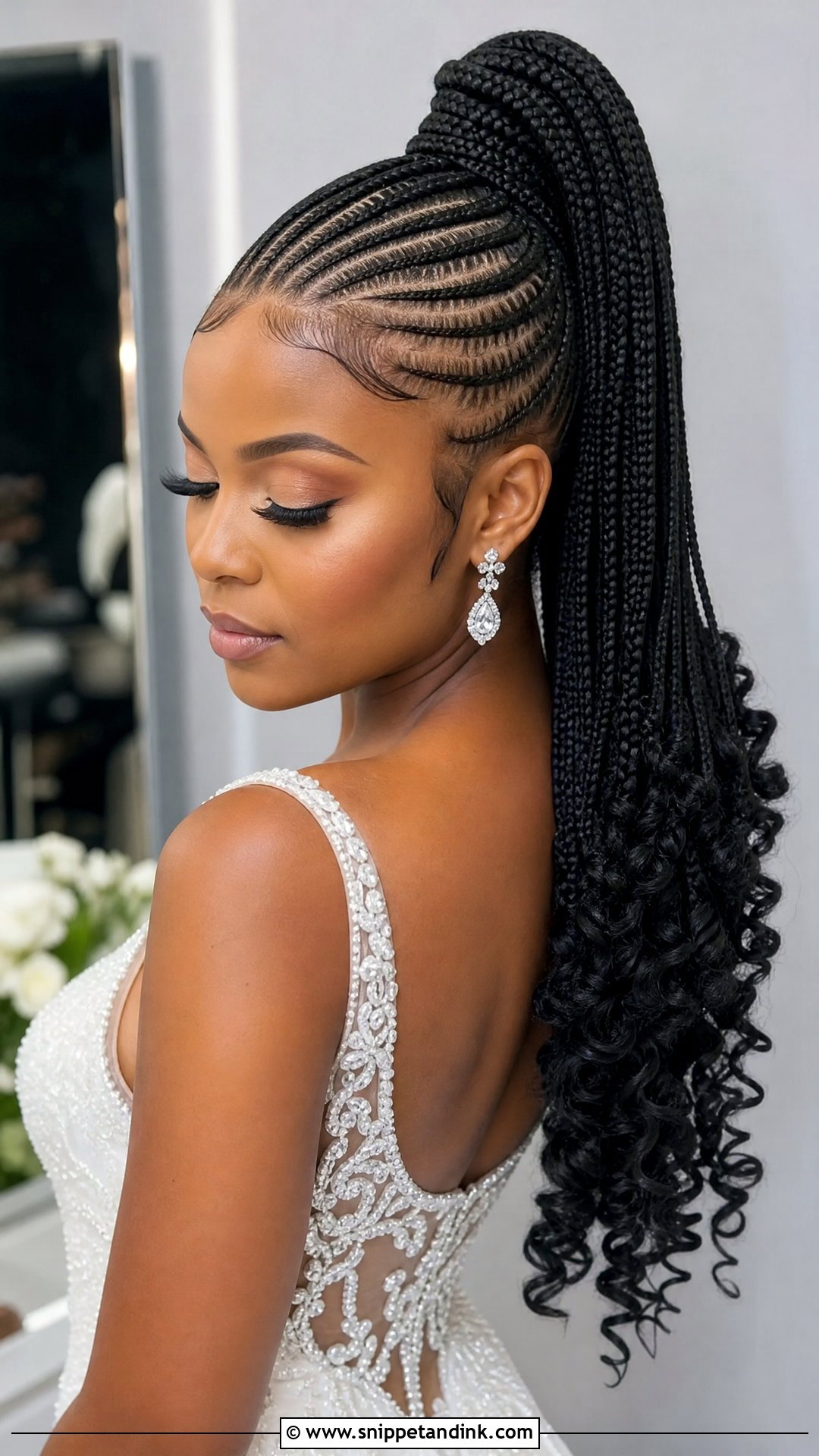
A braided ponytail gives you height and swing. It can start from sleek cornrows that feed into a long tail, or from knotless braids gathered high and wrapped at the base. I secure it with a soft, wide band rather than a thin elastic, then wrap a braid over the band to hide it. A high ponytail of long braids is heavy, though, and the pull at the crown can bring on a headache by the reception; if your scalp is sensitive, I’d set it a little lower. Wear it down the back or over one shoulder, and add gold wire or pearl cuffs along the tail.
4. African Braids Bridal Crown
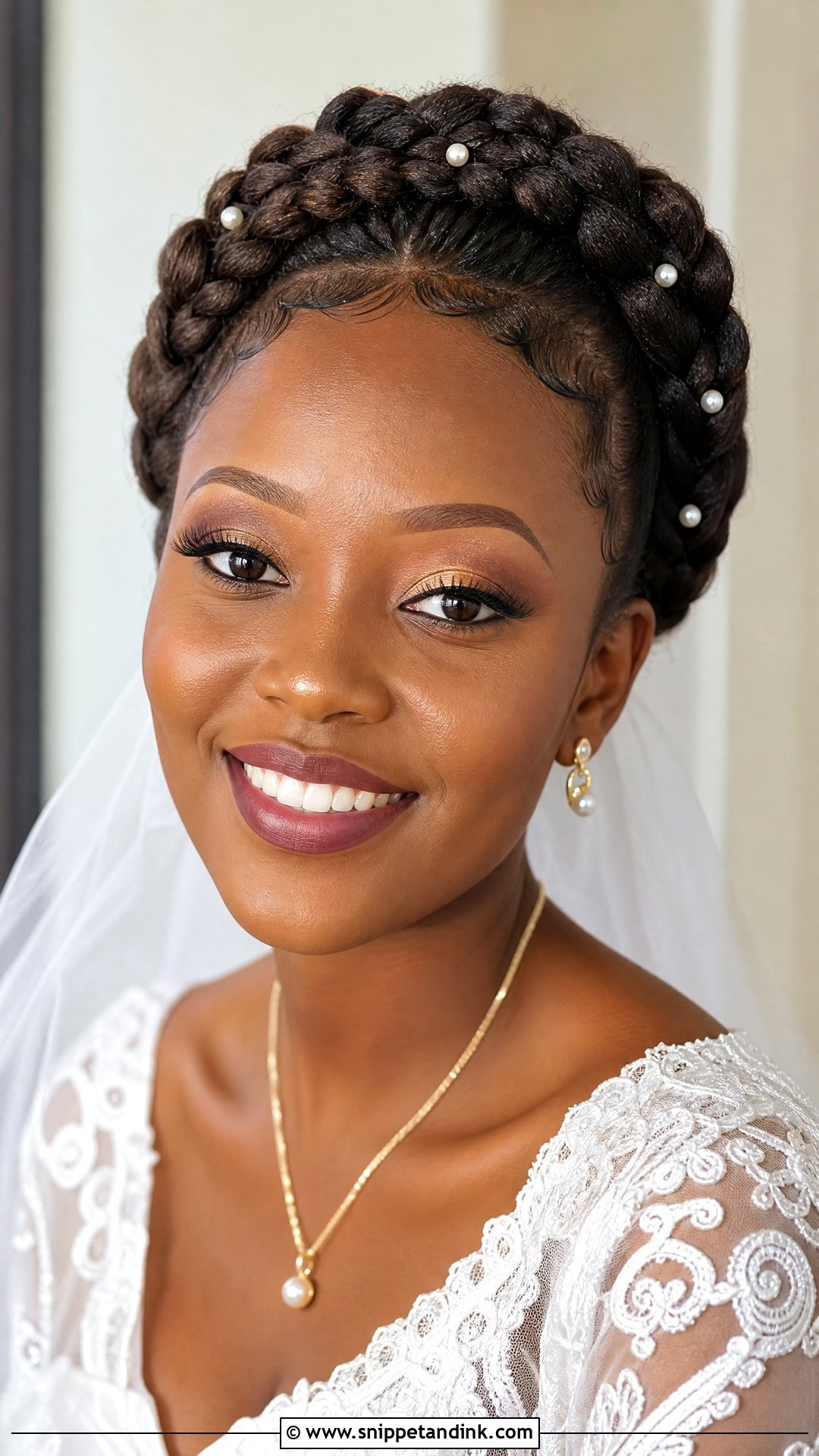
A braided crown wraps the head like a halo, and it can replace a veil or sit under a small tiara or comb. It works with natural hair, feed-in braids or medium goddess braids. I like feed-ins for this because the braid can start thin at the front and thicken as it travels round, which looks more natural at the hairline. Keep the front smooth but not tight. A little height at the top balances the circle so it doesn’t look flat in side profile. This is one of the best options for an outdoor wedding, since nothing loose is left for the wind to catch.
5. African Braids Bridal Cornrows
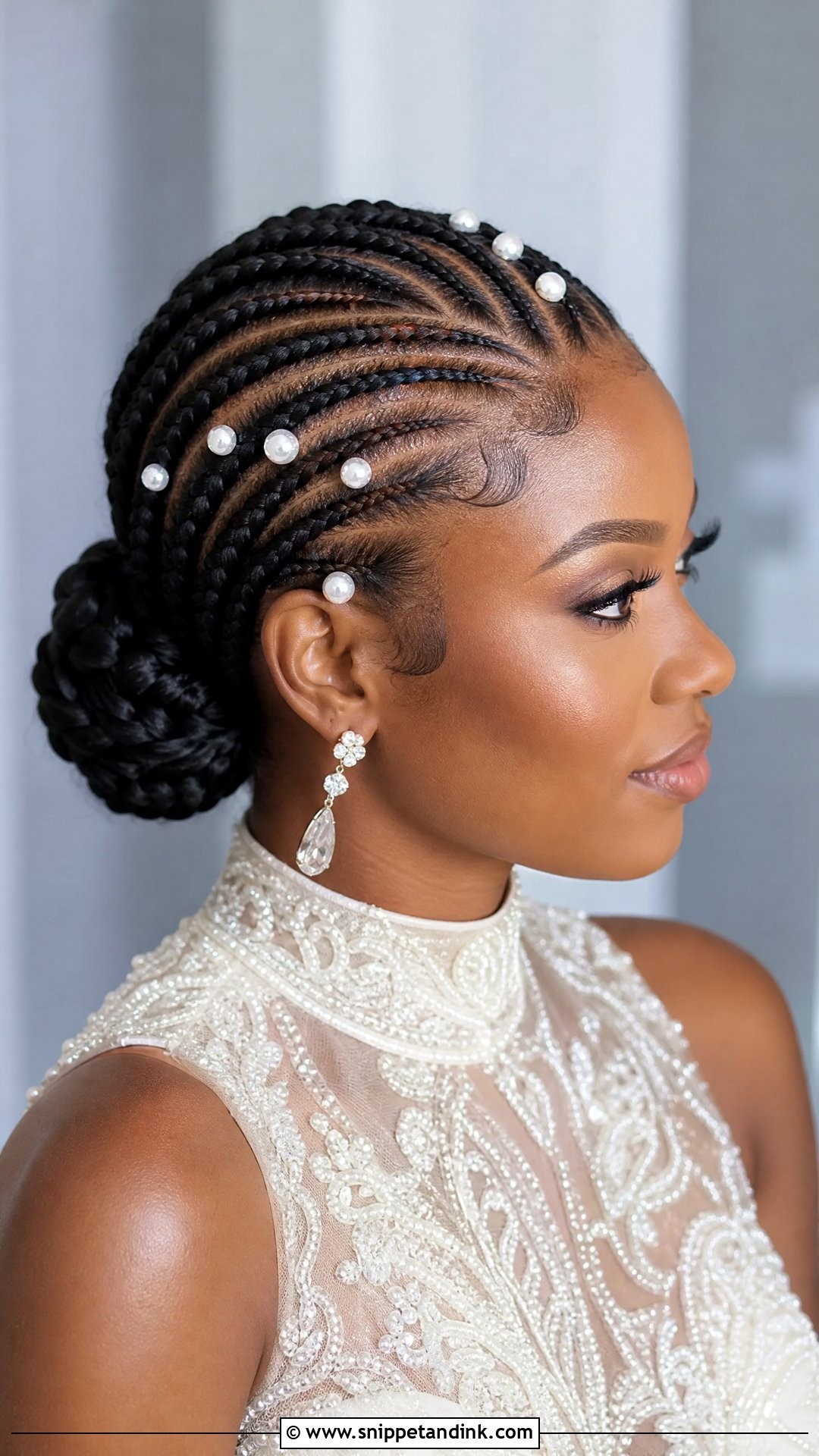
Cornrows reward planning. I sketch the pattern with the bride before I start, because straight-back rows read clean and classic, while curved, stitch or side-swept rows add more detail and can steer the eye toward a one-shoulder neckline. They don’t move during hugs or dancing, and accessories can be placed precisely along the parts. A low braided bun or a long tail can finish the back, and tiny pearl pins can follow the parting lines. Ask for gentle tension and keep the scalp lightly oiled, because cornrows done tight enough to look sharp are also tight enough to hurt for days.
6. African Braids Bridal Fulani Braids
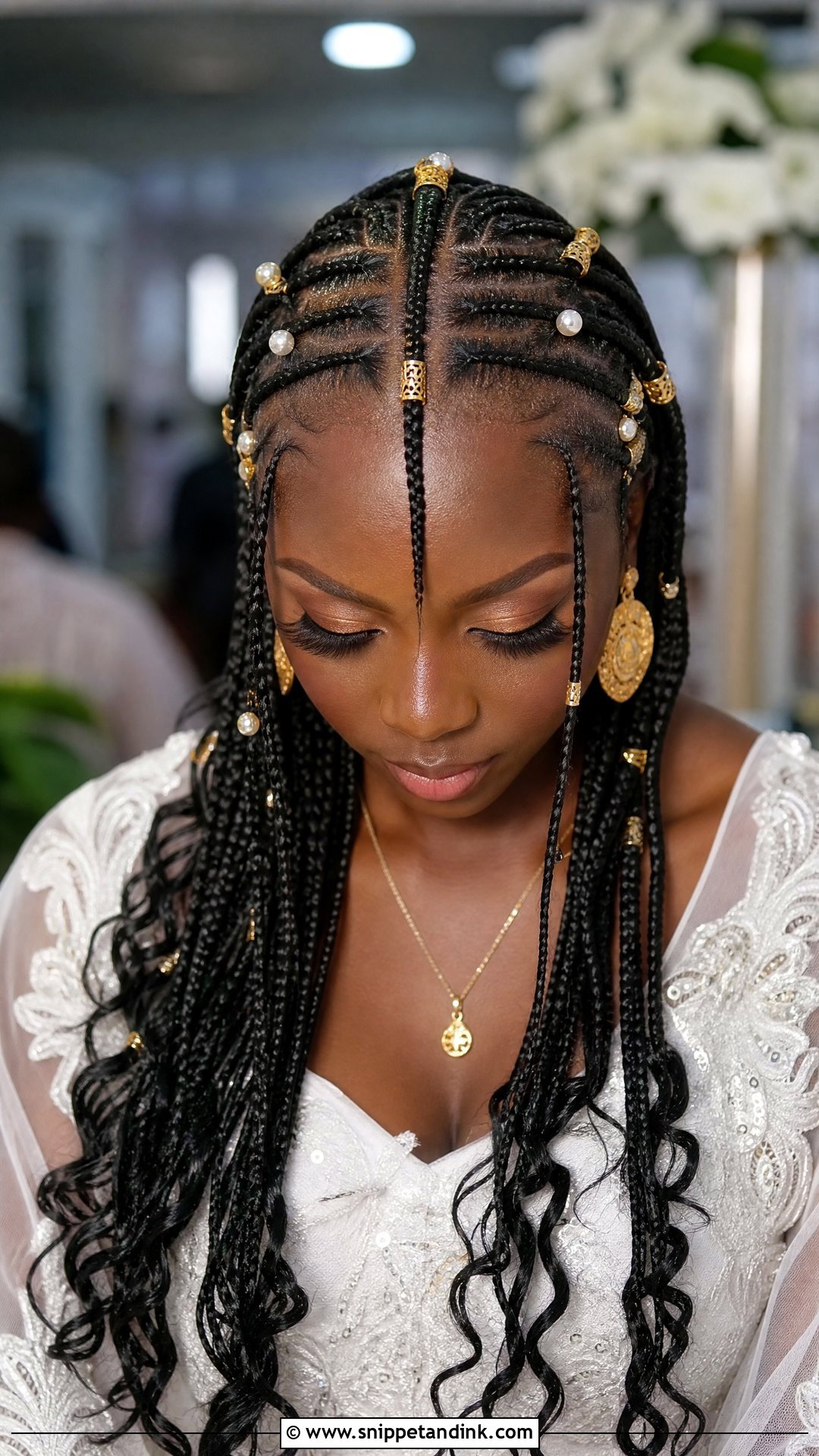
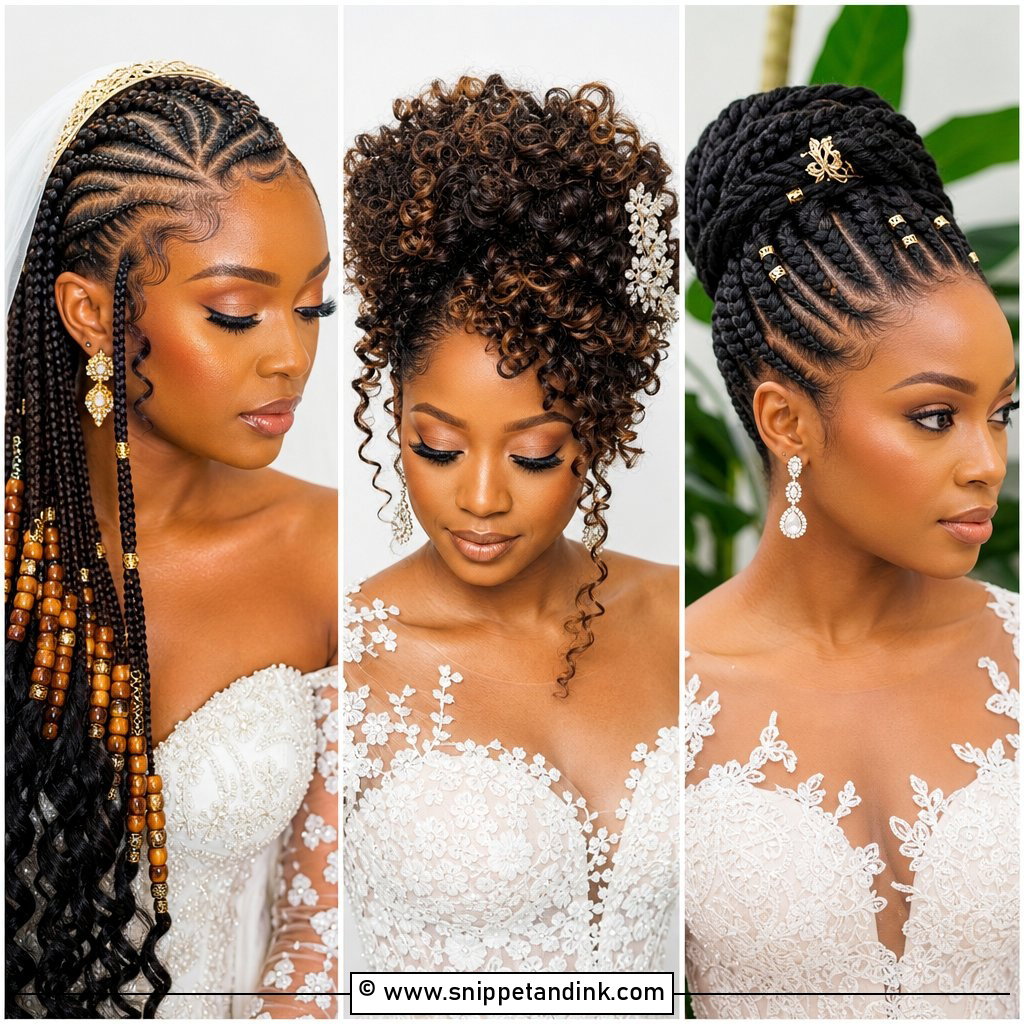
Fulani braids frame the face naturally, with a center braid, side braids and individual braids that can carry beads, cuffs, shells or pearls. For a wedding, I keep the accessories restrained so the style reads as bridal rather than a holiday look: a few gold cuffs near the face, pearl beads at the ends. The back can stay long, be curled at the tips, go half-up or wind into a low bun. It pairs well with off-shoulder dresses, traditional attire and gold jewelry. For many brides it’s also a meaningful way to honor African braiding heritage on the day itself.
7. African Braids Bridal Goddess Braids
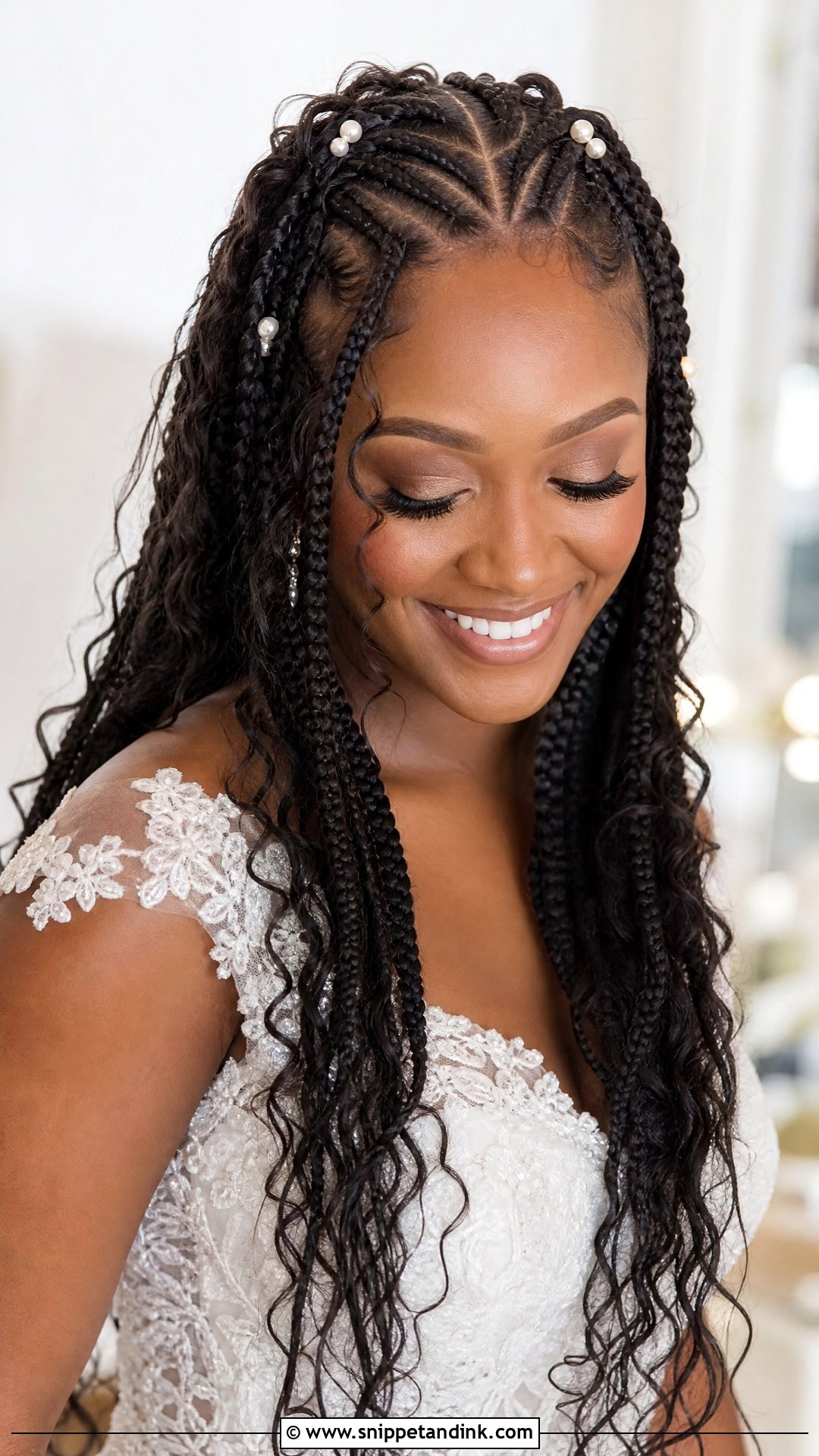
Goddess braids have loose curly pieces left out along the length, which gives softness and movement. Those curls are the delicate part. Synthetic curls can tangle and frizz quickly, so I prefer human hair curly pieces for a bridal install, and I place the face-framing ones deliberately rather than letting them fall where they want. They can be worn long, swept to one side or shaped into a bun. Lace gowns and delicate veils suit them. Use a light mousse or water-based spray on the curls; heavy creams make them clump and look greasy in photos by the evening.
8. African Braids Bridal Box Braids
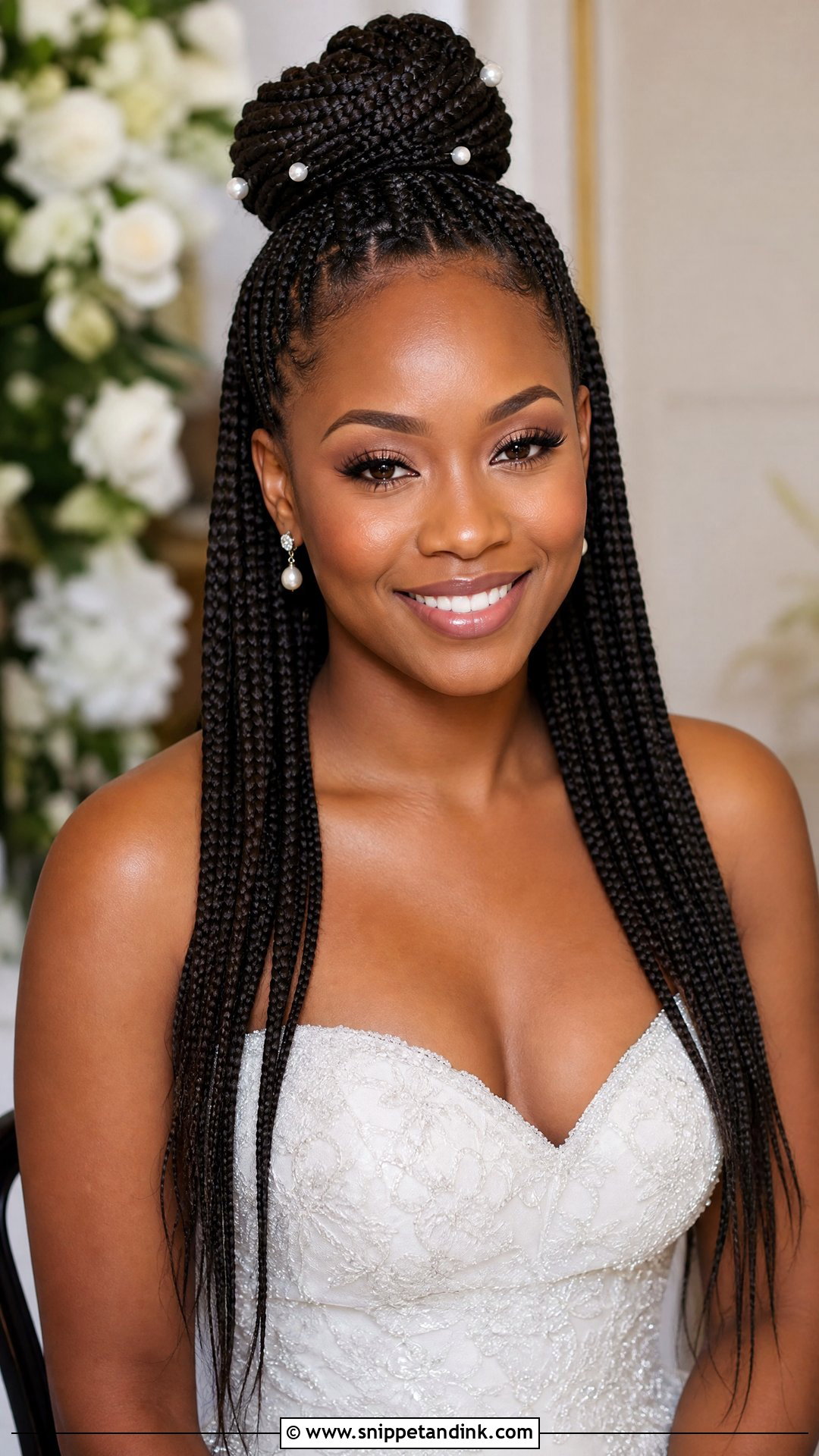
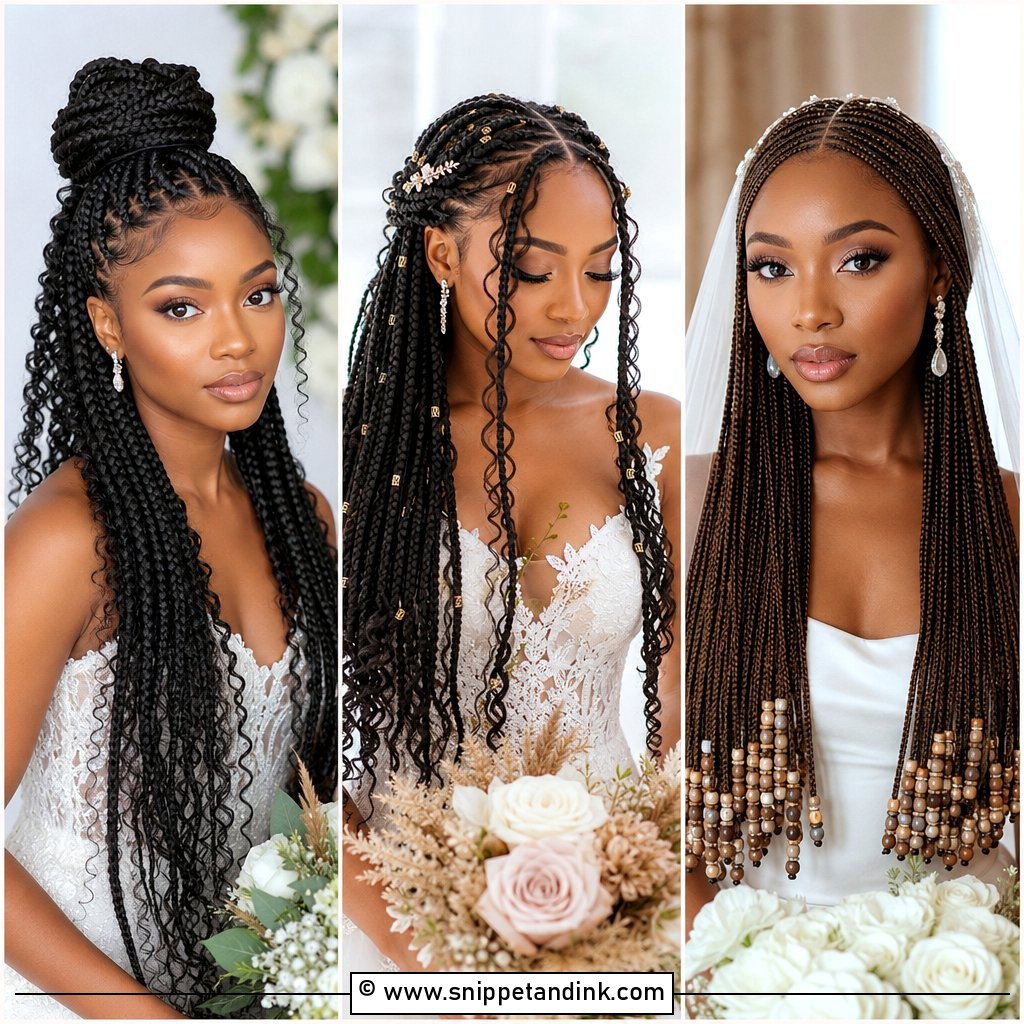
Box braids are the most adaptable install for a long wedding day. You can wear a high bun for the ceremony, then let the braids down into a side sweep for portraits or the reception. Medium or small braids shape into smoother updos; jumbo braids are heavy and bulky once gathered. I always ask what the dress and veil look like before we settle on length, because waist-length braids can catch on lace or beading at the back. Curly ends, pearl pins or a few lighter brown pieces woven through soften the look.
9. African Braids Bridal Knotless Braids
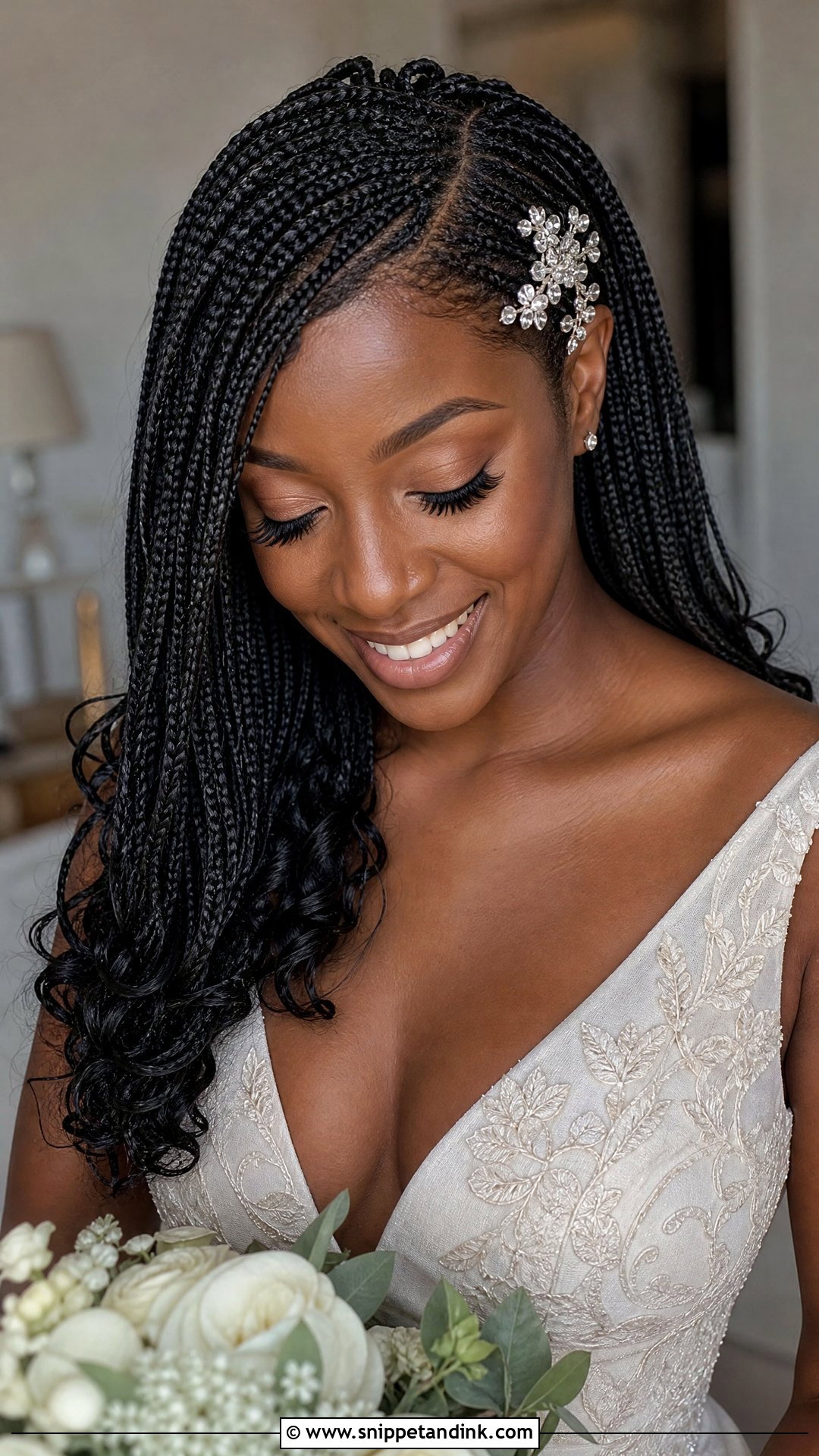
Knotless braids are my usual recommendation when a bride wants an updo, because the braid starts with her own hair and builds gradually, so the roots lie flat and bend easily. That makes buns, ponytails and veil placement less bulky. Done properly, they’re also gentler on the hairline than traditional box braids. The trade-off is time; small knotless braids can take most of a day in the chair. For the wedding finish, ask for clean parts and smooth edges. Waist length gives drama; shoulder length keeps it simple and lighter for dancing.
10. African Braids Bridal Side Sweep
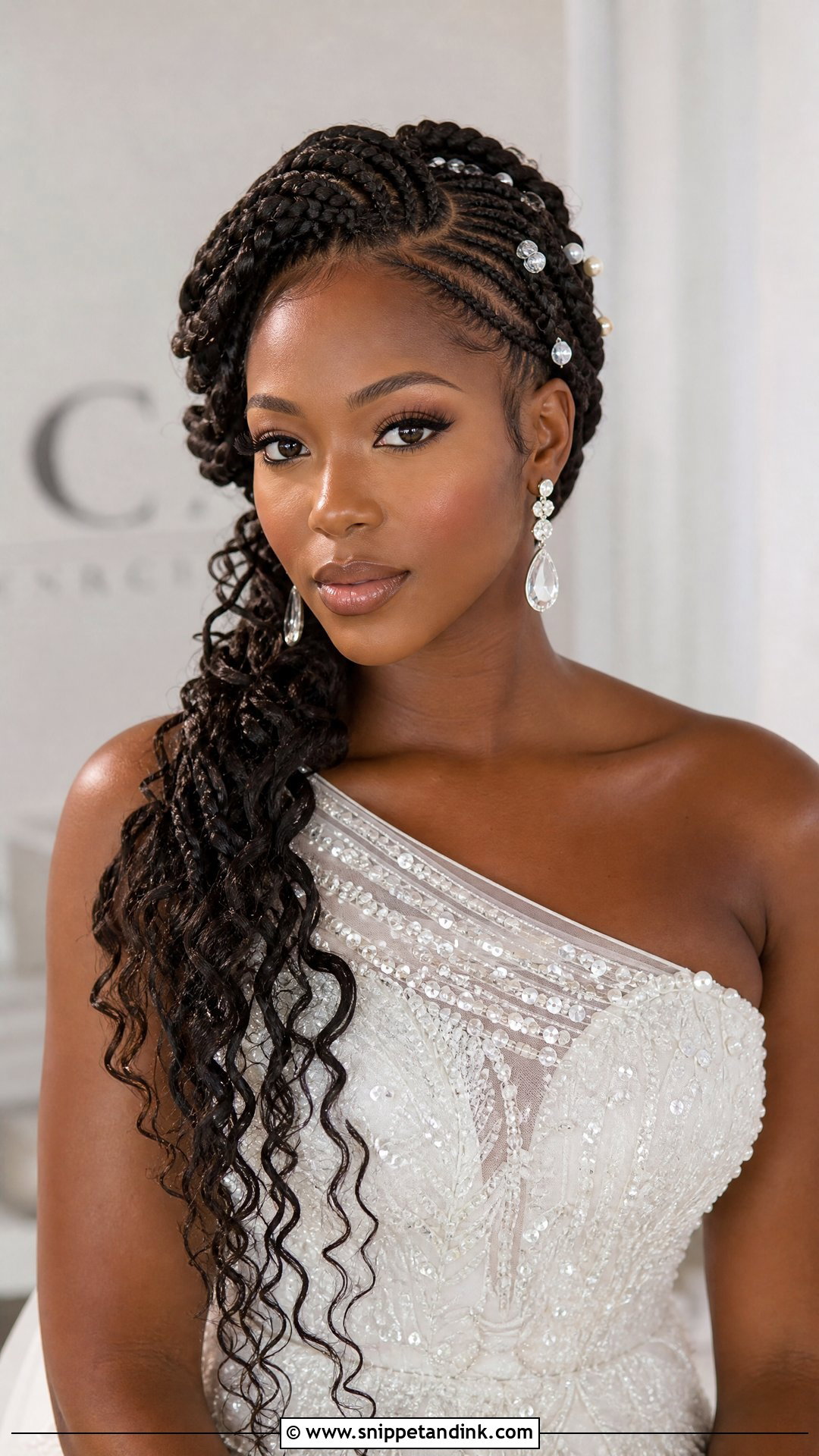
A side sweep sends the braids to one side, either through cornrow direction, a deep part or a pinned arrangement of long box or goddess braids. It frames one-shoulder and strapless gowns and leaves room for a big earring on the open side. The sweep needs an anchor. I pin the braids along a hidden line behind the ear, otherwise they drift back to the center over the evening. Keep the top smooth. Cuffs or pearl accents look best on one side only, so the asymmetry reads as deliberate.
11. African Braids Bridal Half Up
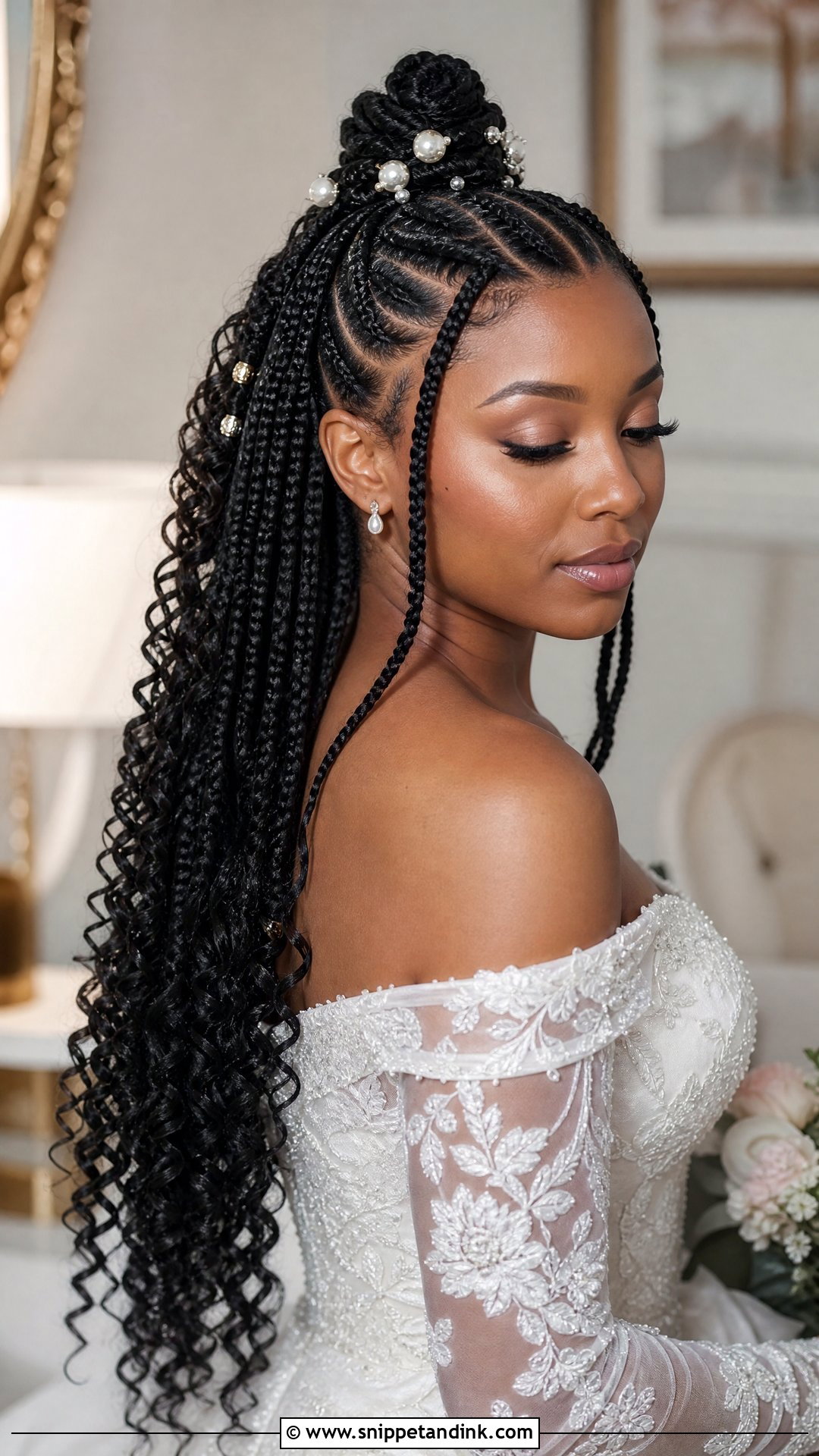
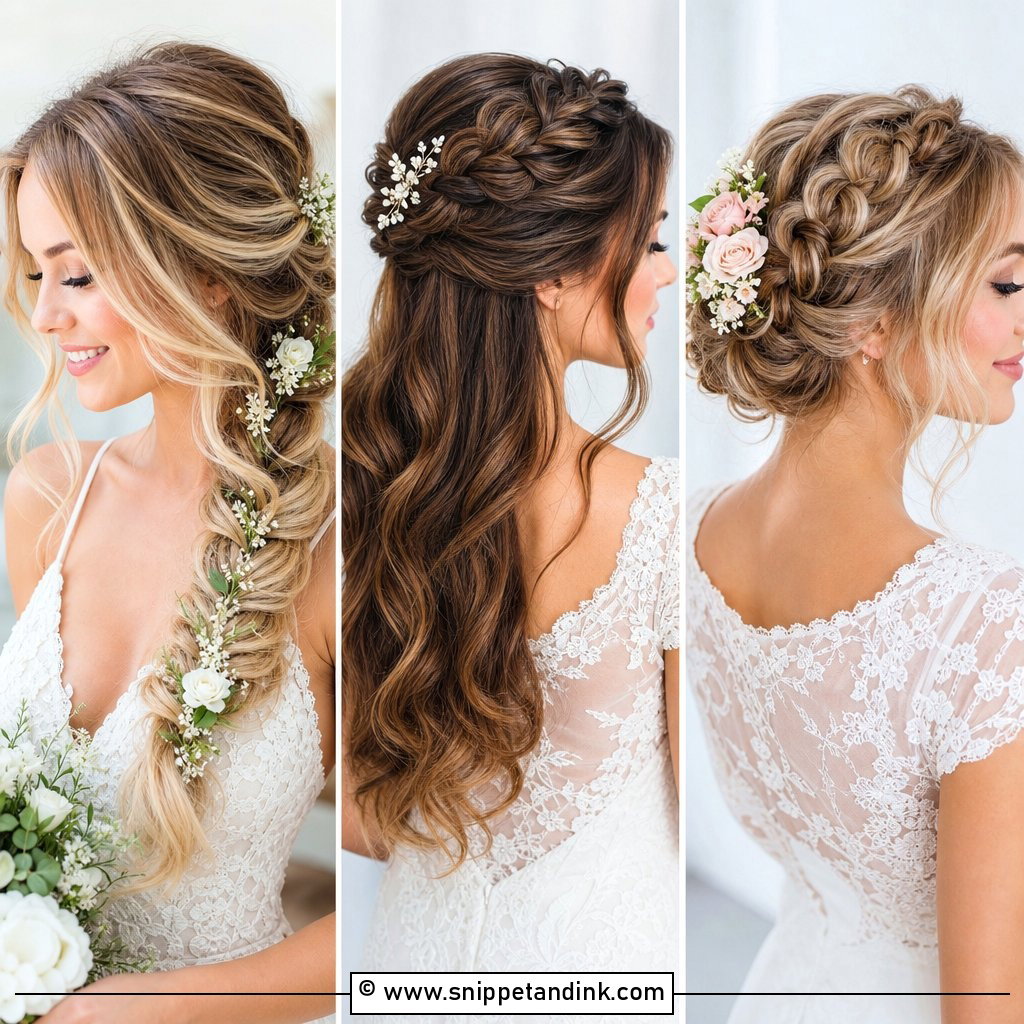
Half up keeps the length on show while the front stays off your face. The top section can go into a braided crown, a small bun or a wrapped ponytail, and the rest falls down the back. Goddess, knotless, Fulani and box braids with curled ends all suit it. I find this is the easiest base for a veil, because the comb can sit right in the pinned top section. Keep the accessories light so the style stays soft.
12. African Braids Bridal Low Bun
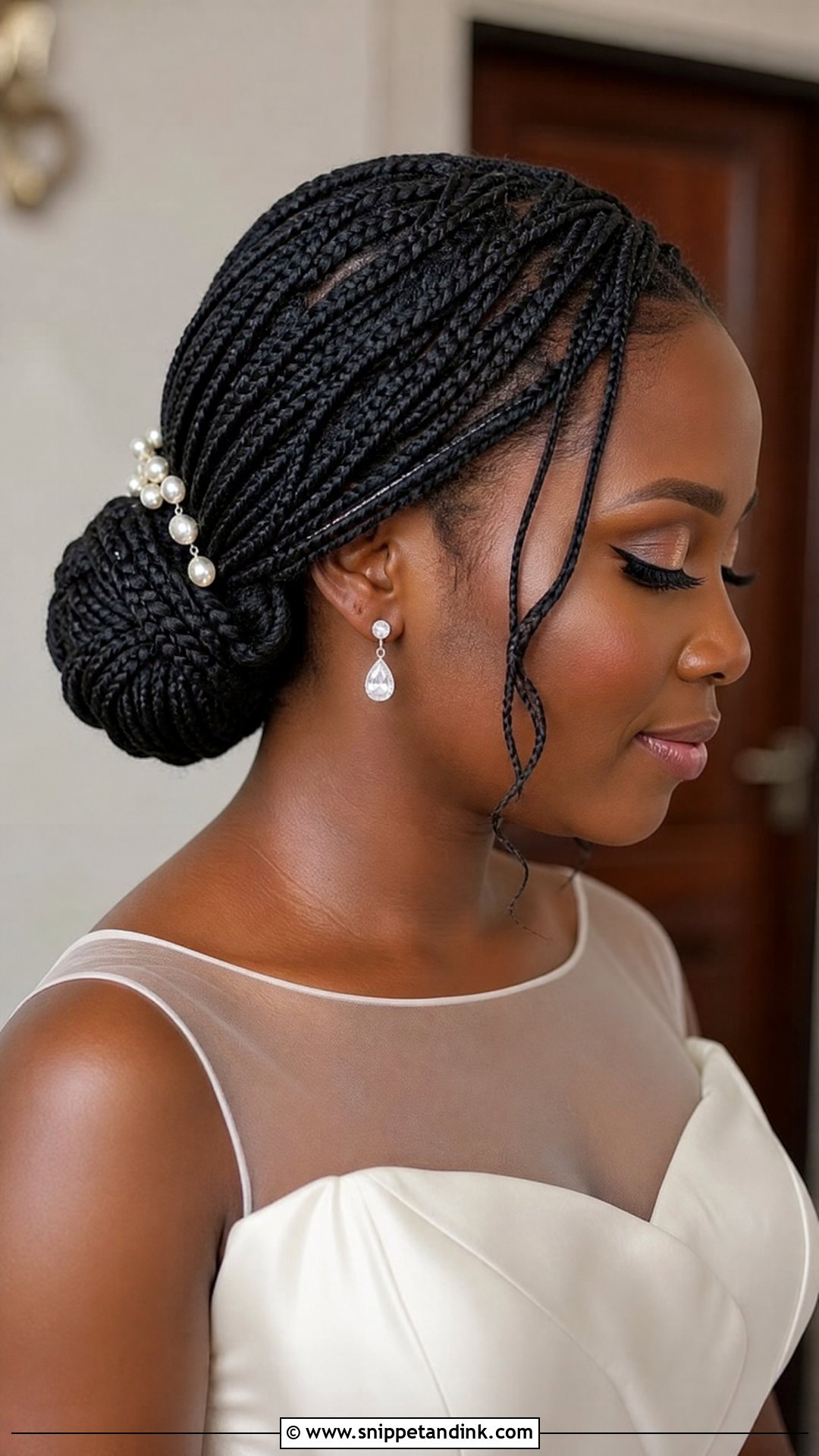
A low braided bun looks composed and pairs with nearly any gown. It sits at the nape, slightly to one side or tucked into a smooth chignon shape. Veils, headpieces and high necklines all work with it. Medium braids shape most neatly; micro braids take a long time to arrange and jumbo braids make the bun too big. I secure it with long U-pins through the braid coils rather than bobby pins, which can slide on smooth synthetic hair. A few pearl pins finish it.
13. African Braids Bridal Mohawk
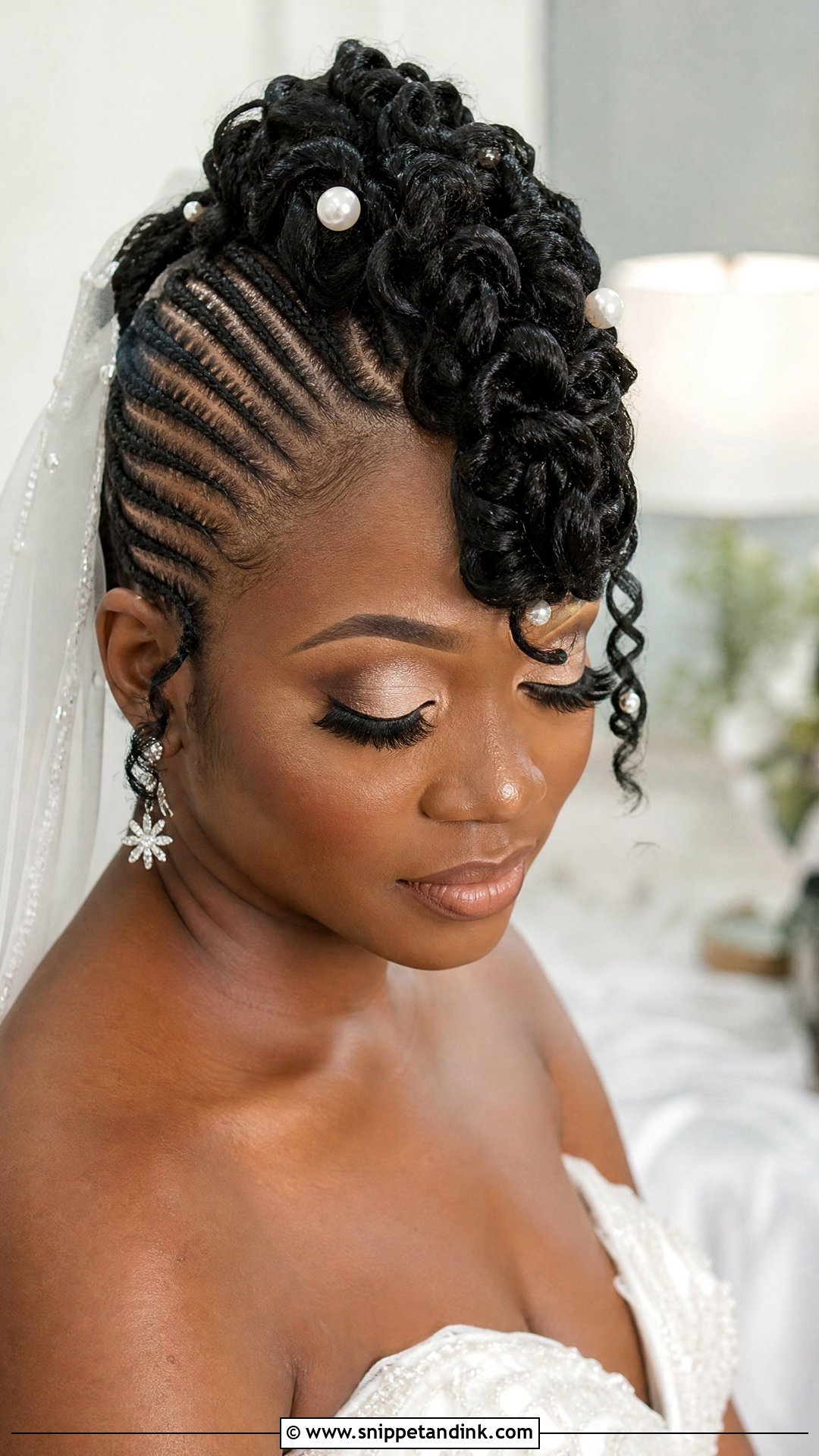
A braided mohawk is the boldest shape on this list: sides braided close to the scalp, with chunky braids, curls, twists or a raised roll built up the center. It gives height without loose hair everywhere. It suits strapless and minimalist gowns and confident makeup. I’d be careful at the temples, where the side cornrows can be pulled too tight trying to look sharp, and that’s where hair loss starts. Curly pieces through the center or small pearls along the sides soften it. It isn’t the easiest style to wear a veil with, so I’d pair it with a headpiece or nothing.
14. African Braids Bridal Bob
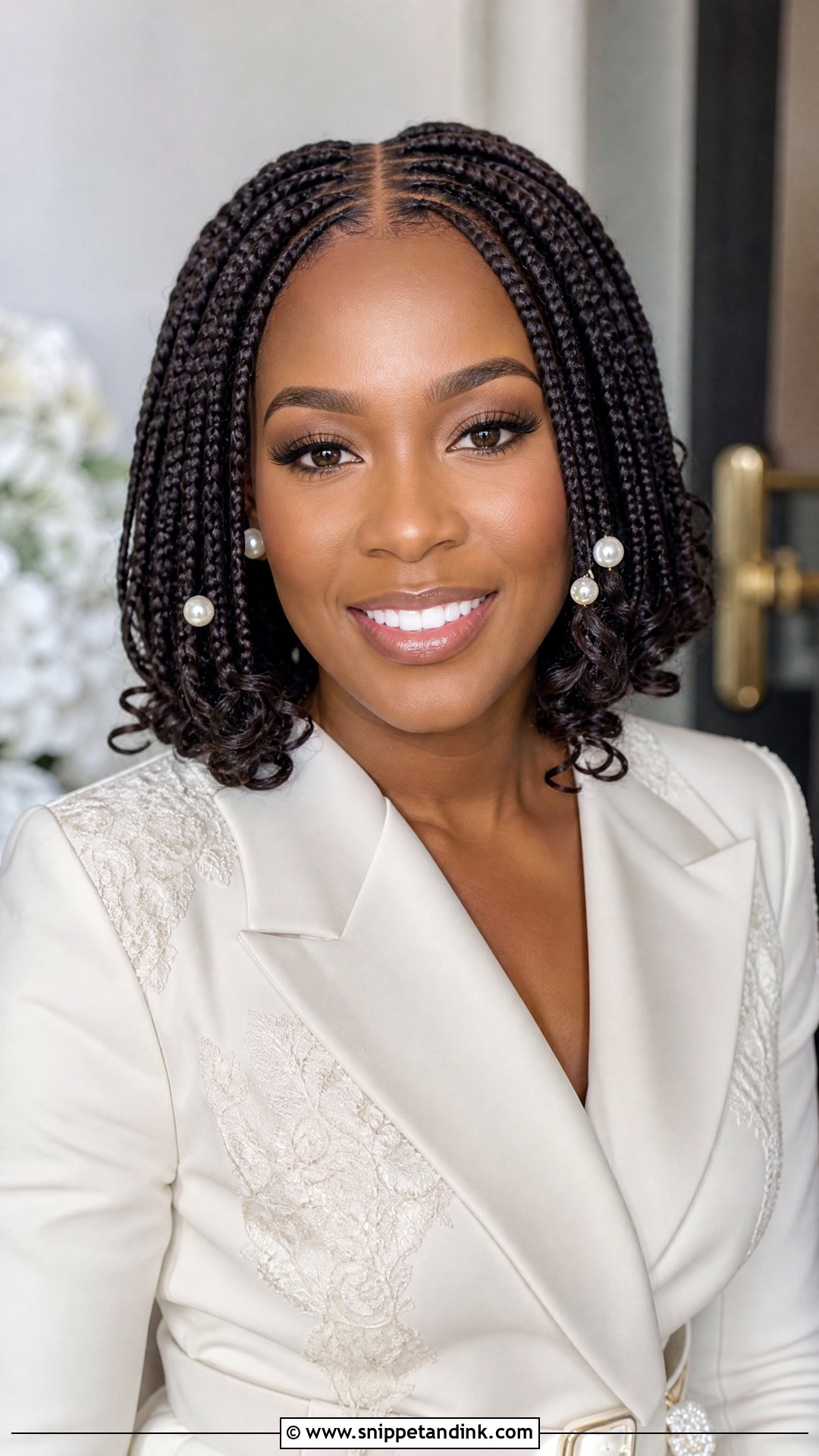
A braided bridal bob is neat and light. The braids sit at the chin, jaw or shoulders, which shows off the neckline and earrings. Box, knotless, micro or Fulani-inspired braids all cut well into a bob. It pairs with a short veil, a birdcage veil, pearl clips or simple cuffs. I curl or slightly tuck the ends so the shape curves toward the face instead of sticking straight out. In warm weather this is the most comfortable braid style you can choose, since there’s so little weight on your neck.
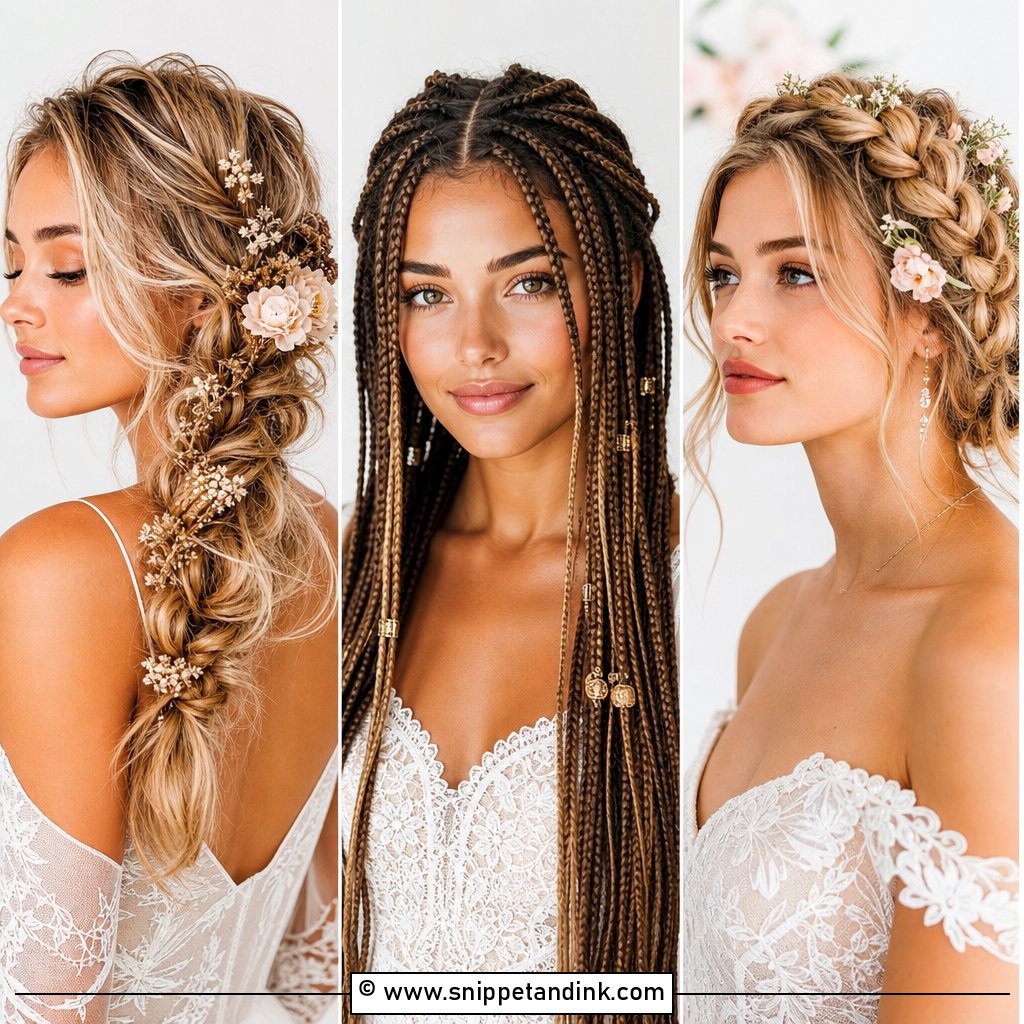
15. African Braids Bridal Beads
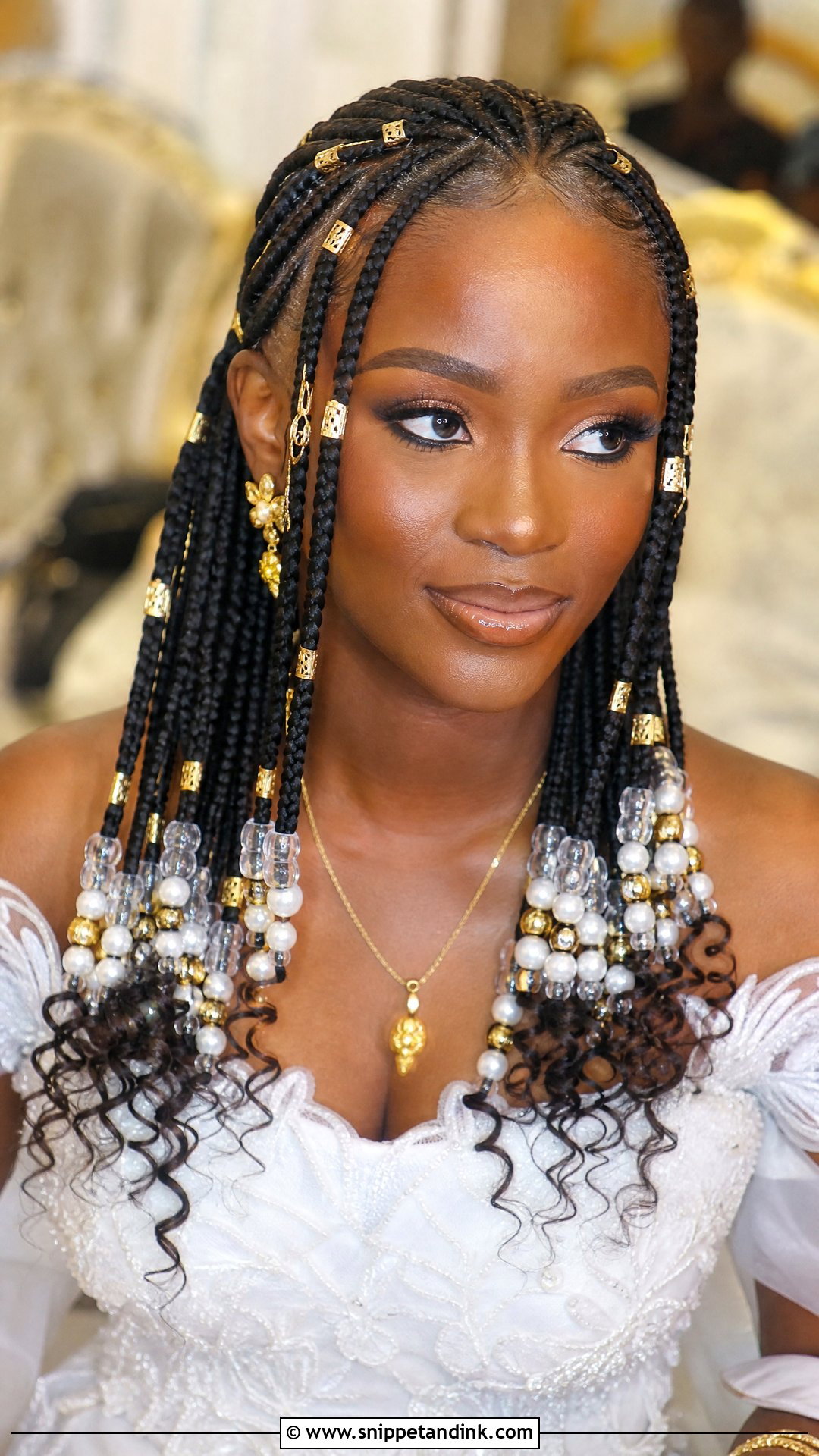
With African braids with bridal beads, restraint matters. Instead of colorful beads on every braid, I’d use pearl beads, clear beads, gold cuffs or small shells, placed near the ends or around the face. Fulani braids, box braids, cornrows and goddess braids all carry them. Weigh the beads too: a full set of heavy glass or metal beads adds real pull and clacks loudly when you dance. If your dress already sparkles, keep the hair minimal; with a plain gown, the beads can be the bridal detail.
Veil Combs Slide on Braids, So Plan the Anchor
A standard veil comb is made to grip loose hair. On smooth synthetic braids it tends to slide backward, and by the aisle the veil has drifted toward your neck. Here’s what I do instead.
- Anchor the comb into a cornrowed or tightly gathered section, like the base of a bun, where it can bite into something firm.
- Cross two bobby pins through the teeth of the comb into the braids underneath.
- Ask your braider to leave a small flat section at the crown where the comb will sit.
- For a heavy cathedral veil, consider wearing it only for the ceremony, or choose a lighter tulle.
Test it with your actual install. Turn your head quickly and bend as if hugging a short relative. If it moves, fix it then.
Your Hairline Needs a Plan for the Week After
Braids protect the length, but the hairline is fragile, and wedding styling stacks updos, accessories and pinned veils on top of the install. Small white bumps along the edges, soreness that lasts past two days, or a headache when you lie down mean the braids are too tight. Tell your braider straight away; loosening a few braids is easy, regrowing temples is not.
On the day, I lay edges gently with a soft brush and a light gel. Afterward, don’t leave the install in for months because the honeymoon got busy; roughly six to eight weeks is a sensible limit. Take the braids out slowly, detangle with plenty of conditioner, and give your scalp a rest before the next protective style.
Braids That Still Feel Good at the Last Dance
Braids let you feel connected to culture and still look polished through a long day. A sleek cornrow bun, soft goddess braids, a crown, a long ponytail or a beaded Fulani look can all be right; what decides it is your dress, your face shape and how many hours you’ll wear it. Bring clear photos to your braider and talk through veil placement, accessory weight, braid size and tension before the install. When I plan a bridal install, comfort comes first, because a style that hurts never looks relaxed in photos.
You'll Like These Ideas:


Leave a Reply