
More brides now plan a wardrobe rather than a single dress: one look for the ceremony, another for the reception, sometimes a third for the after-party. That opens the door to short dresses, tailoring and shapes that would never have made it down an aisle a generation ago. Before any of that, I ask about the venue, the season, the dress code and how you want to feel in the pictures. Then construction, shoes and alterations decide what’s actually wearable. The twenty outfits below cover satin, lace, suiting and beachwear for different bodies and settings.
Planning a Second or Third Look Into the Reception Timeline
An outfit change sounds simple until you’re in a hotel bathroom with twelve covered buttons and nobody to undo them. When a bride wants more than one look, I plan the change like a small event of its own.
Give it real time
Allow at least twenty to thirty minutes in the schedule, longer if the gown has a corset back. Tell your planner or coordinator, so the photographer and band don’t start the next part without you.
Decide who helps and where
Choose one person who knows the fastenings and has practiced them. Ask the venue for a private room close to the reception, with a mirror, a hook high enough to hang a long gown and somewhere clean to lay a train.
Think about hair and the veil
Hair built around a cathedral veil may look flat once the veil comes out. Tell your stylist about the change at the trial so she can plan a second look or leave pins that convert to a comb or bow. Pack a garment bag and a padded hanger for the ceremony gown, because it shouldn’t spend the night on a chair.
1. Satin Ball Gown Bridal Outfit
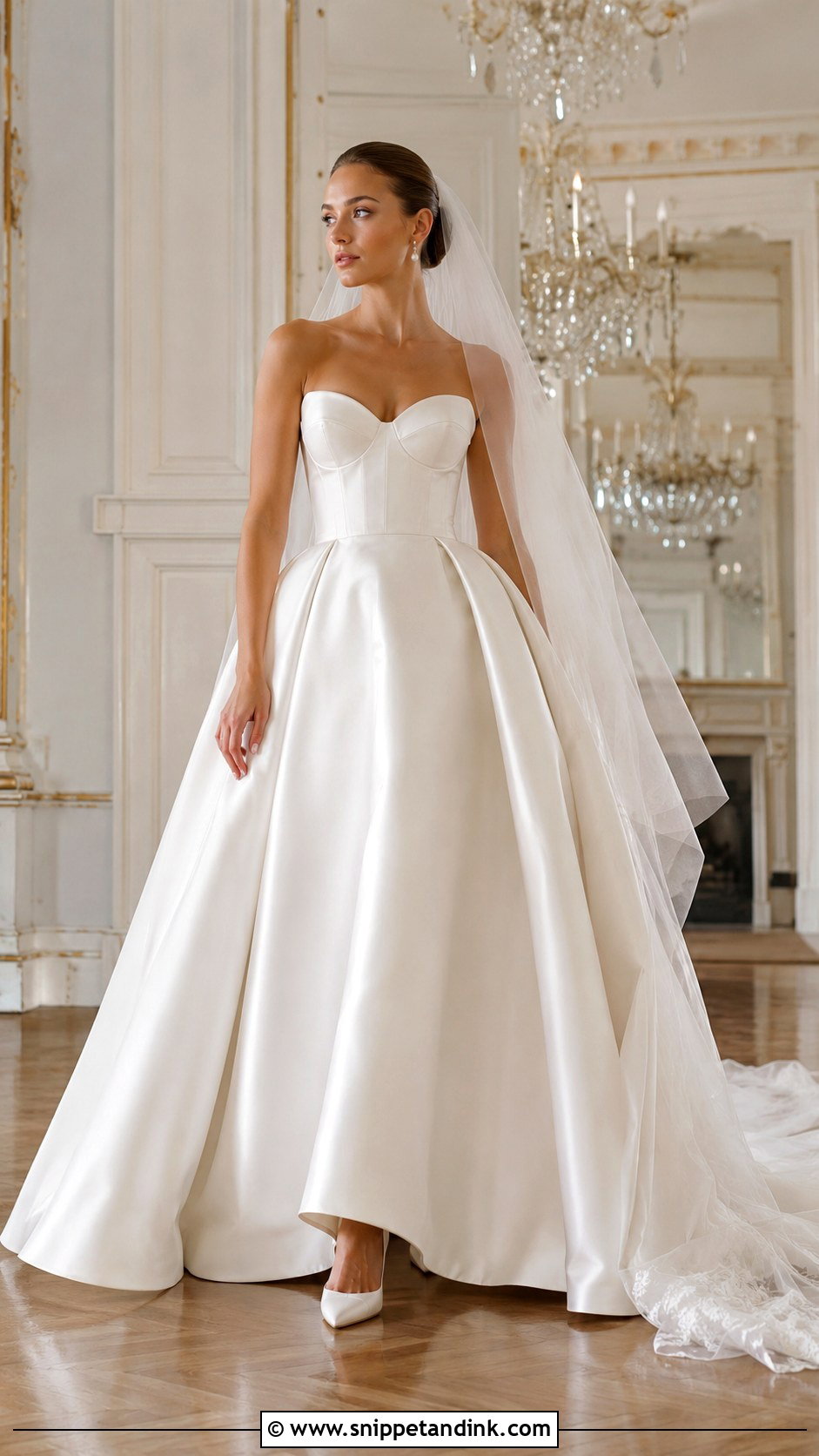
Satin ball gowns earn their place in ballrooms, hotels and grand estates. A fitted, structured bodice and a full skirt that holds its own shape, without layers of heavy tulle, is the version I like best. If you want less volume, a pleated satin skirt gives the same formality with less bulk. A cathedral veil, pearl or crystal earrings and pointed pumps finish it, and a low bun gives the veil comb something solid to grip. Rehearse sitting in the full skirt during alterations; the underlayers decide whether you can get into a car gracefully.
2. Lace A-Line Bridal Outfit
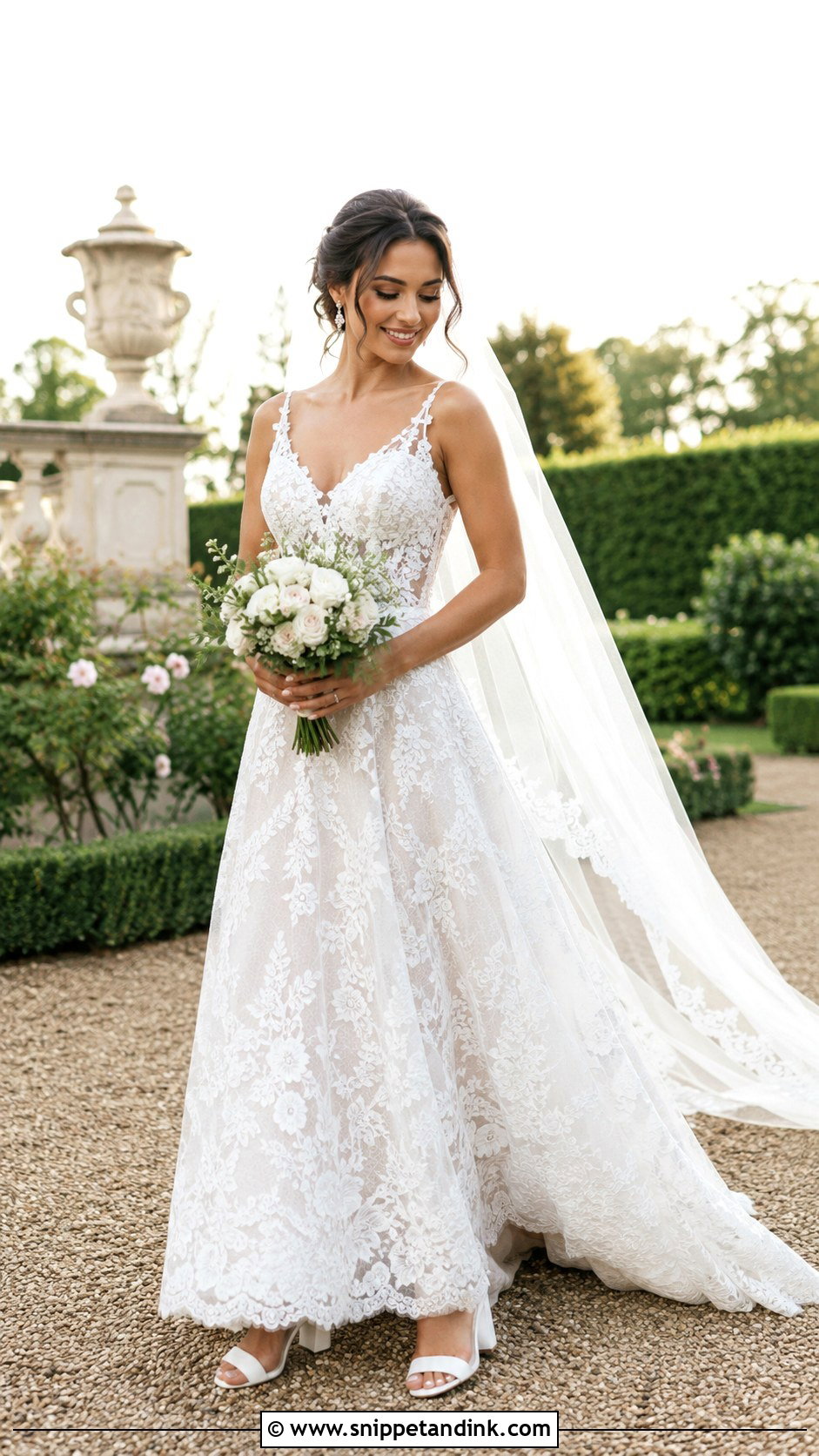
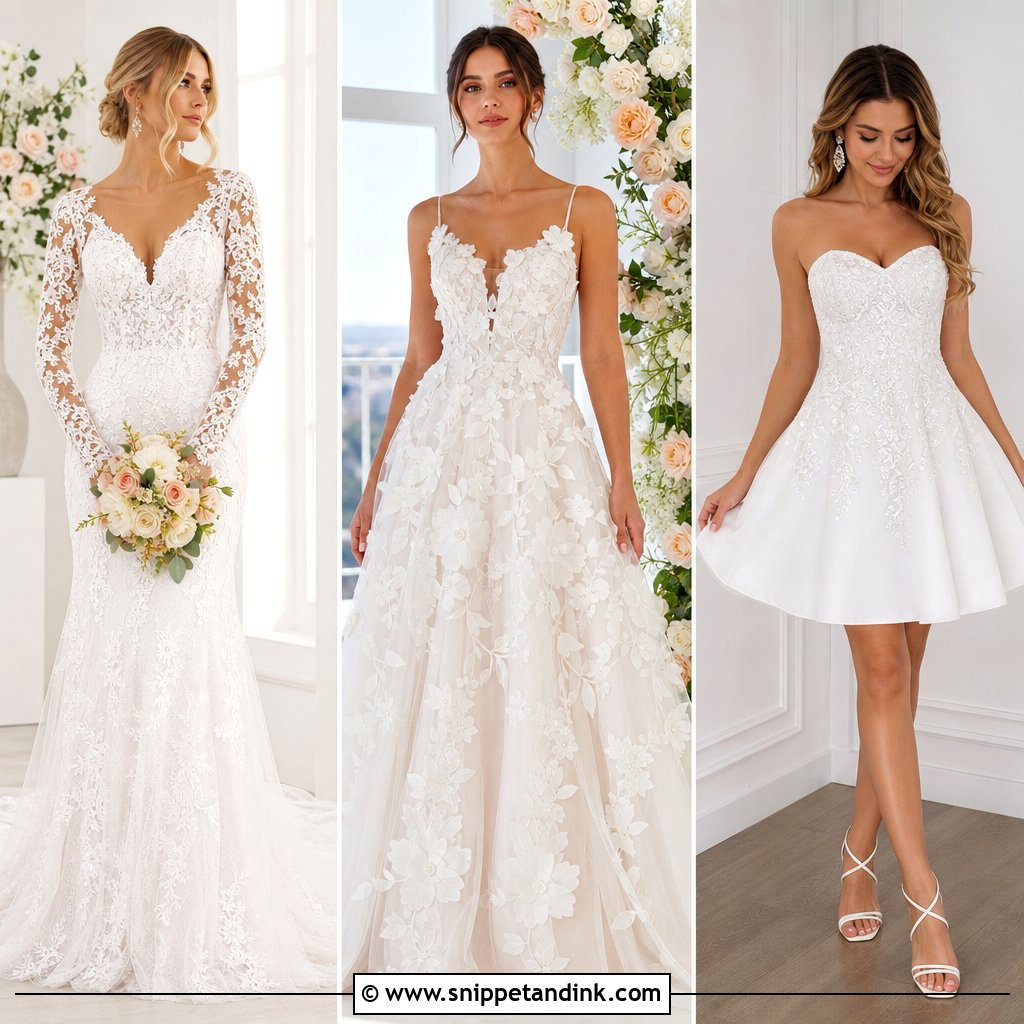
Lace scale is the detail most brides never think about. Smaller motifs keep a petite frame from being swallowed, while a taller bride can carry big, open florals. A lace A-line that follows the torso and then falls away from the hips suits gardens, estates and church ceremonies alike. A smooth lining underneath keeps the pattern readable in photos. Add a fingertip veil, delicate drops and block heels. Sheer lace sleeves or a lined bodice give more coverage if you want it.
3. Off-Shoulder Mermaid Bridal Outfit
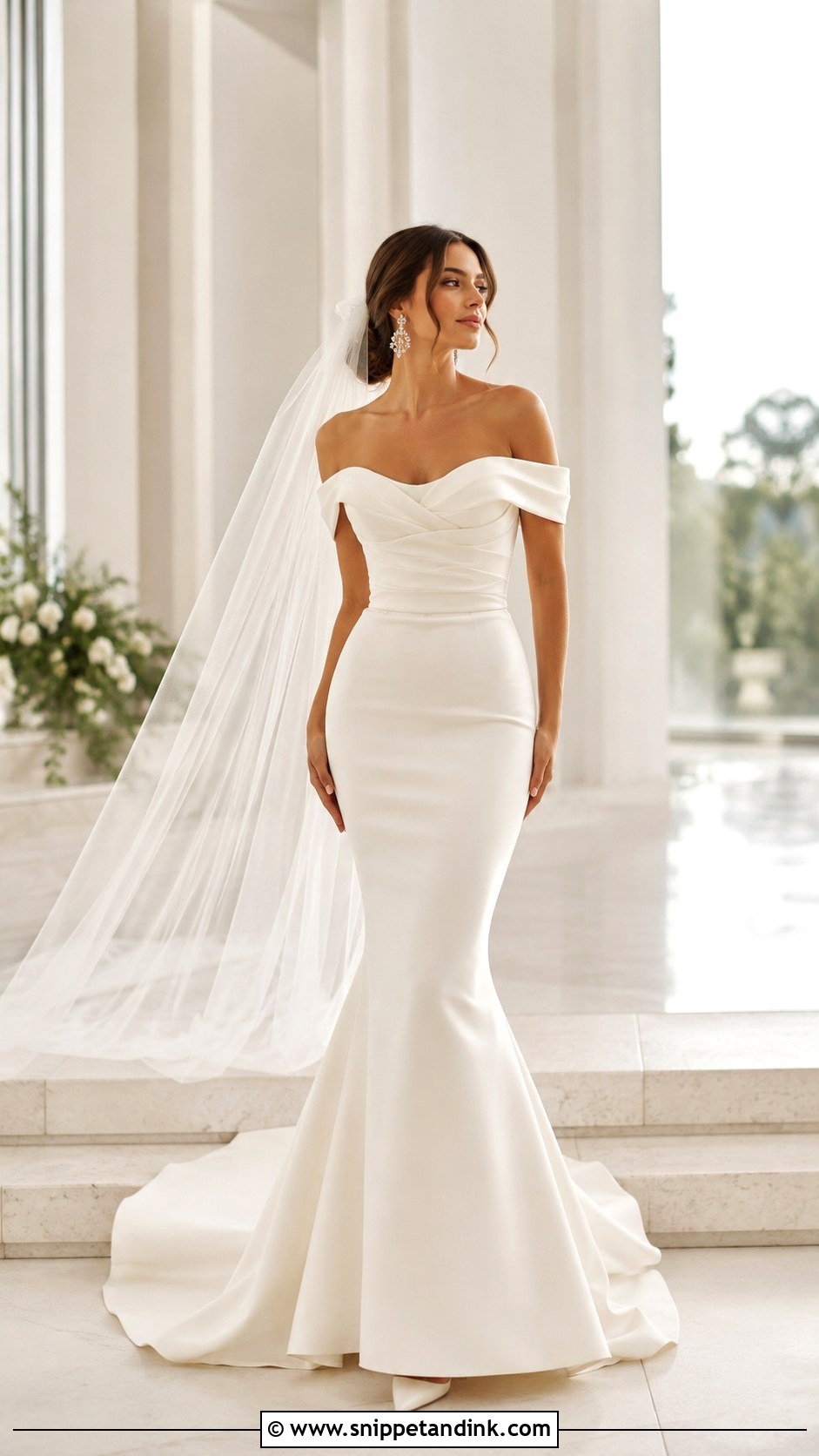
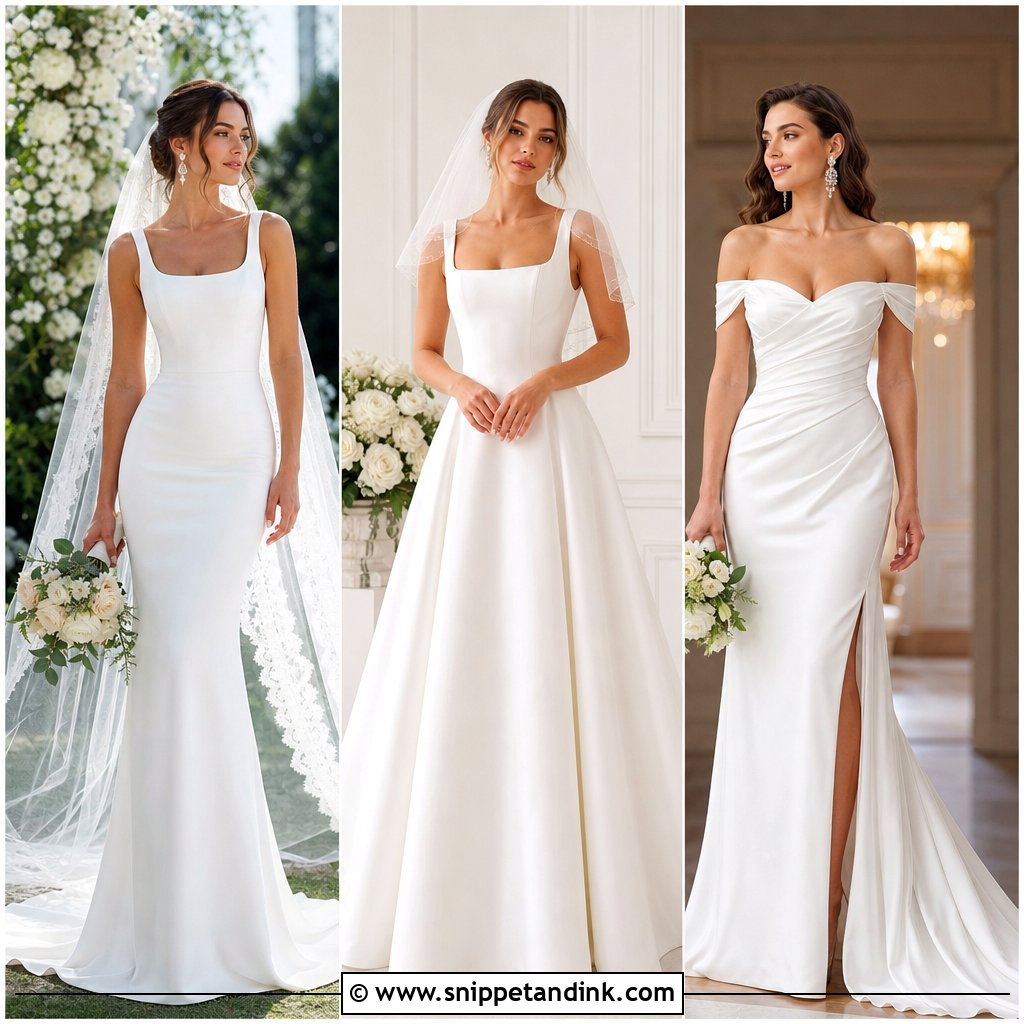
A mermaid gown is only as good as its inner structure. An off-shoulder neckline shows the shoulders, the body follows the curve to the knee, and then the skirt flares. Crepe, mikado or firm satin hold that shape cleanly; soft fabrics collapse at the flare. My first fitting test is always arms overhead, then a hug, then sitting. If any of those lifts the bodice, it needs more support. Brides who want to dance freely are usually happier in a gentler fit-and-flare.
4. Square-Neck Bridal Gown Outfit
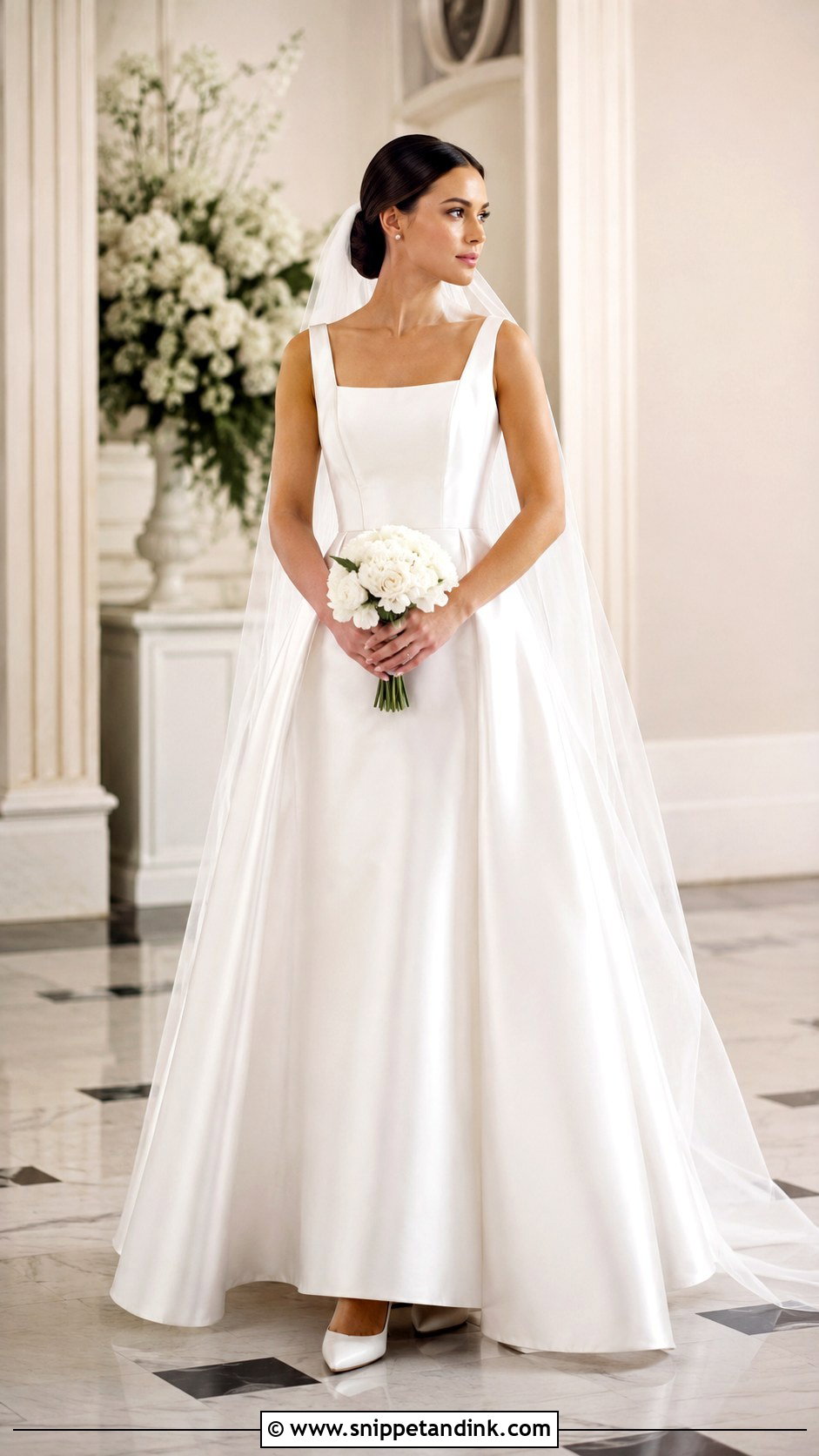
Square necklines frame the collarbone and stay modern without showing much skin. Satin gives a minimal finish; lace or embroidery adds romance. I like wider straps here because they let you wear a normal bra and hold the neckline square instead of letting it bow. During the fitting, move around and watch whether the neckline lies flat or gapes at the corners. A low chignon or smooth ponytail keeps the frame open. Pair with pearl studs and a small structured bouquet.
5. Long-Sleeve Lace Bridal Outfit
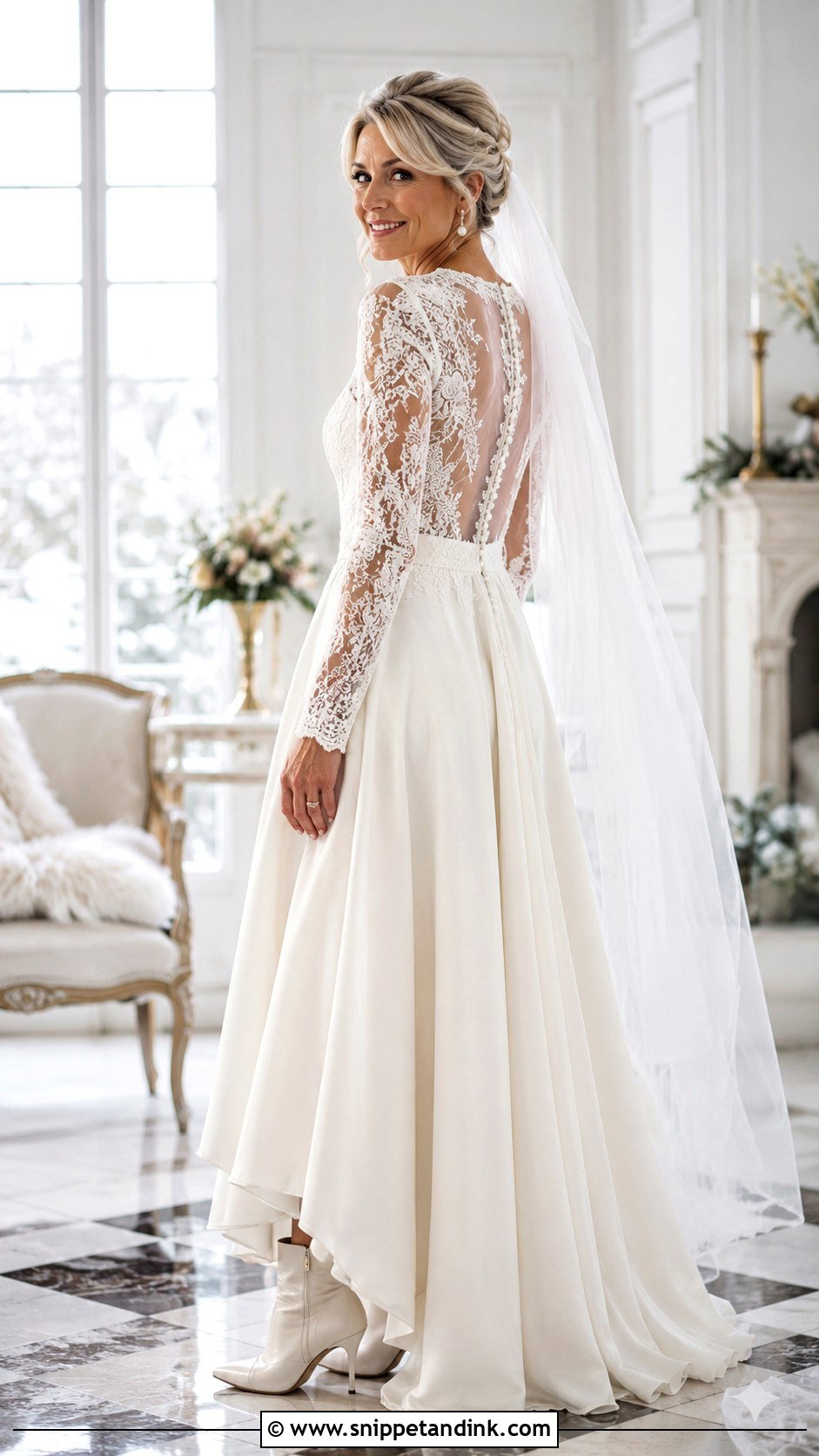
Lace sleeves need stretch at the elbow, or you won’t comfortably hold a bouquet for an hour. Choose fitted sleeves with some give, a lined bodice and a flowing skirt for cooler months. Lace-covered buttons down the back add the traditional detail on their own. Ivory pumps or ankle boots can hide under the hem. Sensitive skin should test the lace before buying, since heavily beaded lace can feel rough inside the arm. A clean wool coat or bridal cape handles travel between locations.
6. Minimalist Crepe Bridal Outfit
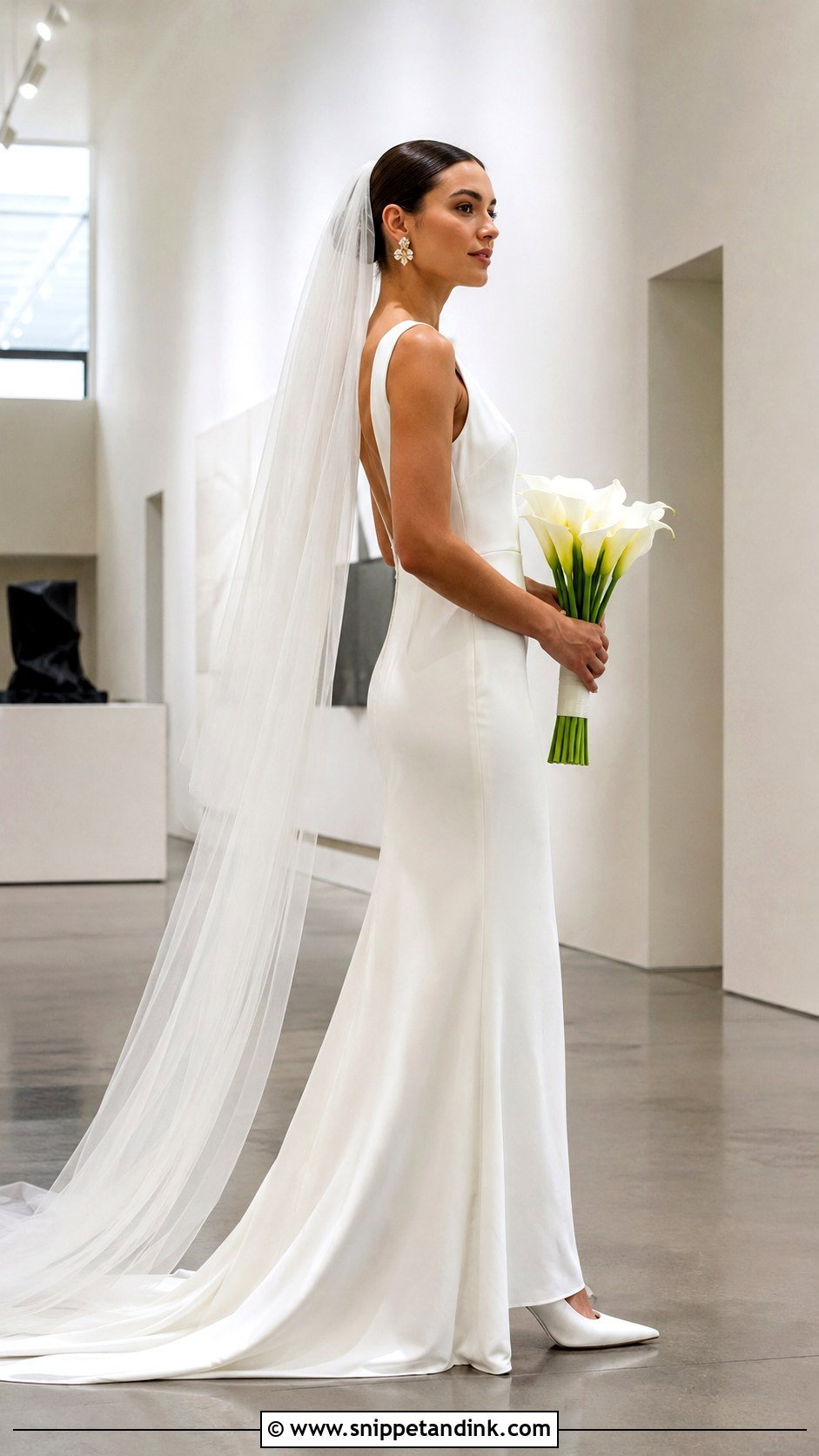
Crepe hides nothing, so alterations matter more here than on any other gown. A sheath, column or fit-and-flare in crisp crepe with clean seams should skim the waist and hips without pulling. Smooth, supportive underwear makes a real difference under a plain fabric. Sculptural earrings, a low bun and pointed pumps keep the look modern. If you want one focal point, covered buttons, a detachable bow or an open back will do it; a plain cathedral veil gives the ceremony its drama.
7. Tea-Length Bridal Dress Outfit
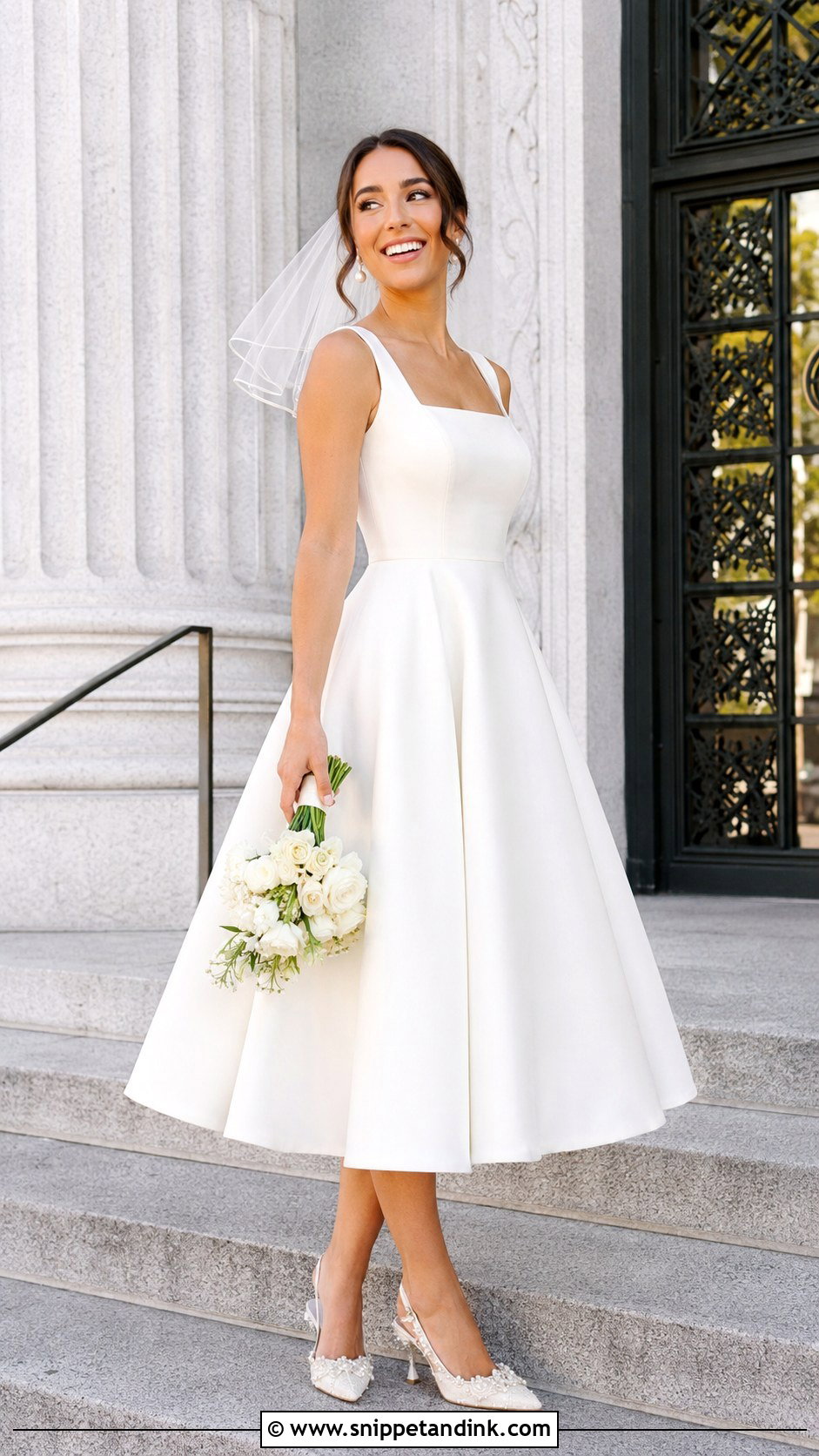
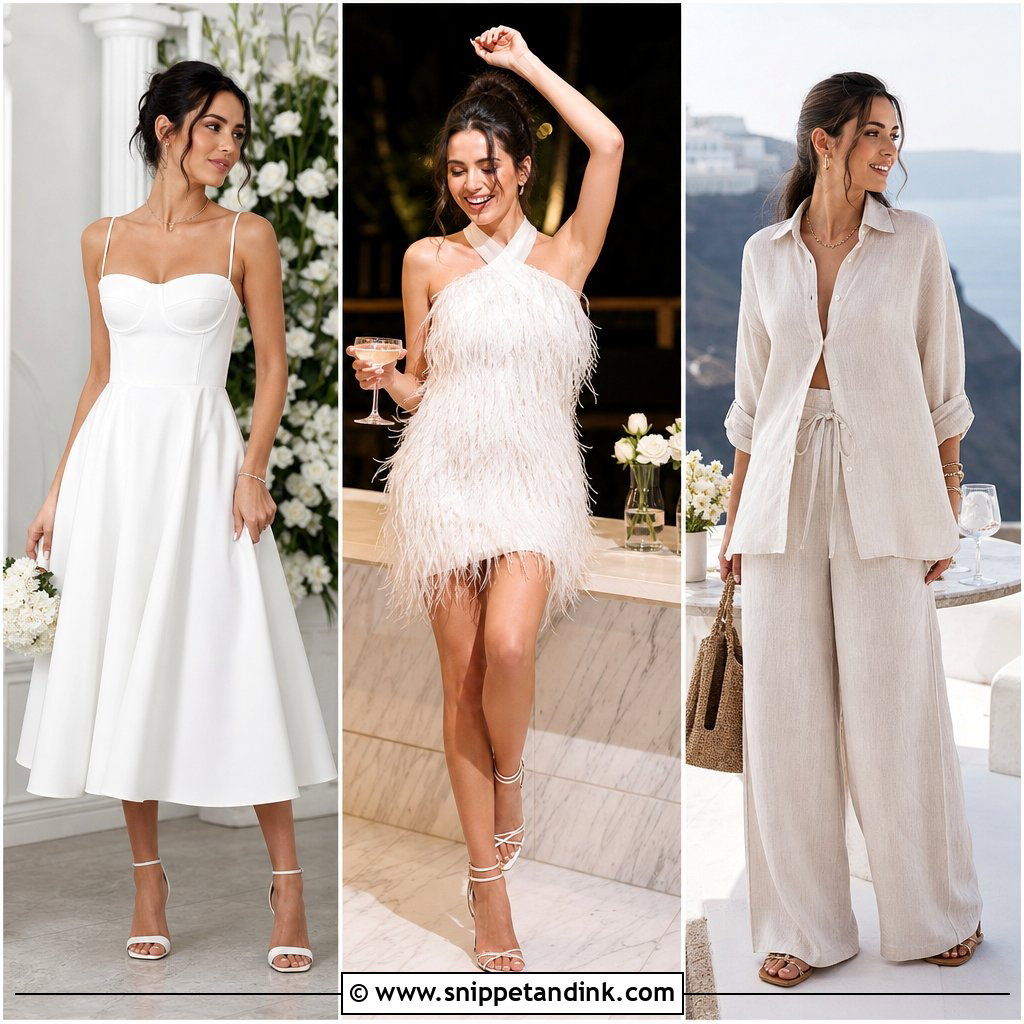
Where a tea-length hem stops on the leg makes or breaks it. Mid-calf flatters most people; just below the knee or just above the ankle can cut the leg at an awkward point. The fitted bodice and A-line skirt can come in satin, organza, lace or structured cotton. Since the shoes are on show, choose them deliberately: pointed pumps, slingbacks or embellished flats. A short veil and compact bouquet match the proportions. Keep the underskirt light if you’ll be sitting often.
8. Bridal Mini Dress With Veil
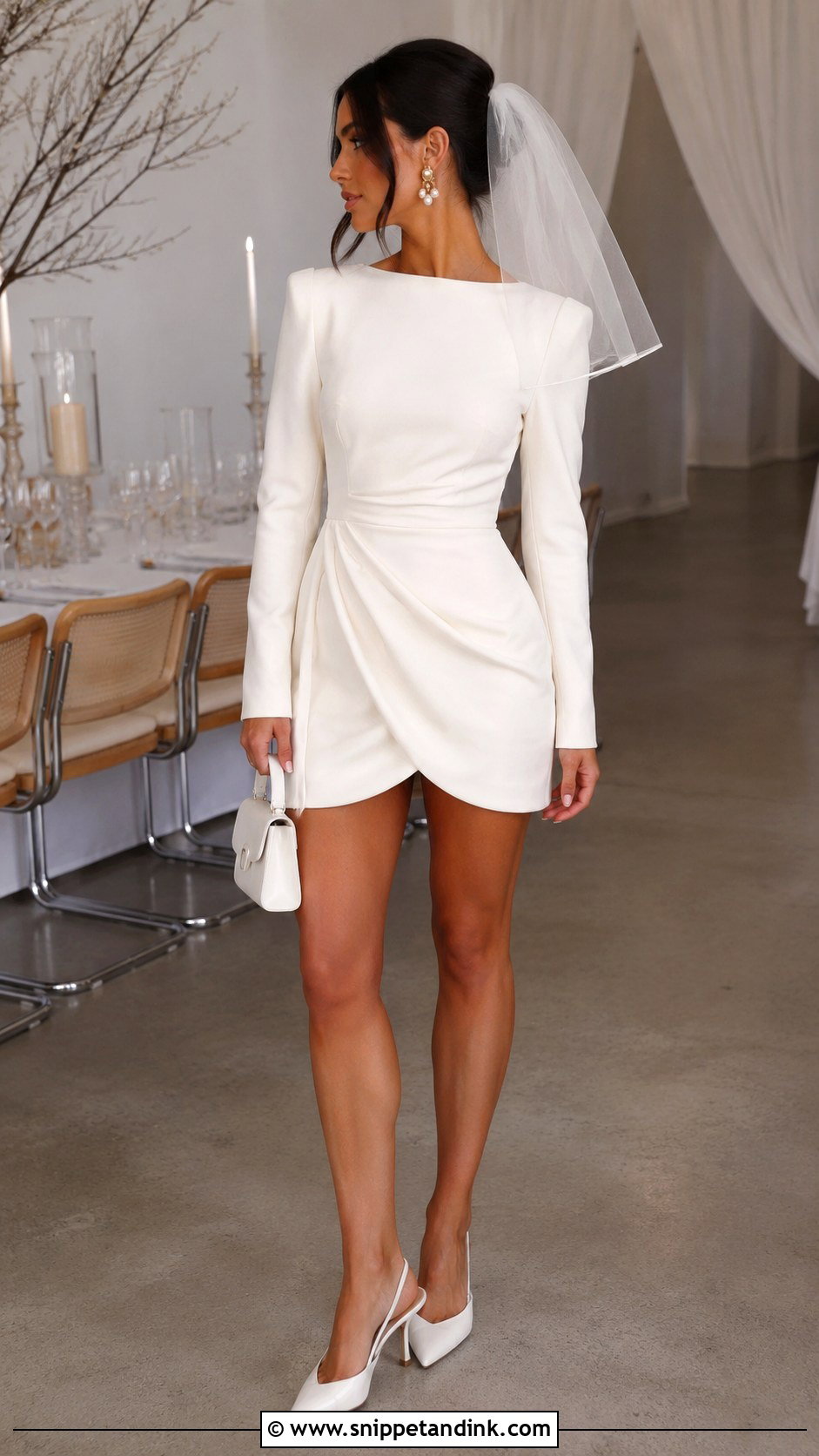
Short wedding dresses rely on structure to feel bridal: a secure neckline, a smooth lining and enough length to move without tugging. A tailored shift, a long-sleeve mini or a fitted dress with a flared skirt all suit a civil ceremony, reception change or after-party. Sheer tights in winter, bare legs in summer. If the dress has feathers, beading or a big bow, pick one accessory and stop. I always ask brides to sit and dance in it before the day, since minis move more than you’d guess.
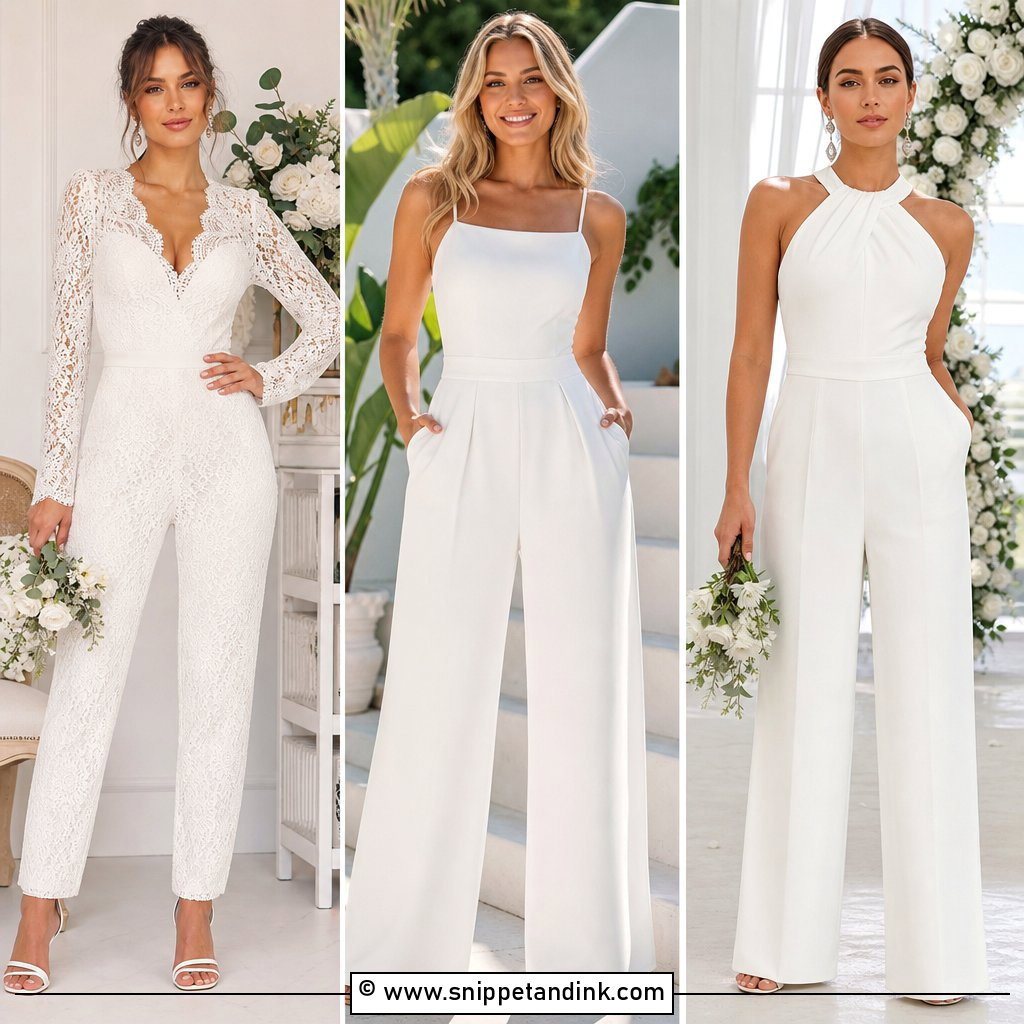
9. Bridal Jumpsuit With Overskirt
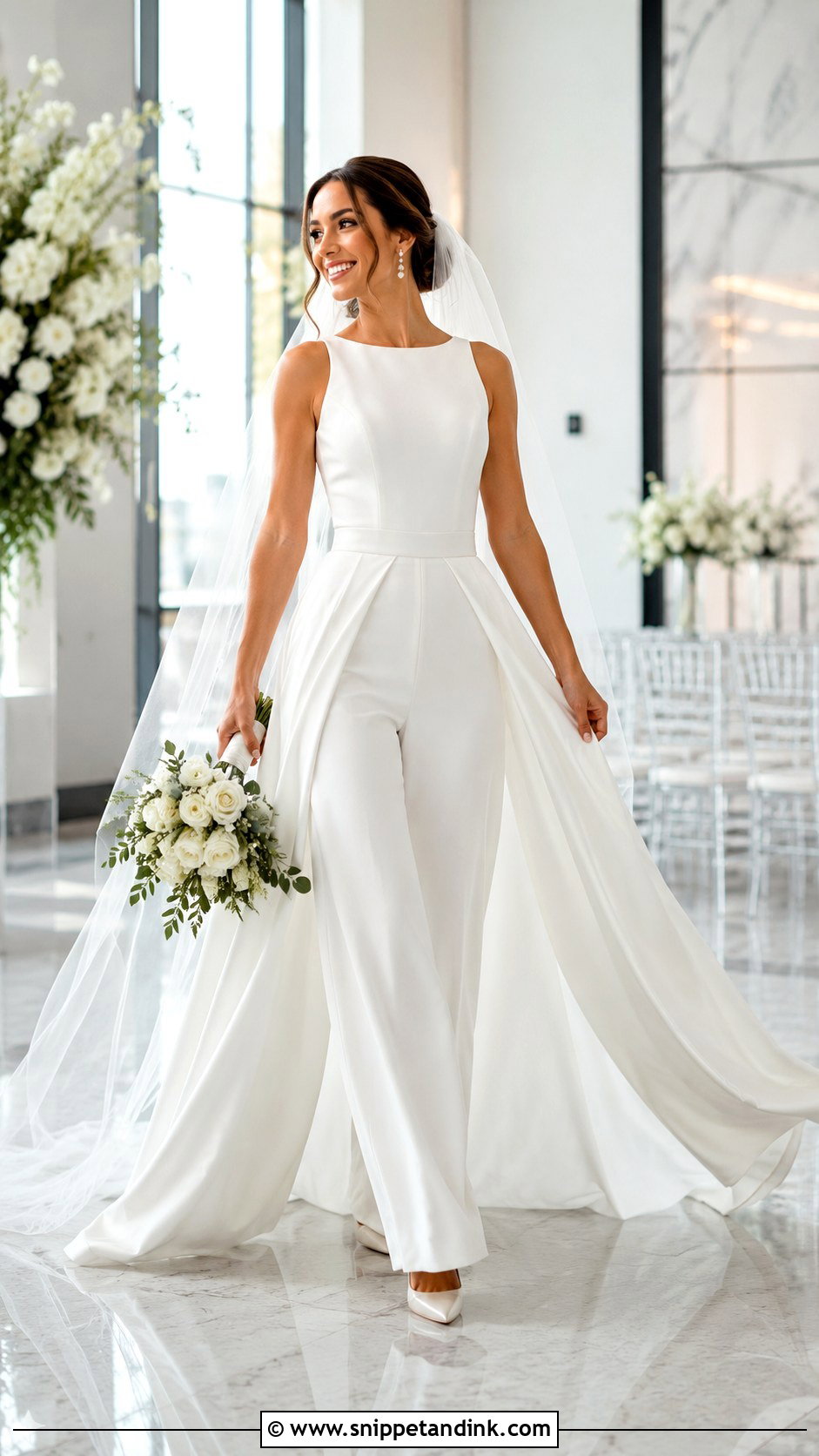
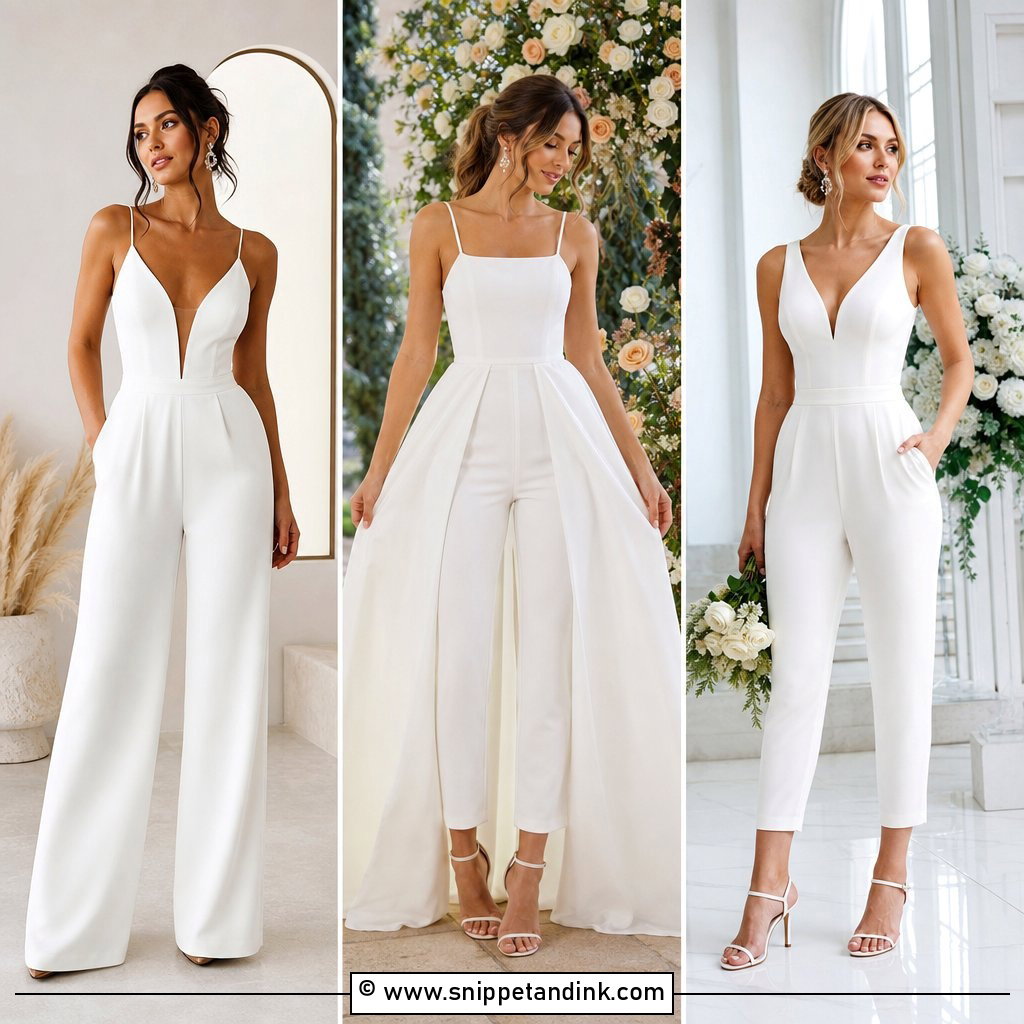
A detachable overskirt gives you two looks without a full change. From the back and sides, the ceremony silhouette reads as a gown; take the skirt off and a bridal jumpsuit is ready for dancing. Look for a defined waist, a supportive bodice and trousers that fall cleanly over your shoes. Test the overskirt fastening several times: hooks that need two hands and a mirror will slow the reception down. Check bathroom access too, because jumpsuits are awkward without a reachable zip.
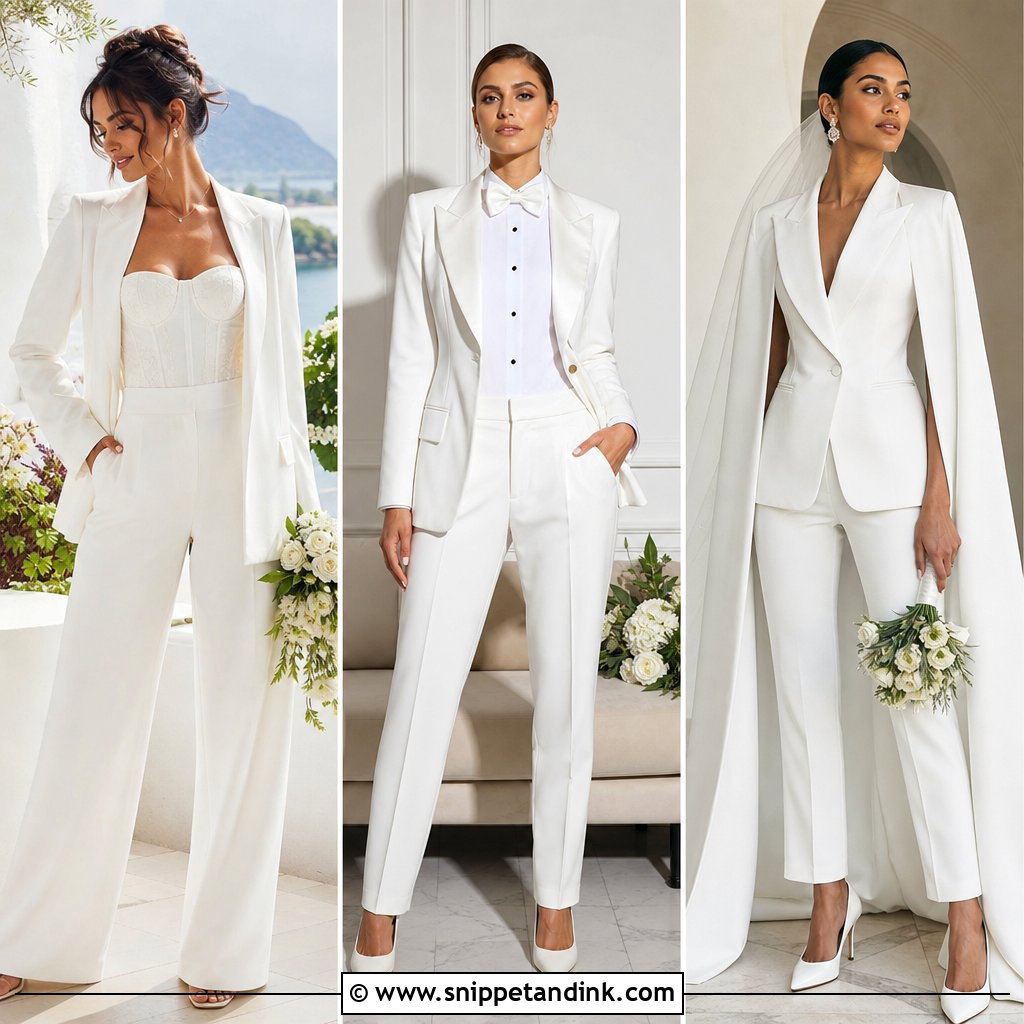
10. White Bridal Pantsuit Outfit
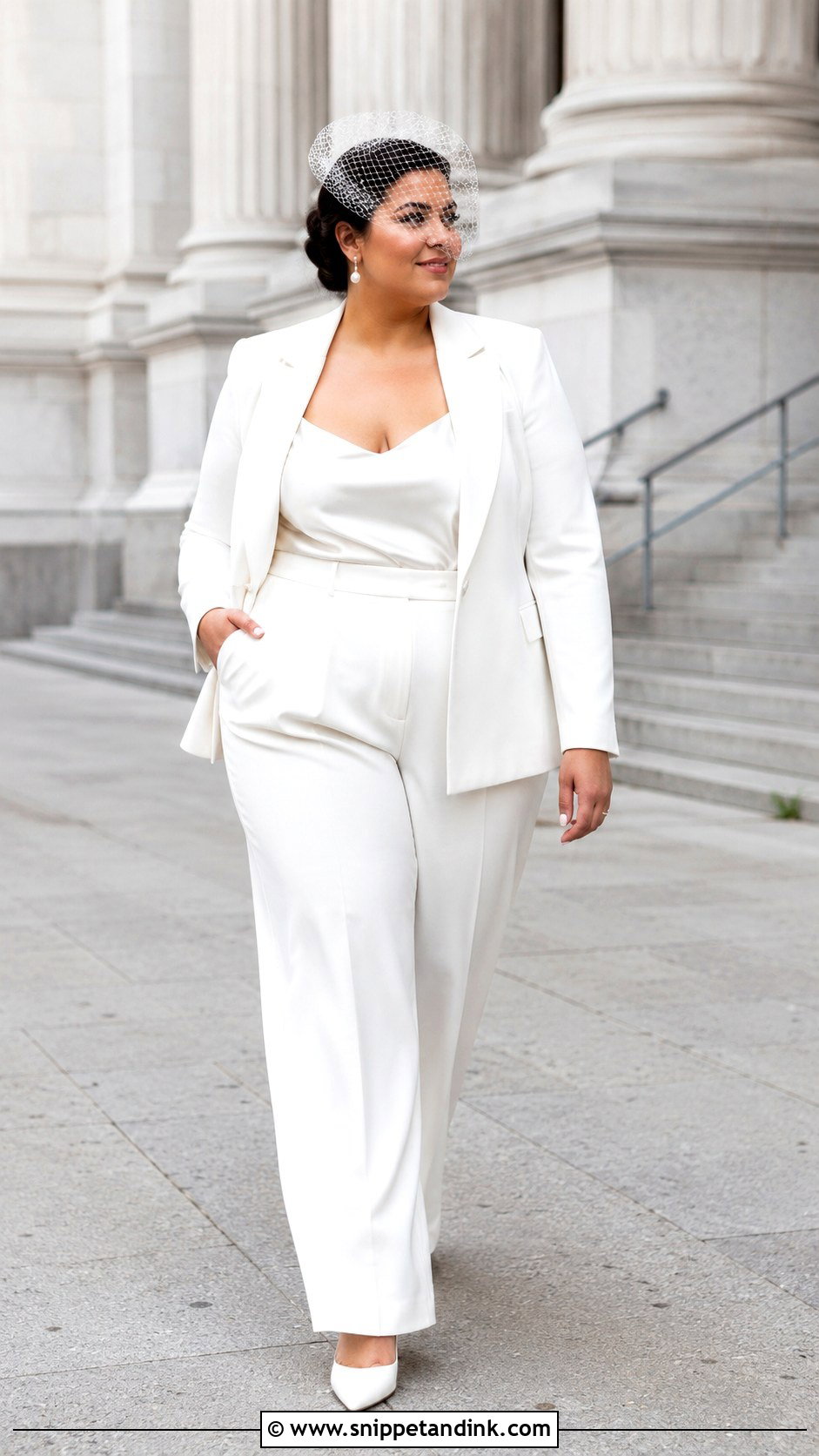
Different whites rarely match in photos, and a suit is often made from two fabrics. That’s my main warning with a white pantsuit: check the blazer, trousers and top side by side in daylight. Choose clean shoulders and trousers cut to your preferred rise. Wide legs with a softer blazer look relaxed; cigarette trousers with a longer jacket look sharper. A birdcage veil, hair bow or wide-brim hat makes it bridal. Tailoring is what turns a nice suit into a wedding suit.
11. Two-Piece Bridal Skirt Outfit
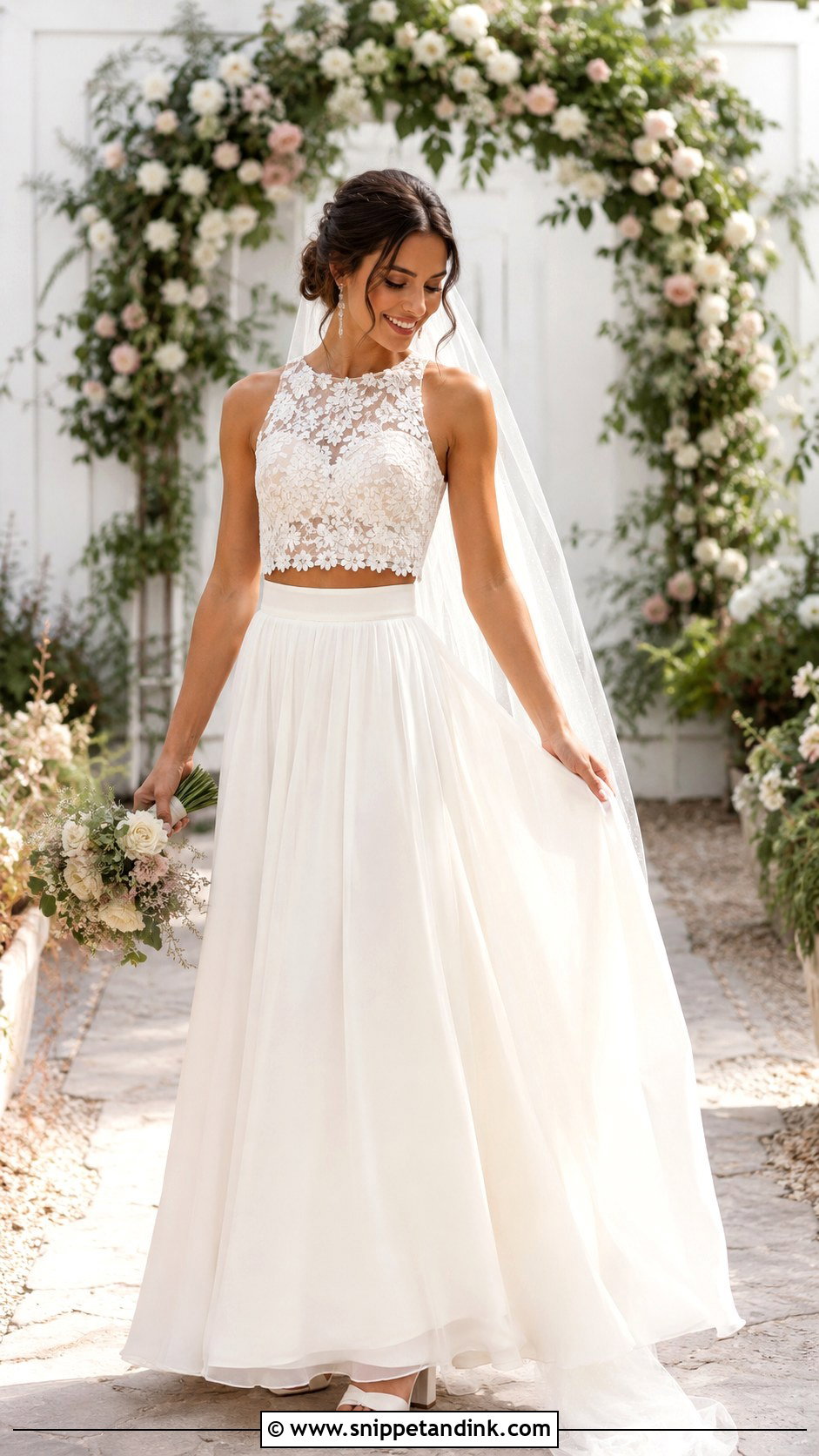
Separates let you mix textures and define the waist, such as a lace, satin or beaded top with a high-waisted A-line or column skirt. Keep both pieces in the same color family even if the fabrics differ. Choose a veil that doesn’t cover the top’s detail. Look at yourself from every angle while sitting and lifting your arms; a top that lifts away from the skirt is the common problem, and a longer top or smooth bodysuit underneath solves it. You can wear each piece again afterward.
12. Boho Bridal Gown With Boots
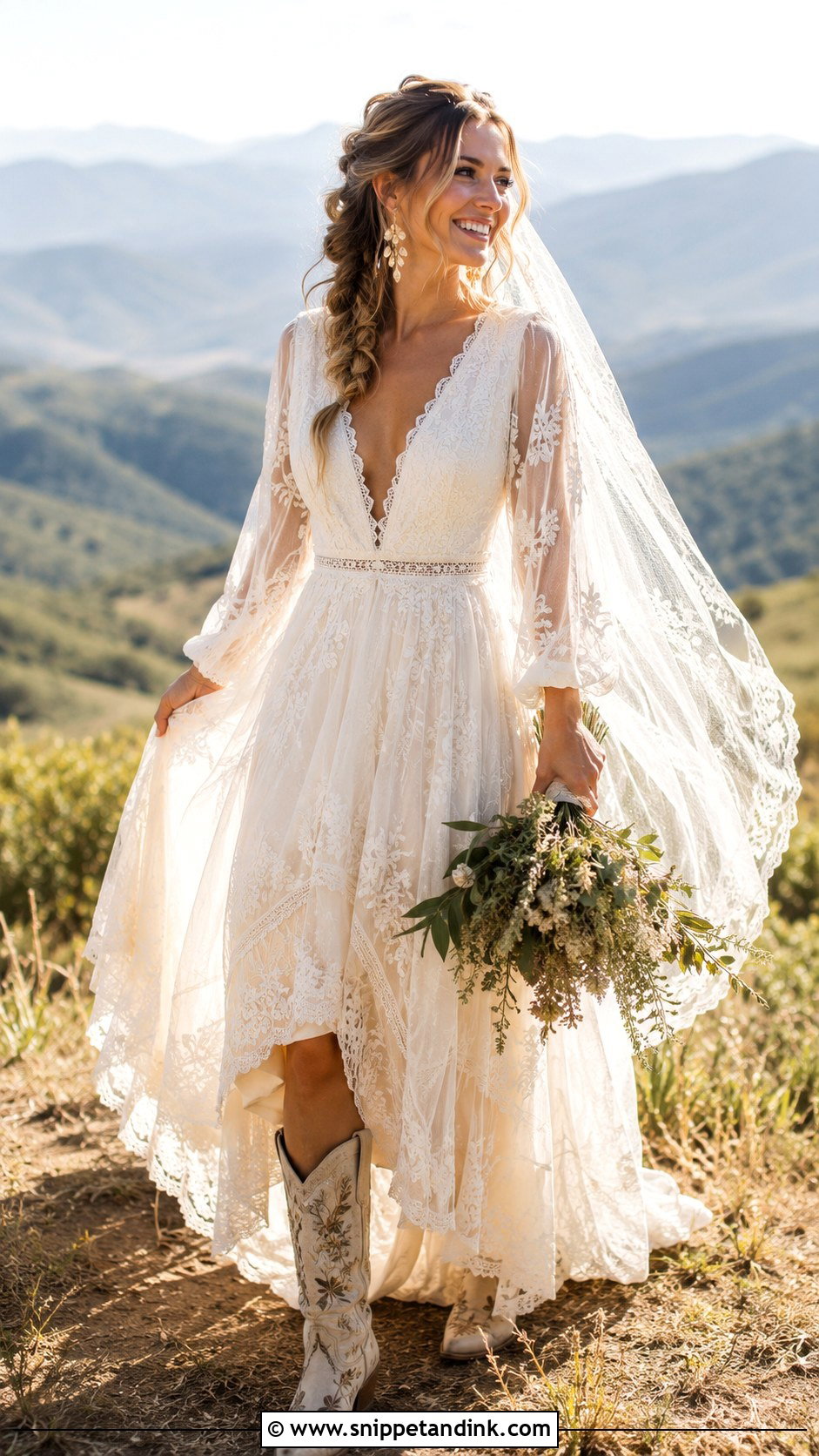
Boots solve the grass problem better than any heel. Ivory, tan or embroidered ankle boots under a flowing lace or chiffon gown cope with lawns and uneven ground at rustic venues. Look for comfortable sleeves and a skirt that moves easily. A long train is a liability outdoors; a sweep train with a bustle that clips up quickly is much easier. Small gold earrings, a textured veil and a loose braid suit the setting. Natural greenery in the bouquet ties it to the venue.
13. Beach Bridal Slip Dress Outfit
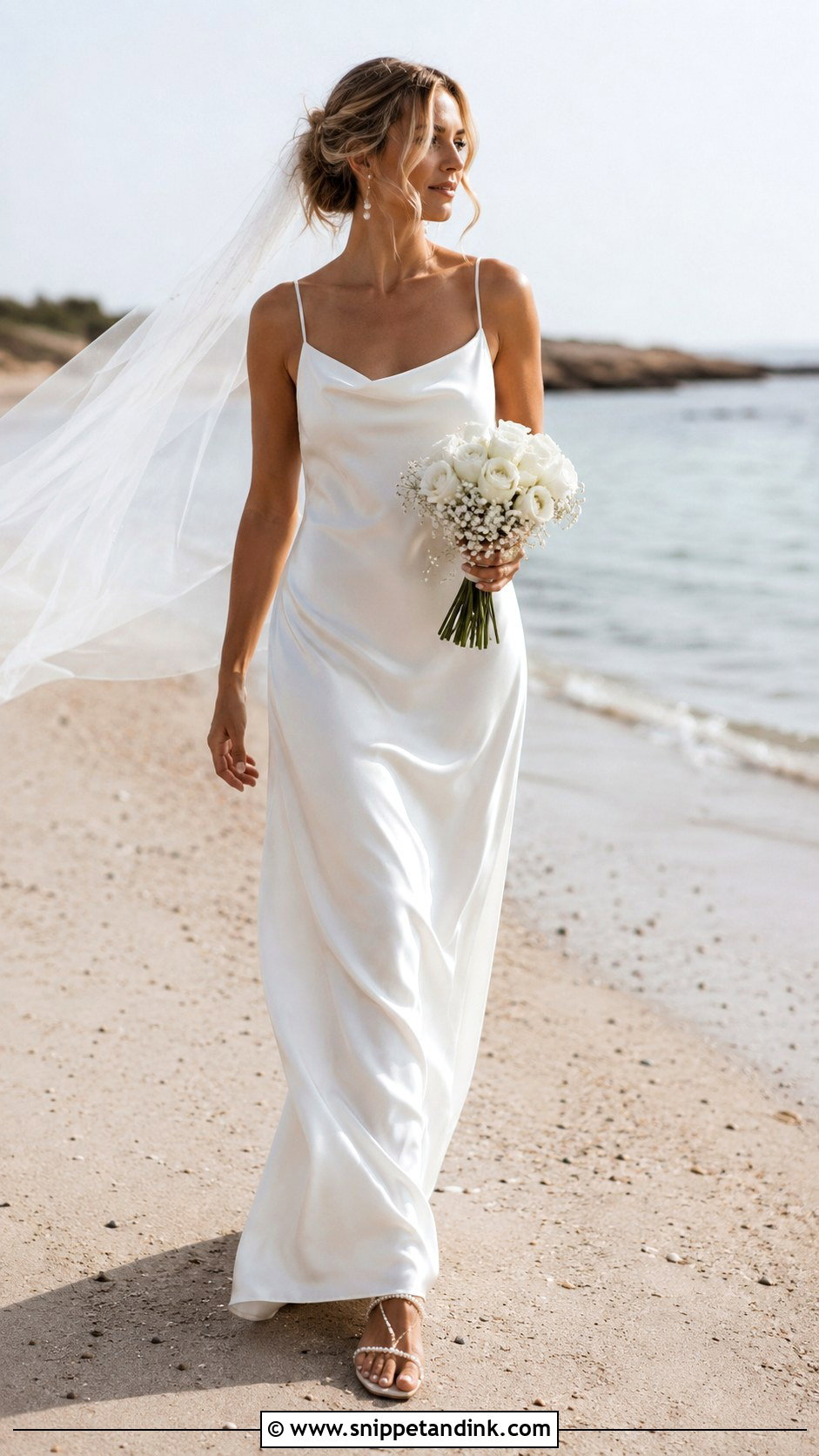
A beach slip dress in silk, satin or fluid crepe should skim the sand rather than drag through it, so I hem it slightly shorter than a ballroom gown. Lining matters with light fabric in bright sun. Flat sandals, low block heels or decorative barefoot sandals all work, depending on the venue. Very light skirts lift in sea breezes, so consider a weightier crepe if it’s often windy there. A loose, well-pinned bun copes with wind better than hair worn down. Pack a wrap or sheer cape for when it cools.
14. Courthouse Bridal Blazer Dress Outfit
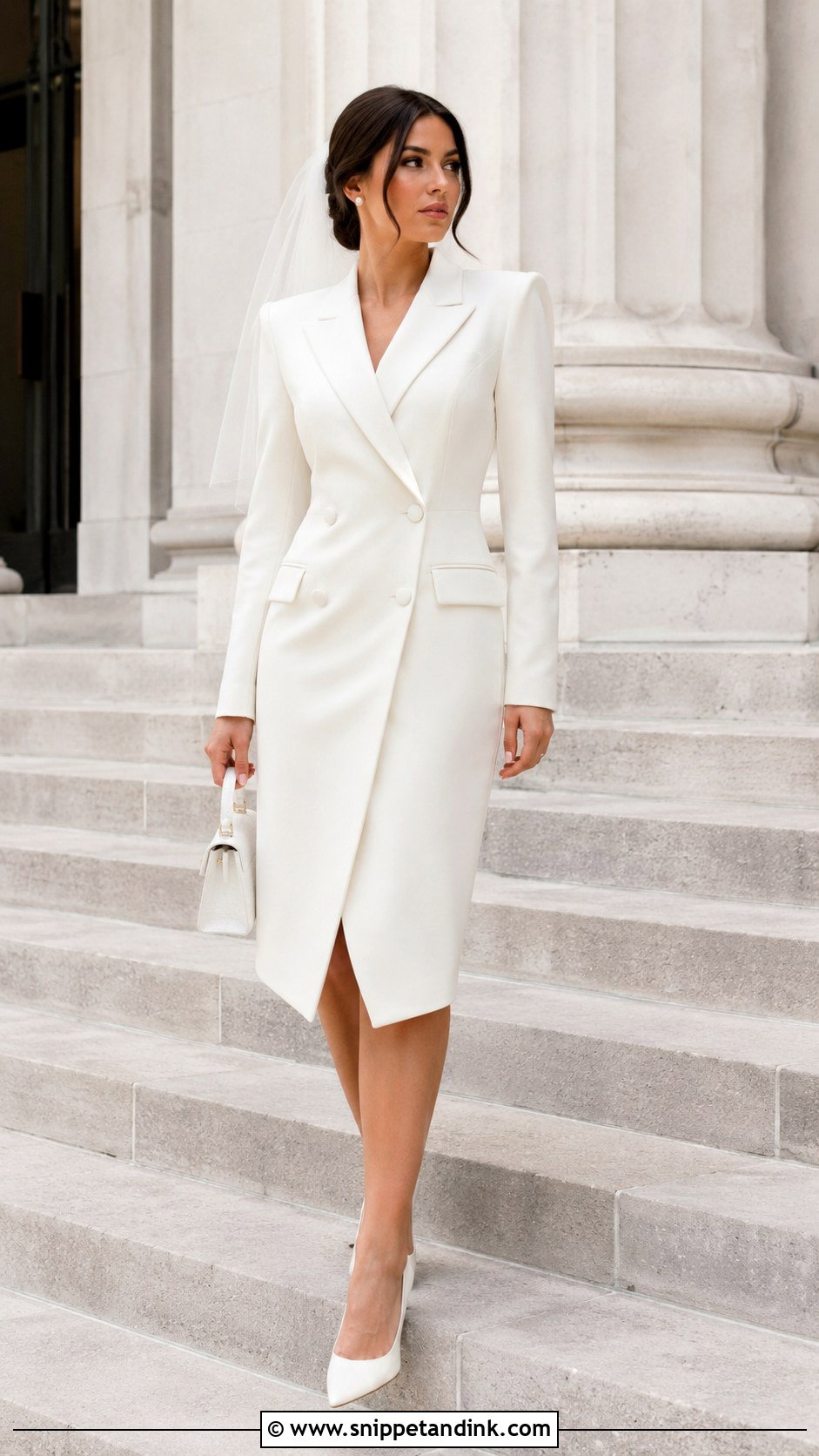
A structured blazer dress fits the brisk feel of a courthouse. Choose a lined design with a defined waist and a secure wrap or button closure, above the knee or at midi length. The test I always run is sitting: wrap fronts often fall open when you sit to sign, so a hidden snap is worth adding. Pointed pumps, slingbacks or polished flats handle city pavements. A short veil or hair bow and a long white coat in winter complete it.
15. Floral Embroidered Bridal Gown Outfit
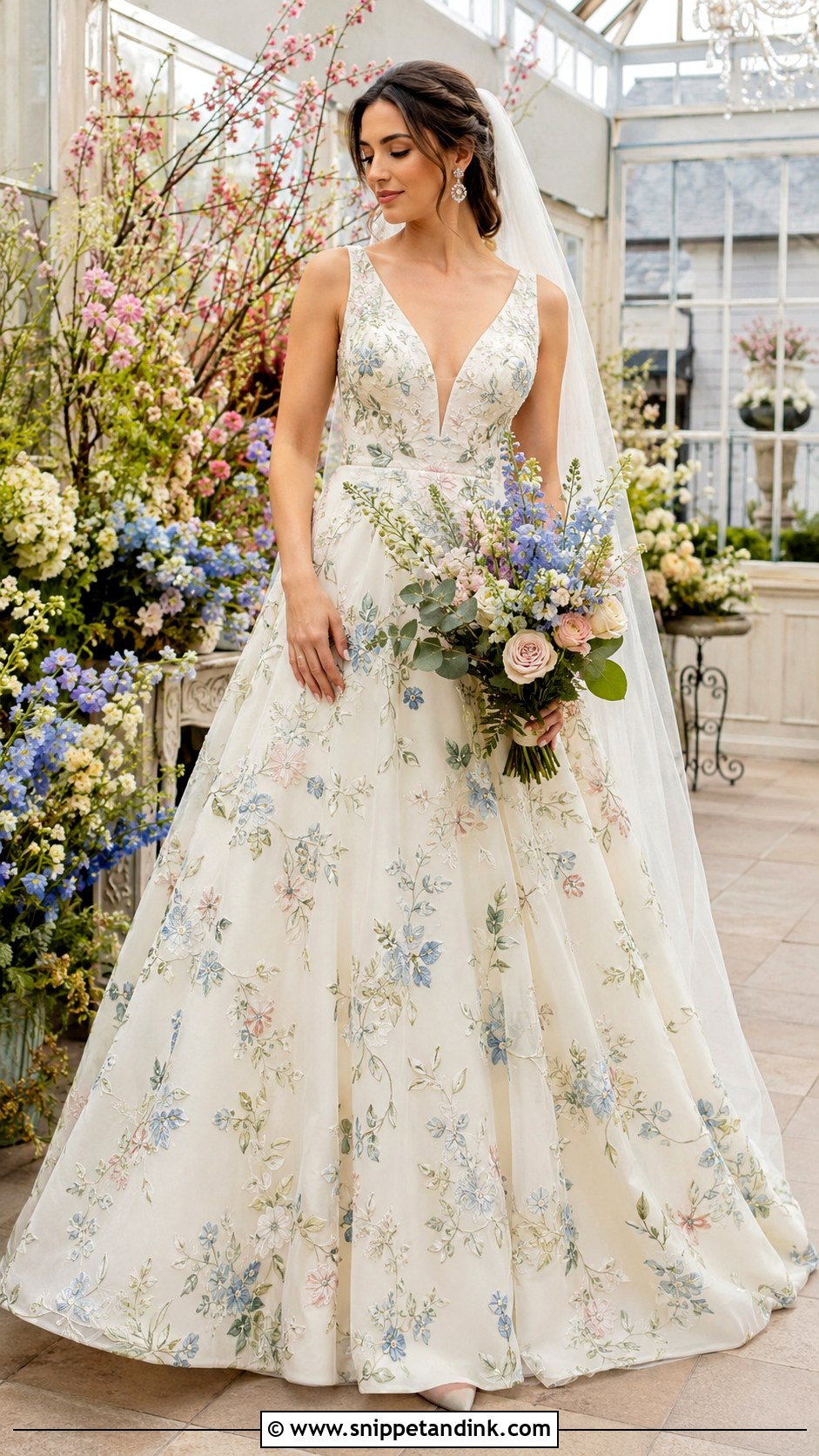
Colored floral embroidery in pastel blue, blush, green or lavender looks delicate against ivory fabric. It can sit on the bodice, sleeves, skirt or veil. Scale and placement matter: big motifs low on the skirt add visual width, so look at them in a full-length mirror during fittings. Pair a heavily embroidered gown with a plain veil, or an embroidered veil with a plainer dress. Small gemstone earrings and neutral shoes keep accessories quiet. Coordinate the bouquet without trying to copy every thread color.
16. Blush Bridal Gown Outfit
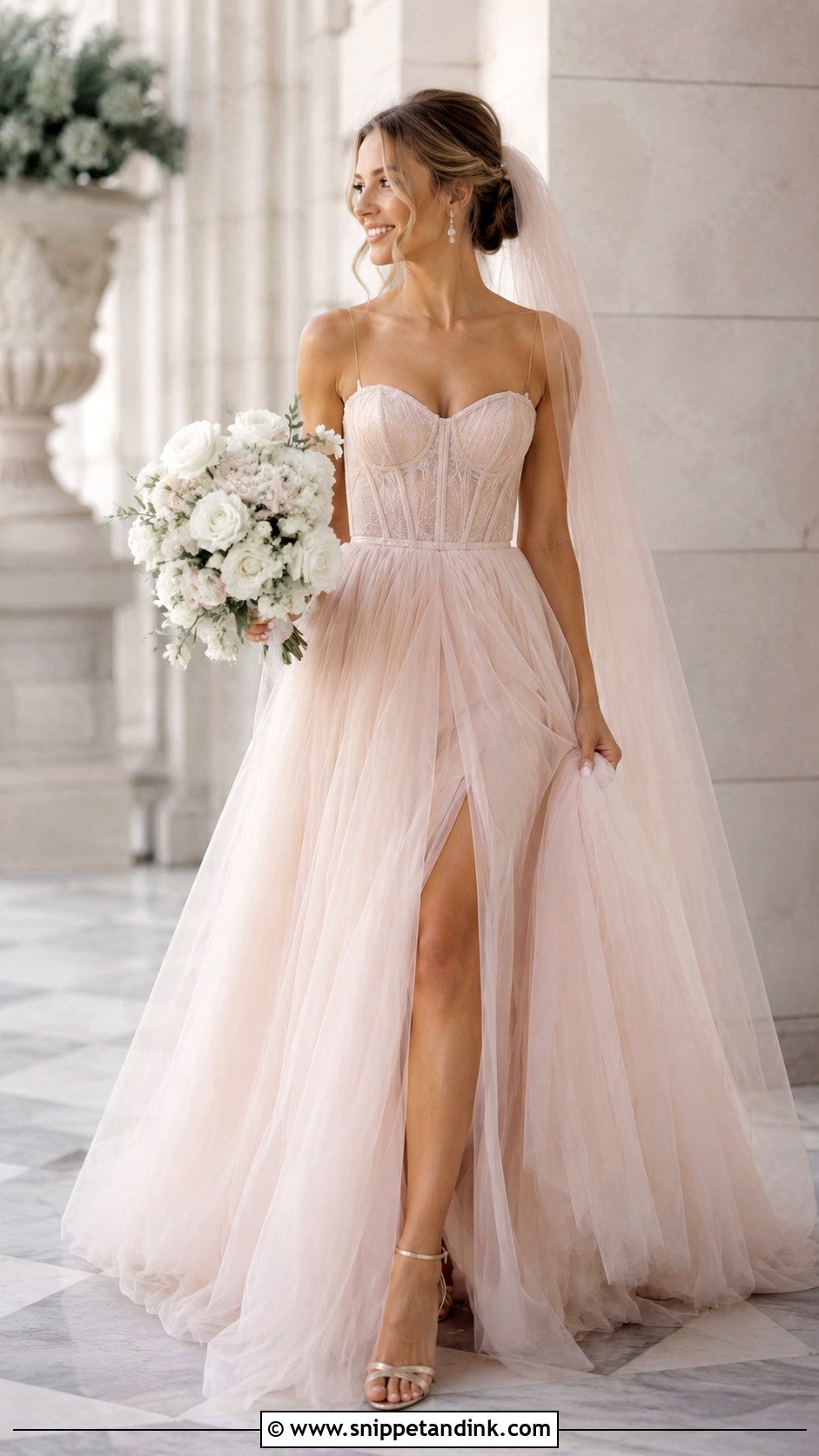
Blush flatters many brides who look washed out in bright white, but the shade must suit your undertone: pale pink, rosy beige and champagne blush all behave differently against skin. Tulle makes blush look dreamy; satin makes it smoother and more modern. The lining changes the final color a great deal, so view the actual gown in daylight and indoor light. A mostly white bouquet stops the whole look tipping into pink. An ivory or blush veil keeps it bridal.
17. Empire-Waist Bridal Gown Outfit
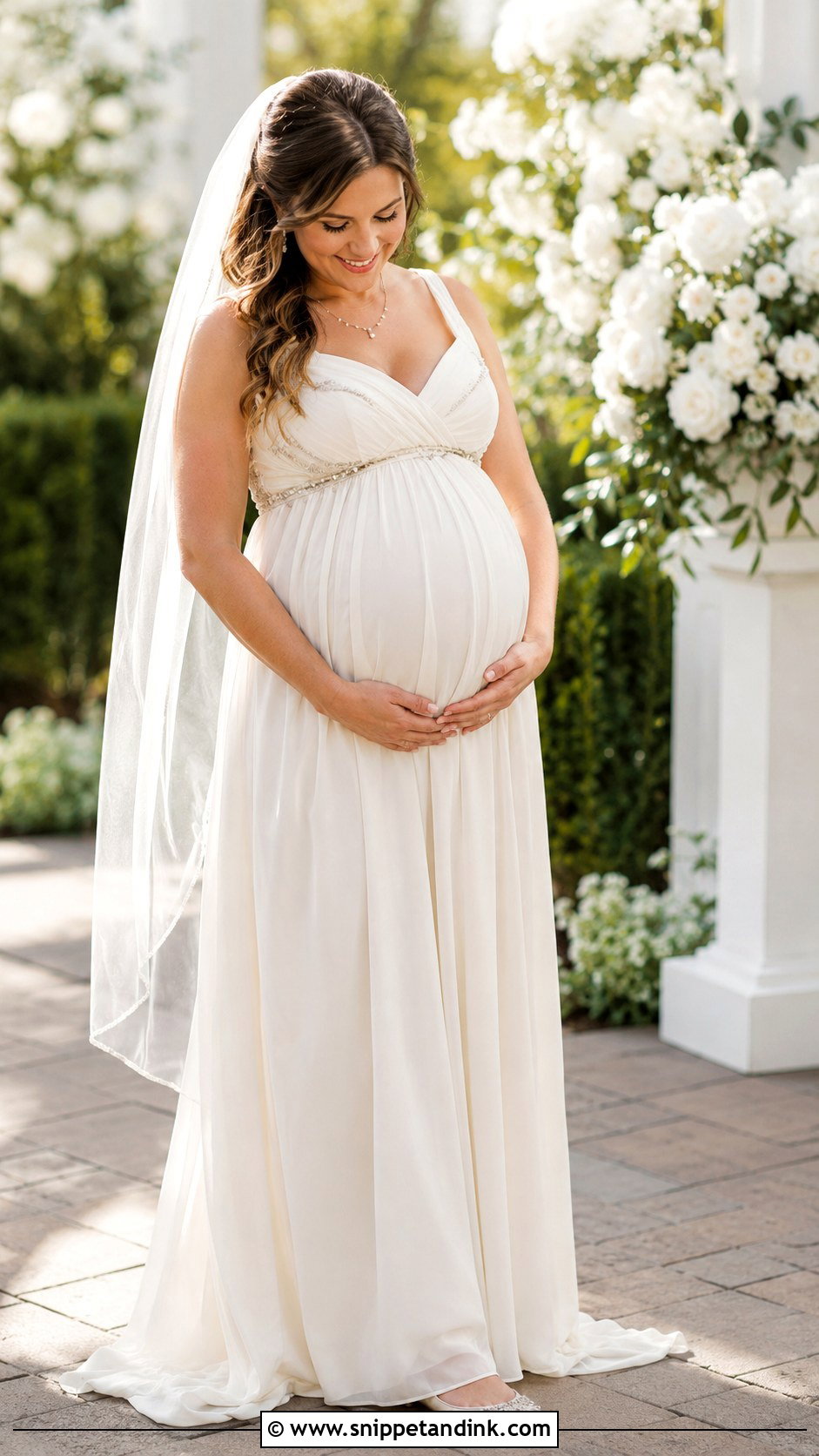
Empire waists take pressure off the midsection, which makes them comfortable through long, seated dinners and hot ceremonies. The seam sits just below the bust and the skirt falls straight. Chiffon, soft tulle or lightweight crepe move without bulk. Bust support is where fittings concentrate, so I schedule alterations with the intended undergarments already bought. A half-up style or soft updo balances the flowing skirt. Check the lining under bright light, as light skirts can turn transparent.
18. Winter Bridal Gown With Cape
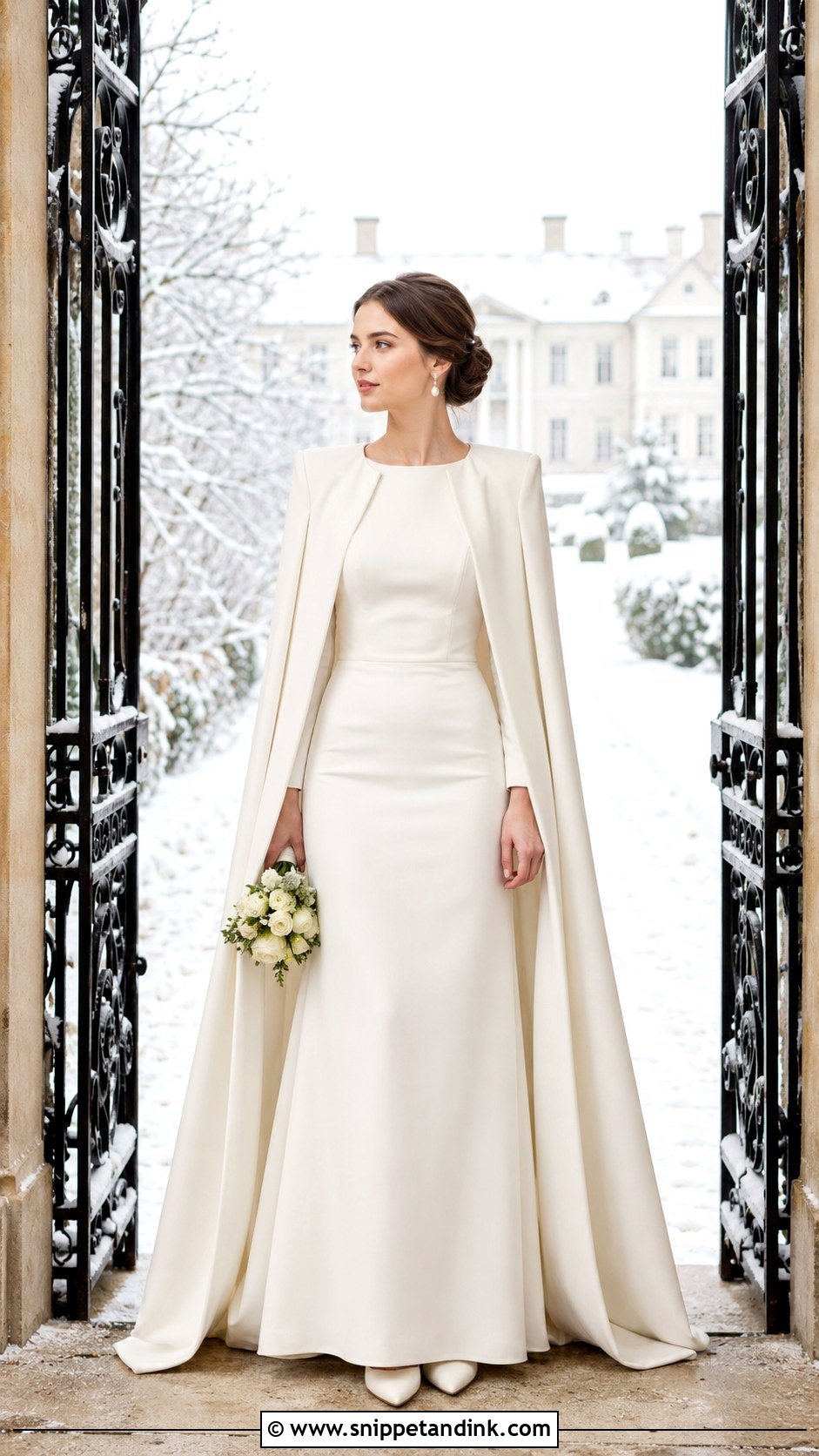
A cape gives a winter gown both drama and warmth. Over a long-sleeve satin, crepe or lace dress, a full-length cape looks formal; a shorter capelet suits a detailed skirt. Match the cape’s white closely to the gown, since two whites side by side expose each other. Keep hair in a neat updo so it doesn’t tangle in the collar. The cape should sit on the shoulders without dragging backward or hiding the bodice. For outdoor portraits, lined gloves and a wool coat between shots help.
19. Reception Bridal Dress With Block Heels
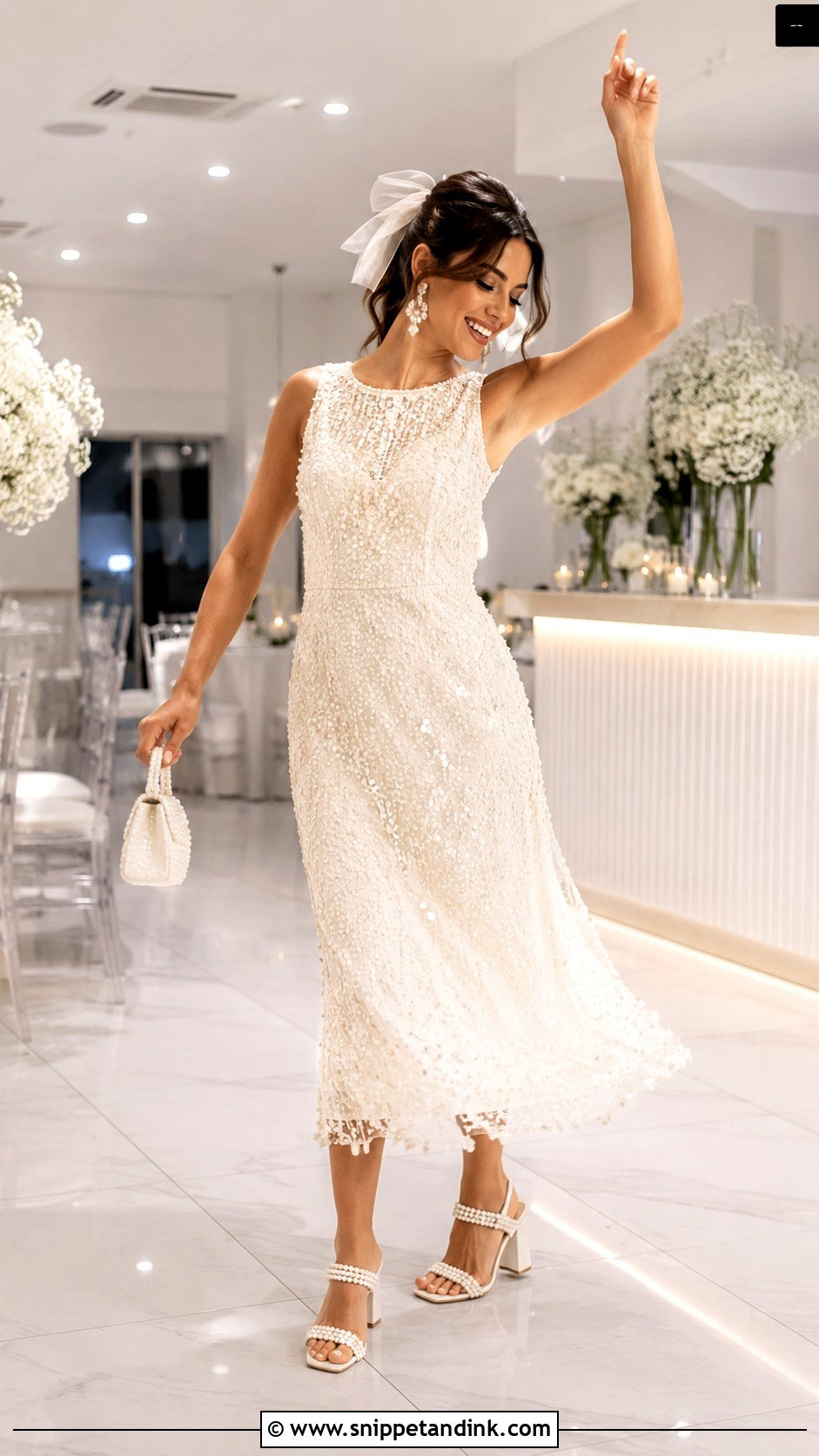
Most brides change for the reception because the ceremony gown is heavy, and three hours of dancing tells. A midi or ankle-length dress in satin, beaded mesh or lightweight crepe keeps the bridal feel. Secure straps and a breathable lining matter more than detail. Block heels, embellished flats or clean sneakers suit dancing. Swap the long veil for a bow or comb. Dance, bend and sit in it beforehand; rough beading on the inner arm is usually found that way.
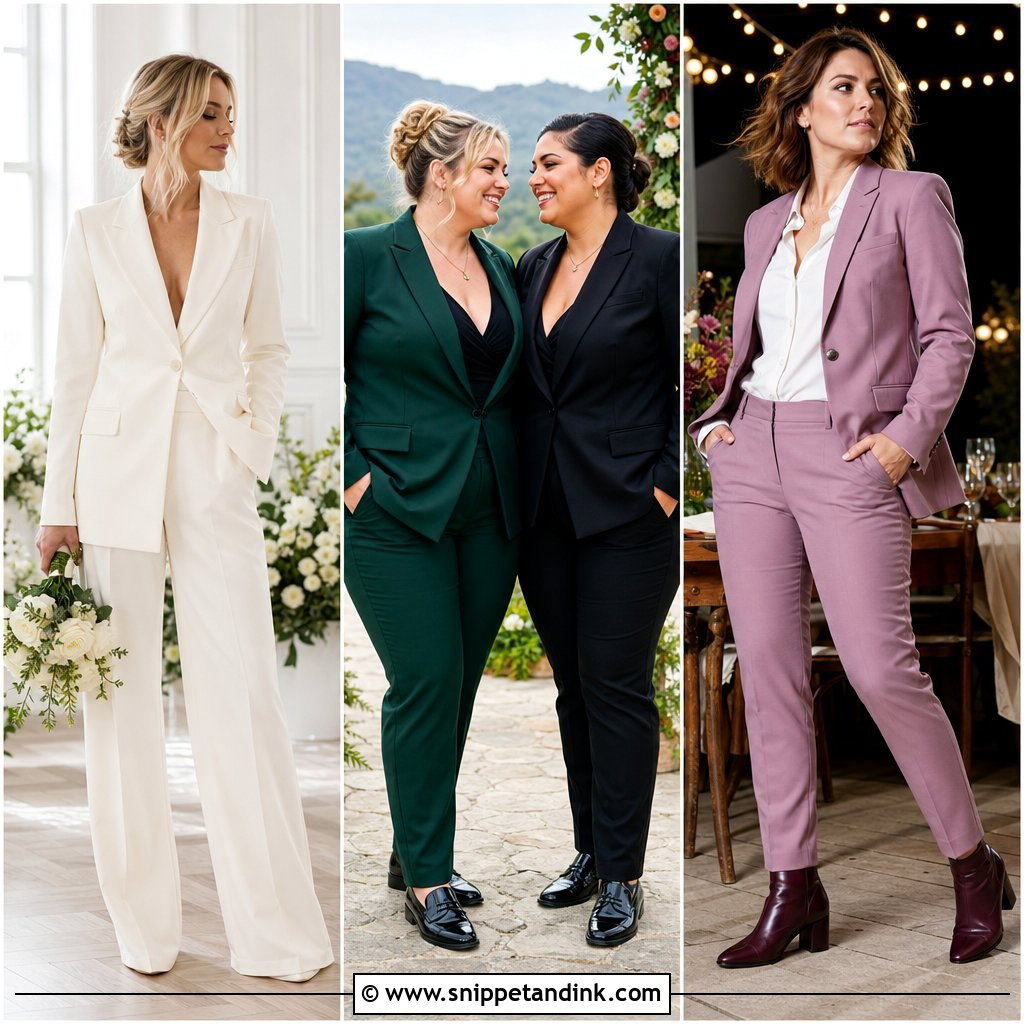
20. Bridal Gown With Detachable Sleeves
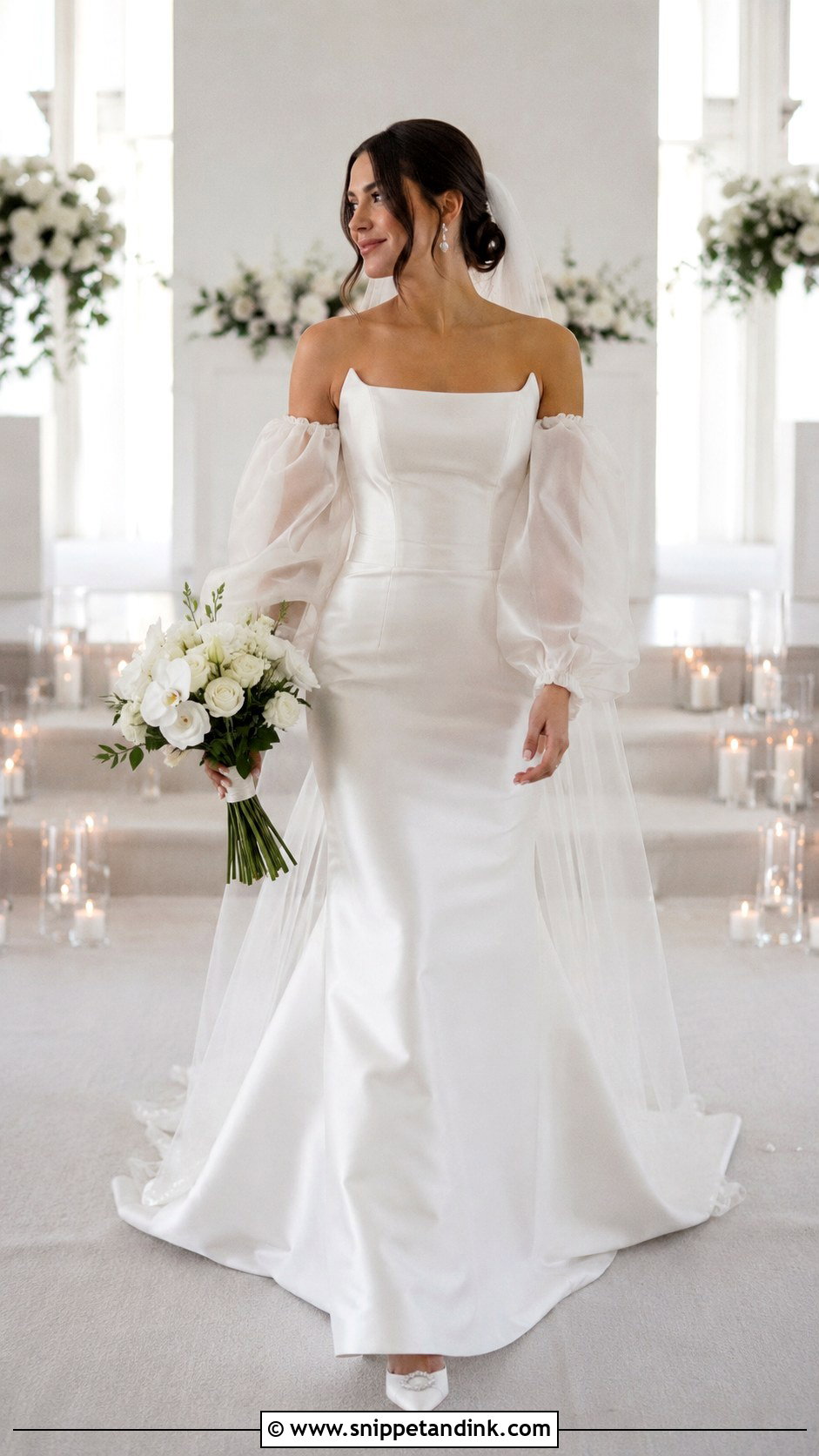
Detachable sleeves change a gown’s mood without a second dress. Start with a strapless, square-neck or sleeveless gown, then add fitted lace sleeves, puffs or draped off-shoulder panels for the ceremony. Ask your tailor to show you, and whoever is helping, how to remove and reattach them without pulling the fabric. The attachment points should be discreet and hold when you lift your arms. Photograph both versions at the fitting so you can see both looks before the day.
Wedding Shoes Deserve Their Own Fitting
Shoes affect everything else: the hem, the train, how you walk and how long you last on the dance floor. I ask brides to buy them early and treat them as part of the dress.
- Buy shoes before the first alteration appointment. The hem is set to the exact heel height, and switching later means another round of tailoring.
- Wear them at home for short stretches over several weeks, on carpet so the soles stay clean. Stiff straps soften and rub points show up early.
- Feet swell over a long day, especially in heat. A pair with a little room or an adjustable strap is kinder at hour ten than a snug fit at hour one.
- Brand-new leather soles are slippery on polished floors. Lightly scuffing the sole or adding thin grip pads helps on stairs and dance floors.
- For lawns, add clear heel protectors or pick a block heel; for sand, flats or barefoot sandals.
- Keep a soft second pair under a table for later in the night. Nobody notices the swap, and you’ll dance longer.
Fit, Fabric and Shoes Before Anything Else
A bridal wardrobe has to suit you and survive the day: the venue, weather, walking surfaces and schedule. Good fabric helps, but secure construction, careful tailoring and comfortable shoes matter more. Try each outfit with its undergarments, shoes, veil and accessories, then walk, sit, hug and dance. A ball gown, beach dress, pantsuit or two-piece set can all feel personal and polished once those basics are right.
You'll Like These Ideas:


Leave a Reply