
A bridal outfit has to do far more than look right on a hanger. It has to suit the venue floor, the ceremony’s traditions, the weather and a day that can run twelve hours from hair to last dance. When I dress a bride, I want to know where she’ll stand, sit, kneel or walk barefoot before we look at a single neckline. The ideas below run from classic gowns and sharp tailoring to beach dresses, reception changes and South Asian bridal wear, each as a full outfit with shoes, jewelry and layers. There are options for every season, for petite, plus-size and pregnant brides, and for ceremonies from city hall to a three-day celebration.
How Far Ahead a Bridal Outfit Needs Ordering
The single most common problem I see is a bride falling in love with something that can’t be made in time. Lead times vary a lot by designer, maker and season, so treat these as rough guides and confirm with your shop.
- Made-to-order gowns: many bridal designers quote several months of production, often four to eight, before the gown even arrives for alterations.
- Custom lehengas and heavily embroidered sets: hand embroidery takes time, so order early and allow for one fitting trip at least.
- Off-the-rack, sample gowns and suits: available quickly, but still need alteration time.
- Alterations: plan for two or three fittings, usually starting six to ten weeks before the wedding.
Bring your wedding shoes and underwear to the first fitting, and your jewelry and veil to the last. Each one changes how the outfit sits. If a fitting is booked for a pregnant bride or someone still changing shape, ask the seamstress to leave the final adjustments as late as she safely can.
1. Classic Ball Gown Bridal Outfit
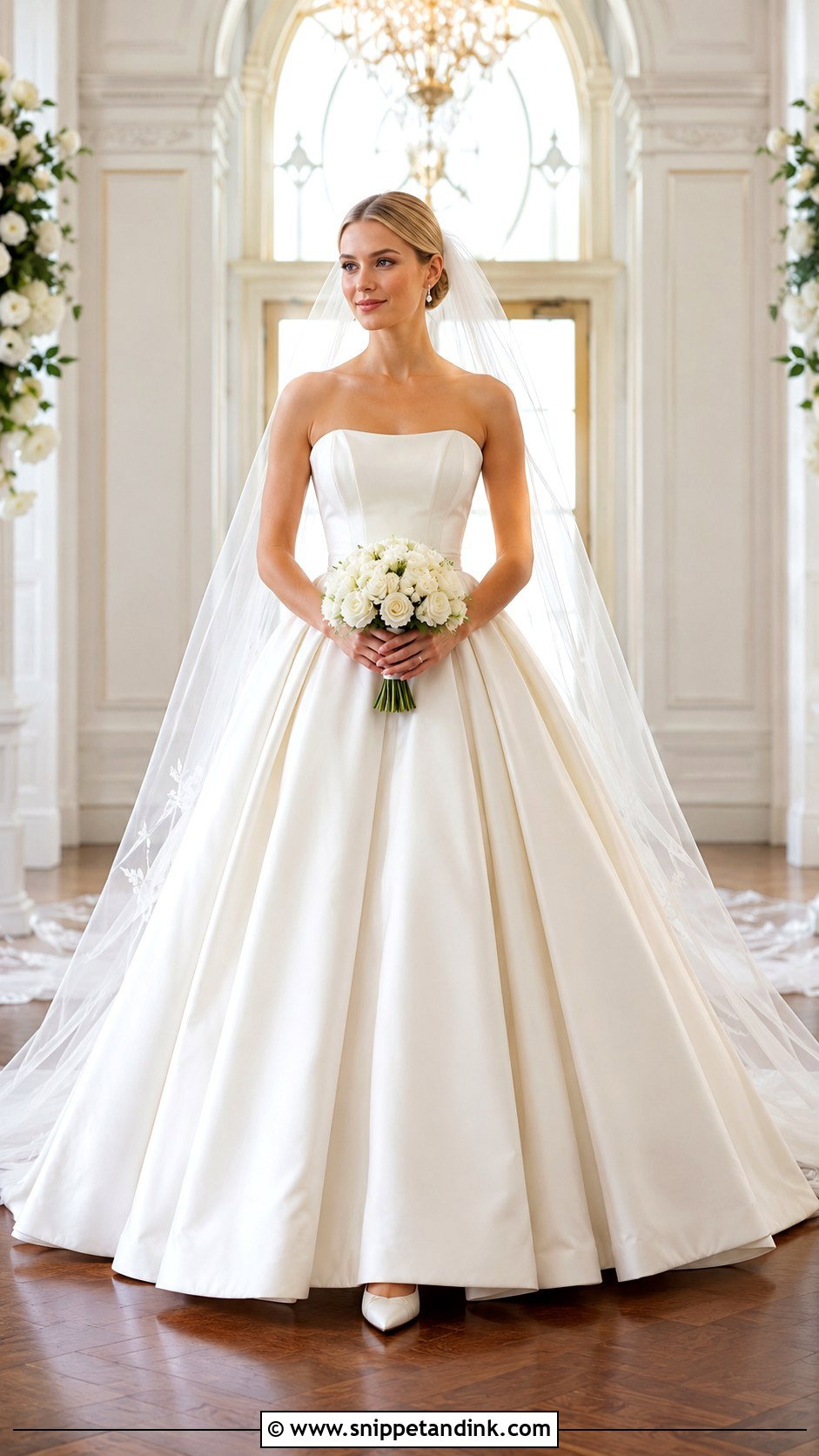
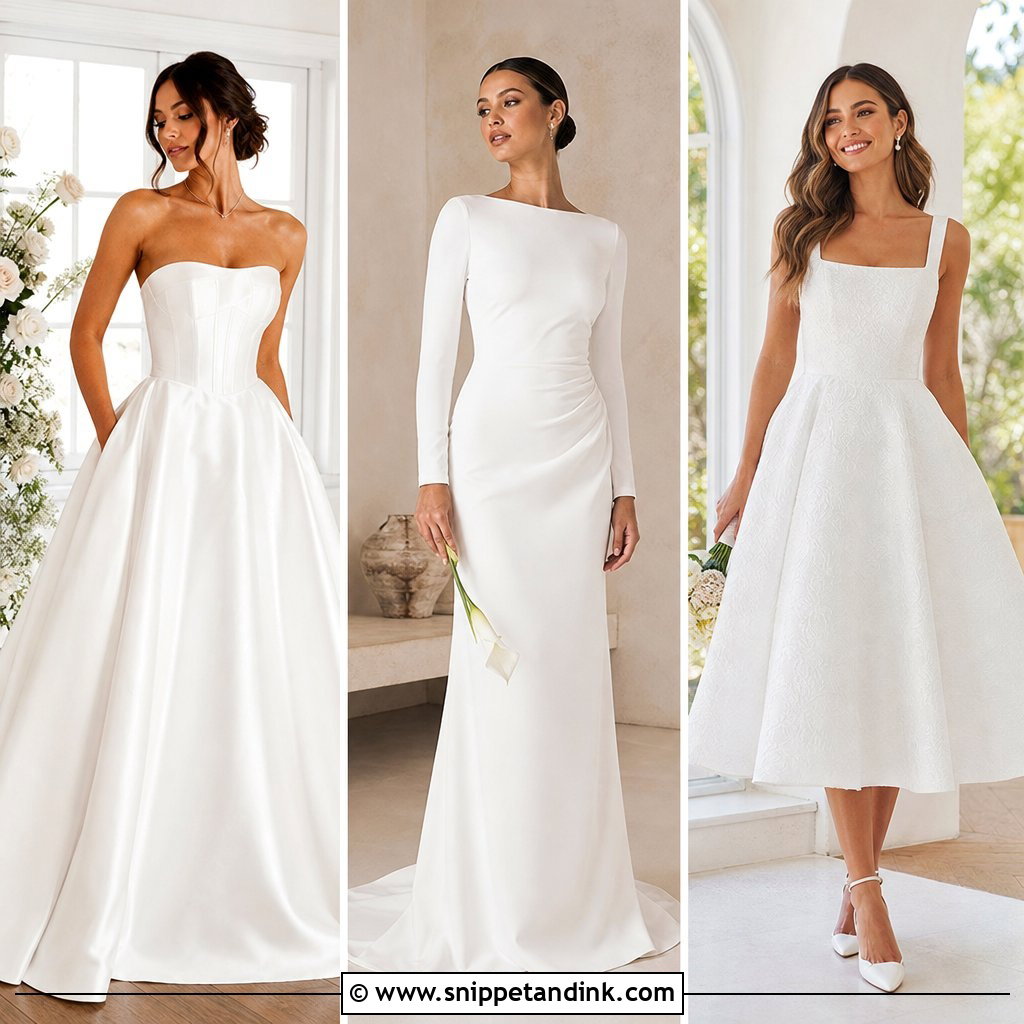
A structured ball gown is still the most dramatic entrance there is, and the most work to wear. Ivory with a fitted bodice, defined waist and layered skirt is the classic; ask how much the skirt weighs, because some full gowns are genuinely tiring by the first dance. Strapless or a soft scoop neckline sits well under a cathedral veil with fine drop earrings. Ivory or champagne pumps should match the gown’s undertone, not the shop’s lighting. Keep to one bracelet and a modest bouquet. A sheer detachable topper adds ceremony coverage. Hem it in your actual shoes, and insist on a bustle that your bridesmaid has practiced at least once before the day.
2. Satin Slip Dress Bridal Outfit
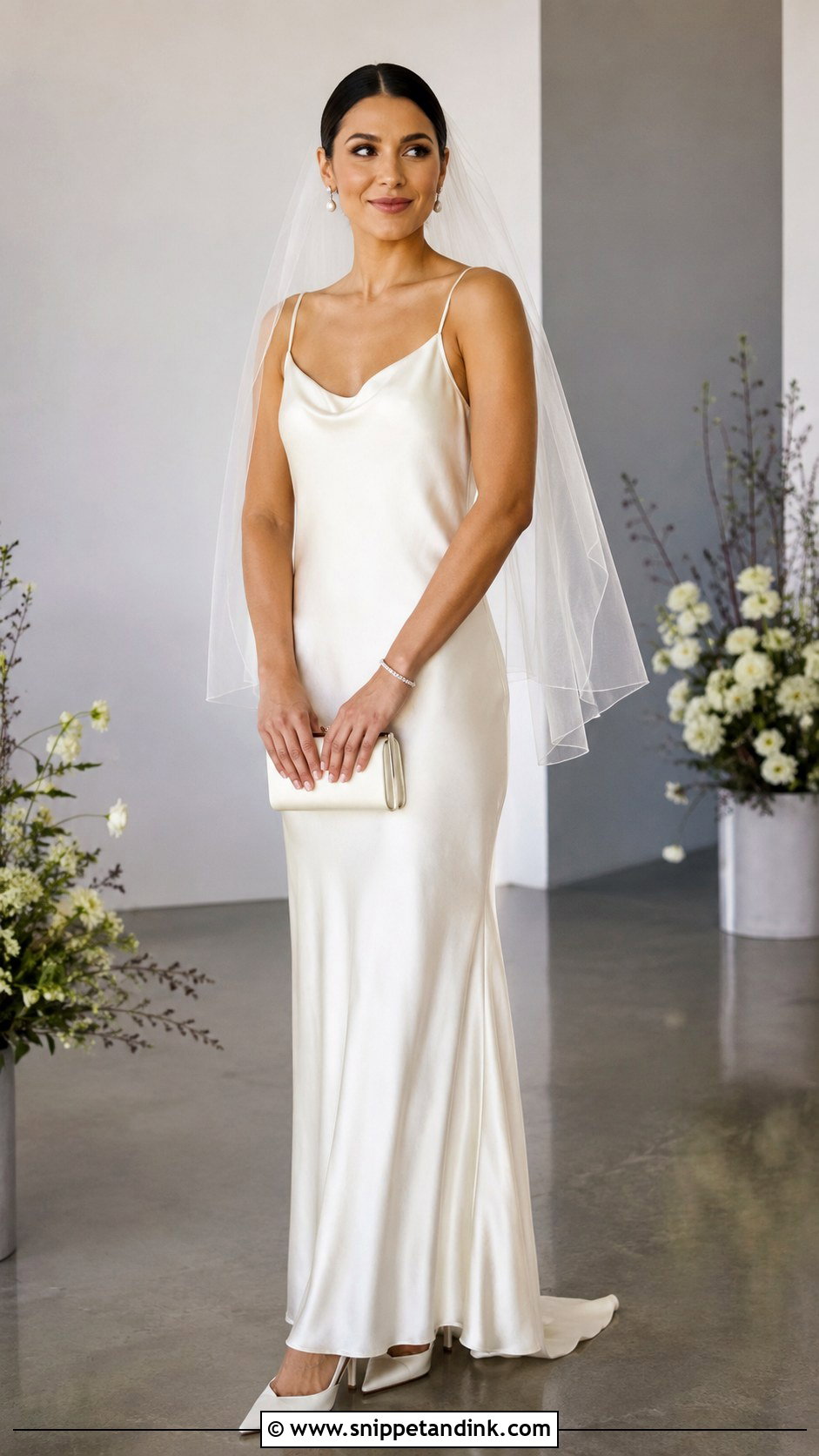
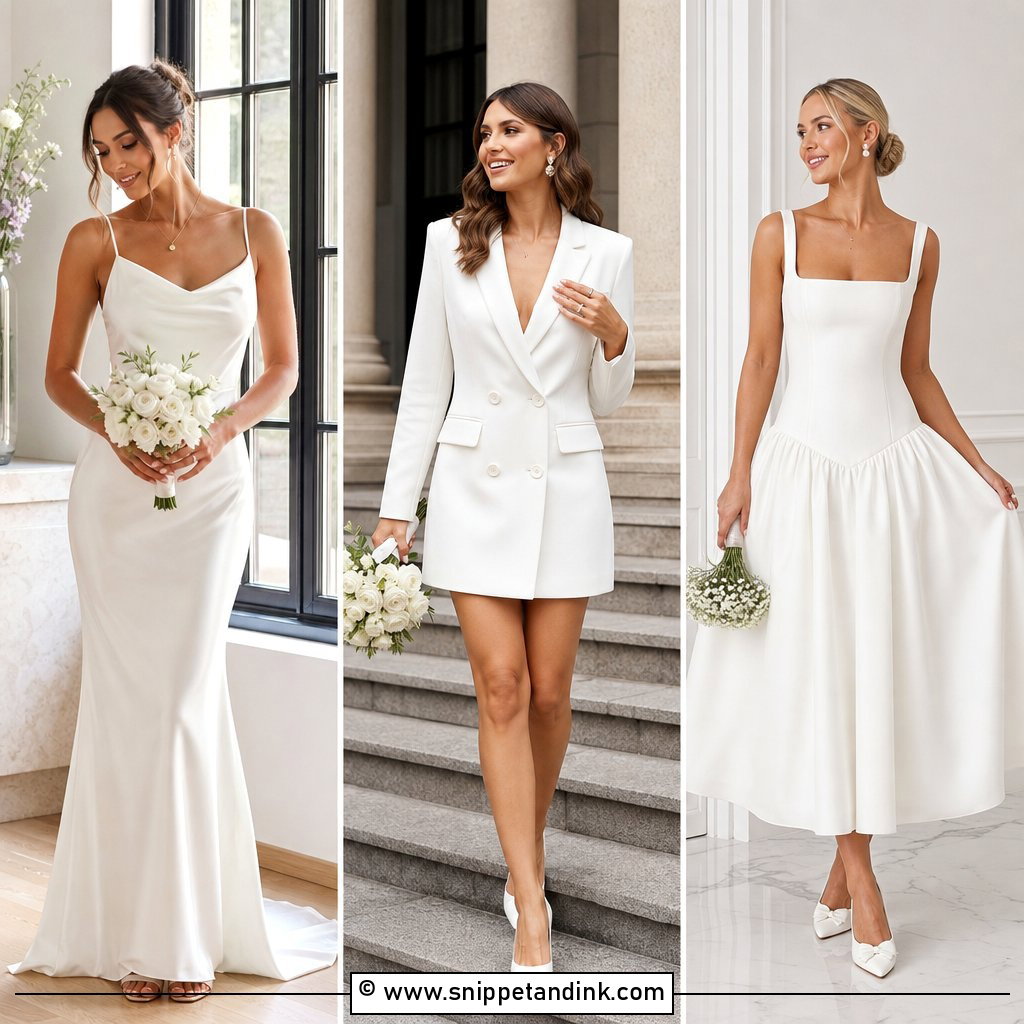
A bias-cut satin slip is the quietest gown on this list and the least forgiving. Bias satin clings and shows every line beneath it, so I fit it over the exact underwear the bride will wear and look for internal structure, especially with thin straps or an open back. Pearl drops, a slim tennis bracelet and pointed slingbacks are enough. A fingertip veil adds softness without hiding the line. A tailored ivory blazer works for arrival photos and comes off before the aisle. A small structured clutch and a low bun or polished waves complete it. Satin creases where you sit, so steam it on the morning and stand for the car ride if you can.
3. Lace A-Line Bridal Outfit
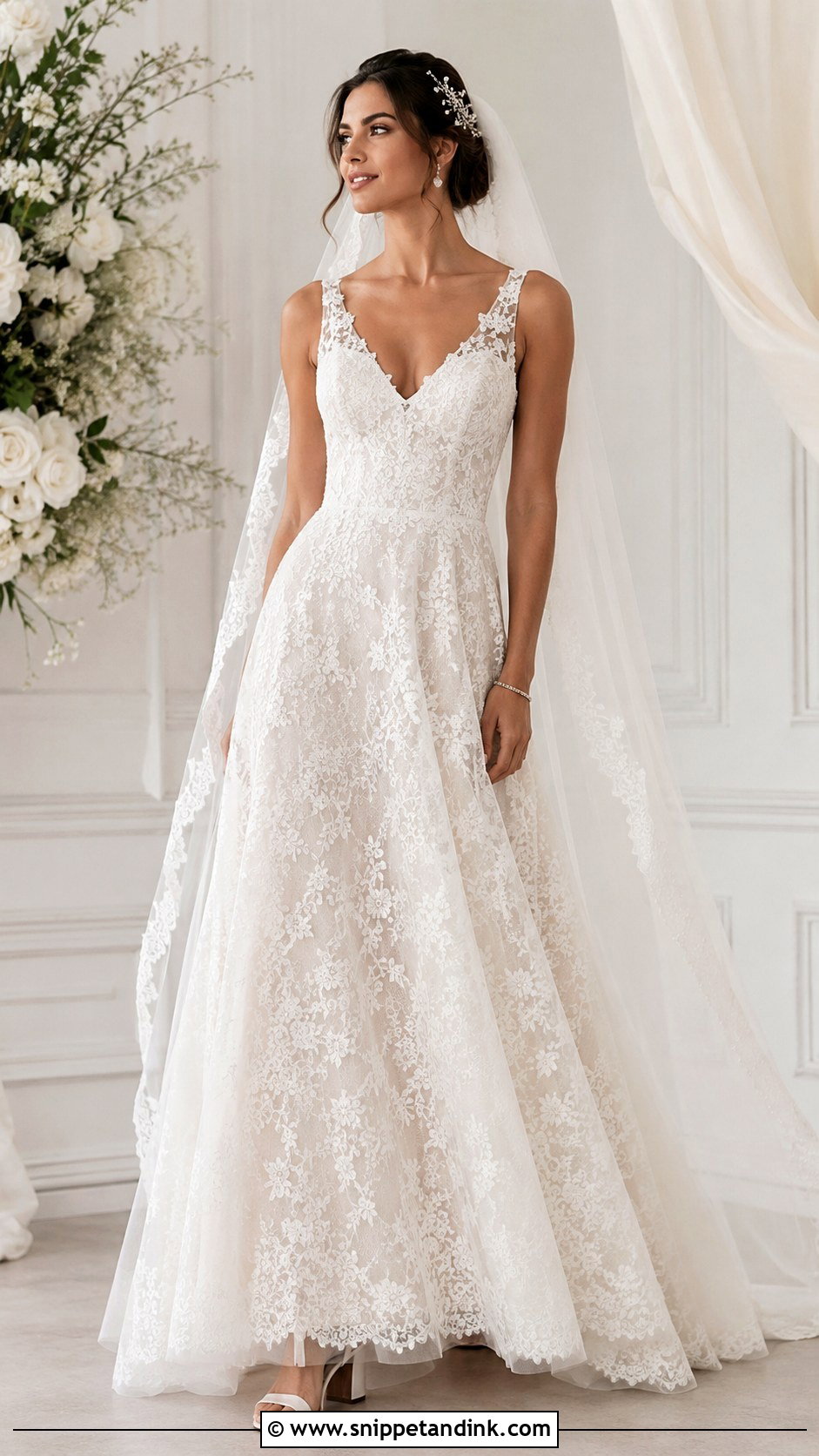
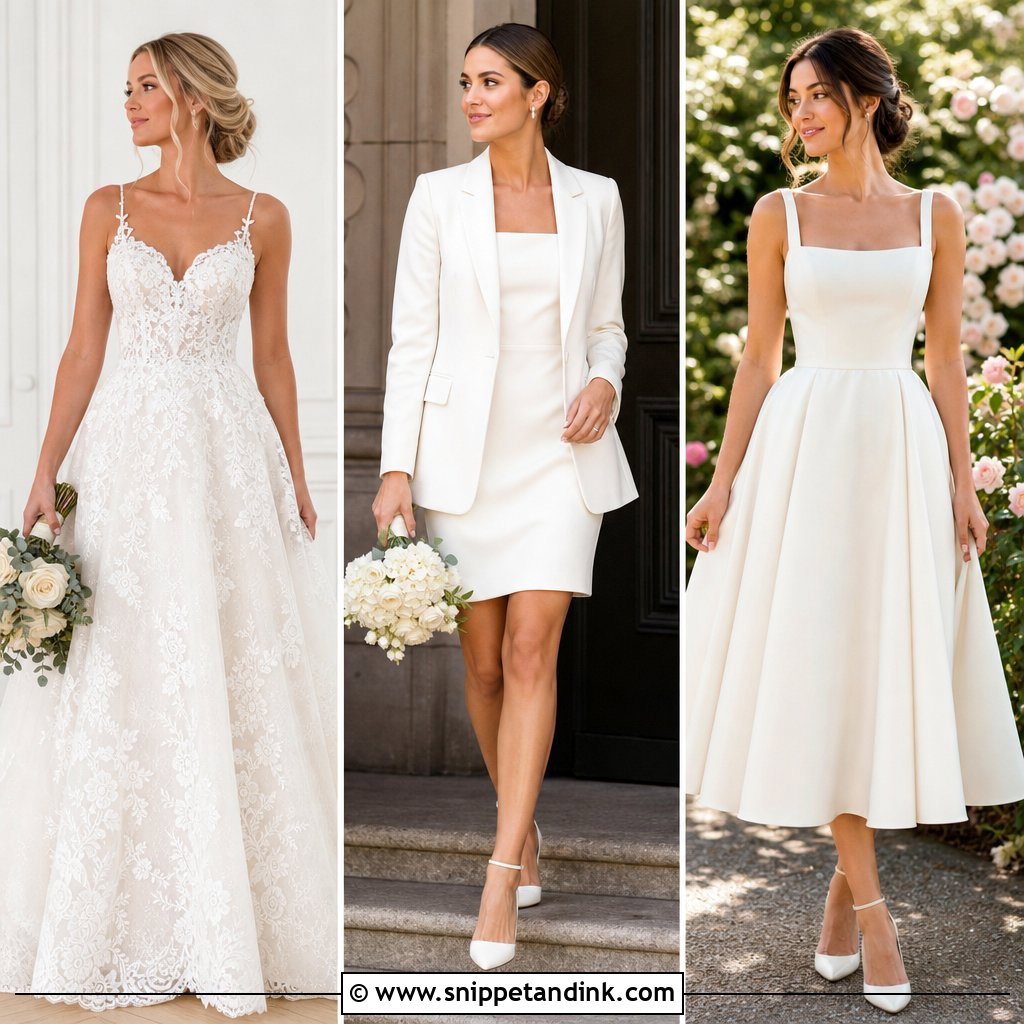
A lace A-line is the gown I’d suggest to a bride who wants romance but plans to dance all night. Look for a fitted bodice that releases gently at the waist, not a skirt with so much volume you can’t find your feet. Floral lace, scalloped edges and a soft V-neck give definition without heavy beading. Block-heel sandals, pearl studs and a light veil with a narrow lace edge finish it, and a small floral comb can stand in for a tiara. Lining color changes the whole look: a skin-tone lining makes the lace pattern stand out, while ivory lining softens it. Sit and raise your arms in it before any alterations are agreed.
4. Long Sleeve Crepe Bridal Outfit
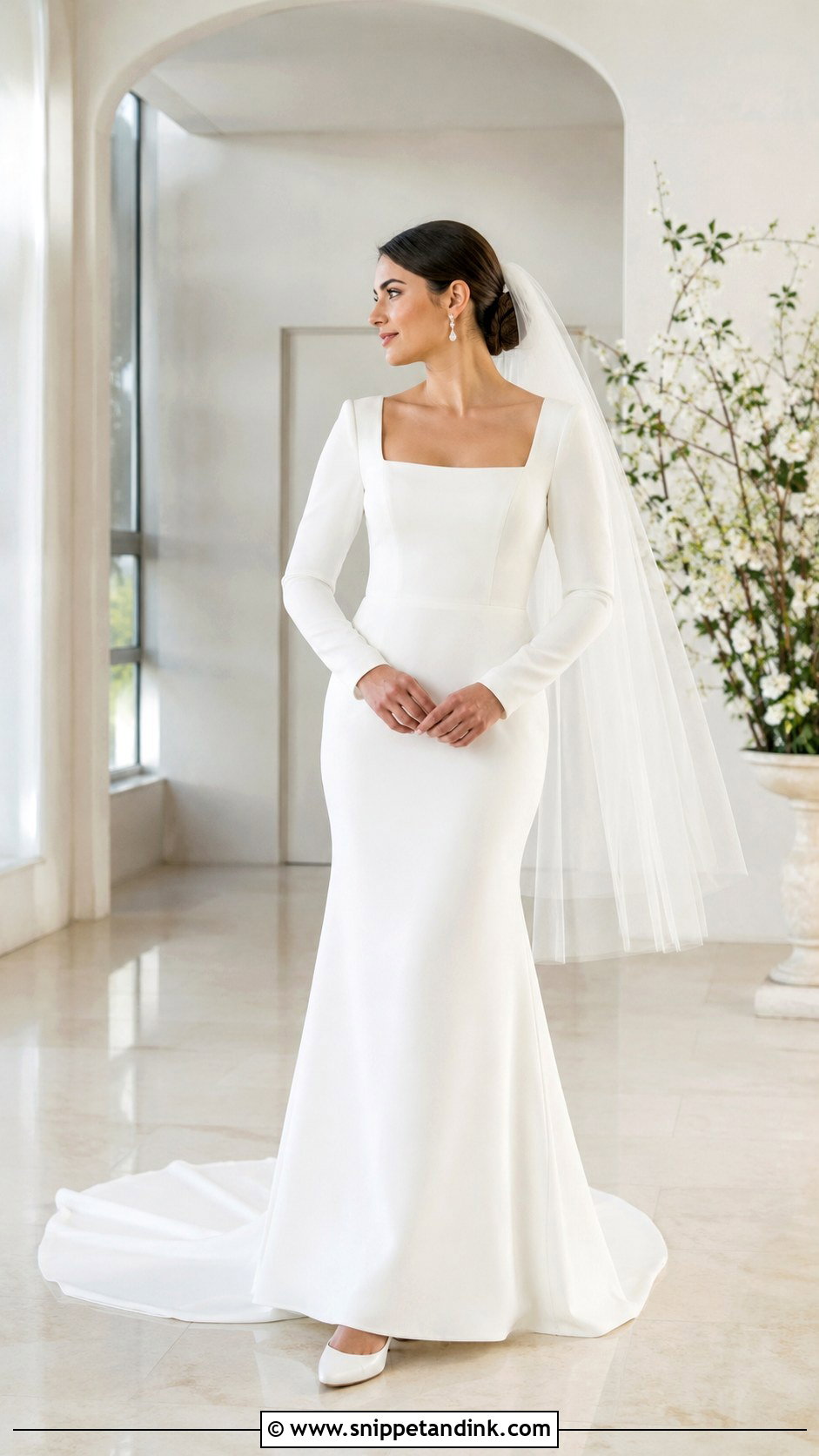
Long-sleeve crepe is clean, modern and warm enough for a cool-season wedding. A column or soft fit-and-flare with a defined waist works best, in a heavy, smooth crepe. Covered buttons, a square neck or a low back add interest. Crystal earrings, closed-toe pumps and a chapel veil complete it, with an ivory wool coat or faux-fur wrap for outdoor photos. Sleek hair keeps the shoulders visible. Crepe is honest fabric: if the gown is even slightly too tight across the hips, it shows pulling lines, so I’d always rather a tailor takes it in a little than squeeze into a smaller size. Get the sleeve length right too; it should end at the wrist bone, not cover the hand.
5. Tea-Length Civil Ceremony Bridal Outfit
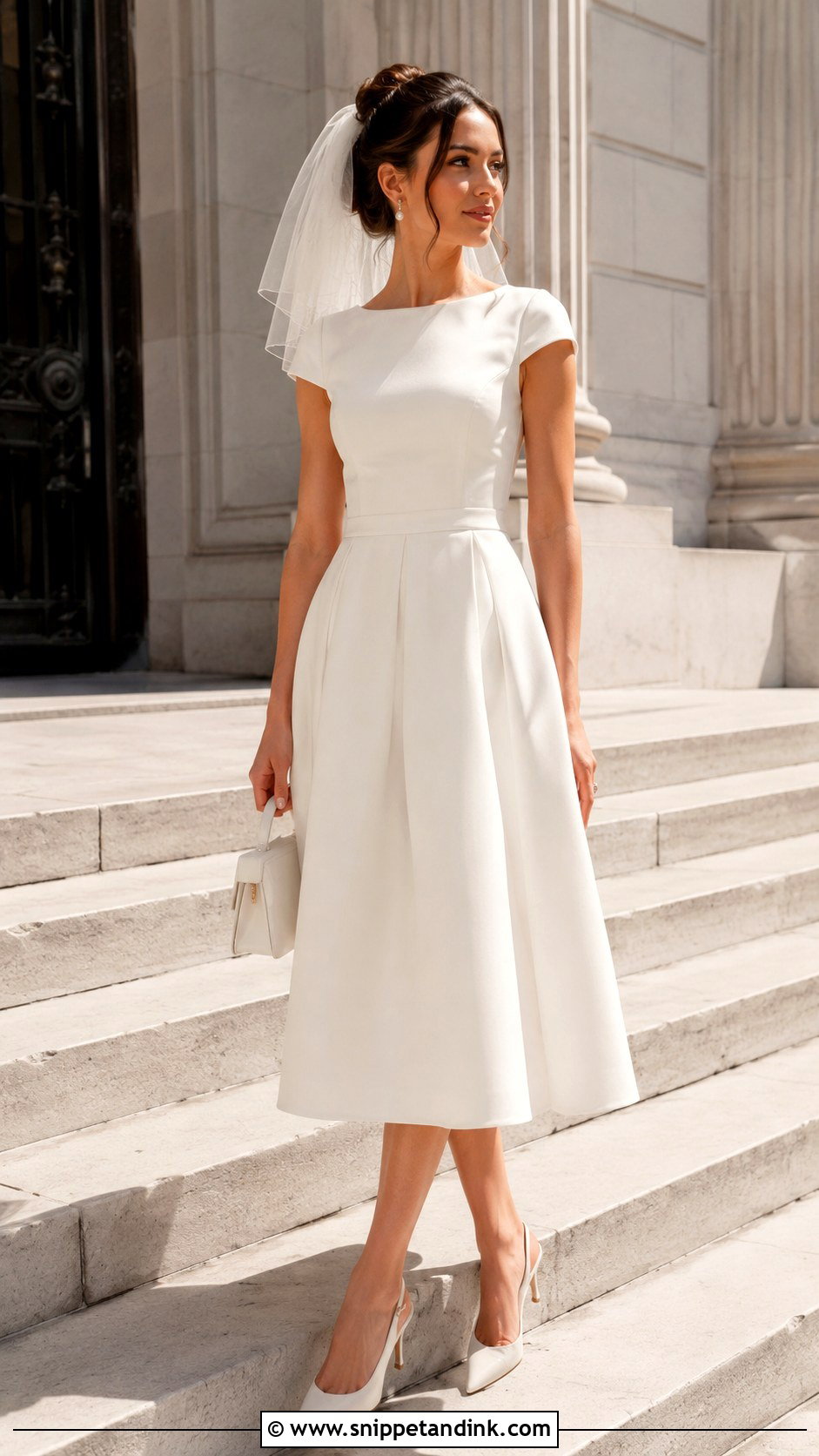
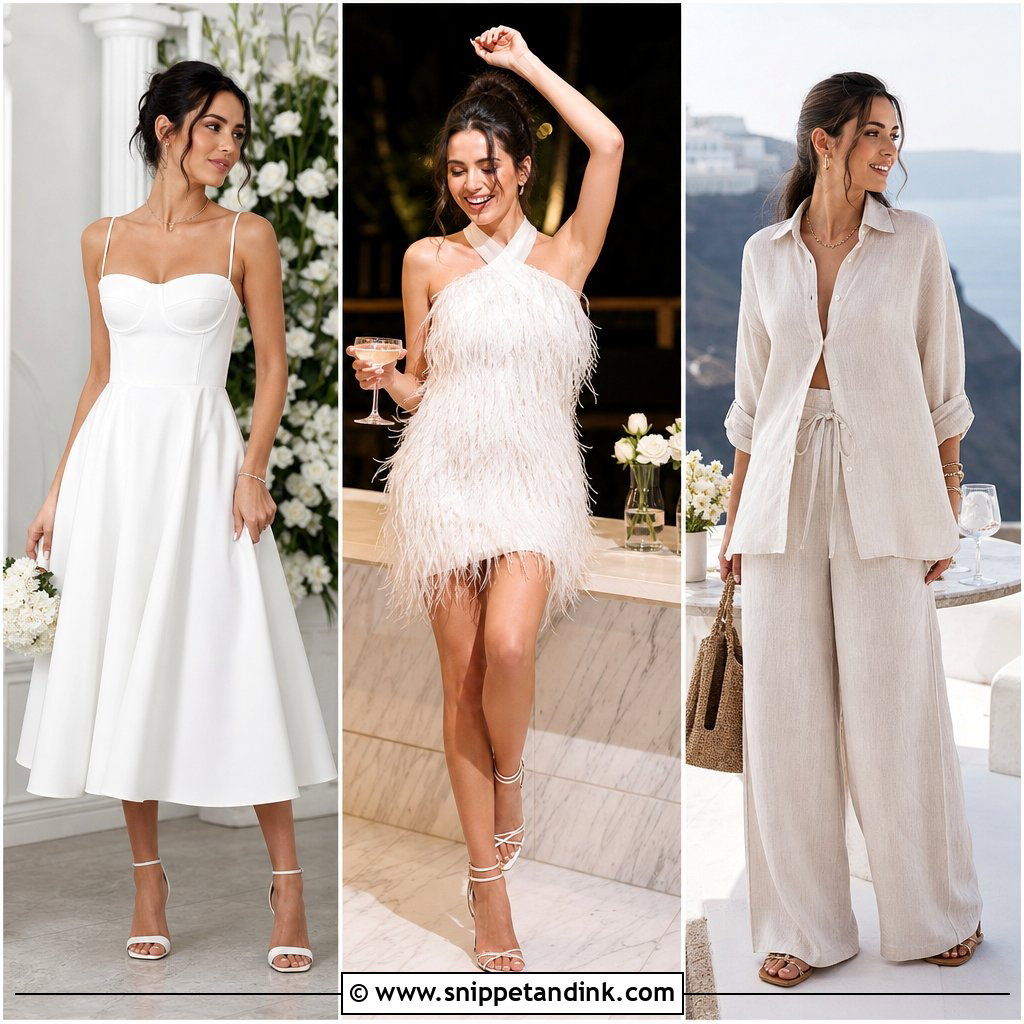
Tea length is my favorite for city hall: it’s clearly bridal, it’s easy to walk in, and it shows off the shoes. Choose a structured skirt that ends between knee and ankle with a fitted waist. Pointed pumps, slingbacks or embellished low heels are part of the outfit here, not an afterthought. Pearl earrings, a top-handle bag and a short veil or birdcage headpiece finish it. A cropped blazer adds warmth without spoiling the proportions, and a padded headband suits brides who don’t want a veil. Because the hem is at eye level in photos, check that it hangs evenly from the front, sides and back. It moves straight on to lunch or drinks.
6. White Tailored Suit Bridal Outfit
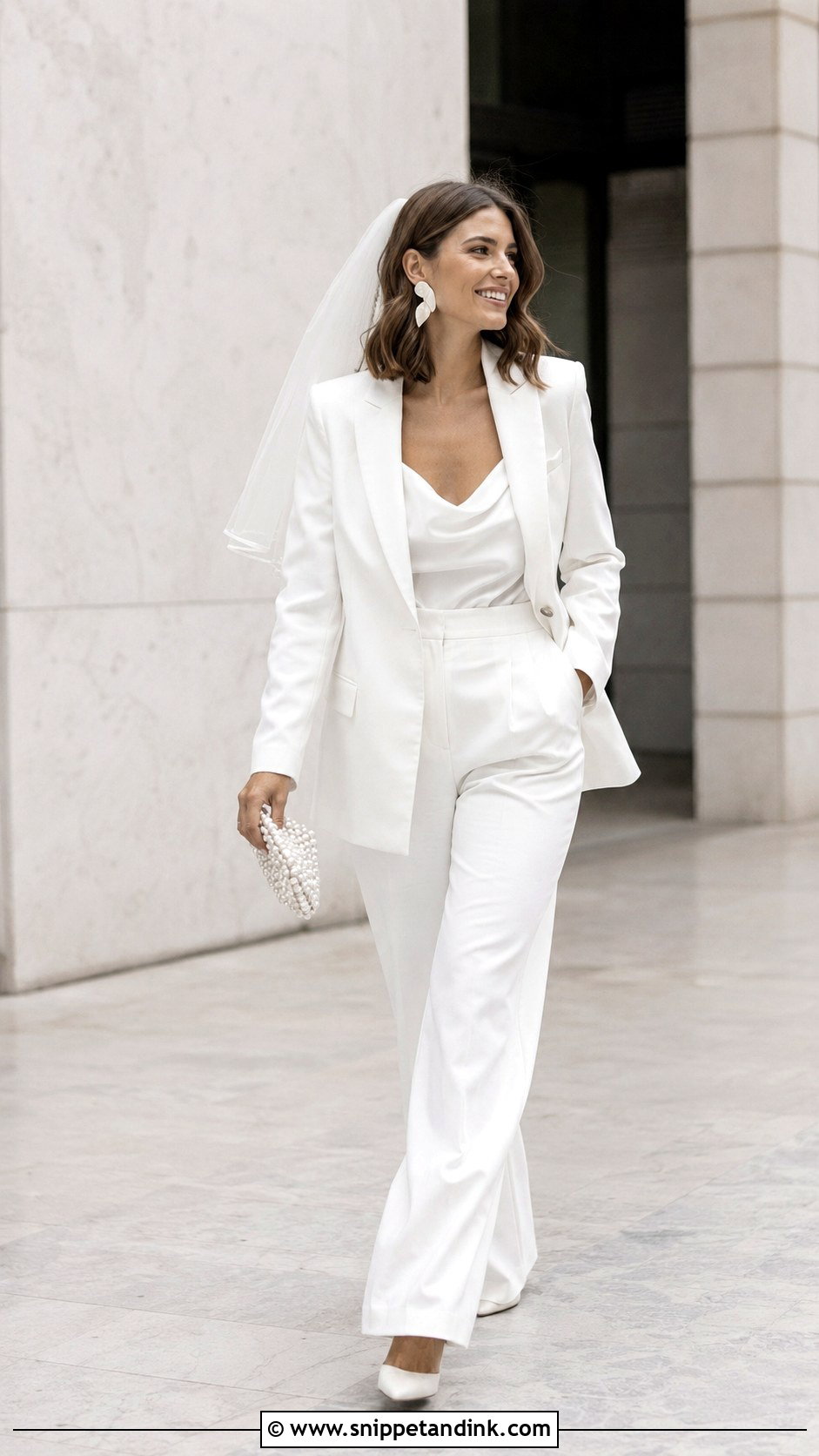
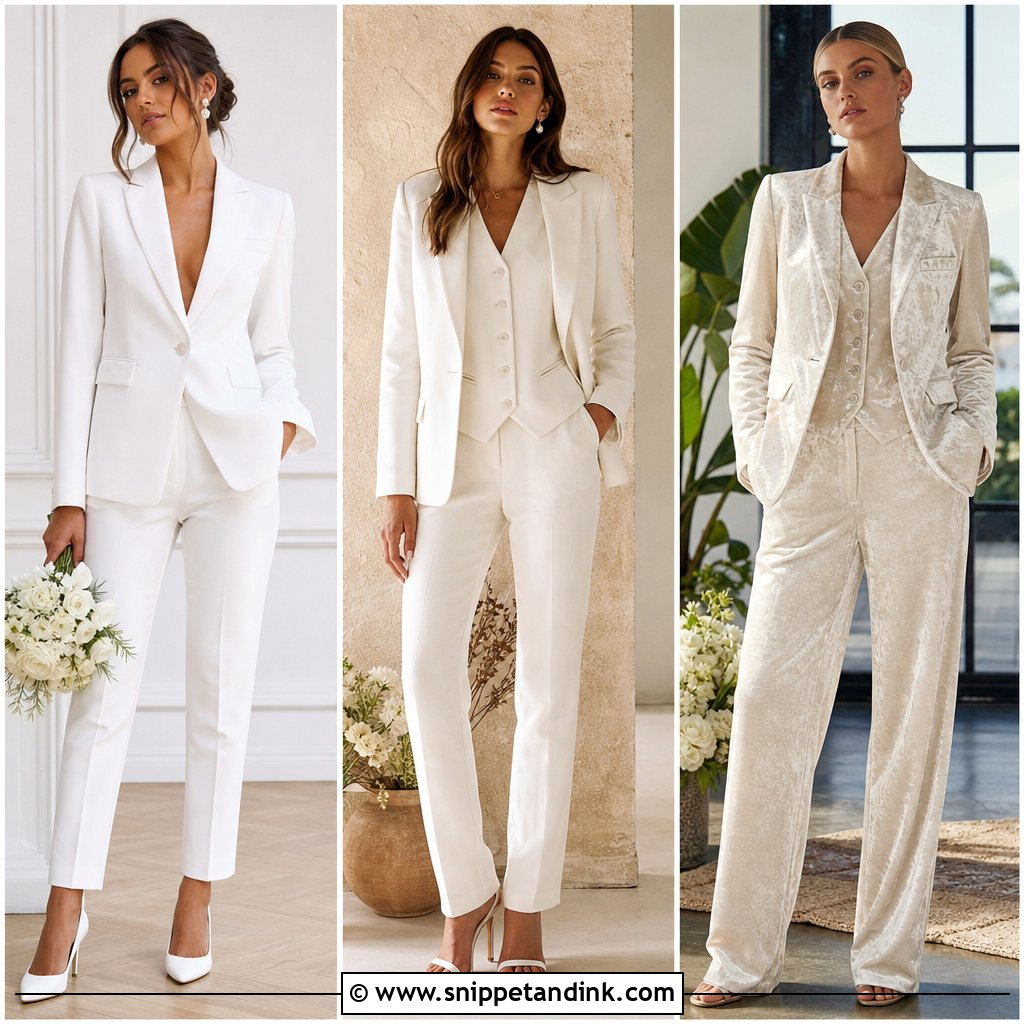
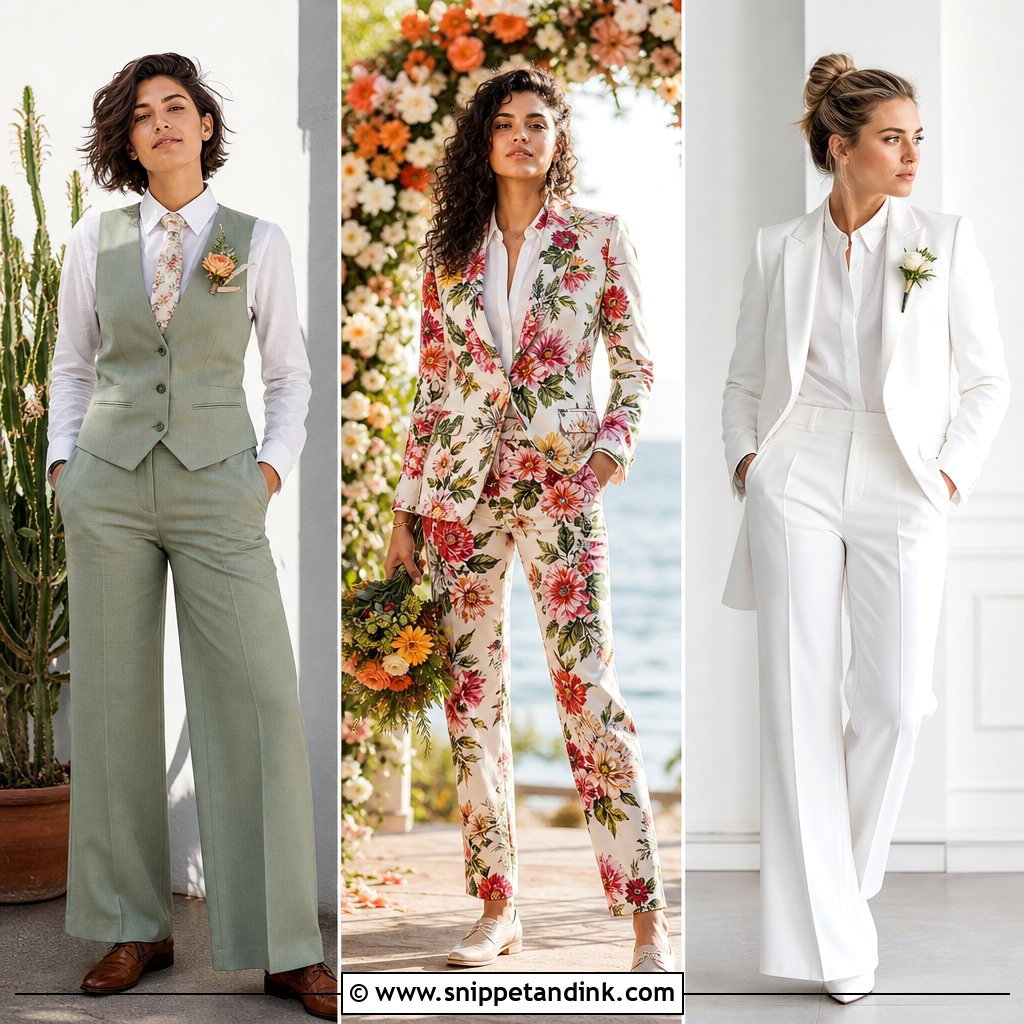
A white suit is a confident choice, and it lives or dies on tailoring. The blazer should button without pulling across the bust, and the trousers should just skim the floor in your wedding shoes. Underneath, a silk cami, lace-trimmed top or structured corset in the same white. Pointed pumps lengthen the leg; metallic heels give contrast. Sculptural earrings, a small clutch and a shoulder-length veil make it unmistakably bridal. Petite brides usually look best in a single-breasted jacket with a higher waist. For the party, drop the blazer, add a statement necklace and you have a second look in two minutes.
7. Bridal Jumpsuit Outfit
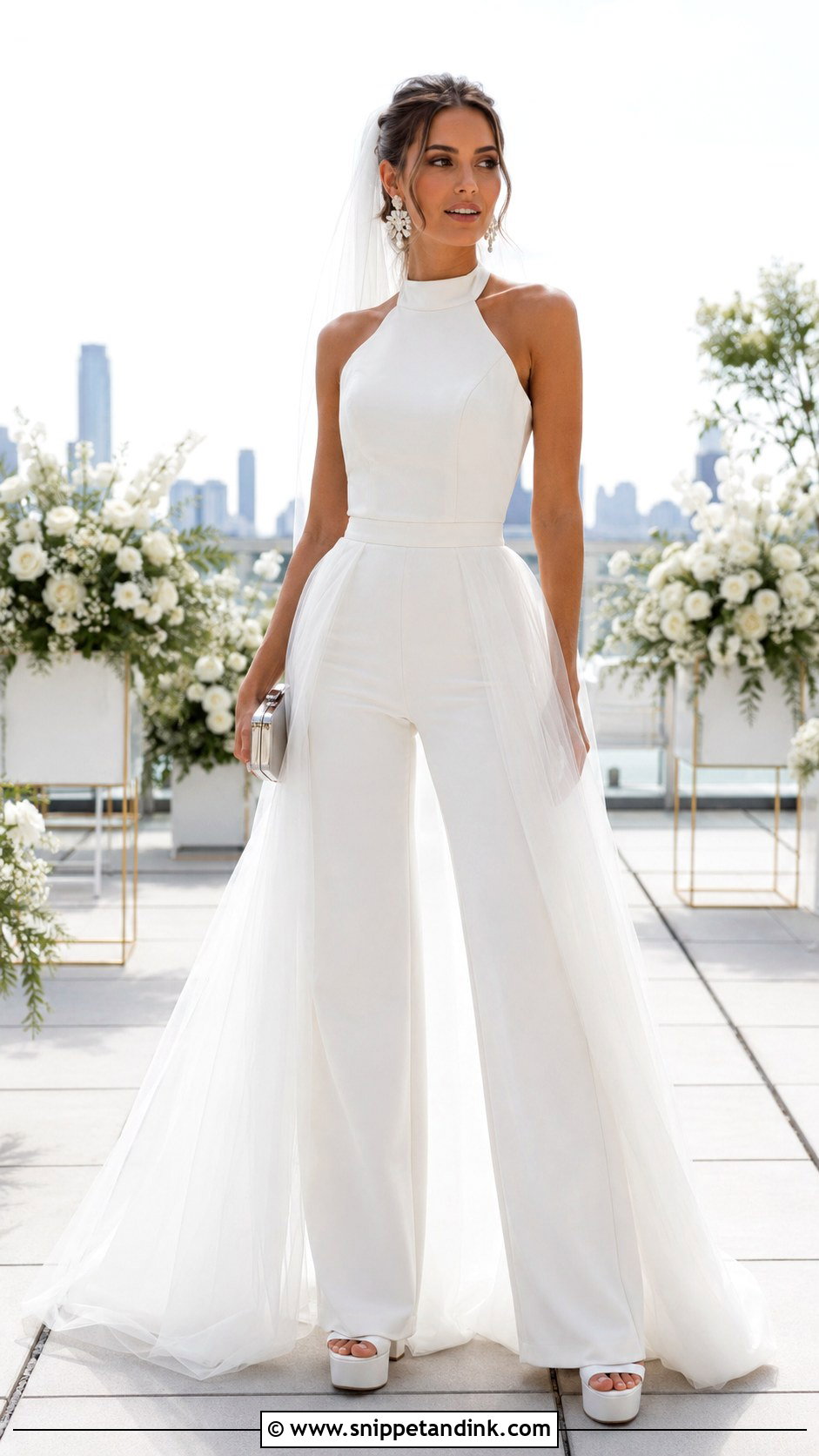
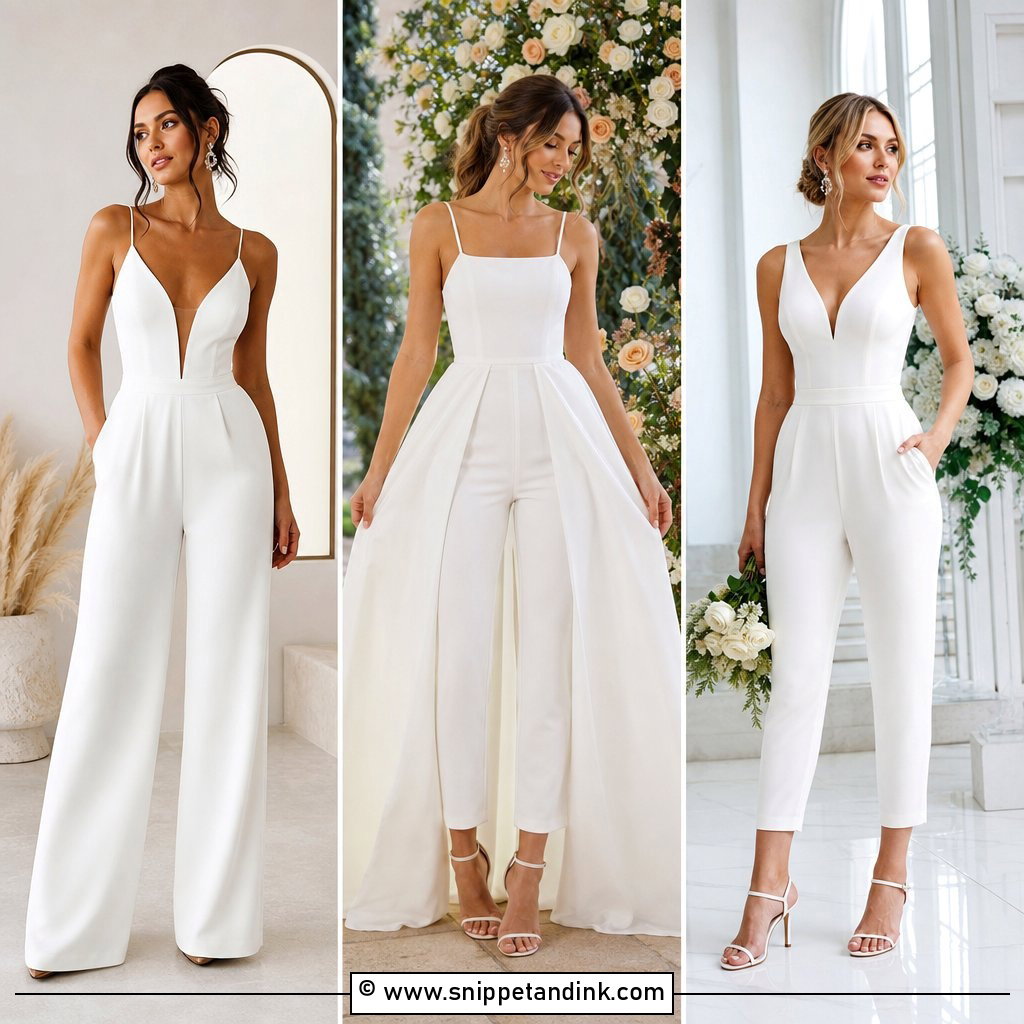
A bridal jumpsuit gives you the impact of a gown with the freedom of trousers. Choose a defined waist, a supportive bodice and wide legs that swing when you walk. A halter, off-shoulder detail or detachable overskirt makes it feel ceremonial. Platform heels or pointed pumps depending on the length, plus a fingertip veil, bold earrings and a metallic or pearl clutch. Keep everything else minimal. The rise is where jumpsuits go wrong: too short and you can’t sit, too long and the crotch sags. I have brides do a deep squat in the fitting room before we pin anything. It’s a natural pick for a civil ceremony or a dance-floor change.
8. Two-Piece Bridal Skirt Set
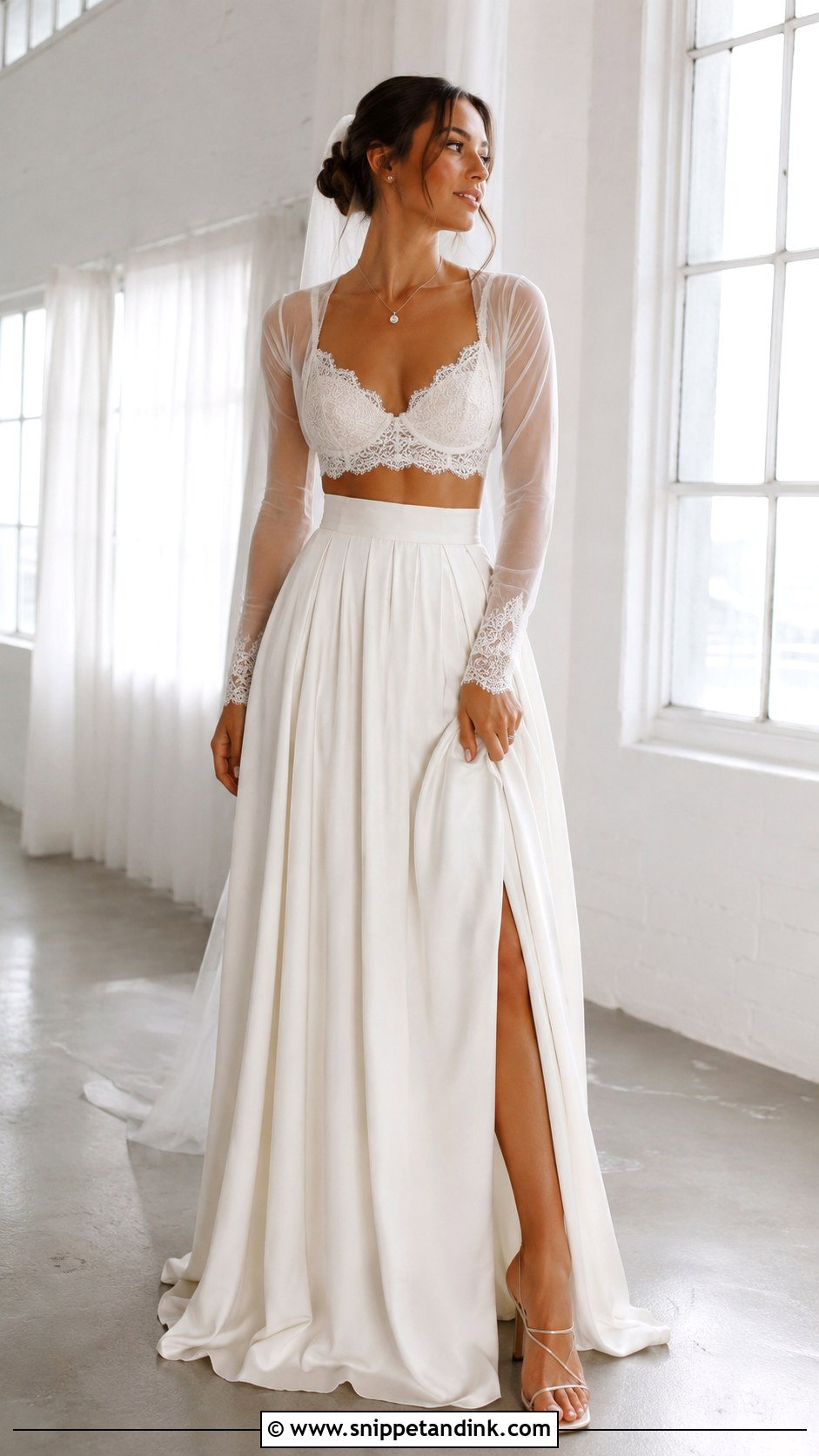
Bridal separates let you size the top and skirt independently and wear each again. A fitted lace or satin top with a high-waisted flowing skirt in the same white works best. A small gap of skin looks modern; an overlapping waistband gives more coverage. Delicate sandals, a fine pendant and a veil tucked under a low bun complete it. If the top is detailed, keep the skirt plain. A cropped jacket or sheer long-sleeve overlay adds a ceremony layer. Check the two whites together in daylight, since an ivory skirt next to a bright white top looks like a mismatch in photos. Both pieces can be restyled later.
9. Beach Chiffon Bridal Outfit
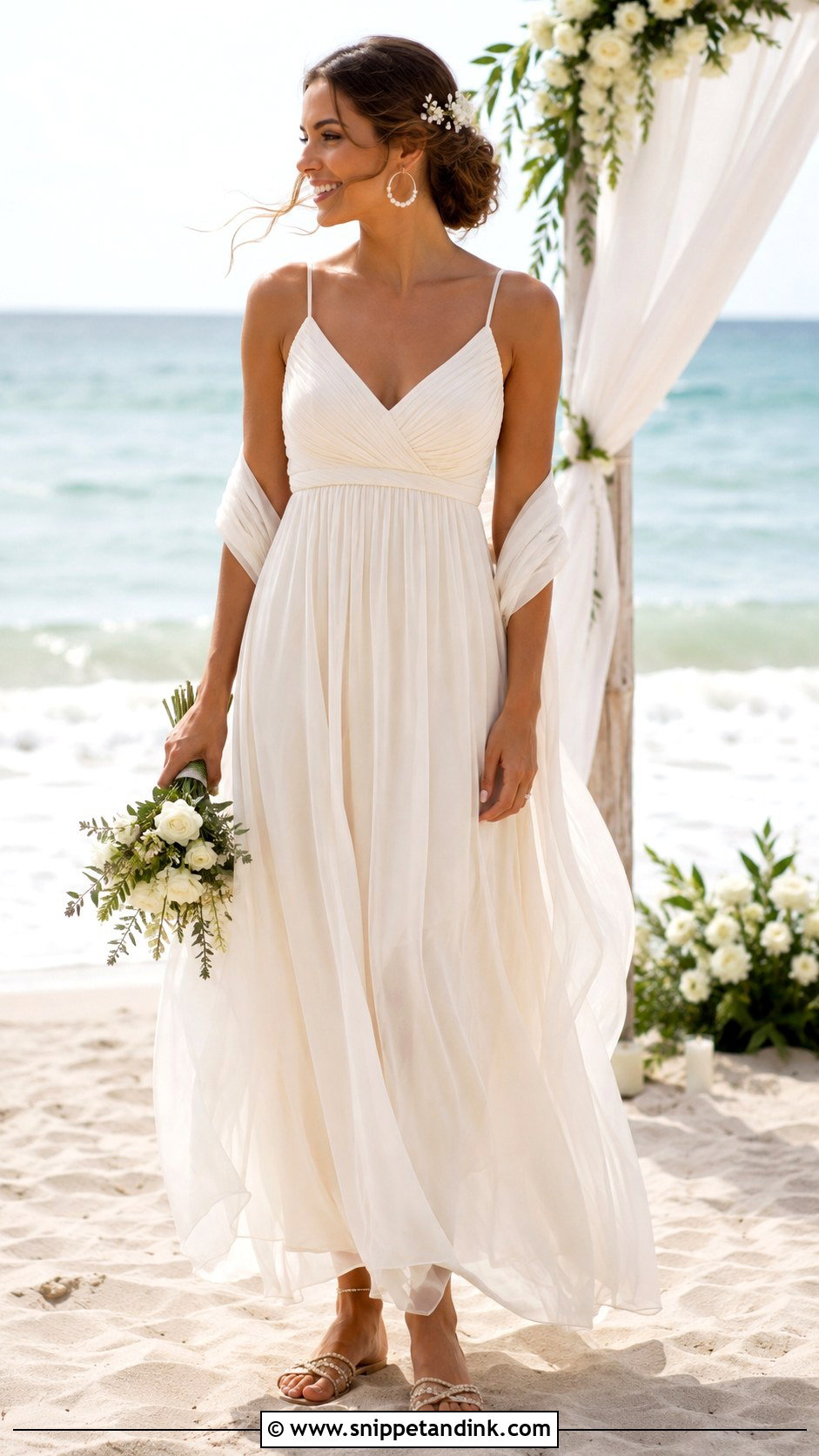
Chiffon is the beach fabric because it moves in wind instead of fighting it. Choose an A-line or empire-waist dress with a secure bodice and little or no train; a long train collects sand and drags. Keep veils short or skip them, since a cathedral veil on a windy shore ends up wrapped around your face. Flat embellished sandals, espadrilles or barefoot sandals if the venue allows. Small pearl hoops, a fine anklet and a floral comb pinned in firmly are enough. A sheer wrap covers your shoulders after sunset. Choose breathable lining, skip heavy beading and keep the bouquet compact.
10. Floral Appliqué Garden Bridal Outfit
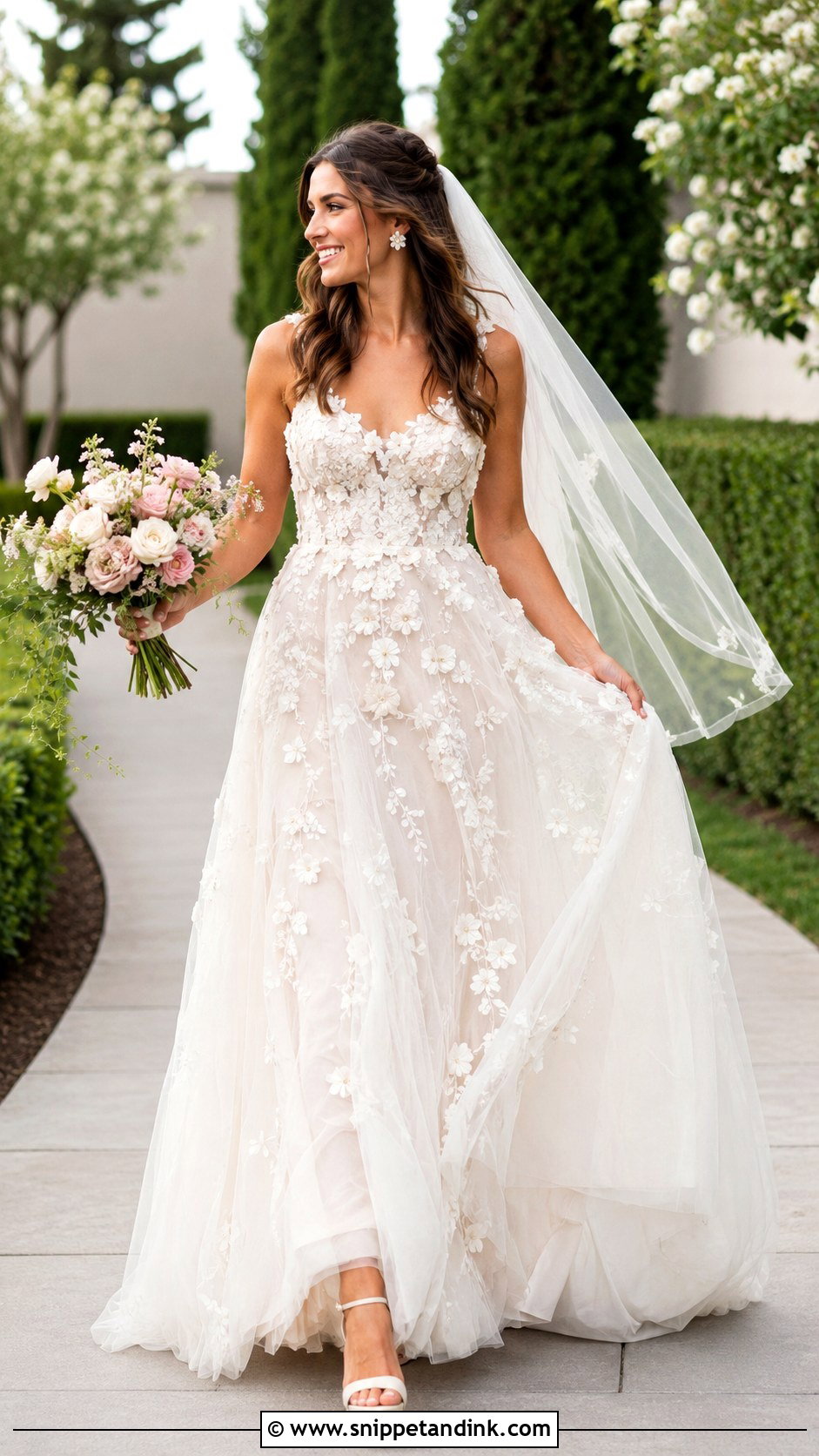
Dimensional appliqué belongs in a garden, where the petals on the gown echo the planting around you. Choose an A-line or fit-and-flare with embroidered leaves, blossoms or scattered 3D petals, and keep accessories quiet. Nude or ivory block heels won’t sink into lawn the way stilettos do. Floral studs, a sheer veil without heavy trim and a small bouquet are plenty, with a soft updo to keep hair tidy outdoors. If the appliqué has color, repeat just one shade in the flowers or shoes, never all of them. 3D petals can snag on a lace veil, so I’d keep the veil plain tulle.
11. Winter Cape Bridal Outfit
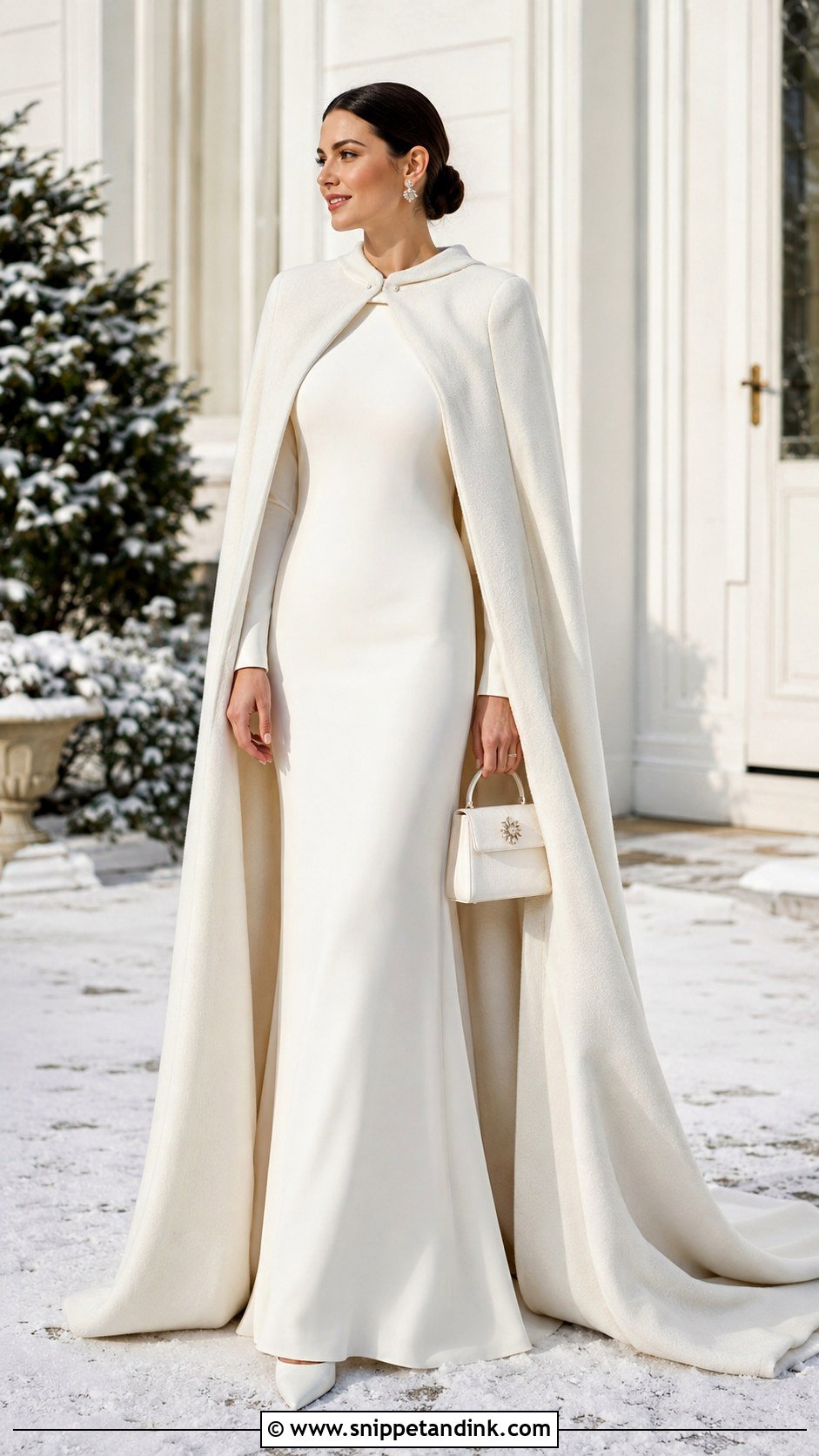
A cape keeps a winter bride warm without hiding the gown. Start with a long-sleeve satin, crepe or mikado dress with a clean line. Add a floor-length ivory cape, wool-blend for outdoor photos or light tulle indoors. Closed-toe pumps, crystal earrings and a small structured bag complete it. In real cold, I’d add skin-tone thermal tights and a thin thermal layer under a fully lined gown; nobody sees them. A low bun stops hair tangling in the cape’s neckline. Check the clasp doesn’t sit on beadwork, where it can pull threads. When the cape comes off, the gown underneath should look finished on its own.
12. Plus Size Corset Ball Gown Bridal Outfit
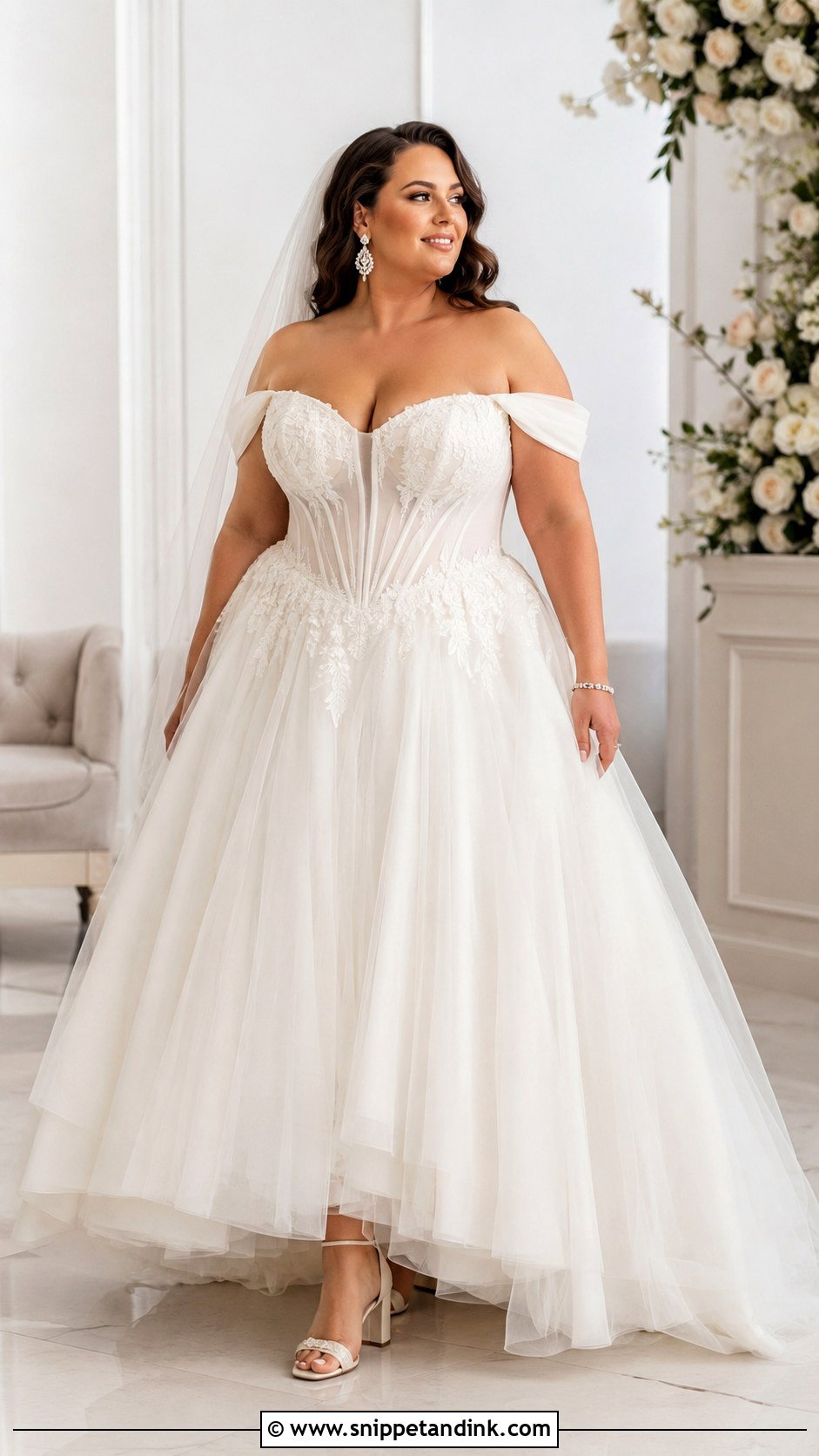
A corset ball gown is one of the most comfortable gowns for a plus-size bride when it’s built properly, because the boning takes the work of a bra. Look for real boning, wide-set straps or an off-shoulder neckline that feels secure. A basque waist gives shape; a natural waist is simpler. Layered tulle or mikado balances the volume. Add stable block heels, statement earrings and a veil that falls past the shoulders. The bodice should feel snug but never stop you breathing deeply. I ask brides to sit, walk and lift their arms while the tailor watches, because that’s when a corset that fits standing shows where it pinches. Many brides need no extra bra at all once it fits.
13. Petite Column Dress Bridal Outfit
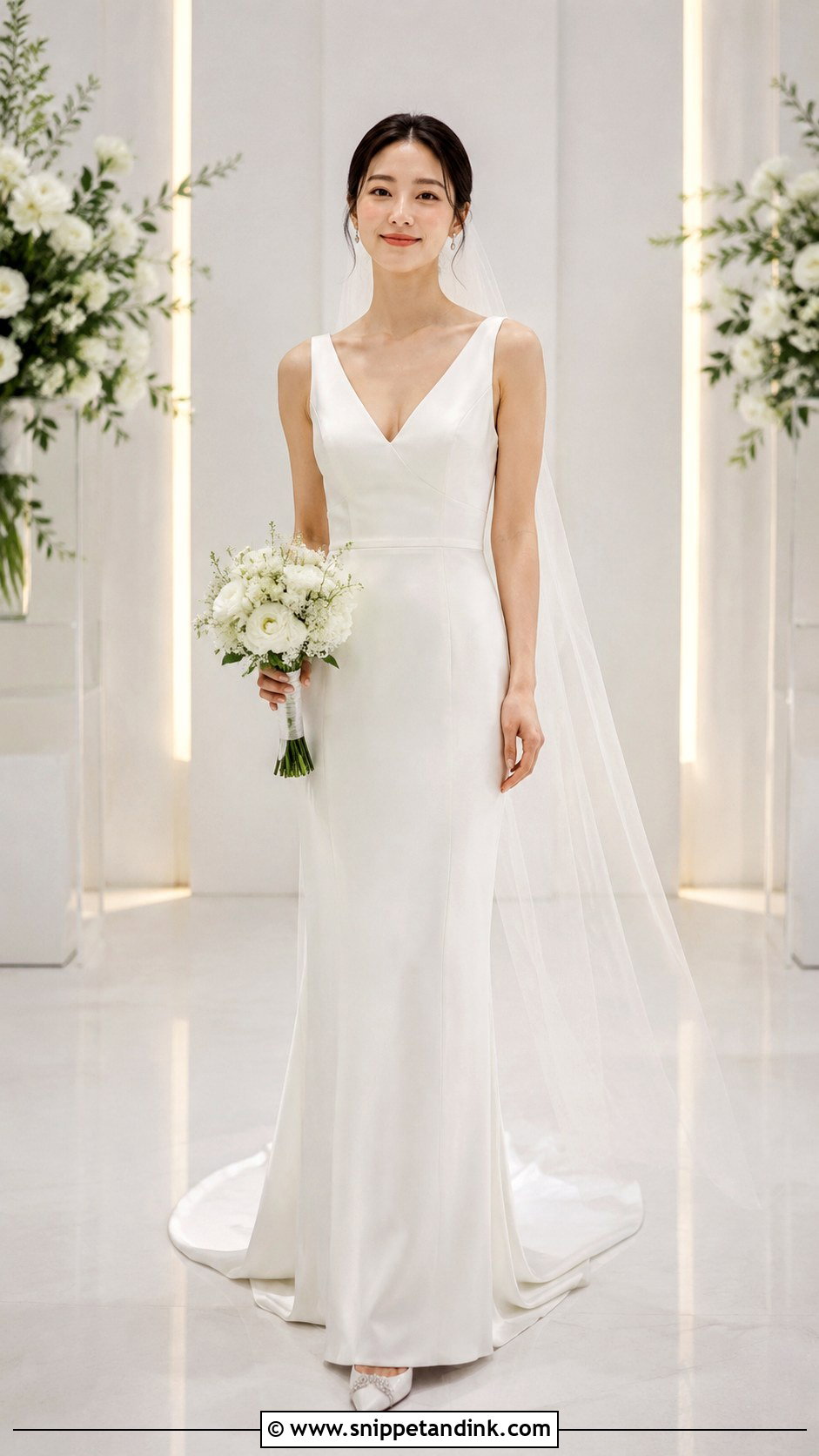
Petite brides often get swallowed by fabric, and a column dress is the fix. Look for a high waist, vertical seams and a narrow skirt that still allows a full stride. A V-neck or halter draws the eye up, and a short, light train adds bridal impact without extra weight. Pointed heels, small drops and a narrow veil set high on the head add height. Keep belts thin so they don’t cut you in half, and choose a compact bouquet; a huge cascade overpowers a small frame. The hem should just kiss the shoe, as pooling fabric costs you height in every photo.
14. Maternity Empire Waist Bridal Outfit
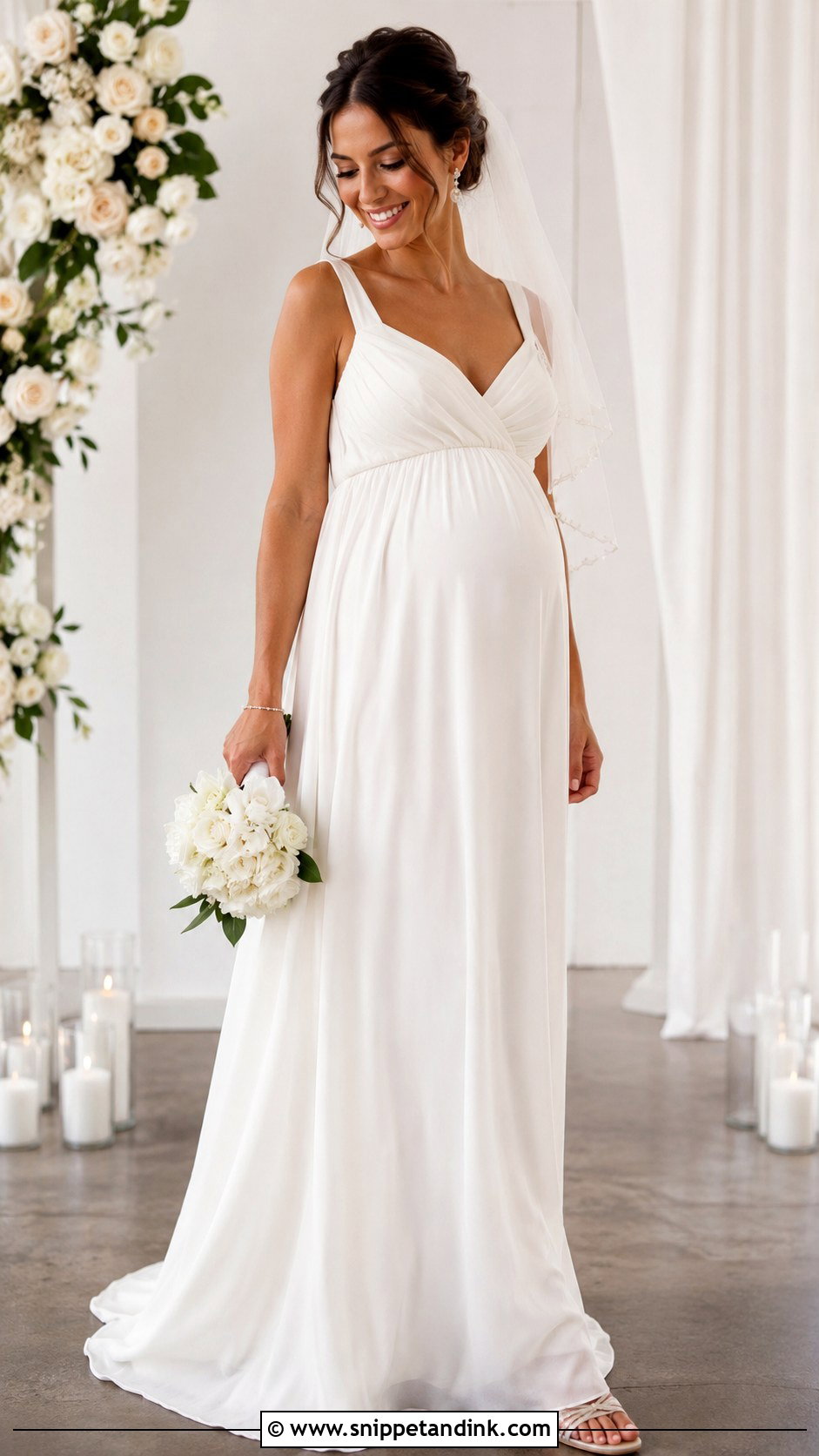
An empire waist gives room and a graceful shape for a pregnant bride. Choose lightweight chiffon, soft jersey or stretch-lined lace that falls from just below the bust. Adjustable straps, supportive cups and a corset or lace-up back let the dress grow with you. Low block heels, cushioned flats or embellished sandals keep you steady. Light earrings, a short veil and a small bouquet are easy to manage. Book the final fitting as close to the wedding as your seamstress allows, often within two weeks, because the bump can change noticeably in a month. Skip stiff waistbands and heavy beading over the middle. A good maternity bridal outfit lets you sit, walk and celebrate in comfort.
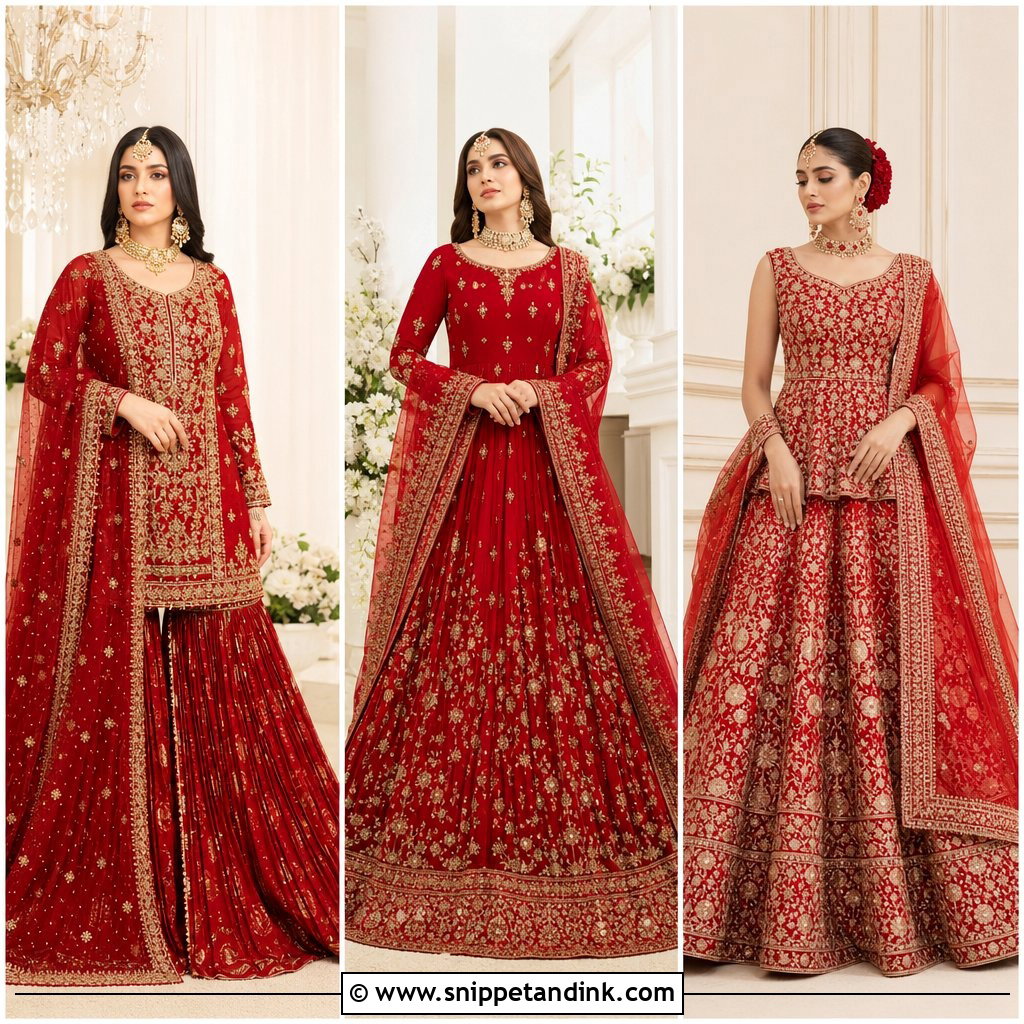
15. Red Lehenga Bridal Outfit
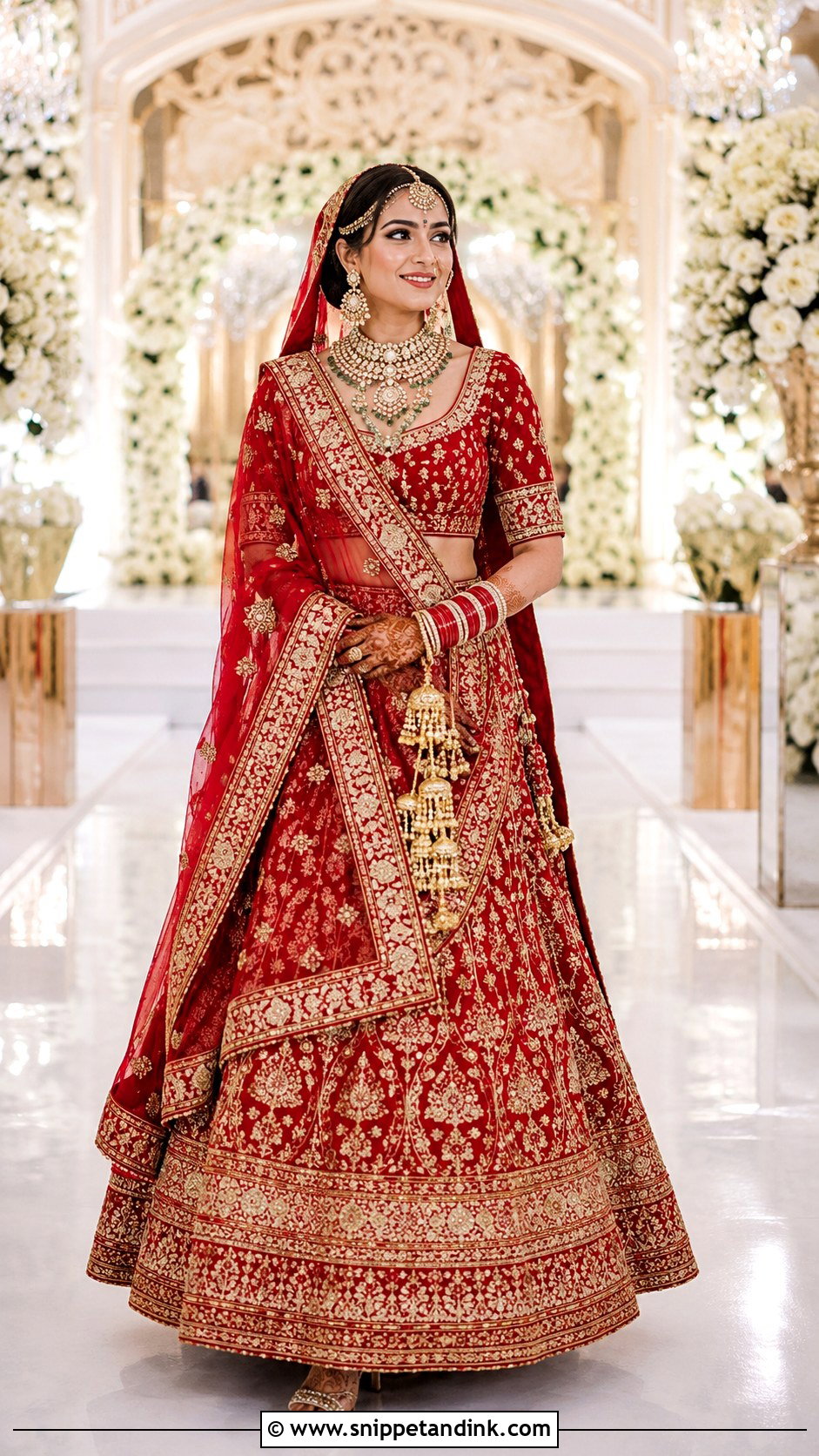
A red lehenga is the traditional choice in many families, and its biggest practical question is weight. Heavy zardozi, sequins and beadwork add up, and a lehenga that feels fine at a ten-minute trial can be exhausting through a long ceremony and reception. Ask for the weight, or wear it for an hour in the shop. A balanced set has an embroidered blouse, full skirt and coordinated dupatta. Style it with a layered necklace, earrings, bangles and a secure headpiece if it suits your traditions. Embellished block heels hide under the skirt. Drape the dupatta so it frames the blouse rather than hiding it. A fitted waistband, a secure blouse hook and well-pinned drape keep it comfortable.
16. Pastel Lehenga Bridal Outfit
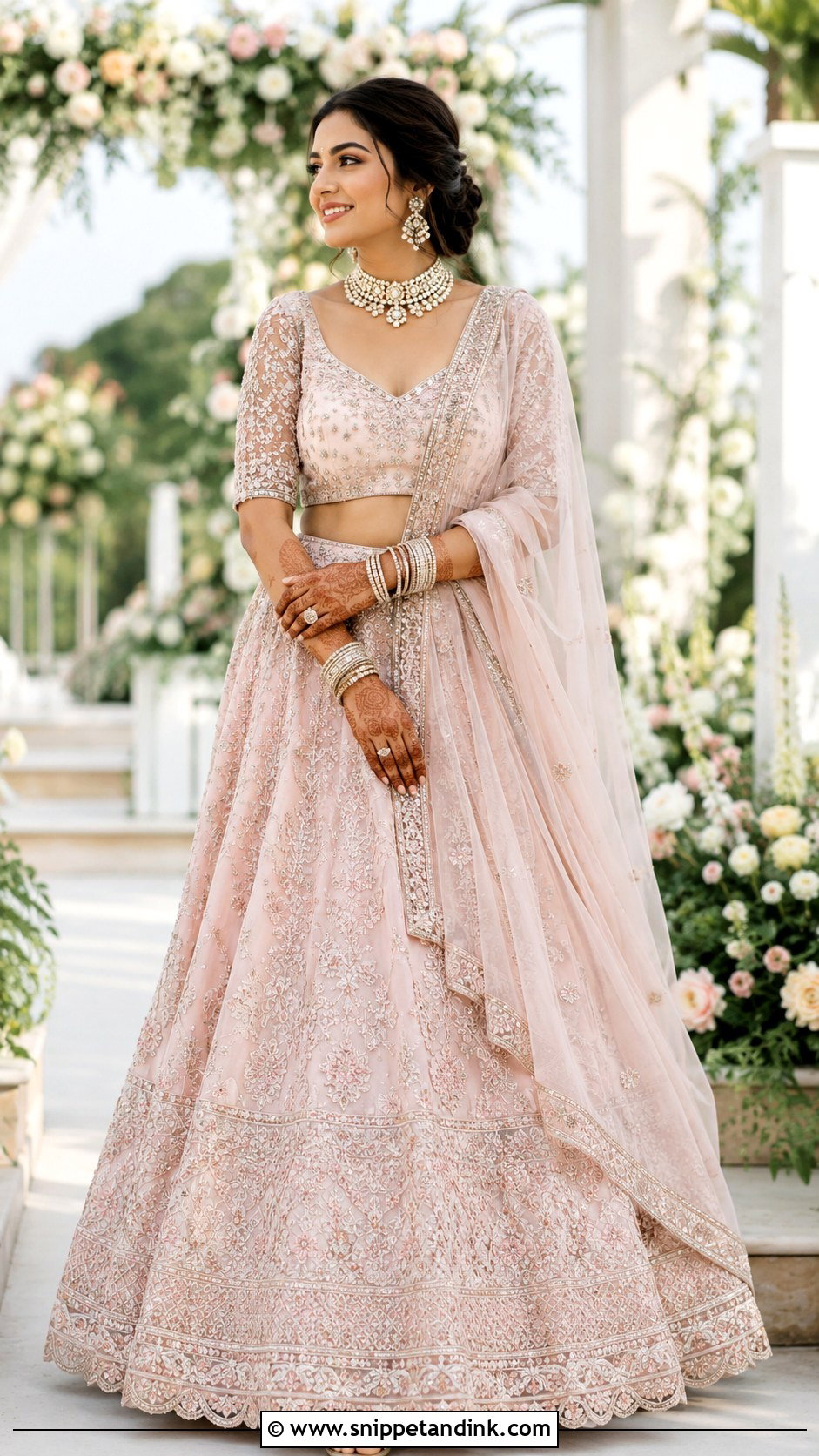
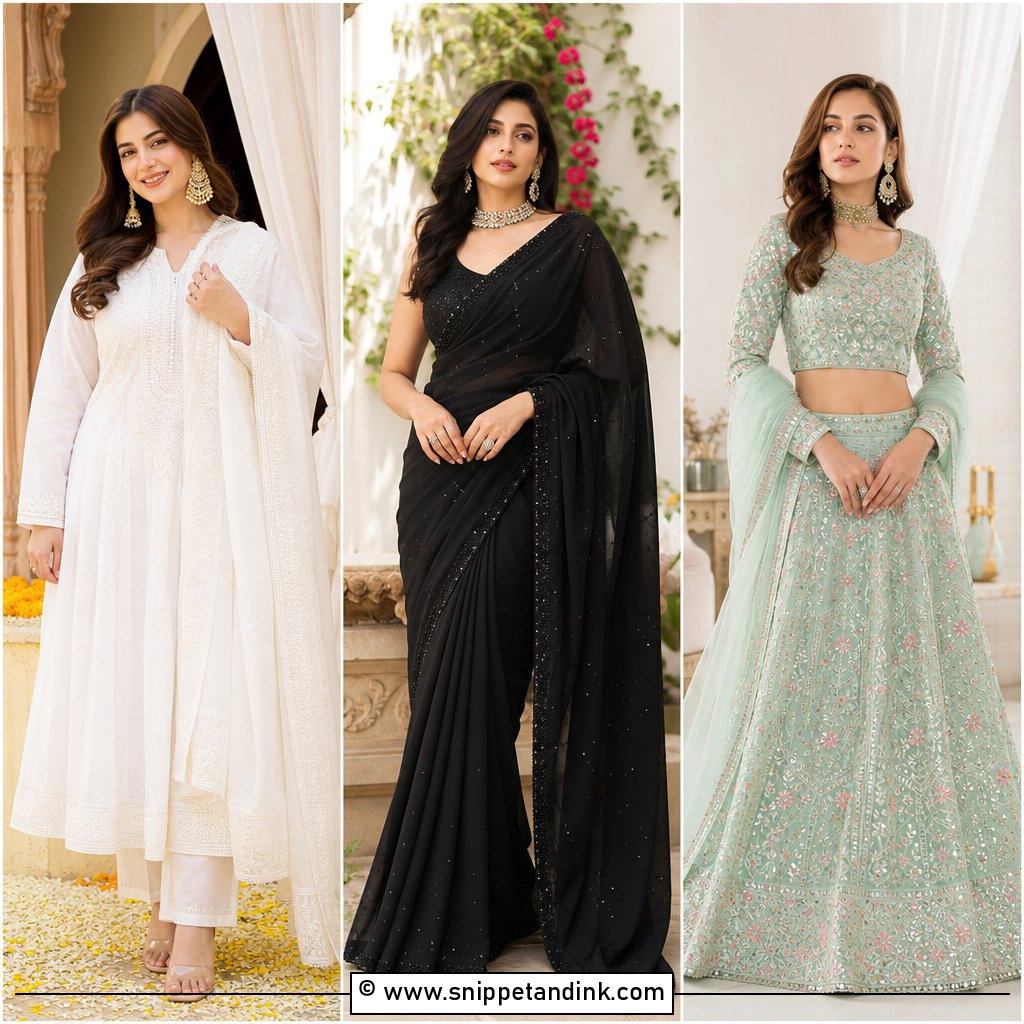
A pastel lehenga keeps all the detail of traditional wear in a softer palette. Blush, powder blue, mint, peach and lavender work well with silver, pearl or tonal embroidery. A structured blouse, flowing skirt and light dupatta that can go over one shoulder or the head make up the set. A choker, drops, bangles and embroidered heels finish it. Choose jewelry that contrasts enough to show against pale fabric. Strong daylight can wash pastels out to near white, so look at the full outfit outdoors before you commit. Slightly deeper eye makeup and a few richer flowers in the bouquet stop the bride fading into the background.
17. Kanchipuram Silk Saree Bridal Outfit
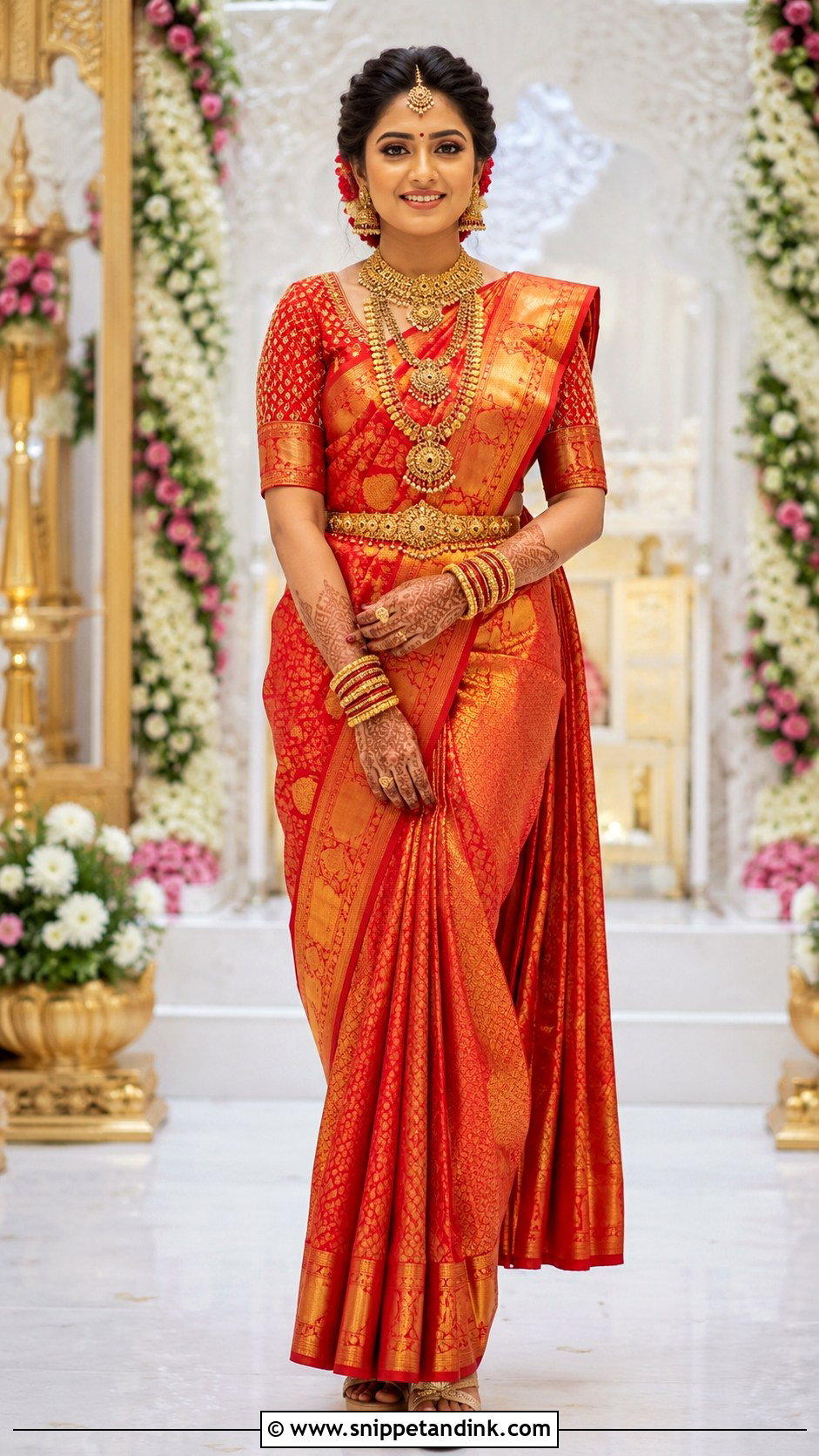
A Kanchipuram silk saree is heavy, woven silk with a rich border, and it needs to be draped by someone who knows it. Choose red, maroon, gold, green or a color tied to your family’s traditions. The blouse should be fitted firmly to carry the saree’s weight and let you lift your arms. Traditional gold jewelry, layered necklaces, earrings, bangles and hair flowers complete the ceremonial look. Put your shoes on before draping, as the hem length depends on heel height. Pin pleats with fine safety pins through the border, not the body of the silk, to avoid snags. A well-tied petticoat spreads the weight around the waist so you can sit and walk comfortably.
18. Pre-Draped Saree Reception Outfit
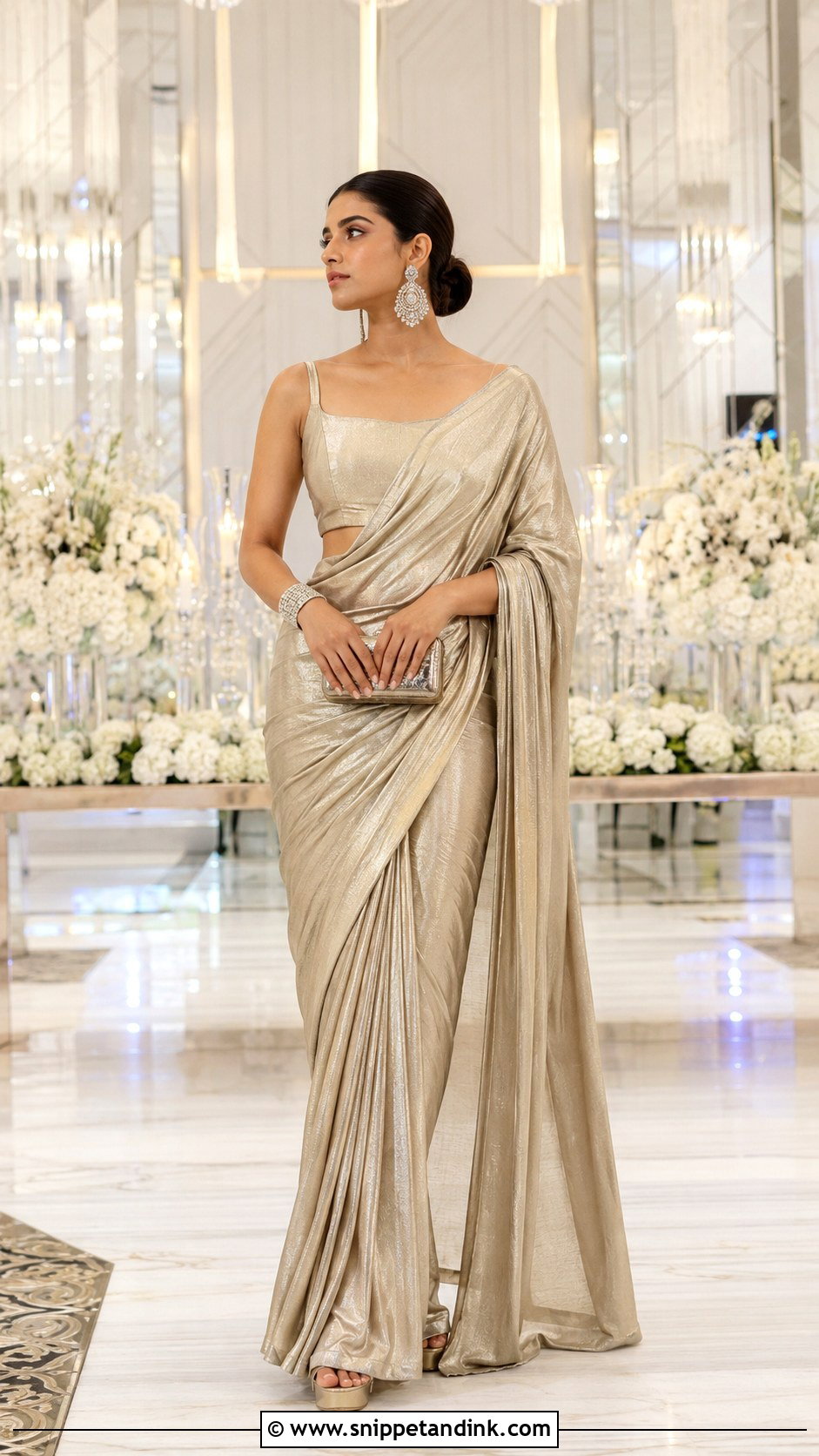
A pre-draped saree gives you the drape without a forty-minute draping session, which is why I suggest it for a reception change. Metallic, sequined, satin or embroidered designs suit the evening. Pair it with a fitted blouse with a square neck, structured shoulders or back detail. Statement earrings, a cuff and a compact clutch are enough. Platform sandals give height under the longer hem. Check that the stitched pleats lie flat and the pallu is secured with a pin at the shoulder so it stays put while dancing. After a heavy ceremony lehenga, the lighter weight is a relief. A sleek ponytail or low bun keeps focus on the blouse and jewelry.
19. Anarkali Bridal Outfit
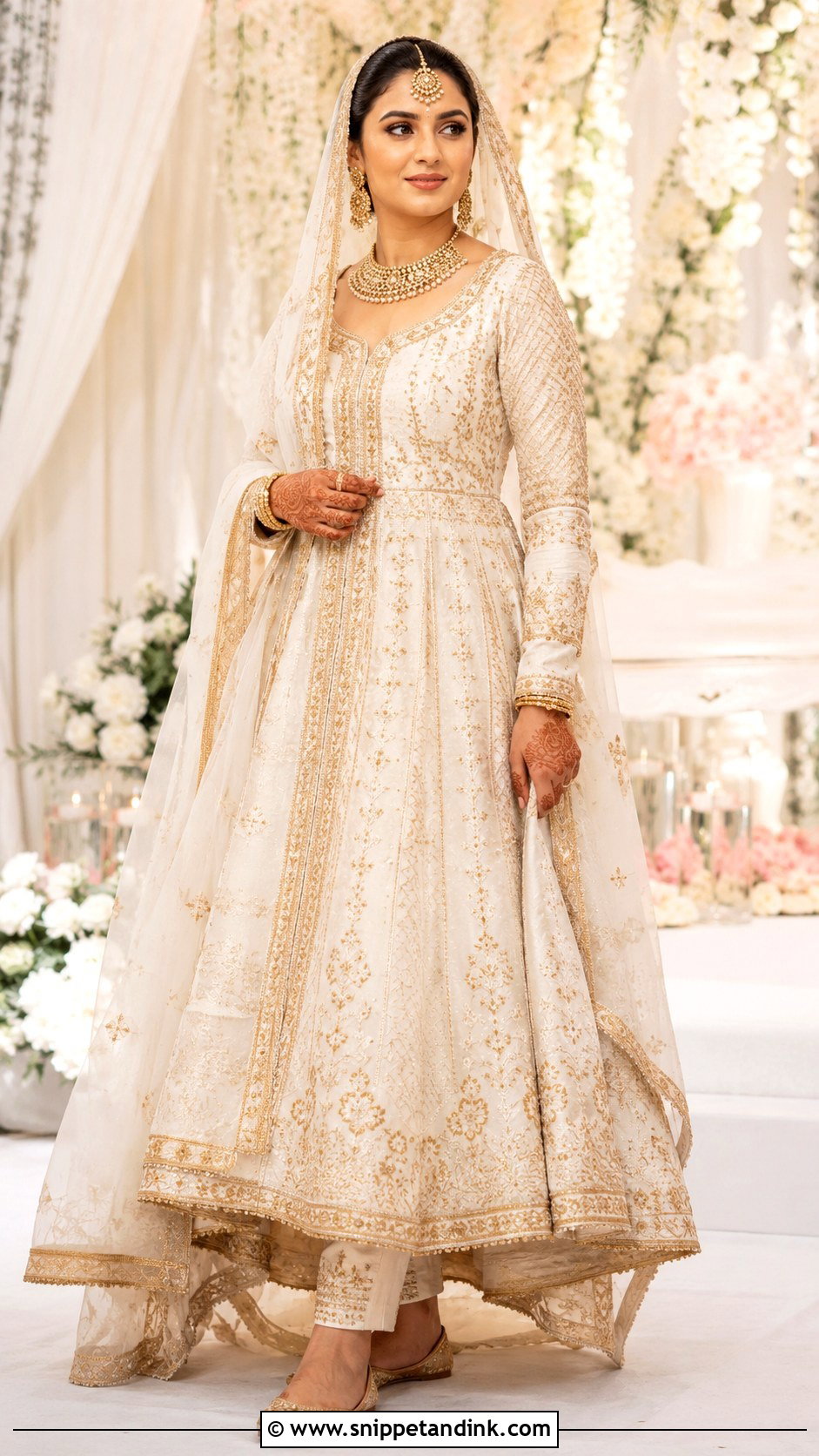
A floor-length Anarkali gives full coverage and far more freedom than a heavy lehenga. Look for a fitted bodice, a clean waist seam and flowing panels. Embroidery at the neckline and hem gives richness without weight everywhere. Style it with matching trousers, a light dupatta, embellished juttis and a medium necklace, with earrings and bangles in one metal from the embroidery. Wear the dupatta on one shoulder or across both arms for photos. The hem should clear the floor in your juttis, since a long Anarkali catches on stairs. It suits a mehndi, intimate nikkah or reception.
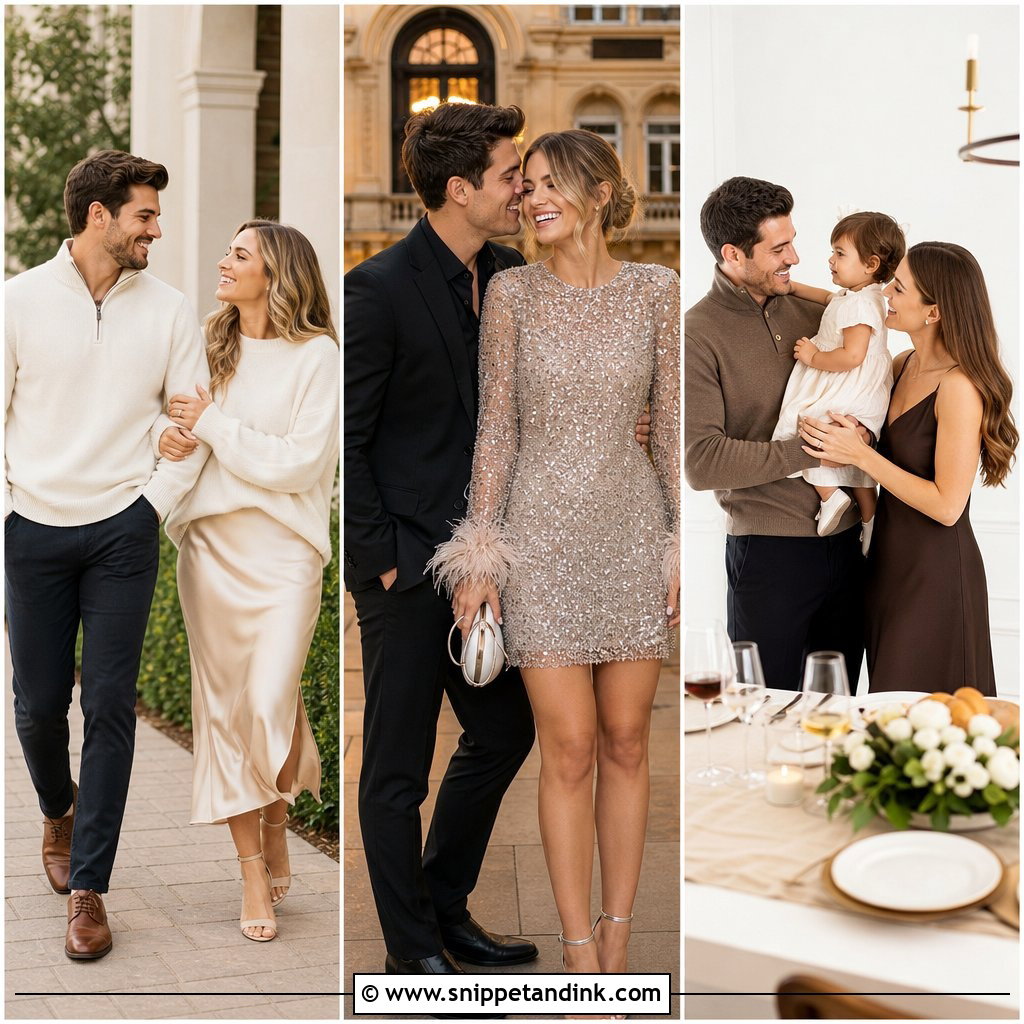
20. Sequin Mini Reception Bridal Outfit
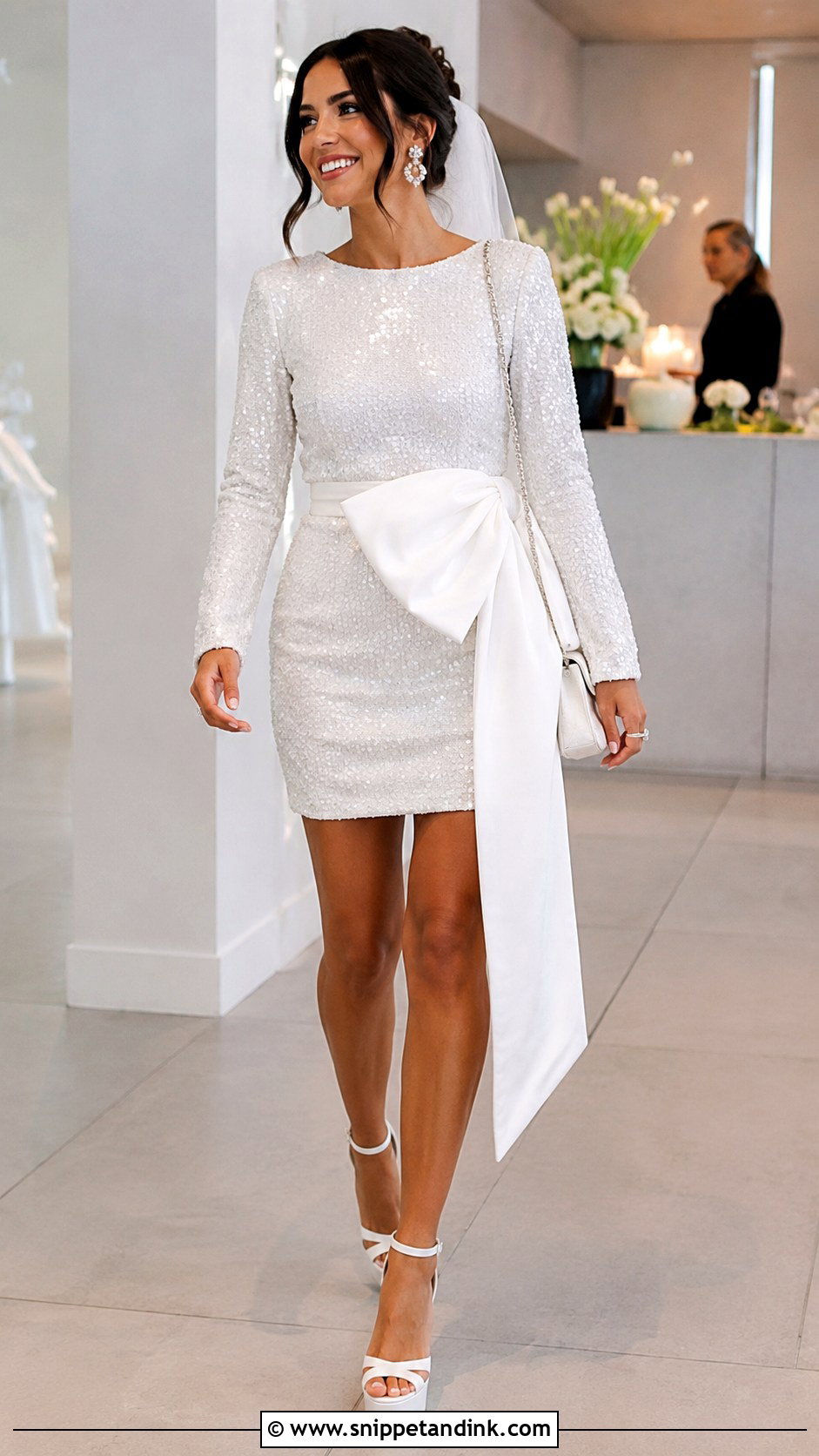
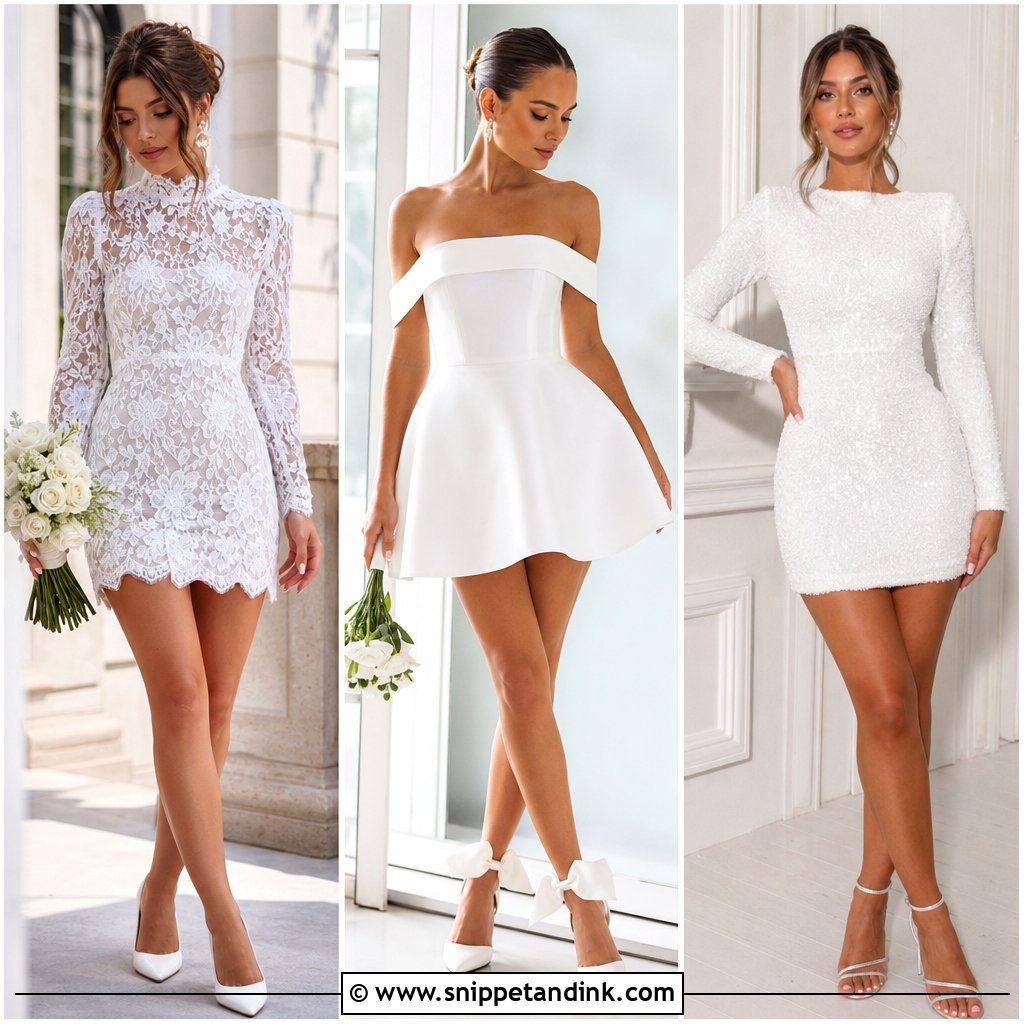
A sequin mini is the most fun second outfit there is. White, ivory, silver or pale gold all work, with secure straps and a soft lining. Balance the short hem with a higher neck, long sleeves or a blazer if you want coverage. Block heels, platforms or bridal sneakers keep you dancing. Statement earrings, a small shoulder bag and a short veil finish it. Run your fingers around the armholes and neckline; exposed sequin edges scratch after an hour. A detachable bow or overskirt adds drama for the reveal. It shows up clearly in dark reception photos and lets you move freely.
Planning the Outfit Change Between Ceremony and Reception
More and more brides change once or twice, and the swap always takes longer than they expect. I plan it like a scene change in a play.
- Agree on where you’ll change and check it has a mirror, good light and a lock.
- Choose one helper who has practiced the fastenings, bustle or dupatta pinning beforehand.
- Allow at least twenty to thirty minutes for a gown to suit or mini, and longer for a lehenga to saree or a full re-drape.
- Pack a bag with the second outfit’s shoes, jewelry, pins, tape and a small hair kit so nothing has to be fetched.
- Ask your hairstylist whether the style needs adjusting for the new neckline, especially going from a veil to a high-neck blouse.
Trains, Bustles and Heavy Skirts Over a Long Day
Anything long enough to trail needs a plan. A gown with a train needs a bustle that lifts the fabric off the floor for dancing, and someone who knows how to hook it. Heavy lehengas need a chair with arms and a short break every couple of hours. With any gown, practice getting in and out of the car and climbing stairs, holding the skirt in one hand. Those small rehearsals are what let you forget about your outfit once the day starts.
Sit, Walk and Raise Your Arms at Every Fitting
The right bridal outfit makes you look like yourself on your best day, not like someone in borrowed clothes. Ceremonies in a church, a courthouse, a temple, a garden or on a beach each ask for something different, and many brides now wear two or three looks across the day. Start with the shape you feel best in, then add supportive shoes, balanced jewelry, layers for the weather and the accessories that mean something to you. Test it all moving, not just standing in front of a mirror. Fabric weight, weather, floor surfaces and the length of the day deserve as much attention as the look itself.
You'll Like These Ideas:





Leave a Reply