
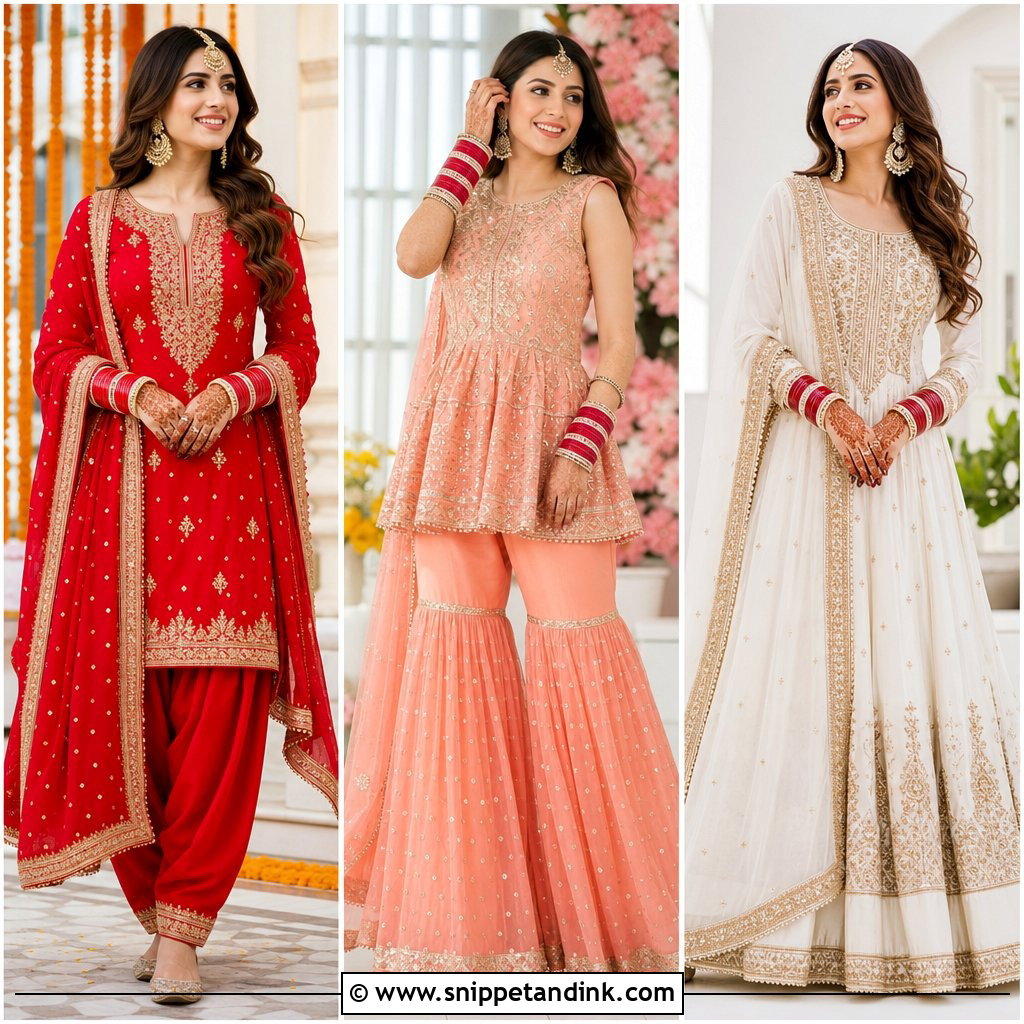
A prewedding week asks four or five different things of your clothes, so I always start with the function before I look at color. Haldi needs fabric you won’t mind losing to turmeric. Mehndi needs sleeves that stay out of the artist’s way for two or three hours. Sangeet and cocktail events are where shimmer and movement earn their place, because you’ll be dancing under evening lights. Occasion wear now goes well past the classic lehenga and saree, with pre-draped sarees, cape sets and Indo-Western separates all having a role. Below are twenty complete looks, with notes on how I’d adjust each one for a bride, a sister or a guest, and for a tighter or looser budget.
A Prewedding Wardrobe Mapped Out Function by Function
When I plan a prewedding wardrobe, I write the functions out in order on one page and give each outfit a job before anyone shops. The engagement and sangeet usually carry the most embellishment. Haldi and mehndi get the lightest, least precious pieces, because one gets stained and the other gets sat in for hours.
Give every event its own color family
The photographer delivers the whole week in one gallery, and back-to-back pinks make two functions look like the same afternoon. I give each event a distinct color family, then check none of them fights the decor if the family has already settled on a theme.
Leave room for alterations
Designer lehengas can take several months from order to delivery, and even boutique stitching runs slower in wedding season, when every tailor is busy. Timelines vary a lot, so ask at the first visit. I like the final fitting about two weeks before the first function, which still leaves time for one more round of changes. Bring the exact shoes, blouse padding and undergarments you’ll wear. A hem set in the wrong heels is the fix I make most often.
Rewear on purpose
- A plain silk blouse can go under a Banarasi skirt at the puja and a kasavu saree the next morning.
- One heavy dupatta turns a simple sharara into a sangeet outfit.
- Jackets, capes and co-ords split into separates you’ll wear long after the wedding.
1. Yellow Lehenga Haldi Outfit
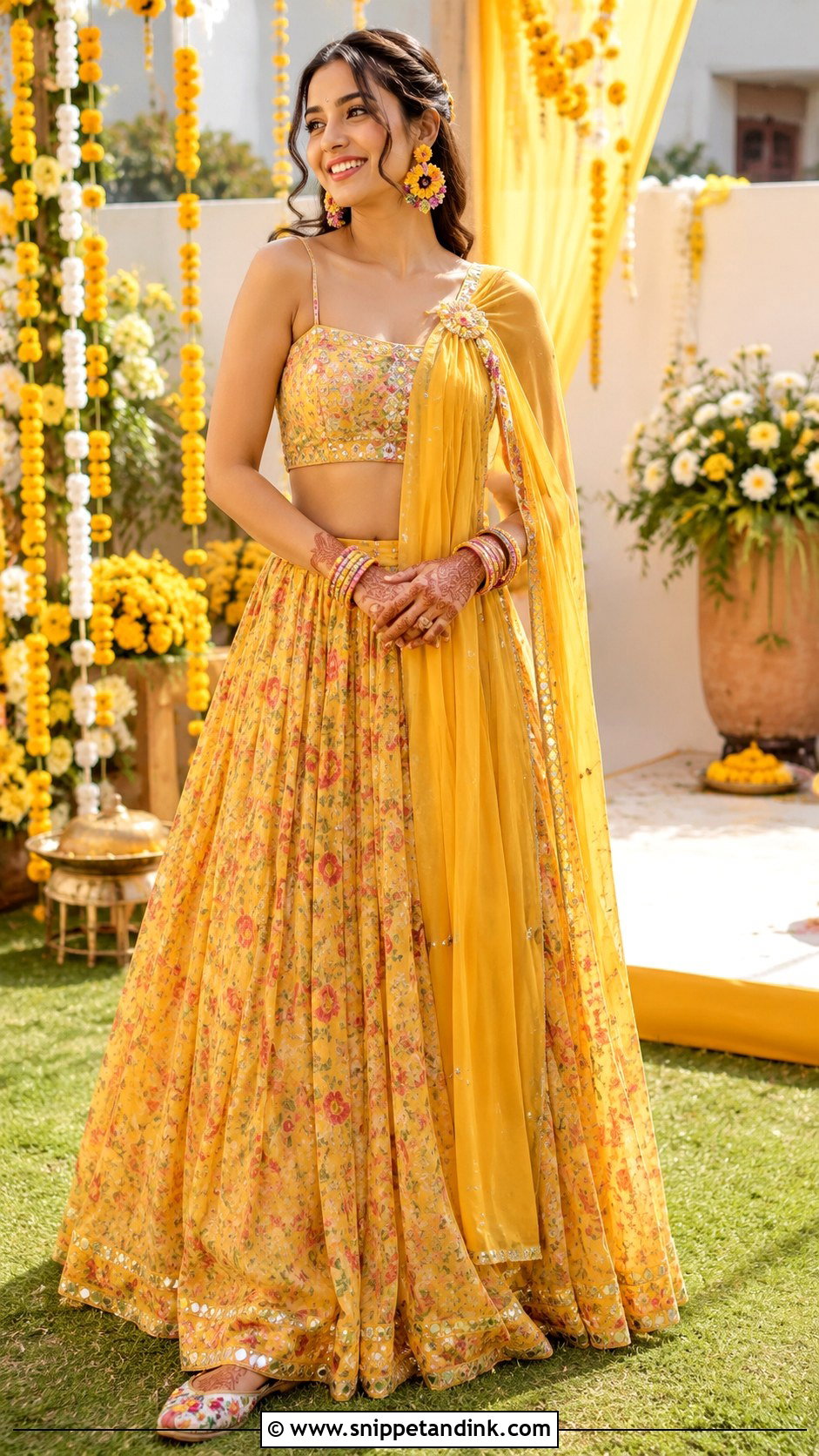
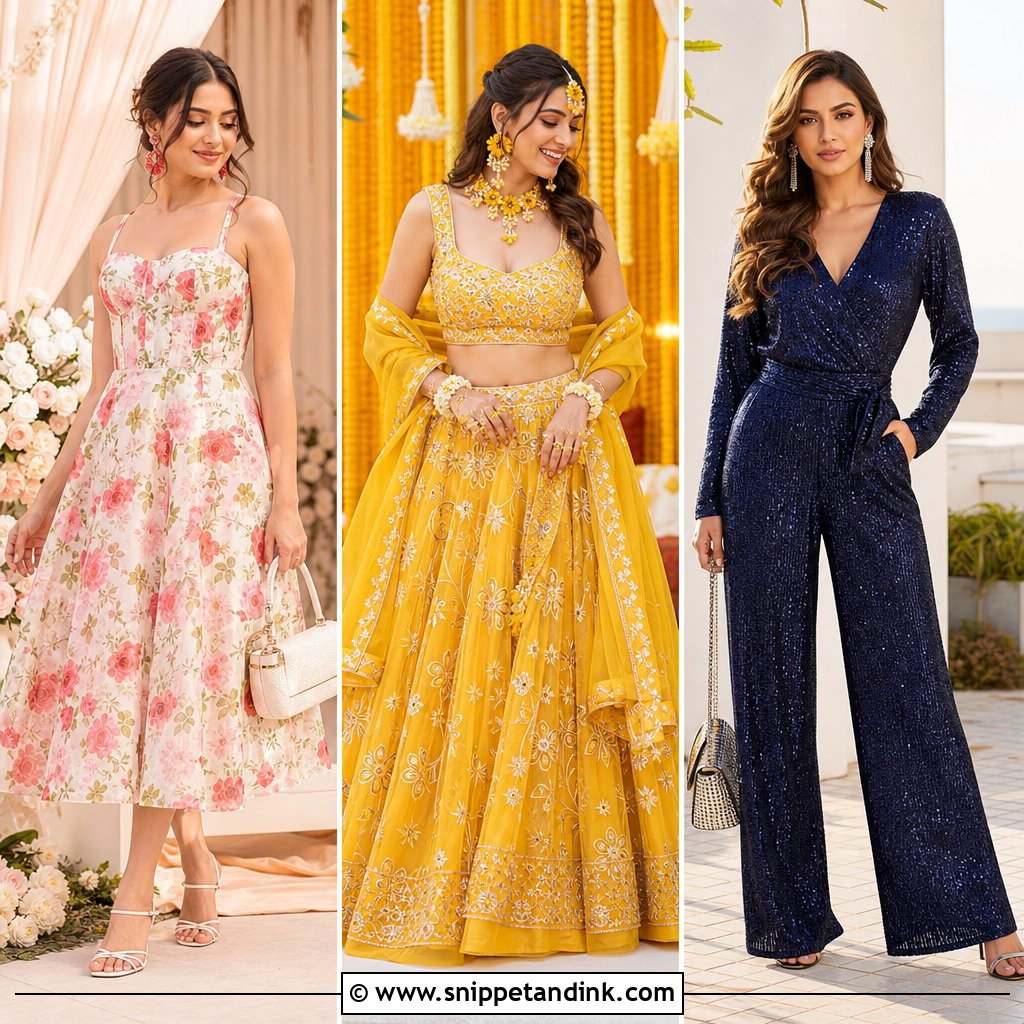
For haldi I steer brides away from real zari and heavy hand embroidery, because turmeric paste works its way into raised work and stays there. A yellow lehenga in cotton-silk, georgette or organza, with a printed skirt and a plain fitted blouse, gives you the festive color without that risk. Pin the dupatta at one shoulder with two safety pins hidden under the fold rather than one, since relatives will be pulling you into hugs all morning. Floral earrings, fresh bangles and a small maang tikka keep it playful. Wear embroidered juttis or flat sandals; you’ll sit on a low stool, then dance on a wet floor. Brides can take bolder floral appliqué and guests something lighter, and anything in marigold, mustard or saffron hides the yellow marks that are coming anyway.
2. Mustard Sharara Haldi Outfit
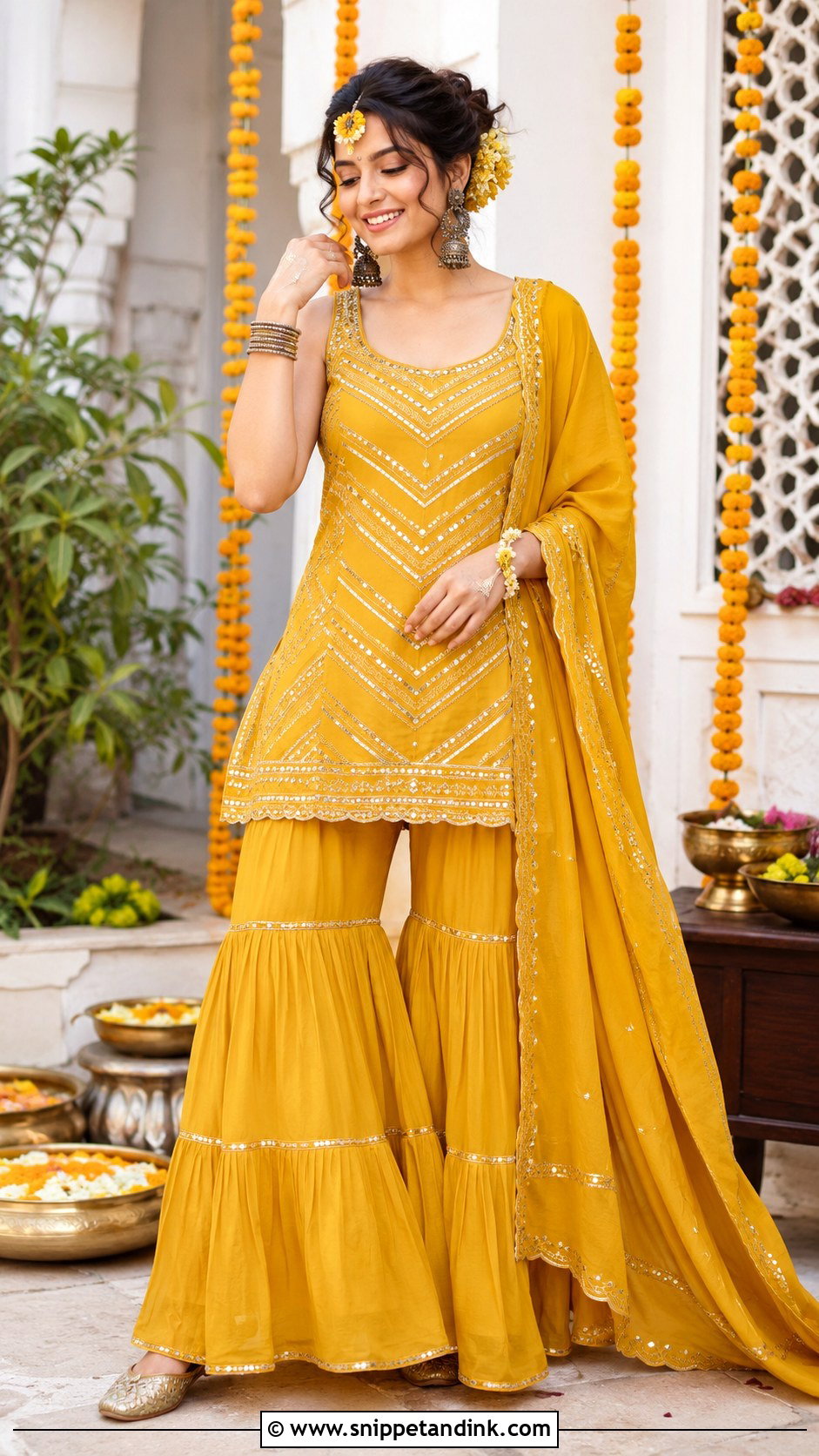
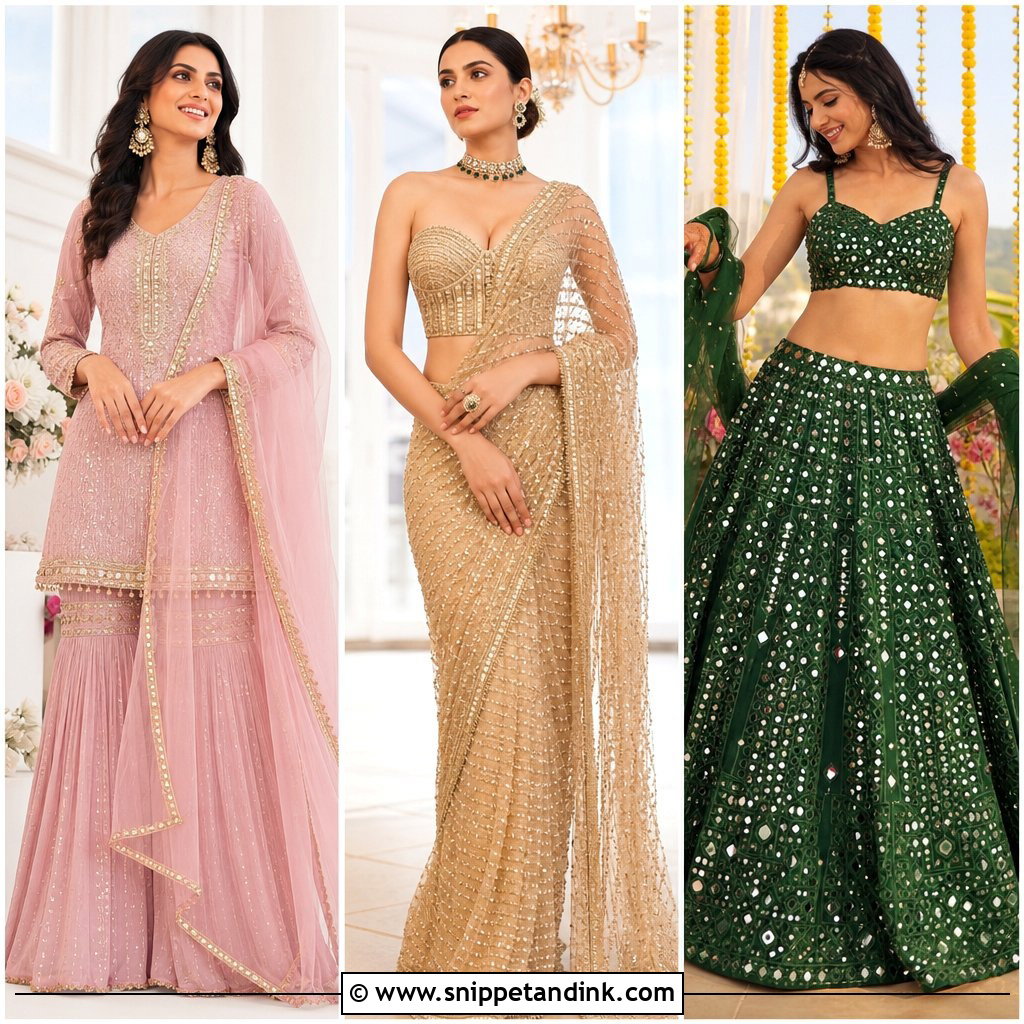
Sharara is the silhouette I reach for when the ground is uneven, because tiered pants move with you instead of tangling round your ankles like a long skirt. For an outdoor haldi celebration, keep the short kurta’s gota patti or threadwork restrained and the fabric breathable: cotton, rayon or a light chanderi. At the fitting, sit cross-legged the way you will for the ritual. Too much flare bunches up under you and looks lumpy in photos. A matching dupatta gives a clean monochrome line, or let an orange or pink border carry the contrast. Oxidized earrings, stacked bangles, a floral hair piece and flat gold juttis finish it. If turmeric paste or water splashes are on the program, save hand embroidery for another function.
3. Floral Saree Haldi Outfit
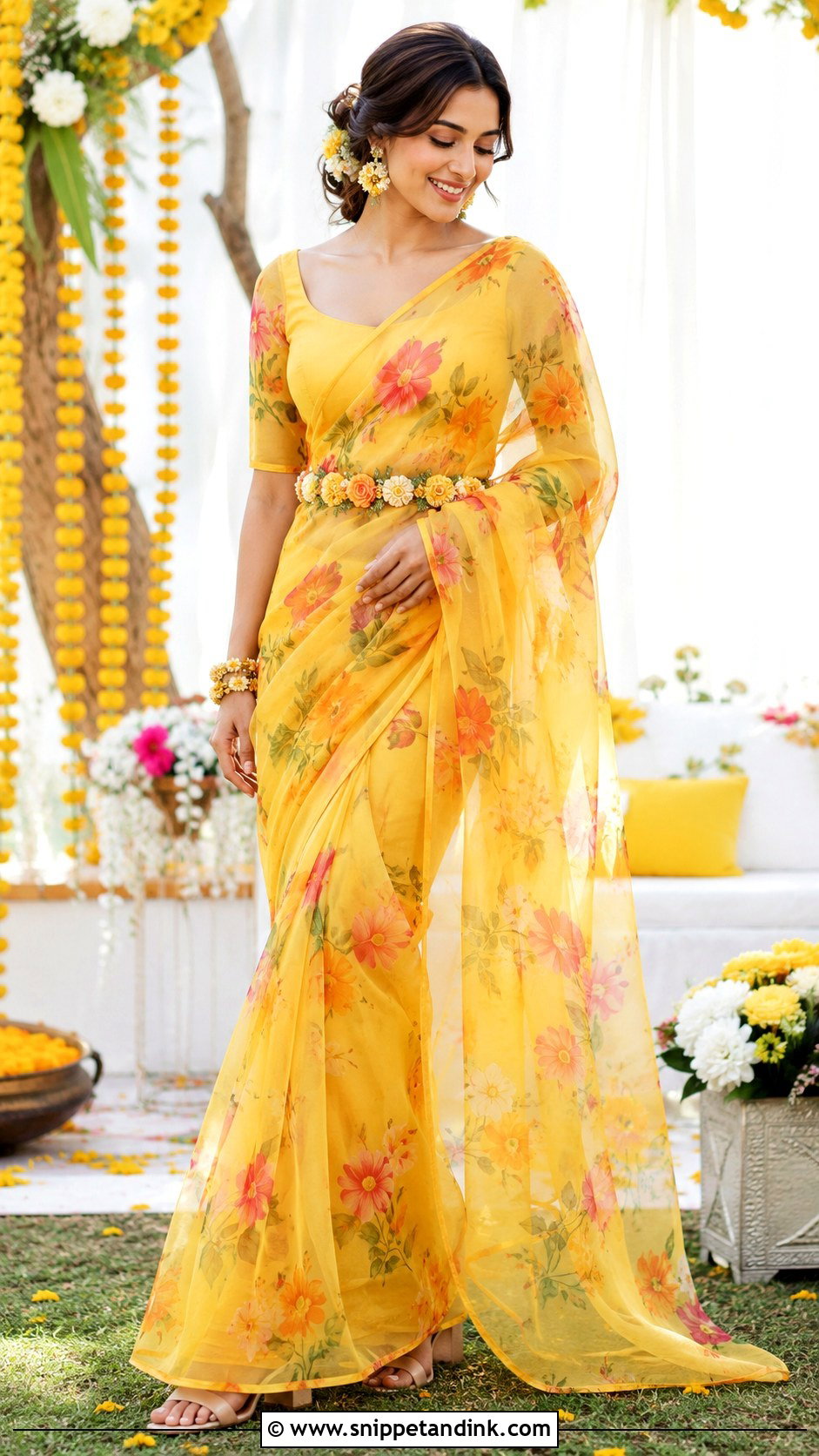
Not everyone wants a lehenga at haldi, and a floral saree is the graceful way out. Look for yellow organza, chiffon or light georgette printed with pink, orange or green botanicals. Organza keeps its shape when it gets damp; chiffon clings, which matters if water is part of the ritual. A sleeveless or short-sleeve blouse lets your arms move, and I pin the pallu at the shoulder and again at the waist so it survives the group photos. Floral studs, delicate bangles and low block heels or embellished flats are enough. A bride can cinch the drape with a floral waist belt while a guest uses a plain gold one. Ask the tailor for a breathable cotton lining, and keep the hem an inch off the ground on grass or near water.
4. White Anarkali Haldi Outfit
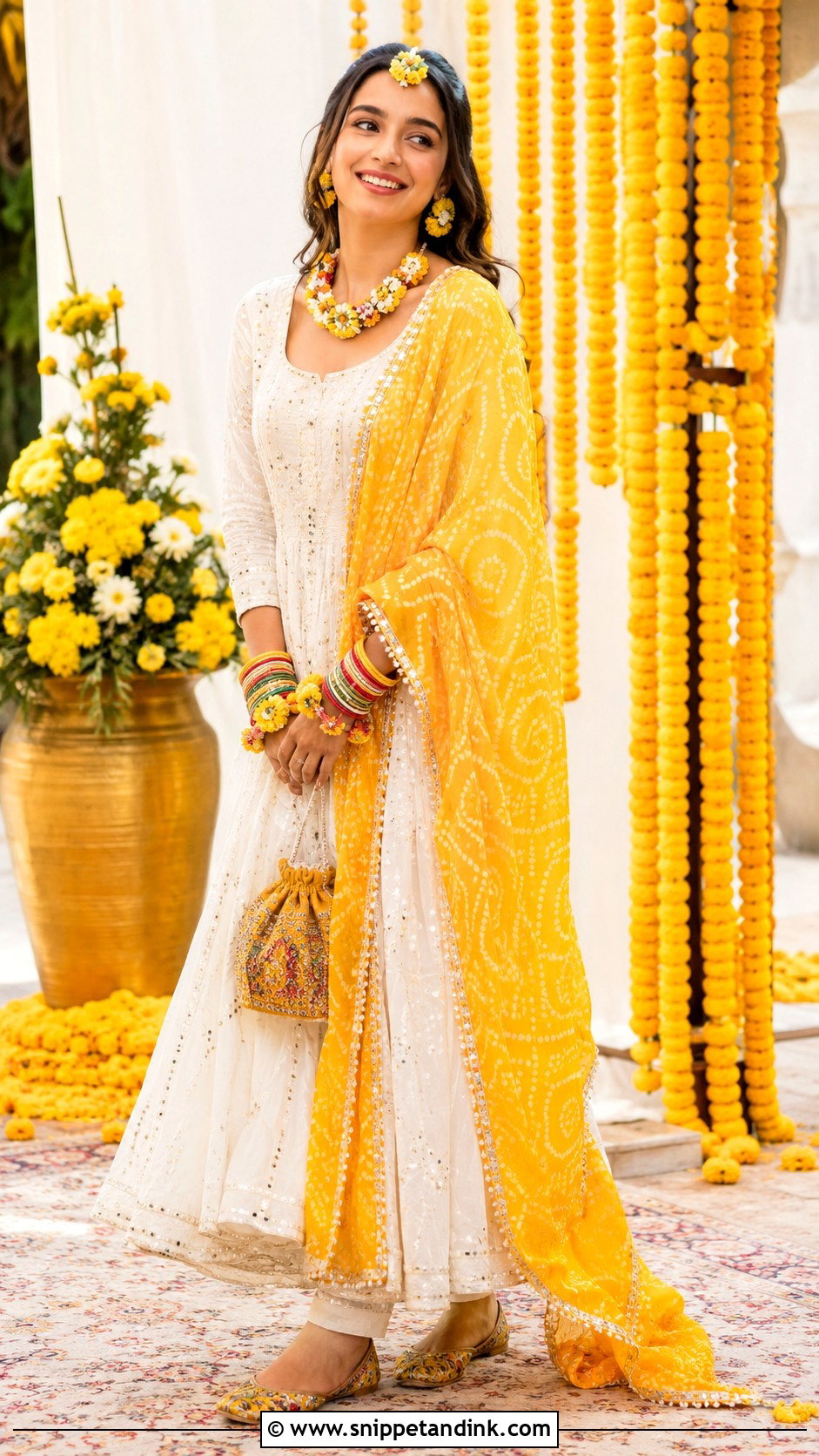
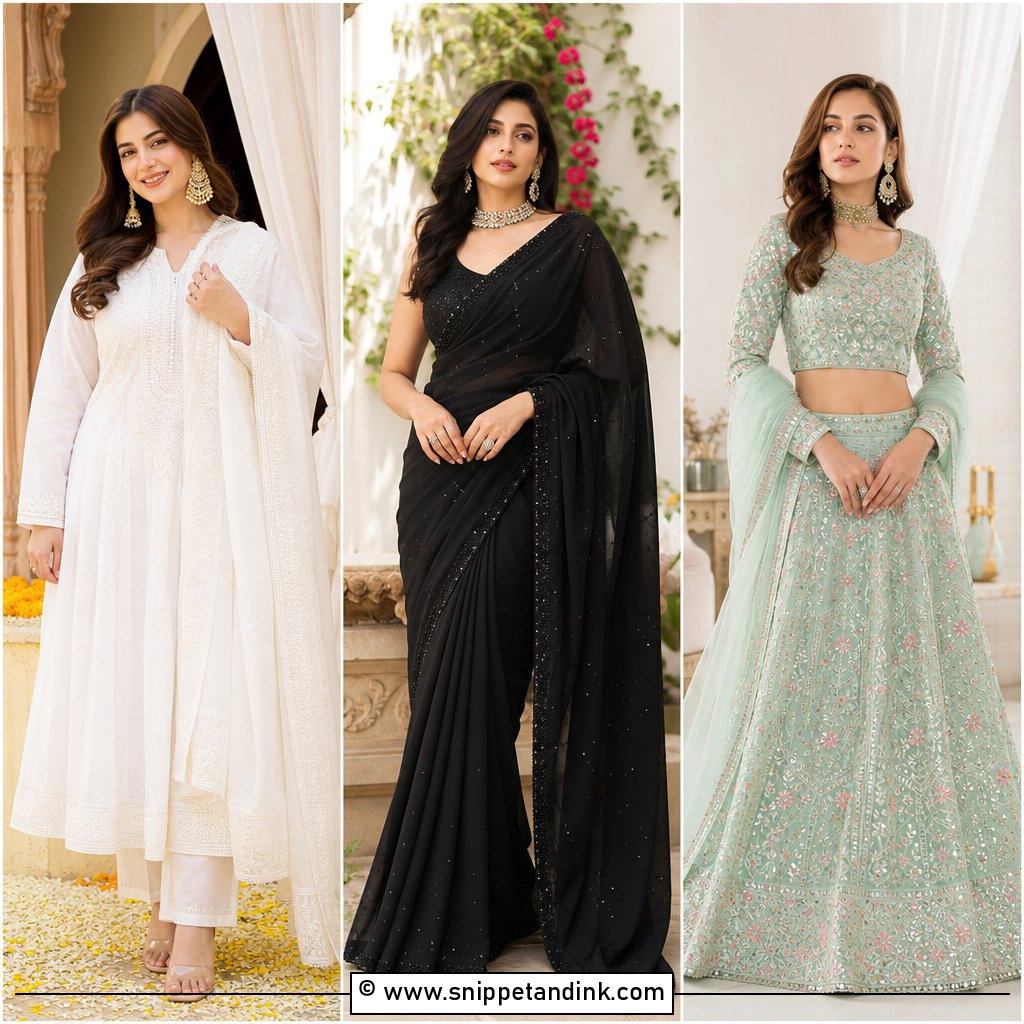
White with yellow accents looks fresh, but here’s the catch: turmeric shows on white cotton instantly and rarely washes out completely. Choose an inexpensive cotton or cotton-silk Anarkali with a comfortable lining and a soft flare, then bring in the haldi colors with a marigold bandhani, leheriya or gota-bordered dupatta. Yellow jhumkas, colorful bangles and a small potli tie the palette together, and flat juttis keep the full-length skirt manageable. Because the base is so plain, floral jewelry stands out against it in a way it never can on a print. I’d keep it for a decorative haldi, a guest appearance, or the portraits taken before the paste comes out.
5. Green Sharara Mehndi Outfit
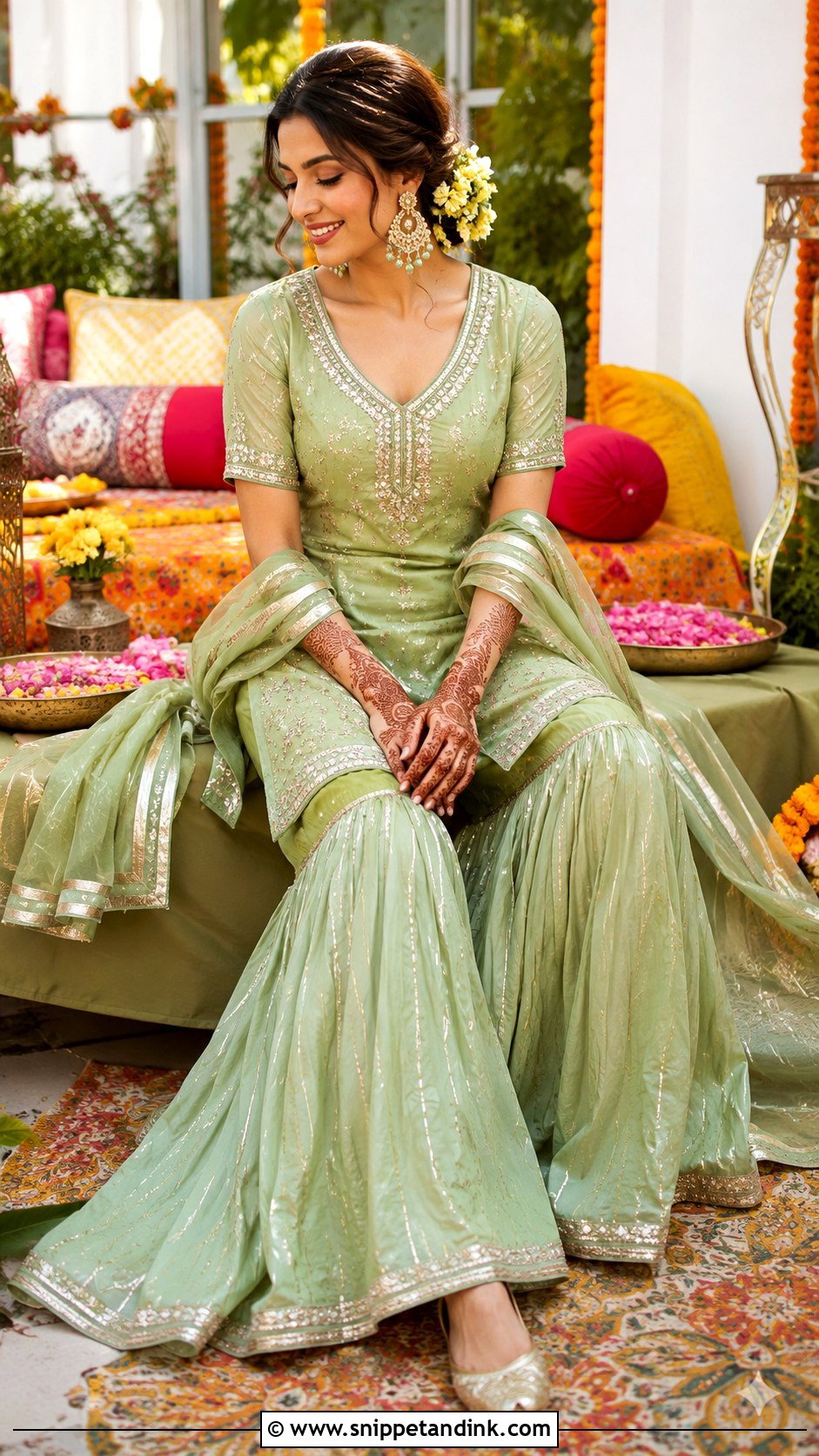
A green sharara solves the biggest mehndi problem, which is sitting still for hours while someone works on your hands and feet. The fitted kurta stays out of the way and the flared pants let you sit cross-legged or with your feet raised for the artist. Pista and mint read fresh in afternoon light; parrot and emerald hold up better under evening bulbs. Gota patti, mirror accents or fine threadwork add sparkle without weight. Throw the dupatta over one shoulder or tuck it behind your arms so it never brushes wet paste. Chandelier earrings, a floral hairpiece and metallic juttis are plenty. Take off rings, hand chains and tight bangles before you sit down, and wear a crossbody potli so you aren’t digging into a bag with freshly decorated fingers.
6. Floral Lehenga Mehndi Outfit
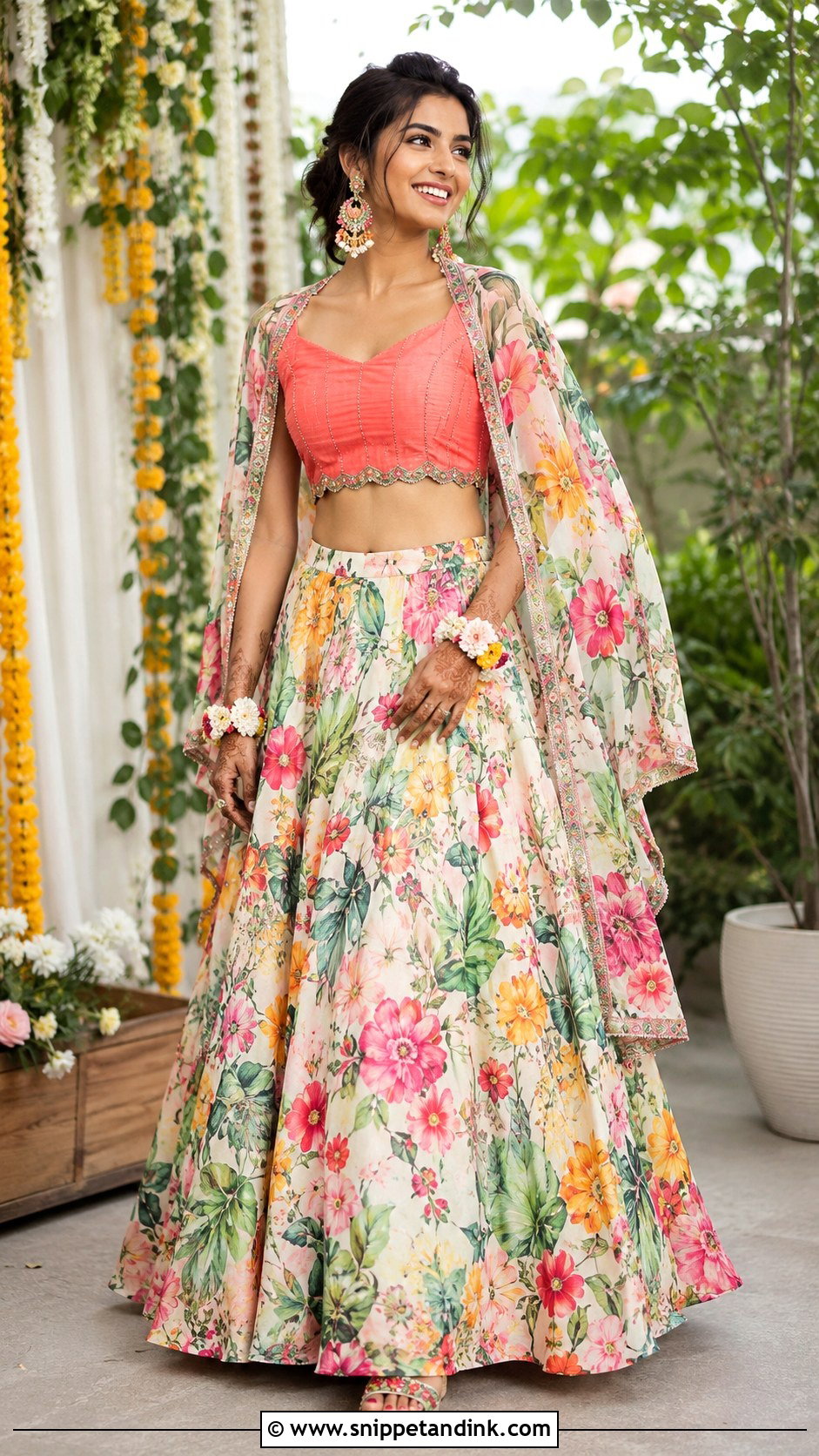
Printed florals suit the noise and color of a mehndi, and they forgive a stray smudge of henna far better than a solid. Start with a lightweight printed lehenga in green, pink, coral or yellow, then choose a solid blouse that repeats one color from the print so the outfit looks planned rather than busy. I prefer a cropped blouse with proper shoulder straps here; it leaves your arms bare while the paste dries and doesn’t slide. Swap the usual dupatta for a light drape fixed at one shoulder, or a sleeveless cape. Meenakari earrings, floral bangles and wedges or juttis complete it. Brides can choose appliqué flowers on the skirt; guests can stay with a digital print. On a garden lawn, have the hem finished just above the ground, because long skirts collect dew, soil and crushed petals.
7. Bandhani Saree Mehndi Outfit
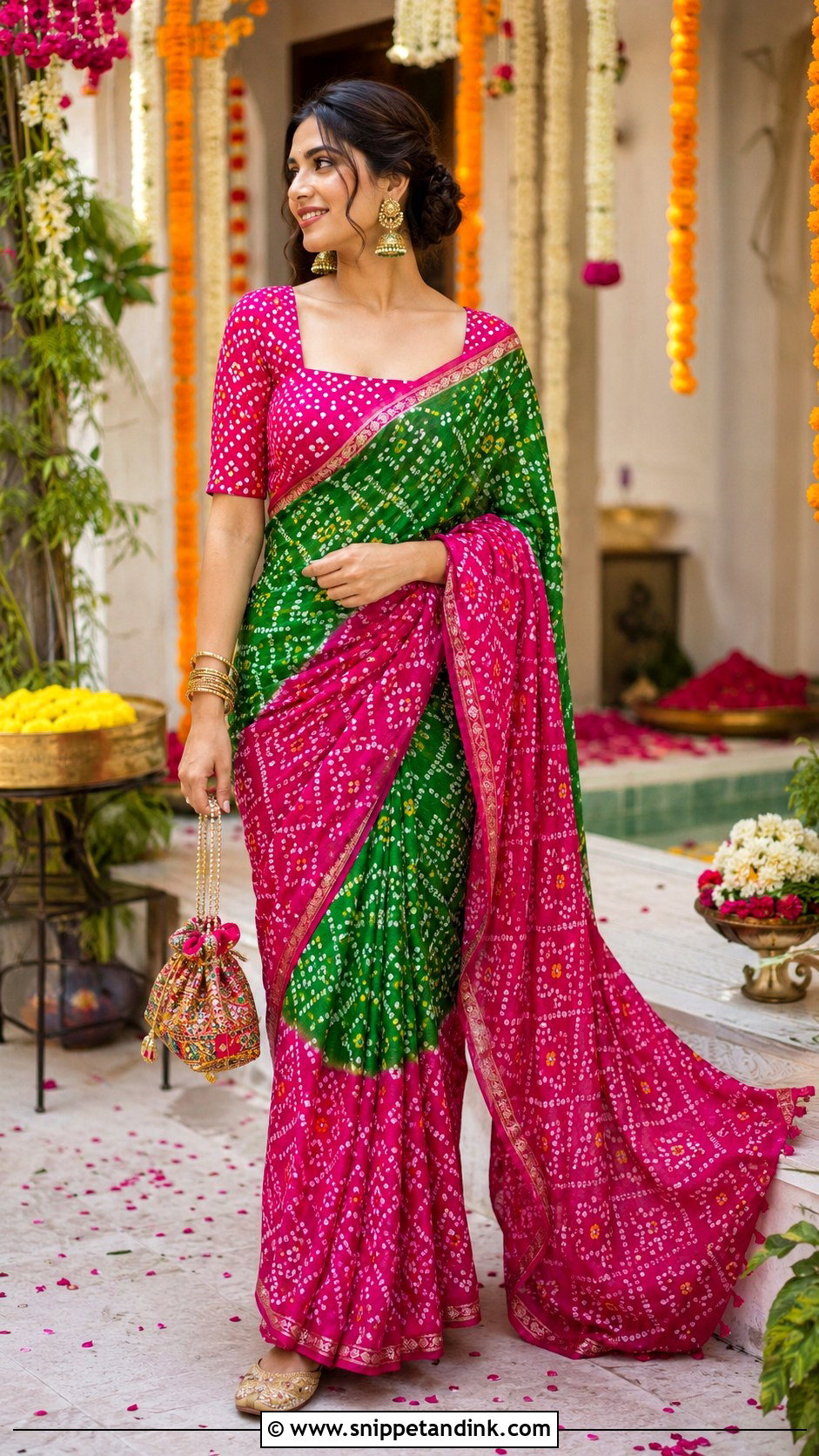
Bandhani carries family meaning in a lot of households, which is why it feels right at a mehndi held at home. Georgette or chiffon bandhani is light enough to sit in for hours. Cotton bandhani creases fast once you’ve been seated, so I’d keep it for guests rather than the bride. Choose green, fuchsia, orange or a two-tone dye, with a contrasting blouse in a square, scoop or modest V neck. Pin the pleats and pallu firmly so you can walk, sit and greet people without stopping to fix them. Stack bangles on one arm only and leave the other hand bare for henna, letting statement jhumkas do the rest. A small potli and low block heels finish it, and a bride can add a waist belt and embroidered blouse. It suits a living-room ceremony as naturally as a hired hall.
8. Peplum And Dhoti Pants Mehndi Outfit
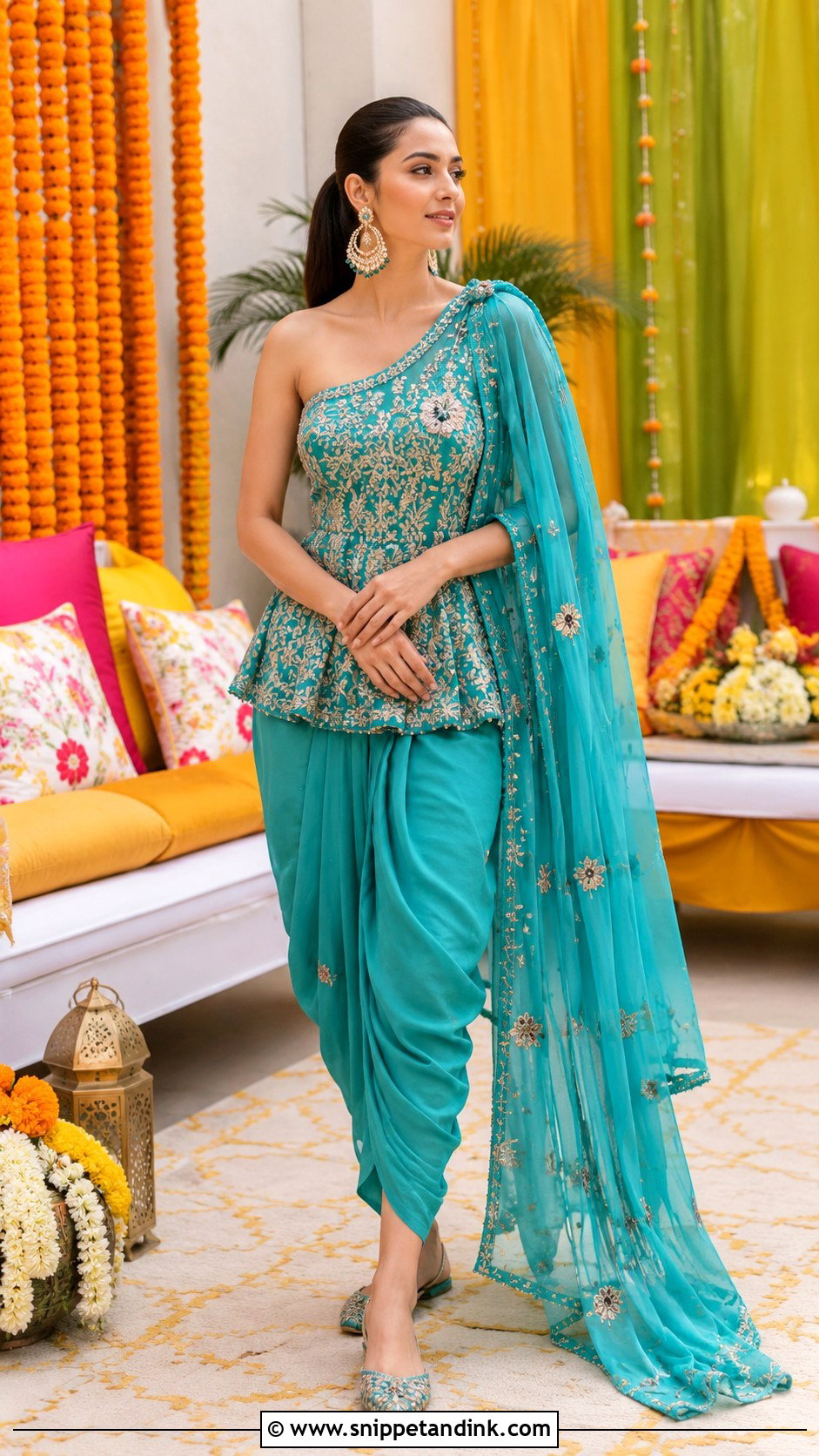
Peplum and dhoti pants is my answer for the sister or bridesmaid who has already worn two lehengas that week. The short embroidered peplum defines the waist and the draped dhoti gives the lower half room, which you’ll appreciate after a long mehndi on floor cushions. Jewel greens, bright pink, turquoise or a playful print all suit it. Ask for the dupatta to be stitched to the top at the shoulder so you never hold or re-drape it. Oversized earrings, a sleek ponytail and pointed embroidered flats are all it needs. One thing to check while seated at the fitting: cheaper dhoti drapes pull tight across the hips the moment you sit. Leave bracelets and rings off until the henna is dry.
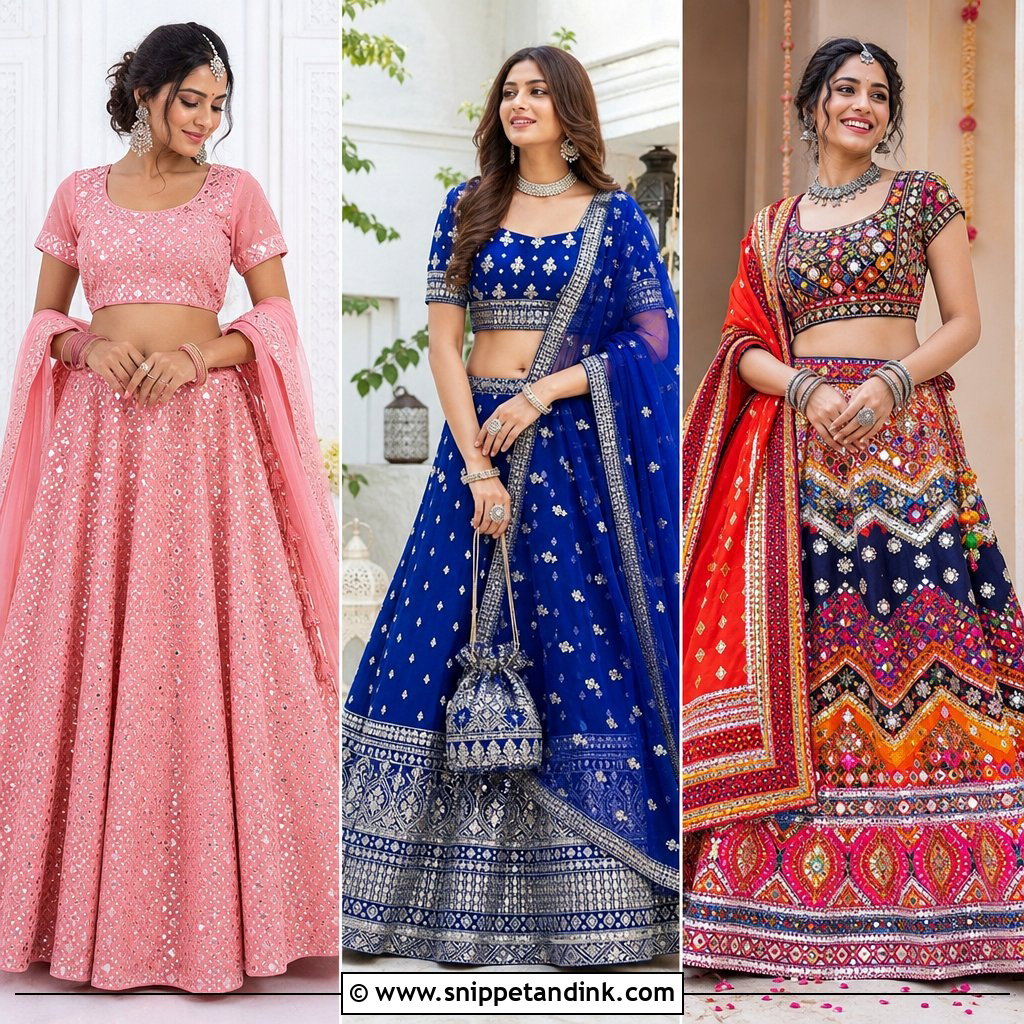
9. Mirror Work Lehenga Sangeet Outfit
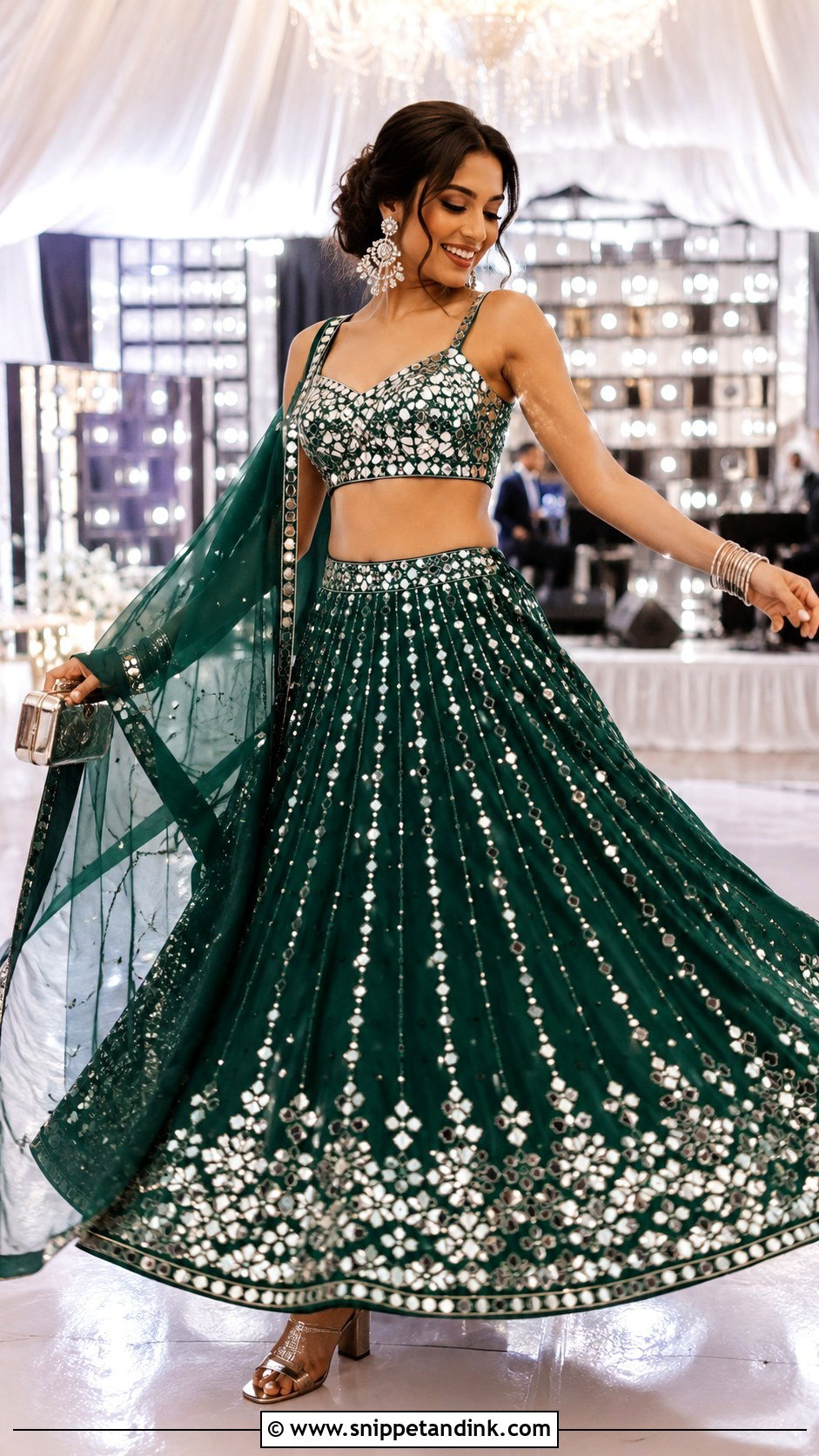
Mirror work belongs on a dance floor, because each small glass piece throws light back at the camera as you turn. A mirror work lehenga in navy, emerald, purple or hot pink, with a fitted blouse that genuinely supports you, gives impact without the weight of dense stonework. Secure the dupatta across the torso, fix it at one shoulder, or replace it with a structured cape. Statement earrings, stacked bangles and a metallic clutch round it off. Block heels give height and stability, though I’d keep embellished juttis in a bag for the second half of the night. At the final fitting I ask the wearer to raise both arms, sit and spin. A blouse that rides up or a waistband that digs in shows itself within thirty seconds. Check the lining too, since some mirror backings scratch.
10. Sequin Saree Sangeet Outfit
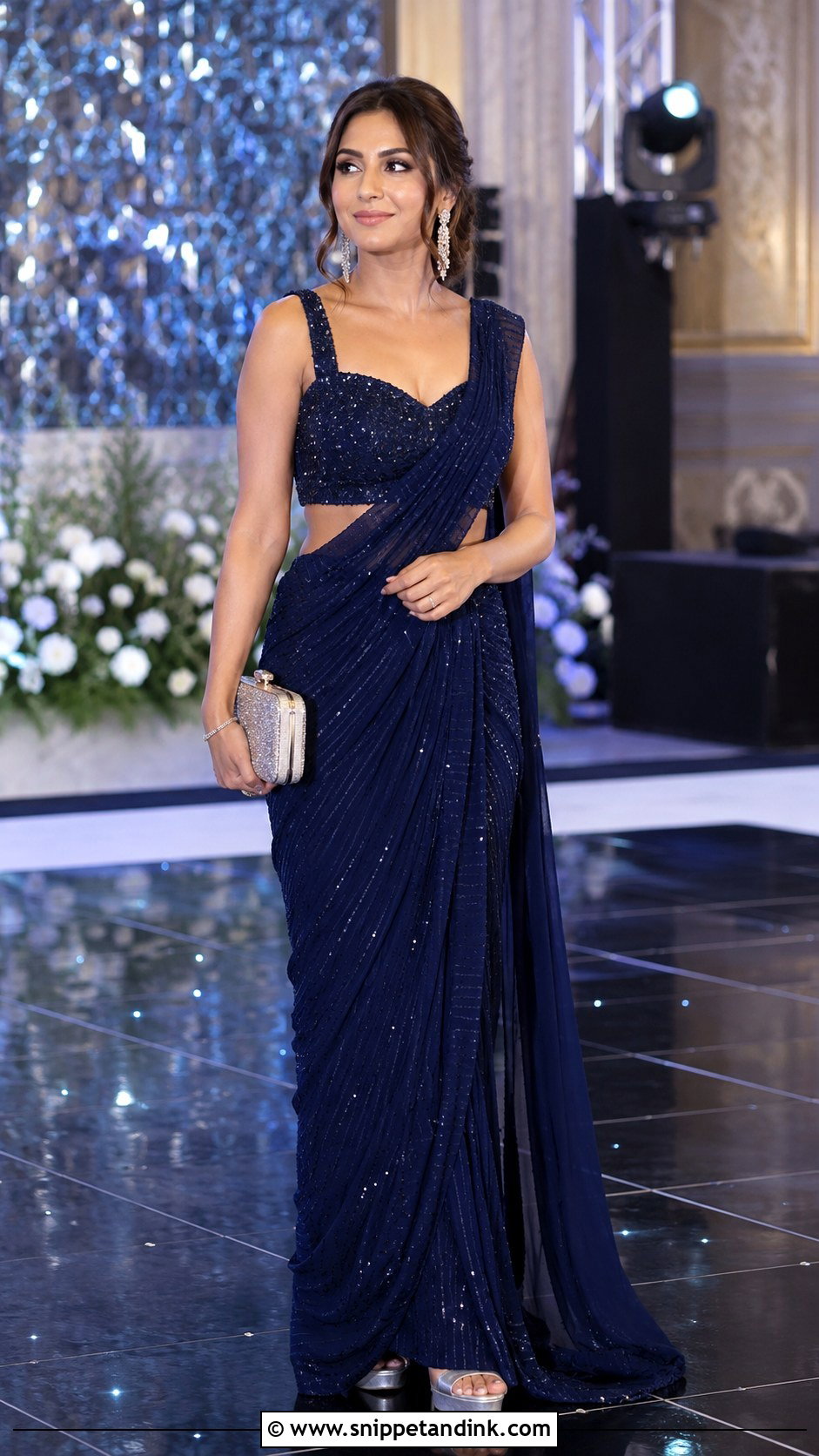
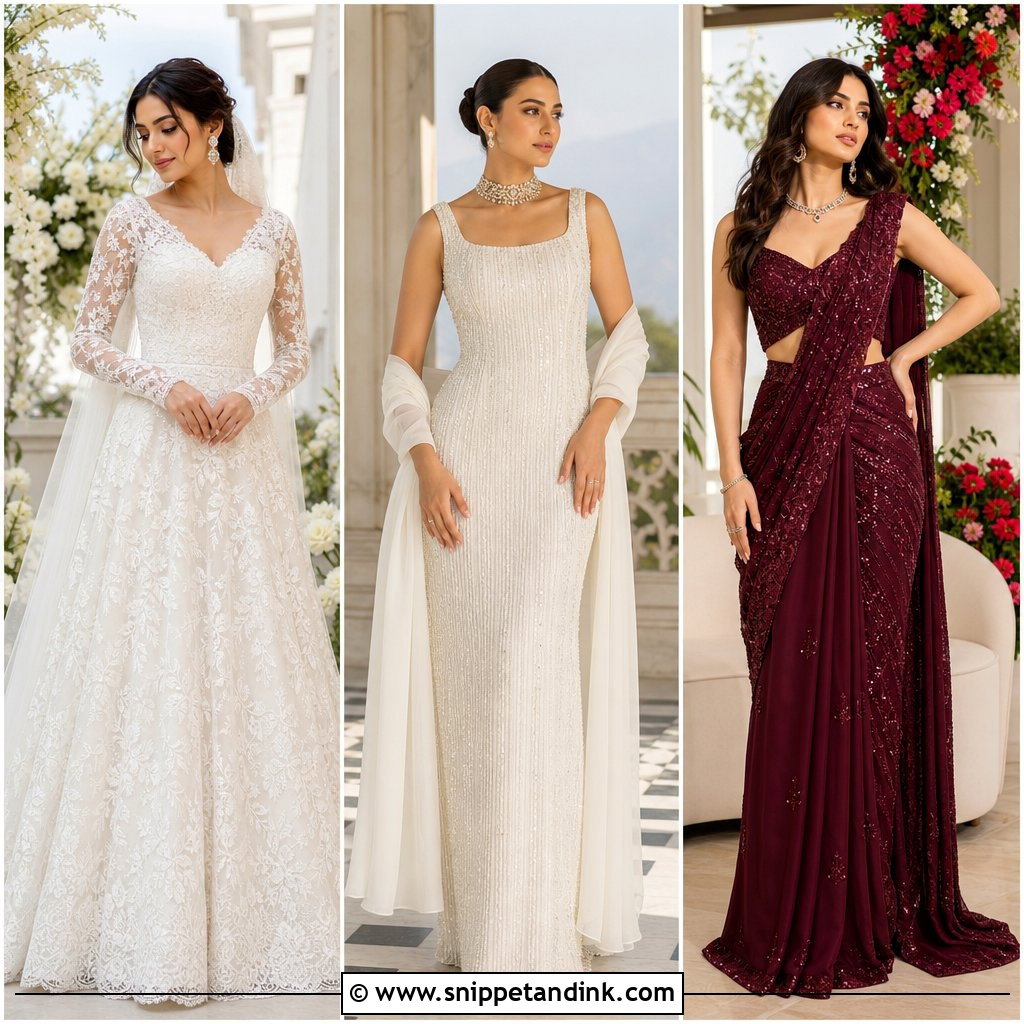
Sequins do the job of a whole jewelry box, so a sequin saree needs very little else. A pre-draped or light georgette version in silver, midnight blue, rose gold or deep wine is the easiest to dance in; heavy sequins on net drag and snag on bangles. Pair it with a structured blouse with supportive straps, then hold back with crystal earrings, one bracelet and a sleek clutch. A tidy ponytail, soft waves or a polished bun keeps the top half calm. Wear stable block heels or cushioned platforms under the drape. Before any dancing I pin the pallu at the shoulder and the pleats at the waist, and check the hem clears the floor in the shoes you’ll actually wear. Bridesmaids, sisters and guests get a lot of drama for very little styling time.
11. Indo-Western Gown Sangeet Outfit
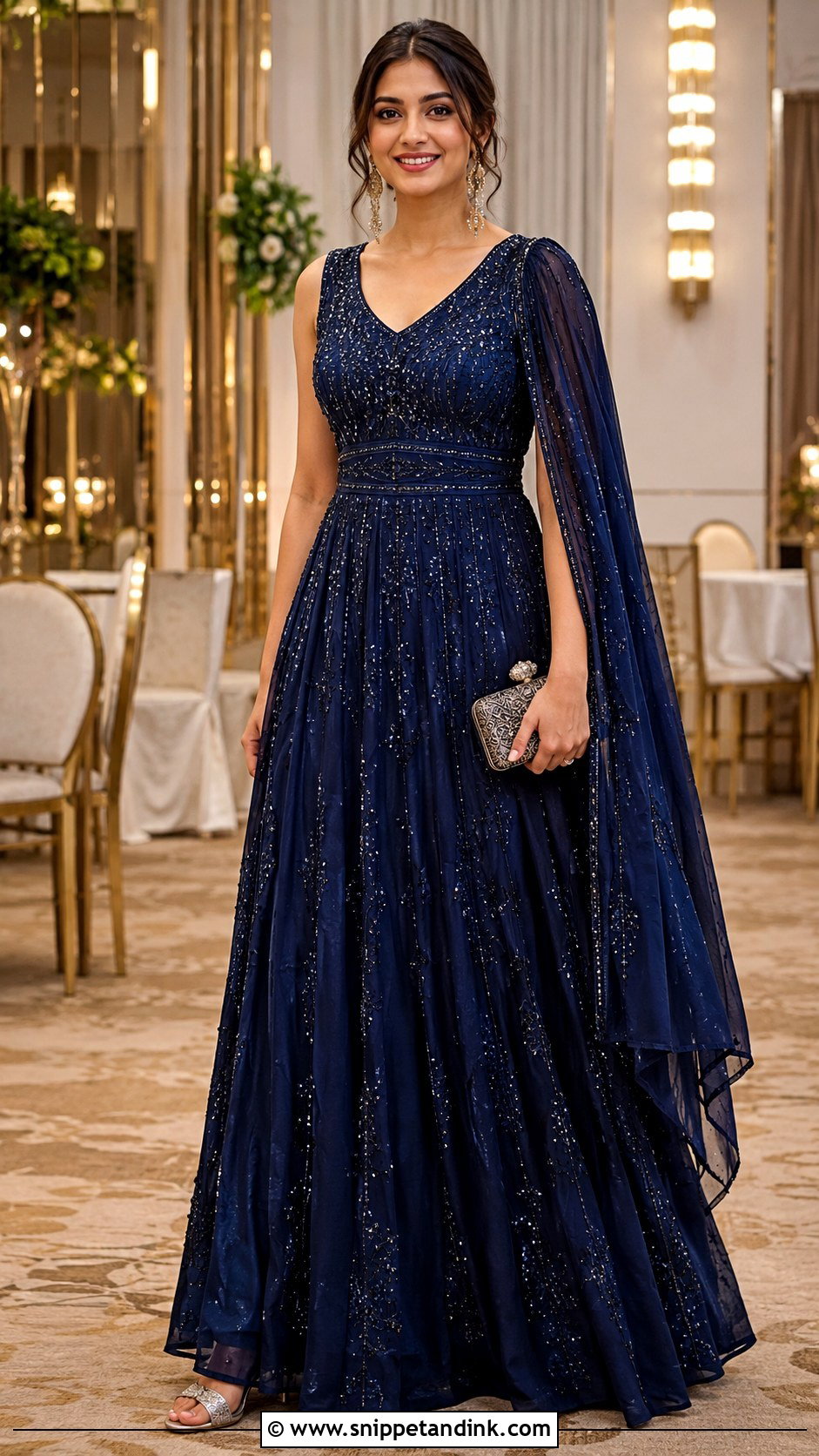
When someone wants the swing of a lehenga without managing three separate pieces, I suggest an Indo-Western gown. Look for a floor-length design with Indian embroidery, a defined waist and a skirt that flows as you dance. Emerald, sapphire, plum and metallic champagne all read rich under evening light. A draped shoulder panel, attached dupatta or embroidered cape adds traditional character with nothing extra to hold. Style it with long earrings, a cocktail ring and a compact minaudière, with block heels hidden by the hem. Have the length tailored with those exact heels on, because a gown hemmed in flats will catch under your toes. Brides can go for denser embroidery; guests should keep it to the neckline or waist.
12. Jacket And Palazzo Sangeet Outfit
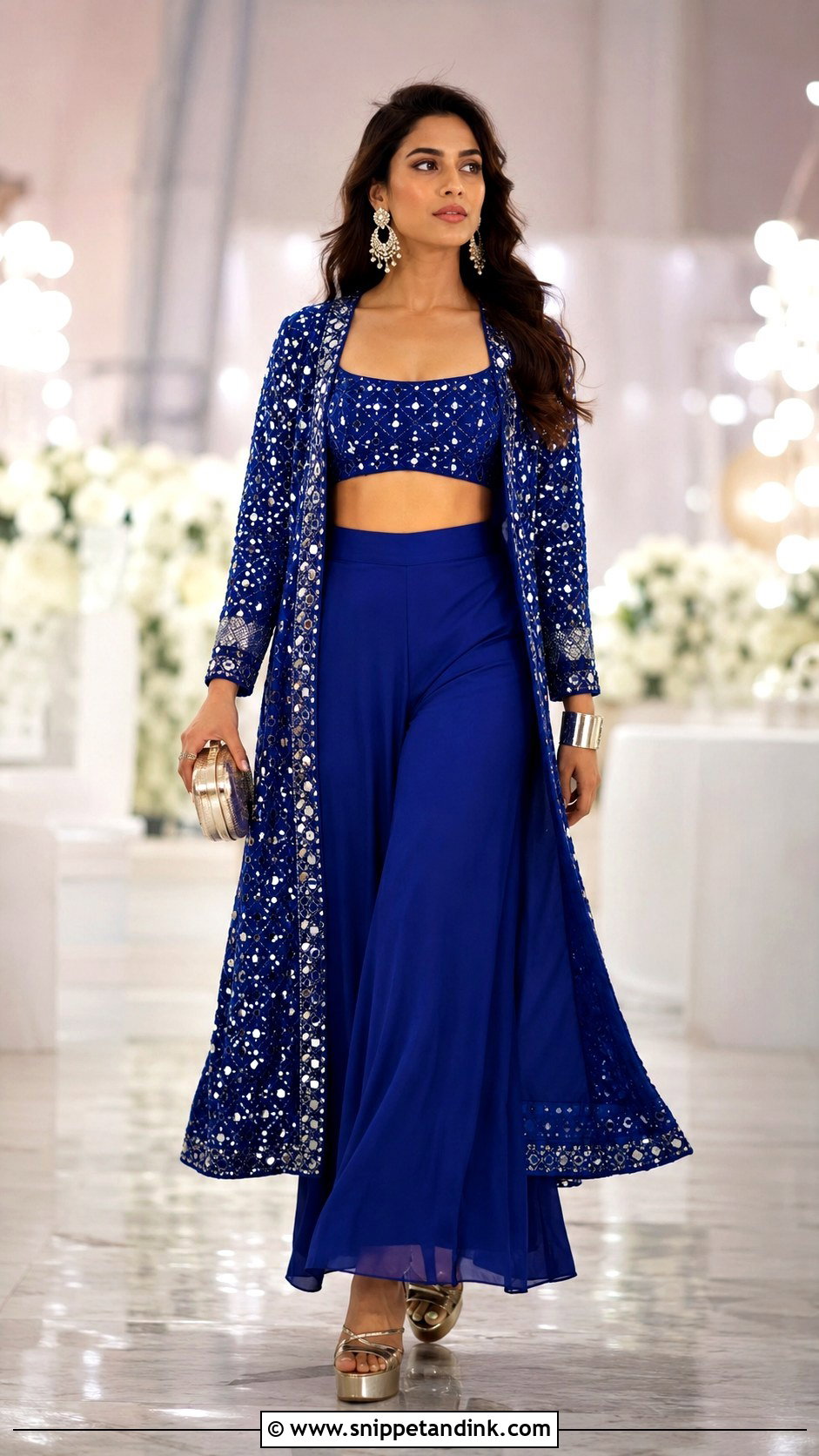
A long embroidered jacket over a crop top and palazzos moves better than almost anything else here. Keep the inner top fitted and the high-waisted pants fluid and in a matching shade, then let the open jacket carry the mirror work, sequins or threadwork. Black, cobalt, magenta and emerald look sharp at night. The jacket’s weight is the first thing I check. If it’s heavily lined and densely embroidered, it slides back off the shoulders every time you lift your arms, and the sleeves can bind at the elbow. Bold earrings, a cuff and platform heels finish it, with a sleek ponytail to show off the jacket’s neckline. Each piece rewears on its own afterward, which makes it a sensible buy in a year full of weddings.
13. Pastel Anarkali Engagement Outfit
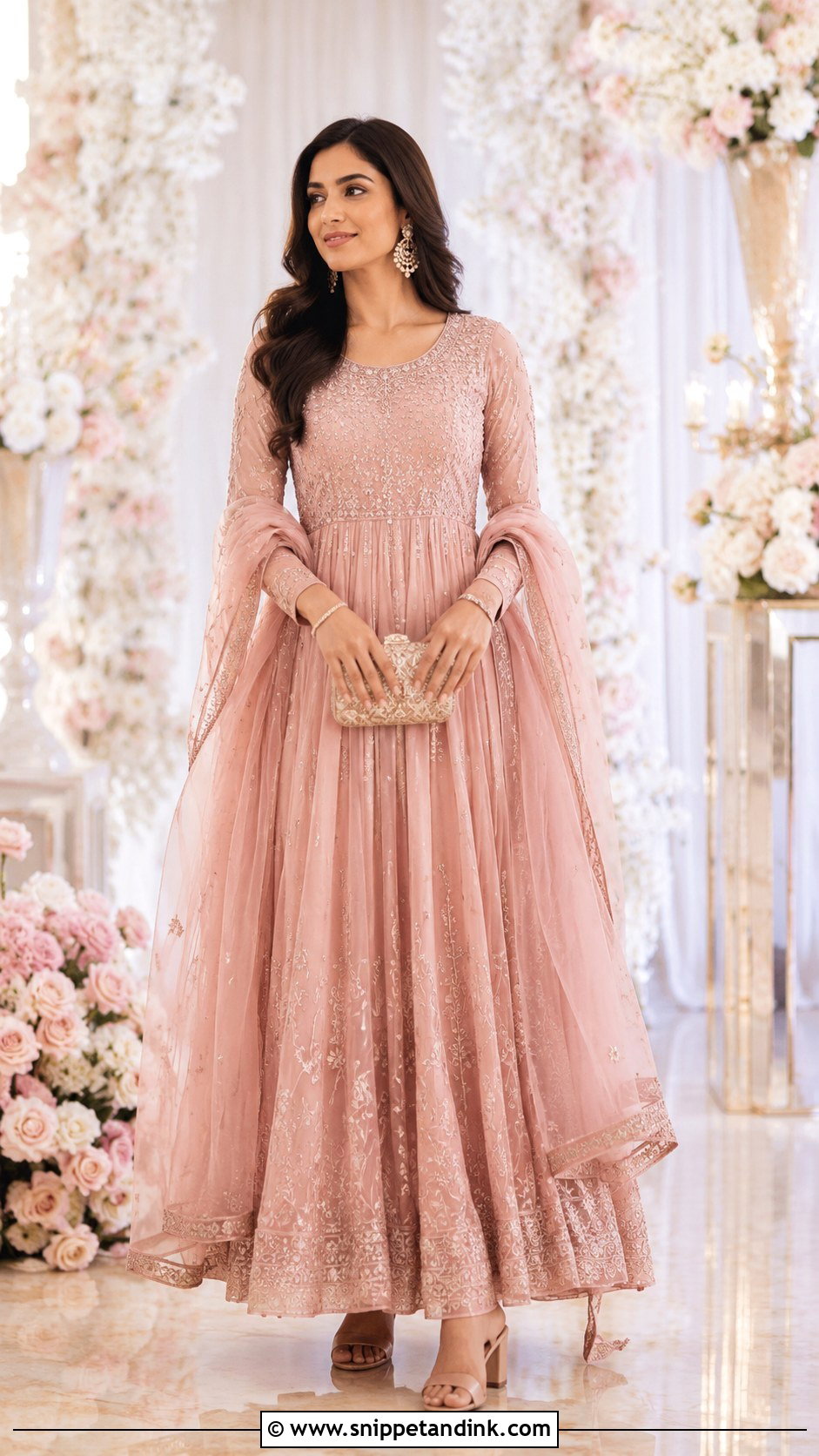
Pastel Anarkalis sit well at engagements because soft color doesn’t compete with the ring exchange or the couple’s own outfits. Blush, powder blue, lavender, mint and peach all work in organza, georgette or a silk blend, with a fitted bodice, a gently flared skirt and fine embroidery at the neckline or border. A sheer dupatta draped over both arms gives a finished portrait line. Pearl or kundan earrings, a slim bracelet, an embroidered clutch and nude or metallic block heels keep the palette quiet. Brides can add a matching maang tikka and a heavier dupatta border, while guests scale the jewelry right down. I spend most of the fitting on the shoulder seam: a long Anarkali hangs from the shoulders, and a loose fit there makes the whole skirt drop unevenly.
14. Pre-Draped Saree Engagement Outfit
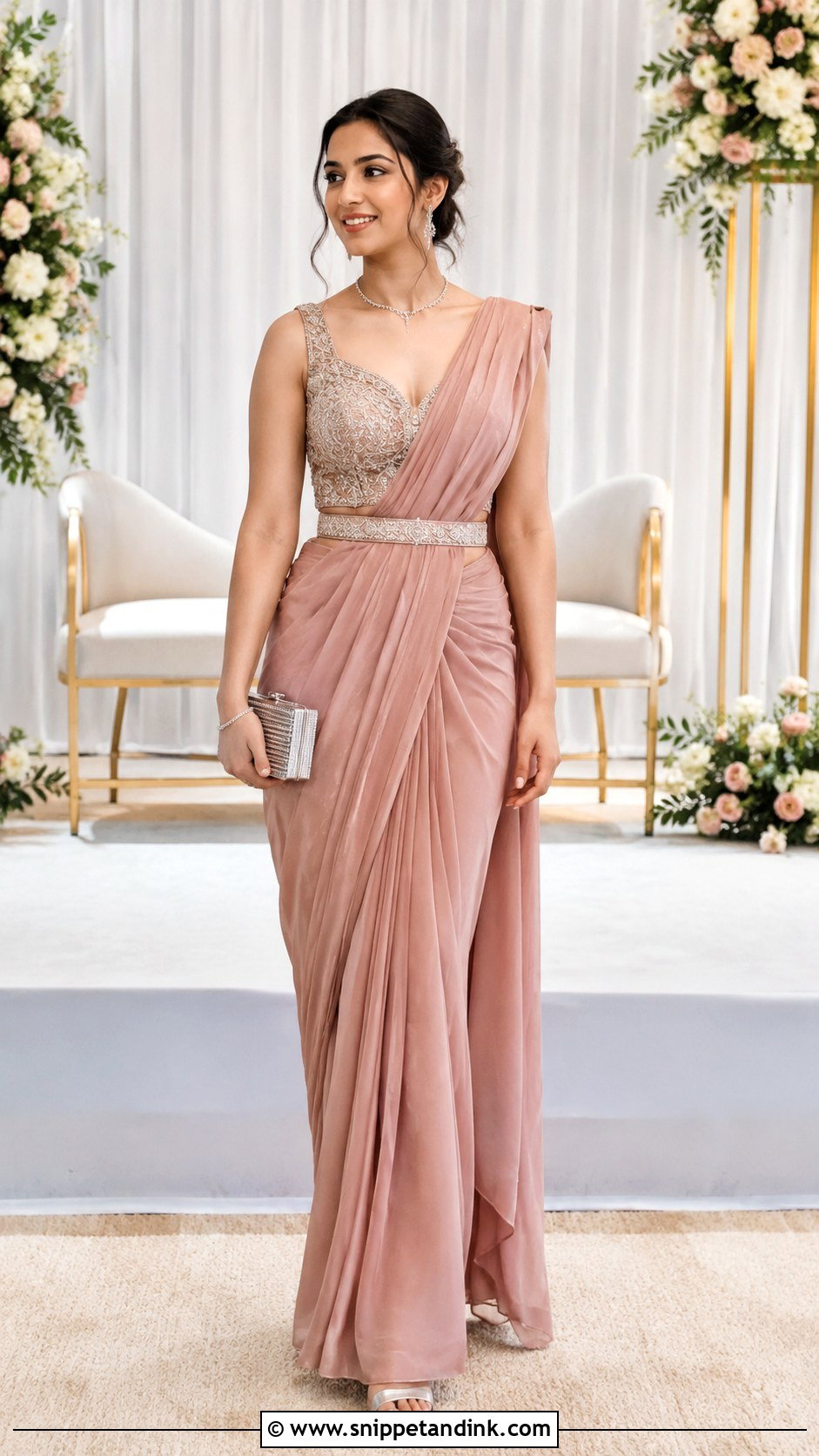
The pleats on a pre-draped saree are stitched in place, which is exactly why I recommend one for an engagement. You’ll be greeting relatives, stepping onto a stage and posing for an hour of family photos, and nothing shifts. Satin, georgette, crepe or light organza in dusty rose, teal, champagne or soft gray all drape well. A structured embroidered blouse becomes the focal point, and a slim waist belt sharpens the line while holding the pleats. Drop earrings, a delicate necklace, a box clutch and heels you can stand in complete it. The trade-off is that it’s cut to a fixed length, so alter it in the shoes you’ll wear. The bride can choose crystal work or a dramatic blouse; relatives and guests can keep the detailing cleaner.
15. Cape Lehenga Cocktail Outfit
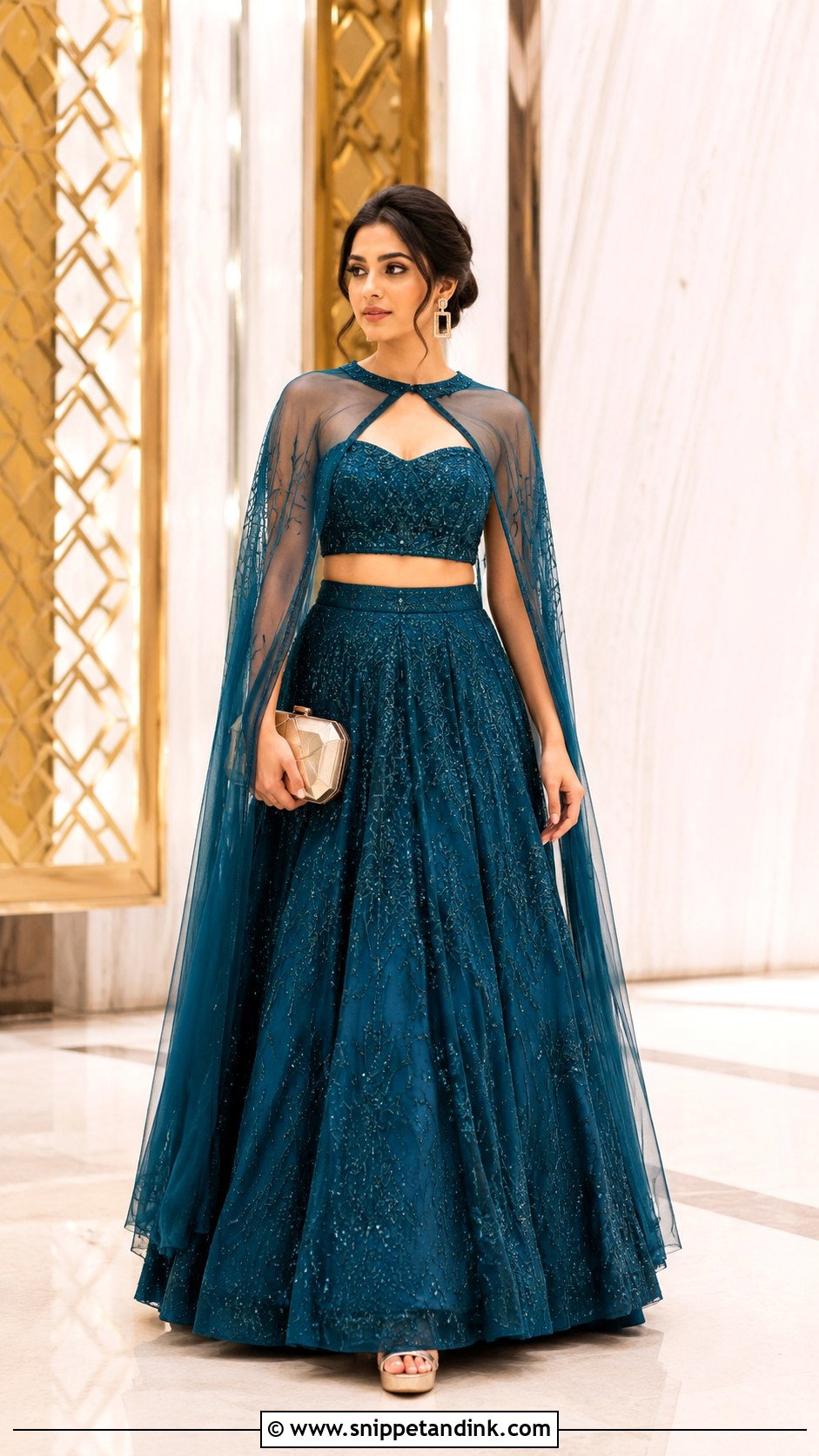
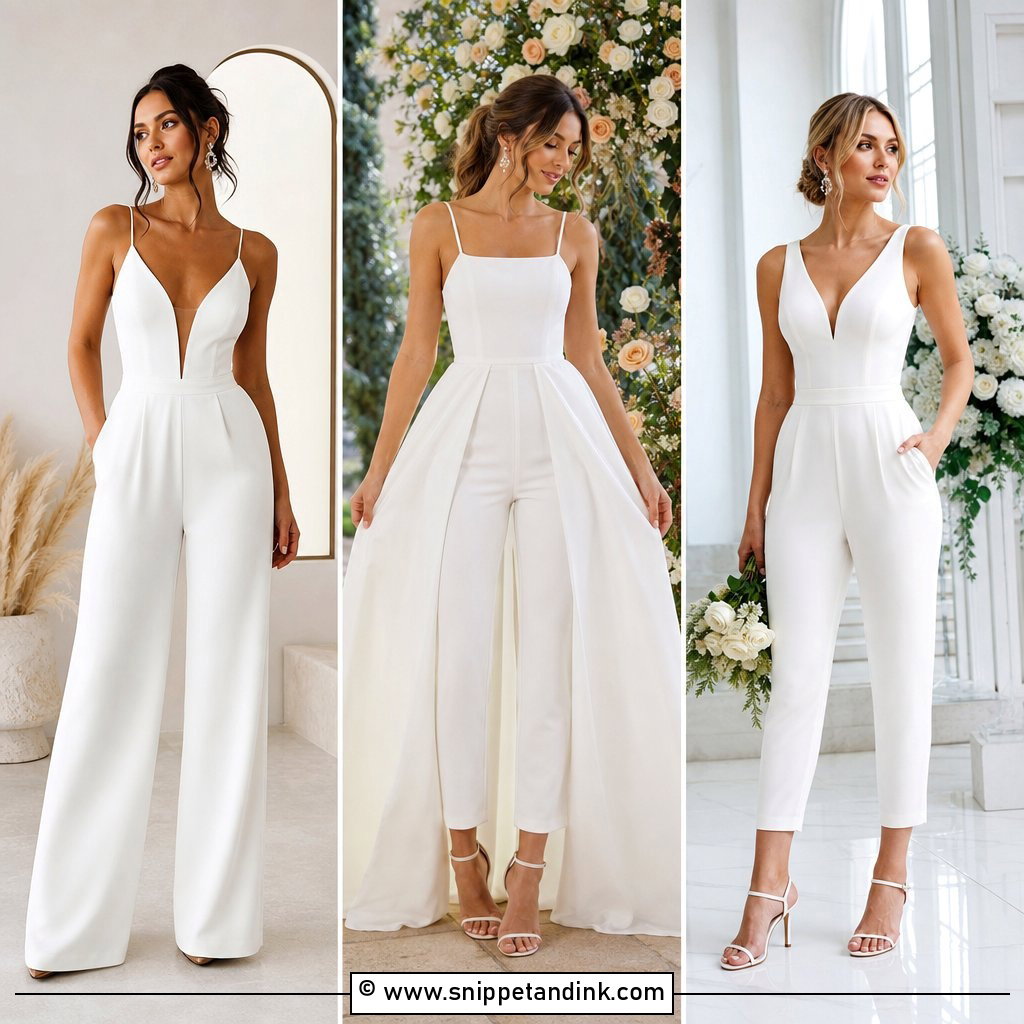
A cape lehenga gives you cocktail-night drama with fewer pieces to manage. Wear a high-waisted skirt with a fitted blouse and a sheer embellished cape falling from the shoulders. Since the cape replaces the dupatta, your hands stay free for a clutch and a drink. Deep teal, burgundy, navy, black and smoky silver all suit an evening room. I look for embroidery that thins out toward the hem; heavy work at the bottom drags and makes walking tiring by the third hour. Geometric earrings, a structured clutch and sleek platforms finish it. Keep your hair smooth and pulled back, or the cape disappears beneath it. Bridesmaids and brides planning a formal, fashion-led cocktail will get the most from this one.
16. Velvet Lehenga Winter Sangeet Outfit
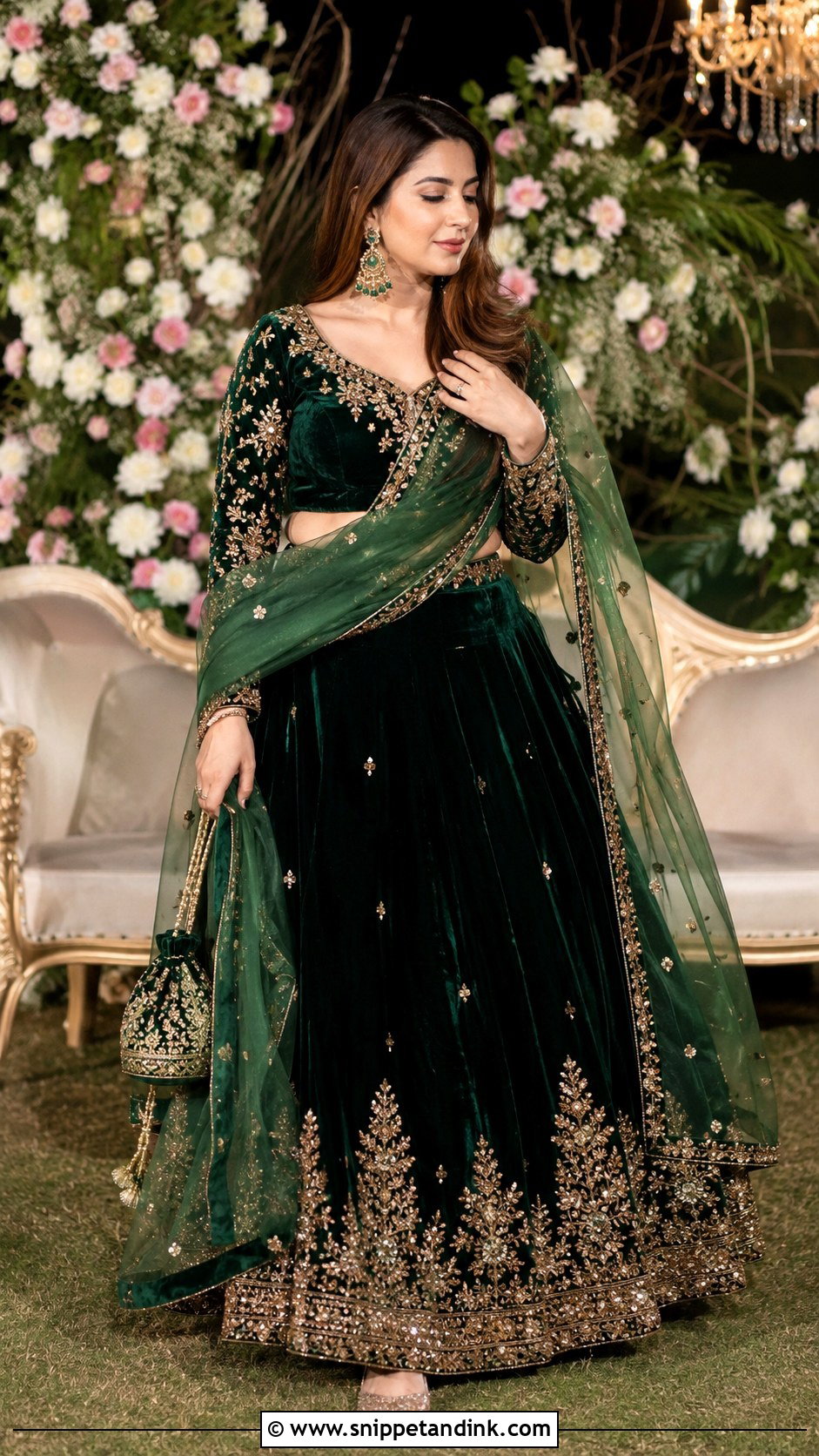
Velvet is the one fabric here I’d rule out for an indoor sangeet with a packed dance floor. It traps heat, and you’ll be uncomfortable within the hour. At an outdoor winter function, though, a maroon, bottle green, navy or plum velvet lehenga gives warmth and depth nothing else can. Pair it with a full-sleeve blouse balancing zardozi, metallic thread or beadwork, and keep the dupatta in light net so the total weight stays manageable. Velvet already looks rich, so leave some of it plain rather than embroidering every surface. Kundan earrings, a small potli and closed-toe embellished heels finish it, with a neat bun or side-swept waves. Ask the venue about heating before you commit.
17. Printed Co-Ord Poolside Mehndi Outfit
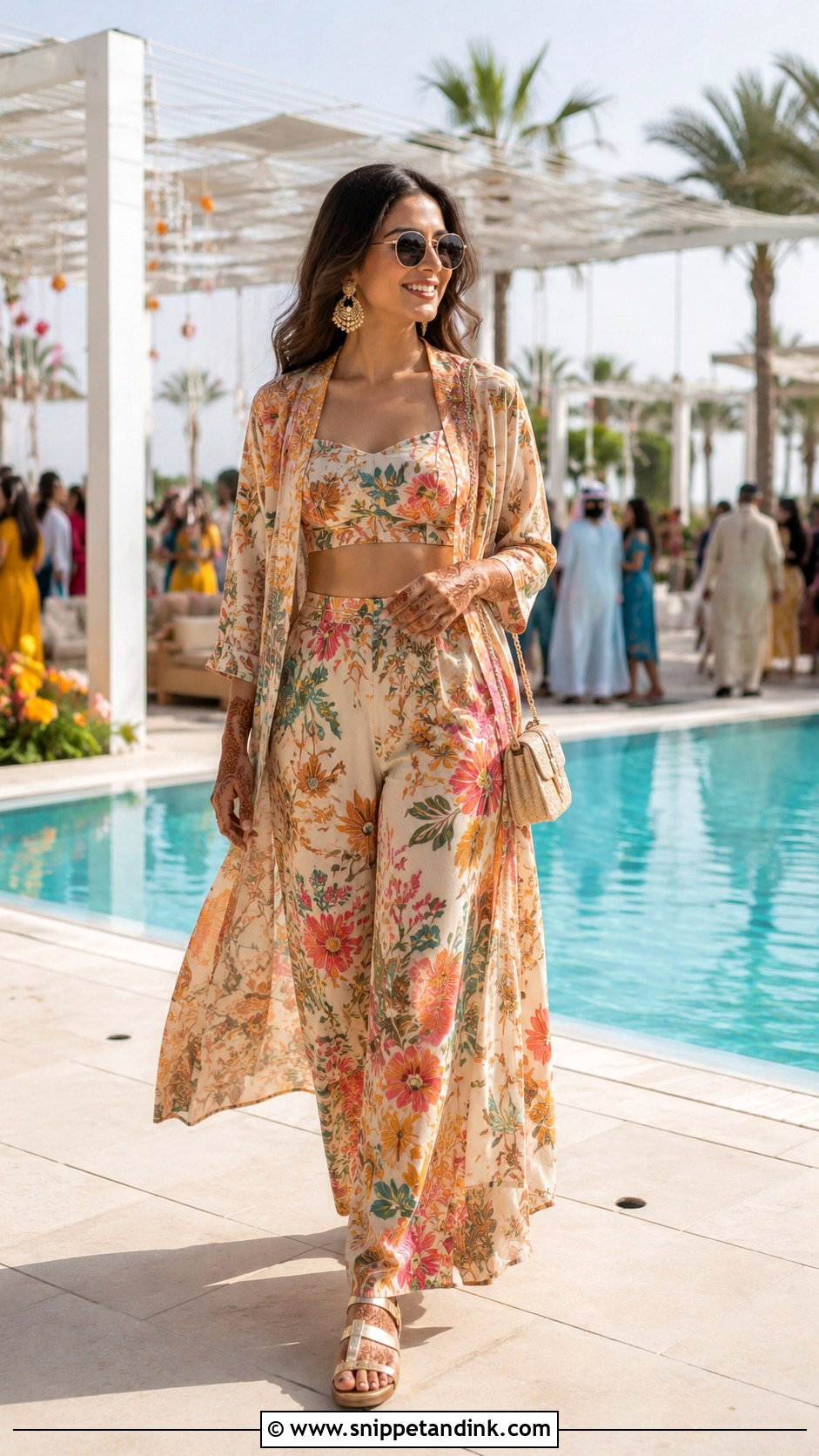
By a pool in full daylight, heavy embroidery looks out of place and feels worse. Try a printed crop top with wide-leg pants and a light matching jacket in tropical florals, paisley or bright geometrics. Cotton-silk, crepe or breathable georgette won’t trap heat outdoors. Statement earrings, sunglasses, a compact sling bag and flat metallic sandals complete it. I run two quick checks: the trouser hem has to clear wet tiles, and the top’s straps need to hold through dancing. If you’re getting henna, pick short or easily rolled sleeves. Co-ords fold small and crease less than a lehenga, so they travel well to destination and resort celebrations.
18. Kasavu Saree South Indian Prewedding Outfit
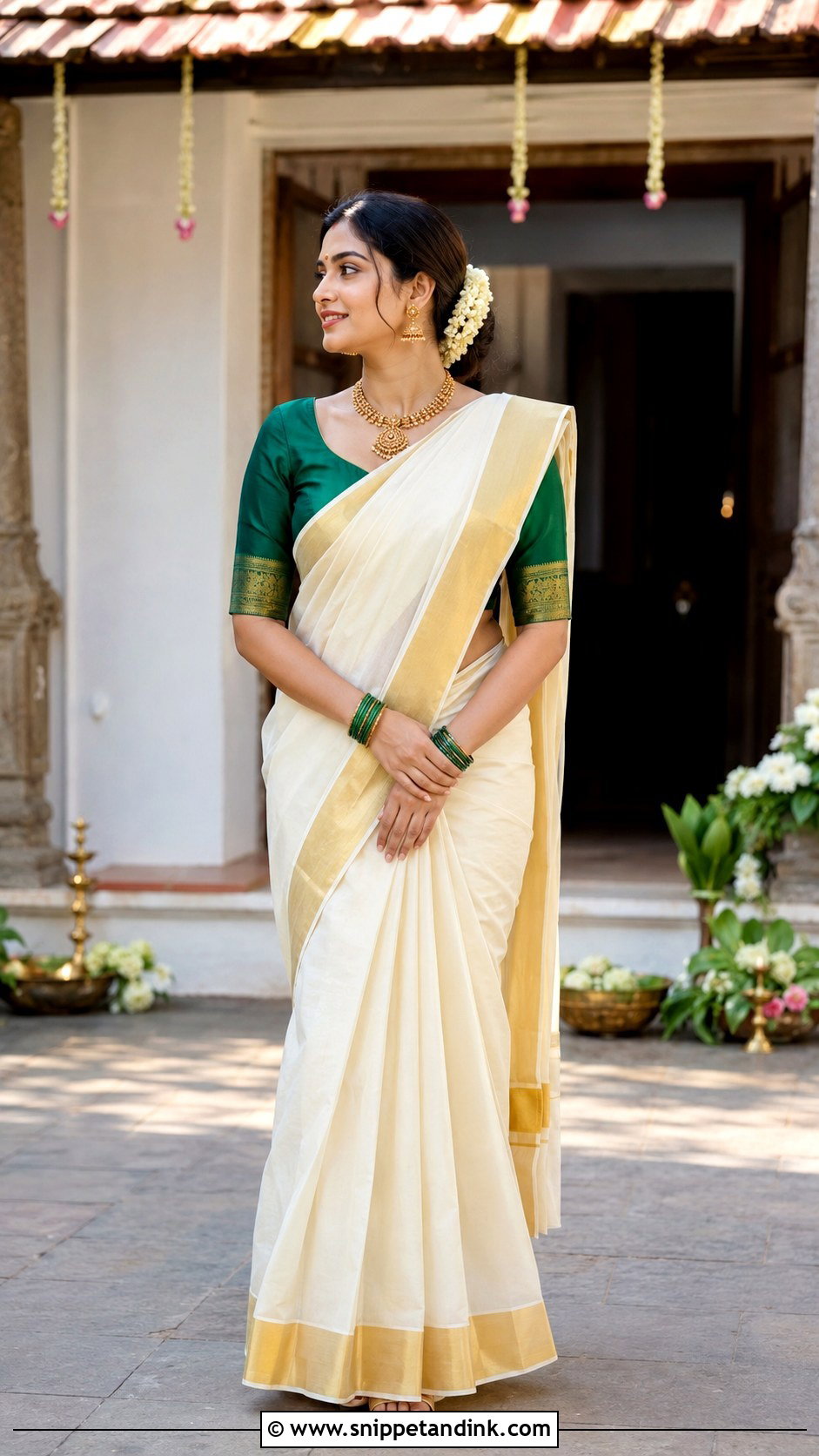
Kasavu’s ivory and gold is quiet on its own, so the blouse is where I bring in color: green, maroon, mustard or pink silk. A fitted elbow-sleeve blouse keeps it suitable for family rituals and looks finished in photographs. Temple jewelry, small jhumkas, glass bangles and fresh jasmine wound around a braid or low bun make it unmistakably South Indian. Gold sandals or plain embroidered flats keep the attention on the saree. Kasavu cotton holds a crisp pleat but creases easily, so pin the pleats firmly, use a secure pallu drape, and steam it that morning. Brides can choose a broader gold border and layered jewelry; guests can wear a lighter saree with one statement necklace.
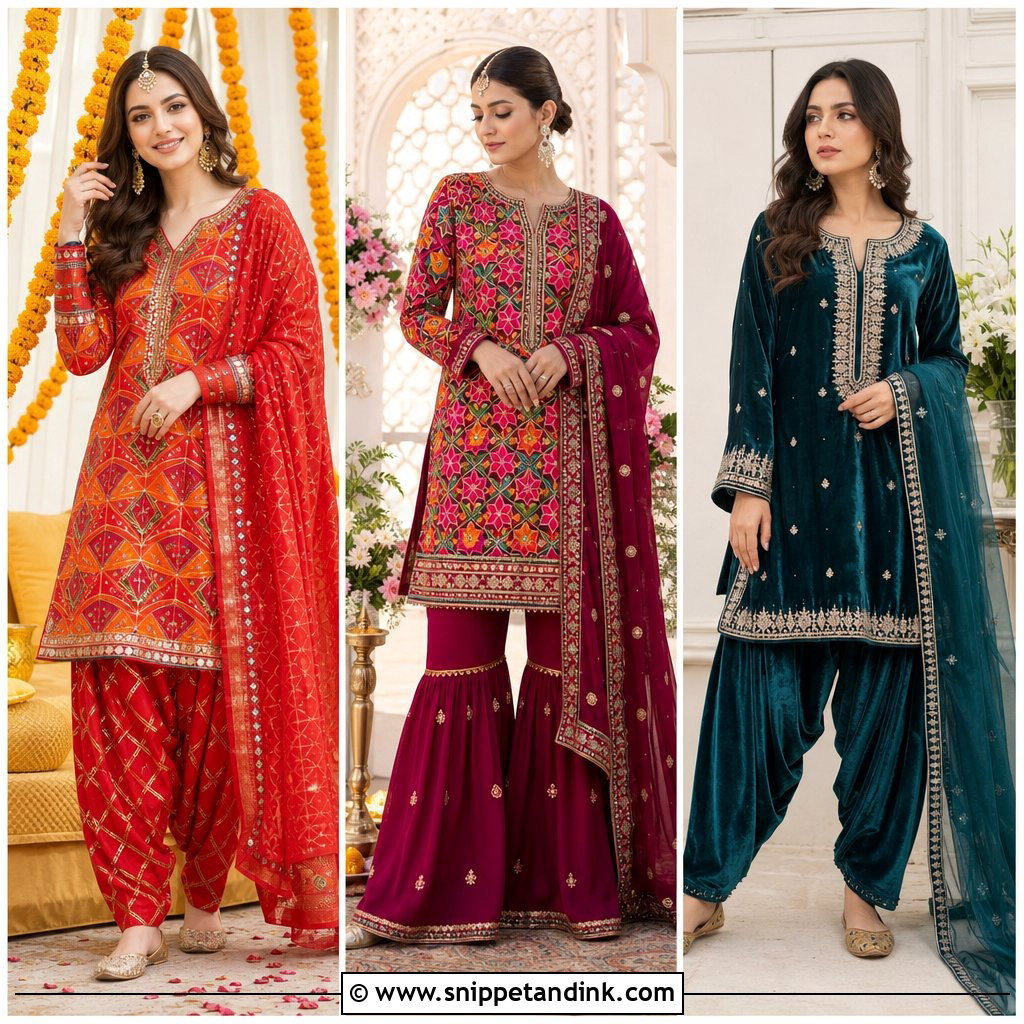
19. Phulkari Patiala Suit Punjabi Prewedding Outfit
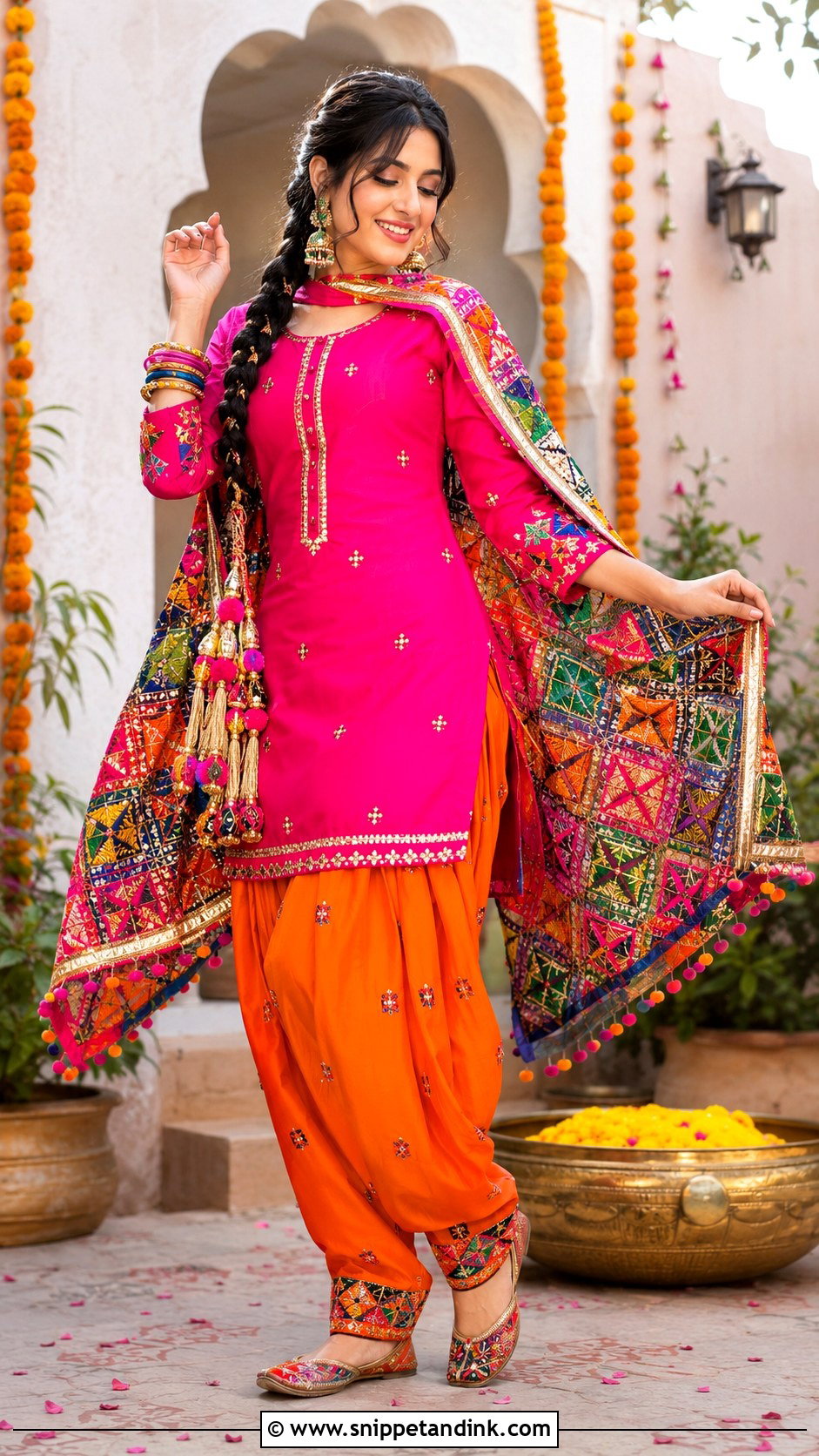
Few outfits match the energy of a Punjabi prewedding like a bright Patiala suit. A short kameez over generously pleated Patiala salwar, topped with a colorful phulkari dupatta, is the classic combination. Fuchsia, orange, yellow, parrot green and royal blue suit daytime functions. Keep the kameez embroidery simple so the phulkari stays the centerpiece. Add jhumkas, colorful bangles, a paranda in the braid and embroidered Punjabi juttis. Drape the dupatta over one shoulder or around the elbows to free your arms for dancing. Because the pleats add so much fabric at the hips, I have the kameez fitted closely at the shoulders and waist to balance it, and that’s what keeps the volume flattering across sizes.
20. Banarasi Skirt Prewedding Puja Outfit
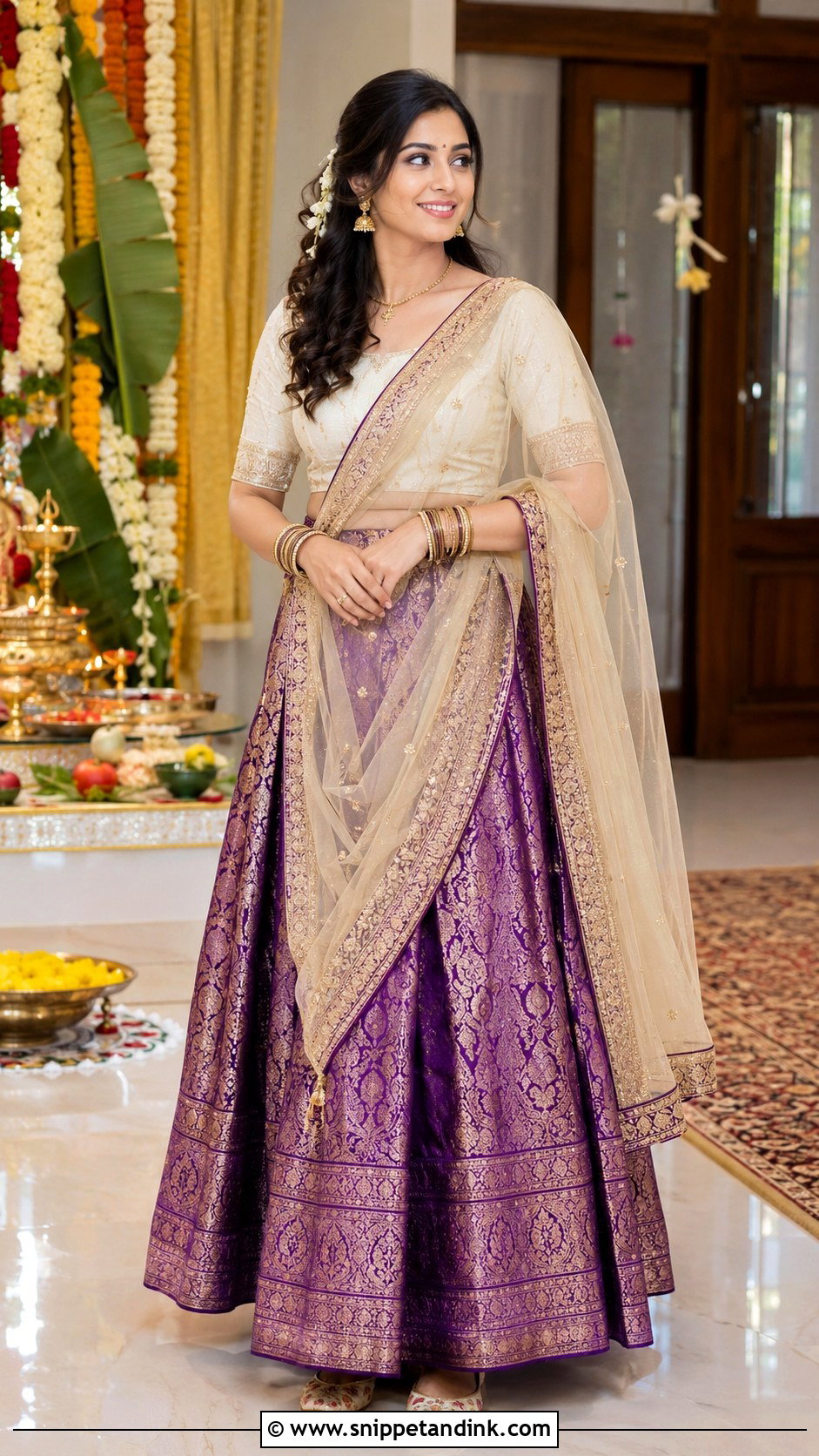
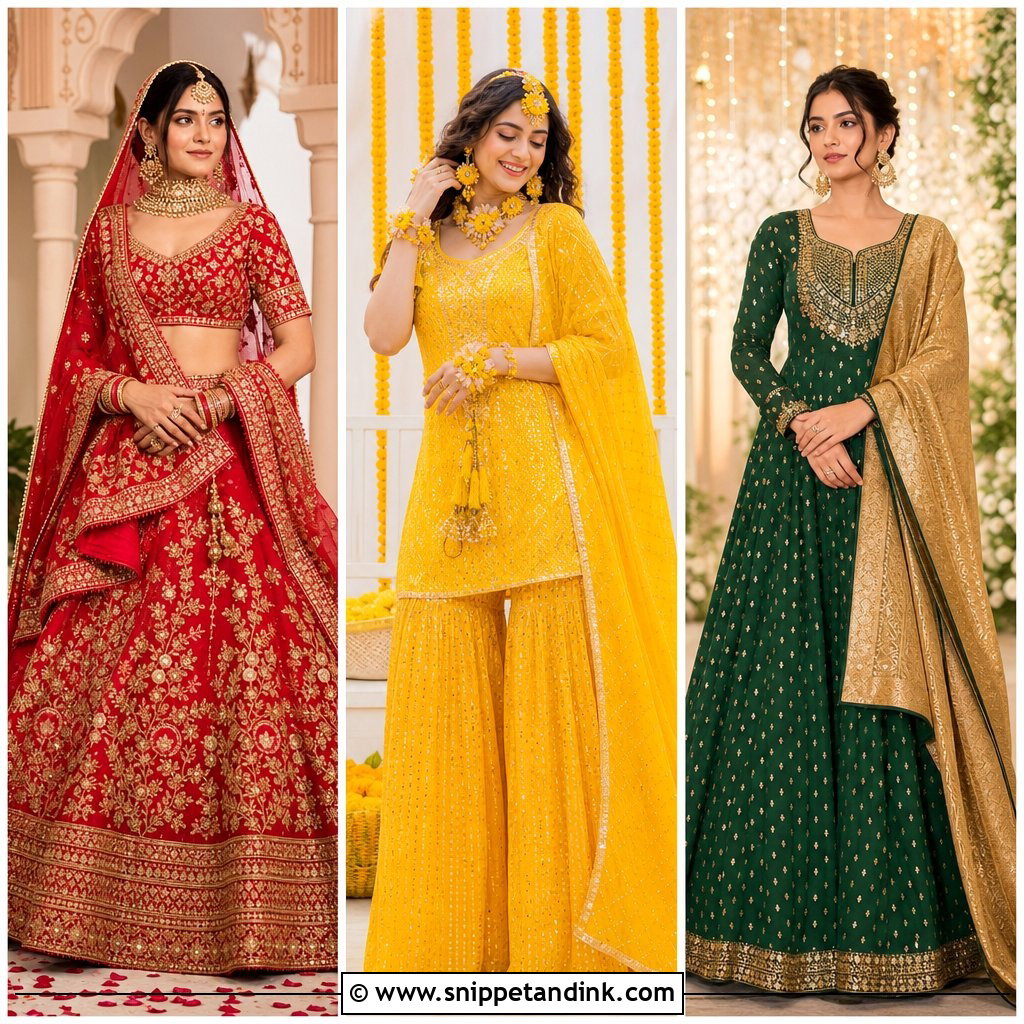
For a puja I aim for respectful coverage that still feels celebratory, and a Banarasi skirt with a modest blouse manages both. Choose a woven skirt in red, green, purple or mustard and calm its richness with a plain silk or cotton-silk blouse. An elbow-sleeve crop top or short kurti gives comfortable coverage when you sit through long rituals. Lay a light dupatta across both shoulders or pin it diagonally. Banarasi brocade already has strong pattern and sheen, so traditional earrings, a slim necklace, bangles and low juttis are enough. Brides can wear a more ornate border and a maang tikka; guests keep jewelry minimal. Afterward the skirt pairs with other blouses, and the blouse with sarees or palazzos.
What Turmeric, Henna Oil and a Long Night Do to Festive Fabric
Prewedding outfits take more punishment than the wedding outfit ever does, and how you treat them in the first few hours decides whether they survive.
- Turmeric: rinse plain cotton and georgette in cold water as soon as you change, never hot, which sets the yellow. A little liquid detergent worked in gently, then drying in direct sun, fades what’s left. Anything with zari or hand embroidery goes to a dry cleaner unscrubbed, with a note that the stain is turmeric.
- Henna and its oils: the eucalyptus or clove oil many artists use leaves greasy marks on silk blouses. Blot, don’t rub, and dust the spot with talc before it goes to the cleaner.
- Sweat at the underarms: silk and velvet mark quickly. I sew in thin dress shields at the fitting, since they’re invisible and far cheaper than reworking a blouse.
- Storage: wrap embroidered pieces in clean cotton or muslin rather than plastic, and fold them with acid-free tissue between the layers. Refold zari work every few months so the metallic thread doesn’t crack along one line. Steam velvet from the inside instead of ironing it flat.
Pack a few safety pins, blouse hooks and a stain pen in the bride’s bag for each function. Most outfit emergencies I see are a popped hook or a slipped pallu, and both take two minutes to fix if the pins are close by.
Let Each Function Set the Fabric
Look back over these outfits and the same logic runs through them: breathable yellow for haldi, open arms and relaxed shapes for mehndi, mirror work and sequins for the sangeet, and polished sarees, Anarkalis and woven brocades for engagements and pujas. Read the invitation, ask about the venue and the weather, and be honest about your role before deciding how much embellishment and jewelry to wear. In my experience, good tailoring and shoes you can stand in for hours do more for a simple outfit than any amount of extra embroidery.
You'll Like These Ideas:



Leave a Reply