
Very few of the brides I dress now settle on one classic gown and stop there. Some want lace, some a satin column, some a tailored suit or a mini, and plenty add a second reception outfit that matters to them as much as the ceremony dress. What makes an outfit right is rarely the label. It’s whether it suits the venue, your build and how long you can stand, sit and move in it. Corset bodices, drop waists, pearl work, sculpted bows, sheer sleeves and detachable skirts are all around this season, next to very plain minimalist cuts. Below are the looks I see work, with what I check at a fitting for each one, so you can picture the whole outfit from hair to hem.
Settle the Venue and How You’ll Move Before Any Neckline
Most first appointments drift because the bride walks in thinking about necklines. I’d rather start with the floor. Grass, gravel, sand and old stone steps all punish a long train and thin heels, while a hotel ballroom carpet forgives almost anything. Then think about what your body actually does that day. A long religious ceremony means standing or kneeling, a seated dinner means hours in a chair, and a dance-heavy reception means lifting your arms again and again.
- Standing through a long ceremony: avoid corsetry laced so tight you can’t take a full breath.
- Kneeling or sitting on the floor: skip close-fitted mermaids and stiff mikado that won’t fold with you.
- Exposed, windy sites: a cape or a short veil behaves better than cathedral length.
- Real heat: crepe, silk and lighter satin breathe far better than heavy lace over full lining.
Only after that do I start pulling dresses. It narrows the rack quickly and saves you from falling for a gown that fights the day you’re planning.
1. Classic Ball Gown Bride Look
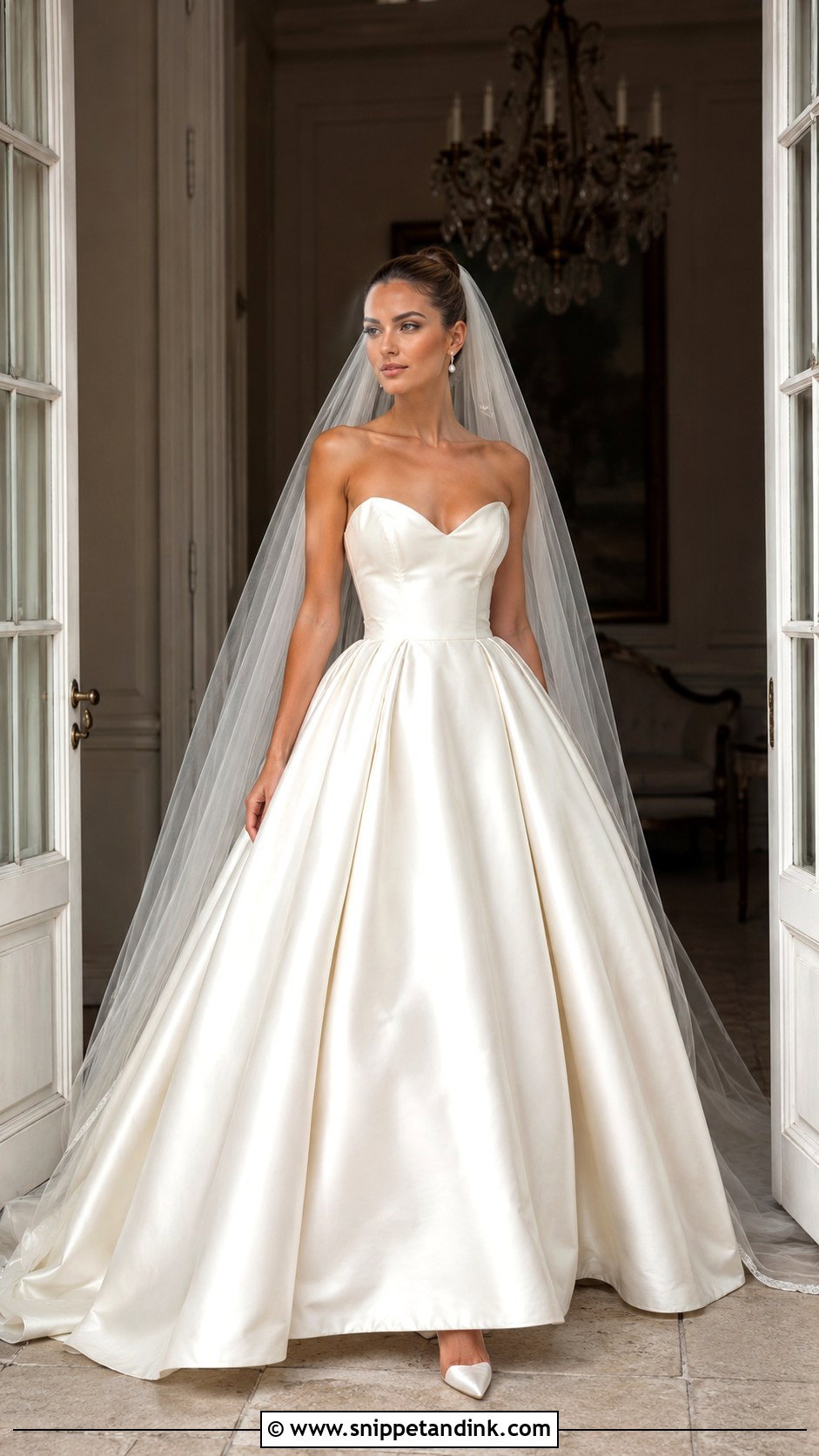
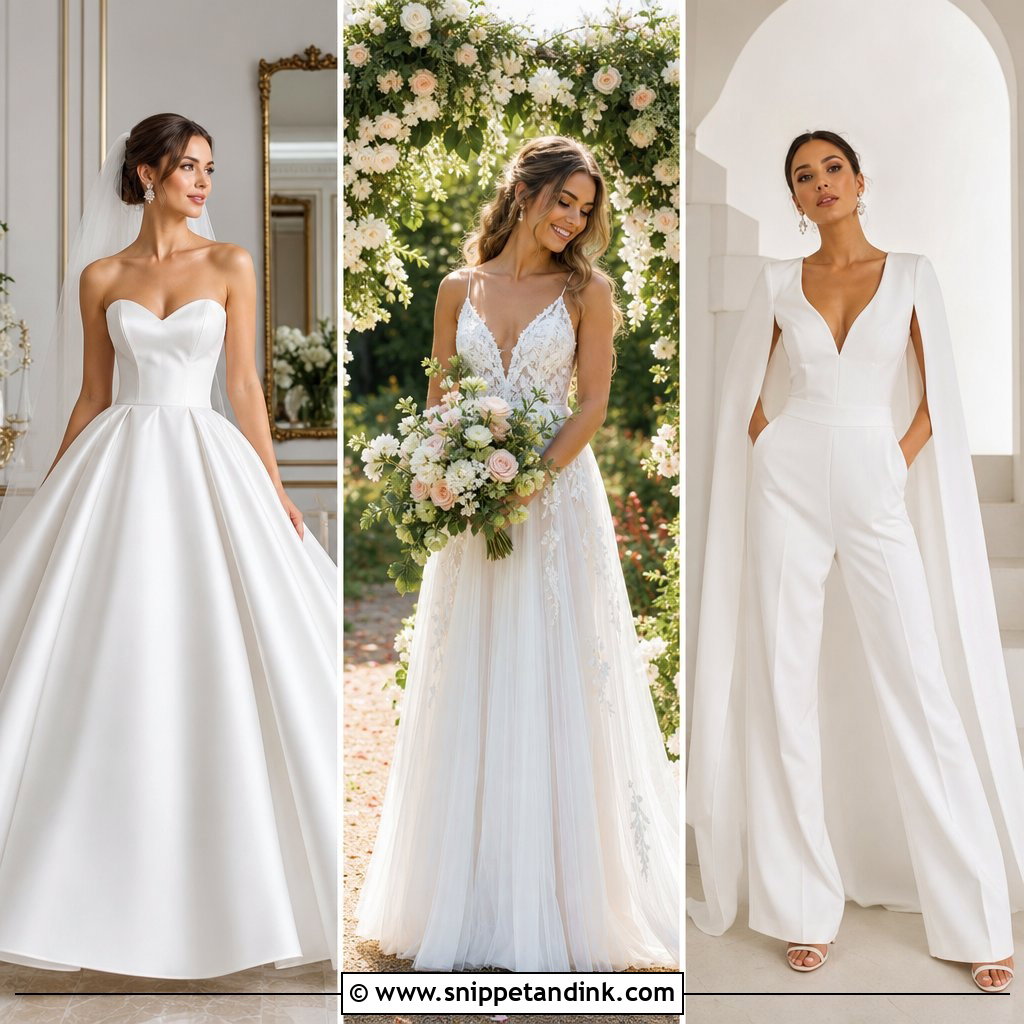
A ball gown is the one silhouette where the bodice does nearly all the work. If the boning and waist stay don’t hold you properly, the weight of a full satin or mikado skirt drags the waistline down and the top starts to gape within an hour, so I always have a bride sit and lift her arms before we sign off on it. A sweetheart, square or off-the-shoulder neckline balances the volume; a high neck tends to make the whole shape look top-heavy. Keep accessories quiet with pearl earrings, a cathedral veil and pointed ivory heels. It belongs in a ballroom, a grand hotel or a garden estate, and a low bun or soft waves keeps the hair from fighting the skirt.
2. Minimal Satin Bride Look
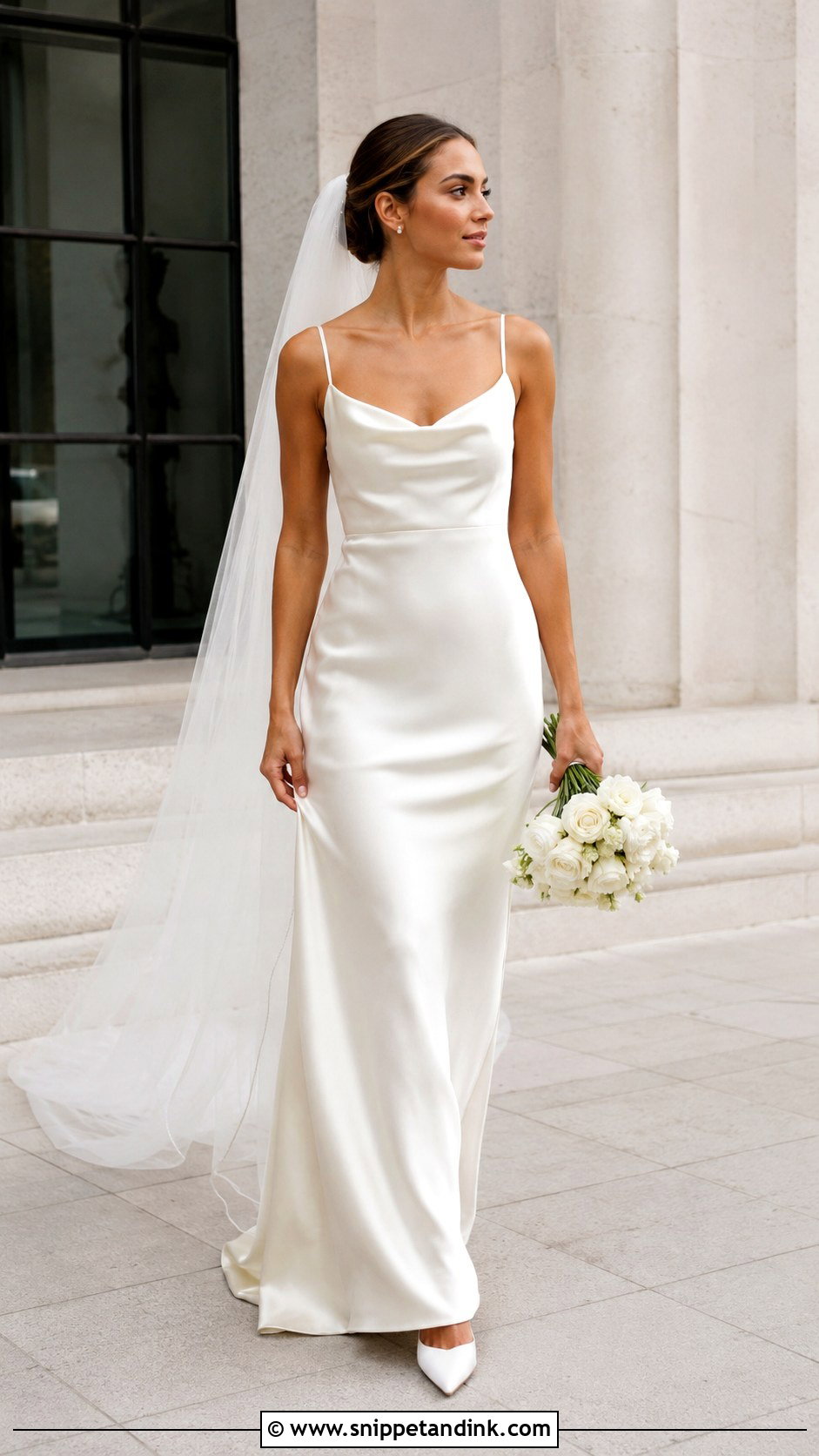
Plain satin hides nothing. A thin satin shows every seam allowance and underwear line, so look for a heavier, double-faced satin if you want a bias-cut slip dress or a column with a slight train, and bring the exact underwear you’ll wear to every fitting. Pearl or diamond studs, sleek heels and a slim veil are all it needs. Smooth hair and a structured bouquet keep it crisp at a city venue or on a rooftop. One honest warning: satin creases where you sit, so expect softer lines across the lap by the reception.
3. Lace Long Sleeve Bride Look
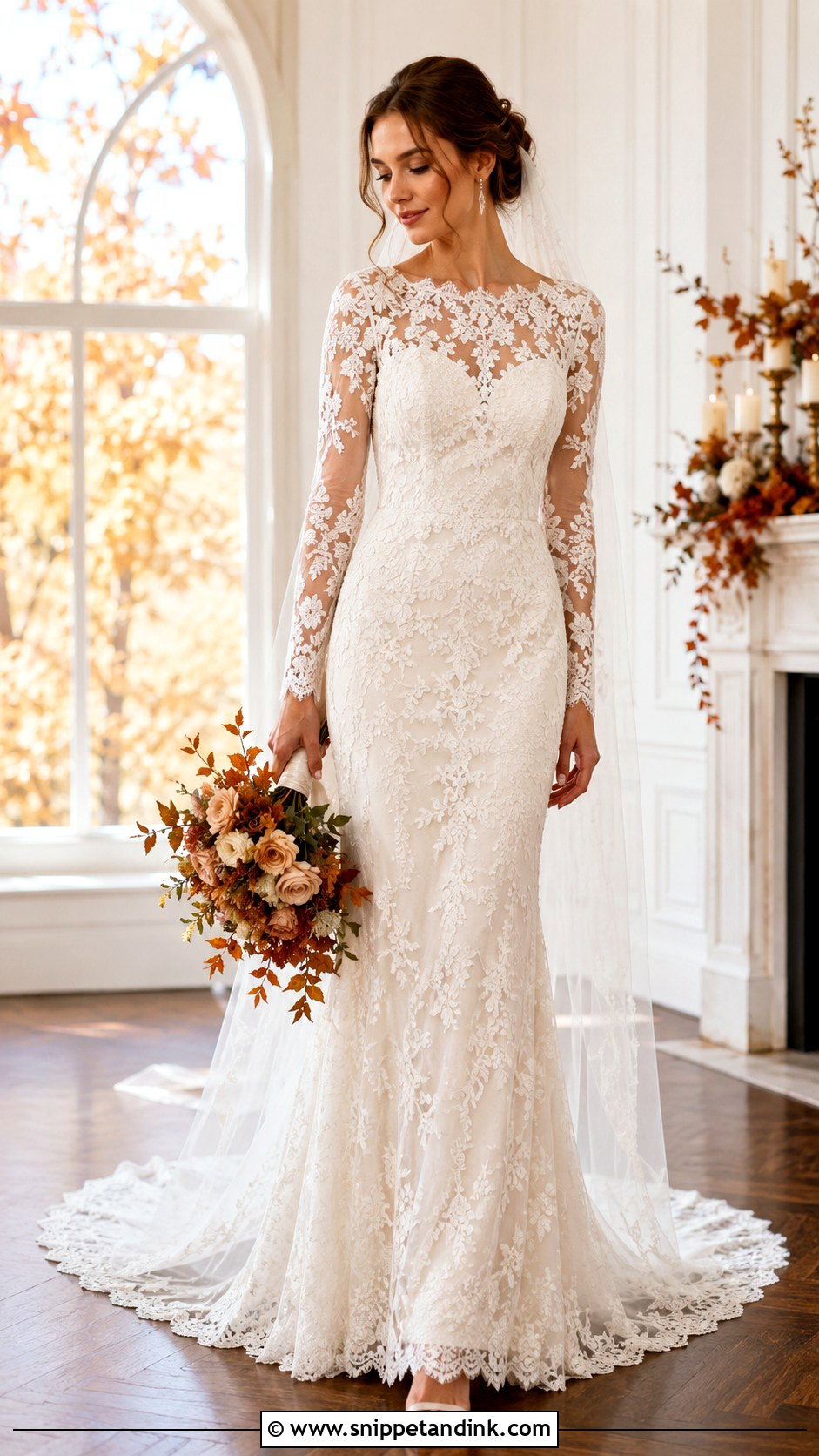
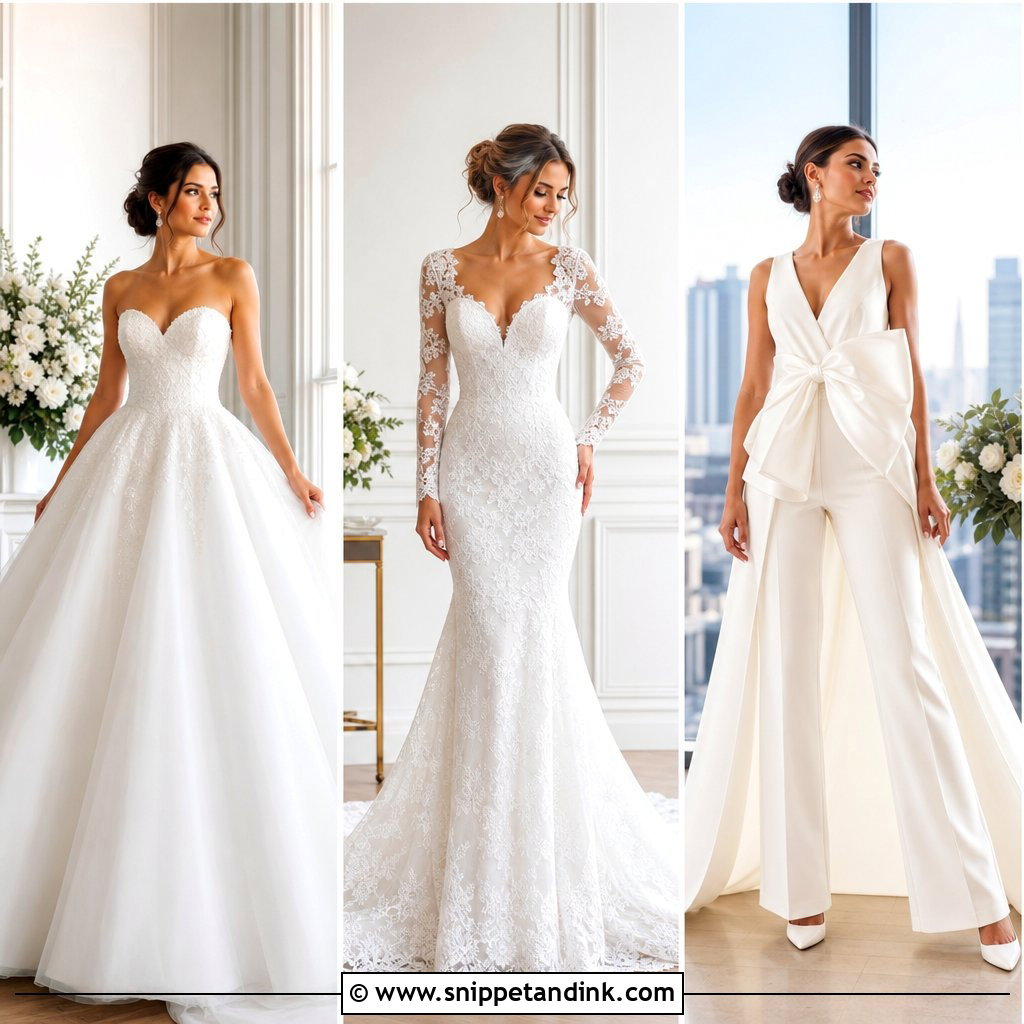
Lace sleeves have to be fitted with your arms moving, not hanging. I ask brides to hug me or raise a glass at the fitting, because a sleeve cut snug at the bicep pulls the whole shoulder seam forward when you reach. Floral lace laid over nude or ivory lining reads warmer in candlelight than lace over stark white, which is partly why this look suits fall and winter, historic rooms and candlelit receptions. The skirt can be fitted, A-line or sheath. Simple drop earrings, ivory heels and a sheer veil let the lace show, and a low chignon keeps hair off the shoulder detail.
4. Corset Bodice Bride Look
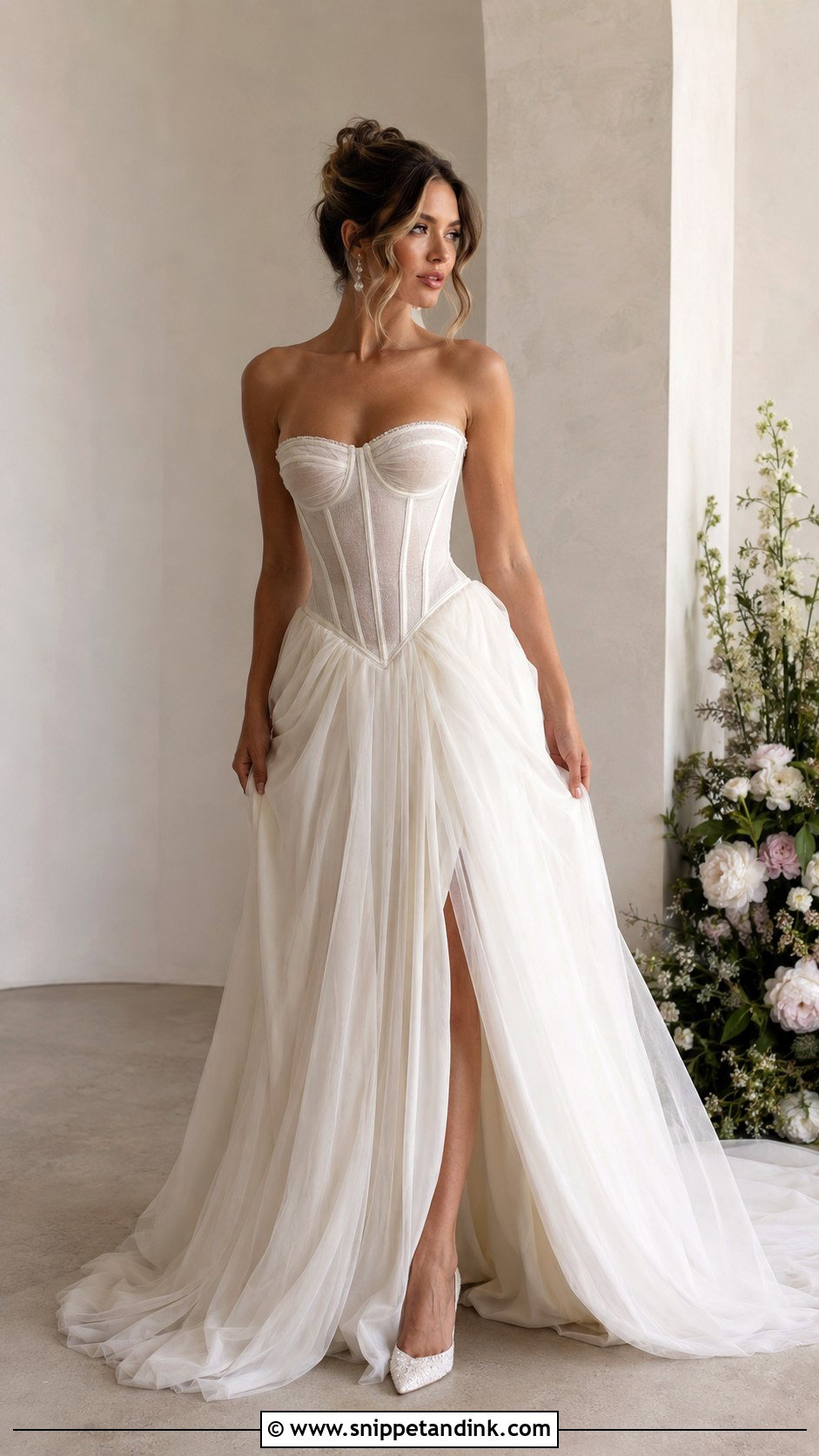
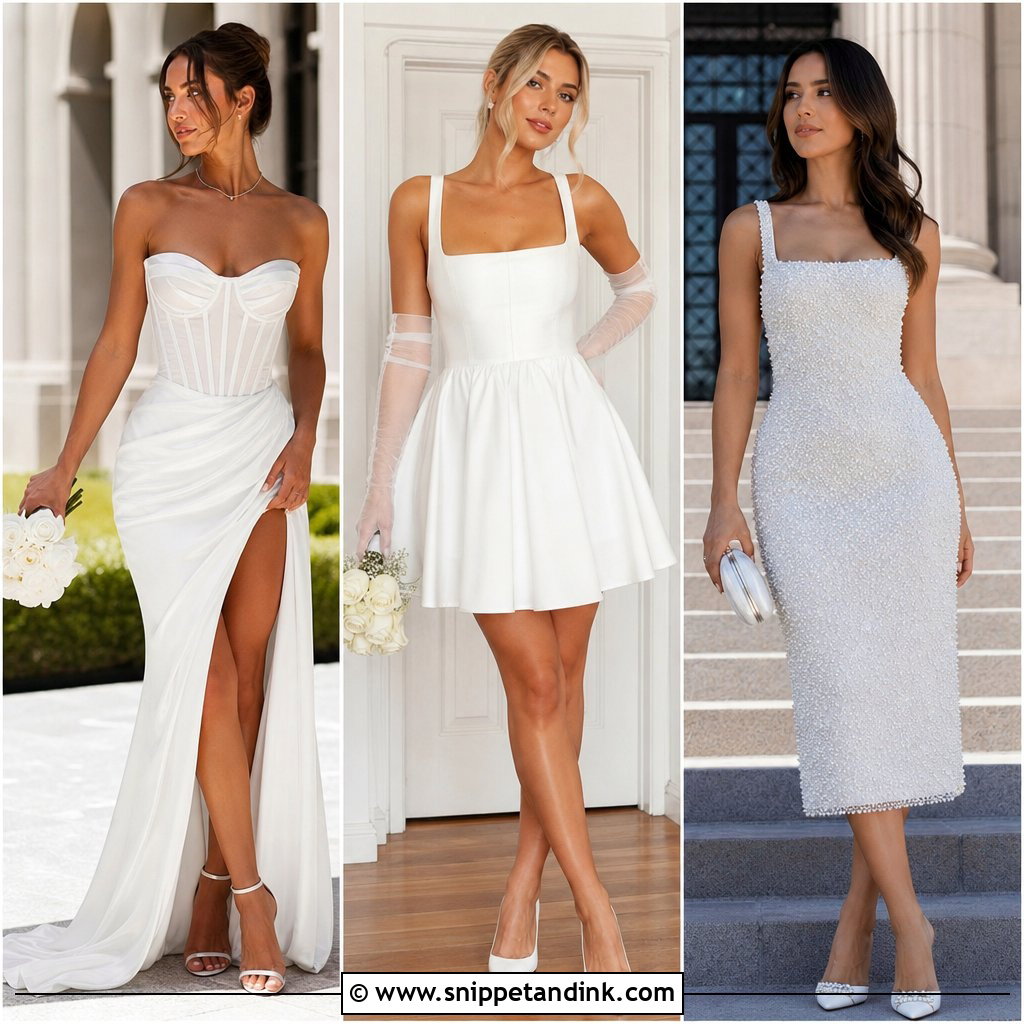
A properly built corset bodice, with visible boning and a basque point at the waist, gives more support than most strapless gowns and defines the waist on a wide range of figures. The trade-off is breathing and eating. I lace it at the fitting, then have the bride sit for ten minutes before we judge it, because a corset that feels fine standing can dig in at the ribs once you’re in a chair. Balance the hard top with something that moves, like tulle, lace appliqué or draped satin. Pointed heels, a simple veil and small earrings let the bodice read first.
5. Drop Waist Bride Look
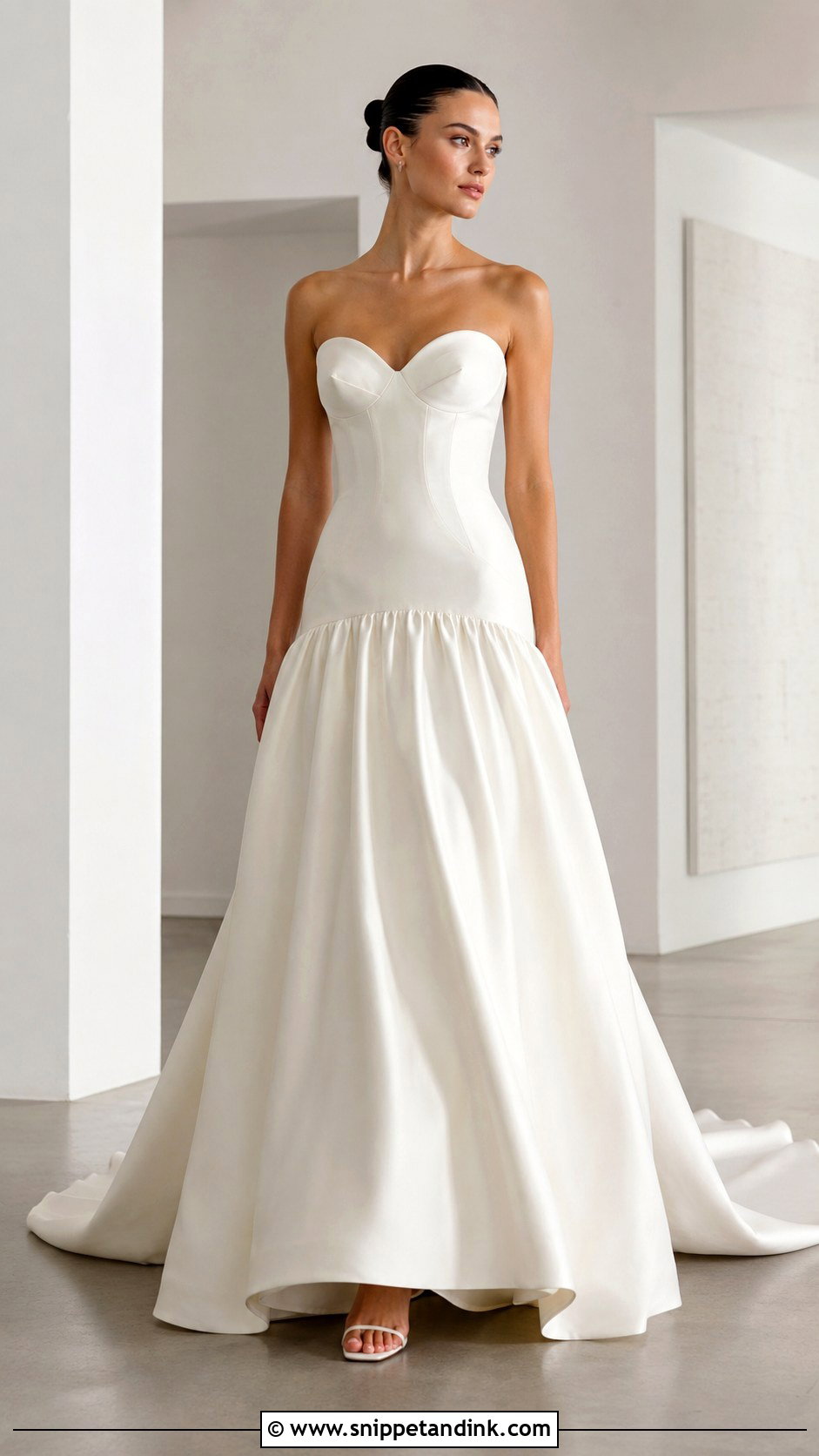
Of everything here, the drop waist is the most sensitive to proportion. The seam sits low on the hips, so an inch either way decides whether your legs look long or short, and I’d steer petite brides toward a shallow drop. A full tulle skirt below the seam gives drama; satin keeps the line cleaner. Take your exact shoes to every fitting, since both the hem and the waist seam get judged against your heel height. Slim heels, a clean veil, minimal jewelry and a soft updo or smooth blowout keep the long torso line unbroken.
6. Off Shoulder Bride Look
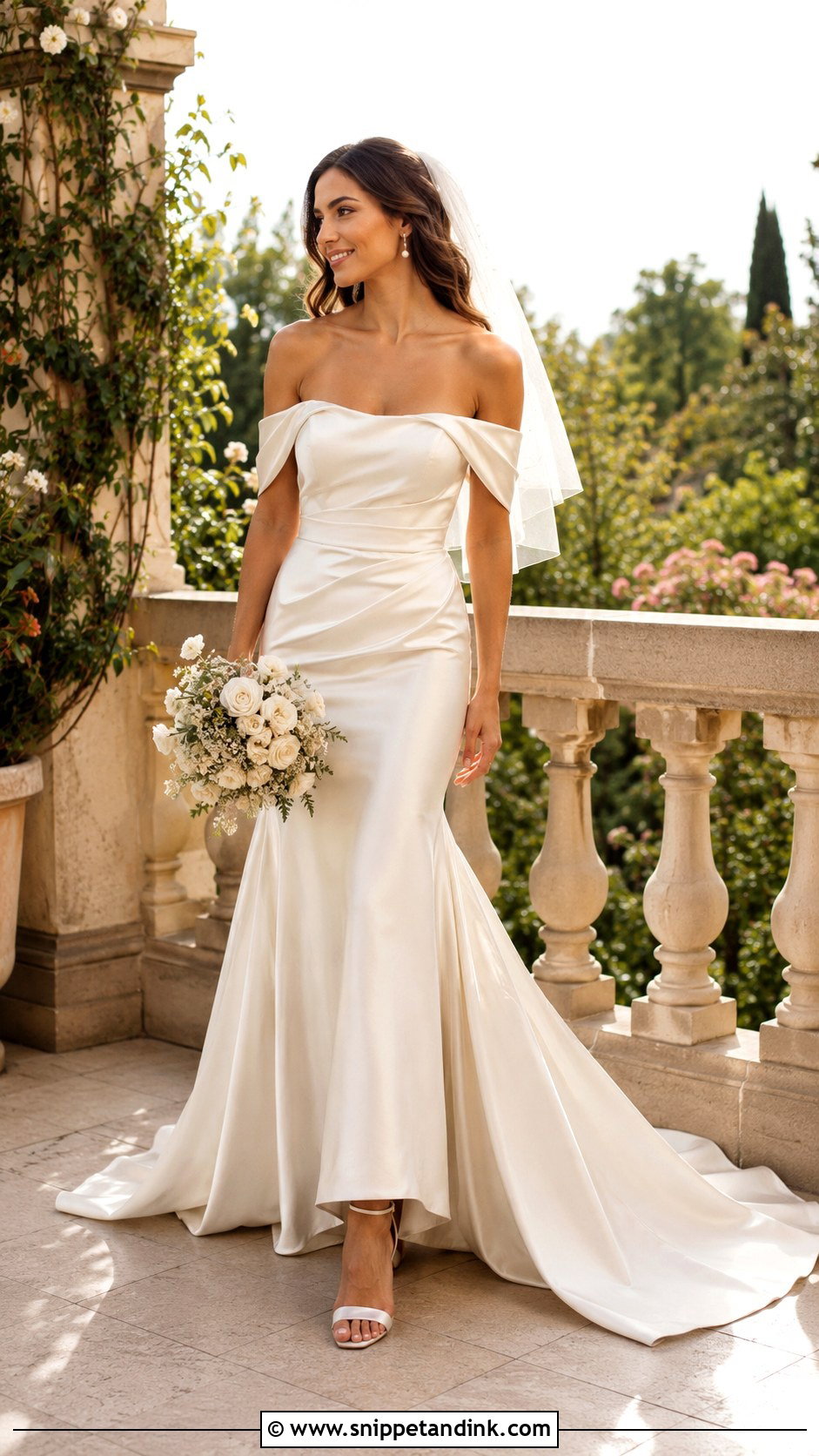
Off-shoulder sleeves sit on the upper arm, and what usually goes wrong is that they slide or stop you reaching. At the fitting I check you can lift your arms to shoulder height, for hugs and the bouquet toss, without the bodice riding up. The neckline shows the collarbone well on a mermaid, an A-line or a satin ball gown. Leave the neck bare and wear earrings unless the neckline leaves a clear gap for a fine chain. Soft waves or a low bun with a medium-length veil suit it.
7. Pearl Detail Bride Look
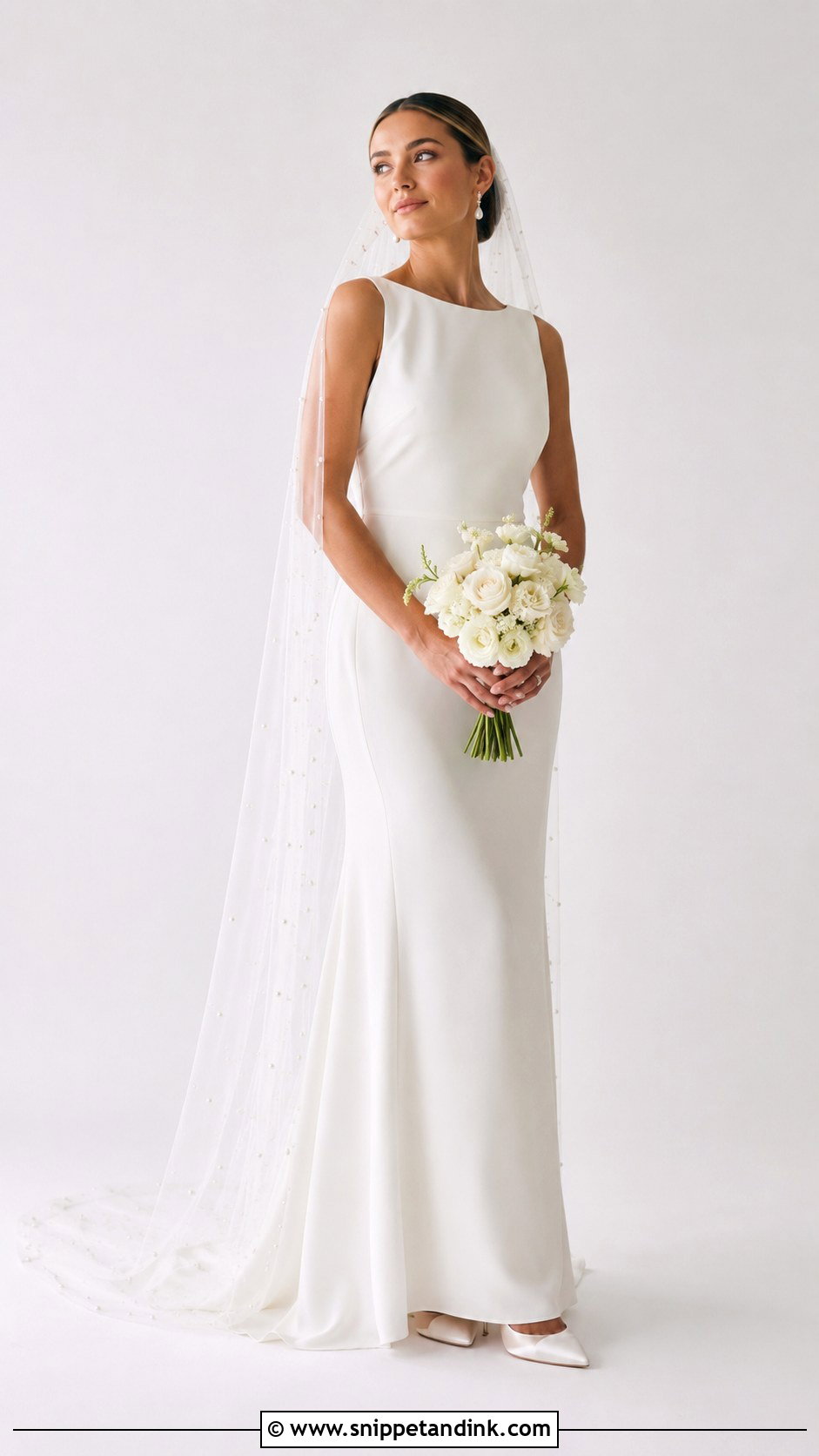
Pearls can go almost anywhere: the gown, veil, shoes, gloves, a headband or a bag. My rule is one or two places, never all of them. A plain crepe or satin dress with a pearl-scattered veil looks modern, while an allover pearl gown carries enough on its own. Check the weight before you commit, because a heavily pearled veil pulls on its comb and can drag a fine-hair updo backwards by mid-afternoon. Keep the palette in ivory, cream and pale champagne, then add pearl drops, satin heels and glowing skin.
8. Floral Applique Bride Look
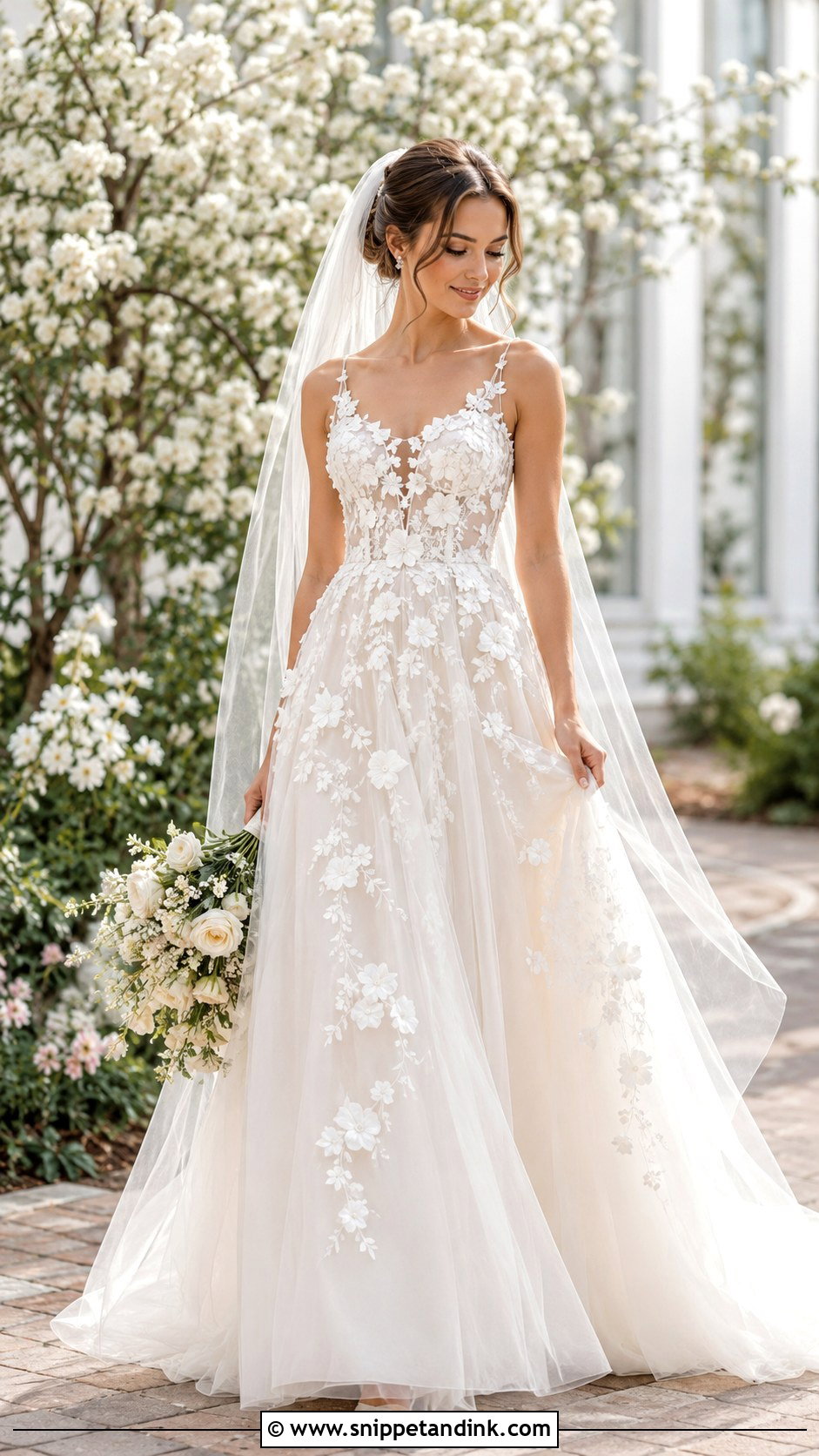
Three-dimensional flowers look fresh in daylight and can flatten under direct flash, so for a mostly evening wedding I’d lean toward embroidered vines or layered floral lace instead. The base fabric changes the effect. Sheer tulle or organza lets the appliqués float; satin makes them look structured and sewn on. Because the dress already has texture, small earrings, barely-there heels and a sheer veil are enough. It’s at home in spring, in conservatories and at garden receptions, and a loose updo or half-up style keeps the shoulder florals visible in photos.
9. Bridal Suit Look
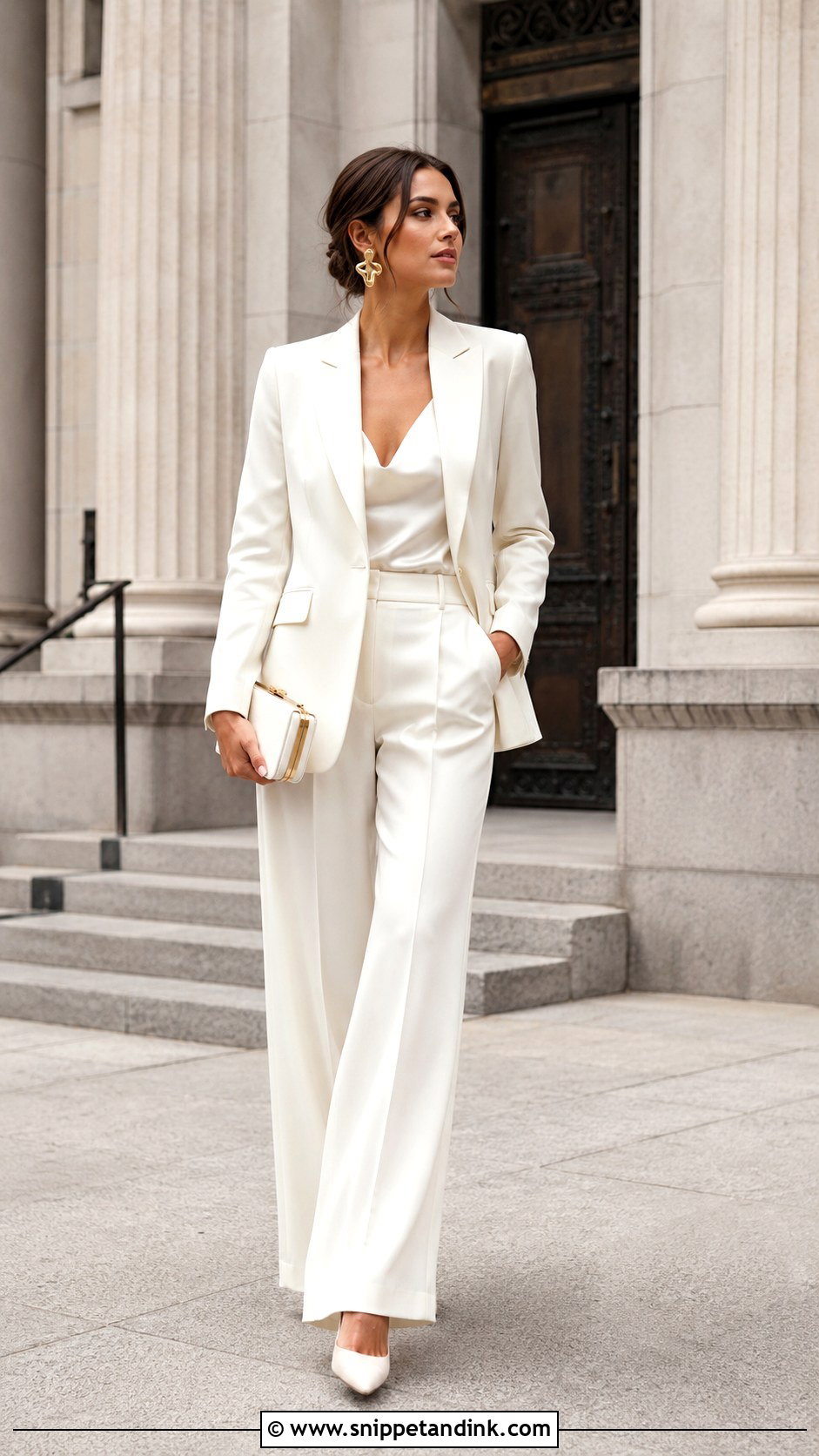
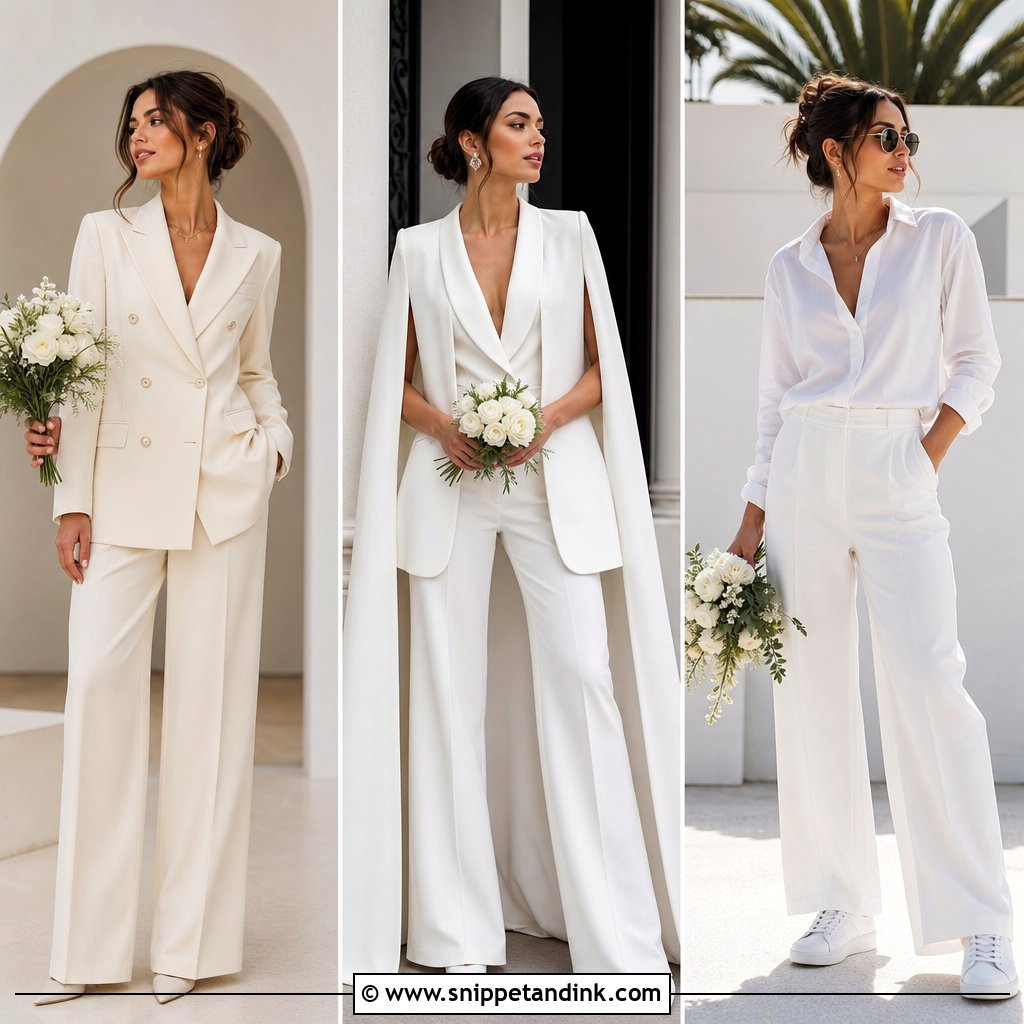
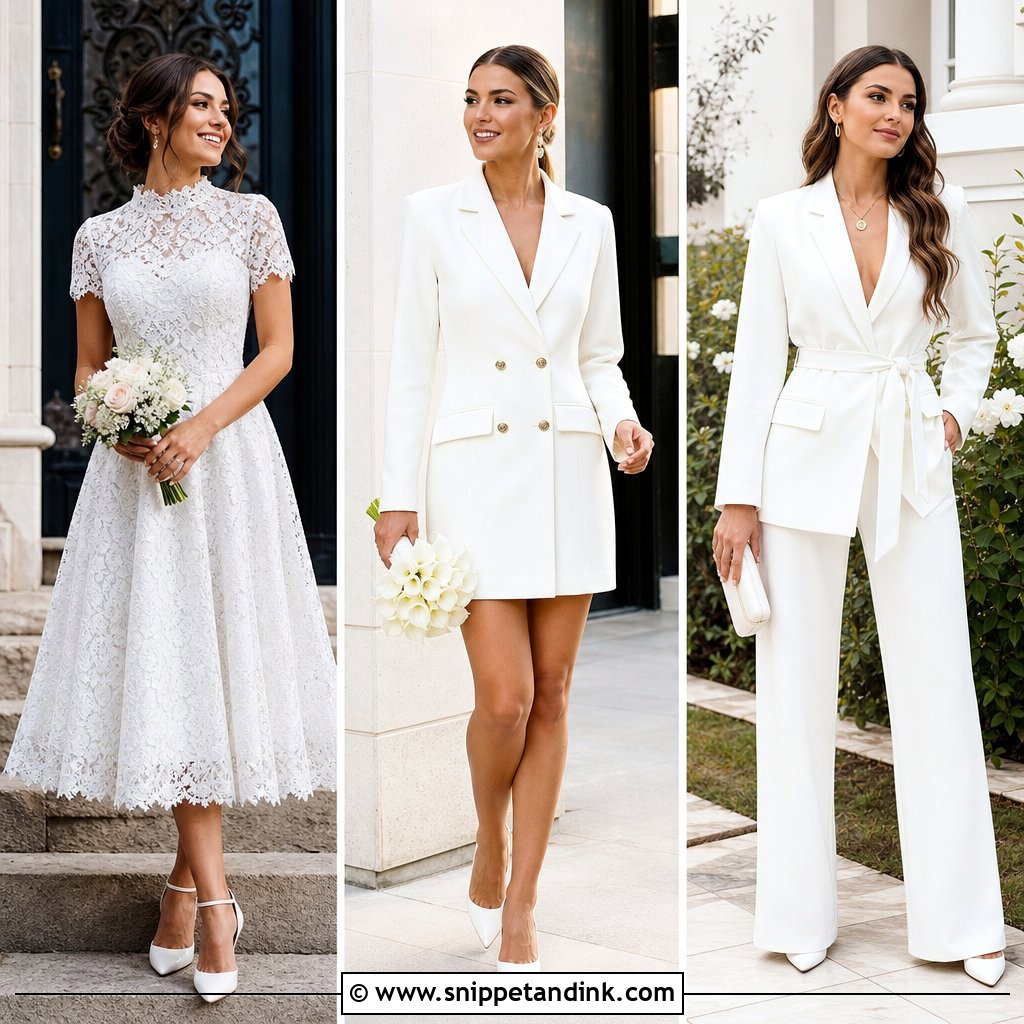
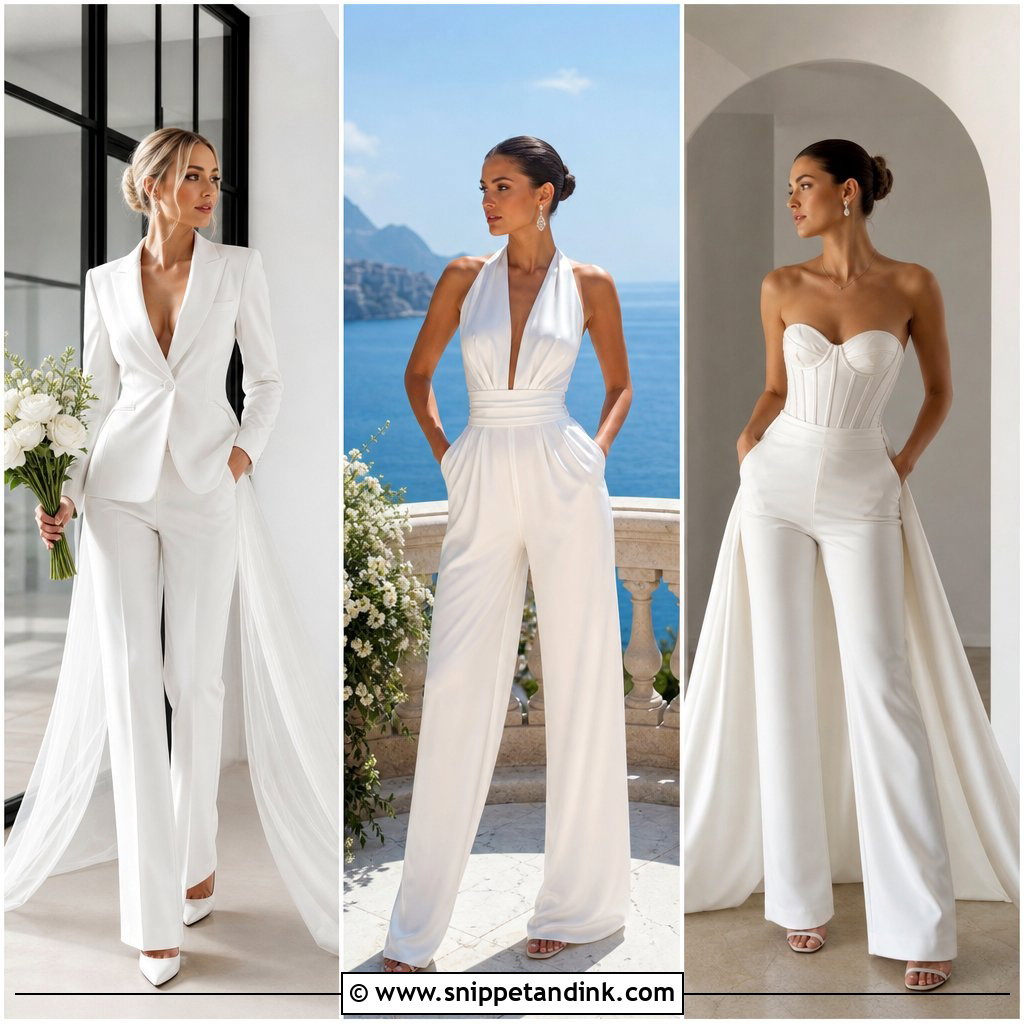
A bridal suit lives or dies by tailoring, and off-the-rack ivory suiting almost always needs the sleeves and trouser hems altered for your shoes. Underneath, a silk camisole or bandeau keeps it clean; a longline blazer, pearl buttons or a jacket with a train makes it read formal. Ivory wool and crepe crease far less than linen, which wrinkles the moment you sit in a car. Pointed pumps, sculptural earrings and a sleek clutch finish it for a courthouse, a city ceremony, rehearsal events or a modern reception. Hair should be just as sharp: a bun, ponytail or smooth waves.
10. Bridal Jumpsuit Look
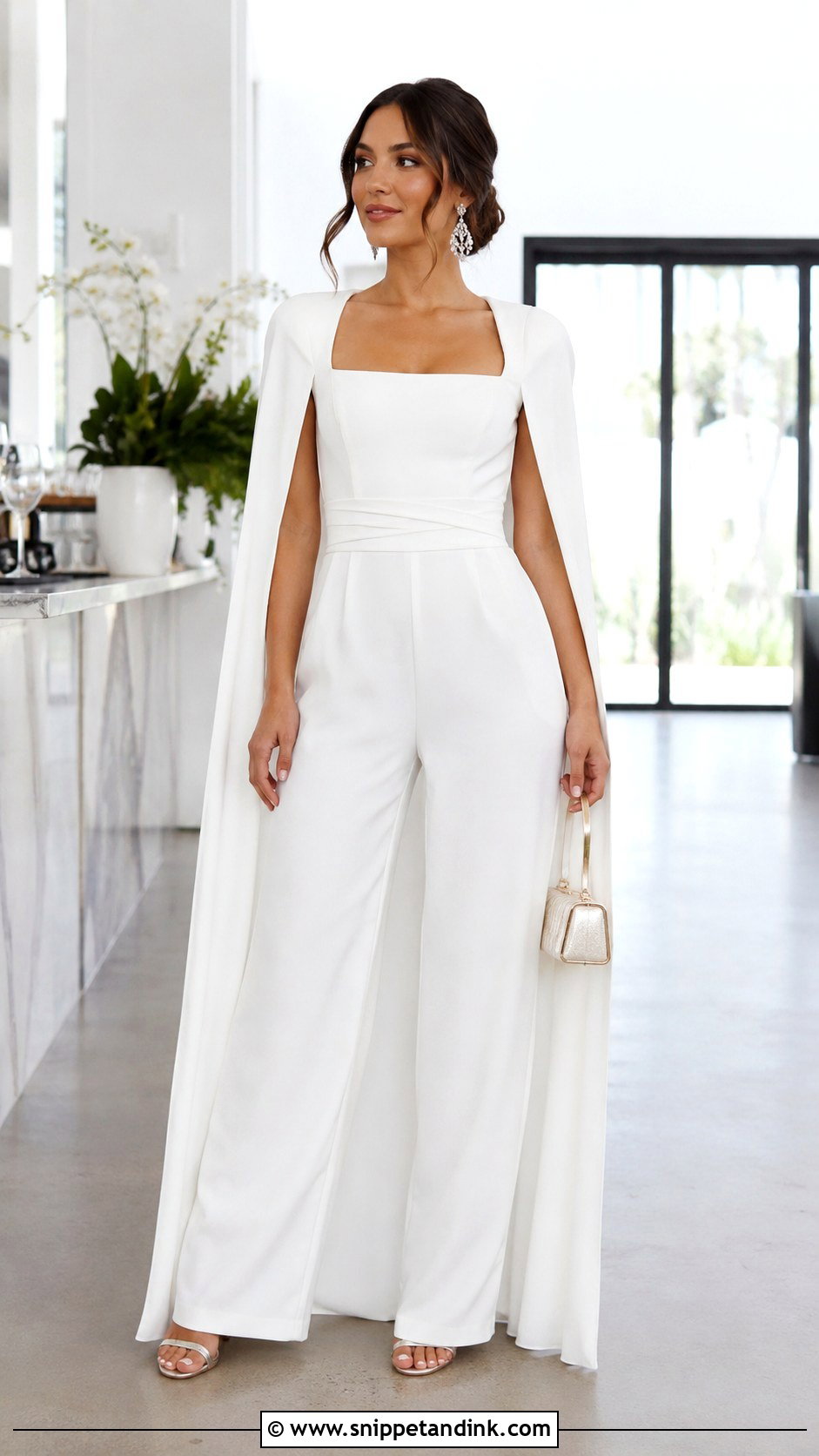
Ask how a jumpsuit fastens before you fall for it. A back zip with a hook at the neck means you need help every time you visit the restroom, so a side zip or wrap bodice is worth hunting for. Look for ivory with a fitted bodice, wide legs and a defined waist, then let one detail carry it, such as a cape sleeve, a bow belt, a lace panel or an open back. Heeled sandals, statement earrings and a small structured bag suit a reception or after-party. Get the fit clean through the hip, since that’s where a jumpsuit wrinkles in photos.
11. Short Wedding Dress Bride Look
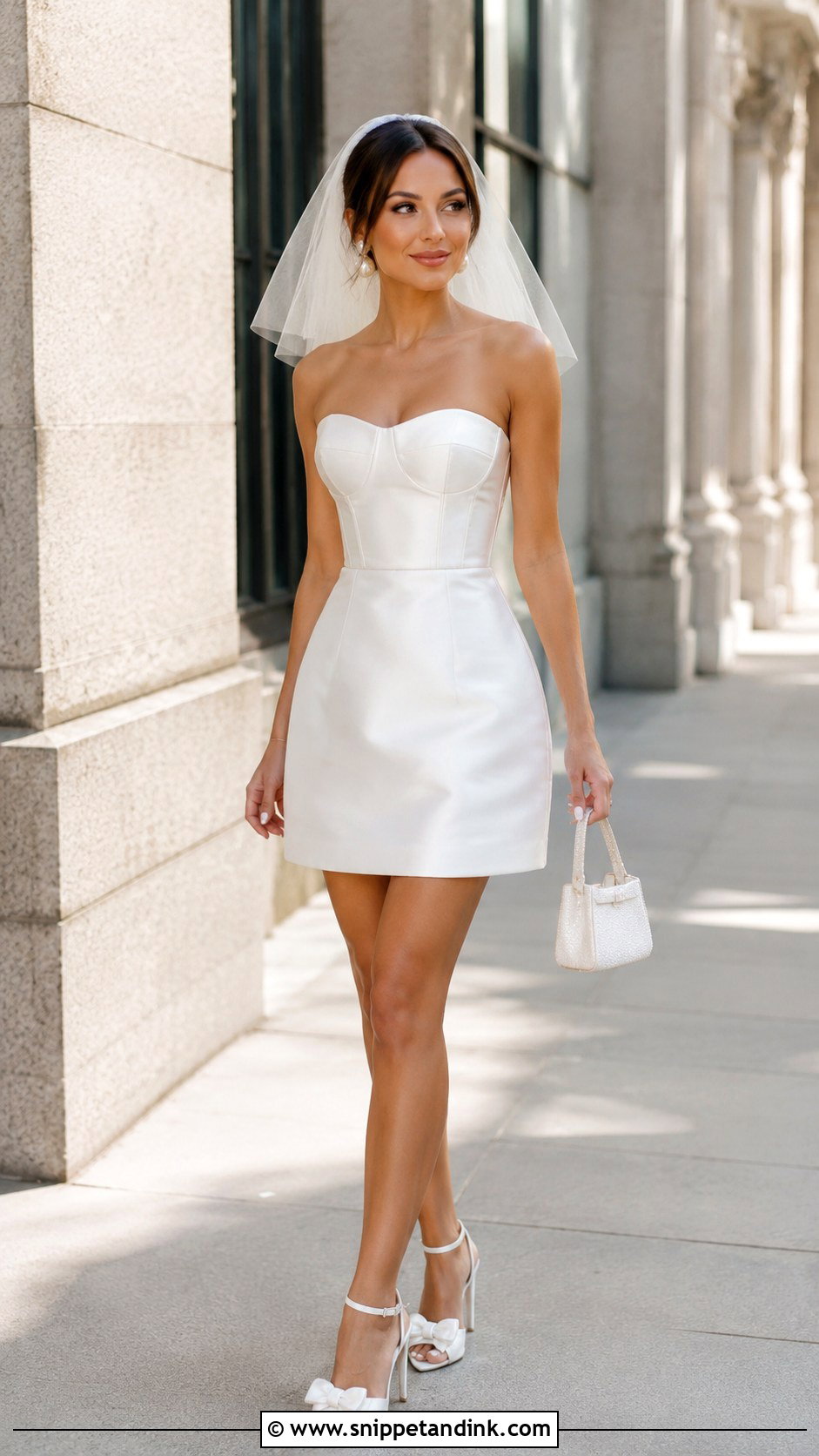
With a mini or knee-length dress, the shoes become half the outfit, so budget for them the way you would a veil. Bridal details stop it reading as a party dress: satin, tulle, feathers, bows, lace or pearl trim. It works for courthouse weddings, elopements and reception dancing. A short veil, a pearl headband or white sunglasses adds fun, but pick one; with all three it tips into costume. Do a sit-down test in a mirror too, because a mini rides up further on a chair than you expect.
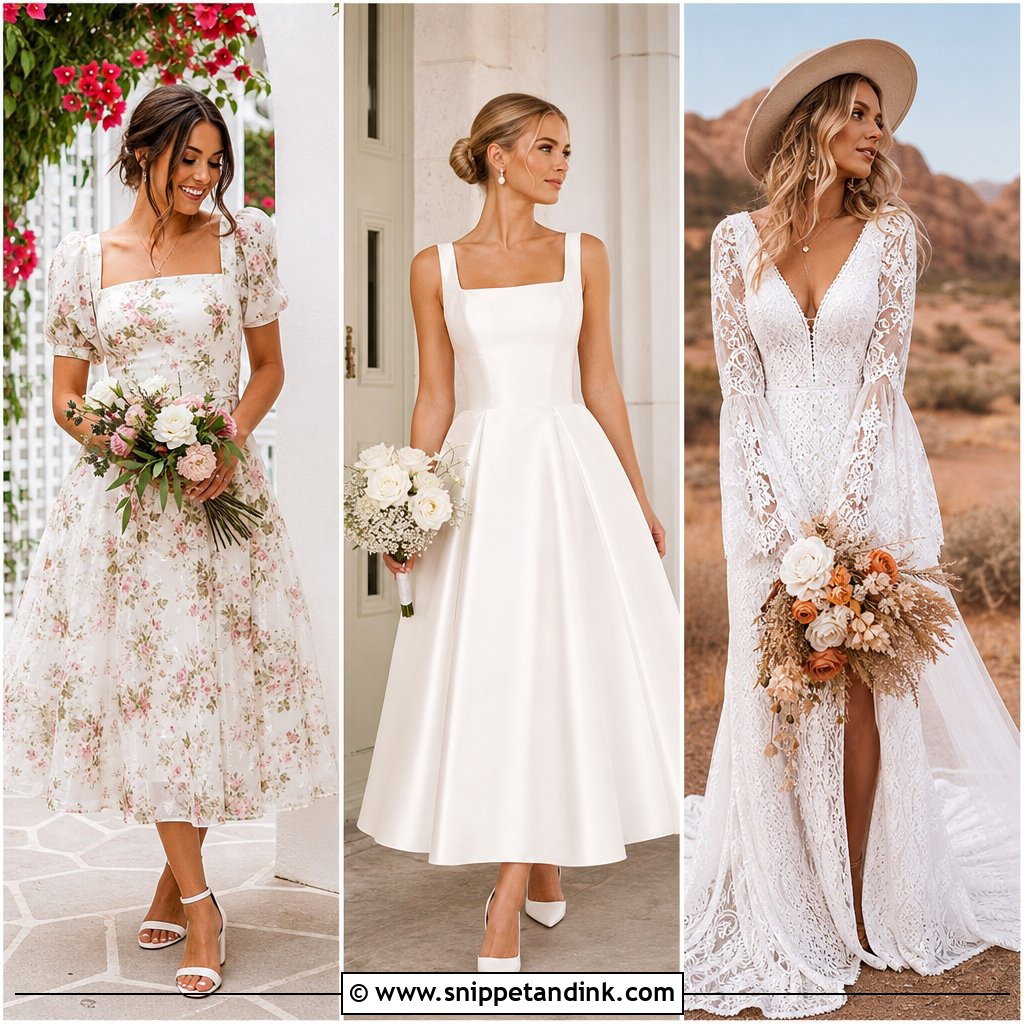
12. Tea Length Bride Look
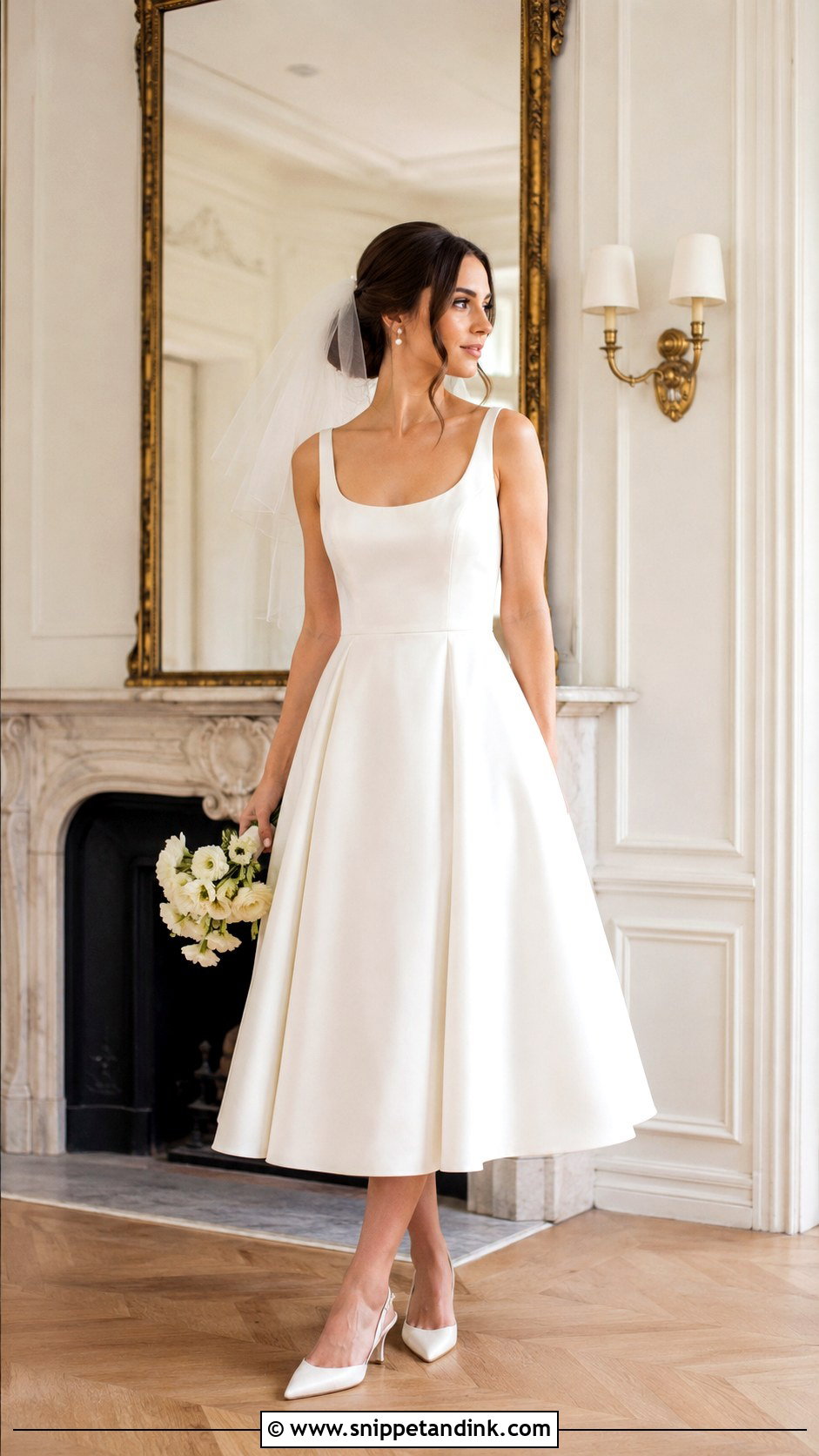
Tea length falls between the knee and the ankle, and the exact spot matters. The narrowest part of the calf is usually the most flattering place for a hem to stop, so try pointed pumps, slingbacks or embellished heels with the hem pinned at a couple of heights. A fitted bodice with a flared skirt gives the hourglass shape, while lace or satin keeps it bridal. Pearl earrings, a short veil or a bow add the retro note. It suits intimate ceremonies, city hall weddings and brunch receptions where a floor-length train would only get stepped on.
13. Sheer Sleeve Bride Look
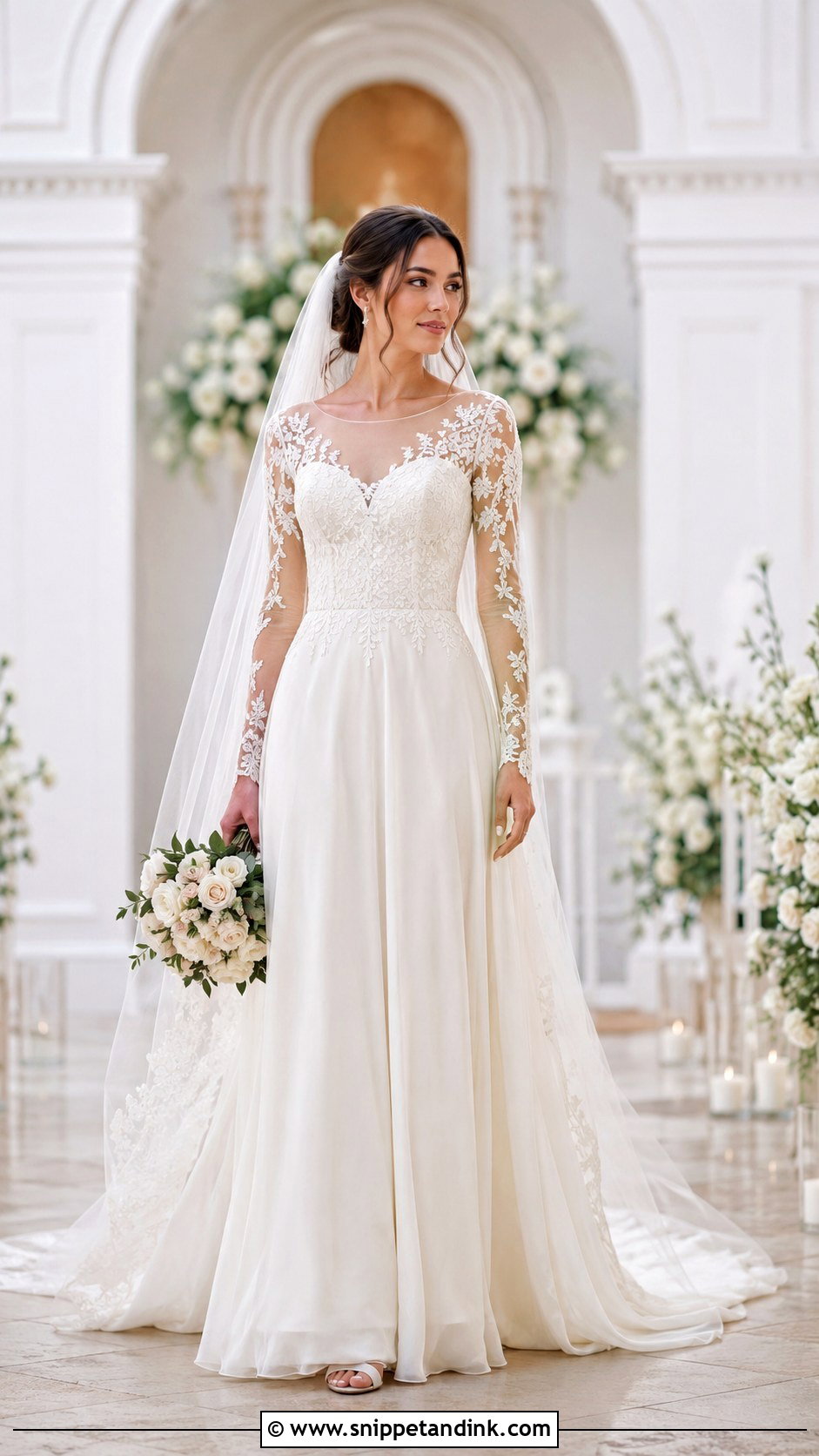
Illusion sleeves give arm coverage without weight, but the mesh has to match your skin tone closely or it reads as a grey film in photos. I hold a few tulle swatches against the inner arm in daylight before ordering. Lace, pearls, embroidery or a little shimmer on the sleeve is plenty, so keep the skirt simpler. It sits well on fitted, A-line and tulle silhouettes. A low bun or half-up style keeps the neckline and sleeves clear, with dainty earrings and ivory heels.
14. High Neck Bride Look
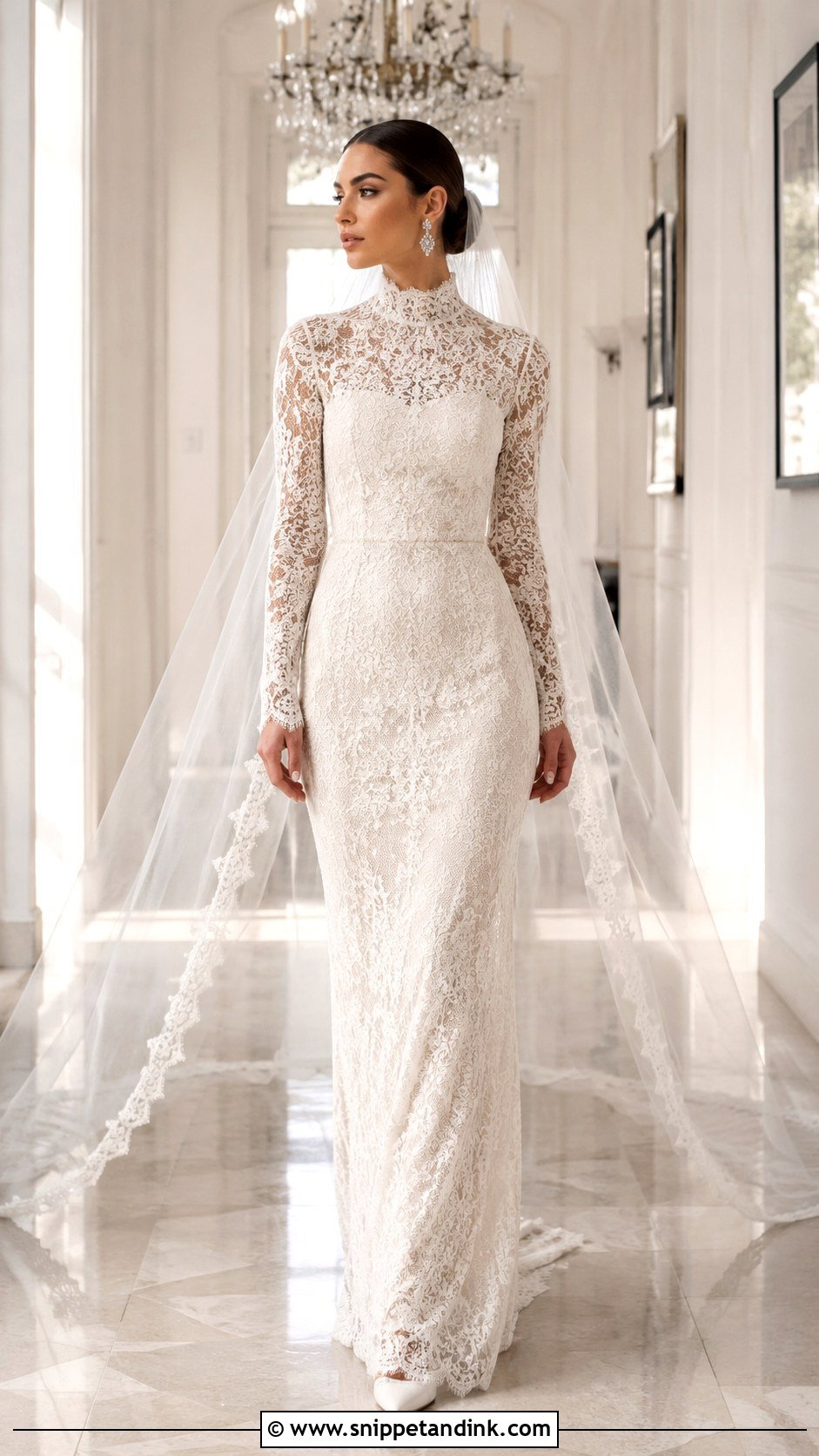
This is the look where I insist on an updo. Hair worn down covers a high collar and the dress looks unfinished, while a clean updo lengthens the neck. Lace high-neck gowns, crepe columns and satin with a structured collar all work, and none of them want a necklace, so put your jewelry budget into earrings. Check the collar doesn’t rub when you turn your head; it’s a common, easy fitting fix. A long veil adds movement, and the look suits formal and winter ceremonies.
15. Bow Detail Bride Look
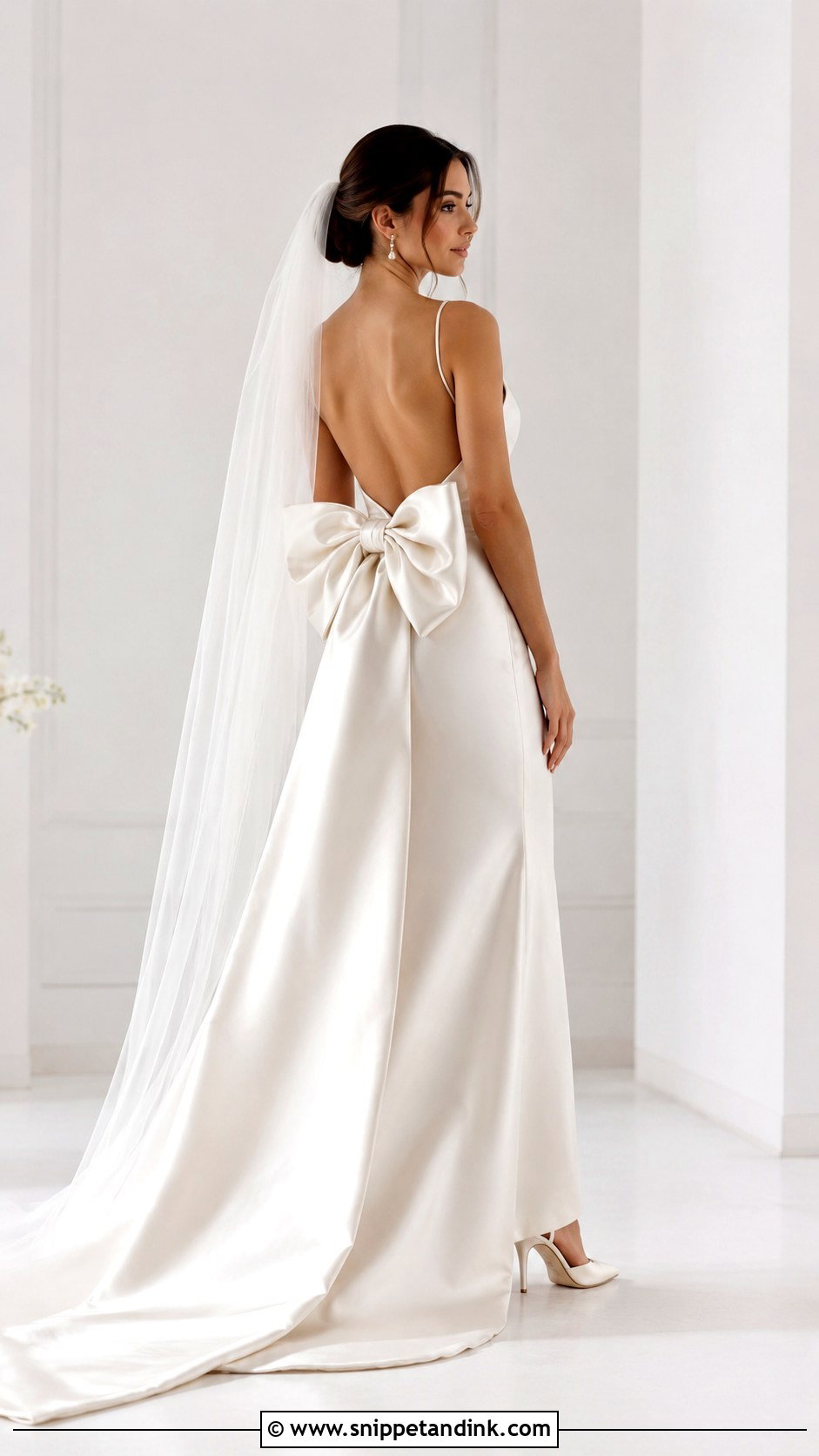
Where the bow sits sets the mood. A large back bow on plain satin gives one strong focal point, and small shoulder bows look sweeter. Remember that your guests are seated behind you for the whole ceremony, so a back bow is what they look at for twenty minutes or more; make sure you love it from that angle. Big bows need interfacing or they droop flat by evening, so ask how it’s built. Keep jewelry simple and wear classic heels, a clean veil and soft makeup.
16. Cape Veil Bride Look
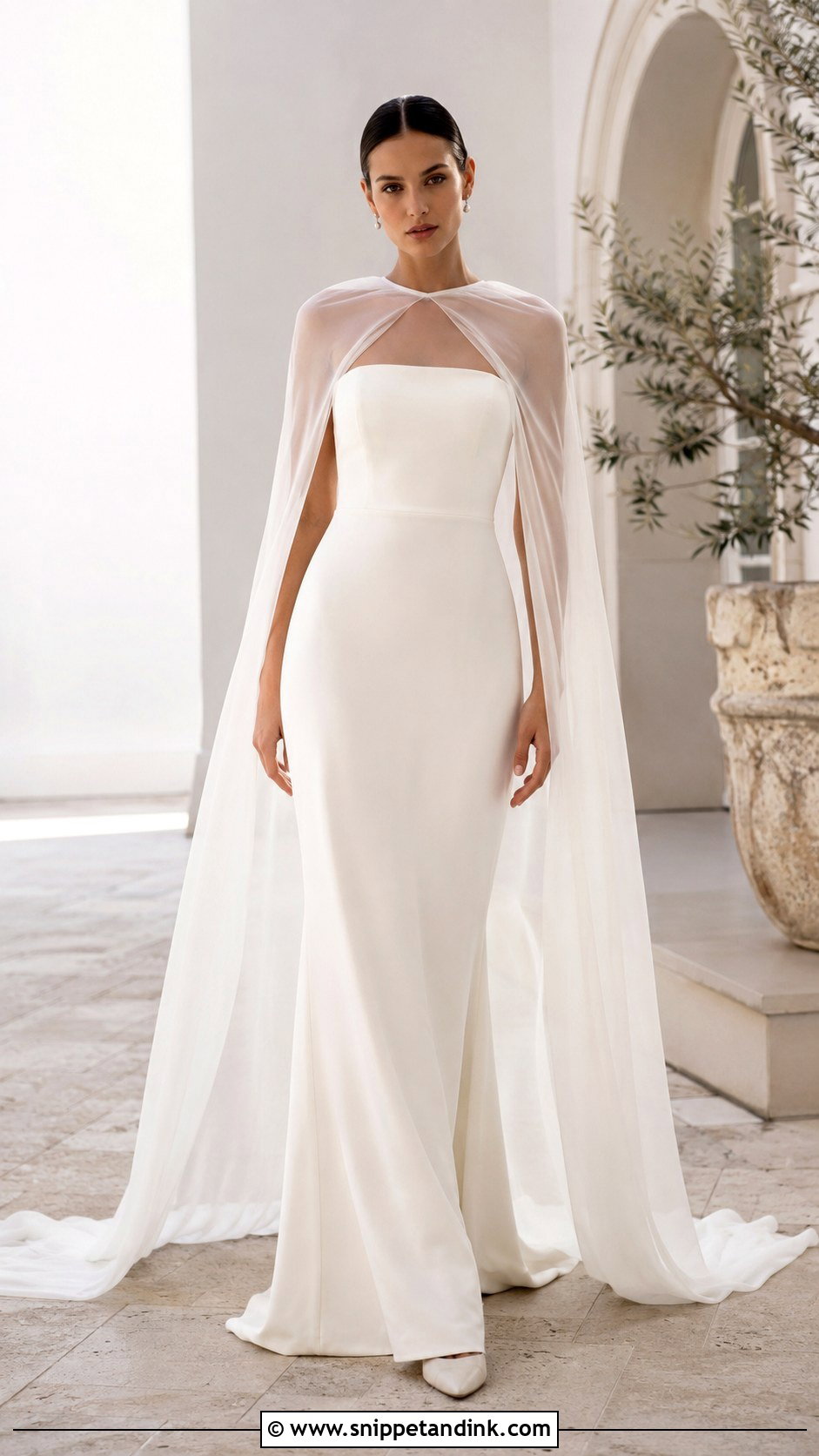
A cape veil hangs from your frame, not your hair, fastening at the shoulders, neckline or back of the gown. That makes it a good answer if you dislike combs or have slippery hair that won’t grip one. It pairs with columns, fitted gowns and minimalist satin. Have snaps or hooks sewn in for the attachment points, because pins tear fine fabric once the wind gets hold of it. Plain edges look clean, lace edges softer, and smooth hair keeps the cape the focus. Outdoors it catches every breeze, which is wonderful for portraits and distracting during vows.
17. Detachable Skirt Bride Look
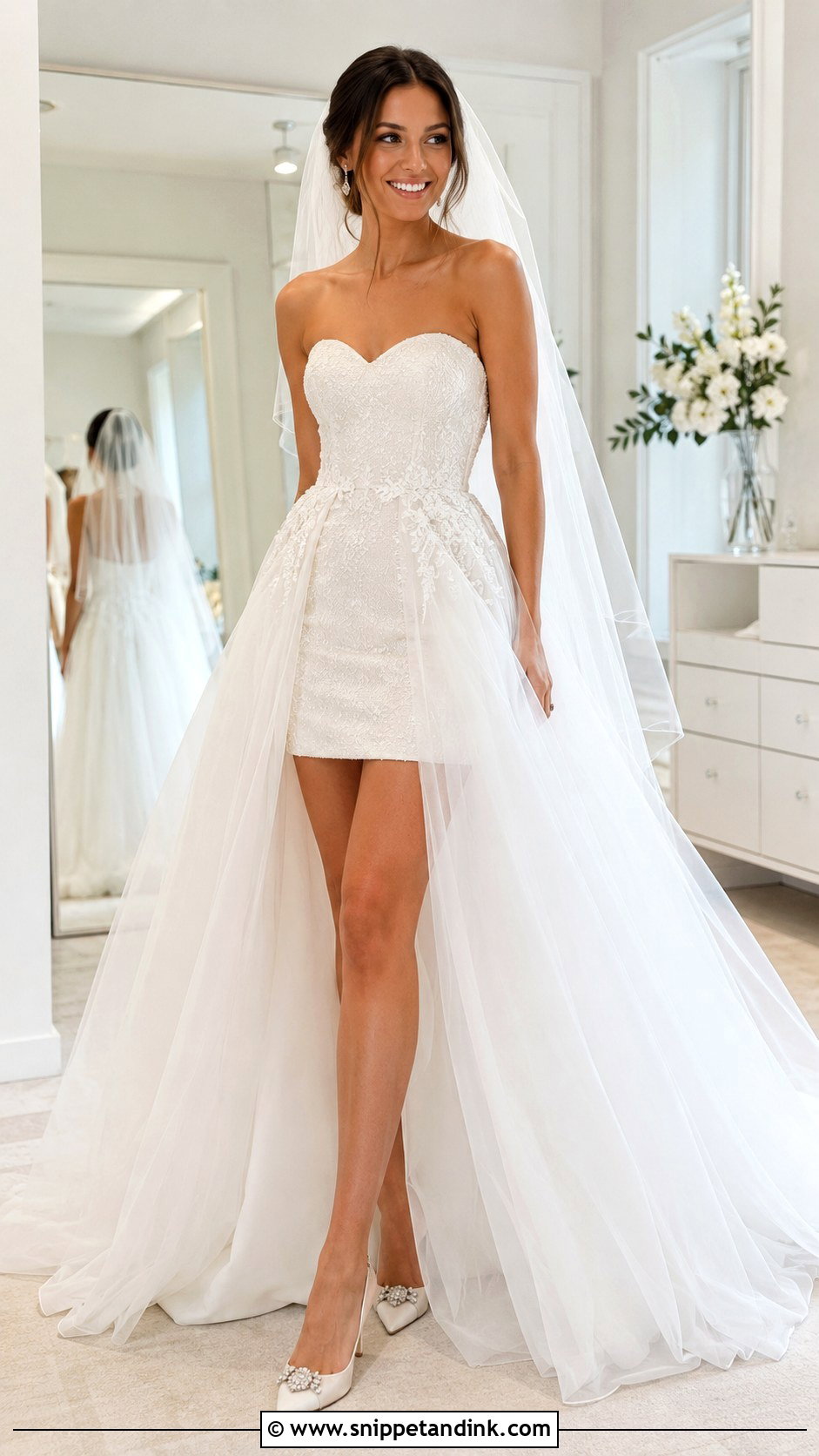
Two outfits without a full change: a fitted mini, column dress or jumpsuit underneath, with a removable tulle, satin, organza or lace overskirt for the ceremony. What I check first is the fastening. Hooks and a hidden waistband release in seconds; a long row of covered buttons needs a helper and a quiet room. Choose one pair of comfortable heels and jewelry that suits both versions, then take the skirt off after the ceremony for a practical party-ready finish.
18. Beaded Bride Look
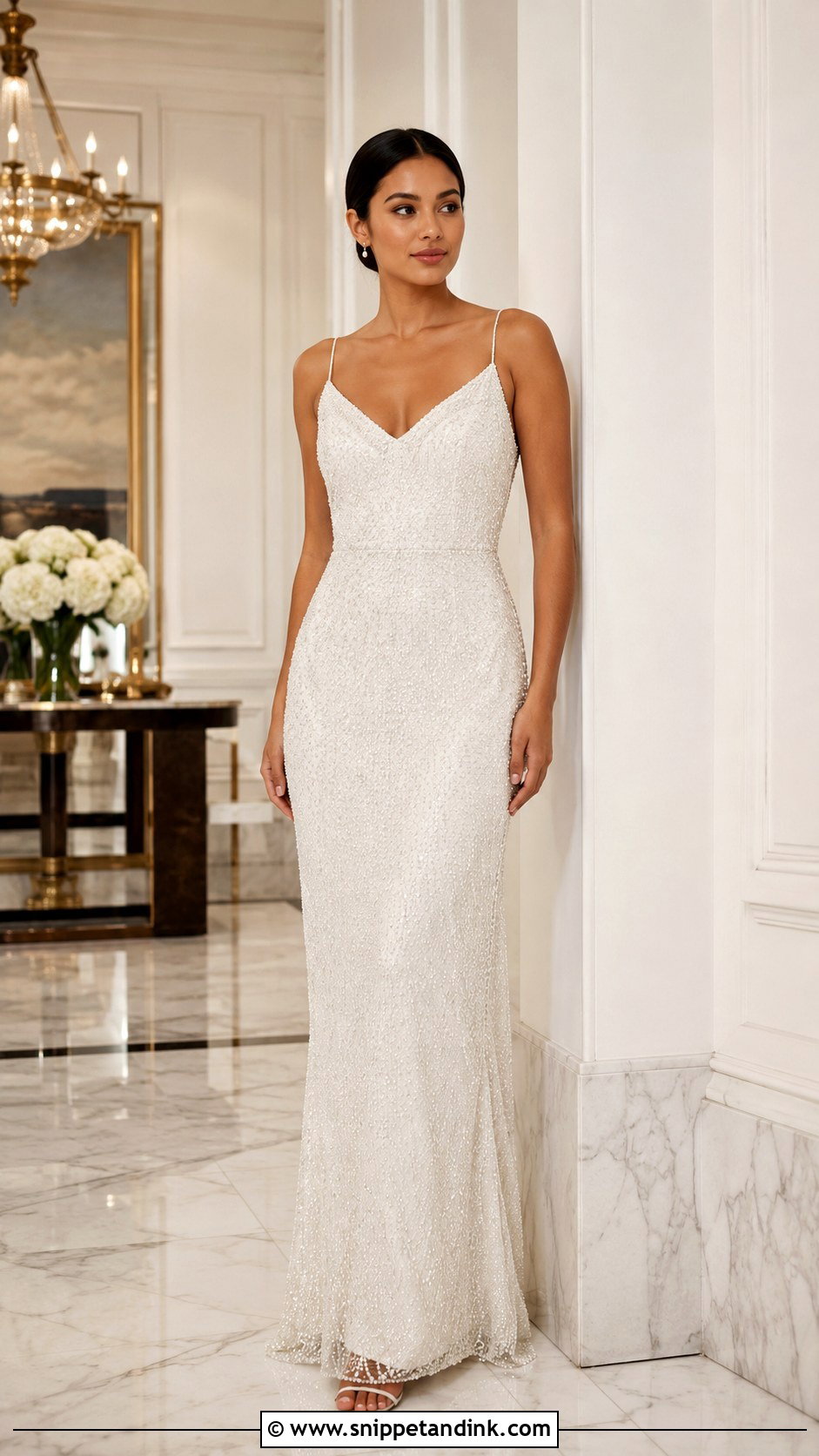
Beading, sequins and crystals add real weight, and a fully beaded gown can be noticeably heavier than a plain one by the end of a long day. Walk in it for several minutes before deciding. Art deco patterns suit a fitted silhouette; scattered beading on an A-line reads softer. Also check the inner arms and the seat, because beads there can catch on lace sleeves and scratch when you sit. Keep earrings and heels plain and hair smooth, and save it for hotel weddings and evening receptions where the light can find it.
19. Modern Mermaid Bride Look
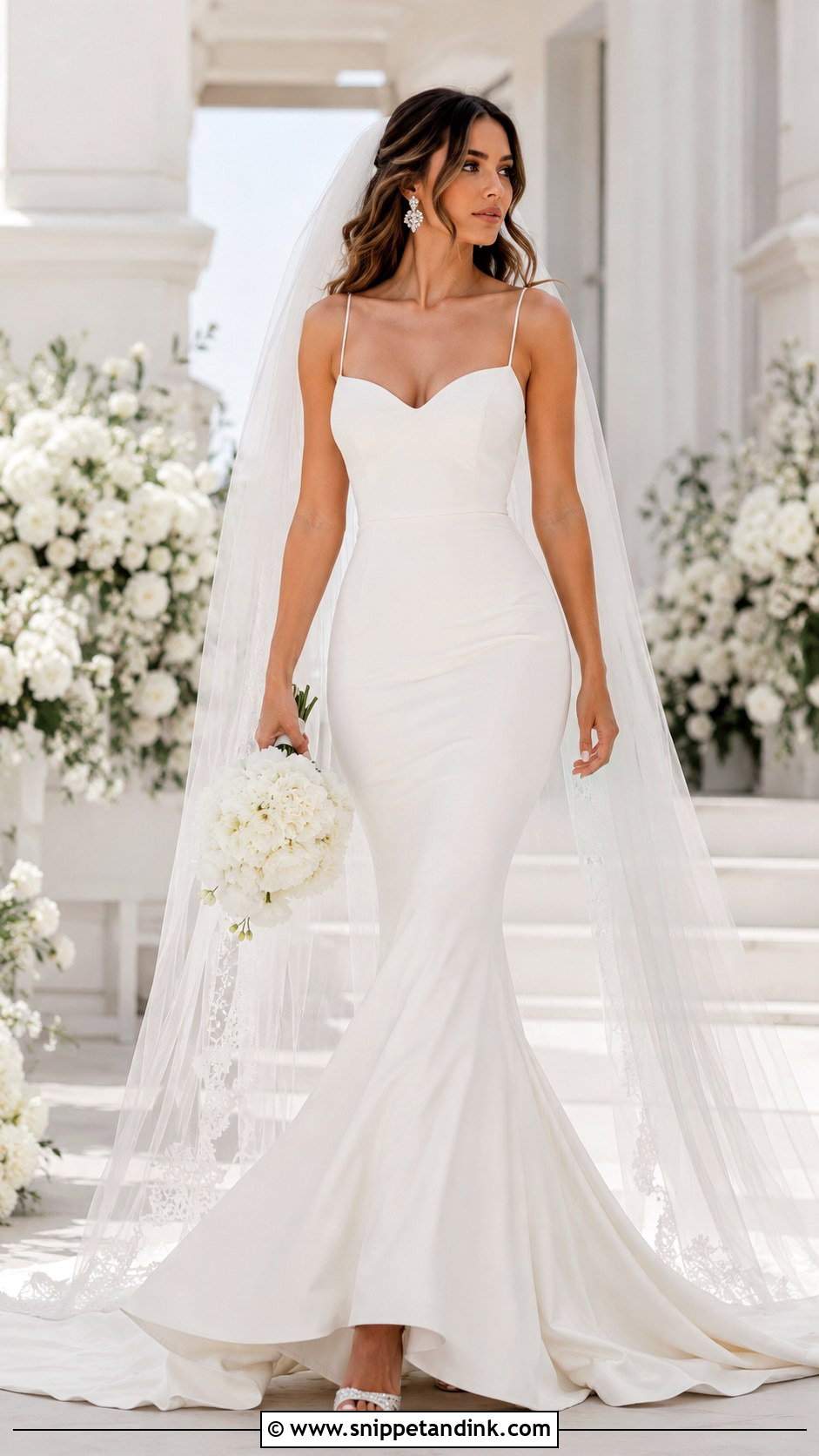
A mermaid is fitted through the bodice, waist and hips, then flares near the knee or lower thigh. The flare point decides how you move. A knee flare looks dramatic but shortens your stride, while a lower-thigh trumpet flare is easier to walk and dance in. I ask brides to climb a step and sit on a low chair before committing. Stretch crepe looks modern, lace romantic, satin classic. Pair it with high heels, statement earrings and a veil that clears the train, and make sure the bustle actually lifts the train off the floor for dancing.
20. A Line Bride Look
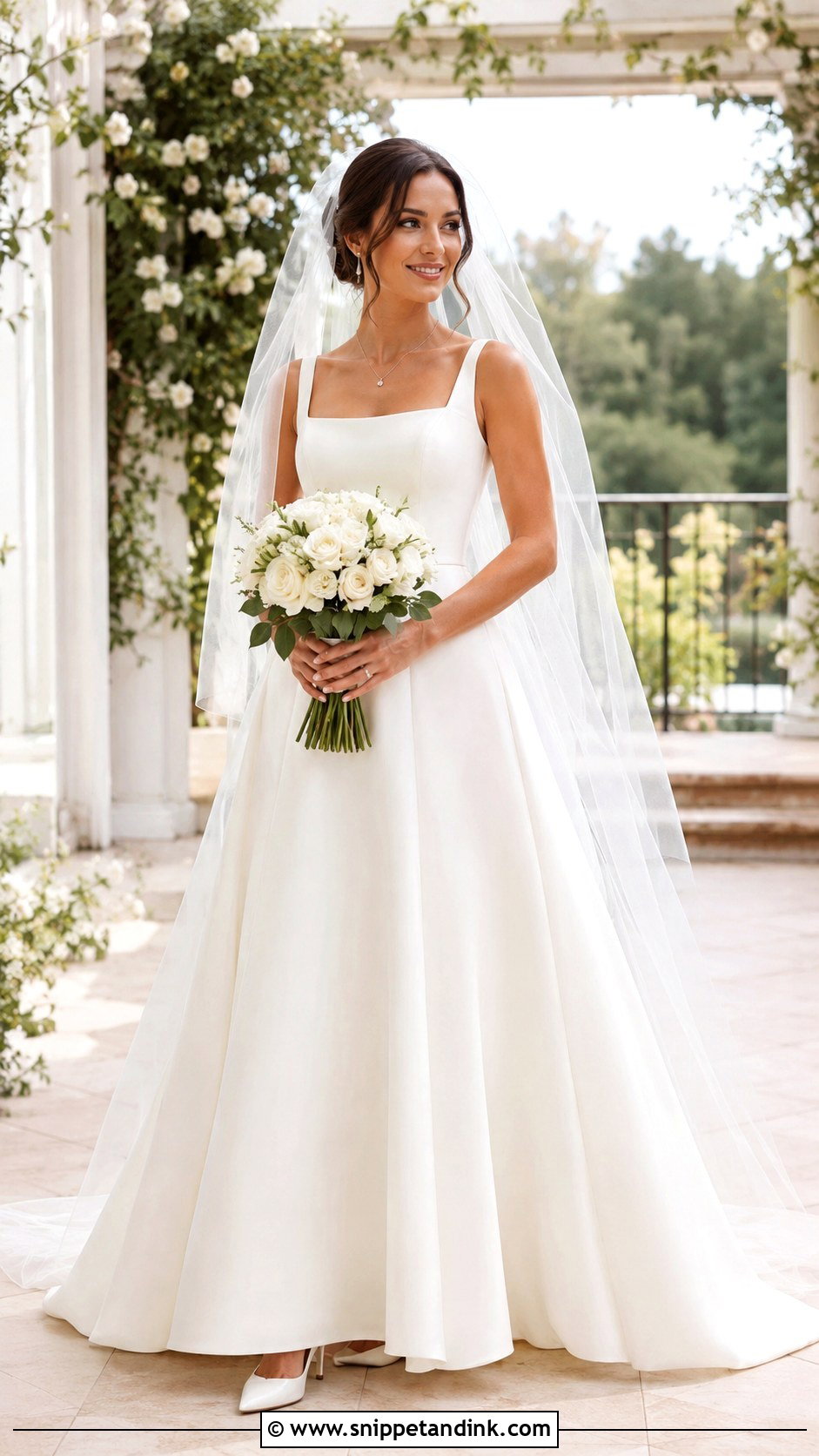
When a bride arrives unsure, the A-line is usually the first shape I pull. A fitted bodice and gently flared skirt suit most bodies and dress codes, and you can walk, kneel and climb stairs without thinking about it. Satin keeps it clean, lace adds romance and tulle softens it. Its weakness is that a cheap version can look plain, so fabric quality and the neckline have to do the talking. Finish with a veil, classic pumps and delicate jewelry.
21. Romantic Tulle Bride Look
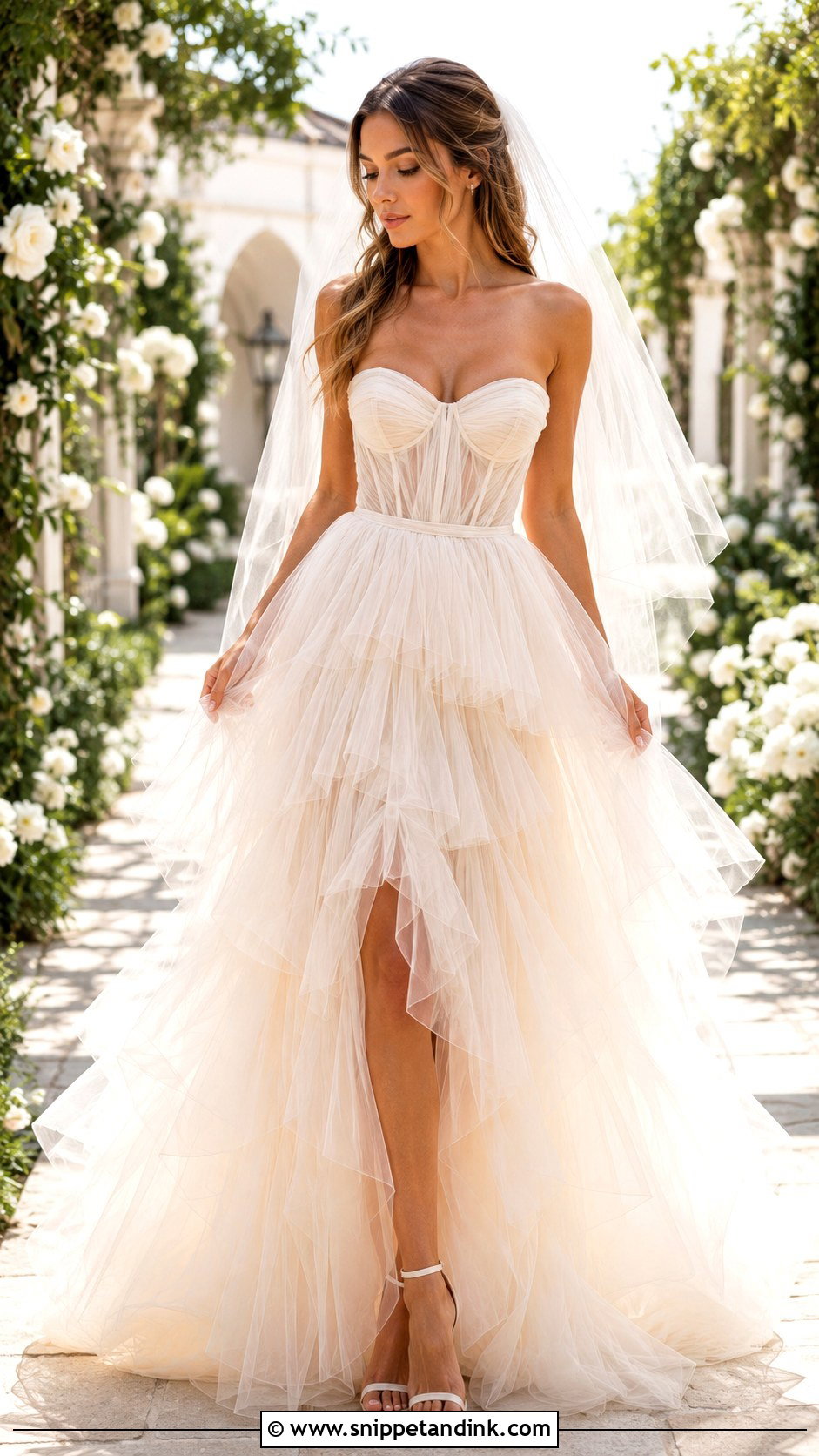
Tulle is light, but the layers add up, and low-grade tulle looks flat and feels scratchy against the legs. Ask how many layers there are and whether there’s a soft lining underneath. An A-line or ball gown shape gives the volume, and a corset bodice, floral appliqué or off-shoulder neckline makes it personal. Tulle snags on rough stone, bark and bouquet wire, so watch garden paths and ask your florist to wrap the stems. Delicate heels, small earrings, a veil that blends into the skirt and soft waves or a loose bun suit it for garden weddings and outdoor portraits.
22. Slip Dress Bride Look
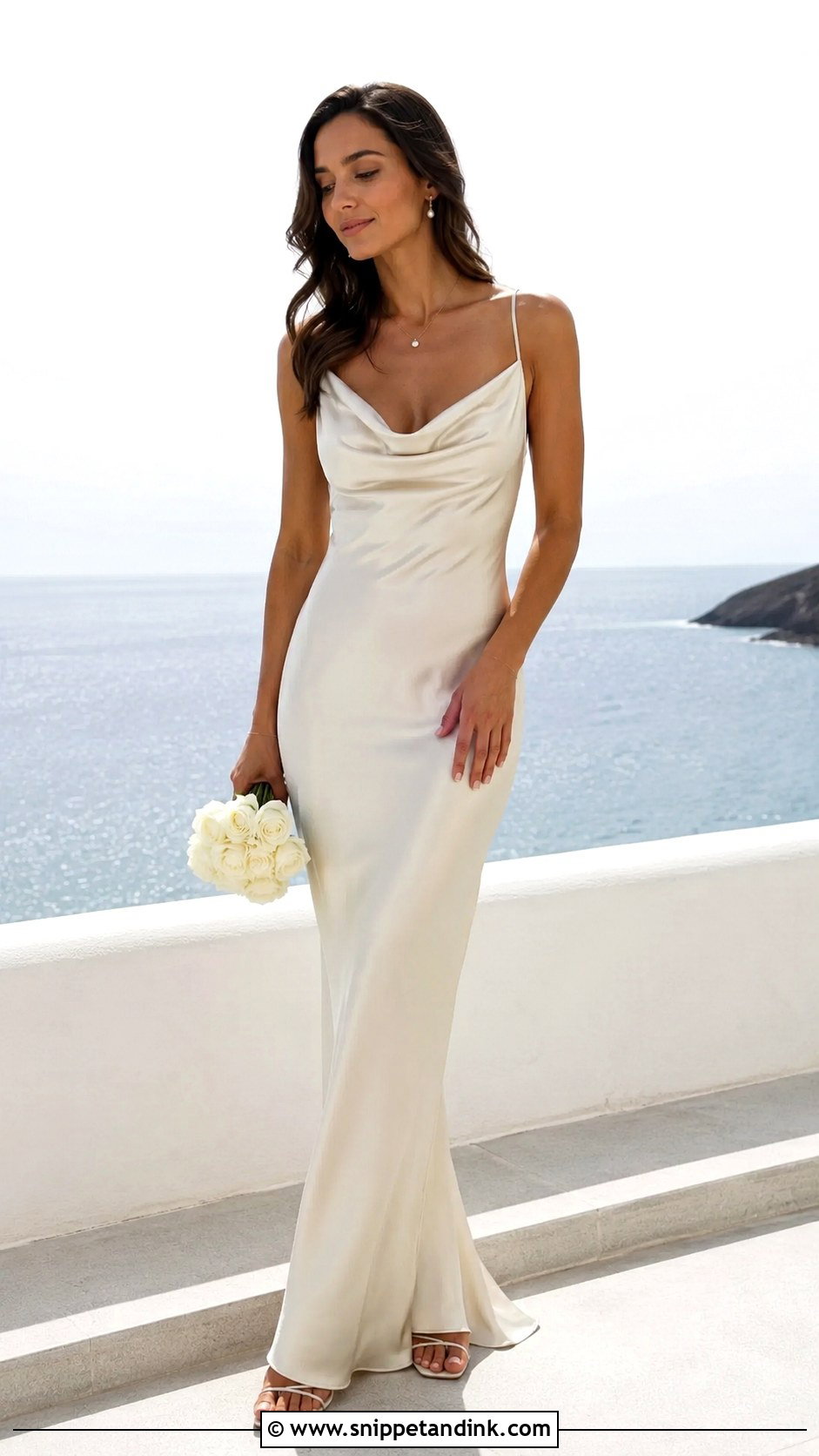
It looks simple, yet the slip dress is the hardest thing on this list to fit. Bias-cut silk or satin skims the body, so it shows everything underneath, and smooth underwear in your skin tone is not optional. A cowl, square neckline or low back adds interest. I’d steer brides who want firm support toward a slip with a built-in bra or a light corset layer inside. Strappy heels, delicate jewelry, a clean veil or hair scarf, soft waves and glowing skin are all it takes for a beach wedding, a city elopement or a relaxed reception.
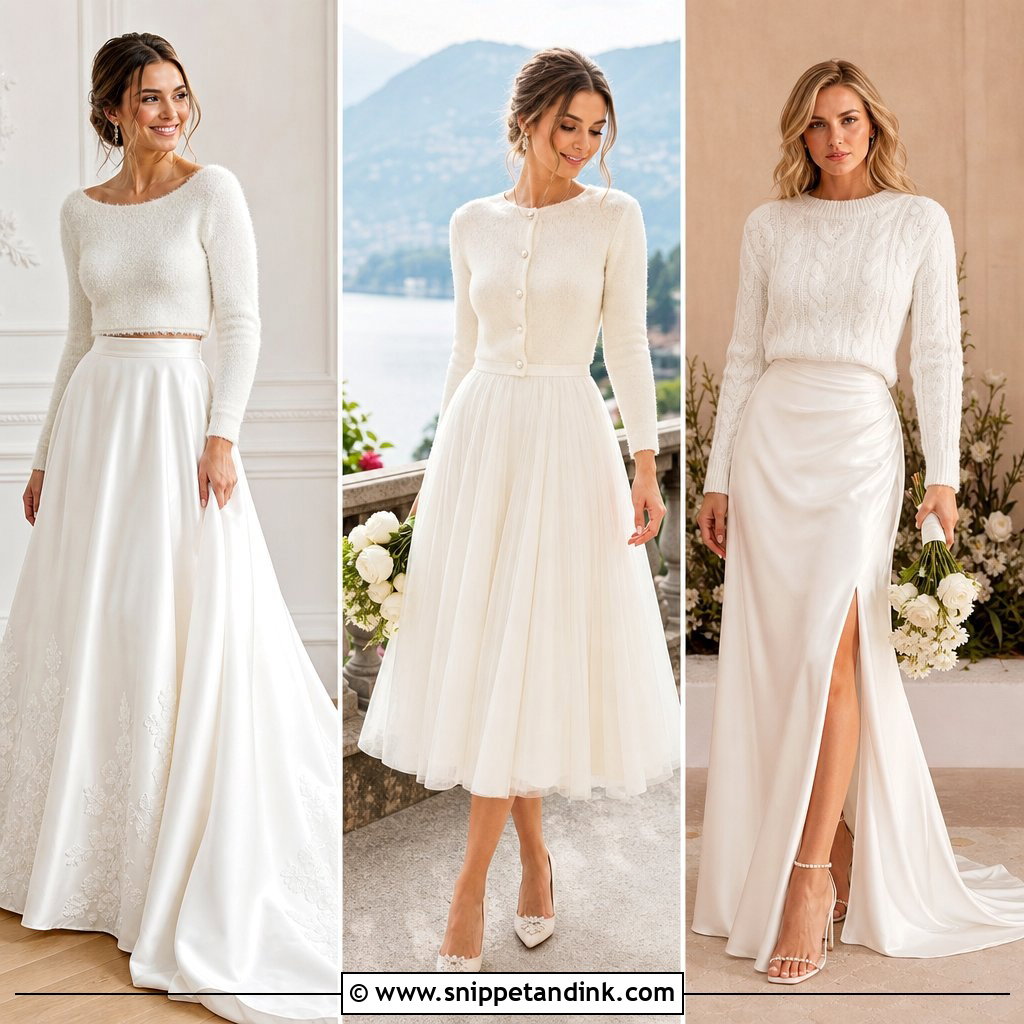
23. Two Piece Bride Look
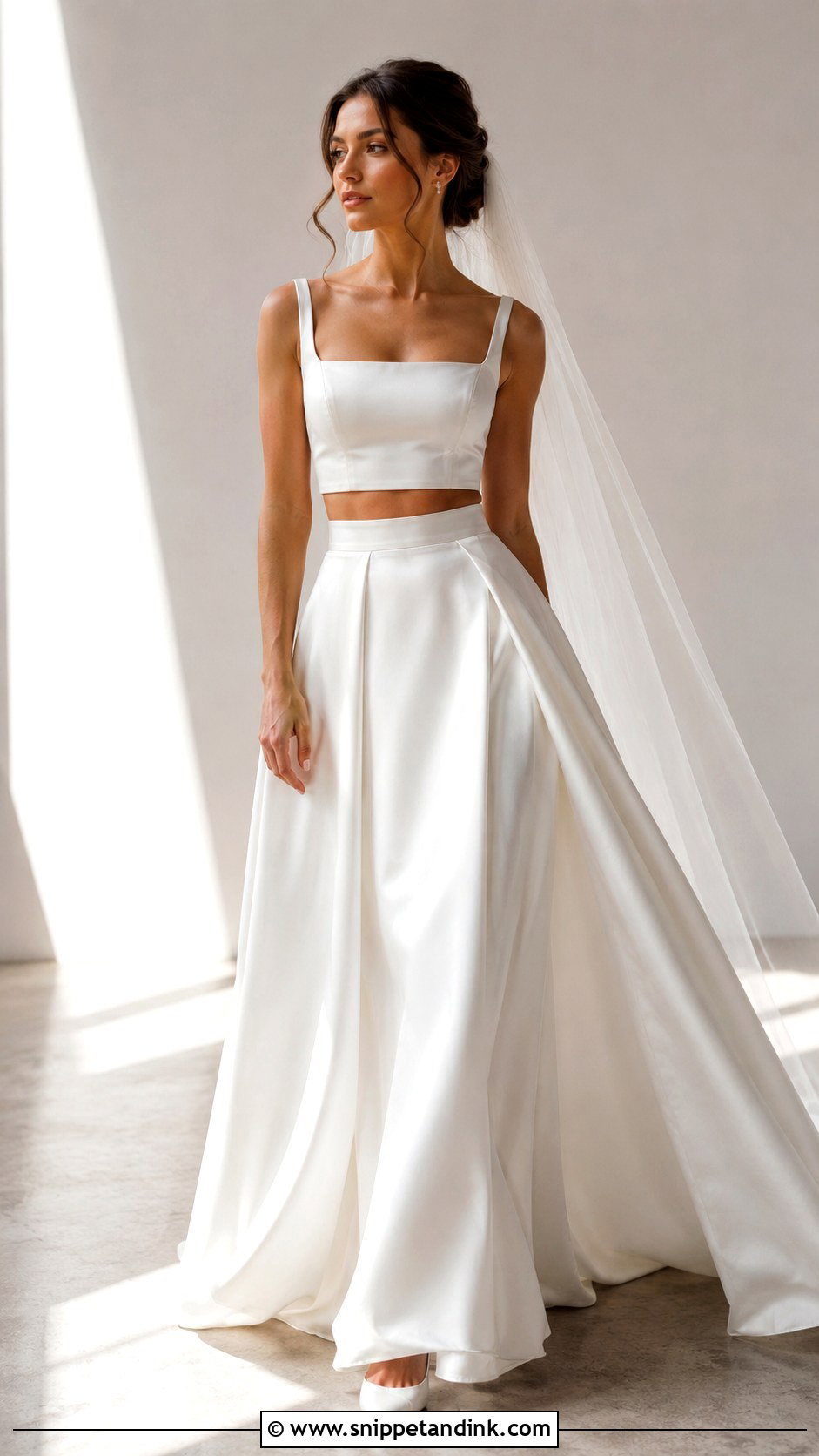
Two pieces only look bridal when they clearly belong together, so I match them through fabric, colour or one repeated detail. A crop top with a high-waisted skirt, a lace blouse with satin, or a structured bodice with tailored trousers all work. Check the gap when you raise your arms, because a cropped top lifts more than you think during the first dance. It moves well, it packs well for destination weddings, and it gives you the option to rewear pieces later. Simple heels and jewelry that ties top and bottom together finish it.
24. Courthouse Bride Look
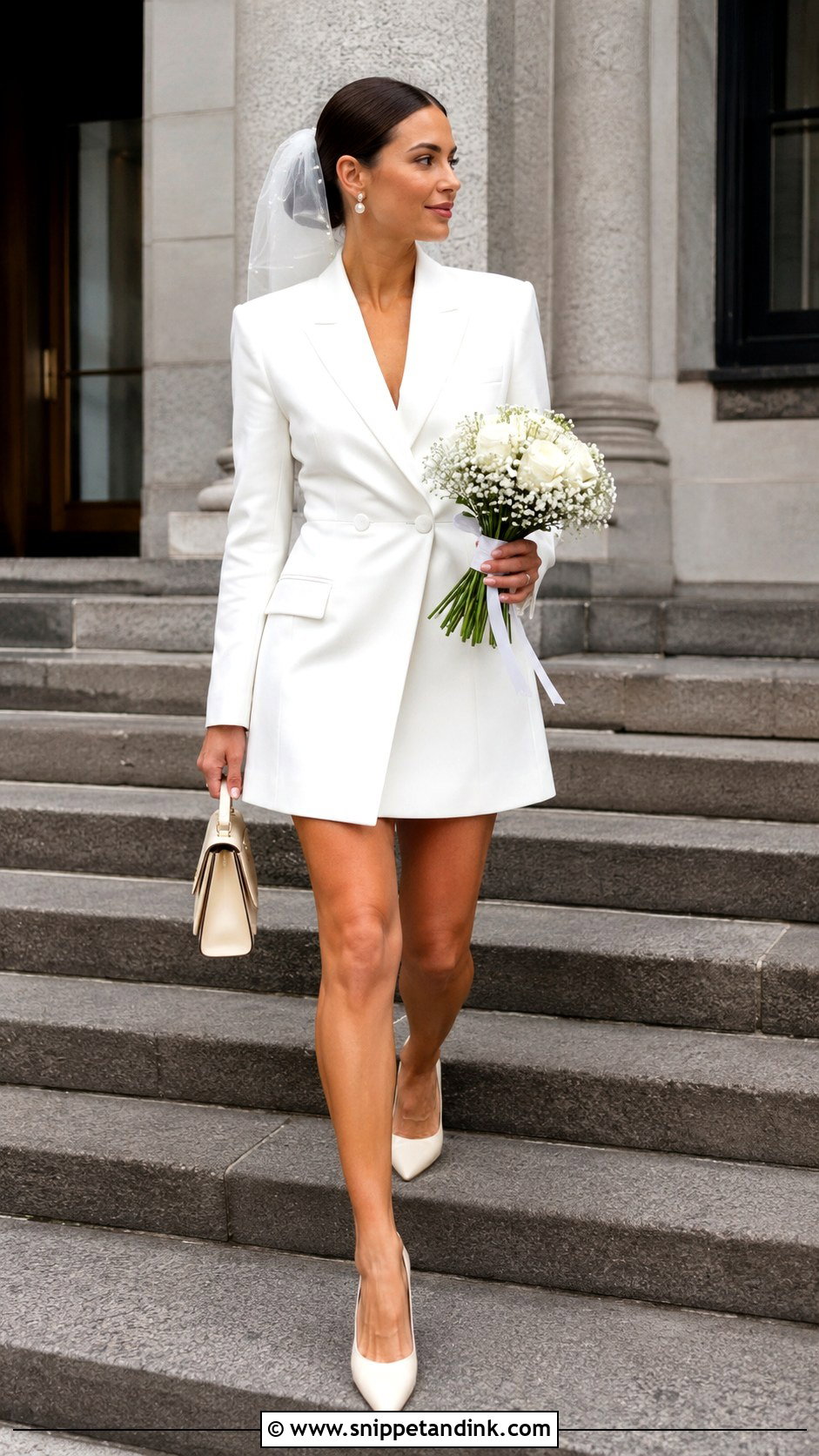
Courthouse rooms tend to be small, with stairs, security lines and flat overhead lighting, so I’d skip anything with a train. A white blazer dress, satin midi, tailored suit or simple column all work there. Harsh office lighting is unkind to optical white, and ivory or soft white reads warmer. Pointed heels, pearl earrings, a mini veil or a structured handbag make it bridal, and a small, clean bouquet helps the photos on the steps afterwards.
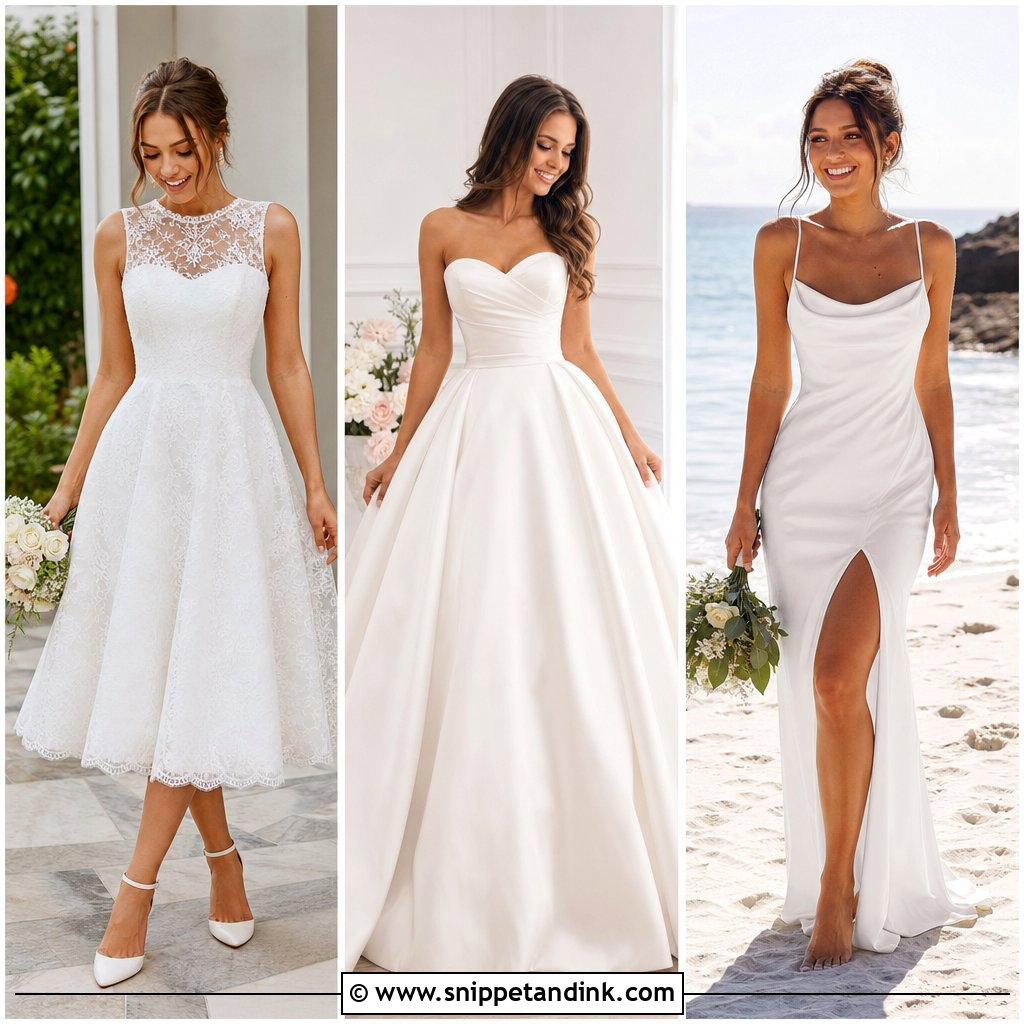
25. Reception Bride Look
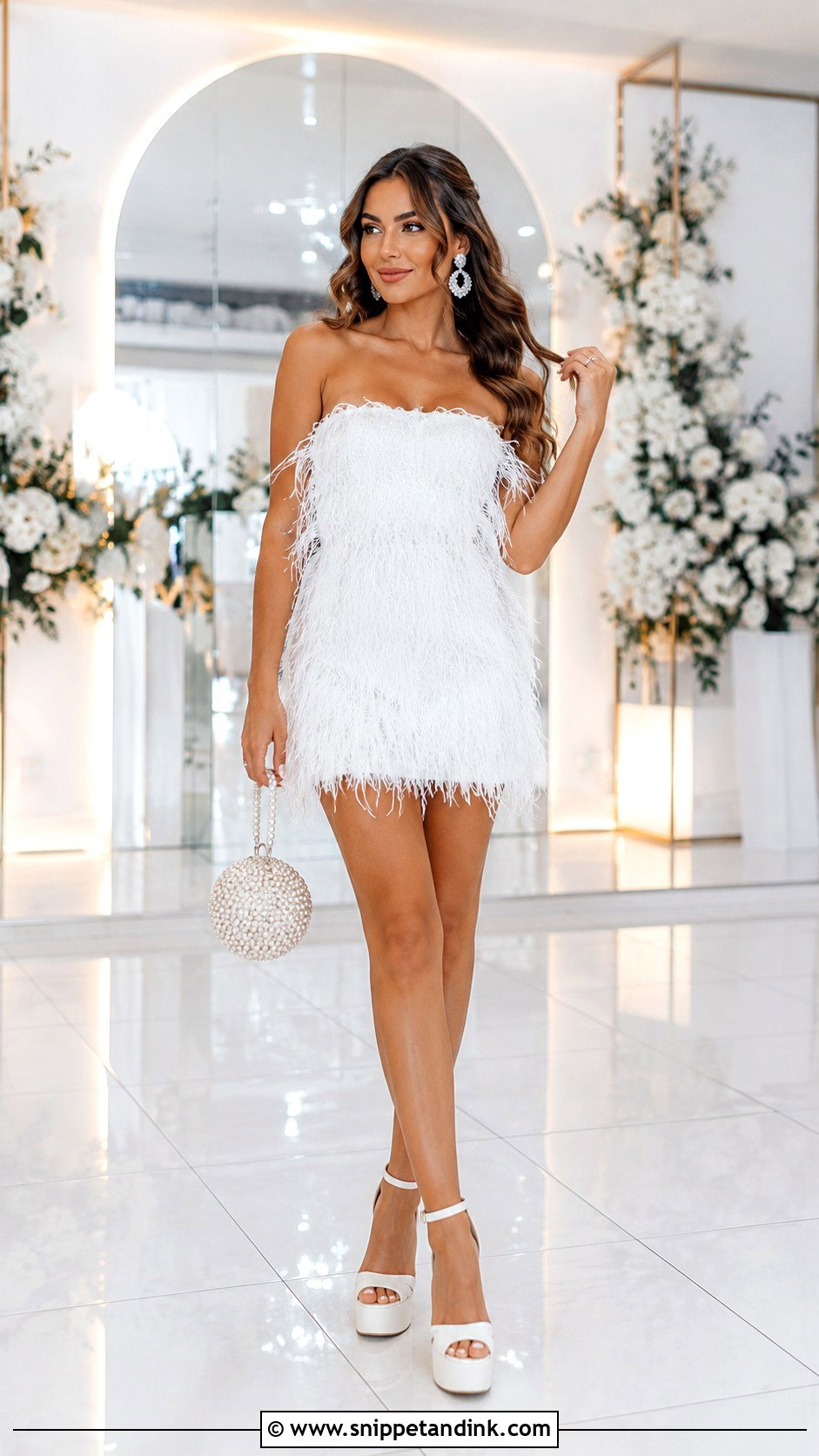
Judge a reception outfit on movement: dancing, sitting, hugging, late-night photos. A short dress, a feather-trimmed mini, a jumpsuit, a satin slip or a fitted gown without a heavy train all qualify. Switch to platform sandals or embellished flats if you can, since your feet will have done hours already. Statement earrings, a hair bow or a pearl bag adds personality. Keep one thread back to the ceremony look, a fabric or a colour, and then let it be bolder. Plan the change for a natural pause, like after dinner, with someone ready to help with the fastening.
Three Fittings and What Each One Is Really For
Alterations usually run to two or three fittings, and many seamstresses like to begin roughly two to three months before the wedding, sooner for heavy beading or a full rebuild. Each visit has a job, and knowing it makes it easier to speak up.
The first visit
This is the structural work: taking in the bodice, setting the hem, deciding on straps and the bustle. Bring the actual shoes and underwear you’ll wear. If either changes later, the length and the bodice change with it.
The middle visit
Now the dress should fit, so test it hard. Sit, climb a step, raise both arms, bend to pick something up. Mention any rub or pinch now, while there’s still time to fix it properly.
The last visit
Bring whoever will dress you and bustle you on the morning. They need to practise the hooks, the buttons and the bustle loops here, not in a dim corridor halfway through the reception.
Where the Dress Should Live Until the Morning
Once you collect it, hang the dress by the inner hanger loops sewn at the waist, not by the straps, which stretch under the weight of the skirt. Keep it in a breathable cotton garment bag; plastic traps moisture. Heavily beaded gowns are often safer folded flat in tissue and boxed until the week of the wedding, so the beading doesn’t pull the fabric out of shape.
Steam satin from the inside on a low setting and test a hidden seam first, because water spots can mark silk. Tulle relaxes if you hold the steamer a hand’s width away and never touch it. On the morning, hand your helper a small kit: safety pins, a needle with ivory thread, a stain pen already tested on a fabric scrap, and a stick of white chalk to cover a small scuff at the hem.
A Dress You Forget You’re Wearing by the First Dance
The right bridal outfit isn’t the most expensive one or the most dramatic. It’s the one you stop thinking about an hour in, because it fits, it lets you move and it looks like you in photos. Ball gowns, lace sleeves, suits, minis, jumpsuits and reception outfits can all get you there. Settle the silhouette first, then the fabric, then how it moves, and leave accessories for last. Take the looks above to your first appointment, try one you’d never have picked, and let the mirror and the chair test decide.
You'll Like These Ideas:



Leave a Reply